EP0601909B1 - Dibekacin derivatives and arbekacin derivatives active against resistant bacteria, and the production thereof - Google Patents
Dibekacin derivatives and arbekacin derivatives active against resistant bacteria, and the production thereof Download PDFInfo
- Publication number
- EP0601909B1 EP0601909B1 EP93402870A EP93402870A EP0601909B1 EP 0601909 B1 EP0601909 B1 EP 0601909B1 EP 93402870 A EP93402870 A EP 93402870A EP 93402870 A EP93402870 A EP 93402870A EP 0601909 B1 EP0601909 B1 EP 0601909B1
- Authority
- EP
- European Patent Office
- Prior art keywords
- amino
- compound
- group
- formula
- alkoxycarbonyl
- Prior art date
- Legal status (The legal status is an assumption and is not a legal conclusion. Google has not performed a legal analysis and makes no representation as to the accuracy of the status listed.)
- Expired - Lifetime
Links
- 0 *C(CC(C(C1O)OC(C(C2N)C=*)OC(CO)C2O)N)C1OC1OC(CN)CC[C@]1C(*)=C Chemical compound *C(CC(C(C1O)OC(C(C2N)C=*)OC(CO)C2O)N)C1OC1OC(CN)CC[C@]1C(*)=C 0.000 description 9
- YEJCHVFCLNKZPU-UHFFFAOYSA-N CC1COC(C)CC1 Chemical compound CC1COC(C)CC1 YEJCHVFCLNKZPU-UHFFFAOYSA-N 0.000 description 1
Classifications
-
- C—CHEMISTRY; METALLURGY
- C07—ORGANIC CHEMISTRY
- C07H—SUGARS; DERIVATIVES THEREOF; NUCLEOSIDES; NUCLEOTIDES; NUCLEIC ACIDS
- C07H15/00—Compounds containing hydrocarbon or substituted hydrocarbon radicals directly attached to hetero atoms of saccharide radicals
- C07H15/20—Carbocyclic rings
- C07H15/22—Cyclohexane rings, substituted by nitrogen atoms
- C07H15/222—Cyclohexane rings substituted by at least two nitrogen atoms
- C07H15/226—Cyclohexane rings substituted by at least two nitrogen atoms with at least two saccharide radicals directly attached to the cyclohexane rings
- C07H15/234—Cyclohexane rings substituted by at least two nitrogen atoms with at least two saccharide radicals directly attached to the cyclohexane rings attached to non-adjacent ring carbon atoms of the cyclohexane rings, e.g. kanamycins, tobramycin, nebramycin, gentamicin A2
Definitions
- This invention relates to new compounds, 2''-amino-2''-deoxydibekacin and 2"-amino-2"-deoxyarbekacin as well as their 5-deoxy derivatives which are active against a wide variety of gram-positive and gram-negative bacteria and also against resistant bacteria, including resistant strains of Staphylococcus aureus .
- This invention also relates to another new compounds, 2''-amino-5,2''-dideoxy-5-epi-fluoroarbekacin and 2''-amino-5,2''-dideoxy-5-epi-aminoarbekacin which are active against a wide variety of gram-positive and gram-negative bacteria and also against resistant bacteria, including resistant strains of Staphylococcus aureus .
- These new compounds are of low toxicity and are useful as chemotherapeutic agent for therapeutic treatment of bacterial infections.
- This invention further relates to processes for the preparation of the above-mentioned new compounds.
- This invention further includes an antibacterial or a pharmaceutical composition comprising one of these new compounds as active ingredient.
- MRSA methicillin-resistant Staphylococcus aureus
- an object of this invention is to provide new dibekacin or arbekacin derivatives which are obtainable from dibekacin through chemical syntheses, which have broad and effective antibacterial activities not only against MRSA, but also against gram-positive and gram-negative bacteria, and which are of low toxicity.
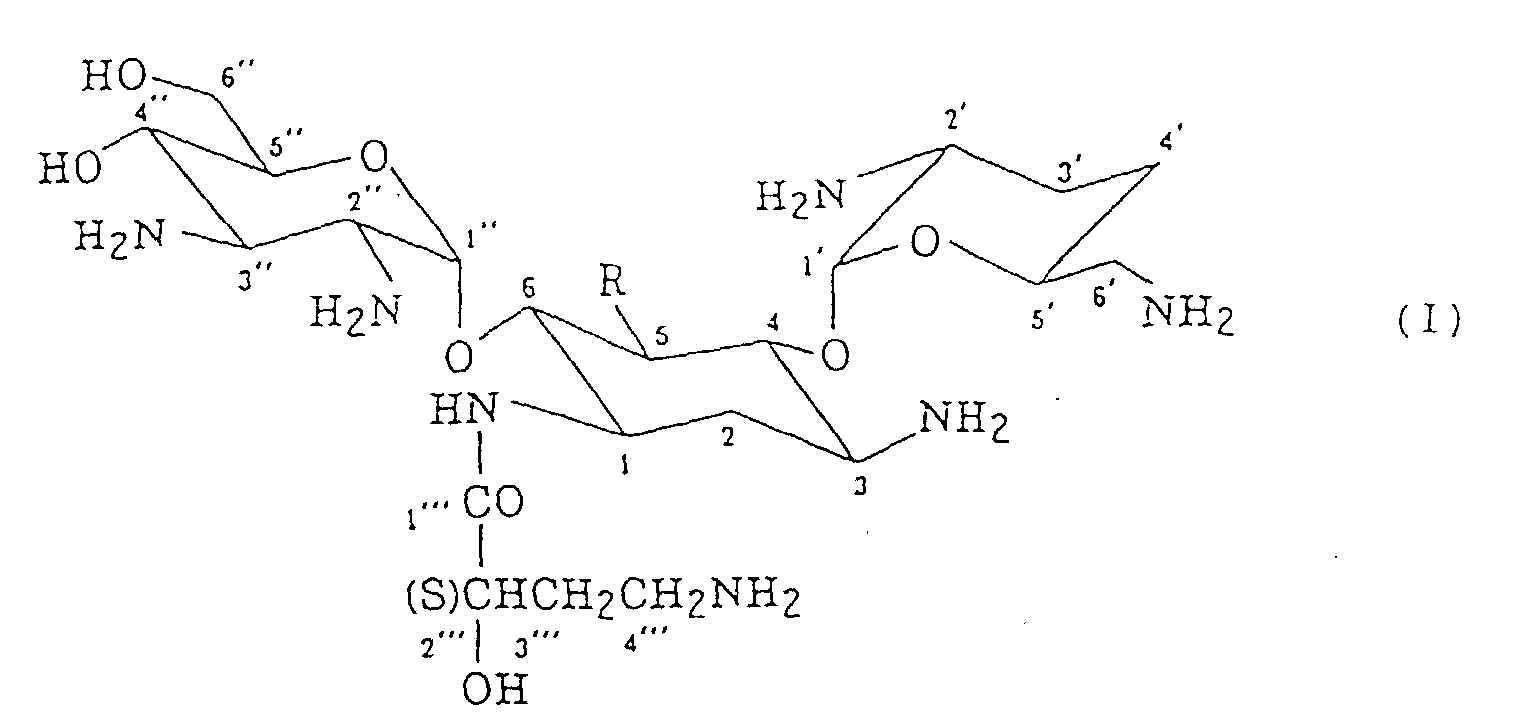
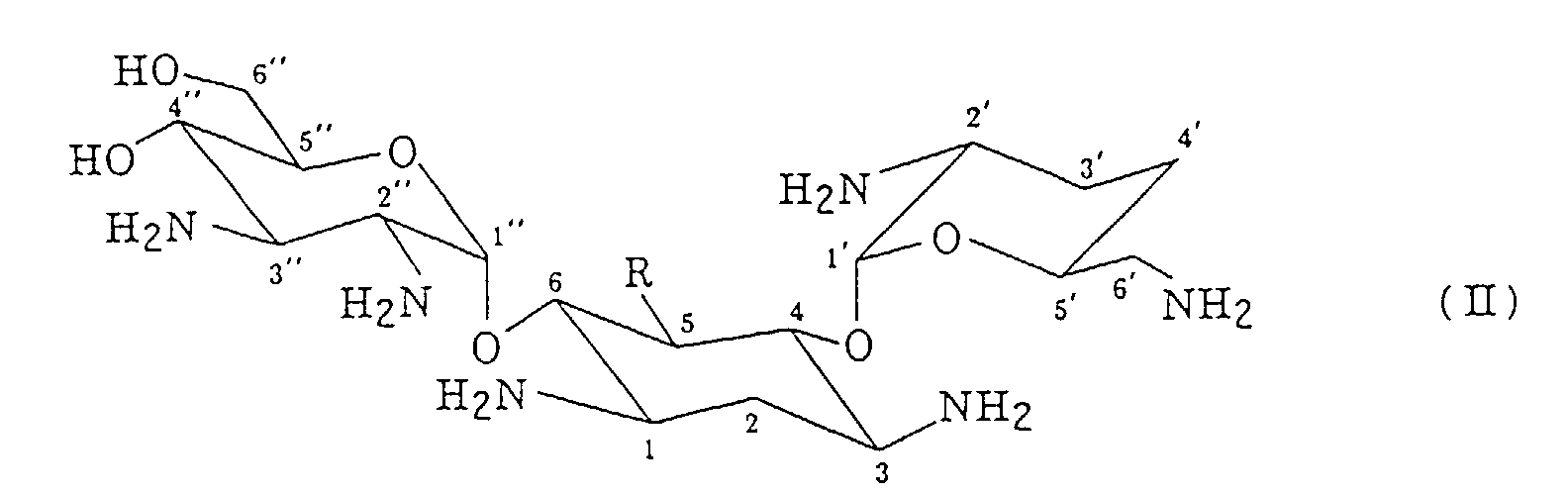
- Acid addition salts of 2"-amino-2"-deoxyarbekacin and 2"-amino-5,2"-dideoxyarbekacin having general formula (I) and of 2"-amino-2"-deoxydibekacin and 2"-amino-5,2"-dideoxydibekacin having general formula (II) according to this invention include such those with pharmaceutically acceptable inorganic acids such as hydrochloric acid, sulfuric acid, phosphoric acid, nitric acid, etc. and such those with pharmaceutically acceptable organic acids such as malic acid, citric acid, ascorbic acid, methanesulfonic acid, etc.
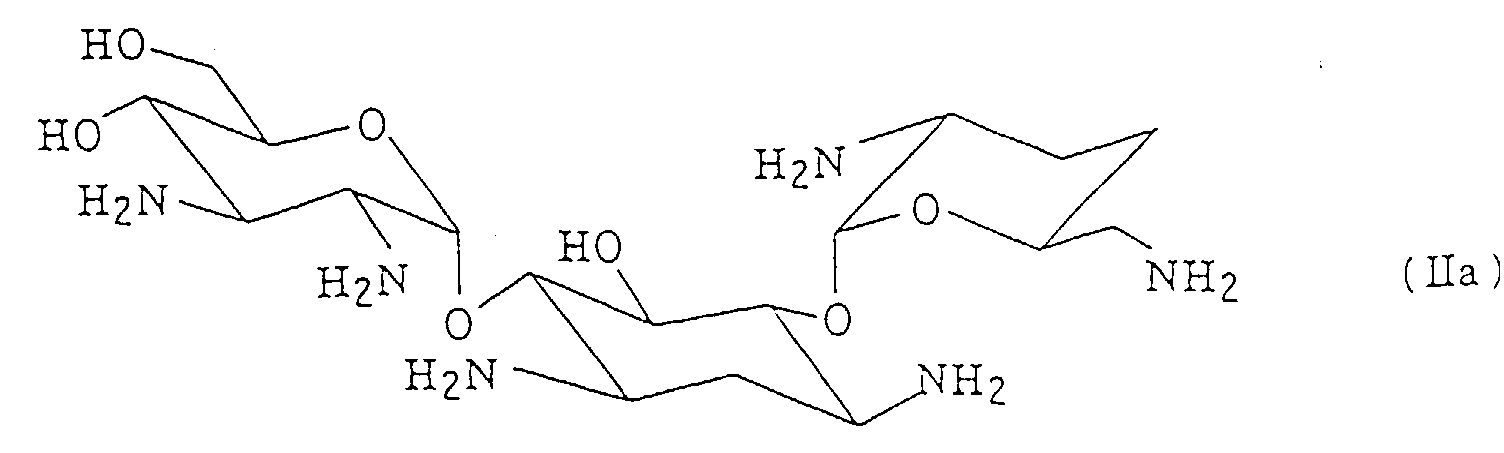
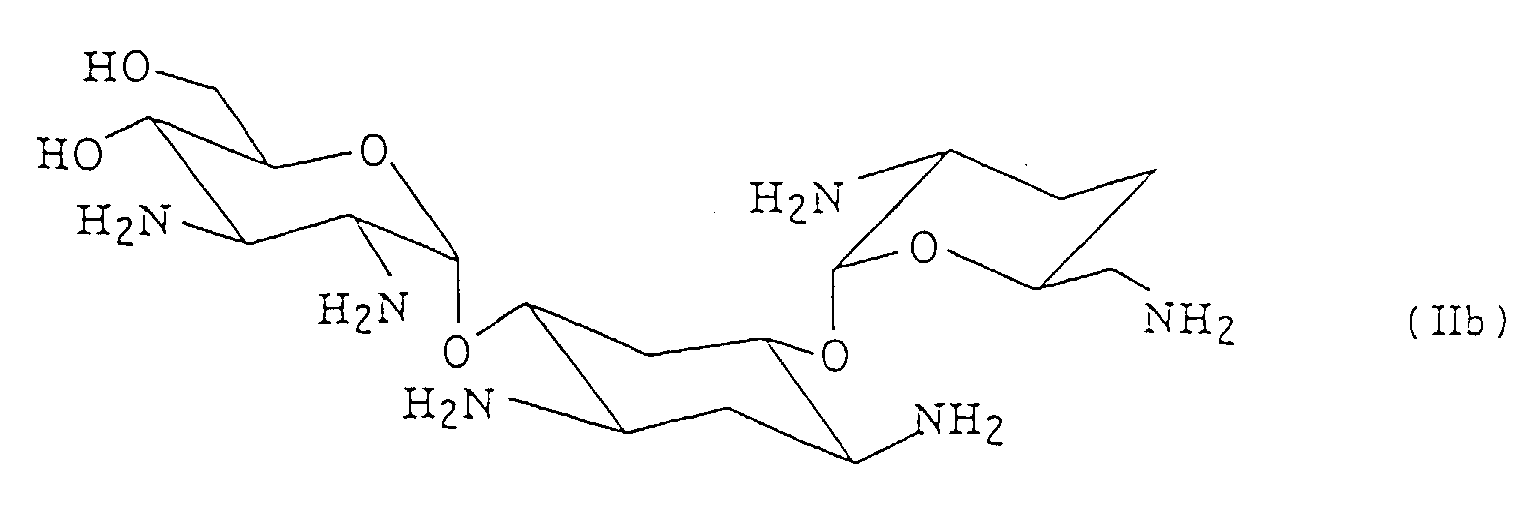
- MIC Minimum growth inhibitory concentrations (MIC) of each of 2"-amino-2"-deoxyarbekacin (Compound Ia), 2"-amino-5,2"-dideoxyarbekacin (Compound Ib), 2"-amino-2"-deoxydibekacin (Compound IIa) and 2"-amino-5,2"-dideoxy-dibekacin (Compound IIb) against various bacteria (20 strains) and against clinically isolated strains of MRSA (50 strains) were determined by standard serial dilution method on Muller-Hinton's agar medium (as estimated after cultivating at 27°C for 18 hours), and the test results obtained are shown in TABLE 3 and TABLE 4, respectively. Test organisms MIC.
- LD 50 50% Lethal dosages (LD 50 , observations for two weeks) of the new compounds of this invention as estimated upon single intravenous administration to mice (ICR-strain, 4 weeks old, female) are as follows: LD 50 2"-Amino-2"-deoxyarbekacin (Compound Ia) >100 mg/kg 2"-Amino-5,2"-dideoxyarbekacin (Compound Ib) 50-100 mg/kg 2"-Amino-2"-deoxydibekacin (Compound IIa) >100 mg/kg 2"-Amino-5,2"-dideoxydibekacin (Compound IIb) 50-100 mg/kg
- the compounds of general formula (I) and the compounds of general formula (II) or acid addition salts thereof according to this invention may be formulated into various antibacterial compositions containing the said compound(s) as active ingredient by blending the same with pharmaceutically acceptable liquid or solid carrier(s) which may be used conventionally.
- Anti-bacterial compositions containing the compounds of general formula (I) or (II) or their acid addition salts of this invention may be used primarily in various formulations for administration, including injections such as intravenous injections, oral compositions such as capsules, tablets, powder and granules, and others such as ointment, intrarectal agent, suppositories of oil-fat type, water-soluble suppositories, and the like.
- formulations may be prepared in any conventional manner using conventional excipients, fillers, binders, wetting agents, disintegrators, surfactants, lubricants, dispersants, buffers, preservatives, dissolution aids, antiseptics, flavorings, indolent agents, and the like.
- 2"-amino-2"-deoxyarbekacin and 2"-amino-5,2"-dideoxyarbekacin as represented by general formula (I) according to the first aspect of this invention may be prepared by converting the 2"-hydroxyl group of dibekacin into amino group, and if necessary, acylating the 1-amino group of the resulting aminated product with (s)-4-amino-2-hydroxybutyric acid, followed by replacing the 5-hydroxyl group by a hydrogen atom.
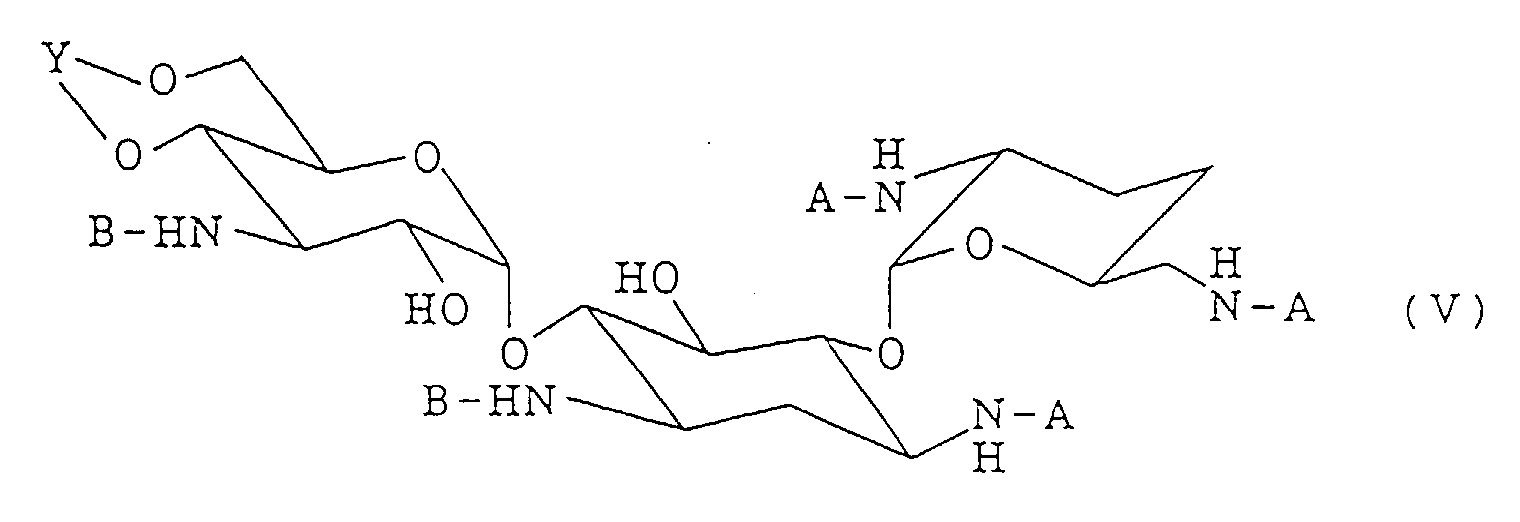
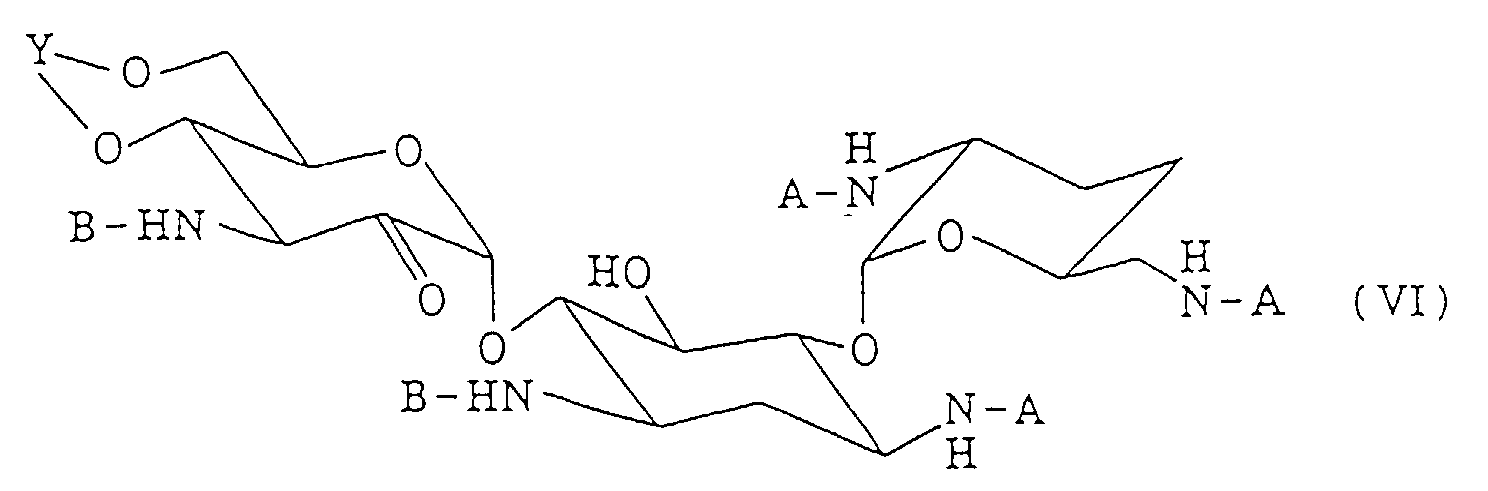
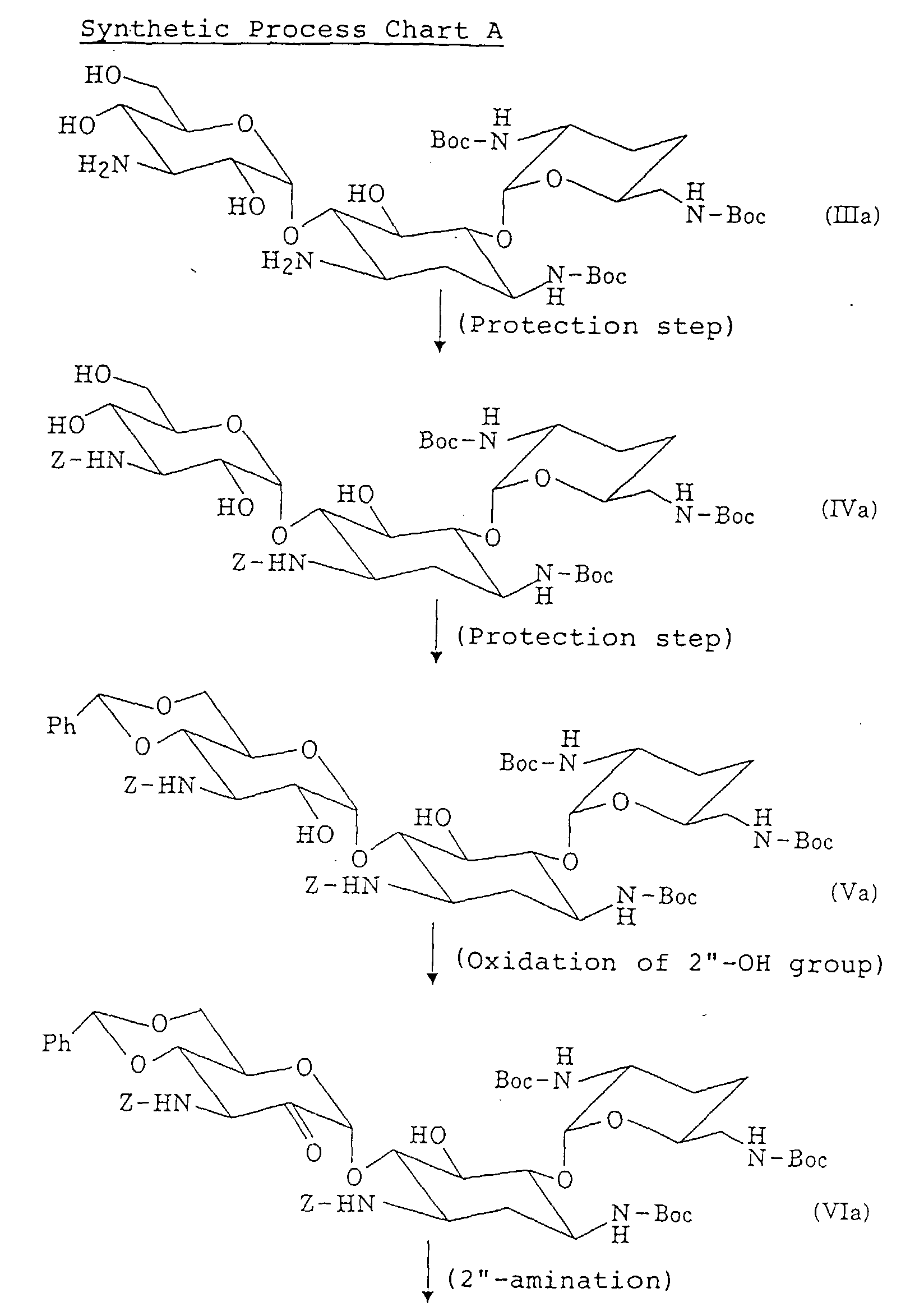
- the oxidation of the 2"-hydroxyl group of the compound of formula (V) into oxo group may be carried out by Pfitzner-Moffatt's oxidation method, as illustrated hereinafter in relation to "Synthetic Process Chart A". Then, the conversion of the 2"-oxo group of the compound of formula (VI) into amino group may be effected by such known method for reduction with a hydride in the presence of ammonium acetate, as illustrated in "Synthetic Process Chart A".
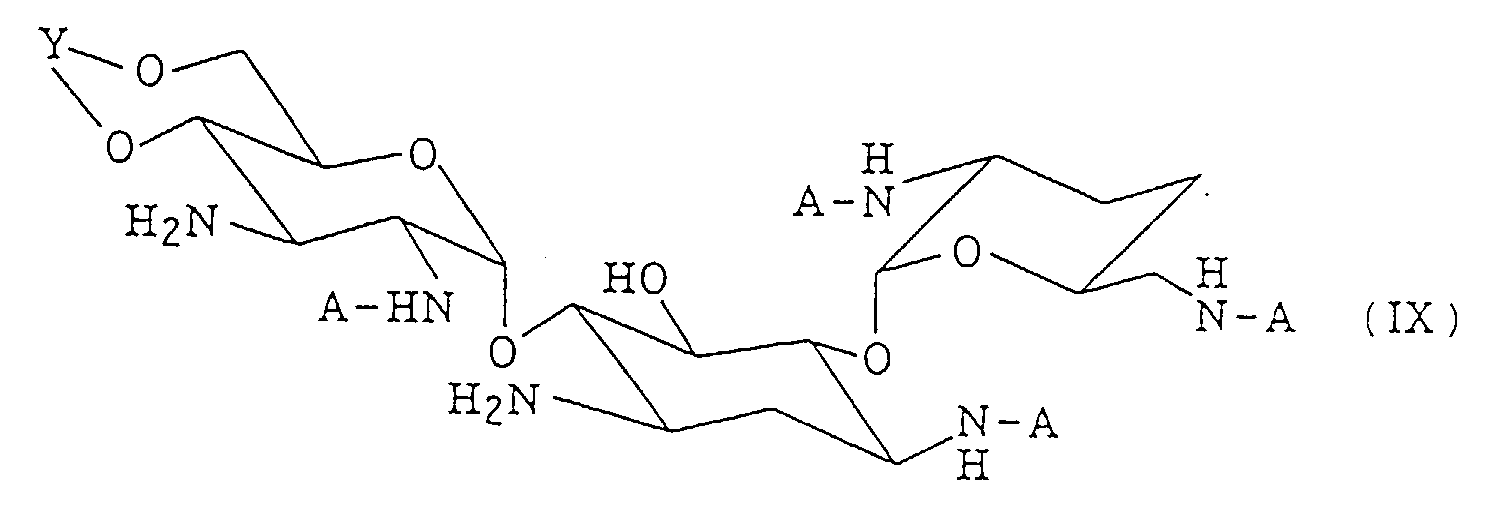
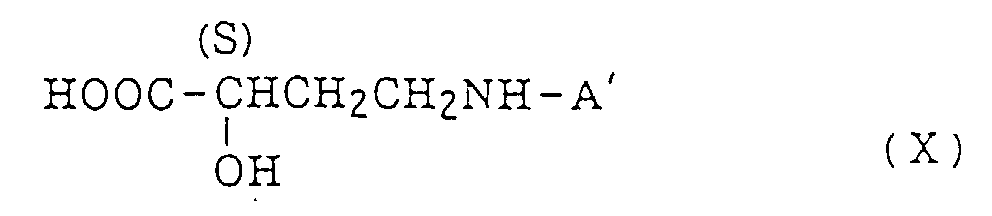
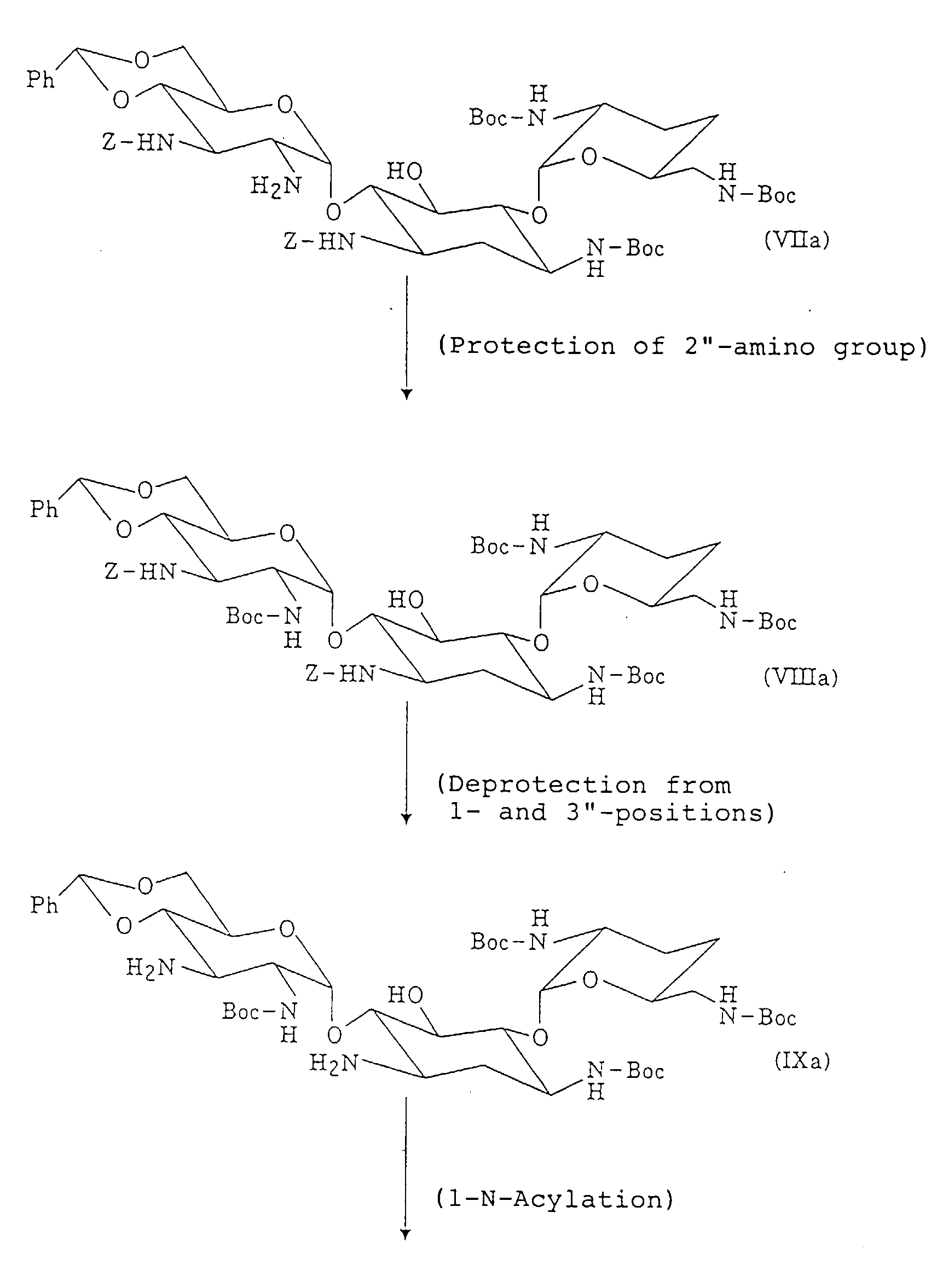
- step of acylating the 1-amino group of the compound of formula (IX) with an active ester or an acid halide of an N-protected-(S)-4-amino-2-hydroxybutyric acid of formula (X) may be carried out in accordance with the method for 1-N-acylation of kanamycins as described in the specifications of Japanese Patent Publication Sho-52-33629, U.S. patent No. 4,001,208 and U.S. patent No. 4,297,485.
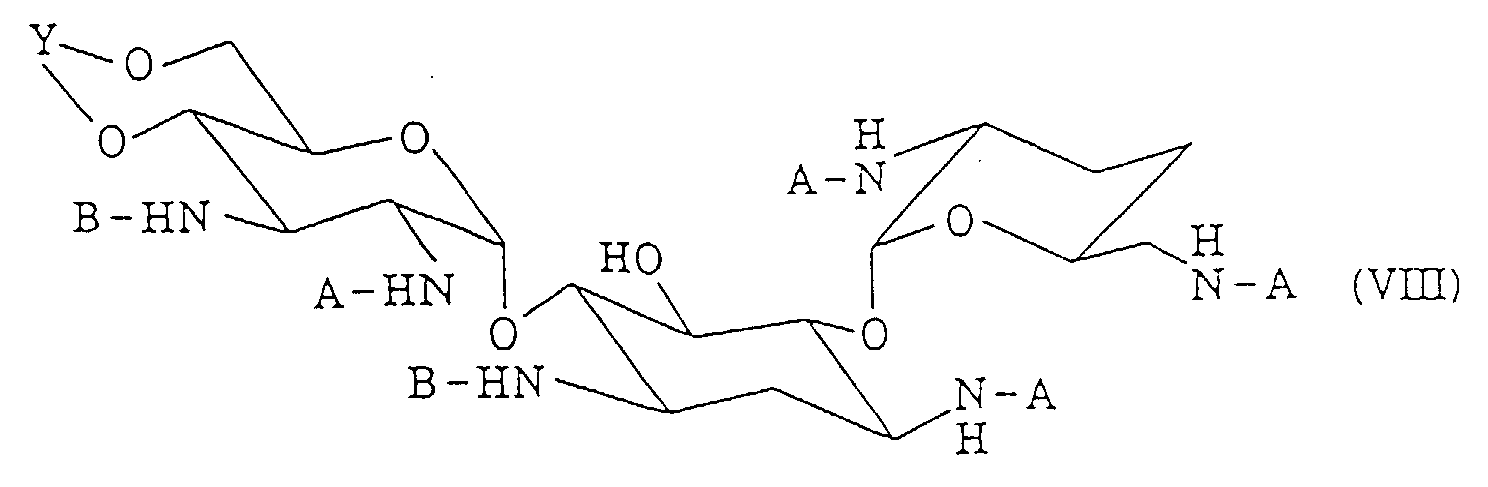
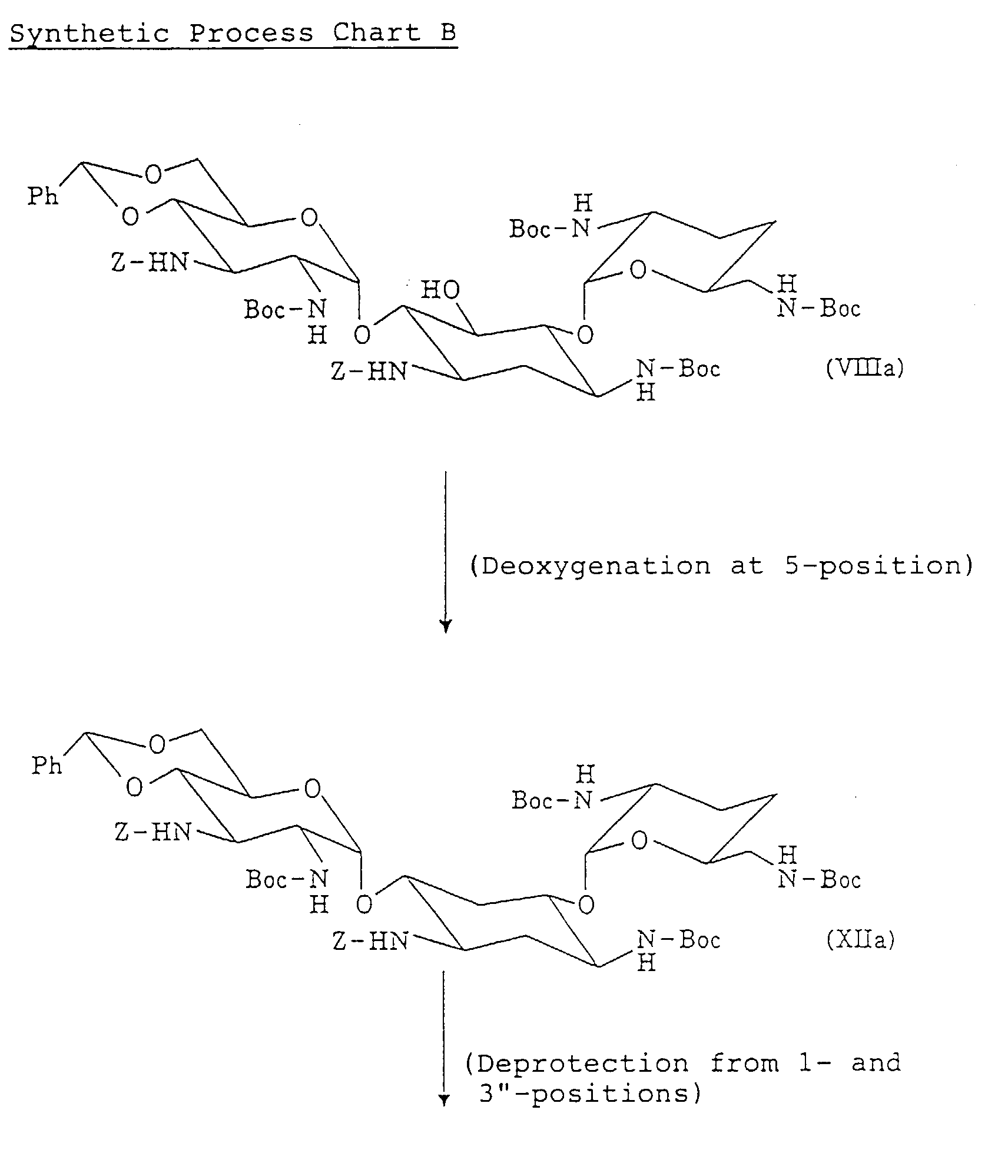
- the deoxygenation method for effecting the elimination of the 5-hydroxyl group of the compound of formula (VIII) may conveniently be carried out by a two-stage process where the 5-hydroxyl group is first converted into dithiocarbonate group, followed by reducing the latter with a hydride as illustrated hereinafter in relation to "Synthetic Process Chart B".
- any other known deoxygenation method may be adopted, if desired.
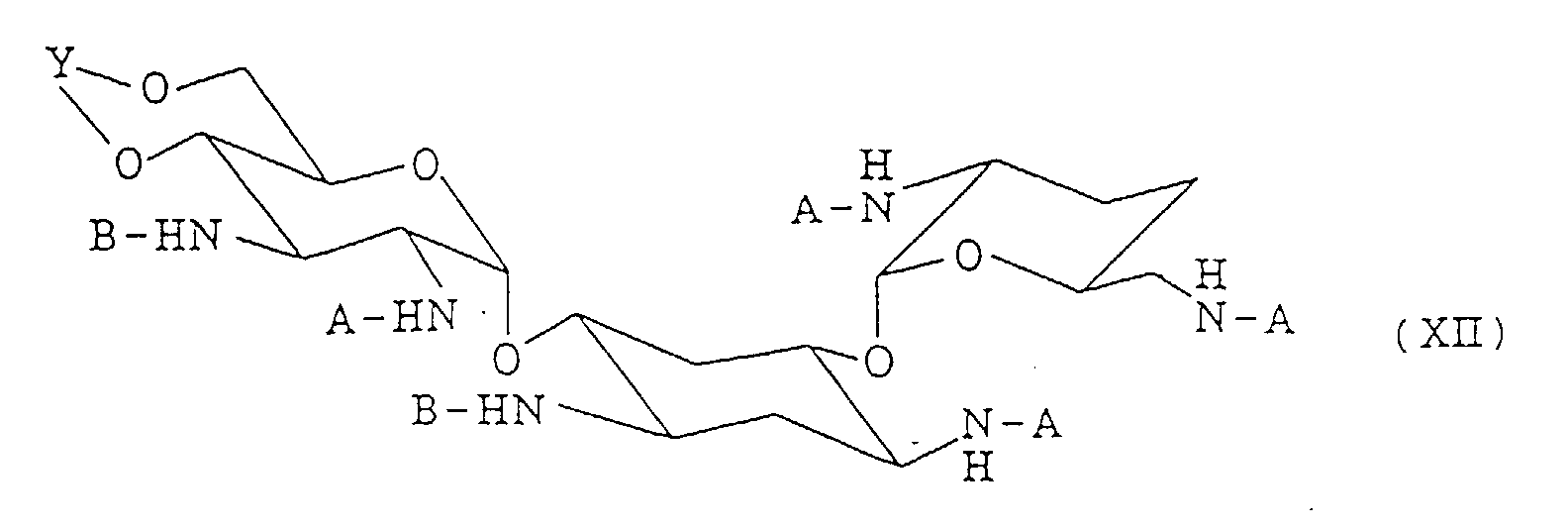
- the step for deprotection of the protected 1- and 3"-amino groups of the compound of formula (XII) and the step for deprotection of the 1-N-acylated product of formula (XIV) may be carried out in a usual manner similarly to the corresponding step in the process of the third aspect of this invention.
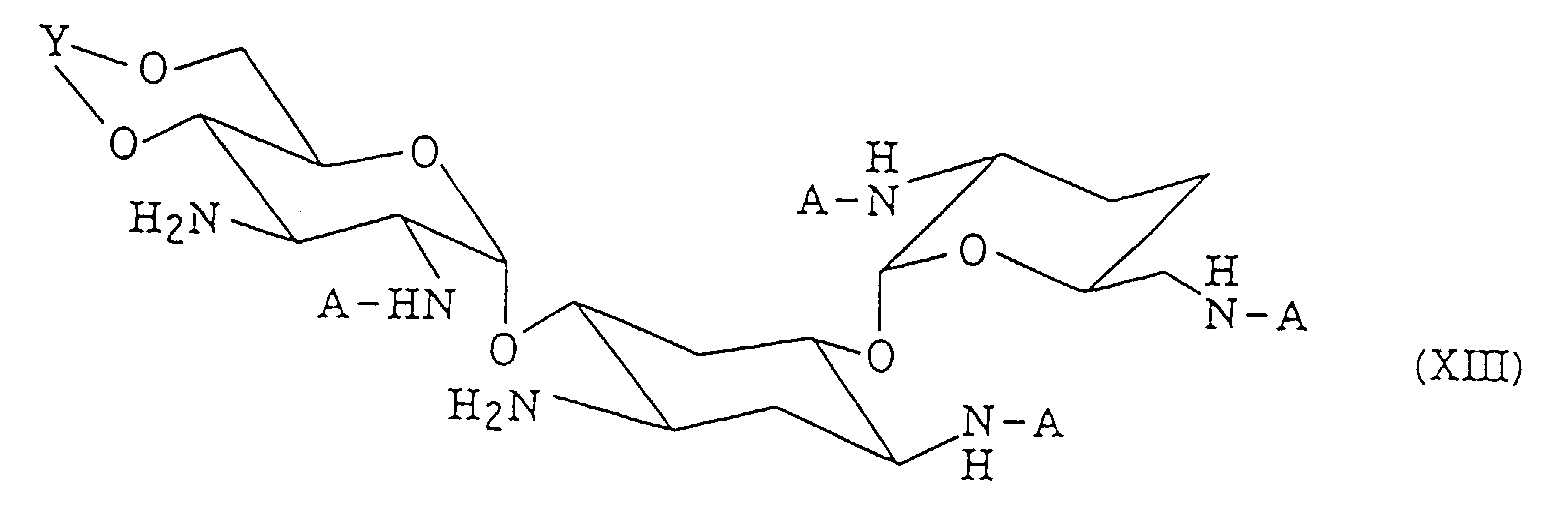
- step of acylating the 1-amino group of the compound of formula (XIII) with the butyric acid derivative of formula (X) may be effected in a similar manner to that of the corresponding step in the process of the third aspect of this invention.
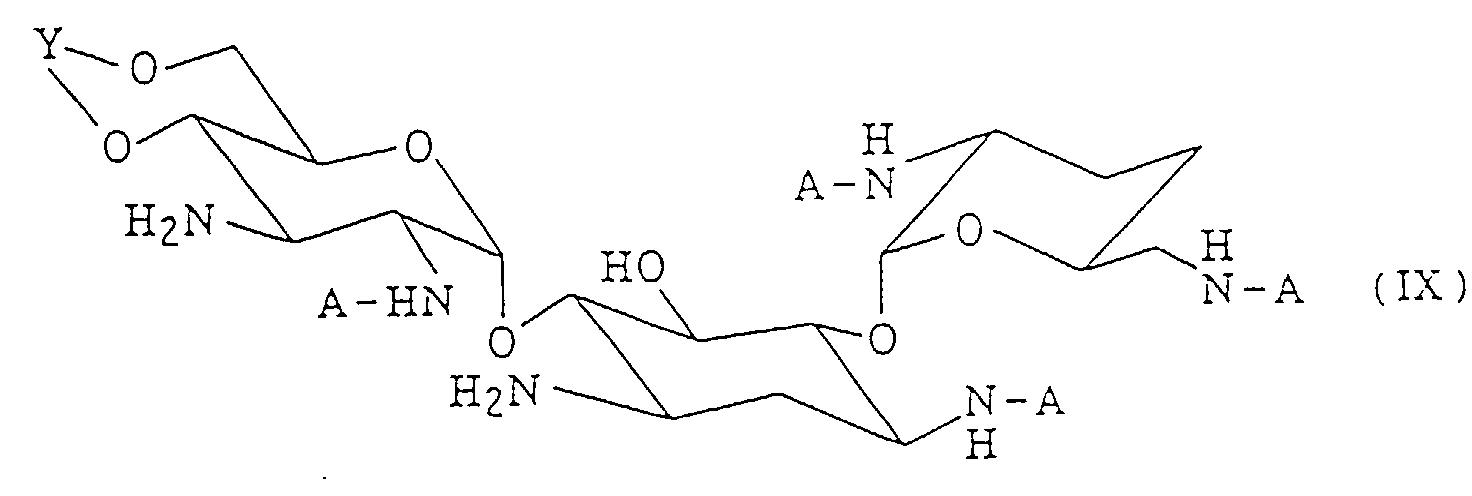
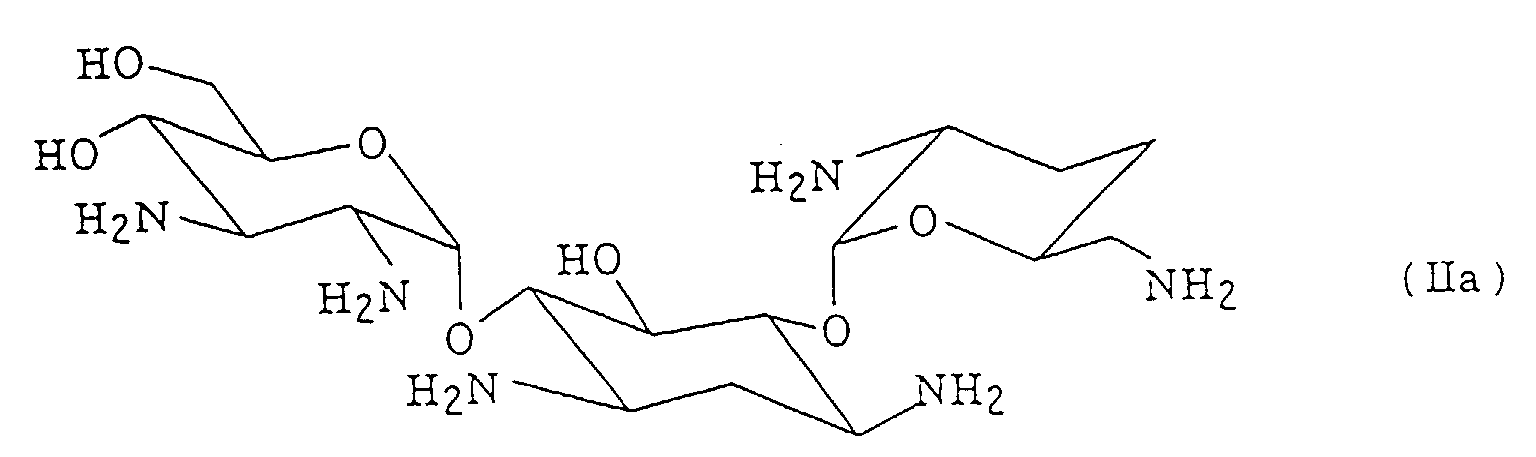
- a process for the preparation of 2''-amino-2''-deoxydibekacin of formula (IIa) which comprises removing the aralkylidene or alkylidene group (Y) and alkoxycarbonyl group (A) of a 2"-amino-4", 6"-O-aralkylidene- or alkylidene-3,2',6',2''-N-tetrakis(alkoxycarbonyl)-2''-deoxydibekacin represented by general formula (IX) : wherein A means an alkoxycarbonyl group and Y means an aralkylidene or alkylidene group, from the compound of formula (IX) to produce the compound of formula (IIa).
- Said 2''-amino-4'',6''-O-aralkylidene- or alkylidene-3,2', 6',2''-N-tetrakis(alkoxycarbonyl)-2''-deoxydibekacin of formula (IX) may have been synthesized via a series of compounds of general formulae (III), (IV), (V), (VI), (VII), and (VIII) mentioned hereinbefore.
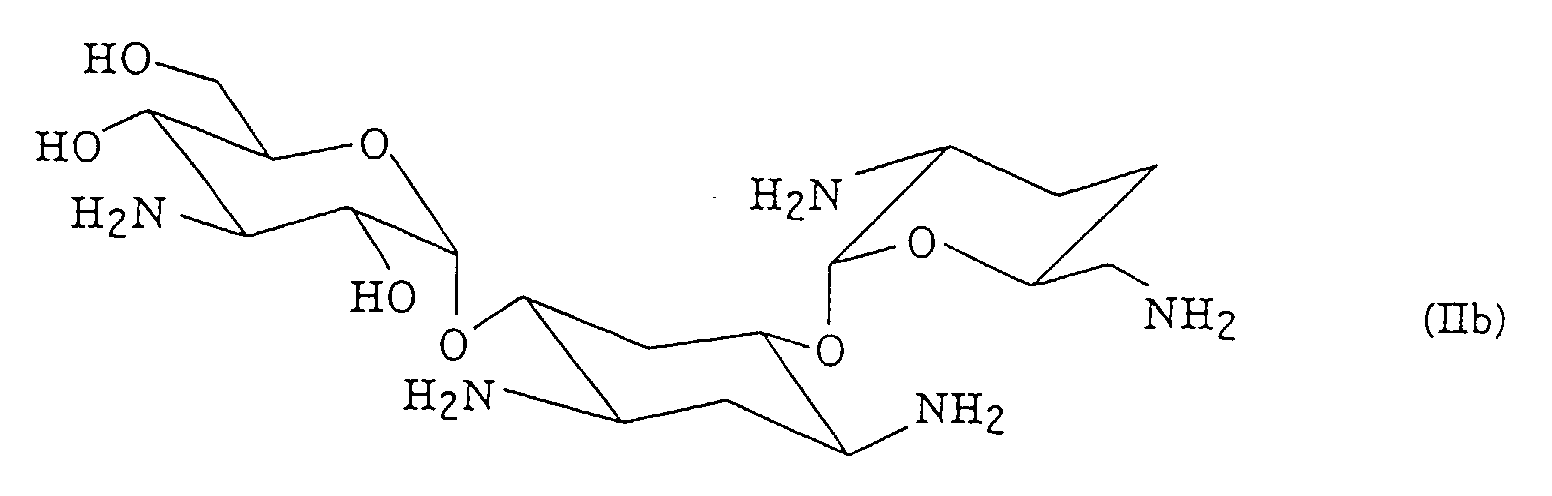
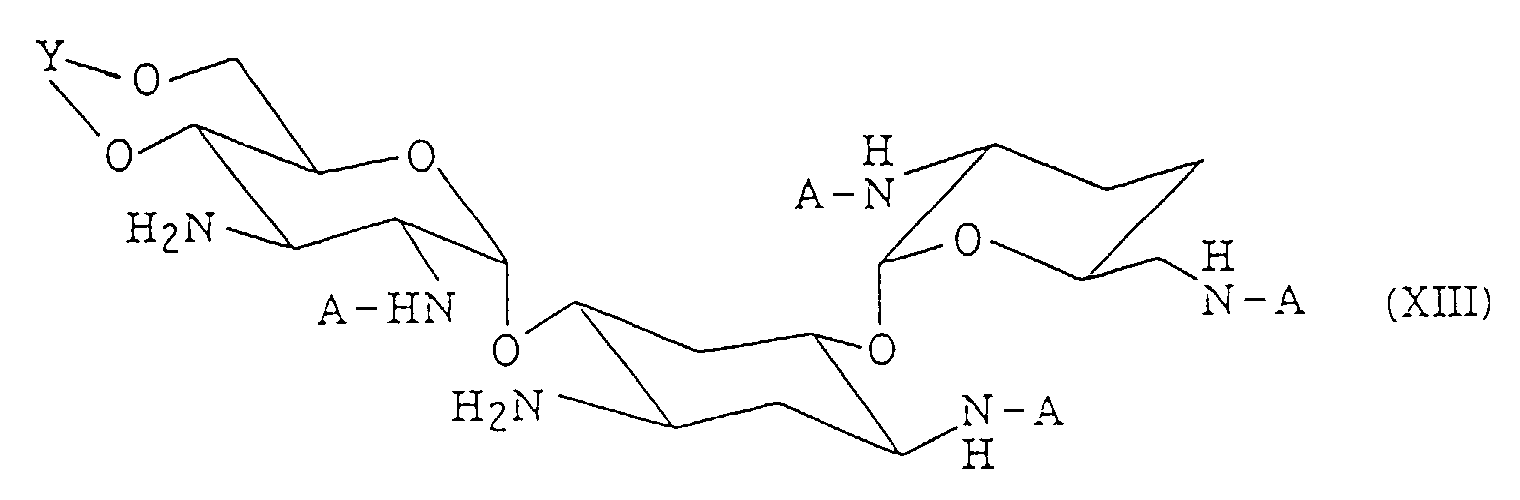
- a process for the preparation of 2"-amino-5,2"-dideoxydibekacin of formula (IIb) which comprises removing the aralkylidene or alkylidene group (Y) and alkoxycarbonyl group (A) of a 2"-amino-4", 6"-O-aralkylidene or alkylidene-3,2',6',2''-N-tetrakis(alkoxycarbonyl)-5,2''-dideoxydibekacin represented by general formula (XIII): wherein A means an alkoxycarbonyl group and Y means an aralkylidene or alkylidene group, from the compound of formula (XIII) to produce the compound of formula (IIb).
- Said 2"-amino-4"-,6"-O-aralkylidene or alkylidene-3,2', 6',2''-N-tetrakis(alkoxycarbonyl)-5,2''-dideoxydibekacin of formula (XIII) may have been prepared via the compounds of general formulae (VIII) and (XII) as mentioned hereinbefore.
- the process of the sixth aspect of this invention for the production of 2"-amino-5,2"-dideoxydibekacin of formula (IIb) may also be applied to such cases when there is employed the compound of general formula (XIII) which has been prepared from the compounds of general formulae (VIII) and (XII) where the amino-protecting groups A and B are equal to each other.
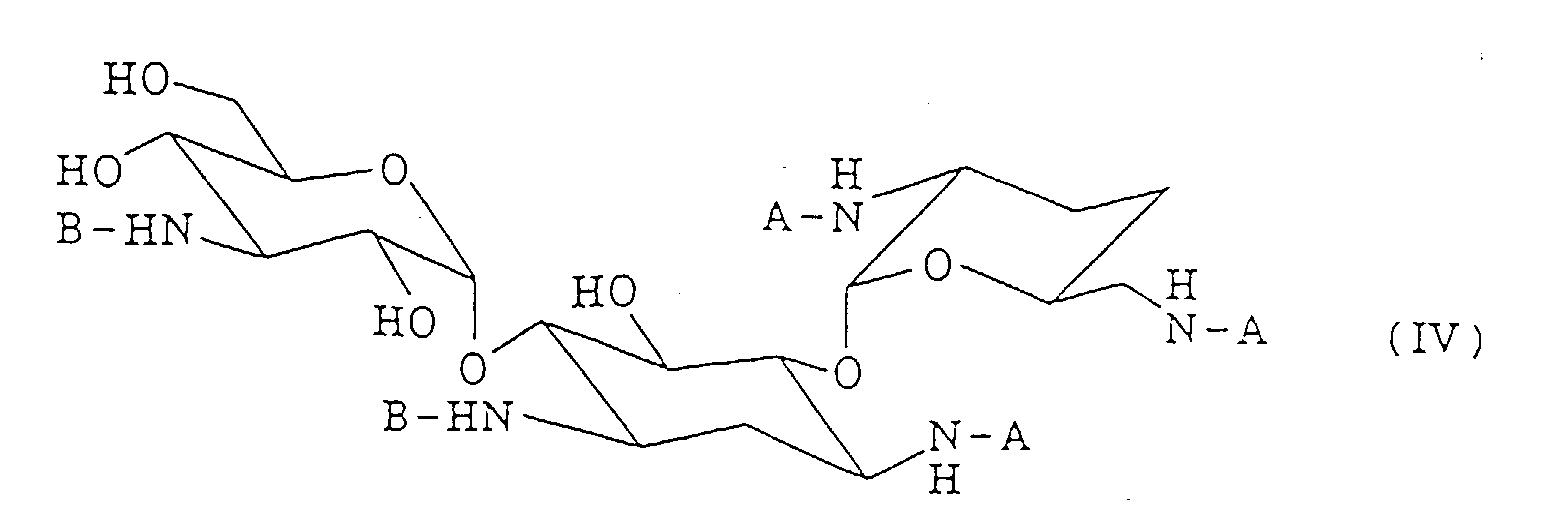
- the compound of general formula (IV) which is available as the starting material in the above cases and in which the amino-protecting groups A and B are the same, there may be employed 1,3,2',6',3''-N-pentakis(t-butyoxycarbonyl)dibekacin [see T. Miyasaka et al., "J. Antibiotics", 33 , 527, (1980)].
- Boc represents t-butoxycarbonyl group
- Z represents benzyloxycarbonyl group
- Ph denotes phenyl group
- PMZ denotes p-methoxybenzyloxycarbonyl group
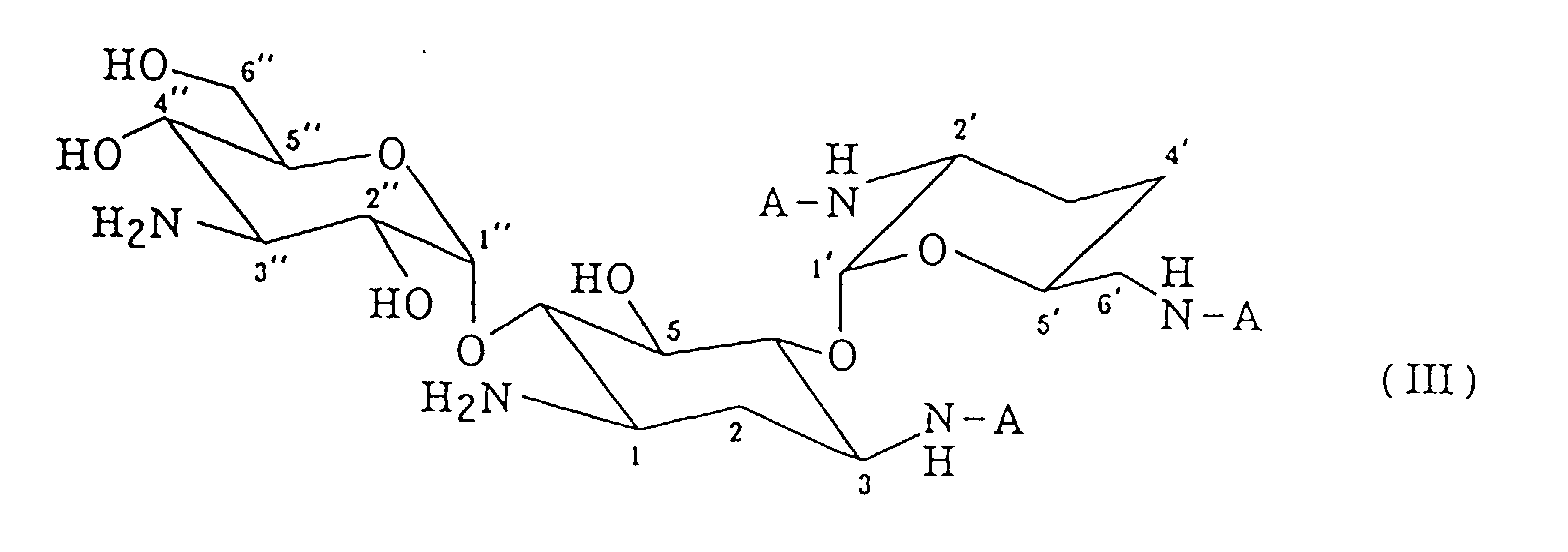
- 3,2',6'-N-Tris (t-butoxycarbonyl)-dibekacin of formula (IIIa) (hereinafter simply referred to as 3,2',6'-N-tris(BOC)dibekacin) which is to be used as the starting material is a partially amino-protected derivative of dibekacin which may be synthesized by acylating dibekacin with t-butoxycarbonyl chloride in the presence of zinc acetate as described in the specification of Japanese Patent Publication Sho-63-1319 or U.S. patent No. 4,297,485.
- the compound of formula (IVa), i.e. 1,3"-N-bis(benzyloxycarbonyl)-3,2',6'-N-tris (t-butoxycarbonyl)-dibekacin is produced by protecting in a usual manner each of the two amino groups at the 1- and 3"-positions of 3,2',6'-N-tris(BOC)dibekacin (IIIa) with an amino-protecting group which is removable by a deprotecting method different from that for the removal of BOC, and which is, for example, benzyloxycarbonyl group, one of aralkyloxycarbonyl groups.
- the 2"-OH group of the compound (Va) is then converted into amino group.
- the conversion of the 2"-OH group into amino group may be achieved, for example, by a usual method of Pfitzner-Moffatt for oxidation [B.P. Mundy and M.G. Ellerd, "Name Reactions and Reagents in Organic Synthesis", John Wiley & Sons, New York, p.162 (1988)], thus forming the 2"-keto derivatives of formula (VIa), i.e.
- the 2"-amino group of the compound of formula (VIIa) is protected with BOC group as amino-protecting group to afford the compound of formula (VIIIa), i.e. 2"-amino-4",6"-O-benzylidene-1,3"-N-bis (benzyloxycarbonyl)-3,2',6',2"-N-tetrakis(t-butoxycarbonyl)-2"-deoxydibekacin.
- the 1- and 3"-benzyloxycarbonyl groups of the compound (VIIIa) are removed by hydrogenolysis in a usual manner to give the compound of formula (IXa), i.e.
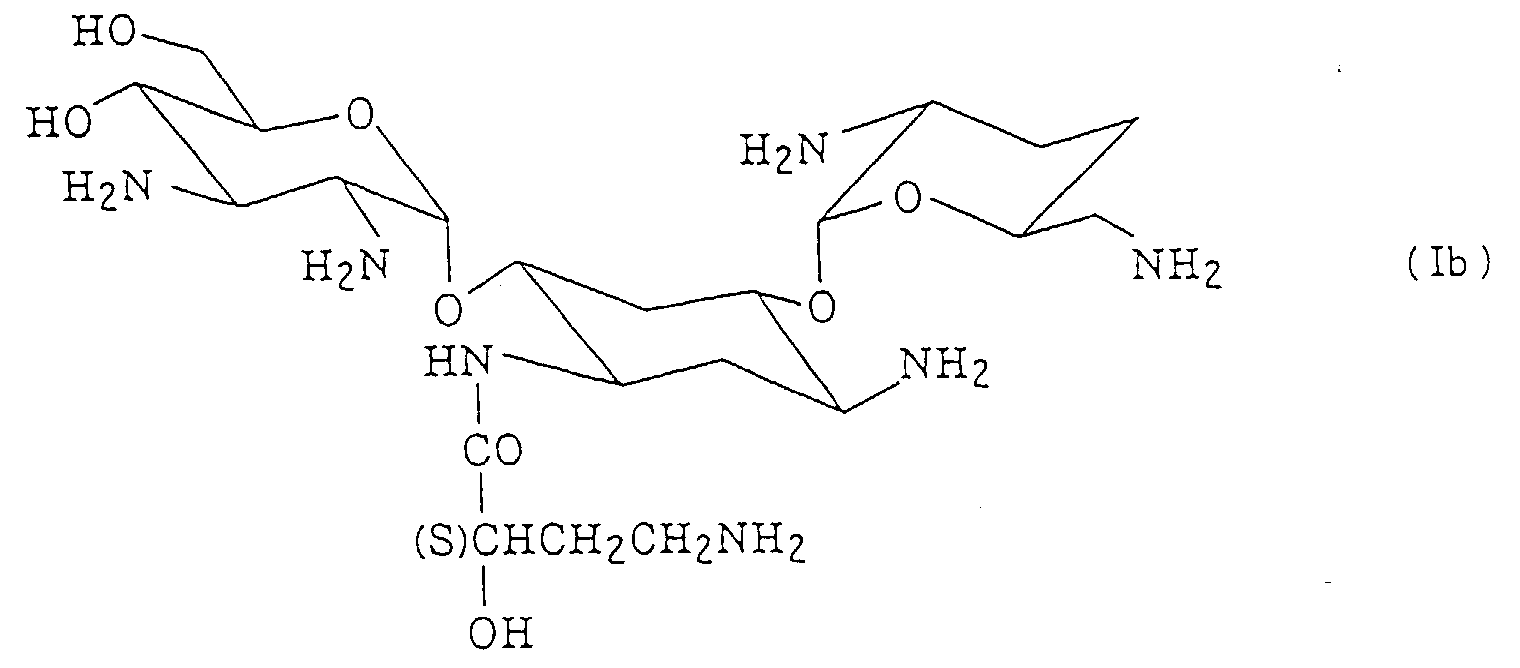
- the product thus obtained is purified by a column chromatography using a weak cation-exchange resin to yield 2"-amino-2"-deoxyarbekacin of formula (Ia) which has only one acylated-amino group at the 1-position as the object product.
- the 1-N-acylated product of formula (XIVa) is prepared by removing the benzyloxycarbonyl group from each of the protected 1- and 3"-amino groups of the compound of formula (XIIa) in the same manner as for the compound of formula (VIIIa) shown in Synthetic Process Chart A, to afford the compound of formula (XIIIa), i.e.
- Synthetic Process Chart D When the compound of formula (XIIIa) shown in Synthetic Process Chart B is subjected to conventional deprotecting reactions, 2''-amino-5,2''-dideoxydibekacin of formula (IIb) is produced (see Example 4 given later).
- 2"-amino-5,2"-dideoxyarbekacin provided in the first aspect of this invention can exhibit broad and excellent antibacterial activity against a variety of gram-positive and gram-negative bacteria, including MRSA, but shows a higher acute toxicity to mice than that of 2"-amino-2"-deoxyarbekacin. Accordingly, we have made further studies in an attenmpt to provide another new arbekacin derivatives which are of reduced acute toxicity but show excellent antibacterial activity.
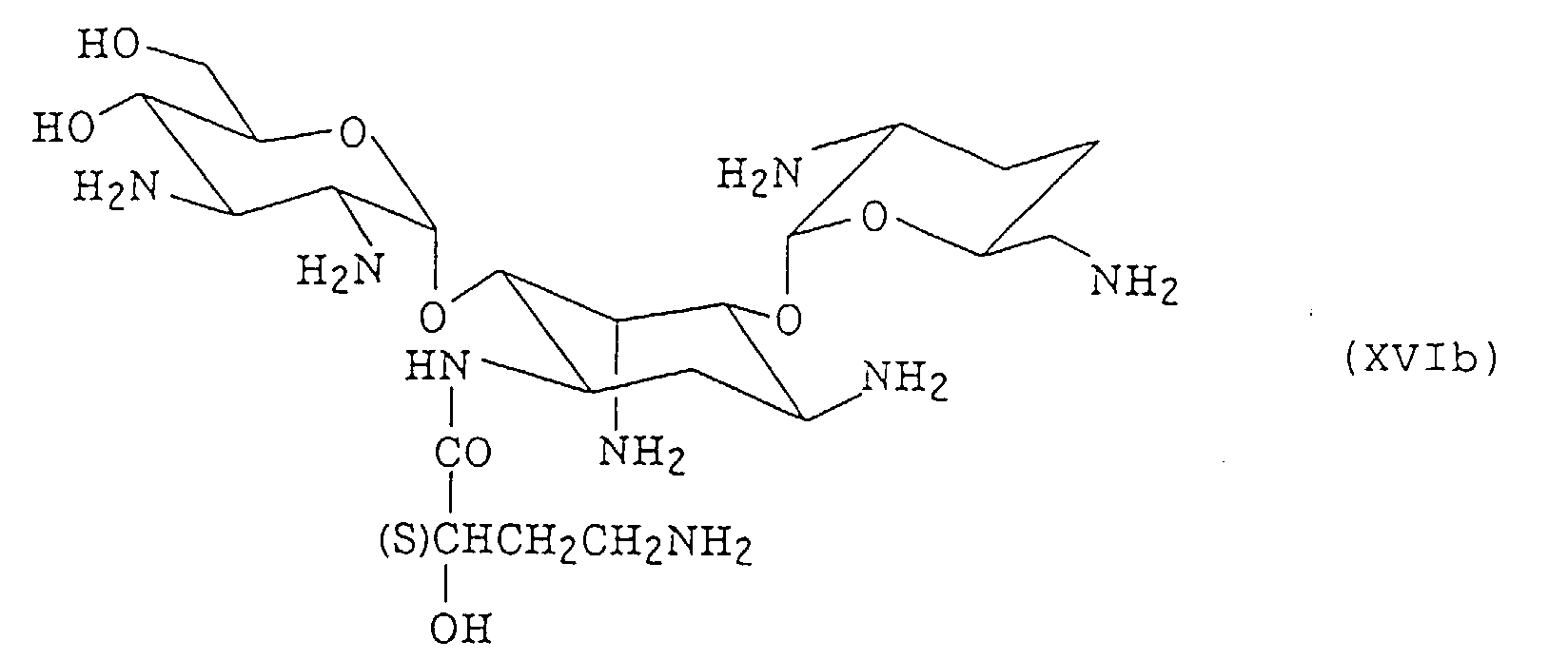
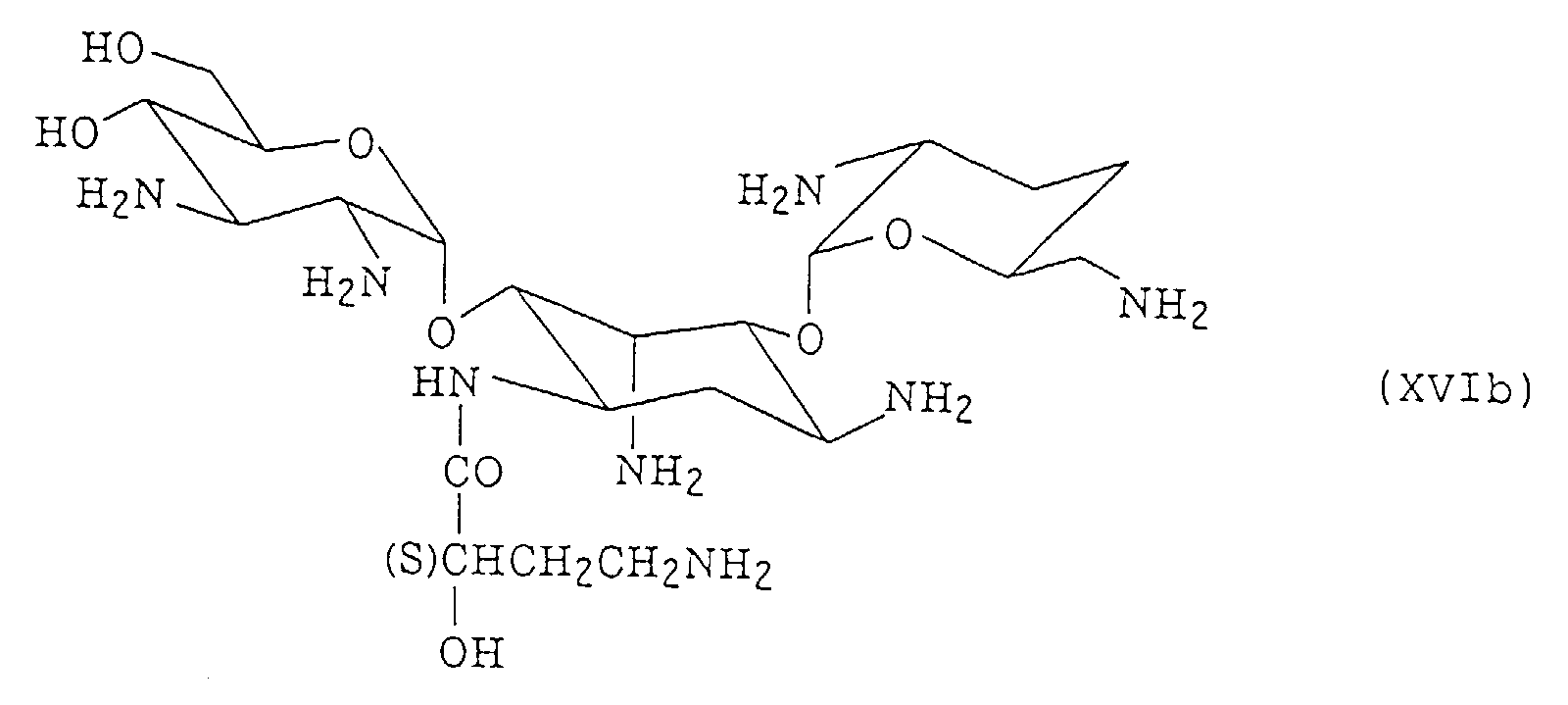
- a 5-substituted-2''-amino-2''-deoxyarbekacin represented by the following general formula (XVI) wherein R 1 means a fluorine atom or an amino group, and an acid addition salt thereof.
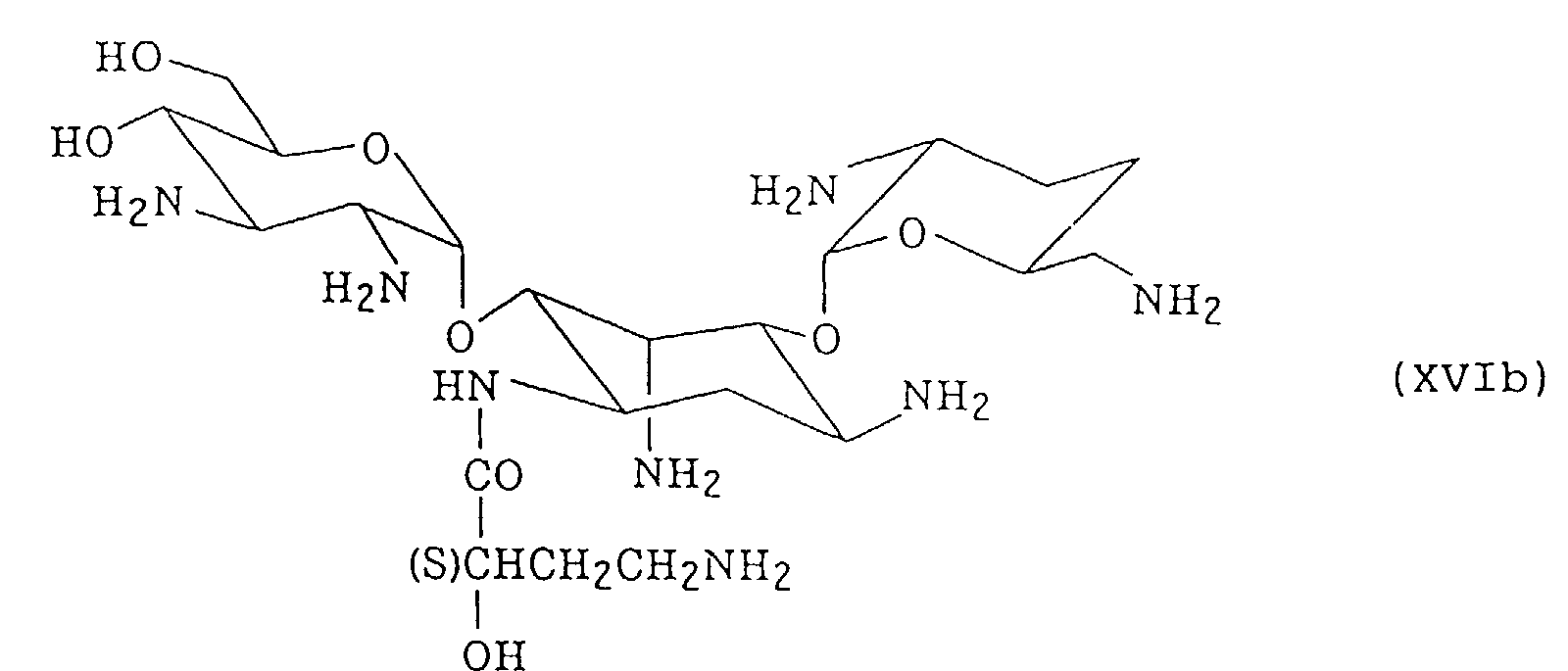
- 2''-amino-5,2''-dideoxy-5-epi-fluoroarbekacin of formula (XVIa) and 2''-amino-5,2''-dideoxy-5-epi-aminoarbekacin of formula (XVIb) according to the seventh aspect of this invention can form their acid addition salts which include such those with a pharmaceutically acceptable inorganic acid, e.g. hydrochloric acid, sulfuric acid, phosphoric acid, nitric acid and the like or with a pharmaceutically acceptable organic acid, e.g. malic acid, citric acid, ascorbic acid, methanesulfonic acid and the like.
- a pharmaceutically acceptable inorganic acid e.g. hydrochloric acid, sulfuric acid, phosphoric acid, nitric acid and the like
- a pharmaceutically acceptable organic acid e.g. malic acid, citric acid, ascorbic acid, methanesulfonic acid and the like.
- MIC Minimum growth inhibitory concentrations (MIC) of each of 2"-amino-5,2"-dideoxy-5-epi-fluoroarbekacin (Compound XVIa) and 2"-amino-5,2"-dideoxy-5-epiaminoarbekacin (Compound XVIb) against various bacteria (18 strains) and against clinically isolated strains of MRSA (50 strains) were determined by standard serial dilution method on Muller-Hinton's agar medium (as estimated after cultivation at 27°C for 18 hours), and the test results obtained are shown in TABLE 5 and TABLE 6, respectively. Test organisms MIC.
- the compound of formula (XVIa) and the compound of formula (XVIb) or acid addition salts thereof according to the seventh aspect of this invention may be formulated into various antibacterial compositions containing the said compound(s) as active ingredient by blending the same with pharmaceutically acceptable liquid or solid carrier(s) which may be used conventionally.
- Antibacterial compositions containing the compound of formulae (XVIa) or (XVIb) or their acid addition salt may be used primarily in various formulations for administration, including injections such as intravenous injections, oral compositions such as capsules, tablets, powder and granules, and others such as ointment, intrarectal agent, suppositories of oil-fat type, water-soluble suppositories, and the like.
- formulations may be prepared in any conventional manner with using conventional excipients, fillers, binders, wetting agents, disintegrators, surfactants, lubricants, dispersants, buffers, preservatives, dissolution aids, antiseptics, flavorings, indolent agents, and the like.
- the 5-substituted-2"-amino-2"-deoxyarbekacins of general formula (XVI) according to the seventh aspect of this invention can be produced with using as a starting compound the new compound, 2"-amino-2"-deoxyarbekacin of formula (Ia) obtained in the first aspect of this invention described hereinbefore.
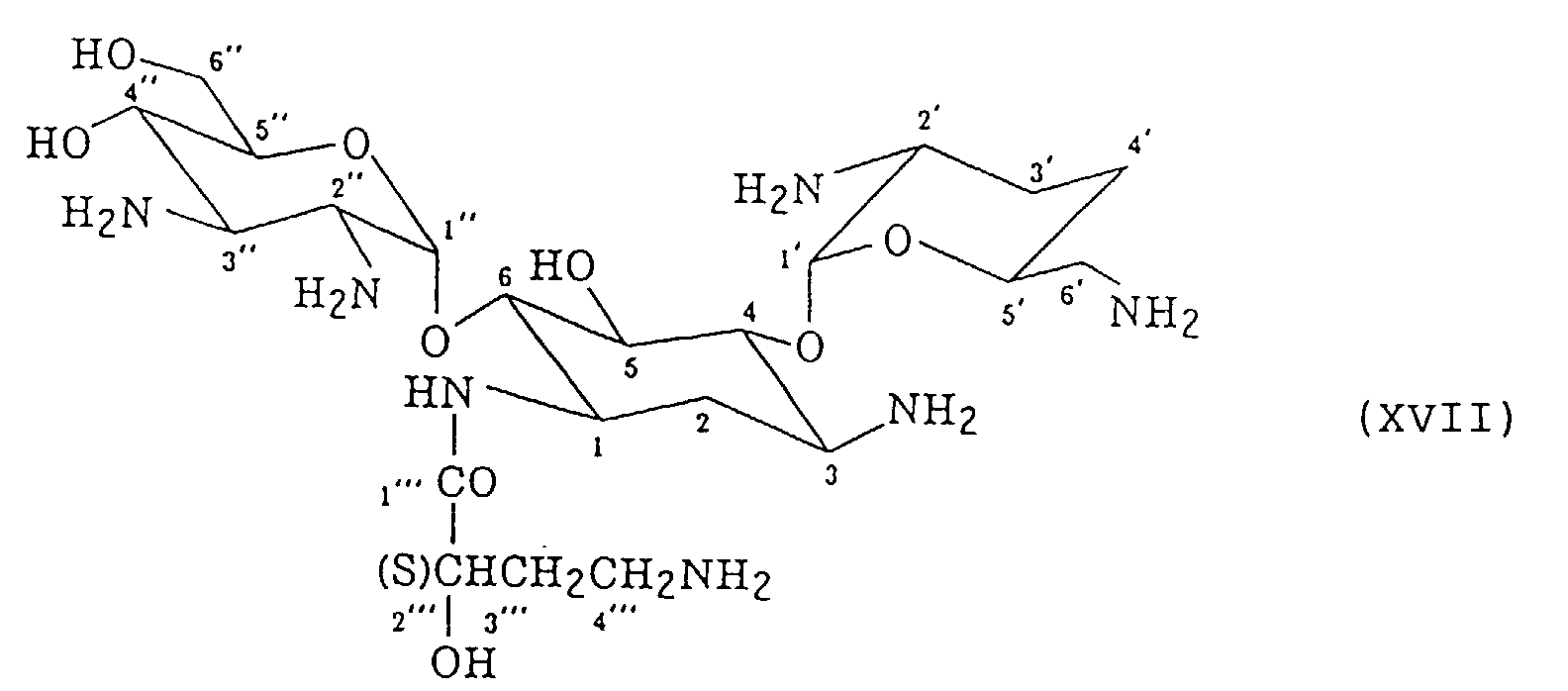
- the amino-protecting group (A) which may be available and introduced into the amino groups of the starting compound of formula (XVII) in the process of the eighth aspect of this invention includes a known alkoxycarbonyl group such as t-butoxycarbonyl group, as well as an aralkyloxycarbonyl group such as p-methoxybenzyloxycarbonyl group etc., which are readily removable by acidic hydrolysis.
- the introduction of such amino-protecting group into amino groups of the compound (XVII) may be effected by a conventional technique for protection of amino groups as known in the art of peptide chemistry.
- the acyl group, particularly an alkanoyl group (B 1 ) which may be available and introduced into some hydroxyl groups of the compound (XVII) includes an alkanoyl group containing 2 - 5 carbon atoms which is easily removable by alkaline hydrolysis.
- an alkanoyl group containing 2 - 5 carbon atoms which is easily removable by alkaline hydrolysis.
- A is the amino-protecting group as set out above but B 1 is still a hydrogen atom
- a 3,2',6',2'',3'',4'''-N-hexakis(alkoxycarbonyl)-2''-amino-2''-deoxyarbekacin may be reacted with an acylating agent, e.g.
- acyl group e.g. acetyl group is preferentially and efficiently introduced into each of the three hydroxyl groups at the 4"-, 6''- and 2''' -positions of the compound employed, whereby there is formed such a compound of general formula (XVIIa) where A is the amino-protecting group, B 1 is the hydroxyl-protecting acyl group as introduced but the 5-hydroxyl group remains unprotected, for example, a 4'',6'',2'''-tri-O-acyl-3,2',6',2'',3'',4'''-N-hexakis(alkoxycarbonyl)-2''-amino-2''-deoxyarbekacin.
- A is the amino-protecting group
- B 1 is the hydroxyl-protecting acyl group as introduced but the 5-hydroxyl group remains unprotected, for example, a 4'',6'',2'''-tri-O-acyl-3
- this compound is reacted with a known fluorination agent, for example, a dialkylsulfur trifluoride such as dimethylsulfur trifluoride or a dialkylaminosulfur trifluoride such as diethylaminosulfur trifluoride (usually abbreviated as DAST) and the like.
- a known fluorination agent for example, a dialkylsulfur trifluoride such as dimethylsulfur trifluoride or a dialkylaminosulfur trifluoride such as diethylaminosulfur trifluoride (usually abbreviated as DAST) and the like.
- a known fluorination agent for example, a dialkylsulfur trifluoride such as dimethylsulfur trifluoride or a dialkylaminosulfur trifluoride such as diethylaminosulfur trifluoride (usually abbreviated as DAST) and the like.
- DAST diethylaminosulfur triflu
- the amino-protecting group (A) available in the starting compound of general formula (XVIIa) may include a known alkoxycarbonyl group such as t-butoxycarbonyl group and an aralkyloxycarbonyl group such as p-methoxybenzyloxycarbonyl group which are readily removable by acidic hydrolysis.
- the hydroxyl-protecting acyl group (B 1 ) available in the same compound (XVIIa) may include a C 2 -C 5 alkanoyl group which is readily removable by alkaline hydrolysis.
- protective groups (A and B 1 ) present in the compound (XVIIa) may respectively be the same as the amino-protecting group (A) and the hydroxyl-protecting group (B) present in the compound of general formula (XVIIa) as employed in the process of the eighth aspect of this invention.
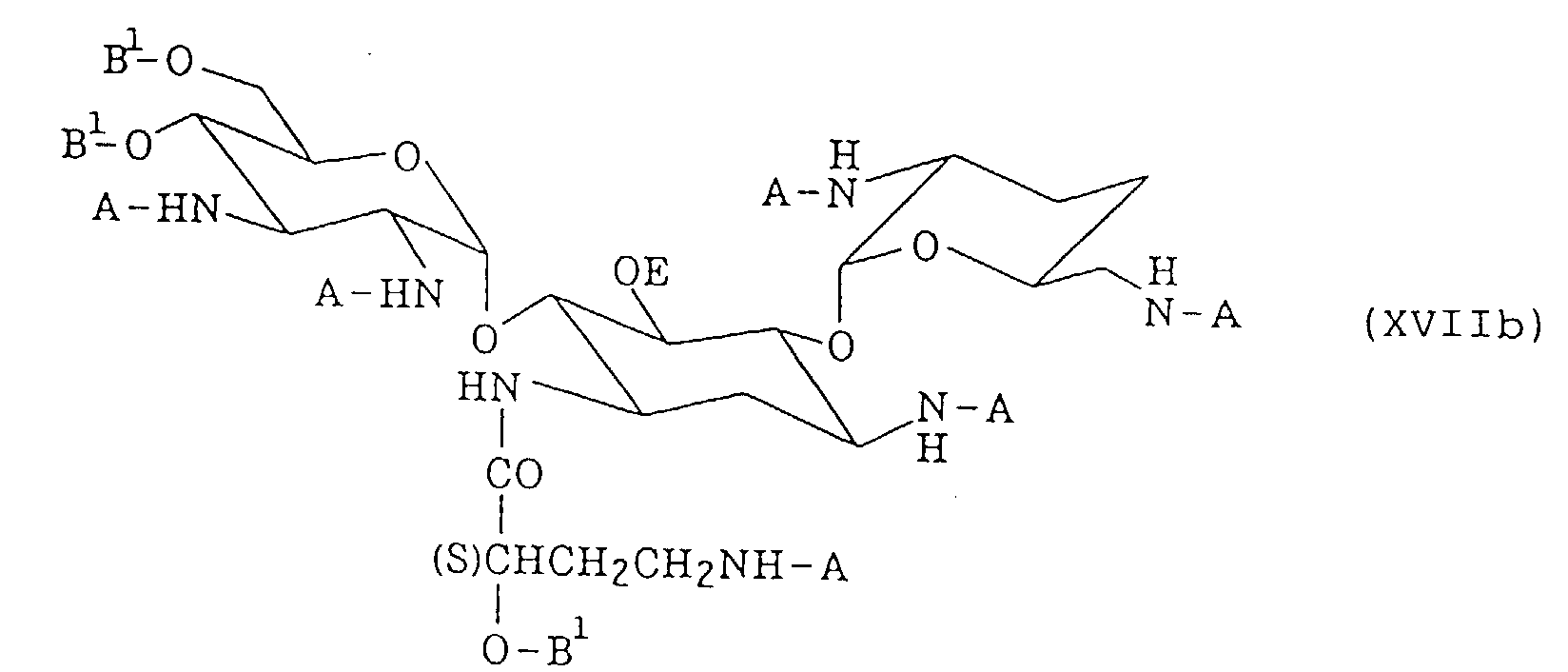
- the compound of general formula (XVIIa) is used and the 5-hydroxyl group of this compound is first alkylsulfonylated, for example, methanesulfonylated (i.e. mesylated) in a known manner to give a 5-O-alkylsulfonylated derivative of general formula (XVIIb).
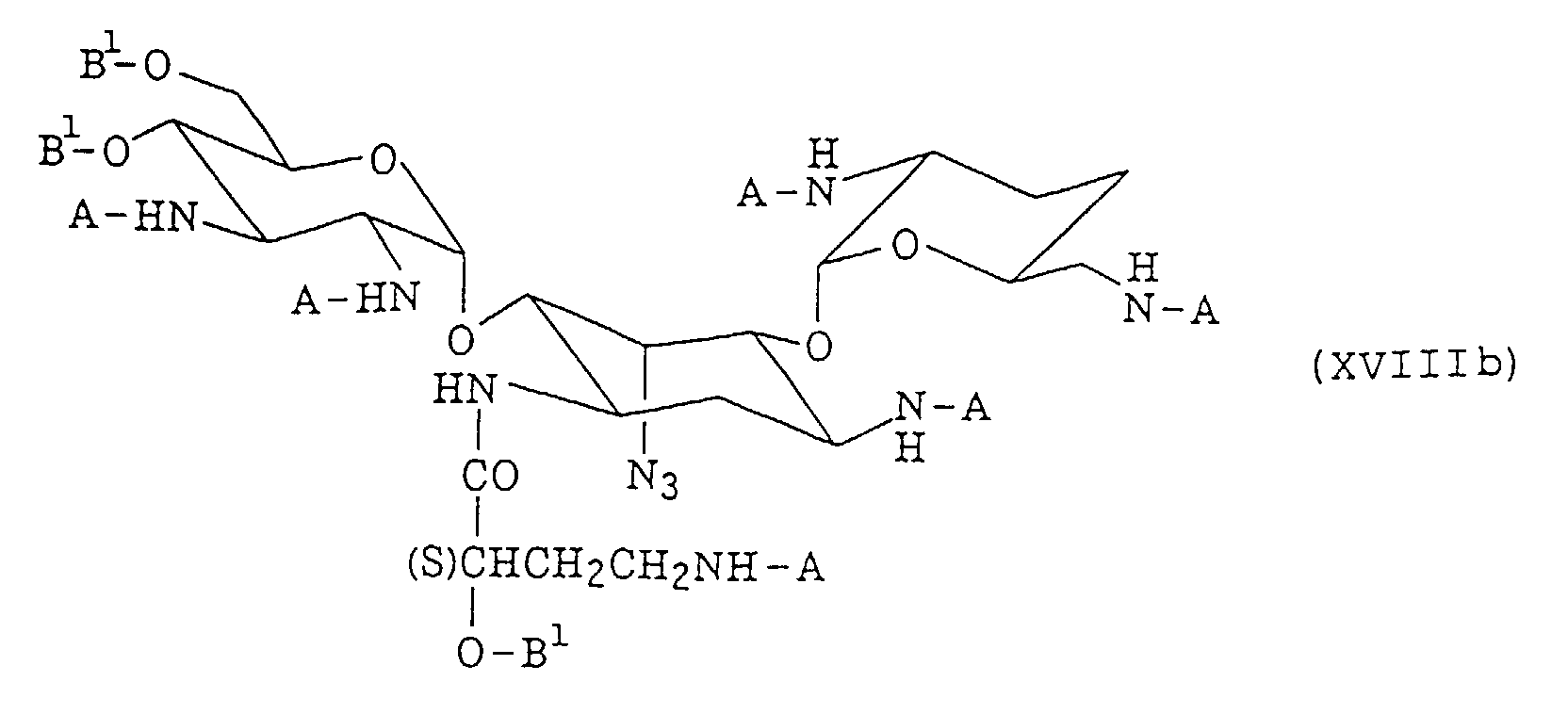
- This derivative (XVIIb) is then reacted with a known azidation reagent such as sodium azide to effect a nucleophilic substitution reaction for replacing the 5-alkylsulfonyloxy group by azido group with accompanying inversion of the configuration of the 5-substituent, whereby there is formed the 5-epi-azido derivative of general formula (XVIIIb).
- a known azidation reagent such as sodium azide
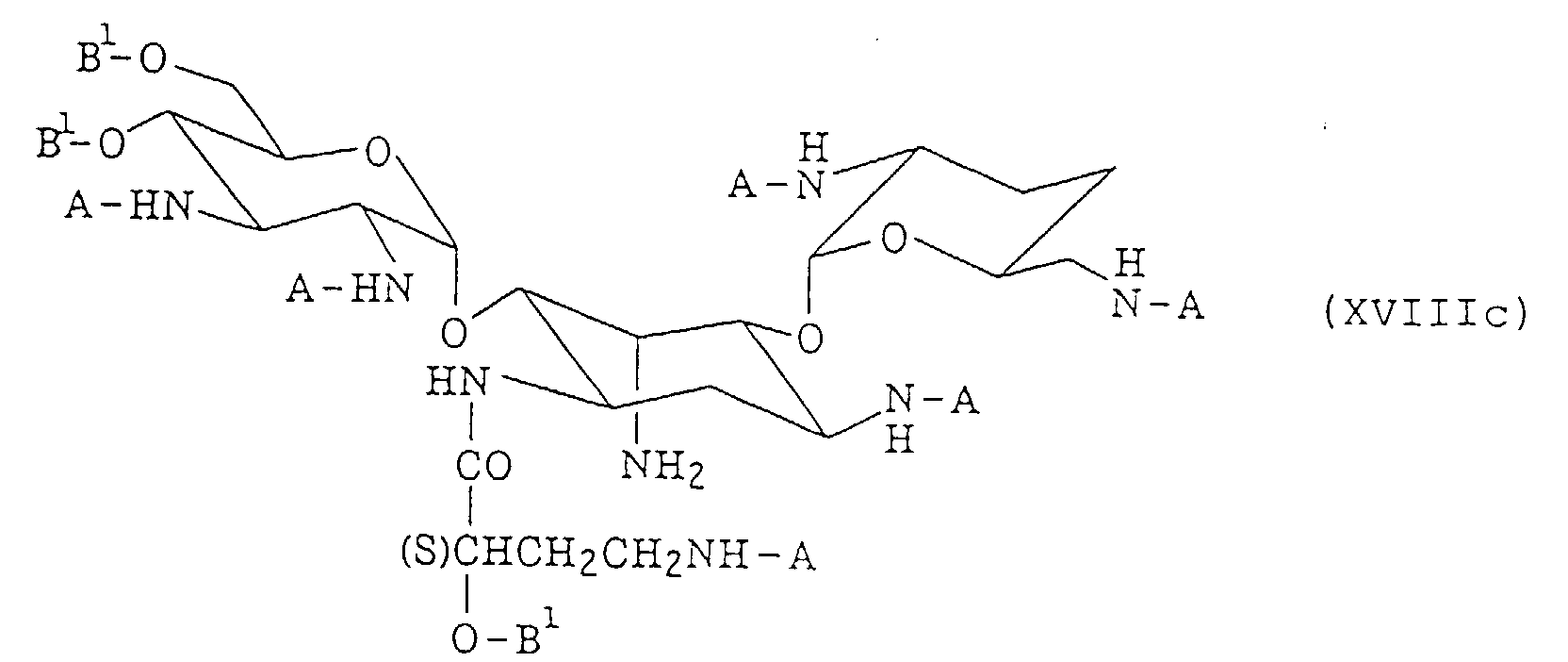
- the compound of general formula (XVIIIb) is subjected to a catalytic reduction in a known manner using Ranney nickel as catalyst. In this way, the 5-epi-amino derivative of general formula (XVIIIc) is produced.
- the 5-epi-amino derivative of general formula (XVIIIc) as produced from the above step of catalytic reduction is then subjected to a conventional method for removal of the amino-protecting group by acidic hydrolysis to remove the amino-protecting groups (A) therefrom.
- the resulting N-unprotected product is subsequently subjected to a conventional method for removal of the hydroxyl-protecting group by alkaline hydrolysis to remove the hydroxyl-protecting groups (B 1 ) therefrom.
- the compound of formula (XVIb) as aimed at in the ninth aspect of this invention.
- an antibacterial composition which contains a new compound of this invention having the formula (Ia), (Ib), (IIa), (IIb), (XVIa) or (XVIb) given hereinbefore or an acid addition salt thereof as the active ingredient may be prepared by mixing the active compound with one or more known liquid or solid carrier(s) of various kinds in appropriate proportions, and optionally further incorporating one or more known additives into the composition.
- the dosage of the new compound of this invention when administered will depend on the nature of diseases to be treated, conditions of the diseases and other different factors, but its optimum dosage can be decided by ordinary and appropriate, preliminary tests.
- an antibacterial composition comprising 2"-amino-2"-deoxyarbekacin, 2''-amino-5,2''-dideoxyarbekacin or an acid addition salt thereof as active ingredient, in combination with a pharmaceutically acceptable carrier for the active ingredient.
- an antibacterial composition comprising 2"-amino-2"-deoxydibekacin, 2"-amino-5,2"-dideoxydibekacin or an acid addition salt thereof as active ingredient, in combination with a pharmaceutically acceptable carrier for the active ingredient.
- an antibacterial composition comprising 2''-amino-5,2''-dideoxy-5-epi-fluoroarbekacin, 2"-amino-5,2"-dideoxy-5-epi-aminoarbekacin or an acid addition salt thereof as active ingredient, in combination with a pharmaceutically acceptable carrier for the active ingredient.
- This invention further includes use of 2"-amino-2"-deoxyarbekacin, 2"-amino-5,2"-dideoxyarbekacin; 2"-amino-5,2"-dideoxy-5-epi-fluoroarbekacin, 2"-amino-5,2"-dideoxy-5-epi-aminoarbekacin, 2"-amino-2"-deoxydibekacin, 2"-amino-5,2"-dideoxydibekacin or an acid addition salt thereof in the manufacture of an antibacterial composition.
- the 1,3''-N-bis(benzyloxycarbonyl) derivative obtained (4.98 g) was dissolved in DMF, and to the solution were added benzaldehyde dimethylacetal (3 ml) and anhydrous p-toluenesulfonic acid (200 mg).
- the resultant mixture was heated at 40°C under a reduced pressure of 20 mm Hg with stirring for 1 hour to conduct the reaction (for 4'', 6"-O-benzylidenation).
- the compound (2.95 g) obtained in the above item (1) was dissolved in anhydrous dimethylsulfoxide (DMSO) (13 ml), to which pyridinium trifluoroacetate (250 mg) was then added.
- DMSO dimethylsulfoxide
- a solution of dicyclohexylcarbodiimide (1.68 g) in benzene (19 ml) was added, and the mixture obtained was stirred at room temperature overnight to conduct the oxidation reaction intended.
- a solution of oxalic acid dihydrate (685 mg) in dioxane (2.5 ml) was added dropwise to the resulting reaction solution, and the mixture obtained was stirred at room temperature for 30 minutes.
- the 2"-keto compound thus prepared was dissolved in anhydrous methanol (100 ml), to which ammonium acetate (3.7 g) and sodium cyanoborohydride (673 mg) were added in order, and the mixture obtained was stirred at room temperature overnight to effect the reductive amination reaction.
- the resulting reaction solution was extracted with chloroform (300 ml) added, and the extract was washed with water, a saturated agueous sodium hydrogen carbonate solution and a 10% aqueous sodium chloride solution (100 ml each), successively, and then concentrated.
- a silica gel column Wang gelTM C-300, a product of Wako Junyaku Kogyo K
- the compound (730 mg) obtained in the above item (2) was dissolved in a mixture (1:19) of 88% formic acid and methanol (40 ml), to which was then added 10% palladiumcarbon (1.45 g) in an argon atmosphere, and the resulting admixture was subjected to hydrogenolysis (for 2 hours) to remove the benzyloxycarbonyl group from each of the 1- and 3"-amino groups.
- the reaction solution obtained was filtered, followed by concentrating to dryness to yield the titled compound (491 mg).
- This compound was dissolved in a 90% trifluoroacetic acid (2.8 ml) and the solution was allowed to stand at room temperature for 1 hour to effect the removal of the benzylidene group, the removal of the t-butoxycarbonyl group and the removal of the p-methoxybenzyloxycarbonyl group (for the deprotections). Then, the resulting reaction solution was concentrated to dryness and washed with ether (9 ml).
- the residue was purified by dissolving in a small amount of water and passing the aqueous solution through a column of AmberliteTM CG-50 (NH 4 + form, 25 ml, a product of Rohm & Haas Company, U.S.A.), followed by washing the column with water (40 ml) and by gradiently eluting with 0.1 ⁇ 1.5 M aqueous ammonia solutions.
- AmberliteTM CG-50 NH 4 + form, 25 ml, a product of Rohm & Haas Company, U.S.A.
- the compound (149 mg) obtained in the above item (1) was dissolved in a mixture (1:19) of 88% formic acid and methanol (11.2 ml), and the resulting solution was subjected to hydrogenolysis (for 2.5 hours) in an argon atmosphere in the presence of a 10% palladium-carbon (520 mg) to remove the benzyloxycarbonyl groups from the 1- and 3''-amino groups.
- the reaction solution obtained was filtered and the filtrate was concentrated to dryness, yielding the titled compound (96 mg).
- the mixture obtained was agitated at room temperature for 3 hours and the resultant reaction solution containing the titled compound formed was added with water (0.5 ml) and then concentrated under reduced pressure to dryness. The residue was dissolved in chloroform (60 ml) and the solution obtained was washed three times with 12 ml-portions of a 5% aqueous sodium hydrogen carbonate solution and once with 12 ml of a 10% aqueous sodium chloride solution.
- the resulting reaction solution containing the titled compound as produced was added with chloroform (4 ml) and then washed twice with 2 ml-portions of a saturated aqueous sodium hydrogen carbonate solution, once with 2 ml of a 5% aqueous sodium hydrogen sulfate solution and then once with 2 ml of water.
- the compound (120 mg) obtained in the above item (2) was dissolved in methanol (1.8 ml), to which was then added 1N sodium methylate in methanol (0.068 ml). The mixture obtained was stirred at room temperature for 1 hour, and the resulting reaction solution was neutralized by addition of a cation-exchange resin, Dowex 50W (H + form) and then concentrated under reduced pressure. To the residue obtained was added 90% trifluoroacetic acid (1 ml) under ice-cooling, followed by stirring the mixture for 1.5 hours.
- the resulting reaction solution contained the above titled compound produced as the unprotected product.
- This reaction solution was concentrated under reduced pressure and the concentrated solution was mixed with water (1 ml), followed by concentrating the mixture to dryness.
- the solid residue was taken up into water (3 ml) and the aqueous solution obtained was washed three times with 0.6 ml-portions of chloroform.
- the aqueous phase so washed was concentrated under reduced pressure and then the concentrate was charged into a cation-exchange resin, Amberlite CG-50 (NH 4 + form, 10 ml) for adsoption of the titled compound by the resin.
- reaction solution was mixed with chloroform (15 ml), followed by washing three times with 5 ml-portions of a 5% aqueous potassium hydrogen sulfate solution and once with a 10% aqueous sodium chloride solution. The washed organic phase was dried over anhydrous sodium sulfate and then concentrated under reduced pressure.
Landscapes
- Chemical & Material Sciences (AREA)
- Organic Chemistry (AREA)
- Health & Medical Sciences (AREA)
- Life Sciences & Earth Sciences (AREA)
- Engineering & Computer Science (AREA)
- Biochemistry (AREA)
- Biotechnology (AREA)
- General Health & Medical Sciences (AREA)
- Genetics & Genomics (AREA)
- Molecular Biology (AREA)
- Pharmaceuticals Containing Other Organic And Inorganic Compounds (AREA)
- Saccharide Compounds (AREA)
Description




| Proton | Chemical Shift in deutero-water (pD 2) (ppm) | |||
| Compound Ia | Compound Ib | Compound IIa | Compound IIb | |
| 1-H | 4.20 ddd | 4.08 m | 3.79 m | 3.70 m |
| 2-Hax | 1.98 ddd | 1.79 ddd | 2.18 ddd | 1.96 ddd |
| 2-Heq | 2.33 ddd | 2.34 ddd | 2.58 ddd | 2.58 ddd |
| 3-H | 3.58 ddd | 3.52 ddd | 3.64 ddd | 3.60 ddd |
| 4-H | 4.06 dd | 4.06m | 4.19 m | 4.11 ddd |
| 5-Hax | 3.95 dd | 1.72 ddd | 4.18 m | 1.76 ddd |
| 5-Heq | 3.00 ddd | 3.21 ddd | ||
| 6-H | 4.13 dd | 4.09 m | 4.15dd | 4.17 ddd |
| 1'-H | 5.82 d | 5.39 d | 5.76 d | 5.40 d |
| 2'-H | 3.62 ddd | 3.57 ddd | 3.59 ddd | 3.57 ddd |
| 3'-H2 | 2.08 m | 2.04 m | 2.04 m | 2.05 m |
| 4'-Hax | 1.67 dddd | 1.59 m | 1.64 dddd | 1.62 m |
| 4'-Heq | 1.99 m | 1.90 m | 1.95 m | 1.92 m |
| 5'-H | 4.24 m | 4.06 m | 4.22 m | 4.08 m |
| 6'-H2 | 3.17 dd | 3.08 dd | 3.14 dd | 3.10 dd |
| 3.32 dd | 3.26 dd | 3.28 dd | 3.28 dd | |
| 1"-H | 5.52 d | 5.45 d | 5.72 d | 5.55 d |
| 2"-H | 3.86 m | 3.84 dd | 3.98 dd | 3.80 dd |
| 3"-H | 3.87 m | 3.74 dd | 3.87 dd | 3.72 m |
| 4"-H | 3.86 m | 3.69 dd | 3.80 dd | 3.71 m |
| 5"-H | 4.13 m | 3.95 m | 4.18 m | 3.98 m |
| 6"-H2 | 3.88 dd | 3.75 dd | 3.79 dd | 3.76 dd |
| 3.93 dd | 3.96 m | 3.98 dd | 3.96 dd | |
| 2"'-H | 4.37 dd | 4.33 dd | ||
| 3"'-H2 | 2.01 m | 1.94 dddd | ||
| 2.22 ddt | 2.19 dddd | |||
| 4"'-H2 | 3.22 t | 3.17 m |
| Carbon | Chemical shift in deutero-water (pD 2) (ppm) | |||
| Compound Ia | Compound Ib | Compound IIa | Compound IIb | |
| 1 | 50.1 d | 51.6 d | 49.7 d | 51.6 d |
| 2 | 31.1 t | 31.0 t | 29.1 t | 29.2 t |
| 3 | 49.4 d | 52.0 d | 48.9 d | 51.5 d |
| 4 | 78.2 d | 71.2 d | 78.3 d | 70.9 d |
| 5 | 75.0 d | 33.9 t | 74.6 d | 33.0 t |
| 6 | 78.3 d | 77.9 d | 81.8 d | 78.3 d |
| 1' | 96.0 d | 90.7 d | 96.3 d | 90.8 d |
| 2' | 49.6 d | 48.9 d | 49.6 d | 48.8 d |
| 3' | 21.3 t | 21.7 t | 21.3 t | 21.6 t |
| 4' | 26.2 t | 26.3 t | 26.1 t | 26.2 t |
| 5' | 66.8 d | 66.4 d | 67.0 d | 66.5 d |
| 6' | 43.4 t | 43.4 t | 43.3 t | 43.3 t |
| 1" | 93.8 d | 96.3 d | 94.6 d | 96.9 d |
| 2" | 51.7 d | 51.6 d | 51.7 d | 51.8 d |
| 3" | 53.0 d | 52.9 d | 52.8 d | 53.1 d |
| 4" | 65.8 d | 66.4 d | 66.3 d | 66.6 d |
| 5" | 72.8 d | 73.1 d | 73.8 d | 73.1 d |
| 6" | 60.4 t | 61.2 t | 60.8 t | 61.2 t |
| 1"' | 176.4 s | 176.3 s | ||
| 2"' | 70.3 d | 70.2 d | ||
| 3"' | 31.5 t | 31.7 t | ||
| 4"' | 37.6 t | 37.6 t |
| Test organisms | MIC. µg/mℓ) | |||
| Compound Ia | Compound Ib | Compound IIa | Compound IIb | |
| Staphylococcus aureus FDA209P | 0.39 | ≦0.20 | 0.78 | 0.39 |
| S. aureus Smith | ≦0.20 | ≦0.20 | 0.39 | ≦0.20 |
| S. epidermidis 109 | 0.78 | 0.39 | 1.56 | 0.78 |
| Bacillus subtilis PCI219 | 0.20 | ≦0.20 | ≦0.20 | ≦0.20 |
| B. cereus ATCC10702 | 3.13 | 0.78 | 3.13 | 1.56 |
| Escherichia coli NIHJ | 0.78 | 0.39 | 0.78 | 1.56 |
| E. coli K-12 ML1629 | 3.13 | 1.56 | 3.13 | 6.25 |
| E. coli K-12 ML1410 | 1.56 | 1.56 | 1.56 | 3.13 |
| E. coli K-12 LA290 R55 | 0.78 | 0.78 | 1.56 | 3.13 |
| E. coli JR66/W677 | 3.13 | 3.13 | 3.13 | 6.25 |
| Klebsiella pneumoniae PCI602 | 1.56 | 0.78 | 3.13 | 3.13 |
| Shigella dysenteriae JSI1910 | 3.13 | 1.56 | 3.13 | 6.25 |
| Salmonella typhi T-63 | 0.78 | 0.78 | 1.56 | 3.13 |
| Proteus vulgaris OX19 | 1.56 | 0.78 | 1.56 | 1.56 |
| Providencia rettgeri GN311 | 1.56 | 0.78 | 1.56 | 1.56 |
| Serratia marcescens | 3.13 | 6.25 | 12.5 | 25 |
| Pseudomonas aeruginosa A3 | 1.56 | 0.39 | 1.56 | 0.78 |
| P. aeruginosa H9 | 6.25 | 3.13 | 6.25 | 12.5 |
| P. aeruginosa TI-13 | 3.13 | 1.56 | 3.13 | 3.13 |
| P. aeruginosa PST1 | 12.5 | 6.25 | 50 | 100 |
| Test compound | Antibacterial MIC spectra (µg/mℓ) against 50 clinically isolated strains of MRSA | MIC50 | MIC90 |
| Compound Ia | 0.20-3.13 | 0.78 | 1.56 |
| Compound Ib | 0.20-3.13 | 0.78 | 1.56 |
| Compound IIa | ≦0.20-50 | 6.25 | 25 |
| Compound IIb | 0.78-25 | 3.13 | 25 |
| DKB(comparative) | ≦0.20→100 | 50 | >100 |
| ABK(comparative) | ≦0.20-6.25 | 0.39 | 6.25 |
| Note:- MIC50 or MIC90 represents the concentration of tested active compound at which 50% or 90% of the total numbers of the bacterial strains tested were inhibited from their growth. DKB denotes dibekacin, and ABK denotes arbekacin. |
| LD50 | |
| 2"-Amino-2"-deoxyarbekacin (Compound Ia) | >100 mg/kg |
| 2"-Amino-5,2"-dideoxyarbekacin (Compound Ib) | 50-100 mg/kg |
| 2"-Amino-2"-deoxydibekacin (Compound IIa) | >100 mg/kg |
| 2"-Amino-5,2"-dideoxydibekacin (Compound IIb) | 50-100 mg/kg |










1.85-1.99(3H, m, 2ax-H, 4'eq-H, 3"-H),
2.00-2.11(2H, m, 3'-H2), 2.22(1H, m, 3'''-H),
2.41(1H, m, 2eq-H), 3.11(1H, dd, J=7.7, 11.3Hz, 6'-H),
3.19(1H, t, 4'''-H), 3.28(1H, dd, 6'-H),
3.61(1H, m, 2'-H), 3.70(1H, dd, J=9.7, 10.0Hz, 4"-H),
3.77(1H, dd, J-12.3Hz, 6"-H),
3.79(1H, t, J=11.3Hz, 3"-H), 3.85(1H, m, 3-H),
3.90(1H, dd, J=3.9Hz, 2''-H) , 4.01(1H, d, 6"-H),
4.07(1H, m, 5"-H), 4.12(1H, m, 5'-H),
4.29(1H, dd, J=10.8, 25.9Hz, 4-H),
4.30-4.34(2H, m, 1-H, 6-H),
4.35(1H, dd, J=4.0, 9.4Hz, 2"'-H),
5.49(1H, d, J=3.4Hz, 1'-H), 5.53(1H, d, J=3.9Hz, 1''-H),
5.72(1H, d, J=51.0Hz, 5-H)
1.92-2.07(3H, m, 2ax-H, 4'eq-H, 3'''-H),
2.10-2.15(2H, m, 3'-H2), 2.21(1H, m, 3'''-H)
2.45(1H, dt, J=4.7, 13.3Hz, 2eq-H),
3.19(1H, t, J=6.9Hz, 4'''-H),
3.22(1H, dd, J=6.4Hz, 6'-H),
3.34(1H, dd, J=3.6Hz, 6'-H), 3.74(1H, m, 2'-H),
3.78-3.88 (4H, m, 3-H, 3"-H, 4"-H, 6''-H),
3.93-3.95(2H, m, 4-H 2"-H), 4.03(1H, d, J=11, 1Hz, 6''-H),
4.17(1H, ddd, 5'-H) , 4.37(1H, dd, J=3.6, 9.4Hz,
2'''-H), 4.46(1H, td, 1-H), 4.57(1H, br, 5-H),
4.59(1H, m, 5''-H), 4.68(1H, dd, J=3.3, 11.1Hz,
6-H), 5.54(1H, d, J=3.3Hz, 1'-H), 5.58(1H, d, J=2.2Hz, 1"-H)
| Test organisms | MIC. (µg/mℓ) | |
| Compound XVIa | Compound XVIb | |
| Staphylococcus aureus FDA209P | 0.78 | ≦0.20 |
| S. aureus Smith | ≦0.20 | ≦0.20 |
| S. epidermidis 109 | 0.78 | 0.39 |
| Bacillus subtilis PCI219 | 0.39 | ≦0.20 |
| Escherichia coli NIHJ | 0.78 | 0.78 |
| E. coli K-12 ML1629 | 3.13 | 1.56 |
| E. coli K-12 LA290 R55 | 1.56 | 1.56 |
| E. coli JR66/W677 | 3.13 | 3.13 |
| Klebsiella pneumoniae PCI602 | 1.56 | 1.56 |
| Shigella dysenteria JSI1910 | 3.13 | 3.13 |
| Salmonella typhi T-63 | 0.78 | 0.78 |
| Proteus vulgaris OX19 | 1.56 | 1.56 |
| Providencia rettgeri GN311 | 1.56 | 1.56 |
| Serratia marcescens | 1.56 | 3.13 |
| Pseudomonas aeruginosa A3 | 0.78 | 0.39 |
| P. aeruginosa H9 | 3.13 | 3.13 |
| P. aeruginosa TI-13 | 1.56 | 1.56 |
| P. aeruginosa PST1 | 12.5 | 6.25 |
| Test Compound | Antibacterial MIC spectra (µg/mℓ) against 50 clinically isolated strains of MRSA | MIC50 | MIC90 |
| Compound XVIa | 0.39-3.13 | 0.78 | 1.56 |
| Compound XVIB | 0.39-1.56 | 0.78 | 1.56 |
| DKB(comparative) | ≦0.20→100 | 50 | >100 |
| ABK(comparative) | ≦0.20-6.25 | 0.39 | 6.25 |
| Note:- MIC50 or MIC90 represents the concentration of tested active compound at which 50% or 90% of the total numbers of the bacterial strains tested were inhibited from their growth. DKB denotes dibekacin, and ABK denotes arbekacin. |
| LD50 | |
| 2"-Amino-5,2"-dideoxy-5-epi-fluoroarbekacin (Compound XVIa) | >100 mg/kg |
| 2"-Amino-5,2"-dideoxy-5-epi-aminoarbekacin (Compound XVIb) | >100 mg/kg |




Claims (19)
- 2"-Amino-2"-deoxyarbekacin or 5-deoxy derivative thereof represented by the following general formula (I)wherein the symbol (S) denotes the absolute configuration of the asymmetric carbon, and R means a hydroxyl group or a hydrogen atom; and an acid addition salt thereof.

- A compound as claimed in Claim 1, which is 2"-amino-2"-deoxyarbekacin and which is such a compound of general formula (I) where R is a hydroxyl group, and an acid addition salt thereof.
- A compound-as claimed in Claim 1, which is 2"-amino-5,2"-dideoxyarbekacin and which is such a compound of general formula (I) where R is a hydrogen atom, and an acid addition salt thereof.
- 2"-Amino-2"-deoxydibekacin or 5-deoxy derivative thereof represented by the following general formula (II)wherein R is as defined in claim 1; and an acid addition salt thereof.

- A compound as claimed in Claim 4, which is 2"-amino-2"-deoxydibekacin and which is such a compound of general formula (II) where R is a hydroxyl group, and an acid addition salt thereof.
- A compound as claimed in Claim 4, which is 2"-amino-5,2"-dideoxydibekacin and which is such a compound of general formula (II) where R is a hydrogen atom, and an acid addition salt thereof.
- A process for the preparation of 2"-amino-2"-deoxyarbekacin of the following formula (Ia)wherein the symbol (S) is as defined in claim 1, which comprises the steps of:-
 protecting each of the 1- and 3"-amino groups of 3,2',6'-N-tris(alkoxycarbonyl)-dibekacin represented by general formula (III)wherein A means an alkoxycarbonyl group serving as an amino-protecting group removable by hydrolysis, with an aralkyloxycarbonyl group which is an amino-protecting group removable by hydrogenolysis, to form a 1,3"-N-bis(aralkyloxycarbonyl)-3,2',6'-N-tris(alkoxycarbonyl)-dibekacin represented by general formula (IV)
 wherein A has the meaning as defined above and B means an aralkyloxycarbonyl group;
 protecting both of the two hydroxyl groups at the 4"- and 6"-positions of the compound of general formula (IV) with an aralkylidene or alkylidene group as a hydroxyl-protecting group, to form a 4",6"-O-aralkylidene or alkylidene-1,3"-N-bis(aralkyloxycarbonyl)-3,2',6'-N-tris-(alkoxycarbonyl)-dibekacin represented by the following formula (V)wherein A and B have the meanings as defined above and Y means an aralkylidene or alkylidene group;
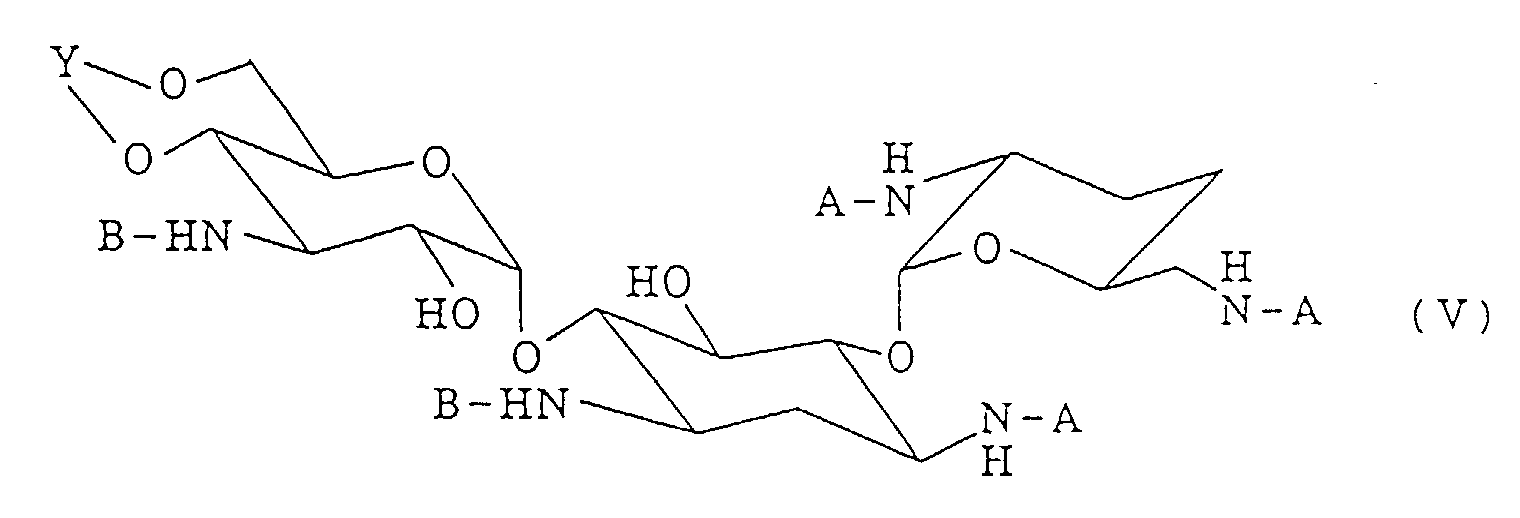 oxidizing the 2"-hydroxyl group of the compound of formula (V) with an oxidizing agent to form a 4",6"-O-aralkylidene or alkylidene-1,3"-N-bis(aralkyloxycarbonyl)-3,2',6'-N-tris (alkoxycarbonyl)-2"-deoxy-2"-oxodibekacin represented by the following formula (VI)wherein A, B and Y have the meanings as defined above;
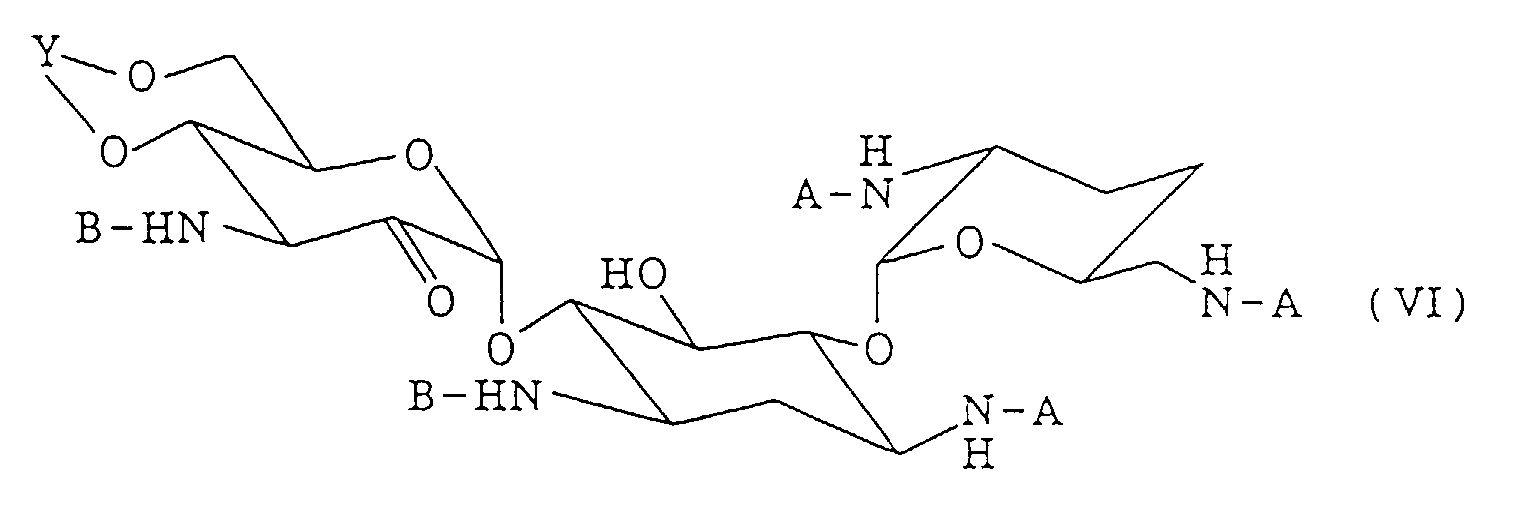 converting the 2"-oxo group of the compound of formula (VI) into 2"-amino group by reducing the same with a hydride in the presence of ammonium acetate, thereby to form a 2"-amino-4",6"-O-aralkylidene or alkylidene-1,3"-N-bis(aralkyloxycarbonyl)-3,2'6'-N-tris (alkoxycarbonyl)-2"-deoxydibekacin represented by the following formula (VII)wherein A, B and Y have the meanings as defined above;
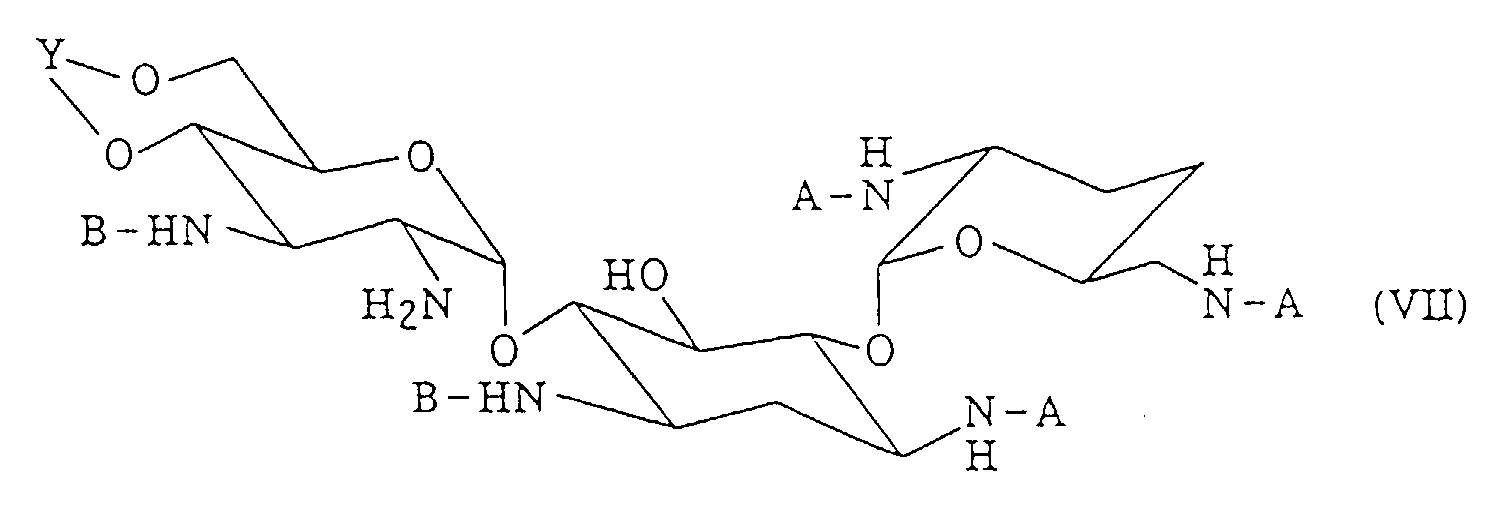 protecting the 2"-amino group of the compound of formula (VII) with an alkoxycarbonyl group (A) to form a 2"-amino-4",6"-O-aralkylidene or alkylidene-1,3"-N-bis-(aralkyloxycarbonyl)-3,2',6',2"-N-tetrakis(alkoxycarbonyl)-2"-deoxydibekacin represented by the following formula (VIII)wherein A, B and Y have the meanings as defined above;
 eliminating the aralkyloxycarbonyl groups (B) from the 1- and 3"-amino groups by hydrogenolysis to form a 2"-amino-4",6"-O-aralkylidene or alkylidene-3,2',6',2"-N-tetrakis(alkoxycarbonyl)-2"-deoxydibekacin represented by the following formula (IX)wherein A and Y have the meanings as defined above;
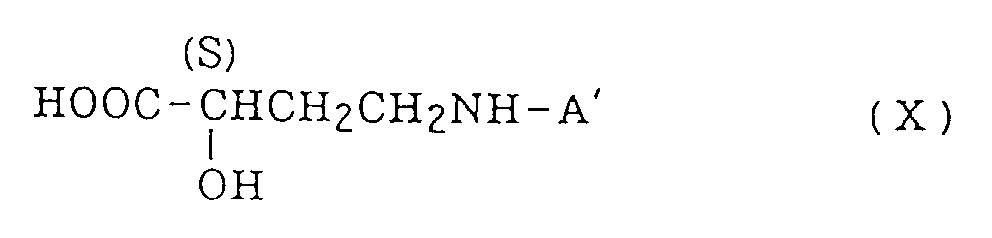
 acylating the 1-amino group of the compound of formula (IX) with an active ester or acid halide of (S)-4-(p-alkoxy-substituted-benzyloxycarbonyl- or alkoxycarbonylamino)-2-hydroxybutyric acid represented by the following formula (X)wherein the symbol (S) is as defined in claim 1, A' means a p-alkoxy-substituted-benzyloxycarbonyl or alkoxycarbonyl group as an amino-protecting group removable by hydrolysis, to form a 1-N-[(S)-4-(p-alkoxy-substituted-benzyloxycarbonyl- or alkoxycarbonyl-amino)-2-hydroxybutyryl]-2"-amino-4",6"-O-aralkylidene or alkylidene-3,2',6',2"-N-tetrakis (alkoxycarbonyl)-2"-deoxydibekacin represented by the following formula (XI)
 wherein (S), A, Y and A' have the meanings as defined above; and
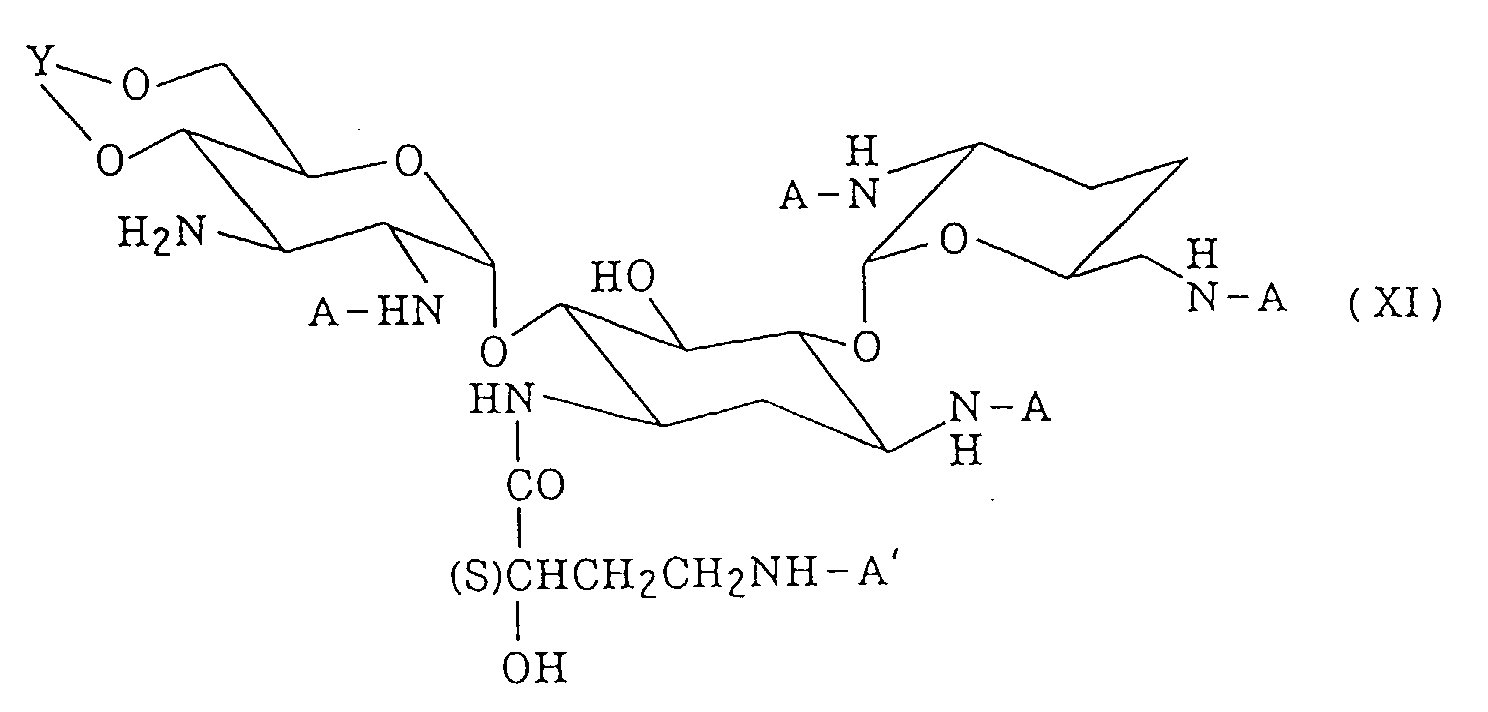 hydrolyzing the compound of formula (XI) to remove therefrom the alkoxycarbonyl group (A), the p-alkoxy-substituted-benzyloxycarbonyl or alkoxycarbonyl group (A'), and the aralkylidene or alkylidene group (Y) and to produce the compound of formula (Ia).
 - A process for the preparation of 2"-amino-5,2"-dideoxyarbekacin of the following formula (Ib)wherein the symbol (S) is as defined in claim 1, which comprises the steps of:-
 eliminating by a known deoxygenation method the 5-hydroxyl group of a 2''-amino-4'',6''-O-aralkylidene or alkylidene-1,3"-N-bis(aralkyloxycarbonyl)-3,2',6'2"-N-tetrakis (alkoxycarbonyl)-2"-deoxydibekacin represented by general formula (VIII)wherein A means an alkoxycarbonyl group, B means an aralkyloxycarbonyl group and Y means an aralkylidene or alkylidene group, to form a 2''-amino-4'',6''-O-aralkylidene or alkylidene-1,3''-N-bis(aralkyloxycarbonyl)-3,2',6',2''-N-tetrakis(alkoxycarbonyl)-5,2''-dideoxydibekacin represented by the following formula (XII)
 wherein A, B and Y have the meanings as defined above;
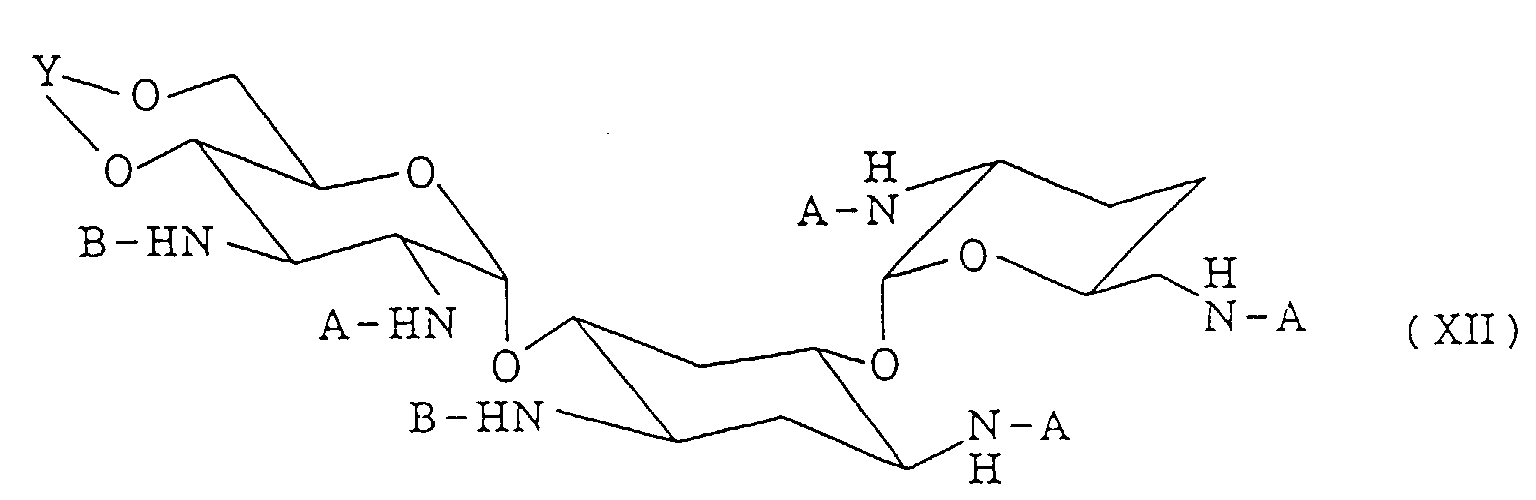 eliminating the aralkyloxycarbonyl groups (B) from the 1- and 3"-amino groups of the compound of formula (XII) to form a 2"-amino-4",6"-O-aralkylidene or alkylidene-3,2', 6'2''-N-tetrakis(alkoxycarbonyl)-5,2''-dideoxydibekacin represented by the following formula (XIII)wherein A and Y have the meanings as defined above;
 acylating the 1-amino group of the compound of formula (XIII) with an active ester or acid halide of (S)-4-(p-alkoxy-substituted-benzyloxycarbonyl- or alkoxycarbonylamino)-2-hydroxybutyric acid represented by the following formula (X):wherein (S) is as defined above, A' means a p-alkoxy-substituted-benzyloxycarbonyl or alkoxycarbonyl group as an amino-protecting group removable by hydrolysis, to form a 1-N-[(S)-4-(p-alkoxy-substituted-benzyloxycarbonyl- or alkoxycarbonyl-amino)-2-hydroxybutyryl]-2"-amino-4",6"-O-aralkylidene or alkylidene-3,2',6',2"-N-tetrakis(alkoxycarbonyl)-5,2"-dideoxydibekacin represented by the following formula (XIV)
 wherein (S), A, Y and A' have the meanings as defined above; and
 hydrolyzing the compound of formula (XIV) to remove therefrom the alkoxycarbonyl group (A), the p-alkoxy-substituted-benzyloxycarbonyl or alkoxycarbonyl group (A'), and the aralkylidene or alkylidene group (Y) and to produce the compound of formula (Ib).
 - A process for the preparation of 2"-amino-2"-deoxydibekacin of formula (IIa)which comprises removing the aralkylidene or alkylidene group (Y) and alkoxycarbonyl group (A) of a 2"-amino-4", 6"-O-aralkylidene-or alkylidene-3,2',6',2"-N-tetrakis-(alkoxycarbonyl)-2"-deoxydibekacin represented by general formula (IX):
 wherein A means an alkoxycarbonyl group and Y means an aralkylidene or alkylidene group, from the compound of formula (IX) to produce the compound of formula (IIa).
- A process for the preparation of 2"-amino-5,2"-dideoxydibekacin of formula (IIb)which comprises removing the aralkylidene or alkylidene group (Y) and alkoxycarbonyl group (A) of a 2"-amino-4",6"-O-aralkylidene or alkylidene-3,2',6',2"-N-tetrakis(alkoxycarbonyl)-5,2"-dideoxydibekacin represented by general formula (XIII):
 wherein A means an alkoxycarbonyl group and Y means an aralkylidene or alkylidene group, from the compound of formula (XIII) to produce the compound of formula (IIb).
- A 5-substituted-2"-amino-2"-deoxyarbekacin represented by the following general formula (XVI)wherein (S) is as defined in claim 1 and R1 means a fluorine atom or an amino group; and an acid addition salt thereof.
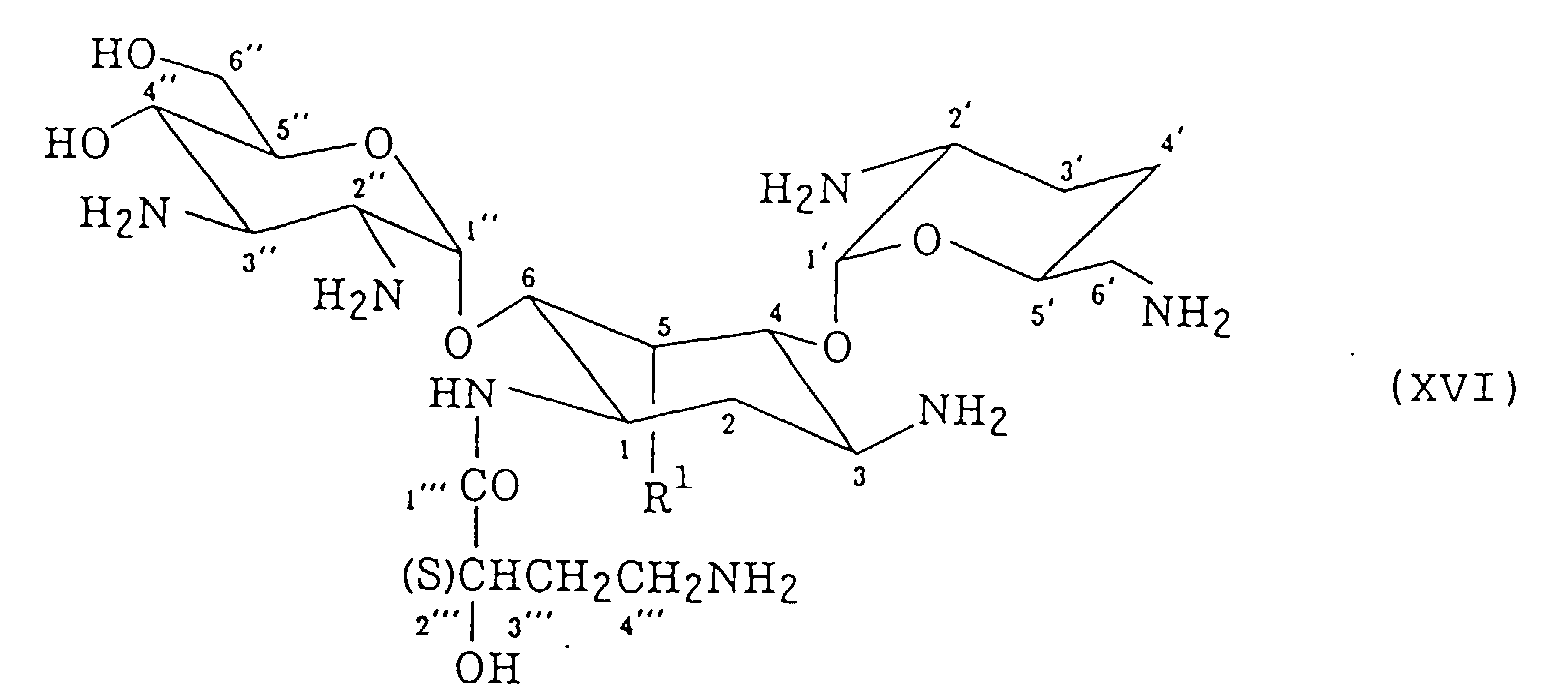
- A compound as claimed in Claim 11, which is 2"-amino-5,2"-dideoxy-5-epi-fluoroarbekacin and which is such a compound of general formula (XVI) where R1 is a fluorine atom, and an acid addition salt thereof.
- A compound as claimed in Claim 11, which is 2"-amino-5,2"-dideoxy-5-epi-aminoarbekacin and which is such a compound of general formula (XVI) where R1 is an amino group, and an acid addition salt thereof.
- A process for the preparation of 2"-amino-5,2"-dideoxy-5-epi-fluoroarbekacin of the following formula (XVIa)wherein (S) is as defined in claim 1, which comprises the steps of:-
 protecting all the six amino groups of 2"-amino-2"-deoxyarbekacin of formula (XVII)wherein (S) is as defined above, with an alkoxycarbonyl group which serves as an amino-protecting group readily removable by hydrolysis, followed by protecting the 4"-, 6"- and 2"'-hydroxyl groups of the resulting N-alkoxycarbonylated 2"-amino-2"-deoxyarbekacin through selective acylation of these hydroxyl groups with an alkanoyl group, thereby to produce from said 2"-amino-2"-deoxyarbekacin, a 4",6",2"'-tri-O-acyl-3,2',6',2",3",4"'-N-hexakis( ( alkoxycarbonyl )-2"-amino-2"-deoxyarbekacin represented by general formula (XVIIa)
 wherein (S) is as defined above, A means an alkoxycarbonyl group as the amino-protecting group removable by hydrolysis and B1 means a lower alkanoyl group as the hydroxyl-protecting group removable by hydrolysis;
 then reacting a fluorination agent with the compound of formula (XVIIa) to introduce a fluorine atom in the axial direction into the 5-position of the same compound (XVIIa) and thereby to produce a 5-epi-fluoro derivative represented by the following general formula (XVIIIa)wherein A means the amino-protecting group as defined above and B1 means the hydroxyl-protecting group as defined above; and
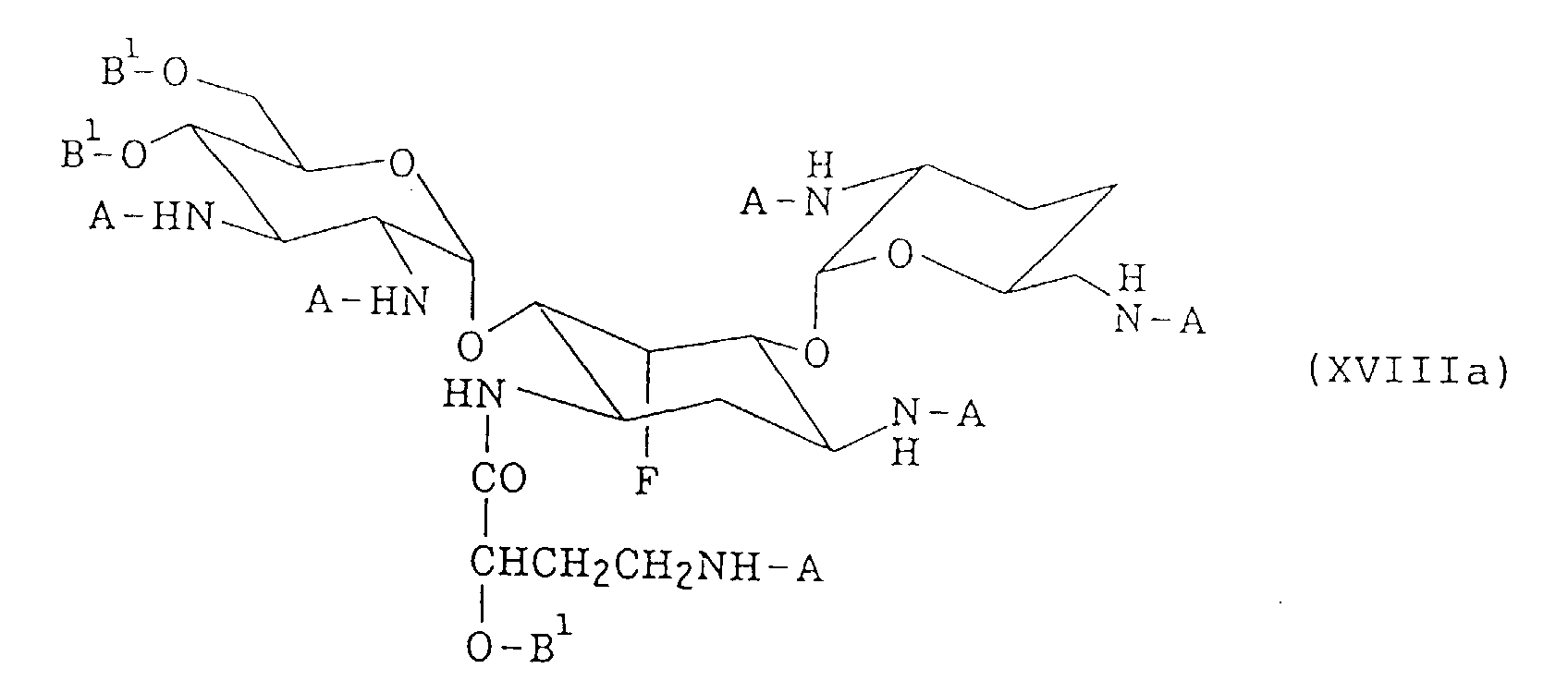 effecting the removal of the amino-protecting groups by acidic hydrolysis and the removal of the hydroxyl-protecting groups by alkaline hydrolysis from the compound of general formula (XVIIIa) to produce the compound of formula (XVIa).
 - A process for the preparation of 2"-amino-5,2"-dideoxy-5-epi-aminoarbekacin of the following formula (XVIb)wherein (S) is as defined in claim 1, which comprises the steps of:-
 alkylsulfonylating the 5-hydroxyl group of a 4",6",2"'-tri-O-acyl-3,2',6',2",3",4"'-N-hexakis(alkoxycarbonyl)-2"-amino-2"-deoxyarbekacin represented by general formula (XVIIa)wherein (S) is as defined above, A means an alkoxycarbonyl group as an amino-protecting group and B1 means a lower alkanoyl group as a hydroxyl-protecting group, to form a 5-O-alkylsulfonylated derivative represented by the following general formula (XVIIb)
 wherein (S), A and B1 have the same meanings as defined above and E means an alkylsulfonyl group;
 then reacting an azidation agent with the alkylsulfonyloxy group at the 5-position of the compound of general formula (XVIIb) to introduce an azido group in the axial direction into the 5-position of the same compound and thereby to produce a 5-epi-azido derivative represented by general formula (XVIIIb)wherein (S), A and B1 have the same meanings as defined above;
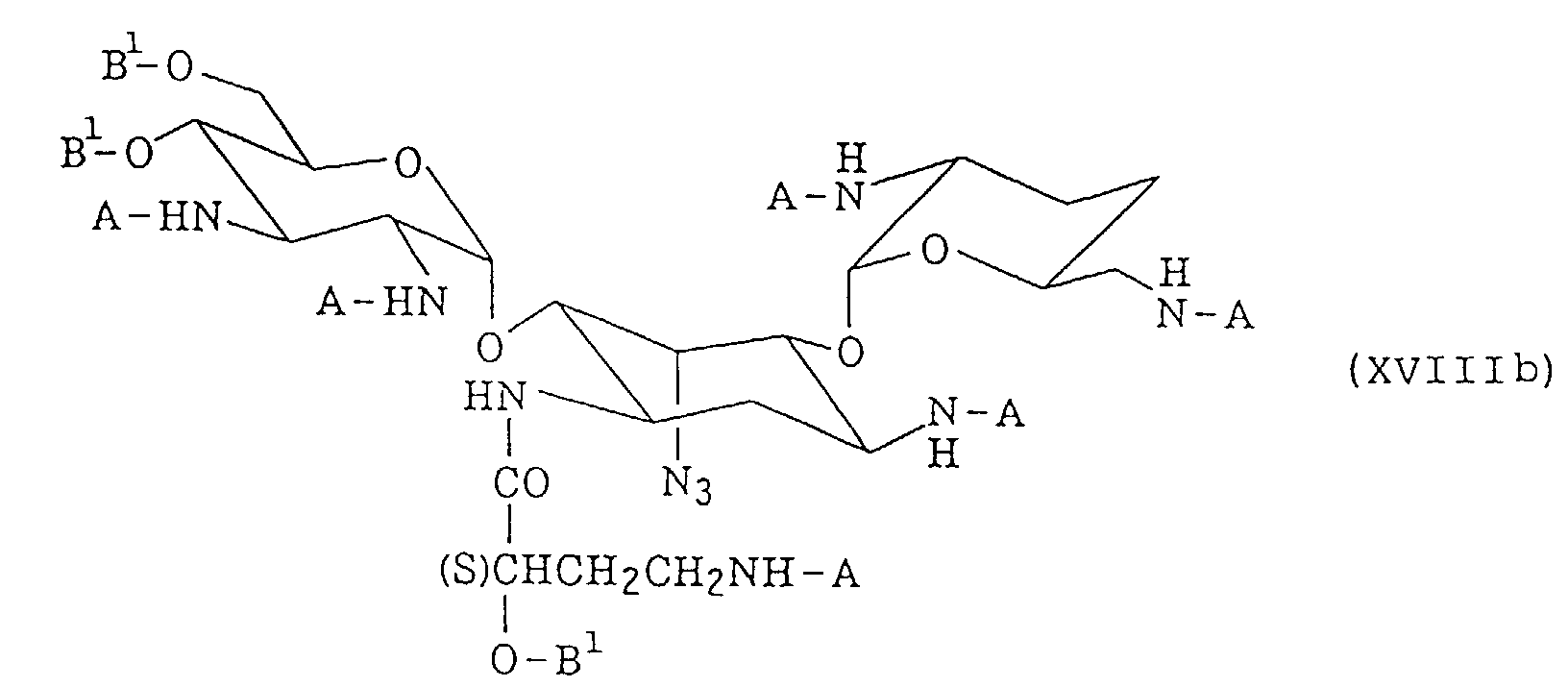 subsequently hydrogenating the compound of general formula (XVIIIb) to form a 5-epi-amino derivative represented by the following general formula (XVIIIc)wherein (S), A and B1 have the same meanings as defined above, and
 effecting the removal of the amino-protecting groups by acidic hydrolysis and the removal of the hydroxyl-protecting groups by alkaline hydrolysis from the compound of general formula (XVIIIc) to produce the compound of formula (XVIb).
 - An antibacterial composition comprising 2"-amino-2"-deoxyarbekacin or 2"-amino-5,2"-dideoxyarbekacin according to Claim 1 or an acid addition salt thereof as active ingredient, in combination with a pharmaceutically acceptable carrier for the active ingredient.
- An antibacterial composition comprising 2"-amino-2"-deoxydibekacin or 2"-amino-5,2"-dideoxydibekacin according to Claim 4 or an acid addition salt thereof as active ingredient, in combination with a pharmaceutically acceptable carrier for the active ingredient.
- An antibacterial composition comprising 2"-amino-5,2"-dideoxy-5-epi-fluoroarbekacin or 2"-amino-5,2"-dideoxy-5-epi-aminoarbekacin according to Claim 11 or an acid addition salt thereof as active ingredient, in combination with a pharmaceutically acceptable carrier for the active ingredient.
- Use of 2"-amino-2"-deoxyarbekacin, 2"-amino-5,2"-dideoxyarbekacin, 2"-amino-5,2"-dideoxy-5-epi-fluoroarbekacin, 2"-amino-5,2"-dideoxy-5-epi-aminoarbekacin, 2"-amino-2"-deoxydibekacin, 2"-amino-5,2"-dideoxydibekacin or an acid addition salt thereof in the manufacture of an antibacterial composition.
Applications Claiming Priority (4)
| Application Number | Priority Date | Filing Date | Title |
|---|---|---|---|
| JP34131492A JP3215732B2 (en) | 1992-11-27 | 1992-11-27 | Dibekacin or arbekacin derivatives effective against resistant bacteria and methods for their production |
| JP341314/92 | 1992-11-27 | ||
| JP247327/93 | 1993-09-09 | ||
| JP24732793A JP3215759B2 (en) | 1993-09-09 | 1993-09-09 | 5-Substituted-2 "-amino-2" -deoxyarbekacin effective against resistant bacteria and method for producing the same |
Publications (3)
| Publication Number | Publication Date |
|---|---|
| EP0601909A2 EP0601909A2 (en) | 1994-06-15 |
| EP0601909A3 EP0601909A3 (en) | 1997-03-19 |
| EP0601909B1 true EP0601909B1 (en) | 1998-12-23 |
Family
ID=26538214
Family Applications (1)
| Application Number | Title | Priority Date | Filing Date |
|---|---|---|---|
| EP93402870A Expired - Lifetime EP0601909B1 (en) | 1992-11-27 | 1993-11-26 | Dibekacin derivatives and arbekacin derivatives active against resistant bacteria, and the production thereof |
Country Status (4)
| Country | Link |
|---|---|
| US (2) | US5488038A (en) |
| EP (1) | EP0601909B1 (en) |
| DE (1) | DE69322750T2 (en) |
| ES (1) | ES2128404T3 (en) |
Families Citing this family (12)
| Publication number | Priority date | Publication date | Assignee | Title |
|---|---|---|---|---|
| US20040058880A1 (en) * | 2002-07-01 | 2004-03-25 | Chang-Hsing Liang | Aminoglycoside antibiotics as novel anti-infective agents |
| WO2005070945A1 (en) * | 2004-01-21 | 2005-08-04 | Meiji Seika Kaisha, Ltd. | Novel aminoglycoside antibiotic effective against methicillin resistant staphylococcus aureus (mrsa) |
| US7794713B2 (en) | 2004-04-07 | 2010-09-14 | Lpath, Inc. | Compositions and methods for the treatment and prevention of hyperproliferative diseases |
| BRPI0509026A (en) | 2004-05-17 | 2007-09-18 | Corus Pharma Inc | aerosol formulation, method for the prevention and treatment of infection caused by respiratory tract bacteria, and |
| GB0411948D0 (en) * | 2004-05-28 | 2004-06-30 | Univ Leeds | Compounds |
| AU2006286052B2 (en) * | 2005-08-29 | 2011-02-03 | Ajinomoto Co., Inc. | Nutrient composition |
| US20080213274A1 (en) * | 2005-10-28 | 2008-09-04 | Sabbadini Roger A | Compositions and methods for the treatment and prevention of fibrotic, inflammatory, and neovascularization conditions of the eye |
| US20090074720A1 (en) * | 2005-10-28 | 2009-03-19 | Sabbadini Roger A | Methods for decreasing immune response and treating immune conditions |
| US7862812B2 (en) * | 2006-05-31 | 2011-01-04 | Lpath, Inc. | Methods for decreasing immune response and treating immune conditions |
| CN102256989B (en) | 2008-10-03 | 2016-01-06 | 聚糖生物科学有限责任公司 | The anionic conjugates of glycosylated bacterial metabolite |
| MX2012009028A (en) | 2010-02-03 | 2012-10-15 | Microbial Chem Res Found | Read through inducer, and therapeutic agent for nonsense-mutation-type genetic diseases. |
| CN116462721B (en) * | 2023-04-18 | 2024-02-02 | 江南大学 | Antibacterial aminoglycoside derivatives |
Family Cites Families (9)
| Publication number | Priority date | Publication date | Assignee | Title |
|---|---|---|---|---|
| US4001208A (en) | 1972-10-06 | 1977-01-04 | Zaidan Hojin Biseibutsu Kagaku Kenkyo Kai | 1-N-[(S)-α-hydroxy-ω-aminoacyl] |
| US4107424A (en) * | 1972-10-06 | 1978-08-15 | Zaidan Hojin Biseibutsu Kagaku Kenkyu Kai | 1-N-[(S)-α-hydroxy-ω-aminoacyl] derivatives of 3',4'-dideoxykanamycin B and 3'-deoxykanamycin B antibiotics |
| US3974198A (en) | 1975-09-02 | 1976-08-10 | General Electric Company | Process for producing methyltriacetoxysilane |
| JPS6029720B2 (en) * | 1975-12-11 | 1985-07-12 | 財団法人微生物化学研究会 | Novel production method of 3',4'-dideoxykanamycin B |
| US4187372A (en) * | 1976-09-08 | 1980-02-05 | Abbott Laboratories | Seldomycin factor 5 derivative |
| IE48972B1 (en) | 1978-11-11 | 1985-06-26 | Microbial Chem Res Found | The production of a selectively protected n-acylated derivative of an aminoglycosidic antibiotic |
| JPS631319A (en) | 1986-06-18 | 1988-01-06 | 多摩川精機株式会社 | AC equipment operation detection circuit |
| JPS6339891A (en) * | 1986-08-04 | 1988-02-20 | Microbial Chem Res Found | 5-deoxy-5-fluorokanamycin B derivative and its production method |
| JPH0764866B2 (en) * | 1987-02-24 | 1995-07-12 | 財団法人微生物化学研究会 | 1-N- (4-amino-3-fluoro-2-hydroxybutyryl) kanamycin |
-
1993
- 1993-11-18 US US08/154,002 patent/US5488038A/en not_active Expired - Lifetime
- 1993-11-26 EP EP93402870A patent/EP0601909B1/en not_active Expired - Lifetime
- 1993-11-26 ES ES93402870T patent/ES2128404T3/en not_active Expired - Lifetime
- 1993-11-26 DE DE69322750T patent/DE69322750T2/en not_active Expired - Fee Related
-
1995
- 1995-09-08 US US08/524,644 patent/US5618795A/en not_active Expired - Lifetime
Also Published As
| Publication number | Publication date |
|---|---|
| ES2128404T3 (en) | 1999-05-16 |
| US5618795A (en) | 1997-04-08 |
| US5488038A (en) | 1996-01-30 |
| EP0601909A3 (en) | 1997-03-19 |
| DE69322750D1 (en) | 1999-02-04 |
| DE69322750T2 (en) | 1999-08-19 |
| EP0601909A2 (en) | 1994-06-15 |
Similar Documents
| Publication | Publication Date | Title |
|---|---|---|
| US5488038A (en) | Dibekacin derivatives and arbekacin derivatives active against resistant bacteria | |
| US4117221A (en) | Aminoacyl derivatives of aminoglycoside antibiotics | |
| US4055715A (en) | Method of producing 1-N-[L-(-)-α-hydroxy-γ-aminobutyryl]XK-62-2 | |
| US3925354A (en) | Process for the production of an 1-n-(s)-alpha- substituted-w-aminoacyl) derivative of neamine, 3', 4'-dideoxyneamine, ribostamycin or 3',4'-dideoxyribostamycin | |
| US4120955A (en) | Method for production of kanamycin C and its derivatives | |
| US4104372A (en) | 1-N-(α-hydroxy-ω-aminoalkanoyl) derivatives of 3'-deoxykanamycin A and the production thereof | |
| US4250304A (en) | 2-Deoxy-2-substituted fortimicin A and B and derivatives | |
| RANE et al. | Selective N-acylation of gentamicin antibiotics-Synthesis of 1-N-acyl derivatives | |
| US4873225A (en) | 1-n-(4-amino-3-fluoro-2-hydroxybutyryl)-kanamycins | |
| CA1175818A (en) | Derivatives of istamycins a and b and their preparation | |
| US4455419A (en) | 2'-Modified kanamycins and production thereof | |
| US4547492A (en) | 1-N-(ω-Amino-α-hydroxyalkanoyl-2',3'-dideoxykanamycin A and pharmaceutical composition containing same | |
| HU188079B (en) | Process for producing 3-o-dimethyl derivatives of istamycin b | |
| US4140849A (en) | Kanamycin C derivatives | |
| US4298727A (en) | 3',4'-Dideoxykanamycin A and 1-N-(S)-α-hydroxy-ω-aminoalkanoyl) derivatives thereof | |
| US4332794A (en) | 6"-Deoxydibekacin, 4",6"-dideoxydibekacin and 1-N-aminoacyl derivatives thereof, and the production of these new compounds | |
| US4330673A (en) | Process for producing 3-O-demethylaminoglycoside and novel 3-O-demethylfortimicin derivatives | |
| EP0546179B1 (en) | 4-o-(aminoglycosyl)- or 4,6-di-o-(aminoglycosyl)-2,5-dideoxy-5,5-difluorostreptamine derivative and production thereof | |
| JP3215732B2 (en) | Dibekacin or arbekacin derivatives effective against resistant bacteria and methods for their production | |
| US4661474A (en) | 2',3'-dideoxy-2'-fluorokanamycin A and 1-N-(α-hydroxy-ω-aminoalkanoyl) derivatives thereof | |
| JP3215759B2 (en) | 5-Substituted-2 "-amino-2" -deoxyarbekacin effective against resistant bacteria and method for producing the same | |
| DANIELS et al. | THE SYNTHESES OF 1-N-[(S)-4-AMINO-2-HYDROXYBUTYRYL] GENTAMICIN C1 AND 1-N-[(S)-3-AMINO-2-HYDROXYPROPIONYL] GENTAMICIN C1 | |
| US4634688A (en) | 3'-fluoro-3'-deoxykanamycin A | |
| EP0259014A2 (en) | 5-Deoxy-5-fluorokanamycin B derivatives and processes for the production thereof | |
| US4147861A (en) | 1N-(α-Hydroxy-ω-aminoalkanoyl)-6'N-methyl-3',4'-dideoxykanamycin B and the production thereof |
Legal Events
| Date | Code | Title | Description |
|---|---|---|---|
| PUAI | Public reference made under article 153(3) epc to a published international application that has entered the european phase |
Free format text: ORIGINAL CODE: 0009012 |
|
| AK | Designated contracting states |
Kind code of ref document: A2 Designated state(s): DE ES FR GB IT |
|
| 17P | Request for examination filed |
Effective date: 19960426 |
|
| PUAL | Search report despatched |
Free format text: ORIGINAL CODE: 0009013 |
|
| AK | Designated contracting states |
Kind code of ref document: A3 Designated state(s): DE ES FR GB IT |
|
| 17Q | First examination report despatched |
Effective date: 19970513 |
|
| GRAG | Despatch of communication of intention to grant |
Free format text: ORIGINAL CODE: EPIDOS AGRA |
|
| GRAG | Despatch of communication of intention to grant |
Free format text: ORIGINAL CODE: EPIDOS AGRA |
|
| GRAH | Despatch of communication of intention to grant a patent |
Free format text: ORIGINAL CODE: EPIDOS IGRA |
|
| GRAH | Despatch of communication of intention to grant a patent |
Free format text: ORIGINAL CODE: EPIDOS IGRA |
|
| GRAA | (expected) grant |
Free format text: ORIGINAL CODE: 0009210 |
|
| AK | Designated contracting states |
Kind code of ref document: B1 Designated state(s): DE ES FR GB IT |
|
| REF | Corresponds to: |
Ref document number: 69322750 Country of ref document: DE Date of ref document: 19990204 |
|
| ITF | It: translation for a ep patent filed | ||
| ET | Fr: translation filed | ||
| REG | Reference to a national code |
Ref country code: ES Ref legal event code: FG2A Ref document number: 2128404 Country of ref document: ES Kind code of ref document: T3 |
|
| PLBE | No opposition filed within time limit |
Free format text: ORIGINAL CODE: 0009261 |
|
| STAA | Information on the status of an ep patent application or granted ep patent |
Free format text: STATUS: NO OPPOSITION FILED WITHIN TIME LIMIT |
|
| 26N | No opposition filed | ||
| REG | Reference to a national code |
Ref country code: GB Ref legal event code: IF02 |
|
| PGFP | Annual fee paid to national office [announced via postgrant information from national office to epo] |
Ref country code: DE Payment date: 20081120 Year of fee payment: 16 |
|
| PGFP | Annual fee paid to national office [announced via postgrant information from national office to epo] |
Ref country code: ES Payment date: 20081127 Year of fee payment: 16 |
|
| PGFP | Annual fee paid to national office [announced via postgrant information from national office to epo] |
Ref country code: IT Payment date: 20081127 Year of fee payment: 16 |
|
| PGFP | Annual fee paid to national office [announced via postgrant information from national office to epo] |
Ref country code: FR Payment date: 20081112 Year of fee payment: 16 |
|
| PGFP | Annual fee paid to national office [announced via postgrant information from national office to epo] |
Ref country code: GB Payment date: 20081126 Year of fee payment: 16 |
|
| GBPC | Gb: european patent ceased through non-payment of renewal fee |
Effective date: 20091126 |
|
| REG | Reference to a national code |
Ref country code: FR Ref legal event code: ST Effective date: 20100730 |
|
| PG25 | Lapsed in a contracting state [announced via postgrant information from national office to epo] |
Ref country code: FR Free format text: LAPSE BECAUSE OF NON-PAYMENT OF DUE FEES Effective date: 20091130 |
|
| PG25 | Lapsed in a contracting state [announced via postgrant information from national office to epo] |
Ref country code: DE Free format text: LAPSE BECAUSE OF NON-PAYMENT OF DUE FEES Effective date: 20100601 |
|
| PG25 | Lapsed in a contracting state [announced via postgrant information from national office to epo] |
Ref country code: GB Free format text: LAPSE BECAUSE OF NON-PAYMENT OF DUE FEES Effective date: 20091126 |
|
| REG | Reference to a national code |
Ref country code: ES Ref legal event code: FD2A Effective date: 20110324 |
|
| PG25 | Lapsed in a contracting state [announced via postgrant information from national office to epo] |
Ref country code: IT Free format text: LAPSE BECAUSE OF NON-PAYMENT OF DUE FEES Effective date: 20091126 |
|
| PG25 | Lapsed in a contracting state [announced via postgrant information from national office to epo] |
Ref country code: ES Free format text: LAPSE BECAUSE OF NON-PAYMENT OF DUE FEES Effective date: 20110310 |
|
| PG25 | Lapsed in a contracting state [announced via postgrant information from national office to epo] |
Ref country code: ES Free format text: LAPSE BECAUSE OF NON-PAYMENT OF DUE FEES Effective date: 20091127 |