EP0595527B1 - Fluorescent lamps with high color-rendering and high brightness - Google Patents
Fluorescent lamps with high color-rendering and high brightness Download PDFInfo
- Publication number
- EP0595527B1 EP0595527B1 EP93308312A EP93308312A EP0595527B1 EP 0595527 B1 EP0595527 B1 EP 0595527B1 EP 93308312 A EP93308312 A EP 93308312A EP 93308312 A EP93308312 A EP 93308312A EP 0595527 B1 EP0595527 B1 EP 0595527B1
- Authority
- EP
- European Patent Office
- Prior art keywords
- blend
- phosphor
- cri
- spd
- lamp
- Prior art date
- Legal status (The legal status is an assumption and is not a legal conclusion. Google has not performed a legal analysis and makes no representation as to the accuracy of the status listed.)
- Expired - Lifetime
Links
Images








Classifications
-
- H—ELECTRICITY
- H01—ELECTRIC ELEMENTS
- H01J—ELECTRIC DISCHARGE TUBES OR DISCHARGE LAMPS
- H01J61/00—Gas-discharge or vapour-discharge lamps
- H01J61/02—Details
- H01J61/38—Devices for influencing the colour or wavelength of the light
- H01J61/42—Devices for influencing the colour or wavelength of the light by transforming the wavelength of the light by luminescence
- H01J61/44—Devices characterised by the luminescent material
-
- C—CHEMISTRY; METALLURGY
- C09—DYES; PAINTS; POLISHES; NATURAL RESINS; ADHESIVES; COMPOSITIONS NOT OTHERWISE PROVIDED FOR; APPLICATIONS OF MATERIALS NOT OTHERWISE PROVIDED FOR
- C09K—MATERIALS FOR MISCELLANEOUS APPLICATIONS, NOT PROVIDED FOR ELSEWHERE
- C09K11/00—Luminescent materials, e.g. electroluminescent or chemiluminescent
- C09K11/08—Luminescent materials, e.g. electroluminescent or chemiluminescent containing inorganic luminescent materials
- C09K11/70—Luminescent materials, e.g. electroluminescent or chemiluminescent containing inorganic luminescent materials containing phosphorus
- C09K11/72—Luminescent materials, e.g. electroluminescent or chemiluminescent containing inorganic luminescent materials containing phosphorus also containing halogen, e.g. halophosphates
- C09K11/722—Chalcogenides
- C09K11/725—Chalcogenides with alkaline earth metals
-
- H—ELECTRICITY
- H01—ELECTRIC ELEMENTS
- H01J—ELECTRIC DISCHARGE TUBES OR DISCHARGE LAMPS
- H01J61/00—Gas-discharge or vapour-discharge lamps
- H01J61/02—Details
- H01J61/38—Devices for influencing the colour or wavelength of the light
- H01J61/42—Devices for influencing the colour or wavelength of the light by transforming the wavelength of the light by luminescence
- H01J61/48—Separate coatings of different luminous materials
Definitions
- US-A-4,891,550 discloses a fluorescent lamp which comprises two blends of preferably metameric lamp phosphors.
- the first blend of relatively cheap phosphors produces a full spectrum whilst the second blend of more expensive rare earth phosphors produces a spectrum of narrow emission bands.
- the document discusses how the brighter second group of phosphors can be used to improve the brightness and lamp maintenance of the first group of lamp phosphors at the expense of a decrease in the CRI.
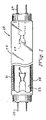
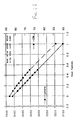
- FIG. 1 is perspective view partially broken away of a low pressure mercury discharge fluorescent lamp construction utilizing a dual layer phosphor coating.
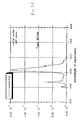
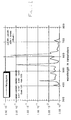
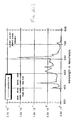
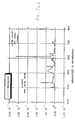
- FIG.-S5 shows the SPD after 100 hours of operation for a 40Watt-T12 lamp containing Sylvania phosphor type #246.
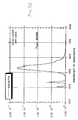
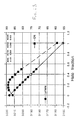
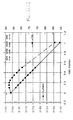
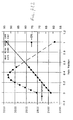
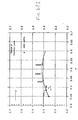
- FIG. i4 shows the increase in CRI and lumen output resulting from metameric mixing for a specific LWX quad-blend based on phosphors #246, #2194, #2293, and #2345, according to the c i mixing coefficients listed in the Figure.
- the CRI reaches the value of 90 at 30% halo admixing.
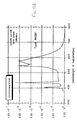
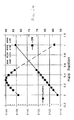
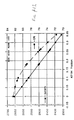
- FIG. iil shows the increased CRI resulting from metameric mixing for a specific LWX quad-blend based on phosphors #246, #2194, #2288, and #2345, according to the c i mixing coefficients listed in the Figure.
- SPD of four-component (quad) blends The main focus of the present treatment is on the results of combining four SPD's, or equivalently, on blending four phosphors. There is a compelling reason for considering four-component blends.
- composition of this infinite set of four-component (quad) blends can be sampled by a process of mathematical induction, starting from the mixing of binary blends with ternary blends.
- Proprietary computer software was developed to systematically explore the range of existing solutions (c i mixing coefficients) and to sequentially derive the lumen content and CRI of the various SPD (tot) of eq. 3.
- Halo fraction Quad fraction Lumens CRI 0.00 1.00 3216.2 86.11 0.10 0.90 3209.7 88.47 0.15 0.85 3206.4 88.84 0.20 0.80 3203.1 88.92 0.25 0.75 3199.8 88.68 0.30 0.70 3196.6 87.78 0.35 0.65 3193.3 86.28 0.40 0.60 3190.0 84.55 0.45 0.55 3186.7 82.67 0.50 0.50 3183.4 80.69 1.00 0.00 3150.6 58.83 Effect of adding the LWX halo-blend to LWX quad-blends. .
- Table i1 is a modified version of Table p1, in the sense that each pair of rows gives the phosphor-blend compositions expressed in c i units (fraction of single-lamp SPD) in the top row, and in fractional-weight units in the bottom row.
- Top row in row pairs c i mixing coefficients for the SPD's; bottom row: weight percent fraction in blends. Part 1.
Landscapes
- Chemical & Material Sciences (AREA)
- Inorganic Chemistry (AREA)
- Engineering & Computer Science (AREA)
- Materials Engineering (AREA)
- Organic Chemistry (AREA)
- Luminescent Compositions (AREA)
Description

- First, various combinations of four primary (component) SPD's are systematically explored to identify total (lamp) SPD's exhibiting a target color-point and the required levels of CRI and lumen output.
- Second, it is shown how the CRI values can be raised by combining two metameric blend-SPD's with the same target color-point, but individually exhibiting a relatively-low CRI.
- Third, guidelines for implementation in actual lamps are described.
- Fourth, examples of reduction to practice are reported.
and
| Approximate chemical composition of Sylvania phosphors considered in the present application | |
| Phosphor type (Sylvania™) | |
| # | |
| 2194 | BaMgAluminate:Eu;Mn |
| #2288 | Zinc ortho-silicate:Mn |
| #2293 | (Ce,Tb)Mg Hexa- |
| # | |
| 2345 | Yttrium Oxide: |
| # | |
| 246 | BaMg Aluminate: |
| # | |
| 290 | Ca Silicate:Pb;Mn |
| #4300 | Ca apatite:Sb;Mn (halo-phosphate) |
| #4381 | Ca fluoroapatite:Sb;Mn (halo-phosphate) |
| # 4459 | Ca apatite:Sb;Mn (halo-phosphate) |
| (L93S) | Gd pentaborate:Ce;Mn |
| Composition, powder weight, and output characteristics (at 100 hours of operation) of single-component W40-T12 lamps utilized in the derivation | ||||||
| Phos. type (Sylvania) | Emiss. color | Rare-earth | weight (grams) | lumen at 100hrs | color coordinates | |
| x | | |||||
| # | ||||||
| 246 | blue | yes | 5.2 | 1,006 | 0.151 | 0.088 |
| #2194 | green | yes | 5.9 | 3,467 | 0.162 | 0.560 |
| #2288 | green | no | 6.0 | 4,900 | 0.247 | 0.635 |
| #2293 | green | yes | 6.6 | 4,732 | 0.315 | 0.554 |
| #290 | red | no | 3.1 | 1,900 | 0.589 | 0.331 |
| #2345 | red | yes | 6.1 | 2.750 | 0.506 | 0.377 |
| #4300 | white | no | 7.6 | 3,260 | 0.440 | 0.406 |
| #4381 | yellow | no | 6.3 | 3,410 | 0.406 | 0.430 |
| #4459 | white | no | 6.3 | 3,100 | 0.379 | 0.384 |
| (L93S) | red | yes | n/a | 1,795 | 0.526 | 0.309 |
| Quad blends for the LWX color-point (x=0.387 and y=0391), based on phosphors #246, #2194, #2293, and #2345. Composition and predicted output in order of increasing #2194. | |||||
| Quad-blend content as fractional SPD(#XXXX) | | CRI | |||
| # | |||||
| 246 | #2194 | #2293 | #2345 | ||
| 0.134 | 0.000 | 0.476 | 0.389 | 3460.3 | 83.13 |
| 0.125 | 0.061 | 0.411 | 0.401 | 3392.0 | 85.74 |
| 0.117 | 0.115 | 0.355 | 0.412 | 3333.1 | 87.09 |
| 0.104 | 0.201 | 0.264 | 0.430 | 3237.1 | 86.89 |
| 0.101 | 0.220 | 0.244 | 0.433 | 3216.2 | 86.11 |
| 0.097 | 0.250 | 0.213 | 0.434 | 3182.7 | 84.76 |
| 0.087 | 0.313 | 0.146 | 0.452 | 3112.0 | 81.76 |
| 0.085 | 0.324 | 0.135 | 0.455 | 3100.8 | 81.22 |
| 0.084 | 0.333 | 0.125 | 0.456 | 3091.0 | 80.77 |
| 0.075 | 0.390 | 0.065 | 0.468 | 3027.0 | 77.67 |
| 0.074 | 0.398 | 0.056 | 0.470 | 3017.9 | 77.21 |
| 0.066 | 0.452 | 0.000 | 0.481 | 2958.3 | 73.82 |
| Effect of adding the LWX halo-blend to LWX quad-blends. QUAD blend: 0.134 (#246); 0.000 (#2194); 0.476 (#2293); 0.389 (#2345) LWX halo-blend: 0.120 (#4381); 0.796 (#4459); 0.084 (#4300). | |||
| Halo fraction | Quad fraction | Lumens | CRI |
| 0.00 | 1.00 | 3460.3 | 83.13 |
| 0.10 | 0.90 | 3429.4 | 81.45 |
| 0.15 | 0.85 | 3413.9 | 80.47 |
| 0.20 | 0.80 | 3398.4 | 79.43 |
| 0.25 | 0.75 | 3382.9 | 78.35 |
| 0.30 | 0.70 | 3367.4 | 77.24 |
| 0.35 | 0.65 | 3351.9 | 76.10 |
| 0.40 | 0.60 | 3336.5 | 74.93 |
| 0.45 | 0.55 | 3321.0 | 73.74 |
| 0.50 | 0.50 | 3305.0 | 72.52 |
| 1.00 | 0.00 | 3150.6 | 58.83 |
| Effect of adding the LWX halo-blend to LWX quad-blends. QUAD blend: 0.125 (#246); 0.061 (#2194); 0.411 (#2293); 0.401 (#2345) LWX halo-blend: 0.120 (#4381); 0.796 (#4459); 0.084 (#4300). | |||
| Halo fraction | Quad fraction | Lumens | CRI |
| 0.00 | 1.00 | 3392.0 | 85.74 |
| 0.10 | 0.90 | 3367.9 | 84.98 |
| 0.15 | 0.85 | 3355.8 | 84.01 |
| 0.20 | 0.80 | 3343.7 | 82.86 |
| 0.25 | 0.75 | 3331.7 | 81.63 |
| 0.30 | 0.70 | 3319.6 | 80.34 |
| 0.35 | 0.65 | 3307.5 | 79.00 |
| 0.40 | 0.60 | 3295.5 | 77.62 |
| 0.45 | 0.55 | 3283.4 | 76.21 |
| 0.50 | 0.50 | 3271.3 | 74.77 |
| 1.00 | 0.00 | 3150.6 | 58.83 |
| Effect of adding the LWX halo-blend to LWX quad-blends QUAD blend: 0.101 (#246); 0.220 (#2194); 0.244 (#2293); 0.433 (#2345) LWX halo-blend: 0.120 (#4381); 0.796 (#4459); 0.084 (#4300). | |||
| Halo fraction | Quad fraction | Lumens | CRI |
| 0.00 | 1.00 | 3216.2 | 86.11 |
| 0.10 | 0.90 | 3209.7 | 88.47 |
| 0.15 | 0.85 | 3206.4 | 88.84 |
| 0.20 | 0.80 | 3203.1 | 88.92 |
| 0.25 | 0.75 | 3199.8 | 88.68 |
| 0.30 | 0.70 | 3196.6 | 87.78 |
| 0.35 | 0.65 | 3193.3 | 86.28 |
| 0.40 | 0.60 | 3190.0 | 84.55 |
| 0.45 | 0.55 | 3186.7 | 82.67 |
| 0.50 | 0.50 | 3183.4 | 80.69 |
| 1.00 | 0.00 | 3150.6 | 58.83 |
| Effect of adding the LWX halo-blend to LWX quad-blends. . QUAD blend: 0.087 (#246); 0.313 (#2194); 0.146 (#2293): 0.452 (#2345) LWX halo-blend: 0.120 (#4381); 0.796 (#4459); 0.084 (#4300). | |||
| Halo fraction | Quad fraction | Lumens | CRI |
| 0.00 | 1.00 | 3112.6 | 81.76 |
| 0.10 | 0.90 | 3116.4 | 85.23 |
| 0.15 | 0.85 | 3118.3 | 86.84 |
| 0.20 | 0.80 | 3120.2 | 88.31 |
| 0.25 | 0.75 | 3122.1 | 89.37 |
| 0.30 | 0.70 | 3124.0 | 89.97 |
| 0.35 | 0.65 | 3125.9 | 89.65 |
| 0.40 | 0.60 | 3127.8 | 88.20 |
| 0.45 | 0.55 | 3129.7 | 86.32 |
| 0.50 | 0.50 | 3131.6 | 84.17 |
| 1.00 | 0.00 | 3150.6 | 58.83 |
| Maximum CRI obtainable from metameric mixes of quad blends based on #246, #2194, #2293, and #2345. Comparison with no halo addition. Quad blends listed in order of increasing #2194 content. LWX color point. | ||||||
| Quad-blend content as fractional SPD(#XXXX) | Halo fract. | | CRI | |||
| # | ||||||
| 246 | #2194 | #2293 | #2345 | |||
| 0.134 | 0.000 | 0.476 | 0.389 | 0.00 | 3460.3 | 83.13 |
| 0.125 | 0.061 | 0.411 | 0.401 | 0.00 | 3392.0 | 85.74 |
| 0.117 | 0.115 | 0.355 | 0.412 | 0.00 | 3333.1 | 87.09 |
| 0.104 | 0.201 | 0.264 | 0.430 | 0.00 | 3237.1 | 86.89 |
| 0.104 | 0.201 | 0.264 | 0.430 | 0.15 | 3224.1 | 88.7 |
| 0.101 | 0.220 | 0.244 | 0.433 | 0.00 | 3216.2 | 86.11 |
| 0.101 | 0.220 | 0.244 | 0.433 | 0.20 | 3203.1 | 88.9 |
| 0.097 | 0.250 | 0.213 | 0.434 | 0.00 | 3182.7 | 84.76 |
| 0.097 | 0.250 | 0.213 | 0.434 | 0.25 | 3174.7 | 89.3 |
| 0.087 | 0.313 | 0.146 | 0.452 | 0.00 | 3112 | 81.76 |
| 0.087 | 0.313 | 0.146 | 0.452 | 0.30 | 3124.0 | 90.0 |
| Maximum CRI obtainable from metameric mixes of quad blends based on #246. #2194, #2293, and #2345. Comparison with no halo addition. Quad blends listed in order of increasing #2194 content. LWX color point. | ||||||
| Quad-blend content as fractional SPD(#XXXX) | Halo fract. | | CRI | |||
| # | ||||||
| 246 | #2194 | #2293 | #2345 | |||
| 0.085 | 0.324 | 0.135 | 0.455 | 0.00 | 3100.8 | 81.22 |
| 0.085 | 0.324 | 0.135 | 0.455 | 0.30 | 3115.7 | 90.0 |
| 0.084 | 0.333 | 0.125 | 0.456 | 0.00 | 3091.0 | 80.77 |
| 0.084 | 0.333 | 0.125 | 0.456 | 0.35 | 3111.9 | 90.0 |
| 0.075 | 0.309 | 0.065 | 0.468 | 0.00 | 3027.0 | 77.67 |
| 0.075 | 0.309 | 0.065 | 0.468 | 0.40 | 3076.0 | 90.4 |
| 0.074 | 0.398 | 0.056 | 0.470 | 0.00 | 3017.9 | 77.21 |
| 0.074 | 0.398 | 0.056 | 0.470 | 0.40 | 3071.0 | 90.5 |
| 0.066 | 0.452 | 0.000 | 0.481 | 0.00 | 2958.3 | 73.82 |
| 0.066 | 0.452 | 0.000 | 0.481 | 0.45 | 30.44.9 | 90.4 |
| Maximum CRI obtainable from metameric mixes of quad blends based on #246, #2194, #2288, and #2345. Comparison with no halo addition. Quad blends listed in order of increasing #2194 content. LWX color point. | ||||||
| Quad-blend content as fractional SPD(#XXXX) | Halo fract. | | CRI | |||
| # | ||||||
| 246 | #2194 | #2288 | #2345 | |||
| 0.140 | 0.000 | 0.386 | 0.473 | 0.00 | 3336.2 | 85.4 |
| 0.140 | 0.000 | 0.386 | 0.473 | 0.20 | 3299.1 | 87.8 |
| 0.128 | 0.070 | 0.326 | 0.474 | 0.00 | 3277.8 | 84.3 |
| 0.128 | 0.070 | 0.326 | 0.474 | 0.25 | 3246.0 | 88.5 |
| 0.117 | 0.140 | 0.267 | 0.475 | 0.00 | 3219 | 82.7 |
| 0.117 | 0.140 | 0.267 | 0.475 | 0.25 | 3202.2 | 89.0 |
| 0.116 | 0.148 | 0.260 | 0.475 | 0.00 | 3212.2 | 82.5 |
| 0.104 | 0.201 | 0.264 | 0.430 | 0.30 | 3193.8 | 89.1 |
| 0.111 | 0.177 | 0.235 | 0.476 | 0.00 | 3188.4 | 81.8 |
| 0.111 | 0.177 | 0.235 | 0.476 | 0.30 | 3177.1 | 89.3 |
| 0.101 | 0.237 | 0.184 | 0.477 | 0.00 | 3138.4 | 80.3 |
| 0.101 | 0.237 | 0.184 | 0.477 | 0.35 | 3142.4 | 89.7 |
| Maximum CRI obtainable from metameric mixes of quad blends based on #246, #2194, #2288, and #2345. Comparison with no halo addition. Quad blends listed in order of increasing #2194 content. LWX color point. | ||||||
| Quad-blend content as fractional SPD(#XXXX) | Halo fract. | | CRI | |||
| # | ||||||
| 246 | #2194 | #2288 | #2345 | |||
| 0.100 | 0.246 | 0.176 | 0.477 | 0.00 | 3130.6 | 80.1 |
| 0.100 | 0.246 | 0.176 | 0.477 | 0.35 | 3137.6 | 89.8 |
| 0.086 | 0.329 | 0.104 | 0.478 | 0.00 | 3060.9 | 77.8 |
| 0.086 | 0.329 | 0.104 | 0.478 | 0.40 | 3096.8 | 90.2 |
| 0.085 | 0.337 | 0.098 | 0.479 | 0.00 | 3054.5 | 77.6 |
| 0.085 | 0.337 | 0.098 | 0.479 | 0.40 | 3093.0 | 90.3 |
| 0.083 | 0.351 | 0.086 | 0.479 | 0.00 | 3042.5 | 77.1 |
| 0.083 | 0.351 | 0.086 | 0.479 | 0.40 | 3085.7 | 90.3 |
| 0.075 | 0.397 | 0.047 | 0.480 | 0.00 | 3004.7 | 75.7 |
| 0.075 | 0.397 | 0.047 | 0.480 | 0.40 | 3063.1 | 90.2 |
| 0.066 | 0.452 | 0.00 | 0.480 | 0.00 | 2958.3 | 73.8 |
| 0.066 | 0.452 | 0.00 | 0.480 | 0.45 | 3044.9 | 90.4 |
| Effect of adding the LWX halo-blend to LWX quad-blends. QUAD blend: 0.140 (#246); 0.000 (#2194); 0.386 (#2288); 0.473 (#2345) LWX halo-blend: 0.120 (#4381); 0.796 (#4459); 0.084 (#4300). | |||
| Halo fraction | Quad fraction | Lumens | CRI |
| 0.00 | 1.00 | 3336.2 | 85.44 |
| 0.10 | 0.90 | 3317.6 | 87.25 |
| 0.15 | 0.85 | 3308.3 | 87.62 |
| 0.20 | 0.80 | 3299.1 | 87.81 |
| 0.25 | 0.75 | 3289.8 | 87.72 |
| 0.30 | 0.70 | 3280.5 | 87.05 |
| 0.35 | 0.65 | 3271.2 | 85.78 |
| 0.40 | 0.60 | 3262.0 | 84.29 |
| 0.45 | 0.55 | 3252.7 | 82.60 |
| 0.50 | 0.50 | 3243.4 | 80.76 |
| 1.00 | 0.00 | 3150.6 | 58.83 |
| Effect of adding the LWX halo-blend to LWX quad-blends. QUAD blend: 0.066 (#246); 0.452 (#2194); 0.000 (#2288); 0.481 (#2345) LWX halo-blend: 0.120 (#4381); 0.796 (#4459); 0.084 (#4300). | |||
| Halo fraction | Quad fraction | Lumens | CRI |
| 0.00 | 1.00 | 2958.4 | 73.82 |
| 0.10 | 0.90 | 2977.6 | 78.72 |
| 0.15 | 0.85 | 2987.2 | 80.96 |
| 0.20 | 0.80 | 2996.9 | 83.09 |
| 0.25 | 0.75 | 3006.5 | 85.12 |
| 0.30 | 0.70 | 3016.1 | 87.08 |
| 0.35 | 0.65 | 3025.7 | 88.68 |
| 0.40 | 0.60 | 3035.3 | 89.87 |
| 0.45 | 0.55 | 3044.9 | 90.43 |
| 0.50 | 0.50 | 3054.5 | 88.82 |
| 1.00 | 0.00 | 3150.6 | 58.83 |
| Maximum CRI obtainable from metameric mixes of quad blends based on #246. #2288, #2345 and #290. Comparison with no halo addition. Quad blends listed in order of increasing #290 content. LWX color point. | ||||||
| Quad-blend content as fractional SPD(#XXXX) | Halo fract. | | CRI | |||
| # | ||||||
| 246 | #2288 | #2345 | #290 | |||
| 0.140 | 0.386 | 0.473 | 0.000 | 0.00 | 3336.3 | 85.4 |
| 0.140 | 0.386 | 0.473 | 0.000 | 0.20 | 3299.2 | 87.8 |
| 0.131 | 0.354 | 0.398 | 0.115 | 0.00 | 3186.0 | 86.6 |
| 0.131 | 0.354 | 0.398 | 0.115 | 0.15 | 3180.7 | 87.7 |
| 0.122 | 0.320 | 0.315 | 0.242 | 0.00 | 3019.1 | 87.0 |
| 0.112 | 0.283 | 0.227 | 0.337 | 0.00 | 2841.9 | 87.0 |
| 0.102 | 0.247 | 0.142 | 0.507 | 0.00 | 2672.3 | 86.0 |
| 0.100 | 0.237 | 0.118 | 0.544 | 0.00 | 2623.7 | 85.3 |
| Maximum CRI obtainable from metameric mixes of quad blends based on #246, #2288, #2345 and #290. Comparison with no halo addition. Quad blends listed in order of increasing #290 content. LWX color point. | ||||||
| Quad-blend content as fractional SPD(#XXXX) | Halo fract. | | CRI | |||
| # | ||||||
| 246 | #2288 | #2345 | #290 | |||
| 0.095 | 0.219 | 0.076 | 0.609 | 0.00 | 2539.2 | 83.9 |
| 0.090 | 0.201 | 0.031 | 0.677 | 0.00 | 2450.4 | 82.2 |
| 0.088 | 0.196 | 0.018 | 0.697 | 0.00 | 2424.2 | 81.6 |
| 0.086 | 0.188 | 0.000 | 0.725 | 0.00 | 2386.9 | 80.7 |
| Effect of adding the LWX halo-blend to LWX quad-blends. QUAD blend: 0.131 (#246); 0.355 (#2288); 0.398 (#2345); 0.115 (#290) LWX halo-blend: 0.120 (#4381); 0.796 (#4459); 0.084 (#4300). | |||
| Halo fraction | Quad fraction | Lumens | CRI |
| 0.00 | 1.00 | 3186.0 | 86.57 |
| 0.10 | 0.90 | 3182.4 | 87.49 |
| 0.15 | 0.85 | 3180.7 | 87.67 |
| 0.20 | 0.80 | 3178.9 | 87.58 |
| 0.25 | 0.75 | 3177.1 | 86.93 |
| 0.30 | 0.70 | 3175.4 | 85.74 |
| 0.35 | 0.65 | 3173.6 | 84.35 |
| 0.40 | 0.60 | 3171.8 | 82.78 |
| 0.45 | 0.55 | 3170.1 | 81.07 |
| 0.50 | 0.50 | 3168.3 | 79.26 |
| 1.00 | 0.00 | 3150.6 | 58.83 |
| Quad blends based on #246, #2194, #2288 and L93S, in order of increasing #2194 content. LWX color point. | |||||
| Quad-blend content as SPD(#XXXX) | | CRI | |||
| # | |||||
| 246 | #2194 | #2288 | L93S | ||
| 0.071 | 0.000 | 0.294 | 0.633 | 2653.4 | 82.5 |
| 0.063 | 0.054 | 0.248 | 0.634 | 2606.9 | 82.0 |
| 0.057 | 0.088 | 0.218 | 0.635 | 2577.2 | 81.5 |
| 0.054 | 0.104 | 0.205 | 0.635 | 2563.9 | 81.2 |
| 0.042 | 0.176 | 0.143 | 0.637 | 2501.8 | 79.2 |
| 0.041 | 0.181 | 0.138 | 0.637 | 2497.3 | 79.0 |
| 0.030 | 0.248 | 0.081 | 0.639 | 2439.9 | 76.2 |
| 0.029 | 0.257 | 0.074 | 0.639 | 2432.1 | 75.8 |
| 0.028 | 0.263 | 0.068 | 0.639 | 2427.0 | 75.5 |
| 0.022 | 0.300 | 0.037 | 0.640 | 2395.2 | 73.8 |
| 0.015 | 0.343 | 0.000 | 0.641 | 2358.1 | 71.6 |
| Maximum CRI obtainable from metameric mixes of quad blends based on #246, #2194, #2288 and L93S. Comparison with no halo addition. Quad blends listed in order of increasing #2194 content. LWX color point. | ||||||
| Quad-blend content as fractional SPD(#XXXX) | Halo fract. | | CRI | |||
| # | ||||||
| 246 | #2194 | #2288 | L93S | |||
| 0.071 | 0.000 | 0.294 | 0.633 | 0.00 | 2653.4 | 82.5 |
| 0.071 | 0.000 | 0.294 | 0.633 | 0.20 | 2752.8 | 87.1 |
| 0.063 | 0.054 | 0.248 | 0.634 | 0.00 | 2606.9 | 82.0 |
| 0.063 | 0.054 | 0.248 | 0.634 | 0.20 | 2715.6 | 88.1 |
| 0.057 | 0.088 | 0.218 | 0.635 | 0.00 | 2577.2 | 81.5 |
| 0.057 | 0.088 | 0.218 | 0.635 | 0.20 | 2691.9 | 88.6 |
| 0.054 | 0.104 | 0.205 | 0.635 | 0.00 | 2563.9 | 81.2 |
| 0.054 | 0.104 | 0.205 | 0.635 | 0.25 | 2739.9 | 88.9 |
| 0.042 | 0.176 | 0.143 | 0.637 | 0.00 | 2501.8 | 79.2 |
| 0.042 | 0.176 | 0.143 | 0.637 | 0.25 | 2664.0 | 90.0 |
| 0.041 | 0.181 | 0.138 | 0.637 | 0.00 | 2497.3 | 79.0 |
| 0.041 | 0.181 | 0.138 | 0.637 | 0.25 | 2660.6 | 90.1 |
| Maximum CRI obtainable from metameric mixes of quad blends based on #246, #2194, #2288 and L93S. Comparison with no halo addition. Quad blends listed in order of increasing #2194 content. LWX color point. | ||||||
| Quad-blend content as fractional SPD(#XXXX) | Halo fract. | | CRI | |||
| # | ||||||
| 246 | #2194 | #2288 | L93S | |||
| 0.030 | 0.248 | 0.081 | 0.639 | 0.00 | 2439.9 | 76.2 |
| 0.030 | 0.248 | 0.081 | 0.639 | 0.30 | 2653.2 | 91.0 |
| 0.029 | 0.257 | 0.074 | 0.639 | 0.00 | 2432.1 | 75.8 |
| 0.029 | 0.257 | 0.074 | 0.639 | 0.30 | 2647.1 | 91.1 |
| 0.028 | 0.263 | 0.068 | 0.639 | 0.00 | 2427.0 | 75.5 |
| 0.028 | 0.263 | 0.068 | 0.639 | 0.30 | 2644.1 | 91.2 |
| 0.022 | 0.300 | 0.037 | 0.640 | 0.00 | 2395.2 | 73.8 |
| 0.022 | 0.300 | 0.037 | 0.640 | 0.30 | 2621.9 | 91.5 |
| 0.015 | 0.343 | 0.000 | 0.641 | 0.00 | 2358.1 | 71.6 |
| 0.015 | 0.343 | 0.000 | 0.641 | 0.35 | 2635.5 | 91.9 |
| Effect of adding the LWX halo-blend to LWX quad-blends. QUAD blend: 0.015 (#246); 0.343 (#2194); 0.000 (#2288); 0.641 (L93S) LWX halo-blend: 0.120 (#4381); 0.796 (#4459); 0.084 (#4300). | |||
| Halo fraction | Quad fraction | Lumens | CRI |
| 0.00 | 1.00 | 2358.1 | 71.60 |
| 0.05 | 0.95 | 2397.7 | 75.84 |
| 0.10 | 0.90 | 2437.3 | 79.90 |
| 0.15 | 0.85 | 2477.0 | 83.76 |
| 0.20 | 0.80 | 2516.6 | 87.04 |
| 0.25 | 0.75 | 2556.2 | 89.75 |
| 0.30 | 0.70 | 2595.9 | 91.60 |
| 0.35 | 0.65 | 2635.5 | 91.85 |
| 0.40 | 0.60 | 2675.1 | 90.54 |
| 0.45 | 0.55 | 2714.7 | 88.55 |
| 0.50 | 0.50 | 2754.4 | 86.13 |
| 1.00 | 0.00 | 3150.6 | 58.83 |
| Maximum CRI obtainable from metameric mixes of quad blends based on #246, #2194, #2345 and #290. Comparison with no halo addition. Quad blends listed in order of increasing #2194 content. LWX color point. | ||||||
| Quad-blend content as fractional SPD(#XXXX) | Halo fract. | | CRI | |||
| # | ||||||
| 246 | #2194 | #2345 | #290 | |||
| 0.066 | 0.452 | 0.481 | 0.000 | 0.00 | 2958.4 | 73.8 |
| 0.066 | 0.452 | 0.481 | 0.000 | 0.45 | 3044.9 | 90.4 |
| 0.064 | 0.420 | 0.415 | 0.100 | 0.00 | 2854.2 | 76.2 |
| 0.064 | 0.420 | 0.415 | 0.100 | 0.40 | 2972.8 | 90.6 |
| 0.061 | 0.382 | 0.338 | 0.217 | 0.00 | 2732.1 | 79.2 |
| 0.061 | 0.382 | 0.338 | 0.217 | 0.35 | 2878.6 | 90.7 |
| 0.059 | 0.344 | 0.259 | 0.337 | 0.00 | 2607.2 | 82.4 |
| 0.059 | 0.344 | 0.259 | 0.337 | 0.30 | 2770.3 | 90.8 |
| 0.058 | 0.338 | 0.246 | 0.356 | 0.00 | 2587.2 | 83.0 |
| 0.058 | 0.338 | 0.246 | 0.356 | 0.25 | 2728.1 | 90.6 |
| 0.055 | 0.284 | 0.136 | 0.524 | 0.00 | 2412.4 | 87.6 |
| 0.055 | 0.284 | 0.136 | 0.524 | 0.15 | 2523.1 | 90.8 |
| Maximum CRI obtainable from metameric mixes of quad blends based on #246, #2194, #2345 and #290. Comparison with no halo addition. Quad blends listed in order of increasing #2194 content. LWX color point. | ||||||
| Quad-blend content as fractional SPD(#XXXX) | Halo fract. | | CRI | |||
| # | ||||||
| 246 | #2194 | #2345 | #290 | |||
| 0.052 | 0.252 | 0.070 | 0.624 | 0.00 | 2307.9 | 89.7 |
| 0.052 | 0.252 | 0.070 | 0.624 | 0.10 | 2392.2 | 90.4 |
| 0.052 | 0.246 | 0.057 | 0.643 | 0.00 | 2288.4 | 89.9 |
| 0.052 | 0.246 | 0.057 | 0.643 | 0.05 | 2331.5 | 90.4 |
| 0.051 | 0.232 | 0.028 | 0.687 | 0.00 | 2242.9 | 90.1 |
| 0.050 | 0.218 | 0.000 | 0.731 | 0.00 | 2197.2 | 89.7 |
| Quad blends for the LWX color-point (x=0.387 and y=0.391), based on phosphors #246, #2194, #2293, and #2345. Composition, blend weight (in grams) and predicted output in order of increasing #2194. Top row in row pairs: ci mixing coefficients for the SPD's; bottom row: weight percent fraction in blends. | ||||||
| #246 | #2194 | #2293 | #2345 | Blend weight | Lumens | CRI |
| 0.134 | 0.000 | 0.476 | 0.389 | 3460.3 | 83.13 | |
| 0.112 | 0.000 | 0.506 | 0.382 | 6.21 | 3460.3 | 83.13 |
| 0.125 | 0.061 | 0.411 | 0.401 | 3392.0 | 85.74 | |
| 0.105 | 0.058 | 0.440 | 0.396 | 6.16 | 3392.0 | 85.74 |
| 0.117 | 0.115 | 0.355 | 0.412 | 3333.1 | 87.09 | |
| 0.099 | 0.110 | 0.381 | 0.409 | 6.14 | 3333.1 | 87.09 |
| 0.104 | 0.201 | 0.264 | 0.430 | 3237.1 | 86.89 | |
| 0.088 | 0.195 | 0.286 | 0.431 | 6.09 | 3237.1 | 86.89 |
| 0.101 | 0.220 | 0.244 | 0.433 | 3216.2 | 86.11 | |
| 0.086 | 0.214 | 0.265 | 0.435 | 6.07 | 3216.2 | 86.11 |
| | ||||||
| #246 | #2194 | #2293 | #2345 | Blend weight | Lumens | CRI |
| 0.097 | 0.250 | 0.213 | 0.434 | 3182.7 | 84.76 | |
| 0.084 | 0.244 | 0.233 | 0.439 | 6.03 | 3182.7 | 84.76 |
| 0.087 | 0.313 | 0.146 | 0.452 | 3112.0 | 81.76 | |
| 0.075 | 0.307 | 0.160 | 0.458 | 6.02 | 3112.0 | 81.76 |
| 0.085 | 0.324 | 0.135 | 0.455 | 3100.8 | 81.22 | |
| 0.073 | 0.317 | 0.148 | 0.461 | 6.02 | 3100.8 | 81.22 |
| 0.084 | 0.333 | 0.125 | 0.456 | 3091.0 | 80.77 | |
| 0.073 | 0.327 | 0.137 | 0.463 | 6.01 | 3091.0 | 80.77 |
| 0.075 | 0.390 | 0.065 | 0.468 | 3027.0 | 77.67 | |
| 0.065 | 0.385 | 0.072 | 0.478 | 5.97 | 3027.0 | 77.67 |
| 0.074 | 0.398 | 0.056 | 0.470 | 3017.9 | 77.21 | |
| 0.064 | 0.393 | 0.062 | 0.480 | 5.97 | 3017.9 | 77.21 |
| 0.066 | 0.452 | 0.000 | 0.481 | 2958.3 | 73.82 | |
| 0.058 | 0.448 | 0.000 | 0.493 | 5.94 | 2958.3 | 73.82 |
| Fractional-weight composition for the tri-blend utilized in the lamp tests. | |||
| #246 | #2194 | #2345 | |
| Calculated (Table I1) | 0.058 | 0.448 | 0.493 |
| Used in the lamp tests | 0.06 | 0.46 | 0.48 |
Claims (10)
- A fluorescent lamp having a plurality of lamp phosphors for converting ultraviolet radiation to visible illumination, the lamp phosphors comprising a plurality of metameric blends, characterised in that the Color Rendering Index (CRI) of the fluorescent lamp is greater than the CRI values exhibited by the individual metameric blends.
- A fluorescent lamp as claimed in claim 1, characterised in that one of said metameric blends of lamp phosphors comprise a quad-phosphor blend.
- A fluorescent lamp as claimed in claim 2, characterised in that said quad-phosphor blend comprises a red color emitting phosphor component having a visible emission spectrum principally in the 590 to 630 nm wavelength range, blue color emitting phosphor component having an emission spectrum principally in the 430 to 490 nm wavelength range, a green color emitting phosphor component having emission spectrum principally in the 500 to 570 nm wavelength range, and an additional phosphor having a visible emission spectrum.
- A fluorescent lamp as claimed in claim 3, characterised in that said additional phosphor comprises a red or green emitting phosphor component.
- A fluorescent lamp as claimed in any of claims 2, 3 or 4, characterised in that another one of said blends of lamp phosphors comprises alkaline earth metal halophosphate phosphors.
- A fluorescent lamp as claimed in claim 5, characterised in that said blend of alkaline earth metal halophosphate phosphors includes a finely divided fluorescent calcium haloapatite phosphor.
- A fluorescent lamp as claimed in claim 5 or 6, characterised in that a layer of said alkaline earth metal halophosphate phosphors is on the interior surface of the glass envelope and said quad-phosphor blend is a separate layer directly adjacent said layer of alkaline earth metal halophosphate phosphor.
- A fluorescent lamp as claimed in claim 6 or 7, characterised in that the amount of said halo-phosphor blend is between 10 to 50 weight percent of the total combined phosphor weight of the phosphor layers.
- A fluorescent lamp as claimed in any preceding claim, characterised in that the CRI of the lamp is greater than 90 and the lumen output is greater than 3000 lumens.
- A fluorescent lamp as claimed in any preceding claim, characterised in that said visible light has predetermined x and y values of ICI coordinates wherein the x value is in the range of 0.35 to 0.45, and said y value is in the range of 0.375 to 0.425.
Applications Claiming Priority (2)
| Application Number | Priority Date | Filing Date | Title |
|---|---|---|---|
| US963873 | 1992-10-19 | ||
| US07/963,873 US5854533A (en) | 1992-10-19 | 1992-10-19 | Fluorescent lamps with high color-rendering and high brightness |
Publications (2)
| Publication Number | Publication Date |
|---|---|
| EP0595527A1 EP0595527A1 (en) | 1994-05-04 |
| EP0595527B1 true EP0595527B1 (en) | 1998-05-20 |
Family
ID=25507839
Family Applications (1)
| Application Number | Title | Priority Date | Filing Date |
|---|---|---|---|
| EP93308312A Expired - Lifetime EP0595527B1 (en) | 1992-10-19 | 1993-10-19 | Fluorescent lamps with high color-rendering and high brightness |
Country Status (3)
| Country | Link |
|---|---|
| US (1) | US5854533A (en) |
| EP (1) | EP0595527B1 (en) |
| DE (1) | DE69318671T2 (en) |
Families Citing this family (18)
| Publication number | Priority date | Publication date | Assignee | Title |
|---|---|---|---|---|
| CA2108749A1 (en) * | 1992-10-21 | 1994-04-22 | Romano G. Pappalardo | Fluorescent lamp with enhanced phosphor blend |
| US6144152A (en) * | 1997-12-19 | 2000-11-07 | U.S. Phillips Corporation | Luminescent screen for low pressure mercury discharge lamp with specific emission range |
| JP3322225B2 (en) * | 1998-03-24 | 2002-09-09 | 松下電器産業株式会社 | Discharge lamps and lighting equipment |
| JP3424566B2 (en) * | 1998-09-29 | 2003-07-07 | 松下電器産業株式会社 | Fluorescent lamps and lighting equipment |
| US6222312B1 (en) * | 2000-03-17 | 2001-04-24 | Philips Electronics North America Corp. | Fluorescent lamp having wide bandwidth blue-green phosphor |
| JP3576076B2 (en) | 2000-06-30 | 2004-10-13 | 松下電器産業株式会社 | Whiteness evaluation method and illumination light source / illumination device |
| US6795751B2 (en) * | 2000-12-06 | 2004-09-21 | Honeywell International Inc. | System and method to accomplish high-accuracy mixing |
| DE102004018590A1 (en) * | 2004-04-16 | 2005-11-03 | Patent-Treuhand-Gesellschaft für elektrische Glühlampen mbH | Fluorescent composition for a low-pressure discharge lamp with a very high color temperature |
| FR2901888B1 (en) * | 2006-05-30 | 2008-08-22 | Alessandro Manneschi | PORTE DETECTOR OF METALS HAVING PERFECTED INDICATOR MEANS |
| JP2008226492A (en) * | 2007-03-08 | 2008-09-25 | Hitachi Displays Ltd | Fluorescent lamp and image display device using the same |
| US8461753B2 (en) | 2011-10-25 | 2013-06-11 | General Electric Company | Fluorescent lamp with multi-layer phosphor coating |
| US9142397B2 (en) | 2011-10-25 | 2015-09-22 | General Electric Company | High color rendering index fluorescent lamp with multi-layer phosphor coating |
| US20130134862A1 (en) | 2011-11-29 | 2013-05-30 | Fangming Du | Fluorescent lamp having high cri |
| US8866372B2 (en) * | 2011-12-05 | 2014-10-21 | General Electric Company | Phosphor system for improved efficacy lighting sources |
| US9668643B2 (en) | 2011-12-29 | 2017-06-06 | Cook Medical Technologies Llc | Space-optimized visualization catheter with oblong shape |
| US9307893B2 (en) | 2011-12-29 | 2016-04-12 | Cook Medical Technologies Llc | Space-optimized visualization catheter with camera train holder in a catheter with off-centered lumens |
| WO2013101912A1 (en) | 2011-12-29 | 2013-07-04 | Cook Medical Technoloies Llc | Space-optimized visualization catheter with camera train holder |
| US8987984B2 (en) | 2012-10-19 | 2015-03-24 | General Electric Company | Fluorescent lamp including phosphor composition with special BAMn phosphor, (Ba,Sr,Ca)(Mg1-x Mnx)Al10O17:Eu2+ |
Family Cites Families (28)
| Publication number | Priority date | Publication date | Assignee | Title |
|---|---|---|---|---|
| US3858082A (en) * | 1970-12-10 | 1974-12-31 | Westinghouse Electric Corp | Warm white lamp with normal output and improved color rendition |
| US3875453A (en) * | 1973-08-10 | 1975-04-01 | Westinghouse Electric Corp | Lamp with high color-discrimination capability |
| NL164697C (en) * | 1973-10-05 | 1981-01-15 | Philips Nv | LOW-PRESSURE MERCURY DISCHARGE LAMP. |
| US4055781A (en) * | 1974-09-09 | 1977-10-25 | Gte Sylvania Incorporated | Special purpose fluorescent lamp |
| US4231892A (en) * | 1979-03-05 | 1980-11-04 | International Business Machines Corporation | Manganese doped zinc silicate luminescent phosphors with III-V oxide substitutions |
| US4251750A (en) * | 1979-03-28 | 1981-02-17 | Gte Products Corporation | Fluorescent lamp for use in liquid analysis |
| US4266161A (en) * | 1979-06-22 | 1981-05-05 | Gte Products Corporation | Cool white lamp using a two-component phosphor |
| US4296353A (en) * | 1979-10-29 | 1981-10-20 | Gte Products Corporation | Fluorescent lamp having high color rendering index |
| US4305019A (en) * | 1979-12-31 | 1981-12-08 | Westinghouse Electric Corp. | Warm-white fluorescent lamp having good efficacy and color rendering and using special phosphor blend as separate undercoat |
| US4423349A (en) * | 1980-07-16 | 1983-12-27 | Nichia Denshi Kagaku Co., Ltd. | Green fluorescence-emitting material and a fluorescent lamp provided therewith |
| US4728459A (en) * | 1981-04-08 | 1988-03-01 | Gte Products Corporation | Tungsten-containing zinc silicate phosphor |
| JPS5861554A (en) * | 1981-10-07 | 1983-04-12 | Toshiba Corp | Fluorescent lamp |
| NL8203040A (en) * | 1982-07-30 | 1984-02-16 | Philips Nv | LOW-PRESSURE MERCURY DISCHARGE LAMP. |
| NL8205044A (en) * | 1982-12-30 | 1984-07-16 | Philips Nv | LOW-PRESSURE MERCURY DISCHARGE LAMP. |
| EP0123947B1 (en) * | 1983-04-04 | 1987-10-21 | Kasei Optonix, Ltd. | Zinc silicate phosphor and electron excited fluorescent display device using the phosphor |
| US4797594A (en) * | 1985-04-03 | 1989-01-10 | Gte Laboratories Incorporated | Reprographic aperture lamps having improved maintenance |
| US4623816A (en) * | 1985-04-22 | 1986-11-18 | General Electric Company | Fluorescent lamp using multi-layer phosphor coating |
| US4806824A (en) * | 1986-04-04 | 1989-02-21 | General Electric Company | Fluorescent lamp using multi-layer phosphor coating |
| DE3784985T2 (en) * | 1986-08-29 | 1993-07-01 | Gte Prod Corp | PHOSPHORIC PARTICLE, PHOSPHORIC MIXTURE AND FLUORESCENT LAMP. |
| US5196234A (en) * | 1986-08-29 | 1993-03-23 | Gte Products Corporation | Method for preparing zinc orthosilicate phosphor particle |
| US4717857A (en) * | 1986-12-22 | 1988-01-05 | General Electric Company | Fluorescent lamp producing white color illumination with multiple phosphor combination |
| US5003220A (en) * | 1987-06-22 | 1991-03-26 | Gte Products Corporation | Integral lamp for tri-color picture element |
| US4891550A (en) * | 1987-10-15 | 1990-01-02 | Duro-Test Corporation | Phosphor blend for broad spectrum fluorescent lamp |
| US4879492A (en) * | 1988-09-30 | 1989-11-07 | North American Philips Corp. | Fluorescent lamp having a multi-layer phosphor optimized for lumen output, color rendering and cost |
| US5105122A (en) * | 1989-08-18 | 1992-04-14 | U.S. Philips Corporation | Electrodeless low-pressure mercury vapor discharge lamp |
| US5122710A (en) * | 1989-11-28 | 1992-06-16 | Duro-Test Corporation | Rare earth phosphor blends for fluorescent lamp using four to five phosphors |
| US5087523A (en) * | 1990-01-22 | 1992-02-11 | Gte Laboratories Incorporated | Phosphors with improved lumen output and lamps made therefrom |
| US5051277A (en) * | 1990-01-22 | 1991-09-24 | Gte Laboratories Incorporated | Method of forming a protective bi-layer coating on phosphore particles |
-
1992
- 1992-10-19 US US07/963,873 patent/US5854533A/en not_active Expired - Fee Related
-
1993
- 1993-10-19 DE DE69318671T patent/DE69318671T2/en not_active Expired - Fee Related
- 1993-10-19 EP EP93308312A patent/EP0595527B1/en not_active Expired - Lifetime
Also Published As
| Publication number | Publication date |
|---|---|
| US5854533A (en) | 1998-12-29 |
| DE69318671D1 (en) | 1998-06-25 |
| DE69318671T2 (en) | 1999-02-18 |
| EP0595527A1 (en) | 1994-05-04 |
Similar Documents
| Publication | Publication Date | Title |
|---|---|---|
| US5854533A (en) | Fluorescent lamps with high color-rendering and high brightness | |
| US5049779A (en) | Phosphor composition used for fluorescent lamp and fluorescent lamp using the same | |
| CA2105021C (en) | Fluorescent lamp with improved phosphor blend | |
| US5612590A (en) | Electric lamp having fluorescent lamp colors containing a wide bandwidth emission red phosphor | |
| EP1429370B1 (en) | Blue-green phosphor for fluorescent lighting applications | |
| US7119488B2 (en) | Optimized phosphor system for improved efficacy lighting sources | |
| EP1145282B1 (en) | Phosphor and white light led lamp using the phosphor | |
| EP0993022B1 (en) | Fluorescent lamp and luminaire with improved illumination light in a low color temperature region | |
| US4891550A (en) | Phosphor blend for broad spectrum fluorescent lamp | |
| EP0595627A1 (en) | Fluorescent lamp with improved CRI and brightness | |
| EP1429369B1 (en) | Red phosphors for use in high cri fluorescent lamps | |
| US5122710A (en) | Rare earth phosphor blends for fluorescent lamp using four to five phosphors | |
| EP1339093A2 (en) | Fluorescent lamp with single phosphor layer | |
| EP2722379B1 (en) | Fluorescent lamp including phosphor composition with special BAMn phosphor, (Ba,Sr,Ca)(Mg1-x Mnx)Al10O17:Eu2+ | |
| EP0594424B1 (en) | Fluorescent lamp with enhanced phosphor blend | |
| US4047069A (en) | High-pressure mercury-vapor lamp having a plural phosphor coating | |
| EP0030557B1 (en) | Two-component phosphor in a cool white lamp | |
| CA1148207A (en) | Daylight fluorescent lamps employing blend | |
| EP0067030B1 (en) | A fluorescent lamp | |
| US4431942A (en) | Color-corrected hid mercury-vapor lamp having good color rendering and a desirable emission color | |
| EP2444992B1 (en) | Lamp with enhanced chroma and color preference | |
| US20070267960A1 (en) | Phosphor Blend and Lamp Containing Same | |
| GB2081497A (en) | Fluorescent lamp construction utilizing a mixture of two phosphor materials | |
| US20120126685A1 (en) | Lamp for incandescent-like color quality | |
| JP2002249768A (en) | Aluminate phosphor, its production method and light emitting device |
Legal Events
| Date | Code | Title | Description |
|---|---|---|---|
| PUAI | Public reference made under article 153(3) epc to a published international application that has entered the european phase |
Free format text: ORIGINAL CODE: 0009012 |
|
| AK | Designated contracting states |
Kind code of ref document: A1 Designated state(s): BE DE FR GB NL |
|
| 17P | Request for examination filed |
Effective date: 19940509 |
|
| 17Q | First examination report despatched |
Effective date: 19960111 |
|
| GRAG | Despatch of communication of intention to grant |
Free format text: ORIGINAL CODE: EPIDOS AGRA |
|
| GRAG | Despatch of communication of intention to grant |
Free format text: ORIGINAL CODE: EPIDOS AGRA |
|
| GRAH | Despatch of communication of intention to grant a patent |
Free format text: ORIGINAL CODE: EPIDOS IGRA |
|
| GRAH | Despatch of communication of intention to grant a patent |
Free format text: ORIGINAL CODE: EPIDOS IGRA |
|
| GRAA | (expected) grant |
Free format text: ORIGINAL CODE: 0009210 |
|
| AK | Designated contracting states |
Kind code of ref document: B1 Designated state(s): BE DE FR GB NL |
|
| REF | Corresponds to: |
Ref document number: 69318671 Country of ref document: DE Date of ref document: 19980625 |
|
| ET | Fr: translation filed | ||
| PLBE | No opposition filed within time limit |
Free format text: ORIGINAL CODE: 0009261 |
|
| 26N | No opposition filed | ||
| REG | Reference to a national code |
Ref country code: GB Ref legal event code: IF02 |
|
| PGFP | Annual fee paid to national office [announced via postgrant information from national office to epo] |
Ref country code: GB Payment date: 20031023 Year of fee payment: 11 |
|
| PGFP | Annual fee paid to national office [announced via postgrant information from national office to epo] |
Ref country code: FR Payment date: 20031026 Year of fee payment: 11 |
|
| PGFP | Annual fee paid to national office [announced via postgrant information from national office to epo] |
Ref country code: BE Payment date: 20031030 Year of fee payment: 11 |
|
| PGFP | Annual fee paid to national office [announced via postgrant information from national office to epo] |
Ref country code: NL Payment date: 20031031 Year of fee payment: 11 |
|
| PGFP | Annual fee paid to national office [announced via postgrant information from national office to epo] |
Ref country code: DE Payment date: 20031230 Year of fee payment: 11 |
|
| PG25 | Lapsed in a contracting state [announced via postgrant information from national office to epo] |
Ref country code: GB Free format text: LAPSE BECAUSE OF NON-PAYMENT OF DUE FEES Effective date: 20041019 |
|
| PG25 | Lapsed in a contracting state [announced via postgrant information from national office to epo] |
Ref country code: BE Free format text: LAPSE BECAUSE OF NON-PAYMENT OF DUE FEES Effective date: 20041031 |
|
| BERE | Be: lapsed |
Owner name: *FLOWIL INTERNATIONAL LIGHTING (HOLDING) B.V. Effective date: 20041031 |
|
| PG25 | Lapsed in a contracting state [announced via postgrant information from national office to epo] |
Ref country code: NL Free format text: LAPSE BECAUSE OF NON-PAYMENT OF DUE FEES Effective date: 20050501 |
|
| PG25 | Lapsed in a contracting state [announced via postgrant information from national office to epo] |
Ref country code: DE Free format text: LAPSE BECAUSE OF NON-PAYMENT OF DUE FEES Effective date: 20050503 |
|
| GBPC | Gb: european patent ceased through non-payment of renewal fee |
Effective date: 20041019 |
|
| PG25 | Lapsed in a contracting state [announced via postgrant information from national office to epo] |
Ref country code: FR Free format text: LAPSE BECAUSE OF NON-PAYMENT OF DUE FEES Effective date: 20050630 |
|
| NLV4 | Nl: lapsed or anulled due to non-payment of the annual fee |
Effective date: 20050501 |
|
| REG | Reference to a national code |
Ref country code: FR Ref legal event code: ST |
|
| BERE | Be: lapsed |
Owner name: *FLOWIL INTERNATIONAL LIGHTING (HOLDING) B.V. Effective date: 20041031 |