EP0591000B1 - Finely divided anthraquinone formulations as inhibitors of sulfide production from sulfate-reducing bacteria - Google Patents
Finely divided anthraquinone formulations as inhibitors of sulfide production from sulfate-reducing bacteria Download PDFInfo
- Publication number
- EP0591000B1 EP0591000B1 EP93307817A EP93307817A EP0591000B1 EP 0591000 B1 EP0591000 B1 EP 0591000B1 EP 93307817 A EP93307817 A EP 93307817A EP 93307817 A EP93307817 A EP 93307817A EP 0591000 B1 EP0591000 B1 EP 0591000B1
- Authority
- EP
- European Patent Office
- Prior art keywords
- anthraquinone
- dihydroxyanthraquinone
- particle size
- sulfate
- micron
- Prior art date
- Legal status (The legal status is an assumption and is not a legal conclusion. Google has not performed a legal analysis and makes no representation as to the accuracy of the status listed.)
- Expired - Lifetime
Links
Images

Classifications
-
- A—HUMAN NECESSITIES
- A01—AGRICULTURE; FORESTRY; ANIMAL HUSBANDRY; HUNTING; TRAPPING; FISHING
- A01N—PRESERVATION OF BODIES OF HUMANS OR ANIMALS OR PLANTS OR PARTS THEREOF; BIOCIDES, e.g. AS DISINFECTANTS, AS PESTICIDES OR AS HERBICIDES; PEST REPELLANTS OR ATTRACTANTS; PLANT GROWTH REGULATORS
- A01N35/00—Biocides, pest repellants or attractants, or plant growth regulators containing organic compounds containing a carbon atom having two bonds to hetero atoms with at the most one bond to halogen, e.g. aldehyde radical
- A01N35/06—Biocides, pest repellants or attractants, or plant growth regulators containing organic compounds containing a carbon atom having two bonds to hetero atoms with at the most one bond to halogen, e.g. aldehyde radical containing keto or thioketo groups as part of a ring, e.g. cyclohexanone, quinone; Derivatives thereof, e.g. ketals
-
- C—CHEMISTRY; METALLURGY
- C02—TREATMENT OF WATER, WASTE WATER, SEWAGE, OR SLUDGE
- C02F—TREATMENT OF WATER, WASTE WATER, SEWAGE, OR SLUDGE
- C02F2303/00—Specific treatment goals
- C02F2303/02—Odour removal or prevention of malodour
Definitions
- anthraquinone(s) means anthraquinone compounds, the corresponding anthraquinol derivatives, the corresponding tetrahydroanthraquinone compounds, the corresponding octahydroanthraquinone compounds, and the reduced derivatives thereof.
- These anthraquinones are relatively benign environmentally and many are relatively specific for inhibiting sulfide generation. As a consequence, many of these compounds may be useful in treating situations that are incompatible with the use of broad-spectrum biocides such as municipal sewage treatment.
- sulfate-reducing bacteria are known, particularly those of the genera Desulfovibrio , Desulfotomaculum , Desulfobacter , Desulfobulbus , Desulfococcus , Desulfonema , Desulfosarcina and Thermodesulfobacterium .
- the term sulfate-reducer encompasses a broad spectrum of organisms across both eubacterial and archaebacterial branches of bacterial phylogeny.
- the present invention relates to a process and compositions for inhibiting sulfide production by sulfate-reducing bacteria comprising contacting the sulfate-reducing bacteria with sulfite production-inhibiting anthraquinones that are in finely divided form.
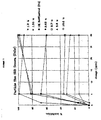
- Figure 1 is a plot showing the effectiveness of various particle size anthraquinone in inhibiting the growth of sulfate-reducing bacteria after 24 hours.
- Figure 2 is a plot showing the effectiveness of various particle size anthraquinone in inhibiting the growth of sulfate-reducing bacteria over a period of several days.
- This invention comprises a process and compositions to inhibit sulfide production by sulfate-reducing bacteria comprising contacting the medium containing the sulfate-reducing bacteria with sulfite production-inhibiting (active) anthraquinones in finely divided form.
- the term "finely divided" means that the anthraquinone compound in the composition has an average particle size of less than 2.5 microns and preferably less than 2.0 microns. As a practical matter the minimum particle size is about 0.1 micron. It has been noted that as the average particle size is decreased within the “finely divided” range the inhibition activity of the anthraquinone increases. The activity of the anthraquinone compounds with respect to inhibiting the growth of sulfate-reducing bacteria has been found to be a function of particle size and not available surface area.
- an anthraquinone compound having an average particle size of 2.0 microns used at a concentration of 5 ppm provides satisfactory inhibition of growth of sulfate-reducing bacteria whereas the same anthraquinone compound having an average particle size of for instance 3.7 microns used at a concentration of 30 ppm does not provide satisfactory inhibition of growth of sulfate reducing bacteria.
- This difference in effectiveness due to particle size is readily apparent upon initial application of the anthraquinone compound but is even more pronounced a short time after application of the anthraquinone compound when the effectiveness of the larger particle size anthraquinone compounds is effectively completely lost.
- compositions of the present invention comprise a finely divided sulfide production-inhibiting anthraquinone compound.
- the compositions are applied to the locus of or medium containing the sulfate-reducing bacteria which generally is aqueous, in a quantity sufficient to inhibit sulfide production.
- the concentration of active anthraquinone compound in the medium is at least 5ppm, desirably 5-50ppm. Greater concentrations, such as up to 100 ppm, of course can be used, but in most cases with little advantage so long as the "finely divided" particle size requirement is met.
- Anthraquinones suitable for use herein can be represented by structure (A): wherein R 1 is alkyl, aryl, amino, NO 2 , NO, diazonium, amido, sulfonamido, arylamino, hydroxy, alkoxy, sulfo, chloro or bromo: R 2 is alkyl, aryl, carboxy, amino, NO 2 , NO, diazonium, amido, sulfonamido, arylamino, hydroxy, alkoxy, sulfo, chloro or bromo: R 3 is alkyl, aryl, carboxy, hydroxy, alkoxy, sulfo or chloro: R 4 is alkyl, aryl, amino, NO 2 , NO, diazonium, amido, sulfonamido, arylamino, hydroxy, alkoxy, chloro or bromo: R 5 is amino, NO 2 , NO, diazonium, amido,
- the preferred anthraquinones to inhibit sulfide production by sulfate-producing bacteria are anthraquinone, 1,8-dihydroxyanthraquinone, 1-chloroanthraquinone, 2-chloroanthraquinone, 2-chloroanthraquinone-3-carboxylic acid, 1,5-dihydroxyanthraquinone, 1-aminoanthraquinone, 2-aminoanthraquinone, 2,6-dihydroxyanthraquinone, 1,2-dihydroxyanthraquinone, 1-hydroxyanthraquinone and 1,5-dichloroanthraquinone.
- Sulfide production by a number of different sulfate-reducing bacteria is inhibited by the method and compositions of the present invention.
- an inhibitory active anthraquinone agent is added to a growing culture of Desulfovibrio sp. growth and sulfide formation cease immediately at anthraquinone concentrations of 3ppm. This cessation typically lasts for several days after which growth resumes. This effect has been demonstrated with several different species of Desulfovibrio in pure culture. It has also been found that the redox potential of the culture affects the potency of the anthraquinone.
- compositions of the present invention comprise at least one relatively non-soluble hydrophobic anthraquinone compound of finely divided particle size.
- the composition may be in the form of a suspension in water or a water-miscible carrier, the preferred compositions are dry, free-flowing particles such as a wettable powder.
- the preferred compositions also contain a surfactant, or wetting agent.
- the surfactant can be applied by any of a variety of techniques. In the case of a normally solid surfactant, the surfactant and the TManthraquinone compound can be dry blended, preferably prior to the milling step. In the case of a normally liquid surfactant the surfactant can be sprayed onto the anthraquinone compound followed by mixing such as tumbling to ensure that an intimate well dispersed mixture is obtained.
- a liquid solution of the surfactant can be sprayed on the anthraquinone compound and the anthraquinone compound further mixed.
- the choice of surfactant is not critical. Any of the commercially available surfactants that are inert to the anthraquinone and other composition ingredients and are compatible with the use environment are suitable.
- nonionic surfactants are nonionic, cationic and anionic with the nonionic surfactants being preferred.
- these include Triton X-100, a nonionic octylphenoxypolyethoxyethanol, available from Rohm & Haas Co.; Poly-Tergent SLF18, poly(oxyethylene-polyoxypropylene)-mono-hexylether; mono-octylether; mono-decylether, available from Olin Corp.; Morwet D-425, an anionic sodium salt of condensed naphthalene sulfonate, available from Witco Chemical Co.; Stepsperse DF-500, an anionic blend of lignin sulfonates, available from Stephan Co.; Stepwet DF-90, an anionic linear alkylbenzene sulfonate, available from Stephan Co.; Stepsperse DF-100, an anionic/nonionic blend including lignin sulf
- the surfactant is present in the dry compositions, for example a wettable powder, in an amount to enable the anthraquinone compound particles to be quickly wetted and thoroughly dispersed in the aqueous bacteria use locus. Quantities in the range of 2 % to 15 %, based on the weight of the anthraquinone compound, are generally preferred.
- compositions sometimes may advantageously contain a reducing agent.
- a reducing agent that eliminates oxidative tendencies of the medium, and that is inert to the composition ingredients and compatible with the use environment can be used.
- the preferable amount of reducing agent used is that which will introduce about 2-4 mM in the aqueous locus.
- Typical of the useful reducing agent is sodium sulfide.
- the bulk anthraquinone compounds are normally obtained as particles or granules of comparatively large average particle size, as dry powders or slurries.
- the anthraquinone compounds are comminuted to the required finely divided particle size, which can be ascertained using conventional means such as a Coulter counter or a laser particle analyzer. Any means for particle size reduction may be used, such as ball milling, sand milling, pin milling, air milling, and wet milling with an agitator.
- dry bulk anthraquinone compound is dry milled to the critical particle size, and then admixed with the other ingredients such as surfactant and reducing agent. If desired, these other ingredients may be introduced during the particle size reduction.
- the finely divided anthraquinone of the present invention are used in the form of aqueous dispersion containing 10 to 60 wt. % of an anthraquinone
- the preferred aqueous dispersions of the present invention contain 10 to 60 wt. % 9,10 anthraquinone, 0.5 to 2.5 wt. % of a nonylphenolethoxylate, 0.1 to 1.5 wt. % of sodium lignosulfonate, 0.1 to 1.0 wt. % of calcium lignosulfonate, 0.05 to 2.0 wt. % of a xanthan gum and the remainder water.
- the aqueous dispersion in addition to the materials set forth in the previous sentence, contains 0.005 to 0.3 wt. % 1,2-benzothiazolin-3-one, 0.1 to 1.0 wt.
- the aqueous dispersion contains 45 to 55 wt. % 9,10-anthraquinone, 0.5 to 1.5 wt. % 10 mole nonylphenolethoxylate and 0.2 to 0.5 wt. % sodium lignosulfonate, 0.1 to 0.3 wt. % calcium lignosulfonate, 0.1 to 0.5 wt. % magnesium aluminum silicate, 0.05 to 0.5 wt. % xanthan gum and the balance water.
- the most preferred aqueous dispersion of the present invention contains 0.05 to 0.3 wt. % 1,2-benzothiazolin-3-one, 0.1 to 0.4 wt. % polydimethylsiloxane, and 2 to 5 wt. % propylene glycol.
- Anthraquinone obtained from Lancaster Synthesis Ltd, is blended with surfactants, silica and clay as reported in Table I below.
- the blended ingredients are then ground to various average particle sizes either by dry grinding in a laboratory air mill or by wet grinding as an aqueous slurry using a Netzsch Molinex Agitator mill. Average particle size is determined with a Leeds & Northrup Microtrac SPA laser instrument. Sample ID Formula Weight % Grinding Method Avg.
- Serum bottles of 60ml capacity were each filled to the 50ml level with Postgate's "B" medium designed for growing sulfate reducing bacteria.
- the Postgate's medium was first deaerated, and then transferred to the bottles under nitrogen.
- the bottles were capped with elastomeric septum closures, and then autoclaved.
- ⁇ 0.1 means that the anthraquinone is in solution and the particle size is less than 0.1 micron.
- the effectiveness of the acetone solution would normally be greater than shown here - more on the order of 95% to 98% inhibition at the 1 ppm dose rate (based on many tests by the method described).
- the lower level seen here indicates that the incubation time was too long, so that the few "uninhibited” bacteria had begun to grow significantly and produce hydrogen sulfide. Nonetheless, these numbers are still useful to indicate "relative" effectiveness of the various anthraquinone preparations.
- inhibition effectiveness is a function of anthraquinone particle size - i.e. the smaller the particle the better it's performance as a sulfide inhibitor.
- Anthraquinone from ICI Americas, Inc. is blended as per the following formula:
- a pure strain of Desulfovibrio gigas is grown overnight in a lactate medium and the cells harvested by centrifugation, then resuspended in Hepes buffer at pH 7. This is then recentrifuged, the supernatant discarded, and the cells suspended in a solution of 50mM Hepes buffer, 50mM sodium lactate and 50mM sodium sulfate. This cell suspension is placed in evacuated glass tubes and then gassed with hydrogen to reduce the medium and to provide a hydrogen-rich atmosphere in the tubes.
- the Hepes/lactate/sulfate medium is chosen because it would support cell respiration (i.e. enzyme reactions such as sulfate reduction), but would not, in a short test, support significant cell metabolism and growth.
- the tubes are then treated with the same anthraquinone formulation described in Example 2, and, again, representing various average particle sizes and an acetone solution with particle size ⁇ 0.1 microns. Some tubes are left untreated as controls. After three hours' incubation at 30°C, sulfide levels in the liquid medium in the tubes is measured, and all compared with the control tubes to determine percent inhibition. Results at the 0.5 ppm anthraquinone level are as follows: Avg. Particle Size (microns) Percent Inhibition 5.66 0 3.61 8 2.13 76 1.34 95 ⁇ 0.1 97
- anthraquinone wherein the anthraquinone has been ball milled to various average particle sizes of 1.2 microns, 1.55 microns, 2 microns, 2.63 microns, 3.7 microns, 5.8 microns and 10.0 microns.
- the anthraquinone dispersions contain 9,10-anthraquinone of the particle sizes reported in this example.
- the dispersions used to effect the treatment contain 51.5 wt. % 9,10-anthraquinone, 1 wt. % 10 mole nonylphenolethoxylate, 0.3 wt. % sodium lignosulfonate, 0.2 wt.
- anthraquinone As can be seen from Figure 1, after 24 hours the 1.2 micron particle size anthraquinone is nearly 100% effective at the 5ppm dosage level and slightly less effective at the 30 ppm dosage level.
- the 1.55 and 2 micron particle size anthraquinone materials are about 80% effective at the 5 ppm dosage level and are about 100% effective at the 30 ppm dosage level.
- the 2.63 micron particle size anthraquinone is moderately effective, but not as effective as the smaller particle size anthraquinone.
- the larger particle size anthraquinone, i.e. 3.7 micron, 5.8 micron and 10 micron exhibit poor inhibiting activity.
- Figure 2 graphically depicts the effectiveness of the various particle size anthraquinone at the 30 ppm dosage level over a period of several days.
- the 1.55 micron and 2 micron average particle size materials retain their approximately 100% effectiveness over a period of at least 7-8 days while the 3.7 micron and larger particle size anthraquinone essentially lose all of their effectiveness after only two days.
Landscapes
- Life Sciences & Earth Sciences (AREA)
- Agronomy & Crop Science (AREA)
- Plant Pathology (AREA)
- Health & Medical Sciences (AREA)
- Engineering & Computer Science (AREA)
- Dentistry (AREA)
- General Health & Medical Sciences (AREA)
- Wood Science & Technology (AREA)
- Zoology (AREA)
- Environmental Sciences (AREA)
- Agricultural Chemicals And Associated Chemicals (AREA)
- Colloid Chemistry (AREA)
- Organic Low-Molecular-Weight Compounds And Preparation Thereof (AREA)
- Preventing Corrosion Or Incrustation Of Metals (AREA)
Description

| Sample ID | Formula | Weight % | Grinding Method | Avg. Particle Size (microns) |
| A | Mobay anthraquinone (AQ) | 79.9 | Wet | 3.49 |
| Stepan Stepwet DF-90 wetting agent | 1.5 | |||
| Stepan Stepsperse DF-500 dispersant | 7 | |||
| Stepan Stepsperse DF-100 dispersant | 6 | |||
| PPG Hi-Sil 233 hydrated amorphous silica | 0.5 | |||
| | 5 | |||
| Eastman Kodak SWS-211 antifoam | 0.1 | |||
| B | Same as "A" but without the DF-90; AQ was | 81.4% | Wet | 2.86 |
| C | Mobay AQ | 79 | Dry | 2.73 |
| Stepwet DF-90 | 1.5 | |||
| Stepsperse DF-500 | 7 | |||
| Stepsperse DF-100 | 6 | |||
| Hi-Sil 233 | 1 | |||
| barden clay | 5.5 | |||
| D | Lancaster Synthesis AQ | 90 | Dry | 1.84 |
| Stepwet DF-90 | 0.5 | |||
| Stepsperse DF-500 | 6 | |||
| Stepsperse DF-100 | 3 | |||
| Hi-Sil 233 | 0.5 | |||
| E | same as "B" | Wet | 1.52 | |
| F | same at "B" | Wet | 0.95 | |
| G | Mobay AQ - 0.1 dissolved in acetone | (solution) | <0.1 |
| Compound Code | Avg. Part. (microns) | Percent Inhibition |
| A | 3.49 | 12 |
| B | 2.86 | 15 |
| C | 2.73 | 20 |
| D | 1.84 | 39 |
| E | 1.52 | 46 |
| F | 0.95 | 66 |
| G | <0.1 | 75 |
| Avg. Particle Size (microns) | Percent Inhibition |
| 5.66 | 0 |
| 3.61 | 14 |
| 2.13 | 35 |
| 1.34 | 82 |
| 1.33 | 94 |
| <0.1 | 92 |
| Avg. Particle Size (microns) | Percent Inhibition |
| 5.66 | 0 |
| 3.61 | 8 |
| 2.13 | 76 |
| 1.34 | 95 |
| <0.1 | 97 |
Claims (10)
- A process of inhibiting sulfide production in a medium containing sulfate reducing bacteria by contacting the medium with a finely divided sulfite production inhibiting anthraquinone having a particle size less than 2.5 micron.
- A process as claimed in claim 1 wherein the anthraquinone has an average particle size less than about 2 micron.
- A process as claimed in claim 1 or claim 2 wherein the bacteria is contacted with 1 to 100, preferably 5 to 50 ppm of the anthraquinone.
- A process as claimed in any one of the preceding claims wherein the anthraquinone is selected from anthraquinone, 1,8-dihydroxyanthraquinone, 1-chloroanthraquinone, 2-chloroanthraquinone-3-carboxylic acid, 1,5-dihydroxyanthraquinone, 1-aminoanthraquinone, 2-aminoanthraquinone, 2,6-dihydroxyanthraquinone, 1,2-dihydroxyanthraquinone, 1-hydroxyanthraquinone and 1,5-dichloroanthraquinone.
- A process as claimed in any one of the preceding claims wherein the anthraquinone particles are coated with 2 to 15 weight percent of surfactant.
- An anthraquinone exhibiting an inhibitory effect on the growth of sulfate-reducing bacteria the anthraquinone having an average particle size of less than 2.5 micron preferably 2 micron or less the particles optionally being coated with 2 to 15 weight percent of a surfactant.
- Anthraquinone particles as claimed in claim 6 wherein the anthraquinone is selected from anthraquinone, 1,8-dihydroxyanthraquinone, 1-chloroanthraquinone, 2-chloroanthraquinone-3-carboxylic acid, 1,5-dihydroxyanthraquinone, 1-aminoanthraquinone, 2-aminoanthraquinone, 2,6-dihydroxyanthraquinone, 1,2-dihydroxyanthraquinone, 1-hydroxyanthraquinone and 1,5-dichloroanthraquinone.
- An aqueous dispersion containing 10 to 60 weight percent of anthraquinone particles as claimed in claim 6 or claim 7.
- An aqueous dispersion comprising:i 10 to 60 wt% 9,10-anthraquinoneii 0.5 to 2.5 wt% nonylphenolethoxylateiii 0.1 to 1.5 wt% sodium lignosulfonateiv 0.1 to 1.0 wt% calcium lignosulfonate and optionally 0.05 to 0.5 wt% 1,2-benzothiazolin-3-one, 0.05 to 2.0 wt% xanthan gum 0.1 to 1.0 wt% polydimethylsiloxane and 1.0 to 10 wt% propylene glycol and the remainder water.
- An aqueous dispersion as claimed in claim 9 comprising:45 to 55 wt% 9,10-anthraquinone0.5 to 1.5 wt% nonylphenolethoxylate0.2 to 0.5 wt% sodium lignosulfonate0.1 to 0.3 wt% calcium lignosulfonate0.1 to 0.5 wt% magnesium aluminium silicate optionally 0.05 to 0.5 wt% 1,2-benzothiazolin-3-one0.1 to 0.4 wt% polydimethylsiloxane and2 to 5 wt% propylene glycol,and the remainder in water.
Applications Claiming Priority (4)
| Application Number | Priority Date | Filing Date | Title |
|---|---|---|---|
| US95562392A | 1992-10-02 | 1992-10-02 | |
| US955623 | 1992-10-02 | ||
| US12261493A | 1993-09-21 | 1993-09-21 | |
| US122614 | 1993-09-21 |
Publications (2)
| Publication Number | Publication Date |
|---|---|
| EP0591000A1 EP0591000A1 (en) | 1994-04-06 |
| EP0591000B1 true EP0591000B1 (en) | 1998-04-15 |
Family
ID=26820723
Family Applications (1)
| Application Number | Title | Priority Date | Filing Date |
|---|---|---|---|
| EP93307817A Expired - Lifetime EP0591000B1 (en) | 1992-10-02 | 1993-10-01 | Finely divided anthraquinone formulations as inhibitors of sulfide production from sulfate-reducing bacteria |
Country Status (8)
| Country | Link |
|---|---|
| US (1) | US5500368A (en) |
| EP (1) | EP0591000B1 (en) |
| JP (1) | JP2837620B2 (en) |
| CN (1) | CN1054116C (en) |
| AU (1) | AU664648B2 (en) |
| DE (1) | DE69317974T2 (en) |
| MY (1) | MY111191A (en) |
| NZ (1) | NZ248822A (en) |
Families Citing this family (29)
| Publication number | Priority date | Publication date | Assignee | Title |
|---|---|---|---|---|
| WO1996033296A1 (en) * | 1995-04-17 | 1996-10-24 | Bio-Technical Resources Lp | Method for inhibiting microbially influenced corrosion |
| US5753180A (en) * | 1995-04-17 | 1998-05-19 | Bio-Technical Resources | Method for inhibiting microbially influenced corrosion |
| ID22547A (en) * | 1997-04-04 | 1999-11-04 | Yakult Honsha Cs Kk | OBLIGATORY FORMING SULFIDA |
| AU7276698A (en) * | 1997-05-12 | 1998-12-08 | Dcv, Inc. | Method for reducing the level of hydrogen sulfide in wastewater systems |
| US6309597B1 (en) * | 1997-05-12 | 2001-10-30 | Arkion Life Sciences | Method for reducing hydrogen sulfide level in water containing sulfate-reducing bacteria and hydrogen sulfide-metabolizing bacteria |
| UA61961C2 (en) * | 1997-07-29 | 2003-12-15 | A non-biocidal method for inhibiting biogenic sulfide generation | |
| US6436423B1 (en) | 1998-07-09 | 2002-08-20 | Arkion Life Sciences | Product and method for improving avian health |
| JP2000034202A (en) * | 1998-07-15 | 2000-02-02 | Kawasaki Kasei Chem Ltd | Method for controlling sulfide formation by sulfate reducing bacteria |
| EP1261254B1 (en) * | 2000-02-17 | 2009-09-02 | Garnett, Inc. | Method of controlling zoological and aquatic plant growth |
| JP4378041B2 (en) | 2000-08-29 | 2009-12-02 | 川崎化成工業株式会社 | Gypsum building materials |
| JP4695254B2 (en) * | 2000-12-07 | 2011-06-08 | 吉野石膏株式会社 | Soil treatment material composition and soil treatment method |
| US7087172B2 (en) * | 2003-03-05 | 2006-08-08 | Usfilter Corporation | Methods for reducing nitrate demands in the reduction of dissolved and/or atmospheric sulfides in wastewater |
| US7326340B2 (en) * | 2003-03-05 | 2008-02-05 | Siemens Water Technologies Holding Corp. | System for controlling sulfide generation |
| US7285217B2 (en) * | 2003-12-02 | 2007-10-23 | Siemens Water Technologies Corp. | Removing odoriferous sulfides from wastewater |
| US20070241062A9 (en) * | 2004-07-08 | 2007-10-18 | Simpson Gregory D | Synergistic composition and method for odor control |
| US7390399B2 (en) * | 2004-12-21 | 2008-06-24 | Siemens Water Technologies Holding Corp. | Water treatment control systems and methods of use |
| US20070048247A1 (en) * | 2005-08-31 | 2007-03-01 | Kimberly-Clark Worldwide, Inc. | Deodorizing tablets |
| US7905245B2 (en) * | 2005-09-30 | 2011-03-15 | Siemens Water Technologies Corp. | Dosing control system and method |
| US7799224B2 (en) * | 2008-01-30 | 2010-09-21 | Siemens Water Technologies Corp. | Wastewater treatment methods |
| CA2775335A1 (en) * | 2009-09-25 | 2011-03-31 | Siemens Industry, Inc. | Synergistic wastewater odor control composition, systems, and related methods therefor |
| DE102009055383A1 (en) * | 2009-12-29 | 2011-06-30 | Yara International Asa | Wastewater treatment product with oxidative effect for sewerage areas with limited or lack of oxygen supply and process for the treatment of waste water |
| US8430112B2 (en) | 2010-07-13 | 2013-04-30 | Siemens Industry, Inc. | Slurry feed system and method |
| KR20140014151A (en) * | 2011-02-02 | 2014-02-05 | 마론 바이오 이노베이션스, 인코포레이티드 | Anthraquinone containing preparations/lignin formulations |
| US8968646B2 (en) | 2011-02-18 | 2015-03-03 | Evoqua Water Technologies Llc | Synergistic methods for odor control |
| US9533901B2 (en) | 2013-03-18 | 2017-01-03 | Halliburton Energy Services, Inc. | Method for control of deleterious microbes in oil and gas and other industrial fluids |
| CN103651349A (en) * | 2013-09-07 | 2014-03-26 | 宁波市雨辰环保科技有限公司 | Application of anthraquinone salt in preparation of disinfectant for sterilization or for removing formaldehyde |
| CN106045839B (en) * | 2016-06-04 | 2018-08-10 | 江阴市长江化工有限公司 | A kind of preparation method of ultra-fine anthraquinone |
| CN112961124B (en) * | 2021-02-19 | 2022-06-21 | 杭州楠大环保科技有限公司 | Method for treating sewage by using microbial preparation |
| CN114515555A (en) * | 2022-03-16 | 2022-05-20 | 中南大学 | Preparation method and application of sulfate reducing microorganism capsule |
Family Cites Families (6)
| Publication number | Priority date | Publication date | Assignee | Title |
|---|---|---|---|---|
| BE696849A (en) * | 1966-06-06 | 1967-10-10 | ||
| US3558787A (en) * | 1968-01-23 | 1971-01-26 | Du Pont | Methods and compositions for controlling plant-pathogenic fungi utilizing 1,4-dihydro-9,10-anthraquinones |
| US3897564A (en) * | 1973-08-06 | 1975-07-29 | Dow Chemical Co | Dihydroxyanthraquinone fungicides |
| US4663364A (en) * | 1984-09-05 | 1987-05-05 | Kao Corporation | Biocidal fine powder, its manufacturing method and a suspension for agricultural use containing the above powder |
| EP0525073B1 (en) * | 1990-04-18 | 1994-05-25 | E.I. Du Pont De Nemours And Company | Anthraquinones as inhibitors of sulfide production from sulfate-reducing bacteria |
| BR9106407A (en) * | 1990-12-18 | 1993-05-18 | Dowelanco | FLUIVABLE, PRECIPITATE CONCENTRATE FORMULATIONS, ITS PREPARATION AND AGRICULTURAL USES |
-
1993
- 1993-09-30 NZ NZ248822A patent/NZ248822A/en not_active IP Right Cessation
- 1993-09-30 CN CN93114164A patent/CN1054116C/en not_active Expired - Fee Related
- 1993-10-01 EP EP93307817A patent/EP0591000B1/en not_active Expired - Lifetime
- 1993-10-01 AU AU48828/93A patent/AU664648B2/en not_active Ceased
- 1993-10-01 DE DE69317974T patent/DE69317974T2/en not_active Expired - Lifetime
- 1993-10-01 MY MYPI93002005A patent/MY111191A/en unknown
- 1993-10-04 JP JP5248322A patent/JP2837620B2/en not_active Expired - Lifetime
-
1994
- 1994-10-21 US US08/327,331 patent/US5500368A/en not_active Expired - Lifetime
Also Published As
| Publication number | Publication date |
|---|---|
| EP0591000A1 (en) | 1994-04-06 |
| AU4882893A (en) | 1994-04-14 |
| DE69317974D1 (en) | 1998-05-20 |
| NZ248822A (en) | 1996-06-25 |
| JP2837620B2 (en) | 1998-12-16 |
| US5500368A (en) | 1996-03-19 |
| MY111191A (en) | 1999-09-30 |
| JPH06279207A (en) | 1994-10-04 |
| DE69317974T2 (en) | 1998-10-22 |
| CN1095705A (en) | 1994-11-30 |
| CN1054116C (en) | 2000-07-05 |
| AU664648B2 (en) | 1995-11-23 |
Similar Documents
| Publication | Publication Date | Title |
|---|---|---|
| US5500368A (en) | Finely divided anthraquinone formulations as inhibitors of sulfide production from sulfate-reducing bacteria | |
| AU650017B2 (en) | Anthraquinones as inhibitors of sulfide production from sulfate-reducing bacteria | |
| Tyler et al. | Growth rates of a pseudomonad on 2, 4-dichlorophenoxyacetic acid and 2, 4-dichlorophenol | |
| US6576633B1 (en) | Stable liquid antimicrobial suspension compositions containing quarternaries prepared from hexamethylenetetramine and certain halohydrocarbons | |
| TWI422402B (en) | Chromatographic media and chromatographic equipment storage solutions and use thereof | |
| Burger et al. | Decomposition of phenoxyalkyl carboxylic acids | |
| EP0888050B1 (en) | Suspension formulations of 2,2-dibromo-3-nitrilopropionamide | |
| Kott et al. | Effect of halogens on algae—I. Chlorella sorokiniana | |
| Becker et al. | An invivo requirement for calcium in photosystem II of Anacystisnidulans | |
| US4826822A (en) | Liquid suspensions of polyene antibiotics and use thereof for slime control in industrial waters | |
| JP3778527B2 (en) | Stable aqueous suspension composition of 2-amino-3-chloro-1,4-naphthoquinone | |
| EP0601165B1 (en) | Aqueous flowable phenazaquin composition | |
| Sorlini et al. | Research on chromatic alterations of marbles from the fountain of Villa Litta (Lainate, Milan) | |
| NO166433B (en) | ANTIMICROBIAL PREPARATION AND USE OF IT FOR AA INHIBITING GROWTH OF BACTERIES, SOPHES AND ALGES. | |
| Payne et al. | Assays for biodegradability essential to unrestricted usage of organic compounds | |
| WO2021140431A1 (en) | Deactivation solution useable for microorganism detection | |
| CA1058199A (en) | Certain oxime carbonates and method of controlling sulfate reducing bacteria | |
| Shimada et al. | Effect of alternating current exposure on the resistivity of resting Escherichia coli B cells to crystal violet and other basic dyes | |
| JONES | A study of the pectolytic bacterial population in some farm water supplies | |
| JP3600073B2 (en) | Improved microbial pesticide formulation | |
| JP3041839B2 (en) | Method for stabilizing phosphoenolpyruvate carboxylase, stabilizing agent, and stabilized composition for measuring carbon dioxide | |
| CA1175371A (en) | Bacterial strain for purifying hydrocarbons pollution and purification process | |
| MIMURA et al. | Effect of NaCl on the Toxicity of Bis (tri-n-butyltin [IV]) Oxide for Halotolerant Brevibacterium sp. | |
| HK1011599B (en) | Aqueous flowable phenazaquin composition | |
| CA2245097A1 (en) | Stable liquid antimicrobial suspensions of quaternary 3,5,7-triaza-1-azoniaadamantane derivatives |
Legal Events
| Date | Code | Title | Description |
|---|---|---|---|
| PUAI | Public reference made under article 153(3) epc to a published international application that has entered the european phase |
Free format text: ORIGINAL CODE: 0009012 |
|
| AK | Designated contracting states |
Kind code of ref document: A1 Designated state(s): DE ES FR GB NL |
|
| RAP1 | Party data changed (applicant data changed or rights of an application transferred) |
Owner name: BIO TECHNICAL RESOURCES LIMITED PARTNERSHIP |
|
| 17P | Request for examination filed |
Effective date: 19940909 |
|
| GRAG | Despatch of communication of intention to grant |
Free format text: ORIGINAL CODE: EPIDOS AGRA |
|
| 17Q | First examination report despatched |
Effective date: 19961122 |
|
| GRAH | Despatch of communication of intention to grant a patent |
Free format text: ORIGINAL CODE: EPIDOS IGRA |
|
| GRAH | Despatch of communication of intention to grant a patent |
Free format text: ORIGINAL CODE: EPIDOS IGRA |
|
| GRAA | (expected) grant |
Free format text: ORIGINAL CODE: 0009210 |
|
| AK | Designated contracting states |
Kind code of ref document: B1 Designated state(s): DE ES FR GB NL |
|
| PG25 | Lapsed in a contracting state [announced via postgrant information from national office to epo] |
Ref country code: NL Free format text: LAPSE BECAUSE OF FAILURE TO SUBMIT A TRANSLATION OF THE DESCRIPTION OR TO PAY THE FEE WITHIN THE PRESCRIBED TIME-LIMIT Effective date: 19980415 Ref country code: ES Free format text: THE PATENT HAS BEEN ANNULLED BY A DECISION OF A NATIONAL AUTHORITY Effective date: 19980415 |
|
| REF | Corresponds to: |
Ref document number: 69317974 Country of ref document: DE Date of ref document: 19980520 |
|
| ET | Fr: translation filed | ||
| NLV1 | Nl: lapsed or annulled due to failure to fulfill the requirements of art. 29p and 29m of the patents act | ||
| PLBE | No opposition filed within time limit |
Free format text: ORIGINAL CODE: 0009261 |
|
| 26N | No opposition filed | ||
| REG | Reference to a national code |
Ref country code: GB Ref legal event code: IF02 |
|
| PGFP | Annual fee paid to national office [announced via postgrant information from national office to epo] |
Ref country code: FR Payment date: 20100507 Year of fee payment: 17 |
|
| PG25 | Lapsed in a contracting state [announced via postgrant information from national office to epo] |
Ref country code: FR Free format text: LAPSE BECAUSE OF NON-PAYMENT OF DUE FEES Effective date: 20101102 |
|
| REG | Reference to a national code |
Ref country code: FR Ref legal event code: ST Effective date: 20110630 |
|
| PGFP | Annual fee paid to national office [announced via postgrant information from national office to epo] |
Ref country code: GB Payment date: 20120328 Year of fee payment: 19 |
|
| PGFP | Annual fee paid to national office [announced via postgrant information from national office to epo] |
Ref country code: DE Payment date: 20120402 Year of fee payment: 19 |
|
| GBPC | Gb: european patent ceased through non-payment of renewal fee |
Effective date: 20121001 |
|
| PG25 | Lapsed in a contracting state [announced via postgrant information from national office to epo] |
Ref country code: DE Free format text: LAPSE BECAUSE OF NON-PAYMENT OF DUE FEES Effective date: 20130501 Ref country code: GB Free format text: LAPSE BECAUSE OF NON-PAYMENT OF DUE FEES Effective date: 20121001 |
|
| REG | Reference to a national code |
Ref country code: DE Ref legal event code: R119 Ref document number: 69317974 Country of ref document: DE Effective date: 20130501 |