EP0585412B1 - Increasing blood-brain barrier permeability with permeabilizer peptides - Google Patents
Increasing blood-brain barrier permeability with permeabilizer peptides Download PDFInfo
- Publication number
- EP0585412B1 EP0585412B1 EP92917463A EP92917463A EP0585412B1 EP 0585412 B1 EP0585412 B1 EP 0585412B1 EP 92917463 A EP92917463 A EP 92917463A EP 92917463 A EP92917463 A EP 92917463A EP 0585412 B1 EP0585412 B1 EP 0585412B1
- Authority
- EP
- European Patent Office
- Prior art keywords
- amino acid
- replaced
- permeabilizer
- proline
- hydroxyproline
- Prior art date
- Legal status (The legal status is an assumption and is not a legal conclusion. Google has not performed a legal analysis and makes no representation as to the accuracy of the status listed.)
- Expired - Lifetime
Links
- 0 *C(CN=O)C(C(*)C(*)C(*)N=O)O Chemical compound *C(CN=O)C(C(*)C(*)C(*)N=O)O 0.000 description 1
Images









Classifications
-
- A—HUMAN NECESSITIES
- A61—MEDICAL OR VETERINARY SCIENCE; HYGIENE
- A61K—PREPARATIONS FOR MEDICAL, DENTAL OR TOILETRY PURPOSES
- A61K38/00—Medicinal preparations containing peptides
- A61K38/04—Peptides having up to 20 amino acids in a fully defined sequence; Derivatives thereof
- A61K38/043—Kallidins; Bradykinins; Related peptides
-
- A—HUMAN NECESSITIES
- A61—MEDICAL OR VETERINARY SCIENCE; HYGIENE
- A61K—PREPARATIONS FOR MEDICAL, DENTAL OR TOILETRY PURPOSES
- A61K38/00—Medicinal preparations containing peptides
- A61K38/04—Peptides having up to 20 amino acids in a fully defined sequence; Derivatives thereof
- A61K38/08—Peptides having 5 to 11 amino acids
-
- A—HUMAN NECESSITIES
- A61—MEDICAL OR VETERINARY SCIENCE; HYGIENE
- A61K—PREPARATIONS FOR MEDICAL, DENTAL OR TOILETRY PURPOSES
- A61K47/00—Medicinal preparations characterised by the non-active ingredients used, e.g. carriers or inert additives; Targeting or modifying agents chemically bound to the active ingredient
- A61K47/30—Macromolecular organic or inorganic compounds, e.g. inorganic polyphosphates
- A61K47/42—Proteins; Polypeptides; Degradation products thereof; Derivatives thereof, e.g. albumin, gelatin or zein
-
- C—CHEMISTRY; METALLURGY
- C07—ORGANIC CHEMISTRY
- C07K—PEPTIDES
- C07K7/00—Peptides having 5 to 20 amino acids in a fully defined sequence; Derivatives thereof
- C07K7/02—Linear peptides containing at least one abnormal peptide link
-
- C—CHEMISTRY; METALLURGY
- C07—ORGANIC CHEMISTRY
- C07K—PEPTIDES
- C07K7/00—Peptides having 5 to 20 amino acids in a fully defined sequence; Derivatives thereof
- C07K7/04—Linear peptides containing only normal peptide links
- C07K7/18—Kallidins; Bradykinins; Related peptides
Definitions
- the physiological basis for the blood-brain barrier is the brain capillaries, which are comprised of endothelial cells (Goldstein, et al. , Scientific American , 255 : 74-83 (1986); Pardridge, W.M., Endocrin. Rev. , 7 : 314-330 (1986)). These endothelial cells are different from those found in other tissues of the body. In particular, they form complex tight junctions between themselves.
- the actual blood-brain barrier is formed by these high-resistance tight intercellular junctions which, with the cells themselves, form a continuous wall against the passive movement of many molecules from the blood to the brain.
- These cells are also different in that they have few pinocytotic vesicles, which in other tissues allow somewhat unselective transport across the capillary wall. In addition, continuous gaps or channels running through the cells, which would allow unrestrained passage, are absent.
- the blood-brain barrier One function of the blood-brain barrier is to protect the brain from fluctuations in blood chemistry. However, this isolation of the brain from the bloodstream is not complete. There does exist an exchange of nutrients and waste products. The presence of specific transport systems within the capillary endothelial cells assures that the brain receives, in a controlled manner, all of the compounds required for normal growth and function. The obstacle presented by the blood-brain barrier is that, in the process of protecting the brain, it excludes many potentially useful therapeutic and diagnostic agents.
- Intrathecal injection allows administration of agents directly into the brain ventricles and spinal fluid by puncturing the membranes surrounding the brain. Sustained delivery of agents directly into the spinal fluid can be attained by the use of infusion pumps that are implanted surgically. These spinal fluid delivery techniques are used to treat brain cancers, infections, inflammation and pain. However, they do not penetrate deeply into the brain.
- Mannitol can cause permanent damage (including blindness) to the eye. If the barrier is permeable for too long, brain edema results. Cells of the brain also can be damaged when neurotoxic substances in the blood, not generally accessible to the brain, are able to cross the barrier. Finally, there is a serious incidence of seizures in patients during and after the procedure.
- compositions for increasing the permeability of the blood-brain barrier in an animal are permeabilizers of the blood-brain barrier which are peptides having a core sequence of amino acids or amino acid analogues.
- the sequence is arginine-proline-hydroxyproline-glycine-thienylalanine-serine-proline-4-Me-tyrosine- ⁇ (CH 2 NH)arginine, from N-terminal to C-terminal, where ⁇ (CH 2 NH) denotes a reduced peptide bond between the 4-Me-tyrosine and arginine amino acids.
- This peptide, which is an analogue of bradykinin is referred to herein, for convenience, as permeabilizer A-7. Conformational analogues of this sequence which are said sequence with at least one of the following modifications:
- compositions that include permeabilizer A-7 or conformational analogues and a pharmaceutically acceptable carrier are also encompassed in this invention. These pharmaceutical compositions can also include one or more molecules for which the permeabilizer A-7 or conformational analogues make the blood-brain barrier more permeable.
- the present invention pertains to a method for increasing the permeability of the blood-brain barrier of a host to a molecule contained in the host's bloodstream.
- This method comprises the administration of an effective amount of permeabilizer A-7 or conformational analogues to the host.
- the molecule, for which the blood-brain barrier is made more permeable by the administered permeabilizer A-7 or conformational analogues can also be co-administered with the permeabilizer A-7 or conformational analogues in this invention.
- the molecule to be delivered across the blood-brain barrier to the brain can be either an endogenous molecule residing in the bloodstream or an exogenous molecule that is co-administered sequentially or simultaneously with permeabilizer A-7 or conformational analogues.
- An advantage of the present invention is that it provides a practical means for increasing the permeability of the blood-brain barrier by the administration of permeabilizer A-7 or conformational analogues while co-administering a molecule of therapeutic, prophylactic or diagnostic value.
- intravenous injection of permeabilizer A-7 or conformational analogues is significantly less invasive than intrathecal injection or osmotic disruption of the blood-brain barrier.
- the permeabilizer A-7 or conformational analogues preferentially increase the permeability of the blood-brain barrier for lower molecular weight substances.
- the permeabilizer A-7 or conformational analogues of this invention can be administered by one of the traditional routes of administration. That is, the permeabilizer A-7 or conformational analogues can be administered by such techniques as intravascular, subcutaneous or intramuscular injections, oral, transdermal or intranasal administrations, and inhalation or sustained release routes. These routes of administration provide a variety of available options for delivering the permeabilizer A-7 or conformational analogues of this invention into the bloodstream of the host.
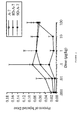
- Figure 1 is a graphic representation of the time course of brain uptake of sucrose after the administration of a specific amount (10 ⁇ g) of permeabilizer A-7 into different mice.
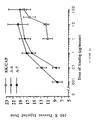
- Figure 2 is a graphic representation of brain uptake of sucrose after the administration of various amounts of permeabilizer A-7 and of two of its diastereomers.
- Figure 3a is a graphic representation of brain uptake of sucrose, displayed as percent of injected dose, following the administration of bradykinin or permeabilizer analogues.
- Figure 3b is a graphic representation of brain uptake of sucrose, displayed as percent of maximum uptake, following the administration of bradykinin or permeabilizer analogues.
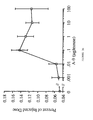
- Figure 3c is a graphic representation of brain uptake of sucrose, displayed as percent of injected dose, following the administration of various amounts of a permeabilizer A-7 analogue, A-9.
- Figure 3d is a graphic representation of brain uptake of sucrose, displayed as percent of injected dose, following the administration of various amounts of a permeabilizer A-7 analogue, A-14.
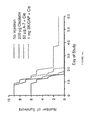
- Figure 4a is a graphic representation of the effects of no treatment; treatment with cisplatin; treatment with bradykinin, captopril and cisplatin; and treatment with permeabilizer A-7 and cisplatin on survival time (days) of rats implanted with a brain tumor.
- Figure 4b is a graphic representation of the effects of no treatment; treatment with cisplatin; and treatment with permeabilizer A-7 and cisplatin on survival time in days of rats implanted with a brain tumor.
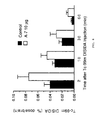
- Figure 5 is a graphic representation of the brain uptake of an imaging agent DISIDA intravenously injected 2 minutes after either saline or one of three different amounts of permeabilizer A-7 was intravenously injected into rats.
- Figure 6 is a histogram which illustrates the effect of intravenously administered permeabilizer A-7 on the uptake of the imaging agent DISIDA into the brain.
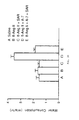
- Figure 7 is a histogram which illustrates the effect of co-administered permeabilizer A-7 on the antinociceptive activity of loperamide in the mouse tail flick assay.
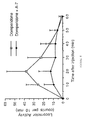
- Figure 8 is a graphic representation of the effects of a dopamine receptor antagonist (domperidone) co-administered with permeabilizer A-7 on apomorphine-induced motor activity of rats.
- a dopamine receptor antagonist domperidone
- Figure 9 is a graphic representation of the effects of an angiotensin II analogue co-administered with permeabilizer A-7 on drinking behavior in rats.
- Figure 10 is a histogram which illustrates the effects of an angiotensin II analogue and inhibitor co-administered with permeabilizer A-7 on drinking behavior in rats.
- Figure 11 is a histogram which illustrates the effect of intravenously administered permeabilizer A-7 on the brain uptake of 86 Rb at various times after administration of permeabilizer A-7.
- Figure 12 is a graphic representation of a Scatchard analysis of the specific binding of [ 3 H]-bradykinin in the absence of competing nonradioactive peptide and in the presence of either 50 nM permeabilizer A-7 or 100 nM of the 9D diastereomer of permeabilizer A-7.
- Figure 13 is a graphic representation of the effects of various concentrations of permeabilizer A-7 on intracellular calcium levels in rat brain endothelial cells.
- Figure 14 is a tracing of changes in fluorescence ratios from a rat brain endothelial cell exposed to permeabilizer A-7 and the 9D diastereomer of permeabilizer A-7.
- Figure 15 is a graphic representation of the effects of permeabilizer A-7 on the effectiveness of amphotericin B against experimentally-induced cryptococcal meningitis.
- This invention pertains to compositions for increasing the permeability of the blood-brain barrier in an individual, such as a human being, to a molecule of interest.
- an individual such as a human being
- This invention pertains to compositions for increasing the permeability of the blood-brain barrier in an individual, such as a human being, to a molecule of interest.
- the molecule By increasing the permeability of the blood-brain barrier to the molecule of interest, the molecule more readily leaves the bloodstream and enters the interstitial fluid of the brain.
- the increase in blood-brain barrier permeability to the molecule of interest provides accessibility of this molecule to the brain in higher relative concentrations than without the permeabilizer A-7 or conformational analogues.
- compositions of the invention are referred to as permeabilizer A-7 or conformational analogues.
- This term has been chosen to characterize the attribute of these substances for increasing the permeability of the blood-brain barrier to a molecule of interest.
- the increased permeability of the blood-brain barrier that occurs as a result of the administration of these compositions is believed to be mediated by receptors, probably bradykinin B 2 receptors, located on the surface of brain endothelial cells that form the blood-brain barrier.
- receptors probably bradykinin B 2 receptors
- the interaction between these receptors and the compositions of the invention apparently alters junctional or transport properties between the cells thereby increasing the permeability of the blood-brain barrier to molecules such as the molecule of interest.
- bradykinin can also increase the permeability of the blood-brain barrier to molecules.
- This permeability increase probably occurs by the same mechanism as that for the permeabilizer A-7 or conformational analogues of this invention. That is, bradykinin probably interacts at the same or similar B 2 receptors as the permeabilizer A-7 or conformational analogues to cause an alteration of the blood-brain barrier permeability so that certain molecules can more easily leave the bloodstream to enter the interstitial fluid of the brain.
- the permeabilizer A-7 or conformational analogues of this invention and bradykinin may be considered to be pharmacological agonists for increasing permeability of the blood-brain barrier.
- the permeabilizer A-7 or conformational analogues of this invention are peptides or peptidomimetics having a core sequence of amino acids.
- This core sequence of amino acids has such a conformation in aqueous solution that it can interact with molecules associated with the blood-brain barrier, e.g. receptor molecules, to effect an increase in the permeability of the blood-brain barrier to a molecule of interest that resides in or is injected into the bloodstream.
- the specific sequence of amino acids or mimetic replacements of the various permeabilizer A-7 or conformational analogues confers the proper conformation to them so they interact with the molecules associated with the blood-brain barrier to cause an increase in the permeability of the blood-brain barrier. If the primary sequence is improper, the substance will not adopt the proper conformation and thus will not effect an increase in the permeability of the blood-brain barrier.
- a specific and preferred embodiment of this invention is the permeabilizer A-7 with the linear amino acid sequence from N-terminal to C-terminal of: arginine-proline-hydroxyproline-glycine-thienylalanine-serine-proline-4-Me-tyrosine ⁇ (CH 2 NH)-arginine.
- This peptide is referred to herein as permeabilizer A-7.
- a method for synthesis of permeabilizer A-7 is given in the Examples. However, other known preparative methods can be employed to produce permeabilizer A-7 or conformational analogues.
- This peptide, permeabilizer A-7 differs from a conventional peptide sequence of amino acids in the following ways: the third amino acid is hydroxyproline; the fifth amino acid is thienylalanine which is similar to phenylalanine but where a thienyl group has replaced the phenyl group; the eighth amino acid is tyrosine which has been substituted with a methyl group at the 4 position; and the peptide bond between the eighth and ninth amino acids has been replaced with a reduced peptide bond isostere, i.e. ⁇ (CH 2 NH).
- Peptide and peptidomimetic analogues of this embodiment are also part of this invention provided they allow the proper conformation in aqueous solution so they effect an increase in permeability of the blood-brain barrier to molecules of interest.
- These compositions are termed "conformational analogues" of this embodiment.
- This permeabilizer A-7 or conformational analogues may be compared to bradykinin which has the following linear amino acid sequence: arginine-proline-proline-glycine-phenylalanine-serine-proline-phenylalanine-arginine (Lehninger, A.L., Biochemistry , p. 75 (1975)).
- the preferred permeabilizer A-7 differs from bradykinin in the following respects: at the third amino acid, hydroxyproline replaces proline; at the fifth amino acid, thienylalanine replaces phenylalanine; at the eighth amino acid, 4-Me-tyrosine replaces phenylalanine; and between the eighth and ninth amino acids, a reduced peptide bond replaces a conventional peptide bond.
- Much less of the permeabilizer A-7 is required to increase the blood-brain barrier permeability and more of the molecule of interest crosses the blood-brain barrier at a given administered amount of the permeabilizer A-7 when compared to the same administered amount of bradykinin.
- Characteristic features of the permeabilizer A-7 or conformational analogues of this invention are important for the permeabilizer A-7 or conformational analogues to allow the proper conformation to effect an increase in the permeability of the blood-brain barrier to one or more molecules of interest.
- the N-terminal arginine is replaced by an amino acid analogue containing a guanidino side chain
- the second amino acid (proline) is replaced by hydroxyproline, dehydroproline or N-methylalanine
- the third amino acid (hydroxyproline) is replaced by proline, dehydroproline, alanine or N-methylalanine
- the fifth amino acid (thienylalanine) is replaced by another aromatic amino acid or a hydrophobic aliphatic amino acid
- the sixth amino acid (serine) is replaced by glycine or alanine
- the seventh amino acid (proline) is replaced by hydroxyproline, dehydroproline or N-methylalanine
- the C-terminal arginine is replaced by an amino acid analogue containing a guanidino side chain.
- the changes be limited to: ⁇ -cycloarginine, homoarginine, ⁇ -hydroxyaginine, canavanine, N ⁇ -amidinocitrulline, 2-amino-4-guanidinobutanoic acid for the N-terminal or C-terminal arginine; hydroxyproline or dehydroproline for the second or seventh amino acids (proline); proline or dehydroproline for the third amino acid (hydroxyproline); dehydrophenylalanine, phenylalanine or another aromatic analogue for the fifth amino acid (thienylalanine); and glycine for the sixth amino acid (serine).
- the proper conformation of the permeabilizer A-7 or conformational analogue is achieved so that the permeabilizer A-7 or conformational analogues can effect an increase in the permeability of the blood-brain barrier to a molecule of interest.
- These amino acid positions and designations appear to be important for the permeabilizer A-7 or conformational analogues to allow the proper conformation so that the desired interaction can occur.
- Another variation that is within this invention is the optional addition of one or more amino acids or analogues to the N-terminal arginine or the masking of the primary amino group of this arginine (e.g. acetylation). These additional amino acids are linked by typical peptide bonds to each other and to the N-terminal arginine, thus making the additional amino acid(s) the N-terminal region of the permeabilizer A-7 or conformational analogue peptide. These additional amino acids are arginine or lysine or, if there are two additional amino acids, the N-terminal amino acid can be methionine.
- a single amino acid is added and is arginine, it can be substituted with an acetyl or other masking agent (e.g. propyl, benzyl, adamantylacetyl, etc.)
- additional amino acids can be of the D- or the L-isomeric form.
- Preferred additional N-terminal amino acid groups are arginine-, acetyl arginine-, lysine-, arginine-arginine-, lysine-lysine-, methionine-arginine- or methionine-lysine- where these additional amino acids are of either D or L configuration.
- the amino acids that constitute the core sequence of the permeabilizer A-7 or conformational analogues of this invention preferably should be formed as the L-isomer.
- the D-isomer can be substituted at some positions of the core sequence (e.g. position 8) and the resulting peptide will still have blood-brain barrier permeabilizing activity.
- the D-isomer is substituted at position 9 of the core constituent amino acids of the sequence, the increase in permeability of the blood-brain barrier is severely attenuated when the resulting permeabilizer A-7 or conformational analogue is administered to the host animal.
- This invention also pertains to pharmaceutical compositions suitable for administration to host animals to increase the permeability of the blood-brain barrier to a molecule of interest.
- These pharmaceutical compositions contain one or more of the permeabilizer A-7 or conformational analogues in a pharmaceutically acceptable carrier known to one of skill in the art.
- the pharmaceutical composition will often be given by injection into a blood vessel bf the host animal.
- the pharmaceutical composition can be administered intravenously since the permeabilizer A-7 or conformational analogues are not significantly degraded by angiotensin converting enzyme (ACE) known to be present in high concentrations in the lung.
- ACE angiotensin converting enzyme
- bradykinin is significantly degraded by ACE and therefore is often administered intra-arterially.
- the quantity of permeabilizer A-7 or conformational analogues to be administered, and therefore packaged as units of the pharmaceutical composition depends upon the efficacy of permeabilizer A-7 or the chosen conformational analogue, the size and other individual variations of the host compared to the population of hosts as a whole and the molecule(s) of interest to be passed through the blood-brain barrier.
- the actual amounts and concentrations of permeabilizer A-7 or conformational analogues in the pharmaceutical compositions can be readily ascertained by a person of skill in the art.
- compositions of this invention can also contain one or more molecules of interest to be passed across the blood-brain barrier.
- both the molecule(s) of interest and the permeabilizer A-7 or conformational analogue that foster(s) its (their) penetration of the blood-brain barrier can be included in a convenient package. This allows the substances to be co-administered so the efficiency of administration of these substances is maximized.
- the molecule(s) of interest and the permeabilizer A-7 or conformational analogue will be administered sequentially in order to allow one of the moieties to be at optimal concentration in the blood before the other moiety is administered. In these situations, the moieties will be separately packaged.
- This invention also relates to a method for increasing the permeability of the blood-brain barrier of a host to a molecule present in the host's bloodstream.
- the host can be any animal which possesses a central nervous system (i.e., a brain).
- Examples of hosts include mammals, such as humans, domestic animals (e.g, dog, cat, cow or horse) and animals intended for experimental purposes (e.g., mice, rats, rabbits).
- the amount of permeabilizer A-7 or conformational analogue administered to a host that is efficacious for increasing the permeability of the blood-brain barrier is below the toxic level for that host.
- nontoxic dosages of permeabilizer A-7 or conformational analogues can be administered without sacrificing permeabilizing activity.
- the molecule in the host's bloodstream can be exogenous to the host.
- it can be a neuropharmaceutical agent which has a therapeutic or prophylactic effect on a neurological disorder.
- neurological disorders include cancer (e.g., brain tumors), Acquired Immune Deficiency Syndrome (AIDS), infections of the central nervous system, epilepsy, Parkinson's disease, multiple sclerosis, neurodegenerative disease, trauma, depression, Alzheimer's disease, migraine, pain, or a seizure disorder.
- Classes of neuropharmaceutical agents which can be used in this invention include antimicrobial agents, antiparasitic agents, agents that act on the autonomic nervous system including adrenergic agents and catecholaminergic agents, anticonvulsants, nucleoside analogues, antineoplastic agents, anti-trauma agents, excitatory amino acids and other classes of agents used to treat or prevent a neurological disorder.
- antibiotics include amphotericin B, gentamicin sulfate, pyrimethamine, clindamycin and penicillin.
- An example of an adrenergic agent (including blockers) is atenolol.
- catecholaminergic agents include dopamine, diacetyldopamine and domperidone.
- antineoplastic agents include Adriamycin, methotrexate, cyclophosphamide, etoposide, carboplatin and cisplatin.
- An example of an anticonvulsant which can be used is valproate.
- anti-trauma agents which can be used include calpain inhibitors, channel blockers, glutamate chelators and oxygen radical scavengers.
- Nucleoside analogues which can be used include azido thymidine (AZT), dideoxyinosine (ddI) and dideoxycytidine (ddC).
- the molecules in the host's bloodstream can also be diagnostic imaging or contrast agents.
- diagnostic agents include substances that are labelled with radioactivity, such as 99m Tc glucoheptonate, or substances used in Magnetic Resonance Imaging (MRI) procedures such as Gadolinium doped chelation agents (e.g. Gd-DTPA).
- MRI Magnetic Resonance Imaging
- the route of administration of exogenous molecules to the host's bloodstream can be parenterally by subcutaneous, intravascular (including intravenous), or intramuscular injection or by absorption through a bodily tissue, such as the digestive tract, the respiratory system or the skin.
- the dosage form of the molecule e.g., capsule, tablet, solution, emulsion
- the administration of the exogenous molecule and the permeabilizer A-7 or conformational analogue to the host's bloodstream can occur simultaneously or sequentially in time.
- a therapeutic drug can be administered orally in tablet form while the intravenous administration of the permeabilizer A-7 or conformational analogue is performed later (e.g. 30 minutes). This is to allow time for the drug to be absorbed from the gastrointestinal tract and taken up by the bloodstream before the permeabilizer A-7 or conformational analogue is given to increase the permeability of the blood-brain barrier to the drug.
- the permeabilizer A-7 or conformational analogue can be administered before, after or at the same time as an intravascular injection of a drug.
- the term "co-administration" is used herein to mean that the permeabilizer A-7 or conformational analogues and the exogenous molecule will be administered at times that will achieve significant concentrations in the blood for producing the simultaneous effects of increasing the permeability of the blood-brain barrier to the exogenous molecule and allowing the maximum passage of the exogenous molecule from the blood to the interstitial fluid of the brain.
- the molecule to be delivered to the brain via the host's bloodstream can be endogenous to the host. That is, it can be a biological product that is naturally synthesized and produced by the host. Examples of such biological products include sugars, such as glucose, and small peptides, such as enkephalins and thyroid stimulating hormone releasing factor.
- an effective amount of the permeabilizer A-7 or conformational analogue is that amount which will significantly increase the blood-brain barrier permeability for the molecule(s) of interest. In other words, it will increase the permeability of the blood-brain barrier to allow sufficient quantities of a molecule of interest to pass from the blood to the interstitial fluid of the brain where it can exert a therapeutic or prophylactic effect or allow for conduct of diagnostic procedures.
- the effective amount will be determined on an individual basis and will be based, at least in part, on consideration of the individual's size, the specific disease, the severity of symptoms to be treated, the result sought, the specific permeabilizer A-7 or conformational analogue and other variations among hosts, etc. Thus, the effective amount can be determined by one of ordinary skill in the art employing such factors and using no more than routine experimentation.
- the increase in permeability of the blood-brain barrier in response to the permeabilizer A-7 or conformational analogue relates not only to the quantity of molecules passing from the blood to the brain, but also, to the type of molecule(s) of interest.
- the effect of the permeabilizer A-7 or conformational analogue is to preferentially increase the passage of small molecular weight substances through the blood-brain barrier.
- the reaction flask was placed in a cold room (4°C) and stirred for 12 hours.
- the contents of the flask were gravity filtered using Whatman Qualitative #1 filter paper.
- the filtrate was concentrated by means of a rotary evaporator to viscous oil which was then redissolved in 200 mls of methylene chloride.
- This crude reaction mix was allowed to sit at 4°C for one hour and then filtered as before in order to remove any residual dicyclohexylurea.
- the filtrate was again concentrated by means of a rotary evaporator and redissolved in 50 ml of methylene chloride in preparation for column chromatography.
- a cold solution of KHSO 4 (5.433 g in 230 ml of H 2 O) was added to the reaction vessel.
- the layers were separated and the aqueous layer was extracted three times with 150 mls of ether each time.
- the ether layers were combined and worked up as follows. Washed three times with 200 mls of 3N HCl. Washed three times with 200 mls of saturated sodium bicarbonate. Washed three times with 200 mls of brine. Dried over magnesium sulfate, filtered, and concentrated in vacuo.
- the protected pseudodipeptide was attached to hydroxymethyl resin (Polystyrene-1% Divinylbenzene, 0.7 mequiv./g) using dicyclohexylcarbodiimide and 4-dimethylaminopyridine.
- hydroxymethyl resin Polystyrene-1% Divinylbenzene, 0.7 mequiv./g
- dicyclohexylcarbodiimide 4-dimethylaminopyridine.
- To 1.87 g of hydroxymethyl resin (1.31 mmol) was added 2.28 g (3.28 mmol) of the protected pseudodipeptide, 410 mg (3.33 mmol) of 4-dimethylaminopyridine, and 25 ml of anhydrous dimethylformamide in a 50 ml polypropylene tube.
- 680 mg (3.3 mmol) of dicyclohexylcarbodiimide was shaken overnight at room temperature.
- the resin was collected by filtration and washed successively
- Permeabilizer A-7 was prepared by solid-phase peptide synthesis by sequentially assembling the remaining amino acids (in a C- to N-fashion) onto the resin bound protected pseudodipeptide.
- the peptide was synthesized on a Beckman 990 peptide synthesizer using the following program for each coupling cycle: 1- Wash, CH 2 Cl 2 (3 x 1 min); 2-Deprotect, 40% TFA/CH 2 Cl 2 (2 x 10 minutes); 3- Wash, CH 2 Cl 2 (3 x 1 min); 4 - Wash, Isopropanol (2 x 1 min); 5 - Wash, CH 2 Cl 2 (3 x 1 min); 6- Neutralize, 5% DIEA/CH 2 Cl 2 (3 x 2 min); 7 - Wash, CH 2 Cl 2 (5 x 1 min); 8 - Couple, (3 equivalents BOC-Amino acid, 3 equivalents of BOP) 1 x 60 min; 9 - Wash, CH 2 Cl 2 (3 x 1 min); 10 - Wash, Isopropanol (2 x
- the crude peptide was isolated from the resin by treatment of the protected peptide-resin with anhydrous HF containing 10% anisole for 1 hour at 0°C. The HF was removed in vacuo and the crude resin/peptide was washed with ether three times. The peptide was extracted with 10% acetic acid and lyophilized to yield a crude peptide.
- the peptide was partially purified by HPLC using a 0.1% TFA/acetonitrile gradient (10-40% over 30 minutes) on a C 18 reverse phase support. The fractions from the main peak were combined to provide purified permeabilizer A-7 which appeared homogeneous by TLC, Electrophoresis, and HPLC. FAB/MS analysis yielded the expected MW of 1098. Amino acid analysis after 6N HCl hydrolysis (24 hours at 110°C) gave the following composition: Ser(1)0.89, Pro (2)2.00, Gly (1)0.97, Arg (1)1.03, Thi(1)0.73. 4Me-Tyr- ⁇ (CH 2 NH)-Arg(1) was detected by an alternate method, but was partially destroyed in hydrolysis.
- Permeabilizer A-7 can also be prepared by solid-phase peptide synthesis by sequentially assembling the remaining amino acids (in a C- to N-fashion) starting with a BOC-Arg(Tos)-resin support.
- the reduced dipeptide was prepared on the support using the following program cycle: 1) Wash, CH 2 Cl 2 (3 x 1 min); 2) Deprotect, 40% TFA/CH 2 Cl 2 (1 x 1 minute, then 1 x 30 minutes); 3) Wash, CH 2 Cl 2 (3 x 1 min); 4) Wash, Methanol (2 x 1 min); 5) Wash, CH 2 Cl 2 (3 x 1 min); 6) Wash, DMF (2 x 1 min); 7) Wash, DMF/1% HOAc (1 x 1 min); 8) Couple BOC-4-Me-Tyrosinal.
- the crude peptide was isolated from the resin by treatment of the protected peptide-resin with anhydrous HF containing 10% anisole for 1 hour at O°C. The HF was removed in vacuo and the crude resin/peptide was washed with ether three times. The peptide was extracted with 10% acetic acid and lyophilized to yield a crude peptide.
- the peptide was purified by HPLC using a 0.1% TFA/acetonitrile gradient (0-25% over 180 minutes) on a C 18 reverse phase support. The fractions from the main peak were combined to provide purified permeabilizer A-7 which appeared homogeneous by TLC, electrophoresis, and HPLC. FAB/MS analysis yielded the expected MW of 1098 and fragmentation pattern which confirmed the proper sequence of permeabilizer A-7.
- Permeabilizer A-9 which is an analogue of permeabilizer A-7 that has dehydroproline rather than proline residues at positions 2 and 7 of the permeabilizer A-7 amino acid sequence ([dehydro Pro 2,7 ]-A-7), was prepared by using solid-phase peptide synthesis by sequentially assembling the remaining amino acids (in a C- to N-fashion) starting with a BOC-Arg(Tos)-resin support.
- the reduced dipeptide was prepared on the support using the following program cycle: 1) Wash, CH 2 Cl 2 (3 x 1 min); 2) Deprotect, 40% TFA/CH 2 Cl 2 (1 x 1 minute, then 1 x 30 minutes); 3) Wash, CH 2 Cl 2 (3 x 1 min); 4) Wash, Methanol (2 x 1 min); 5) Wash, CH 2 Cl 2 (3 x 1 min); 6) Wash, DMF (2 x 1 min); 7) Wash, DMF/1% HOAc (1 x 1 min); 8) Couple, BOC-4-Me-Tyrosinal. (Three equivalents of BOC-4-Me-Tyrosinal and three equivalents of sodium cyanoborohydride were predissolved in a minimal amount of DMF.
- the amino acid/cyanoborohydride solution was added to the washed peptide resin which had been suspended in DMF/1% HOAc). Coupling was monitored by ninhydrin test and typically found to be complete within one hour. Following the reductive amination, the peptide resin was washed with DMF, then methanol. The secondary amine of the reduced dipeptide was then protected for further synthesis using a benzyloxycarbonyl group (Z-). This group was introduced by treating the resin with 2 x 5 equivalents of Z-Cl in 5% DIEA/CH 2 Cl 2 for 1-4 hours each step.
- the crude peptide was isolated from the resin by treatment of the protected peptide-resin with anhydrous HF containing 10% anisole for 1 hour at 0°C. The HF was removed in vacuo and the crude resin/peptide was washed with ether three times. The peptide was extracted with 10% acetic acid and lyophilized to yield a crude peptide.
- the peptide was purified by HPLC using a 0.1% TFA/acetonitrile gradient (0-25% over 180 minutes) on a C 18 reverse phase support. The fractions from the main peak were combined to provide purified permeabilizer A-9 which appeared homogeneous by TLC, Electrophoresis, and HPLC. Amino acid analysis yielded the following results: Ser(1) 0.97, dehydroPro(2) 1.69, Gly(1) 0.95, Arg(1) 0.95, Hyp(1) 0.92, Thi(1) 0.75.
- Permeabilizer A-14 which is permeabilizer A-7 to which a D-arginine has been attached to the N-terminus by a peptide bond, i.e. [D-Arg 0 ]-A-7, was prepared by solid-phase peptide synthesis by sequentially assembling the remaining amino acids (in a C- to N-fashion) starting with a BOC-Arg(Tos)-resin support.
- the reduced dipeptide was prepared on the support using the following program cycle: 1) Wash, CH 2 Cl 2 (3 x 1 min); 2) Deprotect, 40% TFA/CH 2 Cl 2 (1 x 1 minute, then 1 x 30 minutes); 3) Wash, CH 2 Cl 2 (3 x 1 min); 4) Wash, Methanol (2 x 1 min); 5) Wash, CH 2 Cl 2 (3 x 1 min); 6) Wash, DMF (2 x 1 min); 7) Wash, DMF/1% HOAc (1 x 1 min); 8) Couple BOC-4-Me-Tyrosinal. (Note: Three equivalents of BOC-4-Me-Tyrosinal and three equivalents of sodium cyanoborohydride were predissolved in a minimal amount of DMF.
- the amino acid/borohydride solution was added to the washed peptide resin which had been suspended in DMF/1% HOAc.) Coupling was monitored by ninhydrin test and typically found to be complete within thirty minutes. Following the reductive amination, the peptide resin was washed with DMF, then methanol. The secondary amine of the reduced dipeptide was then protected for further synthesis by using a benzyloxycarbonyl group (Z-). This group was introduced by treating the resin with 10% benzylchloroformate in 5% DIEA/CH 2 Cl 2 for 30 minutes. The resin was then washed with CH 2 Cl 2 (3 x 1 min), ethanol (1 x 1 min) and CH 2 Cl 2 (3 x 1 min).
- Arginine was double coupled by repeating step 10 with fresh reagents.
- the following sequence of amino acids were added: BOC-Proline, BOC-Ser(Bz), BOC-Thi, BOC-Gly, BOC-Hyp(Bz), BOC-Pro, BOC-Arg(Tos), BOC-D-Arg(Tos).
- the N-terminal BOC group was removed by using steps 1-5 in the cycle and the resin was dried.
- the crude peptide was isolated from the resin by treatment of the protected peptide-resin with anhydrous HF containing 10% anisole for 1 hour at 0°C. The HF was removed in vacuo and the crude resin/peptide was washed with ether three times. The peptide was extracted with 10% acetic acid and lyophilized to yield a crude peptide.
- the peptide was partially purified by HPLC using a 0.1% TFA/acetonitrile step gradient (5, 40 and 75% acetonitrile) on a C 18 reverse phase support.
- the 40% eluant fraction was further purified using 0.1% TFA/Acetonitrile gradient of 10-20% over 60 minutes on a C 4 support.
- the fractions from the main peak were combined to provide purified permeabilizer A-14 which appeared homogeneous by HPLC.
- FAB/MS analysis yielded the expected MW of 1155.
- Amino acid analysis yielded the following results: Hyp (1) 1.02, Ser (1) 0.98, Gly (1) 0.86, Arg (2) 2.07, Pro (2) 2.08.
- Example VI Time Course of Blood-Brain Barrier Opening in Mice .
- Radioactivity in a 100 ⁇ l aliquot of plasma was measured by liquid scintillation counting after the addition of 15 ml of Aquasol-2 (Dupont).
- the brain was removed and homogenized in 2.5 ml of water and 2.5 ml of 1% sodium dodecyl sulfate (SDS).
- SDS sodium dodecyl sulfate
- One ml of the homogenate was aliquoted and added to 15 ml of Aquasol-2 for counting.
- Brain uptake of sucrose was calculated and graphically expressed as percent of injected dose X 100. As seen in Figure 1, where the abscissa values represent time intervals between injection of permeabilizer A-7 and euthanasia, the uptake of 14 C-sucrose at 10 and 20 minutes was significantly higher in the presence of permeabilizer A-7.
- the blood-brain barrier remained permeable to sucrose for at least 20 minutes following injection of permeabilizer A-7 but did not remain permeable after 40 minutes. Each data
- Example VII Time Course of Blood-Brain Barrier Opening in Mice for Permeabilizer A-7 and Two of Its Diastereomers (8D and 9D) .
- Permeabilizer A-7 was compared with two of its diastereomers, 8D-A-7 and 9D-A-7, using the sucrose uptake assay in experiments similar to those described in Example VI.
- 8D-A-7 D-4-Me-tyrosine was the starting material for the eighth position amino acid in the peptide produced from solid phase peptide synthesis.
- 9D-A-7 diastereomer the solid phase resin was esterified with protected D-arginine prior to the synthesis.
- Example VIII Dose Response Relationship of Bradykinin, Permeabilizer A-7 and Other Blood-Brain Barrier Permeabilizers . Sucrose Uptake Studies.
- mice were euthanatized 10 minutes after receiving a single tail vein injection of a mixture of 14 C-sucrose with bradykinin, permeabilizer A-7 or another blood-brain barrier permeabilizers.
- Figure 3a shows the amount of 14 C-sucrose uptake expressed as 100 X percent of injected dose for various doses of bradykinin, permeabilizer A-7 or another blood-brain barrier permeabilizer, A-4 ([Thi 5 , Phe 8 ⁇ (CH 2 -NH) Arg 9 ]-bradykinin) 10 minutes after the injection.
- Figure 3b represents the percent maximum response ( 14 C sucrose uptake) over the range of doses of bradykinin, permeabilizer A-7 or permeabilizer A-4.
- Permeabilizers A-4 and, particularly, A-7 are more potent than the combination of bradykinin and captopril (BK+Cap). The number of mice per data point ranged from 12 to 16.
- Example IX Uptake of Substances of Different Molecular Weights into the Brain of Mice When Co-administered with Permeabilizer A-7.
- mice Male Fischer 344 rats (200-250 g) were anesthetized with ketamine HCL (100 mg/kg) and acepromazine (10 mg/kg). The animals were placed in a stereotaxic device. The head of each animal was shaved and a midline incision was made to expose the skull. A small hole was drilled over the right sensorimotor cortex. A 100 ⁇ l cell suspension (250,000 9L Glioma cells) was injected over 5 minutes into the right caudate putamen of each animal and the scalp sutured. Animals were observed daily for signs of failing health. When signs of very poor health were observed (eye hemorrhage or loss of righting reflex) animals were euthanatized and the brains examined for presence of tumor.
- ketamine HCL 100 mg/kg
- acepromazine 10 mg/kg
- Figure 4a illustrates the survival times of all animals in the study. It should be noted that 2 animals in the permeabilizer A-7 + Cisplatin treatment group had extended survival times, with one animal dying on day 38 and the other euthanatized at day 62. Both animals had evidence of tumor growth.
- Example XI 99m Tc-DISIDA (N-[2,6-Diisopropylacetanilide]iminodiacetic acid) Uptake into the Head Region (Brain) in Rats .
- mice Female Sprague-Dawley rats (250-300g) were anesthetized with pentobarbital (60 mg/kg) and ketamine (100 mg/kg). The femoral veins were surgically exposed and the right femoral vein was injected either with saline or with a range of permeabilizer A-7 doses. After two minutes, a bolus dose of 99m Tc-DISIDA was injected into the left femoral vein. The rats were immediately placed on a gamma camera and the radioactivity counted at 1 minute intervals for the first 5 minutes and then at 5 minute intervals until 1 hour post-DISIDA injection.
- the head region where the brain is the primary organ, was identified and the amount of radioactivity present in this region is shown in Figure 5 for the control and each of the doses of permeabilizer A-7 tested.
- the data for each dose are radioactivity measurements from a single rat.
- the permeabilizer A-7 enhanced the uptake of 99m Tc-DISIDA into this region relative to the control animal. This experiment is representative of two similar studies.
- permeabilizer A-7 a single intravenous injection of permeabilizer A-7 was given into a femoral vein of an anesthetized rat. Two minutes later, an injection of 99m Tc-DISIDA was given into the contralateral femoral vein. In control animals, no permeabilizer A-7 was injected (sham injection of saline). At time intervals of 2, 10, 30 or 60 minutes after the 99m Tc-DISIDA injection, the rats were euthanatized, their brains removed and counted in a gamma counter. The brain uptake of 99m Tc-DISIDA was calculated and expressed as percent of injected dose per organ.
- mice Female Balb/C mice weighing approximately 20 g were used.
- the tail flick assay was performed using a Tail Flick Apparatus model TF6 (Emdie Instruments, Maidens, VA).
- the intensity of the heat source was adjusted daily to yield a reaction time between 2.0 and 3.2 seconds in naive untreated mice.
- the maximum time of exposure to the heat source allowed was 7.5 seconds.
- the tail withdrawal reaction time of each mouse was measured 4 times at 10 second intervals immediately prior to intravenous injections of the experimental substances via the tail vein. The last three values were averaged and taken as baseline value (V o ).
- Another set of four measurements was taken at the following intervals after tail vein injection of the opiate receptor agonist loperamide with and without the other agents: immediately, 5 min, 10 min, 15 min, 30 min, and 60 min. The last three values for each of these time points (V) were averaged.
- the opiate receptor antagonist nalorphine (10 mg/kg; 100 ⁇ l in saline) was administered intraperitoneally 15 minutes prior to administration of permeabilizer A-7 (0.1 ⁇ g) and loperamide (25 ⁇ g). The results were expressed as percent of maximum antinociceptive response according to the formula: 100 X (V-V o )/(7.5-V o ).
- Figure 7 illustrates the ability of permeabilizer A-7 to enhance the permeability of the blood-brain barrier to loperamide as evidenced by the increase in % maximum antinociceptive response.
- Each point represents pooled data from 2 experiments with 4 mice (total of 8 mice per point) 30 minutes after injection of loperamide, permeabilizer A-7, and permeabilizer A-7 and loperamide with or without nalorphine pretreatment.
- a complete antinociceptive response was obtained when permeabilizer A-7 was coinjected with loperamide. The effect was completely antagonized by pretreatment with nalorphine.
- Domperidone is a dopamine receptor antagonist used clinically as an anti-emetic by virtue of its action at the area postrema outside the blood-brain barrier. Reports in the literature have demonstrated that domperidone does not cross the blood-brain barrier, but when given as an injection directly into the cerebral ventricles, it effectively blocks binding of dopaminergic compounds, such as apomorphine, to dopamine receptors. A pertinent test is whether domperidone can antagonize a dopamine receptor agonist-induced increase in motor activity when co-administered with permeabilizer A-7 but is ineffective when administered without permeabilizer A-7.
- Sprague-Dawley rats (125-150g) were habituated for two days to activity cages.
- the activity cages were standard size rat cages with two photocell beams running across the floor of each cage. Any movement of the rat through either of the beams was recorded by a computer.
- Locomotor activity was measured as the number of beam breaks in a sequence of 10-minute intervals over a two hour period.
- the rats were given a coinjection of 10 ⁇ g permeabilizer A-7 and 300 ⁇ g domperidone, or the domperidone alone, one hour before a subcutaneous injection of apomorphine (0.75mg/kg), which is a dopamine agonist that readily crosses the blood-brain barrier.
- apomorphine 0.75mg/kg
- the motor activity of the rats was measured in activity cages over 10-minute intervals for up to 2 hours post-apomorphine injection.
- Angiotensin II in supra-physiological concentrations has been shown to induce drinking behavior in water satiated rats. This behavior has been suggested to occur as a result of stimulation of angiotensin II receptors within areas of the brain not associated with the cerebroventricular organs. Studies were performed to evaluate the effect of co-administration of permeabilizer A-7 with an angiotensin II analogue that is capable of causing drinking behavior when administered at a high dose.
- Rats were given a coinjection of 10 ⁇ g permeabilizer A-7 and either 0.1, 0.3, 3, 10 or 30 ⁇ g of ⁇ -Asp 1 -angiotensin II, or the ⁇ -Asp 1 -angiotensin II alone, via a lateral tail vein. The volume of water consumed by each rat over a 1 hour interval was measured.
- rats were given either saline, 1 ⁇ g of ⁇ -Asp 1 -angiotensin II, 1 ⁇ g of ⁇ -Asp 1 -angiotensin II and 10 ⁇ g of permeabilizer A-7, 1 ⁇ g of ⁇ -Asp 1 -angiotensin II and 8 ⁇ g of saralasin, or 1 ⁇ g of ⁇ -Asp 1 -angiotensin II plus 10 ⁇ g of permeabilizer A-7 plus 8 ⁇ g of saralasin via tail vein injection.
- the saralasin was given because it is a known angiotensin II receptor antagonist. Again, the volume of water consumed by each rat over a 1 hour interval was measured.
- Endothelial cells employed in this study were isolated from individual rat brain microvessels and cultured. For binding studies, cells at passages 9 to 12 were seeded (at a 1:5 split) onto gelatinized 24-well tissue culture dishes. Binding experiments were conducted on day 7 after seeding.
- the buffer was removed from cell layers and replaced with 0.4 mL fresh binding buffer at 4°C containing [ 3 H-pro 2,3 ]-bradykinin ([ 3 H]-bradykinin) and competing non-radioactive peptides at concentrations indicated for the individual experiments. Triplicate wells were used for each experimental condition. For later determination of cell number, where indicated, certain wells were covered with binding buffer without radioligand and incubated in parallel with the other samples. After incubating, the liquid was poured from the wells and the culture dishes were washed rapidly three times in a washing buffer consisting of DPBS with 0.1% BSA. After washing, culture dishes were removed from the cold room for further processing at room temperature.
- wells to be assayed for cell number were immediately washed with DPBS without Ca 2+ and Mg 2+ and cells were then dissociated from the culture surface with 0.2 mL Trypsin-EDTA (0.25% trypsin, 1 mM EDTA in DPBS without Ca 2+ and Mg 2+ ) per well.
- the dissociated cells were collected, diluted into 10 mL Isoton diluent, and cell numbers were determined with a Coulter counter. All other samples were collected by solubilizing the cells in each well with two successive aliquots of 0.2 mL 1% (w/v) sodium dodecyl sulfate.
- Binding data were analyzed by computer using the MacLigand program, version 1.01, available in the public domain.
- rat brain endothelial cells For intracellular free calcium assays, rat brain endothelial cells at passages 10 to 12 were used. The rat brain endothelial cells were dissociated with 0.02% disodium EDTA in DPBS, seeded (at a 1:5 or 1:10 split) in their growth medium onto fibronectin-coated glass coverslips and allowed to attach and spread in the tissue culture incubator for 2.5 to 3 hr. The coverslips were then removed from the incubator and each was immersed in Leibovitz's (L15) medium. Cells were maintained at 37°C under room atmosphere until used for experiments.
- L15 Leibovitz's
- the rat brain microvascular endothelial cells on coverslips were loaded with a calcium-sensitive fluorophore by incubation at 35°C in Hank's solution (137 mM NaCl, 5.4 mM KCl, 0.44 mM KH 2 PO 4 , 0.42 mM Na 2 HPO 4 , 4.17 mM NaHCO 3 , 5.55 mM dextrose, 10 mM HEPES, 1 mM CaCl 2 , 1.4 mM MgCl 2 equilibrated with 95% O 2 -5% CO 2 , pH 7.4) with 1% albumin, 0.02% Pluronic and a 5 ⁇ M concentration of the acetoxymethyl ester form of fura 2 (fura-2AM) for 20 min. After loading the cells with fura-2 in this manner, the coverslips were washed by dipping them in Hank's solution and then were stored in L15 medium at 35°C in foil-wrapped dishes until the cells were used
- ratio the ratio of the fluorescence at 350 nm to that at 390 nm, henceforth denoted as "ratio" was calculated.
- ratio the ratio of the fluorescence at 350 nm to that at 390 nm, henceforth denoted as "ratio" was calculated.
- permeabilizer A-7 causes an increase in intracellular free calcium in rat brain microvascular endothelial cells at concentrations as low as 10 -10 M.
- concentration of permeabilizer A-7 that gives half of the maximum achievable intracellular calcium release by this technique (ED 50 ) is approximately 10 -9 M.
- the permeabilizer A-7 induced intracellular calcium release appears to be saturated at permeabilizer A-7 concentrations above 10 -8 M.
- Example XVI The binding studies of Example XVI suggest that permeabilizer A-7 binds to at least one class of bradykinin receptor on brain endothelial cells.
- permeabilizer A-7 acts as a bradykinin receptor agonist in these cultures, effects of the peptide on intracellular calcium mobilization, a signal transduction event that is known to occur in bradykinin-stimulated endothelial cells, was investigated using quantitative fluorescence microscopy as described in the previous Example.
- Figure 14 shows the kinetics of fura-2 fluorescence ratio changes in a single rat brain endothelial cell stimulated with permeabilizer A-7 or 9D-A-7. This cell was first treated with 1 ⁇ M 9D-A-7 and exhibited no change in intracellular free calcium. However, two successive stimulations with 100 nM of permeabilizer A-7 each caused a rapid increase in intracellular free calcium that decayed to a sustained level, above baseline, over a period of about 100 sec.
- Amphotericin B (AmB), a polyene macrolide, is currently being used for the treatment of fungal meningitis in humans.
- the treatment of experimentally-induced cryptococcal meningitis in rabbits parallels many of the features of this infection in humans.
- CSF cerebrospinal fluid
- the penetration of AmB into cerebrospinal fluid (CSF) is quite low, and the CSF concentration of AmB in vivo does not correlate well with its activity against the growth of Cryptococcus neoformans in vitro .
- the administration of AmB is associated with nephrotoxicity and other serious side effects. Therapies that could increase AmB CSF concentrations could be beneficial in the treatment of this fungal infection. Therefore, a study was performed to evaluate whether co-administration of permeabilizer A-7 and AmB would be more effective than AmB alone in the treatment of experimentally induced cryptococcal meningitis in rabbits.
- Rabbits were administered one of the following intravenous treatment regimens: 1) saline-control; 2) 1 mg AmB/kg/day; 3) 10 ng permeabilizer A-7/kg/day + 1 mg AmB/kg/day; 4) 100 ng permeabilizer A-7/kg/day + 1 mg AmB/kg/day.
- Each group size generally consisted of three to five animals. All treatments were administered via an ear vein, and permeabilizer A-7 was always administered immediately prior to AmB. CSF samples were always withdrawn prior to drug therapy on treatment days.
- permeabilizer A-7 increases the efficacy of AmB in treating experimentally-induced cryptococcal meningitis in rabbits, evidenced by lower colony counts after seven (Day 11) and ten days (Day 14) of therapy. Furthermore, slightly lower C. neoformans counts in animals treated daily with 100 ng permeabilizer A-7/kg and 1 mg AmB/kg for three days (Day 7) suggest that this combination may more rapidly inhibit C. neoformans growth compared to the standard AmB therapy.
Landscapes
- Health & Medical Sciences (AREA)
- Chemical & Material Sciences (AREA)
- Life Sciences & Earth Sciences (AREA)
- Medicinal Chemistry (AREA)
- General Health & Medical Sciences (AREA)
- Proteomics, Peptides & Aminoacids (AREA)
- Organic Chemistry (AREA)
- Animal Behavior & Ethology (AREA)
- Pharmacology & Pharmacy (AREA)
- Veterinary Medicine (AREA)
- Public Health (AREA)
- Epidemiology (AREA)
- Engineering & Computer Science (AREA)
- Biochemistry (AREA)
- Biophysics (AREA)
- Genetics & Genomics (AREA)
- Gastroenterology & Hepatology (AREA)
- Molecular Biology (AREA)
- Bioinformatics & Cheminformatics (AREA)
- Immunology (AREA)
- Inorganic Chemistry (AREA)
- Medicines That Contain Protein Lipid Enzymes And Other Medicines (AREA)
- Medicines Containing Antibodies Or Antigens For Use As Internal Diagnostic Agents (AREA)
- Medicinal Preparation (AREA)
- Medicines Containing Material From Animals Or Micro-Organisms (AREA)
- Transceivers (AREA)
- Mobile Radio Communication Systems (AREA)
- Peptides Or Proteins (AREA)
- Materials For Medical Uses (AREA)
Abstract
Description
- As our understanding of the nervous system and its related disorders increases, a wider range of therapeutic and diagnostic agents will become available. Once these agents have been identified, it will be necessary to deliver them to sites of diseased tissue in the central nervous system. Unfortunately, the existence of the blood-brain barrier limits the free passage of many types of molecules from the blood to cells of the central nervous system.
- The physiological basis for the blood-brain barrier is the brain capillaries, which are comprised of endothelial cells (Goldstein, et al., Scientific American, 255: 74-83 (1986); Pardridge, W.M., Endocrin. Rev., 7: 314-330 (1986)). These endothelial cells are different from those found in other tissues of the body. In particular, they form complex tight junctions between themselves. The actual blood-brain barrier is formed by these high-resistance tight intercellular junctions which, with the cells themselves, form a continuous wall against the passive movement of many molecules from the blood to the brain. These cells are also different in that they have few pinocytotic vesicles, which in other tissues allow somewhat unselective transport across the capillary wall. In addition, continuous gaps or channels running through the cells, which would allow unrestrained passage, are absent.
- One function of the blood-brain barrier is to protect the brain from fluctuations in blood chemistry. However, this isolation of the brain from the bloodstream is not complete. There does exist an exchange of nutrients and waste products. The presence of specific transport systems within the capillary endothelial cells assures that the brain receives, in a controlled manner, all of the compounds required for normal growth and function. The obstacle presented by the blood-brain barrier is that, in the process of protecting the brain, it excludes many potentially useful therapeutic and diagnostic agents.
- Several techniques exist that either physically break through the blood-brain barrier or circumvent it to deliver therapeutic or diagnostic agents. Among these are intrathecal injections, surgical implants, and osmotic techniques.
- Intrathecal injection allows administration of agents directly into the brain ventricles and spinal fluid by puncturing the membranes surrounding the brain. Sustained delivery of agents directly into the spinal fluid can be attained by the use of infusion pumps that are implanted surgically. These spinal fluid delivery techniques are used to treat brain cancers, infections, inflammation and pain. However, they do not penetrate deeply into the brain.
- Clinicians prefer to avoid intrathecal injections because they frequently are ineffective and can be dangerous. Substances injected intrathecally are distributed unevenly, slowly and incompletely in the brain. Since the volume of the spinal fluid is small, increases in intracerebral pressure can occur with repeated injections. Furthermore, improper needle or catheter placement can result in seizure, bleeding, encephalitis and a variety of other severe side effects.
- An osmotic approach has been used by Dr. Edward Neuwelt at the University of Oregon to deliver chemotherapeutics and imaging antibodies to tumors in the brain. (Neuwelt, E.A., Implication of the Blood-Brain Barrier and its Manipulation,
Vols 1 & 2, Plenum Press, N.Y. (1989)). This technique involves an arterial injection of a bolus of a hypertonic mannitol solution. The osmotic differential exerted by the mannitol causes the endothelial cells forming the barrier to shrink, opening gaps between them for a brief period. During this period, the drug is administered into the arterial system and is carried directly into the brain. The osmotic approach demonstrates that once past the barrier, therapeutic agents can be effectively distributed throughout the brain. - Because of the many risks involved, a 24- to 48-hour period in an intensive care unit is necessary following osmotic treatment. Mannitol can cause permanent damage (including blindness) to the eye. If the barrier is permeable for too long, brain edema results. Cells of the brain also can be damaged when neurotoxic substances in the blood, not generally accessible to the brain, are able to cross the barrier. Finally, there is a serious incidence of seizures in patients during and after the procedure.
- The present invention pertains to compositions for increasing the permeability of the blood-brain barrier in an animal. These compositions are permeabilizers of the blood-brain barrier which are peptides having a core sequence of amino acids or amino acid analogues. In the core peptide, the sequence is arginine-proline-hydroxyproline-glycine-thienylalanine-serine-proline-4-Me-tyrosine-Ψ(CH2NH)arginine, from N-terminal to C-terminal, where Ψ(CH2NH) denotes a reduced peptide bond between the 4-Me-tyrosine and arginine amino acids. This peptide, which is an analogue of bradykinin, is referred to herein, for convenience, as permeabilizer A-7. Conformational analogues of this sequence which are said sequence with at least one of the following modifications:
- (a) the N-terminal arginine is replaced by an amino acid analogue containing a guanidino side chain;
- (b) the second amino acid (proline) is replaced by hydroxyproline, dehydroproline, or N-methylalanine;
- (c) the third amino acid (hydroxyproline) is replaced by proline, dehydroproline, alanine or N-methylalanine;
- (d) the fifth amino acid (thienylalanine) is replaced by another aromatic amino acid or a hydrophobic aliphatic amino acid;
- (e) the sixth amino acid (serine) is replaced by glycine or alanine;
- (f) the seventh amino acid (proline) is replaced by hydroxyproline, dehydroproline, or N-methylalanine; and
- (g) the C-terminal arginine is replaced by an amino acid analogue containing a guanidino side chain; wherein the c-terminus amino acid is of the L-configuration,
-
- Pharmaceutical compositions that include permeabilizer A-7 or conformational analogues and a pharmaceutically acceptable carrier are also encompassed in this invention. These pharmaceutical compositions can also include one or more molecules for which the permeabilizer A-7 or conformational analogues make the blood-brain barrier more permeable.
- Finally, the present invention pertains to a method for increasing the permeability of the blood-brain barrier of a host to a molecule contained in the host's bloodstream. This method comprises the administration of an effective amount of permeabilizer A-7 or conformational analogues to the host. The molecule, for which the blood-brain barrier is made more permeable by the administered permeabilizer A-7 or conformational analogues, can also be co-administered with the permeabilizer A-7 or conformational analogues in this invention. Thus, the molecule to be delivered across the blood-brain barrier to the brain can be either an endogenous molecule residing in the bloodstream or an exogenous molecule that is co-administered sequentially or simultaneously with permeabilizer A-7 or conformational analogues.
- An advantage of the present invention is that it provides a practical means for increasing the permeability of the blood-brain barrier by the administration of permeabilizer A-7 or conformational analogues while co-administering a molecule of therapeutic, prophylactic or diagnostic value. For example, intravenous injection of permeabilizer A-7 or conformational analogues is significantly less invasive than intrathecal injection or osmotic disruption of the blood-brain barrier. The permeabilizer A-7 or conformational analogues preferentially increase the permeability of the blood-brain barrier for lower molecular weight substances.
- The permeabilizer A-7 or conformational analogues of this invention can be administered by one of the traditional routes of administration. That is, the permeabilizer A-7 or conformational analogues can be administered by such techniques as intravascular, subcutaneous or intramuscular injections, oral, transdermal or intranasal administrations, and inhalation or sustained release routes. These routes of administration provide a variety of available options for delivering the permeabilizer A-7 or conformational analogues of this invention into the bloodstream of the host.
- Figure 1 is a graphic representation of the time course of brain uptake of sucrose after the administration of a specific amount (10 µg) of permeabilizer A-7 into different mice.
- Figure 2 is a graphic representation of brain uptake of sucrose after the administration of various amounts of permeabilizer A-7 and of two of its diastereomers.
- Figure 3a is a graphic representation of brain uptake of sucrose, displayed as percent of injected dose, following the administration of bradykinin or permeabilizer analogues.
- Figure 3b is a graphic representation of brain uptake of sucrose, displayed as percent of maximum uptake, following the administration of bradykinin or permeabilizer analogues.
- Figure 3c is a graphic representation of brain uptake of sucrose, displayed as percent of injected dose, following the administration of various amounts of a permeabilizer A-7 analogue, A-9.
- Figure 3d is a graphic representation of brain uptake of sucrose, displayed as percent of injected dose, following the administration of various amounts of a permeabilizer A-7 analogue, A-14.
- Figure 4a is a graphic representation of the effects of no treatment; treatment with cisplatin; treatment with bradykinin, captopril and cisplatin; and treatment with permeabilizer A-7 and cisplatin on survival time (days) of rats implanted with a brain tumor.
- Figure 4b is a graphic representation of the effects of no treatment; treatment with cisplatin; and treatment with permeabilizer A-7 and cisplatin on survival time in days of rats implanted with a brain tumor.
- Figure 5 is a graphic representation of the brain uptake of an imaging agent DISIDA intravenously injected 2 minutes after either saline or one of three different amounts of permeabilizer A-7 was intravenously injected into rats.
- Figure 6 is a histogram which illustrates the effect of intravenously administered permeabilizer A-7 on the uptake of the imaging agent DISIDA into the brain.
- Figure 7 is a histogram which illustrates the effect of co-administered permeabilizer A-7 on the antinociceptive activity of loperamide in the mouse tail flick assay.
- Figure 8 is a graphic representation of the effects of a dopamine receptor antagonist (domperidone) co-administered with permeabilizer A-7 on apomorphine-induced motor activity of rats.
- Figure 9 is a graphic representation of the effects of an angiotensin II analogue co-administered with permeabilizer A-7 on drinking behavior in rats.
- Figure 10 is a histogram which illustrates the effects of an angiotensin II analogue and inhibitor co-administered with permeabilizer A-7 on drinking behavior in rats.
- Figure 11 is a histogram which illustrates the effect of intravenously administered permeabilizer A-7 on the brain uptake of 86Rb at various times after administration of permeabilizer A-7.
- Figure 12 is a graphic representation of a Scatchard analysis of the specific binding of [3H]-bradykinin in the absence of competing nonradioactive peptide and in the presence of either 50 nM permeabilizer A-7 or 100 nM of the 9D diastereomer of permeabilizer A-7.
- Figure 13 is a graphic representation of the effects of various concentrations of permeabilizer A-7 on intracellular calcium levels in rat brain endothelial cells.
- Figure 14 is a tracing of changes in fluorescence ratios from a rat brain endothelial cell exposed to permeabilizer A-7 and the 9D diastereomer of permeabilizer A-7.
- Figure 15 is a graphic representation of the effects of permeabilizer A-7 on the effectiveness of amphotericin B against experimentally-induced cryptococcal meningitis.
- This invention pertains to compositions for increasing the permeability of the blood-brain barrier in an individual, such as a human being, to a molecule of interest. By increasing the permeability of the blood-brain barrier to the molecule of interest, the molecule more readily leaves the bloodstream and enters the interstitial fluid of the brain. The increase in blood-brain barrier permeability to the molecule of interest provides accessibility of this molecule to the brain in higher relative concentrations than without the permeabilizer A-7 or conformational analogues.
- The compositions of the invention are referred to as permeabilizer A-7 or conformational analogues. This term has been chosen to characterize the attribute of these substances for increasing the permeability of the blood-brain barrier to a molecule of interest. The increased permeability of the blood-brain barrier that occurs as a result of the administration of these compositions is believed to be mediated by receptors, probably bradykinin B2 receptors, located on the surface of brain endothelial cells that form the blood-brain barrier. The interaction between these receptors and the compositions of the invention apparently alters junctional or transport properties between the cells thereby increasing the permeability of the blood-brain barrier to molecules such as the molecule of interest. These molecules more freely penetrate the blood-brain barrier as a result of this interaction of permeabilizer A-7 or conformational analogues at the receptors.
- The substance known as bradykinin can also increase the permeability of the blood-brain barrier to molecules. This permeability increase probably occurs by the same mechanism as that for the permeabilizer A-7 or conformational analogues of this invention. That is, bradykinin probably interacts at the same or similar B2 receptors as the permeabilizer A-7 or conformational analogues to cause an alteration of the blood-brain barrier permeability so that certain molecules can more easily leave the bloodstream to enter the interstitial fluid of the brain. For this reason, the permeabilizer A-7 or conformational analogues of this invention and bradykinin may be considered to be pharmacological agonists for increasing permeability of the blood-brain barrier.
- The permeabilizer A-7 or conformational analogues of this invention, like bradykinin, are peptides or peptidomimetics having a core sequence of amino acids. This core sequence of amino acids has such a conformation in aqueous solution that it can interact with molecules associated with the blood-brain barrier, e.g. receptor molecules, to effect an increase in the permeability of the blood-brain barrier to a molecule of interest that resides in or is injected into the bloodstream. The specific sequence of amino acids or mimetic replacements of the various permeabilizer A-7 or conformational analogues confers the proper conformation to them so they interact with the molecules associated with the blood-brain barrier to cause an increase in the permeability of the blood-brain barrier. If the primary sequence is improper, the substance will not adopt the proper conformation and thus will not effect an increase in the permeability of the blood-brain barrier.
- The proper conformation that allows the permeabilizer A-7 or conformational analogues to interact with molecules to effect an increase in the permeability of the blood-brain barrier puts a restriction on the structure of the amino acids that compose the permeabilizer A-7 or conformational analogue sequence of this invention. Only particular sequences of amino acids and mimetics of these amino acids will fulfill the criterion for being a member of the family of permeabilizer A-7 or its conformational analogues; namely, that they allow the proper conformation so they can effect an increase in the permeability of the blood-brain barrier.
- A specific and preferred embodiment of this invention is the permeabilizer A-7 with the linear amino acid sequence from N-terminal to C-terminal of: arginine-proline-hydroxyproline-glycine-thienylalanine-serine-proline-4-Me-tyrosineΨ(CH2NH)-arginine. This peptide is referred to herein as permeabilizer A-7. A method for synthesis of permeabilizer A-7 is given in the Examples. However, other known preparative methods can be employed to produce permeabilizer A-7 or conformational analogues.
- This peptide, permeabilizer A-7, differs from a conventional peptide sequence of amino acids in the following ways: the third amino acid is hydroxyproline; the fifth amino acid is thienylalanine which is similar to phenylalanine but where a thienyl group has replaced the phenyl group; the eighth amino acid is tyrosine which has been substituted with a methyl group at the 4 position; and the peptide bond between the eighth and ninth amino acids has been replaced with a reduced peptide bond isostere, i.e. Ψ(CH2NH). Peptide and peptidomimetic analogues of this embodiment are also part of this invention provided they allow the proper conformation in aqueous solution so they effect an increase in permeability of the blood-brain barrier to molecules of interest. These compositions are termed "conformational analogues" of this embodiment.
- This permeabilizer A-7 or conformational analogues may be compared to bradykinin which has the following linear amino acid sequence: arginine-proline-proline-glycine-phenylalanine-serine-proline-phenylalanine-arginine (Lehninger, A.L., Biochemistry, p. 75 (1975)). The preferred permeabilizer A-7 differs from bradykinin in the following respects: at the third amino acid, hydroxyproline replaces proline; at the fifth amino acid, thienylalanine replaces phenylalanine; at the eighth amino acid, 4-Me-tyrosine replaces phenylalanine; and between the eighth and ninth amino acids, a reduced peptide bond replaces a conventional peptide bond. These differences make the preferred permeabilizer A-7 more effective for increasing the permeability of the blood-brain barrier when compared to bradykinin. Much less of the permeabilizer A-7 is required to increase the blood-brain barrier permeability and more of the molecule of interest crosses the blood-brain barrier at a given administered amount of the permeabilizer A-7 when compared to the same administered amount of bradykinin.
- Characteristic features of the permeabilizer A-7 or conformational analogues of this invention are important for the permeabilizer A-7 or conformational analogues to allow the proper conformation to effect an increase in the permeability of the blood-brain barrier to one or more molecules of interest. For example, the following modifications can be made to permeabilizer A-7, yet allow the proper conformation to be formed: the N-terminal arginine is replaced by an amino acid analogue containing a guanidino side chain; the second amino acid (proline) is replaced by hydroxyproline, dehydroproline or N-methylalanine; the third amino acid (hydroxyproline) is replaced by proline, dehydroproline, alanine or N-methylalanine; the fifth amino acid (thienylalanine) is replaced by another aromatic amino acid or a hydrophobic aliphatic amino acid; the sixth amino acid (serine) is replaced by glycine or alanine; the seventh amino acid (proline) is replaced by hydroxyproline, dehydroproline or N-methylalanine; and the C-terminal arginine is replaced by an amino acid analogue containing a guanidino side chain.
- Within this general scheme for obtaining conformational analogues of permeabilizer A-7, it is preferred that the changes be limited to: β-cycloarginine, homoarginine, γ-hydroxyaginine, canavanine, Nω-amidinocitrulline, 2-amino-4-guanidinobutanoic acid for the N-terminal or C-terminal arginine; hydroxyproline or dehydroproline for the second or seventh amino acids (proline); proline or dehydroproline for the third amino acid (hydroxyproline); dehydrophenylalanine, phenylalanine or another aromatic analogue for the fifth amino acid (thienylalanine); and glycine for the sixth amino acid (serine).
- With these specified amino acid designations, the proper conformation of the permeabilizer A-7 or conformational analogue is achieved so that the permeabilizer A-7 or conformational analogues can effect an increase in the permeability of the blood-brain barrier to a molecule of interest. These amino acid positions and designations appear to be important for the permeabilizer A-7 or conformational analogues to allow the proper conformation so that the desired interaction can occur.
- Another variation that is within this invention is the optional addition of one or more amino acids or analogues to the N-terminal arginine or the masking of the primary amino group of this arginine (e.g. acetylation). These additional amino acids are linked by typical peptide bonds to each other and to the N-terminal arginine, thus making the additional amino acid(s) the N-terminal region of the permeabilizer A-7 or conformational analogue peptide. These additional amino acids are arginine or lysine or, if there are two additional amino acids, the N-terminal amino acid can be methionine. If a single amino acid is added and is arginine, it can be substituted with an acetyl or other masking agent (e.g. propyl, benzyl, adamantylacetyl, etc.) These additional amino acids can be of the D- or the L-isomeric form. Preferred additional N-terminal amino acid groups are arginine-, acetyl arginine-, lysine-, arginine-arginine-, lysine-lysine-, methionine-arginine- or methionine-lysine- where these additional amino acids are of either D or L configuration.
- The amino acids that constitute the core sequence of the permeabilizer A-7 or conformational analogues of this invention preferably should be formed as the L-isomer. The D-isomer can be substituted at some positions of the core sequence (e.g. position 8) and the resulting peptide will still have blood-brain barrier permeabilizing activity. However, if the D-isomer is substituted at
position 9 of the core constituent amino acids of the sequence, the increase in permeability of the blood-brain barrier is severely attenuated when the resulting permeabilizer A-7 or conformational analogue is administered to the host animal. - This invention also pertains to pharmaceutical compositions suitable for administration to host animals to increase the permeability of the blood-brain barrier to a molecule of interest. These pharmaceutical compositions contain one or more of the permeabilizer A-7 or conformational analogues in a pharmaceutically acceptable carrier known to one of skill in the art. The pharmaceutical composition will often be given by injection into a blood vessel bf the host animal. In particular, the pharmaceutical composition can be administered intravenously since the permeabilizer A-7 or conformational analogues are not significantly degraded by angiotensin converting enzyme (ACE) known to be present in high concentrations in the lung. By contrast, bradykinin is significantly degraded by ACE and therefore is often administered intra-arterially.
- The quantity of permeabilizer A-7 or conformational analogues to be administered, and therefore packaged as units of the pharmaceutical composition, depends upon the efficacy of permeabilizer A-7 or the chosen conformational analogue, the size and other individual variations of the host compared to the population of hosts as a whole and the molecule(s) of interest to be passed through the blood-brain barrier. The actual amounts and concentrations of permeabilizer A-7 or conformational analogues in the pharmaceutical compositions can be readily ascertained by a person of skill in the art.
- The pharmaceutical compositions of this invention can also contain one or more molecules of interest to be passed across the blood-brain barrier. In these compositions, both the molecule(s) of interest and the permeabilizer A-7 or conformational analogue that foster(s) its (their) penetration of the blood-brain barrier can be included in a convenient package. This allows the substances to be co-administered so the efficiency of administration of these substances is maximized.
- In some instances, such packaging will not be advantageous. Many times, the molecule(s) of interest and the permeabilizer A-7 or conformational analogue will be administered sequentially in order to allow one of the moieties to be at optimal concentration in the blood before the other moiety is administered. In these situations, the moieties will be separately packaged.
- This invention also relates to a method for increasing the permeability of the blood-brain barrier of a host to a molecule present in the host's bloodstream. The host can be any animal which possesses a central nervous system (i.e., a brain). Examples of hosts include mammals, such as humans, domestic animals (e.g, dog, cat, cow or horse) and animals intended for experimental purposes (e.g., mice, rats, rabbits).
- The amount of permeabilizer A-7 or conformational analogue administered to a host that is efficacious for increasing the permeability of the blood-brain barrier is below the toxic level for that host. Thus, nontoxic dosages of permeabilizer A-7 or conformational analogues can be administered without sacrificing permeabilizing activity.
- The molecule in the host's bloodstream can be exogenous to the host. For example, it can be a neuropharmaceutical agent which has a therapeutic or prophylactic effect on a neurological disorder. Examples of neurological disorders include cancer (e.g., brain tumors), Acquired Immune Deficiency Syndrome (AIDS), infections of the central nervous system, epilepsy, Parkinson's disease, multiple sclerosis, neurodegenerative disease, trauma, depression, Alzheimer's disease, migraine, pain, or a seizure disorder.
- Classes of neuropharmaceutical agents which can be used in this invention include antimicrobial agents, antiparasitic agents, agents that act on the autonomic nervous system including adrenergic agents and catecholaminergic agents, anticonvulsants, nucleoside analogues, antineoplastic agents, anti-trauma agents, excitatory amino acids and other classes of agents used to treat or prevent a neurological disorder. Examples of antibiotics include amphotericin B, gentamicin sulfate, pyrimethamine, clindamycin and penicillin. An example of an adrenergic agent (including blockers) is atenolol. Examples of catecholaminergic agents include dopamine, diacetyldopamine and domperidone. Examples of antineoplastic agents include Adriamycin, methotrexate, cyclophosphamide, etoposide, carboplatin and cisplatin. An example of an anticonvulsant which can be used is valproate. Examples of anti-trauma agents which can be used include calpain inhibitors, channel blockers, glutamate chelators and oxygen radical scavengers. Nucleoside analogues which can be used include azido thymidine (AZT), dideoxyinosine (ddI) and dideoxycytidine (ddC).
- The molecules in the host's bloodstream can also be diagnostic imaging or contrast agents. Examples of diagnostic agents include substances that are labelled with radioactivity, such as 99mTc glucoheptonate, or substances used in Magnetic Resonance Imaging (MRI) procedures such as Gadolinium doped chelation agents (e.g. Gd-DTPA).
- The route of administration of exogenous molecules to the host's bloodstream can be parenterally by subcutaneous, intravascular (including intravenous), or intramuscular injection or by absorption through a bodily tissue, such as the digestive tract, the respiratory system or the skin. The dosage form of the molecule (e.g., capsule, tablet, solution, emulsion) will depend, at least in part, on the route by which it is administered.
- The administration of the exogenous molecule and the permeabilizer A-7 or conformational analogue to the host's bloodstream can occur simultaneously or sequentially in time. For example, a therapeutic drug can be administered orally in tablet form while the intravenous administration of the permeabilizer A-7 or conformational analogue is performed later (e.g. 30 minutes). This is to allow time for the drug to be absorbed from the gastrointestinal tract and taken up by the bloodstream before the permeabilizer A-7 or conformational analogue is given to increase the permeability of the blood-brain barrier to the drug. On the other hand, the permeabilizer A-7 or conformational analogue can be administered before, after or at the same time as an intravascular injection of a drug. Thus, the term "co-administration" is used herein to mean that the permeabilizer A-7 or conformational analogues and the exogenous molecule will be administered at times that will achieve significant concentrations in the blood for producing the simultaneous effects of increasing the permeability of the blood-brain barrier to the exogenous molecule and allowing the maximum passage of the exogenous molecule from the blood to the interstitial fluid of the brain.
- In addition, the molecule to be delivered to the brain via the host's bloodstream can be endogenous to the host. That is, it can be a biological product that is naturally synthesized and produced by the host. Examples of such biological products include sugars, such as glucose, and small peptides, such as enkephalins and thyroid stimulating hormone releasing factor.
- An effective amount of the permeabilizer A-7 or conformational analogue is that amount which will significantly increase the blood-brain barrier permeability for the molecule(s) of interest. In other words, it will increase the permeability of the blood-brain barrier to allow sufficient quantities of a molecule of interest to pass from the blood to the interstitial fluid of the brain where it can exert a therapeutic or prophylactic effect or allow for conduct of diagnostic procedures. The effective amount will be determined on an individual basis and will be based, at least in part, on consideration of the individual's size, the specific disease, the severity of symptoms to be treated, the result sought, the specific permeabilizer A-7 or conformational analogue and other variations among hosts, etc. Thus, the effective amount can be determined by one of ordinary skill in the art employing such factors and using no more than routine experimentation.
- The increase in permeability of the blood-brain barrier in response to the permeabilizer A-7 or conformational analogue relates not only to the quantity of molecules passing from the blood to the brain, but also, to the type of molecule(s) of interest. The effect of the permeabilizer A-7 or conformational analogue is to preferentially increase the passage of small molecular weight substances through the blood-brain barrier.
- The invention is further illustrated by the following specific examples.
- To 350 ml of anhydrous THF on ice was added 3.635g (37.2 mmol) of N,O-dimethylhydroxylamine hydrochloride. The mixture was stirred for 10 minutes to allow most of the N,O-dimethylhydroxylamine hydrochloride to dissolve. Then, the following ingredients were successively added to the flask: 10g (33.8 mmol) of N-BOC-O-methyl-L-tyrosine, 6.977g (33.8 mmol) of dicyclohexylcarbodiimide, 1.96g (16.04 mmol) of 4-dimethylaminopyridine, and 6.209ml (35.64 mmols) of N,N-diisopropylethylamine. When all of the reagents had been added, the reaction flask was placed in a cold room (4°C) and stirred for 12 hours. The contents of the flask were gravity filtered using Whatman
Qualitative # 1 filter paper. The filtrate was concentrated by means of a rotary evaporator to viscous oil which was then redissolved in 200 mls of methylene chloride. This crude reaction mix was allowed to sit at 4°C for one hour and then filtered as before in order to remove any residual dicyclohexylurea. The filtrate was again concentrated by means of a rotary evaporator and redissolved in 50 ml of methylene chloride in preparation for column chromatography. Column chromatography was performed using silica (230-400 mesh, 60A) as the adsorbent and 50/50 ethyl acetate/hexane as the eluent. The column used for this scale reaction was 70 cm in length and 10 cm in diameter. The product eluted after approximately 400 ml of eluent had been run through the column. The fractions were all checked by TLC using Silica Gel 60 F-254 glass backed plates. The desired product (Rf value of 0.46) was pooled and concentrated in vacuo. Concentration afforded clear, colorless oil which was placed under high vacuum for several hours. At the end of this time the product remained as a semi-solid material and with time became completely solid. - There remained 5.73 g (50.2%) of a white solid with a mp of 58-62°C; IR (cm-1, KBr) 3320, 2980, 2840, 1710, 1655, 1520, 1205, 1180; MS m/e 338.4 (M+); 1H (CDCl3, 300 MHz) δ7.08 (d,2H, J=8.50 Hz), δ6.82 (d, 2H, J=8.50 Hz), δ5.15 (br d, 1H, J=8.90 Hz), δ4.89 (br m, 1H), 63.78 (s, 3H), δ3.66 (s, 3H), δ3.17 (br s, 3H), δ2.99 (d of d, 1H, J=6.0 Hz), δ2.83 (d of d, 1H, J=6.0 Hz), δ1.39 (s, 9H); Anal. Calc'd; C, 60.35; H, 7.69; N, 8.28. Found: C, 60.58; H, 8.02; N, 8.31.
- To 150 ml of anhydrous ethyl ether was added 1.04g (27.37 mmol) of lithium aluminum hydride and the suspension was gently refluxed for 30 minutes. Upon cooling to 4°C, the reflux condenser was replaced by a pressure equalizing dropping funnel containing 7.4g (21.9 mmol) of N-(t-BOC)-O-methyl-L-tyrosine N-methoxy-N-methylamide dissolved in 100 ml of anhydrous ethyl ether. The contents of the funnel were added over one hour. The reaction mix was allowed to react for an additional two hours. At the end of this time a cold solution of KHSO4 (5.433 g in 230 ml of H2O) was added to the reaction vessel. The layers were separated and the aqueous layer was extracted three times with 150 mls of ether each time. The ether layers were combined and worked up as follows. Washed three times with 200 mls of 3N HCl. Washed three times with 200 mls of saturated sodium bicarbonate. Washed three times with 200 mls of brine. Dried over magnesium sulfate, filtered, and concentrated in vacuo. There remained 3.78 g (61.6%) of a white solid with a mp of 69-72°C: Rf=0.65 in 50/50 ethyl acetate/hexane; IR (cm-1, KBr) 3360, 2840, 1740, 1695, 1530, 1255, 1180: MS m/e 279.3 (M+); 1H (CDCl3, 300 MHz) δ9.63 (s, 1H), δ7.08 (d, 2H, J=8.5 Hz) δ6.84 (d, 2H, J=8.5), δ5.05 (br s, 1H), δ4.40 (m, 1H), δ3.79 (s, 3H), δ3.06 (d, 2H, J=6.50), δ1.44 (s, 9H); 13C NMR (CDCl3, 75.47 MHz) δ200, 158.79, 130.28, 127.69, 114.27, 61.05, 55.29, 34.70, 28.26; Anal. Calc'd: C, 64.51; H, 7.52; N, 5.01. Found: C,64.60; H, 7.86; N, 4.93.
- To a flask containing 100 ml of Methanol:Acetic Acid (99:1) was added 4.92g (15 mmol) of Ng-Tosyl-arginine followed by 1.15g (18 mmol) of sodium cyanoborohydride. The reagents were stirred for 5 minutes followed by the addition of 4.46g of N-BOC-4-Me-Tyrosinal. After 30 minutes, an additional 1.15g (18 mmol) of sodium cyanoborohydride was added to the reaction vessel. Three additional portions of sodium cyanoborohydride were added at thirty minute intervals and the reaction was allowed to stir overnight. The reaction was worked-up by evaporating the solvent. The residue was dissolved in heptane and dried followed by dissolution in ether and drying. Water (200 ml) was added to the flask and the solid collected by filtration. TLC analysis revealed a homogenous product with an Rf of 0.35 (CHCl3:MeOH,4:1). NMR was consistent with the expected product.
- To 2.14 g (3.61 mmol) of the pseudodipeptide above was added 1.65 g (19.6 mmol) of NaHCO3 in 100 ml of 1:1 dioxane/water. Benzyl chloroformate (0.6 ml, 4 mmol) was added and the reaction was stirred overnight. The solvents were removed in vacuo leaving a gummy residue. The residue was suspended in 100 ml of water and this was acidified to pH2 with HC1 and extracted three times with ethyl acetate. The combined ethyl acetate fractions were dried over magnesium sulfate, filtered and evaporated to provide 2.35g (90%) of the desired material as a crude amorphous white solid. Recrystallization from methylene chloride/hexane provided 2.18g (83%) of the product as a white solid. TLC analysis revealed a homogeneous product with an Rf of 0.64 (CHCl3: MeOH, 4:1).
- The protected pseudodipeptide was attached to hydroxymethyl resin (Polystyrene-1% Divinylbenzene, 0.7 mequiv./g) using dicyclohexylcarbodiimide and 4-dimethylaminopyridine. To 1.87 g of hydroxymethyl resin (1.31 mmol) was added 2.28 g (3.28 mmol) of the protected pseudodipeptide, 410 mg (3.33 mmol) of 4-dimethylaminopyridine, and 25 ml of anhydrous dimethylformamide in a 50 ml polypropylene tube. To this was added 680 mg (3.3 mmol) of dicyclohexylcarbodiimide and the vessel was shaken overnight at room temperature. The resin was collected by filtration and washed successively three times each with methylene chloride and methanol and dried overnight in vacuo to provide 2.6 g of resin. Substitution by weight gain was calculated to be 0.54 mmol/g.
- Permeabilizer A-7 was prepared by solid-phase peptide synthesis by sequentially assembling the remaining amino acids (in a C- to N-fashion) onto the resin bound protected pseudodipeptide. The peptide was synthesized on a Beckman 990 peptide synthesizer using the following program for each coupling cycle: 1- Wash, CH2Cl2 (3 x 1 min); 2-Deprotect, 40% TFA/CH2Cl2 (2 x 10 minutes); 3- Wash, CH2Cl2 (3 x 1 min); 4 - Wash, Isopropanol (2 x 1 min); 5 - Wash, CH2Cl2 (3 x 1 min); 6- Neutralize, 5% DIEA/CH2Cl2 (3 x 2 min); 7 - Wash, CH2Cl2 (5 x 1 min); 8 - Couple, (3 equivalents BOC-Amino acid, 3 equivalents of BOP) 1 x 60 min; 9 - Wash, CH2Cl2 (3 x 1 min); 10 - Wash, Isopropanol (2 x 1 min); 11 - Wash, CH2Cl2 (3 x 1 min); 12- Test for coupling by ninhydrin. If recoupling was necessary as judged by a positive ninhydrin test, a partial cycle starting at
step 6 and continuing to the end was done. Following assembly of the complete protected peptide, the N-terminal BOC group was removed by using steps 1-5 in the cycle and the resin dried. - The crude peptide was isolated from the resin by treatment of the protected peptide-resin with anhydrous HF containing 10% anisole for 1 hour at 0°C. The HF was removed in vacuo and the crude resin/peptide was washed with ether three times. The peptide was extracted with 10% acetic acid and lyophilized to yield a crude peptide.
- The peptide was partially purified by HPLC using a 0.1% TFA/acetonitrile gradient (10-40% over 30 minutes) on a C18 reverse phase support. The fractions from the main peak were combined to provide purified permeabilizer A-7 which appeared homogeneous by TLC, Electrophoresis, and HPLC. FAB/MS analysis yielded the expected MW of 1098. Amino acid analysis after 6N HCl hydrolysis (24 hours at 110°C) gave the following composition: Ser(1)0.89, Pro (2)2.00, Gly (1)0.97, Arg (1)1.03, Thi(1)0.73. 4Me-Tyr-Ψ(CH2NH)-Arg(1) was detected by an alternate method, but was partially destroyed in hydrolysis.
- Permeabilizer A-7 can also be prepared by solid-phase peptide synthesis by sequentially assembling the remaining amino acids (in a C- to N-fashion) starting with a BOC-Arg(Tos)-resin support. The reduced dipeptide was prepared on the support using the following program cycle: 1) Wash, CH2Cl2 (3 x 1 min); 2) Deprotect, 40% TFA/CH2Cl2 (1 x 1 minute, then 1 x 30 minutes); 3) Wash, CH2Cl2 (3 x 1 min); 4) Wash, Methanol (2 x 1 min); 5) Wash, CH2Cl2 (3 x 1 min); 6) Wash, DMF (2 x 1 min); 7) Wash, DMF/1% HOAc (1 x 1 min); 8) Couple BOC-4-Me-Tyrosinal. (Note: Three equivalents of BOC-4-Me-Tyrosinal and three equivalents of sodium cyanoborohydride were predissolved in a minimal amount of DMF. To initiate coupling, the amino acid/borohydride solution was added to the washed peptide resin which had been suspended in DMF/1% HOAc.) Coupling was monitored by ninhydrin test and typically found to be complete within thirty minutes. Following the reductive amination, the peptide resin was washed with DMF, then methanol. The secondary amine of the reduced dipeptide was then protected for further synthesis by using a benzyloxycarbonyl group (Z-). This group was introduced by treating the resin with 2 x 5 equivalents of Z-OSu in 5% DIEA/CH2Cl2 for 1-4 hours each step.
- The remaining amino acids were added in a stepwise fashion using the following automated protocol: 1) Wash, CH2Cl2 (3 x 1 min); 2) Deprotect, 40% TFA/CH2Cl2 (1 x 1 minute, then 1 x 30 minutes); 3) Wash, CH2Cl2 (3 x 1 min); 4) Wash, Methanol (2 x 1 min); 5) Wash, CH2Cl2 (3 x 1 min); 6) Neutralize, 5% DIEA/CH2Cl2; 7) Wash, CH2Cl2 (1 x 1 min); 8) Neutralize, 5% DIEA/CH2Cl2; 9) Wash, CH2Cl2 (3 x 1 min); 10) Couple (3 equivalents of BOC-Amino acid, 3 equivalents BOP reagent, 3 equivalents of DIEA) for 30 minutes to 2 hours; 11) Wash, MeOH (2 x 1 minute); 12) Test for coupling by ninhydrin. If recoupling was necessary as judged by a positive ninhydrin test, a partial cycle starting at
step 8 and continuing to the end was done. Thus, the following sequence of amino acids were added: BOC-Proline, BOC-Ser(Bz), BOC-Thi, BOC-Gly, BOC-Hyp(Bz), BOC-Pro, BOC-Arg(Tos). Following assembly of the complete protected peptide, the N-terminal BOC group was removed by using steps 1-5 in the cycle and the resin was dried. - The crude peptide was isolated from the resin by treatment of the protected peptide-resin with anhydrous HF containing 10% anisole for 1 hour at O°C. The HF was removed in vacuo and the crude resin/peptide was washed with ether three times. The peptide was extracted with 10% acetic acid and lyophilized to yield a crude peptide.
- The peptide was purified by HPLC using a 0.1% TFA/acetonitrile gradient (0-25% over 180 minutes) on a C18 reverse phase support. The fractions from the main peak were combined to provide purified permeabilizer A-7 which appeared homogeneous by TLC, electrophoresis, and HPLC. FAB/MS analysis yielded the expected MW of 1098 and fragmentation pattern which confirmed the proper sequence of permeabilizer A-7.
- Permeabilizer A-9, which is an analogue of permeabilizer A-7 that has dehydroproline rather than proline residues at
positions - The remaining amino acids were added in a stepwise fashion using the following automated protocol: 1) Wash, CH2Cl2 (3 x 1 min); 2) Deprotect, 40% TFA/CH2Cl2 (1 x 1 minute, then 1 x 30 minutes); 3) Wash, CH2Cl2 (3 x 1 min); 4) Wash, Methanol (2 x 1 min); 5) Wash, CH2Cl2 (3 x 1 min); 6) Neutralize, 5% DIEA/CH2Cl2; 7) Wash, CH2Cl2 (1 x 1 min); 8) Neutralize, 5% DIEA/CH2Cl2; 9) Wash, CH2Cl2 (3 x 1 min); 10) Couple, (3 equivalents of BOC-Amino acid, 3 equivalents BOP reagent, 3 equivalents of DIEA) for 30 minutes to 2 hours; 11) Wash, MeOH (2 x 1 min); 12) Test for coupling by ninhydrin. If recoupling was necessary as judged by a positive ninhydrin test, a partial cycle starting at
step 8 and continuing to the end was done. Thus, the following sequence of amino acids were added: BOC-dehydroProline, BOC-Ser(Bz), BOC-Thi, BOC-Gly, BOC-Hyp(Bz), BOC-dehydroProline, BOC-Arg(Tos). Following assembly of the complete protected peptide, the N-terminal BOC group was removed by using steps 1-5 in the cycle and the resin was dried. - The crude peptide was isolated from the resin by treatment of the protected peptide-resin with anhydrous HF containing 10% anisole for 1 hour at 0°C. The HF was removed in vacuo and the crude resin/peptide was washed with ether three times. The peptide was extracted with 10% acetic acid and lyophilized to yield a crude peptide.
- The peptide was purified by HPLC using a 0.1% TFA/acetonitrile gradient (0-25% over 180 minutes) on a C18 reverse phase support. The fractions from the main peak were combined to provide purified permeabilizer A-9 which appeared homogeneous by TLC, Electrophoresis, and HPLC. Amino acid analysis yielded the following results: Ser(1) 0.97, dehydroPro(2) 1.69, Gly(1) 0.95, Arg(1) 0.95, Hyp(1) 0.92, Thi(1) 0.75.
- Permeabilizer A-14, which is permeabilizer A-7 to which a D-arginine has been attached to the N-terminus by a peptide bond, i.e. [D-Arg0]-A-7, was prepared by solid-phase peptide synthesis by sequentially assembling the remaining amino acids (in a C- to N-fashion) starting with a BOC-Arg(Tos)-resin support. The reduced dipeptide was prepared on the support using the following program cycle: 1) Wash, CH2Cl2 (3 x 1 min); 2) Deprotect, 40% TFA/CH2Cl2 (1 x 1 minute, then 1 x 30 minutes); 3) Wash, CH2Cl2 (3 x 1 min); 4) Wash, Methanol (2 x 1 min); 5) Wash, CH2Cl2 (3 x 1 min); 6) Wash, DMF (2 x 1 min); 7) Wash, DMF/1% HOAc (1 x 1 min); 8) Couple BOC-4-Me-Tyrosinal. (Note: Three equivalents of BOC-4-Me-Tyrosinal and three equivalents of sodium cyanoborohydride were predissolved in a minimal amount of DMF. To initiate coupling, the amino acid/borohydride solution was added to the washed peptide resin which had been suspended in DMF/1% HOAc.) Coupling was monitored by ninhydrin test and typically found to be complete within thirty minutes. Following the reductive amination, the peptide resin was washed with DMF, then methanol. The secondary amine of the reduced dipeptide was then protected for further synthesis by using a benzyloxycarbonyl group (Z-). This group was introduced by treating the resin with 10% benzylchloroformate in 5% DIEA/CH2Cl2 for 30 minutes. The resin was then washed with CH2Cl2 (3 x 1 min), ethanol (1 x 1 min) and CH2Cl2 (3 x 1 min).
- The remaining amino acids were added in a stepwise fashion using the following automated protocol: 1) Wash, CH2Cl2 (3 x 1 min); 2) Deprotect, 40% TFA/CH2Cl2 (1 x 1 minute, then 1 x 30 minutes); 3) Wash, CH2Cl2 (3 x 1 min); 4) Wash, Methanol (2 x 1 min); 5) Wash, CH2Cl2 (3 x 1 min); 6) Neutralize, 5% DIEA/CH2Cl2; 7) Wash, CH2Cl2 (1 x 1 min); 8) Neutralize, 5% DIEA/CH2Cl2; 9) Wash, CH2Cl2 (3 x 1 min); 10) Couple, (4 equivalents of BOC-Amino acid, 4 equivalents DCC, 4 equivalents of HOBt) for 30 minutes to 2 hours; 11) Wash, MeOH (2 x 1 min). Arginine was double coupled by repeating
step 10 with fresh reagents. Thus, the following sequence of amino acids were added: BOC-Proline, BOC-Ser(Bz), BOC-Thi, BOC-Gly, BOC-Hyp(Bz), BOC-Pro, BOC-Arg(Tos), BOC-D-Arg(Tos). Following assembly of the complete protected peptide, the N-terminal BOC group was removed by using steps 1-5 in the cycle and the resin was dried. - The crude peptide was isolated from the resin by treatment of the protected peptide-resin with anhydrous HF containing 10% anisole for 1 hour at 0°C. The HF was removed in vacuo and the crude resin/peptide was washed with ether three times. The peptide was extracted with 10% acetic acid and lyophilized to yield a crude peptide.
- The peptide was partially purified by HPLC using a 0.1% TFA/acetonitrile step gradient (5, 40 and 75% acetonitrile) on a C18 reverse phase support. The 40% eluant fraction was further purified using 0.1% TFA/Acetonitrile gradient of 10-20% over 60 minutes on a C4 support. The fractions from the main peak were combined to provide purified permeabilizer A-14 which appeared homogeneous by HPLC. FAB/MS analysis yielded the expected MW of 1155. Amino acid analysis yielded the following results: Hyp (1) 1.02, Ser (1) 0.98, Gly (1) 0.86, Arg (2) 2.07, Pro (2) 2.08.
- Female Balb/C mice weighing approximately 20 g were used. All solutions were prepared in sterile phosphate-buffered saline. An intravenous injection of 10 µg permeabilizer A-7 in 100 µl was given in the tail vein at time = 0. Either immediately or at 10, 20, 30, or 60 minutes after the permeabilizer A-7 injection, 14C sucrose (3 x 10⁶ dpm) was intravenously injected in the tail vein. In some experiments, sucrose was given immediately following permeabilizer A-7 injection, and mice were euthanitized either 2 or 5 minutes later. In other experiments, mice were euthanitized 10 minutes after the 14C sucrose administration. Blood was collected in heparinized tubes and centrifuged to separate plasma from the resulting pellet. Radioactivity in a 100 µl aliquot of plasma was measured by liquid scintillation counting after the addition of 15 ml of Aquasol-2 (Dupont). The brain was removed and homogenized in 2.5 ml of water and 2.5 ml of 1% sodium dodecyl sulfate (SDS). One ml of the homogenate was aliquoted and added to 15 ml of Aquasol-2 for counting. Brain uptake of sucrose was calculated and graphically expressed as percent of injected
dose X 100. As seen in Figure 1, where the abscissa values represent time intervals between injection of permeabilizer A-7 and euthanasia, the uptake of 14C-sucrose at 10 and 20 minutes was significantly higher in the presence of permeabilizer A-7. The blood-brain barrier remained permeable to sucrose for at least 20 minutes following injection of permeabilizer A-7 but did not remain permeable after 40 minutes. Each data point represents the mean ± s.d. from 8 mice. - Female Balb/C mice weighing approximately 20 g were used. All solutions were prepared in sterile phosphate buffered saline. Permeabilizer A-7 was compared with two of its diastereomers, 8D-A-7 and 9D-A-7, using the sucrose uptake assay in experiments similar to those described in Example VI. For 8D-A-7, D-4-Me-tyrosine was the starting material for the eighth position amino acid in the peptide produced from solid phase peptide synthesis. For the 9D-A-7 diastereomer, the solid phase resin was esterified with protected D-arginine prior to the synthesis. Saline or various doses of the diastereomers were administered via lateral tail vein injection as a mixture with 14C-sucrose and ten minutes later the mice were euthanatized. Blood from each animal was collected into individual heparinized tubes and centrifuged to separate plasma from the resulting pellet. Radioactivity in a 20 µL aliquot of plasma was counted by liquid scintillation counting after the addition of 15 mL of Aquasol. The brain was removed and homogenized in 5 mL of a 0.5% sodium dodecyl sulfate solution. Radioactivity in a 1 mL aliquot of this homogenate was counted.
- In some experiments, to determine actual uptake into brain tissue of the radiolabelled compound of interest which was induced by permeabilizer A-7, the contribution of radiolabelled compound in blood to the total radioactivity found in brain was estimated. The assumption was made that all radioactivity in control brains was contributed by the radioactivity present in the blood. Thus, by dividing the quantity of radioactivity per control brain by the radioactivity per µL of control blood, a specific value for µL of blood per control brain was obtained. It was then assumed that control and permeabilizer A-7 treated brains contain the same volume of blood. Then, the quantity of blood per control brain was multiplied by the radioactivity per µL blood of permeabilizer A-7-treated mice, and the radioactivity in blood per brain for permeabilizer A-7 treated mice was thereby approximated. Finally, radioactivity in blood contained in the treated brains was subtracted from radioactivity in treated brains to obtain the amount of the radiolabelled substance in permeabilizer A-7 treated brain tissue alone. Brain uptake of sucrose was calculated and expressed as percent of injected dose.
- The uptake of 14C-sucrose in the presence of these diastereomers is shown in Figure 2. As can be seen from this Figure, the 8D, but not the 9D diastereomer, was about equally active when compared with the permeabilizer A-7 in enhancing 14C-sucrose uptake into brain.
- The methodology for these experiments is similar to the previously described time course study (Example VI) with the exception that all mice were euthanatized 10 minutes after receiving a single tail vein injection of a mixture of 14C-sucrose with bradykinin, permeabilizer A-7 or another blood-brain barrier permeabilizers.
- Figure 3a shows the amount of 14C-sucrose uptake expressed as 100 X percent of injected dose for various doses of bradykinin, permeabilizer A-7 or another blood-brain barrier permeabilizer, A-4 ([Thi5, Phe8 Ψ(CH2-NH) Arg9]-bradykinin) 10 minutes after the injection. Figure 3b represents the percent maximum response (14C sucrose uptake) over the range of doses of bradykinin, permeabilizer A-7 or permeabilizer A-4. Permeabilizers A-4 and, particularly, A-7 are more potent than the combination of bradykinin and captopril (BK+Cap). The number of mice per data point ranged from 12 to 16.
- Two additional conformational analogues of permeabilizer A-7 were also examined in similar 14C-sucrose uptake experiments in mice. The results obtained with permeabilizers A-9 [dehydro Pro2,7]-A-7) and A-14 ([D-Arg0]-A-7), are shown in Figures 3c and 3d, respectively. The two analogues also enhanced the uptake of 14C-sucrose into the brain in a manner comparable to A-7. Eight mice per time point were used in these studies.
- The methodology of these experiments is similar to that of the above three examples. Specific radioactively labeled molecules of different molecular weight and structure, either with saline or with 1 or 10 µg of permeabilizer A-7 in saline, were intravenously injected into mice via the tail vein. The animals were euthanatized 10 minutes after the co-administration and the radioactivity present in brain was measured as described previously for 14C sucrose. The results of these studies are shown in Table I.
Uptake of Radiolabelled Substances into the Brain Molecule Mol. Weight % Injected Dose Control + 10µg A-7 14C-Sucrose 342 0.059±0.014 0.165±0.049 14C-Clindamycin 425 0.085±0.051 0.140±0.082 3H-Inulin 5,000 0.075±0.018 0.110±0.016 3H-RNase 12,600 0.123±0.039 0.117±0.030 3H-Myoglobin 14,000 0.092±0.022 0.073±0.014 3H-Carbonic Anhydrase 30,000 0.090±0.013 0.106±0.015 3H-Ovalbumin 46,000 0.079±0.016 0.093±0.017 3H-Bovine Serum Albumin 68,000 0.333±0.098 0.209±0.056 Data are presented as mean ± s.d. for 7 to 15 mice in each group. - Additional experiments were conducted using 100 µg/kg of permeabilizer A-7 with compounds of different molecular weights in mice. These experiments incorporated analytical methods (correction for radioactivity in blood) similar to those described in Example VII for the 8D and 9D diastereomers of permeabilizer A-7. The results from these additional experiments are represented in Table II.
Uptake of Radiolabelled Substances into the Brain Molecule Molecular Weight % Injected Dose 100 µg/kg A-7 14C-Ethanol 46 0.031 ±0.260 14C-Pyrimethamine 249 0.659 ±0.412 3H-Inulin 5,000 0.075 ±0.065 14C-Dextran 5,000 0.013 ±0.014 14C-Dextran 8,000 0.015 ±0.017 14C-Dextran 10,000 0.00 - It appears that substances with lesser molecular weights preferentially cross the blood-brain barrier when coadministered with permeabilizer A-7.
- Male Fischer 344 rats (200-250 g) were anesthetized with ketamine HCL (100 mg/kg) and acepromazine (10 mg/kg). The animals were placed in a stereotaxic device. The head of each animal was shaved and a midline incision was made to expose the skull. A small hole was drilled over the right sensorimotor cortex. A 100 µl cell suspension (250,000 9L Glioma cells) was injected over 5 minutes into the right caudate putamen of each animal and the scalp sutured. Animals were observed daily for signs of failing health. When signs of very poor health were observed (eye hemorrhage or loss of righting reflex) animals were euthanatized and the brains examined for presence of tumor.
- On
days 5 through 14, groups of animals received the following intravenous treatments via the tail vein: no treatment;cisplatin 200 µg/rat; 50 µg permeabilizer A-7 followed 5 minutes later by cisplatin; or captopril intraperitoneally followed 15 minutes later by 1 mg bradykinin (BK+Cap), followed bycisplatin 5 minutes after the bradykinin. The results are shown in Table III as median survival with range.Treatment Group Median Survival (days) No. Animals Control 14, Range 10-16 6 Cisplatin 13, Range 9-18 9 BK+Cap + Cisplatin 16, Range 10-21 9 A-7 + Cisplatin 20.5, Range 10-62 9 - Figure 4a illustrates the survival times of all animals in the study. It should be noted that 2 animals in the permeabilizer A-7 + Cisplatin treatment group had extended survival times, with one animal dying on day 38 and the other euthanatized at day 62. Both animals had evidence of tumor growth.
- The results from an additional experiment that was conducted with cisplatin and the permeabilizer A-7 are shown in Figure 4b and Table IV.
Treatment Group Median Survival (days) No. Animals Control 13, Range 6-18 6 Cisplatin 15.5, Range 12-18 8 A-7 + Cisplatin 14.5, Range 12-60 8 - Female Sprague-Dawley rats (250-300g) were anesthetized with pentobarbital (60 mg/kg) and ketamine (100 mg/kg). The femoral veins were surgically exposed and the right femoral vein was injected either with saline or with a range of permeabilizer A-7 doses. After two minutes, a bolus dose of 99mTc-DISIDA was injected into the left femoral vein. The rats were immediately placed on a gamma camera and the radioactivity counted at 1 minute intervals for the first 5 minutes and then at 5 minute intervals until 1 hour post-DISIDA injection. The head region, where the brain is the primary organ, was identified and the amount of radioactivity present in this region is shown in Figure 5 for the control and each of the doses of permeabilizer A-7 tested. The data for each dose are radioactivity measurements from a single rat. At very early times, the permeabilizer A-7 enhanced the uptake of 99mTc-DISIDA into this region relative to the control animal. This experiment is representative of two similar studies.
- In another set of experiments, a single intravenous injection of permeabilizer A-7 was given into a femoral vein of an anesthetized rat. Two minutes later, an injection of 99mTc-DISIDA was given into the contralateral femoral vein. In control animals, no permeabilizer A-7 was injected (sham injection of saline). At time intervals of 2, 10, 30 or 60 minutes after the 99mTc-DISIDA injection, the rats were euthanatized, their brains removed and counted in a gamma counter. The brain uptake of 99mTc-DISIDA was calculated and expressed as percent of injected dose per organ. The biodistribution of 99mTc-DISIDA into the whole brain of untreated and permeabilizer A-7 treated rats at selected times post-injection is shown in Table V and Figure 6.
Biodistribution of 99mTc-DISIDA in Brain Time % Injected Dose/Brain (after 99mTc-DISIDA Injection) Control + 10µg RMP-7 2 min. 0.040±0.013 0.075±0.019 5 min. 0.032±0.003 0.046±0.006 10 min. 0.022±0.005 0.028±0.003 60 min. 0.004±0.001 0.010±0.003 The data are expressed as mean ± s.d. for three animals per group. - These results demonstrate that more 99mTc-DISIDA is found in the brain of permeabilizer A-7 treated rats when compared to control rats at early times post-injection of the radiolabelled agent.
- Female Balb/C mice weighing approximately 20 g were used. The tail flick assay was performed using a Tail Flick Apparatus model TF6 (Emdie Instruments, Maidens, VA). The intensity of the heat source was adjusted daily to yield a reaction time between 2.0 and 3.2 seconds in naive untreated mice. The maximum time of exposure to the heat source allowed was 7.5 seconds. The tail withdrawal reaction time of each mouse was measured 4 times at 10 second intervals immediately prior to intravenous injections of the experimental substances via the tail vein. The last three values were averaged and taken as baseline value (Vo). Another set of four measurements was taken at the following intervals after tail vein injection of the opiate receptor agonist loperamide with and without the other agents: immediately, 5 min, 10 min, 15 min, 30 min, and 60 min. The last three values for each of these time points (V) were averaged. In some experiments the opiate receptor antagonist nalorphine (10 mg/kg; 100 µl in saline) was administered intraperitoneally 15 minutes prior to administration of permeabilizer A-7 (0.1 µg) and loperamide (25 µg). The results were expressed as percent of maximum antinociceptive response according to the formula: 100 X (V-Vo)/(7.5-Vo).
- Figure 7 illustrates the ability of permeabilizer A-7 to enhance the permeability of the blood-brain barrier to loperamide as evidenced by the increase in % maximum antinociceptive response. Each point represents pooled data from 2 experiments with 4 mice (total of 8 mice per point) 30 minutes after injection of loperamide, permeabilizer A-7, and permeabilizer A-7 and loperamide with or without nalorphine pretreatment. A complete antinociceptive response was obtained when permeabilizer A-7 was coinjected with loperamide. The effect was completely antagonized by pretreatment with nalorphine.
- Domperidone is a dopamine receptor antagonist used clinically as an anti-emetic by virtue of its action at the area postrema outside the blood-brain barrier. Reports in the literature have demonstrated that domperidone does not cross the blood-brain barrier, but when given as an injection directly into the cerebral ventricles, it effectively blocks binding of dopaminergic compounds, such as apomorphine, to dopamine receptors. A pertinent test is whether domperidone can antagonize a dopamine receptor agonist-induced increase in motor activity when co-administered with permeabilizer A-7 but is ineffective when administered without permeabilizer A-7.
- Sprague-Dawley rats (125-150g) were habituated for two days to activity cages. The activity cages were standard size rat cages with two photocell beams running across the floor of each cage. Any movement of the rat through either of the beams was recorded by a computer. Locomotor activity was measured as the number of beam breaks in a sequence of 10-minute intervals over a two hour period.
- The rats were given a coinjection of 10µg permeabilizer A-7 and 300µg domperidone, or the domperidone alone, one hour before a subcutaneous injection of apomorphine (0.75mg/kg), which is a dopamine agonist that readily crosses the blood-brain barrier. The motor activity of the rats was measured in activity cages over 10-minute intervals for up to 2 hours post-apomorphine injection.
- The results of this experiment with 3 rats in each treatment group are shown in Figure 8. The combination of permeabilizer A-7 and domperidone antagonized the increase in motor activity associated with apomorphine. Domperidone alone had little, if any, effect on motor activity induced by apomorphine.
- Angiotensin II in supra-physiological concentrations has been shown to induce drinking behavior in water satiated rats. This behavior has been suggested to occur as a result of stimulation of angiotensin II receptors within areas of the brain not associated with the cerebroventricular organs. Studies were performed to evaluate the effect of co-administration of permeabilizer A-7 with an angiotensin II analogue that is capable of causing drinking behavior when administered at a high dose.
- Rats were given a coinjection of 10µg permeabilizer A-7 and either 0.1, 0.3, 3, 10 or 30µg of β-Asp1-angiotensin II, or the β-Asp1-angiotensin II alone, via a lateral tail vein. The volume of water consumed by each rat over a 1 hour interval was measured.
- The results of this study with 3 rats in each dosage group are shown in Figure 9. Co-administration of permeabilizer A-7 and the angiotensin II analogue caused the dose response curve to shift to the left, or toward lower doses of analogue, when compared to administration of the analogue alone.
- In another study, rats were given either saline, 1µg of β-Asp1-angiotensin II, 1 µg of β-Asp1-angiotensin II and 10µg of permeabilizer A-7, 1 µg of β-Asp1-angiotensin II and 8µg of saralasin, or 1 µg of β-Asp1-angiotensin II plus 10µg of permeabilizer A-7 plus 8 µg of saralasin via tail vein injection. The saralasin was given because it is a known angiotensin II receptor antagonist. Again, the volume of water consumed by each rat over a 1 hour interval was measured.
- The results of this study with 3 rats in each group are shown in Figure 10. The co-administration of permeabilizer A-7 and β-Asp1-angiotensin II caused a significant increase in water consumption compared to the angiotensin II analogue alone or together with saralasin. When saralasin is co-administered with permeabilizer A-7 and the angiotensin II analogue, the water consumption remained within a normal range which indicates an inhibition of angiotensin II analogue-induced drinking behavior by the addition of the angiotensin II receptor antagonist.
- Male Sprague-Dawley rats (200-300g) were administered 75 µg/kg of permeabilizer A-7 or saline via a lateral tail vein. There were five rats per group. Immediately, 5, 10, 20, 40 or 60 minutes after this injection, 86Rb (5000 cpm) was administered into the contralateral tail vein of each rat. Four minutes after receiving 86Rb, the rats were euthanatized and their brains removed. Each brain was dissected free of pial vessels and radioactivity of the remaining brain tissue was counted in a gamma counter. The brain uptake of 86Rb was expressed as counts per minute per brain. These results are shown in Figure 11 and demonstrate that a greater amount of 86Rb is found in the brain of permeabilizer A-7 treated rats when compared to control rats at a very early time following the injection of 86Rb.
- Endothelial cells employed in this study were isolated from individual rat brain microvessels and cultured. For binding studies, cells at
passages 9 to 12 were seeded (at a 1:5 split) onto gelatinized 24-well tissue culture dishes. Binding experiments were conducted onday 7 after seeding. Confluent endothelial cell cultures on 24-well plates were removed from the incubator and each well was washed three times with Dulbecco's Phosphate Buffered Saline (DPBS, 0.2g/L KCl, 0.2 g/L KH2PO4, 8 g/L NaCl, 1.15 g/L Na2HPO4, 0.13 g/L CaCl2 and 0.1 g/L MgCl2-6H2O, pH 7.4), covered with 0.4 mL binding buffer (DPBS and 1% (w/v) bovine serum albumin (BSA), 5mM 1,0-phenanthroline, and 1% (v/v) ethanol) and then chilled for 15 minutes in a 4°C cold room. All subsequent manipulations were performed in the cold room, unless otherwise indicated. - To initiate binding incubations, the buffer was removed from cell layers and replaced with 0.4 mL fresh binding buffer at 4°C containing [3H-pro2,3]-bradykinin ([3H]-bradykinin) and competing non-radioactive peptides at concentrations indicated for the individual experiments. Triplicate wells were used for each experimental condition. For later determination of cell number, where indicated, certain wells were covered with binding buffer without radioligand and incubated in parallel with the other samples. After incubating, the liquid was poured from the wells and the culture dishes were washed rapidly three times in a washing buffer consisting of DPBS with 0.1% BSA. After washing, culture dishes were removed from the cold room for further processing at room temperature.
- Where indicated, wells to be assayed for cell number were immediately washed with DPBS without Ca2+ and Mg2+ and cells were then dissociated from the culture surface with 0.2 mL Trypsin-EDTA (0.25% trypsin, 1 mM EDTA in DPBS without Ca2+ and Mg2+) per well. The dissociated cells were collected, diluted into 10 mL Isoton diluent, and cell numbers were determined with a Coulter counter. All other samples were collected by solubilizing the cells in each well with two successive aliquots of 0.2
mL 1% (w/v) sodium dodecyl sulfate. The two aliquots were pooled into a single scintillation vial, 10 mL of Hydrofluor scintillation fluid was added and samples were counted for tritium in a scintillation counter. Blank samples, to assess counting background, contained 0.4mL 1% sodium dodecyl sulfate in 10 mL scintillation fluid. Aliquots of each [3H]-bradykinin dilution that was added to the cells were counted along with the other samples. These values were used later to calculate the final concentration of radioligand under each incubation condition. Data were converted to molar amounts of bradykinin using the specific activity of [3H]-bradykinin provided by the manufacturer (107 Ci/mmole or 238 dpm/fmole). Error bars represent the standard deviations of replicate samples. Binding data were analyzed by computer using the MacLigand program, version 1.01, available in the public domain. - Bradykinin Binding to Rat Brain Endothelial Cells: The total binding of [3H]-bradykinin to rat brain microvascular endothelial cells increased with the concentration of radioligand in the incubation solution. A Scatchard plot of the [3H]-bradykinin binding data, corrected for nonspecific binding, appears in Fig. 12 (open circles). As indicated by the curvilinear plot, the data fit well to a model having two affinity classes of [3H]-bradykinin binding site.
- The specific binding of [3H]-bradykinin to brain endothelial cells in the absence of competing non-radioactive peptide (control, open circles) is compared to the specific binding of [3H]-bradykinin observed in the presence of either 50 nM permeabilizer A-7 (open triangles) or 100 nM of the 9D-A-7 diastereomer (closed circles). The solid line represents the curve fitted by MacLigand from data obtained in the absence of competing ligand. As shown in Figure 12, permeabilizer A-7 displaced [3H]-bradykinin from a subset of [3H]-bradykinin binding sites. In contrast, 9D-A-7, an inactive isomer, showed no significant effect on radioligand binding.
- For intracellular free calcium assays, rat brain endothelial cells at
passages 10 to 12 were used. The rat brain endothelial cells were dissociated with 0.02% disodium EDTA in DPBS, seeded (at a 1:5 or 1:10 split) in their growth medium onto fibronectin-coated glass coverslips and allowed to attach and spread in the tissue culture incubator for 2.5 to 3 hr. The coverslips were then removed from the incubator and each was immersed in Leibovitz's (L15) medium. Cells were maintained at 37°C under room atmosphere until used for experiments. - For experiments, the rat brain microvascular endothelial cells on coverslips were loaded with a calcium-sensitive fluorophore by incubation at 35°C in Hank's solution (137 mM NaCl, 5.4 mM KCl, 0.44 mM KH2PO4, 0.42 mM Na2HPO4, 4.17 mM NaHCO3, 5.55 mM dextrose, 10 mM HEPES, 1 mM CaCl2, 1.4 mM MgCl2 equilibrated with 95% O2-5% CO2, pH 7.4) with 1% albumin, 0.02% Pluronic and a 5 µM concentration of the acetoxymethyl ester form of fura 2 (fura-2AM) for 20 min. After loading the cells with fura-2 in this manner, the coverslips were washed by dipping them in Hank's solution and then were stored in L15 medium at 35°C in foil-wrapped dishes until the cells were used for calcium measurements.
- Measurements were made on only one cell from a given coverslip and then the coverslip was discarded. Measurements were performed on the stage of an inverted compound microscope equipped for epifluorescence. To make measurements, a coverslip was placed on the microscope stage and covered with 500 µL of Hank's solution. Under the 40X objective of the microscope, a cell was selected for recording and the stage was adjusted so that the light beam passed through the cytoplasm. Fluorescence values were collected with excitation filters of 350±5nm and 390±6nm, a 420 nm chromatic beam splitter, and a long path 485 nm filter using a Hamamatsu Model R928 photomultiplier tube and were recorded on a chart recorder. These values were later read from the recorder trace and the ratio of the fluorescence at 350 nm to that at 390 nm, henceforth denoted as "ratio", was calculated. Before applying test peptide, several fluorescence measurements were taken to determine the baseline ratio value reflecting the resting calcium level in the cell. Each test peptide, dissolved in DPBS, was delivered as a 5 µL bolus to the Hank's solution on the coverslip. The concentrations of test peptides reported in the figures are the final concentrations on the coverslip, assuming complete diffusion.
- For the permeabilizer A-7 dose-response curve (Figure 13), data obtained from 5 different cells, with resting ratio values ranging from 0.56 to 0.82, were averaged together. This was accomplished by determining the change in ratio (Δ ratio), or the ratio minus the resting ratio, at the peak of the response. The values were normalized by expressing each Δ ratio measured for an individual cell as the percent of the maximum Δ ratio value observed in that cell. The normalized Δ ratios obtained for each permeabilizer A-7 concentration were averaged and their standard deviations calculated. ANOVA was also performed as described above for the binding studies.
- The data depicted in Figure 13 indicate that permeabilizer A-7 causes an increase in intracellular free calcium in rat brain microvascular endothelial cells at concentrations as low as 10-10 M. The concentration of permeabilizer A-7 that gives half of the maximum achievable intracellular calcium release by this technique (ED50) is approximately 10-9 M. In addition, the permeabilizer A-7 induced intracellular calcium release appears to be saturated at permeabilizer A-7 concentrations above 10-8 M.
- The binding studies of Example XVI suggest that permeabilizer A-7 binds to at least one class of bradykinin receptor on brain endothelial cells. To address whether permeabilizer A-7 acts as a bradykinin receptor agonist in these cultures, effects of the peptide on intracellular calcium mobilization, a signal transduction event that is known to occur in bradykinin-stimulated endothelial cells, was investigated using quantitative fluorescence microscopy as described in the previous Example. Figure 14 shows the kinetics of fura-2 fluorescence ratio changes in a single rat brain endothelial cell stimulated with permeabilizer A-7 or 9D-A-7. This cell was first treated with 1
µM 9D-A-7 and exhibited no change in intracellular free calcium. However, two successive stimulations with 100 nM of permeabilizer A-7 each caused a rapid increase in intracellular free calcium that decayed to a sustained level, above baseline, over a period of about 100 sec. - Amphotericin B (AmB), a polyene macrolide, is currently being used for the treatment of fungal meningitis in humans. The treatment of experimentally-induced cryptococcal meningitis in rabbits parallels many of the features of this infection in humans. However, the penetration of AmB into cerebrospinal fluid (CSF) is quite low, and the CSF concentration of AmB in vivo does not correlate well with its activity against the growth of Cryptococcus neoformans in vitro. In addition, the administration of AmB is associated with nephrotoxicity and other serious side effects. Therapies that could increase AmB CSF concentrations could be beneficial in the treatment of this fungal infection. Therefore, a study was performed to evaluate whether co-administration of permeabilizer A-7 and AmB would be more effective than AmB alone in the treatment of experimentally induced cryptococcal meningitis in rabbits.
- Four day old cultures of C. neoformans containing 100 µg of chloramphenicol per mL were absorbed on cotton swabs, suspended in 15 mM phosphate-buffered saline, and adjusted to approximately 5 x 10⁷ colony forming units (CFU)/mL. New Zealand White rabbits (2-3 kg) were immunosuppressed with 2.5 mg cortisone acetate administered intramuscularly (i.m.) beginning one day prior to inoculation with C. neoformans (Day 0), and once daily thereafter until study termination. On
Day 1 rabbits were sedated with ketamine (100-150 mg) and xylazine (15-25 mg) i.m., and intracisternally inoculated with 0.3 mL of C. neoformans suspension. OnDay 4 CSF was collected and plated on agar plates containing chloramphenicol to establish a baseline level for C. neoformans counts (CFU/mL), and drug treatment was then initiated. CSF samples were also withdrawn for C. neoformans counts onDays - Rabbits were administered one of the following intravenous treatment regimens: 1) saline-control; 2) 1 mg AmB/kg/day; 3) 10 ng permeabilizer A-7/kg/day + 1 mg AmB/kg/day; 4) 100 ng permeabilizer A-7/kg/day + 1 mg AmB/kg/day. Each group size generally consisted of three to five animals. All treatments were administered via an ear vein, and permeabilizer A-7 was always administered immediately prior to AmB. CSF samples were always withdrawn prior to drug therapy on treatment days.
- The effects of AmB and permeabilizer A-7 on CSF C. neoformans counts in rabbits with experimentally-induced cryptococcal meningitis are presented in Figure 15. Control C. neoformans counts remained relatively constant for the duration of the study. Daily treatment with 1 mg AmB/kg significantly lowered C. neoformans counts on
Days Day 7 to slightly below those of any other treatment group. The simultaneous administration of 1 mg AmB/kg/day and permeabilizer A-7 (at both 10 and 100 ng permeabilizer A-7/kg/day) further attenuated colony counts compared to either control or AmB treatment onDays Day 11, sterile CSF cultures were observed in 40% of animals administered the combination of 10 ng permeabilizer A-7/kg/day + 1 mg AmB/kg/day, and in 60% of rabbits given 100 ng permeabilizer A-7/kg/day + 1 mg AmB/kg/day (data not shown). No sterile CSF cultures were noted in any other treatment group. - These findings suggest that the permeabilizer A-7 increases the efficacy of AmB in treating experimentally-induced cryptococcal meningitis in rabbits, evidenced by lower colony counts after seven (Day 11) and ten days (Day 14) of therapy. Furthermore, slightly lower C. neoformans counts in animals treated daily with 100 ng permeabilizer A-7/kg and 1 mg AmB/kg for three days (Day 7) suggest that this combination may more rapidly inhibit C. neoformans growth compared to the standard AmB therapy.
are also compositions of this invention provided they have the property of increasing the permeability of the blood-brain barrier.
Claims (11)
- A method of producing a blood-brain barrier permeabilizer comprising a peptide with the amino acid sequence of H-arginine-proline-hydroxyproline-glycine-thienylalanine-serine-proline-4-Me-tyrosineΨ(CH2NH)arginine-OH or a conformational analogue thereof, wherein said method comprises providing said peptide with at least one of the following modifications:wherein the C-terminus amino acid is of the L-configuration.(a) the N-terminal arginine is replaced by an amino acid analogue containing a guanidino side chain;(b) the second amino acid (proline) is replaced by hydroxyproline, dehydroproline, or N-methylalanine;(c) the third amino acid (hydroxyproline) is replaced by proline, dehydroproline, alanine or N-methylalanine;(d) the fifth amino acid (thienylalanine) is replaced by another aromatic amino acid or a hydrophobic aliphatic amino acid;(e) the sixth amino acid (serine) is replaced by glycine or alanine;(f) the seventh amino acid (proline) is replaced by hydroxyproline, dehydroproline, or N-methylalanine; and(g) the C-terminal arginine is replaced by an amino acid analogue containing a guanidino side chain;
- The method of claim 1 wherein said modification is chosen from:(a) β-cycloarginine, homoarginine, γ-hydroxyarginine, canavanine, N-amidinocitrulline, 2-amino-4-guanidinobutanoic acid, for the N-terminal or C-terminal arginine;(b) hydroxyproline or dehydroproline for the second or seventh amino acids (proline);(c) proline or dehydroproline for the third amino acid (hydroxyproline);(d) dehydrophenylalanine, phenylalanine or another aromatic analogue, for the fifth amino acid (thienylalanine);(e) glycine for the sixth amino acid (serine).
- The method of claim 1 wherein all optically active amino acids are of the L-configuration.
- The method of claim 1 wherein the eighth amino acid is of the D-configuration.
- The method of claim 1 wherein either acetylating groups, additional amino acids or acetylated additional amino acids are attached through a peptide bond to said N-terminal arginine.
- A method of producing a pharmaceutical composition for administration to an animal to increase the permeability of the blood-brain barrier to a molecule, the method comprising the step of combining :(a) a peptide with the amino acid sequence of H-arginine-proline-hydroxyproline-glycine-thienylalanine-serine-proline-(4-Metyrosine)Ψ(CH2NH) arginine-OH or a conformational analogue thereof, which is said peptide with at least one of the following modifications:wherein the C-terminus amino acid is of the L-configuration; and(i) the N-terminal arginine is replaced by an amino acid analogue containing a guanidino side chain;(ii) the second amino acid (proline) is replaced by hydroxyproline, dehydroproline or N-methylalanine;(iii) the third amino acid (hydroxyproline) is replaced by proline, dehydroproline, alanine or N-methylalanine;(iv) the fifth amino acid (thienylalanine) is replaced by another aromatic amino acid or a hydrophobic aliphatic amino acid;(v) the sixth amino acid (serine) is replaced by glycine or alanine;(vi) the seventh amino acid (proline) is replaced by hydroxyproline, dehydroproline or N-methylalanine; and(vii) the C-terminal arginine is replaced by an amino acid analogue containing a guanidino side chain,(b) a pharmaceutically acceptable carrier.
- Use, for the manufacture of a pharmaceutically-active composition for increasing the permeability of the blood-brain barrier of a host, e.g. a human being, to a molecule present in the bloodstream of the host, of a blood-brain barrier permeabilizer comprising a peptide with the amino acid sequence of H-arginine-proline-hydroxyproline-glycine-thienylalanine-serine-proline-4-Me-tyrosineΨ(CH2NH) arginine-OH or a conformational analogue thereof, which is said peptide with at least one of the following modifications:wherein the C-terminus amino acid is of the L-configuation.(a) the N-terminal arginine is replaced by an amino acid analogue containing a guanidino side chain;(b) the second amino acid (proline) is replaced by hydroxyproline, dehydroproline, or N-methylalanine;(c) the third amino acid (hydroxyproline) is replaced by proline, dehydroproline, alanine or N-methylalanine;(d) the fifth amino acid (thienylalanine) is replaced by another aromatic amino acid or a hydrophobic aliphatic amino acid;(e) the sixth amino acid (serine) is replaced by glycine or alanine;(f) the seventh amino acid (proline) is replaced by hydroxyproline, dehydroproline, or N-methylalanine; and(g) the C-terminal arginine is replaced by an amino acid analogue containing a guanidino side chain;
- The use of claim 7 wherein said permeabilizer and said molecule are supplied for intravascular co-administration to said host.
- The use of claim 8 wherein said molecule comprises a diagnostic imaging agent, and for example is radiolabelled.
- The use of claim 8 wherein said molecule comprises a neuropharmaceutical agent, and for example said neuropharmaceutical agent and said permeabilizer analogues are supplied for intravascular co-administration to said host.
- A method of producing a peptide with the amino acid sequence of H-arginine-proline-hydroxyproline-glycine-thienylalanine-serine-proline-4-Me-tyrosineΨ(CH2NH)arginine-OH or a conformational analogue thereof, the method comprising the step of providing said peptide with at least one of the following modifications:wherein the C-terminus amino acid is of the L-configuration, for use in therapy, for example for increasing the permeability of the blood-brain barrier of a host to a molecule present in the bloodstream of the host by the intravascular administration of an effective amount of the peptide or conformational analogue.(a) the N-terminal arginine is replaced by an amino acid analogue containing a guanidino side chain;(b) the second amino acid (proline) is replaced by hydroxyproline, dehydroproline, or N-methylalanine;(c) the third amino acid (hydroxyproline) is replaced by proline, dehydroproline, alanine or N-methylalanine;(d) the fifth amino acid (thienylalanine) is replaced by another aromatic amino acid or a hydrophobic aliphatic amino acid;(e) the sixth amino acid (serine) is replaced by glycine or alanine;(f) the seventh amino acid (proline) is replaced by hydroxyproline, dehydroproline, or N-methylalanine; and(g) the C-terminal arginine is replaced by an amino acid analogue containing a guanidino side chain;
Priority Applications (1)
| Application Number | Priority Date | Filing Date | Title |
|---|---|---|---|
| EP98113628A EP0885900A3 (en) | 1991-04-23 | 1992-04-23 | Increasing blood-brain barrier permeability with permeabilizer peptide derivatives of bradykinin |
Applications Claiming Priority (3)
| Application Number | Priority Date | Filing Date | Title |
|---|---|---|---|
| US690522 | 1991-04-23 | ||
| US07/690,522 US5268164A (en) | 1990-04-23 | 1991-04-23 | Increasing blood-brain barrier permeability with permeabilizer peptides |
| PCT/US1992/003352 WO1992018529A1 (en) | 1991-04-23 | 1992-04-23 | Increasing blood-brain barrier permeability with permeabilizer peptides |
Related Child Applications (2)
| Application Number | Title | Priority Date | Filing Date |
|---|---|---|---|
| EP98113628A Division EP0885900A3 (en) | 1991-04-23 | 1992-04-23 | Increasing blood-brain barrier permeability with permeabilizer peptide derivatives of bradykinin |
| EP98113628.6 Division-Into | 1998-07-22 |
Publications (2)
| Publication Number | Publication Date |
|---|---|
| EP0585412A1 EP0585412A1 (en) | 1994-03-09 |
| EP0585412B1 true EP0585412B1 (en) | 1999-07-07 |
Family
ID=24772811
Family Applications (2)
| Application Number | Title | Priority Date | Filing Date |
|---|---|---|---|
| EP98113628A Withdrawn EP0885900A3 (en) | 1991-04-23 | 1992-04-23 | Increasing blood-brain barrier permeability with permeabilizer peptide derivatives of bradykinin |
| EP92917463A Expired - Lifetime EP0585412B1 (en) | 1991-04-23 | 1992-04-23 | Increasing blood-brain barrier permeability with permeabilizer peptides |
Family Applications Before (1)
| Application Number | Title | Priority Date | Filing Date |
|---|---|---|---|
| EP98113628A Withdrawn EP0885900A3 (en) | 1991-04-23 | 1992-04-23 | Increasing blood-brain barrier permeability with permeabilizer peptide derivatives of bradykinin |
Country Status (12)
| Country | Link |
|---|---|
| US (3) | US5268164A (en) |
| EP (2) | EP0885900A3 (en) |
| JP (1) | JPH06506942A (en) |
| KR (1) | KR100242597B1 (en) |
| AT (1) | ATE181926T1 (en) |
| AU (1) | AU660465B2 (en) |
| CA (1) | CA2107556C (en) |
| DE (1) | DE69229549T2 (en) |
| DK (1) | DK0585412T3 (en) |
| ES (1) | ES2133326T3 (en) |
| GR (1) | GR3030814T3 (en) |
| WO (1) | WO1992018529A1 (en) |
Families Citing this family (379)
| Publication number | Priority date | Publication date | Assignee | Title |
|---|---|---|---|---|
| US5268164A (en) * | 1990-04-23 | 1993-12-07 | Alkermes, Inc. | Increasing blood-brain barrier permeability with permeabilizer peptides |
| US5434137A (en) * | 1993-05-10 | 1995-07-18 | Black; Keith L. | Method for selective opening of abnormal brain tissue capillaries |
| HUT75469A (en) * | 1994-02-28 | 1997-05-28 | Medinova Med Consulting Gmbh | Drug targeting system, method for preparing same and its use |
| US6566368B2 (en) * | 1994-04-22 | 2003-05-20 | Pentech Pharmaceuticals, Inc. | Apomorphine-containing dosage form for ameliorating male erectile dysfunction |
| US5585355A (en) * | 1994-04-22 | 1996-12-17 | Alkermes, Inc. | Method for increasing blood-ocular barrier permeability with permeabilizer peptides |
| US6054114A (en) * | 1996-05-08 | 2000-04-25 | Massachusetts Institute Of Technology | Organometallic ligands for the localization and quantification of amyloid in vivo and in vitro |
| US5747476A (en) | 1996-07-17 | 1998-05-05 | Mortar & Pestle Veterinary Pharmacy, Inc. | Treatment of equine protozoal myeloencephalitis |
| IL129990A0 (en) * | 1996-11-20 | 2000-02-29 | Yissum Res Dev Co | A method and composition for enabling passage through the blood-brain barrier |
| BR9713661A (en) * | 1996-12-30 | 2000-10-24 | Battelle Memorial Institute | Formulation and method for the treatment of neoplasms by inhalation |
| US6942963B1 (en) | 1997-01-10 | 2005-09-13 | Massachusetts Institute Of Technology | Methods for identifying treatments for neurotoxicity in Alzheimer's disease caused by β-amyloid peptides |
| US6172043B1 (en) | 1997-01-10 | 2001-01-09 | Massachusetts Institute Of Technology | Treatments for neurotoxicity in Alzheimer's disease caused by β amyloid peptides |
| US6043223A (en) * | 1997-11-12 | 2000-03-28 | The Regents Of The University Of California | Enhanced opening of abnormal brain tissue capillaries |
| US7205280B2 (en) * | 1998-03-11 | 2007-04-17 | Cognosci, Inc. | Methods of suppressing microglial activation |
| US20030077641A1 (en) * | 1998-03-11 | 2003-04-24 | Laskowitz Daniel T. | Methods of suppressing microglial activation and systemic inflammatory responses |
| US6630120B1 (en) | 1999-03-08 | 2003-10-07 | Alkermes, Inc. | Agents to increase the uptake of pharmaceuticals and diagnostic substances into solid tumors |
| US6774119B1 (en) * | 1999-04-26 | 2004-08-10 | Cedars-Sinai Medical Center | Herpes simplex virus type 1 (hsv-1)-derived vector for selectively inhibiting malignant cells and methods for its use to treat cancers and to express desired traits in malignant and non-malignant mammalian cells |
| US7229961B2 (en) | 1999-08-24 | 2007-06-12 | Cellgate, Inc. | Compositions and methods for enhancing drug delivery across and into ocular tissues |
| MXPA02001857A (en) * | 1999-08-24 | 2003-07-14 | Cellgate Inc | COMPOSITIONS AND METHODS TO INCREASE DRUG DELIVERY THROUGH AND WITHIN EPITHELIAL FABRICS. |
| US6669951B2 (en) * | 1999-08-24 | 2003-12-30 | Cellgate, Inc. | Compositions and methods for enhancing drug delivery across and into epithelial tissues |
| US6261794B1 (en) * | 1999-10-14 | 2001-07-17 | Saint Louis University | Methods for identifying inhibitors of methionine aminopeptidases |
| US20050153940A1 (en) * | 2000-01-26 | 2005-07-14 | Cedars-Sinai Medical Center | Method for using potassium channel activation for delivering a medicant to an abnormal brain region and/or a malignant tumor |
| US7018979B1 (en) | 2000-01-26 | 2006-03-28 | Cedars-Sinai Medical Center | Method for using potassium channel agonists for delivering a medicant to an abnormal brain region and/or a malignant tumor |
| US7235397B1 (en) | 2000-04-14 | 2007-06-26 | Gensys, Inc. | Methods and compositions for culturing spirochete and treating spirochetal diseases |
| US7640062B2 (en) | 2000-05-08 | 2009-12-29 | Brainsgate Ltd. | Methods and systems for management of alzheimer's disease |
| US8178304B2 (en) * | 2000-10-06 | 2012-05-15 | Smith Terry J | Diagnostic methods relating to Graves' disease and other autoimmune disorders |
| US7067550B2 (en) * | 2000-11-03 | 2006-06-27 | Massachusetts Institute Of Technology | Treatments for neurotoxicity in Alzheimer's Disease |
| WO2002035987A2 (en) * | 2000-11-03 | 2002-05-10 | Massachusetts Institute Of Technology | METHODS FOR IDENTIFYING TREATMENTS FOR NEUROTOXICITY IN ALZHEIMER'S DISEASE CAUSED BY β-AMYLOID PEPTIDES |
| US20020102211A1 (en) * | 2000-12-07 | 2002-08-01 | Renshaw Perry F. | Use of magnetic resonance imaging in diagnosis of membrane fluidity-related disorders |
| WO2002054066A2 (en) * | 2000-12-14 | 2002-07-11 | The Burnham Institute | Non-apoptotic forms of cell death and methods of modulation |
| US20040192889A1 (en) * | 2001-03-30 | 2004-09-30 | Dale Bredesen | Cytotoxic peptides and peptidomimetics based thereon, and methods for use thereof |
| US20020182701A1 (en) * | 2001-08-30 | 2002-12-05 | Saint Louis University | Dominant negative variants of methionine aminopeptidase 2 (MetAP2) and clinical uses thereof |
| EP1423509A2 (en) * | 2001-08-30 | 2004-06-02 | Stem Cell Therapeutics Inc. | Differentiation of neural stem cells and therapeutic use thereof |
| US7393830B2 (en) * | 2001-09-14 | 2008-07-01 | Stem Cell Therapeutics Inc. | Prolactin induced increase in neural stem cell numbers |
| US20030054551A1 (en) * | 2001-09-18 | 2003-03-20 | Stem Cell Therapeutics Inc. | Effect of growth hormone and IGF-1 on neural stem cells |
| US6936589B2 (en) * | 2001-09-28 | 2005-08-30 | Albert T. Naito | Parenteral delivery systems |
| US7211561B2 (en) * | 2001-10-12 | 2007-05-01 | Cedars-Sinai Medical Center | Method for inducing selective cell death of malignant cells by activation of calcium-activated potassium channels (KCa) |
| US6663880B1 (en) | 2001-11-30 | 2003-12-16 | Advanced Cardiovascular Systems, Inc. | Permeabilizing reagents to increase drug delivery and a method of local delivery |
| US20030157053A1 (en) * | 2002-02-19 | 2003-08-21 | Sabina Sperandio | Modulators of paraptosis and related methods |
| ES2392247T3 (en) | 2002-03-05 | 2012-12-07 | Ramot At Tel-Aviv University Ltd. | Immunizing compound and method for inducing an immune response against the cleavage site of amyloid precursor protein beta-secretase |
| US7684859B2 (en) | 2002-04-25 | 2010-03-23 | Brainsgate Ltd. | Stimulation of the OTIC ganglion for treating medical conditions |
| US7636597B2 (en) | 2002-11-14 | 2009-12-22 | Brainsgate, Ltd. | Surgical tools and techniques for stimulation |
| EP1546198A1 (en) * | 2002-07-31 | 2005-06-29 | Stem Cell Therapeutics Inc. | Method of enhancing neural stem cell proliferation, differentiation, and survival using pituitary adenylate cyclase activating polypeptide (pacap) |
| US7067621B2 (en) | 2002-08-20 | 2006-06-27 | Los Angeles Biomedical Research Institute At Harbor-Ucla Medical Center | Multifunctional context-activated protides and methods of use |
| DE10242016A1 (en) * | 2002-09-11 | 2004-03-25 | Esplora GmbH c/o TU Darmstadt Institut für Biochemie | Identifying blood-brain barrier protein, useful e.g. as drug transporter and for treatment or diagnosis, by subtractive hybridization using cDNA from brain capillary cells |
| WO2004084830A2 (en) * | 2003-03-21 | 2004-10-07 | Buck Institute | Method for treating alzheimer’s dementia |
| US7485706B2 (en) * | 2003-07-30 | 2009-02-03 | The Board Of Trustees Of The Leland Stanford Junior University | Neurodegenerative protein aggregation inhibition methods and compounds |
| US20070111932A1 (en) * | 2003-07-31 | 2007-05-17 | Stem Cell Therapeutics Inc. | Method of enhancing and/or inducing neuronal migration using erythropoietin |
| US20050074506A1 (en) * | 2003-10-02 | 2005-04-07 | Brainsgate Ltd. | Targeted release of nitric oxide in the CNS circulation for modulating the BBB and treating disorders |
| ES2343965T3 (en) | 2003-11-25 | 2010-08-13 | The Government Of The United States, As Represented By The Secretary Of Health And Human Services | ANTI-CD22 ANTIBODIES AND MUTED IMMUNOCONGUJADOS. |
| JP4990634B2 (en) | 2004-02-13 | 2012-08-01 | ステム セル セラピューティクス コーポレイション | Use of luteinizing hormone (LH) and chorionic gonadotropin (hCG) for neural stem cell proliferation and neurogenesis |
| US9233245B2 (en) | 2004-02-20 | 2016-01-12 | Brainsgate Ltd. | SPG stimulation |
| US8055347B2 (en) | 2005-08-19 | 2011-11-08 | Brainsgate Ltd. | Stimulation for treating brain events and other conditions |
| US8010189B2 (en) * | 2004-02-20 | 2011-08-30 | Brainsgate Ltd. | SPG stimulation for treating complications of subarachnoid hemorrhage |
| WO2005089518A2 (en) * | 2004-03-18 | 2005-09-29 | The Brigham And Women's Hospital, Inc. | Uch-l1 expression and cancer therapy |
| US7544855B2 (en) * | 2004-04-23 | 2009-06-09 | Buck Institute | Transgenic mouse whose genome comprises an APP having a mutation at amino acid 664 |
| US20050256040A1 (en) * | 2004-05-14 | 2005-11-17 | Buck Institute | Artificially designed pore-forming proteins with anti-tumor effects |
| US8034762B2 (en) * | 2004-09-02 | 2011-10-11 | Cognosci, Inc. | Treatment of subarachnoid hemorrhage with Apo E analogs |
| EP2801366A3 (en) | 2004-09-02 | 2015-04-29 | Cognosci, Inc. | Improved apo E analogs and methods for their use |
| US20060159666A1 (en) * | 2004-10-22 | 2006-07-20 | Willing Alison E | Method of potentiating inflammatory and immune modulation for cell and drug therapy |
| US20060194821A1 (en) * | 2005-02-18 | 2006-08-31 | The Brigham And Women's Hospital, Inc. | Compounds inhibiting the aggregation of superoxide dismutase-1 |
| EP1850852A4 (en) * | 2005-02-22 | 2009-11-18 | Cedars Sinai Medical Center | USE OF SILDENAFIL, VARDENAFIL AND OTHER 5-PHOSPHODIESTERASE INHIBITORS TO INCREASE THE PERMEABILITY OF AN ABNORMAL BLOOD / BRAIN BARRIER |
| WO2007016150A2 (en) * | 2005-07-29 | 2007-02-08 | THE GOVERNMENT OF THE UNITED STATES OF AMERICA, as represented by THE SECRETARY OF HEALTH AND HUMAN SERVICES NATIONAL INSTITUTES OF HEALTH | Mutated pseudomonas exotoxins with reduced antigenicity |
| EP1942932B1 (en) | 2005-08-08 | 2013-05-08 | Oregon Health and Science University | Inactivating pathogens with hydrogen peroxide for vaccine production |
| US8507439B2 (en) | 2005-08-29 | 2013-08-13 | Angela Shashoua | Neuroprotective and neurorestorative method and compositions |
| US20100130425A1 (en) | 2005-09-09 | 2010-05-27 | Oregon Health & Science University | Use of toll-like receptor ligands in treating excitotoxic injury, ischemia and/or hypoxia |
| JP2009509943A (en) | 2005-09-27 | 2009-03-12 | ステム セル セラピューティクス コーポレイション | Proliferation-controlled oligodendrocyte precursor cell proliferation |
| CN103396485B (en) | 2005-12-15 | 2016-08-10 | 健泰科生物技术公司 | The method and composition of targeting polyubiquitin |
| EP1968591A4 (en) | 2005-12-23 | 2010-02-17 | Link Medicine Corp | Treatment of synucleinopathies |
| EP2207035B1 (en) | 2006-03-14 | 2013-10-16 | Oregon Health and Science University | Methods for detecting a mycobacterium tuberculosis infection |
| CA2644116A1 (en) * | 2006-03-17 | 2007-09-27 | Stem Cell Therapeutics Corp. | Continuous dosing regimens for neural stem cell proliferating agents and neural stem cell differentiating agents |
| TWI334784B (en) * | 2006-04-14 | 2010-12-21 | Buck Inst For Age Res | Compositions and methods for suppression of amyloid plaque formation associated with neurodegenerative disorders |
| WO2007131034A1 (en) * | 2006-05-03 | 2007-11-15 | The Regents Of The University Of Michigan | Pyrimidone derivatives which are modulators of heat shock protein (hsp) 70 |
| CN101479295A (en) | 2006-05-04 | 2009-07-08 | 健泰科生物技术公司 | Methods and compositions relating to ZPA polypeptides |
| PT2046833E (en) | 2006-07-14 | 2013-11-27 | Genentech Inc | Humanized antibody against amyloid beta |
| NZ574188A (en) | 2006-07-14 | 2012-05-25 | Ac Immune Sa | Humanized antibody against amyloid beta |
| AU2007319576B2 (en) | 2006-10-06 | 2014-01-16 | The Government Of The United States Of America As Represented By The Secretary Of The Department Of Health And Human Services | Prevention of tissue ischemia, related methods and compositions |
| WO2008106551A2 (en) | 2007-02-28 | 2008-09-04 | The Govt. Of The U.S.A. As Represented By The Secretary Of The Dept. Of Health & Human Serv. | Brachyury polypeptides and methods for use |
| US7960139B2 (en) | 2007-03-23 | 2011-06-14 | Academia Sinica | Alkynyl sugar analogs for the labeling and visualization of glycoconjugates in cells |
| US20090004213A1 (en) | 2007-03-26 | 2009-01-01 | Immatics Biotechnologies Gmbh | Combination therapy using active immunotherapy |
| CA2687106A1 (en) | 2007-05-16 | 2008-11-20 | Yeda Research And Development Co. Ltd. | Assessment of blood-brain barrier disruption |
| EP2527366B1 (en) | 2007-06-12 | 2017-08-16 | AC Immune S.A. | Monoclonal anti beta amyloid antibody |
| DK2170389T3 (en) | 2007-06-12 | 2015-01-19 | Ac Immune Sa | Humanized antibodies against amyloid beta |
| EP2197903B9 (en) | 2007-09-04 | 2015-04-22 | The Government of the United States of America as represented by the Secretary of the Department of Health and Human Services | Deletions in domain ii of pseudomonas exotoxin a that reduce non-specific toxicity |
| EP2650308A3 (en) | 2007-10-05 | 2014-11-12 | Genentech, Inc. | Use of anti-amyloid beta antibody in ocular diseases |
| ES2552764T3 (en) | 2007-10-15 | 2015-12-02 | The Salk Institute For Biological Studies | Methods for the treatment of various diseases and conditions, and compounds useful for them |
| US7860569B2 (en) | 2007-10-18 | 2010-12-28 | Brainsgate, Ltd. | Long-term SPG stimulation therapy for prevention of vascular dementia |
| TWI580694B (en) | 2007-11-30 | 2017-05-01 | 建南德克公司 | Anti-vegf antibodies |
| CN101514335B (en) | 2008-02-22 | 2013-04-17 | 中国科学院生物物理研究所 | Expression and purification of influenza virus polymerase PA and crystal structure of complex of polypeptides at amino terminal of PA, carboxyl terminal of PA and amino terminal of PB1 |
| US8232402B2 (en) | 2008-03-12 | 2012-07-31 | Link Medicine Corporation | Quinolinone farnesyl transferase inhibitors for the treatment of synucleinopathies and other indications |
| JP5986745B2 (en) | 2008-07-15 | 2016-09-06 | アカデミア シニカAcademia Sinica | Glycan arrays on PTFE-like aluminum-coated glass slides and related methods |
| US8518410B2 (en) | 2009-03-10 | 2013-08-27 | Baylor Research Institute | Fusion protein with HIV antigen |
| KR101834999B1 (en) | 2008-10-14 | 2018-03-06 | 제넨테크, 인크. | Immunoglobulin variants and uses thereof |
| WO2010045495A2 (en) | 2008-10-16 | 2010-04-22 | University Of Pittsburgh-Of The Commonwealth System Of Higher Education | Fully human antibodies to high molecular weight-melanoma associated antigen and uses thereof |
| BRPI0919564A2 (en) | 2008-10-22 | 2019-09-24 | Genentech, Inc | modulation of axon degeneration |
| MX2011005096A (en) | 2008-11-13 | 2011-11-18 | Link Medicine Corp | Azaquinolinone derivatives and uses thereof. |
| EP2367798B1 (en) | 2008-11-20 | 2018-02-28 | Northwestern University | Pyrazolone derivatives useful in the treatment of amyotrophic lateral sclerosis |
| EP2382234A2 (en) | 2008-12-23 | 2011-11-02 | Genentech, Inc. | Immunoglobulin variants with altered binding to protein a |
| WO2010085607A1 (en) * | 2009-01-23 | 2010-07-29 | Surmodics Pharmaceuticals, Inc. | Continuous double emulsion process for making microparticles |
| CN101792745B (en) | 2009-02-04 | 2014-09-17 | 中国科学院生物物理研究所 | Expression and purification of influenza virus polymerase PA N-terminal polypeptide and crystal structure thereof |
| WO2010099472A2 (en) | 2009-02-27 | 2010-09-02 | The U.S.A. Of America, As Represented By The Secretary, Department Of Health And Human Services | Spanx-b polypeptides and their use |
| EP2406288B1 (en) | 2009-03-10 | 2016-12-14 | Baylor Research Institute | Antigen presenting cell targeted vaccines |
| AU2010222942B2 (en) * | 2009-03-10 | 2013-01-10 | Baylor Research Institute | Anti-CD40 antibodies and uses thereof |
| WO2010108503A1 (en) | 2009-03-24 | 2010-09-30 | Life & Brain Gmbh | Promotion of neuronal integration in neural stem cell grafts |
| CA2798183C (en) | 2009-05-05 | 2018-04-03 | Cambria Pharmaceuticals, Inc. | Pyrimidine-2,4,6-triones for use in the treatment of amyotrophic lateral sclerosis |
| SG176628A1 (en) | 2009-06-05 | 2012-01-30 | Link Medicine Corp | Aminopyrrolidinone derivatives and uses thereof |
| US9147246B2 (en) | 2009-08-18 | 2015-09-29 | Ben-Gurion University Of The Negev Research And Development Authority | Apparatus and method for analyzing stream of imaging data |
| WO2011031441A1 (en) | 2009-08-28 | 2011-03-17 | The Government Of The United States Of America As Represented By The Secretary Of The Department Of Health And Human Services | Therapy with a chimeric molecule and a pro-apoptotic agent |
| DK2473522T3 (en) | 2009-09-02 | 2016-11-28 | Genentech Inc | Smoothened MUTANT AND METHODS OF USING THE SAME |
| CA2773665C (en) | 2009-09-11 | 2018-02-20 | Ira H. Pastan | Improved pseudomonas exotoxin a with reduced immunogenicity |
| CA2774636C (en) | 2009-09-25 | 2019-05-21 | The United States Of America, As Represented By The Secretary, Department Of Health And Human Services | Neutralizing antibodies to hiv-1 and their use |
| US9181306B2 (en) | 2009-10-16 | 2015-11-10 | The United States Of America, As Represented By The Secretary, Department Of Health And Human Services | Insertion of foreign genes in rubella virus and their stable expression in a live, attenuated viral vaccine |
| CN104043126A (en) | 2009-10-22 | 2014-09-17 | 霍夫曼-拉罗奇有限公司 | Modulation of axon degeneration |
| EP3360566B1 (en) | 2009-11-20 | 2019-12-25 | Oregon Health&Science University | Methods for detecting a mycobacterium tuberculosis infection |
| US10087236B2 (en) | 2009-12-02 | 2018-10-02 | Academia Sinica | Methods for modifying human antibodies by glycan engineering |
| US11377485B2 (en) | 2009-12-02 | 2022-07-05 | Academia Sinica | Methods for modifying human antibodies by glycan engineering |
| TWI505836B (en) | 2009-12-11 | 2015-11-01 | Genentech Inc | Anti-vegf-c antibodies and methods using same |
| CA2783934A1 (en) | 2009-12-11 | 2011-06-16 | Genecode As | Methods of facilitating neural cell survival using gdnf family ligand (gfl) mimetics or ret signaling pathway activators |
| NZ600826A (en) | 2009-12-23 | 2014-09-26 | Genentech Inc | Anti-bv8 antibodies and uses thereof |
| WO2011100455A1 (en) | 2010-02-12 | 2011-08-18 | The Government Of The United States Of America As Represented By The Secretary Of The Department Of Health And Human Services | Inhibition of antibody responses to foreign proteins |
| WO2011112599A2 (en) | 2010-03-12 | 2011-09-15 | The United States Of America, As Represented By The Secretary. Department Of Health & Human Services | Immunogenic pote peptides and methods of use |
| WO2011130332A1 (en) | 2010-04-12 | 2011-10-20 | Academia Sinica | Glycan arrays for high throughput screening of viruses |
| EP2568976B1 (en) | 2010-05-10 | 2015-09-30 | Academia Sinica | Zanamivir phosphonate congeners with anti-influenza activity and determining oseltamivir susceptibility of influenza viruses |
| ES2611479T3 (en) | 2010-06-16 | 2017-05-09 | University Of Pittsburgh- Of The Commonwealth System Of Higher Education | Endoplasmin antibodies and their use |
| AU2011282536B2 (en) | 2010-07-30 | 2015-12-24 | Ac Immune S.A. | Safe and functional humanized anti beta-amyloid antibody |
| EP2603233A1 (en) | 2010-08-12 | 2013-06-19 | AC Immune S.A. | Vaccine engineering |
| AU2011312205B2 (en) | 2010-10-05 | 2015-08-13 | Curis, Inc. | Mutant smoothened and methods of using the same |
| PE20140218A1 (en) | 2010-10-07 | 2014-03-01 | Ac Inmune S A | PHARMACEUTICAL COMPOSITION |
| JP6027011B2 (en) | 2010-10-26 | 2016-11-16 | エーシー イミューン ソシエテ アノニム | Liposome-based constructs containing peptides modified by hydrophobic moieties |
| TW201300417A (en) | 2010-11-10 | 2013-01-01 | Genentech Inc | Method and composition for neurological immunotherapy |
| TW201300418A (en) | 2011-03-25 | 2013-01-01 | Baylor Res Inst | Compositions and methods to immunize against hepatitis C virus |
| US9150644B2 (en) | 2011-04-12 | 2015-10-06 | The United States Of America, As Represented By The Secretary, Department Of Health And Human Services | Human monoclonal antibodies that bind insulin-like growth factor (IGF) I and II |
| WO2012145469A1 (en) | 2011-04-19 | 2012-10-26 | The United States Of America, As Represented By The Secretary, Department Of Health & Human Services | Human monoclonal antibodies specific for glypican-3 and use thereof |
| MX2013012905A (en) | 2011-05-06 | 2014-04-25 | Us Gov Health & Human Serv | Recombinant immunotoxin targeting mesothelin. |
| US9845327B2 (en) | 2011-06-22 | 2017-12-19 | The General Hospital Corporation | Treatment of proteinopathies |
| PT2734544T (en) | 2011-07-18 | 2021-03-16 | Us Health | Methods and compositions for inhibiting polyomavirus-associated pathology |
| WO2013039916A1 (en) | 2011-09-12 | 2013-03-21 | The United States Of America, Represented By The Secretary, Dept. Of Health And Human Services | Compositions for and methods of treatment and enhanced detection of non-pituitary tumors |
| WO2013039792A1 (en) | 2011-09-12 | 2013-03-21 | The United States Of America As Represented By The Secretary, Department Of Health And Human Services | Immunogens based on an hiv-1 gp120 v1v2 epitope |
| EP2764025B1 (en) | 2011-10-04 | 2017-11-29 | IGEM Therapeutics Limited | Ige-antibodies against hmw-maa |
| ES2600915T3 (en) | 2011-10-07 | 2017-02-13 | Ac Immune S.A. | Phosphospecific antibodies that recognize Tau |
| CA2850514A1 (en) | 2011-10-14 | 2013-04-18 | Genentech, Inc. | Peptide inhibitors of bace1 |
| WO2013057697A1 (en) | 2011-10-19 | 2013-04-25 | Tel Hashomer Medical Research Infrastructure And Services Ltd. | Magnetic resonance maps for analyzing tissue |
| JP6338530B2 (en) | 2011-11-10 | 2018-06-06 | ジェネンテック, インコーポレイテッド | Methods for treating, diagnosing, and monitoring Alzheimer's disease |
| EP2830643A1 (en) | 2012-03-26 | 2015-02-04 | INSERM - Institut National de la Santé et de la Recherche Médicale | Methods and pharmaceutical compositions for prevention or treatment of ischemia related organ damage |
| CN104271772A (en) | 2012-03-29 | 2015-01-07 | 科罗拉多州立大学董事会,公司实体 | Click nucleic acids |
| EP2834270B1 (en) | 2012-04-05 | 2019-10-30 | AC Immune S.A. | Humanized tau antibody |
| US9566329B2 (en) | 2012-04-06 | 2017-02-14 | The United States Of America, As Represented By The Secretary, Department Of Health And Human Services | Live, attenuated rubella vector to express vaccine antigens |
| US10130714B2 (en) | 2012-04-14 | 2018-11-20 | Academia Sinica | Enhanced anti-influenza agents conjugated with anti-inflammatory activity |
| BR112014029161A2 (en) | 2012-05-22 | 2017-06-27 | Genentech Inc | unsubstituted benzamides and their use in pain management |
| BR112014026176A2 (en) | 2012-05-22 | 2017-06-27 | Hoffmann La Roche | substituted dipyridylamines and their uses |
| US9409994B2 (en) | 2012-06-01 | 2016-08-09 | The United States Of America, As Represented By The Secretary, Department Of Health And Human Services | High-affinity monoclonal antibodies to glypican-3 and use thereof |
| BR112015000187A2 (en) | 2012-07-06 | 2017-06-27 | Genentech Inc | benzamides substituted with n and methods of use thereof |
| WO2014031498A1 (en) | 2012-08-18 | 2014-02-27 | Academia Sinica | Cell-permeable probes for identification and imaging of sialidases |
| AU2013305827A1 (en) | 2012-08-21 | 2015-03-05 | Academia Sinica | Benzocyclooctyne compounds and uses thereof |
| WO2014031476A1 (en) | 2012-08-21 | 2014-02-27 | The United States Of America, As Represented By The Secretary, Department Of Health And Human Services | Mesothelin domain-specific monoclonal antibodies and use thereof |
| ES2752190T3 (en) | 2012-09-14 | 2020-04-03 | Us Health | Brachyury protein, adenoviral vectors encoding Brachyury protein and their use |
| AR092684A1 (en) | 2012-09-27 | 2015-04-29 | Hoffmann La Roche | SUBSTITUTED SULFONAMIDE COMPOUNDS |
| WO2014052064A1 (en) | 2012-09-27 | 2014-04-03 | The United States Of America, As Represented By The Secretary, Department Of Health And Human Services | Mesothelin antibodies and methods for eliciting potent antitumor activity |
| AU2013204200B2 (en) | 2012-10-11 | 2016-10-20 | Brandeis University | Treatment of amyotrophic lateral sclerosis |
| US20150283220A1 (en) | 2012-10-19 | 2015-10-08 | Bavarian Nordic, Inc. | Methods and compositions for the treatment of cancer |
| US9775895B2 (en) | 2012-12-12 | 2017-10-03 | The United States Of America, As Represented By The Secretary, Department Of Health And Human Services | HIV therapeutics and methods of making and using same |
| US10023638B2 (en) | 2012-12-26 | 2018-07-17 | Oncosynergy, Inc. | Anti-integrin β1 antibody compositions and methods of use thereof |
| MX2015009270A (en) | 2013-01-18 | 2015-10-30 | Hoffmann La Roche | 3-substituted pyrazoles and use as dlk inhibitors. |
| US9534041B2 (en) | 2013-02-12 | 2017-01-03 | The United States Of America, As Represented By The Secretary, Department Of Health And Human Services | Monoclonal antibodies that neutralize a norovirus |
| PT2970398T (en) | 2013-03-13 | 2024-06-07 | The Us Secretary Department Ofhealth And Human Servic | Prefusion rsv f proteins and their use |
| WO2014160183A1 (en) | 2013-03-13 | 2014-10-02 | The United States Of America,As Represented By The Secretary,Department Of Health And Human Services | Methods for modulating chemotherapeutic cytotoxicity |
| BR112015022488A2 (en) | 2013-03-14 | 2017-07-18 | Genentech Inc | substituted triazolopyridines and methods of use thereof |
| BR112015023262B8 (en) | 2013-03-15 | 2024-02-06 | Ac Immune Sa | Isolated antibody, immunoconjugate, pharmaceutical formulation and uses of antibody |
| US10809323B2 (en) | 2013-04-24 | 2020-10-20 | Tel Hashomer Medical Research Infrastructure And Services Ltd. | Magnetic resonance maps for analyzing tissue |
| PE20161063A1 (en) | 2013-05-01 | 2016-10-22 | Hoffmann La Roche | BIHETEROARIL COMPOUNDS AND USES OF THEM |
| WO2014177524A1 (en) | 2013-05-01 | 2014-11-06 | F. Hoffmann-La Roche Ag | C-linked heterocycloalkyl substituted pyrimidines and their uses |
| WO2014182532A1 (en) | 2013-05-07 | 2014-11-13 | The Usa, As Represented By The Secretary, Dept. Of Health And Human Services | Mesothelin-specific immunocytokine and use thereof |
| EP3583950A1 (en) | 2013-05-09 | 2019-12-25 | The U.S.A. As Represented By The Secretary, Department Of Health And Human Services | Single-domain vhh antibodies directed to norovirus gi.1 and gii.4 and their use |
| US10086054B2 (en) | 2013-06-26 | 2018-10-02 | Academia Sinica | RM2 antigens and use thereof |
| WO2014210564A1 (en) | 2013-06-27 | 2014-12-31 | Academia Sinica | Glycan conjugates and use thereof |
| AU2014287244B2 (en) | 2013-07-09 | 2017-06-15 | Duke University | Certain improved human bispecific EGFRvIII antibody engaging molecules |
| JP6486368B2 (en) | 2013-09-06 | 2019-03-20 | アカデミア シニカAcademia Sinica | Activation of human iNKT cells using glycolipids containing modified glycosyl groups |
| EP3043790B1 (en) | 2013-09-11 | 2021-05-26 | The Administrators of the Tulane Educational Fund | Novel anthranilic amides and the use thereof |
| RU2666141C2 (en) | 2013-09-17 | 2018-09-06 | Оби Фарма, Инк. | Compositions of carbohydrate vaccine for inducing immune responses and uses thereof in cancer treatment |
| ES2764833T3 (en) | 2013-10-11 | 2020-06-04 | The United States Of America Represented By The Sec Dep Of Health And Human Services | TEM8 antibodies and their use |
| HUE041652T2 (en) | 2013-10-11 | 2019-05-28 | Hoffmann La Roche | Substituted heterocyclic sulfonamide compounds useful as trpa1 modulators |
| JP6548641B2 (en) | 2013-10-28 | 2019-07-24 | ザ リージェンツ オブ ザ ユニバーシティ オブ カリフォルニア | Treatment of metastatic prostate cancer |
| EP3066118B1 (en) | 2013-11-06 | 2020-01-08 | The U.S.A. as represented by the Secretary, Department of Health and Human Services | Alk antibodies, conjugates, and chimeric antigen receptors, and their use |
| EP2878335B1 (en) | 2013-11-10 | 2018-01-03 | Brainsgate Ltd. | Implant and delivery system for neural stimulator |
| WO2015095770A1 (en) | 2013-12-20 | 2015-06-25 | The United States Of America, As Represented By The Secretary, Department Of Health And Human Services | Immunogenic jc polyomavirus compositions and methods of use |
| MX2016008110A (en) | 2013-12-20 | 2016-08-19 | Hoffmann La Roche | Pyrazole derivatives and uses thereof as inhibitors of dlk. |
| WO2015103549A1 (en) | 2014-01-03 | 2015-07-09 | The United States Of America, As Represented By The Secretary Department Of Health And Human Services | Neutralizing antibodies to hiv-1 env and their use |
| US10398772B2 (en) | 2014-01-08 | 2019-09-03 | The United States Of America, As Represented By The Secretary, Department Of Health And Human Services | Ras pathways as markers of protection against HIV and methods to improve vaccine efficacy |
| EP3094652B1 (en) | 2014-01-13 | 2021-09-29 | Baylor Research Institute | Novel vaccines against hpv and hpv-related diseases |
| EP3094350B1 (en) | 2014-01-15 | 2020-03-04 | The U.S.A. as represented by the Secretary, Department of Health and Human Services | Cartilage targeting agents and their use |
| TW201620939A (en) | 2014-01-16 | 2016-06-16 | 中央研究院 | Composition and method for treating and detecting cancer |
| US10150818B2 (en) | 2014-01-16 | 2018-12-11 | Academia Sinica | Compositions and methods for treatment and detection of cancers |
| WO2016114819A1 (en) | 2015-01-16 | 2016-07-21 | Academia Sinica | Compositions and methods for treatment and detection of cancers |
| ES2694857T3 (en) | 2014-02-04 | 2018-12-27 | Genentech, Inc. | Smoothened mutant and methods of using it |
| EP3129767B1 (en) | 2014-03-27 | 2021-09-01 | Academia Sinica | Reactive labelling compounds and uses thereof |
| WO2015175704A1 (en) | 2014-05-14 | 2015-11-19 | The Regents Of The University Of California | Inhibitors of bacterial dna gyrase with efficacy against gram-negative bacteria |
| DK3149045T3 (en) | 2014-05-27 | 2023-03-06 | Academia Sinica | COMPOSITIONS AND METHODS OF UNIVERSAL GLYCOFORMS FOR ENHANCED ANTIBODIST EFFECT |
| US10118969B2 (en) | 2014-05-27 | 2018-11-06 | Academia Sinica | Compositions and methods relating to universal glycoforms for enhanced antibody efficacy |
| AU2015267045B2 (en) | 2014-05-27 | 2021-02-25 | Academia Sinica | Anti-HER2 glycoantibodies and uses thereof |
| KR20170003720A (en) | 2014-05-27 | 2017-01-09 | 아카데미아 시니카 | Anti-cd20 glycoantibodies and uses thereof |
| JP7063538B2 (en) | 2014-05-28 | 2022-05-09 | アカデミア シニカ | Anti-TNFα sugar-manipulated antibody group and its use |
| EP3166939B1 (en) | 2014-07-07 | 2019-06-05 | Genentech, Inc. | Therapeutic compounds and methods of use thereof |
| US9683017B2 (en) | 2014-07-17 | 2017-06-20 | University Tennessee Research Foundation | Inhibitory peptides of viral infection |
| WO2016019280A1 (en) | 2014-07-31 | 2016-02-04 | The Government Of The United States Of America As Represented By The Secretary Of The Department Of Health And Human Services | Human monoclonal antibodies against epha4 and their use |
| JP2017528449A (en) | 2014-08-26 | 2017-09-28 | ユニバーシティ オブ テネシー リサーチ ファウンデーション | Targeted immunotherapy for amyloidosis |
| WO2016037154A1 (en) | 2014-09-04 | 2016-03-10 | The United States Of America, As Represented By The Secretary, Department Of Health & Human Services | Recombinant hiv-1 envelope proteins and their use |
| EP3191500A4 (en) | 2014-09-08 | 2018-04-11 | Academia Sinica | HUMAN iNKT CELL ACTIVATION USING GLYCOLIPIDS |
| WO2016077789A1 (en) | 2014-11-14 | 2016-05-19 | The Usa, As Represented By The Secretary, Department Of Health And Human Services | Neutralizing antibodies to ebola virus glycoprotein and their use |
| CN107108745B (en) | 2014-11-19 | 2021-01-12 | 基因泰克公司 | Antibodies against BACE1 and their use for immunotherapy of neurological diseases |
| HRP20210124T1 (en) | 2014-11-19 | 2021-03-19 | Axon Neuroscience Se | HUMANIZED TAU ANTIBODIES IN ALZHEIMER'S DISEASE |
| WO2016090170A1 (en) | 2014-12-05 | 2016-06-09 | The United States Of America, As Represented By The Secretary, Department Of Health And Human Services | A potent anti-influenza a neuraminidase subtype n1 antibody |
| US10420834B2 (en) | 2014-12-24 | 2019-09-24 | The United States Of America, As Represented By The Secretary, Department Of Health And Human Services | Recombinant metapneumovirus F proteins and their use |
| US10495645B2 (en) | 2015-01-16 | 2019-12-03 | Academia Sinica | Cancer markers and methods of use thereof |
| US9975965B2 (en) | 2015-01-16 | 2018-05-22 | Academia Sinica | Compositions and methods for treatment and detection of cancers |
| US10342858B2 (en) | 2015-01-24 | 2019-07-09 | Academia Sinica | Glycan conjugates and methods of use thereof |
| KR102630294B1 (en) | 2015-01-24 | 2024-01-26 | 아카데미아 시니카 | Cancer markers and how to use them |
| TWI717333B (en) | 2015-01-30 | 2021-02-01 | 中央研究院 | Compositions and methods relating to universal glyoforms for enhanced antibody efficacy |
| WO2016126972A1 (en) | 2015-02-04 | 2016-08-11 | Genentech, Inc. | Mutant smoothened and methods of using the same |
| US10301377B2 (en) | 2015-02-24 | 2019-05-28 | The United States Of America, As Represented By The Secretary, Department Of Health And Human Services | Middle east respiratory syndrome coronavirus immunogens, antibodies, and their use |
| CN107406462B (en) | 2015-03-09 | 2020-11-10 | 豪夫迈·罗氏有限公司 | Tricyclic DLK inhibitors and uses thereof |
| CN107614062A (en) | 2015-03-12 | 2018-01-19 | 加利福尼亚大学董事会 | Methods of treating cancer with ROR gamma inhibitors |
| SMT202000255T1 (en) | 2015-03-20 | 2020-07-08 | The United States Of America As Represented By The Secretary Department Of Health And Human Services | Neutralizing antibodies to gp120 and their use |
| US10271907B2 (en) | 2015-05-13 | 2019-04-30 | Brainsgate Ltd. | Implant and delivery system for neural stimulator |
| WO2016191312A1 (en) | 2015-05-22 | 2016-12-01 | Genentech, Inc. | Substituted benzamides and methods of use thereof |
| WO2016196975A1 (en) | 2015-06-03 | 2016-12-08 | The United States Of America, As Represented By The Secretary Department Of Health & Human Services | Neutralizing antibodies to hiv-1 env and their use |
| JP7269733B2 (en) | 2015-06-12 | 2023-05-09 | レンティジェン・テクノロジー・インコーポレイテッド | Methods for treating cancer using engineered T cells |
| EP3336100B1 (en) | 2015-08-21 | 2021-01-13 | IUCF-HYU (Industry-University Cooperation Foundation Hanyang University) | Peptide having effect of preventing or treating central nervous system diseases and pharmaceutical composition for preventing and treating central nervous system diseases, containing same as active ingredient |
| MA42683A (en) | 2015-08-27 | 2018-07-04 | Genentech Inc | THERAPEUTIC COMPOUNDS AND THEIR METHODS OF USE |
| JP2018532990A (en) | 2015-09-04 | 2018-11-08 | オービーアイ ファーマ,インコーポレイテッド | Glycan arrays and methods of use |
| WO2017049296A1 (en) | 2015-09-20 | 2017-03-23 | The United States Of America, As Represented By The Secretary, Department Of Health & Human Services | Monoclonal antibodies specific for fibroblast growth factor receptor 4 (fgfr4) and methods of their use |
| CA2997809A1 (en) | 2015-10-07 | 2017-04-13 | The United States Of America, As Represented By The Secretary, Department Of Health And Human Services | Il-7r-alpha specific antibodies for treating acute lymphoblastic leukemia |
| AU2016335848B2 (en) | 2015-10-09 | 2020-12-17 | Miltenyi Biotec Technology, Inc. | Chimeric antigen receptors and methods of use |
| CA3003878A1 (en) | 2015-11-03 | 2017-05-11 | The United States Of America, As Represented By The Secretary, Department Of Health And Human Services | Neutralizing antibodies to hiv-1 gp41 and their use |
| CN108495851A (en) | 2015-11-25 | 2018-09-04 | 基因泰克公司 | Substituted benzamide and its application method |
| EP3386493B1 (en) | 2015-12-09 | 2024-11-20 | Brandeis University | Dbh inhibitors for treating or preventing memory loss |
| AU2017213826A1 (en) | 2016-02-04 | 2018-08-23 | Curis, Inc. | Mutant smoothened and methods of using the same |
| AU2017231749A1 (en) | 2016-03-08 | 2018-09-20 | Academia Sinica | Methods for modular synthesis of N-glycans and arrays thereof |
| WO2017160599A1 (en) | 2016-03-14 | 2017-09-21 | The United States Of America, As Represented By The Secretary, Department Of Health And Human Services | Use of cd300b antagonists to treat sepsis and septic shock |
| US10980894B2 (en) | 2016-03-29 | 2021-04-20 | Obi Pharma, Inc. | Antibodies, pharmaceutical compositions and methods |
| US11041017B2 (en) | 2016-03-29 | 2021-06-22 | Obi Pharma, Inc. | Antibodies, pharmaceutical compositions and methods |
| EP3854782A1 (en) | 2016-03-30 | 2021-07-28 | Genentech, Inc. | Substituted benzamides and methods of use thereof |
| KR20250048399A (en) | 2016-04-22 | 2025-04-08 | 오비아이 파머 인코퍼레이티드 | Cancer immunotherapy by immune activation or immune modulation via globo series antigens |
| WO2017192589A1 (en) | 2016-05-02 | 2017-11-09 | The United States Of America, As Represented By The Secretary, Department Of Health And Human Services | Neutralizing antibodies to influenza ha and their use and identification |
| AU2017261706B2 (en) | 2016-05-10 | 2024-10-31 | Najit Technologies, Inc. | Inactivating pathogens and producing highly immunogenic inactivated vaccines using a dual oxidation process |
| WO2017196847A1 (en) | 2016-05-10 | 2017-11-16 | The United States Of America, As Represented By The Secretary, Department Of Health And Human Services | Variable new antigen receptor (vnar) antibodies and antibody conjugates targeting tumor and viral antigens |
| CN109642904A (en) | 2016-05-23 | 2019-04-16 | 加州理工学院 | Intestines micropopulation is adjusted to treat Neurodegenerative conditions |
| WO2017214182A1 (en) | 2016-06-07 | 2017-12-14 | The United States Of America. As Represented By The Secretary, Department Of Health & Human Services | Fully human antibody targeting pdi for cancer immunotherapy |
| JP7043483B2 (en) | 2016-07-20 | 2022-03-29 | エフ.ホフマン-ラ ロシュ アーゲー | Bicyclic proline compound |
| JP6975515B2 (en) | 2016-07-20 | 2021-12-01 | エフ.ホフマン−ラ ロシュ アーゲーF. Hoffmann−La Roche Aktiengesellschaft | Sulfonylcycloalkylcarboxamide compounds as TRPA1 modulators |
| WO2018022933A1 (en) | 2016-07-27 | 2018-02-01 | Obi Pharma, Inc. | Immunogenic/therapeutic glycan compositions and uses thereof |
| EP3491026A4 (en) | 2016-07-29 | 2020-07-29 | OBI Pharma, Inc. | HUMAN ANTIBODIES, PHARMACEUTICAL COMPOSITIONS AND METHODS |
| US11066479B2 (en) | 2016-08-02 | 2021-07-20 | The United States Of America, As Represented By The Secretary, Department Of Health And Human Services | Monoclonal antibodies targeting glypican-2 (GPC2) and use thereof |
| EP3497093B1 (en) | 2016-08-12 | 2021-09-15 | F. Hoffmann-La Roche AG | Sulfonyl pyridyl trp inhibitors |
| AU2017316663B2 (en) | 2016-08-22 | 2024-02-22 | CHO Pharma Inc. | Antibodies, binding fragments, and methods of use |
| CA3035615A1 (en) | 2016-09-02 | 2018-03-08 | Lentigen Technology, Inc. | Compositions and methods for treating cancer with duocars |
| WO2018071576A1 (en) | 2016-10-14 | 2018-04-19 | The United States Of America, As Represented By The Secretary, Department Of Health And Human Services | Treatment of tumors by inhibition of cd300f |
| EP3526219B1 (en) | 2016-10-17 | 2021-12-15 | F. Hoffmann-La Roche AG | Bicyclic pyridone lactams and methods of use thereof |
| JP2019535731A (en) | 2016-11-21 | 2019-12-12 | オービーアイ ファーマ,インコーポレイテッド | Conjugated biological molecules, pharmaceutical compositions and methods |
| WO2018096159A1 (en) | 2016-11-28 | 2018-05-31 | F. Hoffmann-La Roche Ag | Oxadiazolones as transient receptor potential channel inhibitors |
| TW201831478A (en) | 2016-12-02 | 2018-09-01 | 瑞士商赫孚孟拉羅股份公司 | Bicyclic guanamine compound and method of use thereof |
| US11072607B2 (en) | 2016-12-16 | 2021-07-27 | Genentech, Inc. | Inhibitors of RIP1 kinase and methods of use thereof |
| WO2018109220A2 (en) | 2016-12-16 | 2018-06-21 | Institute For Research In Biomedicine | Novel recombinant prefusion rsv f proteins and uses thereof |
| AU2017382883B2 (en) | 2016-12-21 | 2024-07-04 | The United States Of America, As Represented By The Secretary, Department Of Health And Human Services | Human monoclonal antibodies specific for FLT3 and uses thereof |
| CA3096798C (en) | 2017-01-09 | 2026-02-24 | The U.S.A., As Represented By The Secretary, Department Of Health And Human Services | Compositions and methods for treating cancer with anti-mesothelin immunotherapy |
| US11021535B2 (en) | 2017-02-10 | 2021-06-01 | The United States Of America As Represented By The Secretary, Department Of Health And Human Services | Neutralizing antibodies to plasmodium falciparum circumsporozoite protein and their use |
| JP7178357B2 (en) | 2017-03-07 | 2022-11-25 | エフ.ホフマン-ラ ロシュ アーゲー | Oxadiazole transient receptor potential channel inhibitor |
| CN112695050B (en) | 2017-03-24 | 2025-08-08 | 莱蒂恩技术公司 | Compositions and methods for treating cancer with anti-CD33 immunotherapy |
| WO2018175707A1 (en) | 2017-03-24 | 2018-09-27 | Genentech, Inc. | 4-piperidin-n-(pyrimidin-4-yl)chroman-7-sulfonamide derivatives as sodium channel inhibitors |
| US20200108074A1 (en) | 2017-03-31 | 2020-04-09 | Seattle Genetics, Inc. | Combinations of chk1- and wee1- inhibitors |
| WO2018201016A1 (en) | 2017-04-28 | 2018-11-01 | Cascadian Therapeutics, Inc. | Treatment of her2 positive cancers |
| US11147792B2 (en) | 2017-05-15 | 2021-10-19 | Axial Therapeutics, Inc. | Inhibitors of microbially induced amyloid |
| WO2018213064A1 (en) | 2017-05-19 | 2018-11-22 | The United States Of America, As Represented By The Secretary, Department Of Health And Human Services | Human monoclonal antibody targeting tnfer2 for cancer immunotherapy |
| CA3066953A1 (en) | 2017-06-30 | 2019-01-03 | Lentigen Technology, Inc. | Human monoclonal antibodies specific for cd33 and methods of their use |
| WO2019005208A1 (en) | 2017-06-30 | 2019-01-03 | The United States Of America, As Represented By The Secretary, Department Of Health And Human Services | Human mesothelin antibodies and uses in cancer therapy |
| MA49560B1 (en) | 2017-07-14 | 2024-05-31 | Hoffmann La Roche | BICYCLIC KETONE COMPOUNDS AND METHODS OF USE |
| WO2019028051A1 (en) | 2017-07-31 | 2019-02-07 | Lentigen Technology, Inc. | Compositions and methods for treating cancer with anti-cd19/cd20 immunotherapy |
| GB201712952D0 (en) | 2017-08-11 | 2017-09-27 | Univ Edinburgh | Immunomodulatory agent |
| CA3075915A1 (en) | 2017-09-15 | 2019-03-21 | Lentigen Technology, Inc. | Compositions and methods for treating cancer with anti-cd19 immunotherapy |
| EP3460057A1 (en) | 2017-09-22 | 2019-03-27 | Max-Planck-Gesellschaft zur Förderung der Wissenschaften e.V. | Kdac variants and uses thereof |
| US10610585B2 (en) | 2017-09-26 | 2020-04-07 | Inserm (Institut National De La Sante Et De La Recherche Medicale) | Methods and compositions for treating and preventing HIV |
| CR20200151A (en) | 2017-10-11 | 2020-05-23 | Hoffmann La Roche | Bicyclic compounds for use as rip1 kinase inhibitors |
| WO2019079249A1 (en) | 2017-10-16 | 2019-04-25 | Lentigen Technology, Inc. | Compositions and methods for treating cancer with anti-cd22 immunotherapy |
| SG11202002877RA (en) | 2017-10-31 | 2020-04-29 | Hoffmann La Roche | Bicyclic sulfones and sulfoxides and methods of use thereof |
| JP7448903B2 (en) | 2017-11-03 | 2024-03-13 | レンティジェン・テクノロジー・インコーポレイテッド | Compositions and methods for treating cancer by anti-ROR1 immunotherapy |
| WO2019090138A2 (en) | 2017-11-04 | 2019-05-09 | Board Of Regents Of The Nevada System Of Higher Education, On Behalf Of The University Of Nevada, Reno | Immunogenic conjugates and methods of use thereof |
| KR102777989B1 (en) | 2017-11-30 | 2025-03-12 | 한미약품 주식회사 | Salt of 4-amino-N-(1-((3-chloro-2-fluorophenyl)amino)-6-methylisoquinolin-5-yl)thieno[3,2-d]pyrimidine-7-carboxamide, and crystalline forms thereof |
| WO2019126464A2 (en) | 2017-12-20 | 2019-06-27 | Lentigen Technology, Inc. | Compositions and methods for treating hiv/aids with immunotherapy |
| EP3724223A1 (en) | 2018-01-02 | 2020-10-21 | The United States of America, as represented by The Secretary, Department of Health and Human Services | Neutralizing antibodies to ebola virus glycoprotein and their use |
| TW202000201A (en) | 2018-02-20 | 2020-01-01 | 瑞士商赫孚孟拉羅股份公司 | Process for preparing 1-arylsulfonyl-pyrrolidine-2-carboxamide Transient Receptor Potential channel antagonist compounds and crystalline forms thereof |
| CA3091437A1 (en) | 2018-02-21 | 2019-08-29 | The United States Of America, As Represented By The Secretary, Department Of Health And Human Services | Neutralizing antibodies to hiv-1 env and their use |
| EP3759098A1 (en) | 2018-02-26 | 2021-01-06 | Genentech, Inc. | Pyridine-sulfonamide compounds and their use against pain and related conditions |
| US10710994B2 (en) | 2018-03-19 | 2020-07-14 | Genentech, Inc. | Oxadiazole transient receptor potential channel inhibitors |
| WO2019186276A2 (en) | 2018-03-28 | 2019-10-03 | Axon Neuroscience Se | Antibody-based methods of detecting and treating alzheimer's disease |
| EP3774801A1 (en) | 2018-03-30 | 2021-02-17 | F. Hoffmann-La Roche AG | Fused ring hydro-pyrido compounds as sodium channel inhibitors |
| JP7398391B2 (en) | 2018-04-20 | 2023-12-14 | エフ. ホフマン-ラ ロシュ アーゲー | N-[4-oxo-2,3-dihydro-1,5-benzoxazepin-3-yl]-5,6-dihydro-4H-pyrrolo[1,2-b]pyrazole-2-carboxamide derivative and Related compounds as RIP1 kinase inhibitors, for example to treat irritable bowel syndrome (IBS) |
| TW202003490A (en) | 2018-05-22 | 2020-01-16 | 瑞士商赫孚孟拉羅股份公司 | Therapeutic compounds and methods of use thereof |
| EP3802616A4 (en) | 2018-06-04 | 2022-03-30 | University of Maryland, Baltimore | METHODS OF PREVENTING ACUTE KIDNEY DAMAGE |
| US11203645B2 (en) | 2018-06-27 | 2021-12-21 | Obi Pharma, Inc. | Glycosynthase variants for glycoprotein engineering and methods of use |
| WO2020014482A1 (en) | 2018-07-12 | 2020-01-16 | The United States Of America, As Represented By The Secretary, Department Of Health And Human Services | Affinity matured cd22-specific monoclonal antibody and uses thereof |
| EP3833684A1 (en) | 2018-08-08 | 2021-06-16 | The United States of America, as represented by the Secretary, Department of Health and Human Services | High affinity monoclonal antibodies targeting glypican-2 and uses thereof |
| EP3847154A1 (en) | 2018-09-03 | 2021-07-14 | F. Hoffmann-La Roche AG | Carboxamide and sulfonamide derivatives useful as tead modulators |
| WO2020061498A1 (en) | 2018-09-20 | 2020-03-26 | Lentigen Technology, Inc. | Compositions and methods for treating cancer with anti-cd123 immunotherapy |
| CN118581122A (en) | 2018-09-26 | 2024-09-03 | 莱蒂恩技术公司 | Compositions and methods for treating cancer with anti-CD19/CD22 immunotherapy |
| WO2020082045A1 (en) | 2018-10-19 | 2020-04-23 | University Of Maryland, College Park | Multispecfic anti-hiv antibodies |
| EP3886895A1 (en) | 2018-11-30 | 2021-10-06 | Lentigen Technology, Inc. | Compositions and methods for treating cancer with anti-cd38 immunotherapy |
| EP4464380A3 (en) | 2018-12-04 | 2025-05-07 | The Rockefeller University | Hiv vaccine immunogens |
| EP3883609A2 (en) | 2018-12-20 | 2021-09-29 | The United States of America, as represented by the Secretary, Department of Health and Human Services | Ebola virus glycoprotein-specific monoclonal antibodies and uses thereof |
| AU2020206308B2 (en) | 2019-01-08 | 2026-02-05 | The United States Of America, As Represented By The Secretary, Department Of Health And Human Services | Cross-species single domain antibodies targeting mesothelin for treating solid tumors |
| CN113302193A (en) | 2019-01-11 | 2021-08-24 | 豪夫迈·罗氏有限公司 | Bicyclic pyrrolotriazolone compounds and methods of use thereof |
| CA3125033A1 (en) | 2019-01-22 | 2020-07-30 | The United States Of America, As Represented By The Secretary, Department Of Health And Human Services | High affinity monoclonal antibodies targeting glypican-1 and methods of use |
| TW202042820A (en) | 2019-01-28 | 2020-12-01 | 美商西雅圖遺傳學股份有限公司 | Methods of treating breast cancer with tucatinib |
| US11969443B2 (en) | 2019-03-06 | 2024-04-30 | Lentigen Technology, Inc. | Compositions and methods for treating cancer with self-driving chimeric antigen receptors |
| EP3721896B1 (en) | 2019-04-08 | 2023-11-29 | Giuseppe Scalabrino | Epidermal growth factor (egf) and variants thereof for treating or preventing inflammatory demyelinating disorders |
| CN114364801B (en) | 2019-05-30 | 2024-04-19 | 莱蒂恩技术公司 | Compositions and methods for treating cancer with anti-BCMA immunotherapy |
| AU2020299382A1 (en) | 2019-07-02 | 2022-01-20 | The United States Of America, As Represented By The Secretary, Department Of Health And Human Services | Monoclonal antibodies that bind EGFRvIII and their use |
| EP4025574B1 (en) | 2019-09-06 | 2025-05-07 | Rigel Pharmaceuticals, Inc. | Rip1 inhibitory compounds and methods for making and using the same |
| CR20220075A (en) | 2019-09-06 | 2022-07-14 | Rigel Pharmaceuticals Inc | RIP1 INHIBITOR COMPOUNDS AND METHODS FOR PREPARING AND USING THEM |
| MX2022004699A (en) | 2019-10-21 | 2022-08-08 | Seagen Inc | Methods of treating her2 positive breast cancer with tucatinib in combination with capecitabine and trastuzumab. |
| US12552865B2 (en) | 2019-10-22 | 2026-02-17 | The United States Of America, As Represented By The Secretary, Department Of Health And Human Services | High affinity nanobodies targeting B7-H3 (CD276) for treating multiple solid tumors |
| CN115298184B (en) | 2019-11-07 | 2025-01-28 | 里格尔药品股份有限公司 | Heterocyclic RIP1 inhibitory compounds |
| CN114728905B (en) | 2019-11-13 | 2025-08-01 | 基因泰克公司 | Therapeutic compounds and methods of use |
| EP4058024A1 (en) | 2019-11-15 | 2022-09-21 | Seagen Inc. | Methods of treating her2 positive breast cancer with tucatinib in combination with an anti-her2 antibody-drug conjugate |
| BR112022009457A2 (en) | 2019-11-18 | 2022-08-16 | Univ California | DUAL ANDROGENIC RECEPTOR/AKR1C3 INHIBITORS |
| US20250340623A1 (en) | 2019-12-04 | 2025-11-06 | Ac Immune Sa | Novel Molecules for Therapy and Diagnosis |
| CA3161573A1 (en) | 2019-12-12 | 2021-06-17 | The United States Of America, As Represented By The Secretary, Department Of Health And Human Services | Antibody-drug conjugates specific for cd276 and uses thereof |
| US12503695B2 (en) | 2020-01-27 | 2025-12-23 | The United States Of America, As Represented By The Secretary, Department Of Health And Human Services | RAB13 and NET1 antisense oligonucleotides to treat metastatic cancer |
| US20230348568A1 (en) | 2020-02-20 | 2023-11-02 | The U.S.A., As Represented By The Secretary, Department Of Health And Human Services | Epstein-barr virus monoclonal antibodies and uses thereof |
| WO2021183529A1 (en) | 2020-03-11 | 2021-09-16 | Seagen Inc. | Methods of treating her2 mutant cancers with tucatinib |
| CA3171101A1 (en) | 2020-06-22 | 2021-12-30 | Dina SCHNEIDER | Compositions and methods for treating cancer with tslpr-cd19 or tslpr-cd22 immunotherapy |
| US11787775B2 (en) | 2020-07-24 | 2023-10-17 | Genentech, Inc. | Therapeutic compounds and methods of use |
| US20230322908A1 (en) | 2020-08-14 | 2023-10-12 | Ac Immune Sa | Humanized Anti-TDP-43 Binding Molecules and Uses Thereof |
| AU2021349384A1 (en) | 2020-09-28 | 2023-05-25 | Seagen Inc. | Methods of treating solid tumors driven by her2 alterations with tucatinib in combination with an anti-her2 antibody |
| JP7805356B2 (en) | 2020-10-02 | 2026-01-23 | ジェネンテック, インコーポレイテッド | Methods for preparing biheteroaryl compounds and crystalline forms thereof |
| US20250320283A1 (en) | 2020-10-16 | 2025-10-16 | Ac Immune Sa | Antibodies Binding to Alpha-Synuclein for Therapy and Diagnosis |
| US20230391852A1 (en) | 2020-10-26 | 2023-12-07 | The U.S.A., As Represented By The Secretary, Department Of Health And Human Services | Single domain antibodies targeting sars coronavirus spike protein and uses thereof |
| EP4240397A1 (en) | 2020-11-05 | 2023-09-13 | Lentigen Technology, Inc. | Compositions and methods for treating cancer with anti-cd19/cd22 immunotherapy |
| US20240024320A1 (en) | 2020-11-17 | 2024-01-25 | Seagen Inc. | Methods of treating cancer with a combination of tucatinib and an anti-pd-1/anti-pd-l1 antibody |
| TW202237638A (en) | 2020-12-09 | 2022-10-01 | 日商武田藥品工業股份有限公司 | Compositions of guanylyl cyclase c (gcc) antigen binding agents and methods of use thereof |
| JP2024506200A (en) | 2021-02-15 | 2024-02-09 | 武田薬品工業株式会社 | Compositions for cell therapy and methods of modulating TGF-B signaling |
| JP2024512305A (en) | 2021-03-03 | 2024-03-19 | ザ ユナイテッド ステイツ オブ アメリカ アズ リプリゼンテッド バイ ザ セクレタリー、デパートメント オブ ヘルス アンド ヒューマン サービシーズ | La protein as a novel regulator of osteoclast production |
| TW202300490A (en) | 2021-03-11 | 2023-01-01 | 美商雷傑製藥公司 | Heterocyclic rip1 kinase inhibitors |
| WO2022232612A1 (en) | 2021-04-29 | 2022-11-03 | The United States Of America, As Represented By The Secretary, Department Of Health And Human Services | Lassa virus-specific nanobodies and methods of their use |
| AU2022291120A1 (en) | 2021-06-09 | 2023-11-16 | The United States Of America, As Represented By The Secretary, Department Of Health And Human Services | Cross species single domain antibodies targeting pd-l1 for treating solid tumors |
| US20240287178A1 (en) * | 2021-06-27 | 2024-08-29 | Yale University | Compositions and methods for permeabilizing the blood brain barrier |
| US20240368145A1 (en) | 2021-07-09 | 2024-11-07 | Immunic Ag | Methods for treating cancer |
| WO2023028056A1 (en) | 2021-08-24 | 2023-03-02 | Genentech, Inc. | 3-amino piperidyl sodium channel inhibitors |
| WO2023028077A1 (en) | 2021-08-24 | 2023-03-02 | Genentech, Inc. | Sodium channel inhibitors and methods of designing same |
| US20240417446A1 (en) | 2021-10-26 | 2024-12-19 | The U.S.A., As Represented By The Secretary, Department Of Health And Human Services | Single domain antibodies targeting the s2 subunit of sars-cov-2 spike protein |
| EP4436957A1 (en) | 2021-11-24 | 2024-10-02 | Genentech, Inc. | Therapeutic indazole compounds and methods of use in the treatment of cancer |
| EP4436969A2 (en) | 2021-11-24 | 2024-10-02 | Genentech, Inc. | Bicyclic therapeutic compounds and methods of use in the treatment of cancer |
| MX2024009948A (en) | 2022-02-16 | 2024-08-22 | Ac Immune Sa | HUMANIZED ANTI-TDP-43 BINDING MOLECULES AND THEIR USES. |
| US20230338424A1 (en) | 2022-03-02 | 2023-10-26 | Lentigen Technology, Inc. | Compositions and Methods for Treating Cancer with Anti-CD123 Immunotherapy |
| US11590169B1 (en) | 2022-03-02 | 2023-02-28 | Lentigen Technology, Inc. | Compositions and methods for treating cancer with anti-CD123 immunotherapy |
| AU2023241824A1 (en) | 2022-03-26 | 2024-10-03 | The United States Of America, As Represented By The Secretary, Department Of Health And Human Services | Bispecific antibodies to hiv-1 env and their use |
| WO2023192881A1 (en) | 2022-03-28 | 2023-10-05 | The United States Of America, As Represented By The Secretary, Department Of Health And Human Services | Neutralizing antibodies to hiv-1 env and their use |
| CN114685662B (en) | 2022-03-30 | 2022-12-27 | 河北森朗生物科技有限公司 | anti-CD 7 nano antibody, derivative and application thereof in tumor treatment |
| KR20250004705A (en) | 2022-04-08 | 2025-01-08 | 에이씨 이뮨 에스에이 | Anti-TDP-43 binding molecule |
| WO2023201333A1 (en) | 2022-04-14 | 2023-10-19 | The United States Of America, As Represented By The Secretary, Department Of Health And Human Services | Bispecific antibodies to ebola virus glycoprotein and their use |
| WO2023230429A1 (en) | 2022-05-22 | 2023-11-30 | Seagen Inc. | Methods of treating colorectal cancer with tucatinib in combination with an anti-her2 antibody |
| WO2024026107A2 (en) | 2022-07-28 | 2024-02-01 | Lentigen Technology, Inc. | Chimeric antigen receptor therapies for treating solid tumors |
| WO2024030829A1 (en) | 2022-08-01 | 2024-02-08 | The United States Of America, As Represented By The Secretary, Department Of Health And Human Services | Monoclonal antibodies that bind to the underside of influenza viral neuraminidase |
| CN119907810A (en) | 2022-08-26 | 2025-04-29 | 莱蒂恩技术公司 | Compositions and methods for treating cancer with fully human anti-CD20/CD19 immunotherapy |
| WO2024050399A1 (en) | 2022-09-01 | 2024-03-07 | The United States Of America, As Represented By The Secretary, Department Of Health And Human Services | Single domain antibodies targeting hpv e6/e7 oncogenic peptide/mhc complexes |
| WO2024138155A1 (en) | 2022-12-22 | 2024-06-27 | The United States Of America, As Represented By The Secretary, Department Of Health And Human Services | Ebolavirus (sudan and zaire) antibodies from non-human primates and human vaccinees |
| JP2026509262A (en) | 2023-03-08 | 2026-03-17 | エイシー イミューン ソシエテ アノニム | Anti-TDP-43 binding molecule and its use |
| WO2024238346A1 (en) | 2023-05-12 | 2024-11-21 | The United States Of America, As Represented By The Secretary, Department Of Health And Human Services | Single domain antibodies that specifically bind the s2 subunit of sars-cov-2 spike protein and compositions and uses thereof |
| WO2024243355A1 (en) | 2023-05-24 | 2024-11-28 | The United States Of America, As Represented By The Secretary, Department Of Health And Human Services | Human monoclonal antibodies that target the rh5 complex of blood-stage plasmodium falciparum |
| CN121986113A (en) | 2023-07-07 | 2026-05-05 | 美国政府(由卫生和人类服务部的部长所代表) | Humanized 40H3 antibody |
| AU2024295016A1 (en) | 2023-07-20 | 2026-02-05 | The United States Of America, As Represented By The Secretary, Department Of Health And Human Services | Fully human monoclonal antibodies and chimeric antigen receptors against cd276 for the treatment of solid tumors |
| WO2025085868A2 (en) | 2023-10-20 | 2025-04-24 | Radiation Control Technologies, Inc. | Cd47-targeting morpholinos |
| WO2025106427A1 (en) | 2023-11-14 | 2025-05-22 | The United States Of America, As Represented By The Secretary, Department Of Health And Human Services | Neutralizing and protective monoclonal antibodies against respiratory syncytial virus (rsv) |
| WO2025117384A1 (en) | 2023-12-01 | 2025-06-05 | The United States Of America, As Represented By The Secretary, Department Of Health And Human Services | Broadly neutralizing influenza hemagglutinin stem-directed antibodies |
| WO2025171238A1 (en) | 2024-02-07 | 2025-08-14 | The United States Of America, As Represented By The Secretary, Department Of Health And Human Services | Monoclonal antibodies that bind the juxta-membrane region of mesothelin and uses thereof |
| WO2025194126A1 (en) | 2024-03-15 | 2025-09-18 | The United States Of America, As Represented By The Secretary, Department Of Health And Human Services | Respiratory syncytial virus (rsv) g and f antibodies with high rsv-neutralizing potency |
| WO2025212999A1 (en) | 2024-04-05 | 2025-10-09 | The United States Of America, As Represented By The Secretary, Department Of Health And Human Services | Potent fgfr4-targeted antibody-drug conjugates and their use for treating cancers expressing fgfr4 |
| WO2025221781A2 (en) | 2024-04-15 | 2025-10-23 | The United States Of America, As Represented By The Secretary, Department Of Health And Human Services | Chimeric antigen receptors targeting fgfr4 and/or cd276 and use thereof for the treatment of cancer |
| WO2025235598A1 (en) | 2024-05-09 | 2025-11-13 | The United States Of America, As Represented By The Secretary, Department Of Health And Human Services | Chimeric antigen receptors targeting glypican-2 and/or cd276 and their use for treating solid tumors |
| WO2025240496A1 (en) | 2024-05-14 | 2025-11-20 | The United States Of America, As Represented By The Secretary, Department Of Health And Human Services | Natural killer cells expressing a mesothelin-targeted chimeric antigen receptor and interleukin-15 for the treatment of solid tumors |
| US20260000765A1 (en) | 2024-06-27 | 2026-01-01 | Lentigen Technology, Inc. | CHIMERIC ANTIGEN RECEPTOR THERAPIES FOR TREATING CANCER WITH IL7Fc ARMORED CAR-T CELLS |
| WO2026013218A1 (en) | 2024-07-10 | 2026-01-15 | Ac Immune Sa | Anti-tdp-43 vectors, binding molecules and uses thereof |
Family Cites Families (9)
| Publication number | Priority date | Publication date | Assignee | Title |
|---|---|---|---|---|
| DE1248059B (en) * | 1964-09-01 | 1967-08-24 | Schering Ag | Process for the production of bradykinin-active undeca and dodecapeptides |
| SE352533B (en) * | 1967-10-20 | 1973-01-08 | Sandoz Ag | |
| DE3438545A1 (en) * | 1984-10-20 | 1986-04-24 | Merck Patent Gmbh, 6100 Darmstadt | PEPTIDE |
| US4923963A (en) * | 1987-09-02 | 1990-05-08 | Nova Technology Limited Partnership | Bradykinin antagonist peptides |
| US5162497A (en) * | 1987-09-24 | 1992-11-10 | The Administrators Of The Tulane Educational Fund | Bradykinin analogs with non-peptide bond |
| US5154924A (en) * | 1989-09-07 | 1992-10-13 | Alkermes, Inc. | Transferrin receptor specific antibody-neuropharmaceutical agent conjugates |
| US5112596A (en) * | 1990-04-23 | 1992-05-12 | Alkermes, Inc. | Method for increasing blood-brain barrier permeability by administering a bradykinin agonist of blood-brain barrier permeability |
| US5268164A (en) * | 1990-04-23 | 1993-12-07 | Alkermes, Inc. | Increasing blood-brain barrier permeability with permeabilizer peptides |
| DE4026562A1 (en) * | 1990-08-22 | 1992-02-27 | Edelmann Carl Gmbh | CARTON PACKING FOR LIQUIDS |
-
1991
- 1991-04-23 US US07/690,522 patent/US5268164A/en not_active Expired - Fee Related
-
1992
- 1992-04-23 CA CA002107556A patent/CA2107556C/en not_active Expired - Fee Related
- 1992-04-23 DE DE69229549T patent/DE69229549T2/en not_active Expired - Fee Related
- 1992-04-23 JP JP4510317A patent/JPH06506942A/en active Pending
- 1992-04-23 WO PCT/US1992/003352 patent/WO1992018529A1/en not_active Ceased
- 1992-04-23 EP EP98113628A patent/EP0885900A3/en not_active Withdrawn
- 1992-04-23 EP EP92917463A patent/EP0585412B1/en not_active Expired - Lifetime
- 1992-04-23 DK DK92917463T patent/DK0585412T3/en active
- 1992-04-23 KR KR1019930703212A patent/KR100242597B1/en not_active Expired - Fee Related
- 1992-04-23 AU AU17999/92A patent/AU660465B2/en not_active Ceased
- 1992-04-23 ES ES92917463T patent/ES2133326T3/en not_active Expired - Lifetime
- 1992-04-23 AT AT92917463T patent/ATE181926T1/en not_active IP Right Cessation
- 1992-04-23 US US08/133,169 patent/US5686416A/en not_active Expired - Fee Related
-
1993
- 1993-09-13 US US08/121,058 patent/US5506206A/en not_active Expired - Lifetime
-
1999
- 1999-07-20 GR GR990401902T patent/GR3030814T3/en unknown
Also Published As
| Publication number | Publication date |
|---|---|
| EP0885900A2 (en) | 1998-12-23 |
| KR100242597B1 (en) | 2000-02-01 |
| US5506206A (en) | 1996-04-09 |
| GR3030814T3 (en) | 1999-11-30 |
| US5686416A (en) | 1997-11-11 |
| WO1992018529A1 (en) | 1992-10-29 |
| AU1799992A (en) | 1992-11-17 |
| US5268164A (en) | 1993-12-07 |
| DK0585412T3 (en) | 1999-11-22 |
| CA2107556C (en) | 2002-01-22 |
| DE69229549D1 (en) | 1999-08-12 |
| ATE181926T1 (en) | 1999-07-15 |
| DE69229549T2 (en) | 1999-10-21 |
| EP0585412A1 (en) | 1994-03-09 |
| AU660465B2 (en) | 1995-06-29 |
| CA2107556A1 (en) | 1992-10-24 |
| EP0885900A3 (en) | 2000-04-26 |
| JPH06506942A (en) | 1994-08-04 |
| ES2133326T3 (en) | 1999-09-16 |
Similar Documents
| Publication | Publication Date | Title |
|---|---|---|
| US5686416A (en) | Increasing blood-brain barrier permeability with permeabilizer peptides | |
| EP0528891B1 (en) | Method for increasing blood-brain barrier permeability | |
| DE69532754T2 (en) | FACTOR XA INHIBITORS | |
| JP3173786B2 (en) | Thrombin inhibitors and substrates | |
| KR100360639B1 (en) | Bradykinin Antagonist Peptides Incorpoating N-Substituted Glycines | |
| AU2009211287A1 (en) | Short fatty acid tail polymyxin derivatives and uses thereof | |
| JPH0364514B2 (en) | ||
| BG65065B1 (en) | Peptide antiangiogenic drugs | |
| WO2001098367A2 (en) | Neuroactive peptides for treatment of hypoxia and related conditions | |
| JPH06321988A (en) | New straight-chain peptide | |
| JP2006513141A (en) | Binding compound for P-selectin | |
| CZ291378B6 (en) | Pseudopeptide compounds functioning as antithrombotic substances, pharmaceutical compositions in which these compounds are comprised and intermediates | |
| JPS60243098A (en) | Rennin inhibitor containing homo phe 8 | |
| US5719128A (en) | Factor IIa inhibitors | |
| JP2001514659A (en) | Combination of dolastatin-15 derivative and taxane | |
| HK1016998A (en) | Increasing blood-brain barrier permeability with permeabilizer peptide derivatives of bradykinin | |
| US3907762A (en) | Angiotensin{hd II {B position 8 analogs | |
| EP0548825B1 (en) | Bradykinin-antagonists for the treatment of acute pancreatitis | |
| JP2005089471A (en) | Cyclic neurokinin A antagonist | |
| US6630120B1 (en) | Agents to increase the uptake of pharmaceuticals and diagnostic substances into solid tumors | |
| DE69319101T2 (en) | Linking group for peptides containing methylenephosphinic acid | |
| JPH09510688A (en) | Peptide inhibitor of CXC intercrine molecule | |
| US20050233973A1 (en) | Tri-peptides for antidepressant applications | |
| JPH01316399A (en) | polypeptide | |
| Charalambous | The synthesis of peptide and lipid analogues incorporating very hydrophobic alpha-aminoalkanoic acids |
Legal Events
| Date | Code | Title | Description |
|---|---|---|---|
| PUAI | Public reference made under article 153(3) epc to a published international application that has entered the european phase |
Free format text: ORIGINAL CODE: 0009012 |
|
| 17P | Request for examination filed |
Effective date: 19931023 |
|
| AK | Designated contracting states |
Kind code of ref document: A1 Designated state(s): AT BE CH DE DK ES FR GB GR IT LI LU MC NL SE |
|
| 17Q | First examination report despatched |
Effective date: 19960111 |
|
| GRAG | Despatch of communication of intention to grant |
Free format text: ORIGINAL CODE: EPIDOS AGRA |
|
| GRAG | Despatch of communication of intention to grant |
Free format text: ORIGINAL CODE: EPIDOS AGRA |
|
| GRAG | Despatch of communication of intention to grant |
Free format text: ORIGINAL CODE: EPIDOS AGRA |
|
| GRAH | Despatch of communication of intention to grant a patent |
Free format text: ORIGINAL CODE: EPIDOS IGRA |
|
| GRAH | Despatch of communication of intention to grant a patent |
Free format text: ORIGINAL CODE: EPIDOS IGRA |
|
| RAP1 | Party data changed (applicant data changed or rights of an application transferred) |
Owner name: ALKERMES, INC. |
|
| GRAA | (expected) grant |
Free format text: ORIGINAL CODE: 0009210 |
|
| AK | Designated contracting states |
Kind code of ref document: B1 Designated state(s): AT BE CH DE DK ES FR GB GR IT LI LU MC NL SE |
|
| REF | Corresponds to: |
Ref document number: 181926 Country of ref document: AT Date of ref document: 19990715 Kind code of ref document: T |
|
| REG | Reference to a national code |
Ref country code: CH Ref legal event code: NV Representative=s name: PATENTANWAELTE SCHAAD, BALASS, MENZL & PARTNER AG Ref country code: CH Ref legal event code: EP |
|
| REF | Corresponds to: |
Ref document number: 69229549 Country of ref document: DE Date of ref document: 19990812 |
|
| ET | Fr: translation filed | ||
| REG | Reference to a national code |
Ref country code: ES Ref legal event code: FG2A Ref document number: 2133326 Country of ref document: ES Kind code of ref document: T3 |
|
| REG | Reference to a national code |
Ref country code: DK Ref legal event code: T3 |
|
| PLBE | No opposition filed within time limit |
Free format text: ORIGINAL CODE: 0009261 |
|
| 26N | No opposition filed | ||
| REG | Reference to a national code |
Ref country code: GB Ref legal event code: IF02 |
|
| PGFP | Annual fee paid to national office [announced via postgrant information from national office to epo] |
Ref country code: SE Payment date: 20020405 Year of fee payment: 11 |
|
| PGFP | Annual fee paid to national office [announced via postgrant information from national office to epo] |
Ref country code: FR Payment date: 20020410 Year of fee payment: 11 |
|
| PGFP | Annual fee paid to national office [announced via postgrant information from national office to epo] |
Ref country code: DK Payment date: 20020411 Year of fee payment: 11 Ref country code: AT Payment date: 20020411 Year of fee payment: 11 |
|
| PGFP | Annual fee paid to national office [announced via postgrant information from national office to epo] |
Ref country code: LU Payment date: 20020412 Year of fee payment: 11 |
|
| PGFP | Annual fee paid to national office [announced via postgrant information from national office to epo] |
Ref country code: GB Payment date: 20020417 Year of fee payment: 11 Ref country code: ES Payment date: 20020417 Year of fee payment: 11 |
|
| PGFP | Annual fee paid to national office [announced via postgrant information from national office to epo] |
Ref country code: NL Payment date: 20020426 Year of fee payment: 11 Ref country code: GR Payment date: 20020426 Year of fee payment: 11 |
|
| PGFP | Annual fee paid to national office [announced via postgrant information from national office to epo] |
Ref country code: MC Payment date: 20020430 Year of fee payment: 11 Ref country code: CH Payment date: 20020430 Year of fee payment: 11 |
|
| PGFP | Annual fee paid to national office [announced via postgrant information from national office to epo] |
Ref country code: DE Payment date: 20020502 Year of fee payment: 11 |
|
| PGFP | Annual fee paid to national office [announced via postgrant information from national office to epo] |
Ref country code: BE Payment date: 20020627 Year of fee payment: 11 |
|
| PG25 | Lapsed in a contracting state [announced via postgrant information from national office to epo] |
Ref country code: LU Free format text: LAPSE BECAUSE OF NON-PAYMENT OF DUE FEES Effective date: 20030423 Ref country code: GB Free format text: LAPSE BECAUSE OF NON-PAYMENT OF DUE FEES Effective date: 20030423 Ref country code: AT Free format text: LAPSE BECAUSE OF NON-PAYMENT OF DUE FEES Effective date: 20030423 |
|
| PG25 | Lapsed in a contracting state [announced via postgrant information from national office to epo] |
Ref country code: SE Free format text: LAPSE BECAUSE OF NON-PAYMENT OF DUE FEES Effective date: 20030424 Ref country code: ES Free format text: LAPSE BECAUSE OF NON-PAYMENT OF DUE FEES Effective date: 20030424 |
|
| PG25 | Lapsed in a contracting state [announced via postgrant information from national office to epo] |
Ref country code: MC Free format text: LAPSE BECAUSE OF NON-PAYMENT OF DUE FEES Effective date: 20030430 Ref country code: LI Free format text: LAPSE BECAUSE OF NON-PAYMENT OF DUE FEES Effective date: 20030430 Ref country code: DK Free format text: LAPSE BECAUSE OF NON-PAYMENT OF DUE FEES Effective date: 20030430 Ref country code: CH Free format text: LAPSE BECAUSE OF NON-PAYMENT OF DUE FEES Effective date: 20030430 Ref country code: BE Free format text: LAPSE BECAUSE OF NON-PAYMENT OF DUE FEES Effective date: 20030430 |
|
| BERE | Be: lapsed |
Owner name: *ALKERMES INC. Effective date: 20030430 |
|
| PG25 | Lapsed in a contracting state [announced via postgrant information from national office to epo] |
Ref country code: NL Free format text: LAPSE BECAUSE OF NON-PAYMENT OF DUE FEES Effective date: 20031101 Ref country code: DE Free format text: LAPSE BECAUSE OF NON-PAYMENT OF DUE FEES Effective date: 20031101 |
|
| PG25 | Lapsed in a contracting state [announced via postgrant information from national office to epo] |
Ref country code: GR Free format text: LAPSE BECAUSE OF NON-PAYMENT OF DUE FEES Effective date: 20031104 |
|
| NLV4 | Nl: lapsed or anulled due to non-payment of the annual fee |
Effective date: 20031101 |
|
| REG | Reference to a national code |
Ref country code: DK Ref legal event code: EBP |
|
| EUG | Se: european patent has lapsed | ||
| GBPC | Gb: european patent ceased through non-payment of renewal fee |
Effective date: 20030423 |
|
| REG | Reference to a national code |
Ref country code: CH Ref legal event code: PL |
|
| PG25 | Lapsed in a contracting state [announced via postgrant information from national office to epo] |
Ref country code: FR Free format text: LAPSE BECAUSE OF NON-PAYMENT OF DUE FEES Effective date: 20031231 |
|
| REG | Reference to a national code |
Ref country code: FR Ref legal event code: ST |
|
| REG | Reference to a national code |
Ref country code: ES Ref legal event code: FD2A Effective date: 20030424 |
|
| PG25 | Lapsed in a contracting state [announced via postgrant information from national office to epo] |
Ref country code: IT Free format text: LAPSE BECAUSE OF NON-PAYMENT OF DUE FEES Effective date: 20050423 |