EP0574398B1 - Utilisation d'immunoglobulines administrees localement dans le traitement des infections epitheliales - Google Patents
Utilisation d'immunoglobulines administrees localement dans le traitement des infections epitheliales Download PDFInfo
- Publication number
- EP0574398B1 EP0574398B1 EP92901306A EP92901306A EP0574398B1 EP 0574398 B1 EP0574398 B1 EP 0574398B1 EP 92901306 A EP92901306 A EP 92901306A EP 92901306 A EP92901306 A EP 92901306A EP 0574398 B1 EP0574398 B1 EP 0574398B1
- Authority
- EP
- European Patent Office
- Prior art keywords
- infections
- gvp
- treatment
- immunoglobulins
- epithelial
- Prior art date
- Legal status (The legal status is an assumption and is not a legal conclusion. Google has not performed a legal analysis and makes no representation as to the accuracy of the status listed.)
- Revoked
Links
Images
Classifications
-
- C—CHEMISTRY; METALLURGY
- C07—ORGANIC CHEMISTRY
- C07K—PEPTIDES
- C07K16/00—Immunoglobulins [IG], e.g. monoclonal or polyclonal antibodies
- C07K16/12—Immunoglobulins [IG], e.g. monoclonal or polyclonal antibodies against material from bacteria
-
- A—HUMAN NECESSITIES
- A61—MEDICAL OR VETERINARY SCIENCE; HYGIENE
- A61K—PREPARATIONS FOR MEDICAL, DENTAL OR TOILETRY PURPOSES
- A61K38/00—Medicinal preparations containing peptides
Definitions
- the present invention relates to the use of immunoglobulins administered locally in the treatment of epithelial infections.
- Epithelial infections are caused by bacterial or viral agents, pathogenic or opportunistic, able to proliferate in situ, during the early stages of infection.
- This colonization phase of the target tissues may or may not be complicated by proximal lesions or dissemination.
- This phase of infection is also the most dangerous for the transmission from infected host to receptive host, and thus determines the outbreak of epidemics.
- the induction of the triggering mechanism of these infections is the result of molecular interactions, between, on the one hand, the adhesion bills of the pathogen and, on the other hand, the receptors expressed on the surface of the cells of the 'host.
- Epithelial infections manifest themselves anatomically for all of the body's covering tissues.
- the mucous epithelia are sites of more or less specific infections according to their function and according to the saprophytic flora.
- immunoglobulins with antibody function secreted in situ (IgAs, IgG, IgM).
- US Patent 4,800,078 proposed the treatment of RSV respiratory infections by administration of specific anti RSV gamma globulins.
- lymphoid formations associated with the epithelia secrete local antibodies neutralizing a variety of infectious agent against which the body is immune.
- the object of the present invention is in particular the use of antibodies purified from the plasma of healthy adult donors to prevent and locally treat epithelial infections and in particular the main bacterial respiratory and ENT infections of children. These are mainly caused by Staphylococcus aureus, Streptococcus pyogenes, Streptococcus pneumoniae and Hemophilus influenzae. According to global sources (WHO memorandum, Bull World, Hlth Org. 1984, 62:47), acute respiratory infections are a major cause of infant mortality. The overall incidence of respiratory infections contributes, depending on the country, to 20% to 40% of the reasons for consultation in pediatrics and to 12-35% of the reasons for hospitalization.
- Multipurpose Ig purified from the plasma of healthy adult donors, is widely and effectively used parenterally (IM or IV) against immune deficiencies.
- the present invention relates to the use of at least one effector among polyvalent immunoglobulins their Fab'2 or Fab fragment and the constructions incorporating these elements for the production of pharmaceutical compositions applicable topically for the treatment of epithelial infections.
- polyclonal or monoclonal immunoglobulins or a fragment of these immunoglobulins in particular those of plasma origin.
- the immunoglobulins used are more particularly polyvalent immunoglobulins or their fragments, in particular products of human plasma origin. These products already exist for injection, so they can be used directly for topical administration, particularly in the respiratory tract.
- the preferred form of administration is nasal administration, but oropharyngeal aerosols can be considered.
- the galenical shaping of internal topical forms is known both for aerosols and for drop forms for example.
- compositions according to the present invention can be used both for preventive and curative purposes and more particularly for the treatment of respiratory bacterial infections and ENT in children, and generally in subjects with immune deficiencies.
- Multipurpose immunoglobulins are particularly useful in the treatment of Staphylococcus and Streptococcus bacterial injections, as will be demonstrated in the examples.
- mice 4-week-old female Balb / c mice are used, coming from the CERJ farm (Le Genest St Isle 53940). They are grouped in batches of 3 or 6, under sterile conditions: litter consisting of sterile shavings, water and sterile food, covered cages of filter media (supplier UAR: Techniplast cages type 2C code 1264C0-000: filter media code 1264C0-401; granules ref R0-340; chips ref 40).
- supply UAR Techniplast cages type 2C code 1264C0-000: filter media code 1264C0-401; granules ref R0-340; chips ref 40.
- the animal facility kept under vacuum relative to the ambient air, is stored in a P3 type laboratory. For experimental infections by nasal instillation, they are slightly anesthetized with ether; they are sacrificed by intraperitoneal injection of 200 ⁇ l each of sodium pentobarbital (Sanofi) when removing the lungs.
- DIFCO trypticase soy broth
- a culture of sufficient density is obtained after one night at 37 ° C., with regular stirring at 100 rpm.
- the 82/03 strain was "passed on mouse” after intraperitoneal injection, then re-isolation on blood agar, from samples of lungs or spleen, in order to increase its virulence. It was tested again in the case of nasal inoculation, then by aerosol.
- agars enriched with 10% sterile horse blood (Diagnostics Pasteur) are inoculated and incubated at 37 ° C overnight. The next day the boxes are scraped with a sterile cotton swab, and the bacteria thus removed are suspended in 4 ml of sterile PBS buffer.
- the composition of this aqueous solute is as follows: NaCl: 0.15 M; KCl: 2.7 x 10 ⁇ 3 M; KH2PO4: 1.4 x 10 ⁇ 3 M; Na2HPO4: 9 x 10 ⁇ 3 M.
- the bacterial suspension of this strain is obtained in the same way as above, but after culturing for 48 hours on agar with 10% globular extract (Pasteur Diagnostics).
- mice In groups of 3 to 6, the lungs of the mice (in groups of 3 to 6) are removed sterile and ground in 1 ml of PBS buffer. The samples are taken 1 hour, 3 hours, 6 hours, 24 hours, 48 hours, 72 hours and until complete elimination of the bacteria, in the treated animals.
- the inoculum and the ground materials are diluted 10-fold in PBS buffer; 100 ⁇ l of the last three or four dilutions are spread on trypticase-soy medium. Incubation takes place for 18 to 48 hours at 37 ° depending on the strain: after which the colonies are counted.
- Cyclophosphamide acts as an immunosuppressant that decreases total leukocytes with cytotoxic activity on B and T cells.
- the CNTS polyvalent immunoglobulins (GVP) lot no. 505 were administered either by the venous (IV) route or by the intranasal (IN) route at doses of 1 and 10 ⁇ g per mouse, in a volume of 50 ⁇ l. Neutralizing power of Ig in vitro
- the antibacterial power of GVP was evaluated, in the case of Staphylococcus aureus (Cowan III strain) in a test of growth inhibition in liquid medium for 18 hours. Under these conditions and in the absence of complement, the inhibition is greater than 90%.
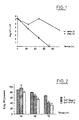
- the tests are carried out in immunocompromised mice by injection of cyclophosphamide (CY) at a dose of 200 mg / kg, three days before infection. 5 to 10x107 CFU of Staphylococcus aureus cause a prolonged infection beyond 96 h with creation of a massive pneumonia whose lesions are macroscopically visible from 24 h. A typical kinetics is presented in figure 1.
- CY cyclophosphamide
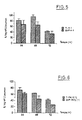
- Treatment for Staphylococcus aureus pneumonia is effective even at an advanced stage of infection. As shown in FIG. 4, the instillation in of 1 ⁇ g of GVP, 18 h after induction of the infection, decreases the number of pulmonary bacteria by 10 times, at 48 to 72 h.
- injectable human plasma immunoglobulin preparations the clinical efficacy of which has long been demonstrated, can be used as local antibodies to treat and prevent epithelial infections in the immunodeficient or immuno-immature patient.
Landscapes
- Chemical & Material Sciences (AREA)
- Organic Chemistry (AREA)
- Health & Medical Sciences (AREA)
- General Health & Medical Sciences (AREA)
- Biochemistry (AREA)
- Biophysics (AREA)
- Life Sciences & Earth Sciences (AREA)
- Genetics & Genomics (AREA)
- Medicinal Chemistry (AREA)
- Molecular Biology (AREA)
- Proteomics, Peptides & Aminoacids (AREA)
- Immunology (AREA)
- Medicines Containing Antibodies Or Antigens For Use As Internal Diagnostic Agents (AREA)
- Medicines That Contain Protein Lipid Enzymes And Other Medicines (AREA)
- Micro-Organisms Or Cultivation Processes Thereof (AREA)
Description
- La présente invention concerne l'utilisation d'Immunoglobulines administrées localement dans le traitement des infections épithéliales. Les infections épithéliales sont causées par des agents bactériens ou viraux, pathogènes ou opportunistes, capables de proliférer in situ, durant les étapes précoces de l'infection. Cette phase de colonisation des tissus-cibles peut se compliquer ou non de lésions proximales ou de dissémination. Cette phase de l'infection est en outre, la plus dangereuse pour la transmission d'hôte infecté à hôte réceptif, et détermine ainsi le déclenchement d'épidémies.
- L'induction du mécanisme déclenchant de ces infections est le fait d'interactions moléculaires, entre d'une part, des factures d'adhésion de l'agent pathogène et, d'autre part, des recepteurs exprimés à la surface des cellules de l'hôte.
- Tout élément inhibant cette interaction primaire immunise sur le déclenchement de l'infection.
- Les infections épithéliales se manifestent anatomiquement pour tous les tissus de revêtement de l'organisme. Les épithéliums muqueux sont des sites d'infections plus ou moins spécifiques selon leur fonction et selon la flore saprophyte.
- Chez l'hôte immuno-compétent, les défensess contre ces infections sont assurées par des immunoglobulines à fonction anticorps, secrétées in situ (IgAs, IgG, IgM).
- Chez l'hôte immunodéficient ou immuno-immature (cas des jeunes enfants),, ces effecteurs sont absents ou non fonctionnels.
- Sur le plan épidémiologique, les infections respiratoires de l'enfant constituent un bon exemple de cette condition. Leur incidence décroissante avec l'âge est en corrélation avec une maturation du système immunitaire et l'acquisition d'une immunité naturelle spécifique.
- Le brevet US- 4 800 078 a proposé le traitement des infections respiratoires à VRS par administration de gammaglobulines spécifiques anti VRS.
- Dans le Biological Abstract, V. 86, 1988, n° 69797, il est indiqué que seules les IgA sécrétoires ont une activité locale, alors que les immunoglobulines sériques n'induisent pas de protection.
- Chez l'adulte sain, les formations lymphoïdes associées aux épithéliums secrètent des anticorps locaux neutralisant une variété d'agent infectieux contre lesquels l'organisme est immunisé.
- Ces spécificités-anticorps locales sont également présentes dans le plasma des adultes cliniquement sains. Ceux-ci constituent la population sélectionnée des donneurs de plasma.
- L'objet de la présente invention est notamment l'utilisation des anticorps purifiés du plasma de donneurs adultes sains pour prévenir et traiter par voie locale les infections épithéliales et notamment les principales infections bactériennes respiratoires et ORL de l'enfant. Celles-ci sont majoritairement provoquées par Staphylococcus aureus, Streptococcus pyogenes, Streptococcus pneumoniae et Hemophilus influenzae.
Selon les sources mondiales (WHO memorandum, Bull World, Hlth Org. 1984, 62:47), les infections respiratoires aigues constituent une cause majeure de mortalité infantile. L'incidence globale des infections respiratoires contribue, selon les pays, à 20% à 40% des motifs de consultation en pédiatrie et à 12-35% des motifs d'hospitalisation. - Le caractère multifactoriel de ces infections rend difficilement concevables des vaccinations spécifiques.
Les traitements anti-microbiens sont largement appliqués (béta-lactamines et macrolides, par exemple) mais ils posent de plus en plus le problème de la sélection/induction et donc de l'émergence de variants résistants. Des immunostimulants à base d'extraits d'antigènes bactériens se révèlent efficaces. Mais le besoin d'une immunothérapie supplétive qui permette de conférer une protection immédiate, sans solliciter l'arsenal des cellules immunocompétentes dans son ensemble et ce quelle que soit la compétence ou maturité immunitaire du patient, reste non couvert. - Les Ig polyvalentes, purifiées du plasma de donneurs adultes sains, sont largement et efficacement employées par voie parentérale (IM ouIV) contre les déficits immunitaires.
- Cependant, l'administration parentérale ne semble pas garantir le passage des anticorps seriques vers le compartiment épithélial (Abraham, SN and Beachey, EH, in Advances in Host Defense Mechanisms, 1985, 4:63). C'est pourquoi, la présente invention concerne l'application locale de tels anticorps.
- Plus particulièrement la présente invention concerne l'utilisation d'au moins un effecteur parmi les immunoglobulines polyvalentes leur fragment Fab'2 ou Fab et les constructions incorporant ces éléments pour la réalisation de compositions pharmaceutiques applicables par voie topique pour le traitement des infections épithéliales.
- De façon générale, on préférera utiliser des immunoglobulines polyclonales ou monoclonales ou un fragment de ces immunoglobulines notamment celles d'origine plasmatique.
- Les immunoglobulines utilisées sont plus particulièrement des immunoglobulines polyvalentes ou leurs fragments, notamment les produits d'origine plasmatique humaine. Ces produits existent déjà pour l'injection, ils sont donc directement utilisables pour des administrations topiques notamment au niveau des voies respiratoires. La forme d'administration préférée est l'administration par voie nasale, mais on peut envisager des aérosols oro-pharyngés. La mise en forme galénique des formes topiques internes est connue aussi bien pour les aérosols que pour les formes goutte par exemple.
- Ainsi on pourra adjoindre aux effecteurs, des composants améliorant leur contact avec les épithéliums à traiter, notamment des produits de type tensio-actifs.
- Les compositions selon la présente invention peuvent être utilisées aussi bien à titre préventif qu'à titre curatif et plus particulièrement pour le traitement des infections bactériennes respiratoires et ORL de l'enfant, et de façon générale chez les sujets présentant des déficiences immunitaires.
- Les immuglobulines polyvalentes sont particulièrement utiles dans le traitement des injections bactériennes à Staphylocoque, et à Streptocoque, comme cela sera démontré dans les exemples.
- Les exemples suivants ont notamment pour objet de mettre en évidence d'autres caractéristiques et avantages de l'invention notamment par administration locale d'Ig polyvalentes à titre préventif ou curatif pour neutraliser l'infection pulmonaire par Staphylococcus aureaus, Streptococcus pneumoniae, Streptococcus pyogenes et Hemophilus influenzae.
Sur les figures ci-annexées: - la figure 1 schématise la cinétique d'élimination de la souche de S. aureus Cowan III, après instillations nasales chez des souris normales et traitées au CY.
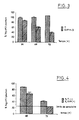
- La figure 2 schématise les effets comparés par rapport à un groupe témoins de l'administration des GVP par voie I.V. et I.N.
- la figure 3 schématise les essais GVP H+3, souche 184-15.
- la figure 4 schématise les essais GVP H+18, souche Cowan III.
- la figure 5 schématise les essais GVP H-1, souche Cowan III.
- la figure 6 schématise les essais (GVP-PA), souche Cowan III.
- On utilise des souris Balb/c femelles agées de 4 semaines, provenant de l'élevage du CERJ (Le Genest St Isle 53940). Elles sont groupées par lots de 3 ou 6, dans des conditions stériles : litière composée de copeaux stériles, eau et aliments stériles, cages recouvertes
de capes filtrantes (fournisseur UAR : cages Techniplast type 2C code 1264C0-000 : capes filtrantes code 1264C0-401 ; granulés réf R0-340 ; copeaux réf 40). L'animalerie, maintenue en dépression par rapport à l'air ambiant, est entreposée dans un laboratoire type P3. Pour les infections expérimentales par instillation nasale, elles sont légèrement anesthésiées à l'éther ; elles sont sacrifiées par injection intrapéritonéale de 200 ul chacune de pentobarbital sodique (Sanofi) au moment de prélever les poumons. -
- Staphylococcus aureus 184-15 isolée d'un malade atteint de pneumonie,
- Staphylococcus aureus CIP 82/03, létale pour la souris par voie intrapéritonéale,
- Staphylococcus aureux Cowan III CCM 885 CIP 65/8, ATCC 12600.
- Streptococcus pyogenes groupe A CIP 56/48, ATCC 12203,
- Streptococcus pyogenes groupe A CIP 56/41, ATCC 12344,
- Streptococcus pneumoniae référence Pn 40, laboratoire des Streptocoques, Institut Pasteur T. Horaud,
- Haemophilus influenzae CIP 54/81, ATCC 9006.
- Ces bactéries sont cultivées en bouillon trypticase soja (DIFCO) ; une culture de densité suffisante est obtenue après une nuit à 37°C, sous agitation régulière de 100 tours/min. La souche 82/03 a été "passée sur souris" après injection intrapéritoniale, puis ré-isolement sur gélose au sang, à partir de prélèvements de poumons ou de rate, afin d'augmenter sa virulence. Elle a été à nouveau éprouvée dans le cas d'inoculation par voie nasale, puis par aérosol.
- Afin d'obtenir une suspension bactérienne concentrée, 5 géloses enrichies avec 10% de sang stérile de cheval (Diagnostics Pasteur) sont ensemencées et incubées à 37°C pendant une nuit. Le lendemain les boîtes sont raclées avec une tige cotonnée stérile, et les bactéries ainsi prélevées sont mises en suspension dans 4 ml de tampon PBS stérile. La composition de ce soluté aqueux est la suivante : NaCl : 0,15 M ; KCl : 2,7 x 10⁻³ M ; KH₂PO₄ : 1,4 x 10⁻³ M ; Na₂HPO4 : 9 x 10⁻³ M.
- La suspension bactérienne de cette souche est obtenue de la même façon que précédemment, mais après culture de 48 heures sur gélose à l'extrait globulaire 10% (Diagnostics Pasteur).
- A différents temps après instillations, les poumons des souris (par groupes de 3 à 6) sont prélevés stérilement et broyés dans 1 ml de tampon PBS. Les prélèvements sont effectués 1 heure, 3 heures, 6 heures, 24 heures, 48 heures, 72 heures et jusqu'a élimination complète des bactéries, chez les animaux traités.
- L'inoculum et les broyats sont dilués de 10 en 10 dans du tampon PBS ; 100 ul des trois ou quatre dernières dilutions sont étalés sur milieu trypticase - soja. L'incubation se fait pendant 18 à 48 heures à 37° selon la souche: après quoi le comptage des colonies est effectué.
-
- Soit N le nombre de colonies sur la boîte,
- soit d la dilution,
- la concentration bactérienne C par ml (ou par poumon de souris) s'établit comme suit :

- Pour tous les points de la cinétique, la moyenne et la déviation standard sont calculées. Les résultats obtenus sont représentés graphiquement :

- Afin d'obtenir des cinétiques de prolifération bactérienne durables, nous avons injecté par voie intraveineuse 500ul d'une solution de cyclophosphamide (CY) à 200 mg/Kg (Aldrich). Le cyclophosphamide agit comme un immunodépresseur diminuant les leucoytes totaux avec une activité cytotoxique sur les cellules B et T.
- Il empêche notamment les cellules B de régénérer à un rythme normal leurs immunoglobulines de surface. (In Immunologie fondamentale et appliquée, ROITT I.M., et coll. ed. 1985 MEDSI, Paris, pp 12.8). Pour contrôler l'efficacité de ce produit, des formules sanguines ont été effectuées tous les jours pendant 10 jours. Les bactéries sont administrées par instillation le 3ème jour après l'injection de cyclopliosphamide.
- Les immunoglobulines polyvalentes du CNTS (GVP) lot n° 505 ont été administrées soit par voie veineuse (IV) soit par voie intranasale (IN) aux doses de 1 et 10 ug par souris, sous un volume de 50 ul. Pouvoir neutralisant des Ig in vitro
- Le pouvoir antibactérien des GVP a été évalué, dans le cas de Staphylococcus aureus (souche Cowan III) dans une épreuve d'inhibition de croissance en milieu liquide pendant 18 heures. Dans ces conditions et en absence de complément, l'inhibition est supérieure à 90%.
- Afin de conférer une haute significativité aux effets mesurés, les épreuves sont réalisées chez des souris immunodéprimées par injection de cyclophosphamide (CY) à la dose de 200 mg/Kg, trois jours avant l'infection.
5 à 10x107 UFC de Staphylococcus aureus provoquent une infection prolongée au-delà de 96 h avec création d'une pneumonie massive dont les lésions sont macroscopiquement visibles dès 24 h. Une cinétique-type est présentée en figure 1. - L'installation i.n de 1 »g de GVP par souris, 3 h après induction (GVP IN H+3)de l'infection est aussi efficace que l'administration iv de 10 »g (GVP 10 »g/iv) (figure 2).
Comme le montre la figure 3, l'instillation de 1 ug de GVP est également efficace contre une souche de Staphylococcus aureus fraîchement isolée d'un malade, la souche 184-15. - Le traitement de la pneumonie à Staphylococcus aureus est efficace même à une phase avancée de l'infection. Comme le montre la figure 4, l'instillation in de 1 ug de GVP, 18 h après l'induction de l'infection, diminue de 10 fois le nombre de bactéries pulmonaires, à 48 à 72 h.
- Il est possible de prévenir le développement d'une infection pulmonaire par S. aureus par instillation in de 1 ug de GVP. Comme le montre la figure 5, l'administration topique des GVP 1 h avant l'infection exerce un effet inhibiteur contre l'infection bactérienne et permet d'en accélerer la guérison.
- Nous avons vérifié que l'activité neutralisante des GVP contre S. aureus n'est pas due a une interaction du fragment Fc des Ig avec la protéine A. Comme le montre la figure 6, la saturation de la préparation de GVP par la protéine A de S. aureus (protéine A, Sigma) à la concentration finale de 1%, ne modifie pas son pouvoir immmunoprotecteur (les animaux ne recevant que la solution de protéine A).
- L'effet anti-bactérien des GVP administrées par voie locale est également démontrable dans l'infection respiratoire des souris par S. pneumoniae et S. pyogenes (tableau 1), bien que dans ce dernier cas l'effet neutralisant soit apparent à 48 h au lieu de 24 h dans les exemples précédents.
- En résumé, les préparations d'immunoglobulines plasmatiques humaines injectables, dont l'efficacité clinique est démontrée de longue date, peuvent être utilisées en tant qu'anticorps locaux pour traiter et prévenir des infections épithéliales chez le patient immunodéficient ou immuno-immature.

C'est exprimé en

Claims (4)
- Utilisation d'immunoglobulines polyvalentes d'origine plasmatique humaine, ou leurs fragments Fab'2 ou Fab, pour la réalisation de compositions pharmaceutiques préventives ou curatives applicables par voie topique pour le traitement des infections épithéliales.
- Utilisation selon la revendication 1, caractérisée en ce que l'infection épithéliale traitée est une infection bactérienne respiratoire et ORL d'un sujet immunodéficient ou immuno-immature.
- Utilisation selon l'une des revendications 1 et 2, caractérisée en ce que les immunoglobulines sont utilisées sous la forme administrable par voie nasale ou oro-pharyngée.
- Utilisation selon l'une des revendications 1 à 3, caractérisée en ce que les immunoglobulines sont utilisées sous forme aérosol.
Applications Claiming Priority (3)
| Application Number | Priority Date | Filing Date | Title |
|---|---|---|---|
| FR9014881A FR2669538B1 (fr) | 1990-11-28 | 1990-11-28 | Utilisation d'immunoglobulines administrees localement dans le traitement des infections epitheliales. |
| FR9014881 | 1990-11-28 | ||
| PCT/FR1991/000946 WO1992009306A1 (fr) | 1990-11-28 | 1991-11-28 | Utilisation d'immunoglobulines administrees localement dans le traitement des infections epitheliales |
Publications (2)
| Publication Number | Publication Date |
|---|---|
| EP0574398A1 EP0574398A1 (fr) | 1993-12-22 |
| EP0574398B1 true EP0574398B1 (fr) | 1995-08-23 |
Family
ID=9402686
Family Applications (1)
| Application Number | Title | Priority Date | Filing Date |
|---|---|---|---|
| EP92901306A Revoked EP0574398B1 (fr) | 1990-11-28 | 1991-11-28 | Utilisation d'immunoglobulines administrees localement dans le traitement des infections epitheliales |
Country Status (5)
| Country | Link |
|---|---|
| EP (1) | EP0574398B1 (fr) |
| AT (1) | ATE126705T1 (fr) |
| DE (1) | DE69112428T2 (fr) |
| FR (1) | FR2669538B1 (fr) |
| WO (1) | WO1992009306A1 (fr) |
Families Citing this family (2)
| Publication number | Priority date | Publication date | Assignee | Title |
|---|---|---|---|---|
| FR2705032B1 (fr) * | 1993-05-11 | 1995-07-07 | France Etat Armement | Composition comprenant en combinaison une immunoglobuline et un antigène utilisable en thérapeutique. |
| IT1278052B1 (it) | 1995-03-14 | 1997-11-17 | Mendes Srl | Uso delle immunoglobuline della classe g, in particolare delle immunoglobuline per uso endovenoso o per uso intramuscolare, per |
Family Cites Families (3)
| Publication number | Priority date | Publication date | Assignee | Title |
|---|---|---|---|---|
| US4800078A (en) * | 1987-05-28 | 1989-01-24 | The United States Of America As Represented By The Secretary Of The Department Of Health And Human Services | Immunotherapeutic method of treating respiratory disease by intranasal administration of Igb |
| AU2315388A (en) * | 1987-07-17 | 1989-02-13 | Brigham And Women's Hospital | Use of atrial peptide antibodies, receptor antagonists, and atrial peptide synthesis inhibitors in controlling renal and systemic vasodilation in diabetes mellitus |
| US4994269A (en) * | 1989-03-17 | 1991-02-19 | Miles Inc. | Topical use of antibodies for prevention or treatment of pseudomonas infections |
-
1990
- 1990-11-28 FR FR9014881A patent/FR2669538B1/fr not_active Expired - Fee Related
-
1991
- 1991-11-28 AT AT92901306T patent/ATE126705T1/de not_active IP Right Cessation
- 1991-11-28 DE DE69112428T patent/DE69112428T2/de not_active Expired - Fee Related
- 1991-11-28 EP EP92901306A patent/EP0574398B1/fr not_active Revoked
- 1991-11-28 WO PCT/FR1991/000946 patent/WO1992009306A1/fr not_active Ceased
Also Published As
| Publication number | Publication date |
|---|---|
| DE69112428T2 (de) | 1996-03-07 |
| EP0574398A1 (fr) | 1993-12-22 |
| ATE126705T1 (de) | 1995-09-15 |
| FR2669538A1 (fr) | 1992-05-29 |
| DE69112428D1 (de) | 1995-09-28 |
| FR2669538B1 (fr) | 1995-03-03 |
| WO1992009306A1 (fr) | 1992-06-11 |
Similar Documents
| Publication | Publication Date | Title |
|---|---|---|
| US8926980B2 (en) | Compositions against bacterial toxins | |
| JPH07500845A (ja) | ヘリコバクター感染の経口治療 | |
| US10407494B2 (en) | Immunogen adherence and method of making and using same | |
| JPH02283294A (ja) | ヒトモノクローナル抗体 | |
| US9849175B2 (en) | Composition and method for preventing/decreasing respiratory illness | |
| WO1995031998A1 (fr) | Adhesine de candida albicans utilisee comme vaccin | |
| US7241443B1 (en) | Immunogen adherence inhibitor and method of making and using same | |
| FR2669538A1 (fr) | Utilisation d'immunoglobulines administrees localement dans le traitement des infections epitheliales. | |
| EP1379556A1 (fr) | Anticorps dirige contre pityrosporum ovale igy et son utilisation | |
| US7560109B2 (en) | Immunogen adherence inhibitor directed to lactic acid producing organisms and method of making and using it | |
| BE1001844A4 (fr) | Anticorps monoclonal humain contre pseudomonas aeruginosa, sa production et son application. | |
| JP4982629B2 (ja) | 抗体、及び抗体を含む抗歯周病組成物 | |
| CN1819844B (zh) | 免疫原粘附抑制剂及其制备和使用方法 | |
| JPH0768110B2 (ja) | 口腔用組成物 | |
| Challacombe | Dental caries in humans and animal models | |
| WO2003061693A1 (fr) | Adherence d'immunogenes et sa methode d'elaboration et d'utilisation | |
| HK1182024A (en) | Immunogen adherence and method of making and using same | |
| ZA200504773B (en) | Compositions for the treatment of mycobacterial infections |
Legal Events
| Date | Code | Title | Description |
|---|---|---|---|
| PUAI | Public reference made under article 153(3) epc to a published international application that has entered the european phase |
Free format text: ORIGINAL CODE: 0009012 |
|
| 17P | Request for examination filed |
Effective date: 19930614 |
|
| AK | Designated contracting states |
Kind code of ref document: A1 Designated state(s): AT BE CH DE FR GB IT LI SE |
|
| 17Q | First examination report despatched |
Effective date: 19931227 |
|
| GRAA | (expected) grant |
Free format text: ORIGINAL CODE: 0009210 |
|
| AK | Designated contracting states |
Kind code of ref document: B1 Designated state(s): AT BE CH DE FR GB IT LI SE |
|
| REF | Corresponds to: |
Ref document number: 126705 Country of ref document: AT Date of ref document: 19950915 Kind code of ref document: T |
|
| REF | Corresponds to: |
Ref document number: 69112428 Country of ref document: DE Date of ref document: 19950928 |
|
| ITF | It: translation for a ep patent filed | ||
| GBT | Gb: translation of ep patent filed (gb section 77(6)(a)/1977) |
Effective date: 19950918 |
|
| PLBQ | Unpublished change to opponent data |
Free format text: ORIGINAL CODE: EPIDOS OPPO |
|
| PLBI | Opposition filed |
Free format text: ORIGINAL CODE: 0009260 |
|
| PLBF | Reply of patent proprietor to notice(s) of opposition |
Free format text: ORIGINAL CODE: EPIDOS OBSO |
|
| 26 | Opposition filed |
Opponent name: IMMUNO AKTIENGESELLSCHAFT Effective date: 19960523 |
|
| PGFP | Annual fee paid to national office [announced via postgrant information from national office to epo] |
Ref country code: FR Payment date: 19960923 Year of fee payment: 6 |
|
| PGFP | Annual fee paid to national office [announced via postgrant information from national office to epo] |
Ref country code: AT Payment date: 19961022 Year of fee payment: 6 |
|
| PLBF | Reply of patent proprietor to notice(s) of opposition |
Free format text: ORIGINAL CODE: EPIDOS OBSO |
|
| PGFP | Annual fee paid to national office [announced via postgrant information from national office to epo] |
Ref country code: GB Payment date: 19961122 Year of fee payment: 6 |
|
| PGFP | Annual fee paid to national office [announced via postgrant information from national office to epo] |
Ref country code: DE Payment date: 19961123 Year of fee payment: 6 |
|
| PGFP | Annual fee paid to national office [announced via postgrant information from national office to epo] |
Ref country code: CH Payment date: 19961125 Year of fee payment: 6 |
|
| PGFP | Annual fee paid to national office [announced via postgrant information from national office to epo] |
Ref country code: SE Payment date: 19961127 Year of fee payment: 6 |
|
| PGFP | Annual fee paid to national office [announced via postgrant information from national office to epo] |
Ref country code: BE Payment date: 19961212 Year of fee payment: 6 |
|
| PLBF | Reply of patent proprietor to notice(s) of opposition |
Free format text: ORIGINAL CODE: EPIDOS OBSO |
|
| PG25 | Lapsed in a contracting state [announced via postgrant information from national office to epo] |
Ref country code: GB Free format text: LAPSE BECAUSE OF NON-PAYMENT OF DUE FEES Effective date: 19971128 Ref country code: AT Free format text: LAPSE BECAUSE OF NON-PAYMENT OF DUE FEES Effective date: 19971128 |
|
| PG25 | Lapsed in a contracting state [announced via postgrant information from national office to epo] |
Ref country code: SE Free format text: LAPSE BECAUSE OF NON-PAYMENT OF DUE FEES Effective date: 19971129 |
|
| PG25 | Lapsed in a contracting state [announced via postgrant information from national office to epo] |
Ref country code: LI Free format text: LAPSE BECAUSE OF NON-PAYMENT OF DUE FEES Effective date: 19971130 Ref country code: CH Free format text: LAPSE BECAUSE OF NON-PAYMENT OF DUE FEES Effective date: 19971130 Ref country code: BE Free format text: LAPSE BECAUSE OF NON-PAYMENT OF DUE FEES Effective date: 19971130 |
|
| BERE | Be: lapsed |
Owner name: FONDATION NATIONALE DE TRANSFUSION SANGUINE Effective date: 19971130 |
|
| GBPC | Gb: european patent ceased through non-payment of renewal fee |
Effective date: 19971128 |
|
| REG | Reference to a national code |
Ref country code: CH Ref legal event code: PL |
|
| PG25 | Lapsed in a contracting state [announced via postgrant information from national office to epo] |
Ref country code: DE Free format text: LAPSE BECAUSE OF NON-PAYMENT OF DUE FEES Effective date: 19980801 |
|
| EUG | Se: european patent has lapsed |
Ref document number: 92901306.8 |
|
| REG | Reference to a national code |
Ref country code: FR Ref legal event code: ST |
|
| RDAH | Patent revoked |
Free format text: ORIGINAL CODE: EPIDOS REVO |
|
| RDAG | Patent revoked |
Free format text: ORIGINAL CODE: 0009271 |
|
| STAA | Information on the status of an ep patent application or granted ep patent |
Free format text: STATUS: PATENT REVOKED |
|
| 27W | Patent revoked |
Effective date: 19990213 |
|
| PG25 | Lapsed in a contracting state [announced via postgrant information from national office to epo] |
Ref country code: FR Free format text: LAPSE BECAUSE OF NON-PAYMENT OF DUE FEES Effective date: 19971130 |