EP0573498B1 - Aliphatic propargylamines as selective mao-b inhibitors and as neuroprotective agents - Google Patents
Aliphatic propargylamines as selective mao-b inhibitors and as neuroprotective agents Download PDFInfo
- Publication number
- EP0573498B1 EP0573498B1 EP92905512A EP92905512A EP0573498B1 EP 0573498 B1 EP0573498 B1 EP 0573498B1 EP 92905512 A EP92905512 A EP 92905512A EP 92905512 A EP92905512 A EP 92905512A EP 0573498 B1 EP0573498 B1 EP 0573498B1
- Authority
- EP
- European Patent Office
- Prior art keywords
- halogen
- methylpropargylamine
- compound
- carbon atoms
- substituted
- Prior art date
- Legal status (The legal status is an assumption and is not a legal conclusion. Google has not performed a legal analysis and makes no representation as to the accuracy of the status listed.)
- Expired - Lifetime
Links
- -1 Aliphatic propargylamines Chemical class 0.000 title claims abstract description 59
- 239000003112 inhibitor Substances 0.000 title description 30
- 239000004090 neuroprotective agent Substances 0.000 title description 3
- 150000001875 compounds Chemical class 0.000 claims abstract description 134
- 229910052739 hydrogen Inorganic materials 0.000 claims abstract description 86
- 229910052736 halogen Inorganic materials 0.000 claims abstract description 69
- 150000002367 halogens Chemical class 0.000 claims abstract description 68
- 125000000217 alkyl group Chemical group 0.000 claims abstract description 63
- 125000004432 carbon atom Chemical group C* 0.000 claims abstract description 51
- 239000001257 hydrogen Substances 0.000 claims abstract description 48
- UFHFLCQGNIYNRP-UHFFFAOYSA-N Hydrogen Chemical compound [H][H] UFHFLCQGNIYNRP-UHFFFAOYSA-N 0.000 claims abstract description 39
- 125000001997 phenyl group Chemical group [H]C1=C([H])C([H])=C(*)C([H])=C1[H] 0.000 claims abstract description 32
- 150000003839 salts Chemical class 0.000 claims abstract description 32
- 125000003342 alkenyl group Chemical group 0.000 claims abstract description 28
- 125000003545 alkoxy group Chemical group 0.000 claims abstract description 28
- 125000000304 alkynyl group Chemical group 0.000 claims abstract description 28
- 125000001424 substituent group Chemical group 0.000 claims abstract description 22
- 125000004429 atom Chemical group 0.000 claims abstract description 21
- 239000003814 drug Substances 0.000 claims abstract description 18
- 239000002671 adjuvant Substances 0.000 claims abstract description 16
- 125000004644 alkyl sulfinyl group Chemical group 0.000 claims abstract description 16
- 125000000753 cycloalkyl group Chemical class 0.000 claims abstract description 16
- 125000005842 heteroatom Chemical group 0.000 claims abstract description 16
- 125000002887 hydroxy group Chemical group [H]O* 0.000 claims abstract description 16
- 125000004043 oxo group Chemical group O=* 0.000 claims abstract description 16
- 239000000546 pharmaceutical excipient Substances 0.000 claims abstract description 16
- 125000000446 sulfanediyl group Chemical group *S* 0.000 claims abstract description 16
- 150000003457 sulfones Chemical class 0.000 claims abstract description 16
- 150000003462 sulfoxides Chemical class 0.000 claims abstract description 16
- 125000004414 alkyl thio group Chemical group 0.000 claims abstract description 15
- 239000003937 drug carrier Substances 0.000 claims abstract description 15
- 229910052717 sulfur Inorganic materials 0.000 claims abstract description 15
- 239000008194 pharmaceutical composition Substances 0.000 claims abstract description 13
- 229910052760 oxygen Inorganic materials 0.000 claims abstract description 7
- 125000002485 formyl group Chemical class [H]C(*)=O 0.000 claims abstract 9
- 102000010909 Monoamine Oxidase Human genes 0.000 claims description 141
- 108010062431 Monoamine oxidase Proteins 0.000 claims description 141
- 230000000694 effects Effects 0.000 claims description 48
- 125000002496 methyl group Chemical group [H]C([H])([H])* 0.000 claims description 38
- 230000005764 inhibitory process Effects 0.000 claims description 35
- 238000011282 treatment Methods 0.000 claims description 34
- 210000002569 neuron Anatomy 0.000 claims description 26
- 241000124008 Mammalia Species 0.000 claims description 24
- 239000000203 mixture Substances 0.000 claims description 23
- 208000015122 neurodegenerative disease Diseases 0.000 claims description 23
- BSNWMBHBPLPDNI-UHFFFAOYSA-N n-methyl-n-prop-2-ynylpentan-2-amine Chemical compound CCCC(C)N(C)CC#C BSNWMBHBPLPDNI-UHFFFAOYSA-N 0.000 claims description 21
- 238000001727 in vivo Methods 0.000 claims description 20
- 208000037265 diseases, disorders, signs and symptoms Diseases 0.000 claims description 19
- HBAQYPYDRFILMT-UHFFFAOYSA-N 8-[3-(1-cyclopropylpyrazol-4-yl)-1H-pyrazolo[4,3-d]pyrimidin-5-yl]-3-methyl-3,8-diazabicyclo[3.2.1]octan-2-one Chemical class C1(CC1)N1N=CC(=C1)C1=NNC2=C1N=C(N=C2)N1C2C(N(CC1CC2)C)=O HBAQYPYDRFILMT-UHFFFAOYSA-N 0.000 claims description 18
- 125000003178 carboxy group Chemical group [H]OC(*)=O 0.000 claims description 15
- CJRQAPHWCGEATR-UHFFFAOYSA-N n-methyl-n-prop-2-ynylbutan-2-amine Chemical compound CCC(C)N(C)CC#C CJRQAPHWCGEATR-UHFFFAOYSA-N 0.000 claims description 15
- OPNHJZDMXLCVAV-UHFFFAOYSA-N n-methyl-n-prop-2-ynylhexan-2-amine Chemical compound CCCCC(C)N(C)CC#C OPNHJZDMXLCVAV-UHFFFAOYSA-N 0.000 claims description 15
- 125000004423 acyloxy group Chemical group 0.000 claims description 14
- 239000008177 pharmaceutical agent Substances 0.000 claims description 14
- QLAPBGOWPAREKM-UHFFFAOYSA-N n-methyl-n-prop-2-ynylpentan-1-amine;oxalic acid Chemical compound OC(=O)C(O)=O.CCCCCN(C)CC#C QLAPBGOWPAREKM-UHFFFAOYSA-N 0.000 claims description 13
- WKBOTKDWSSQWDR-UHFFFAOYSA-N Bromine atom Chemical compound [Br] WKBOTKDWSSQWDR-UHFFFAOYSA-N 0.000 claims description 12
- ZAMOUSCENKQFHK-UHFFFAOYSA-N Chlorine atom Chemical compound [Cl] ZAMOUSCENKQFHK-UHFFFAOYSA-N 0.000 claims description 12
- PXGOKWXKJXAPGV-UHFFFAOYSA-N Fluorine Chemical compound FF PXGOKWXKJXAPGV-UHFFFAOYSA-N 0.000 claims description 12
- GDTBXPJZTBHREO-UHFFFAOYSA-N bromine Substances BrBr GDTBXPJZTBHREO-UHFFFAOYSA-N 0.000 claims description 12
- 229910052794 bromium Inorganic materials 0.000 claims description 12
- 239000000460 chlorine Substances 0.000 claims description 12
- 229910052801 chlorine Inorganic materials 0.000 claims description 12
- 229910052731 fluorine Inorganic materials 0.000 claims description 12
- 239000011737 fluorine Substances 0.000 claims description 12
- OGMSATZYSVTTAB-UHFFFAOYSA-N n-methyl-n-prop-2-ynylpentan-2-amine;hydrochloride Chemical compound Cl.CCCC(C)N(C)CC#C OGMSATZYSVTTAB-UHFFFAOYSA-N 0.000 claims description 12
- 230000002265 prevention Effects 0.000 claims description 12
- 125000004435 hydrogen atom Chemical group [H]* 0.000 claims description 10
- CBROVNABGLSZRB-UHFFFAOYSA-N n-methyl-n-prop-2-ynylhexan-2-amine;hydrochloride Chemical compound Cl.CCCCC(C)N(C)CC#C CBROVNABGLSZRB-UHFFFAOYSA-N 0.000 claims description 9
- 238000002360 preparation method Methods 0.000 claims description 9
- ZCYVEMRRCGMTRW-UHFFFAOYSA-N 7553-56-2 Chemical compound [I] ZCYVEMRRCGMTRW-UHFFFAOYSA-N 0.000 claims description 8
- 239000011630 iodine Substances 0.000 claims description 8
- 229910052740 iodine Inorganic materials 0.000 claims description 8
- 230000009471 action Effects 0.000 claims description 7
- 230000007850 degeneration Effects 0.000 claims description 7
- WEYNGLFGYAZCEZ-UHFFFAOYSA-N n-methyl-n-prop-2-ynylbutan-1-amine;hydrochloride Chemical compound Cl.CCCCN(C)CC#C WEYNGLFGYAZCEZ-UHFFFAOYSA-N 0.000 claims description 7
- RKDDPMNTIWKTFP-UHFFFAOYSA-N n-methyl-n-prop-2-ynylbutan-2-amine;hydrochloride Chemical compound Cl.CCC(C)N(C)CC#C RKDDPMNTIWKTFP-UHFFFAOYSA-N 0.000 claims description 7
- FEOUVGYYXXDVEQ-UHFFFAOYSA-N n-methyl-n-prop-2-ynyldecan-2-amine;hydrochloride Chemical compound Cl.CCCCCCCCC(C)N(C)CC#C FEOUVGYYXXDVEQ-UHFFFAOYSA-N 0.000 claims description 7
- WMUKXTAFQICWDE-UHFFFAOYSA-N n-methyl-n-prop-2-ynyldodecan-2-amine;hydrochloride Chemical compound Cl.CCCCCCCCCCC(C)N(C)CC#C WMUKXTAFQICWDE-UHFFFAOYSA-N 0.000 claims description 7
- 239000002581 neurotoxin Substances 0.000 claims description 7
- 230000002028 premature Effects 0.000 claims description 6
- LVRFTAZAXQPQHI-RXMQYKEDSA-N (R)-2-hydroxy-4-methylpentanoic acid Chemical compound CC(C)C[C@@H](O)C(O)=O LVRFTAZAXQPQHI-RXMQYKEDSA-N 0.000 claims description 5
- 229910052799 carbon Inorganic materials 0.000 claims description 5
- 238000004519 manufacturing process Methods 0.000 claims description 3
- NBFVGBUUUASREI-UHFFFAOYSA-N n-methyl-n-prop-2-ynylheptan-2-amine;hydrochloride Chemical compound Cl.CCCCCC(C)N(C)CC#C NBFVGBUUUASREI-UHFFFAOYSA-N 0.000 claims description 3
- PNDPGZBMCMUPRI-UHFFFAOYSA-N iodine Chemical compound II PNDPGZBMCMUPRI-UHFFFAOYSA-N 0.000 claims 4
- JKANAVGODYYCQF-UHFFFAOYSA-N prop-2-yn-1-amine Chemical class NCC#C JKANAVGODYYCQF-UHFFFAOYSA-N 0.000 abstract description 14
- 230000000324 neuroprotective effect Effects 0.000 abstract description 8
- 229940052764 dopaminergic anti-parkinson drug mao b inhibitors Drugs 0.000 abstract description 2
- RTZKZFJDLAIYFH-UHFFFAOYSA-N Diethyl ether Chemical compound CCOCC RTZKZFJDLAIYFH-UHFFFAOYSA-N 0.000 description 109
- 239000000243 solution Substances 0.000 description 48
- OKKJLVBELUTLKV-UHFFFAOYSA-N Methanol Chemical compound OC OKKJLVBELUTLKV-UHFFFAOYSA-N 0.000 description 45
- 229910052757 nitrogen Inorganic materials 0.000 description 42
- 229910001868 water Inorganic materials 0.000 description 42
- XLYOFNOQVPJJNP-UHFFFAOYSA-N water Substances O XLYOFNOQVPJJNP-UHFFFAOYSA-N 0.000 description 39
- VYFYYTLLBUKUHU-UHFFFAOYSA-N dopamine Chemical compound NCCC1=CC=C(O)C(O)=C1 VYFYYTLLBUKUHU-UHFFFAOYSA-N 0.000 description 37
- VEXZGXHMUGYJMC-UHFFFAOYSA-N Hydrochloric acid Chemical compound Cl VEXZGXHMUGYJMC-UHFFFAOYSA-N 0.000 description 34
- MUBZPKHOEPUJKR-UHFFFAOYSA-N Oxalic acid Chemical compound OC(=O)C(O)=O MUBZPKHOEPUJKR-UHFFFAOYSA-N 0.000 description 33
- LFQSCWFLJHTTHZ-UHFFFAOYSA-N Ethanol Chemical compound CCO LFQSCWFLJHTTHZ-UHFFFAOYSA-N 0.000 description 30
- 230000002401 inhibitory effect Effects 0.000 description 28
- CSCPPACGZOOCGX-UHFFFAOYSA-N Acetone Chemical compound CC(C)=O CSCPPACGZOOCGX-UHFFFAOYSA-N 0.000 description 27
- CDBYLPFSWZWCQE-UHFFFAOYSA-L Sodium Carbonate Chemical compound [Na+].[Na+].[O-]C([O-])=O CDBYLPFSWZWCQE-UHFFFAOYSA-L 0.000 description 26
- 238000001819 mass spectrum Methods 0.000 description 26
- HQFYIDOMCULPIW-UHFFFAOYSA-N n-methylprop-2-yn-1-amine Chemical compound CNCC#C HQFYIDOMCULPIW-UHFFFAOYSA-N 0.000 description 26
- CSNNHWWHGAXBCP-UHFFFAOYSA-L Magnesium sulfate Chemical compound [Mg+2].[O-][S+2]([O-])([O-])[O-] CSNNHWWHGAXBCP-UHFFFAOYSA-L 0.000 description 24
- HEMHJVSKTPXQMS-UHFFFAOYSA-M Sodium hydroxide Chemical compound [OH-].[Na+] HEMHJVSKTPXQMS-UHFFFAOYSA-M 0.000 description 24
- MEZLKOACVSPNER-GFCCVEGCSA-N selegiline Chemical compound C#CCN(C)[C@H](C)CC1=CC=CC=C1 MEZLKOACVSPNER-GFCCVEGCSA-N 0.000 description 23
- PLRACCBDVIHHLZ-UHFFFAOYSA-N 1-methyl-4-phenyl-1,2,3,6-tetrahydropyridine Chemical compound C1N(C)CCC(C=2C=CC=CC=2)=C1 PLRACCBDVIHHLZ-UHFFFAOYSA-N 0.000 description 21
- 239000002585 base Substances 0.000 description 21
- 239000000047 product Substances 0.000 description 21
- 210000004556 brain Anatomy 0.000 description 20
- 238000000921 elemental analysis Methods 0.000 description 20
- 239000002899 monoamine oxidase inhibitor Substances 0.000 description 19
- 229960003638 dopamine Drugs 0.000 description 18
- 125000001931 aliphatic group Chemical group 0.000 description 17
- 238000000034 method Methods 0.000 description 17
- 229940082992 antihypertensives mao inhibitors Drugs 0.000 description 16
- 238000006243 chemical reaction Methods 0.000 description 15
- 238000003756 stirring Methods 0.000 description 15
- 239000000706 filtrate Substances 0.000 description 14
- 238000010992 reflux Methods 0.000 description 13
- YMWUJEATGCHHMB-UHFFFAOYSA-N Dichloromethane Chemical compound ClCCl YMWUJEATGCHHMB-UHFFFAOYSA-N 0.000 description 12
- 102000004190 Enzymes Human genes 0.000 description 12
- 108090000790 Enzymes Proteins 0.000 description 12
- MHAJPDPJQMAIIY-UHFFFAOYSA-N Hydrogen peroxide Chemical compound OO MHAJPDPJQMAIIY-UHFFFAOYSA-N 0.000 description 12
- BHHGXPLMPWCGHP-UHFFFAOYSA-N Phenethylamine Chemical compound NCCC1=CC=CC=C1 BHHGXPLMPWCGHP-UHFFFAOYSA-N 0.000 description 12
- ZMANZCXQSJIPKH-UHFFFAOYSA-N Triethylamine Chemical compound CCN(CC)CC ZMANZCXQSJIPKH-UHFFFAOYSA-N 0.000 description 12
- VLKZOEOYAKHREP-UHFFFAOYSA-N n-Hexane Chemical compound CCCCCC VLKZOEOYAKHREP-UHFFFAOYSA-N 0.000 description 12
- 239000003921 oil Substances 0.000 description 12
- 241000699670 Mus sp. Species 0.000 description 11
- SDJLVPMBBFRBLL-UHFFFAOYSA-N dsp-4 Chemical compound ClCCN(CC)CC1=CC=CC=C1Br SDJLVPMBBFRBLL-UHFFFAOYSA-N 0.000 description 11
- 239000000758 substrate Substances 0.000 description 11
- FAPWRFPIFSIZLT-UHFFFAOYSA-M Sodium chloride Chemical compound [Na+].[Cl-] FAPWRFPIFSIZLT-UHFFFAOYSA-M 0.000 description 10
- 208000035475 disorder Diseases 0.000 description 10
- 229940079593 drug Drugs 0.000 description 10
- 239000012458 free base Substances 0.000 description 10
- 235000006408 oxalic acid Nutrition 0.000 description 10
- 230000003389 potentiating effect Effects 0.000 description 10
- QZAYGJVTTNCVMB-UHFFFAOYSA-N serotonin Chemical compound C1=C(O)C=C2C(CCN)=CNC2=C1 QZAYGJVTTNCVMB-UHFFFAOYSA-N 0.000 description 10
- 239000011780 sodium chloride Substances 0.000 description 10
- 102100034127 Dual specificity protein phosphatase 26 Human genes 0.000 description 9
- 101001017415 Homo sapiens Dual specificity protein phosphatase 26 Proteins 0.000 description 9
- 208000018737 Parkinson disease Diseases 0.000 description 9
- 230000032683 aging Effects 0.000 description 9
- 238000000338 in vitro Methods 0.000 description 9
- 230000004770 neurodegeneration Effects 0.000 description 9
- 239000002904 solvent Substances 0.000 description 9
- VHYFNPMBLIVWCW-UHFFFAOYSA-N 4-Dimethylaminopyridine Chemical compound CN(C)C1=CC=NC=C1 VHYFNPMBLIVWCW-UHFFFAOYSA-N 0.000 description 8
- OKTJSMMVPCPJKN-UHFFFAOYSA-N Carbon Chemical group [C] OKTJSMMVPCPJKN-UHFFFAOYSA-N 0.000 description 8
- 241001465754 Metazoa Species 0.000 description 8
- 150000001299 aldehydes Chemical class 0.000 description 8
- 238000001035 drying Methods 0.000 description 8
- 230000001631 hypertensive effect Effects 0.000 description 8
- 239000012280 lithium aluminium hydride Substances 0.000 description 8
- 150000003891 oxalate salts Chemical class 0.000 description 8
- YORCIIVHUBAYBQ-UHFFFAOYSA-N propargyl bromide Chemical compound BrCC#C YORCIIVHUBAYBQ-UHFFFAOYSA-N 0.000 description 8
- 238000002390 rotary evaporation Methods 0.000 description 8
- SFLSHLFXELFNJZ-QMMMGPOBSA-N (-)-norepinephrine Chemical compound NC[C@H](O)C1=CC=C(O)C(O)=C1 SFLSHLFXELFNJZ-QMMMGPOBSA-N 0.000 description 7
- 208000024827 Alzheimer disease Diseases 0.000 description 7
- PYFSCIWXNSXGNS-UHFFFAOYSA-N N-methylbutan-2-amine Chemical compound CCC(C)NC PYFSCIWXNSXGNS-UHFFFAOYSA-N 0.000 description 7
- 239000000935 antidepressant agent Substances 0.000 description 7
- 229940005513 antidepressants Drugs 0.000 description 7
- 239000013078 crystal Substances 0.000 description 7
- 238000006481 deamination reaction Methods 0.000 description 7
- MDKXBBPLEGPIRI-UHFFFAOYSA-N ethoxyethane;methanol Chemical compound OC.CCOCC MDKXBBPLEGPIRI-UHFFFAOYSA-N 0.000 description 7
- 238000001914 filtration Methods 0.000 description 7
- 239000007788 liquid Substances 0.000 description 7
- 229910052943 magnesium sulfate Inorganic materials 0.000 description 7
- 235000019341 magnesium sulphate Nutrition 0.000 description 7
- 125000004433 nitrogen atom Chemical group N* 0.000 description 7
- SFLSHLFXELFNJZ-UHFFFAOYSA-N norepinephrine Natural products NCC(O)C1=CC=C(O)C(O)=C1 SFLSHLFXELFNJZ-UHFFFAOYSA-N 0.000 description 7
- 229960002748 norepinephrine Drugs 0.000 description 7
- 239000002244 precipitate Substances 0.000 description 7
- 239000011541 reaction mixture Substances 0.000 description 7
- 238000001953 recrystallisation Methods 0.000 description 7
- 230000002829 reductive effect Effects 0.000 description 7
- 238000011160 research Methods 0.000 description 7
- 239000000126 substance Substances 0.000 description 7
- 239000000725 suspension Substances 0.000 description 7
- HEDRZPFGACZZDS-UHFFFAOYSA-N Chloroform Chemical compound ClC(Cl)Cl HEDRZPFGACZZDS-UHFFFAOYSA-N 0.000 description 6
- XEKOWRVHYACXOJ-UHFFFAOYSA-N Ethyl acetate Chemical compound CCOC(C)=O XEKOWRVHYACXOJ-UHFFFAOYSA-N 0.000 description 6
- 206010020772 Hypertension Diseases 0.000 description 6
- XEEYBQQBJWHFJM-UHFFFAOYSA-N Iron Chemical compound [Fe] XEEYBQQBJWHFJM-UHFFFAOYSA-N 0.000 description 6
- DKGAVHZHDRPRBM-UHFFFAOYSA-N Tert-Butanol Chemical compound CC(C)(C)O DKGAVHZHDRPRBM-UHFFFAOYSA-N 0.000 description 6
- YXFVVABEGXRONW-UHFFFAOYSA-N Toluene Chemical compound CC1=CC=CC=C1 YXFVVABEGXRONW-UHFFFAOYSA-N 0.000 description 6
- 150000001412 amines Chemical class 0.000 description 6
- 230000015572 biosynthetic process Effects 0.000 description 6
- 230000006378 damage Effects 0.000 description 6
- 230000009615 deamination Effects 0.000 description 6
- 230000002427 irreversible effect Effects 0.000 description 6
- XMJHPCRAQCTCFT-UHFFFAOYSA-N methyl chloroformate Chemical compound COC(Cl)=O XMJHPCRAQCTCFT-UHFFFAOYSA-N 0.000 description 6
- 230000001537 neural effect Effects 0.000 description 6
- BHRZNVHARXXAHW-UHFFFAOYSA-N sec-butylamine Chemical compound CCC(C)N BHRZNVHARXXAHW-UHFFFAOYSA-N 0.000 description 6
- 229910000029 sodium carbonate Inorganic materials 0.000 description 6
- QCQCHGYLTSGIGX-GHXANHINSA-N 4-[[(3ar,5ar,5br,7ar,9s,11ar,11br,13as)-5a,5b,8,8,11a-pentamethyl-3a-[(5-methylpyridine-3-carbonyl)amino]-2-oxo-1-propan-2-yl-4,5,6,7,7a,9,10,11,11b,12,13,13a-dodecahydro-3h-cyclopenta[a]chrysen-9-yl]oxy]-2,2-dimethyl-4-oxobutanoic acid Chemical compound N([C@@]12CC[C@@]3(C)[C@]4(C)CC[C@H]5C(C)(C)[C@@H](OC(=O)CC(C)(C)C(O)=O)CC[C@]5(C)[C@H]4CC[C@@H]3C1=C(C(C2)=O)C(C)C)C(=O)C1=CN=CC(C)=C1 QCQCHGYLTSGIGX-GHXANHINSA-N 0.000 description 5
- 241000699666 Mus <mouse, genus> Species 0.000 description 5
- 206010029350 Neurotoxicity Diseases 0.000 description 5
- 206010044221 Toxic encephalopathy Diseases 0.000 description 5
- 230000001430 anti-depressive effect Effects 0.000 description 5
- 201000010099 disease Diseases 0.000 description 5
- 238000007912 intraperitoneal administration Methods 0.000 description 5
- 231100000228 neurotoxicity Toxicity 0.000 description 5
- 230000007135 neurotoxicity Effects 0.000 description 5
- 230000036542 oxidative stress Effects 0.000 description 5
- 230000004224 protection Effects 0.000 description 5
- 239000007787 solid Substances 0.000 description 5
- 238000003786 synthesis reaction Methods 0.000 description 5
- KWTSXDURSIMDCE-QMMMGPOBSA-N (S)-amphetamine Chemical compound C[C@H](N)CC1=CC=CC=C1 KWTSXDURSIMDCE-QMMMGPOBSA-N 0.000 description 4
- WTDRDQBEARUVNC-LURJTMIESA-N L-DOPA Chemical compound OC(=O)[C@@H](N)CC1=CC=C(O)C(O)=C1 WTDRDQBEARUVNC-LURJTMIESA-N 0.000 description 4
- WTDRDQBEARUVNC-UHFFFAOYSA-N L-Dopa Natural products OC(=O)C(N)CC1=CC=C(O)C(O)=C1 WTDRDQBEARUVNC-UHFFFAOYSA-N 0.000 description 4
- PMZURENOXWZQFD-UHFFFAOYSA-L Sodium Sulfate Chemical compound [Na+].[Na+].[O-]S([O-])(=O)=O PMZURENOXWZQFD-UHFFFAOYSA-L 0.000 description 4
- 230000001684 chronic effect Effects 0.000 description 4
- 210000004185 liver Anatomy 0.000 description 4
- 239000002858 neurotransmitter agent Substances 0.000 description 4
- 230000008569 process Effects 0.000 description 4
- 230000009467 reduction Effects 0.000 description 4
- 239000006228 supernatant Substances 0.000 description 4
- FYSNRJHAOHDILO-UHFFFAOYSA-N thionyl chloride Chemical compound ClS(Cl)=O FYSNRJHAOHDILO-UHFFFAOYSA-N 0.000 description 4
- 239000003053 toxin Substances 0.000 description 4
- 231100000765 toxin Toxicity 0.000 description 4
- 108700012359 toxins Proteins 0.000 description 4
- BHRZNVHARXXAHW-BYPYZUCNSA-N (2s)-butan-2-amine Chemical compound CC[C@H](C)N BHRZNVHARXXAHW-BYPYZUCNSA-N 0.000 description 3
- 125000001494 2-propynyl group Chemical group [H]C#CC([H])([H])* 0.000 description 3
- UHOVQNZJYSORNB-UHFFFAOYSA-N Benzene Chemical compound C1=CC=CC=C1 UHOVQNZJYSORNB-UHFFFAOYSA-N 0.000 description 3
- 0 C*C(*)N(C)C Chemical compound C*C(*)N(C)C 0.000 description 3
- KXDHJXZQYSOELW-UHFFFAOYSA-M Carbamate Chemical compound NC([O-])=O KXDHJXZQYSOELW-UHFFFAOYSA-M 0.000 description 3
- RERZNCLIYCABFS-UHFFFAOYSA-N Harmaline hydrochloride Natural products C1CN=C(C)C2=C1C1=CC=C(OC)C=C1N2 RERZNCLIYCABFS-UHFFFAOYSA-N 0.000 description 3
- 241000282412 Homo Species 0.000 description 3
- NYMGNSNKLVNMIA-UHFFFAOYSA-N Iproniazid Chemical compound CC(C)NNC(=O)C1=CC=NC=C1 NYMGNSNKLVNMIA-UHFFFAOYSA-N 0.000 description 3
- 208000027089 Parkinsonian disease Diseases 0.000 description 3
- 206010034010 Parkinsonism Diseases 0.000 description 3
- KWYUFKZDYYNOTN-UHFFFAOYSA-M Potassium hydroxide Chemical compound [OH-].[K+] KWYUFKZDYYNOTN-UHFFFAOYSA-M 0.000 description 3
- 229940025084 amphetamine Drugs 0.000 description 3
- 230000000903 blocking effect Effects 0.000 description 3
- BTANRVKWQNVYAZ-UHFFFAOYSA-N butan-2-ol Chemical compound CCC(C)O BTANRVKWQNVYAZ-UHFFFAOYSA-N 0.000 description 3
- 125000000484 butyl group Chemical group [H]C([*])([H])C([H])([H])C([H])([H])C([H])([H])[H] 0.000 description 3
- 210000003169 central nervous system Anatomy 0.000 description 3
- 150000001793 charged compounds Chemical class 0.000 description 3
- 239000003153 chemical reaction reagent Substances 0.000 description 3
- KRKNYBCHXYNGOX-UHFFFAOYSA-N citric acid Chemical compound OC(=O)CC(O)(C(O)=O)CC(O)=O KRKNYBCHXYNGOX-UHFFFAOYSA-N 0.000 description 3
- 238000003776 cleavage reaction Methods 0.000 description 3
- 125000001495 ethyl group Chemical group [H]C([H])([H])C([H])([H])* 0.000 description 3
- 238000002474 experimental method Methods 0.000 description 3
- 230000037406 food intake Effects 0.000 description 3
- 125000000524 functional group Chemical group 0.000 description 3
- RWSXRVCMGQZWBV-WDSKDSINSA-N glutathione Chemical compound OC(=O)[C@@H](N)CCC(=O)N[C@@H](CS)C(=O)NCC(O)=O RWSXRVCMGQZWBV-WDSKDSINSA-N 0.000 description 3
- 229940070023 iproniazide Drugs 0.000 description 3
- 229910052742 iron Inorganic materials 0.000 description 3
- 230000007246 mechanism Effects 0.000 description 3
- 230000004112 neuroprotection Effects 0.000 description 3
- 238000001556 precipitation Methods 0.000 description 3
- 230000007017 scission Effects 0.000 description 3
- 238000002560 therapeutic procedure Methods 0.000 description 3
- MPPPKRYCTPRNTB-UHFFFAOYSA-N 1-bromobutane Chemical compound CCCCBr MPPPKRYCTPRNTB-UHFFFAOYSA-N 0.000 description 2
- UPSXAPQYNGXVBF-UHFFFAOYSA-N 2-bromobutane Chemical compound CCC(C)Br UPSXAPQYNGXVBF-UHFFFAOYSA-N 0.000 description 2
- NEBYCXAKZCQWAW-UHFFFAOYSA-N 2-bromohexane Chemical compound CCCCC(C)Br NEBYCXAKZCQWAW-UHFFFAOYSA-N 0.000 description 2
- PYJVGTWBTIEAMV-UHFFFAOYSA-N 3-bromobut-1-yne Chemical compound CC(Br)C#C PYJVGTWBTIEAMV-UHFFFAOYSA-N 0.000 description 2
- IKHGUXGNUITLKF-UHFFFAOYSA-N Acetaldehyde Chemical compound CC=O IKHGUXGNUITLKF-UHFFFAOYSA-N 0.000 description 2
- IJGRMHOSHXDMSA-UHFFFAOYSA-N Atomic nitrogen Chemical compound N#N IJGRMHOSHXDMSA-UHFFFAOYSA-N 0.000 description 2
- 208000006096 Attention Deficit Disorder with Hyperactivity Diseases 0.000 description 2
- ZTQSAGDEMFDKMZ-UHFFFAOYSA-N Butyraldehyde Chemical compound CCCC=O ZTQSAGDEMFDKMZ-UHFFFAOYSA-N 0.000 description 2
- FERIUCNNQQJTOY-UHFFFAOYSA-N Butyric acid Chemical compound CCCC(O)=O FERIUCNNQQJTOY-UHFFFAOYSA-N 0.000 description 2
- FMGYKKMPNATWHP-UHFFFAOYSA-N Cyperquat Chemical compound C1=C[N+](C)=CC=C1C1=CC=CC=C1 FMGYKKMPNATWHP-UHFFFAOYSA-N 0.000 description 2
- 108010053070 Glutathione Disulfide Proteins 0.000 description 2
- BXNJHAXVSOCGBA-UHFFFAOYSA-N Harmine Chemical compound N1=CC=C2C3=CC=C(OC)C=C3NC2=C1C BXNJHAXVSOCGBA-UHFFFAOYSA-N 0.000 description 2
- BAVYZALUXZFZLV-UHFFFAOYSA-N Methylamine Chemical compound NC BAVYZALUXZFZLV-UHFFFAOYSA-N 0.000 description 2
- WCUXLLCKKVVCTQ-UHFFFAOYSA-M Potassium chloride Chemical compound [Cl-].[K+] WCUXLLCKKVVCTQ-UHFFFAOYSA-M 0.000 description 2
- UIIMBOGNXHQVGW-UHFFFAOYSA-M Sodium bicarbonate Chemical compound [Na+].OC([O-])=O UIIMBOGNXHQVGW-UHFFFAOYSA-M 0.000 description 2
- 238000010521 absorption reaction Methods 0.000 description 2
- WETWJCDKMRHUPV-UHFFFAOYSA-N acetyl chloride Chemical compound CC(Cl)=O WETWJCDKMRHUPV-UHFFFAOYSA-N 0.000 description 2
- 239000012346 acetyl chloride Substances 0.000 description 2
- 230000001154 acute effect Effects 0.000 description 2
- 150000001347 alkyl bromides Chemical class 0.000 description 2
- 238000004458 analytical method Methods 0.000 description 2
- 230000027455 binding Effects 0.000 description 2
- 238000009739 binding Methods 0.000 description 2
- 238000009835 boiling Methods 0.000 description 2
- 239000006227 byproduct Substances 0.000 description 2
- 239000002775 capsule Substances 0.000 description 2
- 150000001721 carbon Chemical group 0.000 description 2
- 230000030833 cell death Effects 0.000 description 2
- 230000001413 cellular effect Effects 0.000 description 2
- 230000021615 conjugation Effects 0.000 description 2
- 238000007865 diluting Methods 0.000 description 2
- 230000028436 dopamine uptake Effects 0.000 description 2
- 231100000673 dose–response relationship Toxicity 0.000 description 2
- BUEKMBOIHDZAPT-UHFFFAOYSA-N ethyl 5-bromohexanoate Chemical compound CCOC(=O)CCCC(C)Br BUEKMBOIHDZAPT-UHFFFAOYSA-N 0.000 description 2
- 238000009472 formulation Methods 0.000 description 2
- YPZRWBKMTBYPTK-BJDJZHNGSA-N glutathione disulfide Chemical compound OC(=O)[C@@H](N)CCC(=O)N[C@H](C(=O)NCC(O)=O)CSSC[C@@H](C(=O)NCC(O)=O)NC(=O)CC[C@H](N)C(O)=O YPZRWBKMTBYPTK-BJDJZHNGSA-N 0.000 description 2
- QNVRIHYSUZMSGM-UHFFFAOYSA-N hexan-2-ol Chemical compound CCCCC(C)O QNVRIHYSUZMSGM-UHFFFAOYSA-N 0.000 description 2
- 150000003840 hydrochlorides Chemical class 0.000 description 2
- 239000005457 ice water Substances 0.000 description 2
- 208000028867 ischemia Diseases 0.000 description 2
- 238000002955 isolation Methods 0.000 description 2
- 150000002632 lipids Chemical class 0.000 description 2
- 230000002503 metabolic effect Effects 0.000 description 2
- 230000002438 mitochondrial effect Effects 0.000 description 2
- 210000001700 mitochondrial membrane Anatomy 0.000 description 2
- KFYKZKISJBGVMR-UHFFFAOYSA-N n-ethylbutan-2-amine Chemical compound CCNC(C)CC KFYKZKISJBGVMR-UHFFFAOYSA-N 0.000 description 2
- 230000000626 neurodegenerative effect Effects 0.000 description 2
- 230000016273 neuron death Effects 0.000 description 2
- 230000002887 neurotoxic effect Effects 0.000 description 2
- 231100000618 neurotoxin Toxicity 0.000 description 2
- YPZRWBKMTBYPTK-UHFFFAOYSA-N oxidized gamma-L-glutamyl-L-cysteinylglycine Natural products OC(=O)C(N)CCC(=O)NC(C(=O)NCC(O)=O)CSSCC(C(=O)NCC(O)=O)NC(=O)CCC(N)C(O)=O YPZRWBKMTBYPTK-UHFFFAOYSA-N 0.000 description 2
- FDJABJJEKWDNQO-UHFFFAOYSA-N pentane;propan-2-one Chemical compound CC(C)=O.CCCCC FDJABJJEKWDNQO-UHFFFAOYSA-N 0.000 description 2
- 125000001147 pentyl group Chemical group C(CCCC)* 0.000 description 2
- 125000001436 propyl group Chemical group [H]C([*])([H])C([H])([H])C([H])([H])[H] 0.000 description 2
- 238000000746 purification Methods 0.000 description 2
- 210000002637 putamen Anatomy 0.000 description 2
- 230000002441 reversible effect Effects 0.000 description 2
- 239000012279 sodium borohydride Substances 0.000 description 2
- 229910000033 sodium borohydride Inorganic materials 0.000 description 2
- 239000007858 starting material Substances 0.000 description 2
- 208000024891 symptom Diseases 0.000 description 2
- 238000012360 testing method Methods 0.000 description 2
- HFRXJVQOXRXOPP-UHFFFAOYSA-N thionyl bromide Chemical compound BrS(Br)=O HFRXJVQOXRXOPP-UHFFFAOYSA-N 0.000 description 2
- 231100000331 toxic Toxicity 0.000 description 2
- 230000002588 toxic effect Effects 0.000 description 2
- 230000001988 toxicity Effects 0.000 description 2
- 231100000419 toxicity Toxicity 0.000 description 2
- DZGWFCGJZKJUFP-UHFFFAOYSA-N tyramine Chemical compound NCCC1=CC=C(O)C=C1 DZGWFCGJZKJUFP-UHFFFAOYSA-N 0.000 description 2
- 238000005406 washing Methods 0.000 description 2
- IGLYMJRIWWIQQE-QUOODJBBSA-N (1S,2R)-2-phenylcyclopropan-1-amine (1R,2S)-2-phenylcyclopropan-1-amine Chemical compound N[C@H]1C[C@@H]1C1=CC=CC=C1.N[C@@H]1C[C@H]1C1=CC=CC=C1 IGLYMJRIWWIQQE-QUOODJBBSA-N 0.000 description 1
- BHRZNVHARXXAHW-SCSAIBSYSA-N (2r)-butan-2-amine Chemical compound CC[C@@H](C)N BHRZNVHARXXAHW-SCSAIBSYSA-N 0.000 description 1
- OJWHKZGALKZSTN-DDWIOCJRSA-N (2r)-n-methyl-n-prop-2-ynylbutan-2-amine;oxalic acid Chemical compound OC(=O)C(O)=O.CC[C@@H](C)N(C)CC#C OJWHKZGALKZSTN-DDWIOCJRSA-N 0.000 description 1
- OJWHKZGALKZSTN-QRPNPIFTSA-N (2s)-n-methyl-n-prop-2-ynylbutan-2-amine;oxalic acid Chemical compound OC(=O)C(O)=O.CC[C@H](C)N(C)CC#C OJWHKZGALKZSTN-QRPNPIFTSA-N 0.000 description 1
- HLNSVKSSCLHOSW-TWGQIWQCSA-N (e)-2-(3,4-dimethoxyphenyl)-3-fluoroprop-2-en-1-amine Chemical compound COC1=CC=C(C(\CN)=C/F)C=C1OC HLNSVKSSCLHOSW-TWGQIWQCSA-N 0.000 description 1
- LAUWCWCSEOWJMQ-QRJSTWQJSA-N (e,2s)-2-amino-4-fluoro-3-(3-hydroxyphenyl)but-3-enoic acid Chemical compound OC(=O)[C@@H](N)C(=C\F)\C1=CC=CC(O)=C1 LAUWCWCSEOWJMQ-QRJSTWQJSA-N 0.000 description 1
- LSXKDWGTSHCFPP-UHFFFAOYSA-N 1-bromoheptane Chemical compound CCCCCCCBr LSXKDWGTSHCFPP-UHFFFAOYSA-N 0.000 description 1
- YZWKKMVJZFACSU-UHFFFAOYSA-N 1-bromopentane Chemical compound CCCCCBr YZWKKMVJZFACSU-UHFFFAOYSA-N 0.000 description 1
- KOWJANGMTAZWDT-UHFFFAOYSA-N 1-methyl-4-phenyl-1,2,3,6-tetrahydropyridin-1-ium;chloride Chemical compound Cl.C1N(C)CCC(C=2C=CC=CC=2)=C1 KOWJANGMTAZWDT-UHFFFAOYSA-N 0.000 description 1
- BRAJQLYTRXKQAW-UHFFFAOYSA-N 1-methyl-4-phenyl-2h-pyridine Chemical compound C1=CN(C)CC=C1C1=CC=CC=C1 BRAJQLYTRXKQAW-UHFFFAOYSA-N 0.000 description 1
- QNVRIHYSUZMSGM-LURJTMIESA-N 2-Hexanol Natural products CCCC[C@H](C)O QNVRIHYSUZMSGM-LURJTMIESA-N 0.000 description 1
- HRDKIHSQGRCTMR-UHFFFAOYSA-N 2-bromodecane Chemical compound CCCCCCCCC(C)Br HRDKIHSQGRCTMR-UHFFFAOYSA-N 0.000 description 1
- GIUUCQVKMWBSRT-UHFFFAOYSA-N 2-bromododecane Chemical compound CCCCCCCCCCC(C)Br GIUUCQVKMWBSRT-UHFFFAOYSA-N 0.000 description 1
- HLAUCEOFCOXKNF-UHFFFAOYSA-N 2-bromoheptane Chemical compound CCCCCC(C)Br HLAUCEOFCOXKNF-UHFFFAOYSA-N 0.000 description 1
- LGAJYTCRJPCZRJ-UHFFFAOYSA-N 2-bromopentane Chemical compound CCCC(C)Br LGAJYTCRJPCZRJ-UHFFFAOYSA-N 0.000 description 1
- NAMYKGVDVNBCFQ-UHFFFAOYSA-N 2-bromopropane Chemical compound CC(C)Br NAMYKGVDVNBCFQ-UHFFFAOYSA-N 0.000 description 1
- MVVJINIUPYKZHR-UHFFFAOYSA-N 3-[[4-[5-(methoxymethyl)-2-oxo-1,3-oxazolidin-3-yl]phenoxy]methyl]benzonitrile Chemical compound O=C1OC(COC)CN1C(C=C1)=CC=C1OCC1=CC=CC(C#N)=C1 MVVJINIUPYKZHR-UHFFFAOYSA-N 0.000 description 1
- VTOQFOCYBTVOJZ-UHFFFAOYSA-N 3-bromopentane Chemical compound CCC(Br)CC VTOQFOCYBTVOJZ-UHFFFAOYSA-N 0.000 description 1
- DMQYPWRVUIOMJT-UHFFFAOYSA-N 4-[methyl(prop-2-ynyl)amino]butanoic acid;oxalic acid Chemical compound OC(=O)C(O)=O.C#CCN(C)CCCC(O)=O DMQYPWRVUIOMJT-UHFFFAOYSA-N 0.000 description 1
- JKGYZOJPQITOON-UHFFFAOYSA-N 4-chloro-n-methyl-n-prop-2-ynylbutan-1-amine;hydrochloride Chemical compound Cl.C#CCN(C)CCCCCl JKGYZOJPQITOON-UHFFFAOYSA-N 0.000 description 1
- OEOOQMSPHMFXJL-UHFFFAOYSA-N 4-chlorobutan-1-amine Chemical compound NCCCCCl OEOOQMSPHMFXJL-UHFFFAOYSA-N 0.000 description 1
- ZFCFBWSVQWGOJJ-UHFFFAOYSA-N 4-chlorobutanenitrile Chemical compound ClCCCC#N ZFCFBWSVQWGOJJ-UHFFFAOYSA-N 0.000 description 1
- MGTZCLMLSSAXLD-UHFFFAOYSA-N 5-oxohexanoic acid Chemical compound CC(=O)CCCC(O)=O MGTZCLMLSSAXLD-UHFFFAOYSA-N 0.000 description 1
- BIBRUNXODBQUDI-UHFFFAOYSA-N 6-[methyl(prop-2-ynyl)amino]hexan-1-ol;hydrochloride Chemical compound Cl.C#CCN(C)CCCCCCO BIBRUNXODBQUDI-UHFFFAOYSA-N 0.000 description 1
- 206010002383 Angina Pectoris Diseases 0.000 description 1
- 102000003823 Aromatic-L-amino-acid decarboxylases Human genes 0.000 description 1
- 108090000121 Aromatic-L-amino-acid decarboxylases Proteins 0.000 description 1
- 102000016938 Catalase Human genes 0.000 description 1
- 108010053835 Catalase Proteins 0.000 description 1
- 208000028698 Cognitive impairment Diseases 0.000 description 1
- HTJDQJBWANPRPF-UHFFFAOYSA-N Cyclopropylamine Chemical compound NC1CC1 HTJDQJBWANPRPF-UHFFFAOYSA-N 0.000 description 1
- 208000020401 Depressive disease Diseases 0.000 description 1
- 102000015554 Dopamine receptor Human genes 0.000 description 1
- 108050004812 Dopamine receptor Proteins 0.000 description 1
- 241000792859 Enema Species 0.000 description 1
- CWYNVVGOOAEACU-UHFFFAOYSA-N Fe2+ Chemical compound [Fe+2] CWYNVVGOOAEACU-UHFFFAOYSA-N 0.000 description 1
- 239000001828 Gelatine Substances 0.000 description 1
- 108010024636 Glutathione Proteins 0.000 description 1
- 208000023105 Huntington disease Diseases 0.000 description 1
- CPELXLSAUQHCOX-UHFFFAOYSA-N Hydrogen bromide Chemical class Br CPELXLSAUQHCOX-UHFFFAOYSA-N 0.000 description 1
- 102000004157 Hydrolases Human genes 0.000 description 1
- 108090000604 Hydrolases Proteins 0.000 description 1
- WHXSMMKQMYFTQS-UHFFFAOYSA-N Lithium Chemical compound [Li] WHXSMMKQMYFTQS-UHFFFAOYSA-N 0.000 description 1
- 229940123685 Monoamine oxidase inhibitor Drugs 0.000 description 1
- 208000026072 Motor neurone disease Diseases 0.000 description 1
- 208000016285 Movement disease Diseases 0.000 description 1
- 208000012902 Nervous system disease Diseases 0.000 description 1
- 101710138657 Neurotoxin Proteins 0.000 description 1
- 238000010826 Nissl staining Methods 0.000 description 1
- 208000002193 Pain Diseases 0.000 description 1
- DPWPWRLQFGFJFI-UHFFFAOYSA-N Pargyline Chemical compound C#CCN(C)CC1=CC=CC=C1 DPWPWRLQFGFJFI-UHFFFAOYSA-N 0.000 description 1
- 102000003992 Peroxidases Human genes 0.000 description 1
- RMUCZJUITONUFY-UHFFFAOYSA-N Phenelzine Chemical compound NNCCC1=CC=CC=C1 RMUCZJUITONUFY-UHFFFAOYSA-N 0.000 description 1
- 229940124639 Selective inhibitor Drugs 0.000 description 1
- 208000006011 Stroke Diseases 0.000 description 1
- 229940123445 Tricyclic antidepressant Drugs 0.000 description 1
- 108091000117 Tyrosine 3-Monooxygenase Proteins 0.000 description 1
- 102000048218 Tyrosine 3-monooxygenases Human genes 0.000 description 1
- 238000009825 accumulation Methods 0.000 description 1
- 239000002253 acid Substances 0.000 description 1
- 230000007059 acute toxicity Effects 0.000 description 1
- 231100000403 acute toxicity Toxicity 0.000 description 1
- 230000002411 adverse Effects 0.000 description 1
- 238000007605 air drying Methods 0.000 description 1
- 150000007824 aliphatic compounds Chemical class 0.000 description 1
- VREFGVBLTWBCJP-UHFFFAOYSA-N alprazolam Chemical compound C12=CC(Cl)=CC=C2N2C(C)=NN=C2CN=C1C1=CC=CC=C1 VREFGVBLTWBCJP-UHFFFAOYSA-N 0.000 description 1
- AZDRQVAHHNSJOQ-UHFFFAOYSA-N alumane Chemical class [AlH3] AZDRQVAHHNSJOQ-UHFFFAOYSA-N 0.000 description 1
- 229910052782 aluminium Inorganic materials 0.000 description 1
- XAGFODPZIPBFFR-UHFFFAOYSA-N aluminium Chemical compound [Al] XAGFODPZIPBFFR-UHFFFAOYSA-N 0.000 description 1
- HFQMYSHATTXRTC-JTQLQIEISA-N amiflamine Chemical compound C[C@H](N)CC1=CC=C(N(C)C)C=C1C HFQMYSHATTXRTC-JTQLQIEISA-N 0.000 description 1
- 229950004939 amiflamine Drugs 0.000 description 1
- 239000000939 antiparkinson agent Substances 0.000 description 1
- 150000001491 aromatic compounds Chemical class 0.000 description 1
- 125000003118 aryl group Chemical group 0.000 description 1
- 230000009286 beneficial effect Effects 0.000 description 1
- 150000001558 benzoic acid derivatives Chemical class 0.000 description 1
- 230000000975 bioactive effect Effects 0.000 description 1
- 238000010504 bond cleavage reaction Methods 0.000 description 1
- WZXHSWVDAYOFPE-UHFFFAOYSA-N brofaromine Chemical compound C=1C2=CC(OC)=CC(Br)=C2OC=1C1CCNCC1 WZXHSWVDAYOFPE-UHFFFAOYSA-N 0.000 description 1
- 229950004068 brofaromine Drugs 0.000 description 1
- IYYIVELXUANFED-UHFFFAOYSA-N bromo(trimethyl)silane Chemical compound C[Si](C)(C)Br IYYIVELXUANFED-UHFFFAOYSA-N 0.000 description 1
- OTJZCIYGRUNXTP-UHFFFAOYSA-N but-3-yn-1-ol Chemical compound OCCC#C OTJZCIYGRUNXTP-UHFFFAOYSA-N 0.000 description 1
- HQABUPZFAYXKJW-UHFFFAOYSA-N butan-1-amine Chemical compound CCCCN HQABUPZFAYXKJW-UHFFFAOYSA-N 0.000 description 1
- 230000015556 catabolic process Effects 0.000 description 1
- 150000003943 catecholamines Chemical class 0.000 description 1
- 210000001159 caudate nucleus Anatomy 0.000 description 1
- 210000004027 cell Anatomy 0.000 description 1
- 230000008859 change Effects 0.000 description 1
- 238000012512 characterization method Methods 0.000 description 1
- 239000002738 chelating agent Substances 0.000 description 1
- 238000002512 chemotherapy Methods 0.000 description 1
- 229950001660 cimoxatone Drugs 0.000 description 1
- BTFHLQRNAMSNLC-UHFFFAOYSA-N clorgyline Chemical compound C#CCN(C)CCCOC1=CC=C(Cl)C=C1Cl BTFHLQRNAMSNLC-UHFFFAOYSA-N 0.000 description 1
- 208000010877 cognitive disease Diseases 0.000 description 1
- 230000001149 cognitive effect Effects 0.000 description 1
- 239000012230 colorless oil Substances 0.000 description 1
- 238000009833 condensation Methods 0.000 description 1
- 230000005494 condensation Effects 0.000 description 1
- 239000012043 crude product Substances 0.000 description 1
- 230000034994 death Effects 0.000 description 1
- 230000007547 defect Effects 0.000 description 1
- 230000002939 deleterious effect Effects 0.000 description 1
- 239000007933 dermal patch Substances 0.000 description 1
- 230000006866 deterioration Effects 0.000 description 1
- 238000011161 development Methods 0.000 description 1
- 230000018109 developmental process Effects 0.000 description 1
- 235000005911 diet Nutrition 0.000 description 1
- 230000000378 dietary effect Effects 0.000 description 1
- 235000014113 dietary fatty acids Nutrition 0.000 description 1
- 238000004821 distillation Methods 0.000 description 1
- 230000010249 dopaminergic function Effects 0.000 description 1
- 230000003291 dopaminomimetic effect Effects 0.000 description 1
- 239000007920 enema Substances 0.000 description 1
- 229940095399 enema Drugs 0.000 description 1
- 238000006911 enzymatic reaction Methods 0.000 description 1
- 125000004185 ester group Chemical group 0.000 description 1
- 230000032050 esterification Effects 0.000 description 1
- 238000005886 esterification reaction Methods 0.000 description 1
- 150000002148 esters Chemical class 0.000 description 1
- XBPOBCXHALHJFP-UHFFFAOYSA-N ethyl 4-bromobutanoate Chemical compound CCOC(=O)CCCBr XBPOBCXHALHJFP-UHFFFAOYSA-N 0.000 description 1
- MGPSIDGTLFKDEY-UHFFFAOYSA-N ethyl 5-oxohexanoate Chemical compound CCOC(=O)CCCC(C)=O MGPSIDGTLFKDEY-UHFFFAOYSA-N 0.000 description 1
- HAPMBZKDJYFWHY-UHFFFAOYSA-N ethyl 6-[methyl(prop-2-ynyl)amino]hexanoate Chemical compound CCOC(=O)CCCCCN(C)CC#C HAPMBZKDJYFWHY-UHFFFAOYSA-N 0.000 description 1
- BJBWXWLNVPCIBJ-UHFFFAOYSA-N ethyl 6-[methyl(prop-2-ynyl)amino]hexanoate;oxalic acid Chemical compound OC(=O)C(O)=O.CCOC(=O)CCCCCN(C)CC#C BJBWXWLNVPCIBJ-UHFFFAOYSA-N 0.000 description 1
- DXBULVYHTICWKT-UHFFFAOYSA-N ethyl 6-bromohexanoate Chemical compound CCOC(=O)CCCCCBr DXBULVYHTICWKT-UHFFFAOYSA-N 0.000 description 1
- 238000011156 evaluation Methods 0.000 description 1
- 238000001704 evaporation Methods 0.000 description 1
- 230000008020 evaporation Effects 0.000 description 1
- 239000000194 fatty acid Substances 0.000 description 1
- 229930195729 fatty acid Natural products 0.000 description 1
- 150000004665 fatty acids Chemical class 0.000 description 1
- 239000012467 final product Substances 0.000 description 1
- 235000013305 food Nutrition 0.000 description 1
- 230000006870 function Effects 0.000 description 1
- 229920000159 gelatin Polymers 0.000 description 1
- 235000019322 gelatine Nutrition 0.000 description 1
- 229960003180 glutathione Drugs 0.000 description 1
- VJHLDRVYTQNASM-UHFFFAOYSA-N harmine Natural products CC1=CN=CC=2NC3=CC(=CC=C3C=21)OC VJHLDRVYTQNASM-UHFFFAOYSA-N 0.000 description 1
- 230000002440 hepatic effect Effects 0.000 description 1
- 150000002429 hydrazines Chemical class 0.000 description 1
- 230000033444 hydroxylation Effects 0.000 description 1
- 238000005805 hydroxylation reaction Methods 0.000 description 1
- 230000006872 improvement Effects 0.000 description 1
- 238000011534 incubation Methods 0.000 description 1
- 238000002347 injection Methods 0.000 description 1
- 239000007924 injection Substances 0.000 description 1
- 238000007918 intramuscular administration Methods 0.000 description 1
- 238000007913 intrathecal administration Methods 0.000 description 1
- 238000001990 intravenous administration Methods 0.000 description 1
- 238000007914 intraventricular administration Methods 0.000 description 1
- 238000011835 investigation Methods 0.000 description 1
- 239000013038 irreversible inhibitor Substances 0.000 description 1
- 150000002576 ketones Chemical class 0.000 description 1
- 239000010410 layer Substances 0.000 description 1
- 231100001231 less toxic Toxicity 0.000 description 1
- 230000003859 lipid peroxidation Effects 0.000 description 1
- 150000002641 lithium Chemical class 0.000 description 1
- 229910052744 lithium Inorganic materials 0.000 description 1
- 238000004949 mass spectrometry Methods 0.000 description 1
- 230000010534 mechanism of action Effects 0.000 description 1
- 239000012528 membrane Substances 0.000 description 1
- 206010027175 memory impairment Diseases 0.000 description 1
- 229910021645 metal ion Inorganic materials 0.000 description 1
- MYWUZJCMWCOHBA-VIFPVBQESA-N methamphetamine Chemical compound CN[C@@H](C)CC1=CC=CC=C1 MYWUZJCMWCOHBA-VIFPVBQESA-N 0.000 description 1
- 229960001252 methamphetamine Drugs 0.000 description 1
- VNWKTOKETHGBQD-UHFFFAOYSA-N methane Natural products C VNWKTOKETHGBQD-UHFFFAOYSA-N 0.000 description 1
- OZXBLDXVIIDKNA-UHFFFAOYSA-N methyl n-butan-2-ylcarbamate Chemical compound CCC(C)NC(=O)OC OZXBLDXVIIDKNA-UHFFFAOYSA-N 0.000 description 1
- YHXISWVBGDMDLQ-UHFFFAOYSA-N moclobemide Chemical compound C1=CC(Cl)=CC=C1C(=O)NCCN1CCOCC1 YHXISWVBGDMDLQ-UHFFFAOYSA-N 0.000 description 1
- 229960004644 moclobemide Drugs 0.000 description 1
- MUWKAPGYHBLRER-UHFFFAOYSA-N n-[2-(2-chlorophenoxy)ethyl]cyclopropanamine Chemical compound ClC1=CC=CC=C1OCCNC1CC1 MUWKAPGYHBLRER-UHFFFAOYSA-N 0.000 description 1
- XZZGGHMRABGALC-UHFFFAOYSA-N n-but-3-ynyl-n-methylbutan-2-amine;oxalic acid Chemical compound OC(=O)C(O)=O.CCC(C)N(C)CCC#C XZZGGHMRABGALC-UHFFFAOYSA-N 0.000 description 1
- QQZOPKMRPOGIEB-UHFFFAOYSA-N n-butyl methyl ketone Natural products CCCCC(C)=O QQZOPKMRPOGIEB-UHFFFAOYSA-N 0.000 description 1
- HQXPVVTYEYVTER-UHFFFAOYSA-N n-ethyl-n-prop-2-ynylbutan-1-amine;oxalic acid Chemical compound OC(=O)C(O)=O.CCCCN(CC)CC#C HQXPVVTYEYVTER-UHFFFAOYSA-N 0.000 description 1
- KDGALPHTXMGZJB-UHFFFAOYSA-N n-ethyl-n-prop-2-ynylbutan-2-amine Chemical compound CCC(C)N(CC)CC#C KDGALPHTXMGZJB-UHFFFAOYSA-N 0.000 description 1
- QHCCDDQKNUYGNC-UHFFFAOYSA-N n-ethylbutan-1-amine Chemical compound CCCCNCC QHCCDDQKNUYGNC-UHFFFAOYSA-N 0.000 description 1
- OJWHKZGALKZSTN-UHFFFAOYSA-N n-methyl-n-prop-2-ynylbutan-2-amine;oxalic acid Chemical compound OC(=O)C(O)=O.CCC(C)N(C)CC#C OJWHKZGALKZSTN-UHFFFAOYSA-N 0.000 description 1
- WXFRDRXSMTVUOS-UHFFFAOYSA-N n-methyl-n-prop-2-ynylheptan-1-amine;hydrochloride Chemical compound Cl.CCCCCCCN(C)CC#C WXFRDRXSMTVUOS-UHFFFAOYSA-N 0.000 description 1
- WGDILPUTMWWPHO-UHFFFAOYSA-N n-methyl-n-prop-2-ynylpentan-3-amine;oxalic acid Chemical compound OC(=O)C(O)=O.CCC(CC)N(C)CC#C WGDILPUTMWWPHO-UHFFFAOYSA-N 0.000 description 1
- RYBWSKOCJQUHSR-UHFFFAOYSA-N n-methyl-n-prop-2-ynylpropan-2-amine;hydrochloride Chemical compound Cl.CC(C)N(C)CC#C RYBWSKOCJQUHSR-UHFFFAOYSA-N 0.000 description 1
- ZJYHNZMAIQXCPN-UHFFFAOYSA-N n-methylprop-2-yn-1-amine;hydrobromide Chemical compound Br.CNCC#C ZJYHNZMAIQXCPN-UHFFFAOYSA-N 0.000 description 1
- ZAZZWJCFLLKEBB-UHFFFAOYSA-N n-methylprop-2-yn-1-amine;hydrochloride Chemical compound Cl.CNCC#C ZAZZWJCFLLKEBB-UHFFFAOYSA-N 0.000 description 1
- WCVPIDJBXZWXTD-UHFFFAOYSA-N n-prop-2-ynylbutan-2-amine;hydrochloride Chemical compound Cl.CCC(C)NCC#C WCVPIDJBXZWXTD-UHFFFAOYSA-N 0.000 description 1
- 125000004123 n-propyl group Chemical group [H]C([H])([H])C([H])([H])C([H])([H])* 0.000 description 1
- 239000007923 nasal drop Substances 0.000 description 1
- 229940100662 nasal drops Drugs 0.000 description 1
- 210000001577 neostriatum Anatomy 0.000 description 1
- 230000001722 neurochemical effect Effects 0.000 description 1
- 210000004498 neuroglial cell Anatomy 0.000 description 1
- 230000003961 neuronal insult Effects 0.000 description 1
- 238000011859 neuroprotective therapy Methods 0.000 description 1
- 231100000189 neurotoxic Toxicity 0.000 description 1
- 231100000252 nontoxic Toxicity 0.000 description 1
- 230000003000 nontoxic effect Effects 0.000 description 1
- 230000002474 noradrenergic effect Effects 0.000 description 1
- 239000012044 organic layer Substances 0.000 description 1
- 238000007833 oxidative deamination reaction Methods 0.000 description 1
- 230000001590 oxidative effect Effects 0.000 description 1
- 239000001301 oxygen Substances 0.000 description 1
- 229960001779 pargyline Drugs 0.000 description 1
- 230000001575 pathological effect Effects 0.000 description 1
- 108040007629 peroxidase activity proteins Proteins 0.000 description 1
- 230000000144 pharmacologic effect Effects 0.000 description 1
- 229960000964 phenelzine Drugs 0.000 description 1
- 230000008092 positive effect Effects 0.000 description 1
- 239000001103 potassium chloride Substances 0.000 description 1
- 235000011164 potassium chloride Nutrition 0.000 description 1
- 238000002203 pretreatment Methods 0.000 description 1
- 125000002924 primary amino group Chemical group [H]N([H])* 0.000 description 1
- 229940002612 prodrug Drugs 0.000 description 1
- 239000000651 prodrug Substances 0.000 description 1
- 230000000750 progressive effect Effects 0.000 description 1
- 210000004129 prosencephalon Anatomy 0.000 description 1
- 108090000623 proteins and genes Proteins 0.000 description 1
- 208000020016 psychiatric disease Diseases 0.000 description 1
- 150000003254 radicals Chemical class 0.000 description 1
- 150000003333 secondary alcohols Chemical class 0.000 description 1
- 231100000847 severe hepatotoxicity Toxicity 0.000 description 1
- 230000001568 sexual effect Effects 0.000 description 1
- 235000017557 sodium bicarbonate Nutrition 0.000 description 1
- 229910000030 sodium bicarbonate Inorganic materials 0.000 description 1
- 229910052938 sodium sulfate Inorganic materials 0.000 description 1
- 235000011152 sodium sulphate Nutrition 0.000 description 1
- 239000011877 solvent mixture Substances 0.000 description 1
- 238000001228 spectrum Methods 0.000 description 1
- 238000010186 staining Methods 0.000 description 1
- 230000000707 stereoselective effect Effects 0.000 description 1
- 230000035882 stress Effects 0.000 description 1
- 238000007920 subcutaneous administration Methods 0.000 description 1
- 201000009032 substance abuse Diseases 0.000 description 1
- 231100000736 substance abuse Toxicity 0.000 description 1
- 208000011117 substance-related disease Diseases 0.000 description 1
- 210000003523 substantia nigra Anatomy 0.000 description 1
- 150000003467 sulfuric acid derivatives Chemical class 0.000 description 1
- 239000000829 suppository Substances 0.000 description 1
- 230000015883 synaptic transmission, dopaminergic Effects 0.000 description 1
- 230000002194 synthesizing effect Effects 0.000 description 1
- 230000009897 systematic effect Effects 0.000 description 1
- 150000003892 tartrate salts Chemical class 0.000 description 1
- 230000001225 therapeutic effect Effects 0.000 description 1
- 231100001234 toxic pollutant Toxicity 0.000 description 1
- 231100000041 toxicology testing Toxicity 0.000 description 1
- 229960003741 tranylcypromine Drugs 0.000 description 1
- 239000003029 tricyclic antidepressant agent Substances 0.000 description 1
- ILWRPSCZWQJDMK-UHFFFAOYSA-N triethylazanium;chloride Chemical compound Cl.CCN(CC)CC ILWRPSCZWQJDMK-UHFFFAOYSA-N 0.000 description 1
- 201000008827 tuberculosis Diseases 0.000 description 1
- 229960003732 tyramine Drugs 0.000 description 1
- OUYCCCASQSFEME-UHFFFAOYSA-N tyrosine Natural products OC(=O)C(N)CC1=CC=C(O)C=C1 OUYCCCASQSFEME-UHFFFAOYSA-N 0.000 description 1
- 231100000925 very toxic Toxicity 0.000 description 1
- 230000003442 weekly effect Effects 0.000 description 1
Images

Classifications
-
- C—CHEMISTRY; METALLURGY
- C07—ORGANIC CHEMISTRY
- C07C—ACYCLIC OR CARBOCYCLIC COMPOUNDS
- C07C211/00—Compounds containing amino groups bound to a carbon skeleton
- C07C211/01—Compounds containing amino groups bound to a carbon skeleton having amino groups bound to acyclic carbon atoms
- C07C211/20—Compounds containing amino groups bound to a carbon skeleton having amino groups bound to acyclic carbon atoms of an acyclic unsaturated carbon skeleton
- C07C211/23—Compounds containing amino groups bound to a carbon skeleton having amino groups bound to acyclic carbon atoms of an acyclic unsaturated carbon skeleton the carbon skeleton containing carbon-to-carbon triple bonds
-
- A—HUMAN NECESSITIES
- A61—MEDICAL OR VETERINARY SCIENCE; HYGIENE
- A61P—SPECIFIC THERAPEUTIC ACTIVITY OF CHEMICAL COMPOUNDS OR MEDICINAL PREPARATIONS
- A61P25/00—Drugs for disorders of the nervous system
-
- A—HUMAN NECESSITIES
- A61—MEDICAL OR VETERINARY SCIENCE; HYGIENE
- A61P—SPECIFIC THERAPEUTIC ACTIVITY OF CHEMICAL COMPOUNDS OR MEDICINAL PREPARATIONS
- A61P25/00—Drugs for disorders of the nervous system
- A61P25/24—Antidepressants
-
- A—HUMAN NECESSITIES
- A61—MEDICAL OR VETERINARY SCIENCE; HYGIENE
- A61P—SPECIFIC THERAPEUTIC ACTIVITY OF CHEMICAL COMPOUNDS OR MEDICINAL PREPARATIONS
- A61P25/00—Drugs for disorders of the nervous system
- A61P25/26—Psychostimulants, e.g. nicotine, cocaine
-
- A—HUMAN NECESSITIES
- A61—MEDICAL OR VETERINARY SCIENCE; HYGIENE
- A61P—SPECIFIC THERAPEUTIC ACTIVITY OF CHEMICAL COMPOUNDS OR MEDICINAL PREPARATIONS
- A61P25/00—Drugs for disorders of the nervous system
- A61P25/28—Drugs for disorders of the nervous system for treating neurodegenerative disorders of the central nervous system, e.g. nootropic agents, cognition enhancers, drugs for treating Alzheimer's disease or other forms of dementia
-
- A—HUMAN NECESSITIES
- A61—MEDICAL OR VETERINARY SCIENCE; HYGIENE
- A61P—SPECIFIC THERAPEUTIC ACTIVITY OF CHEMICAL COMPOUNDS OR MEDICINAL PREPARATIONS
- A61P43/00—Drugs for specific purposes, not provided for in groups A61P1/00-A61P41/00
-
- C—CHEMISTRY; METALLURGY
- C07—ORGANIC CHEMISTRY
- C07C—ACYCLIC OR CARBOCYCLIC COMPOUNDS
- C07C215/00—Compounds containing amino and hydroxy groups bound to the same carbon skeleton
- C07C215/02—Compounds containing amino and hydroxy groups bound to the same carbon skeleton having hydroxy groups and amino groups bound to acyclic carbon atoms of the same carbon skeleton
- C07C215/04—Compounds containing amino and hydroxy groups bound to the same carbon skeleton having hydroxy groups and amino groups bound to acyclic carbon atoms of the same carbon skeleton the carbon skeleton being saturated
- C07C215/06—Compounds containing amino and hydroxy groups bound to the same carbon skeleton having hydroxy groups and amino groups bound to acyclic carbon atoms of the same carbon skeleton the carbon skeleton being saturated and acyclic
- C07C215/08—Compounds containing amino and hydroxy groups bound to the same carbon skeleton having hydroxy groups and amino groups bound to acyclic carbon atoms of the same carbon skeleton the carbon skeleton being saturated and acyclic with only one hydroxy group and one amino group bound to the carbon skeleton
-
- C—CHEMISTRY; METALLURGY
- C07—ORGANIC CHEMISTRY
- C07C—ACYCLIC OR CARBOCYCLIC COMPOUNDS
- C07C229/00—Compounds containing amino and carboxyl groups bound to the same carbon skeleton
- C07C229/02—Compounds containing amino and carboxyl groups bound to the same carbon skeleton having amino and carboxyl groups bound to acyclic carbon atoms of the same carbon skeleton
- C07C229/04—Compounds containing amino and carboxyl groups bound to the same carbon skeleton having amino and carboxyl groups bound to acyclic carbon atoms of the same carbon skeleton the carbon skeleton being acyclic and saturated
- C07C229/06—Compounds containing amino and carboxyl groups bound to the same carbon skeleton having amino and carboxyl groups bound to acyclic carbon atoms of the same carbon skeleton the carbon skeleton being acyclic and saturated having only one amino and one carboxyl group bound to the carbon skeleton
- C07C229/10—Compounds containing amino and carboxyl groups bound to the same carbon skeleton having amino and carboxyl groups bound to acyclic carbon atoms of the same carbon skeleton the carbon skeleton being acyclic and saturated having only one amino and one carboxyl group bound to the carbon skeleton the nitrogen atom of the amino group being further bound to acyclic carbon atoms or to carbon atoms of rings other than six-membered aromatic rings
- C07C229/12—Compounds containing amino and carboxyl groups bound to the same carbon skeleton having amino and carboxyl groups bound to acyclic carbon atoms of the same carbon skeleton the carbon skeleton being acyclic and saturated having only one amino and one carboxyl group bound to the carbon skeleton the nitrogen atom of the amino group being further bound to acyclic carbon atoms or to carbon atoms of rings other than six-membered aromatic rings to carbon atoms of acyclic carbon skeletons
Definitions
- the invention relates to a series of aliphatic propargylamines, their salts and to pharmaceutical compositions containing such compounds.
- the compounds are useful as selective monoamine oxidase B inhibitors and have demonstrated neuroprotective properties in human and veterinary medicine.
- MAO Monoamine oxidase
- Iproniazid described in the late 1950's and used as a treatment for tuberculosis, was found to have mood-elevating properties. It was later shown to be a suitable MAO inhibitor and was used thereafter as an effective antidepressant. However, the drug had to be withdrawn from the U.S. market in the early 1960's because of the reports of hepatic toxicity and occasional hypertensive crises associated with its use. Still, the success of Iproniazid as an antidepressant stimulated pharmaceutical companies to search for new MAO inhibitors having antidepressant properties without adverse side effects. Since then, a large number of MAO inhibitors have been synthesized and administered.
- MAO inhibitors had no selective inhibitory activity towards MAO-A and/or MAO-B.
- these compounds are the drugs phenelzine and tranylcypromine, respectively patented in 1959 (U.S.P. 3,000,903) and 1961 (U.S.P. 2,997,422).
- these non-selective irreversible MAO inhibitor antidepressants also exhibit other important drawbacks. Hence, these drugs have been categorized as "dirty" drugs.
- Boissier et al. reported the results of tests conducted with these compounds to evaluate their antidepressant activity. Based on the results obtained, Boissier et al. concluded that the aliphatic compounds of the propargylamine series were practically inactive in vivo, regardless of whether the amine was secondary or tertiary, and only moderately active in vitro. From these results, it seemed that a promising future could not be foreseen for aliphatic propargylamines as effective MAO inhibitors. Hence, research involving compounds of this type was completely abandoned after the 1965, '66 and '67 publications by Boissier et al. It turned out that most of the research done later on MAO inhibitors concentrated on aromatic compounds.
- MAO-A and MAO-B have been found to be somewhat different from one another. They exhibit different substrate profiles, they respond differently to selective inhibitors, they are found in different cellular and subcellular locations and they are distributed differently between neuronal and non-neuronal structures. Recently, MAO-A and MAO-B have been shown to arise from different gene loci. MAO-A is located predominantly inside the neurones and is responsible for causing hypertensive crises. It preferentially deaminates and oxidizes 5-hydroxytryptamine. As for MAO-B, it is found mostly in glia and it preferentially oxidizes ⁇ -phenylethylamine.
- the discovery of MAO-A and MAO-B was of major importance since it initiated the research that led to the synthesis of second generation MAO inhibitors.
- the second generation MAO inhibitors are compounds that irreversibly or reversibly inhibit either the A or the B form of the enzyme. Because both the antidepressant and hypertensive effects are considered to be related to the inhibition of MAO-A, drug companies have concentrated their efforts mainly in the development of MAO-A inhibitors. Clorgyline, Lilly 51641 and PCO were among the first selective MAO inhibitors for MAO-A to be discovered. All these compounds belong to the first category of second generation MAO inhibitors and form irreversible links with the A enzyme.
- the reversible specific MAO inhibitors which form the second category of second generation inhibitors, have recently attracted attention because of their potentially improved clinical properties. Included in this category are harmine, harmaline, cimoxatone, brofaromine, amiflamine and moclobemide.
- MDL-72394 can be decarboxylated by aromatic L-amino acid decarboxylase and forms a potent irreversible MAO-A inhibitor, which has been shown to be neuronal selective.
- the chemical structures of first and second generation aromatic MAO-A and -B inhibitors may be found in Chapter 7 of Neuromethods, Volume 5, Neurotransmitter Enzymes, 1986, Humana Press, the contents of which is hereby incorporated by reference.
- MAO-B inhibitors are neither near the level of research accomplished so far for MAO-A. In fact, only a few irreversible MAO-B inhibitors such as Deprenyl and Pargyline have so far been discovered.
- Deprenyl is one of the most important and widely tested MAO-B inhibitors. It has been used as an effective adjuvant to L-DOPA in the treatment of Parkinson's disease. The combination of Deprenyl and L-DOPA seems to reduce the requirement for L-DOPA (presently known to be the best antiparkinsonian agent) in those cases where L-DOPA is being ingested. Recently, it was reported that Deprenyl alone can significantly delay the onset of disability associated with early, otherwise, untreated cases of Parkinson's disease.
- Deprenyl improved the clinical condition of some Alzheimer's patients and reduced depression, attention deficit disorders and potentially other neuropsychiatric disorders.
- Deprenyl has been observed to prolong life span and sexual activity in animals and humans.
- MAO-A inhibitors MAO-B inhibitors do not usually cause hypertensive crises except, in some instances, under chronic large-dose applications and therefore have the potential to become very useful neuropsychiatric and geriatric drugs.
- Deprenyl at higher doses can cause a slight increase in dopamine levels in the brain, the involvement of dopamine in the mechanism of action of Deprenyl has not been well established.
- the inhibition of MAO-B activity causes a selective accumulation of ⁇ -phenylethylamine, a typical MAO-B substrate, which is present endogenously, including in the central nervous system.
- ⁇ -Phenylethylamine which possesses stimulant properties, can amplify dopaminergic function and modulate dopaminergic neurotransmission and is therefore related to the chemotherapy of MAO-B inhibitors.
- Deprenyl is a structural analog of amphetamine, it is catabolized to produce small amounts of amphetamine. This has caused some concern because it was hypothesized that Deprenyl might, in some instances, be a drug subject to substance abuse. Hence, different MAO-B inhibitors not possessing amphetamine-like properties are required. Recently, the reversible MAO-B inhibitors MD 780236 and RO-16-6491 as well as the irreversible inhibitor MDL-72145 were discovered but other alternatives are still being sought. Recent studies on currently available MAO-A and MAO-B inhibitors are summarized in Youdim et al., (1991) Biochemical Pharmacology, Vol. 41, No. 2, pp. 133-162, which is hereby incorporated by reference.
- the central nervous system has received considerable attention in the field of age-related neuronal degeneration and neurodegenerative conditions, such as Parkinson's disease, Alzheimer's disease.
- Several neurochemical markers of the brain's dopaminergic system such as dopamine levels, activity of the key enzyme tyrosine hydrolase, densities of dopamine receptors and the dopamine uptake system are all found to be reduced in the normal aging process (Morgan and Finch, Ann. N.Y. Acad. Sci. 515 (1988):145-60) and in neurodegenerative disorders. Changes to these markers are the result of neuronal death in specific regions of the brain. These neuronal losses are irreversible and the intensity of the damage increases with age.
- Parkinson's disease pathological movement disorders begin to appear (i.e. Parkinson's disease). Although the symptoms of this disease can be treated with 1-dopa, it unfortunately is only beneficial for a limited period of about three to five years. Cell death and neuronal degeneration continues in a progressive manner and several hypotheses regarding this have been proposed. MPTP was found to cause Parkinson's disease (Langston, Science 225 (1984):1480-1482) and it has been suggested that the disease could perhaps be caused by MPTP-like substances to which patients have been exposed or that perhaps these substances could be generated endogenously (Snyder and D'Amato, Neurol.
- MPTP is converted by MAO-B in the brain to MPP + , which is considered to be a distal toxin. Blocking MAO-B activity, therefore, prevents neurons from damage by MPTP-like neurotoxins. In one animal study deprenyl has been shown to protect dopamine neurons even after the MPTP has been completely washed out of the tissues (Tatton, 3rd Can. Conf. Neurodegenerative Diseases, PD, (abstract) Toronto). The mechanism of this neuroprotective effect has yet to be determined.
- Neuronal degeneration may be caused by an increase in oxidative stress derived from MAO-catalyzed oxidative deamination of dopamine and other amines. In these reactions, hydrogen peroxide is produced as a side product. In the presence of metal ions, such as ferrous, hydrogen peroxide is converted to hydroxyl free radical, an extremely reactive substance, which causes lipid peroxidation and subsequent harmful oxidative chain reactions. Such reactions cause damage to the cellular components of cells, particularly mitochondrial membranes, and thus they destroy neurons.
- the produced toxic and harmful oxygen peroxide can be detoxified in various ways, such as removal via reaction with reduced glutathione (GSH) to produce oxidized glutathione (GSSH) or by catalase (H 2 O 2 ⁇ H 2 O + O 2 ) or by peroxidase (R(OH) 2 + H 2 O 2 ⁇ H 2 O + RO 2 ). It is of interest to note that both H 2 O 2 and oxidized glutathione are found to increase with ageing (Sohal and Allen, In The molecular basis of ageing, pp 75-104, eds Woodheat et al, Plenum Press, N.Y. 1985). Iron has been shown to be elevated in the postmortem brain of PD patients (Dexter et al, J.
- the present invention relates to a compound having the following formula I: wherein
- R 2 is preferably a straight chain or branched alkyl, alkenyl, alkynyl or alkoxy, unsubstituted or substituted with at least one halogen selected from fluorine, chlorine, bromine and iodine.
- the compounds of the present,invention have been found to be highly potent, irreversible, selective MAO-B inhibitors. These novel MAO-B inhibitors are characterized by having a chemical structure that is not amphetamine-like. They can therefore block MAO-B activity but without any amphetaminergic effect.
- the compounds of the present invention have also been found to be useful for the treatment and prevention of neurodegenerative disorders by acting as neuroprotective agents.
- the compounds are useful in preventing mammalian neuron cell degeneration resulting from the action of neurotoxic substances either found in the environment mostly as toxic pollutants or generated endogenously.
- the compounds of the present invention may therefore be used in the treatment of various neuropsychiatric disorders in humans or animals, such as Parkinsonism, Alzheimer's disease, depression, attention deficit disorders, hyperactive disorders, aging and to improve the quality of life in humans or animals.
- the potency of MAO inhibitory activity in vitro increases with the increase of carbon chain length of the aliphatic group on the left hand side of the molecule.
- the compounds with short aliphatic chains are less easily absorbed and more readily transported into the brain in vivo and could therefore be more effective in blocking MAO-B activity following oral administration.
- aliphatic propargylamines with short carbon chains are less effective MAO-B inhibitors in vitro, they become significantly more active when they are administered peripherally and especially after oral ingestion.
- Such in vitro and in vivo data indicate that the pharmacokinetic properties of the short chain aliphatic MAO-B inhibitors are distinctly different from those of the longer aliphatic propargylamines and Deprenyl. This aspect is particularly desirable in clinical applications.
- long carbon chain propargylamines although they appear to be less potent at inhibiting MAO-B activity after acute administration, and this perhaps may be due to increased absorption, they are slowly released thereafter and may thus be useful from a chronic treatment point of view.
- preferred compounds of the present invention are the R(-)-enantiomers of the compounds of formula II.
- the present invention also relates to a pharmaceutical composition notably for the in vivo inhibition of MAO-B activity in mammals.
- the composition comprises an effective amount of a compound having the following formula I: wherein
- R 2 is preferably a straight chain or branched alkyl, alkenyl, alkynyl or alkoxy, unsubstituted or substituted with at least one halogen selected from fluorine, chlorine, bromine and iodine.
- Most preferred compounds comprised within the above-mentioned pharmaceutical composition include:
- compositions described above have been found to be useful to selectively and irreversibly inhibit MAO-B. These findings are unexpected, especially in view of the comments of Boissier et al. in Therapie XXII, 1967, 367-373. Boissier et al. had found aliphatic propargylamines to be practically inactive in vivo regardless of whether the amine is secondary or tertiary and only moderately active in vitro. As mentioned previously, it has been found that the compounds with short aliphatic chains and long aliphatic chains exhibit different pharmacological properties.
- compositions of the present invention are also useful in the treatment and prevention of neurodegenerative disorders by acting as neuroprotective agents.
- R 2 is preferably a straight chain or branched alkyl, alkenyl, alkynyl or alkoxy, unsubstituted or substituted with at least one halogen selected from fluorine, chlorine, bromine and iodine.
- a compound of formulae I or II permits the in vivo inhibition of MAO-B to alleviate neuropsychiatric disorders in mammalian subjects and the use of a compound of formulae I or II for the preparation of a medicament useful for in vivo inhibition of MAO-B to alleviate neuropsychiatric disorders in mammalian subjects.
- the present invention also relates to preventing the premature degeneration of neuron cells in mammalian subjects, preferably in human subjects, by administering to a mammalian subject a compound according to the following formula III: wherein
- R 2 is preferably a straight chain or branched alkyl, alkenyl, alkynyl or alkoxy, unsubstituted or substituted with at least one halogen selected from fluorine, chlorine, bromine and iodine.
- R 3 and R 4 are preferably hydrogen and y is preferably 0 and z is preferably 1.
- Compounds of formulae III and IV can be used in preventing the premature degeneration of neuron cells in mammalian subjects,and for the preparation of a medicament to be used for the prevention of premature neuron cell degeneration in mammals.
- R 2 is preferably a straight chain or branched alkyl, alkenyl, alkynyl or alkoxy, unsubstituted or substituted with at least one halogen selected from fluorine, chlorine, bromine and iodine.
- R 3 and R 4 are preferably hydrogen and y is preferably 0 and z is preferably 1.
- Most preferred compounds include:
- the compounds of formulae III or IV can be used in protecting mammalian neuron cells from the action of neurotoxic agents causing neurodegenerative disorders to mammals, and can be used for the preparation of a medicament to be used for protecting mammalian neuron cells from the action of neurotoxic agents causing neurodegenerative disorders to mammals.
- Neuron cells that can be protected and even rescued using the compounds of the present invention possibly include aminergic and non-aminergic neurons, preferably those containing dopamine and noradrenaline.
- aminergic and non-aminergic neurons preferably those containing dopamine and noradrenaline.
- the wide spectrum of action of the compounds of the present invention by being useful to protect and rescue various types of neuron cells, makes the compounds particularly useful for broad spectrum neuroprotective therapies.
- R 2 is preferably a straight chain or branched alkyl, alkenyl, alkynyl or alkoxy, unsubstituted or substituted with at least one halogen selected from fluorine, chlorine, bromine and iodine.
- R 3 and R 4 are preferably hydrogen and y is preferably 0 and z is preferably 1.
- Most preferred compounds include:
- neurodegenerative disease is intended to include any neurological disorder involving the premature or accelerated degeneration of neuron cells.
- Such disorders include Alzheimer's disease, Parkinson's disease, Huntington's disease, motor neurone disease as well as ischaemia, stroke and accelerative aging.
- the compounds of formula III and IV can be used in the treatment of neurodegenerative disorders in mammals, and for the preparation of a medicament to be used for the treatment of neurodegenerative disorders in mammals.
- the present invention also relates to a commercial package for the in vivo inhibition of MAO-B to alleviate neuropsychiatric disorders in mammals.
- the package comprises a pharmaceutical agent therapeutically effective in the in vivo inhibition of MAO-B to alleviate neuropsychiatric disorders in mammals together with instructions to use the pharmaceutical agent in the in vivo of inhibition of MAO-B to alleviate neuropsychiatric disorders in mammals.
- the pharmaceutical agent comprised in the commercial package is a propargylamine derivatives or a pharmaceutically effective salt thereof corresponding to the compound of formulae I or II referred to previously. If required, the pharmaceutical agent is admixed with a pharmaceutically acceptable carrier, excipient or adjuvant.
- the present invention also relates to a commercial package for the treatment or prevention of neurodegenerative disorders in mammals.
- the package comprises a pharmaceutical agent therapeutically effective for the treatment or prevention of neurodegenerative disorders in mammals together with instructions to use the pharmaceutical agent in the treatment or prevention of neurodegenerative disorders in mammals.
- the pharmaceutical agent comprised in the commercial package is a propargylamine derivative or a pharmaceutically effective salt thereof corresponding to the compounas of formulae III or IV referred to previously. If required, the pharmaceutical agent is admixed with a pharmaceutically acceptable carrier, excipient or adjuvant.
- the process comprises condensing an alkyl bromide with N-methylpropargylamine in the presence of a base and recovering the desired compound.
- Figure 1 represents the stereospecific effect of N-(2-butyl)-N-methylproparqylamine.HCl on MAO-B inhibition.
- the present invention relates to the use of a class of propargylamines for the inhibition of MAO-B in vivo and in the prevention and treatment of premature degeneration of neuron cells in mammals.
- the class of propargylamines contemplated within the scope of the present invention includes compounds falling within the following formula III: wherein
- the conjugation of a double or triple bond on the left-hand side of the molecule with the nitrogen atom may have a deleterious effect on the overall activity of the molecule because this may cause a weaker effect of conjugation between the triple bond on the right-hand side of the molecule and the nitrogen atom.
- the compounds used in the context of the present invention can be prepared by condensing the appropriate alkyl bromides with N-methylpropargylamine in the presence of a base.
- the base can be either an extra equivalent of N-methylpropargylamine or anhydrous sodium carbonate according to the following reaction schemes. or
- the former reaction is more convenient but more expensive. Any unreacted N-methylpropargylamine (b.p. 82-84°C) is readily removed during distillation of the solvent and in the water wash (solubility in water is infinite).
- the reaction can be carried out in ethanol, methanol, acetone, toluene, benzene or any solvent possessing similar properties, especially with regard to convenience of removal, evaporation. Satisfactory yields were obtained when absolute ethanol was used.
- methylpropargylamine has a low boiling point and is therefore easy to remove.
- N-methylpropargylamine is soluble in water and therefore the clean-up is relatively simple.
- the yields of the propyl, butyl and pentyl analogs are relatively low due to the volatility of the free bases (some loss occurs during removal of solvent) and to their slight to moderate solubility in water (further loss occurs during the water wash to remove N-methylpropargylamine hydrobromide and excess free base N-methylpropargylamine).
- the compounds of the present invention can be prepared following the general procedure described in French Patent 1453844, issued August 22, 1966 or in Boissier et al. (1966), Chimie Therapeutique, 320-326, which are hereby incorporated by reference.
- the compounds can also be prepared starting from a 2-aminoalkane, which is methylated via reaction with methyl chloroformate followed by reduction of the resulting carbamate with lithium aluminium hydride in ether.
- reaction with propargyl bromide with sodium carbonate as a base yields the desired N-2-alkyl-N-methylpropargylamine, isolated as its salt, preferably the hydrochloride or oxalate salt.
- the 1-alkyl propargylamine appears to be more selective toward MAO-B than toward MAO-A.
- the R-(-)-enantiomer appears to be considerably more active functionally than the S-(+)-enantiomer in the inhibition of MAO-B activity and more generally in the prevention and treatment of neurodegenerative disorders. It is thus the enantiomer of interest.
- (+) or (-)-2-butylamine is reacted with methylchloroformate and the resulting product (a carbamate) is reduced with lithium aluminum hydride to produce (+) or (-) N-methyl-2-butylamine.
- the formed methyl compound still in the ether solution from the previous step, can then be directly reacted with propargyl bromide and sodium carbonate without requiring previous isolation or purification.
- the final ethereal reaction mixture is then filtered and washed with water to remove the remaining reagents and then dried.
- the desired compound which is still dissolved in ether, is then added to a suitable acid such as oxalic acid to yield the final product as a salt which can be recrystallized from a solvent or solvent mixture such as methanol/ether if required.
- a suitable acid such as oxalic acid
- Any competent chemist will appreciate that any reagent used in this process may be replaced by another compound performing the same function.
- HCl salts can be prepared for all members of the series following procedures which are well-known to those skilled in synthetic chemistry.
- the HCl salts appear to be difficult to re-crystallize but the oxalate salts, which crystallize readily, can be alternatively prepared. Recrystallization of the HCl salt proceeded more satisfactorily from acetone/hexane than from methanol/ether (see example 11 for specific details).
- the hydrochlorides of the longer alkyl chain analogs they crystallized without difficulty.
- salts such as sulphates, tartrates, benzoates, hydrobromides can also be prepared.
- the appropriate choice of the type of salt may be useful to impart further advantages to the analogs of the present invention such as lowering solubility or causing slower release.
- Structural identity of the described compounds can be ascertained by mass spectrometry and elemental analysis.
- the mass spectra of all the compounds are characterized by a small molecular ion (typically less than 10% relative intensity) and a base peak (relative intensity 100%) arising by bond cleavage of the alkyl chain alpha to the nitrogen atom.
- the filtrate was then diluted to 150 mL with ether and treated with ethanolic hydrochloric acid (prepared by the addition of 50 mmoles of acetyl chloride to 10 mL of ice-cold absolute ethanol).
- ethanolic hydrochloric acid prepared by the addition of 50 mmoles of acetyl chloride to 10 mL of ice-cold absolute ethanol.
- the initial, rapid precipitation was an oil which very slowly crystallized; white needles subsequently very slowly precipitated from the supernatant.
- Overall yield was 35%, m.p. 150-151°C:.
- Example 3 The process used in Example 3 was also used for the preparation of the compounds described in Examples 7-15 and 17-20. However, where methylpropargylamine base or Na 2 CO 3 are used, it is important if using Na 2 CO 3 to filter it off before continuing the synthesis. This is not a problem when using N-methylpropargylamine although in this case, it is necessary to wash away the excess reagent with water.
- 2-bromohexane was prepared from 2-hexanol by reaction with thionyl chloride/thionyl bromide in a manner similar to that described by Frazier et al. (Chem. Ind. (1954), 931-932) hereby incorporated by reference, for the preparation of 2-bromobutane from 2-butanol.
- the viscous liquid was treated with a solution of potassium hydroxide (7.0 g) in tert-butanol (125 mL) and stirred at 20°C for 20 hours.
- the solution was evaporated to dryness and the residue was taken up in water (100 mL), then neutralized to pH 6.5 - 7.0 with hydrochloric acid and rotary evaporated to dryness again.
- the semi-solid residue was allowed to dry further by leaving uncovered for 48 hours, and then was triturated in ice-cold methanol and filtered immediately from the nearly insoluble potassium chloride.
- the filtrate was rotary evaporated at 30°C to give 12.8 g of a brownish viscous liquid (83%), the mass spectrum of which revealed it to be the title compound as the free base.
- the oxalate salt was prepared by dissolving the product (3.64 g, 23 mmol) in methanol (15 mL) and adding to a solution of oxalic acid in methanol (25 mL) and then diluting with 300 mL ether.
- the oxalate was a viscous liquid which crystallized with difficulty. It was recrystallized from methanol/ethyl acetate to give white plates (m.p. 73-75°C).
- Ethyl 4-acetylbutyrate was prepared by esterification of 4-acetylbutyric acid (Aldrich Chemical Co.). Selective reduction of the ketone to the secondary alcohol was achieved by the dropwise addition of a solution of sodium borohydride (4.94 g, 130 mmol) in dilute sodium hydroxide (prepared by diluting 7 mL of 10% sodium hydroxide with 63 mL water) to an ice-cold, stirred solution of the above ester (53.65 g, 340 mmol) in methanol (350 mL). After stirring at 20°C for 16 hours, most of the methanol was removed by rotary evaporation at 40°C.
- N-(5-carbethoxy-1-pentyl)-N-methylpropargylamine oxalate (5-CP1MP).
- N-(5-Carbethoxy-1-pentyl)-N-methylpropargylamine (as prepared above, 10.6 g, 50 mmol) was dissolved in t-butanol (200 mL) and powdered sodium borohydride (4.75 g, 125 mmol) was added. The solution was stirred, brought to a gentle reflux and treated very slowly (over 45 min) with methanol (40 mL, 1 mole). After stirring for another hour under reflux, the solution was allowed to cool and then the reaction was quenched with water (90 mL). Most of the methanol and t-butanol were removed by rotary evaporation leaving an aqueous residue which was extracted with chloroform (75 mL).
- N-Ethyl-2-butylamine was prepared by the condensation of 2-butylamine (29.2 g, 400 mmol) with acetaldehyde (26.4 g, 600 mmol) in ether (500 mL) to which anhydrous magnesium sulfate was added. After stirring at 20°C for 4 days, the mixture was filtered, the filtrate concentrated to about 125 mL and then added slowly to a stirred suspension of lithium aluminum hydride (9.0 g, 237 mmol). After stirring at 20°C for 6 hours, the salts were decomposed by the dropwise addition of water (9 mL), 10% sodium hydroxide (9 mL) and water (27 mL).
- N-Methyl-2-aminobutane was prepared from 2-aminobutane (24.7 g, 333 mmol) by reaction with methyl chloroformate (29 mL, 375 mmol) in dichloromethane (700 mL) containing 4-dimethylaminopyridine (4.25 g, 35 mmol) and triethylamine (58.5 mL, 415 mmol).
- N-carbomethoxy-2-aminobutane was isolated in 100% yield following washing of the reaction solution with water and 0.1 N hydrochloric acid, drying of the solvent over sodium sulfate and rotary evaporation of the solvent.
- N-Methyl-2-aminobutane (4.4 g, 50 mmol), anhydrous sodium carbonate (5.3 g, 50 mmol) and 3-bromo-1-butyne (6.65 g, 50 mmol) were stirred under reflux in acetone (50 mL) for 10 days.
- acetone 50 mL
- the cooled reaction mixture was filtered with suction and most of the acetone was distilled.
- the residue was taken up in ether (75 mL) and washed with water (2 x 25 mL). After drying over anhydrous magnesium sulfate, the ether solution was treated with ethanolic hydrochloric acid. A colorless, viscous oil precipitated which could not be crystallized.
- MAO-A and MAO-B activities from rat liver mitochondrial membranes were assayed using 5-HT (5 x 10 -4 M) and PE (5 x 10 -5 M). as substrates respectively.
- the aliphatic propargylamine inhibitors (from 1 x 10 -10 M to 1 x 10 -4 M) were preincubated with the MAO for 20 min. at ambient room temperature and then the residual enzyme activities were determined by addition of the substrates, followed by further incubation at 37°C for 30 min.
- the enzymatic reactions were terminated by the addition of citric acid and the aldehyde products were extracted with toluene: ethyl acetate (1:1, v/v) and the radio-activities assessed in a scintillation counter.
- the inhibitory activities (IC 50 ) of aliphatic propargylamines, towards MAO-B and MAO-A are summarized in Table 1. Most of them are highly selective MAO-B inhibitors with MAO-A/MAO-B ratios of their IC 50 values ranging from 20 to 200. Compounds with longer carbon chain lengths are more active in the inhibition of MAO-B activity in vitro and some of them are more selective than Deprenyl.
- Albino Swiss mice were used in this study.
- the animals were injected intraperitoneally with different doses of the aliphatic propargylamines in 100 ⁇ L saline.
- the forebrains were dissected out two hours after treatment, and MAO-A and MAO-B activities were estimated.
- aliphatic propargylamines with shorter carbon chain lengths such as 2-BuMPP, 1-BuMPP, M-2-PPP and M-1-PPP
- Table 3 indicates the MAO activities in the mouse brain following oral administration of the aliphatic propargylamines. Short chain compounds clearly exhibit superior transport properties, since although they are moderately active in inhibiting MAO-B activity in vitro, they are much more active after oral administration in comparison to Deprenyl. The longer carbon chain propargylamines, i.e. 2-DMPP and 2-DdMPP, are less potent at inhibiting MAO-B activity in vivo after acute administration (perhaps due to increased absorption). This is perhaps caused by a slower release which could be useful from a chronic treatment point of view. MAO activities in the mouse brain after oral administration of aliphatic propargylamine MAO inhibitors (10 mg/kg).
- the compounds of the present invention exhibit widespread neuroprotective properties.
- the compounds of the present invention can be used to protect dopamine neurons in mice and can be used to rescue noradrenaline neurons from induced damage in mice.
- MPTP N-methyl-4-phenyl-1,2,3,6-tetrahydropyridine
- MPP + (1-methyl-4-phenylpyridine) The compounds of the present invention block MAO-B activity and therefore exhibit a neuroprotective effect. It has been postulated that Parkinson's disease may be caused by MPTP-like toxins. This kind of toxin may be present in the environment or generated endogenously.
- DSP-4-induced neurotoxic effects were conducted in accordance with Hallman and Jonsson (Eur. J. Pharmacol. 103 (1984), 269-278), hereby incorporated by reference. Mice were pretreated with M-2-PP (10 mg/Kg) and 2-HxMP (10 mg/Kg) or saline as control via i.p. administration and one hour later challenged with a single i.p. dose of DSP-4 (DSP-4: (N-[2-chloroethyl]-N-ethyl-2-bromobenzylamine)) (50 mg/Kg). One week after treatment noradrenaline content in the putamen of these mice was analyzed. The results which are shown in Table 5 are mean ⁇ S.E.
- DSP-4 is a noradrenaline neurotoxin. It is conceivable that DSP-4-like substances may be present in the environment or generated endogenously and could cause certain neurodegenerative disorders (e.g. Alzheimer's disease, accelerative aging, ischemia, etc.). The mechanism of neuroprotection by the compounds of the presentation against DSP-4 (N-(2-chloroethyl)-N-ethyl-2-bromobenzylamine) is not yet fully understood. It is, however, clear that a direct MAO-B inhibition is not involved.
- DSP-4 is not a MAO-B substrate and will, therefore, not be activated by MAO-B.
- MAO-B the aliphatic propargylamines of the present invention are not only potent MAO-B inhibitors but can also protect against neurodegenerative disorders caused by DSP-4-like compounds.
- Another explanation regarding the neuroprotective property of the compounds of the present invention could be based on an oxidative stress theory that has been recently proposed (Youdim et al., 1990, J. Neural Transm. 32:239-248).
- MAO-catalyzed deamination hydrogen peroxide is also formed as a side product.
- Such hydrogen peroxide in the presence of iron ions, can lead to formation of the very toxic hydroxyl free radical.
- excessive MAO-catalyzed deamination might occur in the brain in neurodegenerative conditions (e.g. Parkinson's and Alzheimer's diseases), therefore, excess free radicals can be formed and thus cause neuronal damage.
- Application of the compounds of the present invention to inhibit MAO-B activity can reduce such oxidative stress and therefore can be useful in the protection against such neuronal degeneration.
- mice were treated with MPTP for 5 days, then with no drug for 3 days and then with either M-2-PP or 2-HxMP three times weekly for a further three weeks.
- the extent of neuronal degeneration, or death, was assessed by tyrosine hydroxylase staining, Nissl staining or estimation of dopamine and dopamine metabolites in the striata and/or substantia nigra.
- the drugs were found to be effective in reducing the extent of (i.e. rescuing) damage caused by the MPTP toxin.
- the protocol for this study was similar to that described by Tatton and Greenwood (1991, Rescue of dying neurones in a new action for deprenyl in MPTP Parkinsonism, J. Neurosci. Res. 30, p. 666-672, hereby incorporated by reference).
- the aliphatic propargylamines described above are not only highly potent and specific with respect to inhibition of MAO-B activity (Tables 1 to 3), they also do not possess an amphetamine-like residue within their structure. Thus, they represent a substantial improvement over already available MAO-B inhibitors and they cannot produce amphetaminergic side-effects, as a result of metabolic breakdown. Furthermore, because these compounds are highly selective MAO-B inhibitors, like Deprenyl, they will not cause the hypertensive reaction usually observed with MAO-A inhibitors.
- the major metabolic products of Deprenyl are methamphetamine or amphetamine which probably arise by hydroxylation and cleavage between the propargyl and the amphetamine moieties.
- Aliphatic propargylamines are likely to be hydrolyzed in a similar manner.
- 1-BuMPP for instance, would be hydrolyzed to n-butylamine, which is then deaminated to form n-butylaldehyde and subsequently oxidized to the totally non-toxic n-butyric acid.
- the compounds of the present invention can be used in human and veterinary therapy for the treatment of various diseases of the central nervous system and consequently a formulation could include all pharmaceutical compositions containing the aliphatic propargylamines referred to above as active principals, in association with any excipients which are suitable for their administration.
- the compounds may be administered as tablets, coated tablets, gelatine capsules, capsules, cachets, and solutions or suspensions to be taken orally.
- the compounds can also be administered parenterally or through any other suitable administrative route such as intravenous, subcutaneous, depot injections, intramuscular, intrathecal, intraventricular, intra-articular, rectal (suppository, enema), sublingual, buccal, intra-ocular, intra-vitreo, transdermal (this is the skin patch), nasal drops (nebuliser, infufflation), liposomal delivery systems.
- suitable administrative route such as intravenous, subcutaneous, depot injections, intramuscular, intrathecal, intraventricular, intra-articular, rectal (suppository, enema), sublingual, buccal, intra-ocular, intra-vitreo, transdermal (this is the skin patch), nasal drops (nebuliser, infufflation), liposomal delivery systems.
- the daily dosages could likely range from 1 to 100 mg.
Landscapes
- Organic Chemistry (AREA)
- Chemical & Material Sciences (AREA)
- Health & Medical Sciences (AREA)
- Bioinformatics & Cheminformatics (AREA)
- Engineering & Computer Science (AREA)
- Life Sciences & Earth Sciences (AREA)
- Veterinary Medicine (AREA)
- Nuclear Medicine, Radiotherapy & Molecular Imaging (AREA)
- General Chemical & Material Sciences (AREA)
- Pharmacology & Pharmacy (AREA)
- Chemical Kinetics & Catalysis (AREA)
- Animal Behavior & Ethology (AREA)
- General Health & Medical Sciences (AREA)
- Public Health (AREA)
- Medicinal Chemistry (AREA)
- Neurosurgery (AREA)
- Neurology (AREA)
- Biomedical Technology (AREA)
- Psychiatry (AREA)
- Pain & Pain Management (AREA)
- Hospice & Palliative Care (AREA)
- Acyclic And Carbocyclic Compounds In Medicinal Compositions (AREA)
- Organic Low-Molecular-Weight Compounds And Preparation Thereof (AREA)
Abstract
Description
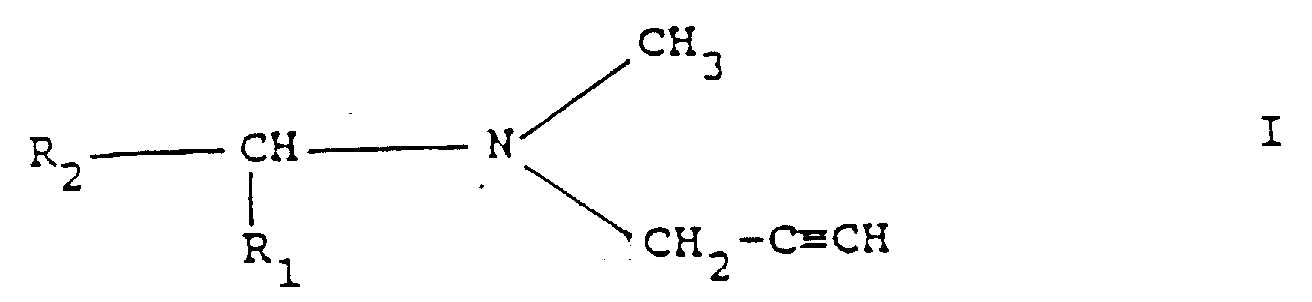
- when R1 is CH3, R2 is not an unsubstituted alkyl having from 4 to 7 carbon atoms, and
- when R2 is substituted with carboxyl or C1-C4 lower acyloxy, the carboxyl or C1-C4 lower acyloxy substituent is not on the last atom of the longest chain of the R2 group.


with the provisos that:
- when R1 is CH3, R2 cannot be an unsubstituted alkyl having from 4 to 7 carbon atoms, and
- when R2 is substituted with carboxyl or loweracyloxy, the carboxyl or C1-C4 lower acyloxy, substituent is not on the last atom of the longest chain of the R2 group.


with the proviso that:
- when R2 is substituted with carboxyl or C1-C4 lower acyloxy, the carboxyl or C1-C4 lower acyloxy substituent is not on the last atom of the longest chain of the R2 group.


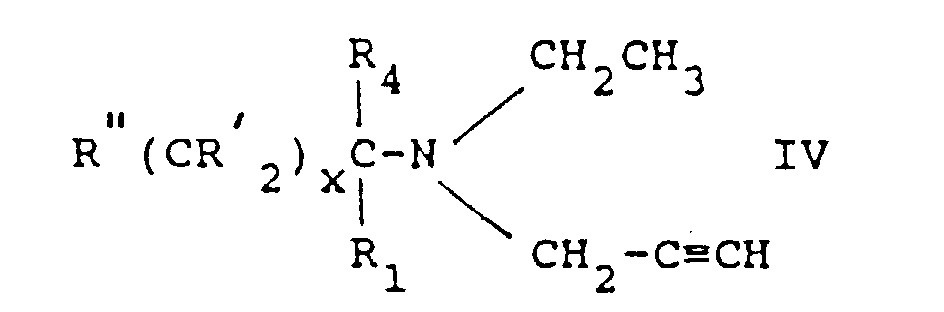


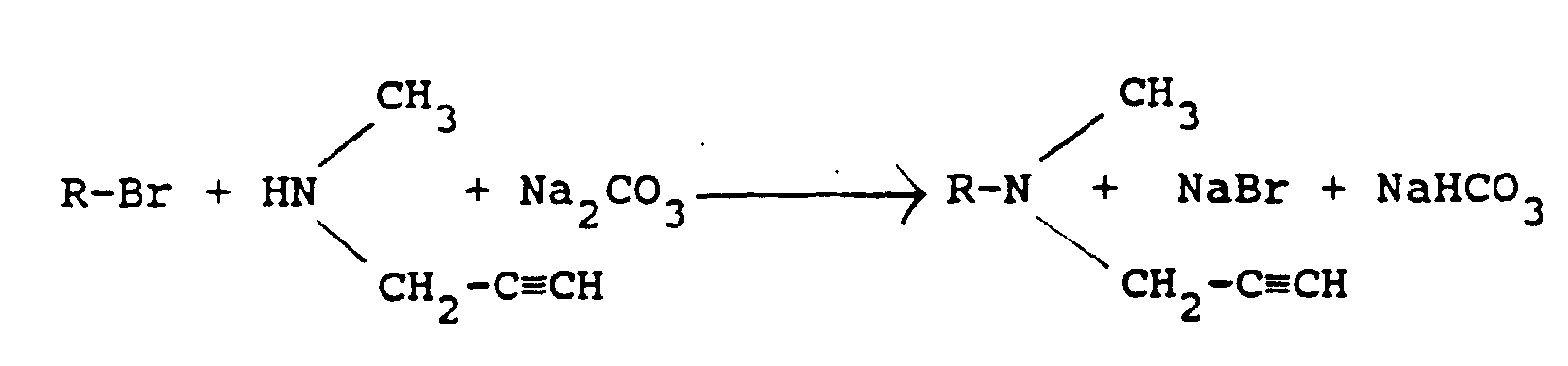
| Elemental analysis: C17H14CIN; | |||
| Calculated | C = 56.94%, | H = 9.56%, | N = 9.49%; |
| Found | C = 57.07%, | H 9.63%, | N = 9.52%; |

| Elemental analysis: C8H16ClN: | |||
| Calculated | C = 59.43% | H = 9.98% | N = 8.66% |
| Found | C = 59.60% | H = 10.11% | N = 8.51% |
| Elemental analysis: C10H17NO4: | |||
| Calculated | C = 55.80% | H = 7.96% | N = 6.51% |
| Found | C = 55.93% | H = 7.86% | N = 6.64%. |
| Elemental analysis: C10H17NO4: | |||
| Calculated | C = 55.90%, | H = 7.96%, | N = 6.51%; |
| Found | C = 55.89%, | H = 8.13%, | N = 6.27%; |
| Elemental analysis: C10H17NO4: | |||
| Calculated | C = 55.80%, | H = 7.96%, | N = 6.51%; |
| Found | C = 55.72%, | H = 7.85%, | N = 6.24%; |
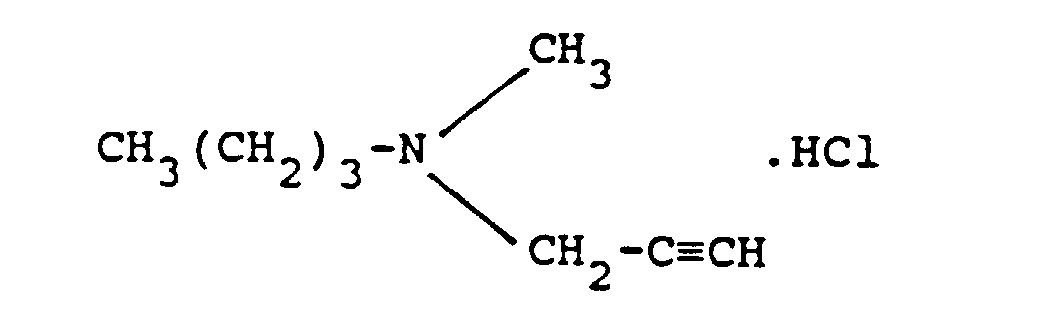
| Elemental analysis: C8H16ClN: | |||
| Calculated | C = 59.43% | H = 9.98% | N = 8.66% |
| Found | C = 59.69% | H = 9.94% | N = 8.77% |
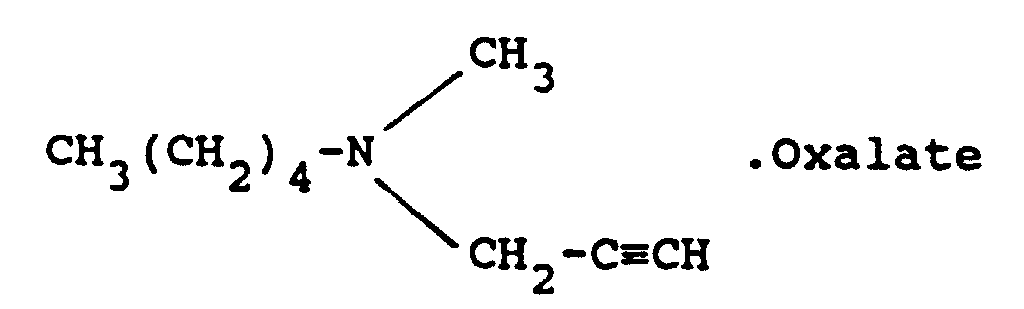
| Elemental analysis: C11H19NO4: | |||
| Calculated | C = 57.63% | H = 8.35% | N = 6.11% |
| Found | C = 57.72% | H = 8.29% | N = 5.92% |
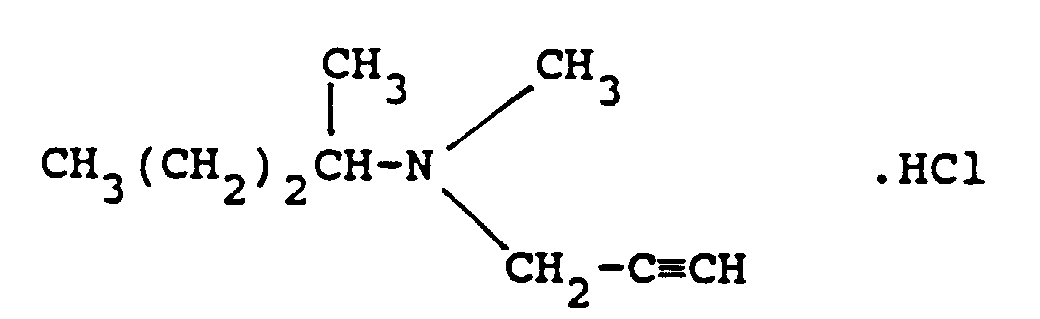
| Elemental analysis: C11H18ClN: | |||
| Calculated | C = 61.52%, | H = 10.33%, | N = 7.97% |
| Found | C = 61.05%, | H = 10.47%, | N = 8.20% |
| Elemental analysis: C11H19CO4: | |||
| Calculated | C = 57.63%, | H = 8.35%, | N = 6.11% |
| Found | C = 57.58%, | H = 8.22%, | N = 6.01% |
| Elemental analysis: C11H19NO4: | ||
| Calculated | C = 57.63%, | H = 8.35%; |
| Found | C = 58.85%, | H = 8.46%; |
| Elemental analysis: C10H20C1N: | ||
| Calculated | C = 63.31%, | H = 10.63%; |
| Found | C = 63.24%, | H = 11.06%; |
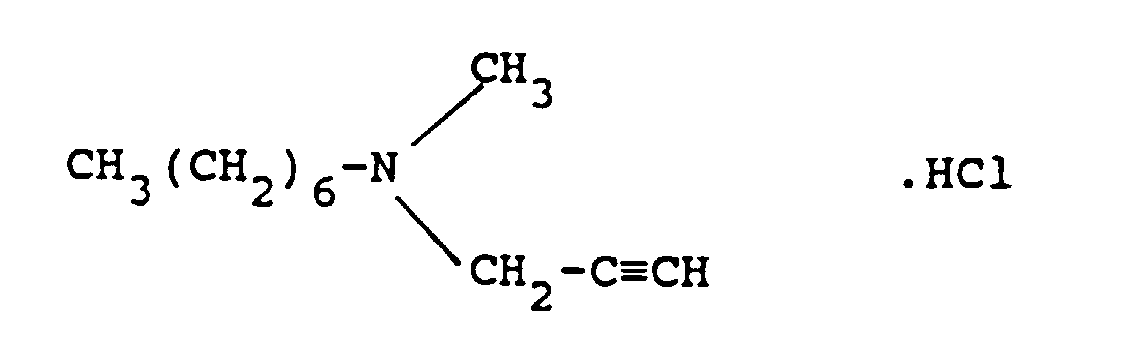
| Elemental analysis: C11H22ClN: | |||
| Calculated | C = 64.84% | H = 10.88% | N = 6.87% |
| Found | C = 64.97% | H = 10.78% | N = 6.92% |

| Elemental analysis: C11H22ClN: | |||
| Calculated | C = 64.84% | H = 10.88% | N = 6.87% |
| Found | C = 65.01% | H = 10.93% | N = 6.95% |

| Elemental analysis: C14H28ClN: | |||
| Calculated | C = 68.40% | H = 11.48% | N = 5.70% |
| Found | C = 68.20% | H = 11.36% | N = 5.82% |

| Elemental analysis: C16H32ClN: | |||
| Calculated | C = 70.16% | H = 11.78% | N = 5.12% |
| Found | C = 70.28% | H = 11.80% | N = 5.03% |
| Elemental analysis: C12H22C1NO2: | |||
| Calculated | C = 58.17% | H = 8.95% | N = 5.65%; |
| Found | C = 56.63%, | H = 8.74%, | N = 5.69%; |
| Elemental analysis: C14H23NO6: | |||
| Calculated | C = 55.80%, | H = 7.69%, | N = 4.65%; |
| Found | C = 56.22%, | H = 8.13%, | N = 4.39%; |
[M - (CH2COOCH2CH3)] = 124 (6%),
[M - (CH2CH2COOCH2CH3)] = 110 (6%),
[M-(CH2CH2COOCH2CH3)] = 110 (6%),
[M - (CH2CH2CH2COOCH2-CH3)] = 96 (8%),
[M - (CH2CH2CH2CH2COOCH2CH3)] = 82 (100%).]
| Elemental analysis: C11H19NO4: | |||
| Calculated | C = 57.63%, | H = 8.35%, | N = 6.11%; |
| Found | C = 58.08%, | H = 8.29%, | N = 5.54%; |
[M - (CH2CH2CH3)] = 96 (100%); M - CH3 = 124 (15%).
| Elemental analysis: C11H19NO4: | |||
| Calculated | C = 57.63%, | H = 8.35%, | N = 6.11% |
| Found | C = 56.66%, | H = 8.71%, | N = 6.90% |
| Inhibition of rat liver monoamine oxidase activities towards different substrates by some aliphatic propargylamines in vitro | ||||
| Inhibitors | PE (1.9x10⁻⁵M) IC50 | 5-HT (5x10⁻⁴M) IC50 | Ratio MAO-A/MAO-B | DA (5x10⁻⁴M) IC50 |
| MP | inactive | inactive | inactive | |
| 2-PrMP | 2x10⁻⁵M | no effect | 3x10⁻⁵M | |
| 1-BuMP | 1x10⁻⁶M | 1x10⁻⁴M | 100 | --- |
| 2-BuMP | 1x10⁻⁶M | 2x10⁻⁵M | 20 | 5x10⁻⁷M |
| M-1-PP | 4x10⁻⁷M | 1x10⁻⁴M | 200 | --- |
| M-2-PP | 2x10⁻⁷M | 1x10⁻⁵M | 50 | 6x10⁻⁶M |
| M-3-PP | 2x10⁻⁷M | 2x10⁻⁶M | 10 | --- |
| 2-HxMP | x10-7M | 1x10⁻⁴M | 1000 | --- |
| 1-HMP | 2x10⁻⁶M | 4x10⁻⁵M | 20 | --- |
| 2-HMP | 2x10⁻⁷M | 2x10⁻⁵M | 100 | 3x10⁻⁷M |
| 2-DMP | 2x10⁻⁷M | 4x10⁻⁶M | 50 | 2x10⁻⁷M |
| 2-DdMP | 4x10⁻⁸M | 2x10⁻⁶M | 50 | 3x10⁻⁷M |
| Cl-1-BuMP | 1x10⁻⁵M | >1x10⁻⁴M | >10 | --- |
| 3-CP-MP | inactive | inactive | inactive | |
| 5-CP2MP | inactive | inactive | inactive | |
| 5-CP1MP | inactive | inactive | inactive | |
| 6-OH-Hx1MP | 1x10⁻⁴M | inactive | --- | |
| 2-BuPP | inactive | inactive | ||
| 1-BuEP | inactive | inactive | ||
| 2-BuEP | inactive | inactive | ||
| 3-BuBuM | inactive | inactive | ||
| Deprenyl | 5x10⁻⁸M | 3x10⁻⁶M | 60 | 3x10⁻⁷M |
| MAO activities in the mouse brain after intraperitoneal administration of aliphatic propargylamine MAO inhibitors. | ||||
| Inhibitors | PE 1.9x10⁻⁵M) ID50 | 5-HT (5x10⁻⁴M) ID50 | Ratio MAO-A/MAO-B | MAO-B ID50 (mg/Kg) IC50 (1x10⁻⁶M) |
| 2-BuMP | 1 | 20 | 20 | 1 |
| 1-BUMP | 2 | 100 | 50 | 2 |
| M-1-PP | 2 | 100 | 50 | 6.6 |
| M-2-PP | 0.5 | 25 | 50 | 2.5 |
| M-3-PP | 1.0 | 12 | 12 | 10 |
| 2-HxMP | 0.2 | 40 | 200 | 2 |
| 1-HMP | 15 | 100 | 7 | 7.5 |
| 2-HMP | 0.5 | 25 | 50 | 2.5 |
| 2-DMP | 5 | 35 | 7 | 25 |
| 2-DdMP | 4 | 60 | 15 | 100 |
| Deprenyl | 0.5 | 25 | 50 | 10 |
| Results are the average of 3 to 8 animals for each i.p. doses, which were 0.5, 1, 2, 5, 10, 20, 50, 100 mg/Kg. Striata were dissected from the brain two hours after i.p. administration of the drugs. MAO-A and MAO-B activities were determined immediately. The values were estimated from dose-response curves. |
| MAO activities in the mouse brain after oral administration of aliphatic propargylamine MAO inhibitors (10 mg/kg). | ||||
| Relative activity (%) | Inhibition of MAO-B activity | |||
| Inhibitors | PE (1.9x10⁻⁵M) | 5-HT (5x10⁻⁴M) | no. mice | Dose response (ID50, mg/Kg) |
| Saline | 100±5 | 100±8 | 6 | |
| 2-BuMP | 28±2 | 95±11 | 6 | 5 |
| 1-BuMP | 67±9 | 98±5 | 3 | 15 |
| M-2-PP | 31±4 | 89±15 | 3 | 1 |
| M-1-PP | 72±17 | 97±13 | 3 | |
| 2HxMP | 1 | |||
| 2-HMP | 39±4 | 99±5 | 6 | |
| 1-HMP | 118±14 | 123±16 | 3 | |
| 2-DMP | 104±7 | 97±8 | 3 | 50 |
| 2-DdMP | 64±8 | 107±14 | 3 | |
| Deprenyl | 40±2 | 99±11 | 6 | 6 |
| Protection of dopamine neurons by aliphatic propargylamines against MPTP-induced neurotoxicity in the mice brain. | ||
| Treatment | Dopamine (µg/gm) | Dopamine binding site (pmol/mg) |
| Saline controls | 9.0 | 312 |
| MPTP | 3.3 | 221 |
| M-2-PP (2.5 mg/Kg)+MPTP | 8.9 | 306 |
| M-2-PP (0.5 mg/Kg)+MPTP | 8.3 | 312 |
| M-1-PP (10 mg/Kg)+MPTP | 9.0 | 320 |
| M-1-PP (2.0 mg/Kg)+MPTP | 3.1 | 221 |
| Protection of noradrenaline neurons by aliphatic propargylamines against DSP-4 induced neurotoxicity in the mouse brain. | ||
| Pre-treatment | DSP-4 | Noradrenaline in putamen (%) |
| Experiment I | ||
| Saline | saline | 100±0.05 |
| Saline | 50 mg/Kg | 33±0.05 |
| M-2-PP (10 mg/Kg) | saline | |
| 111±0.09 | ||
| M-2-PP (10 mg/Kg) | 50 mg/Kg | |
| 90±0.07 | ||
| Experiment II | ||
| Saline | saline | 100±0.07 |
| Saline | 50 mg/Kg | 56±0.05 |
| 2-HxMP (10 mg/Kg) | saline | |
| 104±0.05 | ||
| 2-HxMP (10 mg/Kg) | 50 mg/Kg | |
| 84±0.04 |
Claims (27)
- A compound having the following formula I:wherein
 and isomers, enantiomers and pharmaceutically acceptable salts thereof ,R1 is hydrogen or a straight chain or branched C1-C4 lower alkyl; andR2 is straight chain or branched alkyl, alkenyl, alkynyl, alkoxy, alkylthio or alkyl sulphinyl group having from 3 to 11 carbon atoms, said group being unsubstituted or substituted with at least one of the substituents selected from hydroxy, aldehyde, oxo, C1-C4 lower acyloxy, halogen, thio, sulfoxide, sulfone, phenyl, halogen-substituted phenyl, hydroxy-substituted phenyl, cycloalkyl having from 3 to 6 carbon atoms and heterocyclic substituents having between 3 and 6 atoms, of which from 1 to 3 are heteroatoms selected from 0, S and/or N, or R2 has the following formula:x is an integer ranging from 1 to 2 or 7 to 13;R' represents H or halogen; andR" represents methyl, hydrogen or halogen;
with the provisos that:when R1 is CH3, R2 is not an unsubstituted alkyl having from 4 to 7 carbon atoms, andwhen R2 is substituted with carboxyl or C1-C4 lower acyloxy, the carboxyl or C1-C4 lower acyloxy substituent is not on the last atom of the longest chain of the R2 group. - A compound according to claim 1 wherein R1 is a lower alkyl having between 1 and 4 carbon atoms and R2 is a straight chain or branched alkyl, alkenyl, alkynyl or alkoxy, unsubstituted or substituted with at least one halogen selected from fluorine, chlorine, bromine and iodine.
- A compound according to claim 1, selected from:N-(1-butyl)-N-methylpropargylamine-HCl (1-BuMP)N-(2-butyl)-N-methylpropargylamine-HCl (2-BuMP)N-(2-pentyl)-N-methylpropargylamine-HCl (M-2-PP)N-(1-pentyl)-N-methylpropargylamine-oxalate (M-1-PP)N-(2-decyl)-N-methylpropargylamine-HCl (2-DMP)N-(2-dodecyl)-N-methylpropargylamine-HCl (2-DdMP) andR(-)-N-(2-butyl)-N-methylpropargylamine-oxalate (R-(-)2-BuMP).
- A compound according to anyone of claims 1 to 3, wherein it is a R(-)-enantiomer of said compound and preferrably a R(-)-enantiomer of the compounds as defined in claims 2 or 3.
- A pharmaceutical composition notably for the in vivo inhibition of MAO-B activity in mammals comprising an effective amount of a compound as defined in anyone of claims 1 to 4.
- A pharmaceutical composition for the treatment and prevention of neurodegenerative disorders in mammals, said composition comprising an effective amount of a compound having the following formula:wherein
 and isomers, enantiomers and pharmaceutically acceptable salts thereof,R1, R3 and R4 are the same or different and represent hydrogen or straight chain or branched C1-C4 lower alkyl ;y is an integer ranging from 0 to 5;z is an integer ranging from 0 to 5; andR2 is a straight chain or branched alkyl, alkenyl, alkynyl, alkoxy, alkylthio or alkyl sulphinyl group having from 3 to 11 carbon atoms, said group being unsubstituted or substituted with at least one of the substituents selected from hydroxy, aldehyde,oxo, C1-C4 lower acyloxy, halogen, thio, sulfoxide, sulfone, phenyl, halogen-substituted phenyl, hydroxy-substituted phenyl, cycloalkyl having from 3 to 6 carbon atoms and heterocyclic substituents having between 3 and 6 atoms, of which from 1 to 3 are heteroatoms selected from O, S and/or N, or R2 has the following general formula:x is an integer ranging from 1 to 2 or 7 to 13;R' represents H or halogen; andR" represents methyl, hydrogen or halogen;
in admixture with a pharmaceutically acceptable carrier, excipient or adjuvant,
with the provisos that:when R1 is CH3, R2 cannot be an unsubstituted alkyl having from 4 to 7 carbon atoms, andwhen R2 is substituted with carboxyl or C1-C4 lower acyloxy the carboxyl or C1-C4 lower acyloxy substituent is not on the last atom of the longest chain of the R2 group. - A pharmaceutical composition according to claim 6, wherein in said compound of formula III, R1 is a lower alkyl having between 1 and 4 carbon atoms, R2 is a straight chain or branched alkyl, alkenyl, alkynyl or alkoxy, unsubstituted or substituted with at least one halogen selected from fluorine, chlorine, bromine and iodine, R3 and R4 are hydrogen and y and z are 0.
- A pharmaceutical composition according to one of claims 6 and 7, wherein said compound of formula III is selected from :N-(1-butyl)-N-methylpropargylamine-HCl (1-BuMP)N-(2-butyl)-N-methylpropargylamine-HCl (2-BuMP)N-(2-pentyl)-N-methylpropargylamine-HCl (M-2-PP)N-(1-pentyl)-N-methylpropargylamine-oxalate (M-1-PP)N-(2-decyl)-N-methylpropargylamine-HCl (2-DMP)N-(2-dodecyl)-N-methylpropargylamine-HCl (2-DdMP) andR(-)-N-(2-butyl)-N-methylpropargylamine-oxalate (R-(-)2-BuMP).
- A pharmaceutical composition according to anyone of claims 6 to 8, wherein said compound is a R(-)-enantiomer and preferably a R(-)-enantiomer of a compound as defined in claims 7 or 8.
- Use of a compound having the following formula I:wherein
 and isomers, enantiomers and pharmaceutically acceptable salts thereof ,R1 is hydrogen or a straight chain or branched C1-C4 lower alkyl; andR2 is a straight chain or branched alkyl, alkenyl, alkynyl, alkoxy, alkylthio or alkyl sulphinyl group having from 3 to 11 carbon atoms, said group being unsubstituted or substituted with at least one of the substituents selected from hydroxy, aldehyde, oxo, C1-C4 lower acyloxy, halogen, thio, sulfoxide, sulfone, phenyl, halogen-substituted phenyl, hydroxy-substituted phenyl, cycloalkyl having from 3 to 6 carbon atoms and heterocyclic substituents having between 3 and 6 atoms, of which from 1 to 3 are heteroatoms selected from O,S and/or N, or R2 has the following formula:x is an integer ranging from 1 to 13;R' represents H or halogen; andR" represents methyl, hydrogen or halogen;
with the proviso that:in admixture with a pharmaceutically acceptable carrier, excipient or adjuvant, for the manufacture of a pharmaceutical composition for the in vivo inhibition of MAO-B to alleviate neuropsychiatric disorders in mammalian subjects.when R2 is substituted with carboxyl or C1-C4 lower acyloxy the carboxyl or C1-C4 lower acyloxy substituent is not on the last carbon atom of the R2 chain, - Use according to claim 10, wherein in said compound of formula I, R1 is a lower alkyl having between 1 and 4 carbon atoms and R2 is a straight chain or branched alkyl, alkenyl, alkynyl or alkoxy, unsubstituted or substituted with at least one halogen selected from fluorine, chlorine, bromine and iodine.
- Use according to claim 10, wherein said compound of formula I is selected from:N-(1-butyl)-N-methylpropargylamine-HCl (1-BuMP)N-(2-butyl)-N-methylpropargylamine-HCl (2-BuMP)N-(2-pentyl)-N-methylpropargylamine-HCl (M-2-PP)N-(1-pentyl)-N-methylpropargylamine-oxalate (M-1-PP)N-(2-hexyl)-N-methylpropargylamine-HCl (2-HxMP)N-(2-heptyl)-N-methylpropargylamine-HCl (2-HMP)N-(2-decyl)-N-methylpropargylamine-HCl (2-DMP)N-(2-dodecyl)-N-methylpropargylamine-HCl (2-DdMP) andR(-)-N-(2-butyl)-N-methylpropargylamine-oxalate (R-(-)-2-BuMP).
- Use according to anyone of claims 10 to 12, wherein said compound is a R(-)-enantiomer and preferably a R(-)-enantiomer of the compounds of claims 11 or 12.
- Use of a compound having the following formula III:wherein
 and isomers, enantiomers and pharmaceutically acceptable salts thereof ,R1, R3 and R4 are the same or different and represent hydrogen or a straight chain or branched C1-C4 lower alkyl;y is an integer ranging from 0 to 5;z is an integer ranging from o to 5; andR2 is a straight chain or branched alkyl, alkenyl, alkynyl, alkoxy, alkylthio or alkyl sulphinyl group having from 3 to 11 carbon atoms, said group being unsubstituted or substituted with at least one of the substituents selected from hydroxy, aldehyde, oxo, C1-C4 loweracyloxy, halogen, thio, sulfoxide, sulfone, phenyl, halogen-substituted phenyl, hydroxy-substituted phenyl, cycloalkyl having from 3 to 6 carbon atoms and heterocyclic substituents having between 3 and 6 atoms, of which from 1 to 3 are heteroatoms selected from O,S and/or N, or R2 has the following formula:x is an integer ranging from 1 to 13;R' represents H or halogen; andR" represents methyl, hydrogen or halogen;
in admixture with a pharmaceutically acceptable carrier, excipient or adjuvant for the manufacture of a pharmaceutical composition for preventing the premature degeneration of neuron cells in mammalian subjects. - Use according to claim 14, wherein in said compound of formula III, R1 is a lower alkyl having between 1 and 4 carbon atoms, R2 is a straight chain or branched alkyl, alkenyl, alkynyl or alkoxy, unsubstituted or substituted with at least one halogen selected from fluorine, chlorine, bromine and iodine, R3 and R4 are hydrogen and y is 0 and z is 1.
- Use according to claim 14, wherein said compound of formula III is selected from:N-(2-pentyl)-N-methylpropargylamine-HCl (M-2-PP)N-(1-pentyl)-N-methylpropargylamine-oxalate (M-1-PP) andN-(2-hexyl)-N-methylpropargylamine-HCl (2-HxMP)
- Use according to anyone of claims 14 to 16, wherein said compound of formula III is a R(-)-enantiomer, and preferably a R(-)-enantiomer of the compounds as defined in claim 15 or 16.
- Use of a compound having the following formula III:wherein
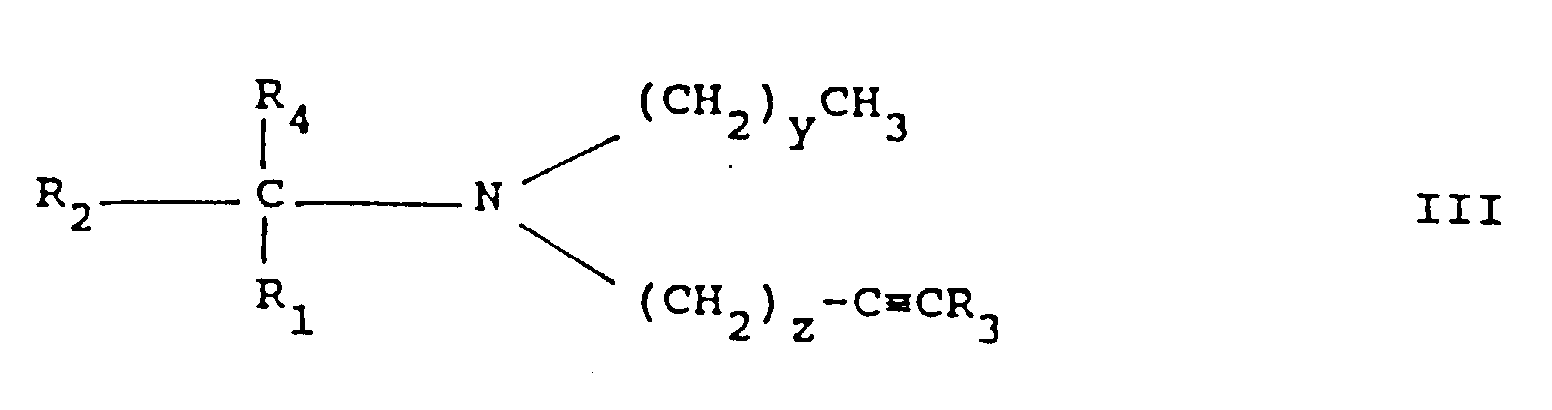 and isomers, enantiomers and pharmaceutically acceptable salt thereof ,R1, R3 and R4 are the same or different and represent hydrogen or a straight chain or branched C1-C4 lower alkyl ;y is an integer ranging from 0 to 5;z is an integer ranging from 0 to 5; andR2 is a straight chain or branched alkyl, alkenyl, alkynyl, alkoxy, alkylthio or alkyl sulphinyl group having from 3 to 11 carbon atoms, said group being unsubstituted or substituted with at least one of the substituents selected from hydroxy, aldehyde,oxo, C1- C4 loweracyloxy, halogen, thio, sulfoxide, sulfone, phenyl, halogen-substituted phenyl, hydroxy-substituted phenyl, cycloalkyl having from 3 to 6 carbon atoms and heterocyclic substituents having between 3 and 6 atoms, of which from 1 to 3 are heteroatoms selected from O,S and/or N, or R2 has the following formula:x is an integer ranging from 1 to 13;R' represents H or halogen; andR" represents methyl, hydrogen or halogen;
in admixture with a pharmaceutically acceptable carrier, excipient or adjuvant, for the preparation of a medicament for protecting mammalian neuron cells from the action of neurotoxic agents causing neurodegenerative disorders to mammals. - Use according to claim 18, wherein in compound of formula III, R1 is a lower alkyl having between 1 and 4 carbon atoms, R2 is a straight chain or branched alkyl, alkenyl, alkynyl or alkoxy, unsubstituted or substituted with at least one halogen selected from fluorine, chlorine, bromine and iodine, R3 and R4 are hydrogen and y is 0 and z is 1.
- Use according to one of claims 18 and 19 wherein said compound of formula III is selected from:N-(2-pentyl)-N-methylpropargylamine-HCl (M-2-PP)N-(1-pentyl)-N-methylpropargylamine-oxalate (M-1-PP) andN-(2-hexyl)-N-methylpropargylamine-HCl (2-HxMP).
- Use according to anyone of claims 18 to 20, wherein said compound of formula III is a R(-)-enantiomer preferably a R(-)-enantiomer of the compounds as defined in claims 19 or 20.
- Use of a compound having the following formula III:wherein
 and isomers, enantiomers and pharmaceutically acceptable salts thereof ,R1, R3 and R4 are the same or different and represent hydrogen or a straight chain or branched C1-C4 lower alkyl ;y is an integer ranging from 0 to 5;z is an integer ranging from 0 to 5; andR2 is a straight chain or branched alkyl, alkenyl, alkynyl, alkoxy, alkylthio or alkyl sulphinyl group having from 3 to 11 carbon atoms, said group being unsubstituted or substituted with at least one of the substituents selected from hydroxy, aldehyde, oxo, C1-C4 loweracyloxy, halogen, thio, sulfoxide, sulfone, phenyl, halogen-substituted phenyl, hydroxy-substituted phenyl, cycloalkyl having from 3 to 6 carbon atoms and heterocyclic substituents having between 3 and 6 atoms, of which from 1 to 3 are heteroatoms selected from O,S and/or N, or R2 has the following formula:x is an integer ranging from 1 to 13;R' represents H or halogen; andR" represents methyl, hydrogen or halogen;
in admixture with a pharmaceutically acceptable carrier, excipient or adjuvant, for the preparation of a medicament for the treatment of neurodegenerative disorders in mammals. - Use according to claim 22, wherein in compound of formula III, R1 is a lower alkyl having between 1 and 4 carbon atoms, R2 is a straight chain or branched alkyl, alkenyl, alkynyl or alkoxy, unsubstituted or substituted with at least one halogen selected from fluorine, chlorine, bromine and iodine, R3 and R4 are hydrogen and y is 0 and z is 1.
- Use according to anyone of claims 22 and 23, wherein said compound of formula III is selected from :N-(2-pentyl)-N-methylpropargylamine-HCl (M-2-PP)N-(1-pentyl)-N-methylpropargylamine-oxalate (M-1-PP) andN-(2-hexyl)-N-methylpropargylamine-HCl (2-HxMP).
- Use according to anyone of claims 22 to 24, wherein said compound is a R(-)-enantiomer and preferably a R(-)-enantiomer of the compounds of claims 23 and 24.
- A commercial package for the in vivo inhibition of MAO-B to alleviate neuropsychiatric disorders in mammalian subjects, said package comprising a pharmaceutical agent therapeutically effective for the in vivo inhibition of MAO-B to alleviate neuropsychiatric disorders in mammals together with instructions to use said pharmaceutical agent in the in vivo inhibition of MAO-B to alleviate neuropsychiatric disorders in mammals, said pharmaceutical agent comprised in said commercial package having the following formula:wherein
 and isomers, enantiomers and pharmaceutically acceptable salts thereof ,R1 is hydrogen or a straight chain or branched C1-C4 lower alkyl; andR2 is a straight chain or branched alkyl, alkenyl, alkynyl, alkoxy, alkylthio or alkyl sulphinyl group having from 3 to 11 carbon atoms, said group being unsubstituted or substituted with at least one of the substituents selected from hydroxy, aldehyde, oxo, C1-C4 loweracyloxy, halogen, thio, sulfoxide, sulfone, phenyl, halogen-substituted phenyl, hydroxy-substituted phenyl, cycloalkyl having from 3 to 6 carbon atoms and heterocyclic substituents having between 3 and 6 atoms, of which from 1 to 3 are heteroatoms selected from O,S and/or N, or R2 has the following formula:x is an integer ranging from 1 to 13;R' represents H or halogen; andR" represents methyl, hydrogen or halogen;
with the proviso that:when R2 is substituted with carboxyl or loweracyloxy, the carboxyl or loweracyloxy substituent is not on the last carbon atom of the R2 chain. - A commercial package for the treatment or Prevention of neurodegenerative disorders in mammals, said package comprising a pharmaceutical agent therapeutically effective for the treatment or prevention of neurodegenerative disorders in mammals together with instructions to use said pharmaceutical agent in the treatment or prevention of neurodegenerative disorders in mammals, said pharmaceutical agent comprised in said commmercial package having the following formula:wherein
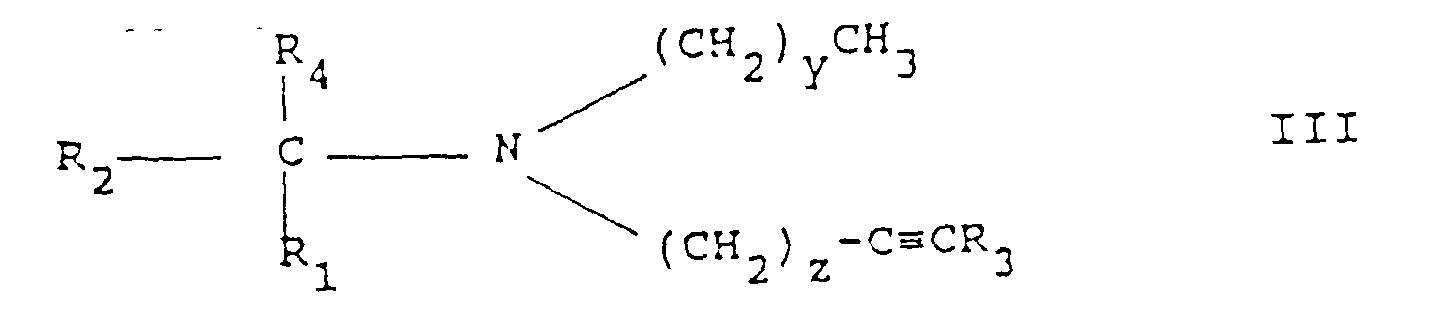 and isomers, enantiomers and pharmaceutically acceptable salts thereof.R1, R3 and R4 are the same or different and represent hydrogen or a straight chain or branched C1-C4 lower alkyl; andy is an integer ranging from 0 to 5;z is an integer ranging from 0 to 5; andR2 is a straight chain or branched alkyl, alkenyl, alkynyl, alkoxy, alkylthio or alkyl sulphinyl group having from 3 to 11 carbon atoms, said group being unsubstituted or substituted with at least one of the substituents selected from hydroxy, aldehyde,oxo, C1-C4 loweracyloxy, halogen, thio, sulfoxide, sulfone, phenyl, halogen substituted phenyl, hydroxy-substituted phenyl, cycloalkyl having from 3 to 6 carbon atoms and heterocyclic substituents having between 3 and 6 atoms, of which from 1 to 3 are heteroatoms selected from O,S and/or N, or R2 has the following formula:x is an integer ranging from 1 to 13;R' represents H or halogen; andR" represents methyl, hydrogen or halogen;
Applications Claiming Priority (3)
| Application Number | Priority Date | Filing Date | Title |
|---|---|---|---|
| US663018 | 1991-03-01 | ||
| US07/663,018 US5169868A (en) | 1991-03-01 | 1991-03-01 | Aliphatic propargylamines as specific mao-b inhibitors |
| PCT/CA1992/000090 WO1992015551A1 (en) | 1991-03-01 | 1992-02-28 | Aliphatic propargylamines as selective mao-b inhibitors and as neuroprotective agents |
Publications (2)
| Publication Number | Publication Date |
|---|---|
| EP0573498A1 EP0573498A1 (en) | 1993-12-15 |
| EP0573498B1 true EP0573498B1 (en) | 1998-11-18 |
Family
ID=24660178
Family Applications (1)
| Application Number | Title | Priority Date | Filing Date |
|---|---|---|---|
| EP92905512A Expired - Lifetime EP0573498B1 (en) | 1991-03-01 | 1992-02-28 | Aliphatic propargylamines as selective mao-b inhibitors and as neuroprotective agents |
Country Status (8)
| Country | Link |
|---|---|
| US (2) | US5169868A (en) |
| EP (1) | EP0573498B1 (en) |
| JP (1) | JP3129733B2 (en) |
| AT (1) | ATE173459T1 (en) |
| AU (1) | AU658611B2 (en) |
| CA (1) | CA2105171A1 (en) |
| DE (1) | DE69227627T2 (en) |
| WO (1) | WO1992015551A1 (en) |
Families Citing this family (25)
| Publication number | Priority date | Publication date | Assignee | Title |
|---|---|---|---|---|
| US5744500A (en) | 1990-01-03 | 1998-04-28 | Teva Pharmaceutical Industries, Ltd. | Use of R-enantiomer of N-propargyl-1-aminoindan, salts, and compositions thereof |
| HUT63579A (en) * | 1991-12-20 | 1993-09-28 | Chinoin Gyogyszer Es Vegyeszet | Process for producing double-phase pharmaceutical compositions suitable for treating diseases occurring during neurodegenerative processes |
| EP0623344B1 (en) * | 1993-05-04 | 2000-07-26 | Ceva Sante Animale | Use of Selegiline in vetenary medicine |
| EP0738149B1 (en) * | 1994-01-10 | 2006-11-29 | Teva Pharmaceutical Industries, Ltd. | 1-aminoindan derivatives and compositions thereof |
| DE19708461A1 (en) * | 1997-02-18 | 1998-08-27 | Meulen Volker Prof Dr Ter | Use of aminergic substances to prepare medicaments |
| US6111108A (en) * | 1997-07-01 | 2000-08-29 | Midwest Research Institute | Extraction of biologically active components from Camptotheca acuminata with supercritical fluids |
| US5840979A (en) * | 1997-07-14 | 1998-11-24 | University Of Saskatchewan | Aliphatic propargylamines as cellular rescue agents |
| GB9715082D0 (en) * | 1997-07-17 | 1997-09-24 | Scherer Ltd R P | Treatment of attention deficit hyperactivity disorder and narcolepsy |
| WO1999036076A1 (en) * | 1998-01-13 | 1999-07-22 | University Of Saskatchewan Technologies Inc. | Composition containing propargylamine for enhancing cancer therapy |
| US6809120B1 (en) | 1998-01-13 | 2004-10-26 | University Of Saskatchewan Technologies Inc. | Composition containing propargylamine for enhancing cancer therapy |
| DE69937340T2 (en) * | 1998-03-26 | 2008-07-17 | University Of Saskatchewan, Saskatoon | ALIPHATIC AMINO ACID AND AMINOPHOSPHONIC ACID, AMINONITRILE AND AMINO-TETRAZOLE AS A CELLULAR RESCUE |
| US6984754B1 (en) | 1998-03-26 | 2006-01-10 | University Of Saskatchewan Technologies Inc. | Aliphatic amino carboxylic and amino phosphonic acids amino nitriles and amino tetrazoles as cellular rescue agents |
| US6232326B1 (en) | 1998-07-14 | 2001-05-15 | Jodi A. Nelson | Treatment for schizophrenia and other dopamine system dysfunctions |
| US20040062787A1 (en) * | 2001-12-17 | 2004-04-01 | Daley William Lionel | Therapeutic combination of amlodipineand benazepril/benazeprilat |
| AU2003282337B2 (en) * | 2002-11-07 | 2009-07-16 | Technion Research And Development Foundation Ltd. | Neuroprotective iron chelators and pharmaceutical compositions comprising them |
| US8097608B2 (en) * | 2003-11-25 | 2012-01-17 | Technion Research And Development Foundation Ltd. | Methods for treatment of cardiovascular disorders and diseases |
| EP1686973A4 (en) * | 2003-11-25 | 2009-03-25 | Technion Res & Dev Foundation | COMPOSITIONS AND METHODS FOR TREATING CARDIOVASCULAR DISORDERS AND DISEASES |
| JP2005232148A (en) * | 2004-02-03 | 2005-09-02 | Technion Research & Development Foundation Ltd | Use of propargylamine as neuroprotective agent |
| JP2009502961A (en) | 2005-07-29 | 2009-01-29 | コンサート ファーマシューティカルズ インコーポレイテッド | Novel pharmaceutical composition |
| US8263655B2 (en) | 2005-10-06 | 2012-09-11 | Technion Research And Development Foundation Ltd | Methods for treatment of renal failure |
| EP2053033A1 (en) | 2007-10-26 | 2009-04-29 | Bayer Schering Pharma AG | Compounds for use in imaging, diagnosing and/or treatment of diseases of the central nervous system or of tumors |
| WO2010013240A1 (en) | 2008-07-31 | 2010-02-04 | Dekel Pharmaceuticals Ltd. | Compositions and methods for treating inflammatory disorders |
| KR101619564B1 (en) * | 2009-04-23 | 2016-05-10 | 바이엘 파마 악티엔게젤샤프트 | Novel precursor molecules for f-18 labelled pet tracers |
| CN102791258B (en) | 2010-02-03 | 2018-05-08 | 图必制药公司 | Alleviating prolongation delivery formulations of Rasagiline and application thereof |
| US8759382B2 (en) | 2010-09-29 | 2014-06-24 | Teva Pharmaceutical Industries Ltd. | Propargyl-trifluoromethoxy-aminobenzothiazole derivatives, their preparation and use |
Family Cites Families (9)
| Publication number | Priority date | Publication date | Assignee | Title |
|---|---|---|---|---|
| GB342651A (en) * | 1929-10-03 | 1931-02-03 | British Celanese | Improvements in the manufacture of artificial filaments, threads & the like by wet spinning methods |
| GB842651A (en) * | 1957-04-01 | 1960-07-27 | Lakeside Lab Inc | Novel acetylene compounds and process of preparing same |
| BE576562A (en) * | 1958-03-21 | 1959-07-01 | Armour & Co | Stabilized chymotrypsin solution |
| US3000903A (en) * | 1959-09-15 | 1961-09-19 | Lakeside Lab Inc | Phenylalkylhydrazines and use as psychotherapeutics |
| US2997442A (en) * | 1960-03-30 | 1961-08-22 | Louise F Peale | Lubricating oil composition |
| FR1453844A (en) * | 1965-03-19 | 1966-07-22 | Soc Ind Fab Antibiotiques Sifa | New n-propynyl alkylamines and their salts and method of preparation |
| US4201725A (en) * | 1974-05-20 | 1980-05-06 | Labaz | Secondary amines |
| US4650907A (en) * | 1985-12-05 | 1987-03-17 | Merrell Dow Pharmaceuticals Inc. | Nonaromatic fluoroallylamine MAO inhibitors |
| JPH03176457A (en) * | 1989-12-04 | 1991-07-31 | Nippon Paint Co Ltd | Novel propargyl compound, its production and coating material containing the same compound |
-
1991
- 1991-03-01 US US07/663,018 patent/US5169868A/en not_active Expired - Fee Related
-
1992
- 1992-02-28 CA CA002105171A patent/CA2105171A1/en not_active Abandoned
- 1992-02-28 AT AT92905512T patent/ATE173459T1/en not_active IP Right Cessation
- 1992-02-28 US US08/108,653 patent/US5508311A/en not_active Expired - Fee Related
- 1992-02-28 DE DE69227627T patent/DE69227627T2/en not_active Expired - Fee Related
- 1992-02-28 JP JP04504826A patent/JP3129733B2/en not_active Expired - Fee Related
- 1992-02-28 AU AU13236/92A patent/AU658611B2/en not_active Ceased
- 1992-02-28 EP EP92905512A patent/EP0573498B1/en not_active Expired - Lifetime
- 1992-02-28 WO PCT/CA1992/000090 patent/WO1992015551A1/en not_active Ceased
Also Published As
| Publication number | Publication date |
|---|---|
| ATE173459T1 (en) | 1998-12-15 |
| WO1992015551A1 (en) | 1992-09-17 |
| JP3129733B2 (en) | 2001-01-31 |
| DE69227627T2 (en) | 1999-06-24 |
| US5508311A (en) | 1996-04-16 |
| US5169868A (en) | 1992-12-08 |
| DE69227627D1 (en) | 1998-12-24 |
| CA2105171A1 (en) | 1992-09-02 |
| EP0573498A1 (en) | 1993-12-15 |
| JPH06505241A (en) | 1994-06-16 |
| AU658611B2 (en) | 1995-04-27 |
| AU1323692A (en) | 1992-10-06 |
Similar Documents
| Publication | Publication Date | Title |
|---|---|---|
| US5508311A (en) | Aliphatic propargylamines as selective MAO-B inhibitors and as neuroprotective agents | |
| Yu et al. | Aliphatic propargylamines: potent, selective, irreversible monoamine oxidase B inhibitors | |
| US6391875B2 (en) | Pharmaceutically active morpholinol | |
| US5075338A (en) | Method of treatment of learning deficiency | |
| HU215451B (en) | R (+) - N-propargyl-1-aminoindan, pharmaceutical compositions containing the compound and their preparation | |
| GB2087883A (en) | Improvements in or relating to 3--aryloxy-3-phenylpropylamines | |
| US9732037B2 (en) | 2-aminopyridine-based selective neuronal nitric oxide synthase inhibitors | |
| CA2295483C (en) | Aliphatic propargylamines as cellular rescue agents | |
| HK1014533B (en) | Aliphatic propargylamines as selective mao-b inhibitors and as neuroprotective agents | |
| HK1014533A1 (en) | Aliphatic propargylamines as selective mao-b inhibitors and as neuroprotective agents | |
| EP0816324A1 (en) | Subsituted benzyl derivatives of polyalkylene-polyamines and their use in cosmetic and pharmaceutical compositions | |
| US6734213B2 (en) | Pharmaceutically active morpholinol | |
| EP0037780B1 (en) | Alcoxy-propanol amines useful as medicines, and process for their preparation | |
| EP0280603A1 (en) | Absolute S confirmation enantiomers of amide derivatives of 3-aminoquinuclidine, process for their preparation and their therapeutical use | |
| WO2020115753A1 (en) | L-dopa and/or dopa decarboxylse inhibitors conjugated to sugar for the treatment of dopamine-responsive disorders | |
| US4833268A (en) | Threo-adrenalinecarboxylic acid, and the production and uses thereof | |
| EP1704136B1 (en) | Gossypol derivatives, production method thereof and uses of same | |
| EP0146450B1 (en) | Derivatives of beta-[2-(halogenobenzyl)-phenoxy]- ethylamine,process for their preparation and their therapeutical use. | |
| CA2292920C (en) | New spiroimidazolin derivatives, the process for preparing them and the pharmaceutical compositions that contain them | |
| FR3067711A1 (en) | INHIBITORS OF CATECHOL-O-METHYL-TRANSFERASE (COMT) | |
| EP0226475A1 (en) | Diphenoxyethyl amine derivatives, process for their preparation and pharmaceutical compositions containing them | |
| WO2003011856A1 (en) | Aminoalkylimidazole derivatives preparation and therapeutic use thereof | |
| BE878563A (en) | NOVEL ALPHA-ALKYL-O-OXYBENZYLAMINES, THEIR PREPARATION AND THEIR APPLICATION AS MEDICAMENTS | |
| FR2588553A1 (en) | New diphenoxyethylamine derivatives, process for preparing them, and the pharmaceutical compositions containing them | |
| LU84194A1 (en) | NOVEL 2-AMINO PHENETHYLAMINE DERIVATIVES, PREPARATION METHOD THEREOF AND THERAPEUTIC APPLICATION |
Legal Events
| Date | Code | Title | Description |
|---|---|---|---|
| PUAI | Public reference made under article 153(3) epc to a published international application that has entered the european phase |
Free format text: ORIGINAL CODE: 0009012 |
|
| 17P | Request for examination filed |
Effective date: 19930831 |
|
| AK | Designated contracting states |
Kind code of ref document: A1 Designated state(s): AT BE CH DE DK ES FR GB GR IT LI LU MC NL SE |
|
| 17Q | First examination report despatched |
Effective date: 19950818 |
|
| GRAG | Despatch of communication of intention to grant |
Free format text: ORIGINAL CODE: EPIDOS AGRA |
|
| GRAG | Despatch of communication of intention to grant |
Free format text: ORIGINAL CODE: EPIDOS AGRA |
|
| GRAH | Despatch of communication of intention to grant a patent |
Free format text: ORIGINAL CODE: EPIDOS IGRA |
|
| GRAH | Despatch of communication of intention to grant a patent |
Free format text: ORIGINAL CODE: EPIDOS IGRA |
|
| GRAA | (expected) grant |
Free format text: ORIGINAL CODE: 0009210 |
|
| AK | Designated contracting states |
Kind code of ref document: B1 Designated state(s): AT BE CH DE DK ES FR GB GR IT LI LU MC NL SE |
|
| PG25 | Lapsed in a contracting state [announced via postgrant information from national office to epo] |
Ref country code: SE Free format text: THE PATENT HAS BEEN ANNULLED BY A DECISION OF A NATIONAL AUTHORITY Effective date: 19981118 Ref country code: NL Free format text: LAPSE BECAUSE OF FAILURE TO SUBMIT A TRANSLATION OF THE DESCRIPTION OR TO PAY THE FEE WITHIN THE PRESCRIBED TIME-LIMIT Effective date: 19981118 Ref country code: LI Free format text: LAPSE BECAUSE OF FAILURE TO SUBMIT A TRANSLATION OF THE DESCRIPTION OR TO PAY THE FEE WITHIN THE PRESCRIBED TIME-LIMIT Effective date: 19981118 Ref country code: GR Free format text: LAPSE BECAUSE OF NON-PAYMENT OF DUE FEES Effective date: 19981118 Ref country code: ES Free format text: THE PATENT HAS BEEN ANNULLED BY A DECISION OF A NATIONAL AUTHORITY Effective date: 19981118 Ref country code: CH Free format text: LAPSE BECAUSE OF FAILURE TO SUBMIT A TRANSLATION OF THE DESCRIPTION OR TO PAY THE FEE WITHIN THE PRESCRIBED TIME-LIMIT Effective date: 19981118 Ref country code: BE Free format text: LAPSE BECAUSE OF FAILURE TO SUBMIT A TRANSLATION OF THE DESCRIPTION OR TO PAY THE FEE WITHIN THE PRESCRIBED TIME-LIMIT Effective date: 19981118 Ref country code: AT Free format text: LAPSE BECAUSE OF FAILURE TO SUBMIT A TRANSLATION OF THE DESCRIPTION OR TO PAY THE FEE WITHIN THE PRESCRIBED TIME-LIMIT Effective date: 19981118 |
|
| REF | Corresponds to: |
Ref document number: 173459 Country of ref document: AT Date of ref document: 19981215 Kind code of ref document: T |
|
| REG | Reference to a national code |
Ref country code: CH Ref legal event code: EP |
|
| REF | Corresponds to: |
Ref document number: 69227627 Country of ref document: DE Date of ref document: 19981224 |
|
| ITF | It: translation for a ep patent filed | ||
| PG25 | Lapsed in a contracting state [announced via postgrant information from national office to epo] |
Ref country code: DK Free format text: LAPSE BECAUSE OF FAILURE TO SUBMIT A TRANSLATION OF THE DESCRIPTION OR TO PAY THE FEE WITHIN THE PRESCRIBED TIME-LIMIT Effective date: 19990218 |
|
| PG25 | Lapsed in a contracting state [announced via postgrant information from national office to epo] |
Ref country code: LU Free format text: LAPSE BECAUSE OF NON-PAYMENT OF DUE FEES Effective date: 19990228 |
|
| ET | Fr: translation filed | ||
| NLV1 | Nl: lapsed or annulled due to failure to fulfill the requirements of art. 29p and 29m of the patents act | ||
| REG | Reference to a national code |
Ref country code: CH Ref legal event code: PL |
|
| PG25 | Lapsed in a contracting state [announced via postgrant information from national office to epo] |
Ref country code: MC Free format text: LAPSE BECAUSE OF NON-PAYMENT OF DUE FEES Effective date: 19990831 |
|
| PLBE | No opposition filed within time limit |
Free format text: ORIGINAL CODE: 0009261 |
|
| STAA | Information on the status of an ep patent application or granted ep patent |
Free format text: STATUS: NO OPPOSITION FILED WITHIN TIME LIMIT |
|
| 26N | No opposition filed | ||
| REG | Reference to a national code |
Ref country code: GB Ref legal event code: IF02 |
|
| PGFP | Annual fee paid to national office [announced via postgrant information from national office to epo] |
Ref country code: FR Payment date: 20020225 Year of fee payment: 11 |
|
| PGFP | Annual fee paid to national office [announced via postgrant information from national office to epo] |
Ref country code: DE Payment date: 20020311 Year of fee payment: 11 |
|
| PGFP | Annual fee paid to national office [announced via postgrant information from national office to epo] |
Ref country code: GB Payment date: 20020319 Year of fee payment: 11 |
|
| PG25 | Lapsed in a contracting state [announced via postgrant information from national office to epo] |
Ref country code: GB Free format text: LAPSE BECAUSE OF NON-PAYMENT OF DUE FEES Effective date: 20030228 |
|
| PG25 | Lapsed in a contracting state [announced via postgrant information from national office to epo] |
Ref country code: DE Free format text: LAPSE BECAUSE OF NON-PAYMENT OF DUE FEES Effective date: 20030902 |
|
| GBPC | Gb: european patent ceased through non-payment of renewal fee | ||
| PG25 | Lapsed in a contracting state [announced via postgrant information from national office to epo] |
Ref country code: FR Free format text: LAPSE BECAUSE OF NON-PAYMENT OF DUE FEES Effective date: 20031031 |
|
| REG | Reference to a national code |
Ref country code: FR Ref legal event code: ST |
|
| PG25 | Lapsed in a contracting state [announced via postgrant information from national office to epo] |
Ref country code: IT Free format text: LAPSE BECAUSE OF NON-PAYMENT OF DUE FEES;WARNING: LAPSES OF ITALIAN PATENTS WITH EFFECTIVE DATE BEFORE 2007 MAY HAVE OCCURRED AT ANY TIME BEFORE 2007. THE CORRECT EFFECTIVE DATE MAY BE DIFFERENT FROM THE ONE RECORDED. Effective date: 20050228 |