EP0567492B1 - Verfahren und anordnung zur überwachung von rechnermanipulationen - Google Patents
Verfahren und anordnung zur überwachung von rechnermanipulationen Download PDFInfo
- Publication number
- EP0567492B1 EP0567492B1 EP92902319A EP92902319A EP0567492B1 EP 0567492 B1 EP0567492 B1 EP 0567492B1 EP 92902319 A EP92902319 A EP 92902319A EP 92902319 A EP92902319 A EP 92902319A EP 0567492 B1 EP0567492 B1 EP 0567492B1
- Authority
- EP
- European Patent Office
- Prior art keywords
- computers
- computer
- attributes
- program
- monitoring
- Prior art date
- Legal status (The legal status is an assumption and is not a legal conclusion. Google has not performed a legal analysis and makes no representation as to the accuracy of the status listed.)
- Expired - Lifetime
Links
Images


Classifications
-
- H—ELECTRICITY
- H04—ELECTRIC COMMUNICATION TECHNIQUE
- H04L—TRANSMISSION OF DIGITAL INFORMATION, e.g. TELEGRAPHIC COMMUNICATION
- H04L43/00—Arrangements for monitoring or testing data switching networks
-
- G—PHYSICS
- G06—COMPUTING OR CALCULATING; COUNTING
- G06F—ELECTRIC DIGITAL DATA PROCESSING
- G06F21/00—Security arrangements for protecting computers, components thereof, programs or data against unauthorised activity
- G06F21/50—Monitoring users, programs or devices to maintain the integrity of platforms, e.g. of processors, firmware or operating systems
- G06F21/55—Detecting local intrusion or implementing counter-measures
- G06F21/56—Computer malware detection or handling, e.g. anti-virus arrangements
- G06F21/562—Static detection
- G06F21/565—Static detection by checking file integrity
-
- G—PHYSICS
- G06—COMPUTING OR CALCULATING; COUNTING
- G06F—ELECTRIC DIGITAL DATA PROCESSING
- G06F11/00—Error detection; Error correction; Monitoring
- G06F11/30—Monitoring
- G06F11/32—Monitoring with visual or acoustical indication of the functioning of the machine
- G06F11/324—Display of status information
- G06F11/327—Alarm or error message display
-
- H—ELECTRICITY
- H04—ELECTRIC COMMUNICATION TECHNIQUE
- H04L—TRANSMISSION OF DIGITAL INFORMATION, e.g. TELEGRAPHIC COMMUNICATION
- H04L43/00—Arrangements for monitoring or testing data switching networks
- H04L43/08—Monitoring or testing based on specific metrics, e.g. QoS, energy consumption or environmental parameters
- H04L43/0805—Monitoring or testing based on specific metrics, e.g. QoS, energy consumption or environmental parameters by checking availability
- H04L43/0817—Monitoring or testing based on specific metrics, e.g. QoS, energy consumption or environmental parameters by checking availability by checking functioning
Definitions
- the present invention relates to a method and an arrangement for monitoring manipulations on computers which are connected via a network, according to the preamble of claims 1 and 10, respectively.
- Manipulations on computers mean in particular changes to executable programs by unauthorized persons, e.g. the "infection” of computers with “viruses” or “Trojan horses”.
- the invention is based on the fact that the manipulation of data stocks (eg files and / or file directories) also changes their attributes.
- the special one lies in the principle that a monitoring device that is not accessible to intruders (for example, a computer that is set up in a closed room to which only a very limited number of people have access) is connected in a valve-like manner to the other computers.
- valve-like means that the monitoring device can access the computers connected to the network, but an intruder who has entered one of these computers cannot access the monitoring device.
- a program for checking file inventories is therefore not available on the computer to be checked itself, but in the protected monitoring device, which is preferably a monitoring computer. This division considerably increases the effort required for intruders to switch off protection without triggering an alarm.
- the method according to the invention is preferably applied to files which a central administration, e.g. by a system administrator.
- files which a central administration e.g. by a system administrator.
- parts of the operating system and the files that control the system are included. This protection is particularly important as manipulation can endanger the entire system.
- the monitoring device can query the data stock attributes automatically and at regular intervals.
- the interrogation can deliberately be carried out at irregular time intervals, so that an intruder cannot use the times between regular checks for manipulation.
- the monitoring device preferably queries the data inventory attributes of several computers in a time-nested fashion compares them with target values. This is particularly useful if the monitoring is carried out synchronously, ie the monitoring device waits after submitting a query until the computer reports back the file attribute. For reasons of operational safety, the monitoring device must contain a timer in order to recognize missing acknowledgments and to evaluate them as a failed query. Since the confirmation of queries by the computers takes a certain time, it makes sense to submit the queries by the monitoring device in a time-interleaved manner.
- the query of the file inventory attributes is implemented by a so-called "client-server architecture".
- the monitoring device is a monitoring computer on which there is a tester program (client) and at least one file in which the file stocks to be checked and the respective target values of their attributes are stored.
- At least one utility program (server) is implemented on the computers to be checked, which can calculate the attributes of the file inventory on this computer on request and report back via the network.
- utility programs are usually also implemented on the computers, which enable an "entry" into the computer via the network. At least one such utility program must not be implemented on the monitoring computer in order to ensure the valve-like connection of the monitoring computer to the network.
- an intruder can record the communication between the surveillance computer and the computers to be checked and thus reconstruct the file on the surveillance computer, which, among other things, saves the target values of the attributes.
- an intruder replaces the utility program on the computer to be checked with a utility program which does not calculate the attributes of the file stocks on the computer at all, but simply takes them from the reconstructed file.
- this goal cannot be easily achieved, since it must be assumed that an intruder can replace all files and programs with their own and possibly also simulate the computer on the network.
- a first preferred option for further protection is to encrypt the communication over the network.
- encryption with changing keys is preferred.
- These changing keys could e.g. by the known method of Diffie and Hellmann (W. Diffie and M.E. Hellmann, New Directions in Cryptography, I.E.E. Trans. Inf. Series, No. 6, November 1976, p. 140). This known method enables the generation of a common key between two participants through a public dialogue without a listener being able to reconstruct the key.
- Another preferred way to further increase security is to open communication allow a secure authentication protocol to run between the tester program and the utility program.
- a secure authentication protocol is known for example from DE-OS 38 17 484.
- a secret key is encrypted in the utility program by a simple method, for example by linking to XOR with a fixed, likewise stored value.
- a third way of increasing security is to integrate the utility for calculating and submitting the file attributes into another existing utility, which increases the effort of an intruder, since he now has to replace a utility with one that was originally for the services to be performed must function unchanged. If this does not happen, the misconduct would be noticed.
- the program text of this extended service program can preferably be transmitted to the monitoring computer before communication with it, where the actual program text is compared with a setpoint.
- a fourth possibility for increasing security is that one does not implement complete utilities for calculating the file attributes on the computers, but only load programs.
- the actual utility program is only available on the monitoring computer, which sends this to a loading program before a computer is checked.
- an intruder cannot modify the utility because it is not on the computer at all.
- the utility in the monitoring computer is preferably provided with an ordinary or a cryptographic checksum that must be returned by the loader. This can be done before Submit the utility a random number entered in it so that a new checksum must be transmitted each time.
- the checksum can be dispensed with and an alternating key for symmetrical encryption of the dialogs can be stored in the utility program instead.
- a discrepancy is found when checking the file inventory attributes or the authenticity of the computer to be checked, there are various evaluation options. For example, an entry can be made in a corresponding file. A message can also be sent to a system administrator. Alternatively, an alarm bell can be triggered. Another utility in the computer to be checked can be addressed that deactivates this computer. If a bus network such as Ethernet is used as the network, the computer can also be isolated from the network from the monitoring computer. For this purpose, a hardware device can constantly monitor the data packets on the network. If the computer sends a packet (or is supposed to receive one), this can be recognized by the hardware arrangement, since the packets carry the address of the computer in a specific position. The hardware device can then cause the monitoring computer not to behave in accordance with the protocol, but rather to disturb the computer. This ensures in any case that the suspected computer is isolated from the network.
- FIG. 1 schematically shows the arrangement according to the invention with a monitoring computer 1 which is connected via a (local) network 2 to one or more computers 3 to be checked.
- BusSystem 4 "Ethernet" with the TCP / IP protocol is used as the local network; however, it is also possible to use other types of networks and the TCP / IP protocol can also be handled via serial lines and switching computers.
- the monitoring computer 1 is physically secured by a shield 5, so that no unauthorized access to it is possible. A special, lockable room can be used for this purpose, to which only a known small number of employees have access.
- FIG. 2 shows a more detailed representation of this arrangement, on which a client-server architecture is implemented by software.
- a client-server architecture is implemented by software.
- a utility program (server) 44 is also installed on this computer 3.
- the tester program (client) 45 runs in the monitoring computer 1 and receives the names and the target attributes of the files to be checked in the computer from a file 46. For each entry in the file 46, an order for calculating the attributes of a file is sent to the service program 44, which in turn determines the named file 33, determines its attributes and transmits it back to the checker program 45 in response. This answer is compared by the tester program 45 with the target values in the file 46.
- the diode symbols 47 and 48 indicate the valve-like property of the client-server architecture used. At least the diode symbol 48 is redundant. It is essential that the monitoring computer 1 cannot be accessed.
- the monitoring computer 1 is configured so that no utilities are active or can be activated on it. In this respect, the monitoring computer is isolated from the network.
- tester programs and service programs can also be active on the computers 3.
- Additional tester programs can be activated alternatively or in parallel on the monitoring computer in order to provide the operating personnel with e.g. allow dialog access to the computer to be tested.
- Fig. 3 shows schematically the flow of communication between the tester program 45 and the utility program 44.
- the step “create order” 23 takes place in the tester program 45.
- the step “transmit order” 24 takes place via the network 2.
- the step “process order” 25 takes place in the utility program 44, the step “confirm order” 26 again takes place via the network 2 and the step “finally process order” 27 takes place again in the examiner program 46 instead. As shown in Fig. 3, this process is repeated several times. In the present case, an order is to determine the attributes of a file on the computer 3 to be checked.
- the orders are usually carried out synchronously, i.e.
- the service program 44 executes the job immediately and reports the result back to the checker program 45.
- the tester program 45 after it has sent the order via the network 2, waits for the response from the service program 44 to arrive.
- the orders can also be sent to the various computers and received in a time-nested manner.
- the utility program 44 can also form an order file for a job for later execution (batch job); however, the significantly larger time limit, which can usually last up to an hour, increases the chance for an intruder to manipulate the order files. This is usually easier than manipulating the utility.
- the client-server architecture is implemented by software. With synchronous execution, however, a network will usually be required that provides fast transport functions. Ethernet has the advantage that with the Access to the physical medium, the cable, to all previously connected computers is possible without having to activate a central configuration management. However, the type of network is irrelevant to the proposed arrangement. It is only assumed that the tester program 45 on the monitoring computer 1 can initiate the service program 44 on the computer 3 to be monitored and receives a result.
- the valve effect between network 2 and monitoring computer 1 can also be generated by hardware; however, this solution is not so elegant because it has to be done at a higher level.
- the monitoring computer 1 must receive responses from the computer 3 to be monitored, so that bidirectional communication is necessary. A valve effect of the hardware should therefore affect the content of the data blocks transmitted over the network. It is much easier to configure the software on the monitoring computer 1 so that it only interprets the contents of the incoming data packets within the framework of the monitoring protocol and does not permit general access.
- An authentication process is not encryption of data exchange in the conventional sense. With the authentication procedure, it is not the confidentiality of the data exchange that must be ensured, but the authenticity of the messages. It must therefore be ensured that the expected response also comes from the accepted utility 44 in an unadulterated manner.
- the method of the loading program allows the service program 44 to be provided with a constantly changing identifier. This provides a better secure key storage for the above-mentioned authentication protocols, because the time for extracting the key and installing it in a cheating utility is shorter than if the utility is permanently available on the monitoring computer.
- a deceiver loading program is of no use to an intruder, since the intruder has to execute the transmitted utility program 44 in order to generate an authentic response to the monitoring computer 1.
- A is usually used as symmetric encryption A process that uses the same key for encryption and decryption.
- the well-known American “Data Encryption Standard” (DES) is mentioned as an example.
- a checksum of a conventional type for example as a checksum or cyclic code (cyclic redundancy check, CRC), allows simple means to construct a second file for a file, the checksum of which is equal to the first file.
- a cryptographic checksum (more precisely: cryptographically secure checksum) is a method that calculates a checksum for a file so that this calculation can be carried out efficiently, but it is practically impossible to find a second file that has the same checksum.
- An example of this is Juenemann's method, described in ISO standard X500, Part III.
- Fig. 4 shows an example of the contents of a file 46, the file names to be checked (file name) and each related attributes such as a checksum, priority attributes, membership, size and date of the file.
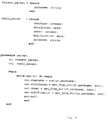
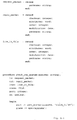
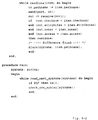
- FIG. 5 shows an example of the pseudo code for a service program 44
- FIG. 6 shows an example for the pseudo code of a checker program 45.
Landscapes
- Engineering & Computer Science (AREA)
- Computer Security & Cryptography (AREA)
- General Engineering & Computer Science (AREA)
- Theoretical Computer Science (AREA)
- Software Systems (AREA)
- Computer Hardware Design (AREA)
- Health & Medical Sciences (AREA)
- General Health & Medical Sciences (AREA)
- Virology (AREA)
- Signal Processing (AREA)
- Physics & Mathematics (AREA)
- General Physics & Mathematics (AREA)
- Computer Networks & Wireless Communication (AREA)
- Computer And Data Communications (AREA)
- Burglar Alarm Systems (AREA)
- Alarm Systems (AREA)
Applications Claiming Priority (3)
| Application Number | Priority Date | Filing Date | Title |
|---|---|---|---|
| DE4101141 | 1991-01-16 | ||
| DE4101141A DE4101141C1 (enExample) | 1991-01-16 | 1991-01-16 | |
| PCT/EP1992/000061 WO1992013307A1 (de) | 1991-01-16 | 1992-01-14 | Verfahren und anordnung zur überwachung von rechnermanipulationen |
Publications (2)
| Publication Number | Publication Date |
|---|---|
| EP0567492A1 EP0567492A1 (de) | 1993-11-03 |
| EP0567492B1 true EP0567492B1 (de) | 1994-09-21 |
Family
ID=6423123
Family Applications (1)
| Application Number | Title | Priority Date | Filing Date |
|---|---|---|---|
| EP92902319A Expired - Lifetime EP0567492B1 (de) | 1991-01-16 | 1992-01-14 | Verfahren und anordnung zur überwachung von rechnermanipulationen |
Country Status (6)
| Country | Link |
|---|---|
| EP (1) | EP0567492B1 (enExample) |
| AT (1) | ATE112078T1 (enExample) |
| DE (1) | DE4101141C1 (enExample) |
| DK (1) | DK0567492T3 (enExample) |
| ES (1) | ES2059211T3 (enExample) |
| WO (1) | WO1992013307A1 (enExample) |
Families Citing this family (2)
| Publication number | Priority date | Publication date | Assignee | Title |
|---|---|---|---|---|
| US6973305B2 (en) | 2003-09-10 | 2005-12-06 | Qualcomm Inc | Methods and apparatus for determining device integrity |
| EP2591437B1 (en) * | 2010-07-09 | 2018-11-14 | BlackBerry Limited | Microcode-based challenge/response process |
Family Cites Families (7)
| Publication number | Priority date | Publication date | Assignee | Title |
|---|---|---|---|---|
| US4262329A (en) * | 1978-03-27 | 1981-04-14 | Computation Planning, Inc. | Security system for data processing |
| ATE31827T1 (de) * | 1983-10-13 | 1988-01-15 | Josef Seifert | Verfahren zum schutz von auf maschinenlesbaren datentraegern aufgezeichneten programmen vor unerlaubter einsichtnahme und unerlaubtem kopieren. |
| GB8704883D0 (en) * | 1987-03-03 | 1987-04-08 | Hewlett Packard Co | Secure information storage |
| EP0304033A3 (de) * | 1987-08-19 | 1990-07-04 | Siemens Aktiengesellschaft | Verfahren zum Diagnostizieren einer von Computerviren befallenen Datenverarbeitungsanlage |
| DE3736760A1 (de) * | 1987-10-30 | 1989-05-11 | Trans Tech Team Immobilien Gmb | Verfahren zur verhinderung der verbreitung von computerviren |
| DE3817484A1 (de) * | 1988-05-21 | 1989-11-30 | Thomas Prof Beth | Verfahren und schaltungsanordnung zur identifikation und echtheitspruefung aller arten von spezifischen merkmalen |
| US4975950A (en) * | 1988-11-03 | 1990-12-04 | Lentz Stephen A | System and method of protecting integrity of computer data and software |
-
1991
- 1991-01-16 DE DE4101141A patent/DE4101141C1/de not_active Expired - Lifetime
-
1992
- 1992-01-14 AT AT92902319T patent/ATE112078T1/de not_active IP Right Cessation
- 1992-01-14 DK DK92902319.0T patent/DK0567492T3/da active
- 1992-01-14 WO PCT/EP1992/000061 patent/WO1992013307A1/de not_active Ceased
- 1992-01-14 ES ES92902319T patent/ES2059211T3/es not_active Expired - Lifetime
- 1992-01-14 EP EP92902319A patent/EP0567492B1/de not_active Expired - Lifetime
Also Published As
| Publication number | Publication date |
|---|---|
| EP0567492A1 (de) | 1993-11-03 |
| DE4101141C1 (enExample) | 1992-07-02 |
| ATE112078T1 (de) | 1994-10-15 |
| ES2059211T3 (es) | 1994-11-01 |
| WO1992013307A1 (de) | 1992-08-06 |
| DK0567492T3 (da) | 1995-01-09 |
Similar Documents
| Publication | Publication Date | Title |
|---|---|---|
| DE69229755T2 (de) | Anordnung und Verfahren zur Freigabe von geschützten Prozessen in einem verteilten Mehrprozessdatensystem | |
| EP0440914B1 (de) | Verfahren zum Zuordnen von Nutzdaten zu einem bestimmten Absender | |
| DE69921454T2 (de) | Prüfung von sofwarenagenten und aktivitäten von agenten | |
| DE69634880T2 (de) | Verfahren und gerät zum kontrollierten zugriff zu verschlüsselten datenakten in einem computersystem | |
| DE69431944T2 (de) | Verfahren zum effizienten Aktualisieren des Hashwertes eines Dateien | |
| DE69022424T2 (de) | Nichtablehnung in Rechnernetzwerken. | |
| EP1290530A1 (de) | Verschlüsseln von abzuspeichernden daten in einem iv-system | |
| EP1410128A1 (de) | Datenverarbeitungsvorrichtung | |
| DE202024106330U1 (de) | Intelligentes System zur Verbesserung der Datenintegrität durch Blockchain-Basierte Verträge | |
| DE19952527A1 (de) | Verfahren und Transaktionsinterface zum gesicherten Datenaustausch zwischen unterscheidbaren Netzen | |
| EP3763089B1 (de) | Verfahren und steuersystem zum steuern und/oder überwachen von geräten | |
| DE102016207546A1 (de) | Verfahren und Integritätsprüfsystem zur rückwirkungsfreien Integritätsüberwachung | |
| EP3412018B1 (de) | Verfahren zum austausch von nachrichten zwischen sicherheitsrelevanten vorrichtungen | |
| DE102018112742A1 (de) | Computerimplementiertes Verfahren zum Übergeben eines Datenstrings von einer Anwendung an eine Datenschutzeinrichtung | |
| EP1164475A2 (de) | Verfahren zur Installation von Software in einer Hardware | |
| EP3718263B1 (de) | Verfahren und steuersystem zum steuern und/oder überwachen von geräten | |
| WO2003025758A2 (de) | Vorrichtung und verfahren zur etablierung einer sicherheitspolitik in einem verteilten system | |
| EP0567492B1 (de) | Verfahren und anordnung zur überwachung von rechnermanipulationen | |
| WO2005048103A1 (de) | Sichere erfassung von eingabewerten | |
| LU500837B1 (de) | Verfahren und zugehörige Computersysteme zur Sicherung der Integrität von Daten | |
| WO2015062812A1 (de) | Sicherheitsrelevantes system mit supervisor | |
| DE10020562C1 (de) | Verfahren zum Beheben eines in einer Datenverarbeitungseinheit auftretenden Fehlers | |
| DE10064658B4 (de) | Rechneranordnung, die an ein Datenübertragungsnetz anschließbar ist | |
| DE69512667T2 (de) | Verfahren und vorrichtung zur verifikation von datenfolgen | |
| EP2318974B1 (de) | Verfahren zum betrieb einer transaktionsbasierten ablaufsteuerung |
Legal Events
| Date | Code | Title | Description |
|---|---|---|---|
| PUAI | Public reference made under article 153(3) epc to a published international application that has entered the european phase |
Free format text: ORIGINAL CODE: 0009012 |
|
| 17P | Request for examination filed |
Effective date: 19930618 |
|
| AK | Designated contracting states |
Kind code of ref document: A1 Designated state(s): AT CH DE DK ES FR GB IT LI SE |
|
| 17Q | First examination report despatched |
Effective date: 19940301 |
|
| RBV | Designated contracting states (corrected) |
Designated state(s): AT CH DE DK ES FR GB IT LI SE |
|
| RBV | Designated contracting states (corrected) |
Designated state(s): AT CH DK ES FR GB IT LI SE |
|
| REG | Reference to a national code |
Ref country code: DE Ref legal event code: 8566 |
|
| GRAA | (expected) grant |
Free format text: ORIGINAL CODE: 0009210 |
|
| AK | Designated contracting states |
Kind code of ref document: B1 Designated state(s): AT CH DK ES FR GB IT LI SE |
|
| REF | Corresponds to: |
Ref document number: 112078 Country of ref document: AT Date of ref document: 19941015 Kind code of ref document: T |
|
| REG | Reference to a national code |
Ref country code: ES Ref legal event code: FG2A Ref document number: 2059211 Country of ref document: ES Kind code of ref document: T3 |
|
| ITF | It: translation for a ep patent filed | ||
| GBT | Gb: translation of ep patent filed (gb section 77(6)(a)/1977) |
Effective date: 19941130 |
|
| REG | Reference to a national code |
Ref country code: DK Ref legal event code: T3 |
|
| PGFP | Annual fee paid to national office [announced via postgrant information from national office to epo] |
Ref country code: ES Payment date: 19950113 Year of fee payment: 4 |
|
| EAL | Se: european patent in force in sweden |
Ref document number: 92902319.0 |
|
| ET | Fr: translation filed | ||
| PLBE | No opposition filed within time limit |
Free format text: ORIGINAL CODE: 0009261 |
|
| STAA | Information on the status of an ep patent application or granted ep patent |
Free format text: STATUS: NO OPPOSITION FILED WITHIN TIME LIMIT |
|
| 26N | No opposition filed | ||
| PG25 | Lapsed in a contracting state [announced via postgrant information from national office to epo] |
Ref country code: ES Free format text: LAPSE BECAUSE OF NON-PAYMENT OF DUE FEES Effective date: 19960115 |
|
| PGFP | Annual fee paid to national office [announced via postgrant information from national office to epo] |
Ref country code: DK Payment date: 19960122 Year of fee payment: 5 |
|
| PG25 | Lapsed in a contracting state [announced via postgrant information from national office to epo] |
Ref country code: DK Effective date: 19970114 |
|
| REG | Reference to a national code |
Ref country code: DK Ref legal event code: EBP |
|
| REG | Reference to a national code |
Ref country code: ES Ref legal event code: FD2A Effective date: 19990405 |
|
| REG | Reference to a national code |
Ref country code: CH Ref legal event code: PUE Owner name: SIEMENS NIXDORF INFORMATIONSSYSTEME AKTIENGESELLSC |
|
| REG | Reference to a national code |
Ref country code: CH Ref legal event code: NV Representative=s name: E. BLUM & CO. PATENTANWAELTE |
|
| REG | Reference to a national code |
Ref country code: FR Ref legal event code: TP |
|
| REG | Reference to a national code |
Ref country code: GB Ref legal event code: 732E |
|
| REG | Reference to a national code |
Ref country code: GB Ref legal event code: IF02 |
|
| PG25 | Lapsed in a contracting state [announced via postgrant information from national office to epo] |
Ref country code: IT Free format text: LAPSE BECAUSE OF NON-PAYMENT OF DUE FEES;WARNING: LAPSES OF ITALIAN PATENTS WITH EFFECTIVE DATE BEFORE 2007 MAY HAVE OCCURRED AT ANY TIME BEFORE 2007. THE CORRECT EFFECTIVE DATE MAY BE DIFFERENT FROM THE ONE RECORDED. Effective date: 20050114 |
|
| REG | Reference to a national code |
Ref country code: GB Ref legal event code: 732E |
|
| REG | Reference to a national code |
Ref country code: CH Ref legal event code: PUE Owner name: WINCOR NIXDORF INTERNATIONAL GMBH Free format text: FUJITSU SIEMENS COMPUTERS GMBH#OTTO-HAHN-RING 6#81739 MUENCHEN (DE) -TRANSFER TO- WINCOR NIXDORF INTERNATIONAL GMBH#HEINZ-NIXDORF-RING 1#33106 PADERBORN (DE) |
|
| REG | Reference to a national code |
Ref country code: FR Ref legal event code: TP |
|
| REG | Reference to a national code |
Ref country code: CH Ref legal event code: PFA Owner name: WINCOR NIXDORF INTERNATIONAL GMBH Free format text: WINCOR NIXDORF INTERNATIONAL GMBH#HEINZ-NIXDORF-RING 1#33106 PADERBORN (DE) -TRANSFER TO- WINCOR NIXDORF INTERNATIONAL GMBH#HEINZ-NIXDORF-RING 1#33106 PADERBORN (DE) |
|
| PGFP | Annual fee paid to national office [announced via postgrant information from national office to epo] |
Ref country code: AT Payment date: 20080123 Year of fee payment: 17 |
|
| PGFP | Annual fee paid to national office [announced via postgrant information from national office to epo] |
Ref country code: GB Payment date: 20090123 Year of fee payment: 18 Ref country code: CH Payment date: 20090126 Year of fee payment: 18 |
|
| PGFP | Annual fee paid to national office [announced via postgrant information from national office to epo] |
Ref country code: SE Payment date: 20090126 Year of fee payment: 18 |
|
| PG25 | Lapsed in a contracting state [announced via postgrant information from national office to epo] |
Ref country code: AT Free format text: LAPSE BECAUSE OF NON-PAYMENT OF DUE FEES Effective date: 20090114 |
|
| PGFP | Annual fee paid to national office [announced via postgrant information from national office to epo] |
Ref country code: FR Payment date: 20090120 Year of fee payment: 18 |
|
| REG | Reference to a national code |
Ref country code: CH Ref legal event code: PL |
|
| GBPC | Gb: european patent ceased through non-payment of renewal fee |
Effective date: 20100114 |
|
| EUG | Se: european patent has lapsed | ||
| REG | Reference to a national code |
Ref country code: FR Ref legal event code: ST Effective date: 20100930 |
|
| PG25 | Lapsed in a contracting state [announced via postgrant information from national office to epo] |
Ref country code: LI Free format text: LAPSE BECAUSE OF NON-PAYMENT OF DUE FEES Effective date: 20100131 Ref country code: FR Free format text: LAPSE BECAUSE OF NON-PAYMENT OF DUE FEES Effective date: 20100201 Ref country code: CH Free format text: LAPSE BECAUSE OF NON-PAYMENT OF DUE FEES Effective date: 20100131 |
|
| PG25 | Lapsed in a contracting state [announced via postgrant information from national office to epo] |
Ref country code: GB Free format text: LAPSE BECAUSE OF NON-PAYMENT OF DUE FEES Effective date: 20100114 |
|
| PG25 | Lapsed in a contracting state [announced via postgrant information from national office to epo] |
Ref country code: SE Free format text: LAPSE BECAUSE OF NON-PAYMENT OF DUE FEES Effective date: 20100115 |