EP0565164B1 - Synthetic polypeptides as inhibitors of HIV-1 - Google Patents
Synthetic polypeptides as inhibitors of HIV-1 Download PDFInfo
- Publication number
- EP0565164B1 EP0565164B1 EP93200863A EP93200863A EP0565164B1 EP 0565164 B1 EP0565164 B1 EP 0565164B1 EP 93200863 A EP93200863 A EP 93200863A EP 93200863 A EP93200863 A EP 93200863A EP 0565164 B1 EP0565164 B1 EP 0565164B1
- Authority
- EP
- European Patent Office
- Prior art keywords
- hiv
- amino acid
- polypeptide
- peptide
- residue
- Prior art date
- Legal status (The legal status is an assumption and is not a legal conclusion. Google has not performed a legal analysis and makes no representation as to the accuracy of the status listed.)
- Expired - Lifetime
Links
- 108090000765 processed proteins & peptides Proteins 0.000 title claims abstract description 210
- 102000004196 processed proteins & peptides Human genes 0.000 title claims abstract description 124
- 229920001184 polypeptide Polymers 0.000 title claims abstract description 82
- 241000713772 Human immunodeficiency virus 1 Species 0.000 title claims abstract description 70
- 239000003112 inhibitor Substances 0.000 title description 3
- 125000003275 alpha amino acid group Chemical group 0.000 claims abstract description 39
- 241000700605 Viruses Species 0.000 claims abstract description 22
- 230000002401 inhibitory effect Effects 0.000 claims abstract description 21
- 208000031886 HIV Infections Diseases 0.000 claims abstract description 20
- 238000000034 method Methods 0.000 claims abstract description 20
- 230000000840 anti-viral effect Effects 0.000 claims description 15
- 101710121417 Envelope glycoprotein Proteins 0.000 claims description 14
- 239000003443 antiviral agent Substances 0.000 claims description 14
- -1 Gly-Gly-Cys amino acid Chemical class 0.000 claims description 13
- 108010084264 glycyl-glycyl-cysteine Proteins 0.000 claims description 13
- 239000000539 dimer Substances 0.000 claims description 5
- 238000006467 substitution reaction Methods 0.000 claims description 5
- 125000000404 glutamine group Chemical group N[C@@H](CCC(N)=O)C(=O)* 0.000 claims description 3
- 125000005647 linker group Chemical group 0.000 claims description 3
- 229920000642 polymer Polymers 0.000 claims description 3
- 239000013638 trimer Substances 0.000 claims description 2
- 102100021696 Syncytin-1 Human genes 0.000 claims 4
- 230000001404 mediated effect Effects 0.000 abstract description 22
- 230000010076 replication Effects 0.000 abstract description 18
- 230000007910 cell fusion Effects 0.000 abstract description 13
- 231100000135 cytotoxicity Toxicity 0.000 abstract description 13
- 230000003013 cytotoxicity Effects 0.000 abstract description 13
- 235000001014 amino acid Nutrition 0.000 description 36
- 210000004027 cell Anatomy 0.000 description 29
- 150000001413 amino acids Chemical class 0.000 description 27
- 230000005764 inhibitory process Effects 0.000 description 25
- 230000000694 effects Effects 0.000 description 15
- 238000004519 manufacturing process Methods 0.000 description 13
- HBOMLICNUCNMMY-XLPZGREQSA-N zidovudine Chemical compound O=C1NC(=O)C(C)=CN1[C@@H]1O[C@H](CO)[C@@H](N=[N+]=[N-])C1 HBOMLICNUCNMMY-XLPZGREQSA-N 0.000 description 13
- 102100027723 Endogenous retrovirus group K member 6 Rec protein Human genes 0.000 description 10
- 101800001690 Transmembrane protein gp41 Proteins 0.000 description 10
- 241000725303 Human immunodeficiency virus Species 0.000 description 9
- 208000015181 infectious disease Diseases 0.000 description 9
- 239000000126 substance Substances 0.000 description 9
- 102000004142 Trypsin Human genes 0.000 description 8
- 108090000631 Trypsin Proteins 0.000 description 8
- 239000012588 trypsin Substances 0.000 description 8
- 238000006471 dimerization reaction Methods 0.000 description 7
- 230000029812 viral genome replication Effects 0.000 description 7
- IDOGEHIWMJMAHT-BYPYZUCNSA-N Gly-Gly-Cys Chemical group NCC(=O)NCC(=O)N[C@@H](CS)C(O)=O IDOGEHIWMJMAHT-BYPYZUCNSA-N 0.000 description 6
- 125000000539 amino acid group Chemical group 0.000 description 6
- 230000036436 anti-hiv Effects 0.000 description 6
- 238000013459 approach Methods 0.000 description 6
- 102100036011 T-cell surface glycoprotein CD4 Human genes 0.000 description 5
- 238000011160 research Methods 0.000 description 5
- 208000030507 AIDS Diseases 0.000 description 4
- 239000004475 Arginine Substances 0.000 description 4
- DHMQDGOQFOQNFH-UHFFFAOYSA-N Glycine Chemical compound NCC(O)=O DHMQDGOQFOQNFH-UHFFFAOYSA-N 0.000 description 4
- 239000002259 anti human immunodeficiency virus agent Substances 0.000 description 4
- 239000000427 antigen Substances 0.000 description 4
- 102000036639 antigens Human genes 0.000 description 4
- 108091007433 antigens Proteins 0.000 description 4
- ODKSFYDXXFIFQN-UHFFFAOYSA-N arginine Natural products OC(=O)C(N)CCCNC(N)=N ODKSFYDXXFIFQN-UHFFFAOYSA-N 0.000 description 4
- 230000015572 biosynthetic process Effects 0.000 description 4
- 239000003814 drug Substances 0.000 description 4
- 229940079593 drug Drugs 0.000 description 4
- 125000003588 lysine group Chemical group [H]N([H])C([H])([H])C([H])([H])C([H])([H])C([H])([H])C([H])(N([H])[H])C(*)=O 0.000 description 4
- 238000003786 synthesis reaction Methods 0.000 description 4
- ODKSFYDXXFIFQN-BYPYZUCNSA-P L-argininium(2+) Chemical compound NC(=[NH2+])NCCC[C@H]([NH3+])C(O)=O ODKSFYDXXFIFQN-BYPYZUCNSA-P 0.000 description 3
- QNBVTHNJGCOVFA-AVGNSLFASA-N Leu-Leu-Glu Chemical group CC(C)C[C@H](N)C(=O)N[C@@H](CC(C)C)C(=O)N[C@H](C(O)=O)CCC(O)=O QNBVTHNJGCOVFA-AVGNSLFASA-N 0.000 description 3
- 241000283973 Oryctolagus cuniculus Species 0.000 description 3
- 229940124411 anti-hiv antiviral agent Drugs 0.000 description 3
- 230000000890 antigenic effect Effects 0.000 description 3
- 239000000969 carrier Substances 0.000 description 3
- 239000003795 chemical substances by application Substances 0.000 description 3
- 231100000673 dose–response relationship Toxicity 0.000 description 3
- 238000002474 experimental method Methods 0.000 description 3
- 230000001900 immune effect Effects 0.000 description 3
- 230000001506 immunosuppresive effect Effects 0.000 description 3
- 238000011534 incubation Methods 0.000 description 3
- 239000000178 monomer Substances 0.000 description 3
- 239000013642 negative control Substances 0.000 description 3
- 235000018102 proteins Nutrition 0.000 description 3
- 102000004169 proteins and genes Human genes 0.000 description 3
- 108090000623 proteins and genes Proteins 0.000 description 3
- 230000004044 response Effects 0.000 description 3
- 238000011282 treatment Methods 0.000 description 3
- 229960005486 vaccine Drugs 0.000 description 3
- FWMNVWWHGCHHJJ-SKKKGAJSSA-N 4-amino-1-[(2r)-6-amino-2-[[(2r)-2-[[(2r)-2-[[(2r)-2-amino-3-phenylpropanoyl]amino]-3-phenylpropanoyl]amino]-4-methylpentanoyl]amino]hexanoyl]piperidine-4-carboxylic acid Chemical compound C([C@H](C(=O)N[C@H](CC(C)C)C(=O)N[C@H](CCCCN)C(=O)N1CCC(N)(CC1)C(O)=O)NC(=O)[C@H](N)CC=1C=CC=CC=1)C1=CC=CC=C1 FWMNVWWHGCHHJJ-SKKKGAJSSA-N 0.000 description 2
- 101710177291 Gag polyprotein Proteins 0.000 description 2
- 239000004471 Glycine Substances 0.000 description 2
- 101710125418 Major capsid protein Proteins 0.000 description 2
- 108091005804 Peptidases Proteins 0.000 description 2
- 102000035195 Peptidases Human genes 0.000 description 2
- 210000001744 T-lymphocyte Anatomy 0.000 description 2
- 238000004458 analytical method Methods 0.000 description 2
- 229940121357 antivirals Drugs 0.000 description 2
- 238000003556 assay Methods 0.000 description 2
- 125000003178 carboxy group Chemical group [H]OC(*)=O 0.000 description 2
- 239000013043 chemical agent Substances 0.000 description 2
- 238000003776 cleavage reaction Methods 0.000 description 2
- 238000007398 colorimetric assay Methods 0.000 description 2
- 230000000052 comparative effect Effects 0.000 description 2
- 230000008878 coupling Effects 0.000 description 2
- 238000010168 coupling process Methods 0.000 description 2
- 238000005859 coupling reaction Methods 0.000 description 2
- 235000018417 cysteine Nutrition 0.000 description 2
- XUJNEKJLAYXESH-UHFFFAOYSA-N cysteine Natural products SCC(N)C(O)=O XUJNEKJLAYXESH-UHFFFAOYSA-N 0.000 description 2
- 238000011161 development Methods 0.000 description 2
- 230000029087 digestion Effects 0.000 description 2
- ZDXPYRJPNDTMRX-UHFFFAOYSA-N glutamine Natural products OC(=O)C(N)CCC(N)=O ZDXPYRJPNDTMRX-UHFFFAOYSA-N 0.000 description 2
- 239000001963 growth medium Substances 0.000 description 2
- 238000004128 high performance liquid chromatography Methods 0.000 description 2
- 238000000338 in vitro Methods 0.000 description 2
- 230000001965 increasing effect Effects 0.000 description 2
- 230000001939 inductive effect Effects 0.000 description 2
- 210000004698 lymphocyte Anatomy 0.000 description 2
- 239000000203 mixture Substances 0.000 description 2
- 230000004048 modification Effects 0.000 description 2
- 238000012986 modification Methods 0.000 description 2
- 108091005601 modified peptides Proteins 0.000 description 2
- 238000010647 peptide synthesis reaction Methods 0.000 description 2
- 238000006116 polymerization reaction Methods 0.000 description 2
- 239000013641 positive control Substances 0.000 description 2
- 230000006337 proteolytic cleavage Effects 0.000 description 2
- 229940024999 proteolytic enzymes for treatment of wounds and ulcers Drugs 0.000 description 2
- 108020003175 receptors Proteins 0.000 description 2
- 102000005962 receptors Human genes 0.000 description 2
- 230000007017 scission Effects 0.000 description 2
- 238000013207 serial dilution Methods 0.000 description 2
- 230000003612 virological effect Effects 0.000 description 2
- CFBVWCHTNQHZLT-UHFFFAOYSA-N 4-methoxy-5-[3-(2-methoxy-4-nitro-5-sulfophenyl)-5-(phenylcarbamoyl)tetrazol-3-ium-2-yl]-2-nitrobenzenesulfonate Chemical compound COC1=CC([N+]([O-])=O)=C(S([O-])(=O)=O)C=C1N1[N+](C=2C(=CC(=C(C=2)S(O)(=O)=O)[N+]([O-])=O)OC)=NC(C(=O)NC=2C=CC=CC=2)=N1 CFBVWCHTNQHZLT-UHFFFAOYSA-N 0.000 description 1
- 208000029483 Acquired immunodeficiency Diseases 0.000 description 1
- 108010041397 CD4 Antigens Proteins 0.000 description 1
- 238000002965 ELISA Methods 0.000 description 1
- 108010083930 HIV Receptors Proteins 0.000 description 1
- 102000006481 HIV Receptors Human genes 0.000 description 1
- 108700010908 HIV-1 proteins Proteins 0.000 description 1
- 108010048209 Human Immunodeficiency Virus Proteins Proteins 0.000 description 1
- 108700020403 Human Immunodeficiency Virus Type 1 p24 Proteins 0.000 description 1
- 206010062016 Immunosuppression Diseases 0.000 description 1
- KDXKERNSBIXSRK-UHFFFAOYSA-N Lysine Natural products NCCCCC(N)C(O)=O KDXKERNSBIXSRK-UHFFFAOYSA-N 0.000 description 1
- 239000004472 Lysine Substances 0.000 description 1
- 239000012980 RPMI-1640 medium Substances 0.000 description 1
- 108020004511 Recombinant DNA Proteins 0.000 description 1
- FRQRWAMUESPWMT-HSHDSVGOSA-N Thr-Trp-Met Chemical group C[C@H]([C@@H](C(=O)N[C@@H](CC1=CNC2=CC=CC=C21)C(=O)N[C@@H](CCSC)C(=O)O)N)O FRQRWAMUESPWMT-HSHDSVGOSA-N 0.000 description 1
- 229920004890 Triton X-100 Polymers 0.000 description 1
- 239000013504 Triton X-100 Substances 0.000 description 1
- 239000004480 active ingredient Substances 0.000 description 1
- 230000002411 adverse Effects 0.000 description 1
- 230000002788 anti-peptide Effects 0.000 description 1
- 125000000637 arginyl group Chemical group N[C@@H](CCCNC(N)=N)C(=O)* 0.000 description 1
- 125000003118 aryl group Chemical group 0.000 description 1
- GIXWDMTZECRIJT-UHFFFAOYSA-N aurintricarboxylic acid Chemical compound C1=CC(=O)C(C(=O)O)=CC1=C(C=1C=C(C(O)=CC=1)C(O)=O)C1=CC=C(O)C(C(O)=O)=C1 GIXWDMTZECRIJT-UHFFFAOYSA-N 0.000 description 1
- 239000012472 biological sample Substances 0.000 description 1
- 230000001707 blastogenic effect Effects 0.000 description 1
- 210000000170 cell membrane Anatomy 0.000 description 1
- 239000012228 culture supernatant Substances 0.000 description 1
- 125000000151 cysteine group Chemical group N[C@@H](CS)C(=O)* 0.000 description 1
- 231100000433 cytotoxic Toxicity 0.000 description 1
- 230000001472 cytotoxic effect Effects 0.000 description 1
- 238000013461 design Methods 0.000 description 1
- 238000001514 detection method Methods 0.000 description 1
- 238000010790 dilution Methods 0.000 description 1
- 239000012895 dilution Substances 0.000 description 1
- 201000010099 disease Diseases 0.000 description 1
- 208000037265 diseases, disorders, signs and symptoms Diseases 0.000 description 1
- 230000002708 enhancing effect Effects 0.000 description 1
- 239000012634 fragment Substances 0.000 description 1
- 239000012737 fresh medium Substances 0.000 description 1
- 125000000524 functional group Chemical group 0.000 description 1
- 230000004927 fusion Effects 0.000 description 1
- BTIJJDXEELBZFS-QDUVMHSLSA-K hemin Chemical compound CC1=C(CCC(O)=O)C(C=C2C(CCC(O)=O)=C(C)\C(N2[Fe](Cl)N23)=C\4)=N\C1=C/C2=C(C)C(C=C)=C3\C=C/1C(C)=C(C=C)C/4=N\1 BTIJJDXEELBZFS-QDUVMHSLSA-K 0.000 description 1
- 229940025294 hemin Drugs 0.000 description 1
- 230000028993 immune response Effects 0.000 description 1
- 230000036039 immunity Effects 0.000 description 1
- 239000012535 impurity Substances 0.000 description 1
- 238000001727 in vivo Methods 0.000 description 1
- 230000001524 infective effect Effects 0.000 description 1
- 230000003834 intracellular effect Effects 0.000 description 1
- 238000007918 intramuscular administration Methods 0.000 description 1
- 238000001990 intravenous administration Methods 0.000 description 1
- 238000004949 mass spectrometry Methods 0.000 description 1
- 239000011159 matrix material Substances 0.000 description 1
- 230000003278 mimic effect Effects 0.000 description 1
- 230000035772 mutation Effects 0.000 description 1
- VMGAPWLDMVPYIA-HIDZBRGKSA-N n'-amino-n-iminomethanimidamide Chemical compound N\N=C\N=N VMGAPWLDMVPYIA-HIDZBRGKSA-N 0.000 description 1
- 210000000581 natural killer T-cell Anatomy 0.000 description 1
- 108020004707 nucleic acids Proteins 0.000 description 1
- 150000007523 nucleic acids Chemical class 0.000 description 1
- 102000039446 nucleic acids Human genes 0.000 description 1
- 239000002773 nucleotide Substances 0.000 description 1
- 125000003729 nucleotide group Chemical group 0.000 description 1
- 229940023041 peptide vaccine Drugs 0.000 description 1
- 125000001151 peptidyl group Chemical group 0.000 description 1
- 230000000379 polymerizing effect Effects 0.000 description 1
- 238000002360 preparation method Methods 0.000 description 1
- 230000002265 prevention Effects 0.000 description 1
- 125000002924 primary amino group Chemical group [H]N([H])* 0.000 description 1
- 230000008569 process Effects 0.000 description 1
- 239000000047 product Substances 0.000 description 1
- 230000000069 prophylactic effect Effects 0.000 description 1
- 238000011321 prophylaxis Methods 0.000 description 1
- 230000001681 protective effect Effects 0.000 description 1
- 230000017854 proteolysis Effects 0.000 description 1
- 230000009257 reactivity Effects 0.000 description 1
- 108010043277 recombinant soluble CD4 Proteins 0.000 description 1
- BOLDJAUMGUJJKM-LSDHHAIUSA-N renifolin D Natural products CC(=C)[C@@H]1Cc2c(O)c(O)ccc2[C@H]1CC(=O)c3ccc(O)cc3O BOLDJAUMGUJJKM-LSDHHAIUSA-N 0.000 description 1
- 239000011347 resin Substances 0.000 description 1
- 229920005989 resin Polymers 0.000 description 1
- 239000000523 sample Substances 0.000 description 1
- 210000002966 serum Anatomy 0.000 description 1
- 238000007920 subcutaneous administration Methods 0.000 description 1
- 239000000758 substrate Substances 0.000 description 1
- 239000006228 supernatant Substances 0.000 description 1
- 230000017960 syncytium formation Effects 0.000 description 1
- 230000001225 therapeutic effect Effects 0.000 description 1
- 238000002560 therapeutic procedure Methods 0.000 description 1
- 125000003396 thiol group Chemical group [H]S* 0.000 description 1
- 150000003573 thiols Chemical class 0.000 description 1
- 230000000699 topical effect Effects 0.000 description 1
- 231100000331 toxic Toxicity 0.000 description 1
- 230000002588 toxic effect Effects 0.000 description 1
- 230000001988 toxicity Effects 0.000 description 1
- 231100000419 toxicity Toxicity 0.000 description 1
- 241001430294 unidentified retrovirus Species 0.000 description 1
- 238000002255 vaccination Methods 0.000 description 1
- 210000002845 virion Anatomy 0.000 description 1
Images





Classifications
-
- C—CHEMISTRY; METALLURGY
- C07—ORGANIC CHEMISTRY
- C07K—PEPTIDES
- C07K14/00—Peptides having more than 20 amino acids; Gastrins; Somatostatins; Melanotropins; Derivatives thereof
-
- C—CHEMISTRY; METALLURGY
- C07—ORGANIC CHEMISTRY
- C07K—PEPTIDES
- C07K14/00—Peptides having more than 20 amino acids; Gastrins; Somatostatins; Melanotropins; Derivatives thereof
- C07K14/005—Peptides having more than 20 amino acids; Gastrins; Somatostatins; Melanotropins; Derivatives thereof from viruses
-
- A—HUMAN NECESSITIES
- A61—MEDICAL OR VETERINARY SCIENCE; HYGIENE
- A61P—SPECIFIC THERAPEUTIC ACTIVITY OF CHEMICAL COMPOUNDS OR MEDICINAL PREPARATIONS
- A61P31/00—Antiinfectives, i.e. antibiotics, antiseptics, chemotherapeutics
- A61P31/12—Antivirals
-
- A—HUMAN NECESSITIES
- A61—MEDICAL OR VETERINARY SCIENCE; HYGIENE
- A61K—PREPARATIONS FOR MEDICAL, DENTAL OR TOILETRY PURPOSES
- A61K39/00—Medicinal preparations containing antigens or antibodies
-
- C—CHEMISTRY; METALLURGY
- C12—BIOCHEMISTRY; BEER; SPIRITS; WINE; VINEGAR; MICROBIOLOGY; ENZYMOLOGY; MUTATION OR GENETIC ENGINEERING
- C12N—MICROORGANISMS OR ENZYMES; COMPOSITIONS THEREOF; PROPAGATING, PRESERVING, OR MAINTAINING MICROORGANISMS; MUTATION OR GENETIC ENGINEERING; CULTURE MEDIA
- C12N2740/00—Reverse transcribing RNA viruses
- C12N2740/00011—Details
- C12N2740/10011—Retroviridae
- C12N2740/16011—Human Immunodeficiency Virus, HIV
- C12N2740/16111—Human Immunodeficiency Virus, HIV concerning HIV env
- C12N2740/16122—New viral proteins or individual genes, new structural or functional aspects of known viral proteins or genes
Definitions
- AIDS Acquired Immunodeficiency Syndrome
- the disease is currently recognized by medical experts as approaching epidemic proportions and there is presently no cure or vaccine available to control its spread.
- new strains are developing due to the high mutation rate of the virus. Consequently, there is a tremendous need for methods of treating HIV-infected individuals and for the prevention of HIV-1 infections.
- gp160 is a glycosylated polypeptide which has a molecular weight of 160,000 daltons and is processed to yield envelope glycoproteins gp120 and gp41.
- gp120 and gp41 both elicit immune responses which result in antibodies to HIV-1, these responses are generally immuno-specific to individual sub-types of the virus or may cause undesirable immunosuppressive effects.
- certain selected regions from gp120 and gp41 can suppress lymphocyte blastogenic responses and inhibit the activity of natural killer T-cells.
- some of the immunodominant regions of gp120 and gp41 do not contribute to protective immunity and may behave as immunological decoys.
- WO 87/07616 relates to peptides from the env region of the HIV genome and to the use of such peptides in methods and compositions for preventing, treating, or detecting AIDS infection.
- This reference shows inhibition of HIV-induced syncytium formation, but for only one peptide and with an express note that the observed inhibition may have been attributable to impurities.
- the reference does not clearly demonstrate that any of the disclosed peptides exhibits any direct inhibition of HIV activity.
- the remainder of the data shown in D1 are related to the production of anti-HIV antibodies based on these peptides.
- EP 0 330 359 A2 discloses peptides corresponding to antigenic determinants encoded by conserved regions of the HIV-1 genome. It is suggested that the peptides will be immunologically cross-reactive with such antigenic determinant sites and will be capable of eliciting a serum-neutralizing response when administered to an individual.
- Fig. 7 illustrates that antiserum to synthetic peptide (637-666) blocks its antiviral activity.
- Fig. 8 illustrates a comparison of monomers and dimers of synthetic peptide (637-666) as inhibitors of HIV-1 infection.
- the peptide (637-666) of the present invention inhibited the replication of not only the homologous HIV-1 isolate (IIIB), but also heterologous HIV-1 isolates tested (MN, RF, and SF2). It also effectively inhibited infection by an AZT-resistant mutant which could not be effectively neutralized by AZT.
- the viral inhibitory activity of the peptide was blocked by rabbit antiserum directed against this synthetic peptide, suggesting that the virus-inhibitory activity is specifically mediated by the peptide (637-666) and not by other factors which may have contaminated the peptide preparation during peptide synthesis.
- the peptides of the present invention can dimerize, thereby enhancing their activity against HIV-1 infections.
Landscapes
- Chemical & Material Sciences (AREA)
- Health & Medical Sciences (AREA)
- Life Sciences & Earth Sciences (AREA)
- Organic Chemistry (AREA)
- General Health & Medical Sciences (AREA)
- Medicinal Chemistry (AREA)
- Proteomics, Peptides & Aminoacids (AREA)
- Genetics & Genomics (AREA)
- Molecular Biology (AREA)
- Biophysics (AREA)
- Virology (AREA)
- Biochemistry (AREA)
- Gastroenterology & Hepatology (AREA)
- Chemical Kinetics & Catalysis (AREA)
- Public Health (AREA)
- Veterinary Medicine (AREA)
- Animal Behavior & Ethology (AREA)
- Pharmacology & Pharmacy (AREA)
- Nuclear Medicine, Radiotherapy & Molecular Imaging (AREA)
- General Chemical & Material Sciences (AREA)
- Oncology (AREA)
- Communicable Diseases (AREA)
- Peptides Or Proteins (AREA)
- Medicines That Contain Protein Lipid Enzymes And Other Medicines (AREA)
- Pharmaceuticals Containing Other Organic And Inorganic Compounds (AREA)
Abstract
Description
- The present invention was made with United States government support under CA 43315 awarded by the NIH. Consequently, the United States government may have certain rights in the invention.
- The present invention generally relates to antiviral agents useful for inhibiting the infectivity of human acquired immunodeficiency virus. More particularly, the present invention concerns synthetic polypeptides capable of inhibiting the infectivity of HIV-1.
- Acquired Immunodeficiency Syndrome (AIDS), caused by the HIV-1 virus, has been reported with increasing frequency throughout the world. The disease is currently recognized by medical experts as approaching epidemic proportions and there is presently no cure or vaccine available to control its spread. Furthermore, new strains are developing due to the high mutation rate of the virus. Consequently, there is a tremendous need for methods of treating HIV-infected individuals and for the prevention of HIV-1 infections.
- Until recently, research efforts directed toward developing anti-HIV agents has focused on several approaches. These approaches include: (1) the development of polyclonal or monoclonal antibodies to HIV antigens; (2) chemical antiviral agents; and (3) a soluble CD4 molecule corresponding to the HIV receptor on CD4+ target cells.
- For example, previous research efforts have yielded both monoclonal and polyclonal antibodies to various HIV proteins. In particular, envelope glycoproteins of the HIV-1 virus, such as gp160, have been found to elicit antibodies which neutralize the infectivity of HIV-1. Consequently, gp160 and various fragments thereof have been tested extensively as candidates for a potential vaccine against HIV-1 infections. Unfortunately, it has been found that some of the immunodominant regions present on gp160 elicit the production of harmful antibodies which may trigger undesirable immunosuppression or even enhance HIV-1 infections.
- For example, it is well-known that gp160 is a glycosylated polypeptide which has a molecular weight of 160,000 daltons and is processed to yield envelope glycoproteins gp120 and gp41. Although gp120 and gp41 both elicit immune responses which result in antibodies to HIV-1, these responses are generally immuno-specific to individual sub-types of the virus or may cause undesirable immunosuppressive effects. In particular, certain selected regions from gp120 and gp41 can suppress lymphocyte blastogenic responses and inhibit the activity of natural killer T-cells. Furthermore, some of the immunodominant regions of gp120 and gp41 do not contribute to protective immunity and may behave as immunological decoys.
- An additional problem is encountered in developing a vaccine which is effective against HIV-1 infections, because the virus exhibits frequent sequence variations during replication. More specifically, individual HIV-1 virus isolates demonstrate sequence variations, particularly in critical immunodominant regions of the virus sequence. Consequently, most virus-neutralizing antibodies are immuno-specific to individual clinical sub-types of the virus and the antibodies elicited by a vaccination against one clinical sub-type would likely be ineffective against another strain of the virus.
- Other research efforts have been directed toward developing chemical agents which are effective against HIV-1 infections. For example, 3'azido-3'deoxythymidine (AZT) and other dideoxynucleoside analogs have been used to treat HIV-1 infections, however, these drugs are used in dosages which are often toxic to the patient. Furthermore, the use of chemical agents frequently induces the formation of viral mutants that are drug-resistant. Viral replication of drug-resistant mutants is not effectively inhibited by these drugs.
- Additional research efforts have been directed toward the development of synthetic molecules containing receptor sites that mimic the receptor sites on target cells which the HIV-1 virions use to attach themselves to the cell membrane. For example, the CD4 molecule was expected to become an effective anti-HIV agent, for both therapy and prophylaxis of HIV-1 infections, since it demonstrated inhibition of viral replication in vitro. Unfortunately, it was later discovered that the molecule was not capable of inhibiting the infectivity of many clinical sub-types or strains of the virus.
- WO 87/07616 relates to peptides from the env region of the HIV genome and to the use of such peptides in methods and compositions for preventing, treating, or detecting AIDS infection. This reference shows inhibition of HIV-induced syncytium formation, but for only one peptide and with an express note that the observed inhibition may have been attributable to impurities. The reference does not clearly demonstrate that any of the disclosed peptides exhibits any direct inhibition of HIV activity. The remainder of the data shown in D1 are related to the production of anti-HIV antibodies based on these peptides.
-
EP 0 335 134 A2 discloses a monoclonal antibody demonstrating specific reactivity with a conformational epitope on the HIV-1 protein gp41, and uses of the monoclonal antibody, such as in immunological procedures for the detection in biological samples of exposure to HIV and as a probe against native antigens and synthetic peptides of HIV. -
EP 0 330 359 A2 discloses peptides corresponding to antigenic determinants encoded by conserved regions of the HIV-1 genome. It is suggested that the peptides will be immunologically cross-reactive with such antigenic determinant sites and will be capable of eliciting a serum-neutralizing response when administered to an individual. - It is therefore an object of the present invention to provide an antiviral substance which is capable of effectively inhibiting the replication of HIV-1, HIV-1-mediated cytopathogenesis and cell fusion at a concentration which falls within acceptable limits of cytotoxicity.
- It is a further object of the present invention to provide an antiviral substance which is not specific to only one sub-type of HIV-1, but is effective against a variety of sub-types or strains of the virus.
- It is still a further object of the present invention to provide an antiviral substance which is effective against AZT-resistant variants of HIV-1.
- It is also an object of the present invention to provide a method of treating HIV-1 infections in a subject without inducing undesirable immunosuppressive effects.
- The present invention provides a HIV-1 based polypeptide which is effective against HIV-1 infections, wherein said polypeptide is characterized by having an amino acid sequence selected from
- (a) the amino acid sequence of the envelope glycoprotein of HIV-IIIIB virus from residue 637 to residue 669,
- (b) the amino acid sequence of the envelope glycoprotein of HIV-IIIIB virus from residue 634 to residue 666,
- (c) the amino acid sequence of the envelope glycoprotein of HIV-IIIIB virus from residue 637 to residue 666,
- (d) the amino acid sequence of the envelope glycoprotein of HIV-IIIIB virus from residue 634 to residue 669,
- (e) a natural sequence variation of any one of the amino acid sequences (a)-(d),
- (f) an amino acid sequence derived from any one of the amino acid sequences (a)-(d) by substitution of a glutamine residue for each of Arg-640 and Lys-662, and
- (g) an amino acid sequence derived from any one of the amino acid sequences (a)-(f) by addition of a Gly-Gly-Cys amino acid triplet to the C-terminus.
- In a preferred embodiment of the invention, said polypeptide is characterized by having an amino acid sequence selected from


- According to further preferred embodiments of the invention, said polypeptide is characterized by having a Leu-Leu-Glu amino acid triplet coupled to its C-terminus; and/or by having a Thr-Trp-Met amino acid triplet coupled to its N-terminus; and/or by having a Gly-Gly-Cys amino acid triplet coupled to its C-terminus.
- The polypeptide may have a form selected from the group consisting of dimers, trimers and other polymers, and/or may be attached to at least one of the group consisting of carrier molecules and linking moieties capable of forming multimers of said polypeptide.
- The polypeptides of the present invention include amino acid sequences which substantially correspond to portions of the amino acid sequence of the HIV-1 virus containing a domain that is critical to the ability of the virus to infect cells. This domain appears to be conserved in most clinical sub-types of HIV-1. Consequently, the present invention provides antiviral substances specific to HIV-1 infections, which are effective against variants and sub-types of the virus, especially those variants which have become resistant to chemical antivirals such as AZT.
- Unlike the chemical antivirals currently available for treating HIV-1 infections, the present invention provides antiviral substances for effectively treating HIV-1 infected individuals while avoiding some of the undesirable physiological side effects associated with treatments using AZT or other similar substances.
- Moreover, low cytotoxicity and high antiviral activity are also important factors to be considered when evaluating an antiviral substance. For example, there are many chemical antiviral agents capable of inhibiting viral replication of HIV-1, but most of them are unacceptable due to high levels of cytotoxicity. The polypeptides of the present invention are quite advantageous as they fall within acceptable ranges of cytotoxicity while effectively inhibiting HIV-1 infection.
- For a better understanding of the present invention, together with other and further objects, reference is made to the following description as well as the accompanying sequence listing and drawings, the scope of which will be pointed out in the appended claims.
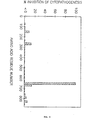
- Fig. 1 illustrates the inhibition of HIV-1IIIB replication in MT-2 cells by synthetic peptides from gp120/gp41 of HIV-1IIIB.
- Fig. 2 illustrates the inhibition of HIV-1IIIB-mediated cytopathogenesis in MT-2 cells by synthetic peptides from gp120/gp41 of HIV-1IIIB.
- Fig. 3 illustrates cytotoxicity mediated by the various synthetic peptides.
- Fig. 4 illustrates the inhibition of HIV-1IIIB replication in U937 cells by synthetic peptides from HIV-1IIIB gp120/gp41.
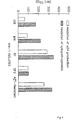
- Fig. 5 illustrates the dose-dependent inhibition of HIV-1IIIB infection of MT-2 cells by synthetic peptide (637-666).
- Fig. 6 illustrates the inhibition of various HIV-1 isolates by synthetic peptide (637-666).
- Fig. 7 illustrates that antiserum to synthetic peptide (637-666) blocks its antiviral activity.
- Fig. 8 illustrates a comparison of monomers and dimers of synthetic peptide (637-666) as inhibitors of HIV-1 infection.
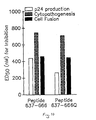
- Fig. 9 illustrates the relationship between peptide length and antiviral activity for various synthetic peptides.
- Fig. 10 illustrates a comparison of the antiviral activities of the peptide (637-666) and a glutamine-substituted peptide (637-666Q).
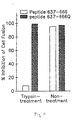
- Fig. 11 illustrates a comparison of the resistance of the peptide (637-666) and a glutamine-substituted peptide (637-666Q), to digestion by trypsin.
- The present invention provides for synthetic polypeptides which effectively inhibit infectivity and viral replication of HIV-1. Said polypeptides have amino acid sequences as defined in the claims. In the most preferred embodiments, the polypeptides are present as monomers or dimers. Additionally, a synthetic polypeptide of the present invention preferably includes a Gly-Gly-Cys amino acid triplet coupled at its C-terminus, thereby facilitating dimerization or alternatively affording a means for coupling the polypeptide to other entities.
- It is known in the art of protein chemistry that an identical copy of a particular polypeptide can be readily produced where every amino acid in the copy appears in exactly the same sequential position as it does in the original. In short, the copy has an amino acid sequence which corresponds exactly to the amino acid sequence of the original polypeptide from which it was copied. Alternatively, certain amino acids in the copy can be substituted with natural or synthetic analogs without altering any of the desired biological characteristics of the resulting polypeptide, provided that the regions containing biologically important residues are conserved. For example, certain synthetic amino acid analogs can be substituted at desired positions within an amino acid sequence to impart resistance to proteolytic cleavage while maintaining the desired immunological character of the resulting polypeptide. Therefore, an identical copy of a particular polypeptide can receive certain substitutions at non-conserved regions and still retain the same biological character as the original polypeptide from which it was copied.
- Generally, a synthetic peptide of the present invention can be substituted with natural or synthetic analogs as long as the regions responsible for the biological character of the peptide remain conserved. These substitutions may be induced to impart a desired character to the resulting polypeptide or, alternatively, may occur as natural variations in the sequence as observed in identified sub-types of HIV-1. For example, each clinical isolate of the HIV-1 virus has its own variant sequence and it is known in the art that the relative numerical alignment of the amino acid sequences for each isolate will be slightly different.
- Reconciliation of these differences during attempts to fashion polypeptides of the present invention after regions of interest in a particular isolate of HIV-1 can be readily accomplished using techniques known in the art. Accordingly, for purposes of the present application, a polypeptide of the present invention can be said to "substantially correspond with" the original polypeptide or isolate from which it was copied despite natural variations in sequence and/or substitutions as discussed above.
- In constructing the polypeptide of the present invention, a numerical frame of reference or standardized reading frame corresponding to the amino acid sequence of the envelope glycoprotein of HIV-1IIIB should be consulted in order to establish the region of interest, i.e., amino acid residues 634-669. Several publications containing standardized amino acid sequence data for the HIV-1 virus are currently available. See, for example, Ratner, et al., "Complete nucleotide sequence of the AIDS virus," Nature, Volume 313, 277, (January, 1985). See also, "Human Retroviruses and AIDS 1991, A Compilation and Analysis of Nucleic Acid and Amino Acid Sequences," (Myers, et al. Eds.), Theoretical Biology and Biophysics Group, Los Alamos National Laboratory, Los Alamos, New Mexico, USA.
- Upon establishing the proper reading frame, the amino acid region of interest can be reproduced using a variety of procedures available in the art. For example, a variety of automated synthesis units are currently available including the NPS 4000 semi-automated multichannel peptide synthesizer and the Biosearch Model 9600 automatic peptide synthesizer. Alternatively, certain recombinant DNA techniques or proteolytic cleavage techniques may be incorporated for constructing the polypeptide of the present invention. For example, a carefully orchestrated proteolysis of gp160 or gp41 using proteolytic enzymes or chemical cleaving agents would be an acceptable method for producing a polypeptide of the present invention. Accordingly, the term "synthetic polypeptide", as it appears throughout the present Application, is taken to mean any non-naturally-occurring polypeptide constructed by one of the methods mentioned above or by other suitable methods known in the art.
- The Sequence Listing portion of the present Application provides examples of several synthetic polypeptides having amino acid sequences substantially corresponding to the amino acid sequences of the envelope glycoprotein of various clinical isolates of HIV-1 virus from amino acid residue 637 to 666 (see SEQ ID NOS: 1-10).
- Other preferred peptides of the present invention include polypeptides substantially corresponding to the amino acid sequences represented by SEQ ID NOS: 1-10, but further comprising additional amino acid residues at either the C-terminus or the N-terminus or both. The additional amino acids are selected from Leu-Leu-Glu at the C-terminus, Thr-Trp-Met at the N-terminus or Gly-Gly-Cys at the C-terminus. The preferred peptide (637-669) differs from the preferred peptide (637-666) in having three additional amino acid residues (Leu-Leu-Glu) from the envelope glycoprotein sequence at its C-terminus, i.e., residues (667-669). Synthetic polypeptides (637-669) may be produced which correspond to SEQ ID NOS: 1-10, and other variant (637-666) sequences, further comprising the Leu-Leu-Glu triplet coupled to the C-termini. Likewise, variants on the preferred peptide (634-666) may be produced by coupling a Thr-Trp-Met amino acid triplet (residues 634-636 of the envelope glycoprotein sequence) to each of the sequences represented by SEQ ID NOS: 1-10, or to other variant (637-666) sequences. In this way, peptides corresponding to variants of the preferred peptides (634-666) and (637-669) may be synthesized systematically.
- As previously mentioned, a polypeptide of the present invention may preferably contain a Gly-Gly-Cys amino acid triplet coupled to its C-terminus in order to facilitate dimerization or attachment to another entity. These amino acid sequences constitute various synthetic polypeptides which may be constructed in accordance with the present invention.
- In addition to the monomeric forms of the synthetic polypeptides set forth in the Sequence Listing portion and the synthetic polypeptides described elsewhere in the present Application, the present invention also includes dimeric, trimeric and other polymeric forms of these peptides. In particular, the best mode of the present invention is the dimeric form of the polypeptide, wherein dimerization is achieved via the Gly-Gly-Cys triplet positioned at the C-terminus of the peptide, as described above.
- Dimerization or polymerization of the polypeptides of the present invention can be induced using any number of acceptable methods known in the art. For example, a variety of covalent chemical or physical linkages can be employed to produce multimers of the polypeptides of the present invention. In particular, multimers of the polypeptides can be generated via attachment to multimeric peptide carriers known in the art or other approaches, such as multiple antigen peptide (MAP) systems or ISCOM. Furthermore, in addition to inducing dimerization via the Gly-Gly-Cys triplet coupled to the C-termini of the polypeptides described above, additional cysteine residues found outside of the 634-669 region may be utilized to induce dimerization without the use of the Gly-Gly-Cys triplet when the polypeptide to be dimerized has amino acid residues extending beyond residue 669.
- In particular, dimerization or polymerization may be mediated through additional -Cys- groups incorporated into or attached to the polypeptide. Additionally, the polypeptides described herein may be coupled to protein or high molecular weight (macromolecular) polymeric carriers (or substrates) through several types of functional groups on the polypeptides. For example, thiol (-SH) groups, aromatic rings (e.g., Tyr or His), amino or carboxyl groups, etc., would be acceptable linking moieties. Methods designed to avoid the use of carriers by polymerizing synthetic polypeptides to give peptide polymers are also known in the art. Another particular approach, known as the multiple antigen peptide system (MAP), utilizes a small peptidyl core matrix with covalently attached, radially branching, multiple synthetic peptides. See, for example, Tam, J.P. (1988) "Synthetic Peptide Vaccine Design: Synthesis and Properties of a High-Density Multiple Antigenic Peptide System" Proc. Natl. Acad. Sci. U.S.A., 85, 5409-5413.
- As illustrated in the Examples below, polypeptides of the present invention effectively inhibit infections of various cell lines, such as the monocytic cell line U937 and CD4+ T-cell lines MT-2 and H9, by several HIV-1 isolates, including the HIV-1 isolates MN, RF, SF2, IIIB as well as by an AZT-resistant isolate. In addition to effectively inhibiting HIV-1 viral replication, polypeptides of the present invention provide for excellent inhibition of HIV-1-mediated cytopathogenesis and cell fusion, as compared with other synthetic polypeptides fashioned from other regions of the HIV-1 virus amino acid profile. Furthermore, polypeptides of the present invention provide effective inhibitory function at acceptable levels of cytotoxicity.
- The following Examples serve to further illustrate the present invention, but are not meant in any way to limit or restrict the effective scope of invention.
- In accordance with the present invention, 29 peptides covering almost the entire sequence of HIV-1IIIB gp160 and 21 peptides corresponding to the full-length V3 hypervariable loops of distinct HIV-1 isolates were synthesized. The syntheses were carried out on either an NPS 4000 semi-automated multichannel peptide synthesizer or a Biosearch Model 9600 automatic peptide synthesizer. The purity of the product was confirmed by HPLC and by amino acid analysis. The sequence of each peptide was determined using an Applied Biosystems Protein Sequence Model 477A with on-line HPLC analysis of PTH amino acids using an Applied Biosystems Model 120A PTH analyzer.
- For virus inhibition assays, H9, MT-2 and U937 cells were used as target cells. Five HIV-1 isolates (IIIB, MN, RF, SF2, and an AZT-resistant mutant) were cultivated in MT-2 cells, collected, and aliquoted. The titer of infectivity of the virus stocks were 104 - 106, 50% tissue culture infective doses (TCID50).
- HIV-1 infectivity was determined by two distinct methods; an ELISA measuring HIV-1 core protein p24 production and a colorimetric assay for HIV-mediated cytopathogenesis. Briefly, 1x10⁴ MT-2 cells in 96 well plates were infected with dilutions of HIV-1IIIB in 200µl RPMI 1640 medium with 10% FBS. After 24 hours, half of the culture medium was changed. On the fourth day after incubation at 37°C, 100 µl of culture supernatant was collected from each well and an equal volume of fresh medium was added to the wells. The collected supernatants were mixed with equal volumes of 5% Triton X-100 and assayed for p24 using a kit from Coulter Immunology (Hialeah, FL). On the sixth day post infection, an indicator XTT tetrazolium dye (1 mg/ml; 50µl/well; PolySciences, Inc., Warrington, PA) was added to the cells. After a 4 hr. period, intracellular formazan was determined colorimetrically at 450 nm. The percentage of cytopathogenesis was calculated using the following formula:[(OD450 in negative control - OD450 in experiment)/(OD450 in negative control - OD450 in positive control)]
X 100 . The negative control corresponded to cells mixed with culture medium, instead of HIV, while the positive control represented cells mixed with 100 TCID50 of HIV-1IIIB which lysed 100% of the MT-2 cells. - The inhibitory effect of the synthesized peptides of the present invention on the fusion of HIV-1 infected cells with uninfected cells was also determined. In brief, 1.25 x 10⁴ HIV-1IIIB infected H9 cells were mixed with a peptide and an equal number of uninfected H9 cells. After incubation at 37°C for 16 hours, the syncytium-forming cells in a titer plate well were counted under a microscope and the inhibition of cell fusion by the peptide was calculated.
- Twenty-nine peptides from HIV-1IIIB gp160 (gp120/gp41) and 21 peptides from V3 hypervariable loops of distinct HIV-1 isolates were screened for their inhibitory activity on HIV-1 replication and HIV-1-mediated cytopathogenesis in MT-2 cells. As shown in Fig. 1, among the 29 peptides from gp160 screened, four peptides (amino acid sequence 61-90, 102-126, 280-306, and 637-666), at a final concentration of 12.5 µg/ml, significantly inhibited HIV-1 replication, as indicated by a decrease of gag protein p24 synthesis. However, none of the peptides from V3 loops of 21 distinct HIV-1 isolates inhibited HIV-1 replication.
- Additionally, studies were performed to determine whether or not any of the peptides could inhibit the cytopathogenesis mediated by HIV-1. The results are shown in Fig. 2. Only the peptide (637-666) markedly inhibited cytopathogenesis, while the other three peptides which inhibited p24 production did not exhibit this inhibitory activity.
- These results demonstrate that the peptide (637-666) from gp160 of HIV-1IIIB effectively inhibited infection by the homologous HIV-1 isolate (IIIB).
- Subsequently, cytotoxicity studies were performed using MT-2 cells at a final concentration of 12.5 µg/ml. It was found that three peptides (61-90, 102-126, and 280-306) had significant cytotoxicity, while the peptide (637-666) did not exhibit any cytotoxicity (see Fig. 3). When the concentration of the peptide (637-666) was increased to 11.145 µM, significant cytotoxicity remained undetectable. These results suggest that the inhibition of p24 production by the three peptides (61-90, 102-126, and 280-306) was actually due to the cytotoxicity of these peptides for MT-2 cells, while only the peptide (637-666) could effectively inhibit both p24 production and cytopathogenesis.
- The same techniques were also used to screen peptides with the monocytic cell line, U937. The results are shown in Fig. 4 Among the 29 peptides from gp160, only three peptides (102-126, 280-306 and 637-666) significantly inhibited p24 production. The peptide (637-666) had the highest inhibitory activity, suggesting that this peptide could inhibit the infection of both CD4+ T lymphocytes and of monocytic cells.
- Subsequently, the peptide (637-666) was tested for its inhibitory activities on HIV-1 replication, HIV-1-mediated cytopathogenesis and cell fusion at serial dilutions. As shown in Fig.5, the peptide (637-666) inhibited p24 production, cytopathogenesis and cell fusion in a dose-dependent manner. The 50% effective dose (ED50) for inhibition of HIV-1IIIB replication, as indicated by the decrease of gag protein p24 production, was 101.0 nM; for inhibition of cytopathogenesis mediated by HIV-1IIIB, 142.0 nM; and, for inhibition of cell fusion, 160.0 nM.
- Further studies were conducted to determine whether or not the peptide (637-666) of the present invention would also inhibit the replication of other HIV-1 isolates, such as MN, RF and SF2 isolates, as well as an AZT-resistant mutant. Results are shown in Fig. 6. The peptide (637-666) effectively inhibited infections by all of the five HIV-1 isolates, although the ED50 for inhibition of both replication and cytopathogenesis mediated by the distinct HIV-1 isolates were different. These results suggest that the anti-HIV activity of the peptide (637-666) is not sub-type (isolate) limited. Furthermore, the peptide is also effective against AZT-resistant HIV-1 isolates.
- Additionally, experiments were performed to determine whether or not the anti-HIV activity of the peptide (637-666) could be blocked by antibodies. Rabbit antiserum directed against this peptide was prepared. Serial dilutions of rabbit anti-(637-666) antiserum were incubated with the peptide (637-666) at a final concentration of 1 µg/ml at 37°C for 30 minutes. The mixtures were tested for antiviral activity. As shown in Fig. 7, in the absence of the antiserum, the peptide (637-666) significantly inhibited p24 production. However, after incubation with the anti-peptide (637-666) antiserum, the inhibitory activity of the peptide (637-666) was significantly blocked, while the antiserum alone did not affect p24 production. This result indicates that the inhibitory activity was indeed mediated by the peptide (637-666).
- The aforementioned peptide (637-666) of the present invention was synthesized with a Gly-Gly-Cys amino acid triplet coupled at the C-terminus of the peptide. Mass spectrometric data demonstrated that this peptide was completely dimerized. The dimerized form of the peptide will spontaneously form via the thiol group in the cysteine if allowed to incubate under appropriate conditions. The synthetic peptide was cleaved from resin stored from the original peptide synthesis and was shown to be in monomeric form using mass spectrometry. To determine the anti-HIV activity of the monomeric peptide (637-666), as compared with the anti-HIV activity of the dimeric peptide (637-666), the two peptide batches were assayed in a comparative experiment.
- The results of the comparative assay are shown in Fig. 8. The dimerized form of the peptide is much more effective for inhibiting HIV-1 replication, HIV-1-mediated cytopathogenesis and cell fusion than the monomeric version of the same peptide. This result suggests that the peptide (637-666) will dimerize or polymerize by the addition of an extra amino acid residue, such as cysteine, at the C-terminus or the N-terminus of the peptide. Furthermore, these results also indicate that the dimerized or polymerized form of the peptide (637-666) may more effectively interfere with the process of HIV-1 infection than the monomeric version.
- To further characterize the more preferred peptides of the present invention, the relationship between peptide length and antiviral activity was assessed. Peptides were prepared having sequences corresponding to various portions of the preferred HIV-1IIIB peptide sequence with C-terminus Gly-Gly-Cys triplets. These peptides were tested for inhibition of p24 production, cytopathogenesis and cell fusion as described in Example 4 above. The results are illustrated in Fig. 9.
- The data demonstrate that all of the peptides tested possess inhibitory activity against HIV-1 infection. However the data show that, in general, peptides having relatively longer sequences possess greater activity than peptides having sequences shortened from either or both ends of the preferred (634-669) range of residues.
- In particular, the peptide (637-669) (M.W. 4275) exhibits activity against HIV-1IIIB infection 3-9 fold greater than that of the peptide (637-666) (M.W. 3922) monomer. The extended peptide (637-669) even possesses higher activity than the peptide (637-666) dimer (compare Fig. 8). The peptide (634-666) (M.W. 4338) also shows greater activity than peptide (637-666). While also effective, shorter peptides such as (638-666) (M.W. 3790), (637-664) (M.W. 3662) and (637-663) (M.W. 3533) are less effective and therefore less preferred. These results suggest that the sequence of the preferred peptide (637-666) provides effective antiviral activity and that the extension of the peptide (637-666) sequence at either end may be expected to increase anti-HIV activity.
- Preliminary data indicated that the peptide (637-666) is sensitive to digestion by trypsin, one of the proteolytic enzymes existing in human bodies. It has been reported that trypsin cleaves polypeptide chains on the carboxyl side of arginine and lysine residues. The peptide (637-666) contains an arginine residue at sequence position 640 and a lysine residue at sequence position 662. These two positions are assumed to be sites susceptible to cleavage by trypsin. In order to establish whether the abolishment of the antiviral activity mediated by a peptide of the invention might be avoided in future in vivo applications, the arginine and lysine residues in the peptide (637-666) (bearing C-terminus Gly-Gly-Cys triplet) were replaced by either glutamine (Q) or glycine (G), both residues providing resistance to trypsin. The two modified peptides were designated (637-666Q) (M.W. 3891) and (637-666G) (M.W. 3749), respectively. As shown in Fig. 10, replacement of both arginine and lysine residues with glutamine residues (637-666Q) does not diminish the peptide's antiviral activity. However, it was observed that replacement of the same residues with glycine abolishes the antiviral activity of the peptide. Comparing the antiviral activity of the modified peptide (637-666Q) with the original peptide (637-666) before and after the treatment by trypsin, it was found that the peptide (637-666Q) was resistant to the treatment by trypsin (Fig. 11), indicating that the replacement of arginine and lysine by glutamine indeed abolishes trypsin cleavage sites in the peptide.
- As illustrated in the foregoing Examples, the polypeptides (637-666), (634-666) and (637-669) of the present invention inhibited HIV-1IIIB replication, HIV-1-mediated cytopathogenesis and cell fusion. Moreover, the peptide (637-666) inhibited the replication of HIV-1 in a dose-dependent manner. The ED50 of the peptide (637-666) for inhibition of HIV-1 replication was 101.0 nM. Its ED50 for inhibition of cytopathogenesis mediated by HIV-1 was 142.0 nM. Its ED50 for inhibition of cell fusion mediated by HIV-1IIIB infected H9 cells was 160.0 nM. Its effective concentration is lower than that of most antiviral agents tested for inhibition of HIV-1 infection, such as aurintricarboxylic acid (ATA), and hemin. This agent had very low cytotoxicity. The 50% cytotoxic dose (CD50), determined by a colorimetric assay, is larger than 11,145 nM. Therefore, its selective index (S.I. = CD50/ED50) is more than 110.0 for inhibition of HIV-1IIIB replication, 78.0 for inhibition of HIV-1IIIB-mediated cytopathogenesis and 70.0 for inhibition of HIV-1IIIB-mediated cell fusion.
- Additionally, the peptide (637-666) of the present invention inhibited the replication of not only the homologous HIV-1 isolate (IIIB), but also heterologous HIV-1 isolates tested (MN, RF, and SF2). It also effectively inhibited infection by an AZT-resistant mutant which could not be effectively neutralized by AZT. The viral inhibitory activity of the peptide was blocked by rabbit antiserum directed against this synthetic peptide, suggesting that the virus-inhibitory activity is specifically mediated by the peptide (637-666) and not by other factors which may have contaminated the peptide preparation during peptide synthesis. The peptides of the present invention can dimerize, thereby enhancing their activity against HIV-1 infections.
- Consequently, the polypeptides of the present invention are ideal candidates for antiviral agents against HIV-1, since they have higher antiviral activity against many HIV-1 isolates than most other anti-HIV agents. The toxicity of these peptides for lymphocytes and monocytic cells is very low, suggesting that any adverse effects on human subjects may also be lower than that of currently used anti-HIV drugs, such as AZT.
- As a result, the polypeptides of the present invention provide for a method of treating HIV-1 infected subjects in addition to inhibiting viral replication in vitro. In particular, the method includes administering a polypeptide of the present invention in amounts effective to inhibit viral replication, and preferably in amounts effective to inhibit HIV-1-mediated cytopathogenesis and cell fusion. Most preferably, the amounts of the polypeptide administered to the subject should be sufficient to maintain an effective blood serum concentration ranging from about 0.005 mg/ml to about 0.01 mg/ml.
- Suitable methods of administration would include any pharmacologically acceptable approaches known in the art for delivering a therapeutic or prophylactic agent, such as oral, rectal, nasal, topical (including buccal and sub-lingual), vaginal, parenteral (including intramuscular, sub-cutaneous and intravenous), as well as approaches utilizing inhalation. Additionally, a polypeptide of the invention can be incorporated into an antiviral substance containing other active ingredients, such as AZT.
- While there have been described what are presently believed to be the preferred embodiments of the present invention, those skilled in the art will realize that changes and modifications may be made thereto without departing from the spirit of the invention, and it is intended to claim all such changes and modifications as fall within the true scope of the invention.
-
- (1) GENERAL INFORMATION:
- (i) APPLICANT: The New York Blood Center
- (ii) TITLE OF INVENTION: SYNTHETIC POLYPEPTIDES AS INHIBITORS OF HIV-1
- (iii) NUMBER OF SEQUENCES: 10
- (A) ADDRESSEE: The Lindsley F. Kimball
Research Institute of the
New York Blood Center
- (A) ADDRESSEE: The Lindsley F. Kimball
- (2) INFORMATION FOR SEQ ID NO: 1 :
- (i) SEQUENCE CHARACTERISTICS:
- (A) LENGTH: 30 Amino Acids
- (B) TYPE: Amino Acid
- (D) TOPOLOGY: Linear
- (xi) SEQUENCE DESCRIPTION: SEQ ID NO: 1 :

- (i) SEQUENCE CHARACTERISTICS:
- (2) INFORMATION FOR SEQ ID NO: 2 :
- (i) SEQUENCE CHARACTERISTICS:
- (A) LENGTH: 30 Amino Acids
- (B) TYPE: Amino Acid
- (D) TOPOLOGY: Linear
- (xi) SEQUENCE DESCRIPTION: SEQ ID NO: 2 :

- (i) SEQUENCE CHARACTERISTICS:
- (2) INFORMATION FOR SEQ ID NO: 3 :
- (i) SEQUENCE CHARACTERISTICS:
- (A) LENGTH: 30 Amino Acids
- (B) TYPE: Amino Acid
- (D) TOPOLOGY: Linear
- (xi) SEQUENCE DESCRIPTION: SEQ ID NO: 3 :

- (i) SEQUENCE CHARACTERISTICS:
- (2) INFORMATION FOR SEQ ID NO: 4 :
- (i) SEQUENCE CHARACTERISTICS:
- (A) LENGTH: 30 Amino Acids
- (B) TYPE: Amino Acid
- (D) TOPOLOGY: Linear
- (xi) SEQUENCE DESCRIPTION: SEQ ID NO: 4 :

- (i) SEQUENCE CHARACTERISTICS:
- (2) INFORMATION FOR SEQ ID NO: 5 :
- (i) SEQUENCE CHARACTERISTICS:
- (A) LENGTH: 30 Amino Acids
- (B) TYPE: Amino Acid
- (D) TOPOLOGY: Linear
- (xi) SEQUENCE DESCRIPTION: SEQ ID NO: 5 :

- (i) SEQUENCE CHARACTERISTICS:
- (2) INFORMATION FOR SEQ ID NO: 6 :
- (i) SEQUENCE CHARACTERISTICS:
- (A) LENGTH: 30 Amino Acids
- (B) TYPE: Amino Acid
- (D) TOPOLOGY: Linear
- (xi) SEQUENCE DESCRIPTION: SEQ ID NO: 6 :

- (i) SEQUENCE CHARACTERISTICS:
- (2) INFORMATION FOR SEQ ID NO: 7 :
- (i) SEQUENCE CHARACTERISTICS:
- (A) LENGTH: 30 Amino Acids
- (B) TYPE: Amino Acid
- (D) TOPOLOGY: Linear
- (xi) SEQUENCE DESCRIPTION: SEQ ID NO: 7 :

- (i) SEQUENCE CHARACTERISTICS:
- (2) INFORMATION FOR SEQ ID NO: 8 :
- i) SEQUENCE CHARACTERISTICS:
- (A) LENGTH: 30 Amino Acids
- (B) TYPE: Amino Acid
- (D) TOPOLOGY: Linear
- (xi) SEQUENCE DESCRIPTION: SEQ ID NO: 8 :

- i) SEQUENCE CHARACTERISTICS:
- (2) INFORMATION FOR SEQ ID NO: 9 :
- (i) SEQUENCE CHARACTERISTICS:
- (A) LENGTH: 30 Amino Acids
- (B) TYPE: Amino Acid
- (D) TOPOLOGY: Linear
- (xi) SEQUENCE DESCRIPTION: SEQ ID NO: 9 :

- (i) SEQUENCE CHARACTERISTICS:
- (2) INFORMATION FOR SEQ ID NO: 10 :
- (i) SEQUENCE CHARACTERISTICS:
- (A) LENGTH: 30 Amino Acids
- (B) TYPE: Amino Acid
- (D) TOPOLOGY: Linear
- (xi) SEQUENCE DESCRIPTION: SEQ ID NO: 10 :

- (i) SEQUENCE CHARACTERISTICS:
Claims (10)
- A HIV-1 based polypeptide which is effective against HIV-1 infections, wherein said polypeptide is characterized by having an amino acid sequence selected from(a) the amino acid sequence of the envelope glycoprotein of HIV-IIIIB virus from residue 637 to residue 669,(b) the amino acid sequence of the envelope glycoprotein of HIV-1IIIB virus from residue 634 to residue 666,(c) the amino acid sequence of the envelope glycoprotein of HIV-1IIIB virus from residue 637 to residue 666,(d) the amino acid sequence of the envelope glycoprotein of HIV-1IIIB virus from residue 634 to residue 669,(e) a natural sequence variation of any one of the amino acid sequences (a)-(d),(f) an amino acid sequence derived from any one of the amino acid sequences (a)-(d) by substitution of a glutamine residue for each of Arg-640 and Lys-662, and(g) an amino acid sequence derived from any one of the amino acid sequences (a)-(f) by addition of a Gly-Gly-Cys amino acid triplet to the C-terminus.
- The polypeptide according to claim 1, wherein said polypeptide is characterized by having an amino acid sequence selected from


- The polypeptide according to claim 2, wherein said polypeptide is characterized by having a Leu-Leu-Glu amino acid triplet coupled to its C-terminus.
- The polypeptide according to claim 2 or 3, wherein said polypeptide is characterized by having a Thr-Trp-Met amino acid triplet coupled to its N-terminus.
- The polypeptide according to any one of claims 2 to 4, wherein said polypeptide is characterized by having a Gly-Gly-Cys amino acid triplet coupled to its C-terminus.
- The polypeptide according to any one of claims 1 to 5, wherein said polypeptide is characterized by having a form selected from the group consisting of dimers, trimers and other polymers.
- The polypeptide according to any one of claims 1 to 6, wherein said polypeptide is characterized by being attached to at least one of the group consisting of carrier molecules and linking moieties capable of forming multimers of said polypeptide.
- An antiviral substance characterized by including a HIV-1 based polypeptide according to any one of claims 1-7.
- A method of preparing an antiviral substance effective against HIV-1 virus, characterized by producing a HIV-1 based polypeptide according to any one of claims 1-7.
- Use of a HIV-1 based polypeptide according to any one of claims 1-7 for preparing an antiviral product for inhibiting HIV-1 infectivity.
Applications Claiming Priority (2)
| Application Number | Priority Date | Filing Date | Title |
|---|---|---|---|
| US859923 | 1992-03-26 | ||
| US07/859,923 US5444044A (en) | 1992-03-26 | 1992-03-26 | Synthetic polypeptides as inhibitors of HIV-1 |
Publications (2)
| Publication Number | Publication Date |
|---|---|
| EP0565164A1 EP0565164A1 (en) | 1993-10-13 |
| EP0565164B1 true EP0565164B1 (en) | 1997-06-11 |
Family
ID=25332065
Family Applications (1)
| Application Number | Title | Priority Date | Filing Date |
|---|---|---|---|
| EP93200863A Expired - Lifetime EP0565164B1 (en) | 1992-03-26 | 1993-03-25 | Synthetic polypeptides as inhibitors of HIV-1 |
Country Status (9)
| Country | Link |
|---|---|
| US (2) | US5444044A (en) |
| EP (1) | EP0565164B1 (en) |
| JP (1) | JP3587538B2 (en) |
| KR (1) | KR100269818B1 (en) |
| AT (1) | ATE154363T1 (en) |
| AU (1) | AU667078B2 (en) |
| CA (1) | CA2092519C (en) |
| DE (1) | DE69311427T2 (en) |
| ES (1) | ES2107609T3 (en) |
Families Citing this family (32)
| Publication number | Priority date | Publication date | Assignee | Title |
|---|---|---|---|---|
| US5444044A (en) * | 1992-03-26 | 1995-08-22 | New York Blood Center | Synthetic polypeptides as inhibitors of HIV-1 |
| AU688733B2 (en) | 1992-07-20 | 1998-03-19 | Duke University | Compounds which inhibit HIV replication |
| US20070202127A1 (en) * | 1993-06-07 | 2007-08-30 | Duke University | Nucleic acids encoding DP-178 and other viral fusion inhibitor peptides useful for treating aids |
| US6479055B1 (en) * | 1993-06-07 | 2002-11-12 | Trimeris, Inc. | Methods for inhibition of membrane fusion-associated events, including respiratory syncytial virus transmission |
| US6818740B1 (en) | 1997-04-17 | 2004-11-16 | Whitehead Institute For Biomedical Research | Inhibitors of HIV membrane fusion |
| US6841657B2 (en) | 1997-04-17 | 2005-01-11 | Whitehead Institute For Biomedical Research | Inhibitors of HIV membrane fusion |
| US6150088A (en) * | 1997-04-17 | 2000-11-21 | Whitehead Institute For Biomedical Research | Core structure of gp41 from the HIV envelope glycoprotein |
| BR9909018A (en) * | 1998-03-23 | 2001-10-16 | Trimeris Inc | Process for the synthesis of a peptide, a set of peptide fragments, and, peptide |
| US6281331B1 (en) * | 1998-03-23 | 2001-08-28 | Trimeris, Inc. | Methods and compositions for peptide synthesis |
| US7960504B2 (en) * | 1998-07-30 | 2011-06-14 | Whitehead Institute For Biomedical Research | Inhibitors of HIV membrane fusion |
| US6747126B1 (en) * | 1998-07-30 | 2004-06-08 | Whitehead Institute For Biomedical Research | Peptide inhibitors of HIV entry |
| US6596497B1 (en) | 1999-03-17 | 2003-07-22 | New York Blood Center, Inc. | Screening of antiviral compounds targeted to the HIV-1 gp41 core structure |
| CA2395291C (en) | 1999-12-16 | 2012-09-11 | Whitehead Institute For Biomedical Research | Five-helix protein |
| US20030082525A1 (en) * | 1999-12-16 | 2003-05-01 | Whitehead Institute For Biomedical Research | Five-Helix protein |
| EP1264177A2 (en) | 2000-02-10 | 2002-12-11 | Panacos Pharmaceuticals, Inc. | Assay for detection of viral fusion inhibitors |
| NZ521977A (en) * | 2000-03-17 | 2004-05-28 | Panacos Pharmaceuticals Inc | A method for generating immunogens that elicit neutralizing antibodies against fusion-active regions of HIV envelope proteins |
| US20030125515A1 (en) * | 2001-07-11 | 2003-07-03 | Genfa Zhou | End-locked five-helix protein |
| AU2002351176A1 (en) * | 2001-11-29 | 2003-06-17 | Mymetics, Corp. | Peptides and use thereof in therapeutic agents against hiv infection |
| US20040132011A1 (en) * | 2002-10-16 | 2004-07-08 | Panacos Pharmaceuticals, Inc. | Method for detecting viral inactivating agents |
| US20080096809A1 (en) * | 2003-12-22 | 2008-04-24 | Yeda Research & Development Co. Ltd. | Diastereomeric Peptides Useful as Inhibitors of Membrane Protein Assembly |
| ATE516048T1 (en) * | 2004-06-01 | 2011-07-15 | Merck Sharp & Dohme | HUMAN ANTIBODIES INTERACTING WITH HIV GP41 |
| EP2354153A3 (en) * | 2004-06-01 | 2012-05-30 | Merck Sharp & Dohme Corp. | Stable peptide mimetic of HIV gp41 fusion intermediate |
| US20090270312A1 (en) * | 2005-01-24 | 2009-10-29 | Yechiel Shai | Hiv-i gp41 fusion peptides for immunomodulaltion |
| EP2314320A2 (en) * | 2005-04-05 | 2011-04-27 | Istituto di Richerche di Biologia Molecolare P. Angeletti S.p.A. | Method for shielding functional sites or epitopes on proteins |
| JP4831410B2 (en) * | 2006-02-28 | 2011-12-07 | 東亞合成株式会社 | Antiviral peptides and antiviral agents |
| JP4788958B2 (en) * | 2006-02-28 | 2011-10-05 | 東亞合成株式会社 | Antiviral peptides and uses thereof |
| AU2009260479A1 (en) * | 2008-05-28 | 2009-12-23 | New York Blood Center | Bifunctional molecules for inhibiting HIV entry |
| WO2010091373A2 (en) | 2009-02-09 | 2010-08-12 | New York Blood Center, Inc. | Trimeric hiv fusion inhibitors for treating or preventing hiv infection |
| CN102883740B (en) | 2010-05-03 | 2015-10-14 | 纽约血库公司 | Bifunctional molecule for inactivating and blocking HIV |
| EP2447277A1 (en) | 2010-10-28 | 2012-05-02 | Laboratorios Del. Dr. Esteve, S.A. | Vaccine compositions based on modified gp41 immunogens |
| US20220409694A1 (en) | 2020-02-05 | 2022-12-29 | Shanxi Jinbo Bio-Pharmaceutical Co., Ltd. | Polypeptide, and preparation method therefor and use thereof |
| CN119613503B (en) * | 2024-07-22 | 2026-02-06 | 山西锦波生物医药股份有限公司 | Polypeptide capable of inhibiting MERS-like coronavirus infection and application thereof |
Family Cites Families (5)
| Publication number | Priority date | Publication date | Assignee | Title |
|---|---|---|---|---|
| FR2586575B1 (en) * | 1985-08-30 | 1991-09-06 | Lepage Pierre Alain | EFFORTS PROGRAMMER FOR CYCLIST TRAINING |
| JPH01501547A (en) * | 1986-06-12 | 1989-06-01 | バイオジェン ナームローズ ベンノットシャップ | Peptides related to the pathogenesis of HIV infection |
| EP0330359A3 (en) * | 1988-02-25 | 1991-06-05 | Bio-Rad Laboratories, Inc. | Composition useful in the diagnosis and treating of hiv-1 infection |
| AU608413B2 (en) * | 1988-03-30 | 1991-03-28 | Abbott Laboratories | Mouse monoclonal antibody (5-21-3) to human immunodeficiency virus gp41 protein |
| US5444044A (en) * | 1992-03-26 | 1995-08-22 | New York Blood Center | Synthetic polypeptides as inhibitors of HIV-1 |
-
1992
- 1992-03-26 US US07/859,923 patent/US5444044A/en not_active Expired - Lifetime
-
1993
- 1993-03-23 AU AU35372/93A patent/AU667078B2/en not_active Expired
- 1993-03-25 AT AT93200863T patent/ATE154363T1/en not_active IP Right Cessation
- 1993-03-25 DE DE69311427T patent/DE69311427T2/en not_active Expired - Lifetime
- 1993-03-25 CA CA002092519A patent/CA2092519C/en not_active Expired - Fee Related
- 1993-03-25 KR KR1019930004698A patent/KR100269818B1/en not_active Expired - Fee Related
- 1993-03-25 ES ES93200863T patent/ES2107609T3/en not_active Expired - Lifetime
- 1993-03-25 EP EP93200863A patent/EP0565164B1/en not_active Expired - Lifetime
- 1993-03-26 JP JP06819993A patent/JP3587538B2/en not_active Expired - Fee Related
-
1995
- 1995-06-07 US US08/484,107 patent/US5840843A/en not_active Expired - Lifetime
Also Published As
| Publication number | Publication date |
|---|---|
| KR930019695A (en) | 1993-10-18 |
| CA2092519A1 (en) | 1993-09-27 |
| DE69311427D1 (en) | 1997-07-17 |
| US5840843A (en) | 1998-11-24 |
| ES2107609T3 (en) | 1997-12-01 |
| AU3537293A (en) | 1993-09-30 |
| US5444044A (en) | 1995-08-22 |
| DE69311427T2 (en) | 1998-02-12 |
| AU667078B2 (en) | 1996-03-07 |
| ATE154363T1 (en) | 1997-06-15 |
| JP3587538B2 (en) | 2004-11-10 |
| KR100269818B1 (en) | 2000-10-16 |
| JPH06340698A (en) | 1994-12-13 |
| CA2092519C (en) | 2003-03-18 |
| EP0565164A1 (en) | 1993-10-13 |
Similar Documents
| Publication | Publication Date | Title |
|---|---|---|
| US5840843A (en) | Synthetic polypeptides as inhibitors of HIV-1 | |
| Chanh et al. | Induction of anti‐HIV neutralizing antibodies by synthetic peptides. | |
| Rice et al. | Inhibition of HIV-1 infectivity by zinc-ejecting aromatic C-nitroso compounds | |
| EP0328403B1 (en) | Synthetic peptides related to the HIV-GP120-env-protein, and their use | |
| US20100121029A1 (en) | Anti-hiv immunogenic formulation and process for preparation thereof | |
| WO1999024465A9 (en) | Stabilized primate lentivirus envelope glycoproteins | |
| US5763160A (en) | Synthetic peptides and process of using same for the detection of antibodies to human immunodeficiency virus (HIV) gp120 envelope protein, diagnosis of AIDS and pre-AIDS conditions and as vaccines | |
| KR19990044093A (en) | Multiple-Subtype FIV Vaccines | |
| EP0491930B1 (en) | Primate lentivirus vaccines | |
| Rayne et al. | The NH2-terminal domain of the human T-cell leukemia virus type 1 capsid protein is involved in particle formation | |
| US6171596B1 (en) | Oligomeric HIV-1 envelope glycoproteins | |
| AP502A (en) | Multiple branch peptide constructions for use against HIV. | |
| CA2274853C (en) | Multiple branch peptide constructions | |
| AU2002231510B2 (en) | Immunogenic formulations of variable peptidic epitopes and process for preparation thereof | |
| AU1906592A (en) | Peptides for use in induction of t cell activation against hiv-1 | |
| US7285621B2 (en) | Multiple branch peptide construction | |
| EP1043974A1 (en) | Liposomes containing multiple branch peptide constructions for use against human immunodeficiency virus | |
| WO2003104262A2 (en) | Gp41 peptides and methods based-thereon for inhibiting hiv fusion to target cells | |
| Pestano et al. | Independent divergences in the CD4 binding site and V3 loop encoded in two seroprevalent Ugandan HIV-1 clinical isolates | |
| JP3725899B2 (en) | Multi-branched peptide constructs for use against HIV | |
| JP3725899B6 (en) | Multi-branched peptide constructs for use against HIV | |
| Harms | Inducible herbicide resistance | |
| IE990955A1 (en) | Peptides capable of being recognized by antibodies induced against retro-viruses of human immunodeficiency (HIV viruses), their uses for the diagnosis of infections due to some of these viruses and, where appropriate, for vaccination against AIDS | |
| ZA200405492B (en) | Immunogenic formulations of variable peptidic epitopes and process for preparation thereof. |
Legal Events
| Date | Code | Title | Description |
|---|---|---|---|
| PUAI | Public reference made under article 153(3) epc to a published international application that has entered the european phase |
Free format text: ORIGINAL CODE: 0009012 |
|
| AK | Designated contracting states |
Kind code of ref document: A1 Designated state(s): AT BE CH DE DK ES FR GB GR IE IT LI LU MC NL PT SE |
|
| 17P | Request for examination filed |
Effective date: 19940407 |
|
| 17Q | First examination report despatched |
Effective date: 19940502 |
|
| GRAG | Despatch of communication of intention to grant |
Free format text: ORIGINAL CODE: EPIDOS AGRA |
|
| GRAH | Despatch of communication of intention to grant a patent |
Free format text: ORIGINAL CODE: EPIDOS IGRA |
|
| GRAH | Despatch of communication of intention to grant a patent |
Free format text: ORIGINAL CODE: EPIDOS IGRA |
|
| GRAA | (expected) grant |
Free format text: ORIGINAL CODE: 0009210 |
|
| AK | Designated contracting states |
Kind code of ref document: B1 Designated state(s): AT BE CH DE DK ES FR GB GR IE IT LI LU MC NL PT SE |
|
| PG25 | Lapsed in a contracting state [announced via postgrant information from national office to epo] |
Ref country code: LI Effective date: 19970611 Ref country code: GR Free format text: LAPSE BECAUSE OF FAILURE TO SUBMIT A TRANSLATION OF THE DESCRIPTION OR TO PAY THE FEE WITHIN THE PRESCRIBED TIME-LIMIT Effective date: 19970611 Ref country code: DK Effective date: 19970611 Ref country code: CH Effective date: 19970611 Ref country code: BE Effective date: 19970611 Ref country code: AT Effective date: 19970611 |
|
| REF | Corresponds to: |
Ref document number: 154363 Country of ref document: AT Date of ref document: 19970615 Kind code of ref document: T |
|
| REG | Reference to a national code |
Ref country code: CH Ref legal event code: EP |
|
| REF | Corresponds to: |
Ref document number: 69311427 Country of ref document: DE Date of ref document: 19970717 |
|
| ITF | It: translation for a ep patent filed | ||
| PG25 | Lapsed in a contracting state [announced via postgrant information from national office to epo] |
Ref country code: PT Effective date: 19970911 |
|
| ET | Fr: translation filed | ||
| REG | Reference to a national code |
Ref country code: ES Ref legal event code: FG2A Ref document number: 2107609 Country of ref document: ES Kind code of ref document: T3 |
|
| REG | Reference to a national code |
Ref country code: CH Ref legal event code: PL |
|
| PG25 | Lapsed in a contracting state [announced via postgrant information from national office to epo] |
Ref country code: LU Free format text: LAPSE BECAUSE OF NON-PAYMENT OF DUE FEES Effective date: 19980325 |
|
| PLBE | No opposition filed within time limit |
Free format text: ORIGINAL CODE: 0009261 |
|
| STAA | Information on the status of an ep patent application or granted ep patent |
Free format text: STATUS: NO OPPOSITION FILED WITHIN TIME LIMIT |
|
| 26N | No opposition filed | ||
| PG25 | Lapsed in a contracting state [announced via postgrant information from national office to epo] |
Ref country code: MC Free format text: LAPSE BECAUSE OF NON-PAYMENT OF DUE FEES Effective date: 19980930 |
|
| REG | Reference to a national code |
Ref country code: GB Ref legal event code: IF02 |
|
| PG25 | Lapsed in a contracting state [announced via postgrant information from national office to epo] |
Ref country code: IT Free format text: LAPSE BECAUSE OF NON-PAYMENT OF DUE FEES;WARNING: LAPSES OF ITALIAN PATENTS WITH EFFECTIVE DATE BEFORE 2007 MAY HAVE OCCURRED AT ANY TIME BEFORE 2007. THE CORRECT EFFECTIVE DATE MAY BE DIFFERENT FROM THE ONE RECORDED. Effective date: 20050325 |
|
| PGRI | Patent reinstated in contracting state [announced from national office to epo] |
Ref country code: IT Effective date: 20091201 |
|
| PGFP | Annual fee paid to national office [announced via postgrant information from national office to epo] |
Ref country code: IE Payment date: 20120326 Year of fee payment: 20 Ref country code: FR Payment date: 20120406 Year of fee payment: 20 |
|
| PGFP | Annual fee paid to national office [announced via postgrant information from national office to epo] |
Ref country code: SE Payment date: 20120328 Year of fee payment: 20 Ref country code: GB Payment date: 20120326 Year of fee payment: 20 Ref country code: IT Payment date: 20120327 Year of fee payment: 20 |
|
| PGFP | Annual fee paid to national office [announced via postgrant information from national office to epo] |
Ref country code: NL Payment date: 20120329 Year of fee payment: 20 Ref country code: DE Payment date: 20120328 Year of fee payment: 20 |
|
| REG | Reference to a national code |
Ref country code: DE Ref legal event code: R071 Ref document number: 69311427 Country of ref document: DE |
|
| REG | Reference to a national code |
Ref country code: DE Ref legal event code: R071 Ref document number: 69311427 Country of ref document: DE |
|
| REG | Reference to a national code |
Ref country code: NL Ref legal event code: V4 Effective date: 20130325 |
|
| REG | Reference to a national code |
Ref country code: GB Ref legal event code: PE20 Expiry date: 20130324 |
|
| PG25 | Lapsed in a contracting state [announced via postgrant information from national office to epo] |
Ref country code: DE Free format text: LAPSE BECAUSE OF EXPIRATION OF PROTECTION Effective date: 20130326 Ref country code: GB Free format text: LAPSE BECAUSE OF EXPIRATION OF PROTECTION Effective date: 20130324 |
|
| REG | Reference to a national code |
Ref country code: SE Ref legal event code: EUG |
|
| PGFP | Annual fee paid to national office [announced via postgrant information from national office to epo] |
Ref country code: ES Payment date: 20120326 Year of fee payment: 20 |
|
| REG | Reference to a national code |
Ref country code: ES Ref legal event code: FD2A Effective date: 20130702 |
|
| PG25 | Lapsed in a contracting state [announced via postgrant information from national office to epo] |
Ref country code: ES Free format text: LAPSE BECAUSE OF EXPIRATION OF PROTECTION Effective date: 20130326 |
|
| PG25 | Lapsed in a contracting state [announced via postgrant information from national office to epo] |
Ref country code: IE Free format text: LAPSE BECAUSE OF EXPIRATION OF PROTECTION Effective date: 20130325 |