EP0548553A1 - Optically active azole compounds, their production and use - Google Patents
Optically active azole compounds, their production and use Download PDFInfo
- Publication number
- EP0548553A1 EP0548553A1 EP92119855A EP92119855A EP0548553A1 EP 0548553 A1 EP0548553 A1 EP 0548553A1 EP 92119855 A EP92119855 A EP 92119855A EP 92119855 A EP92119855 A EP 92119855A EP 0548553 A1 EP0548553 A1 EP 0548553A1
- Authority
- EP
- European Patent Office
- Prior art keywords
- compound
- triazol
- salt
- heterocyclic group
- butanol
- Prior art date
- Legal status (The legal status is an assumption and is not a legal conclusion. Google has not performed a legal analysis and makes no representation as to the accuracy of the status listed.)
- Withdrawn
Links
- 238000004519 manufacturing process Methods 0.000 title claims description 6
- 150000003851 azoles Chemical class 0.000 title description 2
- -1 azole compound Chemical class 0.000 claims abstract description 159
- 150000003839 salts Chemical class 0.000 claims abstract description 92
- 125000000623 heterocyclic group Chemical group 0.000 claims abstract description 50
- 125000004433 nitrogen atom Chemical group N* 0.000 claims abstract description 39
- 125000003118 aryl group Chemical group 0.000 claims abstract description 35
- 125000004429 atom Chemical group 0.000 claims abstract description 31
- QJGQUHMNIGDVPM-UHFFFAOYSA-N nitrogen group Chemical group [N] QJGQUHMNIGDVPM-UHFFFAOYSA-N 0.000 claims abstract description 20
- 125000004435 hydrogen atom Chemical group [H]* 0.000 claims abstract description 19
- 125000002252 acyl group Chemical group 0.000 claims abstract description 16
- 125000005843 halogen group Chemical group 0.000 claims abstract description 15
- 125000003626 1,2,4-triazol-1-yl group Chemical group [*]N1N=C([H])N=C1[H] 0.000 claims abstract description 13
- 125000004438 haloalkoxy group Chemical group 0.000 claims abstract description 10
- 125000001188 haloalkyl group Chemical group 0.000 claims abstract description 10
- 229910052799 carbon Inorganic materials 0.000 claims abstract description 7
- KAESVJOAVNADME-UHFFFAOYSA-N 1H-pyrrole Natural products C=1C=CNC=1 KAESVJOAVNADME-UHFFFAOYSA-N 0.000 claims abstract description 6
- 150000001875 compounds Chemical class 0.000 claims description 194
- KZQNQVZBUWYTHQ-QMTHXVAHSA-N (2r,3r)-2-(2,4-difluorophenyl)-3-(triazol-1-yl)-1-(1,2,4-triazol-1-yl)butan-2-ol Chemical compound N1([C@H](C)[C@](O)(CN2N=CN=C2)C=2C(=CC(F)=CC=2)F)C=CN=N1 KZQNQVZBUWYTHQ-QMTHXVAHSA-N 0.000 claims description 21
- 125000001607 1,2,3-triazol-1-yl group Chemical group [*]N1N=NC([H])=C1[H] 0.000 claims description 14
- QWENRTYMTSOGBR-UHFFFAOYSA-N 1H-1,2,3-Triazole Chemical group C=1C=NNN=1 QWENRTYMTSOGBR-UHFFFAOYSA-N 0.000 claims description 13
- 229910052731 fluorine Inorganic materials 0.000 claims description 12
- 125000001424 substituent group Chemical group 0.000 claims description 11
- PUVPKKMSEHYRJA-NOZJJQNGSA-N (2r,3r)-2-(2,4-difluorophenyl)-3-(tetrazol-2-yl)-1-(1,2,4-triazol-1-yl)butan-2-ol Chemical compound N1([C@H](C)[C@](O)(CN2N=CN=C2)C=2C(=CC(F)=CC=2)F)N=CN=N1 PUVPKKMSEHYRJA-NOZJJQNGSA-N 0.000 claims description 10
- 229910052801 chlorine Inorganic materials 0.000 claims description 10
- 239000011737 fluorine Substances 0.000 claims description 10
- BTANRVKWQNVYAZ-UHFFFAOYSA-N 2-butanol Substances CCC(C)O BTANRVKWQNVYAZ-UHFFFAOYSA-N 0.000 claims description 9
- PXGOKWXKJXAPGV-UHFFFAOYSA-N Fluorine Chemical compound FF PXGOKWXKJXAPGV-UHFFFAOYSA-N 0.000 claims description 9
- 150000001721 carbon Chemical group 0.000 claims description 6
- BZRRAQASMHCQKT-NOZJJQNGSA-N (2r,3r)-2-(2,4-difluorophenyl)-3-(tetrazol-1-yl)-1-(1,2,4-triazol-1-yl)butan-2-ol Chemical compound N1([C@H](C)[C@](O)(CN2N=CN=C2)C=2C(=CC(F)=CC=2)F)C=NN=N1 BZRRAQASMHCQKT-NOZJJQNGSA-N 0.000 claims description 5
- 125000001401 1,2,4-triazol-4-yl group Chemical group N=1N=C([H])N([*])C=1[H] 0.000 claims description 5
- 239000003085 diluting agent Substances 0.000 claims description 5
- 239000000546 pharmaceutical excipient Substances 0.000 claims description 5
- NDNQTVPMRNOJLB-BXUZGUMPSA-N (2r,3r)-2-(2-fluorophenyl)-3-(triazol-1-yl)-1-(1,2,4-triazol-1-yl)butan-2-ol Chemical compound N1([C@H](C)[C@](O)(CN2N=CN=C2)C=2C(=CC=CC=2)F)C=CN=N1 NDNQTVPMRNOJLB-BXUZGUMPSA-N 0.000 claims description 4
- MNKRPGVWZFQDQK-BXUZGUMPSA-N (2r,3r)-2-(4-fluorophenyl)-3-(triazol-1-yl)-1-(1,2,4-triazol-1-yl)butan-2-ol Chemical compound N1([C@H](C)[C@](O)(CN2N=CN=C2)C=2C=CC(F)=CC=2)C=CN=N1 MNKRPGVWZFQDQK-BXUZGUMPSA-N 0.000 claims description 4
- 125000004070 6 membered heterocyclic group Chemical group 0.000 claims description 4
- 125000001153 fluoro group Chemical group F* 0.000 claims description 4
- 125000000714 pyrimidinyl group Chemical group 0.000 claims description 4
- DCDXMMSFSSYJSU-BXUZGUMPSA-N (2r,3r)-2-(2-fluorophenyl)-1-(1,2,4-triazol-1-yl)-3-(triazol-2-yl)butan-2-ol Chemical compound N1([C@H](C)[C@](O)(CN2N=CN=C2)C=2C(=CC=CC=2)F)N=CC=N1 DCDXMMSFSSYJSU-BXUZGUMPSA-N 0.000 claims description 3
- URZZDTNAGRMVNL-BXUZGUMPSA-N (2r,3r)-2-(4-fluorophenyl)-1-(1,2,4-triazol-1-yl)-3-(triazol-2-yl)butan-2-ol Chemical compound N1([C@H](C)[C@](O)(CN2N=CN=C2)C=2C=CC(F)=CC=2)N=CC=N1 URZZDTNAGRMVNL-BXUZGUMPSA-N 0.000 claims description 3
- 125000002373 5 membered heterocyclic group Chemical group 0.000 claims description 3
- OKTJSMMVPCPJKN-UHFFFAOYSA-N Carbon Chemical group [C] OKTJSMMVPCPJKN-UHFFFAOYSA-N 0.000 claims description 3
- 125000002619 bicyclic group Chemical group 0.000 claims description 3
- ISZBLDFMSUIDNQ-WHHNUEBDSA-N (2r,3r)-2-(2,4-difluorophenyl)-1-(1,2,4-triazol-1-yl)-3-[4-[(e)-2-[4-(trifluoromethyl)phenyl]ethenyl]triazol-1-yl]butan-2-ol Chemical compound N1=NN([C@H](C)[C@](O)(CN2N=CN=C2)C=2C(=CC(F)=CC=2)F)C=C1\C=C\C1=CC=C(C(F)(F)F)C=C1 ISZBLDFMSUIDNQ-WHHNUEBDSA-N 0.000 claims description 2
- GTCZBEVCZTYRIP-ZWNOBZJWSA-N (2r,3r)-2-(2-fluorophenyl)-3-(tetrazol-1-yl)-1-(1,2,4-triazol-1-yl)butan-2-ol Chemical compound N1([C@H](C)[C@](O)(CN2N=CN=C2)C=2C(=CC=CC=2)F)C=NN=N1 GTCZBEVCZTYRIP-ZWNOBZJWSA-N 0.000 claims description 2
- FQZKAEXTELHRBK-BXUZGUMPSA-N (2r,3r)-2-(4-chlorophenyl)-1-(1,2,4-triazol-1-yl)-3-(triazol-2-yl)butan-2-ol Chemical compound N1([C@H](C)[C@](O)(CN2N=CN=C2)C=2C=CC(Cl)=CC=2)N=CC=N1 FQZKAEXTELHRBK-BXUZGUMPSA-N 0.000 claims description 2
- 239000012871 anti-fungal composition Substances 0.000 claims description 2
- 125000002393 azetidinyl group Chemical group 0.000 claims description 2
- 238000006114 decarboxylation reaction Methods 0.000 claims description 2
- GPUCOQJQZXSNOT-ZWNOBZJWSA-N (2r,3r)-2-(2-fluorophenyl)-3-(tetrazol-2-yl)-1-(1,2,4-triazol-1-yl)butan-2-ol Chemical compound N1([C@H](C)[C@](O)(CN2N=CN=C2)C=2C(=CC=CC=2)F)N=CN=N1 GPUCOQJQZXSNOT-ZWNOBZJWSA-N 0.000 claims 1
- 125000001309 chloro group Chemical group Cl* 0.000 claims 1
- 229940121375 antifungal agent Drugs 0.000 abstract description 8
- 239000003429 antifungal agent Substances 0.000 abstract description 4
- 125000004432 carbon atom Chemical group C* 0.000 abstract description 2
- XEKOWRVHYACXOJ-UHFFFAOYSA-N Ethyl acetate Chemical compound CCOC(C)=O XEKOWRVHYACXOJ-UHFFFAOYSA-N 0.000 description 333
- HEDRZPFGACZZDS-MICDWDOJSA-N Trichloro(2H)methane Chemical compound [2H]C(Cl)(Cl)Cl HEDRZPFGACZZDS-MICDWDOJSA-N 0.000 description 162
- OKKJLVBELUTLKV-UHFFFAOYSA-N Methanol Chemical compound OC OKKJLVBELUTLKV-UHFFFAOYSA-N 0.000 description 126
- 239000000203 mixture Substances 0.000 description 115
- ZMXDDKWLCZADIW-UHFFFAOYSA-N N,N-Dimethylformamide Chemical compound CN(C)C=O ZMXDDKWLCZADIW-UHFFFAOYSA-N 0.000 description 105
- YMWUJEATGCHHMB-UHFFFAOYSA-N Dichloromethane Chemical compound ClCCl YMWUJEATGCHHMB-UHFFFAOYSA-N 0.000 description 94
- 238000005160 1H NMR spectroscopy Methods 0.000 description 85
- CSCPPACGZOOCGX-UHFFFAOYSA-N Acetone Chemical compound CC(C)=O CSCPPACGZOOCGX-UHFFFAOYSA-N 0.000 description 78
- VLKZOEOYAKHREP-UHFFFAOYSA-N n-Hexane Chemical compound CCCCCC VLKZOEOYAKHREP-UHFFFAOYSA-N 0.000 description 68
- 239000000243 solution Substances 0.000 description 59
- YXFVVABEGXRONW-UHFFFAOYSA-N Toluene Chemical compound CC1=CC=CC=C1 YXFVVABEGXRONW-UHFFFAOYSA-N 0.000 description 51
- 238000006243 chemical reaction Methods 0.000 description 47
- XLYOFNOQVPJJNP-UHFFFAOYSA-N water Substances O XLYOFNOQVPJJNP-UHFFFAOYSA-N 0.000 description 47
- 238000001816 cooling Methods 0.000 description 46
- CSNNHWWHGAXBCP-UHFFFAOYSA-L Magnesium sulfate Chemical compound [Mg+2].[O-][S+2]([O-])([O-])[O-] CSNNHWWHGAXBCP-UHFFFAOYSA-L 0.000 description 43
- 239000000843 powder Substances 0.000 description 42
- 238000010898 silica gel chromatography Methods 0.000 description 40
- 239000000126 substance Substances 0.000 description 39
- RTZKZFJDLAIYFH-UHFFFAOYSA-N Diethyl ether Chemical compound CCOCC RTZKZFJDLAIYFH-UHFFFAOYSA-N 0.000 description 38
- 239000003480 eluent Substances 0.000 description 38
- 239000002904 solvent Substances 0.000 description 33
- WYURNTSHIVDZCO-UHFFFAOYSA-N Tetrahydrofuran Chemical compound C1CCOC1 WYURNTSHIVDZCO-UHFFFAOYSA-N 0.000 description 32
- FAPWRFPIFSIZLT-UHFFFAOYSA-M Sodium chloride Chemical compound [Na+].[Cl-] FAPWRFPIFSIZLT-UHFFFAOYSA-M 0.000 description 31
- UHOVQNZJYSORNB-UHFFFAOYSA-N Benzene Chemical compound C1=CC=CC=C1 UHOVQNZJYSORNB-UHFFFAOYSA-N 0.000 description 27
- IAZDPXIOMUYVGZ-UHFFFAOYSA-N Dimethylsulphoxide Chemical compound CS(C)=O IAZDPXIOMUYVGZ-UHFFFAOYSA-N 0.000 description 24
- VYPSYNLAJGMNEJ-UHFFFAOYSA-N Silicium dioxide Chemical compound O=[Si]=O VYPSYNLAJGMNEJ-UHFFFAOYSA-N 0.000 description 24
- 125000000217 alkyl group Chemical group 0.000 description 24
- 239000000741 silica gel Substances 0.000 description 24
- 229910002027 silica gel Inorganic materials 0.000 description 24
- ZAFNJMIOTHYJRJ-UHFFFAOYSA-N Diisopropyl ether Chemical compound CC(C)OC(C)C ZAFNJMIOTHYJRJ-UHFFFAOYSA-N 0.000 description 22
- 238000000034 method Methods 0.000 description 22
- 238000002360 preparation method Methods 0.000 description 22
- 239000011541 reaction mixture Substances 0.000 description 22
- KEAYESYHFKHZAL-UHFFFAOYSA-N Sodium Chemical compound [Na] KEAYESYHFKHZAL-UHFFFAOYSA-N 0.000 description 21
- 239000012312 sodium hydride Substances 0.000 description 21
- 229910000104 sodium hydride Inorganic materials 0.000 description 21
- 239000010410 layer Substances 0.000 description 19
- 238000003756 stirring Methods 0.000 description 19
- WEVYAHXRMPXWCK-UHFFFAOYSA-N Acetonitrile Chemical compound CC#N WEVYAHXRMPXWCK-UHFFFAOYSA-N 0.000 description 18
- HEMHJVSKTPXQMS-UHFFFAOYSA-M Sodium hydroxide Chemical compound [OH-].[Na+] HEMHJVSKTPXQMS-UHFFFAOYSA-M 0.000 description 18
- ZMANZCXQSJIPKH-UHFFFAOYSA-N Triethylamine Chemical compound CCN(CC)CC ZMANZCXQSJIPKH-UHFFFAOYSA-N 0.000 description 18
- 239000003921 oil Substances 0.000 description 17
- 235000019198 oils Nutrition 0.000 description 17
- NSPMIYGKQJPBQR-UHFFFAOYSA-N 4H-1,2,4-triazole Chemical compound C=1N=CNN=1 NSPMIYGKQJPBQR-UHFFFAOYSA-N 0.000 description 16
- VEXZGXHMUGYJMC-UHFFFAOYSA-N Hydrochloric acid Chemical compound Cl VEXZGXHMUGYJMC-UHFFFAOYSA-N 0.000 description 16
- YLQBMQCUIZJEEH-UHFFFAOYSA-N tetrahydrofuran Natural products C=1C=COC=1 YLQBMQCUIZJEEH-UHFFFAOYSA-N 0.000 description 16
- 239000002585 base Substances 0.000 description 15
- 238000000921 elemental analysis Methods 0.000 description 15
- RAXXELZNTBOGNW-UHFFFAOYSA-N imidazole Natural products C1=CNC=N1 RAXXELZNTBOGNW-UHFFFAOYSA-N 0.000 description 15
- HEDRZPFGACZZDS-UHFFFAOYSA-N Chloroform Chemical compound ClC(Cl)Cl HEDRZPFGACZZDS-UHFFFAOYSA-N 0.000 description 14
- 229910052736 halogen Inorganic materials 0.000 description 14
- 150000002367 halogens Chemical class 0.000 description 14
- 239000012044 organic layer Substances 0.000 description 14
- HUEOYXUALXBOSZ-QUBYGPBYSA-N (1s)-1-[(2r)-2-(2,4-difluorophenyl)oxiran-2-yl]ethanol Chemical compound C=1C=C(F)C=C(F)C=1[C@]1([C@@H](O)C)CO1 HUEOYXUALXBOSZ-QUBYGPBYSA-N 0.000 description 13
- UIIMBOGNXHQVGW-UHFFFAOYSA-M Sodium bicarbonate Chemical compound [Na+].OC([O-])=O UIIMBOGNXHQVGW-UHFFFAOYSA-M 0.000 description 13
- 239000000284 extract Substances 0.000 description 13
- 229960004132 diethyl ether Drugs 0.000 description 12
- 229910052943 magnesium sulfate Inorganic materials 0.000 description 12
- 235000019341 magnesium sulphate Nutrition 0.000 description 12
- BWHMMNNQKKPAPP-UHFFFAOYSA-L potassium carbonate Chemical compound [K+].[K+].[O-]C([O-])=O BWHMMNNQKKPAPP-UHFFFAOYSA-L 0.000 description 12
- 230000000843 anti-fungal effect Effects 0.000 description 11
- 239000013078 crystal Substances 0.000 description 11
- 239000006185 dispersion Substances 0.000 description 11
- DLFVBJFMPXGRIB-UHFFFAOYSA-N Acetamide Chemical compound CC(N)=O DLFVBJFMPXGRIB-UHFFFAOYSA-N 0.000 description 10
- 229940126214 compound 3 Drugs 0.000 description 10
- IUSARDYWEPUTPN-OZBXUNDUSA-N (2r)-n-[(2s,3r)-4-[[(4s)-6-(2,2-dimethylpropyl)spiro[3,4-dihydropyrano[2,3-b]pyridine-2,1'-cyclobutane]-4-yl]amino]-3-hydroxy-1-[3-(1,3-thiazol-2-yl)phenyl]butan-2-yl]-2-methoxypropanamide Chemical compound C([C@H](NC(=O)[C@@H](C)OC)[C@H](O)CN[C@@H]1C2=CC(CC(C)(C)C)=CN=C2OC2(CCC2)C1)C(C=1)=CC=CC=1C1=NC=CS1 IUSARDYWEPUTPN-OZBXUNDUSA-N 0.000 description 9
- ZAMOUSCENKQFHK-UHFFFAOYSA-N Chlorine atom Chemical compound [Cl] ZAMOUSCENKQFHK-UHFFFAOYSA-N 0.000 description 9
- 239000000460 chlorine Substances 0.000 description 9
- 229940125807 compound 37 Drugs 0.000 description 9
- 125000002496 methyl group Chemical group [H]C([H])([H])* 0.000 description 9
- 150000003536 tetrazoles Chemical class 0.000 description 9
- JJKCFAJKCOAFNW-QMTHXVAHSA-N (2r,3r)-2-(2,4-difluorophenyl)-3-(1,2-dihydrotriazol-3-yl)-1-(1,2,4-triazol-1-yl)butan-2-ol Chemical compound N1([C@H](C)[C@](O)(CN2N=CN=C2)C=2C(=CC(F)=CC=2)F)NNC=C1 JJKCFAJKCOAFNW-QMTHXVAHSA-N 0.000 description 8
- RYHBNJHYFVUHQT-UHFFFAOYSA-N 1,4-Dioxane Chemical compound C1COCCO1 RYHBNJHYFVUHQT-UHFFFAOYSA-N 0.000 description 8
- LFQSCWFLJHTTHZ-UHFFFAOYSA-N Ethanol Chemical compound CCO LFQSCWFLJHTTHZ-UHFFFAOYSA-N 0.000 description 8
- WQDUMFSSJAZKTM-UHFFFAOYSA-N Sodium methoxide Chemical compound [Na+].[O-]C WQDUMFSSJAZKTM-UHFFFAOYSA-N 0.000 description 8
- 150000001408 amides Chemical class 0.000 description 8
- 150000002170 ethers Chemical class 0.000 description 8
- 229940052303 ethers for general anesthesia Drugs 0.000 description 8
- 125000001495 ethyl group Chemical group [H]C([H])([H])C([H])([H])* 0.000 description 8
- 239000005457 ice water Substances 0.000 description 8
- HQKMJHAJHXVSDF-UHFFFAOYSA-L magnesium stearate Chemical compound [Mg+2].CCCCCCCCCCCCCCCCCC([O-])=O.CCCCCCCCCCCCCCCCCC([O-])=O HQKMJHAJHXVSDF-UHFFFAOYSA-L 0.000 description 8
- 125000001997 phenyl group Chemical group [H]C1=C([H])C([H])=C(*)C([H])=C1[H] 0.000 description 8
- 239000007787 solid Substances 0.000 description 8
- WKBOTKDWSSQWDR-UHFFFAOYSA-N Bromine atom Chemical compound [Br] WKBOTKDWSSQWDR-UHFFFAOYSA-N 0.000 description 7
- PSLUFJFHTBIXMW-WYEYVKMPSA-N [(3r,4ar,5s,6s,6as,10s,10ar,10bs)-3-ethenyl-10,10b-dihydroxy-3,4a,7,7,10a-pentamethyl-1-oxo-6-(2-pyridin-2-ylethylcarbamoyloxy)-5,6,6a,8,9,10-hexahydro-2h-benzo[f]chromen-5-yl] acetate Chemical compound O([C@@H]1[C@@H]([C@]2(O[C@](C)(CC(=O)[C@]2(O)[C@@]2(C)[C@@H](O)CCC(C)(C)[C@@H]21)C=C)C)OC(=O)C)C(=O)NCCC1=CC=CC=N1 PSLUFJFHTBIXMW-WYEYVKMPSA-N 0.000 description 7
- 125000005018 aryl alkenyl group Chemical group 0.000 description 7
- GDTBXPJZTBHREO-UHFFFAOYSA-N bromine Substances BrBr GDTBXPJZTBHREO-UHFFFAOYSA-N 0.000 description 7
- 229910052794 bromium Inorganic materials 0.000 description 7
- 125000001028 difluoromethyl group Chemical group [H]C(F)(F)* 0.000 description 7
- 238000001914 filtration Methods 0.000 description 7
- 229930195733 hydrocarbon Natural products 0.000 description 7
- 150000002430 hydrocarbons Chemical class 0.000 description 7
- 239000000047 product Substances 0.000 description 7
- 125000001436 propyl group Chemical group [H]C([*])([H])C([H])([H])C([H])([H])[H] 0.000 description 7
- 230000035484 reaction time Effects 0.000 description 7
- 150000003462 sulfoxides Chemical class 0.000 description 7
- 125000002023 trifluoromethyl group Chemical group FC(F)(F)* 0.000 description 7
- DODBZHWYAQBZSH-MEBBXXQBSA-N (2r,3r)-2-(2,4-difluorophenyl)-3-[4-(hydroxymethyl)triazol-1-yl]-1-(1,2,4-triazol-1-yl)butan-2-ol Chemical compound N1([C@H](C)[C@](O)(CN2N=CN=C2)C=2C(=CC(F)=CC=2)F)C=C(CO)N=N1 DODBZHWYAQBZSH-MEBBXXQBSA-N 0.000 description 6
- CYSGHNMQYZDMIA-UHFFFAOYSA-N 1,3-Dimethyl-2-imidazolidinon Chemical compound CN1CCN(C)C1=O CYSGHNMQYZDMIA-UHFFFAOYSA-N 0.000 description 6
- QANJLSHZDUOBBP-QPUJVOFHSA-N 1-[[(2r,3s)-2-(2,4-difluorophenyl)-3-methyloxiran-2-yl]methyl]-1,2,4-triazole Chemical compound C[C@@H]1O[C@]1(C=1C(=CC(F)=CC=1)F)CN1N=CN=C1 QANJLSHZDUOBBP-QPUJVOFHSA-N 0.000 description 6
- PYRKKGOKRMZEIT-UHFFFAOYSA-N 2-[6-(2-cyclopropylethoxy)-9-(2-hydroxy-2-methylpropyl)-1h-phenanthro[9,10-d]imidazol-2-yl]-5-fluorobenzene-1,3-dicarbonitrile Chemical compound C1=C2C3=CC(CC(C)(O)C)=CC=C3C=3NC(C=4C(=CC(F)=CC=4C#N)C#N)=NC=3C2=CC=C1OCCC1CC1 PYRKKGOKRMZEIT-UHFFFAOYSA-N 0.000 description 6
- NLXLAEXVIDQMFP-UHFFFAOYSA-N Ammonia chloride Chemical compound [NH4+].[Cl-] NLXLAEXVIDQMFP-UHFFFAOYSA-N 0.000 description 6
- IJGRMHOSHXDMSA-UHFFFAOYSA-N Atomic nitrogen Chemical compound N#N IJGRMHOSHXDMSA-UHFFFAOYSA-N 0.000 description 6
- IAZDPXIOMUYVGZ-WFGJKAKNSA-N Dimethyl sulfoxide Chemical compound [2H]C([2H])([2H])S(=O)C([2H])([2H])[2H] IAZDPXIOMUYVGZ-WFGJKAKNSA-N 0.000 description 6
- FXHOOIRPVKKKFG-UHFFFAOYSA-N N,N-Dimethylacetamide Chemical compound CN(C)C(C)=O FXHOOIRPVKKKFG-UHFFFAOYSA-N 0.000 description 6
- CTQNGGLPUBDAKN-UHFFFAOYSA-N O-Xylene Chemical compound CC1=CC=CC=C1C CTQNGGLPUBDAKN-UHFFFAOYSA-N 0.000 description 6
- KWYUFKZDYYNOTN-UHFFFAOYSA-M Potassium hydroxide Chemical compound [OH-].[K+] KWYUFKZDYYNOTN-UHFFFAOYSA-M 0.000 description 6
- DNIAPMSPPWPWGF-UHFFFAOYSA-N Propylene glycol Chemical compound CC(O)CO DNIAPMSPPWPWGF-UHFFFAOYSA-N 0.000 description 6
- CDBYLPFSWZWCQE-UHFFFAOYSA-L Sodium Carbonate Chemical compound [Na+].[Na+].[O-]C([O-])=O CDBYLPFSWZWCQE-UHFFFAOYSA-L 0.000 description 6
- 229920002472 Starch Polymers 0.000 description 6
- 125000003545 alkoxy group Chemical group 0.000 description 6
- 239000000969 carrier Substances 0.000 description 6
- 150000002148 esters Chemical class 0.000 description 6
- 239000000706 filtrate Substances 0.000 description 6
- 150000008282 halocarbons Chemical class 0.000 description 6
- 150000002576 ketones Chemical class 0.000 description 6
- XGZVUEUWXADBQD-UHFFFAOYSA-L lithium carbonate Chemical compound [Li+].[Li+].[O-]C([O-])=O XGZVUEUWXADBQD-UHFFFAOYSA-L 0.000 description 6
- 229910052808 lithium carbonate Inorganic materials 0.000 description 6
- 150000002825 nitriles Chemical class 0.000 description 6
- 229910000027 potassium carbonate Inorganic materials 0.000 description 6
- 229910000030 sodium bicarbonate Inorganic materials 0.000 description 6
- 235000017557 sodium bicarbonate Nutrition 0.000 description 6
- 239000008107 starch Substances 0.000 description 6
- 235000019698 starch Nutrition 0.000 description 6
- 239000008096 xylene Substances 0.000 description 6
- RTDOGVUHMQBPGT-ZWNOBZJWSA-N (2r,3r)-2-(4-chlorophenyl)-3-(tetrazol-1-yl)-1-(1,2,4-triazol-1-yl)butan-2-ol Chemical compound N1([C@H](C)[C@](O)(CN2N=CN=C2)C=2C=CC(Cl)=CC=2)C=NN=N1 RTDOGVUHMQBPGT-ZWNOBZJWSA-N 0.000 description 5
- STBLNCCBQMHSRC-BATDWUPUSA-N (2s)-n-[(3s,4s)-5-acetyl-7-cyano-4-methyl-1-[(2-methylnaphthalen-1-yl)methyl]-2-oxo-3,4-dihydro-1,5-benzodiazepin-3-yl]-2-(methylamino)propanamide Chemical compound O=C1[C@@H](NC(=O)[C@H](C)NC)[C@H](C)N(C(C)=O)C2=CC(C#N)=CC=C2N1CC1=C(C)C=CC2=CC=CC=C12 STBLNCCBQMHSRC-BATDWUPUSA-N 0.000 description 5
- 125000004206 2,2,2-trifluoroethyl group Chemical group [H]C([H])(*)C(F)(F)F 0.000 description 5
- UAFPWUKOZGVBJV-RDDDGLTNSA-N 2-[(1r)-1-[(2s)-2-(2,4-difluorophenyl)oxiran-2-yl]ethyl]tetrazole Chemical compound N1([C@H](C)[C@@]2(OC2)C=2C(=CC(F)=CC=2)F)N=CN=N1 UAFPWUKOZGVBJV-RDDDGLTNSA-N 0.000 description 5
- BZVIJDRVGMEQRP-PRHODGIISA-N 2-[(1r)-1-[(2s)-2-(2,4-difluorophenyl)oxiran-2-yl]ethyl]triazole Chemical compound N1([C@H](C)[C@@]2(OC2)C=2C(=CC(F)=CC=2)F)N=CC=N1 BZVIJDRVGMEQRP-PRHODGIISA-N 0.000 description 5
- BQXUPNKLZNSUMC-YUQWMIPFSA-N CCN(CCCCCOCC(=O)N[C@H](C(=O)N1C[C@H](O)C[C@H]1C(=O)N[C@@H](C)c1ccc(cc1)-c1scnc1C)C(C)(C)C)CCOc1ccc(cc1)C(=O)c1c(sc2cc(O)ccc12)-c1ccc(O)cc1 Chemical compound CCN(CCCCCOCC(=O)N[C@H](C(=O)N1C[C@H](O)C[C@H]1C(=O)N[C@@H](C)c1ccc(cc1)-c1scnc1C)C(C)(C)C)CCOc1ccc(cc1)C(=O)c1c(sc2cc(O)ccc12)-c1ccc(O)cc1 BQXUPNKLZNSUMC-YUQWMIPFSA-N 0.000 description 5
- LYCAIKOWRPUZTN-UHFFFAOYSA-N Ethylene glycol Chemical compound OCCO LYCAIKOWRPUZTN-UHFFFAOYSA-N 0.000 description 5
- PNUZDKCDAWUEGK-CYZMBNFOSA-N Sitafloxacin Chemical compound C([C@H]1N)N(C=2C(=C3C(C(C(C(O)=O)=CN3[C@H]3[C@H](C3)F)=O)=CC=2F)Cl)CC11CC1 PNUZDKCDAWUEGK-CYZMBNFOSA-N 0.000 description 5
- 125000003943 azolyl group Chemical group 0.000 description 5
- 229940125878 compound 36 Drugs 0.000 description 5
- 238000010438 heat treatment Methods 0.000 description 5
- 125000001449 isopropyl group Chemical group [H]C([H])([H])C([H])(*)C([H])([H])[H] 0.000 description 5
- 239000007788 liquid Substances 0.000 description 5
- 229920006395 saturated elastomer Polymers 0.000 description 5
- ABJSOROVZZKJGI-OCYUSGCXSA-N (1r,2r,4r)-2-(4-bromophenyl)-n-[(4-chlorophenyl)-(2-fluoropyridin-4-yl)methyl]-4-morpholin-4-ylcyclohexane-1-carboxamide Chemical compound C1=NC(F)=CC(C(NC(=O)[C@H]2[C@@H](C[C@@H](CC2)N2CCOCC2)C=2C=CC(Br)=CC=2)C=2C=CC(Cl)=CC=2)=C1 ABJSOROVZZKJGI-OCYUSGCXSA-N 0.000 description 4
- HZUQCIJNAJKRNS-BXKDBHETSA-N (2r,3r)-2-(4-chlorophenyl)-1-(1,2,4-triazol-1-yl)butane-2,3-diol Chemical compound C([C@@](O)([C@H](O)C)C=1C=CC(Cl)=CC=1)N1C=NC=N1 HZUQCIJNAJKRNS-BXKDBHETSA-N 0.000 description 4
- JHVNGMWVLXERBQ-PRHODGIISA-N (2r,3r)-3-azido-2-(2,4-difluorophenyl)-1-(1,2,4-triazol-1-yl)butan-2-ol Chemical compound C([C@@](O)([C@H](N=[N+]=[N-])C)C=1C(=CC(F)=CC=1)F)N1C=NC=N1 JHVNGMWVLXERBQ-PRHODGIISA-N 0.000 description 4
- UDQTXCHQKHIQMH-KYGLGHNPSA-N (3ar,5s,6s,7r,7ar)-5-(difluoromethyl)-2-(ethylamino)-5,6,7,7a-tetrahydro-3ah-pyrano[3,2-d][1,3]thiazole-6,7-diol Chemical compound S1C(NCC)=N[C@H]2[C@@H]1O[C@H](C(F)F)[C@@H](O)[C@@H]2O UDQTXCHQKHIQMH-KYGLGHNPSA-N 0.000 description 4
- WSLDOOZREJYCGB-UHFFFAOYSA-N 1,2-Dichloroethane Chemical compound ClCCCl WSLDOOZREJYCGB-UHFFFAOYSA-N 0.000 description 4
- KQZLRWGGWXJPOS-NLFPWZOASA-N 1-[(1R)-1-(2,4-dichlorophenyl)ethyl]-6-[(4S,5R)-4-[(2S)-2-(hydroxymethyl)pyrrolidin-1-yl]-5-methylcyclohexen-1-yl]pyrazolo[3,4-b]pyrazine-3-carbonitrile Chemical compound ClC1=C(C=CC(=C1)Cl)[C@@H](C)N1N=C(C=2C1=NC(=CN=2)C1=CC[C@@H]([C@@H](C1)C)N1[C@@H](CCC1)CO)C#N KQZLRWGGWXJPOS-NLFPWZOASA-N 0.000 description 4
- QXAVQTNVTXGSGT-PRHODGIISA-N 1-[(1r)-1-[(2s)-2-(2,4-difluorophenyl)oxiran-2-yl]ethyl]triazole Chemical compound N1([C@H](C)[C@@]2(OC2)C=2C(=CC(F)=CC=2)F)C=CN=N1 QXAVQTNVTXGSGT-PRHODGIISA-N 0.000 description 4
- WZZBNLYBHUDSHF-DHLKQENFSA-N 1-[(3s,4s)-4-[8-(2-chloro-4-pyrimidin-2-yloxyphenyl)-7-fluoro-2-methylimidazo[4,5-c]quinolin-1-yl]-3-fluoropiperidin-1-yl]-2-hydroxyethanone Chemical compound CC1=NC2=CN=C3C=C(F)C(C=4C(=CC(OC=5N=CC=CN=5)=CC=4)Cl)=CC3=C2N1[C@H]1CCN(C(=O)CO)C[C@@H]1F WZZBNLYBHUDSHF-DHLKQENFSA-N 0.000 description 4
- UFWPCVCBQBEWIU-JOYOIKCWSA-N 1-[[(2r,3s)-2-(2-fluorophenyl)-3-methyloxiran-2-yl]methyl]-1,2,4-triazole Chemical compound C[C@@H]1O[C@]1(C=1C(=CC=CC=1)F)CN1N=CN=C1 UFWPCVCBQBEWIU-JOYOIKCWSA-N 0.000 description 4
- UFHFLCQGNIYNRP-UHFFFAOYSA-N Hydrogen Chemical compound [H][H] UFHFLCQGNIYNRP-UHFFFAOYSA-N 0.000 description 4
- JUJWROOIHBZHMG-UHFFFAOYSA-N Pyridine Chemical compound C1=CC=NC=C1 JUJWROOIHBZHMG-UHFFFAOYSA-N 0.000 description 4
- APQHKWPGGHMYKJ-UHFFFAOYSA-N Tributyltin oxide Chemical compound CCCC[Sn](CCCC)(CCCC)O[Sn](CCCC)(CCCC)CCCC APQHKWPGGHMYKJ-UHFFFAOYSA-N 0.000 description 4
- 229910052783 alkali metal Inorganic materials 0.000 description 4
- 229910000102 alkali metal hydride Inorganic materials 0.000 description 4
- 150000008046 alkali metal hydrides Chemical class 0.000 description 4
- 150000001340 alkali metals Chemical class 0.000 description 4
- 125000004453 alkoxycarbonyl group Chemical group 0.000 description 4
- 239000007864 aqueous solution Substances 0.000 description 4
- 239000012300 argon atmosphere Substances 0.000 description 4
- 125000000484 butyl group Chemical group [H]C([*])([H])C([H])([H])C([H])([H])C([H])([H])[H] 0.000 description 4
- 125000003178 carboxy group Chemical group [H]OC(*)=O 0.000 description 4
- OSASVXMJTNOKOY-UHFFFAOYSA-N chlorobutanol Chemical compound CC(C)(O)C(Cl)(Cl)Cl OSASVXMJTNOKOY-UHFFFAOYSA-N 0.000 description 4
- 239000012230 colorless oil Substances 0.000 description 4
- 229940125936 compound 42 Drugs 0.000 description 4
- 229940125898 compound 5 Drugs 0.000 description 4
- HGCIXCUEYOPUTN-UHFFFAOYSA-N cyclohexene Chemical compound C1CCC=CC1 HGCIXCUEYOPUTN-UHFFFAOYSA-N 0.000 description 4
- 230000000694 effects Effects 0.000 description 4
- 235000019441 ethanol Nutrition 0.000 description 4
- 239000001257 hydrogen Substances 0.000 description 4
- 229910052739 hydrogen Inorganic materials 0.000 description 4
- 208000015181 infectious disease Diseases 0.000 description 4
- 125000000959 isobutyl group Chemical group [H]C([H])([H])C([H])(C([H])([H])[H])C([H])([H])* 0.000 description 4
- 235000019359 magnesium stearate Nutrition 0.000 description 4
- AUHZEENZYGFFBQ-UHFFFAOYSA-N mesitylene Substances CC1=CC(C)=CC(C)=C1 AUHZEENZYGFFBQ-UHFFFAOYSA-N 0.000 description 4
- 125000001827 mesitylenyl group Chemical group [H]C1=C(C(*)=C(C([H])=C1C([H])([H])[H])C([H])([H])[H])C([H])([H])[H] 0.000 description 4
- 229910052757 nitrogen Inorganic materials 0.000 description 4
- NTTOTNSKUYCDAV-UHFFFAOYSA-N potassium hydride Chemical compound [KH] NTTOTNSKUYCDAV-UHFFFAOYSA-N 0.000 description 4
- 229910000105 potassium hydride Inorganic materials 0.000 description 4
- LPNYRYFBWFDTMA-UHFFFAOYSA-N potassium tert-butoxide Chemical compound [K+].CC(C)(C)[O-] LPNYRYFBWFDTMA-UHFFFAOYSA-N 0.000 description 4
- 238000001953 recrystallisation Methods 0.000 description 4
- 125000002914 sec-butyl group Chemical group [H]C([H])([H])C([H])([H])C([H])(*)C([H])([H])[H] 0.000 description 4
- 238000001228 spectrum Methods 0.000 description 4
- 125000000999 tert-butyl group Chemical group [H]C([H])([H])C(*)(C([H])([H])[H])C([H])([H])[H] 0.000 description 4
- FPGGTKZVZWFYPV-UHFFFAOYSA-M tetrabutylammonium fluoride Chemical compound [F-].CCCC[N+](CCCC)(CCCC)CCCC FPGGTKZVZWFYPV-UHFFFAOYSA-M 0.000 description 4
- VEPTXBCIDSFGBF-UHFFFAOYSA-M tetrabutylazanium;fluoride;trihydrate Chemical compound O.O.O.[F-].CCCC[N+](CCCC)(CCCC)CCCC VEPTXBCIDSFGBF-UHFFFAOYSA-M 0.000 description 4
- 125000003866 trichloromethyl group Chemical group ClC(Cl)(Cl)* 0.000 description 4
- RIOQSEWOXXDEQQ-UHFFFAOYSA-N triphenylphosphine Chemical compound C1=CC=CC=C1P(C=1C=CC=CC=1)C1=CC=CC=C1 RIOQSEWOXXDEQQ-UHFFFAOYSA-N 0.000 description 4
- ASGMFNBUXDJWJJ-JLCFBVMHSA-N (1R,3R)-3-[[3-bromo-1-[4-(5-methyl-1,3,4-thiadiazol-2-yl)phenyl]pyrazolo[3,4-d]pyrimidin-6-yl]amino]-N,1-dimethylcyclopentane-1-carboxamide Chemical compound BrC1=NN(C2=NC(=NC=C21)N[C@H]1C[C@@](CC1)(C(=O)NC)C)C1=CC=C(C=C1)C=1SC(=NN=1)C ASGMFNBUXDJWJJ-JLCFBVMHSA-N 0.000 description 3
- HUEOYXUALXBOSZ-LHLIQPBNSA-N (1r)-1-[(2r)-2-(2,4-difluorophenyl)oxiran-2-yl]ethanol Chemical compound C=1C=C(F)C=C(F)C=1[C@]1([C@H](O)C)CO1 HUEOYXUALXBOSZ-LHLIQPBNSA-N 0.000 description 3
- CBIWMLQLTAZWIB-QMTHXVAHSA-N (2r,3r)-2-(2,4-difluorophenyl)-1,3-bis(1,2,4-triazol-1-yl)butan-2-ol Chemical compound N1([C@H](C)[C@](O)(CN2N=CN=C2)C=2C(=CC(F)=CC=2)F)C=NC=N1 CBIWMLQLTAZWIB-QMTHXVAHSA-N 0.000 description 3
- ACXHYIQLYGUXCY-YAXIRWPSSA-N (2r,3r)-2-(2,4-difluorophenyl)-3-[4-[(z)-2-[4-(2,2,3,3-tetrafluoropropoxy)phenyl]ethenyl]triazol-1-yl]-1-(1,2,4-triazol-1-yl)butan-2-ol Chemical compound N1=NN([C@H](C)[C@](O)(CN2N=CN=C2)C=2C(=CC(F)=CC=2)F)C=C1\C=C/C1=CC=C(OCC(F)(F)C(F)F)C=C1 ACXHYIQLYGUXCY-YAXIRWPSSA-N 0.000 description 3
- VIJSPAIQWVPKQZ-BLECARSGSA-N (2s)-2-[[(2s)-2-[[(2s)-2-[[(2s)-2-[[(2s)-2-[[(2s)-2-acetamido-5-(diaminomethylideneamino)pentanoyl]amino]-4-methylpentanoyl]amino]-4,4-dimethylpentanoyl]amino]-4-methylpentanoyl]amino]propanoyl]amino]-5-(diaminomethylideneamino)pentanoic acid Chemical compound NC(=N)NCCC[C@@H](C(O)=O)NC(=O)[C@H](C)NC(=O)[C@H](CC(C)C)NC(=O)[C@H](CC(C)(C)C)NC(=O)[C@H](CC(C)C)NC(=O)[C@H](CCCNC(N)=N)NC(C)=O VIJSPAIQWVPKQZ-BLECARSGSA-N 0.000 description 3
- HUWSZNZAROKDRZ-RRLWZMAJSA-N (3r,4r)-3-azaniumyl-5-[[(2s,3r)-1-[(2s)-2,3-dicarboxypyrrolidin-1-yl]-3-methyl-1-oxopentan-2-yl]amino]-5-oxo-4-sulfanylpentane-1-sulfonate Chemical compound OS(=O)(=O)CC[C@@H](N)[C@@H](S)C(=O)N[C@@H]([C@H](C)CC)C(=O)N1CCC(C(O)=O)[C@H]1C(O)=O HUWSZNZAROKDRZ-RRLWZMAJSA-N 0.000 description 3
- STPKWKPURVSAJF-LJEWAXOPSA-N (4r,5r)-5-[4-[[4-(1-aza-4-azoniabicyclo[2.2.2]octan-4-ylmethyl)phenyl]methoxy]phenyl]-3,3-dibutyl-7-(dimethylamino)-1,1-dioxo-4,5-dihydro-2h-1$l^{6}-benzothiepin-4-ol Chemical compound O[C@H]1C(CCCC)(CCCC)CS(=O)(=O)C2=CC=C(N(C)C)C=C2[C@H]1C(C=C1)=CC=C1OCC(C=C1)=CC=C1C[N+]1(CC2)CCN2CC1 STPKWKPURVSAJF-LJEWAXOPSA-N 0.000 description 3
- KKHFRAFPESRGGD-UHFFFAOYSA-N 1,3-dimethyl-7-[3-(n-methylanilino)propyl]purine-2,6-dione Chemical compound C1=NC=2N(C)C(=O)N(C)C(=O)C=2N1CCCN(C)C1=CC=CC=C1 KKHFRAFPESRGGD-UHFFFAOYSA-N 0.000 description 3
- DOGZLFOUQNLHEG-NOZJJQNGSA-N 1-[(1r)-1-[(2s)-2-(2,4-difluorophenyl)oxiran-2-yl]ethyl]pyrazole Chemical compound N1([C@H](C)[C@@]2(OC2)C=2C(=CC(F)=CC=2)F)C=CC=N1 DOGZLFOUQNLHEG-NOZJJQNGSA-N 0.000 description 3
- NPHRICMPBYWOCD-RDDDGLTNSA-N 1-[(1r)-1-[(2s)-2-(2,4-difluorophenyl)oxiran-2-yl]ethyl]tetrazole Chemical compound N1([C@H](C)[C@@]2(OC2)C=2C(=CC(F)=CC=2)F)C=NN=N1 NPHRICMPBYWOCD-RDDDGLTNSA-N 0.000 description 3
- DULUGQRPIOTVDA-MEBBXXQBSA-N 1-[(2r,3r)-3-(2,4-difluorophenyl)-3-hydroxy-4-(1,2,4-triazol-1-yl)butan-2-yl]triazole-4-carbaldehyde Chemical compound N1([C@H](C)[C@](O)(CN2N=CN=C2)C=2C(=CC(F)=CC=2)F)C=C(C=O)N=N1 DULUGQRPIOTVDA-MEBBXXQBSA-N 0.000 description 3
- FHZIQNJUJGUTCO-JOYOIKCWSA-N 1-[[(2r,3s)-2-(4-chlorophenyl)-3-methyloxiran-2-yl]methyl]-1,2,4-triazole Chemical compound C[C@@H]1O[C@]1(C=1C=CC(Cl)=CC=1)CN1N=CN=C1 FHZIQNJUJGUTCO-JOYOIKCWSA-N 0.000 description 3
- RUIOWHHABLTNSQ-JOYOIKCWSA-N 1-[[(2r,3s)-2-(4-fluorophenyl)-3-methyloxiran-2-yl]methyl]-1,2,4-triazole Chemical compound C[C@@H]1O[C@]1(C=1C=CC(F)=CC=1)CN1N=CN=C1 RUIOWHHABLTNSQ-JOYOIKCWSA-N 0.000 description 3
- QXOGPTXQGKQSJT-UHFFFAOYSA-N 1-amino-4-[4-(3,4-dimethylphenyl)sulfanylanilino]-9,10-dioxoanthracene-2-sulfonic acid Chemical compound Cc1ccc(Sc2ccc(Nc3cc(c(N)c4C(=O)c5ccccc5C(=O)c34)S(O)(=O)=O)cc2)cc1C QXOGPTXQGKQSJT-UHFFFAOYSA-N 0.000 description 3
- 125000004173 1-benzimidazolyl group Chemical group [H]C1=NC2=C([H])C([H])=C([H])C([H])=C2N1* 0.000 description 3
- 125000001462 1-pyrrolyl group Chemical group [*]N1C([H])=C([H])C([H])=C1[H] 0.000 description 3
- 125000000453 2,2,2-trichloroethyl group Chemical group [H]C([H])(*)C(Cl)(Cl)Cl 0.000 description 3
- FQMZXMVHHKXGTM-UHFFFAOYSA-N 2-(1-adamantyl)-n-[2-[2-(2-hydroxyethylamino)ethylamino]quinolin-5-yl]acetamide Chemical compound C1C(C2)CC(C3)CC2CC13CC(=O)NC1=CC=CC2=NC(NCCNCCO)=CC=C21 FQMZXMVHHKXGTM-UHFFFAOYSA-N 0.000 description 3
- LFOIDLOIBZFWDO-UHFFFAOYSA-N 2-methoxy-6-[6-methoxy-4-[(3-phenylmethoxyphenyl)methoxy]-1-benzofuran-2-yl]imidazo[2,1-b][1,3,4]thiadiazole Chemical compound N1=C2SC(OC)=NN2C=C1C(OC1=CC(OC)=C2)=CC1=C2OCC(C=1)=CC=CC=1OCC1=CC=CC=C1 LFOIDLOIBZFWDO-UHFFFAOYSA-N 0.000 description 3
- WYFCZWSWFGJODV-MIANJLSGSA-N 4-[[(1s)-2-[(e)-3-[3-chloro-2-fluoro-6-(tetrazol-1-yl)phenyl]prop-2-enoyl]-5-(4-methyl-2-oxopiperazin-1-yl)-3,4-dihydro-1h-isoquinoline-1-carbonyl]amino]benzoic acid Chemical compound O=C1CN(C)CCN1C1=CC=CC2=C1CCN(C(=O)\C=C\C=1C(=CC=C(Cl)C=1F)N1N=NN=C1)[C@@H]2C(=O)NC1=CC=C(C(O)=O)C=C1 WYFCZWSWFGJODV-MIANJLSGSA-N 0.000 description 3
- XVMLAAZMIQQUFA-JDNHERCYSA-N 7-[(1r)-1-[(2s)-2-(2,4-difluorophenyl)oxiran-2-yl]ethyl]-6-methoxypurine Chemical compound C=1C=C(F)C=C(F)C=1[C@]1([C@@H](C)N2C=NC=3N=CN=C(C2=3)OC)CO1 XVMLAAZMIQQUFA-JDNHERCYSA-N 0.000 description 3
- PQGWDXJAUTZUQB-JDNHERCYSA-N 9-[(1r)-1-[(2s)-2-(2,4-difluorophenyl)oxiran-2-yl]ethyl]-6-methoxypurine Chemical compound C=1C=C(F)C=C(F)C=1[C@]1([C@@H](C)N2C=3N=CN=C(C=3N=C2)OC)CO1 PQGWDXJAUTZUQB-JDNHERCYSA-N 0.000 description 3
- WFDIJRYMOXRFFG-UHFFFAOYSA-N Acetic anhydride Chemical compound CC(=O)OC(C)=O WFDIJRYMOXRFFG-UHFFFAOYSA-N 0.000 description 3
- 229920001817 Agar Polymers 0.000 description 3
- GUBGYTABKSRVRQ-XLOQQCSPSA-N Alpha-Lactose Chemical compound O[C@@H]1[C@@H](O)[C@@H](O)[C@@H](CO)O[C@H]1O[C@@H]1[C@@H](CO)O[C@H](O)[C@H](O)[C@H]1O GUBGYTABKSRVRQ-XLOQQCSPSA-N 0.000 description 3
- 0 C*1CCCCC1 Chemical compound C*1CCCCC1 0.000 description 3
- PKMUHQIDVVOXHQ-HXUWFJFHSA-N C[C@H](C1=CC(C2=CC=C(CNC3CCCC3)S2)=CC=C1)NC(C1=C(C)C=CC(NC2CNC2)=C1)=O Chemical compound C[C@H](C1=CC(C2=CC=C(CNC3CCCC3)S2)=CC=C1)NC(C1=C(C)C=CC(NC2CNC2)=C1)=O PKMUHQIDVVOXHQ-HXUWFJFHSA-N 0.000 description 3
- 241000222122 Candida albicans Species 0.000 description 3
- 229940126639 Compound 33 Drugs 0.000 description 3
- 229940127007 Compound 39 Drugs 0.000 description 3
- 229920002261 Corn starch Polymers 0.000 description 3
- RGSFGYAAUTVSQA-UHFFFAOYSA-N Cyclopentane Chemical compound C1CCCC1 RGSFGYAAUTVSQA-UHFFFAOYSA-N 0.000 description 3
- KFZMGEQAYNKOFK-UHFFFAOYSA-N Isopropanol Chemical compound CC(C)O KFZMGEQAYNKOFK-UHFFFAOYSA-N 0.000 description 3
- GUBGYTABKSRVRQ-QKKXKWKRSA-N Lactose Natural products OC[C@H]1O[C@@H](O[C@H]2[C@H](O)[C@@H](O)C(O)O[C@@H]2CO)[C@H](O)[C@@H](O)[C@H]1O GUBGYTABKSRVRQ-QKKXKWKRSA-N 0.000 description 3
- 239000012359 Methanesulfonyl chloride Substances 0.000 description 3
- 229920000715 Mucilage Polymers 0.000 description 3
- 208000031888 Mycoses Diseases 0.000 description 3
- VMHLLURERBWHNL-UHFFFAOYSA-M Sodium acetate Chemical compound [Na+].CC([O-])=O VMHLLURERBWHNL-UHFFFAOYSA-M 0.000 description 3
- DJESQAWKFNNZKM-CXAGYDPISA-N [(2r,3r)-2-(2,4-difluorophenyl)-1-(1,2,4-triazol-1-yl)-3-(1,2,4-triazol-4-yl)butan-2-yl]oxy-trimethylsilane Chemical compound N1([C@H](C)[C@@](CN2N=CN=C2)(O[Si](C)(C)C)C=2C(=CC(F)=CC=2)F)C=NN=C1 DJESQAWKFNNZKM-CXAGYDPISA-N 0.000 description 3
- SMNRFWMNPDABKZ-WVALLCKVSA-N [[(2R,3S,4R,5S)-5-(2,6-dioxo-3H-pyridin-3-yl)-3,4-dihydroxyoxolan-2-yl]methoxy-hydroxyphosphoryl] [[[(2R,3S,4S,5R,6R)-4-fluoro-3,5-dihydroxy-6-(hydroxymethyl)oxan-2-yl]oxy-hydroxyphosphoryl]oxy-hydroxyphosphoryl] hydrogen phosphate Chemical compound OC[C@H]1O[C@H](OP(O)(=O)OP(O)(=O)OP(O)(=O)OP(O)(=O)OC[C@H]2O[C@H]([C@H](O)[C@@H]2O)C2C=CC(=O)NC2=O)[C@H](O)[C@@H](F)[C@@H]1O SMNRFWMNPDABKZ-WVALLCKVSA-N 0.000 description 3
- 125000002777 acetyl group Chemical group [H]C([H])([H])C(*)=O 0.000 description 3
- 239000000853 adhesive Substances 0.000 description 3
- 239000008272 agar Substances 0.000 description 3
- 229910000288 alkali metal carbonate Inorganic materials 0.000 description 3
- 150000008041 alkali metal carbonates Chemical class 0.000 description 3
- 235000019270 ammonium chloride Nutrition 0.000 description 3
- 125000005099 aryl alkyl carbonyl group Chemical group 0.000 description 3
- 125000005129 aryl carbonyl group Chemical group 0.000 description 3
- 125000005161 aryl oxy carbonyl group Chemical group 0.000 description 3
- FJDQFPXHSGXQBY-UHFFFAOYSA-L caesium carbonate Chemical compound [Cs+].[Cs+].[O-]C([O-])=O FJDQFPXHSGXQBY-UHFFFAOYSA-L 0.000 description 3
- 229910000024 caesium carbonate Inorganic materials 0.000 description 3
- 229940095731 candida albicans Drugs 0.000 description 3
- 239000003795 chemical substances by application Substances 0.000 description 3
- KRKNYBCHXYNGOX-UHFFFAOYSA-N citric acid Chemical compound OC(=O)CC(O)(C(O)=O)CC(O)=O KRKNYBCHXYNGOX-UHFFFAOYSA-N 0.000 description 3
- GKIRPKYJQBWNGO-OCEACIFDSA-N clomifene Chemical compound C1=CC(OCCN(CC)CC)=CC=C1C(\C=1C=CC=CC=1)=C(\Cl)C1=CC=CC=C1 GKIRPKYJQBWNGO-OCEACIFDSA-N 0.000 description 3
- 229940125773 compound 10 Drugs 0.000 description 3
- 229940127573 compound 38 Drugs 0.000 description 3
- 229940126540 compound 41 Drugs 0.000 description 3
- 229940126545 compound 53 Drugs 0.000 description 3
- 229940126179 compound 72 Drugs 0.000 description 3
- 239000008120 corn starch Substances 0.000 description 3
- 229940099112 cornstarch Drugs 0.000 description 3
- 239000012043 crude product Substances 0.000 description 3
- AVGAIPMGSIOHFZ-UHFFFAOYSA-N dichloromethane;2-propan-2-yloxypropane Chemical compound ClCCl.CC(C)OC(C)C AVGAIPMGSIOHFZ-UHFFFAOYSA-N 0.000 description 3
- 238000002451 electron ionisation mass spectrometry Methods 0.000 description 3
- 239000000839 emulsion Substances 0.000 description 3
- BJXYHBKEQFQVES-NWDGAFQWSA-N enpatoran Chemical compound N[C@H]1CN(C[C@H](C1)C(F)(F)F)C1=C2C=CC=NC2=C(C=C1)C#N BJXYHBKEQFQVES-NWDGAFQWSA-N 0.000 description 3
- 125000003754 ethoxycarbonyl group Chemical group C(=O)(OCC)* 0.000 description 3
- 238000002474 experimental method Methods 0.000 description 3
- 235000013312 flour Nutrition 0.000 description 3
- 125000002485 formyl group Chemical group [H]C(*)=O 0.000 description 3
- 239000008103 glucose Substances 0.000 description 3
- 125000004051 hexyl group Chemical group [H]C([H])([H])C([H])([H])C([H])([H])C([H])([H])C([H])([H])C([H])([H])* 0.000 description 3
- PNDPGZBMCMUPRI-UHFFFAOYSA-N iodine Chemical compound II PNDPGZBMCMUPRI-UHFFFAOYSA-N 0.000 description 3
- 125000004491 isohexyl group Chemical group C(CCC(C)C)* 0.000 description 3
- 125000001972 isopentyl group Chemical group [H]C([H])([H])C([H])(C([H])([H])[H])C([H])([H])C([H])([H])* 0.000 description 3
- ZLVXBBHTMQJRSX-VMGNSXQWSA-N jdtic Chemical compound C1([C@]2(C)CCN(C[C@@H]2C)C[C@H](C(C)C)NC(=O)[C@@H]2NCC3=CC(O)=CC=C3C2)=CC=CC(O)=C1 ZLVXBBHTMQJRSX-VMGNSXQWSA-N 0.000 description 3
- 239000008101 lactose Substances 0.000 description 3
- RENRQMCACQEWFC-UGKGYDQZSA-N lnp023 Chemical compound C1([C@H]2N(CC=3C=4C=CNC=4C(C)=CC=3OC)CC[C@@H](C2)OCC)=CC=C(C(O)=O)C=C1 RENRQMCACQEWFC-UGKGYDQZSA-N 0.000 description 3
- 229910052751 metal Inorganic materials 0.000 description 3
- 239000002184 metal Substances 0.000 description 3
- QARBMVPHQWIHKH-UHFFFAOYSA-N methanesulfonyl chloride Chemical compound CS(Cl)(=O)=O QARBMVPHQWIHKH-UHFFFAOYSA-N 0.000 description 3
- 125000001160 methoxycarbonyl group Chemical group [H]C([H])([H])OC(*)=O 0.000 description 3
- 125000001624 naphthyl group Chemical group 0.000 description 3
- 125000001971 neopentyl group Chemical group [H]C([*])([H])C(C([H])([H])[H])(C([H])([H])[H])C([H])([H])[H] 0.000 description 3
- PIDFDZJZLOTZTM-KHVQSSSXSA-N ombitasvir Chemical compound COC(=O)N[C@@H](C(C)C)C(=O)N1CCC[C@H]1C(=O)NC1=CC=C([C@H]2N([C@@H](CC2)C=2C=CC(NC(=O)[C@H]3N(CCC3)C(=O)[C@@H](NC(=O)OC)C(C)C)=CC=2)C=2C=CC(=CC=2)C(C)(C)C)C=C1 PIDFDZJZLOTZTM-KHVQSSSXSA-N 0.000 description 3
- 125000001147 pentyl group Chemical group C(CCCC)* 0.000 description 3
- 239000002244 precipitate Substances 0.000 description 3
- FDBYIYFVSAHJLY-UHFFFAOYSA-N resmetirom Chemical compound N1C(=O)C(C(C)C)=CC(OC=2C(=CC(=CC=2Cl)N2C(NC(=O)C(C#N)=N2)=O)Cl)=N1 FDBYIYFVSAHJLY-UHFFFAOYSA-N 0.000 description 3
- 239000001632 sodium acetate Substances 0.000 description 3
- 235000017281 sodium acetate Nutrition 0.000 description 3
- 229910000029 sodium carbonate Inorganic materials 0.000 description 3
- 125000001973 tert-pentyl group Chemical group [H]C([H])([H])C([H])([H])C(*)(C([H])([H])[H])C([H])([H])[H] 0.000 description 3
- URJRTWGIFGMGMX-VUUHIHSGSA-N (2r)-1-(4-chlorophenyl)-2-(oxan-2-yloxy)propan-1-one Chemical compound O([C@H](C)C(=O)C=1C=CC(Cl)=CC=1)C1CCCCO1 URJRTWGIFGMGMX-VUUHIHSGSA-N 0.000 description 2
- ANFZGSBFEPFDNR-NFJWQWPMSA-N (2r)-1-morpholin-4-yl-2-(oxan-2-yloxy)propan-1-one Chemical compound O([C@H](C)C(=O)N1CCOCC1)C1CCCCO1 ANFZGSBFEPFDNR-NFJWQWPMSA-N 0.000 description 2
- HEFWDOSHYJOJQS-QMTHXVAHSA-N (2r,3r)-2-(2,4-difluorophenyl)-1-(1,2,4-triazol-1-yl)-3-(triazol-2-yl)butan-2-ol Chemical compound N1([C@H](C)[C@](O)(CN2N=CN=C2)C=2C(=CC(F)=CC=2)F)N=CC=N1 HEFWDOSHYJOJQS-QMTHXVAHSA-N 0.000 description 2
- CWOVDMLCCMRVEB-QMTHXVAHSA-N (2r,3r)-2-(2,4-difluorophenyl)-1-imidazol-1-yl-3-(tetrazol-2-yl)butan-2-ol Chemical compound N1([C@H](C)[C@](O)(CN2C=NC=C2)C=2C(=CC(F)=CC=2)F)N=CN=N1 CWOVDMLCCMRVEB-QMTHXVAHSA-N 0.000 description 2
- MXPDYIJFHKEXPB-BXUZGUMPSA-N (2r,3r)-2-(4-chlorophenyl)-3-(triazol-1-yl)-1-(1,2,4-triazol-1-yl)butan-2-ol Chemical compound N1([C@H](C)[C@](O)(CN2N=CN=C2)C=2C=CC(Cl)=CC=2)C=CN=N1 MXPDYIJFHKEXPB-BXUZGUMPSA-N 0.000 description 2
- TZXAVRFKKJVTTO-BXUZGUMPSA-N (2r,3r)-3-(triazol-1-yl)-1-(1,2,4-triazol-1-yl)-2-[4-(trifluoromethyl)phenyl]butan-2-ol Chemical compound N1([C@H](C)[C@](O)(CN2N=CN=C2)C=2C=CC(=CC=2)C(F)(F)F)C=CN=N1 TZXAVRFKKJVTTO-BXUZGUMPSA-N 0.000 description 2
- YJLIKUSWRSEPSM-WGQQHEPDSA-N (2r,3r,4s,5r)-2-[6-amino-8-[(4-phenylphenyl)methylamino]purin-9-yl]-5-(hydroxymethyl)oxolane-3,4-diol Chemical compound C=1C=C(C=2C=CC=CC=2)C=CC=1CNC1=NC=2C(N)=NC=NC=2N1[C@@H]1O[C@H](CO)[C@@H](O)[C@H]1O YJLIKUSWRSEPSM-WGQQHEPDSA-N 0.000 description 2
- ITOFPJRDSCGOSA-KZLRUDJFSA-N (2s)-2-[[(4r)-4-[(3r,5r,8r,9s,10s,13r,14s,17r)-3-hydroxy-10,13-dimethyl-2,3,4,5,6,7,8,9,11,12,14,15,16,17-tetradecahydro-1h-cyclopenta[a]phenanthren-17-yl]pentanoyl]amino]-3-(1h-indol-3-yl)propanoic acid Chemical compound C([C@H]1CC2)[C@H](O)CC[C@]1(C)[C@@H](CC[C@]13C)[C@@H]2[C@@H]3CC[C@@H]1[C@H](C)CCC(=O)N[C@H](C(O)=O)CC1=CNC2=CC=CC=C12 ITOFPJRDSCGOSA-KZLRUDJFSA-N 0.000 description 2
- HZUQCIJNAJKRNS-SKDRFNHKSA-N (2s,3r)-2-(4-chlorophenyl)-1-(1,2,4-triazol-1-yl)butane-2,3-diol Chemical compound C([C@](O)([C@H](O)C)C=1C=CC(Cl)=CC=1)N1C=NC=N1 HZUQCIJNAJKRNS-SKDRFNHKSA-N 0.000 description 2
- QFLWZFQWSBQYPS-AWRAUJHKSA-N (3S)-3-[[(2S)-2-[[(2S)-2-[5-[(3aS,6aR)-2-oxo-1,3,3a,4,6,6a-hexahydrothieno[3,4-d]imidazol-4-yl]pentanoylamino]-3-methylbutanoyl]amino]-3-(4-hydroxyphenyl)propanoyl]amino]-4-[1-bis(4-chlorophenoxy)phosphorylbutylamino]-4-oxobutanoic acid Chemical compound CCCC(NC(=O)[C@H](CC(O)=O)NC(=O)[C@H](Cc1ccc(O)cc1)NC(=O)[C@@H](NC(=O)CCCCC1SC[C@@H]2NC(=O)N[C@H]12)C(C)C)P(=O)(Oc1ccc(Cl)cc1)Oc1ccc(Cl)cc1 QFLWZFQWSBQYPS-AWRAUJHKSA-N 0.000 description 2
- MPDDTAJMJCESGV-CTUHWIOQSA-M (3r,5r)-7-[2-(4-fluorophenyl)-5-[methyl-[(1r)-1-phenylethyl]carbamoyl]-4-propan-2-ylpyrazol-3-yl]-3,5-dihydroxyheptanoate Chemical compound C1([C@@H](C)N(C)C(=O)C2=NN(C(CC[C@@H](O)C[C@@H](O)CC([O-])=O)=C2C(C)C)C=2C=CC(F)=CC=2)=CC=CC=C1 MPDDTAJMJCESGV-CTUHWIOQSA-M 0.000 description 2
- YQOLEILXOBUDMU-KRWDZBQOSA-N (4R)-5-[(6-bromo-3-methyl-2-pyrrolidin-1-ylquinoline-4-carbonyl)amino]-4-(2-chlorophenyl)pentanoic acid Chemical compound CC1=C(C2=C(C=CC(=C2)Br)N=C1N3CCCC3)C(=O)NC[C@H](CCC(=O)O)C4=CC=CC=C4Cl YQOLEILXOBUDMU-KRWDZBQOSA-N 0.000 description 2
- VUEGYUOUAAVYAS-JGGQBBKZSA-N (6ar,9s,10ar)-9-(dimethylsulfamoylamino)-7-methyl-6,6a,8,9,10,10a-hexahydro-4h-indolo[4,3-fg]quinoline Chemical compound C1=CC([C@H]2C[C@@H](CN(C)[C@@H]2C2)NS(=O)(=O)N(C)C)=C3C2=CNC3=C1 VUEGYUOUAAVYAS-JGGQBBKZSA-N 0.000 description 2
- QPFMBZIOSGYJDE-UHFFFAOYSA-N 1,1,2,2-tetrachloroethane Chemical compound ClC(Cl)C(Cl)Cl QPFMBZIOSGYJDE-UHFFFAOYSA-N 0.000 description 2
- VECVFMYNWHBQCV-QLJPJBMISA-N 1-[(1r)-1-[(2s)-2-(2,4-difluorophenyl)oxiran-2-yl]ethyl]imidazo[4,5-b]pyridine Chemical compound C=1C=C(F)C=C(F)C=1[C@]1([C@H](N2C3=CC=CN=C3N=C2)C)CO1 VECVFMYNWHBQCV-QLJPJBMISA-N 0.000 description 2
- ADRWVWOVYKSMHC-RFAUZJTJSA-N 1-[(2r,3r)-3-(2,4-difluorophenyl)-3-hydroxy-4-(1,2,4-triazol-1-yl)butan-2-yl]triazole-4-carboxylic acid Chemical compound N1([C@H](C)[C@](O)(CN2N=CN=C2)C=2C(=CC(F)=CC=2)F)C=C(C(O)=O)N=N1 ADRWVWOVYKSMHC-RFAUZJTJSA-N 0.000 description 2
- NHDODQWIKUYWMW-UHFFFAOYSA-N 1-bromo-4-chlorobenzene Chemical compound ClC1=CC=C(Br)C=C1 NHDODQWIKUYWMW-UHFFFAOYSA-N 0.000 description 2
- NBBNIKQKKAPTCI-KWKYVRJSSA-N 2,6-dichloro-9-[(1r)-1-[(2s)-2-(2,4-difluorophenyl)oxiran-2-yl]ethyl]purine Chemical compound C=1C=C(F)C=C(F)C=1[C@]1([C@H](N2C3=NC(Cl)=NC(Cl)=C3N=C2)C)CO1 NBBNIKQKKAPTCI-KWKYVRJSSA-N 0.000 description 2
- VCUXVXLUOHDHKK-UHFFFAOYSA-N 2-(2-aminopyrimidin-4-yl)-4-(2-chloro-4-methoxyphenyl)-1,3-thiazole-5-carboxamide Chemical compound ClC1=CC(OC)=CC=C1C1=C(C(N)=O)SC(C=2N=C(N)N=CC=2)=N1 VCUXVXLUOHDHKK-UHFFFAOYSA-N 0.000 description 2
- CPOOFJFYHWGHHR-VCANKDNSSA-N 2-[(1r)-1-[2-(4-chlorophenyl)oxiran-2-yl]ethoxy]oxane Chemical compound O([C@H](C)C1(OC1)C=1C=CC(Cl)=CC=1)C1CCCCO1 CPOOFJFYHWGHHR-VCANKDNSSA-N 0.000 description 2
- FMKGJQHNYMWDFJ-CVEARBPZSA-N 2-[[4-(2,2-difluoropropoxy)pyrimidin-5-yl]methylamino]-4-[[(1R,4S)-4-hydroxy-3,3-dimethylcyclohexyl]amino]pyrimidine-5-carbonitrile Chemical compound FC(COC1=NC=NC=C1CNC1=NC=C(C(=N1)N[C@H]1CC([C@H](CC1)O)(C)C)C#N)(C)F FMKGJQHNYMWDFJ-CVEARBPZSA-N 0.000 description 2
- CTFGTRFCEGSHGW-QLJPJBMISA-N 3-[(1r)-1-[(2s)-2-(2,4-difluorophenyl)oxiran-2-yl]ethyl]imidazo[4,5-b]pyridine Chemical compound C=1C=C(F)C=C(F)C=1[C@]1([C@H](N2C3=NC=CC=C3N=C2)C)CO1 CTFGTRFCEGSHGW-QLJPJBMISA-N 0.000 description 2
- VHYFNPMBLIVWCW-UHFFFAOYSA-N 4-Dimethylaminopyridine Chemical compound CN(C)C1=CC=NC=C1 VHYFNPMBLIVWCW-UHFFFAOYSA-N 0.000 description 2
- FKNQCJSGGFJEIZ-UHFFFAOYSA-N 4-methylpyridine Chemical compound CC1=CC=NC=C1 FKNQCJSGGFJEIZ-UHFFFAOYSA-N 0.000 description 2
- XFJBGINZIMNZBW-CRAIPNDOSA-N 5-chloro-2-[4-[(1r,2s)-2-[2-(5-methylsulfonylpyridin-2-yl)oxyethyl]cyclopropyl]piperidin-1-yl]pyrimidine Chemical compound N1=CC(S(=O)(=O)C)=CC=C1OCC[C@H]1[C@@H](C2CCN(CC2)C=2N=CC(Cl)=CN=2)C1 XFJBGINZIMNZBW-CRAIPNDOSA-N 0.000 description 2
- NBWANSVPXQDVDY-ANRSDYALSA-N 6-chloro-9-[(1r)-1-[(2s)-2-(2,4-difluorophenyl)oxiran-2-yl]ethyl]purine Chemical compound C=1C=C(F)C=C(F)C=1[C@]1([C@H](N2C3=NC=NC(Cl)=C3N=C2)C)CO1 NBWANSVPXQDVDY-ANRSDYALSA-N 0.000 description 2
- ZCYVEMRRCGMTRW-UHFFFAOYSA-N 7553-56-2 Chemical compound [I] ZCYVEMRRCGMTRW-UHFFFAOYSA-N 0.000 description 2
- KDCGOANMDULRCW-UHFFFAOYSA-N 7H-purine Chemical compound N1=CNC2=NC=NC2=C1 KDCGOANMDULRCW-UHFFFAOYSA-N 0.000 description 2
- GSWFCBBLYRIMDU-QLJPJBMISA-N 9-[(1r)-1-[(2s)-2-(2,4-difluorophenyl)oxiran-2-yl]ethyl]-6-methylpurine Chemical compound C=1C=C(F)C=C(F)C=1[C@]1([C@H](N2C3=NC=NC(C)=C3N=C2)C)CO1 GSWFCBBLYRIMDU-QLJPJBMISA-N 0.000 description 2
- 125000005915 C6-C14 aryl group Chemical group 0.000 description 2
- VTYYLEPIZMXCLO-UHFFFAOYSA-L Calcium carbonate Chemical compound [Ca+2].[O-]C([O-])=O VTYYLEPIZMXCLO-UHFFFAOYSA-L 0.000 description 2
- 206010007134 Candida infections Diseases 0.000 description 2
- 229920002134 Carboxymethyl cellulose Polymers 0.000 description 2
- 201000007336 Cryptococcosis Diseases 0.000 description 2
- XDTMQSROBMDMFD-UHFFFAOYSA-N Cyclohexane Chemical compound C1CCCCC1 XDTMQSROBMDMFD-UHFFFAOYSA-N 0.000 description 2
- UEXCJVNBTNXOEH-UHFFFAOYSA-N Ethynylbenzene Chemical group C#CC1=CC=CC=C1 UEXCJVNBTNXOEH-UHFFFAOYSA-N 0.000 description 2
- 206010017533 Fungal infection Diseases 0.000 description 2
- 241000233866 Fungi Species 0.000 description 2
- WQZGKKKJIJFFOK-GASJEMHNSA-N Glucose Natural products OC[C@H]1OC(O)[C@H](O)[C@@H](O)[C@@H]1O WQZGKKKJIJFFOK-GASJEMHNSA-N 0.000 description 2
- PEDCQBHIVMGVHV-UHFFFAOYSA-N Glycerine Chemical compound OCC(O)CO PEDCQBHIVMGVHV-UHFFFAOYSA-N 0.000 description 2
- 241000282414 Homo sapiens Species 0.000 description 2
- 229920002153 Hydroxypropyl cellulose Polymers 0.000 description 2
- FYYHWMGAXLPEAU-UHFFFAOYSA-N Magnesium Chemical compound [Mg] FYYHWMGAXLPEAU-UHFFFAOYSA-N 0.000 description 2
- 241001465754 Metazoa Species 0.000 description 2
- 241000699670 Mus sp. Species 0.000 description 2
- JGFZNNIVVJXRND-UHFFFAOYSA-N N,N-Diisopropylethylamine (DIPEA) Chemical compound CCN(C(C)C)C(C)C JGFZNNIVVJXRND-UHFFFAOYSA-N 0.000 description 2
- MZRVEZGGRBJDDB-UHFFFAOYSA-N N-Butyllithium Chemical compound [Li]CCCC MZRVEZGGRBJDDB-UHFFFAOYSA-N 0.000 description 2
- NBIIXXVUZAFLBC-UHFFFAOYSA-N Phosphoric acid Chemical compound OP(O)(O)=O NBIIXXVUZAFLBC-UHFFFAOYSA-N 0.000 description 2
- PMZURENOXWZQFD-UHFFFAOYSA-L Sodium Sulfate Chemical compound [Na+].[Na+].[O-]S([O-])(=O)=O PMZURENOXWZQFD-UHFFFAOYSA-L 0.000 description 2
- LHMRCRFZTRBFPO-VVVCHXIZSA-N [(1r)-1-[(2r)-2-(2,4-difluorophenyl)oxiran-2-yl]ethyl] 3,5-dinitrobenzoate Chemical compound O([C@H](C)[C@@]1(OC1)C=1C(=CC(F)=CC=1)F)C(=O)C1=CC([N+]([O-])=O)=CC([N+]([O-])=O)=C1 LHMRCRFZTRBFPO-VVVCHXIZSA-N 0.000 description 2
- SPXSEZMVRJLHQG-XMMPIXPASA-N [(2R)-1-[[4-[(3-phenylmethoxyphenoxy)methyl]phenyl]methyl]pyrrolidin-2-yl]methanol Chemical compound C(C1=CC=CC=C1)OC=1C=C(OCC2=CC=C(CN3[C@H](CCC3)CO)C=C2)C=CC=1 SPXSEZMVRJLHQG-XMMPIXPASA-N 0.000 description 2
- BQPMHSSTTUZNKQ-CXAGYDPISA-N [(2r,3r)-2-(2,4-difluorophenyl)-1,3-bis(1,2,4-triazol-1-yl)butan-2-yl]oxy-trimethylsilane Chemical compound N1([C@H](C)[C@@](CN2N=CN=C2)(O[Si](C)(C)C)C=2C(=CC(F)=CC=2)F)C=NC=N1 BQPMHSSTTUZNKQ-CXAGYDPISA-N 0.000 description 2
- UEGPEZWWUXXGCZ-MLGOLLRUSA-N [(2r,3r)-2-(2-fluorophenyl)-3-(triazol-1-yl)-1-(1,2,4-triazol-1-yl)butan-2-yl] acetate Chemical compound N1([C@H](C)[C@@](CN2N=CN=C2)(OC(C)=O)C=2C(=CC=CC=2)F)C=CN=N1 UEGPEZWWUXXGCZ-MLGOLLRUSA-N 0.000 description 2
- NAPYJDOGMHNGIO-MLGOLLRUSA-N [(2r,3r)-2-(4-chlorophenyl)-3-(triazol-1-yl)-1-(1,2,4-triazol-1-yl)butan-2-yl] acetate Chemical compound N1([C@H](C)[C@@](CN2N=CN=C2)(OC(C)=O)C=2C=CC(Cl)=CC=2)C=CN=N1 NAPYJDOGMHNGIO-MLGOLLRUSA-N 0.000 description 2
- MRUODFQYQCPAPO-MLGOLLRUSA-N [(2r,3r)-2-(4-fluorophenyl)-3-(triazol-1-yl)-1-(1,2,4-triazol-1-yl)butan-2-yl] acetate Chemical compound N1([C@H](C)[C@@](CN2N=CN=C2)(OC(C)=O)C=2C=CC(F)=CC=2)C=CN=N1 MRUODFQYQCPAPO-MLGOLLRUSA-N 0.000 description 2
- 239000000654 additive Substances 0.000 description 2
- 150000008044 alkali metal hydroxides Chemical class 0.000 description 2
- 125000005428 anthryl group Chemical group [H]C1=C([H])C([H])=C2C([H])=C3C(*)=C([H])C([H])=C([H])C3=C([H])C2=C1[H] 0.000 description 2
- 239000007900 aqueous suspension Substances 0.000 description 2
- 125000006615 aromatic heterocyclic group Chemical group 0.000 description 2
- WPYMKLBDIGXBTP-UHFFFAOYSA-N benzoic acid Chemical compound OC(=O)C1=CC=CC=C1 WPYMKLBDIGXBTP-UHFFFAOYSA-N 0.000 description 2
- 125000003236 benzoyl group Chemical group [H]C1=C([H])C([H])=C(C([H])=C1[H])C(*)=O 0.000 description 2
- WQZGKKKJIJFFOK-VFUOTHLCSA-N beta-D-glucose Chemical compound OC[C@H]1O[C@@H](O)[C@H](O)[C@@H](O)[C@@H]1O WQZGKKKJIJFFOK-VFUOTHLCSA-N 0.000 description 2
- 239000001273 butane Substances 0.000 description 2
- 125000004744 butyloxycarbonyl group Chemical group 0.000 description 2
- 201000003984 candidiasis Diseases 0.000 description 2
- 239000002775 capsule Substances 0.000 description 2
- 125000003917 carbamoyl group Chemical group [H]N([H])C(*)=O 0.000 description 2
- 235000010948 carboxy methyl cellulose Nutrition 0.000 description 2
- 239000001768 carboxy methyl cellulose Substances 0.000 description 2
- 239000008112 carboxymethyl-cellulose Substances 0.000 description 2
- 235000010980 cellulose Nutrition 0.000 description 2
- 229920002678 cellulose Polymers 0.000 description 2
- 239000001913 cellulose Substances 0.000 description 2
- 229960004926 chlorobutanol Drugs 0.000 description 2
- 229940125904 compound 1 Drugs 0.000 description 2
- 229940125782 compound 2 Drugs 0.000 description 2
- 229940125810 compound 20 Drugs 0.000 description 2
- 229940125877 compound 31 Drugs 0.000 description 2
- 229940125844 compound 46 Drugs 0.000 description 2
- 229940127271 compound 49 Drugs 0.000 description 2
- 229940127113 compound 57 Drugs 0.000 description 2
- 235000012343 cottonseed oil Nutrition 0.000 description 2
- 239000002385 cottonseed oil Substances 0.000 description 2
- 238000002425 crystallisation Methods 0.000 description 2
- 230000008025 crystallization Effects 0.000 description 2
- LPIQUOYDBNQMRZ-UHFFFAOYSA-N cyclopentene Chemical compound C1CC=CC1 LPIQUOYDBNQMRZ-UHFFFAOYSA-N 0.000 description 2
- 235000014113 dietary fatty acids Nutrition 0.000 description 2
- FAMRKDQNMBBFBR-BQYQJAHWSA-N diethyl azodicarboxylate Substances CCOC(=O)\N=N\C(=O)OCC FAMRKDQNMBBFBR-BQYQJAHWSA-N 0.000 description 2
- GWNFQAKCJYEJEW-UHFFFAOYSA-N ethyl 3-[8-[[4-methyl-5-[(3-methyl-4-oxophthalazin-1-yl)methyl]-1,2,4-triazol-3-yl]sulfanyl]octanoylamino]benzoate Chemical compound CCOC(=O)C1=CC(NC(=O)CCCCCCCSC2=NN=C(CC3=NN(C)C(=O)C4=CC=CC=C34)N2C)=CC=C1 GWNFQAKCJYEJEW-UHFFFAOYSA-N 0.000 description 2
- OAYLNYINCPYISS-UHFFFAOYSA-N ethyl acetate;hexane Chemical compound CCCCCC.CCOC(C)=O OAYLNYINCPYISS-UHFFFAOYSA-N 0.000 description 2
- MVEAAGBEUOMFRX-UHFFFAOYSA-N ethyl acetate;hydrochloride Chemical compound Cl.CCOC(C)=O MVEAAGBEUOMFRX-UHFFFAOYSA-N 0.000 description 2
- FAMRKDQNMBBFBR-UHFFFAOYSA-N ethyl n-ethoxycarbonyliminocarbamate Chemical compound CCOC(=O)N=NC(=O)OCC FAMRKDQNMBBFBR-UHFFFAOYSA-N 0.000 description 2
- FMVJYQGSRWVMQV-UHFFFAOYSA-N ethyl propiolate Chemical compound CCOC(=O)C#C FMVJYQGSRWVMQV-UHFFFAOYSA-N 0.000 description 2
- 239000000194 fatty acid Substances 0.000 description 2
- 229930195729 fatty acid Natural products 0.000 description 2
- RFHAOTPXVQNOHP-UHFFFAOYSA-N fluconazole Chemical compound C1=NC=NN1CC(C=1C(=CC(F)=CC=1)F)(O)CN1C=NC=N1 RFHAOTPXVQNOHP-UHFFFAOYSA-N 0.000 description 2
- 239000000499 gel Substances 0.000 description 2
- 239000008187 granular material Substances 0.000 description 2
- 230000009036 growth inhibition Effects 0.000 description 2
- 125000002887 hydroxy group Chemical group [H]O* 0.000 description 2
- 229920003063 hydroxymethyl cellulose Polymers 0.000 description 2
- 229940031574 hydroxymethyl cellulose Drugs 0.000 description 2
- 235000010977 hydroxypropyl cellulose Nutrition 0.000 description 2
- 239000001863 hydroxypropyl cellulose Substances 0.000 description 2
- 229910052740 iodine Inorganic materials 0.000 description 2
- 239000011630 iodine Substances 0.000 description 2
- ZCSHNCUQKCANBX-UHFFFAOYSA-N lithium diisopropylamide Chemical compound [Li+].CC(C)[N-]C(C)C ZCSHNCUQKCANBX-UHFFFAOYSA-N 0.000 description 2
- 239000011777 magnesium Substances 0.000 description 2
- 229910052749 magnesium Inorganic materials 0.000 description 2
- LXCFILQKKLGQFO-UHFFFAOYSA-N methylparaben Chemical compound COC(=O)C1=CC=C(O)C=C1 LXCFILQKKLGQFO-UHFFFAOYSA-N 0.000 description 2
- MHLRBZGYBGDTSF-UHFFFAOYSA-N molport-004-976-171 Chemical compound N12N=C(C(F)(F)F)N=C2N=CC(C2=O)=C1C=CN2CCN1CCOCC1 MHLRBZGYBGDTSF-UHFFFAOYSA-N 0.000 description 2
- 239000012452 mother liquor Substances 0.000 description 2
- IJDNQMDRQITEOD-UHFFFAOYSA-N n-butane Chemical compound CCCC IJDNQMDRQITEOD-UHFFFAOYSA-N 0.000 description 2
- OFBQJSOFQDEBGM-UHFFFAOYSA-N n-pentane Natural products CCCCC OFBQJSOFQDEBGM-UHFFFAOYSA-N 0.000 description 2
- IOMMMLWIABWRKL-WUTDNEBXSA-N nazartinib Chemical compound C1N(C(=O)/C=C/CN(C)C)CCCC[C@H]1N1C2=C(Cl)C=CC=C2N=C1NC(=O)C1=CC=NC(C)=C1 IOMMMLWIABWRKL-WUTDNEBXSA-N 0.000 description 2
- 239000012299 nitrogen atmosphere Substances 0.000 description 2
- CTSLXHKWHWQRSH-UHFFFAOYSA-N oxalyl chloride Chemical compound ClC(=O)C(Cl)=O CTSLXHKWHWQRSH-UHFFFAOYSA-N 0.000 description 2
- 125000005561 phenanthryl group Chemical group 0.000 description 2
- 229920000058 polyacrylate Polymers 0.000 description 2
- 235000010482 polyoxyethylene sorbitan monooleate Nutrition 0.000 description 2
- 229920000053 polysorbate 80 Polymers 0.000 description 2
- 230000003389 potentiating effect Effects 0.000 description 2
- 239000003755 preservative agent Substances 0.000 description 2
- 230000002335 preservative effect Effects 0.000 description 2
- 230000002265 prevention Effects 0.000 description 2
- BDERNNFJNOPAEC-UHFFFAOYSA-N propan-1-ol Chemical compound CCCO BDERNNFJNOPAEC-UHFFFAOYSA-N 0.000 description 2
- 125000001501 propionyl group Chemical group O=C([*])C([H])([H])C([H])([H])[H] 0.000 description 2
- 125000004742 propyloxycarbonyl group Chemical group 0.000 description 2
- QELSKZZBTMNZEB-UHFFFAOYSA-N propylparaben Chemical compound CCCOC(=O)C1=CC=C(O)C=C1 QELSKZZBTMNZEB-UHFFFAOYSA-N 0.000 description 2
- 238000000746 purification Methods 0.000 description 2
- UMJSCPRVCHMLSP-UHFFFAOYSA-N pyridine Natural products COC1=CC=CN=C1 UMJSCPRVCHMLSP-UHFFFAOYSA-N 0.000 description 2
- 239000008159 sesame oil Substances 0.000 description 2
- 235000011803 sesame oil Nutrition 0.000 description 2
- 239000011780 sodium chloride Substances 0.000 description 2
- 238000004659 sterilization and disinfection Methods 0.000 description 2
- 125000005504 styryl group Chemical group 0.000 description 2
- 239000000829 suppository Substances 0.000 description 2
- 238000012360 testing method Methods 0.000 description 2
- 238000004809 thin layer chromatography Methods 0.000 description 2
- VZCYOOQTPOCHFL-UHFFFAOYSA-N trans-butenedioic acid Natural products OC(=O)C=CC(O)=O VZCYOOQTPOCHFL-UHFFFAOYSA-N 0.000 description 2
- WJKHJLXJJJATHN-UHFFFAOYSA-N triflic anhydride Chemical compound FC(F)(F)S(=O)(=O)OS(=O)(=O)C(F)(F)F WJKHJLXJJJATHN-UHFFFAOYSA-N 0.000 description 2
- 238000007514 turning Methods 0.000 description 2
- 235000015112 vegetable and seed oil Nutrition 0.000 description 2
- 239000008158 vegetable oil Substances 0.000 description 2
- AOSZTAHDEDLTLQ-AZKQZHLXSA-N (1S,2S,4R,8S,9S,11S,12R,13S,19S)-6-[(3-chlorophenyl)methyl]-12,19-difluoro-11-hydroxy-8-(2-hydroxyacetyl)-9,13-dimethyl-6-azapentacyclo[10.8.0.02,9.04,8.013,18]icosa-14,17-dien-16-one Chemical compound C([C@@H]1C[C@H]2[C@H]3[C@]([C@]4(C=CC(=O)C=C4[C@@H](F)C3)C)(F)[C@@H](O)C[C@@]2([C@@]1(C1)C(=O)CO)C)N1CC1=CC=CC(Cl)=C1 AOSZTAHDEDLTLQ-AZKQZHLXSA-N 0.000 description 1
- HUEOYXUALXBOSZ-ZMMDDIOLSA-N (1r)-1-[2-(2,4-difluorophenyl)oxiran-2-yl]ethanol Chemical compound C=1C=C(F)C=C(F)C=1C1([C@H](O)C)CO1 HUEOYXUALXBOSZ-ZMMDDIOLSA-N 0.000 description 1
- GLGNXYJARSMNGJ-VKTIVEEGSA-N (1s,2s,3r,4r)-3-[[5-chloro-2-[(1-ethyl-6-methoxy-2-oxo-4,5-dihydro-3h-1-benzazepin-7-yl)amino]pyrimidin-4-yl]amino]bicyclo[2.2.1]hept-5-ene-2-carboxamide Chemical compound CCN1C(=O)CCCC2=C(OC)C(NC=3N=C(C(=CN=3)Cl)N[C@H]3[C@H]([C@@]4([H])C[C@@]3(C=C4)[H])C(N)=O)=CC=C21 GLGNXYJARSMNGJ-VKTIVEEGSA-N 0.000 description 1
- SZUVGFMDDVSKSI-WIFOCOSTSA-N (1s,2s,3s,5r)-1-(carboxymethyl)-3,5-bis[(4-phenoxyphenyl)methyl-propylcarbamoyl]cyclopentane-1,2-dicarboxylic acid Chemical compound O=C([C@@H]1[C@@H]([C@](CC(O)=O)([C@H](C(=O)N(CCC)CC=2C=CC(OC=3C=CC=CC=3)=CC=2)C1)C(O)=O)C(O)=O)N(CCC)CC(C=C1)=CC=C1OC1=CC=CC=C1 SZUVGFMDDVSKSI-WIFOCOSTSA-N 0.000 description 1
- GHYOCDFICYLMRF-UTIIJYGPSA-N (2S,3R)-N-[(2S)-3-(cyclopenten-1-yl)-1-[(2R)-2-methyloxiran-2-yl]-1-oxopropan-2-yl]-3-hydroxy-3-(4-methoxyphenyl)-2-[[(2S)-2-[(2-morpholin-4-ylacetyl)amino]propanoyl]amino]propanamide Chemical compound C1(=CCCC1)C[C@@H](C(=O)[C@@]1(OC1)C)NC([C@H]([C@@H](C1=CC=C(C=C1)OC)O)NC([C@H](C)NC(CN1CCOCC1)=O)=O)=O GHYOCDFICYLMRF-UTIIJYGPSA-N 0.000 description 1
- SAWCDFQDHVBROE-VUUHIHSGSA-N (2r)-1-(2-fluorophenyl)-2-(oxan-2-yloxy)propan-1-one Chemical compound O([C@H](C)C(=O)C=1C(=CC=CC=1)F)C1CCCCO1 SAWCDFQDHVBROE-VUUHIHSGSA-N 0.000 description 1
- DGLZIGCQHSDTRW-BXUZGUMPSA-N (2r,3r)-1-(1,2,4-triazol-1-yl)-3-(triazol-2-yl)-2-[4-(trifluoromethoxy)phenyl]butan-2-ol Chemical compound N1([C@H](C)[C@](O)(CN2N=CN=C2)C=2C=CC(OC(F)(F)F)=CC=2)N=CC=N1 DGLZIGCQHSDTRW-BXUZGUMPSA-N 0.000 description 1
- VIAQUCUHAOSRHQ-BXUZGUMPSA-N (2r,3r)-1-(1,2,4-triazol-1-yl)-3-(triazol-2-yl)-2-[4-(trifluoromethyl)phenyl]butan-2-ol Chemical compound N1([C@H](C)[C@](O)(CN2N=CN=C2)C=2C=CC(=CC=2)C(F)(F)F)N=CC=N1 VIAQUCUHAOSRHQ-BXUZGUMPSA-N 0.000 description 1
- IPNLQKXNRAQMSN-QMTHXVAHSA-N (2r,3r)-2-(2,4-difluorophenyl)-1-(1,2,4-triazol-1-yl)-3-(1,2,4-triazol-4-yl)butan-2-ol Chemical compound N1([C@H](C)[C@](O)(CN2N=CN=C2)C=2C(=CC(F)=CC=2)F)C=NN=C1 IPNLQKXNRAQMSN-QMTHXVAHSA-N 0.000 description 1
- PLEXGINBLCXEIK-SJKOYZFVSA-N (2r,3r)-2-(2,4-difluorophenyl)-1-(1,2,4-triazol-1-yl)-3-[4-(1,2,4-triazol-1-ylmethyl)triazol-1-yl]butan-2-ol Chemical compound N1=NN([C@H](C)[C@](O)(CN2N=CN=C2)C=2C(=CC(F)=CC=2)F)C=C1CN1C=NC=N1 PLEXGINBLCXEIK-SJKOYZFVSA-N 0.000 description 1
- ISZBLDFMSUIDNQ-SQRCYLMFSA-N (2r,3r)-2-(2,4-difluorophenyl)-1-(1,2,4-triazol-1-yl)-3-[4-[(z)-2-[4-(trifluoromethyl)phenyl]ethenyl]triazol-1-yl]butan-2-ol Chemical compound N1=NN([C@H](C)[C@](O)(CN2N=CN=C2)C=2C(=CC(F)=CC=2)F)C=C1\C=C/C1=CC=C(C(F)(F)F)C=C1 ISZBLDFMSUIDNQ-SQRCYLMFSA-N 0.000 description 1
- VYKONGMSNXGNSP-CWTRNNRKSA-N (2r,3r)-2-(2,4-difluorophenyl)-1-(1,2,4-triazol-1-yl)-3-[6-(1,2,4-triazol-1-yl)purin-9-yl]butan-2-ol Chemical compound N1=CN=C2N([C@H](C)[C@](O)(CN3N=CN=C3)C=3C(=CC(F)=CC=3)F)C=NC2=C1N1C=NC=N1 VYKONGMSNXGNSP-CWTRNNRKSA-N 0.000 description 1
- ABOCFPJWXNJVPP-QMTHXVAHSA-N (2r,3r)-2-(2,4-difluorophenyl)-1-imidazol-1-yl-3-(tetrazol-1-yl)butan-2-ol Chemical compound N1([C@H](C)[C@](O)(CN2C=NC=C2)C=2C(=CC(F)=CC=2)F)C=NN=N1 ABOCFPJWXNJVPP-QMTHXVAHSA-N 0.000 description 1
- BDWNUKJZYMELKV-KZULUSFZSA-N (2r,3r)-2-(2,4-difluorophenyl)-1-imidazol-1-yl-3-purin-9-ylbutan-2-ol Chemical compound C([C@@](O)([C@H](N1C2=NC=NC=C2N=C1)C)C=1C(=CC(F)=CC=1)F)N1C=CN=C1 BDWNUKJZYMELKV-KZULUSFZSA-N 0.000 description 1
- FLYVJPDNOVOCOB-MLGOLLRUSA-N (2r,3r)-2-(2,4-difluorophenyl)-1-imidazol-1-yl-3-pyrazol-1-ylbutan-2-ol Chemical compound N1([C@H](C)[C@](O)(CN2C=NC=C2)C=2C(=CC(F)=CC=2)F)C=CC=N1 FLYVJPDNOVOCOB-MLGOLLRUSA-N 0.000 description 1
- RMNWSQAZIZFDSC-JLTOFOAXSA-N (2r,3r)-2-(2,4-difluorophenyl)-3-(4-phenyltriazol-1-yl)-1-(1,2,4-triazol-1-yl)butan-2-ol Chemical compound N1=NN([C@H](C)[C@](O)(CN2N=CN=C2)C=2C(=CC(F)=CC=2)F)C=C1C1=CC=CC=C1 RMNWSQAZIZFDSC-JLTOFOAXSA-N 0.000 description 1
- VQKZMPSNYUWBGC-ADLMAVQZSA-N (2r,3r)-2-(2,4-difluorophenyl)-3-(6-methoxypurin-7-yl)-1-(1,2,4-triazol-1-yl)butan-2-ol Chemical compound C([C@@](O)([C@@H](C)N1C=NC=2N=CN=C(C1=2)OC)C=1C(=CC(F)=CC=1)F)N1C=NC=N1 VQKZMPSNYUWBGC-ADLMAVQZSA-N 0.000 description 1
- NWCGVIPEWZHASI-ADLMAVQZSA-N (2r,3r)-2-(2,4-difluorophenyl)-3-(6-methoxypurin-9-yl)-1-(1,2,4-triazol-1-yl)butan-2-ol Chemical compound C([C@@](O)([C@@H](C)N1C=2N=CN=C(C=2N=C1)OC)C=1C(=CC(F)=CC=1)F)N1C=NC=N1 NWCGVIPEWZHASI-ADLMAVQZSA-N 0.000 description 1
- OTYFEOOOIXNDMC-KZULUSFZSA-N (2r,3r)-2-(2,4-difluorophenyl)-3-(6-methylpurin-9-yl)-1-(1,2,4-triazol-1-yl)butan-2-ol Chemical compound C([C@@](O)([C@H](N1C2=NC=NC(C)=C2N=C1)C)C=1C(=CC(F)=CC=1)F)N1C=NC=N1 OTYFEOOOIXNDMC-KZULUSFZSA-N 0.000 description 1
- ACXHYIQLYGUXCY-KVGQDWRLSA-N (2r,3r)-2-(2,4-difluorophenyl)-3-[4-[(e)-2-[4-(2,2,3,3-tetrafluoropropoxy)phenyl]ethenyl]triazol-1-yl]-1-(1,2,4-triazol-1-yl)butan-2-ol Chemical compound N1=NN([C@H](C)[C@](O)(CN2N=CN=C2)C=2C(=CC(F)=CC=2)F)C=C1\C=C\C1=CC=C(OCC(F)(F)C(F)F)C=C1 ACXHYIQLYGUXCY-KVGQDWRLSA-N 0.000 description 1
- RLEGHJCLQGZHBJ-MEBBXXQBSA-N (2r,3r)-2-(2,4-difluorophenyl)-3-[5-(hydroxymethyl)triazol-1-yl]-1-(1,2,4-triazol-1-yl)butan-2-ol Chemical compound N1([C@H](C)[C@](O)(CN2N=CN=C2)C=2C(=CC(F)=CC=2)F)N=NC=C1CO RLEGHJCLQGZHBJ-MEBBXXQBSA-N 0.000 description 1
- NXDWKRRTOMYCCP-KZULUSFZSA-N (2r,3r)-2-(2,4-difluorophenyl)-3-imidazo[4,5-b]pyridin-1-yl-1-(1,2,4-triazol-1-yl)butan-2-ol Chemical compound C([C@@](O)([C@H](N1C2=CC=CN=C2N=C1)C)C=1C(=CC(F)=CC=1)F)N1C=NC=N1 NXDWKRRTOMYCCP-KZULUSFZSA-N 0.000 description 1
- AFYMKBYZFKGGDL-BFUOFWGJSA-N (2r,3r)-2-(2,4-difluorophenyl)-3-imidazo[4,5-b]pyridin-1-yl-1-imidazol-1-ylbutan-2-ol Chemical compound C([C@@](O)([C@H](N1C2=CC=CN=C2N=C1)C)C=1C(=CC(F)=CC=1)F)N1C=CN=C1 AFYMKBYZFKGGDL-BFUOFWGJSA-N 0.000 description 1
- JIWOBXUGDVKGTB-BFUOFWGJSA-N (2r,3r)-2-(2,4-difluorophenyl)-3-imidazo[4,5-b]pyridin-3-yl-1-imidazol-1-ylbutan-2-ol Chemical compound C([C@@](O)([C@H](N1C2=NC=CC=C2N=C1)C)C=1C(=CC(F)=CC=1)F)N1C=CN=C1 JIWOBXUGDVKGTB-BFUOFWGJSA-N 0.000 description 1
- AAWQDWCUENMFEV-IAQYHMDHSA-N (2r,3r)-2-(2,4-difluorophenyl)-3-pyrazol-1-yl-1-(1,2,4-triazol-1-yl)butan-2-ol Chemical compound N1([C@H](C)[C@](O)(CN2N=CN=C2)C=2C(=CC(F)=CC=2)F)C=CC=N1 AAWQDWCUENMFEV-IAQYHMDHSA-N 0.000 description 1
- YUECUPUAPNMOCF-BXUZGUMPSA-N (2r,3r)-2-(2-chlorophenyl)-1-(1,2,4-triazol-1-yl)-3-(triazol-2-yl)butan-2-ol Chemical compound N1([C@H](C)[C@](O)(CN2N=CN=C2)C=2C(=CC=CC=2)Cl)N=CC=N1 YUECUPUAPNMOCF-BXUZGUMPSA-N 0.000 description 1
- HYRVLSQIXZRSAM-BXUZGUMPSA-N (2r,3r)-2-(2-chlorophenyl)-3-(triazol-1-yl)-1-(1,2,4-triazol-1-yl)butan-2-ol Chemical compound N1([C@H](C)[C@](O)(CN2N=CN=C2)C=2C(=CC=CC=2)Cl)C=CN=N1 HYRVLSQIXZRSAM-BXUZGUMPSA-N 0.000 description 1
- YEOGVYNRSPKKGC-CXAGYDPISA-N (2r,3r)-2-(2-fluoro-4-imidazol-1-ylphenyl)-1,3-bis(1,2,4-triazol-1-yl)butan-2-ol Chemical compound N1([C@H](C)[C@](O)(CN2N=CN=C2)C=2C(=CC(=CC=2)N2C=NC=C2)F)C=NC=N1 YEOGVYNRSPKKGC-CXAGYDPISA-N 0.000 description 1
- QIXPGJLUSWUHNY-CXAGYDPISA-N (2r,3r)-2-(2-fluoro-4-pyrazol-1-ylphenyl)-1,3-bis(1,2,4-triazol-1-yl)butan-2-ol Chemical compound N1([C@H](C)[C@](O)(CN2N=CN=C2)C=2C(=CC(=CC=2)N2N=CC=C2)F)C=NC=N1 QIXPGJLUSWUHNY-CXAGYDPISA-N 0.000 description 1
- XHXYZPNSYUGIJS-BXUZGUMPSA-N (2r,3r)-2-(2-fluorophenyl)-1,3-bis(1,2,4-triazol-1-yl)butan-2-ol Chemical compound N1([C@H](C)[C@](O)(CN2N=CN=C2)C=2C(=CC=CC=2)F)C=NC=N1 XHXYZPNSYUGIJS-BXUZGUMPSA-N 0.000 description 1
- OEZIJLKVHOBISZ-ZWNOBZJWSA-N (2r,3r)-2-(4-chlorophenyl)-3-(tetrazol-2-yl)-1-(1,2,4-triazol-1-yl)butan-2-ol Chemical compound N1([C@H](C)[C@](O)(CN2N=CN=C2)C=2C=CC(Cl)=CC=2)N=CN=N1 OEZIJLKVHOBISZ-ZWNOBZJWSA-N 0.000 description 1
- GWNXZESEOILKCF-HYBUGGRVSA-N (2r,3r)-2-[2,4-bis(3,5-dimethylpyrazol-1-yl)phenyl]-1,3-bis(1,2,4-triazol-1-yl)butan-2-ol Chemical compound N1([C@H](C)[C@](O)(CN2N=CN=C2)C=2C(=CC(=CC=2)N2C(=CC(C)=N2)C)N2C(=CC(C)=N2)C)C=NC=N1 GWNXZESEOILKCF-HYBUGGRVSA-N 0.000 description 1
- GHSMDIIETIMTSN-OXQOHEQNSA-N (2r,3r)-2-[2,4-di(pyrazol-1-yl)phenyl]-1,3-bis(1,2,4-triazol-1-yl)butan-2-ol Chemical compound N1([C@H](C)[C@](O)(CN2N=CN=C2)C=2C(=CC(=CC=2)N2N=CC=C2)N2N=CC=C2)C=NC=N1 GHSMDIIETIMTSN-OXQOHEQNSA-N 0.000 description 1
- CXTQGSSQHIDFLK-DNVCBOLYSA-N (2r,3r)-2-[2-(3,5-dimethylpyrazol-1-yl)-4-fluorophenyl]-1,3-bis(1,2,4-triazol-1-yl)butan-2-ol Chemical compound N1([C@H](C)[C@](O)(CN2N=CN=C2)C=2C(=CC(F)=CC=2)N2C(=CC(C)=N2)C)C=NC=N1 CXTQGSSQHIDFLK-DNVCBOLYSA-N 0.000 description 1
- FKJJAXAISIWUBW-MLGOLLRUSA-N (2r,3r)-2-[2-fluoro-4-(1,2,4-triazol-1-yl)phenyl]-1,3-bis(1,2,4-triazol-1-yl)butan-2-ol Chemical compound N1([C@H](C)[C@](O)(CN2N=CN=C2)C=2C(=CC(=CC=2)N2N=CN=C2)F)C=NC=N1 FKJJAXAISIWUBW-MLGOLLRUSA-N 0.000 description 1
- IOUUFIFVEPYDPK-FZKQIMNGSA-N (2r,3r)-2-[2-fluoro-4-(2-methylimidazol-1-yl)phenyl]-1,3-bis(1,2,4-triazol-1-yl)butan-2-ol Chemical compound N1([C@H](C)[C@](O)(CN2N=CN=C2)C=2C(=CC(=CC=2)N2C(=NC=C2)C)F)C=NC=N1 IOUUFIFVEPYDPK-FZKQIMNGSA-N 0.000 description 1
- SEOYTNSZCSSTCQ-DNVCBOLYSA-N (2r,3r)-2-[4-(3,5-dimethylpyrazol-1-yl)-2-fluorophenyl]-1,3-bis(1,2,4-triazol-1-yl)butan-2-ol Chemical compound N1([C@H](C)[C@](O)(CN2N=CN=C2)C=2C(=CC(=CC=2)N2C(=CC(C)=N2)C)F)C=NC=N1 SEOYTNSZCSSTCQ-DNVCBOLYSA-N 0.000 description 1
- LYRRKGCPTDBNEK-QVKFZJNVSA-N (2r,3r)-2-[4-(benzimidazol-1-yl)-2-fluorophenyl]-1,3-bis(1,2,4-triazol-1-yl)butan-2-ol Chemical compound N1([C@H](C)[C@](O)(CN2N=CN=C2)C=2C(=CC(=CC=2)N2C3=CC=CC=C3N=C2)F)C=NC=N1 LYRRKGCPTDBNEK-QVKFZJNVSA-N 0.000 description 1
- JHVNGMWVLXERBQ-QPUJVOFHSA-N (2r,3s)-3-azido-2-(2,4-difluorophenyl)-1-(1,2,4-triazol-1-yl)butan-2-ol Chemical compound C([C@@](O)([C@@H](N=[N+]=[N-])C)C=1C(=CC(F)=CC=1)F)N1C=NC=N1 JHVNGMWVLXERBQ-QPUJVOFHSA-N 0.000 description 1
- WWTBZEKOSBFBEM-SPWPXUSOSA-N (2s)-2-[[2-benzyl-3-[hydroxy-[(1r)-2-phenyl-1-(phenylmethoxycarbonylamino)ethyl]phosphoryl]propanoyl]amino]-3-(1h-indol-3-yl)propanoic acid Chemical compound N([C@@H](CC=1C2=CC=CC=C2NC=1)C(=O)O)C(=O)C(CP(O)(=O)[C@H](CC=1C=CC=CC=1)NC(=O)OCC=1C=CC=CC=1)CC1=CC=CC=C1 WWTBZEKOSBFBEM-SPWPXUSOSA-N 0.000 description 1
- IWZSHWBGHQBIML-ZGGLMWTQSA-N (3S,8S,10R,13S,14S,17S)-17-isoquinolin-7-yl-N,N,10,13-tetramethyl-2,3,4,7,8,9,11,12,14,15,16,17-dodecahydro-1H-cyclopenta[a]phenanthren-3-amine Chemical compound CN(C)[C@H]1CC[C@]2(C)C3CC[C@@]4(C)[C@@H](CC[C@@H]4c4ccc5ccncc5c4)[C@@H]3CC=C2C1 IWZSHWBGHQBIML-ZGGLMWTQSA-N 0.000 description 1
- QHFXLKYKZMKVBA-NVPAJSRCSA-N (3r)-2-(4-chlorophenyl)-3-(oxan-2-yloxy)-1-(1,2,4-triazol-1-yl)butan-2-ol Chemical compound O([C@H](C)C(O)(CN1N=CN=C1)C=1C=CC(Cl)=CC=1)C1CCCCO1 QHFXLKYKZMKVBA-NVPAJSRCSA-N 0.000 description 1
- 125000006273 (C1-C3) alkyl group Chemical group 0.000 description 1
- 125000006274 (C1-C3)alkoxy group Chemical group 0.000 description 1
- 125000004178 (C1-C4) alkyl group Chemical group 0.000 description 1
- 125000000229 (C1-C4)alkoxy group Chemical group 0.000 description 1
- 125000004191 (C1-C6) alkoxy group Chemical group 0.000 description 1
- 125000004169 (C1-C6) alkyl group Chemical group 0.000 description 1
- KKNSGGXERKQNBA-PRHODGIISA-N 1-[(1r)-1-[(2s)-2-(2,4-difluorophenyl)oxiran-2-yl]ethyl]-1,2,4-triazole Chemical compound N1([C@H](C)[C@@]2(OC2)C=2C(=CC(F)=CC=2)F)C=NC=N1 KKNSGGXERKQNBA-PRHODGIISA-N 0.000 description 1
- ONBQEOIKXPHGMB-VBSBHUPXSA-N 1-[2-[(2s,3r,4s,5r)-3,4-dihydroxy-5-(hydroxymethyl)oxolan-2-yl]oxy-4,6-dihydroxyphenyl]-3-(4-hydroxyphenyl)propan-1-one Chemical compound O[C@@H]1[C@H](O)[C@@H](CO)O[C@H]1OC1=CC(O)=CC(O)=C1C(=O)CCC1=CC=C(O)C=C1 ONBQEOIKXPHGMB-VBSBHUPXSA-N 0.000 description 1
- UNILWMWFPHPYOR-KXEYIPSPSA-M 1-[6-[2-[3-[3-[3-[2-[2-[3-[[2-[2-[[(2r)-1-[[2-[[(2r)-1-[3-[2-[2-[3-[[2-(2-amino-2-oxoethoxy)acetyl]amino]propoxy]ethoxy]ethoxy]propylamino]-3-hydroxy-1-oxopropan-2-yl]amino]-2-oxoethyl]amino]-3-[(2r)-2,3-di(hexadecanoyloxy)propyl]sulfanyl-1-oxopropan-2-yl Chemical compound O=C1C(SCCC(=O)NCCCOCCOCCOCCCNC(=O)COCC(=O)N[C@@H](CSC[C@@H](COC(=O)CCCCCCCCCCCCCCC)OC(=O)CCCCCCCCCCCCCCC)C(=O)NCC(=O)N[C@H](CO)C(=O)NCCCOCCOCCOCCCNC(=O)COCC(N)=O)CC(=O)N1CCNC(=O)CCCCCN\1C2=CC=C(S([O-])(=O)=O)C=C2CC/1=C/C=C/C=C/C1=[N+](CC)C2=CC=C(S([O-])(=O)=O)C=C2C1 UNILWMWFPHPYOR-KXEYIPSPSA-M 0.000 description 1
- DXZWDOSZFBLGDH-TVQRCGJNSA-N 1-[[(2r,3s)-2-(2,4-difluorophenyl)-3-methyloxiran-2-yl]methyl]imidazole Chemical compound C[C@@H]1O[C@]1(C=1C(=CC(F)=CC=1)F)CN1C=NC=C1 DXZWDOSZFBLGDH-TVQRCGJNSA-N 0.000 description 1
- VECDIOJQSNWCBR-JOYOIKCWSA-N 1-[[(2r,3s)-2-(2-chlorophenyl)-3-methyloxiran-2-yl]methyl]-1,2,4-triazole Chemical compound C[C@@H]1O[C@]1(C=1C(=CC=CC=1)Cl)CN1N=CN=C1 VECDIOJQSNWCBR-JOYOIKCWSA-N 0.000 description 1
- GDEHOBVDUSUSNX-JOYOIKCWSA-N 1-[[(2r,3s)-3-methyl-2-[4-(trifluoromethoxy)phenyl]oxiran-2-yl]methyl]-1,2,4-triazole Chemical compound C[C@@H]1O[C@]1(C=1C=CC(OC(F)(F)F)=CC=1)CN1N=CN=C1 GDEHOBVDUSUSNX-JOYOIKCWSA-N 0.000 description 1
- IPWBFGUBXWMIPR-UHFFFAOYSA-N 1-bromo-2-fluorobenzene Chemical compound FC1=CC=CC=C1Br IPWBFGUBXWMIPR-UHFFFAOYSA-N 0.000 description 1
- IXPNQXFRVYWDDI-UHFFFAOYSA-N 1-methyl-2,4-dioxo-1,3-diazinane-5-carboximidamide Chemical compound CN1CC(C(N)=N)C(=O)NC1=O IXPNQXFRVYWDDI-UHFFFAOYSA-N 0.000 description 1
- 125000004793 2,2,2-trifluoroethoxy group Chemical group FC(CO*)(F)F 0.000 description 1
- RMFWVOLULURGJI-UHFFFAOYSA-N 2,6-dichloro-7h-purine Chemical compound ClC1=NC(Cl)=C2NC=NC2=N1 RMFWVOLULURGJI-UHFFFAOYSA-N 0.000 description 1
- JECYNCQXXKQDJN-UHFFFAOYSA-N 2-(2-methylhexan-2-yloxymethyl)oxirane Chemical compound CCCCC(C)(C)OCC1CO1 JECYNCQXXKQDJN-UHFFFAOYSA-N 0.000 description 1
- YSUIQYOGTINQIN-UZFYAQMZSA-N 2-amino-9-[(1S,6R,8R,9S,10R,15R,17R,18R)-8-(6-aminopurin-9-yl)-9,18-difluoro-3,12-dihydroxy-3,12-bis(sulfanylidene)-2,4,7,11,13,16-hexaoxa-3lambda5,12lambda5-diphosphatricyclo[13.2.1.06,10]octadecan-17-yl]-1H-purin-6-one Chemical compound NC1=NC2=C(N=CN2[C@@H]2O[C@@H]3COP(S)(=O)O[C@@H]4[C@@H](COP(S)(=O)O[C@@H]2[C@@H]3F)O[C@H]([C@H]4F)N2C=NC3=C2N=CN=C3N)C(=O)N1 YSUIQYOGTINQIN-UZFYAQMZSA-N 0.000 description 1
- LBLYYCQCTBFVLH-UHFFFAOYSA-M 2-methylbenzenesulfonate Chemical compound CC1=CC=CC=C1S([O-])(=O)=O LBLYYCQCTBFVLH-UHFFFAOYSA-M 0.000 description 1
- MUZDXNQOSGWMJJ-UHFFFAOYSA-N 2-methylprop-2-enoic acid;prop-2-enoic acid Chemical compound OC(=O)C=C.CC(=C)C(O)=O MUZDXNQOSGWMJJ-UHFFFAOYSA-N 0.000 description 1
- BSKHPKMHTQYZBB-UHFFFAOYSA-N 2-methylpyridine Chemical compound CC1=CC=CC=N1 BSKHPKMHTQYZBB-UHFFFAOYSA-N 0.000 description 1
- NNOHXABAQAGKRZ-UHFFFAOYSA-N 3,5-dinitrobenzoyl chloride Chemical compound [O-][N+](=O)C1=CC(C(Cl)=O)=CC([N+]([O-])=O)=C1 NNOHXABAQAGKRZ-UHFFFAOYSA-N 0.000 description 1
- FKPHCUBDBGFAID-RFAUZJTJSA-N 3-[(2r,3r)-3-(2,4-difluorophenyl)-3-hydroxy-4-(1,2,4-triazol-1-yl)butan-2-yl]triazole-4-carboxylic acid Chemical compound N1([C@H](C)[C@](O)(CN2N=CN=C2)C=2C(=CC(F)=CC=2)F)N=NC=C1C(O)=O FKPHCUBDBGFAID-RFAUZJTJSA-N 0.000 description 1
- ITQTTZVARXURQS-UHFFFAOYSA-N 3-methylpyridine Chemical compound CC1=CC=CN=C1 ITQTTZVARXURQS-UHFFFAOYSA-N 0.000 description 1
- GAMYYCRTACQSBR-UHFFFAOYSA-N 4-azabenzimidazole Chemical compound C1=CC=C2NC=NC2=N1 GAMYYCRTACQSBR-UHFFFAOYSA-N 0.000 description 1
- 150000005168 4-hydroxybenzoic acids Chemical class 0.000 description 1
- 125000001318 4-trifluoromethylbenzyl group Chemical group [H]C1=C([H])C(=C([H])C([H])=C1C([H])([H])*)C(F)(F)F 0.000 description 1
- WCEIMXYCVTYOEO-NVMNQCDNSA-N 5-fluoro-4-morpholin-4-yl-n-[(z)-pyridin-3-ylmethylideneamino]pyrimidin-2-amine Chemical compound N1=C(N2CCOCC2)C(F)=CN=C1N\N=C/C1=CC=CN=C1 WCEIMXYCVTYOEO-NVMNQCDNSA-N 0.000 description 1
- ZKBQDFAWXLTYKS-UHFFFAOYSA-N 6-Chloro-1H-purine Chemical compound ClC1=NC=NC2=C1NC=N2 ZKBQDFAWXLTYKS-UHFFFAOYSA-N 0.000 description 1
- GOILPRCCOREWQE-UHFFFAOYSA-N 6-methoxy-7h-purine Chemical compound COC1=NC=NC2=C1NC=N2 GOILPRCCOREWQE-UHFFFAOYSA-N 0.000 description 1
- SYMHUEFSSMBHJA-UHFFFAOYSA-N 6-methylpurine Chemical compound CC1=NC=NC2=C1NC=N2 SYMHUEFSSMBHJA-UHFFFAOYSA-N 0.000 description 1
- ARVHIXJJJHSNES-RFAUZJTJSA-N 9-[(1r)-1-[(2s)-2-(2,4-difluorophenyl)oxiran-2-yl]ethyl]purine Chemical compound C=1C=C(F)C=C(F)C=1[C@]1([C@H](N2C3=NC=NC=C3N=C2)C)CO1 ARVHIXJJJHSNES-RFAUZJTJSA-N 0.000 description 1
- 244000215068 Acacia senegal Species 0.000 description 1
- QTBSBXVTEAMEQO-UHFFFAOYSA-M Acetate Chemical compound CC([O-])=O QTBSBXVTEAMEQO-UHFFFAOYSA-M 0.000 description 1
- 229920002126 Acrylic acid copolymer Polymers 0.000 description 1
- 239000005995 Aluminium silicate Substances 0.000 description 1
- 101100005765 Arabidopsis thaliana CDF1 gene Proteins 0.000 description 1
- 101100007579 Arabidopsis thaliana CPP1 gene Proteins 0.000 description 1
- 201000002909 Aspergillosis Diseases 0.000 description 1
- 241001225321 Aspergillus fumigatus Species 0.000 description 1
- 208000036641 Aspergillus infections Diseases 0.000 description 1
- 241000228245 Aspergillus niger Species 0.000 description 1
- 239000005711 Benzoic acid Substances 0.000 description 1
- DKPFZGUDAPQIHT-UHFFFAOYSA-N Butyl acetate Natural products CCCCOC(C)=O DKPFZGUDAPQIHT-UHFFFAOYSA-N 0.000 description 1
- 125000000041 C6-C10 aryl group Chemical group 0.000 description 1
- KCBAMQOKOLXLOX-BSZYMOERSA-N CC1=C(SC=N1)C2=CC=C(C=C2)[C@H](C)NC(=O)[C@@H]3C[C@H](CN3C(=O)[C@H](C(C)(C)C)NC(=O)CCCCCCCCCCNCCCONC(=O)C4=C(C(=C(C=C4)F)F)NC5=C(C=C(C=C5)I)F)O Chemical compound CC1=C(SC=N1)C2=CC=C(C=C2)[C@H](C)NC(=O)[C@@H]3C[C@H](CN3C(=O)[C@H](C(C)(C)C)NC(=O)CCCCCCCCCCNCCCONC(=O)C4=C(C(=C(C=C4)F)F)NC5=C(C=C(C=C5)I)F)O KCBAMQOKOLXLOX-BSZYMOERSA-N 0.000 description 1
- PXXDEYMFBZCGSZ-UHFFFAOYSA-N CN1OC=N[CH]1 Chemical compound CN1OC=N[CH]1 PXXDEYMFBZCGSZ-UHFFFAOYSA-N 0.000 description 1
- 229920000623 Cellulose acetate phthalate Polymers 0.000 description 1
- KRKNYBCHXYNGOX-UHFFFAOYSA-K Citrate Chemical compound [O-]C(=O)CC(O)(CC([O-])=O)C([O-])=O KRKNYBCHXYNGOX-UHFFFAOYSA-K 0.000 description 1
- 229940126657 Compound 17 Drugs 0.000 description 1
- 241000221204 Cryptococcus neoformans Species 0.000 description 1
- 241000235646 Cyberlindnera jadinii Species 0.000 description 1
- FBPFZTCFMRRESA-FSIIMWSLSA-N D-Glucitol Natural products OC[C@H](O)[C@H](O)[C@@H](O)[C@H](O)CO FBPFZTCFMRRESA-FSIIMWSLSA-N 0.000 description 1
- FBPFZTCFMRRESA-KVTDHHQDSA-N D-Mannitol Chemical compound OC[C@@H](O)[C@@H](O)[C@H](O)[C@H](O)CO FBPFZTCFMRRESA-KVTDHHQDSA-N 0.000 description 1
- FBPFZTCFMRRESA-JGWLITMVSA-N D-glucitol Chemical compound OC[C@H](O)[C@@H](O)[C@H](O)[C@H](O)CO FBPFZTCFMRRESA-JGWLITMVSA-N 0.000 description 1
- FEWJPZIEWOKRBE-JCYAYHJZSA-N Dextrotartaric acid Chemical compound OC(=O)[C@H](O)[C@@H](O)C(O)=O FEWJPZIEWOKRBE-JCYAYHJZSA-N 0.000 description 1
- 206010059866 Drug resistance Diseases 0.000 description 1
- 239000001856 Ethyl cellulose Substances 0.000 description 1
- ZZSNKZQZMQGXPY-UHFFFAOYSA-N Ethyl cellulose Chemical compound CCOCC1OC(OC)C(OCC)C(OCC)C1OC1C(O)C(O)C(OC)C(CO)O1 ZZSNKZQZMQGXPY-UHFFFAOYSA-N 0.000 description 1
- IAYPIBMASNFSPL-UHFFFAOYSA-N Ethylene oxide Chemical compound C1CO1 IAYPIBMASNFSPL-UHFFFAOYSA-N 0.000 description 1
- 229920003134 Eudragit® polymer Polymers 0.000 description 1
- VZCYOOQTPOCHFL-OWOJBTEDSA-N Fumaric acid Chemical compound OC(=O)\C=C\C(O)=O VZCYOOQTPOCHFL-OWOJBTEDSA-N 0.000 description 1
- 241000272496 Galliformes Species 0.000 description 1
- 244000068988 Glycine max Species 0.000 description 1
- 235000010469 Glycine max Nutrition 0.000 description 1
- 229920000084 Gum arabic Polymers 0.000 description 1
- 241000282412 Homo Species 0.000 description 1
- CPELXLSAUQHCOX-UHFFFAOYSA-N Hydrogen bromide Chemical compound Br CPELXLSAUQHCOX-UHFFFAOYSA-N 0.000 description 1
- DGAQECJNVWCQMB-PUAWFVPOSA-M Ilexoside XXIX Chemical compound C[C@@H]1CC[C@@]2(CC[C@@]3(C(=CC[C@H]4[C@]3(CC[C@@H]5[C@@]4(CC[C@@H](C5(C)C)OS(=O)(=O)[O-])C)C)[C@@H]2[C@]1(C)O)C)C(=O)O[C@H]6[C@@H]([C@H]([C@@H]([C@H](O6)CO)O)O)O.[Na+] DGAQECJNVWCQMB-PUAWFVPOSA-M 0.000 description 1
- 229930195725 Mannitol Natural products 0.000 description 1
- AFVFQIVMOAPDHO-UHFFFAOYSA-N Methanesulfonic acid Chemical compound CS(O)(=O)=O AFVFQIVMOAPDHO-UHFFFAOYSA-N 0.000 description 1
- VVQNEPGJFQJSBK-UHFFFAOYSA-N Methyl methacrylate Chemical compound COC(=O)C(C)=C VVQNEPGJFQJSBK-UHFFFAOYSA-N 0.000 description 1
- 229920000168 Microcrystalline cellulose Polymers 0.000 description 1
- OPFJDXRVMFKJJO-ZHHKINOHSA-N N-{[3-(2-benzamido-4-methyl-1,3-thiazol-5-yl)-pyrazol-5-yl]carbonyl}-G-dR-G-dD-dD-dD-NH2 Chemical compound S1C(C=2NN=C(C=2)C(=O)NCC(=O)N[C@H](CCCN=C(N)N)C(=O)NCC(=O)N[C@H](CC(O)=O)C(=O)N[C@H](CC(O)=O)C(=O)N[C@H](CC(O)=O)C(N)=O)=C(C)N=C1NC(=O)C1=CC=CC=C1 OPFJDXRVMFKJJO-ZHHKINOHSA-N 0.000 description 1
- 229910002651 NO3 Inorganic materials 0.000 description 1
- 241000893976 Nannizzia gypsea Species 0.000 description 1
- 244000061176 Nicotiana tabacum Species 0.000 description 1
- 235000002637 Nicotiana tabacum Nutrition 0.000 description 1
- NHNBFGGVMKEFGY-UHFFFAOYSA-N Nitrate Chemical compound [O-][N+]([O-])=O NHNBFGGVMKEFGY-UHFFFAOYSA-N 0.000 description 1
- 229910019142 PO4 Inorganic materials 0.000 description 1
- 235000019483 Peanut oil Nutrition 0.000 description 1
- 235000014676 Phragmites communis Nutrition 0.000 description 1
- 229920003171 Poly (ethylene oxide) Polymers 0.000 description 1
- 239000002202 Polyethylene glycol Substances 0.000 description 1
- WTKZEGDFNFYCGP-UHFFFAOYSA-N Pyrazole Chemical compound C=1C=NNC=1 WTKZEGDFNFYCGP-UHFFFAOYSA-N 0.000 description 1
- CZMRCDWAGMRECN-UGDNZRGBSA-N Sucrose Chemical compound O[C@H]1[C@H](O)[C@@H](CO)O[C@@]1(CO)O[C@@H]1[C@H](O)[C@@H](O)[C@H](O)[C@@H](CO)O1 CZMRCDWAGMRECN-UGDNZRGBSA-N 0.000 description 1
- 229930006000 Sucrose Natural products 0.000 description 1
- QAOWNCQODCNURD-UHFFFAOYSA-L Sulfate Chemical compound [O-]S([O-])(=O)=O QAOWNCQODCNURD-UHFFFAOYSA-L 0.000 description 1
- NINIDFKCEFEMDL-UHFFFAOYSA-N Sulfur Chemical compound [S] NINIDFKCEFEMDL-UHFFFAOYSA-N 0.000 description 1
- 206010042566 Superinfection Diseases 0.000 description 1
- 244000299461 Theobroma cacao Species 0.000 description 1
- 235000005764 Theobroma cacao ssp. cacao Nutrition 0.000 description 1
- 235000005767 Theobroma cacao ssp. sphaerocarpum Nutrition 0.000 description 1
- GWEVSGVZZGPLCZ-UHFFFAOYSA-N Titan oxide Chemical compound O=[Ti]=O GWEVSGVZZGPLCZ-UHFFFAOYSA-N 0.000 description 1
- 241001045770 Trichophyton mentagrophytes Species 0.000 description 1
- 241000223229 Trichophyton rubrum Species 0.000 description 1
- 235000021307 Triticum Nutrition 0.000 description 1
- 244000098338 Triticum aestivum Species 0.000 description 1
- AYMWCFJKFUJQSB-APPDUMDISA-N [(1s)-1-[(2r)-2-(2,4-difluorophenyl)oxiran-2-yl]ethyl] benzoate Chemical compound O([C@@H](C)[C@@]1(OC1)C=1C(=CC(F)=CC=1)F)C(=O)C1=CC=CC=C1 AYMWCFJKFUJQSB-APPDUMDISA-N 0.000 description 1
- LJOOWESTVASNOG-UFJKPHDISA-N [(1s,3r,4ar,7s,8s,8as)-3-hydroxy-8-[2-[(4r)-4-hydroxy-6-oxooxan-2-yl]ethyl]-7-methyl-1,2,3,4,4a,7,8,8a-octahydronaphthalen-1-yl] (2s)-2-methylbutanoate Chemical compound C([C@H]1[C@@H](C)C=C[C@H]2C[C@@H](O)C[C@@H]([C@H]12)OC(=O)[C@@H](C)CC)CC1C[C@@H](O)CC(=O)O1 LJOOWESTVASNOG-UFJKPHDISA-N 0.000 description 1
- OFJXTHZKRMITQG-ZWNOBZJWSA-N [(2r,3r)-3-(4-chlorophenyl)-3-hydroxy-4-(1,2,4-triazol-1-yl)butan-2-yl] methanesulfonate Chemical compound C([C@@](O)([C@H](OS(C)(=O)=O)C)C=1C=CC(Cl)=CC=1)N1C=NC=N1 OFJXTHZKRMITQG-ZWNOBZJWSA-N 0.000 description 1
- LNUFLCYMSVYYNW-ZPJMAFJPSA-N [(2r,3r,4s,5r,6r)-2-[(2r,3r,4s,5r,6r)-6-[(2r,3r,4s,5r,6r)-6-[(2r,3r,4s,5r,6r)-6-[[(3s,5s,8r,9s,10s,13r,14s,17r)-10,13-dimethyl-17-[(2r)-6-methylheptan-2-yl]-2,3,4,5,6,7,8,9,11,12,14,15,16,17-tetradecahydro-1h-cyclopenta[a]phenanthren-3-yl]oxy]-4,5-disulfo Chemical compound O([C@@H]1[C@@H](COS(O)(=O)=O)O[C@@H]([C@@H]([C@H]1OS(O)(=O)=O)OS(O)(=O)=O)O[C@@H]1[C@@H](COS(O)(=O)=O)O[C@@H]([C@@H]([C@H]1OS(O)(=O)=O)OS(O)(=O)=O)O[C@@H]1[C@@H](COS(O)(=O)=O)O[C@H]([C@@H]([C@H]1OS(O)(=O)=O)OS(O)(=O)=O)O[C@@H]1C[C@@H]2CC[C@H]3[C@@H]4CC[C@@H]([C@]4(CC[C@@H]3[C@@]2(C)CC1)C)[C@H](C)CCCC(C)C)[C@H]1O[C@H](COS(O)(=O)=O)[C@@H](OS(O)(=O)=O)[C@H](OS(O)(=O)=O)[C@H]1OS(O)(=O)=O LNUFLCYMSVYYNW-ZPJMAFJPSA-N 0.000 description 1
- PVFWJPZZLXSRFM-BDJLRTHQSA-N [1-[(2r,3r)-3-(2,4-difluorophenyl)-3-hydroxy-4-(1,2,4-triazol-1-yl)butan-2-yl]triazol-4-yl]methyl methanesulfonate Chemical compound N1([C@H](C)[C@](O)(CN2N=CN=C2)C=2C(=CC(F)=CC=2)F)C=C(COS(C)(=O)=O)N=N1 PVFWJPZZLXSRFM-BDJLRTHQSA-N 0.000 description 1
- 235000010489 acacia gum Nutrition 0.000 description 1
- 239000000205 acacia gum Substances 0.000 description 1
- IYKJEILNJZQJPU-UHFFFAOYSA-N acetic acid;butanedioic acid Chemical compound CC(O)=O.OC(=O)CCC(O)=O IYKJEILNJZQJPU-UHFFFAOYSA-N 0.000 description 1
- 150000001298 alcohols Chemical class 0.000 description 1
- 150000001338 aliphatic hydrocarbons Chemical class 0.000 description 1
- 125000004457 alkyl amino carbonyl group Chemical group 0.000 description 1
- PNEYBMLMFCGWSK-UHFFFAOYSA-N aluminium oxide Inorganic materials [O-2].[O-2].[O-2].[Al+3].[Al+3] PNEYBMLMFCGWSK-UHFFFAOYSA-N 0.000 description 1
- 229910000147 aluminium phosphate Inorganic materials 0.000 description 1
- 235000012211 aluminium silicate Nutrition 0.000 description 1
- 150000004945 aromatic hydrocarbons Chemical class 0.000 description 1
- 229940091771 aspergillus fumigatus Drugs 0.000 description 1
- XRWSZZJLZRKHHD-WVWIJVSJSA-N asunaprevir Chemical compound O=C([C@@H]1C[C@H](CN1C(=O)[C@@H](NC(=O)OC(C)(C)C)C(C)(C)C)OC1=NC=C(C2=CC=C(Cl)C=C21)OC)N[C@]1(C(=O)NS(=O)(=O)C2CC2)C[C@H]1C=C XRWSZZJLZRKHHD-WVWIJVSJSA-N 0.000 description 1
- 150000007980 azole derivatives Chemical class 0.000 description 1
- 239000000440 bentonite Substances 0.000 description 1
- 229910000278 bentonite Inorganic materials 0.000 description 1
- SVPXDRXYRYOSEX-UHFFFAOYSA-N bentoquatam Chemical compound O.O=[Si]=O.O=[Al]O[Al]=O SVPXDRXYRYOSEX-UHFFFAOYSA-N 0.000 description 1
- 229960000686 benzalkonium chloride Drugs 0.000 description 1
- 235000010233 benzoic acid Nutrition 0.000 description 1
- CADWTSSKOVRVJC-UHFFFAOYSA-N benzyl(dimethyl)azanium;chloride Chemical compound [Cl-].C[NH+](C)CC1=CC=CC=C1 CADWTSSKOVRVJC-UHFFFAOYSA-N 0.000 description 1
- 239000011230 binding agent Substances 0.000 description 1
- RDHPKYGYEGBMSE-UHFFFAOYSA-N bromoethane Chemical compound CCBr RDHPKYGYEGBMSE-UHFFFAOYSA-N 0.000 description 1
- 125000005997 bromomethyl group Chemical group 0.000 description 1
- 235000014121 butter Nutrition 0.000 description 1
- 125000004063 butyryl group Chemical group O=C([*])C([H])([H])C([H])([H])C([H])([H])[H] 0.000 description 1
- 235000001046 cacaotero Nutrition 0.000 description 1
- 229910000019 calcium carbonate Inorganic materials 0.000 description 1
- BVKZGUZCCUSVTD-UHFFFAOYSA-N carbonic acid Chemical compound OC(O)=O BVKZGUZCCUSVTD-UHFFFAOYSA-N 0.000 description 1
- 150000001732 carboxylic acid derivatives Chemical class 0.000 description 1
- 229940081734 cellulose acetate phthalate Drugs 0.000 description 1
- 238000004587 chromatography analysis Methods 0.000 description 1
- 239000011248 coating agent Substances 0.000 description 1
- 238000004440 column chromatography Methods 0.000 description 1
- 229940125797 compound 12 Drugs 0.000 description 1
- 229940126543 compound 14 Drugs 0.000 description 1
- 229940125758 compound 15 Drugs 0.000 description 1
- 229940126142 compound 16 Drugs 0.000 description 1
- 229940126086 compound 21 Drugs 0.000 description 1
- 229940126208 compound 22 Drugs 0.000 description 1
- 229940125833 compound 23 Drugs 0.000 description 1
- 229940125961 compound 24 Drugs 0.000 description 1
- 229940127204 compound 29 Drugs 0.000 description 1
- 238000000748 compression moulding Methods 0.000 description 1
- 239000012141 concentrate Substances 0.000 description 1
- 238000007796 conventional method Methods 0.000 description 1
- 235000005687 corn oil Nutrition 0.000 description 1
- 239000002285 corn oil Substances 0.000 description 1
- 230000008878 coupling Effects 0.000 description 1
- 238000010168 coupling process Methods 0.000 description 1
- 238000005859 coupling reaction Methods 0.000 description 1
- SPWVRYZQLGQKGK-UHFFFAOYSA-N dichloromethane;hexane Chemical compound ClCCl.CCCCCC SPWVRYZQLGQKGK-UHFFFAOYSA-N 0.000 description 1
- 125000004786 difluoromethoxy group Chemical group [H]C(F)(F)O* 0.000 description 1
- 239000002270 dispersing agent Substances 0.000 description 1
- 239000003814 drug Substances 0.000 description 1
- 239000003937 drug carrier Substances 0.000 description 1
- 239000000428 dust Substances 0.000 description 1
- 239000003995 emulsifying agent Substances 0.000 description 1
- HSFDHSLNCAATQI-PIGZYNQJSA-N ethyl 1-[(2r,3r)-3-(2,4-difluorophenyl)-3-hydroxy-4-(1,2,4-triazol-1-yl)butan-2-yl]triazole-4-carboxylate Chemical compound N1=NC(C(=O)OCC)=CN1[C@H](C)[C@@](O)(C=1C(=CC(F)=CC=1)F)CN1N=CN=C1 HSFDHSLNCAATQI-PIGZYNQJSA-N 0.000 description 1
- 235000019325 ethyl cellulose Nutrition 0.000 description 1
- 229920001249 ethyl cellulose Polymers 0.000 description 1
- 238000011156 evaluation Methods 0.000 description 1
- 238000000605 extraction Methods 0.000 description 1
- 150000004665 fatty acids Chemical class 0.000 description 1
- 238000003818 flash chromatography Methods 0.000 description 1
- 229960004884 fluconazole Drugs 0.000 description 1
- 239000000295 fuel oil Substances 0.000 description 1
- 239000007903 gelatin capsule Substances 0.000 description 1
- 235000001727 glucose Nutrition 0.000 description 1
- 235000011187 glycerol Nutrition 0.000 description 1
- DMEGYFMYUHOHGS-UHFFFAOYSA-N heptamethylene Natural products C1CCCCCC1 DMEGYFMYUHOHGS-UHFFFAOYSA-N 0.000 description 1
- 125000000268 heptanoyl group Chemical group O=C([*])C([H])([H])C([H])([H])C([H])([H])C([H])([H])C([H])([H])C([H])([H])[H] 0.000 description 1
- FUZZWVXGSFPDMH-UHFFFAOYSA-N hexanoic acid Chemical compound CCCCCC(O)=O FUZZWVXGSFPDMH-UHFFFAOYSA-N 0.000 description 1
- 125000003104 hexanoyl group Chemical group O=C([*])C([H])([H])C([H])([H])C([H])([H])C([H])([H])C([H])([H])[H] 0.000 description 1
- 125000003707 hexyloxy group Chemical group [H]C([H])([H])C([H])([H])C([H])([H])C([H])([H])C([H])([H])C([H])([H])O* 0.000 description 1
- 125000005935 hexyloxycarbonyl group Chemical group 0.000 description 1
- IXCSERBJSXMMFS-UHFFFAOYSA-N hydrogen chloride Substances Cl.Cl IXCSERBJSXMMFS-UHFFFAOYSA-N 0.000 description 1
- 229910000041 hydrogen chloride Inorganic materials 0.000 description 1
- WGCNASOHLSPBMP-UHFFFAOYSA-N hydroxyacetaldehyde Natural products OCC=O WGCNASOHLSPBMP-UHFFFAOYSA-N 0.000 description 1
- 235000010979 hydroxypropyl methyl cellulose Nutrition 0.000 description 1
- 239000001866 hydroxypropyl methyl cellulose Substances 0.000 description 1
- 229920003088 hydroxypropyl methyl cellulose Polymers 0.000 description 1
- UFVKGYZPFZQRLF-UHFFFAOYSA-N hydroxypropyl methyl cellulose Chemical compound OC1C(O)C(OC)OC(CO)C1OC1C(O)C(O)C(OC2C(C(O)C(OC3C(C(O)C(O)C(CO)O3)O)C(CO)O2)O)C(CO)O1 UFVKGYZPFZQRLF-UHFFFAOYSA-N 0.000 description 1
- 229920003132 hydroxypropyl methylcellulose phthalate Polymers 0.000 description 1
- 229940031704 hydroxypropyl methylcellulose phthalate Drugs 0.000 description 1
- 238000001727 in vivo Methods 0.000 description 1
- 238000002347 injection Methods 0.000 description 1
- 239000007924 injection Substances 0.000 description 1
- 229910052500 inorganic mineral Inorganic materials 0.000 description 1
- 239000013067 intermediate product Substances 0.000 description 1
- 238000010253 intravenous injection Methods 0.000 description 1
- UQSXHKLRYXJYBZ-UHFFFAOYSA-N iron oxide Inorganic materials [Fe]=O UQSXHKLRYXJYBZ-UHFFFAOYSA-N 0.000 description 1
- 125000005929 isobutyloxycarbonyl group Chemical group [H]C([H])([H])C([H])(C([H])([H])[H])C([H])([H])OC(*)=O 0.000 description 1
- WFKAJVHLWXSISD-UHFFFAOYSA-N isobutyramide Chemical compound CC(C)C(N)=O WFKAJVHLWXSISD-UHFFFAOYSA-N 0.000 description 1
- 238000002955 isolation Methods 0.000 description 1
- 125000003253 isopropoxy group Chemical group [H]C([H])([H])C([H])(O*)C([H])([H])[H] 0.000 description 1
- 125000005928 isopropyloxycarbonyl group Chemical group [H]C([H])([H])C([H])(OC(*)=O)C([H])([H])[H] 0.000 description 1
- NLYAJNPCOHFWQQ-UHFFFAOYSA-N kaolin Chemical compound O.O.O=[Al]O[Si](=O)O[Si](=O)O[Al]=O NLYAJNPCOHFWQQ-UHFFFAOYSA-N 0.000 description 1
- 239000003350 kerosene Substances 0.000 description 1
- 229940041476 lactose 100 mg Drugs 0.000 description 1
- 231100000053 low toxicity Toxicity 0.000 description 1
- 239000000314 lubricant Substances 0.000 description 1
- VZCYOOQTPOCHFL-UPHRSURJSA-N maleic acid Chemical compound OC(=O)\C=C/C(O)=O VZCYOOQTPOCHFL-UPHRSURJSA-N 0.000 description 1
- 239000000594 mannitol Substances 0.000 description 1
- 235000010355 mannitol Nutrition 0.000 description 1
- 230000000873 masking effect Effects 0.000 description 1
- 238000005259 measurement Methods 0.000 description 1
- 239000004292 methyl p-hydroxybenzoate Substances 0.000 description 1
- 235000010270 methyl p-hydroxybenzoate Nutrition 0.000 description 1
- 125000004458 methylaminocarbonyl group Chemical group [H]N(C(*)=O)C([H])([H])[H] 0.000 description 1
- 229960002216 methylparaben Drugs 0.000 description 1
- 244000005700 microbiome Species 0.000 description 1
- 239000008108 microcrystalline cellulose Substances 0.000 description 1
- 229940016286 microcrystalline cellulose Drugs 0.000 description 1
- 235000019813 microcrystalline cellulose Nutrition 0.000 description 1
- 235000010755 mineral Nutrition 0.000 description 1
- 239000011707 mineral Substances 0.000 description 1
- 150000007522 mineralic acids Chemical class 0.000 description 1
- 231100000668 minimum lethal dose Toxicity 0.000 description 1
- 238000002156 mixing Methods 0.000 description 1
- 210000004400 mucous membrane Anatomy 0.000 description 1
- PSHKMPUSSFXUIA-UHFFFAOYSA-N n,n-dimethylpyridin-2-amine Chemical compound CN(C)C1=CC=CC=N1 PSHKMPUSSFXUIA-UHFFFAOYSA-N 0.000 description 1
- SYSQUGFVNFXIIT-UHFFFAOYSA-N n-[4-(1,3-benzoxazol-2-yl)phenyl]-4-nitrobenzenesulfonamide Chemical class C1=CC([N+](=O)[O-])=CC=C1S(=O)(=O)NC1=CC=C(C=2OC3=CC=CC=C3N=2)C=C1 SYSQUGFVNFXIIT-UHFFFAOYSA-N 0.000 description 1
- 125000005185 naphthylcarbonyl group Chemical group C1(=CC=CC2=CC=CC=C12)C(=O)* 0.000 description 1
- 238000006386 neutralization reaction Methods 0.000 description 1
- 239000002674 ointment Substances 0.000 description 1
- 239000004006 olive oil Substances 0.000 description 1
- 235000008390 olive oil Nutrition 0.000 description 1
- 150000007524 organic acids Chemical class 0.000 description 1
- KJIFKLIQANRMOU-UHFFFAOYSA-N oxidanium;4-methylbenzenesulfonate Chemical compound O.CC1=CC=C(S(O)(=O)=O)C=C1 KJIFKLIQANRMOU-UHFFFAOYSA-N 0.000 description 1
- NDLPOXTZKUMGOV-UHFFFAOYSA-N oxo(oxoferriooxy)iron hydrate Chemical compound O.O=[Fe]O[Fe]=O NDLPOXTZKUMGOV-UHFFFAOYSA-N 0.000 description 1
- 239000003002 pH adjusting agent Substances 0.000 description 1
- 239000000312 peanut oil Substances 0.000 description 1
- 125000001148 pentyloxycarbonyl group Chemical group 0.000 description 1
- 125000006678 phenoxycarbonyl group Chemical group 0.000 description 1
- WVDDGKGOMKODPV-ZQBYOMGUSA-N phenyl(114C)methanol Chemical compound O[14CH2]C1=CC=CC=C1 WVDDGKGOMKODPV-ZQBYOMGUSA-N 0.000 description 1
- NBIIXXVUZAFLBC-UHFFFAOYSA-K phosphate Chemical compound [O-]P([O-])([O-])=O NBIIXXVUZAFLBC-UHFFFAOYSA-K 0.000 description 1
- 239000010452 phosphate Substances 0.000 description 1
- 239000002504 physiological saline solution Substances 0.000 description 1
- 239000000049 pigment Substances 0.000 description 1
- 229920001223 polyethylene glycol Polymers 0.000 description 1
- 229940093429 polyethylene glycol 6000 Drugs 0.000 description 1
- 239000001267 polyvinylpyrrolidone Substances 0.000 description 1
- 229920000036 polyvinylpyrrolidone Polymers 0.000 description 1
- 235000013855 polyvinylpyrrolidone Nutrition 0.000 description 1
- XAEFZNCEHLXOMS-UHFFFAOYSA-M potassium benzoate Chemical compound [K+].[O-]C(=O)C1=CC=CC=C1 XAEFZNCEHLXOMS-UHFFFAOYSA-M 0.000 description 1
- TVDSBUOJIPERQY-UHFFFAOYSA-N prop-2-yn-1-ol Chemical compound OCC#C TVDSBUOJIPERQY-UHFFFAOYSA-N 0.000 description 1
- AAZYNPCMLRQUHI-UHFFFAOYSA-N propan-2-one;2-propan-2-yloxypropane Chemical compound CC(C)=O.CC(C)OC(C)C AAZYNPCMLRQUHI-UHFFFAOYSA-N 0.000 description 1
- FVSKHRXBFJPNKK-UHFFFAOYSA-N propionitrile Chemical compound CCC#N FVSKHRXBFJPNKK-UHFFFAOYSA-N 0.000 description 1
- 239000004405 propyl p-hydroxybenzoate Substances 0.000 description 1
- 235000010232 propyl p-hydroxybenzoate Nutrition 0.000 description 1
- 229960003415 propylparaben Drugs 0.000 description 1
- UORVCLMRJXCDCP-UHFFFAOYSA-N propynoic acid Chemical compound OC(=O)C#C UORVCLMRJXCDCP-UHFFFAOYSA-N 0.000 description 1
- 230000001681 protective effect Effects 0.000 description 1
- 238000000425 proton nuclear magnetic resonance spectrum Methods 0.000 description 1
- ZDYVRSLAEXCVBX-UHFFFAOYSA-N pyridinium p-toluenesulfonate Chemical compound C1=CC=[NH+]C=C1.CC1=CC=C(S([O-])(=O)=O)C=C1 ZDYVRSLAEXCVBX-UHFFFAOYSA-N 0.000 description 1
- 125000005930 sec-butyloxycarbonyl group Chemical group [H]C([H])([H])C([H])([H])C([H])(OC(*)=O)C([H])([H])[H] 0.000 description 1
- 229910052708 sodium Inorganic materials 0.000 description 1
- 239000011734 sodium Substances 0.000 description 1
- 235000010413 sodium alginate Nutrition 0.000 description 1
- 239000000661 sodium alginate Substances 0.000 description 1
- 229940005550 sodium alginate Drugs 0.000 description 1
- 159000000000 sodium salts Chemical class 0.000 description 1
- SUBJHSREKVAVAR-UHFFFAOYSA-N sodium;methanol;methanolate Chemical compound [Na+].OC.[O-]C SUBJHSREKVAVAR-UHFFFAOYSA-N 0.000 description 1
- 239000000600 sorbitol Substances 0.000 description 1
- 239000003549 soybean oil Substances 0.000 description 1
- 235000012424 soybean oil Nutrition 0.000 description 1
- 239000003381 stabilizer Substances 0.000 description 1
- 239000007858 starting material Substances 0.000 description 1
- 230000001954 sterilising effect Effects 0.000 description 1
- 239000005720 sucrose Substances 0.000 description 1
- 239000011593 sulfur Substances 0.000 description 1
- 229910052717 sulfur Inorganic materials 0.000 description 1
- 230000004083 survival effect Effects 0.000 description 1
- 239000000375 suspending agent Substances 0.000 description 1
- 238000013268 sustained release Methods 0.000 description 1
- 239000012730 sustained-release form Substances 0.000 description 1
- 239000003826 tablet Substances 0.000 description 1
- 239000000454 talc Substances 0.000 description 1
- 229910052623 talc Inorganic materials 0.000 description 1
- 125000004213 tert-butoxy group Chemical group [H]C([H])([H])C(O*)(C([H])([H])[H])C([H])([H])[H] 0.000 description 1
- 125000005931 tert-butyloxycarbonyl group Chemical group [H]C([H])([H])C(OC(*)=O)(C([H])([H])[H])C([H])([H])[H] 0.000 description 1
- 150000003512 tertiary amines Chemical class 0.000 description 1
- 125000001412 tetrahydropyranyl group Chemical group 0.000 description 1
- CZDYPVPMEAXLPK-UHFFFAOYSA-N tetramethylsilane Chemical compound C[Si](C)(C)C CZDYPVPMEAXLPK-UHFFFAOYSA-N 0.000 description 1
- 229940124597 therapeutic agent Drugs 0.000 description 1
- 230000001225 therapeutic effect Effects 0.000 description 1
- 239000002562 thickening agent Substances 0.000 description 1
- OGIDPMRJRNCKJF-UHFFFAOYSA-N titanium oxide Inorganic materials [Ti]=O OGIDPMRJRNCKJF-UHFFFAOYSA-N 0.000 description 1
- 231100000419 toxicity Toxicity 0.000 description 1
- 230000001988 toxicity Effects 0.000 description 1
- 125000000876 trifluoromethoxy group Chemical group FC(F)(F)O* 0.000 description 1
- WPSPBNRWECRRPK-UHFFFAOYSA-N trimethyl(1,2,4-triazol-1-yl)silane Chemical compound C[Si](C)(C)N1C=NC=N1 WPSPBNRWECRRPK-UHFFFAOYSA-N 0.000 description 1
- BPLKQGGAXWRFOE-UHFFFAOYSA-M trimethylsulfoxonium iodide Chemical compound [I-].C[S+](C)(C)=O BPLKQGGAXWRFOE-UHFFFAOYSA-M 0.000 description 1
- PPDKMDOSXIFRHL-UHFFFAOYSA-M triphenyl-[[4-(2,2,3,3-tetrafluoropropoxy)phenyl]methyl]phosphanium;chloride Chemical compound [Cl-].C1=CC(OCC(F)(F)C(F)F)=CC=C1C[P+](C=1C=CC=CC=1)(C=1C=CC=CC=1)C1=CC=CC=C1 PPDKMDOSXIFRHL-UHFFFAOYSA-M 0.000 description 1
- 125000003774 valeryl group Chemical group O=C([*])C([H])([H])C([H])([H])C([H])([H])C([H])([H])[H] 0.000 description 1
- 235000013311 vegetables Nutrition 0.000 description 1
- 210000003462 vein Anatomy 0.000 description 1
- 229920002554 vinyl polymer Polymers 0.000 description 1
- 238000005406 washing Methods 0.000 description 1
- 239000000080 wetting agent Substances 0.000 description 1
Classifications
-
- C—CHEMISTRY; METALLURGY
- C07—ORGANIC CHEMISTRY
- C07D—HETEROCYCLIC COMPOUNDS
- C07D231/00—Heterocyclic compounds containing 1,2-diazole or hydrogenated 1,2-diazole rings
- C07D231/02—Heterocyclic compounds containing 1,2-diazole or hydrogenated 1,2-diazole rings not condensed with other rings
- C07D231/10—Heterocyclic compounds containing 1,2-diazole or hydrogenated 1,2-diazole rings not condensed with other rings having two or three double bonds between ring members or between ring members and non-ring members
- C07D231/12—Heterocyclic compounds containing 1,2-diazole or hydrogenated 1,2-diazole rings not condensed with other rings having two or three double bonds between ring members or between ring members and non-ring members with only hydrogen atoms, hydrocarbon or substituted hydrocarbon radicals, directly attached to ring carbon atoms
-
- C—CHEMISTRY; METALLURGY
- C07—ORGANIC CHEMISTRY
- C07D—HETEROCYCLIC COMPOUNDS
- C07D233/00—Heterocyclic compounds containing 1,3-diazole or hydrogenated 1,3-diazole rings, not condensed with other rings
- C07D233/54—Heterocyclic compounds containing 1,3-diazole or hydrogenated 1,3-diazole rings, not condensed with other rings having two double bonds between ring members or between ring members and non-ring members
- C07D233/56—Heterocyclic compounds containing 1,3-diazole or hydrogenated 1,3-diazole rings, not condensed with other rings having two double bonds between ring members or between ring members and non-ring members with only hydrogen atoms or radicals containing only hydrogen and carbon atoms, attached to ring carbon atoms
-
- C—CHEMISTRY; METALLURGY
- C07—ORGANIC CHEMISTRY
- C07D—HETEROCYCLIC COMPOUNDS
- C07D249/00—Heterocyclic compounds containing five-membered rings having three nitrogen atoms as the only ring hetero atoms
- C07D249/02—Heterocyclic compounds containing five-membered rings having three nitrogen atoms as the only ring hetero atoms not condensed with other rings
- C07D249/08—1,2,4-Triazoles; Hydrogenated 1,2,4-triazoles
Definitions
- the present invention relates to optically active azole compounds useful as antifungal agents, their production and use thereof.
- azole derivatives were disclosed as compounds having antifungal activities, e.g., in GB 2,159,148, EPA-19,557 and USP 4,957,934.
- fluconazole[2-(2,4-difluorophenyl)-1,3-bis(1H-1,2,4-triazol-1-yl)-2-propanol] is known as a typical commercially available product.
- the present invention is to provide an optically active azole compound represented by the formula (I): wherein R1 and R2 are each independently a hydrogen atom, a halogen atom, a haloalkyl group, a haloalkoxy group or an optionally substituted nitrogen-containing heterocyclic group; R3 is a hydrogen atom or an acyl group; Q is CH or N; is a nitrogen-containing aromatic five-membered heterocyclic group having at least two adjacent nitrogen atoms as the ring-constituting atoms which may be substituted, or an aromatic condensed heterocyclic group having two or more nitrogen atoms as the ring-constituting atoms which may be substituted; and (R) shows that the carbon atom marked with (R) has R-configuration; provided that either of R1 and R2 is an optionally substituted nitrogen-containing heterocyclic group when is an 1H-1,2,4-triazol-1-yl group, or a salt thereof.
- the present invention also provides an antifungal composition which comprises an effective amount of an optically active azole compound (I) or its salt and a carrier, excipient or diluent, and further provides a process for preparing an optically active azole compound (I), or its salt.
- the nitrogen-containing aromatic five-membered heterocyclic group having at least two adjacent nitrogen atoms as the ring-constituting atoms shown by is suitably an aromatic five-membered heterocyclic group having two to four nitrogen atoms as the ring-constituting atoms where at least two nitrogen atoms are adjacent to each other, such as 1-pyrazolyl, 1H-1,2,4-triazol-1-yl, 4H-1,2,4-triazol-4-yl, 1H-1,2,3-triazol-1-yl, 2H-1,2,3-triazol-2-yl, 1H-tetrazol-1-yl, 2H-tetrazol-2-yl or the like.
- More suitable examples are the groups where all of two to four nitrogen atoms as the ring-constituting atoms are adjacent to each other, such as 1-pyrazolyl, 1H-1,2,3-triazol-1-yl, 2H-1,2,3-triazol-2-yl, 1H-tetrazol-1-yl, 2H-tetrazol-2-yl or the like.
- Preferable examples are the groups where all of three or four nitrogen atoms as the ring-constituting atoms are adjacent to each other, such as 1H-1,2,3-triazol -1-yl, 2H-1,2,3-triazol-2-yl, 1H-tetrazol-1-yl or 2H-tetrazol-2-yl, among which 1H-1,2,3-triazol-1-yl and 1H-tetrazol-1-yl are especially preferred.
- the aromatic condensed heterocyclic group having two or more nitrogen atoms as the ring-constituting atoms shown by is preferably a bicyclic or tricyclic aromatic condensed heterocyclic group having two to six nitrogen atoms as the ring-constituting atoms, such as 1H-1-indazolyl, 2H-2-indazolyl, 1H-1-benzotriazolyl, 2H-2-benzotriazolyl, 7H-7-purinyl, 9H-9-purinyl, 9H-9- ⁇ -carbolinyl, 2H-2- ⁇ -carbolinyl, 3H-3-imidazo[4,5-b]pyridyl, 1H-1-imidazo[4,5-b]pyridyl, 1H-1-pyrazolo[3,4-b]pyrimidinyl, 2H-2-pyrazolo[3,4-b]pyrimidinyl, 1-perimidinyl or the like.
- More preferable examples are a bicyclic aromatic condensed heterocyclic group having two to four nitrogen atoms as the ring-constituting atoms, such as 7H-7-purinyl, 9H-9-purinyl, 3H-3-imidazo[4,5-b]pyridyl, 1H-1-imidazo[4,5-b]pyridyl or the like.
- the groups shown by in the compound of the formula (I) may be substituted.
- substituents are an optionally halogenated lower alkyl group, an optionally halogenated, haloalkylated or haloalkoxylated aryl group, an optionally halogenated, haloalkylated or haloalkoxylated arylalkenyl group, a halogen, an optionally esterified or amidated carboxyl group, a formyl group, a lower alkoxy group, an azolyl group, an azolyl lower alkyl group, a hydroxy lower alkyl group and the like.
- the lower alkyl group in the optionally halogenated lower alkyl group, the azolyl lower alkyl group and the hydroxy lower alkyl group is preferably a straight or branched-chain C1 ⁇ 6 (especially C1 ⁇ 4) alkyl group, such as methyl, ethyl, propyl, isopropyl, butyl, isobutyl, sec-butyl, tert-butyl, pentyl, isopentyl, neopentyl, tert-pentyl, hexyl, isohexyl or the like.
- C1 ⁇ 6 especially C1 ⁇ 4 alkyl group
- the aryl group in the optionally halogenated, haloalkylated or haloalkoxylated aryl group is exemplified by a C6 ⁇ 14 aryl group such as phenyl, naphthyl, anthryl or phenanthryl, of which phenyl is especially preferred.
- the arylalkenyl group in the optionally halogenated, haloalkylated or haloalkoxylated arylalkenyl group is exemplified by a C8 ⁇ 12 arylalkenyl group such as styryl, phenylpropenyl or naphthylvinyl, of which styryl is especially preferred.
- halogen in the optionally halogenated lower alkyl group, the optionally halogenated aryl group and the halogen as the substituent on the group shown by on the haloalkyl group or on the haloalkoxy group are preferably fluorine, chlorine, bromine or iodine, of which fluorine and chlorine are especially preferred.
- the haloalkyl group in the optionally haloalkylated aryl group and the optionally haloalkylated arylalkenyl group is preferably a halogenated lower alkyl group as defined above.
- the preferable examples include trifluoromethyl, difluoromethyl, trichloromethyl, 2,2,2-trifluoroethyl, 2,2,2-trichloroethyl, 2,2,3,3-tetrafluoropropyl, 4,4,5,5-tetrafluoropentyl, 6,6,6-trifluorohexyl or the like. Trifluoromethyl and difluoromethyl are preferred.
- the haloalkoxy group in the optionally haloalkoxylated aryl group and the optionally haloalkoxylated arylalkenyl group is preferably a halogenated lower alkoxy group (a lower alkoxy group is as defined below).
- the preferable examples include trifluoromethoxy, difluoromethoxy, trichloromethoxy, 2,2,2-trifluoroethoxy, 2,2,2-trichloro ethoxy, 2,2,3,3-tetrafluoropropoxy, 4,4,5,5-tetrafluoro pentyloxy, 6,6,6-trifluorohexyloxy and the like. Trifluoromethoxy, difluoromethoxy and 2,2,2-trifluoroethoxy and 2,2,3,3-tetrafluoropropoxy are preferred.
- the optionally esterified or amidated carboxyl group is exemplified by carboxyl group, C1 ⁇ 4 lower alkyloxycarbonyl group (e.g., methoxycarbonyl, ethoxycarbonyl, propoxycarbonyl or butoxycarbonyl), carbamoyl group and C1 ⁇ 6 lower alkyl aminocarbonyl group (e.g., methylaminocarbonyl, dimethylaminocarbonyl, butylaminocarbonyl or dipropylaminocarbonyl), of which carboxyl, methoxycarbonyl, ethoxycarbonyl and carbamoyl are preferred.
- C1 ⁇ 4 lower alkyloxycarbonyl group e.g., methoxycarbonyl, ethoxycarbonyl, propoxycarbonyl or butoxycarbonyl
- carbamoyl group and C1 ⁇ 6 lower alkyl aminocarbonyl group e.g., methylaminocarbonyl, dimethylaminocarbony
- the lower alkoxy group is preferably a straight or branched-chain C1 ⁇ 6 (preferably C1 ⁇ 3) alkoxy group such as methoxy, ethoxy, propoxy, isopropoxy, butoxy, isobutoxy pentyloxy or the like.
- the azolyl group and that in the azolyl lower alkyl groups are preferably 1-imidazolyl or the nitrogen-containing aromatic heterocyclic group exemplified by more preferably 1-imidazolyl or 1H-1,2,4-triazol-1-yl.
- halogen and that in the haloalkyl or haloalkoxy group with respect to R1 or R2 are exemplified by fluorine, chlorine, bromine or iodine, of which fluorine and chlorine are preferred and fluorine is more preferred.
- the alkyl group in the haloalkyl group is suitably a straight or branched-chain C1 ⁇ 6 alkyl group such as methyl, ethyl, propyl, isopropyl, butyl, isobutyl, sec-butyl, tert-butyl, pentyl, isopentyl, neo-pentyl, tert-pentyl, hexyl or isohexyl. More suitable examples are straight or branched-chain C1 ⁇ 4 alkyl groups such as methyl, ethyl, propyl, isopropyl, butyl, isobutyl, sec-butyl or tert-butyl. Preferable examples are straight or branched-chain C1 ⁇ 3 alkyl groups such as methyl, ethyl, propyl or isopropyl.
- the haloalkyl group preferably has one to eight halogens, more preferably one to three halogens.
- haloalkyl groups are trifluoromethyl, difluoromethyl, trichloromethyl, 2,2,2-trifluoroethyl, 2,2,2-trichloroethyl, 2,2,3,3-tetrafluoropropyl, 4,4,5,5-tetrafluoropentyl, 6,6,6-trifluorohexyl and the like. More preferable ones are trifluoromethyl, difluoromethyl, trichloromethyl, 2,2,2-trifluoroethyl, 2,2,2-trichloroethyl and 2,2,3,3-tetrafluoropropyl. Most preferable ones are trifluoromethyl and difluoromethyl.
- the alkoxy group in the haloalkoxy group is suitably a straight or branched-chain C1 ⁇ 6 alkoxy group such as methoxy, ethoxy, propoxy, isopropoxy, butoxy, isobutoxy, sec-butoxy, tert-butoxy, pentyloxy, isopentyloxy, neopentyloxy or hexyloxy. More suitable examples are straight or branched-chain C1 ⁇ 4 alkoxy groups such as methoxy, ethoxy, propoxy, isopropoxy, butoxy, isobutoxy, sec-butoxy and tert-butoxy. Preferable examples are straight or branched-chain C1 ⁇ 3 alkoxy groups such as methoxy, ethoxy, propoxy and isopropoxy.
- the haloalkoxy group preferably has one to eight halogens, more preferably one to three halogens.
- haloalkoxy groups are trifluoromethoxy, difluoromethoxy, trichloromethoxy, 2,2,2-trifluoroethoxy, 2,2,2-trichloroethoxy, 2,2,3,3-tetrafluoropropoxy, 4,4,5,5-tetrafluoropentyloxy, 6,6,6-trifluorohexyloxy and the like. More preferable ones are trifluoromethoxy, difluoromethoxy, trichloromethoxy, 2,2,2-trifluoroethoxy, 2,2,2-trichloroethoxy and 2,2,3,3-tetrafluoropropoxy. Most preferable ones are trifluoromethoxy and difluoromethoxy.
- the nitrogen-containing heterocyclic group in the optionally substituted nitrogen-containing heterocyclic group shown by R1 or R2 is suitably a 5- or 6-membered heterocyclic group having one to four nitrogen atoms or an azetidinyl group, which may form a condensed ring together with an aromatic or non-aromatic 5- or 6-membered carbon ring (e.g., benzene, cyclohexane, cyclohexene, cyclopentane and cyclopentene).
- an aromatic or non-aromatic 5- or 6-membered carbon ring e.g., benzene, cyclohexane, cyclohexene, cyclopentane and cyclopentene.
- heterocyclic groups are 1-benzimidazolyl, 1-indolinyl, 1H-indazol-1-yl, 3-azabicyclo[3.3.0]octo-1,4-dien-3-yl, 3-azabicyclo[4.3.0]nona-1,4-dien-3-yl, 1-imidazolyl, 1-pyrrolyl, 1-pyrazolyl, 1H-1,2,4-triazol-1-yl, 4H-1,2,4-triazol-4-yl, 2H-1,2,3-triazol-2-yl, 1H-1,2,3-triazol-1-yl, 1H-tetrazol-1-yl, 2H-tetrazol-2-yl and the like.
- Preferable examples are 5- or 6-membered heterocyclic groups having one to four nitrogen atoms, which may form a condensed ring together with an aromatic or non-aromatic 6-membered carbon ring (e.g., benzene, cyclohexane, cyclohexene), specifically such as 1-benzimidazolyl, 1-indolyl, 1H-indazol-1-yl, 3-azabicyclo[4.3.0]nona-1,4-diene-3-yl, 1-imidazolyl, 1-pyrrolyl, 1-pyrazolyl, 1H-1,2,4-triazol-1-yl, 4H-1,2,4-triazol-4-yl, 1H-1,2,3-triazol-1-yl, 2H-1,2,3-triazol-2-yl, 1H-tetrazol-1-yl, 2H-tetrazol-2-yl and the like.
- aromatic 5- or 6-membered heterocyclic groups having one to three nitrogen atoms which may form a condensed ring together with a benzene ring, specifically such as 1-benzimidazolyl, 1-indolyl, 1H-indazol-1-yl, 1-imidazolyl, 1-pyrrolyl, 1-pyrazolyl, 1H-1,2,4-triazol-1-yl, 4H-1,2,4-triazol-4-yl, 1H-1,2,3-triazol-1-yl, 2H-1,2,3-triazol-2-yl, 1H-tetrazol-1-yl, 2H-tetrazol-2-yl and the like.
- the substituent in the optionally substituted nitrogen-containing heterocyclic group shown by R1 or R2 is preferably an optionally halogenated lower alkyl group, an aryl group, a halogen and the like.
- the lower alkyl group in the optionally halogenated lower alkyl group is preferably a straight or branched-chain C1 ⁇ 6 (more preferably C1 ⁇ 4) alkyl group, specifically such as methyl, ethyl, propyl, isopropyl, butyl, isobutyl, sec-butyl, tert-butyl, pentyl, isopentyl, neopentyl, tert-pentyl, hexyl, isohexyl and the like.
- the halogen as the substituent on the nitrogen-containing heterocyclic group and that in the optionally halogenated lower alkyl group is preferably fluorine, chlorine, bromine or the like.
- the halogenated lower alkyl group is preferably a lower alkyl group substituted with one to three halogens such as trifluoromethyl, difluoromethyl, 2,2,2-trifluoroethyl, trichloromethyl, bromomethyl or the like, more preferably a lower alkyl group substituted with one to three fluorine atoms such as trifluoromethyl, difluoromethyl, 2,2,2-trifluoroethyl or the like.
- the aryl groups are preferably a C6-14 aryl group such as phenyl, naphthyl, anthryl, phenanthryl or the like, more preferably a C6 ⁇ 10 aryl group such as phenyl or naphthyl.
- the substituent on the above-mentioned nitrogen-containing heterocyclic group is preferably a C1 ⁇ 6 lower alkyl group.
- the number of substituents in the nitrogen-containing heterocyclic group is one to four, preferably one to three.
- Each of R1 and R2 is preferably a hydrogen atom, a halogen atom, a haloalkyl group or a haloalkoxy group.
- any one of R1 and R2 is a halogen atom and the other is a hydrogen atom or a halogen atom.
- the halogen atom is fluorine, chlorine, bromine or iodine, preferably fluorine or chlorine, more preferably fluorine.
- the halogen atom is preferably bonded at 2- and/or 4-position(s).
- the acyl group shown by R3 is an acyl group derived from an organic carboxylic acid, for example, an alkanoyl group, preferably a C1 ⁇ 7 alkanoyl group (e.g., formyl, acetyl, propionyl, butyryl, isobutyryl, valeryl, isovaleryl, hexanoyl and heptanoyl), more preferably a C1 ⁇ 3 alkanoyl group; an arylcarbonyl group, preferably a C7 ⁇ 15 arylcarbonyl group (e.g., benzoyl and naphtoyl), more preferably a C7 ⁇ 11 arylcarbonyl group; an alkoxycarbonyl group, preferably a C2 ⁇ 7 alkoxycarbonyl group (e.g., methoxycarbonyl, ethoxycarbonyl, propoxycarbonyl, isopropoxycarbonyl, butoxycarbonyl, isobutoxycarbonyl, sec
- acyl groups are those which are hydrolyzable in vivo.
- examples of such acyl groups are formyl, acetyl, benzoyl, benzylcarbonyl and the like.
- the present invention further provides a compound shown by the formula (I'): wherein R 1' and R 2' are a fluorine atom or an optionally substituted nitrogen-containing heterocyclic group, R 3' is a hydrogen atom or an acyl group, Q' is CH or N, is an aromatic five-membered heterocyclic group having at least two adjacent nitrogen atoms as the ring-constituting atoms, and (R) shows that a carbon atom marked with (R) has R-configuration; provided that at least one of R 1' and R 2' is an optionally substituted nitrogen-containing heterocyclic ring when is 1H-1,2,4-triazol-1-yl group, or a salt thereof.
- the optionally substituted nitrogen-containing heterocyclic group shown by R 1' and R 2' has the same meaning as the above-mentioned corresponding group of R1 and R2.
- the acyl group shown by R 3' has the same meaning as the above-mentioned corresponding group of R3.
- the aromatic five-membered heterocyclic group having at least two adjacent nitrogen atoms as the ring-constituting atoms with respect to has the same meaning as the above-mentioned corresponding group of
- the above aromatic five-memebered heterocyclic group may possess the same substituent(s) as mentioned in the corresponding group of
- the compound of the formula (I) or its salt is prepared according to the following by methods.
- the compound of the formula (I) where R3 is a hydrogen atom, or its salt can be prepared by reacting a compound of the formula (II): where (S) shows that the carbon atom marked with (S) has S-configuration, and the other symbols are defined as above, or its salt with a compound of the formula (III): where the symbol is defined as above, or its salt.
- the reaction can usually be conducted in a solvent which does not impede the reaction.
- the solvents are water, ketones (e.g., acetone), sulfoxides (e.g., dimethylsulfoxide), ethers (e.g., diethyl ether, tetrahydrofuran and dioxane), nitriles (e.g., acetonitrile), hydrocarbons (e.g., benzene, toluene, hexane and xylene), halogenated hydrocarbons (e.g., dichloromethane, chloroform and 1,2-dichloroethane), esters (e.g., ethyl acetate), amides (e.g., dimethylformamide, acetamide and dimethylacetamide), and ureylenes (e.g., 1,3-dimethyl-2-imidazolidinone).
- ketones e.g., acetone
- solvents can be used either alone or in two or more combination in an appropriate ratio.
- the reaction is preferably performed in the presence of a base such as an alkali metal hydroxide (e.g., sodium hydroxide or potassium hydroxide), alkali metal hydride (e.g., sodium hydride or potassium hydride), alkali metal carbonate (e.g., lithium carbonate, sodium hydrogencarbonate, cesium carbonate, potassium carbonate or sodium carbonate), organic acid salt (e.g., sodium acetate), alkali metal alcoholate (e.g., sodium methylate or potassium tert-butylate), tetrabutyl ammonium fluoride, bis(tri-n-butyltin)oxide and the like.
- a base such as an alkali metal hydroxide (e.g., sodium hydroxide or potassium hydroxide), alkali metal hydride (e.g., sodium hydride or potassium hydride), alkali metal carbonate (e.g., lithium carbonate, sodium hydrogencarbonate, cesium carbonate, potassium carbonate or sodium carbon
- the desired compound can also be obtained by using a metal salt (e.g., sodium or potassium salt) of the compound (III) instead of the compound (III) itself and conducting the reaction in the above-mentioned solvent.
- a metal salt e.g., sodium or potassium salt
- the amount of the base to be used is about 0.001 to 100 equivalents, preferably about 0.01 to 50 equivalents, to the compound (II).
- the amount of the compound (III) or its salt is generally about 1 to 100 equivalents, preferably about 1 to 50 equivalents, to the compound (II) or its salt.
- the reaction temperature is not particularly limited but ranges usually from about 0°C to about 150°C, preferably from about 10°C to about 120°C.
- the reaction time is about several minutes to several ten hours, for example, 5 minutes to 50 hours.
- a compound of the formula (I) where R3 is a hydrogen atom, or its salt can also be prepared by reacting a compound of the formula (IV): where the symbols have the same meanings as above, or its salt with a compound of the formula (V): where the symbol has the same meaning as above, or its salt.
- the reaction can usually be conducted in a solvent which does not impede the reaction.
- solvents are water, ketones (e.g., acetone), sulfoxides (e.g., dimethylsulfoxide), ethers (e.g., tetrahydrofuran, dioxane or diethylether), nitriles (e.g., acetonitrile), hydrocarbons (e.g., benzene, toluene, hexane or xylene), halogenated hydrocarbons (e.g., dichloromethane, chloroform or 1,2-dichloroethane), esters (e.g., ethyl acetate), amides (e.g., acetamide, dimethylformamide or dimethylacetamide), ureylenes (e.g., 1,3-dimethyl-2-imidazolidinone) and the like.
- ketones e.g., acetone
- solvents can be used either alone or in two or more combination in an appropriate ratio.
- the reaction is preferably performed in the presence of a base such as an alkali metal hydroxide (e.g., sodium hydroxide or potassium hydroxide), alkali metal hydride (e.g., sodium hydride or potassium hydride), alkali metal carbonate (e.g., lithium carbonate, sodium hydrogencarbonate, cesium carbonate, potassium carbonate or sodium carbonate), organic salt (e.g., sodium acetate), alkali metal alcoholate (e.g., sodium methylate or potassium tert-butylate), tetrabutylammonium fluoride or bis(tri-n-butyltin)oxide.
- a base such as an alkali metal hydroxide (e.g., sodium hydroxide or potassium hydroxide), alkali metal hydride (e.g., sodium hydride or potassium hydride), alkali metal carbonate (e.g., lithium carbonate, sodium hydrogencarbonate, cesium carbonate, potassium carbonate or sodium carbonate), organic salt
- the amount of the base to be used is usually about 0.001 to 100 equivalents, preferably about 0.01 to 50 equivalents, to the compound (IV).
- the amount of the compound (V) or its salt is about 1 to 100 equivalents, preferably about 1 to 50 equivalents, to the compound (IV) or its salt.
- the reaction temperature is not particularly limited but ranges usually from about 0°C to about 150°C, preferably from about 10°C to about 120°C.
- the reaction time is about several minutes to several hundred hours, preferably, for example, 5 minutes to 50 hours.
- the compound of the formula (I) where at least one of R1 and R2 is an optionally substituted aromatic heterocyclic group which bonds to the phenyl group by means of a nitrogen atom, or its salt can be prepared by reacting a compound of the formula (VI): where the symbols have the same meanings as defined above, or its salt, with a compound of the formula (VII): where is an optionally substituted nitrogen-containing heterocyclic group, or its salt.
- An optionally substituted nitrogen-containing heterocyclic group is as defined in R1 and R2.
- the reaction can usually be conducted in a solvent which does not impede the reaction.
- solvents are ketones (e.g., acetone), sulfoxides (e.g., dimethylsulfoxide), ethers (e.g., dioxane, tetrahydrofuran or diethylether), nitriles (e.g., acetonitrile), hydrocarbons (e.g., benzene, toluene, hexane or xylene), halogenated hydrocarbons (e.g., dichloromethane, chloroform or 1,2-dichloroethane), esters (e.g., ethyl acetate), amides (e.g., acetamide, dimethylformamide or dimethylacetamide), and ureylenes (e.g., 1,3-dimethyl-2-imidazolidinone).
- ketones e.g., acetone
- sulfoxides
- solvents can be used either alone or in two or more combination in an appropriate ratio.
- the reaction is effectively conducted in the presence of a base such as an alkali metal hydride (e.g., sodium hydride or potassium hydride), alkali metal carbonate (e.g., lithium carbonate, sodium hydrogencarbonate, cesium carbonate, potassium carbonate or sodium carbonate), organic acid salt (e.g., sodium acetate) or alkali metal alcoholate (e.g., sodium methylate or potassium tert-butylate).
- a base such as an alkali metal hydride (e.g., sodium hydride or potassium hydride), alkali metal carbonate (e.g., lithium carbonate, sodium hydrogencarbonate, cesium carbonate, potassium carbonate or sodium carbonate), organic acid salt (e.g., sodium acetate) or alkali metal alcoholate (e.g., sodium methylate or potassium tert-butylate).
- a base such as an alkali metal hydride (e.g., sodium hydride or potassium hydride), alkali metal
- the amount of the base to be used is usually about 0.1 to 10 equivalents, preferably about 1 to 5 equivalents, to the compound (VI).
- the amount of the compound (VII) or its salt to be used is about 1 to 100 equivalents, preferably about 1 to 50 equivalents, to the compound (VI) or its salt.
- the reaction temperature is not particularly limited but ranges usually from about 0°C to about 200°C, preferably from about 10°C to about 150°C.
- the reaction time is about several minutes to several ten hours, preferably, for example, 5 minutes to 50 hours.
- the compound of the formula (I) where R3 is an acyl group, or its salt can be prepared by reacting a compound of the formula (I) where R3 is a hydrogen atom, i.e., a compound of the formula (VIII): where the symbols have the same meanings as defined above, or its salt, with a compound shown by the formula (IX): R3 ⁇ W (IX) where R3 is defined as above, and W is a halogen (e.g., chlorine or bromine), or OR4 [where R4 is an acyl group, preferably an alkanoyl group such as acetyl or propionyl], or its salt.
- a compound of the formula (I) where R3 is a hydrogen atom i.e., a compound of the formula (VIII): where the symbols have the same meanings as defined above, or its salt
- the reaction can usually be conducted, using no solvent or a solvent which does not impede the reaction.
- solvents are ketones (e.g., acetone), sulfoxides (e.g., dimethylsulfoxide), ethers (e.g., dioxane, tetrahydrofuran or diethylether), nitriles (e.g., acetonitrile), hydrocarbons (e.g., benzene, toluene, hexane or xylene), halogenated hydrocarbons (e.g., dichloromethane, chloroform or 1,2-dichloroethane), esters (e.g., ethyl acetate), amides (e.g., acetamide, dimethylformamide or dimethylacetamide), and ureylenes (e.g., 1,3-dimethyl-2-imidazolidinone) and the like.
- ketones e.g., ace
- solvents can be used either alone or in two or more combination in an appropriate ratio.
- the reaction is preferably performed in the presence of a base such as a tertiary amine (e.g., an aliphatic tertiary amine such as triethylamine, or an aromatic tertiary amine such as pyridine or 4-dimethylaminopyridine or ⁇ -, ⁇ - or ⁇ -picoline).
- a base such as a tertiary amine (e.g., an aliphatic tertiary amine such as triethylamine, or an aromatic tertiary amine such as pyridine or 4-dimethylaminopyridine or ⁇ -, ⁇ - or ⁇ -picoline).
- a base such as a tertiary amine (e.g., an aliphatic tertiary amine such as triethylamine, or an aromatic tertiary amine such as pyridine or 4-dimethylaminopyridine or ⁇ -, ⁇ - or
- the amount of the base to be used is usually about 0.001 to 100 equivalents, preferably about 0.01 to 5 equivalents, to the compound (VIII).
- the amount of the compound (IX) or its salt to be used is about 1 to 100 equivalents, preferably about 1 to 50 equivalents, to the compound (VIII) or its salt.
- the reaction temperature is not particularly limited but ranges usually from about -20°C to about 200°C, preferably from about -10°C to about 150°C.
- the reaction time is about several minutes to several ten hours, preferably, for example, 5 minutes to 50 hours.
- the compound of the formula (I) or its salt can be prepared by subjecting a compound of the formula (X): where the symbols have the same meanings as above, or its salt to decarboxylation.
- the reaction can usually be conducted, using no solvent or a solvent which does not impede the reaction.
- solvents are water, ketones (e.g., acetone), sulfoxides (e.g., dimethylsulfoxide), ethers (e.g., dioxane), nitriles (e.g., acetonitrile), hydrocarbons (e.g., toluene, xylene or mesitylene), halogenated hydrocarbons (e.g., tetrachloroethane), amides (e.g., dimethylacetamide), ureylenes (e.g., 1,3-dimethyl-2-imidazolidinone) and the like.
- ketones e.g., acetone
- sulfoxides e.g., dimethylsulfoxide
- ethers e.g., dioxane
- nitriles e.g., acetonitrile
- the reaction temperature is not particularly limited but ranges usually from about 80°C to about 300°C, preferably from about 100°C to about 250°C.
- the reaction time is about several minutes to several ten hours, preferably, for example, 5 minutes to 50 hours.
- the reaction can usually be conducted, using no solvent or a solvent which does not impede the reaction.
- solvents are ketones (e.g., acetone), sulfoxides (e.g., dimethylsulfoxide), ethers (e.g., dioxane or tetrahydrofuran), hydrocarbons (e.g., benzene, toluene, xylene or mesitylene), esters (e.g., ethyl acetate), amides (e.g., acetamide, dimethylformamide or dimethylacetamide), ureylenes (e.g., 1,3-dimethyl-2-imidazolidinone) and the like.
- ketones e.g., acetone
- sulfoxides e.g., dimethylsulfoxide
- ethers e.g., dioxane or tetrahydrofuran
- hydrocarbons e.g., benzen
- solvents can be used either alone or in two or more combination in an appropriate ratio.
- the amount of the compound (XII) to be used is about 1 to 100 equivalents, preferably about 1 to 50 equivalents, to the compound (XI) or its salt.
- the reaction temperature is not particularly limited but it ranges usually from about 20°C to about 200°C, preferably from about 80°C to about 150°C.
- the reaction time is about 1 hour to several ten hours, preferably, for example, 1 hour to 50 hours.
- the compound of the formula (I), where is 1H-1,2,3-triazol-1-yl group which is substituted with an optionally halogenated, haloalkylated or haloalkoxylated arylalkenyl group, or its salt can be prepared by reacting a compound of the formula (XIII): where the symbols have the same meanings as defined above, or its salt, with a compound shown by the formula (XIV): where n is an integer of 0 to 2, Ar is an optionally halogenated, haloalkylated or haloalkoxylated aryl group as defined above, Ph is a phenyl group and X is a halogen (e.g., chlorine, bromine or iodine) in the presence of a base.
- a halogen e.g., chlorine, bromine or iodine
- the reaction can usually be conducted in a solvent which does not impede the reaction.
- solvents are sulfoxides (e.g., dimethylsulfoxide), ethers (e.g., dioxane or tetrahydrofuran), hydrocarbons (e.g., benzene or toluene) and the like.
- solvents can be used either alone or in two or more combination in an appropriate ratio.
- bases to be used are alkali metal hydrides (e.g., sodium hydride or potassium hydride), alkali metal alcoholates (e.g., potassium tert-butylate), alkyl metals (e.g., butyl lithium), alkyl metal amides (e.g., lithium diisopropylamide) and the like.
- alkali metal hydrides e.g., sodium hydride or potassium hydride
- alkali metal alcoholates e.g., potassium tert-butylate
- alkyl metals e.g., butyl lithium
- alkyl metal amides e.g., lithium diisopropylamide
- the amount of the base to be used is usually about 0.5 to 10 equivalents, preferably about 1 to 2 equivalents, to the compound (XIV).
- the amount of the compound (XIV) or its salt to be used is about 1 to 10 equivalents, preferably about 1 to 2 equivalents, to the compound (XIII) or its salt.
- the reaction temperature is not particularly limited but ranges usually from about -78°C to about 100°C, preferably from about -78°C to about 40°C.
- the reaction time is about several minutes to several ten hours, preferably, for example, 15 minutes to 1 hour.
- the compound of formula (I) can also be used in the form of a salt, preferably a physiologically acceptable salt.
- the salts include inorganic acid salts such as hydrochloride, hydrobromide, sulfate, nitrate or phosphate; organic acid salts such as acetate, tartarate, citrate, fumarate, maleate, toluenesulfonate or methanesulfonate.
- the resultant compound (I) or its salt can be isolated and purified from the reaction mixture by a conventional isolation and purification procedure such as extraction, concentration, neutralization, filtration, crystallization, recrystallization, column chromatography and thin-layer chromatography.
- the salt of the compound (I) can be prepared by reacting the compound (I) in a suitable solvent with the aforementioned inorganic acid or organic acid according to per se known procedures.
- the compound of the formula (II) as an intermediate product in the present invention, or its salt can be prepared with the method shown by the following reaction scheme.
- THP is tetrahydropyranyl group
- Me is methyl group
- Et is ethyl group
- Pr is propyl group
- Ph is phenyl group
- R1, R2, (R) and (S) are defined as above.
- the starting compound (XV) in the above reaction can be prepared by the method disclosed in EP 421 210 A2, or it similar method as shown by the following reaction scheme.
- X is a halogen (e.g., bromine or iodine)
- the other symbols have the same meanings as defined above.
- the compound of the formula (IV) as an intermediate in the present invention, or its salt can be prepared with the method shown by the following reaction scheme. where the symbols have the same meanings as defined above.
- the compound of the formula (IV) can also be prepared with the method shown by the following reaction scheme. where each symbol is defined as above.
- the compound of formula (VI'), which is a compound of the formula (VI) where is 1H-1,2,4-triazol-1-yl group, and R3 is a hydrogen atom, or its salt can be prepared by the method shown by the following reaction scheme.
- the compound of the formula (X'), which is a compound of the formula (X) where is an 1H-1,2,3-triazol-1-yl group, and R3 is a hydrogen atom, or its salt can be prepared by the method shown by the following reaction scheme.
- R6 is a C1 ⁇ 6 lower alkyl group (e.g., methyl, ethyl or propyl).
- the compound of the formula (XIII) as an intermediate in the present invention, or its salt can be prepared by the method shown by the following reaction scheme.
- the compound (I) has at least two asymmetric carbon atoms in the molecule; hence there are at least further three kinds of stereoisomers (XXVIII a-c, see the following formulas) besides the compound (I).
- the compound (I) of (2R,3R)-configuration that the present invention is to provide is optically active and most effective as an antifungal agent.
- the compound (I), and its salt, having low toxicity and potent antifungal activities with broad spectra can be used for prevention and treatment of fungal infections in human beings, domestic animals and fowls.
- the compound (I) or its salt is effective particularly for Candida infection, Aspergillus infection, and Cryptococcus infection.
- the compound (I) and its salt can also be used as antifungal preparations for agricultural use.
- the compound (I) or its salt can safely be administered to human beings, e.g., orally or parenterally, in per se or in the form of a pharmaceutically acceptable preparation [e.g., injectable preparations, oral preparations (e.g., tablets, capsules, granules, powders, etc.) external (e.g., nasal, dermatological) preparations, suppositories (e.g., rectal, vaginal), and so on] in admixture with a pharmaceutically acceptable carrier, excipient or diluent.
- a pharmaceutically acceptable preparation e.g., injectable preparations, oral preparations (e.g., tablets, capsules, granules, powders, etc.) external (e.g., nasal, dermatological) preparations, suppositories (e.g., rectal, vaginal), and so on
- a pharmaceutically acceptable carrier e.g., injectable preparations, oral preparations (e.g., tablets,
- the injectable preparations may be in the form of oily or aqueous suspension, solution or emulsion, and may contain per se known various additives.
- the additives are a dispersing agent [e.g., Tween 80 (Atlas Powder, U.S.A.), HCO-60 (Nikko Chemicals, Japan), carboxymethylcellulose, sodium alginate, etc], a preservative (e.g., methyl-paraben, propyl-paraben, benzyl alcohol, chlorobutanol, etc.), an isotonizing agent (e.g., sodium chloride, glycerin, sorbitol, glucose, etc.), a vegetable oil (e.g., olive oil, sesame oil, peanut oil, cottonseed oil, corn oil, etc.), propylene glycol or the like.
- a dispersing agent e.g., Tween 80 (Atlas Powder, U.S.A.), HCO-60 (Nikko Chemicals, Japan), carboxymethylcellulose, sodium alginate, etc]
- a preservative e.g., methyl-paraben, prop
- the compound (I) or its salt is processed into an oral preparation by a per se known method
- the compound (I) or its salt is mixed with an excipient (e.g., lactose, sucrose, starch, etc.), disintegrating agent (e.g., starch, calcium carbonate, etc.), binder (e.g., starch, gum arabic, carboxymethylcellulose, polyvinylpyrrolidone, hydroxypropylcellulose, etc.) or/and lubricant (e.g., talc, magnesium stearate, polyethyleneglycol 6000, etc.), and the mixtures are compressed in molds, and then if necessary, the preparations may be coated by a per se known method for the purpose of masking of the taste or providing them with enteric or sustained release property.
- excipient e.g., lactose, sucrose, starch, etc.
- disintegrating agent e.g., starch, calcium carbonate, etc.
- binder e.g.,
- coating agents are, for example, hydroxypropylmethylcellulose, ethylcellulose, hydroxymethylcellulose, hydroxypropylcellulose, polyoxyethylene glycol, tween 80, Pluornic F68, cellulose acetate phthalate, hydroxypropylmethylcellulose phthalate, hydroxymethylcellulose acetate succinate, Eudragit (Roehm, Germany; methacrylic acid-acrylic acid copolymer) and pigments such as titanium oxide and ferric oxide.
- the compound (I) or its salt are provided solid, semi-solid or liquid state in the conventional manner.
- the compound (I) or its salt either as they are or together with an excipient (e.g., glucose, mannitol, starch, microcrystalline cellulose, etc.) and/or thickener (e.g., natural mucilages, cellulose derivatives, polyacrylates, etc.) are processed into a powdery composition.
- an excipient e.g., glucose, mannitol, starch, microcrystalline cellulose, etc.
- thickener e.g., natural mucilages, cellulose derivatives, polyacrylates, etc.
- the compound (I) or its salt is processed into an oily or aqueous suspension, solution or emulsion in substantially the same manner as in the case of injections.
- the semi-solid preparation may be an aqueous or oily gel or ointment.
- a pH adjusting agent e.g., carbonic acid, phosphoric acid, citric acid, hydrochloric acid, sodium hydroxide, etc.
- a preservative e.g., p-hydroxybenzoic acid esters, chlorobutanol, benzalkonium chloride, etc.
- a suppository of the compound (I) or its salt can be produced in the per se conventional manner.
- the kind of oleagenous base for such composition is optional only if it will not dissolve the compound (I) or its salt.
- higher fatty acid glycerides e.g., cacao butter, Witepsol (Dynamit-Novel, Germany), etc.
- intermediate fatty acids e.g., Miglyol (Dynamit-Novel), etc.
- vegetable oils e.g., sesame oil, soybean oil, cottonseed oil, etc.
- the aqueous base is examplified by polyethylene glycol and propylene glycol, while the aqueous gel base may be selected from among natural mucilages, cellulose derivatives, vinyl polymers, polyacrylates, etc.
- a daily dosage of the present compound (I) or its salt is not specifically limited, since it depends upon the state of infection, administration route and the like.
- the daily dosage lies in the range of about 0.01 to 100 mg/kg per day, preferably about 0.1 to 50 mg/kg per day, more preferably about 0.1 to 20 mg/kg per day.
- the compound (I) or its salt can be used in an amount of about 0.1 to 100 mg per 1g of the external preparation, which can be used for sterilization or disinfection of skin and mucous membrane.
- examples of the preparations include emulsions, wettable powders, powders, granules and the like.
- these preparations can be formulated in accordance with a conventional method, e.g., by dissolving or dispersing the compound (I) or its salt in a suitable liquid carrier (e.g., solvent) or mixing it with or being adsorbing to a suitable solid carrier (e.g., diluent or dust diluent), and optionally adding an emulsifying agent, suspending agent, spreader, penerating agent, wetting agent, mucilage or stabilizing agent.
- a suitable liquid carrier e.g., solvent
- a suitable solid carrier e.g., diluent or dust diluent
- liquid carriers to be used are water, alcohols (e.g., methyl alcohol, ethyl alcohol, n-propyl alcohol, isopropyl alcohol or ethylene glycol), ethers (e.g., dioxane or tetrahydrofuran), aliphatic hydrocarbons (e.g., kerosene or fuel oil), aromatic hydrocarbons (e.g., benzene or toluene), halogenated hydrocarbons (e.g., methylene chloride or chloroform), acid amides (e.g., dimethylformamide or dimethylacetoamide), esters (e.g., ethyl acetate or butyl acetate), nitriles (e.g., acetonitrile or propionitrile).
- alcohols e.g., methyl alcohol, ethyl alcohol, n-propyl alcohol, isopropyl alcohol or ethylene glycol
- ethers e.g
- solid carriers examples include vegetable powders (e.g., soybean flour, tobacco flour or wheat flour), mineral powders (e.g., kaolin or bentonite), alumina, sulfur powders, activated charcoals or the like. These carriers may be used singly or as a mixture thereof in which two or more carriers are mixed in a suitable ratio.
- vegetable powders e.g., soybean flour, tobacco flour or wheat flour
- mineral powders e.g., kaolin or bentonite
- alumina e.g., sulfur powders, activated charcoals or the like.
- the amount of the compound (I) or its salt is, for example, about 25 to 150 g per 1 are, preferably about 40 to 80 g per are for prevention of blast.
- the ratio of the solvent in the chromatography is a volume ratio.
- the symbol "%" represents parts by weight if not specified.
- the concentrate was subjected to silica gel flash column chromatography (4 x 5 cm), eluting with dichloromethane-hexane (1:1). The fraction containing the product was concentrated to about 5 ml. The residue was added at -10°C to a solution of sodium salt of tetrazole prepared from tetrazole (371 mg), dimethylformamide (4.2 ml) and 60 % sodium hydride in oil (136 mg), and the mixture was stirred for 10 minutes at -10°C and for 20 minutes at 0°C. After addition of water (50 ml), the mixture was extracted four times with ethyl acetate (50 ml).
- Trimethylsulfoxonium iodide (67.8 g) was added portionwise to an ice-cooled dispersion of 60 % sodium hydride in oil (11.8 g) in dimethyl sulfoxide (450 ml) under nitrogen atmosphere. After stirring for 45 minutes at room temperature, the mixture was again cooled in an ice-water bath. To the mixture was added dropwise a solution of (2R)-4'-chloro-2-(3,4,5,6-tetrahydro-2H-pyran-2-yloxy)propiophenone (69 g) in dimethylsulfoxide (100 ml) over the period of 45 minutes, followed by stirring for 2 hours at room temperature.
- reaction mixture was poured into ice water (400 ml) and extracted three times with ethyl acetate (200 ml). The organic layer was washed with water and saturated saline, dried over anhydrous magnesium sulfate and distilled under reduced pressure.
- This product was dissolved in methanol (150 ml), to which 28 % sodium methylate methanolic solution (10.5 g) was added under ice-cooling. After stirring for 15 minutes under ice-cooling, the mixture was concentrated. The residue was extracted with ethyl acetate. The organic layer was washed with water and saturated saline, dried over anhydrous magnesium sulfate and distilled under reduced pressure.
- 1H-1,2,4-Triazole 34 mg was added to a dispersion of 60% oily sodium hydride in oil (19 mg) in dimethylformamide (0.8 ml) under ice-cooling and the resulting mixture was stirred for 10 minutes at room temperature. To the mixture was added a solution of (2S)-2-(2,4-difluorophenyl)-2-[(1R)-1-(1H-tetrazolyl)ethyl]oxirane (62 mg) in dimethylformamide (0.5 ml), followed by heating for 5 hours at 50°C. After cooling, to the reaction mixture were added cold water (10 ml) and ethyl acetate (20 ml).
- 1H-1,2,4-Triazole 48 mg was added to a dispersion of 60 % sodium hydride in oil (27 mg) in dimethylformamide (1.1 ml) under ice-cooling and the resulting mixture was stirred for 10 minutes at room temperature. After addition of a solution of (2S)-2-(2,4-difluorophenyl)-2-[(1R)-1-(2H-tetrazol-2-yl)ethyl]oxirane (89 mg) in dimethylformamide (0.7 ml), the mixture was heated for 5 hours at 50°C and cooled. Cold water (10 ml) and ethyl acetate (20 ml) were added to the reaction mixture.
- 1H-1,2,4-Triazole (41 mg) was added an ice-cooled dispersion of 60 % sodium hydride in oil (23 mg) in dimethylformamide (1 ml) and the resulting mixture was stirred for 10 minutes at room temperature. To the mixture was added a solution of (2S)-2-(2,4-difluorophenyl)-2-[(1R)-1-(2H-1,2,3-triazol-2-yl)ethyl]oxirane (76 mg) in dimethylformamide (0.8 ml), followed by heating for 5 hours at 50°C and cooling. To the reaction mixture were added cold water (5 ml) and ethyl acetate (15 ml).
- 1H-1,2,4-Triazole (0.3 mg) was added portionwise to a stirred dispersion of 60 % sodium hydride in oil (0.16 g) in dimethylformamide (15 ml) under ice-cooling in a stream of nitrogen, followed by further stirring for 15 minutes.
- 2R,3R)-1,3-bis (1H-1,2,4-triazol-1-yl)-2-(2,4-difluorophenyl)-2-butanol (0.64 g) was added to the mixture.
- the mixture was stirred for 3 hours at 150°C. After cooling, the reaction mixture was added into ice-water and extracted with ethyl acetate.
- Table 5 shows physical constants of each compound.
- Table 6 shows physical constants of the above compounds.
- Triethylamine (0.26 ml) was added dropwise to a solution of (2R,3R)-2-(2,4-difluorophenyl)-3-(4-hydroxy methyl-1H-1,2,3-triazol-1-yl)-1-(1H-1,2,4-triazol-1-yl) -2-butanol (Compound 56 , 0.6 g) and methanesulfonyl chloride (0.14 ml) in dichloromethane (20 ml) under ice-cooling. The mixture was stirred for 30 minutes at room temperature.
- 1H-1,2,4-Triazole (0.19 g) was added to a dispersion of 60% sodium hydride in oil (0.1 g) in N,N-dimethyl formamide (15 ml) under ice-cooling. The mixture was stirred until the generation of hydrogen ceased and a homogenous solution was obtained. To the resulting solution was added a solution of the above methane sulfonate compound in N,N-dimethylformamide (5 ml), followed by heating for 2 hours at 50°C. After cooling, the mixture was diluted with ethyl acetate (50 ml) and then washed with water (25 ml). The organic layer was dried over anhydrous magnesium sulfate and distilled under reduced pressure.
- Example 6 Compound 6 obtained in Example 6 and the components (2), (3) and (4) in the following ratio were mixed and packed in gelatin capsule so as to contain Compound 6 in an amount of 50 mg for each capsule.
- Compound 6 (obtained in Example 6) 50 mg (2) lactose 100 mg (3) cornstarch 40 mg (4) magnesium stearate 10 mg total 200 mg
- Compound 37 obtained in Example 30, and magnesium stearate were granulated into soluble starch solution, dried and then mixed with lactose and cornstarch. The mixture was subjected to compression molding to obtain a tablet containing the ratio stated below.
- Compound 37 (obtained in Example 30) 50 mg
- lactose 65 mg (3)
- cornstarch 30 mg (4)
- soluble starch 35 mg magnesium stearate 20 mg total 200 mg
- Example 3 Using Compound 3 obtained in Example 3, 0.1% solution of Compound 3 in physiological saline was prepared, sterilized and filtered. Every 50 ml of the solution was poured into a vial to obtain an intravenous injection solution containing 50 mg of the Compound 3 .
- the antifungal activity of the Compound (I) was evaluated by the following method: A paper disk (manufactured by TOYO SEISAKUSHO, 8 mm in diameter) dipped into methanol solution containing Compound (I) in an amount of 1000 ⁇ g/ml was placed on an agar plate containing various fungi. After the cultivation of said fungi at 28°C for 2 days, measurement was made as to the diameter of the growth inhibition zone produced around the paper disk.
- the media used for the evaluation are as follows:
- Table 17 shows the antifungal activities of the compounds (I) against Candida albicans .
- Compound (I) of the present invention and a salt thereof have excellent antifungal activities, also less toxicity and side-effects.
- the compounds are useful for the treatment of fungal infections in humans and other animals.
Landscapes
- Chemical & Material Sciences (AREA)
- Organic Chemistry (AREA)
- Plural Heterocyclic Compounds (AREA)
- Pharmaceuticals Containing Other Organic And Inorganic Compounds (AREA)
- Agricultural Chemicals And Associated Chemicals (AREA)
Abstract
An optically active azole compound of the formula (I):
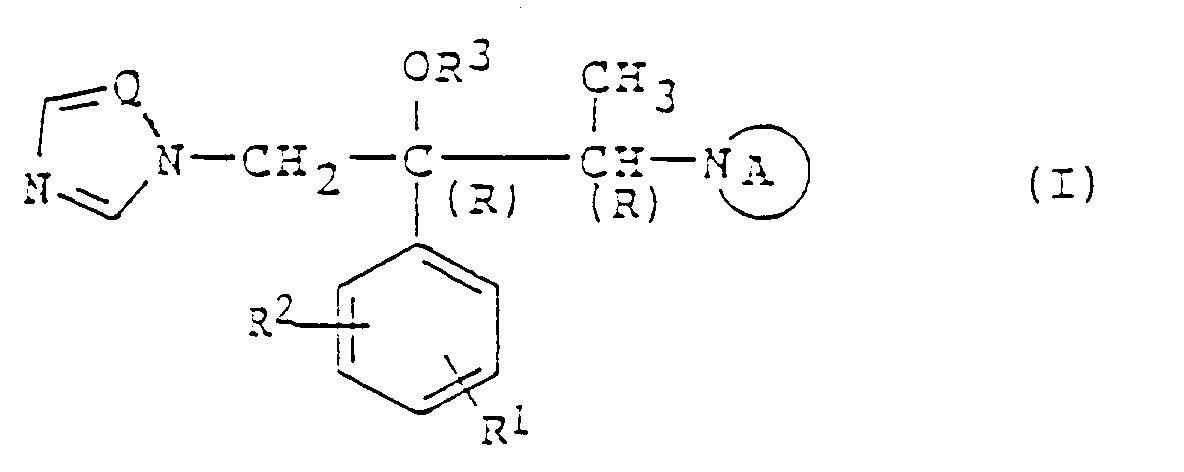
wherein R¹ and R² are independently a hydrogen atom, a halogen atom, a haloalkyl group, a haloalkoxy group or an optionally substituted nitrogen-containing heterocyclic group; R³ is a hydrogen atom or an acyl group; Q is CH or N; 
is a nitrogen-containing aromatic five-membered heterocyclic group having at least two adjacent nitrogen atoms as the ring-constituting atoms which may be substituted, or an aromatic condensed heterocyclic group having two or more nitrogen atoms as the ring-constituting atoms which may be substituted; and (R) shows that the carbon atom marked with (R) has R-configuration; provided that either of R¹ and R² is an optionally substituted nitrogen-containing heterocyclic group when 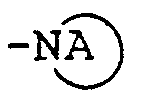
is an 1H-1,2,4-triazol-1-yl group, or a salt thereof, which is useful as an antifungal agent.
wherein R¹ and R² are independently a hydrogen atom, a halogen atom, a haloalkyl group, a haloalkoxy group or an optionally substituted nitrogen-containing heterocyclic group; R³ is a hydrogen atom or an acyl group; Q is CH or N;
is a nitrogen-containing aromatic five-membered heterocyclic group having at least two adjacent nitrogen atoms as the ring-constituting atoms which may be substituted, or an aromatic condensed heterocyclic group having two or more nitrogen atoms as the ring-constituting atoms which may be substituted; and (R) shows that the carbon atom marked with (R) has R-configuration; provided that either of R¹ and R² is an optionally substituted nitrogen-containing heterocyclic group when
is an 1H-1,2,4-triazol-1-yl group, or a salt thereof, which is useful as an antifungal agent.
Description
- The present invention relates to optically active azole compounds useful as antifungal agents, their production and use thereof.
- Various compounds have been known as antifungal agents. For example, azole derivatives were disclosed as compounds having antifungal activities, e.g., in GB 2,159,148, EPA-19,557 and USP 4,957,934. In particular, fluconazole[2-(2,4-difluorophenyl)-1,3-bis(1H-1,2,4-triazol-1-yl)-2-propanol] is known as a typical commercially available product. These compounds are, however, not satisfactory in their therapeutic effects, because they have various problems such as potency of antifungal activities, antifungal spectrum, bioavailability, occurrence of side effects, superinfection and acquisition of drug-resistance.
- It would be clear that compounds having higher safety and more potent antifungal activities are desired as therapeutic agents of fungal diseases.
- The present invention is to provide an optically active azole compound represented by the formula (I):

wherein R¹ and R² are each independently a hydrogen atom, a halogen atom, a haloalkyl group, a haloalkoxy group or an optionally substituted nitrogen-containing heterocyclic group; R³ is a hydrogen atom or an acyl group; Q is CH or N;
is a nitrogen-containing aromatic five-membered heterocyclic group having at least two adjacent nitrogen atoms as the ring-constituting atoms which may be substituted, or an aromatic condensed heterocyclic group having two or more nitrogen atoms as the ring-constituting atoms which may be substituted; and (R) shows that the carbon atom marked with (R) has R-configuration; provided that either of R¹ and R² is an optionally substituted nitrogen-containing heterocyclic group when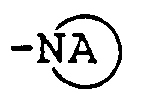
is an 1H-1,2,4-triazol-1-yl group, or a salt thereof. - The present invention also provides an antifungal composition which comprises an effective amount of an optically active azole compound (I) or its salt and a carrier, excipient or diluent, and further provides a process for preparing an optically active azole compound (I), or its salt.
- In the formula (I), the nitrogen-containing aromatic five-membered heterocyclic group having at least two adjacent nitrogen atoms as the ring-constituting atoms shown by

is suitably an aromatic five-membered heterocyclic group having two to four nitrogen atoms as the ring-constituting atoms where at least two nitrogen atoms are adjacent to each other, such as 1-pyrazolyl, 1H-1,2,4-triazol-1-yl, 4H-1,2,4-triazol-4-yl, 1H-1,2,3-triazol-1-yl, 2H-1,2,3-triazol-2-yl, 1H-tetrazol-1-yl, 2H-tetrazol-2-yl or the like. More suitable examples are the groups where all of two to four nitrogen atoms as the ring-constituting atoms are adjacent to each other, such as 1-pyrazolyl, 1H-1,2,3-triazol-1-yl, 2H-1,2,3-triazol-2-yl, 1H-tetrazol-1-yl, 2H-tetrazol-2-yl or the like. Preferable examples are the groups where all of three or four nitrogen atoms as the ring-constituting atoms are adjacent to each other, such as 1H-1,2,3-triazol -1-yl, 2H-1,2,3-triazol-2-yl, 1H-tetrazol-1-yl or 2H-tetrazol-2-yl, among which 1H-1,2,3-triazol-1-yl and 1H-tetrazol-1-yl are especially preferred. - The aromatic condensed heterocyclic group having two or more nitrogen atoms as the ring-constituting atoms shown by

is preferably a bicyclic or tricyclic aromatic condensed heterocyclic group having two to six nitrogen atoms as the ring-constituting atoms, such as 1H-1-indazolyl, 2H-2-indazolyl, 1H-1-benzotriazolyl, 2H-2-benzotriazolyl, 7H-7-purinyl, 9H-9-purinyl, 9H-9-β-carbolinyl, 2H-2-β-carbolinyl, 3H-3-imidazo[4,5-b]pyridyl, 1H-1-imidazo[4,5-b]pyridyl, 1H-1-pyrazolo[3,4-b]pyrimidinyl, 2H-2-pyrazolo[3,4-b]pyrimidinyl, 1-perimidinyl or the like. More preferable examples are a bicyclic aromatic condensed heterocyclic group having two to four nitrogen atoms as the ring-constituting atoms, such as 7H-7-purinyl, 9H-9-purinyl, 3H-3-imidazo[4,5-b]pyridyl, 1H-1-imidazo[4,5-b]pyridyl or the like. - The groups shown by

in the compound of the formula (I) may be substituted. Examples of such substituents are an optionally halogenated lower alkyl group, an optionally halogenated, haloalkylated or haloalkoxylated aryl group, an optionally halogenated, haloalkylated or haloalkoxylated arylalkenyl group, a halogen, an optionally esterified or amidated carboxyl group, a formyl group, a lower alkoxy group, an azolyl group, an azolyl lower alkyl group, a hydroxy lower alkyl group and the like. - The lower alkyl group in the optionally halogenated lower alkyl group, the azolyl lower alkyl group and the hydroxy lower alkyl group is preferably a straight or branched-chain C₁₋₆ (especially C₁₋₄) alkyl group, such as methyl, ethyl, propyl, isopropyl, butyl, isobutyl, sec-butyl, tert-butyl, pentyl, isopentyl, neopentyl, tert-pentyl, hexyl, isohexyl or the like.
- The aryl group in the optionally halogenated, haloalkylated or haloalkoxylated aryl group is exemplified by a C₆₋₁₄ aryl group such as phenyl, naphthyl, anthryl or phenanthryl, of which phenyl is especially preferred.
- The arylalkenyl group in the optionally halogenated, haloalkylated or haloalkoxylated arylalkenyl group is exemplified by a C₈₋₁₂ arylalkenyl group such as styryl, phenylpropenyl or naphthylvinyl, of which styryl is especially preferred.
- The halogen in the optionally halogenated lower alkyl group, the optionally halogenated aryl group and the halogen as the substituent on the group shown by

on the haloalkyl group or on the haloalkoxy group are preferably fluorine, chlorine, bromine or iodine, of which fluorine and chlorine are especially preferred. - The haloalkyl group in the optionally haloalkylated aryl group and the optionally haloalkylated arylalkenyl group is preferably a halogenated lower alkyl group as defined above. The preferable examples include trifluoromethyl, difluoromethyl, trichloromethyl, 2,2,2-trifluoroethyl, 2,2,2-trichloroethyl, 2,2,3,3-tetrafluoropropyl, 4,4,5,5-tetrafluoropentyl, 6,6,6-trifluorohexyl or the like. Trifluoromethyl and difluoromethyl are preferred.
- The haloalkoxy group in the optionally haloalkoxylated aryl group and the optionally haloalkoxylated arylalkenyl group is preferably a halogenated lower alkoxy group (a lower alkoxy group is as defined below). The preferable examples include trifluoromethoxy, difluoromethoxy, trichloromethoxy, 2,2,2-trifluoroethoxy, 2,2,2-trichloro ethoxy, 2,2,3,3-tetrafluoropropoxy, 4,4,5,5-tetrafluoro pentyloxy, 6,6,6-trifluorohexyloxy and the like. Trifluoromethoxy, difluoromethoxy and 2,2,2-trifluoroethoxy and 2,2,3,3-tetrafluoropropoxy are preferred.
- The optionally esterified or amidated carboxyl group is exemplified by carboxyl group, C₁₋₄ lower alkyloxycarbonyl group (e.g., methoxycarbonyl, ethoxycarbonyl, propoxycarbonyl or butoxycarbonyl), carbamoyl group and C₁₋₆ lower alkyl aminocarbonyl group (e.g., methylaminocarbonyl, dimethylaminocarbonyl, butylaminocarbonyl or dipropylaminocarbonyl), of which carboxyl, methoxycarbonyl, ethoxycarbonyl and carbamoyl are preferred.
- The lower alkoxy group is preferably a straight or branched-chain C₁₋₆ (preferably C₁₋₃) alkoxy group such as methoxy, ethoxy, propoxy, isopropoxy, butoxy, isobutoxy pentyloxy or the like.
- The azolyl group and that in the azolyl lower alkyl groups are preferably 1-imidazolyl or the nitrogen-containing aromatic heterocyclic group exemplified by

more preferably 1-imidazolyl or 1H-1,2,4-triazol-1-yl. - The halogen and that in the haloalkyl or haloalkoxy group with respect to R¹ or R² are exemplified by fluorine, chlorine, bromine or iodine, of which fluorine and chlorine are preferred and fluorine is more preferred.
- The alkyl group in the haloalkyl group is suitably a straight or branched-chain C₁₋₆ alkyl group such as methyl, ethyl, propyl, isopropyl, butyl, isobutyl, sec-butyl, tert-butyl, pentyl, isopentyl, neo-pentyl, tert-pentyl, hexyl or isohexyl. More suitable examples are straight or branched-chain C₁₋₄ alkyl groups such as methyl, ethyl, propyl, isopropyl, butyl, isobutyl, sec-butyl or tert-butyl. Preferable examples are straight or branched-chain C₁₋₃ alkyl groups such as methyl, ethyl, propyl or isopropyl.
- The haloalkyl group preferably has one to eight halogens, more preferably one to three halogens.
- Preferable examples of the haloalkyl groups are trifluoromethyl, difluoromethyl, trichloromethyl, 2,2,2-trifluoroethyl, 2,2,2-trichloroethyl, 2,2,3,3-tetrafluoropropyl, 4,4,5,5-tetrafluoropentyl, 6,6,6-trifluorohexyl and the like. More preferable ones are trifluoromethyl, difluoromethyl, trichloromethyl, 2,2,2-trifluoroethyl, 2,2,2-trichloroethyl and 2,2,3,3-tetrafluoropropyl. Most preferable ones are trifluoromethyl and difluoromethyl.
- The alkoxy group in the haloalkoxy group is suitably a straight or branched-chain C₁₋₆ alkoxy group such as methoxy, ethoxy, propoxy, isopropoxy, butoxy, isobutoxy, sec-butoxy, tert-butoxy, pentyloxy, isopentyloxy, neopentyloxy or hexyloxy. More suitable examples are straight or branched-chain C₁₋₄ alkoxy groups such as methoxy, ethoxy, propoxy, isopropoxy, butoxy, isobutoxy, sec-butoxy and tert-butoxy. Preferable examples are straight or branched-chain C₁₋₃ alkoxy groups such as methoxy, ethoxy, propoxy and isopropoxy.
- The haloalkoxy group preferably has one to eight halogens, more preferably one to three halogens.
- Preferable examples of the haloalkoxy groups are trifluoromethoxy, difluoromethoxy, trichloromethoxy, 2,2,2-trifluoroethoxy, 2,2,2-trichloroethoxy, 2,2,3,3-tetrafluoropropoxy, 4,4,5,5-tetrafluoropentyloxy, 6,6,6-trifluorohexyloxy and the like. More preferable ones are trifluoromethoxy, difluoromethoxy, trichloromethoxy, 2,2,2-trifluoroethoxy, 2,2,2-trichloroethoxy and 2,2,3,3-tetrafluoropropoxy. Most preferable ones are trifluoromethoxy and difluoromethoxy.
- The nitrogen-containing heterocyclic group in the optionally substituted nitrogen-containing heterocyclic group shown by R¹ or R² is suitably a 5- or 6-membered heterocyclic group having one to four nitrogen atoms or an azetidinyl group, which may form a condensed ring together with an aromatic or non-aromatic 5- or 6-membered carbon ring (e.g., benzene, cyclohexane, cyclohexene, cyclopentane and cyclopentene). Examples of such heterocyclic groups are 1-benzimidazolyl, 1-indolinyl, 1H-indazol-1-yl, 3-azabicyclo[3.3.0]octo-1,4-dien-3-yl, 3-azabicyclo[4.3.0]nona-1,4-dien-3-yl, 1-imidazolyl, 1-pyrrolyl, 1-pyrazolyl, 1H-1,2,4-triazol-1-yl, 4H-1,2,4-triazol-4-yl, 2H-1,2,3-triazol-2-yl, 1H-1,2,3-triazol-1-yl, 1H-tetrazol-1-yl, 2H-tetrazol-2-yl and the like.
- Preferable examples are 5- or 6-membered heterocyclic groups having one to four nitrogen atoms, which may form a condensed ring together with an aromatic or non-aromatic 6-membered carbon ring (e.g., benzene, cyclohexane, cyclohexene), specifically such as 1-benzimidazolyl, 1-indolyl, 1H-indazol-1-yl, 3-azabicyclo[4.3.0]nona-1,4-diene-3-yl, 1-imidazolyl, 1-pyrrolyl, 1-pyrazolyl, 1H-1,2,4-triazol-1-yl, 4H-1,2,4-triazol-4-yl, 1H-1,2,3-triazol-1-yl, 2H-1,2,3-triazol-2-yl, 1H-tetrazol-1-yl, 2H-tetrazol-2-yl and the like.
- Most preferable examples are aromatic 5- or 6-membered heterocyclic groups having one to three nitrogen atoms, which may form a condensed ring together with a benzene ring, specifically such as 1-benzimidazolyl, 1-indolyl, 1H-indazol-1-yl, 1-imidazolyl, 1-pyrrolyl, 1-pyrazolyl, 1H-1,2,4-triazol-1-yl, 4H-1,2,4-triazol-4-yl, 1H-1,2,3-triazol-1-yl, 2H-1,2,3-triazol-2-yl, 1H-tetrazol-1-yl, 2H-tetrazol-2-yl and the like.
- The substituent in the optionally substituted nitrogen-containing heterocyclic group shown by R¹ or R² is preferably an optionally halogenated lower alkyl group, an aryl group, a halogen and the like.
- The lower alkyl group in the optionally halogenated lower alkyl group is preferably a straight or branched-chain C₁₋₆ (more preferably C₁₋₄) alkyl group, specifically such as methyl, ethyl, propyl, isopropyl, butyl, isobutyl, sec-butyl, tert-butyl, pentyl, isopentyl, neopentyl, tert-pentyl, hexyl, isohexyl and the like.
- The halogen as the substituent on the nitrogen-containing heterocyclic group and that in the optionally halogenated lower alkyl group is preferably fluorine, chlorine, bromine or the like.
- The halogenated lower alkyl group is preferably a lower alkyl group substituted with one to three halogens such as trifluoromethyl, difluoromethyl, 2,2,2-trifluoroethyl, trichloromethyl, bromomethyl or the like, more preferably a lower alkyl group substituted with one to three fluorine atoms such as trifluoromethyl, difluoromethyl, 2,2,2-trifluoroethyl or the like.
- The aryl groups are preferably a C₆-₁₄ aryl group such as phenyl, naphthyl, anthryl, phenanthryl or the like, more preferably a C₆₋₁₀ aryl group such as phenyl or naphthyl.
- The substituent on the above-mentioned nitrogen-containing heterocyclic group is preferably a C₁₋₆ lower alkyl group.
- The number of substituents in the nitrogen-containing heterocyclic group is one to four, preferably one to three.
- Each of R¹ and R² is preferably a hydrogen atom, a halogen atom, a haloalkyl group or a haloalkoxy group. In particular, it is preferred that any one of R¹ and R² is a halogen atom and the other is a hydrogen atom or a halogen atom. The halogen atom is fluorine, chlorine, bromine or iodine, preferably fluorine or chlorine, more preferably fluorine. The halogen atom is preferably bonded at 2- and/or 4-position(s).
- The acyl group shown by R³ is an acyl group derived from an organic carboxylic acid, for example, an alkanoyl group, preferably a C₁₋₇ alkanoyl group (e.g., formyl, acetyl, propionyl, butyryl, isobutyryl, valeryl, isovaleryl, hexanoyl and heptanoyl), more preferably a C₁₋₃ alkanoyl group; an arylcarbonyl group, preferably a C₇₋₁₅ arylcarbonyl group (e.g., benzoyl and naphtoyl), more preferably a C₇₋₁₁ arylcarbonyl group; an alkoxycarbonyl group, preferably a C₂₋₇ alkoxycarbonyl group (e.g., methoxycarbonyl, ethoxycarbonyl, propoxycarbonyl, isopropoxycarbonyl, butoxycarbonyl, isobutoxycarbonyl, sec-butoxycarbonyl, tert-butoxycarbonyl, pentyloxycarbonyl and hexyloxycarbonyl), more preferably a C₂₋₄ alkoxycarbonyl group; an aryloxycarbonyl, preferably a C₇₋₁₅ aryloxycarbonyl group (e.g., phenoxycarbonyl and naphtyloxycarbonyl), more preferably a C₇₋₁₁ aryloxycarbonyl group; an aralkylcarbonyl group, preferably a C₈₋₂₀ aralkylcarbonyl group (e.g., benzylcarbonyl, phenethylcarbonyl, phenylpropylcarbonyl and naphthylcarbonyl), more preferably a C₈₋₁₄ aralkylcarbonyl group. All these groups may be substituted with one to three appropriate substituents. Examples of such substituents include the lower alkyl group, the aryl group and the halogen atom in the above-mentioned nitrogen-containing heterocyclic group.
- Preferred acyl groups are those which are hydrolyzable in vivo. Examples of such acyl groups are formyl, acetyl, benzoyl, benzylcarbonyl and the like.
- The group shown by the formula:

wherein the symbol is defined as above,
is specifically exemplified by 1-imidazolyl and 1H-1,2,4-triazol-1-yl, the latter of which is preferable. - The present invention further provides a compound shown by the formula (I'):
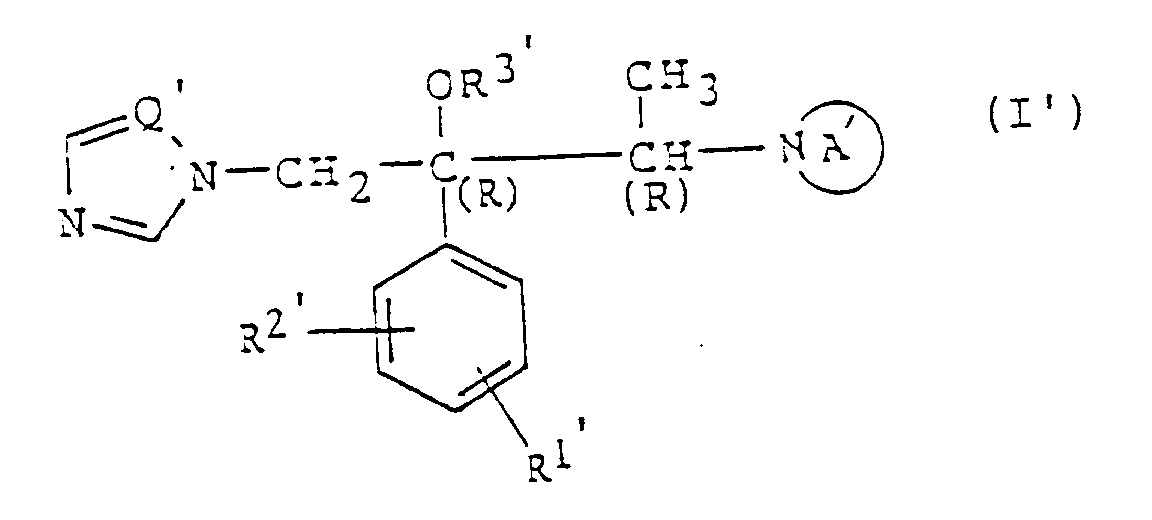
wherein R1' and R2' are a fluorine atom or an optionally substituted nitrogen-containing heterocyclic group, R3' is a hydrogen atom or an acyl group, Q' is CH or N,
is an aromatic five-membered heterocyclic group having at least two adjacent nitrogen atoms as the ring-constituting atoms, and (R) shows that a carbon atom marked with (R) has R-configuration; provided that at least one of R1' and R2' is an optionally substituted nitrogen-containing heterocyclic ring when
is 1H-1,2,4-triazol-1-yl group, or a salt thereof. - The optionally substituted nitrogen-containing heterocyclic group shown by R1' and R2' has the same meaning as the above-mentioned corresponding group of R¹ and R². The acyl group shown by R3' has the same meaning as the above-mentioned corresponding group of R³. The aromatic five-membered heterocyclic group having at least two adjacent nitrogen atoms as the ring-constituting atoms with respect to

has the same meaning as the above-mentioned corresponding group of
The above aromatic five-memebered heterocyclic group may possess the same substituent(s) as mentioned in the corresponding group of
- The compound of the formula (I) or its salt is prepared according to the following by methods.
- The compound of the formula (I) where R³ is a hydrogen atom, or its salt can be prepared by reacting a compound of the formula (II):

where (S) shows that the carbon atom marked with (S) has S-configuration, and the other symbols are defined as above, or its salt with a compound of the formula (III):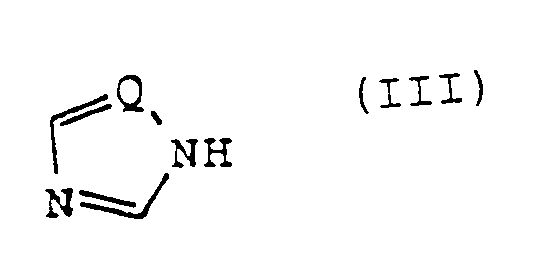
where the symbol is defined as above, or its salt. - The reaction can usually be conducted in a solvent which does not impede the reaction. Examples of the solvents are water, ketones (e.g., acetone), sulfoxides (e.g., dimethylsulfoxide), ethers (e.g., diethyl ether, tetrahydrofuran and dioxane), nitriles (e.g., acetonitrile), hydrocarbons (e.g., benzene, toluene, hexane and xylene), halogenated hydrocarbons (e.g., dichloromethane, chloroform and 1,2-dichloroethane), esters (e.g., ethyl acetate), amides (e.g., dimethylformamide, acetamide and dimethylacetamide), and ureylenes (e.g., 1,3-dimethyl-2-imidazolidinone).
- These solvents can be used either alone or in two or more combination in an appropriate ratio.
- The reaction is preferably performed in the presence of a base such as an alkali metal hydroxide (e.g., sodium hydroxide or potassium hydroxide), alkali metal hydride (e.g., sodium hydride or potassium hydride), alkali metal carbonate (e.g., lithium carbonate, sodium hydrogencarbonate, cesium carbonate, potassium carbonate or sodium carbonate), organic acid salt (e.g., sodium acetate), alkali metal alcoholate (e.g., sodium methylate or potassium tert-butylate), tetrabutyl ammonium fluoride, bis(tri-n-butyltin)oxide and the like.
- The desired compound can also be obtained by using a metal salt (e.g., sodium or potassium salt) of the compound (III) instead of the compound (III) itself and conducting the reaction in the above-mentioned solvent.
- The amount of the base to be used is about 0.001 to 100 equivalents, preferably about 0.01 to 50 equivalents, to the compound (II).
- The amount of the compound (III) or its salt is generally about 1 to 100 equivalents, preferably about 1 to 50 equivalents, to the compound (II) or its salt.
- The reaction temperature is not particularly limited but ranges usually from about 0°C to about 150°C, preferably from about 10°C to about 120°C.
- The reaction time is about several minutes to several ten hours, for example, 5 minutes to 50 hours.
- A compound of the formula (I) where R³ is a hydrogen atom, or its salt can also be prepared by reacting a compound of the formula (IV):

where the symbols have the same meanings as above, or its salt with a compound of the formula (V):
where the symbol has the same meaning as above, or its salt. - The reaction can usually be conducted in a solvent which does not impede the reaction. Examples of such solvents are water, ketones (e.g., acetone), sulfoxides (e.g., dimethylsulfoxide), ethers (e.g., tetrahydrofuran, dioxane or diethylether), nitriles (e.g., acetonitrile), hydrocarbons (e.g., benzene, toluene, hexane or xylene), halogenated hydrocarbons (e.g., dichloromethane, chloroform or 1,2-dichloroethane), esters (e.g., ethyl acetate), amides (e.g., acetamide, dimethylformamide or dimethylacetamide), ureylenes (e.g., 1,3-dimethyl-2-imidazolidinone) and the like.
- These solvents can be used either alone or in two or more combination in an appropriate ratio.
- The reaction is preferably performed in the presence of a base such as an alkali metal hydroxide (e.g., sodium hydroxide or potassium hydroxide), alkali metal hydride (e.g., sodium hydride or potassium hydride), alkali metal carbonate (e.g., lithium carbonate, sodium hydrogencarbonate, cesium carbonate, potassium carbonate or sodium carbonate), organic salt (e.g., sodium acetate), alkali metal alcoholate (e.g., sodium methylate or potassium tert-butylate), tetrabutylammonium fluoride or bis(tri-n-butyltin)oxide.
- The amount of the base to be used is usually about 0.001 to 100 equivalents, preferably about 0.01 to 50 equivalents, to the compound (IV).
- The amount of the compound (V) or its salt is about 1 to 100 equivalents, preferably about 1 to 50 equivalents, to the compound (IV) or its salt.
- The reaction temperature is not particularly limited but ranges usually from about 0°C to about 150°C, preferably from about 10°C to about 120°C.
- The reaction time is about several minutes to several hundred hours, preferably, for example, 5 minutes to 50 hours.
- The compound of the formula (I) where at least one of R¹ and R² is an optionally substituted aromatic heterocyclic group which bonds to the phenyl group by means of a nitrogen atom, or its salt can be prepared by reacting a compound of the formula (VI):

where the symbols have the same meanings as defined above, or its salt, with a compound of the formula (VII):
where
is an optionally substituted nitrogen-containing heterocyclic group, or its salt. - An optionally substituted nitrogen-containing heterocyclic group is as defined in R¹ and R².
- The reaction can usually be conducted in a solvent which does not impede the reaction. Examples of such solvents are ketones (e.g., acetone), sulfoxides (e.g., dimethylsulfoxide), ethers (e.g., dioxane, tetrahydrofuran or diethylether), nitriles (e.g., acetonitrile), hydrocarbons (e.g., benzene, toluene, hexane or xylene), halogenated hydrocarbons (e.g., dichloromethane, chloroform or 1,2-dichloroethane), esters (e.g., ethyl acetate), amides (e.g., acetamide, dimethylformamide or dimethylacetamide), and ureylenes (e.g., 1,3-dimethyl-2-imidazolidinone).
- These solvents can be used either alone or in two or more combination in an appropriate ratio.
- The reaction is effectively conducted in the presence of a base such as an alkali metal hydride (e.g., sodium hydride or potassium hydride), alkali metal carbonate (e.g., lithium carbonate, sodium hydrogencarbonate, cesium carbonate, potassium carbonate or sodium carbonate), organic acid salt (e.g., sodium acetate) or alkali metal alcoholate (e.g., sodium methylate or potassium tert-butylate).
- The amount of the base to be used is usually about 0.1 to 10 equivalents, preferably about 1 to 5 equivalents, to the compound (VI).
- The amount of the compound (VII) or its salt to be used is about 1 to 100 equivalents, preferably about 1 to 50 equivalents, to the compound (VI) or its salt.
- The reaction temperature is not particularly limited but ranges usually from about 0°C to about 200°C, preferably from about 10°C to about 150°C.
- The reaction time is about several minutes to several ten hours, preferably, for example, 5 minutes to 50 hours.
- The compound of the formula (I) where R³ is an acyl group, or its salt can be prepared by reacting a compound of the formula (I) where R³ is a hydrogen atom, i.e., a compound of the formula (VIII):

where the symbols have the same meanings as defined above, or its salt, with a compound shown by the formula (IX):
R³―W (IX)
where R³ is defined as above, and W is a halogen (e.g., chlorine or bromine), or OR⁴ [where R⁴ is an acyl group, preferably an alkanoyl group such as acetyl or propionyl], or its salt. - The reaction can usually be conducted, using no solvent or a solvent which does not impede the reaction. Examples of such solvents are ketones (e.g., acetone), sulfoxides (e.g., dimethylsulfoxide), ethers (e.g., dioxane, tetrahydrofuran or diethylether), nitriles (e.g., acetonitrile), hydrocarbons (e.g., benzene, toluene, hexane or xylene), halogenated hydrocarbons (e.g., dichloromethane, chloroform or 1,2-dichloroethane), esters (e.g., ethyl acetate), amides (e.g., acetamide, dimethylformamide or dimethylacetamide), and ureylenes (e.g., 1,3-dimethyl-2-imidazolidinone) and the like.
- These solvents can be used either alone or in two or more combination in an appropriate ratio.
- The reaction is preferably performed in the presence of a base such as a tertiary amine (e.g., an aliphatic tertiary amine such as triethylamine, or an aromatic tertiary amine such as pyridine or 4-dimethylaminopyridine or α-, β- or γ-picoline).
- The amount of the base to be used is usually about 0.001 to 100 equivalents, preferably about 0.01 to 5 equivalents, to the compound (VIII).
- The amount of the compound (IX) or its salt to be used is about 1 to 100 equivalents, preferably about 1 to 50 equivalents, to the compound (VIII) or its salt.
- The reaction temperature is not particularly limited but ranges usually from about -20°C to about 200°C, preferably from about -10°C to about 150°C.
- The reaction time is about several minutes to several ten hours, preferably, for example, 5 minutes to 50 hours.
- The compound of the formula (I) or its salt can be prepared by subjecting a compound of the formula (X):

where the symbols have the same meanings as above, or its salt to decarboxylation. - The reaction can usually be conducted, using no solvent or a solvent which does not impede the reaction. Examples of such solvents are water, ketones (e.g., acetone), sulfoxides (e.g., dimethylsulfoxide), ethers (e.g., dioxane), nitriles (e.g., acetonitrile), hydrocarbons (e.g., toluene, xylene or mesitylene), halogenated hydrocarbons (e.g., tetrachloroethane), amides (e.g., dimethylacetamide), ureylenes (e.g., 1,3-dimethyl-2-imidazolidinone) and the like.
- The reaction temperature is not particularly limited but ranges usually from about 80°C to about 300°C, preferably from about 100°C to about 250°C.
- The reaction time is about several minutes to several ten hours, preferably, for example, 5 minutes to 50 hours.
- The compound of the formula (I), where

is an optionally substituted 1H-1,2,3-triazol-1-yl group, or its salt can be prepared by reacting a compound of the formula (XI):
where the symbols have the same meanings as defined above, or its salt, with a compound shown by the formula (XII):
R⁵―C≡CH (XII)
where R⁵ is a hydrogen atom or a substituent which
may have, or its salt. - The reaction can usually be conducted, using no solvent or a solvent which does not impede the reaction. Examples of such solvents are ketones (e.g., acetone), sulfoxides (e.g., dimethylsulfoxide), ethers (e.g., dioxane or tetrahydrofuran), hydrocarbons (e.g., benzene, toluene, xylene or mesitylene), esters (e.g., ethyl acetate), amides (e.g., acetamide, dimethylformamide or dimethylacetamide), ureylenes (e.g., 1,3-dimethyl-2-imidazolidinone) and the like.
- These solvents can be used either alone or in two or more combination in an appropriate ratio.
- The amount of the compound (XII) to be used is about 1 to 100 equivalents, preferably about 1 to 50 equivalents, to the compound (XI) or its salt.
- The reaction temperature is not particularly limited but it ranges usually from about 20°C to about 200°C, preferably from about 80°C to about 150°C.
- The reaction time is about 1 hour to several ten hours, preferably, for example, 1 hour to 50 hours.
- The compound of the formula (I), where

is 1H-1,2,3-triazol-1-yl group which is substituted with an optionally halogenated, haloalkylated or haloalkoxylated arylalkenyl group, or its salt can be prepared by reacting a compound of the formula (XIII):
where the symbols have the same meanings as defined above, or its salt, with a compound shown by the formula (XIV):
where n is an integer of 0 to 2, Ar is an optionally halogenated, haloalkylated or haloalkoxylated aryl group as defined above, Ph is a phenyl group and X is a halogen (e.g., chlorine, bromine or iodine) in the presence of a base. - The reaction can usually be conducted in a solvent which does not impede the reaction. Examples of such solvents are sulfoxides (e.g., dimethylsulfoxide), ethers (e.g., dioxane or tetrahydrofuran), hydrocarbons (e.g., benzene or toluene) and the like.
- These solvents can be used either alone or in two or more combination in an appropriate ratio.
- Examples of the bases to be used are alkali metal hydrides (e.g., sodium hydride or potassium hydride), alkali metal alcoholates (e.g., potassium tert-butylate), alkyl metals (e.g., butyl lithium), alkyl metal amides (e.g., lithium diisopropylamide) and the like.
- The amount of the base to be used is usually about 0.5 to 10 equivalents, preferably about 1 to 2 equivalents, to the compound (XIV).
- The amount of the compound (XIV) or its salt to be used is about 1 to 10 equivalents, preferably about 1 to 2 equivalents, to the compound (XIII) or its salt.
- The reaction temperature is not particularly limited but ranges usually from about -78°C to about 100°C, preferably from about -78°C to about 40°C.
- The reaction time is about several minutes to several ten hours, preferably, for example, 15 minutes to 1 hour.
- The compound of formula (I) can also be used in the form of a salt, preferably a physiologically acceptable salt. Examples of the salts include inorganic acid salts such as hydrochloride, hydrobromide, sulfate, nitrate or phosphate; organic acid salts such as acetate, tartarate, citrate, fumarate, maleate, toluenesulfonate or methanesulfonate.
- The salts of the compounds (II) to (XIII) are the same as those of the compound (I).
- The resultant compound (I) or its salt can be isolated and purified from the reaction mixture by a conventional isolation and purification procedure such as extraction, concentration, neutralization, filtration, crystallization, recrystallization, column chromatography and thin-layer chromatography.
- The salt of the compound (I) can be prepared by reacting the compound (I) in a suitable solvent with the aforementioned inorganic acid or organic acid according to per se known procedures.
- The compound of the formula (II) as an intermediate product in the present invention, or its salt can be prepared with the method shown by the following reaction scheme.

where THP is tetrahydropyranyl group, Me is methyl group, Et is ethyl group, Pr is propyl group, Ph is phenyl group, and R¹, R²,
(R) and (S) are defined as above. - The starting compound (XV) in the above reaction can be prepared by the method disclosed in EP 421 210 A2, or it similar method as shown by the following reaction scheme.

where X is a halogen (e.g., bromine or iodine), the other symbols have the same meanings as defined above. - The compound of the formula (IV) as an intermediate in the present invention, or its salt can be prepared with the method shown by the following reaction scheme.

where the symbols have the same meanings as defined above. - The compound of the formula (XVI) as an intermediate in the above reaction scheme, or its salt can easily be prepared with the method shown by the following reaction scheme.

where the symbols have the same meanings as defined above. - The compound of the formula (IV) can also be prepared with the method shown by the following reaction scheme.

where each symbol is defined as above. - The compound of formula (VI'), which is a compound of the formula (VI) where

is 1H-1,2,4-triazol-1-yl group, and R³ is a hydrogen atom, or its salt can be prepared by the method shown by the following reaction scheme.
The compound of the formula (X'), which is a compound of the formula (X) where
is an 1H-1,2,3-triazol-1-yl group, and R³ is a hydrogen atom, or its salt can be prepared by the method shown by the following reaction scheme.
where R⁶ is a C₁₋₆ lower alkyl group (e.g., methyl, ethyl or propyl). - The compound of the formula (XIII) as an intermediate in the present invention, or its salt can be prepared by the method shown by the following reaction scheme.

The compound (I) has at least two asymmetric carbon atoms in the molecule; hence there are at least further three kinds of stereoisomers (XXVIII a-c, see the following formulas) besides the compound (I).
Of these four stereoisomers, the compound (I) of (2R,3R)-configuration that the present invention is to provide is optically active and most effective as an antifungal agent. - The compound (I), and its salt, having low toxicity and potent antifungal activities with broad spectra can be used for prevention and treatment of fungal infections in human beings, domestic animals and fowls. The compound (I) or its salt is effective particularly for Candida infection, Aspergillus infection, and Cryptococcus infection. The compound (I) and its salt can also be used as antifungal preparations for agricultural use.
- The compound (I) or its salt can safely be administered to human beings, e.g., orally or parenterally, in per se or in the form of a pharmaceutically acceptable preparation [e.g., injectable preparations, oral preparations (e.g., tablets, capsules, granules, powders, etc.) external (e.g., nasal, dermatological) preparations, suppositories (e.g., rectal, vaginal), and so on] in admixture with a pharmaceutically acceptable carrier, excipient or diluent.
- These preparations can be manufactured by using per se known method in the field of pharmaceutics.
- When the compound (I) or its salt is to be processed into an injectable preparation, the injectable preparations may be in the form of oily or aqueous suspension, solution or emulsion, and may contain per se known various additives.
- Examples of the additives are a dispersing agent [e.g., Tween 80 (Atlas Powder, U.S.A.), HCO-60 (Nikko Chemicals, Japan), carboxymethylcellulose, sodium alginate, etc], a preservative (e.g., methyl-paraben, propyl-paraben, benzyl alcohol, chlorobutanol, etc.), an isotonizing agent (e.g., sodium chloride, glycerin, sorbitol, glucose, etc.), a vegetable oil (e.g., olive oil, sesame oil, peanut oil, cottonseed oil, corn oil, etc.), propylene glycol or the like.
- When the compound (I) or its salt is processed into an oral preparation by a per se known method, the compound (I) or its salt is mixed with an excipient (e.g., lactose, sucrose, starch, etc.), disintegrating agent (e.g., starch, calcium carbonate, etc.), binder (e.g., starch, gum arabic, carboxymethylcellulose, polyvinylpyrrolidone, hydroxypropylcellulose, etc.) or/and lubricant (e.g., talc, magnesium stearate, polyethyleneglycol 6000, etc.), and the mixtures are compressed in molds, and then if necessary, the preparations may be coated by a per se known method for the purpose of masking of the taste or providing them with enteric or sustained release property. Usable as coating agents are, for example, hydroxypropylmethylcellulose, ethylcellulose, hydroxymethylcellulose, hydroxypropylcellulose, polyoxyethylene glycol, tween 80, Pluornic F68, cellulose acetate phthalate, hydroxypropylmethylcellulose phthalate, hydroxymethylcellulose acetate succinate, Eudragit (Roehm, Germany; methacrylic acid-acrylic acid copolymer) and pigments such as titanium oxide and ferric oxide.
- To manufacture external preparations from the compound (I) or its salt, they are provided solid, semi-solid or liquid state in the conventional manner. To manufacture the solid external preparation for instance, the compound (I) or its salt either as they are or together with an excipient (e.g., glucose, mannitol, starch, microcrystalline cellulose, etc.) and/or thickener (e.g., natural mucilages, cellulose derivatives, polyacrylates, etc.) are processed into a powdery composition. To make a liquid external preparation, the compound (I) or its salt is processed into an oily or aqueous suspension, solution or emulsion in substantially the same manner as in the case of injections. The semi-solid preparation may be an aqueous or oily gel or ointment. In any case, there may be added a pH adjusting agent (e.g., carbonic acid, phosphoric acid, citric acid, hydrochloric acid, sodium hydroxide, etc.), a preservative (e.g., p-hydroxybenzoic acid esters, chlorobutanol, benzalkonium chloride, etc.), etc.
- A suppository of the compound (I) or its salt, whether in oily or aqueous solid or semi-solid state or in liquid state, can be produced in the per se conventional manner. The kind of oleagenous base for such composition is optional only if it will not dissolve the compound (I) or its salt. Thus, for example, higher fatty acid glycerides [e.g., cacao butter, Witepsol (Dynamit-Novel, Germany), etc.], intermediate fatty acids [e.g., Miglyol (Dynamit-Novel), etc.] and vegetable oils (e.g., sesame oil, soybean oil, cottonseed oil, etc.) may be mentioned. The aqueous base is examplified by polyethylene glycol and propylene glycol, while the aqueous gel base may be selected from among natural mucilages, cellulose derivatives, vinyl polymers, polyacrylates, etc.
- A daily dosage of the present compound (I) or its salt is not specifically limited, since it depends upon the state of infection, administration route and the like. In the case of the oral dose for treatment of Candida infection for an adult (50 kg weight), the daily dosage lies in the range of about 0.01 to 100 mg/kg per day, preferably about 0.1 to 50 mg/kg per day, more preferably about 0.1 to 20 mg/kg per day.
- The compound (I) or its salt can be used in an amount of about 0.1 to 100 mg per 1g of the external preparation, which can be used for sterilization or disinfection of skin and mucous membrane.
- In case of using the compound (I) or its salt as an agricultural antifungal preparation, examples of the preparations include emulsions, wettable powders, powders, granules and the like. These preparations can be formulated in accordance with a conventional method, e.g., by dissolving or dispersing the compound (I) or its salt in a suitable liquid carrier (e.g., solvent) or mixing it with or being adsorbing to a suitable solid carrier (e.g., diluent or dust diluent), and optionally adding an emulsifying agent, suspending agent, spreader, penerating agent, wetting agent, mucilage or stabilizing agent.
- Examples of the liquid carriers to be used are water, alcohols (e.g., methyl alcohol, ethyl alcohol, n-propyl alcohol, isopropyl alcohol or ethylene glycol), ethers (e.g., dioxane or tetrahydrofuran), aliphatic hydrocarbons (e.g., kerosene or fuel oil), aromatic hydrocarbons (e.g., benzene or toluene), halogenated hydrocarbons (e.g., methylene chloride or chloroform), acid amides (e.g., dimethylformamide or dimethylacetoamide), esters (e.g., ethyl acetate or butyl acetate), nitriles (e.g., acetonitrile or propionitrile). These carriers can be used singly or as a mixture thereof in which two or more carriers are mixed in a suitable ratio.
- Examples of the solid carriers are vegetable powders (e.g., soybean flour, tobacco flour or wheat flour), mineral powders (e.g., kaolin or bentonite), alumina, sulfur powders, activated charcoals or the like. These carriers may be used singly or as a mixture thereof in which two or more carriers are mixed in a suitable ratio.
- The amount of the compound (I) or its salt is, for example, about 25 to 150 g per 1 are, preferably about 40 to 80 g per are for prevention of blast.
- The present invention will be explained herebelow with reference to the following Reference Examples, Examples, Preparations and Experiments.
- ¹H-NMR spectra were measured with a 200 MHz spectrometer using tetramethylsilane as an internal standard. All the spectra are expressed in the unit ppm.
- The ratio of the solvent in the chromatography is a volume ratio. The symbol "%" represents parts by weight if not specified.
- The symbols as stated below in Reference Examples, Examples each have a meaning as follows:
s: singlet, d: doublet, t: triplet, q: quartet, dd: double doublet, m: multiplet, br: broad, J: coupling constant - To a solution of (1R)-1-[(2R)-2-(2,4-difluorophenyl)-2-oxiranyl]ethanol (16.1 g) in tetrahydrofuran (320 ml) were added triphenylphosphine (63.3 g), benzoic acid (29.5 g) and diethyl azodicarboxylate (42.0 g) under ice-cooling. The mixture was stirred for 6 hours at room temperature under argon atmosphere. To the reaction mixture were added ethyl acetate (800 ml) and water(500 ml). The separated aqueous layer was extracted with ethyl acetate (200 ml). The combined organic layers were washed with water and a saturated saline, dried over magnesium sulfate and concentrated. The residue was subjected to silica gel column chromatography (eluent: hexane/ethyl acetate = 15:1 → 7:1) for purification to give [(1S)-1-[(2R)-2-(2,4-difluorophenyl)-2-oxiranyl]ethyl] benzoate (19.2 g) as a colorless oily substance.
¹H-NMR(CDCl₃)δ : 1.37 (3H,d,J=6.6Hz), 2.90 (1H,d,J=5.2Hz), 3.28 (1H,d,J=5.2Hz), 5.36 (1H,q,J=6.6Hz), 6.74-6.94 (2H,m), 7.38-7.60 (4H,m), 7.94-8.01 (2H,m)
1725, 1615, 1600, 1505, 1450, 1425
This product (15.9 g) was dissolved in methanol (800 ml). To the solution was added 28% sodium methylate-methanol solution (12.9 ml) under ice-cooling. The mixture was stirred for six hours at room temperature. After addition of 1N hydrochloric acid (63.2 ml), the reaction mixture was distilled under reduced pressure. The residue was subjected to silica gel chromatography (eluent: hexane/ethyl acetate = 6:1 → 2:1) to give (1S)-1-[(2R)-2-(2,4-difluorophenyl)-2-oxiranyl]ethanol (9.7 g) as a colorless oily substance.
¹H-NMR(CDCl₃)δ : 1.20 (3H,dd,J=6.4,2.2Hz), 2.24 (1H,d,J=1Hz), 2.92 (1H,d,J=5Hz), 3.28 (1H,d,J=5Hz), 4.12 (1H,q,J=6.4Hz), 6.77-6.95 (2H,m), 7.34 (1H,m)
3420, 2980, 1615, 1600, 1500, 1425 - To a solution of (1S)-1-[(2R)-2-(2,4-difluorophenyl) -2-oxiranyl]ethanol (1.06 g) in dichloromethane (30 ml) was added diisopropylethylamine (1.01 ml) at -78°C under nitrogen atmosphere, to which trifluoromethanesulfonic anhydride (0.97 ml) was added dropwise over the period of 3 minutes. After stirring for 20 minutes at -78°C and for 20 minutes at -20°C, the mixture was concentrated to about 5 ml at -10°C. The concentrate was subjected to silica gel flash column chromatography (4 x 5 cm), eluting with dichloromethane-hexane (1:1). The fraction containing the product was concentrated to about 5 ml. The residue was added at -10°C to a solution of sodium salt of tetrazole prepared from tetrazole (371 mg), dimethylformamide (4.2 ml) and 60 % sodium hydride in oil (136 mg), and the mixture was stirred for 10 minutes at -10°C and for 20 minutes at 0°C. After addition of water (50 ml), the mixture was extracted four times with ethyl acetate (50 ml). The extract was washed twice with water (30 ml) and once with a saturated saline, dried over anhydrous magnesium sulfate and distilled under reduced pressure to give a colorless oily substance. The substance was purified by silica gel column chromatography (eluent: hexane/ethyl acetate = 4:1 → 1:1 → 2:1) to give (2S)-2-(2,4-difluorophenyl)-2-[(1R)-1-(2H-tetrazol-2-yl)ethyl]oxirane (0.42 g) and (2S)-2-(2,4-difluorophenyl)-2-[(1R)-1-(1H-tetrazol-1-yl)ethyl]oxirane (0.25 g), respectively.
- (2S)-2-(2,4-difluorophenyl)-2-[(1R)-1-(2H-tetrazol-2-yl)ethyl]oxirane: a colorless oily substance
¹H-NMR(CDCl₃)δ : 1.76 (3H,dd,J=7.2,1.2Hz), 2.93 (1H,d,J=4.6Hz), 2.98 (1H,d,J=4.6Hz), 5.41 (1H,q,J=7.2Hz), 6.72-7.15 (3H,m), 8.52 (1H,s)
EI-MS (m/z): 252 (M⁺)
3150, 3060, 1620, 1600, 1506, 1480
(2S)-2-(2,4-difluorophenyl)-2-[(1R)-1-(1H-tetrazol-1-yl)ethyl]oxirane: colorless prisms
mp: 118 - 122 °C
¹H-NMR(CDCl₃)δ : 1.69 (3H,dd,J=7.2,1.2Hz), 2.58 (1H,d,J=4.0Hz), 2.84 (1H,d,J=4.0Hz), 5.27 (1H,q,J=7.2Hz), 6.75-7.20 (3H,m), 8.71 (1H,s)
3150, 3060, 1620, 1600, 1506, 1489
EI-MS (m/z): 252 (M⁺) - Using (1S)-1-[(2R)-2-(2,4-difluorophenyl)-2-oxiranyl] ethanol (569 mg) and pyrazole, (2S)-2-(2,4-difluorophenyl)-2-[(1R)-1-(1H-pyrazol-1-yl)ethyl]oxirane (166 mg) was obtained by the same way as in Reference Example 2.
¹H-NMR(CDCl₃)δ : 1.57 (3H,dd,J=7.2,1.2Hz), 2.43 (1H,d,J=4.8Hz), 2.71 (1H,d,J=4.8Hz), 4.91 (1H,q,J=7.2Hz), 6.26 (1H,t,J=2Hz), 6.74-6.90 (2H,m), 7.01-7.18 (1H,m), 7.44 (1H,d,J=2Hz), 7.50 (1H,d,J=2Hz)
3081, 3025, 1618, 1600, 1508, 1480 - Using (1S)-1-[(2R)-2-(2,4-difluorophenyl)-2-oxiranyl] ethanol (497 mg) and 1H-1,2,3-triazole, (2S)-2-(2,4-difluorophenyl)-2-[(1R)-1-(2H-1,2,3-triazol-2-yl)ethyl]oxirane (150 mg) and (2S)-2-(2,4-difluorophenyl)-2-[(1R)-1-(1H-1,2,3-triazol-1-yl)ethyl]oxirane (204 mg) were obtained by the same way as in Reference Example 2.
- (2S)-2-(2,4-difluorophenyl)-2-[(1R)-1-(2H-1,2,3-triazol-2-yl)ethyl]oxirane: colorless prisms
¹H-NMR(CDCl₃)δ : 1.68 (3H,dd,J=7.2,1.2Hz), 2.83 (1H,d,J=4.6Hz), 2.86 (1H,d,J=4.6Hz), 5.17 (1H,q,J=7.2Hz), 6.69-6.86 (2H,m), 6.94-7.10 (1H,m), 7.61(2H,s)
3056, 2993, 1621, 1603, 1508, 1479
(2S)-2-(2,4-difluorophenyl)-2-[(1R)-1-(1H-1,2,3-triazol-1-yl)ethyl]oxirane: a colorless oily substance
¹H-NMR(CDCl₃)δ : 1.64 (3H,dd,J=7.2,1.2Hz), 2.46 (1H,d,J=4.4Hz), 2.76 (1H,d,J=4.4Hz), 5.32 (1H,q,J=7.2Hz), 6.80-6.95 (2H,m), 7.08-7.25 (1H,m), 7.67 (1H,d,J=1.2Hz), 7.77 (1H,d,J=1.2Hz)
3050, 2944, 1621, 1616, 1601, 1457 - To a solution of (1R)-1-[(2R)-2-(2,4-difluorophenyl)-2-oxiranyl]ethanol (15.43 g) in methylene chloride was added dropwise triethylamine (11.72 ml) under ice-cooling. To the mixture was added dropwise methanesulfonyl chloride (6.8 ml). The mixture was stirred for 45 minutes at room temperature, washed with water and a saturated aqueous sodium hydrogen carbonate solution and dried. The solvent was removed under reduced pressure. The residue was dissolved in N,N-dimethylformamide (50 ml) and used in the following reaction.
- Imidazole (7.4 g) was added portionwise to a dispersion of 60% sodium hydride in oil (4.3 g) in N,N-dimethylformamide (150 ml) under nitrogen atomosphere and ice-cooling. The mixture was stirred for 15 minutes. To the mixture which terminated hydrogen evolution was added the solution of the crude product in N,N-dimethylformamide obtained above. Then the mixture was stirred for 6 hours at room temperature. The reaction mixture was poured into ice water, and then extracted with ethyl acetate. The extract was washed with water, dried and distilled under reduced pressure. The residue was purified by silica gel column chromatography (silica gel 150 g, eluent: ethyl acetate/hexane= 3:1 → ethyl acetate/methanol= 19:1). The fraction containing the product was concentrated, followed by crystallization of the residne from hexane to give [(2R,3S)-2-(2,4-difluorophenyl)-3-methyl-2-[(1-imidazolyl)methyl]oxirane (15.1 g) as colorless needles.
mp: 76 - 78 °C
¹H-NMR(CDCl₃)δ : 1.61 (3H,d,J=5.2Hz), 3.15 (1H,q,J=5.2Hz), 4.17 (1H,d,J=14Hz), 4.64 (1H,d,J=14Hz), 6.66-6.83 (3H,m), 6.93-7.04 (2H,m), 7.29 (1H,s) - 1H-1,2,4-Triazole (5.4 g) was added portionwise to a stirred dispersion of 60 % sodium hydride in oil (2.86 g) in N,N-dimethylformamide (120 ml) under ice-cooling in a stream of nitrogen, followed by further stirring for 15 minutes. To the mixture which terminated evolution of hydrogen was added (2R,3S)-2-(2,4-difluorophenyl)-3-methyl-2-[(1H-1,2,4-triazol-1-yl)methyl]oxirane (9 g). The mixture was stirred for 12 hours at 80°C. After cooling, the reaction mixture was poured into ice water, and then extracted twice with ethyl acetate. The extract was washed with water and a saturated saline, dried and distilled under reduced pressure. To the residue was added diethyl ether. The precipitated crystals were collected by filtration, washed with a little amount of diethyl ether and dried to give (2R,3R)-1,3-bis(1H-1,2,4-triazol-1-yl)-2-(2,4-difluorophenyl)butan-2-ol (7.2 g) as colorless needles.
mp: 115 - 116 °C
¹H-NMR(CDCl₃)δ : 1.39 (3H,d,J=7.2Hz), 3.71 (1H,d,J=14Hz), 4.90 (1H,d,J=14Hz), 5.19 (1H,q,J=7.2Hz), 5.49 (1H,s), 6.75-6.86 (1H,m), 7.43-7.55 (2H,m), 7.73 (1H,s), 7.78 (1H,s), 8.00 (1H,s), 8.43 (1H,s) - Using (1S)-1-[(2R)-2-(2,4-difluorophenyl)-2-oxiranyl] ethanol (1.03 g) and purine (500 mg), (2S)-2-(2,4-difluorophenyl)-2-[(1R)-1-(9H-9-purinyl)ethyl]oxirane (600 mg) was obtained by the same way as in Reference Example 2.

3090, 3000, 1618, 1595, 1506
¹H-NMR(CDCl₃)δ : 1.68 (3H,d,J=7.2Hz), 2.39 (1H,d,J=4.4Hz), 2.71 (1H,d,J=4.4Hz), 5.58 (1H,q,J=7.2Hz), 6.82-6.99 (2H,m), 7.25-7.40 (1H,m), 8.15 (1H,s), 9.03 (1H,s), 9.17 (1H,s) - Using (1S)-1-[(2R)-2-(2,4-difluorophenyl)-2-oxiranyl] ethanol (981 mg) and 1H-imidazo[4,5-b]pyridine (472 mg), (2S)-2-(2,4-difluorophenyl)-2-[(1R)-1-(3H-3-imidazo [4,5-b]pyridyl)ethyl]oxirane (501 mg) and (2S)-2-(2,4-difluorophenyl)-2-[(1R)-1-(1H-1-imidazo[4,5-b]pyridyl) ethyl]oxirane (271 mg) were obtained by the same way as in Reference Example 2.
- (2S)-2-(2,4-difluorophenyl)-2-[(1R)-1-(3H-3-imidazo [4,5-b]pyridyl)ethyl]oxirane (501 mg)

3100, 1699, 1685, 1558
¹H-NMR(CDCl₃)δ : 1.65 (3H,d,J=7.4Hz), 2.36 (1H,d,J=4.6Hz), 2.66 (1H,d,J=4.6Hz), 5.66 (1H,q,J=7.4Hz), 6.81-6.98 (2H,m), 7.23-7.44 (2H,m), 8.09 (1H,dd,J=8.6, 1.4Hz), 8.11 (1H,s), 8.44 (1H,dd,J=4.8,1.4Hz)
(2S)-2-(2,4-difluorophenyl)-2-[(1R)-1-(1H-1-imidazo [4,5-b]pyridyl)ethyl]oxirane (271 mg)
3100, 3000, 1616, 1608, 1558
¹H-NMR(CDCl₃)δ : 1.73 (3H,dd,J=7.2,1.2Hz), 2.40 (1H,d,J=4.6Hz), 2.71 (1H,d,J=4.6Hz), 4.95 (1H,q,J=7.2Hz), 6.85-6.98 (2H,m), 7.04-7.33 (2H,m), 7.93 (1H,dd,J=8.2,1.6 Hz), 8.09 (1H,s), 8.62 (1H,dd,J=4.8,1.6Hz) - Using (1S)-1-[(2R)-2-(2,4-difluorophenyl)-2-oxiranyl] ethanol (1.17 g) and 1H-1,2,4-triazole (404 mg), (2S)-2-(2,4-difluorophenyl)-2-[(1R)-1-(1H-1,2,4-triazol-1-yl) ethyl]oxirane (830 mg) was obtained by the same way as in Reference Example 2.

3100, 3000, 1618, 1506
¹H-NMR(CDCl₃)δ : 1.62 (3H,d,J=7.2Hz), 2.64 (1H,d,J=4.4 Hz), 2.80 (1H,d,J=4.4Hz), 4.92 (1H,q,J=7.2Hz), 6.76-6.91 (2H,m), 7.01-7.18 (1H,m), 7.93 (1H,s), 8.11 (1H,s) - To a solution of (1S)-1-[(2R)-2-(2,4-difluorophenyl) -2-oxiranyl]ethanol (200 mg) in tetrahydrofuran (5 ml) were added triphenylphosphine (787 mg), tetrazole (210 mg) and diethyl azodicarboxylate (0.47 ml) at 0°C under argon atmosphere. The mixture was stirred for 16 hours at room temperature. To the reaction mixture were added ethyl acetate (30 ml) and water (15 ml). The separated aqueous layer was extracted with ethyl acetate (20 ml). The combined organic layers were washed with water and saturated saline, dried (MgSO₄) and concentrated. The residue was purified by silica gel column chromatography (eluent: hexane/ethyl acetate = 4:1 → 3:1 → 2:1) to give (2S)-2-(2,4-difluorophenyl)-2-[(1R)-1-(2H-tetrazol-2-yl) ethyl]oxirane (176 mg).
- Using (1S)-1-[(2R)-2-(2,4-difluorophenyl)-2-oxiranyl] ethanol (202 mg) and 1H-1,2,3-triazole (0.17 ml), (2S)-2-(2,4-difluorophenyl)-2-[(1R)-1-(2H-1,2,3-triazol-2-yl) ethyl]oxirane (172 mg) was obtained by the same way as in Reference Example 10.
- A solution of 2-[(1R)-1-(3,4,5,6-tetrahydro-2H-pyran-2-yloxyethyl]-2-(2,4-difluorophenyl)oxirane (82 g: prepared by a method disclosed in Japanese Unexamined Patent Publication No. 74168(1992)) and pyridinium p-toluenesulfonate (6.3 g) in ethanol (600 ml) was stirred for an hour at 55°C. The reaction mixture was concentrated under reduced pressure. The residue was dissolved in ethyl acetate (1 liter) and washed twice with water (200 ml). The aqueous layer was extracted twice with ethyl acetate (200 ml). The combined organic layers were washed with saturated saline, dried over magnesium sulfate and distilled under reduced pressure. The residue was purified by silica gel column chromatography (eluent: hexane/ethyl acetate = 10:1 → 8:1 → 3:1) to give (1R)-1-[2-(2,4-difluorophenyl)-2-oxiranyl]ethanol (31.5 g) as a pale yellow oily substance.
¹H-NMR(CDCl₃)δ : 1.14-1.23 (3H,m), 1.77,2.22 (1H,OH), 2.80,2.92 (1H), 3.27-3.32(1H), 4.00-4.20 (1H,m), 6.75-6.94 (2H,m), 7.36-7.48 (1H,m)
This product (31.5 g) and 3,5-dinitrobenzoyl chloride (40 g) were dissolved in methylene chloride (500 ml). To the solution was added dropwise triethylamine (24.1 ml) under ice-cooling. After stirring for 3.5 hours at room temperature, the mixture was washed with water (150 ml) and 5% aqueous sodium hydrogen carbonate solution (150 ml), dried over magnesium sulfate and concentrated under reduced pressure. The precipitated crystals were collected by filtration and washed with methylene chloride. The mother liquor and washings were combined and distilled under reduced pressure. To the residue were added ethyl acetate (25 ml) and methanol (300 ml). The mixture was ice-cooled. The precipitate was collected by filtration and recrystallized from a mixture of ethyl acetate (25 ml) and methanol (250 ml) to give [(1R)-1-[(2R)-2-(2,4-difluorophenyl)-2-oxiranyl]ethyl] 3,5-dinitrobenzoate (28.7 g) as colorless needles.
mp: 104 - 107 °C (recrystallized from ethyl acetate-hexane)
¹H-NMR(CDCl₃)δ : 1.46 (3H,dd,J=6.6Hz,J=1.2Hz), 3.01 (1H,d,J=4.6Hz), 3.23 (1H,d,J=4.6Hz), 5.33 (1H,q,J=6.6Hz), 6.85-7.07 (2H,m), 7.54 (1H,m), 9.13 (2H,d,J=2.2Hz), 9.25 (1H,t,J=2.2Hz) - [(1R)-1-[(2R)-2-(2,4-Difluorophenyl)-2-oxiranyl]ethyl] 3,5-dinitrobenzoate (50 g) was dissolved in methanol (2 liters). To the solution was added dropwise 1N sodium hydroxide aqueous solution (255 ml) at room temperature. The mixture was stirred for an hour at room temperature and neutralized with 1N hydrochloric acid (127 ml). Methanol was distilled off under reduced pressure. To the residue were added ethyl acetate (1 liter) and water (200 ml). The mixture was extracted with ethyl acetate. The organic layer was washed with saturated saline (200 ml), dried over magnesium sulfate and distilled under reduced pressure to remove the solvent. The residue was purified by silica gel column chromatography (eluent: ethyl acetate/hexane= 1:3) to give (1R)-1-[(2R)-2-(2,4-difluorophenyl)-2-oxiranyl] ethanol (25 g) as a pale yellow oily substance.
¹H-NMR(CDCl₃)δ : 1.17 (3H,dd,J=6.6,1.2Hz), 2.05 (1H,bs), 2.80 (1H,d,J=5.2Hz), 3.30 (1H,d,J=5.2Hz), 4.01-4.17 (1H,m), 6.75-6.93 (2H,m), 7.36-7.48 (1H,m) - To a solution of 1-bromo-4-chlorobenzene (20 g) in tetrahydrofuran (260 ml) was added magnesium (turnings, 7.47 g). The mixture was vigorously stirred at room temperature. When the temperature of the mixture reached 40°C, the reaction vessel was cooled in a water bath. A solution of 1-bromo-4-chlorobenzene (38.9 g) in tetrahydrofuran (90 ml), was added dropwise to the mixture at 34 - 40 °C, followed by stirring for an hour at 30°C. To the mixture was added dropwise a solution of 4-[(2R)-2-(3,4,5,6-tetrahydro-2H-pyran-2-yloxy)propionyl] morpholine (60 g) in tetrahydrofuran (60 ml) over the period of 15 minutes at 0°C. The mixture was stirred for 3 hours at room temperature. To the reaction mixture were added a saturated aqueous ammonium chloride solution (120 ml) and water (100 ml). The mixture was extracted with ethyl acetate (500 ml). The organic layer was washed with water, dried over magnesium sulfate and distilled under reduced pressure. The residue was purified by silica gel column chromatography (silica gel 900 g, eluent: hexane/ethyl acetate = 30:1 → 10:1) to give (2R)-4'-chloro-2-(3,4,5,6-tetrahydro-2H-pyran-2-yloxy)propiophenone (66 g) as a pale yellow oily substance.
¹H-NMR(CDCl₃)δ : 1.46, 1.52 (3H,d,J=7Hz), 1.1-2.1 (6H,m), 3.30-4.02 (2H,m), 4.57-4.76 (1H,m), 4.90,5.15 (1H,q,J=7Hz), 7.30-7.60 (2H,m), 7.85-8.20 (2H,m), - The compounds shown in Table 1 were also prepared by a procedure similar to that described in Reference Example 14.


- In tetrahydrofuran (100 ml) were dissolved 1-bromo-2-fluorobenzene (5.6 ml), ethyl bromide (0.37 ml) and 4-[(2R)-2-(3,4,5,6-tetrahydro-2H-pyran-2-yloxy) propionyl]morpholine (11.3 g). To the mixture was added magnesium (turnings, 1.33 g). The mixture was stirred for 2 hours at room temperature. To the reaction mixture were added a saturated aqueous ammonium chloride solution (40 ml) and water (40 ml). The mixture was extracted with ethyl acetate (200 ml). The organic layer was washed with water, dried over magnesium sulfate and distilled under reduced pressure. The residue was purified by silica gel column chromatography (eluent: hexane/ethyl acetate = 10:1 → 8:1) to give (2R)-2'-fluoro-2-(3,4,5,6-tetrahydro-2H-pyran-2-yloxy)propiophenone (8.7 g) as a pale yellow oily substance.
¹H-NMR(CDCl₃)δ : 1.43, 1.56 (3H,d,J=7Hz), 1.39-2.01 (6H,m), 3.32-3.61 (1H,m), 3.71-3.98 (1H,m), 4.65-4.88 (1H,m), 4.97,5.19 (1H,q,J=7Hz), 7.08-7.29 (2H,m), 7.46-7.57 (1H,m), 7.83-7.88 (1H,m) - Trimethylsulfoxonium iodide (67.8 g) was added portionwise to an ice-cooled dispersion of 60 % sodium hydride in oil (11.8 g) in dimethyl sulfoxide (450 ml) under nitrogen atmosphere. After stirring for 45 minutes at room temperature, the mixture was again cooled in an ice-water bath. To the mixture was added dropwise a solution of (2R)-4'-chloro-2-(3,4,5,6-tetrahydro-2H-pyran-2-yloxy)propiophenone (69 g) in dimethylsulfoxide (100 ml) over the period of 45 minutes, followed by stirring for 2 hours at room temperature. Cold water (600 ml) was added to the reaction mixture, which was then extracted three times with ethyl acetate (400 ml, 300 ml and 300 ml). The combined extracts were washed twice with water (100 ml) and once a saturated aqueous saline solution (100 ml), dried over anhydrous magnesium sulfate and distilled under reduced pressure, thereby affording a crude product of 2-(4-chlorophenyl)-2-[(1R)-1-(3,4,5,6-tetrahydro-2H-pyran-2-yloxy)ethyl]oxirane (74.5 g) as a pale yellow oily substance.
- The following compounds shown in Table 2 were also prepared by a procedure similar to that described in Reference Example 20.


- 1H-1,2,4-Triazole (42.1 g) was added portionwise to a dispersion of 60 % sodium hydride in oil (22.2 g) in dimethylformamide (300 ml) under ice-cooling, followed by stirring for 15 minutes. To the mixture was added a solution of the crude product of 2-(4-chlorophenyl) -2-[(1R)-1-(3,4,5,6-tetrahydro-2H-pyran-2-yloxy)ethyl] oxirane (52 g) in dimethylformamide (50 ml), followed by stirring for 4 hours at 80°C. After cooling, the reaction mixture was poured into ice water (400 ml) and extracted three times with ethyl acetate (200 ml). The organic layer was washed with water and saturated saline, dried over anhydrous magnesium sulfate and distilled under reduced pressure. The residue was subjected to silica gel column chromatography (eluent: hexane/ethyl acetate = 3:2 → ethyl acetate/acetone = 4:1) to give (3R)-2-(4-chlorophenyl)-3-(3,4,5,6-tetrahydro-2H-pyran-2-yloxy)-1-(1H-1,2,4-triazol-1-yl)-2-butanol (53 g) as a colorless amorphous substance.
- This product was dissolved in methanol (500 ml), to which p-toluene sulfonic acid hydrate (28.6 g) was added. The mixture was stirred for an hour at room temperature, neutralized with a saturated sodium bicarbonate solution and concentrated. The residue was extracted three times with ethyl acetate (400 ml). The combined organic layers were washed with saturated saline, dried over anhydrous magnesium sulfate, and distilled under reduced pressure. The precipitate was recrystallized from ethyl acetate to give (2R,3R)-2-(4-chlorophenyl)-1-(1H-1,2,4-triazol-1-yl)-2,3-butanediol (12.5 g) as a colorless powder. The mother liquor was concentrated and purified by silica gel column chromatography (eluent: ethyl acetate/methanol = 50:1 → 10:1) to give (2S,3R)-2-(4-chlorophenyl)-1-(1H-1,2,4-triazol-1-yl)-2,3-butanediol (3.56 g) from the first eluate and (2R,3R)-2-(4-chlorophenyl)-1-(1H-1,2,4-triazol-1-yl)-2,3-butanediol (11.5 g) from a second eluate.
(2R,3R)-2-(4-chlorophenyl)-1-(1H-1,2,4-triazol-1-yl)-2,3-butanediol
¹H-NMR(CDCl₃)δ : 0.97 (3H,d,J=7Hz), 3.48 (1H,s), 4.12 (1H,q,J=7Hz), 4.36 (1H,br), 4.54 (1H,d,J=14.2Hz), 4.71 (1H,d,J=14.2Hz), 7.16 (2H,d,J=8.8Hz), 7.23 (2H,d,J=8.8Hz), 7.87 (1H,s), 7.95 (1H,s)
3380, 1600, 1512, 1493, 1365, 1277, 1203
mp: 90 - 91 °C
(2S,3R)-2-(4-chlorophenyl)-1-(1H-1,2,4-triazol-1-yl) 2,3-butanediol
¹H-NMR(CDCl₃)δ : 1.04 (3H,d,J=6.4Hz), 2.72 (1H,d,J=5Hz), 3.69 (1H,m), 4.44 (1H,s), 4.54 (1H,d,J=14Hz), 4.75 (1H,d,J=14Hz), 7.32 (2H,d,J=8.8Hz), 7.51 (2H,d,J=8.8 Hz), 7.85 (1H,s), 8.03 (1H,s)
mp: 112 - 115 °C (colorless needles: recrystallized from diisopropyl ether) - The following compounds shown in Table 3 were also prepared by a procedure similar to that described in Reference Example 26.


- To a solution of (2R,3R)-2-(4-chlorophenyl)-1-(1H-1,2,4-triazol-1-yl)-2,3-butanediol (12.4 g) and triethylamine (7.6 ml) in ethyl acetate (200 ml) was added dropwise methanesulfonyl chloride (6.25 g) under ice-cooling. After stirring for 45 minutes at room temperature, the reaction mixture was washed with water and saturated saline, dried over magnesium sulfate and distilled under reduced pressure to give (2R,3R)-2-(4-chlorophenyl)-2-hydroxy-1-(1H-1,2,4-triazol-1-yl)-3-butyl methanesulfonate.
- This product was dissolved in methanol (150 ml), to which 28 % sodium methylate methanolic solution (10.5 g) was added under ice-cooling. After stirring for 15 minutes under ice-cooling, the mixture was concentrated. The residue was extracted with ethyl acetate. The organic layer was washed with water and saturated saline, dried over anhydrous magnesium sulfate and distilled under reduced pressure. The residue was purified by silica gel column chromatography (eluent: ethyl acetate/dichloromethane/methanol = 16:4:1), and recrystallized from diisopropyl ether to give (2R,3S)-2-(4-chlorophenyl)-3-methyl-2-(1H-1,2,4-triazol-1-ylmethyl)oxirane (10.2 g) as colorless needles.
¹H-NMR(CDCl₃)δ : 1.63 (3H,d,J=5.8Hz), 3.15 (1H,q,J=5.8Hz), 4.44 (1H,d,J=14.8Hz), 4.87 (1H,d,J=14.8Hz), 7.10 (1H,dt,J=6.6Hz,J=2.2Hz), 7.24 (1H,dt,J=6.6Hz,J=2.2Hz), 7.87 (1H,s), 7.95 (1H,s)
1597, 1508, 1484, 1344, 1273
mp: 51 - 53 °C - The following compounds shown in Table 4 were also prepared by a procedure similar to that described in Reference Example 32.


- Using (1S)-1-[(2R)-2-(2,4-difluorophenyl)-2-oxiranyl] ethanol (523 mg) and 6-methoxypurine 1/2 hydrate (415 mg), (2S)-2-(2,4-difluorophenyl)-2-[(1R)-1-[6-methoxy-7(7H)-purinyl]ethyl]oxirane (205 mg) and (2S)-2-(2,4-difluorophenyl)-2-[(1R)-1-[6-methoxy-9(9H)-purinyl]ethyl] oxirane (183 mg) were obtained as a white powder respectively by the same way as in Reference Example 2.
(2S)-2-(2,4-difluorophenyl)-2-[(1R)-1-[6-methoxy-7(7H) purinyl]ethyl]oxirane
¹H-NMR(CDCl₃)δ : 1.64 (3H,d,J=7.2Hz), 2.41 (1H,d,J=4.4 Hz), 2.69 (1H,d,J=4.4Hz), 4.21 (3H,s), 5.50 (1H,q,J=7.2Hz), 6.81-6.98 (2H,m), 7.21-7.30 (1H,m), 7.95 (1H,s), 8.59 (1H,s)
3060, 1614, 1556, 1477, 1396
SIMS: 333 (M+H)⁺
(2S)-2-(2,4-difluorophenyl)-2-[(1R)-1-[6-methoxy-9(9H)-purinyl]ethyl]oxirane
¹H-NMR(CDCl₃)δ : 1.64 (3H,d,J=7.2Hz), 2.91 (1H,d,J=4.6Hz), 2.63 (1H,d,J=4.6Hz), 4.20 (3H,s), 5.74 (1H,q,J=7.2Hz), 6.81-6.99 (2H,m), 7.26-7.42 (1H,m), 8.14 (1H,s), 8.67 (1H,s)
3060, 3000, 1614, 1556, 1477, 1396 - Using (1S)-1-[(2R)-2-(2,4-difluorophenyl)-2-oxiranyl] ethanol (587 mg) and 6-methylpurine (353 mg), (2S)-2-(2,4-difluorophenyl)-2-[(1R)-1-[6-methyl-9(9H)-purinyl]ethyl] oxirane (383 mg) was obtained as a white powder by the same way as in Reference Example 2.
¹H-NMR(CDCl₃)δ : 1.65 (3H,d,J=7.2Hz), 2.38 (1H,d,J=4.4Hz), 2.69 (1H,d,J=4.4Hz), 2.88 (3H,s), 5.54 (1H,q,J=7.2Hz), 6.81-7.00 (2H,m), 7.24-7.42 (1H,m), 8.07 (1H,s), 8.88 (1H,s)
3050, 1622, 1601, 1583, 1502
SIMS: 317 (M+H)⁺ - Using (1S)-1-[(2R)-2-(2,4-difluorophenyl)-2-oxiranyl] ethanol (607 mg) and 6-chloropurine (422 mg), (2S)-2-[(1R)-1-[6-chloro-9(9H)-purinyl]ethyl]-2-(2,4-difluorophenyl) oxirane (440 mg) was obtained as a white powder by the same way as in Reference Example 2.
¹H-NMR(CDCl₃)δ : 1.67 (3H,d,J=7.0Hz), 2.39 (1H,d,J=4.4Hz), 2.72 (1H,d,J=4.4Hz), 5.55 (1H,q,J=7.0Hz), 6.82-6.99 (2H,m), 7.25-7.40 (1H,m), 8.16 (1H,s), 8.79 (1H,s)
3061, 3047, 1622, 1593, 1564, 1502
SIMS: 337 (M+H)⁺ - Using (1S)-[(2R)-2-(2,4-difluorophenyl)-2-oxiranyl] ethanol (578 mg) and 2,6-dichloropurine (490 mg), (2S)-2-[(1R)-1-[2,6-dichloro-9(9H)-purinyl]ethyl]-2-(2,4-difluorophenyl)oxirane (168 mg) was obtained by the same way as in Reference Example 2.
¹H-NMR(CDCl₃)δ : 1.65 (3H,d,J=7.2Hz), 2.42 (1H,d,J=4.2Hz), 2.74 (1H,d,J=4.2Hz), 5.48 (1H,q,J=7.2Hz), 6.72-6.98 (2H,m), 7.26-7.49 (1H,m), 8.16 (1H,s)
2950, 1620, 1597, 1504, 1427
SIMS: 372 (M+H)⁺ - A mixture of 1H-1,2,4-triazole (1.17 g), (2R,3S)-2-(2-fluorophenyl)-3-methyl-2-[(1H-1,2,4-triazol-1-yl)methyl] oxirane (2 g), lithium carbonate (6.32 g) and dimethylformamide (40 ml) was stirred for 24 hours at 110 °C. After cooling, to the mixture was added ethyl acetate (50 ml). The mixture was filtered to remove insoluble substances. The filtrate was distilled under reduced pressure. The residue was dissolved in ethyl acetate (100 ml). The mixture was washed with saturated saline (30 ml x 2). The ethyl acetate layer was dried over anhydrous magnesium sulfate and distilled under reduced pressure. The residue was purified by silica gel chromatography (silica gel 50 g, eluent: ethyl acetate/acetone = 4:1) to give (2R,3R)-1,3-bis(1H-1,2,4-triazol-1-yl)-2-(2-fluorophenyl)-2-butanol (1.32 g).
mp: 105 - 106 °C (recrystallized from diisopropyl ether)
¹H-NMR(CDCl₃)δ : 1.39 (3H,d,J=7Hz), 3.72 (1H,d,J=14Hz),
4.96 (1H,d,J=14Hz), 5.21 (1H,q,J=7Hz), 5.39 (1H,s), 6.99-7.11 (1H,m), 7.22-7.33 (1H,m), 7.44-7.53 (1H,m), 7.72 (1H,s), 7.74 (1H,s), 8.01 (1H,s), 8.45 (1H,s)
[α]D²⁰ -52.5° (c=0.5, methanol)Elemental Analysis for C₁₄H₁₅FN₆O: Calcd.: C, 55.62; H, 5.00; N, 27.80 Found : C, 55.43; H, 4.99; N, 27.83 - In dimethylformamide (2 ml) was dispersed 60% sodium hydride in oil (52 mg). Imidazole (89 mg) was added to the dispersion under ice-cooling and the mixture was stirred for 15 minutes at room temperature. To the mixture was added a solution of (2S)-2-(2,4-difluorophenyl)-2-[(1R)-1-(1H-pyrazol-1-yl) ethyl]oxirane (166 mg) in dimethylformamide (1 ml). The mixture was heated for 5 hours at 50°C and cooled. To the reaction mixture were added cold water (5 ml) and ethyl acetate (30 ml). The separated aqueous layer was extracted twice with ethyl acetate. The combined ethyl acetate layers were washed with water and saturated saline, dried over magnesium sulfate and distilled under reduced pressure. The residue was allowed to stand to crystallize. The obtained crystals were recrystallized from ethyl acetate-hexane to form the title compound (Compound 1, 193 mg) as colorless prisms.
mp: 142-143 °C.Elemental Analysis for C₁₆H₁₆F₂N₄O: Calcd.: C, 60.37; H, 5.07; N, 17.60 Found : C, 60.08; H, 5.25; N, 17.46
¹H-NMR (CDCl₃) δ : 1.13(3H,d,J=7.0Hz), 3.30(1H,d,J= 14.2Hz), 4.37(1H,dd,J=14.2,2.2Hz), 4.98(1H,q,J=7.0Hz), 6.23(1H,s), 6.38(1H,t,J=2.2Hz), 6.63(1H,s), 6.70-6.80 (2H,m), 7.15(1H,s), 7.46-7.65(1H,m), 7.60(1H,d,J=2.2Hz), 7.69(1H,d,J=2.2Hz)
3106, 1616, 1506, 1396, 1305 - Using (2S)-2-(2,4-difluorophenyl)-2-[(1R)-1-(1-pyrazolyl)ethyl]oxirane (0.12 g) and 1H-1,2,4-triazole (0.1 g), the title compound (Compound 2, 81 mg, 53 %) was obtained as a colorless oily substance by the same way in Example 1.
¹H-NMR(CDCl₃)δ : 1.34 (3H,d,J=7.0Hz), 3.56 (1H,d,J=14.2Hz), 4.80 (1H,d,J=14.2Hz), 5.07 (1H,q,J=7.0Hz), 5.98 (1H,bs), 6.37 (1H,t,J=2Hz), 6.75-6.85 (2H,m), 7.44-7.53 (1H,m), 7.62 (1H,d,J=2Hz), 7.65 (1H,s), 7.69 (1H,d,J=2Hz), 7.86 (1H,s)
SIMS(m/z): 320 (MH⁺) -
- 1H-1,2,4-Triazole (34 mg) was added to a dispersion of 60% oily sodium hydride in oil (19 mg) in dimethylformamide (0.8 ml) under ice-cooling and the resulting mixture was stirred for 10 minutes at room temperature. To the mixture was added a solution of (2S)-2-(2,4-difluorophenyl)-2-[(1R)-1-(1H-tetrazolyl)ethyl]oxirane (62 mg) in dimethylformamide (0.5 ml), followed by heating for 5 hours at 50°C. After cooling, to the reaction mixture were added cold water (10 ml) and ethyl acetate (20 ml). The aqueous layer was extracted twice with ethyl acetate. The combined ethyl acetate layers were washed with water and saturated saline, dried over anhydrous magnesium sulfate and distilled under reduced pressure. The residue was subjected to silica gel column chromatography (ethyl acetate/hexane = 1:1 → 2:1 → ethyl acetate). The obtained oily substance was crystallized from a mixture of ethyl acetate and hexane to give the title compound (Compound 3, 12 mg, 15 %) as colorless crystals.
¹H-NMR(CDCl₃)δ : 1.43 (3H,d,J=7.0Hz), 3.56 (1H,d,J=14.2Hz), 4.99 (1H,d,J=14.2Hz), 5.58 (1H,q,J=7.0Hz), 5.64 (1H,s), 6.75-6.95 (2H,m), 7.36-7.50 (1H,m), 7.71 (1H,s), 7.78 (1H,s), 9.01 (1H,s)
3410, 3062, 1618, 1597Elemental Analysis for C₁₃H₁₃F₂N₇O: Calcd.: C, 48.60; H, 4.08; N, 30.52 Found : C, 48.49; H, 4.40; N, 30.81 - 1H-1,2,4-Triazole (48 mg) was added to a dispersion of 60 % sodium hydride in oil (27 mg) in dimethylformamide (1.1 ml) under ice-cooling and the resulting mixture was stirred for 10 minutes at room temperature. After addition of a solution of (2S)-2-(2,4-difluorophenyl)-2-[(1R)-1-(2H-tetrazol-2-yl)ethyl]oxirane (89 mg) in dimethylformamide (0.7 ml), the mixture was heated for 5 hours at 50°C and cooled. Cold water (10 ml) and ethyl acetate (20 ml) were added to the reaction mixture. The separated aqueous layer was extracted twice with ethyl acetate. The combined organic layers were washed with water and saturated saline, dried over anhydrous magnesium sulfate and distilled under reduced pressure. The residue was purified by silica gel column chromatography (eluent: ethyl acetate/hexane = 1:1 → 2:1 → ethyl acetate) to give the title compound (Compound 4, 60 mg, 53 %) as a colorless oily substance.
¹H-NMR(CDCl₃)δ : 1.58 (3H,d,J=7.0Hz), 3.79 (1H,d,J=14.2Hz), 5.04 (1H,d,J=14.2Hz), 5.19 (1H,s), 5.69 (1H,q,J=7.0Hz), 6.75-6.90 (2H,m), 7.45-7.61 (1H,m), 7.71 (1H,s), 7.82 (1H,s), 8.63 (1H,s)
3400, 3050, 1621, 1616, 1597
EI-MS (m/z): 321 (M⁺)
This oily substance was dissolved in ethyl ether, followed by addition of hydrogen chloride - ethyl acetate solution. The precipitated white powder was collected by filtration and dried under reduced pressure to give the hydrochloride of Compound 4.
mp: 111 - 130 °C
¹H-NMR (CDCl₃) δ : 1.58 (3H,d,J=7.0Hz), 4.10 (1H,d,J=14.2Hz), 5.11 (1H,d,J=14.2Hz), 5.73 (1H,q,J=7.0Hz), 6.78-6.91 (2H,m), 7.43-7.55 (1H,m), 7.88 (1H,s), 8.67 (1H,s), 8.86 (1H,bs)
3400, 3060, 1620, 1500, 1140Elemental Analysis for C₁₃H₁₃F₂N₇O HCl: Calcd.: C, 43.65; H, 3.94; N, 27.41 Found : C, 43.64; H, 3.90; N, 27.20 - Using (2S)-2-(2,4-difluorophenyl)-2-[(1R)-1-(2H-2-tetrazolyl)ethyl]oxirane (101 mg) and imidazole (54 mg), the title compound (Compound 5, 79 mg, 62 %) was obtained as colorless prisms by the same way as in Example 1.
mp: 158 - 160 °C.
¹H-NMR (CDCl₃) δ : 1.47 (3H,d,J=7.0Hz), 3.40 (1H,d,J=14.6Hz), 4.54 (1H,dd,J=14.6,1.6Hz), 5.15 (1H,s), 5.89 (1H,q,J=7.0Hz), 6.56 (1H,s), 6.69 (1H,s), 6.78-6.96 (2H,m), 7.15 (1H,s), 7.48-7.66 (1H,m), 8.67 (1H,s)
3400, 3050, 1618, 1614, 1513, 1500Elemental Analysis for C₁₄H₁₄F₂N₆O: Calcd.: C, 52.50; H, 4.41; N, 26.24 Found : C, 52.26; H, 4.39; N, 26.23 - 1H-1,2,4-Triazole (63 mg) was added under ice-cooling to a dispersion of 60 % sodium hydride in oil (36 mg) in dimethylformamide (1.5 ml) and the resulting mixture was stirred for 10 minutes at room temperature. To the mixture was added a solution of (2S)-2-(2,4-difluorophenyl)-2-[(1R)-1-(1H-1,2,3-triazol-1-yl)ethyl]oxirane (116 mg) in dimethylformamide (0.8 ml), followed by heating for 5 hours at 50°C and cooling. Cold water (10 ml) and ethyl acetate (20 ml) were added to the reaction mixture. The separated aqueous layer was extracted twice with ethyl acetate. The combined ethyl acetate layers were washed with water and saturated saline, dried over anhydrous magnesium sulfate and distilled under reduced pressure. The residue was purified by silica gel column chromatography (acetone/dichlormethane = 1:2 → 1:1). The obtained crystals were recrystallized from diisopropyl ether to give the title compound (Compound 6, 66 mg, 45 %) as colorless crystals.
¹H-NMR (CDCl₃) δ : 1.38 (3H,d,J=7.0Hz), 3.49 (1H,d,J=14.4Hz), 4.99 (1H,d,J=14.4Hz), 5.39 (1H,s), 5.52 (1H,q,J=7.0Hz), 6.75-6.90 (2H,m), 7.42-7.59 (1H,m), 7.74 (1H,s), 7.77 (1H,s), 7.81 (1H,s), 7.98 (1H,s)
3315, 3124, 1618, 1599, 1500, 1421Elemental Analysis for C₁₄H₁₄F₂N₆O: Calcd.: C, 52.50; H, 4.41; N, 26.24 Found : C, 52.35; H, 4.29; N, 26.08 - Using (2S)-2-(2,4-difluorophenyl)-2-[(1R)-1-(1H-1,2,-3-triazol-1-yl)ethyl]oxirane (89 mg) and imidazole (48 mg), the title compound (Compound 7, 96 mg, 85 %) was obtained as colorless prisms by the same way as in Example 1.
mp: 150 - 151 °C.
¹H-NMR (CDCl₃) δ : 1.36 (3H,d,J=7.0Hz), 3.41 (1H,d,J=14.4Hz), 4.61 (1H,d,J=14.4Hz), 5.46 (1H,q,J=7.0Hz), 6.20 (1H,s), 6.34 (1H,s), 6.80-6.99 (2H,m), 7.01 (1H,s), 7.55-7.71 (1H,m), 7.77 (1H,d,J=1.0Hz), 7.91 (1H,d,J=1.0Hz)
3350, 3077, 1616, 1596, 1502, 1461 - 1H-1,2,4-Triazole (41 mg) was added an ice-cooled dispersion of 60 % sodium hydride in oil (23 mg) in dimethylformamide (1 ml) and the resulting mixture was stirred for 10 minutes at room temperature. To the mixture was added a solution of (2S)-2-(2,4-difluorophenyl)-2-[(1R)-1-(2H-1,2,3-triazol-2-yl)ethyl]oxirane (76 mg) in dimethylformamide (0.8 ml), followed by heating for 5 hours at 50°C and cooling. To the reaction mixture were added cold water (5 ml) and ethyl acetate (15 ml). The separated aqueous layer was extracted twice with ethyl acetate. The combined ethyl acetate layers were washed with water and saturated saline, dried over anhydrous magnesium sulfate and distilled under reduced pressure. The residue was subjected to silica gel column chromatography (acetone/dichlormethane = 1:2 → 1:1). The obtained oily substance was crystallized from isopropyl ether to give the title compound (Compound 8, 41 mg, 42 %) as colorless crystals.
mp: 93 - 95 °C
¹H-NMR (CDCl₃) δ : 1.43 (3H,d,J=7.0Hz), 3.57 (1H,d,J=14.4Hz), 4.91 (1H,dd,J=14.4,1.2Hz), 5.29 (1H,s), 5.54 (1H,q,J=7.0Hz), 6.75-6.92 (2H,m), 7.43-7.63 (1H,m), 7.65 (1H,s), 7.77 (2H,s), 7.85 (1H,s)
3340, 3302, 1618, 1500, 1421Elemental Analysis for C₁₄H₁₄F₂N₆O: Calcd.: C, 52.50; H, 4.41; N, 26.24 Found : C, 52.33; H, 4.47; N, 26.22 - Using (2S)-2-(2,4-difluorophenyl)-2-[(1R)-1-(2H-1,2,-3-triazol-2-yl)ethyl]oxirane (70 mg) and imidazole (38 mg), the title compound (Compound 9, 85 mg, 95 %) was obtained as a colorless oily substance by the same way as in Example 1.
¹H-NMR (CDCl₃) δ : 1.36 (3H,d,J=7.0Hz), 3.22 (1H,d,J=14.4Hz), 4.46 (1H,dd,J=14.4,1.8Hz), 5.30 (1H,s), 5.60 (1H,q,J=7.0Hz), 6.62 (1H,s), 6.74 (1H,s), 6.75-6.91 (2H,m), 7.16 (1H,s), 7.50-7.66 (1H,m), 7.78 (2H,s)
3400, 3302, 1616, 1506, 1489 -
- A mixture of (2R,3S)-2-(2,4-difluorophenyl)-3-methyl-2 -[(1H-1,2,4-triazol-1-yl)methyl]oxirane (385 mg), tetrazole (129 mg), bis(tri-n-butyltin)oxide (0.05 ml) and toluene (10 ml) was heated for 48 hours at 110 - 120°C under argon atmosphere. The reaction mixture was concentrated and the residue was subjected to thin layer chromatography (Merck TLC plates: 20 x 20 cm, eluent: acetone/dichloromethane = 1:1) to give Compound 4 (86 mg) and Compound 3 (59 mg).
- Using (2R,3S)-2-(2,4-difluorophenyl)-3-methyl-2-[(1-imidazolyl)methyl]oxirane (375 mg) and tetrazole (129 mg) in the presence of bis(tri-n-butyltin)oxide (0.05 ml), Compound 5 (117 mg) and Compound 10 (86 mg) were obtained by the same way as in Example 10.
Compound 10: colorless powder
mp: 172 -174 °C
¹H-NMR (CDCl₃) δ : 1.40 (3H,J=7.2Hz), 3.56 (1H,d,J= 14.2Hz), 4.69 (1H,d,J=14.2Hz), 5.10 (1H,s), 5.56 (1H,q,J=7.2HZ), 6.07 (1H,s), 6.24 (1H,s), 6.85-7.06 (2H,m), 7.11 (1H,s), 7.59-7.77 (1H,m), 8.97 (1H,s)
3157, 3140, 3056, 1618, 1597, 1513, 1500, 1471 - 1H-1,2,4-Triazole (0.3 mg) was added portionwise to a stirred dispersion of 60 % sodium hydride in oil (0.16 g) in dimethylformamide (15 ml) under ice-cooling in a stream of nitrogen, followed by further stirring for 15 minutes. When the evolution of hydrogen (ceased), (2R,3R)-1,3-bis (1H-1,2,4-triazol-1-yl)-2-(2,4-difluorophenyl)-2-butanol (0.64 g) was added to the mixture. The mixture was stirred for 3 hours at 150°C. After cooling, the reaction mixture was added into ice-water and extracted with ethyl acetate. The extract was washed with water and saturated saline and dried. The solvent was distilled off under reduced pressure. The residue was purified by silica gel column chromatography (silica gel 30 g, eluent: ethyl acetate/acetone/methanol = 5:4:1) to give the title compound (Compound 11, 92 mg) as colorless needles.
mp: 180 - 182 °C
¹H-NMR (CDCl₃) δ : 1.42 (3H,d,J=7Hz), 3.76 (1H,d,J=14Hz), 4.97 (1H,d,J=14Hz), 5.25 (1H,q,J=7Hz), 5.61 (1H,s), 7.27-7.71 (3H,m), 7.74 (1H,s), 7.84 (1H,s), 8.03 (1H,s), 8.11 (1H,s), 8.45 (1H,s), 8.56 (1H,s) - The following compounds were obtained by the same way as in Example 12.
-
- Table 5 shows physical constants of each compounds.


- A mixture of (2R,3S)-2-(2,4-difluorophenyl)-3-methyl-2 -[(1H-1,2,4-triazol-1-yl)methyl]oxirane (1.40 g) and 1-trimethylsilyl-1H-1,2,4-triazole (7.8 ml) was stirred for 4 hours at 180°C under argon atmosphere and then cooled. To the reaction mixture were added chloroform (100 ml) and water (50 ml). The separated aqueous layer was extracted with chloroform (20 ml). The combined extracts were washed with water and saturated saline and dried over magnesium sulfate. The solvent was distilled off under reduced pressure. The residue was purified by silica gel column chromatography (eluent: ethyl acetate/hexane = 1:1 → 2:1 → ethyl acetate → ethyl acetate/methanol = 20:1 → 10:1) to give (2R,3R)-1,3-bis(1H-1,2,4-triazol-1-yl)-2-(2,4-difluorophenyl)-2-trimethylsilyloxybutane (225 mg) and (2R, 3R)-2-(2,4-difluorophenyl)-1-(1H-1,2,4-triazol-1-yl)-3-(4H-1,2,4-triazol-4-yl)-2-trimethylsilyloxybutane (750 mg).
(2R,3R)-2-(2,4-difluorophenyl)-1-(1H-1,2,4-triazol-1-yl)-3-(4H-1,2,4-triazol-4-yl)-2-trimethylsilyloxybutane
¹H-NMR (CDCl₃) δ : 0.18 (9H,s), 1.33 (3H,d,J=7.2Hz), 4.15 (1H,d,J=14.2Hz), 4.54 (1H,d,J=14.2Hz), 5.31 (1H,q,J=7.2Hz), 6.68-7.05 (2H,m), 7.26-7.50 (1H,m), 7.56 (1H,s), 7.97 (1H,s), 8.61 (2H,s)
3105, 2960, 1620, 1600, 1590, 1500, 1420
Tetrabutylammonium fluoride trihydrate (663 mg) was added to a solution of (2R,3R)-2-(2,4-difluorophenyl)-1-(1H-1,2,4-triazol-1-yl)-3-(4H-1,2,4-triazol-4-yl)-2-trimethylsilyloxybutane (750 mg) in tetrahydrofuran (50 ml). The mixture was stirred for 30 minutes at room temperature, and concentrated under reduced pressure. The residue was purified by silica gel chromatography (eluent: ethyl acetate/hexane = 2:1 → ethyl acetate → ethyl acetate/methanol = 10:1) to give Compound 20 (620 mg) as a white powder.
¹H-NMR (CDCl₃) δ : 1.37 (3H,d,J=7.0Hz), 4.09 (1H,d,J=14Hz), 4.89 (1H,d,J=14Hz), 4.97 (1H,q,J=7.0Hz), 6.70-6.91 (2H,m), 7.39-7.58 (1H,m), 7.76 (1H,s), 7.95 (1H,s), 8.46 (2H,s)
3390, 3110, 1610, 1500, 1460, 1420, 1370Elemental Analysis for C₁₄H₁₄F₂N₆O 0.5H₂O: Calcd.: C, 51.06; H, 4.59; N, 25.52 Found : C, 51.39; H, 4.50; N, 25.68
[α]D²⁵ -45.7° (c = 0.42, methanol)
The compound obtained in Reference Example 6, (2R,3R)-1,3-bis(1H-1,2,4-triazol-1-yl)-2-(2,4-difluorophenyl)-2-butanol (170 mg), was obtained as colorless needles by reaction of (2R,3R)-1,3-bis(1H-1,2,4-triazol-1-yl)-2-(2, 4-difluorophenyl)-2-trimethylsilyloxybutane (225 mg) with tetrabutylammonium fluoride trihydrate. - To a stirred solution of 1H-1,2,3-triazole (2.06 g) in dimethylformamide (50 ml) was added portionwise 60 % sodium hydride in oil (0.87 g) under ice-cooling. Ten minutes later, to the solution was added (2R,3S)-2-(2,4-difluorophenyl)-3-methyl-2-[(1H-1,2,4-triazol-1-yl)methyl]oxirane (5 g), followed by stirring for 10 hours at 80°C. After cooling, the reaction mixture was poured into ice-water and extracted three times with ethyl acetate. The extract was washed with saturated saline, dried and distilled under reduced pressure. The residue was subjected to silica gel column chromatography (silica gel 150 g, eluent: ethyl acetate → dichlormethane/acetone = 1:1).
- A first eluate afforded Compound 8 which was recrystallized from diisopropyl ether to give colorless crystals (1.66 g) . Then a second eluate afforded Compound 6 which was recrystallized from diisopropyl ether to give colorless crystals (2.13 g).
- 1-[(1R,2R)-2-(2,4-Difluorophenyl)-2-hydroxy-1-methyl -3-(1H1,2,4-triazol-1-yl)propyl]-1H-1,2,3-triazol-4-carboxylic acid (Compound 33) or -5-carboxylic acid (Compound 32) was heated for 1.5 hours at 200°C. After cooling, the residue was purified by silica gel chromatography (eluent: dichloromethane/acetone = 1:1), followed by recrystallization from diisopropyl ether to give Compound 6 as colorless crystals.
- Substantially the same reaction as in the Example 1 was conducted to give the following compounds:
-
- Table 6 shows physical constants of the above compounds.
- The numerical values in parentheses next to a compound No. each mean "an yield and its percentage (actually obtained of the amount theoretically)" of every compound.


- A mixture of toluene (100 ml), ethyl propiolate (2 ml) and (2R,3R)-3-azido-2-(2,4-difluorophenyl)-1-(1H-1,2,4-triazol-1-yl)-2-butanol (4.2 g) was heated for 3 hours at 120°C. After cooling, toluene was distilled off under reduced pressure. The residue was purified by silica gel chromatography (silica gel 200 g, eluent: dichloromethane/acetone = 4:1 → 2:1) to give two kinds of isomers (Isomer A and Isomer B).
- Isomer B (less polar substance: Compound 30 or 31, Yield: 2.95 g)
¹H-NMR(CDCl₃) δ : 1.37-1.49 (6H,m), 3.54 (1H,d,J=14Hz),
4.47 (2H,q,J=7Hz), 5.01 (1H,d,J=14Hz), 5.48 (1H,s), 5.56 (1H,q,J=7Hz), 6.79-6.90 (2H,m), 7.41-7.54 (1H,m), 7.76 (1H,s), 7.77 (1H,s), 8.52 (1H,s)
mp: 80 - 82 °C
Isomer A (more polar substance: Compound 30 or 31, Yield: 2.11 g)
¹H-NMR(CDCl₃) δ : 1.43 (3H,t,J=7Hz), 1.53 (3H,d,J=7Hz),
3.85 (1H,d,J=14Hz), 4.44 (2H,q,J=7Hz), 4.96 (1H,d,J=14Hz), 5.31 (1H,s), 6.37 (1H,q,J=7Hz), 6.75-6.89 (2H,m), 7.52-7.61 (1H,s), 7.65 (1H,s), 7.92 (1H,s), 8.22 (1H,s)
mp: 125 - 126 °C - In methanol (5 ml) was dissolved the isomer B (less polar, 500 mg) obtained in Example 27. To the solution was added 1N sodium hydroxide aqueous solution (1.9 ml). The mixture was stirred for 30 minutes at room temperature, neutralized with 1N hydrochloric acid (1.9 ml). Methanol was distilled off under reduced pressure. Water (30 ml) was added to the residual mixture. The mixture was extracted with a mixture of ethyl acetate and tetrahydrofuran (1:1, 50 ml x 2). The extract was dried over anhydrous sodium sulfate, and distilled off under reduced pressure. Diethyl ether (30 ml) was added to the residue. The precipitate was collected by filtration to give Compound 32 or 33 (320 mg) as a colorless powder.
¹H-NMR(DMSO-d6) δ : 1.44 (3H,d,J=7Hz), 3.99 (1H,d,J=14Hz),
4.87 (1H,d,J=14Hz), 6.17 (1H,q,J=7Hz), 6.84-6.95 (1H,m), 7.02-7.38 (2H,m), 7.60 (1H,s), 7.99 (1H,s), 8.25 (1H,s)
The Isomer A (more polar, 500 mg) prepared in Example 27 was hydrolyzed under the same condition as stated above to give Compound 32 or 33 (387 mg) as colorless powders.
¹H-NMR(DMSO-d6) δ : 1.34 (3H,d,J=7Hz), 3.96 (1H,d,J=14Hz), 4.85 (1H,d,J=14Hz), 5.45 (1H,q,J=7Hz), 6.22 (1H,bs), 6.91-7.01 (1H,m), 7.21-7.33 (2H,m), 7.63 (1H,s), 8.22 (1H,s), 8.72 (1H,s) - To a stirred solution of 1H-1,2,3-triazole (2.07 g) in dimethylformamide (50 ml) was added portionwise 60 % sodium hydride in oil (0.96 g) under ice-cooling. Ten minutes later, to the mixture was added (2R,3S)-2-(4-chlorophenyl)-3-methyl-2-[(1H-1,2,4-triazol-1-yl)methyl]oxirane (5.0 g), followed by stirring for 15 hours at 80°C. After cooling, the mixture was concentrated. The residue was partitioned with ethyl acetate (200 ml) and saline. The organic layer was washed with saturated saline and dried. The solvent was distilled off under reduced pressure. The residue was purified by silica gel column chromatography (silica gel 200 g, eluent: ethyl acetate/dichlormethane = 4:1 → dichloromethane/acetone = 1:1). The first eluate gave Compound 34 (2.05 g), which was recrystallized from dichloromethane-diisopropyl ether to give colorless needles (1.79 g), and a second eluate gave Compound 35 (1.6 g) which was recrystallized from acetone-diisopropyl ether to give colorless prisms.
- ¹H-NMR(CDCl₃) δ : 1.43 (3H,d,J=7Hz), 3.73 (1H,d,J=14.4Hz), 4.55 (1H,d,J=14.4Hz), 5.22 (1H,s), 5.26 (1H,q,J=7Hz), 7.27 (4H,m), 7.71 (1H,s), 7.74 (2H,s), 7.75 (1H,s)
mp: 148 - 149 °C
[α]D²⁰ -120° (c = 0.5, MeOH) - ¹H-NMR(CDCl₃) δ : 1.40 (3H,d,J=7Hz), 3.58 (1H,d,J=14.4Hz), 4.60 (1H,d,J=14.4Hz), 5.28 (1H,q,J=7Hz), 5.31 (1H,s), 7.28 (4H,m), 7.64 (1H,s), 7.78 (1H,s), 7.79 (1H,d,J=1Hz), 7.97 (1H,d,J=1Hz)
mp: 145 - 147 °C
[α]D²⁰ -90.8° (c = 0.48, MeOH) - To a strred solution of 1H-1,2,3-triazole (1.49 g) in dimethylformamide (35 ml) was added portionwise 60 % sodium hydride in oil (0.63 g) under ice-cooling. Ten minutes later, to the mixture was added (2R,3S)-2-(4-fluorophenyl)-3-methyl-2-[(1H-1,2,4-triazol-1-yl)methyl]oxirane (3.34 g), followed by stirring for 4 hours at 80°C. After cooling, the mixture was concentrated. The residue was partitioned with ethyl acetate (300 ml) and saturated saline. The organic layer was washed with saturated saline, dried and distilled under reduced pressure. The residue was purified by silica gel column chromatography (silica gel 150 g, eluent: dichloro methane/acetone = 3:2 → 1:1). The first eluate gave Compound 36 (1.02 g), followed by recrystallization from dichloromethane-diisopropyl ether to afford colorless prisms. Then a second eluate gave Compound 37 (1.05 g), followed by recrystallization from dichloromethane-diisopropyl ether to afford a colorless crystalline powder.
- mp: 125 - 127 °C
¹H-NMR(CDCl₃) δ : 1.43 (3H,d,J=7Hz), 3.73 (1H,d,J=14Hz), 4.55 (1H,d,J=14Hz), 5.21 (1H,s), 5.26 (1H,q,J=7Hz), 6.96-7.04 (2H,m), 7.29-7.34 (2H,m), 7.71 (1H,s), 7.75 (3H,s)
[α]D²⁰ -90.4° (c = 1, MeOH) - ¹H-NMR(CDCl₃) δ : 1.40 (3H,d,J=7Hz), 3.58 (1H,d,J=14Hz), 4.62 (1H,d,J=14Hz), 5.25-5.39 (1H,m), 5.30 (1H,s), 6.96-7.05 (2H,m), 7.29-7.36 (2H,m), 7.66 (1H,s), 7.78 (1H,s), 7.80 (1H,s), 7.98 (1H,s)
- Using 1H-1,2,3-triazole and (2R,3S)-3-methyl-2-[1H-1,2,4-triazol-1-yl)methyl]-2-(4-trifluoromethylphenyl) oxirane, substantially the same reaction as in Example 30 was conducted to give Compound 38 (1.2 g, 24 %) as colorless needles and Compound 39 (1.6 g, 32 %) as a colorless powder.
- ¹H-NMR (CDCl₃) δ : 1.42 (3H,d,J=7.0Hz), 3.77 (1H,d,J=14Hz), 4.61 (1H,d,J=14Hz), 5.31 (1H,q,J=7.0Hz), 5.35 (1H,s), 7.46 (2H,d,J=8.4Hz), 7.57 (2H,d,J=8.4Hz), 7.69 (1H,s), 7.75 (2H,s), 7.78 (1H,s)
mp: 118 - 119 °CElemental Analysis for C₁₅H₁₅F₃N₆O: Calcd.: C, 51.14; H, 4.29; N, 23.85 Found : C, 51.08; H, 4.25; N, 23.64
[α]D²⁰ -88.0° (c = 1.0, MeOH) - ¹H-NMR (CDCl₃) δ : 1.40 (3H,d,J=7.0Hz), 3.62 (1H,d,J=14Hz), 4.70 (1H,d,J=14Hz), 5.36 (1H,q,J=7.0Hz), 5.49 (1H,s), 7.51 (2H,d,J=8.6Hz), 7.60 (2H,d,J=8.6Hz), 7.68 (1H,s), 7.79 (2H,s), 7.82 (1H,s), 8.00 (1H,s)
mp: 106 - 107 °CElemental Analysis for C₁₅H₁₅F₃N₆O: Calcd.: C, 51.14; H, 4.29; N, 23.85 Found : C, 51.04; H, 4.40; N, 23.45
[α]D²⁰ -65.7° (c = 1.1, MeOH) - Using 1H-1,2,3-triazole and (2R,3S)-3-methyl-2-[(1H-1,2,4-triazol-1-yl)methyl]-2-(4-trifluoromethoxyl phenyl)oxirane, substantially the same reaction as in Example 30 was conducted to give Compound 40 as colorless prisms and Compound 41 as colorless needles.
- ¹H-NMR (CDCl₃) δ : 1.43 (3H,d,J=7Hz), 3.75 (1H,d,J=14.2Hz), 4.57 (1H,d,J=14.2Hz), 5.29 (1H,q,J=7Hz), 5.30 (1H,s), 7.16 (2H,d,J=9Hz), 7.37 (2H,d,J=9Hz), 7.71 (1H,s), 7.76 (2H,s), 7.78 (1H,s)

3250, 1598, 1510, 1466, 1417, 1353, 1277, 1257, 1213Elemental Analysis for C₁₅H₁₅F₃N₆O₂: Calcd.: C, 48.92; H, 4.10; N, 22.82 Found : C, 49.27; H, 4.19; N, 22.87
mp: 126 - 127 °C
[α]D²⁰ -84.8° (c = 0.5, MeOH) - ¹H-NMR (CDCl₃) δ : 1.40 (3H,d,J=7Hz), 3.60 (1H,d,J=14.2Hz), 4.63 (1H,d,J=14.2Hz), 5.32 (1H,q,J=7Hz), 5.40 (1H,s), 7.17 (2H,d,J=9Hz), 7.40 (2H,d,J=9Hz), 7.66 (1H,s), 7.80 (1H,s), 7.81 (1H,s), 7.99 (1H,s)

3450, 1598, 1512, 1416, 1280, 1222, 1147Elemental Analysis for C₁₅H₁₅F₃N₆O₂: Calcd.: C, 48.92; H, 4.10; N, 22.82 Found : C, 49.10; H, 4.14; N, 22.75
mp: 119 - 121 °C
[α]D²⁰ -64.1° (c = 0.5, MeOH) - Using 1H-1,2,3-triazole and (2R,3S)-2-(2-chlorophenyl) -3-methyl-2-[(1H-1,2,4-triazol-1-yl)methyl]oxirane, Compound 42 and Compound 43 were obtained by the same way as in Example 30.
- ¹H-NMR (CDCl₃) δ : 1.40 (3H,d,J=7Hz), 3.51 (1H,d,J=14Hz), 5.26 (1H,s), 5.53 (1H,d,J=14Hz), 6.13 (1H,q,J=7Hz), 7.18-7.39 (3H,m), 7.39 (1H,s), 7.64-7.76 (1H,m), 7.77 (2H,s), 7.80 (1H,s)
- ¹H-NMR (CDCl₃) δ : 1.30 (3H,d,J=7Hz), 3.83 (1H,d,J=14Hz), 5.44 (1H,d,J=7Hz), 6.01 (1H,q,J=7Hz), 7.16-7.52 (4H,m), 7.76 (1H,s), 7.96 (2H,s), 8.50 (1H,s)
- ¹H-NMR (CDCl₃) δ : 1.34 (3H,d,J=7Hz), 3.42 (1H,d,J=14Hz), 5.36 (1H,s), 5.66 (1H,d,J=14Hz), 6.13 (1H,q,J=7Hz), 7.16-7.39 (3H,m), 7.65-7.74 (1H,m), 7.71 (1H,s), 7.79 (1H,s), 7.82 (1H,s), 8.02 (1H,s)
- Using 1H-1,2,3-triazole and (2R,3S)-2-(2-fluorophenyl) -3-methyl-2-[(1H-1,2,4-triazol-1-yl)methyl]oxirane, Compound 44 and Compound 45 were obtained by the same way as in Example 30.
- ¹H-NMR (CDCl₃) δ : 1.43 (3H,d,J=7Hz), 3.60 (1H,d,J=14Hz), 4.96 (1H,d,J=14Hz), 5.20 (1H,s), 5.59 (1H,q,J=7Hz), 7.00-7.11 (2H,m), 7.23-7.58 (2H,m), 7.64 (1H,s), 7.75 (2H,s), 7.78 (1H,s)
- mp: 164 - 166 °C
¹H-NMR (d₆-DMSO) δ : 1.36 (3H,d,J=7Hz), 3.90 (1H,d,J=14Hz), 4.93 (1H,d,J=14Hz), 5.41 (1H,q,J=7Hz), 7.01-7.32 (4H,m), 7.74 (1H,s), 7.92 (2H,s), 8.46 (1H,s)
[α]D²⁰ -83.9° (c = 0.5, MeOH) - ¹H-NMR (CDCl₃) δ : 1.38 (3H,d,J=7Hz), 3.49 (1H,d,J=14Hz), 5.03 (1H,d,J=14Hz), 5.28 (1H,s), 5.58 (1H,q,J=7Hz), 6.99-7.12 (2H,m), 7.21-7.51 (2H,m), 7.72 (2H,s), 7.80 (1H,s), 8.00 (1H,s)
-
- Using 1H-1,2,4-triazole (84 mg) and (2S)-2-(2,4-difluorophenyl)-2-[(1R)-1-[6-methoxy-7(7H)-purinyl] ethyl]oxirane (205 mg), Compound 46 (213 mg) was obtained as colorless prisms by the same way as in Example 1.
mp: 116 - 118 °C
¹H-NMR (CDCl₃) δ : 1.40 (3H,d,J=7Hz), 3.64 (1H,d,J=14Hz), 4.22 (3H,s), 4.97 (1H,d,J=14Hz), 5.53 (1H,q,J=7Hz), 5.79 (1H,s), 6.75-6.94 (2H,m), 7.45-7.61 (1H,m), 7.70 (1H,s), 7.77 (1H,s), 8.36 (1H,s), 8.62 (1H,s)
3224, 3133, 1601, 1579, 1500, 1477Elemental Analysis for C₁₈H₁₇F₂N₇O₂: Calcd.: C, 53.86; H, 4.27; N, 24.43 Found : C, 54.17; H, 4.52; N, 24.79 - Using 1H-1,2,4-triazole (74 mg) and (2S)-2-(2,4-difluorophenyl)-2-[(1R)-1-[6-methoxy-9(9H)-purinyl]ethyl] oxirane (183 mg), Compound 47 (171 mg) was obtained as colorless prisms by the same way as in Example 1.
mp: 124 - 125 °C
¹H-NMR (CDCl₃) δ : 1.43 (3H,d,J=7.2Hz), 3.95 (1H,d,J=14Hz), 4.31 (3H,s), 5.04 (1H,d,J=14Hz), 5.74 (1H,q,J=7.2Hz), 5.83 (1H,s), 6.75-6.92 (2H,m), 7.40-7.54 (1H,m), 7.71 (1H,s), 7.87 (1H,s), 8.54 (1H,s), 8.59 (1H,s)
3126, 3082, 1610, 1564, 1500, 1479Elemental Analysis for C₁₈H₁₇F₂N₇O₂: Calcd.: C, 53.86; H, 4.27; N, 24.43 Found : C, 54.09; H, 4.44; N, 24.19 - Using 1H-1,2,4-triazole (167 mg) and (2S)-2-(2,4-difluorophenyl)-2-[(1R)-1-[6-methyl-9(9H)-purinyl]ethyl] oxirane (388 mg), Compound 48 (79 mg) was obtained as colorless prisms by the same way as in Exmaple 1.
mp: 200 - 201 °C
¹H-NMR (CDCl₃) δ : 1.41 (3H,d,J=7.4Hz), 2.91 (3H,s), 3.60 (1H,d,J=14.2Hz), 4.98 (1H,d,J=14.2Hz), 5.57 (1H,q,J=7.4Hz), 6.75-6.96 (2H,m), 7.45-7.62 (1H,m), 7.71 (1H,s), 7.75 (1H,s), 8.48 (1H,s), 8.93 (1H,s)
3105, 3045, 1614, 1603, 1581, 1500Elemental Analysis for C₁₈H₁₇F₂N₇O: Calcd.: C, 56.10; H, 4.45; N, 25.44 Found : C, 55.86; H, 4.18; N, 25.64 - Using 1H-1,2,4-triazole (167 mg) and (2S)-2-[(1R)-1-[6-chloro-9(9H)-purinyl]ethyl]-2-(2,4-difluorophenyl) oxirane (430 mg), Compound 49 (399 mg) was obatined as a white powder by the same way as in Example 1.
¹H-NMR (CDCl₃) δ : 1.46 (3H,d,J=7.2Hz), 3.61 (1H,d,J=14.2Hz), 5.01 (1H,d,J=14.2Hz), 5.67 (1H,s), 5.69 (1H,q,J=7.2Hz), 6.77-6.95 (2H,m), 7.42-7.60 (1H,m), 7.73 (1H,s), 7.75 (1H,s), 8.33 (1H,s), 8.69 (1H,s), 8.98 (1H,s), 9.74 (1H,s)
3122, 2998, 1603, 1578, 1500, 1466
SIMS (m/z): 439 (M+H)⁺ -
- Using 1H-1,2,4-triazole (59 mg) and (2S)-2-[(1R)-1-[2,6-dichloro-9(9H)-purinyl]ethyl]-2-(2,4-difluorophenyl) oxirane (168 mg), Compound 50 (21 mg) was obtained as a white powder by the same way as in Example 1.
¹H-NMR (CDCl₃) δ : 1.49 (3H,d,J=7.2Hz), 3.67 (1H,d,J=13.8Hz), 5.01 (1H,d,J=13.8Hz), 5.69 (1H,q,J=7.2Hz), 5.75 (1H,s), 6.78-6.98 (2H,m), 7.42-7.65 (1H,m), 7.74 (1H,s), 7.76 (1H,s), 8.29 (1H,s), 8.39 (1H,s), 8.76 (1H,s), 9.40 (1H,s), 9.75 (1H,s)
3105, 2998, 1602, 1582, 1500, 1467
SIMS (m/z): 506 (M+H)⁺ - A mixture of (2R,3S)-2-(4-chlorophenyl)-3-methyl-2-[(1H-1,2,4-triazol-1-yl)methyl]oxirane (3 g), tetrazole (1.68 g), lithium carbonate (8.8 g) and dimethylformamide (56 ml) was stirred for 8 hours at 110°C. After cooling, ethyl acetate (100 ml) was added to the mixture. The mixture was filtered to remove insoluble substances. The filtrate was distilled under reduced pressure. The residue was dissolved in ethyl acetate (200 ml) and the solution was washed with saturated saline (100 ml x 2). The ethyl acetate layer was dried over anhydrous magnesium sulfate and distilled under reduced pressure. The residue was purified by silica gel chromatography (silica gel 300 g, eluent: dichloromethane/acetone = 3:1 → 2:1) to give Compound 51 (1.81 g) from the first eluate and Compound 52 (0.8 g) from a second eluate.
- mp: 118 - 120 °C
¹H-NMR(CDCl₃) δ : 1.59 (3H,d,J=7Hz), 3.96 (1H,d,J=14Hz), 4.73 (1H,d,J=14Hz), 5.13 (1H,s), 5.47 (1H,q,J=7Hz), 7.21-7.32 (4H,m), 7.74 (2H,s), 8.60 (1H,s)
[α]D²⁰ -73.1° (c = 0.5, MeOH) - ¹H-NMR(CDCl₃) δ : 1.43 (3H,d,J=7Hz), 3.64 (1H,d,J=14Hz), 4.64 (1H,d,J=14Hz), 5.33 (1H,q,J=7Hz), 5.50 (1H,s), 7.24-7.34 (4H,m), 7.66 (1H,s), 7.79 (1H,s), 8.99 (1H,s)
The above oily substance was dissolved in ethyl acetate, followed by addition of 4N hydrochloric acid-ethyl acetate solution. The precipitated colorless powder was collected by filtration, and dried under reduced pressure to give the hydrochoride of Compound 52.
mp: 174 - 176 °C
¹H-NMR(d₆-DMSO) δ : 1.46 (3H,d,J=7Hz), 4.43 (1H,d,J=14Hz), 4.86 (1H,d,J=14Hz), 5.31 (1H,q,J=7Hz), 7.21-7.46 (4H,m), 7.99 (1H,s), 8.51 (1H,s), 9.32 (1H,s)
[α]D²⁰ -50.6° (c = 0.5, MeOH) - Using tetrazole (2.46 g) and (2R,3S)-2-(4-fluoro phenyl)-3-methyl-2-[(1H-1,2,4-triazol-1-yl)methyl]oxirane (4.1 g), substantially the same reaction as in Example 40 was conducted to give Compound 53 (2.35 g) and Compound 54 (1.05 g) each as a white powder.
-
mp: 98 - 99 °C
¹H-NMR (CDCl₃) δ : 1.59 (3H,d,J=7Hz), 3.96 (1H,d,J=14Hz), 4.73 (1H,d,J=14Hz), 5.10 (1H,s), 5.51 (1H,q,J=7Hz), 6.96-7.04 (2H,m), 7.26-7.32 (2H,m), 7.73 (1H,s), 7.74 (1H,s), 8.60 (1H,s)
[α]D²⁰ -51.6° (c = 0.5, MeOH) - mp: 143 - 144 °C
¹H-NMR (CDCl₃) δ : 1.43 (1H,d,J=7Hz), 3.64 (1H,d,J=14Hz), 4.62 (1H,d,J=14Hz), 5.32 (1H,q,J=7Hz), 5.47 (1H,s), 6.98-7.09 (2H,m), 7.25-7.37 (2H,m), 7.64 (1H,s), 7.80 (1H,s), 9.00 (1H,s)
[α]D²⁰ -33.2° (c = 0.5, MeOH) - A mixture of toluene (150 ml), 2-propynyl alcohol (5.2 ml) and (2R,3R)-3-azido-2-(2,4-difluorophenyl)-1-(1H-1,2,4-triazol-1-yl)-2-butanol (3.5 g) was heated for 20 hours at 130°C. After cooling, toluene was distilled off under reduced pressure. The residue was purified by silica gel chromatography (silica gel 100 g, eluent: ethyl acetate/acetone = 3:1 → 2:1) to give two isomers (Compound 55 and Compound 56).
- ¹H-NMR(CDCl₃) δ : 1.44 (3H,d,J=7Hz), 3.83 (1H,t,J=6Hz), 3.92 (1H,d,J=14Hz), 4.77-4.87 (3H,m), 5.61 (1H,q,J=7Hz), 5.91 (1H,s), 6.75-6.91 (2H,m), 7.59-7.67 (1H,m), 7.65 (1H,s), 7.70 (1H,s), 7.91 (1H,s)
mp: 107 - 108 °C (recrystallized from diisopropyl ether) - ¹H-NMR(CDCl₃) δ : 1.36 (3H,d,J=7Hz), 2.74 (1H,t,J=6Hz), 3.59 (1H,d,J=14Hz), 4.85 (2H,d,J=6Hz), 4.97 (1H,d,J=14Hz), 5.41 (1H,s), 5.46 (1H,q,J=7Hz), 6.78-6.88 (2H,m), 7.42-7.55 (1H,m), 7.75 (1H,s), 7.77 (1H,s), 7.95 (1H,s)
mp: 82 - 83 °C (recrystallized from diisopropyl ether) -
- Triethylamine (0.26 ml) was added dropwise to a solution of (2R,3R)-2-(2,4-difluorophenyl)-3-(4-hydroxy methyl-1H-1,2,3-triazol-1-yl)-1-(1H-1,2,4-triazol-1-yl) -2-butanol (Compound 56, 0.6 g) and methanesulfonyl chloride (0.14 ml) in dichloromethane (20 ml) under ice-cooling. The mixture was stirred for 30 minutes at room temperature. After addition of dichloromethane (20 ml), the mixture was washed with water (20 ml) and 5% sodium hydrogen carbonate aqueons solution (20 ml). The organic layer was dried over anhydrous magnesium sulfate and distilled under reduced pressure to give (2R,3R)-2-(2,4-difluorophenyl)-3-(4-methanesulfonyloxymethyl-1H-1,2,3-triazol-1-yl)-1-(1H-1,2,4-triazol-1-yl)-2-butanol as colorless oil.
- 1H-1,2,4-Triazole (0.19 g) was added to a dispersion of 60% sodium hydride in oil (0.1 g) in N,N-dimethyl formamide (15 ml) under ice-cooling. The mixture was stirred until the generation of hydrogen ceased and a homogenous solution was obtained. To the resulting solution was added a solution of the above methane sulfonate compound in N,N-dimethylformamide (5 ml), followed by heating for 2 hours at 50°C. After cooling, the mixture was diluted with ethyl acetate (50 ml) and then washed with water (25 ml). The organic layer was dried over anhydrous magnesium sulfate and distilled under reduced pressure. The residue was purified by silica gel chromatography (silica gel: 30 g, eluent: ethyl acetate/methanol = 4/1) to give Compound 57 (0.08 g) as colorless powder.
mp: 162 - 163 °C (recrystallized from diisopropyl ether)
¹H-NMR(CDCl₃)δ : 1.35 (3H,d,J=7Hz), 3.53 (1H,d,J=14Hz), 4.97 (1H,d,J=14Hz), 5.41-5.48 (2H,m), 5.54 (2H,m), 6.77-6.86 (2H,m), 7.41-7.56 (1H,m), 7.73 (1H,s), 7.74 (1H,s), 7.98 (2H,s), 8.25 (1H,s) - A mixture of toluene (80 ml), phenylacetylene (6.7 ml) and (2R,3R)-3-azido-2-(2,4-difluorophenyl)-1-(1H-1,2,4-triazol-1-yl)-2-butanol (2 g) was heated for 8 hours at 130°C. After cooling, toluene was distilled off under reduced pressure. The residue was purified by silica gel chromatography (silica gel 50 g, eluent: ethyl acetate) to give Compound 58 (0.85 g) as a colorless powder.
mp: 148 - 149 °C (recrystallized from diisopropyl ether)
¹H-NMR(CDCl₃) δ : 1.52 (3H,d,J=7Hz), 3.68 (1H,d,J=14Hz), 4.66 (1H,d,J=14Hz), 5.31 (1H,q,J=7Hz), 5.57 (1H,s), 6.63-6.78 (2H,m), 7.35-7.60 (7H,m), 7.84 (1H,s), 8.00 (1H,s) - A mixture of propiolic acid (0.84 ml), mesitylene (20 ml) and (2R,3R)-3-azido-2-(2,4-difluorophenyl)-1-(1H-1,2,4-triazol-1-yl)-2-butanol (1 g) was heated for 3 hours at 120°C. After cooling, the mixture was concentrated under reduced pressure. The residue was purified by silica gel chromatography (silica gel 30 g, eluent: ethyl acetate/methanol = 10:1) to give the Compound 6 (0.11 g) as a colorless powder.
-
- Using tetrazole (1.2 g) and (2R,3S)-2-(2-fluorophenyl) -3-methyl-2-[(1H-1,2,4-triazol-1-yl)methyl]oxirane (2.0 g), Compound 61 (0.85 g) and Compound 62 (0.59 g) were obtained each as a colorless powder by the same way as in Example 40.
- mp: 98 - 99 °C
¹H-NMR (CDCl₃) δ : 1.58 (3H,d,J=7Hz), 3.80 (1H,d,J=14Hz), 5.09 (1H,d,J=14Hz), 5.12 (1H,s), 5.72 (1H,q,J=7Hz), 7.00-7.12 (2H,m), 7.24-7.35 (1H,m), 7.48-7.57 (1H,m), 7.69 (1H,s), 7.77 (1H,s), 8.62 (1H,s)
[α]D²⁰ -46.2°(c = 0.5, MeOH) - mp: 107 - 108 °C
¹H-NMR (CDCl₃) δ : 1.42 (3H,d,J=7Hz), 3.57 (1H,d,J=14Hz), 5.03 (1H,d,J=14Hz), 5.53 (1H,s), 5.64 (1H,q,J=7Hz), 7.02-7.12 (2H,m), 7.24-7.48 (2H,m), 7.74 (1H,s), 7.75 (1H,s), 9.02 (1H,s)
[α]D²⁰: -40.6°(c = 0.5, MeOH) -
- A mixture of tetrazole (5.6 g), lithium carbonate (29.54 g), dimethylformamide (200 ml) and (2R,3S)-2-(2,4-difluorophenyl)-3-methyl-2-[(1H-1,2,4-triazol-1-yl)methyl] oxirane (10.04 g) was stirred for 29 hours at 110°C. After cooling, to the mixture was added ethyl acetate (200 ml). The mixture was filtered to remove the insoluble substances. The filtrate was distilled off the solvent under reduced pressure. The residue was dissolved in ethyl acetate (300 ml). The solution was washed with saturated saline (100 ml x 2). The ethyl acetate layer was dried over anhydrous magnesium sulfate and distilled under reduced pressure. The residue was purified by silica gel chromatography (silica gel 1 kg, eluent: ethyl acetate → dichloromethane/acetone = 3:2).
- The first eluate gave an oily substance (4.45 g) of Compound 4. It was crystallized from diisopropyl ether to give a colorless crystalline powder.
mp: 73 - 74 °C
[α]D²⁰: -45.9° (c = 0.5, methanol)
Then, a second eluate gave Compound 3 (3.73 g). It was crystallized from a mixture of ethyl acetate and n-hexane to give a colorless crystalline powder.
mp: 113 - 114 °C
Then, the latter was recrystallized from aqueous ethanol solution to give a colorles crystalline powder having mp. 136 - 137°C.
[α]D²⁰: -47.5° (c = 1, methanol) - A mixture of (2R,3S)-2-(2-fluorophenyl)-3-methyl-2-[(1H-1,2,4-triazol-1-yl)methyl]oxirane (20 g), 1H-1,2,3-triazole (8.8 g), potassium carbonate (35.2 g) and dimethylformamide (200 ml) was stirred for 23 hours at 80°C. After cooling, to the mixture was added ethyl acetate (200 ml). The mixture was filtered to remove insoluble substances. The filtrate was distilled under reduced pressure. The residue was dissolved in ethyl acetate (700 ml). The solution was washed with saturated saline (200 ml x 2). The ethyl acetate layer was dried over anhydrous magnesium sulfate and distilled under reduced pressure. The residue was purified by silica gel chromatography (silica gel 1 kg, eluent: ethyl acetate → dichloromethane/acetone = 2:1) to give a colorless oily substance of Compound 44 (9.64 g) from the first eluate and Compound 45 (9.75 g) from the second eluate. The latter was recrystallized from mixture of diethyl ether and diisopropyl ether to give colorless crystalline powder.
- mp: 119 - 120 °C
[α]D²⁰: -76.7° (c = 1.0, methanol) - A mixture of (2R,3S)-2-(2,4-difluorophenyl)-3-methyl -2-[(1H-1,2,4-triazol-1-yl)methyl]oxirane (4 g), 1H-1,2,3-triazole (2.21 g), potassium carbonate (22 g) and dimethylformamide (80 ml) was stirred for 17 hours at 80°C. After cooling, to the mixture was added ethyl acetate (100 ml). The mixture was filtered to remove the insoluble substances. The filtrate was distilled under reduced pressure. The residue was dissolved in ethyl acetate (200 ml). The solution was washed with saturated saline (50 ml x 2). The ethyl acetate layer was dried over anhydrous magnesium sulfate and distilled under reduced pressure. The residue was purified by silica gel chromatography (silica gel 200 g, eluent: ethyl acetate → dichloromethane/acetone = 1:1) to give a colorless crystalline powder of Compound 8 (1.86 g) from the first eluate. Compound 6 (2.4 g) was obtained from the second eluate. The latter was recrystallized from mixture of methylene chloride and diethyl ether to give a colorless crystalline powder.
- mp: 93 - 95 °C (crystallized from diisopropyl ether)
[α]D²⁰ : -70.5° (c = 0.5, methanol) - mp: 119 - 120 °C
[α]D²⁰ : -69.4° (c = 1.0, methanol) - A mixture of (2R,3S)-2-(4-fluorophenyl)-3-methyl-2-[(1H-1,2,4-triazol-1-yl)methyl]oxirane (10.4 g), 1H-1,2,3-triazole (4.77 g), potassium carbonate (18.5 g) and dimethylformamide (100 ml) was stirred for 18 hours at 80°C. After cooling, to the mixture was added ethyl acetate (80 ml). The mixture was filtered to remove the insoluble substance. The filtrate was distilled under reduced pressure. The residue was dissolved in ethyl acetate (120 ml). The solution was washed with saturated saline (100 ml x 2). The ethyl acetate layer was dried over anhydrous magnesium sulfate and distilled under reduced pressure. The residue was purified by silica gel chromatography (silica gel 150 g, eluent: methylene chloride/acetone = 2:1 → 1:1) to give Compound 36 (6.9 g) from the first eluate. Compound 37 (4.8 g) was obtained from the second eluate. The latter was recrystallized from ethyl acetate to give a colorless crystalline powder.
- mp: 157 - 158 °C
[α]D²⁰: -74.5° (c = 1, methanol) - A mixture of (2R,3S)-3-azido-2-(2,4-difluorophenyl)-1-(1H-1,2,4-triazol-1-yl)-2-butanol (3.5 g), toluene (80 ml) and ethyl propiolate (1.66 ml) was heated for 5 hours at 120°C. After cooling, toluene was distilled off under reduced pressure. The residue was purified by silica gel chromatography (silica gel 100 g, eluent: dichloromethane/acetone = 3:1 → 2:1) to give a mixture of Compound 30 and Compound 31 as a colorless oily substance (4.28 g).
- This substance was dissolved in methanol (60 ml), followed by addition of 1N sodium hydroxide aqueons solution (7.2 ml). The mixture was stirred for 20 minutes at room temperature. To the mixture was added 1N hydrochloric acid (7.2 ml) to neutralize. The mixture was distilled under reduced pressure. Water (50 ml) was added to the resulting solution. The mixture was extracted with a mixture of ethyl acetate and tetrahydrofuran (1:1, 50 ml x 3). The extract was dried over anhydrous magnesium sulfate and distilled under reduced pressure to give a mixture (3.3 g) of Compound 32 and Compound 33.
- This substance was dissolved in mesitylene (25 ml), followed by heating for 2 hours at 170°C. After cooling, the mixture was distilled under reduced pressure. The residue was purified by silica gel chromatography (silica gel 100 g, eluent: dichloromethane/acetone = 5:2) to give Compound 6 (1.65 g) as a colorless crystalline powder.
-
- Dimethylsulfoxide (1.08 ml) was added dropwise at -78 °C to a solution of oxalyl chloride (1 ml) in dichloromethane (30 ml), followed by stirring for 10 minutes. To the mixture was added dropwise over teh period of 5 minutes a solution of (2R,3R)-2-(2,4-difluorophenyl)-3-(4-hydroxymethyl-1H-1,2,3-triazol-1-yl)-1-(1H-1,2,4-triazol-1-yl)-2-butanol (2 g) in dichloro-methane (30 ml), followed by stirring for 15 minutes at -78 °C and then for 1 hour at -45°C. To the mixture was added triethylamine (5 ml), followed by stirring for 20 minutes at 0°C. To the mixture was added a saturated aqueous ammonium chloride solution (20 ml). The mixture was extracted with dichloromethane (40 ml). The extract was dried over anhydrous magnesium sulfate and distilled under reduced pressure. The residue was purified by silica gel chromatography (silica gel: 200 g, eluent: ethyl acetate/dichloromethane = 3:1) to give Compound 71 (1.49 g), which was crystallized from diisopropyl ether to yield a colorless crystalline powder.
mp: 120 - 121 °C
¹H-NMR(CDCl₃)δ : 1.39 (3H,d,J=7Hz), 3.54 (1H,d,J=14Hz), 5.00 (1H,d,J=14Hz), 5.51 (1H,s), 5.57 (1H,q,J=7Hz), 6.79-6.89 (2H,m), 7.41-7.53 (1H,m), 7.76 (2H,s), 8.53 (1H,s), 10.20 (1H,s) - In dimethylsulfoxide (20 ml) was dissolved 4-trifluoro methylbenzyl triphenylphosphonium bromide (1.02 g). To the solution was added 60% sodium hydride in oil (80 mg) under ice-cooling. The mixture was stirred for 15 minutes at room temperature. To the mixture was added (2R,3R)-2-(2,4-difluorophenyl)-3-(4-formyl-1H-1,2,3-triazol-1-yl)-1-(1H-1,2,4-triazol-1-yl)-2-butanol (0.52 g), followed by stirring for 30 minutes at room temperature. The mixture was poured into ice-water (50 ml), which was extracted with ethyl acetate (50 ml x 3). The extract was washed with water (25 ml x 3), dried over magnesium sulfate and concentrated under reduced pressure. The residue was subjected to silica gel chromatography (silica gel: 50 g, eluent: ethyl acetate/hexane = 1:1 → 2:1) to give two isomers (Compound 72 and Compound 73).
- mp: 143 - 144 °C (from diisopropyl ether)
¹H-NMR(CDCl₃)δ : 1.40 (3H,d,J=7Hz), 3.60 (2H,d,J=14Hz), 5.02 (1H,d,J=14Hz), 5.44 (1H,s), 5.49 (1H,q,J=7Hz), 6.78-6.87 (2H,m), 7.22 (1H,d,J=16Hz), 7.42 (1H,d,J=16Hz), 7.40-7.70 (5H,m), 7.77 (1H,s), 7.75 (1H,s), 8.05 (1H,s) - ¹H-NMR(CDCl₃)δ : 1.23 (3H,d,J=7Hz), 3.49 (1H,d,J=14Hz), 4.94 (1H,d,J=14Hz), 5.24 (1H,s), 5.37 (1H,q,J=7Hz), 6.75-6.85 (2H,m), 7.38-7.72 (7H,m), 7.46 (1H,s), 7.75 (1H,s), 7.77 (1H,s)
- In dimethylsulfoxide (36 ml) was dissolved 4-(2,2,3,3-tetrafluoropropoxy)benzyl triphenylphosphonium chloride (1.6 g). To the solution was added 60% sodium hydride in oil (144 mg) under ice-cooling. The mixture was stirred for 15 minutes at room temperature. To the mixture was added (2R,3R)-2-(2,4-difluorophenyl)-3-(4-formyl-1H-1,2,3-triazol-1-yl)-1-(1H-1,2,4-triazol-1-yl)-2-butanol (0.94 g), followed by stirring for 30 minutes at room temperature. The reaction mixture was poured into ice water (100 ml) and extracted with ethyl acetate (100 ml x 3). The extract was washed with water (50 ml x 3), dried (MgSO₄) and concentrated under reduced pressure. The residue was purified by silica gel chromatography (silica gel: 150 g, eluent: ethyl acetate/hexane = 2:1) to give two isomers (Compound 74 and Compound 75).
- ¹H-NMR(CDCl₃)δ : 1.39 (3H,d,J=7Hz), 3.59 (1H,d,J=14Hz), 4.37 (2H,t,J=12Hz), 5.00 (1H,d,J=14Hz), 5.43 (1H,s), 5.48 (1H,q,J=7Hz), 6.08 (1H,tt, J=52Hz, 40Hz), 6.67-7.08 (5H,m), 6.99 (1H,d,J=16Hz), 7.29-7.55 (2H,m), 7.33 (1H,d,J=16Hz), 7.74 (1H,s), 7.78 (1H,s), 7.99 (1H,s)
- ¹H-NMR(CDCl₃)δ : 1.25 (3H,d,J=7Hz), 3.52(1H,d,J=14Hz), 4.40 (2H,t,J=12Hz), 4.53 (1H,d,J=14Hz), 5.22 (1H,s), 5.39 (1H,q,J=7Hz), 6.11 (1H,tt, J=52Hz, 40Hz), 6.69-6.96 (6H,m), 7.36-7.48 (3H,m), 7.56 (1H,s), 7.76 (2H,s)
-
- A mixture of (2R,3R)-2-(2,4-difluorophenyl)-3-(1H-1,2,3-triazol-1-yl)-1-(1H-1,2,4-triazol-1-yl)-2-butanol (Compound 6, 0.64 g), acetic anhydride (1.42 ml), pyridine (3 ml) and dimethylaminopyridine (0.243 mg) was stirred for 17 hours at 80°C. After cooling, to the mixture was added water (80 ml). The mixture was extracted with ethyl acetate (80 ml x 2). The extract was washed with water (40 ml x 2), dried over anhydrous sodium sulfate and distilled under reduced pressure. The residue was purified by silica gel chromatography (silica gel 100 g, eluent: methylene chloride/acetone = 3:1 → 2:1) to give Compound 76 (0.302 g) as a colorless crystalline powder which was recrystallized from diethyl ether.
mp: 134 - 135 °C
¹H-NMR(CDCl₃)δ : 1.81 (3H,dd,J=2Hz,7Hz), 2.03 (3H,s), 5.38 (1H,dd,J=3Hz,15Hz), 5.51 (1H,d,J=15Hz), 5.65 (1H,q,J=7Hz), 6.34-6.46 (1H,m), 6.70-6.94 (2H,m), 7.25 (1H,s), 7.60 (1H,s), 7.98 (2H,s) - Using (2R,3R)-2-(2,4-difluorophenyl)-3-(1H-tetrazol-1-yl)-1-(1H-1,2,4-triazol-1-yl)-2-butanol (Compound 3), substantially the same reaction as in the Example 55 was conducted to give Compound 77.
mp: 202 - 203 °C (recrystallized from diethyl ether)
¹H-NMR(CDCl₃)δ : 1.88 (3H,d,J=7Hz), 1.99 (3H,s), 5.32 (1H,dd,J=3Hz,15Hz), 5.55 (1H,d,J=15Hz), 5.71 (1H,q,J=7Hz), 6.29-6.43 (1H,m), 6.76-6.95 (2H,m), 8.01 (1H,s), 8.05 (1H,s), 8.40 (1H,s) - Using (2R,3R)-2-(2-fluorophenyl)-3-(1H-1,2,3-triazol -1-yl)-1-(1H-1,2,4-triazol-1-yl)-2-butanol (Compound 45), substantially the same reaction as in the Example 55 was conducted to give Compound 78.
mp: 133 - 134 °C (recrystallized from diethyl ether)
¹H-NMR(CDCl₃)δ : 1.79 (3H,dd,J=2Hz,7Hz), 2.04 (3H,s), 5.42 (1H,dd,J=3Hz,15Hz), 5.54 (1H,d,J=15Hz), 5.68 (1H,q,J=7Hz), 6.42-6.50 (1H,m), 6.97-7.42 (3H,m), 7.18 (1H,s), 7.57 (1H,s), 7.97 (2H,s) - Using (2R,3R)-2-(4-fluorophenyl)-3-(1H-1,2,3-triazol -1-yl)-1-(1H-1,2,4-triazol-1-yl)-2-butanol (Compound 37), substantially the same reaction as in the Example 55 was conducted to give Compound 79.
¹H-NMR(CDCl₃)δ : 1.74 (3H,d,J=7Hz), 2.08 (3H,s), 5.28 (1H,d,J=15Hz), 5.47 (1H,d,J=15Hz), 5.56 (1H,q,J=7Hz), 6.75-6.82 (2H,m), 6.99-7.09 (2H,m), 7.06 (1H,s), 7.58 (1H,s), 7.98 (2H,s) - Using (2R,3R)-2-(4-chlorophenyl)-3-(1H-1,2,3-triazol -1-yl)-1-(1H-1,2,4-triazol-1-yl)-2-butanol (Compound 35), substantially the same reaction as in the Example 55 was conducted to give Compound 80.
¹H-NMR(CDCl₃)δ : 1.74 (3H,d,J=7Hz), 2.07 (3H,s), 5.26 (1H,d,J=15Hz), 5.46 (1H,d,J=15Hz), 5.54 (1H,q,J=7Hz), 6.74 (2H,d,J=8.8Hz), 7.12 (1H,s), 7.30 (2H,d,J=8.8Hz), 7.59 (1H,s), 7.99 (2H,s) - Compound 6 obtained in Example 6 and the components (2), (3) and (4) in the following ratio were mixed and packed in gelatin capsule so as to contain Compound 6 in an amount of 50 mg for each capsule.
(1) Compound 6 (obtained in Example 6) 50 mg (2) lactose 100 mg (3) cornstarch 40 mg (4) magnesium stearate 10 mg total 200 mg - Compound 37 obtained in Example 30, and magnesium stearate were granulated into soluble starch solution, dried and then mixed with lactose and cornstarch. The mixture was subjected to compression molding to obtain a tablet containing the ratio stated below.
(1) Compound 37 (obtained in Example 30) 50 mg (2) lactose 65 mg (3) cornstarch 30 mg (4) soluble starch 35 mg (5) magnesium stearate 20 mg total 200 mg - Using Compound 3 obtained in Example 3, 0.1% solution of Compound 3 in physiological saline was prepared, sterilized and filtered. Every 50 ml of the solution was poured into a vial to obtain an intravenous injection solution containing 50 mg of the Compound 3.
- The compounds of the present invention are shown in Tables 7, 8, 9, 10, 11, 12, 13, 14 and 15. It should be understood, however, that the invention is not limited to the compounds.


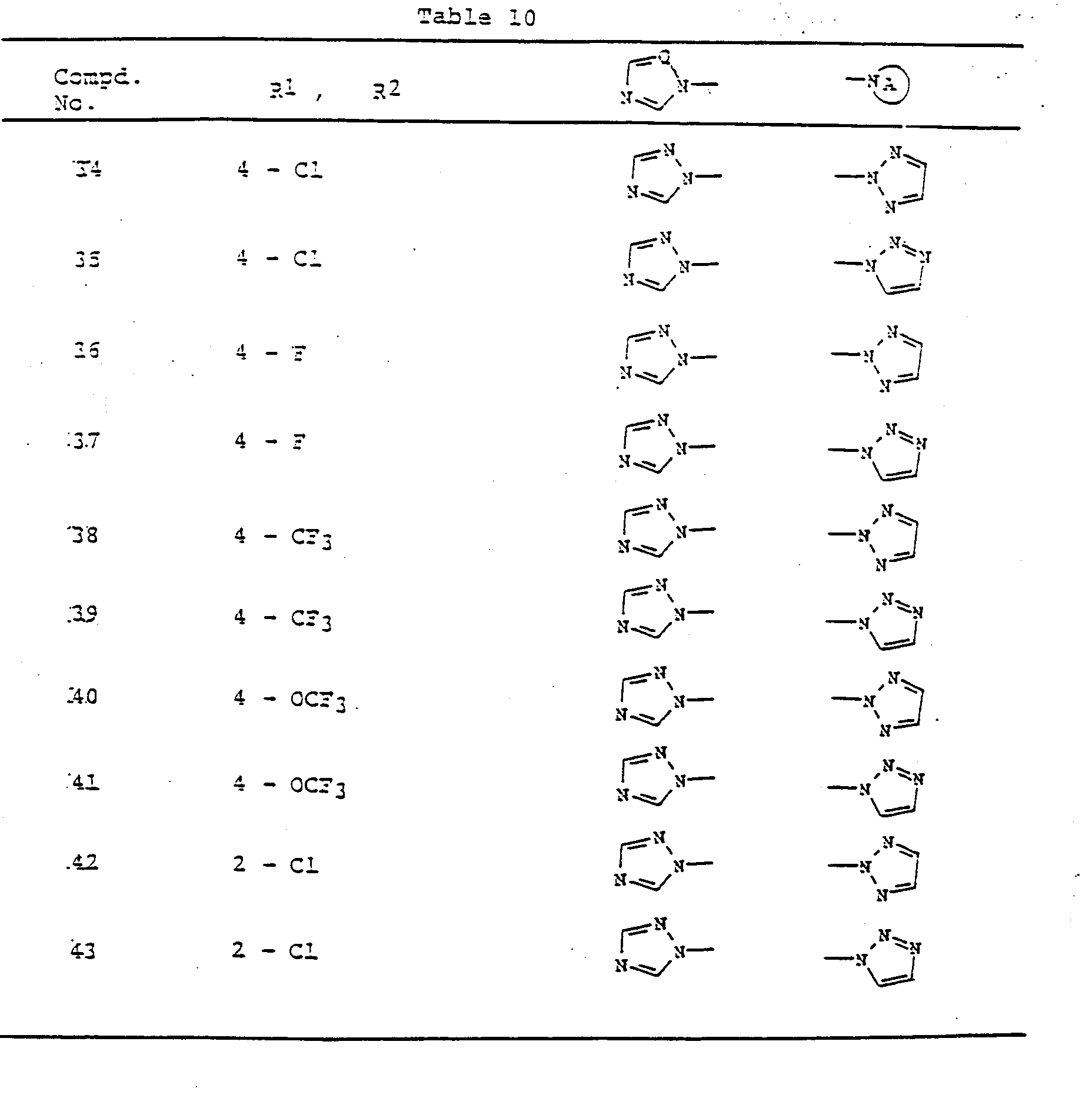


- The antifungal activity of the Compound (I) was evaluated by the following method:
A paper disk (manufactured by TOYO SEISAKUSHO, 8 mm in diameter) dipped into methanol solution containing Compound (I) in an amount of 1000 µg/ml was placed on an agar plate containing various fungi. After the cultivation of said fungi at 28°C for 2 days, measurement was made as to the diameter of the growth inhibition zone produced around the paper disk. - The media used for the evaluation are as follows:
- A:
- yeast-nitrogen-base agar medium (pH 7.0)
- B:
- peptone-yeast extract-glucose agar medium (pH 7.0)
- Table 17 shows the antifungal activities of the compounds (I) against Candida albicans.


- Method: 5-Week-old Crj:CDF₁ mice were inoculated with the minimum lethal dose of Candida albicans into the vein. A test compound was administered orally once immediately after infection. The activity was shown in terms of ED₅₀ values calculated by the Reed and Muench method from the survival rate on day 7 after infection.
- The protective effect of Compound (I) evaluated in the experimental infection in mice is shown in Table 18.
Table 18 Cpd. No. ED₅₀(mg/kg;p.o.) 1 8.0 3 0.35 4 0.18 5 8.0 6 0.28 8 0.39 9 8.0 12 8.0 13 11.3 21 8.0 34 2.0 35 0.18 36 2.0 37 0.45 38 0.71 39 0.18 41 0.32 42 0.71 43 0.39 44 1.41 45 0.35 46 8.0 47 11.3 49 2.0 50 8.0 51 0.35 52 0.77 53 1.5 54 2.0 61 0.32 62 0.35 72 0.65 74 2.0 p.o.: Oral administration - As can be seen from the above results, Compound (I) of the present invention and a salt thereof have excellent antifungal activities, also less toxicity and side-effects. The compounds are useful for the treatment of fungal infections in humans and other animals.
| Test microorganism | Diameter of growth inhibition zone (mm) | |||
| cpd. 2 | cpd. 2 | cpd. 13 | ||
| Candida albicans IFO 0583 | A | 40 | 45 | 35 |
| Candida utilis IFO 0619 | A | 15 | 45 | 13 |
| Aspergillus niger IFO 4066 | A | 37 | 18 | + |
| Aspergillus fumigatus IFO 6344 | A | 44 | 20 | 0 |
| Cryptococcus neoformans IFO 0410 | A | 20 | 28 | 19 |
| Trichophyton rubrum IFO 6467 | B | 50 | 50 | 35 |
| Trichophyton mentagrophytes IFO 7522 | B | 50 | 38 | 0 |
| Microsporum gypseum IFO 6075 | B | 50 | 43 | 0 |
Claims (22)
- An optically active azole compound of the formula (I):


- The compound of claim 1 wherein Q is N.
- The compound of claim 1 wherein R³ is a hydrogen atom.
- The compound of claim 1 wherein at least one of R¹ and R² is a halogen atom.
- The compound of claim 1 wherein said any one of R¹ and R² is a halogen atom and the other is a hydrogen atom or a halogen atom.
- The compound of claim 5 wherein the halogen atom is a fluorine or chlorine atom.
- The compound of claim 5 wherein the halogen atom is a fluorine atom.
- The compound of claim 1 wherein said nitrogen-containing aromatic five-membered heterocyclic group having at least two adjacent nitrogen atoms as the ring-constituting atoms in the definition of

- The compound of claim 8 wherein said aromatic five-membered heterocyclic group having two to four nitrogen atoms as the ring-constituting atoms where at least two nitrogen atoms are adjacent to each other in the definition of
- The compound of claim 1 wherein said nitrogen-containing aromatic five-membered heterocyclic group having at least two adjacent nitrogen atoms as the ring-constituting atoms in the definition of

- The compound of claim 10wherein said aromatic five-membered heterocyclic group where all of two to four nitrogen atoms as the ring-constituting atoms are adjacent to each other is 1-pyrazolyl, 1H-1,2,3-triazol-1-yl, 2H-1,2,3-triazol-2-yl, 1H-tetrazol-1-yl or 2H-tetrazol-2-yl.
- The compound of claim 1 wherein said nitrogen-containing aromatic five-membered heterocyclic group having at least two adjacent nitrogen atoms as the ring-constituting atoms in the definition of

- The compound of claim12 wherein said aromatic five-membered heterocyclic group where all of three or four nitrogen atoms as the ring-constituting atoms a adjacent to each other is 1H-1,2,3-triazol-1-yl, 2H-1,2,3-triazol-2-yl, 1H-tetrazol-1-yl or 2H-tetrazol-2-yl.
- The compound of claim 1 wherein said nitrogen-containing aromatic five-membered heterocyclic group having at least two adjacent nitrogen atoms as the ring-constituting atoms in the definition of

- The compound of claim 1 wherein said aromatic condensed heterocyclic group having two or more nitrogen atoms as the ring-constituting atoms in the definition of

- The compound of claim 15 wherein said bicyclic or tricyclic aromatic condensed heterocyclic group having two to six nitrogen atoms as the ring-constituting atoms is 1H-1-indazolyl, 2H-2-indazolyl, 1H-1-benzotriazolyl, 2H-2-benzotriazolyl, 7H-7-purinyl, 9H-9-purinyl, 9H-9-β-carbolinyl, 2H-2-β-carbolinyl, 3H-3-imidazo[4,5-b]pyridyl, 1H-1-imidazo[4,5-b]pyridyl, 1H-1-pyrazolo[3,4-b]pyrimidinyl, 2H-2-pyrazolo[3,4-b]pyrimidinyl or 1-perimidinyl.
- The compound of claim 1 wherein said aromatic condensed heterocyclic group having two or more nitrogen atoms as the ring-constituting atoms in the definition of

- The compound of claim 17 wherein said bicyclic aromatic condensed heterocyclic group having two to four nitrogen atoms as the ring-constituting atoms is 7H-7-purinyl, 9H-9-purinyl, 3H-3-imidazo[4,5-b]pyridyl or 1H-1-imidazo[4,5-b]pyridyl.
- The compound of claim 1 wherein said nitrogen-containing heterocyclic group in the definition of R¹ and R² is a 5- or 6-membered heterocyclic group having one to four nitrogen atoms or an azetidinyl group, which may form a condensed ring together with an aromatic or non-aromatic 5- or 6-membered carbon ring.
- The compound of claim 1 which is selected from (2R,3R)-2-(2,4-difluorophenyl)-3-(1H-tetrazol-1-yl)-1-(1H-1,2,4-triazol-1-yl)-2-butanol, or its salt;
(2R,3R)-2-(4-fluorophenyl)-3-(1H-1,2,3-triazol-1-yl)-1-(1H-1,2,4-triazol-1-yl)-2-butanol, or its salt;
(2R,3R)-2-(2-fluorophenyl)-3-(1H-1,2,3-triazol-1-yl)-1-(1H-1,2,4-triazol-1-yl)-2-butanol, or its salt;
(2R,3R)-2-(2,4-difluorophenyl)-3-(1H-1,2,3-triazol-1-yl)-1-(1H-1,2,4-triazol-1-yl)-2-butanol, or its salt;
(2R,3R)-2-(4-chlorophenyl)-3-(1H-1,2,3-triazol-1-yl)-1-(1-H-1,2,4-triazol-1-yl)-2-butanol, or its salt;
(2R,3R)-2-(2-4-difluorophenyl)-3-(2H-1,2,3-triazol-2-yl)-1-(1H-1,2,4-triazol-1-yl)-2-butanol, or its salt;
(2R,3R)-2-(2,4-difluorophenyl)-3-(2H-tetrazol-2-yl)-1-(1H-1,2,4-triazol-1-yl)-2-butanol, or its salt;
(2R,3R)-2-(4-fluorophenyl)-3-(2H-1,2,3-triazol-2-yl)-1-(1H-1,2,4-triazol-1-yl)-2-butanol, or its salt;
(2R,3R)-2-(4-chlorophenyl)-3-(2H-1,2,3-triazol-2-yl)-1-(1H-1,2,4-triazol-1-yl)-2-butanol, or its salt;
(2R,3R)-2-(2-fluorophenyl)-3-(2H-1,2,3-triazol-2-yl)-1-(1H-1,2,4-triazol-1-yl)-2-butanol, or its salt;
(2R,3R)-2-(2-fluorophenyl)-3-(1H-tetrazol-1-yl)-1-(1H1,2,4-triazol-1-yl)-2-butanol, or its salt;
(2R,3R)-2-(2-fluorophenyl)-3-(2H-tetrazol-2-yl)-1-(1H-1,2,4-triazol-1-yl)-2-butanol, or its salt;
and
(2R,3R)-2-(2,4-difluorophenyl)-1-(1H-1,2,4-triazol-1-yl)-3-[(E)-4-(4-trifluoromethylstyryl)-1H- 1,2,3-triazol-1-yl]-2-butanol, or its salt. - An antifungal composition which comprises an effective amount of at least one optically active azole compound (I) of claims 1 to 20, or its salt and a carrier, excipient or diluent.
- A process for preparing an optically active azol compound (I) of claim 1, or a salt thereof which comprises(A) reacting a compound of the formula (II):


 (B) reacting a compound of the formula (IV):

 (C) subjecting a compound of the formula (X):
 (D) reacting a compound of the formula (XI):
R⁵-C≡CH (XII)
wherein R⁵ is a hydrogen atom or a substituent which
 (E) optionally acylating the compound or its salt where R³ is a hydrogen atom as obtained in any of the above steps A) to D) with a compound of the formula (IX):
R³-W (IX)
wherein R³ has the same meaning as that of the formula (I) and W is a halogen atom or OR⁴ where R⁴ is an acyl group, and further if needed converting the resultant into the corresponding salt.
Applications Claiming Priority (6)
| Application Number | Priority Date | Filing Date | Title |
|---|---|---|---|
| JP309069/91 | 1991-11-25 | ||
| JP30906991 | 1991-11-25 | ||
| JP1988892 | 1992-02-05 | ||
| JP19888/92 | 1992-02-05 | ||
| JP14551092 | 1992-06-05 | ||
| JP145510/92 | 1992-06-05 |
Publications (1)
| Publication Number | Publication Date |
|---|---|
| EP0548553A1 true EP0548553A1 (en) | 1993-06-30 |
Family
ID=27282810
Family Applications (1)
| Application Number | Title | Priority Date | Filing Date |
|---|---|---|---|
| EP92119855A Withdrawn EP0548553A1 (en) | 1991-11-25 | 1992-11-21 | Optically active azole compounds, their production and use |
Country Status (10)
| Country | Link |
|---|---|
| US (2) | US5371100A (en) |
| EP (1) | EP0548553A1 (en) |
| CN (2) | CN1072680A (en) |
| AU (1) | AU653082B2 (en) |
| CA (1) | CA2083679A1 (en) |
| FI (1) | FI925323A7 (en) |
| HU (1) | HUT62574A (en) |
| NO (1) | NO924522L (en) |
| NZ (1) | NZ245226A (en) |
| TW (1) | TW212798B (en) |
Cited By (20)
| Publication number | Priority date | Publication date | Assignee | Title |
|---|---|---|---|---|
| EP0612734A1 (en) * | 1993-02-11 | 1994-08-31 | J. URIACH & CIA. S.A. | Novel orally active antifungal agents |
| EP0659751A1 (en) * | 1993-12-22 | 1995-06-28 | Takeda Chemical Industries, Ltd. | Optically active azole derivatives, their production and use |
| US5478826A (en) * | 1993-03-15 | 1995-12-26 | J. Uriach & Cia. S.A. | Orally active azole derivatives |
| EP0687672A3 (en) * | 1994-05-31 | 1996-07-17 | Takeda Chemical Industries Ltd | Production of optically active triazole compounds and their intermediates |
| WO1996025410A1 (en) * | 1995-02-17 | 1996-08-22 | Takeda Chemical Industries, Ltd. | Azole compounds, their production and use |
| EP0667346A3 (en) * | 1994-02-07 | 1998-04-29 | Eisai Co., Ltd. | Azole antifungal agents, process for the preparation there of and intermediates |
| US5792780A (en) * | 1993-09-24 | 1998-08-11 | Takeda Chemical Industries, Ltd. | Azole compounds, their production and use |
| US6034248A (en) * | 1995-02-17 | 2000-03-07 | Takeda Chemical Industries, Ltd. | Azole compounds, their production and use |
| WO2006109933A1 (en) | 2005-03-30 | 2006-10-19 | Daewoong Pharmaceutical Co., Ltd. | Antifungal triazole derivatives |
| WO2007052943A1 (en) * | 2005-10-31 | 2007-05-10 | Daewoong Pharmaceutical Co., Ltd. | Novel antifungal triazole derivatives |
| WO2008064311A3 (en) * | 2006-11-21 | 2008-07-10 | Viamet Pharmaceuticals Inc | Metallo-oxidoreductase inhibitors using metal binding moieties in combination with targeting moieties |
| WO2008082198A1 (en) | 2006-12-29 | 2008-07-10 | Daewoong Pharmaceutical Co., Ltd. | Antifungal triazole derivatives, method for the preparation thereof and pharmaceutical composition containing same |
| WO2012177725A1 (en) | 2011-06-23 | 2012-12-27 | Viamet Pharmaceuticals, Inc. | Metalloenzyme inhibitor compounds |
| EP2746262A1 (en) * | 2012-12-19 | 2014-06-25 | Basf Se | Substituted [1,2,4]triazole and imidazole compounds for combating phytopathogenic fungi |
| WO2014132267A1 (en) * | 2013-03-01 | 2014-09-04 | Fdc Limited | 1-substituted, 4-(substituted phenoxymethyl)-1,2,3-triazole compounds with antifungal properties and methods for preparation thereof |
| US9540365B2 (en) | 2013-03-14 | 2017-01-10 | Osteoqc Inc. | Compounds for bone growth |
| WO2017021178A1 (en) * | 2015-07-31 | 2017-02-09 | Universite De Nantes | Novel fused pyrimidinone and triazinone derivatives, their process of preparation and their therapeutic uses as antifungal and/or antiparasitic agents. |
| TWI646088B (en) * | 2012-03-16 | 2019-01-01 | 維愛美製藥公司 | Metalloenzyme inhibitor compounds |
| US10947236B2 (en) | 2018-08-14 | 2021-03-16 | Osteoqc Inc. | Pyrrolo-dipyridine compounds |
| US11903949B2 (en) | 2018-08-14 | 2024-02-20 | Ossifi Therapeutics Llc | Fluoro beta-carboline compounds |
Families Citing this family (16)
| Publication number | Priority date | Publication date | Assignee | Title |
|---|---|---|---|---|
| HU212458B (en) * | 1993-09-23 | 1996-06-28 | Richter Gedeon Vegyeszet | New silyloxypropane derivatives substituted with triazole or imidazole pharmaceutical compositions containing them and process for producing them |
| WO1998029095A2 (en) * | 1997-01-03 | 1998-07-09 | Elan Corporation, Plc | Sustained release cisapride mini-tablet formulation |
| US6432947B1 (en) * | 1997-02-19 | 2002-08-13 | Berlex Laboratories, Inc. | N-heterocyclic derivatives as NOS inhibitors |
| RU2189982C2 (en) | 1997-03-31 | 2002-09-27 | Такеда Кемикал Индастриз, Лтд. | Azole compounds, method of their synthesis, antifungal pharmaceutical composition and method of treatment of fungal infection |
| US6133485A (en) * | 1998-04-15 | 2000-10-17 | Synphar Laboratories, Inc. | Asymmetric synthesis of 2-(2,4-difluorophenyl)-1-heterocycl-1-yl butan-2,3-diols |
| AU5760999A (en) | 1998-09-29 | 2000-04-17 | Takeda Chemical Industries Ltd. | Antimycotic drug composition |
| IN192526B (en) * | 2001-09-25 | 2004-04-24 | Ranbaxy Lab | |
| US7028055B2 (en) * | 2002-03-22 | 2006-04-11 | Sun Microsystems, Inc. | Method and apparatus for improving transaction specification by marking application states |
| KR100572996B1 (en) * | 2003-08-12 | 2006-04-25 | 한국화학연구원 | An azole fungicide compound having a fluorinated vinyl ether side chain group and a method of preparing the same |
| JP2013526542A (en) | 2010-05-12 | 2013-06-24 | アッヴィ・インコーポレイテッド | Indazole inhibitor of kinase |
| US8889730B2 (en) | 2012-04-10 | 2014-11-18 | Pfizer Inc. | Indole and indazole compounds that activate AMPK |
| JP6064062B2 (en) | 2013-03-15 | 2017-01-18 | ファイザー・インク | Indazole compounds that activate AMPK |
| CN106518922A (en) * | 2015-09-12 | 2017-03-22 | 陕西合成药业股份有限公司 | Triazole compounds, and preparation method and applications thereof |
| CN111217795B (en) * | 2020-02-14 | 2023-07-18 | 华侨大学 | A kind of antibacterial drug and preparation method thereof |
| CN117865948A (en) * | 2023-12-21 | 2024-04-12 | 宿迁晨阳医药科技有限公司 | Ketoconazole triazole analogs and preparation methods and applications thereof |
| WO2026046253A1 (en) * | 2024-08-28 | 2026-03-05 | 四川科伦药物研究院有限公司 | Tetrazole compound, preparation method therefor and use thereof |
Citations (5)
| Publication number | Priority date | Publication date | Assignee | Title |
|---|---|---|---|---|
| EP0120276A1 (en) * | 1983-03-02 | 1984-10-03 | Bayer Ag | Substituted diazolylalkyl or triazolylalkyl carbinols, process for their preparation and their use as antimycotic compounds |
| EP0122056A1 (en) * | 1983-03-16 | 1984-10-17 | Pfizer Limited | Triazole antifungal agents |
| EP0122693A1 (en) * | 1983-03-08 | 1984-10-24 | Imperial Chemical Industries Plc | Antifungal di(azolyl)propanol derivatives |
| EP0174769A1 (en) * | 1984-09-05 | 1986-03-19 | Imperial Chemical Industries Plc | Antifungal azole compounds |
| EP0421210A2 (en) * | 1989-09-26 | 1991-04-10 | Takeda Chemical Industries, Ltd. | Triazole compounds, their production and use |
Family Cites Families (8)
| Publication number | Priority date | Publication date | Assignee | Title |
|---|---|---|---|---|
| GB2078719B (en) * | 1980-06-02 | 1984-04-26 | Ici Ltd | Heterocyclic compounds |
| EP0069442B1 (en) * | 1981-06-06 | 1985-02-20 | Pfizer Limited | Antifungal agents, processes for their preparation, and pharmaceutical compositions containing them |
| US4992454A (en) * | 1983-03-16 | 1991-02-12 | Pfizer Inc. | Antifungal 1,3-bis (1H-1,2,4-triazol-1-yl)-2-aryl butan-2-ols and derivatives thereof |
| GB8313235D0 (en) * | 1983-05-13 | 1983-06-22 | Pfizer Ltd | Antifungal agents |
| DE3325313A1 (en) * | 1983-07-13 | 1985-01-31 | Bayer Ag, 5090 Leverkusen | FUNGICIDES, THEIR PRODUCTION AND USE |
| GB8412750D0 (en) * | 1984-05-18 | 1984-06-27 | Ici Plc | Heterocyclic compounds |
| GB8506619D0 (en) * | 1985-03-14 | 1985-04-17 | Pfizer Ltd | Triazole antifungal agents |
| GB8716651D0 (en) * | 1987-07-15 | 1987-08-19 | Ici Plc | 2-propanol derivatives |
-
1992
- 1992-11-21 EP EP92119855A patent/EP0548553A1/en not_active Withdrawn
- 1992-11-21 TW TW081109321A patent/TW212798B/zh active
- 1992-11-23 NZ NZ245226A patent/NZ245226A/en unknown
- 1992-11-23 HU HU9203661A patent/HUT62574A/en unknown
- 1992-11-24 US US07/981,850 patent/US5371100A/en not_active Expired - Fee Related
- 1992-11-24 AU AU28592/92A patent/AU653082B2/en not_active Ceased
- 1992-11-24 CA CA002083679A patent/CA2083679A1/en not_active Abandoned
- 1992-11-24 NO NO92924522A patent/NO924522L/en unknown
- 1992-11-24 FI FI925323A patent/FI925323A7/en not_active Application Discontinuation
- 1992-11-25 CN CN92113352A patent/CN1072680A/en active Pending
-
1993
- 1993-01-01 CN CN93100010A patent/CN1075143A/en active Pending
-
1994
- 1994-09-08 US US08/302,411 patent/US5495024A/en not_active Expired - Fee Related
Patent Citations (5)
| Publication number | Priority date | Publication date | Assignee | Title |
|---|---|---|---|---|
| EP0120276A1 (en) * | 1983-03-02 | 1984-10-03 | Bayer Ag | Substituted diazolylalkyl or triazolylalkyl carbinols, process for their preparation and their use as antimycotic compounds |
| EP0122693A1 (en) * | 1983-03-08 | 1984-10-24 | Imperial Chemical Industries Plc | Antifungal di(azolyl)propanol derivatives |
| EP0122056A1 (en) * | 1983-03-16 | 1984-10-17 | Pfizer Limited | Triazole antifungal agents |
| EP0174769A1 (en) * | 1984-09-05 | 1986-03-19 | Imperial Chemical Industries Plc | Antifungal azole compounds |
| EP0421210A2 (en) * | 1989-09-26 | 1991-04-10 | Takeda Chemical Industries, Ltd. | Triazole compounds, their production and use |
Cited By (47)
| Publication number | Priority date | Publication date | Assignee | Title |
|---|---|---|---|---|
| EP0612734A1 (en) * | 1993-02-11 | 1994-08-31 | J. URIACH & CIA. S.A. | Novel orally active antifungal agents |
| US5478826A (en) * | 1993-03-15 | 1995-12-26 | J. Uriach & Cia. S.A. | Orally active azole derivatives |
| US5646294A (en) * | 1993-03-15 | 1997-07-08 | J. Uriach & Cia. S.A. | Orally active azole derivatives |
| US5760245A (en) * | 1993-03-15 | 1998-06-02 | J. Uriach & Cia S.A. | Homochiral intermediates for preparation of orally active azole derivatives |
| US5792780A (en) * | 1993-09-24 | 1998-08-11 | Takeda Chemical Industries, Ltd. | Azole compounds, their production and use |
| EP0659751A1 (en) * | 1993-12-22 | 1995-06-28 | Takeda Chemical Industries, Ltd. | Optically active azole derivatives, their production and use |
| EP1231210A3 (en) * | 1994-02-07 | 2002-12-04 | Eisai Co., Ltd. | Azole antifungal agents, processes for the preparation thereof, and intermediates |
| EP0667346A3 (en) * | 1994-02-07 | 1998-04-29 | Eisai Co., Ltd. | Azole antifungal agents, process for the preparation there of and intermediates |
| EP0687672A3 (en) * | 1994-05-31 | 1996-07-17 | Takeda Chemical Industries Ltd | Production of optically active triazole compounds and their intermediates |
| US5677464A (en) * | 1994-05-31 | 1997-10-14 | Takeda Chemical Industries, Ltd. | Production of optically active triazole compounds and their intermediates |
| US6034248A (en) * | 1995-02-17 | 2000-03-07 | Takeda Chemical Industries, Ltd. | Azole compounds, their production and use |
| US6362206B1 (en) | 1995-02-17 | 2002-03-26 | Takeda Chemical Industries, Ltd. | Azole compounds, their production and use |
| WO1996025410A1 (en) * | 1995-02-17 | 1996-08-22 | Takeda Chemical Industries, Ltd. | Azole compounds, their production and use |
| KR101048535B1 (en) * | 2005-03-30 | 2011-07-11 | 주식회사 대웅제약 | Antifungal Triazole Derivatives |
| WO2006109933A1 (en) | 2005-03-30 | 2006-10-19 | Daewoong Pharmaceutical Co., Ltd. | Antifungal triazole derivatives |
| EP1871766A4 (en) * | 2005-03-30 | 2010-07-21 | Dae Woong Pharma | Antifungal triazole derivatives |
| US7812045B2 (en) | 2005-03-30 | 2010-10-12 | Daewoong Pharmaceutical Co., Ltd. | Antifungal triazole derivatives |
| WO2007052943A1 (en) * | 2005-10-31 | 2007-05-10 | Daewoong Pharmaceutical Co., Ltd. | Novel antifungal triazole derivatives |
| US7968579B2 (en) | 2005-10-31 | 2011-06-28 | Daewoong Pharmaceutical Co., Ltd. | Antifungal triazole derivatives |
| WO2008064311A3 (en) * | 2006-11-21 | 2008-07-10 | Viamet Pharmaceuticals Inc | Metallo-oxidoreductase inhibitors using metal binding moieties in combination with targeting moieties |
| US8680270B2 (en) | 2006-11-21 | 2014-03-25 | Viamet Pharmaceuticals, Inc. | Metallo-oxidoreductase inhibitors using metal binding moieties in combination with targeting moieties |
| US8063229B2 (en) | 2006-12-29 | 2011-11-22 | Daewoong Pharmaceutical Co., Ltd. | Antifungal triazole derivatives, method for the preparation thereof and pharmaceutical composition containing same |
| WO2008082198A1 (en) | 2006-12-29 | 2008-07-10 | Daewoong Pharmaceutical Co., Ltd. | Antifungal triazole derivatives, method for the preparation thereof and pharmaceutical composition containing same |
| EP2114904A4 (en) * | 2006-12-29 | 2010-07-21 | Dae Woong Pharma | ANTIFUNGAL TRIAZOLE DERIVATIVES, PROCESS FOR THEIR PREPARATION AND PHARMACEUTICAL COMPOSITION CONTAINING THE SAME |
| KR20140053970A (en) * | 2011-06-23 | 2014-05-08 | 비아멧 파마슈티컬즈, 인코포레이티드 | Metalloenzyme inhibitor compounds |
| WO2012177725A1 (en) | 2011-06-23 | 2012-12-27 | Viamet Pharmaceuticals, Inc. | Metalloenzyme inhibitor compounds |
| KR101964195B1 (en) | 2011-06-23 | 2019-04-01 | 비아멧 파마슈티컬즈(엔씨), 인코포레이티드 | Metalloenzyme inhibitor compounds |
| WO2012177728A1 (en) | 2011-06-23 | 2012-12-27 | Viamet Pharmaceuticals, Inc. | Metalloenzyme inhibitor compounds |
| EP2723731A4 (en) * | 2011-06-23 | 2014-12-10 | Viamet Pharmaceuticals Inc | Metalloenzyme inhibitor compounds |
| EP2723730A4 (en) * | 2011-06-23 | 2014-12-31 | Viamet Pharmaceuticals Inc | Metalloenzyme inhibitor compounds |
| AU2012273004B2 (en) * | 2011-06-23 | 2017-04-13 | Mycovia Pharmaceuticals, Inc. | Metalloenzyme inhibitor compounds |
| TWI646088B (en) * | 2012-03-16 | 2019-01-01 | 維愛美製藥公司 | Metalloenzyme inhibitor compounds |
| EP2746262A1 (en) * | 2012-12-19 | 2014-06-25 | Basf Se | Substituted [1,2,4]triazole and imidazole compounds for combating phytopathogenic fungi |
| WO2014132267A1 (en) * | 2013-03-01 | 2014-09-04 | Fdc Limited | 1-substituted, 4-(substituted phenoxymethyl)-1,2,3-triazole compounds with antifungal properties and methods for preparation thereof |
| US9540350B2 (en) | 2013-03-01 | 2017-01-10 | Fdc Limited | 1-substituted, 4-(substituted phenoxymethyl)-1,2,3-triazole compounds with antifungal properties and methods for preparation thereof |
| AU2014222276B2 (en) * | 2013-03-01 | 2018-06-14 | Council Of Scientific & Industrial Research | 1-substituted, 4-(substituted phenoxymethyl)-1,2,3-triazole compounds with antifungal properties and methods for preparation thereof |
| US11267814B2 (en) | 2013-03-14 | 2022-03-08 | OsteoQC, Inc. | Compounds for bone growth |
| US9540365B2 (en) | 2013-03-14 | 2017-01-10 | Osteoqc Inc. | Compounds for bone growth |
| US10501457B2 (en) | 2013-03-14 | 2019-12-10 | Osteoqc Inc. | Compounds for bone growth |
| WO2017020944A1 (en) * | 2015-07-31 | 2017-02-09 | Universite De Nantes | Novel fused pyrimidinone and triazinone derivatives, their process of preparation and their therapeutic uses as antifungal and/or antiparasitic agents |
| US10626115B2 (en) | 2015-07-31 | 2020-04-21 | Universite De Nantes | Fused pyrimidinone and triazinone derivatives containing bridged nitrogen, their process of preparation and their therapeutic uses as antifungal and/or antiparasitic agents |
| WO2017021178A1 (en) * | 2015-07-31 | 2017-02-09 | Universite De Nantes | Novel fused pyrimidinone and triazinone derivatives, their process of preparation and their therapeutic uses as antifungal and/or antiparasitic agents. |
| US10947236B2 (en) | 2018-08-14 | 2021-03-16 | Osteoqc Inc. | Pyrrolo-dipyridine compounds |
| US11655250B2 (en) | 2018-08-14 | 2023-05-23 | Osteoqc Inc. | Pyrrolo-dipyridine compounds |
| US11903949B2 (en) | 2018-08-14 | 2024-02-20 | Ossifi Therapeutics Llc | Fluoro beta-carboline compounds |
| US12195461B2 (en) | 2018-08-14 | 2025-01-14 | Ossifi Therapeutics Llc | Pyrrolo-dipyridine compounds |
| US12324809B2 (en) | 2018-08-14 | 2025-06-10 | Ossifi Therapeutics Llc | Fluoro beta-carboline compounds |
Also Published As
| Publication number | Publication date |
|---|---|
| HU9203661D0 (en) | 1993-03-01 |
| CN1072680A (en) | 1993-06-02 |
| US5495024A (en) | 1996-02-27 |
| TW212798B (en) | 1993-09-11 |
| FI925323L (en) | 1993-05-26 |
| US5371100A (en) | 1994-12-06 |
| NZ245226A (en) | 1994-10-26 |
| FI925323A0 (en) | 1992-11-24 |
| AU2859292A (en) | 1994-03-31 |
| CA2083679A1 (en) | 1993-05-26 |
| FI925323A7 (en) | 1993-05-26 |
| CN1075143A (en) | 1993-08-11 |
| AU653082B2 (en) | 1994-09-15 |
| NO924522L (en) | 1993-05-26 |
| HUT62574A (en) | 1993-05-28 |
| NO924522D0 (en) | 1992-11-24 |
Similar Documents
| Publication | Publication Date | Title |
|---|---|---|
| US5371100A (en) | Optically active tetrazole compounds, and fungicidal compositions thereof | |
| EP0567982B1 (en) | Azole compounds, their production and use | |
| EP1280795B1 (en) | N-substituted carbamoyloxyalkyl-azolium derivatives | |
| US7189858B2 (en) | N-phenyl substituted carbamoyloxyalkyl-azolium derivatives | |
| US5405861A (en) | Triazole compounds and antifungal compositions thereof | |
| US5792780A (en) | Azole compounds, their production and use | |
| HU194187B (en) | Process for producing triazol compounds and pharmaceutical compositions containing them | |
| JP3415865B2 (en) | Optically active azole compound and use thereof | |
| US6034248A (en) | Azole compounds, their production and use | |
| EP0659751A1 (en) | Optically active azole derivatives, their production and use | |
| KR19980703346A (en) | Novel Triazolones Are Apolipoprotein-B Synthesis Inhibitors | |
| EP0091309B1 (en) | Triazole antifungal agents | |
| WO1996025410A1 (en) | Azole compounds, their production and use | |
| RU2039050C1 (en) | Derivatives of 1,2,4-triazole, optically inert or containing r- or s-configuration at c-2 and c-3 asymmetric centers, or their salts showing fungicide activity, and a method of their synthesis | |
| JP3056412B2 (en) | Azole compounds and their uses | |
| EP0140154B1 (en) | 1,2,4-triazolylpropanols, and their production and use | |
| KR100418128B1 (en) | Acid compounds with antifungal activity in human and veterinary applications | |
| JPH01102065A (en) | Antimycotic | |
| PL141652B1 (en) | Process for preparing novel derivatives of triazole | |
| JPH07228574A (en) | Optically active azole derivative, its production and use thereof | |
| JPH08104676A (en) | Azole compound, its production and use |
Legal Events
| Date | Code | Title | Description |
|---|---|---|---|
| PUAI | Public reference made under article 153(3) epc to a published international application that has entered the european phase |
Free format text: ORIGINAL CODE: 0009012 |
|
| AK | Designated contracting states |
Kind code of ref document: A1 Designated state(s): AT BE CH DE DK ES FR GB GR IE IT LI LU NL PT SE |
|
| 17P | Request for examination filed |
Effective date: 19931228 |
|
| 17Q | First examination report despatched |
Effective date: 19970207 |
|
| STAA | Information on the status of an ep patent application or granted ep patent |
Free format text: STATUS: THE APPLICATION HAS BEEN WITHDRAWN |
|
| 18W | Application withdrawn |
Withdrawal date: 19980407 |