EP0547992A2 - Verfahren und Gerät für verbesserte Effizienz bei der Datenwiedergewinnung in einer B-Baum-Speicherstruktur - Google Patents
Verfahren und Gerät für verbesserte Effizienz bei der Datenwiedergewinnung in einer B-Baum-Speicherstruktur Download PDFInfo
- Publication number
- EP0547992A2 EP0547992A2 EP92480174A EP92480174A EP0547992A2 EP 0547992 A2 EP0547992 A2 EP 0547992A2 EP 92480174 A EP92480174 A EP 92480174A EP 92480174 A EP92480174 A EP 92480174A EP 0547992 A2 EP0547992 A2 EP 0547992A2
- Authority
- EP
- European Patent Office
- Prior art keywords
- memory
- multilevel
- data processing
- processing system
- stored
- Prior art date
- Legal status (The legal status is an assumption and is not a legal conclusion. Google has not performed a legal analysis and makes no representation as to the accuracy of the status listed.)
- Withdrawn
Links
Images


Classifications
-
- G—PHYSICS
- G06—COMPUTING OR CALCULATING; COUNTING
- G06F—ELECTRIC DIGITAL DATA PROCESSING
- G06F16/00—Information retrieval; Database structures therefor; File system structures therefor
- G06F16/90—Details of database functions independent of the retrieved data types
- G06F16/901—Indexing; Data structures therefor; Storage structures
- G06F16/9027—Trees
Definitions
- the present invention relates in general to improved data recovery within a data processing system and in particular to a method and system for enhancing data recovery in a balanced tree memory structure in a data processing system. Still more particularly, the present invention relates to a method and system for enhancing data recovery in a balanced tree memory structure in a data processing system by minimizing the amount of memory which must be traversed during data recovery.
- a “tree” structure is a structure containing a "root” node and a plurality of "leaf' nodes in which there is exactly one path between any two nodes within the tree. Such structures may be efficiently searched to recover data stored therein. This is particularly true for tree structures which are "balanced,” that is, a tree structure in which all but the more bottom nodes are completely filled. It generally requires “N” probes to completely search a balanced tree structure which includes the 2N - 1 entries. As a consequence, many different algorithms have been established for creating tree structures in a manner which ensures that the tree structure is balanced.
- a multilevel balanced tree memory structure having a root node and multiple leaf nodes.
- the multilevel balanced tree memory structure is stored within a data processing system. After checking to determine if the tree memory structure is of sufficient size and complexity to warrant optimization, and after determining that sufficient memory space is available within the data processing system, the entire multilevel balanced tree memory structure is recopied within the data processing system utilizing a post order visitation process. This process is accomplished in a manner such that adjacent leaves are as closely located as possible within memory, thereby minimizing the amount of memory which must be traversed during a data search.
- a .virtual memory data processing system is utilized and the entire multilevel balanced tree memory structure is recopied in a manner such that as many adjacent leaves as possible are stored within each page of memory therein.
- distributed data processing system 8 may include a plurality of networks, such as Local Area Networks (LAN) 10 and 32, each of which preferably includes a plurality of individual computers 12 and 30, respectively.
- LAN Local Area Networks
- IWS Intelligent Work Station
- each individual computer may be coupled to a storage device 14 and/or a printer/output device 16.
- a storage device 14 may be utilized, in accordance with the method and system of the present invention, to store data within a tree memory structure which may be periodically accessed by a user having access to that data in a data processing system. Further, one or more such storage devices 14 may be utilized, as will be explained in greater detail herein, to store the software routines which are utilized to implement the method and system of the present invention.
- distributed data processing system 8 may also include mainframe computers, such as mainframe computer 18, which may be preferably coupled to Local Area Network (LAN) 10 by means of communications link 22.
- Mainframe computer 18 may be coupled to a storage device 20 which may serve as remote storage for Local Area Network (LAN) 10 and may be coupled via communications controller 26 and communications link 34 to gateway server 28.
- Gateway server 28 is preferably an individual computer or Intelligent Work Station (IWS) which serves to link Local Area Network (LAN) 32 to Local Area Network (LAN) 10.
- IWS Intelligent Work Station
- a plurality of tree memory structures may be stored within storage device 20 and controlled by mainframe computer 18, as Resource Manager or Library Service for the data thus stored.
- mainframe computer 18 As discussed above with respect to Local Area Network (LAN) 32 and Local Area Network (LAN) 10, a plurality of tree memory structures may be stored within storage device 20 and controlled by mainframe computer 18, as Resource Manager or Library Service for the data thus stored.
- such are preferably stored and maintained in a multilevel balanced binary tree memory structure.
- Those skilled in the art will appreciate that it is often desirable to maintain a database at a central location within a distributed data processing system wherein users throughout the distributed data processing system may access objects or documents stored therein.
- multilevel balanced tree memory structure 50 which may be implemented within distributed data processing system 8 of Figure 1.
- multilevel balanced tree memory structure 50 includes a root node 52 and a plurality of leaf nodes 54-80.
- the reference numeral associated with each node within balanced tree memory structure 50 is located within a pictorial representation of a node.
- each node preferably includes a left and right link, which point to nodes at successively lower levels within balanced tree memory structure 50.
- FIG. 3 there is depicted a pictorial representation of multilevel balanced tree memory structure 50 of Figure 2, depicting memory page locations for each node therein which may occur as a result of balancing during creation of multilevel balanced tree memory structure 50.
- Each of the nodes depicted within Figure 3 includes an identical reference numeral to that utilized within the description of Figure 2.
- multilevel balanced tree memory structure 50 within Figure 3 is assumed to be implemented within virtual memory in a data processing system and, for purposes of simplicity this description assumes that only three leaf nodes of multilevel balanced tree memory structure 50 may be stored within a single page of memory within the virtual memory system.
- leaf nodes 66, 68 and 70 are stored within the memory page indicated at reference numeral 100, while nodes 58, 60, and 72 are stored within the memory page indicated at reference numeral 102.
- nodes 54, 62 and 74 are stored within the memory page indicated at reference numeral 104 while nodes 52, 56 and 64 are stored within the memory page indicated at reference numeral 106.
- nodes 76, 78 and 80 are illustrated as stored within the memory page indicated at reference numeral 108.
- FIG. 4 there is illustrated a pictorial representation of multilevel balance tree memory structure 50 of Figure 2, depicting memory page locations for each node therein which may occur as a result of tree creation after ordering the input data.
- nodes 58, 66 and 68 are stored within the memory page indicated at reference numeral 100
- nodes 54, 60 and 70 are stored within the memory page indicated at reference numeral 102.
- nodes 52, 72 and 74 are stored within the memory page indicated at reference numeral 104
- nodes 56, 62 and 76 are stored within the memory page indicated at reference numeral 106.
- nodes 64,78 and 80 are stored within the memory page indicated at reference numeral 108.
- each page within virtual memory still includes only three nodes; however, the number of page faults encountered during any probe of the structure is substantially reduced. This is accomplished by storing nodes 52, 54 and 56 within the memory page indicated at reference numeral 100, while storing nodes 58, 66 and 68 within the memory page indicated at reference numeral 102. Nodes 60, 70 and 72 are stored within the memory page indicated at reference numeral 104, while nodes 62, 74 and 76 are stored within the memory page indicated at reference numeral 106. Finally, nodes 64, 78 and 80 are stored within a memory page indicated at reference numeral 108.
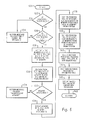
- Block 122 illustrates a determination of whether or not the size of each leaf within a multilevel balanced tree memory structure is greater than or equal to one-half the size of a page of memory within the virtual memory data processing system utilized to implement the tree memory structure in accordance with the present invention. If this is true, those skilled in the art will appreciate that a page of memory will be required for each leaf within the tree structure and optimization is therefore not possible.
- the process passes to block 124 which illustrates the prompting of the userwith a message indicating that the tree structure cannot be optimized.
- Block 126 illustrates a determination of whether or not the size of each leaf node within the tree structure times the total number of leaf nodes is greater than three times the size of each page of memory within the data processing system. If this is not true, the tree structure is simply not sufficiently complex to warrant optimization and the process once again passes to block 124, indicating to the user that the tree cannot be optimized. Referring again to block 126, in the event the tree is sufficiently large and complex to warrant optimization, the process passes to block 128.
- Block 128 illustrates the assigning of a parameter "N," which is the number of levels of the tree structure which will fit into one page of memory within the data processing system.
- N the number of levels of the tree structure which will fit into one page of memory within the data processing system.
- block 130 depicts the obtaining from the data processing system of an amount of memory equal to the size of each leaf node within the tree structure times the number of leaf nodes within the tree structure.
- the memory provided by the system will begin on a page boundary within a virtual memory system.
- the process passes to block 132, which illustrates a determination of whether or not sufficient memory was available. If not, the process passes to block 134, which illustrates the transmittal of a message to the user that the tree structure cannot be optimized due to a lack of memory in the data processing system.
- Block 136 illustrates the dividing of each page of memory obtained from the system into leaf-sized increments.
- the process then passes to block 138 which illustrates the setting of a "FPG" pointer to the list of leaf-size increments of memory from the first page of memory obtained from-the data processing system.
- block 140 illustrates the setting of a pointer "RPG" which points to the list of leaf-size increments of memory from all other pages of memory obtained from the data processing system.
- block 142 illustrates the calling of the function "POSTORDR,” passing to that function an identification of the root of the tree structure, the location of the FPG pointer, the location of the RPG pointer, the number of levels of the binary tree which will fit within one page of memory provided by the system and the number one.
- the function POSTORDR returns a pointer which is the address of the root of the new optimized tree.
- the process then passes to block 146, which illustrates the setting of the address for the new tree for utilization by the user. Thereafter, as depicted at block 148, the process terminates.
- FIG. 7 illustrates the function POSTORDR and begins, as illustrated, at block 160.
- POSTORDR is a recursive routine which receives, as it is initiated, an identification of the root of the tree structure or the base of the subtree which is to be optimized. This parameter is identified within the flowchart as "ROOT.” Additionally, the routine receives the parameter "FPAG” which is a list of leaf-sized increments of memory from the first page of memory obtained from the system. Similarly, a parameter "RPAG” is provided and represents a list of leaf-size increments from all remaining pages of memory obtained from the system. Finally, the parameter “LEVS” and “CLEV” are provided which depict the number of levels from the root of the tree structure which will fit within one page of memory and the current level within the tree structure at which the leaf indicated by the parameter ROOT is located, respectively.
- the process then passes to block 162 which depicts a determination of whether or not the parameter ROOT is null, indicating no value is provided. If so, the process passes to block 164 which indicates the setting of the return value to null and the process then returns, as depicted in block 166.
- Block 168 depicts the placement of the parameters ROOT and CLEV onto the stack and the process then passes to block 170.
- Block 170 depicts the setting of a parameter L to the return from a call to the routine POSTORDR, passing the left link of the node identified by the parameter ROOT and the parameters FPAG, RPAG, LEVS and CLEV + 1. This is a recursive call within the routine POSTORDR and continues to traverse the left links of tree structure until such time as a null value is returned for the node identified by the parameter ROOT. Thereafter, after processing this recursive call, the process passes to block 172.
- Block 172 illustrates the retrieval of the parameters ROOT and CLEV from the stack and the process then passes to block 174 which depicts the placement of the parameters ROOT, CLEV and L onto the stack. Next, the process passes to block 176 for a second recursive call.
- Block 176 depicts the setting of the parameter R to the return from a call to the POSTORDR routine, passing the right link of the node identified by the parameter ROOT and the parameters FPAG, RPAG, LEVS, and CLEV + 1. Thereafter, this process evaluates the right link of the node identified by the parameter ROOT until such time as a null values is returned. Thereafter, upon a return, the process passes to block 178 which depicts the retrieval of the parameter's ROOT, CLEV and Lfrom the stack.
- Block 180 illustrates a determination of whether or not the current level (CLEV) within the tree structure, indicated by the parameter ROOT, is less than or equal to the parameter LEVS, indicating the number of levels which will fit within one page of memory. lf t h is is true, indicating that the current level is at or near the top of the tree structure, the process passes to block 182.
- Block 182 illustrates a determination of whether or not any leaf-size increments of memory are available from the list of leaf-size increments of memory indicated by the parameter FPAG. If so, the process passes to block 184 and one leaf-size increment from the first page of memory previously obtained from the system (FPAG) is allocated and a pointer K is utilized to indicate that leaf-size increment of memory.
- the process passes to block 186 which illustrates a determination of whether or not any leaf-size increments of memory are available from the remaining pages of memory previously obtained from the system (FPAG), as listed at the parameter RPAG. If so, the process passes to block 188 which illustrates the allocation of one leaf-size increment of memory from the list of leaf-size increments of memory contained within the remaining pages of memory obtained from the system, and the pointer K is utilized to indicate that leaf-size increment.
- the process passes directly to block 186.
- this process automatically assigns a memory location within the first page of memory obtained from the system to those nodes within the tree structure which are located at or near the root node. Thereafter, leaf-size increments of memory are assigned to each node within. the tree structure from the remaining pages of memory provided by the system in a manner which consistently allocates adjacent memory locations to leaves which are adjacent within the tree structure.
- Block 190 depicts the copying of the leaf pointed by the parameter ROOT into the leaf-size increment of memory pointed to by the pointer K.
- block 192 illustrates the updating of the leaf node pointed to by the pointer K to have a left link identified by the parameter L and a right link identified by the parameter R.
- block 194 depicts the setting of the pointer Kfor return to the caller and the process returns, as depicted at block 196.
Landscapes
- Engineering & Computer Science (AREA)
- Databases & Information Systems (AREA)
- Theoretical Computer Science (AREA)
- Software Systems (AREA)
- Data Mining & Analysis (AREA)
- Physics & Mathematics (AREA)
- General Engineering & Computer Science (AREA)
- General Physics & Mathematics (AREA)
- Information Retrieval, Db Structures And Fs Structures Therefor (AREA)
Applications Claiming Priority (2)
| Application Number | Priority Date | Filing Date | Title |
|---|---|---|---|
| US80869991A | 1991-12-17 | 1991-12-17 | |
| US808699 | 1991-12-17 |
Publications (2)
| Publication Number | Publication Date |
|---|---|
| EP0547992A2 true EP0547992A2 (de) | 1993-06-23 |
| EP0547992A3 EP0547992A3 (en) | 1993-12-01 |
Family
ID=25199462
Family Applications (1)
| Application Number | Title | Priority Date | Filing Date |
|---|---|---|---|
| EP19920480174 Withdrawn EP0547992A3 (en) | 1991-12-17 | 1992-11-19 | Method and system for enhanced efficiency of data recovery in balanced tree memory structures |
Country Status (2)
| Country | Link |
|---|---|
| EP (1) | EP0547992A3 (de) |
| JP (1) | JP2538747B2 (de) |
Cited By (11)
| Publication number | Priority date | Publication date | Assignee | Title |
|---|---|---|---|---|
| US5446887A (en) * | 1993-09-17 | 1995-08-29 | Microsoft Corporation | Optimal reorganization of a B-tree |
| US7007150B2 (en) | 2002-04-12 | 2006-02-28 | International Business Machines Corporation | Memory balancing and optimization services |
| GB2418747A (en) * | 2004-09-29 | 2006-04-05 | Siemens Ag | A data structure distributed over a number of pages |
| CN100428226C (zh) * | 2003-12-27 | 2008-10-22 | 海信集团有限公司 | 实现类内存数据库存取和检索的方法 |
| US8489815B2 (en) | 2008-09-15 | 2013-07-16 | Microsoft Corporation | Managing cache data and metadata |
| US8631203B2 (en) | 2007-12-10 | 2014-01-14 | Microsoft Corporation | Management of external memory functioning as virtual cache |
| US8909861B2 (en) | 2004-10-21 | 2014-12-09 | Microsoft Corporation | Using external memory devices to improve system performance |
| US8914557B2 (en) | 2005-12-16 | 2014-12-16 | Microsoft Corporation | Optimizing write and wear performance for a memory |
| US9032151B2 (en) | 2008-09-15 | 2015-05-12 | Microsoft Technology Licensing, Llc | Method and system for ensuring reliability of cache data and metadata subsequent to a reboot |
| US9361183B2 (en) | 2008-09-19 | 2016-06-07 | Microsoft Technology Licensing, Llc | Aggregation of write traffic to a data store |
| US10216637B2 (en) | 2004-05-03 | 2019-02-26 | Microsoft Technology Licensing, Llc | Non-volatile memory cache performance improvement |
Families Citing this family (1)
| Publication number | Priority date | Publication date | Assignee | Title |
|---|---|---|---|---|
| JP2682811B2 (ja) * | 1994-03-22 | 1997-11-26 | インターナショナル・ビジネス・マシーンズ・コーポレイション | データ記憶管理システム及び方法 |
Family Cites Families (1)
| Publication number | Priority date | Publication date | Assignee | Title |
|---|---|---|---|---|
| JPS581242A (ja) * | 1981-06-27 | 1983-01-06 | Fujitsu Ltd | 木構造情報記憶制御方式 |
-
1992
- 1992-11-19 EP EP19920480174 patent/EP0547992A3/en not_active Withdrawn
- 1992-11-24 JP JP4313054A patent/JP2538747B2/ja not_active Expired - Lifetime
Cited By (19)
| Publication number | Priority date | Publication date | Assignee | Title |
|---|---|---|---|---|
| US5522068A (en) * | 1993-09-17 | 1996-05-28 | Microsoft Corporation | Statistic-based reorganization of B-trees yielding an approximate optimal fill on substantially every page |
| US5446887A (en) * | 1993-09-17 | 1995-08-29 | Microsoft Corporation | Optimal reorganization of a B-tree |
| US7007150B2 (en) | 2002-04-12 | 2006-02-28 | International Business Machines Corporation | Memory balancing and optimization services |
| CN100428226C (zh) * | 2003-12-27 | 2008-10-22 | 海信集团有限公司 | 实现类内存数据库存取和检索的方法 |
| US10216637B2 (en) | 2004-05-03 | 2019-02-26 | Microsoft Technology Licensing, Llc | Non-volatile memory cache performance improvement |
| GB2418747A (en) * | 2004-09-29 | 2006-04-05 | Siemens Ag | A data structure distributed over a number of pages |
| US9317209B2 (en) | 2004-10-21 | 2016-04-19 | Microsoft Technology Licensing, Llc | Using external memory devices to improve system performance |
| US9690496B2 (en) | 2004-10-21 | 2017-06-27 | Microsoft Technology Licensing, Llc | Using external memory devices to improve system performance |
| US8909861B2 (en) | 2004-10-21 | 2014-12-09 | Microsoft Corporation | Using external memory devices to improve system performance |
| US8914557B2 (en) | 2005-12-16 | 2014-12-16 | Microsoft Corporation | Optimizing write and wear performance for a memory |
| US9529716B2 (en) | 2005-12-16 | 2016-12-27 | Microsoft Technology Licensing, Llc | Optimizing write and wear performance for a memory |
| US11334484B2 (en) | 2005-12-16 | 2022-05-17 | Microsoft Technology Licensing, Llc | Optimizing write and wear performance for a memory |
| US8631203B2 (en) | 2007-12-10 | 2014-01-14 | Microsoft Corporation | Management of external memory functioning as virtual cache |
| US9032151B2 (en) | 2008-09-15 | 2015-05-12 | Microsoft Technology Licensing, Llc | Method and system for ensuring reliability of cache data and metadata subsequent to a reboot |
| US8489815B2 (en) | 2008-09-15 | 2013-07-16 | Microsoft Corporation | Managing cache data and metadata |
| US10387313B2 (en) | 2008-09-15 | 2019-08-20 | Microsoft Technology Licensing, Llc | Method and system for ensuring reliability of cache data and metadata subsequent to a reboot |
| US9361183B2 (en) | 2008-09-19 | 2016-06-07 | Microsoft Technology Licensing, Llc | Aggregation of write traffic to a data store |
| US9448890B2 (en) | 2008-09-19 | 2016-09-20 | Microsoft Technology Licensing, Llc | Aggregation of write traffic to a data store |
| US10509730B2 (en) | 2008-09-19 | 2019-12-17 | Microsoft Technology Licensing, Llc | Aggregation of write traffic to a data store |
Also Published As
| Publication number | Publication date |
|---|---|
| EP0547992A3 (en) | 1993-12-01 |
| JP2538747B2 (ja) | 1996-10-02 |
| JPH05233392A (ja) | 1993-09-10 |
Similar Documents
| Publication | Publication Date | Title |
|---|---|---|
| US6411957B1 (en) | System and method of organizing nodes within a tree structure | |
| US5960431A (en) | Method and apparatus for adding data storage bins to a stored computer database while minimizing movement of data and balancing data distribution | |
| US4468728A (en) | Data structure and search method for a data base management system | |
| US6115705A (en) | Relational database system and method for query processing using early aggregation | |
| US5664179A (en) | Modified skip list database structure and method for access | |
| US5263160A (en) | Augmented doubly-linked list search and management method for a system having data stored in a list of data elements in memory | |
| Geist et al. | Task scheduling for parallel sparse Cholesky factorization | |
| US5367677A (en) | System for iterated generation from an array of records of a posting file with row segments based on column entry value ranges | |
| AU730684B2 (en) | System and method for distributing and indexing computerized documents using independent agents | |
| US6223206B1 (en) | Method and system for load balancing by replicating a portion of a file being read by a first stream onto second device and reading portion with a second stream capable of accessing | |
| EP0127753B1 (de) | Verfahren zur Durchführung von Distributionssortierung | |
| US6356902B1 (en) | Method and system for storage and retrieval of multimedia objects | |
| EP0864130B1 (de) | Speichern und wiederauffinden von geordneten schlüsselmengen in einem kompakten 0-kompletten baum | |
| US5819083A (en) | Minimal sufficient buffer space for data redistribution in a parallel database system | |
| EP0547992A2 (de) | Verfahren und Gerät für verbesserte Effizienz bei der Datenwiedergewinnung in einer B-Baum-Speicherstruktur | |
| CN103077197A (zh) | 一种数据存储方法装置 | |
| US5237679A (en) | Method and system for automatic deletion of a folder having temporary document relationships within a data processing system | |
| EP0586550A4 (en) | Relational data base memory utilization analyzer | |
| US11308066B1 (en) | Optimized database partitioning | |
| EP0491642A2 (de) | Verfahren und Gerät zur Steuerung der verzögerten Ausführung von Benutzeranforderungen in einem Datenverarbeitungssystem | |
| EP1654647B1 (de) | Verfahren zum zuweisen von objekten zu verarbeitungseinheiten | |
| Grandi et al. | Frame-sliced partitioned parallel signature files | |
| JPH06259478A (ja) | 分散データベースのデータ再配置方式 | |
| US6606631B1 (en) | IMS on-line reorganization utility | |
| US7647592B2 (en) | Methods and systems for assigning objects to processing units |
Legal Events
| Date | Code | Title | Description |
|---|---|---|---|
| PUAI | Public reference made under article 153(3) epc to a published international application that has entered the european phase |
Free format text: ORIGINAL CODE: 0009012 |
|
| AK | Designated contracting states |
Kind code of ref document: A2 Designated state(s): DE FR GB |
|
| PUAL | Search report despatched |
Free format text: ORIGINAL CODE: 0009013 |
|
| AK | Designated contracting states |
Kind code of ref document: A3 Designated state(s): DE FR GB |
|
| 17P | Request for examination filed |
Effective date: 19931021 |
|
| 18W | Application withdrawn |
Withdrawal date: 19961015 |