EP0539059B1 - Buoyant controlled release powder formulation - Google Patents
Buoyant controlled release powder formulation Download PDFInfo
- Publication number
- EP0539059B1 EP0539059B1 EP92309204A EP92309204A EP0539059B1 EP 0539059 B1 EP0539059 B1 EP 0539059B1 EP 92309204 A EP92309204 A EP 92309204A EP 92309204 A EP92309204 A EP 92309204A EP 0539059 B1 EP0539059 B1 EP 0539059B1
- Authority
- EP
- European Patent Office
- Prior art keywords
- formulation
- salt
- pharmaceutical
- weight
- powder
- Prior art date
- Legal status (The legal status is an assumption and is not a legal conclusion. Google has not performed a legal analysis and makes no representation as to the accuracy of the status listed.)
- Expired - Lifetime
Links
Images


Classifications
-
- A—HUMAN NECESSITIES
- A61—MEDICAL OR VETERINARY SCIENCE; HYGIENE
- A61K—PREPARATIONS FOR MEDICAL, DENTAL OR TOILETRY PURPOSES
- A61K9/00—Medicinal preparations characterised by special physical form
- A61K9/0012—Galenical forms characterised by the site of application
- A61K9/0053—Mouth and digestive tract, i.e. intraoral and peroral administration
- A61K9/0065—Forms with gastric retention, e.g. floating on gastric juice, adhering to gastric mucosa, expanding to prevent passage through the pylorus
-
- A—HUMAN NECESSITIES
- A61—MEDICAL OR VETERINARY SCIENCE; HYGIENE
- A61P—SPECIFIC THERAPEUTIC ACTIVITY OF CHEMICAL COMPOUNDS OR MEDICINAL PREPARATIONS
- A61P25/00—Drugs for disorders of the nervous system
- A61P25/18—Antipsychotics, i.e. neuroleptics; Drugs for mania or schizophrenia
-
- A—HUMAN NECESSITIES
- A61—MEDICAL OR VETERINARY SCIENCE; HYGIENE
- A61P—SPECIFIC THERAPEUTIC ACTIVITY OF CHEMICAL COMPOUNDS OR MEDICINAL PREPARATIONS
- A61P9/00—Drugs for disorders of the cardiovascular system
- A61P9/06—Antiarrhythmics
-
- A—HUMAN NECESSITIES
- A61—MEDICAL OR VETERINARY SCIENCE; HYGIENE
- A61P—SPECIFIC THERAPEUTIC ACTIVITY OF CHEMICAL COMPOUNDS OR MEDICINAL PREPARATIONS
- A61P9/00—Drugs for disorders of the cardiovascular system
- A61P9/12—Antihypertensives
Definitions
- the present invention relates to buoyant controlled release powder formulation ions.
- GB Patent Specification 2163648 suggests use of alginic acid as a hydrophilic gel forming substance in a slow release pharmaceutical preparation also containing a fat/oil which is solid at room temperature and having a specific gravity of not more than 1.0.
- the patent suggests the use of a hydrocolloid or alginic acid (among others) as the substance which forms a gel in water.
- PCT Patent Specification WO85/04806 discloses a low-sodium antacid composition useful in the treatment of reflux oesophagitis prepared from magnesium alginate and an effective acid-neutralizing amount of an antacid.
- the composition forms a foam or raft which floats on the stomach contents and is meant to precede the stomach contents into the oesophagus when reflux occurs and helps to protect the mucosa from further irritation.
- French Patent Specification 2636532 describes a pharmaceutical composition for use in treating gastric disorders comprising ranitidine or a salt thereof, alginic acid or a salt thereof and a carbonate or bicarbonate. The composition is limited to gastrointestinal disorders and moreover requires a carbon dioxide generating constituent for flotation.
- French Patent Specification 2512676 describes a controlled release composition floatable in gastric juices containing L-Dopa and a decarboxylase inhibitor as active ingredients incorporating a hydrocolloid and a fatty material.
- the capsule shell or tablet Upon oral ingestion, the capsule shell or tablet dissolves and the formulation comes in contact with gastric fluid causing hydration and increase in bulk volume and buoyancy. As the hydrate layer dissolves, new hydrate layers are formed and concurrently, the active ingredients are released until all medicaments are leached out and the remaining matrix, which is still buoyant is slowly dispersed or eliminated.
- the present invention provides a buoyant controlled release pharmaceutical formulation in the form of a capsule containing a powder, from which a pharmaceutical of a basic character is released at a controlled rate irrespective of the pH of the environment, the formulation comprising a pharmaceutical of a basic character, a pH-dependent polymer which is a salt of a polyuronic acid, and which is present in an amount not exceeding 45% by weight of the formulation; a pH-independent hydrocolloid gelling agent having a viscosity of from 50 to 100,000 mPas (centipoises) in 2% solution at 20°C, and which is present in an amount not exceeding 35% by weight of the formulation, said formulation being free of calcium ion and carbon dioxide-producing material and will float in gastric juices.
- the controlled release pharmaceutical formulation may thus be provided in a form which has prolonged drug release equivalent to a tablet of similar composition, pH independence of release rate equivalent to a tablet of similar composition, and yet has floating or buoyancy properties. This is especially surprising inasmuch as until now it was not thought possible that loose powder filled capsules could perform in the same way as granulated material that had undergone compression to form tablets (as disclosed in Howard et al., U. S. Patent No. 4,792,452), and also be buoyant so that it will float on gastric juices and thereby improve drug availability.
- the buoyant controlled release powder formulation of the invention will release a pharmaceutical of a basic character at a controlled rate relatively independent of the pH of the environment such that in vivo consistent release is achieved throughout the gastrointestinal tract and will have buoyant properties so that it will have extended residence time in the stomach. This is achieved without gas generation in situ , or by the incorporation of fats or waxy solids into the matrix. Dissolution properties are also maintained essentially independent of pH without the need for calcium to effect gelation.
- the controlled release pharmaceutical formulation of the invention will be in the form of a powder (e.g. having an average particle size of within the range of from about 25 to about 1000 microns, preferably from about 50 to about 400 microns, and a bulk density of within the range of from about 0.1 to about 0.8 g/cm 3 , and preferably from about 0.15 to about 0.55 g/cm 3 ), which is filled into a capsule and includes a pharmaceutical of a basic character; a pH-dependent polymer which is a water soluble salt of a polyuronic acid, preferably alginic acid, in an amount not exceeding 45% by weight depending upon the nature of the pharmaceutical present, preferably from 15 to 45% by weight and more preferably from 20 to 35% by weight of the formulation; a pH-independent hydrocolloid gelling agent having a viscosity within the range of from 15 to 100,000 centipoises (mPas) and preferably from 50 to 15,000 centipoises in 2% solution at 20°C, in an
- the dosage form is emptied from the stomach and changes in pH are encountered.
- the pH increases, using alginic acid as an example, this causes conversion of the acid form in the stomach to a more soluble salt.
- the gelling agent will then be less structured and more fluid in nature. Drug can diffuse more readily through the gel layer now and the ensuing increase in release rate from the matrix compensates for the reducing driving force for dissolution at the elevated pH values, where solubility of a basic drug is lower.
- the controlled release powder formulation of the invention does not contain calcium ions, or sodium bicarbonate or other carbon dioxide-producing material but it still will float in the stomach for an extended period.
- the pharmaceutical of a basic character will be present in the formulation of the invention in an amount not exceeding 75% by weight and preferably not exceeding 60% by weight.
- a wide variety of medicaments (of basic nature) which are orally administered in tablet form can be used in the form of a powder prepared according to this invention.
- adrenergic agents such as salts of ephedrine, desoxyephedrine, phenylephrine, epinephrine, albuterol, fenoterol, terbutaline and the like
- cholinergic agents such as salts of physostigmine, neostigmine and the like
- antispasmodic agents such as salts of atropine, methantheline, papaverine and the like
- tranquilizers and muscle relaxants such as salts of fluphenazine, thioridazine, trifluoperazine, chlorpromazine, triflupromazine and the like, antidepressants like salts of amitriptyline, nortriptyline, and the like
- other CNS acting drugs such as BMS 181101 BMY 14,802, buspirone, n
- the invention is particularly adapted for controlled release powder-filled capsules containing the calcium channel blocker verapamil (usually formulated in the form of its hydrochloride), and diltiazem or the beta-blocker metoprolol (usually formulated as the tartrate).
- verapamil usually formulated in the form of its hydrochloride
- beta-blocker metoprolol usually formulated as the tartrate
- the water soluble salts of polyuronic acids suitable for use herein includes water-soluble salts of alginic acids, for example, forms which are high in guluronic acid such as sourced from Laminaria Digitata, forms which are high in mannuronic acid such as sourced from Ascophyllum Nodosum, and mixed forms from algal sources, as well as water-soluble salts of pectic acid, that is polygalacturonic acid.
- the amount of a salt of a polyuronic acid that will be present will depend upon the pharmaceutical present and should not exceed 45% by weight of the powder formulation. Usually, the salt of the polyuronic acid will be present in an amount within the range of from 15 to 45% by weight and preferably from 20 to 40% by weight of the formulation.
- Such salt will preferably take the form of a salt of alginic acid, such as an alkali metal salt such as sodium alginate or potassium alginate or ammonium alginate, and preferably sodium alginate.
- the salt of alginic acid will have a viscosity of up to 500 or more centipoises in 1% solution at 25°C and preferably from 5 to 350 centipoises or from 4 to 300 centipoises. It will be appreciated that mixtures of the same or different alginic acid salts of the same or different viscosities may be employed herein.
- the polyuronic acid salt will be employed in a weight ratio to the hydrocolloid gelling agent of within the range of from 0.1:1 to 10:1 and preferably from 0.4:1 to 8:1.
- the hydrocolloid gelling agent may be of the compressible or non-compressible type, and is essential to the practice of the invention in that it absorbs water, swells and forms a gelatinous layer. It will be of the type to provide a viscosity of 50 to 100,000 centipoises in a 2% aqueous solution at 20°C, and generally will have a molecular weight ranging from about 80,000 to about 300,000. Thus, the hydrocolloid is provided in an amount not exceeding 35% by weight of the formulation and preferably from 3 to 15%.
- the hydrocolloid for use in the powder formulation of the invention will have a viscosity of more than 50 centipoises as indicated above, and will preferably comprise cellulose polymers which are cellulose ethers such as methyl cellulose, cellulose alkyl hydroxylates such as hydroxypropylmethyl cellulose, hydroxypropyl cellulose, hydroxymethyl cellulose or hydroxyethyl cellulose, cellulose alkyl carboxylates such as carboxymethyl cellulose and carboxyethyl cellulose, and alkali metal salts of cellulose alkyl carboxylates, such as sodium carboxymethyl cellulose and sodium carboxyethyl cellulose, as well as carboxypolymethylene (molecular weight 2.5 to 3.5 million).
- cellulose polymers which are cellulose ethers such as methyl cellulose, cellulose alkyl hydroxylates such as hydroxypropylmethyl cellulose, hydroxypropyl cellulose, hydroxymethyl cellulose or hydroxyethyl cellulose, cellulose alkyl carboxy
- any hydrocolloid may be employed in the present invention, such as, for example, gum acacia, guar gum, gum tragacanth, gum xanthan, an alkali metal carageenate, or mixtures thereof.
- the sustained release powder may also include additional edible non-toxic ingredients as conventionally employed powder medicinal dosage forms.
- the powder of the invention may include one or more excipients in conventional amounts, such as lactose, sugar, microcrystalline cellulose, wood cellulose, mannitol, sorbitol, one or more lubricants in an amount within the range of from 0.25 to 8% by weight of the powder, and preferably from 0.5 to 5% by weight of the powder, such as magnesium stearate, stearic acid, palmitic acid, talc, carnauba wax and the like.
- Other conventional ingredients which may optionally be present include preservatives, stabilizers, anti-adherents or silica flow conditioners or glidants, such as Syloid brand silicon dioxide as well as FD&C colors.
- the powder of the invention may be loaded into conventional capsules, such as hard gelatin capsules, to form the finished formulation of the invention.
- Preferred controlled release powder formulations of the invention will include the following: Ingredient % by Weight Medicament (basic) (e.g., verapamil) 20 to 60 Alginic acid basic salt (such as Na alginate -viscosities ranging from 5 to 350 at 20°C in 1% solution) 15 to 45 Hydrocolloid gelling agent (such as hydroxypropylmethyl cellulose, e.g., Methocel E4M, viscosity of 4000 cps at 2% solution at 20°C) 3 to 15 Excipients qs to 100% Average particle size - 50 to 400 ⁇ Bulk density 0.15 to 0.55 g/cm 3
- Ingredient % by Weight Medicament (basic) e.g., verapamil
- Alginic acid basic salt such as Na alginate -viscosities ranging from 5 to 350 at 20°C in 1% solution
- Hydrocolloid gelling agent such as hydroxypropylmethyl cellulose, e.g., Me
- a buoyant sustained release powder formulation capable of slowly releasing the calcium channel blocker verapamil HCl in vitro regardless of the pH of the environment for a period of up to 10 to 12 hours or more and having the following composition was prepared as described below.
- Ingredient Per Dosage Unit mg
- Powder Composition Verapamil hydrochloride 240
- Sodium alginate 300 cps
- 135 Hydroxypropylmethyl cellulose (Methocel E4M viscosity of 4000 cps) (hydrophilic polymer) 25.2
- Magnesium stearate (lubricant) 4.5
- verapamil raw material was first screened through a 40# sieve before the required amount for manufacture was weighed. All other excipients were screened through a 20# sieve prior to weighing. The accurately weighed powders were gradually triturated into a suitable jar which was subsequently blended for 10 minutes in a turbula mixer. Approximately 450 mg of the blended material (about 250 ⁇ m average particle size and bulk density of about 0.3 g/cm 3 ) was then filled into size 0 grey hard gelatin capsules and the fill weights accurately recorded.
- the rotating basket apparatus In this test, the caleva multiple spindle model 7ST (G.B. Caleva Ltd., Dorset) was used, equipped with a temperature controlled water bath (37 ⁇ 0.5°C) and 1000 ml round bottom pyrex glass dissolution vessels fitted with lids and sample tubes.
- a temperature controlled water bath 37 ⁇ 0.5°C
- 1000 ml round bottom pyrex glass dissolution vessels fitted with lids and sample tubes.
- the Erweka 4 basket rack assembly model ZT2 (F. Copley and Sons, Nottingham) was used. This machine consisted of 4 basket rack assemblies which lowered and raised at a rate of 29 to 32 cycles/minute into the immersion fluid which was contained within a low form beaker at a temperature of between 35 and 39°C.
- the Hewlett Packard 8452A Diode Array Spectrophotometer equipped with a 1 cm quartz cell was used to obtain all spectroscopic data. This is a single beam machine with one compartment for a reference/sample cell.
- Capsules were prepared from the tablet formulation excluding the coating materials (Table 2). TABLE 2 Basic Formulation Used to Produce Capsules Raw Material mg/450 mg Capsule Verapamil HCl 240.00 Methocel E4M 25.20 Manucol DMF 135.00 Avicel PH 101 40.80 Methocel E5 4.50 Magnesium Stearate 4.50
- Each of the six glass dissolution vessels were filled with 1000 ml of 0.1 M HCl and brought to 37 ⁇ 0.5°C using the temperature controlled water bath. The medium was then deaerated with helium and the temperature allowed to re-equilibrate. One sample of the dosage form under investigation was placed into each basket and the test initiated by lowering the baskets into the dissolution vessels and rotating them at the pre-determined speed (50 or 100 rpm).
- the baskets were raised out of the dissolution vessels. Each vessel was emptied, rinsed, dried and then filled with exactly 1000 ml of SIF and brought to 37 ⁇ 0.5°C using the temperature controlled water bath. The medium was then deaerated with helium and the temperature allowed to re-equilibrate. The baskets were then re-lowered and the dissolution continued with 10 ml samples being removed using plastic syringes 30, 60, 90, 120, 180, 240, 300, 360, 420 and 1380 minutes after re-starting the dissolution. The samples were filtered through the 0.45 micron disposable filters discarding the first 3 ml of filtrate.
- Each of the four glass, flat bottomed vessels were filled with 500 ml of 0.1 M HCl and brought to 36 ⁇ 0.5°C using the temperature controlled water bath.
- One sample of the dosage form under investigation was placed into a single sample tube of each rack assembly. The experiment was initiated by switching on the machine and the rack assemblies were plunged repeatedly into and out of the medium at a rate of approximately 30cyc/min.
- the capsule shell serves to retain the powder plug initially, however, as fluid penetrates in through the gelatin shell into the device, the polymers present hydrate to form a viscous gel layer around the dry inner core.
- the capsules buoyancy may be attributed to the powder blends low bulk density (0.35 gcm 3 ). Studies have shown that the capsules are capable of floating for up to 5 hours in 0.1M HCl. By this time, it is envisaged that sufficient fluid has penetrated into the device so as to remove enough air from the capsule core that the dosage form's density rises above that of the immersion fluid. Studies conducted into the penetration rate of fluid into the two devices are presented in FIGURES 2 and 3 (where dry inner core is expressed as a % of initial diameter). These diagrams show that the processes are essentially different between the two dosage forms and also between the two media. Overall, there appears to be a greater rate of fluid penetration into the capsule which is perhaps predictable due to its greater porosity. It is also noteworthy that the capsule seemingly experiences an initial expansion in the diameter of its dry inner core.
- the device Following oral administration, the device would inevitably be exposed to more violent stresses in the gastro intestinal tract than those experienced at 50 rpm in dissolution apparatus. It is therefore pertinent to investigate how the capsules release properties compare to those of the tablet under more vigorous conditions.
- FIGURE 4 shows that at a basket rotation speed of 100 rpm (pH switched at 1 hour), the two devices once again exhibit similar release profiles.
- the rate of drug release is increased by approximately the same amount in the two dosage forms. This greater rate of drug release may be attributed to factors such as more rapid diffusion of drug out of the matrix and increased erosion of the device. The former effect would arise due to the smaller diffusion layer thickness and the latter effect due to increased frictional forces on the device. Under the conditions present within disintegration apparatus, there is a greater initial burst in verapamil release from the capsule formulation, however, the release rates then appear to become very similar in nature over the two hour test period (FIGURE 5; experiment performed in 0.1 M HCl).
- a buoyant propranolol powder capsule in accordance with the present invention is prepared following the procedure of Example 1 except substituting propranolol for the verapamil hydrochloride.
- a buoyant trifluoperazine HCl powder capsule in accordance with the present invention is prepared following the procedure of Example 1 except substituting trifluoperazine HCl for the verapamil hydrochloride.
- a buoyant diltiazem HCl powder capsule in accordance with the present invention is prepared following the procedure of Example 1 except substituting diltiazem HCl for the verapamil hydrochloride.
- the ratio of HPMC/alginate and viscosity grade of alginate may be modified to yield drug release more or less independent of environmental pH, consistent with the in vivo needs of the product.
- a buoyant metoprolol tartrate salt powder capsule in accordance with the present invention is prepared following the procedure of Example 1 except substituting metoprolol tartrate for verapamil hydrochloride.
- a buoyant verapamil powder capsule containing sodium alginates of different viscosities having the following composition was prepared as described in Example 1.
- Ingredient Amount/Powder capsule mg Verapamil HCl 240 Sodium alginate 9 cps (measured at 20°C in 1% solution) 90 Sodium alginate 300 cps (measured at 20°C in 1% solution) 45 Hydroxypropylmethylcellulose 4000 cps (E4M) 45 Hydroxypropylmethyl cellulose 5 cps (E5) 9 Microcrystalline cellulose 33.2 Lactose BP 8.3 Magnesium stearate 4.5 450.0 ⁇ mg
- the powder has a 250 ⁇ m average particle size and a bulk density of 0.35 g/cm 3 .
Landscapes
- Health & Medical Sciences (AREA)
- Pharmacology & Pharmacy (AREA)
- Veterinary Medicine (AREA)
- Public Health (AREA)
- Chemical & Material Sciences (AREA)
- General Health & Medical Sciences (AREA)
- Medicinal Chemistry (AREA)
- Animal Behavior & Ethology (AREA)
- Life Sciences & Earth Sciences (AREA)
- Engineering & Computer Science (AREA)
- Bioinformatics & Cheminformatics (AREA)
- General Chemical & Material Sciences (AREA)
- Organic Chemistry (AREA)
- Nuclear Medicine, Radiotherapy & Molecular Imaging (AREA)
- Chemical Kinetics & Catalysis (AREA)
- Heart & Thoracic Surgery (AREA)
- Cardiology (AREA)
- Nutrition Science (AREA)
- Physiology (AREA)
- Epidemiology (AREA)
- Psychiatry (AREA)
- Biomedical Technology (AREA)
- Neurology (AREA)
- Neurosurgery (AREA)
- Medicinal Preparation (AREA)
- Agricultural Chemicals And Associated Chemicals (AREA)
- Acyclic And Carbocyclic Compounds In Medicinal Compositions (AREA)
- Detergent Compositions (AREA)
- Adjustment And Processing Of Grains (AREA)
- Disintegrating Or Milling (AREA)
- Slot Machines And Peripheral Devices (AREA)
Abstract
Description
- The present invention relates to buoyant controlled release powder formulation ions.
- GB Patent Specification 2163648 suggests use of alginic acid as a hydrophilic gel forming substance in a slow release pharmaceutical preparation also containing a fat/oil which is solid at room temperature and having a specific gravity of not more than 1.0. The patent suggests the use of a hydrocolloid or alginic acid (among others) as the substance which forms a gel in water. PCT Patent Specification WO85/04806 discloses a low-sodium antacid composition useful in the treatment of reflux oesophagitis prepared from magnesium alginate and an effective acid-neutralizing amount of an antacid. The composition forms a foam or raft which floats on the stomach contents and is meant to precede the stomach contents into the oesophagus when reflux occurs and helps to protect the mucosa from further irritation. French Patent Specification 2636532 describes a pharmaceutical composition for use in treating gastric disorders comprising ranitidine or a salt thereof, alginic acid or a salt thereof and a carbonate or bicarbonate. The composition is limited to gastrointestinal disorders and moreover requires a carbon dioxide generating constituent for flotation. French Patent Specification 2512676 describes a controlled release composition floatable in gastric juices containing L-Dopa and a decarboxylase inhibitor as active ingredients incorporating a hydrocolloid and a fatty material. Upon oral ingestion, the capsule shell or tablet dissolves and the formulation comes in contact with gastric fluid causing hydration and increase in bulk volume and buoyancy. As the hydrate layer dissolves, new hydrate layers are formed and concurrently, the active ingredients are released until all medicaments are leached out and the remaining matrix, which is still buoyant is slowly dispersed or eliminated.
- The present invention provides a buoyant controlled release pharmaceutical formulation in the form of a capsule containing a powder, from which a pharmaceutical of a basic character is released at a controlled rate irrespective of the pH of the environment, the formulation comprising a pharmaceutical of a basic character, a pH-dependent polymer which is a salt of a polyuronic acid, and which is present in an amount not exceeding 45% by weight of the formulation; a pH-independent hydrocolloid gelling agent having a viscosity of from 50 to 100,000 mPas (centipoises) in 2% solution at 20°C, and which is present in an amount not exceeding 35% by weight of the formulation, said formulation being free of calcium ion and carbon dioxide-producing material and will float in gastric juices.
- The controlled release pharmaceutical formulation may thus be provided in a form which has prolonged drug release equivalent to a tablet of similar composition, pH independence of release rate equivalent to a tablet of similar composition, and yet has floating or buoyancy properties. This is especially surprising inasmuch as until now it was not thought possible that loose powder filled capsules could perform in the same way as granulated material that had undergone compression to form tablets (as disclosed in Howard et al., U. S. Patent No. 4,792,452), and also be buoyant so that it will float on gastric juices and thereby improve drug availability.
- Features of the preferred forms of the invention will now be described. Certain preferred features of the invention are also set out in the dependent claims.
- The buoyant controlled release powder formulation of the invention will release a pharmaceutical of a basic character at a controlled rate relatively independent of the pH of the environment such that in vivo consistent release is achieved throughout the gastrointestinal tract and will have buoyant properties so that it will have extended residence time in the stomach. This is achieved without gas generation in situ, or by the incorporation of fats or waxy solids into the matrix. Dissolution properties are also maintained essentially independent of pH without the need for calcium to effect gelation.
- The controlled release pharmaceutical formulation of the invention will be in the form of a powder (e.g. having an average particle size of within the range of from about 25 to about 1000 microns, preferably from about 50 to about 400 microns, and a bulk density of within the range of from about 0.1 to about 0.8 g/cm3, and preferably from about 0.15 to about 0.55 g/cm3), which is filled into a capsule and includes a pharmaceutical of a basic character; a pH-dependent polymer which is a water soluble salt of a polyuronic acid, preferably alginic acid, in an amount not exceeding 45% by weight depending upon the nature of the pharmaceutical present, preferably from 15 to 45% by weight and more preferably from 20 to 35% by weight of the formulation; a pH-independent hydrocolloid gelling agent having a viscosity within the range of from 15 to 100,000 centipoises (mPas) and preferably from 50 to 15,000 centipoises in 2% solution at 20°C, in an amount not exceeding 35% by weight, preferably within the range of from 5 to 20% by weight and more preferably from 8 to 17% by weight of the formulation; and normally excipients and other conventional powder ingredients. The powder formulation of the invention will not contain calcium ions so there will be no calcium ions available to interact with the polyuronic acid salts. Additionally there will be no gas generation or incorporation of lipid materials to bring about buoyancy.
- It is theorized that upon oral ingestion of the sustained release buoyant powder-filled capsules of the invention, in an acid aqueous environment, such as the stomach, water penetrates the capsule shell initiating surface hydration of the pH-independent hydrocolloid gelling agent to form a gel layer and trapping air within the less dense powder bulk to account for the buoyant behavior of the capsule. At this low pH environment alginic acid is formed from the alginate salt and this modifies the gel layer. Erosion of the gel layer gradually exposes more dry matrix that hydrates to replenish the gel layer. Drug dissolves in the gel layer and diffuses out into the surrounding aqueous environment. Some interaction between the basic drug and the polyuronic acid may also be involved.
- After buoyancy is lost the dosage form is emptied from the stomach and changes in pH are encountered. During passage of the drug, contained in the form of a gelled powder plug, from the stomach down the digestive tract, the pH increases, using alginic acid as an example, this causes conversion of the acid form in the stomach to a more soluble salt. The gelling agent will then be less structured and more fluid in nature. Drug can diffuse more readily through the gel layer now and the ensuing increase in release rate from the matrix compensates for the reducing driving force for dissolution at the elevated pH values, where solubility of a basic drug is lower.
- The controlled release powder formulation of the invention does not contain calcium ions, or sodium bicarbonate or other carbon dioxide-producing material but it still will float in the stomach for an extended period.
- The pharmaceutical of a basic character will be present in the formulation of the invention in an amount not exceeding 75% by weight and preferably not exceeding 60% by weight.
- A wide variety of medicaments (of basic nature) which are orally administered in tablet form can be used in the form of a powder prepared according to this invention. These include, for example, adrenergic agents such as salts of ephedrine, desoxyephedrine, phenylephrine, epinephrine, albuterol, fenoterol, terbutaline and the like, cholinergic agents such as salts of physostigmine, neostigmine and the like, antispasmodic agents such as salts of atropine, methantheline, papaverine and the like, tranquilizers and muscle relaxants such as salts of fluphenazine, thioridazine, trifluoperazine, chlorpromazine, triflupromazine and the like, antidepressants like salts of amitriptyline, nortriptyline, and the like, other CNS acting drugs such as BMS 181101 BMY 14,802, buspirone, nefazadone, gepirone and tiospirone, antihistamines such as salts of diphenhydramine, chlorpheniramine, dimenhydrinate, tripelennamine, perphenazine, chlorprophenazine, chlorprophenpyridamine and the like, cardioactive agents such as salts of verapamil, diltiazem, gallapomil, cinnarizine, propranolol, metoprolol, sotalol, nadolol, and salts of any of the foregoing, antimalarials such as chloroquine and the like, analgesics such as propoxyphene, meperidine and the like, etc., sympathomimetics such as salts of phenylpropanolamine and pseudoephedrine. Other therapeutic agents having the same or different physiological activity can also be employed in pharmaceutical preparations within the scope of the present invention.
- The invention is particularly adapted for controlled release powder-filled capsules containing the calcium channel blocker verapamil (usually formulated in the form of its hydrochloride), and diltiazem or the beta-blocker metoprolol (usually formulated as the tartrate).
- The water soluble salts of polyuronic acids suitable for use herein includes water-soluble salts of alginic acids, for example, forms which are high in guluronic acid such as sourced from Laminaria Digitata, forms which are high in mannuronic acid such as sourced from Ascophyllum Nodosum, and mixed forms from algal sources, as well as water-soluble salts of pectic acid, that is polygalacturonic acid.
- The amount of a salt of a polyuronic acid that will be present will depend upon the pharmaceutical present and should not exceed 45% by weight of the powder formulation. Usually, the salt of the polyuronic acid will be present in an amount within the range of from 15 to 45% by weight and preferably from 20 to 40% by weight of the formulation. Such salt will preferably take the form of a salt of alginic acid, such as an alkali metal salt such as sodium alginate or potassium alginate or ammonium alginate, and preferably sodium alginate. The salt of alginic acid will have a viscosity of up to 500 or more centipoises in 1% solution at 25°C and preferably from 5 to 350 centipoises or from 4 to 300 centipoises. It will be appreciated that mixtures of the same or different alginic acid salts of the same or different viscosities may be employed herein.
- The polyuronic acid salt will be employed in a weight ratio to the hydrocolloid gelling agent of within the range of from 0.1:1 to 10:1 and preferably from 0.4:1 to 8:1.
- The hydrocolloid gelling agent, may be of the compressible or non-compressible type, and is essential to the practice of the invention in that it absorbs water, swells and forms a gelatinous layer. It will be of the type to provide a viscosity of 50 to 100,000 centipoises in a 2% aqueous solution at 20°C, and generally will have a molecular weight ranging from about 80,000 to about 300,000. Thus, the hydrocolloid is provided in an amount not exceeding 35% by weight of the formulation and preferably from 3 to 15%.
- The hydrocolloid for use in the powder formulation of the invention will have a viscosity of more than 50 centipoises as indicated above, and will preferably comprise cellulose polymers which are cellulose ethers such as methyl cellulose, cellulose alkyl hydroxylates such as hydroxypropylmethyl cellulose, hydroxypropyl cellulose, hydroxymethyl cellulose or hydroxyethyl cellulose, cellulose alkyl carboxylates such as carboxymethyl cellulose and carboxyethyl cellulose, and alkali metal salts of cellulose alkyl carboxylates, such as sodium carboxymethyl cellulose and sodium carboxyethyl cellulose, as well as carboxypolymethylene (molecular weight 2.5 to 3.5 million). Preferred are sodium carboxymethyl cellulose, methyl cellulose, hydroxypropylmethyl cellulose and carboxypolymethylene. However, it is to be understood that any hydrocolloid may be employed in the present invention, such as, for example, gum acacia, guar gum, gum tragacanth, gum xanthan, an alkali metal carageenate, or mixtures thereof.
- Other examples of suitable hydrocolloids are set out in U. S. Patent No. 4,140,755 to Sheth et al.
- The sustained release powder may also include additional edible non-toxic ingredients as conventionally employed powder medicinal dosage forms. Thus, the powder of the invention may include one or more excipients in conventional amounts, such as lactose, sugar, microcrystalline cellulose, wood cellulose, mannitol, sorbitol, one or more lubricants in an amount within the range of from 0.25 to 8% by weight of the powder, and preferably from 0.5 to 5% by weight of the powder, such as magnesium stearate, stearic acid, palmitic acid, talc, carnauba wax and the like. Other conventional ingredients which may optionally be present include preservatives, stabilizers, anti-adherents or silica flow conditioners or glidants, such as Syloid brand silicon dioxide as well as FD&C colors.
- The powder of the invention may be loaded into conventional capsules, such as hard gelatin capsules, to form the finished formulation of the invention.
- Preferred controlled release powder formulations of the invention will include the following:
Ingredient % by Weight Medicament (basic) (e.g., verapamil) 20 to 60 Alginic acid basic salt (such as Na alginate -viscosities ranging from 5 to 350 at 20°C in 1% solution) 15 to 45 Hydrocolloid gelling agent (such as hydroxypropylmethyl cellulose, e.g., Methocel E4M, viscosity of 4000 cps at 2% solution at 20°C) 3 to 15 Excipients qs to 100% Average particle size - 50 to 400 µ Bulk density 0.15 to 0.55 g/cm3 -
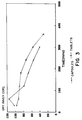
- FIGURE 1 is a graph showing verapamil dissolution profiles for tablet and powder floating capsule at 50 rpm basket speed (
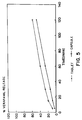
pH 1, 0-1 hr.; pH 7.5, 1-12 hr.); - FIGURE 2 is a graph showing rate of fluid penetration into tablet and floating capsule in 0.1 M HCl;
- FIGURE 3 is a graph showing rate of fluid penetration into tablet and floating capsule in S.I.F. (pH 7.5);
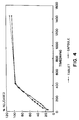
- FIGURE 4 is a graph showing verapamil dissolution profiles for tablet and powder floating capsule at 100 rpm basket speed (
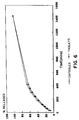
pH 1, 0-1 hr., pH 7.5, 1-12 hr.); - FIGURE 5 is a graph showing verapamil dissolution profile for tablet and powder floating capsule using disintegration apparatus;
- FIGURE 6 is a graph showing verapamil dissolution profiles for tablets and powder floating capsules in 0.1 M HCl at basket speed of 50 rpm.
- The following Examples represent preferred embodiments of the present invention.
- A buoyant sustained release powder formulation capable of slowly releasing the calcium channel blocker verapamil HCl in vitro regardless of the pH of the environment for a period of up to 10 to 12 hours or more and having the following composition was prepared as described below.
Ingredient Per Dosage Unit (mg) Powder Composition Verapamil hydrochloride 240 Sodium alginate (300 cps) 135 Hydroxypropylmethyl cellulose (Methocel E4M viscosity of 4000 cps) (hydrophilic polymer) 25.2 Avicel pH 101 (microcrystalline cellulose) 40.8 Lactose 8.3 Hydroxypropylmethyl cellulose (binder -Methocel E5) 4.5 Magnesium stearate (lubricant) 4.5 - The verapamil raw material was first screened through a 40# sieve before the required amount for manufacture was weighed. All other excipients were screened through a 20# sieve prior to weighing. The accurately weighed powders were gradually triturated into a suitable jar which was subsequently blended for 10 minutes in a turbula mixer. Approximately 450 mg of the blended material (about 250 µm average particle size and bulk density of about 0.3 g/cm3) was then filled into
size 0 grey hard gelatin capsules and the fill weights accurately recorded. - The following materials and methods were employed in testing the above capsules.
- 6.8 g of anhydrous potassium dihydrogen orthophosphate (KH2PH4) was dissolved into distilled water and added to a 1000 ml graduated cylinder. To this solution 190 ml of 0.2 M sodium hydroxide solution and a further 400 ml of distilled water were added. The solution was mixed thoroughly, the pH adjusted to 7.5±0.1 using 0.2 M sodium hydroxide and then diluted to the 1000 ml mark with distilled water.
- 8.8 ml of concentrated hydrochloric acid (S.G 1.18) was added to a 1000 ml graduated cylinder containing 800 ml of distilled water. The solution was then diluted to the 1000 ml mark with distilled water and mixed thoroughly.
- In 0.1 M Hydrochloric Acid Into a 1000 ml volumetric flask approximately 240 mg of verapamil HCl was accurately weighed. This was dissolved in 5.00 ml of methanol, diluted to volume with 0.1 M HCl and then mixed thoroughly.
- In SIF The above was repeated but using SIF.
- For comparison of release profiles, an experimental verapamil HCl 240 mg SR tablet was used. The tablet formulation is given in Table 1.
TABLE 1 Formula of In-House Generic Verapamil SR Tablet Raw Material mg/450 mg Tablet Verapamil HCl 240.00* Methocel E4M 25.20 Manucol DMF 135.00 Avicel PH 101 40.80 Methocel E5 4.50 Magnesium Stearate 4.50 Total 
Sepifilm 003 7.35 Sepisperse AP3149 6.15 * Quantities shown assume 100% potency of verapamil HCl - The rotating basket apparatus. In this test, the caleva multiple spindle model 7ST (G.B. Caleva Ltd., Dorset) was used, equipped with a temperature controlled water bath (37 ± 0.5°C) and 1000 ml round bottom pyrex glass dissolution vessels fitted with lids and sample tubes.
- The Erweka 4 basket rack assembly model ZT2 (F. Copley and Sons, Nottingham) was used. This machine consisted of 4 basket rack assemblies which lowered and raised at a rate of 29 to 32 cycles/minute into the immersion fluid which was contained within a low form beaker at a temperature of between 35 and 39°C.
- The Hewlett Packard 8452A Diode Array Spectrophotometer equipped with a 1 cm quartz cell was used to obtain all spectroscopic data. This is a single beam machine with one compartment for a reference/sample cell.
- Capsules were prepared from the tablet formulation excluding the coating materials (Table 2).
TABLE 2 Basic Formulation Used to Produce Capsules Raw Material mg/450 mg Capsule Verapamil HCl 240.00 Methocel E4M 25.20 Manucol DMF 135.00 Avicel PH 101 40.80 Methocel E5 4.50 Magnesium Stearate 4.50 - Each of the six glass dissolution vessels were filled with 1000 ml of 0.1 M HCl and brought to 37 ± 0.5°C using the temperature controlled water bath. The medium was then deaerated with helium and the temperature allowed to re-equilibrate. One sample of the dosage form under investigation was placed into each basket and the test initiated by lowering the baskets into the dissolution vessels and rotating them at the pre-determined speed (50 or 100 rpm).
- At 30 and 60 minutes, 10 ml samples were filtered through the 0.45 micron disposable filters discarding the first 3 ml of filtrate; samples were then assayed for verapamil using the diode array spectrophotometer operating at an analytical wavelength of 260 nm and a reference wavelength of 320 nm.
- Immediately after the 60 min. time point in 0.1 M HCl, the baskets were raised out of the dissolution vessels. Each vessel was emptied, rinsed, dried and then filled with exactly 1000 ml of SIF and brought to 37 ± 0.5°C using the temperature controlled water bath. The medium was then deaerated with helium and the temperature allowed to re-equilibrate. The baskets were then re-lowered and the dissolution continued with 10 ml samples being removed using
plastic syringes - Using the conditions already described in section D, dissolution tests and sample assay were performed upon the various dosage forms except that instead of employing a switch of media after 1 hour, the same media was used throughout the investigation.
- Each of the four glass, flat bottomed vessels were filled with 500 ml of 0.1 M HCl and brought to 36 ± 0.5°C using the temperature controlled water bath. One sample of the dosage form under investigation was placed into a single sample tube of each rack assembly. The experiment was initiated by switching on the machine and the rack assemblies were plunged repeatedly into and out of the medium at a rate of approximately 30cyc/min.
- 10 ml samples were withdrawn from each vessel in a plastic syringe after 5, 10, 15, 30, 60 and 120 minutes. The samples were filtered through 0.45 micron disposable filters and analyzed and calculated as before .
- Surprisingly, when the loose powder filled capsule formulation was exposed to the pH switching dissolution experiment (Section D) the release profile obtained was found to be similar to that of the tablet (FIGURE 1 - pH switched at 1 hour). It was also noticed that the capsules rose to the top of the baskets during the experiment, i.e., the capsules exhibited buoyant properties.
- It would appear that the capsule shell serves to retain the powder plug initially, however, as fluid penetrates in through the gelatin shell into the device, the polymers present hydrate to form a viscous gel layer around the dry inner core.
- The capsules buoyancy may be attributed to the powder blends low bulk density (0.35 gcm3). Studies have shown that the capsules are capable of floating for up to 5 hours in 0.1M HCl. By this time, it is envisaged that sufficient fluid has penetrated into the device so as to remove enough air from the capsule core that the dosage form's density rises above that of the immersion fluid. Studies conducted into the penetration rate of fluid into the two devices are presented in FIGURES 2 and 3 (where dry inner core is expressed as a % of initial diameter). These diagrams show that the processes are essentially different between the two dosage forms and also between the two media. Overall, there appears to be a greater rate of fluid penetration into the capsule which is perhaps predictable due to its greater porosity. It is also noteworthy that the capsule seemingly experiences an initial expansion in the diameter of its dry inner core.
- Since the water penetration rates do in fact appear to be different, it would infer that this mechanism is of only minor importance to the rate of verapamil release since these have been shown to be very similar in nature.
- Following oral administration, the device would inevitably be exposed to more violent stresses in the gastro intestinal tract than those experienced at 50 rpm in dissolution apparatus. It is therefore pertinent to investigate how the capsules release properties compare to those of the tablet under more vigorous conditions.
- FIGURE 4 shows that at a basket rotation speed of 100 rpm (pH switched at 1 hour), the two devices once again exhibit similar release profiles. The rate of drug release is increased by approximately the same amount in the two dosage forms. This greater rate of drug release may be attributed to factors such as more rapid diffusion of drug out of the matrix and increased erosion of the device. The former effect would arise due to the smaller diffusion layer thickness and the latter effect due to increased frictional forces on the device. Under the conditions present within disintegration apparatus, there is a greater initial burst in verapamil release from the capsule formulation, however, the release rates then appear to become very similar in nature over the two hour test period (FIGURE 5; experiment performed in 0.1 M HCl).
- A buoyant propranolol powder capsule in accordance with the present invention is prepared following the procedure of Example 1 except substituting propranolol for the verapamil hydrochloride.
- A buoyant trifluoperazine HCl powder capsule in accordance with the present invention is prepared following the procedure of Example 1 except substituting trifluoperazine HCl for the verapamil hydrochloride.
- A buoyant diltiazem HCl powder capsule in accordance with the present invention is prepared following the procedure of Example 1 except substituting diltiazem HCl for the verapamil hydrochloride.
- It will be understood that with respect to the formulations prepared in Examples 2, 3 and 4, the ratio of HPMC/alginate and viscosity grade of alginate may be modified to yield drug release more or less independent of environmental pH, consistent with the in vivo needs of the product.
- A buoyant metoprolol tartrate salt powder capsule in accordance with the present invention is prepared following the procedure of Example 1 except substituting metoprolol tartrate for verapamil hydrochloride.
- A buoyant verapamil powder capsule containing sodium alginates of different viscosities having the following composition was prepared as described in Example 1.
Ingredient Amount/Powder capsule mg Verapamil HCl 240 Sodium alginate 9 cps (measured at 20°C in 1% solution) 90 Sodium alginate 300 cps (measured at 20°C in 1% solution)45 Hydroxypropylmethylcellulose 4000 cps (E4M) 45 Hydroxypropylmethyl cellulose 5 cps (E5) 9 Microcrystalline cellulose 33.2 Lactose BP 8.3 Magnesium stearate 4.5 
- The powder has a 250 µm average particle size and a bulk density of 0.35 g/cm3.
Claims (18)
- A buoyant controlled release pharmaceutical formulation in the form of a capsule containing a powder, from which a pharmaceutical of a basic character is released at a controlled rate irrespective of the pH of the environment, the formulation comprising a pharmaceutical of a basic character, a pH-dependent polymer which is a salt of a polyuronic acid, and which is present in an amount not exceeding 45% by weight of the formulation; a pH-independent hydrocolloid gelling agent having a viscosity of from 50 to 100,000 mPas (centipoises) in 2% solution at 20°C, and which is present in an amount not exceeding 35% by weight of the formulation, said formulation being free of calcium ion and carbon dioxide-producing material and will float in gastric juices.
- The formulation as defined in Claim 1 having a bulk density of within the range of from 0.1 to 0.8 g/cm3.
- The formulation as defined in Claim 1 or 2 having an average particle size of within the range of from 25 to 1000 µm.
- The formulation as defined in Claim 1, 2 or 3 wherein the pH-dependent salt of a polyuronic acid is employed in a weight ratio to the pH-independent hydrocolloid gelling agent of within the range of from 0.1:1 to 10:1.
- The formulation as defined in Claim 1, 2, 3 or 4 wherein said pH-dependent salt of a polyuronic acid is employed in an amount within the range of from 15 to 45% by weight of the formulation and the pH-independent hydrocolloid gelling agent is employed in an amount within the range of from 5 to 20% by weight of said formulation.
- The formulation as defined in any preceding claim wherein said pharmaceutical of a basic character is employed in an amount not exceeding 75% by weight of said formulation.
- The formulation as defined in any preceding claim wherein the powder comprises a binder.
- The formulation as defined in any preceding claim wherein said pharmaceutical of a basic character is a calcium antagonist.
- The formulation as defined in Claim 8 wherein said calcium antagonist is a salt of verapamil, a salt of diltiazem, a salt of nicardipine, a salt of nifedipine, a salt of gallapomil or a salt of cinnarizine.
- The formulation as defined in any one of Claims 1-7 wherein said pharmaceutical of a basic character is a beta blocker, antihistamine, sympathomimetic, beta adrenergic agonist or bronchodilator, or central nervous system drug.
- The formulation as defined in Claim 10 wherein said beta blocker is a salt of propranolol, a salt of metoprolol, or a salt of nadolol, said antihistamine is a salt of chlorpheniramine, a salt of diphenhydramine, said sympathomimetic is a salt of phenylpropanolamine or a salt of pseudoephedrine, said beta adrenergic agonist is a salt of albuterol, fenoterol, or a salt of terbutaline, and said central nervous system drug is a salt of thioridazine, a salt of trifluoperazine, chlorpromazine, BMS 181101 BMY 14,802, buspirone, nefazadone, gepirone, tiospirone.
- The formulation as defined in any preceding claim wherein said hydrocolloid gelling agent is hydroxypropylmethyl cellulose, methyl cellulose, hydroxypropyl cellulose, or a mixture of two or more of such hydrocolloid gelling agents.
- The formulation as defined in any preceding claim wherein said salt of a polyuronic acid is a salt of alginic acid.
- The formulation as defined in Claim 13 wherein said salt of alginic acid is sodium alginate or potassium alginate.
- The formulation as defined in Claim 13 or 14 wherein the salt of alginic acid has a viscosity of within the range of from 4 to 300 mPas (centipoises) in 1% solution at 25°C.
- The formulation as defined in Claim 13, 14 or 15 containing alginic acid salts of two different viscosities.
- The formulation as defined in Claim 1 wherein said pharmaceutical of a basic character is verapamil hydrochloride, said salt of alginic acid is sodium alginate, said hydrocolloid gelling agent is hydroxypropylmethyl cellulose having a viscosity of from 50 to 100,000 mPas (centipoises), said binder is hydroxypropylmethyl cellulose having a viscosity of from 5 to 15 mPas (centipoises).
- The formulation as defined in any preceding claim wherein the powder is free-flowing before encapsulation.
Applications Claiming Priority (2)
| Application Number | Priority Date | Filing Date | Title |
|---|---|---|---|
| US781620 | 1985-09-30 | ||
| US07/781,620 US5169638A (en) | 1991-10-23 | 1991-10-23 | Buoyant controlled release powder formulation |
Publications (2)
| Publication Number | Publication Date |
|---|---|
| EP0539059A1 EP0539059A1 (en) | 1993-04-28 |
| EP0539059B1 true EP0539059B1 (en) | 1997-12-17 |
Family
ID=25123359
Family Applications (1)
| Application Number | Title | Priority Date | Filing Date |
|---|---|---|---|
| EP92309204A Expired - Lifetime EP0539059B1 (en) | 1991-10-23 | 1992-10-08 | Buoyant controlled release powder formulation |
Country Status (16)
| Country | Link |
|---|---|
| US (1) | US5169638A (en) |
| EP (1) | EP0539059B1 (en) |
| JP (1) | JPH05194195A (en) |
| AT (1) | ATE161171T1 (en) |
| AU (1) | AU660193B2 (en) |
| CA (1) | CA2081070C (en) |
| DE (1) | DE69223588T2 (en) |
| DK (1) | DK0539059T3 (en) |
| ES (1) | ES2109986T3 (en) |
| FI (1) | FI108332B (en) |
| GR (1) | GR3026155T3 (en) |
| HU (1) | HU218273B (en) |
| MX (1) | MX9205920A (en) |
| NO (1) | NO304578B1 (en) |
| NZ (1) | NZ244517A (en) |
| ZA (1) | ZA927433B (en) |
Families Citing this family (95)
| Publication number | Priority date | Publication date | Assignee | Title |
|---|---|---|---|---|
| US5631017A (en) * | 1993-03-26 | 1997-05-20 | Beth Israel Deaconess Medical Center, Inc. | Topical application of buspirone for treatment of pathological conditions associated with immune responses |
| US5484788A (en) * | 1993-03-26 | 1996-01-16 | Beth Israel Hospital Association | Buspirone as a systemic immunosuppressant |
| US5662933A (en) * | 1993-09-09 | 1997-09-02 | Edward Mendell Co., Inc. | Controlled release formulation (albuterol) |
| US5455046A (en) * | 1993-09-09 | 1995-10-03 | Edward Mendell Co., Inc. | Sustained release heterodisperse hydrogel systems for insoluble drugs |
| US5773025A (en) | 1993-09-09 | 1998-06-30 | Edward Mendell Co., Inc. | Sustained release heterodisperse hydrogel systems--amorphous drugs |
| US6726930B1 (en) | 1993-09-09 | 2004-04-27 | Penwest Pharmaceuticals Co. | Sustained release heterodisperse hydrogel systems for insoluble drugs |
| US6080428A (en) | 1993-09-20 | 2000-06-27 | Bova; David J. | Nicotinic acid compositions for treating hyperlipidemia and related methods therefor |
| US6818229B1 (en) | 1993-09-20 | 2004-11-16 | Kos Pharmaceuticals, Inc. | Intermediate release nicotinic acid compositions for treating hyperlipidemia |
| US6746691B2 (en) | 1993-09-20 | 2004-06-08 | Kos Pharmaceuticals, Inc. | Intermediate release nicotinic acid compositions for treating hyperlipidemia having unique biopharmaceutical characteristics |
| US6129930A (en) | 1993-09-20 | 2000-10-10 | Bova; David J. | Methods and sustained release nicotinic acid compositions for treating hyperlipidemia at night |
| US6676967B1 (en) | 1993-09-20 | 2004-01-13 | Kos Pharmaceuticals, Inc. | Methods for reducing flushing in individuals being treated with nicotinic acid for hyperlipidemia |
| US5399358A (en) * | 1993-11-12 | 1995-03-21 | Edward Mendell Co., Inc. | Sustained release formulations for 24 hour release of metroprolol |
| US5478572A (en) * | 1994-09-06 | 1995-12-26 | Bristol-Myers Squibb Co. | Gepirone dosage form |
| EP0812195B1 (en) * | 1995-02-28 | 2002-10-30 | Aventis Pharmaceuticals Inc. | Pharmaceutical composition for piperidinoalkanol compounds |
| US5869079A (en) * | 1995-06-02 | 1999-02-09 | Oculex Pharmaceuticals, Inc. | Formulation for controlled release of drugs by combining hydrophilic and hydrophobic agents |
| US5637314A (en) * | 1995-06-07 | 1997-06-10 | Beth Israel Deaconess Medical Center, Inc. | Topical and systemic application of buspirone or derivatives thereof for treating atopic dermatitis |
| EP0859603B1 (en) | 1996-07-08 | 2008-12-17 | Penwest Pharmaceuticals Co. | Sustained release matrix for high-dose insoluble drugs |
| US6074669A (en) * | 1997-01-20 | 2000-06-13 | Ranbaxy Laboratories Limited | Controlled drug delivery system for diltiazem |
| GB9706089D0 (en) * | 1997-03-24 | 1997-05-14 | Scherer Ltd R P | Pharmaceutical composition |
| US20040023948A1 (en) * | 1997-03-24 | 2004-02-05 | Green Richard David | Fast-dispersing dosage form containing 5-HT1 agonists |
| NZ501248A (en) * | 1997-08-26 | 2001-06-29 | Aventis Pharma Inc | Pharmaceutical composition for combination of piperidinoalkanol-decongestant |
| IN186245B (en) | 1997-09-19 | 2001-07-14 | Ranbaxy Lab Ltd | |
| US6056977A (en) | 1997-10-15 | 2000-05-02 | Edward Mendell Co., Inc. | Once-a-day controlled release sulfonylurea formulation |
| EP1063973B1 (en) | 1998-03-19 | 2016-11-16 | Bristol-Myers Squibb Company | Biphasic controlled release delivery system for high solubility pharmaceuticals and method |
| US6099859A (en) * | 1998-03-20 | 2000-08-08 | Andrx Pharmaceuticals, Inc. | Controlled release oral tablet having a unitary core |
| US6143325A (en) * | 1998-06-05 | 2000-11-07 | Bristol-Myers Squibb Company | Nefazodone dosage form |
| US6524620B2 (en) | 1998-07-20 | 2003-02-25 | Andrx Pharmaceuticals, Inc. | Diltiazem controlled release formulation and method of manufacture |
| EP1652516A3 (en) | 1998-11-02 | 2006-05-17 | ALZA Corporation | Osmotic controlled delivery of active agents |
| DE60036874T2 (en) | 1999-09-02 | 2008-06-26 | Nostrum Pharmaceuticals Inc. | PELLET FORMULATION WITH CONTROLLED RELEASE |
| KR100463496B1 (en) * | 1999-09-30 | 2005-01-06 | 펜웨스트 파머슈티칼즈 컴파니 | Sustained release matrix systems for highly soluble drugs |
| DE10014588A1 (en) | 2000-03-27 | 2001-10-04 | Basf Ag | Sustained-release oral dosage form that floats in gastric fluid includes a blend of polyvinyl acetate and polyvinylpyrrolidone |
| US6726918B1 (en) | 2000-07-05 | 2004-04-27 | Oculex Pharmaceuticals, Inc. | Methods for treating inflammation-mediated conditions of the eye |
| US20110171296A1 (en) * | 2000-10-30 | 2011-07-14 | Biohit Oyj | Method and preparation for binding acetaldehyde in saliva, the stomach and the large intestine |
| FI121528B (en) * | 2000-10-30 | 2010-12-31 | Biohit Oyj | A pharmaceutical composition for reducing the risk of cancer by topically binding acetaldehyde in saliva, stomach or colon |
| AU2002220248A1 (en) | 2000-11-06 | 2002-05-15 | Andrx Pharmaceuticals, Inc. | Once a day antihistamine and decongestant formulation |
| AU2002236495B2 (en) * | 2000-11-29 | 2006-05-11 | Allergan, Inc. | Intraocular implants for preventing transplant rejection in the eye |
| AR035216A1 (en) | 2000-12-01 | 2004-05-05 | Astrazeneca Ab | MANDELIC ACID DERIVATIVES, PHARMACEUTICALLY ACCEPTABLE DERIVATIVES, USE OF THESE DERIVATIVES FOR THE MANUFACTURE OF MEDICINES, TREATMENT METHODS, PROCESSES FOR THE PREPARATION OF THESE DERIVATIVES, AND INTERMEDIARY COMPOUNDS |
| AR034517A1 (en) * | 2001-06-21 | 2004-02-25 | Astrazeneca Ab | PHARMACEUTICAL FORMULATION |
| US9820982B2 (en) * | 2001-07-06 | 2017-11-21 | Endo Pharmaceuticals Inc. | Oxymorphone controlled release formulations |
| US20030060422A1 (en) | 2001-08-31 | 2003-03-27 | Balaji Venkataraman | Tannate compositions and methods of treatment |
| AU2002348105A1 (en) * | 2001-10-29 | 2003-05-12 | King Pharmaceuticals Research And Development, Inc | Oral dosage forms for improving the bioavailability of therapeutic agents |
| US20030152621A1 (en) * | 2001-11-21 | 2003-08-14 | Egberink J. G. J. | Pharmaceutical formulation of gepirone for oral administration |
| AU2002302890A1 (en) * | 2002-02-04 | 2003-12-02 | Ranbaxy Laboratories Limited | Hydrodynamically balancing oral drug delivery system with biphasic release |
| US7022342B2 (en) | 2002-03-28 | 2006-04-04 | Andrx Corporation, Inc. | Controlled release oral dosage form of beta-adrenergic blocking agents |
| CA2481091A1 (en) * | 2002-04-05 | 2003-10-23 | Penwest Pharmaceuticals Co. | Sustained release metoprolol formulations |
| SE0201659D0 (en) | 2002-05-31 | 2002-05-31 | Astrazeneca Ab | Modified release pharmaceutical formulation |
| SE0201661D0 (en) | 2002-05-31 | 2002-05-31 | Astrazeneca Ab | New salts |
| RU2234915C2 (en) * | 2002-06-04 | 2004-08-27 | Дж. Б. Кемикалс энд Фармасьютикалс Лтд. | Solid pharmaceutical composition for oral administration and method for its preparing |
| US20050232995A1 (en) | 2002-07-29 | 2005-10-20 | Yam Nyomi V | Methods and dosage forms for controlled delivery of paliperidone and risperidone |
| US20040086566A1 (en) * | 2002-11-04 | 2004-05-06 | Alpharma, Inc. | Waxy matrix dosage forms |
| US8092831B2 (en) * | 2002-11-08 | 2012-01-10 | Andrx Pharmaceuticals, Llc | Antihistamine and decongestant system |
| US7485322B2 (en) * | 2002-12-24 | 2009-02-03 | Lek Pharmaceuticals D.D. | Modified release pharmaceutical composition |
| US20050048099A1 (en) | 2003-01-09 | 2005-03-03 | Allergan, Inc. | Ocular implant made by a double extrusion process |
| JP2006522016A (en) * | 2003-01-14 | 2006-09-28 | アルザ・コーポレーシヨン | Methods and dosage forms using modified viscosity layers |
| CA2515641A1 (en) * | 2003-02-11 | 2004-08-26 | Alza Corporation | Methods and dosage forms with modified layer geometry |
| US7781424B2 (en) | 2003-05-27 | 2010-08-24 | Astrazeneca Ab | Modified release pharmaceutical formulation |
| US7314640B2 (en) * | 2003-07-11 | 2008-01-01 | Mongkol Sriwongjanya | Formulation and process for drug loaded cores |
| KR101087464B1 (en) | 2003-08-08 | 2011-11-25 | 밸리언트 인터내셔널(바베이도스) 에스알엘 | Modified Release Tablets of Bupropion Hydrochloride |
| US20050101582A1 (en) | 2003-11-12 | 2005-05-12 | Allergan, Inc. | Compositions and methods for treating a posterior segment of an eye |
| US20070224278A1 (en) | 2003-11-12 | 2007-09-27 | Lyons Robert T | Low immunogenicity corticosteroid compositions |
| CN100548271C (en) | 2004-01-20 | 2009-10-14 | 阿勒根公司 | Composition for topical treatment of the eye, preferably comprising triamcinolone acetonide and hyaluronic acid |
| WO2005077331A1 (en) * | 2004-02-11 | 2005-08-25 | Athpharma Limited | Chronotherapeutic compositions and methods of their use |
| US8147865B2 (en) | 2004-04-30 | 2012-04-03 | Allergan, Inc. | Steroid-containing sustained release intraocular implants and related methods |
| US9498457B2 (en) | 2004-04-30 | 2016-11-22 | Allergan, Inc. | Hypotensive prostamide-containing biodegradable intraocular implants and related implants |
| US8119154B2 (en) | 2004-04-30 | 2012-02-21 | Allergan, Inc. | Sustained release intraocular implants and related methods |
| US20050244463A1 (en) | 2004-04-30 | 2005-11-03 | Allergan, Inc. | Sustained release intraocular implants and methods for treating ocular vasculopathies |
| US7771742B2 (en) | 2004-04-30 | 2010-08-10 | Allergan, Inc. | Sustained release intraocular implants containing tyrosine kinase inhibitors and related methods |
| US8425929B2 (en) | 2004-04-30 | 2013-04-23 | Allergan, Inc. | Sustained release intraocular implants and methods for preventing retinal dysfunction |
| US8722097B2 (en) | 2004-04-30 | 2014-05-13 | Allergan, Inc. | Oil-in-water method for making polymeric implants containing a hypotensive lipid |
| US20050244458A1 (en) * | 2004-04-30 | 2005-11-03 | Allergan, Inc. | Sustained release intraocular implants and methods for treating ocular neuropathies |
| US8455656B2 (en) | 2004-04-30 | 2013-06-04 | Allergan, Inc. | Kinase inhibitors |
| US8512738B2 (en) | 2004-04-30 | 2013-08-20 | Allergan, Inc. | Biodegradable intravitreal tyrosine kinase implants |
| US7799336B2 (en) | 2004-04-30 | 2010-09-21 | Allergan, Inc. | Hypotensive lipid-containing biodegradable intraocular implants and related methods |
| US7993634B2 (en) | 2004-04-30 | 2011-08-09 | Allergan, Inc. | Oil-in-oil emulsified polymeric implants containing a hypotensive lipid and related methods |
| US8673341B2 (en) | 2004-04-30 | 2014-03-18 | Allergan, Inc. | Intraocular pressure reduction with intracameral bimatoprost implants |
| US20050244469A1 (en) | 2004-04-30 | 2005-11-03 | Allergan, Inc. | Extended therapeutic effect ocular implant treatments |
| US8591885B2 (en) | 2004-04-30 | 2013-11-26 | Allergan, Inc. | Carbonic anhydrase inhibitor sustained release intraocular drug delivery systems |
| US20060105044A1 (en) | 2004-05-20 | 2006-05-18 | Singh Bramah N | Sustained release formulations of sotalol |
| US8691272B2 (en) * | 2005-12-30 | 2014-04-08 | Intelgenx Corp. | Multilayer tablet |
| US20070178155A1 (en) * | 2006-01-31 | 2007-08-02 | Jiang David Yihai | Preparation for gastric buoyant sustained drug release dosage form |
| US8802128B2 (en) * | 2006-06-23 | 2014-08-12 | Allergan, Inc. | Steroid-containing sustained release intraocular implants and related methods |
| US8969415B2 (en) | 2006-12-01 | 2015-03-03 | Allergan, Inc. | Intraocular drug delivery systems |
| TW200827336A (en) | 2006-12-06 | 2008-07-01 | Astrazeneca Ab | New crystalline forms |
| EP2133071A1 (en) | 2008-06-09 | 2009-12-16 | Université de la Méditerranée | Process for making gastroretentive dosage forms |
| US20100160363A1 (en) * | 2008-12-19 | 2010-06-24 | Aaipharma Services Corp. | Extended-release pharmaceutical formulations |
| US20100159001A1 (en) * | 2008-12-19 | 2010-06-24 | Cardinal John R | Extended-Release Pharmaceutical Formulations |
| EP3421030A1 (en) | 2009-11-09 | 2019-01-02 | Allergan, Inc. | Compositions and methods for stimulating hair growth |
| US10610528B2 (en) | 2009-12-08 | 2020-04-07 | Intelgenx Corp. | Solid oral film dosage forms and methods for making same |
| US20110136815A1 (en) | 2009-12-08 | 2011-06-09 | Horst Zerbe | Solid oral film dosage forms and methods for making same |
| DK2739270T3 (en) * | 2011-08-01 | 2020-04-06 | Hb Biotechnologies Corp | NON-EXTENDABLE CAPS FOR ADMINISTRATING FLUID ABSORBING MATERIALS |
| CA2809279C (en) * | 2012-03-23 | 2014-05-06 | Pharma 73 S.A. | Natural biocomposite powder prepared from pichia pastoris biomass, method of preparation and its use as excipient |
| CA2901280A1 (en) | 2013-02-15 | 2014-08-21 | Allergan, Inc. | Sustained drug delivery implant |
| CA2913558C (en) | 2013-05-24 | 2021-06-29 | Rhodes Technologies | Opioid ketal compounds and uses thereof |
| EP3145494A1 (en) | 2014-05-21 | 2017-03-29 | Pharma73 S.A. | Chitin-glucan complex, its preparation, and uses |
| AU2019224127B2 (en) | 2018-02-23 | 2021-12-09 | Rhodes Technologies | Novel opioid compounds and uses thereof |
Family Cites Families (10)
| Publication number | Priority date | Publication date | Assignee | Title |
|---|---|---|---|---|
| US4167558A (en) * | 1976-02-13 | 1979-09-11 | Hoffmann-La Roche Inc. | Novel sustained release tablet formulations |
| US4140755A (en) * | 1976-02-13 | 1979-02-20 | Hoffmann-La Roche Inc. | Sustained release tablet formulations |
| US4101650A (en) * | 1977-04-06 | 1978-07-18 | Zaidan Hojin Biseibutsu Kagaku Kenkyu Kai | Pepstatin floating minicapsules |
| CH652025A5 (en) * | 1981-09-14 | 1985-10-31 | Hoffmann La Roche | Pharmaceutical preparation. |
| ATE77750T1 (en) * | 1984-04-19 | 1992-07-15 | Rhone Poulenc Rorer Int | ANTI-ACID COMPOSITION. |
| JPS6143108A (en) * | 1984-08-03 | 1986-03-01 | Nippon Shinyaku Co Ltd | Medicinal drug and its preparation |
| PL149493B1 (en) * | 1985-04-12 | 1990-02-28 | Method of obtaining a tablet capable to buoy over surface of gastric juice | |
| US4814178A (en) * | 1987-07-01 | 1989-03-21 | Sanford Bolton | Floating sustained release therapeutic compositions |
| US4792452A (en) * | 1987-07-28 | 1988-12-20 | E. R. Squibb & Sons, Inc. | Controlled release formulation |
| DE3931215C2 (en) * | 1988-09-20 | 1998-07-16 | Glaxo Group Ltd | Pharmaceutical preparations based on ranitidine |
-
1991
- 1991-10-23 US US07/781,620 patent/US5169638A/en not_active Expired - Lifetime
-
1992
- 1992-09-28 NZ NZ244517A patent/NZ244517A/en not_active IP Right Cessation
- 1992-09-28 ZA ZA927433A patent/ZA927433B/en unknown
- 1992-10-08 EP EP92309204A patent/EP0539059B1/en not_active Expired - Lifetime
- 1992-10-08 DK DK92309204.3T patent/DK0539059T3/en active
- 1992-10-08 DE DE69223588T patent/DE69223588T2/en not_active Expired - Fee Related
- 1992-10-08 AT AT92309204T patent/ATE161171T1/en not_active IP Right Cessation
- 1992-10-08 ES ES92309204T patent/ES2109986T3/en not_active Expired - Lifetime
- 1992-10-15 MX MX9205920A patent/MX9205920A/en not_active IP Right Cessation
- 1992-10-21 CA CA002081070A patent/CA2081070C/en not_active Expired - Fee Related
- 1992-10-21 AU AU27167/92A patent/AU660193B2/en not_active Ceased
- 1992-10-22 NO NO924104A patent/NO304578B1/en not_active IP Right Cessation
- 1992-10-22 HU HU9203342A patent/HU218273B/en not_active IP Right Cessation
- 1992-10-23 JP JP4285845A patent/JPH05194195A/en active Pending
- 1992-10-23 FI FI924831A patent/FI108332B/en active
-
1998
- 1998-02-17 GR GR980400330T patent/GR3026155T3/en unknown
Also Published As
| Publication number | Publication date |
|---|---|
| JPH05194195A (en) | 1993-08-03 |
| FI924831A0 (en) | 1992-10-23 |
| ZA927433B (en) | 1993-04-07 |
| DE69223588D1 (en) | 1998-01-29 |
| HUT63325A (en) | 1993-08-30 |
| CA2081070C (en) | 2002-12-24 |
| GR3026155T3 (en) | 1998-05-29 |
| AU2716792A (en) | 1993-04-29 |
| ATE161171T1 (en) | 1998-01-15 |
| NZ244517A (en) | 1994-10-26 |
| US5169638A (en) | 1992-12-08 |
| DE69223588T2 (en) | 1998-06-25 |
| FI924831L (en) | 1993-04-24 |
| CA2081070A1 (en) | 1993-04-24 |
| MX9205920A (en) | 1993-06-01 |
| NO304578B1 (en) | 1999-01-18 |
| HU9203342D0 (en) | 1992-12-28 |
| FI108332B (en) | 2002-01-15 |
| EP0539059A1 (en) | 1993-04-28 |
| HU218273B (en) | 2000-07-28 |
| AU660193B2 (en) | 1995-06-15 |
| NO924104L (en) | 1993-04-26 |
| NO924104D0 (en) | 1992-10-22 |
| DK0539059T3 (en) | 1998-01-26 |
| ES2109986T3 (en) | 1998-02-01 |
Similar Documents
| Publication | Publication Date | Title |
|---|---|---|
| US5169638A (en) | Buoyant controlled release powder formulation | |
| US3065143A (en) | Sustained release tablet | |
| CA1289475C (en) | Gelatin-encapsulated controlled-release composition | |
| US4792452A (en) | Controlled release formulation | |
| JP2617109B2 (en) | Formulation of sustained release drug for oral administration | |
| US4795642A (en) | Gelatin-encapsulated controlled-release composition | |
| US4814179A (en) | Floating sustained release therapeutic compositions | |
| Dhopeshwarkar et al. | Evaluation of xanthan gum in the preparation of sustained release matrix tablets | |
| EP0250038B1 (en) | Sustained release capsule | |
| JP2668730B2 (en) | Sustained-release preparations using natural polymers | |
| JPH08511807A (en) | Sustained-release preparation for 24-hour release of metoprolol | |
| US4814178A (en) | Floating sustained release therapeutic compositions | |
| EA021321B1 (en) | New compositions of 1-[2-(2,4-dimethylphenylsulfanyl)phenyl]piperazine | |
| JPS5857315A (en) | Pharmaceutical blend | |
| EP1817009A2 (en) | Orally disintegrating compositions | |
| JPH02229109A (en) | Sustained release preparation using lyotropic liquid crystal | |
| EP1755568B1 (en) | Controlled release formulation for oral administration of metformin | |
| EP0866707A1 (en) | Cisapride sustained release | |
| CA2241781A1 (en) | Preparation of tablets comprising a combination of active pellets, deformable pellets and disintegratable pellets |
Legal Events
| Date | Code | Title | Description |
|---|---|---|---|
| PUAI | Public reference made under article 153(3) epc to a published international application that has entered the european phase |
Free format text: ORIGINAL CODE: 0009012 |
|
| AK | Designated contracting states |
Kind code of ref document: A1 Designated state(s): AT BE CH DE DK ES FR GB GR IE IT LI LU MC NL PT SE |
|
| 17P | Request for examination filed |
Effective date: 19931001 |
|
| 17Q | First examination report despatched |
Effective date: 19941121 |
|
| GRAG | Despatch of communication of intention to grant |
Free format text: ORIGINAL CODE: EPIDOS AGRA |
|
| GRAH | Despatch of communication of intention to grant a patent |
Free format text: ORIGINAL CODE: EPIDOS IGRA |
|
| GRAH | Despatch of communication of intention to grant a patent |
Free format text: ORIGINAL CODE: EPIDOS IGRA |
|
| GRAA | (expected) grant |
Free format text: ORIGINAL CODE: 0009210 |
|
| AK | Designated contracting states |
Kind code of ref document: B1 Designated state(s): AT BE CH DE DK ES FR GB GR IE IT LI LU MC NL PT SE |
|
| REF | Corresponds to: |
Ref document number: 161171 Country of ref document: AT Date of ref document: 19980115 Kind code of ref document: T |
|
| REG | Reference to a national code |
Ref country code: CH Ref legal event code: NV Representative=s name: KIRKER & CIE SA Ref country code: CH Ref legal event code: EP |
|
| ET | Fr: translation filed | ||
| REG | Reference to a national code |
Ref country code: DK Ref legal event code: T3 |
|
| REF | Corresponds to: |
Ref document number: 69223588 Country of ref document: DE Date of ref document: 19980129 |
|
| REG | Reference to a national code |
Ref country code: ES Ref legal event code: FG2A Ref document number: 2109986 Country of ref document: ES Kind code of ref document: T3 |
|
| ITF | It: translation for a ep patent filed | ||
| REG | Reference to a national code |
Ref country code: PT Ref legal event code: SC4A Free format text: AVAILABILITY OF NATIONAL TRANSLATION Effective date: 19971217 |
|
| REG | Reference to a national code |
Ref country code: IE Ref legal event code: FG4D Free format text: 77884 |
|
| PLBE | No opposition filed within time limit |
Free format text: ORIGINAL CODE: 0009261 |
|
| 26N | No opposition filed | ||
| REG | Reference to a national code |
Ref country code: GB Ref legal event code: IF02 |
|
| PGFP | Annual fee paid to national office [announced via postgrant information from national office to epo] |
Ref country code: PT Payment date: 20080912 Year of fee payment: 17 |
|
| PGFP | Annual fee paid to national office [announced via postgrant information from national office to epo] |
Ref country code: NL Payment date: 20081005 Year of fee payment: 17 |
|
| PGFP | Annual fee paid to national office [announced via postgrant information from national office to epo] |
Ref country code: MC Payment date: 20081002 Year of fee payment: 17 Ref country code: LU Payment date: 20081016 Year of fee payment: 17 Ref country code: IE Payment date: 20081015 Year of fee payment: 17 Ref country code: DK Payment date: 20081013 Year of fee payment: 17 Ref country code: DE Payment date: 20081014 Year of fee payment: 17 Ref country code: CH Payment date: 20081016 Year of fee payment: 17 |
|
| PGFP | Annual fee paid to national office [announced via postgrant information from national office to epo] |
Ref country code: ES Payment date: 20081121 Year of fee payment: 17 Ref country code: AT Payment date: 20081013 Year of fee payment: 17 |
|
| PGFP | Annual fee paid to national office [announced via postgrant information from national office to epo] |
Ref country code: IT Payment date: 20081028 Year of fee payment: 17 Ref country code: BE Payment date: 20081010 Year of fee payment: 17 Ref country code: SE Payment date: 20081022 Year of fee payment: 17 |
|
| PGFP | Annual fee paid to national office [announced via postgrant information from national office to epo] |
Ref country code: FR Payment date: 20081014 Year of fee payment: 17 |
|
| PGFP | Annual fee paid to national office [announced via postgrant information from national office to epo] |
Ref country code: GR Payment date: 20080919 Year of fee payment: 17 Ref country code: GB Payment date: 20081008 Year of fee payment: 17 |
|
| REG | Reference to a national code |
Ref country code: PT Ref legal event code: MM4A Free format text: LAPSE DUE TO NON-PAYMENT OF FEES Effective date: 20100408 |
|
| BERE | Be: lapsed |
Owner name: E.R. *SQUIBB & SONS INC. Effective date: 20091031 |
|
| REG | Reference to a national code |
Ref country code: NL Ref legal event code: V1 Effective date: 20100501 |
|
| PG25 | Lapsed in a contracting state [announced via postgrant information from national office to epo] |
Ref country code: MC Free format text: LAPSE BECAUSE OF NON-PAYMENT OF DUE FEES Effective date: 20091031 |
|
| REG | Reference to a national code |
Ref country code: CH Ref legal event code: PL |
|
| EUG | Se: european patent has lapsed | ||
| REG | Reference to a national code |
Ref country code: DK Ref legal event code: EBP |
|
| REG | Reference to a national code |
Ref country code: IE Ref legal event code: MM4A |
|
| REG | Reference to a national code |
Ref country code: FR Ref legal event code: ST Effective date: 20100630 |
|
| PG25 | Lapsed in a contracting state [announced via postgrant information from national office to epo] |
Ref country code: PT Free format text: LAPSE BECAUSE OF NON-PAYMENT OF DUE FEES Effective date: 20100408 Ref country code: NL Free format text: LAPSE BECAUSE OF NON-PAYMENT OF DUE FEES Effective date: 20100501 Ref country code: FR Free format text: LAPSE BECAUSE OF NON-PAYMENT OF DUE FEES Effective date: 20091102 Ref country code: DE Free format text: LAPSE BECAUSE OF NON-PAYMENT OF DUE FEES Effective date: 20100501 |
|
| PG25 | Lapsed in a contracting state [announced via postgrant information from national office to epo] |
Ref country code: AT Free format text: LAPSE BECAUSE OF NON-PAYMENT OF DUE FEES Effective date: 20091008 |
|
| PG25 | Lapsed in a contracting state [announced via postgrant information from national office to epo] |
Ref country code: LI Free format text: LAPSE BECAUSE OF NON-PAYMENT OF DUE FEES Effective date: 20091031 Ref country code: IE Free format text: LAPSE BECAUSE OF NON-PAYMENT OF DUE FEES Effective date: 20091008 Ref country code: GR Free format text: LAPSE BECAUSE OF NON-PAYMENT OF DUE FEES Effective date: 20100504 Ref country code: CH Free format text: LAPSE BECAUSE OF NON-PAYMENT OF DUE FEES Effective date: 20091031 Ref country code: BE Free format text: LAPSE BECAUSE OF NON-PAYMENT OF DUE FEES Effective date: 20091031 |
|
| PG25 | Lapsed in a contracting state [announced via postgrant information from national office to epo] |
Ref country code: GB Free format text: LAPSE BECAUSE OF NON-PAYMENT OF DUE FEES Effective date: 20091008 |
|
| PG25 | Lapsed in a contracting state [announced via postgrant information from national office to epo] |
Ref country code: DK Free format text: LAPSE BECAUSE OF NON-PAYMENT OF DUE FEES Effective date: 20091031 |
|
| REG | Reference to a national code |
Ref country code: ES Ref legal event code: FD2A Effective date: 20110309 |
|
| PG25 | Lapsed in a contracting state [announced via postgrant information from national office to epo] |
Ref country code: IT Free format text: LAPSE BECAUSE OF NON-PAYMENT OF DUE FEES Effective date: 20091008 |
|
| PG25 | Lapsed in a contracting state [announced via postgrant information from national office to epo] |
Ref country code: LU Free format text: LAPSE BECAUSE OF NON-PAYMENT OF DUE FEES Effective date: 20091008 |
|
| PG25 | Lapsed in a contracting state [announced via postgrant information from national office to epo] |
Ref country code: SE Free format text: LAPSE BECAUSE OF NON-PAYMENT OF DUE FEES Effective date: 20091009 |
|
| PG25 | Lapsed in a contracting state [announced via postgrant information from national office to epo] |
Ref country code: ES Free format text: LAPSE BECAUSE OF NON-PAYMENT OF DUE FEES Effective date: 20110308 |
|
| PG25 | Lapsed in a contracting state [announced via postgrant information from national office to epo] |
Ref country code: ES Free format text: LAPSE BECAUSE OF NON-PAYMENT OF DUE FEES Effective date: 20091009 |