EP0535693B1 - Liquid detergent composition - Google Patents
Liquid detergent composition Download PDFInfo
- Publication number
- EP0535693B1 EP0535693B1 EP92116891A EP92116891A EP0535693B1 EP 0535693 B1 EP0535693 B1 EP 0535693B1 EP 92116891 A EP92116891 A EP 92116891A EP 92116891 A EP92116891 A EP 92116891A EP 0535693 B1 EP0535693 B1 EP 0535693B1
- Authority
- EP
- European Patent Office
- Prior art keywords
- group
- surface active
- active agent
- alkyl
- integer
- Prior art date
- Legal status (The legal status is an assumption and is not a legal conclusion. Google has not performed a legal analysis and makes no representation as to the accuracy of the status listed.)
- Expired - Lifetime
Links
Classifications
-
- C—CHEMISTRY; METALLURGY
- C11—ANIMAL OR VEGETABLE OILS, FATS, FATTY SUBSTANCES OR WAXES; FATTY ACIDS THEREFROM; DETERGENTS; CANDLES
- C11D—DETERGENT COMPOSITIONS; USE OF SINGLE SUBSTANCES AS DETERGENTS; SOAP OR SOAP-MAKING; RESIN SOAPS; RECOVERY OF GLYCEROL
- C11D3/00—Other compounding ingredients of detergent compositions covered in group C11D1/00
- C11D3/0005—Other compounding ingredients characterised by their effect
- C11D3/0089—Pearlescent compositions; Opacifying agents
-
- C—CHEMISTRY; METALLURGY
- C11—ANIMAL OR VEGETABLE OILS, FATS, FATTY SUBSTANCES OR WAXES; FATTY ACIDS THEREFROM; DETERGENTS; CANDLES
- C11D—DETERGENT COMPOSITIONS; USE OF SINGLE SUBSTANCES AS DETERGENTS; SOAP OR SOAP-MAKING; RESIN SOAPS; RECOVERY OF GLYCEROL
- C11D1/00—Detergent compositions based essentially on surface-active compounds; Use of these compounds as a detergent
- C11D1/38—Cationic compounds
- C11D1/65—Mixtures of anionic with cationic compounds
- C11D1/652—Mixtures of anionic compounds with carboxylic amides or alkylol amides
-
- C—CHEMISTRY; METALLURGY
- C11—ANIMAL OR VEGETABLE OILS, FATS, FATTY SUBSTANCES OR WAXES; FATTY ACIDS THEREFROM; DETERGENTS; CANDLES
- C11D—DETERGENT COMPOSITIONS; USE OF SINGLE SUBSTANCES AS DETERGENTS; SOAP OR SOAP-MAKING; RESIN SOAPS; RECOVERY OF GLYCEROL
- C11D1/00—Detergent compositions based essentially on surface-active compounds; Use of these compounds as a detergent
- C11D1/66—Non-ionic compounds
- C11D1/83—Mixtures of non-ionic with anionic compounds
-
- C—CHEMISTRY; METALLURGY
- C11—ANIMAL OR VEGETABLE OILS, FATS, FATTY SUBSTANCES OR WAXES; FATTY ACIDS THEREFROM; DETERGENTS; CANDLES
- C11D—DETERGENT COMPOSITIONS; USE OF SINGLE SUBSTANCES AS DETERGENTS; SOAP OR SOAP-MAKING; RESIN SOAPS; RECOVERY OF GLYCEROL
- C11D1/00—Detergent compositions based essentially on surface-active compounds; Use of these compounds as a detergent
- C11D1/86—Mixtures of anionic, cationic, and non-ionic compounds
-
- C—CHEMISTRY; METALLURGY
- C11—ANIMAL OR VEGETABLE OILS, FATS, FATTY SUBSTANCES OR WAXES; FATTY ACIDS THEREFROM; DETERGENTS; CANDLES
- C11D—DETERGENT COMPOSITIONS; USE OF SINGLE SUBSTANCES AS DETERGENTS; SOAP OR SOAP-MAKING; RESIN SOAPS; RECOVERY OF GLYCEROL
- C11D1/00—Detergent compositions based essentially on surface-active compounds; Use of these compounds as a detergent
- C11D1/88—Ampholytes; Electroneutral compounds
- C11D1/94—Mixtures with anionic, cationic or non-ionic compounds
-
- C—CHEMISTRY; METALLURGY
- C11—ANIMAL OR VEGETABLE OILS, FATS, FATTY SUBSTANCES OR WAXES; FATTY ACIDS THEREFROM; DETERGENTS; CANDLES
- C11D—DETERGENT COMPOSITIONS; USE OF SINGLE SUBSTANCES AS DETERGENTS; SOAP OR SOAP-MAKING; RESIN SOAPS; RECOVERY OF GLYCEROL
- C11D17/00—Detergent materials or soaps characterised by their shape or physical properties
- C11D17/0008—Detergent materials or soaps characterised by their shape or physical properties aqueous liquid non soap compositions
- C11D17/003—Colloidal solutions, e.g. gels; Thixotropic solutions or pastes
-
- C—CHEMISTRY; METALLURGY
- C11—ANIMAL OR VEGETABLE OILS, FATS, FATTY SUBSTANCES OR WAXES; FATTY ACIDS THEREFROM; DETERGENTS; CANDLES
- C11D—DETERGENT COMPOSITIONS; USE OF SINGLE SUBSTANCES AS DETERGENTS; SOAP OR SOAP-MAKING; RESIN SOAPS; RECOVERY OF GLYCEROL
- C11D1/00—Detergent compositions based essentially on surface-active compounds; Use of these compounds as a detergent
- C11D1/02—Anionic compounds
- C11D1/12—Sulfonic acids or sulfuric acid esters; Salts thereof
- C11D1/29—Sulfates of polyoxyalkylene ethers
-
- C—CHEMISTRY; METALLURGY
- C11—ANIMAL OR VEGETABLE OILS, FATS, FATTY SUBSTANCES OR WAXES; FATTY ACIDS THEREFROM; DETERGENTS; CANDLES
- C11D—DETERGENT COMPOSITIONS; USE OF SINGLE SUBSTANCES AS DETERGENTS; SOAP OR SOAP-MAKING; RESIN SOAPS; RECOVERY OF GLYCEROL
- C11D1/00—Detergent compositions based essentially on surface-active compounds; Use of these compounds as a detergent
- C11D1/38—Cationic compounds
- C11D1/52—Carboxylic amides, alkylolamides or imides or their condensation products with alkylene oxides
- C11D1/523—Carboxylic alkylolamides, or dialkylolamides, or hydroxycarboxylic amides (R1-CO-NR2R3), where R1, R2 or R3 contain one hydroxy group per alkyl group
-
- C—CHEMISTRY; METALLURGY
- C11—ANIMAL OR VEGETABLE OILS, FATS, FATTY SUBSTANCES OR WAXES; FATTY ACIDS THEREFROM; DETERGENTS; CANDLES
- C11D—DETERGENT COMPOSITIONS; USE OF SINGLE SUBSTANCES AS DETERGENTS; SOAP OR SOAP-MAKING; RESIN SOAPS; RECOVERY OF GLYCEROL
- C11D1/00—Detergent compositions based essentially on surface-active compounds; Use of these compounds as a detergent
- C11D1/38—Cationic compounds
- C11D1/62—Quaternary ammonium compounds
-
- C—CHEMISTRY; METALLURGY
- C11—ANIMAL OR VEGETABLE OILS, FATS, FATTY SUBSTANCES OR WAXES; FATTY ACIDS THEREFROM; DETERGENTS; CANDLES
- C11D—DETERGENT COMPOSITIONS; USE OF SINGLE SUBSTANCES AS DETERGENTS; SOAP OR SOAP-MAKING; RESIN SOAPS; RECOVERY OF GLYCEROL
- C11D1/00—Detergent compositions based essentially on surface-active compounds; Use of these compounds as a detergent
- C11D1/66—Non-ionic compounds
- C11D1/662—Carbohydrates or derivatives
-
- C—CHEMISTRY; METALLURGY
- C11—ANIMAL OR VEGETABLE OILS, FATS, FATTY SUBSTANCES OR WAXES; FATTY ACIDS THEREFROM; DETERGENTS; CANDLES
- C11D—DETERGENT COMPOSITIONS; USE OF SINGLE SUBSTANCES AS DETERGENTS; SOAP OR SOAP-MAKING; RESIN SOAPS; RECOVERY OF GLYCEROL
- C11D1/00—Detergent compositions based essentially on surface-active compounds; Use of these compounds as a detergent
- C11D1/66—Non-ionic compounds
- C11D1/72—Ethers of polyoxyalkylene glycols
-
- C—CHEMISTRY; METALLURGY
- C11—ANIMAL OR VEGETABLE OILS, FATS, FATTY SUBSTANCES OR WAXES; FATTY ACIDS THEREFROM; DETERGENTS; CANDLES
- C11D—DETERGENT COMPOSITIONS; USE OF SINGLE SUBSTANCES AS DETERGENTS; SOAP OR SOAP-MAKING; RESIN SOAPS; RECOVERY OF GLYCEROL
- C11D1/00—Detergent compositions based essentially on surface-active compounds; Use of these compounds as a detergent
- C11D1/66—Non-ionic compounds
- C11D1/74—Carboxylates or sulfonates esters of polyoxyalkylene glycols
-
- C—CHEMISTRY; METALLURGY
- C11—ANIMAL OR VEGETABLE OILS, FATS, FATTY SUBSTANCES OR WAXES; FATTY ACIDS THEREFROM; DETERGENTS; CANDLES
- C11D—DETERGENT COMPOSITIONS; USE OF SINGLE SUBSTANCES AS DETERGENTS; SOAP OR SOAP-MAKING; RESIN SOAPS; RECOVERY OF GLYCEROL
- C11D1/00—Detergent compositions based essentially on surface-active compounds; Use of these compounds as a detergent
- C11D1/66—Non-ionic compounds
- C11D1/75—Amino oxides
-
- C—CHEMISTRY; METALLURGY
- C11—ANIMAL OR VEGETABLE OILS, FATS, FATTY SUBSTANCES OR WAXES; FATTY ACIDS THEREFROM; DETERGENTS; CANDLES
- C11D—DETERGENT COMPOSITIONS; USE OF SINGLE SUBSTANCES AS DETERGENTS; SOAP OR SOAP-MAKING; RESIN SOAPS; RECOVERY OF GLYCEROL
- C11D1/00—Detergent compositions based essentially on surface-active compounds; Use of these compounds as a detergent
- C11D1/88—Ampholytes; Electroneutral compounds
- C11D1/90—Betaines
-
- C—CHEMISTRY; METALLURGY
- C11—ANIMAL OR VEGETABLE OILS, FATS, FATTY SUBSTANCES OR WAXES; FATTY ACIDS THEREFROM; DETERGENTS; CANDLES
- C11D—DETERGENT COMPOSITIONS; USE OF SINGLE SUBSTANCES AS DETERGENTS; SOAP OR SOAP-MAKING; RESIN SOAPS; RECOVERY OF GLYCEROL
- C11D1/00—Detergent compositions based essentially on surface-active compounds; Use of these compounds as a detergent
- C11D1/88—Ampholytes; Electroneutral compounds
- C11D1/92—Sulfobetaines ; Sulfitobetaines
Definitions
- the present invention relates to a novel detergent composition, and, more particularly, to an economical detergent composition for kitchen use which, when applied to a sponge, can be retained on the surface of the sponge without being soaked quickly into it, and which can avoid the excess use as the squeezed amount is visualized by its opaque appearance.
- dish washing detergents which are opaque.
- the viscosity of these detergents is usually adjusted to a relatively low grade to facilitate easy squeezing. This also brings about the difficulty of perceiving the squeezed amount visually when the detergent liquid is directly applied on a sponge because the detergent liquid soaks immediately into the sponge.
- EP-A-0 167 382 reveals an aqueous, liquid cleansing composition
- a primary surfactant selected from anionic, cationic, zwitterionic, amphoteric and semi-polar surfactants and mixtures thereof
- an auxiliary surfactant selected from ethoxylated aliphatic alcohols having an average alkyl chain length of from 6 to 13 carbon atoms
- the above composition may furthermore include ethylene glycol distearate as an opacifying agent.
- EP-A-0 133 345 reveals a liquid soap composition which contains, in an aqueous medium, an anionic surfactant detergent, a primary lathering agent selected from the group consisting of anionic and amphoteric surfactants or mixtures thereof, a primary thickener and a non-ionic surfactant opacifying agent.
- the opacifying agent may be represented by glycol esters of fatty acids, glycerol esters of fatty acids and monoalkanolamides of fatty acids.
- An object of the present invention is, therefore, to provide a liquid detergent composition of which the squeezed amount can be easily perceived visually and the amount to be used can be constantly controlled.
- liquid detergent composition comprising:
- alkyl group for R1 in the above formula (I) are octyl, nonyl, decyl, undecyl, dodecyl, tridecyl, tetradecyl, pentadecyl, hexadecyl, heptadecyl, octadecyl, and the like; those of the alkenyl group are octenyl, nonenyl, decenyl, dodecenyl, undecenyl, tridecenyl, tetradecenyl, pentadecenyl, hexadecenyl, heptadecenyl, octadecenyl.
- Preferable nonionic surface active agents are polyoxyalkylene (average added moles: 3-30) alkyl or alkenyl (C8-C18) ethers, polyoxyalkylene (average added moles: 3-30) alkyl or alkenyl (C8-C18) phenyl ethers, polyoxyethylene (average added moles: 3-30) polyoxypropylene (average added moles: 1-20) alkyl or alkenyl (C8-C18) ethers, polyoxyalkylene (average added moles: 3-30) sorbitan fatty acid (C8-C18) esters, polyoxyalkylene (average added moles: 3-60) sorbitol fatty acid (C8-C18) esters, fatty acid (C8-C18) dialkanolamides.
- amphoteric surface active agents are tertiary amineoxides which contains a C8-C18 alkyl or alkenyl group, carbobetaines containing a C8-C18 alkyl or alkenyl group, sulfobetaines containing a C8-C18 alkyl or alkenyl group, imidazoliniumbetaines containing a C8-C18 alkyl or alkenyl group.
- nonionic or amphoteric surface active agents particularly preferred are those represented by the following formulas (II) - (X): R1-O-(-CH2CH2O-) n -H (III)
- these surface active agents can be incorporated individually or in combination of two or more in an amount of 1-40% by weight, preferably 10-40% by weight, or most preferably 15-35% by weight.
- the amount to be incorporated is less than 1% by weight, the composition exhibits little fundamental detergency and foaming capability.
- the amount exceeds 40% by weight, it is undesirable because 1) the viscosity of liquid detergents will be greatly increased, and 2) the stability of solutions will be impaired.
- the anionic surface active agent serves as the principal and active component for detergency in the composition of the present invention, and its amount to be incorporated into the composition is preferably 5-30% by weight, with a particularly preferable range being 10-20% by weight, in total. If the amount is less than 5%, the detergency and foaming capability will be insufficient. An amount exceeding 30% by weight is also undesirable either because the viscosity of the composition will be greatly increased, resulting in difficulty of squeezing out it of its containers or the stability of the solution will be impaired.
- nonionic and amphoteric surface active agents when used in conjunction with anionic surface active agents, are able to enhance the detergency against oily soils and to ease the activity to the skin, thereby preventing chapped hands or skin roughening.
- These nonionic and amphoteric surface active agents can be incorporated individually or in combination of two or more in an amount of 1-10% by weight, more preferably 2-5% by weight, to the total composition. If the amount is less than 1% by weight, sufficient effects cannot be obtained, while an amount exceeding 30% by weight is also undesirable for the reasons that the viscosity of the composition will be greatly increased or the stability of the solution will be impaired.
- the pearlescent agent (B) used in the composition of the present invention is a partial ester of a glycerol and a C16-C24 fatty acid. Particularly preferred are those having a C16-C24 content in the residue group of fatty acid and containing 75% or more of monoglyceride.
- Such glycerol fatty acid esters include esters of glycerol and a long chain fatty acid such as stearic acid, behenic acid, hydrogenated lard fatty acid, hydrogenated rape-seed oil fatty acid and hydrogenated palm oil fatty acid.
- the amount of the pearlescent agent (B) to be incorporated into the composition is 20% by weight, with the preferable range being 1-10% by weight. If the amount of the pearlescent agent is less than 0.5% by weight, the opacity will be insufficient, while more than 20% by weight is not favorable because it will worsen the stability of the solution.
- the viscosity of the liquid detergent composition of the present invention be in a range of 200-4,000 cps at 20°C bulk temperature; and the Brookfield yield value be in a range of 5-100 p.
- the preferable viscosity range is 200-1,000 cps and the preferable Brookfield yield value is 5-50 p. If both the viscosity and Brookfield yield value are too low, the detergent will quickly soak into a sponge when squeezed onto it, and the squeezed volume cannot be perceived visually. If the viscosity and the Brookfield yield value are too high, it is undesirable because it becomes difficult to squeeze out the detergent from a container.
- the weight ratio of component (B) to component (A) [(B)/(A)] is in a range of 0.05-1.
- Viscosity modifiers (C) used in the present invention include viscosity increasing agents such as partially bridged polyacrylic acid, hydroxyethyl cellulose, carboxymethyl cellulose, xanthane gum, montmorillonite, hectorite, saponite, vermiculite, nontronite, sauconite, laponite; and viscosity decreasing agents such as ethanol, propanol, isopropanol, ethylene glycol, propylene glycol, glycerol, polyglycerol (condensation degree: 2-10), sorbitol, pentaerythritol, benzene sulfonate, lower alkyl (C1-C4) benzene sulfonate. These viscosity modifiers are incorporated into the liquid detergent composition of the present invention in an amount of 0.1-10% by weight, preferably 0.1-8% by weight.
- component (D) which is a polyalkyleneoxide adduct to polyalcohol having an average molecular weight of 300-4,000 or its salt, is incorporated in the composition, liquid detergent compositions with beautiful pearlescent gloss or milky-white appearance can be obtained while retaining abundant lathering, homogeneous dispersion and preventing separation and precipitation during and after a long storage.
- component (D) are polyoxyethylene oxide or polypropylene oxide adduct to ethylene glycol or glycerol; and sulfate esters or phosphate esters thereof.
- Component (D) is incorporated in the composition in an amount of 1-10% by weight, preferably 1-5% by weight to the total composition.
- composition of the present invention can optionally be added to the composition of the present invention as required so long as they do not impair the intended effects.
- optional components include, for example, perfumes, dyestuff, pigments, preservatives, antiseptics, pH adjusting agents.
- the detergent composition of the present invention can be prepared according to a conventional method by mixing and churning the above-described components under room temperature or with heating, and adjusting the values of viscosity and Brookfield yield.
- the detergent compositions thus obtained are appropriate for kitchen and household use such as for washing tableware, kitchen utensils, bath room, flooring, wall, glass, furniture, toilet, vegetable, fruit.
- the detergent composition of the present invention can be visually perceived when applied on a sponge without being soaked quickly into it. It can easily be squeezed out from a container at a constant amount so that it is not only economical in avoiding excess usage but also helps to prevent chapped hands or skin roughening.
- the detergent compositions listed in Table 2 were prepared and detergency, lathering capability, feel upon use, and hand-chapping tendency were evaluated according to the methods described below. The results are shown in Table 2.
- the Invention Composition 5 in Table 2 satisfied the prerequisite conditions of the present invention; i.e., opaque in appearance, viscosity at bulk temperature 20°C in the range of 200-4,000 cps, and Brookfield yield values in the range of 5-100 p.
- Detergent compositions listed in Table 3 were prepared and evaluated in the same manner as in Example 2. The results are shown in Table 3.
- the Invention Composition 6 in Table 3 satisfied the prerequisite conditions of the present invention; i.e., opaque in appearance, viscosity at 20°C bulk temperature in the range of 200-4,000 cps, and Brookfield yield values in the range of 5-100 p.
- the detergent composition 9 listed in Table 5 was prepared. The appearance immediately following the preparation, the storage stability, and lathering capability of each composition were examined, and the results are presented in Table 5.
- composition was prepared by mixing Components (A), (D) and Other Components in Table 5 with heating, followed by dissolving Components (B) at 80°C. The mixture was cooled down to 30°C over 2 hours while continuously being stirred.
- Test samples were poured into a 100-ml transparent glass bottle and the appearance was observed with the naked eye.
- the detergent composition 10 listed in Table 6 was prepared and evaluated in the same manner as in Example 5. The results are shown in Table 6.
- the Invention Composition in Table 6 satisfied the prerequisite conditions of the present invention; i.e., opaque in appearance, viscosity at 20°C bulk temperature in the range of 200-4,000 cps, and Brookfield yield in the range of 5-100 p.
Landscapes
- Chemical & Material Sciences (AREA)
- Life Sciences & Earth Sciences (AREA)
- Engineering & Computer Science (AREA)
- Chemical Kinetics & Catalysis (AREA)
- Oil, Petroleum & Natural Gas (AREA)
- Wood Science & Technology (AREA)
- Organic Chemistry (AREA)
- Dispersion Chemistry (AREA)
- Detergent Compositions (AREA)
- Cosmetics (AREA)
Description
- The present invention relates to a novel detergent composition, and, more particularly, to an economical detergent composition for kitchen use which, when applied to a sponge, can be retained on the surface of the sponge without being soaked quickly into it, and which can avoid the excess use as the squeezed amount is visualized by its opaque appearance.
- Dish washing detergents are usually used either by preparing a diluted solution in a sink or a pail in which tableware is washed, or by applying the neat liquid directly to a sponge and washing tableware with it. Of these, the latter method is more often used.
- Most of the conventional dish washing detergents have a drawback in that the volume to be squeezed from the container cannot be easily perceived visually because they are transparent in appearance.
- On the other hand, there are some dish washing detergents which are opaque. However, the viscosity of these detergents is usually adjusted to a relatively low grade to facilitate easy squeezing. This also brings about the difficulty of perceiving the squeezed amount visually when the detergent liquid is directly applied on a sponge because the detergent liquid soaks immediately into the sponge.
- Due to the difficulty in perceiving the squeezed amount visually, as stated above, the conventional liquid detergents has been known difficult to control its amount to be used. This often leads to excess use of detergents, which is not only uneconomical but is sometimes considered to be a cause of chapped hands.
- EP-A-0 167 382 reveals an aqueous, liquid cleansing composition comprising from about 8 to about 50% of a primary surfactant selected from anionic, cationic, zwitterionic, amphoteric and semi-polar surfactants and mixtures thereof; from about 0.1 to about 6% of an auxiliary surfactant selected from ethoxylated aliphatic alcohols having an average alkyl chain length of from 6 to 13 carbon atoms; and from about 0.1 to about 2% of a water soluble polymeric thickening agent. The above composition may furthermore include ethylene glycol distearate as an opacifying agent.
- EP-A-0 133 345 reveals a liquid soap composition which contains, in an aqueous medium, an anionic surfactant detergent, a primary lathering agent selected from the group consisting of anionic and amphoteric surfactants or mixtures thereof, a primary thickener and a non-ionic surfactant opacifying agent. The opacifying agent may be represented by glycol esters of fatty acids, glycerol esters of fatty acids and monoalkanolamides of fatty acids.
- An object of the present invention is, therefore, to provide a liquid detergent composition of which the squeezed amount can be easily perceived visually and the amount to be used can be constantly controlled.
- In view of this situation, the present inventors have undertaken extensive studies on the appearance of liquid detergents and properties of detergents upon squeezing from their containers. As a result, the present inventors have found that an opaque detergent, which can always be squeezed from a container at a constant amount and is visually perceivable on a sponge without being soaked quickly into it and is easily squeezed from the container, can be obtained by incorporating a pearlescent agent and by controlling not only the viscosity but also the Brookfield yield value of the composition within a certain range. These findings have led to the completion of the present invention.
- The object of the present invention is solved by a liquid detergent composition comprising:
- (A) 1-40% by weight of a surface active agent being a mixture of
- (i) an anionic surface active agent, and
- (ii) a nonionic surface active agent or an amphoteric surface active agent,
R¹O (CH₂CH₂O)ℓ SO₃M (I)
wherein R represents an alkyl or alkenyl group of C₈-C₁₈, ℓ has an average value of from 1 to 7, and M denotes an alkali metal, alkaline earth metal, ammonium or alkanolamine; - (B) 0.5-20% by weight of a pearlescent agent being represented by a partial ester of a glycerol and a fatty acid of C₁₆-C₂₄, and having a melting point of 30°C or higher; and
- (C) 0.1-10% by weight of a viscosity modifier;
- The anionic surface active agents are represented by polyoxyethylene alkyl or alkenyl ether sulfates represented by formula (I):
R¹O(CH₂CH₂O)ℓSO₃M (I)
wherein R¹ represents an alkyl or an alkenyl group of C₈-C₁₈, l has an average value of 1-7, M denotes an alkali metal, alkaline earth metal, ammonium or alkanolamine. - Specific examples of the alkyl group for R¹ in the above formula (I) are octyl, nonyl, decyl, undecyl, dodecyl, tridecyl, tetradecyl, pentadecyl, hexadecyl, heptadecyl, octadecyl, and the like; those of the alkenyl group are octenyl, nonenyl, decenyl, dodecenyl, undecenyl, tridecenyl, tetradecenyl, pentadecenyl, hexadecenyl, heptadecenyl, octadecenyl.
- Preferable nonionic surface active agents are polyoxyalkylene (average added moles: 3-30) alkyl or alkenyl (C₈-C₁₈) ethers, polyoxyalkylene (average added moles: 3-30) alkyl or alkenyl (C₈-C₁₈) phenyl ethers, polyoxyethylene (average added moles: 3-30) polyoxypropylene (average added moles: 1-20) alkyl or alkenyl (C₈-C₁₈) ethers, polyoxyalkylene (average added moles: 3-30) sorbitan fatty acid (C₈-C₁₈) esters, polyoxyalkylene (average added moles: 3-60) sorbitol fatty acid (C₈-C₁₈) esters, fatty acid (C₈-C₁₈) dialkanolamides.
- Given as examples of amphoteric surface active agents are tertiary amineoxides which contains a C₈-C₁₈ alkyl or alkenyl group, carbobetaines containing a C₈-C₁₈ alkyl or alkenyl group, sulfobetaines containing a C₈-C₁₈ alkyl or alkenyl group, imidazoliniumbetaines containing a C₈-C₁₈ alkyl or alkenyl group.
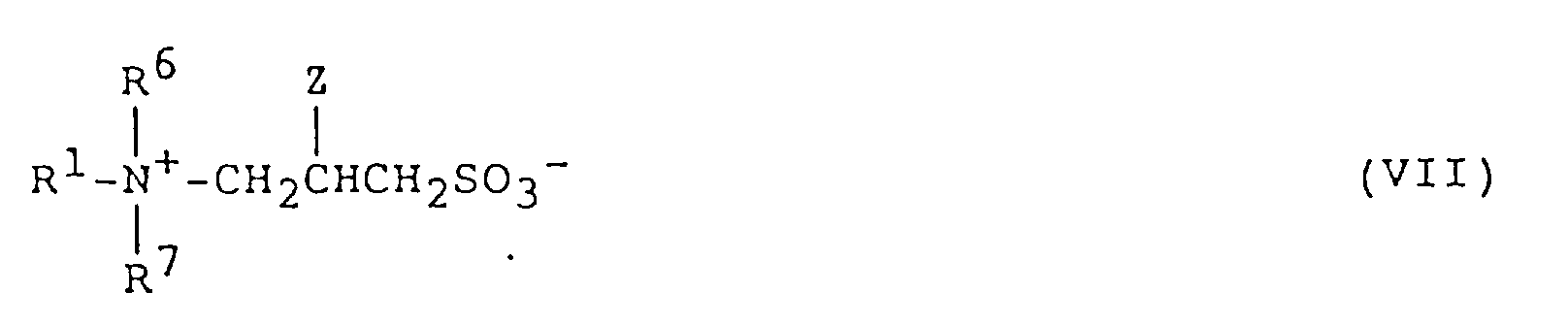
- Of these nonionic or amphoteric surface active agents particularly preferred are those represented by the following formulas (II) - (X):

R¹-O-(-CH₂CH₂O-)n-H (III)


- In the above formulas, R¹ is an alkyl or alkenyl group having 8-18 carbon atoms; R is an alkylene group having 2-3 carbon atoms; R³ and R⁴, which may be the same or different, denote an alkyl group having 1-3 carbon atoms or a group -(RO)lH, wherein l is a number 1-7 and R is the same as above; R⁵ is an alkyl or alkenyl group having 7-17 carbon atoms; R⁶ and R⁷, which may be the same or different, denote methyl or ethyl group; X is an alkanol group having 1-3 carbon atoms, Y is an alkanol group having 1-3 carbon atoms or a hydrogen atom, Z is a hydroxy group or a hydrogen atom, m is an average number of addition moles between 0-30, n is an average number of addition moles between 3-20, p and s are average numbers of addition moles and individually a number between 1-20, and q and r are average numbers of addition moles and individually a number between 3-30.
- In the liquid detergent composition of the present invention, these surface active agents can be incorporated individually or in combination of two or more in an amount of 1-40% by weight, preferably 10-40% by weight, or most preferably 15-35% by weight. When the amount to be incorporated is less than 1% by weight, the composition exhibits little fundamental detergency and foaming capability. On the other hand, if the amount exceeds 40% by weight, it is undesirable because 1) the viscosity of liquid detergents will be greatly increased, and 2) the stability of solutions will be impaired.
- Among these surface active agents, the anionic surface active agent serves as the principal and active component for detergency in the composition of the present invention, and its amount to be incorporated into the composition is preferably 5-30% by weight, with a particularly preferable range being 10-20% by weight, in total. If the amount is less than 5%, the detergency and foaming capability will be insufficient. An amount exceeding 30% by weight is also undesirable either because the viscosity of the composition will be greatly increased, resulting in difficulty of squeezing out it of its containers or the stability of the solution will be impaired.
- On the other hand, nonionic and amphoteric surface active agents, when used in conjunction with anionic surface active agents, are able to enhance the detergency against oily soils and to ease the activity to the skin, thereby preventing chapped hands or skin roughening. These nonionic and amphoteric surface active agents can be incorporated individually or in combination of two or more in an amount of 1-10% by weight, more preferably 2-5% by weight, to the total composition. If the amount is less than 1% by weight, sufficient effects cannot be obtained, while an amount exceeding 30% by weight is also undesirable for the reasons that the viscosity of the composition will be greatly increased or the stability of the solution will be impaired.
- The pearlescent agent (B) used in the composition of the present invention is a partial ester of a glycerol and a C₁₆-C₂₄ fatty acid. Particularly preferred are those having a C₁₆-C₂₄ content in the residue group of fatty acid and containing 75% or more of monoglyceride. Such glycerol fatty acid esters include esters of glycerol and a long chain fatty acid such as stearic acid, behenic acid, hydrogenated lard fatty acid, hydrogenated rape-seed oil fatty acid and hydrogenated palm oil fatty acid.
- The amount of the pearlescent agent (B) to be incorporated into the composition is 20% by weight, with the preferable range being 1-10% by weight. If the amount of the pearlescent agent is less than 0.5% by weight, the opacity will be insufficient, while more than 20% by weight is not favorable because it will worsen the stability of the solution.
- It is essential that the appearance of the liquid detergent composition of the present invention be opaque. The desired opacity is less than 1% in-the percent transmission of visible light at 420 nm, at optical length 1 cm and bulk temperature at 20°C.
- It is also essential that the viscosity of the liquid detergent composition of the present invention be in a range of 200-4,000 cps at 20°C bulk temperature; and the Brookfield yield value be in a range of 5-100 p. The preferable viscosity range is 200-1,000 cps and the preferable Brookfield yield value is 5-50 p. If both the viscosity and Brookfield yield value are too low, the detergent will quickly soak into a sponge when squeezed onto it, and the squeezed volume cannot be perceived visually. If the viscosity and the Brookfield yield value are too high, it is undesirable because it becomes difficult to squeeze out the detergent from a container.
- In order to obtain appropriate viscosity and Brookfield yield values, the weight ratio of component (B) to component (A) [(B)/(A)] is in a range of 0.05-1.
- Viscosity modifiers (C) used in the present invention include viscosity increasing agents such as partially bridged polyacrylic acid, hydroxyethyl cellulose, carboxymethyl cellulose, xanthane gum, montmorillonite, hectorite, saponite, vermiculite, nontronite, sauconite, laponite; and viscosity decreasing agents such as ethanol, propanol, isopropanol, ethylene glycol, propylene glycol, glycerol, polyglycerol (condensation degree: 2-10), sorbitol, pentaerythritol, benzene sulfonate, lower alkyl (C₁-C₄) benzene sulfonate. These viscosity modifiers are incorporated into the liquid detergent composition of the present invention in an amount of 0.1-10% by weight, preferably 0.1-8% by weight.
- In addition to components (A), (B) and (C), if component (D), which is a polyalkyleneoxide adduct to polyalcohol having an average molecular weight of 300-4,000 or its salt, is incorporated in the composition, liquid detergent compositions with beautiful pearlescent gloss or milky-white appearance can be obtained while retaining abundant lathering, homogeneous dispersion and preventing separation and precipitation during and after a long storage. Given as examples of component (D) are polyoxyethylene oxide or polypropylene oxide adduct to ethylene glycol or glycerol; and sulfate esters or phosphate esters thereof. As salts, alkali metal salts, alkaline earth metal salts, ammonium salts, alkanolamine salts are preferable. Component (D) is incorporated in the composition in an amount of 1-10% by weight, preferably 1-5% by weight to the total composition.
- Besides the above components, other components can optionally be added to the composition of the present invention as required so long as they do not impair the intended effects. Such optional components include, for example, perfumes, dyestuff, pigments, preservatives, antiseptics, pH adjusting agents.
- The detergent composition of the present invention can be prepared according to a conventional method by mixing and churning the above-described components under room temperature or with heating, and adjusting the values of viscosity and Brookfield yield.
- The detergent compositions thus obtained are appropriate for kitchen and household use such as for washing tableware, kitchen utensils, bath room, flooring, wall, glass, furniture, toilet, vegetable, fruit.
- The detergent composition of the present invention can be visually perceived when applied on a sponge without being soaked quickly into it. It can easily be squeezed out from a container at a constant amount so that it is not only economical in avoiding excess usage but also helps to prevent chapped hands or skin roughening.
- Other features of the invention will become apparent in the course of the following description of the exemplary embodiments which are given for illustration of the invention and are not intended to be limiting thereof.
- The following test methods were used in Examples:
- (1) Opacity
Test samples were filled in a 1-cm glass cell and the transmission percentage at 420 nm were measured by double-beam spectrophotometer using deionized water as a control. - (2) Viscosity
Test samples were charged in beakers for viscosity measurement and kept at 20°C in a thermostat water bath. The viscosity was measured by BM® type viscometer using a No. 3 rotor operating at 60 rpm, except a No. 4 rotor was used when the viscosity exceeded 2,000 cps. - (3) Brookfield Yield Values
Test samples were charged in beakers for viscosity measurement and kept at 20°C in a thermostat water bath. Using a B8H® type viscometer, the apparent viscosities at 0.5 rpm (No. 3 rotor) and 1 rpm (No. 3 rotor) were measured for each sample. The Brookfield yield values were calculated by the following equation:
- (4) Squeezability and Visibility
The test sample was poured into a commercial bottle for kitchen detergent use (350 ml, equipped with a push-pull cap) and about 5 g of the sample was squeezed onto a sponge (commercially available, polyurethane foam). Squeezability (ease of squeezing the sample liquid from the bottle) and visibility of the liquid volume on the sponge were evaluated according to the following criteria:
Squeezability- AAA:
- Easy to squeeze.
- CCC:
- Difficult to squeeze.
- AAA:
- The liquid volume is clearly perceived.
- CCC:
- The liquid soaks into the sponge quickly and the volume cannot be identified.
- (5) Weighability
350 g of test samples were poured into commercial bottles for kitchen detergent use (350 ml, equipped with a push-pull cap). About 20 g of the neat liquids of the samples was squeezed three times from the bottles on sponges by 10 house wives. Scattering of the squeezed amount of each sample was examined. - The detergent compositions listed in Table 1 were prepared and evaluated relative to the above-described characteristics (1)-(5). The results are shown in Table 1.

- The detergent compositions listed in Table 2 were prepared and detergency, lathering capability, feel upon use, and hand-chapping tendency were evaluated according to the methods described below. The results are shown in Table 2. The Invention Composition 5 in Table 2 satisfied the prerequisite conditions of the present invention; i.e., opaque in appearance, viscosity at bulk temperature 20°C in the range of 200-4,000 cps, and Brookfield yield values in the range of 5-100 p.
- (1) Lathering test
0.1% by weight of commercial butter was added as a soil component to detergent solutions of 0.5% by weight concentration (Hardness of water used: 3.5°DH) to measure the lathering capability of each composition. 40 ml of butter-contained detergent solution was poured into a glass cylinder having a 5 cm diameter and stirred for 15 minutes at 20°C. The lathering height immediately after ceasing stirring was measured. - (2) Detergency test
2.5 g of beef tallow, in which 0.1% by weight of Sudan III (red dye) was added as an indicator, was applied to porcelain dishes (diameter: 25 cm). The dishes were washed one by one at 20°C by rubbing with a sponge in which 3 g of water and 27 g of a detergent solution were immersed. The washing procedure was repeated until the sponge could no longer clean the beef tallow on the dish. The number of cleansed dishes (effectively washed pieces) were taken as the score of detergency. - (3) Test for feel upon use
5% solutions of detergent compositions were prepared and kept at 30°C. Hands were dipped in the solution for 10 minutes and rinsed at 30°C with water. Then, the hands were thoroughly wiped with a dry towel and left to stand for 5 minutes. The feeling of the hand skin was rated by the following evaluation standards.- AAA:
- Hand skin feels dewy.
- CCC:
- Hand skin feels fairly taut.
- (4) Irritation to the hand skin
5% solutions of detergent compositions were prepared and kept at 30°C. Hands were dipped in the solution for 20 minutes and rinsed thoroughly with water. This procedure was repeated for 3 continuous days. On the fourth day, the condition of the hand skin of five panelists was evaluated visually and rated as an average score for each composition using the following criteria:- Score 5: No roughening of the skin was observed.
- Score 4: Slight roughening of the skin was observed.
- Score 3: Roughening of the skin was observed.
- Score 2: Roughening of the skin was rather serious.
- Score 1: Serious roughening of the skin was observed

- Detergent compositions listed in Table 3 were prepared and evaluated in the same manner as in Example 2. The results are shown in Table 3. The Invention Composition 6 in Table 3 satisfied the prerequisite conditions of the present invention; i.e., opaque in appearance, viscosity at 20°C bulk temperature in the range of 200-4,000 cps, and Brookfield yield values in the range of 5-100 p.

- The detergent compositions listed in Table 4 were prepared and evaluated in the same manner as in Example 2. The results are shown in Table 4. All of the Invention Compositions in Table 4 satisfied the prerequisite conditions of the present invention; i.e., opaque in appearance, viscosity at 20°C bulk temperature in the range of 200-4,000 cps, and Brookfield yield values in the range of 5-100 p.

- The detergent composition 9 listed in Table 5 was prepared. The appearance immediately following the preparation, the storage stability, and lathering capability of each composition were examined, and the results are presented in Table 5.
- The composition was prepared by mixing Components (A), (D) and Other Components in Table 5 with heating, followed by dissolving Components (B) at 80°C. The mixture was cooled down to 30°C over 2 hours while continuously being stirred.
-
(1) Observation of appearance
Test samples were poured into a 100-ml transparent glass bottle and the appearance was observed with the naked eye. - AAA:
- Uniform pearlescent gloss is observed.
- CCC:
- Pearlescent gloss is not uniform, and a separated layer (transparent or emulsion-like) is observed.
- The detergent composition 10 listed in Table 6 was prepared and evaluated in the same manner as in Example 5. The results are shown in Table 6. The Invention Composition in Table 6 satisfied the prerequisite conditions of the present invention; i.e., opaque in appearance, viscosity at 20°C bulk temperature in the range of 200-4,000 cps, and Brookfield yield in the range of 5-100 p.
TABLE 6 Component (wt%) Invention Composition 10 Component (A) Sodium polyoxyethylene (3) laurylether sulfate 15 Lauryldimethylamine oxide 5 Polyoxyethylene (8) lauryl ether 2 Lauric acid diethanolamide 1 Component (B) Glycerol monobehenic acid ester 5 Component (C) Ethanol 5 Component (D) Polyethyleneoxide adduct to ethylene glycol (Average M.W. = 1500) 4 Other component Deionized water ---------- Balance ---------- Appearance right after preparation AAA Storage stability at -5°C AAA at 30°C AAA at 40°C AAA Lathering (mm) 100

(2) Storage stability
Test samples were poured into a 100-ml transparent glass bottle and placed in thermostat baths at -5°C, 30°C and 40°C, and stored for one month. After the storage, the appearance of each sample was rated according to the evaluation standards described in (1) above.
(3) Lathering
0.1% by weight of commercial butter was added as a soil component to detergent solutions of 0.5% by weight concentration (Hardness of water used: 3.5°DH) to measure the lathering capability of each composition. 40 ml of butter-contained detergent solution was poured into a glass cylinder having a 5 cm diameter. In addition, 20 rubber balls of 1 cm diameter were put into the cylinder to enhance the mechanical force necessary for lathering. The content was stirred for 15 minutes at 20°C and the lathering height right was measured for evaluation immediately after the stirring was stopped.
The Invention Composition in Table 5 satisfied the prerequisite conditions of the present invention; i.e., opaque in appearance, viscosity at 20°C bulk temperature in the range of 200-4,000 cps, and Brookfield yield values in the range of 5-100 p.
| Component (wt%) | Invention Composition |
| 9 | |
| Component (A) | |
| Sodium polyoxyethylene (3) laurylether sulfate | 15 |
| Lauryldimethylamine oxide | 5 |
| Polyoxyethylene (8) lauryl ether | 2 |
| Lauric acid diethanolamide | 1 |
| Component (B) | |
| Glycerol monobehenic acid ester | 5 |
| Component (C) | |
| Ethanol | 5 |
| Component (D) | |
| Polyethyleneoxide adduct to ethylene glycol (Average M.W. = 1000) | 4 |
| Other component | |
| Deionized water | ---------- Balance ---------- |
| Appearance right after preparation | AAA |
| Storage stability | |
| at -5°C | AAA |
| at 30°C | AAA |
| at 40°C | AAA |
| Lathering (mm) | 100 |
Claims (7)
- A liquid detergent composition comprising:(A) 1-40% by weight of a surface active agent being a mixture of(i) an anionic surface active agent, and(ii) a nonionic surface active agent or an amphoteric surface active agent,wherein said anionic surface active agent is polyoxyethylene alkyl or alkenyl ether sulfate represented by the following formula:
R¹O(CH₂CH₂O)ℓSO₃M (I)
wherein R¹ represents an alkyl or alkenyl group of C₈-C₁₈, ℓ has an average value of from 1 to 7, and M denotes an alkali metal, alkaline earth metal, ammonium or alkanolamine;(B) 0.5-20% by weight of a pearlescent agent being represented by a partial ester of a glycerol and a fatty acid of C₁₆-C₂₄, and having a melting point of 30°C or higher; and(C) 0.1-10% by weight of a viscosity modifier;wherein the ratio (B)/(A) is in the range of 0.05-1; and wherein said liquid detergent composition exhibits an opaque appearance and has a viscosity of 200-4000 cps at 20°C and a Brookfield yield value of 5-100 p, wherein the Brookfield yield value is defined by the equation:
- The liquid detergent composition according to claim 1, wherein the nonionic or amphoteric surface active agent is selected from the group consisting of the following formulas (II) to (X):





- The liquid detergent composition according to claim 1, wherein the transmission percentage of visible light of 420 nm, at a 1 cm optical length and at 20°C bulk temperature, is not greater than 1%.
- The liquid detergent composition according to any of claims 1-3, which furthermore comprises
(D) a polyalkylene oxide adduct to polyalcohol having an average molecular weight of 300-4000 or a sulfate or a phosphate thereof. - A process for preparing a liquid detergent composition wherein there are mixed and churned under room temperature or with heating(A) 1-40% by weight of a surface active agent being a mixture of(i) an anionic surface active agent, and(ii) a nonionic surface active agent or an amphoteric surface active agent,wherein said anionic surface active agent is polyoxyethylene alkyl or alkenyl ether sulfate represented by the following formula:
R¹O(CH₂CH₂O)ℓSO₃M (I)
wherein R¹ represents an alkyl or alkenyl group of C₈-C₁₈, ℓ has an average value of from 1 to 7, and M denotes an alkali metal, alkaline earth metal, ammonium or alkanolamine;(B) 0.5-20% by weight of a pearlescent agent being represented by a partial ester of a glycerol and a fatty acid of C₁₆-C₂₄, and having a melting point of 30°C or higher; and(C) 0.1-10% by weight of a viscosity modifier;wherein the ratio (B)/(A) is in the range of 0.05-1; and wherein
the viscosity is adjusted to a value of 200-4000 cps at 20°C and the Brookfield yield is adjusted to a value of 5-100 p, wherein the Brookfield yield value is defined by the equation:
- The process according to claim 5,
wherein the nonionic or amphoteric surface active agent is selected from the group consisting of the following formulas (II) to (X):


- The process according to claim 5 or 6, which furthermore comprises the addition of
(D) a polyalkylene oxide adduct to polyalcohol having an average molecular weight of 300-4000 or a sulfate or a phosphate thereof.
Applications Claiming Priority (6)
| Application Number | Priority Date | Filing Date | Title |
|---|---|---|---|
| JP256703/91 | 1991-10-03 | ||
| JP25670091A JPH0598290A (en) | 1991-10-03 | 1991-10-03 | Emulsified detergent composition for hard surface |
| JP25670391A JPH0598287A (en) | 1991-10-03 | 1991-10-03 | Emulsified detergent composition for hard surface |
| JP256700/91 | 1991-10-03 | ||
| JP27753891A JPH05117687A (en) | 1991-10-24 | 1991-10-24 | Liquid detergent composition |
| JP277538/91 | 1991-10-24 |
Publications (2)
| Publication Number | Publication Date |
|---|---|
| EP0535693A1 EP0535693A1 (en) | 1993-04-07 |
| EP0535693B1 true EP0535693B1 (en) | 1996-03-20 |
Family
ID=27334551
Family Applications (1)
| Application Number | Title | Priority Date | Filing Date |
|---|---|---|---|
| EP92116891A Expired - Lifetime EP0535693B1 (en) | 1991-10-03 | 1992-10-02 | Liquid detergent composition |
Country Status (9)
| Country | Link |
|---|---|
| US (1) | US5466395A (en) |
| EP (1) | EP0535693B1 (en) |
| AU (1) | AU657796B2 (en) |
| DE (1) | DE69209207T2 (en) |
| ES (1) | ES2084902T3 (en) |
| HK (1) | HK30197A (en) |
| MY (1) | MY109460A (en) |
| PH (1) | PH31292A (en) |
| SG (1) | SG46201A1 (en) |
Families Citing this family (32)
| Publication number | Priority date | Publication date | Assignee | Title |
|---|---|---|---|---|
| EP0569843B1 (en) * | 1992-05-13 | 1995-11-15 | Hoechst Aktiengesellschaft | Non-ionic free-flowing pearl lustre dispersions |
| DE4236109A1 (en) * | 1992-10-26 | 1994-04-28 | Henkel Kgaa | Liquid detergent |
| CA2168346A1 (en) * | 1993-07-28 | 1995-02-09 | Ici Australia Operations Proprietary Limited | Pearlescent based concentrate for personal care products |
| WO1995023204A1 (en) * | 1994-02-28 | 1995-08-31 | Colgate-Palmolive Company | Liquid detergent |
| US5767050A (en) * | 1995-01-17 | 1998-06-16 | Colgate-Palmolive Co. | Light duty liquid cleaning compositions comprising partially esterified polyhydric alcohol solubilizing agent |
| BR9609727A (en) * | 1995-07-20 | 1999-03-16 | Colgate Palmolive Co | Cleaning composition |
| EP0781838A1 (en) * | 1995-12-29 | 1997-07-02 | Colgate-Palmolive Company | Detergent composition having improved cleaning power |
| EP0781837A1 (en) * | 1995-12-29 | 1997-07-02 | Colgate-Palmolive Company | Detergent composition having improved cleaning power |
| EP0846752A3 (en) * | 1996-12-03 | 1999-12-01 | Clariant GmbH | Free-flowing aqueous pearl lustre disperion with behenic acid as component giving the pearl lustre aspect |
| US6180582B1 (en) * | 1997-09-26 | 2001-01-30 | Colgate-Palmolive Co. | Liquid cleaning compositions |
| DE19826293A1 (en) * | 1998-06-12 | 2000-03-23 | Buck Chemie Gmbh | Sanitary ware |
| ES2185497B1 (en) * | 2001-07-30 | 2004-03-16 | Kao Corp Sa | CONCENTRATED WATERNESS NACARANT COMPOSITIONS. |
| DE10163668A1 (en) * | 2001-12-21 | 2003-07-10 | Henkel Kgaa | Device for improving the rinse aid effect in dishwashers |
| JP3958123B2 (en) * | 2002-06-14 | 2007-08-15 | 花王株式会社 | Aqueous liquid detergent composition |
| ATE530630T1 (en) | 2006-03-22 | 2011-11-15 | Procter & Gamble | LIQUID TREATMENT COMPOSITION |
| WO2008126558A1 (en) * | 2007-03-12 | 2008-10-23 | Kao Corporation | Pearlescent composition |
| US8980813B2 (en) | 2008-02-21 | 2015-03-17 | S. C. Johnson & Son, Inc. | Cleaning composition having high self-adhesion on a vertical hard surface and providing residual benefits |
| US9410111B2 (en) | 2008-02-21 | 2016-08-09 | S.C. Johnson & Son, Inc. | Cleaning composition that provides residual benefits |
| US9481854B2 (en) | 2008-02-21 | 2016-11-01 | S. C. Johnson & Son, Inc. | Cleaning composition that provides residual benefits |
| US8993502B2 (en) | 2008-02-21 | 2015-03-31 | S. C. Johnson & Son, Inc. | Cleaning composition having high self-adhesion to a vertical hard surface and providing residual benefits |
| MX2012014092A (en) * | 2010-06-09 | 2013-01-29 | Procter & Gamble | Methods of preparing personal care compositions. |
| CA2810160C (en) | 2010-06-09 | 2016-04-12 | The Procter & Gamble Company | Semi-continuous feed production of liquid personal care compositions |
| WO2016034635A1 (en) * | 2014-09-03 | 2016-03-10 | Henkel Ag & Co. Kgaa | Liquid detergent composition with pearly luster |
| US10196591B2 (en) | 2015-07-10 | 2019-02-05 | S. C. Johnson & Sons, Inc. | Gel cleaning composition |
| US10358625B2 (en) | 2015-07-17 | 2019-07-23 | S. C. Johnson & Son, Inc. | Non-corrosive cleaning composition |
| US10000728B2 (en) | 2015-07-17 | 2018-06-19 | S. C. Johnson & Son, Inc. | Cleaning composition with propellant |
| US10604724B2 (en) | 2015-08-27 | 2020-03-31 | S. C. Johnson & Son, Inc. | Cleaning gel with glycine betaine amide/nonionic surfactant mixture |
| WO2017034792A1 (en) | 2015-08-27 | 2017-03-02 | S. C. Johnson & Son, Inc. | Cleaning gel with glycine betaine ester |
| WO2017099932A1 (en) | 2015-12-07 | 2017-06-15 | S.C. Johnson & Son, Inc. | Acidic hard surface cleaner with glycine betaine amide |
| US11339353B2 (en) | 2015-12-07 | 2022-05-24 | S.C. Johnson & Son, Inc. | Acidic hard surface cleaner with glycine betaine ester |
| WO2019078179A1 (en) | 2017-10-17 | 2019-04-25 | 花王株式会社 | Liquid detergent composition for hard surface |
| JP2024504624A (en) * | 2021-01-13 | 2024-02-01 | ディーエイチ テクノロジーズ デベロップメント プライベート リミテッド | Polyol solution for coated capillaries in capillary isoelectric focusing |
Family Cites Families (14)
| Publication number | Priority date | Publication date | Assignee | Title |
|---|---|---|---|---|
| US4554098A (en) * | 1982-02-19 | 1985-11-19 | Colgate-Palmolive Company | Mild liquid detergent compositions |
| JPS606693B2 (en) * | 1982-05-28 | 1985-02-20 | 花王株式会社 | Method for producing pearlescent agent dispersion |
| US4477365A (en) * | 1983-01-06 | 1984-10-16 | Miles Laboratories, Inc. | Caustic based aqueous cleaning composition |
| US4617148A (en) * | 1983-06-30 | 1986-10-14 | Hercules Incorporated | Opaque liquid hand soap |
| GB8416884D0 (en) * | 1984-07-03 | 1984-08-08 | Procter & Gamble | Liquid cleansing composition |
| US4788006A (en) * | 1985-01-25 | 1988-11-29 | The Procter & Gamble Company | Shampoo compositions containing nonvolatile silicone and xanthan gum |
| US4902499A (en) * | 1986-04-04 | 1990-02-20 | The Procter & Gamble Company | Hair care compositions containing a rigid silicone polymer |
| US4728457A (en) * | 1986-08-25 | 1988-03-01 | The Proctor & Gamble Company | Process for making a silicone-containing shampoo |
| JPS63277300A (en) * | 1987-05-08 | 1988-11-15 | Kao Corp | Liquid detergent composition |
| US4842850A (en) * | 1987-05-18 | 1989-06-27 | The Procter & Gamble Company | Hair care compositions |
| US4906459A (en) * | 1987-10-23 | 1990-03-06 | The Procter & Gamble Company | Hair care compositions |
| DE3808881A1 (en) * | 1988-03-17 | 1989-09-28 | Huels Chemische Werke Ag | FLOWABLE PEARL DISPERSION AND THEIR USE |
| US5025069A (en) * | 1988-12-19 | 1991-06-18 | Kao Corporation | Mild alkyl glycoside-based detergent compositions, further comprising terpene and isothiazolone derivatives |
| JPH02166196A (en) * | 1988-12-19 | 1990-06-26 | Lion Corp | liquid cleaning composition |
-
1992
- 1992-09-29 MY MYPI92001741A patent/MY109460A/en unknown
- 1992-09-30 AU AU26058/92A patent/AU657796B2/en not_active Ceased
- 1992-10-02 DE DE69209207T patent/DE69209207T2/en not_active Expired - Fee Related
- 1992-10-02 ES ES92116891T patent/ES2084902T3/en not_active Expired - Lifetime
- 1992-10-02 EP EP92116891A patent/EP0535693B1/en not_active Expired - Lifetime
- 1992-10-02 SG SG1996000494A patent/SG46201A1/en unknown
- 1992-10-02 PH PH45039A patent/PH31292A/en unknown
-
1994
- 1994-07-06 US US08/269,900 patent/US5466395A/en not_active Expired - Fee Related
-
1997
- 1997-03-13 HK HK30197A patent/HK30197A/en not_active IP Right Cessation
Also Published As
| Publication number | Publication date |
|---|---|
| HK30197A (en) | 1997-03-21 |
| MY109460A (en) | 1997-01-31 |
| DE69209207D1 (en) | 1996-04-25 |
| AU657796B2 (en) | 1995-03-23 |
| EP0535693A1 (en) | 1993-04-07 |
| AU2605892A (en) | 1993-04-08 |
| PH31292A (en) | 1998-07-06 |
| US5466395A (en) | 1995-11-14 |
| ES2084902T3 (en) | 1996-05-16 |
| DE69209207T2 (en) | 1996-08-29 |
| SG46201A1 (en) | 1998-02-20 |
Similar Documents
| Publication | Publication Date | Title |
|---|---|---|
| HK30197A (en) | Liquid detergent composition | |
| EP0374702B1 (en) | Detergent composition | |
| DE3533977C2 (en) | Highly foaming nonionic surfactant-based liquid cleaner | |
| EP0364744B1 (en) | Detergent composition | |
| EP0510870B1 (en) | Milky detergent composition for hard surfaces | |
| DE69325589T2 (en) | CLEAN WITH SHORT-CHAIN SURFACES | |
| JPH078991B2 (en) | Neutral liquid detergent composition | |
| RU2095402C1 (en) | Foaming liquid detergent for alleviated regime of operation and method for its production | |
| DE69633116T3 (en) | Dishwashing detergent with a reduced tendency to gel | |
| US5096621A (en) | Detergent composition containing di-long chain alkyl amine oxides | |
| JP4181217B2 (en) | Aqueous pearlescent agent concentrate | |
| JPH0441718B2 (en) | ||
| JP2657556B2 (en) | Detergent composition | |
| JP2530215B2 (en) | Detergent composition | |
| JPH0633099A (en) | Liquid detergent composition | |
| JPH0232197A (en) | Rigid surface-cleaning agent composition | |
| JPH0699710B2 (en) | Cleaning composition | |
| JP2566821B2 (en) | Detergent composition | |
| JP2582626B2 (en) | Detergent composition | |
| JPH0575039B2 (en) | ||
| JP2548643B2 (en) | Emulsion hard surface cleaner composition | |
| JP2548644B2 (en) | Emulsion hard surface cleaner composition | |
| JP3260081B2 (en) | Detergent composition | |
| JP2526102B2 (en) | Detergent composition | |
| JP2670939B2 (en) | Hard surface cleaning composition |
Legal Events
| Date | Code | Title | Description |
|---|---|---|---|
| PUAI | Public reference made under article 153(3) epc to a published international application that has entered the european phase |
Free format text: ORIGINAL CODE: 0009012 |
|
| AK | Designated contracting states |
Kind code of ref document: A1 Designated state(s): DE ES FR GB |
|
| 17P | Request for examination filed |
Effective date: 19930723 |
|
| 17Q | First examination report despatched |
Effective date: 19941206 |
|
| GRAH | Despatch of communication of intention to grant a patent |
Free format text: ORIGINAL CODE: EPIDOS IGRA |
|
| GRAA | (expected) grant |
Free format text: ORIGINAL CODE: 0009210 |
|
| AK | Designated contracting states |
Kind code of ref document: B1 Designated state(s): DE ES FR GB |
|
| REF | Corresponds to: |
Ref document number: 69209207 Country of ref document: DE Date of ref document: 19960425 |
|
| ET | Fr: translation filed | ||
| REG | Reference to a national code |
Ref country code: ES Ref legal event code: FG2A Ref document number: 2084902 Country of ref document: ES Kind code of ref document: T3 |
|
| PLBE | No opposition filed within time limit |
Free format text: ORIGINAL CODE: 0009261 |
|
| 26N | No opposition filed | ||
| PGFP | Annual fee paid to national office [announced via postgrant information from national office to epo] |
Ref country code: GB Payment date: 19981001 Year of fee payment: 7 |
|
| PGFP | Annual fee paid to national office [announced via postgrant information from national office to epo] |
Ref country code: FR Payment date: 19981009 Year of fee payment: 7 |
|
| PGFP | Annual fee paid to national office [announced via postgrant information from national office to epo] |
Ref country code: DE Payment date: 19981012 Year of fee payment: 7 |
|
| PGFP | Annual fee paid to national office [announced via postgrant information from national office to epo] |
Ref country code: ES Payment date: 19981019 Year of fee payment: 7 |
|
| PG25 | Lapsed in a contracting state [announced via postgrant information from national office to epo] |
Ref country code: GB Free format text: LAPSE BECAUSE OF NON-PAYMENT OF DUE FEES Effective date: 19991002 |
|
| PG25 | Lapsed in a contracting state [announced via postgrant information from national office to epo] |
Ref country code: ES Free format text: LAPSE BECAUSE OF NON-PAYMENT OF DUE FEES Effective date: 19991003 |
|
| GBPC | Gb: european patent ceased through non-payment of renewal fee |
Effective date: 19991002 |
|
| PG25 | Lapsed in a contracting state [announced via postgrant information from national office to epo] |
Ref country code: FR Free format text: LAPSE BECAUSE OF NON-PAYMENT OF DUE FEES Effective date: 20000630 |
|
| PG25 | Lapsed in a contracting state [announced via postgrant information from national office to epo] |
Ref country code: DE Free format text: LAPSE BECAUSE OF NON-PAYMENT OF DUE FEES Effective date: 20000801 |
|
| REG | Reference to a national code |
Ref country code: FR Ref legal event code: ST |
|
| REG | Reference to a national code |
Ref country code: ES Ref legal event code: FD2A Effective date: 20001113 |