EP0527758B1 - Recombinant yeasts containing the dna sequences coding for xylose reductase and xylitol dehydrogenase enzymes - Google Patents
Recombinant yeasts containing the dna sequences coding for xylose reductase and xylitol dehydrogenase enzymes Download PDFInfo
- Publication number
- EP0527758B1 EP0527758B1 EP91906996A EP91906996A EP0527758B1 EP 0527758 B1 EP0527758 B1 EP 0527758B1 EP 91906996 A EP91906996 A EP 91906996A EP 91906996 A EP91906996 A EP 91906996A EP 0527758 B1 EP0527758 B1 EP 0527758B1
- Authority
- EP
- European Patent Office
- Prior art keywords
- xylose
- xylitol
- transformed
- yeast
- yeast strain
- Prior art date
- Legal status (The legal status is an assumption and is not a legal conclusion. Google has not performed a legal analysis and makes no representation as to the accuracy of the status listed.)
- Expired - Lifetime
Links
- 240000004808 Saccharomyces cerevisiae Species 0.000 title claims abstract description 112
- 108010053754 Aldehyde reductase Proteins 0.000 title claims abstract description 93
- 102000016912 Aldehyde Reductase Human genes 0.000 title claims abstract description 90
- 108010058076 D-xylulose reductase Proteins 0.000 title claims abstract description 33
- 108091028043 Nucleic acid sequence Proteins 0.000 title claims description 19
- SRBFZHDQGSBBOR-IOVATXLUSA-N D-xylopyranose Chemical compound O[C@@H]1COC(O)[C@H](O)[C@H]1O SRBFZHDQGSBBOR-IOVATXLUSA-N 0.000 claims abstract description 121
- SRBFZHDQGSBBOR-UHFFFAOYSA-N beta-D-Pyranose-Lyxose Natural products OC1COC(O)C(O)C1O SRBFZHDQGSBBOR-UHFFFAOYSA-N 0.000 claims abstract description 62
- PYMYPHUHKUWMLA-UHFFFAOYSA-N arabinose Natural products OCC(O)C(O)C(O)C=O PYMYPHUHKUWMLA-UHFFFAOYSA-N 0.000 claims abstract description 60
- LFQSCWFLJHTTHZ-UHFFFAOYSA-N Ethanol Chemical compound CCO LFQSCWFLJHTTHZ-UHFFFAOYSA-N 0.000 claims abstract description 59
- TVXBFESIOXBWNM-UHFFFAOYSA-N Xylitol Natural products OCCC(O)C(O)C(O)CCO TVXBFESIOXBWNM-UHFFFAOYSA-N 0.000 claims abstract description 58
- HEBKCHPVOIAQTA-UHFFFAOYSA-N meso ribitol Natural products OCC(O)C(O)C(O)CO HEBKCHPVOIAQTA-UHFFFAOYSA-N 0.000 claims abstract description 58
- HEBKCHPVOIAQTA-SCDXWVJYSA-N xylitol Chemical compound OC[C@H](O)[C@@H](O)[C@H](O)CO HEBKCHPVOIAQTA-SCDXWVJYSA-N 0.000 claims abstract description 58
- 239000000811 xylitol Substances 0.000 claims abstract description 58
- 235000010447 xylitol Nutrition 0.000 claims abstract description 58
- 229960002675 xylitol Drugs 0.000 claims abstract description 58
- 238000000034 method Methods 0.000 claims abstract description 38
- 230000008569 process Effects 0.000 claims abstract description 30
- 102000004190 Enzymes Human genes 0.000 claims abstract description 28
- 108090000790 Enzymes Proteins 0.000 claims abstract description 28
- 230000002255 enzymatic effect Effects 0.000 claims abstract description 7
- 230000001603 reducing effect Effects 0.000 claims abstract description 5
- 235000014680 Saccharomyces cerevisiae Nutrition 0.000 claims description 102
- 239000013612 plasmid Substances 0.000 claims description 42
- 230000000694 effects Effects 0.000 claims description 21
- 230000014509 gene expression Effects 0.000 claims description 20
- PEDCQBHIVMGVHV-UHFFFAOYSA-N Glycerine Chemical compound OCC(O)CO PEDCQBHIVMGVHV-UHFFFAOYSA-N 0.000 claims description 18
- 229930027945 nicotinamide-adenine dinucleotide Natural products 0.000 claims description 14
- WQZGKKKJIJFFOK-GASJEMHNSA-N Glucose Natural products OC[C@H]1OC(O)[C@H](O)[C@@H](O)[C@@H]1O WQZGKKKJIJFFOK-GASJEMHNSA-N 0.000 claims description 9
- 239000012634 fragment Substances 0.000 claims description 9
- 239000008103 glucose Substances 0.000 claims description 9
- BOPGDPNILDQYTO-NNYOXOHSSA-N nicotinamide-adenine dinucleotide Chemical compound C1=CCC(C(=O)N)=CN1[C@H]1[C@H](O)[C@H](O)[C@@H](COP(O)(=O)OP(O)(=O)OC[C@@H]2[C@H]([C@@H](O)[C@@H](O2)N2C3=NC=NC(N)=C3N=C2)O)O1 BOPGDPNILDQYTO-NNYOXOHSSA-N 0.000 claims description 6
- 230000008929 regeneration Effects 0.000 claims description 6
- 238000011069 regeneration method Methods 0.000 claims description 6
- 230000001172 regenerating effect Effects 0.000 claims description 5
- 241000235648 Pichia Species 0.000 claims description 4
- 241000235347 Schizosaccharomyces pombe Species 0.000 claims description 4
- 229910052799 carbon Inorganic materials 0.000 claims description 4
- 108090000765 processed proteins & peptides Proteins 0.000 claims description 4
- 230000001131 transforming effect Effects 0.000 claims description 4
- OKTJSMMVPCPJKN-UHFFFAOYSA-N Carbon Chemical compound [C] OKTJSMMVPCPJKN-UHFFFAOYSA-N 0.000 claims description 3
- 241000235649 Kluyveromyces Species 0.000 claims description 3
- WQZGKKKJIJFFOK-VFUOTHLCSA-N beta-D-glucose Chemical compound OC[C@H]1O[C@@H](O)[C@H](O)[C@@H](O)[C@@H]1O WQZGKKKJIJFFOK-VFUOTHLCSA-N 0.000 claims description 3
- 125000003275 alpha amino acid group Chemical group 0.000 claims description 2
- 229920001184 polypeptide Polymers 0.000 claims 2
- 102000004196 processed proteins & peptides Human genes 0.000 claims 2
- ACFIXJIJDZMPPO-NNYOXOHSSA-N NADPH Chemical compound C1=CCC(C(=O)N)=CN1[C@H]1[C@H](O)[C@H](O)[C@@H](COP(O)(=O)OP(O)(=O)OC[C@@H]2[C@H]([C@@H](OP(O)(O)=O)[C@@H](O2)N2C3=NC=NC(N)=C3N=C2)O)O1 ACFIXJIJDZMPPO-NNYOXOHSSA-N 0.000 claims 1
- 108090000623 proteins and genes Proteins 0.000 abstract description 52
- 238000004519 manufacturing process Methods 0.000 abstract description 15
- 238000000855 fermentation Methods 0.000 abstract description 12
- 230000004151 fermentation Effects 0.000 abstract description 12
- 238000000338 in vitro Methods 0.000 abstract description 5
- 238000001727 in vivo Methods 0.000 abstract description 4
- 238000005516 engineering process Methods 0.000 abstract description 2
- 239000013598 vector Substances 0.000 description 32
- 229940088598 enzyme Drugs 0.000 description 26
- 102100026974 Sorbitol dehydrogenase Human genes 0.000 description 25
- 241000235060 Scheffersomyces stipitis Species 0.000 description 24
- 239000002609 medium Substances 0.000 description 20
- 101150065223 XDH gene Proteins 0.000 description 15
- 239000002299 complementary DNA Substances 0.000 description 15
- 210000004027 cell Anatomy 0.000 description 13
- 239000012528 membrane Substances 0.000 description 12
- 108020004414 DNA Proteins 0.000 description 11
- QTBSBXVTEAMEQO-UHFFFAOYSA-N Acetic acid Chemical compound CC(O)=O QTBSBXVTEAMEQO-UHFFFAOYSA-N 0.000 description 9
- XJLXINKUBYWONI-DQQFMEOOSA-N [[(2r,3r,4r,5r)-5-(6-aminopurin-9-yl)-3-hydroxy-4-phosphonooxyoxolan-2-yl]methoxy-hydroxyphosphoryl] [(2s,3r,4s,5s)-5-(3-carbamoylpyridin-1-ium-1-yl)-3,4-dihydroxyoxolan-2-yl]methyl phosphate Chemical compound NC(=O)C1=CC=C[N+]([C@@H]2[C@H]([C@@H](O)[C@H](COP([O-])(=O)OP(O)(=O)OC[C@@H]3[C@H]([C@@H](OP(O)(O)=O)[C@@H](O3)N3C4=NC=NC(N)=C4N=C3)O)O2)O)=C1 XJLXINKUBYWONI-DQQFMEOOSA-N 0.000 description 9
- MNNHAPBLZZVQHP-UHFFFAOYSA-N diammonium hydrogen phosphate Chemical compound [NH4+].[NH4+].OP([O-])([O-])=O MNNHAPBLZZVQHP-UHFFFAOYSA-N 0.000 description 7
- 239000002994 raw material Substances 0.000 description 7
- 230000001105 regulatory effect Effects 0.000 description 7
- 230000003362 replicative effect Effects 0.000 description 7
- 239000004254 Ammonium phosphate Substances 0.000 description 6
- 241000235647 Pachysolen tannophilus Species 0.000 description 6
- FAPWRFPIFSIZLT-UHFFFAOYSA-M Sodium chloride Chemical compound [Na+].[Cl-] FAPWRFPIFSIZLT-UHFFFAOYSA-M 0.000 description 6
- 229910000148 ammonium phosphate Inorganic materials 0.000 description 6
- 235000019289 ammonium phosphates Nutrition 0.000 description 6
- 238000003556 assay Methods 0.000 description 6
- 239000000872 buffer Substances 0.000 description 6
- 238000006243 chemical reaction Methods 0.000 description 6
- 238000010367 cloning Methods 0.000 description 6
- 239000000047 product Substances 0.000 description 6
- 102000004169 proteins and genes Human genes 0.000 description 6
- 210000003705 ribosome Anatomy 0.000 description 6
- 230000009466 transformation Effects 0.000 description 6
- 241000894006 Bacteria Species 0.000 description 5
- ZAQJHHRNXZUBTE-WUJLRWPWSA-N D-xylulose Chemical compound OC[C@@H](O)[C@H](O)C(=O)CO ZAQJHHRNXZUBTE-WUJLRWPWSA-N 0.000 description 5
- 125000001429 N-terminal alpha-amino-acid group Chemical group 0.000 description 5
- 108700040099 Xylose isomerases Proteins 0.000 description 5
- 230000002759 chromosomal effect Effects 0.000 description 5
- 108020004999 messenger RNA Proteins 0.000 description 5
- 238000013048 microbiological method Methods 0.000 description 5
- FQVLRGLGWNWPSS-BXBUPLCLSA-N (4r,7s,10s,13s,16r)-16-acetamido-13-(1h-imidazol-5-ylmethyl)-10-methyl-6,9,12,15-tetraoxo-7-propan-2-yl-1,2-dithia-5,8,11,14-tetrazacycloheptadecane-4-carboxamide Chemical compound N1C(=O)[C@@H](NC(C)=O)CSSC[C@@H](C(N)=O)NC(=O)[C@H](C(C)C)NC(=O)[C@H](C)NC(=O)[C@@H]1CC1=CN=CN1 FQVLRGLGWNWPSS-BXBUPLCLSA-N 0.000 description 4
- 102100034035 Alcohol dehydrogenase 1A Human genes 0.000 description 4
- 241000588724 Escherichia coli Species 0.000 description 4
- 101000892220 Geobacillus thermodenitrificans (strain NG80-2) Long-chain-alcohol dehydrogenase 1 Proteins 0.000 description 4
- 101000780443 Homo sapiens Alcohol dehydrogenase 1A Proteins 0.000 description 4
- 230000001580 bacterial effect Effects 0.000 description 4
- 238000005119 centrifugation Methods 0.000 description 4
- 210000000349 chromosome Anatomy 0.000 description 4
- 239000000284 extract Substances 0.000 description 4
- 238000002955 isolation Methods 0.000 description 4
- 239000000758 substrate Substances 0.000 description 4
- 238000012546 transfer Methods 0.000 description 4
- FNZLKVNUWIIPSJ-RFZPGFLSSA-N D-xylulose 5-phosphate Chemical compound OCC(=O)[C@@H](O)[C@H](O)COP(O)(O)=O FNZLKVNUWIIPSJ-RFZPGFLSSA-N 0.000 description 3
- 101000579123 Homo sapiens Phosphoglycerate kinase 1 Proteins 0.000 description 3
- OKKJLVBELUTLKV-UHFFFAOYSA-N Methanol Chemical compound OC OKKJLVBELUTLKV-UHFFFAOYSA-N 0.000 description 3
- 239000000020 Nitrocellulose Substances 0.000 description 3
- 108091034117 Oligonucleotide Proteins 0.000 description 3
- KJWZYMMLVHIVSU-IYCNHOCDSA-N PGK1 Chemical compound CCCCC[C@H](O)\C=C\[C@@H]1[C@@H](CCCCCCC(O)=O)C(=O)CC1=O KJWZYMMLVHIVSU-IYCNHOCDSA-N 0.000 description 3
- 102100028251 Phosphoglycerate kinase 1 Human genes 0.000 description 3
- 241000192263 Scheffersomyces shehatae Species 0.000 description 3
- 241001633332 Scheffersomyces stipitis CBS 6054 Species 0.000 description 3
- 235000010633 broth Nutrition 0.000 description 3
- 239000006227 byproduct Substances 0.000 description 3
- 238000004587 chromatography analysis Methods 0.000 description 3
- 238000007796 conventional method Methods 0.000 description 3
- 238000005520 cutting process Methods 0.000 description 3
- 238000001962 electrophoresis Methods 0.000 description 3
- 238000003028 enzyme activity measurement method Methods 0.000 description 3
- 235000021474 generally recognized As safe (food) Nutrition 0.000 description 3
- 235000021473 generally recognized as safe (food ingredients) Nutrition 0.000 description 3
- 230000014759 maintenance of location Effects 0.000 description 3
- 239000003550 marker Substances 0.000 description 3
- 230000004060 metabolic process Effects 0.000 description 3
- 238000001426 native polyacrylamide gel electrophoresis Methods 0.000 description 3
- 229920001220 nitrocellulos Polymers 0.000 description 3
- 239000008363 phosphate buffer Substances 0.000 description 3
- 229920002401 polyacrylamide Polymers 0.000 description 3
- 238000000746 purification Methods 0.000 description 3
- 239000011541 reaction mixture Substances 0.000 description 3
- 238000012216 screening Methods 0.000 description 3
- 238000012163 sequencing technique Methods 0.000 description 3
- 239000011780 sodium chloride Substances 0.000 description 3
- LSNNMFCWUKXFEE-UHFFFAOYSA-L sulfite Chemical compound [O-]S([O-])=O LSNNMFCWUKXFEE-UHFFFAOYSA-L 0.000 description 3
- 238000000108 ultra-filtration Methods 0.000 description 3
- 108091032973 (ribonucleotides)n+m Proteins 0.000 description 2
- 102000002260 Alkaline Phosphatase Human genes 0.000 description 2
- 108020004774 Alkaline Phosphatase Proteins 0.000 description 2
- 241000222120 Candida <Saccharomycetales> Species 0.000 description 2
- HEDRZPFGACZZDS-UHFFFAOYSA-N Chloroform Chemical compound ClC(Cl)Cl HEDRZPFGACZZDS-UHFFFAOYSA-N 0.000 description 2
- 241000186216 Corynebacterium Species 0.000 description 2
- 229920002271 DEAE-Sepharose Polymers 0.000 description 2
- KCXVZYZYPLLWCC-UHFFFAOYSA-N EDTA Chemical compound OC(=O)CN(CC(O)=O)CCN(CC(O)=O)CC(O)=O KCXVZYZYPLLWCC-UHFFFAOYSA-N 0.000 description 2
- KRHYYFGTRYWZRS-UHFFFAOYSA-N Fluorane Chemical compound F KRHYYFGTRYWZRS-UHFFFAOYSA-N 0.000 description 2
- 241000233866 Fungi Species 0.000 description 2
- 108010050375 Glucose 1-Dehydrogenase Proteins 0.000 description 2
- 108091092195 Intron Proteins 0.000 description 2
- CSNNHWWHGAXBCP-UHFFFAOYSA-L Magnesium sulfate Chemical compound [Mg+2].[O-][S+2]([O-])([O-])[O-] CSNNHWWHGAXBCP-UHFFFAOYSA-L 0.000 description 2
- 241000283973 Oryctolagus cuniculus Species 0.000 description 2
- 241000209140 Triticum Species 0.000 description 2
- 235000021307 Triticum Nutrition 0.000 description 2
- 102100029089 Xylulose kinase Human genes 0.000 description 2
- JLCPHMBAVCMARE-UHFFFAOYSA-N [3-[[3-[[3-[[3-[[3-[[3-[[3-[[3-[[3-[[3-[[3-[[5-(2-amino-6-oxo-1H-purin-9-yl)-3-[[3-[[3-[[3-[[3-[[3-[[5-(2-amino-6-oxo-1H-purin-9-yl)-3-[[5-(2-amino-6-oxo-1H-purin-9-yl)-3-hydroxyoxolan-2-yl]methoxy-hydroxyphosphoryl]oxyoxolan-2-yl]methoxy-hydroxyphosphoryl]oxy-5-(5-methyl-2,4-dioxopyrimidin-1-yl)oxolan-2-yl]methoxy-hydroxyphosphoryl]oxy-5-(6-aminopurin-9-yl)oxolan-2-yl]methoxy-hydroxyphosphoryl]oxy-5-(6-aminopurin-9-yl)oxolan-2-yl]methoxy-hydroxyphosphoryl]oxy-5-(6-aminopurin-9-yl)oxolan-2-yl]methoxy-hydroxyphosphoryl]oxy-5-(6-aminopurin-9-yl)oxolan-2-yl]methoxy-hydroxyphosphoryl]oxyoxolan-2-yl]methoxy-hydroxyphosphoryl]oxy-5-(5-methyl-2,4-dioxopyrimidin-1-yl)oxolan-2-yl]methoxy-hydroxyphosphoryl]oxy-5-(4-amino-2-oxopyrimidin-1-yl)oxolan-2-yl]methoxy-hydroxyphosphoryl]oxy-5-(5-methyl-2,4-dioxopyrimidin-1-yl)oxolan-2-yl]methoxy-hydroxyphosphoryl]oxy-5-(5-methyl-2,4-dioxopyrimidin-1-yl)oxolan-2-yl]methoxy-hydroxyphosphoryl]oxy-5-(6-aminopurin-9-yl)oxolan-2-yl]methoxy-hydroxyphosphoryl]oxy-5-(6-aminopurin-9-yl)oxolan-2-yl]methoxy-hydroxyphosphoryl]oxy-5-(4-amino-2-oxopyrimidin-1-yl)oxolan-2-yl]methoxy-hydroxyphosphoryl]oxy-5-(4-amino-2-oxopyrimidin-1-yl)oxolan-2-yl]methoxy-hydroxyphosphoryl]oxy-5-(4-amino-2-oxopyrimidin-1-yl)oxolan-2-yl]methoxy-hydroxyphosphoryl]oxy-5-(6-aminopurin-9-yl)oxolan-2-yl]methoxy-hydroxyphosphoryl]oxy-5-(4-amino-2-oxopyrimidin-1-yl)oxolan-2-yl]methyl [5-(6-aminopurin-9-yl)-2-(hydroxymethyl)oxolan-3-yl] hydrogen phosphate Polymers Cc1cn(C2CC(OP(O)(=O)OCC3OC(CC3OP(O)(=O)OCC3OC(CC3O)n3cnc4c3nc(N)[nH]c4=O)n3cnc4c3nc(N)[nH]c4=O)C(COP(O)(=O)OC3CC(OC3COP(O)(=O)OC3CC(OC3COP(O)(=O)OC3CC(OC3COP(O)(=O)OC3CC(OC3COP(O)(=O)OC3CC(OC3COP(O)(=O)OC3CC(OC3COP(O)(=O)OC3CC(OC3COP(O)(=O)OC3CC(OC3COP(O)(=O)OC3CC(OC3COP(O)(=O)OC3CC(OC3COP(O)(=O)OC3CC(OC3COP(O)(=O)OC3CC(OC3COP(O)(=O)OC3CC(OC3COP(O)(=O)OC3CC(OC3COP(O)(=O)OC3CC(OC3COP(O)(=O)OC3CC(OC3COP(O)(=O)OC3CC(OC3CO)n3cnc4c(N)ncnc34)n3ccc(N)nc3=O)n3cnc4c(N)ncnc34)n3ccc(N)nc3=O)n3ccc(N)nc3=O)n3ccc(N)nc3=O)n3cnc4c(N)ncnc34)n3cnc4c(N)ncnc34)n3cc(C)c(=O)[nH]c3=O)n3cc(C)c(=O)[nH]c3=O)n3ccc(N)nc3=O)n3cc(C)c(=O)[nH]c3=O)n3cnc4c3nc(N)[nH]c4=O)n3cnc4c(N)ncnc34)n3cnc4c(N)ncnc34)n3cnc4c(N)ncnc34)n3cnc4c(N)ncnc34)O2)c(=O)[nH]c1=O JLCPHMBAVCMARE-UHFFFAOYSA-N 0.000 description 2
- 238000005273 aeration Methods 0.000 description 2
- 150000001413 amino acids Chemical class 0.000 description 2
- 230000003698 anagen phase Effects 0.000 description 2
- 238000004458 analytical method Methods 0.000 description 2
- 238000010923 batch production Methods 0.000 description 2
- 230000015572 biosynthetic process Effects 0.000 description 2
- 229940041514 candida albicans extract Drugs 0.000 description 2
- 239000013592 cell lysate Substances 0.000 description 2
- 238000012512 characterization method Methods 0.000 description 2
- 239000007795 chemical reaction product Substances 0.000 description 2
- 239000013611 chromosomal DNA Substances 0.000 description 2
- 238000003776 cleavage reaction Methods 0.000 description 2
- 239000000287 crude extract Substances 0.000 description 2
- 239000005546 dideoxynucleotide Substances 0.000 description 2
- 238000009585 enzyme analysis Methods 0.000 description 2
- 239000013604 expression vector Substances 0.000 description 2
- 230000034659 glycolysis Effects 0.000 description 2
- 230000012010 growth Effects 0.000 description 2
- 238000004128 high performance liquid chromatography Methods 0.000 description 2
- 238000009396 hybridization Methods 0.000 description 2
- 229910000040 hydrogen fluoride Inorganic materials 0.000 description 2
- BPHPUYQFMNQIOC-NXRLNHOXSA-N isopropyl beta-D-thiogalactopyranoside Chemical compound CC(C)S[C@@H]1O[C@H](CO)[C@H](O)[C@H](O)[C@H]1O BPHPUYQFMNQIOC-NXRLNHOXSA-N 0.000 description 2
- KWGKDLIKAYFUFQ-UHFFFAOYSA-M lithium chloride Chemical compound [Li+].[Cl-] KWGKDLIKAYFUFQ-UHFFFAOYSA-M 0.000 description 2
- 230000002906 microbiologic effect Effects 0.000 description 2
- 239000000203 mixture Substances 0.000 description 2
- YBYRMVIVWMBXKQ-UHFFFAOYSA-N phenylmethanesulfonyl fluoride Chemical compound FS(=O)(=O)CC1=CC=CC=C1 YBYRMVIVWMBXKQ-UHFFFAOYSA-N 0.000 description 2
- 238000003825 pressing Methods 0.000 description 2
- 238000006722 reduction reaction Methods 0.000 description 2
- 108091008146 restriction endonucleases Proteins 0.000 description 2
- 108020004418 ribosomal RNA Proteins 0.000 description 2
- 230000007017 scission Effects 0.000 description 2
- 238000002415 sodium dodecyl sulfate polyacrylamide gel electrophoresis Methods 0.000 description 2
- 238000010186 staining Methods 0.000 description 2
- 239000010902 straw Substances 0.000 description 2
- 239000000126 substance Substances 0.000 description 2
- 238000001262 western blot Methods 0.000 description 2
- 108091022915 xylulokinase Proteins 0.000 description 2
- 210000005253 yeast cell Anatomy 0.000 description 2
- 239000012138 yeast extract Substances 0.000 description 2
- QLAJNZSPVITUCQ-UHFFFAOYSA-N 1,3,2-dioxathietane 2,2-dioxide Chemical compound O=S1(=O)OCO1 QLAJNZSPVITUCQ-UHFFFAOYSA-N 0.000 description 1
- BIRSGZKFKXLSJQ-SQOUGZDYSA-N 6-Phospho-D-gluconate Chemical compound OP(=O)(O)OC[C@@H](O)[C@@H](O)[C@H](O)[C@@H](O)C(O)=O BIRSGZKFKXLSJQ-SQOUGZDYSA-N 0.000 description 1
- 102100031126 6-phosphogluconolactonase Human genes 0.000 description 1
- 108010029731 6-phosphogluconolactonase Proteins 0.000 description 1
- 241000187844 Actinoplanes Species 0.000 description 1
- 241000187712 Actinoplanes sp. Species 0.000 description 1
- 241000131357 Aspergillus albertensis Species 0.000 description 1
- 241000194107 Bacillus megaterium Species 0.000 description 1
- 241000194110 Bacillus sp. (in: Bacteria) Species 0.000 description 1
- 235000014469 Bacillus subtilis Nutrition 0.000 description 1
- 108010023063 Bacto-peptone Proteins 0.000 description 1
- 101100327917 Caenorhabditis elegans chup-1 gene Proteins 0.000 description 1
- 241000283707 Capra Species 0.000 description 1
- 108091026890 Coding region Proteins 0.000 description 1
- 244000265913 Crataegus laevigata Species 0.000 description 1
- NBSCHQHZLSJFNQ-GASJEMHNSA-N D-Glucose 6-phosphate Chemical compound OC1O[C@H](COP(O)(O)=O)[C@@H](O)[C@H](O)[C@H]1O NBSCHQHZLSJFNQ-GASJEMHNSA-N 0.000 description 1
- RGHNJXZEOKUKBD-UHFFFAOYSA-N D-gluconic acid Natural products OCC(O)C(O)C(O)C(O)C(O)=O RGHNJXZEOKUKBD-UHFFFAOYSA-N 0.000 description 1
- HMFHBZSHGGEWLO-SOOFDHNKSA-N D-ribofuranose Chemical compound OC[C@H]1OC(O)[C@H](O)[C@@H]1O HMFHBZSHGGEWLO-SOOFDHNKSA-N 0.000 description 1
- 241000588914 Enterobacter Species 0.000 description 1
- 241000620209 Escherichia coli DH5[alpha] Species 0.000 description 1
- 241001131785 Escherichia coli HB101 Species 0.000 description 1
- 108090000698 Formate Dehydrogenases Proteins 0.000 description 1
- 101150082479 GAL gene Proteins 0.000 description 1
- 101150094690 GAL1 gene Proteins 0.000 description 1
- 101150038242 GAL10 gene Proteins 0.000 description 1
- 102100028501 Galanin peptides Human genes 0.000 description 1
- 102100024637 Galectin-10 Human genes 0.000 description 1
- 108700039691 Genetic Promoter Regions Proteins 0.000 description 1
- 108700007698 Genetic Terminator Regions Proteins 0.000 description 1
- 241000250507 Gigaspora candida Species 0.000 description 1
- VFRROHXSMXFLSN-UHFFFAOYSA-N Glc6P Natural products OP(=O)(O)OCC(O)C(O)C(O)C(O)C=O VFRROHXSMXFLSN-UHFFFAOYSA-N 0.000 description 1
- RGHNJXZEOKUKBD-SQOUGZDYSA-N Gluconic acid Natural products OC[C@@H](O)[C@@H](O)[C@H](O)[C@@H](O)C(O)=O RGHNJXZEOKUKBD-SQOUGZDYSA-N 0.000 description 1
- 108010018962 Glucosephosphate Dehydrogenase Proteins 0.000 description 1
- 101150009006 HIS3 gene Proteins 0.000 description 1
- 244000286779 Hansenula anomala Species 0.000 description 1
- 235000014683 Hansenula anomala Nutrition 0.000 description 1
- 229920002488 Hemicellulose Polymers 0.000 description 1
- 101100121078 Homo sapiens GAL gene Proteins 0.000 description 1
- 108010020056 Hydrogenase Proteins 0.000 description 1
- 239000007836 KH2PO4 Substances 0.000 description 1
- 241000170280 Kluyveromyces sp. Species 0.000 description 1
- 241000202981 Methanobacterium sp. Species 0.000 description 1
- 241000235048 Meyerozyma guilliermondii Species 0.000 description 1
- 102000004316 Oxidoreductases Human genes 0.000 description 1
- 108090000854 Oxidoreductases Proteins 0.000 description 1
- 101150012394 PHO5 gene Proteins 0.000 description 1
- 229910019142 PO4 Inorganic materials 0.000 description 1
- 241000228150 Penicillium chrysogenum Species 0.000 description 1
- 239000001888 Peptone Substances 0.000 description 1
- 108010080698 Peptones Proteins 0.000 description 1
- 208000020584 Polyploidy Diseases 0.000 description 1
- 101100394989 Rhodopseudomonas palustris (strain ATCC BAA-98 / CGA009) hisI gene Proteins 0.000 description 1
- PYMYPHUHKUWMLA-LMVFSUKVSA-N Ribose Natural products OC[C@@H](O)[C@@H](O)[C@@H](O)C=O PYMYPHUHKUWMLA-LMVFSUKVSA-N 0.000 description 1
- 229920005654 Sephadex Polymers 0.000 description 1
- 239000012507 Sephadex™ Substances 0.000 description 1
- 229920002684 Sepharose Polymers 0.000 description 1
- 241000187180 Streptomyces sp. Species 0.000 description 1
- 229930006000 Sucrose Natural products 0.000 description 1
- CZMRCDWAGMRECN-UGDNZRGBSA-N Sucrose Chemical compound O[C@H]1[C@H](O)[C@@H](CO)O[C@@]1(CO)O[C@@H]1[C@H](O)[C@@H](O)[C@H](O)[C@@H](CO)O1 CZMRCDWAGMRECN-UGDNZRGBSA-N 0.000 description 1
- 240000007591 Tilia tomentosa Species 0.000 description 1
- 238000001042 affinity chromatography Methods 0.000 description 1
- 238000013019 agitation Methods 0.000 description 1
- HMFHBZSHGGEWLO-UHFFFAOYSA-N alpha-D-Furanose-Ribose Natural products OCC1OC(O)C(O)C1O HMFHBZSHGGEWLO-UHFFFAOYSA-N 0.000 description 1
- 230000003466 anti-cipated effect Effects 0.000 description 1
- QVGXLLKOCUKJST-UHFFFAOYSA-N atomic oxygen Chemical compound [O] QVGXLLKOCUKJST-UHFFFAOYSA-N 0.000 description 1
- 239000002585 base Substances 0.000 description 1
- 238000010296 bead milling Methods 0.000 description 1
- 238000010805 cDNA synthesis kit Methods 0.000 description 1
- 239000003054 catalyst Substances 0.000 description 1
- 239000001913 cellulose Substances 0.000 description 1
- 229920002678 cellulose Polymers 0.000 description 1
- 239000003638 chemical reducing agent Substances 0.000 description 1
- YKCWQPZFAFZLBI-UHFFFAOYSA-N cibacron blue Chemical compound C1=2C(=O)C3=CC=CC=C3C(=O)C=2C(N)=C(S(O)(=O)=O)C=C1NC(C=C1S(O)(=O)=O)=CC=C1NC(N=1)=NC(Cl)=NC=1NC1=CC=CC=C1S(O)(=O)=O YKCWQPZFAFZLBI-UHFFFAOYSA-N 0.000 description 1
- 238000005352 clarification Methods 0.000 description 1
- 230000004186 co-expression Effects 0.000 description 1
- 239000012468 concentrated sample Substances 0.000 description 1
- 238000010276 construction Methods 0.000 description 1
- 230000001276 controlling effect Effects 0.000 description 1
- NKLPQNGYXWVELD-UHFFFAOYSA-M coomassie brilliant blue Chemical compound [Na+].C1=CC(OCC)=CC=C1NC1=CC=C(C(=C2C=CC(C=C2)=[N+](CC)CC=2C=C(C=CC=2)S([O-])(=O)=O)C=2C=CC(=CC=2)N(CC)CC=2C=C(C=CC=2)S([O-])(=O)=O)C=C1 NKLPQNGYXWVELD-UHFFFAOYSA-M 0.000 description 1
- 230000010485 coping Effects 0.000 description 1
- 239000013601 cosmid vector Substances 0.000 description 1
- 238000002425 crystallisation Methods 0.000 description 1
- 230000003247 decreasing effect Effects 0.000 description 1
- 230000002950 deficient Effects 0.000 description 1
- 208000002925 dental caries Diseases 0.000 description 1
- 229910000388 diammonium phosphate Inorganic materials 0.000 description 1
- 238000010828 elution Methods 0.000 description 1
- 239000012149 elution buffer Substances 0.000 description 1
- 230000007613 environmental effect Effects 0.000 description 1
- 238000006911 enzymatic reaction Methods 0.000 description 1
- 239000002532 enzyme inhibitor Substances 0.000 description 1
- 238000002474 experimental method Methods 0.000 description 1
- 238000001914 filtration Methods 0.000 description 1
- 239000000446 fuel Substances 0.000 description 1
- HYBBIBNJHNGZAN-UHFFFAOYSA-N furfural Chemical compound O=CC1=CC=CO1 HYBBIBNJHNGZAN-UHFFFAOYSA-N 0.000 description 1
- 238000010353 genetic engineering Methods 0.000 description 1
- 239000011521 glass Substances 0.000 description 1
- 239000000174 gluconic acid Substances 0.000 description 1
- 235000012208 gluconic acid Nutrition 0.000 description 1
- 239000001963 growth medium Substances 0.000 description 1
- 150000002402 hexoses Chemical class 0.000 description 1
- 238000000265 homogenisation Methods 0.000 description 1
- 230000006698 induction Effects 0.000 description 1
- 239000003112 inhibitor Substances 0.000 description 1
- 239000002054 inoculum Substances 0.000 description 1
- 230000010354 integration Effects 0.000 description 1
- 230000003834 intracellular effect Effects 0.000 description 1
- JDNTWHVOXJZDSN-UHFFFAOYSA-N iodoacetic acid Chemical compound OC(=O)CI JDNTWHVOXJZDSN-UHFFFAOYSA-N 0.000 description 1
- 238000004255 ion exchange chromatography Methods 0.000 description 1
- 239000003456 ion exchange resin Substances 0.000 description 1
- 229920003303 ion-exchange polymer Polymers 0.000 description 1
- 239000012978 lignocellulosic material Substances 0.000 description 1
- 239000007788 liquid Substances 0.000 description 1
- 229910052943 magnesium sulfate Inorganic materials 0.000 description 1
- 238000005259 measurement Methods 0.000 description 1
- 235000013379 molasses Nutrition 0.000 description 1
- 229910000402 monopotassium phosphate Inorganic materials 0.000 description 1
- 231100000350 mutagenesis Toxicity 0.000 description 1
- 230000035772 mutation Effects 0.000 description 1
- 235000021096 natural sweeteners Nutrition 0.000 description 1
- JPXMTWWFLBLUCD-UHFFFAOYSA-N nitro blue tetrazolium(2+) Chemical compound COC1=CC(C=2C=C(OC)C(=CC=2)[N+]=2N(N=C(N=2)C=2C=CC=CC=2)C=2C=CC(=CC=2)[N+]([O-])=O)=CC=C1[N+]1=NC(C=2C=CC=CC=2)=NN1C1=CC=C([N+]([O-])=O)C=C1 JPXMTWWFLBLUCD-UHFFFAOYSA-N 0.000 description 1
- 239000002773 nucleotide Substances 0.000 description 1
- 125000003729 nucleotide group Chemical group 0.000 description 1
- 239000001301 oxygen Substances 0.000 description 1
- 229910052760 oxygen Inorganic materials 0.000 description 1
- 238000004806 packaging method and process Methods 0.000 description 1
- 239000002245 particle Substances 0.000 description 1
- -1 pentose phosphate Chemical class 0.000 description 1
- 235000019319 peptone Nutrition 0.000 description 1
- 101150047627 pgk gene Proteins 0.000 description 1
- 239000010452 phosphate Substances 0.000 description 1
- 231100000572 poisoning Toxicity 0.000 description 1
- 230000000607 poisoning effect Effects 0.000 description 1
- GNSKLFRGEWLPPA-UHFFFAOYSA-M potassium dihydrogen phosphate Chemical compound [K+].OP(O)([O-])=O GNSKLFRGEWLPPA-UHFFFAOYSA-M 0.000 description 1
- 238000002203 pretreatment Methods 0.000 description 1
- 238000001742 protein purification Methods 0.000 description 1
- 230000009467 reduction Effects 0.000 description 1
- 230000004044 response Effects 0.000 description 1
- 150000003839 salts Chemical class 0.000 description 1
- 239000006152 selective media Substances 0.000 description 1
- 238000002791 soaking Methods 0.000 description 1
- 241000894007 species Species 0.000 description 1
- 239000003381 stabilizer Substances 0.000 description 1
- 239000005720 sucrose Substances 0.000 description 1
- 238000012360 testing method Methods 0.000 description 1
- 238000012795 verification Methods 0.000 description 1
- 125000000969 xylosyl group Chemical group C1([C@H](O)[C@@H](O)[C@H](O)CO1)* 0.000 description 1
- 108010082737 zymolyase Proteins 0.000 description 1
Images




Classifications
-
- C—CHEMISTRY; METALLURGY
- C12—BIOCHEMISTRY; BEER; SPIRITS; WINE; VINEGAR; MICROBIOLOGY; ENZYMOLOGY; MUTATION OR GENETIC ENGINEERING
- C12N—MICROORGANISMS OR ENZYMES; COMPOSITIONS THEREOF; PROPAGATING, PRESERVING, OR MAINTAINING MICROORGANISMS; MUTATION OR GENETIC ENGINEERING; CULTURE MEDIA
- C12N9/00—Enzymes; Proenzymes; Compositions thereof; Processes for preparing, activating, inhibiting, separating or purifying enzymes
- C12N9/0004—Oxidoreductases (1.)
- C12N9/0006—Oxidoreductases (1.) acting on CH-OH groups as donors (1.1)
-
- C—CHEMISTRY; METALLURGY
- C12—BIOCHEMISTRY; BEER; SPIRITS; WINE; VINEGAR; MICROBIOLOGY; ENZYMOLOGY; MUTATION OR GENETIC ENGINEERING
- C12N—MICROORGANISMS OR ENZYMES; COMPOSITIONS THEREOF; PROPAGATING, PRESERVING, OR MAINTAINING MICROORGANISMS; MUTATION OR GENETIC ENGINEERING; CULTURE MEDIA
- C12N15/00—Mutation or genetic engineering; DNA or RNA concerning genetic engineering, vectors, e.g. plasmids, or their isolation, preparation or purification; Use of hosts therefor
- C12N15/09—Recombinant DNA-technology
- C12N15/11—DNA or RNA fragments; Modified forms thereof; Non-coding nucleic acids having a biological activity
- C12N15/52—Genes encoding for enzymes or proenzymes
-
- C—CHEMISTRY; METALLURGY
- C12—BIOCHEMISTRY; BEER; SPIRITS; WINE; VINEGAR; MICROBIOLOGY; ENZYMOLOGY; MUTATION OR GENETIC ENGINEERING
- C12N—MICROORGANISMS OR ENZYMES; COMPOSITIONS THEREOF; PROPAGATING, PRESERVING, OR MAINTAINING MICROORGANISMS; MUTATION OR GENETIC ENGINEERING; CULTURE MEDIA
- C12N15/00—Mutation or genetic engineering; DNA or RNA concerning genetic engineering, vectors, e.g. plasmids, or their isolation, preparation or purification; Use of hosts therefor
- C12N15/09—Recombinant DNA-technology
- C12N15/63—Introduction of foreign genetic material using vectors; Vectors; Use of hosts therefor; Regulation of expression
- C12N15/79—Vectors or expression systems specially adapted for eukaryotic hosts
- C12N15/80—Vectors or expression systems specially adapted for eukaryotic hosts for fungi
- C12N15/81—Vectors or expression systems specially adapted for eukaryotic hosts for fungi for yeasts
-
- C—CHEMISTRY; METALLURGY
- C12—BIOCHEMISTRY; BEER; SPIRITS; WINE; VINEGAR; MICROBIOLOGY; ENZYMOLOGY; MUTATION OR GENETIC ENGINEERING
- C12N—MICROORGANISMS OR ENZYMES; COMPOSITIONS THEREOF; PROPAGATING, PRESERVING, OR MAINTAINING MICROORGANISMS; MUTATION OR GENETIC ENGINEERING; CULTURE MEDIA
- C12N15/00—Mutation or genetic engineering; DNA or RNA concerning genetic engineering, vectors, e.g. plasmids, or their isolation, preparation or purification; Use of hosts therefor
- C12N15/09—Recombinant DNA-technology
- C12N15/87—Introduction of foreign genetic material using processes not otherwise provided for, e.g. co-transformation
- C12N15/90—Stable introduction of foreign DNA into chromosome
- C12N15/902—Stable introduction of foreign DNA into chromosome using homologous recombination
- C12N15/905—Stable introduction of foreign DNA into chromosome using homologous recombination in yeast
-
- C—CHEMISTRY; METALLURGY
- C12—BIOCHEMISTRY; BEER; SPIRITS; WINE; VINEGAR; MICROBIOLOGY; ENZYMOLOGY; MUTATION OR GENETIC ENGINEERING
- C12P—FERMENTATION OR ENZYME-USING PROCESSES TO SYNTHESISE A DESIRED CHEMICAL COMPOUND OR COMPOSITION OR TO SEPARATE OPTICAL ISOMERS FROM A RACEMIC MIXTURE
- C12P19/00—Preparation of compounds containing saccharide radicals
- C12P19/02—Monosaccharides
-
- C—CHEMISTRY; METALLURGY
- C12—BIOCHEMISTRY; BEER; SPIRITS; WINE; VINEGAR; MICROBIOLOGY; ENZYMOLOGY; MUTATION OR GENETIC ENGINEERING
- C12P—FERMENTATION OR ENZYME-USING PROCESSES TO SYNTHESISE A DESIRED CHEMICAL COMPOUND OR COMPOSITION OR TO SEPARATE OPTICAL ISOMERS FROM A RACEMIC MIXTURE
- C12P7/00—Preparation of oxygen-containing organic compounds
- C12P7/02—Preparation of oxygen-containing organic compounds containing a hydroxy group
- C12P7/04—Preparation of oxygen-containing organic compounds containing a hydroxy group acyclic
- C12P7/06—Ethanol, i.e. non-beverage
-
- C—CHEMISTRY; METALLURGY
- C12—BIOCHEMISTRY; BEER; SPIRITS; WINE; VINEGAR; MICROBIOLOGY; ENZYMOLOGY; MUTATION OR GENETIC ENGINEERING
- C12P—FERMENTATION OR ENZYME-USING PROCESSES TO SYNTHESISE A DESIRED CHEMICAL COMPOUND OR COMPOSITION OR TO SEPARATE OPTICAL ISOMERS FROM A RACEMIC MIXTURE
- C12P7/00—Preparation of oxygen-containing organic compounds
- C12P7/02—Preparation of oxygen-containing organic compounds containing a hydroxy group
- C12P7/04—Preparation of oxygen-containing organic compounds containing a hydroxy group acyclic
- C12P7/18—Preparation of oxygen-containing organic compounds containing a hydroxy group acyclic polyhydric
-
- C—CHEMISTRY; METALLURGY
- C12—BIOCHEMISTRY; BEER; SPIRITS; WINE; VINEGAR; MICROBIOLOGY; ENZYMOLOGY; MUTATION OR GENETIC ENGINEERING
- C12P—FERMENTATION OR ENZYME-USING PROCESSES TO SYNTHESISE A DESIRED CHEMICAL COMPOUND OR COMPOSITION OR TO SEPARATE OPTICAL ISOMERS FROM A RACEMIC MIXTURE
- C12P7/00—Preparation of oxygen-containing organic compounds
- C12P7/40—Preparation of oxygen-containing organic compounds containing a carboxyl group including Peroxycarboxylic acids
-
- Y—GENERAL TAGGING OF NEW TECHNOLOGICAL DEVELOPMENTS; GENERAL TAGGING OF CROSS-SECTIONAL TECHNOLOGIES SPANNING OVER SEVERAL SECTIONS OF THE IPC; TECHNICAL SUBJECTS COVERED BY FORMER USPC CROSS-REFERENCE ART COLLECTIONS [XRACs] AND DIGESTS
- Y02—TECHNOLOGIES OR APPLICATIONS FOR MITIGATION OR ADAPTATION AGAINST CLIMATE CHANGE
- Y02E—REDUCTION OF GREENHOUSE GAS [GHG] EMISSIONS, RELATED TO ENERGY GENERATION, TRANSMISSION OR DISTRIBUTION
- Y02E50/00—Technologies for the production of fuel of non-fossil origin
- Y02E50/10—Biofuels, e.g. bio-diesel
-
- Y—GENERAL TAGGING OF NEW TECHNOLOGICAL DEVELOPMENTS; GENERAL TAGGING OF CROSS-SECTIONAL TECHNOLOGIES SPANNING OVER SEVERAL SECTIONS OF THE IPC; TECHNICAL SUBJECTS COVERED BY FORMER USPC CROSS-REFERENCE ART COLLECTIONS [XRACs] AND DIGESTS
- Y02—TECHNOLOGIES OR APPLICATIONS FOR MITIGATION OR ADAPTATION AGAINST CLIMATE CHANGE
- Y02P—CLIMATE CHANGE MITIGATION TECHNOLOGIES IN THE PRODUCTION OR PROCESSING OF GOODS
- Y02P20/00—Technologies relating to chemical industry
- Y02P20/50—Improvements relating to the production of bulk chemicals
- Y02P20/582—Recycling of unreacted starting or intermediate materials
Definitions
- This invention relates to recombinant-DNA-technology. Specifically this invention relates to new recombinant yeast strains transformed with xylose reductase and optionally with xylitol dehydrogenase enzyme genes.
- a yeast strain transformed with the xylose reductase gene is capable of reducing xylose to xylitol and consequently of producing xylitol in vivo.
- the said new yeast strains are capable of expressing the said two enzymes.
- Xylose reductase produced by these strains can be used in an enzymatic process for the production of xylitol in vitro.
- Xylose appears in great abundance in nature. It can constitute as much as 40 % of a lignocellulosic material (Ladisch et al., 1983).
- xylose can be converted to ethanol which can be used as a liquid fuel or a chemical feedstock.
- xylitol which is a promising natural sweetener having dental caries reducing properties.
- Xylitol can also be used by diabetics. For the production of xylitol which is meant for human consumption it is important that the process involves GRAS organisms.
- Natural xylose utilizers are found among bacteria, yeast and fungi. In all organisms xylose is converted to xylulose which is phosphorylated to xylulose-5-phosphate (X5P) with xylulokinase. X5P then enters the Embden-Meyerhof pathway (glycolysis) via the pentose phosphate shunt.
- X5P xylulose-5-phosphate
- Bacteria like Escherichia coli, Bacillus sp., Streptomyces sp. and Actinoplanes sp. convert xylose directly to xylulose with a xylose isomerase (XI).
- XI xylose isomerase
- bacteria do not produce xylitol as an intermediate during xylose utilization.
- Those which ferment xylose to ethanol do so with poor yields because a number of by-products are also produced (Skoog and Hahn-Hägerdal, 1988).
- xylose utilizing yeasts such as Pichia stipitis, Candida shehatae and Pachysolen tannophilus this reaction occurs in two steps: first xylose is reduced to xylitol with a xylose reductase (XR) and the xylitol is oxidized with a xylitol dehydrogenase (XDH) to xylulose.
- XR xylose reductase
- XDH xylitol dehydrogenase
- Pure xylose solutions are fermented with high yields and good productivities by xylose utilizing yeasts such as P. stipitis, C. shehatae and P. tannophilus (Slininger et al., 1987; Prior et al., 1989). However, they do not generally survive in the hostile environment of an untreated raw material such as eg. spent sulphite liquor or hydrogen fluoride-pretreated and acid-hydrolyzed wheat straw (Lindén and Hahn-Hägerdal, 1989). The one exception, P. tannophilus , produces mainly xylitol and glycerol in response to this environment.
- yeasts such as P. stipitis, C. shehatae and P. tannophilus (Slininger et al., 1987; Prior et al., 1989). However, they do not generally survive in the hostile environment of an untreated raw material such as eg. spent sulphite liquor or hydrogen fluoride
- Saccharomyces cerevisiae baker's yeast, ferments spent sulphite liquor or hydrogen fluoride-pretreated and acid-hydrolyzed wheat straw to ethanol (Lindén and Hahn-Hägerdal, 1989).
- S. cerevisiae cannot utilize xylose efficiently and cannot grow on xylose as a sole carbon source.
- xylose isomerase which converts xylose to xylulose
- cerevisiae can, however, ferment both pure xylose solutions (Hahn-Hägerdal et al., 1986) and untreated raw materials (Lindén and Hahn-Hägerdal, 1989a,b) to ethanol with yields and productivities that are in the same order of magnitude as those obtained in hexose fermentations. Similar results have been obtained with Schizosaccharomyces pombe (Lastick et al., 1989). Thus, both S. cerevisiae and Sch. pombe have a functioning xylulokinase enzyme. It has also been found that S. cerevisiae can take up xylose (Batt et al., 1986; van Zyl et al., 1989; Senac and Hahn-Hägerdal, 1990).
- Gong (1985) discloses a process for obtaining ethanol directly from D-xylose by xylose fermenting yeast mutants.
- a parent yeast strain is selected (e.g. Candida sp. or Saccharomyces cerevisiae ), which originally may have the ability to utilize D-xylose, and this parent strain is then exposed e.g. to UV-radiation so as to induce mutation.
- no information about the reason why the mutants obtained are able to utilize xylose, is given in the reference.
- Gong did not introduce any new coding and/or regulatory sequences to said strains by genetic engineering techniques to enhance xylose fermentation.
- Xylitol is industrially manufactured at the moment by chemical reduction of hemicellulose hydrolysates. Poisoning of the expensive catalyst used in the reduction step and formation of side-products difficult to be separated from the end product are the main problems in this process.
- Candida guilliermondii yeast is cultivated under strictly controlled aeration in a xylose containing medium either as a batch or a fed-batch process. Xylitol yields 50-65 % were obtained. The yield could be increased to 76 % by adding furfuraldehyde to the cultivation medium.
- glucose dehydrogenase from B. megaterium has suitable properties as a NADPH regenerating enzyme (Kulbe et al., 1987).
- gluconic acid from glucose can be produced simultaneously with xylitol in the enzymatic process.
- ultrafiltration membranes For the retention of the enzymes and the cofactor one can use ultrafiltration membranes. Cofactor retention may be achieved by the use of a derivatized cofactor having high enough molecular weight for the retention (Kulbe et al., 1987) or better by using negatively charged ultrafiltration membranes (Kulbe et al., 1989).
- Attraction to use an enzymatic method is based on the possibility to use impure xylose containing raw materials which in the microbiological methods would inhibit the metabolism of the microbe used. Also the yields of xylitol are higher than in the microbiological methods with natural strains. On the other hand any microbiological method is more simple in large-scale practice at the moment.
- xylose utilizing yeasts such as P. stipitis, Candida sp. and P. tannophilus are not suitable for the production of either ethanol or xylitol for several reasons.
- the fermentation to ethanol requires pretreatment of the raw material which is cost-prohibitive for a cheap end-product such as ethanol.
- These species also lack the GRAS-status.
- xylose utilization would most suitably be based on the use of bakers' yeast which has a GRAS-status.
- the bacterial enzyme can not be made functional in yeast. Another possibility would be to transfer into S. cerevisiae the genes encoding XR and XDH from another yeast.
- the enzymes of P. stipitis should be good candidates in the light of the efficient utilization of pure xylose solutions discussed above. It can be anticipated that enzymes from another yeast would function better than bacterial enzymes when expressed in yeast.
- xylitol and ethanol could be produced with the same system and the system would combine the good xylose utilization of P. stipitis with resistance to inhibitors and general acceptance of S. cerevisiae .
- Hagedorn et al (Current Genetics 16 : 27-33 (1989)) describes the isolation and characterization of mutants of the xylose-utilizing yeast Pichia stipitis. The mutants were deficient in either xylose reductase or xylitol dehydrogenase. The fermentation of xylose to ethanol is stated to be of economical interest.
- an enzymatic process for producing xylitol which process comprises
- the present application describes the isolation of genes coding for xylose reductase (XR) and xylitol dehydrogenase (XDH) from certain yeasts having these genes, the characterization of the genes and their transfer into, and their expression in Saccharomyces cerevisiae.
- XR xylose reductase
- XDH xylitol dehydrogenase
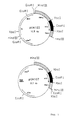
- Fig. 1 shows the xylose reductase gene integrated into pMA91 and pRS305 resulting in plasmids pUA103 and pUA107, respectively.
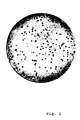
- Fig. 2 Activity plate assay of a XDH positive ⁇ gt11 clone.
- Fig. 3 shows the picture of the plasmid pJHXDH50 carrying the xdh gene.
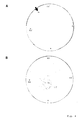
- Fig. 4 shows a plate activity assay of a recombinant S. cerevisiae strain VTT-C-91181 producing XDH, on the original transformation plate (A) and as single colonies obtained from this transformant (B).
- Fig. 5 shows the xylose reductase expression cassette flanked by ribosomal sequences integrated into BS+, generating the vector pJHXR22.
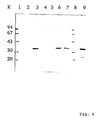
- Fig. 6 shows Western analysis of XR produced in S. cerevisiae from the following plasmids and from P. stipitis .
- Samples were taken from French pressed cell lysates for lanes 2, 3, 5, 6 and 9.
- Fig. 7 shows XR activity of S. cerevisiae strains transformed with pUA103 and pUA107 using as a cofactor either NADH or NADPH, and of the control strains carrying the vector pRS305 or pMA91.
- Fig. 8 shows the xylitol dehydrogenase gene integrated into pKB102 generating plasmid pJHXDH60.
- Xylose reductase ( xrd ) and xylitol dehydrogenase ( xdh ) genes to be used in this invention are isolated from a yeast containing these genes, eg. Pichia stipitis. Also other suitable yeasts and other fungi, such as Pachysolen tannophilus, Kluyveromyces spp., Petromyces albertensis and Candida spp. can be used.
- the yeast to be transformed with these genes can be any suitable yeast, for xylitol production preferably having the GRAS-status, eg. any Saccharomyces cerevisiae yeast strain, (eg. DBY746, AH22, S150-2B, GPY55-15B ⁇ , VTT-A-63015, VTT-A-85068, VTT-C-79093), any Kluyveromyces sp. or Schizosaccharomyces pombe. Transfer of the genes into these yeasts can be achieved, for instance, by using the conventional methods described for these organisms. It is to be noticed that, if wanted, also Pichia itself can be transformed with these genes in order to obtain increased or modulated expression of the genes. Saccharomyces cerevisiae strains are preferable for the purposes of this invention.
- the DNA sequence coding for XR enzyme is isolated from P. stipitis by conventional methods.
- cDNA is synthesized from mRNA and cloned into ⁇ gt11 vector.
- the positive clone is isolated and subcloned into BS+ vector for sequencing.
- Gene encoding XR of P. stipitis can be cloned also by expression in S. cerevisiae because it does not contain any introns.
- Another possibility is the use of oligonucleotides, designed on the basis of the amino acid sequence of the enzyme, in hybridization of a gene bank.
- the gene coding for XR is cloned into a suitable yeast expression vector, such as pMA91 (Mellor et al., 1983), comprising the appropriate yeast regulatory regions. These regulatory regions can be obtained from yeast genes such as the PGK1, ADH1, GAL1, GAL10, CUP1, GAP, CYC1, PHO5, for instance. Alternatively, also the regulatory regions of the Pichia gene encoding XR can be used to express the gene in S. cerevisiae.
- the plasmid carrying the xrd gene encoding XR is capable of replicating autonomously when transformed into the recipient yeast strain.
- the gene encoding XR together with the appropriate yeast regulatory regions can also be cloned into a single copy yeast vector such as pRS305 (Sikorski and Hieter, 1989).
- the gene coding for XR can also be integrated into the yeast chromosome, into the ribosomal RNA locus, for instance.
- the ribosomal sequences of a suitable plasmid eg. plasmid pIRL9 are released, and cloned appropriately to BS+ vector.
- the gene coding for XR, coupled in between suitable yeast promoter and terminator regions, is released from the hybrid vector comprising the gene and cloned into the plasmid obtained at the previous stage. From this resulting plasmid the expression cassette, flanked by ribosomal sequences can be released. This fragment is cotransformed into a yeast with an autonomously replicating plasmid carrying a suitable marker for transformation.
- the plasmid can be later on removed from the cells containing the xrd gene integrated in the chromosome by cultivating the cells in non-selective conditions. This way, recombinant strains can be obtained which carry no extra foreign DNA such as bacterial vector sequences. If a polyploid yeast strain, such as VTT-A-63015, is used the gene can be integrated also to an essential locus such as the PGK1 or the ADH1 locus.
- the sequence of the xrd gene can be determined, if required, from the plasmids carrying it by using eg. the double stranded dideoxy nucleotide sequencing method (Zagursky et al., 1986).
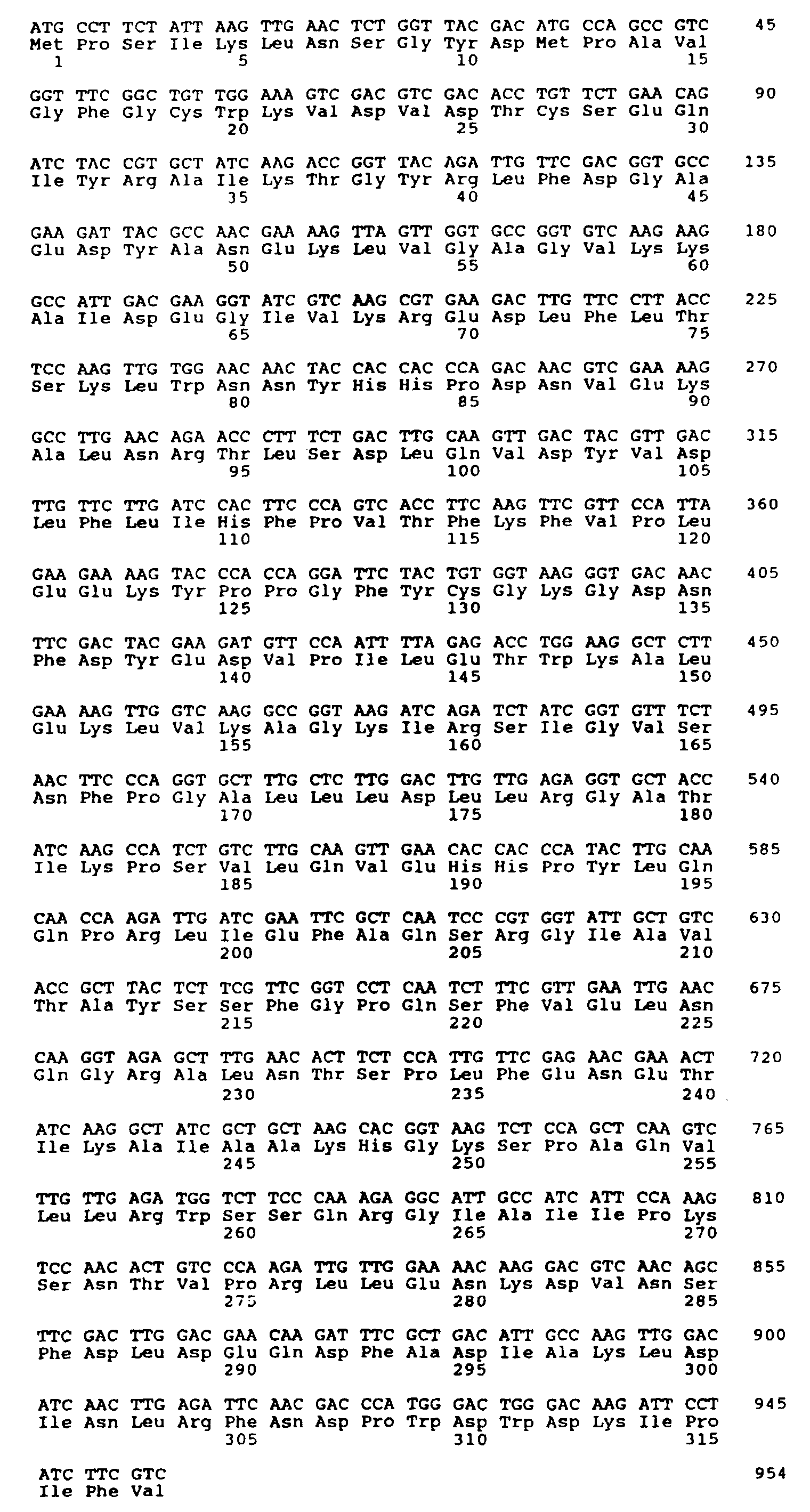
- the sequence of the xrd gene encoding XR of P. stipitis is given as the SEQ ID NO. 2.
- Specific yeast vectors comprising the xrd gene used to transform yeast strains to be used in the invention may either be an autonomously replicating multicopy or a single copy plasmid or a vector capable of integrating into the yeast chromosome, as described above.
- Yeast strains which comprise the DNA sequence coding for XR and are capable of expressing this enzyme may also be used in the process of the invention.
- a process for producing xylose reductase enzyme comprises:
- the xylose reductase thus obtained can then be used in an enzyme reactor in the further process according to the invention.
- Enzymes from organisms having a GRAS status are preferred in an enzymatic production of xylitol.
- Xylose reductase from Pichia stipitis have excellent enzymatical properties such as kinetic constants and stability without special stabilizing agents such as thiol-protecting chemicals. Production of this enzyme is now possible in a yeast having a GRAS status.
- the transformed yeast cells are cultivated in an appropriate medium.
- a cheap medium such as one based on molasses can be used as xylose is not needed for induction as in naturally xylose utilizing yeasts.
- Yeast with intracellular xylose reductase is produced with a good yield in a fed-batch process.
- the yeast is concentrated and washed by eg. centrifugation and xylose reductase is liberated into the solution by cell disruption methods such as high pressure homogenization or glass bead milling. After clarification of the homogenate by filtration or centrifugation xylose reductase is further purified by chromatographic methods.
- xylitol For the production of xylitol in vitro a crude homogenate or purified xylose reductase is used in an enzyme reactor together with a cofactor (NAD/NADH or NADP/NADPH) and a cofactor regenerating enzyme such as glucose dehydrogenase, formate dehydrogenase or any other enzyme having good enough stability, requirements for environmental conditions coping with those of xylose reductase and suitable kinetic properties (Bückmann, 1979; Wandrey et al, 1981; 1982; Kulbe et al., 1989).
- the enzymes and the cofactor are typically kept in the reactor system by ultrafiltration membranes especially those with a negative charge.
- the cofactors may also be coimmobilized with the cofactor regenerating enzymes (Reslow et al., 1988).
- the reaction mixture is pumped through the reactor and the substrates and the products are filtered through the membrane.
- the products can be separated from the substrates by eg. chromatographic or crystallization methods and the substrates can be recycled to the reaction mixture.
- this invention provides a microbiological process for producing xylitol which process comprises:
- xylitol is not metabolized further and consequently higher yields of xylitol can be obtained than with natural xylitol producing organisms.
- cofactor regeneration may happen through a slight flow of xylitol further in the metabolism. This flow can be controlled by relative amounts of expression of the enzymes xylose reductase and xylitol dehydrogenase or by controlling the metabolism of the yeast by oxygen transfer rate or by adding enzyme inhibitors such as iodoacetate to the cultivation medium.
- a chromosomal gene bank is first made into E. coli in a cosmid p3030 (Penttilä, et al., 1984) or in another yeast vector, and recombinant plasmids are isolated and transformed into yeast.
- the xdh gene can be found by its expression in yeast, which can be detected by an activity plate assay.
- a cDNA copy for this gene can be isolated similarly by an activity plate assay from a ⁇ gt11 cDNA expression library made in E. coli.
- An alternative method for the isolation of the xdh gene from P. stipitis is to purify XDH from a donor yeast by chromatographic methods and determine the N-terminal amino acid sequence thereof.
- a mixture of oligonucleotides based on the obtained N-terminal amino acid sequence of XDH protein can be designed.
- This oligonucleotide mixture can then be used in hybridization of a gene bank, or together with an oligo-dT-primer to amplify by PCR reaction xdh specific sequences from a mRNA population.
- the resulting gene or cDNA is cloned into BS+ vector, or a similar vector, and the sequence of the xdh gene is then obtained by conventional methods.
- the xdh gene can be expressed in yeast from the chromosomal copy cloned into for instance the yeast cosmid p3030 (Penttilä et al. , 1984). To such a yeast carrying the xdh gene, the plasmid carrying the xrd gene can be transformed.
- the full length xdh cDNA can be cloned into a suitable expression vector, such as pMA91 or pKB102 (Blomqvist et al., 1991) in between appropriate yeast regulatory regions, preferably using the yeast PGK1 or ADH1 promoter and terminator.
- the expression cassette built into pKB102 can be released from the resulting plasmid and cloned into an autonomously replicating yeast multicopy vector or into a single copy yeast vector, which carry a suitable marker, eg. URA3 or HIS3 for yeast transformation.
- a suitable marker eg. URA3 or HIS3 for yeast transformation.
- the xdh gene can also be integrated into the yeast genome in the same manner as described above for the xrd gene.
- Yeast strains for use in the invention capable of expressing xylose reductase or coexpressing xylose reductase and xylitol dehydrogenase may be constructed by a method which comprises:
- Active xylose reductase and xylitol dehydrogenase coexpressed in a yeast strain may be used to prepare ethanol, xylitol and acetic acid by a process, which comprises:
- P. stipitis was grown in a 1 litre fermentor in xylose containing medium (0.3 % yeast extract, 0.3 % malt extract, 0.5 % peptone, 1.9 % KH 2 PO 4 , 0.3 % (NH 4 ) 2 HPO 4 , 0.1 % MgSO 4 and 5 % xylose, pH 5) and harvested in late logarithmic growth phase.
- 30 g wet weight of cell paste was disrupted using freeze pressing (X-press) and centrifuged 1500 g, 10 min to get a cell free extract.
- the crude extract was concentrated 2-fold and applied to a Sephadex G-200 (Pharmacia, Uppsala, Sweden) column (137 ml). At a flow rate of 6 ml/h the proteins were eluted and fractions (9 ml) containing XR activity were pooled.
- the pooled fraction was applied to a DEAE-Sepharose (Pharmacia) column (37 ml) equilibrated with 0.02M ammonium phosphate buffer pH 6.0 and eluted with a 250 ml gradient of 0-05 M NaCl in 0.02 M ammonium phosphate buffer at a flow rate of 12 ml/min.
- Fractions containing XR activity were pooled (6 ml) and concentrated to 1 ml. 1 ml of the concentrated sample was applied to a 1 ml HPLAC column (cibacron blue F36-A; Perstorp Biolytica, Lund, Sweden) equilibrated with 0.02 M ammonium phosphate buffer pH 6.0.
- the purified enzyme was used to produce polyclonal antibodies and to make a N-terminal amino acid sequence of the enzyme (Marc Bauman at Dept. of Medical Chemistry, Univ. of Helsinki) (SEQ ID NO. 1).
- cDNA was synthesized from mRNA using the cDNA synthesis kit of Amersham and cloned into the ⁇ gt11 vector using the Amersham cDNA cloning kit.
- plaques were replica plated onto nitrocellulose membranes soaked in IPTG, and incubated over night. The membranes were then used for immuno screening of transformants (Young and Davies, 1983) using rabbit antiserum against XR and goat anti rabbit antibodies coupled with alkaline phosphatase. Positive clones were picked from the plates and the insert DNA was amplified with PCR (Güssow and Clackson, 1989) using vector specific primers. The DNA fragments obtained were used for restriction enzyme analysis and for further cloning after BamHI cleavage into BamHI cleaved BS+ (Stratagene) vector. The longest cDNA clone pJHXR20 was sequenced using the double stranded dideoxy nucleotide method (Zagursky et al. , 1986).
- Verification of the cloning of the full length cDNA coding for XR was obtained by comparing the N-terminal amino acid sequence of the protein with the sequenced gene (SEQ ID NO. 1, SEQ ID NO. 2).
- the chromosomal copy of the xrd gene was obtained by PCR reaction of total chromosomal DNA isolated (Cryer et al., 1979) from P. stipitis CBS-6054 (Prior et al., 1989) using primers corresponding to the 5' (GCGGATCCTCTAGAATGCCTTCTATTAAGTTGAACTCTGG) and to the 3' (TTGGATCCTCTAGATTAGACGAAGATAGGAATCTTGTCCC) end of the coding region and carrying BamHI and XbaI restriction sites.
- the PCR product was digested with BamHI and cloned into plasmid pMA91 (Mellor et al., 1983) at the BglII site to obtain plasmid pUA103 (Fig. 1).
- the DNA sequence of the chromosomal copy was compared to that of the cDNA in plasmid pJHXR20, and was shown to contain no introns.
- Pichia stipitis was grown in xylose containing medium as described (Preparative example 1). 30 g wet weight of cell paste was disrupted using freeze pressing (X-press) and centrifuged 1500 g 10 min. The centrifuged cellfree extract was concentrated 3 times and 5 ml was gel filtrated at a flow rate of 6 ml/h through a 137 ml Sepharose 6B column equilibrated with 0.05 M ammonium phosphate buffer pH 6, 25 % glycerol, 1 mM DTT, 1 mM EDTA.
- Fractions containing XDH activity measured according to Smiley and Bolen (1982) were pooled and applied on a 37 ml ion exchange chromatography column (DEAE-sepharose) equilibrated with 0.05 M ammonium phosphate buffer pH 6, 25 % glycerol, 1 mM DTT, 1 mM EDTA.
- XDH fractions were eluted with a 250 ml salt gradient of 0-0.5 M NaCl at a flow rate of 12 ml/min and pooled.
- the partially purified enzyme was run in a polyacrylamide gel and blotted onto a PVD membrane. The band corresponding to XDH was cut out and the N-terminal amino acid sequence was determined directly from the membrane.
- ⁇ gt11 cDNA library as obtained and described in Preparative Example 2 was plated and replica plated onto nitrocellulose membrane soaked in IPTG and incubated for 3 hours.
- the membranes were then used for specific XDH activity (zymogram) screening by soaking the membranes in 10 ml of zymogram solution (0.1 M phosphate buffer pH 7.0, 1.5 mM NAD, 0.25 mM nitroblue tetrazolium, 65 ⁇ M phenazinc methosulphate, 0.4 M xylitol). Positive clones (Fig.
- chromosomal DNA was isolated (Cryer et al., 1979) from P. stipitis strain CBS-6054 (Prior et al., 1989) and cut partially with Sau 3A. Fragments of 35-45 kb in size were purified by fractionating the partially digested DNA in a sucrose gradient (15 %-40 %), and the fragments were ligated to a p3030 yeast cosmid vector (Penttilä et al., 1984), cut with BamHI. The ligated molecules were packaged into ⁇ particles using the in vitro packaging kit of Amersham Ltd. (UK) and transfected into E.
- VTT-C-91181 XDH activity of the strain VTT-C-91181 was tested according to Smiley and Bolen (1982) from French pressed total cell lysate containing 25 % glycerol. DNA from VTT-C-91181 was isolated and the plasmid pMW22 rescued by transformation of the DNA into E. coli DH5 ⁇ .
- the S. cerevisiae strain VTT-C-91181 carrying the plasmid pMW22 was deposited according to the Budapest Treaty with the accession No. NCYC 2352 at the National Collection of Yeast Cultures (NCYC), UK, on March 29, 1991.
- the gene coding for XR with the regulatory regions of the PGK gene was released from the plasmid pUA103 (Preparative Example 2) with HindIII and cloned at the HindIII site of the single copy vector pRS305 (Sikorski and Hieter, 1989).
- the resulting plasmid pUA107 (Fig. 1), in which the XR encoding gene was in the right orientation towards the yeast PGK promoter, was transformed using the LiCl method (Ito et al., 1983), and selecting for Leu + transformants, into S.
- cerevisiae strains S150-2B see Example 4
- GPY55-15B ⁇ leu2-3, leu2-112 , ura3-52, trpl-289, his4-519, prb1 , cir +
- the plasmid pUA103 transformed into the strains S150-2B and GPY-15Ba resulted in strains H477 and H475, respectively.
- the gene coding for XR was also integrated into the yeast chromosome into the ribosomal RNA loci.
- the ribosomal sequences of plasmid pIRL9 were released with EcoRI, blunt-ended and cloned at the blunt-ended XbaI site of BS+ to obtain vector pJHR21.
- the gene coding for XR, coupled in between the PGK promoter and terminator was released from the vector pUA103 as a HindIII fragment, blunt-ended and cloned at the blunt-ended XbaI site in the ribosomal sequences of the plasmid pJHR21. From this resulting plasmid pJHXR22 (Fig.
- the expression cassette, flanked by ribosomal sequences, was released by cutting in the unique restriction sites of the BS+ polylinker. This fragment was cotransformed into yeast with an autonomously replicating plasmid carrying a marker for transformation. The transformants obtained were screened for the presence of the gene coding for XR by enzyme activity tests as described above and the integration pattern was checked by Southern analysis. The autonomously replicating plasmid was removed from the cells carrying the XR expression cassette by cultivating the cells in non-selective YPD growth medium.
- the transformants were grown in minimal selective medium and the expression of XR was analyzed by Western blotting using XR specific antibody and the alkaline phosphatase method of Promega (Fig. 6), and by enzyme activity measurements (Smiley and Bolen, 1982) from crude extracts of yeast cells broken by French press (Fig. 7).
- a recombinant S. cerevisiae strain H477 was cultivated in a 1.5 l fermentor in a Sc-leu medium containing 20 g/l glucose. Growth was followed by turbidity measurements and the cells were collected at late exponential growth phase by centrifugation, washed and resuspended in 0.1 M phosphate buffer pH 7.0 containing 1.5 mM phenyl methyl sulfonyl fluoride, to a yeast concentration of 100 g dry weight/l. Cells were disrupted with 3 passes at 1000 bar through a high pressure homogenizer (French-press). The homogenate was partially clarified by 30 min centrifugation at 15 000 g. XR was purified from the clarified homogenate as described for P. stipitis in example 1.
- the plasmids pUA103 and pUA107 were transformed into the strain VTT-C-91181 which carries the xdh gene on the plasmid pMW22. Transformants were selected, and also later kept, on Sc-leu-his-plates. The retainment of XDH activity was confirmed by a plate activity assay and the XR activity by enzyme activity measurement as described above. The two clones studied further, carrying the plasmids pUA103 and pMW22, were named H492 and H493.
- the full length xdh cDNA from the plasmid pJHXDH50 was cloned at the HindIII site in the vector pKB102 (Blomqvist et al. 1991) in between the yeast ADH1 promoter and terminator.
- the expression cassette was released with BamHI from the resulting plasmid pJHXDH60 (Fig. 8) and cloned into the autonomously replicating yeast vector p3030 at the BamHI site generating the plasmid pJHXDH70.
- the resulting plasmid was transformed into the strain H477 carrying the gene encoding XR (Example 5) selecting the transformants on Sc-leu-his-plates.
- the expression of the xdh gene in S. cerevisiae was tested by enzyme activity measurement (Smiley and Bolen, 1982).
- the yeast strains H475 and H477 were cultivated in a 1.5 l fermentor in a medium containing 10 g/l yeast extract, 20 g/l bacto-peptone and 20 g/l glucose. Cultivation temperature was 30°C. pH was controlled between 4.5 and 8.0. Agitation speed was 400 rpm and aeration rate 0.5 vvm.
- a feed of a solution containing 1 g glucose and 19 g xylose in 100 ml was started at a rate of 0.09 ml/min.
- xylitol concentration in the broth was 12.5 g/l as analysed by HPLC. Thus over 95 % yield of xylitol from xylose fed to the culture was achieved.
- the control strain carrying the vector pMA91 less than 8 % of the xylose was consumed in an analogous experiment.
- S. cerevisiae strains H492 and H493 described in example 9 were cultivated on a rotary shaker in Sc-leu-his medium containing 20 g/l glucose. Rotating speed was 200 rpm. When both the glucose and ethanol formed were consumed, the broths were used as inoculum for fermentation on a rotary shaker in Sc-leu-his medium containing 20 g/l xylose. Rotating speed was 90 rpm. The consumption of xylose and the formation of ethanol and xylitol were followed during fermentation by taking samples and analysing them by HPLC (Hahn-Hägerdal et al., 1986; Linden and Hahn-Hägerdal, 1989a, b).
- S. cerevisiae strains H492 and H493 were cultivated as in example 10 in a fermentation medium, where xylose was replaced by spent sulphite liquor. Xylose was converted to cells, ethanol and xylitol.
- yeast strain was deposited according to the Budapest Treaty at the National Collection of Yeast Cultures (NCYC), AFRC Institute of Food Research, Norwich Laboratory, Colney Lane, Norwich, NR4 7UA, UK Strain Deposition number Deposition date Saccharomyces cerevisiae VTT-C-91181 carrying the plasmid pMW22 NCYC 2352 March 29, 1991
Landscapes
- Life Sciences & Earth Sciences (AREA)
- Chemical & Material Sciences (AREA)
- Health & Medical Sciences (AREA)
- Engineering & Computer Science (AREA)
- Genetics & Genomics (AREA)
- Organic Chemistry (AREA)
- Wood Science & Technology (AREA)
- Zoology (AREA)
- Bioinformatics & Cheminformatics (AREA)
- Biotechnology (AREA)
- General Engineering & Computer Science (AREA)
- Biomedical Technology (AREA)
- Biochemistry (AREA)
- Microbiology (AREA)
- General Health & Medical Sciences (AREA)
- Molecular Biology (AREA)
- General Chemical & Material Sciences (AREA)
- Chemical Kinetics & Catalysis (AREA)
- Mycology (AREA)
- Physics & Mathematics (AREA)
- Biophysics (AREA)
- Plant Pathology (AREA)
- Medicinal Chemistry (AREA)
- Micro-Organisms Or Cultivation Processes Thereof (AREA)
- Preparation Of Compounds By Using Micro-Organisms (AREA)
- Enzymes And Modification Thereof (AREA)
- Organic Low-Molecular-Weight Compounds And Preparation Thereof (AREA)
- Detergent Compositions (AREA)
- Agricultural Chemicals And Associated Chemicals (AREA)
- Acyclic And Carbocyclic Compounds In Medicinal Compositions (AREA)
- Pharmaceuticals Containing Other Organic And Inorganic Compounds (AREA)
- Medicines That Contain Protein Lipid Enzymes And Other Medicines (AREA)
Abstract
Description
| Strain | Deposition number | Deposition date |
| Saccharomyces cerevisiae VTT-C-91181 carrying the plasmid pMW22 | NCYC 2352 | March 29, 1991 |
PROPERTIES: N-terminal peptide of xylose reductase (NADPH/NADH) enzyme

PROPERTIES: xylose reductase (NADPH/NADH) activity of the product
Claims (11)
- A process for producing xylitol, which process comprisesa) cultivating in a xylose containing medium a yeast strain transformed with a DNA sequence encoding a xylose reductase enzyme, which DNA sequence when transformed into said yeast strain confers to said yeast strain the ability of reducing xylose to xylitol, andb) recovering xylitol formed from the medium.
- The process of claim 1, wherein said DNA sequence encodes a polypeptide comprising essentially the amino acid sequence of SEQ. ID. NO. 2, or a fragment thereof wherein said polypeptide or fragment displays xylose reductase activity.
- The process of claim 1 or 2, wherein said transformed yeast strain belongs to the species Saccharomyces cerevisiae, Kluyveromyces spp., Schizosaccharomyces pombe or Pichia spp..
- The process of any one of claims 1 to 3, wherein said transformed yeast strain belongs to the species Saccharomyces cerevisiae.
- The process of any one of claims 1 to 4, wherein said transformed yeast strain is Saccharomyces cerevisiae H475 or H477, obtainable by transforming Saccharomyces cerevisiae GPY55-15Bα and S150-2B respectively with plasmid pUA103 as shown in Figure 1.
- The process of claim 1, wherein at least one additional carbon source is present in the medium to enhance regeneration of a cofactor selected from NADPH and NADH required for xylose reductase activity.
- The process of claim 6, wherein said additional carbon source is ethanol, glucose or glycerol.
- The process of claim 1, wherein said transformed yeast strain is further transformed with a second DNA sequence which directs expression in said yeast strain of a xylitol dehydrogenase enzyme, said xylitol dehydrogenase enzyme making possible the regeneration of a cofactor required for xylose reductase activity.
- The process of claim 8, wherein said transformed yeast strain belongs to the species Saccharomyces cerevisiae, Kluyveromyces spp., Schizosaccharomyces pombe or Pichia spp.
- The process of claim 9 wherein said transformed yeast strain is Saccharomyces cerevisiae VTT-C-91181 carrying the plasmid pMW22 (NCYC no. 2352) additionally transformed with plasmid pUA103 as shown in Figure 1. .
- An enzymatic process for producing xylitol, which process comprisesa) cultivating a recombinant yeast strain transformed with a DNA sequence encoding a xylose reductase enzyme under conditions permitting expression of said xylose reductase,b) recovering said xylose reductase enzyme,c) using said xylose reductase in an enzyme reactor with a cofactor regenerating system, andd) isolating and purifying the xylitol produced.
Applications Claiming Priority (4)
| Application Number | Priority Date | Filing Date | Title |
|---|---|---|---|
| FI901771A FI901771A7 (en) | 1990-04-06 | 1990-04-06 | ANVAENDNING AV XYLOS HOS HYBRIDJAEST. |
| FI901771 | 1990-04-06 | ||
| US52777590A | 1990-05-24 | 1990-05-24 | |
| PCT/FI1991/000103 WO1991015588A1 (en) | 1990-04-06 | 1991-04-08 | Recombinant yeasts containing the dna sequences coding for xylose reductase- and xylitol dehydrogenase enzymes |
Publications (2)
| Publication Number | Publication Date |
|---|---|
| EP0527758A1 EP0527758A1 (en) | 1993-02-24 |
| EP0527758B1 true EP0527758B1 (en) | 1998-01-07 |
Family
ID=26158731
Family Applications (1)
| Application Number | Title | Priority Date | Filing Date |
|---|---|---|---|
| EP91906996A Expired - Lifetime EP0527758B1 (en) | 1990-04-06 | 1991-04-08 | Recombinant yeasts containing the dna sequences coding for xylose reductase and xylitol dehydrogenase enzymes |
Country Status (12)
| Country | Link |
|---|---|
| EP (1) | EP0527758B1 (en) |
| JP (1) | JP3348215B2 (en) |
| AT (1) | ATE161886T1 (en) |
| AU (1) | AU647104B2 (en) |
| CA (1) | CA2090122C (en) |
| DE (1) | DE69128619T2 (en) |
| DK (1) | DK0527758T3 (en) |
| ES (1) | ES2113373T3 (en) |
| FI (2) | FI901771A7 (en) |
| GR (1) | GR3026489T3 (en) |
| NO (1) | NO308544B1 (en) |
| WO (1) | WO1991015588A1 (en) |
Cited By (2)
| Publication number | Priority date | Publication date | Assignee | Title |
|---|---|---|---|---|
| CN104403956A (en) * | 2013-09-05 | 2015-03-11 | 中国科学技术大学 | Construction and application of xylitol high-temperature and high-yield engineered strains |
| US10435721B2 (en) | 2016-12-21 | 2019-10-08 | Creatus Biosciences Inc. | Xylitol producing metschnikowia species |
Families Citing this family (17)
| Publication number | Priority date | Publication date | Assignee | Title |
|---|---|---|---|---|
| US5866382A (en) | 1990-04-06 | 1999-02-02 | Xyrofin Oy | Xylose utilization by recombinant yeasts |
| FI913197A0 (en) | 1991-07-01 | 1991-07-01 | Xyrofin Oy | THEREFORE A REDUCED MEASURE AT THE METABOLISER OF XYLITOL, FOERFARANDE FOER BILDANDE AV DESSA OCH DERAS ANVAENDNING VID FRAMSTAELLNING AV XYLITOL. |
| EP0672161B1 (en) * | 1992-11-05 | 1999-09-22 | Xyrofin Oy | Recombinant method and host for manufacture of xylitol |
| RU2142999C1 (en) * | 1992-11-05 | 1999-12-20 | Ксюрофин Ой | Method of xylitol producing |
| US6723540B1 (en) | 1992-11-05 | 2004-04-20 | Xyrofin Oy | Manufacture of xylitol using recombinant microbial hosts |
| US7226761B2 (en) | 1992-11-05 | 2007-06-05 | Danisco Sweeteners Oy | Manufacture of five-carbon sugars and sugar alcohols |
| US5789210A (en) * | 1993-11-08 | 1998-08-04 | Purdue Research Foundation | Recombinant yeasts for effective fermentation of glucose and xylose |
| IN191596B (en) * | 1996-05-06 | 2003-12-06 | Purdue Research Foundation | |
| FI980551A7 (en) * | 1998-03-11 | 1999-09-12 | Valtion Teknillinen | Transformed microorganisms with improved properties |
| WO1999054477A2 (en) | 1998-04-20 | 1999-10-28 | Forskarpatent I Syd Ab | Genetically engineered yeast and mutants thereof for the efficient fermentation of lignocellulose hydrolysates |
| EP1254244B1 (en) * | 2000-01-21 | 2010-04-14 | Danisco A/S | Manufacture of five-carbon sugars and sugar alcohols |
| US6894199B2 (en) | 2001-04-27 | 2005-05-17 | Danisco Sweeteners Oy | Process for the production of xylitol |
| FI20011889A7 (en) | 2001-09-26 | 2003-03-27 | Xyrofin Oy | Method for producing xylitol |
| US8237014B2 (en) | 2006-02-27 | 2012-08-07 | Edenspace Systems Corporation | Energy crops for improved biofuel feedstocks |
| TWI438274B (en) * | 2011-06-03 | 2014-05-21 | Inst Nuclear Energy Res Atomic Energy Council | A method for preparing a xylose-utilizing strain of saccharomyces cerevisiae and the saccharomyces cerevisiae |
| TWI450963B (en) * | 2012-09-27 | 2014-09-01 | Far Eastern New Century Corp | An isolated yeast strain having high xylose consumption rate and process for production of ethanol using the strain |
| US9127323B2 (en) | 2012-09-27 | 2015-09-08 | Far Eastern New Century Corporation | Isolated yeast strain having high xylose consumption rate and process for production of ethanol using the strain |
Family Cites Families (1)
| Publication number | Priority date | Publication date | Assignee | Title |
|---|---|---|---|---|
| DE4009676A1 (en) * | 1990-03-26 | 1991-10-02 | Rhein Biotech Proz & Prod Gmbh | DNA SEQUENCE, COMPREHENSIVE STRUCTURAL GENERATING FOR XYLOSE REDUCTASE AND / OR XYLITOLDEHYDROGENASE |
-
1990
- 1990-04-06 FI FI901771A patent/FI901771A7/en not_active Application Discontinuation
-
1991
- 1991-04-08 ES ES91906996T patent/ES2113373T3/en not_active Expired - Lifetime
- 1991-04-08 AU AU75657/91A patent/AU647104B2/en not_active Expired
- 1991-04-08 AT AT91906996T patent/ATE161886T1/en not_active IP Right Cessation
- 1991-04-08 DE DE69128619T patent/DE69128619T2/en not_active Expired - Fee Related
- 1991-04-08 DK DK91906996T patent/DK0527758T3/en active
- 1991-04-08 EP EP91906996A patent/EP0527758B1/en not_active Expired - Lifetime
- 1991-04-08 WO PCT/FI1991/000103 patent/WO1991015588A1/en not_active Ceased
- 1991-04-08 CA CA002090122A patent/CA2090122C/en not_active Expired - Fee Related
- 1991-04-08 JP JP50690791A patent/JP3348215B2/en not_active Expired - Fee Related
-
1992
- 1992-10-02 FI FI924461A patent/FI104636B/en not_active IP Right Cessation
- 1992-10-06 NO NO923880A patent/NO308544B1/en not_active IP Right Cessation
-
1998
- 1998-04-01 GR GR980400676T patent/GR3026489T3/en unknown
Cited By (4)
| Publication number | Priority date | Publication date | Assignee | Title |
|---|---|---|---|---|
| CN104403956A (en) * | 2013-09-05 | 2015-03-11 | 中国科学技术大学 | Construction and application of xylitol high-temperature and high-yield engineered strains |
| CN104403956B (en) * | 2013-09-05 | 2017-06-16 | 中国科学技术大学 | The structure of xylitol high temperature high-yielding engineering bacterial strain and application |
| US10435721B2 (en) | 2016-12-21 | 2019-10-08 | Creatus Biosciences Inc. | Xylitol producing metschnikowia species |
| US11473110B2 (en) | 2016-12-21 | 2022-10-18 | Creatus Biosciences Inc. | Xylitol producing Metschnikowia species |
Also Published As
| Publication number | Publication date |
|---|---|
| JP3348215B2 (en) | 2002-11-20 |
| AU647104B2 (en) | 1994-03-17 |
| DE69128619T2 (en) | 1998-08-20 |
| ES2113373T3 (en) | 1998-05-01 |
| EP0527758A1 (en) | 1993-02-24 |
| NO923880L (en) | 1992-10-06 |
| AU7565791A (en) | 1991-10-30 |
| DK0527758T3 (en) | 1998-09-07 |
| DE69128619D1 (en) | 1998-02-12 |
| FI924461L (en) | 1992-10-02 |
| CA2090122C (en) | 2002-06-18 |
| ATE161886T1 (en) | 1998-01-15 |
| FI924461A0 (en) | 1992-10-02 |
| WO1991015588A1 (en) | 1991-10-17 |
| FI104636B (en) | 2000-03-15 |
| CA2090122A1 (en) | 1991-10-07 |
| FI901771A7 (en) | 1991-10-07 |
| NO923880D0 (en) | 1992-10-06 |
| NO308544B1 (en) | 2000-09-25 |
| GR3026489T3 (en) | 1998-07-31 |
| FI901771A0 (en) | 1990-04-06 |
| JPH05507843A (en) | 1993-11-11 |
Similar Documents
| Publication | Publication Date | Title |
|---|---|---|
| US6582944B1 (en) | Production of ethanol from xylose | |
| AU647104B2 (en) | Recombinant yeasts containing the DNA sequences coding for xylose reductase- and xylitol dehydrogenase enzymes | |
| CA2661090C (en) | Stable recombinant yeasts for fermenting xylose to ethanol | |
| Jeffries et al. | Ethanol and thermotolerance in the bioconversion of xylose by yeasts | |
| US5789210A (en) | Recombinant yeasts for effective fermentation of glucose and xylose | |
| DE60223377T2 (en) | MODIFICATION OF MUSHROOMS USING L-ARABINOSE | |
| US9150869B2 (en) | Sugar transport sequences, yeast strains having improved sugar uptake, and methods of use | |
| DE4009676C2 (en) | ||
| BRPI0807237A2 (en) | DNA CODING XYLITOL DEHYDROGENASE, NUCLEIC ACID CONSTRUCTION, VECTORS, MICROORGANISMS AND METHODS FOR PRODUCING XYLITOL DESIGROGENASE AND ETHANOL | |
| US6723540B1 (en) | Manufacture of xylitol using recombinant microbial hosts | |
| MX2010014529A (en) | Microorganism expressing aldose-1-epimerase. | |
| CN103261397A (en) | Xylose isomerase and xylitol dehydrogenase combination for xylose fermentation to ethanol and b. fragilis xylose isomerase | |
| AU2004272775C1 (en) | An NADH dependent L-xylulose reductase | |
| FI112250B (en) | Process for producing ethanol, as well as recombinant yeast strains applying | |
| US20040132074A1 (en) | New enzyme for an in vivo and in vitro utilisation of carbohydrates | |
| Begum | Genetic and fermentation studies related to conversion of xylose to ethanol |
Legal Events
| Date | Code | Title | Description |
|---|---|---|---|
| PUAI | Public reference made under article 153(3) epc to a published international application that has entered the european phase |
Free format text: ORIGINAL CODE: 0009012 |
|
| 17P | Request for examination filed |
Effective date: 19921001 |
|
| AK | Designated contracting states |
Kind code of ref document: A1 Designated state(s): AT BE CH DE DK ES FR GB GR IT LI LU NL SE |
|
| 17Q | First examination report despatched |
Effective date: 19941020 |
|
| GRAG | Despatch of communication of intention to grant |
Free format text: ORIGINAL CODE: EPIDOS AGRA |
|
| GRAG | Despatch of communication of intention to grant |
Free format text: ORIGINAL CODE: EPIDOS AGRA |
|
| GRAH | Despatch of communication of intention to grant a patent |
Free format text: ORIGINAL CODE: EPIDOS IGRA |
|
| RAP1 | Party data changed (applicant data changed or rights of an application transferred) |
Owner name: XYROFIN OY |
|
| RTI1 | Title (correction) | ||
| GRAH | Despatch of communication of intention to grant a patent |
Free format text: ORIGINAL CODE: EPIDOS IGRA |
|
| GRAA | (expected) grant |
Free format text: ORIGINAL CODE: 0009210 |
|
| AK | Designated contracting states |
Kind code of ref document: B1 Designated state(s): AT BE CH DE DK ES FR GB GR IT LI LU NL SE |
|
| REF | Corresponds to: |
Ref document number: 161886 Country of ref document: AT Date of ref document: 19980115 Kind code of ref document: T |
|
| REG | Reference to a national code |
Ref country code: CH Ref legal event code: EP |
|
| REF | Corresponds to: |
Ref document number: 69128619 Country of ref document: DE Date of ref document: 19980212 |
|
| ITF | It: translation for a ep patent filed | ||
| PG25 | Lapsed in a contracting state [announced via postgrant information from national office to epo] |
Ref country code: LU Free format text: LAPSE BECAUSE OF NON-PAYMENT OF DUE FEES Effective date: 19980408 |
|
| REG | Reference to a national code |
Ref country code: CH Ref legal event code: NV Representative=s name: BOVARD AG PATENTANWAELTE |
|
| ET | Fr: translation filed | ||
| REG | Reference to a national code |
Ref country code: ES Ref legal event code: FG2A Ref document number: 2113373 Country of ref document: ES Kind code of ref document: T3 |
|
| ET1 | Fr: translation filed ** revision of the translation of the patent or the claims | ||
| REG | Reference to a national code |
Ref country code: DK Ref legal event code: T3 |
|
| PLBE | No opposition filed within time limit |
Free format text: ORIGINAL CODE: 0009261 |
|
| STAA | Information on the status of an ep patent application or granted ep patent |
Free format text: STATUS: NO OPPOSITION FILED WITHIN TIME LIMIT |
|
| 26N | No opposition filed | ||
| REG | Reference to a national code |
Ref country code: GB Ref legal event code: IF02 |
|
| PGFP | Annual fee paid to national office [announced via postgrant information from national office to epo] |
Ref country code: NL Payment date: 20040316 Year of fee payment: 14 |
|
| PGFP | Annual fee paid to national office [announced via postgrant information from national office to epo] |
Ref country code: AT Payment date: 20040319 Year of fee payment: 14 |
|
| PGFP | Annual fee paid to national office [announced via postgrant information from national office to epo] |
Ref country code: GB Payment date: 20040401 Year of fee payment: 14 |
|
| PGFP | Annual fee paid to national office [announced via postgrant information from national office to epo] |
Ref country code: SE Payment date: 20040421 Year of fee payment: 14 |
|
| PGFP | Annual fee paid to national office [announced via postgrant information from national office to epo] |
Ref country code: DK Payment date: 20040423 Year of fee payment: 14 Ref country code: CH Payment date: 20040423 Year of fee payment: 14 |
|
| PGFP | Annual fee paid to national office [announced via postgrant information from national office to epo] |
Ref country code: GR Payment date: 20040427 Year of fee payment: 14 |
|
| PGFP | Annual fee paid to national office [announced via postgrant information from national office to epo] |
Ref country code: ES Payment date: 20040510 Year of fee payment: 14 |
|
| PGFP | Annual fee paid to national office [announced via postgrant information from national office to epo] |
Ref country code: BE Payment date: 20040528 Year of fee payment: 14 |
|
| PGFP | Annual fee paid to national office [announced via postgrant information from national office to epo] |
Ref country code: DE Payment date: 20040601 Year of fee payment: 14 |
|
| PG25 | Lapsed in a contracting state [announced via postgrant information from national office to epo] |
Ref country code: IT Free format text: LAPSE BECAUSE OF NON-PAYMENT OF DUE FEES Effective date: 20050408 Ref country code: AT Free format text: LAPSE BECAUSE OF NON-PAYMENT OF DUE FEES Effective date: 20050408 |
|
| PG25 | Lapsed in a contracting state [announced via postgrant information from national office to epo] |
Ref country code: SE Free format text: LAPSE BECAUSE OF NON-PAYMENT OF DUE FEES Effective date: 20050409 Ref country code: ES Free format text: LAPSE BECAUSE OF NON-PAYMENT OF DUE FEES Effective date: 20050409 |
|
| PG25 | Lapsed in a contracting state [announced via postgrant information from national office to epo] |
Ref country code: LI Free format text: LAPSE BECAUSE OF NON-PAYMENT OF DUE FEES Effective date: 20050430 Ref country code: BE Free format text: LAPSE BECAUSE OF NON-PAYMENT OF DUE FEES Effective date: 20050430 Ref country code: CH Free format text: LAPSE BECAUSE OF NON-PAYMENT OF DUE FEES Effective date: 20050430 |
|
| PG25 | Lapsed in a contracting state [announced via postgrant information from national office to epo] |
Ref country code: DK Free format text: LAPSE BECAUSE OF NON-PAYMENT OF DUE FEES Effective date: 20050502 |
|
| BERE | Be: lapsed |
Owner name: *XYROFIN OY Effective date: 20050430 |
|
| PG25 | Lapsed in a contracting state [announced via postgrant information from national office to epo] |
Ref country code: DE Free format text: LAPSE BECAUSE OF NON-PAYMENT OF DUE FEES Effective date: 20051101 Ref country code: NL Free format text: LAPSE BECAUSE OF NON-PAYMENT OF DUE FEES Effective date: 20051101 |
|
| PG25 | Lapsed in a contracting state [announced via postgrant information from national office to epo] |
Ref country code: GR Free format text: LAPSE BECAUSE OF NON-PAYMENT OF DUE FEES Effective date: 20051103 |
|
| REG | Reference to a national code |
Ref country code: DK Ref legal event code: EBP |
|
| EUG | Se: european patent has lapsed | ||
| REG | Reference to a national code |
Ref country code: CH Ref legal event code: PL |
|
| GBPC | Gb: european patent ceased through non-payment of renewal fee |
Effective date: 20050408 |
|
| NLV4 | Nl: lapsed or anulled due to non-payment of the annual fee |
Effective date: 20051101 |
|
| REG | Reference to a national code |
Ref country code: ES Ref legal event code: FD2A Effective date: 20050409 |
|
| BERE | Be: lapsed |
Owner name: *XYROFIN OY Effective date: 20050430 |
|
| PGFP | Annual fee paid to national office [announced via postgrant information from national office to epo] |
Ref country code: FR Payment date: 20090417 Year of fee payment: 19 |
|
| REG | Reference to a national code |
Ref country code: FR Ref legal event code: ST Effective date: 20101230 |
|
| PG25 | Lapsed in a contracting state [announced via postgrant information from national office to epo] |
Ref country code: FR Free format text: LAPSE BECAUSE OF NON-PAYMENT OF DUE FEES Effective date: 20100430 |