EP0520962B1 - Plasmid vectors for gene expression in plants - Google Patents
Plasmid vectors for gene expression in plants Download PDFInfo
- Publication number
- EP0520962B1 EP0520962B1 EP92830330A EP92830330A EP0520962B1 EP 0520962 B1 EP0520962 B1 EP 0520962B1 EP 92830330 A EP92830330 A EP 92830330A EP 92830330 A EP92830330 A EP 92830330A EP 0520962 B1 EP0520962 B1 EP 0520962B1
- Authority
- EP
- European Patent Office
- Prior art keywords
- plants
- portions
- immunoglobulin chains
- cloning
- plasmid vector
- Prior art date
- Legal status (The legal status is an assumption and is not a legal conclusion. Google has not performed a legal analysis and makes no representation as to the accuracy of the status listed.)
- Expired - Lifetime
Links
Images

Classifications
-
- C—CHEMISTRY; METALLURGY
- C07—ORGANIC CHEMISTRY
- C07K—PEPTIDES
- C07K16/00—Immunoglobulins [IG], e.g. monoclonal or polyclonal antibodies
- C07K16/18—Immunoglobulins [IG], e.g. monoclonal or polyclonal antibodies against material from animals or humans
- C07K16/26—Immunoglobulins [IG], e.g. monoclonal or polyclonal antibodies against material from animals or humans against hormones ; against hormone releasing or inhibiting factors
-
- C—CHEMISTRY; METALLURGY
- C07—ORGANIC CHEMISTRY
- C07K—PEPTIDES
- C07K16/00—Immunoglobulins [IG], e.g. monoclonal or polyclonal antibodies
-
- C—CHEMISTRY; METALLURGY
- C12—BIOCHEMISTRY; BEER; SPIRITS; WINE; VINEGAR; MICROBIOLOGY; ENZYMOLOGY; MUTATION OR GENETIC ENGINEERING
- C12N—MICROORGANISMS OR ENZYMES; COMPOSITIONS THEREOF; PROPAGATING, PRESERVING, OR MAINTAINING MICROORGANISMS; MUTATION OR GENETIC ENGINEERING; CULTURE MEDIA
- C12N15/00—Mutation or genetic engineering; DNA or RNA concerning genetic engineering, vectors, e.g. plasmids, or their isolation, preparation or purification; Use of hosts therefor
- C12N15/09—Recombinant DNA-technology
- C12N15/63—Introduction of foreign genetic material using vectors; Vectors; Use of hosts therefor; Regulation of expression
- C12N15/79—Vectors or expression systems specially adapted for eukaryotic hosts
- C12N15/82—Vectors or expression systems specially adapted for eukaryotic hosts for plant cells, e.g. plant artificial chromosomes (PACs)
- C12N15/8241—Phenotypically and genetically modified plants via recombinant DNA technology
- C12N15/8242—Phenotypically and genetically modified plants via recombinant DNA technology with non-agronomic quality (output) traits, e.g. for industrial processing; Value added, non-agronomic traits
- C12N15/8257—Phenotypically and genetically modified plants via recombinant DNA technology with non-agronomic quality (output) traits, e.g. for industrial processing; Value added, non-agronomic traits for the production of primary gene products, e.g. pharmaceutical products, interferon
- C12N15/8258—Phenotypically and genetically modified plants via recombinant DNA technology with non-agronomic quality (output) traits, e.g. for industrial processing; Value added, non-agronomic traits for the production of primary gene products, e.g. pharmaceutical products, interferon for the production of oral vaccines (antigens) or immunoglobulins
-
- C—CHEMISTRY; METALLURGY
- C12—BIOCHEMISTRY; BEER; SPIRITS; WINE; VINEGAR; MICROBIOLOGY; ENZYMOLOGY; MUTATION OR GENETIC ENGINEERING
- C12N—MICROORGANISMS OR ENZYMES; COMPOSITIONS THEREOF; PROPAGATING, PRESERVING, OR MAINTAINING MICROORGANISMS; MUTATION OR GENETIC ENGINEERING; CULTURE MEDIA
- C12N15/00—Mutation or genetic engineering; DNA or RNA concerning genetic engineering, vectors, e.g. plasmids, or their isolation, preparation or purification; Use of hosts therefor
- C12N15/09—Recombinant DNA-technology
- C12N15/63—Introduction of foreign genetic material using vectors; Vectors; Use of hosts therefor; Regulation of expression
- C12N15/79—Vectors or expression systems specially adapted for eukaryotic hosts
- C12N15/82—Vectors or expression systems specially adapted for eukaryotic hosts for plant cells, e.g. plant artificial chromosomes (PACs)
- C12N15/8241—Phenotypically and genetically modified plants via recombinant DNA technology
- C12N15/8261—Phenotypically and genetically modified plants via recombinant DNA technology with agronomic (input) traits, e.g. crop yield
- C12N15/8271—Phenotypically and genetically modified plants via recombinant DNA technology with agronomic (input) traits, e.g. crop yield for stress resistance, e.g. heavy metal resistance
- C12N15/8279—Phenotypically and genetically modified plants via recombinant DNA technology with agronomic (input) traits, e.g. crop yield for stress resistance, e.g. heavy metal resistance for biotic stress resistance, pathogen resistance, disease resistance
Definitions
- This invention relates to plasmid vectors for gene expression in plants.
- this invention relates to plasmid vectors that allow exogenous sequences to be expressed in plants, such sequences coding preferably for variable regions of immunoglobulins, such vectors being intended for giving the transformed plant some specific characteristics, and in addition the invention also relates to the process of transforming plants by means of said vectors as well as to the employment of said vectors for giving the transformed plants some new characters.
- VH variable domains of the heavy chains
- VL variable domains of the light chains
- dAbs single-domain antibodies
- a chimeric gene comprising sequences coding both for VH chain and for VL chain of a specific antibody; said sequences are conveniently separated by a peptide leading to a correct tridimensional structure of the antibody chains, even they are comprised into a linear polypeptidic chain (sc Fv,10).
- a plasmid vector for cloning and expressing exogenous genes or portions of them in plants which vector can be easily and generally employed for genes coding for immunoglobulin chains or portions of immunoglobulin chains, and even for dAbs or scFv.
- the authors of the present invention have built a plasmid vector satisfying such requirements, as it is easily employable for cloning any exogenous gene, or a portion of the same, said vector, when introduced into plants, allowing a stable and efficient transcription to be realized.
- the vector is particularly suitable for introducing genes which code for immunoglobulin chains or for portions of the same, which genes are obtained by the amplification of genes for hybridoma line immunoglobulins, as well as for dAbs or scFv.
- a plasmid vector for cloning and expressing portions of immunoglobulin chains said portions being single-domain antibodies (dAbs) or single chain antibodies (scFv) in plants, comprising at least: a sequence coding for a selectable marker in plants; a sequence capable of promoting the efficient and correct transcription (the promoter sequence) of said portions of immunoglobulin chains in plants; a Pst I restriction site at the 5' position and a Bste II restriction site at 3' position for the unidirectional insertion of said portions of immunoglobulin chains; a detector sequence coding for a detectable marker at the 3' of said restriction sites in the same coding reading frame of said portions of immunoglobulin chains; a sequence capable of promoting the efficient and correct termination of transcription (the terminator sequence) of said portions of immunoglobulin chains in plants.
- dAbs single-domain antibodies
- scFv single chain antibodies
- the selectable marker is a protein having a phosphotransferase II neomycin activity (NPTII) that confers resistance to plant grown in a culture medium containing Kanamycin.
- NPTII phosphotransferase II neomycin activity
- the promoter comprises the regulative elements of the 35S CaMV virus gene (the cauliflower mosaic virus).
- the detector sequence codes for a peptide which is capable of reacting with a known antibody.
- the terminator is the terminator of the nopaline synthetase gene.
- the portions of immunoglobulin chains react in a specific way with chemical compound or pathogens agents, conferring to the transformed plant a resistance to said chemical compound or said pathogens agents.
- the vector comprises a sequence coding for a signal peptide, which is covalently linked to the NH 2 terminal of the portions of immunoglobulin chains, capable of promoting the transportation and extracellular secretion of said portions of immunoglobulin chains.
- the plasmid vector for cloning and expressing portions of immunoglobulin chains in plants of the invention consists of the plasmid pBG-d-Ab-BIN, which has been deposited, after transforming E.coli with the same, with the NCAIM under the accession number 001144 on 31st May, 1991, in agreement with the Budapest Treaty.
- Preferably said parts of plants comprise the reproduction material.
- the fragment Hind III-Eco RI has been excided and subcloned into the sites Hind III-Eco RI of the vector pGEM 7zf(+) (Promega) in which the "polylinker" sites labelled with an asterisk had been removed by means of digestion and treatment with Klenow's fragment of the DNA-polymerase. Following the digestion with Xba I and Sac I, it was possible to subclone the fragment into the vector pB1121 (Clontech Laboratories Inc., Ca).
- the removal of the polylinker restriction sites causes the plant active 35S CaMV promoter to be suitably close to the sequence to be transcribed, conferring an optimal in vivo transcription efficiency to the system.
- the sites Pst I and BstE II it is possible to insert any exogenous gene into the vector.
- these sites are contained within the primers employed for amplifying from hybridoma lines the sequences that code for immunoglobulin chains (11), such sequences can be easily introduced in said sites without additional steps.
- the vector so obtained has been called pBG-dAb-BIN and it has been deposited after transforming E.coli with the same and in agreement with the Budapest Treaty with the NCAIM under the accession number 001144, on 31st May, 1991.
- a DNA fragment coding for the heavy chain of the monoclonal antibody NC1/34 HL disclosed in (12) has been introduced into the vector pBG-dAb-BIN just for exemplification purposes, said antibody being capable of recognizing a neuropeptide, i.e. the tachyquinine or substance P, employing the sites PstI and BstE II, so originating the plasmid pBG-NCl-BIN.
- Plants of the species N. benthamiana have transformed by means of the plasmid obtained employing techniques which are already known to those who are skilled in the art. Stated briefly, the plasmid pBG-NC1-BIN has been introduced into the strain LBA4404 of A.tumefaciens (13) as disclosed in reference (14) and disks obtained from the leaves of N.benthamiana plants, 4 weeks of age, were infected with the bacteria transformed as disclosed in reference (15).
- Each leaf explantation gave origin to 13.8 ⁇ 1.8 sprouts.
- the regenerated sprouts were caused to root on a selective medium with 25 ug/ml of Kanamycin containing 1/2 MS with 0.05 mg/ml of IBA and 30 g/ml of sucrose.
- the plants so obtained showed resistance to Kanamycin through NPTII activity as disclosed in (16). More than 65 % of the plants turned out to be positive.
- the putative transgenic plants multiplied in vitro showed normal morphology with respect to the control plants.
- DNA was extracted from independent plants and hybridized through "Southern" technique employing as probe the fragment Hind III-Eco RI of the pBG-dAb plasmid, putting into evidence a number of 1-5 copies of transformant gene per plant.
- NC1/34 antibody expression of the NC1/34 antibody in plants: analysis of mRNA and proteins
- Cytoplasmic RNA was extracted from the leaves of 15 independent NPTII-positive transformants at the same physiological stage and it was hybridizes through the "Northern" technique employing the same probe as that employed in example 2. Five plants out of those analyzed turned out to be positive, with differences in the expression level not ascribable to the number of copies of the gene or to mRNA degradation phenomena but, quite likely, ascribable to position effects in the plant genome.
- Soluble protein extracts were prepared from the leaves of transgenic plants and from the leaves of control plants, and the expression of the protein NC1/34 was tested by means of the "Western" technique, with the monoclonal antibody 9E10 that recognizes the peptide TAG at the C-terminal of the recombinant protein (18). All extracts out of three extracts from transgenic plants showed a protein band which was absent from the control plants. Moreover, the expression levels of the transgenic protein were well correlated with the specific RNA levels in the same plants. The relative amount of the expressed protein varies in the range between 0.1 % and 1 % of the total soluble proteins.
- the distribution throughout the tissues was investigated by immunofluorescence in sections obtained from leaves, flowers and stems of three transgenic plants, and a strong positive signal was detected in particular in the leaves, the meristems and the flowers.
Landscapes
- Health & Medical Sciences (AREA)
- Genetics & Genomics (AREA)
- Life Sciences & Earth Sciences (AREA)
- Chemical & Material Sciences (AREA)
- Organic Chemistry (AREA)
- Molecular Biology (AREA)
- Engineering & Computer Science (AREA)
- Bioinformatics & Cheminformatics (AREA)
- Biochemistry (AREA)
- Biotechnology (AREA)
- General Engineering & Computer Science (AREA)
- Medicinal Chemistry (AREA)
- Biomedical Technology (AREA)
- Biophysics (AREA)
- Wood Science & Technology (AREA)
- Zoology (AREA)
- General Health & Medical Sciences (AREA)
- Immunology (AREA)
- Physics & Mathematics (AREA)
- Cell Biology (AREA)
- Microbiology (AREA)
- Plant Pathology (AREA)
- Proteomics, Peptides & Aminoacids (AREA)
- Pharmacology & Pharmacy (AREA)
- Endocrinology (AREA)
- Breeding Of Plants And Reproduction By Means Of Culturing (AREA)
- Micro-Organisms Or Cultivation Processes Thereof (AREA)
Abstract
Description
- This invention relates to plasmid vectors for gene expression in plants.
- More particularly, this invention relates to plasmid vectors that allow exogenous sequences to be expressed in plants, such sequences coding preferably for variable regions of immunoglobulins, such vectors being intended for giving the transformed plant some specific characteristics, and in addition the invention also relates to the process of transforming plants by means of said vectors as well as to the employment of said vectors for giving the transformed plants some new characters.
- The numbered list of bibliographic references is reported at the end of this disclosure and the documents are cited with the numerical reference in parentheses ( ).
- The employment of bacteria belonging to the genus Agrobacterium for transferring exogenous genes into the nuclear genome of plant cells is already known from the prior art (1, 2).
- Among the genes or portions of the same which are potentially usable for being introduced into plant cells there are those coding for the chains of immunoglobulins, because the virtually unlimited inventory of this family of molecules can be widely employed both as a source of specific reagents for biochemical and physiological studies in which it is desired to modulate or to inhibit the action of some definite gene products, and for introducing exogenous molecules in a stable way that are capable of conferring new characters to the receptor plant, as for instance the resistance to chemical products or to pathogenous agents. This is possible because it has been shown that an efficient assembling of antibody chains is obtainable for forming the active molecule, even in non lymphoid cells (3, 4).
- Employing the transformation technique which is mediated by Agrobacterium, the production of complete antibody molecules has been obtained in transgenic plants by crossbreeding two plants already transformed with recombinant vectors that expressed respectively gamma- or kappa-immunoglobulin chains (5, 6) or, with one single step, employing as an expression vector a vector comprising two promoters, downstream of which some sequences coding for two different immunoglobulin chains had been sub-cloned (7). Such vectors, and the processes realizable with the same, do not appear to be easily employable, as in the first instance they require long and difficult crossbreeding experiments and in the second instance the vector is not adaptable to the cloning and the expression of immunoglobulins different from those that have been already.
- Simpler forms of antibody molecules, recently identified are certainly more suitable for their functional expression in plants, eluding the mentioned assembling difficulties of immunoglobulin chains and of correct transportation of synthesized molecules into the cell compartment wherein the target molecule is present. As is well known, the antibody portion which is capable of reacting with an antigen is represented by the variable domains of the heavy chains (VH) and of the light chains (VL) of immunoglobulins (8). Recently, the cloning and expression of variable domains of the transposed heavy chain (VH) in E.coli has been reported (9), and it has been shown that the variable domain VH alone, without the contribution of the domain VL, is often capable of binding the antigen with a high value of the affinity constant (Patent Application EP 0368684). Such domains, which are called single-domain antibodies (dAbs), represent molecules which are extremely versatile, with respect to the whole antibodies, in experiments of transfer and gene expression.
- At last, a chimeric gene has been constructed, comprising sequences coding both for VH chain and for VL chain of a specific antibody; said sequences are conveniently separated by a peptide leading to a correct tridimensional structure of the antibody chains, even they are comprised into a linear polypeptidic chain (sc Fv,10).
- Accordingly, there is clearly the need for a plasmid vector for cloning and expressing exogenous genes or portions of them in plants, which vector can be easily and generally employed for genes coding for immunoglobulin chains or portions of immunoglobulin chains, and even for dAbs or scFv.
- The authors of the present invention have built a plasmid vector satisfying such requirements, as it is easily employable for cloning any exogenous gene, or a portion of the same, said vector, when introduced into plants, allowing a stable and efficient transcription to be realized. The vector is particularly suitable for introducing genes which code for immunoglobulin chains or for portions of the same, which genes are obtained by the amplification of genes for hybridoma line immunoglobulins, as well as for dAbs or scFv.
- Accordingly it is an object of the instant invention a plasmid vector for cloning and expressing portions of immunoglobulin chains, said portions being single-domain antibodies (dAbs) or single chain antibodies (scFv) in plants, comprising at least: a sequence coding for a selectable marker in plants; a sequence capable of promoting the efficient and correct transcription (the promoter sequence) of said portions of immunoglobulin chains in plants; a Pst I restriction site at the 5' position and a Bste II restriction site at 3' position for the unidirectional insertion of said portions of immunoglobulin chains; a detector sequence coding for a detectable marker at the 3' of said restriction sites in the same coding reading frame of said portions of immunoglobulin chains; a sequence capable of promoting the efficient and correct termination of transcription (the terminator sequence) of said portions of immunoglobulin chains in plants.
- Preferably the selectable marker is a protein having a phosphotransferase II neomycin activity (NPTII) that confers resistance to plant grown in a culture medium containing Kanamycin.
- Preferably the promoter comprises the regulative elements of the 35S CaMV virus gene (the cauliflower mosaic virus).
- Preferably the detector sequence codes for a peptide which is capable of reacting with a known antibody.
- Preferably the terminator is the terminator of the nopaline synthetase gene.
- Preferably the portions of immunoglobulin chains react in a specific way with chemical compound or pathogens agents, conferring to the transformed plant a resistance to said chemical compound or said pathogens agents.
- Preferably the vector comprises a sequence coding for a signal peptide, which is covalently linked to the NH2 terminal of the portions of immunoglobulin chains, capable of promoting the transportation and extracellular secretion of said portions of immunoglobulin chains.
- Preferably the plasmid vector for cloning and expressing portions of immunoglobulin chains in plants of the invention consists of the plasmid pBG-d-Ab-BIN, which has been deposited, after transforming E.coli with the same, with the NCAIM under the accession number 001144 on 31st May, 1991, in agreement with the Budapest Treaty.
- It is an object of the invention a plant transformation process by means of the plasmid vector of the invention comprising the following steps:
- transforming bacteria belonging to the Agrobacterium genus by means of said plasmid vector, to get transformed bacteria;
- infecting the plant to be transformed with said transformed bacteria;
- selecting transgenic plant so obtained by means of said selectable marker that is expressed in plants;
- checking the expression levels of said
- portions of immunoglobulin chains in transgenic plants by means of the product coded by said detector sequence.
- It is an object of the invention plants or parts of the same transformed by means of vectors of the invention. Preferably said parts of plants comprise the reproduction material.
- It is an object of the invention plants or parts thereof obtainable by means of the process of the invention.
- This invention will be disclosed in the following with reference to some application examples of the same which are not limitative of the invention itself, with reference to the following figures wherein:
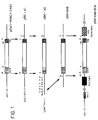
- Figure 1 represents a scheme illustrating a way to build one of the vectors which are the object of this invention; the restriction sites labelled by an asterisk (*) have been deleted. Bs: BstE II, C: Cla I, Cs: Csp45 I, E: Eco RI, H: Hind III, K; Kpn I, P: Pst I, S: Sac I, Sm: Sma I, Xb: Xba I, Xh: Xho I;
- Figure 2 represents the map of the region that characterizes one of the vectors which are the object of the present invention.
- In the examples disclosed in the following, the techniques which are well known to those who are skilled in the art are carried out according to reference (17).
- The vector pSW1-VHNCI-TAG1 described by (9) has been employed as the starting vector just for exempli≡ fication purposes, but it is to be understood that alternative construction ways are equally possible.
- With reference to Figure 1, the fragment Hind III-Eco RI has been excided and subcloned into the sites Hind III-Eco RI of the vector pGEM 7zf(+) (Promega) in which the "polylinker" sites labelled with an asterisk had been removed by means of digestion and treatment with Klenow's fragment of the DNA-polymerase. Following the digestion with Xba I and Sac I, it was possible to subclone the fragment into the vector pB1121 (Clontech Laboratories Inc., Ca).
- The removal of the polylinker restriction sites causes the plant active 35S CaMV promoter to be suitably close to the sequence to be transcribed, conferring an optimal in vivo transcription efficiency to the system. By means of the sites Pst I and BstE II, it is possible to insert any exogenous gene into the vector. In particular, as these sites are contained within the primers employed for amplifying from hybridoma lines the sequences that code for immunoglobulin chains (11), such sequences can be easily introduced in said sites without additional steps. The vector so obtained has been called pBG-dAb-BIN and it has been deposited after transforming E.coli with the same and in agreement with the Budapest Treaty with the NCAIM under the accession number 001144, on 31st May, 1991.
- A DNA fragment coding for the heavy chain of the monoclonal antibody NC1/34 HL disclosed in (12) has been introduced into the vector pBG-dAb-BIN just for exemplification purposes, said antibody being capable of recognizing a neuropeptide, i.e. the tachyquinine or substance P, employing the sites PstI and BstE II, so originating the plasmid pBG-NCl-BIN.
- Plants of the species N. benthamiana have transformed by means of the plasmid obtained employing techniques which are already known to those who are skilled in the art. Stated briefly, the plasmid pBG-NC1-BIN has been introduced into the strain LBA4404 of A.tumefaciens (13) as disclosed in reference (14) and disks obtained from the leaves of N.benthamiana plants, 4 weeks of age, were infected with the bacteria transformed as disclosed in reference (15). After 3-4 weeks, small plants were evidenced that regenerated on a culture medium suitable to the formation of sprouts (MS, containing 1 mg/ml of 3-indolbutyric acid (IBA), 1 mg/ml of 6benzylaminopurine (BAP) and 30 g/l of sucro≡ se), containing 100 ug/ml of Kanamycin with a 95 % frequency.
- Each leaf explantation gave origin to 13.8 ± 1.8 sprouts. The regenerated sprouts were caused to root on a selective medium with 25 ug/ml of Kanamycin containing 1/2 MS with 0.05 mg/ml of IBA and 30 g/ml of sucrose. The plants so obtained showed resistance to Kanamycin through NPTII activity as disclosed in (16). More than 65 % of the plants turned out to be positive.
- The putative transgenic plants multiplied in vitro showed normal morphology with respect to the control plants. DNA was extracted from independent plants and hybridized through "Southern" technique employing as probe the fragment Hind III-Eco RI of the pBG-dAb plasmid, putting into evidence a number of 1-5 copies of transformant gene per plant.
- Cytoplasmic RNA was extracted from the leaves of 15 independent NPTII-positive transformants at the same physiological stage and it was hybridizes through the "Northern" technique employing the same probe as that employed in example 2. Five plants out of those analyzed turned out to be positive, with differences in the expression level not ascribable to the number of copies of the gene or to mRNA degradation phenomena but, quite likely, ascribable to position effects in the plant genome.
- Soluble protein extracts were prepared from the leaves of transgenic plants and from the leaves of control plants, and the expression of the protein NC1/34 was tested by means of the "Western" technique, with the monoclonal antibody 9E10 that recognizes the peptide TAG at the C-terminal of the recombinant protein (18). All extracts out of three extracts from transgenic plants showed a protein band which was absent from the control plants. Moreover, the expression levels of the transgenic protein were well correlated with the specific RNA levels in the same plants. The relative amount of the expressed protein varies in the range between 0.1 % and 1 % of the total soluble proteins.
- The distribution throughout the tissues was investigated by immunofluorescence in sections obtained from leaves, flowers and stems of three transgenic plants, and a strong positive signal was detected in particular in the leaves, the meristems and the flowers.
-
- 1. Weising K., Schell J., Kahl G.: Foreign genes in plants: transfer structure, expression, and application. Annu. Rev. Genet. 22: 421-477 (1988).
- 2. Zambryski P., Tempe J., Schell J.: Transfer and function of T-DNA genes from Agrobacterium Ti and Ri plasmids in Plants. Cell 56: 193-201 (1989).
- 3. Cattaneo A., Neuberger M.S.: Polymeric immunoglobulin M is secreted by transfectants of non lymphoid cells in the absence of immunoglobulin J chain. EMBO J 6: 2753-2758 (1987).
- 4. Biocca S., Neuberger M.S., Cattaneo A.: Expression and targeting of intracellular antibodies in mammalian cells. EMBO J 9: 101-108 (1990).
- 5. Hiatt A., Cafferkey R., Bowdish K.: Production of antibodies in transgenic plants. Nature 342:76-78 (1989).
- 6. Hiatt A.: Antibodies produced in plants. Nature 344:469470 (1990).
- 7. During K., Hippe S., Kreuzaler F., Schell J.:
Synthesis and self-assembly of a functional monoclonal
antibody in trans
genic Nicotiana tabacum. Plant Mol. Biol. 15: 281-293 (1990). - 8. Milstein C.: From the structure of antibodies to the diversification of the immune response. EMBO J 4: 1083-1092 (1985).
- 9. Ward E.S., Gussow D., Griffiths A.D., Jones P.T., Winter G.: Binding activities of a repertoire of single immunoglobulin variable domains secreted from Escherichia coli. Nature 341: 544-546 (1989).
- 10. Huston JS et al. Proc Natl Acad Sci USA, 85, 5879-5883 (1988).
- 11. Orlandi R., Gussow D.H., Jones P.T., Winter G.: Cloning immunoglobulin variable domains for expressione by the polymerase chain reaction. Proc. Natl. Acad. Sci. USA 86: 38333837 (1989).
- 12. Cuello A.C., Galfre G., Milstein C.: Detection of substance P in the central nervous system by a monoclonal antibody. Proc. Natl. Acad. Sci. USA 76, 3532-3536 (1979).
- 13. Hoekema A., Hirsch P.R., Hooykaas P.J.J., Schilperoort R.A.: A binary plant vector strategy based on separation of Vir- and T- region of Agrobacterium tumefaciens Ti plasmid. Nature 303: 179-180 (1983).
- 14. Ditta G., Stanfield S., Corbin D., Helinski D.R.: Broad host range DNA cloning system for Gram negative bacteria: construction of a gene bank of Rhizobium meliloti. Proc. Natl. Acad. Sci. USA 77: 7347-7351.
- 15. Tavazza R., Ordas R.J., Tavazza M., Ancora G., Benvenuto E.: Genetic transformation of Nicotiana clevelandii using a Ti plasmid derived vector. J. Plant Physiol. 133: 640-644 (1988).
- 16. Scott R., Draper J., Jefferson R., Dury G., Jacob L.: Analysis of gene organization and expressione in plants. In Draper J. et al. (eds.), Plant Genetic Transformation and Gene Expression, pp. 301-310. Blackwell Scientific Publications, Oxford (1988).
- 17. Sambrook J. , Fritsch E.f., Maniatis T.: Molecular Cloning. A laboratory manual. II edt. Vol. 1-2-3. CSH Lab. Press (1989).
- 17. Munro S., Pelham H.: An Hsp70-liceprotein in the ER: identity with the 78 kd glucose-regulated protein and immunoglobulin heavy chain binding protein. Cell 46: 29130 (1986).
-
Claims (12)
- A plasmid vector for cloning and expressing portions of immunoglobulin chains, said portions being single-domain antibodies (dAbs) or single chain antibodies (scFv) in plants, comprising at least: a sequence coding for a selectable marker in plants; a sequence capable of promoting the efficient and correct transcription (the promoter sequence) of said portions of immunoglobulin chains in plants; a Pst I restriction site at the 5' position and a Bste II restriction site at 3' position for the unidirectional insertion of said portions of immunoglobulin chains; a detector sequence coding for a detectable marker at the 3' of said restriction sites in the same coding reading frame of said portions of immunoglobulin chains; a sequence capable of promoting the efficient and correct termination of transcription (the terminator sequence) of said portions of immunoglobulin chains in plants.
- A plasmid vector for cloning and expressing portions of immunoglobulin chains in plants according to claim 1, wherein said selectable marker is a protein having a phosphotransferase II neomycin activity (NPTII) that confers resistance to plant grown in a culture medium containing Kanamycin.
- A plasmid vector for cloning and expressing portions of immunoglobulin chains in plants according to any one of the preceding claims wherein said promoter comprises the regulative elements of the 35S CaMV virus gene (the cauliflower mosaic virus).
- A plasmid vector for cloning and expressing portions of immunoglobulin chains in plants according to any one of the preceding claims wherein said detector sequence codes for a peptide which is capable of reacting with a known antibody.
- A plasmid vector for cloning and expressing portions of immunoglobulin chains in plants according to any one of the preceding claims wherein said terminator is the terminator of the nopaline synthetase gene.
- A plasmid vector for cloning and expressing portions of immunoglobulin chains in plants according to any one of the preceding claims wherein said portions of immunoglobulin chains react in a specific way with chemical compound or pathogens agents, conferring to the transformed plant a resistance to said chemical compound or said pathogens agents.
- A plasmid vector for cloning and expressing portions of immunoglobulin chains in plants according to any one of the preceding claims wherein said vector comprises a sequence coding for a signal peptide, which is covalently linked to the NH2 terminal of the portions of immunoglobulin chains capable of promoting the transportation and extracellular secretion of said portions of immunoglobulin chains.
- A plasmid vector for cloning and expressing portions of immunoglobulin chains in plants according to any one of the preceding claims, which consists of the plasmid pBG-d-Ab-BIN, which has been deposited, after transforming E.coli with the same, with the NCAIM under the accession number 001144 on 31st May, 1991, in agreement with the Budapest Treaty.
- A plant transformation process by means of the plasmid vector according to any one of the preceding claims comprising the following steps:transforming bacteria belonging to the Agrobacterium genus by means of said plasmid vector, to get transformed bacteria;infecting the plant to be transformed with said transformed bacteria;selecting transgenic plant so obtained by means of said selectable marker that is expressed in plants;checking the expression levels of said portions of immunoglobulin chains in transgenic plants by means of the product coded by said detector sequence.
- Plants or parts of the same transformed by means of vectors according to any one of the preceding claims 1-8.
- Parts of a plant according to claim 10, wherein said parts comprise the reproduction material.
- Plants or parts thereof according to claim 10 or 11, being obtainable by means of the process according to claim 9.
Applications Claiming Priority (2)
| Application Number | Priority Date | Filing Date | Title |
|---|---|---|---|
| ITRM910474 | 1991-06-28 | ||
| ITRM910474A IT1248361B (en) | 1991-06-28 | 1991-06-28 | PLASMIDIC VECTORS FOR THE EXPRESSION OF GENES IN PLANTS |
Publications (3)
| Publication Number | Publication Date |
|---|---|
| EP0520962A2 EP0520962A2 (en) | 1992-12-30 |
| EP0520962A3 EP0520962A3 (en) | 1993-09-01 |
| EP0520962B1 true EP0520962B1 (en) | 2002-10-02 |
Family
ID=11400231
Family Applications (1)
| Application Number | Title | Priority Date | Filing Date |
|---|---|---|---|
| EP92830330A Expired - Lifetime EP0520962B1 (en) | 1991-06-28 | 1992-06-24 | Plasmid vectors for gene expression in plants |
Country Status (4)
| Country | Link |
|---|---|
| EP (1) | EP0520962B1 (en) |
| AT (1) | ATE225399T1 (en) |
| DE (1) | DE69232793D1 (en) |
| IT (1) | IT1248361B (en) |
Families Citing this family (6)
| Publication number | Priority date | Publication date | Assignee | Title |
|---|---|---|---|---|
| IT1264083B1 (en) * | 1993-12-10 | 1996-09-10 | Enea Ente Nuove Tec | PROCEDURE FOR THE PRODUCTION IN PLANTS OF ENGINEERED ANTIBODY, PRODUCED ANTIBODY AND THEIR USE IN DIAGNOSIS AND THERAPY. |
| JP4503706B2 (en) | 1996-06-07 | 2010-07-14 | ポニアード ファーマシューティカルズ,インコーポレイティド | Humanized antibodies with modified glycosylation |
| HUP0001659A3 (en) * | 1997-03-25 | 2002-03-28 | Basf Ag | Expression of herbicide-binding polypeptides in plants to produce herbicide tolerance |
| US6005083A (en) | 1997-03-28 | 1999-12-21 | Neorx Corporation | Bridged aromatic substituted amine ligands with donor atoms |
| DE19718251A1 (en) * | 1997-04-30 | 1998-11-05 | Basf Ag | Expression of fungicide-binding polypeptides in plants to produce fungicide tolerance |
| EP1118669A3 (en) * | 1999-12-17 | 2001-08-29 | Unilever Plc | Production of camelid antibodies in plants |
Family Cites Families (2)
| Publication number | Priority date | Publication date | Assignee | Title |
|---|---|---|---|---|
| GB8626878D0 (en) * | 1986-11-11 | 1986-12-10 | Ici Plc | Dna |
| US5202422A (en) * | 1989-10-27 | 1993-04-13 | The Scripps Research Institute | Compositions containing plant-produced glycopolypeptide multimers, multimeric proteins and method of their use |
-
1991
- 1991-06-28 IT ITRM910474A patent/IT1248361B/en active IP Right Grant
-
1992
- 1992-06-24 AT AT92830330T patent/ATE225399T1/en not_active IP Right Cessation
- 1992-06-24 DE DE69232793T patent/DE69232793D1/en not_active Expired - Lifetime
- 1992-06-24 EP EP92830330A patent/EP0520962B1/en not_active Expired - Lifetime
Also Published As
| Publication number | Publication date |
|---|---|
| ATE225399T1 (en) | 2002-10-15 |
| IT1248361B (en) | 1995-01-05 |
| ITRM910474A1 (en) | 1992-12-28 |
| DE69232793D1 (en) | 2002-11-07 |
| ITRM910474A0 (en) | 1991-06-28 |
| EP0520962A3 (en) | 1993-09-01 |
| EP0520962A2 (en) | 1992-12-30 |
Similar Documents
| Publication | Publication Date | Title |
|---|---|---|
| Elliott et al. | Agrobacterium-mediated transformation of sugarcane using GFP as a screenable marker | |
| RU2406761C2 (en) | Pathogen-induced synthetic promoter | |
| EP0159418B1 (en) | A process for the incorporation of foreign dna into the genome of monocotyledonous plants | |
| EP1198985A1 (en) | Method for superrapid transformation of monocotyledon | |
| US5658773A (en) | Tomato acid invertase gene | |
| EP1088061A4 (en) | METHOD AND DEVICE FOR EXPRESSING MAMMALIAN POLYPEPTIDES IN SEED-BLADE PLANTS | |
| EP0573767B1 (en) | Process for production of exogenous gene or its product in plant cells | |
| WO1999019498A1 (en) | Transgenic lemnaceae | |
| AU694457B2 (en) | DNA sequences for ammonium transporter, plasmids, bacteria, yeasts, plant cells and plants containing the transporter | |
| EP0520962A2 (en) | Plasmid vectors for gene expression in plants | |
| EP0437320A1 (en) | Recombinant DNA and its use in producing human insulin | |
| US5850018A (en) | Expression control sequence for general and effective expression of genes in plants | |
| AU2003266096A1 (en) | Vector for the production of transplastomic angiosperm plants | |
| US20030208797A1 (en) | Production of antibodies | |
| AU701718B2 (en) | Processes for modifying plant flowering behaviour | |
| KR950012900B1 (en) | Antiviral protein expression vector and method for producing plant transformed with it | |
| WO1997035980A1 (en) | Antibodies against avirulence/pathogenicity proteins of plant pathogens | |
| US7453022B2 (en) | Method of increasing the content of selected transgene-coded proteins or peptides in plants | |
| CA2244959A1 (en) | Gene expression in plants | |
| AU705682C (en) | An expression control sequence for general and effective expression of genes in plants | |
| KR101171044B1 (en) | Method for transformation using toxoflavin lyase genetflA as a selection marker and transgenic watermelon gongdae produced by the method | |
| WO1998044136A1 (en) | Genetic method for producing virus resistant organisms | |
| KR101200898B1 (en) | Transgenic Chrysanthemum and method for production thereof | |
| JPWO2008069318A1 (en) | Boron-tolerant plant imparted with excessive boron tolerance to the plant, method for producing the plant and gene used for the production | |
| Conger | Potential Transformation Systems in Dactylis Glomerata |
Legal Events
| Date | Code | Title | Description |
|---|---|---|---|
| PUAI | Public reference made under article 153(3) epc to a published international application that has entered the european phase |
Free format text: ORIGINAL CODE: 0009012 |
|
| AK | Designated contracting states |
Kind code of ref document: A2 Designated state(s): AT BE CH DE DK ES FR GB GR LI LU MC NL PT SE |
|
| PUAL | Search report despatched |
Free format text: ORIGINAL CODE: 0009013 |
|
| AK | Designated contracting states |
Kind code of ref document: A3 Designated state(s): AT BE CH DE DK ES FR GB GR LI LU MC NL PT SE |
|
| 17P | Request for examination filed |
Effective date: 19940216 |
|
| 17Q | First examination report despatched |
Effective date: 19980402 |
|
| GRAG | Despatch of communication of intention to grant |
Free format text: ORIGINAL CODE: EPIDOS AGRA |
|
| GRAG | Despatch of communication of intention to grant |
Free format text: ORIGINAL CODE: EPIDOS AGRA |
|
| GRAH | Despatch of communication of intention to grant a patent |
Free format text: ORIGINAL CODE: EPIDOS IGRA |
|
| GRAH | Despatch of communication of intention to grant a patent |
Free format text: ORIGINAL CODE: EPIDOS IGRA |
|
| GRAA | (expected) grant |
Free format text: ORIGINAL CODE: 0009210 |
|
| AK | Designated contracting states |
Kind code of ref document: B1 Designated state(s): AT BE CH DE DK ES FR GB GR LI LU MC NL PT SE |
|
| PG25 | Lapsed in a contracting state [announced via postgrant information from national office to epo] |
Ref country code: NL Free format text: LAPSE BECAUSE OF FAILURE TO SUBMIT A TRANSLATION OF THE DESCRIPTION OR TO PAY THE FEE WITHIN THE PRESCRIBED TIME-LIMIT Effective date: 20021002 Ref country code: LI Free format text: LAPSE BECAUSE OF FAILURE TO SUBMIT A TRANSLATION OF THE DESCRIPTION OR TO PAY THE FEE WITHIN THE PRESCRIBED TIME-LIMIT Effective date: 20021002 Ref country code: GR Free format text: LAPSE BECAUSE OF FAILURE TO SUBMIT A TRANSLATION OF THE DESCRIPTION OR TO PAY THE FEE WITHIN THE PRESCRIBED TIME-LIMIT Effective date: 20021002 Ref country code: FR Free format text: LAPSE BECAUSE OF FAILURE TO SUBMIT A TRANSLATION OF THE DESCRIPTION OR TO PAY THE FEE WITHIN THE PRESCRIBED TIME-LIMIT Effective date: 20021002 Ref country code: CH Free format text: LAPSE BECAUSE OF FAILURE TO SUBMIT A TRANSLATION OF THE DESCRIPTION OR TO PAY THE FEE WITHIN THE PRESCRIBED TIME-LIMIT Effective date: 20021002 Ref country code: BE Free format text: LAPSE BECAUSE OF FAILURE TO SUBMIT A TRANSLATION OF THE DESCRIPTION OR TO PAY THE FEE WITHIN THE PRESCRIBED TIME-LIMIT Effective date: 20021002 Ref country code: AT Free format text: LAPSE BECAUSE OF FAILURE TO SUBMIT A TRANSLATION OF THE DESCRIPTION OR TO PAY THE FEE WITHIN THE PRESCRIBED TIME-LIMIT Effective date: 20021002 |
|
| REF | Corresponds to: |
Ref document number: 225399 Country of ref document: AT Date of ref document: 20021015 Kind code of ref document: T |
|
| REG | Reference to a national code |
Ref country code: GB Ref legal event code: FG4D |
|
| REG | Reference to a national code |
Ref country code: CH Ref legal event code: EP |
|
| REF | Corresponds to: |
Ref document number: 69232793 Country of ref document: DE Date of ref document: 20021107 |
|
| PG25 | Lapsed in a contracting state [announced via postgrant information from national office to epo] |
Ref country code: SE Free format text: LAPSE BECAUSE OF FAILURE TO SUBMIT A TRANSLATION OF THE DESCRIPTION OR TO PAY THE FEE WITHIN THE PRESCRIBED TIME-LIMIT Effective date: 20030102 Ref country code: PT Free format text: LAPSE BECAUSE OF FAILURE TO SUBMIT A TRANSLATION OF THE DESCRIPTION OR TO PAY THE FEE WITHIN THE PRESCRIBED TIME-LIMIT Effective date: 20030102 Ref country code: DK Free format text: LAPSE BECAUSE OF FAILURE TO SUBMIT A TRANSLATION OF THE DESCRIPTION OR TO PAY THE FEE WITHIN THE PRESCRIBED TIME-LIMIT Effective date: 20030102 |
|
| PG25 | Lapsed in a contracting state [announced via postgrant information from national office to epo] |
Ref country code: DE Free format text: LAPSE BECAUSE OF FAILURE TO SUBMIT A TRANSLATION OF THE DESCRIPTION OR TO PAY THE FEE WITHIN THE PRESCRIBED TIME-LIMIT Effective date: 20030103 |
|
| NLV1 | Nl: lapsed or annulled due to failure to fulfill the requirements of art. 29p and 29m of the patents act | ||
| PG25 | Lapsed in a contracting state [announced via postgrant information from national office to epo] |
Ref country code: ES Free format text: LAPSE BECAUSE OF FAILURE TO SUBMIT A TRANSLATION OF THE DESCRIPTION OR TO PAY THE FEE WITHIN THE PRESCRIBED TIME-LIMIT Effective date: 20030429 |
|
| REG | Reference to a national code |
Ref country code: CH Ref legal event code: PL |
|
| PG25 | Lapsed in a contracting state [announced via postgrant information from national office to epo] |
Ref country code: LU Free format text: LAPSE BECAUSE OF NON-PAYMENT OF DUE FEES Effective date: 20030624 Ref country code: GB Free format text: LAPSE BECAUSE OF NON-PAYMENT OF DUE FEES Effective date: 20030624 |
|
| PG25 | Lapsed in a contracting state [announced via postgrant information from national office to epo] |
Ref country code: MC Free format text: LAPSE BECAUSE OF NON-PAYMENT OF DUE FEES Effective date: 20030630 |
|
| EN | Fr: translation not filed | ||
| PLBE | No opposition filed within time limit |
Free format text: ORIGINAL CODE: 0009261 |
|
| 26N | No opposition filed |
Effective date: 20030703 |
|
| GBPC | Gb: european patent ceased through non-payment of renewal fee |
Effective date: 20030624 |