EP0513090B1 - Hepatitis a vaccines - Google Patents
Hepatitis a vaccines Download PDFInfo
- Publication number
- EP0513090B1 EP0513090B1 EP91903208A EP91903208A EP0513090B1 EP 0513090 B1 EP0513090 B1 EP 0513090B1 EP 91903208 A EP91903208 A EP 91903208A EP 91903208 A EP91903208 A EP 91903208A EP 0513090 B1 EP0513090 B1 EP 0513090B1
- Authority
- EP
- European Patent Office
- Prior art keywords
- virus
- vaccine
- hav
- polypeptide
- hepatitis
- Prior art date
- Legal status (The legal status is an assumption and is not a legal conclusion. Google has not performed a legal analysis and makes no representation as to the accuracy of the status listed.)
- Expired - Lifetime
Links
- 229960005486 vaccine Drugs 0.000 title claims abstract description 49
- 208000006454 hepatitis Diseases 0.000 title description 4
- 231100000283 hepatitis Toxicity 0.000 title description 4
- 241000709721 Hepatovirus A Species 0.000 claims abstract description 87
- 229920001184 polypeptide Polymers 0.000 claims abstract description 48
- 102000004196 processed proteins & peptides Human genes 0.000 claims abstract description 48
- 108090000765 processed proteins & peptides Proteins 0.000 claims abstract description 48
- 241000700605 Viruses Species 0.000 claims abstract description 33
- 241000700618 Vaccinia virus Species 0.000 claims abstract description 24
- 108020004414 DNA Proteins 0.000 claims abstract description 12
- 102000053602 DNA Human genes 0.000 claims abstract description 5
- 238000000034 method Methods 0.000 claims description 19
- 101710172711 Structural protein Proteins 0.000 claims description 13
- 150000001413 amino acids Chemical class 0.000 claims description 11
- 125000002924 primary amino group Chemical group [H]N([H])* 0.000 claims description 11
- 102000006601 Thymidine Kinase Human genes 0.000 claims description 10
- 108020004440 Thymidine kinase Proteins 0.000 claims description 10
- 230000003612 virological effect Effects 0.000 claims description 6
- 238000002360 preparation method Methods 0.000 claims description 5
- 239000002773 nucleotide Substances 0.000 claims description 4
- 125000003729 nucleotide group Chemical group 0.000 claims description 4
- 239000003937 drug carrier Substances 0.000 claims 2
- 108020004511 Recombinant DNA Proteins 0.000 abstract description 4
- 239000000463 material Substances 0.000 abstract description 4
- 230000000890 antigenic effect Effects 0.000 abstract description 3
- 238000005516 engineering process Methods 0.000 abstract description 2
- 208000015181 infectious disease Diseases 0.000 abstract description 2
- 230000002458 infectious effect Effects 0.000 abstract 1
- 241001465754 Metazoa Species 0.000 description 17
- 210000004027 cell Anatomy 0.000 description 13
- 108090000623 proteins and genes Proteins 0.000 description 12
- 206010046865 Vaccinia virus infection Diseases 0.000 description 10
- 208000007089 vaccinia Diseases 0.000 description 10
- 239000002299 complementary DNA Substances 0.000 description 8
- 239000012634 fragment Substances 0.000 description 8
- 239000013612 plasmid Substances 0.000 description 8
- 235000018102 proteins Nutrition 0.000 description 7
- 102000004169 proteins and genes Human genes 0.000 description 7
- 235000001014 amino acid Nutrition 0.000 description 6
- 210000002966 serum Anatomy 0.000 description 6
- 241000283973 Oryctolagus cuniculus Species 0.000 description 5
- 241000288961 Saguinus imperator Species 0.000 description 5
- 101150003725 TK gene Proteins 0.000 description 5
- 230000001681 protective effect Effects 0.000 description 4
- 238000012360 testing method Methods 0.000 description 4
- 241000588724 Escherichia coli Species 0.000 description 3
- 101100321817 Human parvovirus B19 (strain HV) 7.5K gene Proteins 0.000 description 3
- 108020005038 Terminator Codon Proteins 0.000 description 3
- 238000010367 cloning Methods 0.000 description 3
- 230000029087 digestion Effects 0.000 description 3
- 230000028993 immune response Effects 0.000 description 3
- 238000011031 large-scale manufacturing process Methods 0.000 description 3
- 210000004698 lymphocyte Anatomy 0.000 description 3
- 238000004519 manufacturing process Methods 0.000 description 3
- 230000001404 mediated effect Effects 0.000 description 3
- 238000003127 radioimmunoassay Methods 0.000 description 3
- 230000004044 response Effects 0.000 description 3
- 238000002255 vaccination Methods 0.000 description 3
- 239000013598 vector Substances 0.000 description 3
- YBJHBAHKTGYVGT-ZKWXMUAHSA-N (+)-Biotin Chemical compound N1C(=O)N[C@@H]2[C@H](CCCCC(=O)O)SC[C@@H]21 YBJHBAHKTGYVGT-ZKWXMUAHSA-N 0.000 description 2
- VYZAMTAEIAYCRO-UHFFFAOYSA-N Chromium Chemical compound [Cr] VYZAMTAEIAYCRO-UHFFFAOYSA-N 0.000 description 2
- WSFSSNUMVMOOMR-UHFFFAOYSA-N Formaldehyde Chemical compound O=C WSFSSNUMVMOOMR-UHFFFAOYSA-N 0.000 description 2
- 206010019799 Hepatitis viral Diseases 0.000 description 2
- 108700026244 Open Reading Frames Proteins 0.000 description 2
- 108010076039 Polyproteins Proteins 0.000 description 2
- 230000024932 T cell mediated immunity Effects 0.000 description 2
- 210000000234 capsid Anatomy 0.000 description 2
- 229910052804 chromium Inorganic materials 0.000 description 2
- 239000011651 chromium Substances 0.000 description 2
- 238000001514 detection method Methods 0.000 description 2
- 239000013604 expression vector Substances 0.000 description 2
- 208000005252 hepatitis A Diseases 0.000 description 2
- 238000009396 hybridization Methods 0.000 description 2
- 230000036039 immunity Effects 0.000 description 2
- 230000005847 immunogenicity Effects 0.000 description 2
- 238000012744 immunostaining Methods 0.000 description 2
- 238000010348 incorporation Methods 0.000 description 2
- 238000002347 injection Methods 0.000 description 2
- 239000007924 injection Substances 0.000 description 2
- 238000003780 insertion Methods 0.000 description 2
- 230000037431 insertion Effects 0.000 description 2
- RCRODHONKLSMIF-UHFFFAOYSA-N isosuberenol Natural products O1C(=O)C=CC2=C1C=C(OC)C(CC(O)C(C)=C)=C2 RCRODHONKLSMIF-UHFFFAOYSA-N 0.000 description 2
- 238000012317 liver biopsy Methods 0.000 description 2
- 208000019423 liver disease Diseases 0.000 description 2
- 239000000203 mixture Substances 0.000 description 2
- 239000013600 plasmid vector Substances 0.000 description 2
- 230000002265 prevention Effects 0.000 description 2
- 230000006798 recombination Effects 0.000 description 2
- 238000013519 translation Methods 0.000 description 2
- 241000701447 unidentified baculovirus Species 0.000 description 2
- 210000003501 vero cell Anatomy 0.000 description 2
- 201000001862 viral hepatitis Diseases 0.000 description 2
- 108091032973 (ribonucleotides)n+m Proteins 0.000 description 1
- 102000040650 (ribonucleotides)n+m Human genes 0.000 description 1
- WOVKYSAHUYNSMH-RRKCRQDMSA-N 5-bromodeoxyuridine Chemical compound C1[C@H](O)[C@@H](CO)O[C@H]1N1C(=O)NC(=O)C(Br)=C1 WOVKYSAHUYNSMH-RRKCRQDMSA-N 0.000 description 1
- 102100036475 Alanine aminotransferase 1 Human genes 0.000 description 1
- 108010082126 Alanine transaminase Proteins 0.000 description 1
- 102000002260 Alkaline Phosphatase Human genes 0.000 description 1
- 108020004774 Alkaline Phosphatase Proteins 0.000 description 1
- WOVKYSAHUYNSMH-UHFFFAOYSA-N BROMODEOXYURIDINE Natural products C1C(O)C(CO)OC1N1C(=O)NC(=O)C(Br)=C1 WOVKYSAHUYNSMH-UHFFFAOYSA-N 0.000 description 1
- 241000894006 Bacteria Species 0.000 description 1
- 108091026890 Coding region Proteins 0.000 description 1
- 108010042407 Endonucleases Proteins 0.000 description 1
- 102000004533 Endonucleases Human genes 0.000 description 1
- 241000238631 Hexapoda Species 0.000 description 1
- XQFRJNBWHJMXHO-RRKCRQDMSA-N IDUR Chemical compound C1[C@H](O)[C@@H](CO)O[C@H]1N1C(=O)NC(=O)C(I)=C1 XQFRJNBWHJMXHO-RRKCRQDMSA-N 0.000 description 1
- 108091026898 Leader sequence (mRNA) Proteins 0.000 description 1
- 241000829100 Macaca mulatta polyomavirus 1 Species 0.000 description 1
- 241000124008 Mammalia Species 0.000 description 1
- 241001631646 Papillomaviridae Species 0.000 description 1
- 102000004160 Phosphoric Monoester Hydrolases Human genes 0.000 description 1
- 108090000608 Phosphoric Monoester Hydrolases Proteins 0.000 description 1
- 241000709664 Picornaviridae Species 0.000 description 1
- 241000288906 Primates Species 0.000 description 1
- 239000012979 RPMI medium Substances 0.000 description 1
- 102000007056 Recombinant Fusion Proteins Human genes 0.000 description 1
- 108010008281 Recombinant Fusion Proteins Proteins 0.000 description 1
- 241001312919 Saguinus labiatus Species 0.000 description 1
- 238000002105 Southern blotting Methods 0.000 description 1
- 108091081024 Start codon Proteins 0.000 description 1
- 241000282898 Sus scrofa Species 0.000 description 1
- 210000001744 T-lymphocyte Anatomy 0.000 description 1
- 230000001154 acute effect Effects 0.000 description 1
- 230000027645 antigenic variation Effects 0.000 description 1
- 239000012736 aqueous medium Substances 0.000 description 1
- 230000002238 attenuated effect Effects 0.000 description 1
- 238000001574 biopsy Methods 0.000 description 1
- 230000015572 biosynthetic process Effects 0.000 description 1
- 229960002685 biotin Drugs 0.000 description 1
- 235000020958 biotin Nutrition 0.000 description 1
- 239000011616 biotin Substances 0.000 description 1
- 229950004398 broxuridine Drugs 0.000 description 1
- 244000309466 calf Species 0.000 description 1
- 230000022534 cell killing Effects 0.000 description 1
- 239000013592 cell lysate Substances 0.000 description 1
- 239000013553 cell monolayer Substances 0.000 description 1
- 238000010276 construction Methods 0.000 description 1
- 230000000120 cytopathologic effect Effects 0.000 description 1
- 210000001151 cytotoxic T lymphocyte Anatomy 0.000 description 1
- 230000003247 decreasing effect Effects 0.000 description 1
- 229940039227 diagnostic agent Drugs 0.000 description 1
- 239000000032 diagnostic agent Substances 0.000 description 1
- 239000005546 dideoxynucleotide Substances 0.000 description 1
- 210000001840 diploid cell Anatomy 0.000 description 1
- 201000010099 disease Diseases 0.000 description 1
- 208000037265 diseases, disorders, signs and symptoms Diseases 0.000 description 1
- 230000000763 evoking effect Effects 0.000 description 1
- 210000002950 fibroblast Anatomy 0.000 description 1
- 238000009472 formulation Methods 0.000 description 1
- 230000004927 fusion Effects 0.000 description 1
- 108020001507 fusion proteins Proteins 0.000 description 1
- 102000037865 fusion proteins Human genes 0.000 description 1
- 230000012010 growth Effects 0.000 description 1
- 239000001963 growth medium Substances 0.000 description 1
- 229940124724 hepatitis-A vaccine Drugs 0.000 description 1
- 230000036732 histological change Effects 0.000 description 1
- 230000006801 homologous recombination Effects 0.000 description 1
- 238000002744 homologous recombination Methods 0.000 description 1
- 230000000652 homosexual effect Effects 0.000 description 1
- 210000004408 hybridoma Anatomy 0.000 description 1
- 230000001900 immune effect Effects 0.000 description 1
- 238000002649 immunization Methods 0.000 description 1
- 230000001939 inductive effect Effects 0.000 description 1
- 238000011081 inoculation Methods 0.000 description 1
- 238000007918 intramuscular administration Methods 0.000 description 1
- 238000001990 intravenous administration Methods 0.000 description 1
- 210000004962 mammalian cell Anatomy 0.000 description 1
- 230000007246 mechanism Effects 0.000 description 1
- 238000007911 parenteral administration Methods 0.000 description 1
- 239000012071 phase Substances 0.000 description 1
- 238000003752 polymerase chain reaction Methods 0.000 description 1
- 210000001236 prokaryotic cell Anatomy 0.000 description 1
- 230000002285 radioactive effect Effects 0.000 description 1
- 238000010188 recombinant method Methods 0.000 description 1
- 238000005215 recombination Methods 0.000 description 1
- 230000010076 replication Effects 0.000 description 1
- 108091008146 restriction endonucleases Proteins 0.000 description 1
- 239000000523 sample Substances 0.000 description 1
- 238000012163 sequencing technique Methods 0.000 description 1
- 239000007790 solid phase Substances 0.000 description 1
- 238000010561 standard procedure Methods 0.000 description 1
- 238000007920 subcutaneous administration Methods 0.000 description 1
- 239000000126 substance Substances 0.000 description 1
- 229940031626 subunit vaccine Drugs 0.000 description 1
- 238000003786 synthesis reaction Methods 0.000 description 1
- 238000013518 transcription Methods 0.000 description 1
- 230000035897 transcription Effects 0.000 description 1
- 238000001890 transfection Methods 0.000 description 1
- 241000701161 unidentified adenovirus Species 0.000 description 1
- 241001430294 unidentified retrovirus Species 0.000 description 1
- 238000001262 western blot Methods 0.000 description 1
Images


Classifications
-
- C—CHEMISTRY; METALLURGY
- C12—BIOCHEMISTRY; BEER; SPIRITS; WINE; VINEGAR; MICROBIOLOGY; ENZYMOLOGY; MUTATION OR GENETIC ENGINEERING
- C12N—MICROORGANISMS OR ENZYMES; COMPOSITIONS THEREOF; PROPAGATING, PRESERVING, OR MAINTAINING MICROORGANISMS; MUTATION OR GENETIC ENGINEERING; CULTURE MEDIA
- C12N15/00—Mutation or genetic engineering; DNA or RNA concerning genetic engineering, vectors, e.g. plasmids, or their isolation, preparation or purification; Use of hosts therefor
- C12N15/09—Recombinant DNA-technology
- C12N15/63—Introduction of foreign genetic material using vectors; Vectors; Use of hosts therefor; Regulation of expression
- C12N15/79—Vectors or expression systems specially adapted for eukaryotic hosts
- C12N15/85—Vectors or expression systems specially adapted for eukaryotic hosts for animal cells
- C12N15/86—Viral vectors
-
- C—CHEMISTRY; METALLURGY
- C07—ORGANIC CHEMISTRY
- C07K—PEPTIDES
- C07K14/00—Peptides having more than 20 amino acids; Gastrins; Somatostatins; Melanotropins; Derivatives thereof
- C07K14/005—Peptides having more than 20 amino acids; Gastrins; Somatostatins; Melanotropins; Derivatives thereof from viruses
-
- A—HUMAN NECESSITIES
- A61—MEDICAL OR VETERINARY SCIENCE; HYGIENE
- A61K—PREPARATIONS FOR MEDICAL, DENTAL OR TOILETRY PURPOSES
- A61K39/00—Medicinal preparations containing antigens or antibodies
-
- C—CHEMISTRY; METALLURGY
- C12—BIOCHEMISTRY; BEER; SPIRITS; WINE; VINEGAR; MICROBIOLOGY; ENZYMOLOGY; MUTATION OR GENETIC ENGINEERING
- C12N—MICROORGANISMS OR ENZYMES; COMPOSITIONS THEREOF; PROPAGATING, PRESERVING, OR MAINTAINING MICROORGANISMS; MUTATION OR GENETIC ENGINEERING; CULTURE MEDIA
- C12N2710/00—MICROORGANISMS OR ENZYMES; COMPOSITIONS THEREOF; PROPAGATING, PRESERVING, OR MAINTAINING MICROORGANISMS; MUTATION OR GENETIC ENGINEERING; CULTURE MEDIA dsDNA viruses
- C12N2710/00011—Details
- C12N2710/24011—Poxviridae
- C12N2710/24111—Orthopoxvirus, e.g. vaccinia virus, variola
- C12N2710/24141—Use of virus, viral particle or viral elements as a vector
- C12N2710/24143—Use of virus, viral particle or viral elements as a vector viral genome or elements thereof as genetic vector
-
- C—CHEMISTRY; METALLURGY
- C12—BIOCHEMISTRY; BEER; SPIRITS; WINE; VINEGAR; MICROBIOLOGY; ENZYMOLOGY; MUTATION OR GENETIC ENGINEERING
- C12N—MICROORGANISMS OR ENZYMES; COMPOSITIONS THEREOF; PROPAGATING, PRESERVING, OR MAINTAINING MICROORGANISMS; MUTATION OR GENETIC ENGINEERING; CULTURE MEDIA
- C12N2770/00—MICROORGANISMS OR ENZYMES; COMPOSITIONS THEREOF; PROPAGATING, PRESERVING, OR MAINTAINING MICROORGANISMS; MUTATION OR GENETIC ENGINEERING; CULTURE MEDIA ssRNA viruses positive-sense
- C12N2770/00011—Details
- C12N2770/32011—Picornaviridae
- C12N2770/32411—Hepatovirus, i.e. hepatitis A virus
- C12N2770/32422—New viral proteins or individual genes, new structural or functional aspects of known viral proteins or genes
-
- Y—GENERAL TAGGING OF NEW TECHNOLOGICAL DEVELOPMENTS; GENERAL TAGGING OF CROSS-SECTIONAL TECHNOLOGIES SPANNING OVER SEVERAL SECTIONS OF THE IPC; TECHNICAL SUBJECTS COVERED BY FORMER USPC CROSS-REFERENCE ART COLLECTIONS [XRACs] AND DIGESTS
- Y02—TECHNOLOGIES OR APPLICATIONS FOR MITIGATION OR ADAPTATION AGAINST CLIMATE CHANGE
- Y02A—TECHNOLOGIES FOR ADAPTATION TO CLIMATE CHANGE
- Y02A50/00—TECHNOLOGIES FOR ADAPTATION TO CLIMATE CHANGE in human health protection, e.g. against extreme weather
- Y02A50/30—Against vector-borne diseases, e.g. mosquito-borne, fly-borne, tick-borne or waterborne diseases whose impact is exacerbated by climate change
Definitions
- This invention relates to the prevention of hepatitis and is particularly concerned with the production of new materials suitable for incorportion into a vaccine for the prevention of hepatitis A.
- HAV hepatitis A virus
- Hepatitis A virus is classified as a picornavirus with a single strand positive sense RNA genome coding for a single polyprotein which is subsequently processed into structural and nonstructural proteins.
- the structural proteins are divided into polypeptides, for example VP1, VP2, VP3 and VP4 which form the capsid polypeptides of the virus.
- VP1, VP2, VP3 and VP4 which form the capsid polypeptides of the virus.
- a candidate sub-unit vaccine based on the VP1 structural polypeptide has been produced by recombinant DNA techniques in E. coli and used to immunize rabbits (Johnston et al., J. Infect. Dis., 1988, 157(6), 1203-1211). The resulting antibody reacted only with denatured VP1 and not with intact HAV, indicating that the conformational epitope had not been expressed by the E. coli.
- EP-A-0154587 sequences of recombinant DNA fragments are disclosed which are said to encode the antigenic determinants responsible for the immunogenicity and the immunological specificity of various proteins of the hepatitis A virus, especially VP1 and VP3.
- EP-A-0276330 recombinant plasmid DNAs are disclosed which are said to code for synthesis of polypeptide substances for a hepatitis A vaccine, comprising a fragment of the HAV genome, which includes non-structural protein coding regions, and an expression vector.
- a valuable vaccine material can be produced by incorporating at least part of the HAV genome in a vaccinia virus, using recombinant DNA technology.
- the polypeptide expressed by the vaccinia virus is capable of evoking a protective immune response following only a single injection of the material.
- a vaccine for immunising against hepatitis A virus comprising a polypeptide comprising hepatitis A virus (HAV) VP4, VP2, VP3 and at least part of VP1; said vaccine not including non-structural proteins of the hepatitis A virus, wherein said polypeptide comprises at least the 57 amino acids from the amino end of VP1.
- a DNA molecule comprising a nucleotide sequence coding a polypeptide comprising hepatitis A virus (HAV) VP4, VP2, VP3 and at least part of VP1, but not coding for hepatitis A virus non-structural proteins, wherein said polypeptide comprises at least the 57 amino acid from the amino end of VP1 for preparing a vaccine of the first aspect of the invention.
- HAV hepatitis A virus
- HAV Hepatitis A Virus
- a method of providing a vaccine for immunising against hepatitis A virus comprising providing a polypeptide comprising hepatitis A virus (HAV) VP4, VP2, VP3 and at least part of VP1; said vaccine not including non-structural proteins of the hepatitis A virus; wherein said polypeptide comprises at least the 57 amino acids from the amino end of VP1.
- HAV hepatitis A virus
- the DNA molecule may comprise a viral promotor operatively linked to the nucleotide sequence described above.
- a virus may be genetically engineered to express the polypeptide comprising hepatitis A virus (HAV) VP4, VP2, VP3 and at least part of VP1 comprising at least the 57 amino acids from the amino end, in the absence of non-structural proteins of the hepatitis A virus.
- HAV hepatitis A virus
- Such genetically engineered recombinant viruses may be incorporated into a vaccine of the present invention suitable for immunising mammals, in particular man, against hepatitis A infections.
- the vaccine may comprise the proteins expressed by such viruses.
- the selected HAV cDNA can be inserted into a plasmid vector capable of homologous recombination with a viral genome.
- plasmid vector capable of homologous recombination with a viral genome. Suitable plasmids are described by Mackett et al in J. Virol., 1984, 49(3), 857-864.
- heterologous DNA into vaccinia virus
- methods for the incorporation of heterologous DNA into vaccinia virus are now well-known and such methods are used in the present invention (see Mackett et al in DNA Cloning ed. Glover (IRL Press, Oxford) Vol. II, 191-211, 1985). Briefly, these can involve the introduction of the heterologous DNA encoding the desired HAV epitopes into a plasmid vector of vaccinia downstream of the vaccinia promotor so that it is flanked by the vaccinia TK sequences and introducing the resultant recombinant vector into cells infected with vaccinia virus.
- a particularly convenient method involves transfection of mammalian cells infected with vaccinia virus.
- the use of the recombinant techniques described results in part of the functional TK gene of the wild type vaccinia virus being replaced by the non-functional TK gene sequence within which is incorporated the DNA encoding the HAV epitope.
- the recombinant virus is TK-and can therefore be selected with 5-bromodeoxyuridine.
- the expressed polypeptide is not merely the desired HAV capsid polypeptide but is polypeptide that appears to fold in the correct manner to form the conformational epitope.
- the purified (virus-free) recombinant antigenic protein expressed in tissue culture by the recombinant virus can also be used as a vaccine.
- the same gene product for vaccine production (with or without downstream TK sequences) could be inserted into suitable expression vectors for expression in prokaryotic cells or baculoviruses for expression in insect cells.
- pGS 62 containing a vaccinia virus early promotor (7.5K) (Ticehurst et al., J. Clin. Microbiol. , 1987, 25 , 1822-1829) was linearised with Bam H1 endonuclease digestion followed by phosphatase treatment.
- a Bam H1 fragment from plasmid pHAV/J (Karayiannis et al., Viral Hepatitis and Liver Disease ed. Zuckerman (Alan R.
- E.coli colonies from transformed bacteria carrying the chimeric plasmid were identified by hybridisation to a 32P-labelled HAV cDNA probe and the correct orientation of the insert, with respect to the vaccinia 7.5K promotor, was determined by dideoxynucleotide sequencing.
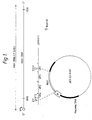
- the construction of the chimera is set out in detail in Figure 1 of the accompanying drawings.
- the resulting chimeric plasmid was transfected into Vero cells in tissue culcture using standard procedures. The same cultures were then infected with wild-type vaccinia. Genetic recombination occurs between homologous regions in the plasmid and wild-type vaccinia virus DNA resulting in the interruption of the thymidine kinase (TK) gene.
- TK thymidine kinase
- the resultant TK recombinant viruses were selected as described in Mackett et al, Chapter 7, DNA Cloning, Vol. II (D. M. Glover, Ed. IRL Press Oxford, 1985, 191-211).
- HAV polypeptides were established by a solid phase RIA (Karayiannia et al, J. Med.Virol., 1986, 18, 261-276) of cell lysates and by immunostaining of virus infected monolayers with human anti-HAV. Detection of plaques expressing HAV polypeptides was achieved by using rabbit anti-human and swine anti-rabbit antisera in turn. The latter was labelled with biotin and alkaline phosphatase (DAKOPATTS, ABComplex.AP, Denmark).
- DAKOPATTS biotin and alkaline phosphatase
- a vaccine was prepared using the recombinant virus obtained as described in Example 1.
- the vaccine was formulated with recombinant virus suspended in Gibco-BRL's RPMI medium 1640 (a growth medium that does not contain foetal calf serum) so that 0.1 ml of the vaccine contained 10 8 plaque forming units (PFU).
- the tests were carried out on three tamirins, Saguinus labiatus. Two of the animals were innoculated intradermally with 10 8 PFU in the upper part of their back while the third animal was innoculated with a similar formulation containing 10 7 PFU of wild-type vaccinia virus.
- the serum samples from all three animals were negative for anti-HAV antibody. Serum from all three animals was tested again for anti-HAV antibody nine weeks after vaccination, the two animals innoculated with the vaccine of the invention had detectable anti-HAV antibody titres of 1/40 and 1/100.
- the two animals protected with the vaccine of the invention showed no histological changes in their liver biopsies performed three weeks after challenge. Preinnoculation biopsies were normal in all three animals. However, the liver biopsy of the unprotected animal 125, taken during the acute phase of the hepatitis, showed predominantly cytopathic changes.
- IgM anti-HAV antibody was detected in the control animal 125 from weeks 2 to 6. No IgM anti-HAV response was detected in the animals protected by the vaccine of the invention, but there was a secondary response following challenge with the live virus. The titres rose to 10 2 and 10 3 for each protected animal respectively within a week of challenge and remained at those levels throughout the period to follow up. In control animal 125, anti-HAV titres did not. plateau until week 6.
- chimeras were constructed containing the coding sequence for individual structural polypeptides or combinations of these.
- the coding sequences were generated using the polymerase chain reaction with the appropriate primers.
- the 5' end primer contained an initiation codon (ATG) ensuring in frame translation of the relevant polypeptide.
- Cell lines either fibroblast or lymphoblast cells from tamarins are established using known techniques and then transformed. Following establishment, the cell lines are infected with various of the recombinant viruses shown in Figure 4.
- Lymphocytes from tamarins infected with virulent HAV virus are obtained and added to cultures of the cell lines described above. Release of radioactive chromium from the target cells is indicative of cytotoxic T-cell mediated mechanisms. In order to detect the presence of cell mediated immunity, cell killing is looked for,as evidenced by the release of labelled chromium.
Landscapes
- Life Sciences & Earth Sciences (AREA)
- Health & Medical Sciences (AREA)
- Genetics & Genomics (AREA)
- Chemical & Material Sciences (AREA)
- Organic Chemistry (AREA)
- Engineering & Computer Science (AREA)
- Biotechnology (AREA)
- Biochemistry (AREA)
- Biomedical Technology (AREA)
- General Engineering & Computer Science (AREA)
- Molecular Biology (AREA)
- Virology (AREA)
- Bioinformatics & Cheminformatics (AREA)
- Biophysics (AREA)
- Wood Science & Technology (AREA)
- Zoology (AREA)
- General Health & Medical Sciences (AREA)
- Microbiology (AREA)
- Physics & Mathematics (AREA)
- Plant Pathology (AREA)
- Gastroenterology & Hepatology (AREA)
- Medicinal Chemistry (AREA)
- Proteomics, Peptides & Aminoacids (AREA)
- Medicines Containing Antibodies Or Antigens For Use As Internal Diagnostic Agents (AREA)
- Micro-Organisms Or Cultivation Processes Thereof (AREA)
- Peptides Or Proteins (AREA)
- Preparation Of Compounds By Using Micro-Organisms (AREA)
- Saccharide Compounds (AREA)
- Solid-Sorbent Or Filter-Aiding Compositions (AREA)
- Valve Device For Special Equipments (AREA)
- Valve-Gear Or Valve Arrangements (AREA)
- Glass Compositions (AREA)
Abstract
Description
- This invention relates to the prevention of hepatitis and is particularly concerned with the production of new materials suitable for incorportion into a vaccine for the prevention of hepatitis A.
- Infection with hepatitis A virus (HAV) remains an important cause of morbidity and occasionally mortality, both in countries where it is endemic and in the industrialised nations where it is normally sporadic. As sanitary conditions have been improving in developing countries, the prevelance of HAV seropositivity has been decreasing so creating a large pool of susceptible individuals. These individuals together with high risk groups such as day-care centre staff, parents and siblings of toddlers attending such centres, promiscuous homosexual men and military personnel and tourists in endemic areas would benefit from an effective HAV vaccine.
- Hepatitis A virus is classified as a picornavirus with a single strand positive sense RNA genome coding for a single polyprotein which is subsequently processed into structural and nonstructural proteins. The structural proteins are divided into polypeptides, for example VP1, VP2, VP3 and VP4 which form the capsid polypeptides of the virus. There appears to be only one serotype and significant antigenic variation has not been recognised among different HAV strains.
- Replication of the virus in tissue culture is slow and yields are poor, thus making the large scale production for vaccines difficult and expensive. Formalin inactivated (Provost et al, J. Med. Virol., 1986, 19, 23-31. Binn et al., J. Infect. Dis., 1986, 153, 749-756.) and live attenuated virus vaccines (Provost et al., Proc. Soc.Exp. Biol. Med., 1982, 170, 8-14. Karron et al., J. Inect. Dis., 1988, 157, 338-345.) have been produced and shown to be protective both in primates and human volunteers. Problems of large scale production and stability of these vaccines in man need to be overcome and the safety and durability of immunity still have to be established. Moreover, one disadvantage of these vaccines is that 3 doses of vaccine are required to produce an adequate anti-HAV response.
- A candidate sub-unit vaccine based on the VP1 structural polypeptide has been produced by recombinant DNA techniques in E. coli and used to immunize rabbits (Johnston et al., J. Infect. Dis., 1988, 157(6), 1203-1211). The resulting antibody reacted only with denatured VP1 and not with intact HAV, indicating that the conformational epitope had not been expressed by the E. coli.
- In EP-A-0154587, sequences of recombinant DNA fragments are disclosed which are said to encode the antigenic determinants responsible for the immunogenicity and the immunological specificity of various proteins of the hepatitis A virus, especially VP1 and VP3.
- In EP-A-0276330, recombinant plasmid DNAs are disclosed which are said to code for synthesis of polypeptide substances for a hepatitis A vaccine, comprising a fragment of the HAV genome, which includes non-structural protein coding regions, and an expression vector.
- It has now been found that a valuable vaccine material can be produced by incorporating at least part of the HAV genome in a vaccinia virus, using recombinant DNA technology. The polypeptide expressed by the vaccinia virus is capable of evoking a protective immune response following only a single injection of the material.
- According to one aspect of the invention there is provided a vaccine for immunising against hepatitis A virus (HAV) comprising a polypeptide comprising hepatitis A virus (HAV) VP4, VP2, VP3 and at least part of VP1; said vaccine not including non-structural proteins of the hepatitis A virus, wherein said polypeptide comprises at least the 57 amino acids from the amino end of VP1.
- Some preferred features of the vaccine are provided in
claims 2 to 8. - According to a second aspect of the invention there is provided the use of a DNA molecule comprising a nucleotide sequence coding a polypeptide comprising hepatitis A virus (HAV) VP4, VP2, VP3 and at least part of VP1, but not coding for hepatitis A virus non-structural proteins, wherein said polypeptide comprises at least the 57 amino acid from the amino end of VP1 for preparing a vaccine of the first aspect of the invention.
- According to a third aspect of the invention, there is provided the use of a polypeptide as described in any one of
claims 1 to 3 or of a virus as described inclaims 4 to 6, in the preparation of a vaccine for immunising against the Hepatitis A Virus (HAV). - According to a fourth aspect of the invention there is provided a method of providing a vaccine for immunising against hepatitis A virus (HAV) comprising providing a polypeptide comprising hepatitis A virus (HAV) VP4, VP2, VP3 and at least part of VP1; said vaccine not including non-structural proteins of the hepatitis A virus; wherein said polypeptide comprises at least the 57 amino acids from the amino end of VP1. Preferred features of the method are provided in
claims 12 to 18. - The DNA molecule may comprise a viral promotor operatively linked to the nucleotide sequence described above.
- A virus may be genetically engineered to express the polypeptide comprising hepatitis A virus (HAV) VP4, VP2, VP3 and at least part of VP1 comprising at least the 57 amino acids from the amino end, in the absence of non-structural proteins of the hepatitis A virus.
- The virus to be genetically engineered may be selected from vaccinia, herpes, papovaviruses such a SV40, papillomaviruses, adenoviruses, retroviruses and baculoviruses, but other viruses not listed here may also be used.
- Such genetically engineered recombinant viruses may be incorporated into a vaccine of the present invention suitable for immunising mammals, in particular man, against hepatitis A infections. Alternatively the vaccine may comprise the proteins expressed by such viruses.
- The insertion into a virus, in particular a vaccinia virus, of an HAV cDNA fragment coding for the structural proteins VP4, VP2, VP3 and at least some of VP1 (57 amino acids from the amino end) but not coding for hepatitis A virus non-structural proteins involves preparing the required cDNA using for example the method described by Ticehurst et al in PNAS, 1983, 80, 5885-5889. Alternatively the required cDNA may be derived from one of the recombinant plasmids described by Ticehurst (see above) using restriction endonuclease digestion. In this way a 1742 base pair cDNA fragment of HAV encoding the structural polypeptides may be readily obtained using Bam H1 digestion.
- Using map positions in Baroudy et al., PNAS, 1985, 82, 2143-2147 a
fragment covering positions 611 to 2353 of the HAV genome can be obtained. - Once prepared, the selected HAV cDNA can be inserted into a plasmid vector capable of homologous recombination with a viral genome. Suitable plasmids are described by Mackett et al in J. Virol., 1984, 49(3), 857-864.
- The methods for the incorporation of heterologous DNA into vaccinia virus are now well-known and such methods are used in the present invention (see Mackett et al in DNA Cloning ed. Glover (IRL Press, Oxford) Vol. II, 191-211, 1985). Briefly, these can involve the introduction of the heterologous DNA encoding the desired HAV epitopes into a plasmid vector of vaccinia downstream of the vaccinia promotor so that it is flanked by the vaccinia TK sequences and introducing the resultant recombinant vector into cells infected with vaccinia virus. By recombination between the vector containing the HAV sequences and the homologous sequence in the vaccinia genome it is possible to generate a TK recombinant virus which is capable of expressing the heterologous gene. The techniques that have been used for the incorporation of other heterologous genes into vaccinia virus are described for example in Kieny et al, Nature, 1984, 312, 163-166 (1984); Wiktor et al, PNAS 81, 7194-7198 (1984); Moss el al, Nature 311, 67-69(1984); Mackett et al, Science, 227, 433-435 (1985); Elango et al, PNAS, 83, 1906-1910 (1986) and Mackett et al, B.J. Virol. 48, 857-864 (1984); and reference may be made to any of these documents for further guidance.
- A particularly convenient method involves transfection of mammalian cells infected with vaccinia virus. The use of the recombinant techniques described results in part of the functional TK gene of the wild type vaccinia virus being replaced by the non-functional TK gene sequence within which is incorporated the DNA encoding the HAV epitope. The recombinant virus is TK-and can therefore be selected with 5-bromodeoxyuridine.
- It has been found that when the cDNA fragment of HAV encoding at least one HAV structural polypeptide is expressed under the control of the vaccinia promotor, the expressed polypeptide is not merely the desired HAV capsid polypeptide but is polypeptide that appears to fold in the correct manner to form the conformational epitope.
- Most tissue cell lines are capable of supporting the growth of vaccinia virus, for example CV1 cells as well as Vero cells, human lymphoid and diploid cells and TK- cells (human and mouse) can be used. For large scale production of virus HeLa S3 spinner cells seem to give the best yields.
- The recombinant vaccinia virus in accordance with the present invention is capable of expressing HAV polypeptide as a fusion product. There is no termination codon at the end of the 1.7 kb HAV fragment. Transcription continues into the interrupted TK gene until a termination codon is encountered. The expected length of the fusion protein would be about 65000 Daltons, as the interrupted TK gene is in frame with the HAV insert. Translation ends at the TK gene termination codon. This has been confirmed by Westernblot analysis, by immuno-staining of vaccinia infected cell monolayers and by radioimmunoassay. In the latter case positive to negative ratios of 5 were obtained. The HAV proteins expressed by the recombinant vaccinia virus have been found capable of affording protection against subsequent challenge by HAV. The immunity provided by the HAV proteins expressed by the genetically engineered or recombinant vaccinia virus, when injected into a susceptible host, may be both cell mediated, that is T-cell mediated and humoral. Consequently, such HAV proteins are of value in a protective vaccine. The present invention therefore includes a vaccine composition comprising the recombinant vaccinia virus according to the present invention either as inactivated whole or live virus. Alternatively, the vaccine may comprise an isolated HAV as hereinbefore described. Such a vaccine will normally be formulated in a sterile aqueous medium that will be pyrogen-free for parenteral administration, e.g. by the subcutaneous, intradermal, intravenous and intramuscular routes or by scarification.
- The purified (virus-free) recombinant antigenic protein expressed in tissue culture by the recombinant virus can also be used as a vaccine. Similarly, the same gene product for vaccine production (with or without downstream TK sequences) could be inserted into suitable expression vectors for expression in prokaryotic cells or baculoviruses for expression in insect cells.
- The recombinant proteins of the present invention are also of use in the production of antibodies, either monoclonal or polyclonal, obtainable by conventional hybridoma or serum raising methods. Such antibodies are useful either in passive immunisation or as diagnostic agents.
- In the accompanying drawings :
- Figure 1 shows the contruction of the recombinant vaccinia cirus in accordance with Example 1;
- Figures 2 and 3 (a) and (b) illustrate the results of testing the recombinant HAV of the invention as a protective vaccine in animal tests as described in Example 2 below.
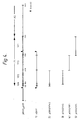
- Figure 4 shows the structural region of HAV genome and chimeras containing coding sequences for the structural polypeptides.
-
- The invention will be further described by way of reference to the following examples :
- An insertion vector,
pGS 62 containing a vaccinia virus early promotor (7.5K) (Ticehurst et al., J. Clin. Microbiol., 1987, 25, 1822-1829) was linearised with Bam H1 endonuclease digestion followed by phosphatase treatment. A Bam H1 fragment from plasmid pHAV/J (Karayiannis et al., Viral Hepatitis and Liver Disease ed. Zuckerman (Alan R. Liss New York 1988) 117-120) andcovering position 611 to 2353 of the HAV genome, was ligated with the linearisedpGS 62 immediately after the 7.5K promotor to form thechimeric plasmid pGS 62/HAV. There were 101 nucleotides for the 5' untranslated region of the HAV genome between the cloning site and the ATG to the HAV open reading frame coding for the polyprotein. The remainder of the genome codes for the structural polypeptides VP4, VP2, VP3 and the first 57 amino acids of the amino terminal end of VP1. E.coli colonies from transformed bacteria carrying the chimeric plasmid were identified by hybridisation to a 32P-labelled HAV cDNA probe and the correct orientation of the insert, with respect to the vaccinia 7.5K promotor, was determined by dideoxynucleotide sequencing. - The construction of the chimera is set out in detail in Figure 1 of the accompanying drawings. The resulting chimeric plasmid was transfected into Vero cells in tissue culcture using standard procedures. The same cultures were then infected with wild-type vaccinia. Genetic recombination occurs between homologous regions in the plasmid and wild-type vaccinia virus DNA resulting in the interruption of the thymidine kinase (TK) gene. The resultant TK recombinant viruses were selected as described in Mackett et al, Chapter 7, DNA Cloning, Vol. II (D. M. Glover, Ed. IRL Press Oxford, 1985, 191-211). The presence of the foreign gene in the recombinant vaccinia virus was confirmed by dot-blot hybridisation (Karayiannis et al., Viral Hepatitis and Liver Disease, ed. Zuckerman, A. J. (Alan R, Liss, New York) 117-211) and Southern blot analysis (Mackett et al., see above) using 32P-labelled HAV cDNA probes.
- Expression of HAV polypeptides was established by a solid phase RIA (Karayiannia et al, J. Med.Virol., 1986, 18, 261-276) of cell lysates and by immunostaining of virus infected monolayers with human anti-HAV. Detection of plaques expressing HAV polypeptides was achieved by using rabbit anti-human and swine anti-rabbit antisera in turn. The latter was labelled with biotin and alkaline phosphatase (DAKOPATTS, ABComplex.AP, Denmark).
- A vaccine was prepared using the recombinant virus obtained as described in Example 1. The vaccine was formulated with recombinant virus suspended in Gibco-BRL's RPMI medium 1640 (a growth medium that does not contain foetal calf serum) so that 0.1 ml of the vaccine contained 108 plaque forming units (PFU). The tests were carried out on three tamirins, Saguinus labiatus. Two of the animals were innoculated intradermally with 108 PFU in the upper part of their back while the third animal was innoculated with a similar formulation containing 107 PFU of wild-type vaccinia virus.
- Prior to vaccination, the serum samples from all three animals were negative for anti-HAV antibody. Serum from all three animals was tested again for anti-HAV antibody nine weeks after vaccination, the two animals innoculated with the vaccine of the invention had detectable anti-HAV antibody titres of 1/40 and 1/100.
- Ten weeks after vaccination, all three animals were challenged intravenously with 0.4 ml live HAV strain HM 175 grown in tissue culture. The disease profile with this innoculum was predetermined in a fourth tamarin, the results being shown in Figure 2 of The accompanying drawings. Figure 3(a) of the accompanying drawings shows that
tamarin 125, vaccinated with wild-type virus, developed the expected changes similar to those illustrated in Figure 2. The ALT (alanine aminotransferase) elevation lasted fromweeks 1 to 3. In contrast, the two animals vaccinated with thevaccine of the invention did not show any ALT elevations. Their ALT levels fluctuated at about their pre-challenge value. The two animals protected with the vaccine of the invention showed no histological changes in their liver biopsies performed three weeks after challenge. Preinnoculation biopsies were normal in all three animals. However, the liver biopsy of theunprotected animal 125, taken during the acute phase of the hepatitis, showed predominantly cytopathic changes. - IgM anti-HAV antibody was detected in the
control animal 125 fromweeks 2 to 6. No IgM anti-HAV response was detected in the animals protected by the vaccine of the invention, but there was a secondary response following challenge with the live virus. The titres rose to 102 and 103 for each protected animal respectively within a week of challenge and remained at those levels throughout the period to follow up. Incontrol animal 125, anti-HAV titres did not. plateau untilweek 6. - These results show that the vaccine of the invention not only elicited an immune response to HAV structural polypeptide but subsequently protected the animal when challenged with a live HAV strain capable of inducing hepatitis as demonstrated in the two unprotected animals.
- In order to determine the role of the four structural polypeptides (VP1, VP2, VP3, VP4) of the hepatitis A virus in eliciting an immune response, further chimeras were prepared using the method described in Example 1, for the generation of the relevant recombinant vaccinia viruses.
- As shown in Figure 4, chimeras were constructed containing the coding sequence for individual structural polypeptides or combinations of these. The coding sequences were generated using the polymerase chain reaction with the appropriate primers. The 5' end primer contained an initiation codon (ATG) ensuring in frame translation of the relevant polypeptide.
- Using chimeras 1), 2) and 5) recombinant vaccinia viruses were generated and tested for immunogenicity by injection into rabbits and by radioimmunoassay using polyclonal antibodies.
- Prior to inoculation with recombinant vaccinia virus, serum samples from all rabbits are negative for anti-HAV antibody. Serum from all rabbits is tested again for anti-HAV antibody and all show detectable anti-HAV antibody to varying degrees.
- Cell lines, either fibroblast or lymphoblast cells from tamarins are established using known techniques and then transformed. Following establishment, the cell lines are infected with various of the recombinant viruses shown in Figure 4.
- Lymphocytes from tamarins infected with virulent HAV virus are obtained and added to cultures of the cell lines described above. Release of radioactive chromium from the target cells is indicative of cytotoxic T-cell mediated mechanisms. In order to detect the presence of cell mediated immunity, cell killing is looked for,as evidenced by the release of labelled chromium.
- Killing of the lymphocytes from infected tamarins is detected to varying degrees by cell lines infected with
recombinants
Claims (18)
- A vaccine for immunising against hepatitis A virus (HAV) comprising a polypeptide comprising hepatitis A virus (HAV) VP4, VP2, VP3 and at least part of VP1, said vaccine not including non-structural proteins of the hepatitis A virus; wherein said polypeptide comprises at least the 57 amino acids from the amino end of VP1.
- A vaccine as claimed in claim 1, wherein said polypeptide is fused to at least a part of thymidine kinase of viral origin.
- A vaccine as claimed in claim 2, wherein the thymidine kinase is of vaccinia virus origin.
- A vaccine comprising a recombinant virus expressing a polypeptide as described in any one of claims 1 to 3 in the absence of non-structural proteins of HAV.
- A vaccine as claimed in claim 4, wherein the virus expressing the polypeptide in a host cell is under the control of a viral promoter.
- A vaccine as claimed in claim 4 or claim 5, wherein the virus is recombinant vaccina virus.
- A vaccine according to any preceding claim comprising a pharmaceutically acceptable carrier.
- A vaccine according to any preceding claim wherein said polypeptide consists of hepatitis A virus (HAV) VP4, VP2, VP3 and at least part of VP1; wherein said polypeptide comprises at least the 57 amino acids from the amino end of VP1.
- The use of a DNA molecule comprising a nucleotide sequence coding a polypeptide comprising hepatitis A virus (HAV) VP4, VP2, VP3 and at least part of VP1, but not coding for hepatitis A virus non-structural proteins, for preparing a vaccine according to any preceding claim; wherein said polypeptide comprises at least the 57 amino acids from the amino end of VP1.
- The use of a polypeptide as described in claims 1 to 3, or of a virus as described in any of claims 4 to 6, in the preparation of a vaccine for immunising against the Hepatitis A Virus (HAV).
- A method of providing a vaccine for immunising against hepatitis A virus (HAV) comprising providing a polypeptide comprising hepatitis A virus (HAV) VP4, VP2, VP3 and at least part of VP1; said vaccine not including non-structural proteins of the hepatitis A virus; wherein said polypeptide comprises at least the 57 amino acids from the amino end of VP1.
- A method according to claim 11, wherein said polypeptide is fused to at least a part of thymidine kinase of viral origin.
- A method according to claim 12, wherein the thymidine kinase is of vaccinia virus origin.
- A method according to any of claims 11 to 13 wherein the vaccine comprises a recombinant virus expressing the polypeptide described in any of said claims in the absence of non-structural proteins of the Hepatitis A Virus.
- A method according to claim 14, wherein the virus expressing the polypeptide in a host cell under the control of a viral promoter.
- A method according to claim 14 or claim 15, wherein the virus is recombinant vaccina virus.
- A method according to any of claims 11 to 16 comprising the step of providing the vaccine in a form which includes a pharmaceutically acceptable carrier.
- A method according to any of claims 11 to 17, wherein said polypeptide consists of hepatitis A virus (HAV) VP4, VP2, VP3 and at least part of VP1 and wherein said polypeptide comprises at least the 57 amino acids from the amino end of VP1.
Applications Claiming Priority (3)
| Application Number | Priority Date | Filing Date | Title |
|---|---|---|---|
| GB909002387A GB9002387D0 (en) | 1990-02-02 | 1990-02-02 | Improvements relating to the prevention of hepatitis |
| GB9002387 | 1990-02-02 | ||
| PCT/GB1991/000163 WO1991011460A1 (en) | 1990-02-02 | 1991-02-04 | Hepatitis a vaccines |
Publications (2)
| Publication Number | Publication Date |
|---|---|
| EP0513090A1 EP0513090A1 (en) | 1992-11-19 |
| EP0513090B1 true EP0513090B1 (en) | 2001-09-05 |
Family
ID=10670339
Family Applications (1)
| Application Number | Title | Priority Date | Filing Date |
|---|---|---|---|
| EP91903208A Expired - Lifetime EP0513090B1 (en) | 1990-02-02 | 1991-02-04 | Hepatitis a vaccines |
Country Status (9)
| Country | Link |
|---|---|
| US (1) | US5605692A (en) |
| EP (1) | EP0513090B1 (en) |
| JP (1) | JP3086250B2 (en) |
| AT (1) | ATE205220T1 (en) |
| CA (1) | CA2072982C (en) |
| DE (1) | DE69132717T2 (en) |
| ES (1) | ES2165840T3 (en) |
| GB (1) | GB9002387D0 (en) |
| WO (1) | WO1991011460A1 (en) |
Families Citing this family (4)
| Publication number | Priority date | Publication date | Assignee | Title |
|---|---|---|---|---|
| AU735733B2 (en) * | 1996-04-19 | 2001-07-12 | Government Of The United States Of America, As Represented By The Secretary Of The Department Of Health And Human Services, The | Antigenically reactive regions of the hepatitis A virus polyprotein |
| US6368602B1 (en) * | 2000-06-16 | 2002-04-09 | Hadasit Medical Research Services And Development Ltd | Mucosal immunization against hepatitis A virus (HAV) through rectal administration of HAV vaccine |
| US8357525B2 (en) | 2007-09-04 | 2013-01-22 | The United States of America, as represented by the Secretary of the Department of Health and Human Services, Centers for Disease Control and Prevention | Thermal inactivation of rotavirus |
| CN103923882B (en) * | 2013-08-09 | 2016-09-28 | 北京科兴生物制品有限公司 | Hepatitis A virus (HAV) monoclonal antibody and application thereof |
Family Cites Families (3)
| Publication number | Priority date | Publication date | Assignee | Title |
|---|---|---|---|---|
| US4614793A (en) * | 1983-10-14 | 1986-09-30 | Merck & Co., Inc. | Hepatitis A--subunit antigen |
| EP0154587B1 (en) * | 1984-03-02 | 1991-05-15 | Merck & Co. Inc. | Fragments of dna which encode peptides capable of inducing in vivo the synthesis of anti-hepatitis a virus antibodies |
| SU1469856A1 (en) * | 1986-07-31 | 1990-09-30 | Институт биоорганической химии им.М.М.Шемякина | Method of constructing recombinant plasmide dna coding synthesis of polipeptide substances against hepatitis |
-
1990
- 1990-02-02 GB GB909002387A patent/GB9002387D0/en active Pending
-
1991
- 1991-02-04 US US07/916,149 patent/US5605692A/en not_active Expired - Fee Related
- 1991-02-04 ES ES91903208T patent/ES2165840T3/en not_active Expired - Lifetime
- 1991-02-04 AT AT91903208T patent/ATE205220T1/en not_active IP Right Cessation
- 1991-02-04 CA CA002072982A patent/CA2072982C/en not_active Expired - Fee Related
- 1991-02-04 JP JP03503913A patent/JP3086250B2/en not_active Expired - Fee Related
- 1991-02-04 DE DE69132717T patent/DE69132717T2/en not_active Expired - Fee Related
- 1991-02-04 EP EP91903208A patent/EP0513090B1/en not_active Expired - Lifetime
- 1991-02-04 WO PCT/GB1991/000163 patent/WO1991011460A1/en not_active Ceased
Also Published As
| Publication number | Publication date |
|---|---|
| CA2072982C (en) | 1999-09-07 |
| EP0513090A1 (en) | 1992-11-19 |
| US5605692A (en) | 1997-02-25 |
| DE69132717T2 (en) | 2002-07-04 |
| CA2072982A1 (en) | 1991-08-03 |
| WO1991011460A1 (en) | 1991-08-08 |
| DE69132717D1 (en) | 2001-10-11 |
| ES2165840T3 (en) | 2002-04-01 |
| ATE205220T1 (en) | 2001-09-15 |
| GB9002387D0 (en) | 1990-04-04 |
| JPH05503524A (en) | 1993-06-10 |
| JP3086250B2 (en) | 2000-09-11 |
Similar Documents
| Publication | Publication Date | Title |
|---|---|---|
| US5294548A (en) | Recombianant Hepatitis a virus | |
| Ward et al. | Plasmid DNA encoding replicating foot-and-mouth disease virus genomes induces antiviral immune responses in swine | |
| Paoletti et al. | Construction of live vaccines using genetically engineered poxviruses: biological activity of vaccinia virus recombinants expressing the hepatitis B virus surface antigen and the herpes simplex virus glycoprotein D. | |
| Im et al. | A bacterially expressed peptide prevents experimental infection of primates by the hepatitis E virus | |
| JP2599350B2 (en) | Vaccines containing membrane-bound proteins | |
| Pensiero et al. | Expression of the Hantaan virus M genome segment by using a vaccinia virus recombinant | |
| ES2320938T3 (en) | VIVA VACCINE RECOMBINATE BASED ON FELINO HERPES TYPE 1, PARTICULARLY AGAINST FELINE INFECTION PERITONITIS. | |
| Rieder et al. | Vaccines prepared from chimeras of foot-and-mouth disease virus (FMDV) induce neutralizing antibodies and protective immunity to multiple serotypes of FMDV | |
| Hruby | Vaccinia virus vectors: new strategies for producing recombinant vaccines | |
| US5322774A (en) | Procaryotic leader sequence in recombinant baculovirus expression system | |
| JPH08504096A (en) | Recombinant proteins of hepatitis E Pakistan strains and their use in diagnostics and vaccines | |
| US7645455B2 (en) | Chimeric lyssavirus nucleic acids and polypeptides | |
| Altmeyer et al. | Attenuated Mengo virus as a vector for immunogenic human immunodeficiency virus type 1 glycoprotein 120. | |
| CA1324094C (en) | Hepatitis a virus vaccines | |
| Karayiannis et al. | Partial control of hepatitis delta virus superinfection by immunisation of woodchucks (Marmota monax) with hepatitis delta antigen expressed by a recombinant vaccinia or baculovirus | |
| US5605692A (en) | Expression of structural (P1) region of 1 hepatitis A virus by vaccinia in cell culture for use in vaccines | |
| WO2002000881A1 (en) | Bvdv virus-like particles | |
| Scodeller et al. | A new epitope presenting system displays a HIV-1 V3 loop sequence and induces neutralizing antibodies | |
| D'Hondt | Possible approaches to develop vaccines against hepatitis A | |
| WO2006063445A1 (en) | Recombinant foot and mouth disease vaccine | |
| CA2171869A1 (en) | Novel proteins/polypeptides and cotransfection plasmids and live recombinant carriers therefor | |
| RU2215035C2 (en) | Recombinant polioviral vector (variants), method for its preparing (variants), method for induction of immune response in individual (variants), method for preparing protein (variants), vaccine composition for therapy and prophylaxis of infectious diseases (variants) | |
| Paolazzi et al. | Rabies vaccine: Developments employing molecular biology methods | |
| US7238672B1 (en) | Chimeric lyssavirus nucleic acids and polypeptides | |
| AU660528B2 (en) | Process for the expression of herpes simplex virus type 1 glycoprotein E and methods of use |
Legal Events
| Date | Code | Title | Description |
|---|---|---|---|
| PUAI | Public reference made under article 153(3) epc to a published international application that has entered the european phase |
Free format text: ORIGINAL CODE: 0009012 |
|
| 17P | Request for examination filed |
Effective date: 19920721 |
|
| AK | Designated contracting states |
Kind code of ref document: A1 Designated state(s): AT BE CH DE DK ES FR GB GR IT LI LU NL SE |
|
| 17Q | First examination report despatched |
Effective date: 19940810 |
|
| GRAG | Despatch of communication of intention to grant |
Free format text: ORIGINAL CODE: EPIDOS AGRA |
|
| GRAG | Despatch of communication of intention to grant |
Free format text: ORIGINAL CODE: EPIDOS AGRA |
|
| GRAH | Despatch of communication of intention to grant a patent |
Free format text: ORIGINAL CODE: EPIDOS IGRA |
|
| GRAH | Despatch of communication of intention to grant a patent |
Free format text: ORIGINAL CODE: EPIDOS IGRA |
|
| GRAA | (expected) grant |
Free format text: ORIGINAL CODE: 0009210 |
|
| AK | Designated contracting states |
Kind code of ref document: B1 Designated state(s): AT BE CH DE DK ES FR GB GR IT LI LU NL SE |
|
| REF | Corresponds to: |
Ref document number: 205220 Country of ref document: AT Date of ref document: 20010915 Kind code of ref document: T |
|
| RIC1 | Information provided on ipc code assigned before grant |
Free format text: 7C 07K 14/10 A, 7C 12N 15/51 B, 7C 12N 15/86 B, 7C 12N 7/01 B, 7A 61K 39/29 B, 7A 61K 39/285 B |
|
| REG | Reference to a national code |
Ref country code: CH Ref legal event code: EP |
|
| REF | Corresponds to: |
Ref document number: 69132717 Country of ref document: DE Date of ref document: 20011011 |
|
| PG25 | Lapsed in a contracting state [announced via postgrant information from national office to epo] |
Ref country code: SE Free format text: LAPSE BECAUSE OF FAILURE TO SUBMIT A TRANSLATION OF THE DESCRIPTION OR TO PAY THE FEE WITHIN THE PRESCRIBED TIME-LIMIT Effective date: 20011205 Ref country code: DK Free format text: LAPSE BECAUSE OF FAILURE TO SUBMIT A TRANSLATION OF THE DESCRIPTION OR TO PAY THE FEE WITHIN THE PRESCRIBED TIME-LIMIT Effective date: 20011205 |
|
| BECA | Be: change of holder's address |
Free format text: 20010905 *IMPERIAL COLLEGE OF SCIENCE TECHNOLOGY & MEDICINE:SHERFIELD HOUSE, IMPERIAL COLLEGE LONDON SW7 2AZ |
|
| REG | Reference to a national code |
Ref country code: GB Ref legal event code: IF02 |
|
| REG | Reference to a national code |
Ref country code: CH Ref legal event code: NV Representative=s name: KIRKER & CIE SA |
|
| PG25 | Lapsed in a contracting state [announced via postgrant information from national office to epo] |
Ref country code: LU Free format text: LAPSE BECAUSE OF NON-PAYMENT OF DUE FEES Effective date: 20020204 |
|
| ET | Fr: translation filed | ||
| REG | Reference to a national code |
Ref country code: GR Ref legal event code: EP Ref document number: 20010402339 Country of ref document: GR |
|
| REG | Reference to a national code |
Ref country code: ES Ref legal event code: FG2A Ref document number: 2165840 Country of ref document: ES Kind code of ref document: T3 |
|
| PLBE | No opposition filed within time limit |
Free format text: ORIGINAL CODE: 0009261 |
|
| STAA | Information on the status of an ep patent application or granted ep patent |
Free format text: STATUS: NO OPPOSITION FILED WITHIN TIME LIMIT |
|
| 26N | No opposition filed | ||
| PGFP | Annual fee paid to national office [announced via postgrant information from national office to epo] |
Ref country code: GB Payment date: 20030129 Year of fee payment: 13 |
|
| PGFP | Annual fee paid to national office [announced via postgrant information from national office to epo] |
Ref country code: FR Payment date: 20030210 Year of fee payment: 13 |
|
| PGFP | Annual fee paid to national office [announced via postgrant information from national office to epo] |
Ref country code: AT Payment date: 20030212 Year of fee payment: 13 |
|
| PGFP | Annual fee paid to national office [announced via postgrant information from national office to epo] |
Ref country code: DE Payment date: 20030213 Year of fee payment: 13 |
|
| PGFP | Annual fee paid to national office [announced via postgrant information from national office to epo] |
Ref country code: CH Payment date: 20030214 Year of fee payment: 13 |
|
| PGFP | Annual fee paid to national office [announced via postgrant information from national office to epo] |
Ref country code: GR Payment date: 20030218 Year of fee payment: 13 |
|
| PGFP | Annual fee paid to national office [announced via postgrant information from national office to epo] |
Ref country code: NL Payment date: 20030226 Year of fee payment: 13 Ref country code: ES Payment date: 20030226 Year of fee payment: 13 |
|
| PGFP | Annual fee paid to national office [announced via postgrant information from national office to epo] |
Ref country code: BE Payment date: 20030425 Year of fee payment: 13 |
|
| PG25 | Lapsed in a contracting state [announced via postgrant information from national office to epo] |
Ref country code: GB Free format text: LAPSE BECAUSE OF NON-PAYMENT OF DUE FEES Effective date: 20040204 Ref country code: AT Free format text: LAPSE BECAUSE OF NON-PAYMENT OF DUE FEES Effective date: 20040204 |
|
| PG25 | Lapsed in a contracting state [announced via postgrant information from national office to epo] |
Ref country code: ES Free format text: LAPSE BECAUSE OF NON-PAYMENT OF DUE FEES Effective date: 20040205 |
|
| PG25 | Lapsed in a contracting state [announced via postgrant information from national office to epo] |
Ref country code: BE Free format text: LAPSE BECAUSE OF NON-PAYMENT OF DUE FEES Effective date: 20040228 |
|
| PG25 | Lapsed in a contracting state [announced via postgrant information from national office to epo] |
Ref country code: LI Free format text: LAPSE BECAUSE OF NON-PAYMENT OF DUE FEES Effective date: 20040229 Ref country code: CH Free format text: LAPSE BECAUSE OF NON-PAYMENT OF DUE FEES Effective date: 20040229 |
|
| BERE | Be: lapsed |
Owner name: *IMPERIAL COLLEGE OF SCIENCE TECHNOLOGY & MEDICINE Effective date: 20040228 |
|
| PG25 | Lapsed in a contracting state [announced via postgrant information from national office to epo] |
Ref country code: NL Free format text: LAPSE BECAUSE OF NON-PAYMENT OF DUE FEES Effective date: 20040901 Ref country code: DE Free format text: LAPSE BECAUSE OF NON-PAYMENT OF DUE FEES Effective date: 20040901 |
|
| PG25 | Lapsed in a contracting state [announced via postgrant information from national office to epo] |
Ref country code: GR Free format text: LAPSE BECAUSE OF NON-PAYMENT OF DUE FEES Effective date: 20040903 |
|
| GBPC | Gb: european patent ceased through non-payment of renewal fee |
Effective date: 20040204 |
|
| REG | Reference to a national code |
Ref country code: CH Ref legal event code: PL |
|
| PG25 | Lapsed in a contracting state [announced via postgrant information from national office to epo] |
Ref country code: FR Free format text: LAPSE BECAUSE OF NON-PAYMENT OF DUE FEES Effective date: 20041029 |
|
| NLV4 | Nl: lapsed or anulled due to non-payment of the annual fee |
Effective date: 20040901 |
|
| REG | Reference to a national code |
Ref country code: FR Ref legal event code: ST |
|
| PG25 | Lapsed in a contracting state [announced via postgrant information from national office to epo] |
Ref country code: IT Free format text: LAPSE BECAUSE OF NON-PAYMENT OF DUE FEES Effective date: 20050204 |
|
| REG | Reference to a national code |
Ref country code: ES Ref legal event code: FD2A Effective date: 20040205 |