EP0510602B1 - Living polymerization method - Google Patents
Living polymerization method Download PDFInfo
- Publication number
- EP0510602B1 EP0510602B1 EP92106866A EP92106866A EP0510602B1 EP 0510602 B1 EP0510602 B1 EP 0510602B1 EP 92106866 A EP92106866 A EP 92106866A EP 92106866 A EP92106866 A EP 92106866A EP 0510602 B1 EP0510602 B1 EP 0510602B1
- Authority
- EP
- European Patent Office
- Prior art keywords
- group
- methylaluminum bis
- hydrogen atom
- meth
- independently represent
- Prior art date
- Legal status (The legal status is an assumption and is not a legal conclusion. Google has not performed a legal analysis and makes no representation as to the accuracy of the status listed.)
- Expired - Lifetime
Links
- 238000000034 method Methods 0.000 title claims description 39
- 238000010550 living polymerization reaction Methods 0.000 title claims description 22
- -1 aluminum compound Chemical class 0.000 claims description 82
- 238000006116 polymerization reaction Methods 0.000 claims description 48
- 229910052782 aluminium Inorganic materials 0.000 claims description 43
- 125000004435 hydrogen atom Chemical group [H]* 0.000 claims description 38
- 239000000178 monomer Substances 0.000 claims description 38
- 229910052751 metal Inorganic materials 0.000 claims description 30
- 239000002184 metal Substances 0.000 claims description 30
- 239000003505 polymerization initiator Substances 0.000 claims description 27
- 150000004032 porphyrins Chemical class 0.000 claims description 27
- 125000005843 halogen group Chemical group 0.000 claims description 20
- 150000001875 compounds Chemical class 0.000 claims description 18
- OZJPLYNZGCXSJM-UHFFFAOYSA-N 5-valerolactone Chemical compound O=C1CCCCO1 OZJPLYNZGCXSJM-UHFFFAOYSA-N 0.000 claims description 16
- CERQOIWHTDAKMF-UHFFFAOYSA-N Methacrylic acid Chemical compound CC(=C)C(O)=O CERQOIWHTDAKMF-UHFFFAOYSA-N 0.000 claims description 14
- NRQNMMBQPIGPTB-UHFFFAOYSA-N methylaluminum Chemical compound [CH3].[Al] NRQNMMBQPIGPTB-UHFFFAOYSA-N 0.000 claims description 14
- 239000002904 solvent Substances 0.000 claims description 14
- 150000002596 lactones Chemical class 0.000 claims description 12
- 150000002118 epoxides Chemical class 0.000 claims description 11
- 125000001997 phenyl group Chemical group [H]C1=C([H])C([H])=C(*)C([H])=C1[H] 0.000 claims description 11
- 125000004209 (C1-C8) alkyl group Chemical group 0.000 claims description 9
- 125000003545 alkoxy group Chemical group 0.000 claims description 9
- 125000003837 (C1-C20) alkyl group Chemical group 0.000 claims description 7
- NIXOWILDQLNWCW-UHFFFAOYSA-M Acrylate Chemical compound [O-]C(=O)C=C NIXOWILDQLNWCW-UHFFFAOYSA-M 0.000 claims description 7
- 125000005915 C6-C14 aryl group Chemical group 0.000 claims description 7
- XAGFODPZIPBFFR-UHFFFAOYSA-N aluminium Chemical compound [Al] XAGFODPZIPBFFR-UHFFFAOYSA-N 0.000 claims description 7
- 239000000010 aprotic solvent Substances 0.000 claims description 7
- 125000002496 methyl group Chemical group [H]C([H])([H])* 0.000 claims description 7
- 125000001424 substituent group Chemical group 0.000 claims description 7
- 125000004178 (C1-C4) alkyl group Chemical group 0.000 claims description 6
- XEEYBQQBJWHFJM-UHFFFAOYSA-N Iron Chemical compound [Fe] XEEYBQQBJWHFJM-UHFFFAOYSA-N 0.000 claims description 6
- 125000001188 haloalkyl group Chemical group 0.000 claims description 6
- 125000001495 ethyl group Chemical group [H]C([H])([H])C([H])([H])* 0.000 claims description 5
- WBOGXLZOUBELCG-UHFFFAOYSA-L methyl-bis(2,4,6-tritert-butylphenoxy)alumane Chemical compound [Al+2]C.CC(C)(C)C1=CC(C(C)(C)C)=C([O-])C(C(C)(C)C)=C1.CC(C)(C)C1=CC(C(C)(C)C)=C([O-])C(C(C)(C)C)=C1 WBOGXLZOUBELCG-UHFFFAOYSA-L 0.000 claims description 5
- DUDCQQSDUSZTNO-UHFFFAOYSA-N methyl-bis(2-methylpropoxy)alumane Chemical compound CC(C)CO[Al](C)OCC(C)C DUDCQQSDUSZTNO-UHFFFAOYSA-N 0.000 claims description 5
- HTBCPHYACVLCTK-UHFFFAOYSA-L methylaluminum(2+);2-methylpropanoate Chemical compound [Al+2]C.CC(C)C([O-])=O.CC(C)C([O-])=O HTBCPHYACVLCTK-UHFFFAOYSA-L 0.000 claims description 5
- 239000000126 substance Substances 0.000 claims description 5
- WVVMIVQIHKADMJ-UHFFFAOYSA-L 2-tert-butyl-4-methoxyphenolate;methylaluminum(2+) Chemical compound [Al+2]C.COC1=CC=C([O-])C(C(C)(C)C)=C1.COC1=CC=C([O-])C(C(C)(C)C)=C1 WVVMIVQIHKADMJ-UHFFFAOYSA-L 0.000 claims description 4
- 125000003860 C1-C20 alkoxy group Chemical group 0.000 claims description 4
- PXHVJJICTQNCMI-UHFFFAOYSA-N Nickel Chemical compound [Ni] PXHVJJICTQNCMI-UHFFFAOYSA-N 0.000 claims description 4
- KDLHZDBZIXYQEI-UHFFFAOYSA-N Palladium Chemical compound [Pd] KDLHZDBZIXYQEI-UHFFFAOYSA-N 0.000 claims description 4
- 239000011261 inert gas Substances 0.000 claims description 4
- 239000003446 ligand Substances 0.000 claims description 4
- 125000004765 (C1-C4) haloalkyl group Chemical group 0.000 claims description 3
- 125000004648 C2-C8 alkenyl group Chemical group 0.000 claims description 3
- 125000000041 C6-C10 aryl group Chemical group 0.000 claims description 3
- RYGMFSIKBFXOCR-UHFFFAOYSA-N Copper Chemical compound [Cu] RYGMFSIKBFXOCR-UHFFFAOYSA-N 0.000 claims description 3
- FYYHWMGAXLPEAU-UHFFFAOYSA-N Magnesium Chemical compound [Mg] FYYHWMGAXLPEAU-UHFFFAOYSA-N 0.000 claims description 3
- 239000012298 atmosphere Substances 0.000 claims description 3
- 125000000484 butyl group Chemical group [H]C([*])([H])C([H])([H])C([H])([H])C([H])([H])[H] 0.000 claims description 3
- 229910052802 copper Inorganic materials 0.000 claims description 3
- 239000010949 copper Substances 0.000 claims description 3
- 229910052742 iron Inorganic materials 0.000 claims description 3
- 125000000959 isobutyl group Chemical group [H]C([H])([H])C([H])(C([H])([H])[H])C([H])([H])* 0.000 claims description 3
- 125000001449 isopropyl group Chemical group [H]C([H])([H])C([H])(*)C([H])([H])[H] 0.000 claims description 3
- 229910052749 magnesium Inorganic materials 0.000 claims description 3
- 239000011777 magnesium Substances 0.000 claims description 3
- ZGHKJEMMXBDEED-UHFFFAOYSA-L methylaluminum(2+);2,3,4,5-tetrafluorophenolate Chemical compound [Al+2]C.[O-]C1=CC(F)=C(F)C(F)=C1F.[O-]C1=CC(F)=C(F)C(F)=C1F ZGHKJEMMXBDEED-UHFFFAOYSA-L 0.000 claims description 3
- 230000000379 polymerizing effect Effects 0.000 claims description 3
- PAPBSGBWRJIAAV-UHFFFAOYSA-N ε-Caprolactone Chemical compound O=C1CCCCCO1 PAPBSGBWRJIAAV-UHFFFAOYSA-N 0.000 claims description 3
- NHTOCAPMPOWVNP-UHFFFAOYSA-L 2,4-ditert-butylphenolate;methylaluminum(2+) Chemical compound [Al+2]C.CC(C)(C)C1=CC=C([O-])C(C(C)(C)C)=C1.CC(C)(C)C1=CC=C([O-])C(C(C)(C)C)=C1 NHTOCAPMPOWVNP-UHFFFAOYSA-L 0.000 claims description 2
- VWMUYMNWEPNULD-UHFFFAOYSA-L 2,6-dichlorophenolate;methylaluminum(2+) Chemical compound [Al+2]C.[O-]C1=C(Cl)C=CC=C1Cl.[O-]C1=C(Cl)C=CC=C1Cl VWMUYMNWEPNULD-UHFFFAOYSA-L 0.000 claims description 2
- KKLAXZYNQBEEKL-UHFFFAOYSA-L 2,6-dimethoxyphenolate;methylaluminum(2+) Chemical compound [Al+2]C.COC1=CC=CC(OC)=C1[O-].COC1=CC=CC(OC)=C1[O-] KKLAXZYNQBEEKL-UHFFFAOYSA-L 0.000 claims description 2
- VYZAMTAEIAYCRO-UHFFFAOYSA-N Chromium Chemical compound [Cr] VYZAMTAEIAYCRO-UHFFFAOYSA-N 0.000 claims description 2
- KJTLSVCANCCWHF-UHFFFAOYSA-N Ruthenium Chemical compound [Ru] KJTLSVCANCCWHF-UHFFFAOYSA-N 0.000 claims description 2
- HCHKCACWOHOZIP-UHFFFAOYSA-N Zinc Chemical compound [Zn] HCHKCACWOHOZIP-UHFFFAOYSA-N 0.000 claims description 2
- 125000004453 alkoxycarbonyl group Chemical group 0.000 claims description 2
- 125000002947 alkylene group Chemical group 0.000 claims description 2
- ZIJYMLJSZHQKBS-UHFFFAOYSA-N butan-2-olate;methylaluminum(2+) Chemical compound [Al+2]C.CCC(C)[O-].CCC(C)[O-] ZIJYMLJSZHQKBS-UHFFFAOYSA-N 0.000 claims description 2
- GFNHFPBREXGKDG-UHFFFAOYSA-L butanoate;methylaluminum(2+) Chemical compound [Al+2]C.CCCC([O-])=O.CCCC([O-])=O GFNHFPBREXGKDG-UHFFFAOYSA-L 0.000 claims description 2
- 229910052793 cadmium Inorganic materials 0.000 claims description 2
- BDOSMKKIYDKNTQ-UHFFFAOYSA-N cadmium atom Chemical compound [Cd] BDOSMKKIYDKNTQ-UHFFFAOYSA-N 0.000 claims description 2
- 229910052804 chromium Inorganic materials 0.000 claims description 2
- 239000011651 chromium Substances 0.000 claims description 2
- 229910017052 cobalt Inorganic materials 0.000 claims description 2
- 239000010941 cobalt Substances 0.000 claims description 2
- GUTLYIVDDKVIGB-UHFFFAOYSA-N cobalt atom Chemical compound [Co] GUTLYIVDDKVIGB-UHFFFAOYSA-N 0.000 claims description 2
- ROORDVPLFPIABK-UHFFFAOYSA-N diphenyl carbonate Chemical compound C=1C=CC=CC=1OC(=O)OC1=CC=CC=C1 ROORDVPLFPIABK-UHFFFAOYSA-N 0.000 claims description 2
- WPBNNNQJVZRUHP-UHFFFAOYSA-L manganese(2+);methyl n-[[2-(methoxycarbonylcarbamothioylamino)phenyl]carbamothioyl]carbamate;n-[2-(sulfidocarbothioylamino)ethyl]carbamodithioate Chemical compound [Mn+2].[S-]C(=S)NCCNC([S-])=S.COC(=O)NC(=S)NC1=CC=CC=C1NC(=S)NC(=O)OC WPBNNNQJVZRUHP-UHFFFAOYSA-L 0.000 claims description 2
- CMMIEYLUURLGOL-UHFFFAOYSA-L methylaluminum(2+);2-phenylphenolate Chemical compound [Al+2]C.[O-]C1=CC=CC=C1C1=CC=CC=C1.[O-]C1=CC=CC=C1C1=CC=CC=C1 CMMIEYLUURLGOL-UHFFFAOYSA-L 0.000 claims description 2
- 229910052759 nickel Inorganic materials 0.000 claims description 2
- 229910052763 palladium Inorganic materials 0.000 claims description 2
- 238000010992 reflux Methods 0.000 claims description 2
- 229910052703 rhodium Inorganic materials 0.000 claims description 2
- 239000010948 rhodium Substances 0.000 claims description 2
- MHOVAHRLVXNVSD-UHFFFAOYSA-N rhodium atom Chemical compound [Rh] MHOVAHRLVXNVSD-UHFFFAOYSA-N 0.000 claims description 2
- 229910052707 ruthenium Inorganic materials 0.000 claims description 2
- 229910052720 vanadium Inorganic materials 0.000 claims description 2
- GPPXJZIENCGNKB-UHFFFAOYSA-N vanadium Chemical compound [V]#[V] GPPXJZIENCGNKB-UHFFFAOYSA-N 0.000 claims description 2
- 229910052725 zinc Inorganic materials 0.000 claims description 2
- 239000011701 zinc Substances 0.000 claims description 2
- 125000006656 (C2-C4) alkenyl group Chemical group 0.000 claims 2
- 125000001183 hydrocarbyl group Chemical group 0.000 claims 1
- ISWSIDIOOBJBQZ-UHFFFAOYSA-N phenol group Chemical group C1(=CC=CC=C1)O ISWSIDIOOBJBQZ-UHFFFAOYSA-N 0.000 claims 1
- YMWUJEATGCHHMB-UHFFFAOYSA-N Dichloromethane Chemical compound ClCCl YMWUJEATGCHHMB-UHFFFAOYSA-N 0.000 description 57
- 239000000243 solution Substances 0.000 description 30
- IJGRMHOSHXDMSA-UHFFFAOYSA-N Atomic nitrogen Chemical compound N#N IJGRMHOSHXDMSA-UHFFFAOYSA-N 0.000 description 24
- 239000000203 mixture Substances 0.000 description 22
- 239000012299 nitrogen atmosphere Substances 0.000 description 21
- 229920000642 polymer Polymers 0.000 description 18
- 238000003756 stirring Methods 0.000 description 14
- VLKZOEOYAKHREP-UHFFFAOYSA-N n-Hexane Chemical compound CCCCCC VLKZOEOYAKHREP-UHFFFAOYSA-N 0.000 description 12
- 229910052757 nitrogen Inorganic materials 0.000 description 12
- 125000000217 alkyl group Chemical group 0.000 description 11
- 238000009826 distribution Methods 0.000 description 10
- OKKJLVBELUTLKV-UHFFFAOYSA-N Methanol Chemical compound OC OKKJLVBELUTLKV-UHFFFAOYSA-N 0.000 description 9
- 229920001400 block copolymer Polymers 0.000 description 9
- 238000006243 chemical reaction Methods 0.000 description 9
- 238000002360 preparation method Methods 0.000 description 8
- GOOHAUXETOMSMM-UHFFFAOYSA-N Propylene oxide Chemical compound CC1CO1 GOOHAUXETOMSMM-UHFFFAOYSA-N 0.000 description 7
- JLTRXTDYQLMHGR-UHFFFAOYSA-N trimethylaluminium Chemical compound C[Al](C)C JLTRXTDYQLMHGR-UHFFFAOYSA-N 0.000 description 7
- XKRFYHLGVUSROY-UHFFFAOYSA-N Argon Chemical compound [Ar] XKRFYHLGVUSROY-UHFFFAOYSA-N 0.000 description 6
- UHOVQNZJYSORNB-UHFFFAOYSA-N Benzene Chemical compound C1=CC=CC=C1 UHOVQNZJYSORNB-UHFFFAOYSA-N 0.000 description 6
- RTZKZFJDLAIYFH-UHFFFAOYSA-N Diethyl ether Chemical compound CCOCC RTZKZFJDLAIYFH-UHFFFAOYSA-N 0.000 description 6
- 235000002597 Solanum melongena Nutrition 0.000 description 6
- 244000061458 Solanum melongena Species 0.000 description 6
- YXFVVABEGXRONW-UHFFFAOYSA-N Toluene Chemical compound CC1=CC=CC=C1 YXFVVABEGXRONW-UHFFFAOYSA-N 0.000 description 6
- 229920000570 polyether Polymers 0.000 description 6
- VVQNEPGJFQJSBK-UHFFFAOYSA-N Methyl methacrylate Chemical compound COC(=O)C(C)=C VVQNEPGJFQJSBK-UHFFFAOYSA-N 0.000 description 5
- 150000001252 acrylic acid derivatives Chemical class 0.000 description 5
- 125000003342 alkenyl group Chemical group 0.000 description 5
- 125000004414 alkyl thio group Chemical group 0.000 description 5
- 230000000052 comparative effect Effects 0.000 description 5
- 238000001035 drying Methods 0.000 description 5
- 239000000463 material Substances 0.000 description 5
- 229920000728 polyester Polymers 0.000 description 5
- YEJRWHAVMIAJKC-UHFFFAOYSA-N 4-Butyrolactone Chemical compound O=C1CCCO1 YEJRWHAVMIAJKC-UHFFFAOYSA-N 0.000 description 4
- HEDRZPFGACZZDS-UHFFFAOYSA-N Chloroform Chemical compound ClC(Cl)Cl HEDRZPFGACZZDS-UHFFFAOYSA-N 0.000 description 4
- BAPJBEWLBFYGME-UHFFFAOYSA-N Methyl acrylate Chemical compound COC(=O)C=C BAPJBEWLBFYGME-UHFFFAOYSA-N 0.000 description 4
- IMNFDUFMRHMDMM-UHFFFAOYSA-N N-Heptane Chemical compound CCCCCCC IMNFDUFMRHMDMM-UHFFFAOYSA-N 0.000 description 4
- OFBQJSOFQDEBGM-UHFFFAOYSA-N Pentane Chemical compound CCCCC OFBQJSOFQDEBGM-UHFFFAOYSA-N 0.000 description 4
- WYURNTSHIVDZCO-UHFFFAOYSA-N Tetrahydrofuran Chemical compound C1CCOC1 WYURNTSHIVDZCO-UHFFFAOYSA-N 0.000 description 4
- AZDRQVAHHNSJOQ-UHFFFAOYSA-N alumane Chemical class [AlH3] AZDRQVAHHNSJOQ-UHFFFAOYSA-N 0.000 description 4
- 238000001816 cooling Methods 0.000 description 4
- YNLAOSYQHBDIKW-UHFFFAOYSA-M diethylaluminium chloride Chemical compound CC[Al](Cl)CC YNLAOSYQHBDIKW-UHFFFAOYSA-M 0.000 description 4
- ZXEKIIBDNHEJCQ-UHFFFAOYSA-N isobutanol Chemical compound CC(C)CO ZXEKIIBDNHEJCQ-UHFFFAOYSA-N 0.000 description 4
- KQNPFQTWMSNSAP-UHFFFAOYSA-N isobutyric acid Chemical compound CC(C)C(O)=O KQNPFQTWMSNSAP-UHFFFAOYSA-N 0.000 description 4
- 229920000193 polymethacrylate Polymers 0.000 description 4
- VZGDMQKNWNREIO-UHFFFAOYSA-N tetrachloromethane Chemical compound ClC(Cl)(Cl)Cl VZGDMQKNWNREIO-UHFFFAOYSA-N 0.000 description 4
- KLIDCXVFHGNTTM-UHFFFAOYSA-N 2,6-dimethoxyphenol Chemical group COC1=CC=CC(OC)=C1O KLIDCXVFHGNTTM-UHFFFAOYSA-N 0.000 description 3
- 229910052786 argon Inorganic materials 0.000 description 3
- 125000003710 aryl alkyl group Chemical group 0.000 description 3
- WPYMKLBDIGXBTP-UHFFFAOYSA-N benzoic acid Chemical class OC(=O)C1=CC=CC=C1 WPYMKLBDIGXBTP-UHFFFAOYSA-N 0.000 description 3
- 239000001307 helium Substances 0.000 description 3
- 229910052734 helium Inorganic materials 0.000 description 3
- SWQJXJOGLNCZEY-UHFFFAOYSA-N helium atom Chemical compound [He] SWQJXJOGLNCZEY-UHFFFAOYSA-N 0.000 description 3
- 125000005397 methacrylic acid ester group Chemical group 0.000 description 3
- 125000003356 phenylsulfanyl group Chemical group [*]SC1=C([H])C([H])=C([H])C([H])=C1[H] 0.000 description 3
- 229920005604 random copolymer Polymers 0.000 description 3
- 229910052724 xenon Inorganic materials 0.000 description 3
- FHNFHKCVQCLJFQ-UHFFFAOYSA-N xenon atom Chemical compound [Xe] FHNFHKCVQCLJFQ-UHFFFAOYSA-N 0.000 description 3
- 125000004169 (C1-C6) alkyl group Chemical group 0.000 description 2
- SCYULBFZEHDVBN-UHFFFAOYSA-N 1,1-Dichloroethane Chemical compound CC(Cl)Cl SCYULBFZEHDVBN-UHFFFAOYSA-N 0.000 description 2
- RBACIKXCRWGCBB-UHFFFAOYSA-N 1,2-Epoxybutane Chemical compound CCC1CO1 RBACIKXCRWGCBB-UHFFFAOYSA-N 0.000 description 2
- SJBBXFLOLUTGCW-UHFFFAOYSA-N 1,3-bis(trifluoromethyl)benzene Chemical compound FC(F)(F)C1=CC=CC(C(F)(F)F)=C1 SJBBXFLOLUTGCW-UHFFFAOYSA-N 0.000 description 2
- RYHBNJHYFVUHQT-UHFFFAOYSA-N 1,4-Dioxane Chemical compound C1COCCO1 RYHBNJHYFVUHQT-UHFFFAOYSA-N 0.000 description 2
- PFEFOYRSMXVNEL-UHFFFAOYSA-N 2,4,6-tritert-butylphenol Chemical compound CC(C)(C)C1=CC(C(C)(C)C)=C(O)C(C(C)(C)C)=C1 PFEFOYRSMXVNEL-UHFFFAOYSA-N 0.000 description 2
- ICKWICRCANNIBI-UHFFFAOYSA-N 2,4-di-tert-butylphenol Chemical compound CC(C)(C)C1=CC=C(O)C(C(C)(C)C)=C1 ICKWICRCANNIBI-UHFFFAOYSA-N 0.000 description 2
- RUMACXVDVNRZJZ-UHFFFAOYSA-N 2-methylpropyl 2-methylprop-2-enoate Chemical compound CC(C)COC(=O)C(C)=C RUMACXVDVNRZJZ-UHFFFAOYSA-N 0.000 description 2
- MRBKEAMVRSLQPH-UHFFFAOYSA-N 3-tert-butyl-4-hydroxyanisole Chemical compound COC1=CC=C(O)C(C(C)(C)C)=C1 MRBKEAMVRSLQPH-UHFFFAOYSA-N 0.000 description 2
- ZEYHEAKUIGZSGI-UHFFFAOYSA-N 4-methoxybenzoic acid Chemical compound COC1=CC=C(C(O)=O)C=C1 ZEYHEAKUIGZSGI-UHFFFAOYSA-N 0.000 description 2
- SOGAXMICEFXMKE-UHFFFAOYSA-N Butylmethacrylate Chemical compound CCCCOC(=O)C(C)=C SOGAXMICEFXMKE-UHFFFAOYSA-N 0.000 description 2
- FERIUCNNQQJTOY-UHFFFAOYSA-N Butyric acid Chemical compound CCCC(O)=O FERIUCNNQQJTOY-UHFFFAOYSA-N 0.000 description 2
- ISCZNJJMLQADIB-UHFFFAOYSA-N CC=C[Al](C=CC)C=CC Chemical compound CC=C[Al](C=CC)C=CC ISCZNJJMLQADIB-UHFFFAOYSA-N 0.000 description 2
- XDTMQSROBMDMFD-UHFFFAOYSA-N Cyclohexane Chemical compound C1CCCCC1 XDTMQSROBMDMFD-UHFFFAOYSA-N 0.000 description 2
- SNRUBQQJIBEYMU-UHFFFAOYSA-N Dodecane Natural products CCCCCCCCCCCC SNRUBQQJIBEYMU-UHFFFAOYSA-N 0.000 description 2
- LFQSCWFLJHTTHZ-UHFFFAOYSA-N Ethanol Chemical compound CCO LFQSCWFLJHTTHZ-UHFFFAOYSA-N 0.000 description 2
- IAYPIBMASNFSPL-UHFFFAOYSA-N Ethylene oxide Chemical compound C1CO1 IAYPIBMASNFSPL-UHFFFAOYSA-N 0.000 description 2
- XOBKSJJDNFUZPF-UHFFFAOYSA-N Methoxyethane Chemical compound CCOC XOBKSJJDNFUZPF-UHFFFAOYSA-N 0.000 description 2
- CTQNGGLPUBDAKN-UHFFFAOYSA-N O-Xylene Chemical compound CC1=CC=CC=C1C CTQNGGLPUBDAKN-UHFFFAOYSA-N 0.000 description 2
- 239000004721 Polyphenylene oxide Substances 0.000 description 2
- 239000007983 Tris buffer Substances 0.000 description 2
- 239000002253 acid Substances 0.000 description 2
- 150000001338 aliphatic hydrocarbons Chemical class 0.000 description 2
- 125000003277 amino group Chemical group 0.000 description 2
- 150000004945 aromatic hydrocarbons Chemical class 0.000 description 2
- 125000003118 aryl group Chemical group 0.000 description 2
- LLEMOWNGBBNAJR-UHFFFAOYSA-N biphenyl-2-ol Chemical compound OC1=CC=CC=C1C1=CC=CC=C1 LLEMOWNGBBNAJR-UHFFFAOYSA-N 0.000 description 2
- BTANRVKWQNVYAZ-UHFFFAOYSA-N butan-2-ol Chemical compound CCC(C)O BTANRVKWQNVYAZ-UHFFFAOYSA-N 0.000 description 2
- 125000003178 carboxy group Chemical group [H]OC(*)=O 0.000 description 2
- 229910052801 chlorine Inorganic materials 0.000 description 2
- 125000001309 chloro group Chemical group Cl* 0.000 description 2
- 238000000576 coating method Methods 0.000 description 2
- 238000007796 conventional method Methods 0.000 description 2
- 229920001577 copolymer Polymers 0.000 description 2
- ZWAJLVLEBYIOTI-UHFFFAOYSA-N cyclohexene oxide Chemical compound C1CCCC2OC21 ZWAJLVLEBYIOTI-UHFFFAOYSA-N 0.000 description 2
- PPQUYYAZSOKTQD-UHFFFAOYSA-M diethylalumanylium;iodide Chemical compound CC[Al](I)CC PPQUYYAZSOKTQD-UHFFFAOYSA-M 0.000 description 2
- ZGMHEOLLTWPGQX-UHFFFAOYSA-M dimethylalumanylium;bromide Chemical compound C[Al](C)Br ZGMHEOLLTWPGQX-UHFFFAOYSA-M 0.000 description 2
- JGHYBJVUQGTEEB-UHFFFAOYSA-M dimethylalumanylium;chloride Chemical compound C[Al](C)Cl JGHYBJVUQGTEEB-UHFFFAOYSA-M 0.000 description 2
- 150000002170 ethers Chemical class 0.000 description 2
- 238000005227 gel permeation chromatography Methods 0.000 description 2
- 150000008282 halocarbons Chemical class 0.000 description 2
- 229920001519 homopolymer Polymers 0.000 description 2
- 229920002521 macromolecule Polymers 0.000 description 2
- QSHDDOUJBYECFT-UHFFFAOYSA-N mercury Chemical compound [Hg] QSHDDOUJBYECFT-UHFFFAOYSA-N 0.000 description 2
- 229910052753 mercury Inorganic materials 0.000 description 2
- 150000002739 metals Chemical class 0.000 description 2
- 150000002989 phenols Chemical class 0.000 description 2
- 125000000951 phenoxy group Chemical group [H]C1=C([H])C([H])=C(O*)C([H])=C1[H] 0.000 description 2
- YLQBMQCUIZJEEH-UHFFFAOYSA-N tetrahydrofuran Natural products C=1C=COC=1 YLQBMQCUIZJEEH-UHFFFAOYSA-N 0.000 description 2
- YNHJECZULSZAQK-UHFFFAOYSA-N tetraphenylporphyrin Chemical compound C1=CC(C(=C2C=CC(N2)=C(C=2C=CC=CC=2)C=2C=CC(N=2)=C(C=2C=CC=CC=2)C2=CC=C3N2)C=2C=CC=CC=2)=NC1=C3C1=CC=CC=C1 YNHJECZULSZAQK-UHFFFAOYSA-N 0.000 description 2
- VOITXYVAKOUIBA-UHFFFAOYSA-N triethylaluminium Chemical compound CC[Al](CC)CC VOITXYVAKOUIBA-UHFFFAOYSA-N 0.000 description 2
- MCULRUJILOGHCJ-UHFFFAOYSA-N triisobutylaluminium Chemical compound CC(C)C[Al](CC(C)C)CC(C)C MCULRUJILOGHCJ-UHFFFAOYSA-N 0.000 description 2
- LFXVBWRMVZPLFK-UHFFFAOYSA-N trioctylalumane Chemical compound CCCCCCCC[Al](CCCCCCCC)CCCCCCCC LFXVBWRMVZPLFK-UHFFFAOYSA-N 0.000 description 2
- JQPMDTQDAXRDGS-UHFFFAOYSA-N triphenylalumane Chemical compound C1=CC=CC=C1[Al](C=1C=CC=CC=1)C1=CC=CC=C1 JQPMDTQDAXRDGS-UHFFFAOYSA-N 0.000 description 2
- CNWZYDSEVLFSMS-UHFFFAOYSA-N tripropylalumane Chemical compound CCC[Al](CCC)CCC CNWZYDSEVLFSMS-UHFFFAOYSA-N 0.000 description 2
- WSITXTIRYQMZHM-UHFFFAOYSA-N tris(4-methylphenyl)alumane Chemical compound C1=CC(C)=CC=C1[Al](C=1C=CC(C)=CC=1)C1=CC=C(C)C=C1 WSITXTIRYQMZHM-UHFFFAOYSA-N 0.000 description 2
- HOZQGSCSTJYHKA-UHFFFAOYSA-N tris(but-2-enyl)alumane Chemical compound CC=CC[Al](CC=CC)CC=CC HOZQGSCSTJYHKA-UHFFFAOYSA-N 0.000 description 2
- TUWRHYNSMXSPFQ-UHFFFAOYSA-N tris(chloromethyl)alumane Chemical compound ClC[Al](CCl)CCl TUWRHYNSMXSPFQ-UHFFFAOYSA-N 0.000 description 2
- 239000008096 xylene Substances 0.000 description 2
- VKTQADPEPIVMHK-UHFFFAOYSA-N (2-phenylphenyl)methanol Chemical compound OCC1=CC=CC=C1C1=CC=CC=C1 VKTQADPEPIVMHK-UHFFFAOYSA-N 0.000 description 1
- 125000000229 (C1-C4)alkoxy group Chemical group 0.000 description 1
- 125000004191 (C1-C6) alkoxy group Chemical group 0.000 description 1
- 125000003161 (C1-C6) alkylene group Chemical group 0.000 description 1
- 125000006552 (C3-C8) cycloalkyl group Chemical group 0.000 description 1
- CRSBERNSMYQZNG-UHFFFAOYSA-N 1 -dodecene Natural products CCCCCCCCCCC=C CRSBERNSMYQZNG-UHFFFAOYSA-N 0.000 description 1
- 125000001478 1-chloroethyl group Chemical group [H]C([H])([H])C([H])(Cl)* 0.000 description 1
- 125000006017 1-propenyl group Chemical group 0.000 description 1
- 238000005160 1H NMR spectroscopy Methods 0.000 description 1
- QXYLYYZZWZQACI-UHFFFAOYSA-N 2,3,4,5-tetrafluorophenol Chemical compound OC1=CC(F)=C(F)C(F)=C1F QXYLYYZZWZQACI-UHFFFAOYSA-N 0.000 description 1
- 125000005808 2,4,6-trimethoxyphenyl group Chemical group [H][#6]-1=[#6](-[#8]C([H])([H])[H])-[#6](-*)=[#6](-[#8]C([H])([H])[H])-[#6]([H])=[#6]-1-[#8]C([H])([H])[H] 0.000 description 1
- HOLHYSJJBXSLMV-UHFFFAOYSA-N 2,6-dichlorophenol Chemical compound OC1=C(Cl)C=CC=C1Cl HOLHYSJJBXSLMV-UHFFFAOYSA-N 0.000 description 1
- STMDPCBYJCIZOD-UHFFFAOYSA-N 2-(2,4-dinitroanilino)-4-methylpentanoic acid Chemical compound CC(C)CC(C(O)=O)NC1=CC=C([N+]([O-])=O)C=C1[N+]([O-])=O STMDPCBYJCIZOD-UHFFFAOYSA-N 0.000 description 1
- YSUQLAYJZDEMOT-UHFFFAOYSA-N 2-(butoxymethyl)oxirane Chemical compound CCCCOCC1CO1 YSUQLAYJZDEMOT-UHFFFAOYSA-N 0.000 description 1
- SJIXRGNQPBQWMK-UHFFFAOYSA-N 2-(diethylamino)ethyl 2-methylprop-2-enoate Chemical compound CCN(CC)CCOC(=O)C(C)=C SJIXRGNQPBQWMK-UHFFFAOYSA-N 0.000 description 1
- QHVBLSNVXDSMEB-UHFFFAOYSA-N 2-(diethylamino)ethyl prop-2-enoate Chemical compound CCN(CC)CCOC(=O)C=C QHVBLSNVXDSMEB-UHFFFAOYSA-N 0.000 description 1
- JKNCOURZONDCGV-UHFFFAOYSA-N 2-(dimethylamino)ethyl 2-methylprop-2-enoate Chemical compound CN(C)CCOC(=O)C(C)=C JKNCOURZONDCGV-UHFFFAOYSA-N 0.000 description 1
- DPBJAVGHACCNRL-UHFFFAOYSA-N 2-(dimethylamino)ethyl prop-2-enoate Chemical compound CN(C)CCOC(=O)C=C DPBJAVGHACCNRL-UHFFFAOYSA-N 0.000 description 1
- GOXQRTZXKQZDDN-UHFFFAOYSA-N 2-Ethylhexyl acrylate Chemical compound CCCCC(CC)COC(=O)C=C GOXQRTZXKQZDDN-UHFFFAOYSA-N 0.000 description 1
- HHRACYLRBOUBKM-UHFFFAOYSA-N 2-[(4-tert-butylphenoxy)methyl]oxirane Chemical compound C1=CC(C(C)(C)C)=CC=C1OCC1OC1 HHRACYLRBOUBKM-UHFFFAOYSA-N 0.000 description 1
- 125000004974 2-butenyl group Chemical group C(C=CC)* 0.000 description 1
- WDQMWEYDKDCEHT-UHFFFAOYSA-N 2-ethylhexyl 2-methylprop-2-enoate Chemical compound CCCCC(CC)COC(=O)C(C)=C WDQMWEYDKDCEHT-UHFFFAOYSA-N 0.000 description 1
- NJWSNNWLBMSXQR-UHFFFAOYSA-N 2-hexyloxirane Chemical compound CCCCCCC1CO1 NJWSNNWLBMSXQR-UHFFFAOYSA-N 0.000 description 1
- CFVWNXQPGQOHRJ-UHFFFAOYSA-N 2-methylpropyl prop-2-enoate Chemical compound CC(C)COC(=O)C=C CFVWNXQPGQOHRJ-UHFFFAOYSA-N 0.000 description 1
- ILYSAKHOYBPSPC-UHFFFAOYSA-N 2-phenylbenzoic acid Chemical compound OC(=O)C1=CC=CC=C1C1=CC=CC=C1 ILYSAKHOYBPSPC-UHFFFAOYSA-N 0.000 description 1
- 125000000094 2-phenylethyl group Chemical group [H]C1=C([H])C([H])=C(C([H])=C1[H])C([H])([H])C([H])([H])* 0.000 description 1
- 229940061334 2-phenylphenol Drugs 0.000 description 1
- 125000003903 2-propenyl group Chemical group [H]C([*])([H])C([H])=C([H])[H] 0.000 description 1
- SYURNNNQIFDVCA-UHFFFAOYSA-N 2-propyloxirane Chemical compound CCCC1CO1 SYURNNNQIFDVCA-UHFFFAOYSA-N 0.000 description 1
- NYBXFCLDEATPCM-UHFFFAOYSA-N 3-methyloxetan-2-one Chemical compound CC1COC1=O NYBXFCLDEATPCM-UHFFFAOYSA-N 0.000 description 1
- GTHGEAWIPTZWHF-UHFFFAOYSA-L 3-tert-butyl-4-methoxyphenolate;methylaluminum(2+) Chemical compound [Al+2]C.COC1=CC=C([O-])C=C1C(C)(C)C.COC1=CC=C([O-])C=C1C(C)(C)C GTHGEAWIPTZWHF-UHFFFAOYSA-L 0.000 description 1
- XDLMVUHYZWKMMD-UHFFFAOYSA-N 3-trimethoxysilylpropyl 2-methylprop-2-enoate Chemical compound CO[Si](OC)(OC)CCCOC(=O)C(C)=C XDLMVUHYZWKMMD-UHFFFAOYSA-N 0.000 description 1
- KBQVDAIIQCXKPI-UHFFFAOYSA-N 3-trimethoxysilylpropyl prop-2-enoate Chemical compound CO[Si](OC)(OC)CCCOC(=O)C=C KBQVDAIIQCXKPI-UHFFFAOYSA-N 0.000 description 1
- YTKATZJRHFWHBB-UHFFFAOYSA-N 4-ethenyloxetan-2-one Chemical compound C=CC1CC(=O)O1 YTKATZJRHFWHBB-UHFFFAOYSA-N 0.000 description 1
- 125000001255 4-fluorophenyl group Chemical group [H]C1=C([H])C(*)=C([H])C([H])=C1F 0.000 description 1
- 125000004172 4-methoxyphenyl group Chemical group [H]C1=C([H])C(OC([H])([H])[H])=C([H])C([H])=C1* 0.000 description 1
- UQRONKZLYKUEMO-UHFFFAOYSA-N 4-methyl-1-(2,4,6-trimethylphenyl)pent-4-en-2-one Chemical group CC(=C)CC(=O)Cc1c(C)cc(C)cc1C UQRONKZLYKUEMO-UHFFFAOYSA-N 0.000 description 1
- JTHZUSWLNCPZLX-UHFFFAOYSA-N 6-fluoro-3-methyl-2h-indazole Chemical compound FC1=CC=C2C(C)=NNC2=C1 JTHZUSWLNCPZLX-UHFFFAOYSA-N 0.000 description 1
- GJEZBVHHZQAEDB-UHFFFAOYSA-N 6-oxabicyclo[3.1.0]hexane Chemical compound C1CCC2OC21 GJEZBVHHZQAEDB-UHFFFAOYSA-N 0.000 description 1
- FYYIUODUDSPAJQ-UHFFFAOYSA-N 7-oxabicyclo[4.1.0]heptan-4-ylmethyl 2-methylprop-2-enoate Chemical compound C1C(COC(=O)C(=C)C)CCC2OC21 FYYIUODUDSPAJQ-UHFFFAOYSA-N 0.000 description 1
- DPTGFYXXFXSRIR-UHFFFAOYSA-N 7-oxabicyclo[4.1.0]heptan-4-ylmethyl prop-2-enoate Chemical compound C1C(COC(=O)C=C)CCC2OC21 DPTGFYXXFXSRIR-UHFFFAOYSA-N 0.000 description 1
- ZCYVEMRRCGMTRW-UHFFFAOYSA-N 7553-56-2 Chemical group [I] ZCYVEMRRCGMTRW-UHFFFAOYSA-N 0.000 description 1
- OAOABCKPVCUNKO-UHFFFAOYSA-N 8-methyl Nonanoic acid Chemical compound CC(C)CCCCCCC(O)=O OAOABCKPVCUNKO-UHFFFAOYSA-N 0.000 description 1
- 239000005711 Benzoic acid Substances 0.000 description 1
- WVDDGKGOMKODPV-UHFFFAOYSA-N Benzyl alcohol Chemical class OCC1=CC=CC=C1 WVDDGKGOMKODPV-UHFFFAOYSA-N 0.000 description 1
- WKBOTKDWSSQWDR-UHFFFAOYSA-N Bromine atom Chemical group [Br] WKBOTKDWSSQWDR-UHFFFAOYSA-N 0.000 description 1
- OKTJSMMVPCPJKN-UHFFFAOYSA-N Carbon Chemical compound [C] OKTJSMMVPCPJKN-UHFFFAOYSA-N 0.000 description 1
- BRLQWZUYTZBJKN-UHFFFAOYSA-N Epichlorohydrin Chemical compound ClCC1CO1 BRLQWZUYTZBJKN-UHFFFAOYSA-N 0.000 description 1
- JIGUQPWFLRLWPJ-UHFFFAOYSA-N Ethyl acrylate Chemical compound CCOC(=O)C=C JIGUQPWFLRLWPJ-UHFFFAOYSA-N 0.000 description 1
- 239000004793 Polystyrene Substances 0.000 description 1
- AWMVMTVKBNGEAK-UHFFFAOYSA-N Styrene oxide Chemical compound C1OC1C1=CC=CC=C1 AWMVMTVKBNGEAK-UHFFFAOYSA-N 0.000 description 1
- 125000004062 acenaphthenyl group Chemical group C1(CC2=CC=CC3=CC=CC1=C23)* 0.000 description 1
- 150000007513 acids Chemical class 0.000 description 1
- 230000004913 activation Effects 0.000 description 1
- 150000001298 alcohols Chemical class 0.000 description 1
- 125000005036 alkoxyphenyl group Chemical group 0.000 description 1
- 150000001412 amines Chemical class 0.000 description 1
- 125000005428 anthryl group Chemical group [H]C1=C([H])C([H])=C2C([H])=C3C(*)=C([H])C([H])=C([H])C3=C([H])C2=C1[H] 0.000 description 1
- 235000010233 benzoic acid Nutrition 0.000 description 1
- 235000019445 benzyl alcohol Nutrition 0.000 description 1
- 125000001797 benzyl group Chemical group [H]C1=C([H])C([H])=C(C([H])=C1[H])C([H])([H])* 0.000 description 1
- VEZXCJBBBCKRPI-UHFFFAOYSA-N beta-propiolactone Chemical compound O=C1CCO1 VEZXCJBBBCKRPI-UHFFFAOYSA-N 0.000 description 1
- 125000005997 bromomethyl group Chemical group 0.000 description 1
- CQEYYJKEWSMYFG-UHFFFAOYSA-N butyl acrylate Chemical compound CCCCOC(=O)C=C CQEYYJKEWSMYFG-UHFFFAOYSA-N 0.000 description 1
- 229910052799 carbon Inorganic materials 0.000 description 1
- 125000004432 carbon atom Chemical group C* 0.000 description 1
- 150000001728 carbonyl compounds Chemical class 0.000 description 1
- 150000001735 carboxylic acids Chemical class 0.000 description 1
- 239000003795 chemical substances by application Substances 0.000 description 1
- 125000004218 chloromethyl group Chemical group [H]C([H])(Cl)* 0.000 description 1
- 239000011248 coating agent Substances 0.000 description 1
- 125000002592 cumenyl group Chemical group C1(=C(C=CC=C1)*)C(C)C 0.000 description 1
- 125000004122 cyclic group Chemical group 0.000 description 1
- FWFSEYBSWVRWGL-UHFFFAOYSA-N cyclohexene oxide Natural products O=C1CCCC=C1 FWFSEYBSWVRWGL-UHFFFAOYSA-N 0.000 description 1
- OIWOHHBRDFKZNC-UHFFFAOYSA-N cyclohexyl 2-methylprop-2-enoate Chemical compound CC(=C)C(=O)OC1CCCCC1 OIWOHHBRDFKZNC-UHFFFAOYSA-N 0.000 description 1
- KBLWLMPSVYBVDK-UHFFFAOYSA-N cyclohexyl prop-2-enoate Chemical compound C=CC(=O)OC1CCCCC1 KBLWLMPSVYBVDK-UHFFFAOYSA-N 0.000 description 1
- 125000002704 decyl group Chemical group [H]C([H])([H])C([H])([H])C([H])([H])C([H])([H])C([H])([H])C([H])([H])C([H])([H])C([H])([H])C([H])([H])C([H])([H])* 0.000 description 1
- 125000004772 dichloromethyl group Chemical group [H]C(Cl)(Cl)* 0.000 description 1
- 235000014113 dietary fatty acids Nutrition 0.000 description 1
- ZZVUWRFHKOJYTH-UHFFFAOYSA-N diphenhydramine Chemical group C=1C=CC=CC=1C(OCCN(C)C)C1=CC=CC=C1 ZZVUWRFHKOJYTH-UHFFFAOYSA-N 0.000 description 1
- QILSFLSDHQAZET-UHFFFAOYSA-N diphenylmethanol Chemical compound C=1C=CC=CC=1C(O)C1=CC=CC=C1 QILSFLSDHQAZET-UHFFFAOYSA-N 0.000 description 1
- 229940069096 dodecene Drugs 0.000 description 1
- GMSCBRSQMRDRCD-UHFFFAOYSA-N dodecyl 2-methylprop-2-enoate Chemical compound CCCCCCCCCCCCOC(=O)C(C)=C GMSCBRSQMRDRCD-UHFFFAOYSA-N 0.000 description 1
- 125000003438 dodecyl group Chemical group [H]C([H])([H])C([H])([H])C([H])([H])C([H])([H])C([H])([H])C([H])([H])C([H])([H])C([H])([H])C([H])([H])C([H])([H])C([H])([H])C([H])([H])* 0.000 description 1
- 239000012776 electronic material Substances 0.000 description 1
- SUPCQIBBMFXVTL-UHFFFAOYSA-N ethyl 2-methylprop-2-enoate Chemical compound CCOC(=O)C(C)=C SUPCQIBBMFXVTL-UHFFFAOYSA-N 0.000 description 1
- 238000001704 evaporation Methods 0.000 description 1
- 229930195729 fatty acid Natural products 0.000 description 1
- 239000000194 fatty acid Substances 0.000 description 1
- 150000004665 fatty acids Chemical class 0.000 description 1
- 239000000835 fiber Substances 0.000 description 1
- 238000001914 filtration Methods 0.000 description 1
- 125000003983 fluorenyl group Chemical group C1(=CC=CC=2C3=CC=CC=C3CC12)* 0.000 description 1
- 229910052731 fluorine Inorganic materials 0.000 description 1
- 125000001153 fluoro group Chemical group F* 0.000 description 1
- 125000004216 fluoromethyl group Chemical group [H]C([H])(F)* 0.000 description 1
- 125000003055 glycidyl group Chemical group C(C1CO1)* 0.000 description 1
- VOZRXNHHFUQHIL-UHFFFAOYSA-N glycidyl methacrylate Chemical compound CC(=C)C(=O)OCC1CO1 VOZRXNHHFUQHIL-UHFFFAOYSA-N 0.000 description 1
- 125000005059 halophenyl group Chemical group 0.000 description 1
- LNCPIMCVTKXXOY-UHFFFAOYSA-N hexyl 2-methylprop-2-enoate Chemical compound CCCCCCOC(=O)C(C)=C LNCPIMCVTKXXOY-UHFFFAOYSA-N 0.000 description 1
- LNMQRPPRQDGUDR-UHFFFAOYSA-N hexyl prop-2-enoate Chemical compound CCCCCCOC(=O)C=C LNMQRPPRQDGUDR-UHFFFAOYSA-N 0.000 description 1
- 125000003707 hexyloxy group Chemical group [H]C([H])([H])C([H])([H])C([H])([H])C([H])([H])C([H])([H])C([H])([H])O* 0.000 description 1
- 150000002430 hydrocarbons Chemical group 0.000 description 1
- 150000002483 hydrogen compounds Chemical class 0.000 description 1
- 230000000977 initiatory effect Effects 0.000 description 1
- 239000011810 insulating material Substances 0.000 description 1
- 238000011835 investigation Methods 0.000 description 1
- 229910052740 iodine Inorganic materials 0.000 description 1
- 229940035429 isobutyl alcohol Drugs 0.000 description 1
- 125000001972 isopentyl group Chemical group [H]C([H])([H])C([H])(C([H])([H])[H])C([H])([H])C([H])([H])* 0.000 description 1
- 150000002576 ketones Chemical class 0.000 description 1
- PBOSTUDLECTMNL-UHFFFAOYSA-N lauryl acrylate Chemical compound CCCCCCCCCCCCOC(=O)C=C PBOSTUDLECTMNL-UHFFFAOYSA-N 0.000 description 1
- AFRJJFRNGGLMDW-UHFFFAOYSA-N lithium amide Chemical class [Li+].[NH2-] AFRJJFRNGGLMDW-UHFFFAOYSA-N 0.000 description 1
- 239000011572 manganese Substances 0.000 description 1
- 150000002736 metal compounds Chemical class 0.000 description 1
- 229910001507 metal halide Inorganic materials 0.000 description 1
- 150000005309 metal halides Chemical class 0.000 description 1
- 125000000956 methoxy group Chemical group [H]C([H])([H])O* 0.000 description 1
- 125000002950 monocyclic group Chemical group 0.000 description 1
- 125000001624 naphthyl group Chemical group 0.000 description 1
- 125000001400 nonyl group Chemical group [H]C([*])([H])C([H])([H])C([H])([H])C([H])([H])C([H])([H])C([H])([H])C([H])([H])C([H])([H])C([H])([H])[H] 0.000 description 1
- HMZGPNHSPWNGEP-UHFFFAOYSA-N octadecyl 2-methylprop-2-enoate Chemical compound CCCCCCCCCCCCCCCCCCOC(=O)C(C)=C HMZGPNHSPWNGEP-UHFFFAOYSA-N 0.000 description 1
- NZIDBRBFGPQCRY-UHFFFAOYSA-N octyl 2-methylprop-2-enoate Chemical compound CCCCCCCCOC(=O)C(C)=C NZIDBRBFGPQCRY-UHFFFAOYSA-N 0.000 description 1
- 229940065472 octyl acrylate Drugs 0.000 description 1
- 125000002347 octyl group Chemical group [H]C([*])([H])C([H])([H])C([H])([H])C([H])([H])C([H])([H])C([H])([H])C([H])([H])C([H])([H])[H] 0.000 description 1
- ANISOHQJBAQUQP-UHFFFAOYSA-N octyl prop-2-enoate Chemical compound CCCCCCCCOC(=O)C=C ANISOHQJBAQUQP-UHFFFAOYSA-N 0.000 description 1
- 230000003287 optical effect Effects 0.000 description 1
- 235000010292 orthophenyl phenol Nutrition 0.000 description 1
- FIWHJQPAGLNURC-UHFFFAOYSA-N oxiran-2-ylmethyl 7,7-dimethyloctanoate Chemical compound CC(C)(C)CCCCCC(=O)OCC1CO1 FIWHJQPAGLNURC-UHFFFAOYSA-N 0.000 description 1
- JKXONPYJVWEAEL-UHFFFAOYSA-N oxiran-2-ylmethyl acetate Chemical compound CC(=O)OCC1CO1 JKXONPYJVWEAEL-UHFFFAOYSA-N 0.000 description 1
- PTLZMJYQEBOHHM-UHFFFAOYSA-N oxiran-2-ylmethyl dodecanoate Chemical compound CCCCCCCCCCCC(=O)OCC1CO1 PTLZMJYQEBOHHM-UHFFFAOYSA-N 0.000 description 1
- RPQRDASANLAFCM-UHFFFAOYSA-N oxiran-2-ylmethyl prop-2-enoate Chemical compound C=CC(=O)OCC1CO1 RPQRDASANLAFCM-UHFFFAOYSA-N 0.000 description 1
- 125000000466 oxiranyl group Chemical group 0.000 description 1
- 125000003854 p-chlorophenyl group Chemical group [H]C1=C([H])C(*)=C([H])C([H])=C1Cl 0.000 description 1
- 125000000913 palmityl group Chemical group [H]C([*])([H])C([H])([H])C([H])([H])C([H])([H])C([H])([H])C([H])([H])C([H])([H])C([H])([H])C([H])([H])C([H])([H])C([H])([H])C([H])([H])C([H])([H])C([H])([H])C([H])([H])C([H])([H])[H] 0.000 description 1
- 125000000538 pentafluorophenyl group Chemical group FC1=C(F)C(F)=C(*)C(F)=C1F 0.000 description 1
- 125000001147 pentyl group Chemical group C(CCCC)* 0.000 description 1
- PNJWIWWMYCMZRO-UHFFFAOYSA-N pent‐4‐en‐2‐one Natural products CC(=O)CC=C PNJWIWWMYCMZRO-UHFFFAOYSA-N 0.000 description 1
- 125000001792 phenanthrenyl group Chemical group C1(=CC=CC=2C3=CC=CC=C3C=CC12)* 0.000 description 1
- 230000000704 physical effect Effects 0.000 description 1
- 239000004033 plastic Substances 0.000 description 1
- 229920003023 plastic Polymers 0.000 description 1
- 229920000205 poly(isobutyl methacrylate) Polymers 0.000 description 1
- 229920003229 poly(methyl methacrylate) Polymers 0.000 description 1
- 229920000058 polyacrylate Polymers 0.000 description 1
- 125000003367 polycyclic group Chemical group 0.000 description 1
- 239000004926 polymethyl methacrylate Substances 0.000 description 1
- 229920002223 polystyrene Polymers 0.000 description 1
- NHARPDSAXCBDDR-UHFFFAOYSA-N propyl 2-methylprop-2-enoate Chemical compound CCCOC(=O)C(C)=C NHARPDSAXCBDDR-UHFFFAOYSA-N 0.000 description 1
- 125000001436 propyl group Chemical group [H]C([*])([H])C([H])([H])C([H])([H])[H] 0.000 description 1
- PNXMTCDJUBJHQJ-UHFFFAOYSA-N propyl prop-2-enoate Chemical compound CCCOC(=O)C=C PNXMTCDJUBJHQJ-UHFFFAOYSA-N 0.000 description 1
- 238000000746 purification Methods 0.000 description 1
- 239000011541 reaction mixture Substances 0.000 description 1
- 125000002914 sec-butyl group Chemical group [H]C([H])([H])C([H])([H])C([H])(*)C([H])([H])[H] 0.000 description 1
- 239000007787 solid Substances 0.000 description 1
- 125000004079 stearyl group Chemical group [H]C([*])([H])C([H])([H])C([H])([H])C([H])([H])C([H])([H])C([H])([H])C([H])([H])C([H])([H])C([H])([H])C([H])([H])C([H])([H])C([H])([H])C([H])([H])C([H])([H])C([H])([H])C([H])([H])C([H])([H])C([H])([H])[H] 0.000 description 1
- 238000004381 surface treatment Methods 0.000 description 1
- SJMYWORNLPSJQO-UHFFFAOYSA-N tert-butyl 2-methylprop-2-enoate Chemical compound CC(=C)C(=O)OC(C)(C)C SJMYWORNLPSJQO-UHFFFAOYSA-N 0.000 description 1
- 125000000999 tert-butyl group Chemical group [H]C([H])([H])C(*)(C([H])([H])[H])C([H])([H])[H] 0.000 description 1
- ISXSCDLOGDJUNJ-UHFFFAOYSA-N tert-butyl prop-2-enoate Chemical compound CC(C)(C)OC(=O)C=C ISXSCDLOGDJUNJ-UHFFFAOYSA-N 0.000 description 1
- 125000003944 tolyl group Chemical group 0.000 description 1
- SQBBHCOIQXKPHL-UHFFFAOYSA-N tributylalumane Chemical compound CCCC[Al](CCCC)CCCC SQBBHCOIQXKPHL-UHFFFAOYSA-N 0.000 description 1
- CYRMSUTZVYGINF-UHFFFAOYSA-N trichlorofluoromethane Chemical compound FC(Cl)(Cl)Cl CYRMSUTZVYGINF-UHFFFAOYSA-N 0.000 description 1
- 229940029284 trichlorofluoromethane Drugs 0.000 description 1
- DQZNLOXENNXVAD-UHFFFAOYSA-N trimethoxy-[2-(7-oxabicyclo[4.1.0]heptan-4-yl)ethyl]silane Chemical compound C1C(CC[Si](OC)(OC)OC)CCC2OC21 DQZNLOXENNXVAD-UHFFFAOYSA-N 0.000 description 1
- BPSIOYPQMFLKFR-UHFFFAOYSA-N trimethoxy-[3-(oxiran-2-ylmethoxy)propyl]silane Chemical compound CO[Si](OC)(OC)CCCOCC1CO1 BPSIOYPQMFLKFR-UHFFFAOYSA-N 0.000 description 1
- LZTRCELOJRDYMQ-UHFFFAOYSA-N triphenylmethanol Chemical compound C=1C=CC=CC=1C(C=1C=CC=CC=1)(O)C1=CC=CC=C1 LZTRCELOJRDYMQ-UHFFFAOYSA-N 0.000 description 1
- 125000002221 trityl group Chemical group [H]C1=C([H])C([H])=C([H])C([H])=C1C([*])(C1=C(C(=C(C(=C1[H])[H])[H])[H])[H])C1=C([H])C([H])=C([H])C([H])=C1[H] 0.000 description 1
- 125000000391 vinyl group Chemical group [H]C([*])=C([H])[H] 0.000 description 1
- 229920002554 vinyl polymer Polymers 0.000 description 1
- 238000005406 washing Methods 0.000 description 1
- 125000005023 xylyl group Chemical group 0.000 description 1
Classifications
-
- C—CHEMISTRY; METALLURGY
- C08—ORGANIC MACROMOLECULAR COMPOUNDS; THEIR PREPARATION OR CHEMICAL WORKING-UP; COMPOSITIONS BASED THEREON
- C08F—MACROMOLECULAR COMPOUNDS OBTAINED BY REACTIONS ONLY INVOLVING CARBON-TO-CARBON UNSATURATED BONDS
- C08F4/00—Polymerisation catalysts
- C08F4/42—Metals; Metal hydrides; Metallo-organic compounds; Use thereof as catalyst precursors
- C08F4/44—Metals; Metal hydrides; Metallo-organic compounds; Use thereof as catalyst precursors selected from light metals, zinc, cadmium, mercury, copper, silver, gold, boron, gallium, indium, thallium, rare earths or actinides
- C08F4/52—Metals; Metal hydrides; Metallo-organic compounds; Use thereof as catalyst precursors selected from light metals, zinc, cadmium, mercury, copper, silver, gold, boron, gallium, indium, thallium, rare earths or actinides selected from boron, aluminium, gallium, indium, thallium or rare earths
Definitions
- the present invention relates to a living polymerization method for polymerizing (meth)acrylic acid esters, epoxides or lactones using a metal porphyrin complex as a polymerization initiator and an organic aluminum compound having a bulky substituent group as a cocatalyst.
- a method of preparing poly(methacrylate) having a uniform molecular weight (that is, having a narrow molecular weight distribution) using an aluminum porphyrin complex as a polymerization initiator has already been known (cf., J. Am. Chem. Soc., vol. 109, 4737 (1987); Japanese Patent Application Laid-Open No. 259008/1989; and Japanese Patent Application Laid-Open No. 259009/1989).
- the polymerization rate is not so high.
- the polymerization ratio is 65 % for the polymerization time of 0.5 hour, and 100 % for 1 hour.
- the method is insufficient in productivity (cf., Japanese Patent Application Laid-Open No. 259008/1989).
- a living polymerization method for polymerizing at least one monomer selected from the group consisting of (meth)acrylic acid ester, epoxide and lactone using a metal porphyrin complex as a polymerization initiator, wherein the living polymerization is performed using as a cocatalyst at least one organic aluminum compound selected from the group consisting of compounds represented by general formula (I) or (II) below.
- R 1 represents a halogen atom, a C 1 -C 8 alkyl group, a C 1 -C 8 haloalkyl group, a C 2 -C 8 alkenyl group, a C 6 -C 14 aryl group or a C 7 -C 20 aralkyl group;
- alkyl group as used herein may be linear or branched, and specific examples of which include methyl, ethyl, propyl, isopropyl, butyl, isobutyl, sec-butyl, tert-butyl, pentyl, isoamyl, hexyl heptyl, octyl, 2-ethylhexyl, 3,5,5-trimethylhexyl, nonyl, decyl, dodecyl, trimethylnonyl, hexadecyl, and octadecyl.
- haloalkyl group refers to an alkyl group of which at least one of the hydrogen atoms bonded to the carbon atoms of the aforementioned alkyl group is substituted with a halogen atom, for example, a fluorine atom, a chlorine atom, a bromine atom or an iodine atom, and includes, for example, fluoromethyl, chloromethyl, dichloromethyl, bromomethyl, iodomethyl, 1-chloroethyl, 1,1-dichloroethyl, and 1-chloro-2-bromoethyl.
- a halogen atom for example, a fluorine atom, a chlorine atom, a bromine atom or an iodine atom
- alkenyl as used herein may be linear or branched, and includes, for example, vinyl, allyl, 1-propenyl, isoprenyl, and 2-butenyl.
- alkoxy group and “alkylthio” group as used herein refer to an alkyl-O- group and an alkyl-S-group each alkyl moiety of which has the aforementioned meaning.
- Specific examples of the alkoxy group include methoxy, ethoxy, propoxy, isopropoxy, butoxy, tert-butoxy, pentoxy, amyloxy, and hexoxy.
- Specific examples of the alkylthio group include methylthio, ethylthio, propylthio isopropylthio, and butylthio.
- the "aryl” group may be of monocyclic type or polycyclic type, and specific examples of which include phenyl, naphthyl, acenaphthenyl, fluorenyl, phenanthrenyl, anthryl, tolyl, xylyl, mesityl, cumenyl, etc.
- aralkyl group refers to an arylalkyl group of which the aryl and alkyl moieties have the aforementioned meanings, respectively, and specific examples thereof include benzyl, phenethyl, benzhydryl, and trityl.
- the living polymerization method of the present invention can be carried out in the presence of a metal porphyrin complex as a polymerization initiator.
- a metal porphyrin complex there can also be used those metal porphyrin complexes known per se employed as the polymerization initiator in the living polymerization of monomers such as (meth)acrylate, epoxide, and lactone.
- metal porphyrin complexes whose central metal position is occupied by magnesium, aluminum, vanadium, chromium, manganese, iron, cobalt, nickel, copper, zinc, ruthenium, rhodium, palladium, and cadmium.
- the central metals preferred are magnesium, aluminum, iron, and copper, with aluminum being particularly suitable.
- the metal porphyrin complex having aluminum at the central metal position includes, for example, an aluminum porphyrin complex represented by general formula (III) wherein A 1 and A 2 independently represent a hydrogen atom, or a monovalent C 1 -C 10 hydrocarbon group (for example, an alkyl group, an alkenyl group, a phenyl group, and an aralkyl group; preferably a C 1 -C 8 alkyl group);
- a 1 and A 2 independently represent a hydrogen atom, or a monovalent C 1 -C 10 hydrocarbon group (for example, an alkyl group, an alkenyl group, a phenyl group, and an aralkyl group; preferably a C 1 -C 8 alkyl group);
- aluminum porphyrin complex examples include the following compounds:
- axial ligand (Y) for the aforementioned aluminum porphyrin complex preferred are a C 1 -C 4 alkyl group, a C 1 -C 4 alkylthio group, a phenylthio group, and an enolate group.
- Such aluminum porphyrin complexes as described above can be prepared, for example, by reacting porphyrins with organic aluminum compounds in an aprotic solvent under an inert gas atomosphere such as nitrogen, helium, or argon at a temperature within the range of -78°C to 200°C.
- an inert gas atomosphere such as nitrogen, helium, or argon
- trialkylaluminums such as trimethylaluminum, triethylaluminum, tripropylaluminum, triisopropylaluminum, triisobutylaluminum, and trioctylaluminum
- tris(haloalkyl)aluminum such as tris(chloromethyl)aluminum
- trialkenylaluminums such as tri-1-propenylaluminum, tri-2-butenylaluminum, and triisoprenylaluminum
- triarylaluminums such as triphenylaluminum, tri-p-tolylaluminum, tri-m-xylyl-aluminum, and trimesitylaluminum
- di(alkyl)aluminum halides such as dimethylaluminum bromide, dimethylaluminum chloride, diethyla
- the aprotic solvent which can be used when the porphyrins are reacted with the organic aluminum compounds there can be cited, for example, aromatic hydrocarbons such as benzene, toluene, and xylene; aliphatic hydrocarbons such as pentane, heptane, hexane, and cyclohexane; halogenated hydrocarbons such as methylene chloride, chloroform, carbon tetrachloride, dichloroethane, 1,3-bis(trifluoromethyl)benzene, and trichlorofluoromethane; ethers such as diethyl ether, methyl ethyl ether, 1,4-dioxane, and tetrahydrofuran.
- aromatic hydrocarbons such as benzene, toluene, and xylene
- aliphatic hydrocarbons such as pentane, heptane, hexane, and cyclohe
- the aluminum porphyrin complexes thus obtained may contain as the axial ligand (Y) an alkyl group, a haloalkyl group, and a halogen atom, depending on the kind of the organic aluminum compound used. These complexes may be used as they are as a polymerization initiator.
- the aluminum porphyrin complexes can be converted to similar complexes but contain an alkoxy group, an alkylthio group, a phenoxy group, a phenylthio group, a carboxyl group, an enolate group, or an amino group by reacting them with active hydrogen compounds such as alcohols, thioalcohols, phenols, thiophenols, carboxylic acids, or amines, or ⁇ , ⁇ -unsaturated carbonyl compounds, ketones, or lithium amides.
- active hydrogen compounds such as alcohols, thioalcohols, phenols, thiophenols, carboxylic acids, or amines, or ⁇ , ⁇ -unsaturated carbonyl compounds, ketones, or lithium amides.
- the living polymerization method of the present invention has a major feature that living polymerization is performed using, in addition to the aforementioned metal porphyrin complex as a polymerization initiator, the organic aluminum compound represented by general formula (I) or (II) above, and having a structure sterically hindered against the metal porphyrin complex. It has been revealed that the present invention enables the coordination activation of polymerization active sites on a metal porphyrin complex, which could otherwise be impossible to attain unless the reaction temperature is as low as -40°C or lower, even at room temperature.
- R 1 is preferably a C 1 -C 4 alkyl group, a C 1 -C 4 haloalkyl group, a C 2 -C 4 , alkenyl group, or a C 6 -C 10 aryl group, with a methyl group being particularly preferred.
- R 2 , R 4 and R 6 and at least one of R 7 , R 9 and R 11 independently are a halogen atom, a C 1 -C 8 , particularly C 1 -C 4 , alkyl group, a C 1 -C 8 , particularly C 1 -C 4 , alkoxy group, or a phenyl group, and remainders are each a hydrogen atom; and that R 3 , R 5 , R 8 and R 10 independently are a hydrogen atom or a halogen atom.
- R 12 and R 13 in the group which may be represented by Z 1 and/or Z 2 independently represent a hydrogen atom, a C 1 -C 8 , particularly C 1 -C 4 , alkyl group or a phenyl group.
- R 14 , R 15 , R 16 , R 17 and R 18 , and at least one of R 19 , R 20 , R 21 , R 22 and R 23 independently represent a halogen atom, a C 1 -C 8 , particularly C 1 -C 4 alkyl group, or a C 1 -C 8 , particularly C 1 -C 4 alkoxy group; and the remainders are each a hydrogen atom.
- R 12 and R 13 in the group which may be represented by Z 3 and/or Z 4 independently represent a hydrogen atom, or a C 1 -C 8 , particularly C 1 -C 4 , alkyl group.
- organic aluminum compound represented by general formula (I) above examples include the following compounds:
- organic aluminum compound represented by general formula (II) above include the following compounds:
- organic aluminum compound represented by general formulae (I) and (II), respectively are particularly preferred.
- organic aluminum compounds represented by general formulae (I) and (II), respectively, which can be used in the present invention can be prepared, for example, by reacting a compound represented by general formula (IV) or (V) below:
- R 1 has the same meaning as defined above, in a aprotic solvent under an inert gas atmosphere such as nitrogen, helium, or argon at a temperature within the range of between -78°C and 200°C.
- phenols such as 2,4-di-tertbutylphenol, 2,4,6-tri-tert-butylphenol, 3-tert-butyl-4-hydroxyanisole, 2-phenylphenol, 2,6-dichlorophenol, tetrafluorophenol, and 2,6-dimethoxyphenol
- phenylcarbinols such as 2-biphenylmethanol, benzhydrol, and triphenylcarbinol
- phenylcarboxylic acids such as benzoic acid, toluylic acid, 4-methoxybenzoic acid, and 2-biphenylcarboxylic acid.
- alkanols such as isobutyl alcohol, and sec-butyl alcohol
- alkanoic acids such as butyric acid, and isobutyric acid
- trialkylaluminums such as trimethylaluminum, triethylaluminum, tripropylaluminum, triisopropylaluminum, tributylaluminum, triisobutylaluminum, and trioctylaluminum
- tris(haloalkyl)aluminum such as tris(chloromethyl)-aluminum
- trialkenylaluminums such as tri-1-propenylaluminum, tri-2-butenylaluminum, and triisoprenyl-aluminum
- triarylaluminums such as triphenyl-aluminum, tri-p-tolylaluminum, tri-m-xylylaluminum, and trimesitylaluminum
- di(alkyl)aluminum halides such as dimethylaluminum bromide, dimethylaluminum
- aprotic solvent which can be used in the reaction of the compound represented by general formula (IV) or (V), or general formula (VI) or (VII), with the aluminum compound represented by general formula (VIII), there can be cited, for example, aromatic hydrocarbons such as benzene, toluene, and xylene; aliphatic hydrocarbons such as pentane, heptane, hexane, and cyclohexane ; halogenated hydrocarbons such as methylene chloride, chloroform, carbon tetrachloride, dichloroethane, 1,3-bis(trifluoromethyl)benzene, and trichlorotrifluoromethane ; ethers such as diethyl ether, methyl ethyl ether, 1,4-dioxane, and tetrahydrofuran.
- aromatic hydrocarbons such as benzene, toluene, and xylene
- the monomers which can be living-polymerized according to the method of the present invention may be at least one compound selected from the group consisting of (meth)acrylic acid ester, epoxide and lactone, and there is no limitation on the kind of such monomers so far as they can be living-polymerized. These monomers may be used singly or two or more of them may be used in combination to copolymerize them.
- the (meth)acrylic acid ester which can be used in the living polymerization include those compounds represented by general formulae (IX), (X), (XI) and (XII) below:
- a (meth)acrylic acid ester examples include methyl acrylate, methyl methacrylate, ethyl acrylate, ethyl methacrylate, propyl acrylate, propyl methacrylate, butyl acrylate, butyl methacrylate, isobutyl acrylate, isobutyl methacrylate, tert-butyl acrylate, tert-butyl methacrylate, hexyl acrylate, hexyl methacrylate, octyl acrylate, octyl methacrylate, lauryl acrylate, lauryl methacrylate, 2-ethylhexyl acrylate, 2-ethyl hexyl methacrylate, stearyl acrylate, stearyl methacrylate, cyclohexyl acrylate, cyclohexyl methacrylate, glycidyl acrylate, glycid
- the epoxide includes compounds which have one oxirane ring: in the molecule, for example, ethylene oxide, propylene oxide, 1,2-butylene oxide, 1,2-pentylene oxide, 1,2-octylene oxide, styrene oxide, glycidyl acetate, glycidyl laurate, cardura E10 (glycidyl ester of versatic acid, a branched higher fatty acid, produced by Shell Chemical), butyl glycidyl ether, p-tert-butylphenyl glycidyl ether, dodecene oxide, allyl glycidyl ether, epichlorohydrin, cyclohexene oxide, cyclopentene oxide, ⁇ -(3,4-epoxycyclohexyl)ethyltrimethoxysilane, and ⁇ -glycidoxypropyltrimethoxysilane.
- the lactone includes, for example, 4- to 7-membered cyclic esters which may be substituted with one or two C 1 -C 4 alkyl groups, C 2 -C 3 alkenyl groups, etc. on the ring.
- Specific examples thereof include ⁇ -propionolactone, ⁇ -methyl- ⁇ -propionolactone, ⁇ , ⁇ '-dimethyl- ⁇ -propionolactone, ⁇ -vinyl- ⁇ -propionolactone, ⁇ -butyrolactone, ⁇ -valero-lactone, and ⁇ -caprolactone, ⁇ -Butyrolactone, ⁇ -valerolactone and ⁇ -caprolactone are particularly preferred.
- the living polymerization according to this invention wherein said polymerization initiator, cocatalyst and monomer are used, can be conventionally carried out in aforementioned aprotic solvent under inert gas atmosphere such as nitrogen, argon, and helium.
- the polymerization temperature is not limited particularly but may be varied within a wide range depending on the kinds of polymerization initiator, cocatalyst and monomers used, respectively. Generally, the polymerization temperature may be within the range of between -78°C and the reflux temperature of the solvent, preferably between -40°C and 70°C.
- the amount of the metal porphyrin complex to be used as the polymerization initiator is not limited strictly but may be varied depending on the kind of monomer and conditions of reaction used so far as it is effective for the polymerization reaction.
- the metal porphyrin complex is used in an amount within the range of between 0.0005 mole and 0.2 mole, preferably between 0.002 mole and 0.1 mole, and more preferably between 0.005 mole and 0.05 mole, per mole of the monomer.
- the amount of the organic aluminum compound represented by general formulae (I) or (II) above used as the cocatalyst together with the metal porphyrin complex is not limited strictly but may be varied depending on the kinds of the metal porphyrin complex and/or monomer and reaction conditions used. Usually, it is suitable that the organic aluminum compound is used in an amount within the range between 0.001 mole and 500 moles, preferably between 0.001 mole and 50 moles, and more preferably between 0.01 mole and 10 moles, per mole of the metal porphyrin complex used.
- the timing at which the organic aluminum compound represented by general formula (I) or (II) above is introduced into the reaction system may be at any stage, i.e., prior to charging the monomer in a reaction vessel containing the polymerization initiator and solvent, simultaneous with the charging or after the charging, or after the initiation of the polymerization reaction following the charging of the monomer.
- the polymerization may be performed until substantially all the monomer molecules are polymerized.
- Living polymer can be obtained by the aforementioned polymerization reaction.
- the living polymer may have a number average molecular weight within the range between 500 and 200,000, and preferably between 1,000 and 50,000.
- the light to be irradiated lights within the visible range are effective, and type of light source is not limited particularly but there can be used any light source that emits a light having a wavelength (400 to 800 nm) within the visible range, for example, Xenon lamp, carbon arc lamp, low pressure mercury lamp, high pressure mercury lamp, and metal halide lamp.
- the method of the irradiation of light includes, for example, a method in which a light from 100 Watt Xenon lamp is irradiated at a distance of 10 cm continuously during the polymerization reaction.
- the use of the organic aluminum compound having the specified bulky substituents represented by general formula (I) or (II) increases the polymerization rate of polymerization of a monomer ((meth)acrylic acid ester, epoxide or lactone), for example, methyl acrylate, by about 50,000 times as high as that of the polymerization in the presence of the conventional metal porphyrin complex.
- the polymerization rate increases surprisingly, e.g., by about 500 times in the case of polymerization of propylene oxide, and by about 10,000 times in the case of polymerization of ⁇ -valerolactone as compared with the conventional method.
- the time required for the polymerization ratio of the aforementioned monomer to reach 100 % according to the polymerization method of the present invention is as short as several minutes or less in contrast to the conventional method which takes several hours to several ten hours to complete the reaction.
- the present invention increases the productivity of living polymer remarkably and unexpectedly.
- the living polymers obtained by the method of the present invention for example, poly(meth)acrylates from (meth)acrylic acid esters, polyethers from polyethers, and polyesters from lactones are polymers which have very narrow molecular weight distributions such as having Mw/Mn (parameter expressing molecular weight distribution) values of 1.3 or less, and their number average molecular weight is within the range between 20,000 and 50,000.
- Mw/Mn parameter expressing molecular weight distribution
- the molecular weight distribution and molecular weight values indicate that the polymers obtained have tough physical properties.
- the molecular weight and molecular weight distribution can be controlled by changing ratio of the polymerization initiator (metal porphyrin complex)/cocatalyst (organic aluminum compound)/monomer, and hence according to the polymerization method of the present invention, polymers having any desired molecular weight and molecular weight distribution depending on the use of the polymer obtained can be obtained at considerably high polymerization rate.
- the polymerization method of the present invention is a living polymerization in nature, the addition of the monomer again at the stage when the polymerization ratio has reached almost 100 % enables the polymerization reaction to proceed further.
- the monomer to be added again may be of the same kind of monomer as used in the polymerization in the preceding step or different kind monomer.
- the living polymer of a (meth)acrylic acid ester may be reacted with the (meth)acrylic acid ester again, or with propylene oxide or ⁇ -valerolactone.
- a so-called block copolymer is obtained in which monomer units having the same skeleton but a different substituent structure have been copolymerized in a block.
- isobutyl methacrylate is added again to a living polymer of methyl methacrylate, there can be obtained a polymethyl methacrylate/polyisobutyl methacrylate block copolymer.
- the poly(meth)acrylates, polyethers, polyesters, random copolymers, block copolymers, or multi-component block copolymers of these can be used for various purposes as described below as they are or after purification.
- the homopolymers or copolymers can be purified from their solution with a precipitant such as methanol, or ethanol followed by washing, filtration and drying.
- the living polymers such as poly(meth)acrylates, polyethers, polyesters, random copolymers, block copolymers, or multi-component block copolymers of these obtained by the method of the present invention can be used for various purposes depending on the properties of the polymer such as kind, structure, molecular weight, and molecular weight distribution.
- they can be used in various fields such as coating material for metals, and plastics; coatings for optical materials such as lenses; surface treatment of medical care materials; treating agent for fibers; insulating materials for electronic parts, and circuit parts; electronic materials such as resist materials; and printing materials.
Landscapes
- Chemical & Material Sciences (AREA)
- Engineering & Computer Science (AREA)
- Materials Engineering (AREA)
- Health & Medical Sciences (AREA)
- Chemical Kinetics & Catalysis (AREA)
- Medicinal Chemistry (AREA)
- Polymers & Plastics (AREA)
- Organic Chemistry (AREA)
- Polyesters Or Polycarbonates (AREA)
- Addition Polymer Or Copolymer, Post-Treatments, Or Chemical Modifications (AREA)
- Polymerization Catalysts (AREA)
- Epoxy Resins (AREA)
Description
- The present invention relates to a living polymerization method for polymerizing (meth)acrylic acid esters, epoxides or lactones using a metal porphyrin complex as a polymerization initiator and an organic aluminum compound having a bulky substituent group as a cocatalyst.
- A method of preparing poly(methacrylate) having a uniform molecular weight (that is, having a narrow molecular weight distribution) using an aluminum porphyrin complex as a polymerization initiator has already been known (cf., J. Am. Chem. Soc., vol. 109, 4737 (1987); Japanese Patent Application Laid-Open No. 259008/1989; and Japanese Patent Application Laid-Open No. 259009/1989).
- However, in the aforementioned type of methods, the polymerization rate is not so high. For example, in the case of polymerization of methyl methacrylate, the polymerization ratio is 65 % for the polymerization time of 0.5 hour, and 100 % for 1 hour. Thus, the method is insufficient in productivity (cf., Japanese Patent Application Laid-Open No. 259008/1989).
- Similarly, there has already been known a method in which polyether or polyester is prepared from epoxide or lactone, respectively, using an aluminum porphyrin complex is used as a polymerization initiator (cf., Macromolecules, vol. 14, 1166 (1981); Macromolecules, vol. 20, 3076 (1987)).
- However, the polymerization rates of propylene oxide and δ-valerolactone are not so high, more specifically 80 % for 3.3 hours, and 53 % for 1.3 hours, respectively. Therefore, these methods are also unsatisfactory in productivity.
- As a result of intensive investigation with view to solving the aforementioned problems, the present inventors have now found that use of an organic aluminum compound having a bulky substituent group as a cocatalyst in a living polymerization reaction system using a metal porphyrin complex stabilizes the polymerization system and increase the polymerization rate of (meth)acrylate, epoxide or lactone, and enables preparation of a living polymer having a narrow molecular weight distribution. The present invention is based on this discovery.
- According to the present invention, there is provided a living polymerization method for polymerizing at least one monomer selected from the group consisting of (meth)acrylic acid ester, epoxide and lactone using a metal porphyrin complex as a polymerization initiator, wherein the living polymerization is performed using as a cocatalyst at least one organic aluminum compound selected from the group consisting of compounds represented by general formula (I) or (II) below.

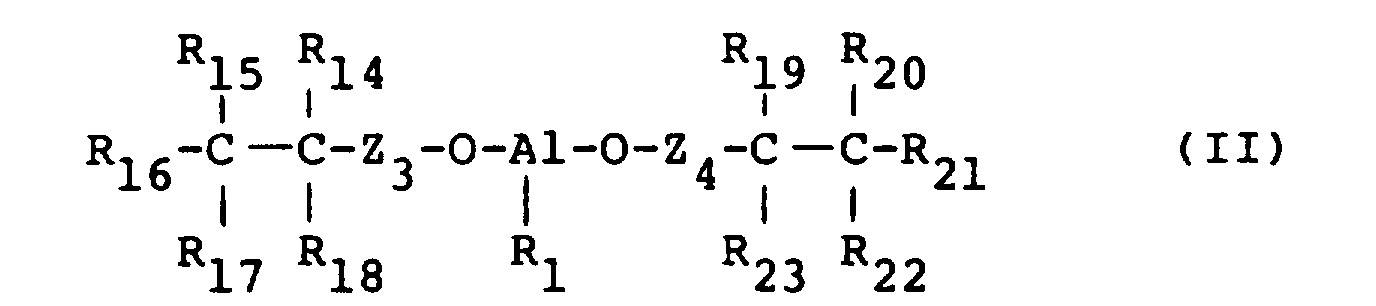
- R2, R4, R6, R7, R9 and R11 independently represent a hydrogen atom, a halogen atom, a C1-C20 alkyl group, C1-C20 alkoxy group, or a C6-C14 aryl group;
- R3, R5, R8 and R10 independently represent a hydrogen atom, or a halogen atom;
- Z1 and Z2 independently represent a simple chemical bond,

- R14, R15, R16, R17, R18, R19, R20, R21, R22 and R23 independently represent a hydrogen atom, a halogen atom, a C1-C20 alkyl group, or a C1-C20 alkoxy group; and
- Z3 and Z4 independently represent chemical bond,

- Hereafter, the living polymerization method of the present invention will be described in detail.
- The "alkyl" group as used herein may be linear or branched, and specific examples of which include methyl, ethyl, propyl, isopropyl, butyl, isobutyl, sec-butyl, tert-butyl, pentyl, isoamyl, hexyl heptyl, octyl, 2-ethylhexyl, 3,5,5-trimethylhexyl, nonyl, decyl, dodecyl, trimethylnonyl, hexadecyl, and octadecyl.
- The "haloalkyl" group as used herein refers to an alkyl group of which at least one of the hydrogen atoms bonded to the carbon atoms of the aforementioned alkyl group is substituted with a halogen atom, for example, a fluorine atom, a chlorine atom, a bromine atom or an iodine atom, and includes, for example, fluoromethyl, chloromethyl, dichloromethyl, bromomethyl, iodomethyl, 1-chloroethyl, 1,1-dichloroethyl, and 1-chloro-2-bromoethyl.
- Also, the "alkenyl" group as used herein may be linear or branched, and includes, for example, vinyl, allyl, 1-propenyl, isoprenyl, and 2-butenyl.
- The "alkoxy" group and "alkylthio" group as used herein refer to an alkyl-O- group and an alkyl-S-group each alkyl moiety of which has the aforementioned meaning. Specific examples of the alkoxy group include methoxy, ethoxy, propoxy, isopropoxy, butoxy, tert-butoxy, pentoxy, amyloxy, and hexoxy. Specific examples of the alkylthio group include methylthio, ethylthio, propylthio isopropylthio, and butylthio.
- The "aryl" group may be of monocyclic type or polycyclic type, and specific examples of which include phenyl, naphthyl, acenaphthenyl, fluorenyl, phenanthrenyl, anthryl, tolyl, xylyl, mesityl, cumenyl, etc.
- The "aralkyl" group as used herein refers to an arylalkyl group of which the aryl and alkyl moieties have the aforementioned meanings, respectively, and specific examples thereof include benzyl, phenethyl, benzhydryl, and trityl.
- The living polymerization method of the present invention can be carried out in the presence of a metal porphyrin complex as a polymerization initiator. As the metal porphyrin complex, there can also be used those metal porphyrin complexes known per se employed as the polymerization initiator in the living polymerization of monomers such as (meth)acrylate, epoxide, and lactone. For example, there can be cited metal porphyrin complexes whose central metal position is occupied by magnesium, aluminum, vanadium, chromium, manganese, iron, cobalt, nickel, copper, zinc, ruthenium, rhodium, palladium, and cadmium. Among the central metals, preferred are magnesium, aluminum, iron, and copper, with aluminum being particularly suitable.
- The metal porphyrin complex having aluminum at the central metal position includes, for example, an aluminum porphyrin complex represented by general formula (III)

- A3 represents a hydrogen atom or a monovalent C1-C20 hydrocarbon group which may be substituted with at least one, preferably 1 to 3 substituents selected from a halogen atom, a C1-C8 alkoxy qroup, and a C2-C8 alkoxycarbonyl group (for example, an alkyl group, an alkenyl group, a phenyl group, a halophenyl group, and an alkoxyphenyl group; preferably a phenyl group); and
- Y represent represents an axial ligand (for example, a halogen atom, a C1-C8 alkyl group, a C1-C8 haloalkyl group, a C1-C8 alkoxy group, a C1-C8 alkylthio group, a phenoxy group, a phenylthio group, a carboxyl group, an amino group, an enolate group, etc.).
- Specific examples of the aluminum porphyrin complex include the following compounds:
- Aluminum tetraphenyl porphyrin complex (A1, A2 = a hydrogen atom, A3 = a phenyl group),
- Aluminum tetra(p-chlorophenyl) porphyrin complex (A1, A2 = a hydrogen atom, A3 = a p-chlorophenyl group),
- Aluminum tetra(p-fluorophenyl) porphyrin complex (A1, A2 = a hydrogen atom, A3 = a p-fluorophenyl group),
- Aluminum tetra(pentafluorophenyl) porphyrin complex (A1, A2 = a hydrogen atom, A3 = a pentafluorophenyl group),
- Aluminum tetra(p-methoxyphenyl) porphyrin complex (A1, A2 = a hydrogen atom, A3 = a p-methoxyphenyl group),
- Aluminum tetra(2,4,6-trimethoxyphenyl) porphyrin complex (A1, A2 = a hydrogen atom, A3 = a 2,4,6-trimethoxyphenyl group),
- Aluminum ethyl methyl porphyrin complex (A1 = a methyl group A2 = an ethyl group, A3 = a hydrogen atom),
- Aluminum octaethyl porphyrin complex (A1, A2 = an ethyl group, A3 = a hydrogen atom),
- Aluminum tetra(2,6-dichlorophenyl) porphyrin complex (A1, A2 = a hydrogen atom, A3 = a 2,6-dichlorophenyl group),
- Aluminum tetra(2,4,6-trimethylphenyl) porphyrin complex (A1, A2 = a hydrogen atom, A3 = a 2,4,6-trimethylphenyl group),
- Aluminum tetra(2,6-dimethoxyphenyl) porphyrin complex (A1, A2 = a hydrogen atom, A3 = a 2,6-dimethoxyphenyl group).
- As the axial ligand (Y) for the aforementioned aluminum porphyrin complex, preferred are a C1-C4 alkyl group, a C1-C4 alkylthio group, a phenylthio group, and an enolate group.
- Such aluminum porphyrin complexes as described above can be prepared, for example, by reacting porphyrins with organic aluminum compounds in an aprotic solvent under an inert gas atomosphere such as nitrogen, helium, or argon at a temperature within the range of -78°C to 200°C.
- As the organic aluminum compound which can be reacted with the porphyrins, there can be cited, for example, trialkylaluminums such as trimethylaluminum, triethylaluminum, tripropylaluminum, triisopropylaluminum, triisobutylaluminum, and trioctylaluminum; tris(haloalkyl)aluminum such as tris(chloromethyl)aluminum ; trialkenylaluminums such as tri-1-propenylaluminum, tri-2-butenylaluminum, and triisoprenylaluminum ; triarylaluminums such as triphenylaluminum, tri-p-tolylaluminum, tri-m-xylyl-aluminum, and trimesitylaluminum; di(alkyl)aluminum halides such as dimethylaluminum bromide, dimethylaluminum chloride, diethylaluminum chloride, and diethylaluminum iodide.
- On the other hand, as the aprotic solvent which can be used when the porphyrins are reacted with the organic aluminum compounds, there can be cited, for example, aromatic hydrocarbons such as benzene, toluene, and xylene; aliphatic hydrocarbons such as pentane, heptane, hexane, and cyclohexane; halogenated hydrocarbons such as methylene chloride, chloroform, carbon tetrachloride, dichloroethane, 1,3-bis(trifluoromethyl)benzene, and trichlorofluoromethane; ethers such as diethyl ether, methyl ethyl ether, 1,4-dioxane, and tetrahydrofuran. However, the aprotic solvent used in the present invention is not limited to the aforementioned ones. If desired, these solvents may be used as they are also as polymerization solvent upon living polymerization reaction according to the present invention.
- The aluminum porphyrin complexes thus obtained may contain as the axial ligand (Y) an alkyl group, a haloalkyl group, and a halogen atom, depending on the kind of the organic aluminum compound used. These complexes may be used as they are as a polymerization initiator. Alternatively, the aluminum porphyrin complexes can be converted to similar complexes but contain an alkoxy group, an alkylthio group, a phenoxy group, a phenylthio group, a carboxyl group, an enolate group, or an amino group by reacting them with active hydrogen compounds such as alcohols, thioalcohols, phenols, thiophenols, carboxylic acids, or amines, or α,β-unsaturated carbonyl compounds, ketones, or lithium amides.
- The living polymerization method of the present invention has a major feature that living polymerization is performed using, in addition to the aforementioned metal porphyrin complex as a polymerization initiator, the organic aluminum compound represented by general formula (I) or (II) above, and having a structure sterically hindered against the metal porphyrin complex. It has been revealed that the present invention enables the coordination activation of polymerization active sites on a metal porphyrin complex, which could otherwise be impossible to attain unless the reaction temperature is as low as -40°C or lower, even at room temperature.
- For the aluminum compounds represented by general formulae (I) and (II), respectively, R1 is preferably a C1-C4 alkyl group, a C1-C4 haloalkyl group, a C2-C4, alkenyl group, or a C6-C10 aryl group, with a methyl group being particularly preferred.
- Further, in general formula (I), it is preferred that at least one of R2, R4 and R6 and at least one of R7, R9 and R11 independently are a halogen atom, a C1-C8, particularly C1-C4, alkyl group, a C1-C8, particularly C1-C4, alkoxy group, or a phenyl group, and remainders are each a hydrogen atom; and that R3, R5, R8 and R10 independently are a hydrogen atom or a halogen atom.
- In general formula (I) above, it is preferred that R12 and R13 in the group

- In general formula (II) above, it is preferred that at least one of R14, R15, R16, R17 and R18, and at least one of R19, R20, R21, R22 and R23 independently represent a halogen atom, a C1-C8, particularly C1-C4 alkyl group, or a C1-C8, particularly C1-C4 alkoxy group; and the remainders are each a hydrogen atom.
- Further, in general formula (II) above, it is preferred that R12 and R13 in the group

- Specific examples of the organic aluminum compound represented by general formula (I) above include the following compounds:
- Methylaluminum bis(2,4-di-tert-butylphenoxide),
- Methylaluminum bis(2,4,6-tri-tert-butylphenoxide),
- Methylaluminum bis(tetrafluorophenoxide),
- Methylaluminum bis(2-tert-butyl-4-methoxyphenoxide),
- Methylaluminum bis(2-phenylphenoxide),
- Methylaluminum bis(2,6-dichlorophenoxide),
- Methylaluminum bis(tetrafluorophenoxide),
- Methylaluminum bis(2,6-dimethoxyphenoxide),
- Methylaluminum bis(2-biphenylmethoxide),
- Methylaluminum bis(benzhydroxide),
- Methylaluminum bis(triphenylcarbinoxide),
- Methylaluminum bis(phenylcarbonate),
- Methylaluminum bis(4-methylphenylcarbonate),
- Methylaluminum bis(4-methoxyphenylcarbonate), and
- Methylaluminum bis(2-biphenylcarbonate).
- Specific examples of the organic aluminum compound represented by general formula (II) above include the following compounds:
- Methylaluminum bis(isobutoxide),
- Methylaluminum bis(sec-butoxide),
- Methylaluminum bis(butyrate), and
- Methylaluminum bis(isobutyrate).
- Particularly preferred among the organic aluminum compound represented by general formulae (I) and (II), respectively, are
- Methylaluminum bis(2,4,6-tri-tert-butyl-phenoxide),
- Methylaluminum bis(2-tert-butyl-4-methoxyphenoxide),
- Methylaluminum bis(isobutoxide), and
- Methylaluminum bis(isobutyrate).
- The organic aluminum compounds represented by general formulae (I) and (II), respectively, which can be used in the present invention can be prepared, for example, by reacting a compound represented by general formula (IV) or (V) below:

- wherein R1 through R11, Z1 and Z2 have the same meanings as defined above, or
a compound represented by general formula (VI) or (VII) below:
- wherein R14 through R23, Z3 and Z4 have the same meanings as defined above,
with a compound represented by general formula (VIII) below: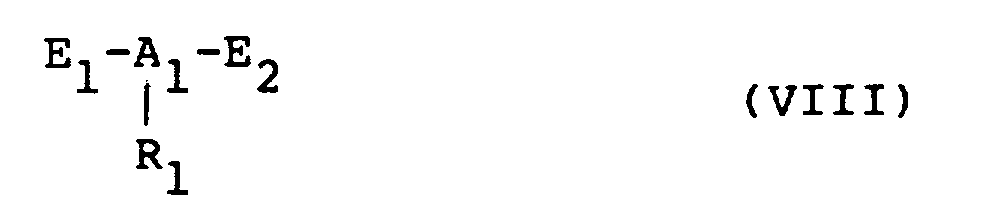
- wherein E1 and E2 independently represent a halogen atom, a C1-C8 alkyl group, a C1-C8 haloalkyl group, a C2-C8 alkenyl group, a C6-C14 aryl group or a C7-C20 aralkyl group; and
- R1 has the same meaning as defined above, in a aprotic solvent under an inert gas atmosphere such as nitrogen, helium, or argon at a temperature within the range of between -78°C and 200°C.
- As the compound represented by general formula (IV) or (V), there can be cited, for example, phenols such as 2,4-di-tertbutylphenol, 2,4,6-tri-tert-butylphenol, 3-tert-butyl-4-hydroxyanisole, 2-phenylphenol, 2,6-dichlorophenol, tetrafluorophenol, and 2,6-dimethoxyphenol; phenylcarbinols such as 2-biphenylmethanol, benzhydrol, and triphenylcarbinol; and phenylcarboxylic acids such as benzoic acid, toluylic acid, 4-methoxybenzoic acid, and 2-biphenylcarboxylic acid.
- As the compound represented by general formula (VI) or (VII), there can be cited, for example, alkanols such as isobutyl alcohol, and sec-butyl alcohol; and alkanoic acids such as butyric acid, and isobutyric acid.
- On the other hand, as the aluminum compound represented by general formula (VIII), there can be cited, for example, trialkylaluminums such as trimethylaluminum, triethylaluminum, tripropylaluminum, triisopropylaluminum, tributylaluminum, triisobutylaluminum, and trioctylaluminum; tris(haloalkyl)aluminum such as tris(chloromethyl)-aluminum; trialkenylaluminums such as tri-1-propenylaluminum, tri-2-butenylaluminum, and triisoprenyl-aluminum; triarylaluminums such as triphenyl-aluminum, tri-p-tolylaluminum, tri-m-xylylaluminum, and trimesitylaluminum; and di(alkyl)aluminum halides such as dimethylaluminum bromide, dimethylaluminum chloride, diethylaluminum chloride, and diethylaluminum iodide.
- As the aprotic solvent which can be used in the reaction of the compound represented by general formula (IV) or (V), or general formula (VI) or (VII), with the aluminum compound represented by general formula (VIII), there can be cited, for example, aromatic hydrocarbons such as benzene, toluene, and xylene; aliphatic hydrocarbons such as pentane, heptane, hexane, and cyclohexane ; halogenated hydrocarbons such as methylene chloride, chloroform, carbon tetrachloride, dichloroethane, 1,3-bis(trifluoromethyl)benzene, and trichlorotrifluoromethane ; ethers such as diethyl ether, methyl ethyl ether, 1,4-dioxane, and tetrahydrofuran. However, the present invention is not limited to the aforementioned solvents. If desired, these solvents may be used as they are upon the living polymerization according to the present invention.
- The monomers which can be living-polymerized according to the method of the present invention may be at least one compound selected from the group consisting of (meth)acrylic acid ester, epoxide and lactone, and there is no limitation on the kind of such monomers so far as they can be living-polymerized. These monomers may be used singly or two or more of them may be used in combination to copolymerize them.
- The (meth)acrylic acid ester which can be used in the living polymerization include those compounds represented by general formulae (IX), (X), (XI) and (XII) below:


- wherein R24 represents a hydrogen atom or a methyl group;
- R25 represents a C1-C20 alkyl group, a C3-C8 cycloalkyl group or a glycidyl group;
- R26 is C1-C6 alkylene group;
- R27, R28 and R29 independently represent a C1-C6 alkyl group or a C1-C6 alkoxy groups; and
- R30 and R31 independently a C1-C6 alkyl group
- Specific examples of such a (meth)acrylic acid ester include methyl acrylate, methyl methacrylate, ethyl acrylate, ethyl methacrylate, propyl acrylate, propyl methacrylate, butyl acrylate, butyl methacrylate, isobutyl acrylate, isobutyl methacrylate, tert-butyl acrylate, tert-butyl methacrylate, hexyl acrylate, hexyl methacrylate, octyl acrylate, octyl methacrylate, lauryl acrylate, lauryl methacrylate, 2-ethylhexyl acrylate, 2-ethyl hexyl methacrylate, stearyl acrylate, stearyl methacrylate, cyclohexyl acrylate, cyclohexyl methacrylate, glycidyl acrylate, glycidyl methacrylate, 3,4-epoxycyclohexylmethyl acrylate, 3,4-epoxycyclohexylmethyl methacrylate, 3-trimethoxysilylpropyl acrylate, 3-trimethoxysilylpropyl methacrylate, 2-diethylaminoethyl acrylate, 2-diethylaminoethyl methacrylate, 2-dimethylaminoethyl acrylate, and 2-dimethylaminoethyl methacrylate. Among these compounds, preferred are methyl (meth)acrylates, ethyl (meth)acrylates, isopropyl (meth)acrylates, butyl (meth)acrylates, isobutyl (meth)acrylates.
- The epoxide includes compounds which have one oxirane ring:

- The lactone includes, for example, 4- to 7-membered cyclic esters which may be substituted with one or two C1-C4 alkyl groups, C2-C3 alkenyl groups, etc. on the ring. Specific examples thereof include β-propionolactone, α-methyl-β-propionolactone, α,α'-dimethyl-β-propionolactone, β-vinyl-β-propionolactone, γ-butyrolactone, δ-valero-lactone, and ε-caprolactone, γ-Butyrolactone, δ-valerolactone and ε-caprolactone are particularly preferred.
- The living polymerization according to this invention, wherein said polymerization initiator, cocatalyst and monomer are used, can be conventionally carried out in aforementioned aprotic solvent under inert gas atmosphere such as nitrogen, argon, and helium.
- The polymerization temperature is not limited particularly but may be varied within a wide range depending on the kinds of polymerization initiator, cocatalyst and monomers used, respectively. Generally, the polymerization temperature may be within the range of between -78°C and the reflux temperature of the solvent, preferably between -40°C and 70°C.
- The amount of the metal porphyrin complex to be used as the polymerization initiator is not limited strictly but may be varied depending on the kind of monomer and conditions of reaction used so far as it is effective for the polymerization reaction.
- Generally, it is convenient that the metal porphyrin complex is used in an amount within the range of between 0.0005 mole and 0.2 mole, preferably between 0.002 mole and 0.1 mole, and more preferably between 0.005 mole and 0.05 mole, per mole of the monomer.
- The amount of the organic aluminum compound represented by general formulae (I) or (II) above used as the cocatalyst together with the metal porphyrin complex is not limited strictly but may be varied depending on the kinds of the metal porphyrin complex and/or monomer and reaction conditions used. Usually, it is suitable that the organic aluminum compound is used in an amount within the range between 0.001 mole and 500 moles, preferably between 0.001 mole and 50 moles, and more preferably between 0.01 mole and 10 moles, per mole of the metal porphyrin complex used.
- The timing at which the organic aluminum compound represented by general formula (I) or (II) above is introduced into the reaction system may be at any stage, i.e., prior to charging the monomer in a reaction vessel containing the polymerization initiator and solvent, simultaneous with the charging or after the charging, or after the initiation of the polymerization reaction following the charging of the monomer.
- The polymerization may be performed until substantially all the monomer molecules are polymerized.
- Living polymer can be obtained by the aforementioned polymerization reaction. The living polymer may have a number average molecular weight within the range between 500 and 200,000, and preferably between 1,000 and 50,000.
- In the living polymerization described above, it is generally preferred to perform the polymerization under irradiation of light to increase the polymerization rate when (meth)acrylic acid esters are used as the monomer.
- As the light to be irradiated, lights within the visible range are effective, and type of light source is not limited particularly but there can be used any light source that emits a light having a wavelength (400 to 800 nm) within the visible range, for example, Xenon lamp, carbon arc lamp, low pressure mercury lamp, high pressure mercury lamp, and metal halide lamp. The method of the irradiation of light includes, for example, a method in which a light from 100 Watt Xenon lamp is irradiated at a distance of 10 cm continuously during the polymerization reaction.
- According to the aforementioned living polymerization method of the present invention, the use of the organic aluminum compound having the specified bulky substituents represented by general formula (I) or (II) increases the polymerization rate of polymerization of a monomer ((meth)acrylic acid ester, epoxide or lactone), for example, methyl acrylate, by about 50,000 times as high as that of the polymerization in the presence of the conventional metal porphyrin complex. The polymerization rate increases surprisingly, e.g., by about 500 times in the case of polymerization of propylene oxide, and by about 10,000 times in the case of polymerization of δ-valerolactone as compared with the conventional method. Hence, the time required for the polymerization ratio of the aforementioned monomer to reach 100 % according to the polymerization method of the present invention is as short as several minutes or less in contrast to the conventional method which takes several hours to several ten hours to complete the reaction. Thus, the present invention increases the productivity of living polymer remarkably and unexpectedly.
- The living polymers obtained by the method of the present invention, for example, poly(meth)acrylates from (meth)acrylic acid esters, polyethers from polyethers, and polyesters from lactones are polymers which have very narrow molecular weight distributions such as having Mw/Mn (parameter expressing molecular weight distribution) values of 1.3 or less, and their number average molecular weight is within the range between 20,000 and 50,000. The molecular weight distribution and molecular weight values indicate that the polymers obtained have tough physical properties.
- The molecular weight and molecular weight distribution can be controlled by changing ratio of the polymerization initiator (metal porphyrin complex)/cocatalyst (organic aluminum compound)/monomer, and hence according to the polymerization method of the present invention, polymers having any desired molecular weight and molecular weight distribution depending on the use of the polymer obtained can be obtained at considerably high polymerization rate.
- Since the polymerization method of the present invention is a living polymerization in nature, the addition of the monomer again at the stage when the polymerization ratio has reached almost 100 % enables the polymerization reaction to proceed further.
- In this case, the monomer to be added again may be of the same kind of monomer as used in the polymerization in the preceding step or different kind monomer. For example, the living polymer of a (meth)acrylic acid ester may be reacted with the (meth)acrylic acid ester again, or with propylene oxide or δ-valerolactone.
- Also, when a monomer is added again which has the same basic skeleton as the monomer used in the living polymer already prepared but one or more different substituent groups than the monomer of the living polymer, a so-called block copolymer is obtained in which monomer units having the same skeleton but a different substituent structure have been copolymerized in a block. For example, when isobutyl methacrylate is added again to a living polymer of methyl methacrylate, there can be obtained a polymethyl methacrylate/polyisobutyl methacrylate block copolymer.
- On the other hand, as described earlier, when a different kind of monomer is added to a living polymer from a certain monomer and polymerization is initiated again, a so-called multi-component block copolymer can be obtained in which the main skeleton is composed of different block structures, such as polyacrylate, polyester and polyether, bonded together.
- As stated above, according to the method of the present invention, not only homopolymers of respective monomers but also random copolymers, block copolymers, multi-component block copolymers from any possible combinations of monomers depending upon various combinations of monomers can be prepared at very high polymerization rates by adding again monomers to a living polymer of a certain monomer followed by polymerization. Also, those copolymers having large molecular weights and narrow molecular weight distributions can be obtained.
- The poly(meth)acrylates, polyethers, polyesters, random copolymers, block copolymers, or multi-component block copolymers of these can be used for various purposes as described below as they are or after purification. The homopolymers or copolymers can be purified from their solution with a precipitant such as methanol, or ethanol followed by washing, filtration and drying.
- The living polymers such as poly(meth)acrylates, polyethers, polyesters, random copolymers, block copolymers, or multi-component block copolymers of these obtained by the method of the present invention can be used for various purposes depending on the properties of the polymer such as kind, structure, molecular weight, and molecular weight distribution. For example, they can be used in various fields such as coating material for metals, and plastics; coatings for optical materials such as lenses; surface treatment of medical care materials; treating agent for fibers; insulating materials for electronic parts, and circuit parts; electronic materials such as resist materials; and printing materials.
- Next, the present invention will be described in more detail by reference examples and examples. However, these are intended to help understand the present invention and the present invention should not be construed as being limited thereto.
- Unless otherwise indicated specifically, all the reactions or polymerizations in the following reference examples and examples were performed under nitrogen atmosphere. Also, all polymerization ratios were obtained by measuring a portion of polymerization reaction mixture (about 0.1 ml) as it is by 1H NMR and calculating polymerization ratio, P (%), by the following equation:

- In a sufficiently dried egg-plant type flask provided with a stirrer were charged 0.61 g (1 mmol) of meso-tetraphenylporphyrin and 40 ml of methylene chloride as a solvent. To the mixture was added 0.1 ml (1 mmol) of trimethylaluminum was added under nitrogen atmosphere with stirring. The resulting mixture was allowed to react at room temperature for 2 hours to obtain an aluminum porphyrin complex, i.e., a compound represented by general formula (III) above in which Y = a methyl group, A1 and A2 = a hydrogen atom, respectively, A3 = a phenyl group.
- In a sufficiently dried egg-plant type flask provided with a stirrer were charged 0.61 g (1 mmol) of meso-tetraphenylporphyrin and 20 ml of methylene chloride as a solvent. To the mixture was added 1.2 mmol of diethylaluminum chloride was added under nitrogen atmosphere with stirring. The resulting mixture was allowed to react at room temperature for 2 hours. After completion of the reaction, excessive diethylaluminum chloride was evaporated off together with the solvent to obtain a solid aluminum porphyrin complex. To this was added again 20 ml of methylene chloride to obtain a methylene chloride solution of an aluminum porphyrin complex represented by general formula (III) above in which Y = a chlorine atom, A1, and A2 = a hydrogen atom, respectively, A3 = a phenyl group.
- Methanol (2.5 ml) was added to 20 ml of the polymerization initiator solution B above under nitrogen atmosphere with stirring, and the resulting mixture was allowed to react at room temperature for 15 hours. After evaporating off excessive methanol together with the methylene chloride solution, 20 ml of methylene chloride was added again to obtain a methylene chloride solution of an aluminum porphyrin complex represented by general formula (III) above in which Y = a methoxy group, A1 and A2 = a hydrogen atom, respectively, A3 = a phenyl group.
- In a sufficiently dried egg-plant type flask provided with a stirrer was sufficiently dried 0.525 g (2 mmol) of 2,4,6-tri-tert-butylphenol recrystallized from hexane. After completion of the drying, 3.3 ml of methylene chloride was added thereto. Then, under nitrogen atmosphere, 0.9 ml (1 mmol) of trimethylaluminum was slowly added dropwise with ice-cooling and stirring, and the mixture was mixed in the dark at room temperature for 1 hour to obtain a methylene chloride solution of methylaluminum bis(2,4,6-tri-tert-butylphenoxide) (1mmol/3.3ml).
- In a sufficiently dried egg-plant type flask provided with a stirrer was sufficiently dried 0.361 g (2 mmol) of 3-tert-butyl-4-hydroxyanisole recrystallized from hexane. After completion of the drying, 3.3 ml of methylene chloride was added thereto. Then, under nitrogen atmosphere, 0.9 ml (1 mmol) of trimethylaluminum was slowly added dropwise with ice-cooling and stirring, and the mixture was mixed in the dark at room temperature for 1 hour to obtain a methylene chloride solution of methylaluminum bis(3-tert-butyl-4-methoxyphenoxide) (1 mmol/3.3 ml).
- In a sufficiently dried egg-plant type flask provided with a stirrer was charged 0.148 g (2 mmol) of sufficiently purified isobutanol, which was sufficiently dried. After completion of the drying, 3.3 ml of methylene chloride was added thereto. Then, under nitrogen atmosphere, 0.9 ml (1 mmol) of trimethylaluminum was slowly added dropwise with ice-cooling and stirring, and the mixture was mixed in the dark at room temperature for 1 hour to obtain a methylene chloride solution of methylaluminum bis(isobutoxide) (1 mmol/3.3 ml).
- In a sufficiently dried egg-plant type flask provided with a stirrer was charged 0.176 g (2 mmol) of sufficiently purified isobutyric acid, which was sufficiently dried. After completion of the drying, 3.3 ml of methylene chloride was added thereto. Then, under nitrogen atmosphere, 0.9 ml (1 mmol) of trimethylaluminum was slowly added dropwise with ice-cooling and stirring, and the mixture was mixed in the dark at room temperature for 1 hour to obtain a methylene chloride solution of methylaluminum bis(isobutyrate) (1 mmol/3.3 ml).
- In each of 100 ml-flasks purged with nitrogen was charged 8 ml (0.2 mmol) of the polymerization initiator solution A, to which were added various methacrylic acid esters in amounts shown in Table 1. Each mixture was irradiated with a visible light while stirring with a magnetic stirrer under nitrogen atmosphere at 35°C for about 2 hours to initiate polymerization. Thereafter, the organic aluminum compound solution F was added thereto under nitrogen atmosphere at room temperature in a predetermined amount and the resulting mixture was allowed to polymerize for a predetermined time as shown in Table 1.
- In each of 50 ml-flasks purged with nitrogen was charged 4 ml (0.2 mmol) of the polymerization initiator solution B, to which were added methylene chloride, propylene oxide and the organic aluminum compound solution D in proportions shown in Table 1 under nitrogen atmosphere at room temperature with stirring using a magnetic stirrer. The resulting mixture was allowed to polymerize under nitrogen atmosphere at room temperature for a predetermined time.
- In a 50 ml-flask purged with nitrogen was charged 4 ml (0.2 mmol) of the polymerization initiator solution C, and the solvent was evaporated off. Then, the organic aluminum compound solution D was charged in an amount shown in Table 1, and the solvent was evaporated off again. This system was kept at 50°C and δ-valerolactone was charged to the system in an amount shown in Table 1, and the resulting mixture was allowed to polymerize in bulk under nitrogen atmosphere at 50°C for a predetermined time.
- In a 100 ml-flask purged with nitrogen was charged 8 ml (0.2 mmol) of the polymerization initiator solution A, to which was added a methacrylic acid ester in an amount shown in Table 1. The mixture was irradiated with a visible light while stirring with a magnetic stirrer under nitrogen atmosphere at 35°C for about 2 hours to initiate polymerization. Thereafter, the organic aluminum compound solution F was added thereto under nitrogen atmosphere at room temperature in a predetermined amount and the resulting mixture was allowed to polymerize for a predetermined time as shown in Table 1.
- In a 100 ml-flask purged with nitrogen was charged 8 ml (0.2 mmol) of the polymerization initiator solution A, to which was added a methacrylic acid ester in an amount shown in Table 1. The mixture was irradiated with a visible light while stirring with a magnetic stirrer under nitrogen atmosphere at 35°C for about 2 hours to initiate polymerization. Thereafter, the organic aluminum compound solution G was added thereto under nitrogen atmosphere at room temperature in a predetermined amount and the resulting mixture was allowed to polymerize for a predetermined time as shown in Table 1.
- In a 100 ml-flask purged with nitrogen was charged 8 ml (0.2 mmol) of the polymerization initiator solution A, to which was added methyl methacrylate in an amount shown in Table 1. The mixture was irradiated with a visible light while stirring with a magnetic stirrer under nitrogen atmosphere at 35°C for about 2 hours to initiate polymerization. Thereafter, the mixture was allowed to polymerize at room temperature for a predetermined time with adding no organic aluminum compound.
- In a 50 ml-flask purged with nitrogen was charged 8 ml (0.2 mmol) of the polymerization initiator solution A, to which was added methyl methacrylate in an amount of 100-fold. The mixture was irradiated with a visible light while stirring with a magnetic stirrer under nitrogen atmosphere at 35°C for about 1 hour to initiate polymerization. Thereafter, an organic metal compound was added thereto at a low temperature in a predetermined proportion to the aluminum porphyrin complex and the mixture was allowed to polymerize for a predetermined time.
- In a 50 ml-flask purged with nitrogen was charged 4 ml (0.2 mmol) of the polymerization initiator solution B, to which were added methylene chloride and propylene oxide in proportions shown in Table 1 under nitrogen atmosphere at room temperature with stirring using a magnetic stirrer. The resulting mixture was allowed to polymerize at room temperature for a predetermined time.
- In a 50 ml-flask purged with nitrogen was charged 4 ml (0.2 mmol) of the polymerization initiator solution C, and the solvent was evaporated off. Then, this system was kept at 50°C under N2 atmosphere, and 40 mmol of δ-valerolactone was added thereto, followed by polymerization in bulk at 50°C for a predetermined time.
- In the aforementioned examples and comparative examples, after the completion of the polymerization and after the removal of the solvent and unused monomers, the molecular weight and molecular weight distribution were obtained by gel permeation chromatography (GPC) (polystyrene standard). Polymerization conditions and results are shown in Table 1. When a visible light was to be irradiated, a Xenon lamp was used as a light source, and a light with a wavelength region of 420 nm or smaller being cut with filter was irradiated.


Claims (19)
- A living polymerization method for polymerizing at least one monomer selected from the group consisting of (meth)acrylic acid ester, epoxide and lactone using a metal porphyrin complex as a polymerization initiator,
wherein said living polymerization is performed using as a cocatalyst at least one organic aluminum compound selected from the group consisting of compounds represented by general formula (I) or (II) below:
 R2, R4, R6, R7, R9 and R11 independently represent a hydrogen atom, a halogen atom, a C1-C20 alkyl group, C1-C20 alkoxy group, or a C6-C14 aryl group;R3, R5, R8 and R10 independently represent a hydrogen atom, or a halogen atom;Z1 and Z2 independently represent a simple chemical bond,
 R14, R15, R16, R17, R18, R19, R20, R21, R22 and R23 independently represent a hydrogen atom, a halogen atom, a C1-C20 alkyl group, or a C1-C20 alkoxy group; andZ3 and Z4 independently represent chemical bond,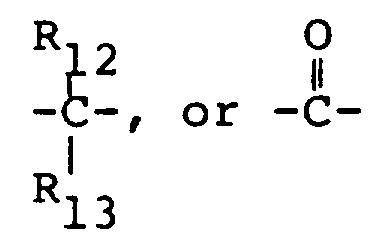
- The methods as claimed in claim 1, wherein said metal porphyrin complex has a central metal site occupied by a metal selected from the group consisting of magnesium, aluminum, vanadium, chromium, manganese, iron, cobalt, nickel, copper, zinc, ruthenium, rhodium, palladium and cadmium.
- The method as claimed in claim 1, wherein said metal porphyrin complex is an aluminum porphyrin complex.
- The method as claimed in claim 3, wherein said aluminum porphyrin complex is a compound represented by general formula (III) below:
 A3 represent a hydrogen atom or a monovalent C1-C20 hydrocarbon group which may be substituted with at least one substituent selected from a halogen atom, a C1-C8 alkoxy group, and a C2-C8 alkoxycarbonyl group; andY represent represents an axial ligand.
 - The method as claimed in claim 1, wherein in said formula (I), R1 represents a C1-C4 alkyl group, a C1-C4 haloalkyl group, a C2-C4 alkenyl group, or a C6-C10 aryl group;at least one of R2, R4 and R6, and at least one of R7, R9 and R11 independently represent a halogen atom, a C1-C8 alkyl group, a C1-C8 alkoxy group, or a phenol group, and remainders are each a hydrogen atom; andR3, R5, R8 and R10 independently represents a hydrogen atom or a halogen atom; andR12 and R13 independently represent a hydrogen atom, a C1-C8 alkyl group or a phenyl group.
- The method as claimed in claim 1, wherein in said formula (II), R1 represents a C1-C4 alkyl group, a C1-C4 haloalkyl group, a C2-C4 alkenyl group, or a C6-C10 aryl group;at least one of R14, R15, R16, R17 and R18, and at least one of R19, R20, R21, R22 and R23 independently represent a halogen atom, a C1-C8 alkyl group, or a C1-C8 alkoxy group; and the remainders are each a hydrogen atom; andR12 and R13 independently represent a hydrogen atom, or a C1-C8 alkyl group.
- The method as claimed in claim 1, wherein said organic aluminum compound is a compound selected from the group consisting of:methylaluminum bis(2,4-di-tert-butylphenoxide),methylaluminum bis(2,4,6-tri-tert-butylphenoxide),methylaluminum bis(2-tert-butyl-4-methoxyphenoxide),methylaluminum bis(2-phenylphenoxide),methylaluminum bis(2,6-dichlorophenoxide),methylaluminum bis(tetrafluorophenoxide),methylaluminum bis(2,6-dimethoxyphenoxide),methylaluminum bis(2-biphenylmethoxide),methylaluminum bis(benzhydroxide),methylaluminum bis(triphenylcarbinoxide),methylaluminum bis(phenylcarbonate),methylaluminum bis(4-methylphenylcarbonate),methylaluminum bis(4-methoxyphenylcarbonate),methylaluminum bis)2-biphenylcarbonate),methylaluminum bis(isobutoxide),methylaluminum bis(sec-butoxide),methylaluminum bis(butyrate), andmethylaluminum bis(isobutyrate).
- The method as claimed in claim 7, wherein said organic aluminum compound is:methylaluminum bis(2,4,6-tri-tert-butylphenoxide),methylaluminum bis(2-tert-butyl-4-methoxyphenoxide),methylaluminum bis(isobutoxide), ormethylaluminum bis(isobutyrate).
- The method as claimed in claim 1, wherein said (meth)acrylic acid ester is selected from the group consisting of methyl (meth)acrylate, ethyl (meth)acrylate, isopropyl (meth)acrylate, butyl (meth)acrylate and isobutyl (meth)acrylate.
- The method as claimed in claim 1, wherein said epoxide is a C2-C4 alkylene oxide.
- The method as claimed in claim 1, wherein said lactone is selected from the group consisting of δ-butyrolactone, δ-valero-lactone and ε-caprolactone.
- The method as claimed in claim 1, wherein said living polymerization is performed in the presence of an aprotic solvent under inert gas atmosphere.
- The method as claimed in claim 12, wherein said living polymerization is performed at a temperature within the range of between -78°C and a reflux temperature of said solvent.
- The method as claimed in claim 1, wherein said metal porphyrin complex is used in an amount within the range of between 0.0005 mole and 0.2 mole per mole of said monomer.
- The method as claimed in claim 1, wherein said organic aluminum compound is used in an amount within the range between 0.001 mole and 500 moles per mole of said metal porphyrin complex.
- The method as claimed in claim 15, wherein said organic aluminum compound is used in an amount within the range between 0.001 mole and 50 moles per mole of said metal porphyrin complex.
- The method as claimed in claim 1, wherein product has a number average molecular weight within the range between 500 to 200,000.
- The method as claimed in claim 1, wherein said monomer is a (meth)acrylic acid ester, and wherein said polymerization is performed under irradiation of a light.
- Use of the organic aluminum compound represented by general formula (I) or (II) described in claim 1 in a living polymerization of a monomer selected from the group consisting of a (meth)acrylic acid ester, an epoxide and a lactone.
Applications Claiming Priority (2)
| Application Number | Priority Date | Filing Date | Title |
|---|---|---|---|
| JP3116539A JPH04323204A (en) | 1991-04-22 | 1991-04-22 | Production of living polymer |
| JP116539/91 | 1991-04-22 |
Publications (2)
| Publication Number | Publication Date |
|---|---|
| EP0510602A1 EP0510602A1 (en) | 1992-10-28 |
| EP0510602B1 true EP0510602B1 (en) | 1996-06-26 |
Family
ID=14689629
Family Applications (1)
| Application Number | Title | Priority Date | Filing Date |
|---|---|---|---|
| EP92106866A Expired - Lifetime EP0510602B1 (en) | 1991-04-22 | 1992-04-22 | Living polymerization method |
Country Status (4)
| Country | Link |
|---|---|
| US (1) | US5328970A (en) |
| EP (1) | EP0510602B1 (en) |
| JP (1) | JPH04323204A (en) |
| DE (1) | DE69211757T2 (en) |
Families Citing this family (18)
| Publication number | Priority date | Publication date | Assignee | Title |
|---|---|---|---|---|
| AU696651B2 (en) * | 1994-03-15 | 1998-09-17 | E.I. Du Pont De Nemours And Company | Living radical polymerization of vinyl monomers |
| FR2720749B1 (en) * | 1994-06-06 | 1996-07-19 | Atochem Elf Sa | Process for the production of a poly (methyl methacrylate) with a high content of syndiotactic triads. |
| DE4429463A1 (en) * | 1994-08-19 | 1996-02-22 | Bayer Ag | Process for reducing the proportion of oligocondensate in polycondensates |
| US5708102A (en) * | 1995-03-03 | 1998-01-13 | E. I. Du Pont De Nemours And Company | Living radical polymerization of vinyl monomers |
| CA2281540A1 (en) * | 1997-02-17 | 1998-08-20 | Koichi Shibayama | Process for preparing polymer by using copper compound |
| WO1998046655A1 (en) * | 1997-04-14 | 1998-10-22 | Yukio Nagasaki | Methacrylic polymer having terminal functional group and composition thereof |
| US6191250B1 (en) * | 1997-10-15 | 2001-02-20 | Daicel Chemical Industries, Ltd. | Processes for the preparation of a monodisperse polymers, processes for the continuous polymerization of cyclic monomers, and polymers prepared thereby |
| DE19917984A1 (en) * | 1999-04-21 | 2000-11-09 | Targor Gmbh | Chemical compound, process for its preparation and its use in a catalyst system for the production of polyolefins |
| DE19917985A1 (en) | 1999-04-21 | 2000-10-26 | Targor Gmbh | Metallocene catalyst system, useful for the production of polyolefins, comprises an organoboron or organoaluminum compound covalently bonded to a support. |
| US6433130B1 (en) * | 1999-09-23 | 2002-08-13 | Sekisui Chemical Co., Ltd. | Process for preparing polymer by using copper compound |
| US6852809B2 (en) | 1999-12-27 | 2005-02-08 | Sumitomo Chemical Company, Limited | Catalyst component for addition polymerization, catalyst for addition polymerization, and process for producing addition polymer |
| DE10218583A1 (en) * | 2002-04-26 | 2003-11-06 | Bayer Ag | Catalysts for the polymerization of alkylene oxides |
| GB0522154D0 (en) * | 2005-10-31 | 2005-12-07 | Univ Leeds | Novel catalytic materials and their use in the preparation of polymeric materials |
| JP5733608B2 (en) * | 2008-07-28 | 2015-06-10 | 大日精化工業株式会社 | Method for producing polymer dispersant |
| US11279798B2 (en) | 2020-03-17 | 2022-03-22 | International Business Machines Corporation | Polymer technology for use in flow reactors |
| CN111440302B (en) * | 2020-04-26 | 2022-09-27 | 中山大学惠州研究院 | A method for preparing polycaprolactone by ring-opening polymerization of ε-caprolactone catalyzed by hypercrosslinked metalloporphyrin |
| CN111423564A (en) * | 2020-04-26 | 2020-07-17 | 广东石油化工学院 | A kind of polymerization method of polycaprolactone |
| CN119158629B (en) * | 2024-09-18 | 2025-10-03 | 浙江大学 | Application of a two-component metal complex and method for catalyzing carbonylation of epoxides to prepare beta-lactones |
Family Cites Families (3)
| Publication number | Priority date | Publication date | Assignee | Title |
|---|---|---|---|---|
| US4760117A (en) * | 1985-06-11 | 1988-07-26 | General Electric Company | Method for preparing copolycarbonates from cyclic polycarbonate oligomers |
| JP2693478B2 (en) * | 1988-04-08 | 1997-12-24 | 花王株式会社 | Method for producing polymethacrylic acid ester |
| JP2695182B2 (en) * | 1988-04-08 | 1997-12-24 | 花王株式会社 | Method for producing polyacrylic acid ester |
-
1991
- 1991-04-22 JP JP3116539A patent/JPH04323204A/en active Pending
-
1992
- 1992-04-21 US US07/871,699 patent/US5328970A/en not_active Expired - Fee Related
- 1992-04-22 EP EP92106866A patent/EP0510602B1/en not_active Expired - Lifetime
- 1992-04-22 DE DE69211757T patent/DE69211757T2/en not_active Expired - Fee Related
Also Published As
| Publication number | Publication date |
|---|---|
| JPH04323204A (en) | 1992-11-12 |
| EP0510602A1 (en) | 1992-10-28 |
| US5328970A (en) | 1994-07-12 |
| DE69211757T2 (en) | 1996-10-24 |
| DE69211757D1 (en) | 1996-08-01 |
Similar Documents
| Publication | Publication Date | Title |
|---|---|---|
| US5328970A (en) | Living polymerization method | |
| Collins et al. | Group-transfer polymerization using metallocene catalysts: Propagation mechanisms and control of polymer stereochemistry | |
| EP0260838B1 (en) | Titanium, zirconium and hafnium enolates as initiators in the polymerization of acrylic monomers to "living" polymers | |
| US4605716A (en) | Lewis base-catalyzed polymerization | |
| JP2001514270A (en) | Improved atom transfer radical polymerization | |
| US5132369A (en) | Process for preparing narrow molecular weight distribution syndiotactic block copolymers of unsaturated carboxylic acid esters with α-olefins | |
| US5218064A (en) | Process for preparing narrow molecular weight distribution syndiotactic polymers or copolymers of unsaturated carboxylic acid esters | |
| Hultzsch et al. | Polymerization of ϵ‐caprolactone using heterobimetallic lanthanocene complexes | |
| US5395811A (en) | Highly active π-allylnickel-based polymerization initiators | |
| JP3207502B2 (en) | Method for producing copolymer | |
| EP0662485B1 (en) | Method of controlling the polymerization of acrylates | |
| CN1160386C (en) | A kind of living polymerization method | |
| JP2693478B2 (en) | Method for producing polymethacrylic acid ester | |
| JP2850152B2 (en) | Method for producing ethylene copolymer | |
| Li et al. | Synthesis of Lanthanide–Alkylaluminium Bimetallic Complexes and Studies on Their Catalytic Activities for Polymerization of Some Polar Monomers | |
| JP2695182B2 (en) | Method for producing polyacrylic acid ester | |
| JP3393722B2 (en) | Method for polymerizing alkyl methacrylate | |
| US6031066A (en) | Process for producing α, β-unsaturated carboxylic acid ester polymer | |
| EP1091964B1 (en) | Aluminum compounds for producing vinylic polymers | |
| WO1995021873A1 (en) | Polymerization using bimetallic, bis-lanthanoid initiators | |
| JP2706036B2 (en) | Method for producing olefin block copolymer | |
| JP2946035B1 (en) | Polar vinyl monomer polymerization catalyst and method for producing polar vinyl polymer | |
| JPH08231618A (en) | Organometallic catalyst and method for producing vinyl polymer using the same | |
| WO2019116005A1 (en) | Catalysts for polymerisation of polar monomers | |
| KR20010053249A (en) | A Polymerisation Process |
Legal Events
| Date | Code | Title | Description |
|---|---|---|---|
| PUAI | Public reference made under article 153(3) epc to a published international application that has entered the european phase |
Free format text: ORIGINAL CODE: 0009012 |
|
| AK | Designated contracting states |
Kind code of ref document: A1 Designated state(s): DE GB |
|
| 17P | Request for examination filed |
Effective date: 19921202 |
|
| 17Q | First examination report despatched |
Effective date: 19941201 |
|
| GRAA | (expected) grant |
Free format text: ORIGINAL CODE: 0009210 |
|
| AK | Designated contracting states |
Kind code of ref document: B1 Designated state(s): DE GB |
|
| REF | Corresponds to: |
Ref document number: 69211757 Country of ref document: DE Date of ref document: 19960801 |
|
| PLBE | No opposition filed within time limit |
Free format text: ORIGINAL CODE: 0009261 |
|
| STAA | Information on the status of an ep patent application or granted ep patent |
Free format text: STATUS: NO OPPOSITION FILED WITHIN TIME LIMIT |
|
| 26N | No opposition filed | ||
| PGFP | Annual fee paid to national office [announced via postgrant information from national office to epo] |
Ref country code: DE Payment date: 19990324 Year of fee payment: 8 |
|
| PGFP | Annual fee paid to national office [announced via postgrant information from national office to epo] |
Ref country code: GB Payment date: 19990421 Year of fee payment: 8 |
|
| PG25 | Lapsed in a contracting state [announced via postgrant information from national office to epo] |
Ref country code: GB Free format text: LAPSE BECAUSE OF NON-PAYMENT OF DUE FEES Effective date: 20000422 |
|
| GBPC | Gb: european patent ceased through non-payment of renewal fee |
Effective date: 20000422 |
|
| PG25 | Lapsed in a contracting state [announced via postgrant information from national office to epo] |
Ref country code: DE Free format text: LAPSE BECAUSE OF NON-PAYMENT OF DUE FEES Effective date: 20010201 |