EP0509402B1 - Substituted 3-(Pyridinylamino)-indoles and benzo[b]thiophenes, a process for their preparation and their use as medicaments - Google Patents
Substituted 3-(Pyridinylamino)-indoles and benzo[b]thiophenes, a process for their preparation and their use as medicaments Download PDFInfo
- Publication number
- EP0509402B1 EP0509402B1 EP92106162A EP92106162A EP0509402B1 EP 0509402 B1 EP0509402 B1 EP 0509402B1 EP 92106162 A EP92106162 A EP 92106162A EP 92106162 A EP92106162 A EP 92106162A EP 0509402 B1 EP0509402 B1 EP 0509402B1
- Authority
- EP
- European Patent Office
- Prior art keywords
- compound
- alkyl
- formula
- hydrogen
- amino
- Prior art date
- Legal status (The legal status is an assumption and is not a legal conclusion. Google has not performed a legal analysis and makes no representation as to the accuracy of the status listed.)
- Expired - Lifetime
Links
- 0 C[C@]1*CCC1 Chemical compound C[C@]1*CCC1 0.000 description 9
- SJRJJKPEHAURKC-UHFFFAOYSA-N CN1CCOCC1 Chemical compound CN1CCOCC1 SJRJJKPEHAURKC-UHFFFAOYSA-N 0.000 description 1
- SJRJJKPEHAURKC-UHFFFAOYSA-O C[NH+]1CCOCC1 Chemical compound C[NH+]1CCOCC1 SJRJJKPEHAURKC-UHFFFAOYSA-O 0.000 description 1
- XKJCHHZQLQNZHY-UHFFFAOYSA-N O=C(c1c2cccc1)NC2=O Chemical compound O=C(c1c2cccc1)NC2=O XKJCHHZQLQNZHY-UHFFFAOYSA-N 0.000 description 1
Classifications
-
- C—CHEMISTRY; METALLURGY
- C07—ORGANIC CHEMISTRY
- C07D—HETEROCYCLIC COMPOUNDS
- C07D401/00—Heterocyclic compounds containing two or more hetero rings, having nitrogen atoms as the only ring hetero atoms, at least one ring being a six-membered ring with only one nitrogen atom
- C07D401/02—Heterocyclic compounds containing two or more hetero rings, having nitrogen atoms as the only ring hetero atoms, at least one ring being a six-membered ring with only one nitrogen atom containing two hetero rings
- C07D401/12—Heterocyclic compounds containing two or more hetero rings, having nitrogen atoms as the only ring hetero atoms, at least one ring being a six-membered ring with only one nitrogen atom containing two hetero rings linked by a chain containing hetero atoms as chain links
-
- A—HUMAN NECESSITIES
- A61—MEDICAL OR VETERINARY SCIENCE; HYGIENE
- A61P—SPECIFIC THERAPEUTIC ACTIVITY OF CHEMICAL COMPOUNDS OR MEDICINAL PREPARATIONS
- A61P1/00—Drugs for disorders of the alimentary tract or the digestive system
- A61P1/08—Drugs for disorders of the alimentary tract or the digestive system for nausea, cinetosis or vertigo; Antiemetics
-
- A—HUMAN NECESSITIES
- A61—MEDICAL OR VETERINARY SCIENCE; HYGIENE
- A61P—SPECIFIC THERAPEUTIC ACTIVITY OF CHEMICAL COMPOUNDS OR MEDICINAL PREPARATIONS
- A61P25/00—Drugs for disorders of the nervous system
- A61P25/18—Antipsychotics, i.e. neuroleptics; Drugs for mania or schizophrenia
-
- A—HUMAN NECESSITIES
- A61—MEDICAL OR VETERINARY SCIENCE; HYGIENE
- A61P—SPECIFIC THERAPEUTIC ACTIVITY OF CHEMICAL COMPOUNDS OR MEDICINAL PREPARATIONS
- A61P25/00—Drugs for disorders of the nervous system
- A61P25/20—Hypnotics; Sedatives
-
- A—HUMAN NECESSITIES
- A61—MEDICAL OR VETERINARY SCIENCE; HYGIENE
- A61P—SPECIFIC THERAPEUTIC ACTIVITY OF CHEMICAL COMPOUNDS OR MEDICINAL PREPARATIONS
- A61P25/00—Drugs for disorders of the nervous system
- A61P25/24—Antidepressants
-
- A—HUMAN NECESSITIES
- A61—MEDICAL OR VETERINARY SCIENCE; HYGIENE
- A61P—SPECIFIC THERAPEUTIC ACTIVITY OF CHEMICAL COMPOUNDS OR MEDICINAL PREPARATIONS
- A61P25/00—Drugs for disorders of the nervous system
- A61P25/26—Psychostimulants, e.g. nicotine, cocaine
-
- A—HUMAN NECESSITIES
- A61—MEDICAL OR VETERINARY SCIENCE; HYGIENE
- A61P—SPECIFIC THERAPEUTIC ACTIVITY OF CHEMICAL COMPOUNDS OR MEDICINAL PREPARATIONS
- A61P25/00—Drugs for disorders of the nervous system
- A61P25/28—Drugs for disorders of the nervous system for treating neurodegenerative disorders of the central nervous system, e.g. nootropic agents, cognition enhancers, drugs for treating Alzheimer's disease or other forms of dementia
-
- C—CHEMISTRY; METALLURGY
- C07—ORGANIC CHEMISTRY
- C07D—HETEROCYCLIC COMPOUNDS
- C07D409/00—Heterocyclic compounds containing two or more hetero rings, at least one ring having sulfur atoms as the only ring hetero atoms
- C07D409/02—Heterocyclic compounds containing two or more hetero rings, at least one ring having sulfur atoms as the only ring hetero atoms containing two hetero rings
- C07D409/12—Heterocyclic compounds containing two or more hetero rings, at least one ring having sulfur atoms as the only ring hetero atoms containing two hetero rings linked by a chain containing hetero atoms as chain links
-
- C—CHEMISTRY; METALLURGY
- C07—ORGANIC CHEMISTRY
- C07D—HETEROCYCLIC COMPOUNDS
- C07D413/00—Heterocyclic compounds containing two or more hetero rings, at least one ring having nitrogen and oxygen atoms as the only ring hetero atoms
- C07D413/02—Heterocyclic compounds containing two or more hetero rings, at least one ring having nitrogen and oxygen atoms as the only ring hetero atoms containing two hetero rings
- C07D413/10—Heterocyclic compounds containing two or more hetero rings, at least one ring having nitrogen and oxygen atoms as the only ring hetero atoms containing two hetero rings linked by a carbon chain containing aromatic rings
-
- C—CHEMISTRY; METALLURGY
- C07—ORGANIC CHEMISTRY
- C07D—HETEROCYCLIC COMPOUNDS
- C07D417/00—Heterocyclic compounds containing two or more hetero rings, at least one ring having nitrogen and sulfur atoms as the only ring hetero atoms, not provided for by group C07D415/00
- C07D417/02—Heterocyclic compounds containing two or more hetero rings, at least one ring having nitrogen and sulfur atoms as the only ring hetero atoms, not provided for by group C07D415/00 containing two hetero rings
- C07D417/12—Heterocyclic compounds containing two or more hetero rings, at least one ring having nitrogen and sulfur atoms as the only ring hetero atoms, not provided for by group C07D415/00 containing two hetero rings linked by a chain containing hetero atoms as chain links
Definitions
- EP-A-049779 discloses 3-(piperidinoalkylamino)-substituted indazoles and related compounds for use as anti-inflammatory, analgesic and anti-ulcer agents.
- the present invention provides compounds of the formula, where
- loweralkyl or (C 1 -C 6 )alkyl shall mean a straight or branched alkyl group having from 1 to 6 carbon atoms.
- Examples of said lower- or (C 1 -C 6 )alkyl include methyl, ethyl, n-propyl, iso-propyl, n-butyl, iso-butyl, sec-butyl, t-butyl and straight- and branched-chain pentyl and hexyl.
- halogen shall mean fluorine, chlorine, bromine or iodine.
- aryl or phenyl shall mean a phenyl group substituted with 0, 1 or 2 substituents each of which being independently (C 1 -C 6 )alkyl, (C 1 -C 6 )alkoxy, halogen or trifluoromethyl.
- the compounds of this invention are prepared by utilizing one or more of the synthetic steps described below.
- the starting 3-aminoindoles of Formula II can be prepared by methods known to the art, for instance, by utilizing reduction of 3-nitrosoindoles with Na 2 S 2 O 4 . See in this regard, "Indoles", Part II, edited by W.J. Houlihan, Wiley-Interscience, New York, 1972 and European Patent Application 0,224,830 (1987).
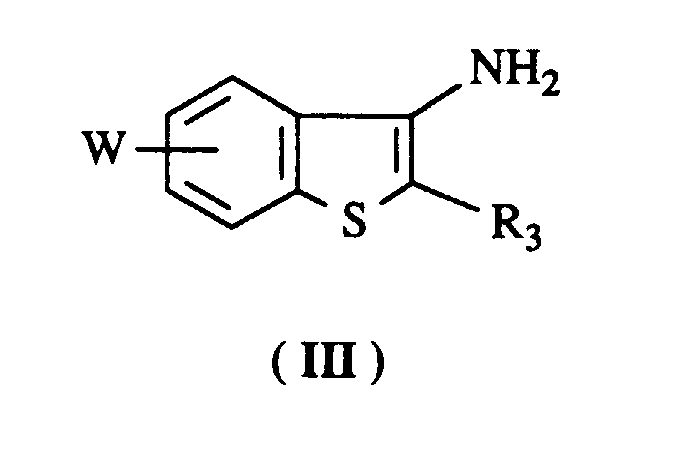
- the starting 3-aminobenzo[b]thiophenes of Formula III can also be prepared by methods known to the art. The reader is referred, for instance, to D.E. Boswell et al., J. Heterocyclic Chem., 5 , 69 (1968), and Heilbron, "Dictionary of Organic Compounds", p. 151.
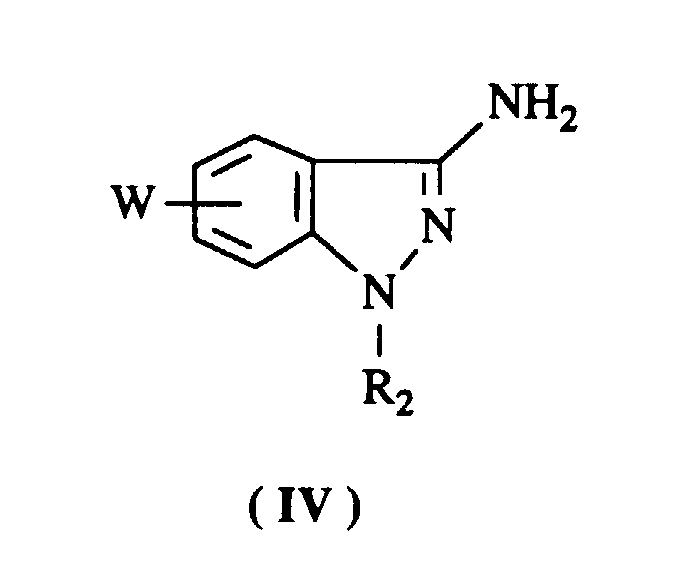
- the starting 3-aminoindazoles of Formula IV can also be prepared by methods known to the art.
- Virona et al., J. Heterocyclic Chem., 16 , 783 (1989) disclose the reaction depicted below in which R 2 is hydrogen or methyl.
- Said reaction is typically conducted in an ethereal solvent such as bis(2-methoxyethyl)ether, diethyl ether, dimethoxyethane, dioxane or tetrahydrofuran or polar aprotic solvent such as dimethylformamide, dimethylacetamide, N-methyl-2-pyrrolidone, hexamethylphosphoramide or dimethylsulfoxide or protic solvent such as ethanol or isopropanol at a temperature of between about 20°C and 150°C.
- an ethereal solvent such as bis(2-methoxyethyl)ether, diethyl ether, dimethoxyethane, dioxane or tetrahydrofuran or polar aprotic solvent such as dimethylformamide, dimethylacetamide, N-methyl-2-pyrrolidone, hexamethylphosphoramide or dimethylsulfoxide or protic solvent such as ethanol or isopropanol at a temperature of between
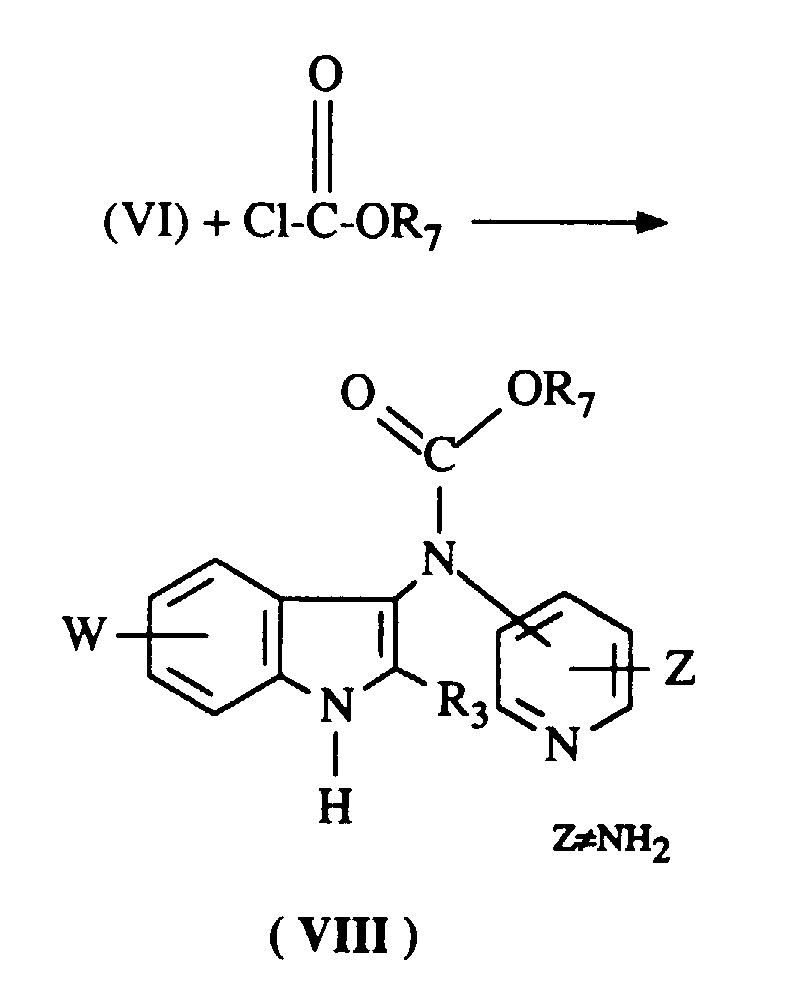
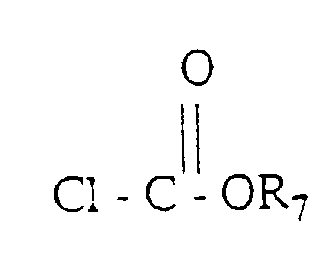
- Compound VI is allowed to react with a loweralkyl chloroformate of the formula Cl-CO-OR 7 where R 7 is loweralkyl to afford a compound of formula VIII.
- Said reaction is conducted typically in a suitable solvent such as dichloromethane in the presence of a suitable base such as sodium bicarbonate or triethylamine at a temperature of about 20-60°C.
- Compound VIII is allowed to react with a loweralkyl halide of the formula R 2 -Hal where R 2 is loweralkyl and Hal is chlorine or bromine, or with a diloweralkyl sulfate of the formula (R 2 O) 2 SO 2 in a routine manner known to the art to afford a compound of Formula IX.
- Said reaction is conducted typically in a suitable solvent such as dimethylformamide or tetrahydrofuran in the presence of a suitable base such as sodium or potassium hydride or potassium-t-butoxide at a temperature of about 0-120°C.
- Compound IX is hydrolyzed to afford a compound of formula X.
- Said hydrolysis is conducted typically by stirring a mixture comprising compound IX, an alkali hydroxide such as sodium hydroxide and a suitable medium such as ethanol or other loweralkanol plus water at a temperature of about 20-100°C.
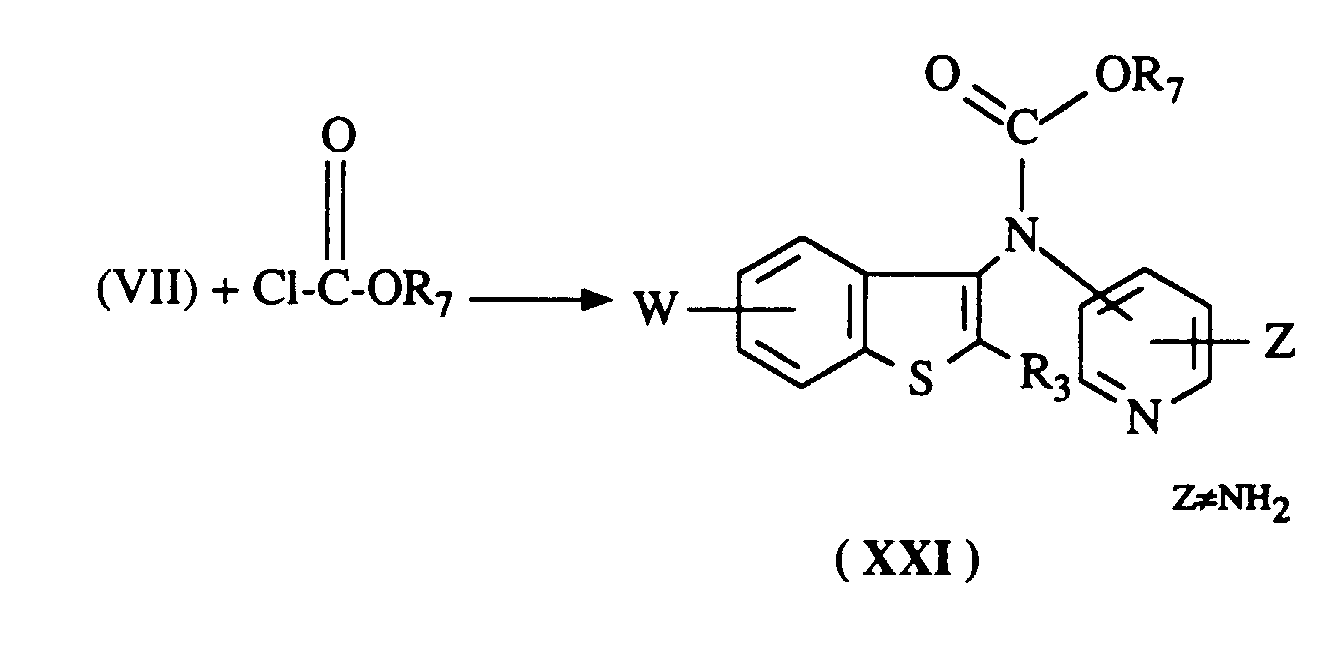
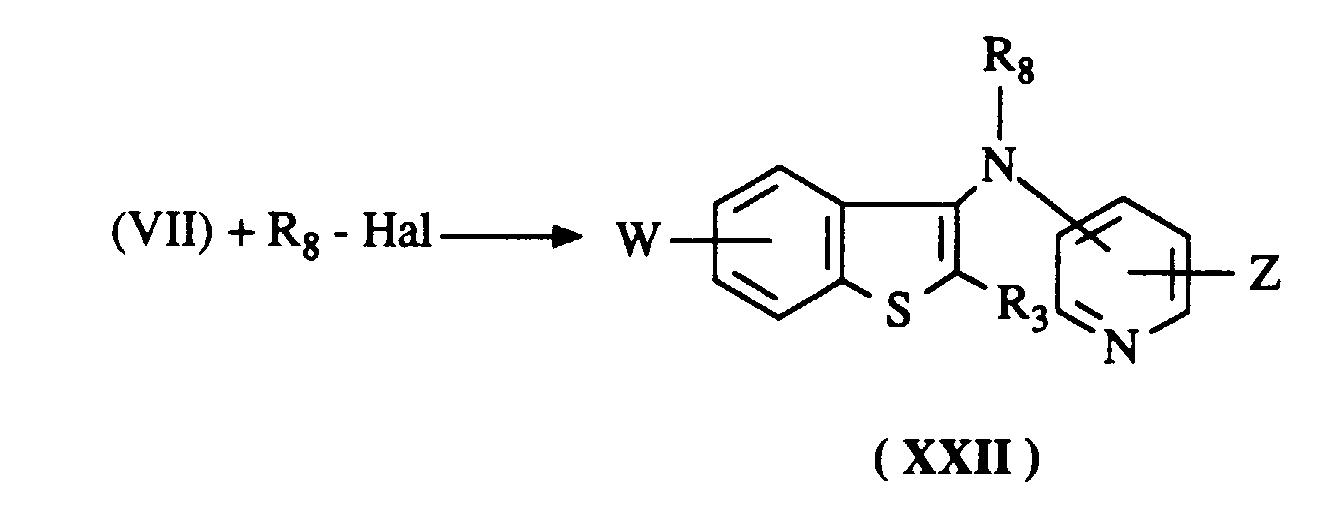
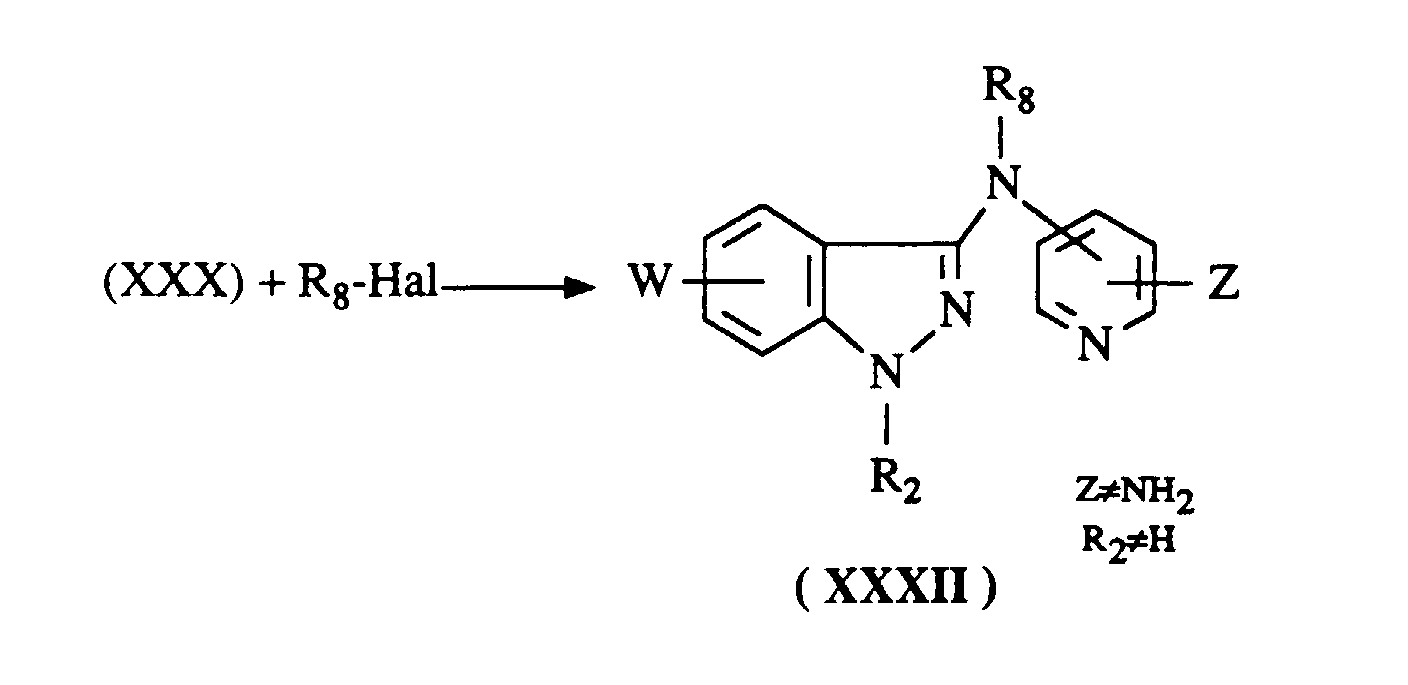
- Compound X is allowed to react with a halide compound of the formula R 8 -Hal, where R 8 is loweralkyl or arylloweralkyl, at a temperature of about -10°C-80°C, preferably between 0°C-25°C to afford a compound of Formula XI.
- Said reaction is conducted typically in a suitable solvent such as dimethylformamide, dimethylsulfoxide, ethereal solvents or aromatic hydrocarbon in the presence of a suitable base such as sodium or potassium hydride or potassium-t-butoxide.
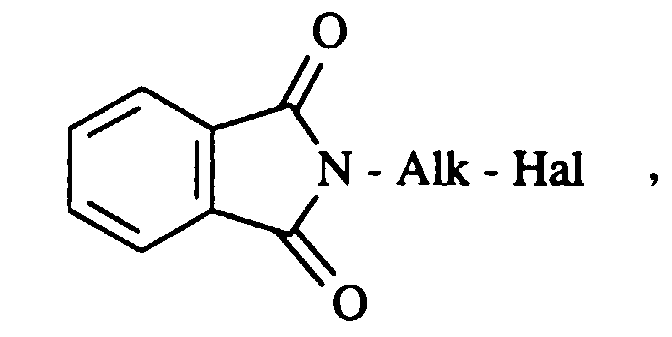
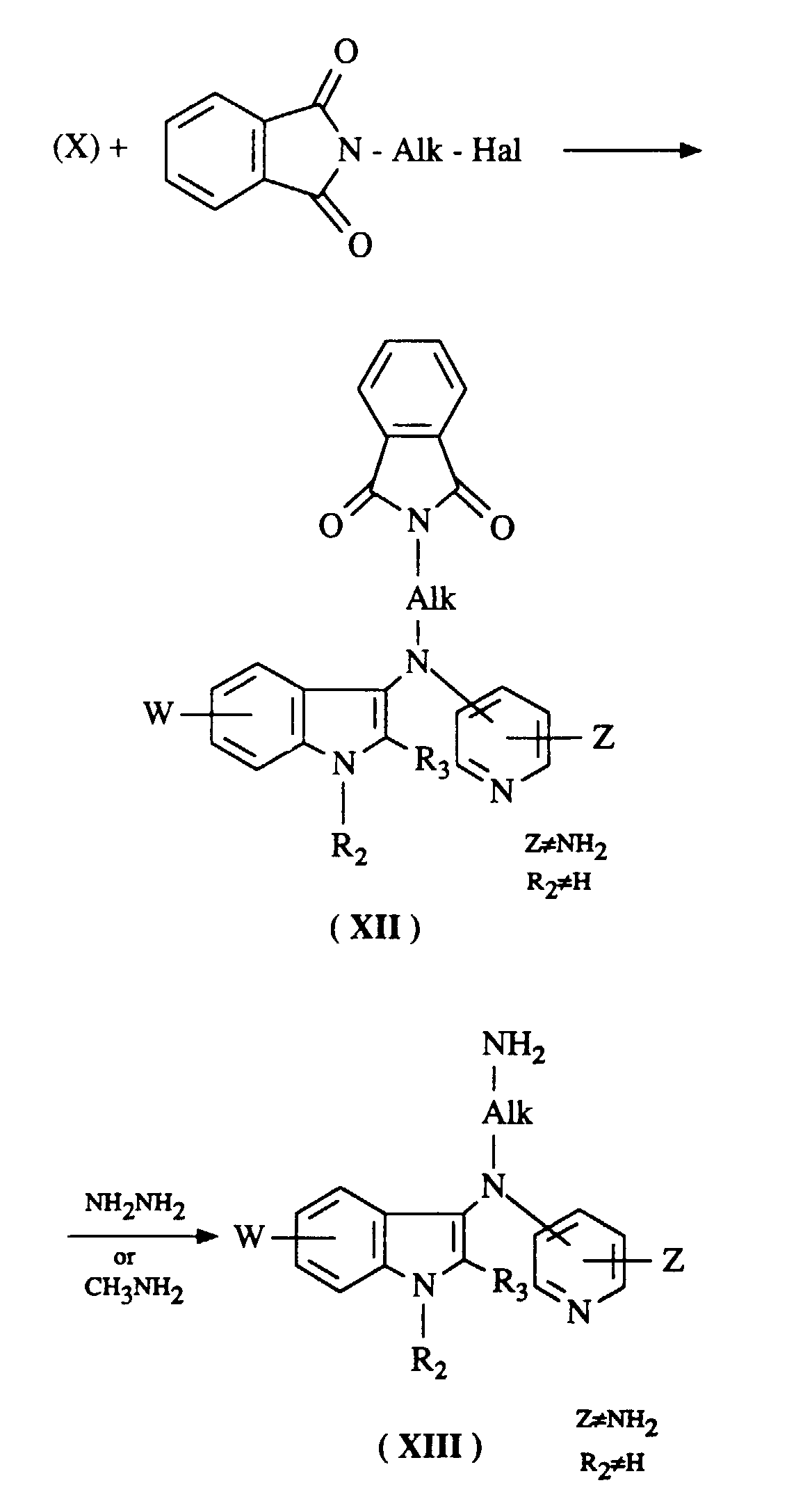
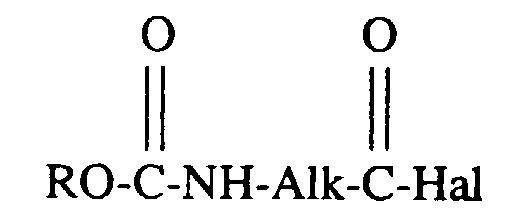
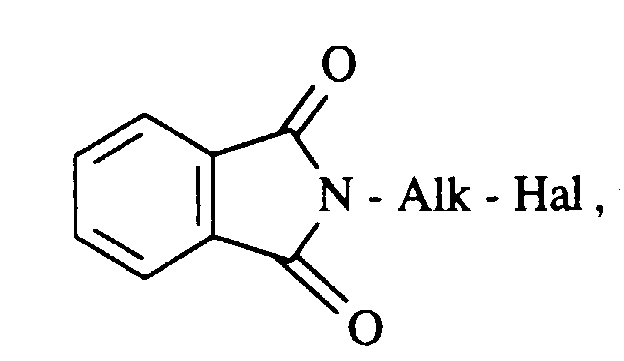
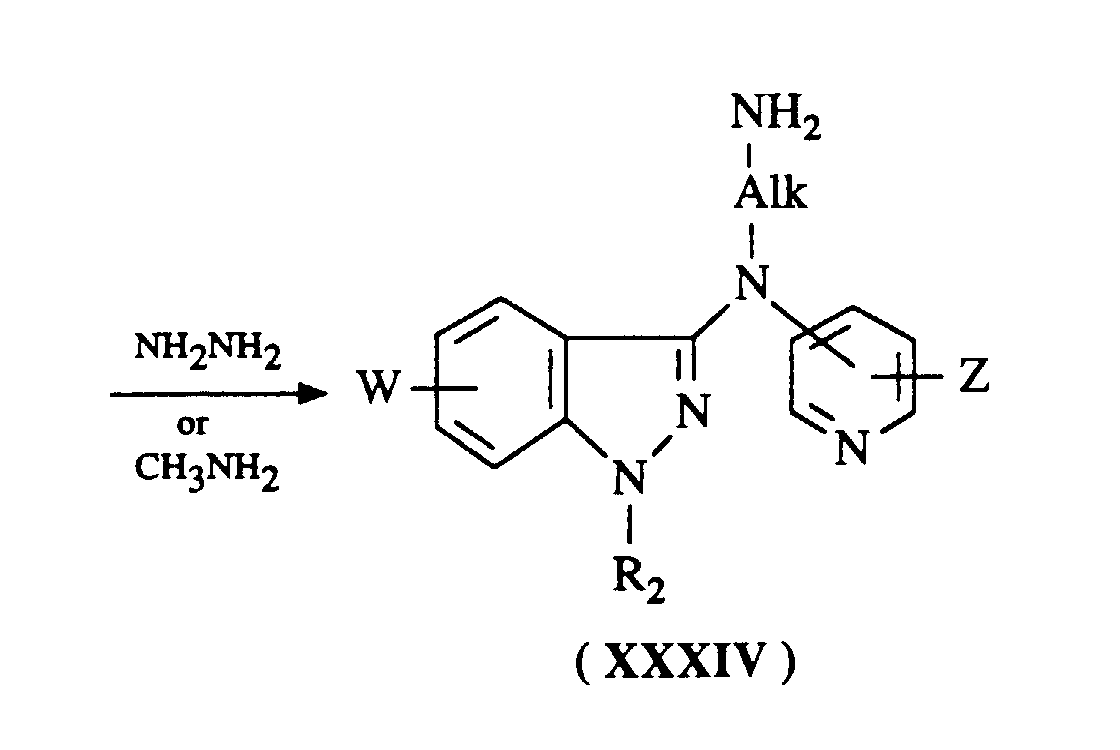
- Compound X is allowed to react with a compound of the formula where "Alk” is a loweralkylene group and Hal is Cl or Br and in a routine manner known to the art to afford a compound of Formula XII. Thereafter, Compound XII is treated with hydrazine or methylamine in a routine manner known to the art to afford a compound of Formula XIII.
- Compound X is allowed to react with a dihaloloweralkane of the formula Hal-Alk-Hal in a routine manner known to the art to afford a compound of Formula XIV and thereafter the latter is allowed to react with a compound of the formula R'NH 2 , where R' is hydrogen or loweralkyl in a routine manner known to the art to afford a compound of the Formula XV.
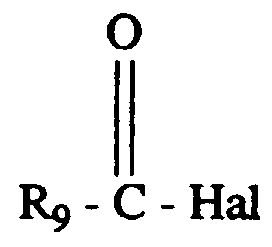
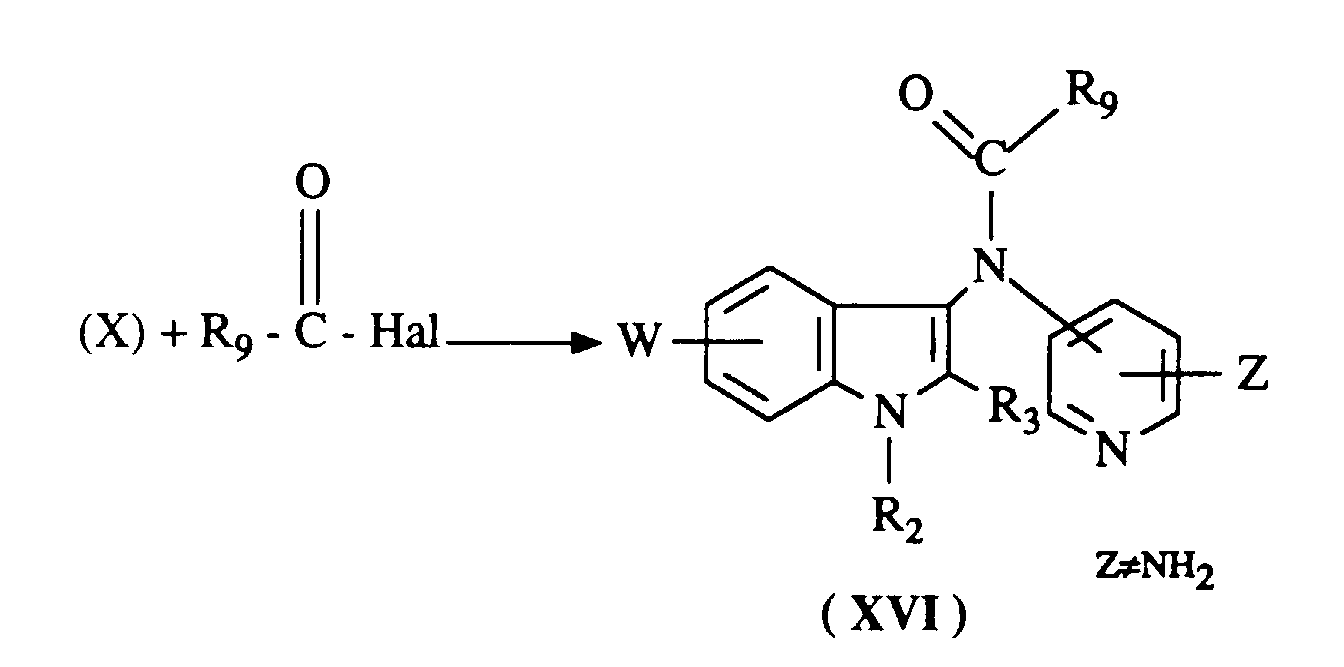
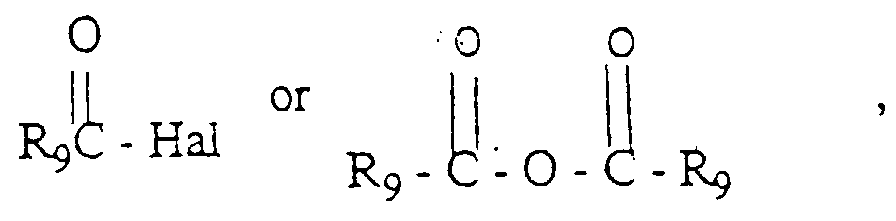
- R 9 is hydrogen or loweralkyl
- an acid anhydride of the formula, R 9 -CO-O-CO-R 9 may be used in a routine manner known to the art to accomplish the same purpose.
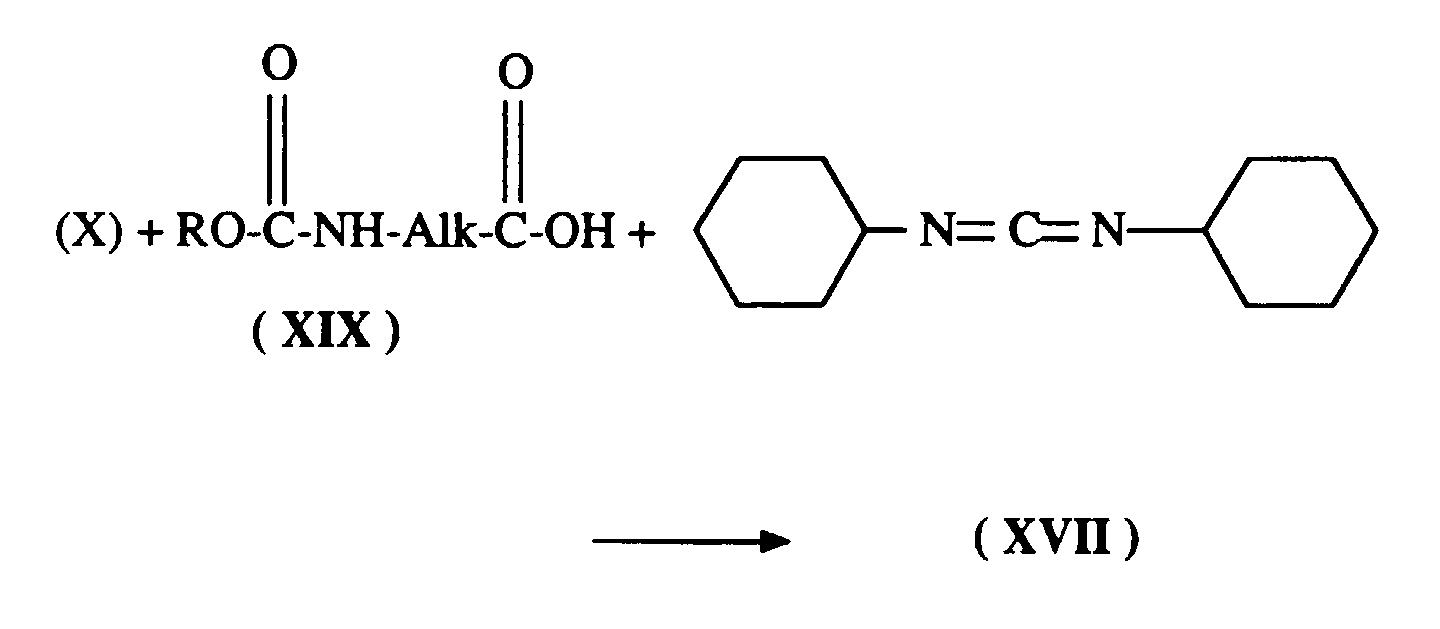
- Compound X is allowed to react with a compound of formula where R is t-butyl or benzyl in a routine manner known to the art to afford a compound of Formula XVII and thereafter the latter is hydrolyzed or subjected to catalytic hydrogenolysis in a routine manner known to the art to afford a compound of the Formula XVIII.
- Compound X is allowed to react with a carboxylic acid of Formula XIX in the presence of dicyclohexylcarbodiimide to afford Compound XVII.
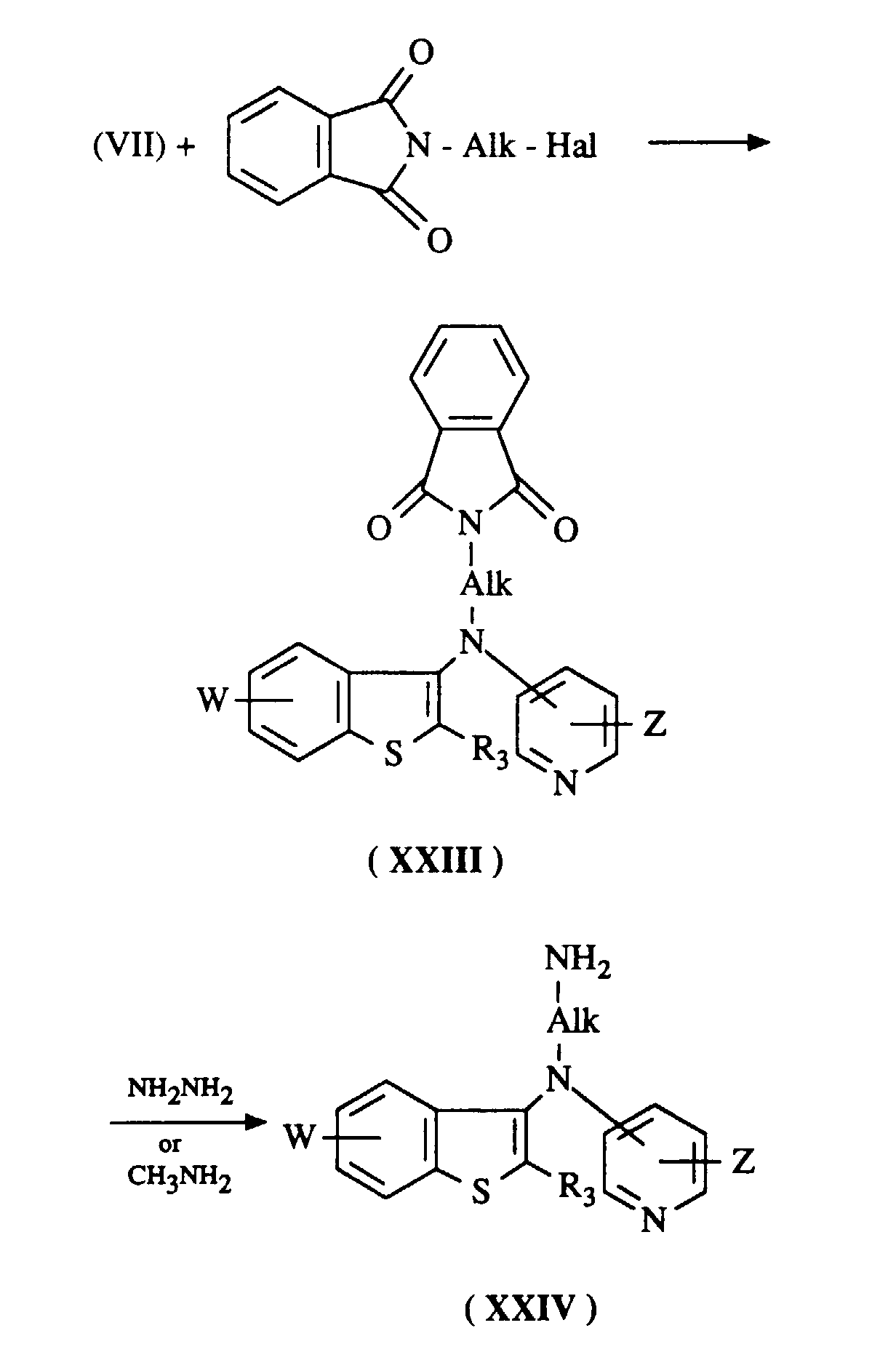
- Compound VII is allowed to react with compound of the formula Hal-Alk-Hal to afford a compound of Formula XXV and the product is allowed to react with a compound of the formula R'NH 2 in substantially the same manner as in STEP E to afford compound of Formula XXVI.
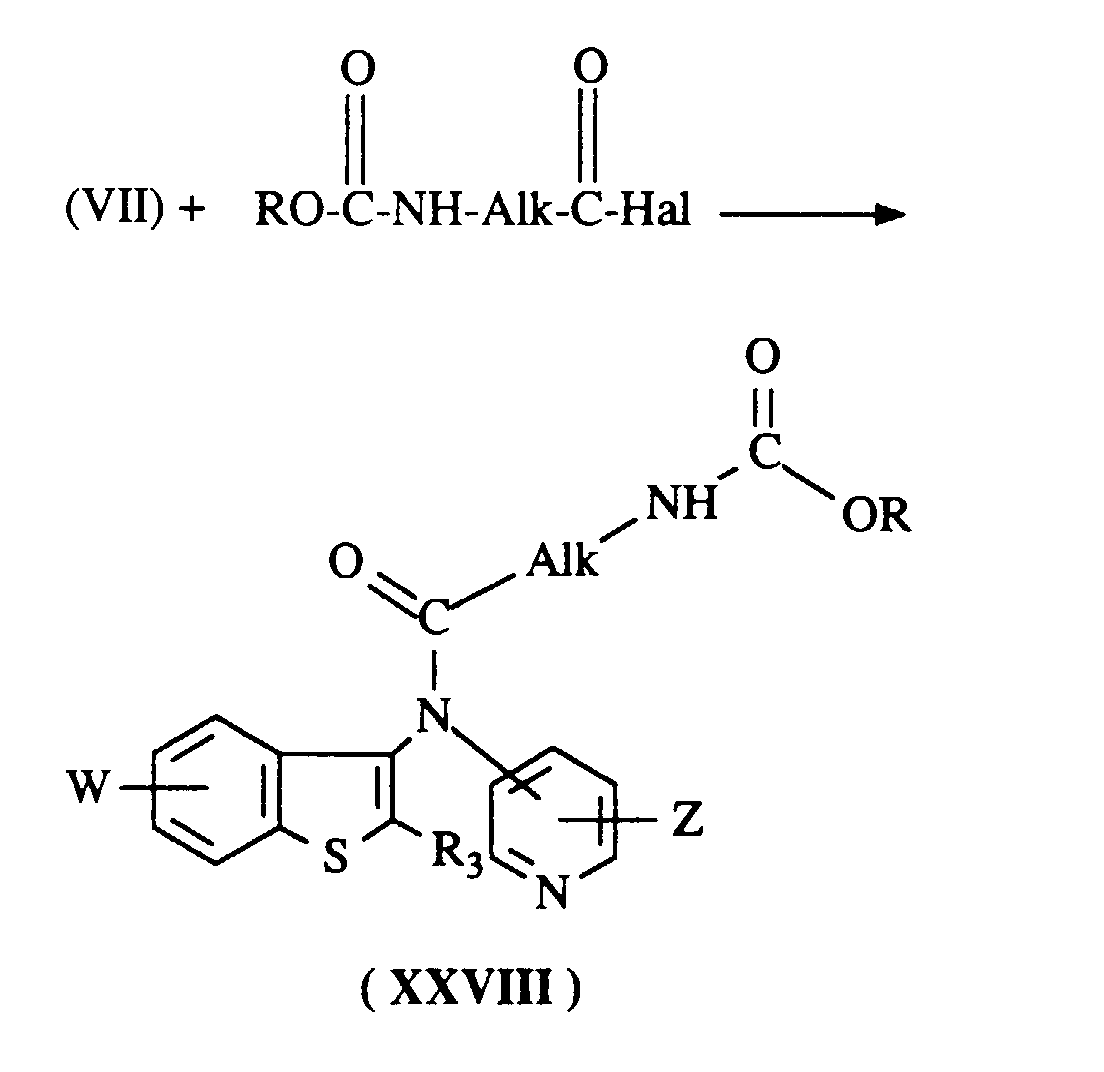
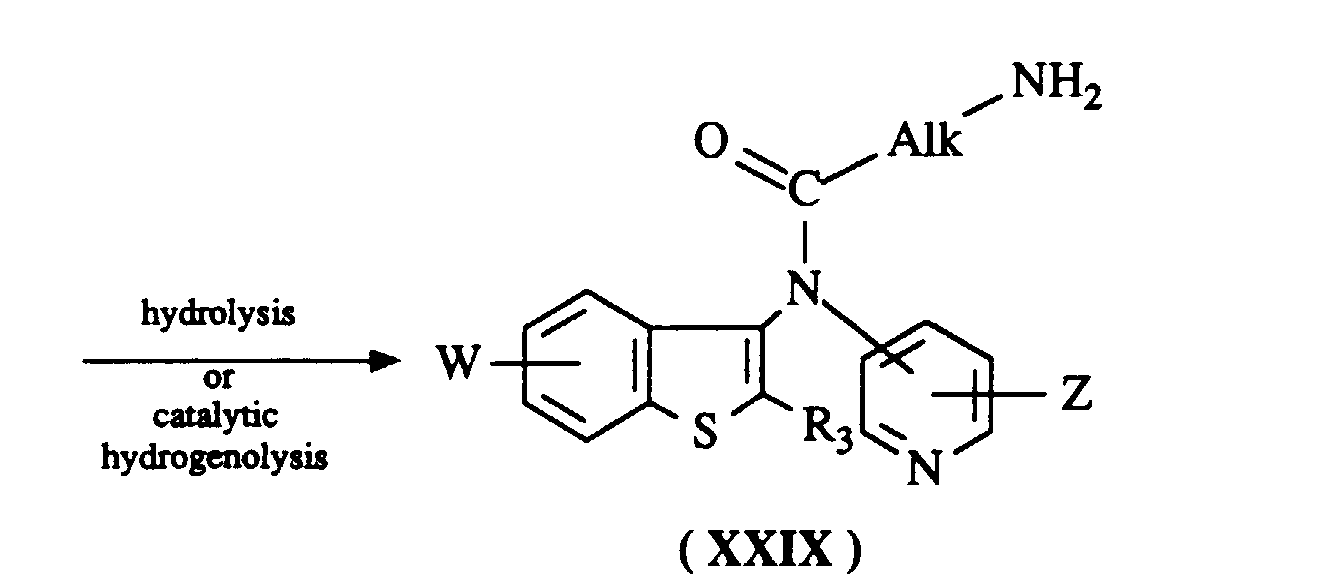
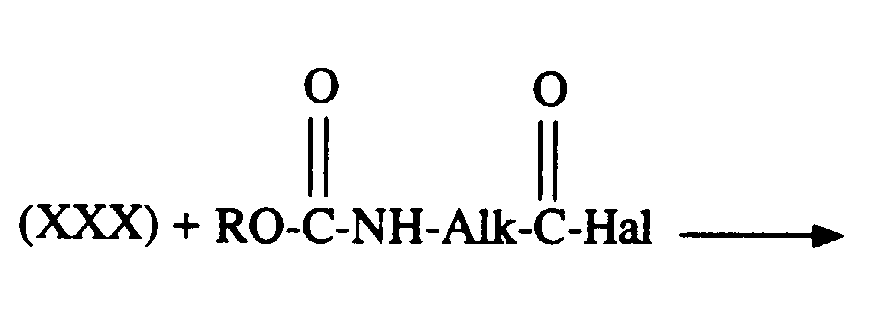
- Compound VII is allowed to react with a compound of the formula to afford a compound of Formula XXVIII and thereafter the product is hydrolyzed or subjected to catalytic hydrogenolysis in substantially the same manner as in STEP F to afford a compound of Formula XXIX.
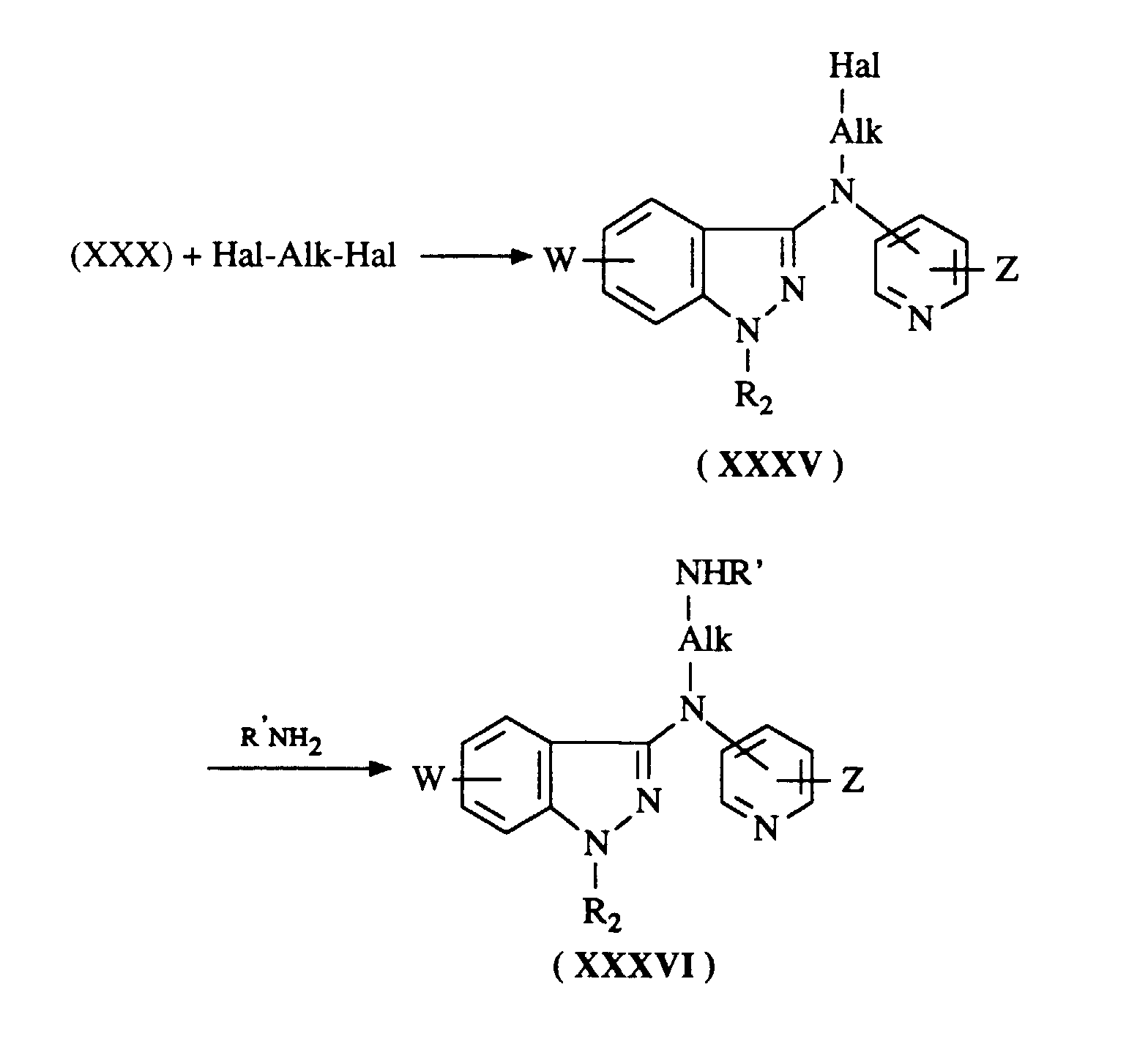
- Compound XXX is allowed to react with a compound of the formula Hal-Alk-Hal to afford a compound of Formula XXXV and the product is allowed to react with a compound of the formula R'NH 2 in substantially the same manner as in STEP E to afford a compound of Formula XXXVI.
- the compounds of Formula I of the present invention are useful for the treatment of various memory dysfunctions such as Alzheimer's disease, as modulators of neurotransmitter function such as serotonergic and adrenergic, and as such are useful as antidepressants, anxiolytics, atypical antipsychotics, antiemetics, and for the treatment of personality disorders such as obsessive compulsive disorders.
- this assay is to determine the affinity of test compounds for the 5HT 1A receptor in brain. It is believed to be useful for predicting compounds with serotonergic properties with potential utility as novel anxiolytics, atypical antipsychotics or useful for the treatment of personality disorders such as obsessive compulsive disorder.
- the existence of two populations of 5HT receptors in rat brain was shown by differential sensitivity to spiroperidol (1).
- the spiroperidol-sensitive receptors were designated as the 5HT 1A subtype and the insensitive receptors were referred to as the 5HT 1B subtype (2).
- Other 5HT binding sites (5HT 1C , 5HT 1C , 5HT 1D and 5HT 3 ) have subsequently been identified in various species, based on differential sensitivity to 5HT antagonists (3).
- a significant advance in the classification of 5HT receptors came with the identification of a selective ligand for the 5HT 1A receptor, [ 3 H]DPAT (4). These authors reported that [ 3 H]DPAT labeled an autoreceptor.
- [ 3 H]DPAT labeled receptors are not terminal autoreceptors, but may be somatodendritic autoreceptors (5).
- DPAT decreases the firing rate in the Raphe nucleus and inhibits 5HT release, the actual location and function is somewhat controversial (6).
- These studies and the sensitivity of [ 3 H]DPAT binding to guanine nucleotides and effects on adenylate cyclase suggest that DPAT acts as an agonist at the 5HT 1A receptor (7).
- Specific binding is defined as the difference between total binding and binding in the presence of 10 ⁇ M 5HT. IC 50 values are calculated from the percent specific binding at each drug concentration.
- Tubes are incubated for 15 minutes at 25°C.
- the assay is stopped by vacuum filtration through Whatman GF/B filters which are then washed 2 times with 5 ml of ice-cold 0.05 M Tris buffer (1b).
- the filters are then placed into scintilltion vials with 10 ml of Liquiscint scintillation cocktail and counted.
- Specific binding is defined as the difference between total binding in the absence or presence of 10 ⁇ M serotonin creatinine sulfate.
- IC 50 values are calculated from the percent specific binding at each drug concentration.
- K D value for [ 3 H]DPAT binding was found to be 1.3 nM by Scatchard analysis of a receptor saturation experiment.
- this assay is to determine the affinity of test compounds for the 5HT 3 binding site in the brain. This is believed to be useful for predicting the potential of compounds to exhibit antiemetic, anxiolytic or atypical antipsychotic profiles.
- 5HT neurotransmitter serotonin
- 5HT 1 , 5HT 2 and 5HT 3 The 5HT 1 and 5HT 2 binding sites have been well characterized and further subdivided based on data from binding and functional activity studies (1,2).
- the 5HT 3 binding site has only recently begun to be characterized. Originally it was believed that 5HT 3 binding sites existed only in the periphery (3). However, with the recent introduction of potent and selective 5HT 3 antagonist drugs such as GR65630, zacopride, ICS 205 930 and MDL 72222, data from binding studies have indicated that 5HT 3 binding sites are also located in select areas of the brain (4,5,6).
- 5HT 3 binding sites have been detected in limbic and dopamine containing brain areas (entorhinal cortex, amygdala, nucleus accumbens and tuberculum olfactorium) (4).
- 5HT 3 antagonists Besides possessing selective binding in dopamine rich areas, 5HT 3 antagonists have been reported to block behavioral effects associated with certain drugs of abuse (nicotine and morphine) and to be active in behavioral tests predictive of anxiolytic activity. Based on these selective regional binding results and behavioral studies, it has been speculated that 5HT 3 antagonists may have a therapeutic benefit in disease states believed to be associated with excessive dopaminergic activity; e.g., schizophrenia and drug abuse.
- This assay is used as a biochemical screen for compounds which block serotonin (5HT) uptake, which may be useful as antidepressants and for the treatment of personality disorders such as obsessive compulsive disorder.
- 5HT serotonin
- [ 3 H]-5HT transport has been characterized in CNS tissue (6,7) and found to be saturable, sodium- and temperature-dependent, inhibited by ouabain, metabolic inhibitors, tryptamine analogs (8) and tricyclic antidepressants (tertiary amines >>secondary amines) (9). The latter findings differentiate 5HT uptake from catecholamine uptake. [ 3 H]-5HT uptake can also be used as a marker for serotonin nerve terminals.
- Tubes are incubated at 37°C under a 95% O 2 /5% CO 2 atmosphere for 5 minutes.
- 3 tubes are incubated with 20 ⁇ l of vehicle at 0°C in an ice bath. After incubation all tubes are immediately centrifuged at 4000 g for 10 minutes. The supernatant fluid is aspirated and the pellets dissolved by adding 1 ml of solubilizer (Triton X-100 + 50% EtOH, 1:4 v/v). The tubes are vigorously vortexed, decanted into scintillation vials, and counted in 10 ml of Liquiscint scintillation counting cocktail. Active uptake is the difference between cpm at 37°C and 0°C. The percent inhibition at each drug concentration is the mean of three determinations. IC 50 values are derived from log-probit analysis.
- Effective quantities of the compounds of the invention may be administered to a patient by any of the various methods, for example, orally as in capsule or tablets, parenterally in the form of sterile solutions or suspensions, and in some cases intravenously in the form of sterile solutions.
- the free base final products while effective themselves, may be formulated and administered in the form of their pharmaceutically acceptable acid addition salts for purposes of stability, convenience of crystallization, increased solubility and the like.
- Acids useful for preparing the pharmaceutically acceptable acid addition salts of the invention include inorganic acids such as hydrochloric, hydrobromic, sulfuric, nitric, phosphoric and perchloric acids, as well as organic acids such as tartaric, citric, acetic, succinic, maleic, fumaric and oxalic acids.
- inorganic acids such as hydrochloric, hydrobromic, sulfuric, nitric, phosphoric and perchloric acids
- organic acids such as tartaric, citric, acetic, succinic, maleic, fumaric and oxalic acids.
- the active compounds of the present invention may be orally administered, for example, with an inert diluent or with an edible carrier, or they may be enclosed in gelatin capsules, or they may be compressed into tablets.
- the active compounds of the invention may be incorporated with excipients and used in the form of tablets, troches, capsules, elixirs, suspensions, syrups, wafers, chewing gum and the like. These preparations should contain at least 0.5% of active compounds, but may be varied depending upon the particular form and may conveniently be between 4% to about 70% of the weight of the unit. The amount of active compound in such compositions is such that a suitable dosage will be obtained.
- Preferred compositions and preparations according to the present invention are prepared so that an oral dosage unit form contains between 1.0 - 300 milligrams of active compound.
- the tablets, pills, capsules, troches and the like may also contain the following ingredients: a binder such as micro-crystalline cellulose, gum tragacanth or gelatin; an excipient such as starch or lactose, a disintegrating agent such as alginic acid, Primogel, cornstarch and the like; a lubricant such as magnesium stearate or Sterotex; a glidant such as colloidal silicon dioxide; and a sweeting agent such as sucrose or saccharin may be added or a flavoring agent such as peppermint, methyl salicylate, or orange flavoring.
- a binder such as micro-crystalline cellulose, gum tragacanth or gelatin
- an excipient such as starch or lactose, a disintegrating agent such as alginic acid, Primogel, cornstarch and the like
- a lubricant such as magnesium stearate or Sterotex
- a glidant such as colloidal silicon dioxide
- a sweeting agent such
- dosage unit forms may contain other various materials which modify the physical form of the dosage unit, for example, as coatings.
- tablets or pills may be coated with sugar, shellac, or other enteric coating agents.
- a syrup may contain, in addition to the active compounds, sucrose as a sweetening agent and certain preservatives, dyes, coloring and flavors. Materials used in preparing these various compositions should be pharmaceutically pure and non-toxic in the amounts used.
- the active compounds of the invention may be incorporated into a solution or suspension. These preparations should contain at least 0.1% of active compound, but may be varied between 0.5 and about 30% of the weight thereof. The amount of active compound in such compositions is such that a suitable dosage will be obtained. Preferred compositions and preparations according to the present inventions are prepared so that a parenteral dosage unit contains between 0.5 to 100 milligrams of active compound.
- the solutions or suspensions may also include the following components: a sterile diluent such as water for injection, saline solution, fixed oils, polyethylene glycols, glycerine, propylene glycol or other synthetic solvents; antibacterial agents such as benzyl alcohol or methyl parabens; antioxidants such as ascorbic acid or sodium bisulfite; chelating agents such as ethylenediaminetetraacetic acid; buffers such as acetates, citrates or phosphates and agents for the adjustment of tonicity such as sodium chloride or dextrose.
- a sterile diluent such as water for injection, saline solution, fixed oils, polyethylene glycols, glycerine, propylene glycol or other synthetic solvents
- antibacterial agents such as benzyl alcohol or methyl parabens
- antioxidants such as ascorbic acid or sodium bisulfite
- chelating agents such as ethylenediaminetetraacetic acid
- Examples of the compounds of this invention include: 3-(4-pyridinylamino)-1H-indole; N-(1H-indol-3-yl)-N-(4-pyridinyl)propanamide; 3-(4-pyridinylamino)benzo[b]thiophene; N-(benzo[b]thiophen-3-yl)-N-(4-pyridinyl)propanamide; 3-(3-fluoro-4-pyridinylamino)-1H-indole; 3-(propyl-4-pyridinylamino)-1H-indole; 1-methyl-3-(4-pyridinylamino)-1H-indole; 6-fluoro-3-(4-pyridinylamino)benzo[b]thiophene; 5-phenylmethoxy-3-(4-pyridinylamino)-1H-indole; 5-hydroxy-3-(4-pyridinylamino
- 3-(4-Pyridinylamino)-1H-indole (3 g) was added to a solution prepared from propionic anhydride (3 g), 10 mL dichloromethane and 10 mL toluene.
- the resultant solution was stirred one hour at ambient temperature and thereafter stirred with water and basified with sodium carbonate.
- the product was extracted into dichloromethane.
- the dried (anhydrous magnesium sulfate) organic layer was filtered and concentrated. The residue was eluted through silica with 50% ethyl acetate in dichloromethane via flash column chromatography to yield 3.5 g of a light tan solid, m.p. 166-168°.
Landscapes
- Chemical & Material Sciences (AREA)
- Organic Chemistry (AREA)
- Health & Medical Sciences (AREA)
- Engineering & Computer Science (AREA)
- Bioinformatics & Cheminformatics (AREA)
- Pharmacology & Pharmacy (AREA)
- Animal Behavior & Ethology (AREA)
- Neurosurgery (AREA)
- Biomedical Technology (AREA)
- Chemical Kinetics & Catalysis (AREA)
- General Chemical & Material Sciences (AREA)
- Medicinal Chemistry (AREA)
- Nuclear Medicine, Radiotherapy & Molecular Imaging (AREA)
- Veterinary Medicine (AREA)
- Public Health (AREA)
- Life Sciences & Earth Sciences (AREA)
- Neurology (AREA)
- General Health & Medical Sciences (AREA)
- Psychiatry (AREA)
- Hospice & Palliative Care (AREA)
- Pain & Pain Management (AREA)
- Anesthesiology (AREA)
- Otolaryngology (AREA)
- Pharmaceuticals Containing Other Organic And Inorganic Compounds (AREA)
- Plural Heterocyclic Compounds (AREA)
- Indole Compounds (AREA)
- Nitrogen And Oxygen Or Sulfur-Condensed Heterocyclic Ring Systems (AREA)
- Nitrogen Condensed Heterocyclic Rings (AREA)
Abstract
Description
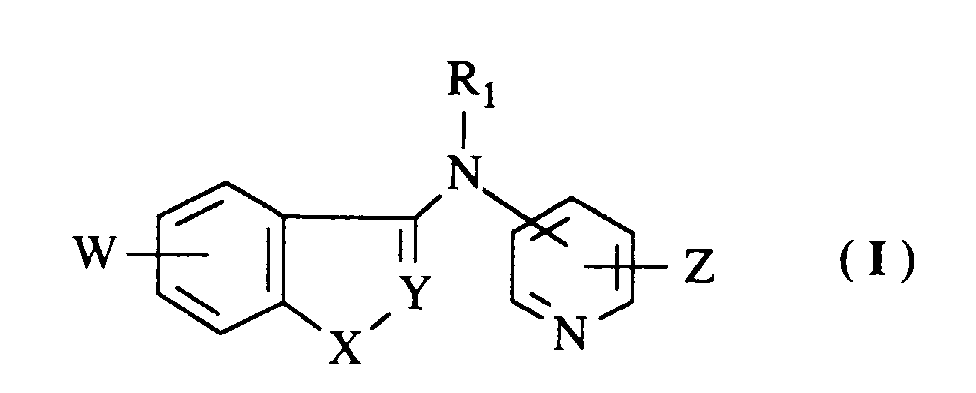
- R1
- is hydrogen, (C1-C6)alkyl, phenyl(C1-C6)alkyl, amino(C1-C6)alkyl, (C1-C6)alkylamino(C1-C6)alkyl, formyl, (C1-C6)alkylcarbonyl, amino(C1-C6)alkylcarbonyl or (C1-C6)alkoxycarbonyl;
- the group -X-Y=
- is
or
 R2 and R3 being independently hydrogen or (C1-C6)alkyl;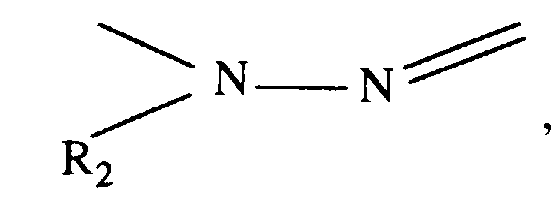
- W
- is hydrogen, halogen, hydroxy, (C1-C6)alkoxy, phenyl(C1-C6)alkoxy or
where R4 is hydrogen,(C1-C6)alkyl or phenyl(C1-C6)alkyl;

R5 is (C1-C6)alkyl or phenyl(C1-C6)alkyl; or alternatively the groupas a whole is
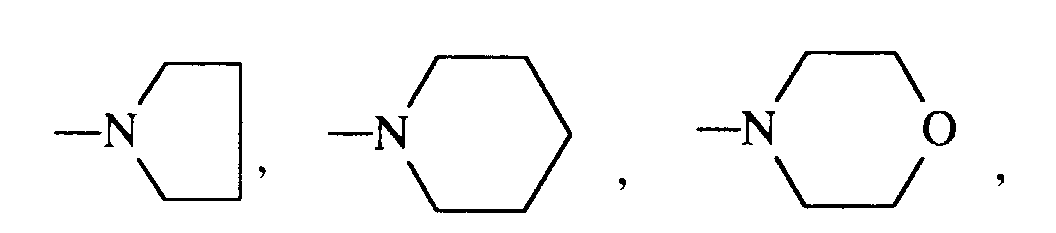 ,R6 being hydrogen, (C1-C6)alkyl, phenyl or phenyl(C1-C6)alkyl; and
- Z
- is hydrogen, halogen, (C1-C6)alkyl, nitro or amino; where phenyl is in each case unsubstituted or substituted with 1 or 2 substituents selected from: (C1-C6)alkyl, (C1-C6)alkoxy, halogen or trifluoromethyl;















the formula





16.2 g Tris base
Bring volume to 1 liter with distilled water
(0.5 M Tris buffer, pH 7.7, buffer 1a).
4mM CaCl2 and 0.1% ascorbic acid (buffer 1c).
0.49 mg pargyline•HCl
111 mg CaCl2
250 mg ascorbic acid
Bring to 250 ml with 0.05 M Tris buffer, pH
7.7 (reagent 1b)
For IC50 determinations: a 10nM stock solution is made up and 50µl added to each tube (final concentration = 0.5 nM).
16.2 g Tris base
Bring to 1 liter with distilled water
(0.5 M Tris buffer, pH 7.7, buffer 1a).
0.49 mg pargyline•HCl
110.99 mg CaCl2
250 mg ascorbic acid
Bring to 250 ml with 0.05 M Tris buffer, pH
7.7 (buffer 1b).
For IC50 determinations: 3H-DPAT is made up to a concentration of 3.3 nM in the Tris Buffer (1c) such that when 150 µl is added to each tube a final concentration of 0.5 nM is attained in the 1 ml assay.
11.92 g Hepes
10.52 g NaCl
0.373 g KCl
0.277 g CaCl2
0.244 g MgCl2•6H2O
Bring to 1 liter with distilled H2O.
Bring pH up to 7.4 (at 4°C) with 5N NaOH.
Make a 1 liter batch, containing the following salts.
| g/L | mM | |
| NaCl | 6.92 | 118.4 |
| KCl | 0.35 | 4.7 |
| MgSO4•7H2O | 0.29 | 1.2 |
| KH2PO4 | 0.16 | 2.2 |
| NaHCO3 | 2.10 | 24.9 |
| CaCl2 | 0.14 | 1.3 |
| Dextrose | 2 mg/ml | 11.1 |
| Iproniazid phosphate | 0.30 mg/ml | 0.1 |
The final desired concentration of 3H-5HT in the assay is 50 nM. The dilution factor is 0.8. Therefore, the KHBB is made up to contain 62.5 nM [3H]-5HT. Add tp 100 ml of KHBB.
| A) | 56.1 µl of 0.1 mM 5HT = | 56.1 nM |
| B) | 0.64 nmole of 3H-5HT = | 6.4 nM |
| |
| Compound | 5HT1A Receptor Binding IC50(µM) | 5HT3 Receptor Binding IC50(µM) | Inhibition of 3H-serotonin Uptake IC50(µM) |
| 3-(4-pyridinylamino)-1H-indole | 6.4 | 5.5 | 14.6 |
| Buspirone | 0.062 | >20 | |
| MDL 72222 | 0.53 | ||
| Clozapine | 0.58 | 1.02 | >20 |
| Chloripramine | 0.15 | ||
| Amitriptyline | 0.83 |
3-(4-pyridinylamino)-1H-indole;
N-(1H-indol-3-yl)-N-(4-pyridinyl)propanamide;
3-(4-pyridinylamino)benzo[b]thiophene;
N-(benzo[b]thiophen-3-yl)-N-(4-pyridinyl)propanamide;
3-(3-fluoro-4-pyridinylamino)-1H-indole;
3-(propyl-4-pyridinylamino)-1H-indole;
1-methyl-3-(4-pyridinylamino)-1H-indole;
6-fluoro-3-(4-pyridinylamino)benzo[b]thiophene;
5-phenylmethoxy-3-(4-pyridinylamino)-1H-indole;
5-hydroxy-3-(4-pyridinylamino)-1H-indole;
6-fluoro-3-(propyl-4-pyridinylamino)benzo[b]thiophene;
3-(4-pyridinylamino)benzo[b]thiophene;
3-(4-pyridinylamino)-1H-indol-5-yl methylcarbamate;
3-(4-pyridinylamino)-1H-indol-5-yl benzylcarbamate;
3-[N-propyl-N-(3-fluoro-4-pyridinyl)amino]-1H-indol-5-yl benzylcarbamate;
3-[N-propyl-N-(3-fluoro-4-pyridinyl)amino]-1H-indole;
3-(4-pyridinylamino)-1H-indazole;
3-[N-propyl-N-(4-pyridinyl)amino]-1H-indazole;
1-methyl-3-(4-pyridinylamino)-1H-indazole;
1-methyl-3-(propyl-4-pyridinyl)amino-1H-indazole;
2-amino-N-(1H-indole-3-yl)-N-(4-pyridinyl)acetamide;
2-amino-N-(1-methyl-1H-indol-3-yl)-N-(4-pyridinyl)acetamide;
2-amino-N-(1-methyl-1H-indazol-3-yl)-N-(4-pyridinyl)acetamide;
2-amino-N-(1H-indazol-3-yl)-N-(4-pyridinyl)acetamide; and
2-amino-N-(benzo[b]thiophen-3-yl)-N-(4-pyridinyl)acetamide;
| ANALYSIS: | |||
| Calculated for C17H15N3O4: | 62.76%C | 4.65%H | 12.92%N |
| Found: | 62.85%C | 4.70%H | 12.92%N |
| ANALYSIS: | |||
| Calculated for C16H15N3O: | 72.43%C | 5.70%H | 15.84%N |
| Found: | 72.06%C | 5.69%H | 15.94%N |
| ANALYSIS: | |||
| Calculated for C13H11ClFN3: | 59.21%C | 4.20%H | 15.93%N |
| Found: | 59.06%C | 4.14%H | 15.49%N |
| ANALYSIS: | |||
| Calculated for C17H13FN2O4S: | 56.66%C | 3.64%H | 7.78%N |
| Found: | 56.41%C | 3.44%H | 7.68%N |
| ANALYSIS: | |||
| Calculated for C16H16ClFN2S: | 59.53%C | 5.00%H | 8.68%N |
| Found: | 59.16%C | 5.00%H | 8.26%N |
Claims (11)
- A process for the preparation of a compound of the formula Iwhere

- R1
- is hydrogen, (C1-C6)-alkyl, phenyl-(C1-C6)-alkyl, amino-(C1-C6)-alkyl, (C1-C6)-alkylamino-(C1-C6)-alkyl, formyl, (C1-C6)-alkylcarbonyl, amino-(C1-C6)-alkylcarbonyl or (C1-C6)-alkoxycarbonyl;
- the group -X-Y=
- is
or
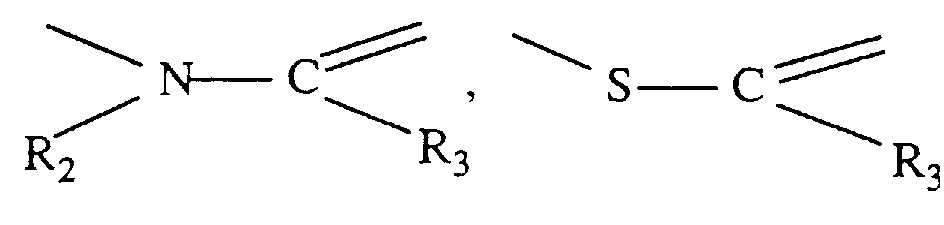 R2 and R3 being independently hydrogen or (C1-C6)-alkyl;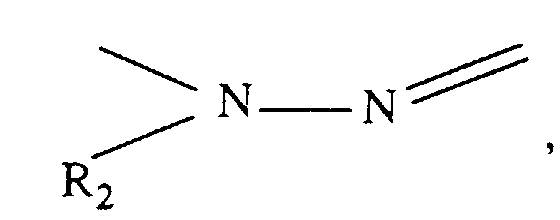
- W
- is hydrogen, halogen, hydroxy, (C1-C6)-alkoxy, phenyl-(C1-C6)-alkoxy or
where R4 is hydrogen, (C1-C6)-alkyl or aryl-(C1-C6)-alkyl;
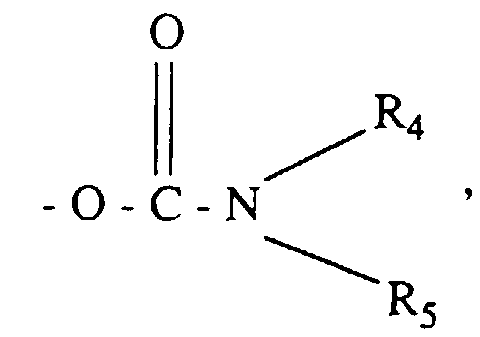
R5 is (C1-C6)-alkyl or phenyl(C1-C6)-alkyl; or alternatively the groupas a whole is
 , R6 being hydrogen, (C1-C6)-alkyl, phenyl or phenyl- (C1-C6)-alkyl; and Z is hydrogen, halogen, (C1-C6)-alkyl, nitro or amino; where phenyl in each case is either unsubstituted or substituted with 1 or 2 substituents selected from: (C1-C6)-alkyl, (C1-C6)-alkoxy, halogen and trifluoromethyl; or a pharmaceutically acceptable acid addition salt thereof, which comprises
- a) reacting a compound of the formula V
where Z is not NH2, with a compound of the formulae

 or
or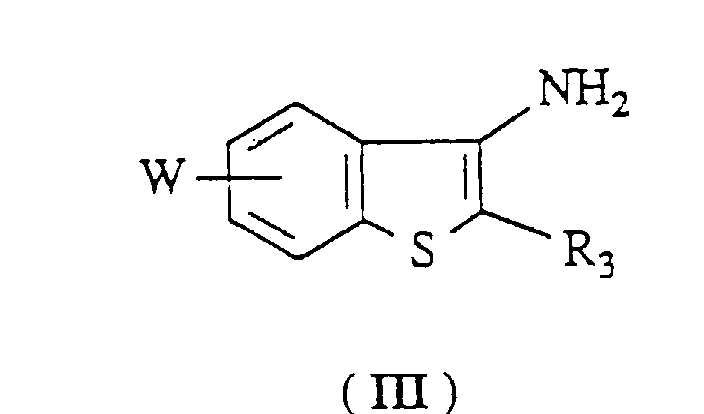 wherein R2, R3 and W are as defined, to form a compound of the formula I, wherein -X-Y=, W, Z and R3 are as defined, and R1 is hydrogen,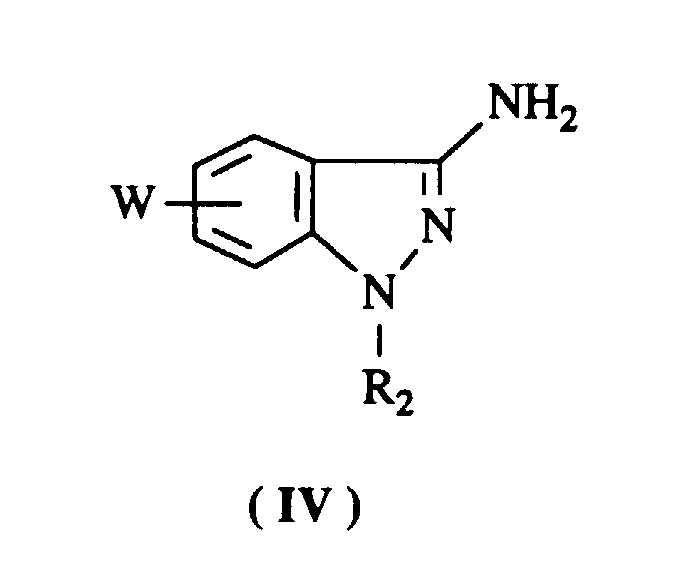
- b) optionally reacting a compound of the formula I, wherein -X-Y = is
and R3, W and Z are as defined, with a compound of the formula
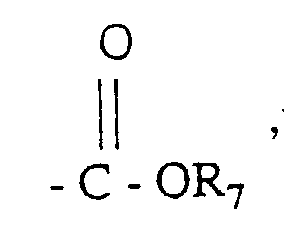
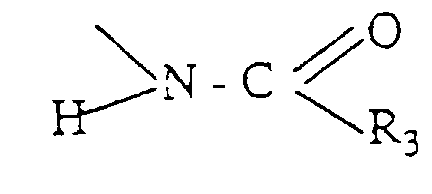 where R7 is (C1-C6)-alkyl, to afford a compound of the formula I, where R1 is the group
 where R7 is (C1-C6)-alkyl, -X-Y = is
 and R3, W and Z are as defined,
- c) optionally reacting a compound of the formula I as obtained in step b) above,
with a (C1-C6)-alkyl halide of the formula R2 Hal where R2 is (C1-C6)-alkyl and Hal is
chlorine or bromine or with a di-(C1-C6)-alkylsulfate of the formula (R2O)2SO2 to afford a
compound of the formula I, wherein the group -X-Y= is
where R2 is (C1-C6)-alkyl, R3, W and Z are as defined and R1 is
 where R7 is (C1-C6)-alkyl,
- d) optionally hydrolyzing a compound of the formula I as obtained in step c)
above, to afford a compound of the formula I, wherein the group -X, Y= is
where R2 is (C1-C6)-alkyl R3, W and Z are as defined and R1 is hydrogen,

- e) optionally reacting a compound of the formula I, wherein the group -X-Y = W, and R3 are as defined, Z is as defined, but is not amino, R2, if existent, is (C1-C6)-alkyl and R1 is hydrogen, with a compound of the formula R8-Hal, where R8 is (C1-C6)-alkyl or phenyl-(C1-C6)-alkyl where phenyl is as defined above and Hal is chlorine or bromine, to afford a compound of the formula I, wherein the group -X-Y=, W and R3 are as defined, Z is as defined but is not amino, R2, if existent, is (C1-C6)-alkyl and R1 has the meaning of R8 above,
- f) optionally reacting a compound of the formula I wherein -X-Y =, W and R3 are
as defined, Z is as defined but is not amino, R2, if existent, is (C1-C6)-alkyl and R1 is
hydrogen, with a compound of the formula
where Alk is a (C1-C6)-alkylene group and Hal is chlorine or bromine, to afford a compound of the formula I, wherein -X-Y =, W and R3 are as defined, Z is as defined but is not amino, R2, if existent, is (C1-C6)-alkyl and R1 is the group
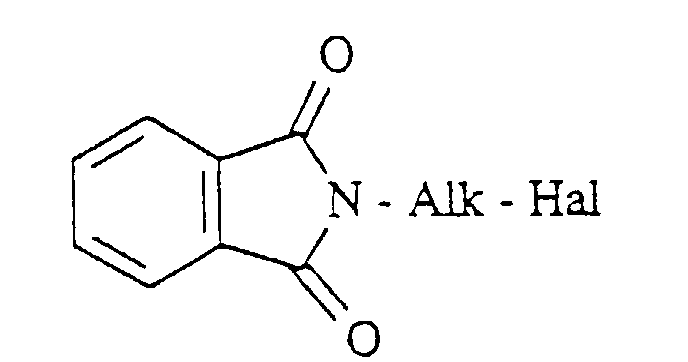 and treating the compound obtained with hydrazine or methylamine to afford a compound of the formula I, where X-Y=, W and R3 are as defined, Z is as defined but is not amino, R2, if existent, is (C1-C6)-alkyl and R1 is amino-(C1-C6)-alkyl,
- g) optionally reacting a compound of the formula I wherein -X-Y=, W and R3 are as defined, Z is as defined but is not amino, R2, if existent, is (C1-C6)-alkyl and R1 is hydrogen, with a compound of the formula Hal-Alk-Hal wherein Alk is (C1-C6)-alkylene and Hal is chlorine or bromine, and reacting the product obtained with a compound of the formula R'NH2, where R' is hydrogen or (C1-C6)-alkyl to afford a compound of the formula I, wherein -X-Y=, W and R3 are as defined, Z is as defined but is not amino, R2, if existent. is (C1-C6)-alkyl and R1 is amino-(C1-C6)-alkyl or (C1-C6)-alkylamino-(C1-C6)-alkyl,
- h) optionally reacting a compound of the formula I, wherein -X-Y=, W and R3 are
as defined, Z is as defined but is not amino, R2, if existent, is (C1-C6)-alkyl, and R1 is
hydrogen, with a compound of the formula
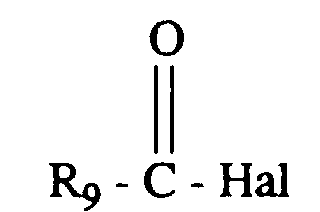
where R9 is (C1-C6)-alkyl and Hal is chlorine or bromine, to afford a compound of the formula I, wherein -X-Y=, W and R3 are as defined, Z is as defined, but is not amino, R2, if existent, is (C1-C6)-alkyl and R1 is (C1-C6)-alkylcarbonyl,
- i) optionally reacting a compound of the formula I, wherein -X-Y=, W and R3 are
as defined. Z is as defined but is not amino, R2, if existent, is (C1-C6)-alkyl, and R1 is
hydrogen, with a compound of the formula
where R is t-butyl or benzyl, Alk is (C1-C6)-alkylene and Hal is chlorine or bromine or with a compound of the formula
 where R and Alk are as defined, in the presence of dicyclohexylcarbodiimide, to afford a compound of the formula I, wherein R1 is the group
 and subjecting the compound obtained to hydrolysis or catalytically hydrogenolysis to afford a compound of the formula I, wherein -X-Y=, W and R3 are as defined, Z is as defined but is not amino, R2, if existent, is (C1-C6)-alkyl and R1 is amino-(C1-C6)-alkylcarbonyl, and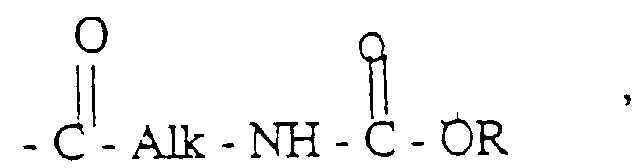
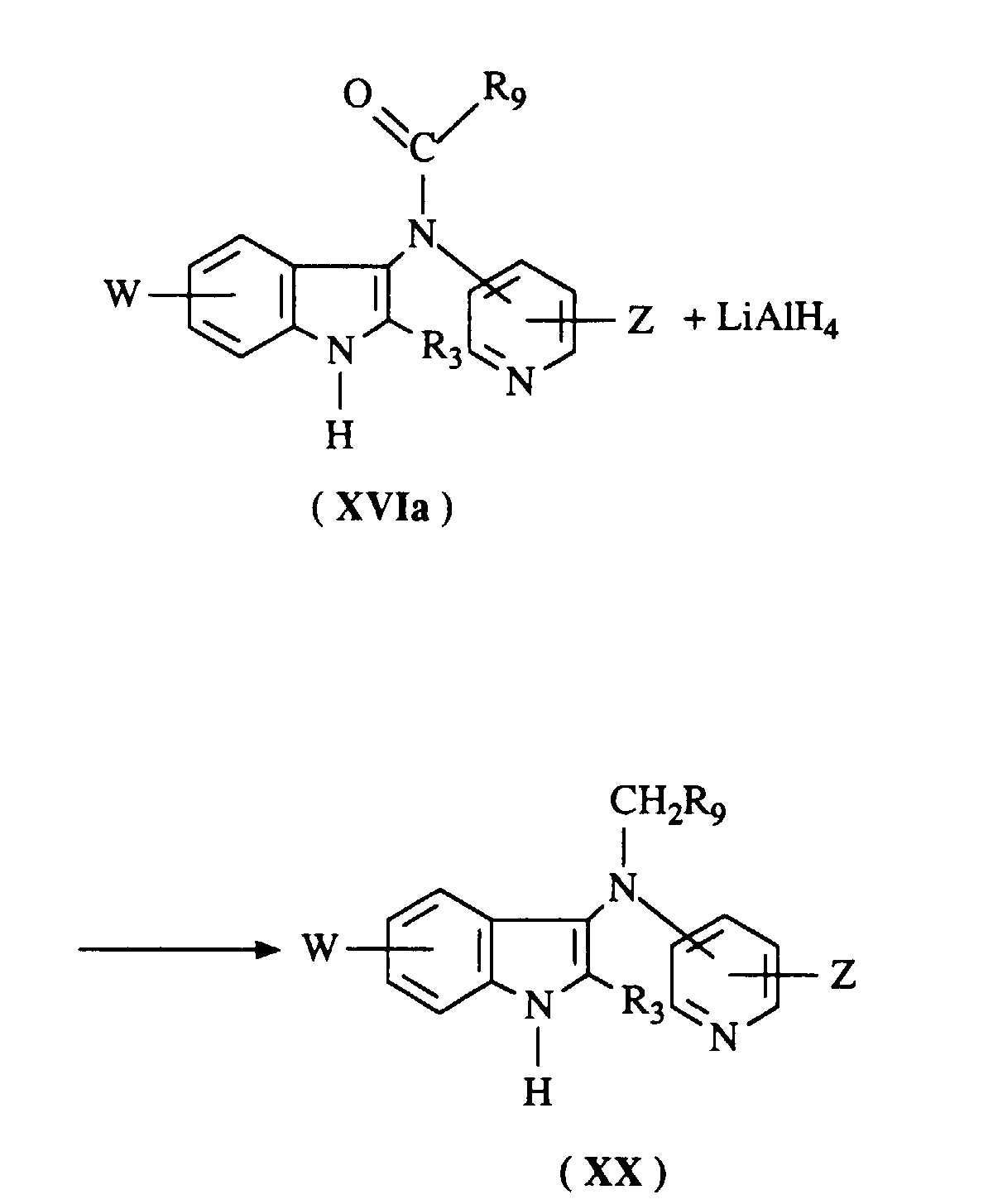
- j) optionally reducing a compound of the formula I, wherein -X-Y=, W and R3 are as defined, Z is as defined but is not amino, R2, if existent, is (C1-C6)-alkyl and R1 is (C1-C6)-alkylcarbonyl, with a suitable reducing reagent to afford a compound of the formula I, wherein -X-Y=, W and R3 are as defined, Z is as defined but is not amino, R2, if existent, is (C1-C6)-alkyl and R1 is (C1-C6)-alkyl.
- a) reacting a compound of the formula V
- A process as defined in claim 1, where the group -X-Y= iswhere R2 and R3 are as defined.

- A process as defined in claim 2, where R1 is hydrogen, (C1-C6)-alkyl, (C1-C6)-alkylcarbonyl, W is hydrogen or halogen and Z is hydrogen or halogen.
- A process as defined in claim 3, where W is hydrogen or fluoro and Z is hydrogen or fluoro.
- The process as defined in claim 4, wherein a compound selected from3-(4-pyridinylamino)-1H-indole, N-( 1H-indol-3-yl)-N-(4-pyridinyl)propanamide,3-(3-fluoro-4-pyridinylamino )-1H-indole,6-fluoro-3-(4-pyridinylamino)benzo[b]thiophene or6-fluoro-3-(propyl-4-pyridinylamino)benzo[b]thiophene, or a pharmaceutically acceptable acid addition salt therof, is prepared.
- Use of a compound as defined in claim 1 for the preparation of a medicament, having memory dysfunction alleviating activity.
- Use of a compound as defined in claim 1 for the preparation of a medicament having antidepressant activity.
- Use of a compound as defined in claim 1 for the preparation of a medicament having anxiolytic activity.
- Use of a compound as defined in claim 1 for the preparation of a medicament having antipsychotic activity.
- Use of a compound as defined in claim 1 for the preparation of a medicament having antiemetic activity.
- Use of a compound as defined in claim 1 for the preparation of a medicament having obsessive compulsive disorder alleviating activity.
Applications Claiming Priority (2)
| Application Number | Priority Date | Filing Date | Title |
|---|---|---|---|
| US688964 | 1991-04-17 | ||
| US07/688,964 US5177088A (en) | 1991-04-17 | 1991-04-17 | Substituted 3-(pyridinylamino)-indoles |
Publications (2)
| Publication Number | Publication Date |
|---|---|
| EP0509402A1 EP0509402A1 (en) | 1992-10-21 |
| EP0509402B1 true EP0509402B1 (en) | 1998-01-07 |
Family
ID=24766519
Family Applications (1)
| Application Number | Title | Priority Date | Filing Date |
|---|---|---|---|
| EP92106162A Expired - Lifetime EP0509402B1 (en) | 1991-04-17 | 1992-04-09 | Substituted 3-(Pyridinylamino)-indoles and benzo[b]thiophenes, a process for their preparation and their use as medicaments |
Country Status (25)
| Country | Link |
|---|---|
| US (1) | US5177088A (en) |
| EP (1) | EP0509402B1 (en) |
| JP (1) | JP2617650B2 (en) |
| KR (1) | KR100254027B1 (en) |
| AT (1) | ATE161840T1 (en) |
| AU (1) | AU655253B2 (en) |
| BG (1) | BG61034B1 (en) |
| CA (1) | CA2066332C (en) |
| CS (1) | CS117192A3 (en) |
| DE (1) | DE69223837T2 (en) |
| DK (1) | DK0509402T3 (en) |
| ES (1) | ES2111580T3 (en) |
| FI (1) | FI105096B (en) |
| GR (1) | GR3026317T3 (en) |
| HU (1) | HU215113B (en) |
| IE (1) | IE921235A1 (en) |
| IL (1) | IL101599A (en) |
| MX (1) | MX9201759A (en) |
| NO (1) | NO180486C (en) |
| NZ (1) | NZ242359A (en) |
| PL (1) | PL168905B1 (en) |
| RO (1) | RO109847B1 (en) |
| RU (1) | RU2060254C1 (en) |
| TW (1) | TW200477B (en) |
| ZA (1) | ZA922807B (en) |
Families Citing this family (18)
| Publication number | Priority date | Publication date | Assignee | Title |
|---|---|---|---|---|
| US5264442A (en) * | 1990-08-13 | 1993-11-23 | Hoechst-Roussel Pharmaceuticals Incorporated | Carbamoyl-1-(pyridinylalkyl)-1H-indoles, indolines and related analogs |
| US5328920A (en) * | 1991-04-17 | 1994-07-12 | Hoechst-Roussel Pharmaceuticals Incorporated | Substituted (pyridinylamino)-indoles |
| US5185350A (en) * | 1991-09-23 | 1993-02-09 | Hoechst-Roussel Pharmaceuticals Incorporated | Substituted pyridinylamino-1h-indoles,1h-indazoles,2h-indazoles, benzo (b)thiophenes and 1,2-benzisothiazoles |
| US5356910A (en) | 1993-07-19 | 1994-10-18 | Hoechst-Roussel Pharmaceuticals Inc. | Use of N-(pyridinyl)-1H-indol-1-amines for the treatment of obsessive-compulsive disorder |
| ES2157442T3 (en) * | 1995-06-06 | 2001-08-16 | Aventis Pharma Inc | DERIVATIVES OF BENZOISOXAZOL AND INDAZOL, USED AS NEUROLEPTIC AGENTS. |
| US5668154A (en) * | 1995-06-06 | 1997-09-16 | Hoechst Marion Roussel Inc. | Pyridiniminyl-1,2-benzisoxazoles and -benzisothiazoles |
| DE69715668T2 (en) * | 1996-12-27 | 2003-07-31 | Aventis Pharmaceuticals Inc., Bridgewater | N- (PYRIDINYLAMINO) ISOINDOLINE AND RELATED COMPOUNDS |
| US7125903B1 (en) | 1999-09-14 | 2006-10-24 | Aventis Pharmaceuticals Inc. | Thienoisoxazolyl-and thienylpyrrazolyl-phenoxy substituted propyl derivatives useful as D4 antagonists |
| US7091199B1 (en) | 1999-09-14 | 2006-08-15 | Aventis Pharmaceuticals Inc. | Thienoisoxazole phenoxy unsubstituted ethyl and propyl derivatives useful as d4 antagonists |
| US7253165B2 (en) * | 1999-09-14 | 2007-08-07 | Aventis Pharmaceuticals Inc. | Benzisoxazolyl-, pyridoisoxazolyl-and benzthienyl-phenoxy derivatives useful as D4 antagonists |
| ATE247110T1 (en) * | 1999-09-14 | 2003-08-15 | Aventis Pharma Inc | BENZISOXAZOLYL, PYRIDOISOXAZOLYL AND BENZTHIENYL-PHENOXY DERIVATIVES AS D4 ANTAGONISTS |
| DE10029371A1 (en) | 2000-06-20 | 2002-01-03 | Merck Patent Gmbh | Heterocyclic aminoalkylpyridine derivatives as psychotropic drugs |
| GB0217920D0 (en) * | 2002-04-23 | 2002-09-11 | Aventis Pharm Prod Inc | Interleukin-4 Gene Expression inhibitors |
| DE602005020280D1 (en) | 2004-06-01 | 2010-05-12 | Hoffmann La Roche | 3-AMINO-1-ARYLPROPYL INDOLE AS A MONOAMINE RECOVERY INHIBITOR |
| EP1957488B1 (en) | 2005-11-30 | 2009-09-09 | F.Hoffmann-La Roche Ag | 3-amino-2-arylpropyl azaindoles and uses thereof |
| BRPI0619263A2 (en) | 2005-11-30 | 2011-09-27 | Hoffmann La Roche | 3-amino-1-arylpropyl indoles and aza-substituted indoles, methods for preparing them, pharmaceutical composition and use of said indoles |
| EP2351737A1 (en) * | 2005-11-30 | 2011-08-03 | F. Hoffmann-La Roche AG | 3-Amino-1-arylpropyl indoles and aza-substituted indoles |
| KR101098583B1 (en) * | 2008-01-04 | 2011-12-26 | 주식회사 엘지생명과학 | Indole and indazole compounds having the effect of the cell, tissue and organ protection |
Family Cites Families (10)
| Publication number | Priority date | Publication date | Assignee | Title |
|---|---|---|---|---|
| DE3166987D1 (en) * | 1980-09-18 | 1984-12-06 | Asahi Chemical Ind | 3-aminoindazole derivatives and process for preparation thereof |
| IE58370B1 (en) * | 1985-04-10 | 1993-09-08 | Lundbeck & Co As H | Indole derivatives |
| US4717658A (en) * | 1985-12-03 | 1988-01-05 | Miles Inc. | Gram negative bacteria screening method with horseshoe crab amebocyte lysate (LAL) |
| US4970218A (en) * | 1987-04-24 | 1990-11-13 | Hoechst-Roussel Pharmaceuticals Inc. | N-(pyridinyl)-1H-indol-1-amines |
| US4806554A (en) * | 1988-01-11 | 1989-02-21 | Hoechst-Roussel Pharmaceuticals, Inc. | Pyrazol and indazolpyridinamines |
| US4954502A (en) * | 1988-06-10 | 1990-09-04 | Bristol-Myers Squibb Company | 1-indolyalkyl-4-(substituted-pyridinyl)piperazines |
| ES2076253T3 (en) * | 1989-05-19 | 1995-11-01 | Hoechst Roussel Pharma | N- (ARYLOXYALKYL) -HETEROARILPIPERIDINES AND -HETEROARILPIPERAZINAS, A PROCEDURE FOR ITS PREPARATION AND USE AS MEDICINES. |
| US4983615A (en) * | 1989-06-28 | 1991-01-08 | Hoechst-Roussel Pharmaceuticals Inc. | Heteroarylamino- and heteroaryloxypyridinamine compounds which are useful in treating skin disorders |
| US4954503A (en) * | 1989-09-11 | 1990-09-04 | Hoechst-Roussel Pharmaceuticals, Inc. | 3-(1-substituted-4-piperazinyl)-1H-indazoles |
| CA2030051C (en) * | 1989-11-17 | 2001-08-07 | Haruhiko Kikuchi | Indole derivatives |
-
1991
- 1991-04-17 US US07/688,964 patent/US5177088A/en not_active Expired - Lifetime
-
1992
- 1992-04-09 BG BG96202A patent/BG61034B1/en unknown
- 1992-04-09 AT AT92106162T patent/ATE161840T1/en not_active IP Right Cessation
- 1992-04-09 EP EP92106162A patent/EP0509402B1/en not_active Expired - Lifetime
- 1992-04-09 ES ES92106162T patent/ES2111580T3/en not_active Expired - Lifetime
- 1992-04-09 DE DE69223837T patent/DE69223837T2/en not_active Expired - Fee Related
- 1992-04-09 DK DK92106162T patent/DK0509402T3/en active
- 1992-04-14 MX MX9201759A patent/MX9201759A/en unknown
- 1992-04-14 NZ NZ242359A patent/NZ242359A/en unknown
- 1992-04-14 RO RO92-200519A patent/RO109847B1/en unknown
- 1992-04-15 FI FI921693A patent/FI105096B/en active
- 1992-04-15 IL IL10159992A patent/IL101599A/en not_active IP Right Cessation
- 1992-04-15 NO NO921505A patent/NO180486C/en unknown
- 1992-04-15 PL PL92294239A patent/PL168905B1/en unknown
- 1992-04-16 KR KR1019920006338A patent/KR100254027B1/en not_active Expired - Fee Related
- 1992-04-16 HU HU9201297A patent/HU215113B/en not_active IP Right Cessation
- 1992-04-16 IE IE123592A patent/IE921235A1/en not_active IP Right Cessation
- 1992-04-16 CA CA002066332A patent/CA2066332C/en not_active Expired - Fee Related
- 1992-04-16 ZA ZA922807A patent/ZA922807B/en unknown
- 1992-04-16 RU SU925011369A patent/RU2060254C1/en active
- 1992-04-16 CS CS921171A patent/CS117192A3/en unknown
- 1992-04-16 JP JP4096304A patent/JP2617650B2/en not_active Expired - Fee Related
- 1992-04-21 AU AU15121/92A patent/AU655253B2/en not_active Ceased
- 1992-04-24 TW TW081103218A patent/TW200477B/zh active
-
1998
- 1998-03-11 GR GR980400508T patent/GR3026317T3/en unknown
Also Published As
Similar Documents
| Publication | Publication Date | Title |
|---|---|---|
| US5177088A (en) | Substituted 3-(pyridinylamino)-indoles | |
| US6995176B2 (en) | 1-heterocyclylalkyl-3-sulfonyl-indole or -indazole derivatives as 5-hydroxytryptamine-6 ligands | |
| Street et al. | Synthesis and serotonergic activity of 5-(oxadiazolyl) tryptamines: potent agonists for 5-HT1D receptors | |
| US7560470B2 (en) | Heterocyclyl-3-sulfonylindazoles as 5-hydroxytryptamine-6 ligands | |
| EP1509501B1 (en) | 1-(aminoalkyl)-3-sulfonylindole and -indazole derivatives as 5-hydroxytryptamine-6 ligands | |
| US5328920A (en) | Substituted (pyridinylamino)-indoles | |
| JP2002536291A (en) | 2- (4-aryl or heteroaryl-piperazin-1-ylmethyl) -1H-indole derivatives | |
| AU653263B2 (en) | Substituted pyridinylamino-1H-indoles, 1H-indazoles, 2H- indazoles, a process for thier preparation and thier use as medicaments | |
| JP2003517481A (en) | Antipsychotic heterocyclic compounds | |
| US5246947A (en) | Substituted pyridinylamino-1,2-benzisothiazoles and their use for treating depression | |
| EP1749001B1 (en) | 3-piperidinylisochroman-5-ols as dopamine agonists | |
| US5229401A (en) | Substituted pyridinylamino benzo[b]thiophene compounds | |
| US6022880A (en) | Substituted pyridylamino indoles | |
| CN101166529B (en) | Benzotriazole derivatives as cannabinoid receptor antagonists | |
| JPH09512025A (en) | Tricyclic derivatives as 5HT-lower 2C and 5HT-lower 2B antagonists | |
| JP2002510681A (en) | N-aryloxyethyl-indolyl-alkylamines for treating depression | |
| MXPA00009808A (en) | N-aryloxyethyl-indoly-alkylamines for the treatment of depression |
Legal Events
| Date | Code | Title | Description |
|---|---|---|---|
| PUAI | Public reference made under article 153(3) epc to a published international application that has entered the european phase |
Free format text: ORIGINAL CODE: 0009012 |
|
| AK | Designated contracting states |
Kind code of ref document: A1 Designated state(s): AT BE CH DE DK ES FR GB GR IT LI LU NL PT SE |
|
| 17P | Request for examination filed |
Effective date: 19930107 |
|
| 17Q | First examination report despatched |
Effective date: 19950427 |
|
| GRAG | Despatch of communication of intention to grant |
Free format text: ORIGINAL CODE: EPIDOS AGRA |
|
| RAP1 | Party data changed (applicant data changed or rights of an application transferred) |
Owner name: HOECHST MARION ROUSSEL, INC. |
|
| GRAH | Despatch of communication of intention to grant a patent |
Free format text: ORIGINAL CODE: EPIDOS IGRA |
|
| GRAH | Despatch of communication of intention to grant a patent |
Free format text: ORIGINAL CODE: EPIDOS IGRA |
|
| GRAA | (expected) grant |
Free format text: ORIGINAL CODE: 0009210 |
|
| AK | Designated contracting states |
Kind code of ref document: B1 Designated state(s): AT BE CH DE DK ES FR GB GR IT LI LU NL PT SE |
|
| REF | Corresponds to: |
Ref document number: 161840 Country of ref document: AT Date of ref document: 19980115 Kind code of ref document: T |
|
| REG | Reference to a national code |
Ref country code: CH Ref legal event code: EP |
|
| REF | Corresponds to: |
Ref document number: 69223837 Country of ref document: DE Date of ref document: 19980212 |
|
| ITF | It: translation for a ep patent filed | ||
| ET | Fr: translation filed | ||
| REG | Reference to a national code |
Ref country code: ES Ref legal event code: FG2A Ref document number: 2111580 Country of ref document: ES Kind code of ref document: T3 |
|
| REG | Reference to a national code |
Ref country code: PT Ref legal event code: SC4A Free format text: AVAILABILITY OF NATIONAL TRANSLATION Effective date: 19980223 |
|
| REG | Reference to a national code |
Ref country code: DK Ref legal event code: T3 |
|
| PLBE | No opposition filed within time limit |
Free format text: ORIGINAL CODE: 0009261 |
|
| STAA | Information on the status of an ep patent application or granted ep patent |
Free format text: STATUS: NO OPPOSITION FILED WITHIN TIME LIMIT |
|
| 26N | No opposition filed | ||
| REG | Reference to a national code |
Ref country code: GB Ref legal event code: IF02 |
|
| NLT1 | Nl: modifications of names registered in virtue of documents presented to the patent office pursuant to art. 16 a, paragraph 1 |
Owner name: AVENTIS PHARMACEUTICALS, INC. |
|
| REG | Reference to a national code |
Ref country code: PT Ref legal event code: PD4A Free format text: AVENTIS PHARMACEUTICALS INC. US Effective date: 20050125 |
|
| PGFP | Annual fee paid to national office [announced via postgrant information from national office to epo] |
Ref country code: AT Payment date: 20060321 Year of fee payment: 15 |
|
| PGFP | Annual fee paid to national office [announced via postgrant information from national office to epo] |
Ref country code: PT Payment date: 20060322 Year of fee payment: 15 |
|
| PGFP | Annual fee paid to national office [announced via postgrant information from national office to epo] |
Ref country code: FR Payment date: 20060417 Year of fee payment: 15 |
|
| PGFP | Annual fee paid to national office [announced via postgrant information from national office to epo] |
Ref country code: GB Payment date: 20060424 Year of fee payment: 15 |
|
| PGFP | Annual fee paid to national office [announced via postgrant information from national office to epo] |
Ref country code: SE Payment date: 20060426 Year of fee payment: 15 Ref country code: ES Payment date: 20060426 Year of fee payment: 15 Ref country code: CH Payment date: 20060426 Year of fee payment: 15 |
|
| PGFP | Annual fee paid to national office [announced via postgrant information from national office to epo] |
Ref country code: GR Payment date: 20060428 Year of fee payment: 15 Ref country code: DK Payment date: 20060428 Year of fee payment: 15 |
|
| PGFP | Annual fee paid to national office [announced via postgrant information from national office to epo] |
Ref country code: LU Payment date: 20060503 Year of fee payment: 15 |
|
| PGFP | Annual fee paid to national office [announced via postgrant information from national office to epo] |
Ref country code: BE Payment date: 20060516 Year of fee payment: 15 |
|
| PGFP | Annual fee paid to national office [announced via postgrant information from national office to epo] |
Ref country code: NL Payment date: 20060517 Year of fee payment: 15 |
|
| PGFP | Annual fee paid to national office [announced via postgrant information from national office to epo] |
Ref country code: DE Payment date: 20060531 Year of fee payment: 15 |
|
| REG | Reference to a national code |
Ref country code: PT Ref legal event code: MM4A Free format text: LAPSE DUE TO NON-PAYMENT OF FEES Effective date: 20071009 |
|
| REG | Reference to a national code |
Ref country code: DK Ref legal event code: EBP |
|
| REG | Reference to a national code |
Ref country code: CH Ref legal event code: PL |
|
| GBPC | Gb: european patent ceased through non-payment of renewal fee |
Effective date: 20070409 |
|
| BERE | Be: lapsed |
Owner name: *AVENTIS PHARMACEUTICALS INC. Effective date: 20070430 |
|
| NLV4 | Nl: lapsed or anulled due to non-payment of the annual fee |
Effective date: 20071101 |
|
| PGFP | Annual fee paid to national office [announced via postgrant information from national office to epo] |
Ref country code: IT Payment date: 20070626 Year of fee payment: 16 |
|
| PG25 | Lapsed in a contracting state [announced via postgrant information from national office to epo] |
Ref country code: NL Free format text: LAPSE BECAUSE OF NON-PAYMENT OF DUE FEES Effective date: 20071101 Ref country code: DE Free format text: LAPSE BECAUSE OF NON-PAYMENT OF DUE FEES Effective date: 20071101 Ref country code: PT Free format text: LAPSE BECAUSE OF NON-PAYMENT OF DUE FEES Effective date: 20071009 |
|
| PG25 | Lapsed in a contracting state [announced via postgrant information from national office to epo] |
Ref country code: AT Free format text: LAPSE BECAUSE OF NON-PAYMENT OF DUE FEES Effective date: 20070409 Ref country code: CH Free format text: LAPSE BECAUSE OF NON-PAYMENT OF DUE FEES Effective date: 20070430 Ref country code: LI Free format text: LAPSE BECAUSE OF NON-PAYMENT OF DUE FEES Effective date: 20070430 |
|
| PG25 | Lapsed in a contracting state [announced via postgrant information from national office to epo] |
Ref country code: BE Free format text: LAPSE BECAUSE OF NON-PAYMENT OF DUE FEES Effective date: 20070430 |
|
| PG25 | Lapsed in a contracting state [announced via postgrant information from national office to epo] |
Ref country code: GB Free format text: LAPSE BECAUSE OF NON-PAYMENT OF DUE FEES Effective date: 20070409 Ref country code: DK Free format text: LAPSE BECAUSE OF NON-PAYMENT OF DUE FEES Effective date: 20070430 |
|
| PG25 | Lapsed in a contracting state [announced via postgrant information from national office to epo] |
Ref country code: SE Free format text: LAPSE BECAUSE OF NON-PAYMENT OF DUE FEES Effective date: 20070410 |
|
| REG | Reference to a national code |
Ref country code: ES Ref legal event code: FD2A Effective date: 20070410 |
|
| PG25 | Lapsed in a contracting state [announced via postgrant information from national office to epo] |
Ref country code: FR Free format text: LAPSE BECAUSE OF NON-PAYMENT OF DUE FEES Effective date: 20070430 |
|
| PG25 | Lapsed in a contracting state [announced via postgrant information from national office to epo] |
Ref country code: ES Free format text: LAPSE BECAUSE OF NON-PAYMENT OF DUE FEES Effective date: 20070410 Ref country code: GR Free format text: LAPSE BECAUSE OF NON-PAYMENT OF DUE FEES Effective date: 20071102 |
|
| PG25 | Lapsed in a contracting state [announced via postgrant information from national office to epo] |
Ref country code: IT Free format text: LAPSE BECAUSE OF NON-PAYMENT OF DUE FEES Effective date: 20080409 Ref country code: LU Free format text: LAPSE BECAUSE OF NON-PAYMENT OF DUE FEES Effective date: 20070409 |