EP0506190B1 - Cloning and expression of genes encoding arabinan-degrading enzymes of fungal origin - Google Patents
Cloning and expression of genes encoding arabinan-degrading enzymes of fungal origin Download PDFInfo
- Publication number
- EP0506190B1 EP0506190B1 EP92200818A EP92200818A EP0506190B1 EP 0506190 B1 EP0506190 B1 EP 0506190B1 EP 92200818 A EP92200818 A EP 92200818A EP 92200818 A EP92200818 A EP 92200818A EP 0506190 B1 EP0506190 B1 EP 0506190B1
- Authority
- EP
- European Patent Office
- Prior art keywords
- gene
- arabinan
- dna molecule
- enzyme
- fungal
- Prior art date
- Legal status (The legal status is an assumption and is not a legal conclusion. Google has not performed a legal analysis and makes no representation as to the accuracy of the status listed.)
- Expired - Lifetime
Links
Images






Classifications
-
- A—HUMAN NECESSITIES
- A23—FOODS OR FOODSTUFFS; TREATMENT THEREOF, NOT COVERED BY OTHER CLASSES
- A23K—FODDER
- A23K20/00—Accessory food factors for animal feeding-stuffs
- A23K20/10—Organic substances
- A23K20/189—Enzymes
-
- A—HUMAN NECESSITIES
- A23—FOODS OR FOODSTUFFS; TREATMENT THEREOF, NOT COVERED BY OTHER CLASSES
- A23K—FODDER
- A23K30/00—Processes specially adapted for preservation of materials in order to produce animal feeding-stuffs
- A23K30/10—Processes specially adapted for preservation of materials in order to produce animal feeding-stuffs of green fodder
- A23K30/15—Processes specially adapted for preservation of materials in order to produce animal feeding-stuffs of green fodder using chemicals or microorganisms for ensilaging
- A23K30/18—Processes specially adapted for preservation of materials in order to produce animal feeding-stuffs of green fodder using chemicals or microorganisms for ensilaging using microorganisms or enzymes
-
- C—CHEMISTRY; METALLURGY
- C12—BIOCHEMISTRY; BEER; SPIRITS; WINE; VINEGAR; MICROBIOLOGY; ENZYMOLOGY; MUTATION OR GENETIC ENGINEERING
- C12N—MICROORGANISMS OR ENZYMES; COMPOSITIONS THEREOF; PROPAGATING, PRESERVING, OR MAINTAINING MICROORGANISMS; MUTATION OR GENETIC ENGINEERING; CULTURE MEDIA
- C12N15/00—Mutation or genetic engineering; DNA or RNA concerning genetic engineering, vectors, e.g. plasmids, or their isolation, preparation or purification; Use of hosts therefor
- C12N15/09—Recombinant DNA-technology
- C12N15/63—Introduction of foreign genetic material using vectors; Vectors; Use of hosts therefor; Regulation of expression
- C12N15/79—Vectors or expression systems specially adapted for eukaryotic hosts
- C12N15/80—Vectors or expression systems specially adapted for eukaryotic hosts for fungi
-
- C—CHEMISTRY; METALLURGY
- C12—BIOCHEMISTRY; BEER; SPIRITS; WINE; VINEGAR; MICROBIOLOGY; ENZYMOLOGY; MUTATION OR GENETIC ENGINEERING
- C12N—MICROORGANISMS OR ENZYMES; COMPOSITIONS THEREOF; PROPAGATING, PRESERVING, OR MAINTAINING MICROORGANISMS; MUTATION OR GENETIC ENGINEERING; CULTURE MEDIA
- C12N9/00—Enzymes; Proenzymes; Compositions thereof; Processes for preparing, activating, inhibiting, separating or purifying enzymes
- C12N9/14—Hydrolases (3)
- C12N9/24—Hydrolases (3) acting on glycosyl compounds (3.2)
- C12N9/2402—Hydrolases (3) acting on glycosyl compounds (3.2) hydrolysing O- and S- glycosyl compounds (3.2.1)
-
- C—CHEMISTRY; METALLURGY
- C12—BIOCHEMISTRY; BEER; SPIRITS; WINE; VINEGAR; MICROBIOLOGY; ENZYMOLOGY; MUTATION OR GENETIC ENGINEERING
- C12N—MICROORGANISMS OR ENZYMES; COMPOSITIONS THEREOF; PROPAGATING, PRESERVING, OR MAINTAINING MICROORGANISMS; MUTATION OR GENETIC ENGINEERING; CULTURE MEDIA
- C12N9/00—Enzymes; Proenzymes; Compositions thereof; Processes for preparing, activating, inhibiting, separating or purifying enzymes
- C12N9/14—Hydrolases (3)
- C12N9/24—Hydrolases (3) acting on glycosyl compounds (3.2)
- C12N9/2402—Hydrolases (3) acting on glycosyl compounds (3.2) hydrolysing O- and S- glycosyl compounds (3.2.1)
- C12N9/2405—Glucanases
- C12N9/2408—Glucanases acting on alpha -1,4-glucosidic bonds
- C12N9/2411—Amylases
- C12N9/2428—Glucan 1,4-alpha-glucosidase (3.2.1.3), i.e. glucoamylase
-
- C—CHEMISTRY; METALLURGY
- C12—BIOCHEMISTRY; BEER; SPIRITS; WINE; VINEGAR; MICROBIOLOGY; ENZYMOLOGY; MUTATION OR GENETIC ENGINEERING
- C12Y—ENZYMES
- C12Y302/00—Hydrolases acting on glycosyl compounds, i.e. glycosylases (3.2)
- C12Y302/01—Glycosidases, i.e. enzymes hydrolysing O- and S-glycosyl compounds (3.2.1)
- C12Y302/01055—Alpha-N-arabinofuranosidase (3.2.1.55)
-
- D—TEXTILES; PAPER
- D21—PAPER-MAKING; PRODUCTION OF CELLULOSE
- D21C—PRODUCTION OF CELLULOSE BY REMOVING NON-CELLULOSE SUBSTANCES FROM CELLULOSE-CONTAINING MATERIALS; REGENERATION OF PULPING LIQUORS; APPARATUS THEREFOR
- D21C5/00—Other processes for obtaining cellulose, e.g. cooking cotton linters ; Processes characterised by the choice of cellulose-containing starting materials
- D21C5/005—Treatment of cellulose-containing material with microorganisms or enzymes
-
- C—CHEMISTRY; METALLURGY
- C07—ORGANIC CHEMISTRY
- C07K—PEPTIDES
- C07K2319/00—Fusion polypeptide
-
- C—CHEMISTRY; METALLURGY
- C07—ORGANIC CHEMISTRY
- C07K—PEPTIDES
- C07K2319/00—Fusion polypeptide
- C07K2319/01—Fusion polypeptide containing a localisation/targetting motif
- C07K2319/02—Fusion polypeptide containing a localisation/targetting motif containing a signal sequence
Definitions
- the present invention relates to the field of molecular biology.
- the present invention relates to the cloning and expression of genes encoding enzymes of fungal origin.
- the composition of the plant cell wall is complex and variable.
- Polysaccharides are mainly found in the form of long chains of cellulose (the main structural component of the plant cell wall), hemicellulose (comprising various ⁇ -xylan chains) and pectic substances (consisting of galacturonans and rhamnogalacturonans; arabinans; and galactans and arabinogalactans).
- pectic substances consisting of galacturonans and rhamnogalacturonans; arabinans; and galactans and arabinogalactans.
- Arabinans consist of a main chain of ⁇ -L-arabinose subunits linked ⁇ -(1 ⁇ 5) to one another. Side chains are linked ⁇ -(1 ⁇ 3) or sometimes ⁇ -(1 ⁇ 2) to the main ⁇ -(1 ⁇ 5)-L-arabinan backbone. In apple, for example, one third of the total arabinose is present in the side chains. The molecular weight of arabinan is normally about 15 kDa.
- Enzymes capable of degrading arabinans are becoming increasingly important to the food industry.
- juice production for example, the demand to increase yields in order to reduce production costs has necessitated the modification of traditional processes.
- the utilization of enzymatic pre-treatments of the fruit pulp before pressing with specific enzymatic products drastically improves the juice yield by solubilizing the cell wall polysaccharides.
- arabinan haze a persistent turbidity commonly referred to as "arabinan haze" has been a source of problems in the production of concentrated juices.
- the arabinan haze is more often present in concentrated juice than in non-concentrated juice. This may indicate that water activity has an influence on the solubility of arabinan.
- this haze is soluble between 60 and 80°C.
- WO 90/06343 discloses the debranching of sugar beet araban by the action of an ⁇ -L-arabinofuranosidase, free of endo arabinanase activity, which is isolated from a culture filtrate of Aspergillus niger or from a commercial pectinase mixture using ion-exchange and gel filtration chromatography procedures.
- the debranched araban may be used as a fat substitute in foods.
- Arabinan-degrading enzymes are known to be produced by a variety of plants and microorganisms, among these, fungi such as those of the genera Aspergillus , Corticium , Rhodotorula (Kaji, A. (1984) Adv. Carbohydr. Chem. Biochem., 42 , 383), Dichotomitus (Brillouet et al . (1985) Carbohydrate Research, 144, 113), Ascomycetes and Basidomycetes (Sydow, G. (1977) DDR Patent Application No. 124,812).
- fungi such as those of the genera Aspergillus , Corticium , Rhodotorula (Kaji, A. (1984) Adv. Carbohydr. Chem. Biochem., 42 , 383), Dichotomitus (Brillouet et al . (1985) Carbohydrate Research, 144, 113), Ascomycetes and Bas
- the filamentous fungus Aspergillus niger is known to produce three different arabinan-degrading enzymes: an ⁇ -L-arabinanase having a molecular weight of approximately 35 kDa and two ⁇ -L-arabinofuranosidases having molecular weights of approximately 118 and 60 kDa, respectively, (Rombouts et al. (1988) Carbohydrate Polymers, 9 , 25). [N.B. van der Veen et al . ((1991) Arch. Microbial., 157 , 23) reports molecular weights of 43, 83 and 67 kDa for these same three enzymes, respectively.]
- the 35 kDa arabinanase (also known as ABN A) has endo activity and exclusively cleaves 1 ⁇ 5 linkages. The activity of this enzyme decreases as the 1,5- ⁇ -L-arabinan sequences become shorter and the concentration of arabinose dimers and trimers increased (Rombouts et al. , supra). [N.B. van der Veen et al. (1991) reported a molecular weight of 43 kDa.]
- the 118 kDa ⁇ -L-arabinofuranosidase (also known as arabinofuranosidase A, ABF A or EXO A) exclusively cleaves 1 ⁇ 5 linkages with exo-type activity as shown by the accumulation of arabinose monomers.
- This enzyme displays the highest activity on low molecular weight substrates (Rombouts et al ., supra). [N.B. van der Veen et al. (1991) reported a molecular weight of 83 kDa.]
- the 60 kDa ⁇ -L-arabinofuranosidase also known as arabinofuranosidase B, ABF B or EXO B
- arabinofuranosidase B also known as arabinofuranosidase B, ABF B or EXO B
- exo-type activity predominantly cleaves 1 ⁇ 3 and 1 ⁇ 2 ⁇ -L-arabinans
- arabinose monomers are detected after degradation of an ⁇ -L-arabinan-containing substrate.
- N.B. van der Veen et al. (1991) reported a molecular weight of 67 kDa.
- the A. niger ABF B enzyme has also demonstrated the ability to cleave the 1 ⁇ 6 linkage between a terminal arabinofuranosyl unit and the intermediate glucose of monoterpenyl ⁇ -L-arabinofuranosylglucosides (Gunata et al . (1989) European Patent Application No. 332.281; Gunata et al. (1990) J. Agric. Food Chem., 38 , 772).
- Enzymes having an activity similar to that of the A. niger ABF B enzyme have been identified in other fungi such as Dichotomitus squalens (Brillouet et al ., supra), Corticium rolfsii and Rhodotorula flava (Kaji, A., supra).
- a possible solution to the problem of haze formation in juices may be to use an enzyme formulation having an improved balance between the endo arabinanase (ABN A) and the ABF A and ABF B enzymes, or alternatively, enzymes having similar activities, i.e. one or more arabinofuranosidases obtained from another microorganism which is capable of cleaving 1 ⁇ 3 and 1 ⁇ 2 ⁇ -L-arabinans, as well as 1 ⁇ 5 ⁇ -L-arabinans.
- A. niger fails to yield sufficient levels of the desired arabinofuranosidases.
- ABF B enzyme to cleave the terminal 1 ⁇ 6 linkage of monoterpenyl ⁇ -L-arabinofuranosylglucosides may be used to assist in the release of aroma components from various fruit juices and thus, the enhancement of their flavors (Gunata, Z. et al. (1989 and 1990), supra).
- a purified ABF B or ABF B-like enzyme for this purpose since the presence of other enzymatic activity may degrade other important components of the juice and, in so doing, have a detrimental effect on the ultimate quality of the juice.
- microbial arabinan-degrading enzymes are always produced together with other enzymes having polysaccharide-degrading activities, such as pectinases, xylanases, acetyl xylan esterases, acetyl esterases, galactanases and cellulases. As mentioned above, for some applications, these enzyme activities are not needed or are unwanted. Moreover, due to relatively low expression levels in the wild-type strains, the arabinan-degrading enzymes have proven to be somewhat difficult to isolate both from each other and from other enzymes produced by A. niger.
- fermentation conditions may be varied to favor the production of an enzyme of interest.
- the cloning of the gene encoding the desired enzyme and overexpressing it in its natural host, or in another compatible expression host will specifically enhance the production of the enzyme of interest. This latter method is particularly useful if the enzyme of interest is to be obtained in increased amounts, or in a form which is free of other, undesired enzymatic activity.
- a gene encoding an arabinosidase was cloned from the anaerobic bacterium Bacteriodes ovatus and brought to expression in E. coli, as disclosed by Whitehead & Hespell ((1990) J. Bacteriol., 172 , 2408).
- E. coli expression hosts are, in some instances, considered to be unsafe for the production of proteins by recombinant DNA methods due to their production of unacceptable by-products such as toxins.
- E. coli expression large amounts of heterologous protein tend to accumulate inside the cell. Subsequent purification of the desired protein from the bulk of E. coli intracellular proteins can sometimes be difficult.
- the present invention provides purified and isolated DNA molecules of fungal origin, encoding an enzyme having arabinan-degrading activity, as defined in the appended claims.
- DNA constructs for the enhanced microbial expression of the DNA molecules of the present invention contain the DNA molecule encoding the desired arabinan-degrading enzyme with either its native 5' and 3' regulatory regions or, in an alternative embodiment, hybrid DNA constructs are provided in which the DNA molecule is operably linked to regulatory regions such as promoter, secretion leader and terminator signals which may be selected to provide for the optimal expression of the enzyme in the desired expression host and, if desired, the secretion therefrom.
- industrial processes which require the activity of arabinan-degrading enzymes at a lower pH than that at which similar enzymes of bacterial origin optimally function.
- the present invention provides purified and isolated DNA molecules obtainable from fungi, and genetic variants thereof, which encode enzymes having arabinan-degrading activity as defined in claim 1.
- Genetic variants consist of DNA molecules encoding mutant arabinan-degrading proteins and degenerate DNA molecules wherein the desired activity of the enzyme expressed therefrom is retained.
- the present invention also provides DNA constructs (also referred to herein as expression constructs) for the expression of one or more arabinan-degrading enzymes in a desired expression host.
- the DNA constructs provided may comprise the DNA molecule encoding the desired arabinan-degrading enzyme with its native 5' and 3' regulatory regions.
- hybrid DNA constructs are provided which comprise a DNA molecule encoding the arabinan-degrading enzyme operably linked to regulatory regions, such as promoter, secretion and terminator signals originating from homologous or heterologous organisms, these regulatory regions being capable of directing the enhanced expression of the structural gene in an appropriate host.
- the expression construct will be integrated into the genome of the selected expression host.
- the present invention further provides vectors, preferably plasmids, for the cloning and/or transformation of microbial hosts via the introduction into the microbial host of the DNA constructs for the expression of the desired arabinan-degrading enzyme.
- the present invention provides microbial hosts transformed with one or more vectors, each containing at least one of the DNA constructs described above.
- Microbial expression hosts may be selected from bacteria, yeasts or fungi.
- enhanced expression is defined as the expression of the DNA construct whereby the arabinan-degrading enzyme of interest is produced at levels higher than that which are ordinarily encountered in the homologous wild-type organism.
- enhanced expression also intends expression in a heterologous organism which does not normally produce such arabinan-degrading enzyme except for the introduction of the DNA molecule encoding the arabinan-degrading enzyme of interest, together with appropriate regulatory regions, into the heterologous expression host. Progeny of these expression hosts are, of course, also to be understood to be embraced by the present invention.
- homologous is understood to intend all that which is native to the DNA molecule encoding the arabinan-degrading enzyme of interest, including its regulatory regions.
- a homologous host is defined as the species from which such DNA molecule may be isolated.
- heterologous is thus defined as all that which is not native to the DNA molecule encoding the arabinan-degrading enzyme of interest itself, including regulatory regions.
- a “heterologous” host is defined as any microbial species other than that from which the arabinan-degrading enzyme-encoding gene has been isolated.
- arabinan-degrading enzyme of interest is understood to include arabinan-degrading enzymes of fungal origin.
- Arabinan-degrading activity is the ability of an enzyme to release arabinose residues, either monomers or oligomers, from arabinan backbones or from arabinan-containing sidechains of other hemicellulose backbone structures such as arabinoxylans or arabinogalactans, or even the release of arabinose monomers via the cleavage of the 1 ⁇ 6 linkage between the terminal arabinofuranosyl unit and the intermediate glucosyl unit of monoterpenyl ⁇ -L-arabinofuranosyl glucosides.
- the "arabinan-degrading activity" according to the present invention is the “arabinan-degrading activity”.
- arabinan-degrading enzymes are ⁇ -L-arabinofuranosidases which have 1) exo-type arabinan-degrading activity on (1 ⁇ 5)- ⁇ -L-arabinosidic linkages; or 2) exo-type arabinan-degrading activity on (1 ⁇ 3)- ⁇ -L-arabinosidic linkages and (1 ⁇ 2)- ⁇ -L-arabinosidic linkages; or 4) the ability to cleave the 1 ⁇ 6 linkage between the terminal arabinofuranosyl unit and the intermediate glucosyl unit of monoterpenyl ⁇ -L-arabinofuranosyl glucosides.
- Preferred DNA molecules encoding arabinan-degrading enzyme of the present invention are those which are obtainable from filamentous fungi of the genera Aspergillus (especially A. niger, A. niger var. tubigensis (see also Kusters-van Someren (1991) Curr. Genet., 19 , 21), A. niger var. awamori, A. nidulans (with the exception of the abf A gene) and A. aculeatis ), Dichotomitus (especially D. sgualens ), Corticium (especially C. rolfsii), Penicillium (especially P. chrysogenum ) and Rhodotorula (especially R. flava ).
- ABSORB ⁇ -L-arabinofuranosidases
- the present invention also includes DNA sequences which hybridize under low stringency conditions to the DNA sequences obtainable from the fungi described above, but which may differ in codon sequence due to the degeneracy of the genetic code or cross-species variation.
- Arabinofuranosidases having the desired activity may be identified by various methods not critical to the present invention. For example, assays for the presence of paranitrophenol or arabinose monomers are indicative of the ability of the enzyme to cleave 1 ⁇ 3 or 1 ⁇ 2- ⁇ -L-arabinosidic linkages using para-nitrophenyl- ⁇ -L-arabinoside or other arabinan-containing substrates, respectively, using methods such as those described by Rombouts et al . ((1988) supra) or van der Veen et al . ((1991) supra).
- the ability of an enzyme to cleave 1 ⁇ 5- ⁇ -L-arabinosidic linkages may be determined using an apple juice ultrafiltration retentate (UFR) arabinan substrate and assaying for the presence of small arabinoside oligomers as described by Rombouts et al ., supra.
- UFR apple juice ultrafiltration retentate
- endo 1,5- ⁇ -L-arabinanase activity of a culture filtrate may be measured using a test kit such as Arabina-ZymeTM tablets as produced by Megazyme Pty. Ltd. (North Rocks, New South Wales, Australia).
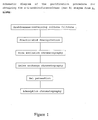
- the DNA molecule encoding such arabinan-degrading enzyme may be obtained from the filamentous fungus which naturally produces it by culturing the fungus in a suitable medium, isolating the desired arabinan-degrading enzyme using known methods such as those outlined in Figure 1 (ABF B enzyme) or those as described by Rombouts et al . ((1988) supra) or van der Veen et al . ((1991) supra) and determining at least a portion of the amino acid sequence of the purified protein.
- DNA probes may thereafter be obtained by designing oligonucleotides based on the deduced partial amino acid sequence.
- Amino acid sequences may be determined from the N-terminus of the complete protein and/or from the N-termini of internal peptide fragments obtained via proteolytic or chemical digestion of the complete protein. Once obtained, the DNA probe(s) are then used to screen a genomic or cDNA library.
- a genomic library may be prepared by partially digesting the fungal chromosomal DNA with a restriction enzyme which recognizes a DNA sequence of four successive nucleotides, e.g. Sau 3A, and cloning the resulting fragments in a suitable plasmid or lambda phage vector, e.g. lambda GEM-11.
- a cDNA library may be prepared by cloning cDNA, synthesized from mRNA isolated from fungal cells induced for the synthesis of arabinan-degrading enzyme, into an appropriate phage vector, e.g. lambda gt10, such as described by Harmsen et al . (1990) Curr. Genet., 18 , 161.
- an appropriate phage vector e.g. lambda gt10, such as described by Harmsen et al . (1990) Curr. Genet., 18 , 161.
- the genomic or cDNA library may be screened with a suitable DNA probe.
- the genomic or cDNA library may be differentially screened with cDNA probes obtained from mRNA from non-induced and induced cells.
- Induced mRNA is prepared from cells grown on media containing arabinan as a carbon source, while non-induced mRNA must be isolated from cells grown on a carbon source other than arabinan, e.g. glucose.
- a clone containing the gene encoding the desired arabinan-degrading enzyme may be recovered.
- a gene encoding an arabinan-degrading enzyme of interest may be identified by cross-hybridization with a gene from a related arabinan-degrading enzyme.
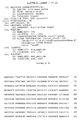
- oligonucleotide probes are obtained from the N-terminal amino acid sequence (see Figure 2, Formula 1) of an arabinan-degrading enzyme having an apparent molecular weight of 60 kDa (in glycosylated form) purified from an Aspergillus niger culture filtrate and/or from the amino acid sequence of an internal peptide fragment (see Figure 3, Formula 3) obtained by digestion of the enzyme with CNBr.
- the oligonucleotide mixtures AB1719 ( Figure 2, Formula 1a) and AB2306 ( Figure 3, Formula 3a) are complementary to the corresponding deduced arabinofuranosidase mRNA.
- Four positive phage clones were obtained from the screening of a lambda GEM-11 library, prepared from partially Sau 3A digested DNA isolated from Aspergillus niger, with the N-terminal oligo mixture AB 1719.
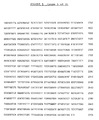
- the abf B gene encodes a protein 499 amino acids in length having a deduced molecular weight of 52523 Da ( Figure 6, Formula 5), as derived from the abf B gene sequence ( Figure 5) and confirmed by the abf B cDNA sequence.
- the N-terminal amino acid sequence, as determined in Example 12.2 (Formula 14) is preceded by a 18 amino acid-long hydrophobic sequence.
- the amino acid sequences determined from the CNBr peptides are found in the sequence from amino acid position 203 until position 219, 267 until 286 and 294 until 312, respectively.
- the mature ABF B protein is 481 amino acids in length, and the unglycosylated protein has a deduced molecular weight of 50663 Da and a theoretical IEP of 3.8.
- PCR polymerase chain reaction
- the DNA molecule encoding the enzyme of interest may be introduced into the selected expression host to increase the copy number of the construct and, consequently, protein expression.
- an uninterrupted (intronless) DNA molecule is used for the construction of a heterologous expression construct in order to avoid the possibility that splice signals residing on the genomic fragment are not recognized by the heterologous host.
- This uninterrupted DNA molecule may be obtained from a cDNA library constructed from mRNA isolated from cells, induced for the synthesis of arabinan-degrading enzymes. This library may be screened with an oligonucleotide or cDNA probe obtained as described before. Alternatively, an uninterrupted DNA molecule may be obtained by applying a polymerase chain reaction using appropriate 5' and 3' oligonucleotides on the first strand cDNA synthesized from the RNA of arabinan-induced cells.
- Enhanced expression of the DNA molecule encoding the arabinan-degrading enzyme of interest may also be achieved by the selection of heterologous regulatory regions, e.g. promoter, secretion leader and terminator regions, which serve to increase expression and, if desired, secretion levels of the protein of interest from the chosen expression host and/or to provide for the inducible control of the expression of the arabinan-degrading enzyme of interest.
- heterologous regulatory regions e.g. promoter, secretion leader and terminator regions
- promoters may be used to direct its expression.
- the promoter may be selected for its efficiency in directing the expression of the arabinan-degrading enzyme of interest in the desired expression host.
- a constitutive promoter may be selected to direct the expression of the desired arabinan-degrading enzyme.
- Such an expression construct may provide additional advantages since it circumvents the need to culture the expression hosts on a medium containing arabinans as an inducing substrate.
- strong constitutive and/or inducible promoters which are preferred for use in fungal expression hosts are those which are obtainable from the fungal genes for xylanase ( xln A), phytase, ATP-synthetase, subunit 9 ( oli C), triose phosphate isomerase ( tpi ), alcohol dehydrogenase ( adh A), ⁇ -amylase ( amy ), amyloglucosidase (AG - from the gla A gene), acetamidase ( amd S) and glyceraldehyde-3-phosphate dehydrogenase ( gpd ) promoters.
- xylanase xln A
- phytase ATP-synthetase
- subunit 9 oli C
- triose phosphate isomerase tpi
- alcohol dehydrogenase adh A
- ⁇ -amylase amy
- strong yeast promoters are those obtainable from the genes for alcohol dehydrogenase, lactase, 3-phosphoglycerate kinase and triosephosphate isomerase promoters.
- strong bacterial promoters are the ⁇ -amylase and Spo 2 promoters as well as promoters from extracellular protease genes.
- Hybrid promoters may also advantageously be used to improve inducible regulation of the expression construct.
- the arabinan-degrading enzyme of interest it is desirable for the arabinan-degrading enzyme of interest to be secreted from the expression host into the culture medium from where the arabinan-degrading enzyme may be more easily recovered.
- the arabinan-degrading enzyme of interest's native secretion leader sequence may be used to effect the secretion of the expressed arabinan-degrading enzyme.
- the present invention also provides heterologous leader sequences to provide for the most efficient secretion of the arabinan-degrading enzyme from the chosen expression host.
- the secretion leader may be selected on the basis of the desired expression host.
- a heterologous secretion leader may be chosen which is homologous to the other regulatory regions of the expression construct.
- the leader of the highly secreted amyloglucosidase (AG) protein may be used in combination with the amyloglucosidase (AG) promoter itself, as well as in combination with other promoters.
- Hybrid signal sequences may also advantageously be used within the context of the present invention.
- heterologous secretion leader sequences are those originating from the fungal amyloglucosidase (AG) gene ( gla A - both 18 and 24 amino acid versions e.g. from Aspergillus ), the ⁇ -factor gene (yeasts e.g. Saccharomyces and Kluyveromyces ) or the ⁇ -amylase gene ( Bacillus ).
- AG fungal amyloglucosidase
- gla A both 18 and 24 amino acid versions e.g. from Aspergillus
- ⁇ -factor gene e.g. Saccharomyces and Kluyveromyces
- Bacillus e.g. Saccharomyces and Kluyveromyces
- terminators are not considered to be critical elements for the enhanced expression of genes.
- a terminator may be selected from the same genes as the promoters, or alternatively, the homologous terminator may be employed.
- the transforming DNA may contain a selection marker to discriminate cells which have incorporated the desired gene from the bulk of untransformed cells.
- This selection marker provided with the appropriate 5' and 3' regulatory sequences, may reside on the same DNA molecule containing the desired gene or be present on a separate molecule. In the latter case, a co-transformation must be performed. The ratio of the expression vector/selection vector must be adjusted in such a manner that a high percentage of the selected transformants also have incorporated the vector containing the expression construct of the arabinan-degrading enzyme of interest.
- the most suitable selection systems for industrial micro-organisms are those formed by the group of selection markers which do not require a mutation in the host organism.
- fungal selection markers are the genes for acetamidase ( amd S), ATP synthetase, subunit 9 ( oli C), orotidine-5'-phosphate-decarboxylase ( pyr A), phleomycin (Durand et al . (1991) Curr. Genet., 19 , 149) and benomyl resistance ( ben A).
- Exemplary of non-fungal selection markers are the bacterial G418 resistance gene (this may also be used in yeast, but not in fungi), the ampicillin resistance gene ( E. coli ), the neomycin resistance gene ( Bacillus ) and the E. coli uid A gene, coding for ⁇ -glucuronidase (GUS).
- the desired expression construct is transformed into a suitable cloning host such as E. coli to propagate the construct. Afterwards, the expression construct is introduced into a suitable expression host wherein the expression construct is preferably integrated into the genome. Certain hosts such as Bacillus species may be used as both cloning and expression hosts, thus avoiding an extra transformation step.
- a variety of organisms may be used as hosts for the production of the arabinan-degrading enzyme of interest. If more than one arabinan-degrading enzyme of interest is to be produced, multiple vectors, each containing an expression construct for an arabinan-degrading enzyme of interest (e.g. ABF A, ABF B and/or ABN A) may be introduced into the same expression host. Alternatively, each desired arabinan-degrading enzyme may be produced independently in separate expression hosts.
- an arabinan-degrading enzyme of interest e.g. ABF A, ABF B and/or ABN A
- a homologous expression host may be used. This involves the introduction of the expression construct back into the strain from which the arabinan-degrading enzyme encoding DNA molecule was isolated either in increased gene copy numbers, or under the control of heterologous regulatory regions as described above, or both.
- one or more arabinan-degrading enzymes of interest may be produced by introducing and expressing one or more DNA molecule(s) encoding the arabinan-degrading enzyme(s) of interest, each under the control of appropriate regulatory regions, into heterologous hosts such as bacteria, yeasts or fungi.
- a DNA molecule encoding an arabinan-degrading enzyme of interest is preferably expressed under the control of promoter and terminator sequences originating from the heterologous host.
- Factors such as the size (molecular weight), the need for proper glycosylation or the desirability of the extracellular secretion of an arabinan-degrading enzyme of interest play an important role in the selection of the expression host.
- the gram-negative bacterium E. coli is widely used as a host for heterologous gene expression.
- large amounts of heterologous protein tend to accumulate inside the cell.
- Subsequent purification of the desired protein from the bulk of E. coli intracellular proteins can sometimes be difficult.
- bacteria from the genus Bacillus are very suitable as heterologous hosts because of their capability to secrete proteins into the culture medium.
- Other bacteria suitable as hosts are those from the genera Streptomyces and Pseudomonas .
- eukaryotic hosts such as yeasts or fungi may be preferred.
- yeast cells are preferred over fungal cells because they are easier to manipulate.
- some proteins are either poorly secreted from the yeast cell, or in some cases are not processed properly (e.g. hyperglycosylation in yeast). In these instances, a fungal host organism should be selected.
- a heterologous host may also be chosen wherein the arabinan-degrading enzyme of interest is produced in a form which is substantially free from other polysaccharide-degrading enzymes. This may be achieved by choosing a host which does not normally produce such enzymes such as Kluyveromyces lactis.
- Examples of preferred expression hosts within the scope of the present invention are fungi such as Aspergillus species (described in European Patent Applications 184.438 and 284.603) and Trichoderma species; bacteria such as Bacillus species (described in European Patent Applications 134.048 and 253.455), Streptomyces species and Pseudomonas species; and yeasts such as Kluyveromyces species (described in European Patent Applications 96.430 and 301.670) and Saccharomyces species.
- fungi such as Aspergillus species (described in European Patent Applications 184.438 and 284.603) and Trichoderma species
- bacteria such as Bacillus species (described in European Patent Applications 134.048 and 253.455), Streptomyces species and Pseudomonas species
- yeasts such as Kluyveromyces species (described in European Patent Applications 96.430 and 301.670) and Saccharomyces species.
- Particularly preferred expression hosts may be selected from Aspergillus niger, Aspergillus niger var. tubigensis, Aspergillus niger var. awamori, Aspergillus aculeatis , Aspergillus nidulans , Aspergillus oryzae , Trichoderma reesei, Bacillus subtilis , Bacillus licheniformis , Bacillus amyloliquefaciens , Kluyveromyces lactis and Saccharomyces cerevisiae .
- the production of arabinan-degrading enzyme(s) of interest is effected by the culturing of microbial expression hosts which have been transformed with one or more DNA constructs of the present invention, in a conventional nutrient fermentation medium.
- the fermentation medium consists of an ordinary culture medium containing a carbon source (e.g. glucose, maltose, molasses, etc.), a nitrogen source (e.g. ammonium sulphate, ammonium nitrate, ammonium chloride, etc.), an organic nitrogen source (e.g. yeast extract, malt extract, peptone, etc.) and inorganic nutrient sources (e.g. phosphate, magnesium, potassium, zinc, iron, etc.).
- a carbon source e.g. glucose, maltose, molasses, etc.
- a nitrogen source e.g. ammonium sulphate, ammonium nitrate, ammonium chloride, etc.
- an organic nitrogen source e.g. yeast extract, malt extract, peptone, etc.
- inorganic nutrient sources e.g. phosphate, magnesium, potassium, zinc, iron, etc.
- an inducer e.g. sugar beet arabinan
- the selection of the appropriate medium may be based on the choice of expression hosts and/or based on the regulatory requirements of the expression construct. Such media are well-known to those skilled in the art.
- the medium may, if desired, contain additional components favoring the transformed expression hosts over other potentially contaminating microorganisms.
- the fermentation is performed over a period of 0.5-20 days in a batch or fed-batch process at a temperature in the range of between 0 and 45°C and a pH between 2 and 10.
- Preferred fermentation conditions are a temperature in the range of between 20 and 37°C and a pH between 3 and 9. The appropriate conditions are selected based on the choice of the expression host.
- the cells are removed from the fermentation broth by means of centrifugation or filtration. After removal of the cells, The arabinan-degrading enzyme of interest may then be recovered and, if desired, purified and isolated by conventional means.
- the product is stably formulated either in liquid or dry form.
- immobilization of the enzyme on a solid matrix may be preferred.
- Arabinan-degrading enzymes of interest produced by means of the present invention, may be applied either singly, or as a mixture of arabinan-degrading enzyme activities (i.e. combinations of ABF A and/or ABF B and/or ABN A activities), and optionally together with other selected enzymes in a variety of processes requiring the action of arabinan-degrading enzymes.
- the fungal arabinan-degrading enzymes of the present invention which generally have lower pH optima than arabinan-degrading enzymes of bacterial origin, are particularly well suited for use in industrial processes which are performed at low pH.
- the ABF A enzyme acts only on low oligomeric arabinosides
- the ABF B enzyme preferably hydrolyzes the side chain L-arabinose residues (with some endo activity) and the ABN A acts optimally on linear arabinan
- mixtures of the ABF A and/or ABF B enzyme act synergistically when combined with endo arabinanase (ABN A) activity.
- ABSA endo arabinanase
- arabinan-degrading enzymes produced via the present invention may be used in the production of concentrated juices, especially fruit (e.g. apple, pear and the like) or vegetable juices to eliminate "arabinan haze”.
- ABF B for example, to an enzyme preparation (such as that obtained from an Aspergillus species) which in turn is added to the pulp prior to pressing provides an increased yield of the resultant juice without the presence of the undesirable arabinan haze in either concentrated or non-concentrated forms of the juice.
- a mixture of all three arabinan-degrading enzymes produced according to the present invention may be supplemented in the processing of concentrated juices from fruits having higher amounts arabinans (e.g. pear juice). Additional enzymatic activity such as pectinase activity may also be added for optimal results as may be determined by one skilled in the art.
- arabinan-degrading enzymes produced according to the present invention improve the filterability of the juices such as grape juice.
- the juice is first treated with an enzyme mixture having high amounts of arabinanases and arabinofuranosidases produced according to the present invention, followed by treatment with ⁇ -1-3- and ⁇ -1-6- galactanases.
- ⁇ -L-arabinofuranosidases particularly the ABF B enzyme, may be used to assist in the liberation of aroma compounds from substrates such as juices or wines, as described by Gunata et al . ((1989) and (1990), supra).
- the first step comprises the use of an ⁇ -L-arabinofuranosidase, preferably having ABF B-like activity, to catalyze the release of arabinose residues from monoterpenyl ⁇ -L-arabinofuranosyl glucosides contained in the fruit or vegetable juice via the cleavage of the (1 ⁇ 6) linkage between a terminal arabinofuranosyl unit and the intermediate glucose of a monoterpenyl ⁇ -L-arabinofuranosylglucoside.
- the ⁇ -L-arabinofuranosidase preferably being in purified form to avoid the undesirable degradation of other components of the juice which may be detrimental to the ultimate quality of the juice.
- Arabinan-degrading enzymes may also be added to animal feeds which are rich in arabinans.
- feeds including silage
- monogastric animals e.g. poultry or swine
- cereals such as barley, wheat, maize, rye or oats or cereal by-products such as wheat bran or maize bran
- the enzyme significantly improves the break-down of plant cell walls which leads to better utilization of the plant nutrients by the animal. As a consequence, growth rate and/or feed conversion are improved.
- arabinan-degrading enzymes may be used to the reduce the viscosity of feeds containing arabinans.
- An arabinan-degrading enzyme may be added beforehand to the feed or silage if pre-soaking or wet diets are preferred. More advantageously, the arabinan-degrading enzymes produced via the present invention continue to hydrolyze arabinans in the feed in vivo .
- Fungal arabinan-degrading enzymes which generally have lower pH optima, are capable of releasing important nutrients in such acidic environments as the stomach of the animal ingesting such arabinan-degrading enzyme-supplemented feed.
- arabinan-degrading enzymes produced according to the present invention is in the pulp and paper industry.
- the application of xylanases is often reported to be beneficial in the removal of lignins and terpenoids from the cellulose and hemicellulose residues of a hemicellulose backbone, an essential step in the processing of wood, wood pulp or wood derivative product for the production of paper.
- the addition of arabinan-degrading enzymes, produced according to the present invention, to the xylanase treatment step assists in the degradation of an arabinan-containing hemicellulose backbone and thus facillitates an improved, more efficient removal of both lignins and terpenoids.
- the application of arabinan-degrading enzymes is particularly advantageous in the processing of soft woods in which the hemicellulose backbone contains arabinoglucoronic xylans.
- arabinan-degrading enzymes produced via the present invention may be used in other processes such as to increase yield in the enzymatic hydrolysis of sugar beet pulp, the resulting hydrolyzed fraction being capable of use in microorganism culture medium; and the hydrolysis of sycamore or gum arabic or agricultural residues such wheat-straw.
- Protein content used for the determination of specific enzymatic activity, was measured according to the method of Lowry et al . ((1951) J. Biol. Chem 193 , 265), except where otherwise denoted.
- Arabinofuranosidase activity may be determined by the addition of 0.250 ml enzyme solution to 8 mM p-nitrophenyl ⁇ -L-arabinofuranoside (PNA - in 0.1 M sodium acetate buffer; pH 4.4). After incubation for 10 min at 40°C, the reaction was stopped by the addition of 2 ml of 0.5 M glycine-sodium buffer, pH 9.0. The concentration of p-nitrophenol (pNP) was determined by reading the absorbance at 400 nm. 1 nkat of activity corresponds to the liberation of 1 nmol of pNP per second under the test conditions.
- PNA p-nitrophenyl ⁇ -L-arabinofuranoside
- arabinofuranosidase activity may be expressed in Units per milliliter (U/ml) wherein a unit of arabinofuranosidase activity is defined as the amount of enzyme which releases 1 ⁇ mol pNP per minute from PNA (see van der Veen et al . (1991) supra).
- ⁇ -D-glucopyranosidase and ⁇ -L-rhamnopyranosidase activities were measured under the same conditions, according to their action on p-nitrophenyl ⁇ -D-glucopyranoside and p-nitrophenyl ⁇ -L-rhamnopyranoside substrates, respectively.
- Endo 1,5- ⁇ -L-arabinanase activity of a culture filtrate was measured and calculated using the ArabinaZymeTM test kit as produced by Megazyme Pty. Ltd. (North Rocks, New South Wales, Australia), according to the manufacturer's instructions.
- One unit of activity is defined as the amount of enzyme required to release 1 ⁇ mol of arabinose reducing sugar equivalents from carboxymethyl linear (1 ⁇ 5)- ⁇ -L-arabinan per minute under the assay conditions.
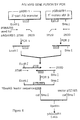
- FIG. 1 A schematic diagram of the procedure which was applied for the purification of the ⁇ -L-arabinofuranosidase (ABF B) enzyme from a culture filtrate obtained from the A. niger HEM strain is shown in Figure 1. Five steps were used for purification: 1) fractionated precipitation with ammonium sulphate; 2) size exclusion; 3) ion exchange chromatography; 4) gel permeation; and 5) adsorption chromatography.
- the precipitate was solubilized in sodium acetate buffer (pH 4.5; 0.05 M) and diafiltered in the same buffer in order to remove salts. Characteristics of the different fractions are summarized in Table 1.
- a DEAE ART LS column (5,2 x 36 cm; IBF Biotechnics, France) was pre-equilibrated in 0.05 M; pH 4.5 sodium acetate buffer at a flow rate of 100 ml/hour.
- the protein was eluted using a gradient of sodium chloride from 0 to 0.5 M in the start buffer. Fractions of 15 ml were collected and assayed for enzyme activities.
- BIO-GEL P60 column (2.8 x 30 cm; BIO-RAD; Richmond, Va., USA) was pre-equilibrated with 0.01 M sodium phosphate buffer (pH 8.8), at a flow rate of 30 ml/hour.
- the eluted protein was detected with a UV detector at an absorbance of 280 nm.
- BIO-GEL HTP column (2.8 x 20 cm; BIO-RAD; Richmond, Va., USA) was pre-equilibrated with 0.01 M sodium phosphate buffer (pH 8.8), at a flow rate of 30 ml/hour.
- the pool of ⁇ -L-arabinofuranosidase from BIO-GEL P60 (35 ml) (obtained from Example 2.4, above) was applied to the pre-equilibrated BIO-GEL HTP column and chromatographed at a flow rate of 30 ml/hour.
- the proteins were eluted with an appropriate sodium phosphate buffer gradient (pH 8.8) from 0.01 to 0.2 M.
- Example 3.1 High performance size exclusion chromatography (HPSEC) on TSK G3000 SW
- fractions 63, 64, 65, 66, 67 were chromatographed on a TSK G3000 SW column (LKB, Produckter AB; Bromma, Sweden) under the following conditions. 100 ⁇ l aliquots of each fraction were injected on the TSK G3000 SW column, which was pre-equilibrated with sodium-potassium phosphate buffer (pH 7.00; 0.1 M) at a flow rate of 0.5 ml/min. The eluted proteins were detected spectro-photometrically at an absorbance of 280 nm. Fractions of 0.5 ml were collected and the ⁇ -L-arabinofuranosidase activity was tested qualitatively with the colorimetric test on a microtitre plate.
- the column was calibrated with standard molecular weight proteins (Pharmacia Gel filtration calibration kit; Pharmacia AB, Uppsala, Sweden).
- the chromatographic profile reveals the high homogeneity of the protein eluted in fraction 63 to 66.
- the molecular weight of the ⁇ -L-arabinofuranosidase B enzyme was determined to be approximately 70 kDa which agrees fairly closely to the molecular weight for the same enzyme as reported by van der Veen et al . ((1991) supra).
- SDS PAGE electrophoresis confirms the high purity of the enzyme and the molecular weight as determined by HPSEC.
- the amino acid sequence as depicted in Formula 2 is identical to the N-terminal sequence of the ABF B protein (see Formula 1), the 29 kDa band represents the N-terminal fragment of the protein, while the 15 kDa fragment represents an internal fragment.
- amino acid sequences as depicted in Formulas 1 and 3 were used for the construction of oligonucleotide mixtures AB1719 and AB2306 (see Figures 2 and 3). Inosine nucleotides were used in case of a degeneracy of the genetic code of four or more nucleotides.
- Plaques were purified by repeated plating of phages eluted from isolated agar plugs and subsequent screening with oligo AB1719. The five plaques were found to hybridize to a different extent with oligo AB1719: Plaque Hybridization signal 7 +++++ 8 +++++ 12 ⁇ 45 ++ 53 +++++
- phages were eluted from the top agar by continuous shaking of the plate on a rocker platform during 90 minutes with 15 ml Phage Buffer. Halfway, the plates were given a quarter turn. The phage suspension was collected from the plates and centrifuged to remove cell debris. DNase and RNase were added to a final concentration of 1 ⁇ g/ml and the phage suspension was incubated 45 min at 37°C.
- Phages were PEG-precipitated for one hour on ice in 1 M NaCl and 10% PEG 6000. After centrifugation, the phage pellet was resuspended in 1 ml Phage Buffer per plate and insoluble debris removed by centrifugation. SDS and EDTA were added to a final concentration of 0.2% and 15 mM, after which proteinase K was added to 50 ⁇ g/ml and the mixture incubated for 30 min at 65°C. After successive extractions with equal volumes of phenol, phenol/chloroform and chloroform, the DNA was precipitated from the aqueous phase with isopropanol. The DNA was dissolved in TE, containing 0.1 ⁇ g/ml RNase.
- Phage DNA was digested until completion with enzymes recognizing a sequence of four successive nucleotides and the resulting fragments were ligated in pTZ18R or pUC18.
- the resulting colonies were transferred to nitrocellulose membranes and screened with oligo AB1719 to select plasmids with a hybridizing insert. Sufficiently small inserts were sequenced to identify the insert.
- Sequence analysis of a 2.8 kb Sac I fragment of phage clone 7 was performed using a Sequenase R version 2.0 reagent kit (United States Biochemical) according to the manufacturer's instructions.
- the 2.8 kb Sac I fragment was cloned into the E. coli plasmid pUC18.
- the resulting plasmid was given the designation pGBabfB and was deposited in E. coli strain DH5 ⁇ at the Centraal Bureau voor Schimmelcultures (Baarn, the Netherlands on March 11, 1991, under accession number CBS 156.91).
- the phage clone 7 DNA, obtained in Example 6 is introduced into Aspergillus niger by co-transformation of Aspergillus niger strain N593 using the Aspergillus niger pyr A gene as a selective marker on the plasmid pGW635 (Goosen et al . (1989) Mol. Gen. Genet. 219 , 282) and the phage clone 7 DNA as the co-transforming DNA.
- 1:20 molar ratios of transforming DNAs were added in order to favor the frequency of co-transformation.
- the plasmid pNOM102 (Roberts et al , (1989) Curr. Genet., 15 , 177) harboring the E. coli uid A gene, coding for ⁇ -glucuronidase (GUS) was used as co-transforming DNA.
- PYRA + transformants were subsequently transferred to X-glucuronide medium (Clontech, Palo Alto, CA, U.S.A.; Roberts et al. (1989) supra) and scored for GUS activity. Blue colonies were scored as GUS+ phenotype, colourless as GUS- phenotype.
- A. niger co-transformed with pNOM102 and pGW635 plasmids for transformation/selection respectively, gave co-transformation frequencies up to 85 %.
- Protoplasts were prepared from mycelium by growing Aspergillus niger N593 on minimal medium supplemented with 50 mM glucose, 0.5 % yeast extract, 0.2 % casamino acids and 10 mM uridine for 20 hours at 30°C.
- the minimal medium had the following composition (per 1000 ml): 6.0 g NaNO 3 , 1.5 g KH 2 PO 4 , 0.5 g MgSO 4 ⁇ 7H 2 O, 0.5 g KCl, 1 ml Visniac solution (Visniac, W. & Santer, M. (1957) Bact. Rev., 21 , 195), carbon source as indicated, pH 6.0.
- the preparation of protoplasts of A. niger N593 and the transformation procedure was performed as described by Goosen et al . (1987) Current Genet., 11 , 499.
- the resulting PYR+ transformants were isolated, purified and tested for arabinofuranosidase production in shake flasks (see Example 9). Since no plate assay for the co-transformed gene was available, a Polymerase Chain Reaction (PCR) amplification test developed by D. Seth (Biotech International Ltd., Australia) as a quick screen to identify those transformants harbouring the non-selected gene was utilized. This PCR amplification test was performed as follows :
- the PYR + transformants obtained in Example 8 were analyzed for the expression of the abf B gene.
- the PYR + transformants harboring bacteriophage lambda 7 DNA are selected by the PCR amplification test.
- Approximately 1 x 10 6 spores were inoculated in 100 ml pre-culture medium containing (per liter): 30 g sucrose, 2 g NaNO 3 , 1 g K 2 HPO 4 , 0.5 g MgSO 4 ⁇ 7H 2 O, 0.5 g KCl, 0.01 g FeSO 4 ⁇ 7H 2 O, 5 g yeast-extract, 10 g malt-extract and 3 g carboxypolymethylene (B.F. Goodrich Company). The pH was adjusted to 6.1 with NaOH.
- the mycelium was grown for at least a further 100 hours at 34°C and at 250 rpm. Samples were taken at selected intervals. The mycelium was removed by filtration and the culture filtrate analyzed by SDS-polyacrylamide gel electrophoresis and by the arabinofuranosidase assay as described in Example 1.
- Example 10.2 Construction of pAB6-1, pAB-6-3, pAB6-4, pAB6-31 and pAGEK1
- amyloglucosidase (AG) gene ( gla A) of A. niger was isolated from plasmid libraries containing 3-4 kb Eco RI fragments or 13-15 kb Hin dIII fragments in the E. coli vector pUC19 (Yanisch-Perron et al . (1985) Gene, 33 , 103; obtainable from e.g. Pharmacia LKB Biotechnology, Sweden) using the following AG-specific oligos: both based on the nucleotide sequence published for A. niger (Boel et al . (1984) EMBO J., 3 , 1097-1102 ; Boel et al . (1984) Mol. Cell.
- oligo AG-1 is located 3' of the intron and has a polarity identical to the AG mRNA and oligo AG-2 is found upstream of intron 2 and is chosen antiparallel to the AG mRNA.
- Plasmid pAB6-1 was obtained which contains the gla A gene on a 14.5 kb Hin dIII fragment (see Figure 7).
- pAB6-1 From plasmid pAB6-1 several subclones were made in pUC19: pAB6-3 which contains a 1.8 kb Eco RI fragment just upstream of the gla A gene and probably harbors regulatory sequences; pAB6-4 which contains a 4.6 kb Hin dIII - Bgl II fragment comprising the promoter of the gla A gene and a portion of the 5'-end of this gene.
- plasmid pAB6-3 was partially digested with Eco RI and treated with T4 polymerase.
- the Hin dIII plus Eco RI fragment of plasmid pAB6-4 was ligated, again after treatment with T4 polymerase.
- the resulting construct was designated pAB6-31; this construct contains a 3.6 kb upstream fragment of the gla A gene with a destroyed Eco RI site in the middle and an unique Eco RI site close to the gla A gene.
- the two DNA fragments generated by PCR were purified by gel electrophoresis and SephaglasTM Band prep kit (Pharmacia, Sweden).
- the ligated DNA was transformed into E. coli electrocompetent Top10 cells as described by the supplier (Invitrogen corporation; San Diego, CA, U.S.A.). Selection was made on Luria Broth (LB) plates containing Xgal (5-bromo-4-chloro-3-indolyl- ⁇ -D-galactoside), IPTG (iso-propylthiogalactoside) and ampicillin. Plasmid DNA from white transformants was prepared as described by Andreoli, P. (1985) Mol. Gen. Genet., 199 , 372 and analyzed with the restriction enzymes Eco RI and Sma I. Those transformants containing the 530 bp fusion DNA fragment were sequenced and designated pAGabfB1.
- FIG. 8 A schematic view of the construction of plasmid pAGabfB1 is presented in Figure 8.
- the 530 bp Eco RI- Sma I fragment from plasmid pAGabfB1 was isolated and the 1.8 kb Sma I- Xho I fragment from pGBabfB1 (containing the mature abf B gene) was isolated (see Example 7). These two fragments were ligated into the Eco RI- Xho I cut-pBluescript II SK(+) vector and transformed to E. coli DH5 ⁇ competent cells prepared according to a modified Hanahan procedure ((1983) J. Mol. Biol., 166 , 557). Selection was made on LB plates containing Xgal, IPTG and ampicillin.
- Plasmid DNA from white transformants was prepared and analyzed with the restriction enzymes Eco RI and Xho I.
- the plasmid that harbored the desired 2.3 kb Eco RI- Xho I fragment was designated pAGabfB2.
- the remaining 3.4 kb upstream region of the AG-promoter was obtained by digestion of plasmid pAGEK1 with Kpn I and Eco RI and purified by agarose gel electrophoresis.
- the 2.3. kb Eco RI- Xho I fragment containing the AG-arabanase gene fusion was purified from plasmid pAGabfB2.
- the plasmid pAGabfB3 was introduced into A. niger by co-transformation of strain N593 using the pyr A gene as a selective marker on the plasmid pGW635 (Goosen et al . (1989) supra) and the expression cassette pAGabfB3 as the co-transforming DNA.
- the resulting PYR + transformants were isolated, purified and tested for arabinofuranosidase production in shake flasks using the process as described in Example 11.
- Example 10.8 Introduction of the pAGabfB5 expression cassette in Aspergillus niger strain CBS 513.88
- the plasmid pAGabfB5 was introduced in Aspergillus niger strain CBS 513.88 (deposited October 10, 1988) using transformation procedures as described by Tilburn et al. (1983) Gene, 26 , 205 and Kelly & Hynes (1985) EMBO J., 4, 475 with the following modifications:
- the resulting transformants were replica-plated to selective acetamide minimal medium 1.2 % agarose plates and incubated at 30°C for 4-7 days.
- the AMDS + transformants were purified by streaking for single colonies on selective acetamide minimal medium 1.2 % agarose plates and tested for arabinofuranosidase production in shake flasks using the process as described in Example 11.
- the mycelium was grown for at least a further 140 hours at 34°C and at 250 rpm. Samples were taken at selected intervals. The mycelium was removed by filtration and the culture filtrate analyzed by SDS-polyacrylamide gel electrophoresis and by the arabinofuranosidase assay as described in Example 1.
- the N593 transformants harboring the pAGabfB3 or the pAGabfB4 expression cassette exhibit enhanced production of the ABF B enzyme as compared to the N593 transformants harboring only the pyr A selection marker.
- the CBS 513.88 transformants harboring the pAGabfB5 expression cassette exhibit enhanced production of the ABF B enzyme as compared to the CBS 513.88 transformants harboring the p18FYT3 expression cassette.
- ABSORB ⁇ -L-arabinofuranosidase B
- the protein was dialyzed against bidest for 18 hours after which the protein was freeze-dried.
- the powder was resuspended in 70 % formic acid at a concentration of 1 mg/ml.
- amino acid sequences of Formulas 12 - 15 are also found in the derived amino acid sequnce as provided in Figure 6. This confirms that the ABF B enzyme is conserved in varying strains of Aspergillus niger .
- the structural portion of the abf B gene ranges from position 167 until position 1666 and contains no introns.
- the abf B gene encodes a protein 499 amino acids in length having a deduced molecular weight of 52523 Da ( Figure 6, Formula 5) as derived from the abf B gene sequence and confirmed by the abf B cDNA sequence.
- the N-terminal amino acid sequence, as determined in Example 12.2 (Formula 14) is preceded by a 18 amino acid-long hydrophobic sequence.
- the amino acid sequences determined from the CNBr peptides (Formulas 15, 16 and 17) are found in the sequence from amino acid position 203 until position 219, 267 until 286 and 294 until 312, respectively.
- the mature ABF B protein is 481 amino acids in length, and has a deduced molecular weight of 50663 Da and a theoretical IEP of 3.8.
- the deduced molecular weight value for the ABF B enzyme differs from those reported in the literature as mentioned above (see Rombouts et al ., supra and van der Veen et al. , supra). This is most likely to be attributable to the literature evaluations being made on the glycosylated protein whereas the deduced molecular weight found in the present example is based strictly on the unglycosylated protein.
- a glycosidic extract was obtained by extraction of a must of Muscat de Frontignan variety grapes according to the method as described by Gunata et al . ((1989) supra).
Landscapes
- Life Sciences & Earth Sciences (AREA)
- Chemical & Material Sciences (AREA)
- Health & Medical Sciences (AREA)
- Engineering & Computer Science (AREA)
- Zoology (AREA)
- Genetics & Genomics (AREA)
- Organic Chemistry (AREA)
- Bioinformatics & Cheminformatics (AREA)
- Wood Science & Technology (AREA)
- Microbiology (AREA)
- Biochemistry (AREA)
- General Engineering & Computer Science (AREA)
- Biomedical Technology (AREA)
- Biotechnology (AREA)
- Polymers & Plastics (AREA)
- General Health & Medical Sciences (AREA)
- Molecular Biology (AREA)
- Medicinal Chemistry (AREA)
- Food Science & Technology (AREA)
- Animal Husbandry (AREA)
- Chemical Kinetics & Catalysis (AREA)
- General Chemical & Material Sciences (AREA)
- Mycology (AREA)
- Physics & Mathematics (AREA)
- Biophysics (AREA)
- Plant Pathology (AREA)
- Enzymes And Modification Thereof (AREA)
- Micro-Organisms Or Cultivation Processes Thereof (AREA)
- Non-Alcoholic Beverages (AREA)
- Measuring Or Testing Involving Enzymes Or Micro-Organisms (AREA)
- Saccharide Compounds (AREA)
Abstract
Description
- The present invention relates to the field of molecular biology. In particular, the present invention relates to the cloning and expression of genes encoding enzymes of fungal origin.
- The composition of the plant cell wall is complex and variable. Polysaccharides are mainly found in the form of long chains of cellulose (the main structural component of the plant cell wall), hemicellulose (comprising various β-xylan chains) and pectic substances (consisting of galacturonans and rhamnogalacturonans; arabinans; and galactans and arabinogalactans). From the standpoint of the food industry, the pectic substances, arabinans in particular, have become one of the most important constituents of plant cell walls (Whitaker, J.R. (1984) Enzyme Microb. Technol., 6, 341).
- Arabinans consist of a main chain of α-L-arabinose subunits linked α-(1→5) to one another. Side chains are linked α-(1→3) or sometimes α-(1→2) to the main α-(1→5)-L-arabinan backbone. In apple, for example, one third of the total arabinose is present in the side chains. The molecular weight of arabinan is normally about 15 kDa.
- Enzymes capable of degrading arabinans are becoming increasingly important to the food industry. In juice production, for example, the demand to increase yields in order to reduce production costs has necessitated the modification of traditional processes. The utilization of enzymatic pre-treatments of the fruit pulp before pressing with specific enzymatic products drastically improves the juice yield by solubilizing the cell wall polysaccharides.
- However, a persistent turbidity commonly referred to as "arabinan haze" has been a source of problems in the production of concentrated juices. The arabinan haze is more often present in concentrated juice than in non-concentrated juice. This may indicate that water activity has an influence on the solubility of arabinan. Furthermore, it has been found that this haze is soluble between 60 and 80°C.
- It has also been found that while branched arabinan is soluble in concentrated chilled apple and pear juices, the linear, debranched α-(1→5)-L-arabinan is much less soluble. This debranched α-(1→5)-L-arabinan is formed from the L-arabinan by the action of an arabinan-degrading enzyme present in the commercial pectic enzyme preparations from Aspergillus niger, commonly used to increase juice yield after pulp treatment but before pressing.
- On the other hand, debranched araninans are considered desirable for certain other applications. WO 90/06343 discloses the debranching of sugar beet araban by the action of an α-L-arabinofuranosidase, free of endo arabinanase activity, which is isolated from a culture filtrate of Aspergillus niger or from a commercial pectinase mixture using ion-exchange and gel filtration chromatography procedures. The debranched araban may be used as a fat substitute in foods.
- Arabinan-degrading enzymes are known to be produced by a variety of plants and microorganisms, among these, fungi such as those of the genera Aspergillus, Corticium, Rhodotorula (Kaji, A. (1984) Adv. Carbohydr. Chem. Biochem., 42, 383), Dichotomitus (Brillouet et al. (1985) Carbohydrate Research, 144, 113), Ascomycetes and Basidomycetes (Sydow, G. (1977) DDR Patent Application No. 124,812).
- In particular, the filamentous fungus Aspergillus niger is known to produce three different arabinan-degrading enzymes: an α-L-arabinanase having a molecular weight of approximately 35 kDa and two α-L-arabinofuranosidases having molecular weights of approximately 118 and 60 kDa, respectively, (Rombouts et al. (1988) Carbohydrate Polymers, 9, 25). [N.B. van der Veen et al. ((1991) Arch. Microbial., 157, 23) reports molecular weights of 43, 83 and 67 kDa for these same three enzymes, respectively.]
- The 35 kDa arabinanase (also known as ABN A) has endo activity and exclusively
cleaves 1→5 linkages. The activity of this enzyme decreases as the 1,5-α-L-arabinan sequences become shorter and the concentration of arabinose dimers and trimers increased (Rombouts et al., supra). [N.B. van der Veen et al. (1991) reported a molecular weight of 43 kDa.] - The 118 kDa α-L-arabinofuranosidase (also known as arabinofuranosidase A, ABF A or EXO A) exclusively cleaves 1→5 linkages with exo-type activity as shown by the accumulation of arabinose monomers. This enzyme displays the highest activity on low molecular weight substrates (Rombouts et al., supra). [N.B. van der Veen et al. (1991) reported a molecular weight of 83 kDa.]
- The 60 kDa α-L-arabinofuranosidase (also known as arabinofuranosidase B, ABF B or EXO B), also having exo-type activity, predominantly
cleaves 1→3 and 1→2 α-L-arabinans, yet also demonstrates the ability to cleave 1→5 α-L-arabinans. Again, only arabinose monomers are detected after degradation of an α-L-arabinan-containing substrate (Rombouts et al., supra). [N.B. van der Veen et al. (1991) reported a molecular weight of 67 kDa.] - The A. niger ABF B enzyme has also demonstrated the ability to cleave the 1→6 linkage between a terminal arabinofuranosyl unit and the intermediate glucose of monoterpenyl α-L-arabinofuranosylglucosides (Gunata et al. (1989) European Patent Application No. 332.281; Gunata et al. (1990) J. Agric. Food Chem., 38, 772).
- Enzymes having an activity similar to that of the A. niger ABF B enzyme have been identified in other fungi such as Dichotomitus squalens (Brillouet et al., supra), Corticium rolfsii and Rhodotorula flava (Kaji, A., supra).
- A possible solution to the problem of haze formation in juices may be to use an enzyme formulation having an improved balance between the endo arabinanase (ABN A) and the ABF A and ABF B enzymes, or alternatively, enzymes having similar activities, i.e. one or more arabinofuranosidases obtained from another microorganism which is capable of cleaving 1→3 and 1→2 α-L-arabinans, as well as 1→5 α-L-arabinans. However, normal fermentation of A. niger fails to yield sufficient levels of the desired arabinofuranosidases. Moreover, it would be advantageous to be able to attenuate the amount of ABF A, ABF B and ABN A activities for optimal results in specific applications.
- The ability of the ABF B enzyme to cleave the
terminal 1→6 linkage of monoterpenyl α-L-arabinofuranosylglucosides may be used to assist in the release of aroma components from various fruit juices and thus, the enhancement of their flavors (Gunata, Z. et al. (1989 and 1990), supra). However, it would be preferable to use a purified ABF B or ABF B-like enzyme for this purpose since the presence of other enzymatic activity may degrade other important components of the juice and, in so doing, have a detrimental effect on the ultimate quality of the juice. - In nature, microbial arabinan-degrading enzymes are always produced together with other enzymes having polysaccharide-degrading activities, such as pectinases, xylanases, acetyl xylan esterases, acetyl esterases, galactanases and cellulases. As mentioned above, for some applications, these enzyme activities are not needed or are unwanted. Moreover, due to relatively low expression levels in the wild-type strains, the arabinan-degrading enzymes have proven to be somewhat difficult to isolate both from each other and from other enzymes produced by A. niger.
- It is known that fermentation conditions may be varied to favor the production of an enzyme of interest. It is also known that the cloning of the gene encoding the desired enzyme and overexpressing it in its natural host, or in another compatible expression host will specifically enhance the production of the enzyme of interest. This latter method is particularly useful if the enzyme of interest is to be obtained in increased amounts, or in a form which is free of other, undesired enzymatic activity.
- Clearly, it would be useful to increase arabinan-degrading activity via recombinant DNA techniques. However, until now, the genes encoding the A. niger arabinan-degrading enzymes have not been available. Accordingly, it would be of great importance to obtain genes encoding arabinan-degrading enzymes of fungal origin which may be brought to expression in its native host or, alternatively, in other microbial hosts wherein high expression levels of one or more arabinan-degrading enzymes may be achieved.
- The expression of recombinant bacterial α-L-arabinofuranosidase has been previously described by Schwarz et al. ((1990) Biochem. Biophys. Res. Commun., 170, 368). The gene encoding a bacterial arabinofuranosidase was isolated from Clostridium stercorarium and brought to expression in an E. coli host.
- A gene encoding an arabinosidase was cloned from the anaerobic bacterium Bacteriodes ovatus and brought to expression in E. coli, as disclosed by Whitehead & Hespell ((1990) J. Bacteriol., 172, 2408).
- However, E. coli expression hosts are, in some instances, considered to be unsafe for the production of proteins by recombinant DNA methods due to their production of unacceptable by-products such as toxins. Furthermore, in E. coli expression, large amounts of heterologous protein tend to accumulate inside the cell. Subsequent purification of the desired protein from the bulk of E. coli intracellular proteins can sometimes be difficult.
- Moreover, since bacterial genes contain no introns, one is confronted with few problems in cloning and expressing such genes in prokaryotic hosts. On the other hand, the expression of eukaryotic genes is not always so straightforward. It is well known that genes isolated from eukaryotic strains may contain introns. This inherently introduces complications in the cloning and expression of these genes, should a prokaryotic host be preferred.
- Furthermore, certain differences exist between the physical characteristics of arabinan-degrading enzymes of fungal origin and those from bacteria. In general, fungal enzymes have a pH optimum in the range from ≤ 3.0 - 6.0. A few fungal species produce arabinan-degrading enzymes having pH optima as low as pH 2.0. These pH optima are generally significantly lower as compared to similar enzymes from bacterial strains which have a pH optimum in the range of pH 5.0 - 7.0 (Karimi and Ward (1989) J. Indust. Microbiol., 4, 173; Lee and Forsberg (1987) Can. J. Microbiol., 33, 1011). Thus, it is clear that bacterial arabinan-degrading enzymes are less suitable for use in, for example, processes requiring lower pH conditions.
- The present invention provides purified and isolated DNA molecules of fungal origin, encoding an enzyme having arabinan-degrading activity, as defined in the appended claims.
- It is also an object of the present invention to provide DNA constructs for the enhanced microbial expression of the DNA molecules of the present invention. The DNA (or expression) constructs provided contain the DNA molecule encoding the desired arabinan-degrading enzyme with either its native 5' and 3' regulatory regions or, in an alternative embodiment, hybrid DNA constructs are provided in which the DNA molecule is operably linked to regulatory regions such as promoter, secretion leader and terminator signals which may be selected to provide for the optimal expression of the enzyme in the desired expression host and, if desired, the secretion therefrom.
- It is a further object of the present invention to provide microbial expression hosts, transformed with one or more DNA constructs of the present invention, which are capable of the enhanced expression and, if desired, the secretion of arabinan-degrading enzymes of fungal origin.
- It is yet a further object of the present invention to provide methods for the production of large quantities of arabinan-degrading enzymes of interest which may be advantageously used in industrial processes. Typically, industrial processes which require the activity of arabinan-degrading enzymes at a lower pH than that at which similar enzymes of bacterial origin optimally function.
-
- Figure 1
- Schematic diagram of the purification procedure for obtaining the α-L-arabinofuranosidase (ABF B) enzyme from A. niger.
- Figure 2
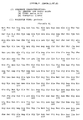
- Amino acid sequence of the N-terminus of A. niger ABF B protein (Formula 1) and the nucleotide sequence of the oligonucleotide mixture AB1719 (Formula 1a).
- Figure 3
- Amino acid sequence of the N-terminus of the 15 kDa CNBr fragment of the A. niger ABF B protein (Formula 3) and the nucleotide sequence of the oligonucleotide mixture AB2306 (Formula 3a).
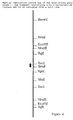
- Figure 4
- Partial restriction enzyme map of the hybridizing
phage clone 7. - Figure 5
- Nucleotide sequence of the A. niger abfB gene (Formula 4).
- Figure 6
- Amino acid sequence (Formula 5) of the A. niger ABF B protein, derived from the abfB gene sequence and confirmed by the abfB cDNA sequence.
- Figure 7
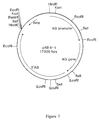
- Physical map of pAB 6-1. The 14.5 kb HindIII DNA insert in pUC19 contains the entire amyloglucosidase (AG) locus from A. niger.
- Figure 8
- A schematic view of the generation of AG/abfB gene fusions by the polymerase chain reaction (PCR). The sequences of all oligonucleotide primers used are indicated in the text.
- Figure 9
- A schematic representation of the construction of
pAGabfB2 and pAGabfB3. Key to the symbols used:
-

- sequences encoding the 18 amino acid signal peptide of the A. niger amyloglucosidase (AG) gene (glaA).
-

- sequences encoding the mature ABF B protein
- Amp :
- the ampicillin resistance gene
- ori :
- E. coli origin of replication
- AG :
- the A. niger amyloglucosidase (AG) promoter
-
- Figure 10
- The construction of the expression cassette
pAGabfB4. Key to the symbols used:
pyrA : the A. niger gene coding for orotidine-5'-phosphate-decarboxylase The remaining symbols are the same as those presented in the legends of Figure 9. - Figure 11
- The construction of the expression cassette
pAGabfB5. Key to the symbols used:
amdS : the A. nidulans gene coding for an acetamidase
The remaining symbols are the same as those presented in the legends of Figure 9. - The present invention provides purified and isolated DNA molecules obtainable from fungi, and genetic variants thereof, which encode enzymes having arabinan-degrading activity as defined in
claim 1. Genetic variants consist of DNA molecules encoding mutant arabinan-degrading proteins and degenerate DNA molecules wherein the desired activity of the enzyme expressed therefrom is retained. - The present invention also provides DNA constructs (also referred to herein as expression constructs) for the expression of one or more arabinan-degrading enzymes in a desired expression host. The DNA constructs provided may comprise the DNA molecule encoding the desired arabinan-degrading enzyme with its native 5' and 3' regulatory regions. Alternatively, hybrid DNA constructs are provided which comprise a DNA molecule encoding the arabinan-degrading enzyme operably linked to regulatory regions, such as promoter, secretion and terminator signals originating from homologous or heterologous organisms, these regulatory regions being capable of directing the enhanced expression of the structural gene in an appropriate host. Preferably, the expression construct will be integrated into the genome of the selected expression host.
- The present invention further provides vectors, preferably plasmids, for the cloning and/or transformation of microbial hosts via the introduction into the microbial host of the DNA constructs for the expression of the desired arabinan-degrading enzyme.
- In addition, the present invention provides microbial hosts transformed with one or more vectors, each containing at least one of the DNA constructs described above. Microbial expression hosts may be selected from bacteria, yeasts or fungi.
- Within the context of the present invention, the term "enhanced expression" is defined as the expression of the DNA construct whereby the arabinan-degrading enzyme of interest is produced at levels higher than that which are ordinarily encountered in the homologous wild-type organism. In the same context, enhanced expression also intends expression in a heterologous organism which does not normally produce such arabinan-degrading enzyme except for the introduction of the DNA molecule encoding the arabinan-degrading enzyme of interest, together with appropriate regulatory regions, into the heterologous expression host. Progeny of these expression hosts are, of course, also to be understood to be embraced by the present invention.
- Within the context of the present invention, the term "homologous" is understood to intend all that which is native to the DNA molecule encoding the arabinan-degrading enzyme of interest, including its regulatory regions. A homologous host is defined as the species from which such DNA molecule may be isolated.
- The term "heterologous" is thus defined as all that which is not native to the DNA molecule encoding the arabinan-degrading enzyme of interest itself, including regulatory regions. A "heterologous" host is defined as any microbial species other than that from which the arabinan-degrading enzyme-encoding gene has been isolated.
- Within the scope of the present invention, the term "arabinan-degrading enzyme of interest" is understood to include arabinan-degrading enzymes of fungal origin.
- Arabinan-degrading activity, as defined in the context of the present invention, is the ability of an enzyme to release arabinose residues, either monomers or oligomers, from arabinan backbones or from arabinan-containing sidechains of other hemicellulose backbone structures such as arabinoxylans or arabinogalactans, or even the release of arabinose monomers via the cleavage of the 1→6 linkage between the terminal arabinofuranosyl unit and the intermediate glucosyl unit of monoterpenyl α-L-arabinofuranosyl glucosides.
- The "arabinan-degrading activity" according to the present invention is
- a) the ability to cleave (1→2)-α-L-arabinosidic linkages;
- b) the ability to cleave (1→3)-α-L-arabinosidic linkages;
- d) the ability to cleave the 1→6 linkage between the terminal arabinofuranosyl unit and the intermediate glucosyl unit of monoterpenyl α-L-arabinofuranosyl glucosides.
-
- Most preferred arabinan-degrading enzymes are α-L-arabinofuranosidases which have 1) exo-type arabinan-degrading activity on (1→5)-α-L-arabinosidic linkages; or 2) exo-type arabinan-degrading activity on (1→3)-α-L-arabinosidic linkages and (1→2)-α-L-arabinosidic linkages; or 4) the ability to cleave the 1→6 linkage between the terminal arabinofuranosyl unit and the intermediate glucosyl unit of monoterpenyl α-L-arabinofuranosyl glucosides.
- Preferred DNA molecules encoding arabinan-degrading enzyme of the present invention are those which are obtainable from filamentous fungi of the genera Aspergillus (especially A. niger, A. niger var. tubigensis (see also Kusters-van Someren (1991) Curr. Genet., 19, 21), A. niger var. awamori, A. nidulans (with the exception of the abfA gene) and A. aculeatis), Dichotomitus (especially D. sgualens), Corticium (especially C. rolfsii), Penicillium (especially P. chrysogenum) and Rhodotorula (especially R. flava). Especially preferred is the α-L-arabinofuranosidases (ABF B) which is obtainable from Aspergillus niger, Aspergillus niger var. tubigensis or Aspergillus niger var. awamori.
- The present invention also includes DNA sequences which hybridize under low stringency conditions to the DNA sequences obtainable from the fungi described above, but which may differ in codon sequence due to the degeneracy of the genetic code or cross-species variation.
- Arabinofuranosidases having the desired activity may be identified by various methods not critical to the present invention. For example, assays for the presence of paranitrophenol or arabinose monomers are indicative of the ability of the enzyme to cleave 1→3 or 1→2-α-L-arabinosidic linkages using para-nitrophenyl-α-L-arabinoside or other arabinan-containing substrates, respectively, using methods such as those described by Rombouts et al. ((1988) supra) or van der Veen et al. ((1991) supra). The ability of an enzyme to cleave 1→5-α-L-arabinosidic linkages may be determined using an apple juice ultrafiltration retentate (UFR) arabinan substrate and assaying for the presence of small arabinoside oligomers as described by Rombouts et al., supra. Alternatively,
endo 1,5-α-L-arabinanase activity of a culture filtrate may be measured using a test kit such as Arabina-Zyme™ tablets as produced by Megazyme Pty. Ltd. (North Rocks, New South Wales, Australia). - Once an arabinan-degrading enzyme of interest has been identified, the DNA molecule encoding such arabinan-degrading enzyme may be obtained from the filamentous fungus which naturally produces it by culturing the fungus in a suitable medium, isolating the desired arabinan-degrading enzyme using known methods such as those outlined in Figure 1 (ABF B enzyme) or those as described by Rombouts et al. ((1988) supra) or van der Veen et al. ((1991) supra) and determining at least a portion of the amino acid sequence of the purified protein.
- DNA probes may thereafter be obtained by designing oligonucleotides based on the deduced partial amino acid sequence. Amino acid sequences may be determined from the N-terminus of the complete protein and/or from the N-termini of internal peptide fragments obtained via proteolytic or chemical digestion of the complete protein. Once obtained, the DNA probe(s) are then used to screen a genomic or cDNA library.
- A genomic library may be prepared by partially digesting the fungal chromosomal DNA with a restriction enzyme which recognizes a DNA sequence of four successive nucleotides, e.g. Sau3A, and cloning the resulting fragments in a suitable plasmid or lambda phage vector, e.g. lambda GEM-11.
- Alternatively, a cDNA library may be prepared by cloning cDNA, synthesized from mRNA isolated from fungal cells induced for the synthesis of arabinan-degrading enzyme, into an appropriate phage vector, e.g. lambda gt10, such as described by Harmsen et al. (1990) Curr. Genet., 18, 161.
- Subsequently, after plating of a sufficient amount of colonies or plaques, the genomic or cDNA library may be screened with a suitable DNA probe.
- If this method is unsuccessful, the genomic or cDNA library may be differentially screened with cDNA probes obtained from mRNA from non-induced and induced cells. Induced mRNA is prepared from cells grown on media containing arabinan as a carbon source, while non-induced mRNA must be isolated from cells grown on a carbon source other than arabinan, e.g. glucose. Among the clones which only hybridize with the induced cDNA probe, a clone containing the gene encoding the desired arabinan-degrading enzyme may be recovered. Alternatively, a gene encoding an arabinan-degrading enzyme of interest may be identified by cross-hybridization with a gene from a related arabinan-degrading enzyme.
- In the case of the ABF B enzyme, oligonucleotide probes are obtained from the N-terminal amino acid sequence (see Figure 2, Formula 1) of an arabinan-degrading enzyme having an apparent molecular weight of 60 kDa (in glycosylated form) purified from an Aspergillus niger culture filtrate and/or from the amino acid sequence of an internal peptide fragment (see Figure 3, Formula 3) obtained by digestion of the enzyme with CNBr. The oligonucleotide mixtures AB1719 (Figure 2, Formula 1a) and AB2306 (Figure 3, Formula 3a) are complementary to the corresponding deduced arabinofuranosidase mRNA. Four positive phage clones were obtained from the screening of a lambda GEM-11 library, prepared from partially Sau3A digested DNA isolated from Aspergillus niger, with the N-terminal oligo mixture AB 1719.
- DNA isolated from the four phage clones hybridized with the N-terminal oligonucleotide mixture AB1719 (see Figure 2, Formula 1a). A 2.8 kb SacI fragment was obtained (see Figure 4) and has been sequenced. The nucleotide sequence and encoded amino acid sequence are depicted in Figures 5 and 6 (
Formulas - The abfB gene encodes a protein 499 amino acids in length having a deduced molecular weight of 52523 Da (Figure 6, Formula 5), as derived from the abfB gene sequence (Figure 5) and confirmed by the abfB cDNA sequence. The N-terminal amino acid sequence, as determined in Example 12.2 (Formula 14) is preceded by a 18 amino acid-long hydrophobic sequence. The amino acid sequences determined from the CNBr peptides (
Formulas 15, 16 and 17) are found in the sequence from amino acid position 203 until position 219, 267 until 286 and 294 until 312, respectively. The mature ABF B protein is 481 amino acids in length, and the unglycosylated protein has a deduced molecular weight of 50663 Da and a theoretical IEP of 3.8. - The availability of a DNA molecule encoding an arabinan-degrading enzyme of interest enables the construction of mutant arabinan-degrading enzymes by site-directed mutagenesis. If the tertiary structure of the arabinan-degrading enzyme is known, and its catalytic and substrate binding domains are localized, amino acids may be selected for mutagenesis (for example with the aid of computer modelling) which most likely affect catalytic and/or substrate binding functions. If the tertiary structure of the protein is not available, random mutants may be either generated along with the entire coding sequence, or the tertiary structure of the protein may be predicted by comparison with similar known arabinan-degrading enzymes isolated from another microorganism.
- To facilitate the insertion of the DNA fragment containing the same DNA molecule encoding the arabinan-degrading enzyme into expression constructs comprising one or more heterologous regulatory regions, the polymerase chain reaction (PCR) (PCR Technology: Principles and Applications for DNA Amplification, (1989) H.A. Ehrlich, ed., Stockton Press, New York) may be used for introduction of appropriate restriction enzyme sites in the 5' and 3' ends of the coding sequence. The choice of restriction sites depends on the nucleotide sequence of the expression vector, i.e. the presence of other restriction sites within the DNA molecule.
- To obtain the enhanced expression of the DNA construct for the production of the arabinan-degrading enzyme of interest in the original (homologous) production species, or alternatively in a heterologous fungal strain, the DNA molecule encoding the enzyme of interest, including its native regulatory regions, may be introduced into the selected expression host to increase the copy number of the construct and, consequently, protein expression.
- If a heterologous expression host is preferred, and a yeast or a bacterial strain is selected, an uninterrupted (intronless) DNA molecule is used for the construction of a heterologous expression construct in order to avoid the possibility that splice signals residing on the genomic fragment are not recognized by the heterologous host. This uninterrupted DNA molecule may be obtained from a cDNA library constructed from mRNA isolated from cells, induced for the synthesis of arabinan-degrading enzymes. This library may be screened with an oligonucleotide or cDNA probe obtained as described before. Alternatively, an uninterrupted DNA molecule may be obtained by applying a polymerase chain reaction using appropriate 5' and 3' oligonucleotides on the first strand cDNA synthesized from the RNA of arabinan-induced cells.
- Enhanced expression of the DNA molecule encoding the arabinan-degrading enzyme of interest may also be achieved by the selection of heterologous regulatory regions, e.g. promoter, secretion leader and terminator regions, which serve to increase expression and, if desired, secretion levels of the protein of interest from the chosen expression host and/or to provide for the inducible control of the expression of the arabinan-degrading enzyme of interest.
- Aside from the promoter native to the gene encoding the arabinan-degrading enzyme of interest, other promoters may be used to direct its expression. The promoter may be selected for its efficiency in directing the expression of the arabinan-degrading enzyme of interest in the desired expression host.
- In another embodiment, a constitutive promoter may be selected to direct the expression of the desired arabinan-degrading enzyme. Such an expression construct may provide additional advantages since it circumvents the need to culture the expression hosts on a medium containing arabinans as an inducing substrate.
- Examples of strong constitutive and/or inducible promoters which are preferred for use in fungal expression hosts are those which are obtainable from the fungal genes for xylanase (xlnA), phytase, ATP-synthetase, subunit 9 (oliC), triose phosphate isomerase (tpi), alcohol dehydrogenase (adhA), α-amylase (amy), amyloglucosidase (AG - from the glaA gene), acetamidase (amdS) and glyceraldehyde-3-phosphate dehydrogenase (gpd) promoters.
- Examples of strong yeast promoters are those obtainable from the genes for alcohol dehydrogenase, lactase, 3-phosphoglycerate kinase and triosephosphate isomerase promoters.
- Examples of strong bacterial promoters are the α-amylase and Spo2 promoters as well as promoters from extracellular protease genes.
- Hybrid promoters may also advantageously be used to improve inducible regulation of the expression construct.
- Often, it is desirable for the arabinan-degrading enzyme of interest to be secreted from the expression host into the culture medium from where the arabinan-degrading enzyme may be more easily recovered.
- According to the present invention, the arabinan-degrading enzyme of interest's native secretion leader sequence may be used to effect the secretion of the expressed arabinan-degrading enzyme.
- However, an increase in the expression of the arabinan-degrading enzyme sometimes results in the production of the protein in levels beyond that which the expression host is capable of processing and secreting, creating a bottleneck such that the protein product accumulates within the cell. Accordingly, the present invention also provides heterologous leader sequences to provide for the most efficient secretion of the arabinan-degrading enzyme from the chosen expression host.
- According to the present invention, the secretion leader may be selected on the basis of the desired expression host. A heterologous secretion leader may be chosen which is homologous to the other regulatory regions of the expression construct. For example, the leader of the highly secreted amyloglucosidase (AG) protein may be used in combination with the amyloglucosidase (AG) promoter itself, as well as in combination with other promoters. Hybrid signal sequences may also advantageously be used within the context of the present invention.
- Examples of preferred heterologous secretion leader sequences are those originating from the fungal amyloglucosidase (AG) gene (glaA - both 18 and 24 amino acid versions e.g. from Aspergillus), the α-factor gene (yeasts e.g. Saccharomyces and Kluyveromyces) or the α-amylase gene (Bacillus).
- In general, terminators are not considered to be critical elements for the enhanced expression of genes. If desired, a terminator may be selected from the same genes as the promoters, or alternatively, the homologous terminator may be employed.
- In addition to the genomic fragment mentioned above, the transforming DNA may contain a selection marker to discriminate cells which have incorporated the desired gene from the bulk of untransformed cells. This selection marker, provided with the appropriate 5' and 3' regulatory sequences, may reside on the same DNA molecule containing the desired gene or be present on a separate molecule. In the latter case, a co-transformation must be performed. The ratio of the expression vector/selection vector must be adjusted in such a manner that a high percentage of the selected transformants also have incorporated the vector containing the expression construct of the arabinan-degrading enzyme of interest.
- The most suitable selection systems for industrial micro-organisms are those formed by the group of selection markers which do not require a mutation in the host organism. Examples of fungal selection markers are the genes for acetamidase (amdS), ATP synthetase, subunit 9 (oliC), orotidine-5'-phosphate-decarboxylase (pyrA), phleomycin (Durand et al. (1991) Curr. Genet., 19, 149) and benomyl resistance (benA). Exemplary of non-fungal selection markers are the bacterial G418 resistance gene (this may also be used in yeast, but not in fungi), the ampicillin resistance gene (E. coli), the neomycin resistance gene (Bacillus) and the E. coli uidA gene, coding for β-glucuronidase (GUS).
- Once the desired expression construct has been assembled, it is transformed into a suitable cloning host such as E. coli to propagate the construct. Afterwards, the expression construct is introduced into a suitable expression host wherein the expression construct is preferably integrated into the genome. Certain hosts such as Bacillus species may be used as both cloning and expression hosts, thus avoiding an extra transformation step.
- According to the present invention, a variety of organisms may be used as hosts for the production of the arabinan-degrading enzyme of interest. If more than one arabinan-degrading enzyme of interest is to be produced, multiple vectors, each containing an expression construct for an arabinan-degrading enzyme of interest (e.g. ABF A, ABF B and/or ABN A) may be introduced into the same expression host. Alternatively, each desired arabinan-degrading enzyme may be produced independently in separate expression hosts.
- In one embodiment of the present invention, a homologous expression host may be used. This involves the introduction of the expression construct back into the strain from which the arabinan-degrading enzyme encoding DNA molecule was isolated either in increased gene copy numbers, or under the control of heterologous regulatory regions as described above, or both.
- In another embodiment, one or more arabinan-degrading enzymes of interest may be produced by introducing and expressing one or more DNA molecule(s) encoding the arabinan-degrading enzyme(s) of interest, each under the control of appropriate regulatory regions, into heterologous hosts such as bacteria, yeasts or fungi. For that purpose, a DNA molecule encoding an arabinan-degrading enzyme of interest is preferably expressed under the control of promoter and terminator sequences originating from the heterologous host. In addition, it may be necessary to replace the native secretion leader sequence of the gene of the arabinan-degrading enzyme of interest with a leader sequence homologous to the expression host in order to achieve the most efficient expression and secretion of the product.
- Factors such as the size (molecular weight), the need for proper glycosylation or the desirability of the extracellular secretion of an arabinan-degrading enzyme of interest play an important role in the selection of the expression host.
- The gram-negative bacterium E. coli is widely used as a host for heterologous gene expression. However, large amounts of heterologous protein tend to accumulate inside the cell. Subsequent purification of the desired protein from the bulk of E. coli intracellular proteins can sometimes be difficult.
- In contrast to E. coli, bacteria from the genus Bacillus are very suitable as heterologous hosts because of their capability to secrete proteins into the culture medium. Other bacteria suitable as hosts are those from the genera Streptomyces and Pseudomonas.
- Depending on the nature of the DNA molecule encoding the arabinan-degrading enzyme of interest, and/or the desirability for further processing of the expressed protein, eukaryotic hosts such as yeasts or fungi may be preferred. In general, yeast cells are preferred over fungal cells because they are easier to manipulate. However, some proteins are either poorly secreted from the yeast cell, or in some cases are not processed properly (e.g. hyperglycosylation in yeast). In these instances, a fungal host organism should be selected.
- A heterologous host may also be chosen wherein the arabinan-degrading enzyme of interest is produced in a form which is substantially free from other polysaccharide-degrading enzymes. This may be achieved by choosing a host which does not normally produce such enzymes such as Kluyveromyces lactis.
- Examples of preferred expression hosts within the scope of the present invention are fungi such as Aspergillus species (described in European Patent Applications 184.438 and 284.603) and Trichoderma species; bacteria such as Bacillus species (described in European Patent Applications 134.048 and 253.455), Streptomyces species and Pseudomonas species; and yeasts such as Kluyveromyces species (described in European Patent Applications 96.430 and 301.670) and Saccharomyces species.
- Particularly preferred expression hosts may be selected from Aspergillus niger, Aspergillus niger var. tubigensis, Aspergillus niger var. awamori, Aspergillus aculeatis, Aspergillus nidulans, Aspergillus oryzae, Trichoderma reesei, Bacillus subtilis, Bacillus licheniformis, Bacillus amyloliquefaciens, Kluyveromyces lactis and Saccharomyces cerevisiae.
- According to the present invention, the production of arabinan-degrading enzyme(s) of interest is effected by the culturing of microbial expression hosts which have been transformed with one or more DNA constructs of the present invention, in a conventional nutrient fermentation medium.
- The fermentation medium consists of an ordinary culture medium containing a carbon source (e.g. glucose, maltose, molasses, etc.), a nitrogen source (e.g. ammonium sulphate, ammonium nitrate, ammonium chloride, etc.), an organic nitrogen source (e.g. yeast extract, malt extract, peptone, etc.) and inorganic nutrient sources (e.g. phosphate, magnesium, potassium, zinc, iron, etc.). Optionally, an inducer (e.g. sugar beet arabinan) may be included.
- The selection of the appropriate medium may be based on the choice of expression hosts and/or based on the regulatory requirements of the expression construct. Such media are well-known to those skilled in the art. The medium may, if desired, contain additional components favoring the transformed expression hosts over other potentially contaminating microorganisms.
- The fermentation is performed over a period of 0.5-20 days in a batch or fed-batch process at a temperature in the range of between 0 and 45°C and a pH between 2 and 10. Preferred fermentation conditions are a temperature in the range of between 20 and 37°C and a pH between 3 and 9. The appropriate conditions are selected based on the choice of the expression host.
- After fermentation, the cells are removed from the fermentation broth by means of centrifugation or filtration. After removal of the cells, The arabinan-degrading enzyme of interest may then be recovered and, if desired, purified and isolated by conventional means.
- The product is stably formulated either in liquid or dry form. For certain applications, immobilization of the enzyme on a solid matrix may be preferred.
- Arabinan-degrading enzymes of interest, produced by means of the present invention, may be applied either singly, or as a mixture of arabinan-degrading enzyme activities (i.e. combinations of ABF A and/or ABF B and/or ABN A activities), and optionally together with other selected enzymes in a variety of processes requiring the action of arabinan-degrading enzymes. Moreover, the fungal arabinan-degrading enzymes of the present invention, which generally have lower pH optima than arabinan-degrading enzymes of bacterial origin, are particularly well suited for use in industrial processes which are performed at low pH.
- It has been found that, owing to the fact that the ABF A enzyme acts only on low oligomeric arabinosides, the ABF B enzyme preferably hydrolyzes the side chain L-arabinose residues (with some endo activity) and the ABN A acts optimally on linear arabinan, mixtures of the ABF A and/or ABF B enzyme act synergistically when combined with endo arabinanase (ABN A) activity. The present invention allows the skilled artisan to produce mixtures of the desired arabinan-degrading enzyme activities having optimal proportions of the desired activities for specific industrial applications.
- In accordance with the present invention, it has been found that the arabinan-degrading enzymes produced via the present invention, may be used in the production of concentrated juices, especially fruit (e.g. apple, pear and the like) or vegetable juices to eliminate "arabinan haze".
- The incorporation of an amount of ABF B, for example, to an enzyme preparation (such as that obtained from an Aspergillus species) which in turn is added to the pulp prior to pressing provides an increased yield of the resultant juice without the presence of the undesirable arabinan haze in either concentrated or non-concentrated forms of the juice. A mixture of all three arabinan-degrading enzymes produced according to the present invention, may be supplemented in the processing of concentrated juices from fruits having higher amounts arabinans (e.g. pear juice). Additional enzymatic activity such as pectinase activity may also be added for optimal results as may be determined by one skilled in the art.
- Moreover, the incorporation of arabinan-degrading enzymes produced according to the present invention in fruit and vegetable juices improve the filterability of the juices such as grape juice. In order to breakdown the arabinogalactans which are known to cause viscosity, the juice is first treated with an enzyme mixture having high amounts of arabinanases and arabinofuranosidases produced according to the present invention, followed by treatment with β-1-3- and β-1-6- galactanases.
- Alternatively, α-L-arabinofuranosidases, particularly the ABF B enzyme, may be used to assist in the liberation of aroma compounds from substrates such as juices or wines, as described by Gunata et al. ((1989) and (1990), supra). This is achieved in a two step process wherein the first step comprises the use of an α-L-arabinofuranosidase, preferably having ABF B-like activity, to catalyze the release of arabinose residues from monoterpenyl α-L-arabinofuranosyl glucosides contained in the fruit or vegetable juice via the cleavage of the (1→6) linkage between a terminal arabinofuranosyl unit and the intermediate glucose of a monoterpenyl α-L-arabinofuranosylglucoside. The α-L-arabinofuranosidase preferably being in purified form to avoid the undesirable degradation of other components of the juice which may be detrimental to the ultimate quality of the juice. The resulting desarabinosylated monoterpenyl glucoside is then treated with a β-glucosidase to yield the free terpenol. If desired, both reaction steps may be performed in the same reaction vessel without the need to isolate the intermediate product (Gunata et al. (1989), supra).
- The liberation of these aroma compounds improves the flavor of the juice or wine. Moreover, in the case of wine, the control of the liberation of aroma compounds provides wines with a more consistent flavor, thus reducing or eliminating the undesirable effect of "poor vintage years".
- Arabinan-degrading enzymes may also be added to animal feeds which are rich in arabinans. When added to feeds (including silage) for monogastric animals (e.g. poultry or swine) which contain cereals such as barley, wheat, maize, rye or oats or cereal by-products such as wheat bran or maize bran, the enzyme significantly improves the break-down of plant cell walls which leads to better utilization of the plant nutrients by the animal. As a consequence, growth rate and/or feed conversion are improved. Moreover, arabinan-degrading enzymes may be used to the reduce the viscosity of feeds containing arabinans.
- An arabinan-degrading enzyme may be added beforehand to the feed or silage if pre-soaking or wet diets are preferred. More advantageously, the arabinan-degrading enzymes produced via the present invention continue to hydrolyze arabinans in the feed in vivo. Fungal arabinan-degrading enzymes, which generally have lower pH optima, are capable of releasing important nutrients in such acidic environments as the stomach of the animal ingesting such arabinan-degrading enzyme-supplemented feed.
- Another application for the arabinan-degrading enzymes produced according to the present invention is in the pulp and paper industry. The application of xylanases is often reported to be beneficial in the removal of lignins and terpenoids from the cellulose and hemicellulose residues of a hemicellulose backbone, an essential step in the processing of wood, wood pulp or wood derivative product for the production of paper. The addition of arabinan-degrading enzymes, produced according to the present invention, to the xylanase treatment step assists in the degradation of an arabinan-containing hemicellulose backbone and thus facillitates an improved, more efficient removal of both lignins and terpenoids. The application of arabinan-degrading enzymes is particularly advantageous in the processing of soft woods in which the hemicellulose backbone contains arabinoglucoronic xylans.
- In addition, the arabinan-degrading enzymes produced via the present invention may be used in other processes such as to increase yield in the enzymatic hydrolysis of sugar beet pulp, the resulting hydrolyzed fraction being capable of use in microorganism culture medium; and the hydrolysis of sycamore or gum arabic or agricultural residues such wheat-straw.
- The following examples are provided so as to give those of ordinary skill in the art a complete disclosure and description of how to make and use the invention and are not intended to limit the scope of what the inventors regard as their invention. Efforts have been made to ensure accuracy with respect to numbers used (e.g., amounts, temperature, pH, etc.) but some experimental errors and deviation should be accounted for. Unless indicated otherwise, temperature is in degrees Celsius and pressure is at or near atmospheric.
- Protein content, used for the determination of specific enzymatic activity, was measured according to the method of Lowry et al. ((1951) J. Biol. Chem 193, 265), except where otherwise denoted.
- Arabinofuranosidase activity may be determined by the addition of 0.250 ml enzyme solution to 8 mM p-nitrophenyl α-L-arabinofuranoside (PNA - in 0.1 M sodium acetate buffer; pH 4.4). After incubation for 10 min at 40°C, the reaction was stopped by the addition of 2 ml of 0.5 M glycine-sodium buffer, pH 9.0. The concentration of p-nitrophenol (pNP) was determined by reading the absorbance at 400 nm. 1 nkat of activity corresponds to the liberation of 1 nmol of pNP per second under the test conditions. Alternatively, arabinofuranosidase activity may be expressed in Units per milliliter (U/ml) wherein a unit of arabinofuranosidase activity is defined as the amount of enzyme which releases 1 µmol pNP per minute from PNA (see van der Veen et al. (1991) supra).
- β-D-glucopyranosidase and α-L-rhamnopyranosidase activities were measured under the same conditions, according to their action on p-nitrophenyl β-D-glucopyranoside and p-nitrophenyl α-L-rhamnopyranoside substrates, respectively.
-
Endo 1,5-α-L-arabinanase activity of a culture filtrate was measured and calculated using the ArabinaZyme™ test kit as produced by Megazyme Pty. Ltd. (North Rocks, New South Wales, Australia), according to the manufacturer's instructions. One unit of activity is defined as the amount of enzyme required to release 1 µ mol of arabinose reducing sugar equivalents from carboxymethyl linear (1→5)-α-L-arabinan per minute under the assay conditions. - A schematic diagram of the procedure which was applied for the purification of the α-L-arabinofuranosidase (ABF B) enzyme from a culture filtrate obtained from the A. niger HEM strain is shown in Figure 1. Five steps were used for purification: 1) fractionated precipitation with ammonium sulphate; 2) size exclusion; 3) ion exchange chromatography; 4) gel permeation; and 5) adsorption chromatography.
- Eluted fractions were analyzed for arabinan-degrading, rhamnosidase, glucopyranosidase activities via the colorimetric method as described in Example 1. Protein content was measured with a Bradford microtest on a titration microplate (Margaret et al. (1985) Anal. Biochem. 147, 144). Chromatography experiments were carried out at 5°C.
- The sample of a culture filtrate obtained from A. niger strain HEM containing the ABF B enzyme, inter alia, was adjusted to pH 5.5 (the isoelectric point of α-L-arabinofuranosidase), with dilute acetic acid and recovered by fractionated precipitation with (NH4)2SO4 at concentrations of 50, 60, 70, 80 and 90% of saturation at a temperature of 5°C. The precipitate was solubilized in sodium acetate buffer (pH 4.5; 0.05 M) and diafiltered in the same buffer in order to remove salts. Characteristics of the different fractions are summarized in Table 1.

- A
BIO-GEL P 10 column (BIO-RAD; Richmond, Va., USA) was pre-equilibrated with sodium acetate buffer (pH 4.5; 0.05 M) at a flow rate of 60 ml/hour. A sample of 100 ml of the 50% NH4)2SO4 precipitate was applied to the column. Proteins were eluted under the same conditions. Fractions of 20 ml were collected and assayed for their α-L-arabinofuranosidase activity. Fractions 14 to 22 were pooled and concentrated by ultrafiltration (cut-off = 10,000 x D) at the start volume. - A DEAE ART LS column (5,2 x 36 cm; IBF Biotechnics, France) was pre-equilibrated in 0.05 M; pH 4.5 sodium acetate buffer at a flow rate of 100 ml/hour. A 100 ml volume of the pool of α-L-arabinofuranosidase obtained from Example 2.2 (above) was applied to the column. The protein was eluted using a gradient of sodium chloride from 0 to 0.5 M in the start buffer. Fractions of 15 ml were collected and assayed for enzyme activities.
- An α-L-rhamnosidase peak appeared near the void volume of the column, showing that this enzyme was in the neutral or cationic form at this pH (pool CY183 III-1). β-D-glucopyranosidase and α-L-arabinofuranosidase each eluted separately with good resolution using a sodium chloride gradient.
- Fractions 164 to 166 were pooled (pool CY183 III-3); ultrafiltered and stabilized on
glycerol 50/50 w/w. The characteristics of the different pools are summarized in Table 2.Characteristics of the glycosidases purified by DEAE TRISACRYL ART LS Product Enzymatic α-L-A activity α-L-R (nkat/ml) β-D-G Rhamnopyranosidase (A. niger) 34.5 231 15.0 Glucopyranosidase (A. niger) 0 0 243 Arabinofuranosidase (A. niger) 4240 0 14.8 - A BIO-GEL P60 column (2.8 x 30 cm; BIO-RAD; Richmond, Va., USA) was pre-equilibrated with 0.01 M sodium phosphate buffer (pH 8.8), at a flow rate of 30 ml/hour. A sample of 5 ml α-L-arabinofuranosidase stabilized on
glycerol 1/1 w/w obtained from DEAE ART LS chromatography (Example 2.3, above) was applied to the column. The eluted protein was detected with a UV detector at an absorbance of 280 nm. - Fractions of 5 ml were collected and analyzed for their activity on p-nitrophenyl α-L-arabinofuranoside. Proteins were eluted in a single sharp peak which contained the α-L-arabinofuranosidase activity.
- A BIO-GEL HTP column (2.8 x 20 cm; BIO-RAD; Richmond, Va., USA) was pre-equilibrated with 0.01 M sodium phosphate buffer (pH 8.8), at a flow rate of 30 ml/hour. The pool of α-L-arabinofuranosidase from BIO-GEL P60 (35 ml) (obtained from Example 2.4, above) was applied to the pre-equilibrated BIO-GEL HTP column and chromatographed at a flow rate of 30 ml/hour. The proteins were eluted with an appropriate sodium phosphate buffer gradient (pH 8.8) from 0.01 to 0.2 M.
- Fractions of 5 ml were collected and analyzed for their α-L-arabinofuranosidase, β-D-glucopyranosidase and α-L-rhamnopyranosidase activities. The two latter enzymes were not detected in the standard conditions. The ABF B enzyme was eluted with the first major peak.
- To determine the homogeneity of the enzyme and to estimate the molecular weight,
fractions 63, 64, 65, 66, 67 (as obtained from Example 2, above) were chromatographed on a TSK G3000 SW column (LKB, Produckter AB; Bromma, Sweden) under the following conditions. 100 µl aliquots of each fraction were injected on the TSK G3000 SW column, which was pre-equilibrated with sodium-potassium phosphate buffer (pH 7.00; 0.1 M) at a flow rate of 0.5 ml/min. The eluted proteins were detected spectro-photometrically at an absorbance of 280 nm. Fractions of 0.5 ml were collected and the α-L-arabinofuranosidase activity was tested qualitatively with the colorimetric test on a microtitre plate. - The column was calibrated with standard molecular weight proteins (Pharmacia Gel filtration calibration kit; Pharmacia AB, Uppsala, Sweden). The chromatographic profile reveals the high homogeneity of the protein eluted in fraction 63 to 66. The molecular weight of the α-L-arabinofuranosidase B enzyme was determined to be approximately 70 kDa which agrees fairly closely to the molecular weight for the same enzyme as reported by van der Veen et al. ((1991) supra).
- Fractions 62 to 66 (obtained from Example 2, above) were pooled and concentrated by ultrafiltration (cut-off = 10,000 x D). The characteristics of this sample were determined and are summarized below:
- Protein concentration : 0.25 mg/ml
- Activity on pNP-arabinofuranoside: 38 nkat/ml
- Specific activity : 153 nkat/mg
- SDS PAGE electrophoresis confirms the high purity of the enzyme and the molecular weight as determined by HPSEC.
- Approximately 10 µg of the purified ABF B was electrophoresed on a 7.5% SDS-polyacrylamide gel and electroblotted onto Immobilon membrane (Millipore), according to the method as described by Matsudaira ((1987) J. Biol. Chem., 262, 10035). The appropriate band was cut out and sent in for sequence determination (Eurosequence, Groningen). The following N-terminal sequence was obtained:

- Approximately 100 µg of pure ABF B was digested overnight at room temperature in a volume of 150 µl 0.15 CNBr in 70% formic acid. Digestion products were separated on a 15% SDS-polyacrylamide gel and electroblotted onto Immobilon (Millipore; Matsudaira, supra). Two bands, of 29 and 15 kDa, were cut out and sequenced (Eurosequence, Groningen, the Netherlands). The following sequences were obtained from respectively the 29 (Formula 2) and 15 kDa fragment (Formula 3):


- The amino acid sequence as depicted in
Formula 2 is identical to the N-terminal sequence of the ABF B protein (see Formula 1), the 29 kDa band represents the N-terminal fragment of the protein, while the 15 kDa fragment represents an internal fragment. - 5 g of A. niger HEM mycelium was ground in a mortar in liquid nitrogen until a fine white powder was obtained. The powder was lysed in 35 ml TES (10 mM Tris·HCl, pH 7.5; 50 mM EDTA; 150 mM NaCl) + 1% SDS at 55°C for a period of 2-4 hours. The lysate was extracted once with one volume phenol and several times with one volume phenol-chloroform, until the interphase was no longer visible. After a final extraction with one volume chloroform, the DNA was ethanol-precipitated. The pellet was dissolved in TE (10 mM Tris; 1 mM EDTA; pH 8.0) and RNase was added to a concentration of 1 µg/ml.
- 10 µg of this DNA was partially digested with Sau3AI in such a way that fragments were obtained with an average length of 10-20 kb. The resulting Sau3AI ends were partially filled in with Klenow polymerase using the nucleotides dGTP and dATP and ligated to LambdaGEM™-11 XhoI half-site arms (Promega). These arms contain partially filled-in XhoI sites (with dTTP and dCTP) and are purchased ready-for-use from the manufacturer. The ligated DNA was packaged using the Packagene in vitro packaging system (Promega). Titration of this primary genomic library on E. coli MB406 resulted in 8000 plaque-forming units (pfu).
- Details of molecular cloning techniques are described by Sambrook et al. in Molecular Cloning: A Laboratory Manual, 2nd edition (1989; Cold Spring Harbor Laboratory Press). Enzyme incubations are performed following instructions described by the manufacturer.
- The amino acid sequences as depicted in
Formulas - Southern blots of 10 µg chromosomal A. niger HEM DNA digested with either BamHI, BglII, EcoRI or HindIII were hybridized overnight at 35°C in 6 x SSC, 5 x Denhardt's solution, 0.5% SDS and 100 µg/ml denatured calf thymus DNA with 15 pmol of these oligo mixtures, after which the blots were washed two times during 10 min at 35°C with 6 x SSC, 0.1% SDS. Oligo AB1719 (Figure 2, Formula 1a) gave a pattern of several distinct hybridizing bands per enzyme digest.
- For the screening of the A. niger HEM genomic library, 2 x 10³ pfu per plate were plated on three plates of 15 cm diameter using E. coli MB406 as plating bacterium. TB (10 g/l Bacto-tryptone; 5 g/l NaCl) medium plus 0.9% and 0.75% agar were used for the bottom and top, respectively. Duplicate filters (nitrocellulose, Millipore) were prepared from each plate and screened with oligo AB1719 using hybridization and washing conditions similar to those used for Southern Blot hybridizations. Five in duplo hybridizing plaques could be detected. Each plaque was removed with a Pasteur pipette and the phages were eluted from the agar plug in 0.5 ml Phage Buffer (20 mM Tris·HCl, pH 7.5; 100 mM NaCl; 10 mM MgSO4). Plaques were purified by repeated plating of phages eluted from isolated agar plugs and subsequent screening with oligo AB1719. The five plaques were found to hybridize to a different extent with oligo AB1719:
Plaque Hybridization signal 7 +++++ 8 +++++ 12 ± 45 ++ 53 +++++ - After plaque purification, DNA was isolated from phages originating from a single hybridizing plaque. Number 12 was omitted because of its low hybridization signal. Between 30,000-50,000 plaques were plated on 15 cm plates using TB without NaCl and agarose instead of agar in bottom and top. After overnight incubation, phages were eluted from the top agar by continuous shaking of the plate on a rocker platform during 90 minutes with 15 ml Phage Buffer. Halfway, the plates were given a quarter turn. The phage suspension was collected from the plates and centrifuged to remove cell debris. DNase and RNase were added to a final concentration of 1 µg/ml and the phage suspension was incubated 45 min at 37°C. Phages were PEG-precipitated for one hour on ice in 1 M NaCl and 10% PEG 6000. After centrifugation, the phage pellet was resuspended in 1 ml Phage Buffer per plate and insoluble debris removed by centrifugation. SDS and EDTA were added to a final concentration of 0.2% and 15 mM, after which proteinase K was added to 50 µ g/ml and the mixture incubated for 30 min at 65°C. After successive extractions with equal volumes of phenol, phenol/chloroform and chloroform, the DNA was precipitated from the aqueous phase with isopropanol. The DNA was dissolved in TE, containing 0.1 µg/ml RNase.
- Of each phage DNA, a partial restriction map was constructed (see Figure 4 - phage clone 7). Two of the phages clones (8 and 53) contained a fragment from the same genomic region of A. niger, while the others (7 and 45) contained different genomic fragments.
- Phage DNA was digested until completion with enzymes recognizing a sequence of four successive nucleotides and the resulting fragments were ligated in pTZ18R or pUC18. The resulting colonies were transferred to nitrocellulose membranes and screened with oligo AB1719 to select plasmids with a hybridizing insert. Sufficiently small inserts were sequenced to identify the insert. Sequence analysis of a 2.8 kb SacI fragment of
phage clone 7 was performed using a SequenaseR version 2.0 reagent kit (United States Biochemical) according to the manufacturer's instructions. The results of the sequence analysis (Figure 5, Formula 4) demonstrate a sequence in which both the nucleotide sequence of oligo AB1719 and the amino sequence of the N-terminus of the ABF B protein could be detected (compareFormula 1 and Figure 6, Formula 5). - The 2.8 kb SacI fragment was cloned into the E. coli plasmid pUC18. The resulting plasmid was given the designation pGBabfB and was deposited in E. coli strain DH5α at the Centraal Bureau voor Schimmelcultures (Baarn, the Netherlands on March 11, 1991, under accession number CBS 156.91).
- The
phage clone 7 DNA, obtained in Example 6 is introduced into Aspergillus niger by co-transformation of Aspergillus niger strain N593 using the Aspergillus niger pyrA gene as a selective marker on the plasmid pGW635 (Goosen et al. (1989) Mol. Gen. Genet. 219, 282) and thephage clone 7 DNA as the co-transforming DNA. For co-transformation, 1:20 molar ratios of transforming DNAs were added in order to favor the frequency of co-transformation. - To assay the co-transformation frequencies, the plasmid pNOM102 (Roberts et al, (1989) Curr. Genet., 15, 177) harboring the E. coli uidA gene, coding for β-glucuronidase (GUS) was used as co-transforming DNA.
- PYRA+ transformants were subsequently transferred to X-glucuronide medium (Clontech, Palo Alto, CA, U.S.A.; Roberts et al. (1989) supra) and scored for GUS activity. Blue colonies were scored as GUS+ phenotype, colourless as GUS- phenotype. A. niger, co-transformed with pNOM102 and pGW635 plasmids for transformation/selection respectively, gave co-transformation frequencies up to 85 %.
- Protoplasts were prepared from mycelium by growing Aspergillus niger N593 on minimal medium supplemented with 50 mM glucose, 0.5 % yeast extract, 0.2 % casamino acids and 10 mM uridine for 20 hours at 30°C. The minimal medium had the following composition (per 1000 ml): 6.0 g NaNO3, 1.5 g KH2PO4, 0.5 g MgSO4·7H2O, 0.5 g KCl, 1 ml Visniac solution (Visniac, W. & Santer, M. (1957) Bact. Rev., 21, 195), carbon source as indicated, pH 6.0. The preparation of protoplasts of A. niger N593 and the transformation procedure was performed as described by Goosen et al. (1987) Current Genet., 11, 499.
- The resulting PYR+ transformants were isolated, purified and tested for arabinofuranosidase production in shake flasks (see Example 9). Since no plate assay for the co-transformed gene was available, a Polymerase Chain Reaction (PCR) amplification test developed by D. Seth (Biotech International Ltd., Australia) as a quick screen to identify those transformants harbouring the non-selected gene was utilized. This PCR amplification test was performed as follows :
- A few young strands of mycelium from PYR+ transformants were put in a 1.5 ml tube;
- 50 µl of a 2 % SDS solution was added to this tube and heated at 95°C for 10 minutes;
- The heated sample was diluted 100 times with sterilized ultrapure water;
- 5 µl of the diluted sample was used for the PCR amplification;
- The polymerase chain reactions were performed according to the supplier of AmpliTaq™ polymerase (Perkin Elmer Cetus). After denaturation (8 minutes at 100°C) and addition of 1 µl AmpliTaq™ polymerase, the reaction mixtures were subjected to 25 amplification cycles (each : 2' at 94°C, 2' at 55°C, 3' at 72°C) in a PHC-2 DNA-amplifier (Techne). After the last cycle, the polymerization step at 72°C was extended to 7 minutes to complete all strands;
- The PCR products were analyzed by agarose gel electrophoresis. The co-transformation frequencies ranged from 5-45 % for this pyrA/PCR screening.
- The PYR+ transformants obtained in Example 8 were analyzed for the expression of the abfB gene. The PYR+ transformants harboring
bacteriophage lambda 7 DNA are selected by the PCR amplification test. - Spores of these transformants were collected from cells grown for 5 days at 34°C on potato-dextrose agar (Difco) plates.
- Arabinofuranosidase production was tested in shake flasks under the following conditions :
- Approximately 1 x 10⁶ spores were inoculated in 100 ml pre-culture medium containing (per liter): 30 g sucrose, 2 g NaNO3, 1 g K2HPO4, 0.5 g MgSO4 · 7H2O, 0.5 g KCl, 0.01 g FeSO4 · 7H2O, 5 g yeast-extract, 10 g malt-extract and 3 g carboxypolymethylene (B.F. Goodrich Company). The pH was adjusted to 6.1 with NaOH.
- After growing for 48 hours at 34°C in a rotary shaker (250 rpm), 5 ml of the grown culture was inoculated in a 100 ml main-culture P medium containing (per liter) : 5 g soya meal, 4.4 g beet pulp, 3 g (NH4)2SO4, 3 g glycine, 12 g (NH4)2HPO4 and 0.24 g MnSO4·H2O. The pH was adjusted to 6.2 with H3PO4.
- The mycelium was grown for at least a further 100 hours at 34°C and at 250 rpm. Samples were taken at selected intervals. The mycelium was removed by filtration and the culture filtrate analyzed by SDS-polyacrylamide gel electrophoresis and by the arabinofuranosidase assay as described in Example 1.
- The results of the arabinofuranosidase assays are presented in Table 3.
Arabinofuranosidase production by co-transformation of A. niger N593 with Lambda clone 7PYR+ transformant* of strain N593 PCR assay α-L-arabinofuranosidase activity (nkat/ml) hours after inoculation 24 48 72 96 * 2 - 8 13 22 6 * 6 - 12 30 34 22 * 7 - 13 31 36 25 * 9 - 17 33 30 19 * 1 + 37 50 43 35 * 8 + 33 52 49 37 * 21 + 44 57 62 48 * 34 + 46 53 59 41 - From the results presented in Table 3, it may be concluded that PCR positive transformants produce only 1.5-2 times more arabinofuranosidase than the PCR negative transformants, i.e. those who received only the selective pyrA marker from the plasmid pGW635.
- All constructs were made using standard molecular biological procedures as described e.g. in Sambrook et al. (1989) Molecular Cloning: A laboratory manual, 2nd edition, Cold Spring Harbor Laboratory Press, N.Y..
- To obtain overexpression of arabinofuranosidase in Aspergillus niger, an additional expression cassette has been made in which the abfB gene is under control of the A. niger amyloglucosidase (AG) promoter in combination with the 18 amino acid signal sequence of the glaA gene.
- The amyloglucosidase (AG) gene (glaA) of A. niger was isolated from plasmid libraries containing 3-4 kb EcoRI fragments or 13-15 kb HindIII fragments in the E. coli vector pUC19 (Yanisch-Perron et al. (1985) Gene, 33, 103; obtainable from e.g. Pharmacia LKB Biotechnology, Sweden) using the following AG-specific oligos:
 both based on the nucleotide sequence published for A. niger (Boel et al. (1984) EMBO J., 3, 1097-1102 ; Boel et al. (1984) Mol. Cell. Biol., 4, 2306). The oligonucleotide probes were derived from the sequence surrounding intron 2: oligo AG-1 is located 3' of the intron and has a polarity identical to the AG mRNA and oligo AG-2 is found upstream of
intron 2 and is chosen antiparallel to the AG mRNA. - From this screening, plasmid pAB6-1 was obtained which contains the glaA gene on a 14.5 kb HindIII fragment (see Figure 7).
- From plasmid pAB6-1 several subclones were made in pUC19: pAB6-3 which contains a 1.8 kb EcoRI fragment just upstream of the glaA gene and probably harbors regulatory sequences; pAB6-4 which contains a 4.6 kb HindIII - BglII fragment comprising the promoter of the glaA gene and a portion of the 5'-end of this gene.
- Next, plasmid pAB6-3 was partially digested with EcoRI and treated with T4 polymerase. Into this plasmid, the HindIII plus EcoRI fragment of plasmid pAB6-4 was ligated, again after treatment with T4 polymerase. The resulting construct was designated pAB6-31; this construct contains a 3.6 kb upstream fragment of the glaA gene with a destroyed EcoRI site in the middle and an unique EcoRI site close to the glaA gene.
- From plasmid pAB6-31, a 3.4 kb KpnI/EcoRI fragment harboring the same upstream sequences of the glaA gene was subcloned into the vector pTZ18R (Pharmacia, Sweden). The resulting construct was desginated pAGEK1.
- Fusion of the AG-promoter and the 18 amino acid leader sequence of the glaA gene to the abfB structural gene encoding the mature protein were performed by the Polymerase Chain Reaction (PCR) method as presented schematically in Figure 8.
- As primers for the PCR-amplifications, four synthetic oligonucleotides were designed with the following sequences:




- The PCR was performed as described by Pomp & Medrano (1991) Biotechniques, 10, 58, with minor modifications (see Example 8).
- To fuse the AG sequences to the abfB coding sequences, two separate PCR's were carried out:
- the first reaction (PCR(1) in Figure 8) using pAB6-1 as
template and
oligos - the second reaction (PCR(2) in Figure 8) using pGBabfB1
as template and
oligos - The two DNA fragments generated by PCR were purified by gel electrophoresis and Sephaglas™ Band prep kit (Pharmacia, Sweden).
- These two purified DNA fragments were used as templates in the third reaction (PCR (3) in Figure 8) using
oligos - The ligated DNA was transformed into E. coli electrocompetent Top10 cells as described by the supplier (Invitrogen corporation; San Diego, CA, U.S.A.). Selection was made on Luria Broth (LB) plates containing Xgal (5-bromo-4-chloro-3-indolyl-β-D-galactoside), IPTG (iso-propylthiogalactoside) and ampicillin. Plasmid DNA from white transformants was prepared as described by Andreoli, P. (1985) Mol. Gen. Genet., 199, 372 and analyzed with the restriction enzymes EcoRI and SmaI. Those transformants containing the 530 bp fusion DNA fragment were sequenced and designated pAGabfB1.
- A schematic view of the construction of plasmid pAGabfB1 is presented in Figure 8.
- A schematic view of these two plasmid constructions is presented in Figure 9.
- The E. coli vector pBluescript II SK(+), obtainable from Stratagene cloning systems (La Jolla, CA, U.S.A.), was digested with EcoRI and XhoI and purified by agarose gelelectrophoresis.
- The 530 bp EcoRI-SmaI fragment from plasmid pAGabfB1 was isolated and the 1.8 kb SmaI-XhoI fragment from pGBabfB1 (containing the mature abfB gene) was isolated (see Example 7). These two fragments were ligated into the EcoRI-XhoI cut-pBluescript II SK(+) vector and transformed to E. coli DH5α competent cells prepared according to a modified Hanahan procedure ((1983) J. Mol. Biol., 166, 557). Selection was made on LB plates containing Xgal, IPTG and ampicillin. Plasmid DNA from white transformants was prepared and analyzed with the restriction enzymes EcoRI and XhoI. The plasmid that harbored the desired 2.3 kb EcoRI-XhoI fragment was designated pAGabfB2.
- For the construction of pAGabfB3, the remaining 3.4 kb upstream region of the AG-promoter was obtained by digestion of plasmid pAGEK1 with KpnI and EcoRI and purified by agarose gel electrophoresis.
- The 2.3. kb EcoRI-XhoI fragment containing the AG-arabanase gene fusion was purified from plasmid pAGabfB2.
- These two fragments were ligated into the pBluescript II SK(+) vector (which was cut with KpnI-XhoI) and used to transform E. coli DH5α competent cells as described above.
- After plasmid DNA isolations and restriction enzyme analyses, the desired expression cassette pAGabfB3 was obtained (see Figure 9).
- To introduce a homologous selection marker for the transformation of Aspergillus niger strain N593 (Goosen et al. (1987) supra), the 3.8 kb XbaI fragment of plasmid pGW635 containing the pyrA gene (Goosen et al. (1989) supra), was inserted into the unique XbaI site of the pAGabfB3 expression cassette. The resulting expression/ selection plasmid was designated pAGabfB4 and is shown in Figure 10.
- A 3.8 kb HindIII-XbaI fragment from plasmid pFYT3 (van Gorcom, R.F. et al. (1991) European Patent Application 0 420 358 A1) comprising the amdS selection gene from Aspergillus nidulans (Corrick et al. (1987) Gene, 53, 63) was isolated and inserted into the HindIII-XbaI cut-pAGabfB3 plasmid. The resulting expression/selection plasmid was designated pAGabfB5 and is depicted in Figure 11.
- The plasmid pAGabfB3 was introduced into A. niger by co-transformation of strain N593 using the pyrA gene as a selective marker on the plasmid pGW635 (Goosen et al. (1989) supra) and the expression cassette pAGabfB3 as the co-transforming DNA.
- Transformation of strain N593 with the expression cassette pAGabfB4 was performed as described by Kusters-van Someren et al. (1991) Curr. Genet., 20, 293.
- The resulting PYR+ transformants were isolated, purified and tested for arabinofuranosidase production in shake flasks using the process as described in Example 11.
- As a control, transformants possessing only the vector pGW635 were tested.
- The plasmid pAGabfB5 was introduced in Aspergillus niger strain CBS 513.88 (deposited October 10, 1988) using transformation procedures as described by Tilburn et al. (1983) Gene, 26, 205 and Kelly & Hynes (1985) EMBO J., 4, 475 with the following modifications:
- mycelium was grown on Aspergillus minimal medium (Cove (1966) Biochem. Biophys. Acta, 113, 51) supplemented with 10 mM arginine and 10 mM proline for 16 hours at 30°C in a rotary shaker at 300 rpm;
- only Novozym 234 (NOVO Industri), and no helicase, was used for formation of protoplasts;
- after 90 minutes of protoplast formation, 1 volume of STC buffer (1.2 M sorbitol, 10 mM Tris-HCl pH 7.5, 50 mM CaCl2) was added to the protoplast suspension and centrifuged at 2500 g at 4° for 10 minutes in a swinging-bucket rotor. The protoplasts were washed twice and resuspended in STC-buffer at a concentration of 108 cells/ml;
- plasmid DNA was added in a volume of 10 µl in TE buffer (10 mM Tris-HCl pH 7.5, 0.1 mM EDTA) to 100 µl of the protoplast suspension;
- after incubation of the DNA-protoplast suspension at 0°C for 15 minutes, 200 µl of PEG solution was added dropwise (25 % PEG 4000 (Merck), 10 mM Tris-HCl pH 7.5, 50 mM CaCl2) and the incubation continued at room temperature for 10 minutes. Subsequently, 1 ml of PEG solution (60 % PEG 4000 in 10 mM Tris-HCl pH 7.5, 50 mM CaCl2) was added slowly, with repeated mixing of the tubes. After incubation at room temperature for 20 minutes, the suspensions were diluted with STC-buffer, mixed by inversion and centrifuged at 2000 x g at 4°C for 10 minutes. The protoplasts were resuspended gently in 200 µl STC-buffer and plated on Aspergillus selective minimal medium with 10 mM acetamide as the sole nitrogen source, 1 M sucrose, solidified with 0.75 % bacteriological agar n°1 (Oxoid). Growth was performed at 30°C for 6-10 days.
- The resulting transformants were replica-plated to selective acetamide minimal medium 1.2 % agarose plates and incubated at 30°C for 4-7 days.
- After 4-7 days, fast growing and good sporulating transformants appear, against a very low background.
- The AMDS+ transformants were purified by streaking for single colonies on selective acetamide minimal medium 1.2 % agarose plates and tested for arabinofuranosidase production in shake flasks using the process as described in Example 11.
- Spores of purified transformants were collected from cells grown for 3-5 days at 34°C on potato-dextrose agar (Difco) plates.
- Approximatively 1 x 10⁸ spores were inoculated in 100 ml pre-culture medium containing (per liter): 1 g KH2PO3; 30 g saccharose (maltose); 5 g yeast-extract; 10 g casein-hydrolysate; 0.5 g MgSO4·7H2O and 3
g Tween 80. The pH was adjusted to 5.5. - After growing overnight at 34°C in a rotary shaker (250 rpm), 1 ml of the growing culture was inoculated in a 100 ml main-culture containing (per liter): 1 g KH2PO3; 70 g maltodextrin (Maldex MDO3, Amylum); 12.5 g yeast-extract; 25 g casein-hydrolysate; 2 g K2SO4; 0.5 g MgSO4·7H2O; 0.03 g ZnCl2; 0.02 g CaCl2; 0.05 g MnSO4·4H2O and 0.3 g FeSO4. The pH was adjusted to 5.6.
- The mycelium was grown for at least a further 140 hours at 34°C and at 250 rpm. Samples were taken at selected intervals. The mycelium was removed by filtration and the culture filtrate analyzed by SDS-polyacrylamide gel electrophoresis and by the arabinofuranosidase assay as described in Example 1.
- The N593 transformants harboring the pAGabfB3 or the pAGabfB4 expression cassette exhibit enhanced production of the ABF B enzyme as compared to the N593 transformants harboring only the pyrA selection marker.
- The CBS 513.88 transformants harboring the pAGabfB5 expression cassette exhibit enhanced production of the ABF B enzyme as compared to the CBS 513.88 transformants harboring the p18FYT3 expression cassette.
- Approximately 1-2 nmol α-L-arabinofuranosidase B (ABF B) obtained from a culture filtrate of A. niger N400, purified as described by van der Veen et al. ((1991) supra), was used in gas-phase sequencing (SON facility, Leiden, NL). The following sequence was determined:

- In addition, 2-4 nmol of the protein was cleaved by CNBr using the following methods: the protein was dialyzed against bidest for 18 hours after which the protein was freeze-dried. The powder was resuspended in 70 % formic acid at a concentration of 1 mg/ml. To this solution a 200 fold excess of CNBr, with respect to the number of expected methionine residues, was added and the protein solution was incubated in the dark at room temperature for 24 hours The reaction mixture was freeze-dried and washed twice with bidest and resuspended in sample buffer (50 Mm Tris pH 6.8; 100 Mm dithiothreitol; 2 % SDS 0.1 % bromphenol blue and 10 % glycerol). This solution was heated for 3 minutes at 100°C, after which the peptides were separated on a 15 % SDS-polyacrylamide gel, followed by blotting onto Immobilon-P membrane (Millipore) according to the method described by Matsudaira, P. ((1987) J. Biol. Chem., 262, 10035). Membrane fragments containing 2-3 nmol of the particular peptide were washed with bidest and subjected to sequence analysis, according to the method described by Amons, R. ((1987) FEBS Lett., 212, 68). The following amino acid sequences were determined:



- The amino acid sequences of Formulas 12 - 15 are also found in the derived amino acid sequnce as provided in Figure 6. This confirms that the ABF B enzyme is conserved in varying strains of Aspergillus niger.
- The sequence comprising the abfB structural gene (Figure 5, Formula 4), as found in the 2.8 kb SacI fragment (see Example 7), is preceded by a 166 nucleotide long upstream region. A putative TATA box extends from position 54 until
position 60. - The structural portion of the abfB gene ranges from position 167 until position 1666 and contains no introns.
- The abfB gene encodes a protein 499 amino acids in length having a deduced molecular weight of 52523 Da (Figure 6, Formula 5) as derived from the abfB gene sequence and confirmed by the abfB cDNA sequence. The N-terminal amino acid sequence, as determined in Example 12.2 (Formula 14) is preceded by a 18 amino acid-long hydrophobic sequence. The amino acid sequences determined from the CNBr peptides (
Formulas 15, 16 and 17) are found in the sequence from amino acid position 203 until position 219, 267 until 286 and 294 until 312, respectively. The mature ABF B protein is 481 amino acids in length, and has a deduced molecular weight of 50663 Da and a theoretical IEP of 3.8. The deduced molecular weight value for the ABF B enzyme differs from those reported in the literature as mentioned above (see Rombouts et al., supra and van der Veen et al., supra). This is most likely to be attributable to the literature evaluations being made on the glycosylated protein whereas the deduced molecular weight found in the present example is based strictly on the unglycosylated protein. - A glycosidic extract was obtained by extraction of a must of Muscat de Frontignan variety grapes according to the method as described by Gunata et al. ((1989) supra).
- The experimental protocol for the enzymatic hydrolysis on the glycosidic extract using the ABF B enzyme was as described by Gunata et al. ((1989) supra).
- To 200 µl of the glycosidic extract, 50 µl (0.15 nkat, as determined according to the method described by Gunata et al. ((1989) supra) of a solution of α-arabinosidase (ABF B) was added and incubated for 16 hours at 40°C, pH 4.4. The solution was then extracted with 5 x 250 µl pentane. The hydrolysis was monitored via thin-layer and gas chromatography.
- Afterwards, 50 µl (0.15 nkat, as determined according to the method described by Gunata (1989), supra) of a β-glucosidase solution was added to the solution. The thus-obtained solution was reincubated for 16 hours at 40 °C, pH 4.4 and extracted with 5 x 250 µl pentane. The hydrolysis was monitored via thin-layer and gas chromatography.
- The results obtained demonstrated that the ABF B enzyme was able to hydrolyze 70% of the arabinosyl glucoside from the glycosidic extract.
- In a model system simulating the conditions found in the porcine stomach and small intestine, sugar beet pulp was incubated with respectively α-L-arabinofuranosidase (ABF B), β-L-galactanase and a mixture of both enzymes.
- The sugar beet pulp was first incubated for three hours at pH=3.0 and T=39°C (porcine stomach conditions). Afterwards, the pulp was incubated for an additional three hours at pH=6.5 and T=39°C (porcine small intestine conditions).
- After the enzymatic incubation, the difference between the initial dry mass and the insolubles remaining after the enzymatic hydrolysis (the matter was dried for 24 hours at T=103°C) was measured. This difference in dry matter was considered to be a relative measure of the in-vitro digestion of the sugar beet pulp. The results of the experiments are summarized in Table 4.
Percentage of digestibility in terms of dry mass after enzymatic incubation of sugar beet pulp at pig stomach and small intestine conditions % of digestion Blank 15,9 α-L-arabinofuranosidase ( ABF B) 15,8 β-L-galactanase 16,0 α-L-arabinofuranosidase (ABF B) plus β-L-galactanase 24,8 - Similar results were obtained from wheat bran.
Claims (17)
- A purified and isolated DNA molecule encoding an enzyme of fungal origin having arabinan-degrading activity characterized in that the DNA molecule is selected from the group consisting of:a) a DNA molecule obtainable from a fungal strain which encodes an enzyme having arabinan-degrading activity, said DNA molecule having a nucleotide sequence as shown in Figure 5;b) genetic variants of the DNA molecule of part a);c) DNA molecules capable of hybridizing to the DNA molecules of either part a) or part b), above;d) a DNA molecule encoding an enzyme having an amino acid sequence as shown in Figure 6.
- The purified and isolated DNA molecule of claim 1, wherein the enzyme encoded by the DNA molecule has exo-type arabinan-degrading activity on (1→3)-α-L-arabinosidic linkages and (1→2)-α-L-arabinosidic linkages.
- The purified and isolated DNA molecule of claim 2, wherein the DNA molecule is contained in the plasmid pGBabfB1 (CBS 156.91).
- A purified and isolated DNA molecule according to claim 1, wherein the DNA molecule is obtainable from a fungus selected from the genera Aspergillus, Dichotomitus, Corticium, Phytophthora and Rhodotorula.
- A purified and isolated DNA molecule according to claim 4, wherein the DNA molecule is obtainable from a fungus from the genus Aspergillus.
- The purified and isolated DNA molecule of claim 4, wherein the DNA molecule is obtainable from a fungal species selected from Aspergillus niger, Aspergillus niger var. tubigensis, Aspergillus niger var. awamori, Aspergillus aculeatis, Dichotomitus squalens, Corticium rolfsii, Penicillium chrysogenum and Rhodotorula flava.
- The purified and isolated DNA molecule of claim 4, wherein the DNA molecule is obtainable from Aspergillus niger, Aspergillus niger var. tubigensis or Aspergillus niger var. awamori.
- A DNA construct capable of directing the enhanced expression of a DNA molecule encoding an enzyme having arabinan-degrading activity, characterized in that a DNA molecule according to any one of claims 1-7, is operably linked to regulatory regions capable of directing the enhanced expression of the arabinan-degrading enzyme in an appropriate host.
- The DNA construct of claim 8 further characterized in that the regulatory regions include a promoter, operably linked to a DNA molecule according to claim 1, wherein the promoter is obtainable from the following genes: fungal endo α-L-arabinanase (abnA) gene; fungal α-L-arabinofuranosidase A (abfA) gene; fungal α-L-arabinofuranosidase B (abfB) gene; fungal xylanase (xlnA) gene; fungal phytase gene; fungal ATP-synthetase gene; fungal subunit 9 (oliC) gene; fungal triose phosphate isomerase (tpi) gene; fungal alcohol dehydrogenase (adhA) gene; fungal α-amylase (amy) gene; fungal amyloglucosidase (glaA) gene; fungal acetamidase (amdS) gene; fungal glyceraldehyde-3-phosphate dehydrogenase (gpd) gene; yeast alcohol dehydrogenase gene; yeast lactase gene; yeast 3-phosphoglycerate kinase gene; yeast triosephosphate isomerase gene; bacterial α-amylase gene; bacterial Spo2 gene; and bacterial extracellular protease genes.
- The DNA construct of-claim 8, further characterized in that the regulatory regions include a secretion leader sequence, wherein the secretion leader is obtainable from the following genes: fungal amyloglucosidase (glaA) gene 18 amino acid AG leader; fungal amyloglucosidase (glaA) gene 24 amino acid AG leader; yeast α-factor gene; and bacterial α-amylase gene.
- A vector, characterized in that the vector contains a DNA construct according to claim 8.
- The vector of claim 11, further characterized in that the vector is a plasmid.
- A transformed microbial host capable of the enhanced expression of an enzyme having arabinan-degrading activity, characterized in that the microbial host contains a DNA construct according to claim 8.
- A transformed microbial host according to claim 13, further characterized in that the microbial host is selected from the genera consisting of Aspergillus, Kluyveromyces, Trichoderma, Saccharomyces and Bacillus.
- A transformed microbial host according to claim 14, further characterized in that the microbial host is selected from the species consisting of Aspergillus niger, Aspergillus niger var. awamori, Aspergillus niger var. tubigensis, Aspergillus aculeatus, Aspergillus oryzae, Trichoderma reesei, Bacillus subtilis, Bacillus licheniformis, Kluyveromyces lactis and Saccharomyces cerevisiae.
- A method for the enhanced expression of an enzyme having arabinan-degrading activity, characterized by the steps of:a) culturing a microbial host according to claim 13 under conditions conducive to the expression of the enzyme having arabinan-degrading activity; andb) recovering the enzyme having arabinan-degrading activity.
- A method for the enhanced expression of an enzyme having arabinan-degrading activity according to claim 16, wherein the microbial host contains a DNA construct which in turn contains a DNA molecule according to claim 2.
Priority Applications (1)
| Application Number | Priority Date | Filing Date | Title |
|---|---|---|---|
| EP92200818A EP0506190B1 (en) | 1991-03-27 | 1992-03-20 | Cloning and expression of genes encoding arabinan-degrading enzymes of fungal origin |
Applications Claiming Priority (3)
| Application Number | Priority Date | Filing Date | Title |
|---|---|---|---|
| EP91200720 | 1991-03-27 | ||
| EP91200720 | 1991-03-27 | ||
| EP92200818A EP0506190B1 (en) | 1991-03-27 | 1992-03-20 | Cloning and expression of genes encoding arabinan-degrading enzymes of fungal origin |
Publications (2)
| Publication Number | Publication Date |
|---|---|
| EP0506190A1 EP0506190A1 (en) | 1992-09-30 |
| EP0506190B1 true EP0506190B1 (en) | 2001-11-14 |
Family
ID=8207573
Family Applications (1)
| Application Number | Title | Priority Date | Filing Date |
|---|---|---|---|
| EP92200818A Expired - Lifetime EP0506190B1 (en) | 1991-03-27 | 1992-03-20 | Cloning and expression of genes encoding arabinan-degrading enzymes of fungal origin |
Country Status (13)
| Country | Link |
|---|---|
| US (1) | US5863783A (en) |
| EP (1) | EP0506190B1 (en) |
| JP (1) | JPH06500022A (en) |
| AT (1) | ATE208821T1 (en) |
| AU (1) | AU651194B2 (en) |
| CA (1) | CA2084056A1 (en) |
| DE (1) | DE69232197T2 (en) |
| FI (1) | FI925359L (en) |
| IE (1) | IE920964A1 (en) |
| NO (1) | NO924576D0 (en) |
| NZ (1) | NZ242124A (en) |
| PL (1) | PL170943B1 (en) |
| WO (1) | WO1992017592A1 (en) |
Families Citing this family (15)
| Publication number | Priority date | Publication date | Assignee | Title |
|---|---|---|---|---|
| DK24593D0 (en) * | 1993-03-05 | 1993-03-05 | Novo Nordisk As | |
| US6051431A (en) * | 1994-07-22 | 2000-04-18 | Dsm N.V. | Selection marker gene free recombinant strains: a method for obtaining them and the use of these strains |
| GB9505479D0 (en) * | 1995-03-17 | 1995-05-03 | Danisco | Enzyme |
| AU7294396A (en) * | 1995-10-13 | 1997-04-30 | Gist-Brocades B.V. | Protein detection |
| US6015703A (en) * | 1998-03-10 | 2000-01-18 | Iogen Corporation | Genetic constructs and genetically modified microbes for enhanced production of beta-glucosidase |
| JP2002136278A (en) * | 2000-11-02 | 2002-05-14 | Unitika Ltd | Arabinose-containing fruit or vegetable juice and method for producing the same |
| JP2001286294A (en) * | 2000-02-01 | 2001-10-16 | Unitika Ltd | Method for producing l-arabinose, l-arabinose-containing enzyme treated product and method for producing the same |
| JP2002095491A (en) * | 2000-09-22 | 2002-04-02 | Unitika Ltd | Method for producing l-arabinose or l-arabinose- containing enzymatically treated product |
| AU784258B2 (en) * | 1999-11-19 | 2006-03-02 | Yissum Research Development Company Of The Hebrew University Of Jerusalem | Aspegillus niger beta-glucosidase gene, protein and uses thereof |
| EP1645637B1 (en) * | 2000-02-01 | 2008-06-25 | Unitika, Ltd. | A diet food and process for producing same |
| FR2885366B1 (en) * | 2005-05-04 | 2007-06-15 | Adisseo France Sas Soc Par Act | ABFB-1 GENE OF PENICILLIUM FUNICULOSUM |
| FR2885365B1 (en) | 2005-05-04 | 2007-06-08 | Adisseo France Sas Soc Par Act | ABFB-2 GENE OF PENICILLIUM FUNICULOSUM |
| US9850512B2 (en) | 2013-03-15 | 2017-12-26 | The Research Foundation For The State University Of New York | Hydrolysis of cellulosic fines in primary clarified sludge of paper mills and the addition of a surfactant to increase the yield |
| US9951363B2 (en) | 2014-03-14 | 2018-04-24 | The Research Foundation for the State University of New York College of Environmental Science and Forestry | Enzymatic hydrolysis of old corrugated cardboard (OCC) fines from recycled linerboard mill waste rejects |
| CN110423701B (en) * | 2019-06-14 | 2022-10-28 | 青岛蔚蓝生物集团有限公司 | Aspergillus niger strain for high yield of arabinofuranosidase |
Citations (1)
| Publication number | Priority date | Publication date | Assignee | Title |
|---|---|---|---|---|
| EP0463706A1 (en) * | 1990-07-24 | 1992-01-02 | Gist-Brocades N.V. | Cloning and expression of xylanase genes from fungal origin |
Family Cites Families (23)
| Publication number | Priority date | Publication date | Assignee | Title |
|---|---|---|---|---|
| DE124812C (en) * | ||||
| JPS59198978A (en) * | 1983-04-26 | 1984-11-10 | Hirosuke Okada | Recombinant plasmid containing xylanase gene and a microorganism in escherichia transformed therewith |
| US4760025A (en) * | 1984-05-29 | 1988-07-26 | Genencor, Inc. | Modified enzymes and methods for making same |
| US4757006A (en) * | 1983-10-28 | 1988-07-12 | Genetics Institute, Inc. | Human factor VIII:C gene and recombinant methods for production |
| US4703008A (en) * | 1983-12-13 | 1987-10-27 | Kiren-Amgen, Inc. | DNA sequences encoding erythropoietin |
| SE455183B (en) * | 1984-04-13 | 1988-06-27 | Autoliv Dev | DEVICE FOR THE RECOGNITION OF A STANDING, RELIABLE FAITH OF THE BODY IN A VEHICLE SECURITY SYSTEM |
| FI841500A0 (en) * | 1984-04-13 | 1984-04-13 | Valtion Teknillinen | FOERFARANDE FOER UPPBYGNANDE AV CELLULOLYTISKA JAESTSTAMMAR. |
| SE8505922D0 (en) * | 1985-12-13 | 1985-12-13 | Kabigen Ab | CONSTRUCTION OF AN IGG BINDING PROTEIN TO FACILITATE DOWNSTREAM PROCESSING USING PROTEIN ENGINEERING |
| US5188958A (en) * | 1986-05-29 | 1993-02-23 | Calgene, Inc. | Transformation and foreign gene expression in brassica species |
| US5013652A (en) * | 1986-10-14 | 1991-05-07 | Genex Corporation | Composite yeast vectors |
| EP0311469A3 (en) * | 1987-09-02 | 1990-05-30 | Plant Genetic Systems N.V. | Transformed lactic acid bacteria |
| US5324653A (en) * | 1988-02-11 | 1994-06-28 | Gist-Brocades N.V. | Recombinant genetic means for the production of serine protease muteins |
| CN1056187C (en) * | 1988-02-11 | 2000-09-06 | 金克克国际有限公司 | Proteolytic enzymes and their use in detergents |
| FR2628439B1 (en) * | 1988-03-08 | 1990-09-21 | Agronomique Inst Nat Rech | PROCESS FOR OBTAINING FLAVOR AND FLAVOR COMPONENTS FROM THEIR PRECURSORS OF GLYCOSIDE NATURE, AND FLAVOR AND FLAVOR COMPONENTS THUS OBTAINED |
| US5246849A (en) * | 1988-04-12 | 1993-09-21 | Enzon, Inc. | Thermally stable serine proteases |
| US5108918A (en) * | 1988-08-11 | 1992-04-28 | Gist-Brocades | Method for identifying and using biosynthetic genes for enhanced production of secondary metabolites |
| WO1990006343A1 (en) * | 1988-12-05 | 1990-06-14 | British Sugar Plc | Debranched araban and its use as a fat substitute |
| US5075227A (en) * | 1989-03-07 | 1991-12-24 | Zymogenetics, Inc. | Directional cloning |
| KR100188532B1 (en) * | 1989-05-17 | 1999-06-01 | 스티븐 엠. 오드리 | Multiply mutated subtilisins |
| EP0421919A3 (en) * | 1989-09-02 | 1992-04-15 | Ciba-Geigy Ag | Polygalacturonase encoding fungal expression system |
| FI102542B1 (en) * | 1990-01-04 | 1998-12-31 | Genencor Int | New glucose isomerases exhibiting a changed pH profile |
| US5482849A (en) * | 1990-12-21 | 1996-01-09 | Novo Nordisk A/S | Subtilisin mutants |
| US5340735A (en) * | 1991-05-29 | 1994-08-23 | Cognis, Inc. | Bacillus lentus alkaline protease variants with increased stability |
-
1991
- 1991-03-27 US US07/952,853 patent/US5863783A/en not_active Expired - Fee Related
-
1992
- 1992-03-20 AT AT92200818T patent/ATE208821T1/en not_active IP Right Cessation
- 1992-03-20 FI FI925359A patent/FI925359L/en unknown
- 1992-03-20 EP EP92200818A patent/EP0506190B1/en not_active Expired - Lifetime
- 1992-03-20 DE DE69232197T patent/DE69232197T2/en not_active Expired - Fee Related
- 1992-03-20 CA CA002084056A patent/CA2084056A1/en not_active Abandoned
- 1992-03-20 WO PCT/NL1992/000056 patent/WO1992017592A1/en not_active Ceased
- 1992-03-20 JP JP4507789A patent/JPH06500022A/en active Pending
- 1992-03-20 AU AU15755/92A patent/AU651194B2/en not_active Ceased
- 1992-03-20 PL PL92296926A patent/PL170943B1/en unknown
- 1992-03-25 NZ NZ242124A patent/NZ242124A/en unknown
- 1992-03-26 IE IE096492A patent/IE920964A1/en unknown
- 1992-11-26 NO NO924576A patent/NO924576D0/en unknown
Patent Citations (1)
| Publication number | Priority date | Publication date | Assignee | Title |
|---|---|---|---|---|
| EP0463706A1 (en) * | 1990-07-24 | 1992-01-02 | Gist-Brocades N.V. | Cloning and expression of xylanase genes from fungal origin |
Non-Patent Citations (1)
| Title |
|---|
| VAN DER VEEN ET AL., ARCH. MICROBIOL., vol. 157, December 1991 (1991-12-01), pages 23 - 28 * |
Also Published As
| Publication number | Publication date |
|---|---|
| JPH06500022A (en) | 1994-01-06 |
| IE920964A1 (en) | 1992-10-07 |
| NO924576L (en) | 1992-11-26 |
| NO924576D0 (en) | 1992-11-26 |
| EP0506190A1 (en) | 1992-09-30 |
| PL170943B1 (en) | 1997-02-28 |
| US5863783A (en) | 1999-01-26 |
| FI925359A0 (en) | 1992-11-25 |
| DE69232197T2 (en) | 2002-03-28 |
| AU651194B2 (en) | 1994-07-14 |
| WO1992017592A1 (en) | 1992-10-15 |
| PL296926A1 (en) | 1993-09-06 |
| CA2084056A1 (en) | 1992-09-28 |
| NZ242124A (en) | 1993-10-26 |
| ATE208821T1 (en) | 2001-11-15 |
| AU1575592A (en) | 1992-11-02 |
| DE69232197D1 (en) | 2001-12-20 |
| FI925359A7 (en) | 1992-11-25 |
| FI925359L (en) | 1992-11-25 |
Similar Documents
| Publication | Publication Date | Title |
|---|---|---|
| Ruiz-Arribas et al. | Overproduction, purification, and biochemical characterization of a xylanase (Xys1) from Streptomyces halstedii JM8 | |
| AU654147B2 (en) | Cloning and expression of xylanase genes from fungal origin | |
| EP2421965B1 (en) | Carbohydrate degrading polypeptide and uses thereof | |
| KR100618495B1 (en) | Transformation Systems in Fibrous Fungal Host Regions: | |
| US5665585A (en) | Recombinant production of glucoamylase P in trichoderma | |
| EP3686280A1 (en) | Carbohydrate degrading polypeptide and uses thereof | |
| EP0730653B1 (en) | Arabinoxylan degrading enzymes | |
| US5863783A (en) | Cloning and expression of DNA molecules encoding arabinan-degrading enzymes of fungal origin | |
| CA2159314A1 (en) | An .alpha.-galactosidase enzyme | |
| AU671710B2 (en) | Cloning And Expression Of Xylanase B | |
| EP0804558B1 (en) | Tripeptidyl aminopeptidase | |
| EP2336152B1 (en) | Thermostable xylanase for the selective hydrolysis of pentose-containing polysaccharides | |
| EP1184460A1 (en) | Modified fungal xylanases | |
| US5550045A (en) | Cloning and expression of DNA encoding a ripening form of a polypeptide having rhamnogalcturonase activity | |
| WO1993024621A1 (en) | Novel enzyme preparations and methods for their production | |
| Juge et al. | Secretion, purification, and characterisation of barley α-amylase produced by heterologous gene expression in Aspergillus niger | |
| US6558728B1 (en) | α-glucuronidases of aspergillus, production thereof and their uses | |
| US6077702A (en) | Endo β-1,4-glucanase from Aspergillus | |
| US5989887A (en) | Cloning and expression of DNA molecules incoding arabinan-degrading enzymes of fungal origin | |
| JPH11502113A (en) | Aspergillus arabinofuranosidase | |
| EP0570075A2 (en) | Cloning and expression of DNA encoding a ripening form of a polypeptide having rhamnogalacturonase activity | |
| WO1998006858A1 (en) | BETA-1,4-ENDOGLUCANASE FROM $i(ASPERGILLUS NIGER) | |
| KR101276755B1 (en) | abfB-2 gene of Penicillium funiculosum | |
| KR101276752B1 (en) | abfB-1 gene of Penicillium funiculosum | |
| CA2240390C (en) | Novel xylanases, genes encoding them, and uses thereof |
Legal Events
| Date | Code | Title | Description |
|---|---|---|---|
| PUAI | Public reference made under article 153(3) epc to a published international application that has entered the european phase |
Free format text: ORIGINAL CODE: 0009012 |
|
| AK | Designated contracting states |
Kind code of ref document: A1 Designated state(s): AT BE CH DE DK ES FR GB GR IT LI LU MC NL PT SE |
|
| 17P | Request for examination filed |
Effective date: 19921211 |
|
| 17Q | First examination report despatched |
Effective date: 19960129 |
|
| RAP1 | Party data changed (applicant data changed or rights of an application transferred) |
Owner name: DSM N.V. |
|
| RIC1 | Information provided on ipc code assigned before grant |
Free format text: 7C 12N 15/80 A, 7C 12N 9/24 B |
|
| GRAG | Despatch of communication of intention to grant |
Free format text: ORIGINAL CODE: EPIDOS AGRA |
|
| RIC1 | Information provided on ipc code assigned before grant |
Free format text: 7C 12N 15/80 A, 7C 12N 9/24 B |
|
| GRAG | Despatch of communication of intention to grant |
Free format text: ORIGINAL CODE: EPIDOS AGRA |
|
| GRAH | Despatch of communication of intention to grant a patent |
Free format text: ORIGINAL CODE: EPIDOS IGRA |
|
| GRAH | Despatch of communication of intention to grant a patent |
Free format text: ORIGINAL CODE: EPIDOS IGRA |
|
| GRAA | (expected) grant |
Free format text: ORIGINAL CODE: 0009210 |
|
| AK | Designated contracting states |
Kind code of ref document: B1 Designated state(s): AT BE CH DE DK ES FR GB GR IT LI LU MC NL PT SE |
|
| PG25 | Lapsed in a contracting state [announced via postgrant information from national office to epo] |
Ref country code: IT Free format text: LAPSE BECAUSE OF FAILURE TO SUBMIT A TRANSLATION OF THE DESCRIPTION OR TO PAY THE FEE WITHIN THE PRE;WARNING: LAPSES OF ITALIAN PATENTS WITH EFFECTIVE DATE BEFORE 2007 MAY HAVE OCCURRED AT ANY TIME BEFORE 2007. THE CORRECT EFFECTIVE DATE MAY BE DIFFERENT FROM THE ONE RECORDED.SCRIBED TIME-LIMIT Effective date: 20011114 Ref country code: NL Free format text: LAPSE BECAUSE OF FAILURE TO SUBMIT A TRANSLATION OF THE DESCRIPTION OR TO PAY THE FEE WITHIN THE PRESCRIBED TIME-LIMIT Effective date: 20011114 Ref country code: FR Free format text: LAPSE BECAUSE OF FAILURE TO SUBMIT A TRANSLATION OF THE DESCRIPTION OR TO PAY THE FEE WITHIN THE PRESCRIBED TIME-LIMIT Effective date: 20011114 Ref country code: AT Free format text: LAPSE BECAUSE OF FAILURE TO SUBMIT A TRANSLATION OF THE DESCRIPTION OR TO PAY THE FEE WITHIN THE PRESCRIBED TIME-LIMIT Effective date: 20011114 Ref country code: GR Free format text: LAPSE BECAUSE OF FAILURE TO SUBMIT A TRANSLATION OF THE DESCRIPTION OR TO PAY THE FEE WITHIN THE PRESCRIBED TIME-LIMIT Effective date: 20011114 Ref country code: BE Free format text: LAPSE BECAUSE OF FAILURE TO SUBMIT A TRANSLATION OF THE DESCRIPTION OR TO PAY THE FEE WITHIN THE PRESCRIBED TIME-LIMIT Effective date: 20011114 Ref country code: CH Free format text: LAPSE BECAUSE OF FAILURE TO SUBMIT A TRANSLATION OF THE DESCRIPTION OR TO PAY THE FEE WITHIN THE PRESCRIBED TIME-LIMIT Effective date: 20011114 Ref country code: LI Free format text: LAPSE BECAUSE OF FAILURE TO SUBMIT A TRANSLATION OF THE DESCRIPTION OR TO PAY THE FEE WITHIN THE PRESCRIBED TIME-LIMIT Effective date: 20011114 |
|
| REF | Corresponds to: |
Ref document number: 208821 Country of ref document: AT Date of ref document: 20011115 Kind code of ref document: T |
|
| REG | Reference to a national code |
Ref country code: CH Ref legal event code: EP |
|
| REF | Corresponds to: |
Ref document number: 69232197 Country of ref document: DE Date of ref document: 20011220 |
|
| REG | Reference to a national code |
Ref country code: GB Ref legal event code: IF02 |
|
| PG25 | Lapsed in a contracting state [announced via postgrant information from national office to epo] |
Ref country code: DK Free format text: LAPSE BECAUSE OF FAILURE TO SUBMIT A TRANSLATION OF THE DESCRIPTION OR TO PAY THE FEE WITHIN THE PRESCRIBED TIME-LIMIT Effective date: 20020214 Ref country code: SE Free format text: LAPSE BECAUSE OF FAILURE TO SUBMIT A TRANSLATION OF THE DESCRIPTION OR TO PAY THE FEE WITHIN THE PRESCRIBED TIME-LIMIT Effective date: 20020214 Ref country code: PT Free format text: LAPSE BECAUSE OF FAILURE TO SUBMIT A TRANSLATION OF THE DESCRIPTION OR TO PAY THE FEE WITHIN THE PRESCRIBED TIME-LIMIT Effective date: 20020214 |
|
| PG25 | Lapsed in a contracting state [announced via postgrant information from national office to epo] |
Ref country code: GB Free format text: LAPSE BECAUSE OF NON-PAYMENT OF DUE FEES Effective date: 20020320 Ref country code: LU Free format text: LAPSE BECAUSE OF NON-PAYMENT OF DUE FEES Effective date: 20020320 Ref country code: MC Free format text: LAPSE BECAUSE OF NON-PAYMENT OF DUE FEES Effective date: 20020320 |
|
| NLV1 | Nl: lapsed or annulled due to failure to fulfill the requirements of art. 29p and 29m of the patents act | ||
| PG25 | Lapsed in a contracting state [announced via postgrant information from national office to epo] |
Ref country code: ES Free format text: LAPSE BECAUSE OF FAILURE TO SUBMIT A TRANSLATION OF THE DESCRIPTION OR TO PAY THE FEE WITHIN THE PRESCRIBED TIME-LIMIT Effective date: 20020530 |
|
| REG | Reference to a national code |
Ref country code: CH Ref legal event code: PL |
|
| PLBE | No opposition filed within time limit |
Free format text: ORIGINAL CODE: 0009261 |
|
| STAA | Information on the status of an ep patent application or granted ep patent |
Free format text: STATUS: NO OPPOSITION FILED WITHIN TIME LIMIT |
|
| EN | Fr: translation not filed | ||
| PG25 | Lapsed in a contracting state [announced via postgrant information from national office to epo] |
Ref country code: DE Free format text: LAPSE BECAUSE OF NON-PAYMENT OF DUE FEES Effective date: 20021001 |
|
| 26N | No opposition filed | ||
| GBPC | Gb: european patent ceased through non-payment of renewal fee |
Effective date: 20020320 |