EP0499995A2 - Piperidine derivatives - Google Patents
Piperidine derivatives Download PDFInfo
- Publication number
- EP0499995A2 EP0499995A2 EP92102559A EP92102559A EP0499995A2 EP 0499995 A2 EP0499995 A2 EP 0499995A2 EP 92102559 A EP92102559 A EP 92102559A EP 92102559 A EP92102559 A EP 92102559A EP 0499995 A2 EP0499995 A2 EP 0499995A2
- Authority
- EP
- European Patent Office
- Prior art keywords
- group
- alkyl
- formula
- compound
- alkyl group
- Prior art date
- Legal status (The legal status is an assumption and is not a legal conclusion. Google has not performed a legal analysis and makes no representation as to the accuracy of the status listed.)
- Granted
Links
- 0 CC(*c1c(C)nc2[n]1cccc2)C1NCCCC1 Chemical compound CC(*c1c(C)nc2[n]1cccc2)C1NCCCC1 0.000 description 2
- JLPMHJQTAMAEDL-UHFFFAOYSA-N CC(c1ccccc1C1)=CN1N Chemical compound CC(c1ccccc1C1)=CN1N JLPMHJQTAMAEDL-UHFFFAOYSA-N 0.000 description 1
- PPIMNKBXUAJCTQ-UHFFFAOYSA-N Cc(c1ccccc11)c[n]1N Chemical compound Cc(c1ccccc11)c[n]1N PPIMNKBXUAJCTQ-UHFFFAOYSA-N 0.000 description 1
- KQFIATWLSFGEPF-UHFFFAOYSA-N Cc1c(C)nc2[n]1cccc2 Chemical compound Cc1c(C)nc2[n]1cccc2 KQFIATWLSFGEPF-UHFFFAOYSA-N 0.000 description 1
- URWUPTJSDGPLMQ-UHFFFAOYSA-N Cc1cc2cc(OC)ccc2nc1 Chemical compound Cc1cc2cc(OC)ccc2nc1 URWUPTJSDGPLMQ-UHFFFAOYSA-N 0.000 description 1
- BRUABIDQGMULTN-UHFFFAOYSA-N Cc1cnc(-c2ccccc2)[s]1 Chemical compound Cc1cnc(-c2ccccc2)[s]1 BRUABIDQGMULTN-UHFFFAOYSA-N 0.000 description 1
Classifications
-
- C—CHEMISTRY; METALLURGY
- C07—ORGANIC CHEMISTRY
- C07D—HETEROCYCLIC COMPOUNDS
- C07D401/00—Heterocyclic compounds containing two or more hetero rings, having nitrogen atoms as the only ring hetero atoms, at least one ring being a six-membered ring with only one nitrogen atom
- C07D401/02—Heterocyclic compounds containing two or more hetero rings, having nitrogen atoms as the only ring hetero atoms, at least one ring being a six-membered ring with only one nitrogen atom containing two hetero rings
- C07D401/12—Heterocyclic compounds containing two or more hetero rings, having nitrogen atoms as the only ring hetero atoms, at least one ring being a six-membered ring with only one nitrogen atom containing two hetero rings linked by a chain containing hetero atoms as chain links
-
- A—HUMAN NECESSITIES
- A61—MEDICAL OR VETERINARY SCIENCE; HYGIENE
- A61P—SPECIFIC THERAPEUTIC ACTIVITY OF CHEMICAL COMPOUNDS OR MEDICINAL PREPARATIONS
- A61P1/00—Drugs for disorders of the alimentary tract or the digestive system
-
- A—HUMAN NECESSITIES
- A61—MEDICAL OR VETERINARY SCIENCE; HYGIENE
- A61P—SPECIFIC THERAPEUTIC ACTIVITY OF CHEMICAL COMPOUNDS OR MEDICINAL PREPARATIONS
- A61P1/00—Drugs for disorders of the alimentary tract or the digestive system
- A61P1/04—Drugs for disorders of the alimentary tract or the digestive system for ulcers, gastritis or reflux esophagitis, e.g. antacids, inhibitors of acid secretion, mucosal protectants
-
- A—HUMAN NECESSITIES
- A61—MEDICAL OR VETERINARY SCIENCE; HYGIENE
- A61P—SPECIFIC THERAPEUTIC ACTIVITY OF CHEMICAL COMPOUNDS OR MEDICINAL PREPARATIONS
- A61P1/00—Drugs for disorders of the alimentary tract or the digestive system
- A61P1/08—Drugs for disorders of the alimentary tract or the digestive system for nausea, cinetosis or vertigo; Antiemetics
-
- A—HUMAN NECESSITIES
- A61—MEDICAL OR VETERINARY SCIENCE; HYGIENE
- A61P—SPECIFIC THERAPEUTIC ACTIVITY OF CHEMICAL COMPOUNDS OR MEDICINAL PREPARATIONS
- A61P25/00—Drugs for disorders of the nervous system
-
- A—HUMAN NECESSITIES
- A61—MEDICAL OR VETERINARY SCIENCE; HYGIENE
- A61P—SPECIFIC THERAPEUTIC ACTIVITY OF CHEMICAL COMPOUNDS OR MEDICINAL PREPARATIONS
- A61P25/00—Drugs for disorders of the nervous system
- A61P25/04—Centrally acting analgesics, e.g. opioids
-
- A—HUMAN NECESSITIES
- A61—MEDICAL OR VETERINARY SCIENCE; HYGIENE
- A61P—SPECIFIC THERAPEUTIC ACTIVITY OF CHEMICAL COMPOUNDS OR MEDICINAL PREPARATIONS
- A61P25/00—Drugs for disorders of the nervous system
- A61P25/06—Antimigraine agents
-
- A—HUMAN NECESSITIES
- A61—MEDICAL OR VETERINARY SCIENCE; HYGIENE
- A61P—SPECIFIC THERAPEUTIC ACTIVITY OF CHEMICAL COMPOUNDS OR MEDICINAL PREPARATIONS
- A61P25/00—Drugs for disorders of the nervous system
- A61P25/18—Antipsychotics, i.e. neuroleptics; Drugs for mania or schizophrenia
-
- A—HUMAN NECESSITIES
- A61—MEDICAL OR VETERINARY SCIENCE; HYGIENE
- A61P—SPECIFIC THERAPEUTIC ACTIVITY OF CHEMICAL COMPOUNDS OR MEDICINAL PREPARATIONS
- A61P25/00—Drugs for disorders of the nervous system
- A61P25/20—Hypnotics; Sedatives
-
- A—HUMAN NECESSITIES
- A61—MEDICAL OR VETERINARY SCIENCE; HYGIENE
- A61P—SPECIFIC THERAPEUTIC ACTIVITY OF CHEMICAL COMPOUNDS OR MEDICINAL PREPARATIONS
- A61P43/00—Drugs for specific purposes, not provided for in groups A61P1/00-A61P41/00
-
- C—CHEMISTRY; METALLURGY
- C07—ORGANIC CHEMISTRY
- C07D—HETEROCYCLIC COMPOUNDS
- C07D211/00—Heterocyclic compounds containing hydrogenated pyridine rings, not condensed with other rings
- C07D211/04—Heterocyclic compounds containing hydrogenated pyridine rings, not condensed with other rings with only hydrogen or carbon atoms directly attached to the ring nitrogen atom
- C07D211/06—Heterocyclic compounds containing hydrogenated pyridine rings, not condensed with other rings with only hydrogen or carbon atoms directly attached to the ring nitrogen atom having no double bonds between ring members or between ring members and non-ring members
- C07D211/08—Heterocyclic compounds containing hydrogenated pyridine rings, not condensed with other rings with only hydrogen or carbon atoms directly attached to the ring nitrogen atom having no double bonds between ring members or between ring members and non-ring members with hydrocarbon or substituted hydrocarbon radicals directly attached to ring carbon atoms
- C07D211/18—Heterocyclic compounds containing hydrogenated pyridine rings, not condensed with other rings with only hydrogen or carbon atoms directly attached to the ring nitrogen atom having no double bonds between ring members or between ring members and non-ring members with hydrocarbon or substituted hydrocarbon radicals directly attached to ring carbon atoms with substituted hydrocarbon radicals attached to ring carbon atoms
-
- C—CHEMISTRY; METALLURGY
- C07—ORGANIC CHEMISTRY
- C07D—HETEROCYCLIC COMPOUNDS
- C07D211/00—Heterocyclic compounds containing hydrogenated pyridine rings, not condensed with other rings
- C07D211/04—Heterocyclic compounds containing hydrogenated pyridine rings, not condensed with other rings with only hydrogen or carbon atoms directly attached to the ring nitrogen atom
- C07D211/06—Heterocyclic compounds containing hydrogenated pyridine rings, not condensed with other rings with only hydrogen or carbon atoms directly attached to the ring nitrogen atom having no double bonds between ring members or between ring members and non-ring members
- C07D211/08—Heterocyclic compounds containing hydrogenated pyridine rings, not condensed with other rings with only hydrogen or carbon atoms directly attached to the ring nitrogen atom having no double bonds between ring members or between ring members and non-ring members with hydrocarbon or substituted hydrocarbon radicals directly attached to ring carbon atoms
- C07D211/18—Heterocyclic compounds containing hydrogenated pyridine rings, not condensed with other rings with only hydrogen or carbon atoms directly attached to the ring nitrogen atom having no double bonds between ring members or between ring members and non-ring members with hydrocarbon or substituted hydrocarbon radicals directly attached to ring carbon atoms with substituted hydrocarbon radicals attached to ring carbon atoms
- C07D211/20—Heterocyclic compounds containing hydrogenated pyridine rings, not condensed with other rings with only hydrogen or carbon atoms directly attached to the ring nitrogen atom having no double bonds between ring members or between ring members and non-ring members with hydrocarbon or substituted hydrocarbon radicals directly attached to ring carbon atoms with substituted hydrocarbon radicals attached to ring carbon atoms with hydrocarbon radicals, substituted by singly bound oxygen or sulphur atoms
- C07D211/22—Heterocyclic compounds containing hydrogenated pyridine rings, not condensed with other rings with only hydrogen or carbon atoms directly attached to the ring nitrogen atom having no double bonds between ring members or between ring members and non-ring members with hydrocarbon or substituted hydrocarbon radicals directly attached to ring carbon atoms with substituted hydrocarbon radicals attached to ring carbon atoms with hydrocarbon radicals, substituted by singly bound oxygen or sulphur atoms by oxygen atoms
-
- C—CHEMISTRY; METALLURGY
- C07—ORGANIC CHEMISTRY
- C07D—HETEROCYCLIC COMPOUNDS
- C07D417/00—Heterocyclic compounds containing two or more hetero rings, at least one ring having nitrogen and sulfur atoms as the only ring hetero atoms, not provided for by group C07D415/00
- C07D417/02—Heterocyclic compounds containing two or more hetero rings, at least one ring having nitrogen and sulfur atoms as the only ring hetero atoms, not provided for by group C07D415/00 containing two hetero rings
- C07D417/12—Heterocyclic compounds containing two or more hetero rings, at least one ring having nitrogen and sulfur atoms as the only ring hetero atoms, not provided for by group C07D415/00 containing two hetero rings linked by a chain containing hetero atoms as chain links
-
- C—CHEMISTRY; METALLURGY
- C07—ORGANIC CHEMISTRY
- C07D—HETEROCYCLIC COMPOUNDS
- C07D471/00—Heterocyclic compounds containing nitrogen atoms as the only ring hetero atoms in the condensed system, at least one ring being a six-membered ring with one nitrogen atom, not provided for by groups C07D451/00 - C07D463/00
- C07D471/02—Heterocyclic compounds containing nitrogen atoms as the only ring hetero atoms in the condensed system, at least one ring being a six-membered ring with one nitrogen atom, not provided for by groups C07D451/00 - C07D463/00 in which the condensed system contains two hetero rings
- C07D471/04—Ortho-condensed systems
Definitions
- This invention relates to piperidine derivatives, to processes for their preparation and to pharmaceutical compositions comprising them.
- the invention relates to compounds which are selective antagonists of 5-hydroxytryptamine (5-HT) at 5-HT 3 receptors.
- Nausea and vomiting are serious problems frequently observed in patients receiving a cancer chemotherapeutic agent and radiotherapy, and control of the nausea and vomiting is a very important auxiliary treatment for undergoing satisfactory treatment for cancer. Since it is reported that intravenous administration of high-dose metoclopramide is effective in inhibition of the vomiting (Gralla, R.J. et al., N. Engl. J. Med. 305, 905-909 (1981)), the vomiting has better, though not perfectly, been controlled. However, it has been revealed that presently available antiemetics, particularly compounds containing a benzamide structure, are associated with adverse reactions such as sedation, ataxia, diarrhea and tasikinesia due to their dopamine-blocking activities and central nerve-depressant activities.
- A represents a group selected from the following formulas (a) to (f) or wherein R 1 and R 2 may be the same or different and each represents a hydrogen atom, a C 1 -C 6 alkyl group, a phenyl group or an aryl(C 1 -C 4 )alkyl group, R 3 represents a C 1 -C 6 alkyl group, R 4 represents a hydrogen atom, a C 1 -C 6 alkyl group, a phenyl group or an aryl(C 1 -C 4 )alkyl group, R s , R 6 and R 7 may be the same or different and each represents a hydrogen atom, an amino group, a halogen atom, a C 1 -C 4 alkoxy group or a phthalimide group and X represents O or NH, physiologically acceptable salts and quaternary ammonium salts thereof.
- Suitable physiologically acceptable salts of the compounds of formula (I) include acid addition salts formed with organic or inorganic acids, for example, inorganic acid salts such as hydrochloride, hydrobromide, hydroiodide, sulfate and phosphate, and organic acid salts such as oxalate, maleate, fumarate, lactate, malate, citrate, tartrate, benzoate and methanesulfonate.
- inorganic acid salts such as hydrochloride, hydrobromide, hydroiodide, sulfate and phosphate
- organic acid salts such as oxalate, maleate, fumarate, lactate, malate, citrate, tartrate, benzoate and methanesulfonate.
- the quaternary ammonium salts include those salts with a lower alkyl halide such as methyl iodide, methyl bromide, ethyl iodide or ethyl bromide, a lower alkylsulfonate such as methyl methanesulfonate or ethyl methanesulfonate or a lower alkyl arylsulfonate such as methyl p-toluenesulfonate.
- the compounds of formula (I) also include their N-oxide derivatives.
- Examples of the substituents represented by R, , R 2 and R 4 in formula (I) include hydrogen, C 1 -C 6 alkyl such as methyl, ethyl, n-propyl, iso-propyl, n-butyl, iso-butyl, tert-butyl, n-pentyl and n-hexyl, phenyl, benzyl, phenethyl or phenylpropyl.
- R 3 examples include C 1 -C 6 alkyl such as methyl, ethyl, n-propyl, iso-propyl, n-butyl, iso-butyl, tert-butyl, n-pentyl and n-hexyl.
- the compounds of formula (I) can be prepared by a variety of processes, for instance by condensation of a carboxylic acid of formula (II) wherein A is as defined above or its reactive derivatives such as carboxylic acid halides, in particular carboxylic acid chloride, with a compound of formula (III) wherein R i , R 2 , R 3 and X are as defined above.
- the reaction can be carried out under various conditions.
- the acid chloride of A-COOH is reacted with a compound of formula (III) in an organic solvent such as diethyl ether, diisopropyl ether, tetrahydrofuran, dimethoxyethane, 1,4-dioxane or dimethylformamide at a temperature in the range from -20 ° C to a boiling point of the solvent used, if needed in the presence of an inorganic or organic acid-binding agent such as triethylamine, tri-n-butylamine, pyridine, dimethylaniline, tetramethylurea, metallic magnesium, n-butyllithium, lithium diisopropylamide, sodium amide, metallic sodium or sodium hydride.
- the desired product is obtained through extraction and purification steps following washing of the reaction mixture.
- the compound of formula (III) is a basic compound, this compound may be used in an excess amount for substitution of the acid-binding agent.
- the compounds of formula (I) can be prepared by condensing the carboxylic acid of formula (II) or its reactive derivatives with a pyridine ring-containing compound corresponding to the compound of formula (III) and then hydrogenating the condensed product, thereby converting the pyridine ring to the piperidine ring.
- Compounds of formula (I), which antagonise the effect of 5HT at 5-HT 3 receptors in the central nervous system are useful in the treatment of conditions such as psychotic disorders (e.g., schizophrenia, mania, depression, anxiety, dementia, cognitive disorders, dependency on drugs, etc.) and neurotic diseases (e.g., migraine, etc.) or the like.
- Compounds of formula (I), which antagonise the effect of 5-HT at 5-HT 3 receptors in the peripheral nervous system are useful in the treatment of gastric stasis symptoms of gastrointestinal dysfunction such as occur with dyspepsia, reflux oesophagitis, flatulence, and in the treatment of gastrointestinal disorders such as gastritis, peptic ulcer, diarrhea occurred by various causes, Hirschsprung's disease.
- Compounds of formula (I) are also useful in the treatment of nausea and vomiting, particularly that associated with cancer chemotherapy and radiotherapy.
- compositions having a selective antagonism of 5-HT at 5-HT 3 receptors, which comprises as an active ingredient an effective amount of a compound of formula (I), its physiologically acceptable salt or quaternary ammonium salt.
- Such compositions may be formulated in conventional manner using one or more physiologically acceptable carriers and/or excipients.
- the compounds of the invention can usually be administered orally or parenterally in the form of a pharmaceutical formulation.
- the pharmaceutical formulation includes tablets, capsules, suppositories, troches, syrup, cream, ointment, plasters, cataplasms, granules, powders, injection, suspension and the like. It may be in bilayered or multilayered tablet with other drugs.
- the tablet may also be coated with a conventional coating to form, for example, sugar-coated, enteric-coated or film-coated tablets.
- additives such as lactose, refined sugar, crystalline cellulose, corn starch, calcium phosphate, sorbitol, glycin, carboxymethylcellulose, gum arabic, polyvinylpyrrolidone, hydroxypropylcellulose, glycerin, polyethylene glycol, stearic acid, magnesium stearate and talc are employed.
- a vegetable or synthetic wax or fat or a similar base is used in preparing the semi-solid formulations.
- additives in preparing the liquid formulations are used, for example, sodium chloride, sorbitol, glycerin, olive oil, almond oil, propylene glycol and ethyl alcohol.
- the active ingredient is contained in the formulation in an amount of 0.1-100% by weight, suitably 1-50% by weight in the case of formulations for oral administration and 0.1-10% by weight in the case of formulations for injection based upon the weight of the formulation.
- Route and dosage of administration for the compounds of the invention are not specifically limited and are appropriately chosen depending upon form of the formulation, age and sex of the patient, severity of the disease and other factors.
- Daily dosage of the active ingredient is 1 ng - 1000 mg.
- Example 2 0.5 g (1.8 mmol) of 1-methyl-2-piperidylmethyl 1-methylindazole-3-carboxylate obtained in Example 2 was dissolved in toluene (5 ml), methyl iodide (1 ml) was added at room temperature with stirring and the mixture was stirred for one hour. After it was confirmed by thin layer chromatography that the spot of 1-methyl-2-piperidylmethyl 1-methylindazole-3-carboxylate disappeared, a precipitating crystal was collected by filtration. The crystal was washed with small amounts of toluene and dried under reduced pressure at room temperature to afford 0.49 g (1.2 mmol) of the quaternary ammonium salt of the title compound.
- the extract was washed with a saturated sodium chloride solution and dried over anhydrous magnesium sulfate.
- the residue obtained by concentration under reduced pressure was separated by silica gel column chromatography (30 g Si0 2 , chloroform).
- the tetrahydro form (1.0 g) obtained as yellow oily product was dissolved in ethanol (50 ml) and subjected to catalytic reduction (2.5 kg/cm 2 H 2 ) using a platinum oxide catalyst (80 mg).
- the catalyst was filtered and washed with ethanol.
- the filtrate was concentrated under reduced pressure.
- 5-HT serotonin
- anesthesized rats via jugular vein induces temporary bradycardia (von Benzold Jarisch Reflex)(A.S. Paintal, Physiol. Rev., 53, 159-227 (1973)). It is demonstrated by Rechardson et al. (Nature, 316, 126-131 (1985)) that the 5-HT-induced reflex is produced via 5-HT 3 receptors. Accordingly, an effective and selective antagonism of 5-HT at 5-HT 3 receptors by a compound of the invention, if any, could be demonstrated by inhibition of said reflex.
- rats were anesthesized with urethane (1 g/kg, i.p.) and recorded for blood pressure and heart rate from left femoral artery.
- Percent inhibition was calculated from bradycardia induced by 5-HT (30 ⁇ g/kg) given 5 min. following intrajugular administration of a compound of the invention, taking the bradycardia induced by the intrajugular administration of 5-HT. The percent inhibition is listed in the table below.
- the above ingredients were uniformly blended to produce powders for direct compression.
- the powders were formed in a rotary tabletting machine to tablets each 6 mm in diameter and weighing 100 mg.
- the active ingredient, lactose, corn starch and crystalline cellulose were uniformly blended and a solution of hydroxypropylcellulose in ethanol was added.
- the mixture was kneaded and granulated by extrusion in a grade.
- the granules were then dried in a drier at 50 °C.
- the dried granules were screened to granule sizes between 297 ⁇ m and 1460 ⁇ m to give a granule formulation weighing 200 mg per divided packet.
- Refined sugar, D-sorbitol, methyl paraoxybenzoate, propyl paraoxybenzoate and the active ingredient were dissolved in 60 g of warm water. After cooling, glycerin and a solution of the flavor in ethanol were added. To the mixture was then added water to 100 ml.
- Glycerin was added to the active ingredient to give a solution.
- polyethylene glycol 4000 was added to the solution.
- the solution was poured into suppository mold and solidified by cooling to prepare suppositories each weighing 1.5 g.
Landscapes
- Organic Chemistry (AREA)
- Chemical & Material Sciences (AREA)
- Health & Medical Sciences (AREA)
- Bioinformatics & Cheminformatics (AREA)
- Engineering & Computer Science (AREA)
- General Health & Medical Sciences (AREA)
- Medicinal Chemistry (AREA)
- Nuclear Medicine, Radiotherapy & Molecular Imaging (AREA)
- General Chemical & Material Sciences (AREA)
- Pharmacology & Pharmacy (AREA)
- Life Sciences & Earth Sciences (AREA)
- Animal Behavior & Ethology (AREA)
- Chemical Kinetics & Catalysis (AREA)
- Public Health (AREA)
- Veterinary Medicine (AREA)
- Neurology (AREA)
- Biomedical Technology (AREA)
- Neurosurgery (AREA)
- Pain & Pain Management (AREA)
- Psychiatry (AREA)
- Anesthesiology (AREA)
- Hospice & Palliative Care (AREA)
- Otolaryngology (AREA)
- Pharmaceuticals Containing Other Organic And Inorganic Compounds (AREA)
- Plural Heterocyclic Compounds (AREA)
- Hydrogenated Pyridines (AREA)
- Nitrogen Condensed Heterocyclic Rings (AREA)
Abstract

in which A represents a group selected from the following formulas (a) to (f)


or
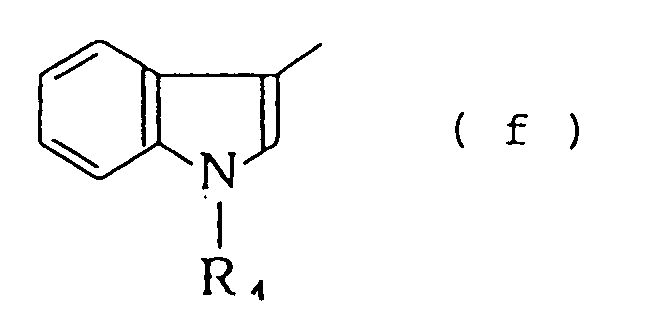
wherein R1 and R2 may be the same or different and each represents a hydrogen atom, a C1-C6 alkyl group, a phenyl group or an aryl(C1-C4)alkyl group, R3 represents a C1-C6alkyl group, R4 represents a hydrogen atom, a C1-C6 alkyl group, a phenyl group or an aryl(C1-C4)alkyl group, Rs, R6 and R7 may be the same or different and each represents a hydrogen atom, an amino group, a halogen atom, a C1-C4 alkoxy group or a phthalimide group and X represents O or NH, physiologically acceptable salts and quaternary ammonium salts thereof. The compounds are selective antagonists of 5HT at 5-HT3 receptors and useful in the treatment of psychotic disorders, neurotic diseases, gastric stasis symptoms, gastrointestinal disorders, nausea and vomiting.
Description
- This invention relates to piperidine derivatives, to processes for their preparation and to pharmaceutical compositions comprising them.
- In particular the invention relates to compounds which are selective antagonists of 5-hydroxytryptamine (5-HT) at 5-HT3 receptors.
- Nausea and vomiting are serious problems frequently observed in patients receiving a cancer chemotherapeutic agent and radiotherapy, and control of the nausea and vomiting is a very important auxiliary treatment for undergoing satisfactory treatment for cancer. Since it is reported that intravenous administration of high-dose metoclopramide is effective in inhibition of the vomiting (Gralla, R.J. et al., N. Engl. J. Med. 305, 905-909 (1981)), the vomiting has better, though not perfectly, been controlled. However, it has been revealed that presently available antiemetics, particularly compounds containing a benzamide structure, are associated with adverse reactions such as sedation, ataxia, diarrhea and tasikinesia due to their dopamine-blocking activities and central nerve-depressant activities.
- Specific antagonists of 5-HT3 receptors which have recently been reported to inhibit vomiting induced during cancer chemotherapy (Cunningham, D. et al., The Lancet, 1, 1461-1463 (1987)) are considered as a potent antiemetic ones without adverse reactions associated.
- Compounds having antagonists activity at 5-HT3 receptors have been described previously. For example U.S. Patents Nos. 4,486,441; 4,563,465; 4,789,673; 4,803,199 and 4,910,207; UK Patent Specification No. 2152049A and European Patent Specification No. 0309423A2 disclose compounds containing an azabicyclic moiety structure and European Patent Specifications Nos. 0297651A1 and 0307145A1 disclose compounds containing an imidazole ring structure.
- Under such circumstances it has been desired to develop selective antagonists of 5-HT at 5-HT3 receptors.
- We have now found new compounds which differ in structure from the prior compounds and possess a selectively effective antagonism against the effect of 5-HT at 5-HT3 receptors.
- According to one aspect of the invention, there are provided compounds of formula (I)

in which A represents a group selected from the following formulas (a) to (f)


or
wherein R1 and R2 may be the same or different and each represents a hydrogen atom, a C1-C6 alkyl group, a phenyl group or an aryl(C1 -C4)alkyl group, R3 represents a C1 -C6 alkyl group, R4 represents a hydrogen atom, a C1-C6 alkyl group, a phenyl group or an aryl(C1-C4)alkyl group, Rs, R6 and R7 may be the same or different and each represents a hydrogen atom, an amino group, a halogen atom, a C1-C4alkoxy group or a phthalimide group and X represents O or NH, physiologically acceptable salts and quaternary ammonium salts thereof. - Suitable physiologically acceptable salts of the compounds of formula (I) include acid addition salts formed with organic or inorganic acids, for example, inorganic acid salts such as hydrochloride, hydrobromide, hydroiodide, sulfate and phosphate, and organic acid salts such as oxalate, maleate, fumarate, lactate, malate, citrate, tartrate, benzoate and methanesulfonate. The quaternary ammonium salts include those salts with a lower alkyl halide such as methyl iodide, methyl bromide, ethyl iodide or ethyl bromide, a lower alkylsulfonate such as methyl methanesulfonate or ethyl methanesulfonate or a lower alkyl arylsulfonate such as methyl p-toluenesulfonate. The compounds of formula (I) also include their N-oxide derivatives. Since the compounds of formula (I) and acid addition salts, quaternary ammonium salts and N-oxide derivatives thereof may exist in the form of a hydrate or a solvate, such hydrates and solvates are also included within the scope of the invention.
- Compounds of formula (I) that contain at least one asymmetric carbon atom can be present in several stereoisomers. Such stereoisomers and their mixtures and racemates are embraced by the invention.
- Examples of the substituents represented by R, , R2and R4 in formula (I) include hydrogen, C1-C6 alkyl such as methyl, ethyl, n-propyl, iso-propyl, n-butyl, iso-butyl, tert-butyl, n-pentyl and n-hexyl, phenyl, benzyl, phenethyl or phenylpropyl. Examples of R3 include C1-C6 alkyl such as methyl, ethyl, n-propyl, iso-propyl, n-butyl, iso-butyl, tert-butyl, n-pentyl and n-hexyl.
- The following compounds illustrate the scope of the compounds of formula (I). 1-(1-Methyl-2-piperidyl)ethyl 1-methylindazole-3-carboxylate, 1-Methyl-2-piperidylmethyl 1-methylindazole-3-carboxylate, 1-Methyl-2-piperidylmethyl 3-methoxyquinoline-3-carboxylate, 1-Methyl-2-piperidylmethyl 2-methoxy-4-aminobenzoate, 1-(1-Methyl-2-piperidyl)ethyl 2-methoxy-4-aminobenzoate, 1-Methyl-2-piperidylmethyl 2-methoxy-4-amino-5-chlorobenzoate, 1-(1-Methyl-2-piperidyl)ethyl 2-methoxy-4-amino-5-chlorobenzoate, 1-(1-Methyl-2-piperidyl)ethyl 2-methoxy-4-phthalimidebenzoate, 1,1-Dimethyl-2-(1-methyl-3-indazolylcarboxymethyl)-piperidinium iodide, 1-(1-Methyl-2-piperidyl)ethyl 2-methylimidazo-[1,2-a]pyridine-3-carboxylate, 1-(1-Methyl-2-piperidyl)ethyl 2-phenyl-1,3-thiazole-5-carboxylate, 1-(1-Ethyl-2-piperidyl)ethyl indole-3-carboxamide, 1-Methyl-2-piperidylmethyl 6-methoxyquinoline-3-carboxylate.
- The compounds of formula (I) can be prepared by a variety of processes, for instance by condensation of a carboxylic acid of formula (II)

wherein A is as defined above or its reactive derivatives such as carboxylic acid halides, in particular carboxylic acid chloride, with a compound of formula (III)
wherein Ri, R2, R3 and X are as defined above. - The reaction can be carried out under various conditions. For instance, the acid chloride of A-COOH is reacted with a compound of formula (III) in an organic solvent such as diethyl ether, diisopropyl ether, tetrahydrofuran, dimethoxyethane, 1,4-dioxane or dimethylformamide at a temperature in the range from -20 ° C to a boiling point of the solvent used, if needed in the presence of an inorganic or organic acid-binding agent such as triethylamine, tri-n-butylamine, pyridine, dimethylaniline, tetramethylurea, metallic magnesium, n-butyllithium, lithium diisopropylamide, sodium amide, metallic sodium or sodium hydride. The desired product is obtained through extraction and purification steps following washing of the reaction mixture.
- If the compound of formula (III) is a basic compound, this compound may be used in an excess amount for substitution of the acid-binding agent.
- Alternatively, the compounds of formula (I) can be prepared by condensing the carboxylic acid of formula (II) or its reactive derivatives with a pyridine ring-containing compound corresponding to the compound of formula (III) and then hydrogenating the condensed product, thereby converting the pyridine ring to the piperidine ring.
- Compounds of formula (I), which antagonise the effect of 5HT at 5-HT3 receptors in the central nervous system, are useful in the treatment of conditions such as psychotic disorders (e.g., schizophrenia, mania, depression, anxiety, dementia, cognitive disorders, dependency on drugs, etc.) and neurotic diseases (e.g., migraine, etc.) or the like. Compounds of formula (I), which antagonise the effect of 5-HT at 5-HT3 receptors in the peripheral nervous system, are useful in the treatment of gastric stasis symptoms of gastrointestinal dysfunction such as occur with dyspepsia, reflux oesophagitis, flatulence, and in the treatment of gastrointestinal disorders such as gastritis, peptic ulcer, diarrhea occurred by various causes, Hirschsprung's disease. Compounds of formula (I) are also useful in the treatment of nausea and vomiting, particularly that associated with cancer chemotherapy and radiotherapy.
- According to another aspect of the invention, there is provided a pharmaceutical composition having a selective antagonism of 5-HT at 5-HT3 receptors, which comprises as an active ingredient an effective amount of a compound of formula (I), its physiologically acceptable salt or quaternary ammonium salt. Such compositions may be formulated in conventional manner using one or more physiologically acceptable carriers and/or excipients.
- The compounds of the invention can usually be administered orally or parenterally in the form of a pharmaceutical formulation. The pharmaceutical formulation includes tablets, capsules, suppositories, troches, syrup, cream, ointment, plasters, cataplasms, granules, powders, injection, suspension and the like. It may be in bilayered or multilayered tablet with other drugs. The tablet may also be coated with a conventional coating to form, for example, sugar-coated, enteric-coated or film-coated tablets.
- In preparing the solid formulations, additives such as lactose, refined sugar, crystalline cellulose, corn starch, calcium phosphate, sorbitol, glycin, carboxymethylcellulose, gum arabic, polyvinylpyrrolidone, hydroxypropylcellulose, glycerin, polyethylene glycol, stearic acid, magnesium stearate and talc are employed.
- A vegetable or synthetic wax or fat or a similar base is used in preparing the semi-solid formulations.
- As additives in preparing the liquid formulations are used, for example, sodium chloride, sorbitol, glycerin, olive oil, almond oil, propylene glycol and ethyl alcohol.
- The active ingredient is contained in the formulation in an amount of 0.1-100% by weight, suitably 1-50% by weight in the case of formulations for oral administration and 0.1-10% by weight in the case of formulations for injection based upon the weight of the formulation.
- Route and dosage of administration for the compounds of the invention are not specifically limited and are appropriately chosen depending upon form of the formulation, age and sex of the patient, severity of the disease and other factors. Daily dosage of the active ingredient is 1 ng - 1000 mg.
- The invention is further illustrated by the following examples.
-

- (1-Methyl-2-piperidyl)-1-ethanol (4.5 g, 31 mmol) was dissolved in dry THF (70 ml) and 1,3-dimethyl-2-imidazolidinone (20 ml) was added. The solution was ice-cooled and a hexane solution of n-BuLi (1.6 M, 20 ml) was added dropwise. The reaction solution was stirred at room temperature for 20 minutes, to which was added dropwise a solution of 1-methylindazole-3-carboxylic acid chloride (5.4 g, 28 mmol) dissolved in a mixed solution of dry THF (70 ml) and 1,3-dimethyl-2-imidazolidinone (20 ml). The mixture was stirred overnight at room temperature, the reaction solution was concentrated under reduced pressure and a 5% sodium bicarbonate solution was added. It was extracted with chloroform. The organic layer was washed with a saturated sodium chloride solution and dried over anhydrous magnesium sulfate. The solvent was distilled off under reduced pressure to obtain a residue. Separation and purification of the residue by silica gel column chromatography (110 g Si02, chloroform : methanol = 100 : 1) and further silica gel column chromatography with a different solvent (100 g Si02, hexane : ethyl acetate = 1 : 1) gave the title compound, 0.52 g of a high polar isomer and 0.64 g of a low polar isomer, respectively. Less polar isomer
- 1H-NMR δ(CDCl3)1.10-1.38(m, 1H), 1.43(d, J=7Hz, 3H), 1.50-1.68(m, 3H), 1.72-1.97(m, 2H), 2.07-2.22(m, 1 H), 2.25-2.32(m, 1 H), 2.36(s, 3H ), 2.82-2.97(m, 1 H), 4.17(s, 3H), 5.66-5.79(m, 1H), 7.33(dd, J=5Hz, 1 H ), 7.45(dd, J=1Hz, 2H), 8.18(d, J = 8Hz, 1 H);
- IR(KBr) 2936, 2836, 2784, 1705, 1481, 1436, 1408, 1302, 1218, 1163, 1117 , 772, 752cm-1
- More polar isomer
- m.p. 71.5-73 °C
- 1H-NMR 8 (CDCl3) 1.25-1.38(m, 1H), 1.45(d, J = 7Hz, 3H), 1.51-1.65(m , 3H), 1.79-1.92(m, 2H), 2.03-2.20(m, 2H), 2.40(s, 3H), 2.82-2.98(m, 1 H), 4.17(s, 3H), 5.50-5.64(m, 1 H), 7.32(dd, J = 5Hz, 1 H), 7.45(dd, J=1Hz , 2H), 8.22(dd, J = 2Hz, 1 H);
- IR(KBr) 2942, 2848, 2770, 1718, 1480, 1435, 1410, 1201, 1171, 1161, 1117 , 1090, 754cm-1
-

- The title compound was prepared by the same procedure as in Example 1.
- 1H-NMR δ(CDCl3) 1.25-1.95(m, 6H), 2.05-2.40(m, 2H), 2.42(s, 3H), 1 .83-2.95(m, 1H), 4.18(s, 3H), 4.45(dd, J = 5Hz, J = 11 Hz, 1 H), 4.57(dd, J = 1 Hz, J =11 Hz, 1 H), 7.27-7.50(m, 3H), 8.24(d, J = 8Hz, 1 H); MS(m/z) 288, 158, 112, 99, 70
-

- The title compound was prepared by the same procedure as in Example 1.
- 1H-NMR δ(CDCl3) 1.20-2.07(m, 6H), 2.07-2.39(m, 2H), 2.43(s, 3H), 2 .85-2.97(m, 1H), 3.96(s, 3H), 4.47(d, J=5Hz, 2H), 7.18(d, J=2Hz, 1H), 7 .48(dd, J=2Hz, J=9Hz, 1H), 8.05(d, J=9Hz, 1H), 8.74(d, J=2Hz, 1H), 9.31 ( d, J = 2Hz, 1 H);
- MS(m/z) 315, 186, 158, 99, 98, 70
-

- The title compound was prepared by the same procedure as in Example 1.
- 1H-NMR δ(CDCl3) 1.20-1.90(m, 5H), 2.14-2.33(m, 3H), 2.39(s, 3H), 2 .78-2.95(m, 1H), 3.85(s, 3H), 3.93-4.17-(br., 2H), 4.27(dd, J = 5Hz, J=12 Hz, 1 H), 4.33(dd, J = 5Hz, J=12Hz, 1 H), 6.18-6.27(m, 2H), 7.75(d, J = 8Hz, 1 H);
- IR(KBr) 3470, 3370, 1690, 1610, 1255 cm-1
-

- The title compound was prepared by the same procedure as in Example 1.
- Less polar isomer
- 1H-NMR δ(CDCl3) 1.27(d, J=7Hz, 3H), 1.30-1.65(m, 2H), 1.65-1.92(m, 2H), 2.03-2.21(m, 2H), 2.30(s, 3H), 2.84(br, d, 1H), 3.85(s, 3H), 4.07 (br, s, 2H), 5.98(m, 1H), 6.19(s, 1H), 6.22(d, J=8Hz, 1H), 7.72(d, J=8Hz , 1 H);
- IR(film) 3460, 3365, 3250, 2945, 1692, 1610, 1470, 1350, 1242, 1210, 1 150, 1078cm-1
- More polar isomer
- 1H-NMR δ(CDCl3) 1.32(d, J=7Hz, 3H), 1.40-1.68(br., 2H), 1.68-1.86(b r. 2H), 2.03-2.17(m, 2H), 2.39(s, 3H), 2.93(br. d, 1 H), 3.81 (s, 3H), 4. 17(br. 2H), 5.30(dd, J = 5Hz, J' = 2Hz, 1 H), 6.16(s, 1 H), 1.18(d, J = 8Hz, 1 H ), 7.72(d, J = 8Hz, 1 H);
- IR(film) 3448, 3350, 3225, 2940, 2850, 2785, 1690, 1608, 1465, 1280, 1 250, 1150, 1078 cm-1
-
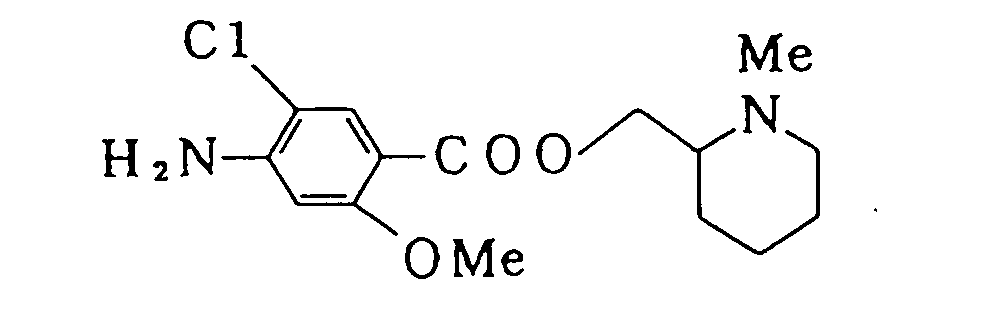
- The title compound was prepared by the same procedure as in Example 1.1H-NMR δ(CDCl3) 1.22-1.90-(m, 6H), 2.00-2.30(m, 2H), 2.37(s, 3H), 2 .76-2.91 (m, 1 H), 3.84(s, 3H), 4.26(dd, J = 5Hz, J' = 11 Hz, 1 H), 4.32-(dd, J = 5Hz, J' =11 Hz, 1 H), 4.25-4.55(br., 2H), 6.28(s, 1 H), 7.82(s, 1 H);
- MS(m/z) 313, 184, 113, 100, 70
-

- The title compound was prepared by the same procedure as in Example 1.
- Less polar isomer
- 1H-NMR δ(CDCl3) 1.28(d, J = 6Hz, 3H), 1.30-1.88(m, 6H), 2.03-2.24(m, 2H), 2.31 (s, 3H), 2.81-2.93(m, 1H), 3.85(s, 3H), 4.35-4.52(br., 2H), 5 .41-5.57(m, 1 H), 6.29(s, 1 H), 7.80(s, 1 H)
- More polar isomer
- 1H-NMR δ(CDCl3) 1.32(d, J = 6Hz, 3H), 1.40-1.93(m, 6H), 1.93-2.17(m, 3H), 2.37(s, 3H), 2.83-2.98(m, 1H), 3.83(s, 3H), 4.28-4.52(br., 2H), 5 .23-5.38(m, 1 H), 7.26(s, 1 H), 7.82(s, 1 H)
-

- The title compound was prepared by the same procedure as in Example 1.
- 1H-NMR 8 (CDCl3) 1.32(d, J=7Hz, 3H), 1.35-1.68(m, 4H), 1.81(br., 2H), 2.04-2.22(m, 2H), 2.33(s, 3H), 2.78-2.93(m, 1 H), 3.94(s, 3H), 5.57(m, 1 H), 7.12-7.20(m, 2H), 7.78-7.88(m, 2H), 7.82-8.01 (m, 3H);
- IR(film) 2935, 1722, 1610, 1379, 1255, 1082, 1030 cm-1
-

- 0.5 g (1.8 mmol) of 1-methyl-2-piperidylmethyl 1-methylindazole-3-carboxylate obtained in Example 2 was dissolved in toluene (5 ml), methyl iodide (1 ml) was added at room temperature with stirring and the mixture was stirred for one hour. After it was confirmed by thin layer chromatography that the spot of 1-methyl-2-piperidylmethyl 1-methylindazole-3-carboxylate disappeared, a precipitating crystal was collected by filtration. The crystal was washed with small amounts of toluene and dried under reduced pressure at room temperature to afford 0.49 g (1.2 mmol) of the quaternary ammonium salt of the title compound. 1H-NMR 8(D20) 1.60-2.20(m, 6H), 3.21(s, 3H), 3.36(s, 3H), 3.45-3.65 (m, 2H), 3.80-4.10(m, 1H), 4.03(s, 3H), 4.6-5.5(br., 2H), 7.30-7.45(m, 1 H), 7.47-7.62(m, 2H), 7.88(d, J = 8Hz, 1 H);
- WS(m/z) 302, 185, 159, 145, 126, 93, 58
-

- The title compound was prepared by the same procedure as in Example 1.
- Less polar isomer
- 1H-NMR δ(CDCl3) 1.38(d, J=7Hz, 3H), 1.20-2.00(m, 6H), 2.00-2.33(m, 2H), 2.36(s, 3H), 2.73(s, 3H), 2.84-2.97(m, 1 H), 5.58-5.73(m, 1 H), 6. 99(t, J=7Hz, 1 H), 7.39(dd, J=7Hz, J=9Hz, 1 H), 7.62(d, J=9Hz, 1 H), 9.74(d , J = 7Hz, 1 H)
-

- The title compound was prepared by the same procedure as in Example 1.
- Less polar isomer
- 1H-NMR δ(CDCl3) 1.36(d, J=7Hz, 3H), 1.20-1.94(m, 6H), 2.02-2.30(m, 2H), 2.33(s, 3H), 2.83-2.96(m, 1H), 5.50-5.66(m, 1H), 7.41-7.52(m, 3 H), 7.97-8.07(m, 2H), 8.11 (m, 2H);
- More polar isomer
- 1H-NMR δ(CDCl3) 1.39(d, J=6Hz, 3H), 1.20-1.95(m, 6H), 2.01-2.18(m, 2H), 2.40(s, 3H), 2.36-2.49(m, 1H), 5.38-5.52(m, 1 H), 7.40-7.51 (m, 3 H), 7.94-8.07(m, 2H), 8.11 (s, 1 H)
-

- To a THF solution (300 ml) of 2-(1-aminoethyl)-pyridine (10.4 g, 85.1 mmol) was added dropwise a THF solution (100 ml) of indole-3-carboxylic acid chloride (24.0 g, 134 mmol) over a period of 30 minutes. The mixture was stirred at room temperature for 2 hrs. The reaction solution was diluted with ethyl acetate (300 ml), water (500 ml) was added and the mixture was stirred. The organic layer was separated and the water layer was made alkali with potassium hydroxide and extracted three times with ethyl acetate. The extract was washed with a saturated sodium chloride solution and dried over anhydrous magnesium sulfate. The solvent was concentrated under reduced pressure to obtain a residue. Separation and purification of the residue by silica gel column chromatography (300 g Si02, ethyl acetate) gave 1.04 g of 1-(2-pyridyl)ethyl indole-3-carboxamide as yellow oily product.
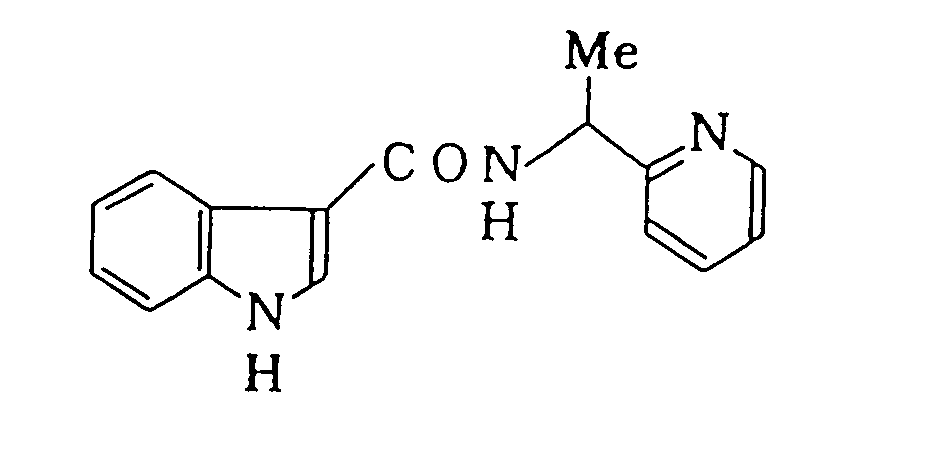
- 1H-NMR δ(CDCl3) 1.60(d, J=7Hz, 3H), 5.42(q, J=7Hz, 1H), 7.15-7.35(m, 5H), 7.65(m, 2H), 8.11(d, J=7Hz, 1 H), 8.57(d, J = 5Hz, 1 H), 10.42(s, 1 H);
- IR(film) 3186, 3056, 1624, 1205, 747cm-1
- The resulting 1-(2-pyridyl)ethyl indole-3-carboxamide (1.0 g, 3.8 mmol) and methyl iodide (5 ml) were mixed and the mixture was reacted at 100 ° C in a stainless sealed tube for 3 hrs. The resulting quaternary ammonium salt was dissolved in methanol (100 ml) and water (10 ml) was added. To the mixture cooled to 0°C was added slowly sodium borohydride (1.7 g, 45 mmol). After completion of the addition, the mixture was stirred at room temperature for 2 hrs. Methanol was distilled off under reduced pressure to obtain a residue. The residue mixed with water was extracted with chloroform. The extract was washed with a saturated sodium chloride solution and dried over anhydrous magnesium sulfate. The residue obtained by concentration under reduced pressure was separated by silica gel column chromatography (30 g Si02, chloroform). The tetrahydro form (1.0 g) obtained as yellow oily product was dissolved in ethanol (50 ml) and subjected to catalytic reduction (2.5 kg/cm2 H2) using a platinum oxide catalyst (80 mg). The catalyst was filtered and washed with ethanol. The filtrate was concentrated under reduced pressure. The resulting residue was separated and purified by silica gel column chromatography (30 g Si02, chloroform : methanol = 9 : 1) to afford 0.10 g of the title compound as yellow oily product.
- 1H-NMR δ(CDCl3) 1.29(d, J = 7Hz, 3H), 1.30-1.90(m, 8H), 2.42(s, 3H), 2.91 (d, J = 12Hz, 1 H), 4.52(q, J = Hz, 1 H), 6.69(d, J = 7Hz, 1 H), 7.22(m, 2H), 7.42(m, 1 H), 7.86(s, 1 H), 8.00(m, 1 H), 10.38(s, 1 H)
- The compounds prepared in the above examples were respectively tested for antagonism of 5-HT at 5-HT3 receptors.
- Administration of 5-HT (serotonin) to anesthesized rats via jugular vein induces temporary bradycardia (von Benzold Jarisch Reflex)(A.S. Paintal, Physiol. Rev., 53, 159-227 (1973)). It is demonstrated by Rechardson et al. (Nature, 316, 126-131 (1985)) that the 5-HT-induced reflex is produced via 5-HT3 receptors. Accordingly, an effective and selective antagonism of 5-HT at 5-HT3 receptors by a compound of the invention, if any, could be demonstrated by inhibition of said reflex.
- Thus, rats were anesthesized with urethane (1 g/kg, i.p.) and recorded for blood pressure and heart rate from left femoral artery. Percent inhibition was calculated from bradycardia induced by 5-HT (30 µg/kg) given 5 min. following intrajugular administration of a compound of the invention, taking the bradycardia induced by the intrajugular administration of 5-HT. The percent inhibition is listed in the table below.
- In this test, all of the test compounds were tested in the form of hydrochloride except for the compounds prepared in Example 9. Therefore, concentration of the test drug is expressed in terms of the concentration of the hydrochloride except for the compounds prepared in Example 9. Antagonism of 5-HT3

- The following examples illustrate pharmaceutical formulations according to the invention.
-

- The above ingredients were uniformly blended to produce powders for direct compression. The powders were formed in a rotary tabletting machine to tablets each 6 mm in diameter and weighing 100 mg.
-

- The active ingredient, lactose, corn starch and crystalline cellulose were uniformly blended and a solution of hydroxypropylcellulose in ethanol was added. The mixture was kneaded and granulated by extrusion in a grade. The granules were then dried in a drier at 50 °C. The dried granules were screened to granule sizes between 297 µm and 1460 µm to give a granule formulation weighing 200 mg per divided packet.
-

- Refined sugar, D-sorbitol, methyl paraoxybenzoate, propyl paraoxybenzoate and the active ingredient were dissolved in 60 g of warm water. After cooling, glycerin and a solution of the flavor in ethanol were added. To the mixture was then added water to 100 ml.
-
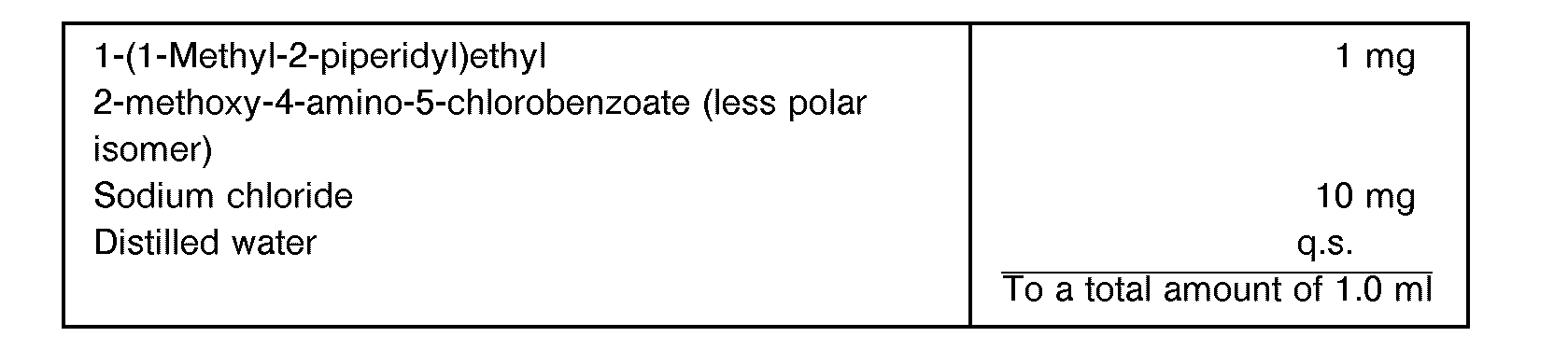
- Sodium chloride and the active ingredient were dissolved in distilled water to give a solution in a total amount of 1.0 ml.
-

- Glycerin was added to the active ingredient to give a solution. To the solution was added polyethylene glycol 4000, and the mixture was warmed to give a solution. The solution was poured into suppository mold and solidified by cooling to prepare suppositories each weighing 1.5 g.
Claims (10)

in which A represents a group selected from the following formulas (a) to (f)



or

wherein R1 and R2 may be the same or different and each represents a hydrogen atom, a C1-C6 alkyl group, a phenyl group or an aryl(C1 -C4)alkyl group, R3 represents a C1 -C6 alkyl group, R4 represents a hydrogen atom, a C1-C6 alkyl group, a phenyl group or an aryl(C1-C4)alkyl group, Rs, R6 and R7 may be the same or different and each represents a hydrogen atom, an amino group, a halogen atom, a C1-C4 alkoxy group or a phthalimide group and X represents O or NH, or a physiologically acceptable salt or quaternary ammonium salt thereof.

wherein R1 and R2 may be the same or different and each represents a hydrogen atom, a C1-C6 alkyl group, a phenyl group or an aryl(C1 -C4)alkyl group, R3 represents a C1 -C6 alkyl group, R4 represents a hydrogen atom, a C1-C6 alkyl group, a phenyl group or an aryl(C1-C4)alkyl group, Rs, R6 and R7 may be the same or different and each represents a hydrogen atom, an amino group, a halogen atom, a C1-C4alkoxy group or a phthalimide group and X represents O or NH, or a physiologically acceptable salt or quaternary ammonium salt thereof, which comprises reacting a compound of formula (II) or its reactive derivatives

wherein A is as defined above, with a compound of formula (III)

wherein Ri, R2 and R3 are as defined above and if necessary converting the resulting compound in a free base into the physiologically acceptable salt or quaternary ammonium salt thereof.
Applications Claiming Priority (2)
| Application Number | Priority Date | Filing Date | Title |
|---|---|---|---|
| JP3045632A JP3026845B2 (en) | 1991-02-20 | 1991-02-20 | Piperidine derivative |
| JP45632/91 | 1991-02-20 |
Publications (3)
| Publication Number | Publication Date |
|---|---|
| EP0499995A2 true EP0499995A2 (en) | 1992-08-26 |
| EP0499995A3 EP0499995A3 (en) | 1992-09-23 |
| EP0499995B1 EP0499995B1 (en) | 1997-01-02 |
Family
ID=12724744
Family Applications (1)
| Application Number | Title | Priority Date | Filing Date |
|---|---|---|---|
| EP92102559A Expired - Lifetime EP0499995B1 (en) | 1991-02-20 | 1992-02-15 | Piperidine derivatives |
Country Status (6)
| Country | Link |
|---|---|
| US (1) | US5246945A (en) |
| EP (1) | EP0499995B1 (en) |
| JP (1) | JP3026845B2 (en) |
| KR (1) | KR100196985B1 (en) |
| CA (1) | CA2060965A1 (en) |
| DE (1) | DE69216260T2 (en) |
Cited By (8)
| Publication number | Priority date | Publication date | Assignee | Title |
|---|---|---|---|---|
| WO1994008994A1 (en) * | 1992-10-13 | 1994-04-28 | Smithkline Beecham Plc | Heterocyclic -esters or -amides used as 5-ht4 receptor antagonists |
| FR2838739A1 (en) * | 2002-04-19 | 2003-10-24 | Sanofi Synthelabo | New N-(piperidinyl-benzyl)-trifluoromethyl-benzamides, are glyt1 and/or glyt2 glycine transporter inhibitors, useful e.g. for treating schizophrenia, depression, muscle spasms, pain or epilepsy |
| FR2861074A1 (en) * | 2003-10-17 | 2005-04-22 | Sanofi Synthelabo | New N-(piperidinyl)(phenyl)methyl amide derivatives useful as glycine transporter inhibitors, e.g. for treating dementia-associated behavioral problems, psychoses, anxiety, depression, alcohol abuse |
| US7205319B2 (en) * | 2002-07-29 | 2007-04-17 | Sanofi-Aventis | N-[phenyl (piperidin-2-yl) methyl]benzamide derivatives, preparation thereof, and use thereof in therapy |
| US7335670B2 (en) * | 2003-10-17 | 2008-02-26 | Sanofi-Aventis | Derivatives of N-[heteroaryl(piperidine-2-yl) methyl]benzamide, preparation method thereof and application of same in therapeutics |
| US7790753B2 (en) | 2003-10-17 | 2010-09-07 | Sanofi-Aventis | Derivatives of N-[phenyl(alkylpiperidine-2-yl)methyl]benzamide, preparation method thereof and application of same in therapeutics |
| US9309238B2 (en) | 2009-11-05 | 2016-04-12 | University Of Notre Dame Du Lac | Imidazo [1,2-a]pyridine compounds, synthesis thereof, and methods of using same |
| US10919888B2 (en) | 2015-09-17 | 2021-02-16 | University Of Notre Dame Du Lac | Benzyl amine-containing heterocyclic compounds and compositions useful against mycobacterial infection |
Families Citing this family (5)
| Publication number | Priority date | Publication date | Assignee | Title |
|---|---|---|---|---|
| FR2705343B1 (en) * | 1993-05-17 | 1995-07-21 | Fournier Ind & Sante | Beta, beta-dimethyl-4-piperidineethanamine derivatives, process for their preparation and their use in therapy. |
| US5654320A (en) * | 1995-03-16 | 1997-08-05 | Eli Lilly And Company | Indazolecarboxamides |
| KR19990008109A (en) * | 1995-04-28 | 1999-01-25 | 나가사까 겐지로 | 1,4-disubstituted piperidine derivatives |
| FR2861070B1 (en) * | 2003-10-17 | 2006-01-06 | Sanofi Synthelabo | DERIVATIVES OF N- [PHENYL (PYRROLIDIN-2-YL) METHYL] BENZAMIDE AND N - [(AZEPAN-2-YL) PHENYLMETHYL] BENZAMIDE, THEIR PREPARATION AND THEIR THERAPEUTIC USE |
| GB201511382D0 (en) | 2015-06-29 | 2015-08-12 | Imp Innovations Ltd | Novel compounds and their use in therapy |
Family Cites Families (15)
| Publication number | Priority date | Publication date | Assignee | Title |
|---|---|---|---|---|
| US3342826A (en) * | 1964-01-13 | 1967-09-19 | Ile De France | Heterocyclic aminoalkyl benzamides |
| FR2313935A1 (en) * | 1975-06-10 | 1977-01-07 | Ile De France | NEW BENZAMIDES SUBSTITUTES, THEIR DERIVATIVES AND THEIR PREPARATION PROCESS |
| FR2155927A1 (en) * | 1971-10-15 | 1973-05-25 | Synthelabo | 1-phenylcyclo hexane carboxylic acid esters - with antispasmodic and anticholinergic activity |
| US4310532A (en) * | 1980-03-24 | 1982-01-12 | The University Of Toledo | Methods and piperidinyl-alkyl-benzamide composition for inhibiting H2 histamine receptors |
| CA1220141A (en) * | 1981-06-13 | 1987-04-07 | John R. Fozard | Treatment of migraine with tropyl benzoate derivatives |
| FR2531083B1 (en) * | 1982-06-29 | 1986-11-28 | Sandoz Sa | NOVEL PIPERIDINE DERIVATIVES, THEIR PREPARATION AND THEIR USE AS MEDICINES |
| JPS5936675A (en) * | 1982-07-13 | 1984-02-28 | サンド・アクチエンゲゼルシヤフト | Cyclic carboxylic acid piperidyl ester and amide derivative |
| US4486441A (en) * | 1982-12-03 | 1984-12-04 | Merrell Toraude Et Compagnie | Pseudotropyl halogeno-benzoates and their use in migraine treatment |
| DE3445377A1 (en) * | 1983-12-23 | 1985-07-04 | Sandoz-Patent-GmbH, 7850 Lörrach | CARBOCYLIC AND HETEROCYCLIC CARBONIC ACID ESTERS AND AMIDES OF BRIDGED AND NON-BRIDGED CYCLIC NITROCYLINE AMINES OR ALCOHOLS |
| DK623586A (en) * | 1985-12-27 | 1987-06-28 | Eisai Co Ltd | PIPERIDE INGREDIENTS OR SALTS THEREOF AND PHARMACEUTICAL COMPOSITIONS CONTAINING THE COMPOUNDS |
| NL8701682A (en) * | 1986-07-30 | 1988-02-16 | Sandoz Ag | METHOD FOR THE THERAPEUTIC USE OF SEROTONIN ANTAGONISTS, ACTIVE COMPOUNDS AND PHARMACEUTICAL PREPARATIONS CONTAINING THESE COMPOUNDS |
| DE3885357T2 (en) * | 1987-06-29 | 1994-03-24 | Duphar Int Res | Fused indole derivatives. |
| GB8720693D0 (en) * | 1987-09-03 | 1987-10-07 | Glaxo Group Ltd | Chemical compounds |
| IT1231413B (en) * | 1987-09-23 | 1991-12-04 | Angeli Inst Spa | BENZIMIDAZOLIN-2-BONE-1-CARBOXYLIC ACID DERIVATIVES USEFUL AS 5-HT RECEPTOR ANTAGONISTS |
| CA2030051C (en) * | 1989-11-17 | 2001-08-07 | Haruhiko Kikuchi | Indole derivatives |
-
1991
- 1991-02-20 JP JP3045632A patent/JP3026845B2/en not_active Expired - Fee Related
-
1992
- 1992-02-04 US US07/830,853 patent/US5246945A/en not_active Expired - Lifetime
- 1992-02-10 CA CA002060965A patent/CA2060965A1/en not_active Abandoned
- 1992-02-15 EP EP92102559A patent/EP0499995B1/en not_active Expired - Lifetime
- 1992-02-15 DE DE69216260T patent/DE69216260T2/en not_active Expired - Fee Related
- 1992-02-20 KR KR1019920002533A patent/KR100196985B1/en not_active Expired - Fee Related
Cited By (20)
| Publication number | Priority date | Publication date | Assignee | Title |
|---|---|---|---|---|
| US5708174A (en) * | 1992-03-12 | 1998-01-13 | Smithkline Beecham P.L.C. | Heterocyclic-esters or -amides used as 5-HT4 receptor antagonists |
| WO1994008994A1 (en) * | 1992-10-13 | 1994-04-28 | Smithkline Beecham Plc | Heterocyclic -esters or -amides used as 5-ht4 receptor antagonists |
| HRP20040977B1 (en) * | 2002-04-19 | 2008-04-30 | Sanofi-Aventis | N- [PHENYL (PIPERIDIN-2-IL) METHYL] BENZAMIDE DERIVATIVES, PREPARATION AND USE OF THESES IN THERAPY |
| FR2838739A1 (en) * | 2002-04-19 | 2003-10-24 | Sanofi Synthelabo | New N-(piperidinyl-benzyl)-trifluoromethyl-benzamides, are glyt1 and/or glyt2 glycine transporter inhibitors, useful e.g. for treating schizophrenia, depression, muscle spasms, pain or epilepsy |
| WO2003089411A1 (en) * | 2002-04-19 | 2003-10-30 | Sanofi-Aventis | Derivatives of n-[phenyl(piperidin-2-yl)methyl]benzamide, the preparation method thereof and application of same in therapeutics |
| CN100482646C (en) * | 2002-04-19 | 2009-04-29 | 赛诺菲-安万特 | N- [ phenyl (piperidin-2-yl) methyl ] benzamide derivatives, their preparation and their use in therapy |
| US7326722B2 (en) | 2002-04-19 | 2008-02-05 | Sanofi-Aventis | N-[Phenyl(piperidin-2-yl)methyl]benzamide derivatives, their preparation and their application in therapy |
| US7951821B2 (en) | 2002-07-29 | 2011-05-31 | Sanofi-Aventis | N-[phenyl(piperidin-2-yl)methyl]benzamide derivatives, preparation thereof, and use thereof in therapy |
| US7205319B2 (en) * | 2002-07-29 | 2007-04-17 | Sanofi-Aventis | N-[phenyl (piperidin-2-yl) methyl]benzamide derivatives, preparation thereof, and use thereof in therapy |
| RU2351588C2 (en) * | 2003-10-17 | 2009-04-10 | Санофи-Авентис | N-phenyl(piperidine-2-yl)methyl-benzamide derivatives, and their application in therapy |
| US7335670B2 (en) * | 2003-10-17 | 2008-02-26 | Sanofi-Aventis | Derivatives of N-[heteroaryl(piperidine-2-yl) methyl]benzamide, preparation method thereof and application of same in therapeutics |
| WO2005037792A1 (en) * | 2003-10-17 | 2005-04-28 | Sanofi-Aventis | Derivatives of n-``phenyl(piperidine-2-yl) methyl benzamide, preparation method thereof and applications of same in therapeutics |
| US7750025B2 (en) | 2003-10-17 | 2010-07-06 | Sanofi-Aventis | Derivatives of N-phenyl (piperidine-2-yl) methyl benzamide, preparation method thereof and applications of same in therapeutics |
| US7790753B2 (en) | 2003-10-17 | 2010-09-07 | Sanofi-Aventis | Derivatives of N-[phenyl(alkylpiperidine-2-yl)methyl]benzamide, preparation method thereof and application of same in therapeutics |
| FR2861074A1 (en) * | 2003-10-17 | 2005-04-22 | Sanofi Synthelabo | New N-(piperidinyl)(phenyl)methyl amide derivatives useful as glycine transporter inhibitors, e.g. for treating dementia-associated behavioral problems, psychoses, anxiety, depression, alcohol abuse |
| US9309238B2 (en) | 2009-11-05 | 2016-04-12 | University Of Notre Dame Du Lac | Imidazo [1,2-a]pyridine compounds, synthesis thereof, and methods of using same |
| US9908876B2 (en) | 2009-11-05 | 2018-03-06 | University Of Notre Dame Du Lac | Imidazo [1,2-a]pyridine compounds, synthesis thereof, and methods of using same |
| US10913737B2 (en) | 2009-11-05 | 2021-02-09 | University Of Notre Dame Du Lac | Imidazo [1,2-a]pyridine compounds, synthesis thereof, and methods of using same |
| US10919888B2 (en) | 2015-09-17 | 2021-02-16 | University Of Notre Dame Du Lac | Benzyl amine-containing heterocyclic compounds and compositions useful against mycobacterial infection |
| US11820767B2 (en) | 2015-09-17 | 2023-11-21 | University Of Notre Dame Du Lac | Benzyl amine-containing heterocyclic compounds and compositions useful against mycobacterial infection |
Also Published As
| Publication number | Publication date |
|---|---|
| DE69216260D1 (en) | 1997-02-13 |
| US5246945A (en) | 1993-09-21 |
| JPH04266873A (en) | 1992-09-22 |
| KR920016448A (en) | 1992-09-24 |
| EP0499995A3 (en) | 1992-09-23 |
| DE69216260T2 (en) | 1997-04-24 |
| KR100196985B1 (en) | 1999-06-15 |
| JP3026845B2 (en) | 2000-03-27 |
| EP0499995B1 (en) | 1997-01-02 |
| CA2060965A1 (en) | 1992-08-21 |
Similar Documents
| Publication | Publication Date | Title |
|---|---|---|
| US5187166A (en) | Azabicyclo derivatives and their use as antiemetics | |
| CA2003422C (en) | Quinuclidines, their use as medicaments and processes for their preparation | |
| EP0170213B1 (en) | Glutarimide antianxiety and antihypertensive agents | |
| EP0499995B1 (en) | Piperidine derivatives | |
| EP0747353A2 (en) | Indole derivatives | |
| EP0429984B1 (en) | Indole derivatives | |
| EP0447292A1 (en) | 4-Aminomethyl-piperidine derivatives, their preparation and therapeutic application | |
| JPH05506249A (en) | Bisbenzocycloheptapiperidylidene, piperidine and piperazine compounds, compositions and uses | |
| JPH0670026B2 (en) | 1,4-disubstituted piperazine derivative, pharmaceutical composition containing the same and method for producing the same | |
| US5519025A (en) | 4-indolylpiperazinyl derivatives | |
| EP0558923B1 (en) | Diazabicyclo derivatives as 5-HT3 antagonists | |
| US5256656A (en) | Azabicyclo derivatives | |
| JPS6230779A (en) | Novel compound, manufacture and medicinal composition | |
| JP3637974B2 (en) | Pyrrolidine derivatives | |
| WO1999031097A1 (en) | Imidazol derivatives as muscarinic m3 receptor antagonists | |
| WO1991007402A1 (en) | Azabicyclo amides and esters as 5-ht3 receptor antagonists | |
| US4443452A (en) | Dibenzodiazepinones, pharmaceutical compositions thereof and method of use thereof | |
| EP0532398A1 (en) | N-(4,7-dimethoxyindan-2-yle)-1-(phenylcarbonyl)-N-propyle-piperidine-4-methane amines, their preparation and their therapeutical application | |
| US4908361A (en) | Tetrahydroisoquino(2,1-C)(1,3)benzodiazepines | |
| WO1995025100A1 (en) | Use of 4-amino-5-chloro-2-methoxybenzoic esters as 5-ht4 agonists | |
| IL105888A (en) | Thiosemicarbazonic acid esters | |
| EP0104647A2 (en) | Pyridopyrimidinones | |
| US4963685A (en) | Intermediates for the preparation of tetrahydroisoquino[2,1-c][1,3]benzodiazepines | |
| JPS60109567A (en) | Bis(substituted methyl)-methyl-isoquinoline derivative | |
| EP3210975A1 (en) | Cocrystals of lorcaserin |
Legal Events
| Date | Code | Title | Description |
|---|---|---|---|
| PUAI | Public reference made under article 153(3) epc to a published international application that has entered the european phase |
Free format text: ORIGINAL CODE: 0009012 |
|
| PUAL | Search report despatched |
Free format text: ORIGINAL CODE: 0009013 |
|
| AK | Designated contracting states |
Kind code of ref document: A2 Designated state(s): BE CH DE FR GB IT LI NL SE |
|
| AK | Designated contracting states |
Kind code of ref document: A3 Designated state(s): BE CH DE FR GB IT LI NL SE |
|
| 17P | Request for examination filed |
Effective date: 19930316 |
|
| 17Q | First examination report despatched |
Effective date: 19951026 |
|
| GRAG | Despatch of communication of intention to grant |
Free format text: ORIGINAL CODE: EPIDOS AGRA |
|
| GRAH | Despatch of communication of intention to grant a patent |
Free format text: ORIGINAL CODE: EPIDOS IGRA |
|
| GRAH | Despatch of communication of intention to grant a patent |
Free format text: ORIGINAL CODE: EPIDOS IGRA |
|
| GRAA | (expected) grant |
Free format text: ORIGINAL CODE: 0009210 |
|
| AK | Designated contracting states |
Kind code of ref document: B1 Designated state(s): BE CH DE FR GB IT LI NL SE |
|
| PG25 | Lapsed in a contracting state [announced via postgrant information from national office to epo] |
Ref country code: NL Free format text: LAPSE BECAUSE OF FAILURE TO SUBMIT A TRANSLATION OF THE DESCRIPTION OR TO PAY THE FEE WITHIN THE PRESCRIBED TIME-LIMIT Effective date: 19970102 Ref country code: BE Effective date: 19970102 Ref country code: CH Free format text: LAPSE BECAUSE OF FAILURE TO SUBMIT A TRANSLATION OF THE DESCRIPTION OR TO PAY THE FEE WITHIN THE PRESCRIBED TIME-LIMIT Effective date: 19970102 Ref country code: LI Free format text: LAPSE BECAUSE OF FAILURE TO SUBMIT A TRANSLATION OF THE DESCRIPTION OR TO PAY THE FEE WITHIN THE PRESCRIBED TIME-LIMIT Effective date: 19970102 |
|
| REG | Reference to a national code |
Ref country code: CH Ref legal event code: EP |
|
| REF | Corresponds to: |
Ref document number: 69216260 Country of ref document: DE Date of ref document: 19970213 |
|
| ET | Fr: translation filed | ||
| ITF | It: translation for a ep patent filed | ||
| PG25 | Lapsed in a contracting state [announced via postgrant information from national office to epo] |
Ref country code: SE Effective date: 19970402 |
|
| NLV1 | Nl: lapsed or annulled due to failure to fulfill the requirements of art. 29p and 29m of the patents act | ||
| REG | Reference to a national code |
Ref country code: CH Ref legal event code: PL |
|
| PLBE | No opposition filed within time limit |
Free format text: ORIGINAL CODE: 0009261 |
|
| STAA | Information on the status of an ep patent application or granted ep patent |
Free format text: STATUS: NO OPPOSITION FILED WITHIN TIME LIMIT |
|
| 26N | No opposition filed | ||
| REG | Reference to a national code |
Ref country code: GB Ref legal event code: IF02 |
|
| REG | Reference to a national code |
Ref country code: FR Ref legal event code: CD |
|
| PGFP | Annual fee paid to national office [announced via postgrant information from national office to epo] |
Ref country code: DE Payment date: 20060209 Year of fee payment: 15 |
|
| PGFP | Annual fee paid to national office [announced via postgrant information from national office to epo] |
Ref country code: GB Payment date: 20060215 Year of fee payment: 15 |
|
| PGFP | Annual fee paid to national office [announced via postgrant information from national office to epo] |
Ref country code: FR Payment date: 20060220 Year of fee payment: 15 |
|
| PGFP | Annual fee paid to national office [announced via postgrant information from national office to epo] |
Ref country code: IT Payment date: 20060228 Year of fee payment: 15 |
|
| GBPC | Gb: european patent ceased through non-payment of renewal fee |
Effective date: 20070215 |
|
| REG | Reference to a national code |
Ref country code: FR Ref legal event code: ST Effective date: 20071030 |
|
| PG25 | Lapsed in a contracting state [announced via postgrant information from national office to epo] |
Ref country code: DE Free format text: LAPSE BECAUSE OF NON-PAYMENT OF DUE FEES Effective date: 20070901 |
|
| PG25 | Lapsed in a contracting state [announced via postgrant information from national office to epo] |
Ref country code: GB Free format text: LAPSE BECAUSE OF NON-PAYMENT OF DUE FEES Effective date: 20070215 Ref country code: FR Free format text: LAPSE BECAUSE OF NON-PAYMENT OF DUE FEES Effective date: 20070228 |
|
| PG25 | Lapsed in a contracting state [announced via postgrant information from national office to epo] |
Ref country code: IT Free format text: LAPSE BECAUSE OF NON-PAYMENT OF DUE FEES Effective date: 20070215 |