EP0498290B1 - Pyridobenzodiazepines, dipyrido [3,2-b:2',3'-e] [1,4]diazepines and their use in the prevention or treatment of HIV infection - Google Patents
Pyridobenzodiazepines, dipyrido [3,2-b:2',3'-e] [1,4]diazepines and their use in the prevention or treatment of HIV infection Download PDFInfo
- Publication number
- EP0498290B1 EP0498290B1 EP92101462A EP92101462A EP0498290B1 EP 0498290 B1 EP0498290 B1 EP 0498290B1 EP 92101462 A EP92101462 A EP 92101462A EP 92101462 A EP92101462 A EP 92101462A EP 0498290 B1 EP0498290 B1 EP 0498290B1
- Authority
- EP
- European Patent Office
- Prior art keywords
- carbon atoms
- alkyl
- hydrogen
- methyl
- halogen
- Prior art date
- Legal status (The legal status is an assumption and is not a legal conclusion. Google has not performed a legal analysis and makes no representation as to the accuracy of the status listed.)
- Expired - Lifetime
Links
- 0 Cc1c(C)c(*)c(*)c(*)c1* Chemical compound Cc1c(C)c(*)c(*)c(*)c1* 0.000 description 11
Classifications
-
- C—CHEMISTRY; METALLURGY
- C07—ORGANIC CHEMISTRY
- C07D—HETEROCYCLIC COMPOUNDS
- C07D471/00—Heterocyclic compounds containing nitrogen atoms as the only ring hetero atoms in the condensed system, at least one ring being a six-membered ring with one nitrogen atom, not provided for by groups C07D451/00 - C07D463/00
- C07D471/02—Heterocyclic compounds containing nitrogen atoms as the only ring hetero atoms in the condensed system, at least one ring being a six-membered ring with one nitrogen atom, not provided for by groups C07D451/00 - C07D463/00 in which the condensed system contains two hetero rings
- C07D471/04—Ortho-condensed systems
-
- A—HUMAN NECESSITIES
- A61—MEDICAL OR VETERINARY SCIENCE; HYGIENE
- A61P—SPECIFIC THERAPEUTIC ACTIVITY OF CHEMICAL COMPOUNDS OR MEDICINAL PREPARATIONS
- A61P31/00—Antiinfectives, i.e. antibiotics, antiseptics, chemotherapeutics
- A61P31/12—Antivirals
-
- C—CHEMISTRY; METALLURGY
- C07—ORGANIC CHEMISTRY
- C07D—HETEROCYCLIC COMPOUNDS
- C07D471/00—Heterocyclic compounds containing nitrogen atoms as the only ring hetero atoms in the condensed system, at least one ring being a six-membered ring with one nitrogen atom, not provided for by groups C07D451/00 - C07D463/00
- C07D471/12—Heterocyclic compounds containing nitrogen atoms as the only ring hetero atoms in the condensed system, at least one ring being a six-membered ring with one nitrogen atom, not provided for by groups C07D451/00 - C07D463/00 in which the condensed system contains three hetero rings
- C07D471/14—Ortho-condensed systems
-
- C—CHEMISTRY; METALLURGY
- C07—ORGANIC CHEMISTRY
- C07D—HETEROCYCLIC COMPOUNDS
- C07D495/00—Heterocyclic compounds containing in the condensed system at least one hetero ring having sulfur atoms as the only ring hetero atoms
- C07D495/12—Heterocyclic compounds containing in the condensed system at least one hetero ring having sulfur atoms as the only ring hetero atoms in which the condensed system contains three hetero rings
- C07D495/14—Ortho-condensed systems
-
- C—CHEMISTRY; METALLURGY
- C07—ORGANIC CHEMISTRY
- C07F—ACYCLIC, CARBOCYCLIC OR HETEROCYCLIC COMPOUNDS CONTAINING ELEMENTS OTHER THAN CARBON, HYDROGEN, HALOGEN, OXYGEN, NITROGEN, SULFUR, SELENIUM OR TELLURIUM
- C07F9/00—Compounds containing elements of Groups 5 or 15 of the Periodic Table
- C07F9/02—Phosphorus compounds
- C07F9/547—Heterocyclic compounds, e.g. containing phosphorus as a ring hetero atom
- C07F9/6561—Heterocyclic compounds, e.g. containing phosphorus as a ring hetero atom containing systems of two or more relevant hetero rings condensed among themselves or condensed with a common carbocyclic ring or ring system, with or without other non-condensed hetero rings
Definitions
- the invention relates to novel dipyrido[3,2-b:2',3'-e][1,4] diazepines, pyrido[2,3-b][1,5]benzodiazepines, pyrido[2,3-b] [1,4]benzodiazepines and pharmaceutically acceptable acid addition salts thereof, methods for preparing these compounds, the use of these compounds in the prevention or treatment of HIV infection, and to pharmaceutical compositions containing these compounds.
- HIV Human Immunodeficiency Virus
- HIV-1 cannot replicate without commandeering the biosynthetic apparatus of the host cell it infects. It causes this apparatus to produce the structural proteins which make up the viral progeny. These proteins are coded for by the genetic material contained within the infecting virus particle, or virion. Being a retrovirus, however, the genetic material of HIV is RNA, not DNA as in the host cell's genome. Accordingly, the viral RNA must first be converted into DNA, and then integrated into the host cell's genome, in order for the host cell to produce the required viral proteins. The conversion of the RNA to DNA is accomplished through the use of the enzyme reverse transcriptase (RT), which is included within the infecting virion along with the RNA.
- RT reverse transcriptase
- Reverse transcriptase has three enzymatic functions; it acts as an RNA-dependent DNA polymerase; as a ribonuclease, and as a DNA-dependent DNA polymerase. Acting first as an RNA-dependent DNA polymerase, RT makes a single-stranded DNA copy of the viral RNA. Next, acting as a ribonuclease, RT frees the DNA just produced from the original viral RNA and then destroys the original RNA. Finally, acting as a DNA-dependent DNA polymerase, RT makes a second, complementary DNA strand, using the first DNA strand as a template. The two strands form double-stranded DNA, which is integrated into the host cell's genome by another enzyme called an integrase.
- HIV-1 reverse transcriptase Compounds which inhibit the enzymatic functions of HIV-1 reverse transcriptase will inhibit replication of HIV-1 infected cells. Such compounds are useful in the prevention or treatment of HIV-1 infection in human subjects.
- EP-0 410 148 are already disclosed 5,11-dihydro-6H-dipyrido[3,2-b:2',3'-e][1,4]diazepin-6-ones and thiones possessing inhibitory activity against HIV-1 reverse transcriptase.
- the 6,11-dihydro-5H-pyrido[2,3-b][1,5]benzodiazepin-5-ones and thiones described in EP-0 393 604 exhibit the same activity profile.
- the invention comprises dipyrido[3,2-b:2'3'-e][1,4]diazepines of the formula Ia
- Another subgeneric aspect of the invention comprises compounds of formula Ia, wherein,
- a particular subgeneric aspect of the invention comprises compounds of formula Ia wherein,
- a more particular subgenic aspect of the invention comprises compounds of formula Ia wherein,
- the invention comprises compounds of the formula Ic wherein,
- the invention comprises compounds of the formula Ic, wherein,
- a subgeneric aspect of the compounds of formula Id comprises compounds of the formula Ie wherein,
- a further subgeneric aspect of the compounds of formula Id comprises compounds of formula Ie, wherein,
- a more particular subgeneric aspect of the compounds of formula Id comprises compounds of formula Ie, wherein,
- the compounds of Formula I and their salts can be prepared by known methods or obvious modifications thereof. Methods A-J, described below, are illustrative of the methods for preparing the compounds of Formula I.
- Compounds of the formula I, wherein R 2 through R 20 are as defined above and R 1 is cyano can be obtained by treating a trifluoromethanesulfonate of formula I, wherein R 2 through R 13 are as defined above and R 1 is trifluoromethanesulfonate, with cyanide ion.
- Convenient sources of cyanide ion include, for example, tetraethylammonium cyanide, diethylaluminum cyanide, potassium cyanide, or sodium cyanide.
- the reaction is preferably carried out in an inert solvent, for example, methylene chloride, chloroform, dimethylformamide, dimethylsulfoxide, diethylether, or tetrahydrofuran, at a temperature between 0°C and the boiling point of the reaction mixture.
- an inert solvent for example, methylene chloride, chloroform, dimethylformamide, dimethylsulfoxide, diethylether, or tetrahydrofuran
- Compounds of the formula I, wherein R 2 through R 20 are as defined above and R 1 is chloro or bromo, can be obtained by treating a lactam of the formula II in which one of X 1 is and the other is provided X 1 is when is wherein R 2 through R 8 are as defined above and Z is oxygen, with a halogenating agent in an inert solvent.
- Chlorinating agents which may be used include, for example, phosphorus pentachloride, phosphorus oxychloride, and sulfuryl chloride.
- Brominating agents which may be used include, for example, phosphorus pentabromide or phosphorus oxybromide.
- reaction is conveniently carried out at temperatures of between 0°C and the boiling point of the reaction mixture, preferably at temperatures above ambient temperature, and inert solvents which may be used include, for example, toluene, xylene, dichloroethane, or trichlorobenzene.
- the condensation is conveniently carried out in the presence of a base including, but not limited to, an alkali metal or alkaline earth metal hydroxide, such as lithium hydroxide, barium hydroxide, sodium hydroxide or potassium hydroxide, or an alkali metal alkoxide, such as sodium methoxide or potassium tert-butoxide, and using the alcohol as solvent, at a temperature between - 20°C and +50°C.It is preferable that the alkali metal alkoxide utilized be derived from the alcohol which is used as solvent.
- a base including, but not limited to, an alkali metal or alkaline earth metal hydroxide, such as lithium hydroxide, barium hydroxide, sodium hydroxide or potassium hydroxide, or an alkali metal alkoxide, such as sodium methoxide or potassium tert-butoxide, and using the alcohol as solvent, at a temperature between - 20°C and +50°C.It is preferable that the alkali metal alkoxide utilized
- the conversion of a compound of formula II into the corresponding alkali metal or alkaline earth metal compound may be effected by reacting a compound of formula II with an alkali metal or alkaline earth metal hydroxide, such as lithium hydroxide, barium hydroxide, sodium hydroxide or potassium hydroxide, with an alkali metal alkoxide, such as sodium methoxide or potassium tert-butoxide, with an alkali metal amide, such as sodium amide or potassium amide, or with an alkali metal hydride such as sodium hydride or potassium hydride.
- the reaction is preferably carried out at temperatures between -78°C and +50°C, and in the presence of a suitable organic solvent.
- Inert organic solvents such as dimethylformamide, dimethylsulfoxide, tetrahydrofuran, glycoldimethyl ether, toluene, pyridine, or methylene chloride are preferred.
- the solution or suspension of the alkali or alkaline earth metal compound is reacted directly, i.e. without isolation, with a compound of formula III. Substitution takes place at the sulfur atom in the 6-position of the dipyridodiazepinone, even if R 2 in the starting material of formula II is a hydrogen atom, provided that one equivalent of base and one equivalent of a compound of formula III are used.
- nucleophilic substituents in the compounds of formula II may require the use of an intermediate of formula II having substituents which are, other than the 11-position nitrogen, not nucleophilic but which can be derivatized to yield the required group.
- amino or monoalkylamino substituents at any of R 3 through R 13 may be obtained by alkylating or acylating an intermediate of formula II having a nitro group at any of R 3 through R 13 , and subsequently reducing the nitro group, and alkylating, if appropriate, to yield the find product.
- Oxidizing agents which may be used include peroxides such as 30% hydrogen peroxide, peracids such as m -chloroperbenzoic acid or trifluoroperacetic acid, sodium periodate, sodium perborate, or t -butyl hypochlorite.
- the reaction is carried out in inert solvents such as methylene chloride, dichloroethane, acetic acid, acetone, and toluene at temperatures generally from -78°C up to the boiling point of the reaction mixture, e.g. up to 25°C.
- inert solvents such as methylene chloride, dichloroethane, acetic acid, acetone, and toluene
- Oxidizing agents which may be used include peroxides such as 30% hydrogen peroxide, potassium permanganate, potassium hydrogen persulfate, peracids such as m -chloroperbenzoic acid or trifluoroperacetic acid, sodium periodate, sodium perborate, or t -butyl hypochlorite.
- the reaction can be carried out in inert solvents such as methylene chloride, dichloroethane, acetic acid, acetone, and toluene at temperatures generally from -78°C to 25°C.
- inert solvents such as methylene chloride, dichloroethane, acetic acid, acetone, and toluene
- these reactions are performed analogous to those for for the preparation of the corresponding sufoxides, except that an additional equivalent of oxidizing agent is utilized, and the reaction may be carried out at higher temperatures.
- the condensation is generally carried out in an inert solvent such as methylene chloride, 1,4-dioxane, dimethylformamide, dimethylsulfoxide, tetrahydrofuran, or toluene, at temperatures between -20°C up to the boiling point of the solvent.
- an inert solvent such as methylene chloride, 1,4-dioxane, dimethylformamide, dimethylsulfoxide, tetrahydrofuran, or toluene
- R 1 is a group of the formula -PR 14 R 15 , - P(OR 14 )(OR 15 ), -P(O)(OR 14 )(OR 15 ),-P(NR 14 R 15 )(NR 14 R 15 ),-P(O)(NR 14 R 15 )(NR 14 R 15 ), P -phosphetanyl, P -phospholanyl, or P -phosphorinanyl, and R 2 through R 15 are as defined above, may be obtained by transmetallation of a compound of formula I, wherein R 1 is halogen with a bulky alkyllithium reagent such as t -butyllithium.
- the reaction is generally carried out in inert solvents such as tetrahydrofuran, diethyl ether, 1,4-dioxane, and glycoldimethyl ether.
- the lithio derivative thus formed is then reacted with an appropriate halophosphorous compound of the formula XPR 14 R 15 , XP(OR 14 )(OR 15 ),XP(O)(OR 14 )(OR 15 ), XP(NR 14 R 15 )(NR 14 R 15 ),XP(O)(NR 9 R 14 R 15 )(NR 14 R 15 ), P -halophosphetanyl, P -halophospholanyl, or P -halophosphorinanyl, wherein X is halogen.
- These reactions are generally carried out in a single reaction vessel at temperatures between - 78°C and room temperature.
- a nitro group can be reduced to yield an amine; a methoxy group can be converted to hydroxy by standard demethylation procedures and hydroxy can, in appropriate settings, be in turn replaced with amine via the trifluoromethanesulfonyloxy derivative; an amine can be acylated to yield an alkanoylamine or can be alkylated to yield the mono- or dialkylamine; a halogen can be replaced, in appropriate settings, by an amine; and a protecting group can be removed.
- Compounds of formula I may, if desired, be converted into their non-toxic, pharmaceutically acceptable addition salts by conventional methods; for example, by dissolving a compound of formula I in a suitable solvent and treating the solution with one or more molar equivalents of the desired acid or base, as appropriate.
- the invention also comprises such salts.
- inorganic and organic acids which may form nontoxic, pharmaceutically acceptable acid addition salts with a compound of the formula I are the following: hydrochloric acid, hydrobromic acid, sulfuric acid, phosphoric acid, nitric acid, methanesulfonic acid, tartaric acid, fumaric acid, acetic acid, and the like.
- inorganic and organic bases which may form nontoxic, pharmaceutically acceptable basic addition salts with a compound of the formula I are the following: Sodium hydroxide, potassium hydroxide, magnesium hydroxide, ammonia, tromethamine, and the like.
- Compounds of formula I may form addition salts with one molar equivalent of the acid or base, as appropriate.
- Another aspect of the invention is a method for preventing or treating HIV-1 infection which comprises administering to a human being, exposed to or infected by HIV-1, a prophylactically or therapeutically effective amount of a novel compound of Formula I, as described above.
- the compounds of formula I may be administered in single or divided doses by the oral, parenteral or topical routes.
- a suitable oral dosage for a compound of formula I would be in the range of about 0.5 mg to 1 g per day, e.g. 5 to 1000 mg/day.
- a suitable dosage unit may contain from 0.1 to 250 mg of said compounds, whereas for topical administration, formulations containing 0.01 to 1% active ingredient are preferred. It should be understood, however, that the dosage administration from patient to patient will vary and the dosage for any particular patient will depend upon the clinician's judgement, who will use as criteria for fixing a proper dosage the size and condition of the patient as well as the patient's response to the drug.
- the compounds of the present invention When the compounds of the present invention are to be administered by the oral route, they may be administered as medicaments in the form of pharmaceutical preparations which contain them in association with a compatible pharmaceutical carrier material.
- a compatible pharmaceutical carrier material can be an inert organic or inorganic carrier material suitable for oral administration. Examples of such carrier materials are water, gelatin, talc, starch, magnesium stearate, gum arabic, vegetable oils, polyalkylene-glycols, petroleum jelly and the like.
- the pharmaceutical preparations can be prepared in a conventional manner and finished dosage forms can be solid dosage forms, for example, tablets, dragees, capsules, and the like, or liquid dosage forms, for example solutions, suspensions, emulsions and the like.
- the pharmaceutical preparations may be subjected to conventional pharmaceutical operations such as sterilization. Further, the pharmaceutical preparations may contain conventional adjuvants such as preservatives, stabilizers, emulsifiers, flavor-improvers, wetting agents, buffers, salts for varying the osmotic pressure and the like.
- Solid carrier material which can be used include, for example, starch, lactose, mannitol, methyl cellulose, microcrystalline cellulose, talc, silica, dibasic calcium phosphate, and high molecular weight polymers (such as polyethylene glycol).
- a compound of formula I can be administered in an aqueous or non-aqueous solution, suspension or emulsion in a pharmaceutically acceptable oil or a mixture of liquids, which may contain bacteriostatic agents, antioxidants, preservatives, buffers or other solutes to render the solution isotonic with the blood, thickening agents, suspending agents or other pharmaceutically acceptable additives.
- Additives of this type include, for example, tartrate, citrate and acetate buffers, ethanol, propylene glycol, polyethylene glycol, complex formers (such as EDTA), antioxidants (such as sodium bisulfite, sodium metabisulfite, and ascorbic acid), high molecular weight polymers (such as liquid polyethylene oxides) for viscosity regulation and polyethylene derivatives of sorbitol anhydrides.
- complex formers such as EDTA
- antioxidants such as sodium bisulfite, sodium metabisulfite, and ascorbic acid
- high molecular weight polymers such as liquid polyethylene oxides for viscosity regulation and polyethylene derivatives of sorbitol anhydrides.
- Preservatives may also be added if necessary, such as benzoic acid, methyl or propyl paraben, benzalkonium chloride and other quaternary ammonium compounds.
- the compounds of this invention may also be administered as solutions for nasal application and may contain in addition to the compounds of this invention suitable buffers, tonicity adjusters, microbial preservatives, antioxidants and viscosity-increasing agents in an aqueous vehicle.
- suitable buffers tonicity adjusters
- microbial preservatives antioxidants
- viscosity-increasing agents examples include polyvinyl alcohol, cellulose derivatives, polyvinylpyrrolidone polysorbates or glycerin.
- Microbial preservatives added may include benzalkonium chloride, thimerosal, chloro-butanol or phenylethyl alcohol.
- the compounds provided by the invention can be administered by suppository.
- the compounds provided by the invention inhibit the enzymatic activity of HIV-1 RT. Based upon testing of these compounds, as described below, it is known that they inhibit the RNA-dependent DNA polymerase activity of HIV-1 RT. It is known (data not shown) that they also inhibit the DNA-dependent DNA polymerase activity of HIV-1 RT.
- RT Reverse Transcriptase
- HIV-1 Human Immunodeficiency Virus
- a reverse transcriptase (1) so-named because it transcribes a DNA copy from an RNA template.
- This activity can be quantitatively measured in a cell-free enzyme assay, which has been previously described (2), and is based upon the observation that reverse transcriptase is able to use a synthetic template [poly r(C) primed with oligo d(G)] to transcribe a radio-labelled, acid-precipitable DNA strand utilizing 3 H-dGTP as a substrate.
- An overnight culture grown in 2XYT medium (37°C, 225 rpm) (5) supplemented with 100 ⁇ g/ml ampicillin for positive selection is inoculated at a 1:40 dilution into M9 medium supplemented with 10 ⁇ g/ml thiamine, 0.5% casamino acids, and 50 ⁇ g/ml ampicillin (5).
- the culture is incubated (37°C, 225 rpm) until it reaches an OD540 of 0.3-0.4.
- IPTG isopropyl ⁇ -D-thiogalactopyranoside
- Bacteria are pelleted, resuspended in a 50mM Tris, 0.6mM EDTA, 0.375M NaCl buffer and digested by the addition of lysozyme (1mg/ml) for 30 minutes on ice.
- the cells are lysed by the addition of 0.2% NP-40 and brought to 1M NaCl.
- the protein is precipitated by the addition of 3 volumes of saturated aqueous ammonium sulfate.
- the enzyme is pelleted, resuspended in RT buffer (50mM Tris pH 7.5, 1mM EDTA, 5mM DTT, 0.1% NP-40, 0.1M NaCl, and 50% glycerol), and stored at -70°C for further use.
- composition of 2X concentrated stock reaction mixture used in testing compounds 16 and 17 Stock Reagent 2X Mix Concentration 1M Tris pH 7.4 100mM 1M Dithiothrietol 40mM 1M NaCl 120mM 1% Nonidet P-40 0.1% 1M MgCl 4mM [poly r(C)/oligo d(G)](5:1) 2 ⁇ g/ml 3 H-dGTP (81 ⁇ M) 0.6 ⁇ M
- the 2X concentrated stock reaction mixture is aliquoted and stored at - 20°C. The mixture is stable and thawed for use in each assay.
- This enzyme assay has been adapted to a 96 well microtiter plate system, and has been previously described (6). Tris buffer (50 mM, pH 7.4), vehicle (solvent diluted to match the compound dilution), or compounds in vehicle are dispensed into 96-well microtiter plates (10 ⁇ l/well; 3 wells/compound).
- the HIV-1 RT enzyme is thawed, diluted in 50mM Tris pH 7.8 (50mM Tris pH 7.4 in the case of compounds 16 and 17) so that fifteen ⁇ l of diluted enzyme contain 0.001 Unit (one unit is that amount of enzyme to transform 1 micromole of substrate per minute at 25°C), and fifteen ⁇ l are dispensed per well.
- Twenty ⁇ l of 0.12-0.5M EDTA are added to the first three wells of the microtiter plate. EDTA chelates the Mg ++ present and prevents reverse transcription. This group serves as background polymerization which is subtracted from all other groups. Twenty-five ul of the 2X reaction mixture are added to all wells and the assay is allowed to incubate at room temperature for 60 minutes.
- the assay is terminated by precipitating the DNA in each well with 50 ⁇ l of 10% trichloracetic acid (TCA) (10% w/v) in sodium pyrophosphate (1% w/v).
- TCA trichloracetic acid
- the microtiter plate is incubated for 15 minutes at 4°C and the precipitate is fixed onto #30 glass fiber paper (Schleicher & Schuell) using a Skatron semi-automatic harvester.
- the filters are then washed with additional TCA (5%) containing sodium pyrophosphate (1%), rinsed with aqueous ethanol (70%), dried, and transferred to scintillation vials (6). Each vial receives 2 mls of scintillation cocktail and is counted in a Beckman beta counter.
- syncytia Formation of syncytia is a feature of in vitro cultures of CD4+ T-cells infected with HIV-1.
- T-cells are treated with a putative replication inhibiting compound and then infected with HIV-1. After incubation, the culture is checked for the formation of syncytia. The absence or reduction in the number of syncytia is used as a measure of the test compound's ability to inhibit HIV replication.
- the target cells are a subclone of human lymphoma cells of T-cell origin and are established at an initial density of 5x10 4 per 100 ul in RPMI 1640 (+ 10% fetal bovine serum) culture medium in 96 well flat bottom plates. A selected amount of test compound, dissolved in DMSO, is included. After 24 hours, 50-100 TCID 50 's (the dose that results in induced effect in 50% of test cultures) of the HTLV-IIIB strain of HIV-1 (2) are inoculated into each culture. Control cultures receive compound or virus only. Four days after virus challenge, cultures are visually examined for the frequency and distribution of virus-induced giant cell syncytia.
- the percent inhibition by the test compound is determined by comparison with control values. Confirmation of the presence or absence of virus replication is accomplished by harvesting the cell free culture fluids from all experimental groups to determine the presence or absence of infectious progeny through the induction of syncytia formation in secondary human T-cell cultures after 3 days.
- the MTT [3-(4,5-dimethylthiazol-2-yl)-2,5 diphenyl tetrazolium bromide) assay is based on cleavage of tetrazolium bromide by metabolically active cells, resulting in a highly quantitative blue color. This assay has been previously described (1) but has been optimized for the purposes of the testing reported herein.
- the c8166 cell line (2) an established human lymphoma suspension cell line grown in RPMI 1640 supplemented with 10% fetal bovine serum, is used as the target cell line in the assay.
- Cells (100 ⁇ l) are plated in microtest plate wells at a concentration of 10 5 cells per ml in the presence of varying concentrations of inhibitor. The cells are incubated at 37°C in a humidified CO 2 incubator. Five days later, 20 ⁇ l of MTT (5mg/ml in RPMI 1640, sonicated, 0.2 micron filtered, and stored at 4°C) is added to each well.
- Triton-X is added to each well and thoroughly mixed to aid the solubilization of the crystals.
- Absolute ethanol (5 ⁇ l) is added to each well and the resulting mixture is incubated for 30 minutes at 60°C and immediately read on a plate reader (Dynatech) at a wavelength of 570nm.
- Trifluoromethanesulfonic anhydride (5.02 g, 17.8 mmole) was added dropwise to a cooled mixture of 3.00 g (11.3 mmole) of 11-cyclopropyl-5,11-dihydro-4-methyl-6 H -dipyrido[3,2- b :2',3'- e ][1,4]diazepin-6-one, 2.32 g (18.0 mmole) of diisopropylethylamine, and 45 mL of methylene chloride. After the addition was complete, the ice bath was removed and the mixture was stirred for one hour.
- Trifluoromethanesulfonic anhydride (0.24 mL, 14 mmol) was added to a solution of 0.314g (1.2 mmol) 5,11-dihydro-2,4-dimethyl-11-ethyl-6 H -dipyrido[3,2- b :2',3'- e ][1,4]diazepin-6-one in 15 mL of methylene chloride containing 0.25 mL (14 mmol) of diisopropylethylamine. The resulting mixture was refluxed under Ar for 3 hr. Ethyl acetate ( ⁇ 200 mL) was then added and the solution was washed three times with water and four times with brine.
- Methylamine (3 mL) was added to a solution of 2,4-dimethyl-11-ethyl-6-trifluoromethanesulfonyloxy-11 H -dipyrido[3,2- b :2',3'- e ][1,4]diazepine (0.16 g, 0.4 mmole) in methylene chloride (0.5 mL). The mixture was sealed in a pressure bottle and stirred at room temperature for 4 days. The mixture was diluted with ethyl acetate, washed with water, dried, filtered and concentrated in vacuo to give crude product.
- Example 2 The compound of Example 2 is blended into a powder mixture with the premixed excipient materials as identified above with the exception of the lubricant. The lubricant is then blended in and the resulting blend compressed into tablets or filled into hard gelatin capsules.
- the excipient materials are mixed with the water and thereafter the compound of Example 2 is added. Mixing is continued until the solution is clear. The pH of this solution is adjusted to 3.0 and is then filtered into the appropriate vials or ampoules and sterilized by autoclaving.
- the excipient materials are mixed with the water and thereafter the compound of Example 2 is added and mixing is continued until the solution is clear.
- the pH of this solution is adjusted to 4.0 and is then filtered into the appropriate vials or ampoules.
- Example 17 The compound of Example 17 is blended into a powder mixture with the premixed excipient materials as identified above with the exception of the lubricant. The lubricant is then blended in and the resulting blend compressed into tablets or filled into hard gelatin capsules.
- the excipient materials are mixed with the water and thereafter the compound of Example 17 is added. Mixing is continued until the solution is clear. The pH of this solution is adjusted to 3.0 and is then filtered into the appropriate vials or ampoules and sterilized by autoclaving.
- the excipient materials are mixed with the water and thereafter the compound of Example 17 is added and mixing is continued until the solution is clear.
- the pH of this solution is adjusted to 4.0 and is then filtered into the appropriate vials or ampoules.
- the compound is blended into a powder mixture with the premixed excipient materials as identified above with the exception of the lubricant.
- the lubricant is then blended in and the resulting blend compressed into tablets or filled into hard gelatin capsules.
- the excipient materials are mixed with the water and thereafter the compound is added. Mixing is continued until the solution is clear. The pH of this solution is adjusted to 3.0 and is then filtered into the appropriate vials or ampoules and sterilized by autoclaving.
- the excipient materials are mixed with the water and thereafter the compound is added and mixing is continued until the solution is clear.
- the pH of this solution is adjusted to 4.0 and is then filtered into the appropriate vials or ampoules.
Landscapes
- Chemical & Material Sciences (AREA)
- Organic Chemistry (AREA)
- Health & Medical Sciences (AREA)
- Life Sciences & Earth Sciences (AREA)
- General Health & Medical Sciences (AREA)
- Nuclear Medicine, Radiotherapy & Molecular Imaging (AREA)
- Public Health (AREA)
- Chemical Kinetics & Catalysis (AREA)
- General Chemical & Material Sciences (AREA)
- Medicinal Chemistry (AREA)
- Communicable Diseases (AREA)
- Pharmacology & Pharmacy (AREA)
- Animal Behavior & Ethology (AREA)
- Virology (AREA)
- Oncology (AREA)
- Veterinary Medicine (AREA)
- Biochemistry (AREA)
- Molecular Biology (AREA)
- Pharmaceuticals Containing Other Organic And Inorganic Compounds (AREA)
- Nitrogen Condensed Heterocyclic Rings (AREA)
- Acyclic And Carbocyclic Compounds In Medicinal Compositions (AREA)
- Heterocyclic Carbon Compounds Containing A Hetero Ring Having Oxygen Or Sulfur (AREA)
Abstract
Description
- The invention relates to novel dipyrido[3,2-b:2',3'-e][1,4] diazepines, pyrido[2,3-b][1,5]benzodiazepines, pyrido[2,3-b] [1,4]benzodiazepines and pharmaceutically acceptable acid addition salts thereof, methods for preparing these compounds, the use of these compounds in the prevention or treatment of HIV infection, and to pharmaceutical compositions containing these compounds.
- The human disease, Acquired Immune Deficiency Syndrome (AIDS), is caused by the Human Immunodeficiency Virus (HIV), particularly the strain known as HIV-1.
- Like other viruses, HIV-1 cannot replicate without commandeering the biosynthetic apparatus of the host cell it infects. It causes this apparatus to produce the structural proteins which make up the viral progeny. These proteins are coded for by the genetic material contained within the infecting virus particle, or virion. Being a retrovirus, however, the genetic material of HIV is RNA, not DNA as in the host cell's genome. Accordingly, the viral RNA must first be converted into DNA, and then integrated into the host cell's genome, in order for the host cell to produce the required viral proteins. The conversion of the RNA to DNA is accomplished through the use of the enzyme reverse transcriptase (RT), which is included within the infecting virion along with the RNA. Reverse transcriptase has three enzymatic functions; it acts as an RNA-dependent DNA polymerase; as a ribonuclease, and as a DNA-dependent DNA polymerase. Acting first as an RNA-dependent DNA polymerase, RT makes a single-stranded DNA copy of the viral RNA. Next, acting as a ribonuclease, RT frees the DNA just produced from the original viral RNA and then destroys the original RNA. Finally, acting as a DNA-dependent DNA polymerase, RT makes a second, complementary DNA strand, using the first DNA strand as a template. The two strands form double-stranded DNA, which is integrated into the host cell's genome by another enzyme called an integrase.
- Compounds which inhibit the enzymatic functions of HIV-1 reverse transcriptase will inhibit replication of HIV-1 infected cells. Such compounds are useful in the prevention or treatment of HIV-1 infection in human subjects.
- In EP-0 410 148 are already disclosed 5,11-dihydro-6H-dipyrido[3,2-b:2',3'-e][1,4]diazepin-6-ones and thiones possessing inhibitory activity against HIV-1 reverse transcriptase. The 6,11-dihydro-5H-pyrido[2,3-b][1,5]benzodiazepin-5-ones and thiones described in EP-0 393 604 exhibit the same activity profile. Whereas the compounds disclosed in EP-0 410 148 and EP-0 393 604 possess a lactam or thiolactam structural element within the 7-membered ring it has now been found that surprisingly also compounds possessing a substituted imino group integrated within the 7-membered ring are inhibitors of HIV-1 reverse transcriptase.
- In its broadest aspect the present invention provides a compound of formula I

one of X and Y is -N= and the other is
- A is a fused ring of the formula


-

-OR14, -SR14, -SOR14, -SO2R14, -NH2,
-NHR14, -NR14R15, -PR14R15,
-P(OR14)(OR15),
-P(O)(OR14)(OR15), -PO3H2,
-P(NR14R15)(NR14R15), or
-P(O)(NR14R15)(NR14R15), wherein R14 and
R15 are each independently alkyl of 1 to 4 carbon atoms, which may optionally be substituted by a cyano or alkoxycarbonyl group of 2 to 4 carbon atoms, cyclopropyl or cyclobutyl, or the group -NR14R15 may be pyrrolidine, piperidine, or morpholine;
- R2 is hydrogen, alkyl or fluoroalkyl of 1 to 6 carbon atoms, cycloalkyl of 3 to 6 carbon atoms, alkenyl or alkynyl of 2 to 6 carbon atoms, alkoxyalkyl or alkylthioalkyl of 2 to 5 carbon atoms, alkanoyl of 2 to 5 carbon atoms, hydroxyalkyl of 2 to 6 carbon atoms, aryl or arylmethyl (wherein aryl means thiazolyl, oxazolyl or isoxazol, which is unsubstituted, or is phenyl, thienyl or furanyl, which is either unsubstituted or substituted by alkyl or alkoxy of 1 to 3 carbon atoms, hydroxyl or halogen), alkoxycarbonyl- methyl wherein the alkoxy moiety contains 1 to 5 carbon atoms, oxetanyl, thietanyl, tetrahydrothienyl, tetrahydro- furanyl, cyano;
- R3, R4 and R5 are each independently hydrogen, alkyl of 1 to 3 carbon atoms or chloro, with the proviso that at least one of these substituents is hydrogen or methyl; or
one of R3, R4 and R5 is alkyl of 1 to 6 carbon atoms, alkanoyl of 1 to 6 carbon atoms, cycloalkyl of 3 to 6 carbon atoms, alkoxycarbonyl of 2 to 4 carbon atoms, alkenyl or alkynyl of 2 to 6 carbon atoms, hydroxyalkyl of 1 to 6 car- bon atoms, alkoxyalkyl or alkylthioalkyl of 2 to 5 carbon atoms, alkoxycarbonylalkyl wherein the alkoxy and alkyl moieties each contain 1 to 2 carbon atoms, halogen, trihalo- methyl, hydroxyl, alkoxy of 1 to 5 carbon atoms, alkylthio of 1 to 5 carbon atoms, aryl or arylalkyl (wherein the alkyl moiety contains 1 to 3 carbon atoms, and the aryl moiety is phenyl, thienyl, furanyl, pyridyl, or imidazolyl, which is either unsubstituted or substituted by alkyl or alkoxy of 1 to 3 carbon atoms, hydroxyl or halogen), alkanoyl of 2 to 6 carbon atoms, alkoxycarbonyl wherein the alkyl moiety con- tains 1 to 3 carbon atoms, hydroxyalkyloxy of 2 to 4 carbon atoms, alkanoyloxy of 2 to 4 carbon atoms, alkylsulfinyl or alkylsulfonyl of 1 to 4 carbon atoms, alkanoylamino of 1 to 3 carbon atoms, aminoalkyl of 1 to 4 carbon atoms, mono- or di-alkylamino or mono- or di-alkylaminocarbonyl, wherein each alkyl moiety contains 1 to 3 carbon atoms, a group of the formula -NR16R17, N-pyrrolidino, N-piperidino, N-morpholino, carboxyalkyl of 2 to 3 carbon atoms, cyano, nitro, carboxyl, carbamyl, amino, azido, mono- or di-alkylaminoalkyl wherein each alkyl moiety contains 1 to 3 carbon atoms, with the proviso that the remaining two substituents are hydrogen, methyl or chloro; or
two of R3, R4 and R5 are independently alkyl or hydroxyalkyl of 1 to 2 carbon atoms, trihalomethyl, alkyloxy or alkylthio of 1 to 2 carbon atoms, halogen or a group of the formula NR16R17, with the remaining substituent being hydrogen, methyl or chloro;
- R6, R7, R8 and R9 are each hydrogen; or
one of R6, R7, R8 and R9 is alkyl of 1 to 4 carbon atoms, alkenyl or alkynyl of 2 to 4 carbon atoms, alkoxyalkyl or alkylthioalkyl of 2 to 4 carbon atoms, alkanoyl of 1 to 6 carbon atoms, alkoxycarbonyl of 2 to 4 carbon atoms, hydroxyalkyl of 1 to 4 carbon atoms, alkoxycarbonylalkyl wherein the alkoxy and alkyl moieties each contain 1 to 2 carbon atoms, halogen, trihalomethyl, hydroxyl, alkoxy of 1 to 4 carbon atoms, alkylthio of 1 to 4 carbon atoms, hydroxyalkyloxy of 2 to 4 carbon atoms, alkanoyloxy of 2 to 4 carbon atoms, alkylsufinyl or alkylsulfonyl of 1 to 4 carbon atoms, alkanoylamino of 1 to 3 carbon atoms, aminoalkyl of 1 to 3 carbon atoms, mono- or di-alkylamino or mono- or di-alkylaminocarbonyl wherein each alkyl moiety contains 1 to 2 carbon atoms, carboxyalkyl of 2 to 3 carbon atoms, halogen, cyano, nitro, carboxyl, carbamyl, amino, azido, aminoalkyl of 1 to 4 carbon atoms, mono- or di-alkylaminoalkyl wherein each alkyl moiety contains 1 to 2 carbon atoms, a group of the formula -NR18R19, and the remaining two or three substituents are hydrogen or two of the remaining three substitutents are hydrogen and one is methyl, ethyl or halogen; or
when only R6, R7 and R8 are present two of them are independently alkyl of 1 to 2 carbon atoms, trihalomethyl, alkyloxy or alkylthio of 1 to 2 carbon atoms, halogen, or a group of the formula -NR18R19, with the remaining substituent being hydrogen; - R10 and R11 are chosen from hydrogen, alkyl of 1 to 4 carbon atoms, halogen, cyano, nitro and alkanoyl of 1 to 3 carbon atoms, and
- R12 and R13 are each independently hydrogen, alkyl of 1 to 4 carbon atoms, halogen or nitro;
- R16, R17 R18 and R19 are each independently hydrogen, alkyl of 1 to 4 carbon atoms, alkenylmethyl or alkyn- ylmethyl of 2 to 4 carbon atoms, aryl or arylmethyl (where- in the aryl moiety is phenyl, thienyl or furanyl, which is either unsubstituted or substituted by methyl, methoxy or halogen), mono- or dihydroxyalkylmethyl of 2 to 4 carbon atoms, alkyloxy of 1 to 3 carbon atoms, hydroxy, alkyloxy- ethyl or alkylthioethyl of 3 to 4 carbon atoms, aminoalkyl- methyl of 1 to 4 carbon atoms, mono- or di-alkylaminoalkyl- methyl wherein each alkyl moiety contains 1 to 2 carbon atoms, or alkanoyl of 1 to 4 carbon atoms; or
- R16, R17, R18 and R19, together with the nitrogen atoms between them, respectively and independently from azetidin-1-yl or a 5, 6 or 7-membered ring which is either saturated or unsaturated, which optionally contains up to one additional heteroatom which may be selected from O, S or N, or which optionally contains in place of a carbon atom a group of the formula =NR20 wherein R20 is hydrogen or alkyl of 1 to 2 carbon atoms, and which ring is optionally independently substituted with hydroxymethyl, aminomethyl, 1 to 4 methyl groups and 1 to 2 hydroxy groups;
or a pharmaceutically acceptable acid addition salt thereof. - In one of its preferred composition of matter aspects, the invention comprises dipyrido[3,2-b:2'3'-e][1,4]diazepines of the formula Ia
-

-OR14, -SR14, -SOR14, -SO2R14, -NH2,
-NHR14, -NR14R15, -PR14R15,
-P(OR14)(OR15),
-P(O)(OR14)(OR15), -PO3H2,
-P(NR14R15)(NR14R15), or
-P(O)(NR14R15)(NR14R15), wherein R14 and
R15 are each independently alkyl of 1 to 4 carbon atoms, which may optionally be substituted by a cyano or alkoxycarbonyl group of 2 to 4 carbon atoms, cyclopropyl or cyclobutyl, or the group -NR14R15 may be pyrrolidine, piperidine, or morpholine; - R2 is hydrogen, alkyl of 1 to 6 carbon atoms, fluoroalkyl of 1 to 6 carbon atoms and 1 to 3 fluorine atoms, cycloalkyl of 3 to 6 carbon atoms, oxetanyl, thietanyl, tetrahydrofuranyl or tetrahydrothienyl, alkenyl or alkynyl of 2 to 6 carbon atoms, alkyloxyalkyl or alkylthioalkyl of 2 to 5 carbon atoms, alkanoyl of 2 to 5 carbon atoms, cyano, hydroxyalkyl of 2 to 6 carbon atoms, aryl or arylmethyl (wherein the aryl moiety is thiazolyl, oxazolyl, or isoxazolyl, which is unsubstituted, or is phenyl, thienyl or furanyl, which is either unsubstituted or substituted by alkyl or alkyloxy of 1 to 3 carbon atoms, hydroxyl or halogen), or alkyloxycarbonylmethyl wherein the alkyl moiety contains 1 to 5 carbon atoms;
one of R3, R4 and R5 is alkyl of 1 to 6 carbon atoms, cycloalkyl of 3 to 6 carbon atoms, alkenyl or alkynyl of 2 to 6 carbon atoms, trihalomethyl, hydroxyalkyl of 1 to 6 carbon atoms, alkyloxyalkyl or alkylthioalkyl of 2 to 5 carbon atoms, alkyloxycarbonylalkyl wherein the alkyl moieties each contain 1 to 2 carbon atoms, hydroxyl, alkyloxy or alkylthio of 1 to 5 carbon atoms, hydroxyalkyloxy of 2 to 4 carbon atoms, alkanoyloxy of 2 to 4 carbon atoms, alkylsulfinyl or alkylsulfonyl of 1 to 4 carbon atoms, alkanoyl of 2 to 6 carbon atoms, alkyloxycarbonyl wherein the alkyl moiety contains 1 to 3 carbon atoms, mono- or di-alkylaminocarbonyl wherein each alkyl moiety contains 1 to 3 carbon atoms, aminoalkyl of 1 to 4 carbon atoms, mono-or di-alkylaminoalkyl wherein each alkyl moiety contains 1 to 3 carbon atoms, aryl or arylmethyl (wherein the aryl moiety is phenyl, thienyl or furanyl, which is either unsubstituted or substituted by alkyl or alkyloxy of 1 to 3 carbon atoms, hydroxyl or halogen), a group of the formula -NR16R17, halogen, cyano, nitro, azido or carboxyl, with the other two substituents being hydrogen, methyl or chloro; or,
two of R3, R4 and R5 are independently alkyl or hydroxyalkyl of 1 to 2 carbon atoms, trihalomethyl, alkyloxy or alkylthio of 1 to 2 carbon atoms, halogen or a group of the formula -NR16R17, with the remaining substituent being hydrogen, methyl or chloro; or, - R3, R4 and R5 are each hydrogen;
one of R6, R7 and R8 is alkyl of 1 to 4 carbon atoms, alkenyl or alkynyl of 2 to 4 carbon atoms, trihalomethyl, hydroxyalkyl of 1 to 4 carbon atoms, alkyloxyalkyl or alkylthioalkyl of 2 to 4 carbon atoms, alkyloxycarbonylalkyl wherein the alkyl moieties each contain 1 to 2 carbon atoms, hydroxyl, alkyloxy or alkylthio of 1 to 4 carbon atoms, hydroxyalkyloxy of 2 to 4 carbon atoms, alkanoyloxy of 2 to 4 carbon atoms, alkylsulfinyl or alkylsulfonyl of 1 to 4 carbon atoms, alkanoyl of 2 to 6 carbon atoms, alkoxycarbonyl wherein the alkyl moiety contains 1 to 3 carbon atoms, aminoalkyl of 1 to 4 carbon atoms, mono- or di-alkylamino-alkyl wherein each alkyl moiety contains 1 to 2 carbon atoms, a group of the formula-NR18R19, halogen, cyano, nitro, azido or carboxyl, with the other two substituents being hydrogen; or,
two of R6, R7 and R8 are independently alkyl of 1 to 2 carbon atoms, trihalomethyl, alkyloxy or alkylthio of 1 to 2 carbon atoms, halogen or a group of the formula -NR18R19, with the remaining substituent being hydrogen; or, - R6, R7 and R8 are each hydrogen; and,
- R16, R17, R18 and R19 are each independently hydrogen, alkyl of 1 to 4 carbon atoms, alkenylmethyl or alkynylmethyl of 2 to 4 carbon atoms, aryl or arylmethyl (wherein the aryl moiety is phenyl, thienyl or furanyl, which is either unsubstituted or substituted by methyl, methoxy or halogen), mono- or dihydroxyalkylmethyl of 2 to 4 carbon atoms, alkyloxy of 1 to 3 carbon atoms, hydroxy, alkyloxyethyl or alkylthioethyl of 3 to 4 carbon atoms, aminoalkylmethyl of 1 to 4 carbon atoms, mono- or dialkylaminoalkylmethyl wherein each alkyl moiety contains 1 or 2 carbon atoms, or alkanoyl of 1 to 4 carbon atoms; or,
- R16 and R17, and R18 and R19, together with the nitrogen atoms between them, respectively and independently form azetidin-1-yl or a 5, 6 or 7-membered ring which is either saturated or unsaturated, which optionally contains up to one additional heteroatom which may be selected from O, S or N, or which optionally contains in place of a carbon atom a group of the formula -NR20 wherein R20 is hydrogen or alkyl or 1 to 2 carbon atoms, and which ring is optionally and independently substituted with hydroxymethyl, aminomethyl, 1 to 4 methyl groups and 1 to 2 hydroxy groups.
- Another subgeneric aspect of the invention comprises compounds of formula Ia, wherein,
- R1 is cyano, chloro, bromo, imidazolyl, or a group of the formula -OR14, -SR14, -SOR14, -SO2R14,
-NH2, -NHR14, -NR14R15, wherein R14 and
R15 are each independently alkyl of 1 to 4 carbon atoms, which may optionally be substituted by a cyano or alkoxycarbonyl group of 2 to 4 carbon atoms, cyclopropyl or cyclobutyl, or the group -NR14R15 may be pyrrolidine, piperidine, or morpholine; - R2 is hydrogen, alkyl of 1 to 5 carbon atoms, fluoroalkyl of 1 to 5 carbon atoms, cycloalkyl of 3 to 5 carbon atoms, oxetanyl, thietanyl, alkenylmethyl or alkynylmethyl of 3 to 5 carbon atoms, alkyloxyalkyl or alkylthioalkyl of 2 to 4 carbon atoms, alkanoyl of 2 to 4 carbon atoms, hydroxyalkyl of 2 to 5 carbon atoms, aryl or arylmethyl (wherein the aryl moiety is phenyl, thienyl or furanyl, which is either unsubstituted or substituted by alkyl or alkyloxy of 1 to 3 carbon atoms, hydroxyl or halogen), or alkyloxycarbonylmethyl wherein the alkyl moiety contains 1 to 4 carbon atoms;
one of R3, R4 and R5 is alkyl of 1 to 4 carbon atoms, alkenyl or alkynyl of 2 to 4 carbon atoms, trihalomethyl, hydroxyalkyl of 1 to 4 carbon atoms, alkyloxyalkyl or alkylthioalkyl of 2 to 4 carbon atoms, alkyloxycarbonylalkyl wherein the alkyl moieties each contain 1 to 2 carbon atoms, hydroxyl, alkyloxy or alkylthio of 1 to 3 carbon atoms, hydroxyalkyloxy of 2 to 3 carbon atoms, alkanoyloxy of 2 to 3 carbon atoms, alkylsulfinyl or alkylsulfonyl of 1 to 3 carbon atoms, alkanoyl of 2 to 4 carbon atoms, alkyloxycarbonyl wherein the alkyl moiety contains 1 to 2 carbon atoms, aminoalkyl of 1 to 3 carbon atoms, mono- or di-alkylaminoalkyl wherein each alkyl moiety contains 1 to 2 carbon atoms, amino, mono- or di-alkylamino wherein each alkyl moiety contains 1 to 4 carbon atoms, azetidin-1-yl, pyrrol-1-yl, pyrrolin-1-yl, pyrrolidin-1-yl, pyrazol-1-yl, pyrazolin-1-yl, pyrazolidin-1-yl, imidazol-1-yl, imidazolin-1-yl, imidazolidin-1-yl, tetrahydropyridin-1-yl, piperidin-1-yl, morpholin-1-yl, (4-methyl)piperazin-1-yl, piperazin-1-yl, N,N-bis(2-hydroxyethyl)amino, N,N-bis(2-methoxyethyl)amino, or halogen, with the other two substituents being hydrogen, methyl or chloro; or,
two of R3, R4 and R5 are independently alkyl of 1 to 2 carbon atoms, alkyloxy or alkylthio of 1 to 2 carbon atoms, amino, mono- or di-alkylamino wherein each alkyl moiety contains 1 to 3 carbon atoms, azetidin-1-yl, pyrrol-1-yl, pyrrolin-1-yl, pyrrolidin-1-yl, pyrazol-1-yl, pyrazolin-1-yl, pyrazolidin-1-yl imidazol-1-yl, imidazolin-1-yl, imidazolidin-1-yl, tetrahydropyridin-1-yl, piperidin-1-yl, morpholin-1-yl, (4-methyl)piperazin-1-yl, piperazin-1-yl, N,N-bis(2-hydroxyethyl)amino, N,N-bis(2-methoxyethyl)amino, or halogen, with the remaining substituent being hydrogen, methyl or chloro; or, - R3, R4 and R5 are each hydrogen; and,
one of R6, R7 and R8 is alkyl of 1 to 2 carbon atoms, vinyl, trifluoromethyl, hydroxyalkyl of 1 to 2 carbon atoms hydroxyl, alkyloxy or alkylthio of 1 to 2 carbon atoms, hydroxyalkyloxy of 2 to 3 carbon atoms, alkanoyloxy of 2 to 3 carbon atoms, amino, mono- or di-alkylamino wherein each alkyl moiety contains 1 to 2 carbon atoms, azetidin-1-yl, pyrrol-1-yl, pyrrolin-1-yl, pyrrolidin-1-yl, pyrazol-1-yl, pyrazolin-1-yl, pyrazolidin-1-yl, imidazol-1-yl, imidazolin-1-yl, imidazolidin-1-yl, tetrahydropyridin-1-yl, piperidin-1-yl, morpholin-1-yl, (4-methyl)piperazin-1-yl, piperazin-1-yl, N,N-bis(2-hydroxyethyl)amino, N,N-bis(2-methoxyethyl)amino, or halogen, with the other two substituents being hydrogen; or, - R6, R7 and R8 are each hydrogen.
- A particular subgeneric aspect of the invention comprises compounds of formula Ia wherein,
- R1 is cyano, chloro, imidazolyl, or a group of the formula -OR14, -SR14, -SOR14, -SO2R14, -NH2, -NHR14, or wherein R14 and R15 are each independently alkyl of 1 to 4 carbon atoms, which may optionally be substituted by a cyano or alkoxycarbonyl group of 2 to 4 carbon atoms, cyclopropyl or cyclobutyl, or the group -NR14R15 may be pyrrolidine, piperidine, or morpholine;
- R2 is alkyl of 2 to 3 carbon atoms, or cycloalkyl of 3 to 4 carbon atoms;
- R3 is hydrogen, methyl, alkyloxy or alkylthio of 1 to 3 carbon atoms, chloro, amino, mono- or di-alkylamino wherein each alkyl moiety contains 1 to 3 carbon atoms, allylamino, azetidin-1-yl, pyrrol-1-yl, pyrrolin-1-yl, pyrrolidin-1-yl, pyrazol-1-yl, pyrazolin-1-yl, pyrazolidin-1-yl, imidazol-1-yl, imidazolin-1-yl, imidazolidin-1-yl, tetrahydropyridin-1-yl, piperidin-1-yl, morpholin-1-yl, (4-methyl)piperazin-1-yl, piperazin-1-yl, or N,N-bis(2-hydroxyethyl)amino;
- R4 is hydrogen, methyl or chloro;
- R5 is hydrogen, methyl, ethyl, chloro, or trifluoromethyl;
- R6 and R8 are hydrogen; and
- R7 is hydrogen or amino.
- A more particular subgenic aspect of the invention comprises compounds of formula Ia
wherein, - R1 is cyano, chloro, imidazolyl, or a group of the formula -OR14, -SR14, -SOR14, -SO2R14, -NH2, -NHR14, -NR14R15, wherein R14 and R15 are each independently alkyl of 1 to 4 carbon atoms, which may optionally be substituted by a cyano or alkoxycarbonyl group of 2 to 4 carbon atoms, cyclopropyl or cyclobutyl, or the group -NR9R10 may be pyrrolidine, piperidine, or morpholine;
- R2 is alkyl of 2 to 3 carbon atoms, or cycloalkyl of 3 to 4 carbon atoms;
- R3 is hydrogen, methyl, chloro, methoxy, ethoxy, amino, mono- or di-alkylamino wherein each alkyl moiety contains 1 to 2 carbon atoms, allylamino, allylmethylamino, pyrrolin-1-yl, pyrrolidin-1-yl, tetrahydropyridin-1-yl, piperidin-1-yl or morpholin-1-yl;
- R4 is hydrogen;
- R5 is hydrogen, methyl, ethyl, chloro, or trifluoromethyl;
- R6 and R8 are hydrogen; and
- R7 is hydrogen or amino.
- According to a second major aspect of the invention there are provided novel pyridodiazepines of the formula Ib

wherein,
A is a fused ring of the formula -

- R2 is alkyl or fluoroalkyl of 1 to 4 carbon atoms, cycloalkyl of 3 to 5 carbon atoms, alkenyl or alkynyl of 2 to 4 carbon atoms, alkoxyalkyl or alkylthioalkyl of 2 to 3 carbon atoms, alkanoyl of 2 to 3 carbon atoms, hydroxyalkyl of 2 to 4 carbon atoms, arylmethyl (wherein the aryl moiety is phenyl, thienyl or furanyl, which is either unsubstituted or substituted by alkyl or alkoxy of 1 to 3 carbon atoms, hydroxyl or halogen), phenyl (which is either unsubstituted or substituted by alkyl or alkoxy of 1 to 3 carbon atoms, halogen or hydroxyl) or alkoxycarbonylmethyl wherein the alkoxy moiety contains 1 to 5 carbon atoms;
- R3, R4 and R5 are each independently hydrogen, alkyl of 1 to 3 carbon atoms or chloro, with the proviso that at least one of these substituents is hydrogen or methyl; or,
one of R3, R4 and R5 is butyl, alkanoyl of 2 to 4 carbon atoms, alkoxycarbonyl or 2 to 4 carbon atoms, hydroxyalkyl of 1 to 4 carbon atoms, alkoxycarbonylalkyl wherein the alkoxy and alkyl moieties each contain 1 to 2 carbon atoms, halogen, trihalomethyl, hydroxyl, alkoxy of 1 to 3 carbon atoms, alkylthio of 1 to 3 carbon atoms, aryl or arylalkyl (wherein the alkyl moiety contains 1 to 3 carbon atoms, and the aryl moiety is phenyl, thienyl, furanyl, pyridyl, or imidazolyl, which is either unsubstituted or substituted by alkyl or alkoxy of 1 to 3 carbon atoms, hydroxyl or halogen), alkanoyloxy of 2 to 3 carbon atoms, alkanoylamino of 1 to 3 carbon atoms, aminoalkyl of 1 to 3 carbon atoms, mono- or di-alkylamino wherein each alkyl moiety contains 1 to 3 carbon atoms, N-pyrrolidino, N-piperidino, N-morpholino, carboxyalkyl of 2 to 3 carbon atoms, cyano, nitro, carboxyl, carbamyl, amino, azido, mono- or di-alkylaminoalkyl wherein each alkyl moiety contains 1 to 2 carbon atoms, with the proviso that the remaining two substituents are hydrogen or methyl; - R6, R7, R8 and R9 are each hydrogen; or
one of R6, R7, R8 and R9 is alkyl of 1 to 4 carbon atoms, alkanoyl of 2 to 4 carbon atoms, alkoxycarbonyl of 2 to 4 carbon atoms, hydroxyalkyl of 1 to 4 carbon atoms, alkoxycarbonylalkyl wherein the alkoxy and alkyl moieties each contain 1 to 2 carbon atoms, halogen, trihalomethyl, hydroxyl, alkoxy of 1 to 3 carbon atoms, alkylthio of 1 to 3 carbon atoms, alkanoyloxy of 2 to 3 carbon atoms, alkanoylamino of 1 to 3 carbon atoms, aminoalkyl of 1 to 3 carbon atoms, mono- or di-alkylamino wherein each alkyl moiety contains 1 to 2 carbon atoms, carboxyalkyl of 2 to 3 carbon atoms, cyano, nitro, carboxyl, carbamyl, amino, azido, mono-or di-alkylaminoalkyl wherein each alkyl moiety contains 1 to 2 carbon atoms, and the remaining three substituents are hydrogen or two of the remaining three substituents are hydrogen and one is methyl, ethyl or halogen; - R10 and R11 are each independently hydrogen, alkyl of 1 to 3 carbon atoms or halogen; and,
- R12 and R13 are each independently hydrogen, methyl, ethyl, or halogen.
- In a subgeneric aspect of the compounds of formula Ib the invention comprises compounds of the formula Ic

- R1 is cyano, chloro, imidazolyl, or a group of the formula -OR14, -SR14, - SOR14, -SO2R14, -NH2, -NHR14, or -NR14R15, wherein R14 and R15 are each independently alkyl of 4 carbon atoms, which may optionally be substituted by a cyano or alkoxycarbonyl group of 2 to 4 carbon atoms, cyclopropyl or cyclobutyl, or the group -NR14R15 may be pyrrolidine, piperidine, or morpholine;
- R2 is alkyl 1 to 4 carbon atoms, cycloalkyl of 3 to 4 carbon atoms, alkenyl or alkynyl of 2 to 4 carbon atoms, alkoxyalkyl or alkylthioalkyl of 2 to 3 carbon atoms, alkanoyl of 2 to 3 carbon atoms, hydroxyalkyl of 2 to 4 carbon atoms, arylmethyl (wherein the aryl moiety is phenyl or thienyl, which is either unsubstituted or substituted by methyl, methoxy or halogen) or alkoxycarbonylmethyl wherein the alkoxy moiety contains 1 to 4 carbon atoms;
- R3, R4, and R5 are each independently hydrogen, methyl, chloro, mono- or di-alkylamino wherein each alkyl moiety contains 1 to 3 carbon atoms, N-pyrrolidino, N-piperidino or N-morpholino, with the proviso that at least one of these substituents is hydrogen or methyl, or R5 is ethyl, propyl or butyl with the remaining two substituents being hydrogen;
- R6 is hydrogen, or, when R7 is hydrogen or methyl, may be methyl or ethyl,
- R7 is hydrogen, or, when R8 is hydrogen, may be alkyl of 1 to 2 carbon atoms, acetyl, hydroxyalkyl of 1 to 2 carbon atoms, alkoxycarbonyl of 2 to 3 carbon atoms, alkoxycarbonylalkyl wherein the alkoxy and alkyl moieties each contain 1 to 2 carbon atoms, halogen, trifluoromethyl, hydroxyl, alkoxy of 1 to 2 carbon atoms, alkylthio of 1 to 2 carbon atoms, acetyloxy, alkanoylamino of 1 to 2 carbon atoms or cyano;
- R8 is hydrogen, or when R7 is hydrogen, may be alkyl of 1 to 2 carbon atoms, acetyl, hydroxyalkyl of 1 to 2 carbon atoms, alkoxycarbonyl of 2 to 3 carbon atoms, alkoxycarbonylalkyl wherein the alkoxy and alkyl moieties each contain 1 to 2 carbon atoms, halogen, trifluoromethyl, hydroxyl, alkoxy of 1 to 2 carbon atoms, alkylthio of 1 to 2 carbon atoms, acetyloxy, alkanoylamino of 1 to 2 carbon atoms or cyano; or,
- R7 and R8 are both hydrogen, methyl or halogen; and
- R9 is hydrogen or, when R8 is hydrogen or methyl, may be methyl.
- In a further subgenic aspect of the compounds of formula Ib the invention comprises compounds of the formula Ic, wherein,
- R1 is cyano, chloro, imidazolyl, or a group of the formula -OR14, -SR14, - SOR14, -SO2R14, -NH2, -NHR14, or -NR14R15, wherein R14 and R15 are each independently alkyl of 4 carbon atoms, which may optionally be substituted by a cyano or alkoxycarbonyl group of 2 to 4 carbon atoms, cyclopropyl or cyclobutyl, or the group -NR14R15 may be pyrrolidine, piperidine, or morpholine;
- R2 is alkyl of 1 to 4 carbon atoms or cycloalkyl of 3 to 4 carbon atoms;
- R3 is hydrogen, methyl, chloro, methoxy, mono- or di-alkylamino wherein each alkyl moiety contains 1 to 3 carbon atoms, or N-pyrrolidino;
- R4 and R5 are each independently hydrogen or methyl; and,
- R6 through R9 are each hydrogen.
- According to a third major aspect there are provided novel pyrido[2,3-b][1,5]benzodiazepines of the formula Id

wherein,
A is a fused ring of the formula -

- R2 is alkyl or fluoroalkyl of 1 to 5 carbon atoms, cycloalkyl of 3 to 5 carbon atoms, alkenyl or alkynyl of 2 to 5 carbon atoms, alkoxyalkyl or alkylthioalkyl of 2 to 4 carbon atoms, alkanoyl of 2 to 4 carbon atoms, hydroxyalkyl of 2 to 5 carbon atoms, arylmethyl (wherein the aryl moiety is phenyl, thienyl or furanyl, which is either unsubstituted or substituted by alkyl or alkoxy of 1 to 3 carbon atoms, hydroxyl, or halogen), phenyl (which is either unsubstituted or substituted by alkyl or alkoxy of 1 to 3 carbon atoms, halogen or hydroxyl) or alkoxy-carbonylmethyl wherein the alkoxy moiety contains 1 to 5 carbon atoms;
- R3, R4, and R5 are each independently hydrogen, alkyl of 1 to 3 carbon atoms or chloro, with the proviso that at least one of these substituents is hydrogen; or,
one of R3, R4 and R5 is butyl, alkanoyl of 1 to 3 carbon atoms, hydroxyalkyl of 1 to 4 carbon atoms, alkoxycarbonyl of 2 to 3 carbon atoms, alkoxycarbonylalkyl wherein both the alkoxy and alkyl moieties contain 1 to 2 carbon atoms, halogen, trihalomethyl, hydroxyl alkoxy of 1 to 3 carbon atoms, alkythio of 1 to 3 carbon atoms, alkanoyloxy of 2 to 3 carbon atoms, alkanoylamino of 1 to 3 carbon atoms, aminoalkyl of 1 to 3 carbon atoms, mono-or di-alkylamino or mono- or di-alkylaminocarbonyl wherein each alkyl moiety contains 1 to 2 carbon atoms, carboxyalkyl of 2 to 3 carbon atoms, cyano, nitro, carboxyl, carbamyl, amino, azido or mono- or di-alkylaminoalkyl wherein the alkyl moieties each contain 1 to 2 carbon atoms, and the remaining two substituents are hydrogen or methyl; - R6, R7, R8 and R9 are each hydrogen; or,
one of R6, R7, R8 and R9 is alkyl of 1 to 4 carbon atoms, alkanoyl of 1 to 3 carbon atoms, alkoxycarbonyl of 2 to 3 carbon atoms, hydroxyalkyl of 1 to 4 carbon atoms, alkoxycarbonylalkyl wherein both the alkoxy and alkyl moieties contain 1 to 2 carbon atoms, halogen, trihalomethyl, hydroxyl, alkoxy of 1 to 3 carbon atoms, alkylthio of 1 to 3 carbon atoms, alkanoyloxy of 2 to 3 carbon atoms, alkanoylamino of 1 to 3 carbon atoms, aminoalkyl of 1 to 3 carbon atoms, mono- or di-alkylamino or mono- or di-alkylaminocarbonyl wherein each alkyl moiety contains 1 to 2 carbon atoms, carboxylalkyl of 2 to 3 carbon atoms, cyano, nitro, carboxyl, carbamyl, amino, azido or mono- or di-alkylaminoalkyl wherein each alkyl moiety contains 1 to 2 carbon atoms, and the remaining three substituents are hydrogen or two of the remaining three substituents are hydrogen and one is methyl, ethyl or halogen; - R10 or R11 is hydrogen, alkyl of 1 to 4 carbon atoms, cyano, nitro, halogen or alkanoyl of 1 to 3 carbon atoms, with the remaining substituent being hydrogen, chloro, methyl or ethyl; and,
- R12 and R13 are each independently hydrogen, alkyl of 1 to 4 carbon atoms, halogen or nitro.
- A subgeneric aspect of the compounds of formula Id comprises compounds of the formula Ie

- R1 is cyano, chloro, imidazolyl, or a group of the formula -OR14, -SR14, - SOR14, -SO2R14, -NH2, -NHR14, or -NR14R15 wherein R14 and R15 are each independently alkyl of 1 to 4 carbon atoms, which may optionally be substituted by a cyano or alkoxycarbonyl group of 2 to 4 carbon atoms, cyclopropyl or cyclobutyl, or the group -NR14R15 is pyrrolidine, piperidine, or morpholine;
- R2 is alkyl of 1 to 4 carbon atoms, cycloalkyl of 3 to 4 carbon atoms, alkenylmethyl or alkynylmethyl of 2 to 4 carbon atoms, alkoxyalkyl or alkylthioalkyl of 2 to 4 carbon atoms, alkanoyl of 2 to 3 carbon atoms, hydroxyalkyl of 2 to 4 carbon atoms, arylmethyl (wherein the aryl moiety is phenyl or thienyl, which is either unsubstituted or substituted by methyl, methoxy, hydroxyl or halogen), phenyl (which is either unsubstituted or substituted by methyl, methoxy, hydroxyl or halogen) or alkoxycarbonylmethyl wherein the alkoxy moiety contains 1 to 5 carbon atoms;
- R3, R4, and R5 are each independently hydrogen or methyl, with the proviso that at least one of these substituents is hydrogen, or R5 is ethyl, propyl or butyl with the other two substituents being hydrogen;
- R6 is hydrogen, or, when R7 is hydrogen, methyl or chloro, may be methyl, ethyl, chloro or trifluoromethyl;
- R7 is hydrogen, or, when R8 is hydrogen, methyl or chloro, may be alkyl of 1 to 3 carbon atoms, alkanoyl of 1 to 3 carbon atoms, alkoxycarbonyl of 1 to 3 carbon atoms, hydroxyalkyl of 1 to 3 carbon atoms, alkoxycarbonylalkyl wherein the alkoxy and alkyl moieties each contain 1 to 2 carbon atoms, halogen, trifuoromethyl, hydroxyl, alkoxy or alkylthio of 1 to 2 carbon atoms, acetyloxy, alkanoylamino or aminoalkyl of 1 to 2 carbon atoms, cyano, nitro, amino, or mono- or di-methyl or -ethylamino;
- R8 is hydrogen, or, when R7 is hydrogen, methyl or chloro, may be alkyl of 1 to 3 carbon atoms, alkanoyl of 1 to 3 carbon atoms, alkoxycarbonyl of 1 to 3 carbon atoms, hydroxyalkyl of 1 to 3 carbon atoms, alkoxycarbonylalkyl wherein the alkoxy and alkyl moieties each contain 1 to 3 carbon atoms, halogen, trifluoromethyl, hydroxyl, alkoxy or alkylthio of 1 to 2 carbon atoms, acetyloxy, alkanoylamino or aminoalkyl of 1 to 2 carbon atoms, cyano, nitro, amino, or mon- or di-methyl or ethylamino; and
- R9 is hydrogen, or, when R8 is hydrogen, methyl or chloro, may be methyl, ethyl, chloro or trifluoromethyl.
- A further subgeneric aspect of the compounds of formula Id comprises compounds of formula Ie, wherein,
- R1 is cyano, chloro, imidazolyl, or a group of the formula -OR14, -SR14, - SOR14, -SO2R14, -NH2, -NHR14, or -NR14R15 wherein R14 and R15 are each independently alkyl of 1 to 4 carbon atoms, which may optionally be substituted by a cyano or alkoxycarbonyl group of 2 to 4 carbon atoms, cyclopropyl or cyclobutyl, or the group -NR14R15 is pyrrolidine, piperidine, or morpholine;
- R2 is alkyl of 1 to 4 carbon atoms, cycloalkyl of 3 to 4 carbon atoms, alkenyl or alkynyl of 2 to 4 carbon atoms, alkyloxyalkyl or alkylthioalkyl of 2 to 3 carbon atoms, alkanoyl of 2 to 3 carbon atoms, hydroxyalkyl of 2 to 4 carbon atoms, arylmethyl (wherein the aryl moiety is phenyl or thienyl, which is either unsubstituted or substituted by methyl, methoxy or halogen) or alkoxycarbonylmethyl wherein the alkoxy moiety contains 1 to 5 carbon atoms; and,
- R3 through R9 are as set forth below in Table A.
- A more particular subgeneric aspect of the compounds of formula Id comprises compounds of formula Ie, wherein,
- R1 is cyano, chloro, imidazolyl, or a group of the formula -OR14, -SR14, - SOR14, -SO2R14, -NH2, -NHR14, or -NR14R15 wherein R14 and R15 are each independently alkyl of 1 to 4 carbon atoms, which may optionally be substituted by a cyano or alkoxycarbonyl group of 2 to 4 carbon atoms, cyclopropyl or cyclobutyl, or the group -NR14R15 is pyrrolidine, piperidine, or morpholine;
- R2 is alkyl of 2 to 3 carbon atoms, cyclopropyl or allyl;
- R3 through R9 are each hydrogen; or,
- R3, R4, R5, R6, and R9 are each hydrogen; and,
- R7 and R8 are each independently hydrogen, methyl, or chloro, with the proviso that at least one of R7 and R8 is methyl or chloro.
- The compounds of Formula I and their salts can be prepared by known methods or obvious modifications thereof. Methods A-J, described below, are illustrative of the methods for preparing the compounds of Formula I.
- Compounds of the formula I, wherein R2 through R20 are as defined above and R1 is cyano, can be obtained by treating a trifluoromethanesulfonate of formula I, wherein R2 through R13 are as defined above and R1 is trifluoromethanesulfonate, with cyanide ion. Convenient sources of cyanide ion include, for example, tetraethylammonium cyanide, diethylaluminum cyanide, potassium cyanide, or sodium cyanide. The reaction is preferably carried out in an inert solvent, for example, methylene chloride, chloroform, dimethylformamide, dimethylsulfoxide, diethylether, or tetrahydrofuran, at a temperature between 0°C and the boiling point of the reaction mixture.
- Compounds of the formula I, wherein R2 through R20 are as defined above and R1 is chloro or bromo, can be obtained by treating a lactam of the formula II

in which one of X1 is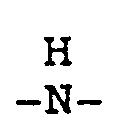
and the other is
provided X1 is
when

- Compounds of the formula I, wherein R1 is a group of the formula -OR14, and R2 through R14 are as defined above, may be obtained by reacting a compound of the formula I, wherein R1 is cyano and R2 through R13 are as defined above, with an alcohol of formula R14OH. The condensation is conveniently carried out in the presence of a base including, but not limited to, an alkali metal or alkaline earth metal hydroxide, such as lithium hydroxide, barium hydroxide, sodium hydroxide or potassium hydroxide, or an alkali metal alkoxide, such as sodium methoxide or potassium tert-butoxide, and using the alcohol as solvent, at a temperature between - 20°C and +50°C.It is preferable that the alkali metal alkoxide utilized be derived from the alcohol which is used as solvent.
- Compounds of the formula I, wherein R1 is a group of the formula -SR14, and R2 throughR14 are as defined above, may be obtained by converting a compound of the formula II, wherein R2 through R13 are as defined above and Z is sulfur, into the corresponding 5-alkali or alkaline earth metal compound and subsequently reacting the alkali metal compound with a compound of the formula III
R14X (III)
wherein R14 has the same meanings as defined above and X is the radical of a reactive ester, a halogen atom, the group OSO2R, wherein R is methyl, ethyl or an aromatic group. - The conversion of a compound of formula II into the corresponding alkali metal or alkaline earth metal compound may be effected by reacting a compound of formula II with an alkali metal or alkaline earth metal hydroxide, such as lithium hydroxide, barium hydroxide, sodium hydroxide or potassium hydroxide, with an alkali metal alkoxide, such as sodium methoxide or potassium tert-butoxide, with an alkali metal amide, such as sodium amide or potassium amide, or with an alkali metal hydride such as sodium hydride or potassium hydride. The reaction is preferably carried out at temperatures between -78°C and +50°C, and in the presence of a suitable organic solvent. Inert organic solvents, such as dimethylformamide, dimethylsulfoxide, tetrahydrofuran, glycoldimethyl ether, toluene, pyridine, or methylene chloride are preferred. For conversion of the alkali or alkaline earth metal-substituted compound thus obtained into a compound of formula I, the solution or suspension of the alkali or alkaline earth metal compound is reacted directly, i.e. without isolation, with a compound of formula III. Substitution takes place at the sulfur atom in the 6-position of the dipyridodiazepinone, even if R2 in the starting material of formula II is a hydrogen atom, provided that one equivalent of base and one equivalent of a compound of formula III are used.
- It will be obvious to those skilled in the art that the presence of nucleophilic substituents in the compounds of formula II may require the use of an intermediate of formula II having substituents which are, other than the 11-position nitrogen, not nucleophilic but which can be derivatized to yield the required group. For example, amino or monoalkylamino substituents at any of R3 through R13 may be obtained by alkylating or acylating an intermediate of formula II having a nitro group at any of R3 through R13, and subsequently reducing the nitro group, and alkylating, if appropriate, to yield the find product.
- Compounds of the formula I, wherein R1 is a group of the formula -SOR14, and R2 through R14 are as defined above, may be obtained by oxidizing a compound of the formula I, wherein R1 is a group of the formula -SR14 and R2 through R14 are as defined above. Oxidizing agents which may be used include peroxides such as 30% hydrogen peroxide, peracids such as m-chloroperbenzoic acid or trifluoroperacetic acid, sodium periodate, sodium perborate, or t-butyl hypochlorite. The reaction is carried out in inert solvents such as methylene chloride, dichloroethane, acetic acid, acetone, and toluene at temperatures generally from -78°C up to the boiling point of the reaction mixture, e.g. up to 25°C.
- Compounds of the formula I, wherein R1 is a group of the formula -SO2R14, and R2 through R14 are as defined above, may be obtained by oxidizing a compound of the formula I, wherein R1 is a group of the formula -SR14or -SOR14,and R2 through R14 are as defined above. Oxidizing agents which may be used include peroxides such as 30% hydrogen peroxide, potassium permanganate, potassium hydrogen persulfate, peracids such as m-chloroperbenzoic acid or trifluoroperacetic acid, sodium periodate, sodium perborate, or t-butyl hypochlorite. The reaction can be carried out in inert solvents such as methylene chloride, dichloroethane, acetic acid, acetone, and toluene at temperatures generally from -78°C to 25°C. Generally, these reactions are performed analogous to those for for the preparation of the corresponding sufoxides, except that an additional equivalent of oxidizing agent is utilized, and the reaction may be carried out at higher temperatures.
- Compounds of formula I, wherein R1 is a group of the formula -NHR14, - NR14R15, or imidazolyl, and R2 through R15 are as defined above, may be obtained by reaction of a compound of formula I, wherein R1 is trifluoromethanesulfonate, with a molar excess of ammonia or an amine of the formula H2NR14,HNR14R15, or 1-imidazolyl. The condensation is generally carried out in an inert solvent such as methylene chloride, 1,4-dioxane, dimethylformamide, dimethylsulfoxide, tetrahydrofuran, or toluene, at temperatures between -20°C up to the boiling point of the solvent.
- Compounds of formula I, wherein R1 is a group of the formula -PR14R15, - P(OR14)(OR15), -P(O)(OR14)(OR15),-P(NR14R15)(NR14R15),-P(O)(NR14R15)(NR14R15),P-phosphetanyl,P-phospholanyl, or P-phosphorinanyl, and R2 through R15 are as defined above, may be obtained by transmetallation of a compound of formula I, wherein R1 is halogen with a bulky alkyllithium reagent such as t-butyllithium. The reaction is generally carried out in inert solvents such as tetrahydrofuran, diethyl ether, 1,4-dioxane, and glycoldimethyl ether. The lithio derivative thus formed is then reacted with an appropriate halophosphorous compound of the formula XPR14R15, XP(OR14)(OR15),XP(O)(OR14)(OR15), XP(NR14R15)(NR14R15),XP(O)(NR9R14R15)(NR14R15), P-halophosphetanyl, P-halophospholanyl, or P-halophosphorinanyl, wherein X is halogen. These reactions are generally carried out in a single reaction vessel at temperatures between - 78°C and room temperature.
- Compounds of formula I, wherein R1 is a group of the formula -PO3H2 and R2 through R13 are as defined above, may be obtained by hydrolysis of a compound of formula I, wherein R1 is a group of formula -P(OR14)(OR15), wherein R2 through R15 are as defined above. The hydrolysis is generally carried out in an aqueous solution containing an alkaline earth metal hydroxide, such as lithium hydroxide, barium hydroxide, sodium hydroxide or potassium hydroxide, optionally in the presence of an inert organic solvent such as methanol or ethanol, at temperatures between 0°C and the boiling point of the reaction mixture.
- The preparation of compounds of formula I wherein R1 is trifluoromethanesulfonate and R2 through R13 are as defined above, and compounds of formula II wherein R2 through R13 are as defined above, can be obtained by procedures described in European patent application Publication No. 0429987 or analogous thereto.
- Those skilled in the art will realize that it will at times be more convenient to make certain compounds of formula I by derivatization of other compounds of formula I, rather than by making them directly, using one of the above-described Methods A-J. Such derivatizations will employ known reaction techniques. As non-limiting examples, a nitro group can be reduced to yield an amine; a methoxy group can be converted to hydroxy by standard demethylation procedures and hydroxy can, in appropriate settings, be in turn replaced with amine via the trifluoromethanesulfonyloxy derivative; an amine can be acylated to yield an alkanoylamine or can be alkylated to yield the mono- or dialkylamine; a halogen can be replaced, in appropriate settings, by an amine; and a protecting group can be removed.
- Compounds of formula I, especially those of formulae Ia, Ib and Id, may, if desired, be converted into their non-toxic, pharmaceutically acceptable addition salts by conventional methods; for example, by dissolving a compound of formula I in a suitable solvent and treating the solution with one or more molar equivalents of the desired acid or base, as appropriate. The invention also comprises such salts.
- Examples of inorganic and organic acids which may form nontoxic, pharmaceutically acceptable acid addition salts with a compound of the formula I are the following: hydrochloric acid, hydrobromic acid, sulfuric acid, phosphoric acid, nitric acid, methanesulfonic acid, tartaric acid, fumaric acid, acetic acid, and the like. Examples of inorganic and organic bases which may form nontoxic, pharmaceutically acceptable basic addition salts with a compound of the formula I are the following: Sodium hydroxide, potassium hydroxide, magnesium hydroxide, ammonia, tromethamine, and the like. Compounds of formula I may form addition salts with one molar equivalent of the acid or base, as appropriate.
- The above described compounds of formula I, and their salts, possess inhibitory activity against HIV-1 reverse transcriptase. When administered in suitable dosage forms, they are useful in the prevention or treatment of AIDS, ARC and related disorders associated with HIV-1 infection. Another aspect of the invention, therefore, is a method for preventing or treating HIV-1 infection which comprises administering to a human being, exposed to or infected by HIV-1, a prophylactically or therapeutically effective amount of a novel compound of Formula I, as described above.
- The compounds of formula I may be administered in single or divided doses by the oral, parenteral or topical routes. A suitable oral dosage for a compound of formula I would be in the range of about 0.5 mg to 1 g per day, e.g. 5 to 1000 mg/day. In parenteral formulations, a suitable dosage unit may contain from 0.1 to 250 mg of said compounds, whereas for topical administration, formulations containing 0.01 to 1% active ingredient are preferred. It should be understood, however, that the dosage administration from patient to patient will vary and the dosage for any particular patient will depend upon the clinician's judgement, who will use as criteria for fixing a proper dosage the size and condition of the patient as well as the patient's response to the drug.
- When the compounds of the present invention are to be administered by the oral route, they may be administered as medicaments in the form of pharmaceutical preparations which contain them in association with a compatible pharmaceutical carrier material. Such carrier material can be an inert organic or inorganic carrier material suitable for oral administration. Examples of such carrier materials are water, gelatin, talc, starch, magnesium stearate, gum arabic, vegetable oils, polyalkylene-glycols, petroleum jelly and the like.
- The pharmaceutical preparations can be prepared in a conventional manner and finished dosage forms can be solid dosage forms, for example, tablets, dragees, capsules, and the like, or liquid dosage forms, for example solutions, suspensions, emulsions and the like. The pharmaceutical preparations may be subjected to conventional pharmaceutical operations such as sterilization. Further, the pharmaceutical preparations may contain conventional adjuvants such as preservatives, stabilizers, emulsifiers, flavor-improvers, wetting agents, buffers, salts for varying the osmotic pressure and the like. Solid carrier material which can be used include, for example, starch, lactose, mannitol, methyl cellulose, microcrystalline cellulose, talc, silica, dibasic calcium phosphate, and high molecular weight polymers (such as polyethylene glycol).
- For parenteral use, a compound of formula I can be administered in an aqueous or non-aqueous solution, suspension or emulsion in a pharmaceutically acceptable oil or a mixture of liquids, which may contain bacteriostatic agents, antioxidants, preservatives, buffers or other solutes to render the solution isotonic with the blood, thickening agents, suspending agents or other pharmaceutically acceptable additives. Additives of this type include, for example, tartrate, citrate and acetate buffers, ethanol, propylene glycol, polyethylene glycol, complex formers (such as EDTA), antioxidants (such as sodium bisulfite, sodium metabisulfite, and ascorbic acid), high molecular weight polymers (such as liquid polyethylene oxides) for viscosity regulation and polyethylene derivatives of sorbitol anhydrides. Preservatives may also be added if necessary, such as benzoic acid, methyl or propyl paraben, benzalkonium chloride and other quaternary ammonium compounds.
- The compounds of this invention may also be administered as solutions for nasal application and may contain in addition to the compounds of this invention suitable buffers, tonicity adjusters, microbial preservatives, antioxidants and viscosity-increasing agents in an aqueous vehicle. Examples of agents used to increase viscosity are polyvinyl alcohol, cellulose derivatives, polyvinylpyrrolidone polysorbates or glycerin. Microbial preservatives added may include benzalkonium chloride, thimerosal, chloro-butanol or phenylethyl alcohol.
- Additionally, the compounds provided by the invention can be administered by suppository.
- As stated before, the compounds provided by the invention inhibit the enzymatic activity of HIV-1 RT. Based upon testing of these compounds, as described below, it is known that they inhibit the RNA-dependent DNA polymerase activity of HIV-1 RT. It is known (data not shown) that they also inhibit the DNA-dependent DNA polymerase activity of HIV-1 RT.
- Utilizing the Reverse Transcriptase (RT) Assay described below, compounds can be tested for their ability to inhibit the RNA-dependent DNA polymerase activity of HIV-1 RT. Certain specific compounds described in the Examples which appear below, were so tested. The results of this testing appear in Table I, below.
- Among the enzymes for which Human Immunodeficiency Virus (HIV-1) encodes is a reverse transcriptase (1), so-named because it transcribes a DNA copy from an RNA template. This activity can be quantitatively measured in a cell-free enzyme assay, which has been previously described (2), and is based upon the observation that reverse transcriptase is able to use a synthetic template [poly r(C) primed with oligo d(G)] to transcribe a radio-labelled, acid-precipitable DNA strand utilizing 3H-dGTP as a substrate.
- Reverse transcriptase enzyme from the LAV strain of Human Immunodeficiency Virus (HIV-1) (1) was isolated from the bacterial strain JM109 (3) expressing the DNA clone pBRTprt1+ (2) which is under the control of the lac promotor in the expression vector pIBI21 (4). An overnight culture grown in 2XYT medium (37°C, 225 rpm) (5) supplemented with 100 µg/ml ampicillin for positive selection is inoculated at a 1:40 dilution into M9 medium supplemented with 10µg/ml thiamine, 0.5% casamino acids, and 50 µg/ml ampicillin (5). The culture is incubated (37°C, 225 rpm) until it reaches an OD540 of 0.3-0.4. At that time the repressor inhibitor IPTG (isopropyl β-D-thiogalactopyranoside) is added to 0.5mM, and the mixture is incubated for 2 additional hours. Bacteria are pelleted, resuspended in a 50mM Tris, 0.6mM EDTA, 0.375M NaCl buffer and digested by the addition of lysozyme (1mg/ml) for 30 minutes on ice. The cells are lysed by the addition of 0.2% NP-40 and brought to 1M NaCl.
- After removal of the insoluble debris by centrifugation, the protein is precipitated by the addition of 3 volumes of saturated aqueous ammonium sulfate. The enzyme is pelleted, resuspended in RT buffer (50mM Tris pH 7.5, 1mM EDTA, 5mM DTT, 0.1% NP-40, 0.1M NaCl, and 50% glycerol), and stored at -70°C for further use.
-
Stock Reagent 2X Mix Concentration 1M Tris pH 7.8 100mM 1M Dithiothrietol 4.8mM 1M KCl 42mM 1M MgCl2 3.6mM [poly r(C)/oligo d(G)](5:1) 2µg/ml 3H-dGTP (81µM) 6µM human serum albumin 0.25mg/ml pH 7.8 - Composition of 2X concentrated stock reaction mixture used in testing compounds 16 and 17
Stock Reagent 2X Mix Concentration 1M Tris pH 7.4 100mM 1M Dithiothrietol 40mM 1M NaCl 120mM 1% Nonidet P-40 0.1% 1M MgCl 4mM [poly r(C)/oligo d(G)](5:1) 2µg/ml 3H-dGTP (81µM) 0.6µM - The 2X concentrated stock reaction mixture is aliquoted and stored at - 20°C. The mixture is stable and thawed for use in each assay. This enzyme assay has been adapted to a 96 well microtiter plate system, and has been previously described (6). Tris buffer (50 mM, pH 7.4), vehicle (solvent diluted to match the compound dilution), or compounds in vehicle are dispensed into 96-well microtiter plates (10µl/well; 3 wells/compound). The HIV-1 RT enzyme is thawed, diluted in 50mM Tris pH 7.8 (50mM Tris pH 7.4 in the case of compounds 16 and 17) so that fifteen µl of diluted enzyme contain 0.001 Unit (one unit is that amount of enzyme to transform 1 micromole of substrate per minute at 25°C), and fifteen µl are dispensed per well. Twenty µl of 0.12-0.5M EDTA are added to the first three wells of the microtiter plate. EDTA chelates the Mg++ present and prevents reverse transcription. This group serves as background polymerization which is subtracted from all other groups. Twenty-five ul of the 2X reaction mixture are added to all wells and the assay is allowed to incubate at room temperature for 60 minutes. The assay is terminated by precipitating the DNA in each well with 50µl of 10% trichloracetic acid (TCA) (10% w/v) in sodium pyrophosphate (1% w/v). The microtiter plate is incubated for 15 minutes at 4°C and the precipitate is fixed onto #30 glass fiber paper (Schleicher & Schuell) using a Skatron semi-automatic harvester. The filters are then washed with additional TCA (5%) containing sodium pyrophosphate (1%), rinsed with aqueous ethanol (70%), dried, and transferred to scintillation vials (6). Each vial receives 2 mls of scintillation cocktail and is counted in a Beckman beta counter.
- The calculation for percent inhibition is as follows:

-
- 1.
- Benn, S., et al., Science, 230:949, 1985
- 2.
- Farmerie, W.G. et. al., Science, 236:305, 1987
- 3.
- Yanisch-Perron, C., Viera, J., and Messing, J., Gene, 33:103, 1985
- 4.
- International Biotechnologies, Inc., New Haven, CT 06535
- 5.
- Maniatis, T, Fritsch, E.F., and J. Sambrook, eds. Molecular Cloning: A Laboratory Manual, Cold Spring Harbor Laboratory, 1982
- 6.
- Spira, T., et al. J. Clinical Microbiology, 25:97, 1987.
- In order to confirm that compounds which are active in the RT Assay also have the ability to inhibit HIV replication in a living system, compounds according to the invention were also tested in the human T-Cell Culture Assay described below. The results of this testing appear in Table I.
- Assay Theory: Formation of syncytia is a feature of in vitro cultures of CD4+ T-cells infected with HIV-1. In this assay, T-cells are treated with a putative replication inhibiting compound and then infected with HIV-1. After incubation, the culture is checked for the formation of syncytia. The absence or reduction in the number of syncytia is used as a measure of the test compound's ability to inhibit HIV replication.
- Assay Method: The target cells, designated c8166, are a subclone of human lymphoma cells of T-cell origin and are established at an initial density of 5x10⁴ per 100 ul in RPMI 1640 (+ 10% fetal bovine serum) culture medium in 96 well flat bottom plates. A selected amount of test compound, dissolved in DMSO, is included. After 24 hours, 50-100 TCID50's (the dose that results in induced effect in 50% of test cultures) of the HTLV-IIIB strain of HIV-1 (2) are inoculated into each culture. Control cultures receive compound or virus only. Four days after virus challenge, cultures are visually examined for the frequency and distribution of virus-induced giant cell syncytia. The percent inhibition by the test compound is determined by comparison with control values. Confirmation of the presence or absence of virus replication is accomplished by harvesting the cell free culture fluids from all experimental groups to determine the presence or absence of infectious progeny through the induction of syncytia formation in secondary human T-cell cultures after 3 days.
-
- (1) M. Somasundaran and H.L. Robinson, Science, 242:1554 (1988).
- (2) G.M. Shaw, R.H. Hahn, S.K. Arya, J.E. Groopman, R.C. Gallo and F. Wong-Staal, Science, 226:1165 (1984)
- In order to assess the specificity of the enzyme inhibitory activity of the compounds provided by the invention, a few were tested, using known per se assay methods, for their ability to inhibit Calf Thymus-derived DNA α-polymerase. None of the compounds so tested was observed to possess any inhibitory activity against this enzymes. These results indicate that the enzyme inhibitory activity of the compounds provided by the invention is directed rather specifically against HIV-1 RT.
- In order to roughly assess the cytotoxicity of the compounds provided by the invention, several such compounds were tested in the MTT Cellular Cytotoxicity Assay described below. The results of this testing are reported in Table I, below. Compounds having a relatively high EC50 are preferred.
- The MTT [3-(4,5-dimethylthiazol-2-yl)-2,5 diphenyl tetrazolium bromide) assay is based on cleavage of tetrazolium bromide by metabolically active cells, resulting in a highly quantitative blue color. This assay has been previously described (1) but has been optimized for the purposes of the testing reported herein.
- The c8166 cell line (2), an established human lymphoma suspension cell line grown in RPMI 1640 supplemented with 10% fetal bovine serum, is used as the target cell line in the assay. Cells (100µl) are plated in microtest plate wells at a concentration of 105 cells per ml in the presence of varying concentrations of inhibitor. The cells are incubated at 37°C in a humidified CO2 incubator. Five days later, 20µl of MTT (5mg/ml in RPMI 1640, sonicated, 0.2 micron filtered, and stored at 4°C) is added to each well. After 4 hours additional incubation at 37°C, 60µl of Triton-X is added to each well and thoroughly mixed to aid the solubilization of the crystals. Absolute ethanol (5µl) is added to each well and the resulting mixture is incubated for 30 minutes at 60°C and immediately read on a plate reader (Dynatech) at a wavelength of 570nm.
- Data from this assay are used to generate a nonlinear regression analysis which yields an EC50.
-
- 1. Mosmann, Tim, J. Immunol. Methods, 65:55, 1983.
- 2. Salahuddin, S. Z., Markham, P. D., Wong-Staal, F., Franchini, G., Kalyanaraman, V. S., Gallo, R. C., Virol., 129:51, 1983.
-
TABLE I Compound of Example No. RT Assay % inhibition @ 10 µg/ml T-Cell Assay % inhibition @ 3 µg/ml Cytotoxicity Assay (CC50,µg/ml) 1 99 >90 >5 2 98 >50 28 3 99 >50 NT 4 100 NT NT 5 98 NT NT 6 98 NT NT 7 92 NT NT 8 99 NT NT 9 97 NT NT 10 91 NT NT 11 97 NT NT 12 96 NT NT 13 99 NT NT 14 100 NT NT 15 99 NT NT 16 59 NT NT 17 82 NT NT NT = not tested - The following examples further illustrate the present invention and will enable others skilled in the art to understand it more completely. It should be understood, however, that the invention is not limited to the particular examples given below.
- A mixture of 1.00 g (3.76 mmole) of 11-cyclopropyl-5,11-dihydro-4-methyl-6H-dipyrido[3,2-b:2',3'-e][1,4]diazepin-6-one, 0.79 g (3.79 mmole) of phosphorus pentachloride and 25 mL of toluene was refluxed for 30 min., then cooled and poured onto crushed ice. The mixture was extracted with three 100 mL portions of methylene chloride, and the extract was dried (magnesium sulfate), filtered and concentrated in vacuo. The residue was chromatographed over silica gel (eluted with 25% ethyl acetate/hexane) to give 0.52 g of a solid, which was recrystallized from heptane to give 0.40 g (1.39 mmol) of the title compound, m.p. 196-198°C.
- Trifluoromethanesulfonic anhydride (5.02 g, 17.8 mmole) was added dropwise to a cooled mixture of 3.00 g (11.3 mmole) of 11-cyclopropyl-5,11-dihydro-4-methyl-6H-dipyrido[3,2-b:2',3'-e][1,4]diazepin-6-one, 2.32 g (18.0 mmole) of diisopropylethylamine, and 45 mL of methylene chloride. After the addition was complete, the ice bath was removed and the mixture was stirred for one hour. Ethyl acetate (500 mL) was added and the resulting solution was washed with three 100 mL portions of water. The organic solution was dried (magnesium sulfate), filtered, and concentrated in vacuo. The residue was chromatographed over silica gel (eluted with 50% ethyl acetate/hexane) to provide 3.18 g (8.0 mmole) of the title compound as a yellow oil, suitable for the next reaction.
- A solution of 2.56 g (6.42 mmole) of the trifluoromethanesulfonate prepared above and 1.14 g (7.28 mmole) of tetraethylammonium cyanide in 100 mL of methylene chloride was stirred overnight at room temperature. Solvent was then removed in vacuo and the residue was extracted twice with 100 mL portions of refluxing heptane. The solution was concentrated in vacuo and the residue was chromatographed over silica (eluted with 50% ethyl acetate-hexane). The product was recrystallized from heptane to yield 0.42 g (1.53 mmole) of the title compound, m.p. 192-193°C.
- Trifluoromethanesulfonic anhydride (0.24 mL, 14 mmol) was added to a solution of 0.314g (1.2 mmol) 5,11-dihydro-2,4-dimethyl-11-ethyl-6H-dipyrido[3,2-b:2',3'-e][1,4]diazepin-6-one in 15 mL of methylene chloride containing 0.25 mL (14 mmol) of diisopropylethylamine. The resulting mixture was refluxed under Ar for 3 hr. Ethyl acetate (∼200 mL) was then added and the solution was washed three times with water and four times with brine. After drying (magnesium sulfate), the solution was concentrated in vacuo and the residue dried under high vacuum for 2 hr. The residue was dissolved in 20 mL of methylene chloride, and 0.23 g (14 mol) of tetraethylammonium cyanide was added. After stirring the resulting solution overnight at room temperature, the reaction mixture was concentrated in vacuo. The residue was dissolved in 100 mL of ethyl acetate, and the solution washed with water and brine, and then dried (magnesium sulfate). The solution was concentrated in vacuo and the residue was chromatographed over silica (eluted with 5% ethyl acetate/hexane). The resulting solid was crystallized from heptane to provide 33 mg of the title compound as red crystals, m.p. 154-155°C.
- To a warm (40°C) solution of 1.0 g (3.54 mmol) of 11-cyclopropyl-5,11-dihydro-4-methyl-6H-dipyrido[3,2-b:2',3'-e][1,4]diazepin-6-thione in 25 mL of dry dimethylformamide under argon was added 200 mg (4.43 mmol) of a 60% sodium hydride on mineral oil dispersion. The suspension was heated at 60° for 30 min., cooled to 40°C, and 0.3 mL (4.43 mmol) of iodomethane was added in one portion. After stirring the mixture for 1 hr at room temperature, ethanol was added dropwise until bubbling ceased. The mixture was then poured over 200 mL of water, and the product was extracted with 2 x 200 mL of ethyl ether. The combined organics were washed with 300 mL of water, dried (Na2SO4), and concentrated. The resulting reddish solid was flash chromatographed over silica gel (eluted with 83% methylene chloride/ethyl acetate) to give a yellow solid. Recrystallization from ethyl ether/petroleum ether gave 350 mg of the title compound, m.p. 173-177°C.
- To a solution of 1.0 g (3.54 mmol) of 11-cyclopropyl-5,11-dihydro-4-methyl-6H-dipyrido[3,2-b:2;3'-e][1,4]diazepin-6-thione in 25 mL of anhydrous dimethylformamide was added 0.2 g (5.00 mmol) of sodium hydride (60% dispersion in mineral oil) at 40°C under argon. The mixture was heated at 60°C for 1 hr, cooled to 40°C, and 0.5 mL (4.43 mmol) of ethyl bromoacetate was added at once. The solution was then stirred an additional 1 hr at 40°C, and methanol was added dropwise until bubbling ceased. The mixture was added to 200 mL of water, and the aqueous layer was partitioned with diethyl ether (2x200 ml). The combined organic layers were washed with water (300 mL), and dried (Na2SO4). The solution was concentrated to give a red oil which was chromatographed over flash silica gel (eluted with 80% methylene chloride/ethyl acetate) to give 0.60 g (46% of theory) of the title compound as an orange resin.
- To a solution of 11-cyclopropyl-4-methyl-6-trifluoromethanesulfonyloxy-11H-dipyrido[3,2-b:2',3'-e][1,4]diazepine (0.22g, 0.55mmol) in 1,4-dioxane (3 mL) was added 30% ammonium hydroxide (3 mL). The mixture was heated at 100°C for 15 min. After cooling to room temperature the mixture was diluted with ethyl acetate, washed with water, dried (magnesium sulfate), filtered and concentrated in vacuo. The residue was chromatographed over silica gel (eluted with 1:1:1 ethyl acetate/hexane/methylene chloride → 50% ethyl acetate/hexane) to give the title compound (0.045 g, 0.17 mmol, 30%) which crystallized from ethyl acetate/hexane, m.p. 242-244°C.
- The title compound, prepared from 11-ethyl-11H-dipyrido[3,2-b:2',3'-e][1,4]diazepine in a manner analogous to that described in Example 1, was used directly in the next reaction without chromatographic purification.
- A mixture of 6-chloro-11-ethyl-11H-dipyrido[3,2-b:2',3'-e][1,4]diazepine (0.7 g), n-propylamine (0.8 g), and toluene (25 mL) was heated at reflux for ten days. At two day intervals during the ten day period, additional 1.6 g portions of n-propylamine was added to the refluxing mixture. The mixture was then concentrated in vacuo and the residue chromatographed over silica gel (eluted with 20% ethyl acetate/hexane) to give 0.15 g of the title compound, m.p. 114-116°C.
- To a solution of 5,11-dihydro-2,4-dimethyl-11-ethyl-6H-dipyrido[3,2-b:2',3'-e][1,4]diazepin-6-thione (0.2 g, 0.7 mmol) in dimethylformamide (10 mL) was added NaH (50% in mineral oil, 0.04 g, 0.8 mmol). The mixture was stirred under argon at 40°C for 1 hr. After cooling to 30°C methyl iodide (0.12 g, 0.8 mmol) was added, and the mix was stirred for 1 hr. The reaction was quenched with water, and the mixture was concentrated in vacuo. The residue was treated with ethyl acetate, washed, dried, and concentrated. Chromatography over silica gel (eluted with 20% EtOAc/Hex) gave 0.2 g of the title compound, m.p. 130-132°C.
- To a solution of 11-cyclopropyl-4-methyl-6-trifluoromethanesulfonyloxy-11H-dipyrido[3,2-b:2',3'-e][1,4]diazepine (0.12g, 0.3 mmol) in dioxan (1 mL) was added imidazole (0.06g, 0.88 mmol). The mixture was heated at 100°C for 10 min. After cooling to room temperature, the reaction mixture was diluted with ethyl acetate, washed with water, dried over sodium sulfate, filtered and concentrated. The residue was fractionated by preparative layer chromatography (silica gel, eluted with 67% ethyl acetate/hexane) to give the title compound (0.04g, 0.12 mmol, 42%) which crystallized from di-isopropyl ether, m.p. 198-200°C.
- 11-Cyclopropyl-4-methyl-6-trifluoromethanesulfonyloxy-11H-dipyrido[3,2-b:2',3'-e][1,4]diazepine (0.30 g, 0.75 mmol) was dissolved in pyrrolidine (1 mL) and stirred at room temperature for 4 days. The reaction mixture was then diluted with ethyl acetate, washed with water, dried and concentrated. The residue was chromatographed over silica gel (eluted with 15% ethyl acetate/hexane to give the title compound which crystallized from ethyl acetate/hexane (0.17 g, 0.53 mmol, 70%), m.p. 138-140°C.
- A mixture of 2,4-dimethyl-11-ethyl-6-trifluoromethanesulfonyloxy-11H-dipyrido[3,2-b:2',3'-e][1,4]diazepine (0.3 g, 0.75 mmole) and dimethylamine (excess, used as solvent) were placed in a sealed pressure tube and left at room temperature for 3 days. The reaction mixture was diluted with ethyl acetate, washed with water, dried, filtered and concentrated. The 260 mg of product thus obtained was recrystallized from ethyl acetate/hexane to give the title compound, m.p. 150-152°C.
- Methylamine (3 mL) was added to a solution of 2,4-dimethyl-11-ethyl-6-trifluoromethanesulfonyloxy-11H-dipyrido[3,2-b:2',3'-e][1,4]diazepine (0.16 g, 0.4 mmole) in methylene chloride (0.5 mL). The mixture was sealed in a pressure bottle and stirred at room temperature for 4 days. The mixture was diluted with ethyl acetate, washed with water, dried, filtered and concentrated in vacuo to give crude product. This was purified by chromatography over silica gel (eluted 10% ethyl acetate/methylene chloride) and recrystallized from ethyl acetate/hexane to give 0.016g of the title compound, m.p. 128-130°C.
- A solution of 11-cyclopropyl-4-methyl-6-methylthio-11H-dipyrido[3,2-b:2',3'-e][1,4]diazepine (0.8 g, 0.0027 mol) in methylene chloride (10 mL) was cooled in an ice water bath. To the resulting clear yellow solution was added m-chloroperbenzoic acid (0.55 g, 0.0027 mol) in one portion and the reaction mixture was stirred at 0°C for 30 min. A cloudy yellow solution was obtained which was quenched by the addition of Ca(OH)2 (1 g, 0.0135 mol). The reaction mixture was stirred at room temperature for 15 min., filtered through a pad of Celite, and concentrated to obtain a yellow oil. Trituration with ether afforded 0.7 g of the title compound, m.p. 188-190°C.
- To a solution of 11-cyclopropyl-4-methyl-6-methylthio-11H-dipyrido[3,2-b:2',3'-e][1,4]diazepine (0.67 g, 0.0026 mol) in methylene chloride (10 mL) was added m-chloroperbenzoic acid (0.92) g, 0.0045 mol). After stirring the yellow solution at room temperature for 30 min., the resulting cloudy yellow mixture treated with Ca(OH)2 (2.0 g, 0.027 mol) and the reaction stirred for an additional 15 minutes. The mixture was filtered through a pad of Celite, concentrated to a yellow oil, and triturated with ether to afford 0.51 g (68 %) of the title compound as a yellow solid, m.p. 172-173°C.
- A solution of 2N sodium hydroxide (6 mL, 1.2 mmol) was added in three portions over two hr to a solution of 6-cyano-11-cyclopropyl-4-methyl-11H-dipyrido[3,2-b:2',3'-e][1,4]diazepine (0.30 g, 1.1 mmol) in methanol (50 mL) at room temperature. The mixture was stirred overnight, and then concentrated in vacuo. The residue was dissolved in ethyl acetate (150 mL) and washed succesively with water and brine. After drying (MgSO4), the solution was concentrated and crystallized from acetonitrile to give 0.20 g (65%) of the title compound. A second recrystallization from methanol provided pure product, m.p. 191-192°C.
- Sodium hydride (80% oil dispersion, 0.13 g, 5.5 mmol) was added at room temperature to a suspension of 6,11-dihydro-7-methyl-5H-pyrido[2,3-b][1,5]benzodiazepin-5-one (1.12 g, 5.0 mmol) in DMF (20 mL) under argon. The reaction mixture was heated at 60 °C for 1 h and then was cooled in an ice-bath before the addition of ethyl iodide (0.86 g, 5.5 mmol). Stirring was continued at room temperature overnight, followed by warming to 60 °C for 1 h. The solution was concentrated in vacuo to near dryness, the residue was poured over ice-water, and the resulting solid was collected, washed with water, and dried. Purification by chromatography (elution with 1% MeOH/CH2Cl2) afforded 0.23 g (18%) of the title compound, which crystallized as yellow needles from petroleum ether (30-60 °C): m.p. 135-136°C.
- The title compound, a semi-crystalline substance, was synthesized in a manner analogous to that described in Example 16.
-
Capsules or Tablets A-1 A-2 Ingredients Quantity Ingredients Quantity Compound of Ex. 2 250 mg Compound of Ex. 2 50 mg Starch 160 mg Dicalcium Phosphate 160 mg Microcrys. Cellulose 90 mg Microcrys. Cellulose 90 mg Na Starch Glycolate 10 mg Stearic acid 5 mg Magnesium Stearate 2 mg Sodium Starch Glycolate 10 mg Fumed colloidal silica 1 mg Fumed colloidal silica 1 mg - The compound of Example 2 is blended into a powder mixture with the premixed excipient materials as identified above with the exception of the lubricant. The lubricant is then blended in and the resulting blend compressed into tablets or filled into hard gelatin capsules.
-
Parenteral Solutions Ingredients Quantity Compound of Example 2 500mg Tartaric acid 1.5g Benzyl Alcohol 0.1% by weight Water for injection q.s. to 100 mL - The excipient materials are mixed with the water and thereafter the compound of Example 2 is added. Mixing is continued until the solution is clear. The pH of this solution is adjusted to 3.0 and is then filtered into the appropriate vials or ampoules and sterilized by autoclaving.
-
Nasal Solutions Ingredients Quantity Compound of Example 2 100mg Citric acid 1.92g Benzalkonium chloride 0.025% by weight EDTA 0.1 % by weight Polyvinylalcohol 10% by weight Water q.s. to 100ml - The excipient materials are mixed with the water and thereafter the compound of Example 2 is added and mixing is continued until the solution is clear. The pH of this solution is adjusted to 4.0 and is then filtered into the appropriate vials or ampoules.
-
Capsules or Tablets D-1 D -2 Ingredients Quantity Ingredients Quantity Compound of Ex. 17 250 mg Compound of Ex. 17 50 mg Starch 160 mg Dicalcium Phosphate 160 mg Microcrys. Cellulose 90 mg Microcrys. Cellulose 90 mg Sodium Starch Glycolate 10 mg Stearic acid 5 mg Magnesium Stearate 2 mg Sodium Starch Glycolate 10 mg Fumed colloidal silica 1 mg Fumed colloidal silica 1 mg - The compound of Example 17 is blended into a powder mixture with the premixed excipient materials as identified above with the exception of the lubricant. The lubricant is then blended in and the resulting blend compressed into tablets or filled into hard gelatin capsules.
-
Parenteral Solutions Ingredients Quantity Compound of Example 17 500mg Tartaric acid 1.5g Benzyl Alcohol 0.1% by weight Water for injection q.s to 100ml - The excipient materials are mixed with the water and thereafter the compound of Example 17 is added. Mixing is continued until the solution is clear. The pH of this solution is adjusted to 3.0 and is then filtered into the appropriate vials or ampoules and sterilized by autoclaving.
-
Nasal Solutions Ingredients Quantity Compound of Example 17 100mg Citric acid 1.92g Benzalkonium chloride 0.025% by weight EDTA 0.1 % by weight Polyvinylalcohol 10% by weight Water q.s. to 100ml - The excipient materials are mixed with the water and thereafter the compound of Example 17 is added and mixing is continued until the solution is clear. The pH of this solution is adjusted to 4.0 and is then filtered into the appropriate vials or ampoules.
-
Capsules or Tablets G-1 G-2 Ingredients Quantity Ingredients Quantity Compound of formula Ib 250 mg Compound of formula Ib 50 mg Starch 160 mg Dicalcium Phosphate 160 mg Microcrys. Cellulose 90 mg Microcrys. Cellulose 90 mg Sodium Starch Glycolate 10 mg Stearic acid 5 mg Magnesium Stearate 2 mg Sodium Starch Glycolate 10 mg Fumed colloidal silica 1 mg Fumed colloidal silica 1 mg - The compound is blended into a powder mixture with the premixed excipient materials as identified above with the exception of the lubricant. The lubricant is then blended in and the resulting blend compressed into tablets or filled into hard gelatin capsules.
-
Parenteral Solutions Ingredients Quantity Compound of formula Ib 500mg Tartaric acid 1.5g Benzyl Alcohol 0.1% by weight Water for injection q.s to 100ml - The excipient materials are mixed with the water and thereafter the compound is added. Mixing is continued until the solution is clear. The pH of this solution is adjusted to 3.0 and is then filtered into the appropriate vials or ampoules and sterilized by autoclaving.
-
Nasal Solutions Ingredients Quantity Compound of formula Ib 100mg Citric acid 1.92g Benzalkonium chloride 0.025% by weight EDTA 0.1 % by weight Polyvinylalcohol 10% by weight Water q.s. to 100ml - The excipient materials are mixed with the water and thereafter the compound is added and mixing is continued until the solution is clear. The pH of this solution is adjusted to 4.0 and is then filtered into the appropriate vials or ampoules.
| R3 | R4 | R5 | R6 | R7 | R8 | R9 | |
| a | H | H | H | H | H | CF3 | H |
| b | H | H | H | H | Cl | H | H |
| c | H | H | H | H | CH3 | CH3 | H |
| d | CH3 | H | H | H | CH3 | CH3 | H |
| e | CH3 | CH3 | H | H | CH3 | CH3 | H |
| f | H | H | H | CH3 | CH3 | H | H |
| g | H | H | H | H | H | Cl | H |
| h | H | H | H | H | H | H | H |
| i | H | H | H | CH3 | H | H | H |
| j | H | H | H | H | CH3O2C- | H | H |
| k | H | H | H | H | C2H5O2C- | H | H |
| l | H | H | H | H | NC- | H | H |
| m | H | H | H | H | CH3CO- | H | H |
| n | H | H | H | H | H | CH3O2C- | H |
| o | H | H | H | H | H | C2H5O2C- | H |
| p | H | H | H | H | H | NC- | H |
| q | H | H | H | H | H | CH3CO- | H |
| r | H | H | H | H | Cl | Cl | H |
| s | H | H | H | CH3 | H | CH3 | H |
Claims (14)
- A compound of formula I

one of X and Y is -N= and the other is


 R1 is cyano, chloro, bromo, imidazolyl, phosphetanyl, phospholanyl, or phosphorinanyl, or a group of the formula
-OR14, -SR14, -SOR14, -SO2R14, -NH2,
-NHR14, -NR14R15, -PR14R15,
-P(OR14)(OR15), -P(O)(OR14)(OR15), -PO3H2,
-P(NR14R15)(NR14R15), or
-P(O)(NR14R15)(NR14R15), wherein R14 and R15
are each independently alkyl of 1 to 4 carbon atoms, which may optionally be substituted by a cyano or alkoxycarbonyl group of 2 to 4 carbon atoms, cyclopropyl or cyclobutyl, or the group -NR14R15 may be pyrrolidine, piperidine, or morpholine;R2 is hydrogen, alkyl or fluoroalkyl of 1 to 6 carbon atoms, cycloalkyl of 3 to 6 carbon atoms, alkenyl or alkynyl of 2 to 6 carbon atoms, alkoxyalkyl or alkylthioalkyl of 2 to 5 carbon atoms, alkanoyl of 2 to 5 carbon atoms, hydroxyalkyl of 2 to 6 carbon atoms, aryl or arylmethyl (wherein aryl means thiazolyl, oxazolyl or isoxazol, which is unsubstituted, or is phenyl, thienyl or furanyl, which is either unsubstituted or substituted by alkyl or alkoxy of 1 to 3 carbon atoms, hydroxyl or halogen), alkoxycarbonylmethyl wherein the alkoxy moiety contains 1 to 5 carbon atoms, oxetanyl, thietanyl, tetrahydrothienyl, tetrahydrofuranyl, cyano;R3, R4 and R5 are each independently hydrogen, alkyl of 1 to 3 carbon atoms or chloro, with the proviso that at least one of these substituents is hydrogen or methyl; or
one of R3, R4 and R5 is alkyl of 1 to 6 carbon atoms, alkanoyl of 1 to 6 carbon atoms, cycloalkyl of 3 to 6 carbon atoms, alkoxycarbonyl of 2 to 4 carbon atoms, alkenyl or alkynyl of 2 to 6 carbon atoms, hydroxyalkyl of 1 to 6 carbon atoms, alkoxyalkyl or alkylthioalkyl of 2 to 5 carbon atoms, alkoxycarbonylalkyl wherein the alkoxy and alkyl moieties each contain 1 to 2 carbon atoms, halogen, trihalomethyl, hydroxyl, alkoxy of 1 to 5 carbon atoms, alkylthio of 1 to 5 carbon atoms, aryl or arylalkyl (wherein the alkyl moiety contains 1 to 3 carbon atoms, and the aryl moiety is phenyl, thienyl, furanyl, pyridyl, or imidazolyl, which is either unsubstituted or substituted by alkyl or alkoxy of 1 to 3 carbon atoms, hydroxyl or halogen), alkanoyl of 2 to 6 carbon atoms, alkoxycarbonyl wherein the alkyl moiety contains 1 to 3 carbon atoms, hydroxyalkoxy of 2 to 4 carbon atoms, alkanoyloxy of 2 to 4 carbon atoms, alkylsulfinyl or alkylsulfonyl of 1 to 4 carbon atoms, alkanoylamino of 1 to 3 carbon atoms, aminoalkyl of 1 to 4 carbon atoms, mono- or di-alkylamino or mono- or di-alkylaminocarbonyl, wherein each alkyl moiety contains 1 to 3 carbon atoms, a group of the formula -NR16R17, N-pyrrolidino, N-piperidino, N-morpholino, carboxyalkyl of 2 to 3 carbon atoms, cyano, nitro, carboxyl, carbamyl, amino, azido, mono- or di-alkylaminoalkyl wherein each alkyl moiety contains 1 to 3 carbon atoms, with the proviso that the remaining two substituents are hydrogen, methyl or chloro; or
two of R3, R4 and R5 are independently alkyl or hydroxyalkyl of 1 to 2 carbon atoms, trihalomethyl, alkyloxy or alkylthio of 1 to 2 carbon atoms, halogen or a group of the formula NR16R17, with the remaining substituent being hydrogen, methyl or chloro;R6 R7, R8 and R9 are each hydrogen; or
one of R6, R7, R8 and R9 is alkyl of 1 to 4 carbon atoms, alkenyl or alkynyl of 2 to 4 carbon atoms, alkoxyalkyl or alkylthioalkyl of 2 to 4 carbon atoms, alkanoyl of 1 to 6 carbon atoms, alkoxycarbonyl of 2 to 4 carbon atoms, hydroxyalkyl of 1 to 4 carbon atoms, alkoxycarbonylalkyl wherein the alkoxy and alkyl moieties each contain 1 to 2 carbon atoms, halogen, trihalomethyl, hydroxyl, alkoxy of 1 to 4 carbon atoms, alkylthio of 1 to 4 carbon atoms, hydroxyalkyloxy of 2 to 4 carbon atoms, alkanoyloxy of 2 to 4 carbon atoms, alkylsufinyl or alkylsulfonyl of 1 to 4 carbon atoms, alkanoylamino of 1 to 3 carbon atoms, aminoalkyl of 1 to 3 carbon atoms, mono- or di-alkylamino or monoor di-alkylaminocarbonyl wherein each alkyl moiety contains 1 to 2 carbon atoms, carboxyalkyl of 2 to 3 carbon atoms, halogen, cyano, nitro, carboxyl, carbamyl, amino, azido, aminoalkyl of 1 to 4 carbon atoms, mono- or di-alkylaminoalkyl wherein each alkyl moiety contains 1 to 2 carbon atoms, a group of the formula -NR18R19, and the remaining two or three substituents are hydrogen or two of the remaining three substitutents are hydrogen and one is methyl, ethyl or halogen;
when only R6, R7 and R8 are present two of them are independently alkyl of 1 to 2 carbon atoms, trihalomethyl, alkyloxy or alkylthio of 1 to 2 carbon atoms, halogen, or a group of the formula -NR18R19, with the remaining substituent being hydrogen;R10 and R11 are chosen from hydrogen, alkyl of 1 to 4 carbon atoms, halogen, cyano, nitro and alkanoyl of 1 to 3 carbon atoms, andR12 and R13 are each independently hydrogen, alkyl of 1 to 4 carbon atoms, halogen or nitro;R16, R17, R18 and R19 are each independently hydrogen, alkyl of 1 to 4 carbon atoms, alkenylmethyl or alkynylmethyl of 2 to 4 carbon atoms, aryl or arylmethyl (wherein the aryl moiety is phenyl, thienyl or furanyl, which is either unsubstituted or substituted by methyl, methoxy or halogen), mono- or dihydroxyalkylmethyl of 2 to 4 carbon atoms, alkyloxy of 1 to 3 carbon atoms, hydroxy, alkyloxyethyl or alkylthioethyl of 3 to 4 carbon atoms, aminoalkylmethyl of 1 to 4 carbon atoms, mono- or di-alkylaminoalkyl- methyl wherein each alkyl moiety contains 1 to 2 carbon atoms, or alkanoyl of 1 to 4 carbon atoms; orR16, R17, R18 and R19, together with the nitrogen atoms between them, respectively and independently from azetidin-1-yl or a 5, 6 or 7-membered ring which is either saturated or unsaturated, which optionally contains up to one additional heteroatom which may be selected from O, S or N, or which optionally contains in place of a carbon atom a group of the formula =NR20 wherein R20 is hydrogen or alkyl of 1 to 2 carbon atoms, and which ring is optionally independently substituted with hydroxymethyl, aminomethyl, 1 to 4 methyl groups and 1 to 2 hydroxy groups;
or a pharmaceutically acceptable acid addition salt thereof. - A compound according to claim 1 having the formula Ia
 R1 is cyano, chloro, bromo, imidazolyl, phosphetanyl, phospholanyl, or phosphorinanyl, or a group of the formula
-OR14, -SR14, -SOR14, -SO2R14, -NH2,
-NHR14, -NR14R15, -PR14R15,
-P(OR14)(OR15), -P(O)(OR14)(OR15), -PO3H2,
-P(NR14R15)(NR14R15), or
-P(O)(NR14R15)(NR14R15), wherein R14 and
R15 are each independently alkyl of 1 to 4 carbon atoms, which may optionally be substituted by a cyano or alkoxycarbonyl group of 2 to 4 carbon atoms, cyclopropyl or cyclobutyl, or the group -NR14R15 may be pyrrolidine, piperidine, or morpholine;R2 is hydrogen, alkyl of 1 to 6 carbon atoms, fluoroalkyl of 1 to 6 carbon atoms and 1 to 3 fluorine atoms, cycloalkyl of 3 to 6 carbon atoms, oxetanyl, thietanyl, tetrahydrofuranyl or tetrahydrothienyl, alkenyl or alkynl of 2 to 6 carbon atoms, alkyloxyalkyl or alkylthioalkyl of 2 to 5 carbon atoms, alkanoyl of 2 to 5 carbon atoms, cyano, hydroxyalkyl of 2 to 6 carbon atoms, aryl or arylmethyl (wherein the aryl moiety is thiazolyl, oxazolyl, or isoxazolyl, which is unsubstituted, or is phenyl, thienyl or furanyl, which is either unsubstituted or substituted by alkyl or alkyloxy of 1 to 3 carbon atoms, hydroxyl or halogen), or alkyloxycarbonylmethyl wherein the alkyl moiety contains 1 to 5 carbon atoms;
one of R3, R4 and R5 is alkyl of 1 to 6 carbon atoms, cycloalkyl of 3 to 6 carbon atoms, alkenyl or alkynyl of 2 to 6 carbon atoms, trihalomethyl, hydroxyalkyl of 1 to 6 carbon atoms, alkyloxyalkyl or alkylthioalkyl of 2 to 5 carbon atoms, alkyloxycarbonylalkyl wherein the alkyl moieties each contain 1 to 2 carbon atoms, hydroxyl, alkyloxy or alkylthio of 1 to 5 carbon atoms, hydroxyalkyloxy of 2 to 4 carbon atoms, alkanoyloxy of 2 to 4 carbon atoms, alkylsulfinyl or alkylsulfonyl of 1 to 4 carbon atoms, alkanoyl of 2 to 6 carbon atoms, alkyloxycarbonyl wherein the alkyl moiety contains 1 to 3 carbon atoms, mono- or di-alkylaminocarbonyl wherein each alkyl moiety contains 1 to 3 carbon atoms, aminoalkyl of 1 to 4 carbon atoms, mono-or di-alkylaminoalkyl
wherein each alkyl moiety contains 1 to 3 carbon atoms, aryl or arylmethyl (wherein the aryl moiety is phenyl, thienyl or furanyl, which is either unsubstituted or substituted by alkyl or alkyloxy of 1 to 3 carbon atoms, hydroxyl or halogen), a group of the formula -NR16R17, halogen, cyano, nitro, azido or carboxyl, with the other two substituents being hydrogen, methyl or chloro; or,
two of R3, R4 and R5 are independently alkyl or hydroxyalkyl of 1 to 2 carbon atoms, trihalomethyl, alkyloxy or alkylthio of 1 to 2 carbon atoms, halogen or a group of the formula -NR16R17, with the remaining substituent being hydrogen or methyl; or,R3, R4 and R5 are each hydrogen;
one of R6, R7 and R8 is alkyl of 1 to 4 carbon atoms, alkenyl or alkynyl of 2 to 4 carbon atoms, trihalomethyl, hydroxyalkyl of 1 to 4 carbon atoms, alkyloxyalkyl or alkylthioalkyl of 2 to 4 carbon atoms, alkyloxycarbonylalkyl wherein the alkyl moieties each contain 1 to 2 carbon atoms, hydroxyl, alkyloxy or alkylthio of 1 to 4 carbon atoms, hydroxyalkyloxy of 2 to 4 carbon atoms, alkanoyloxy of 2 to 4 carbon atoms, alkylsulfinyl or alkylsulfonyl of 1 to 4 carbon atoms, alkanoyl of 2 to 6 carbon atoms, alkoxycarbonyl wherein the alkyl moiety contains 1 to 3 carbon atoms, aminoalkyl of 1 to 4 carbon atoms, mono- or di-alkylamino-alkyl wherein each alkyl
moiety contains 1 to 2 carbon atoms, a group of the formula -NR18R19, halogen, cyano, nitro, azido or carboxyl, with the other two substituents being hydrogen; or,
two of R6, R7 and R8 are independently alkyl of 1 to 2 carbon atoms, trihalomethyl, alkyloxy or alkylthio of 1 to 2 carbon atoms, halogen or a group of the formula-NR18,R19, with the remaining substituent being hydrogen; or,R6, R7 and R8 are each hydrogen; and,R16, R17, R18 and R19 are each independently hydrogen, alkyl of 1 to 4 carbon atoms, alkenylmethyl or alkynylmethyl of 2 to 4 carbon atoms, aryl or arylmethyl (wherein the aryl moiety is phenyl, thienyl or furanyl, which is either unsubstituted or substituted by methyl, methoxy or halogen), mono- or dihydroxyalkylmethyl of 2 to 4 carbon atoms, alkyloxy of 1 to 3 carbon atoms, hydroxy, alkyloxyethyl or alkylthioethyl of 3 to 4 carbon atoms, aminoalkylmethyl of 1 to 4 carbon atoms, mono- or dialkylaminoalkylmethyl wherein each alkyl moiety contains 1 or 2 carbon atoms, or alkanoyl of 1 to 4 carbon atoms; or,R16, R17, R18 and R19, together with the nitrogen atoms between them, respectively and independently form azetidin-1-yl or a 5, 6 or 7-membered ring which is either saturated or unsaturated, which optionally contains up to one additional heteroatom which may be selected from O, S or N, or which optionally contains in place of a carbon atom a group of the formula =NR20 wherein R20 is hydrogen or alkyl or 1 to 2 carbon atoms, and which ring is optionally and independently substituted with hydroxymethyl, aminomethyl, 1 to 4 methyl groups and 1 to 2 hydroxy groups;
or a pharmaceutically acceptable acid addition salt thereof. - A compound of formula Ia, as set forth in claim 2, whereinR1 is cyano, chloro, bromo, imidazolyl, or a group of the formula -OR14, -SR14, -SOR14, -SO2R14, -NH2, -NHR14, -NR14R15, wherein R14 and R15 are each independently alkyl of 1 to 4 carbon atoms, which may optionally be substituted by a cyano or alkoxycarbonyl group of 2 to 4 carbon atoms, cyclopropyl or cyclobutyl, or the group -NR14R15 may be pyrrolidine, piperidine, or morpholine;R2 is hydrogen, alkyl of 1 to 5 carbon atoms, fluoroalkyl of 1 to 5 carbon atoms, cycloalkyl of 3 to 5 carbon atoms, oxetanyl, thietanyl, alkenylmethyl or alkynylmethyl of 3 to 5 carbon atoms, alkyloxyalkyl or alkylthioalkyl of 2 to 4 carbon atoms, alkanoyl of 2 to 4 carbon atoms, hydroxyalkyl of 2 to 5 carbon atoms, aryl or arylmethyl (wherein the aryl moiety is phenyl, thienyl or furanyl, which is either unsubstituted or substituted by alkyl or alkyloxy of 1 to 3 carbon atoms, hydroxyl or halogen), or alkyloxycarbonylmethyl wherein the alkyl moiety contains 1 to 4 carbon atoms;
one of R3, R4 and R5 is alkyl of 1 to 4 carbon atoms, alkenyl or alkenyl or alkynyl of 2 to 4 carbon atoms, trihalomethyl, hydroxyalkyl of 1 to 4 carbon atoms, alkyloxyalkyl or alkylthioalkyl of 2 to 4 carbon atoms, alkyloxycarbonylalkyl wherein the alkyl moieties each contain 1 to 2 carbon atoms, hydroxyl, alkyloxy or alkylthio of 1 to 3 carbon atoms, hydroxyalkyloxy of 2 to 3 carbon atoms, alkanoyloxy of 2 to 3 carbon atoms, alkylsulfinyl or alkylsulfonyl of 1 to 3 carbon atoms, alkanoyl of 2 to 4 carbon atoms, alkyloxycarbonyl wherein the alkyl moiety contains 1 to 2 carbon atoms, aminoalkyl of 1 to 3 carbon atoms, mono- or di-alkylaminoalkyl wherein each alkyl moiety contains 1 to 2 carbon atoms, amino, mono- or di-alkylamino wherein each alkyl moiety contains 1 to 4 carbon atoms, azetidin-1-yl, pyrrol-1-yl, pyrrolin-1-yl, pyrrolidin-1-yl, pyrazol-1-yl, pyrazolin-1-yl, pyrazolidin-1-yl, imidazol-1-yl, imidazolin-1-yl, imidazolidin-1-yl, tetrahydropyridin-1-yl, piperidin-1-yl, morpholin-1-yl, (4-methyl)piperazin-1-yl, piperazin-1-yl, N,N-bis(2-hydroxyethyl)amino, N,N-bis(2-methoxyethyl)amino, or halogen, with the other two substituents being hydrogen, methyl or chloro; or, two of R3, R4 and R5 are independently alkyl of 1 to 2 carbon atoms, alkyloxy or alkylthio of 1 to 2 carbon atoms, amino, mono- or di-alkylamino wherein each alkyl moiety contains 1 to 3 carbon atoms, azetidin-1-yl, pyrrol-1-yl, pyrrolin-1-yl, pyrrolidin-1-yl, pyrazol-1-yl, pyrazolin-1-yl, pyrazolidin-1-yl, imidazol-1-yl, imidazolin-1-yl, imidazolidin-1-yl, tetrahydropyridin-1-yl, piperidin-1-yl, morpholin-1-yl, (4-methyl)piperazin-1-yl, piperazin-1-yl, N,N-bis(2-hydroxyethyl)-amino, N,N-bis(2-methoxyethyl)amino, or halogen, with the remaining substituent being hydrogen, methyl or chloro; or,R3, R4 and R5 are each hydrogen; and,
one of R6, R7 and R8 is alkyl of 1 to 2 carbon atoms, vinyl, trifluoromethyl, hydroxyalkyl of 1 to 2 carbon atoms, hydroxyl, alkyloxy or alkylthio of 1 to 2 carbon atoms, hydroxyalkyloxy 2 to 3 carbon atoms, alkanoyloxy of 2 to 3 carbon atoms, amino, mono-or di-alkylamino wherein each alkyl moiety contains 1 to 2 carbon atoms, azetidin-1-yl, pyrrol-1-yl pyrrolin-1-yl, pyrrolidin-1-yl, pyrazol-1-yl, pyrazolin-1-yl, pyrazolidin-1-yl, imidazol-1-yl, imidazolin-1-yl, imidazolidin-1-yl, tetrahydropyridin-1-yl, piperidin-1-yl, morpholin-1-yl, (4-methyl)piperazin-1-yl, piperazin-1-yl, N,N-bis(2-hydroxyethyl)amino, N,N-bis(2-methoxyethyl)amino, or halogen, with the other two substituents being hydrogen; or,R6, R7 and R8 are each hydrogen;
or a pharmaceutically acceptable acid addition salt thereof. - A compound of formula Ia, as set forth in claim 2, wherein,R1 is cyano, chloro, imidazolyl, or a group of the formula
-OR14, -SR14, -SOR14, -SO2R14, -NH2,
-NHR14, -NR14R15, wherein R14 and R15 are
each independently alkyl of 1 to 4 carbon atoms, which may optionally be substituted by a cyano or alkoxycarbonyl group of 2 to 4 carbon atoms, cyclopropyl or cyclobutyl, or the group -NR14R15 may be pyrrolidine, piperidine, or morpholine;R2 is alkyl of 2 to 3 carbon atoms, or cycloalkyl of 3 to 4 carbon atoms;R3 is hydrogen, methyl, alkyloxy or alkylthio of 1 to 3 carbon atoms, chloro, amino, mono-or di-alkylamino wherein each alkyl moiety contains 1 to 3 carbon atoms, allylamino, azetidin-1-yl, pyrrol-1-yl, pyrrolin-1-yl, pyrrolidin-1-yl, pyrazol-1-yl, pyrazolin-1-yl, pyrazolidin-1-yl, imidazol-1-yl, imidazolin-1-yl, imidazolidin-1-yl, tetrahydropyridin-1-yl, piperidin-1-yl, morpholin-1-yl, (4-methyl)piperazin-1-yl, piperazin-1-yl, or N,N-bis(2-hydroxyethyl)amino;R4 is hydrogen, methyl or chloro;R5 is hydrogen, methyl, ethyl, chloro, or trifluoromethyl;R6 and R8 are hydrogen; andR7 is hydrogen or amino;
or a pharmaceutically acceptable acid addition salt thereof. - A compound of formula Ia, as set forth in claim 2, whereinR1 is cyano, chloro, imidazolyl, or a group of the formula
-OR14, -SR14, -SOR14, -SO2R14, -NH2,
-NHR14, -NR14R15, wherein R14 and R15 are
each independently alkyl of 1 to 4 carbon atoms, which may optionally be substituted by a cyano or alkoxycarbonyl group of 2 to 4 carbon atoms, cyclopropyl or cyclobutyl, or the group -NR14R15 may be pyrrolidine, piperidine, or morpholine;R2 is alkyl of 2 to 3 carbon atoms, or cycloalkyl of 3 to 4 carbon atoms;R3 is hydrogen, methyl, chloro, methoxy, ethoxy, amino, mono- or di-alkylamino wherein each alkyl moiety contains 1 to 2 carbon atoms, allylamino, allylmethylamino, pyrrolin-1-yl, pyrrolidin-1-yl, tetrahydropyridin-1-yl, piperidin-1-yl or morpholin-1-yl;R4 is hydrogen;R5 is hydrogen, methyl, ethyl, chloro, or trifluoromethyl;R6 and R8 are hydrogen; andR7 is hydrogen or amino;
or a pharmaceutically acceptable salt thereof. - A compound according to claim 1 having the formula Id
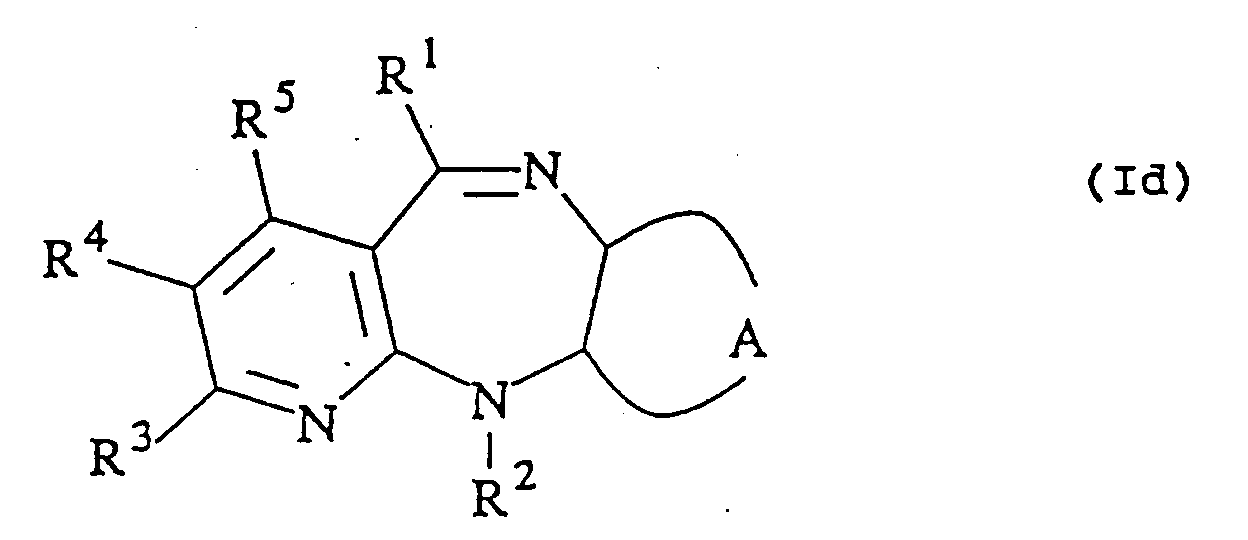
A is a fused ring of the formula R2 is alkyl or fluoroalkyl of 1 to 5 carbon atoms, cycloalkyl of 3 to 5 carbon atoms, alkenyl or alkynyl of 2 to 5 carbon atoms, alkoxyalkyl or alkylthioalkyl of 2 to 4 carbon atoms, alkanoyl of 2 to 4 carbon atoms, hydroxyalkyl of 2 to 5 carbon atoms, arylmethyl (wherein the aryl moiety is phenyl, thienyl or furanyl, which is either unsubstituted or substituted by alkyl or alkoxy of 1 to 3 carbon atoms, hydroxyl, or halogen), phenyl (which is either unsubstituted or substituted by alkyl or alkoxy of 1 to 3 carbon atoms, halogen or hydroxyl) or alkoxy-carbonylmethyl wherein the alkoxy moiety contains 1 to 5 carbon atoms;R3, R4, and R5 are each independently hydrogen, alkyl of 1 to 3 carbon atoms or chloro, with the proviso that at least one of these substituents is hydrogen; or,
one of R3, R4 and R5 is butyl, alkanoyl of 1 to 3 carbon atoms, hydroxyalkyl of 1 to 4 carbon atoms, alkoxycarbonyl of 2 to 3 carbon atoms, alkoxycarbonylalkyl wherein both the alkoxy and alkyl moieties contain 1 to 2 carbon atoms, halogen, trihalomethyl, hydroxyl, alkoxy of 1 to 3 carbon atoms, alkythio of 1 to 3 carbon atoms, alkanoyloxy of 2 to 3 carbon atoms, alkanoylamino of 1 to 3 carbon atoms, aminoalkyl of 1 to 3 carbon atoms, mono-or di-alkylamino or mono- or di-alkylaminocarbonyl wherein each alkyl moiety contains 1 to 2 carbon atoms, carboxyalkyl of 2 to 3 carbon atoms, cyano, nitro, carboxyl, carbamyl, amino, azido or mono- or di-alkylaminoalkyl wherein the alkyl moieties each contain 1 to 2 carbon atoms, and the remaining two substituents are hydrogen or methyl;R6, R7, R8 and R9 are each hydrogen; or,
one of R6, R7, R8 and R9 is alkyl of 1 to 4 carbon atoms, alkanoyl of 1 to 3 carbon atoms, alkoxycarbonyl of 2 to 3 carbon atoms, hydroxyalkyl of 1 to 4 carbon atoms, alkoxycarbonylalkyl wherein both the alkoxy and alkyl moieties contain 1 to 2 carbon atoms, halogen, trihalomethyl, hydroxyl, alkoxy of 1 to 3 carbon atoms, alkylthio of 1 to 3 carbon atoms, alkanoyloxy of 2 to 3 carbon atoms, alkanoylamino of 1 to 3 carbon atoms, aminoalkyl of 1 to 3 carbon atoms, mono- or di-alkylamino or mono- or di-alkylaminocarbonyl wherein each alkyl moiety contains 1 to 2 carbon atoms, carboxylalkyl of 2 to 3 carbon atoms, cyano, nitro, carboxyl, carbamyl, amino, azido or mono- or di-alkylaminoalkyl wherein each alkyl moiety contains 1 to 2 carbon atoms, and the remaining three substituents are hydrogen or two of the remaining three substituents are hydrogen and one is methyl, ethyl or halogen;R10 or R11 is hydrogen, alkyl of 1 to 4 carbon atoms, cyano, nitro, halogen or alkanoyl of 1 to 3 carbon atoms, with the remaining substituent being hydrogen, chloro, methyl or ethyl; and,R12 and R13 are each independently hydrogen, alkyl of 1 to 4 carbon atoms, halogen or nitro;
or a pharmaceutically acceptable addition salt thereof. - A compound according to claim 6 having the formula Ie
 R1 is cyano, chloro, imidazolyl, or a group of the formula -OR14, - SR14, -SOR14, -SO2R14, -NH2, -NHR14, or -NR14R15 wherein R14 and R15 are each independently alkyl of 1 to 4 carbon atoms, which may optionally be substituted by a cyano or alkoxycarbonyl group of 2 to 4 carbon atoms, cyclopropyl or cyclobutyl, or the group -NR14R15 is pyrrolidine, piperidine, or morpholine;R2 is alkyl of 1 to 4 carbon atoms, cycloalkyl of 3 to 4 carbon atoms, alkenylmethyl or alkynylmethyl of 2 to 4 carbon atoms, alkoxyalkyl or alkylthioalkyl of 2 to 4 carbon atoms, alkanoyl of 2 to 3 carbon atoms, hydroxyalkyl of 2 to 4 carbon atoms, arylmethyl (wherein the aryl moiety is phenyl or thienyl, which is either unsubstitued or substitued by methyl, methoxy, hydroxyl or halogen), phenyl (which is either unsubstituted or substituted by methyl, methoxy, hydroxyl or halogen) or alkoxycarbonylmethyl wherein the alkoxy moiety contains 1 to 5 carbon atoms;R3, R4, and R5 are each independently hydrogen or methyl, with the proviso that at least one of these substituents is hydrogen, or R5 is ethyl, propyl or butyl with the other two substituents being hydrogen;R6 is hydrogen, or, when R7 is hydrogen, methyl or chloro, may be methyl, ethyl, chloro or trifluoromethyl;R7 is hydrogen, or, when R8 is hydrogen, methyl or chloro, may be alkyl of 1 to 3 carbon atoms, alkanoyl of 1 to 3 carbon atoms, alkoxycarbonylalkyl, wherein the alkoxy and alkyl moieties each contain 1 to 2 carbon atoms, halogen, trifluoromethyl, hydroxyl, alkoxy or alkylthio of 1 to 2 carbon atoms, acetyloxy, alkanoylamino or aminoalkyl of 1 to 2 carbon atoms, cyano, nitro, amino, or mono- or di-methyl or -ethylamino;R8 is hydrogen, or when R7 is hydrogen, methyl or chloro, may be alkyl of 1 to 3 carbon atoms, alkanoyl of 1 to 3 carbon atoms, alkoxycarbonyl of 1 to 3 carbon atoms, hydroxyalkyl of 1 to 3 carbon atoms, alkoxycarbonylalkyl wherein the alkoxy and alkyl moieties each contain 1 to 2 carbon atoms, halogen, trifluoromethyl hydroxyl, alkoxy or alkylthio of 1 to 2 carbon atoms, acetyloxy, alkanoylamino or aminoalkyl of 1 to 2 carbon atoms, cyano, nitro, amino, or mono- or di-methyl or -ethylamino; andR9 is hydrogen or, when R8 is hydrogen, methyl or chloro, may be methyl, ethyl, chloro or trifuoromethyl;
or a pharmaceutically acceptable addition salt thereof. - A compound according to claim 7 having the formula Ie, whereinR1 is cyano, chloro, imidazolyl, or a group of the formula -OR14, - SR14, -SOR14, -SO2R14, -NH2, -NHR14, or -NR14R15 wherein R14 and R15 are each independently alkyl of 1 to 4 carbon atoms, which may optionally be substituted by a cyano or alkoxycarbonyl group of 2 to 4 carbon atoms, cyclopropyl or cyclobutyl, or the group -NR14R15 is pyrrolidine, piperidine, or morpholine;R2 is alkyl of 1 to 4 carbon atoms, cycloalkyl of 3 to 4 carbon atoms, alkenyl or alkynyl of 2 to 4 carbon atoms, alkyloxyalkyl or alkylthioalkyl of 2 to 3 carbon atoms, alkanoyl of 2 to 3 carbon atoms, hydroxyalkyl of 2 to 4 carbon atoms, arylmethyl (wherein the aryl moiety is phenyl or thienyl, which is either unsubstituted or substituted by methyl, methoxy or halogen) or alkoxycarbonylmethyl wherein the alkoxy moiety contains 1 to 5 carbon atoms; and,R3 through R9 are as set forth below in Table A.
TABLE A or a pharmaceutically acceptable addition salt thereof.R3 R4 R5 R6 R7 R8 R9 a H H H H H CF3 H b H H H H Cl H H c H H H H CH3 CH3 H d CH3 H H H CH3 CH3 H e CH3 CH3 H H CH3 CH3 H f H H H CH3 CH3 H H g H H H H H Cl H h H H H H H H H i H H H CH3 H H H j H H H H CH3O2C- H H k H H H H C2H5O2C- H H l H H H H NC- H H m H H H H CH3CO- H H n H H H H H CH3O2C- H o H H H H H C2H5O2C- H p H H H H H NC- H q H H H H H CH3CO- H r H H H H Cl Cl H s H H H CH3 H CH3 H - A compound according to claim 6, having the formula Ie, whereinR1 is cyano, chloro, imidazolyl, or a group of the formula -OR14, - SR14, -SOR14, -SO2R14, -NH2,
-NHR14, or -NR14R15 wherein R14 and R15 are each independently alkyl of 1 to 4 carbon atoms, which may optionally be substituted by a cyano or alkoxycarbonyl group of 2 to 4 carbon atoms, cyclopropyl or cyclobutyl, or the group -NR14R15 is pyrrolidine, piperidine, or morpholine;R2 is alkyl of 2 to 3 carbon atoms, cyclopropyl or allyl;R3 through R9 are each hydrogen; or,R3, R4, R5, R6, and R9 are each hydrogen; and,R7 and R8 are each independently hydrogen, methyl, or chloro, with the proviso that at least one of R7 and R8 is methyl or chloro;
or a pharmaceutically acceptable addition salt thereof. - A compound of the formula Ib

A is a fused ring of the formula R1 is cyano, chloro, bromo, imidazolyl, phosphetanyl, phospholanyl, or phosphorinanyl, or a group of the formula -OR14, -SR14, -SOR14, -SO2R14, -NH2, -NHR14, -NR14R15 1 -PR14R15, -P(OR14)(OR15), -P(O)(OR14)(OR15), -PO3H2,-P(NR14R15)(NR14R15), or -P(O)(NR14R15)(NR14R15); wherein R14 and R15 are each independently alkyl of 1 to 4 carbon atoms, which may optionally be substituted by a cyano or alkoxycarbonyl group of 2 to 4 carbon atoms, cyclopropyl or cyclobutyl, or the group -NR14R15 may be pyrrolidine, piperidine, or morpholine;R2 is alkyl or fluoroalkyl of 1 to 4 carbon atoms, cycloalkyl of 3 to 5 carbon atoms, alkenyl or alkynyl of 2 to 4 carbon atoms, alkoxyalkyl or alkylthioalkyl of 2 to 3 carbon atoms, alkanoyl of 2 to 3 carbon atoms, hydroxyalkyl of 2 to 4 carbon atoms, arylmethyl (wherein the aryl moiety is phenyl, thienyl or furanyl, which is either unsubstituted or substituted by alkyl or alkoxy of 1 to 3 carbon atoms, hydroxyl or halogen), phenyl (which is either unsubstituted or substituted by alkyl or alkoxy of 1 to 3 carbon atoms, halogen or hydroxyl) or alkoxycarbonylmethyl wherein the alkoxy moiety contains 1 to 5 carbon atoms;R3, R4 and R5 are each independently hydrogen, alkyl of 1 to 3 carbon atoms or chloro, with the proviso that at least one of these substituents is hydrogen or methyl; or,
one of R3, R4 and R5 is butyl, alkanoyl of 2 to 4 carbon atoms, alkoxycarbonyl or 2 to 4 carbon atoms, hydroxyalkyl of 1 to 4 carbon atoms, alkoxycarbonylalkyl wherein the alkoxy and alkyl moieties each contain 1 to 2 carbon atoms, halogen, trihalomethyl, hydroxyl, alkoxy of 1 to 3 carbon atoms, alkylthio of 1 to 3 carbon atoms, aryl or arylalkyl (wherein the alkyl moiety contains 1 to 3 carbon atoms, and the aryl moiety, is phenyl, thienyl, furanyl, pyridyl, or imidazolyl, which is either unsubstituted or substituted by alkyl or alkoxy of 1 to 3 carbon atoms, hydroxyl or halogen), alkanoyloxy of 2 to 3 carbon atoms, alkanoylamino of 1 to 3 carbon atoms, aminoalkyl of 1 to 3 carbon atoms, mono- or di-alkylamino wherein each alkyl moiety contains 1 to 3 carbon atoms, N-pyrrolidino, N-piperidino, N-morpholino, carboxyalkyl of 2 to 3 carbon atoms, cyano, nitro, carboxyl, carbamyl, amino, azido, mono- or di-alkylaminoalkyl wherein each alkyl moiety contains 1 to 2 carbon atoms, with the proviso that the remaining two substituents are hydrogen or methyl;R6, R7, R8 and R9 are each hydrogen; or
one of R6, R7, R8 and R9 is alkyl of 1 to 4 carbon atoms, alkanoyl of 2 to 4 carbon atoms, alkoxycarbonyl of 2 to 4 carbon atoms, hydroxyalkyl of 1 to 4 carbon atoms, alkoxycarbonylalkyl wherein the alkoxy and alkyl moieties each contain 1 to 2 carbon atoms, halogen, trihalomethyl, hydroxyl, alkoxy of 1 to 3 carbon atoms, alkylthio of 1 to 3 carbon atoms, alkanoyloxy of 2 to 3 carbon atoms, alkanoylamino of 1 to 3 carbon atoms, aminoalkyl of 1 to 3 carbon atoms, mono- or di-alkylamino wherein each alkyl moiety contains 1 to 2 carbon atoms, carboxyalkyl of 2 to 3 carbon atoms, cyano, nitro, carboxyl, carbamyl, amino, azido, mono-or di-alkylaminoalkyl wherein each alkyl moiety contains 1 to 2 carbon atoms, and the remaining three substituents are hydrogen or two of the remaining three substituents are hydrogen and one is methyl, ethyl or halogen;R10 and R11 are each independently hydrogen, alkyl of 1 to 3 carbon atoms or halogen; and,R12 and R13 are each independently hydrogen, methyl, ethyl, or halogen;
or a pharmaceutically acceptable addition salt thereof. - A compound according to claim 10, having the formula Ic
 R1 is cyano, chloro, imidazolyl, or a group of the formula -OR14, - SR14, -SOR14, -SO2R14, -NH2,
-NHR14, or -NR14R15, wherein R14 and R15 are each independently alkyl of 4 carbon atoms, which may optionally be substituted by a cyano or alkoxycarbonyl group of 2 to 4 carbon atoms, cyclopropyl or cyclobutyl, or the group -NR14R15 may be pyrrolidine, piperidine, or morpholine;R2 is alkyl having 1 to 4 carbon atoms, cycloalkyl of 3 to 4 carbon atoms, alkenyl or alkynyl of 2 to 4 carbon atoms, alkoxyalkyl or alkylthioalkyl of 2 to 3 carbon atoms, alkanoyl of 2 to 3 carbon atoms, hydroxyalkyl of 2 to 4 carbon atoms, arylmethyl (wherein the aryl moiety is phenyl or thienyl, which is either unsubstituted or substituted by methyl, methoxy or halogen) or alkoxycarbonylmethyl wherein the alkoxy moiety contains 1 to 4 carbon atoms;R3, R4, and R5 are each independently hydrogen, methyl, chloro, mono-or di-alkylamino wherein each alkyl moiety contains 1 to 3 carbon atoms, N-pyrrolidino, N-piperidino or N-morpholino, with the proviso that at least one of these substituents is hydrogen or methyl, or R5 is ethyl, propyl or butyl with the remaining two substituents being hydrogen;R6 is hydrogen, or, when R7 is hydrogen or methyl, may be methyl or ethyl,R7 is hydrogen, or, when R8 is hydrogen, may be alkyl of 1 to 2 carbon atoms, acetyl, hydroxyalkyl of 1 to 2 carbon atoms, alkoxycarbonyl of 2 to 3 carbon atoms, alkoxycarbonylalkyl wherein the alkoxy and alkyl moieties each contain 1 to 2 carbon atoms, halogen, trifluoromethyl, hydroxyl, alkoxy of 1 to 2 carbon atoms, alkylthio of 1 to 2 carbon atoms, acetyloxy, alkanoylamino of 1 to 2 carbon atoms or cyano;R8 is hydrogen, or when R7 is hydrogen, may be alkyl of 1 to 2 carbon atoms, acetyl, hydroxyalkyl of 1 to 2 carbon atoms, alkoxycarbonyl of 2 to 3 carbon atoms, alkoxycarbonylalkyl wherein the alkoxy and alkyl moieties each contain 1 to 2 carbon atoms, halogen, trifluoromethyl, hydroxyl, alkoxy of 1 to 2 carbon atoms, alkylthio of 1 to 2 carbon atoms, acetyloxy, alkanoylamino of 1 to 2 carbon atoms or cyano; or,R7 and R8 are both hydrogen, methyl or halogen; andR9 is hydrogen or, when R8 is hydrogen or methyl, may be methyl.
or a pharmaceutically acceptable addition salt thereof. - A compound according to claim 11 having the formula Ic, whereinR1 is cyano, chloro, imidazolyl, or a group of the formula -OR14, - SR14, -SOR14, -SO2R14, -NH2,
-NHR14, or -NR14R15, wherein R14 and R15 are each independently alkyl of 4 carbon atoms, which may optionally be substituted by a cyano or alkoxycarbonyl group of 2 to 4 carbon atoms, cyclopropyl or cyclobutyl, or the group -NR14R15 may be pyrrolidine, piperidine, or morpholine;R2 is alkyl of 1 to 4 carbon atoms or cycloalkyl of 3 to 4 carbon atoms;R3 is hydrogen, methyl, chloro, methoxy, mono- or di-alkylamino wherein each alkyl moiety contains 1 to 3 carbon atoms, or N-pyrrolidino;R4 and R5 are each independently hydrogen or methyl; and,R6 through R9 are each hydrogen;
or a pharmaceutically acceptable addition salt thereof. - The use of a compound or pharmaceutically acceptable acid addition salt according to any one of claims 1 to 12 for the manufacture of a pharmaceutical preparation for the prophylactic or therapeutic treatment of a human exposed to or infected by HIV-1.
- A pharmaceutical composition suitable for the prevention or treatment of HIV-1 infection comprising a prophylactically or therapeutically effective amount of a compound according to any one of claims 1 to 12 or a pharmaceutically acceptable acid addition salt thereof and a pharmaceutically acceptable carrier.
Applications Claiming Priority (6)
| Application Number | Priority Date | Filing Date | Title |
|---|---|---|---|
| US65214791A | 1991-02-07 | 1991-02-07 | |
| US65215791A | 1991-02-07 | 1991-02-07 | |
| US65214691A | 1991-02-07 | 1991-02-07 | |
| US652157 | 1991-02-07 | ||
| US652147 | 1991-02-07 | ||
| US652146 | 2000-08-31 |
Publications (2)
| Publication Number | Publication Date |
|---|---|
| EP0498290A1 EP0498290A1 (en) | 1992-08-12 |
| EP0498290B1 true EP0498290B1 (en) | 1996-09-18 |
Family
ID=27417873
Family Applications (1)
| Application Number | Title | Priority Date | Filing Date |
|---|---|---|---|
| EP92101462A Expired - Lifetime EP0498290B1 (en) | 1991-02-07 | 1992-01-29 | Pyridobenzodiazepines, dipyrido [3,2-b:2',3'-e] [1,4]diazepines and their use in the prevention or treatment of HIV infection |
Country Status (7)
| Country | Link |
|---|---|
| EP (1) | EP0498290B1 (en) |
| JP (1) | JPH06122683A (en) |
| AT (1) | ATE143018T1 (en) |
| CA (1) | CA2060687A1 (en) |
| DE (1) | DE69213777T2 (en) |
| DK (1) | DK0498290T3 (en) |
| GR (1) | GR3021428T3 (en) |
Families Citing this family (7)
| Publication number | Priority date | Publication date | Assignee | Title |
|---|---|---|---|---|
| US6177435B1 (en) | 1992-05-13 | 2001-01-23 | Glaxo Wellcome Inc. | Therapeutic combinations |
| US5897858A (en) | 1994-02-03 | 1999-04-27 | Schering-Plough Healthcare Products, Inc. | Nasal spray compositions exhibiting increased retention in the nasal cavity |
| PL181323B1 (en) * | 1994-02-18 | 2001-07-31 | Boehringer Ingelheim Pharma | 2-heteroaryl-5,11-dihydro-6H-dipyrido [3,2-b: 2 ', 3'-e] [1,4] diazepines and their use in the prevention and treatment of HIV infections PL EN PL |
| US5747488A (en) * | 1996-01-30 | 1998-05-05 | Boehringer Ingelheim Pharmaceuticals, Inc. | 2-aryl-5,11-dihydro-6H-dipyrido 3,2-B:2',3'-E! 1, 4!diazepines and their use in the treatment of HIV infection |
| US6106179A (en) * | 1998-12-28 | 2000-08-22 | Kuo; Chen-Hui | Dual color lipstick in a single case |
| WO2008099021A1 (en) * | 2007-02-16 | 2008-08-21 | Tibotec Pharmaceuticals Ltd. | Dibenzodiazepinones useful as hepatitis c virus inhibitors |
| CU20090172A6 (en) * | 2009-10-09 | 2011-10-05 | Facultad De Quimica Universidad De La Habana | TRICYCLIC AND TETRACYCLIC SYSTEMS WITH ACTIVITY ON THE CENTRAL AND VASCULAR NERVOUS SYSTEM |
Family Cites Families (2)
| Publication number | Priority date | Publication date | Assignee | Title |
|---|---|---|---|---|
| DE69031845T2 (en) * | 1989-04-20 | 1998-05-07 | Boehringer Ingelheim Pharma | 6,11-Dihydro-5H-pyrido (2,3-b) (1,5) benzodiazepin-5-one and thione and their use for the prevention or treatment of AIDS |
| ES2063202T3 (en) * | 1989-06-28 | 1995-01-01 | Boehringer Ingelheim Pharma | NEW 5,11-DIHIDRO-6H-DIPIRIDO (3,2-B: 2 ', 3'-E) (1,4) DIAZEPIN-6-ONAS Y -TIONAS AND ITS USE IN THE PREVENTION OR TREATMENT OF AIDS. |
-
1992
- 1992-01-29 AT AT92101462T patent/ATE143018T1/en not_active IP Right Cessation
- 1992-01-29 DK DK92101462.7T patent/DK0498290T3/da active
- 1992-01-29 DE DE69213777T patent/DE69213777T2/en not_active Expired - Fee Related
- 1992-01-29 EP EP92101462A patent/EP0498290B1/en not_active Expired - Lifetime
- 1992-02-05 CA CA002060687A patent/CA2060687A1/en not_active Abandoned
- 1992-02-06 JP JP4066588A patent/JPH06122683A/en active Pending
-
1996
- 1996-10-23 GR GR960402800T patent/GR3021428T3/en unknown
Also Published As
| Publication number | Publication date |
|---|---|
| DE69213777D1 (en) | 1996-10-24 |
| EP0498290A1 (en) | 1992-08-12 |
| DK0498290T3 (en) | 1997-02-10 |
| GR3021428T3 (en) | 1997-01-31 |
| JPH06122683A (en) | 1994-05-06 |
| ATE143018T1 (en) | 1996-10-15 |
| CA2060687A1 (en) | 1992-08-08 |
| DE69213777T2 (en) | 1997-03-13 |
Similar Documents
| Publication | Publication Date | Title |
|---|---|---|
| EP0429987B1 (en) | 5,11-Dihydro-6H-dipyrido[3,2-b:2',3'-e] [1,4]diazepines and their use in the prevention or treatment of HIV infection | |
| US5908841A (en) | 5,11-dihydro-6H-dipyrido 3,2-b:2',3'-e!azepine-6-ones and their use in the prevention of treatment of HIV infection | |
| EP0410148B1 (en) | Novel 5,11-dihydro-6H-dipyrido[3,2-b:2',3'-e][1,4]diazepin-6-ones and thiones and their use in the prevention or treatment of AIDS | |
| US5087625A (en) | Pyridodiazepines and their use in the prevention or treatment of HIV infection | |
| EP0393604B1 (en) | 6,11-Dihydro-5H-pyrido(2,3-b)(1,5,)benzodiazepin-5-ones and thiones and their use in the prevention or treatment of AIDS | |
| EP0745083B1 (en) | 2-HETEROARYL-5,11-DIHYDRO-6H-DIPYRIDO [3,2-b:2',3'-e][1,4]DIAZEPINES AND THEIR USE IN THE PREVENTION OR TREATMENT OF HIV INFECTION | |
| EP0419861B1 (en) | Use of dibenz[b,f][1,4]oxazepin (and thiazepin)-11(10H)-ones and -thiones in the preparation of a pharmaceutical composition for the prevention or treatment of aids | |
| EP0498290A1 (en) | Pyridobenzodiazepines, dipyrido [3,2-b:2',3'-e] [1,4]diazepines and their use in the prevention or treatment of HIV infection | |
| US5550117A (en) | Dipyrido[3,2-B:2 ',3'-E][1,4]Diaqzepines and their use in the treatment of HIV infection | |
| US5747488A (en) | 2-aryl-5,11-dihydro-6H-dipyrido 3,2-B:2',3'-E! 1, 4!diazepines and their use in the treatment of HIV infection | |
| CA2014884C (en) | 5,11-dihydro-6h-pyrido[2,3-b][1,4]benzodiazepin-6-ones and -thiones and their use in the prevention or treatment of aids | |
| US5602113A (en) | Pyridobenzo- and pyridiothieno-diazepines useful for the treatment of HIV infection | |
| EP0415303B1 (en) | Pyrido [2,3-b][1,5]benzoxazepin (and thiazepin)-5(6H)-ones and -thiones and their use in the prevention or treatment of HIV infection | |
| AP190A (en) | Pyrido(2,3-b) (1.5) benzoxazepin (and thiazepin)-5 (6H)-ones and thiones and prevention or treatment of HIV infection. | |
| US5837704A (en) | 2-heteroaryl-5,11-dihydro-6H-dipyrido 3,2-B:2',3'-E! 1,4!diazepines and their use in the prevention or treatment of HIV infection | |
| US5593979A (en) | Pyridobenzo-and pyridiothieno-diazepines useful for the treatment of HIV infection | |
| EP0417534A1 (en) | Pyrido[2,3-b][1,4]benzoxazepin (and thiazepin)-6(5H)-ones and thiones and their use in the prevention or treatment of AIDS | |
| EP0415304A2 (en) | Dipyrido[3,2-b:2',3'-e][1,4]oxazepin (and thiazepin)-6(5H)-ones and their use in the prevention or treatment of aids | |
| HK1011025B (en) | 5,11-dihydro-6h-dipyrido[3,2-b:2',3'-e][1,4]diazepines and their use in the preventionor treatment of hiv infection | |
| MXPA96003359A (en) | 2-heteroaril-5,11-dihydro-6h-dipiride [3,2-b: 2 ', 3'-e] [1-4] -diazepines and their use in the prevention or treatment of infection of |
Legal Events
| Date | Code | Title | Description |
|---|---|---|---|
| PUAI | Public reference made under article 153(3) epc to a published international application that has entered the european phase |
Free format text: ORIGINAL CODE: 0009012 |
|
| AK | Designated contracting states |
Kind code of ref document: A1 Designated state(s): AT BE CH DE DK ES FR GB GR IT LI LU NL PT SE |
|
| 17P | Request for examination filed |
Effective date: 19920826 |
|
| 17Q | First examination report despatched |
Effective date: 19941202 |
|
| GRAH | Despatch of communication of intention to grant a patent |
Free format text: ORIGINAL CODE: EPIDOS IGRA |
|
| GRAH | Despatch of communication of intention to grant a patent |
Free format text: ORIGINAL CODE: EPIDOS IGRA |
|
| GRAA | (expected) grant |
Free format text: ORIGINAL CODE: 0009210 |
|
| AK | Designated contracting states |
Kind code of ref document: B1 Designated state(s): AT BE CH DE DK ES FR GB GR IT LI LU NL PT SE |
|
| PG25 | Lapsed in a contracting state [announced via postgrant information from national office to epo] |
Ref country code: ES Free format text: THE PATENT HAS BEEN ANNULLED BY A DECISION OF A NATIONAL AUTHORITY Effective date: 19960918 |
|
| REF | Corresponds to: |
Ref document number: 143018 Country of ref document: AT Date of ref document: 19961015 Kind code of ref document: T |
|
| REF | Corresponds to: |
Ref document number: 69213777 Country of ref document: DE Date of ref document: 19961024 |
|
| REG | Reference to a national code |
Ref country code: CH Ref legal event code: NV Representative=s name: SCHMAUDER & WANN PATENTANWALTSBUERO, INHABER KLAUS |
|
| ET | Fr: translation filed | ||
| ITF | It: translation for a ep patent filed | ||
| REG | Reference to a national code |
Ref country code: GR Ref legal event code: FG4A Free format text: 3021428 |
|
| REG | Reference to a national code |
Ref country code: DK Ref legal event code: T3 |
|
| REG | Reference to a national code |
Ref country code: PT Ref legal event code: SC4A Free format text: AVAILABILITY OF NATIONAL TRANSLATION Effective date: 19961210 |
|
| PLBE | No opposition filed within time limit |
Free format text: ORIGINAL CODE: 0009261 |
|
| STAA | Information on the status of an ep patent application or granted ep patent |
Free format text: STATUS: NO OPPOSITION FILED WITHIN TIME LIMIT |
|
| 26N | No opposition filed | ||
| PGFP | Annual fee paid to national office [announced via postgrant information from national office to epo] |
Ref country code: GB Payment date: 19971211 Year of fee payment: 7 |
|
| PGFP | Annual fee paid to national office [announced via postgrant information from national office to epo] |
Ref country code: SE Payment date: 19971217 Year of fee payment: 7 |
|
| PGFP | Annual fee paid to national office [announced via postgrant information from national office to epo] |
Ref country code: PT Payment date: 19971223 Year of fee payment: 7 Ref country code: NL Payment date: 19971223 Year of fee payment: 7 Ref country code: AT Payment date: 19971223 Year of fee payment: 7 |
|
| PGFP | Annual fee paid to national office [announced via postgrant information from national office to epo] |
Ref country code: GR Payment date: 19971230 Year of fee payment: 7 Ref country code: DK Payment date: 19971230 Year of fee payment: 7 |
|
| PGFP | Annual fee paid to national office [announced via postgrant information from national office to epo] |
Ref country code: FR Payment date: 19971231 Year of fee payment: 7 |
|
| PGFP | Annual fee paid to national office [announced via postgrant information from national office to epo] |
Ref country code: DE Payment date: 19980107 Year of fee payment: 7 Ref country code: CH Payment date: 19980107 Year of fee payment: 7 |
|
| PGFP | Annual fee paid to national office [announced via postgrant information from national office to epo] |
Ref country code: BE Payment date: 19980108 Year of fee payment: 7 |
|
| PGFP | Annual fee paid to national office [announced via postgrant information from national office to epo] |
Ref country code: LU Payment date: 19980119 Year of fee payment: 7 |
|
| PG25 | Lapsed in a contracting state [announced via postgrant information from national office to epo] |
Ref country code: LU Free format text: LAPSE BECAUSE OF NON-PAYMENT OF DUE FEES Effective date: 19990129 Ref country code: GB Free format text: LAPSE BECAUSE OF NON-PAYMENT OF DUE FEES Effective date: 19990129 Ref country code: AT Free format text: LAPSE BECAUSE OF NON-PAYMENT OF DUE FEES Effective date: 19990129 |
|
| PG25 | Lapsed in a contracting state [announced via postgrant information from national office to epo] |
Ref country code: SE Free format text: LAPSE BECAUSE OF NON-PAYMENT OF DUE FEES Effective date: 19990130 |
|
| PG25 | Lapsed in a contracting state [announced via postgrant information from national office to epo] |
Ref country code: LI Free format text: LAPSE BECAUSE OF NON-PAYMENT OF DUE FEES Effective date: 19990131 Ref country code: GR Free format text: LAPSE BECAUSE OF NON-PAYMENT OF DUE FEES Effective date: 19990131 Ref country code: CH Free format text: LAPSE BECAUSE OF NON-PAYMENT OF DUE FEES Effective date: 19990131 Ref country code: BE Free format text: LAPSE BECAUSE OF NON-PAYMENT OF DUE FEES Effective date: 19990131 |
|
| PG25 | Lapsed in a contracting state [announced via postgrant information from national office to epo] |
Ref country code: DK Free format text: LAPSE BECAUSE OF NON-PAYMENT OF DUE FEES Effective date: 19990202 |
|
| BERE | Be: lapsed |
Owner name: BOEHRINGER INGELHEIM PHARMACEUTICALS INC. Effective date: 19990131 |
|
| PG25 | Lapsed in a contracting state [announced via postgrant information from national office to epo] |
Ref country code: PT Free format text: LAPSE BECAUSE OF NON-PAYMENT OF DUE FEES Effective date: 19990731 |
|
| PG25 | Lapsed in a contracting state [announced via postgrant information from national office to epo] |
Ref country code: NL Free format text: LAPSE BECAUSE OF NON-PAYMENT OF DUE FEES Effective date: 19990801 |
|
| GBPC | Gb: european patent ceased through non-payment of renewal fee |
Effective date: 19990129 |
|
| REG | Reference to a national code |
Ref country code: CH Ref legal event code: PL |
|
| PG25 | Lapsed in a contracting state [announced via postgrant information from national office to epo] |
Ref country code: FR Free format text: LAPSE BECAUSE OF NON-PAYMENT OF DUE FEES Effective date: 19990930 |
|
| PG25 | Lapsed in a contracting state [announced via postgrant information from national office to epo] |
Ref country code: DE Free format text: LAPSE BECAUSE OF NON-PAYMENT OF DUE FEES Effective date: 19991103 |
|
| REG | Reference to a national code |
Ref country code: FR Ref legal event code: ST |
|
| REG | Reference to a national code |
Ref country code: PT Ref legal event code: MM4A Free format text: LAPSE DUE TO NON-PAYMENT OF FEES Effective date: 19990731 |
|
| REG | Reference to a national code |
Ref country code: DK Ref legal event code: EBP |
|
| PG25 | Lapsed in a contracting state [announced via postgrant information from national office to epo] |
Ref country code: IT Free format text: LAPSE BECAUSE OF NON-PAYMENT OF DUE FEES;WARNING: LAPSES OF ITALIAN PATENTS WITH EFFECTIVE DATE BEFORE 2007 MAY HAVE OCCURRED AT ANY TIME BEFORE 2007. THE CORRECT EFFECTIVE DATE MAY BE DIFFERENT FROM THE ONE RECORDED. Effective date: 20050129 |