EP0491342B1 - Multiprocessing system and method of controlling the carrying out of tasks in a multiprocessing system - Google Patents
Multiprocessing system and method of controlling the carrying out of tasks in a multiprocessing system Download PDFInfo
- Publication number
- EP0491342B1 EP0491342B1 EP91121571A EP91121571A EP0491342B1 EP 0491342 B1 EP0491342 B1 EP 0491342B1 EP 91121571 A EP91121571 A EP 91121571A EP 91121571 A EP91121571 A EP 91121571A EP 0491342 B1 EP0491342 B1 EP 0491342B1
- Authority
- EP
- European Patent Office
- Prior art keywords
- task
- operating system
- slave process
- context
- flag
- Prior art date
- Legal status (The legal status is an assumption and is not a legal conclusion. Google has not performed a legal analysis and makes no representation as to the accuracy of the status listed.)
- Expired - Lifetime
Links
Images



Classifications
-
- G—PHYSICS
- G06—COMPUTING OR CALCULATING; COUNTING
- G06F—ELECTRIC DIGITAL DATA PROCESSING
- G06F8/00—Arrangements for software engineering
- G06F8/40—Transformation of program code
- G06F8/41—Compilation
- G06F8/45—Exploiting coarse grain parallelism in compilation, i.e. parallelism between groups of instructions
-
- G—PHYSICS
- G06—COMPUTING OR CALCULATING; COUNTING
- G06F—ELECTRIC DIGITAL DATA PROCESSING
- G06F9/00—Arrangements for program control, e.g. control units
- G06F9/06—Arrangements for program control, e.g. control units using stored programs, i.e. using an internal store of processing equipment to receive or retain programs
- G06F9/46—Multiprogramming arrangements
- G06F9/52—Program synchronisation; Mutual exclusion, e.g. by means of semaphores
Definitions
- This invention relates generally to process management in a multiprocessing, multiprogramming computer system.
- it is directed to communication between the host Operating System and user application programs.
- Multiprocessing is possible when some sections of program code are independent from other sections in their order of execution. In that case, multiple CPUs may execute these sections of code concurrently. Ideally, a program would run N times faster if N CPUs were simultaneously executing the program code. However, this best case is not possible for a variety of theoretical and practical reasons.
- a program will not achieve this maximal speed-up if there are sections of code that must be executed in a non-trivial partial ordering - e.g. some sections of code must wait for other sections to finish executing in order to use their results.
- These data dependencies dictate how much a given program can be sped up by having more than one CPU executing its code concurrently. They also indicate that a given program may go through sections of code that require at most one CPU and other sections where multiple CPUs may be used. This transition between single CPU mode and multiple CPU mode for a given program creates practical reasons why programs, in general, do not achieve their maximal speed-up.
- the saving of context is additional overhead.
- the saving and restoring of context is not necessary for some types of parallel work. For example, suppose a process, tasked to execute iterations of a Parallel DO Loop, is interrupted by the Operating System. If this interruption occurs at the end of a particular iteration, then the process would have finished its useful work and returned its results to common memory. In that case, no context needs to be saved to restart the process later.
- the user program may have to wait for the interrupted process to return before continuing with useful work. Generally, no work beyond the parallel region can be started until all the work in the parallel region has been completed. This is necessary to ensure program correctness. If the interrupted process has not returned to continue its work, other processes that have finished their parallel work are forced to wait.
- the present invention provides a multiprocessing system in accordance with claim 1.
- the present invention also provides a method of controlling the carrying out of parallel tasks in a multiprocessing system in accordance with claim 16.
- An embodiment of the present invention addresses these problems by providing three protocols for high speed, asynchronous communication between the master program (i.e. the process that executes the user program), the Operating System, and a Multiprocessing Library which schedules slave processes to perform slices of parallel work, called "tasks". These protocols utilize an agreed-upon data buffer, called a "conduit,” to facilitate this communication.
- the first protocol allows the master process to request additional CPUs to work in parallel regions of code.
- the master process does not stop or slow down to request additional CPUs.
- the master process detecting a parallel region, sets flags in the conduit that are associated with slave processes.
- the Operating System asynchronously polls these flags and awakens any sleeping slave processes.
- the awakened slave processes are subsequently scheduled by the Multiprocessing Library to execute parallel tasks.
- the second protocol, GIVEUP allows a slave process enough time to finish a task before the Operating System disconnects it. Instead of blindly disconnecting, the Operating System sets a flag in the conduit that the Multiprocessing Library subsequently reads as a request to return a particular CPU attached to a slave process. When the process attached to the CPU has finished its work (e.g. finished a parallel DO Loop iteration), it returns itself to the Multiprocessing Library for another task assignment. Instead of giving the process another task, the Multiprocessing Library returns the CPU to the Operating System. The slave process is put to sleep without the need to save its context.
- the third protocol, CONTEXT-TO-USER-SPACE, is employed when the Operating System cannot wait for a slave process to finish a task before interruption. In that case, the context of the interrupted process is saved in user-space, instead of system space.
- the Operating System sets a flag in the conduit.
- the Multiprocessing Library later interprets the flag as a process that was interrupted during useful work.
- the Multiprocessing Library will assign the work of the interrupted process to the first available slave process that returns for an additional task assignment.
- the present embodiment describes three separate protocols: WAKEUP, GIVEUP and CONTEXT-TO-USER-SPACE. These protocols form an integral part of the Cooperative Parallel Interface. The protocols, through the Interface, allow high speed communication between a user program and a host Operating System.
- the preferred embodiment utilizes a separate Multiprocessing Library that controls the scheduling of processes that are slaves to the user program's master process. Additionally, a separate data buffer, the conduit, facilitates asynchronous communication between the user program, the Multiprocessing Library, and the host Operating System.
- FIGURE 1 illustrates how a Multiprocessing Group is formed.
- Dashed line 5 represents diagrammatically a multiprocessing system within which the software and data components of the invention function. Although not shown explicitly, it shall be understood that system 5 includes a shared memory used for interprocessor communication.
- system 5 includes a shared memory used for interprocessor communication.
- known systems on which it will function include the Cray X-MP and Y-MP multiprocessor systems. Descriptions of these systems are found, for example, in U. S. Patent No. 4,636,942 issued January 13, 1987, entitled “Computer Vector Multiprocessing Control"; U. S. Patent No. 4,754,398 issued June 28, 1988, entitled, "Apparatus and Method for Multiprocessor Communication”; and in U. S. Application Serial No.
- system space refers to the portion of memory reserved for the Operating System; "user-space” refers to that space allocated to use by user programs.
- the user source program 10 is preferably compiled by the automatically parallelizing compiler 11 that looks for regions of parallel processing that occur within the user source program 10.
- the compiler may also include mechanisms for the user to specify parallel regions manually as well as detecting parallelism automatically. The manner in which the user-program is compiled for parallel processing of tasks is not, however, part of nor essential to the present invention.
- the Multiprocessing Library 12 creates all the additional processes that a user program will need at job start-up.
- a library routine, TSKSTART 13 uses a system call to spawn all the necessary slave processes 15.
- the preferred embodiment spawns one slave process for each physical CPU. It should be understood, however, that any arbitrary number of slave processes will suffice. These processes, together with master process, belong to the same Multiprocessing Group 19.
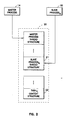
- FIGURES 2 - 4 depict the data structures used to implement the present embodiment.
- the Multiprocessing Library 12 implements an agreed-upon data buffer, called a conduit, in user-space to facilitate communication.
- the conduit 20 contains individual thread structures and context structures.
- slave process N has a thread structure labelled 21 and a task context structure labelled 22.
- the Multiprocessing Library 12 associates a thread structure for each individual process in the Multiprocessing Group 19 at job program start-up. The Multiprocessing Library 12 makes this association with a system call and the association persists throughout the execution of the user program.
- FIGURE 3 shows the constituent parts of an individual process thread structure 21.
- Each thread structure contains the following types of data:
- the master process 14 begins execution in single CPU mode and continues until a parallel section of code is encountered. While the master process 14 is in single CPU mode, the slave processes 15 are in "sleep" state. When the master process 14 encounters a multiple CPU mode section, tasks (i.e. parallel work) recorded in Multiprocessing Library 12 are given to slave processes to execute. Slave processes and tasks are created at job start-up time. Processes are in a "sleep" state and tasks are "idle” until the Master Process encounters a parallel region. Each task that is created has an associated context structure 22 (FIGURE 4) that is located in the conduit 20.
- FOGURE 4 context structure
- FIGURE 4 shows the constituent parts of a task context structure. Each task contains the following types of data:
- the conduit 20 provides the mechanism for a process-to-task scheduling paradigm.
- This scheduling paradigm is defined by the three major protocols of the Cooperative Parallel Interface: WAKEUP, GIVEUP, and CONTEXT-TO-USER-SPACE. It is understood that the preferred embodiment employs the above-mentioned data structures; however, other data structures may be similarly used to implement the protocols.
- FIGURE 5 illustrates the WAKEUP protocol.
- WAKEUP addresses the problem that occurs when a master process encounters a multiple CPU region and requests additional CPUs. WAKEUP allows the master process to set flags in the conduit quickly and continue to execute the program code serially. The Operating System asynchronously reads the flags and handles the requests.
- Each thread structure contains a "wakeup word” that is written by the master process and read by the Operating System.
- the master task is that task which executes the serial portions of the user program.
- the master process 14 encounters a multiple CPU region of code, it sets the wakeup word of every sleeping slave's thread structure to some non-zero value.
- slave process N 18 is sleeping and the master process 14 sets its wakeup word 50 to a non-zero value.
- the Operating System 51 polls the wakeup words asynchronously. Since slave N's wakeup word 50 is non-zero, slave process N 18 is "awakened” and placed in the run queue.
- the newly scheduled processes begin executing in the Multiprocessing Library 12.
- the Multiprocessing Library 12 then schedules a task to each awakened process.
- the master process sets the wakeup words in the thread structures, it also writes to a word that is read by the library that indicates which contexts (or tasks) are to be scheduled to participate in the parallel work.
- the task is thus scheduled to participate in the parallel work.
- the task returns to the Multiprocessing Library 12 and is placed in the "idle" state.
- the process spin waits in user-space for a set amount of time, called the "slave hold time".
- the process spin waiting in the Multiprocessing Library 12 checks to see if there is a task that has been disconnected with its context stored in the conduit 20, or if there is a task that is yet to be scheduled. If so, the process will start executing the task. If there is no such task to be scheduled, the process will clear its wakeup word 50 and give up its CPU by way of a system call at the expiration of its slave hold time.
- FIGURE 6 illustrates the GIVEUP protocol.
- GIVEUP avoids the problem associated with disconnecting a process in the middle of a task.
- GIVEUP postpones the disconnection until the task has been completed in order to minimize the number of context saves.
- Each thread structure contains a "giveup word” 60 that is written by the Operating System 51 and read by the Multiprocessing Library 12. Additionally, each thread structure contains a "context save flag" 61 that is written by the Multiprocessing Library 12 and read by the Operating System 51.
- the context save flag has three settings: “save-in-user-space”; “save-in-system-space”; and “don't-save-at-all” if in the hold loop. Essentially, a context save flag is set to save-in-user-space if and only if the associated process is assigned a task. The first two settings tell the Operating System 51 where to save the register set for this process when it is interrupted, the last that no save is to be performed.
- the Operating System 51 Before the Operating System 51 interrupts a process, it checks to see if the process has a thread structure associated with it. If it does not, then the process is disconnected. If it does, then the Operating System 51 checks to see if the context save flag is set to "save-in-user-space". If it is not, then the process is not currently doing any parallel work and may be disconnected. If it is set to save-in-user-space, then the process is currently doing parallel work. In this case, the Operating System 51 sets the giveup word 60 to a negative value indicating to that process that it should give up the CPU at its earliest convenience.
- the multiprocessing library 12 checks its giveup word 60. If it is set to a negative value, the process immediately reschedules back to the Operating System 51. When rescheduling for a GIVEUP request, the process does not clear its wakeup word 50. This forces the Operating System to reconnect the process in order for the process to spin wait for its slave hold time period. This is different from when a process reschedules to the Operating System because its slave hold time has expired.
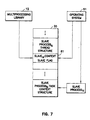
- FIGURE 7 illustrates the CONTEXT-TO-USER-SPACE protocol.
- CONTEXT-TO-USER-SPACE addresses the problem that occurs when disconnections cannot be avoided and must occur during useful parallel work. As previously mentioned, no work beyond the parallel region can be started until all work in the parallel region is complete. This assures program correctness. Disconnecting a process in the middle of parallel work causes all other processes to wait until the disconnected process has been rescheduled and has completed its portion of work.
- CONTEXT-TO-USER-SPACE is a protocol that allows the Multiprocessing Library 12 to schedule a disconnected task to another process that is connected and looking for work.
- the context save flag 61 is set to "save-in-system-space." In this state, if a process is interrupted, the registers for that process are saved in system space. User programs can not access this portion of memory.
- the Multiprocessing Library 12 sets the context save flag 61 to "save-in-user-space". This setting indicates to the Operating System 51 that the process is currently executing in a parallel region.
- the Operating System 51 interrupts a process with its context save flag set to save-in-user-space, it saves the user registers into the task's context structure 71 that is currently connected to that process.
- the Operating System 51 sets an indicator in the context structure to signify to the Multiprocessing Library 12 that this task was interrupted during a parallel region. This allows the Multiprocessing Library 12 to schedule this interrupted task to the next available process.
- the save flag is set to save-in-system-space.
- a process determines that there are no schedulable tasks, it sets the save flag to don't-save-at-all and spins in the slave hold loop.
- the only time that the save flag is set to don't-save-at-all is when a process is spinning in the hold loop or doing other work in portions of the library where it would be faster for another process to just start over again with the work in progress rather that saving and restoring the context of the interrupted process. More specifically, if a process is in the hold loop waiting for a task to become schedulable, there is no reason to save its registers if it is interrupted.
- the present invention provides methods for facilitating the efficient use of a multiprocessing system, providing efficient distribution and execution of parallel tasks in parallelized processes.
Landscapes
- Engineering & Computer Science (AREA)
- Theoretical Computer Science (AREA)
- General Engineering & Computer Science (AREA)
- Software Systems (AREA)
- Physics & Mathematics (AREA)
- General Physics & Mathematics (AREA)
- Multi Processors (AREA)
- Debugging And Monitoring (AREA)
Description
- Library requests and pointers
- Operating System requests and pointers
- Library statistics
- Operating System statistics
- Trace information.
- Private
data storage area 41 - Space to hold a full set of user registers and associated privileged registers and status words
- Operating System communication and state flags
- Other miscellaneous task storage areas.
Claims (30)
- A multiprocessing system (5) comprising an operating system (51), a master process (14) and slave processes (15), the operating system (51) and processes (14, 15) being arranged to communicate information regarding the carrying out of parallel tasks by the slave processes (15) between the operating system (51) and a process or processes (14, 15) characterised in that the operating system (51) and the processes (14, 15) are arranged to communicate information regarding the carrying out of parallel tasks by the slave processes (15) by one of said operating system (51) and a process or processes (14, 15) causing a flag (50, 60, 61) to be set in a data buffer (20) of the multiprocessing system and the other of said operating system (51) and the process or processes reading the set flag (50, 60, 61) by polling the data buffer (20).
- A multiprocessing system according to claim 1, wherein the master process (14) is adapted to set a wake-up flag (50) in the data buffer (20) to asynchronously activate a sleeping slave process (15) to enable parallel tasks to be assigned when the master process encounters a multiple CPU region of code, and wherein the operating system (51) is adapted to asynchronously poll the data buffer (20) for the wakeup flag (50) and then activate the slave process (15).
- A multiprocessing system according to claim 2, further comprising a multiprocessing library (12) adapted to schedule a parallel task to an activated slave process (15).
- A multiprocessing system according to claim 2, further comprising a multiprocessing library (12) adapted to schedule a further parallel task to an activated slave process (15) if a further task is available upon completion of a task by the slave process.
- A multiprocessing system according to claim 4, wherein the multiprocessing library (12) is adapted to schedule as the further parallel task a task that has been disconnected with its context stored in the data buffer (20).
- A multiprocessing system (5) according to any one of claims 2 to 5, wherein a slave process (15) is adapted to spin wait for a predetermined time upon completion of a task and then to release its CPU to the operating system (51) if it has not been assigned another task.
- A multiprocessing system according to claim 1 or 2, wherein the operating system (51) is adapted to set a giveup flag (60) in the data buffer (20) to delay interruption of a slave process (15) by the operating system (51) until the slave process (15) has completed its task or a predetermined time has expired, the slave process (15) being adapted to poll the data buffer (20) for the giveup flag (60) and then return the CPU to the operating system (51), and the operating system (51) being adapted to interrupt the slave process (15) at the end of the predetermined time if the slave process has not yet finished its task and returned the CPU back to the operating system (51).
- A multiprocessing system according to claim 7, wherein a slave process (15) is adapted to poll the associated giveup flag (60) after completion of an assigned task.
- A multiprocessing system according to claim 7 or 8, wherein each slave process (15) has an associated thread structure (21) and the operating system (51) is adapted to check whether the slave process has an associated thread structure (21) before interrupting the slave process, to set the associated giveup flag (60) if the slave process has an associated thread structure and to interrupt the slave process (15) if the slave process does not have an associated thread structure (21).
- A multiprocessing system according to any one of claims 7 to 9, further comprising a multiprocessing library (12) adapted to set the context-save flag (61) to a save-in-user-space value if the slave process (15) is carrying out a parallel task, the operating system (51) being adapted to check the context-save flag (61) when the operating system interrupts the slave process (15) and to save the context of the interrupted task in user space if the context-save flag (61) is set to save-in-user-space so that the context may be retrieved by another slave process (15).
- A multiprocessing system according to claim 10, wherein the multiprocessing library (12) is adapted to set the context-save flag (61) to a don't-save-at-all value if the slave process (15) has no context worth saving and the operating system (51) is adapted not to save the context of an interrupted slave process (15) if the context flag (61) is set to the don't-save at all value.
- A multiprocessing system according to any one of claims 7 to 11, wherein the system is adapted to reschedule an interrupted task on a priority basis.
- A multiprocessing system according to any one of claims 1, 2, 7, 8 or 9 wherein a multiprocessing library (12) is adapted to cause a context-save flag (61) to be set in the data buffer (20) to a save-in-user-space value when a slave process (15) is performing a parallel task, the operating system (51) is adapted to cause the context of the slave process (15) to be saved in user space if the slave process is interrupted when the context-save flag (61) is set, and to set a flag in the data buffer (20) to inform a multiprocessing library (12) that the process was interrupted while performing a parallel task, and wherein the multiprocesing library (12) is adapted to asynchronously poll the data buffer (20) for a context-save flag (61) to detect an interrupted task and then assign the interrupted task to the first available slave process (15).
- A multiprocessing system according to claim 13 wherein the context-save flag (61) is adapted to be set to a save-in-system-space value when an interrupted task is assigned to the first available slave process (15) in order to inform the operating system (51) to save the context of the slave process (15) in system space if the slave process (15) was not performing a parallel task when interrupted.
- A multiprocessing system according to claim 13 or 14, wherein the system is adapted to cause the first available slave process (15) to retrieve the context of an interrupted task from user space and to use the context to continue executing the task.
- A method of controlling the carrying out of parallel tasks in a multiprocessing system comprising an operating system (51), a master process (14) and slave processes (15) which method comprises communicating information regarding the carrying out of parallel tasks by slave processes (15) between the processes (14, 15) and the operating system (51), characterised by communicating information from one of said operating system (51) and a process or processes (14, 15) to the other said operating system (51) and the process or processes (14, 15) by said one of said operating system (51) and the process of processes (14, 15) causing a flag (50, 60, 61) to be set in a data buffer (20) of the multiprocessing system and the other of said operating system (51) and the process or processes (14, 15) reading the set flag by polling the data buffer (20).
- A method according to claim 16, wherein the master process (14) sets a wakeup flag (50) in the data buffer (20) to asynchronously activate a sleeping slave process (15) to enable a parallel task to be assigned when the master process encounters a multiple CPU region of code and the operating system (51) asynchronously polls the data buffer (20) for the wake up flag (50) and then activates the slave process (15).
- A method according to claim 17, wherein a multiprocessing library (12) schedules a parallel task to the activated slave process (15).
- A method according to claim 17, wherein a multiprocessing library (12) schedules a further parallel task to an activated slave process (15) upon completion of a task, if a further task is available.
- A multiprocessing system according to claim 19, wherein the further parallel task is a task that has been disconnected with its context stored in the data buffer (20).
- A method according to claim 17, 18, 19 or 20, wherein a slave process (15) spins waiting for a predetermined time after completion of a task and then releases its CPU to the operating system (51) if it is not assigned another task.
- A method according to claim 16 or 17, wherein the operating system (51) sets a giveup flag (60) in the data buffer (20) to delay interrupting of a slave process (15) by the operating system (51) until the slave process has completed its task or a predetermined time has expired, the slave process (15) polls the data buffer (20) for the giveup flag (60) and then returns the CPU to the operating system (51) and the operating system interrupts the slave process (15) at the end of the predetermined time if the slave process (15) has not yet finished its task and returned the CPU back to the operating system (21).
- A method according to claim 22 wherein a slave process (15) checks its associated giveup flag (60) after completion of an assigned task.
- A method according to claim 22 or 23, wherein each slave process (15) has an associated thread structure (21) and the operating system (51) checks before interrupting a slave process (15) whether the slave process has an associated thread structure (21), if the slave process has an associated thread structure the operating system sets the associated giveup flag (60) and if the slave process does not have an associated thread structure the operating system (51) interrupts the slave process (15).
- A method according to claim 22, 23 or 24 wherein a multi-processing library (12) sets the context-save flag (61) to a save-in-user-space value if the slave process (15) is carrying out a parallel task and the operating system (51) checks the context-save flag (61) if it interrupts the slave process (15) and saves the context in user space if the context-save flag (61) is set to save-in-user-space so that the context may be retrieved by another slave process (15).
- A method according to claim 25, wherein the multiprocesing library (12) sets the context-save flag (61) to a don't-save-at-all value if the slave process (15) has no context worth saving and the operating system (51) does not save the context of the interrupted slave process (15) if the context-save flag (61) is set to the don't-save-at-all value.
- A method according to any one of claims 22 to 26, wherein an interrupted process (15) is rescheduled on a priority basis.
- A method according to claim 16, 17 or 22, wherein a multiprocessing library (12) causes a context-save flag (61) to be set to a save-in-user-space value when a slave process (15) is performing a parallel task, the operating system causes the context of the slave process (15) to be saved in user space if the slave process (15) is interrupted when the context-save flag (61) is set and sets a flag in the data buffer (20) to inform a multi-processing library (12) that the process was interrupted while performing a parallel task and wherein the multi-processing library (12) asynchronously polls the data buffer (20) for the context-save flag (61) to detect the interrupted task and then assign the interrupted task to the first available slave process (15).
- A method according to claim 28, wherein the context-save flag (61) is set to a save-in-system-space value when an interrupted task is assigned to the first available slave process (15) to inform the operating system (51) to save the context of the given slave process (15) in system space if the slave process (15) is interrupted because the slave process (15) is not currently performing a parallel task.
- A method according to claim 28 or 29, wherein the first available slave process (15) retrieves the context of the interrupted given task from user space and uses the context to continue executing the task.
Applications Claiming Priority (2)
| Application Number | Priority Date | Filing Date | Title |
|---|---|---|---|
| US630301 | 1990-12-19 | ||
| US07/630,301 US5257372A (en) | 1990-12-19 | 1990-12-19 | Methods for efficient distribution of parallel tasks to slave processes in a multiprocessing system |
Publications (3)
| Publication Number | Publication Date |
|---|---|
| EP0491342A2 EP0491342A2 (en) | 1992-06-24 |
| EP0491342A3 EP0491342A3 (en) | 1993-02-24 |
| EP0491342B1 true EP0491342B1 (en) | 1998-06-03 |
Family
ID=24526623
Family Applications (1)
| Application Number | Title | Priority Date | Filing Date |
|---|---|---|---|
| EP91121571A Expired - Lifetime EP0491342B1 (en) | 1990-12-19 | 1991-12-17 | Multiprocessing system and method of controlling the carrying out of tasks in a multiprocessing system |
Country Status (4)
| Country | Link |
|---|---|
| US (1) | US5257372A (en) |
| EP (1) | EP0491342B1 (en) |
| JP (1) | JPH05216851A (en) |
| DE (1) | DE69129526T2 (en) |
Families Citing this family (37)
| Publication number | Priority date | Publication date | Assignee | Title |
|---|---|---|---|---|
| EP0617361B1 (en) * | 1993-03-26 | 2001-11-28 | Cabletron Systems, Inc. | Scheduling method and apparatus for a communication network |
| US5530907A (en) * | 1993-08-23 | 1996-06-25 | Tcsi Corporation | Modular networked image processing system and method therefor |
| DE4497320T1 (en) * | 1993-09-27 | 1996-11-21 | Oracle Corp | Method and device for parallel processing in a database system |
| US5481743A (en) * | 1993-09-30 | 1996-01-02 | Apple Computer, Inc. | Minimal instruction set computer architecture and multiple instruction issue method |
| JPH07219913A (en) * | 1994-01-28 | 1995-08-18 | Fujitsu Ltd | Control method and apparatus for multiprocessor system |
| US5566349A (en) * | 1994-05-16 | 1996-10-15 | Trout; Ray C. | Complementary concurrent cooperative multi-processing multi-tasking processing system using shared memories with a minimum of four complementary processors |
| US5592654A (en) * | 1994-06-03 | 1997-01-07 | Integrated Device Technology, Inc. | Apparatus and method for converting a job conforming to a first protocol into a job conforming to a second protocol |
| US5835767A (en) * | 1994-08-19 | 1998-11-10 | Unisys Corporation | Method and apparatus for controlling available processor capacity |
| US5560018A (en) * | 1994-12-16 | 1996-09-24 | International Business Machines Corporation | Providing external interrupt serialization compatibility in a multiprocessing environment for software written to run in a uniprocessor environment |
| EP0771443A1 (en) * | 1995-05-19 | 1997-05-07 | AT & T IPM Corp. | Method for monitoring a digital multiprocessor |
| US6539435B2 (en) * | 1995-06-21 | 2003-03-25 | International Business Machines Corporation | System and method for establishing direct communication between parallel programs |
| US5826079A (en) * | 1996-07-05 | 1998-10-20 | Ncr Corporation | Method for improving the execution efficiency of frequently communicating processes utilizing affinity process scheduling by identifying and assigning the frequently communicating processes to the same processor |
| US5968115A (en) * | 1997-02-03 | 1999-10-19 | Complementary Systems, Inc. | Complementary concurrent cooperative multi-processing multi-tasking processing system (C3M2) |
| US6360279B1 (en) * | 1997-10-14 | 2002-03-19 | Bea Systems, Inc. | True parallel client server system and method |
| US6457064B1 (en) * | 1998-04-27 | 2002-09-24 | Sun Microsystems, Inc. | Method and apparatus for detecting input directed to a thread in a multi-threaded process |
| US6480876B2 (en) * | 1998-05-28 | 2002-11-12 | Compaq Information Technologies Group, L.P. | System for integrating task and data parallelism in dynamic applications |
| US6675189B2 (en) * | 1998-05-28 | 2004-01-06 | Hewlett-Packard Development Company, L.P. | System for learning and applying integrated task and data parallel strategies in dynamic applications |
| US6098100A (en) * | 1998-06-08 | 2000-08-01 | Silicon Integrated Systems Corp. | Method and apparatus for detecting a wake packet issued by a network device to a sleeping node |
| JP2000122882A (en) * | 1998-10-20 | 2000-04-28 | Matsushita Electric Ind Co Ltd | Multi-thread processor and debug device |
| JP2001188745A (en) * | 1999-12-28 | 2001-07-10 | Mitsubishi Electric Corp | Control device and control method |
| US7010788B1 (en) | 2000-05-19 | 2006-03-07 | Hewlett-Packard Development Company, L.P. | System for computing the optimal static schedule using the stored task execution costs with recent schedule execution costs |
| US6671700B1 (en) * | 2000-05-23 | 2003-12-30 | Palm Source, Inc. | Method and apparatus for parallel execution of conduits during simultaneous synchronization of databases |
| ATE492840T1 (en) * | 2000-10-31 | 2011-01-15 | Millennial Net Inc | NETWORKED PROCESSING SYSTEM WITH OPTIMIZED PERFORMANCE EFFICIENCY |
| JP4958201B2 (en) * | 2001-03-30 | 2012-06-20 | ルネサスエレクトロニクス株式会社 | Microcomputer |
| WO2003047175A1 (en) * | 2001-11-28 | 2003-06-05 | Millennial Net | Etwork protocol for an ad hoc wireless network |
| KR100459417B1 (en) * | 2001-12-19 | 2004-12-03 | 엘지전자 주식회사 | Task function processing method for multi processor system |
| US7418703B2 (en) * | 2002-03-20 | 2008-08-26 | Nec Corporation | Parallel processing system by OS for single processor |
| JP4051703B2 (en) | 2003-03-31 | 2008-02-27 | 日本電気株式会社 | Parallel processing system and parallel processing program by OS for single processor |
| US7340740B2 (en) * | 2003-04-22 | 2008-03-04 | International Business Machines Corporation | Cooperatively multitasking in an interrupt free computing environment |
| US7313399B2 (en) * | 2003-06-05 | 2007-12-25 | Millennial Net, Inc. | Protocol for configuring a wireless network |
| CN101461151B (en) * | 2005-06-01 | 2013-01-02 | 米伦尼尔网络股份有限公司 | Communicating over a wireless network |
| AU2008213820B2 (en) | 2007-02-06 | 2013-09-05 | Reneo, Inc. | A resource tracking method and apparatus |
| CN101661405B (en) * | 2008-08-28 | 2012-08-29 | 国际商业机器公司 | Multi-database function invoking method and system based on multiprocessor system |
| JP2010170579A (en) * | 2010-04-19 | 2010-08-05 | Renesas Technology Corp | Data processor |
| CN111881643A (en) * | 2020-06-08 | 2020-11-03 | 北京智芯仿真科技有限公司 | Integrated circuit layout optimization method based on frequency domain electromagnetic response and capable of automatically starting and stopping process |
| JP7049509B2 (en) * | 2021-05-19 | 2022-04-06 | 株式会社ユニバーサルエンターテインメント | Pachinko machine |
| JP7125525B2 (en) * | 2021-05-19 | 2022-08-24 | 株式会社ユニバーサルエンターテインメント | game machine |
Family Cites Families (2)
| Publication number | Priority date | Publication date | Assignee | Title |
|---|---|---|---|---|
| JPS60196398A (en) * | 1984-03-19 | 1985-10-04 | 株式会社日本コンラックス | Gift ticket which can be selected by paper money selector |
| US5050070A (en) * | 1988-02-29 | 1991-09-17 | Convex Computer Corporation | Multi-processor computer system having self-allocating processors |
-
1990
- 1990-12-19 US US07/630,301 patent/US5257372A/en not_active Expired - Lifetime
-
1991
- 1991-12-17 EP EP91121571A patent/EP0491342B1/en not_active Expired - Lifetime
- 1991-12-17 DE DE69129526T patent/DE69129526T2/en not_active Expired - Fee Related
- 1991-12-19 JP JP3361081A patent/JPH05216851A/en active Pending
Also Published As
| Publication number | Publication date |
|---|---|
| DE69129526D1 (en) | 1998-07-09 |
| DE69129526T2 (en) | 1999-01-28 |
| EP0491342A2 (en) | 1992-06-24 |
| JPH05216851A (en) | 1993-08-27 |
| US5257372A (en) | 1993-10-26 |
| EP0491342A3 (en) | 1993-02-24 |
Similar Documents
| Publication | Publication Date | Title |
|---|---|---|
| US5257372A (en) | Methods for efficient distribution of parallel tasks to slave processes in a multiprocessing system | |
| US5390329A (en) | Responding to service requests using minimal system-side context in a multiprocessor environment | |
| EP1839146B1 (en) | Mechanism to schedule threads on os-sequestered without operating system intervention | |
| JP2829078B2 (en) | Process distribution method | |
| Anderson et al. | Scheduler activations: Effective kernel support for the user-level management of parallelism | |
| US6560626B1 (en) | Thread interruption with minimal resource usage using an asynchronous procedure call | |
| KR101629989B1 (en) | Method for the deterministic execution and synchronisation of an information processing system comprising a plurality of processing cores executing system tasks | |
| US9753729B2 (en) | System for selecting a task to be executed according to an output from a task control circuit | |
| US8996761B2 (en) | Virtual queue processing circuit and task processor | |
| US8776079B2 (en) | Task processor | |
| EP2275926A2 (en) | Method and apparatus to attain direct communication between accelerator and instruction sequencer | |
| JP2561801B2 (en) | Method and system for managing process scheduling | |
| CN103473135B (en) | The processing method of spin lock LHP phenomenon under virtualized environment | |
| Barton et al. | A scalable multi-discipline, multiple-processor scheduling framework for IRIX | |
| CN109445939A (en) | A kind of dispatching method based on the soft real-time scheduling kernel for actively selling mechanism | |
| US7032099B1 (en) | Parallel processor, parallel processing method, and storing medium | |
| CA1304513C (en) | Multiple i/o bus virtual broadcast of programmed i/o instructions | |
| EP2282265A1 (en) | A hardware task scheduler | |
| CN117724381A (en) | Multi-core parallel computing scheduling method based on logic configuration program | |
| US8327379B2 (en) | Method for switching a selected task to be executed according with an output from task selecting circuit | |
| Nemirovsky et al. | DISC: Dynamic instruction stream computer | |
| Cantrill et al. | Threadmon: a tool for monitoring multithreaded program performance | |
| CN108845969B (en) | Operation control method and operation system suitable for incompletely symmetrical multi-processing microcontroller | |
| CN109213575B (en) | Method for running program by single processor | |
| JP2553526B2 (en) | Multitasking processor |
Legal Events
| Date | Code | Title | Description |
|---|---|---|---|
| PUAI | Public reference made under article 153(3) epc to a published international application that has entered the european phase |
Free format text: ORIGINAL CODE: 0009012 |
|
| AK | Designated contracting states |
Kind code of ref document: A2 Designated state(s): DE FR |
|
| RIN1 | Information on inventor provided before grant (corrected) |
Inventor name: LACROIX, SUZANNE L. Inventor name: HOEL, TIMOTHY W. Inventor name: ANDREASEN, CLAYTON D. Inventor name: REINHARDT, STEVEN P. Inventor name: FURTNEY, MARK Inventor name: BARRIUSO, FRANK R. |
|
| PUAL | Search report despatched |
Free format text: ORIGINAL CODE: 0009013 |
|
| AK | Designated contracting states |
Kind code of ref document: A3 Designated state(s): DE FR |
|
| 17P | Request for examination filed |
Effective date: 19930818 |
|
| 17Q | First examination report despatched |
Effective date: 19960109 |
|
| GRAG | Despatch of communication of intention to grant |
Free format text: ORIGINAL CODE: EPIDOS AGRA |
|
| GRAG | Despatch of communication of intention to grant |
Free format text: ORIGINAL CODE: EPIDOS AGRA |
|
| GRAG | Despatch of communication of intention to grant |
Free format text: ORIGINAL CODE: EPIDOS AGRA |
|
| GRAH | Despatch of communication of intention to grant a patent |
Free format text: ORIGINAL CODE: EPIDOS IGRA |
|
| GRAG | Despatch of communication of intention to grant |
Free format text: ORIGINAL CODE: EPIDOS AGRA |
|
| GRAH | Despatch of communication of intention to grant a patent |
Free format text: ORIGINAL CODE: EPIDOS IGRA |
|
| GRAH | Despatch of communication of intention to grant a patent |
Free format text: ORIGINAL CODE: EPIDOS IGRA |
|
| GRAA | (expected) grant |
Free format text: ORIGINAL CODE: 0009210 |
|
| AK | Designated contracting states |
Kind code of ref document: B1 Designated state(s): DE FR |
|
| REF | Corresponds to: |
Ref document number: 69129526 Country of ref document: DE Date of ref document: 19980709 |
|
| ET | Fr: translation filed | ||
| PLBE | No opposition filed within time limit |
Free format text: ORIGINAL CODE: 0009261 |
|
| STAA | Information on the status of an ep patent application or granted ep patent |
Free format text: STATUS: NO OPPOSITION FILED WITHIN TIME LIMIT |
|
| 26N | No opposition filed | ||
| PGFP | Annual fee paid to national office [announced via postgrant information from national office to epo] |
Ref country code: DE Payment date: 20080131 Year of fee payment: 17 |
|
| PGFP | Annual fee paid to national office [announced via postgrant information from national office to epo] |
Ref country code: FR Payment date: 20071217 Year of fee payment: 17 |
|
| REG | Reference to a national code |
Ref country code: FR Ref legal event code: ST Effective date: 20090831 |
|
| PG25 | Lapsed in a contracting state [announced via postgrant information from national office to epo] |
Ref country code: DE Free format text: LAPSE BECAUSE OF NON-PAYMENT OF DUE FEES Effective date: 20090701 |
|
| PG25 | Lapsed in a contracting state [announced via postgrant information from national office to epo] |
Ref country code: FR Free format text: LAPSE BECAUSE OF NON-PAYMENT OF DUE FEES Effective date: 20081231 |