EP0482834A1 - Process for producing alpha-hydroxyketones - Google Patents
Process for producing alpha-hydroxyketones Download PDFInfo
- Publication number
- EP0482834A1 EP0482834A1 EP91309622A EP91309622A EP0482834A1 EP 0482834 A1 EP0482834 A1 EP 0482834A1 EP 91309622 A EP91309622 A EP 91309622A EP 91309622 A EP91309622 A EP 91309622A EP 0482834 A1 EP0482834 A1 EP 0482834A1
- Authority
- EP
- European Patent Office
- Prior art keywords
- ruthenium
- substituted
- compound
- group
- pair
- Prior art date
- Legal status (The legal status is an assumption and is not a legal conclusion. Google has not performed a legal analysis and makes no representation as to the accuracy of the status listed.)
- Granted
Links
- 238000000034 method Methods 0.000 title claims description 12
- 150000003304 ruthenium compounds Chemical class 0.000 claims abstract description 14
- 239000007800 oxidant agent Substances 0.000 claims abstract description 9
- 125000000217 alkyl group Chemical group 0.000 claims abstract description 8
- 150000001875 compounds Chemical class 0.000 claims abstract description 8
- XLYOFNOQVPJJNP-UHFFFAOYSA-N water Substances O XLYOFNOQVPJJNP-UHFFFAOYSA-N 0.000 claims abstract description 8
- 125000003710 aryl alkyl group Chemical group 0.000 claims abstract description 7
- 125000004453 alkoxycarbonyl group Chemical group 0.000 claims abstract description 4
- KJTLSVCANCCWHF-UHFFFAOYSA-N Ruthenium Chemical compound [Ru] KJTLSVCANCCWHF-UHFFFAOYSA-N 0.000 claims description 4
- 125000004435 hydrogen atom Chemical group [H]* 0.000 claims description 4
- 229910052707 ruthenium Inorganic materials 0.000 claims description 4
- NQZFAUXPNWSLBI-UHFFFAOYSA-N carbon monoxide;ruthenium Chemical group [Ru].[Ru].[Ru].[O+]#[C-].[O+]#[C-].[O+]#[C-].[O+]#[C-].[O+]#[C-].[O+]#[C-].[O+]#[C-].[O+]#[C-].[O+]#[C-].[O+]#[C-].[O+]#[C-].[O+]#[C-] NQZFAUXPNWSLBI-UHFFFAOYSA-N 0.000 claims description 3
- 125000005595 acetylacetonate group Chemical group 0.000 claims description 2
- 125000004423 acyloxy group Chemical group 0.000 claims description 2
- 125000005843 halogen group Chemical group 0.000 claims description 2
- GTBPUYSGSDIIMM-UHFFFAOYSA-N phosphane;ruthenium Chemical compound P.[Ru] GTBPUYSGSDIIMM-UHFFFAOYSA-N 0.000 claims description 2
- 239000012327 Ruthenium complex Substances 0.000 claims 1
- 239000013543 active substance Substances 0.000 abstract description 2
- UFHFLCQGNIYNRP-UHFFFAOYSA-N Hydrogen Chemical compound [H][H] UFHFLCQGNIYNRP-UHFFFAOYSA-N 0.000 abstract 1
- 229910052739 hydrogen Inorganic materials 0.000 abstract 1
- 239000001257 hydrogen Substances 0.000 abstract 1
- YMWUJEATGCHHMB-UHFFFAOYSA-N Dichloromethane Chemical compound ClCCl YMWUJEATGCHHMB-UHFFFAOYSA-N 0.000 description 24
- XEKOWRVHYACXOJ-UHFFFAOYSA-N Ethyl acetate Chemical compound CCOC(C)=O XEKOWRVHYACXOJ-UHFFFAOYSA-N 0.000 description 21
- WEVYAHXRMPXWCK-UHFFFAOYSA-N Acetonitrile Chemical compound CC#N WEVYAHXRMPXWCK-UHFFFAOYSA-N 0.000 description 12
- KFSLWBXXFJQRDL-UHFFFAOYSA-N Peracetic acid Chemical compound CC(=O)OO KFSLWBXXFJQRDL-UHFFFAOYSA-N 0.000 description 10
- RIOQSEWOXXDEQQ-UHFFFAOYSA-N triphenylphosphine Chemical compound C1=CC=CC=C1P(C=1C=CC=CC=1)C1=CC=CC=C1 RIOQSEWOXXDEQQ-UHFFFAOYSA-N 0.000 description 10
- 238000003756 stirring Methods 0.000 description 9
- 239000000203 mixture Substances 0.000 description 8
- 150000001336 alkenes Chemical class 0.000 description 6
- HGCIXCUEYOPUTN-UHFFFAOYSA-N cyclohexene Chemical compound C1CCC=CC1 HGCIXCUEYOPUTN-UHFFFAOYSA-N 0.000 description 6
- 239000000243 solution Substances 0.000 description 6
- -1 2-methyl-4-acetoxypentyl Chemical group 0.000 description 5
- ROFVEXUMMXZLPA-UHFFFAOYSA-N Bipyridyl Chemical compound N1=CC=CC=C1C1=CC=CC=N1 ROFVEXUMMXZLPA-UHFFFAOYSA-N 0.000 description 5
- 101100030361 Neurospora crassa (strain ATCC 24698 / 74-OR23-1A / CBS 708.71 / DSM 1257 / FGSC 987) pph-3 gene Proteins 0.000 description 5
- MUALRAIOVNYAIW-UHFFFAOYSA-N binap Chemical compound C1=CC=CC=C1P(C=1C(=C2C=CC=CC2=CC=1)C=1C2=CC=CC=C2C=CC=1P(C=1C=CC=CC=1)C=1C=CC=CC=1)C1=CC=CC=C1 MUALRAIOVNYAIW-UHFFFAOYSA-N 0.000 description 5
- 239000003054 catalyst Substances 0.000 description 5
- CTMHWPIWNRWQEG-UHFFFAOYSA-N 1-methylcyclohexene Chemical compound CC1=CCCCC1 CTMHWPIWNRWQEG-UHFFFAOYSA-N 0.000 description 4
- 238000004821 distillation Methods 0.000 description 4
- VLKZOEOYAKHREP-UHFFFAOYSA-N n-Hexane Chemical compound CCCCCC VLKZOEOYAKHREP-UHFFFAOYSA-N 0.000 description 4
- JRZJOMJEPLMPRA-UHFFFAOYSA-N olefin Natural products CCCCCCCC=C JRZJOMJEPLMPRA-UHFFFAOYSA-N 0.000 description 4
- 238000007254 oxidation reaction Methods 0.000 description 4
- 239000011541 reaction mixture Substances 0.000 description 4
- 239000002904 solvent Substances 0.000 description 4
- 239000004912 1,5-cyclooctadiene Substances 0.000 description 3
- CSNNHWWHGAXBCP-UHFFFAOYSA-L Magnesium sulfate Chemical compound [Mg+2].[O-][S+2]([O-])([O-])[O-] CSNNHWWHGAXBCP-UHFFFAOYSA-L 0.000 description 3
- FAPWRFPIFSIZLT-UHFFFAOYSA-M Sodium chloride Chemical class [Na+].[Cl-] FAPWRFPIFSIZLT-UHFFFAOYSA-M 0.000 description 3
- 239000007864 aqueous solution Substances 0.000 description 3
- 229910001914 chlorine tetroxide Inorganic materials 0.000 description 3
- 230000003647 oxidation Effects 0.000 description 3
- VLTRZXGMWDSKGL-UHFFFAOYSA-M perchlorate Chemical compound [O-]Cl(=O)(=O)=O VLTRZXGMWDSKGL-UHFFFAOYSA-M 0.000 description 3
- YBCAZPLXEGKKFM-UHFFFAOYSA-K ruthenium(iii) chloride Chemical compound [Cl-].[Cl-].[Cl-].[Ru+3] YBCAZPLXEGKKFM-UHFFFAOYSA-K 0.000 description 3
- YBYIRNPNPLQARY-UHFFFAOYSA-N 1H-indene Chemical compound C1=CC=C2CC=CC2=C1 YBYIRNPNPLQARY-UHFFFAOYSA-N 0.000 description 2
- ODZTXUXIYGJLMC-UHFFFAOYSA-N 2-hydroxycyclohexan-1-one Chemical compound OC1CCCCC1=O ODZTXUXIYGJLMC-UHFFFAOYSA-N 0.000 description 2
- BVEYJWQCMOVMAR-UHFFFAOYSA-N 5-Hydroxy-4-octanone Chemical compound CCCC(O)C(=O)CCC BVEYJWQCMOVMAR-UHFFFAOYSA-N 0.000 description 2
- QTBSBXVTEAMEQO-UHFFFAOYSA-N Acetic acid Chemical compound CC(O)=O QTBSBXVTEAMEQO-UHFFFAOYSA-N 0.000 description 2
- AOJJSUZBOXZQNB-TZSSRYMLSA-N Doxorubicin Chemical compound O([C@H]1C[C@@](O)(CC=2C(O)=C3C(=O)C=4C=CC=C(C=4C(=O)C3=C(O)C=21)OC)C(=O)CO)[C@H]1C[C@H](N)[C@H](O)[C@H](C)O1 AOJJSUZBOXZQNB-TZSSRYMLSA-N 0.000 description 2
- MHAJPDPJQMAIIY-UHFFFAOYSA-N Hydrogen peroxide Chemical compound OO MHAJPDPJQMAIIY-UHFFFAOYSA-N 0.000 description 2
- ZMANZCXQSJIPKH-UHFFFAOYSA-N Triethylamine Chemical compound CCN(CC)CC ZMANZCXQSJIPKH-UHFFFAOYSA-N 0.000 description 2
- 230000003197 catalytic effect Effects 0.000 description 2
- 238000006243 chemical reaction Methods 0.000 description 2
- MVPPADPHJFYWMZ-UHFFFAOYSA-N chlorobenzene Chemical compound ClC1=CC=CC=C1 MVPPADPHJFYWMZ-UHFFFAOYSA-N 0.000 description 2
- MGNZXYYWBUKAII-UHFFFAOYSA-N cyclohexa-1,3-diene Chemical compound C1CC=CC=C1 MGNZXYYWBUKAII-UHFFFAOYSA-N 0.000 description 2
- LPIQUOYDBNQMRZ-UHFFFAOYSA-N cyclopentene Chemical compound C1CC=CC1 LPIQUOYDBNQMRZ-UHFFFAOYSA-N 0.000 description 2
- 239000003480 eluent Substances 0.000 description 2
- IRUCBBFNLDIMIK-UHFFFAOYSA-N oct-4-ene Chemical compound CCCC=CCCC IRUCBBFNLDIMIK-UHFFFAOYSA-N 0.000 description 2
- 150000004965 peroxy acids Chemical class 0.000 description 2
- WOCIAKWEIIZHES-UHFFFAOYSA-N ruthenium(iv) oxide Chemical compound O=[Ru]=O WOCIAKWEIIZHES-UHFFFAOYSA-N 0.000 description 2
- 238000010898 silica gel chromatography Methods 0.000 description 2
- 239000007858 starting material Substances 0.000 description 2
- RRKODOZNUZCUBN-CCAGOZQPSA-N (1z,3z)-cycloocta-1,3-diene Chemical compound C1CC\C=C/C=C\C1 RRKODOZNUZCUBN-CCAGOZQPSA-N 0.000 description 1
- SCYULBFZEHDVBN-UHFFFAOYSA-N 1,1-Dichloroethane Chemical compound CC(Cl)Cl SCYULBFZEHDVBN-UHFFFAOYSA-N 0.000 description 1
- VYXHVRARDIDEHS-UHFFFAOYSA-N 1,5-cyclooctadiene Chemical compound C1CC=CCCC=C1 VYXHVRARDIDEHS-UHFFFAOYSA-N 0.000 description 1
- ATQUFXWBVZUTKO-UHFFFAOYSA-N 1-methylcyclopentene Chemical compound CC1=CCCC1 ATQUFXWBVZUTKO-UHFFFAOYSA-N 0.000 description 1
- FUFLCEKSBBHCMO-UHFFFAOYSA-N 11-dehydrocorticosterone Natural products O=C1CCC2(C)C3C(=O)CC(C)(C(CC4)C(=O)CO)C4C3CCC2=C1 FUFLCEKSBBHCMO-UHFFFAOYSA-N 0.000 description 1
- 238000005160 1H NMR spectroscopy Methods 0.000 description 1
- FXNDIJDIPNCZQJ-UHFFFAOYSA-N 2,4,4-trimethylpent-1-ene Chemical compound CC(=C)CC(C)(C)C FXNDIJDIPNCZQJ-UHFFFAOYSA-N 0.000 description 1
- RMLMTLCQCHBROG-UHFFFAOYSA-N 2-hydroxy-2-methylcyclohexan-1-one Chemical compound CC1(O)CCCCC1=O RMLMTLCQCHBROG-UHFFFAOYSA-N 0.000 description 1
- NHQDETIJWKXCTC-UHFFFAOYSA-N 3-chloroperbenzoic acid Chemical compound OOC(=O)C1=CC=CC(Cl)=C1 NHQDETIJWKXCTC-UHFFFAOYSA-N 0.000 description 1
- BCJVBDBJSMFBRW-UHFFFAOYSA-N 4-diphenylphosphanylbutyl(diphenyl)phosphane Chemical compound C=1C=CC=CC=1P(C=1C=CC=CC=1)CCCCP(C=1C=CC=CC=1)C1=CC=CC=C1 BCJVBDBJSMFBRW-UHFFFAOYSA-N 0.000 description 1
- FERIUCNNQQJTOY-UHFFFAOYSA-N Butyric acid Natural products CCCC(O)=O FERIUCNNQQJTOY-UHFFFAOYSA-N 0.000 description 1
- MFYSYFVPBJMHGN-ZPOLXVRWSA-N Cortisone Chemical compound O=C1CC[C@]2(C)[C@H]3C(=O)C[C@](C)([C@@](CC4)(O)C(=O)CO)[C@@H]4[C@@H]3CCC2=C1 MFYSYFVPBJMHGN-ZPOLXVRWSA-N 0.000 description 1
- MFYSYFVPBJMHGN-UHFFFAOYSA-N Cortisone Natural products O=C1CCC2(C)C3C(=O)CC(C)(C(CC4)(O)C(=O)CO)C4C3CCC2=C1 MFYSYFVPBJMHGN-UHFFFAOYSA-N 0.000 description 1
- ZFDIRQKJPRINOQ-HWKANZROSA-N Ethyl crotonate Chemical compound CCOC(=O)\C=C\C ZFDIRQKJPRINOQ-HWKANZROSA-N 0.000 description 1
- 229910019891 RuCl3 Inorganic materials 0.000 description 1
- 229910021536 Zeolite Inorganic materials 0.000 description 1
- MCMNRKCIXSYSNV-UHFFFAOYSA-N ZrO2 Inorganic materials O=[Zr]=O MCMNRKCIXSYSNV-UHFFFAOYSA-N 0.000 description 1
- QROGIFZRVHSFLM-QHHAFSJGSA-N [(e)-prop-1-enyl]benzene Chemical compound C\C=C\C1=CC=CC=C1 QROGIFZRVHSFLM-QHHAFSJGSA-N 0.000 description 1
- 125000002777 acetyl group Chemical group [H]C([H])([H])C(*)=O 0.000 description 1
- 238000006657 acyloin condensation reaction Methods 0.000 description 1
- 229940009456 adriamycin Drugs 0.000 description 1
- 230000002280 anti-androgenic effect Effects 0.000 description 1
- 239000002246 antineoplastic agent Substances 0.000 description 1
- 229960002537 betamethasone Drugs 0.000 description 1
- UREBDLICKHMUKA-DVTGEIKXSA-N betamethasone Chemical compound C1CC2=CC(=O)C=C[C@]2(C)[C@]2(F)[C@@H]1[C@@H]1C[C@H](C)[C@@](C(=O)CO)(O)[C@@]1(C)C[C@@H]2O UREBDLICKHMUKA-DVTGEIKXSA-N 0.000 description 1
- 230000015572 biosynthetic process Effects 0.000 description 1
- JYHHJVKGDCZCCL-UHFFFAOYSA-J carbon monoxide;dichlororuthenium Chemical compound [O+]#[C-].[O+]#[C-].[O+]#[C-].[O+]#[C-].[O+]#[C-].[O+]#[C-].Cl[Ru]Cl.Cl[Ru]Cl JYHHJVKGDCZCCL-UHFFFAOYSA-J 0.000 description 1
- PXURRFCLQDNZOY-UHFFFAOYSA-L carbon monoxide;dichlororuthenium;triphenylphosphane Chemical compound [Cl-].[Cl-].[Ru+2].[O+]#[C-].[O+]#[C-].C1=CC=CC=C1P(C=1C=CC=CC=1)C1=CC=CC=C1.C1=CC=CC=C1P(C=1C=CC=CC=1)C1=CC=CC=C1 PXURRFCLQDNZOY-UHFFFAOYSA-L 0.000 description 1
- 150000001732 carboxylic acid derivatives Chemical class 0.000 description 1
- 239000007795 chemical reaction product Substances 0.000 description 1
- CCRCUPLGCSFEDV-UHFFFAOYSA-N cinnamic acid methyl ester Natural products COC(=O)C=CC1=CC=CC=C1 CCRCUPLGCSFEDV-UHFFFAOYSA-N 0.000 description 1
- IAQRGUVFOMOMEM-ARJAWSKDSA-N cis-but-2-ene Chemical compound C\C=C/C IAQRGUVFOMOMEM-ARJAWSKDSA-N 0.000 description 1
- 238000004440 column chromatography Methods 0.000 description 1
- 229960004544 cortisone Drugs 0.000 description 1
- 239000012043 crude product Substances 0.000 description 1
- URYYVOIYTNXXBN-UPHRSURJSA-N cyclooctene Chemical compound C1CCC\C=C/CC1 URYYVOIYTNXXBN-UPHRSURJSA-N 0.000 description 1
- 239000004913 cyclooctene Substances 0.000 description 1
- DUSHUSLJJMDGTE-ZJPMUUANSA-N cyproterone Chemical compound C1=C(Cl)C2=CC(=O)[C@@H]3C[C@@H]3[C@]2(C)[C@@H]2[C@@H]1[C@@H]1CC[C@@](C(=O)C)(O)[C@@]1(C)CC2 DUSHUSLJJMDGTE-ZJPMUUANSA-N 0.000 description 1
- 229960003843 cyproterone Drugs 0.000 description 1
- DHCWLIOIJZJFJE-UHFFFAOYSA-L dichlororuthenium Chemical compound Cl[Ru]Cl DHCWLIOIJZJFJE-UHFFFAOYSA-L 0.000 description 1
- WIWBLJMBLGWSIN-UHFFFAOYSA-L dichlorotris(triphenylphosphine)ruthenium(ii) Chemical compound [Cl-].[Cl-].[Ru+2].C1=CC=CC=C1P(C=1C=CC=CC=1)C1=CC=CC=C1.C1=CC=CC=C1P(C=1C=CC=CC=1)C1=CC=CC=C1.C1=CC=CC=C1P(C=1C=CC=CC=1)C1=CC=CC=C1 WIWBLJMBLGWSIN-UHFFFAOYSA-L 0.000 description 1
- 150000002009 diols Chemical class 0.000 description 1
- 150000002118 epoxides Chemical class 0.000 description 1
- 125000003754 ethoxycarbonyl group Chemical group C(=O)(OCC)* 0.000 description 1
- UTXVCHVLDOLVPC-UHFFFAOYSA-N ethyl 3-methylbut-2-enoate Chemical compound CCOC(=O)C=C(C)C UTXVCHVLDOLVPC-UHFFFAOYSA-N 0.000 description 1
- 125000001495 ethyl group Chemical group [H]C([H])([H])C([H])([H])* 0.000 description 1
- BPBOWYWUOUJKLO-UHFFFAOYSA-N ethylidenecyclohexane Chemical compound CC=C1CCCCC1 BPBOWYWUOUJKLO-UHFFFAOYSA-N 0.000 description 1
- VONKRKBGTZDZNV-UHFFFAOYSA-N ethylidenecyclopentane Chemical compound CC=C1CCCC1 VONKRKBGTZDZNV-UHFFFAOYSA-N 0.000 description 1
- 239000010439 graphite Substances 0.000 description 1
- 229910002804 graphite Inorganic materials 0.000 description 1
- 150000004677 hydrates Chemical class 0.000 description 1
- 239000000543 intermediate Substances 0.000 description 1
- 238000002955 isolation Methods 0.000 description 1
- 238000004519 manufacturing process Methods 0.000 description 1
- 125000001160 methoxycarbonyl group Chemical group [H]C([H])([H])OC(*)=O 0.000 description 1
- MCVVUJPXSBQTRZ-ONEGZZNKSA-N methyl (e)-but-2-enoate Chemical compound COC(=O)\C=C\C MCVVUJPXSBQTRZ-ONEGZZNKSA-N 0.000 description 1
- CCRCUPLGCSFEDV-BQYQJAHWSA-N methyl trans-cinnamate Chemical compound COC(=O)\C=C\C1=CC=CC=C1 CCRCUPLGCSFEDV-BQYQJAHWSA-N 0.000 description 1
- GDOPTJXRTPNYNR-UHFFFAOYSA-N methyl-cyclopentane Natural products CC1CCCC1 GDOPTJXRTPNYNR-UHFFFAOYSA-N 0.000 description 1
- 239000012299 nitrogen atmosphere Substances 0.000 description 1
- 238000000655 nuclear magnetic resonance spectrum Methods 0.000 description 1
- 150000002894 organic compounds Chemical class 0.000 description 1
- 125000002524 organometallic group Chemical group 0.000 description 1
- 238000007248 oxidative elimination reaction Methods 0.000 description 1
- RGSFGYAAUTVSQA-UHFFFAOYSA-N pentamethylene Natural products C1CCCC1 RGSFGYAAUTVSQA-UHFFFAOYSA-N 0.000 description 1
- DOVNMMSNHCGVGX-UHFFFAOYSA-N pentylidenecyclohexane Chemical compound CCCCC=C1CCCCC1 DOVNMMSNHCGVGX-UHFFFAOYSA-N 0.000 description 1
- 125000001997 phenyl group Chemical group [H]C1=C([H])C([H])=C(*)C([H])=C1[H] 0.000 description 1
- 230000001766 physiological effect Effects 0.000 description 1
- 239000012286 potassium permanganate Substances 0.000 description 1
- 239000000843 powder Substances 0.000 description 1
- 239000000047 product Substances 0.000 description 1
- CZPZWMPYEINMCF-UHFFFAOYSA-N propaneperoxoic acid Chemical compound CCC(=O)OO CZPZWMPYEINMCF-UHFFFAOYSA-N 0.000 description 1
- 150000003303 ruthenium Chemical class 0.000 description 1
- OJLCQGGSMYKWEK-UHFFFAOYSA-K ruthenium(3+);triacetate Chemical compound [Ru+3].CC([O-])=O.CC([O-])=O.CC([O-])=O OJLCQGGSMYKWEK-UHFFFAOYSA-K 0.000 description 1
- WYRXRHOISWEUST-UHFFFAOYSA-K ruthenium(3+);tribromide Chemical compound [Br-].[Br-].[Br-].[Ru+3] WYRXRHOISWEUST-UHFFFAOYSA-K 0.000 description 1
- LJZVDOUZSMHXJH-UHFFFAOYSA-K ruthenium(3+);triiodide Chemical compound [Ru+3].[I-].[I-].[I-] LJZVDOUZSMHXJH-UHFFFAOYSA-K 0.000 description 1
- 238000000926 separation method Methods 0.000 description 1
- VYPSYNLAJGMNEJ-UHFFFAOYSA-N silicon dioxide Inorganic materials O=[Si]=O VYPSYNLAJGMNEJ-UHFFFAOYSA-N 0.000 description 1
- 239000000377 silicon dioxide Substances 0.000 description 1
- 239000003270 steroid hormone Substances 0.000 description 1
- 125000000547 substituted alkyl group Chemical group 0.000 description 1
- 239000000725 suspension Substances 0.000 description 1
- 238000003786 synthesis reaction Methods 0.000 description 1
- 230000002194 synthesizing effect Effects 0.000 description 1
- IAQRGUVFOMOMEM-ONEGZZNKSA-N trans-but-2-ene Chemical compound C\C=C\C IAQRGUVFOMOMEM-ONEGZZNKSA-N 0.000 description 1
- ZFDIRQKJPRINOQ-UHFFFAOYSA-N transbutenic acid ethyl ester Natural products CCOC(=O)C=CC ZFDIRQKJPRINOQ-UHFFFAOYSA-N 0.000 description 1
- RXJKFRMDXUJTEX-UHFFFAOYSA-N triethylphosphine Chemical compound CCP(CC)CC RXJKFRMDXUJTEX-UHFFFAOYSA-N 0.000 description 1
- 239000010457 zeolite Substances 0.000 description 1
Classifications
-
- C—CHEMISTRY; METALLURGY
- C07—ORGANIC CHEMISTRY
- C07J—STEROIDS
- C07J71/00—Steroids in which the cyclopenta(a)hydrophenanthrene skeleton is condensed with a heterocyclic ring
- C07J71/0005—Oxygen-containing hetero ring
- C07J71/001—Oxiranes
-
- C—CHEMISTRY; METALLURGY
- C07—ORGANIC CHEMISTRY
- C07C—ACYCLIC OR CARBOCYCLIC COMPOUNDS
- C07C45/00—Preparation of compounds having >C = O groups bound only to carbon or hydrogen atoms; Preparation of chelates of such compounds
- C07C45/27—Preparation of compounds having >C = O groups bound only to carbon or hydrogen atoms; Preparation of chelates of such compounds by oxidation
- C07C45/28—Preparation of compounds having >C = O groups bound only to carbon or hydrogen atoms; Preparation of chelates of such compounds by oxidation of CHx-moieties
-
- C—CHEMISTRY; METALLURGY
- C07—ORGANIC CHEMISTRY
- C07C—ACYCLIC OR CARBOCYCLIC COMPOUNDS
- C07C45/00—Preparation of compounds having >C = O groups bound only to carbon or hydrogen atoms; Preparation of chelates of such compounds
- C07C45/27—Preparation of compounds having >C = O groups bound only to carbon or hydrogen atoms; Preparation of chelates of such compounds by oxidation
- C07C45/30—Preparation of compounds having >C = O groups bound only to carbon or hydrogen atoms; Preparation of chelates of such compounds by oxidation with halogen containing compounds, e.g. hypohalogenation
-
- C—CHEMISTRY; METALLURGY
- C07—ORGANIC CHEMISTRY
- C07C—ACYCLIC OR CARBOCYCLIC COMPOUNDS
- C07C49/00—Ketones; Ketenes; Dimeric ketenes; Ketonic chelates
- C07C49/20—Unsaturated compounds containing keto groups bound to acyclic carbon atoms
- C07C49/24—Unsaturated compounds containing keto groups bound to acyclic carbon atoms containing hydroxy groups
- C07C49/245—Unsaturated compounds containing keto groups bound to acyclic carbon atoms containing hydroxy groups containing six-membered aromatic rings
-
- C—CHEMISTRY; METALLURGY
- C07—ORGANIC CHEMISTRY
- C07C—ACYCLIC OR CARBOCYCLIC COMPOUNDS
- C07C49/00—Ketones; Ketenes; Dimeric ketenes; Ketonic chelates
- C07C49/29—Saturated compounds containing keto groups bound to rings
- C07C49/337—Saturated compounds containing keto groups bound to rings containing hydroxy groups
-
- C—CHEMISTRY; METALLURGY
- C07—ORGANIC CHEMISTRY
- C07C—ACYCLIC OR CARBOCYCLIC COMPOUNDS
- C07C49/00—Ketones; Ketenes; Dimeric ketenes; Ketonic chelates
- C07C49/385—Saturated compounds containing a keto group being part of a ring
- C07C49/487—Saturated compounds containing a keto group being part of a ring containing hydroxy groups
- C07C49/493—Saturated compounds containing a keto group being part of a ring containing hydroxy groups a keto group being part of a three- to five-membered ring
-
- C—CHEMISTRY; METALLURGY
- C07—ORGANIC CHEMISTRY
- C07C—ACYCLIC OR CARBOCYCLIC COMPOUNDS
- C07C49/00—Ketones; Ketenes; Dimeric ketenes; Ketonic chelates
- C07C49/385—Saturated compounds containing a keto group being part of a ring
- C07C49/487—Saturated compounds containing a keto group being part of a ring containing hydroxy groups
- C07C49/497—Saturated compounds containing a keto group being part of a ring containing hydroxy groups a keto group being part of a six-membered ring
-
- C—CHEMISTRY; METALLURGY
- C07—ORGANIC CHEMISTRY
- C07C—ACYCLIC OR CARBOCYCLIC COMPOUNDS
- C07C49/00—Ketones; Ketenes; Dimeric ketenes; Ketonic chelates
- C07C49/385—Saturated compounds containing a keto group being part of a ring
- C07C49/487—Saturated compounds containing a keto group being part of a ring containing hydroxy groups
- C07C49/503—Saturated compounds containing a keto group being part of a ring containing hydroxy groups a keto group being part of a seven- to twelve-membered ring
-
- C—CHEMISTRY; METALLURGY
- C07—ORGANIC CHEMISTRY
- C07C—ACYCLIC OR CARBOCYCLIC COMPOUNDS
- C07C49/00—Ketones; Ketenes; Dimeric ketenes; Ketonic chelates
- C07C49/587—Unsaturated compounds containing a keto groups being part of a ring
- C07C49/703—Unsaturated compounds containing a keto groups being part of a ring containing hydroxy groups
- C07C49/713—Unsaturated compounds containing a keto groups being part of a ring containing hydroxy groups a keto group being part of a six-membered ring
-
- C—CHEMISTRY; METALLURGY
- C07—ORGANIC CHEMISTRY
- C07C—ACYCLIC OR CARBOCYCLIC COMPOUNDS
- C07C49/00—Ketones; Ketenes; Dimeric ketenes; Ketonic chelates
- C07C49/587—Unsaturated compounds containing a keto groups being part of a ring
- C07C49/703—Unsaturated compounds containing a keto groups being part of a ring containing hydroxy groups
- C07C49/747—Unsaturated compounds containing a keto groups being part of a ring containing hydroxy groups containing six-membered aromatic rings
-
- C—CHEMISTRY; METALLURGY
- C07—ORGANIC CHEMISTRY
- C07C—ACYCLIC OR CARBOCYCLIC COMPOUNDS
- C07C49/00—Ketones; Ketenes; Dimeric ketenes; Ketonic chelates
- C07C49/76—Ketones containing a keto group bound to a six-membered aromatic ring
- C07C49/82—Ketones containing a keto group bound to a six-membered aromatic ring containing hydroxy groups
-
- C—CHEMISTRY; METALLURGY
- C07—ORGANIC CHEMISTRY
- C07C—ACYCLIC OR CARBOCYCLIC COMPOUNDS
- C07C67/00—Preparation of carboxylic acid esters
- C07C67/28—Preparation of carboxylic acid esters by modifying the hydroxylic moiety of the ester, such modification not being an introduction of an ester group
- C07C67/29—Preparation of carboxylic acid esters by modifying the hydroxylic moiety of the ester, such modification not being an introduction of an ester group by introduction of oxygen-containing functional groups
-
- C—CHEMISTRY; METALLURGY
- C07—ORGANIC CHEMISTRY
- C07C—ACYCLIC OR CARBOCYCLIC COMPOUNDS
- C07C67/00—Preparation of carboxylic acid esters
- C07C67/30—Preparation of carboxylic acid esters by modifying the acid moiety of the ester, such modification not being an introduction of an ester group
- C07C67/313—Preparation of carboxylic acid esters by modifying the acid moiety of the ester, such modification not being an introduction of an ester group by introduction of doubly bound oxygen containing functional groups, e.g. carboxyl groups
-
- C—CHEMISTRY; METALLURGY
- C07—ORGANIC CHEMISTRY
- C07D—HETEROCYCLIC COMPOUNDS
- C07D303/00—Compounds containing three-membered rings having one oxygen atom as the only ring hetero atom
- C07D303/02—Compounds containing oxirane rings
- C07D303/12—Compounds containing oxirane rings with hydrocarbon radicals, substituted by singly or doubly bound oxygen atoms
- C07D303/16—Compounds containing oxirane rings with hydrocarbon radicals, substituted by singly or doubly bound oxygen atoms by esterified hydroxyl radicals
-
- C—CHEMISTRY; METALLURGY
- C07—ORGANIC CHEMISTRY
- C07J—STEROIDS
- C07J9/00—Normal steroids containing carbon, hydrogen, halogen or oxygen substituted in position 17 beta by a chain of more than two carbon atoms, e.g. cholane, cholestane, coprostane
Definitions
- This invention relates to a process for producing ⁇ -hydroxyketones which widely occur in nature and are of great importance for their physiological activities.
- Adriamycin and Daumycin are known as anticancer agents (see J. Am. Chem. soc. , Vol. 85, p. 5334 (1964)); Betamethasone and Cortisone are Known as steroid hormones (see J. Am . Chem. soc. , Vol. 80, p. 6687 (1958)); and Cyproterone is known as an anti-androgenic (see Ger Offen , No. 1189, p. 91 (1965)).
- ruthenium compounds are known to catalyze oxidation reaction of a certain kind of organic compounds as reported in Kagaku , Vol. 45, No. 6, pp. 426-427, Kagaku Dojin K.K. (1990). In view of the specificity of their catalytic activity, it has been quite unexpected that ruthenium compounds also exert a catalytic action on olefin oxidation for production of ⁇ -hydroxyketones.
- An object of the present invention is to provide a process for producing ⁇ -hydroxyketones by oxidation of olefins with good selectivity and in high yield.
- the inventors have found that the above object of the present invention is accomplished by using a ruthenium compound as a catalyst.
- the present invention relates to a process for producing an ⁇ -hydroxyketone represented by formula (I): wherein R1 represents a substituted or unsubstituted alkyl group, a substituted or unsubstituted aralkyl group, or an alkoxycarbonyl group; and R2 and R3 each represent a hydrogen atom, a substituted or unsubstituted alkyl group, or a substituted or unsubstituted aralkyl group, provided that they do not simultaneously represent a hydrogen atom; or a pair of R1 and R2, a pair of R1 and R3, or a pair of R2 and R3 is taken together to form a ring; and the pair of R1 and R2 and the pair of R2 and R3 may form a ring simultaneously, which comprises reacting a compound represented by formula (II): wherein R1, R2, and R3 are as defined above, with an oxidizing agent in the presence of a ruthenium compound and water.
- the substituted alkyl group includes acetoxyalkyl, 2-methyl-4-acetoxypentyl, benzyloxymethyl, and benzoyloxyethyl groups.
- the substituted aralkyl group includes an acetoxybenzyl group.
- the alkoxycarbonyl group includes methoxycarbonyl and ethoxycarbonyl groups.
- olefin represented by formula (II) which can be used as a starting material in the present invention are cyclopentene, cyclohexene, cyclooctene, trans-2-butene, cis-2-butene, 4-octene, ⁇ -methylstyrene, cyclohexadiene, cyclooctadiene, indene, 1-methylcyclopentene, 1-methylcyclohexene, ethylidenecyclohexane, 2-methyl-4,4-dimethylpentene, methyl crotonate, ethyl crotonate, methyl cinnamate, ethyl 3-methylcrotonate, pentylidenecyclohexane, and ethylidenecyclopentane.
- the ruthenium compound which can be used as a catalyst in the present invention includes those listed below which are described in Comprehensive Organometallic Chemistry , Vol. 4, pp. 651-930, pergamon press (1982):
- RuX3 wherein X represents a halogen atom, an acyloxy group of formula R4COO (wherein R4 represents a lower alkyl group), or an acetylacetonato group.
- ruthenium compounds are ruthenium trichloride, ruthenium tribromide, and ruthenium triiodide, and hydrates thereof, trisacetylacetonato-ruthenium, and ruthenium acetate.
- Metallic ruthenium powders including:- ruthenium-on-carbon, ruthenium-on-graphite, ruthenium-on-alumina, ruthenium-on-silica, ruthenium-on-zeolite, and ruthenium-on-zirconia.
- the ruthenium compound as a catalyst is usually used in an amount of from 0.01 to 0.2 mole, and preferably from 0.03 to 0.1 mole, per mole of the starting olefin.
- the oxidizing agent which can be used in the present invention is not particularly limited. Suitable oxidizing agents include various peracids, e.g., peracetic acid, perpropionic acid, and m-chloroperbenzoic acid. Any commercially available oxidizing agent may be used, or an oxidizing agent to be used may be prepared from a carboxylic acid and hydrogen peroxide before the reaction.
- the oxidizing agent is usually used in an amount of from 1 to 8 mole, and preferably from 1 to 3 mole, per mole of the starting olefin.
- a compound (II), water, and a ruthenium compound are dissolved or suspended in an appropriate solvent, such as acetonitrile, methylene chloride, dichloroethane, chlorobenzene, and mixtures thereof, and to the solution or suspension is added a solution of a peracid in ethyl acetate or acetic acid at a temperature of from -10° to +30°C while stirring. While the order or manner of addition of the starting compound, the catalyst, etc. is not particularly restricted, it is preferable to add the oxidizing agent finally.
- an appropriate solvent such as acetonitrile, methylene chloride, dichloroethane, chlorobenzene, and mixtures thereof.
- Isolation of a reaction product from the reaction mixture can be effected by known separation means such as distillation and column chromatography.
- the extract was washed with 30 ml of a saturated sodium chloride aqueous solution and dried over anhydrous magnesium sulfate.
- the solvent was removed by distillation, and the residual crude product was purified by silica gel column chromatography using a 5:1 (by volume) mixture of n-hexane and ethyl acetate as an eluent to obtain 2-methyl-2-hydroxy-1-cyclohexanone.
- the percent yield of the product is shown in Table 2.
- the present invention thus provides an industrially advantageous process for producing ⁇ -hydroxyketones useful as physiologically active substances or intermediates therefor through simple procedures, with good reaction selectivity, and in high yield.
Landscapes
- Chemical & Material Sciences (AREA)
- Organic Chemistry (AREA)
- Health & Medical Sciences (AREA)
- General Health & Medical Sciences (AREA)
- Organic Low-Molecular-Weight Compounds And Preparation Thereof (AREA)
- Low-Molecular Organic Synthesis Reactions Using Catalysts (AREA)
- Catalysts (AREA)
Abstract

wherein (a) R¹ represents substituted or unsubstituted alkyl, substituted or unsubstituted aralkyl, or alkoxycarbonyl, and R² and R³ each represent hydrogen (but not simultaneously), substituted or unsubstituted alkyl, or substituted or unsubstituted aralkyl; (b) R¹ and R², R¹ and R³ or R² and R³ together form a ring; or (c) R¹ and R² and R² and R³ simultaneously form a ring structure, is produced by reacting a compound (II)
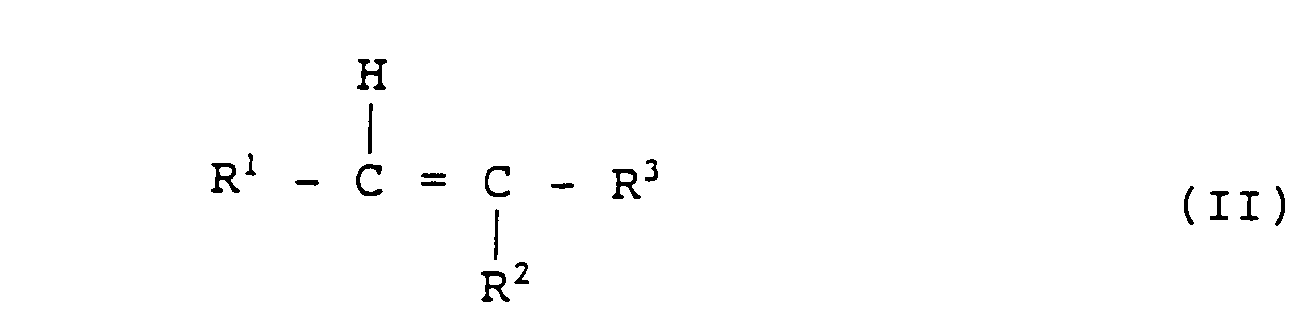
with an oxidizing agent in the presence of a ruthenium compound and water. α-Hydroxyketones useful as physiologically active substances are produced with good selectivity and in high yield.
Description
- This invention relates to a process for producing α-hydroxyketones which widely occur in nature and are of great importance for their physiological activities. For example, Adriamycin and Daumycin are known as anticancer agents (see J. Am. Chem. soc., Vol. 85, p. 5334 (1964)); Betamethasone and Cortisone are Known as steroid hormones (see J. Am. Chem. soc., Vol. 80, p. 6687 (1958)); and Cyproterone is known as an anti-androgenic (see Ger Offen, No. 1189, p. 91 (1965)).
- Known processes for synthesizing these α-hydroxyketones include, for example, oxidation of diols (see J. Organomet. Chem., Vol. 5, p. 263 (1966)), oxidative cleavage of epoxides (see J. Org. Chem., Vol. 26, p. 1681 (1961)), and acyloin condensation (see J. Org. Chem., Vol. 40, p. 393 (1975)) and, in addition, synthesis from olefins using a stoichiometric amount of potassium permanganate.
- On the other hand, ruthenium compounds are known to catalyze oxidation reaction of a certain kind of organic compounds as reported in Kagaku, Vol. 45, No. 6, pp. 426-427, Kagaku Dojin K.K. (1990). In view of the specificity of their catalytic activity, it has been quite unexpected that ruthenium compounds also exert a catalytic action on olefin oxidation for production of α-hydroxyketones.
- An object of the present invention is to provide a process for producing α-hydroxyketones by oxidation of olefins with good selectivity and in high yield.
- As a result of extensive studies, the inventors have found that the above object of the present invention is accomplished by using a ruthenium compound as a catalyst.
- The present invention relates to a process for producing an α-hydroxyketone represented by formula (I):

wherein R¹ represents a substituted or unsubstituted alkyl group, a substituted or unsubstituted aralkyl group, or an alkoxycarbonyl group; and R² and R³ each represent a hydrogen atom, a substituted or unsubstituted alkyl group, or a substituted or unsubstituted aralkyl group, provided that they do not simultaneously represent a hydrogen atom; or a pair of R¹ and R², a pair of R¹ and R³, or a pair of R² and R³ is taken together to form a ring; and the pair of R¹ and R² and the pair of R² and R³ may form a ring simultaneously, which comprises reacting a compound represented by formula (II):
wherein R¹, R², and R³ are as defined above, with an oxidizing agent in the presence of a ruthenium compound and water. - In formulae (I) and (II), the substituted alkyl group includes acetoxyalkyl, 2-methyl-4-acetoxypentyl, benzyloxymethyl, and benzoyloxyethyl groups. The substituted aralkyl group includes an acetoxybenzyl group. The alkoxycarbonyl group includes methoxycarbonyl and ethoxycarbonyl groups.
- Specific examples of the olefin represented by formula (II) which can be used as a starting material in the present invention are cyclopentene, cyclohexene, cyclooctene, trans-2-butene, cis-2-butene, 4-octene, β-methylstyrene, cyclohexadiene, cyclooctadiene, indene, 1-methylcyclopentene, 1-methylcyclohexene, ethylidenecyclohexane, 2-methyl-4,4-dimethylpentene, methyl crotonate, ethyl crotonate, methyl cinnamate, ethyl 3-methylcrotonate, pentylidenecyclohexane, and ethylidenecyclopentane.
- The ruthenium compound which can be used as a catalyst in the present invention includes those listed below which are described in Comprehensive Organometallic Chemistry, Vol. 4, pp. 651-930, pergamon press (1982):
- 1) Ruthenium compounds represented by formula (III):

- Specific examples of such ruthenium compounds are ruthenium trichloride, ruthenium tribromide, and ruthenium triiodide, and hydrates thereof, trisacetylacetonato-ruthenium, and ruthenium acetate.
- 2) Ruthenium complexes:
- (i) Ruthenium-phosphine complexes, e.g.,
HRuCℓ(PPh₃)₃,
RuCℓ₂(PPh₃)₃,
H₂Ru(PPh₃)₄,
Ru₂Cℓ₄(BINAP)₂(NEt₃),
Ru(OAc)₂(BINAP),
Ru₂Cℓ₄(1,4-diphos)₂,
HRuCℓ(BINAP)₂,
[Ru(bpy)₂(O)(PPh₃)](CℓO₄)₂,
[Ru(bpy)₂(O)(PEt₃)](CℓO₄)₂, and
[Ru(H₂O)(bpy)₂(PPh₃)](CℓO₄)₂,
wherein Et represents an ethyl group; Ph represents a phenyl group; Ac represents an acetyl group; BINAP represents a 2,2′-bis(diphenylphosphino)-1, 1′-bi-naphthyl group; 1,4-diphos represents 1,4-bis(di-phenylphosphino)butane; and bpy represents a bipyridyl group; hereinafter the same. - (ii) Ruthenium-nitrosyl complexes, e.g.,
Ru(NO)Cℓ₃·H₂O - (iii) Ruthenium-carbonyl complexes, e.g.,
Ru₃(CO)₁₂,
[RuCℓ₂(CO)₃]₂, and
RuCℓ₂(CO)₂(PPh₃)₂ - (iv) Ruthenium-oxo complexes, e.g.,
RuO₂ - (V) Ruthenium-olefin complexes, e.g.,
RuCℓ₂(COD)
wherein COD represents 1,5-cyclooctadiene; hereinafter the same. - 3) Metallic ruthenium powders including:-
ruthenium-on-carbon, ruthenium-on-graphite, ruthenium-on-alumina, ruthenium-on-silica, ruthenium-on-zeolite, and ruthenium-on-zirconia. - The ruthenium compound as a catalyst is usually used in an amount of from 0.01 to 0.2 mole, and preferably from 0.03 to 0.1 mole, per mole of the starting olefin.
- The oxidizing agent which can be used in the present invention is not particularly limited. Suitable oxidizing agents include various peracids, e.g., peracetic acid, perpropionic acid, and m-chloroperbenzoic acid. Any commercially available oxidizing agent may be used, or an oxidizing agent to be used may be prepared from a carboxylic acid and hydrogen peroxide before the reaction.
- The oxidizing agent is usually used in an amount of from 1 to 8 mole, and preferably from 1 to 3 mole, per mole of the starting olefin.
- In carrying out the process of the present invention, a compound (II), water, and a ruthenium compound are dissolved or suspended in an appropriate solvent, such as acetonitrile, methylene chloride, dichloroethane, chlorobenzene, and mixtures thereof, and to the solution or suspension is added a solution of a peracid in ethyl acetate or acetic acid at a temperature of from -10° to +30°C while stirring. While the order or manner of addition of the starting compound, the catalyst, etc. is not particularly restricted, it is preferable to add the oxidizing agent finally.
- Isolation of a reaction product from the reaction mixture can be effected by known separation means such as distillation and column chromatography.
- The present invention is now illustrated in greater detail with reference to Examples, but it should be understood that the present invention is not deemed to be limited thereto. All the percents are by weight unless otherwise indicated.
- In a 50 mℓ flask equipped with a thermometer, a dropping funnel, and a stirrer were charged 10 mℓ of methylene chloride, 10 mℓ of acetonitrile, 10 mℓ of water, 0.82 g (10 mmole) of cyclohexene, and 78 mg (0.3 mmole) of RuCℓ₃·3H₂O. The mixture was cooled to 18°C with stirring on a magnetic stirrer, and a 30% ethyl acetate solution of 7.6 g (30 mmole) of peracetic acid was added thereto dropwise over 2 hours. After stirring at room temperature for 2 hours, the reaction mixture was extracted three times with 50 mℓ portions of methylene chloride. The combined extract was washed with 50 mℓ of a saturated sodium chloride aqueous solution and dried over anhydrous magnesium sulfate. The solvent was removed by distillation to obtain 0.843 g (percent yield: 74%) of 2-hydroxycyclohexanone (α-hydroxycyclohexanone).

- In a 50 ml flask equipped with a thermometer, a dropping funnel, and a stirrer were charged 10 ml of methylene chloride, 10 ml of acetonitrile, 10 ml of water, 1.12 g (10 mmole) of 4-octene, and 78 mg (0.3 mmole) of ruthenium trichloride, and a 30% ethyl acetate solution of 7.6 g (30 mmole) of peracetic acid was added to the mixture dropwise at 15°C over 1.5 hours while stirring on a magnetic stirrer. After the addition, the stirring was further continued at room temperature for 2 hours. The reaction mixture was extracted three times with 30 ml portions of methylene chloride. The combined extract was washed with 30 ml of a saturated sodium chloride aqueous solution and dried over anhydrous magnesium sulfate. The solvent was removed by distillation to obtain crude 5-hydroxy-4-octanone, which was then purified by silica gel column chromatography using a 10:1 (by volume) mixture of n-hexane and ethyl acetate as an eluent to give 0.87 g (percent yield: 59%) of 5-hydroxy-4-octanone.

- In a 50 ml flask equipped with a thermometer and a dropping funnel were charged 10 ml of methylene chloride, 10 ml of acetonitrile, 5 ml of water, 0.82 g (10 mmole) of cyclohexene, and 277 mg (0.3 mmole) of HRuCl(PPh₃)₃ in a nitrogen atmosphere. To the mixture was added dropwise a 30% ethyl acetate solution of 7.6 g (30 mmole) of peracetic acid at 20°C over 2 hours while stirring. After the addition, the stirring was further continued at room temperature for 1 hour, and the mixture was worked up in the same manner as in Example 1 to obtain 0.68 g (percent yield: 60%) of 2-hydroxycyclohexanone (α-hydroxycyclohexanone).
¹H-NMR: The same as in Example 1. - Compounds shown in Table 1 below were synthesized in the same manner as in Example 1. The NMR spectra of the compounds are also shown.


- In a 50 ml flask equipped with a thermometer, a dropping funnel, and a stirrer were charged 7 ml of methylene chloride, 7 ml of water, 2 mmole of 1-methyl-1-cyclohexene, and 0.1 mmole of each of ruthenium catalysts shown in Table 2 below. To the mixture was added dropwise a 30% ethyl acetate solution of 1.52 g (6 mmole) of peracetic acid at room temperature over 2 hours while stirring on a magnetic stirrer. After the addition, the stirring was further continued at room temperature for 2 hours. The reaction mixture was extracted three times with 20 ml portions of methylene chloride. The extract was washed with 30 ml of a saturated sodium chloride aqueous solution and dried over anhydrous magnesium sulfate. The solvent was removed by distillation, and the residual crude product was purified by silica gel column chromatography using a 5:1 (by volume) mixture of n-hexane and ethyl acetate as an eluent to obtain 2-methyl-2-hydroxy-1-cyclohexanone. The percent yield of the product is shown in Table 2.

- Compounds shown in Table 3 below were synthesized in the same manner as in Example 1.


- The present invention thus provides an industrially advantageous process for producing α-hydroxyketones useful as physiologically active substances or intermediates therefor through simple procedures, with good reaction selectivity, and in high yield.
Claims (4)
- A process for producing an α-hydroxyketone represented by formula (I):


- A process as claimed in Claim 1, wherein said ruthenium compound is a compound represented by formula (III):

- A process as claimed in Claim 1, wherein said ruthenium compound is a ruthenium complex selected from a ruthenium-phosphine complex, a ruthenium-nitrosyl complex, a ruthenium-carbonyl complex, a ruthenium-oxo complex, and a ruthenium-olefin complex.
- A process as claimed in Claim 1, wherein said ruthenium compound is metallic ruthenium or a ruthenium-on-carrier.
Applications Claiming Priority (4)
| Application Number | Priority Date | Filing Date | Title |
|---|---|---|---|
| JP280586/90 | 1990-10-20 | ||
| JP28058690 | 1990-10-20 | ||
| JP98341/91 | 1991-01-31 | ||
| JP2934191 | 1991-01-31 |
Publications (2)
| Publication Number | Publication Date |
|---|---|
| EP0482834A1 true EP0482834A1 (en) | 1992-04-29 |
| EP0482834B1 EP0482834B1 (en) | 1996-01-17 |
Family
ID=26367529
Family Applications (1)
| Application Number | Title | Priority Date | Filing Date |
|---|---|---|---|
| EP91309622A Expired - Lifetime EP0482834B1 (en) | 1990-10-20 | 1991-10-17 | Process for producing alpha-hydroxyketones |
Country Status (3)
| Country | Link |
|---|---|
| US (1) | US5210315A (en) |
| EP (1) | EP0482834B1 (en) |
| DE (1) | DE69116499T2 (en) |
Cited By (3)
| Publication number | Priority date | Publication date | Assignee | Title |
|---|---|---|---|---|
| US6123974A (en) * | 1998-04-20 | 2000-09-26 | Givaudan Roure (International) Sa | Hydroxy-methyl-hexanones as flavoring agents |
| EP2316926A1 (en) | 2009-11-02 | 2011-05-04 | Rheinische Friedrich-Wilhelms-Universität Bonn | Enantioselective production of alpha-hydroxy carbonyl compounds |
| CN109647530A (en) * | 2018-12-24 | 2019-04-19 | 交城县兆晨煤焦有限公司 | With the method for supported catalyst synthesis alpha-alcohol ketone intermediate |
Families Citing this family (1)
| Publication number | Priority date | Publication date | Assignee | Title |
|---|---|---|---|---|
| KR100589066B1 (en) | 1997-10-27 | 2006-06-13 | 워너-램버트 캄파니 엘엘씨 | Cyclic Amino Acids Useful as Pharmaceuticals and Derivatives thereof |
Citations (5)
| Publication number | Priority date | Publication date | Assignee | Title |
|---|---|---|---|---|
| US3337635A (en) * | 1964-11-09 | 1967-08-22 | Marathon Oil Co | Method of producing ketols from hydrocarbons |
| GB1159250A (en) * | 1966-01-03 | 1969-07-23 | Celanese Corp | Partial Oxidation of Organic Compounds |
| FR2297199A1 (en) * | 1975-01-10 | 1976-08-06 | Snam Progetti | PROCESS FOR THE PREPARATION OF ALPHA-HYDROXYCARBONYL COMPOUNDS |
| EP0013797A1 (en) * | 1978-09-25 | 1980-08-06 | JOHNSON, MATTHEY & Co., LIMITED | Oxidation of alcohols and aldehydes using a ruthenate catalyst |
| EP0174194A2 (en) * | 1984-09-05 | 1986-03-12 | The British Petroleum Company P.L.C. | Process for the oxidation of alkanes |
Family Cites Families (2)
| Publication number | Priority date | Publication date | Assignee | Title |
|---|---|---|---|---|
| US3518285A (en) * | 1967-03-16 | 1970-06-30 | Union Oil Co | Hydrocarbon olefin oxidation |
| US3879467A (en) * | 1973-01-05 | 1975-04-22 | Atlantic Richfield Co | Catalytic oxidation of alkanes and alkenes with organic hydroperoxides |
-
1991
- 1991-10-17 EP EP91309622A patent/EP0482834B1/en not_active Expired - Lifetime
- 1991-10-17 DE DE69116499T patent/DE69116499T2/en not_active Expired - Fee Related
- 1991-10-18 US US07/779,529 patent/US5210315A/en not_active Expired - Fee Related
Patent Citations (5)
| Publication number | Priority date | Publication date | Assignee | Title |
|---|---|---|---|---|
| US3337635A (en) * | 1964-11-09 | 1967-08-22 | Marathon Oil Co | Method of producing ketols from hydrocarbons |
| GB1159250A (en) * | 1966-01-03 | 1969-07-23 | Celanese Corp | Partial Oxidation of Organic Compounds |
| FR2297199A1 (en) * | 1975-01-10 | 1976-08-06 | Snam Progetti | PROCESS FOR THE PREPARATION OF ALPHA-HYDROXYCARBONYL COMPOUNDS |
| EP0013797A1 (en) * | 1978-09-25 | 1980-08-06 | JOHNSON, MATTHEY & Co., LIMITED | Oxidation of alcohols and aldehydes using a ruthenate catalyst |
| EP0174194A2 (en) * | 1984-09-05 | 1986-03-12 | The British Petroleum Company P.L.C. | Process for the oxidation of alkanes |
Cited By (3)
| Publication number | Priority date | Publication date | Assignee | Title |
|---|---|---|---|---|
| US6123974A (en) * | 1998-04-20 | 2000-09-26 | Givaudan Roure (International) Sa | Hydroxy-methyl-hexanones as flavoring agents |
| EP2316926A1 (en) | 2009-11-02 | 2011-05-04 | Rheinische Friedrich-Wilhelms-Universität Bonn | Enantioselective production of alpha-hydroxy carbonyl compounds |
| CN109647530A (en) * | 2018-12-24 | 2019-04-19 | 交城县兆晨煤焦有限公司 | With the method for supported catalyst synthesis alpha-alcohol ketone intermediate |
Also Published As
| Publication number | Publication date |
|---|---|
| DE69116499T2 (en) | 1996-08-22 |
| DE69116499D1 (en) | 1996-02-29 |
| US5210315A (en) | 1993-05-11 |
| EP0482834B1 (en) | 1996-01-17 |
Similar Documents
| Publication | Publication Date | Title |
|---|---|---|
| Achard et al. | Regio-and Diastereoselective Platinum-Catalyzed Tandem [2+ 1]/[3+ 2] Cycloaddition Sequence | |
| Garrigues et al. | Bismuth (III) chloride or triflate-catalyzed dienophilic activity of α-ethylenic aldehydes and ketones | |
| Plietker et al. | The acid accelerated ruthenium-catalysed dihydroxylation. Scope and limitations | |
| US6303837B1 (en) | Process for synthesizing α-substituted ring systems | |
| De Campo et al. | New copper (I) and iron (II) complexes for atom transfer radical macrocyclisation reactions | |
| EP0482834B1 (en) | Process for producing alpha-hydroxyketones | |
| Essers et al. | Enantioselective Diels–Alder reactions of α-fluorinated α, β-unsaturated carbonyl compounds: Part 5. Chemical consequences of fluorine substitution | |
| EP0050445B1 (en) | Telomerization of butadiene and carbon dioxide | |
| US5268492A (en) | Optically active diphosphines, intermediates thereof, and processes for production thereof | |
| Terent’ev et al. | Selective Synthesis of Unsymmetrical Peroxides: Transition-Metal-Catalyzed Oxidation of Malononitrile and Cyanoacetic Ester Derivatives by Tert-Butyl Hydroperoxide at the α-Position | |
| JP5077795B2 (en) | Method for producing carbonyl compound | |
| US4144257A (en) | Process for preparing derivatives of conjugated diene dimers | |
| JP4392500B2 (en) | Method for producing α, β-unsaturated carbonyl compound | |
| JP2961918B2 (en) | Method for producing tertiary alcohol | |
| JP2959222B2 (en) | Method for producing ketone or tertiary alcohol | |
| JP2627829B2 (en) | Method for producing alpha-hydroxy ketone | |
| JP4157968B2 (en) | Alkenyl phosphinate and process for producing the same | |
| US3652603A (en) | Method for production of 2 3-di(lower alkoxy)-5-methyl-1 4-benzoquinone | |
| JP2979677B2 (en) | Ketone production method | |
| JPS6236020B2 (en) | ||
| JPH03206076A (en) | Production of vitamin a aldehyde | |
| JP4171345B2 (en) | Method for producing labdenic acid | |
| US5510537A (en) | Preparation of alpha, beta-unsaturated enones | |
| JP3367057B2 (en) | Process for producing 4-tert-butyldioxy-2,5-cyclohexadien-1-ones | |
| JPH04342598A (en) | Production of epoxy group-containing compound and novel nickel compound |
Legal Events
| Date | Code | Title | Description |
|---|---|---|---|
| PUAI | Public reference made under article 153(3) epc to a published international application that has entered the european phase |
Free format text: ORIGINAL CODE: 0009012 |
|
| AK | Designated contracting states |
Kind code of ref document: A1 Designated state(s): CH DE FR GB IT LI NL |
|
| 17P | Request for examination filed |
Effective date: 19920929 |
|
| 17Q | First examination report despatched |
Effective date: 19940302 |
|
| GRAA | (expected) grant |
Free format text: ORIGINAL CODE: 0009210 |
|
| AK | Designated contracting states |
Kind code of ref document: B1 Designated state(s): CH DE FR GB IT LI NL |
|
| REF | Corresponds to: |
Ref document number: 69116499 Country of ref document: DE Date of ref document: 19960229 |
|
| REG | Reference to a national code |
Ref country code: CH Ref legal event code: NV Representative=s name: BOVARD AG PATENTANWAELTE |
|
| ITF | It: translation for a ep patent filed | ||
| ET | Fr: translation filed | ||
| PLBE | No opposition filed within time limit |
Free format text: ORIGINAL CODE: 0009261 |
|
| STAA | Information on the status of an ep patent application or granted ep patent |
Free format text: STATUS: NO OPPOSITION FILED WITHIN TIME LIMIT |
|
| 26N | No opposition filed | ||
| REG | Reference to a national code |
Ref country code: GB Ref legal event code: IF02 |
|
| PGFP | Annual fee paid to national office [announced via postgrant information from national office to epo] |
Ref country code: FR Payment date: 20031003 Year of fee payment: 13 |
|
| PGFP | Annual fee paid to national office [announced via postgrant information from national office to epo] |
Ref country code: NL Payment date: 20031008 Year of fee payment: 13 |
|
| PGFP | Annual fee paid to national office [announced via postgrant information from national office to epo] |
Ref country code: GB Payment date: 20031016 Year of fee payment: 13 |
|
| PGFP | Annual fee paid to national office [announced via postgrant information from national office to epo] |
Ref country code: CH Payment date: 20031017 Year of fee payment: 13 |
|
| PGFP | Annual fee paid to national office [announced via postgrant information from national office to epo] |
Ref country code: DE Payment date: 20031030 Year of fee payment: 13 |
|
| PG25 | Lapsed in a contracting state [announced via postgrant information from national office to epo] |
Ref country code: GB Free format text: LAPSE BECAUSE OF NON-PAYMENT OF DUE FEES Effective date: 20041017 |
|
| PG25 | Lapsed in a contracting state [announced via postgrant information from national office to epo] |
Ref country code: LI Free format text: LAPSE BECAUSE OF NON-PAYMENT OF DUE FEES Effective date: 20041031 Ref country code: CH Free format text: LAPSE BECAUSE OF NON-PAYMENT OF DUE FEES Effective date: 20041031 |
|
| PG25 | Lapsed in a contracting state [announced via postgrant information from national office to epo] |
Ref country code: NL Free format text: LAPSE BECAUSE OF NON-PAYMENT OF DUE FEES Effective date: 20050501 |
|
| PG25 | Lapsed in a contracting state [announced via postgrant information from national office to epo] |
Ref country code: DE Free format text: LAPSE BECAUSE OF NON-PAYMENT OF DUE FEES Effective date: 20050503 |
|
| GBPC | Gb: european patent ceased through non-payment of renewal fee |
Effective date: 20041017 |
|
| REG | Reference to a national code |
Ref country code: CH Ref legal event code: PL |
|
| PG25 | Lapsed in a contracting state [announced via postgrant information from national office to epo] |
Ref country code: FR Free format text: LAPSE BECAUSE OF NON-PAYMENT OF DUE FEES Effective date: 20050630 |
|
| NLV4 | Nl: lapsed or anulled due to non-payment of the annual fee |
Effective date: 20050501 |
|
| REG | Reference to a national code |
Ref country code: FR Ref legal event code: ST |
|
| PG25 | Lapsed in a contracting state [announced via postgrant information from national office to epo] |
Ref country code: IT Free format text: LAPSE BECAUSE OF NON-PAYMENT OF DUE FEES;WARNING: LAPSES OF ITALIAN PATENTS WITH EFFECTIVE DATE BEFORE 2007 MAY HAVE OCCURRED AT ANY TIME BEFORE 2007. THE CORRECT EFFECTIVE DATE MAY BE DIFFERENT FROM THE ONE RECORDED. Effective date: 20051017 |