EP0477971B1 - Human CNP gene and precursor protein - Google Patents
Human CNP gene and precursor protein Download PDFInfo
- Publication number
- EP0477971B1 EP0477971B1 EP91116557A EP91116557A EP0477971B1 EP 0477971 B1 EP0477971 B1 EP 0477971B1 EP 91116557 A EP91116557 A EP 91116557A EP 91116557 A EP91116557 A EP 91116557A EP 0477971 B1 EP0477971 B1 EP 0477971B1
- Authority
- EP
- European Patent Office
- Prior art keywords
- hcnp
- pcnp
- cnp
- amino acid
- hgeco
- Prior art date
- Legal status (The legal status is an assumption and is not a legal conclusion. Google has not performed a legal analysis and makes no representation as to the accuracy of the status listed.)
- Expired - Lifetime
Links
- 108090000623 proteins and genes Proteins 0.000 title description 52
- 239000002243 precursor Substances 0.000 title description 17
- 102000004169 proteins and genes Human genes 0.000 title description 14
- 101100113986 Homo sapiens CNP gene Proteins 0.000 title description 5
- 108090000765 processed proteins & peptides Proteins 0.000 claims description 30
- 102000004196 processed proteins & peptides Human genes 0.000 claims description 21
- 238000000034 method Methods 0.000 claims description 19
- 125000003275 alpha amino acid group Chemical group 0.000 claims description 14
- 125000000539 amino acid group Chemical group 0.000 claims description 11
- 229920001184 polypeptide Polymers 0.000 claims description 7
- 108010076504 Protein Sorting Signals Proteins 0.000 claims description 4
- 150000001413 amino acids Chemical class 0.000 claims description 2
- 238000002360 preparation method Methods 0.000 claims description 2
- 108091028043 Nucleic acid sequence Proteins 0.000 claims 5
- 230000002950 deficient Effects 0.000 claims 1
- 101000796277 Homo sapiens C-type natriuretic peptide Proteins 0.000 abstract description 15
- 101000749809 Homo sapiens 2',3'-cyclic-nucleotide 3'-phosphodiesterase Proteins 0.000 abstract description 13
- 102000047974 human CNP Human genes 0.000 abstract description 13
- 108020004414 DNA Proteins 0.000 description 42
- 101800000060 C-type natriuretic peptide Proteins 0.000 description 29
- 239000012634 fragment Substances 0.000 description 29
- 102000012421 C-Type Natriuretic Peptide Human genes 0.000 description 28
- 230000002759 chromosomal effect Effects 0.000 description 19
- 239000002299 complementary DNA Substances 0.000 description 18
- 102000051624 phosphatidylethanolamine binding protein Human genes 0.000 description 17
- 108700021017 phosphatidylethanolamine binding protein Proteins 0.000 description 17
- 101800000407 Brain natriuretic peptide 32 Proteins 0.000 description 16
- 239000000523 sample Substances 0.000 description 16
- 235000001014 amino acid Nutrition 0.000 description 13
- 210000004556 brain Anatomy 0.000 description 13
- 125000002924 primary amino group Chemical group [H]N([H])* 0.000 description 13
- 235000018102 proteins Nutrition 0.000 description 13
- 238000004458 analytical method Methods 0.000 description 12
- 108091008146 restriction endonucleases Proteins 0.000 description 9
- 239000000020 Nitrocellulose Substances 0.000 description 8
- FAPWRFPIFSIZLT-UHFFFAOYSA-M Sodium chloride Chemical compound [Na+].[Cl-] FAPWRFPIFSIZLT-UHFFFAOYSA-M 0.000 description 8
- 229920001220 nitrocellulos Polymers 0.000 description 8
- 108700039691 Genetic Promoter Regions Proteins 0.000 description 7
- 101150027323 PCNP gene Proteins 0.000 description 7
- 239000002934 diuretic Substances 0.000 description 7
- 230000001077 hypotensive effect Effects 0.000 description 7
- 230000001452 natriuretic effect Effects 0.000 description 7
- 108020003215 DNA Probes Proteins 0.000 description 6
- 239000003298 DNA probe Substances 0.000 description 6
- 241000282412 Homo Species 0.000 description 6
- 210000002837 heart atrium Anatomy 0.000 description 6
- 238000012545 processing Methods 0.000 description 6
- 230000015572 biosynthetic process Effects 0.000 description 5
- 108020004705 Codon Proteins 0.000 description 4
- 102000004190 Enzymes Human genes 0.000 description 4
- 108090000790 Enzymes Proteins 0.000 description 4
- 241000282887 Suidae Species 0.000 description 4
- 108700026226 TATA Box Proteins 0.000 description 4
- 230000036772 blood pressure Effects 0.000 description 4
- 238000009396 hybridization Methods 0.000 description 4
- 238000001727 in vivo Methods 0.000 description 4
- 230000001766 physiological effect Effects 0.000 description 4
- 239000011780 sodium chloride Substances 0.000 description 4
- 108091035707 Consensus sequence Proteins 0.000 description 3
- HEMHJVSKTPXQMS-UHFFFAOYSA-M Sodium hydroxide Chemical compound [OH-].[Na+] HEMHJVSKTPXQMS-UHFFFAOYSA-M 0.000 description 3
- 108091081024 Start codon Proteins 0.000 description 3
- 239000002249 anxiolytic agent Substances 0.000 description 3
- 210000001124 body fluid Anatomy 0.000 description 3
- 239000010839 body fluid Substances 0.000 description 3
- 230000000694 effects Effects 0.000 description 3
- 230000003284 homeostatic effect Effects 0.000 description 3
- 239000005556 hormone Substances 0.000 description 3
- 229940088597 hormone Drugs 0.000 description 3
- 210000004897 n-terminal region Anatomy 0.000 description 3
- 210000005036 nerve Anatomy 0.000 description 3
- 230000028327 secretion Effects 0.000 description 3
- 230000014621 translational initiation Effects 0.000 description 3
- 108010041801 2',3'-Cyclic Nucleotide 3'-Phosphodiesterase Proteins 0.000 description 2
- 108010088751 Albumins Proteins 0.000 description 2
- 102000009027 Albumins Human genes 0.000 description 2
- 241000972773 Aulopiformes Species 0.000 description 2
- 102100031478 C-type natriuretic peptide Human genes 0.000 description 2
- 108010035563 Chloramphenicol O-acetyltransferase Proteins 0.000 description 2
- 241001524679 Escherichia virus M13 Species 0.000 description 2
- 229920001917 Ficoll Polymers 0.000 description 2
- 101500013676 Helix lucorum Peptide CNP1 Proteins 0.000 description 2
- 241001465754 Metazoa Species 0.000 description 2
- 108020001621 Natriuretic Peptide Proteins 0.000 description 2
- 102000004571 Natriuretic peptide Human genes 0.000 description 2
- 238000002105 Southern blotting Methods 0.000 description 2
- 239000011543 agarose gel Substances 0.000 description 2
- 238000000376 autoradiography Methods 0.000 description 2
- 239000008280 blood Substances 0.000 description 2
- 210000004369 blood Anatomy 0.000 description 2
- 210000004027 cell Anatomy 0.000 description 2
- 125000000151 cysteine group Chemical group N[C@@H](CS)C(=O)* 0.000 description 2
- RGWHQCVHVJXOKC-SHYZEUOFSA-J dCTP(4-) Chemical compound O=C1N=C(N)C=CN1[C@@H]1O[C@H](COP([O-])(=O)OP([O-])(=O)OP([O-])([O-])=O)[C@@H](O)C1 RGWHQCVHVJXOKC-SHYZEUOFSA-J 0.000 description 2
- 239000003814 drug Substances 0.000 description 2
- 238000001962 electrophoresis Methods 0.000 description 2
- 230000014509 gene expression Effects 0.000 description 2
- 210000005260 human cell Anatomy 0.000 description 2
- 238000002955 isolation Methods 0.000 description 2
- 125000003588 lysine group Chemical group [H]N([H])C([H])([H])C([H])([H])C([H])([H])C([H])([H])C([H])(N([H])[H])C(*)=O 0.000 description 2
- 108020004999 messenger RNA Proteins 0.000 description 2
- 239000000692 natriuretic peptide Substances 0.000 description 2
- 230000037361 pathway Effects 0.000 description 2
- 239000013600 plasmid vector Substances 0.000 description 2
- 229920000036 polyvinylpyrrolidone Polymers 0.000 description 2
- 239000001267 polyvinylpyrrolidone Substances 0.000 description 2
- 235000013855 polyvinylpyrrolidone Nutrition 0.000 description 2
- 210000000664 rectum Anatomy 0.000 description 2
- 235000019515 salmon Nutrition 0.000 description 2
- 238000012216 screening Methods 0.000 description 2
- 238000013519 translation Methods 0.000 description 2
- 239000013598 vector Substances 0.000 description 2
- 238000005406 washing Methods 0.000 description 2
- 238000005303 weighing Methods 0.000 description 2
- QKNYBSVHEMOAJP-UHFFFAOYSA-N 2-amino-2-(hydroxymethyl)propane-1,3-diol;hydron;chloride Chemical compound Cl.OCC(N)(CO)CO QKNYBSVHEMOAJP-UHFFFAOYSA-N 0.000 description 1
- 102000002723 Atrial Natriuretic Factor Human genes 0.000 description 1
- 101800001288 Atrial natriuretic factor Proteins 0.000 description 1
- 101800001890 Atrial natriuretic peptide Proteins 0.000 description 1
- 102400000667 Brain natriuretic peptide 32 Human genes 0.000 description 1
- 101800002247 Brain natriuretic peptide 45 Proteins 0.000 description 1
- 241000282693 Cercopithecidae Species 0.000 description 1
- 241000588724 Escherichia coli Species 0.000 description 1
- 241000701959 Escherichia virus Lambda Species 0.000 description 1
- 241000206602 Eukaryota Species 0.000 description 1
- 108700024394 Exon Proteins 0.000 description 1
- 101500025169 Homo sapiens CNP-22 Proteins 0.000 description 1
- 101500025222 Homo sapiens CNP-53 Proteins 0.000 description 1
- FFEARJCKVFRZRR-BYPYZUCNSA-N L-methionine Chemical compound CSCC[C@H](N)C(O)=O FFEARJCKVFRZRR-BYPYZUCNSA-N 0.000 description 1
- 241000124008 Mammalia Species 0.000 description 1
- 108091027974 Mature messenger RNA Proteins 0.000 description 1
- 206010029155 Nephropathy toxic Diseases 0.000 description 1
- 108091034117 Oligonucleotide Proteins 0.000 description 1
- JUJWROOIHBZHMG-UHFFFAOYSA-N Pyridine Chemical group C1=CC=NC=C1 JUJWROOIHBZHMG-UHFFFAOYSA-N 0.000 description 1
- 241000700159 Rattus Species 0.000 description 1
- 125000000637 arginyl group Chemical group N[C@@H](CCCNC(N)=N)C(=O)* 0.000 description 1
- 108010038647 atrial natriuretic factor receptor C Proteins 0.000 description 1
- 230000002238 attenuated effect Effects 0.000 description 1
- 210000005013 brain tissue Anatomy 0.000 description 1
- 210000004899 c-terminal region Anatomy 0.000 description 1
- 229940041514 candida albicans extract Drugs 0.000 description 1
- NSQLIUXCMFBZME-MPVJKSABSA-N carperitide Chemical compound C([C@H]1C(=O)NCC(=O)NCC(=O)N[C@@H](CCCNC(N)=N)C(=O)N[C@@H](CCSC)C(=O)N[C@@H](CC(O)=O)C(=O)N[C@@H](CCCNC(N)=N)C(=O)N[C@H](C(NCC(=O)N[C@@H](C)C(=O)N[C@@H](CCC(N)=O)C(=O)N[C@@H](CO)C(=O)NCC(=O)N[C@@H](CC(C)C)C(=O)NCC(=O)N[C@@H](CSSC[C@@H](C(=O)N1)NC(=O)[C@H](CO)NC(=O)[C@H](CO)NC(=O)[C@H](CCCNC(N)=N)NC(=O)[C@H](CCCNC(N)=N)NC(=O)[C@H](CC(C)C)NC(=O)[C@@H](N)CO)C(=O)N[C@@H](CC(N)=O)C(=O)N[C@@H](CO)C(=O)N[C@@H](CC=1C=CC=CC=1)C(=O)N[C@@H](CCCNC(N)=N)C(=O)N[C@@H](CC=1C=CC(O)=CC=1)C(O)=O)=O)[C@@H](C)CC)C1=CC=CC=C1 NSQLIUXCMFBZME-MPVJKSABSA-N 0.000 description 1
- 238000006243 chemical reaction Methods 0.000 description 1
- 238000010367 cloning Methods 0.000 description 1
- 101150017692 cnp gene Proteins 0.000 description 1
- 230000001143 conditioned effect Effects 0.000 description 1
- 238000004925 denaturation Methods 0.000 description 1
- 230000036425 denaturation Effects 0.000 description 1
- 238000009826 distribution Methods 0.000 description 1
- 230000016784 immunoglobulin production Effects 0.000 description 1
- 210000003292 kidney cell Anatomy 0.000 description 1
- 210000004962 mammalian cell Anatomy 0.000 description 1
- 238000004519 manufacturing process Methods 0.000 description 1
- 229930182817 methionine Natural products 0.000 description 1
- 230000007694 nephrotoxicity Effects 0.000 description 1
- 231100000417 nephrotoxicity Toxicity 0.000 description 1
- HPNRHPKXQZSDFX-OAQDCNSJSA-N nesiritide Chemical compound C([C@H]1C(=O)NCC(=O)N[C@@H](CCCNC(N)=N)C(=O)N[C@@H](CCCCN)C(=O)N[C@@H](CCSC)C(=O)N[C@@H](CC(O)=O)C(=O)N[C@@H](CCCNC(N)=N)C(=O)N[C@H](C(N[C@@H](CO)C(=O)N[C@@H](CO)C(=O)N[C@@H](CO)C(=O)N[C@@H](CO)C(=O)NCC(=O)N[C@@H](CC(C)C)C(=O)NCC(=O)N[C@@H](CSSC[C@@H](C(=O)N1)NC(=O)CNC(=O)[C@H](CO)NC(=O)CNC(=O)[C@H](CCC(N)=O)NC(=O)[C@@H](NC(=O)[C@H](CCSC)NC(=O)[C@H](CCCCN)NC(=O)[C@H]1N(CCC1)C(=O)[C@@H](N)CO)C(C)C)C(=O)N[C@@H](CCCCN)C(=O)N[C@@H](C(C)C)C(=O)N[C@@H](CC(C)C)C(=O)N[C@@H](CCCNC(N)=N)C(=O)N[C@@H](CCCNC(N)=N)C(=O)N[C@@H](CC=1N=CNC=1)C(O)=O)=O)[C@@H](C)CC)C1=CC=CC=C1 HPNRHPKXQZSDFX-OAQDCNSJSA-N 0.000 description 1
- 230000003472 neutralizing effect Effects 0.000 description 1
- 230000001105 regulatory effect Effects 0.000 description 1
- 230000000717 retained effect Effects 0.000 description 1
- 230000003248 secreting effect Effects 0.000 description 1
- 239000001509 sodium citrate Substances 0.000 description 1
- 239000007787 solid Substances 0.000 description 1
- 238000012360 testing method Methods 0.000 description 1
- 230000002463 transducing effect Effects 0.000 description 1
- HRXKRNGNAMMEHJ-UHFFFAOYSA-K trisodium citrate Chemical compound [Na+].[Na+].[Na+].[O-]C(=O)CC(O)(CC([O-])=O)C([O-])=O HRXKRNGNAMMEHJ-UHFFFAOYSA-K 0.000 description 1
- 229940038773 trisodium citrate Drugs 0.000 description 1
- 238000011144 upstream manufacturing Methods 0.000 description 1
- 210000002700 urine Anatomy 0.000 description 1
- 125000002987 valine group Chemical group [H]N([H])C([H])(C(*)=O)C([H])(C([H])([H])[H])C([H])([H])[H] 0.000 description 1
- 239000012138 yeast extract Substances 0.000 description 1
Images


Classifications
-
- C—CHEMISTRY; METALLURGY
- C07—ORGANIC CHEMISTRY
- C07K—PEPTIDES
- C07K14/00—Peptides having more than 20 amino acids; Gastrins; Somatostatins; Melanotropins; Derivatives thereof
- C07K14/435—Peptides having more than 20 amino acids; Gastrins; Somatostatins; Melanotropins; Derivatives thereof from animals; from humans
- C07K14/575—Hormones
- C07K14/58—Atrial natriuretic factor complex; Atriopeptin; Atrial natriuretic peptide [ANP]; Cardionatrin; Cardiodilatin
-
- A—HUMAN NECESSITIES
- A61—MEDICAL OR VETERINARY SCIENCE; HYGIENE
- A61P—SPECIFIC THERAPEUTIC ACTIVITY OF CHEMICAL COMPOUNDS OR MEDICINAL PREPARATIONS
- A61P1/00—Drugs for disorders of the alimentary tract or the digestive system
-
- A—HUMAN NECESSITIES
- A61—MEDICAL OR VETERINARY SCIENCE; HYGIENE
- A61P—SPECIFIC THERAPEUTIC ACTIVITY OF CHEMICAL COMPOUNDS OR MEDICINAL PREPARATIONS
- A61P7/00—Drugs for disorders of the blood or the extracellular fluid
- A61P7/10—Antioedematous agents; Diuretics
-
- A—HUMAN NECESSITIES
- A61—MEDICAL OR VETERINARY SCIENCE; HYGIENE
- A61P—SPECIFIC THERAPEUTIC ACTIVITY OF CHEMICAL COMPOUNDS OR MEDICINAL PREPARATIONS
- A61P7/00—Drugs for disorders of the blood or the extracellular fluid
- A61P7/12—Antidiuretics, e.g. drugs for diabetes insipidus
-
- A—HUMAN NECESSITIES
- A61—MEDICAL OR VETERINARY SCIENCE; HYGIENE
- A61P—SPECIFIC THERAPEUTIC ACTIVITY OF CHEMICAL COMPOUNDS OR MEDICINAL PREPARATIONS
- A61P9/00—Drugs for disorders of the cardiovascular system
- A61P9/12—Antihypertensives
-
- A—HUMAN NECESSITIES
- A61—MEDICAL OR VETERINARY SCIENCE; HYGIENE
- A61K—PREPARATIONS FOR MEDICAL, DENTAL OR TOILETRY PURPOSES
- A61K38/00—Medicinal preparations containing peptides
Definitions
- This invention relates to the gene of a human CNP (human C-type natriuretic peptide which is hereunder abbreviated as hCNP), as well as the hCNP precursor protein (prepro hCNP) that is encoded by said gene.
- hCNP human C-type natriuretic peptide which is hereunder abbreviated as hCNP
- prepro hCNP hCNP precursor protein
- natriuretic peptides In recent years, various peptides collectively referred to as “natriuretic peptides” (NP) have been isolated from the atria and brains of various animals. Today those NPs can be classified into three types, A-type natriuretic peptide (ANP), B-type natriuretic peptide (BNP) and C-type natriuretic peptide (CNP), depending on similarities in the primary amino acid sequence and the structure of their precursors. Among the three types, ANP and BNP were first isolated and identified from the atrium and brain and hence are sometimes called “atrial natriuretic peptide” and "brain natriuretic peptide", respectively (Matsuo, H.
- ANP occurs not only in the atrium but also in the brain and that BNP occurs not only in the brain but also in the atrium. Further, both ANP and BNP exhibit significant natriuretic and hypotensive actions, so it has become clear that each of these peptides works not only as a hormone to be secreted from the atrium into blood but as a nerve transmitter in the brain, in either case helping regulate the homeostatic balance of body fluid volume and blood pressure in mammals.
- the CNP has very recently been isolated and identified from porcine brain by Sudoh et al. as a third type of NP that is assignable to neither ANP nor BNP (Sudoh, T. et al., Biochem. Biophys. Res. Commun., 168, 863, 1990).
- the first discovered CNP consisted of 22 amino acid residues (this peptide is hereunder abbreviated as "pCNP-22").
- pCNP-22 the first discovered CNP consisted of 22 amino acid residues (this peptide is hereunder abbreviated as "pCNP-22").
- CNP contained two cysteine residues which formed an intramolecular disulfide bond, producing a ring structure composed of 17 amino acid residues.
- the primary amino acid sequence forming that ring structure in pCNP-22 was found to be highly homologous to that in ANP and BNP.
- pCNP-22 differs from ANP and BNP in that the latter have several amino acid residues additionally attached to the C-terminus of the ring structure whereas no such "tail structure" is present in pCNP-22. In other words, the C-terminus of pCNP-22 is terminated with a cysteine residue.
- the structure of pCNP-22 is similar to but clearly distinguishable from those of ANP and BNP.
- pCNP-22 exhibited natriuretic and hypotensive actions and it was also found to display a higher activity than ANP and BNP in relaxant activity tests on chick rectal samples. From these observations, pCNP-22 was found to be an NP assignable to a new type, the peptides of which were named "CNPs".
- pCNP-53 a second peptide assignable as CNP was isolated and identified from porcine brain by the present inventors.
- the peptide was found to consist of 53 amino acid residues with pCNP-22 present at the C-terminus (this peptide is hereunder abbreviated as pCNP-53).
- pCNP-53 was found to be a peptide that had 31 more amino acid residues attached to the N-terminus of pCNP-22.
- pCNP-53 has been found to occur in a greater amount than pCNP-22 in porcine brain (commonly assigned Japanese Patent Application No. 186582/1990).
- the present inventors isolated and identified a porcine chromosomal gene and cDNA coding for pCNP-22 and pCNP-53; by their analysis, the structure of the porcine CNP precursor protein (prepro pCNP) was unravelled; at the same time, it was found that each of pCNP-22 and pCNP-53 was first translated from mRNA as a prepro pCNP composed of 126 amino acid residues and that the signal peptide present in the N-terminal region of the precursor protein was then cleaved in the process of secretion to be converted to pro pCNP, which was further cleaved specifically with processing enzymes and converted to pCNP-53 or pCNP-22 as appropriate.
- both pCNP-22 and pCNP-53 are secretory peptides that are biosynthesized from a common precursor protein (prepro pCNP).
- CNP in sharp contrast to the peptides assignable to ANP and BNP which have been found by previous studies to work not only as hormones to be secreted from the atrium into blood but also as nerve transmitters in the brain, thereby regulating the homeostatic balance of body fluid volume and blood pressure, CNP remains unclear in many points as regards details of its distribution in vivo and physiological actions.
- ANP and BNP their structures have been established in humans and the efforts to apply them as pharmaceuticals are under way.
- the structure of CNP has not been identified in humans.
- CNP-22 C-type natriuretic peptide
- CNP-53 N-terminally extended form thereof
- the present inventors thought that there would be a high likelihood of the same situation occurring in CNP. Further noting that CNP occurs in a much smaller amount in porcine brain than ANP and BNP do and that the brain tissue for the production of those peptides is yet to be identified, the present inventors thought it difficult to isolate and identify the CNP peptide directly from a human brain and to isolate and analyze the cDNA for identifying human CNP.
- the present inventors projected a program in which the human CNP gene was isolated using as a probe the previously obtained porcine CNP gene or cCNP and the isolated human CNP gene was analyzed to identify the structure of the human CNP precursor protein as well as the structures of human CNPs that correspond to pCNP-53 and pCNP-22.
- the present inventors first cut a DNA fragment of ca. 70 bases (pC cDNA) from pCNP cDNA (see European Patent Application No. 91 111 630.9) by processing with a restriction enzyme DdeI and used this fragment as a probe.
- the probe may also be synthesized chemically.
- the present inventors screened a human chromosomal gene library ( ⁇ -phage vector incorporating a human chromosomal gene fragment).
- the human chromosomal gene library can be readily prepared by one skilled in the art or, alternatively, it is commercially available from Clonetech Co. As a result, a clone hybridizing pC cDNA was obtained.
- the present inventors screened the human chromosomal gene library again using hgEco-2 as a probe. As a result, a clone that hybridized with the hgEco-2 probe was obtained. Analysis of this clone ( ⁇ hCNP1) confirmed that it contained a human chromosomal gene of 15 kbp and more and that an EcoRI fragment (hgEco-1) of that clone that was composed of ca. 4 kbp hybridized with the hgEco-2 probe.
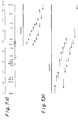
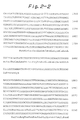
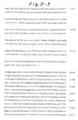
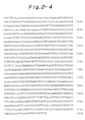
- the present inventors then constructed a restriction enzyme map for the hgEco-1 fragment and compared with the map already constructed for hgEco-2 (see Fig. 1). As a result, it became clear that hgEco-1 was a DNA that had a human chromosomal gene of ca. 2 kpb additionally attached to the 5' side of hgEco-2. Based on this finding, the present inventors determined the base sequence of the DNA fragment of interest (for the strategy for determining the base sequence of hgEco-1, see Fig. 1). As a result, it was found that as shown in Fig. 2, the hgEco-1 contained not only a structural gene coding for the whole amino acid sequence of the human CNP precursor protein but also the promoter region of the human CNP gene.
- a TATA box that was shared by the promoter regions of eukaryotic genes was present in positions 1546 - 1551 of the DNA base sequence shown in Fig. 2 and it was also found that two GC boxes and one Y box, both of which would presumably take part in the control of gene expression, were present upstream of the TATA box. Based on these facts, the present inventors concluded that the region of interest was the promoter region of the CNP precursor gene.
- ATG was present in positions 172 - 174 of the base sequence downstream (on the 3' side) of the TATA box. Since this ATG was the first methionine codon that appeared downstream (on the 3' side) of the TATA box and since the base sequence around that codon was in agreement with the consensus sequence of a translation initiation codon, A/G NNATG (N denotes either one of A, T, G and C), which is known to exist in eukaryotes, the present inventors estimated that the ATG of interest would be a translation initiation codon for the human CNP precursor.
- ATG is assumed to be a translation initiation codon
- comparison with the already identified structure of the porcine CNP chromosomal gene shows that the area up to the codon (AAG) of the lysine residue present in positions 1809 - 1811 of the base sequence corresponds to the first exon.
- a similar comparison also shows that the second exon starts with the codon (GTC) of the valine residue present in positions 2256 - 2258 of the base sequence.
- the first analyzed hgEco-2 is a DNA fragment coding for the area of the second exon in position 2286 onward of the base sequence.
- base sequences similar to C/A AGGT and A/G AGT which are known as the consensus sequences of a splicing donor are present in the neighborhood of position 1810 of the base sequence; and a base sequence similar to (Py)nNC/T AGG (Py denotes the pyridine residue, and N denotes either one of A, T, C and G) which is known as the consensus sequence of a splicing acceptor is present on the 5' side of position 2256 of the base sequence.
- the present inventors presumed that the DNA region in positions 1812 - 2255 of the base sequence was an intron and that said intron could be removed by splicing during the formation of a mature mRNA coding for the hCNP precursor protein.
- the hCNP precursor protein was coded by the first exon which started at position 1722 of the base sequence and which ended at position 1811 and also by the second exon which started at position 2256 and that said precursor protein was a polypeptide that was totally composed of 126 amino acid residues as in porcine.
- the thus identified hCNP precursor protein (which is hereunder referred to as the "prepro hCNP") was compared for its primary amino acid sequence with the pCNP precursor protein.
- the two precursor proteins were found to be identical except for the difference in five positions of the amino acid sequence (positions 37, 40, 56, 90 and 101 of the primary amino acid sequence of prepro hCNP shown in Fig. 3).
- the human CNP is presumably biosynthesized by the following pathway which is similar to that associated with porcine.
- prepro hCNP composed of 126 amino acid residues is translated from mRNA.
- the signal peptide present in the N-terminal region of the prepro hCNP is cleaved for conversion to pro hCNP in the process of secretion.
- the pro hCNP is cleaved by processing enzymes at specific positions (between positions 73 and 74 of the primary amino acid sequence that is shown in Fig.
- hCNP-53 differs from that of pCNP-53 in two positions (positions 90 and 101 of the primary amino acid sequence shown in Fig. 3), so hCNP-53 is a novel peptide and its physiological actions have not been known.
- the present inventors synthesized hCNP-53 chemically and examined the physiological activities of that novel peptide. As a result, it was found that hCNP-53 exhibited a chick rectum relaxant action; at the same time, it showed definite natriuretic and hypotensive actions when administered to rats.
- the present inventors isolated a chromosomal gene coding for the hCNP precursor protein and analyzed it to identify its primary amino acid sequence. As a result, they successfully identified the structures of human CNPs (hCNP-22 and hCNP-53) corresponding to pCNP-22 and pCNP-53. At the same time, they synthesized hCNP-53 chemically and verified its physiological activities. The present invention has been accomplished under these circumstances.
- hCNP chromosomal gene of the present invention is transduced into a suitable mammalian cell (e.g. COS cell derived from monkey kidney cells) either directly or as it is linked to an area downstream of a suitable promoter (e.g. the initial promoter of SV 40), hCNP cDNA can be obtained and this fact is within the scope of obviousness (see European Patent Application No. 91 111 630.9).
- a suitable mammalian cell e.g. COS cell derived from monkey kidney cells
- a suitable promoter e.g. the initial promoter of SV 40
- the DNA probe (pC cDNA) to be used for cloning a chromosomal gene that encoded the human CNP precursor protein was prepared by the method consisting of cleaving the porcine CNP cDNA (see European Patent Application No. 91 111:630.9) with a restriction enzyme DdeI, isolating a DNA fragment of ca. 700 bp, then marking the DNA with [ ⁇ - 32 P] dCTP by nick translation.
- Example 2 Isolation of chromosomal gene coding for part of the human CNP precursor protein
- E. coli strain K12 derived LE 392 was infected with a human chromosomal gene phage DNA library stored at 4°C.
- the cells were plated on an LB medium (10 g, bactotryptone; 5 g, yeast extract; 5 g, NaCl; 1.5%, bactoagar; total volume, 1 l) and cultivated overnight at 37°C.
- the plate was cooled at 4°C for 30 min and a nitrocellulose filter (product of Shleicher & Schnell Co.) was left to stand on the phage plaque for 5 minutes.
- the filter was stripped from the plate, dried with air, immersed in an alkaline denaturation solution (0.5 M NaOH and 1.5 M NaCl) for 1 minute, and then immersed in a neutralizing solution (0.5 M Tris-HCl; pH 7.0; 1.5 M NaCl) for 1 minute. Thereafter, the nitrocellulose filter was rinsed with a 3 x SSC solution (20 ⁇ SSC NaCl, 175.3 g; trisodium citrate, 88.2 g; total volume, 1 l), dried with air and heat-treated under vacuum at 80°C for 120 min.
- an alkaline denaturation solution 0.5 M NaOH and 1.5 M NaCl
- a neutralizing solution 0.5 M Tris-HCl; pH 7.0; 1.5 M NaCl
- plaque hybridization was performed under the following conditions. First, a prehybridization solution [3 ⁇ SSC; 1 ⁇ Denhardt's solution (consisting of albumin, polyvinyl pyrrolidone and Ficoll, each weighing 0.2 mg/ml); salmon sperm DNA, 50 ⁇ g/ml; 0.1% SDS] was added to the nitrocellulose filter and prehybridization was conducted at 60°C for 3 hours. Then, using 10 6 cpm of the pC cDNA probe and 1 ml of the prehybridization solution for two sheets of the nitrocellulose filter, hybridization was performed overnight at 60°C.
- a prehybridization solution [3 ⁇ SSC; 1 ⁇ Denhardt's solution (consisting of albumin, polyvinyl pyrrolidone and Ficoll, each weighing 0.2 mg/ml); salmon sperm DNA, 50 ⁇ g/ml; 0.1% SDS] was added to the nitrocellulose filter and
- the filter was washed three times with a 3 ⁇ SSC solution containing 0.1% SDS, each washing done at 60°C for 30 minutes; the washed filter was dried with air and subjected to autoradiography at -80°C for 24 h.
- This clone was named " ⁇ hCNP 2" and subjected to analyses in the subsequent stages.
- DNA was prepared from ⁇ hCNP 2 phage in the usual manner. Subsequently, the phage DNA was cleaved with a restriction enzyme EcoRI and the resulting DNA fragment was separated and analyzed by electrophoresis on an agarose gel. The ⁇ hCNP 2 was found to be a phage containing a ca. 15-kbp human chromosomal gene. Analysis by Southern blotting using the pC cDNA probe showed the EcoRI fragment of hCNP 2 (hgEco-2) having a length of ca. 2 kbp hybridized with the pC cDNA probe.
- the base sequence of the hgEco-2 DNA fragment was determined by the dideoxy method.
- Example 4 Isolation of chromosomal gene coding for the entire region of human CNP precursor protein
- plaque hybridization was performed under the conditions described below.
- the probe to be used was prepared by marking the hCNP 2 derived hgEco-2 (ca. 2 kbp) with [ ⁇ - 32 P] dCTP by nick translation.
- the thus prepared probe is hereunder designated hgEco-2 DNA.
- a prehybridization solution [3 ⁇ SSC; 1 x Denhardt's solution (consisting of albumin, polyvinyl pyrrolidone and Ficoll, each weighing 0.2 mg/ml); salmon sperm DNA 50 ⁇ g/ml; 0.1% SDS] was added to the nitrocellulose filter and prehybridization was conducted at 65°C for 3 hours. Then, using 106 cmp of the hgEco-2 DNA probe and 1 m of the prehybridization solution for two sheets of the nitrocellulose filter, hybridization was performed overnight at 65°C.
- the filter was washed three times with a 3 ⁇ SSC solution containing 0.1% SDS, each washing done at 65°C for 30 minutes; the washed filter was dried with air and subjected to autoradiography at -80°C for 24 h.
- SSC solution containing 0.1% SDS
- DNA was prepared from the ⁇ hCNP1 phage in the usual manner. Subsequently, the phage DNA was cleaved with a restriction enzyme EcoRI and the resulting DNA fragment was separated and analyzed by electrophoresis on an agarose gel. As a result, the ⁇ hCNP1 was found to be a phage containing a human chromosomal gene of ca. 15 kbp or more. Analysis by Southern blotting using the hgEco-2 DNA probe showed that the EcoRI DNA fragment (hgEco-1) of ca. 4 kbp hybridized with the hgEco-2 DNA probe. Hence, the base sequence of this DNA fragment which hybridized with the hgEco-2 DNA fragment was determined by the following method.
- the base sequence of the hgEco-1 DNA fragment was first subcloned in a plasmid vector pUC 118 (Takara Shuzo Co., Ltd.) at the EcoRI site to prepare pUC CNP1.
- the pUC CNP1 was then cleaved with a suitable restriction enzyme and the resulting DNA fragment was subcloned in M13 phage.
- the base sequence of the DNA fragment of interest was determined by the dideoxy method.
- the region of the base sequence determined by the method described above is shown by solid arrows in Fig. 1.
- hgEco-1 the lower strand of the hgEco-1 DNA fragment (hgEco-1) was first subcloned in a phage vector M13 mp18 at the EcoRI site to prepare M13 hCMP1. Then, with this M13 hCNP1 used as a template, the base sequence of the DNA fragment of interest was determined by the dideoxy method using a universal primer and the oligonucleotide primer that was synthesized chemically on the basis of the already determined base sequence. The region thus determined is shown by dashed arrows in Fig. 1.
- the base sequence determined by the method described above was combined with the base sequence of the hgEco-2 DNA fragment to complete the whole base sequence of the hgEco-1 DNA fragment.
- the completed base sequence and the amino acid sequence to be coded in the exon site as predictable from said base sequence are shown in Fig. 2.
- Example 6 Natriuretic and hypotensive actions of hCNP-53 and other peptides that can be biosynthesized from the hCNP precursor protein
- hCNP-53 when administered in a dose of 100 nmol/kg, increased the urine clearance by 2.5 times while reducing the blood pressure by 10%.
- the present inventors isolated part of the hCNP gene from a human chromosomal gene library using pCNP cDNA as a probe. With the isolated hCNP gene being used as a probe, a gene coding for the whole region of the hCNP precursor was successfully isolated. The isolated gene also contained the promoter region of hCNP. As a result, it was verified that a gene coding for CNP also existed in humans as well as in pigs. Further, the whole structure of the hCNP precursor protein was determined.
- the hCNP precursor protein was composed of 126 amino acid residues and contained at the C-terminus the amino acid sequences that corresponded to pCNP-53 and pCNP-22 isolated from porcine brain. Since the amino acid sequences of those peptides at the processing site were in complete agreement between porcine and human, it is predicted that those peptides would also be biosynthesized in humans through a pathway similar to that involved in pigs and that they would work as hormones or nerve transmitters that regulate the homeostatic balance of body fluid volume and blood pressure in vivo.
- hCNP-53 was found to be structurally different from pCNP-53 in two positions of the amino acid sequence.
- the present inventors therefore synthesized hCNP-53 chemically and checked its physiological activities in terms of chick rectum relaxant action, as well as natriuretic and hypotensive actions.
- hCNP-53 proved to be a physiologically active peptide.
- This will bear great importance on the application of peptides of the CNP family to pharmaceuticals. For instance, if pCNP-53 which is structurally different from hCNP-53 is used as a pharmaceutical, it will probably be recognized as foreign matter in the human body to cause antibody production.
- pCNP-53 may be neutralized or nephrotoxicity may be caused by an antigen-antibody complex.
- pCNP-53 may have less affinity for the CNP receptor of human cells than hCNP-53 does and, in that case, the action per se of pCNP-53 may be attenuated.
- hCNP-53 problems are absent from hCNP-53 and the same is true for other peptides that can be biosynthesized from the hCNP precursor protein [between positions 24 and 102 of the primary amino acid sequence of prepro hCNP, there are at least 9 lysine residues (in positions 24, 30, 51, 52, 55, 65, 89, 97 and 99) and at least 8 arginine residues (in positions 33, 68, 70, 73, 76, 82, 87 and 96) and pro hCNP can be cleaved by processing enzymes in vivo at specific positions on the C-terminal side of those basic amino acid residues to increase the likelihood that there exist in vivo those peptides which have additional amino acids attached to the N-terminus of hCNP-53].
- the gene of the hCNP precursor protein shown in Fig. 2 contains not only the structural gene region coding for that protein but also the promoter region which expresses that structural gene.
- CAT chloramphenicol acetyl transferase
- the information obtained by the present invention concerning the chromosomal gene of the hCNP precursor protein and its primary amino acid sequence will make great contributions not only to future studies for unravelling the mechanism behind the biosynthesis and physiological actions of CNPs in humans but also to the efforts to establish pharmaceutical applicaticns of peptides assignable to the CNP family.
Landscapes
- Health & Medical Sciences (AREA)
- Chemical & Material Sciences (AREA)
- Life Sciences & Earth Sciences (AREA)
- Organic Chemistry (AREA)
- General Health & Medical Sciences (AREA)
- Medicinal Chemistry (AREA)
- General Chemical & Material Sciences (AREA)
- Chemical Kinetics & Catalysis (AREA)
- Nuclear Medicine, Radiotherapy & Molecular Imaging (AREA)
- Pharmacology & Pharmacy (AREA)
- Bioinformatics & Cheminformatics (AREA)
- Animal Behavior & Ethology (AREA)
- Engineering & Computer Science (AREA)
- Public Health (AREA)
- Veterinary Medicine (AREA)
- Diabetes (AREA)
- Cardiology (AREA)
- Endocrinology (AREA)
- Biophysics (AREA)
- Proteomics, Peptides & Aminoacids (AREA)
- Toxicology (AREA)
- Zoology (AREA)
- Gastroenterology & Hepatology (AREA)
- Biochemistry (AREA)
- Hematology (AREA)
- Genetics & Genomics (AREA)
- Molecular Biology (AREA)
- Heart & Thoracic Surgery (AREA)
- Peptides Or Proteins (AREA)
- Preparation Of Compounds By Using Micro-Organisms (AREA)
- Medicines That Contain Protein Lipid Enzymes And Other Medicines (AREA)
Abstract
Description
Claims (8)
- A method for the preparation of a polypeptide characterized in that the following sequence:is recombinantly expressed.

- The method according to claim 1, characterized in that the polypeptide lacks a signal peptide from said amino acid sequence at the N-terminus and comprises the amino acids Arg 73 to Cys 126.
- The method according to claim 1, characterized in that the polypeptide is deficient of a peptide at the N-terminus because it is cleaved between any two adjacent amino acid residues in said amino acid sequence at positions 1 to 73.
- The method according to claim 1, characterized in that a DNA sequence is used which codes for said polypeptide.
- The method according to claim 4, characterized in that the following DNA sequence is used:

- The method according to claim 2, characterized in that a DNA sequence is used which codes for said polypeptide.
- The method according to claim 3, characterized in that a DNA sequence is used which codes for said polypeptide.
- The method according to any of the preceding claims, characterized in that a DNA sequence as shown in Fig. 2 is used.
Priority Applications (1)
| Application Number | Priority Date | Filing Date | Title |
|---|---|---|---|
| EP96114549A EP0769554B1 (en) | 1990-09-27 | 1991-09-27 | Human CNP gene and precursor protein |
Applications Claiming Priority (2)
| Application Number | Priority Date | Filing Date | Title |
|---|---|---|---|
| JP259698/90 | 1990-09-27 | ||
| JP02259698A JP3026354B2 (en) | 1990-09-27 | 1990-09-27 | Human CNP gene and precursor protein |
Related Child Applications (2)
| Application Number | Title | Priority Date | Filing Date |
|---|---|---|---|
| EP96114549A Division EP0769554B1 (en) | 1990-09-27 | 1991-09-27 | Human CNP gene and precursor protein |
| EP96114549.7 Division-Into | 1996-09-11 |
Publications (3)
| Publication Number | Publication Date |
|---|---|
| EP0477971A2 EP0477971A2 (en) | 1992-04-01 |
| EP0477971A3 EP0477971A3 (en) | 1992-09-09 |
| EP0477971B1 true EP0477971B1 (en) | 1998-01-21 |
Family
ID=17337688
Family Applications (2)
| Application Number | Title | Priority Date | Filing Date |
|---|---|---|---|
| EP91116557A Expired - Lifetime EP0477971B1 (en) | 1990-09-27 | 1991-09-27 | Human CNP gene and precursor protein |
| EP96114549A Expired - Lifetime EP0769554B1 (en) | 1990-09-27 | 1991-09-27 | Human CNP gene and precursor protein |
Family Applications After (1)
| Application Number | Title | Priority Date | Filing Date |
|---|---|---|---|
| EP96114549A Expired - Lifetime EP0769554B1 (en) | 1990-09-27 | 1991-09-27 | Human CNP gene and precursor protein |
Country Status (8)
| Country | Link |
|---|---|
| US (1) | US6034231A (en) |
| EP (2) | EP0477971B1 (en) |
| JP (1) | JP3026354B2 (en) |
| AT (2) | ATE162532T1 (en) |
| DE (2) | DE69128754T2 (en) |
| DK (1) | DK0477971T3 (en) |
| ES (2) | ES2302333T3 (en) |
| GR (1) | GR3026554T3 (en) |
Cited By (19)
| Publication number | Priority date | Publication date | Assignee | Title |
|---|---|---|---|---|
| US9266939B2 (en) | 2010-12-27 | 2016-02-23 | Alexion Pharmaceuticals, Inc. | Compositions comprising natriuretic peptides and methods of use thereof |
| US10052366B2 (en) | 2012-05-21 | 2018-08-21 | Alexion Pharmaceuticsl, Inc. | Compositions comprising alkaline phosphatase and/or natriuretic peptide and methods of use thereof |
| US10449236B2 (en) | 2014-12-05 | 2019-10-22 | Alexion Pharmaceuticals, Inc. | Treating seizure with recombinant alkaline phosphatase |
| US10603361B2 (en) | 2015-01-28 | 2020-03-31 | Alexion Pharmaceuticals, Inc. | Methods of treating a subject with an alkaline phosphatase deficiency |
| US10822596B2 (en) | 2014-07-11 | 2020-11-03 | Alexion Pharmaceuticals, Inc. | Compositions and methods for treating craniosynostosis |
| US10898549B2 (en) | 2016-04-01 | 2021-01-26 | Alexion Pharmaceuticals, Inc. | Methods for treating hypophosphatasia in adolescents and adults |
| US10988744B2 (en) | 2016-06-06 | 2021-04-27 | Alexion Pharmaceuticals, Inc. | Method of producing alkaline phosphatase |
| US11065306B2 (en) | 2016-03-08 | 2021-07-20 | Alexion Pharmaceuticals, Inc. | Methods for treating hypophosphatasia in children |
| US11116821B2 (en) | 2016-08-18 | 2021-09-14 | Alexion Pharmaceuticals, Inc. | Methods for treating tracheobronchomalacia |
| US11186832B2 (en) | 2016-04-01 | 2021-11-30 | Alexion Pharmaceuticals, Inc. | Treating muscle weakness with alkaline phosphatases |
| US11224637B2 (en) | 2017-03-31 | 2022-01-18 | Alexion Pharmaceuticals, Inc. | Methods for treating hypophosphatasia (HPP) in adults and adolescents |
| US11229686B2 (en) | 2015-09-28 | 2022-01-25 | Alexion Pharmaceuticals, Inc. | Reduced frequency dosage regimens for tissue non-specific alkaline phosphatase (TNSALP)-enzyme replacement therapy of hypophosphatasia |
| US11248021B2 (en) | 2004-04-21 | 2022-02-15 | Alexion Pharmaceuticals, Inc. | Bone delivery conjugates and method of using same to target proteins to bone |
| US11352612B2 (en) | 2015-08-17 | 2022-06-07 | Alexion Pharmaceuticals, Inc. | Manufacturing of alkaline phosphatases |
| US11400140B2 (en) | 2015-10-30 | 2022-08-02 | Alexion Pharmaceuticals, Inc. | Methods for treating craniosynostosis in a patient |
| US11913039B2 (en) | 2018-03-30 | 2024-02-27 | Alexion Pharmaceuticals, Inc. | Method for producing recombinant alkaline phosphatase |
| US12083169B2 (en) | 2021-02-12 | 2024-09-10 | Alexion Pharmaceuticals, Inc. | Alkaline phosphatase polypeptides and methods of use thereof |
| US12268733B2 (en) | 2018-08-10 | 2025-04-08 | Alexion Pharmaceuticals, Inc. | Methods of treating neurofibromatosis type 1 and related conditions with alkaline phosphatase |
| US12433938B2 (en) | 2019-12-09 | 2025-10-07 | Alexion Pharmaceuticals, Inc. | Alkaline phosphatase polypeptides and methods of use thereof |
Families Citing this family (20)
| Publication number | Priority date | Publication date | Assignee | Title |
|---|---|---|---|---|
| IL142118A0 (en) * | 2001-03-20 | 2002-03-10 | Prochon Biotech Ltd | Method and composition for treatment of skeletal dysplasias |
| BRPI0203172B8 (en) | 2001-09-28 | 2021-05-25 | Nakao Kazuwa | pharmaceutical composition for achondroplasia |
| EP1569683B1 (en) | 2002-11-26 | 2010-03-03 | Biocon Limited | Modified natriuretic compounds, conjugates, and uses thereof |
| JP4825667B2 (en) | 2004-03-31 | 2011-11-30 | 一和 中尾 | Joint inflammation treatment or prevention agent |
| EP3620530A1 (en) | 2004-03-31 | 2020-03-11 | Kazuwa Nakao | Composition for increasing body height |
| US20080207505A1 (en) * | 2005-01-12 | 2008-08-28 | James Kenneth D | Bna Conjugates and Methods of Use |
| US20070184466A1 (en) * | 2005-11-18 | 2007-08-09 | The Brigham And Women's Hospital, Inc. | Detection, generation and uses of atherosclerosis-protective endothelium |
| AU2008326327A1 (en) * | 2007-11-21 | 2009-05-28 | Biomarin Pharmaceutical Inc. | Variants of C-type natriuretic peptide |
| HRP20160303T1 (en) * | 2008-05-23 | 2016-04-22 | Daiichi Sankyo Company, Limited | A PEPTID THAT IS ABLE TO EXTEND THE LIFE-LIFE PERIOD OF CONVENIENT PEPTIDS IN Plasma |
| PE20120792A1 (en) | 2009-05-20 | 2012-07-27 | Biomarin Pharm Inc | TYPE C NATRIURETIC PEPTIDES VARIANTS |
| SG11201401605QA (en) | 2011-10-19 | 2014-09-26 | Alexion Pharma Holding | Compositions comprising alkaline phosphatase and/or natriuretic peptide and methods of use thereof |
| CN114796460A (en) | 2015-07-30 | 2022-07-29 | 生物马林药物股份有限公司 | Use of C-type natriuretic peptide variants for the treatment of skeletal dysplasia |
| US11389511B2 (en) | 2016-01-08 | 2022-07-19 | Ascendis Pharma Growth Disorders A/S | Controlled-release CNP agonists with reduced side-effects |
| WO2021055497A1 (en) | 2019-09-16 | 2021-03-25 | Biomarin Pharmaceutical Inc. | Cnp variants and conjugates thereof |
| MX2024000526A (en) | 2021-07-09 | 2024-02-02 | Biomarin Pharm Inc | C-type natriuretic peptide variants to treat skeletal dysplasia in children. |
| WO2023108005A1 (en) | 2021-12-07 | 2023-06-15 | Biomarin Pharmaceutical Inc. | C-type natriuretic peptide therapy of bone-related disorders |
| KR102866559B1 (en) | 2022-11-02 | 2025-10-02 | 노보 노르디스크 에이/에스 | CNP compound |
| TW202513806A (en) | 2023-06-07 | 2025-04-01 | 美商拜奧馬林製藥公司 | High throughput screen for genentic variants associated with short stature |
| WO2025101863A1 (en) | 2023-11-08 | 2025-05-15 | Biomarin Pharmaceutical Inc. | Cnp variants, conjugates and formulations thereof |
| WO2026030743A1 (en) | 2024-08-02 | 2026-02-05 | Biomarin Pharmaceutical Inc. | Treatment of short stature with cnp variants |
Family Cites Families (1)
| Publication number | Priority date | Publication date | Assignee | Title |
|---|---|---|---|---|
| CA1339210C (en) * | 1988-05-31 | 1997-08-05 | John Lewicki | Recombinant techniques for production of novel natriuretic and vasodilator peptides |
-
1990
- 1990-09-27 JP JP02259698A patent/JP3026354B2/en not_active Expired - Lifetime
-
1991
- 1991-09-26 US US07/765,830 patent/US6034231A/en not_active Expired - Lifetime
- 1991-09-27 DK DK91116557T patent/DK0477971T3/en active
- 1991-09-27 DE DE69128754T patent/DE69128754T2/en not_active Expired - Lifetime
- 1991-09-27 EP EP91116557A patent/EP0477971B1/en not_active Expired - Lifetime
- 1991-09-27 ES ES96114549T patent/ES2302333T3/en not_active Expired - Lifetime
- 1991-09-27 ES ES91116557T patent/ES2113865T3/en not_active Expired - Lifetime
- 1991-09-27 DE DE69133593T patent/DE69133593T2/en not_active Expired - Lifetime
- 1991-09-27 AT AT91116557T patent/ATE162532T1/en not_active IP Right Cessation
- 1991-09-27 AT AT96114549T patent/ATE388165T1/en not_active IP Right Cessation
- 1991-09-27 EP EP96114549A patent/EP0769554B1/en not_active Expired - Lifetime
-
1998
- 1998-04-06 GR GR980400741T patent/GR3026554T3/en unknown
Non-Patent Citations (5)
| Title |
|---|
| BIOCHEMICAL & BIOPHYSICAL RESEARCH COMMUNICATION, vol. 159, no. 3, 1989, M. KOJIMA et al., pp. 1420-1426 * |
| BIOCHEMICAL & BIOPHYSICAL RESEARCH COMMUNICATION, vol. 159, no. 3, 1989, T. SUDOH et al., pp. 1427-1434 * |
| BIOCHEMICAL & BIOPHYSICAL RESEARCH COMMUNICATION, vol. 170, no. 2, 1990, N. MINAMINO et al., pp. 973-979 * |
| BIOCHEMICAL & BIOPHYSICAL RESEARCH COMMUNICATION, vol. 175, no. 2, 1991, Y. TAWARAGI et al., pp. 645-651 * |
| BIOCHEMICAL & BIOPHYSICAL RESEARCH COMMUNICATIONS, vol. 168, no. 2, 1990, T. SUDOH et al., pp. 863-870 * |
Cited By (21)
| Publication number | Priority date | Publication date | Assignee | Title |
|---|---|---|---|---|
| US11248021B2 (en) | 2004-04-21 | 2022-02-15 | Alexion Pharmaceuticals, Inc. | Bone delivery conjugates and method of using same to target proteins to bone |
| US9266939B2 (en) | 2010-12-27 | 2016-02-23 | Alexion Pharmaceuticals, Inc. | Compositions comprising natriuretic peptides and methods of use thereof |
| US10052366B2 (en) | 2012-05-21 | 2018-08-21 | Alexion Pharmaceuticsl, Inc. | Compositions comprising alkaline phosphatase and/or natriuretic peptide and methods of use thereof |
| US10822596B2 (en) | 2014-07-11 | 2020-11-03 | Alexion Pharmaceuticals, Inc. | Compositions and methods for treating craniosynostosis |
| US10449236B2 (en) | 2014-12-05 | 2019-10-22 | Alexion Pharmaceuticals, Inc. | Treating seizure with recombinant alkaline phosphatase |
| US11224638B2 (en) | 2014-12-05 | 2022-01-18 | Alexion Pharmaceuticals, Inc. | Treating seizure with recombinant alkaline phosphatase |
| US10603361B2 (en) | 2015-01-28 | 2020-03-31 | Alexion Pharmaceuticals, Inc. | Methods of treating a subject with an alkaline phosphatase deficiency |
| US11564978B2 (en) | 2015-01-28 | 2023-01-31 | Alexion Pharmaceuticals, Inc. | Methods of treating a subject with an alkaline phosphatase deficiency |
| US11352612B2 (en) | 2015-08-17 | 2022-06-07 | Alexion Pharmaceuticals, Inc. | Manufacturing of alkaline phosphatases |
| US11229686B2 (en) | 2015-09-28 | 2022-01-25 | Alexion Pharmaceuticals, Inc. | Reduced frequency dosage regimens for tissue non-specific alkaline phosphatase (TNSALP)-enzyme replacement therapy of hypophosphatasia |
| US11400140B2 (en) | 2015-10-30 | 2022-08-02 | Alexion Pharmaceuticals, Inc. | Methods for treating craniosynostosis in a patient |
| US11065306B2 (en) | 2016-03-08 | 2021-07-20 | Alexion Pharmaceuticals, Inc. | Methods for treating hypophosphatasia in children |
| US10898549B2 (en) | 2016-04-01 | 2021-01-26 | Alexion Pharmaceuticals, Inc. | Methods for treating hypophosphatasia in adolescents and adults |
| US11186832B2 (en) | 2016-04-01 | 2021-11-30 | Alexion Pharmaceuticals, Inc. | Treating muscle weakness with alkaline phosphatases |
| US10988744B2 (en) | 2016-06-06 | 2021-04-27 | Alexion Pharmaceuticals, Inc. | Method of producing alkaline phosphatase |
| US11116821B2 (en) | 2016-08-18 | 2021-09-14 | Alexion Pharmaceuticals, Inc. | Methods for treating tracheobronchomalacia |
| US11224637B2 (en) | 2017-03-31 | 2022-01-18 | Alexion Pharmaceuticals, Inc. | Methods for treating hypophosphatasia (HPP) in adults and adolescents |
| US11913039B2 (en) | 2018-03-30 | 2024-02-27 | Alexion Pharmaceuticals, Inc. | Method for producing recombinant alkaline phosphatase |
| US12268733B2 (en) | 2018-08-10 | 2025-04-08 | Alexion Pharmaceuticals, Inc. | Methods of treating neurofibromatosis type 1 and related conditions with alkaline phosphatase |
| US12433938B2 (en) | 2019-12-09 | 2025-10-07 | Alexion Pharmaceuticals, Inc. | Alkaline phosphatase polypeptides and methods of use thereof |
| US12083169B2 (en) | 2021-02-12 | 2024-09-10 | Alexion Pharmaceuticals, Inc. | Alkaline phosphatase polypeptides and methods of use thereof |
Also Published As
| Publication number | Publication date |
|---|---|
| JP3026354B2 (en) | 2000-03-27 |
| GR3026554T3 (en) | 1998-07-31 |
| EP0769554B1 (en) | 2008-03-05 |
| JPH04139199A (en) | 1992-05-13 |
| ATE162532T1 (en) | 1998-02-15 |
| ES2302333T3 (en) | 2008-07-01 |
| EP0477971A2 (en) | 1992-04-01 |
| ATE388165T1 (en) | 2008-03-15 |
| DE69133593D1 (en) | 2008-04-17 |
| EP0769554A2 (en) | 1997-04-23 |
| US6034231A (en) | 2000-03-07 |
| ES2113865T3 (en) | 1998-05-16 |
| EP0769554A3 (en) | 1997-05-28 |
| DE69128754T2 (en) | 1998-06-04 |
| DE69133593T2 (en) | 2009-04-02 |
| DE69128754D1 (en) | 1998-02-26 |
| DK0477971T3 (en) | 1998-09-21 |
| EP0477971A3 (en) | 1992-09-09 |
Similar Documents
| Publication | Publication Date | Title |
|---|---|---|
| EP0477971B1 (en) | Human CNP gene and precursor protein | |
| EP0475394B1 (en) | Rat C-type natriuretic peptide cDNA and precursor protein | |
| EP0466175B1 (en) | Porcine CNP gene and precursor protein | |
| JP3985015B2 (en) | Insulin-like growth factor binding protein and composition thereof | |
| JP4341859B2 (en) | Methods for the expression of heterologous proteins in yeast | |
| EP0478797A1 (en) | Novel physiologically active peptide originating in hog | |
| Forage et al. | Cloning and sequence analysis of cDNA species coding for the two subunits of inhibin from bovine follicular fluid. | |
| Flynn et al. | The biochemistry and molecular biology of atrial natriuretic factor | |
| US5155214A (en) | Basic fibroblast growth factor | |
| CA1340772C (en) | Expression and secretion of heterologous protiens in yeast employing truncated alpha-factor leader sequences | |
| JP2511160B2 (en) | Recombinant technology for producing novel natriuretic and vasodilator peptides | |
| EP0466174B1 (en) | Novel physiologically active porcine peptide (CNP-53) | |
| Rentier-Delrue et al. | Molecular cloning and characterization of two forms of trout growth hormone cDNA: expression and secretion of tGH-II by Escherichia coli | |
| Porter et al. | Cloning of a cDNA encoding porcine brain natriuretic peptide | |
| US6709837B1 (en) | Polypeptide and production thereof | |
| US5464774A (en) | Bovine basic fibroblast growth factor | |
| US5605815A (en) | Nucleic acids encoding and expression of parathyroid hormone-like peptide | |
| EP0315118A2 (en) | DNA coding for endothelin and use thereof | |
| US4783412A (en) | Hybrid DNA synthesis of epidermal growth factor | |
| JPH05236962A (en) | New enzyme and dna capable of coding the same | |
| CA1277933C (en) | Porcine growth hormone analogs | |
| US5973115A (en) | Method for potentiating and inhibiting insulin-like growth factor activity | |
| EP0768378A1 (en) | Dna coding for caldecrin and process for producing caldecrin by using the dna | |
| Matsuo | Biochemistry of a Natriuretic Peptide Family | |
| JPH06279496A (en) | Hamster brain natriuretic polypeptide |
Legal Events
| Date | Code | Title | Description |
|---|---|---|---|
| PUAI | Public reference made under article 153(3) epc to a published international application that has entered the european phase |
Free format text: ORIGINAL CODE: 0009012 |
|
| AK | Designated contracting states |
Kind code of ref document: A2 Designated state(s): AT BE CH DE DK ES FR GB GR IT LI LU NL SE |
|
| PUAL | Search report despatched |
Free format text: ORIGINAL CODE: 0009013 |
|
| AK | Designated contracting states |
Kind code of ref document: A3 Designated state(s): AT BE CH DE DK ES FR GB GR IT LI LU NL SE |
|
| 17P | Request for examination filed |
Effective date: 19921023 |
|
| 17Q | First examination report despatched |
Effective date: 19931213 |
|
| RIN1 | Information on inventor provided before grant (corrected) |
Inventor name: MATSUO, HISAYUKI Inventor name: TANAKA, SHOJI Inventor name: KANGAWA, KENJI Inventor name: TAWARAGI, YASUNORI Inventor name: FUCHIMURA, KAYOKO Inventor name: MINAMINO, NAOTO |
|
| GRAG | Despatch of communication of intention to grant |
Free format text: ORIGINAL CODE: EPIDOS AGRA |
|
| GRAG | Despatch of communication of intention to grant |
Free format text: ORIGINAL CODE: EPIDOS AGRA |
|
| GRAH | Despatch of communication of intention to grant a patent |
Free format text: ORIGINAL CODE: EPIDOS IGRA |
|
| ITF | It: translation for a ep patent filed | ||
| GRAH | Despatch of communication of intention to grant a patent |
Free format text: ORIGINAL CODE: EPIDOS IGRA |
|
| GRAA | (expected) grant |
Free format text: ORIGINAL CODE: 0009210 |
|
| AK | Designated contracting states |
Kind code of ref document: B1 Designated state(s): AT BE CH DE DK ES FR GB GR IT LI LU NL SE |
|
| REF | Corresponds to: |
Ref document number: 162532 Country of ref document: AT Date of ref document: 19980215 Kind code of ref document: T |
|
| XX | Miscellaneous (additional remarks) |
Free format text: TEILANMELDUNG 96114549.7 EINGEREICHT AM 11/09/96. |
|
| REG | Reference to a national code |
Ref country code: CH Ref legal event code: EP Ref country code: CH Ref legal event code: NV Representative=s name: E. BLUM & CO. PATENTANWAELTE |
|
| REF | Corresponds to: |
Ref document number: 69128754 Country of ref document: DE Date of ref document: 19980226 |
|
| ET | Fr: translation filed | ||
| REG | Reference to a national code |
Ref country code: ES Ref legal event code: FG2A Ref document number: 2113865 Country of ref document: ES Kind code of ref document: T3 |
|
| REG | Reference to a national code |
Ref country code: DK Ref legal event code: T3 |
|
| PLBE | No opposition filed within time limit |
Free format text: ORIGINAL CODE: 0009261 |
|
| STAA | Information on the status of an ep patent application or granted ep patent |
Free format text: STATUS: NO OPPOSITION FILED WITHIN TIME LIMIT |
|
| 26N | No opposition filed | ||
| REG | Reference to a national code |
Ref country code: GB Ref legal event code: IF02 |
|
| NLS | Nl: assignments of ep-patents |
Owner name: DAIICHI SUNTORY PHARMA CO., LTD. Owner name: HISAYUKI MATSUO |
|
| REG | Reference to a national code |
Ref country code: CH Ref legal event code: NV Representative=s name: ARNOLD & SIEDSMA AG Ref country code: CH Ref legal event code: PUE Owner name: MATSUO, HISAYUKI Free format text: SUNTORY LIMITED#1-40, DOJIMAHAMA 2-CHOME#KITA-KU, OSAKA-SHI, OSAKA 530 (JP) $ MATSUO, HISAYUKI#4-24-204, NISHIOKAMOTO 6-CHOME, HIGASHINADA-KU#KOBE-SHI, HYOGO-KEN (JP) -TRANSFER TO- MATSUO, HISAYUKI#4-24-204, NISHIOKAMOTO 6-CHOME, HIGASHINADA-KU#KOBE-SHI, HYOGO-KEN (JP) $ DAIICHI SUNTORY PHARMA CO., LTD.#7-2, KOJIMACHI 5-CHOME#CHIYODA-KU, TOKYO (JP) |
|
| REG | Reference to a national code |
Ref country code: FR Ref legal event code: TP |
|
| REG | Reference to a national code |
Ref country code: CH Ref legal event code: PFA Owner name: MATSUO, HISAYUKI Free format text: MATSUO, HISAYUKI#4-24-204, NISHIOKAMOTO 6-CHOME, HIGASHINADA-KU#KOBE-SHI, HYOGO-KEN (JP) $ DAIICHI SUNTORY PHARMA CO., LTD.#7-2, KOJIMACHI 5-CHOME#CHIYODA-KU, TOKYO (JP) -TRANSFER TO- MATSUO, HISAYUKI#4-24-204, NISHIOKAMOTO 6-CHOME, HIGASHINADA-KU#KOBE-SHI, HYOGO-KEN (JP) $ DAIICHI ASUBIO PHARMA CO., LTD.#9-11, AKASAKA 2-CHOME, MINATO-KU#TOKYO (JP) |
|
| NLT1 | Nl: modifications of names registered in virtue of documents presented to the patent office pursuant to art. 16 a, paragraph 1 |
Owner name: DAIICHI ASUBIO PHARMA CO., LTD. Owner name: HISAYUKI MATSUO |
|
| REG | Reference to a national code |
Ref country code: GB Ref legal event code: 732E |
|
| REG | Reference to a national code |
Ref country code: FR Ref legal event code: CD Ref country code: FR Ref legal event code: CA |
|
| REG | Reference to a national code |
Ref country code: CH Ref legal event code: PFA Owner name: MATSUO, HISAYUKI Free format text: MATSUO, HISAYUKI#4-24-204, NISHIOKAMOTO 6-CHOME, HIGASHINADA-KU#KOBE-SHI, HYOGO-KEN (JP) $ DAIICHI ASUBIO PHARMA CO., LTD.#9-11, AKASAKA 2-CHOME, MINATO-KU#TOKYO (JP) -TRANSFER TO- MATSUO, HISAYUKI#4-24-204, NISHIOKAMOTO 6-CHOME, HIGASHINADA-KU#KOBE-SHI, HYOGO-KEN (JP) $ ASUBIO PHARMA CO., LTD.#9-11, AKASAKA 2-CHOME#MINATO-KU, TOKYO (JP) |
|
| NLT1 | Nl: modifications of names registered in virtue of documents presented to the patent office pursuant to art. 16 a, paragraph 1 |
Owner name: ASUBIO PHARMA CO., LTD. Owner name: HISAYUKI MATSUO |
|
| PGFP | Annual fee paid to national office [announced via postgrant information from national office to epo] |
Ref country code: DK Payment date: 20070914 Year of fee payment: 17 |
|
| REG | Reference to a national code |
Ref country code: FR Ref legal event code: CD |
|
| PGFP | Annual fee paid to national office [announced via postgrant information from national office to epo] |
Ref country code: AT Payment date: 20070912 Year of fee payment: 17 |
|
| BECN | Be: change of holder's name |
Owner name: *ASUBIO PHARMA CO. LTD Effective date: 20051130 Owner name: *MATSUO HISAYUKI Effective date: 20051130 |
|
| PGFP | Annual fee paid to national office [announced via postgrant information from national office to epo] |
Ref country code: LU Payment date: 20071001 Year of fee payment: 17 Ref country code: SE Payment date: 20070905 Year of fee payment: 17 Ref country code: NL Payment date: 20070916 Year of fee payment: 17 |
|
| PGFP | Annual fee paid to national office [announced via postgrant information from national office to epo] |
Ref country code: BE Payment date: 20071121 Year of fee payment: 17 |
|
| PGFP | Annual fee paid to national office [announced via postgrant information from national office to epo] |
Ref country code: GR Payment date: 20070820 Year of fee payment: 17 |
|
| BERE | Be: lapsed |
Owner name: *ASUBIO PHARMA CO. LTD Effective date: 20080930 Owner name: *MATSUO HISAYUKI Effective date: 20080930 |
|
| REG | Reference to a national code |
Ref country code: DK Ref legal event code: EBP |
|
| PG25 | Lapsed in a contracting state [announced via postgrant information from national office to epo] |
Ref country code: NL Free format text: LAPSE BECAUSE OF NON-PAYMENT OF DUE FEES Effective date: 20090401 |
|
| NLV4 | Nl: lapsed or anulled due to non-payment of the annual fee |
Effective date: 20090401 |
|
| PG25 | Lapsed in a contracting state [announced via postgrant information from national office to epo] |
Ref country code: BE Free format text: LAPSE BECAUSE OF NON-PAYMENT OF DUE FEES Effective date: 20080930 |
|
| PG25 | Lapsed in a contracting state [announced via postgrant information from national office to epo] |
Ref country code: AT Free format text: LAPSE BECAUSE OF NON-PAYMENT OF DUE FEES Effective date: 20080927 |
|
| PG25 | Lapsed in a contracting state [announced via postgrant information from national office to epo] |
Ref country code: GR Free format text: LAPSE BECAUSE OF NON-PAYMENT OF DUE FEES Effective date: 20090402 |
|
| PG25 | Lapsed in a contracting state [announced via postgrant information from national office to epo] |
Ref country code: DK Free format text: LAPSE BECAUSE OF NON-PAYMENT OF DUE FEES Effective date: 20090331 |
|
| PG25 | Lapsed in a contracting state [announced via postgrant information from national office to epo] |
Ref country code: LU Free format text: LAPSE BECAUSE OF NON-PAYMENT OF DUE FEES Effective date: 20080927 |
|
| PG25 | Lapsed in a contracting state [announced via postgrant information from national office to epo] |
Ref country code: SE Free format text: LAPSE BECAUSE OF NON-PAYMENT OF DUE FEES Effective date: 20080928 |
|
| PGFP | Annual fee paid to national office [announced via postgrant information from national office to epo] |
Ref country code: ES Payment date: 20100923 Year of fee payment: 20 Ref country code: CH Payment date: 20100914 Year of fee payment: 20 |
|
| PGFP | Annual fee paid to national office [announced via postgrant information from national office to epo] |
Ref country code: IT Payment date: 20100914 Year of fee payment: 20 Ref country code: FR Payment date: 20100921 Year of fee payment: 20 |
|
| PGFP | Annual fee paid to national office [announced via postgrant information from national office to epo] |
Ref country code: GB Payment date: 20100922 Year of fee payment: 20 |
|
| PGFP | Annual fee paid to national office [announced via postgrant information from national office to epo] |
Ref country code: DE Payment date: 20100922 Year of fee payment: 20 |
|
| REG | Reference to a national code |
Ref country code: CH Ref legal event code: PFA Owner name: MATSUO, HISAYUKI Free format text: MATSUO, HISAYUKI#4-24-204, NISHIOKAMOTO 6-CHOME, HIGASHINADA-KU#KOBE-SHI, HYOGO-KEN (JP) $ ASUBIO PHARMA CO., LTD.#9-11, AKASAKA 2-CHOME#MINATO-KU, TOKYO (JP) -TRANSFER TO- MATSUO, HISAYUKI#4-24-204, NISHIOKAMOTO 6-CHOME, HIGASHINADA-KU#KOBE-SHI, HYOGO-KEN (JP) $ ASUBIO PHARMA CO., LTD.#9-11, AKASAKA 2-CHOME#MINATO-KU, TOKYO (JP) |
|
| REG | Reference to a national code |
Ref country code: DE Ref legal event code: R071 Ref document number: 69128754 Country of ref document: DE |
|
| REG | Reference to a national code |
Ref country code: DE Ref legal event code: R071 Ref document number: 69128754 Country of ref document: DE |
|
| REG | Reference to a national code |
Ref country code: CH Ref legal event code: PL |
|
| REG | Reference to a national code |
Ref country code: GB Ref legal event code: PE20 Expiry date: 20110926 |
|
| PG25 | Lapsed in a contracting state [announced via postgrant information from national office to epo] |
Ref country code: GB Free format text: LAPSE BECAUSE OF EXPIRATION OF PROTECTION Effective date: 20110926 |
|
| REG | Reference to a national code |
Ref country code: ES Ref legal event code: FD2A Effective date: 20120206 |
|
| PG25 | Lapsed in a contracting state [announced via postgrant information from national office to epo] |
Ref country code: ES Free format text: LAPSE BECAUSE OF EXPIRATION OF PROTECTION Effective date: 20110928 |
|
| PG25 | Lapsed in a contracting state [announced via postgrant information from national office to epo] |
Ref country code: DE Free format text: LAPSE BECAUSE OF EXPIRATION OF PROTECTION Effective date: 20110928 |