EP0477733A2 - Zellteilungsnetzwerke zur Inplementierung lernender Netzwerkkonfigurationen - Google Patents
Zellteilungsnetzwerke zur Inplementierung lernender Netzwerkkonfigurationen Download PDFInfo
- Publication number
- EP0477733A2 EP0477733A2 EP91115771A EP91115771A EP0477733A2 EP 0477733 A2 EP0477733 A2 EP 0477733A2 EP 91115771 A EP91115771 A EP 91115771A EP 91115771 A EP91115771 A EP 91115771A EP 0477733 A2 EP0477733 A2 EP 0477733A2
- Authority
- EP
- European Patent Office
- Prior art keywords
- network
- nodes
- value
- mean
- node
- Prior art date
- Legal status (The legal status is an assumption and is not a legal conclusion. Google has not performed a legal analysis and makes no representation as to the accuracy of the status listed.)
- Ceased
Links
Images


Classifications
-
- G—PHYSICS
- G06—COMPUTING OR CALCULATING; COUNTING
- G06N—COMPUTING ARRANGEMENTS BASED ON SPECIFIC COMPUTATIONAL MODELS
- G06N3/00—Computing arrangements based on biological models
- G06N3/02—Neural networks
- G06N3/08—Learning methods
- G06N3/082—Learning methods modifying the architecture, e.g. adding, deleting or silencing nodes or connections
Definitions
- This invention relates to learning systems in general, and more particularly, to a learning system that makes use of meiosis networks to reduce network complexity and to further improve the efficiency of the network learning process.
- a central problem in the modeling of connectionist systems is the control over the network and the architectural resources during the learning process. This can be very difficult with regard to the types of data to be learned mentioned above.
- the learning system can be classified based on its ability to separate stimulus points in the feature space if the task of the learning system is to carry out a classification.
- extremely complex and unexpected networks can be obtained in terms of the general network and structure and in terms of the three basic properties of real learning, as described above.
- weights reflect a rough prediction history as encoded by a distribution of values and parameterized by the mean and standard deviation of these weight distributions.
- Weight updates are a function of both the mean and standard deviation of each connection in the network and vary as a function the error signal (stochastic delta rule). As a result, the weights contain information about their central tendency and their uncertainty of the prediction. Information of this kind is useful for determining the size and node complexity of the network and the growth of new nodes. Therefore, the present network can perform a cell division (meiosis) during a task solution by producing two nodes, where previously an overtaxed node was according to its coefficient of variation. It is then demonstrated in a number of benchmark tasks that meiosis networks can find minimal architectures, reduced computational complexity, and overall increase the efficiency of interaction when learning representations.
- the learning system can be analyzed for its ability to separate stimulus points in the feature space.
- Real mammalian neural systems include noise. Responses from the same individual unit in the isolated cortex due to cyclically repeated identical stimuli will never result in identical bursts.
- the transmission of excitation through neural networks in living systems is fundamentally stochastic in nature.
- the typical activation function as used in connectionist models has to be taken as a means over many intervals, since any particular neural pulse train appears to be rather random, actually poisson-distributed. For this one read z. B.
- connection strength by distributing weights with finite mean and variance, although it is possible to implement the present principle in a number of different ways.
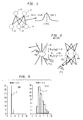
- 1 shows a node 10 which is connected to a node 11 and a node 12 by the connections 13 and 14. In this way, each connection is represented by a connection strength w ij . As shown, nodes 15 and 16 are also connected to nodes 11 and 12.
- a forward activation or detection pass consists of taking a random sample of a weight from the existing distribution by calculating the scalar product to produce an output for that pass. taking the sample through the equation Is found.
- a random variable which consists of a finite mean and a standard deviation is constructed based on a normal distribution (phi) with a vanishing mean and standard deviation one.
- Forward detection passes are therefore one-too many images, with each sample generating a different weight depending on the mean and standard deviation of that particular connection, with the system remaining stochastic.
- the mean of the weight distribution is modified as a function of the usual gradient based on the error, but it should be noted that the random sample point is retained for the gradient calculation and used to update the mean of the distribution for this synapse.
- the stochastic delta rule implements a local, adaptive simulated annealing process that occurs at different rates (rates) in the network, depending on the prediction history. More on this in the article entitled “Optimization by simulated annealing", Science, 220, 671-680, 1983 by Kirkpatrick S., Gelatt CD & Veechi, M. Various performance tests (benchmark tests) of this basic algorithm are described in one article entitled “stochastic version of the delta rule", Physica D, 1990, by SJ Hanson. Cell division
- the standard deviation of the weight distributions can be viewed as an uncertainty measure regarding the weight value and strength.
- changes in standard deviation can be seen as a measure of the "prediction value" of the compound.
- Hidden units with significant uncertainty have a low prediction value and do poor error reduction. If the uncertainty of a hidden unit increases over the cumulative weight value or the cumulative "signal" to that unit, then the complexity of the architecture can be weighed against the uncertainty per unit. As a result, the unit splits into two units, each of which copies half of the architectural information.
- Networks are initialized with random averages and variance values (with the variance initially selected in the interval (10, -10)).
- the number of hidden units has been initialized to one for all problems.
- the principles by which the splits occur are set for all tasks so that splitting occurs when both the CV (standard deviation relative to the mean) for the input and the output of this hidden unit exceeds 100%, that is, if the composite Variance of connection strengths 100% of the composite mean of connection strengths is:
- the cell division is then carried out as follows: A stochastic forward pass is performed, producing an output signal. The output is compared to target, which generates errors which are then used to update the mean and variance of the weight.
- the composite input and output variances and mean values are calculated for all hidden units.
- Node splitting takes place for these hidden units whose composite CVs are greater than 1.0; Each new node is assigned half the variance with a scattered (jittered) mean value, which is centered around the old mean value. There are no stopping criteria.
- the network stops creating nodes based on the prediction error and noise level ( ⁇ , zeta).
- the pre-meiotic node 20 splits into the meiotic nodes 20A and 20B, which have the same network connections but half the variance of the pre-meiotic node 20.
- the meiotic nodes 20A and 20B are copies of the mean.
- Parity benchmark determining the correct number of units.
- FIG. 3 shows 50 runs of the exclusive-or problem and 50 runs of the 3-bit parity problem. Histograms for the exclusive-or problem show that almost all runs (more than 95%) ended with two hidden units, whereas in the 3-bit parity case, most runs resulted in three hidden units, but with considerably increased variance, some with two, the other few runs even ended with 9 hidden units.
- FIG. 4 shows histograms for the convergence time, from which there is a slight advantage in terms of convergence for the cell division networks both for the exclusive-or problem and for the 3-bit parity problem.
- the data in FIG. 5 come from ten different continuous types of blood measurements, including the total lipid content, cholesterol (mg / dl), high-density lipids, low-density lipids, triglycerides, etc. and also some NMR measurements. Subjects had previously been examined for the presence (C) or absence (N) of a blood disorder.
- the data consisted of 238 samples, 146 Ns and 982 Cs.
- the response of a perceptron (linear discriminant analysis) to this data is shown in the adjacent figure.
- Each original data point is projected into the first two discriminant variables, with approximately 75% of the data proving to be linearly separable (k - k / 2 jackknife tests (jackknife tests) indicate transfer rates of approximately 52%).
- k - k / 2 jackknife tests indicate transfer rates of approximately 52%).
- the data were divided into two groups (118, 120) for learning and transfer tests. Learning curves for both the cell division network and for standard back propagation are shown in FIG. 6. The splitting rate for the cell division network is also shown here, and it can be seen that it grows to seven hidden units and freezes during the first twenty runs.
- the key feature of the present method is the integration of display aspects that are sensitive to the network prediction and at the same time control the architecture resources of the network.
- Cell division networks it is possible to control network complexity dynamically and opportunistically and thus indirectly also its learning efficiency and its ability to generalize (generalization capacity).
- Cell division networks were defined using local noise injections and noise-related learning rules.
- the cell division network can measure the prediction history of certain nodes and, if found to be inadequate, can opportunistically split the node to conserve the resources of the Network. Further experimentation is needed to understand various advantages of the principles of division and their effects on generalization and learning speed.
Landscapes
- Engineering & Computer Science (AREA)
- Theoretical Computer Science (AREA)
- Physics & Mathematics (AREA)
- Data Mining & Analysis (AREA)
- General Health & Medical Sciences (AREA)
- Biomedical Technology (AREA)
- Biophysics (AREA)
- Computational Linguistics (AREA)
- Life Sciences & Earth Sciences (AREA)
- Evolutionary Computation (AREA)
- Artificial Intelligence (AREA)
- Molecular Biology (AREA)
- Computing Systems (AREA)
- General Engineering & Computer Science (AREA)
- General Physics & Mathematics (AREA)
- Mathematical Physics (AREA)
- Software Systems (AREA)
- Health & Medical Sciences (AREA)
- Management, Administration, Business Operations System, And Electronic Commerce (AREA)
Applications Claiming Priority (2)
| Application Number | Priority Date | Filing Date | Title |
|---|---|---|---|
| US59026990A | 1990-09-28 | 1990-09-28 | |
| US590269 | 1990-09-28 |
Publications (2)
| Publication Number | Publication Date |
|---|---|
| EP0477733A2 true EP0477733A2 (de) | 1992-04-01 |
| EP0477733A3 EP0477733A3 (OSRAM) | 1994-02-09 |
Family
ID=24361568
Family Applications (1)
| Application Number | Title | Priority Date | Filing Date |
|---|---|---|---|
| EP91115771A Ceased EP0477733A2 (de) | 1990-09-28 | 1991-09-17 | Zellteilungsnetzwerke zur Inplementierung lernender Netzwerkkonfigurationen |
Country Status (1)
| Country | Link |
|---|---|
| EP (1) | EP0477733A2 (OSRAM) |
Family Cites Families (1)
| Publication number | Priority date | Publication date | Assignee | Title |
|---|---|---|---|---|
| US5093899A (en) * | 1988-09-17 | 1992-03-03 | Sony Corporation | Neural network with normalized learning constant for high-speed stable learning |
-
1991
- 1991-09-17 EP EP91115771A patent/EP0477733A2/de not_active Ceased
Also Published As
| Publication number | Publication date |
|---|---|
| EP0477733A3 (OSRAM) | 1994-02-09 |
Similar Documents
| Publication | Publication Date | Title |
|---|---|---|
| Hanson | Meiosis networks | |
| DE69216077T2 (de) | Praediktives selbst-organisierendes neuronales netzwerk | |
| DE69327615T2 (de) | Verfahren und Vorrichtung zur Partikelanalyse | |
| DE3854663T2 (de) | Neurorechnersystem zur lösung von optimierungsproblemen. | |
| DE68926796T2 (de) | System und Verfahren für automatische Zellenklassifizierung, basierend auf ein Neuronalnetzwerk | |
| DE69423228T2 (de) | Unüberwachtes klassifizierungsverfahren mit neuronalem netzwerk mit back propagation | |
| EP0910023A2 (de) | Verfahren und Anordnung zur neuronalen Modellierung eines dynamischen Systems mit nichtlinearem stochastischem Verhalten | |
| DE10296704T5 (de) | Fuzzy-Inferenznetzwerk zur Klassifizierung von hochdimensionalen Daten | |
| DE3938645C1 (OSRAM) | ||
| DE69330021T2 (de) | Verbessertes System zur Mustererkennung für Sonar und andere Anwendungen | |
| EP3959660B1 (de) | Training trainierbarer module mit lern-daten, deren labels verrauscht sind | |
| Şen | Artificial neural networks | |
| EP0750764B1 (de) | Verfahren und anordnung zur fuzzy-regelung | |
| WO1999014686A2 (de) | Verfahren zur erfassung zeitabhängiger moden dynamischer systeme | |
| EP0890153B1 (de) | Verfahren zur ermittlung von zur entfernung geeigneten gewichten eines neuronalen netzes mit hilfe eines rechners | |
| EP1934895A2 (de) | Verfahren zum rechnergestützten lernen eines neuronalen netzes und neuronales netz | |
| DE4417932B4 (de) | Verfahren und ein System zum Erhalten von Zieleinstellbeträgen für Ausführungsparameter durch Lernen einer Mehrzahl von Sätzen von Muster-Eingabedaten und Muster-Ausgabedaten | |
| DE19703964C1 (de) | Verfahren zur Transformation einer zur Nachbildung eines technischen Prozesses dienenden Fuzzy-Logik in ein neuronales Netz | |
| DE102021004988A1 (de) | Computerimplementiertes Verfahren zur Bestimmung von Erkrankungen, die sich auf die morphologischen Merkmale und die zytoplasmatische Komplexität von Blutzellen auswirken | |
| WO2022043585A1 (de) | System zur automatisierten harmonisierung strukturierter daten aus verschiedenen erfassungseinrichtungen | |
| DE19537010A1 (de) | Lernverfahren und -anordnung zur Nachbildung eines dynamischen Prozesses durch gemeinsames Erlernen von mindestens zwei Zeitreihen, welche jeweils verschiedene Prozeßobservable darstellen | |
| EP0978052B1 (de) | Rechnergestütztes verfahren zur auswahl von trainingsdaten für ein neuronales netz | |
| EP0477733A2 (de) | Zellteilungsnetzwerke zur Inplementierung lernender Netzwerkkonfigurationen | |
| EP1114398B1 (de) | Verfahren zum trainieren eines neuronalen netzes, verfahren zur klassifikation einer folge von eingangsgrössen unter verwendung eines neuronalen netzes, neuronales netz und anordnung zum trainieren eines neuronalen netzes | |
| DE102022201853A1 (de) | Erkennung kritischer Verkehrssituationen mit Petri-Netzen |
Legal Events
| Date | Code | Title | Description |
|---|---|---|---|
| PUAI | Public reference made under article 153(3) epc to a published international application that has entered the european phase |
Free format text: ORIGINAL CODE: 0009012 |
|
| AK | Designated contracting states |
Kind code of ref document: A2 Designated state(s): DE FR GB IT |
|
| PUAL | Search report despatched |
Free format text: ORIGINAL CODE: 0009013 |
|
| AK | Designated contracting states |
Kind code of ref document: A3 Designated state(s): DE FR GB IT |
|
| 17P | Request for examination filed |
Effective date: 19940303 |
|
| 17Q | First examination report despatched |
Effective date: 19941103 |
|
| GRAG | Despatch of communication of intention to grant |
Free format text: ORIGINAL CODE: EPIDOS AGRA |
|
| STAA | Information on the status of an ep patent application or granted ep patent |
Free format text: STATUS: THE APPLICATION HAS BEEN REFUSED |
|
| 18R | Application refused |
Effective date: 19980123 |