EP0476038B1 - Chemical products - Google Patents
Chemical products Download PDFInfo
- Publication number
- EP0476038B1 EP0476038B1 EP90909689A EP90909689A EP0476038B1 EP 0476038 B1 EP0476038 B1 EP 0476038B1 EP 90909689 A EP90909689 A EP 90909689A EP 90909689 A EP90909689 A EP 90909689A EP 0476038 B1 EP0476038 B1 EP 0476038B1
- Authority
- EP
- European Patent Office
- Prior art keywords
- polyamine
- separation medium
- factor viii
- buffer
- groups
- Prior art date
- Legal status (The legal status is an assumption and is not a legal conclusion. Google has not performed a legal analysis and makes no representation as to the accuracy of the status listed.)
- Expired - Lifetime
Links
- 239000000126 substance Substances 0.000 title claims description 5
- 108010054218 Factor VIII Proteins 0.000 claims abstract description 93
- 102000001690 Factor VIII Human genes 0.000 claims abstract description 93
- 229960000301 factor viii Drugs 0.000 claims abstract description 92
- 229920000768 polyamine Polymers 0.000 claims abstract description 65
- 238000000926 separation method Methods 0.000 claims abstract description 43
- 125000004433 nitrogen atom Chemical group N* 0.000 claims abstract description 26
- 102000004169 proteins and genes Human genes 0.000 claims abstract description 25
- 108090000623 proteins and genes Proteins 0.000 claims abstract description 25
- 125000004432 carbon atom Chemical group C* 0.000 claims abstract description 24
- 239000011159 matrix material Substances 0.000 claims abstract description 24
- 238000000034 method Methods 0.000 claims description 32
- BRLQWZUYTZBJKN-UHFFFAOYSA-N Epichlorohydrin Chemical group ClCC1CO1 BRLQWZUYTZBJKN-UHFFFAOYSA-N 0.000 claims description 31
- 239000000243 solution Substances 0.000 claims description 27
- VILCJCGEZXAXTO-UHFFFAOYSA-N 2,2,2-tetramine Chemical compound NCCNCCNCCN VILCJCGEZXAXTO-UHFFFAOYSA-N 0.000 claims description 24
- 238000010828 elution Methods 0.000 claims description 14
- PFKFTWBEEFSNDU-UHFFFAOYSA-N carbonyldiimidazole Chemical compound C1=CN=CN1C(=O)N1C=CN=C1 PFKFTWBEEFSNDU-UHFFFAOYSA-N 0.000 claims description 13
- 230000008878 coupling Effects 0.000 claims description 11
- 238000010168 coupling process Methods 0.000 claims description 11
- 238000005859 coupling reaction Methods 0.000 claims description 11
- 239000000463 material Substances 0.000 claims description 11
- 239000003792 electrolyte Substances 0.000 claims description 9
- SHKUUQIDMUMQQK-UHFFFAOYSA-N 2-[4-(oxiran-2-ylmethoxy)butoxymethyl]oxirane Chemical compound C1OC1COCCCCOCC1CO1 SHKUUQIDMUMQQK-UHFFFAOYSA-N 0.000 claims description 8
- 238000011068 loading method Methods 0.000 claims description 8
- 239000012160 loading buffer Substances 0.000 claims description 7
- 125000002947 alkylene group Chemical group 0.000 claims description 6
- 238000005406 washing Methods 0.000 claims description 5
- 229920000936 Agarose Polymers 0.000 claims description 4
- VYPSYNLAJGMNEJ-UHFFFAOYSA-N Silicium dioxide Chemical compound O=[Si]=O VYPSYNLAJGMNEJ-UHFFFAOYSA-N 0.000 claims description 4
- 239000003153 chemical reaction reagent Substances 0.000 claims description 4
- 229920001281 polyalkylene Polymers 0.000 claims description 4
- 125000002950 monocyclic group Chemical group 0.000 claims description 3
- 229920002307 Dextran Polymers 0.000 claims description 2
- 239000001913 cellulose Substances 0.000 claims description 2
- 229920002678 cellulose Polymers 0.000 claims description 2
- 238000004440 column chromatography Methods 0.000 claims description 2
- 125000004122 cyclic group Chemical group 0.000 claims description 2
- 125000002993 cycloalkylene group Chemical group 0.000 claims description 2
- 229920002401 polyacrylamide Polymers 0.000 claims description 2
- 125000003367 polycyclic group Chemical group 0.000 claims description 2
- 239000000377 silicon dioxide Substances 0.000 claims description 2
- 239000011543 agarose gel Substances 0.000 claims 1
- FAPWRFPIFSIZLT-UHFFFAOYSA-M Sodium chloride Chemical compound [Na+].[Cl-] FAPWRFPIFSIZLT-UHFFFAOYSA-M 0.000 description 94
- 239000000872 buffer Substances 0.000 description 60
- 239000011780 sodium chloride Substances 0.000 description 47
- 229920002684 Sepharose Polymers 0.000 description 46
- 239000000499 gel Substances 0.000 description 32
- 239000003446 ligand Substances 0.000 description 30
- 235000018102 proteins Nutrition 0.000 description 22
- 238000000746 purification Methods 0.000 description 21
- 210000002381 plasma Anatomy 0.000 description 20
- HEMHJVSKTPXQMS-UHFFFAOYSA-M Sodium hydroxide Chemical compound [OH-].[Na+] HEMHJVSKTPXQMS-UHFFFAOYSA-M 0.000 description 18
- 230000000694 effects Effects 0.000 description 18
- XLYOFNOQVPJJNP-UHFFFAOYSA-N water Substances O XLYOFNOQVPJJNP-UHFFFAOYSA-N 0.000 description 18
- 239000012141 concentrate Substances 0.000 description 16
- 239000006228 supernatant Substances 0.000 description 16
- 229920005654 Sephadex Polymers 0.000 description 13
- 239000012507 Sephadex™ Substances 0.000 description 13
- 239000000203 mixture Substances 0.000 description 13
- QTBSBXVTEAMEQO-UHFFFAOYSA-N Acetic acid Chemical compound CC(O)=O QTBSBXVTEAMEQO-UHFFFAOYSA-N 0.000 description 12
- PEDCQBHIVMGVHV-UHFFFAOYSA-N Glycerine Chemical compound OCC(O)CO PEDCQBHIVMGVHV-UHFFFAOYSA-N 0.000 description 12
- 229920000669 heparin Polymers 0.000 description 12
- 238000005119 centrifugation Methods 0.000 description 11
- HTTJABKRGRZYRN-UHFFFAOYSA-N Heparin Chemical compound OC1C(NC(=O)C)C(O)OC(COS(O)(=O)=O)C1OC1C(OS(O)(=O)=O)C(O)C(OC2C(C(OS(O)(=O)=O)C(OC3C(C(O)C(O)C(O3)C(O)=O)OS(O)(=O)=O)C(CO)O2)NS(O)(=O)=O)C(C(O)=O)O1 HTTJABKRGRZYRN-UHFFFAOYSA-N 0.000 description 10
- 229960002897 heparin Drugs 0.000 description 10
- CSCPPACGZOOCGX-UHFFFAOYSA-N Acetone Chemical compound CC(C)=O CSCPPACGZOOCGX-UHFFFAOYSA-N 0.000 description 9
- 108010049003 Fibrinogen Proteins 0.000 description 9
- 102000008946 Fibrinogen Human genes 0.000 description 9
- 102100037362 Fibronectin Human genes 0.000 description 9
- 108010067306 Fibronectins Proteins 0.000 description 9
- 229940012952 fibrinogen Drugs 0.000 description 9
- 150000003839 salts Chemical class 0.000 description 9
- 108010047303 von Willebrand Factor Proteins 0.000 description 9
- 102100036537 von Willebrand factor Human genes 0.000 description 9
- 229960001134 von willebrand factor Drugs 0.000 description 9
- 239000012506 Sephacryl® Substances 0.000 description 7
- 238000004587 chromatography analysis Methods 0.000 description 7
- 150000001875 compounds Chemical class 0.000 description 7
- 239000007822 coupling agent Substances 0.000 description 7
- 125000002924 primary amino group Chemical group [H]N([H])* 0.000 description 7
- 108010094028 Prothrombin Proteins 0.000 description 6
- 238000011084 recovery Methods 0.000 description 6
- NHJVRSWLHSJWIN-UHFFFAOYSA-N 2,4,6-trinitrobenzenesulfonic acid Chemical compound OS(=O)(=O)C1=C([N+]([O-])=O)C=C([N+]([O-])=O)C=C1[N+]([O-])=O NHJVRSWLHSJWIN-UHFFFAOYSA-N 0.000 description 5
- UXVMQQNJUSDDNG-UHFFFAOYSA-L Calcium chloride Chemical compound [Cl-].[Cl-].[Ca+2] UXVMQQNJUSDDNG-UHFFFAOYSA-L 0.000 description 5
- 102100027378 Prothrombin Human genes 0.000 description 5
- 125000003277 amino group Chemical group 0.000 description 5
- 239000001110 calcium chloride Substances 0.000 description 5
- 229910001628 calcium chloride Inorganic materials 0.000 description 5
- 235000011148 calcium chloride Nutrition 0.000 description 5
- 238000006243 chemical reaction Methods 0.000 description 5
- QJGQUHMNIGDVPM-UHFFFAOYSA-N nitrogen group Chemical group [N] QJGQUHMNIGDVPM-UHFFFAOYSA-N 0.000 description 5
- 238000002360 preparation method Methods 0.000 description 5
- 229940039716 prothrombin Drugs 0.000 description 5
- 239000002904 solvent Substances 0.000 description 5
- QTBSBXVTEAMEQO-UHFFFAOYSA-M Acetate Chemical compound CC([O-])=O QTBSBXVTEAMEQO-UHFFFAOYSA-M 0.000 description 4
- OKTJSMMVPCPJKN-UHFFFAOYSA-N Carbon Chemical group [C] OKTJSMMVPCPJKN-UHFFFAOYSA-N 0.000 description 4
- LFQSCWFLJHTTHZ-UHFFFAOYSA-N Ethanol Chemical compound CCO LFQSCWFLJHTTHZ-UHFFFAOYSA-N 0.000 description 4
- BVHLGVCQOALMSV-JEDNCBNOSA-N L-lysine hydrochloride Chemical compound Cl.NCCCC[C@H](N)C(O)=O BVHLGVCQOALMSV-JEDNCBNOSA-N 0.000 description 4
- 229920002873 Polyethylenimine Polymers 0.000 description 4
- 239000007983 Tris buffer Substances 0.000 description 4
- 125000002887 hydroxy group Chemical group [H]O* 0.000 description 4
- -1 pH 5.50 (4.0 ml) Chemical compound 0.000 description 4
- 239000002244 precipitate Substances 0.000 description 4
- 239000007858 starting material Substances 0.000 description 4
- LENZDBCJOHFCAS-UHFFFAOYSA-N tris Chemical compound OCC(N)(CO)CO LENZDBCJOHFCAS-UHFFFAOYSA-N 0.000 description 4
- 102000015081 Blood Coagulation Factors Human genes 0.000 description 3
- 108010039209 Blood Coagulation Factors Proteins 0.000 description 3
- 229910002476 CuII Inorganic materials 0.000 description 3
- RPNUMPOLZDHAAY-UHFFFAOYSA-N Diethylenetriamine Chemical compound NCCNCCN RPNUMPOLZDHAAY-UHFFFAOYSA-N 0.000 description 3
- PIICEJLVQHRZGT-UHFFFAOYSA-N Ethylenediamine Chemical compound NCCN PIICEJLVQHRZGT-UHFFFAOYSA-N 0.000 description 3
- OKKJLVBELUTLKV-UHFFFAOYSA-N Methanol Chemical compound OC OKKJLVBELUTLKV-UHFFFAOYSA-N 0.000 description 3
- KWYUFKZDYYNOTN-UHFFFAOYSA-M Potassium hydroxide Chemical compound [OH-].[K+] KWYUFKZDYYNOTN-UHFFFAOYSA-M 0.000 description 3
- 238000003556 assay Methods 0.000 description 3
- 239000003114 blood coagulation factor Substances 0.000 description 3
- 238000009835 boiling Methods 0.000 description 3
- 229910052799 carbon Inorganic materials 0.000 description 3
- 238000004821 distillation Methods 0.000 description 3
- RAXXELZNTBOGNW-UHFFFAOYSA-N imidazole Natural products C1=CNC=N1 RAXXELZNTBOGNW-UHFFFAOYSA-N 0.000 description 3
- INQOMBQAUSQDDS-UHFFFAOYSA-N iodomethane Chemical compound IC INQOMBQAUSQDDS-UHFFFAOYSA-N 0.000 description 3
- 125000005647 linker group Chemical group 0.000 description 3
- 229960003646 lysine Drugs 0.000 description 3
- 125000001570 methylene group Chemical group [H]C([H])([*:1])[*:2] 0.000 description 3
- 229920000083 poly(allylamine) Polymers 0.000 description 3
- 239000000047 product Substances 0.000 description 3
- 230000005588 protonation Effects 0.000 description 3
- 238000010992 reflux Methods 0.000 description 3
- 239000007787 solid Substances 0.000 description 3
- 238000001179 sorption measurement Methods 0.000 description 3
- 125000001424 substituent group Chemical group 0.000 description 3
- 238000006467 substitution reaction Methods 0.000 description 3
- 238000003786 synthesis reaction Methods 0.000 description 3
- STCOOQWBFONSKY-UHFFFAOYSA-N tributyl phosphate Chemical compound CCCCOP(=O)(OCCCC)OCCCC STCOOQWBFONSKY-UHFFFAOYSA-N 0.000 description 3
- VEFLKXRACNJHOV-UHFFFAOYSA-N 1,3-dibromopropane Chemical compound BrCCCBr VEFLKXRACNJHOV-UHFFFAOYSA-N 0.000 description 2
- NLXLAEXVIDQMFP-UHFFFAOYSA-N Ammonia chloride Chemical compound [NH4+].[Cl-] NLXLAEXVIDQMFP-UHFFFAOYSA-N 0.000 description 2
- IJGRMHOSHXDMSA-UHFFFAOYSA-N Atomic nitrogen Chemical compound N#N IJGRMHOSHXDMSA-UHFFFAOYSA-N 0.000 description 2
- VGGSQFUCUMXWEO-UHFFFAOYSA-N Ethene Chemical compound C=C VGGSQFUCUMXWEO-UHFFFAOYSA-N 0.000 description 2
- 239000005977 Ethylene Substances 0.000 description 2
- DHMQDGOQFOQNFH-UHFFFAOYSA-N Glycine Chemical compound NCC(O)=O DHMQDGOQFOQNFH-UHFFFAOYSA-N 0.000 description 2
- CDBYLPFSWZWCQE-UHFFFAOYSA-L Sodium Carbonate Chemical compound [Na+].[Na+].[O-]C([O-])=O CDBYLPFSWZWCQE-UHFFFAOYSA-L 0.000 description 2
- PMZURENOXWZQFD-UHFFFAOYSA-L Sodium Sulfate Chemical compound [Na+].[Na+].[O-]S([O-])(=O)=O PMZURENOXWZQFD-UHFFFAOYSA-L 0.000 description 2
- PXIPVTKHYLBLMZ-UHFFFAOYSA-N Sodium azide Chemical compound [Na+].[N-]=[N+]=[N-] PXIPVTKHYLBLMZ-UHFFFAOYSA-N 0.000 description 2
- 241000700605 Viruses Species 0.000 description 2
- 229930003448 Vitamin K Natural products 0.000 description 2
- 230000004913 activation Effects 0.000 description 2
- 150000001412 amines Chemical class 0.000 description 2
- 125000004103 aminoalkyl group Chemical group 0.000 description 2
- 238000009739 binding Methods 0.000 description 2
- 230000015572 biosynthetic process Effects 0.000 description 2
- OWMVSZAMULFTJU-UHFFFAOYSA-N bis-tris Chemical compound OCCN(CCO)C(CO)(CO)CO OWMVSZAMULFTJU-UHFFFAOYSA-N 0.000 description 2
- 238000011088 calibration curve Methods 0.000 description 2
- 239000000356 contaminant Substances 0.000 description 2
- 230000001419 dependent effect Effects 0.000 description 2
- 238000002474 experimental method Methods 0.000 description 2
- 238000001914 filtration Methods 0.000 description 2
- 239000011521 glass Substances 0.000 description 2
- ZFGMDIBRIDKWMY-PASTXAENSA-N heparin Chemical compound CC(O)=N[C@@H]1[C@@H](O)[C@H](O)[C@@H](COS(O)(=O)=O)O[C@@H]1O[C@@H]1[C@@H](C(O)=O)O[C@@H](O[C@H]2[C@@H]([C@@H](OS(O)(=O)=O)[C@@H](O[C@@H]3[C@@H](OC(O)[C@H](OS(O)(=O)=O)[C@H]3O)C(O)=O)O[C@@H]2O)CS(O)(=O)=O)[C@H](O)[C@H]1O ZFGMDIBRIDKWMY-PASTXAENSA-N 0.000 description 2
- 238000002955 isolation Methods 0.000 description 2
- 239000007788 liquid Substances 0.000 description 2
- 238000005374 membrane filtration Methods 0.000 description 2
- 125000004043 oxo group Chemical group O=* 0.000 description 2
- 239000008188 pellet Substances 0.000 description 2
- 230000002572 peristaltic effect Effects 0.000 description 2
- SHUZOJHMOBOZST-UHFFFAOYSA-N phylloquinone Natural products CC(C)CCCCC(C)CCC(C)CCCC(=CCC1=C(C)C(=O)c2ccccc2C1=O)C SHUZOJHMOBOZST-UHFFFAOYSA-N 0.000 description 2
- 235000010482 polyoxyethylene sorbitan monooleate Nutrition 0.000 description 2
- 229920000053 polysorbate 80 Polymers 0.000 description 2
- 239000012279 sodium borohydride Substances 0.000 description 2
- 229910000033 sodium borohydride Inorganic materials 0.000 description 2
- 239000001509 sodium citrate Substances 0.000 description 2
- 239000000725 suspension Substances 0.000 description 2
- 238000010257 thawing Methods 0.000 description 2
- 229910052723 transition metal Inorganic materials 0.000 description 2
- 150000003624 transition metals Chemical class 0.000 description 2
- 235000019168 vitamin K Nutrition 0.000 description 2
- 239000011712 vitamin K Substances 0.000 description 2
- 150000003721 vitamin K derivatives Chemical class 0.000 description 2
- 229940046010 vitamin k Drugs 0.000 description 2
- XFNJYAKDBJUJAJ-UHFFFAOYSA-N 1,2-dibromopropane Chemical compound CC(Br)CBr XFNJYAKDBJUJAJ-UHFFFAOYSA-N 0.000 description 1
- BFSVOASYOCHEOV-UHFFFAOYSA-N 2-diethylaminoethanol Chemical compound CCN(CC)CCO BFSVOASYOCHEOV-UHFFFAOYSA-N 0.000 description 1
- SLXKOJJOQWFEFD-UHFFFAOYSA-N 6-aminohexanoic acid Chemical compound NCCCCCC(O)=O SLXKOJJOQWFEFD-UHFFFAOYSA-N 0.000 description 1
- 102000004506 Blood Proteins Human genes 0.000 description 1
- 108010017384 Blood Proteins Proteins 0.000 description 1
- 238000009010 Bradford assay Methods 0.000 description 1
- SGHZXLIDFTYFHQ-UHFFFAOYSA-L Brilliant Blue Chemical compound [Na+].[Na+].C=1C=C(C(=C2C=CC(C=C2)=[N+](CC)CC=2C=C(C=CC=2)S([O-])(=O)=O)C=2C(=CC=CC=2)S([O-])(=O)=O)C=CC=1N(CC)CC1=CC=CC(S([O-])(=O)=O)=C1 SGHZXLIDFTYFHQ-UHFFFAOYSA-L 0.000 description 1
- BHPQYMZQTOCNFJ-UHFFFAOYSA-N Calcium cation Chemical compound [Ca+2] BHPQYMZQTOCNFJ-UHFFFAOYSA-N 0.000 description 1
- KXDHJXZQYSOELW-UHFFFAOYSA-M Carbamate Chemical compound NC([O-])=O KXDHJXZQYSOELW-UHFFFAOYSA-M 0.000 description 1
- 206010053567 Coagulopathies Diseases 0.000 description 1
- 229910021592 Copper(II) chloride Inorganic materials 0.000 description 1
- JPVYNHNXODAKFH-UHFFFAOYSA-N Cu2+ Chemical compound [Cu+2] JPVYNHNXODAKFH-UHFFFAOYSA-N 0.000 description 1
- 108010076282 Factor IX Proteins 0.000 description 1
- 108010014173 Factor X Proteins 0.000 description 1
- 239000004471 Glycine Substances 0.000 description 1
- 208000031220 Hemophilia Diseases 0.000 description 1
- 208000009292 Hemophilia A Diseases 0.000 description 1
- 238000007126 N-alkylation reaction Methods 0.000 description 1
- 229930006000 Sucrose Natural products 0.000 description 1
- CZMRCDWAGMRECN-UGDNZRGBSA-N Sucrose Chemical compound O[C@H]1[C@H](O)[C@@H](CO)O[C@@]1(CO)O[C@@H]1[C@H](O)[C@@H](O)[C@H](O)[C@@H](CO)O1 CZMRCDWAGMRECN-UGDNZRGBSA-N 0.000 description 1
- CKUAXEQHGKSLHN-UHFFFAOYSA-N [C].[N] Chemical compound [C].[N] CKUAXEQHGKSLHN-UHFFFAOYSA-N 0.000 description 1
- 238000010521 absorption reaction Methods 0.000 description 1
- 239000008351 acetate buffer Substances 0.000 description 1
- 238000002479 acid--base titration Methods 0.000 description 1
- 239000012445 acidic reagent Substances 0.000 description 1
- 230000002378 acidificating effect Effects 0.000 description 1
- 239000003463 adsorbent Substances 0.000 description 1
- 150000001335 aliphatic alkanes Chemical class 0.000 description 1
- 125000000217 alkyl group Chemical group 0.000 description 1
- 150000001350 alkyl halides Chemical class 0.000 description 1
- 239000002168 alkylating agent Substances 0.000 description 1
- 229940100198 alkylating agent Drugs 0.000 description 1
- 230000029936 alkylation Effects 0.000 description 1
- 238000005804 alkylation reaction Methods 0.000 description 1
- 125000005263 alkylenediamine group Chemical group 0.000 description 1
- WNROFYMDJYEPJX-UHFFFAOYSA-K aluminium hydroxide Chemical compound [OH-].[OH-].[OH-].[Al+3] WNROFYMDJYEPJX-UHFFFAOYSA-K 0.000 description 1
- 229910021502 aluminium hydroxide Inorganic materials 0.000 description 1
- 229960002684 aminocaproic acid Drugs 0.000 description 1
- 235000019270 ammonium chloride Nutrition 0.000 description 1
- BFNBIHQBYMNNAN-UHFFFAOYSA-N ammonium sulfate Chemical compound N.N.OS(O)(=O)=O BFNBIHQBYMNNAN-UHFFFAOYSA-N 0.000 description 1
- 229910052921 ammonium sulfate Inorganic materials 0.000 description 1
- 239000001166 ammonium sulphate Substances 0.000 description 1
- 235000011130 ammonium sulphate Nutrition 0.000 description 1
- 239000007864 aqueous solution Substances 0.000 description 1
- 238000003149 assay kit Methods 0.000 description 1
- 210000004369 blood Anatomy 0.000 description 1
- 239000008280 blood Substances 0.000 description 1
- 229940019700 blood coagulation factors Drugs 0.000 description 1
- 229910021538 borax Inorganic materials 0.000 description 1
- 239000007853 buffer solution Substances 0.000 description 1
- 239000006227 byproduct Substances 0.000 description 1
- 229910001424 calcium ion Inorganic materials 0.000 description 1
- 125000002915 carbonyl group Chemical group [*:2]C([*:1])=O 0.000 description 1
- 230000035602 clotting Effects 0.000 description 1
- AGVAZMGAQJOSFJ-WZHZPDAFSA-M cobalt(2+);[(2r,3s,4r,5s)-5-(5,6-dimethylbenzimidazol-1-yl)-4-hydroxy-2-(hydroxymethyl)oxolan-3-yl] [(2r)-1-[3-[(1r,2r,3r,4z,7s,9z,12s,13s,14z,17s,18s,19r)-2,13,18-tris(2-amino-2-oxoethyl)-7,12,17-tris(3-amino-3-oxopropyl)-3,5,8,8,13,15,18,19-octamethyl-2 Chemical compound [Co+2].N#[C-].[N-]([C@@H]1[C@H](CC(N)=O)[C@@]2(C)CCC(=O)NC[C@@H](C)OP(O)(=O)O[C@H]3[C@H]([C@H](O[C@@H]3CO)N3C4=CC(C)=C(C)C=C4N=C3)O)\C2=C(C)/C([C@H](C\2(C)C)CCC(N)=O)=N/C/2=C\C([C@H]([C@@]/2(CC(N)=O)C)CCC(N)=O)=N\C\2=C(C)/C2=N[C@]1(C)[C@@](C)(CC(N)=O)[C@@H]2CCC(N)=O AGVAZMGAQJOSFJ-WZHZPDAFSA-M 0.000 description 1
- 229940125782 compound 2 Drugs 0.000 description 1
- 238000001816 cooling Methods 0.000 description 1
- 229920001577 copolymer Polymers 0.000 description 1
- ORTQZVOHEJQUHG-UHFFFAOYSA-L copper(II) chloride Chemical compound Cl[Cu]Cl ORTQZVOHEJQUHG-UHFFFAOYSA-L 0.000 description 1
- ATDGTVJJHBUTRL-UHFFFAOYSA-N cyanogen bromide Chemical compound BrC#N ATDGTVJJHBUTRL-UHFFFAOYSA-N 0.000 description 1
- 230000007812 deficiency Effects 0.000 description 1
- 239000003599 detergent Substances 0.000 description 1
- 238000011161 development Methods 0.000 description 1
- 238000007865 diluting Methods 0.000 description 1
- 230000003292 diminished effect Effects 0.000 description 1
- UQGFMSUEHSUPRD-UHFFFAOYSA-N disodium;3,7-dioxido-2,4,6,8,9-pentaoxa-1,3,5,7-tetraborabicyclo[3.3.1]nonane Chemical compound [Na+].[Na+].O1B([O-])OB2OB([O-])OB1O2 UQGFMSUEHSUPRD-UHFFFAOYSA-N 0.000 description 1
- 238000004090 dissolution Methods 0.000 description 1
- 238000011067 equilibration Methods 0.000 description 1
- 238000005194 fractionation Methods 0.000 description 1
- 239000004023 fresh frozen plasma Substances 0.000 description 1
- 125000000524 functional group Chemical group 0.000 description 1
- 238000002523 gelfiltration Methods 0.000 description 1
- 238000007429 general method Methods 0.000 description 1
- 229910001679 gibbsite Inorganic materials 0.000 description 1
- VOZRXNHHFUQHIL-UHFFFAOYSA-N glycidyl methacrylate Chemical compound CC(=C)C(=O)OCC1CO1 VOZRXNHHFUQHIL-UHFFFAOYSA-N 0.000 description 1
- 238000010438 heat treatment Methods 0.000 description 1
- 125000004435 hydrogen atom Chemical group [H]* 0.000 description 1
- 230000002779 inactivation Effects 0.000 description 1
- 229910010272 inorganic material Inorganic materials 0.000 description 1
- 239000011147 inorganic material Substances 0.000 description 1
- 239000002198 insoluble material Substances 0.000 description 1
- 238000011835 investigation Methods 0.000 description 1
- 229960005337 lysine hydrochloride Drugs 0.000 description 1
- 238000005259 measurement Methods 0.000 description 1
- DTSDBGVDESRKKD-UHFFFAOYSA-N n'-(2-aminoethyl)propane-1,3-diamine Chemical compound NCCCNCCN DTSDBGVDESRKKD-UHFFFAOYSA-N 0.000 description 1
- LSHROXHEILXKHM-UHFFFAOYSA-N n'-[2-[2-[2-(2-aminoethylamino)ethylamino]ethylamino]ethyl]ethane-1,2-diamine Chemical compound NCCNCCNCCNCCNCCN LSHROXHEILXKHM-UHFFFAOYSA-N 0.000 description 1
- 229910052757 nitrogen Inorganic materials 0.000 description 1
- 125000004430 oxygen atom Chemical group O* 0.000 description 1
- 235000015497 potassium bicarbonate Nutrition 0.000 description 1
- 229910000028 potassium bicarbonate Inorganic materials 0.000 description 1
- 239000011736 potassium bicarbonate Substances 0.000 description 1
- TYJJADVDDVDEDZ-UHFFFAOYSA-M potassium hydrogencarbonate Chemical compound [K+].OC([O-])=O TYJJADVDDVDEDZ-UHFFFAOYSA-M 0.000 description 1
- 229940086066 potassium hydrogencarbonate Drugs 0.000 description 1
- 239000003755 preservative agent Substances 0.000 description 1
- 230000002335 preservative effect Effects 0.000 description 1
- 150000003141 primary amines Chemical group 0.000 description 1
- 235000004252 protein component Nutrition 0.000 description 1
- 230000006920 protein precipitation Effects 0.000 description 1
- 229920006395 saturated elastomer Polymers 0.000 description 1
- 229910000029 sodium carbonate Inorganic materials 0.000 description 1
- NLJMYIDDQXHKNR-UHFFFAOYSA-K sodium citrate Chemical compound O.O.[Na+].[Na+].[Na+].[O-]C(=O)CC(O)(CC([O-])=O)C([O-])=O NLJMYIDDQXHKNR-UHFFFAOYSA-K 0.000 description 1
- 229910052938 sodium sulfate Inorganic materials 0.000 description 1
- 235000011152 sodium sulphate Nutrition 0.000 description 1
- 239000004328 sodium tetraborate Substances 0.000 description 1
- 235000010339 sodium tetraborate Nutrition 0.000 description 1
- 125000006850 spacer group Chemical group 0.000 description 1
- 238000010561 standard procedure Methods 0.000 description 1
- 238000003756 stirring Methods 0.000 description 1
- 239000000758 substrate Substances 0.000 description 1
- 239000005720 sucrose Substances 0.000 description 1
- 150000005846 sugar alcohols Polymers 0.000 description 1
- 229920001059 synthetic polymer Polymers 0.000 description 1
- 125000003396 thiol group Chemical group [H]S* 0.000 description 1
- HRXKRNGNAMMEHJ-UHFFFAOYSA-K trisodium citrate Chemical compound [Na+].[Na+].[Na+].[O-]C(=O)CC(O)(CC([O-])=O)C([O-])=O HRXKRNGNAMMEHJ-UHFFFAOYSA-K 0.000 description 1
- 229940038773 trisodium citrate Drugs 0.000 description 1
- 235000019263 trisodium citrate Nutrition 0.000 description 1
- 230000000007 visual effect Effects 0.000 description 1
- 239000011534 wash buffer Substances 0.000 description 1
Images
Classifications
-
- B—PERFORMING OPERATIONS; TRANSPORTING
- B01—PHYSICAL OR CHEMICAL PROCESSES OR APPARATUS IN GENERAL
- B01J—CHEMICAL OR PHYSICAL PROCESSES, e.g. CATALYSIS OR COLLOID CHEMISTRY; THEIR RELEVANT APPARATUS
- B01J20/00—Solid sorbent compositions or filter aid compositions; Sorbents for chromatography; Processes for preparing, regenerating or reactivating thereof
- B01J20/30—Processes for preparing, regenerating, or reactivating
- B01J20/32—Impregnating or coating ; Solid sorbent compositions obtained from processes involving impregnating or coating
- B01J20/3202—Impregnating or coating ; Solid sorbent compositions obtained from processes involving impregnating or coating characterised by the carrier, support or substrate used for impregnation or coating
- B01J20/3204—Inorganic carriers, supports or substrates
-
- A—HUMAN NECESSITIES
- A61—MEDICAL OR VETERINARY SCIENCE; HYGIENE
- A61P—SPECIFIC THERAPEUTIC ACTIVITY OF CHEMICAL COMPOUNDS OR MEDICINAL PREPARATIONS
- A61P7/00—Drugs for disorders of the blood or the extracellular fluid
- A61P7/04—Antihaemorrhagics; Procoagulants; Haemostatic agents; Antifibrinolytic agents
-
- B—PERFORMING OPERATIONS; TRANSPORTING
- B01—PHYSICAL OR CHEMICAL PROCESSES OR APPARATUS IN GENERAL
- B01J—CHEMICAL OR PHYSICAL PROCESSES, e.g. CATALYSIS OR COLLOID CHEMISTRY; THEIR RELEVANT APPARATUS
- B01J20/00—Solid sorbent compositions or filter aid compositions; Sorbents for chromatography; Processes for preparing, regenerating or reactivating thereof
- B01J20/28—Solid sorbent compositions or filter aid compositions; Sorbents for chromatography; Processes for preparing, regenerating or reactivating thereof characterised by their form or physical properties
- B01J20/28014—Solid sorbent compositions or filter aid compositions; Sorbents for chromatography; Processes for preparing, regenerating or reactivating thereof characterised by their form or physical properties characterised by their form
- B01J20/28047—Gels
-
- B—PERFORMING OPERATIONS; TRANSPORTING
- B01—PHYSICAL OR CHEMICAL PROCESSES OR APPARATUS IN GENERAL
- B01J—CHEMICAL OR PHYSICAL PROCESSES, e.g. CATALYSIS OR COLLOID CHEMISTRY; THEIR RELEVANT APPARATUS
- B01J20/00—Solid sorbent compositions or filter aid compositions; Sorbents for chromatography; Processes for preparing, regenerating or reactivating thereof
- B01J20/281—Sorbents specially adapted for preparative, analytical or investigative chromatography
- B01J20/291—Gel sorbents
-
- B—PERFORMING OPERATIONS; TRANSPORTING
- B01—PHYSICAL OR CHEMICAL PROCESSES OR APPARATUS IN GENERAL
- B01J—CHEMICAL OR PHYSICAL PROCESSES, e.g. CATALYSIS OR COLLOID CHEMISTRY; THEIR RELEVANT APPARATUS
- B01J20/00—Solid sorbent compositions or filter aid compositions; Sorbents for chromatography; Processes for preparing, regenerating or reactivating thereof
- B01J20/30—Processes for preparing, regenerating, or reactivating
- B01J20/3092—Packing of a container, e.g. packing a cartridge or column
-
- B—PERFORMING OPERATIONS; TRANSPORTING
- B01—PHYSICAL OR CHEMICAL PROCESSES OR APPARATUS IN GENERAL
- B01J—CHEMICAL OR PHYSICAL PROCESSES, e.g. CATALYSIS OR COLLOID CHEMISTRY; THEIR RELEVANT APPARATUS
- B01J20/00—Solid sorbent compositions or filter aid compositions; Sorbents for chromatography; Processes for preparing, regenerating or reactivating thereof
- B01J20/30—Processes for preparing, regenerating, or reactivating
- B01J20/32—Impregnating or coating ; Solid sorbent compositions obtained from processes involving impregnating or coating
- B01J20/3202—Impregnating or coating ; Solid sorbent compositions obtained from processes involving impregnating or coating characterised by the carrier, support or substrate used for impregnation or coating
- B01J20/3206—Organic carriers, supports or substrates
- B01J20/3208—Polymeric carriers, supports or substrates
- B01J20/321—Polymeric carriers, supports or substrates consisting of a polymer obtained by reactions involving only carbon to carbon unsaturated bonds
-
- B—PERFORMING OPERATIONS; TRANSPORTING
- B01—PHYSICAL OR CHEMICAL PROCESSES OR APPARATUS IN GENERAL
- B01J—CHEMICAL OR PHYSICAL PROCESSES, e.g. CATALYSIS OR COLLOID CHEMISTRY; THEIR RELEVANT APPARATUS
- B01J20/00—Solid sorbent compositions or filter aid compositions; Sorbents for chromatography; Processes for preparing, regenerating or reactivating thereof
- B01J20/30—Processes for preparing, regenerating, or reactivating
- B01J20/32—Impregnating or coating ; Solid sorbent compositions obtained from processes involving impregnating or coating
- B01J20/3202—Impregnating or coating ; Solid sorbent compositions obtained from processes involving impregnating or coating characterised by the carrier, support or substrate used for impregnation or coating
- B01J20/3206—Organic carriers, supports or substrates
- B01J20/3208—Polymeric carriers, supports or substrates
- B01J20/3212—Polymeric carriers, supports or substrates consisting of a polymer obtained by reactions otherwise than involving only carbon to carbon unsaturated bonds
-
- B—PERFORMING OPERATIONS; TRANSPORTING
- B01—PHYSICAL OR CHEMICAL PROCESSES OR APPARATUS IN GENERAL
- B01J—CHEMICAL OR PHYSICAL PROCESSES, e.g. CATALYSIS OR COLLOID CHEMISTRY; THEIR RELEVANT APPARATUS
- B01J20/00—Solid sorbent compositions or filter aid compositions; Sorbents for chromatography; Processes for preparing, regenerating or reactivating thereof
- B01J20/30—Processes for preparing, regenerating, or reactivating
- B01J20/32—Impregnating or coating ; Solid sorbent compositions obtained from processes involving impregnating or coating
- B01J20/3214—Impregnating or coating ; Solid sorbent compositions obtained from processes involving impregnating or coating characterised by the method for obtaining this coating or impregnating
- B01J20/3217—Resulting in a chemical bond between the coating or impregnating layer and the carrier, support or substrate, e.g. a covalent bond
- B01J20/3219—Resulting in a chemical bond between the coating or impregnating layer and the carrier, support or substrate, e.g. a covalent bond involving a particular spacer or linking group, e.g. for attaching an active group
-
- B—PERFORMING OPERATIONS; TRANSPORTING
- B01—PHYSICAL OR CHEMICAL PROCESSES OR APPARATUS IN GENERAL
- B01J—CHEMICAL OR PHYSICAL PROCESSES, e.g. CATALYSIS OR COLLOID CHEMISTRY; THEIR RELEVANT APPARATUS
- B01J20/00—Solid sorbent compositions or filter aid compositions; Sorbents for chromatography; Processes for preparing, regenerating or reactivating thereof
- B01J20/30—Processes for preparing, regenerating, or reactivating
- B01J20/32—Impregnating or coating ; Solid sorbent compositions obtained from processes involving impregnating or coating
- B01J20/3231—Impregnating or coating ; Solid sorbent compositions obtained from processes involving impregnating or coating characterised by the coating or impregnating layer
- B01J20/3242—Layers with a functional group, e.g. an affinity material, a ligand, a reactant or a complexing group
- B01J20/3244—Non-macromolecular compounds
- B01J20/3246—Non-macromolecular compounds having a well defined chemical structure
- B01J20/3248—Non-macromolecular compounds having a well defined chemical structure the functional group or the linking, spacer or anchoring group as a whole comprising at least one type of heteroatom selected from a nitrogen, oxygen or sulfur, these atoms not being part of the carrier as such
-
- B—PERFORMING OPERATIONS; TRANSPORTING
- B01—PHYSICAL OR CHEMICAL PROCESSES OR APPARATUS IN GENERAL
- B01J—CHEMICAL OR PHYSICAL PROCESSES, e.g. CATALYSIS OR COLLOID CHEMISTRY; THEIR RELEVANT APPARATUS
- B01J20/00—Solid sorbent compositions or filter aid compositions; Sorbents for chromatography; Processes for preparing, regenerating or reactivating thereof
- B01J20/30—Processes for preparing, regenerating, or reactivating
- B01J20/32—Impregnating or coating ; Solid sorbent compositions obtained from processes involving impregnating or coating
- B01J20/3231—Impregnating or coating ; Solid sorbent compositions obtained from processes involving impregnating or coating characterised by the coating or impregnating layer
- B01J20/3242—Layers with a functional group, e.g. an affinity material, a ligand, a reactant or a complexing group
- B01J20/3244—Non-macromolecular compounds
- B01J20/3246—Non-macromolecular compounds having a well defined chemical structure
- B01J20/3248—Non-macromolecular compounds having a well defined chemical structure the functional group or the linking, spacer or anchoring group as a whole comprising at least one type of heteroatom selected from a nitrogen, oxygen or sulfur, these atoms not being part of the carrier as such
- B01J20/3251—Non-macromolecular compounds having a well defined chemical structure the functional group or the linking, spacer or anchoring group as a whole comprising at least one type of heteroatom selected from a nitrogen, oxygen or sulfur, these atoms not being part of the carrier as such comprising at least two different types of heteroatoms selected from nitrogen, oxygen or sulphur
-
- B—PERFORMING OPERATIONS; TRANSPORTING
- B01—PHYSICAL OR CHEMICAL PROCESSES OR APPARATUS IN GENERAL
- B01J—CHEMICAL OR PHYSICAL PROCESSES, e.g. CATALYSIS OR COLLOID CHEMISTRY; THEIR RELEVANT APPARATUS
- B01J20/00—Solid sorbent compositions or filter aid compositions; Sorbents for chromatography; Processes for preparing, regenerating or reactivating thereof
- B01J20/30—Processes for preparing, regenerating, or reactivating
- B01J20/32—Impregnating or coating ; Solid sorbent compositions obtained from processes involving impregnating or coating
- B01J20/3231—Impregnating or coating ; Solid sorbent compositions obtained from processes involving impregnating or coating characterised by the coating or impregnating layer
- B01J20/3242—Layers with a functional group, e.g. an affinity material, a ligand, a reactant or a complexing group
- B01J20/3244—Non-macromolecular compounds
- B01J20/3246—Non-macromolecular compounds having a well defined chemical structure
- B01J20/3248—Non-macromolecular compounds having a well defined chemical structure the functional group or the linking, spacer or anchoring group as a whole comprising at least one type of heteroatom selected from a nitrogen, oxygen or sulfur, these atoms not being part of the carrier as such
- B01J20/3255—Non-macromolecular compounds having a well defined chemical structure the functional group or the linking, spacer or anchoring group as a whole comprising at least one type of heteroatom selected from a nitrogen, oxygen or sulfur, these atoms not being part of the carrier as such comprising a cyclic structure containing at least one of the heteroatoms nitrogen, oxygen or sulfur, e.g. heterocyclic or heteroaromatic structures
-
- B—PERFORMING OPERATIONS; TRANSPORTING
- B01—PHYSICAL OR CHEMICAL PROCESSES OR APPARATUS IN GENERAL
- B01J—CHEMICAL OR PHYSICAL PROCESSES, e.g. CATALYSIS OR COLLOID CHEMISTRY; THEIR RELEVANT APPARATUS
- B01J20/00—Solid sorbent compositions or filter aid compositions; Sorbents for chromatography; Processes for preparing, regenerating or reactivating thereof
- B01J20/30—Processes for preparing, regenerating, or reactivating
- B01J20/32—Impregnating or coating ; Solid sorbent compositions obtained from processes involving impregnating or coating
- B01J20/3231—Impregnating or coating ; Solid sorbent compositions obtained from processes involving impregnating or coating characterised by the coating or impregnating layer
- B01J20/3242—Layers with a functional group, e.g. an affinity material, a ligand, a reactant or a complexing group
- B01J20/3268—Macromolecular compounds
- B01J20/3272—Polymers obtained by reactions otherwise than involving only carbon to carbon unsaturated bonds
-
- C—CHEMISTRY; METALLURGY
- C07—ORGANIC CHEMISTRY
- C07K—PEPTIDES
- C07K14/00—Peptides having more than 20 amino acids; Gastrins; Somatostatins; Melanotropins; Derivatives thereof
- C07K14/435—Peptides having more than 20 amino acids; Gastrins; Somatostatins; Melanotropins; Derivatives thereof from animals; from humans
- C07K14/745—Blood coagulation or fibrinolysis factors
- C07K14/755—Factors VIII, e.g. factor VIII C (AHF), factor VIII Ag (VWF)
-
- B—PERFORMING OPERATIONS; TRANSPORTING
- B01—PHYSICAL OR CHEMICAL PROCESSES OR APPARATUS IN GENERAL
- B01J—CHEMICAL OR PHYSICAL PROCESSES, e.g. CATALYSIS OR COLLOID CHEMISTRY; THEIR RELEVANT APPARATUS
- B01J2220/00—Aspects relating to sorbent materials
- B01J2220/50—Aspects relating to the use of sorbent or filter aid materials
- B01J2220/54—Sorbents specially adapted for analytical or investigative chromatography
-
- B—PERFORMING OPERATIONS; TRANSPORTING
- B01—PHYSICAL OR CHEMICAL PROCESSES OR APPARATUS IN GENERAL
- B01J—CHEMICAL OR PHYSICAL PROCESSES, e.g. CATALYSIS OR COLLOID CHEMISTRY; THEIR RELEVANT APPARATUS
- B01J2220/00—Aspects relating to sorbent materials
- B01J2220/50—Aspects relating to the use of sorbent or filter aid materials
- B01J2220/58—Use in a single column
Definitions
- This invention relates to improved media for the separation of blood coagulation factors from plasma concentrates and methods of separation and isolation using these media.
- Blood Coagulation Factor VIII (abbreviated herein to factor VIII) is a protein component of blood, the absence or deficiency of which results in haemophilia. It is obtained from donated blood plasma in many countries on an industrial scale for administration to haemophiliacs. Factor VIII is present in plasma at very low concentrations and current processes attempt to produce purified factor VIII-containing products in which the specific activity of the factor VIII has been significantly increased relative to other plasma proteins. In general factor VIII is isolated in the form of a complex, the complex being formed with von Willebrand Factor (vWF).
- vWF von Willebrand Factor
- One method of purification of factor VIII which has been employed is adsorption onto and elution from a separation medium having an affinity for factor VIII.
- affinity of the medium for other proteins is normally different from that for factor VIII, some separation may be achieved, particularly using chromatographic techniques.
- the separation medium not only shows some selectivity in the adsorption of factor VIII but also that large amounts of factor VIII can be adsorbed per unit volume of separation medium and can be eluted at a high rate of recovery.
- separation media for factor VIII have consisted of an inert substrate such as an agarose, e.g. Sepharose, carrying functional groupings having an affinity for factor VIII, notably aminoalkyl groups.
- agarose e.g. Sepharose
- Typical materials of this type have been described by Austen DEG (1979: Br. J.Haematol. 43 , 669-674); Austen DEG and Smith JK (1982: Thromb.Haemostas. 48 , 46-48) and USP 4,508,709.
- the polyamine groups each preferably contain at least four nitrogen atoms.
- the polyamine groups may each be straight or branched chain or monocyclic or polycyclic groupings.
- the nitrogen atoms may be provided by amino groups attached to a continuous chain of carbon atoms, as in polyvinylamines or polyallylamines, or interrupt the carbon chains as in polyalkylene polyamine groups such as in triethylenetetramine and polyethyleneimine. Syntheses of such groupings show some tendency to produce ring structures and at least some of the polyamine groupings may be monocyclic, wherein all or part of a polyalkylenepolyamine grouping has formed a single ring containing two or more nitrogens, or where there are several such rings linked by intervening carbon atoms or carbon and nitrogen atoms.
- the polyalkylene polyamine groups attached to the matrix may be the same or different.
- the intervening carbon atoms between pairs of nitrogen atoms may in general consist of or form part of a straight or branched alkylene or cycloalkylene grouping. Alkylene groups are preferred.
- the number of intervening carbon atoms between pairs of nitrogen atoms is preferably not more than 3. It will be appreciated that where a polyalkylenepolyamine group contains cyclised groups containing two nitrogen atoms, there will be two sets of intervening carbon atoms, for example, as in a group
- the carbon atoms in the polyamine grouping may carry other substituent non-acidic groups, such as hydroxyl or oxo groups.
- the nitrogen atoms may be contained in primary, secondary, tertiary or quaternary amine groups.
- nitrogen atoms in secondary, tertiary and quaternary amine groups may carry alkyl substituents, e.g. having 1-3 carbon atoms, in addition to intervening carbon chains joined to other nitrogen atoms.
- the most preferred polyamine groups are linear polyalkylene polyamine groups having 2 to 5 carbon atoms in the alkylene groups, more preferably 2 or 3 carbon atoms. Particularly good results have been obtained using polyamine groups in which ethylene and n-propylene groups alternate since this combines good protonation with a good nitrogen-carbon ratio.
- Such polyamine groups may be represented by the formula: -NH-[(CH)2NH(CH2)3NH] m -(CH2)2NH2 where m is an integer.
- the water-insoluble matrix will normally be an organic matrix e.g. a polymeric substance such as agarose carrying functional groups such as hydroxyl which may be used to attach the required polyamine groupings using coupling agents such as cyanogen bromide, epichlorohydrin, carbonyl diimidazole or 1,4-butanediol diglycidyl ether.
- Such coupling agents will thus contribute a linking group which forms the initial section of the polyamine group.
- This is preferably an alkylene group having 1 to 10 carbon atoms which may be interrupted with oxygen atoms and may carry substituents such as hydroxyl or oxo groups.
- the carbonyl linking group of the carbamate grouping formed by coupling with carbonyl diimidazole can be regarded as a methylene group carrying an oxo substituent.
- Particularly preferred polyamine groups for use in media according to the invention include: where L is a linking group as described above.
- Preferred polyamine groups are (B) and (G) above.
- the matrix carrying the polyamine groups is preferably a polymeric hydrophilic material, which may be of natural origin such as agarose or cellulose or dextran (which may be cross-linked) or may be a synthetic polymer such as polyacrylamide or a copolymer of oligoethyleneglycol, glycidylmethacrylate and pentaerythrol-dimethacrylate.
- the matrix may also be an inorganic material such as macroporous silica.
- the matrix is preferably in the form of an aqueous gel.
- Preferred matrix materials include those having the commercial names of Sepharose, Sephadex, Sephacryl, Fractogel and Trisacryl.
- the separation media of the invention are advantageously prepared by coupling an appropriate polyamine to a water-insoluble matrix.
- reagents will couple to hydroxyl, amino or sulphydryl groups on the matrix.
- the loading of ligand on the matrix will generally be in the range 10 to 90, preferably 20 to 60, micromoles per ml of gel.
- polyamines for use in preparing the separation media of the invention are commercially available. In general, they may be synthesised by reaction of available shorter polyamines such as ethylene diamine with difunctional alkanes such as ethylene or propylene dibromide. Where such reactions give mixtures, for example cyclic products, such side-products may be removed by fractionation or may often simply be left in the mixture and reacted with the activated matrix to produce a product of the invention having mixed polyamine groups.
- the immobilised polyamine should have a high ratio of protonated to unprotonated nitrogen atoms at pH 5.5 (the optimal pH for factor VIII purification and avoidance of protein precipitation) and a high ratio of nitrogen to carbon atoms.
- the selectivity of the groups in Table 1 appears to be related to Q as the calculated value of Q appears to correlate in a qualitative sense with the purity of the eluted factor VIII fraction in terms of the relative absence of contaminant proteins.
- Table 4 hereinafter lists Q values and a score related to the separation of factor VIII activity from the contaminant proteins. In general, it is preferable to use a ligand whose calculated Q is at least 1.5.
- the chromatographic properties of the ligands towards factor VIII may be changed by altering their chemical structure for example by transition metal binding e.g. with Cu2+ or chemical reaction, e.g. N-alkylation .
- alkylation can be effected by reaction of the ligand carried on the separation medium with an alkylating agent, for example an alkyl halide such as methyliodide.
- the separation media according to the invention will normally be used in columns using essentially chromatographic techniques.
- the media will normally be packed into columns and equilibrated with an appropriate buffer at a pH in the range 5.0 to 8.0, most preferably at pH 5.0 to 6.0, pH 5.5 being optimal.
- a useful buffer is acetate buffer, e.g. 100 mM acetic acid, pH adjusted to 5.5 with sodium hydroxide. Lysine hydrochloride at e.g. 100 mM, a polyalcohol such as glycerol at e.g. 10% v/v and calcium ions at e.g. 10 mM may usefully be included in the buffer.
- Other useful buffers are Bis-Tris buffer, e.g. 100 mM Bis-Tris pH 6.0-6.5 and Tris buffer, e.g. 100 mM Tris pH 7-8.
- the buffer may also contain sodium chloride at up to 1.0 M, depending on the ligand.
- the factor VIII containing material for separation will then be loaded onto the column; where solid it will usually be dissolved in a suitable buffer, preferably the buffer used to equilibrate the column.
- a suitable buffer preferably the buffer used to equilibrate the column.
- the separation medium may be mixed with the buffer-equilibrated factor VIII containing material for a period in a batch-wise fashion, collected by centrifugation, and poured into a column followed by chromatographic elution.
- This technique is especially useful if the factor VIII containing material is of low potency, such as plasma.
- the factor VIII containing material is plasma, it may be buffer exchanged into an appropriate buffer, e.g. sodium chloride, using for example Sephadex, e.g. Sephadex G25. It may also be pretreated to remove certain contaminating proteins, for example prothrombin, by treatment with an adsorbent e.g. DEAE-Sephadex.
- Development of the column may be effected with solutions of increasing concentration of electrolyte in a buffer of the kind used for equilibration.
- the electrolyte is conveniently sodium chloride, but other salts may be used, e.g. ammonium chloride, sodium sulphate, ammonium sulphate, trisodium citrate together with calcium chloride.
- Either a concentration gradient or stepwise increases in concentration may be used.
- stepwise increases in electrolyte concentration are used, a low concentration of electrolyte is used initially to remove bound proteins other than factor VIII, followed by a higher concentration to remove the factor VIII.
- the concentration of added electrolyte for elution of factor VIII may, for example, be varied between 0.2 and 4.0 M sodium chloride, depending on the ligand. Elution by increasing concentration gradient may be effected in more than one stage.
- Factor VIII will normally be present in such starting materials in association with von Willebrand factor (vWF) and may be separated in this form but with a generally increased ratio of factor VIII to vWF. The amounts of fibrinogen and fibronectin contaminating the factor VIII are diminished approximately 50-fold by this method. Purity of factor VIII may be increased by at least 50-fold by this method.
- vWF von Willebrand factor
- Polyamine compounds were generally obtained from Aldrich, except pentaethylenehexamine which was from Fluka.
- Polyamines C and G (Table 1) were synthesised according to Van Alphen, J. (Recueil des Travaux Chimiques des Pays-Bas 55 835 (1936) and same journal 56 343 (1937)) and polyvinylamine was synthesised according to Dawson, D.J., Gless, R.D. and Wingaard, R.E. (J. Am. Chem. Soc. 98 5996 - 6000 (1976)) using generally available reagents.
- Coupling agents were obtained from Sigma (1,4-butanediol diglycidyl ether and carbonyldiimidazole) and BDH (epichlorohydrin).
- Sepharose, Sephadex and Sephacryl were obtained from Pharmacia.
- Trisacryl was obtained from IBF-LKB.
- Fractogel was obtained from BDH.
- a quantity of carbonyldiimidazole for example 3.5 g per 100 ml of gel, is allowed to react with the gel at room temperature for 15 minutes.
- the activated gel is then washed rapidly with a large amount of a solvent such as acetone, and then allowed to react for about 17 hours at ambient temperature with an aqueous solution of the polyamine compound.
- the concentration of this solution is preferably about 10% v/v, and the pH is adjusted to between 9 and 11.
- the coupled gel may then be washed extensively with water, dilute acetic acid and finally water.
- the activation, wash and coupling steps were all carried out using dry acetone as solvent. Furthermore, the coupling step was carried out at 4°C.
- All buffers additionally contained 0.02% sodium azide as preservative.
- “Cryoprecipitate” was formed by thawing fresh frozen plasma so that the temperature of the thawing mass was kept at 0-2°C. Cryoprecipitate was collected from the thawed suspension by centrifugation and dissolved in 20 mM Tris buffer pH 7.0, using 24 ml buffer per kg plasma. This solution is called “cryosolution”, and was further purified by cooling the solution to 10°C and removing the precipitate which formed by centrifugation. The supernatant was adjusted to pH 7.0 and treated with Alhydrogel (2.0% Al(OH)3 manufactured by Superfos, Denmark), at a rate of 5 ml gel per kg original plasma.
- IPC intermediate purity factor VIII concentrate
- the factor VIII in cryo-solution was alternatively purified by addition of sodium heparin USP to a final concentration of 0.6 to 0.9 mg/ml at a pH of 6.4 to 6.6 and a temperature of 25-30°C, and removal by centrifugation of the precipitated fibrinogen and fibronectin.
- This factor VIII-rich supernatant is called "heparin supernatant" and has the following approximate composition:
- the factor VIII in cryo-solution was alternatively purified by addition of sodium heparin as described above followed by addition of Alhydrogel at a concentration 2-12% v/v.
- the heavy precipitate of fibrinogen, fibronectin and Alhydrogel was removed by centrifugation.
- the resulting factor VIII rich supernatant is called "heparin/Alhydrogel supernatant" and has a composition similar to that of the heparin supernatant except that the vitamin-K dependent clotting factors (e.g. factor II, IX and X) have been depleted.
- the factor VIII solution was sterilised by membrane filtration, dispensed into sterile glass vials, lyophilised and heated at 80°C for 72 h to inactivate viruses.
- This preparation is called "high purity concentrate” (HPC) and has an approximate composition, when reconstituted in the original volume of:
- the sodium chloride concentrations in the fractions were determined using a conductivity meter and an appropriate calibration curve. Where elution was carried out in a step-wise fashion, a lower concentration was first used to elute bound protein without removing more than about 5% of the loaded factor VIII activity, and then a higher concentration used to remove the factor VIII. Appropriate electrolyte concentrations were determined for each matrix.
- Heparin supernatant (8 volumes) was prepared for chromatography by the addition of a mixture of glycerol (1 volume) 1 M lysine HCl/1 M acetate pH 5.5 (1 volume) and 1 M calcium chloride (0.1 volume). A sample containing approximately 100 iu of factor VIII was loaded onto the column at a flow rate of 10 ml/hr. The column was then washed sequentially with buffer A (10 ml), buffer A + 0.20 M NaCl (10 ml) and finally buffer A + 1.0 M NaCl (5 ml).
- Sepharose 4B gels to which a series of 8 different polyamine ligands (Table 1) had been attached by ECH coupling were tested for factor VIII purification using the following method. 10 ml columns were packed (1.6 x 5.0 cm) and equilibrated with buffer B. Samples were of high purity concentrate, batch 8Y 2278, and were prepared by dissolution of one vial of concentrate in 10 ml of buffer B. The columns were loaded at a flow rate of 60 ml/hr, and then washed with buffer B until the OD280 of the effluent was near the baseline. Elution of bound protein was then effected using a linear sodium chloride gradient, generally of total volume 130 ml, in buffer B.
- the gradients were 0.0 to 1.0 M in all cases except for compound G, for which the column was first washed with 0.50 M NaCl (40 ml), and then a 0.50 to 1.5 M gradient (130 ml) was used, and compound H for which a 0.0 to 1.3 M (130 ml) gradient was used.
- Sepharose gels were prepared using three polymeric amino compounds: polyethyleneimine (PEI); polyvinylamine; and polyallylamine. These matrices were tested for factor VIII purification, using the general methods of Examples 2 and 4.
- This gel was tested in a similar manner to method in Example 5(i).
- Buffer A + 0.90 M NaCl was used to prepare the sample and equilibrate the column, and after loading of the sample, the column was washed with loading buffer and then bound proteins were eluted with a 0.9 to 2.3 M NaCl gradient. 6% of the loaded factor VIII was unadsorbed, and 82% was recovered in the eluate, with a purification of about 50-fold.
- This gel was tested in a similar manner to the method in Example 5(ii), except that the initial NaCl concentration was 1.0 M, and a 1.0 to 3.5 M NaCl gradient was used for elution. 11% of the factor VIII remained unbound, and 66% was recovered in the eluate, again with a purification of about 50-fold.
- TETA may also be attached to supports other than Sepharose, and the matrices can be used for factor VIII purification.
- Example 2 was repeated, but using Trisacryl GF 2000 as the support to which TETA had been attached at a level of 57 ⁇ mol/ml by the CDI method. 53% of the loaded factor VIII was eluted with an 80-fold increase in specific activity.
- Example 2 was repeated, but using Sephadex G25 as the support to which TETA had been attached at a level of 89 ⁇ mol/ml by the ECH method.
- the column was equilibrated with buffer B, and a sample of 1 vial of high purity concentrate dissolved in 10 ml of buffer B was loaded.
- the column was washed with loading buffer and eluted with buffer + 0.30 M NaCl. 47% of the applied factor VIII was recovered with an increase in specific activity of about 50-fold.
- Factor VIII-containing starting materials other than those described in the above examples can also be used.
- TETA-Sepharose 4B was packed into a column (10 ml) in the usual manner but using water rather than buffer and then loaded with Cu II ions by passage of a 10 mg/ml solution of CuCl2 in water. Saturation of the matrix with Cu II ions was readily observable, since the matrix became brilliant blue.
- the column was washed with water, 100 mM imidazole buffer, pH 7.0, containing 1.0 M NaCl and finally with buffer C.
- a sample of intermediate purity concentrate was prepared in buffer C, and loaded onto the column. The column was washed with buffer, and bound proteins eluted with a 0.0 to 1.0 M NaCl gradient. Peak factor VIII activity was eluted at a concentration of 0.38 M NaCl, and the overall recovery was 61%.
- TETA Sepharose 4B which had been prepared as described above using ECH as coupling agent was reacted with methyl iodide under conditions which would be expected to fully methylate all the nitrogens giving a ligand structure: 20 ml of gel was transferred to an environment of methanol, and suspended in 80 ml of the same solvent. 4.0 ml of methyl iodide and 4.0 g of potassium hydrogen carbonate were added, and the mixture was agitated at 40°C for 3 days. The gel was returned to an aqueous environment and tested for its ability to (a) bind Cu II ions (b) react with picryl sulphonic acid, both of which proved to be negative.
- a column of the modified gel was tested by loading a sample of high purity concentrate in buffer B, and washing the column with further buffer B, buffer B + 0.1 M NaCl and finally buffer B + 0.2 M NaCl. 46% of the loaded activity was recovered in the 0.2 M NaCl fraction, with a purity similar to that obtained with unmodified TETA under appropriate conditions.
- TETA-Sepharose 4B was prepared using 1,4-butanediol-diglycidyl ether as coupling agent as described above.
- the amount of coupled TETA was 18.0 ⁇ mol/ml.
- the gel was tested for factor VIII purification using the method of Example 4. Results showed that both the factor VIII and total protein were less tightly bound than when ECH was used as the coupling agent in the preparation of the gel. Peak factor VIII was eluted at 165 mM NaCl, and the overall recovery was 89%.
- One vial of high purity concentrate (batch 8Y 3492) was reconstituted in 10 ml of the appropriate buffer, and loaded onto the column at a flow rate of 24 ml/hr. Unbound protein was removed using further quantities of loading buffer, and a 0.25 M NaCl wash was performed followed by elution with 1.0 M NaCl.
- salts other than NaCl may be used for elution of factor VIII, the recovery achieved in the eluate depends on the identity of the salt.
Landscapes
- Chemical & Material Sciences (AREA)
- Organic Chemistry (AREA)
- Analytical Chemistry (AREA)
- Chemical Kinetics & Catalysis (AREA)
- Health & Medical Sciences (AREA)
- Life Sciences & Earth Sciences (AREA)
- Dispersion Chemistry (AREA)
- Medicinal Chemistry (AREA)
- Hematology (AREA)
- General Health & Medical Sciences (AREA)
- Inorganic Chemistry (AREA)
- Genetics & Genomics (AREA)
- Molecular Biology (AREA)
- Proteomics, Peptides & Aminoacids (AREA)
- Biophysics (AREA)
- Biochemistry (AREA)
- Gastroenterology & Hepatology (AREA)
- Zoology (AREA)
- Toxicology (AREA)
- Pharmacology & Pharmacy (AREA)
- Diabetes (AREA)
- General Chemical & Material Sciences (AREA)
- Nuclear Medicine, Radiotherapy & Molecular Imaging (AREA)
- Bioinformatics & Cheminformatics (AREA)
- Animal Behavior & Ethology (AREA)
- Public Health (AREA)
- Veterinary Medicine (AREA)
- Engineering & Computer Science (AREA)
- Peptides Or Proteins (AREA)
- Polarising Elements (AREA)
- Photoreceptors In Electrophotography (AREA)
- Developing Agents For Electrophotography (AREA)
- Solid-Sorbent Or Filter-Aiding Compositions (AREA)
- Medicines That Contain Protein Lipid Enzymes And Other Medicines (AREA)
- Medicines Containing Material From Animals Or Micro-Organisms (AREA)
- Organic Low-Molecular-Weight Compounds And Preparation Thereof (AREA)
Abstract
Description
- This invention relates to improved media for the separation of blood coagulation factors from plasma concentrates and methods of separation and isolation using these media.
- Blood Coagulation Factor VIII (abbreviated herein to factor VIII) is a protein component of blood, the absence or deficiency of which results in haemophilia. It is obtained from donated blood plasma in many countries on an industrial scale for administration to haemophiliacs. Factor VIII is present in plasma at very low concentrations and current processes attempt to produce purified factor VIII-containing products in which the specific activity of the factor VIII has been significantly increased relative to other plasma proteins. In general factor VIII is isolated in the form of a complex, the complex being formed with von Willebrand Factor (vWF).
- One method of purification of factor VIII which has been employed is adsorption onto and elution from a separation medium having an affinity for factor VIII. In that the affinity of the medium for other proteins is normally different from that for factor VIII, some separation may be achieved, particularly using chromatographic techniques.
- It is important in such separation techniques that the separation medium not only shows some selectivity in the adsorption of factor VIII but also that large amounts of factor VIII can be adsorbed per unit volume of separation medium and can be eluted at a high rate of recovery. Hitherto, such separation media for factor VIII have consisted of an inert substrate such as an agarose, e.g. Sepharose, carrying functional groupings having an affinity for factor VIII, notably aminoalkyl groups. Typical materials of this type have been described by Austen DEG (1979: Br. J.Haematol. 43, 669-674); Austen DEG and Smith JK (1982: Thromb.Haemostas. 48, 46-48) and USP 4,508,709.
- In particular, Neal G.G. et al have described in a Poster presentation in San Diego in July 1985 certain separation media for factor VIII comprising Sepharose bound to a wide range of amines including certain polyamines. (Neal GG, Smith JK and Hersee D, 1985, Thromb.Haemostas. 54, 78 Conference Abstract). The polyamines showed better absorption of factor VIII than the simple monoamines but alkylenediamines gave better results than dialkylenetriamines such as diethylenetriamine or di(n-propylene)-triamine.
- Our further investigations have revealed that higher polyamine groups are capable of giving better results in isolation of factor VIII than the amine groups described by Neal et al, and that furthermore, a high number of protonated amino groups relative to the number of methylene groups is important in determining the selectivity for factor VIII. We have found, in this context, that the polyamine having the formula H₂N(CH₂)₂NH(CH₂)₃NH₂) (N-(2-aminoethyl)-1,3-propanediamine) gave better results than either H₂N(CH₂)₂NH(CH₂)₂NH₂ (diethylenetriamine) or H₂N(CH₂)₃NH(CH₂)₃NH₂ (di(n-propylene) triamine), and polyamines having four or more nitrogen atoms, such as triethylenetetramine (TETA), gave even better results. In the case of diethylenetriamine, the proximity of the nitrogens prevents full protonation of all three at appropriate pH levels e.g. pH 5.5, whereas the introduction of one further methylene group, to give the compound H₂N(CH₂)₂NH(CH₂)₃NH₂ allows full protonation at pH 5.5.
- According to the present invention therefore we provide a separation medium for use in protein separation comprising a water-insoluble matrix carrying a plurality of polyamine groupings, said polyamine groupings having at least 3 basic nitrogen atoms, said basic nitrogen atoms being separated from each other by a chain of at least two intervening carbon atoms, there being a total of 5 such intervening carbon atoms when there is a total of three nitrogen atoms in each polyamine group.
- The polyamine groups each preferably contain at least four nitrogen atoms.
- The polyamine groups may each be straight or branched chain or monocyclic or polycyclic groupings. The nitrogen atoms may be provided by amino groups attached to a continuous chain of carbon atoms, as in polyvinylamines or polyallylamines, or interrupt the carbon chains as in polyalkylene polyamine groups such as in triethylenetetramine and polyethyleneimine. Syntheses of such groupings show some tendency to produce ring structures and at least some of the polyamine groupings may be monocyclic, wherein all or part of a polyalkylenepolyamine grouping has formed a single ring containing two or more nitrogens, or where there are several such rings linked by intervening carbon atoms or carbon and nitrogen atoms.
- The polyalkylene polyamine groups attached to the matrix may be the same or different.
- The intervening carbon atoms between pairs of nitrogen atoms, (i.e. the chain of carbon atoms directly linking the nitrogen atoms, exclusive of side chains or substituents) may in general consist of or form part of a straight or branched alkylene or cycloalkylene grouping. Alkylene groups are preferred. The number of intervening carbon atoms between pairs of nitrogen atoms is preferably not more than 3. It will be appreciated that where a polyalkylenepolyamine group contains cyclised groups containing two nitrogen atoms, there will be two sets of intervening carbon atoms, for example, as in a group

- The polyalkylenepolyamine group may also be branched, that is the linear polyalkylenepolyamine chain may carry amino, alkyl, aminoalkyl or polyalkylenepolyamine side groups which may themselves be branched, and which may be attached to either carbon or nitrogen atoms in the linear chain.
- The carbon atoms in the polyamine grouping may carry other substituent non-acidic groups, such as hydroxyl or oxo groups. The nitrogen atoms may be contained in primary, secondary, tertiary or quaternary amine groups. Thus, for example, nitrogen atoms in secondary, tertiary and quaternary amine groups may carry alkyl substituents, e.g. having 1-3 carbon atoms, in addition to intervening carbon chains joined to other nitrogen atoms. There is, however, preferably at least one terminal primary amine group and, in general, the nitrogen atoms preferably carry at least one hydrogen atom.
- The most preferred polyamine groups are linear polyalkylene polyamine groups having 2 to 5 carbon atoms in the alkylene groups, more preferably 2 or 3 carbon atoms. Particularly good results have been obtained using polyamine groups in which ethylene and n-propylene groups alternate since this combines good protonation with a good nitrogen-carbon ratio. Such polyamine groups may be represented by the formula:
-NH-[(CH)₂NH(CH₂)₃NH]m-(CH₂)₂NH₂
where m is an integer. - The water-insoluble matrix will normally be an organic matrix e.g. a polymeric substance such as agarose carrying functional groups such as hydroxyl which may be used to attach the required polyamine groupings using coupling agents such as cyanogen bromide, epichlorohydrin, carbonyl diimidazole or 1,4-butanediol diglycidyl ether. Such coupling agents will thus contribute a linking group which forms the initial section of the polyamine group. This is preferably an alkylene group having 1 to 10 carbon atoms which may be interrupted with oxygen atoms and may carry substituents such as hydroxyl or oxo groups. The carbonyl linking group of the carbamate grouping formed by coupling with carbonyl diimidazole can be regarded as a methylene group carrying an oxo substituent.
- Particularly preferred polyamine groups for use in media according to the invention include:

where L is a linking group as described above. - Preferred polyamine groups are (B) and (G) above.
- The matrix carrying the polyamine groups is preferably a polymeric hydrophilic material, which may be of natural origin such as agarose or cellulose or dextran (which may be cross-linked) or may be a synthetic polymer such as polyacrylamide or a copolymer of oligoethyleneglycol, glycidylmethacrylate and pentaerythrol-dimethacrylate. The matrix may also be an inorganic material such as macroporous silica. The matrix is preferably in the form of an aqueous gel. Preferred matrix materials include those having the commercial names of Sepharose, Sephadex, Sephacryl, Fractogel and Trisacryl.
- The separation media of the invention are advantageously prepared by coupling an appropriate polyamine to a water-insoluble matrix. As indicated above coupling will normally be effected using a coupling agent which will be a di-functional molecule, preferably having 1-10 carbon atoms, for example, epichlorohydrin (L=-CH₂CH(OH)-CH₂-), carbonyl diimidazole (L=-CO-) or 1,4-butanediol diglycidylether (L=-CH₂CH(OH)CH₂-O-(CH₂)₄-O-CH₂-CH(OH)-CH₂-). Such reagents will couple to hydroxyl, amino or sulphydryl groups on the matrix.
- The loading of ligand on the matrix will generally be in the range 10 to 90, preferably 20 to 60, micromoles per ml of gel.
- Many of the polyamines for use in preparing the separation media of the invention are commercially available. In general, they may be synthesised by reaction of available shorter polyamines such as ethylene diamine with difunctional alkanes such as ethylene or propylene dibromide. Where such reactions give mixtures, for example cyclic products, such side-products may be removed by fractionation or may often simply be left in the mixture and reacted with the activated matrix to produce a product of the invention having mixed polyamine groups.
- As indicated above, our studies have shown that for good results in terms of increased specific activity of factor VIII, the immobilised polyamine should have a high ratio of protonated to unprotonated nitrogen atoms at pH 5.5 (the optimal pH for factor VIII purification and avoidance of protein precipitation) and a high ratio of nitrogen to carbon atoms.
- For the polyamines that we have so far investigated we have been able to derive an empirical function Q, defined as:
Q = 1.0n₁N⁺ + 0.3n₂N - 0.3n₃C
where n₁N⁺ is the number of protonated nitrogens and n₂N is the number of unprotonated nitrogens at pH 5.5 (estimated from experimentally determined pKa values: Critical Stability Constants, Volume 2: Amines by Smith, R.M. and Martell, A.E., Plenum Press, New York and London, 1975) and n₃C is the total of intervening carbon atoms. - The selectivity of the groups in Table 1 appears to be related to Q as the calculated value of Q appears to correlate in a qualitative sense with the purity of the eluted factor VIII fraction in terms of the relative absence of contaminant proteins. Table 4 hereinafter lists Q values and a score related to the separation of factor VIII activity from the contaminant proteins. In general, it is preferable to use a ligand whose calculated Q is at least 1.5.
- Furthermore, the chromatographic properties of the ligands towards factor VIII may be changed by altering their chemical structure for example by transition metal binding e.g. with Cu²⁺ or chemical reaction, e.g. N-alkylation . Thus, for example, alkylation can be effected by reaction of the ligand carried on the separation medium with an alkylating agent, for example an alkyl halide such as methyliodide.
- According to a further aspect of the invention, we provide a method of at least partially purifying factor VIII comprising loading a factor VIII-containing material onto a separation medium according to the invention followed by washing and eluting with an increasing electrolyte concentration.
- The subclaims describe preferred embodiments of the invention.
- The separation media according to the invention will normally be used in columns using essentially chromatographic techniques. Thus, the media will normally be packed into columns and equilibrated with an appropriate buffer at a pH in the range 5.0 to 8.0, most preferably at pH 5.0 to 6.0, pH 5.5 being optimal. A useful buffer is acetate buffer, e.g. 100 mM acetic acid, pH adjusted to 5.5 with sodium hydroxide. Lysine hydrochloride at e.g. 100 mM, a polyalcohol such as glycerol at e.g. 10% v/v and calcium ions at e.g. 10 mM may usefully be included in the buffer. Other useful buffers are Bis-Tris buffer, e.g. 100 mM Bis-Tris pH 6.0-6.5 and Tris buffer, e.g. 100 mM Tris pH 7-8. The buffer may also contain sodium chloride at up to 1.0 M, depending on the ligand.
- The factor VIII containing material for separation will then be loaded onto the column; where solid it will usually be dissolved in a suitable buffer, preferably the buffer used to equilibrate the column. Alternatively, the separation medium may be mixed with the buffer-equilibrated factor VIII containing material for a period in a batch-wise fashion, collected by centrifugation, and poured into a column followed by chromatographic elution. This technique is especially useful if the factor VIII containing material is of low potency, such as plasma. When the factor VIII containing material is plasma, it may be buffer exchanged into an appropriate buffer, e.g. sodium chloride, using for example Sephadex, e.g. Sephadex G25. It may also be pretreated to remove certain contaminating proteins, for example prothrombin, by treatment with an adsorbent e.g. DEAE-Sephadex.
- Loading is desirably followed by washing with the buffer used to equilibrate the column.
- Development of the column may be effected with solutions of increasing concentration of electrolyte in a buffer of the kind used for equilibration. The electrolyte is conveniently sodium chloride, but other salts may be used, e.g. ammonium chloride, sodium sulphate, ammonium sulphate, trisodium citrate together with calcium chloride. Either a concentration gradient or stepwise increases in concentration may be used. When stepwise increases in electrolyte concentration are used, a low concentration of electrolyte is used initially to remove bound proteins other than factor VIII, followed by a higher concentration to remove the factor VIII. The concentration of added electrolyte for elution of factor VIII may, for example, be varied between 0.2 and 4.0 M sodium chloride, depending on the ligand. Elution by increasing concentration gradient may be effected in more than one stage.
- The factor VIII containing solution for separation may for example contain whole plasma, plasma pre-treated to remove prothrombin, cryoprecipitate, intermediate purity concentrate (IPC), high purity concentrate (HPC) or solutions of cryoprecipitate pre-treated to remove most of the fibrinogen, fibronectin and vitamin K-dependent clotting factors. These solutions may be treated with solvent-detergent systems, e.g. tri-n-butyl phosphate and Tween 80, for virus inactivation, and we have found that these materials do not influence the adsorption and elution of factor VIII.
- Factor VIII will normally be present in such starting materials in association with von Willebrand factor (vWF) and may be separated in this form but with a generally increased ratio of factor VIII to vWF. The amounts of fibrinogen and fibronectin contaminating the factor VIII are diminished approximately 50-fold by this method. Purity of factor VIII may be increased by at least 50-fold by this method.
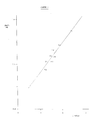
- The following example and preparations are given by way of illustration and with reference to the accompanying drawing in which Figure 1 shows the correlation between Q values and the NaCl concentrations required for elution of factor VIII from the various ligands and wherein the numbers by the points refer to the ligands numbered in Table 4.
- Polyamine compounds were generally obtained from Aldrich, except pentaethylenehexamine which was from Fluka. Polyamines C and G (Table 1) were synthesised according to Van Alphen, J. (Recueil des Travaux Chimiques des Pays-Bas 55 835 (1936) and same journal 56 343 (1937)) and polyvinylamine was synthesised according to Dawson, D.J., Gless, R.D. and Wingaard, R.E. (J. Am. Chem. Soc. 98 5996 - 6000 (1976)) using generally available reagents. Coupling agents were obtained from Sigma (1,4-butanediol diglycidyl ether and carbonyldiimidazole) and BDH (epichlorohydrin).
- Sepharose, Sephadex and Sephacryl were obtained from Pharmacia. Trisacryl was obtained from IBF-LKB. Fractogel was obtained from BDH.
- The gel may be transferred to a non-aqueous environment by sequential washing with increasing concentrations of a suitable solvent, for example acetone, and finally with neat solvent.
- A quantity of carbonyldiimidazole, for example 3.5 g per 100 ml of gel, is allowed to react with the gel at room temperature for 15 minutes. The activated gel is then washed rapidly with a large amount of a solvent such as acetone, and then allowed to react for about 17 hours at ambient temperature with an aqueous solution of the polyamine compound. The concentration of this solution is preferably about 10% v/v, and the pH is adjusted to between 9 and 11. The coupled gel may then be washed extensively with water, dilute acetic acid and finally water.
- When the support to which the polyamine was being attached was Sephacryl S-500, the activation, wash and coupling steps were all carried out using dry acetone as solvent. Furthermore, the coupling step was carried out at 4°C.
- To 100 g of washed, suction dried gel, 200 mg of sodium borohydride is added, and 50 ml of 2 M sodium hydroxide solution. 6 x 5ml aliquots of epichlorohydrin, and 6 x 10ml aliquots of sodium hydroxide are added over 2 hours during which the gel is agitated at room temperature. The mixture is agitated for a further 15 hours, and then the gel is washed extensively with water.
- The activated gel is then added to an equal volume of a solution containing about 10% of the polyamine compound and 0.1% of sodium borohydride dissolved in 2 M sodium carbonate solution, pH adjusted to about 11, and the mixture is agitated at 60°C for about 20 hours. The gel is washed extensively with water, then aqueous acetic acid and finally water.
- When the support to which the polyamine was being attached was Fractogel TSK HW-55, the following method was used. 100 g of washed suction dried gel is mixed with 60 ml of 9 M sodium hydroxide solution, 80 ml of water and 60 ml of ECH at a temperature of approximately 40°C for 2 hours. The gel is collected by filtration, washed with water, and then mixed with 100 ml of a 10% solution of the polyamine in water at 60°C for 3 hours. The gel is washed extensively with water, then aqueous acetic acid and finally water.
- Coupling using 1,4-butanediol-diglycidyl ether is essentially identical to that described for epichlorohydrin except that in the activation step the suction dried gel is mixed in one step with an equal volume of 0.6 M NaOH solution, and a similar volume of 1,4-butanediol diglycidyl ether.
- These ligands, having the structures H₂N-(CH₂)₂-NH-(CH₂)₃-NH-(CH₂)₂-NH₂ (C) and H₂N-(CH₂)₂-NH-(CH₂)₃-NH-(CH₂)₂-NH-(CH₂)₃-NH-(CH₂)₂-NH₂ (G) were synthesised according to Van Alphen, J. in Recueil des Travaux Chimiques des Pays-Bas 55 835 (1936) and by the same author, same journal 56 343 (1937). The experimental details are briefly as follows: 1,2-diaminoethane (45 ml, 0.67 mol) and absolute ethanol (40 ml) were placed in a 250 ml round bottomed flask, to which was attached a water cooled condenser and a pressure equalised dropping funnel containing 1,3-dibromopropane (12.5 ml, 0.124 mol). The contents of the flask were stirred magnetically and the 1,3-dibromopropane was added dropwise so as to maintain a gentle reflux. When addition was complete, the mixture was heated under reflux for 1 hour. The stirring was continued, and 35 g of potassium hydroxide was added, and the mixture was again heated under reflux for 30 minutes. Solid KBr was removed by filtration, and ethanol and 1,2-diaminoethane were removed by distillation. The residue was cooled to give a solid and a yellowish liquid which was decanted. The liquid was fractionated by distillation under reduced pressure (ca 18 mm Hg). Two fractions, having boiling ranges of 164-166°C and ca 208°C (18 mm Hg) were collected. The first fraction was about twice the volume of the second, and both were pale yellow. The boiling point of the first fraction was within the range 280-290°C at normal pressure, which identifies it as being compound (C). By reference from Van Alphen's work the higher boiling fraction will be compound (G). A tar-like residue remained in the flask after the reduced pressure distillation.
-
- 1.
- Factor VIII assays were performed either by standard methods for the two-stage clotting assay, or by use of the Coatest factor VIII assay kit (Kabi) according to the method of Prowse, C. et al Vox Sang. 50 21-25 (1986).
- 2.
- Total protein was measured using the Bradford assay (Bradford, M.M. Anal. Biochem. 72 248-254 (1976)).
- 3.
- Immobilised ligand concentrations on the gels were determined using picryl sulphonic acid to detect primary amino groups. 0.50 ml of wet settled gel was mixed at room temperature for about 1 hour with 9.5 ml of a 2.5 mg/ml solution of picryl sulphonic acid in saturated aqueous sodium tetraborate. The gel was collected by centrifugation, and the pellet washed several times with water until the supernatant was colourless. Solubilisation of the pellet was achieved by addition of 9.5 ml of 5 M HCl and heating to 75°C. The sample was further diluted (either 20 or 40 fold) with 5 M HCl, and the OD₃₄₉ was taken. A 40 mM solution of ε-amino caproic acid was used as standard. 0.5 ml of this solution was allowed to react with 9.5 ml of the picryl sulphonic acid solution. 0.5 ml of this solution was treated with 9.5 ml of 5 M HCl as for the sample, and the OD₃₄₉ read, diluting the solution with 5 M HCl by 2 if necessary. A picryl sulphonic acid reagent blank was also prepared, and the OD₃₄₉ subtracted from that for the standard, but not for the sample.
For three of the gels which proved insoluble in hot 5 M HCl, namely TETA-Sephacryl S-500, TETA-Fractogel TSK HW55 and TETA-Trisacryl GF 2000, the ligand concentrations were determined by acid/base titration. - 4.
- Specific proteins (fibrinogen, fibronectin and vWF) were analysed by the method of Laurell, C-B (1972) Scand. J. Clin. Invest. 29, Suppl. 124, 21-37.
-
- Buffer A :
- 0.1 M acetate, 0.1 M lysine HCl, 10% (v/v) glycerol, 10 mM CaCl₂, pH 5.50.
- Buffer B :
- 0.1 M acetate, 0.1 M lysine HCl pH 5.50.
- Buffer C :
- 0.2 M acetate, 1 mM imidazole, pH 5.50.
- Buffer D :
- as buffer A, but pH set to 5.0.
- Buffer E :
- 0.1 M Bis-Tris, 0.1 M lysine HCl, 10% (v/v) glycerol, 10 mM CaCl₂, pH 6.0.
- Buffer F :
- as buffer E, but pH set to 6.5.
- Buffer G :
- 0.1 M Tris, 0.1 M lysine HCl, 10% (v/v) glycerol, 10 mM CaCl₂, pH 7.0.
- Buffer H :
- as buffer G, but pH set to 7.9.
- All buffers additionally contained 0.02% sodium azide as preservative.
- "Cryoprecipitate" was formed by thawing fresh frozen plasma so that the temperature of the thawing mass was kept at 0-2°C. Cryoprecipitate was collected from the thawed suspension by centrifugation and dissolved in 20 mM Tris buffer pH 7.0, using 24 ml buffer per kg plasma. This solution is called "cryosolution", and was further purified by cooling the solution to 10°C and removing the precipitate which formed by centrifugation. The supernatant was adjusted to pH 7.0 and treated with Alhydrogel (2.0% Al(OH)₃ manufactured by Superfos, Denmark), at a rate of 5 ml gel per kg original plasma. The Alhydrogel was removed by centrifugation, and the supernatant was sterilised by membrane filtration, dispensed into glass vials and lyophilised. This preparation is called "intermediate purity factor VIII concentrate" (IPC) and has an approximate composition, when reconstituted in the original volume of:
- Factor VIII
- : 5.6 iu/ml
- Total protein
- : 21 mg/ml
- vWF
- : 12.5 u/ml
- Fibrinogen
- : 19 mg/ml
- Fibronectin
- : 4.3 mg/ml
- The factor VIII in cryo-solution was alternatively purified by addition of sodium heparin USP to a final concentration of 0.6 to 0.9 mg/ml at a pH of 6.4 to 6.6 and a temperature of 25-30°C, and removal by centrifugation of the precipitated fibrinogen and fibronectin. This factor VIII-rich supernatant is called "heparin supernatant" and has the following approximate composition:
- Factor VIII
- : 7.2 iu/ml
- Total protein
- : 12.2 mg/ml
- vWF
- : 33 u/ml
- Fibrinogen
- : 4.5 mg/ml
- Fibronectin
- : 1.9 mg/ml
- The factor VIII in cryo-solution was alternatively purified by addition of sodium heparin as described above followed by addition of Alhydrogel at a concentration 2-12% v/v. The heavy precipitate of fibrinogen, fibronectin and Alhydrogel was removed by centrifugation. The resulting factor VIII rich supernatant is called "heparin/Alhydrogel supernatant" and has a composition similar to that of the heparin supernatant except that the vitamin-K dependent clotting factors (e.g. factor II, IX and X) have been depleted.
- The factor VIII in heparin supernatant was further purified by addition of glycine and NaCl to final concentrations of 1.48 M and 2.36 M respectively at pH 7.0 and 30°C, and collection of the factor VIII-rich precipitate by centrifugation. The precipitate was redissolved in about 1/520 times the original plasma volume of 0.10 M sodium chloride, 0.01 M Tris, 0.01 M sodium citrate, 1.2 mM calcium chloride, 1.5% (w/w) sucrose, pH 6.9 buffer and then desalted using the gel filtration medium Sephadex G-25 into the same buffer.
- The factor VIII solution was sterilised by membrane filtration, dispensed into sterile glass vials, lyophilised and heated at 80°C for 72 h to inactivate viruses. This preparation is called "high purity concentrate" (HPC) and has an approximate composition, when reconstituted in the original volume of:
- Factor VIII
- : 23.5 iu/ml
- Total protein
- : 6.0 mg/ml
- v/WF
- : 62.3 u/ml
- Fibrinogen
- : 4.6 mg/ml
- Fibronectin
- : 0.31 mg/ml
- All chromatography was carried out at room temperature and at a flow rate appropriate to the column size. Total protein in the effluent was monitored at 280nm using an LKB Uvicord. High purity concentrate factor VIII samples were dissolved in the appropriate loading buffer, at room temperature or 37°C, and any insoluble material removed by centrifugation prior to loading onto the column. After loading, the column was washed with loading buffer until the OD₂₈₀ was near the baseline. Then protein was eluted either by step or gradient increase in salt concentration. Gradients were formed using 3-channels of a peristaltic pump (Gilson). The position of the eluted factor VIII activity was then determined, and plotted on the OD₂₈₀ trace. The sodium chloride concentrations in the fractions were determined using a conductivity meter and an appropriate calibration curve. Where elution was carried out in a step-wise fashion, a lower concentration was first used to elute bound protein without removing more than about 5% of the loaded factor VIII activity, and then a higher concentration used to remove the factor VIII. Appropriate electrolyte concentrations were determined for each matrix.
- Using the methods of coupling, ligands and supports described above, the separation media set out below were synthesised.
polyamine Ligand A - Sepharose 4B - ECH coupled
polyamine Ligand B - Sepharose 4B - ECH coupled
polyamine Ligand C - Sepharose 4B - ECH coupled
polyamine Ligand D - Sepharose 4B - ECH coupled
polyamine Ligand E - Sepharose 4B - ECH coupled
polyamine Ligand F - Sepharose 4B - ECH coupled
polyamine Ligand G - Sepharose 4B - ECH coupled
polyamine Ligand H - Sepharose 4B - ECH coupled
polyamine Ligand I - Sepharose 4B - ECH coupled
polyethyleneimine - Sepharose 6B - ECH coupled
polyallylamine - Sepharose 4B - ECH coupled
polyvinylamine - Sepharose 4B - ECH coupled
TETA - Trisacryl GF2000 - CDI coupled
TETA - Sephadex G25 - ECH coupled
TETA - Sephacryl S-500 - CDI coupled
TETA - Fractogel TSK HW 55 - ECH coupled
TETA - Sepharose 6B - ECH coupled
N-methylated TETA - Sepharose 4B - ECH coupled
TETA - Sepharose 4B - BDE coupled
TETA - Sepharose CL-6B - CDI coupled - A 10 ml column (1.6 x 5.0 cm) of TETA-Sepharose 4B (ECH coupled, 27 µmol/ml ligand concentration) was packed and equilibrated with about 50 ml of buffer A.
- A sample of two vials of high purity concentrate (batch 8Y 2278) dissolved in 20 ml of buffer A was loaded onto the column at a flow rate of 60 ml/hr. The column was then washed and eluted sequentially with buffer A (50 ml), buffer A + 0.25 M NaCl (100 ml) and finally buffer A + 1.0 M NaCl (40 ml). Fractions of 10 ml were collected and pooled according to the changes in salt concentration. Factor VIII activity and total protein amounts were determined in the starting material and the pooled fractions. Results are shown in Table 2.

- A 1.0 ml column (0.7 x 2.6 cm) of TETA-Sepharose 4B (33 µmol/ml, ECH-coupled) was equilibrated with buffer A.
- Heparin supernatant (8 volumes) was prepared for chromatography by the addition of a mixture of glycerol (1 volume) 1 M lysine HCl/1 M acetate pH 5.5 (1 volume) and 1 M calcium chloride (0.1 volume). A sample containing approximately 100 iu of factor VIII was loaded onto the column at a flow rate of 10 ml/hr. The column was then washed sequentially with buffer A (10 ml), buffer A + 0.20 M NaCl (10 ml) and finally buffer A + 1.0 M NaCl (5 ml).
- Fraction pools were made as in Example 2, and assayed for factor VIII activity, total protein, vWF, fibronectin and fibrinogen. Results are shown in Table 3.

- Sepharose 4B gels to which a series of 8 different polyamine ligands (Table 1) had been attached by ECH coupling were tested for factor VIII purification using the following method. 10 ml columns were packed (1.6 x 5.0 cm) and equilibrated with buffer B. Samples were of high purity concentrate, batch 8Y 2278, and were prepared by dissolution of one vial of concentrate in 10 ml of buffer B. The columns were loaded at a flow rate of 60 ml/hr, and then washed with buffer B until the OD₂₈₀ of the effluent was near the baseline. Elution of bound protein was then effected using a linear sodium chloride gradient, generally of total volume 130 ml, in buffer B.
- The gradients were 0.0 to 1.0 M in all cases except for compound G, for which the column was first washed with 0.50 M NaCl (40 ml), and then a 0.50 to 1.5 M gradient (130 ml) was used, and compound H for which a 0.0 to 1.3 M (130 ml) gradient was used.
- Gradients were formed using 3-channels of a peristaltic pump (Gilson), and fractions of 10 ml were collected. Eluted factor VIII activities, and sodium chloride concentrations (determined using a conductivity meter and an appropriate calibration curve) were plotted against the fraction numbers on the OD₂₈₀ trace. Results are shown in Table 4, in which the column headed "Relative performance" refers to a visual assessment of the separation of the peak of eluted factor VIII activity from the peak of eluted protein.


- From these results it can be seen that there is a good correlation between the calculated Q values and the performance of the ligands. There is also a linear relationship between the Q values and the concentrations of sodium chloride at which the factor VIII peaks are eluted as shown in Figure 1.
- Using the same method as for the smaller polyamines, Sepharose gels were prepared using three polymeric amino compounds: polyethyleneimine (PEI); polyvinylamine; and polyallylamine. These matrices were tested for factor VIII purification, using the general methods of Examples 2 and 4.
- A column of 2.0 ml (1.6 x 1.0 cm) PEI-Sepharose 6B (ECH-coupled) was equilibrated with buffer A + 0.5 M NaCl. Two vials of high purity concentrate (batch 8Y 2278) were dissolved in 20 ml of the same buffer and loaded onto the column at a flow rate of 18 ml/hr. The column was sequentially eluted with a short (28 ml) 0.5 to 0.7 M NaCl gradient, and then a 0.7 to 2.0 M NaCl gradient (25 ml). Results are shown in Table 5.

- This gel was tested in a similar manner to method in Example 5(i). Buffer A + 0.90 M NaCl was used to prepare the sample and equilibrate the column, and after loading of the sample, the column was washed with loading buffer and then bound proteins were eluted with a 0.9 to 2.3 M NaCl gradient. 6% of the loaded factor VIII was unadsorbed, and 82% was recovered in the eluate, with a purification of about 50-fold.
-
- This gel was tested in a similar manner to the method in Example 5(ii), except that the initial NaCl concentration was 1.0 M, and a 1.0 to 3.5 M NaCl gradient was used for elution. 11% of the factor VIII remained unbound, and 66% was recovered in the eluate, again with a purification of about 50-fold.
- TETA may also be attached to supports other than Sepharose, and the matrices can be used for factor VIII purification.
- Example 2 was repeated, but using Trisacryl GF 2000 as the support to which TETA had been attached at a level of 57 µmol/ml by the CDI method. 53% of the loaded factor VIII was eluted with an 80-fold increase in specific activity.
- Example 2 was repeated, but using Sephadex G25 as the support to which TETA had been attached at a level of 89 µmol/ml by the ECH method. The column was equilibrated with buffer B, and a sample of 1 vial of high purity concentrate dissolved in 10 ml of buffer B was loaded. The column was washed with loading buffer and eluted with buffer + 0.30 M NaCl. 47% of the applied factor VIII was recovered with an increase in specific activity of about 50-fold.
-
- A 2.0 ml (1.0 x 2.5 cm) column of TETA-Sephacryl S-500, which had been prepared using the CDI method and had a substitution level of 28 µmol/ml, was equilibrated with buffer A. One vial of high purity concentrate was prepared, loaded and eluted as described in Example 2, except that 0.30 M NaCl was used in the wash buffer. 99% of the loaded factor VIII activity was recovered in the eluate with an increase in specific activity of at least 50-fold.
- A 2.0 ml (1.0 x 2.5cm) column of TETA-Fractogel TSK HW-55, which had been prepared using the ECH method and had a substitution level of 57 µmol/ml, was equilibrated with buffer A. A sample of heparin supernatant containing 166 iu of Factor VIII was prepared according to the method in Example 3, and loaded onto the column. Unadsorbed protein was removed using buffer A, a wash was performed using buffer A + 0.25 M NaCl, and buffer A + 1.0 M NaCl was used to elute the Factor VIII. 70% of the loaded Factor VIII activity was recovered in the eluate, with a purification of 115-fold.
- Factor VIII-containing starting materials other than those described in the above examples can also be used.
-
- One vial of intermediate purity concentrate was dissolved in 30 ml of buffer B, and chromatographed as described in Example 2, except that buffer B was used in place of buffer A, and 0.30 M NaCl was used for the low salt wash. Results are shown in Table 6.

- 20 ml of plasma was buffer-exchanged using a column (2.0 x 18.0 cm) of Sephadex G-25 into 75 mM NaCl in water, pH 7.4. The pooled eluate (32 ml) was mixed simultaneously with 1.0 M acetate, 1.0 M lysine HCl, pH 5.50 (4.0 ml), glycerol (4.0 ml) and 1 M CaCl₂ (0.4 ml). The pH of the mixture was adjusted to 5.50 using 1.0 M acetate, pH 5.0. A sample of TETA-Sepharose 6B (ECH coupled, ligand concentration 48 µmol/ml) was washed with five volumes each of 0.1 M NaOH, water, 0.1 M HCl and Buffer A. 1.0 g of the gel was mixed with 39 ml of the adjusted plasma for 1 hour, then collected by centrifugation (150 g, 15 minutes) and poured into a column. The column was washed with buffer A (6 ml) and then eluted with buffer A + 1.0 M NaCl (10 ml). The results are shown in Table 7.

- A sample of 1.5 g DEAE Sephadex A-50 was preswollen in 100 ml 75 mM NaCl. 1.66 ml of this suspension was mixed for 2 hours with 50 ml of freshly thawed plasma. The DEAE-Sephadex was removed by centrifugation, and 22 ml of the supernatant was diluted with an equal volume of water. After adjustment of its pH to 5.5, the plasma preparation was adsorbed and chromatographed with 1.0 g of TETA-Sepharose 6B as described in Example 7(ii), except that the column was additionally washed with 0.2 M NaCl in Buffer A prior to elution. 75% of the factor VIII activity in the adjusted plasma was recovered in the eluate, with a specific activity of 2.4 iu/mg. Measurement of prothrombin indicated that 98.5% was removed by treatment of the plasma with DEAE-Sephadex, and that only 0.4% of the original plasma prothrombin was recovered in the eluate from the TETA-Sepharose.
- A sample of heparin/alhydrogel supernatant was treated with 0.3% tri-n-butyl phosphate (TNBP) and 1% Tween 80 at room temperature overnight, and then the sample was prepared for chromatography as described in Example 3. 23 ml of this solution was then loaded onto a column of 1.0 ml of TETA-Sepharose 4B (ECH coupled 32 µmol/ml TETA) which had been equilibrated with buffer A. The column was developed as described in Example 2, except that the low salt wash contained 0.20 M NaCl. Results are shown in Table 8.

- It is possible, by means of transition metal binding and chemical reaction to alter the chromatographic properties towards factor VIII of a polyamine ligand such as compound 2 (TETA).
- A sample of TETA-Sepharose 4B was packed into a column (10 ml) in the usual manner but using water rather than buffer and then loaded with CuII ions by passage of a 10 mg/ml solution of CuCl₂ in water. Saturation of the matrix with CuII ions was readily observable, since the matrix became brilliant blue. The column was washed with water, 100 mM imidazole buffer, pH 7.0, containing 1.0 M NaCl and finally with buffer C. A sample of intermediate purity concentrate was prepared in buffer C, and loaded onto the column. The column was washed with buffer, and bound proteins eluted with a 0.0 to 1.0 M NaCl gradient. Peak factor VIII activity was eluted at a concentration of 0.38 M NaCl, and the overall recovery was 61%.
- A sample of TETA Sepharose 4B, which had been prepared as described above using ECH as coupling agent was reacted with methyl iodide under conditions which would be expected to fully methylate all the nitrogens giving a ligand structure:

20 ml of gel was transferred to an environment of methanol, and suspended in 80 ml of the same solvent. 4.0 ml of methyl iodide and 4.0 g of potassium hydrogen carbonate were added, and the mixture was agitated at 40°C for 3 days. The gel was returned to an aqueous environment and tested for its ability to (a) bind CuII ions (b) react with picryl sulphonic acid, both of which proved to be negative. - A column of the modified gel was tested by loading a sample of high purity concentrate in buffer B, and washing the column with further buffer B, buffer B + 0.1 M NaCl and finally buffer B + 0.2 M NaCl. 46% of the loaded activity was recovered in the 0.2 M NaCl fraction, with a purity similar to that obtained with unmodified TETA under appropriate conditions.
- TETA-Sepharose 4B was prepared using 1,4-butanediol-diglycidyl ether as coupling agent as described above. The amount of coupled TETA was 18.0 µmol/ml. The gel was tested for factor VIII purification using the method of Example 4. Results showed that both the factor VIII and total protein were less tightly bound than when ECH was used as the coupling agent in the preparation of the gel. Peak factor VIII was eluted at 165 mM NaCl, and the overall recovery was 89%.
- Buffers of different pH, between 5.0 and 7.9, were used for chromatography. 2.0 ml (1.0 x 2.5 cm) columns of TETA-Sepharose CL-6B, which had been prepared using the CDI method and had a substitution level of 39 µmol/ml, were packed and equilibrated with the appropriate buffer for the particular experiment. One vial of high purity concentrate (batch 8Y 3492) was reconstituted in 10 ml of the appropriate buffer, and loaded onto the column at a flow rate of 24 ml/hr. Unbound protein was removed using further quantities of loading buffer, and a 0.25 M NaCl wash was performed followed by elution with 1.0 M NaCl. The percentages of loaded factor VIII remaining unbound and the percentages recovered in the 1.0 M NaCl eluate are shown in Table 9. Of the pHs which were tested, pH 5.5 is optimal for recovery of factor VIII in the 1.0 M NaCl eluate and minimisation of losses due to its remaining unbound.

- Several experiments were carried out as described in Example 6(iii). After the 0.30 M NaCl wash, bound factor VIII was recovered using buffer A and the particular salt being tested. The recoveries of factor VIII are shown in Table 10.

- Thus although salts other than NaCl may be used for elution of factor VIII, the recovery achieved in the eluate depends on the identity of the salt.
Claims (23)
- A separation medium for use in protein separation comprising a water-insoluble matrix carrying a plurality of polyamine groupings, said polyamine groupings having at least 3 basic nitrogen atoms, said basic nitrogen atoms being separated from each other by a chain of at least two intervening carbon atoms, there being a total of 5 such intervening carbon atoms when there is a total of three nitrogen atoms in each polyamine group.
- A separation medium as claimed in claim 1 wherein the matrix is an organic matrix.
- A separation medium as claimed in claim 1 or claim 2 wherein each polyamine group has at least four nitrogen atoms.
- A separation medium as claimed in any of claims 1, 2 or 3 wherein each polyamine is a straight chain, branched chain, monocyclic or polycyclic polyamine group.
- A separation medium as claimed in any of claims 1 to 4 wherein the polyamine groups attached to the matrix are different.
- A separation medium as claimed in any one of claims 1 to 5 wherein the intervening carbon atoms between pairs of nitrogen atoms form an alkylene or cycloalkylene group.
- A separation medium as claimed in any one of claims 1 to 6 wherein the polyamine groups are linear polyalkylene polyamine groups having 2 or 3 carbon atoms in the alkylene groups.
- A separation medium as claimed in any one of claims 1 to 7 wherein the polyamine groups are polyalkyleneamine groups wherein two nitrogen atoms are joined by two sets of intervening carbon atoms to form a cyclic group.
- A separation medium as claimed in claim 8 wherein the polyamine groups are of formula
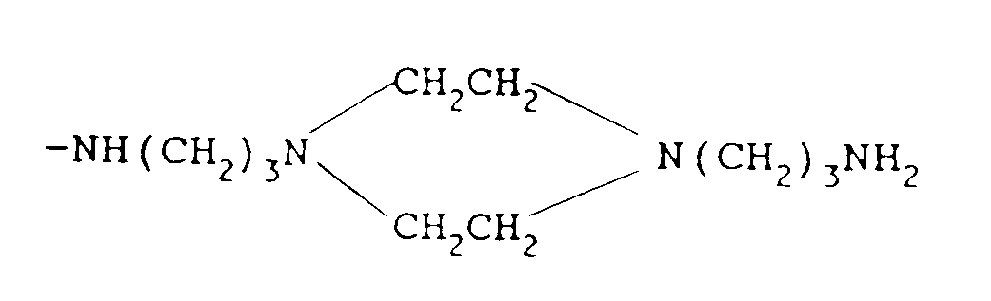
- A separation medium as claimed in any one of claims 1 to 7 wherein the polyamine group is triethylenetetramine.
- A separation medium as claimed in any one of claims 1 to 10 wherein the water-insoluble matrix is a hydrophilic polymeric substance.
- A separation medium as claimed in any one of claims 1 to 11 wherein the matrix material is agarose, cellulose, dextran, macroporous silica or polyacrylamide.
- A separation medium as claimed in any one of claims 1 to 12 wherein the polyamine is coupled to the matrix using a di-functional coupling reagent having 1-10 carbon atoms.
- A separation medium as claimed in claim 13 wherein the coupling reagent is epichlorohydrin, carbonyldiimidazole or 1,4-butanediol diglycidyl ether.
- A separation medium as claimed in claim 1, being an agarose gel coupled via epichlorohydrin to triethylenetetramine.
- A method of at least partially purifying factor VIII comprising loading a factor VIII-containing sample onto the separation medium claimed in claim 1, washing, and eluting a fraction enriched in factor VIII.
- A method as claimed in claim 16 wherein the factor VIII-containing material is whole plasma, cryoprecipitate, or partially purified factor VIII.
- A method as claimed in claim 16 or claim 17 executed by column chromatography.
- A method as claimed in any one of claims 16, 17 or 18 wherein the factor VIII-containing material is loaded onto the separation medium in the presence of a loading buffer solution at a pH between 5.0 and 8.0.
- A method as claimed in claim 19 wherein the pH is 5.5.
- A method as claimed in claim 19 or claim 20 wherein the loading buffer solution is at an ionic strength of 0.2 M.
- A method as claimed in any one of claims 16 to 21 wherein elution is effected with an increasing concentration of electrolyte.
- A method as claimed in claim 22 wherein the electrolyte concentration varies from 0.2 to 4.0 M.
Applications Claiming Priority (2)
| Application Number | Priority Date | Filing Date | Title |
|---|---|---|---|
| GB8913183 | 1989-06-08 | ||
| GB898913183A GB8913183D0 (en) | 1989-06-08 | 1989-06-08 | Chemical products |
Publications (2)
| Publication Number | Publication Date |
|---|---|
| EP0476038A1 EP0476038A1 (en) | 1992-03-25 |
| EP0476038B1 true EP0476038B1 (en) | 1993-04-21 |
Family
ID=10658104
Family Applications (1)
| Application Number | Title | Priority Date | Filing Date |
|---|---|---|---|
| EP90909689A Expired - Lifetime EP0476038B1 (en) | 1989-06-08 | 1990-06-08 | Chemical products |
Country Status (11)
| Country | Link |
|---|---|
| US (1) | US5304638A (en) |
| EP (1) | EP0476038B1 (en) |
| JP (1) | JPH0722702B2 (en) |
| AT (1) | ATE88375T1 (en) |
| AU (1) | AU644801B2 (en) |
| CA (1) | CA2057926C (en) |
| DE (1) | DE69001436T2 (en) |
| DK (1) | DK0476038T3 (en) |
| ES (1) | ES2054361T3 (en) |
| GB (1) | GB8913183D0 (en) |
| WO (1) | WO1990014886A1 (en) |
Cited By (2)
| Publication number | Priority date | Publication date | Assignee | Title |
|---|---|---|---|---|
| US9295928B2 (en) | 2004-02-05 | 2016-03-29 | Emd Millipore Corporation | Porous adsorptive or chromatographic media |
| US9433922B2 (en) | 2007-08-14 | 2016-09-06 | Emd Millipore Corporation | Media for membrane ion exchange chromatography based on polymeric primary amines, sorption device containing that media, and chromatography scheme and purification method using the same |
Families Citing this family (23)
| Publication number | Priority date | Publication date | Assignee | Title |
|---|---|---|---|---|
| AU646889B2 (en) * | 1990-10-10 | 1994-03-10 | Brigham Young University | Polytetraalkylammonium and polytrialkylamine containing ligands bonded to inorganic supports and processes of using the same for removing and concentrating desired ions from solution |
| DE4204694C3 (en) * | 1992-02-01 | 1995-10-12 | Octapharma Ag | Method for obtaining highly pure, virus-inactivated factor VIII by means of anion exchange chromatography |
| AUPM632894A0 (en) * | 1994-06-21 | 1994-07-14 | Alldredge, Robert Louis | Immobilised branched polyalkyleneimines |
| DK0825443T3 (en) * | 1996-08-17 | 2001-08-06 | Aventis Behring Gmbh | Process for Quantification of Glycosaminoglycans in Antithrombin III-Containing Solutions |
| CA2634663C (en) | 1999-02-22 | 2009-08-25 | University Of Connecticut | Novel albumin-free factor viii formulations |
| DK1257562T3 (en) * | 2000-02-08 | 2007-04-02 | Upfront Chromatography As | Novel resin materials and their use for isolating proteins or peptides |
| DE10011481A1 (en) * | 2000-03-09 | 2001-10-18 | Fresenius Hemocare Gmbh | Adsorbent for lowering the concentration of fibrinogen and / or fibrin, use of the adsorbent for the production of an adsorber and adsorber with the adsorbent |
| FR2811985A1 (en) * | 2000-07-19 | 2002-01-25 | Univ Bretagne Occidentale | PROCESS FOR THE SYNTHESIS OF N1, N3-BIS (2-AMINOETHYL) PROPANE-1,3-DIAMINE, INTERMEDIATES OF SYNTHESIS, PRODUCTS THUS OBTAINED AND THEIR APPLICATION TO THE SYNTHESIS OF CYCLAM |
| GB0028414D0 (en) * | 2000-11-22 | 2001-01-03 | Univ Leeds | Flush preservation solution |
| JP2006522328A (en) * | 2003-03-07 | 2006-09-28 | ユニバーシティ・カレッジ・コークーナショナル・ユニバーシティ・オブ・アイルランド,コーク | Method for the synthesis of chromatographic phases |
| DE202008017854U1 (en) | 2007-08-14 | 2010-08-19 | Millipore Corp., Billerica | Means for ion exchange membrane chromatography on the basis of primary polymeric amines, sorption with this means, chromatography method and purification method using it |
| US20090130738A1 (en) * | 2007-11-19 | 2009-05-21 | Mikhail Kozlov | Media for membrane ion exchange chromatography |
| US20110065900A1 (en) * | 2008-05-30 | 2011-03-17 | Ge Healthcare Bio-Science Ab | Separation method utilizing polyallylamine ligands |
| EP2385825B1 (en) | 2008-11-07 | 2018-10-10 | University of Connecticut | Factor viii formulations |
| PT2496246T (en) | 2009-11-03 | 2018-07-31 | Grifols Therapeutics Llc | Composition, method, and kit for alpha-1 proteinase inhibitor |
| RU2540480C2 (en) | 2009-11-24 | 2015-02-10 | Грифольс Терапьютикс Инк. | Methods, compositions and sets for lyophilisation |
| AU2011343813B2 (en) | 2010-12-15 | 2015-05-21 | Takeda Pharmaceutical Company Limited | Eluate collection using conductivity gradient |
| WO2014084790A1 (en) * | 2012-11-29 | 2014-06-05 | Jerker Porath | Superhydroxylated adsorbents and uses thereof |
| CN109715648A (en) | 2016-09-15 | 2019-05-03 | 克拉维格两合股份有限公司 | Polymeric mesh object is used for the purposes of macromolecule purifying |
| US20210039070A1 (en) | 2018-03-15 | 2021-02-11 | Klawego Gmbh & Co. Kg | Composite materials for the depletion of contaminants from solutions |
| CN112867550A (en) | 2018-10-19 | 2021-05-28 | 克劳斯·戈特沙尔 | Filter media, materials and methods for removing contaminants |
| CN110824101B (en) * | 2019-11-14 | 2022-05-13 | 兰州蓝星纤维有限公司 | Method for measuring functional groups on surface of carbon fiber |
| WO2025163088A1 (en) | 2024-02-02 | 2025-08-07 | Piac Gmbh | Materials, processes, and methods for the adsorption of harmful compounds |
Family Cites Families (7)
| Publication number | Priority date | Publication date | Assignee | Title |
|---|---|---|---|---|
| US3860573A (en) * | 1971-10-01 | 1975-01-14 | Orion Yhtymae Oy | Method for cross-linking agarose or agar |
| ES471858A1 (en) * | 1977-07-25 | 1979-02-01 | Monsanto Co | Non-activating polyelectrolytes and their use in a method for separation of blood coagulation factors. |
| US4471112A (en) * | 1982-06-28 | 1984-09-11 | Monsanto Company | Heparin polyelectrolyte polymer complex |
| US4397841A (en) * | 1982-06-28 | 1983-08-09 | Monsanto Company | Production of blood coagulation factor VIII:C |
| FR2543448A1 (en) * | 1983-04-01 | 1984-10-05 | Rhone Poulenc Spec Chim | PROCESS FOR FRACTIONING PLASMA |
| US4508709A (en) * | 1983-12-05 | 1985-04-02 | Armour Pharmaceutical Company | Process for purifying factor VIII:C |
| NL8701915A (en) * | 1987-08-14 | 1989-03-01 | Waander Riethorst | ADSORBENS MATERIAL AND USE THEREOF FOR INSULATING CLOTHING FACTORS. |
-
1989
- 1989-06-08 GB GB898913183A patent/GB8913183D0/en active Pending
-
1990
- 1990-06-08 AU AU59243/90A patent/AU644801B2/en not_active Expired
- 1990-06-08 CA CA002057926A patent/CA2057926C/en not_active Expired - Lifetime
- 1990-06-08 DE DE90909689T patent/DE69001436T2/en not_active Expired - Fee Related
- 1990-06-08 WO PCT/EP1990/000910 patent/WO1990014886A1/en not_active Ceased
- 1990-06-08 ES ES90909689T patent/ES2054361T3/en not_active Expired - Lifetime
- 1990-06-08 US US07/777,531 patent/US5304638A/en not_active Expired - Lifetime
- 1990-06-08 EP EP90909689A patent/EP0476038B1/en not_active Expired - Lifetime
- 1990-06-08 DK DK90909689.3T patent/DK0476038T3/en active
- 1990-06-08 AT AT90909689T patent/ATE88375T1/en not_active IP Right Cessation
- 1990-06-08 JP JP2509704A patent/JPH0722702B2/en not_active Expired - Fee Related
Cited By (2)
| Publication number | Priority date | Publication date | Assignee | Title |
|---|---|---|---|---|
| US9295928B2 (en) | 2004-02-05 | 2016-03-29 | Emd Millipore Corporation | Porous adsorptive or chromatographic media |
| US9433922B2 (en) | 2007-08-14 | 2016-09-06 | Emd Millipore Corporation | Media for membrane ion exchange chromatography based on polymeric primary amines, sorption device containing that media, and chromatography scheme and purification method using the same |
Also Published As
| Publication number | Publication date |
|---|---|
| DE69001436T2 (en) | 1993-10-28 |
| DE69001436D1 (en) | 1993-05-27 |
| US5304638A (en) | 1994-04-19 |
| JPH0722702B2 (en) | 1995-03-15 |
| CA2057926C (en) | 1998-04-28 |
| WO1990014886A1 (en) | 1990-12-13 |
| GB8913183D0 (en) | 1989-07-26 |
| CA2057926A1 (en) | 1990-12-09 |
| AU5924390A (en) | 1991-01-07 |
| EP0476038A1 (en) | 1992-03-25 |
| DK0476038T3 (en) | 1993-05-17 |
| ATE88375T1 (en) | 1993-05-15 |
| ES2054361T3 (en) | 1994-08-01 |
| AU644801B2 (en) | 1993-12-23 |
| JPH04506030A (en) | 1992-10-22 |
Similar Documents
| Publication | Publication Date | Title |
|---|---|---|
| AU644801B2 (en) | Chemical products | |
| JP2562571B2 (en) | Novel nitrilotriacetic acid derivatives and salts thereof, and methods for producing the same | |
| AU2008290482B2 (en) | A process for isolation and purification of a target protein free of prion protein (PrPSC) | |
| EP0783366B1 (en) | Chromatographic resins and methods for using same | |
| KR101293504B1 (en) | Purification of factor viii using a mixed-mode or multimodal resin | |
| US4883598A (en) | Process for isolating coagulation factors, and adsorbent material suitable therefor | |
| Podack et al. | The C5b-6 complex: formation, isolation, and inhibition of its activity by lipoprotein and the S-protein of human serum | |
| CA1073815A (en) | Method for purification and isolation of hepatitis virus for use in the preparation of vaccine | |
| CA1083959A (en) | Process for producing intravenous immune globulin | |
| US20040214157A1 (en) | Chromatographic resins and methods for using same | |
| EP0491688B1 (en) | Methods for activating polymeric carriers and compositions prepared therefrom for use in affinity chromatography | |
| JP4047407B2 (en) | Method for removing aromatic compounds from product-containing solutions | |
| EP1507563B1 (en) | Endotoxin-binding ligands and their use | |
| Fehske et al. | Direct demonstration of the highly reactive tyrosine residue of human serum albumin located in fragment 299–585 | |
| Bai et al. | Mechanism of action of the antimitotic drug 2, 4-dichlorobenzyl thiocyanate: alkylation of sulfhydryl group (s) of ß-tubulin | |
| JP3739788B2 (en) | Method for producing virus-inactivated fraction containing factor 8 by chromatographic method | |
| JPS6383100A (en) | Production of albumin in human urine | |
| EP1141021A1 (en) | Removal/purification of serum albumins | |
| KR100455589B1 (en) | How to remove aromatic compounds from biologically active proteins or peptide-containing solutions | |
| NL8701914A (en) | Adsorbents, esp. for blood clotting factors - comprising, amino-butyl or amino-pentyl polymer derivs. |
Legal Events
| Date | Code | Title | Description |
|---|---|---|---|
| PUAI | Public reference made under article 153(3) epc to a published international application that has entered the european phase |
Free format text: ORIGINAL CODE: 0009012 |
|
| 17P | Request for examination filed |
Effective date: 19911202 |
|
| AK | Designated contracting states |
Kind code of ref document: A1 Designated state(s): AT BE CH DE DK ES FR GB IT LI LU NL SE |
|
| 17Q | First examination report despatched |
Effective date: 19920602 |
|
| GRAA | (expected) grant |
Free format text: ORIGINAL CODE: 0009210 |
|
| AK | Designated contracting states |
Kind code of ref document: B1 Designated state(s): AT BE CH DE DK ES FR GB IT LI LU NL SE |
|
| REF | Corresponds to: |
Ref document number: 88375 Country of ref document: AT Date of ref document: 19930515 Kind code of ref document: T |
|
| REG | Reference to a national code |
Ref country code: DK Ref legal event code: T3 |
|
| REF | Corresponds to: |
Ref document number: 69001436 Country of ref document: DE Date of ref document: 19930527 |
|
| ET | Fr: translation filed | ||
| ITF | It: translation for a ep patent filed | ||
| RAP2 | Party data changed (patent owner data changed or rights of a patent transferred) |
Owner name: NATIONAL BLOOD AUTHORITY |
|
| NLT2 | Nl: modifications (of names), taken from the european patent patent bulletin |
Owner name: NATIONAL BLOOD AUTHORITY TE WATFORD, GROOT-BRITTAN |
|
| PLBE | No opposition filed within time limit |
Free format text: ORIGINAL CODE: 0009261 |
|
| STAA | Information on the status of an ep patent application or granted ep patent |
Free format text: STATUS: NO OPPOSITION FILED WITHIN TIME LIMIT |
|
| 26N | No opposition filed | ||
| EPTA | Lu: last paid annual fee | ||
| REG | Reference to a national code |
Ref country code: ES Ref legal event code: FG2A Ref document number: 2054361 Country of ref document: ES Kind code of ref document: T3 |
|
| EAL | Se: european patent in force in sweden |
Ref document number: 90909689.3 |
|
| ITTA | It: last paid annual fee | ||
| REG | Reference to a national code |
Ref country code: CH Ref legal event code: PUE Owner name: CENTRAL BLOOD LABORATORIES AUTHORITY TRANSFER- NAT |
|
| NLS | Nl: assignments of ep-patents |
Owner name: NATIONAL BLOOD AUTHORITY |
|
| REG | Reference to a national code |
Ref country code: GB Ref legal event code: 732E |
|
| REG | Reference to a national code |
Ref country code: GB Ref legal event code: IF02 |
|
| PGFP | Annual fee paid to national office [announced via postgrant information from national office to epo] |
Ref country code: SE Payment date: 20050607 Year of fee payment: 16 Ref country code: AT Payment date: 20050607 Year of fee payment: 16 |
|
| PGFP | Annual fee paid to national office [announced via postgrant information from national office to epo] |
Ref country code: ES Payment date: 20050613 Year of fee payment: 16 |
|
| PGFP | Annual fee paid to national office [announced via postgrant information from national office to epo] |
Ref country code: FR Payment date: 20050617 Year of fee payment: 16 |
|
| PGFP | Annual fee paid to national office [announced via postgrant information from national office to epo] |
Ref country code: DK Payment date: 20050624 Year of fee payment: 16 |
|
| PGFP | Annual fee paid to national office [announced via postgrant information from national office to epo] |
Ref country code: LU Payment date: 20050627 Year of fee payment: 16 |
|
| PGFP | Annual fee paid to national office [announced via postgrant information from national office to epo] |
Ref country code: BE Payment date: 20050629 Year of fee payment: 16 |
|
| PGFP | Annual fee paid to national office [announced via postgrant information from national office to epo] |
Ref country code: NL Payment date: 20050630 Year of fee payment: 16 |
|
| PGFP | Annual fee paid to national office [announced via postgrant information from national office to epo] |
Ref country code: CH Payment date: 20050713 Year of fee payment: 16 |
|
| PGFP | Annual fee paid to national office [announced via postgrant information from national office to epo] |
Ref country code: DE Payment date: 20050831 Year of fee payment: 16 |
|
| PG25 | Lapsed in a contracting state [announced via postgrant information from national office to epo] |
Ref country code: AT Free format text: LAPSE BECAUSE OF NON-PAYMENT OF DUE FEES Effective date: 20060608 |
|
| PG25 | Lapsed in a contracting state [announced via postgrant information from national office to epo] |
Ref country code: ES Free format text: LAPSE BECAUSE OF NON-PAYMENT OF DUE FEES Effective date: 20060609 Ref country code: SE Free format text: LAPSE BECAUSE OF NON-PAYMENT OF DUE FEES Effective date: 20060609 |
|
| PG25 | Lapsed in a contracting state [announced via postgrant information from national office to epo] |
Ref country code: BE Free format text: LAPSE BECAUSE OF NON-PAYMENT OF DUE FEES Effective date: 20060630 Ref country code: DK Free format text: LAPSE BECAUSE OF NON-PAYMENT OF DUE FEES Effective date: 20060630 Ref country code: LI Free format text: LAPSE BECAUSE OF NON-PAYMENT OF DUE FEES Effective date: 20060630 Ref country code: CH Free format text: LAPSE BECAUSE OF NON-PAYMENT OF DUE FEES Effective date: 20060630 |
|
| PGFP | Annual fee paid to national office [announced via postgrant information from national office to epo] |
Ref country code: IT Payment date: 20060630 Year of fee payment: 17 |
|
| PG25 | Lapsed in a contracting state [announced via postgrant information from national office to epo] |
Ref country code: NL Free format text: LAPSE BECAUSE OF NON-PAYMENT OF DUE FEES Effective date: 20070101 |
|
| PG25 | Lapsed in a contracting state [announced via postgrant information from national office to epo] |
Ref country code: DE Free format text: LAPSE BECAUSE OF NON-PAYMENT OF DUE FEES Effective date: 20070103 |
|
| REG | Reference to a national code |
Ref country code: DK Ref legal event code: EBP |
|
| REG | Reference to a national code |
Ref country code: CH Ref legal event code: PL |
|
| EUG | Se: european patent has lapsed | ||
| NLV4 | Nl: lapsed or anulled due to non-payment of the annual fee |
Effective date: 20070101 |
|
| REG | Reference to a national code |
Ref country code: FR Ref legal event code: ST Effective date: 20070228 |
|
| REG | Reference to a national code |
Ref country code: ES Ref legal event code: FD2A Effective date: 20060609 |
|
| BERE | Be: lapsed |
Owner name: *NATIONAL BLOOD AUTHORITY Effective date: 20060630 |
|
| PG25 | Lapsed in a contracting state [announced via postgrant information from national office to epo] |
Ref country code: FR Free format text: LAPSE BECAUSE OF NON-PAYMENT OF DUE FEES Effective date: 20060630 |
|
| PG25 | Lapsed in a contracting state [announced via postgrant information from national office to epo] |
Ref country code: LU Free format text: LAPSE BECAUSE OF NON-PAYMENT OF DUE FEES Effective date: 20060608 |
|
| PG25 | Lapsed in a contracting state [announced via postgrant information from national office to epo] |
Ref country code: IT Free format text: LAPSE BECAUSE OF NON-PAYMENT OF DUE FEES Effective date: 20070608 |
|
| PGFP | Annual fee paid to national office [announced via postgrant information from national office to epo] |
Ref country code: GB Payment date: 20090529 Year of fee payment: 20 |
|
| REG | Reference to a national code |
Ref country code: GB Ref legal event code: PE20 Expiry date: 20100607 |
|
| PG25 | Lapsed in a contracting state [announced via postgrant information from national office to epo] |
Ref country code: GB Free format text: LAPSE BECAUSE OF EXPIRATION OF PROTECTION Effective date: 20100607 |