EP0472015B1 - Stereoscopic video pickup device - Google Patents
Stereoscopic video pickup device Download PDFInfo
- Publication number
- EP0472015B1 EP0472015B1 EP91112779A EP91112779A EP0472015B1 EP 0472015 B1 EP0472015 B1 EP 0472015B1 EP 91112779 A EP91112779 A EP 91112779A EP 91112779 A EP91112779 A EP 91112779A EP 0472015 B1 EP0472015 B1 EP 0472015B1
- Authority
- EP
- European Patent Office
- Prior art keywords
- zoom
- camera
- data
- camera body
- conversion
- Prior art date
- Legal status (The legal status is an assumption and is not a legal conclusion. Google has not performed a legal analysis and makes no representation as to the accuracy of the status listed.)
- Expired - Lifetime
Links
Images




Classifications
-
- H—ELECTRICITY
- H04—ELECTRIC COMMUNICATION TECHNIQUE
- H04N—PICTORIAL COMMUNICATION, e.g. TELEVISION
- H04N13/00—Stereoscopic video systems; Multi-view video systems; Details thereof
- H04N13/20—Image signal generators
- H04N13/204—Image signal generators using stereoscopic image cameras
- H04N13/239—Image signal generators using stereoscopic image cameras using two two-dimensional [2D] image sensors having a relative position equal to or related to the interocular distance
-
- G—PHYSICS
- G03—PHOTOGRAPHY; CINEMATOGRAPHY; ANALOGOUS TECHNIQUES USING WAVES OTHER THAN OPTICAL WAVES; ELECTROGRAPHY; HOLOGRAPHY
- G03B—APPARATUS OR ARRANGEMENTS FOR TAKING PHOTOGRAPHS OR FOR PROJECTING OR VIEWING THEM; APPARATUS OR ARRANGEMENTS EMPLOYING ANALOGOUS TECHNIQUES USING WAVES OTHER THAN OPTICAL WAVES; ACCESSORIES THEREFOR
- G03B35/00—Stereoscopic photography
- G03B35/08—Stereoscopic photography by simultaneous recording
-
- G—PHYSICS
- G03—PHOTOGRAPHY; CINEMATOGRAPHY; ANALOGOUS TECHNIQUES USING WAVES OTHER THAN OPTICAL WAVES; ELECTROGRAPHY; HOLOGRAPHY
- G03B—APPARATUS OR ARRANGEMENTS FOR TAKING PHOTOGRAPHS OR FOR PROJECTING OR VIEWING THEM; APPARATUS OR ARRANGEMENTS EMPLOYING ANALOGOUS TECHNIQUES USING WAVES OTHER THAN OPTICAL WAVES; ACCESSORIES THEREFOR
- G03B5/00—Adjustment of optical system relative to image or object surface other than for focusing
-
- H—ELECTRICITY
- H04—ELECTRIC COMMUNICATION TECHNIQUE
- H04N—PICTORIAL COMMUNICATION, e.g. TELEVISION
- H04N13/00—Stereoscopic video systems; Multi-view video systems; Details thereof
- H04N13/20—Image signal generators
- H04N13/296—Synchronisation thereof; Control thereof
-
- G—PHYSICS
- G03—PHOTOGRAPHY; CINEMATOGRAPHY; ANALOGOUS TECHNIQUES USING WAVES OTHER THAN OPTICAL WAVES; ELECTROGRAPHY; HOLOGRAPHY
- G03B—APPARATUS OR ARRANGEMENTS FOR TAKING PHOTOGRAPHS OR FOR PROJECTING OR VIEWING THEM; APPARATUS OR ARRANGEMENTS EMPLOYING ANALOGOUS TECHNIQUES USING WAVES OTHER THAN OPTICAL WAVES; ACCESSORIES THEREFOR
- G03B2205/00—Adjustment of optical system relative to image or object surface other than for focusing
- G03B2205/0046—Movement of one or more optical elements for zooming
Definitions
- the present invention is not limited to the second embodiment. Various modifications can be made to the means for supplying control data to the drive circuit 307 to control an interval between the motors. Further, various modifications can be made to the mechanism for moving the first camera body 201.
Landscapes
- Engineering & Computer Science (AREA)
- Multimedia (AREA)
- Signal Processing (AREA)
- Physics & Mathematics (AREA)
- General Physics & Mathematics (AREA)
- Testing, Inspecting, Measuring Of Stereoscopic Televisions And Televisions (AREA)
- Lens Barrels (AREA)
- Stereoscopic And Panoramic Photography (AREA)
Description
- The present invention relates to a stereoscopic video pickup device and, more particularly, to a stereoscopic video pickup device having a zoom mechanism for controlling a zoom magnification and a stereoscopy adjustment mechanism for adjusting a stereoscopy which are driven in association with each other.
- Small-sized and light video cameras using solid-state pickup elements have recently been developed. A stereoscopic image pickup device using such small-sized cameras is disclosed in U.S.-A-4,881,122.
- In the stereoscopic image pickup device, an angle between optical axes of the first and second video cameras is adjusted to focus these video cameras on an object.
- However, when a distance between the video cameras and the object is very long, a stereoscopic effect cannot sufficiently be obtained even if the angle of the optical axes is adjusted.
- It is accordingly an object of the present invention to provide a stereoscopic video pickup device as set out in
claim 1, wherein information of zoom mechanisms included in first and second cameras is used to control a distance between the cameras, thereby enabling an image to be picked up without degrading a degree of its stereoscopy even when a distance between an object and the cameras is great. - With the above structure of the stereoscopic video pickup device, even when a distance between the object and first and second cameras is long and the zoom mechanisms are adjusted, the object can be stereoscopically imaged since a distance between the cameras is lengthened.
- This invention can be more fully understood from the following detailed description when taken in conjunction with the accompanying drawings, in which:
- Fig. 1 is a perspective view for explaining the mechanism of a stereoscopic video pickup device according to a first embodiment of the present invention;
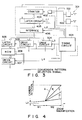
- Fig. 2 is a block diagram for explaining a system control circuit of the device shown in Fig. 1;
- Fig. 3 is a block diagram minutely showing the system control circuit shown in Fig. 2;
- Fig. 4 is a graph showing data conversion patterns stored in a data converter shown in Fig. 3;
- Fig. 5 is a block diagram showing a system control circuit and a data converter of a stereoscopic video pickup device according to a second embodiment of the present invention; and
- Fig. 6 is a view showing a stereoscopic video pickup device according to a third embodiment of the present invention.
- Embodiments of the present invention will be described with reference to the accompanying drawings.
- In Fig. 1,
reference numeral 101 indicates a base, and a supportingplate 102 is attached to the upper surface of thebase 101 in its longitudinal direction. The supportingplate 102 constitutes a camera supporting mechanism. Both end portions of the supportingplate 102 are bent so as to be fixed onto thebase 101 by screws. A portion of the supportingplate 102 other than the end portions is therefore spaced away from thebase 101. - A
slit 103 extends from one end of the supportingplate 102 toward the other end. Theslit 103 is provided with aslide component 104 having an H-shaped side. Two concave portions of theslide component 104 are engaged with opposing edge portions of theslit 103. Theslide component 104 is thus movable along theslit 103. - A
camera holder 105 is fixed onto the upper surface of theslide component 104 to hold afirst camera body 201 in a direction perpendicular to the longitudinal direction of theslit 103. Anothercamera holder 106 is fixed to one end of thebase 101 to hold asecond camera body 202. The first andsecond camera bodies - A
motor 110 is attached to the undersurface of theslide component 104. A gear 111 of themotor 110 is engaged with a rack 112 which is fixed on the upper surface of thebase 101 in the same direction as that of theslit 103. When the motor is rotated, thefirst camera body 201 is moved in the direction of arrow X1 or X2 as shown in Fig. 1. In other words, thefirst camera body 202 is controlled so as to move away from or toward thecamera body 202, while fixing the directions of the optical axes of the first andsecond camera bodies second camera bodies - The reason why only the
first camera body 201 can be moved and thesecond camera body 202 is fixed in the stereoscopic video pickup device described above, is that an image pickup operation is performed while a user is looking through a viewfinder. - A method for controlling the first and
second camera bodies - In Fig. 2,
reference numeral 301 denotes an operating unit including a switch for turning on and off a power supply, a switch for starting and stopping an image pickup operation, a switch for selecting a diaphragm, and a zoom operating unit. If the zoom operating unit is operated, a zoom instruction signal is input to asystem control circuit 302. The zoom operating unit includes a zoom-in button and a zoom-out button. When the zoom-in button is depressed, thesystem control circuit 302 measures a period of time for which the zoom-in button is depressed and outputs zoom adjustment data representing the direction and amount of rotation of the motor. The zoom adjustment data is latched bydrive circuits - When the zoom adjustment data is supplied to the
drive circuits second camera bodies first camera body 201 will be described. - In Fig. 2, reference numeral 211 denotes a zoom lens unit of the
first camera body 201, and aflange 212 is fixed to the circumference of the zoom lens unit 211. A worm shaft 213 is engaged with theflange 212 and rotated by means of amotor 214 housed in the camera body. If themotor 214 rotates forward, the zoom lens unit 211 retreats and then a zoom-in function is carried out. If themotor 214 rotates backward, the zoom lens unit 211 moves onward and then a zoom-out function is carried out. Themotor 214 is, for example, a stepping motor which rotates in response to drive pulses supplied from thedrive circuit 303. - The zoom mechanism of the
second camera body 202 is driven in the same manner as that of thefirst camera body 201. Since thesecond camera body 202 has the same zoom mechanism as that of thefirst camera body 201, it includes azoom lens unit 221, aflange 222, aworm shaft 223, amotor 224, anddrive circuit 304 which correspond to those of the first camera body. - The zoom adjustment data is supplied to a
latch circuit 305 and then latched by thelatch circuit 305. Output data of thelatch circuit 305 is supplied to adata converter 306. The output data represents a zoom magnification. In accordance with the zoom magnification, thedata converter 306 outputs interval control data for controlling the camera interval between the first andsecond camera bodies - The interval control data is latched by a
drive circuit 307. Thedrive circuit 307 thus causes thefirst camera body 201 to move away from thesecond camera body 202 or to move toward it. - Fig. 3 illustrates the inside of the
system control circuit 302 which responds to the zoom instruction signal. - When the zoom instruction signal is input from a terminal 401, AND circuit 402 is turned on, and clocks generated from a
timing generator 403 are counted by acounter 404. Thus, time required for a zoom operation is measured. Data of the measured time is supplied to alatch circuit 405. The data is then latched by latch pulses generated from thetiming generator 403 and, in this time, polarity data indicative of zoom-in and zoom-out is also latched by thelatch circuit 405. The polarity data is supplied to the uppermost bit of thelatch circuit 405 as "1" or "0" in accordance with a user's operation of a zoom-inoperation button 501 or a zoom-outoperation button 502. More specifically, when the zoom-inoperation button 501 of theoperating unit 301 is depressed, both the polarity data "1" and the zoom instruction signal are output. When the zoom-outoperation button 502 of theoperating unit 301 is depressed, both the polarity data "0" and the zoom instruction signal are output. - When the polarity data and measured data (which corresponds to angle data representing the amount of rotation of the motor) are latched by the
latch circuit 405, these data are supplied to thedrive circuits interface 406 as zoom adjustment data and latched by thecircuits drive circuits timing generator 403. Thedrive circuits - The zoom adjustment data is latched by the
latch circuit 305. - The output data of the
latch circuit 305 is converted by thedata converter 306. (A conversion pattern of the data will be described later.) Data output from the data converter 30 includes polarity data for determining a direction of rotation of themotor 110 and conversion angle data for determining an amount of rotation of themotor 110. Various data conversion patterns of thedata converter 306 can be selected in response to conversion pattern selection signals supplied from theoperating unit 301. - Fig. 4 is a graph showing the relationship between input data converted by the
data converter 306 and output data of thedata converter 306. - Specifically, the
data converter 306 includes a ROM, and an output of thelatch circuit 305 is used as a read address. Conversion patterns A, B, C and D as shown in Fig. 4 are stored in thedata converter 306, and one of the conversion patterns can be selected by theoperating unit 301. - The conversion pattern A is suitable for stereoscopically imaging an object which is moving distantly. When the zoom magnification is low and falls within range M1 in Fig. 4, the conversion pattern A is suitable, for example, for imaging the whole of a base from which a space shuttle is launched and, in this case, the scene around the base is also imaged. When the space shuttle is launched and its altitude becomes high, an image of the space shuttle may be picked up by rapidly increasing the zoom magnification. Since the space shuttle is imaged largely on the entire screen, the shuttle can stereoscopically be imaged if the interval between the first and
second camera bodies motor 110 so that the interval between the first and second camera bodies is quickly enlarged. - The conversion pattern B is suitable for imaging a car race. The ratio of variation in the zoom magnification to variation in the camera interval is 1 to 1 in range M2 of the zoom magnification. If the zoom magnification and camera interval are so controlled, an image of one of cars racing on a circuit can stereoscopically be picked up.
- The conversion pattern D is suitable for imaging a near object. For example, such a near object is a person moving indoors. When the object is imaged, a stereoscopic image pickup effect can be obtained without greatly changing the camera interval. A camera interval M1 is a distance between the first and
second camera bodies - The conversion pattern C is suitable for imaging a near scene or the like.
- In the first embodiment described above, as shown in Fig. 2, even though the
first camera body 201 is moved in the X1 or X2 direction, the optical axes Y1 and Y2 of the first andsecond camera bodies - The present invention is not limited to the first embodiment.
- In the first embodiment, the zoom adjustment data output from the
system control circuit 302 includes the polarity data representing the direction of rotation of the motor and the angle data representing the amount of rotation of the motor. - However, the zoom adjustment data may include other data, that is, the polarity data representing the direction of rotation of the motor and a mere zoom designation code. When the zoom adjustment data includes the zoom designation code, the amount of rotation of the motor is determined by a period of time for which the zoom designation code is output. The polarity data output from the
latch circuit 305 is input to a predetermined bit of thedrive circuit 307 as it is. - Assume that zoom adjustment data including a polarity bit "1" or "0" and a zoom designation code "001" is output from the
system control circuit 302 in Fig. 5. The zoom designation code is generated by depressing the zoom-in and zoom-outoperation buttons operation button 501 is depressed, and the polarity bit "0" is obtained when the zoom-outoperation button 502 is depressed. - The
drive circuits - The
system control circuit 302 supplies a latch pulse to thelatch circuit 305. The zoom adjustment data is thus latched by thelatch circuit 305. - The
data converter 306 includes acounter 601. Thecounter 601 starts counting clocks from when the zoom adjustment data is output from thesystem control circuit 302 and, in other words, it measures a period of time for which the zoom adjustment data exists. Since zoom adjustment is continued during the period of time, the measured time represents information of an amount of zoom adjustment (zoom magnification). - When the zoom adjustment data disappears, the data measured by the
counter 501 is latched by alatch circuit 602. The measured data is then input to an address of aROM 603 for its conversion. Data output from theROM 603 is supplied to a preset input terminal of adown counter 604. The down counter 604 counts down the data output from theROM 603 as an initial value in response to the clocks. If the outputs of thedown counter 604 are all "0", an all-zerodetector 605 detects it and agate circuit 607 is turned off. - The
gate circuit 607 serves to output the zoom adjustment data from thelatch circuit 305 and supply it to thedrive circuit 307. The time required for supplying the zoom adjustment data to the drive circuit is controlled by an output signal of the all-zerodetector 605. If the output data of theROM 603 is preset to thedown counter 604, the output of the all-zerodetector 605 becomes low in level and thegate circuit 607 is turned on. If the outputs of thedown counter 604 are all "0," the output of the all-zerodetector 605 becomes high in level and thegate circuit 607 is turned off. - The zoom adjustment data is thus output from the
gate circuit 607, and a period of time for which the zoom adjustment data exists at an input terminal of thedrive circuit 307 is proportionate to the count value of thedown counter 604. More specifically, in the zoom-in operation, when the preset value of thedown counter 604 is large, the ON-state time of thegate circuit 607 is long, and the camera interval is enlarged in proportion to a period of the ON-state time. When the preset value of thedown counter 604 is small, the ON-state time of thegate circuit 607 is short, and the camera interval is slightly enlarged. - In the zoom-out operation, the camera interval is so controlled that it becomes narrow.
- In the second embodiment shown in Fig. 5, the same advantage as that of the first embodiment can be obtained. Conversion data of a plurality of patterns analogous to the patterns shown in Fig. 4, is stored in the
ROM 603. One of the patterns is selected in response to the selection signals supplied from the operating unit. - The present invention is not limited to the second embodiment. Various modifications can be made to the means for supplying control data to the
drive circuit 307 to control an interval between the motors. Further, various modifications can be made to the mechanism for moving thefirst camera body 201. - Fig. 6 shows a third embodiment of the present invention. In this embodiment, when zoom is manually adjusted, the magnification of the zoom is detected, and control data is supplied to the
drive circuit 307. - A
zoom lens unit 701 is provided with aring 702 for zoom adjustment. The amount of rotation of thering 702 and the amount of the zoom adjustment are detected by arotation angle detector 703. Therotation angle detector 703 is arranged at a fixed position of the body of the zoom lens unit and includes a plurality of switches S1, S2, S3, S4, ... which are selectively short-circuited by a projectingportion 704 of thering 702. The rotation position of thering 702, that is, the amount of the zoom adjustment can be determined by detecting which of the switches is short-circuited. The outputs of the switches S1, S2, S3, S4, ... are supplied to adata generation circuit 705. Data output from thedata generation circuit 705 is converted by thedata converter 306 and the converted data is input to thedrive circuit 307 of themotor 110. - In the above embodiments, the
first camera body 201 can be moved. However, not the first camera body but thesecond camera body 202 can be moved, and both the first andsecond camera bodies - As has been described above, according to the present invention, the information of the zoom mechanisms of the camera bodies is used for controlling the distance between the camera bodies and, even though the distance between the cameras and object is long, an image of the object can be stereoscopically picked up.
Claims (1)
- A stereoscopic video pick up device comprising:
a first camera (201) body including a first zoom mechanism;
a second camera (202) body including a second zoom mechanism;
a camera supporting mechanism (101-106) for supporting at least said first camera body so that said first and second camera bodies are horizontally arranged in substantially a same direction, an angle between optical axes of said first and second camera bodies is fixed, and said first camera body is movable with respect to said second camera body;
drive means (110, 111, 112) including a camera interval control motor, for moving said first camera body with respect to said second camera body;
zoom control means (212, 213, 214, 222, 223, 224) for outputting zoom adjustment data to control both said first and second zoom mechanisms; and
data conversion means for converting the zoom adjustment data output from said zoom control means into camera interval control data to drive said camera interval control motor,
characterized in that
said data conversion means is adapted to derive from said zoom adjustment data a value corresponding to the zoom magnification, is adapted to convert said zoom magnification value to a distance interval between said first and second camera bodies according to a conversion pattern that is selected on the basis of the type of scene picked up and includes a ROM storing at least three conversion patterns (A, B, C, D), in which said selectable conversion characteristics (A, B, C, D) change when the zoom magnification value is smaller than a predetermined value, and said conversion characteristics (A, B, C, D) rise at respectively different positive inclination angles when the zoom magnification value exceeds the predetermined value.
Applications Claiming Priority (2)
| Application Number | Priority Date | Filing Date | Title |
|---|---|---|---|
| JP2213179A JPH0666968B2 (en) | 1990-08-10 | 1990-08-10 | Stereoscopic video imaging device |
| JP213179/90 | 1990-08-10 |
Publications (3)
| Publication Number | Publication Date |
|---|---|
| EP0472015A2 EP0472015A2 (en) | 1992-02-26 |
| EP0472015A3 EP0472015A3 (en) | 1992-03-04 |
| EP0472015B1 true EP0472015B1 (en) | 1995-12-27 |
Family
ID=16634854
Family Applications (1)
| Application Number | Title | Priority Date | Filing Date |
|---|---|---|---|
| EP91112779A Expired - Lifetime EP0472015B1 (en) | 1990-08-10 | 1991-07-30 | Stereoscopic video pickup device |
Country Status (5)
| Country | Link |
|---|---|
| EP (1) | EP0472015B1 (en) |
| JP (1) | JPH0666968B2 (en) |
| KR (1) | KR920005597A (en) |
| CA (1) | CA2048867A1 (en) |
| DE (1) | DE69115793T2 (en) |
Cited By (1)
| Publication number | Priority date | Publication date | Assignee | Title |
|---|---|---|---|---|
| US20110292182A1 (en) * | 2010-05-27 | 2011-12-01 | Kabushiki Kaisha Toshiba | Camera module and image recording method |
Families Citing this family (6)
| Publication number | Priority date | Publication date | Assignee | Title |
|---|---|---|---|---|
| JP2791310B2 (en) * | 1996-08-27 | 1998-08-27 | 幹次 村上 | Imaging device for multi-angle shooting |
| US8189100B2 (en) | 2006-07-25 | 2012-05-29 | Qualcomm Incorporated | Mobile device with dual digital camera sensors and methods of using the same |
| KR101121421B1 (en) * | 2010-02-23 | 2012-03-20 | 주식회사 빅아이 | Method and computer readable recording medium for providing optimal distance between cameras in stereoscopic video production and apparatus for producing stereoscopic video |
| ITRM20100367A1 (en) * | 2010-07-07 | 2012-01-07 | Francesco Gasperoni | SUPPORT DEVICE FOR A SYSTEM FOR STEREOSCOPIC SHOOTING |
| JP2012253472A (en) * | 2011-06-01 | 2012-12-20 | Yoshihiko Kitamura | Three-dimensional camera |
| JP6391880B2 (en) * | 2016-05-20 | 2018-09-19 | 誠 高宮 | Camera system |
Family Cites Families (3)
| Publication number | Priority date | Publication date | Assignee | Title |
|---|---|---|---|---|
| US2417446A (en) * | 1941-08-01 | 1947-03-18 | Bell Telephone Labor Inc | Stereotelevision and television range finding |
| FR2561400B3 (en) * | 1983-12-19 | 1987-04-10 | Thomson Csf | VARIABLE-BASED STEREOSCOPIC VIEWING DEVICE |
| GB8430980D0 (en) * | 1984-12-07 | 1985-01-16 | Robinson M | Generation of apparently three-dimensional images |
-
1990
- 1990-08-10 JP JP2213179A patent/JPH0666968B2/en not_active Expired - Lifetime
-
1991
- 1991-07-30 DE DE69115793T patent/DE69115793T2/en not_active Expired - Lifetime
- 1991-07-30 EP EP91112779A patent/EP0472015B1/en not_active Expired - Lifetime
- 1991-08-09 CA CA002048867A patent/CA2048867A1/en not_active Abandoned
- 1991-08-09 KR KR1019910013794A patent/KR920005597A/en not_active Ceased
Cited By (2)
| Publication number | Priority date | Publication date | Assignee | Title |
|---|---|---|---|---|
| US20110292182A1 (en) * | 2010-05-27 | 2011-12-01 | Kabushiki Kaisha Toshiba | Camera module and image recording method |
| US9143762B2 (en) * | 2010-05-27 | 2015-09-22 | Kabushiki Kaisha Toshiba | Camera module and image recording method |
Also Published As
| Publication number | Publication date |
|---|---|
| EP0472015A2 (en) | 1992-02-26 |
| KR920005597A (en) | 1992-03-28 |
| JPH0495489A (en) | 1992-03-27 |
| JPH0666968B2 (en) | 1994-08-24 |
| EP0472015A3 (en) | 1992-03-04 |
| CA2048867A1 (en) | 1992-02-11 |
| DE69115793D1 (en) | 1996-02-08 |
| DE69115793T2 (en) | 1996-05-23 |
Similar Documents
| Publication | Publication Date | Title |
|---|---|---|
| JPH06253200A (en) | Infrared camera automatic focus adjustment method | |
| JPH0411844B2 (en) | ||
| US20120154616A1 (en) | Optical apparatus | |
| US12035022B2 (en) | Information input device allowing tilt operation of multi-directional input | |
| US7218849B2 (en) | Lens device having a controller for controlling optical elements and photographing apparatus including the lens device | |
| EP0472015B1 (en) | Stereoscopic video pickup device | |
| KR100207670B1 (en) | Video camera unified with a still camera | |
| US5075713A (en) | Focus control system for camera device | |
| US4730201A (en) | Automatic focus adjustment apparatus | |
| US5003400A (en) | Focusing apparatus of video camera or the like | |
| EP0097928A1 (en) | Electronic still camera | |
| US4783676A (en) | Lens drive device for a camera | |
| JPH0829669A (en) | camera | |
| JP2009147527A (en) | Imaging recording apparatus and imaging recording method | |
| JPH04178607A (en) | automatic focus device | |
| JP2017223767A (en) | Imaging device | |
| JPH0524486B2 (en) | ||
| US11575836B2 (en) | Imaging device and camera body | |
| US20070058962A1 (en) | Lens apparatus | |
| JP3402690B2 (en) | Camera with ranging device | |
| JP3429050B2 (en) | Focus adjustment device for TV camera | |
| US5249011A (en) | Automatic focusing method | |
| JP2833725B2 (en) | Electronic still camera ranging device | |
| JPH0715749A (en) | Compound eye imaging device | |
| JP2838380B2 (en) | camera |
Legal Events
| Date | Code | Title | Description |
|---|---|---|---|
| PUAI | Public reference made under article 153(3) epc to a published international application that has entered the european phase |
Free format text: ORIGINAL CODE: 0009012 |
|
| PUAL | Search report despatched |
Free format text: ORIGINAL CODE: 0009013 |
|
| 17P | Request for examination filed |
Effective date: 19911113 |
|
| AK | Designated contracting states |
Kind code of ref document: A2 Designated state(s): DE FR GB |
|
| AK | Designated contracting states |
Kind code of ref document: A3 Designated state(s): DE FR GB |
|
| 17Q | First examination report despatched |
Effective date: 19940624 |
|
| GRAA | (expected) grant |
Free format text: ORIGINAL CODE: 0009210 |
|
| AK | Designated contracting states |
Kind code of ref document: B1 Designated state(s): DE FR GB |
|
| ET | Fr: translation filed | ||
| REF | Corresponds to: |
Ref document number: 69115793 Country of ref document: DE Date of ref document: 19960208 |
|
| PLBE | No opposition filed within time limit |
Free format text: ORIGINAL CODE: 0009261 |
|
| STAA | Information on the status of an ep patent application or granted ep patent |
Free format text: STATUS: NO OPPOSITION FILED WITHIN TIME LIMIT |
|
| 26N | No opposition filed | ||
| REG | Reference to a national code |
Ref country code: GB Ref legal event code: IF02 |
|
| PGFP | Annual fee paid to national office [announced via postgrant information from national office to epo] |
Ref country code: FR Payment date: 20100820 Year of fee payment: 20 |
|
| PGFP | Annual fee paid to national office [announced via postgrant information from national office to epo] |
Ref country code: GB Payment date: 20100728 Year of fee payment: 20 |
|
| PGFP | Annual fee paid to national office [announced via postgrant information from national office to epo] |
Ref country code: DE Payment date: 20100930 Year of fee payment: 20 |
|
| REG | Reference to a national code |
Ref country code: DE Ref legal event code: R071 Ref document number: 69115793 Country of ref document: DE |
|
| REG | Reference to a national code |
Ref country code: DE Ref legal event code: R071 Ref document number: 69115793 Country of ref document: DE |
|
| REG | Reference to a national code |
Ref country code: GB Ref legal event code: PE20 Expiry date: 20110729 |
|
| PG25 | Lapsed in a contracting state [announced via postgrant information from national office to epo] |
Ref country code: GB Free format text: LAPSE BECAUSE OF EXPIRATION OF PROTECTION Effective date: 20110729 |
|
| PG25 | Lapsed in a contracting state [announced via postgrant information from national office to epo] |
Ref country code: DE Free format text: LAPSE BECAUSE OF EXPIRATION OF PROTECTION Effective date: 20110731 |