EP0470626B1 - Steam reforming of hydrocarbons - Google Patents
Steam reforming of hydrocarbons Download PDFInfo
- Publication number
- EP0470626B1 EP0470626B1 EP91113355A EP91113355A EP0470626B1 EP 0470626 B1 EP0470626 B1 EP 0470626B1 EP 91113355 A EP91113355 A EP 91113355A EP 91113355 A EP91113355 A EP 91113355A EP 0470626 B1 EP0470626 B1 EP 0470626B1
- Authority
- EP
- European Patent Office
- Prior art keywords
- catalyst
- nickel
- catalysts
- carrier
- carbon
- Prior art date
- Legal status (The legal status is an assumption and is not a legal conclusion. Google has not performed a legal analysis and makes no representation as to the accuracy of the status listed.)
- Expired - Lifetime
Links
Images




Classifications
-
- B—PERFORMING OPERATIONS; TRANSPORTING
- B01—PHYSICAL OR CHEMICAL PROCESSES OR APPARATUS IN GENERAL
- B01J—CHEMICAL OR PHYSICAL PROCESSES, e.g. CATALYSIS OR COLLOID CHEMISTRY; THEIR RELEVANT APPARATUS
- B01J23/00—Catalysts comprising metals or metal oxides or hydroxides, not provided for in group B01J21/00
- B01J23/70—Catalysts comprising metals or metal oxides or hydroxides, not provided for in group B01J21/00 of the iron group metals or copper
- B01J23/76—Catalysts comprising metals or metal oxides or hydroxides, not provided for in group B01J21/00 of the iron group metals or copper combined with metals, oxides or hydroxides provided for in groups B01J23/02 - B01J23/36
- B01J23/835—Catalysts comprising metals or metal oxides or hydroxides, not provided for in group B01J21/00 of the iron group metals or copper combined with metals, oxides or hydroxides provided for in groups B01J23/02 - B01J23/36 with germanium, tin or lead
-
- B—PERFORMING OPERATIONS; TRANSPORTING
- B01—PHYSICAL OR CHEMICAL PROCESSES OR APPARATUS IN GENERAL
- B01J—CHEMICAL OR PHYSICAL PROCESSES, e.g. CATALYSIS OR COLLOID CHEMISTRY; THEIR RELEVANT APPARATUS
- B01J23/00—Catalysts comprising metals or metal oxides or hydroxides, not provided for in group B01J21/00
- B01J23/70—Catalysts comprising metals or metal oxides or hydroxides, not provided for in group B01J21/00 of the iron group metals or copper
- B01J23/76—Catalysts comprising metals or metal oxides or hydroxides, not provided for in group B01J21/00 of the iron group metals or copper combined with metals, oxides or hydroxides provided for in groups B01J23/02 - B01J23/36
- B01J23/84—Catalysts comprising metals or metal oxides or hydroxides, not provided for in group B01J21/00 of the iron group metals or copper combined with metals, oxides or hydroxides provided for in groups B01J23/02 - B01J23/36 with arsenic, antimony, bismuth, vanadium, niobium, tantalum, polonium, chromium, molybdenum, tungsten, manganese, technetium or rhenium
- B01J23/843—Arsenic, antimony or bismuth
-
- C—CHEMISTRY; METALLURGY
- C01—INORGANIC CHEMISTRY
- C01B—NON-METALLIC ELEMENTS; COMPOUNDS THEREOF; METALLOIDS OR COMPOUNDS THEREOF NOT COVERED BY SUBCLASS C01C
- C01B3/00—Hydrogen; Gaseous mixtures containing hydrogen; Separation of hydrogen from mixtures containing it; Purification of hydrogen; Reversible storage of hydrogen
- C01B3/02—Production of hydrogen; Production of gaseous mixtures containing hydrogen
- C01B3/32—Production of hydrogen; Production of gaseous mixtures containing hydrogen by reaction of gaseous or liquid organic compounds with gasifying agents, e.g. water, carbon dioxide or air
- C01B3/34—Production of hydrogen; Production of gaseous mixtures containing hydrogen by reaction of gaseous or liquid organic compounds with gasifying agents, e.g. water, carbon dioxide or air by reaction of hydrocarbons with gasifying agents
- C01B3/38—Production of hydrogen; Production of gaseous mixtures containing hydrogen by reaction of gaseous or liquid organic compounds with gasifying agents, e.g. water, carbon dioxide or air by reaction of hydrocarbons with gasifying agents using catalysts
- C01B3/40—Production of hydrogen; Production of gaseous mixtures containing hydrogen by reaction of gaseous or liquid organic compounds with gasifying agents, e.g. water, carbon dioxide or air by reaction of hydrocarbons with gasifying agents using catalysts characterised by the catalyst
-
- Y—GENERAL TAGGING OF NEW TECHNOLOGICAL DEVELOPMENTS; GENERAL TAGGING OF CROSS-SECTIONAL TECHNOLOGIES SPANNING OVER SEVERAL SECTIONS OF THE IPC; TECHNICAL SUBJECTS COVERED BY FORMER USPC CROSS-REFERENCE ART COLLECTIONS [XRACs] AND DIGESTS
- Y02—TECHNOLOGIES OR APPLICATIONS FOR MITIGATION OR ADAPTATION AGAINST CLIMATE CHANGE
- Y02P—CLIMATE CHANGE MITIGATION TECHNOLOGIES IN THE PRODUCTION OR PROCESSING OF GOODS
- Y02P20/00—Technologies relating to chemical industry
- Y02P20/50—Improvements relating to the production of bulk chemicals
- Y02P20/52—Improvements relating to the production of bulk chemicals using catalysts, e.g. selective catalysts
Definitions
- the present invention is related to the production of hydrogen and/or carbon monoxide rich gases by steam reforming of hydrocarbons.
- Hydrocarbon feedstocks suitable for steam reforming are for instance natural gas, refinery off-gases, propane, naphtha and liquified petroleum gases.
- the carbon, thereby, formed is detrimental in several ways.
- an object of the present invention is to provide an improved process for the production of hydrogen and/or carbon monoxide rich gases by steam reforming with a catalyst comprising nickel supported on refractory carrier material as its main catalytic component, the catalyst including also at least one metal selected from the Group consisting of germanium, tin, lead, arsenic, antimony and bismuth, which are preferably included in the catalyst in an amount of between 0.1 and 30% by weight calculated on the amount of metallic nickel in the catalyst, whereby the actual amount of these metals in the catalyst depends on the nickel surface area.
- the amount of nickel in the catalyst may vary between 3 and 40% by weight, preferably between 5 and 25% by weight, calculated on the total amount of the catalyst.
- the catalyst is supported on a refractory carrier such as alumina, magnesia, titania, silica, zirconia, beryllia, thoria, lanthania, calcium oxide and compounds or mixtures thereof.
- a refractory carrier such as alumina, magnesia, titania, silica, zirconia, beryllia, thoria, lanthania, calcium oxide and compounds or mixtures thereof.
- Very suitable carriers are alumina and magnesium aluminium spinel.
- the catalyst may be prepared by coimpregnation or sequentially impregnation of the carrier material with solutions containing a soluble nickel salt and a salt of the desired metal promoter(s).
- the catalyst may further be prepared by coprecipitation of soluble salts of the carrier material, nickel and the desired metal promotor(s). Suitable salts are chlorides, nitrates, carbonates, acetates and oxalates, which upon heating in air form the oxides of the desired metals.
- the promoted catalysts thus obtained can be used in the production of hydrogen and/or carbon monoxide rich gases by steam reforming of methane and/or higher hydrocarbons.
- the hydrogen and/or carbon monoxide rich gases obtained may be used in many processes. Mixtures of hydrogen and carbon monoxide are for instance employed in the synthesis of oxygenated hydrocarbons. An important use of hydrogen-rich gas is, furthermore, in the preparation of ammonia.
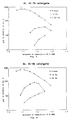
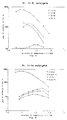
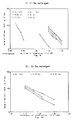
- Fig. 1-8 are diagrams showing the rate of carbon formation on the catalysts according to the invention at different temperatures during reforming of hydrocarbons
- Fig. 9-16 show the activity of the catalysts according to the invention at steam reforming of methane.
- the catalysts of this example were prepared by coimpregnating an alumina carrier with an aqueous solution containing nickel nitrate and tin chloride:
- the catalysts of this example containing 20 wt% metallic nickel and 1 wt%, 2.5 wt%, or 3.5 wt% metallic Sn, calculated on the amount of nickel, respectively, were prepared in similar manner to that described under Example 1, with the exception that high surface area spinel (Al2O3/MgO, 19 m2/g) was used as carrier.
- the bimetallic catalysts of these examples containing 20 wt% metallic nickel and different amounts of the above promoters on an alpha-alumina carrier, were prepared by coimpregnating the carrier in a similar procedure to that from Example 1 with impregnation solutions as specified in Table 2 below: Table 2 Example Catalyst Composition wt% promoter with respect to metallic nickel Impregnation Solution Amount of nickel and metal salt per 70 ml distilled water 3.1 Ni(20wt%)-Pb(0.5wt%) 9.9g Ni(NO3)2 ⁇ 6H2O; 0.016g Pb(NO3)2 3.2 Ni(20wt%)-Pb(1 wt%) 9.9g Ni(NO3)2 ⁇ 6H2O; 0.032g Pb(NO3)2 3.3 Ni(20wt%-Pb(5 wt%) 9.9g Ni(NO3)2 ⁇ 6H2O; 0.16g Pb(NO3)2 4.1 Ni(20wt%)-Sb(1 wt%) 9.
- the rates of carbon deposition on the reforming catalysts prepared under Example 1-8 were measured gravimetrically for various values of temperature between 500-700°C.
- a conventional experimental set-up comprising a heated reactor tube associated with an on-line microbalance was used for the measurements.
- the carbon deposition rate was measured after reducing the catalyst samples at 500°C for 2 hours in hydrogen.
- Fig. 1-7 The rate of carbon formation at the above conditions is depicted in Fig. 1-7, showing the amount of carbon (»g carbon/g catalyst ⁇ s) at different temperatures (1/K ⁇ 1000) deposited on: Ni-Sn catalysts (Fig. 1), prepared under Example 1; Ni-Sn catalysts on spinel (Fig. 2), prepared under Example 2; Ni-Pb catalysts (Fig. 3), prepared under Example 3.1 and 3.2; Ni-Sb catalysts (Fig. 4), prepared under Example 4.1 and 4.2; Ni-Bi catalysts (Fig. 5), prepared under Example 5.1-5.3; Ni-As catalysts (Fig. 6), prepared under Example 6.1-6.3; and Ni-Ge catalysts (Fig. 1), prepared under Example 1; Ni-Sn catalysts on spinel (Fig. 2), prepared under Example 2; Ni-Pb catalysts (Fig. 3), prepared under Example 3.1 and 3.2; Ni-Sb catalysts (Fig. 4), prepared under Example 4.1 and 4.2; Ni-Bi catalysts (Fig.
- the catalyst with 0.5% Pb in nickel (Fig. 3) is observed to deposit carbon at a moderate rate and nickel catalysts with 1% Pb retards carbon formation to a large extent.
- the temperature for maximum carbon deposition shifts to lower values, as compared to 100% nickel catalysts. Similar results are obtained with addition of antimony or bismuth as apparent from Fig. 4 and Fig. 5.
- the catalyst used for this study was prepared by sequential impregnation of Ni and Sn on a magnesium-spinel carrier (Al2O3/Mgo, 20 m2/g, 4 mm particle size).
- the nickel impregnated carrier was immersed in 20 ml of an aqueous solution of 0.036 g SnCl2 ⁇ 2H2O and impregnated for 18 hours at ambient temperature, then dried and calcined in air at 450°C for 30 min.
- the final catalyst contained about 20 wt% Ni and 1 wt% Sn, calculated on the amount of Ni in the catalyst.
- the catalyst was activated by reduction in pure hydrogen at 600°C for about 2 hours.
- the rate of carbon deposition on the catalyst was measured during steam reforming of butane in a similar procedure to that described under Example 9.
- thermocouple was attached to a furnace controller and to a digital temperature indicator.
- the catalysts were reduced at 500°C for 2-3 hours in pure hydrogen, whereafter hydrogen was replaced with the feed gas in which methane was added after about 5-10 min. The activity was then measured at 525°C, 550°C, 575°C, 600°C and 625°C.
- the steam reforming activity of nickel catalyst containing small amount of Sn, Pb, Sb, and Bi promoters are similar to that of 100% nickel.
- Metals such as arsenic and germanium reduce the activity of nickel catalysts, but small amounts of these metals have only a mild effect on steam reforming when compared to the nickel catalyst.
Landscapes
- Chemical & Material Sciences (AREA)
- Chemical Kinetics & Catalysis (AREA)
- Organic Chemistry (AREA)
- Engineering & Computer Science (AREA)
- Materials Engineering (AREA)
- Health & Medical Sciences (AREA)
- General Health & Medical Sciences (AREA)
- Combustion & Propulsion (AREA)
- Inorganic Chemistry (AREA)
- Catalysts (AREA)
- Hydrogen, Water And Hydrids (AREA)
- Carbon And Carbon Compounds (AREA)
Description
- The present invention is related to the production of hydrogen and/or carbon monoxide rich gases by steam reforming of hydrocarbons.
- In the known processes for the production of hydrogen and/or carbon monoxide rich gases a mixture of hydrocarbons and steam and/or carbon dioxide is passed at elevated temperature and pressure through a reactor packed with a catalyst, mainly consisting of nickel as the active catalytic component.
- Hydrocarbon feedstocks suitable for steam reforming are for instance natural gas, refinery off-gases, propane, naphtha and liquified petroleum gases. Taking methane as an example, the reactions, which take place can be represented by the following equations:
(1) CH₄ + H₂O -> CO + 3H₂ (- Δ H° ₂₉₈ = -206.4 kJ/mole)
(2) CH₄ + CO₂ -> 2CO + 2H₂ (- Δ H° ₂₉₈ = -234.4 kJ/mole)
(3) CO + H₂O -> CO₂ + H₂ (- Δ H° ₂₉₈ = 41.2 kJ/mole)
In addition to the reforming reactions (1) and (2), certain carbon forming reactions may occur as follows:
(4) CH₄ -> C+2H₂ (- Δ H° ₂₉₈ = -75.9 kJ/mole)
(5) 2CO -> C+CO₂ (- Δ H° ₂₉₈ = 173 kJ/mole)
The carbon, thereby, formed is detrimental in several ways. It decreases the activity of the catalyst by blocking its active sites. Carbon formation may further cause spalling and pulverization of the catalyst particles, resulting in increasing pressure drop over the catalyst bed and hence discontinuations of the reforming operation due to clogging of the reactor. - It is well known to prevent carbon formation on the catalyst by increasing the steam to hydrocarbon ratio or by reducing the molecular weight of the feedstock to reduce the potential for carbon formation. However, an increased steam to hydrocarbon ratio leads to reduced yields of CO by shifting more carbon monoxide over to carbon dioxide. Thus, in order to maintain CO/H₂-production at the desired production rate, larger amounts of catalyst and feedstock are required, which depreciates the economy of the reforming process.
- Various attempts have been made to overcome carbon deposition without affecting the optimum steam to hydrocarbon ratio. A method of preventing carbon formation during steam reforming processes for the preparation of reducing gases with a high reduction potential is mentioned in GB patent No. 2,015,027. By the disclosed process, a feed gas rich in methane is reformed over a supported nickel catalyst in the presence of 2 to 10 ppm by volume sulphur or sulphur compounds in the feed. Thereby, the presence of sulphur in the feed gas counteracts carbon formation and ensures satisfactory reforming activity of the catalyst to form carbon monoxide and hydrogen.
- Furthermore, several catalysts giving decreased carbon deposition have been suggested in the past. In general the prior art catalysts having a suppression effect upon carbon deposition mainly consist of nickel with alkali promotor. Disadvantages of the alkali promoted catalysts are low activity and the mobility of alkali metals, which cause migration and evaporation of the alkali promoter during the operation of the catalyst.
- Steam reforming-catalysts free of alkali metals are suggested in US patent No. 3,926,583, by which a nickel, iron or cobalt reforming catalyst is prepared by reducing a precursor comprising an intimate mixture of magnesium aluminum spinel with a mixed solid phase of the oxides of nickel, iron or cobalt, and in US patent No. 3,791,993, disclosing a nickel, iron or cobalt, magnesium oxide reforming catalyst.
- Other promoters have been suggested in the art. US patent No. 4,060,498 mentions a steam reforming process with a silver promoted nickel catalyst on a heat-resistant oxide carrier. At an amount of silver of at least 2 mg-atoms per 100 gram of the catalyst the carbon deposition is stated to be suppressed to 10 mg/h or less in the steam reforming of paraffinic hydrocarbons.
- We have now found that addition of small amounts of group IVa and Va metals to nickel provides a catalyst with suppressed carbon deposition during steam reforming of hydrocarbons.
- Pursuant to this finding an object of the present invention is to provide an improved process for the production of hydrogen and/or carbon monoxide rich gases by steam reforming with a catalyst comprising nickel supported on refractory carrier material as its main catalytic component, the catalyst including also at least one metal selected from the Group consisting of germanium, tin, lead, arsenic, antimony and bismuth, which are preferably included in the catalyst in an amount of between 0.1 and 30% by weight calculated on the amount of metallic nickel in the catalyst, whereby the actual amount of these metals in the catalyst depends on the nickel surface area.
- The amount of nickel in the catalyst may vary between 3 and 40% by weight, preferably between 5 and 25% by weight, calculated on the total amount of the catalyst.
- According to one embodiment of the invention the catalyst is supported on a refractory carrier such as alumina, magnesia, titania, silica, zirconia, beryllia, thoria, lanthania, calcium oxide and compounds or mixtures thereof. Very suitable carriers are alumina and magnesium aluminium spinel.
- The catalyst may be prepared by coimpregnation or sequentially impregnation of the carrier material with solutions containing a soluble nickel salt and a salt of the desired metal promoter(s). The catalyst may further be prepared by coprecipitation of soluble salts of the carrier material, nickel and the desired metal promotor(s). Suitable salts are chlorides, nitrates, carbonates, acetates and oxalates, which upon heating in air form the oxides of the desired metals.
- The promoted catalysts thus obtained can be used in the production of hydrogen and/or carbon monoxide rich gases by steam reforming of methane and/or higher hydrocarbons.
- The hydrogen and/or carbon monoxide rich gases obtained may be used in many processes. Mixtures of hydrogen and carbon monoxide are for instance employed in the synthesis of oxygenated hydrocarbons. An important use of hydrogen-rich gas is, furthermore, in the preparation of ammonia.
- The above features and aspects of the present invention will become more apparent by the following examples and drawings, in which,
- Fig. 1-8 are diagrams showing the rate of carbon formation on the catalysts according to the invention at different temperatures during reforming of hydrocarbons, and Fig. 9-16 show the activity of the catalysts according to the invention at steam reforming of methane.
- Preparation of tin promoted nickel reforming catalysts according to the invention.
- The catalysts of this example were prepared by coimpregnating an alumina carrier with an aqueous solution containing nickel nitrate and tin chloride:
- Impregnation solution (A):
9.9 g Ni(NO₃)₂ · 6H₂O and 0.038 g
SnCl₂ · 2H₂O were dissolved in 70 ml distilled water. - Impregnation solution (B):
9.9 g Ni(NO₃)₂ · 6H₂O and 0.067 g
SnCl₂ · 2H₂O were dissolved in 70 ml distilled water. - Impregnation solution (C):
9.9 g Ni(NO₃)₂ · 6H₂O and 0.11 g
SnCl₂ · 2H₂O were dissolved in 70 ml distilled water. - Impregnation solution (D):
9.9 g Ni(NO₃)₂ · 6H₂O and 0.19 g
SnCl₂ · 2H₂O were dissolved in 70 ml distilled water. - Impregnation solution (E):
9.9 g Ni(NO₃)₂ · 6H₂O and 0.95 g
SnCl₂ · 2H₂O were dissolved in 70 ml distilled water. - Impregnation solution (F):
9.9 g Ni(NO₃)₂ · 6H₂O and 0.019 g
SnCl₂ · 2H₂O were dissolved in 70 ml distilled water. - i) Preparation of a tin promoted nickel catalyst impregnated on an alpha-alumina carrier containing 20 wt% metallic Ni (calculated on the total amount of alpha-alumina carrier and Ni) and 1 wt% metallic Sn, calculated on the amount of Ni in the catalyst.
8 g alpha-alumina with a surface area of 5 m²/g were used as carrier. The carrier was crushed and sieved to a particle size of 1-2 mm and then immersed in impregnation solution (A) for about 18 hours.
After evaporation of water at 50-60°C with stirring, the impregnated carrier particles were dried at 125°C for two hours. The dried particles were finally calcined in air at 500°C for 3 hours, to decompose the impregnated metal salts to their oxides. The thus prepared catalyst precursor was treated with hydrogen at 500°C for 2-3 hours in order to reduce the metal oxides to their metallic form and to obtain the active reforming catalyst. - ii) Preparation of a tin promoted nickel catalyst impregnated on alpha-alumina carrier containing 20 wt% metallic (Ni calculated on the total amount of alpha-alumina carrier and Ni) and 1.75 wt% metallic Sn (calculated on the amount of Ni in the catalyst).
The catalyst was prepared in the same manner as described under i), except that impregnation solution (A) was replaced by impregnation solution (B). - iii) Preparation of a tin promoted nickel catalyst impregnated on an alpha-alumina carrier containing 20 wt% metallic Ni calculated on the total amount of alpha-alumina carrier and Ni and 3 wt% metallic Sn (calculated on the amount of Ni on the catalyst).
The catalyst was prepared in the same manner as described under i) except that impregnation solution (A) was replaced by impregnation solution (C). - iv) Preparation of a tin promoted nickel catalyst impregnated on alpha-alumina carrier containing 20 wt% metallic Ni (calculated on the total amount of alpha-alumina carrier and Ni) and 5 wt% metallic Sn (calculated on the amount of Ni in the catalyst).
The catalyst was prepared in the same manner as described under i), except that impregnation solution (A) was replaced by impregnation solution (D). - v) Preparation of a tin promoted nickel catalyst impregnated on alpha-alumina carrier containing 20 wt% metallic Ni (calculation on the total amount of alpha-alumina carrier and Ni) and 25 wt% metallic Sn (calculated on the amount of Ni in the catalyst).
The catalyst was prepared in the same manner as desribed under i), except that impregnation solution (A) was replaced by impregnation solution (E). - vi) Preparation of a tin promoted nickel catalyst impregnated on alpha-alumina carrier containing 20 wt% metallic Ni (calculated on the total amount of alpha-alumina carrier and Ni) and 0,5 wt% metallic Sn (calculated on the amount of Ni in the catalyst).
The catalyst was prepared in the same manner as described under i), except that impregnation solution (A) was replaced by impregnation solution (F). - Preparation of tin promoted nickel reforming catalysts supported on high surface area magnesium aluminium spinel.
- The catalysts of this example containing 20 wt% metallic nickel and 1 wt%, 2.5 wt%, or 3.5 wt% metallic Sn, calculated on the amount of nickel, respectively, were prepared in similar manner to that described under Example 1, with the exception that high surface area spinel (Al₂O₃/MgO, 19 m²/g) was used as carrier.
- The impregnation solutions used are specified in Table 1 below:
Table 1 Catalyst Composition wt% promoter with respect to metallic nickel Impregnation Solution Amount of nickel and tin salt per 70 ml distilled water Ni(20 wt%)-Sn(1 wt%) 9.9g Ni(NO₃)₂ · 6H₂O; 0.038g SnCl₂ · 2H₂O Ni(20 wt%)-Sn(2.5 wt%) 9.9g Ni(NO₃)₂ · 6H₂O; 0.095g SnCl₂ · 2H₂O Ni(20 wt%-Sn(3.5 wt%) 9.9g Ni(NO₃)₂ · 6H₂O; 0.13g SnCl₂ · 2H₂O - Preparation of lead, antimony, bismuth, germanium and arsenic promoted nickel reforming catalysts.
- The bimetallic catalysts of these examples, containing 20 wt% metallic nickel and different amounts of the above promoters on an alpha-alumina carrier, were prepared by coimpregnating the carrier in a similar procedure to that from Example 1 with impregnation solutions as specified in Table 2 below:
Table 2 Example Catalyst Composition wt% promoter with respect to metallic nickel Impregnation Solution Amount of nickel and metal salt per 70 ml distilled water 3.1 Ni(20wt%)-Pb(0.5wt%) 9.9g Ni(NO₃)₂ · 6H₂O; 0.016g Pb(NO₃)₂ 3.2 Ni(20wt%)-Pb(1 wt%) 9.9g Ni(NO₃)₂ · 6H₂O; 0.032g Pb(NO₃)₂ 3.3 Ni(20wt%-Pb(5 wt%) 9.9g Ni(NO₃)₂ · 6H₂O; 0.16g Pb(NO₃)₂ 4.1 Ni(20wt%)-Sb(1 wt%) 9.9g Ni(NO₃)₂ · 6H₂O; 0.038g SbCl₃ 4.2 Ni(20wt%)-Sb(2 wt%) 9.9g Ni(NO₃)₂ · 6H₂O; 0.075g SbCl₃ 4.3 Ni(20wt%)-Sb(4 wt%) 9.9g Ni(NO₃)₂ · 6H₂O; 0.15g SbCl₃ 5.1 Ni(20wt%)-Bi(1 wt%) 9.9g Ni(NO₃)₂ · 6H₂O; 0.046g Bi(NO₃)₃ · 5H₂O 5.2 Ni(20wt%)-Bi(2 wt%) 9.9g Ni(NO₃)₂ · 6H₂O; 0.093g Bi(NO₃)₃ · 5H₂O 5.3 Ni(20wt%)-Bi(5 wt%) 9.9g Ni(NO₃)₂ · 6H₂O; 0.23g Bi(NO₃)₃ · 5H₂O 6.1 Ni(20wt%)-As(0.25 wt%) 9.9g Ni(NO₃)₂ · 6H₂O; 0.013g(80%)H₃AsO₄ · ½H₂O 6.2 Ni(20wt%)-As(0.5 wt%) 9.9g Ni(NO3)₂ · 6H₂O; 0.026g(80%)H₃AsO₄ · ½H₂O 6.3 Ni(20wt%)-As(1 wt%) 9.9g Ni(NO₃)₂ · 6H₂O; 0.051g(80%)H₃AsO₄ · ½H₂O 7.1 Ni(20wt%)-Ge(1 wt%) 9.9g Ni(NO₃)₂ · 6H₂O; 0.06g GeCl₄ 7.2 Ni(20wt%)-Ge(5 wt%) 9.9g Ni(NO₃)₂ · 6H₂O; 0.3g GeCl₄ -
- (i) Preparation of a comparison nickel catalyst on an alpha alumina carrier (Al₂O₃, 5 m²/g).
The catalyst of this example was prepared by impregnating an alumina carrier (1-2 mm particle size) with an aqueous solution of nickel nitrate containing: 9.9 g Ni(NO₃)₂ · 6H₂₀, dissolved in 70 ml distilled water.
8 g of alpha-alumina with a surface area of 5 m²/g were used as carrier. The carrier was treated and the catalyst prepared by impregnating the carrier with the impregnation solution, then drying, calcinating and activating the obtained nickel catalyst in the same manner as described above in Example 1. - (ii) Preparation of a comparison nickel catalyst on magnesium aluminium spinel carrier (Al₂O₃/MgO, 19 m²/g).
The catalyst was prepared in the same manner as described under i) except that the carrier of this Example was magnesium aluminium spinel (1-2 mm particle size). - The rates of carbon deposition on the reforming catalysts prepared under Example 1-8 were measured gravimetrically for various values of temperature between 500-700°C. A conventional experimental set-up comprising a heated reactor tube associated with an on-line microbalance was used for the measurements.
- Samples of the catalysts (30-60 mesh) of about 20-60 mg of each sample were placed on the basket suspended from one arm of the microbalance.
- The following conditions were employed, while measuring carbon formation at lower (500-700°C) and higher temperatures (800°C).
- Amounts of reforming catalyst used:
at lower temperatures = 20 mg
at higher temperatures = 60 mg
The total flow rate and the concentration of the feed stream passed over the catalyst was similar at lower and higher temperatures and is given as below.Total flow rate = 290 Nml/min. Methane = 61 vol% Steam = 7 vol% Hydrogen = 20 vol% Nitrogen = 12 vol% - The carbon deposition rate was measured after reducing the catalyst samples at 500°C for 2 hours in hydrogen.
- The rate of carbon formation at the above conditions is depicted in Fig. 1-7, showing the amount of carbon (»g carbon/g catalyst · s) at different temperatures (1/K · 1000) deposited on:
Ni-Sn catalysts (Fig. 1), prepared under Example 1;
Ni-Sn catalysts on spinel (Fig. 2), prepared under Example 2;
Ni-Pb catalysts (Fig. 3), prepared under Example 3.1 and 3.2;
Ni-Sb catalysts (Fig. 4), prepared under Example 4.1 and 4.2;
Ni-Bi catalysts (Fig. 5), prepared under Example 5.1-5.3;
Ni-As catalysts (Fig. 6), prepared under Example 6.1-6.3; and
Ni-Ge catalysts (Fig. 7), prepared under Example 7.1 and 7.2;
each in comparison to the conventional nickel reforming catalyst, prepared under Example 8 i) or 8 ii)
As apparent from Fig. 1 the carbon formation rate on Ni-Sn catalysts drops in proportion to the amount of tin added. The carbon formation curves show a maximum in rate at temperature lower than that of 100% nickel. Addition of 1% tin shows a significant drop in rate of carbon formation. - A significant reduction in carbon formation rate is further observed for catalysts having 2.5% and 3.5% tin in nickel on high surface area spinel (Fig. 2).
- The catalyst with 0.5% Pb in nickel (Fig. 3) is observed to deposit carbon at a moderate rate and nickel catalysts with 1% Pb retards carbon formation to a large extent. The temperature for maximum carbon deposition shifts to lower values, as compared to 100% nickel catalysts. Similar results are obtained with addition of antimony or bismuth as apparent from Fig. 4 and Fig. 5.
- Small amounts of arsenic have a drastic effect on nickel catalysts activity for carbon formation. The addition of 0.25%, 0.5% and 1% arsenic has similar effects on carbon formation rate as apparent from Fig. 6.
- A higher content of germanium is requested to have a similar effect (Fig. 7).
- The rate of carbon formation on tin promoted nickel reforming catalysts was further studied at steam reforming of higher hydrocarbons.
- The catalyst used for this study was prepared by sequential impregnation of Ni and Sn on a magnesium-spinel carrier (Al₂O₃/Mgo, 20 m²/g, 4 mm particle size).
- 2.00 g of the carrier were immersed in an excess of 92 wt% aqueous Ni(NO₃)₂ · 6H₂O solution at 80°C. After about one hour the impregnated carrier was separated by filtration, dried and calcinated in air at 450°C for 30 min.
- This procedure was repeated once and the catalyst now contained about 20 wt% metallic nickel on the carrier.
- The nickel impregnated carrier was immersed in 20 ml of an aqueous solution of 0.036 g SnCl₂ · 2H₂O and impregnated for 18 hours at ambient temperature, then dried and calcined in air at 450°C for 30 min.
- The final catalyst contained about 20 wt% Ni and 1 wt% Sn, calculated on the amount of Ni in the catalyst.
- The catalyst was activated by reduction in pure hydrogen at 600°C for about 2 hours.
- The rate of carbon deposition on the catalyst was measured during steam reforming of butane in a similar procedure to that described under Example 9.
- The following conditions were employed, while measuring carbon formation at 450°C to 750°C with an increase of temperature by 0.3°C/min.
- 110 mg of the Ni-Sn catalyst were loaded on the basket of the microbalance. The increase of temperature together with the increase of weight were recorded by a pen-plotter.
- The total flow rate and concentration of the feed stream passed over the catalyst was as given below:
Total flow rate = 360 Nml/min. Butane = 2.9 vol% Steam = 23.1 vol% Hydrogen = 4.6 vol% Nitrogen = 69.4 vol% Pressure = atmospheric - In a similar procedure carbon formation was measured on a comparison Ni-catalyst prepared as described above with the exception that no Sn was impregnated on the carrier.
- The results obtained by the above measurements are depicted in Fig. 8, showing the rate of carbon formation on the catalysts.
- As apparent from Fig. 8 the onset of carbon formation during steam reforming of butan is increased from about 475°C to about 725°C by addition of 1 wt% Sn in the nickel catalyst. This demonstrates a highly improved resistance to carbon formation on the tin promoted catalysts during reforming of higher hydrocarbons.
- Catalytic activity of promoted catalysts in the conversion of methane by steam reforming.
- To determine the steam reforming activity of the catalysts a stainless steel reactor tube of 8 mm inner diameter was used. The reactor was placed in an electric furnace. Inside the reactor tube a thermocouple was positioned at the bottom of the catalyst bed. The thermocouple was attached to a furnace controller and to a digital temperature indicator.
- The reactants and products were analysed by gas chromatography. Samples of 40 mg catalysts (30-60 mesh) diluted with 2060 mg of inactive alpha alumina were loaded as fixed bed in the reactor tube.
- The following process conditions were used to determine the steam reforming activity for the catalyst between 525°C and 625°C.
- Total flow of feed gas was maintained at about 300 Nml/min with following percentage concentration:
Methane = 27 vol% Steam = 8 vol% Hydrogen = 32 vol% Helium = 33 vol% - The catalysts were reduced at 500°C for 2-3 hours in pure hydrogen, whereafter hydrogen was replaced with the feed gas in which methane was added after about 5-10 min. The activity was then measured at 525°C, 550°C, 575°C, 600°C and 625°C.
- The results from the activity test are presented in Figures 9-15, showing the amount of methane converted to carbon oxide (moles of CH₄ converted to CO + CO₂/g catalyst/hr.) at the above temperatures (1/K · 1000) by use of:
Ni-Sn catalysts (Fig. 9), prepared under Example 1;
Ni-Sn catalysts (Fig. 10), prepared under Example 2;
Ni-Pb catalysts (Fig. 11), prepared under Example 3.1 and 3.2;
Ni-Sb catalysts (Fig. 12), prepared under Example 4.1;
Ni-Bi catalysts (Fig. 13), prepared under Example 5.1 and 5.2;
Ni-As catalysts (Fig. 14), prepared under Example 6.1 and 6.3;
Ni-Ge catalysts (Fig, 15), prepared under Example 7.2;
each in comparison to the conventional nickel reforming catalyst, prepared under Example 8 i) or 8 ii). - As seen from the figures the steam reforming activity of nickel catalyst containing small amount of Sn, Pb, Sb, and Bi promoters are similar to that of 100% nickel. Metals such as arsenic and germanium reduce the activity of nickel catalysts, but small amounts of these metals have only a mild effect on steam reforming when compared to the nickel catalyst.
- It is to be understood that the foregoing description is given only to illustrate and exemplify the present invention, which is limited only by the claims which follow.
Claims (4)
- A process for the production of hydrogen and/or carbon monoxide rich gases by steam reforming of a hydrocarbon feedstock comprising contacting the hydrocarbon feedstock and steam with a catalyst comprising nickel as a main catalytic component, a refractory carrier material for the nickel and at least one further metal selected from the group consisting of germanium, tin, lead, arsenic, antimony and bismuth.
- The process of claim 1, wherein said further metal is included in an amount of between 0.1 and 30% by weight, preferably 0.2-6% by weight and most preferred 0.5-2% by weight, calculated on the amount of metallic nickel in the catalyst.
- The process of claim 1, wherein the refractory carrier material is selected from the group comprising alumina, magnesia, titania, silica, zirconia, beryllia, thoria, lanthania, calcium oxide and compounds or mixtures thereof.
- The process of claim 1 wherein the hydrocarbon feedstock is butane.
Applications Claiming Priority (2)
| Application Number | Priority Date | Filing Date | Title |
|---|---|---|---|
| DK1898/90 | 1990-08-09 | ||
| DK189890A DK166995B1 (en) | 1990-08-09 | 1990-08-09 | CATALYST FOR VAPOR REFORM OF CARBON HYDROIDS AND USE IN THE PREPARATION OF HYDROGEN AND / OR CARBON MONOXIDE-rich gases |
Publications (2)
| Publication Number | Publication Date |
|---|---|
| EP0470626A1 EP0470626A1 (en) | 1992-02-12 |
| EP0470626B1 true EP0470626B1 (en) | 1995-04-26 |
Family
ID=8108896
Family Applications (1)
| Application Number | Title | Priority Date | Filing Date |
|---|---|---|---|
| EP91113355A Expired - Lifetime EP0470626B1 (en) | 1990-08-09 | 1991-08-08 | Steam reforming of hydrocarbons |
Country Status (6)
| Country | Link |
|---|---|
| US (2) | US5595719A (en) |
| EP (1) | EP0470626B1 (en) |
| JP (1) | JP3329839B2 (en) |
| AU (1) | AU629131B2 (en) |
| DE (1) | DE69109203T2 (en) |
| DK (1) | DK166995B1 (en) |
Families Citing this family (25)
| Publication number | Priority date | Publication date | Assignee | Title |
|---|---|---|---|---|
| US5741440A (en) * | 1994-02-28 | 1998-04-21 | Eastman Chemical Company | Production of hydrogen and carbon monoxide |
| DK174077B1 (en) * | 1997-06-10 | 2002-05-21 | Topsoe Haldor As | Process for hydrocarbon vapor reforming using a gold-containing nickel vapor reforming catalyst |
| EP1013603A1 (en) * | 1998-12-22 | 2000-06-28 | Haldor Topsoe A/S | Process for catalytical steam reforming of a hydrocarbon feedstock |
| DE60034295T2 (en) | 1999-11-24 | 2008-01-03 | Saudi Basic Industries Corp. | Oxidative dehydrogenation of paraffins |
| US7468342B2 (en) * | 2001-05-22 | 2008-12-23 | Mitsubishi Gas Chemical Company, Inc. | Catalysts and process for producing aromatic amines |
| US7102048B2 (en) * | 2002-12-17 | 2006-09-05 | Exxonmobil Chemical Patents Inc. | Methanol feed for producing olefin streams |
| EP1578529A2 (en) * | 2002-12-20 | 2005-09-28 | Honda Giken Kogyo Kabushiki Kaisha | Platinum and rhodium and/or iron containing catalyst formulations for hydrogen generation |
| AU2003303385A1 (en) | 2002-12-20 | 2004-07-22 | Honda Giken Kogyo Kabushiki Kaisha | Platinum-ruthenium containing catalyst formulations for hydrogen generation |
| AU2003297472A1 (en) * | 2002-12-20 | 2004-07-22 | Honda Giken Kogyo Kabushiki Kaisha | Alkali-containing catalyst formulations for low and medium temperature hydrogen generation |
| CN1329286C (en) * | 2002-12-20 | 2007-08-01 | 本田技研工业株式会社 | Noble metal-free nickel catalyst formulations for hydrogen |
| EP2206552A3 (en) * | 2002-12-20 | 2011-03-09 | Honda Giken Kogyo Kabushiki Kaisha | Method for the preparation of catalysts for hydrogen generation |
| JP2006511424A (en) * | 2002-12-20 | 2006-04-06 | 本田技研工業株式会社 | Platinum-alkali / alkaline earth catalyst compound for hydrogen generation |
| CA2511017A1 (en) * | 2002-12-20 | 2004-07-15 | Honda Giken Kogyo Kabushiki Kaisha | Platinum-free ruthenium-cobalt catalyst formulations for hydrogen generation |
| CN1729139A (en) * | 2002-12-20 | 2006-02-01 | 本田技研工业株式会社 | Catalyst formulations for hydrogen generation |
| DE602004001005T2 (en) * | 2003-04-19 | 2006-11-09 | Haldor Topsoe A/S | Method and device for measuring high temperatures |
| US7001586B2 (en) * | 2003-09-23 | 2006-02-21 | Catalytic Materials, Llc | CO-free hydrogen from decomposition of methane |
| US6995115B2 (en) * | 2003-09-23 | 2006-02-07 | Catalytic Materials, Llc | Catalyst for the generation of CO-free hydrogen from methane |
| WO2005097319A1 (en) | 2004-04-08 | 2005-10-20 | Sulzer Metco (Canada) Inc. | Supported catalyst for steam methane reforming and autothermal reforming reactions |
| US8146367B2 (en) * | 2004-12-22 | 2012-04-03 | Commonwealth Scientific And Industrial Research Organisation | Production of synthesis gas using catalyst-coated turbine blades |
| WO2006125177A2 (en) * | 2005-05-19 | 2006-11-23 | Massachusetts Institute Of Technology | Electrode and catalytic materials |
| US20070101648A1 (en) * | 2005-11-10 | 2007-05-10 | Robert Iverson | Method and apparatus for endothermic fuel reformation |
| US7815891B2 (en) * | 2006-01-12 | 2010-10-19 | Kabushiki Kaisha Toshiba | Device and method for producing hydrogen |
| JP2010507471A (en) * | 2006-10-23 | 2010-03-11 | ビーピー ピー・エル・シー・ | Process and catalyst for hydrocarbon conversion |
| WO2008143728A2 (en) * | 2007-02-28 | 2008-11-27 | Massachusetts Institute Of Technology | Catalysts and methods including steam reforming |
| JP5409484B2 (en) * | 2010-03-30 | 2014-02-05 | Jx日鉱日石エネルギー株式会社 | Steam reforming catalyst, hydrogen production apparatus and fuel cell system |
Family Cites Families (17)
| Publication number | Priority date | Publication date | Assignee | Title |
|---|---|---|---|---|
| US2119566A (en) * | 1926-06-25 | 1938-06-07 | Du Pont | Process of producing hydrogen |
| US2112387A (en) * | 1936-01-28 | 1938-03-29 | Standard Oil Dev Co | Process for making a catalyst |
| US3567411A (en) * | 1963-04-05 | 1971-03-02 | Pullman Inc | Process for the production of gaseous product containing hydrogen and methane |
| GB1182829A (en) * | 1967-06-12 | 1970-03-04 | Haldor Frederik Axel Topsoe | Improvements in or relating to Nickel Catalysts. |
| US3542696A (en) * | 1968-10-14 | 1970-11-24 | Chevron Res | Hydrocracking catalyst |
| US3666412A (en) * | 1968-10-21 | 1972-05-30 | Du Pont | Dispersed phase activated and stabilized metal catalysts |
| US3812196A (en) * | 1970-11-30 | 1974-05-21 | Mitsubishi Petrochemical Co | Catalytic steam dealkylation |
| US3840475A (en) * | 1971-02-19 | 1974-10-08 | Mobil Oil Corp | Bimetallic catalyst preparation |
| US4060498A (en) * | 1972-06-02 | 1977-11-29 | Hitachi, Ltd. | Process for steam reforming of hydrocarbons |
| US3960773A (en) * | 1973-01-29 | 1976-06-01 | Phillips Petroleum Company | Catalyst compositions and their preparation |
| FR2266738B1 (en) * | 1974-04-08 | 1977-10-14 | Raffinage Cie Francaise | |
| US4191664A (en) * | 1975-06-16 | 1980-03-04 | Union Oil Company Of California | Thermally stable nickel-alumina catalysts useful for methanation and other reactions |
| US4045594A (en) * | 1975-12-31 | 1977-08-30 | Ibm Corporation | Planar insulation of conductive patterns by chemical vapor deposition and sputtering |
| EP0010114B1 (en) * | 1977-07-11 | 1983-11-30 | British Gas Corporation | Steam reforming catalysts and their preparation |
| US4284531A (en) * | 1979-09-05 | 1981-08-18 | Union Oil Co. Of California | Methanation catalysts and process for their preparation |
| FR2539647B1 (en) * | 1983-01-24 | 1985-06-07 | Inst Francais Du Petrole | PROCESS FOR THE PREPARATION OF SUPPORTED BIMETALLIC OR PLURIMETALLIC CATALYSTS BASED ON ONE OR MORE GROUP VIII METALS AND AT LEAST ONE GROUP IV METAL OBTAINED CATALYSTS AND USES THEREOF |
| FR2556235A1 (en) * | 1983-12-09 | 1985-06-14 | Pro Catalyse | METHOD FOR MANUFACTURING AN ALUMINA BASED CATALYST |
-
1990
- 1990-08-09 DK DK189890A patent/DK166995B1/en not_active IP Right Cessation
-
1991
- 1991-08-08 EP EP91113355A patent/EP0470626B1/en not_active Expired - Lifetime
- 1991-08-08 JP JP19961191A patent/JP3329839B2/en not_active Expired - Fee Related
- 1991-08-08 AU AU81675/91A patent/AU629131B2/en not_active Expired
- 1991-08-08 DE DE69109203T patent/DE69109203T2/en not_active Expired - Lifetime
-
1992
- 1992-05-22 US US07/887,610 patent/US5595719A/en not_active Expired - Lifetime
-
1995
- 1995-12-13 US US08/571,780 patent/US5599517A/en not_active Expired - Lifetime
Also Published As
| Publication number | Publication date |
|---|---|
| US5595719A (en) | 1997-01-21 |
| AU629131B2 (en) | 1992-09-24 |
| EP0470626A1 (en) | 1992-02-12 |
| AU8167591A (en) | 1992-02-13 |
| US5599517A (en) | 1997-02-04 |
| DE69109203D1 (en) | 1995-06-01 |
| DK189890A (en) | 1992-02-10 |
| DK166995B1 (en) | 1993-08-16 |
| DE69109203T2 (en) | 1995-08-31 |
| DK189890D0 (en) | 1990-08-09 |
| JP3329839B2 (en) | 2002-09-30 |
| JPH04227062A (en) | 1992-08-17 |
Similar Documents
| Publication | Publication Date | Title |
|---|---|---|
| US5599517A (en) | Catalyst for steam reforming of hydrocarbons | |
| US6313063B1 (en) | Catalyst support material | |
| EP0884274B1 (en) | Process for steam reforming of hydrocarbons | |
| Rostrup-Nielsen | Coking on nickel catalysts for steam reforming of hydrocarbons | |
| US3271325A (en) | Catalytic compositions for use in steam reforming of hydrocarbons | |
| US4191846A (en) | Catalytic dehydrogenation process | |
| US4060498A (en) | Process for steam reforming of hydrocarbons | |
| US3451949A (en) | Catalyst for reforming hydrocarbons | |
| CA1151216A (en) | Preparation of methanol from synthesis gas with promoted palladium catalysts | |
| US4289710A (en) | Process for producing methanol from synthesis gas with palladium-calcium catalysts | |
| US3957688A (en) | Catalytic dehydrogenation process | |
| CA1200561A (en) | Catalytic process for the production of methanol | |
| Bhatta et al. | Role of Urania and Alumina as Supports in the Steam Reforming of n-Butane at Pressure over Nickel-containing Catalysts | |
| US5089532A (en) | Catalyst, method of producing and using same for production of methanol and higher alcohols | |
| JP2020509925A (en) | Catalyst for converting synthesis gas to alcohols | |
| JPS63224737A (en) | Titanium oxide carrying palladium catalyst | |
| US7223897B2 (en) | Process for the production of olefins | |
| CA1146592A (en) | Process for producing two-carbon atom oxygenated compounds from synthesis gas with minimal production of methane | |
| WO1986001499A1 (en) | Fischer-tropsch catalyst | |
| US4692321A (en) | Oxidation of ammonia over a mixed catalyst bed of cobalt and aluminum oxides | |
| RU2327519C2 (en) | Method of obtaining olefins | |
| JP2903073B2 (en) | Method for producing ethylene | |
| EP0321616B1 (en) | Process for reducing methane production and increasing liquid yields in Fischer-Tropsch reactions | |
| JPH0250774B2 (en) | ||
| Stanković et al. | High temperature propane oxidation to reducing gas over promoted Ni/MgO catalysts. Role of impregnation condition and promoter on properties of catalysts |
Legal Events
| Date | Code | Title | Description |
|---|---|---|---|
| PUAI | Public reference made under article 153(3) epc to a published international application that has entered the european phase |
Free format text: ORIGINAL CODE: 0009012 |
|
| AK | Designated contracting states |
Kind code of ref document: A1 Designated state(s): BE DE FR GB IT NL SE |
|
| 17P | Request for examination filed |
Effective date: 19920710 |
|
| 17Q | First examination report despatched |
Effective date: 19930127 |
|
| GRAA | (expected) grant |
Free format text: ORIGINAL CODE: 0009210 |
|
| AK | Designated contracting states |
Kind code of ref document: B1 Designated state(s): BE DE FR GB IT NL SE |
|
| REF | Corresponds to: |
Ref document number: 69109203 Country of ref document: DE Date of ref document: 19950601 |
|
| ITF | It: translation for a ep patent filed | ||
| ET | Fr: translation filed | ||
| PLBE | No opposition filed within time limit |
Free format text: ORIGINAL CODE: 0009261 |
|
| STAA | Information on the status of an ep patent application or granted ep patent |
Free format text: STATUS: NO OPPOSITION FILED WITHIN TIME LIMIT |
|
| 26N | No opposition filed | ||
| PGFP | Annual fee paid to national office [announced via postgrant information from national office to epo] |
Ref country code: SE Payment date: 20000822 Year of fee payment: 10 |
|
| PG25 | Lapsed in a contracting state [announced via postgrant information from national office to epo] |
Ref country code: SE Free format text: LAPSE BECAUSE OF NON-PAYMENT OF DUE FEES Effective date: 20010809 |
|
| REG | Reference to a national code |
Ref country code: GB Ref legal event code: IF02 |
|
| EUG | Se: european patent has lapsed |
Ref document number: 91113355.1 |
|
| PGFP | Annual fee paid to national office [announced via postgrant information from national office to epo] |
Ref country code: NL Payment date: 20100824 Year of fee payment: 20 |
|
| PGFP | Annual fee paid to national office [announced via postgrant information from national office to epo] |
Ref country code: FR Payment date: 20100831 Year of fee payment: 20 Ref country code: IT Payment date: 20100826 Year of fee payment: 20 Ref country code: DE Payment date: 20100827 Year of fee payment: 20 |
|
| PGFP | Annual fee paid to national office [announced via postgrant information from national office to epo] |
Ref country code: GB Payment date: 20100825 Year of fee payment: 20 |
|
| PGFP | Annual fee paid to national office [announced via postgrant information from national office to epo] |
Ref country code: BE Payment date: 20100825 Year of fee payment: 20 |
|
| REG | Reference to a national code |
Ref country code: DE Ref legal event code: R071 Ref document number: 69109203 Country of ref document: DE |
|
| REG | Reference to a national code |
Ref country code: DE Ref legal event code: R071 Ref document number: 69109203 Country of ref document: DE |
|
| REG | Reference to a national code |
Ref country code: NL Ref legal event code: V4 Effective date: 20110808 |
|
| BE20 | Be: patent expired |
Owner name: *HALDOR TOPSOE A/S Effective date: 20110808 |
|
| REG | Reference to a national code |
Ref country code: GB Ref legal event code: PE20 Expiry date: 20110807 |
|
| PG25 | Lapsed in a contracting state [announced via postgrant information from national office to epo] |
Ref country code: GB Free format text: LAPSE BECAUSE OF EXPIRATION OF PROTECTION Effective date: 20110807 |
|
| PG25 | Lapsed in a contracting state [announced via postgrant information from national office to epo] |
Ref country code: NL Free format text: LAPSE BECAUSE OF EXPIRATION OF PROTECTION Effective date: 20110808 |
|
| PG25 | Lapsed in a contracting state [announced via postgrant information from national office to epo] |
Ref country code: DE Free format text: LAPSE BECAUSE OF EXPIRATION OF PROTECTION Effective date: 20110809 |