EP0459744B1 - Method of producing a fatty acid - Google Patents
Method of producing a fatty acid Download PDFInfo
- Publication number
- EP0459744B1 EP0459744B1 EP91304789A EP91304789A EP0459744B1 EP 0459744 B1 EP0459744 B1 EP 0459744B1 EP 91304789 A EP91304789 A EP 91304789A EP 91304789 A EP91304789 A EP 91304789A EP 0459744 B1 EP0459744 B1 EP 0459744B1
- Authority
- EP
- European Patent Office
- Prior art keywords
- dha
- nitrogen
- temperature
- concentration
- producing
- Prior art date
- Legal status (The legal status is an assumption and is not a legal conclusion. Google has not performed a legal analysis and makes no representation as to the accuracy of the status listed.)
- Expired - Lifetime
Links
Images


Classifications
-
- C—CHEMISTRY; METALLURGY
- C12—BIOCHEMISTRY; BEER; SPIRITS; WINE; VINEGAR; MICROBIOLOGY; ENZYMOLOGY; MUTATION OR GENETIC ENGINEERING
- C12P—FERMENTATION OR ENZYME-USING PROCESSES TO SYNTHESISE A DESIRED CHEMICAL COMPOUND OR COMPOSITION OR TO SEPARATE OPTICAL ISOMERS FROM A RACEMIC MIXTURE
- C12P7/00—Preparation of oxygen-containing organic compounds
- C12P7/64—Fats; Fatty oils; Ester-type waxes; Higher fatty acids, i.e. having at least seven carbon atoms in an unbroken chain bound to a carboxyl group; Oxidised oils or fats
- C12P7/6409—Fatty acids
- C12P7/6427—Polyunsaturated fatty acids [PUFA], i.e. having two or more double bonds in their backbone
- C12P7/6434—Docosahexenoic acids [DHA]
-
- A—HUMAN NECESSITIES
- A23—FOODS OR FOODSTUFFS; TREATMENT THEREOF, NOT COVERED BY OTHER CLASSES
- A23L—FOODS, FOODSTUFFS OR NON-ALCOHOLIC BEVERAGES, NOT OTHERWISE PROVIDED FOR; PREPARATION OR TREATMENT THEREOF
- A23L33/00—Modifying nutritive qualities of foods; Dietetic products; Preparation or treatment thereof
- A23L33/10—Modifying nutritive qualities of foods; Dietetic products; Preparation or treatment thereof using additives
- A23L33/115—Fatty acids or derivatives thereof; Fats or oils
- A23L33/12—Fatty acids or derivatives thereof
-
- C—CHEMISTRY; METALLURGY
- C12—BIOCHEMISTRY; BEER; SPIRITS; WINE; VINEGAR; MICROBIOLOGY; ENZYMOLOGY; MUTATION OR GENETIC ENGINEERING
- C12P—FERMENTATION OR ENZYME-USING PROCESSES TO SYNTHESISE A DESIRED CHEMICAL COMPOUND OR COMPOSITION OR TO SEPARATE OPTICAL ISOMERS FROM A RACEMIC MIXTURE
- C12P7/00—Preparation of oxygen-containing organic compounds
- C12P7/64—Fats; Fatty oils; Ester-type waxes; Higher fatty acids, i.e. having at least seven carbon atoms in an unbroken chain bound to a carboxyl group; Oxidised oils or fats
- C12P7/6436—Fatty acid esters
- C12P7/6445—Glycerides
- C12P7/6472—Glycerides containing polyunsaturated fatty acid [PUFA] residues, i.e. having two or more double bonds in their backbone
Definitions
- This invention relates to a method of producing a fatty acid in treating the body.
- DHA docosahexaenoic acid
- DHA The specific role of DHA has been identified and it is accepted that dietary supplementation with DHA is desirable.
- DHA dietary supplementation with DHA is desirable.
- fish oils are the predominant source of DHA for dietary supplement purposes.
- the present invention identifies an alternative source of DHA.
- the lipid product from this source can provide a very high level of DHA, exceeding that which is found in fish oil extracts, in a fatty acid combination that is particularly beneficial to the human condition.
- Ben-Amotz (1987) in Marine Biology 97(1):31-37 discloses a comparative study to determine the best algal foodsource on which to feed rotifers for subsequent feeding to fish larvae.
- EP 0,222,169A discloses a feedstuff for cultivating Artemia as a feedstuff for fish larvae, the feedstuff comprising a product obtained by treatment of algal cell walls.
- a method of producing DHA comprising treating a species of algae Isochrysis with nitrogen at a temperature of under 40°C and over 13°C, wherein the nitrogen is provided at a concentration of between 10mg and 50mg per litre.
- Isochrysis organisms The fatty acid profile of Isochrysis organisms is important for nutrition.
- Fish oil contains DHA but also eicosapentaenoic acid (EPA).
- EPA is a blood anti-agglutination factor and in some circumstances can cause problems when present in nutritional supplements.
- Isochrysis lipid contains DHA but no EPA; however, stearidonic acid, also present in the lipid fraction of Isochrysis , is a precursor from which EPA can be produced.
- the DHA may be extracted from the treated algal species for use in introduction into human or animal bodies.
- the DHA is extracted from the treated algal species by solvent extraction.
- the nitrogen may be provided in any suitable form, for example by using ammonia or a nitrate.
- the nitrate concentration in nitrate nitrogen per litre is between 12mg and 30mg NO 3 -N/l; most preferably the concentration of nitrogen is 25mg NO 3 -N/l.
- the temperature is between 14°C and 35°C. More preferably, the temperature is between 15°C and 30°C. Even more preferably the temperature is between 16°C and 25°C. Most preferably the temperature is 17°.
- the algal species may be for example Isochrysis galbana or Isochrysis (Cambridge Collection of Algae and Protozoa No 927/14).
- Figs. 1 to 4 The key for Figs. 1 to 4 is as follows: 12.7mg NO 3 -N (E) 25.0mg NO 3 -N (E) 12.7mg NO 3 -N (S) 25.0mg NO 3 -N (S)
- Stearidonic acid is denoted in fatty acid nomenclature as 18:4 (n-3), abbreviated to 18:4 in this specification.
- the fatty acid profile of Isochrysis differs during rapid growth (exponential growth phase) and a more quiescent period (stationary growth phase) typically occurring when nutrients are not abundantly available.
- the product obtained from the above conditions contains the following fatty acids; 17.5% docosahexaenoic acid (DHA), 5% octadecatrienoic acid, 3.1% octadecadienoic acid, 14.5% octadecatetraenoic acid, 12% hexadecanoic acid and 18.9% tetradecanoic acid.
- DHA docosahexaenoic acid
- octadecatrienoic acid 3.1% octadecadienoic acid
- 14.5% octadecatetraenoic acid 12% hexadecanoic acid
- 18.9% tetradecanoic acid 18.9% tetradecanoic acid.
- esters Fatty acid content was determined as their methyl esters.
- the esters were prepared by the direct methylation of the freeze dried cell material by boiling with KOH-MeOH overnight, or by boiling with H 2 SO 4 -MeOH overnight.
- Esters were extracted into heptane, following the addition of saturated salt solution.
- the heptane extract was dried to a suitable volume for gas liquid chromatographic analysis (g.l.c.).
- Fatty acid gas-liquid chromatography - heptane extracts were passed through a Fluorosil pre-column and separated using a WCOT fused silica CP-Sil 88 (50m - 0.25 internal diameter) capillary column with a 5m deactivated fused silica pre-column.
- Helium carrier gas 125 Kpa split ratio 100:1; flow 0.43 ml/min.
- the starting concentration of DHA in Isochrysis is approximately 8% of total fatty acid content.
- Figs 1 and 2 show the percentage of DHA or 18:4, present under different culture conditions of temperature and nitrogen concentration.
- the total yield of each fatty acid from dry weight is shown in Figs 3 and 4. Comparison of the Figures shows that despite the maximum concentration of each fatty acid, being obtained at 25°C and 25mg nitrate-nitrogen/litre, the best dry yield is obtained by culture conditions of 30°C and 12.7mg nitrate-nitrogen/litre (stationary phase) which could be more desirab1e commercially. High production of DHA is also achieved in the conditions outlined in Row 4 - 25mg nitrate-nitrogen per litre at 17°C, which is detailed in the experimental conditions outlined above. The conditions chosen may thus be tailored to suit the requirements of the user.
- Fig. 5 details percentage lipid and absolute amounts of DHA and 18:4 found in Isochrysis 927/14.
- the total lipid is determined from the sum of the fatty acids measured following methylation and glc.
- lipid fractions eg phospholipid have other moieties associated with them-and so recognised conversion factors are applied to calculate the 'true' lipid content (Column 2).
- the DHA and 18:4 percentages of importance are shown in Columns 5 and 6.
- I galbana 17°C 25 mg NO 3 -N Exponential growth phase DHA 10.8%; 18:4 6.2% Stationary growth phase DHA 15.5%; 18.4 7.6%
Landscapes
- Chemical & Material Sciences (AREA)
- Organic Chemistry (AREA)
- Life Sciences & Earth Sciences (AREA)
- Engineering & Computer Science (AREA)
- Zoology (AREA)
- Wood Science & Technology (AREA)
- Oil, Petroleum & Natural Gas (AREA)
- Health & Medical Sciences (AREA)
- Biochemistry (AREA)
- General Health & Medical Sciences (AREA)
- General Chemical & Material Sciences (AREA)
- Chemical Kinetics & Catalysis (AREA)
- Biotechnology (AREA)
- Bioinformatics & Cheminformatics (AREA)
- General Engineering & Computer Science (AREA)
- Microbiology (AREA)
- Genetics & Genomics (AREA)
- Mycology (AREA)
- Nutrition Science (AREA)
- Food Science & Technology (AREA)
- Polymers & Plastics (AREA)
- Preparation Of Compounds By Using Micro-Organisms (AREA)
- Fats And Perfumes (AREA)
- Coloring Foods And Improving Nutritive Qualities (AREA)
Description
- This invention relates to a method of producing a fatty acid in treating the body.
- Fatty acids, particularly polyunsaturated fatty acids, play a major role in the functioning of human tissues and maintaining well being. In particular, docosahexaenoic acid (DHA) has been identified as having a major role in the prevention of many of the ailments which afflict modern society eg ischaemic heart disease, rheumatoid arthritis and associated conditions and the degeneration of tissue function.
- The specific role of DHA has been identified and it is accepted that dietary supplementation with DHA is desirable. Presently fish oils are the predominant source of DHA for dietary supplement purposes.
- It has also been suggested to extract DHA from young cow brains, but as only very small amounts of DHA are obtainable from cow brains, the economic value of cows as providers of meat and milk outweighs the benefit to be derived from killing them early in life to obtain DHA.
- The present invention identifies an alternative source of DHA. The lipid product from this source can provide a very high level of DHA, exceeding that which is found in fish oil extracts, in a fatty acid combination that is particularly beneficial to the human condition.
- Ben-Amotz (1987) in Marine Biology 97(1):31-37 discloses a comparative study to determine the best algal foodsource on which to feed rotifers for subsequent feeding to fish larvae.
- EP 0,222,169A (The Nishin Oil Mills Ltd) discloses a feedstuff for cultivating Artemia as a feedstuff for fish larvae, the feedstuff comprising a product obtained by treatment of algal cell walls.
- According to the present invention there is provided a method of producing DHA comprising treating a species of algae Isochrysis with nitrogen at a temperature of under 40°C and over 13°C, wherein the nitrogen is provided at a concentration of between 10mg and 50mg per litre.
- The fatty acid profile of Isochrysis organisms is important for nutrition. Fish oil contains DHA but also eicosapentaenoic acid (EPA). EPA is a blood anti-agglutination factor and in some circumstances can cause problems when present in nutritional supplements. Isochrysis lipid contains DHA but no EPA; however, stearidonic acid, also present in the lipid fraction of Isochrysis, is a precursor from which EPA can be produced.
- The DHA may be extracted from the treated algal species for use in introduction into human or animal bodies.
- Preferably, the DHA is extracted from the treated algal species by solvent extraction.
- The nitrogen may be provided in any suitable form, for example by using ammonia or a nitrate.
- Preferably, the nitrate concentration in nitrate nitrogen per litre (NO3-N/l), is between 12mg and 30mg NO3-N/l; most preferably the concentration of nitrogen is 25mg NO3-N/l.
- Preferably, the temperature is between 14°C and 35°C. More preferably, the temperature is between 15°C and 30°C. Even more preferably the temperature is between 16°C and 25°C. Most preferably the temperature is 17°.
- The algal species may be for example Isochrysis galbana or Isochrysis (Cambridge Collection of Algae and Protozoa No 927/14).
- A description of the conditions of culture and results in embodiments of the invention will now be given by way of example, referring to the drawings in which:
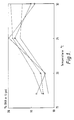
- Fig. 1 shows the changes in percentage concentration of DHA in Isochrysis lipid, produced under varying conditions;
- Fig. 2 shows the changes in percentage concentration of stearidonic acid in Isochrysis lipid, produced under varying conditions;
- Fig. 3 shows the concentration of DHA in Isochrysis as mg/100g dry weight, produced under varying conditions;
- Fig. 4 shows the concentration of stearidonic acid in Isochrysis, as mg/100g dry weight; and
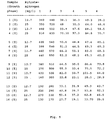
- Fig. 5 is a table of data collected by culturing samples of Isochrysis at differing temperatures and nitrogen concentrations.
- The key for Figs. 1 to 4 is as follows:
12.7mg NO3-N (E)
25.0mg NO3-N (E)
12.7mg NO3-N (S)
25.0mg NO3-N (S)
- Stearidonic acid is denoted in fatty acid nomenclature as 18:4 (n-3), abbreviated to 18:4 in this specification.
- The fatty acid profile of Isochrysis differs during rapid growth (exponential growth phase) and a more quiescent period (stationary growth phase) typically occurring when nutrients are not abundantly available.
-
- Growth Media :
- (g/l) Na2EDTA, 0.00436; FeCl3.6H2O, 0.00315;
CuSO4.5H2O, 0.0001; CoCl2.6H2O
0.00001; MnCl2.4H2O
0.00018; Na2MoO4.2H2O,
0.000006; ZnSO4.7H2O,
0.000022; NaH2PO4.2H2O,
0.00565; - : (ug/l) Cyanocobalamin, 0.05;
Thiamine, 100; Biotin, 0.5.
Made up to one litre with artificial seawater (33.6g
Ultramarine Synthetica Seasalt per litre distilled water). - Nitrogen :
- 25mg NO3-N/1
- pH :
- 8.0
- Culture Irradiance :
- 100umoles/m2/s photosynthetically active radiation (PAR 400-700nm).
- Culture Temperature :
- 17°C, thermostatically controlled water bath.
- Culture Air Supply :
- 500ml/min.
- The product, obtained from the above conditions contains the following fatty acids; 17.5% docosahexaenoic acid (DHA), 5% octadecatrienoic acid, 3.1% octadecadienoic acid, 14.5% octadecatetraenoic acid, 12% hexadecanoic acid and 18.9% tetradecanoic acid.
- In further experiments, the nitrogen and temperatures used were varied (see Fig. 5).
- Fatty acid content was determined as their methyl esters. The esters were prepared by the direct methylation of the freeze dried cell material by boiling with KOH-MeOH overnight, or by boiling with H2SO4-MeOH overnight.
- Esters were extracted into heptane, following the addition of saturated salt solution. The heptane extract was dried to a suitable volume for gas liquid chromatographic analysis (g.l.c.).
- Fatty acid gas-liquid chromatography - heptane extracts were passed through a Fluorosil pre-column and separated using a WCOT fused silica CP-Sil 88 (50m - 0.25 internal diameter) capillary column with a 5m deactivated fused silica pre-column. Conditions: maximum column temperature 226°C, detector 300°C, injector 240°C. Oven temperature, initial 160°C - final 225°C - rise 5°C/min. Helium carrier gas 125 Kpa; split ratio 100:1; flow 0.43 ml/min.
- The starting concentration of DHA in Isochrysis is approximately 8% of total fatty acid content.
- The results of varying the temperature and concentrations can be seen in graphic form in Figs. 1 - 3, which relate these variations to the DHA and 18:4 content. The exponential and stationary growth phases are denoted as E and S respectively in Fig. 5 and are measurements after 14(E) and 21(S) days of treatment, Columns 1 - 6 (Fig 5) are annotated as follows:
- Column 1 -
- lipid concentration
- Column 2 -
- conversion factor applied
- Column 3 -
- DHA
- Column 4 -
- 18:4
- Column 5 -
- DHA (based on corrected lipid factor, Column 2)
-
Column 6 - - 18:4 (based on corrected lipid factor, Column 2)
- The temperatures for each experiment are as follows:
Rows °C 1 - 4 17 5 - 8 20 9 - 12 30 13 - 16 25 - Figs 1 and 2 show the percentage of DHA or 18:4, present under different culture conditions of temperature and nitrogen concentration.
- The total yield of each fatty acid from dry weight is shown in Figs 3 and 4. Comparison of the Figures shows that despite the maximum concentration of each fatty acid, being obtained at 25°C and 25mg nitrate-nitrogen/litre, the best dry yield is obtained by culture conditions of 30°C and 12.7mg nitrate-nitrogen/litre (stationary phase) which could be more desirab1e commercially. High production of DHA is also achieved in the conditions outlined in Row 4 - 25mg nitrate-nitrogen per litre at 17°C, which is detailed in the experimental conditions outlined above. The conditions chosen may thus be tailored to suit the requirements of the user.
- Fig. 5 details percentage lipid and absolute amounts of DHA and 18:4 found in Isochrysis 927/14. The total lipid is determined from the sum of the fatty acids measured following methylation and glc. However, lipid fractions eg phospholipid have other moieties associated with them-and so recognised conversion factors are applied to calculate the 'true' lipid content (Column 2). The DHA and 18:4 percentages of importance are shown in
Columns - Inspection of the data for I galbana also shows relatively high levels of DHA and 18:4.
I galbana 17°C 25 mg NO3-N
Exponential growth phase DHA 10.8%; 18:4 6.2%
Stationary growth phase DHA 15.5%; 18.4 7.6% - Modifications and improvements may be incorporated without departing from the scope of the invention.
Claims (11)
- A method of producing DHA comprising treating a species of algae Isochrysis with nitrogen at a temperature of under 40°C and over 13°C, wherein the nitrogen is provided at a concentration between 10mg and 50mg per litre.
- A method of producing DHA as claimed in Claim 1, wherein the DHA is subsequently extracted from the treated algal species.
- A method of producing DHA as claimed in Claim 1 or 2 wherein the nitrogen is in the form of a nitrate or ammonia.
- A method of producing DHA as claimed in any preceding Claim, wherein the nitrogen is provided at a concentration between 12mg and 30mg per litre.
- A method of producing DHA as claimed in any preceding Claim, wherein the concentration of nitrogen is 25mg per litre.
- A method of producing DHA as claimed in any preceding Claim, wherein the temperature is between 14°C and 35°C.
- A method of producing DHA as claimed in Claim 6 wherein the temperature is between 15°C and 30°C.
- A method of producing DHA as claimed in Claim 7 wherein the temperature is between 16°C and 25°C.
- A method of producing DHA as claimed in Claim 1, wherein the temperature is 30°C and the concentration of nitrogen is 12.7mg NO3-N/l.
- A method of producing DHA as claimed in Claim 1, wherein the temperature is 17°C and the concentration of nitrogen is 25mg NO3-N/l.
- A method of producing DHA as claimed in any preceding Claim, wherein the algae are maintained in the stationary growth phase.
Applications Claiming Priority (2)
| Application Number | Priority Date | Filing Date | Title |
|---|---|---|---|
| GB909011874A GB9011874D0 (en) | 1990-05-26 | 1990-05-26 | Method of producing a fatty acid |
| GB9011874 | 1990-05-26 |
Publications (3)
| Publication Number | Publication Date |
|---|---|
| EP0459744A2 EP0459744A2 (en) | 1991-12-04 |
| EP0459744A3 EP0459744A3 (en) | 1992-11-19 |
| EP0459744B1 true EP0459744B1 (en) | 1996-10-09 |
Family
ID=10676664
Family Applications (1)
| Application Number | Title | Priority Date | Filing Date |
|---|---|---|---|
| EP91304789A Expired - Lifetime EP0459744B1 (en) | 1990-05-26 | 1991-05-28 | Method of producing a fatty acid |
Country Status (3)
| Country | Link |
|---|---|
| EP (1) | EP0459744B1 (en) |
| DE (1) | DE69122550T2 (en) |
| GB (1) | GB9011874D0 (en) |
Families Citing this family (4)
| Publication number | Priority date | Publication date | Assignee | Title |
|---|---|---|---|---|
| US5407957A (en) * | 1990-02-13 | 1995-04-18 | Martek Corporation | Production of docosahexaenoic acid by dinoflagellates |
| DE4219360C2 (en) * | 1992-06-12 | 1994-07-28 | Milupa Ag | Process for the production of lipids with a high proportion of long-chain, highly unsaturated fatty acids |
| ES2088366B1 (en) * | 1995-01-13 | 1997-03-01 | Univ Almeria | MARINE MICROALGA AND ITS USE IN AQUACULTURE AND IN THE OBTAINING OF POLYINSATURATED FATTY ACIDS. |
| FR2976951A1 (en) * | 2011-06-21 | 2012-12-28 | Fermentalg | NOVEL MICROALGAE STRAINS OF THE ISOCHRYSIS GENUS FOR THE PRODUCTION OF EPA AND DHA IN MIXOTROPHE MODE |
Family Cites Families (2)
| Publication number | Priority date | Publication date | Assignee | Title |
|---|---|---|---|---|
| EP0222169B1 (en) * | 1985-10-11 | 1990-08-29 | The Nisshin Oil Mills, Ltd. | Feedstuff for artemia |
| JP2710344B2 (en) * | 1988-07-13 | 1998-02-10 | サントリー株式会社 | Method for producing polyunsaturated fatty acid and lipid containing the same |
-
1990
- 1990-05-26 GB GB909011874A patent/GB9011874D0/en active Pending
-
1991
- 1991-05-28 DE DE69122550T patent/DE69122550T2/en not_active Expired - Fee Related
- 1991-05-28 EP EP91304789A patent/EP0459744B1/en not_active Expired - Lifetime
Also Published As
| Publication number | Publication date |
|---|---|
| EP0459744A3 (en) | 1992-11-19 |
| DE69122550D1 (en) | 1996-11-14 |
| DE69122550T2 (en) | 1997-04-24 |
| EP0459744A2 (en) | 1991-12-04 |
| GB9011874D0 (en) | 1990-07-18 |
Similar Documents
| Publication | Publication Date | Title |
|---|---|---|
| El Baky et al. | Optimization growth of Spirulina (Arthrospira) platensis in photobioreactor under varied nitrogen concentration for maximized biomass, carotenoids and lipid contents | |
| RU2058078C1 (en) | Composition for plant immunization and a method of its preparing | |
| KR100294293B1 (en) | Food products and an infant formula comprising docosahexaenoic acid | |
| JP5824450B2 (en) | Methods for obtaining fatty acids from insect larvae | |
| EP0157619B1 (en) | Egg production | |
| JP4201349B2 (en) | Microbial preparations containing omega-3-fatty acids for use as preventive or therapeutic agents for animal parasitic diseases | |
| EP0972844B1 (en) | Process for preparing highly unsaturated fatty acid and lipid containing highly unsaturated fatty acid | |
| Delaporte et al. | Incorporation and modification of dietary fatty acids in gill polar lipids by two bivalve species Crassostrea gigas and Ruditapes philippinarum | |
| Kanazawa et al. | Effects of dietary linoleic and linolenic acids on growth of prawn | |
| Chien et al. | Effects of thermal stress and vitamin C on lipid peroxidation and fatty acid composition in the liver of thornfish Terapon jarbua | |
| KR102202287B1 (en) | Biomass of the microalgae schizochytrium mangrovei and method for preparing same | |
| JP2008136493A (en) | Method for production of arachidonic acid | |
| Stinson et al. | Effect of cultural conditions on production of eicosapentaenoic acid by Pythium irregulare | |
| EP0459744A2 (en) | Method of producing a fatty acid | |
| WO2011067666A1 (en) | Processes to generate compositions of enriched fatty acids | |
| Ying et al. | Effect of light intensity on the total lipid and fatty acid composition of six strains of marine diatoms | |
| KR100428732B1 (en) | Method for producing a chlorella containing highly unsaturated fatty acids | |
| JP3302123B2 (en) | Animal Plankton Culture Feed | |
| GB1584854A (en) | Plant propagation method | |
| JPH08163990A (en) | Oil-and-fat-containing algal bodies and method for producing oil and fat obtained therefrom | |
| Kartikasari et al. | Omega-3 fatty acid composition of chicken plasma fed diets varying in LA to ALA ratio | |
| Muhsinah et al. | Comparative Study on Fatty Acid Profile of Eel Fish (Anguilla bicolor) in Elver Eel and Silver Eel Phase from Palu River and Lake Poso | |
| Gayathri et al. | Soil microorganisms produce omega-3 fatty acids | |
| Seo et al. | Dietary effect on ω3 fatty acid contents in hybrid striped bass | |
| Vijayagopal et al. | Development of live feed enrichment product for marine fish larviculture |
Legal Events
| Date | Code | Title | Description |
|---|---|---|---|
| PUAI | Public reference made under article 153(3) epc to a published international application that has entered the european phase |
Free format text: ORIGINAL CODE: 0009012 |
|
| AK | Designated contracting states |
Kind code of ref document: A2 Designated state(s): DE FR GB IT NL |
|
| PUAL | Search report despatched |
Free format text: ORIGINAL CODE: 0009013 |
|
| AK | Designated contracting states |
Kind code of ref document: A3 Designated state(s): DE FR GB IT NL |
|
| 17P | Request for examination filed |
Effective date: 19930514 |
|
| 17Q | First examination report despatched |
Effective date: 19950221 |
|
| GRAH | Despatch of communication of intention to grant a patent |
Free format text: ORIGINAL CODE: EPIDOS IGRA |
|
| GRAH | Despatch of communication of intention to grant a patent |
Free format text: ORIGINAL CODE: EPIDOS IGRA |
|
| GRAH | Despatch of communication of intention to grant a patent |
Free format text: ORIGINAL CODE: EPIDOS IGRA |
|
| GRAH | Despatch of communication of intention to grant a patent |
Free format text: ORIGINAL CODE: EPIDOS IGRA |
|
| GRAA | (expected) grant |
Free format text: ORIGINAL CODE: 0009210 |
|
| AK | Designated contracting states |
Kind code of ref document: B1 Designated state(s): DE FR GB IT NL |
|
| PG25 | Lapsed in a contracting state [announced via postgrant information from national office to epo] |
Ref country code: NL Free format text: LAPSE BECAUSE OF FAILURE TO SUBMIT A TRANSLATION OF THE DESCRIPTION OR TO PAY THE FEE WITHIN THE PRESCRIBED TIME-LIMIT Effective date: 19961009 |
|
| REF | Corresponds to: |
Ref document number: 69122550 Country of ref document: DE Date of ref document: 19961114 |
|
| ITF | It: translation for a ep patent filed | ||
| RAP2 | Party data changed (patent owner data changed or rights of a patent transferred) |
Owner name: THE SCOTTISH AGRICULTURAL COLLEGE |
|
| ET | Fr: translation filed | ||
| NLT2 | Nl: modifications (of names), taken from the european patent patent bulletin |
Owner name: THE SCOTTISH AGRICULTURAL COLLEGE |
|
| NLV1 | Nl: lapsed or annulled due to failure to fulfill the requirements of art. 29p and 29m of the patents act | ||
| PLBE | No opposition filed within time limit |
Free format text: ORIGINAL CODE: 0009261 |
|
| STAA | Information on the status of an ep patent application or granted ep patent |
Free format text: STATUS: NO OPPOSITION FILED WITHIN TIME LIMIT |
|
| 26N | No opposition filed | ||
| PGFP | Annual fee paid to national office [announced via postgrant information from national office to epo] |
Ref country code: DE Payment date: 19980525 Year of fee payment: 8 |
|
| PGFP | Annual fee paid to national office [announced via postgrant information from national office to epo] |
Ref country code: GB Payment date: 19990505 Year of fee payment: 9 |
|
| PGFP | Annual fee paid to national office [announced via postgrant information from national office to epo] |
Ref country code: FR Payment date: 19990507 Year of fee payment: 9 |
|
| PG25 | Lapsed in a contracting state [announced via postgrant information from national office to epo] |
Ref country code: DE Free format text: LAPSE BECAUSE OF NON-PAYMENT OF DUE FEES Effective date: 20000330 |
|
| PG25 | Lapsed in a contracting state [announced via postgrant information from national office to epo] |
Ref country code: GB Free format text: LAPSE BECAUSE OF NON-PAYMENT OF DUE FEES Effective date: 20000528 |
|
| GBPC | Gb: european patent ceased through non-payment of renewal fee |
Effective date: 20000528 |
|
| PG25 | Lapsed in a contracting state [announced via postgrant information from national office to epo] |
Ref country code: FR Free format text: LAPSE BECAUSE OF NON-PAYMENT OF DUE FEES Effective date: 20010131 |
|
| REG | Reference to a national code |
Ref country code: FR Ref legal event code: ST |
|
| PG25 | Lapsed in a contracting state [announced via postgrant information from national office to epo] |
Ref country code: IT Free format text: LAPSE BECAUSE OF NON-PAYMENT OF DUE FEES;WARNING: LAPSES OF ITALIAN PATENTS WITH EFFECTIVE DATE BEFORE 2007 MAY HAVE OCCURRED AT ANY TIME BEFORE 2007. THE CORRECT EFFECTIVE DATE MAY BE DIFFERENT FROM THE ONE RECORDED. Effective date: 20050528 |