EP0457437A2 - Datenverarbeitungssystem mit einer Mehrzahl von Adaptern zum Verbinden mehrerer Peripheriegeräte - Google Patents
Datenverarbeitungssystem mit einer Mehrzahl von Adaptern zum Verbinden mehrerer Peripheriegeräte Download PDFInfo
- Publication number
- EP0457437A2 EP0457437A2 EP91303408A EP91303408A EP0457437A2 EP 0457437 A2 EP0457437 A2 EP 0457437A2 EP 91303408 A EP91303408 A EP 91303408A EP 91303408 A EP91303408 A EP 91303408A EP 0457437 A2 EP0457437 A2 EP 0457437A2
- Authority
- EP
- European Patent Office
- Prior art keywords
- port
- adapter
- adapters
- video
- register means
- Prior art date
- Legal status (The legal status is an assumption and is not a legal conclusion. Google has not performed a legal analysis and makes no representation as to the accuracy of the status listed.)
- Ceased
Links
Images

Classifications
-
- G—PHYSICS
- G06—COMPUTING OR CALCULATING; COUNTING
- G06F—ELECTRIC DIGITAL DATA PROCESSING
- G06F13/00—Interconnection of, or transfer of information or other signals between, memories, input/output devices or central processing units
- G06F13/10—Program control for peripheral devices
- G06F13/12—Program control for peripheral devices using hardware independent of the central processor, e.g. channel or peripheral processor
- G06F13/124—Program control for peripheral devices using hardware independent of the central processor, e.g. channel or peripheral processor where hardware is a sequential transfer control unit, e.g. microprocessor, peripheral processor or state-machine
- G06F13/126—Program control for peripheral devices using hardware independent of the central processor, e.g. channel or peripheral processor where hardware is a sequential transfer control unit, e.g. microprocessor, peripheral processor or state-machine and has means for transferring I/O instructions and statuses between control unit and main processor
Definitions
- This invention relates to a data processing system having means for the selection and control of multiple adapter cards used to connect peripheral devices to the system.
- each device was assigned a specific port address (hereafter, port).
- Adapter cards hereafter adapters
- the processor could select a port by placing the port address on the system bus which connected the processor to the other devices in the system.
- the adapter which provided the interface between the device and the system bus, would recognise the address and initiate the action directed by the processor.
- the processor switched from one device to another, the original device would be deselected by the processor in one bus write operation and then the new device would be addressed by the processor in a second write operation.
- each device was controlled by different software because of the differences in the hardware (e.g., printers and modems would each have unique software).
- the software may not be compatible with the two types of adapter hardware which would require two versions of software to control identical I/O devices on the same system.
- the compatibility problem also exists in a multi system environment when one system has a single multi-port adapter and a second system has grown from a single device/single port adapter system to multiple devices each having a single port adapter. In that situation, each system would require different software to control the adapters even though the I/O device configuration may be identical (i.e., four displays on a single multi-port adapter in system A and four identical displays on four single port adapters in system B).
- a data processing system having a processor, a system bus operatively connected to the processor, a plurality of peripheral devices, and plural adapters operatively connecting the peripheral devices to the system bus characterised in that interface register means are provided having bit positions to interface with corresponding bit lines of the system bus and the adapters have switch selection means to select the address of each peripheral device and to select bit positions of the interface register means for each peripheral device to correspond to the address thereof.
- This specific bus bit lines can be assigned to each of a plurality of single port adapters to correspond with register locations assigned to each port, thereby allowing the simultaneous operating of multiple single port adapters to place the same response on the bus as a single multi-port adapter.
- an interface in multi-port adapters which allows the system to activate one display and deactivate another simultaneously. This is accomplished by merely writing to the register. The contents of the register are then used by the adapter to determine which display to deactivate and which display to activate. In like manner, the processor can request status from all of the displays attached to the adapter. Or it can adjust backlighting or contrast for the displays in a single write operation.
- the register can be organised as a single register or as multiple registers. For ease of illustration, it will be treated as a single register herein.)
- the register in the multi-port adapter enables this single write operation by assigning specific bits in the register to specific display ports.
- the register is distributed across each of the adapters.
- the processor is able to communicate with multiple single port adapters in the same manner as it communicates with a single multi-port adapter.
- Each adapter has a switch to indicate which port position it has, which allows it to select the appropriate bits from the bus to place in its register. Also, the switch setting allows each adapter to select the appropriate bus bit lines when replying to the processor. Because the processor is communicating with the displays through a register, and because the processor cannot distinguish the distributed register from the single register on the multi-port card, the processor can communicate with multiple single port adapters in a single operation just as it does with a single multi-port adapter. Therefore, the type of adapter used is transparent to the system software.
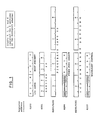
- the register fields are shown.
- the register will be referred to as a distributed register whether it is distributed across several adapters or located on a single multi-port adapter. In either case it will function identically from the perspective of the system.
- the single and multi-port video adapters contain a set of addressable hardware registers (for illustration, in the range 8200h through 8207h). These registers are unique to these adapters (i.e., they are not found on normal video adapters.) They implement the functions of selecting one of four video "ports" to be active (i.e., addressable for updating), sensing the capabilities of a particular video port, and controlling the backlight and contrast of the LCD panels.
- the registers can be expanded to control any of the functions on a display which a processor may control in other systems.
- the numbers 0, 1, 2, and 3 differentiate between four sets of hardware.
- the video port select field allows the processor to select the desired display by turning on the appropriate bit. For example, the processor can select port 2 and then read the video memory from that port.
- Control fields for other activity can also be provided.
- sophisticated adapters often use piggyback, or daughter, cards to hold additional logic.
- the piggyback card ID field allows the processor to select and control these daughter cards as well.
- reading register 8207h on the multi-port adapter allows software to determine which backlights are currently turned on and which are not. On the multi-port adapter, this read operation simply involves gating the four signals to the system bus at the appropriate time, because all four backlights are controlled by this one adapter and therefore they are all available to be gated through a single circuit.
- reading register 8207h will produce the same results when one or more single port video adapters are in the system. In this case, each adapter individually gates only one bit of data onto the system bus, thus providing the response for the video port which it controls. Nonetheless, the system sees the response from all installed video ports simultaneously. The registers are therefore distributed across multiple adapters.
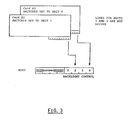
- bus bit line attachment of a distributed register configuration and a multi-port configuration are illustrated.
- the adapter presents information and accepts commands for four displays (0-3) simultaneously.
- each adapter controls a particular bit for the port address of the display it controls. Since each adapter can write to its particular bus bit line simultaneously with the other adapters, the four distributed adapters (0-3) can appear to the system identically to the multi-port adapter when the system reads or writes to the bus.
- Each single port adapter has priority selection means (not shown) identical to that on multi-port adapters. Priority selection of adapters is well known in the art. Further each port has means to activate a single bit line on the bus simultaneously with other single port adapters each of which addresses a different bit line. The priority selection means recognises the highest priority address to be used and activates its port if that address is assigned to its port or deactivates its port if a higher priority address assigned to a different port is selected. Therefore, the system is protected from physical damage in the event that the activation of more than one non-distributed register is attempted. The assignment of specific bus bit lines to each of the single port adapters which correspond with register locations assigned to each port allows the simultaneous response of multiple single port adapters to place the same response on the bus as a single multi-port adapter.
- a priority encoding circuit is contained on the multi-port video adapter so that only one of the four video ports will be selected if more than one bit is accidentally turned on when writing to register 8204h.
- the same priority encoding scheme also works when more than one single port video adapter is installed, because each adapter applies the same priority encoding algorithm (in hardware) to determine which is the highest priority port being selected. If this selected port matches the adapter's own unit number it considers itself in control of the bus, otherwise it remains inactive.
- FIG 3 a configuration showing two single port adapters is shown.
- the adapter switches were arbitrarily chosen to select port addresses 0 and 2.
- a system can be gradually enlarged, as needed, from one to four adapters.
- This invention improves performance and ease of programming by allowing the same set of functions (selecting and deselecting video ports, controlling backlights, etc.) to be accomplished with fewer operations to the hardware. In addition, it improves software compatibility. Applications written for a system based on a single video display (such as an application written for a traditional single display system) can be easily transported to a system having multiple video displays.
- a display device is a liquid crystal device (LCD)
- LCD liquid crystal device
- the contrast and backlight properly adjusted to enable a user to read the LCD display screen comfortably.
- terminals may be unattended for long periods of time. This is disadvantageous because the useful life of the display is a function of backlight use.
- the mean time between failure (MTBF) of the LCD screen is greater than that of a CRT display, but the MTBF of the backlight is less than that of a CRT display. Therefore, the ability to control usage of the backlight directly affects the relative reliability of an LCD display in relation to a CRT display.
- MTBF mean time between failure
- the same backlight and contrast BIOS calls work on all video ports regardless of whether the controlling hardware resides on the system board or a single or multiport video adapter.
- the backlights can be forced to turn themselves off after a preset time interval (this is important for extending the useful life of the backlights). They can be turned back on and reset to turn off automatically again with a single BIOS call.
- BIOS functions the use of BIOS and BIOS functions are well known in the art
- BIOS interface the use of BIOS and BIOS functions are well known in the art
Landscapes
- Engineering & Computer Science (AREA)
- Theoretical Computer Science (AREA)
- Computer Hardware Design (AREA)
- Microelectronics & Electronic Packaging (AREA)
- Physics & Mathematics (AREA)
- General Engineering & Computer Science (AREA)
- General Physics & Mathematics (AREA)
- Control Of Indicators Other Than Cathode Ray Tubes (AREA)
Applications Claiming Priority (4)
| Application Number | Priority Date | Filing Date | Title |
|---|---|---|---|
| US52551090A | 1990-05-18 | 1990-05-18 | |
| US52550990A | 1990-05-18 | 1990-05-18 | |
| US525509 | 1990-05-18 | ||
| US525510 | 1990-05-18 |
Publications (2)
| Publication Number | Publication Date |
|---|---|
| EP0457437A2 true EP0457437A2 (de) | 1991-11-21 |
| EP0457437A3 EP0457437A3 (en) | 1992-08-05 |
Family
ID=27061813
Family Applications (1)
| Application Number | Title | Priority Date | Filing Date |
|---|---|---|---|
| EP19910303408 Ceased EP0457437A3 (en) | 1990-05-18 | 1991-04-17 | Data processing system having plural adapters connecting plural peripheral devices |
Country Status (3)
| Country | Link |
|---|---|
| EP (1) | EP0457437A3 (de) |
| JP (1) | JPH0731652B2 (de) |
| SG (1) | SG46471A1 (de) |
Cited By (1)
| Publication number | Priority date | Publication date | Assignee | Title |
|---|---|---|---|---|
| CN109536464A (zh) * | 2018-12-10 | 2019-03-29 | 中国科学院武汉病毒研究所 | 一种缺失衣壳蛋白基因的基孔肯雅病毒感染性克隆及构建方法和在制备减毒疫苗中的应用 |
Families Citing this family (1)
| Publication number | Priority date | Publication date | Assignee | Title |
|---|---|---|---|---|
| KR102731127B1 (ko) * | 2018-09-05 | 2024-11-18 | 에스케이하이닉스 주식회사 | 메모리 컨트롤러 및 이를 포함하는 메모리 시스템 |
Family Cites Families (2)
| Publication number | Priority date | Publication date | Assignee | Title |
|---|---|---|---|---|
| JPS6042974B2 (ja) * | 1978-09-22 | 1985-09-26 | 株式会社日立製作所 | デイジタル装置 |
| US4636978A (en) * | 1984-06-13 | 1987-01-13 | Signetics Corporation | Programmable status register arrangement |
-
1991
- 1991-04-17 SG SG1996004943A patent/SG46471A1/en unknown
- 1991-04-17 EP EP19910303408 patent/EP0457437A3/en not_active Ceased
- 1991-05-14 JP JP3137119A patent/JPH0731652B2/ja not_active Expired - Lifetime
Cited By (1)
| Publication number | Priority date | Publication date | Assignee | Title |
|---|---|---|---|---|
| CN109536464A (zh) * | 2018-12-10 | 2019-03-29 | 中国科学院武汉病毒研究所 | 一种缺失衣壳蛋白基因的基孔肯雅病毒感染性克隆及构建方法和在制备减毒疫苗中的应用 |
Also Published As
| Publication number | Publication date |
|---|---|
| JPH0731652B2 (ja) | 1995-04-10 |
| JPH04232554A (ja) | 1992-08-20 |
| SG46471A1 (en) | 1998-02-20 |
| EP0457437A3 (en) | 1992-08-05 |
Similar Documents
| Publication | Publication Date | Title |
|---|---|---|
| US4747040A (en) | Dual operating system computer | |
| EP0192944B1 (de) | Datenverarbeitungssystem mit einem Hauptprozessor und einem Ko-Prozessor mit gemeinsamen Betriebsmitteln | |
| EP0496535B1 (de) | Automatische Konfiguration einer Einheit für koppelbare Rechner | |
| JP2610812B2 (ja) | データ処理システムのエミユレーシヨン | |
| JP2608532B2 (ja) | コンピュータシステムにおけるユーザ入力デバイス存在のエミュレート方法 | |
| US5386567A (en) | Hot removable and insertion of attachments on fully initialized computer systems | |
| US6230118B1 (en) | DOS based application supports for a controllerless modem | |
| US5845134A (en) | Suspend/resume control method and system | |
| US4875186A (en) | Peripheral emulation apparatus | |
| US5675772A (en) | Device and method for reconfiguring a computer system with an incompatible CPU | |
| US4744048A (en) | Display context switching arrangement | |
| US5481754A (en) | Apparatus and method for bios interface to features in multiple adapter cards in one operation using registers with bits distributed across the adapter cards | |
| US5848294A (en) | PCI computer system with multiple legacy devices | |
| EP0139254A2 (de) | Vorrichtung und Verfahren für direkte Datenübertragung vom Speicher an das Peripheriegerät und vom Peripheriegerät an den Speicher | |
| US6125236A (en) | Method and apparatus for providing user control of multimedia parameters | |
| US5481755A (en) | Apparatus and method for addressing multiple adapter cards in one operation by distributing bits of registers across the adapter cards | |
| EP0457437A2 (de) | Datenverarbeitungssystem mit einer Mehrzahl von Adaptern zum Verbinden mehrerer Peripheriegeräte | |
| US5640594A (en) | Method and system for assigning peripheral device addresses | |
| CA2051199C (en) | Multiple input/output devices having shared address space | |
| US5713041A (en) | Computer system having a host CPU and a logic for integrating peripheral control functions into the host CPU | |
| JP3626258B2 (ja) | コンピュータシステム | |
| US4814977A (en) | Apparatus and method for direct memory to peripheral and peripheral to memory data transfers | |
| EP0948769A1 (de) | Echtzeitsdiensten in rüchwärts-kompatibel betriebssystemen | |
| JPH07319569A (ja) | コンピュータシステム | |
| KR920010966B1 (ko) | 퍼스널 컴퓨터의 프린터 스풀러 방법 및 그 장치 |
Legal Events
| Date | Code | Title | Description |
|---|---|---|---|
| PUAI | Public reference made under article 153(3) epc to a published international application that has entered the european phase |
Free format text: ORIGINAL CODE: 0009012 |
|
| AK | Designated contracting states |
Kind code of ref document: A2 Designated state(s): DE FR GB |
|
| 17P | Request for examination filed |
Effective date: 19911219 |
|
| PUAL | Search report despatched |
Free format text: ORIGINAL CODE: 0009013 |
|
| AK | Designated contracting states |
Kind code of ref document: A3 Designated state(s): DE FR GB |
|
| 17Q | First examination report despatched |
Effective date: 19961227 |
|
| GRAG | Despatch of communication of intention to grant |
Free format text: ORIGINAL CODE: EPIDOS AGRA |
|
| STAA | Information on the status of an ep patent application or granted ep patent |
Free format text: STATUS: THE APPLICATION HAS BEEN REFUSED |
|
| 18R | Application refused |
Effective date: 19980430 |