EP0455437A2 - Ein Verfahren, um vom Rechner generierte Bilder zu verarbeiten - Google Patents
Ein Verfahren, um vom Rechner generierte Bilder zu verarbeiten Download PDFInfo
- Publication number
- EP0455437A2 EP0455437A2 EP91303830A EP91303830A EP0455437A2 EP 0455437 A2 EP0455437 A2 EP 0455437A2 EP 91303830 A EP91303830 A EP 91303830A EP 91303830 A EP91303830 A EP 91303830A EP 0455437 A2 EP0455437 A2 EP 0455437A2
- Authority
- EP
- European Patent Office
- Prior art keywords
- image
- display
- images
- control signals
- identifier
- Prior art date
- Legal status (The legal status is an assumption and is not a legal conclusion. Google has not performed a legal analysis and makes no representation as to the accuracy of the status listed.)
- Withdrawn
Links
Images
Classifications
-
- G—PHYSICS
- G06—COMPUTING OR CALCULATING; COUNTING
- G06F—ELECTRIC DIGITAL DATA PROCESSING
- G06F16/00—Information retrieval; Database structures therefor; File system structures therefor
- G06F16/50—Information retrieval; Database structures therefor; File system structures therefor of still image data
- G06F16/56—Information retrieval; Database structures therefor; File system structures therefor of still image data having vectorial format
Definitions
- the present invention relates to a method for managing and displaying computer generated images.
- Computer simulations are used to model a real world process or system to study or evaluate that process or system.
- a simulation can be used, for example, to evaluate a chemical or manufacturing process or to study the feasibility of a design for a manufactured part or a structure or similar item.
- Computer simulation allows such a system to be evaluated without the cost and effort of actually constructing the system. It allows identification of any problems that might occur in the operation of that system. For example, a computer simulation of the wing design of an aircraft may indicate potential points of metal failure that must be redesigned before the design is finalised.
- High performance graphics display systems such as the IBM 5080 and IBM 6090 graphics display systems provide an ability to present high resolution two and three dimensional graphic images.
- Workstations of this type have typically been used in computer aided design and engineering applications (CAD/CAE) for the development of plans and specifications for a new part.
- CAD/CAE computer aided design and engineering applications
- the display system operator indicates the geometric elements and dimensions of the part and the graphics system generates an image reflecting that specification.
- the generated image can be manipulated by the operator to change dimensions or to rotate or translate the image.
- Computer visualisation uses high resolution graphic display systems in conjunction with numerical simulations to provide a means to view the simulation as it proceeds. While prior art systems have shown an ability to capture images generated by a numerical simulation and display these images on a graphics display system, they are limited to the plotting capabilities of the original simulation unless time consuming custom programming is used to modify or create new simulation plots.
- the present invention provides a means for transforming plotting commands into images that can be organised and randomly accessed for review.
- a method for managing a plurality of disjoint computer generated images represented by a plurality of control signals defining the images in two or more dimensions comprising the steps of: accessing said plurality of control signals; determining which one of a set of plotting actions is defined by each of said control signals; initialising an image structure hierarchy if said signals define a new image action, wherein said initialising includes the steps of allocating hierarchy storage in a storage means, assigning a structure identifier to said image structure hierarchy, and storing image classification criteria with said structure identifier; generating a line image element representing a line if said control signals direct drawing a line; generating a symbol image element if said control signals direct drawing a symbol; storing said line image element or said symbol image element in sail image structure hierarchy; accessing said image classification criteria using operator selection means; storing structure identifiers of all structures accessed and, accessing said image structure hierarchy using said structure identifiers and displaying said image on display means.
- a method of viewing time sequenced data plots generated by a computer application operating on a computer having processing means and a storage means, said method comprising the steps of: transforming said data plots into a hierarchically organised set of data objects; storing said data objects in said storage means; assigning an identifier to each object in said set of data objects, said identifier representing said object content; selecting a series of objects for display; displaying a first object, and displaying each subsequent object in said series, each separated by a time delay.
- the present invention provides a means of capturing and managing images generated by computer application programs including numerical simulations.
- the images are managed and displayed using a graphics workstation or graphics display system such as the IBM 5080 or IBM 6090 graphics display systems.
- Computer applications are able to create basic two dimensional information plots using very few commands.
- a command is necessary to indicate the beginning of a new plot, to specify drawing a line between two points, and to indicate the placement of text or characters on the plot.
- Computer simulations have plotted the results on line printers or on graphics plotting devices from a variety of manufacturers.
- the interface to plotting devices is frequently device specific, though several standard plotting command libraries have evolved.
- the Tektronics Plot10 library is a commonly used interface.
- DISSPLA from ISSCO provides another method of specifying two dimensional plots.
- These command interfaces are device independent allowing computer applications to be developed without knowing the actual output device type.
- Many hardware vendors have developed interfaces to their devices to accept the standardised commands from these libraries.
- Plotting interfaces are designed to produce a set of two dimensional plots. Although each of the plots may be related, for example, representing different points in time, present display technology provides no means of managing those related images.
- the plots generated by the computer application are typically produced as a stack of printed plots or are sequentially viewed on a graphics display device as they are created. While the plots may be stored on a computer storage device, in the past there has been no means to manage these various images for later recall and display by the researcher in a non-sequential order, i.e. random access.
- the graphics community has developed several interface standards for communicating between application programs and graphics display systems such as the IBM 5080.
- One of the more popular standards is the Programmers Hierarchical Interactive Graphics Standard (PHIGS.)
- PHIGS Programmers Hierarchical Interactive Graphics Standard
- the PHIGS standard provides a common set of language options that can be used by a programmer to direct a program to display objects on a high resolution graphics workstation.
- the resulting image is created by the specification of a hierarchy of elements. For example, the highest level could be the entire image which may be comprised of a series of objects with each object being further comprised of a set of graphics elements such as circles, lines, arcs.
- the full set PHIGS interface commands presents a wide range of options and requires an experienced programmer to effectively utilise the graphics display capabilities.
- the preferred embodiment of the present invention uses the IBM product graPHIGS, which meets the PHIGS standard, to implement a visualisation image management system.
- the present invention provides a simplified interface between standardised plotting commands such as Plot10 or DISSPLA and the PHIGS environment that enables researchers with little programming experience to effectively exploit the power of PHIGS.
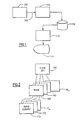
- the structure of a graphics system employing the present invention is shown in Fig 1.
- the computer application 100 for example a numerical simulation of a wing structure, generates a series of plotting commands 102 for several two dimensional plots.
- Interface procedure 104 according to the present invention intercepts the plotting commands and transforms the commands into graPHIGS commands for storing the plots as individual structures. Because two dimensional plotting relies on just a few basic commands, each of the commands can be effectively translated into graPHIGS commands.
- the researcher can specify how the series of images generated by the computer application are to be related. This specified relation serves as means to organise and store the images in image database 110.
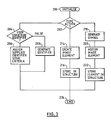
- Interface procedure 104 is bound to computer application 100 and intercepts plotting commands 102.
- the procedure first determines the type of command intercepted 202.
- a command defining a "new plot" causes initialisation of a new hierarchical structure to contain that plot.
- Each new structure is referenced by a system generated or user supplied structure identifier.
- the procedure tests whether a structure identifier has been supplied 204, if so the user exit is executed 206.
- the user exit passes the assigned structure identifier back to application 100 for later use.
- a table of images can be created with selected identifying criteria cross referenced to the structure identifier. Otherwise, the procedure generates an identifier 208. Using this identifier, a PHIGS command is generated to create an image structure indexed by that identifier. This structure becomes the "active structure.” Control is returned to the application program 224.
- a "plot line” command causes creation of an image element for a line of the required orientation 214. This image element is stored in the active structure 216.
- a command requesting a "symbol” is analysed to determine the required symbol 218.
- a symbol image element is generated 220 and stored in the active structure 222.
- a simulation may generate plots of different variables at fixed increments of simulated time, generating first a plot of temperature, then one of pressure, then one of velocity. These plots are recorded by the image manager so that all the plots for a time step can be viewed, or all plots for a variable, e.g. temperature, may be viewed. Each plot is assigned a unique structure identifier that can be later used to retrieve and display that plot.
- a mechanism is provided to cross reference allowable plot selections to the structure identifiers of stored plots.
- the mechanism is implemented as a function of the structure identifier.
- the application creator specifies the form and content of the structure identifier to the image manager, via a user provided subroutine.
- Another approach would be to supply a cross reference table identifying plots and structure identifiers.
- display manager 112 can select one or more images for display on graphics display device 114.
- each image set 150 is comprised of a series of images 160, 162-16N.
- Each image 160 is comprised of image elements 170, 172-17N which can be lines, characters, or other geometric objects.
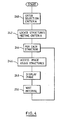
- Display manager 112 operates in conjunction with application program 100 as shown in Fig. 4 or an independent program to display image structures created by interface procedure 104.
- the researcher can specify selection criteria 200 for the display of images.
- the criteria can include selection of a single image or selection of a series of images to be displayed in sequence.
- the selection criteria are used to access the table cross referencing the criteria to image structure identifiers 242.
- the list of structure identifiers is then used to access and display the images 224. Each image is accessed 246, displayed 248 on a selected display device, and then held for a predetermined period 250 before access and display of the next image.
- the display manager provides the researcher an ability to display one or more images using the power of a graphics display system such as the IBM 5080.
- the display manager provides a method for the operator to specify which image is to be displayed and for specifying the orientation of that image on the display.
- the display manager provides standard capabilities for displaying a series of related images separated by a short time delay, to create a movie-like effect allowing a two dimensional plot of a variable to be viewed as it changes over time.
- the display manager can, for example, access all temperature plots in time step sequence and display each one, pause for a brief moment, and then display the next. The result will be a movie-like display showing the change in temperature over time.
- the display manager also provides an option to view images related to a particular image in the sequence. For example, an image for a specific time step and plane (XY,XZ,YZ) can display the temperature of the simulated object in that plane. The researcher may wish to view the pressure, density, or other variable captured at that time step for that plane.
- the hierarchical storage of the standardised image manager allows these images to be accessed and displayed in a non-sequential order upon request of the researcher.
- the preferred embodiment of the present invention provides an effective means of interfacing an application program to a high resolution graphics display.
- the present invention provides a means for capturing disjoint images and storing them in a hierarchically organised database for later access.
- the display manager provides standardised functions for the researcher to use in the selecting, organising and displaying images relating to a particular computer application.
Landscapes
- Engineering & Computer Science (AREA)
- Theoretical Computer Science (AREA)
- Data Mining & Analysis (AREA)
- Databases & Information Systems (AREA)
- Physics & Mathematics (AREA)
- General Engineering & Computer Science (AREA)
- General Physics & Mathematics (AREA)
- Processing Or Creating Images (AREA)
- Information Retrieval, Db Structures And Fs Structures Therefor (AREA)
Applications Claiming Priority (2)
| Application Number | Priority Date | Filing Date | Title |
|---|---|---|---|
| US517087 | 1983-07-25 | ||
| US51708790A | 1990-05-01 | 1990-05-01 |
Publications (2)
| Publication Number | Publication Date |
|---|---|
| EP0455437A2 true EP0455437A2 (de) | 1991-11-06 |
| EP0455437A3 EP0455437A3 (en) | 1993-08-18 |
Family
ID=24058303
Family Applications (1)
| Application Number | Title | Priority Date | Filing Date |
|---|---|---|---|
| EP19910303830 Withdrawn EP0455437A3 (en) | 1990-05-01 | 1991-04-26 | A method of managing computer generated images |
Country Status (4)
| Country | Link |
|---|---|
| EP (1) | EP0455437A3 (de) |
| JP (1) | JPH04229377A (de) |
| BR (1) | BR9101649A (de) |
| CA (1) | CA2040643A1 (de) |
Cited By (1)
| Publication number | Priority date | Publication date | Assignee | Title |
|---|---|---|---|---|
| WO2005081098A1 (de) * | 2004-02-19 | 2005-09-01 | Fujitsu Siemens Computers Gmbh | Datennetzanschlussgerät und verfahren für ein anzeigegerät zur aufbereitung von aus einem datennetz geladenen daten |
Families Citing this family (1)
| Publication number | Priority date | Publication date | Assignee | Title |
|---|---|---|---|---|
| CN110309155B (zh) * | 2019-06-14 | 2020-05-12 | 西南交通大学 | 基于数据库技术和分层数据的图像数据管理系统及方法 |
-
1991
- 1991-04-01 JP JP3094713A patent/JPH04229377A/ja active Pending
- 1991-04-17 CA CA002040643A patent/CA2040643A1/en not_active Abandoned
- 1991-04-24 BR BR919101649A patent/BR9101649A/pt unknown
- 1991-04-26 EP EP19910303830 patent/EP0455437A3/en not_active Withdrawn
Non-Patent Citations (2)
| Title |
|---|
| 10TH SYMPOSIUM ON FUSION ENGINEERING PROCEEDINGS vol. 1, 5 December 1983, PHILADELPHIA, USA pages 496 - 500 W. GRAY : 'An enhancement to the Tektronix PLOT-10 terminal control system for creation of graphics metafiles' * |
| COMPUTERS AND GRAPHICS vol. 12, no. 2, 1988, UK pages 201 - 211 T. HOWARD : 'A shareable centralised database for KRT3: A hierarchical graphics system based on PHIGS' * |
Cited By (2)
| Publication number | Priority date | Publication date | Assignee | Title |
|---|---|---|---|---|
| WO2005081098A1 (de) * | 2004-02-19 | 2005-09-01 | Fujitsu Siemens Computers Gmbh | Datennetzanschlussgerät und verfahren für ein anzeigegerät zur aufbereitung von aus einem datennetz geladenen daten |
| CN1922568B (zh) * | 2004-02-19 | 2010-05-12 | 富士通西门子电脑股份有限公司 | 用于显示设备的数据网络终端设备以及从数据网络下载的数据的预处理方法 |
Also Published As
| Publication number | Publication date |
|---|---|
| CA2040643A1 (en) | 1991-11-02 |
| EP0455437A3 (en) | 1993-08-18 |
| JPH04229377A (ja) | 1992-08-18 |
| BR9101649A (pt) | 1991-11-26 |
Similar Documents
| Publication | Publication Date | Title |
|---|---|---|
| CA2124603C (en) | Method and apparatus for operating on the model data structure of an image to produce human perceptible output in the context of the image | |
| Encarnacao et al. | Computer aided design: fundamentals and system architectures | |
| EP2261827B1 (de) | Verfahren, Programm und Vorrichtung zur Anzeige einer Anordnung von Objekten auf einer PLM-Datenbank | |
| US7167864B1 (en) | Multimedia inspection database system (MIDaS) for dynamic run-time data evaluation | |
| CA2124604C (en) | Method and apparatus for operating on an object-based model data structure to produce a second image in the spatial context of a first image | |
| US7904415B2 (en) | Systems and computer program products to manage the display of data entities and relational database structures | |
| US5850535A (en) | Roll-back during regeneration on a computer-aided design system | |
| EP0455439A2 (de) | Rechnerverfahren und System zur echten oder simulierten Analyse von physikalischen Systemen | |
| EP2035978A2 (de) | System und verfahren zur erzeugung eines dynamischen elektrischen schaltplans mit innenboxanordnungsstruktur | |
| Beilner et al. | Towards a performance modelling environment: news on HIT | |
| US6885367B1 (en) | Three-dimensional model management system | |
| US4870397A (en) | System for producing graphic displays and programs for generating same | |
| EP0455437A2 (de) | Ein Verfahren, um vom Rechner generierte Bilder zu verarbeiten | |
| Kurose et al. | A graphics-oriented modeler's workstation environment for the RESearch Queueing Package (RESQ) | |
| Eddy et al. | Multidimensional design visualization in multiobjective optimization | |
| Notsu et al. | Time-tunnel: Visual analysis tool for time-series numerical data and its extension toward parallel coordinates | |
| US6721677B2 (en) | System and method for modular storage of measurement streams using a hierarchy of stream-processing objects | |
| CN118379426A (zh) | 一种三维模型表征方法、装置、设备和存储介质 | |
| Barth et al. | UGRAF3: A graphic system for process and modelling | |
| Musuvathy et al. | Integrating multiple engineering resources in a virtual environment for reverse engineering legacy mechanical parts | |
| Pfaff et al. | Tools for configuring interactive picture-processing systems | |
| Valle | Relational data handling techniques in integrated circuit mask layout procedures | |
| Chen | Biomedical Data Interpolation for 3-D Visualization | |
| Sethi et al. | Integration of Modelling and Graphics to Create an Infrared Signal Processing Test Bed | |
| Chauhan | Management of Interactive Graphics Functionality Beyond “GKS” |
Legal Events
| Date | Code | Title | Description |
|---|---|---|---|
| PUAI | Public reference made under article 153(3) epc to a published international application that has entered the european phase |
Free format text: ORIGINAL CODE: 0009012 |
|
| AK | Designated contracting states |
Kind code of ref document: A2 Designated state(s): BE CH DE ES FR GB IT LI NL SE |
|
| 17P | Request for examination filed |
Effective date: 19911219 |
|
| PUAL | Search report despatched |
Free format text: ORIGINAL CODE: 0009013 |
|
| AK | Designated contracting states |
Kind code of ref document: A3 Designated state(s): BE CH DE ES FR GB IT LI NL SE |
|
| 17Q | First examination report despatched |
Effective date: 19970116 |
|
| STAA | Information on the status of an ep patent application or granted ep patent |
Free format text: STATUS: THE APPLICATION IS DEEMED TO BE WITHDRAWN |
|
| 18D | Application deemed to be withdrawn |
Effective date: 19970729 |