EP0446852A2 - Use of polyglycolic acid and its derivatives as nucleating agent for poly-L-lactide based polymers - Google Patents
Use of polyglycolic acid and its derivatives as nucleating agent for poly-L-lactide based polymers Download PDFInfo
- Publication number
- EP0446852A2 EP0446852A2 EP91103722A EP91103722A EP0446852A2 EP 0446852 A2 EP0446852 A2 EP 0446852A2 EP 91103722 A EP91103722 A EP 91103722A EP 91103722 A EP91103722 A EP 91103722A EP 0446852 A2 EP0446852 A2 EP 0446852A2
- Authority
- EP
- European Patent Office
- Prior art keywords
- polyglycolic acid
- nucleating agent
- general formula
- crystallization
- derivatives
- Prior art date
- Legal status (The legal status is an assumption and is not a legal conclusion. Google has not performed a legal analysis and makes no representation as to the accuracy of the status listed.)
- Withdrawn
Links
Images

Classifications
-
- C—CHEMISTRY; METALLURGY
- C08—ORGANIC MACROMOLECULAR COMPOUNDS; THEIR PREPARATION OR CHEMICAL WORKING-UP; COMPOSITIONS BASED THEREON
- C08L—COMPOSITIONS OF MACROMOLECULAR COMPOUNDS
- C08L67/00—Compositions of polyesters obtained by reactions forming a carboxylic ester link in the main chain; Compositions of derivatives of such polymers
- C08L67/04—Polyesters derived from hydroxycarboxylic acids, e.g. lactones
-
- A—HUMAN NECESSITIES
- A61—MEDICAL OR VETERINARY SCIENCE; HYGIENE
- A61L—METHODS OR APPARATUS FOR STERILISING MATERIALS OR OBJECTS IN GENERAL; DISINFECTION, STERILISATION OR DEODORISATION OF AIR; CHEMICAL ASPECTS OF BANDAGES, DRESSINGS, ABSORBENT PADS OR SURGICAL ARTICLES; MATERIALS FOR BANDAGES, DRESSINGS, ABSORBENT PADS OR SURGICAL ARTICLES
- A61L17/00—Materials for surgical sutures or for ligaturing blood vessels ; Materials for prostheses or catheters
- A61L17/06—At least partially resorbable materials
- A61L17/10—At least partially resorbable materials containing macromolecular materials
- A61L17/12—Homopolymers or copolymers of glycolic acid or lactic acid
-
- A—HUMAN NECESSITIES
- A61—MEDICAL OR VETERINARY SCIENCE; HYGIENE
- A61L—METHODS OR APPARATUS FOR STERILISING MATERIALS OR OBJECTS IN GENERAL; DISINFECTION, STERILISATION OR DEODORISATION OF AIR; CHEMICAL ASPECTS OF BANDAGES, DRESSINGS, ABSORBENT PADS OR SURGICAL ARTICLES; MATERIALS FOR BANDAGES, DRESSINGS, ABSORBENT PADS OR SURGICAL ARTICLES
- A61L31/00—Materials for other surgical articles, e.g. stents, stent-grafts, shunts, surgical drapes, guide wires, materials for adhesion prevention, occluding devices, surgical gloves, tissue fixation devices
- A61L31/04—Macromolecular materials
- A61L31/06—Macromolecular materials obtained otherwise than by reactions only involving carbon-to-carbon unsaturated bonds
-
- C—CHEMISTRY; METALLURGY
- C08—ORGANIC MACROMOLECULAR COMPOUNDS; THEIR PREPARATION OR CHEMICAL WORKING-UP; COMPOSITIONS BASED THEREON
- C08G—MACROMOLECULAR COMPOUNDS OBTAINED OTHERWISE THAN BY REACTIONS ONLY INVOLVING UNSATURATED CARBON-TO-CARBON BONDS
- C08G63/00—Macromolecular compounds obtained by reactions forming a carboxylic ester link in the main chain of the macromolecule
- C08G63/02—Polyesters derived from hydroxycarboxylic acids or from polycarboxylic acids and polyhydroxy compounds
- C08G63/06—Polyesters derived from hydroxycarboxylic acids or from polycarboxylic acids and polyhydroxy compounds derived from hydroxycarboxylic acids
-
- C—CHEMISTRY; METALLURGY
- C08—ORGANIC MACROMOLECULAR COMPOUNDS; THEIR PREPARATION OR CHEMICAL WORKING-UP; COMPOSITIONS BASED THEREON
- C08G—MACROMOLECULAR COMPOUNDS OBTAINED OTHERWISE THAN BY REACTIONS ONLY INVOLVING UNSATURATED CARBON-TO-CARBON BONDS
- C08G63/00—Macromolecular compounds obtained by reactions forming a carboxylic ester link in the main chain of the macromolecule
- C08G63/68—Polyesters containing atoms other than carbon, hydrogen and oxygen
- C08G63/682—Polyesters containing atoms other than carbon, hydrogen and oxygen containing halogens
- C08G63/6822—Polyesters containing atoms other than carbon, hydrogen and oxygen containing halogens derived from hydroxy carboxylic acids
-
- C—CHEMISTRY; METALLURGY
- C08—ORGANIC MACROMOLECULAR COMPOUNDS; THEIR PREPARATION OR CHEMICAL WORKING-UP; COMPOSITIONS BASED THEREON
- C08L—COMPOSITIONS OF MACROMOLECULAR COMPOUNDS
- C08L101/00—Compositions of unspecified macromolecular compounds
Definitions
- the invention relates to the use of polyglycolic acid and its derivatives as nucleating agents in the crystallization of polymers, in particular polylactides.
- Polylactides have a wide range of possible uses - as plastics (biodegradable) from the human or animal organism.
- plastics biodegradable
- solid moldings such as Rails, screws and pins that serve as replacements for the corresponding metal objects - in the foreground of interest.
- high demands are placed on the degree of crystallization of the respective polylactide.
- the degree of crystallization of the plastic used in the manufacture of the implant influences not only the mechanical properties but also the degradation behavior of the molded body in the human or animal organism.
- a cooling process with such long dwell times of the respective molded body (s) in the injection mold is, however, associated with a molecular degradation of the polylactide used, which, in addition to a change in the degradation behavior in the body, is also associated with a reduction in the mechanical stability properties.
- nucleating agents has made it possible to obtain highly crystalline moldings, even when using shorter cooling times.
- nucleating agents are added to the plastic melt, which form so-called heterogeneous germs there.
- a high nucleus density is thus achieved even before the formation of so-called “thermal crystallization nuclei”, with which crystallization is initiated earlier and the crystallization time itself is shortened.
- crystallization starts at a higher temperature than a sample without a nucleating agent.
- the level of the crystallization temperature - which, for example, by DSC investigations (differential scanning calorimetry) can be easily determined - is a measure of the effectiveness of the nucleating agent.
- the hardness, the elastic modulus (elastic modulus), the tensile strength, the elongation at break and the impact resistance are improved in comparison to the corresponding non-nucleated material.
- the shortening of the cycle time during injection molding of nucleated molding compounds is of particular importance. Due to the fact that the crystallization starts at higher temperatures and accordingly ends earlier when cooling, the so-called demolding temperature can be increased and thus the cooling time reduced, which results in the desired shortening of the cycle time.
- halogen In addition to fluorine, bromine and iodine, halogen primarily means chlorine.
- M primarily means sodium.
- a carboxylic acid ester can also be used as the carboxyl end group.
- Alkyl esters may be mentioned as an example.
- the ionic chlorine content is not critical. It can be between 0 and 5%. However, products with less than 1% ionic chlorine are preferred.
- the content of covalently bound chlorine is not critical in itself. However, since it represents a measure of the molecular weight of polyglycolic acid and this should not fall below certain values in order to achieve a sufficiently high melting point, the content of covalently bound chlorine is advantageously between 0 and 2%. This does not exclude that a product with a higher chlorine content can be used for certain applications, but products with less than 1% are preferred. A content of covalently bound chlorine between 0 and 0.6% is particularly preferred.
- the sodium content is composed of the sodium chloride which has not been washed out and the portion bound to the polymer in accordance with formula I. It is not critical and can be 5% or more depending on the product quality. However, products with sodium contents between 0 and 2% are preferred, particularly preferably between 0 and 1%.
- n in Formula I is not critical per se. Reactions such as those used for the production of polyglycolic acid according to the invention, however, produce products with n of about 20 to about 300 due to the reaction kinetics. The production of even higher molecular weight products requires very long reaction times or a complex ring-opening polymerization of glycolide. However, such high molecular weights are not for the process according to the invention required. Products are therefore preferred in which n is between 20 and 300, particularly preferably between 50 and 150.
- X can also mean another halogen, hydrogen, a hydroxyl group or another group, provided that it does not disadvantageously lower the melting point or increase the toxicity.
- M which - as explained - can also be hydrogen or another metal cation.
- An esterified carboxyl end group is also possible, provided this does not lower the melting point. This makes it clear that the synthetic route leading to products of the formula I is not critical.
- Polymers of glycolic acid are, as has been proven many times (for example by their use as a suture material), well tolerated and degradable in the organism.
- mixtures (blends) of such polymers and copolymers are not a limitation of the invention.
- Examples include polyethylene, polypropylene, polybutylene, polyoxymethylene and polyamide.
- the nucleating agent according to the invention can be used in a range from 0.2 to 5% by weight, preferably in a range from 0.4 to 3% by weight and very particularly preferably in a range from 0.5 to 2% by weight Polymers - in the present case poly-L-lactide - are added. Depending on the polymer to be nucleated, however, it may also be necessary to deviate from these percentages and to add the nucleating agent according to the invention in large or small proportions.
- a mixture of raw material and nucleating agent with a nucleating agent content of 1.5% by weight was produced for the injection molding tests.
- a wall temperature of 116 ° C. was set on the injection mold.
- the injection molding tests were carried out using a micro-precision injection molding machine with piston injection, the piston itself being guided in the plasticizing screw.
- An absorption dryer was used for drying, which was connected to the funnel on the injection molding machine. In the circulating air process, the funnel contents were supplied with heated and dried air from the absorption dryer.
- the poly-L-lactide raw material used was first dried at 140 ° C. for a period of 4 h and then mixed with 1.5% by weight of the nucleating agent. In the subsequent pressing process, plates were produced that could be granulated with a cutting mill.
- DSC analysis was also used for the thermal analysis to determine the degree of crystallization, with a sample of approx. 7 mg mass - starting from room temperature - being heated to a temperature of 200 ° C at a heating rate of 20 K / min.
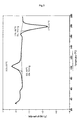
- FIG. 3 shows the graphic representation of a DSC analysis of a sample that was injected without nucleating agent (tool temperature: 107 ° C., cooling time 60 s).
- the amount of heat released during post-crystallization - at a temperature of 103 ° C (H after ) - is approx. 30 J / g.
- the melting temperature is approx. 179 ° C and the heat of fusion (H sc ) required to melt the crystalline areas is 51 J / g.
- Carrying out a temperature variation of the tool (115 ° C., 95 ° C.) during the production of the molded parts without the nucleating agent according to the invention does not increase the degree of crystallization compared to the basic setting of 107 ° C.
- the structure of semi-crystalline plastics is also greatly changed by the use of nucleating agents.
- the following tests were carried out for a more precise analysis of the effect of the nucleating agent according to the invention on the structural structure.
- the mean spherulite diameter of a semicrystalline sample can be determined with the aid of small angle light scattering.
- the thin sections produced for polarization microscopy are used as samples.
- the small-angle light scattering provides evidence of the substantially smaller spherulite diameter in the samples that were treated with the nucleating agent according to the invention.
- a decrease in the spherulite diameter with decreasing cooling time can be seen in samples which were produced both with and without a nucleating agent. However, the decrease is significantly greater for the samples without nucleating agent.
- the 3-point bending test was carried out in accordance with DIN 53452 or DIN 53457 [German Industry Standard, tests of plastics, determination of the elastic modulus (elastic modulus) in tensile, compression and bending tests].
- the test data were determined at a temperature of 23 ° C and at a test speed of 5 mm / s.
- the modulus of elasticity and bending strength were determined using the 3-point bending test. A clear improvement in the mechanical properties of the nucleated poly-L-lactide compared to the non-nucleated material was found.
- FIG. 6 shows a graphical representation of the function of the modulus of elasticity as a function of the cooling time.
- the modulus of elasticity of partially crystalline plastics as a function of the degree of crystallization can be mathematically recorded [German industry standard, testing of plastics, determination of the modulus of elasticity in tensile, compression and bending tests], it being generally found that the modulus of elasticity increases with the degree of crystallization increases. An increase in the modulus of elasticity of 40% was observed in the molded parts examined with a cooling time of 60 s.
- Molded parts with good mechanical properties and a degree of crystallization of 46% could be produced by using the nucleating agent according to the invention, with a relatively short cooling time of 50 s.
- polyglycolic acid as a nucleating agent thus results in a significant reduction in cooling time and thus a reduction in cycle time.
Landscapes
- Health & Medical Sciences (AREA)
- Chemical & Material Sciences (AREA)
- Chemical Kinetics & Catalysis (AREA)
- Medicinal Chemistry (AREA)
- Polymers & Plastics (AREA)
- Organic Chemistry (AREA)
- Epidemiology (AREA)
- Public Health (AREA)
- Surgery (AREA)
- Vascular Medicine (AREA)
- Veterinary Medicine (AREA)
- Life Sciences & Earth Sciences (AREA)
- Animal Behavior & Ethology (AREA)
- General Health & Medical Sciences (AREA)
- Engineering & Computer Science (AREA)
- Materials Engineering (AREA)
- Heart & Thoracic Surgery (AREA)
- Compositions Of Macromolecular Compounds (AREA)
- Polyesters Or Polycarbonates (AREA)
- Biological Depolymerization Polymers (AREA)
- Manufacture Of Macromolecular Shaped Articles (AREA)
Abstract
Die Erfindung betrifft die Verwendung von Polyglycolsäure und ihrer Derivate als Nukleierungsmittel.The invention relates to the use of polyglycolic acid and its derivatives as nucleating agents.
Description
Die Erfindung betrifft die Verwendung von Polyglycolsäure und ihrer Derivate als Nucleierungsmittel bei der Kristallisation von Polymeren insbesondere von Polylactiden.The invention relates to the use of polyglycolic acid and its derivatives as nucleating agents in the crystallization of polymers, in particular polylactides.
Polylactide weisen - als vom menschlichen oder tierischen Organismus abbaubare (resorbierbare) Kunststoffe - eine Vielzahl von Anwendungsmöglichkeiten auf. Dabei steht neben der Verwendung derartiger Polyester als Nahtmaterial ebenso der Einsatz in Form von festen Formkörpern - wie z.B. Schienen, Schrauben und Stiften, die als Ersatz für die entsprechenden Gegenstände aus Metalle dienen - im Vordergrund des Interesses. Damit diese Formkörper jedoch möglichst alle mechanischen Stabilitätskriterien in vergleichbarem Maße erfüllen, wie die entsprechenden Gegenstände aus Metall, werden hohe Anforderungen an den Kristallisationsgrad des jeweiligen Polylactids gestellt.Polylactides have a wide range of possible uses - as plastics (biodegradable) from the human or animal organism. In addition to the use of such polyester as suturing material, there is also use in the form of solid moldings - such as Rails, screws and pins that serve as replacements for the corresponding metal objects - in the foreground of interest. However, in order for these moldings to meet all mechanical stability criteria to the same extent as possible, like the corresponding metal objects, high demands are placed on the degree of crystallization of the respective polylactide.
Der Kristallisationsgrad des bei der Herstellung des Implantates verwendeten Kunststoffes beeinflußt nicht nur die mechanischen Eigenschaften, sondern auch das Abbauverhalten des Formkörpers im menschlichen bzw. tierischen Organismus.The degree of crystallization of the plastic used in the manufacture of the implant influences not only the mechanical properties but also the degradation behavior of the molded body in the human or animal organism.
Weiterhin besteht die Gefahr, daß sich z.B. Prothesen, die keine oder nur geringe Kristallinität aufweisen, sich beim Erwärmen - z.B. bei der Sterilisation im Heißluftstrom - im Rahmen der sog. Nachkristallisation speziell in den Randbereichen in einem derartigen Ausmaß verziehen, daß das Implantat für den ursprünglich beabsichtigten Einsatz unbrauchbar wird. Bei derartigen Produkten kann auch bei der Lagerung oder sogar nach der Implantation in den Organismus Nachkristallisation und dadurch eine zeitabhängige Veränderung der Eigenschaften auftreten.There is also the risk that, for example, prostheses that have little or no crystallinity will warp during heating - for example during sterilization in a hot air stream - within the scope of the so-called recrystallization to such an extent that the implant is suitable for the patient originally intended use becomes unusable. Such products can also be used for storage or even after implantation in the organism post-crystallization and thereby a time-dependent change in properties occur.
Um bei der Verarbeitung - beispielsweise - von Poly-L-lactid für bioabbaubare Implantate im Spritzgießverfahren hochkristalline Formteile zu erhalten, waren bisher lange Kühlzeiten erforderlich.In order to obtain highly crystalline molded parts during the processing - for example - of poly-L-lactide for biodegradable implants by injection molding, long cooling times have previously been required.
Ein Abkühlungsprozess mit derartig langen Verweilzeiten des bzw. der jeweiligen Formkörper(s) in der Spritzgießform, ist jedoch mit einem molekularen Abbau des eingesetzten Polylactids verbunden, welcher neben einer Änderung des Abbauverhaltens im Körper auch mit einer Verminderung der mechanischen Stabilitätseigenschaften verbunden ist.A cooling process with such long dwell times of the respective molded body (s) in the injection mold is, however, associated with a molecular degradation of the polylactide used, which, in addition to a change in the degradation behavior in the body, is also associated with a reduction in the mechanical stability properties.
Durch den Einsatz von sogenannten Nukleierungsmitteln konnte jedoch eine Möglichkeit eröffnet werden, hochkristalline Formkörper - auch bei Anwendung kürzerer Kühlzeiten - zu erhalten.However, the use of so-called nucleating agents has made it possible to obtain highly crystalline moldings, even when using shorter cooling times.
Bei der Nukleierung werden der Kunststoffschmelze Nukleierungsmittel zugefügt, die dort sog. heterogene Keime bilden. Durch die Zugabe derartiger Substanzen wird somit bereits vor der Bildung sog. "thermischer Kristallisationskeime" eine hohe Keimdichte erzielt, womit die Kristallisation früher eingeleitet und die Kristallisationszeit selbst verkürzt wird.During the nucleation, nucleating agents are added to the plastic melt, which form so-called heterogeneous germs there. By adding such substances, a high nucleus density is thus achieved even before the formation of so-called “thermal crystallization nuclei”, with which crystallization is initiated earlier and the crystallization time itself is shortened.
Aufgrund der Tatsache, daß bei der Temperatur, die für das Kristallwachstum am günstigsten ist, zahlreiche Kristallkeime in der Schmelze zugegen sind, wird das geschmolzene Material bei der Kristallisation entsprechend schnell verbraucht, woraus in dem nukleierten Material eine Gefügestruktur resultiert, die wesentlich feiner ist, als diejenige des entsprechenden nicht-nukleierten Materials.Due to the fact that numerous crystal nuclei are present in the melt at the temperature which is most favorable for crystal growth, this becomes molten material is correspondingly rapidly consumed during crystallization, which results in a structure in the nucleated material that is much finer than that of the corresponding non-nucleated material.
Da jedoch die Zusammenhänge zwischen der Art des Kunststoffes und der chemischen und physikalischen Struktur des Keimbildners und der Nukleierung selbst noch ungeklärt sind, existieren bislang keine allgemeingültigen Regeln zur Auswahl des Nukleierungsmittels. Die meisten Keimbildner müssen daher auf empirischer Basis ermittelt werden. Die wichtigsten Anforderungen sind:
- a) Der Keimbildner soll durch das Polymer benetzt oder absorbiert werden.
- b) Der Keimbildner soll im Polymer unlöslich sein.
- c) Der Schmelzpunkt des Keimbildners soll höher liegen als derjenige des Polymeren.
- d) Der Keimbildner soll in möglichst feiner Form (1 bis 10 µm) in der Polymerschmelze dispergierbar sein.
- e) Der Keimbildner soll eine möglichst geringe Oberflächenenergie besitzen.
- a) The nucleating agent should be wetted or absorbed by the polymer.
- b) The nucleating agent should be insoluble in the polymer.
- c) The melting point of the nucleating agent should be higher than that of the polymer.
- d) The nucleating agent should be dispersible in the finest possible form (1 to 10 µm) in the polymer melt.
- e) The nucleating agent should have the lowest possible surface energy.
Durch den Einsatz eines Keimbildners setzt die Kristallisation - im Vergleich zu einer Probe ohne Keimbildner - bei einer höheren Temperatur ein. Die Höhe der Kristallisationstemperatur - welche z.B. durch DSC-Untersuchungen (Differential-Scanning-Calorimetrie) leicht ermittelt werden kann - ist dabei ein Maß für die Wirksamkeit des Nukleierungsmittels. Allgemein gilt: Je größer die Differenz zwischen der Kristallisationstemperatur mit und ohne Keimbildnerzugabe ist, desto wirkungsvoller ist das Nukleierungsmittel.By using a nucleating agent, crystallization starts at a higher temperature than a sample without a nucleating agent. The level of the crystallization temperature - which, for example, by DSC investigations (differential scanning calorimetry) can be easily determined - is a measure of the effectiveness of the nucleating agent. In general, the larger the difference between the crystallization temperature with and without the addition of nucleating agents, the more effective the nucleating agent.
Da die meisten Keimbildner bei der Verarbeitung zu höheren Kristallinitätsgraden führen, wird in den meisten Fällen auch die Ausbildung feinsphärolitischer Strukturen ermöglicht.Since most nucleating agents lead to higher degrees of crystallinity during processing, the formation of fine spherulitic structures is also made possible in most cases.
Dadurch bedingt werden im Vergleich zu dem entsprechend nicht-nukleiertem Material die Härte, der E-Modul (Elastizitätsmodul), die Zugfestigkeit, die Reißdehnung und die Schlagzähigkeit verbessert.As a result, the hardness, the elastic modulus (elastic modulus), the tensile strength, the elongation at break and the impact resistance are improved in comparison to the corresponding non-nucleated material.
Besondere Bedeutung kommt dabei der Verkürzung der Zykluszeit beim Spritzgießen nukleierter Formassen zu. Aufgrund der Tatsache, daß die Kristallisation schon bei höheren Temperaturen einsetzt und demgemäß - beim Abkühlen - auch früher beendet ist, kann die sogenannte Entformungstemperatur heraufgesetzt und somit die Kühlzeit reduziert werden, woraus sich die angestrebte Zykluszeitverkürzung ergibt.The shortening of the cycle time during injection molding of nucleated molding compounds is of particular importance. Due to the fact that the crystallization starts at higher temperatures and accordingly ends earlier when cooling, the so-called demolding temperature can be increased and thus the cooling time reduced, which results in the desired shortening of the cycle time.
Es ist daher die Aufgabe der vorliegenden Erfindung, ein Nukleierungsmittel zur Verfügung zu stellen, welches die Kristallisation von Poly-L-lactid bei höheren Temperaturen ermöglicht und das somit bei der Verarbeitung von Poly-L-lactid im Spritzgießverfahren eine entsprechende Heraufsetzung der Entformungstemperatur und auf diesem Wege eine Zykluszeitverkürzung erlaubt.It is therefore the object of the present invention to provide a nucleating agent which enables the crystallization of poly-L-lactide at higher temperatures and which thus, when processing poly-L-lactide in an injection molding process, increases the demolding temperature accordingly and up this way, a cycle time reduction is permitted.
Es ist eine weitere Aufgabe der vorliegenden Erfindung, ein Nukleierungsmittel zur Verfügung zu stellen, welches biologisch abbaubar ist.It is another object of the present invention to provide a nucleating agent that is biodegradable.
Es ist eine weitere Aufgabe der vorliegenden Erfindung ein Nukleierungsmittel zur Verfügung zu stellen, das ferner körperverträglich ist d.h. keine Abwehrreaktionen im Körper induziert und welches nicht toxisch ist.It is a further object of the present invention to provide a nucleating agent which is also body compatible i.e. no defense reactions induced in the body and which is not toxic.
Es wurde nun überraschenderweise gefunden, daß sich Polyglycolsäure und ihre Derivate der allgemeinen Formel I -

worin
- X
- Wasserstoff, Halogen oder eine Hydroxylgruppe
und - M
- ein Metall-Nation oder Wasserstoff
bedeutet -
als Nukleierungsmittel bei der Kristallisation - z.B. von Poly-L-lactid - geeignet sind.It has now surprisingly been found that polyglycolic acid and its derivatives of the general formula I
wherein
- X
- Hydrogen, halogen or a hydroxyl group
and - M
- a metal nation or hydrogen
means -
are suitable as nucleating agents in the crystallization - for example of poly-L-lactide.
Halogen bedeutet neben Fluor, Brom und Jod in erster Linie Chlor.In addition to fluorine, bromine and iodine, halogen primarily means chlorine.
M bedeutet neben Lithium und Kalium in erster Linie Natrium.In addition to lithium and potassium, M primarily means sodium.
Anstelle eines Erdalkalicarboxylates kann aber auch ein Carbonsäureester als Carboxylendgruppe Verwendung finden. Als Beispiel seien Alkylester genannt.Instead of an alkaline earth metal carboxylate, a carboxylic acid ester can also be used as the carboxyl end group. Alkyl esters may be mentioned as an example.
Polyglycolsäuren der Formel I können in an sich bekannter Weise durch Kondensation von Glycolsäure unter Wasserabspaltung, durch ringöffnende Polymerisation von Glycolid oder durch Polymerisation von Salzen von Halogenessigsäuren unter Abspaltung von Halogeniden erhalten werden. Stellt man die Polyglycolsäure z.B. durch Polymerisation von Natriumchloracetat her, so erhält man unter Abspaltung von Natriumchlorid ein Produkt der Formel I mit X = Cl und M = Na. Bei der anschließenden Abtrennung des Natriumchlorids durch Auswaschen mit Wasser oder in einem gesonderten nachfolgenden Reaktionsschritt kann je nach den Reaktionsbedingungen das Halogen ganz oder teilweise durch eine Hydroxygruppe, das Metall-Kation ganz oder teilweise durch ein Proton ersetzt werden. Je nach Gründlichkeit und Dauer des Auswaschprozesses kann das Produkt noch unterschiedliche Mengen an ionogenem Chlorid enthalten. So wurden in einer Reihe von Ansätzen aus Natriumchloracetat Produkte der Formel I mit folgenden Halogengehalten hergestellt:

Der Gehalt an ionogenem Chlor ist nicht kritisch. Er kann zwischen 0 und 5 % betragen. Bevorzugt werden jedoch Produkte mit weniger als 1 % ionogenem Chlor. Auch der Gehalt an kovalent gebundenem Chlor ist an sich nicht kritisch. Da er jedoch ein Maß für das Molekulargewicht der Polyglycolsäure darstellt und dieses zur Erzielung eines ausreichend hohen Schmelzpunktes bestimmte Werte nicht unterschreiten sollte, beträgt der Gehalt an kovalent gebundenem Chlor zweckmäßigerweise zwischen 0 und 2 %. Dies schließt nicht aus, daß für bestimmte Anwendungszwecke ein Produkt mit höherem Chlorgehalt verwendbar ist, bevorzugt werden jedoch Produkte mit weniger als 1 %. Besonders bevorzugt ist ein Gehalt an kovalent gebundenem Chlor zwischen 0 und 0,6 %.The ionic chlorine content is not critical. It can be between 0 and 5%. However, products with less than 1% ionic chlorine are preferred. The content of covalently bound chlorine is not critical in itself. However, since it represents a measure of the molecular weight of polyglycolic acid and this should not fall below certain values in order to achieve a sufficiently high melting point, the content of covalently bound chlorine is advantageously between 0 and 2%. This does not exclude that a product with a higher chlorine content can be used for certain applications, but products with less than 1% are preferred. A content of covalently bound chlorine between 0 and 0.6% is particularly preferred.
Der Gehalt an Natrium setzt sich aus dem nicht ausgewaschenen Natriumchlorid und dem gemäß Formel I an das Polymer gebundenen Anteil zusammen. Er ist nicht kritisch und kann je nach Produktqualität 5 % oder mehr betragen. Bevorzugt werden jedoch Produkte mit Natriumgehalten zwischen 0 und 2 %, besonders bevorzugt zwischen 0 und 1 %.The sodium content is composed of the sodium chloride which has not been washed out and the portion bound to the polymer in accordance with formula I. It is not critical and can be 5% or more depending on the product quality. However, products with sodium contents between 0 and 2% are preferred, particularly preferably between 0 and 1%.
Die Zahl n in Formel I ist an sich nicht kritisch. Reaktionen wie sie für die Herstellung erfindungsgemäßer Polyglykolsäure angewandt werden, liefern jedoch aufgrund der Reaktionskinetik Produkte mit n von etwa 20 bis etwa 300. Die Herstellung noch höhermolekularer Produkte erfordert sehr lange Reaktionszeiten oder eine aufwendige ringöffnende Polymerisation von Glycolid. Für das erfindungsgemäße Verfahren sind jedoch so hohe Molekulargewichte nicht erforderlich. Bevorzugt werden daher Produkte, bei denen n zwischen 20 und 300, besonders bevorzugt zwischen 50 und 150 liegt.The number n in Formula I is not critical per se. Reactions such as those used for the production of polyglycolic acid according to the invention, however, produce products with n of about 20 to about 300 due to the reaction kinetics. The production of even higher molecular weight products requires very long reaction times or a complex ring-opening polymerization of glycolide. However, such high molecular weights are not for the process according to the invention required. Products are therefore preferred in which n is between 20 and 300, particularly preferably between 50 and 150.
Die Beschaffenheit der erfindungsgemäßen Produkte der Formel I wurde mit X = Chlor und M = Natrium erläutert. Die Erfindung ist jedoch nicht darauf beschränkt. X kann erfindungsgemäß auch ein anderes Halogen, Wasserstoff, eine Hydroxylgruppe oder eine andere Gruppe bedeuten, soweit sie nicht den Schmelzpunkt in unvorteilhafter Weise absenkt oder die Toxizität erhöht. Gleiches gilt auch für M, das auch - wie erläutert - Wasserstoff oder ein anderes Metall-Kation sein kann. Auch eine veresterte Carboxylendgruppe ist möglich, soweit dadurch nicht der Schmelzpunkt abgesenkt wird. Damit wird deutlich, daß der zu Produkten der Formel I führende Syntheseweg nicht kritisch ist.The nature of the products of formula I according to the invention was explained with X = chlorine and M = sodium. However, the invention is not so limited. According to the invention, X can also mean another halogen, hydrogen, a hydroxyl group or another group, provided that it does not disadvantageously lower the melting point or increase the toxicity. The same applies to M, which - as explained - can also be hydrogen or another metal cation. An esterified carboxyl end group is also possible, provided this does not lower the melting point. This makes it clear that the synthetic route leading to products of the formula I is not critical.
Polymere der Glycolsäure sind, wie vielfach bewiesen wurde (z.B. durch ihre Verwendung als chriurgisches Nahtmaterial) gut verträglich und im Organismus abbaubar. Dies macht die Verbindungen der Formel I besonders geeignet zur Nukleierung von biologisch abbaubaren Polymeren auf der Basis von L-Lactid, D,L-Lactid, meso-Lactid, Glycolid, Trimethylencarbonat, Dioxanon, Caprolacton usw., soweit die Polymeren bzw. Copolymeren aufgrund ihrer Zusammensetzung kristallin sein können. Gleiches gilt auch für Mischungen (Blends) aus solchen Polymeren und Copolymeren. Damit ist jedoch keine Einschränkung der Erfindung verbunden. Verbindungen der Formel I können vorteilhaft auch zur Nukleierung nicht biologisch abbaubarer Kunststoffe eingesetzt werden, soweit die Verarbeitungstemperaturen unter der Erweichungstemperatur von I (ca. 200-230 für X=Cl und M=Na) liegt. Beispielhaft seien Polyethylen, Polypropylen, Polybutylen, Polyoxymethylen und Polyamid genannt.Polymers of glycolic acid are, as has been proven many times (for example by their use as a suture material), well tolerated and degradable in the organism. This makes the compounds of formula I particularly suitable for the nucleation of biodegradable polymers based on L-lactide, D, L-lactide, meso-lactide, glycolide, trimethylene carbonate, dioxanone, caprolactone etc., insofar as the polymers or copolymers are due their composition can be crystalline. The same also applies to mixtures (blends) of such polymers and copolymers. However, this is not a limitation of the invention. Compounds of the formula I can also advantageously be used to nucleate non-biodegradable plastics as long as the processing temperature is below the softening temperature of I (approx. 200-230 for X = Cl and M = Na). Examples include polyethylene, polypropylene, polybutylene, polyoxymethylene and polyamide.
Das erfindungsgemäße Nukleierungsmittel kann in einem Bereich von 0,2 bis 5 Gew.-%, vorzugsweise in einem Bereich von 0,4 bis 3 Gew.-% und ganz besonders bevorzugt in einem Bereich von 0,5 bis 2 Gew-% dem jeweiligen Polymeren - im vorliegenden Fall Poly-L-lactid - zugefügt werden. In Abhängigkeit von dem zu nukleierenden Polymeren kann es jedoch auch notwendig sein, von diesen Prozentsätzen abzuweichen und das erfindungsgemäße Nukleierungsmittel in großen oder kleinen Anteilen zuzufügen.The nucleating agent according to the invention can be used in a range from 0.2 to 5% by weight, preferably in a range from 0.4 to 3% by weight and very particularly preferably in a range from 0.5 to 2% by weight Polymers - in the present case poly-L-lactide - are added. Depending on the polymer to be nucleated, however, it may also be necessary to deviate from these percentages and to add the nucleating agent according to the invention in large or small proportions.
Zur Herstellung von Proben für die DSC-Versuche wurden folgende Verfahrensschritte durchgeführt:
- 1. Herstellen von Mischungen (jeweils 50 g) aus Rohmaterial mit verschiedenen Gewichtsanteilen Nukleierungsmittel.
- 2. Extrusion der Mischungen in einem handelsüblichen Schweißextruder.
- 1. Manufacture of mixtures (50 g each) from raw material with different parts by weight of nucleating agent.
- 2. Extrusion of the mixtures in a commercially available welding extruder.
Für die DSC-Untersuchungen wurden jeweils 3 Versuche mit dem Material einer Probe gemacht. Dabei wurde das Analysenmaterial aus dem letztem Drittel des extrudierten Stranges verwendet. Die Messungen wurden nach folgendem Schema durchgeführt:
- Einwaage einer Probe von ca. 10 mg
- Durchlaufen des folgenden Temperaturprofils:
- 1) Aufheizen von Raumtemperatur mit einer Aufheizrate von 40 K/min auf eine Temperatur von 190 °C.
- 2) Isotherme Temperaturführung, um die Schmelze zu homogenisieren.
- 3) Abkühlen der Probe mit einer Abkühlrate von 10 K/min auf Raumtemperatur.
- Weigh out a sample of approx. 10 mg
- Go through the following temperature profile:
- 1) Heating from room temperature with a heating rate of 40 K / min to a temperature of 190 ° C.
- 2) Isothermal temperature control to homogenize the melt.
- 3) Cool the sample at a cooling rate of 10 K / min to room temperature.
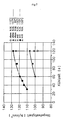
Fig. 1 zeigt in graphischer Darstellung den Anstieg der Kristallisationstemperatur in Abhängigkeit vom jeweiligen Anteil an Nukleierungsmittel.1 shows a graphical representation of the increase in the crystallization temperature as a function of the respective proportion of nucleating agent.
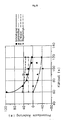
Fig. 2 zeigt in graphischer Darstellung die Abhängigkeit der Kristallisationswärme vom jeweiligen Anteil an Nukleierungsmittel.2 shows a graphical representation of the dependence of the heat of crystallization on the respective proportion of nucleating agent.
Diese Ergebnisse belegen, daß mit dem erfindungsgemäßen Nukleierungsmittel unter den angewandten Versuchsbedingungen eine maximale Steigerung der Kristallisationstemperatur von 100 °C auf 116 °C und eine Zunahme der Kristallisationswärme von 5 J/g auf 41 J/g bei steigendem Nukleierungsmittelanteil beobachtet werden kann. Oberhalb eines Anteils von 1,5 Gew.-% an Nukleierungsmittel ist keine merkliche Steigerung der Kristallisationstemperatur sowie der Kristallisationswärme festzustellen.These results demonstrate that a maximum increase in the crystallization temperature from 100 ° C. to 116 ° C. and an increase in the heat of crystallization from 5 J / g to 41 J / g can be observed with increasing nucleating agent content under the experimental conditions used. Above a proportion of 1.5% by weight of nucleating agent, there is no noticeable increase in the crystallization temperature or in the heat of crystallization.
Für die Spritzgießversuche wurde eine Mischung aus Rohmaterial und Nukleierungsmittel mit einem Nukleierungsmittelanteil von 1,5 Gew.-% hergestellt.A mixture of raw material and nucleating agent with a nucleating agent content of 1.5% by weight was produced for the injection molding tests.
Am Spritzgießwerkzeug wurde eine Wandtemperatur von 116°C eingestellt.A wall temperature of 116 ° C. was set on the injection mold.
Die Durchführung der Spritzgießversuche wurde mit einer Micro-Prazisionsspritzgießmaschine mit Kolbeneinspritzung durchgeführt, wobei der Kolben selbst in der Plastifizierschnecke geführt wird.The injection molding tests were carried out using a micro-precision injection molding machine with piston injection, the piston itself being guided in the plasticizing screw.
Aufgrund des Umstandes, daß der Feuchtigkeitsgehalt des eingesetzten Versuchsmaterials einen erheblichen Einfluß auf den Molekulargewichtsabbau in der Schmelze hat, ist es notwendig, vorgetrocknetes Material in das Spritzgießverfahren einzuführen.Due to the fact that the moisture content of the test material used has a significant influence on the molecular weight reduction in the melt, it is necessary to introduce predried material into the injection molding process.
Für das Trocknen wurde ein Absorptionstrockner verwandt, der mit dem auf der Spritzgießmaschine befindlichen Trichter verbunden war. Im Umluftverfahren wurde dabei dem Trichterinhalt von unten erwärmte und getrocknete Luft aus dem Absorptionstrockner zugeführt.An absorption dryer was used for drying, which was connected to the funnel on the injection molding machine. In the circulating air process, the funnel contents were supplied with heated and dried air from the absorption dryer.
Das eingesetzte Poly-L-lactid-Rohmaterial wurde zunächst bei 140 °C für einen Zeitraum von 4 h getrocknet und anschließend mit 1.5 Gew.-% des Nukleierungsmittels vermischt. Im darauffolgenden Preßvorgang wurden Platten hergestellt, die mit einer Schneidmühle granuliert werden konnten.The poly-L-lactide raw material used was first dried at 140 ° C. for a period of 4 h and then mixed with 1.5% by weight of the nucleating agent. In the subsequent pressing process, plates were produced that could be granulated with a cutting mill.
Zur Vermeidung eines Molekulargewichtsabbaus erfolgte die Herstellung bei möglichst niedriger Temperatur und geringer Zykluszeit. Dabei wurde folgende Vorgehensweise angewandt:
- 1. Aufheizen des Materials unter geringem Druck bei einer Temperatur von 170 °C über einen
Zeitraum von 1 min. - 2. Verdichten der vorgewärmten Masse für einen Zeitraum von 10 s bei maximalem Druck.
- 3. Schnelles Abkühlen der Platten mittels Preßluft.
- 1. Heating the material under low pressure at a temperature of 170 ° C for a period of 1 min.
- 2. Compress the preheated mass for a period of 10 s at maximum pressure.
- 3. Rapid cooling of the plates using compressed air.
Durch Regranulieren des resultierenden Materials auf einer Schneidmühle wurde ein gut verarbeitbares Granulat hergestellt, welches unmittelbar vor dem Spritzgießen einer erneuten vierstündigen Trocknung bei 140 °C unterworfen wurde.By regranulating the resulting material on a cutting mill, an easily processable granulate was produced, which was subjected to another four-hour drying at 140 ° C. immediately before the injection molding.
Zur Beschreibung der Änderungen der Formteileigenschaften durch die Verwendung des erfindungsgemäßen Nukleierungsmittels, wurden an den im Spritzgießverfahren hergestellten Formteilen folgende Untersuchungen durchgeführt:To describe the changes in the molded part properties due to the use of the nucleating agent according to the invention, the following tests were carried out on the molded parts produced by the injection molding process:
Für die thermoanalytische Untersuchung zur Bestimmung des Kristallisationsgrades wurde ebenfalls die DSC-Analyse angewandt, wobei eine Probe von ca. 7 mg Masse - von Raumtemperatur ausgehend - mit einer Aufheizrate von 20 K/min auf eine Temperatur von 200 °C aufgeheizt wurde.DSC analysis was also used for the thermal analysis to determine the degree of crystallization, with a sample of approx. 7 mg mass - starting from room temperature - being heated to a temperature of 200 ° C at a heating rate of 20 K / min.
Fig. 3 gibt die graphische Darstellung einer DSC-Analyse von einer Probe wieder, die ohne Nukleierungsmittel gespritzt wurde (Werkzeugtemperatur: 107 °C, Kühlzeit 60 s). Dabei führt die unvollständige Kristallisation während des Spritzgießvorganges zu einem exothermen Peak. Die bei der Nachkristallisation - bei einer Temperatur von 103°C - freiwerdende Wärmemenge (Hnach) beträgt ca. 30 J/g. Die Schmelztemperatur liegt bei ca. 179 °C und die zum Aufschmelzen der kristallinen Bereiche benötigte Schmelzwärme (Hsc) beträgt 51 J/g.FIG. 3 shows the graphic representation of a DSC analysis of a sample that was injected without nucleating agent (tool temperature: 107 ° C., cooling time 60 s). The incomplete crystallization during the Injection molding process to an exothermic peak. The amount of heat released during post-crystallization - at a temperature of 103 ° C (H after ) - is approx. 30 J / g. The melting temperature is approx. 179 ° C and the heat of fusion (H sc ) required to melt the crystalline areas is 51 J / g.
Mit folgender Gleichung
worin
- Hnach
- die Nachkristallisationswärme
- Hsc
- die Schmelzwärme der Probe und
- Hc
- die Schmelzwärme einer 100%-ig kristallinen Probe von Poly-L-lactid (Hc = 96,3 J/g)
bedeutet, läßt sich der Kristallisationsgrad berechnen.With the following equation
wherein
- H after
- the post-crystallization heat
- H sc
- the heat of fusion of the sample and
- H c
- the heat of fusion of a 100% crystalline sample of poly-L-lactide (H c = 96.3 J / g)
means, the degree of crystallization can be calculated.
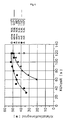
Fig. 4 zeigt die graphische Darstellung des Kristallisationsgrades in Abhängigkeit von der Kühlzeit jeweils von Proben mit und ohne Nukleierungsmittel.4 shows the graphic representation of the degree of crystallization as a function of the cooling time in each case of samples with and without nucleating agent.
Aus Fig. 4 ist zu entnehmen, daß der Kristallisationsgrad einer nukleierten Probe über dem gesamten Kühlzeitbereich höher ist als derjenige der nicht-nukleierten Probe. Des weiteren ist den - in Fig. 4 wiedergegebenen - experimentellen Daten zu entnehmen, daß die Differenz des Kristallisationsgrades zwischen nukleiertem und nicht-nukleiertem Material mit kürzer werdender Kühlzeit zunimmt.It can be seen from FIG. 4 that the degree of crystallization of a nucleated sample is higher than that of the non-nucleated sample over the entire cooling time range. Furthermore, it can be seen from the experimental data - reproduced in FIG. 4 - that the difference in the degree of crystallization between nucleated and non-nucleated material increases as the cooling time becomes shorter.
Die Durchführung einer Temperaturvariation des Werkzeuges (115 °C, 95 °C) bei der Herstellung der Formteile ohne das erfindungsgemäße Nukleierungsmittel führt zu keiner Erhöhung des Kristallisationsgrades gegenüber der Grundeinstellung von 107 °C.Carrying out a temperature variation of the tool (115 ° C., 95 ° C.) during the production of the molded parts without the nucleating agent according to the invention does not increase the degree of crystallization compared to the basic setting of 107 ° C.
Bei den Versuchen ohne Nukleierungsmittel kommt es bei einer Kühlzeitverkürzung von 120 s auf 60 s zu einem starken Abfall des Kristallisationsgrades von 50,4 % auf 22,6 %.In the experiments without nucleating agents, the cooling time was reduced from 120 s to 60 s and the degree of crystallization dropped sharply from 50.4% to 22.6%.
Dagegen ist der Abfall des Kristallisationsgrades mit kürzer werdender Kühlzeit bei den Proben mit Nukleierungsmittel wesentlich geringer.In contrast, the decrease in the degree of crystallization with shorter cooling times is significantly less for the samples with nucleating agent.
So kann - durch den Einsatz des erfindungsgemäßen Nukleierungsmittels - bei einer Kühlzeit von 60 s - ein Kristallisationsgrad von 45,5 % gegenüber der entsprechenden Probe ohne Zusatz von Nukleierungsmittel (mit einem Kristallisationsgrad von nur 22.6 %) erreicht werden.Thus - by using the nucleating agent according to the invention - with a cooling time of 60 s - a degree of crystallization of 45.5% compared to the corresponding sample can be achieved without the addition of nucleating agent (with a degree of crystallization of only 22.6%).
Auch die Gefügestruktur teilkristalliner Kunststoffe wird durch den Einsatz von Nukleierungsmitteln stark verändert. Zur genaueren Analyse der Wirkung des erfindungsgemäßen Nukleierungsmittels auf die Gefügestruktur wurden die folgenden Untersuchungen durchgeführt.The structure of semi-crystalline plastics is also greatly changed by the use of nucleating agents. The following tests were carried out for a more precise analysis of the effect of the nucleating agent according to the invention on the structural structure.
Für die Polarisations-Mikroskopie wurden Dünnschnitte der jeweiligen Poly-L-lactid-Probe von 10 µm analysiert.Thin sections of the respective poly-L-lactide sample of 10 µm were analyzed for polarization microscopy.
Die Polarisations-Mikroskopie liefert für zwei Proben, die mit gleicher Kühlzeit von 60 s hergestellt wurden folgende Ergebnisse:
- a) Diejenige Probe, die ohne Nukleierungsmittel hergestellt wurde, läßt nur wenige, kleine Sphärolithe erkennen, die in großen Bereichen mit amorphem Erscheinungsbild liegen.
- b) Demgegenüber zeigt diejenige Probe, die mit einem Nukleierungsmittel hergestellt wurde ein wesentlich feinsphärolithischeres Gefüge. Die einzelnen Sphärolithe sind so dicht aneinandergerückt, daß amorphe Bereiche nicht mehr zu erkennen sind, wodurch ein - im Vergleich zur nicht-nukleierten Probe - hoher Kristallisationsgrad erreicht wird.
- a) The sample that was produced without nucleating agent reveals only a few, small spherulites that lie in large areas with an amorphous appearance.
- b) In contrast, the sample that was produced with a nucleating agent shows a much more fine-spherulitic structure. The individual spherulites are so close together that amorphous areas can no longer be recognized, which means that a high degree of crystallization is achieved compared to the non-nucleated sample.
Mit Hilfe der Lichtkleinwinkelstreuung läßt sich der mittlere Sphärolithdurchmesser einer teilkristallinen Probe bestimmen.The mean spherulite diameter of a semicrystalline sample can be determined with the aid of small angle light scattering.
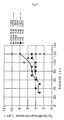
Als Proben werden die für die Polarisations-Mikroskopie hergestellten Dünnschnitte eingesetzt. Die Lichtkleinwinkelstreuung liefert einen Beleg für den wesentlich kleineren Sphärolithdurchmesser bei den Proben, die mit dem erfindungsgemäßen Nukleierungsmittel behandelt wurden. Eine Abnahme der Sphärolithdurchmesser mit sinkender Kühlzeit ist bei Proben, die sowohl mit als auch ohne Nukleierungsmittel hergestellt wurden zu erkennen. Bei den Proben ohne Nukleierungsmittel ist die Abnahme jedoch deutlich größer.The thin sections produced for polarization microscopy are used as samples. The small-angle light scattering provides evidence of the substantially smaller spherulite diameter in the samples that were treated with the nucleating agent according to the invention. A decrease in the spherulite diameter with decreasing cooling time can be seen in samples which were produced both with and without a nucleating agent. However, the decrease is significantly greater for the samples without nucleating agent.
In Fig. 5 ist die graphische Darstellung der Funktion des mittleren Sphärolithdurchmessers in Abhängigkeit von der Kühlzeit wiedergegeben.5 shows the graphic representation of the function of the average spherulite diameter as a function of the cooling time.
Der Einfluß der beschriebenen Werkstoffänderungen, die aus der Hinzufügung des erfindungsgemäßen Nukleierungsmittels resultieren, auf die physikalischen Charakteristika der daraus hergestellten Formteile wurden anhand folgender mechanischer Untersuchungen überprüft:The influence of the material changes described, which result from the addition of the nucleating agent according to the invention, on the physical characteristics of the molded parts produced therefrom were checked using the following mechanical tests:
Der 3-Punkt-Biegeversuch erfolgte mit einem gemäß DIN 53452 bzw. DIN 53457 [Deutsche Industrie Norm, Prüfungen von Kunststoffen, Bestimmung des Elastizitätsmoduls (E-Modul) im Zug-, Druck- und Biegeversuch]. Die Prüfdaten wurden bei einer Temperatur von 23°C und mit einer Prüfgeschwindigkeit von 5 mm/s ermittelt.The 3-point bending test was carried out in accordance with DIN 53452 or DIN 53457 [German Industry Standard, tests of plastics, determination of the elastic modulus (elastic modulus) in tensile, compression and bending tests]. The test data were determined at a temperature of 23 ° C and at a test speed of 5 mm / s.
Es wurden Probenkörper folgender Abmessungen eingesetzt:
Länge: 25 mm
Verhältnis Länge/Höhe: 12.5
Stützweite: 20 mmTest specimens of the following dimensions were used:
Length: 25mm
Length / height ratio: 12.5
Span: 20 mm
Mit dem 3-Punkt-Biegeversuch wurden E-Modul und Biegefestigkeit ermittelt. Dabei konnte eine deutliche Verbesserung der mechanischen Eigenschaften des nukleierten Poly-L-lactids gegenüber dem nicht-nukleierten Material festgestellt werden.The modulus of elasticity and bending strength were determined using the 3-point bending test. A clear improvement in the mechanical properties of the nucleated poly-L-lactide compared to the non-nucleated material was found.
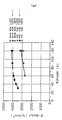
Fig. 6 zeigt eine graphische Darstellung der Funktion des E-Moduls in Abhängigkeit von der Kühlzeit.6 shows a graphical representation of the function of the modulus of elasticity as a function of the cooling time.
Fig. 7 zeigt eine graphische Darstellung der Biegefestigkeit ebenfalls in Abhängigkeit von der Kühlzeit.7 shows a graphical representation of the bending strength also as a function of the cooling time.
Die in Fig. 6 und Fig. 7 erkennbaren Steigerungen sind auf die - in den vorangegangenen Untersuchungen nachgewiesenen - Änderungen des Kristallisationsgrades und der Morphologie durch den Einsatz des erfindungsgemäßen Nukleierungsmittels zurückzuführen.The increases that can be seen in FIGS. 6 and 7 are due to the changes in the degree of crystallization and in the morphology, as demonstrated in the previous investigations, due to the use of the nucleating agent according to the invention.
Die Ergebnisse - in ihrer Gesamtheit gewertet - zeigen, daß die größten Änderungen des Kristallisationsgrades bei geringen Abkühlzeiten zu erkennen sind. Wie Fig. 8 - in der die prozentualen Änderungen der gemessenen Größen von Formteilen mit Nukleierungsmittel gegenüber Formteilen ohne Nukleierungsmittel in Abhängigkeit von der Kühlzeit dargestellt sind - entnommen werden kann, kommt es - beispielsweise bei einer Kühlzeit von 60 s - zu einer Steigerung des Kristallisationsgrades um fast 120 %. Der erhöhte Kristallisationsgrad geht mit einer Abnahme der amorphen Bereiche zwischen den einzelnen Sphärolithen einher. Da diese amorphen Bereiche bei einer mechanischen Belastung wie Fehlstellen wirken, die die Kräfte nur unzureichend übertragen können, führt eine Verringerung der amorphen Zwischenräume zu einer Erhöhung der Steifigkeit.The results - evaluated in their entirety - show that the greatest changes in the degree of crystallization can be seen with short cooling times. As can be seen in FIG. 8, which shows the percentage changes in the measured sizes of molded parts with nucleating agent compared to molded parts without nucleating agent as a function of the cooling time, there is an increase in the degree of crystallization, for example with a cooling time of 60 s almost 120%. The increased degree of crystallization is accompanied by a decrease in the amorphous areas between the individual spherulites. Since these amorphous areas act like defects when subjected to mechanical loads, which can only transmit the forces insufficiently, a reduction in the amorphous spaces leads to an increase in the rigidity.
Der E-Modul teilkristalliner Kunststoffe in Abhängigkeit vom Kristallisationsgrad läßt sich mathematisch erfassen [Deutsche Industrie Norm, Prüfung von Kunststoffen, Bestimmung des Elastizitätsmoduls im Zug-, Druck- und Biegeversuch], wobei allgemein festgestellt werden kann, daß der E-Modul mit wachsendem Kristallisationsgrad steigt. Bei den untersuchten Formteilen konnte eine Steigerung des E-Moduls bei einer Abkühlzeit von 60 s um 40 % festgestellt werden.The modulus of elasticity of partially crystalline plastics as a function of the degree of crystallization can be mathematically recorded [German industry standard, testing of plastics, determination of the modulus of elasticity in tensile, compression and bending tests], it being generally found that the modulus of elasticity increases with the degree of crystallization increases. An increase in the modulus of elasticity of 40% was observed in the molded parts examined with a cooling time of 60 s.
Die Erhöhung der prozentualen Änderung des Kristallisationsgrades und die damit verbundene Abnahme der Änderung des Sphärolithdurchmessers durch den Einsatz des erfindungsgemäßen Nukleierungsmittels führen zu einer nahezu konstanten Erhöhung des E-Moduls über dem gesamten untersuchten Kühlzeitbereich.The increase in the percentage change in the degree of crystallization and the associated decrease in the change in the spherulite diameter due to the use of the nucleating agent according to the invention lead to an almost constant increase in the modulus of elasticity over the entire cooling time range examined.
Versuche unterhalb einer Kühlzeit von 60 s, konnten nur mit nukleierten Proben durchgeführt werden. Der Kristallisationsgrad fällt zwar bei einer Abkühlzeit unterhalb von 50 s stark ab, dennoch liegt er bei einer Abkühlzeit von 30 s noch bei 33 % (vgl. Fig. 4). Der mittlere Sphärolithdurchmesser bleibt unterhalb von 60 s nahezu konstant. Dies führt zwar zu einem Abfall des E-Moduls und der Biegefestigkeit, beide Größen liegen jedoch bei 30 s immer noch deutlich über den Werten, die für die nicht-nukleierten Proben bei einer Kühlzeit von 60 s ermittelt wurden.Experiments below a cooling time of 60 s could only be carried out with nucleated samples. The degree of crystallization drops sharply with a cooling time below 50 s, but is still 33% with a cooling time of 30 s (see FIG. 4). The mean spherulite diameter remains almost constant below 60 s. Although this leads to a drop in the modulus of elasticity and the bending strength, at 30 s both values are still significantly higher than the values determined for the non-nucleated samples with a cooling time of 60 s.
Formteile mit guten mechanischen Eigenschaften und einem Kristallisationsgrad von 46 %, konnten durch den Einsatz des erfindungsgemäßen Nukleierungsmittels, bei einer relativ kurzen Kühlzeit von 50 s, hergestellt werden.Molded parts with good mechanical properties and a degree of crystallization of 46% could be produced by using the nucleating agent according to the invention, with a relatively short cooling time of 50 s.
Zusammenfassend kann festgestellt werden, daß sich durch den Zusatz des erfindungsgemäßen Nukleierungsmittels Formteile mit guten mechanischen Eigenschaften und einem hohen Kristallisationsgrad, bei kleinen Kühlzeiten herstellen lassen.In summary, it can be stated that by adding the nucleating agent according to the invention, molded parts with good mechanical properties and a high degree of crystallization can be produced with short cooling times.
Somit ergibt sich durch den Einsatz von Polyglycolsäure als Nukleierungsmittel eine deutliche Kühlzeitverkürzung und damit eine Reduzierung der Zykluszeit.The use of polyglycolic acid as a nucleating agent thus results in a significant reduction in cooling time and thus a reduction in cycle time.
Claims (18)

als Nukleierungsmittel.Use of polyglycolic acid and / or its derivatives according to general formula I.
as a nucleating agent.
Applications Claiming Priority (2)
| Application Number | Priority Date | Filing Date | Title |
|---|---|---|---|
| DE4007882 | 1990-03-13 | ||
| DE19904007882 DE4007882C2 (en) | 1990-03-13 | 1990-03-13 | Use of polyglycolic acid and its derivatives as nucleating agents |
Publications (2)
| Publication Number | Publication Date |
|---|---|
| EP0446852A2 true EP0446852A2 (en) | 1991-09-18 |
| EP0446852A3 EP0446852A3 (en) | 1992-08-19 |
Family
ID=6402043
Family Applications (1)
| Application Number | Title | Priority Date | Filing Date |
|---|---|---|---|
| EP19910103722 Withdrawn EP0446852A3 (en) | 1990-03-13 | 1991-03-12 | Use of polyglycolic acid and its derivatives as nucleating agent |
Country Status (3)
| Country | Link |
|---|---|
| EP (1) | EP0446852A3 (en) |
| JP (1) | JPH04220456A (en) |
| DE (1) | DE4007882C2 (en) |
Cited By (8)
| Publication number | Priority date | Publication date | Assignee | Title |
|---|---|---|---|---|
| EP0592911A1 (en) * | 1992-10-14 | 1994-04-20 | BASF Aktiengesellschaft | Method for manufacturing injection moulded foamed polylactide objects of high strength and stiffness |
| EP0628586A1 (en) * | 1993-06-10 | 1994-12-14 | Terumo Kabushiki Kaisha | Hydroxyalkanoate-polymer composition |
| EP0450777B1 (en) * | 1990-04-06 | 1996-06-05 | Director-General Of The Agency Of Industrial Science And Technology | Biodegradable plastics composition |
| EP0821036A1 (en) * | 1996-07-26 | 1998-01-28 | MITSUI TOATSU CHEMICALS, Inc. | Resin compostion and molded articles thereof |
| EP0786259A3 (en) * | 1996-01-19 | 1999-02-17 | United States Surgical Corporation | Absorbable polymer blends and surgical articles fabricated therefrom |
| WO2001067990A1 (en) * | 2000-03-13 | 2001-09-20 | Keiji Igaki | Wire rods for vascular stents and vascular stents with the use of the same |
| EP1947079A4 (en) * | 2005-10-26 | 2014-12-10 | Mitsui Chemicals Inc | PROCESS FOR PRODUCING GLYCOLIC ACID |
| WO2024261107A1 (en) | 2023-06-21 | 2024-12-26 | Totalenergies Corbion Bv | Process for preparing crystallized plga copolymers |
Families Citing this family (4)
| Publication number | Priority date | Publication date | Assignee | Title |
|---|---|---|---|---|
| ATE465006T1 (en) * | 2002-05-24 | 2010-05-15 | Kureha Corp | MULTI-LAYER STRETCHED PRODUCT |
| WO2004069932A1 (en) * | 2003-02-04 | 2004-08-19 | Sony Corporation | Resin composition and process for producing resin molding |
| CN1320044C (en) | 2003-04-25 | 2007-06-06 | 株式会社艾迪科 | Polylactic acids compsns. make-up products and prepn. process thereof |
| JP4640765B2 (en) | 2004-09-03 | 2011-03-02 | 株式会社Adeka | Polylactic acid-based resin composition, molded article and method for producing the same |
Family Cites Families (6)
| Publication number | Priority date | Publication date | Assignee | Title |
|---|---|---|---|---|
| DE1293396C2 (en) * | 1963-10-31 | 1978-06-22 | American Cyanamid Company, Wayne, N.J. (V.St.A.) | RESORBABLE SURGICAL MATERIAL |
| US3734979A (en) * | 1970-12-30 | 1973-05-22 | Union Carbide Corp | Shaped and molded articles of polymer blends comprising polyolefins and lactone polymer |
| DE2149649A1 (en) * | 1971-10-05 | 1973-04-12 | Hoechst Ag | THERMOPLASTIC POLYESTER MOLDING COMPOUNDS |
| DE2706128C2 (en) * | 1977-02-14 | 1986-12-11 | Bayer Ag, 5090 Leverkusen | Rapidly crystallizing polyester compositions and process for their production |
| US4839130A (en) * | 1986-07-17 | 1989-06-13 | United States Surgical Corporation | Process of making an absorbable surgical device |
| US4844854A (en) * | 1987-09-22 | 1989-07-04 | United States Surgical Corporation | Process for making a surgical device using two-phase compositions |
-
1990
- 1990-03-13 DE DE19904007882 patent/DE4007882C2/en not_active Expired - Fee Related
-
1991
- 1991-03-08 JP JP6871691A patent/JPH04220456A/en active Pending
- 1991-03-12 EP EP19910103722 patent/EP0446852A3/en not_active Withdrawn
Cited By (11)
| Publication number | Priority date | Publication date | Assignee | Title |
|---|---|---|---|---|
| EP0450777B1 (en) * | 1990-04-06 | 1996-06-05 | Director-General Of The Agency Of Industrial Science And Technology | Biodegradable plastics composition |
| EP0592911A1 (en) * | 1992-10-14 | 1994-04-20 | BASF Aktiengesellschaft | Method for manufacturing injection moulded foamed polylactide objects of high strength and stiffness |
| EP0628586A1 (en) * | 1993-06-10 | 1994-12-14 | Terumo Kabushiki Kaisha | Hydroxyalkanoate-polymer composition |
| US5516565A (en) * | 1993-06-10 | 1996-05-14 | Terumo Kabushiki Kaisha | Hydroxyalkanoate polymer composition |
| EP0786259A3 (en) * | 1996-01-19 | 1999-02-17 | United States Surgical Corporation | Absorbable polymer blends and surgical articles fabricated therefrom |
| EP0821036A1 (en) * | 1996-07-26 | 1998-01-28 | MITSUI TOATSU CHEMICALS, Inc. | Resin compostion and molded articles thereof |
| US5916950A (en) * | 1996-07-26 | 1999-06-29 | Mitsui Chemicals, Inc. | Resin composition and molded articles thereof |
| WO2001067990A1 (en) * | 2000-03-13 | 2001-09-20 | Keiji Igaki | Wire rods for vascular stents and vascular stents with the use of the same |
| US7070615B1 (en) | 2000-03-13 | 2006-07-04 | Keiji Igaki | Linear material for blood vessel stent and blood vessel stent utilizing same |
| EP1947079A4 (en) * | 2005-10-26 | 2014-12-10 | Mitsui Chemicals Inc | PROCESS FOR PRODUCING GLYCOLIC ACID |
| WO2024261107A1 (en) | 2023-06-21 | 2024-12-26 | Totalenergies Corbion Bv | Process for preparing crystallized plga copolymers |
Also Published As
| Publication number | Publication date |
|---|---|
| DE4007882C2 (en) | 1994-03-10 |
| JPH04220456A (en) | 1992-08-11 |
| DE4007882A1 (en) | 1991-09-19 |
| EP0446852A3 (en) | 1992-08-19 |
Similar Documents
| Publication | Publication Date | Title |
|---|---|---|
| EP2263707B1 (en) | Resorbable polyetheresters and use thereof for producing medical implants | |
| DE60119374T2 (en) | METHOD FOR THE PRODUCTION OF BIOABCABLE POLYHYDROXYALKANOATE COPOLYMERS WITH IMPROVED CRYSTALLIZATION PROPERTIES | |
| DE69916839T2 (en) | MIXTURE OF BIORESORBABLE POLYMERS CONTAINS A PGA-CONTAINING BLOCK COPOLYMER AND A SECOND MACROPHASE-SEPARATED POLYMER | |
| DE69728307T2 (en) | Absorbable polymer mixtures and surgical articles made therefrom | |
| DE69414640T2 (en) | Hydroxyalkanoate polymer compositions | |
| DE69133073T2 (en) | Deformable surgical article | |
| DE60222415T2 (en) | RESERVABLE POLYMERIC COMPOSITIONS | |
| DE69119919T2 (en) | Crystalline copolyester from amorphous (lactide / glycolide) and p-dioxanone | |
| DE68914428T2 (en) | Absorbable coating and mixture. | |
| EP0401844B1 (en) | Resorbable moulded articles and method for their preparation | |
| DE69328018T2 (en) | MELT-STABLE LACTIDE POLYMER FILMS AND METHOD FOR THEIR PRODUCTION | |
| EP0397819B1 (en) | A thermoplastically processable starch and a process for making it | |
| DE102004003879B4 (en) | Compositions containing polylactic acid, articles formed therefrom and processes for their preparation | |
| DE4007882C2 (en) | Use of polyglycolic acid and its derivatives as nucleating agents | |
| DE602004011759T2 (en) | Moldings Containing a Polyhydroxyalkanoate Copolyester and an Environmentally Removable Thermoplastic Polymer | |
| DE2552804C2 (en) | Polyamide resin compound | |
| DE60111567T2 (en) | BIOABLYABLE POLYHYDROXYALKANOATE COPOLYMERS WITH IMPROVED CRYSTALLIZATION CHARACTERISTICS | |
| DE69512291T2 (en) | Reinforced absorbable polymers | |
| DE69215592T2 (en) | Soft, elastic and bioabsorbable film made of lactic acid polymer, particularly suitable for the production of medical dressings | |
| DE2827289A1 (en) | MIXED POLYMERIZES OF LACTIDES AND GLYCOLIDES AND PROCESS FOR THEIR PRODUCTION | |
| DE1794333A1 (en) | Mouldable mixture and its uses | |
| US12163020B2 (en) | Biodegradable polymer blends for manufacturing medical devices | |
| DE1769425A1 (en) | Process for the production of thick-walled molded parts from polyethylene terephthalate | |
| CH628664A5 (en) | FIRE-RETARDANT BASIC MIXTURE AND DIMENSIONS. | |
| DD139794A5 (en) | METHOD FOR PRODUCING STERILY SURGICAL OBJECTS |
Legal Events
| Date | Code | Title | Description |
|---|---|---|---|
| PUAI | Public reference made under article 153(3) epc to a published international application that has entered the european phase |
Free format text: ORIGINAL CODE: 0009012 |
|
| AK | Designated contracting states |
Kind code of ref document: A2 Designated state(s): AT BE CH DE DK ES FR GB GR IT LI LU NL SE |
|
| PUAL | Search report despatched |
Free format text: ORIGINAL CODE: 0009013 |
|
| AK | Designated contracting states |
Kind code of ref document: A3 Designated state(s): AT BE CH DE DK ES FR GB GR IT LI LU NL SE |
|
| 17P | Request for examination filed |
Effective date: 19920902 |
|
| 17Q | First examination report despatched |
Effective date: 19941130 |
|
| GRAH | Despatch of communication of intention to grant a patent |
Free format text: ORIGINAL CODE: EPIDOS IGRA |
|
| STAA | Information on the status of an ep patent application or granted ep patent |
Free format text: STATUS: THE APPLICATION IS DEEMED TO BE WITHDRAWN |
|
| 18D | Application deemed to be withdrawn |
Effective date: 19960705 |