EP0446718A2 - Phenoxy bis-maleimides and process for their preparation - Google Patents
Phenoxy bis-maleimides and process for their preparation Download PDFInfo
- Publication number
- EP0446718A2 EP0446718A2 EP91103074A EP91103074A EP0446718A2 EP 0446718 A2 EP0446718 A2 EP 0446718A2 EP 91103074 A EP91103074 A EP 91103074A EP 91103074 A EP91103074 A EP 91103074A EP 0446718 A2 EP0446718 A2 EP 0446718A2
- Authority
- EP
- European Patent Office
- Prior art keywords
- bis
- maleimide
- bmi
- amino
- methylphenoxy
- Prior art date
- Legal status (The legal status is an assumption and is not a legal conclusion. Google has not performed a legal analysis and makes no representation as to the accuracy of the status listed.)
- Withdrawn
Links
- 238000002360 preparation method Methods 0.000 title claims abstract description 18
- 238000000034 method Methods 0.000 title claims abstract description 14
- 125000000951 phenoxy group Chemical group [H]C1=C([H])C([H])=C(O*)C([H])=C1[H] 0.000 title 1
- 150000001875 compounds Chemical class 0.000 claims abstract description 20
- 125000000217 alkyl group Chemical group 0.000 claims abstract description 3
- IPZJQDSFZGZEOY-UHFFFAOYSA-N dimethylmethylene Chemical compound C[C]C IPZJQDSFZGZEOY-UHFFFAOYSA-N 0.000 claims abstract description 3
- YOYKPBWYXCUFCQ-UHFFFAOYSA-N benzenesulfonylbenzene;pyrrole-2,5-dione Chemical compound O=C1NC(=O)C=C1.O=C1NC(=O)C=C1.C=1C=CC=CC=1S(=O)(=O)C1=CC=CC=C1 YOYKPBWYXCUFCQ-UHFFFAOYSA-N 0.000 claims description 3
- 239000003960 organic solvent Substances 0.000 claims description 3
- PYTBOJHDDDYAMP-UHFFFAOYSA-N C1(C=CC(N1)=O)=O.C1(C=CC(N1)=O)=O.NC1=CC(=C(OC(C(C)(C2=CC=CC=C2)C2=CC=CC=C2)OC2=C(C=C(C=C2)N)C)C=C1)C Chemical compound C1(C=CC(N1)=O)=O.C1(C=CC(N1)=O)=O.NC1=CC(=C(OC(C(C)(C2=CC=CC=C2)C2=CC=CC=C2)OC2=C(C=C(C=C2)N)C)C=C1)C PYTBOJHDDDYAMP-UHFFFAOYSA-N 0.000 claims description 2
- DPKDQIBGAONUHQ-UHFFFAOYSA-N C1(C=CC(N1)=O)=O.C1(C=CC(N1)=O)=O.NC1=CC(=C(OC(C2=CC=CC=C2)(C2=CC=CC=C2)OC2=C(C=C(C=C2)N)C)C=C1)C Chemical compound C1(C=CC(N1)=O)=O.C1(C=CC(N1)=O)=O.NC1=CC(=C(OC(C2=CC=CC=C2)(C2=CC=CC=C2)OC2=C(C=C(C=C2)N)C)C=C1)C DPKDQIBGAONUHQ-UHFFFAOYSA-N 0.000 claims description 2
- XDRWTDLTSWTCGW-UHFFFAOYSA-N NC1=CC(=C(OC=2C(=O)NC(C2C=2C(=C(C=CC2)C2=CC=CC=C2)C2=C(C(=O)NC2=O)OC2=C(C=C(C=C2)N)C)=O)C=C1)C Chemical compound NC1=CC(=C(OC=2C(=O)NC(C2C=2C(=C(C=CC2)C2=CC=CC=C2)C2=C(C(=O)NC2=O)OC2=C(C=C(C=C2)N)C)=O)C=C1)C XDRWTDLTSWTCGW-UHFFFAOYSA-N 0.000 claims description 2
- UIXAUWABPRWZKN-UHFFFAOYSA-N [2,3-bis(4-amino-2-methylphenoxy)phenyl]-phenylmethanone pyrrole-2,5-dione Chemical compound C1(C=CC(N1)=O)=O.C1(C=CC(N1)=O)=O.NC1=CC(=C(OC=2C(=C(C(=O)C3=CC=CC=C3)C=CC2)OC2=C(C=C(C=C2)N)C)C=C1)C UIXAUWABPRWZKN-UHFFFAOYSA-N 0.000 claims description 2
- 125000001449 isopropyl group Chemical group [H]C([H])([H])C([H])(*)C([H])([H])[H] 0.000 claims description 2
- 239000000126 substance Substances 0.000 claims description 2
- OKKJLVBELUTLKV-UHFFFAOYSA-N Methanol Chemical compound OC OKKJLVBELUTLKV-UHFFFAOYSA-N 0.000 description 21
- CSCPPACGZOOCGX-UHFFFAOYSA-N Acetone Chemical compound CC(C)=O CSCPPACGZOOCGX-UHFFFAOYSA-N 0.000 description 18
- XLYOFNOQVPJJNP-UHFFFAOYSA-N water Substances O XLYOFNOQVPJJNP-UHFFFAOYSA-N 0.000 description 18
- 238000006243 chemical reaction Methods 0.000 description 17
- 239000000243 solution Substances 0.000 description 13
- WFDIJRYMOXRFFG-UHFFFAOYSA-N Acetic anhydride Chemical compound CC(=O)OC(C)=O WFDIJRYMOXRFFG-UHFFFAOYSA-N 0.000 description 12
- FPYJFEHAWHCUMM-UHFFFAOYSA-N maleic anhydride Chemical compound O=C1OC(=O)C=C1 FPYJFEHAWHCUMM-UHFFFAOYSA-N 0.000 description 12
- 239000011541 reaction mixture Substances 0.000 description 11
- YXFVVABEGXRONW-UHFFFAOYSA-N Toluene Chemical compound CC1=CC=CC=C1 YXFVVABEGXRONW-UHFFFAOYSA-N 0.000 description 9
- 239000002253 acid Substances 0.000 description 8
- 239000000047 product Substances 0.000 description 8
- 238000010992 reflux Methods 0.000 description 8
- 238000005481 NMR spectroscopy Methods 0.000 description 7
- 238000004458 analytical method Methods 0.000 description 7
- WEVYAHXRMPXWCK-UHFFFAOYSA-N Acetonitrile Chemical compound CC#N WEVYAHXRMPXWCK-UHFFFAOYSA-N 0.000 description 6
- IAZDPXIOMUYVGZ-UHFFFAOYSA-N Dimethylsulphoxide Chemical compound CS(C)=O IAZDPXIOMUYVGZ-UHFFFAOYSA-N 0.000 description 6
- ZMANZCXQSJIPKH-UHFFFAOYSA-N Triethylamine Chemical compound CCN(CC)CC ZMANZCXQSJIPKH-UHFFFAOYSA-N 0.000 description 6
- 238000002329 infrared spectrum Methods 0.000 description 6
- 238000004519 manufacturing process Methods 0.000 description 6
- 239000002244 precipitate Substances 0.000 description 6
- 238000000655 nuclear magnetic resonance spectrum Methods 0.000 description 5
- 239000002002 slurry Substances 0.000 description 5
- RTZKZFJDLAIYFH-UHFFFAOYSA-N Diethyl ether Chemical compound CCOCC RTZKZFJDLAIYFH-UHFFFAOYSA-N 0.000 description 4
- 238000010533 azeotropic distillation Methods 0.000 description 4
- UHOVQNZJYSORNB-MZWXYZOWSA-N benzene-d6 Chemical compound [2H]C1=C([2H])C([2H])=C([2H])C([2H])=C1[2H] UHOVQNZJYSORNB-MZWXYZOWSA-N 0.000 description 4
- 238000004821 distillation Methods 0.000 description 4
- 239000000203 mixture Substances 0.000 description 4
- 239000000178 monomer Substances 0.000 description 4
- 229920000642 polymer Polymers 0.000 description 4
- 238000000425 proton nuclear magnetic resonance spectrum Methods 0.000 description 4
- 238000011084 recovery Methods 0.000 description 4
- 239000002904 solvent Substances 0.000 description 4
- 238000001644 13C nuclear magnetic resonance spectroscopy Methods 0.000 description 3
- YMWUJEATGCHHMB-UHFFFAOYSA-N Dichloromethane Chemical compound ClCCl YMWUJEATGCHHMB-UHFFFAOYSA-N 0.000 description 3
- XEKOWRVHYACXOJ-UHFFFAOYSA-N Ethyl acetate Chemical compound CCOC(C)=O XEKOWRVHYACXOJ-UHFFFAOYSA-N 0.000 description 3
- GDTBXPJZTBHREO-UHFFFAOYSA-N bromine Chemical compound BrBr GDTBXPJZTBHREO-UHFFFAOYSA-N 0.000 description 3
- 238000001460 carbon-13 nuclear magnetic resonance spectrum Methods 0.000 description 3
- 238000002425 crystallisation Methods 0.000 description 3
- 230000008025 crystallization Effects 0.000 description 3
- 238000000921 elemental analysis Methods 0.000 description 3
- 239000000543 intermediate Substances 0.000 description 3
- 229910052757 nitrogen Inorganic materials 0.000 description 3
- 229920005989 resin Polymers 0.000 description 3
- 239000011347 resin Substances 0.000 description 3
- 238000001228 spectrum Methods 0.000 description 3
- 239000007858 starting material Substances 0.000 description 3
- 239000008096 xylene Substances 0.000 description 3
- 150000003738 xylenes Chemical class 0.000 description 3
- UDONPJKEOAWFGI-UHFFFAOYSA-N 1-methyl-3-phenoxybenzene Chemical compound CC1=CC=CC(OC=2C=CC=CC=2)=C1 UDONPJKEOAWFGI-UHFFFAOYSA-N 0.000 description 2
- 238000005160 1H NMR spectroscopy Methods 0.000 description 2
- TVEKTXAGPGQDDB-UHFFFAOYSA-N 4-[4-[4-(4-amino-2-methylphenoxy)phenyl]phenoxy]-3-methylaniline Chemical group CC1=CC(N)=CC=C1OC1=CC=C(C=2C=CC(OC=3C(=CC(N)=CC=3)C)=CC=2)C=C1 TVEKTXAGPGQDDB-UHFFFAOYSA-N 0.000 description 2
- LFQSCWFLJHTTHZ-UHFFFAOYSA-N Ethanol Chemical compound CCO LFQSCWFLJHTTHZ-UHFFFAOYSA-N 0.000 description 2
- TVOMMYQEQIOHBT-UHFFFAOYSA-N O=C1NC(=O)C=C1.O=C1NC(=O)C=C1.C=1C=CC=CC=1SC1=CC=CC=C1 Chemical compound O=C1NC(=O)C=C1.O=C1NC(=O)C=C1.C=1C=CC=CC=1SC1=CC=CC=C1 TVOMMYQEQIOHBT-UHFFFAOYSA-N 0.000 description 2
- 125000003118 aryl group Chemical group 0.000 description 2
- 230000015572 biosynthetic process Effects 0.000 description 2
- 229910052794 bromium Inorganic materials 0.000 description 2
- KZTYYGOKRVBIMI-UHFFFAOYSA-N diphenyl sulfone Chemical compound C=1C=CC=CC=1S(=O)(=O)C1=CC=CC=C1 KZTYYGOKRVBIMI-UHFFFAOYSA-N 0.000 description 2
- 230000008034 disappearance Effects 0.000 description 2
- 230000014759 maintenance of location Effects 0.000 description 2
- FSQQTNAZHBEJLS-UPHRSURJSA-N maleamic acid Chemical compound NC(=O)\C=C/C(O)=O FSQQTNAZHBEJLS-UPHRSURJSA-N 0.000 description 2
- 238000001819 mass spectrum Methods 0.000 description 2
- KJIFKLIQANRMOU-UHFFFAOYSA-N oxidanium;4-methylbenzenesulfonate Chemical compound O.CC1=CC=C(S(O)(=O)=O)C=C1 KJIFKLIQANRMOU-UHFFFAOYSA-N 0.000 description 2
- NAKOELLGRBLZOF-UHFFFAOYSA-N phenoxybenzene;pyrrole-2,5-dione Chemical compound O=C1NC(=O)C=C1.O=C1NC(=O)C=C1.C=1C=CC=CC=1OC1=CC=CC=C1 NAKOELLGRBLZOF-UHFFFAOYSA-N 0.000 description 2
- 239000002243 precursor Substances 0.000 description 2
- 239000000376 reactant Substances 0.000 description 2
- 239000007787 solid Substances 0.000 description 2
- 239000012258 stirred mixture Substances 0.000 description 2
- 238000003756 stirring Methods 0.000 description 2
- 239000000725 suspension Substances 0.000 description 2
- JOXIMZWYDAKGHI-UHFFFAOYSA-N toluene-4-sulfonic acid Chemical compound CC1=CC=C(S(O)(=O)=O)C=C1 JOXIMZWYDAKGHI-UHFFFAOYSA-N 0.000 description 2
- XQUPVDVFXZDTLT-UHFFFAOYSA-N 1-[4-[[4-(2,5-dioxopyrrol-1-yl)phenyl]methyl]phenyl]pyrrole-2,5-dione Chemical compound O=C1C=CC(=O)N1C(C=C1)=CC=C1CC1=CC=C(N2C(C=CC2=O)=O)C=C1 XQUPVDVFXZDTLT-UHFFFAOYSA-N 0.000 description 1
- OTTKSYGBBAIEDG-UHFFFAOYSA-N 3-(4-amino-3-methylphenoxy)-4-[2-[4-(4-amino-3-methylphenoxy)-2,5-dioxopyrrol-3-yl]-3-phenylphenyl]pyrrole-2,5-dione Chemical compound NC1=C(C=C(OC=2C(=O)NC(C2C=2C(=C(C=CC2)C2=CC=CC=C2)C2=C(C(=O)NC2=O)OC2=CC(=C(C=C2)N)C)=O)C=C1)C OTTKSYGBBAIEDG-UHFFFAOYSA-N 0.000 description 1
- MTJGVAJYTOXFJH-UHFFFAOYSA-N 3-aminonaphthalene-1,5-disulfonic acid Chemical compound C1=CC=C(S(O)(=O)=O)C2=CC(N)=CC(S(O)(=O)=O)=C21 MTJGVAJYTOXFJH-UHFFFAOYSA-N 0.000 description 1
- 229910000619 316 stainless steel Inorganic materials 0.000 description 1
- 229920003319 Araldite® Polymers 0.000 description 1
- WKBOTKDWSSQWDR-UHFFFAOYSA-N Bromine atom Chemical compound [Br] WKBOTKDWSSQWDR-UHFFFAOYSA-N 0.000 description 1
- OHIREBPYAJSJSB-UHFFFAOYSA-N C1(C=CC(N1)=O)=O.C1(C=CC(N1)=O)=O.NC1=C(C=C(OC(C(C)(C2=CC=CC=C2)C2=CC=CC=C2)OC2=CC(=C(C=C2)N)C)C=C1)C Chemical compound C1(C=CC(N1)=O)=O.C1(C=CC(N1)=O)=O.NC1=C(C=C(OC(C(C)(C2=CC=CC=C2)C2=CC=CC=C2)OC2=CC(=C(C=C2)N)C)C=C1)C OHIREBPYAJSJSB-UHFFFAOYSA-N 0.000 description 1
- SYZZGTSHAIKMEO-UHFFFAOYSA-N C1(C=CC(N1)=O)=O.C1(C=CC(N1)=O)=O.NC1=C(C=C(OC(C2=CC=CC=C2)(C2=CC=CC=C2)OC2=CC(=C(C=C2)N)C)C=C1)C Chemical compound C1(C=CC(N1)=O)=O.C1(C=CC(N1)=O)=O.NC1=C(C=C(OC(C2=CC=CC=C2)(C2=CC=CC=C2)OC2=CC(=C(C=C2)N)C)C=C1)C SYZZGTSHAIKMEO-UHFFFAOYSA-N 0.000 description 1
- 238000005033 Fourier transform infrared spectroscopy Methods 0.000 description 1
- CLSCUWDIMJJPTD-UHFFFAOYSA-N NC1=CC(=C(OC(C(C)(C2=CC=CC=C2)C2=CC=CC=C2)OC2=C(C=C(C=C2)N)C)C=C1)C Chemical class NC1=CC(=C(OC(C(C)(C2=CC=CC=C2)C2=CC=CC=C2)OC2=C(C=C(C=C2)N)C)C=C1)C CLSCUWDIMJJPTD-UHFFFAOYSA-N 0.000 description 1
- LNRICLOVHPDMLY-UHFFFAOYSA-N NC1=CC(=C(OC(C2=CC=CC=C2)(C2=CC=CC=C2)OC2=C(C=C(C=C2)N)C)C=C1)C Chemical compound NC1=CC(=C(OC(C2=CC=CC=C2)(C2=CC=CC=C2)OC2=C(C=C(C=C2)N)C)C=C1)C LNRICLOVHPDMLY-UHFFFAOYSA-N 0.000 description 1
- VMHLLURERBWHNL-UHFFFAOYSA-M Sodium acetate Chemical compound [Na+].CC([O-])=O VMHLLURERBWHNL-UHFFFAOYSA-M 0.000 description 1
- ACIBONSENWQPBX-UHFFFAOYSA-N [2,3-bis(4-amino-2-methylphenoxy)phenyl]-phenylmethanone Chemical compound NC1=CC(=C(OC=2C(=C(C(=O)C3=CC=CC=C3)C=CC2)OC2=C(C=C(C=C2)N)C)C=C1)C ACIBONSENWQPBX-UHFFFAOYSA-N 0.000 description 1
- CFHVRPKVXPXUPK-UHFFFAOYSA-N [2,3-bis(4-amino-3-methylphenoxy)phenyl]-phenylmethanone pyrrole-2,5-dione Chemical compound C1(C=CC(N1)=O)=O.C1(C=CC(N1)=O)=O.NC1=C(C=C(OC=2C(=C(C(=O)C3=CC=CC=C3)C=CC2)OC2=CC(=C(C=C2)N)C)C=C1)C CFHVRPKVXPXUPK-UHFFFAOYSA-N 0.000 description 1
- 150000007513 acids Chemical class 0.000 description 1
- 239000000853 adhesive Substances 0.000 description 1
- 230000001070 adhesive effect Effects 0.000 description 1
- 230000002411 adverse Effects 0.000 description 1
- 229910052927 chalcanthite Inorganic materials 0.000 description 1
- 239000003610 charcoal Substances 0.000 description 1
- 239000002131 composite material Substances 0.000 description 1
- 229920001577 copolymer Polymers 0.000 description 1
- 239000013078 crystal Substances 0.000 description 1
- USIUVYZYUHIAEV-UHFFFAOYSA-N diphenyl ether Chemical class C=1C=CC=CC=1OC1=CC=CC=C1 USIUVYZYUHIAEV-UHFFFAOYSA-N 0.000 description 1
- 238000004090 dissolution Methods 0.000 description 1
- 238000001035 drying Methods 0.000 description 1
- 239000012065 filter cake Substances 0.000 description 1
- 238000001914 filtration Methods 0.000 description 1
- 239000012467 final product Substances 0.000 description 1
- 238000010438 heat treatment Methods 0.000 description 1
- 238000002347 injection Methods 0.000 description 1
- 239000007924 injection Substances 0.000 description 1
- 238000010030 laminating Methods 0.000 description 1
- 238000002803 maceration Methods 0.000 description 1
- 125000005439 maleimidyl group Chemical group C1(C=CC(N1*)=O)=O 0.000 description 1
- 239000000463 material Substances 0.000 description 1
- 238000002844 melting Methods 0.000 description 1
- 230000008018 melting Effects 0.000 description 1
- 125000002496 methyl group Chemical group [H]C([H])([H])* 0.000 description 1
- 239000012299 nitrogen atmosphere Substances 0.000 description 1
- 239000012454 non-polar solvent Substances 0.000 description 1
- 239000012044 organic layer Substances 0.000 description 1
- 239000012074 organic phase Substances 0.000 description 1
- 239000012071 phase Substances 0.000 description 1
- 239000003880 polar aprotic solvent Substances 0.000 description 1
- 229920003192 poly(bis maleimide) Polymers 0.000 description 1
- 229920001721 polyimide Polymers 0.000 description 1
- 239000009719 polyimide resin Substances 0.000 description 1
- -1 polysiloxane Polymers 0.000 description 1
- 229920001296 polysiloxane Polymers 0.000 description 1
- 239000000843 powder Substances 0.000 description 1
- 239000012429 reaction media Substances 0.000 description 1
- 238000001953 recrystallisation Methods 0.000 description 1
- 238000007363 ring formation reaction Methods 0.000 description 1
- 239000001632 sodium acetate Substances 0.000 description 1
- 235000017281 sodium acetate Nutrition 0.000 description 1
- 125000001424 substituent group Chemical group 0.000 description 1
- 238000006467 substitution reaction Methods 0.000 description 1
- 238000005406 washing Methods 0.000 description 1
Images






Classifications
-
- C—CHEMISTRY; METALLURGY
- C07—ORGANIC CHEMISTRY
- C07D—HETEROCYCLIC COMPOUNDS
- C07D207/00—Heterocyclic compounds containing five-membered rings not condensed with other rings, with one nitrogen atom as the only ring hetero atom
- C07D207/02—Heterocyclic compounds containing five-membered rings not condensed with other rings, with one nitrogen atom as the only ring hetero atom with only hydrogen or carbon atoms directly attached to the ring nitrogen atom
- C07D207/44—Heterocyclic compounds containing five-membered rings not condensed with other rings, with one nitrogen atom as the only ring hetero atom with only hydrogen or carbon atoms directly attached to the ring nitrogen atom having three double bonds between ring members or between ring members and non-ring members
- C07D207/444—Heterocyclic compounds containing five-membered rings not condensed with other rings, with one nitrogen atom as the only ring hetero atom with only hydrogen or carbon atoms directly attached to the ring nitrogen atom having three double bonds between ring members or between ring members and non-ring members having two doubly-bound oxygen atoms directly attached in positions 2 and 5
- C07D207/448—Heterocyclic compounds containing five-membered rings not condensed with other rings, with one nitrogen atom as the only ring hetero atom with only hydrogen or carbon atoms directly attached to the ring nitrogen atom having three double bonds between ring members or between ring members and non-ring members having two doubly-bound oxygen atoms directly attached in positions 2 and 5 with only hydrogen atoms or radicals containing only hydrogen and carbon atoms directly attached to other ring carbon atoms, e.g. maleimide
- C07D207/452—Heterocyclic compounds containing five-membered rings not condensed with other rings, with one nitrogen atom as the only ring hetero atom with only hydrogen or carbon atoms directly attached to the ring nitrogen atom having three double bonds between ring members or between ring members and non-ring members having two doubly-bound oxygen atoms directly attached in positions 2 and 5 with only hydrogen atoms or radicals containing only hydrogen and carbon atoms directly attached to other ring carbon atoms, e.g. maleimide with hydrocarbon radicals, substituted by hetero atoms, directly attached to the ring nitrogen atom
-
- C—CHEMISTRY; METALLURGY
- C07—ORGANIC CHEMISTRY
- C07C—ACYCLIC OR CARBOCYCLIC COMPOUNDS
- C07C233/00—Carboxylic acid amides
- C07C233/01—Carboxylic acid amides having carbon atoms of carboxamide groups bound to hydrogen atoms or to acyclic carbon atoms
- C07C233/16—Carboxylic acid amides having carbon atoms of carboxamide groups bound to hydrogen atoms or to acyclic carbon atoms having the nitrogen atom of at least one of the carboxamide groups bound to a carbon atom of a hydrocarbon radical substituted by singly-bound oxygen atoms
- C07C233/24—Carboxylic acid amides having carbon atoms of carboxamide groups bound to hydrogen atoms or to acyclic carbon atoms having the nitrogen atom of at least one of the carboxamide groups bound to a carbon atom of a hydrocarbon radical substituted by singly-bound oxygen atoms with the substituted hydrocarbon radical bound to the nitrogen atom of the carboxamide group by a carbon atom of a six-membered aromatic ring
- C07C233/27—Carboxylic acid amides having carbon atoms of carboxamide groups bound to hydrogen atoms or to acyclic carbon atoms having the nitrogen atom of at least one of the carboxamide groups bound to a carbon atom of a hydrocarbon radical substituted by singly-bound oxygen atoms with the substituted hydrocarbon radical bound to the nitrogen atom of the carboxamide group by a carbon atom of a six-membered aromatic ring having the carbon atom of the carboxamide group bound to a carbon atom of an acyclic unsaturated carbon skeleton
Definitions
- the present invention relates to novel bis-maleimides and to a process for their preparation.
- compounds of formula I include: 4,4'-diamino-3-methyldiphenylether-bis-maleimide, 2,2'-dimethyl-4,4'-diaminotriphenylether-bis-maleimide, 3,3'-dimethyl-4,4'-diaminotriphenylether-bis-maleimide, 2-isopropyl-4,4'-diaminodiphenylether-bis-maleimide, 2,2'-dimethyl-4,4'-diaminotetraphenylether-bis-maleimide, bis [4-amino-2-methylphenoxy] biphenyl-bis-maleimide, bis [4-amino-3-methylphenoxy] biphenyl-bis-maleimide, bis [4-amino-2-methylphenoxy] diphenylsulfone-bis-maleimide, bis [4-amino-3-methylphenoxy] diphenylsulfone-bis-maleimide, bis [4-amin
- the intermediate bismaleamic acid compounds have the formula: and are also novel compounds which form part of the present invention.
- DAMDPE - BMI is a novel precursor for new polymers.
- Polymers of this type are well known in the art and have a variety of industrial uses.
- the commercially available bismaleimide resins there are, e.g., Araldite® XU 8292 NPM 60 laminating resin (Ciba-Geigy), which is a polyimide resin useful in the manufacture of high temperature resistant electrical laminates, which is prepared by reacting 4,4'-bismaleimide diphenylmethane with 0,0'-diallyl Bisphenol A.
- Another copolymer based on the same monomers known as Matrimid® 5292 (Ciba-Geigy) is used for high temperature composites and adhesive applications.
- 4,4'-Disubstituted phenyl ethers of this type are industrially useful monomers for the production of high performance polymers for application in the aviation, electrical, electronics and aerospace industries. Because of the many applications, a wide range of properties are sought by structural changes in the monomers. Thus, altering these monomers by substituents in the aromatic ring, and/or the substitution of one radical which serves to bind two of the aromatic rings by another, affects the softening point, flexibility, heat resistance, etc., of the resins produced therefrom. The improved properties they provide can benefit a wider range of applications which seek better performance from lighter-weight materials.
- the family of compounds described herein serve to provide this range of variability in the polymer properties.
- DAMDPE-BMI has the formula:
- This compound is prepared by reacting 4,4'-diamino-3-methyl-diphenylether (DAMDPE) with maleic anhydride in organic solvents, e.g., following a procedure described by D. Kumar, Chem. & Ind., 21 March, 1981.
- DAMDPE 4,4'-diamino-3-methyl-diphenylether
- the reaction comprises two consecutive steps.
- the product DAMDPE-BMI can be isolated by crystallization by any of the procedures customary in the art.
- the first step of the reaction can be carried out at any temperature which affords high enough reaction rates, without adversely affecting the reactant. Typically, 60°C is a convenient reaction temperature.
- the intermediate, DAMDPE-BMA, having the formula is formed.
- DBMDPE 4,4'-dibromo-3-methyldiphenylether
- the starting material 4,4'-diamino-3-methyldiphenylether was prepared as follows: Into a 1 liter 316 Stainless Steel autoclave, there were added DBMDPE (102.6g, 0.3 mole) and 25% aqueous NH3 (500 ml, 6.5 moles) and CuSO4 ⁇ 5H2O (10 g, 0.04 mole). The autoclave was sealed and heated to 210°C under rapid stirring (1000 rpm). The progress of the reaction and its completion were followed by means of a graph of the internal pressure of the autoclave versus time and, at the end of the reaction, by analysis of the Br ⁇ . After four hours, the autoclave was cooled to room temperature, the pressure was released, and the autoclave was opened. The reaction mixture was filtered and washed with aqueous 25% NH3 (200ml) and with water (500 ml).
- DAMDPE (58.2 g) was obtained in a purity of 96 - 98% (determined by qualitative G.C.) and a yield of 88%. After recrystallization from ethyl acetate in the presence of active charcoal, a product of 99% purity was obtained with a m.p. of 153 - 155°C. The same result was obtained when recrystallizing from acetonitrile.
- the structure of DAMDPE was confirmed by Mass Spectra and NMR, as described in copending Israeli Patent Application No. 93685 of the same applicant herein, the specification of which is incorporated herein by reference.
- Oven Initial temperature 100°C, held 1 min., then raised to 250°C at 15°/min.
- Injector 250°C Detector (transfer line): 300°C
- Injection amounts 1 ⁇ l
- Flow 13 ml/min.
- Retention Time: DBMDPE 7.05 min.
- DAMDPE 8.11 min.
- a solution of DAMDPE (21.4 g, 0.1 moles) in DMF (40 ml) was added dropwise to a solution of maleic anhydride (20.6g, 0.21 moles) in toluene (200ml) at 60°C.
- the suspension that was formed was stirred for 30 mins., under the same conditions, to complete the reaction.
- the reaction mixture was cooled to room temperature and filtered.
- DAMDPE-BMA a precursor for DAMDPE-BMI was obtained (38.9 g), in a yield of 95%.
- DAMDPE-BMA (38.9 g) was prepared as described in Example 2, filtered, washed with petrol ether and dried.
- DAMDPE-BMA obtained above was reacted according to the procedure detailed in Example 1 of Japanese Patent Publication No. 159764/82, to yield 34.8 g of product, DAMDPE-BMI, representing a yield of 93%.
- DAMDPE-BMI The structure of the product, DAMDPE-BMI, obtained in Example 1 and in this example was determined by 1H-NMR (Fig.4), 13C-NMR (Fig. 5), and IR (Fig. 6).
- Powdered 2,2'-dimethyl-4,4'-diaminotriphenylether (32.0 g, 0.1 mole) was added over a period of 50 minutes to a vigorously stirred solution of MA (21.5 g, 0.22 moles) in toluene (600 ml) and DMF (43 ml). The temperature during the operation rose from 30°C to 70°C. The resulting slurry of the bismaleamic acid was stirred for an additional 45 minutes at 70°C.
- Bismaleamic acid was mixed with xylenes (960 ml) and DMA (22.4 ml). The temperature was raised to 100°C and p-toluenesulfonic acid, PTS, (3.5 g) was introduced. The temperature was raised to reflux and the water which formed was removed by azeotropic distillation in a Dean-Stark trap.
- Powdered 2,2'-dimethyl-4,4'-diaminotetraphenylether (41.2 g, 0.1 mole) was added over a period of 50 minutes to a vigorously stirred solution of MA (21.5 g, 0.22 moles) in xylenes (1000 ml) and DMA (25 ml). The temperature during the operation rose from 30°C to 70°C. The resulting slurry of the bismaleamic acid was stirred for an additional 60 minutes at 70°C.
- the temperature was raised to 100°C and PTS (6.5 g) was introduced.
- the temperature was raised to reflux and the water which formed was removed by azeotropic distillation in a Dean-Stark trap.
- Powdered bis [4-amino-2-methylphenoxy] biphenyl (39.6 g, 0.1 mole) was added over a period of 50 minutes to a vigorously stirred solution of MA (21.5 g, 0.22 moles) in xylenes (1000 ml) and DMA (25 ml). The temperature during the operation rose from 30°C to 70°C. The resulting slurry of the bismaleamic acid was stirred for an additional 60 minutes at 70°C.
- the temperature was raised to 100°C and PTS (6.5 g) was introduced.
- the temperature was raised to reflux and the water which formed was removed by azeotropic distillation in a Dean-Stark trap.
- the BMI derivatives of bis [4-amino-2-methylphenoxy] - 2,2-diphenylpropane, bis [4-amino-2-methylphenoxy] diphenylmethane and bis [4-amino-2-methylphenoxy] benzophenone were prepared following the thermal cyclization procedure of examples 7 and 8.
- the formation of the maleimide groups was indicated by NMR (disappearance of ab signal of double bond of maleamic acid) and IR (characteristic absorbence of maleimide carbonyls 1710 cm ⁇ 1) analyses.
Landscapes
- Chemical & Material Sciences (AREA)
- Organic Chemistry (AREA)
- Macromolecular Compounds Obtained By Forming Nitrogen-Containing Linkages In General (AREA)
- Pyrrole Compounds (AREA)
- Organic Low-Molecular-Weight Compounds And Preparation Thereof (AREA)
Abstract
Description
- The present invention relates to novel bis-maleimides and to a process for their preparation.
- The compounds according to the invention have the formula:

wherein:
n = 0 or 1;
R₁ and R₂ are C₁ to C₃ alkyl groups, or R₂ may be H when n=0; and
Y is selected from the group:
or
wherein:
m = 1 - 6;
Z = SO₂, S, C = O, CH₂ or C(CH₃)₂. - Compounds in which n = 0 and R₁ and R₂ are both isopropyl are known in the art and are not claimed herein.
- Illustrative, but non-limitative, compounds of formula I include:
4,4'-diamino-3-methyldiphenylether-bis-maleimide,
2,2'-dimethyl-4,4'-diaminotriphenylether-bis-maleimide,
3,3'-dimethyl-4,4'-diaminotriphenylether-bis-maleimide,
2-isopropyl-4,4'-diaminodiphenylether-bis-maleimide,
2,2'-dimethyl-4,4'-diaminotetraphenylether-bis-maleimide,
bis [4-amino-2-methylphenoxy] biphenyl-bis-maleimide,
bis [4-amino-3-methylphenoxy] biphenyl-bis-maleimide,
bis [4-amino-2-methylphenoxy] diphenylsulfone-bis-maleimide,
bis [4-amino-3-methylphenoxy] diphenylsulfone-bis-maleimide,
bis [4-amino-2-methylphenoxy] diphenylsulfide-bis-maleimide,
bis [4-amino-3-methylphenoxy] diphenylsulfide-bis-maleimide,
bis [4-amino-2-methylphenoxy] diphenylether-bis-maleimide,
bis [4-amino-3-methylphenoxy] diphenylether-bis-maleimide,
bis [4-amino-2-methylphenoxy] benzophenone-bis-maleimide,
bis [4-amino-3-methylphenoxy] benzophenone-bis-maleimide,
bis [4-amino-2-methylphenoxy] 2,2-diphenylpropane-bis-maleimide,
bis [4-amino-3-methylphenoxy] 2,2-diphenylpropane-bis-maleimide,
bis [4-amino-2-methylphenoxy] diphenylmethane-bis-maleimide, and
bis [4-amino-3-methylphenoxy] diphenylmethane-bis-maleimide. - Compounds of formula I are prepared by reacting the corresponding diamino compound of formula:

wherein R₁, R₂, Y and n have the same meanings as hereinbefore defined with respect to formula I, with maleic anhydride in organic solvents, followed by the dehydrocyclization of the bismaleic acid obtained thereby. - The intermediate bismaleamic acid compounds have the formula:

and are also novel compounds which form part of the present invention. - The preparation of compounds of formula I will be illustrated with particular reference to the preparation of an illustrative compound, 4,4'-diamino-3-methyl-diphenylether-bis-maleimide (DAMDPE-BMI), which will be described in detail hereinafter.
- The preparation of other compounds of formula I will be effected in a manner analogous to the preparation of DAMDPE-BMI, as will be further illustrated in the examples.
- DAMDPE - BMI is a novel precursor for new polymers. Polymers of this type are well known in the art and have a variety of industrial uses. Among the commercially available bismaleimide resins there are, e.g., Araldite® XU 8292 NPM 60 laminating resin (Ciba-Geigy), which is a polyimide resin useful in the manufacture of high temperature resistant electrical laminates, which is prepared by reacting 4,4'-bismaleimide diphenylmethane with 0,0'-diallyl Bisphenol A. Another copolymer based on the same monomers, known as Matrimid® 5292 (Ciba-Geigy) is used for high temperature composites and adhesive applications.
- 4,4'-Disubstituted phenyl ethers of this type are industrially useful monomers for the production of high performance polymers for application in the aviation, electrical, electronics and aerospace industries. Because of the many applications, a wide range of properties are sought by structural changes in the monomers. Thus, altering these monomers by substituents in the aromatic ring, and/or the substitution of one radical which serves to bind two of the aromatic rings by another, affects the softening point, flexibility, heat resistance, etc., of the resins produced therefrom. The improved properties they provide can benefit a wider range of applications which seek better performance from lighter-weight materials. The family of compounds described herein serve to provide this range of variability in the polymer properties.
- DAMDPE-BMI has the formula:

- This compound is prepared by reacting 4,4'-diamino-3-methyl-diphenylether (DAMDPE) with maleic anhydride in organic solvents, e.g., following a procedure described by D. Kumar, Chem. & Ind., 21 March, 1981.
- The reaction comprises two consecutive steps. In the first step, the bis-amic moiety (4,4'-diamino-3-methyl-diphenylether-bis-maleamic acid = DAMDPE-BMA) is formed, and then the rings are closed by removing water, e.g., by the addition of acetic anhydride. After the completion of water removal the product DAMDPE-BMI can be isolated by crystallization by any of the procedures customary in the art.
- The first step of the reaction can be carried out at any temperature which affords high enough reaction rates, without adversely affecting the reactant. Typically, 60°C is a convenient reaction temperature. Thus, in the first step, the intermediate, DAMDPE-BMA, having the formula

is formed. - Alternative processes for the preparation of the compound of the invention are by a thermal route described, e.g., in Japanese Patent Application No. 159764/82 (Ihara). In this method imidization is achieved by heating DAMDPE-BMA in an inert non-polar solvent, sometimes in the presence of an inert polar aprotic solvent catalyzed by an organic or inorganic acidic compound. The thermal imidization can be carried out continuously or batchwise.
-
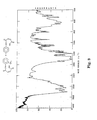
- Fig. 1 is the ¹H-NMR spectrum of 4,4-diamino-3-methyldiphenylether-bis-maleamic acid (DAMDPE-BMA);
- Fig. 2 is the ¹³C-NMR spectrum of DAMDPE-BMA;
- Fig. 3 is the IR spectrum of DAMDPE-BMA;
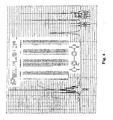
- Fig. 4 is the ¹H-NMR spectrum of DAMDPE-BMI;
- Fig. 5 is the ¹³C-NMR spectrum of DAMDPE-BMI;
- Fig. 6 is the IR spectrum of DAMDPE-BMI;
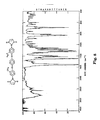
- Fig. 7 is the ¹H-NMR spectrum of 2,2'-dimethyl-4,4'-diaminotriphenylether-BMI (2,2'-DMDATPE-BMI);
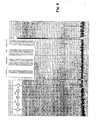
- Fig. 8 is the IR spectrum of 2,2'-DMDATPE-BMI;
- Fig. 9 is the ¹³C-NMR spectrum of 2,2'-DMDATPE-BMI;
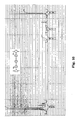
- Fig. 10 is the ¹H-NMR spectrum of 3,3'-dimethyl-4,4'-diaminotriphenylether-BMI (3,3'-DMDATPE-BMI);
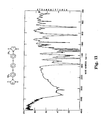
- Fig. 11 is the IR spectrum of 3,3'-DMDATPE-BMI;
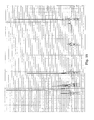
- Fig. 12 is the ¹³C-NMR of 3,3'-DMDATPE-BMI;
- Fig. 13 is the NMR spectrum in C₆D₆ of 2-isopropyl-4,4'-diaminodiphenylether-BMI (2-IPADPE-BMI);
- Fig. 14 is the NMR spectrum in DMSO of 2-IPADPE-BMI; and
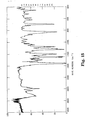
- Fig. 15 is the IR spectrum of 2-IPADPE-BMI.
- The invention will now be illustrated in detail, with reference to the following examples which are provided for the purpose of illustration and which are not intended to constitute a limitation of the invention.
- The starting material, 4,4'-dibromo-3-methyldiphenylether (DBMDPE) was prepared as follows.
- To a four-necked round-bottomed flask equipped with a stirrer, a condenser, a dropping funnel and a thermometer, containing a stirred solution of m-phenoxytoluene (m-PHT) (460 g, 2.5 moles) in one liter of dichloromethane, there were added 840 g ( 5.25 moles) of Br₂. The top of the condenser was equipped with a trap to absorb HBr released during the reaction. Br₂ was added at a temperature between -5° and 0°C and in complete darkness, during one hour and, after addition, the reaction mixture was stirred for an additional 1 hour at about 25°C. The progress of the reaction was determined by GC. Excess bromine and traces of HBr were neutralized with aqueous 10% NH₃ (150 ml). Two phases formed in the reaction, which were separated, and the organic layer was washed with water (200 ml). After distillation of the solvent in the organic phase, crude DBMDPE (820 g) was obtained, containing 97% of the desired isomer (determined by GC) which represents a yield of 93%.
- After crystallization from methanol, a product of 99% purity was obtained, containing 46.4% Br, and having a melting point of 44-46°C. The crystallization from ethanol gave identical results.
- The product so obtained (DBMDPE) was characterized by GC under the conditions described below, which showed a main peak (99.6%) at a retention time of 7.05 min. The structure of the compound was confirmed by Mass Spectra and NMR, as described in copending Israeli Patent Application No. 93684 of the same applicant herein, the specification of which is incorporated herein by reference.
- The starting
material 4,4'-diamino-3-methyldiphenylether was prepared as follows: Into a 1 liter 316 Stainless Steel autoclave, there were added DBMDPE (102.6g, 0.3 mole) and 25% aqueous NH₃ (500 ml, 6.5 moles) and CuSO₄·5H₂O (10 g, 0.04 mole). The autoclave was sealed and heated to 210°C under rapid stirring (1000 rpm). The progress of the reaction and its completion were followed by means of a graph of the internal pressure of the autoclave versus time and, at the end of the reaction, by analysis of the Br⁻. After four hours, the autoclave was cooled to room temperature, the pressure was released, and the autoclave was opened. The reaction mixture was filtered and washed with aqueous 25% NH₃ (200ml) and with water (500 ml). - DAMDPE (58.2 g) was obtained in a purity of 96 - 98% (determined by qualitative G.C.) and a yield of 88%. After recrystallization from ethyl acetate in the presence of active charcoal, a product of 99% purity was obtained with a m.p. of 153 - 155°C. The same result was obtained when recrystallizing from acetonitrile. The structure of DAMDPE was confirmed by Mass Spectra and NMR, as described in copending Israeli Patent Application No. 93685 of the same applicant herein, the specification of which is incorporated herein by reference.
- In the analyses of the intermediates and final product, the following equipment was employed:
- Oven:
Initial temperature 100°C, held 1 min., then raised to 250°C at 15°/min.
Injector: 250°C
Detector (transfer line): 300°C
Column: HP-1 (100% methyl polysiloxane), 5 m x 0.53 mm (megabore)
Injection amounts: 1 µl
Flow: 13 ml/min.
Retention Time:
DBMDPE = 7.05 min.
DAMDPE = 8.11 min. -

- Range: 400-4600 cm⁻¹
Scan: 10 (every 1.0 sec.)
Sample: 0.8 mg/80 mg KBr - To a stirred suspension of DAMDPE (21.4 g, 0.1 mole) in acetone (100 ml) under a nitrogen atmosphere, maleic anhydride (MA) (20.6g, 0.21 mole) was added at 20°C. The pale yellow solid of bis-maleamic acid, formed on the addition of maleic anhydride, was vigorously stirred for a further 30 mins. to complete the reaction. To the continuously stirred reaction mixture in acetone there were added acetic anhydride (30 ml) and fused sodium acetate (8.5 g), and the acetone was allowed to reflux. Refluxing and stirring were continued until the solution became clear (2 hours). The clear brownish yellow solution was poured over crushed ice. The yellow solid obtained on maceration was filtered and washed with water. It was then dried and crystallized from the minimum amount of acetonitrile to give the required DAMDPE-BMI (31.8 g, 85%) as yellow crystals.
- A solution of DAMDPE (21.4 g, 0.1 moles) in DMF (40 ml) was added dropwise to a solution of maleic anhydride (20.6g, 0.21 moles) in toluene (200ml) at 60°C. The suspension that was formed was stirred for 30 mins., under the same conditions, to complete the reaction. The reaction mixture was cooled to room temperature and filtered.
- After filtration, washing with petrol ether (50 ml) and drying, DAMDPE-BMA, a precursor for DAMDPE-BMI was obtained (38.9 g), in a yield of 95%.
- The structure of the product was determined by ¹H-NMR (Fig. 1), ¹³C-NMR (Fig. 2) and IR (Fig. 3)
- DAMDPE-BMA (38.9 g) was prepared as described in Example 2, filtered, washed with petrol ether and dried.
- The DAMDPE-BMA obtained above was reacted according to the procedure detailed in Example 1 of Japanese Patent Publication No. 159764/82, to yield 34.8 g of product, DAMDPE-BMI, representing a yield of 93%.
- The structure of the product, DAMDPE-BMI, obtained in Example 1 and in this example was determined by ¹H-NMR (Fig.4), ¹³C-NMR (Fig. 5), and IR (Fig. 6).
- When the production was effected in continuous mode, comparable results were obtained.
- Powdered 2,2'-dimethyl-4,4'-diaminotriphenylether (32.0 g, 0.1 mole) was added over a period of 50 minutes to a vigorously stirred solution of MA (21.5 g, 0.22 moles) in toluene (600 ml) and DMF (43 ml). The temperature during the operation rose from 30°C to 70°C. The resulting slurry of the bismaleamic acid was stirred for an additional 45 minutes at 70°C.
- The temperature was raised to reflux and p-toluenesulfonic acid monohydrate (12.4 g) was introduced. The water which formed was removed by azeotropic distillation in a Dean-Stark trap. The end of the reaction (about 9 hours) was determined by the recovery of 4.8 ml of water.
- The reaction mixture was cooled and the resulting slurry was filtered. The filter cake was washed with toluene (50 ml) and water (100 ml), and dried. 39.7 G of 2,2'-DMDATPE-BMI was obtained and it was identified by NMR and IR analyses (Figs. 7 and 8, respectively), and C¹³ spectrum (Fig. 9).
- Powdered 3,3'-dimethyl-4,4'-diaminotriphenylether (32.0 g, 0.1 mole) was added over a period of 50 minutes to a vigorously stirred solution of MA (21.5 g, 0.22 moles) in acetone (960 ml) and DMF (21 ml). The temperature during the operation rose from 30°C to reflux. The resulting slurry of the bismaleamic acid was stirred for an additional 60 minutes at reflux. The reaction mixture was cooled and the resulting precipitate was filtered, washed with acetone (200 ml) and dried. 51.6 G of bismaleamic acid, a yellow powder, was obtained.
- Bismaleamic acid was mixed with xylenes (960 ml) and DMA (22.4 ml). The temperature was raised to 100°C and p-toluenesulfonic acid, PTS, (3.5 g) was introduced. The temperature was raised to reflux and the water which formed was removed by azeotropic distillation in a Dean-Stark trap.
- The end of the reaction (about 1.5 hours) was determined by the recovery of 3.9 ml water and by complete dissolution of the reactants in the reaction medium. The reaction mixture was concentrated by distillation of solvents under reduced pressure and 100 ml of methanol was introduced for reslurry. The resulting precipitate was filtered, washed with MeOH (50 ml), and dried. 35.2 G of 3,3'-DMDATPE-BMI was obtained. The product was identified by NMR and IR analyses (Figs. 10 and 11, respectively) and by C¹³ spectrum (Fig. 12).
- A solution of 2-isopropyl-4,4'-diaminodiphenylether (24.2 g, 0.1 mole) in acetone (125 ml) was added over a 50 minute period to a vigorously stirred solution of MA (21.5 g, 0.22 mole) in acetone (200 ml) at 50°C. The reaction mixture was stirred for an additional 2 hours at 50°C.
- Triethylamine (100 ml), acetic anhydride (25 ml) and Ni(OAc)₂·4H₂O (0.08 g) were introduced and the mixture was stirred for an additional 2 hours. At the end of the reaction the mixture was poured into a vigorously stirred mixture of ice and water (about 1 liter). The resulting precipitate was filtered, washed with water and dried. 33.8 G of 2-IPDADPE-BMI was obtained. It was identified by NMR (2 spectra) and IR analyses. Fig. 13 is the NMR spectrum in C₆D₆, Fig. 14 is the NMR spectrum in DMSO, and Fig. 15 is the IR spectrum.
- Powdered 2,2'-dimethyl-4,4'-diaminotetraphenylether (41.2 g, 0.1 mole) was added over a period of 50 minutes to a vigorously stirred solution of MA (21.5 g, 0.22 moles) in xylenes (1000 ml) and DMA (25 ml). The temperature during the operation rose from 30°C to 70°C. The resulting slurry of the bismaleamic acid was stirred for an additional 60 minutes at 70°C.
- The temperature was raised to 100°C and PTS (6.5 g) was introduced. The temperature was raised to reflux and the water which formed was removed by azeotropic distillation in a Dean-Stark trap.
- The end of the reaction (about 2.5 hours) was determined by the recovery of 3.9 ml water. The reaction mixture was concentrated by distillation of solvents under reduced pressure and 150 ml of methanol was introduced for reslurry. The resulting precipitate was filtered, washed with MeOH (50 ml), and dried. 41.8 G of 2,2'-DMDATTPE-BMI was obtained. Its elemental analysis showed 71.2% C, 4.8% N and 4.3% H; calc'd: 71.3%, 4.9% and 4.2%, respectively.
- Powdered bis [4-amino-2-methylphenoxy] biphenyl (39.6 g, 0.1 mole) was added over a period of 50 minutes to a vigorously stirred solution of MA (21.5 g, 0.22 moles) in xylenes (1000 ml) and DMA (25 ml). The temperature during the operation rose from 30°C to 70°C. The resulting slurry of the bismaleamic acid was stirred for an additional 60 minutes at 70°C.
- The temperature was raised to 100°C and PTS (6.5 g) was introduced. The temperature was raised to reflux and the water which formed was removed by azeotropic distillation in a Dean-Stark trap.
- The end of the reaction (about 3.5 hours) was determined by the recovery of 3.9 ml water. The reaction mixture was concentrated by distillation of solvents under reduced pressure and 150 ml of methanol was introduced for reslurry. The resulting precipitate was filtered, washed with MeOH (50 ml), and dried. 45.6 G of bis [4-amino-2-methyl-phenoxy] biphenyl-BMI was obtained. Its elemental analysis showed 73.2% C, 5.1% N and 4.3% H; calc'd: 73.4%, 5.0% and 4.3%, respectively.
- A solution of bis [4-amino-2-methylphenoxy] diphenylsulfone (46.0 g, 0.1 mole) in acetone (240 ml) was added over a 50 minute period to a vigorously stirred solution of MA (21.5 g, 0.22 mole) in acetone (350 ml) at 50°C. The reaction mixture was stirred for an additional 2 hours at 50°C.
- Triethylamine (190 ml), acetic anhydride (25 ml), and Ni(OAc)₂·4H₂O (0.08 g) were introduced and the mixture was stirred for an additional 2 hours. At the end of the reaction the mixture was poured into a vigorously stirred mixture of ice and water (about 2 liters). The resulting precipitate was filtered, washed with water and dried. 56.4 G of bis [4-amino-2-methylphenoxy] diphenylsulfone-BMI was obtained. The formation of the malemide groups was indicated by NMR (disappearance of ab signal of double bond of maleamic acid) and IR (characteristic absorbence of maleimide carbonyls 1710 cm⁻¹) analyses. Its elemental analysis showed 66.0% C, 4,4% N, 3.6% H and 5.2% S; calc'd: 65.8%, 4.5%, 3.8% and 5.2%, respectively.
- The BMI derivatives of bis [4-amino-2-methylphenoxy] - 2,2-diphenylpropane, bis [4-amino-2-methylphenoxy] diphenylmethane and bis [4-amino-2-methylphenoxy] benzophenone were prepared following the thermal cyclization procedure of examples 7 and 8. The formation of the maleimide groups was indicated by NMR (disappearance of ab signal of double bond of maleamic acid) and IR (characteristic absorbence of maleimide carbonyls 1710 cm ⁻¹) analyses.
Claims (18)
- A compound of the formula

n = 0 or 1;
R₁ and R₂ are C₁ to C₃ alkyl groups, or R₂ may be H when n = 0; and
Y is selected from the group:

m = 1 - 6;
Z = SO₂, S, C = O, CH₂ or C(CH₃)₂;
with the proviso that R₁ and R₂ cannot both be isopropyl when n = 0. - 4,4'-Diamino-3-methyldiphenylether-bis-maleimide.
- 2,2'-Dimethyl-4,4'-diaminotriphenylether-bis-maleimide.
- 3,3'-Dimethyl-4,4'-diaminotriphenylether-bis-maleimide.
- 2-Isopropyl-4,4'-diaminodiphenylether-bis-maleimide.
- 2,2'-Dimethyl-4,4'-diaminotetraphenylether-bis-maleimide.
- Bis [4-amino-2-methylphenoxy] biphenyl-bis-maleimide.
- Bis [4-amino-2-methylphenoxy] diphenylsulfone-bis-maleimide.
- Bis [4-amino-2-methylphenoxy] benzophenone-bis-maleimide.
- Bis [4-amino-2-methylphenoxy] 2,2-diphenylpropane-bis-maleimide.
- Bis [4-amino-2-methylphenoxy] diphenylmethane-bis-maleimide.
- A process for the preparation of a compound of formula I, as claimed in claim 1, comprising dehydrocyclizing a compound of the formula

- A process according to claim 12, wherein dehydrocyclization is effected by chemical dehydrocyclization.
- A process according to claim 12, wherein dehydrocyclization is effected by thermal dehydrocyclization.
- A process according to claim 14, wherein dehydrocyclization is performed in a batch mode.
- A process according to claim 14, wherein dehydrocyclization is performed in continuous mode.
- A compound of formula III, as claimed in claim 12.
- The compound 4,4'-diamino-3-methyl-diphenylether-bis-maleamic acid of formula:

Applications Claiming Priority (4)
| Application Number | Priority Date | Filing Date | Title |
|---|---|---|---|
| IL93686A IL93686A0 (en) | 1990-03-08 | 1990-03-08 | 4,4'-diamino-3-methyl-diphenylether-bis-maleimide |
| IL93686 | 1990-03-08 | ||
| IL97302 | 1991-02-20 | ||
| IL97302A IL97302A0 (en) | 1991-02-20 | 1991-02-20 | Phenoxy bis-maleimides |
Publications (2)
| Publication Number | Publication Date |
|---|---|
| EP0446718A2 true EP0446718A2 (en) | 1991-09-18 |
| EP0446718A3 EP0446718A3 (en) | 1992-08-19 |
Family
ID=26322064
Family Applications (1)
| Application Number | Title | Priority Date | Filing Date |
|---|---|---|---|
| EP19910103074 Withdrawn EP0446718A3 (en) | 1990-03-08 | 1991-03-01 | Phenoxy bis-maleimides and process for their preparation |
Country Status (2)
| Country | Link |
|---|---|
| EP (1) | EP0446718A3 (en) |
| JP (1) | JPH04235147A (en) |
Cited By (3)
| Publication number | Priority date | Publication date | Assignee | Title |
|---|---|---|---|---|
| FR2677018A1 (en) * | 1991-05-31 | 1992-12-04 | Occidental Chem Co | N, N-BIS-IMIDES FLUORES. |
| EP0546550A1 (en) * | 1991-12-10 | 1993-06-16 | Hitachi, Ltd. | Polymerizable compound, process for producing same and setting composition containing polymerizable compound |
| WO2007096897A1 (en) * | 2006-02-21 | 2007-08-30 | Council Of Scientific & Industrial Research | Novel dicarbanionic initiator, a process for the preparation and use thereof |
Family Cites Families (2)
| Publication number | Priority date | Publication date | Assignee | Title |
|---|---|---|---|---|
| WO1987003871A1 (en) * | 1985-12-26 | 1987-07-02 | Mitsui Toatsu Chemicals, Incorporated | Aromatic bismaleimido compounds and process for their preparation |
| EP0272240A3 (en) * | 1986-12-18 | 1990-04-04 | Monsanto Company | Maleimide resins |
-
1991
- 1991-03-01 EP EP19910103074 patent/EP0446718A3/en not_active Withdrawn
- 1991-03-08 JP JP12569791A patent/JPH04235147A/en active Pending
Cited By (5)
| Publication number | Priority date | Publication date | Assignee | Title |
|---|---|---|---|---|
| FR2677018A1 (en) * | 1991-05-31 | 1992-12-04 | Occidental Chem Co | N, N-BIS-IMIDES FLUORES. |
| EP0546550A1 (en) * | 1991-12-10 | 1993-06-16 | Hitachi, Ltd. | Polymerizable compound, process for producing same and setting composition containing polymerizable compound |
| US5410069A (en) * | 1991-12-10 | 1995-04-25 | Hitachi, Ltd. | Polymerizable compound, process for producing same and setting composition containing polymerizable compound |
| WO2007096897A1 (en) * | 2006-02-21 | 2007-08-30 | Council Of Scientific & Industrial Research | Novel dicarbanionic initiator, a process for the preparation and use thereof |
| CN101410403B (en) * | 2006-02-21 | 2011-07-20 | 科学与工业研究委员会 | Novel dicarbanionic initiator, a process for the preparation and use thereof |
Also Published As
| Publication number | Publication date |
|---|---|
| EP0446718A3 (en) | 1992-08-19 |
| JPH04235147A (en) | 1992-08-24 |
Similar Documents
| Publication | Publication Date | Title |
|---|---|---|
| JP2845957B2 (en) | Novel diphenols having imide ring and process for producing the same | |
| CA1060896A (en) | Aromatic dithio dianhydrides | |
| EP0253891B1 (en) | Aromatic bismaleimido compounds and process for their preparation | |
| US6066743A (en) | Solventless preparation of phthalimides | |
| EP0446718A2 (en) | Phenoxy bis-maleimides and process for their preparation | |
| EP0342989B1 (en) | Polymaleimide compounds and process for the preparation thereof | |
| GB2135303A (en) | 3,5-dinitrophthalimides | |
| JP2628374B2 (en) | Bismaleimide compound and method for producing the same | |
| JP5424456B2 (en) | IMIDE COMPOUND AND PROCESS FOR PRODUCING THE SAME | |
| US5994561A (en) | Process for the preparation of aromatic maleimides | |
| JPH02289563A (en) | Improved process for producing ortho-carboxypyridyl- and ortho-carboxyquinolylimidazolinones | |
| JP3009245B2 (en) | N-substituted maleimide and method for producing the same | |
| US3932457A (en) | Pyrolysis of N-substituted-1-cyclohexene-1,2-dicarboximides | |
| US4263209A (en) | Aromatic dianhydrides | |
| EP0479161A1 (en) | Synthesis of heterocyclic compounds | |
| JP3085610B2 (en) | Method for producing bismaleimides | |
| US4193924A (en) | Pyrolysis of N-substituted-1-cyclohexene-1,2-dicarboximides | |
| JPS6335561A (en) | Novel bismaleimide compound and production thereof | |
| JPS62252763A (en) | Production of alkyl-substituted bismaleimide | |
| US4233218A (en) | Pyrolysis of N-substituted-1-cyclohexene-1,2-dicarboximides | |
| JPS6341456A (en) | Novel bismaleimide compound and production thereof | |
| JPH0649025A (en) | Unsaturated imide compound containing naphthalene ring | |
| US4225505A (en) | Pyrolysis of N-substituted-1-cyclohexene-1,2-dicarboximides and hydrolysis of product to pyromellitic anhydride | |
| JPH0446155A (en) | 4-(hydroxyphenoxy)phenylmaleimide and production thereof | |
| KR880001850B1 (en) | Method for preparing 5-fluoro pyridone derivative |
Legal Events
| Date | Code | Title | Description |
|---|---|---|---|
| PUAI | Public reference made under article 153(3) epc to a published international application that has entered the european phase |
Free format text: ORIGINAL CODE: 0009012 |
|
| AK | Designated contracting states |
Kind code of ref document: A2 Designated state(s): BE CH DE ES FR GB IT LI NL |
|
| PUAL | Search report despatched |
Free format text: ORIGINAL CODE: 0009013 |
|
| AK | Designated contracting states |
Kind code of ref document: A3 Designated state(s): BE CH DE ES FR GB IT LI NL |
|
| 17P | Request for examination filed |
Effective date: 19921215 |
|
| 17Q | First examination report despatched |
Effective date: 19930311 |
|
| STAA | Information on the status of an ep patent application or granted ep patent |
Free format text: STATUS: THE APPLICATION IS DEEMED TO BE WITHDRAWN |
|
| 18D | Application deemed to be withdrawn |
Effective date: 19930922 |