EP0444944A2 - Synthese und Bestimmung von Azamitosen und Iminoazamitosen - Google Patents
Synthese und Bestimmung von Azamitosen und Iminoazamitosen Download PDFInfo
- Publication number
- EP0444944A2 EP0444944A2 EP91301682A EP91301682A EP0444944A2 EP 0444944 A2 EP0444944 A2 EP 0444944A2 EP 91301682 A EP91301682 A EP 91301682A EP 91301682 A EP91301682 A EP 91301682A EP 0444944 A2 EP0444944 A2 EP 0444944A2
- Authority
- EP
- European Patent Office
- Prior art keywords
- methyl
- chloroform
- methylene
- proton
- syn
- Prior art date
- Legal status (The legal status is an assumption and is not a legal conclusion. Google has not performed a legal analysis and makes no representation as to the accuracy of the status listed.)
- Granted
Links
- 0 CC1C(C)N*OC(CON*C**CO)*1 Chemical compound CC1C(C)N*OC(CON*C**CO)*1 0.000 description 3
- QDMZUIHZGHQVPY-UHFFFAOYSA-N CC(NC(C(c1c2[n](CCC3)c3n1)=N)=C(C)C2=O)=O Chemical compound CC(NC(C(c1c2[n](CCC3)c3n1)=N)=C(C)C2=O)=O QDMZUIHZGHQVPY-UHFFFAOYSA-N 0.000 description 2
Images
Classifications
-
- C—CHEMISTRY; METALLURGY
- C07—ORGANIC CHEMISTRY
- C07D—HETEROCYCLIC COMPOUNDS
- C07D487/00—Heterocyclic compounds containing nitrogen atoms as the only ring hetero atoms in the condensed system, not provided for by groups C07D451/00 - C07D477/00
- C07D487/02—Heterocyclic compounds containing nitrogen atoms as the only ring hetero atoms in the condensed system, not provided for by groups C07D451/00 - C07D477/00 in which the condensed system contains two hetero rings
- C07D487/04—Ortho-condensed systems
Definitions
- the present invention relates to the synthesis and elucidation of new compounds and more particularly to the synthesis and elucidation of azamitosenes and iminoazamitosenes.
- Mitomycins and the corresponding mitosene analogues are well-known examples of reductive alkylating quinones.
- the reductive alkylation process involves the formation of an alkylating quinone methide species upon reduction of the quinone and elimination of a leaving group. Since tumor cells possess a low reduction potential environment, there is a great deal of interest in reductive alkylating quinones as selective antitumor agents.
- mitomycin and mitosene derivatives have been prepared in an effort to optimize antitumor activity. All of these derivatives possess the indole ring nucleus, but with a variety of substituents.
- the present invention relates to the synthesis of those azamitosenes and the iminoazomitosenes shown below.
- the azamitosenes possess alkylating centers at the 3- and 6- positions which permits DNA crosslinking activity.
- the iminoazamitosenes are hydrolytically stable below pH 6 and studies shown that the conversion of quinone to iminoquinone is accompanied by an increase in reduction potential as well as a decrease in the oxygen reactivity of the reduced (aminophenol) form.
- the azamitosenes have the structural formula: wherein :
- the iminoazamitosenes hereof have the structural formula: wherein :
- the present invention relates to the synthesis and elucidation of the azamitosenes and iminoazamitosenes shown above and the details thereof shall now be described.
- the iminium proton at ⁇ 9.19 shows NOE interactions with both the acetamido and 7 methyls while the ⁇ 6.24 iminium proton does not.
- both nitrogen-substituted protons of anti 2a show NOE interaction with these methyls.
- the IR spectra (KBr pellet) of syn and anti 2a also supports intramolecular proton transfer in the former compound.
- the quinone carbonyl stretching frequency of anti 2a (1683 cm ⁇ 1) is greater than that of syn 2a (1652 cm ⁇ 1) due to the decrease in carbonyl bond order in the zwitterion.
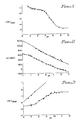
- the pH profile of Figure 1 indicates quinone formation occurs from the monoprotonated and diprotonated forms of 2a.
- the plateau (slope -1 to 0) in the acid region corresponds to the acid dissociation 2aH + ⁇ ⁇ 2a + H+ (pK a ⁇ 2.5) and rate-determining hydrolysis of the protonated species.
- the rates of hydrolysis again increase with a slope of -1 on the profile, which is attributed to the acid dissociation 2aH 2+ ⁇ ⁇ 2aH + + H+ (pK a ⁇ 0) and rate-determining hydrolysis of the diprotonated species.
- the first term of equation 1 pertains to the hydrolysis of 2aH 2+ under the conditions a H ⁇ K a5
- the second term pertains to hydrolysis of 2aH +
- third term pertains to the syn / anti equilibration.
- the hydrolysis of 2a is also subject to general acid catalysis over the range pH 3.5 to 6; k ga for acetic acid was found to be 3 x 10 ⁇ 3 M ⁇ 1s ⁇ 1. Since 2a is largely protonated at the low end of this pH range, general acid catalysis must not pertain to rate-determining protonation of the imine nitrogen.
- An alternative mechanism is general-base catalyzed addition of water to the protonated imine as shown below, structure 17.
- This mechanism is a specific acid/general base catalyzed process, which is kinetically indistinguishable from general acid catalysis.
- Factors which are believed to influence the hydrolytic stability of 2a below pH 6 include its electron-deficient character as well as stabilization of the protonated imine by internal hydrogen bonding.
- the former results in a low pK a for acid dissociation of the protonated imine ( ⁇ 2.5) and, consequently, the presence of very little protonated species at neutrality.
- Internal hydrogen bonding interactions in the structure shown below diminishes the positive charge on the imine nitrogen and slows water addition.
- Equation 3 The Principle of Microreversibility requires general-base catalysis in one direction and general-acid catalysis in the opposite direction during the syn / anti equilibration process shown in Equation 2.
- the rate law for the equilibration process is thus shown in Equation 3.
- k syn/anti k1 + k ⁇ 1 + k gb [B] + k ga [BH] Equation 3
- k1 and k ⁇ 1 are water-catalyzed (lyate) rates and k gb and k ga are general base and general acid catalyzed rates, respectively.
- equilibration actually involves both general acid and base catalysis.
- the third thermodynamic cycle was obtained by cyclic voltammetry; identical E values for both isomers indicate equilibration is a thermoneutral process, Equation 4.
- thermoneutral syn / anti isomerization in aqueous buffer requires that the imino proton of anti 2a hydrogen bond to the nitrogen of the enolized acetamido group.
- syn 2a would likely be more stable than anti 2a in aqueous solution due to the presence of one or more internal hydrogen bonds in the former isomer (see syn 2a in Scheme 4).
- the 1H NMR and NOE studies of anti 2a in dimethyl sulfoxide-d6 indicate enolization of the 6-acetamido group does not occur and syn 2a is more stable than anti 2a in this solvent (K for syn / anti equilibration in this solvent is 15).
- the working electrode was a graphite mull
- the auxillary electrode was platinum
- the reference couple was Ag/AgCl.
- the voltammograms are quasireversible in character and also show a high degree of symmetry ( ⁇ ⁇ 0.5).
- Voltammograms of the couple 1a/20 were obtained by scanning solutions of 1a in the cathodic and then anodic directions (300 mV s ⁇ 1).
- the quinone 1a is hydrolytically stable throughout the entire pH range studied and aqueous solutions could be prepared and degassed without appreciable decomposition.
- the iminoquinone 2a is hydrolytically stable at pH values ⁇ 7 and voltammograms were also obtained by cathodic-anodic scanning of solutions of the oxidized species.
- pH 6a Much below pH 6, 2a is rapidly hydrolyzed to the quinone and it was necessary to do anodic-cathodic scans on solutions of the acid-stable reduced species 19.
- Fast scans (> 1000 mV s ⁇ 1) of acid solutions of 19 provided quasireversible voltammograms of 2a/19, even though 2a rapidly hydrolyses in these solutions.
- FIG. 2 shows E m vs. pH data for both couples along with solid lines computer generated from the Nernst equation. Fitting the E m vs. pH data in Figure 2 to the Nernst equation requires two more acid dissociations in the reduced species than the oxidized species.
- the pK a values of 1a/20 and of 2a/19 used in the Nernst fits are tabulated in Table 1. The pK a values, with error limits, were determined spectrophotometrically. Other pK a values, which fall outside the pH range studied, are approximated.
- iminoquinones should possess lower reduction potentials than quinones. This assessment is based on the lower electronegativity of nitrogen compared to oxygen. In fact, iminoanthraquinones possess lower reduction potentials for single electron transfer in aprotic solvent than the quinone analogues (See: Amatore et al, op. cit.).
- Equation 5 The rate law for the mechanism in Scheme 5 is found in Equation 5.
- k obsd k1 + k2 K a a H + K a Equation 5
- K 1 and k2 are apparent first-order rate constants containing a term for the partial pressure of oxygen
- K a is the acid dissociation constant of 19H +
- a H is the proton activity determined with a pH electrode.
- the solid curve of Plot B in FIG. 3 was computer generated with equation 5 using the values of the constants shown in Scheme 5.
- the kinetically-determined value of K a is nearly the same as the value determined spectrophotometrically (9.44, entry 11 of Table I).
- the greater oxygen reactivity of 19, compared to 19H + is consistent with the decreasing E m values (i.e., decreasing stability of the reduced species) observed in the Nernst Fit (Plot B, Figure 2) at pH values > 6.
- the oxidation rates of 20 increase with pH (slope of +1, Plot A of Figure 3) and become too fast to measure above pH 7.5.
- the positive slope of Plot A may pertain to equilibrium formation of 20 ⁇ ( 20 ⁇ ⁇ 20 ⁇ + H+) and rate-determining oxidation of this species. If this is the case, 20 ⁇ is oxidized to 1a at 1566 s ⁇ 1 in aerobic buffer.
- Acetylation of the alcohol obtained above was carried out by stirring a mixture consisting of 376 mg (2 mmol) of the alcohol, 224 mg (2.07 mmol) of acetic anhydride, 122 mg (1 mmol) of (dimethylamino) pyridine, 220 mg (2.2 mmol) of triethylamine, and 20 mL of methylene chloride for 30 min at room temperature. The reaction mixture was then washed with water (3 x 25 mL) and dried over sodium sulfate.
- Deacetylation was carried out by suspending 200 mg (0.56 mmol) of 6 in 25 mL of methanol and then adding 31 mg of sodium methoxide. The reaction was stirred for 30 min at room temperature and the crystallized alcohol derivative filtered off; 142 mg (81%) yield.
- the phenyl carbonate derivative of the alcohol was prepared as described below. To a solution of the alcohol (400 mg, 1.27 mmol) in 20 mL of pyridine, chilled to 0°C, was added 400 ⁇ l of phenyl chloroformate. The reaction was stirred at 0°C for 15 min and then at room temperature for 1 hour. The completed reaction was diluted with 150 mL of ethyl acetate and the resulting mixture extracted 3 x with 50 mL of 20% acetic acid and then 2 x with 50 mL of water. Drying of the extracts (sodium sulfate) and concentration afforded the carbonate as a light yellow solid; yield 450 mg (81%).
- the preparation of the carbamate 8 was carried out by treatment of the carbonate derivtive with ammonia. To 30 mL of anhydrous ammonia at -76°C was added a solution of the carbonate, 211 mg (0.48 mmol), in 30 mL of dry dichloromethane. The solution was stirred at -76°C for 30 min and the reaction then allowed to come to room temperature over a 3 hour period.
- 6-N-Aziridinyl-7-methyl-2,3-dihydro-1 H -pyrrolo [1,2- a ]benzimidazole-5,8-dione-3-Carbamate (1d).
- a solution of 26 mg (0.1 mmol) of 9d in 7 mL of methanol was combined with 0.25 mL of ethyleneimine and the mixture stirred at room temperature for 1.5 hours.
- the solvent was evaporated in vacuo and the red residue flash chromatographed on silica gel using acetone as eluant.
- the chloroform layer was separated and the aqueous layer extracted 2 x with 50 mL portions of chloroform. Drying the combined extracts (sodium sulfate), concentration to a residue, and trituration with ethyl acetate afforded crystalline 15b: 310 mg (67%) yield.
- azamitosenes and iminoazamitosenes of the present invention can be prepared by alternate procedures as will be discerned from the following description when read in conjunction with Schemes 6-8, as shown.
- 6-Acetamido-7-methyl-5-nitro-2,3-dihydro-1 H -pyrrolo[1,2- a ]benzimidazole-3-Carbamate (31).
- Pyrrolo[1,2- a ]benzimidazole (azamitosene) reductive alkylating agents synthesized as described above provide analogues 1c,d which are found to be potent antitumor agents in cloned human ovarian and colon cancer cell lines, as well as in fresh human ovarian and colon tumors.
- iminoquinone derivatives (iminoazamitosenes) 2a,b is also described.
- Internal hydrogen bonding involving the 6-acetamido and the 4-nitrogen of the pyrrolo[1,2- a ]benzimidazole ring serve to stabilize the imine group so that hydrolysis below pH 6 is extremely slow (see FIG. 1).
- Internal hydrogen bonding also influences the thermodynamics of buffer-catalyzed imine syn / anti isomerization.
- the foregoing synthetic and physical studies confirm that a variety of hydrolytically-stable iminoquinone reductive alkylating agents can be prepared. These iminoquinones will hydrolyse only under acidic conditions and hydrolytic stability is expected in a variety of cellular environments.
- Iminoquinone 2a possesses much higher reduction potentials than its quinone analogue 1a .
- the reduced form of 2a (19) thus reoxidizes two orders of magnitude slower than the reduced form of 1a (20) in aerobic buffer at physiological pH.
- iminodaunomycin has low oxygen toxicity as a result of reductive deamination to afford a high reduction potential species unable to generate oxygen radicals efficiently.
Landscapes
- Chemical & Material Sciences (AREA)
- Organic Chemistry (AREA)
- Pharmaceuticals Containing Other Organic And Inorganic Compounds (AREA)
- Saccharide Compounds (AREA)
- Nitrogen Condensed Heterocyclic Rings (AREA)
- Low-Molecular Organic Synthesis Reactions Using Catalysts (AREA)
- Nitrogen And Oxygen Or Sulfur-Condensed Heterocyclic Ring Systems (AREA)
Applications Claiming Priority (2)
| Application Number | Priority Date | Filing Date | Title |
|---|---|---|---|
| US486977 | 1990-02-28 | ||
| US07/486,977 US5015742A (en) | 1990-02-28 | 1990-02-28 | Synthesis and elucidation of azamitosene and iminoazamitosene |
Publications (3)
| Publication Number | Publication Date |
|---|---|
| EP0444944A2 true EP0444944A2 (de) | 1991-09-04 |
| EP0444944A3 EP0444944A3 (en) | 1992-01-29 |
| EP0444944B1 EP0444944B1 (de) | 1997-09-24 |
Family
ID=23933892
Family Applications (1)
| Application Number | Title | Priority Date | Filing Date |
|---|---|---|---|
| EP91301682A Expired - Lifetime EP0444944B1 (de) | 1990-02-28 | 1991-02-28 | Synthese und Bestimmung von Azamitosen und Iminoazamitosen |
Country Status (6)
| Country | Link |
|---|---|
| US (1) | US5015742A (de) |
| EP (1) | EP0444944B1 (de) |
| AT (1) | ATE158584T1 (de) |
| CA (1) | CA2037211C (de) |
| DE (1) | DE69127714T2 (de) |
| ES (1) | ES2108030T3 (de) |
Families Citing this family (3)
| Publication number | Priority date | Publication date | Assignee | Title |
|---|---|---|---|---|
| US5246955A (en) * | 1990-03-30 | 1993-09-21 | Research Corporation Technologies, Inc. | Antineoplastic compounds and methods of using same |
| EP0449649A3 (en) * | 1990-03-30 | 1992-09-02 | Arizona Board Of Regents, Arizona State University | Antineoplastic quinones and methods of using same |
| US20060099712A1 (en) * | 2004-11-08 | 2006-05-11 | Eastman Kodak Company | Correlation of anti-cancer activity of dyes with redox potentials |
Family Cites Families (1)
| Publication number | Priority date | Publication date | Assignee | Title |
|---|---|---|---|---|
| EP0449649A3 (en) * | 1990-03-30 | 1992-09-02 | Arizona Board Of Regents, Arizona State University | Antineoplastic quinones and methods of using same |
-
1990
- 1990-02-28 US US07/486,977 patent/US5015742A/en not_active Expired - Lifetime
-
1991
- 1991-02-27 CA CA002037211A patent/CA2037211C/en not_active Expired - Fee Related
- 1991-02-28 AT AT91301682T patent/ATE158584T1/de not_active IP Right Cessation
- 1991-02-28 ES ES91301682T patent/ES2108030T3/es not_active Expired - Lifetime
- 1991-02-28 DE DE69127714T patent/DE69127714T2/de not_active Expired - Fee Related
- 1991-02-28 EP EP91301682A patent/EP0444944B1/de not_active Expired - Lifetime
Also Published As
| Publication number | Publication date |
|---|---|
| EP0444944A3 (en) | 1992-01-29 |
| US5015742A (en) | 1991-05-14 |
| ATE158584T1 (de) | 1997-10-15 |
| ES2108030T3 (es) | 1997-12-16 |
| EP0444944B1 (de) | 1997-09-24 |
| CA2037211C (en) | 1999-09-21 |
| DE69127714D1 (de) | 1997-10-30 |
| DE69127714T2 (de) | 1998-03-12 |
| CA2037211A1 (en) | 1991-08-29 |
Similar Documents
| Publication | Publication Date | Title |
|---|---|---|
| Islam et al. | Structure-activity studies of antitumor agents based on pyrrolo [1, 2-a] benzimidazoles: new reductive alkylating DNA cleaving agents | |
| Suggs et al. | Synthesis and structure of anthramycin analogs via hydride reduction of dilactams | |
| Schulz et al. | Pyrrolo [1, 2-a] benzimidazole-based quinones and iminoquinones. The role of the 3-substituent on cytotoxicity | |
| Islam et al. | Synthesis and physical studies of azamitosene and iminoazamitosene reductive alkylating agents. Iminoquinone hydrolytic stability, syn/anti isomerization, and electrochemistry | |
| Cotterill et al. | Cyclopropamitosenes, novel bioreductive anticancer agents. Synthesis, electrochemistry, and biological activity of 7-substituted cyclopropamitosenes and related indolequinones | |
| Boruah et al. | A comparison of the cytotoxic and physical properties of aziridinyl quinone derivatives based on the pyrrolo [1, 2-a] benzimidazole and pyrrolo [1, 2-a] indole ring systems | |
| Xia et al. | Copper-catalyzed domino intramolecular cyclization: a facile and efficient approach to polycyclic indole derivatives | |
| Boček et al. | Novel imidazo [4, 5-b] pyridine derived acrylonitriles: A combined experimental and computational study of their antioxidative potential | |
| US5639881A (en) | Synthesis and elucidation of pyrimido (4,5-Q) quinazoline derivatives | |
| Canard et al. | 1, 3‐Alternate Tetraamido‐Azacalix [4] arenes as Selective Anion Receptors | |
| Klásek et al. | Unprecedented reactivity of 3-amino-1H, 3H-quinoline-2, 4-diones with urea: an efficient synthesis of 2, 6-dihydro-imidazo [1, 5-c] quinazoline-3, 5-diones | |
| Santagostini et al. | Functional mimics of copper enzymes. Synthesis and stereochemical properties of the copper (II) complexes of a trinucleating ligand derived from L-Histidine | |
| EP0444944B1 (de) | Synthese und Bestimmung von Azamitosen und Iminoazamitosen | |
| AU660853B2 (en) | New ellipticine compounds, a process for their preparation and pharmaceutical compositions containing them | |
| Sarma et al. | Synthesis of novel aminoquinonoid analogues of diospyrin and evaluation of their inhibitory activity against murine and human cancer cells | |
| Ozeryanskii et al. | ‘Proton sponge’amides: unusual chemistry and conversion into superbasic 6, 7-bis (dimethylamino) perimidines | |
| US20200031828A1 (en) | Azaphenalene-3-one derivative, preparation method therefor, and application therof | |
| TANIGUCHI et al. | Cyclic tautomers of tryptophans and tryptamines. VI. Preparation of Na-alkyl-, 5-chloro-, and 5-nitrotryptophan derivatives | |
| Albini et al. | Inter-and intramolecular reactions of nitrenes and their cyclic isomers in the photodecomposition of some substituted 2-azidophenazines | |
| Senda et al. | Pyrimidine derivatives and related compounds. 31. A new photochemical transformation of 6-azido-1, 3-dimethyluracil to 6-alkylamino-5-amino-1, 3-dimethyluracils and its application to one-step synthesis of lumazines and fervenulins | |
| Carland et al. | Substituted 9-aminoacridine-4-carboxamides tethered to platinum (II) diamine complexes: Chemistry, cytotoxicity and DNA sequence selectivity | |
| Hernández-Luis et al. | Synthesis and hydrolytic stability studies of albendazole carrier prodrugs | |
| Lemus et al. | Design of pyrimido [4, 5-g] quinazoline-based anthraquinone mimics. Structure-activity relationship for quinone methide formation and the influence of internal hydrogen bonds on quinone methide fate | |
| JPH05112570A (ja) | アザミトセン系化合物 | |
| Starčević et al. | Synthesis and cytostatic evaluation of pyridopyrimidobenzimidazole derivatives |
Legal Events
| Date | Code | Title | Description |
|---|---|---|---|
| PUAI | Public reference made under article 153(3) epc to a published international application that has entered the european phase |
Free format text: ORIGINAL CODE: 0009012 |
|
| AK | Designated contracting states |
Kind code of ref document: A2 Designated state(s): AT BE CH DE DK ES FR GB GR IT LI LU NL SE |
|
| PUAL | Search report despatched |
Free format text: ORIGINAL CODE: 0009013 |
|
| AK | Designated contracting states |
Kind code of ref document: A3 Designated state(s): AT BE CH DE DK ES FR GB GR IT LI LU NL SE |
|
| 17P | Request for examination filed |
Effective date: 19920717 |
|
| RAP1 | Party data changed (applicant data changed or rights of an application transferred) |
Owner name: RESEARCH CORPORATION TECHNOLOGIES, INC. |
|
| 17Q | First examination report despatched |
Effective date: 19950727 |
|
| GRAG | Despatch of communication of intention to grant |
Free format text: ORIGINAL CODE: EPIDOS AGRA |
|
| GRAG | Despatch of communication of intention to grant |
Free format text: ORIGINAL CODE: EPIDOS AGRA |
|
| GRAH | Despatch of communication of intention to grant a patent |
Free format text: ORIGINAL CODE: EPIDOS IGRA |
|
| GRAH | Despatch of communication of intention to grant a patent |
Free format text: ORIGINAL CODE: EPIDOS IGRA |
|
| GRAA | (expected) grant |
Free format text: ORIGINAL CODE: 0009210 |
|
| AK | Designated contracting states |
Kind code of ref document: B1 Designated state(s): AT BE CH DE DK ES FR GB GR IT LI LU NL SE |
|
| PG25 | Lapsed in a contracting state [announced via postgrant information from national office to epo] |
Ref country code: GR Free format text: LAPSE BECAUSE OF FAILURE TO SUBMIT A TRANSLATION OF THE DESCRIPTION OR TO PAY THE FEE WITHIN THE PRESCRIBED TIME-LIMIT Effective date: 19970924 Ref country code: DK Free format text: LAPSE BECAUSE OF NON-PAYMENT OF DUE FEES Effective date: 19970924 |
|
| REF | Corresponds to: |
Ref document number: 158584 Country of ref document: AT Date of ref document: 19971015 Kind code of ref document: T |
|
| REG | Reference to a national code |
Ref country code: CH Ref legal event code: EP |
|
| RAP2 | Party data changed (patent owner data changed or rights of a patent transferred) |
Owner name: RESEARCH CORPORATION TECHNOLOGIES, INC |
|
| REF | Corresponds to: |
Ref document number: 69127714 Country of ref document: DE Date of ref document: 19971030 |
|
| REG | Reference to a national code |
Ref country code: CH Ref legal event code: NV Representative=s name: R. A. EGLI & CO. PATENTANWAELTE |
|
| NLT2 | Nl: modifications (of names), taken from the european patent patent bulletin |
Owner name: RESEARCH CORPORATION TECHNOLOGIES, INC |
|
| ITF | It: translation for a ep patent filed | ||
| REG | Reference to a national code |
Ref country code: ES Ref legal event code: FG2A Ref document number: 2108030 Country of ref document: ES Kind code of ref document: T3 |
|
| PG25 | Lapsed in a contracting state [announced via postgrant information from national office to epo] |
Ref country code: SE Effective date: 19971224 |
|
| ET | Fr: translation filed | ||
| PG25 | Lapsed in a contracting state [announced via postgrant information from national office to epo] |
Ref country code: LU Free format text: LAPSE BECAUSE OF NON-PAYMENT OF DUE FEES Effective date: 19980228 |
|
| PLBE | No opposition filed within time limit |
Free format text: ORIGINAL CODE: 0009261 |
|
| STAA | Information on the status of an ep patent application or granted ep patent |
Free format text: STATUS: NO OPPOSITION FILED WITHIN TIME LIMIT |
|
| 26N | No opposition filed | ||
| PGFP | Annual fee paid to national office [announced via postgrant information from national office to epo] |
Ref country code: NL Payment date: 20011214 Year of fee payment: 12 |
|
| REG | Reference to a national code |
Ref country code: GB Ref legal event code: IF02 |
|
| PGFP | Annual fee paid to national office [announced via postgrant information from national office to epo] |
Ref country code: AT Payment date: 20020107 Year of fee payment: 12 |
|
| PGFP | Annual fee paid to national office [announced via postgrant information from national office to epo] |
Ref country code: GB Payment date: 20020108 Year of fee payment: 12 |
|
| PGFP | Annual fee paid to national office [announced via postgrant information from national office to epo] |
Ref country code: FR Payment date: 20020131 Year of fee payment: 12 |
|
| PGFP | Annual fee paid to national office [announced via postgrant information from national office to epo] |
Ref country code: ES Payment date: 20020213 Year of fee payment: 12 |
|
| PGFP | Annual fee paid to national office [announced via postgrant information from national office to epo] |
Ref country code: DE Payment date: 20020228 Year of fee payment: 12 |
|
| PGFP | Annual fee paid to national office [announced via postgrant information from national office to epo] |
Ref country code: BE Payment date: 20020318 Year of fee payment: 12 |
|
| PGFP | Annual fee paid to national office [announced via postgrant information from national office to epo] |
Ref country code: CH Payment date: 20020325 Year of fee payment: 12 |
|
| PG25 | Lapsed in a contracting state [announced via postgrant information from national office to epo] |
Ref country code: LI Free format text: LAPSE BECAUSE OF NON-PAYMENT OF DUE FEES Effective date: 20030228 Ref country code: GB Free format text: LAPSE BECAUSE OF NON-PAYMENT OF DUE FEES Effective date: 20030228 Ref country code: CH Free format text: LAPSE BECAUSE OF NON-PAYMENT OF DUE FEES Effective date: 20030228 Ref country code: BE Free format text: LAPSE BECAUSE OF NON-PAYMENT OF DUE FEES Effective date: 20030228 Ref country code: AT Free format text: LAPSE BECAUSE OF NON-PAYMENT OF DUE FEES Effective date: 20030228 |
|
| PG25 | Lapsed in a contracting state [announced via postgrant information from national office to epo] |
Ref country code: ES Free format text: LAPSE BECAUSE OF NON-PAYMENT OF DUE FEES Effective date: 20030301 |
|
| PG25 | Lapsed in a contracting state [announced via postgrant information from national office to epo] |
Ref country code: NL Free format text: LAPSE BECAUSE OF NON-PAYMENT OF DUE FEES Effective date: 20030901 |
|
| PG25 | Lapsed in a contracting state [announced via postgrant information from national office to epo] |
Ref country code: DE Free format text: LAPSE BECAUSE OF NON-PAYMENT OF DUE FEES Effective date: 20030902 |
|
| GBPC | Gb: european patent ceased through non-payment of renewal fee | ||
| REG | Reference to a national code |
Ref country code: CH Ref legal event code: PL |
|
| PG25 | Lapsed in a contracting state [announced via postgrant information from national office to epo] |
Ref country code: FR Free format text: LAPSE BECAUSE OF NON-PAYMENT OF DUE FEES Effective date: 20031031 |
|
| NLV4 | Nl: lapsed or anulled due to non-payment of the annual fee |
Effective date: 20030901 |
|
| REG | Reference to a national code |
Ref country code: FR Ref legal event code: ST |
|
| REG | Reference to a national code |
Ref country code: ES Ref legal event code: FD2A Effective date: 20030301 |
|
| PG25 | Lapsed in a contracting state [announced via postgrant information from national office to epo] |
Ref country code: IT Free format text: LAPSE BECAUSE OF NON-PAYMENT OF DUE FEES;WARNING: LAPSES OF ITALIAN PATENTS WITH EFFECTIVE DATE BEFORE 2007 MAY HAVE OCCURRED AT ANY TIME BEFORE 2007. THE CORRECT EFFECTIVE DATE MAY BE DIFFERENT FROM THE ONE RECORDED. Effective date: 20050228 |