EP0436341B1 - Sequential prefetch method for 1, 2 or 3 word instructions - Google Patents
Sequential prefetch method for 1, 2 or 3 word instructions Download PDFInfo
- Publication number
- EP0436341B1 EP0436341B1 EP90313776A EP90313776A EP0436341B1 EP 0436341 B1 EP0436341 B1 EP 0436341B1 EP 90313776 A EP90313776 A EP 90313776A EP 90313776 A EP90313776 A EP 90313776A EP 0436341 B1 EP0436341 B1 EP 0436341B1
- Authority
- EP
- European Patent Office
- Prior art keywords
- instruction
- queue
- words
- pipe
- instructions
- Prior art date
- Legal status (The legal status is an assumption and is not a legal conclusion. Google has not performed a legal analysis and makes no representation as to the accuracy of the status listed.)
- Expired - Lifetime
Links
Images


Classifications
-
- G—PHYSICS
- G06—COMPUTING OR CALCULATING; COUNTING
- G06F—ELECTRIC DIGITAL DATA PROCESSING
- G06F9/00—Arrangements for program control, e.g. control units
- G06F9/06—Arrangements for program control, e.g. control units using stored programs, i.e. using an internal store of processing equipment to receive or retain programs
- G06F9/30—Arrangements for executing machine instructions, e.g. instruction decode
- G06F9/38—Concurrent instruction execution, e.g. pipeline or look ahead
-
- G—PHYSICS
- G06—COMPUTING OR CALCULATING; COUNTING
- G06F—ELECTRIC DIGITAL DATA PROCESSING
- G06F9/00—Arrangements for program control, e.g. control units
- G06F9/06—Arrangements for program control, e.g. control units using stored programs, i.e. using an internal store of processing equipment to receive or retain programs
- G06F9/30—Arrangements for executing machine instructions, e.g. instruction decode
- G06F9/38—Concurrent instruction execution, e.g. pipeline or look ahead
- G06F9/3802—Instruction prefetching
- G06F9/3814—Implementation provisions of instruction buffers, e.g. prefetch buffer; banks
-
- A—HUMAN NECESSITIES
- A47—FURNITURE; DOMESTIC ARTICLES OR APPLIANCES; COFFEE MILLS; SPICE MILLS; SUCTION CLEANERS IN GENERAL
- A47L—DOMESTIC WASHING OR CLEANING; SUCTION CLEANERS IN GENERAL
- A47L11/00—Machines for cleaning floors, carpets, furniture, walls, or wall coverings
-
- G—PHYSICS
- G06—COMPUTING OR CALCULATING; COUNTING
- G06F—ELECTRIC DIGITAL DATA PROCESSING
- G06F9/00—Arrangements for program control, e.g. control units
- G06F9/06—Arrangements for program control, e.g. control units using stored programs, i.e. using an internal store of processing equipment to receive or retain programs
- G06F9/30—Arrangements for executing machine instructions, e.g. instruction decode
- G06F9/30145—Instruction analysis, e.g. decoding, instruction word fields
- G06F9/30149—Instruction analysis, e.g. decoding, instruction word fields of variable length instructions
-
- G—PHYSICS
- G06—COMPUTING OR CALCULATING; COUNTING
- G06F—ELECTRIC DIGITAL DATA PROCESSING
- G06F9/00—Arrangements for program control, e.g. control units
- G06F9/06—Arrangements for program control, e.g. control units using stored programs, i.e. using an internal store of processing equipment to receive or retain programs
- G06F9/30—Arrangements for executing machine instructions, e.g. instruction decode
- G06F9/38—Concurrent instruction execution, e.g. pipeline or look ahead
- G06F9/3802—Instruction prefetching
-
- G—PHYSICS
- G06—COMPUTING OR CALCULATING; COUNTING
- G06F—ELECTRIC DIGITAL DATA PROCESSING
- G06F9/00—Arrangements for program control, e.g. control units
- G06F9/06—Arrangements for program control, e.g. control units using stored programs, i.e. using an internal store of processing equipment to receive or retain programs
- G06F9/30—Arrangements for executing machine instructions, e.g. instruction decode
- G06F9/38—Concurrent instruction execution, e.g. pipeline or look ahead
- G06F9/3802—Instruction prefetching
- G06F9/3816—Instruction alignment, e.g. cache line crossing
Definitions
- This invention relates generally to data processors, and more particularly to data processors having instruction pipelines.
- Today's high performance data processors execute a complex set of instructions, wherein each instruction is comprised of a sequence of simple machine operations.
- these data processors have instructions of varying length (number of machine operations), and execution time (number of clock cycles per instruction). These variable length instructions are necessary to facilitate memory accesses by numerous instructions operating in a variety of addressing modes.
- each instruction executes to completion before the next instruction commenced.
- pipelined data processors were implemented in conventional data processor designs. These pipelined data processors are capable of executing several instructions concurrently, by overlapping sub-operations of successive instructions. Optimally, pipelined processors fetch one new instruction, and complete execution another instruction every clock cycle. Thus, although the actual execution time required for complex instructions varies, the overall instruction execution rate may approach one instruction per clock cycle. As a result, the use of pipelined processors dramatically improves the overall performance of the data processor.
- an instruction prefetch unit In order to achieve single cycle instruction execution, an instruction prefetch unit (IPU) must maintain an instruction stream capable of loading the instruction pipeline (IP) with the requisite number of instruction words every clock cycle. If the IPU fails to maintain the required instruction stream, and the IP is not loaded with the requisite number of instruction words, a pipeline stall may occur.
- some IPUs contain an instruction queue (predetermined number of buffers) for temporarily storing multiple instructions (e.g. four to eight instructions). The instruction queue functions as a dispatcher, and issues a stream of instructions to the IP. During program execution, the buffers in the instruction queue are periodically emptied; therefore, a mechanism for refilling the buffers is necessary.
- additional logic is attached to the prefetch instruction queue, to extract the required information from each instruction stored therein, and to refill the instruction queue once it is emptied. Circuit implementation of this additional logic may result in efficient utilization of chip area.
- the refilling mechanism must maintain the instruction stream so that any combination of one, two or three-word instructions can be loaded into the IP every clock cycle. Furthermore, the refilling mechanism must accommodate change of flow instructions (e.g. branch), to insure that the instruction queue is filled with the requisite instruction stream.
- change of flow instructions e.g. branch
- a data processor having a prefetch controller for prefetching a plurality of instruction words from a memory, for storage in an instruction queue, and for providing a predetermined number of instruction words from said instruction queue to an instruction pipeline (PIPE), a method for filling the instruction queue, based upon movement of said instruction pipeline in response to the usage by an instruction sequencer of said predetermined number of instructions words, comprising the steps of: decoding said predetermined number of instructions words resident in said instruction sequencer; said method being characterized by the steps of: determining an amount of movement of said corresponding in value to the usage by said instruction sequencer of said predetermined number of instructions words, during a first part of a machine cycle; incrementing a queue pointer in said prefetch controller, by an amount corresponding in value to the amount of movement of said PIPE, in response to a first control signal provided by said instruction sequencer, during a second part of said machine cycle; retrieving a next sequence of instructions from said memory for storage in said instruction queue, if any one of
- FIG. 1 is a block diagram of a data processing system in accordance with the present invention.
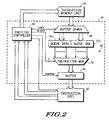
- FIG. 2 is a block diagram of an instruction prefetch unit in the data processor of FIG. 1.
- FIG. 3A illustrates, in instruction form, the memory contents of four lines of an instruction cache of FIG. 1, for loading an instruction queue.
- FIG. 3B is a table illustrating the loading of an instruction queue in the instruction prefetch unit of FIG. 2.
- FIG. 1 Shown in FIG. 1 is a block diagram illustrating the architecture of a data processing system 10, according to a preferred embodiment of the present invention.
- Data processing system 10 comprises an integer unit 12, an instruction memory unit 14, a data memory unit 16, a bus interface unit (BIU) 18, a system bus 20, a memory 22, an internal instruction data bus 24, an internal word data bus 26, buffers 28, and 30.
- the integer unit 12 comprises an instruction unit 32 and an instruction prefetch unit (IPU) 34.
- the instruction memory unit 14 comprises an instruction cache controller 36, an instruction cache 38, and an instruction translation look-aside buffer (ITLB) 40.
- the data memory unit 16 comprises a data cache controller 42, a data translation look-aside buffer (DTLB) 44, and a data cache 46.
- DTLB data translation look-aside buffer
- Instruction cache controller 36 manages the ITLB 40 and instruction cache 38.
- data memory controller 22 manages DTLB 44, and data cache 46.
- instruction cache 38 and data cache 46 are 4-way set-associatative caches, with 64 sets of 4, 16-byte lines for a total cache storage capacity of 4KB each.
- FIG. 2 Shown in FIG. 2 is a block diagram illustrating the internal architecture of the instruction prefetch unit (IPU) 34 of data processing system 10, according to a preferred embodiment of the present invention.
- IPU 34 comprises a buffer demultiplexor (BDEMUX) 48, an instruction queue 50, a buffer 54, and a prefetch controller 56.
- the instruction queue 50 contains 8 instruction words (128 bits), and comprises two 4-word queue buffers QUEUE ZERO, and QUEUE ONE, 51a and 51b, respectively, and an instruction multiplexor (IMUX) 52. Accordingly, QUEUE ZERO 51a and QUEUE ONE 51b are each 64-bits wide, therefore, each stores four (4) instruction words.
- INU 32 receives instructions from the IMUX 52, via the buffer 54.
- the INU 32 decodes the instructions for instruction word length (instruction pipeline movement), and for execution operations.
- a program counter (PC) in the prefetch controller 56 points to the current instruction word, and functions as a queue pointer.
- PC program counter
- INU 32 transfers the instruction pipeline movement to the prefetch controller 56 which adds the pipe movement to the current PC.
- a 1 of 8 queue pointer selects 3 instruction words from the queue in IMUX 52 through a wrapping funnel shifter (shown in FIG.
- buffer 54 loads the INU 32 with the new instruction, which may be one, two, or three words in length.
- INU 32 decodes the instruction for execution operations and for instruction length, and transfers the pipeline movement (0-3 words) to the prefetch controller 56.
- Prefetch controller 56 advances the PC by the amount of the PIPE movement, and the queue pointer selects a new instruction(s) from the IMUX 52, using the lower 3 bits of the PC.
- prefetch controller 56 initiates an instruction read request from memory, to fill the exhausted queue buffer 51a, or 51b.
- prefetch controller 56 issues a READ REQUEST signal to the instruction memory unit 14 for the next series of instruction words.
- the instruction memory unit 14 determines whether the requested instruction is resident in the instruction cache 38. If the required series of instruction words is resident in the instruction cache 38, a cache "hit" occurs, and instruction memory unit 14 transfers the appropriate halfline (64 bits) from the instruction cache 38 into BDEMUX 48.
- Prefetch controller 56 transfers a LOAD signal to BDEMUX 48, and thereby alternates the loading of QUEUE ZERO 51a and QUEUE ONE 51b. For example (as shown in FIG. 3B), BDEMUX 48 loads the second half of the cache line n into QUEUE ONE 51b during the current instruction cycle, and load the first half of cache line n+1 into QUEUE ONE 51b during the next instruction cycle. Thus, writes to the instruction queue 50 are alternated between QUEUE ZERO 51a, and QUEUE ONE 51b, independent of the memory access.
- the instruction cache 38 loads the instruction queue 50 in one instruction cycle. If the required instruction series is not resident in the instruction cache 38, the instruction cache controller 36 determines that a cache "miss" occurred, during the instruction prefetch, and issues a BURST REQUEST signal to the memory 22 (via the BIU 20). In response to the BURST REQUEST signal, the BIU 20 retrieves the entire requested cache line from memory 22, and loads the cache line into the instruction cache 38. The instruction memory unit 14 then transfers the appropriate cache halfline into BDEMUX 48, for transfer into the instruction queue 50.
- optimized instructions e.g. move, shift, and simple arithmetic/logic instructions
- the IMUX 66 loads the INU 32 (via buffer 54) with a three instruction words every clock cycle.
- the prefetch controller 56 maintains sufficient information in the instruction queue 50 to load INU 32 with a three-word optimized instruction every clock cycle.
- the prefetch controller 56 must determine when the data in QUEUE ZERO 51a, or QUEUE ONE 51b is exhausted, and fill the empty queue buffer QUEUE ZERO 51a or QUEUE ONE 51b, accordingly.
- the method used to load the instruction queue 50 is based on the program counter (queue pointer) and the instruction stream (queue) movement specified by instruction decode or instruction execution.
- the instruction queue 50 is refilled when the current queue pointer plus the instruction pipeline (PIPE) movement (1) is the last word of QUEUE ZERO 51a, or QUEUE ONE 51b, or (2) crosses a 4-word buffer boundary, causing the queue buffer (QUEUE ZERO 51a or QUEUE ONE 51b), accessed by the current pointer, to be exhausted.
- PIPE instruction pipeline
- FIG. 3A illustrates the loading of QUEUE ZERO 51a and QUEUE ONE 51b, over a period of ten (10) instruction cycles, with the contents of the instruction cache 38.
- INU 32 is loaded every cycle with 3 words from the instruction queue 50, via the IMUX 66.
- Shown in FIG. 3A for illustrative purposes only, are the memory contents of cache lines n through n+3 of the instruction cache 38. Line n, for example, contains the eight (8) instruction words "AAAB BBCC”.
- FIG. 3B illustrates the loading of the instruction queue 50 (QUEUE ZERO 51a and QUEUE ONE 51b) with the contents of the instruction cache 38, and the loading of the pipeline (PIPE) in instruction unit 32.
- the asterisk indicates which queue buffer, QUEUE ZERO 51a or QUEUE ONE 51b received the cache half-line, during the instruction cycle.
- prefetch controller 56 is operable in two modes, a sequential mode, and a change of flow mode.
- prefetch controller 56 When operating in the sequential mode, prefetch controller 56 alternates the loading of QUEUE ZERO 51a and QUEUE ONE 51b, as previously described.
- prefetch controller 56 issues a memory READ REQUEST signal based upon the number of words remaining in the instruction queue 50, after loading the INU 32.
- prefetch controller 56 loads both QUEUE ZERO 51a and QUEUE ONE 51b from the instruction cache 38 (or external memory 22), irrespective of the number of words remaining in the instruction queue 50.
- INU 32 determines that the resident instruction is a change of flow (COF) instruction
- INU 32 sends a COF signal to the prefetch controller 56.
- prefetch controller 56 loads QUEUE ZERO 51a, for example, and loads QUEUE ONE 51b, immediately following the loading of QUEUE ZERO 51a. These prefetches place the instruction queue 50 in the same state as if the target instruction (e.g. branch) was reached through in-line instruction execution.
- prefetch controller 56 issued a READ REQUEST signal to the instruction memory unit 14, thereby causing the instruction memory unit 14 to load QUEUE ZERO 51a, and QUEUE ONE 51b with the contents of cache line n. Accordingly, in response to the READ REQUEST signal, the instruction memory unit 14 loaded QUEUE ZERO 51a with instruction words "AAAB”, and QUEUE ONE 51b with words "BBCC", as indicated by the asterisk.
- INU 32 decodes the current instruction resident in the PIPE (the current instruction is not shown in FIG. 3B), and transfers the PIPE movement of 0-3 words to the prefetch controller 56.
- INU 32 then proceeds with instruction execution, in a conventional manner.
- the prefetch controller 56 advances the PC, based upon the indicated PIPE movement, and selects the next word set from the IMUX 66. Accordingly, the queue pointer selects three words from IMUX 66 ("AAA"), which are loaded into the INU 32 (PIPE).
- INU 32 decodes the "AAA" instruction, and responds back to the prefetch controller 56, indicating that the instruction word length is three (3).
- Prefetch controller 56 determines that after incrementing the current queue pointer by the PIPE movement there is only one (1) word remaining in QUEUE ZERO 51a (after the PIPE load). As a result of this determination, the prefetch controller 56 initiates a READ REQUEST signal to the instruction memory unit 14 to load the first half of the cache line n+1 ("CDDD") into QUEUE ZERO 51a, during the first half of the second instruction cycle (as indicated by the arrow).
- prefetch controller 56 alternates the loading QUEUE ZERO 51a, and QUEUE ONE 51b, independent of the instruction cache 38 access.
- prefetch controller 56 increments the PC by three (3), and selects another word set from the instruction queue 50. Accordingly, queue pointer selects three words from from IMUX 66 ("BBB"), which are loaded into the PIPE, during the second half of the second instruction cycle.
- BBB IMUX 66
- INU 32 decodes the "BBB" instruction, and once again responds back to the prefetch controller 56, as described above.
- prefetch decoder 56 advances the PC accordingly, and selects the next instruction word set ("CCC") from IMUX 66, which is loaded into the PIPE.
- INU 32 decodes the "CCC” instruction, and responds back to the prefetch controller 56 that the instruction word length is three (3).
- Prefetch controller 56 ascertains that the PIPE movement crosses the 4-word buffer boundary, thereby exhausting the data stored in QUEUE ONE 51b.
- prefetch controller 56 issues a READ REQUEST signal to the instruction memory unit 14 to load the second half of cache line n+1 ("EEEF") into QUEUE ONE 51b, during the next cycle (first half of the fifth instruction cycle), as indicated by the arrow .
- prefetch decoder 56 advances the PC accordingly, and selects the next word set ("DDD") from IMUX 66, which is loaded into the PIPE. This sequential prefetch method continues until the INU 32 detects a change of flow instruction.
- prefetch controller 56 may initiate two or three 4-word prefetches in response to a change of flow instruction (e.g. branch instruction).
- a change of flow instruction e.g. branch instruction
- INU 32 decodes each instruction for instruction length/pipe movement, and for execution operations.
- the INU 32 Upon detecting a change of flow instruction, the INU 32 will transfer a change of flow (COF) signal and the instruction address to prefetch controller 56.
- COF change of flow
- prefetch controller 56 initiates the requisite number of instruction prefetches cycles (two or three 4-word prefetches), as part of the instruction.
- the INU 32 responds to the prefetch controller 56 with the amount of PIPE movement (e.g. 0-3 words) during the first half of the clock cycle.
- the prefetch controller 56 uses the second half of the clock cycle to advance the program counter (queue pointer) and select another word set from the instruction queue 50.
- the instruction queue 50 filling method is based on the program counter, and the instruction stream movement specified by the INU 32 after the instruction decode or instruction execution.
- a model illustrating the queue filling method is illustrated below. In the model:
- the queue filling method is based on the number of words left in the instruction queue 50, after the three (3) word optimized instruction is loaded into the INUE 32 (PIPE), and before the instruction queue 50 is loaded from the instruction cache 38.
- PIPE INUE 32
- the prefetch controller 56 will not issue a READ REQUEST to the instruction memory unit 14.
- the prefetch controller 56 will not issue a READ REQUEST signal, and thus, no instruction prefetch occurs.
- prefetch controller 56 does not initiate a READ REQUEST signal, regardless of the amount of PIPE movement, since the required half-line from the instruction cache 38 was already retrieved (see FIG. 3B).
- the queue filling method may be modified to insure that greater than a three-word optimized instruction is loaded into the instruction PIPE every clock cycle.
- increasing the size of the instruction queue 50 to accommodate sixteen (16) instruction words (256 bits), for example, facilitates full cache line accesses from the PIPE.
- the IMUX 66 would be modified so that word sets larger than three words were loaded into the instruction PIPE every clock cycle.
- IPU 34 may dispatch multiple instructions of a single word length to INU 32.
- the IPU 34 is capable of providing variable length instructions or a variable number of instructions to the INU 32 each clock cycle, and filling the instruction queue 50 based upon the usage of instructions by the INU 32. Accordingly, it is intended by the appended claims to cover all modifications of the invention which fall within the true spirit and scope of the invention.
Landscapes
- Engineering & Computer Science (AREA)
- Software Systems (AREA)
- Theoretical Computer Science (AREA)
- Physics & Mathematics (AREA)
- General Engineering & Computer Science (AREA)
- General Physics & Mathematics (AREA)
- Advance Control (AREA)
- Executing Machine-Instructions (AREA)
- Memory System Of A Hierarchy Structure (AREA)
Description
- This invention relates generally to data processors, and more particularly to data processors having instruction pipelines.
- Today's high performance data processors execute a complex set of instructions, wherein each instruction is comprised of a sequence of simple machine operations. Typically, these data processors have instructions of varying length (number of machine operations), and execution time (number of clock cycles per instruction). These variable length instructions are necessary to facilitate memory accesses by numerous instructions operating in a variety of addressing modes.
- In the conventional non-pipelined data processor, each instruction executes to completion before the next instruction commenced. In order to improve the efficiency of machine operations, while increasing overall performance, pipelined data processors were implemented in conventional data processor designs. These pipelined data processors are capable of executing several instructions concurrently, by overlapping sub-operations of successive instructions. Optimally, pipelined processors fetch one new instruction, and complete execution another instruction every clock cycle. Thus, although the actual execution time required for complex instructions varies, the overall instruction execution rate may approach one instruction per clock cycle. As a result, the use of pipelined processors dramatically improves the overall performance of the data processor.
- In order to achieve single cycle instruction execution, an instruction prefetch unit (IPU) must maintain an instruction stream capable of loading the instruction pipeline (IP) with the requisite number of instruction words every clock cycle. If the IPU fails to maintain the required instruction stream, and the IP is not loaded with the requisite number of instruction words, a pipeline stall may occur. In the prior art, some IPUs contain an instruction queue (predetermined number of buffers) for temporarily storing multiple instructions (e.g. four to eight instructions). The instruction queue functions as a dispatcher, and issues a stream of instructions to the IP. During program execution, the buffers in the instruction queue are periodically emptied; therefore, a mechanism for refilling the buffers is necessary. Generally, additional logic is attached to the prefetch instruction queue, to extract the required information from each instruction stored therein, and to refill the instruction queue once it is emptied. Circuit implementation of this additional logic may result in efficient utilization of chip area.
- The refilling mechanism must maintain the instruction stream so that any combination of one, two or three-word instructions can be loaded into the IP every clock cycle. Furthermore, the refilling mechanism must accommodate change of flow instructions (e.g. branch), to insure that the instruction queue is filled with the requisite instruction stream.
- Accordingly, it is an object of the present invention to provide an improved data processor prefetch mechanism.
- It is another object of the present invention to provide an improved data processor prefetch mechanism which is capable of detecting the earliest point of exhaustion of instructions in a storage device.
- It is yet another object of the present invention to provide an improved data processor prefetch mechanism capable of filling an instruction queue based upon the usage of instructions by an instruction sequencer.
- According to the present invention there is provided a data processor having a prefetch controller for prefetching a plurality of instruction words from a memory, for storage in an instruction queue, and for providing a predetermined number of instruction words from said instruction queue to an instruction pipeline (PIPE), a method for filling the instruction queue, based upon movement of said instruction pipeline in response to the usage by an instruction sequencer of said predetermined number of instructions words, comprising the steps of: decoding said predetermined number of instructions words resident in said instruction sequencer; said method being characterized by the steps of: determining an amount of movement of said corresponding in value to the usage by said instruction sequencer of said predetermined number of instructions words, during a first part of a machine cycle; incrementing a queue pointer in said prefetch controller, by an amount corresponding in value to the amount of movement of said PIPE, in response to a first control signal provided by said instruction sequencer, during a second part of said machine cycle; retrieving a next sequence of instructions from said memory for storage in said instruction queue, if any one of the following conditions are met:, the queue pointer combined with the amount of PIPE movement points to a last instruction word of said predetermined number of instruction words stored in a buffer in said instruction queue; or the queue pointer combined with the amount of PIPE movement crosses an instruction word boundary of said buffer in said instruction queue; and if the instruction sequencer (32) after having decoded said predetermined number of instruction words resident in said instruction sequencer detects a change of flow instruction and provides said prefetch controller with a second control signal for initiating retrieving of said next sequence.
- These and other objects, features and advantages will be more clearly understood from the following detailed description taken in conjunction with the accompanying drawings.
- FIG. 1 is a block diagram of a data processing system in accordance with the present invention.
- FIG. 2 is a block diagram of an instruction prefetch unit in the data processor of FIG. 1.
- FIG. 3A illustrates, in instruction form, the memory contents of four lines of an instruction cache of FIG. 1, for loading an instruction queue.
- FIG. 3B is a table illustrating the loading of an instruction queue in the instruction prefetch unit of FIG. 2.
- Shown in FIG. 1 is a block diagram illustrating the architecture of a
data processing system 10, according to a preferred embodiment of the present invention.Data processing system 10 comprises aninteger unit 12, aninstruction memory unit 14, adata memory unit 16, a bus interface unit (BIU) 18, asystem bus 20, amemory 22, an internalinstruction data bus 24, an internalword data bus 26,buffers integer unit 12 comprises aninstruction unit 32 and an instruction prefetch unit (IPU) 34. Theinstruction memory unit 14 comprises aninstruction cache controller 36, aninstruction cache 38, and an instruction translation look-aside buffer (ITLB) 40. Similarly, thedata memory unit 16 comprises adata cache controller 42, a data translation look-aside buffer (DTLB) 44, and adata cache 46.Instruction cache controller 36 manages the ITLB 40 andinstruction cache 38. Likewise,data memory controller 22 manages DTLB 44, anddata cache 46. In the preferred embodiment,instruction cache 38 anddata cache 46 are 4-way set-associatative caches, with 64 sets of 4, 16-byte lines for a total cache storage capacity of 4KB each. - Shown in FIG. 2 is a block diagram illustrating the internal architecture of the instruction prefetch unit (IPU) 34 of
data processing system 10, according to a preferred embodiment of the present invention. IPU 34 comprises a buffer demultiplexor (BDEMUX) 48, aninstruction queue 50, abuffer 54, and aprefetch controller 56. In the present invention, theinstruction queue 50 contains 8 instruction words (128 bits), and comprises two 4-word queue buffers QUEUE ZERO, and QUEUE ONE, 51a and 51b, respectively, and an instruction multiplexor (IMUX) 52. Accordingly,QUEUE ZERO 51a and QUEUE ONE 51b are each 64-bits wide, therefore, each stores four (4) instruction words. - In operation, INU 32 receives instructions from the IMUX 52, via the
buffer 54. The INU 32 decodes the instructions for instruction word length (instruction pipeline movement), and for execution operations. A program counter (PC) in theprefetch controller 56 points to the current instruction word, and functions as a queue pointer. Upon completion of the instruction decoding, INU 32 transfers the instruction pipeline movement to theprefetch controller 56 which adds the pipe movement to the current PC.Prefetch controller 56 selects a new instruction word from IMUX 52, using the lower n bits (e.g. n=3) of the PC. In the present invention, a 1 of 8 queue pointer selects 3 instruction words from the queue inIMUX 52 through a wrapping funnel shifter (shown in FIG. 3), and the 3 instruction words are transferred to thebuffer 54. Upon receiving a CONTROL signal fromprefetch controller 56,buffer 54 loads the INU 32 with the new instruction, which may be one, two, or three words in length. Once again, INU 32 decodes the instruction for execution operations and for instruction length, and transfers the pipeline movement (0-3 words) to theprefetch controller 56.Prefetch controller 56 advances the PC by the amount of the PIPE movement, and the queue pointer selects a new instruction(s) from the IMUX 52, using the lower 3 bits of the PC. - Once the movement of the instruction pipeline exhausts the instruction words stored in either QUEUE ZERO 51a or QUEUE ONE 51b,
prefetch controller 56 initiates an instruction read request from memory, to fill theexhausted queue buffer prefetch controller 56 issues a READ REQUEST signal to theinstruction memory unit 14 for the next series of instruction words. Theinstruction memory unit 14 determines whether the requested instruction is resident in theinstruction cache 38. If the required series of instruction words is resident in theinstruction cache 38, a cache "hit" occurs, andinstruction memory unit 14 transfers the appropriate halfline (64 bits) from theinstruction cache 38 into BDEMUX 48. Prefetch controller 56 transfers a LOAD signal to BDEMUX 48, and thereby alternates the loading of QUEUE ZERO 51a and QUEUEONE 51b. For example (as shown in FIG. 3B), BDEMUX 48 loads the second half of the cache line n into QUEUE ONE 51b during the current instruction cycle, and load the first half of cache line n+1 into QUEUE ONE 51b during the next instruction cycle. Thus, writes to theinstruction queue 50 are alternated between QUEUEZERO 51a, and QUEUE ONE 51b, independent of the memory access. - Typically, the instruction cache 38 loads the
instruction queue 50 in one instruction cycle. If the required instruction series is not resident in theinstruction cache 38, theinstruction cache controller 36 determines that a cache "miss" occurred, during the instruction prefetch, and issues a BURST REQUEST signal to the memory 22 (via the BIU 20). In response to the BURST REQUEST signal, theBIU 20 retrieves the entire requested cache line frommemory 22, and loads the cache line into theinstruction cache 38. Theinstruction memory unit 14 then transfers the appropriate cache halfline intoBDEMUX 48, for transfer into theinstruction queue 50. - In the present invention, optimized instructions (e.g. move, shift, and simple arithmetic/logic instructions) have a maximum length of three words. Since the length of a given instruction is unknown, until the
INU 32 decodes the instruction, the IMUX 66 loads the INU 32 (via buffer 54) with a three instruction words every clock cycle. Accordingly, theprefetch controller 56 maintains sufficient information in theinstruction queue 50 to load INU 32 with a three-word optimized instruction every clock cycle. In order to accomplish this task, theprefetch controller 56 must determine when the data in QUEUE ZERO 51a, or QUEUE ONE 51b is exhausted, and fill the empty queue buffer QUEUE ZERO 51a or QUEUE ONE 51b, accordingly. In the present invention, the method used to load theinstruction queue 50 is based on the program counter (queue pointer) and the instruction stream (queue) movement specified by instruction decode or instruction execution. Specifically, theinstruction queue 50 is refilled when the current queue pointer plus the instruction pipeline (PIPE) movement (1) is the last word of QUEUE ZERO 51a, or QUEUE ONE 51b, or (2) crosses a 4-word buffer boundary, causing the queue buffer (QUEUE ZERO 51a or QUEUE ONE 51b), accessed by the current pointer, to be exhausted. - Figures 3A and 3B illustrate the loading of QUEUE ZERO 51a and QUEUE ONE 51b, over a period of ten (10) instruction cycles, with the contents of the
instruction cache 38. During the 10 instruction cycles,INU 32 is loaded every cycle with 3 words from theinstruction queue 50, via the IMUX 66. Shown in FIG. 3A, for illustrative purposes only, are the memory contents of cache lines n through n+3 of theinstruction cache 38. Line n, for example, contains the eight (8) instruction words "AAAB BBCC". FIG. 3B illustrates the loading of the instruction queue 50 (QUEUE ZERO 51a and QUEUE ONE 51b) with the contents of theinstruction cache 38, and the loading of the pipeline (PIPE) ininstruction unit 32. In FIG. 3B, the asterisk indicates which queue buffer, QUEUE ZERO 51a or QUEUE ONE 51b received the cache half-line, during the instruction cycle. - In the present invention,
prefetch controller 56 is operable in two modes, a sequential mode, and a change of flow mode. When operating in the sequential mode,prefetch controller 56 alternates the loading of QUEUE ZERO 51a and QUEUE ONE 51b, as previously described. Essentially, in the sequential mode of operation,prefetch controller 56 issues a memory READ REQUEST signal based upon the number of words remaining in theinstruction queue 50, after loading theINU 32. In contrast, when operating in the change of flow mode,prefetch controller 56 loads both QUEUE ZERO 51a and QUEUE ONE 51b from the instruction cache 38 (or external memory 22), irrespective of the number of words remaining in theinstruction queue 50. Thus, onceINU 32 determines that the resident instruction is a change of flow (COF) instruction,INU 32 sends a COF signal to theprefetch controller 56. In response to the COF signal,prefetch controller 56 loads QUEUE ZERO 51a, for example, and loads QUEUE ONE 51b, immediately following the loading of QUEUE ZERO 51a. These prefetches place theinstruction queue 50 in the same state as if the target instruction (e.g. branch) was reached through in-line instruction execution. - As shown in FIG. 3B, for illustrative purposes only,
prefetch controller 56 issued a READ REQUEST signal to theinstruction memory unit 14, thereby causing theinstruction memory unit 14 to load QUEUE ZERO 51a, and QUEUE ONE 51b with the contents of cache line n. Accordingly, in response to the READ REQUEST signal, theinstruction memory unit 14 loaded QUEUE ZERO 51a with instruction words "AAAB", and QUEUE ONE 51b with words "BBCC", as indicated by the asterisk. During the first half of the first instruction cycle,INU 32 decodes the current instruction resident in the PIPE (the current instruction is not shown in FIG. 3B), and transfers the PIPE movement of 0-3 words to theprefetch controller 56.INU 32 then proceeds with instruction execution, in a conventional manner. During the second half of the first instruction cycle, theprefetch controller 56 advances the PC, based upon the indicated PIPE movement, and selects the next word set from the IMUX 66. Accordingly, the queue pointer selects three words from IMUX 66 ("AAA"), which are loaded into the INU 32 (PIPE). - During the first half of the second instruction cycle,
INU 32 decodes the "AAA" instruction, and responds back to theprefetch controller 56, indicating that the instruction word length is three (3).Prefetch controller 56 determines that after incrementing the current queue pointer by the PIPE movement there is only one (1) word remaining in QUEUE ZERO 51a (after the PIPE load). As a result of this determination, theprefetch controller 56 initiates a READ REQUEST signal to theinstruction memory unit 14 to load the first half of the cache line n+1 ("CDDD") into QUEUE ZERO 51a, during the first half of the second instruction cycle (as indicated by the arrow). As described above,prefetch controller 56 alternates the loading QUEUE ZERO 51a, and QUEUE ONE 51b, independent of theinstruction cache 38 access. During the second half of the second instruction cycle,prefetch controller 56 increments the PC by three (3), and selects another word set from theinstruction queue 50. Accordingly, queue pointer selects three words from from IMUX 66 ("BBB"), which are loaded into the PIPE, during the second half of the second instruction cycle. - During the first half of the third instruction cycle,
INU 32 decodes the "BBB" instruction, and once again responds back to theprefetch controller 56, as described above. During the second half of the third instruction cycle,prefetch decoder 56 advances the PC accordingly, and selects the next instruction word set ("CCC") from IMUX 66, which is loaded into the PIPE. During the first half of the fourth instruction cycle,INU 32 decodes the "CCC" instruction, and responds back to theprefetch controller 56 that the instruction word length is three (3).Prefetch controller 56 ascertains that the PIPE movement crosses the 4-word buffer boundary, thereby exhausting the data stored in QUEUE ONE 51b. As a result,prefetch controller 56 issues a READ REQUEST signal to theinstruction memory unit 14 to load the second half of cache line n+1 ("EEEF") into QUEUE ONE 51b, during the next cycle (first half of the fifth instruction cycle), as indicated by the arrow . During the second half of the fourth instruction cycle,prefetch decoder 56 advances the PC accordingly, and selects the next word set ("DDD") from IMUX 66, which is loaded into the PIPE. This sequential prefetch method continues until theINU 32 detects a change of flow instruction. - In the present invention,
prefetch controller 56 may initiate two or three 4-word prefetches in response to a change of flow instruction (e.g. branch instruction). As described earlier,INU 32 decodes each instruction for instruction length/pipe movement, and for execution operations. Upon detecting a change of flow instruction, theINU 32 will transfer a change of flow (COF) signal and the instruction address to prefetchcontroller 56. In response to the COF signal,prefetch controller 56 initiates the requisite number of instruction prefetches cycles (two or three 4-word prefetches), as part of the instruction. - In the present invention, the
INU 32 responds to theprefetch controller 56 with the amount of PIPE movement (e.g. 0-3 words) during the first half of the clock cycle. Theprefetch controller 56 uses the second half of the clock cycle to advance the program counter (queue pointer) and select another word set from theinstruction queue 50. Theinstruction queue 50 filling method is based on the program counter, and the instruction stream movement specified by theINU 32 after the instruction decode or instruction execution. A model illustrating the queue filling method is illustrated below.
In the model: - Q0/Q1
- denotes the instruction queue buffers QUEUE ZERO 51a, and QUEUE ONE 51b.
- MOVE
- is the number of words the instruction PIPE is to be advanced.
- PC
- program counter is the current pointer to the instruction stream.
- read_req
- is the control signal to initiate an instruction to fill an emptied buffer


- Accordingly, in the present invention, the queue filling method is based on the number of words left in the
instruction queue 50, after the three (3) word optimized instruction is loaded into the INUE 32 (PIPE), and before theinstruction queue 50 is loaded from theinstruction cache 38. As illustrated inCASE instruction queue 50, after the PIPE load, then theprefetch controller 56 will not issue a READ REQUEST to theinstruction memory unit 14. Similarly, as illustrated in all cases, if the PIPE movement is zero, theprefetch controller 56 will not issue a READ REQUEST signal, and thus, no instruction prefetch occurs. When the queue pointer (PC) plus the PIPE movement (MOVE) crosses a 4-word buffer boundary, the required instruction word is prefetched during the next instruction cycle (CASE 3, and 4). In CASE 4, the queue pointer initially points to the last word in the instruction queue buffers QUEUE ZERO 51a, and QUEUE ONE 51b. Consequently,prefetch controller 56 does not initiate a READ REQUEST signal, regardless of the amount of PIPE movement, since the required half-line from theinstruction cache 38 was already retrieved (see FIG. 3B). - While the present invention has been described in a preferred embodiment, it will be apparent to those skilled in the art that the disclosed invention may be modified in numerous ways and may assume many embodiments other than that specifically set out and described above. For example, the queue filling method may be modified to insure that greater than a three-word optimized instruction is loaded into the instruction PIPE every clock cycle. Essentially, increasing the size of the
instruction queue 50 to accommodate sixteen (16) instruction words (256 bits), for example, facilitates full cache line accesses from the PIPE. Furthermore, the IMUX 66 would be modified so that word sets larger than three words were loaded into the instruction PIPE every clock cycle. Likewise,IPU 34 may dispatch multiple instructions of a single word length to INU 32. Thus, theIPU 34 is capable of providing variable length instructions or a variable number of instructions to theINU 32 each clock cycle, and filling theinstruction queue 50 based upon the usage of instructions by theINU 32. Accordingly, it is intended by the appended claims to cover all modifications of the invention which fall within the true spirit and scope of the invention.
Claims (2)
- In a data processor (10) having a prefetch controller (56) for prefetching a plurality of instruction words from a memory (14), for storage in an instruction queue (50), and for providing a predetermined number of instruction words from said instruction queue (50) to an instruction pipeline (PIPE) (32), a method for filling the instruction queue (50), based upon movement of said instruction pipeline (PIPE) (32) in response to the usage by an instruction sequencer (32) of said predetermined number of instructions words, comprising the steps of:
decoding said predetermined number of instructions words resident in said instruction sequencer (32);
said method being characterized by the steps of:determining an amount of movement of said PIPE (32) corresponding in value to the usage by said instruction sequencer (32) of said predetermined number of instructions words, during a first part of a machine cycle;incrementing a queue pointer in said prefetch controller (56), by an amount corresponding in value to the amount of movement of said PIPE (32), in response to a first control signal provided by said instruction sequencer (32), during a second part of said machine cycle;retrieving a next sequence of instructions from said memory (14) for storage in said instruction queue (50), if any one of the following conditions are met:the queue pointer combined with the amount of PIPE movement points to a last instruction word of said predetermined number of instruction words stored in a buffer (51a, 51b) in said instruction queue (50); orthe queue pointer combined with the amount of PIPE movement crosses an instruction word boundary of said buffer (51a, 51b) in said instruction queue (50); andif the instruction sequencer (32) after having decoded said predetermined number of instruction words resident in said instruction sequencer (32) detects a change of flow instruction and provides said prefetch controller (56) with a second control signal for initiating retrieving of said next sequence. - The queue filling method according to claim 1 further comprising the step of transferring said next instruction word in said instruction queue (50) to said instruction sequencer (32), after incrementing said queue pointer in said prefetch controller (56).
Applications Claiming Priority (2)
| Application Number | Priority Date | Filing Date | Title |
|---|---|---|---|
| US45960290A | 1990-01-02 | 1990-01-02 | |
| US459602 | 1990-01-02 |
Publications (3)
| Publication Number | Publication Date |
|---|---|
| EP0436341A2 EP0436341A2 (en) | 1991-07-10 |
| EP0436341A3 EP0436341A3 (en) | 1993-03-17 |
| EP0436341B1 true EP0436341B1 (en) | 1997-05-07 |
Family
ID=23825441
Family Applications (1)
| Application Number | Title | Priority Date | Filing Date |
|---|---|---|---|
| EP90313776A Expired - Lifetime EP0436341B1 (en) | 1990-01-02 | 1990-12-17 | Sequential prefetch method for 1, 2 or 3 word instructions |
Country Status (5)
| Country | Link |
|---|---|
| US (1) | US5317701A (en) |
| EP (1) | EP0436341B1 (en) |
| JP (1) | JP2949857B2 (en) |
| KR (1) | KR910014804A (en) |
| DE (1) | DE69030648T2 (en) |
Families Citing this family (42)
| Publication number | Priority date | Publication date | Assignee | Title |
|---|---|---|---|---|
| US5590294A (en) * | 1991-03-19 | 1996-12-31 | Silicon Graphics, Inc. | Method and apparatus for retarting pipeline processing |
| US5572682A (en) * | 1992-04-03 | 1996-11-05 | Cyrix Corporation | Control logic for a sequential data buffer using byte read-enable lines to define and shift the access window |
| JP2744882B2 (en) * | 1993-01-15 | 1998-04-28 | インターナショナル・ビジネス・マシーンズ・コーポレイション | Apparatus and method for controlling instruction execution by queue |
| US5511174A (en) * | 1993-03-31 | 1996-04-23 | Vlsi Technology, Inc. | Method for controlling the operation of a computer implemented apparatus to selectively execute instructions of different bit lengths |
| US5604909A (en) | 1993-12-15 | 1997-02-18 | Silicon Graphics Computer Systems, Inc. | Apparatus for processing instructions in a computing system |
| US5600806A (en) * | 1994-03-01 | 1997-02-04 | Intel Corporation | Method and apparatus for aligning an instruction boundary in variable length macroinstructions with an instruction buffer |
| US5758116A (en) * | 1994-09-30 | 1998-05-26 | Intel Corporation | Instruction length decoder for generating output length indicia to identity boundaries between variable length instructions |
| US5809529A (en) * | 1995-08-23 | 1998-09-15 | International Business Machines Corporation | Prefetching of committed instructions from a memory to an instruction cache |
| US5781789A (en) * | 1995-08-31 | 1998-07-14 | Advanced Micro Devices, Inc. | Superscaler microprocessor employing a parallel mask decoder |
| US5691920A (en) * | 1995-10-02 | 1997-11-25 | International Business Machines Corporation | Method and system for performance monitoring of dispatch unit efficiency in a processing system |
| US5729726A (en) * | 1995-10-02 | 1998-03-17 | International Business Machines Corporation | Method and system for performance monitoring efficiency of branch unit operation in a processing system |
| US5748855A (en) * | 1995-10-02 | 1998-05-05 | Iinternational Business Machines Corporation | Method and system for performance monitoring of misaligned memory accesses in a processing system |
| US5751945A (en) * | 1995-10-02 | 1998-05-12 | International Business Machines Corporation | Method and system for performance monitoring stalls to identify pipeline bottlenecks and stalls in a processing system |
| US5752062A (en) * | 1995-10-02 | 1998-05-12 | International Business Machines Corporation | Method and system for performance monitoring through monitoring an order of processor events during execution in a processing system |
| US5797019A (en) * | 1995-10-02 | 1998-08-18 | International Business Machines Corporation | Method and system for performance monitoring time lengths of disabled interrupts in a processing system |
| US5949971A (en) * | 1995-10-02 | 1999-09-07 | International Business Machines Corporation | Method and system for performance monitoring through identification of frequency and length of time of execution of serialization instructions in a processing system |
| US5809272A (en) * | 1995-11-29 | 1998-09-15 | Exponential Technology Inc. | Early instruction-length pre-decode of variable-length instructions in a superscalar processor |
| US5619667A (en) * | 1996-03-29 | 1997-04-08 | Integrated Device Technology, Inc. | Method and apparatus for fast fill of translator instruction queue |
| US5983344A (en) * | 1997-03-19 | 1999-11-09 | Integrated Device Technology, Inc. | Combining ALU and memory storage micro instructions by using an address latch to maintain an address calculated by a first micro instruction |
| EP1066559B1 (en) * | 1998-03-18 | 2005-06-08 | QUALCOMM Incorporated | A digital signal processor reducing access contention |
| US6275924B1 (en) * | 1998-09-15 | 2001-08-14 | Texas Instruments Incorporated | System for buffering instructions in a processor by reissuing instruction fetches during decoder stall time |
| JP2002517856A (en) * | 1998-06-08 | 2002-06-18 | コーニンクレッカ フィリップス エレクトロニクス エヌ ヴィ | Processing device with memory and data prefetch unit |
| EP1050802B1 (en) * | 1999-05-03 | 2007-02-07 | STMicroelectronics S.A. | Instruction prefetch unit |
| EP1247195A4 (en) * | 1999-12-22 | 2005-01-05 | Ubicom Inc | System and method for instruction level multithreading in an embedded processor using zero-time context switching |
| US7308686B1 (en) * | 1999-12-22 | 2007-12-11 | Ubicom Inc. | Software input/output using hard real time threads |
| US7047396B1 (en) | 2000-06-22 | 2006-05-16 | Ubicom, Inc. | Fixed length memory to memory arithmetic and architecture for a communications embedded processor system |
| JP3973129B2 (en) * | 2000-07-19 | 2007-09-12 | 株式会社日立製作所 | Cache memory device and central processing unit using the same |
| US7082516B1 (en) * | 2000-09-28 | 2006-07-25 | Intel Corporation | Aligning instructions using a variable width alignment engine having an intelligent buffer refill mechanism |
| US6738792B1 (en) | 2001-03-09 | 2004-05-18 | Advanced Micro Devices, Inc. | Parallel mask generator |
| US6898694B2 (en) * | 2001-06-28 | 2005-05-24 | Intel Corporation | High instruction fetch bandwidth in multithread processor using temporary instruction cache to deliver portion of cache line in subsequent clock cycle |
| JP4073721B2 (en) * | 2002-06-28 | 2008-04-09 | 株式会社ルネサステクノロジ | Data processing device |
| US7822950B1 (en) | 2003-01-22 | 2010-10-26 | Ubicom, Inc. | Thread cancellation and recirculation in a computer processor for avoiding pipeline stalls |
| US7469334B1 (en) * | 2004-03-30 | 2008-12-23 | Sun Microsystems, Inc. | Method and apparatus for facilitating a fast restart after speculative execution |
| TW200602974A (en) | 2004-05-19 | 2006-01-16 | Arc Internat Uk Ltd | Microprocessor architecture |
| US20060212658A1 (en) * | 2005-03-18 | 2006-09-21 | International Business Machines Corporation. | Prefetch performance of index access by look-ahead prefetch |
| US8218635B2 (en) * | 2005-09-28 | 2012-07-10 | Synopsys, Inc. | Systolic-array based systems and methods for performing block matching in motion compensation |
| US7454585B2 (en) * | 2005-12-22 | 2008-11-18 | International Business Machines Corporation | Efficient and flexible memory copy operation |
| US8725991B2 (en) * | 2007-09-12 | 2014-05-13 | Qualcomm Incorporated | Register file system and method for pipelined processing |
| WO2012101761A1 (en) * | 2011-01-25 | 2012-08-02 | 富士通株式会社 | System, and data load method |
| US10216520B2 (en) * | 2014-10-06 | 2019-02-26 | Via Technologies, Inc. | Compressing instruction queue for a microprocessor |
| JP6457836B2 (en) | 2015-02-26 | 2019-01-23 | ルネサスエレクトロニクス株式会社 | Processor and instruction code generation device |
| CN106227507B (en) * | 2016-07-11 | 2019-10-18 | 北京深鉴智能科技有限公司 | Computing system and its controller |
Family Cites Families (12)
| Publication number | Priority date | Publication date | Assignee | Title |
|---|---|---|---|---|
| FR2298139A1 (en) * | 1975-01-16 | 1976-08-13 | Int Computers Ltd | Data processing system with fast access auxiliary programme store - has programme store coupled to large capacity buffer controlled in groups over gating circuit |
| US4200927A (en) * | 1978-01-03 | 1980-04-29 | International Business Machines Corporation | Multi-instruction stream branch processing mechanism |
| US4516199A (en) * | 1979-10-11 | 1985-05-07 | Nanodata Computer Corporation | Data processing system |
| JPS619734A (en) * | 1984-06-26 | 1986-01-17 | Nec Corp | Processor control system |
| US4847759A (en) * | 1985-03-18 | 1989-07-11 | International Business Machines Corp. | Register selection mechanism and organization of an instruction prefetch buffer |
| CA1233270A (en) * | 1985-03-18 | 1988-02-23 | Vojin G. Oklobdzija | Register selection mechanism and organization of an instruction prefetch buffer |
| US4714994A (en) * | 1985-04-30 | 1987-12-22 | International Business Machines Corp. | Instruction prefetch buffer control |
| US4791557A (en) * | 1985-07-31 | 1988-12-13 | Wang Laboratories, Inc. | Apparatus and method for monitoring and controlling the prefetching of instructions by an information processing system |
| JPS6356731A (en) * | 1986-08-27 | 1988-03-11 | Mitsubishi Electric Corp | data processing equipment |
| JPS6398737A (en) * | 1986-10-15 | 1988-04-30 | Mitsubishi Electric Corp | Data processor |
| JPH0772863B2 (en) * | 1986-10-30 | 1995-08-02 | 日本電気株式会社 | Program counter relative address calculation method |
| US5113515A (en) * | 1989-02-03 | 1992-05-12 | Digital Equipment Corporation | Virtual instruction cache system using length responsive decoded instruction shifting and merging with prefetch buffer outputs to fill instruction buffer |
-
1990
- 1990-12-17 EP EP90313776A patent/EP0436341B1/en not_active Expired - Lifetime
- 1990-12-17 DE DE69030648T patent/DE69030648T2/en not_active Expired - Fee Related
- 1990-12-27 KR KR1019900021914A patent/KR910014804A/en not_active Abandoned
- 1990-12-28 JP JP2418553A patent/JP2949857B2/en not_active Expired - Fee Related
-
1993
- 1993-01-19 US US08/005,924 patent/US5317701A/en not_active Expired - Fee Related
Also Published As
| Publication number | Publication date |
|---|---|
| JP2949857B2 (en) | 1999-09-20 |
| EP0436341A2 (en) | 1991-07-10 |
| KR910014804A (en) | 1991-08-31 |
| JPH05324317A (en) | 1993-12-07 |
| EP0436341A3 (en) | 1993-03-17 |
| US5317701A (en) | 1994-05-31 |
| DE69030648T2 (en) | 1997-11-13 |
| DE69030648D1 (en) | 1997-06-12 |
Similar Documents
| Publication | Publication Date | Title |
|---|---|---|
| US5317701A (en) | Method for refilling instruction queue by reading predetermined number of instruction words comprising one or more instructions and determining the actual number of instruction words used | |
| US5907702A (en) | Method and apparatus for decreasing thread switch latency in a multithread processor | |
| FI80532B (en) | CENTRALENHET FOER DATABEHANDLINGSSYSTEM. | |
| US4648034A (en) | Busy signal interface between master and slave processors in a computer system | |
| CN101495962B (en) | Method and apparatus for prefetching non-sequential instruction addresses | |
| US4888679A (en) | Method and apparatus using a cache and main memory for both vector processing and scalar processing by prefetching cache blocks including vector data elements | |
| CA1325285C (en) | Method and apparatus for ordering and queueing multiple memory requests | |
| EP2519874B1 (en) | Branching processing method and system | |
| EP0380854A2 (en) | Instruction buffer system for a digital computer | |
| EP0010188B1 (en) | Computer instruction prefetch circuit | |
| EP1323036B1 (en) | Storing stack operands in registers | |
| US20020066003A1 (en) | Restarting translated instructions | |
| EP0458305B1 (en) | Microprocessor having branch prediction function | |
| IE990754A1 (en) | An apparatus for software initiated prefetch and method therefor | |
| KR100638935B1 (en) | Data processor | |
| US6658534B1 (en) | Mechanism to reduce instruction cache miss penalties and methods therefor | |
| JP2007514237A (en) | Method and apparatus for allocating entry in branch target buffer | |
| EP1387252B1 (en) | Instruction prefix to indicate system commands | |
| CN100397365C (en) | Device and method for solving deadlock extraction condition in branch target address cache | |
| Berenbaum et al. | Architectural Innovations in the CRISP Microprocessor. | |
| US5765190A (en) | Cache memory in a data processing system | |
| EP1685481B1 (en) | Methods of optimized memory access in a digital signal processor architecture | |
| US6192449B1 (en) | Apparatus and method for optimizing performance of a cache memory in a data processing system | |
| EP0116600B1 (en) | Pre-execution next address calculating mechanism | |
| JPH07200406A (en) | Cash system |
Legal Events
| Date | Code | Title | Description |
|---|---|---|---|
| PUAI | Public reference made under article 153(3) epc to a published international application that has entered the european phase |
Free format text: ORIGINAL CODE: 0009012 |
|
| AK | Designated contracting states |
Kind code of ref document: A2 Designated state(s): DE FR GB IT |
|
| PUAL | Search report despatched |
Free format text: ORIGINAL CODE: 0009013 |
|
| AK | Designated contracting states |
Kind code of ref document: A3 Designated state(s): DE FR GB IT |
|
| 17P | Request for examination filed |
Effective date: 19930826 |
|
| 17Q | First examination report despatched |
Effective date: 19950926 |
|
| GRAG | Despatch of communication of intention to grant |
Free format text: ORIGINAL CODE: EPIDOS AGRA |
|
| GRAH | Despatch of communication of intention to grant a patent |
Free format text: ORIGINAL CODE: EPIDOS IGRA |
|
| GRAH | Despatch of communication of intention to grant a patent |
Free format text: ORIGINAL CODE: EPIDOS IGRA |
|
| GRAA | (expected) grant |
Free format text: ORIGINAL CODE: 0009210 |
|
| AK | Designated contracting states |
Kind code of ref document: B1 Designated state(s): DE FR GB IT |
|
| ITF | It: translation for a ep patent filed | ||
| REF | Corresponds to: |
Ref document number: 69030648 Country of ref document: DE Date of ref document: 19970612 |
|
| ET | Fr: translation filed | ||
| PGFP | Annual fee paid to national office [announced via postgrant information from national office to epo] |
Ref country code: GB Payment date: 19970930 Year of fee payment: 8 |
|
| PGFP | Annual fee paid to national office [announced via postgrant information from national office to epo] |
Ref country code: FR Payment date: 19971015 Year of fee payment: 8 |
|
| PGFP | Annual fee paid to national office [announced via postgrant information from national office to epo] |
Ref country code: DE Payment date: 19971023 Year of fee payment: 8 |
|
| PLBE | No opposition filed within time limit |
Free format text: ORIGINAL CODE: 0009261 |
|
| STAA | Information on the status of an ep patent application or granted ep patent |
Free format text: STATUS: NO OPPOSITION FILED WITHIN TIME LIMIT |
|
| 26N | No opposition filed | ||
| PG25 | Lapsed in a contracting state [announced via postgrant information from national office to epo] |
Ref country code: GB Free format text: LAPSE BECAUSE OF NON-PAYMENT OF DUE FEES Effective date: 19981217 |
|
| GBPC | Gb: european patent ceased through non-payment of renewal fee |
Effective date: 19981217 |
|
| PG25 | Lapsed in a contracting state [announced via postgrant information from national office to epo] |
Ref country code: FR Free format text: LAPSE BECAUSE OF NON-PAYMENT OF DUE FEES Effective date: 19990831 |
|
| REG | Reference to a national code |
Ref country code: FR Ref legal event code: ST |
|
| PG25 | Lapsed in a contracting state [announced via postgrant information from national office to epo] |
Ref country code: DE Free format text: LAPSE BECAUSE OF NON-PAYMENT OF DUE FEES Effective date: 19991001 |
|
| PG25 | Lapsed in a contracting state [announced via postgrant information from national office to epo] |
Ref country code: IT Free format text: LAPSE BECAUSE OF NON-PAYMENT OF DUE FEES Effective date: 20051217 |