EP0421441B1 - Pantothenic acid derivatives - Google Patents
Pantothenic acid derivatives Download PDFInfo
- Publication number
- EP0421441B1 EP0421441B1 EP90119090A EP90119090A EP0421441B1 EP 0421441 B1 EP0421441 B1 EP 0421441B1 EP 90119090 A EP90119090 A EP 90119090A EP 90119090 A EP90119090 A EP 90119090A EP 0421441 B1 EP0421441 B1 EP 0421441B1
- Authority
- EP
- European Patent Office
- Prior art keywords
- group
- amino
- dioxane
- carbonyl
- tetramethyl
- Prior art date
- Legal status (The legal status is an assumption and is not a legal conclusion. Google has not performed a legal analysis and makes no representation as to the accuracy of the status listed.)
- Expired - Lifetime
Links
Classifications
-
- C—CHEMISTRY; METALLURGY
- C07—ORGANIC CHEMISTRY
- C07D—HETEROCYCLIC COMPOUNDS
- C07D295/00—Heterocyclic compounds containing polymethylene-imine rings with at least five ring members, 3-azabicyclo [3.2.2] nonane, piperazine, morpholine or thiomorpholine rings, having only hydrogen atoms directly attached to the ring carbon atoms
- C07D295/16—Heterocyclic compounds containing polymethylene-imine rings with at least five ring members, 3-azabicyclo [3.2.2] nonane, piperazine, morpholine or thiomorpholine rings, having only hydrogen atoms directly attached to the ring carbon atoms acylated on ring nitrogen atoms
- C07D295/18—Heterocyclic compounds containing polymethylene-imine rings with at least five ring members, 3-azabicyclo [3.2.2] nonane, piperazine, morpholine or thiomorpholine rings, having only hydrogen atoms directly attached to the ring carbon atoms acylated on ring nitrogen atoms by radicals derived from carboxylic acids, or sulfur or nitrogen analogues thereof
- C07D295/182—Radicals derived from carboxylic acids
- C07D295/185—Radicals derived from carboxylic acids from aliphatic carboxylic acids
-
- C—CHEMISTRY; METALLURGY
- C07—ORGANIC CHEMISTRY
- C07C—ACYCLIC OR CARBOCYCLIC COMPOUNDS
- C07C235/00—Carboxylic acid amides, the carbon skeleton of the acid part being further substituted by oxygen atoms
- C07C235/02—Carboxylic acid amides, the carbon skeleton of the acid part being further substituted by oxygen atoms having carbon atoms of carboxamide groups bound to acyclic carbon atoms and singly-bound oxygen atoms bound to the same carbon skeleton
- C07C235/04—Carboxylic acid amides, the carbon skeleton of the acid part being further substituted by oxygen atoms having carbon atoms of carboxamide groups bound to acyclic carbon atoms and singly-bound oxygen atoms bound to the same carbon skeleton the carbon skeleton being acyclic and saturated
- C07C235/12—Carboxylic acid amides, the carbon skeleton of the acid part being further substituted by oxygen atoms having carbon atoms of carboxamide groups bound to acyclic carbon atoms and singly-bound oxygen atoms bound to the same carbon skeleton the carbon skeleton being acyclic and saturated having the nitrogen atom of at least one of the carboxamide groups bound to an acyclic carbon atom of a hydrocarbon radical substituted by carboxyl groups
-
- C—CHEMISTRY; METALLURGY
- C07—ORGANIC CHEMISTRY
- C07C—ACYCLIC OR CARBOCYCLIC COMPOUNDS
- C07C237/00—Carboxylic acid amides, the carbon skeleton of the acid part being further substituted by amino groups
- C07C237/02—Carboxylic acid amides, the carbon skeleton of the acid part being further substituted by amino groups having the carbon atoms of the carboxamide groups bound to acyclic carbon atoms of the carbon skeleton
- C07C237/22—Carboxylic acid amides, the carbon skeleton of the acid part being further substituted by amino groups having the carbon atoms of the carboxamide groups bound to acyclic carbon atoms of the carbon skeleton having nitrogen atoms of amino groups bound to the carbon skeleton of the acid part, further acylated
-
- C—CHEMISTRY; METALLURGY
- C07—ORGANIC CHEMISTRY
- C07C—ACYCLIC OR CARBOCYCLIC COMPOUNDS
- C07C323/00—Thiols, sulfides, hydropolysulfides or polysulfides substituted by halogen, oxygen or nitrogen atoms, or by sulfur atoms not being part of thio groups
- C07C323/23—Thiols, sulfides, hydropolysulfides or polysulfides substituted by halogen, oxygen or nitrogen atoms, or by sulfur atoms not being part of thio groups containing thio groups and nitrogen atoms, not being part of nitro or nitroso groups, bound to the same carbon skeleton
- C07C323/39—Thiols, sulfides, hydropolysulfides or polysulfides substituted by halogen, oxygen or nitrogen atoms, or by sulfur atoms not being part of thio groups containing thio groups and nitrogen atoms, not being part of nitro or nitroso groups, bound to the same carbon skeleton at least one of the nitrogen atoms being part of any of the groups, X being a hetero atom, Y being any atom
- C07C323/40—Y being a hydrogen or a carbon atom
- C07C323/41—Y being a hydrogen or an acyclic carbon atom
-
- C—CHEMISTRY; METALLURGY
- C07—ORGANIC CHEMISTRY
- C07C—ACYCLIC OR CARBOCYCLIC COMPOUNDS
- C07C327/00—Thiocarboxylic acids
- C07C327/20—Esters of monothiocarboxylic acids
- C07C327/30—Esters of monothiocarboxylic acids having sulfur atoms of esterified thiocarboxyl groups bound to carbon atoms of hydrocarbon radicals substituted by nitrogen atoms, not being part of nitro or nitroso groups
-
- C—CHEMISTRY; METALLURGY
- C07—ORGANIC CHEMISTRY
- C07D—HETEROCYCLIC COMPOUNDS
- C07D319/00—Heterocyclic compounds containing six-membered rings having two oxygen atoms as the only ring hetero atoms
- C07D319/04—1,3-Dioxanes; Hydrogenated 1,3-dioxanes
- C07D319/06—1,3-Dioxanes; Hydrogenated 1,3-dioxanes not condensed with other rings
-
- C—CHEMISTRY; METALLURGY
- C07—ORGANIC CHEMISTRY
- C07D—HETEROCYCLIC COMPOUNDS
- C07D405/00—Heterocyclic compounds containing both one or more hetero rings having oxygen atoms as the only ring hetero atoms, and one or more rings having nitrogen as the only ring hetero atom
- C07D405/02—Heterocyclic compounds containing both one or more hetero rings having oxygen atoms as the only ring hetero atoms, and one or more rings having nitrogen as the only ring hetero atom containing two hetero rings
- C07D405/12—Heterocyclic compounds containing both one or more hetero rings having oxygen atoms as the only ring hetero atoms, and one or more rings having nitrogen as the only ring hetero atom containing two hetero rings linked by a chain containing hetero atoms as chain links
-
- C—CHEMISTRY; METALLURGY
- C07—ORGANIC CHEMISTRY
- C07D—HETEROCYCLIC COMPOUNDS
- C07D407/00—Heterocyclic compounds containing two or more hetero rings, at least one ring having oxygen atoms as the only ring hetero atoms, not provided for by group C07D405/00
- C07D407/02—Heterocyclic compounds containing two or more hetero rings, at least one ring having oxygen atoms as the only ring hetero atoms, not provided for by group C07D405/00 containing two hetero rings
- C07D407/12—Heterocyclic compounds containing two or more hetero rings, at least one ring having oxygen atoms as the only ring hetero atoms, not provided for by group C07D405/00 containing two hetero rings linked by a chain containing hetero atoms as chain links
-
- C—CHEMISTRY; METALLURGY
- C07—ORGANIC CHEMISTRY
- C07C—ACYCLIC OR CARBOCYCLIC COMPOUNDS
- C07C2601/00—Systems containing only non-condensed rings
- C07C2601/12—Systems containing only non-condensed rings with a six-membered ring
- C07C2601/14—The ring being saturated
-
- Y—GENERAL TAGGING OF NEW TECHNOLOGICAL DEVELOPMENTS; GENERAL TAGGING OF CROSS-SECTIONAL TECHNOLOGIES SPANNING OVER SEVERAL SECTIONS OF THE IPC; TECHNICAL SUBJECTS COVERED BY FORMER USPC CROSS-REFERENCE ART COLLECTIONS [XRACs] AND DIGESTS
- Y02—TECHNOLOGIES OR APPLICATIONS FOR MITIGATION OR ADAPTATION AGAINST CLIMATE CHANGE
- Y02P—CLIMATE CHANGE MITIGATION TECHNOLOGIES IN THE PRODUCTION OR PROCESSING OF GOODS
- Y02P20/00—Technologies relating to chemical industry
- Y02P20/50—Improvements relating to the production of bulk chemicals
- Y02P20/55—Design of synthesis routes, e.g. reducing the use of auxiliary or protecting groups
Definitions
- the present invention relates to pantothenic acid derivatives which have excellent inhibitory activity against acyl CoA-cholesterol-acyltransferase (hereafter, abbreviated as (“ACAT").
- ACAT acyl CoA-cholesterol-acyltransferase
- drugs which can control serum lipid balance that is, drugs which are effective for increasing serum high density lipoprotein (HDL) level and decreasing serum low density lipoprotein (LDL) level, drugs which can inhibit biosynthesis of cholesterol and as a result decrease serum lipid level (HMG CoA reductase inhibitors) and the like. While they are effective for improving blood lipid level, these drugs have almost no effect on the control of absorption of alimentary cholesterol through intestinal walls. In addition, they have no activity for positively prevent crisis or development of artheriosclerosis; it requires further investigation to find whether they can alleviate risks of artheriosclerotic diseases or not.
- HDL high density lipoprotein
- LDL serum low density lipoprotein
- ACAT known as an intramembranous enzyme is present mostly in intracellular microsomes in liver and small intestines and catalyze the intracellular esterification of cholesterol.
- ACAT it is known that there are two isozymes for this enzyme.
- the structures, physiological roles and the like of the ACAT have not been clarified yet because the isolation and purification of the enzyme are difficult.
- ACAT play erucial role in the absorption of cholesterols through intestinal walls and accumulation of cholesterols within cells in a form of cholesterol esters and that the activity of the enzyme is increased in artheriosclerotic lesions.
- inhibition of intestinal ACAT would be expected to lead to decrease cholesterol esterification resulting in diminished intestinal absorption. Additional reduction in intracellular accumulation of cholesterol esters might be expected. Therefore, ACAT inhibitors offer potential for exhibiting both hypocholesterolemia and antiar- theriosclerotic activity.
- FR-A-1 228 806 discloses pantothenic acid derivatives indicated by the following general formula (I) wherein
- the present invention provides a compound represented by general formula (I) below wherein R 1 and R 2 , which are the same or different, each represent a hydrogen atom or a protective group for a hydroxyl group;
- a protective group of a hydroxyl group refers to any protective groups for hydroxyl groups usually used which can easily release as a result of usual protecting group elimination reaction, for example, hydrolysis or hydrogenolysis.
- heterocyclic groups such as tetrahydropyranyl, tetrahydrothiopyranyl, 4-methoxytetrahydropyranyl, 4-methoxytetrahydrothiopyranyl, tetrahydrofuranyl and tetrahydrothiofuranyl;
- substituted silyl groups such as trimethylsilyl, triethylsilyl, isopropyldimethylsilyl, t-butyldimethylsilyl, t-butyldiphenylsilyl, methyldiisopropylsilyl, methyldi-t-butylsilyl, tribenzylsilyl, triphenylsilyl, and triisopropylsilyl groups;
- acyl groups such as formyl, acetyl, propionyl, chloroacetyl, dichloroacetyl, trichloroacetyl, trifluoroacetyl, methoxyacetyl, triphenylmethoxyacetyl, phenoxyacetyl, p-chlorophenoxyacetyl, 2,6-dichloro-4-methyl- phenoxyacetyl, phenylacetyl, chlorodiphenylacetyl, 3-phenylpropionyl, 3-benzoylpropionyl, isobutyroyl, mon- osuccinoyl, 4-oxopentanoyl, pivaloyl, 2-butenoyl, (E)-2-methyl-2-butenoyl, benzoyl, 2-chlorobenzoyl, 3-nitrobenzoyl, 2-fluorobenzoyl, 3-trifluorobenzoyl, 3-trichlorobenzoyl
- substituted oxycarbonyl groups such as methoxycarbonyl, ethoxycarbonyl, 2,2,2-triethoxycarbonyl, isobutoxycarbonyl, vinyloxycarbonyl, aryloxycarbonyl, cinnamyloxycarbonyl, p-nitrophenoxycarbonyl, benzyloxycarbonyl, p-methoxybenzyloxycarbonyl, 3,4-dimethoxybenzyloxycarbonyl, and p-nitrobenzyloxycarbonyl groups;
- carbamoyl groups such as phenylcarbamoyl, naphthylcarbamoyl, toluylcarbamoyl, fluorophenylcarbamoyl, difluorophenylcarbamoyl, nitrophenylcarbamoyl, cyanophenylcarbamoyl, benzylcarbamoyl, methylcarbamoyl, ethylcarbamoyl, isopropylcarbamoyl, butylcarbamoyl, cyclohexylcarbamoyl, cyclopropylmethylcarbamoyl, phenylthiocarbamoyl, naphthylthiocarbamoyl, toluylthiocarbamoyl, fluorophenylthiocarbamoyl, difluorophenylthiocarbamoyl, nitrophenyl
- R 1 and R 2 in formula (I) above each represent a protective group
- R 1 and R 2 may combine to form an ylidene group such as methylene, ethylidene, 1-t-butylethylidene, 1-phenylethylidene, 2,2,2-trichloroethylidene, isopropylidene, butylidene, cyclopentylidene, cyclohexylidene, cyclobutylidene, benzylidene, p-methoxybenzylidene, 2,4-dimethoxybenzylidene, p-dimethylaminobenzylidene, o-nitrobenzylidene, methoxymethylene, ethoxymethylene, dimethoxymethylene, 1-methoxyethylidene, 1,2-dimethox- yethylidene,a-methoxybenzylidene groups.
- ylidene group such as m
- R 1 and R 2 which are the same or different, each represent a hydrogen atom; a lower alkyl group, particularly a t-butyl gourp; a benzyl group which may optionally be substituted with a halogen atom, a lower alkoxy group, a nitro group or a cyano group, particularly, benzyl, p-methoxybenzyl, o-nitrobenzyl, p-nitrobenzyl, p-chlorobenzyl, o-chlorobenzyl, p-cyanobenzyl group; a 5- or 6-membered saturated heterocyclic group containing as hetero atoms N, S or O selected from tetrahydropyranyl, tetrahydrothiopyranyl, 4-methoxytetrahydropyranyl, 4-methoxytetrahydrothiopyranyl, tetrahydrofuranyl and tetrahydrothiofur
- R 1 and R 2 may combine to form a ylidene group selected from 1-t-butylethylidene, 1-phenylethylidene, isopropylidene, butylidene, cyclopentylidene, cyclohexylidene, cycloheptylidene, benzylidene, p-methox- ybenzyilidene, 2,4-dimethoxybenzylidene, p-dimethylaminobenzylidene, and o-nitrobenzylidene groups.
- a ylidene group selected from 1-t-butylethylidene, 1-phenylethylidene, isopropylidene, butylidene, cyclopentylidene, cyclohexylidene, cycloheptylidene, benzylidene, p-methox- ybenzyilidene, 2,4-dime
- saturated or unsaturated, linear, branched or cyclic monovalent aliphatic hydrocarbon group there can be cited, for example, the following groups:
- the saturated or unsaturated, linear, branched or cyclic monovalent aliphatic hydrocarbon groups may optionally be substituted with an aromatic group selected from an aromatic hydrocarbon group and an aromatic heterocyclic group.
- aromatic hydrocarbon group include phenyl and naphthyl groups.
- aromatic heterocyclic group include furyl, thienyl, pyridyl, quinolyl, isoquinolyl, pyridazinyl, pyrazinyl, indolyl, benzoxadiazolyl, imidazolyl, benzothiadiazolyl, triazolyl and tetrazolyl groups.
- these aromatic groups may have one or more substituent groups.
- substituent groups include a halogen atom such as chlorine, bromine and fluorine, a lower alkyl group, a lower alkoxy group, a lower alkylthio group, a cyano group, a nitro group, a trichloromethyl group, a trifluoromethyl group, a hydroxyl group, a phenyl group, a phenoxy group, and the like.
- the saturated or unsaturated, linear, branched or cyclic monovalent aliphatic hydrocarbon group which may be substituted with an aromatic group represented by R 3 and R 4 in formula (I) above
- those groups are used which are of a relatively long chain, i.e., have from 5 to 25 carbon atoms, preferably from 8 to 22 carbon atoms.
- the saturated or unsaturated, linear, branched or cyclic monovalent aliphatic hydrocarbon group which may be substituted with an aromatic group, represented by R 5 in formula (I) above may be of either short chain or long chain but generally those groups are preferred which are of a short chain, preferably having from 1 to 10 carbon atoms, more preferably from 1 to 8 carbon atoms. It is desirable that total carbon atom number of R 4 and R 5 is in a range of from 5 to 25, preferably form 8 to 22.
- group of formula include monosubstituted amino groups such as 2-cyclopentylethyl-amino, 2-cyclohexylethylamino, 3-cyclopentylpropylamino, 3-cyclohexylpropylamino, 2-cyclopentyl-1-methylethylamino, 2-cyclopentyl-1,1-dimethylethylamino, 2-cyclohexyl-1-methylethylamino, 3-cyclopentylpropylamino, 3 cyclohexylpropylamino, 4-cyclohexyl-1,1-dimethylbutylamino, 1-methylpentylamino, 1,1-dimethylpentylamino, 1-ethylpentylamino, 1-cyclohexyl-4-methylpentylamino, 1-cyclopentyl-4-methylpentylamino, 2-methylpentylamino, 1,2-dimethylpentylamin
- R 3 in formula (I) above may preferably represent the following groups:
- the divalent aliphatic hydrocarbon groups described above may further be substituted with an aromatic group, for example, an aryl group such as phenyl or naphthyl group; or a heteroaryl group such as furyl, thienyl, pyridyl or indolyl group.
- an aromatic group for example, an aryl group such as phenyl or naphthyl group; or a heteroaryl group such as furyl, thienyl, pyridyl or indolyl group.
- substituted divalent hydrocarbon group include phenylethylene, pyridylethylene, benzylethylene, naphthylmethylethylene, furylmethylethylene, thienylmethylethylene, pyridylmethylethylene, and indolylmethylethylene groups.
- the "divalent aromatic hydrocarbon group” may be either monocyclic or polycyclic, and examples thereof include phenylene and naphthylene groups. Their aromatic rings may be substituted with 1 to 4 lower alkyl groups.
- the "divalent aromatic heterocyclic group” includes aromatic unsaturated heterocyclic groups which have at least one hetero atom selected from a nitrogen atom, an oxygen atom and a sulfur atom in the ring thereof.
- the heterocyclic group described above may form a condensed ring together with the above-described aromatic hydrocarbon ring.
- Examples of this type of divalent aromatic heterocyclic group includes pyridinediyl, pyrimidinediyl, pyrazinediyl, furanediyl, thiophenediyl, quinolinediyl, isoquinolinediyl, benzofuranediyl, benzothiophenediyl, benzoxazolediyl, benzothiazolediyl and indolediyl.
- A may preferably represent:
- the 4-to 7-membered, preferably 5- or 6-membered divalent nitrogen-containing heterocyclic group represented by formula may include saturated nitrogen-containing heterocyclic groups, for example, and X 2 represents one of the nitrogen-containing heterocyclic groups, it may be bonded through its nitrogen atom to the left hand side carbonyl group in formula (I), and on the other hand when Y 2 represents the above-described nitrogen-containing heterocyclic group, it may be bonded through its nitrogen atom to the right hand side carbonyl group in formula (I) above.
- X 2 represents one of the above-described nitrogen-containing heterocyclic groups, it is preferred that Y 3 represent
- one of X 2 and Y 2 represent and the other represent -O-, -S-, -NH- or
- the compounds of the present invention have at least one asymmetric carbon atom as indicated by an asterisk ( * ) in formula (I) and may include any of optically active isomers (R-form or S-form) and racemi form compounds.
- reaction between the compound of formula (II) and the compound of formula (III) in the process (a) above and the reaction between the compound of formula (V) and the compound of formula (VI) in the process (b) above can be carried out in a suitable solvent, for example, aromatic hydrocarbons such as benzene, toluene and xylene; ethers such a ethyl ether, tetrahydrofuran and dioxane; esters such as methyl acetate and ethyl acetate; halogenated hydrocarbons such as methylene chloride, chloroform and carbon tetrachlorine; high boiling point polar solvents such as dimethylformamide and dimethyl sulfoxide; alcohols such as methanol and ethanol; water, and the like.
- aromatic hydrocarbons such as benzene, toluene and xylene
- ethers such a ethyl ether, tetrahydrofuran and dioxane
- the solvents may be used singly or two or more of the solvents may be used as mixtures.
- the reaction proceeds generally at a temperature in a range of from about -78 ° C to the boiling temperature of the solvent used, preferably from about -10 ° C to the boiling temperature of the solvent used.
- a catalyst or a reaction accelerator may be used.
- the catalyst or reaction accelerator which can be used in the present invention there can be cited, for example, carbodiimides such as dicyclohexylcarbodiimide, diisopropylcarbodiimide and 1-ethyl-3-(3-dimethylaminopropyl)carbodiimide hydrochloride; acid anhydrides such as acetic anhydride and benzoic anhydride; inorganic bases such as sodium hydroxide, potassium hydroxide, sodium carbonate and potassium carbonate; organic bases such as triethylamine, diethylamine, diisopropylamine and pyridine; and the like.
- the catalysts or reaction accelerators may be used in amounts in a range of from 0.01 to 10 equivalents, preferably from 0.1 to 1.1 equivalents per mol of the compound (II) or (III).
- the proportion of the compound (III) or (IV) to the compound (II) is not limited strictly but can be usually in a range of from 0.8 to 1.2 moles, preferably from 1.0 to 1.1 moles, per mole of the compound (II).
- the proportion of the compound (V) can be used in an amount in a range of from 0.8 to 1.2 moles, preferably from 1.0 to 1.1 moles, per mole of the compound (VI).
- the reaction which eliminates the protective groups for the hydroxyl groups from the compound of formula (1-1) can be performed, for example, by hydrolysis in a solvent in the presence of a suitable catalyst.
- the reaction can be carried out in a single solvent or a mixed solvent selected from aromatic hydrocarbons such as benzene, toluene and xylene; ethers such as ethyl ether, tetrahydrofuran and dioxane; esters such as methyl acetate and ethyl acetate; halogenated hydrocarbons such as methylene chloride, chloroform and carbon tetrachloride; high boiling point polar solvents such as dimethylformamide and dimethyl sulfoxide; alcohols such as methanol and ethanol; water; organic acids such as acetic acid and propionic acid; ketones such as acetone and methyl ethyl ketone; and the like at a temperature in a range of from about -78
- inorganic bases such as sodium hydroxide, potassium hydroxide, sodium carbonate and potassium carbonate
- organic bases such as triethylamine, diethylamine, dimethylamine diisopropylamine and pyridine
- minetal acids such as hydrochloric acid, nitric acid and sulfuric acid
- hydrogen halides such as hydrogen fluorine, hydrogen bromide and hydrogen iodide
- organic acids such as trifluoroacetic acid and trichloroacetic acid; and the like.
- the protective groups can be eliminated from the compounds of formula (1-1) by a conventional catalyst hydrogenation reaction using a suitable metal catalyst.
- a suitable metal catalyst there can be used commonly used hydrogenation catalysts such as nickel, palladium, rhodium and platinum.
- the products obtained by each of the above-described processes can be separated from the reaction mixtures or purified by proper combinations of known processes, for example, crystallization, chromatography, extraction and filtration.
- M represents a hydrogen atom, an alkali metal atom such as sodium and potassium or an alkaline earth metal atom such as magnesium and calcium:
- L represents OH, Cl, Br, I or N 2 ; and R11, R 21 , n and Z 1 have the same meanings as defined above.
- a catalyst there can be used, for example, inorganic bases such as sodium hydroxide, potassium hydroxide, sodium carbonate and potassium carbonate; organic bases such as triethylamine, diethylamine, dimethylamine, diisopropylamine and pyridine; and the like.
- the catalysts may be used in amounts in a range of from 0.01 to 10 equivalents, preferably from 0.1 to 1.1 equivalents per mole of pantolacone.
- the compound of formula (II) can be obtained by reacting the compound of formula (V) wherein R", R21, n and Z 1 have the same meanings as defined above;
- This reaction can be carried out in a suitable solvent, for example, aromatic hydrocarbons such as benzene, toluene and xylene; ethers such as ethyl ether, tetrahydrofuran and dioxane; esters such as methyl acetate and ethyl acetate; halogenated hydrocarbons such as methylene chlorine, chloroform and carbon tetrachloride; high boiling point polar solvents such as dimethylformamide and dimethyl sulfoxide; alcohols such as methanol and ethanol; water, and the like.
- the solvents may be used singly or two or more of the solvents may be used as mixtures.
- the reaction proceeds usually at a temperature in a range of from about -78 ° C to the boiling temperature of the solvent used, preferably from about -10 ° C to the boiling temperature of the solvent used.
- a catalyst or a reaction accelerator may be used.
- the catalyst or reaction accelerator there can be cited, for example, carbodiimides such as dicyclohexylcarbodiimide, diisopropylcarbodiimide and 1-ethyl-3-(3-dimethylaminopropyl)carbodiimide hydrochloride; halogenating agents such as thionyl chloride, phosphorus oxychloride and phosphorus pentachloride; acid anhydrides such as acetic anhydride and benzoic anhydride; inorganic based such as sodium hydroxide, potassium hydroxide, sodium carbonate and potassium carbonate; organic bases such as triethylamine, diethylamine, dimethylamine, diisopropylamine and pyriidine; organic acids such as acetic acid, p-toluenesulfonic acid and camphorsulfonic acid; and the like.
- the catalyst or reaction accelerators may be used in amounts in
- the compound of formula (VI) can be obtained by reacting the compound of formula (VII) wherein Q has the same meaning as defined above.
- This reaction can be carried out in a suitable solvent, for example, aromatic hydrocarbons such as benzene, toluene and xylene; ethers such as ethyl ether, tetrahydrofuran and dioxane; esters such as methyl acetate and ethyl acetate; halogenated hydrocarbons such as methylene chloride, chloroform and carbon tetrachloride; high boiling point polar solvents such as dimethylformamide and dimethyl sulfoxide; alcohols such as methanol and ethanol; water, and the like.
- the solvents may be used singly or two or more of the solvents may be used as mixtures.
- the reaction proceeds usually at a temperature in a range of from about -78 ° C to the boiling temperature of the solvent used, preferably from about -10 ° C to the boiling temperature of the solvent used.
- a catalyst or a reaction accelerator may be used.
- the catalyst or reaction accelerator there can be cited, for example, carbodiimides such as dicyclohexylcarbodiimide, diisopropylcarbodiimide and 1-ethyl-3-(3-dimethylaminopropyl)carbodiimide hydrochloride; halogenating agents such as thionyl chloride, phosphorus oxychloride and phosphorus pentachloride; acid anhydrides such as acetic anhydride and benzoic anhydride; inorganic bases such as sodium hydroxide, potassium hydroxide, sodium carbonate and potassium carbonate; organic bases such as triethylamine, diethylamine, dimethylamine, diisopropylamine and pyridine; organic acids such as acetic acid.
- carbodiimides such as dicyclohexylcarbodiimide, diisopropylcarbodiimide and 1-ethyl-3-(3-d
- the catalysts or reaction accelerators may be used in amounts in a range of from 0.01 to 10 equivalents, preferably from 0.1 to 1.1 equivalents per mole of the compound of formula (VII).
- the compounds of the general formula (I) provided by the present invention have an excellent ACAT inhibiting activity and are expected to be useful as drugs for the therapy, treatment or prevention of hyperlipemia, arteriosclerosis, angina pectoris, myocardial infraction, thrombosis and the like.
- the ACAT inhibiting activity of the compounds of the present invention can be confirmed by the test method described below.
- ACAT inhibition tests were carried out by measuring cholesteryl oleate produced from [1- 14 C]-oleoyl-CoA and endocellular cholesterol similarly to the method of Helgerud et al. [cf. Journal of Lipid Research, 22, 497 (1987)] and the method of Folch et al. [cf. Journal of Biological Chemistry, 226, 497 (1957)].
- the compounds of the present invention are used as a drug for the therapy, treatment or prevention of various diseases such as hyperlipemia, arteriosclerosis, angina pectoris, myocardial infraction and thrombosis
- the compounds can be formulated together with pharmaceutically accepted carriers, diluents, excipients, binders, disintegrants, lubricants, antiseptics, stabilizers, dissolving aids, corrigents or the like into formulations suitable for administration such as those unit administration formulas, for example, tablets, capsules, powders, granules, microcapsules, syrups, elixirs, injectable liquids and suppositories.
- the contents of the active ingredients in the formulations will vary depending on the kinds of the compounds of as the present invention used, types of the formulations, purposes for which the formulations are used, generally the active ingredients are contained in a range of from 0.5 to 90% by weight, and preferably from 5 to 60% by weight.
- the compounds of the present invention can be formulated in a conventional manner together with carriers or diluents such as lactose, mannitol, glucose, hydroxypropylcellulose, crystallite cellulose, carboxymethylcellulose, starch, polyvinylpyrrolidone, aluminum metasilicate and talc; lubricants such as magnesium stearate; disintegrants such as cellulose calcium gluconate; dissolving aids such as glutamic acid and aspartic acid; stabilizers such as lactose; and the like.
- the tablets may if desired be coated with a substance which is soluble in the stomach or intestine such as white sugar, gelatin, hydroxypropylmethylcellulose.
- the capsules may be either hard capsules or soft capsules.
- the compounds of the present invention can be formulated by dissolving or dispersing them in a pharmaceutically acceptable liquid medium such as deionized water, physiological saline, buffers and ethanol, and optionally adding thereto one or more substances selected from surfactants, edulcorants, corrigents, flavors and antiseptics.
- a pharmaceutically acceptable liquid medium such as deionized water, physiological saline, buffers and ethanol, and optionally adding thereto one or more substances selected from surfactants, edulcorants, corrigents, flavors and antiseptics.
- injections which are administered parenterally, include sterile, aqueous or non-aqueous solutions, suspensions and emulsions.
- aqueous diluents such as distilled water for injection and physiological saline or non-aqueous diluents such as polyethylene glycol, propylene glycol, olive oil, ethanol and polysolvate 80 (trademark).
- the injections may contain one or more auxiliaries such as antiseptics, wetting agents, surfactants, dispersants, stabilizers and dissolving aids, if desired.
- the injections can be sterilized usually by filtering them through bacteria trapping filters or by blending or spraying sterilizers.
- solid formulations prepared by lyophilization or the like after the abovedescribed treatments and in addition thereto adding sterilized water or diluent for injection immediately before use.
- the compounds of the present invention can be administered by oral administration or rectal administration, or alternatively by parenteral administration such as intravenous administration, intramuscular administration and subcutaneous administration. While their dosage will vary depending on the kinds of the compounds to be used, administration methods, severity of symptoms of patients to be treated, age and body weight of patients and judgements by the doctors, it is suitable that the compounds of the present invention are administered generally in a dosage of from about 2 to about 500 mg/kg/day once a day or dividedly 2 to 4 times a day. However, the dosage is not limited to the above-described conditions but dosage either higher or lower than the above-described one may of course be used depending on the judgements by the doctors and severity of the symptoms.
- Acetic anhydride (10.2 g) was added to a suspension 4.47 g of calcium pantothenate in 20 ml of pyridine, and the mixture was stirred for one night. After completion of the reaction, the reaction mixture was poured in ice water. After stirring for 2 hours, 1N Hydrochloric acid was added to the reaction mixture to adjust pH to a value of about 2, followed by extraction with ethyl acetate. The organic layer was washed with saturated saline, and dried over anhydrous sodium sulfate. After removal of the solvent, 4.19 g of the objective compound was obtained as a residue (yield: 69%).
- N,N'-Dicyclohexylcarbodiimide (2.27 g) was added to a solution of 2.82 g of oleic acid and 1.62 g of o-phenylenediamine in 50 ml of methylene chloride with stirring under ice cooling. The mixture was stirred at room temperature for one night. After completion of the reaction insoluble matter was filtered, followed by removal of the solvent by evaporation. The residue obtained was purified by silica gel column chromatography to obtain 2.84 g of the objective compound (yield: 76%).
- Linolic acid (0.841 g) and 0.541 g of o-phenylenediamine were reacted in the same manner as in Reference Example 11 to obtain 0.79 g of the objective compound (yield: 62%).
- Linolenic acid (835 mg) and 546 mg of p-aminophenol were reacted in the same manner as in Reference Example 11 to obtain 1.03 g of the objective compound (yield: 55%).
- Tetrahydro-1,4-diazepine (5.0 g) and 3.0 g of oleyl chloride were Example reacted in the same manner as in Reference Example 44 to obtain 2.76 g of the objective compound (yield: 75%).
- N-(2-Aminoethyl)olelamide (3.38 g) and 2.59 g of 3-[N-(2,2,5,5-tetramethyl-1,3-dioxane-4-carbonyl)-amino]propionic acid were reacted in the same manner as in Example 1 to obtain 4.58 g of the title compound (yield: 81%).
- N-(3-Aminopropyl)oleamide (3.39 g) and 2.59 g of 3-[N-(2,2,5,5-tetramethyl-1,3-dioxane-4-carbonyl)-amino]propionic acid were reacted in the same manner as in Example 1 to obtain 2.7 g of the title compound (yield: 47%).
- N-(4-Aminobutyl)oleamide (3.77 g) and 2.59 g of 3-[N-(2,2,5,5-tetramethyl-1,3-dioxane-4-carbonyl)-amino]propionicacid were reacted in the same manner as in Example 1 to obtain 2.66 g of the title compound (yield: 45%).
- N-(5-Aminopentyl)oleamide (3.66 g) and 2.59 g of 3-[N-(2,2,5,5-tetramethyl-1,3-dioxane-4-carbonyl)-amino]propionic acid were reacted in the same manner as in Example 1 to obtain 3.64 g of the title compound (yield: 60%).
- N-(6-Aminohexyl)oleamide (3.81 g) and 2.59 g of 3-[N-(2,2,5,5-tetramethyl-1,3-dioxane-4-carbonyl)-amino]propionic acid were reacted in the same manner as in Example 1 to obtain 2.92 g of the title compound (yield: 47%).
- N-(8-Aminooctyl)oleamide (4.08 g) and 2.59 g of 3-[N-(2,2,5,5-tetramethyl-1,3-dioxane-4-carbonyl)-amino]propionic acid were reacted in the same manner as in Example 1 to obtain 1.36 g of the title compound (yield: 21%).
- N-(2-Hydroxyethyl)oleamide (0.97 g) and 0.78 g of 3-[N-(2,2,5,5-tetramethyl-1,3-dioxane-4-carbonyl)-amino]propionic acid were reacted in the same manner as in Example 15 to obtain 1.50 g of the title compound (yield: 90%).
- N-Methyl-(2-hydroxyethyl)oleamide (3.40 g) and 2.59 g of 3-[N-(2,2,5,5-tetramethyl-1,3-dioxane-4-carbonyl)amino]propionic acid were reacted in the same manner as in Example 15 to obtain 3.42 g of the title compound (yield: 59%).
- N-(3-hydroxyethyl)oleamide (3.40 g) and 2.59 g of 3-[N-(2,2,5,5-tetramethyl-1,3-dioxane-4-carbonyl)-amino]propionic acid were reacted in the same manner as in Example 15 to obtain 4.52 g of the title compound (yield: 59%).
- N-(3-hydroxypropyl)oleamide (3.40 g) and 3.07 g of 3-[N-(2-phenyl-5,5-dimethyl-1,3-dioxane-4-carbonyl)amino]propionic acd were reacted in the same manner as in Example 15 to obtain 5.34 g of the title compound (yield: 85%).
- N-(3-hydroxypropyl)oleamide (3.40 g) and 2.99 g of 3-[N-(3,3-dimethyl-1,5-dioxaspiro[5,5]-3-carbonyl)-amino]propionic acid were reacted in the same manner as in Example 15 to obtain 5.46 g of the title compound (yield: 88%).
- N-(3-Hydroxypropyl)decanamide (2.29 g) and 2.59 g of 3-[N-(2,2,5,5-tetramethyl-1,3-dioxane-4-carbonyl)amino]propionic acid were reacted in the same manner as in Example 15 to obtain 4.61 g of the title compound (yield: 98%)
- N-(3-Hydroxypropyl)tetradecanamide (2.87 g) and 2.59 g of 3-[N-(2,2,5,5-tetramethyl-1,3-dioxane-4-carbonyl)amino]propionic acid were reacted in the same manner as in Example 15 to obtain 4.63 g of the title compound (yield: 88%)
- N-(3-Hydroxypropyl)hexadecanamide (3.13 g) and 2.59 g of 3-[N-(2,2,5,5-tetramethyl-1,3-dioxane-4-carbonyl)amino]propionic acid were reacted in the same manner as in Example 15 to obtain 5.48 g of the title compound (yield: 99%)
- N-(3-Hydroxypropyl)otadecanamide (3.42 g) and 2.59 g of 3-[N-(2,2,5,5-tetramethyl-1,3-dioxane-4-carbonyl)amino]propionic acid were reacted in the same manner as in Example 15 to obtain 3.90 g of the title compound (yield: 67%)
- N-(4-Hydroxybutyl)oleamide (3.54 g) and 2.59 g of 3-[N-(2,2,5,5-tetramethyl-1,3-dioxane-4-carbonyl)-amino]propionic acid were reacted in the same manner as in Example 15 to obtain 5.05 g of the title compound (yield: 85%)
- N-(5-Hydroxypentyl)oleamide (3.68 g) and 2.59 of 3-[N-(2,2,5,5-tetramethyl-1,3-dioxane-4-carbonyl)-amino]propionic acid were reacted in the same manner as in Example 15 to obtain 4.99 g of the title compound (yield: 82%)
- N-(6-Hydroxyhexyl)oleamide (3.82 g) and 2.59 of 3-[N-(2,2,5,5-tetramethyl-1,3-dioxane-4-carbonyl)-amino]propionic acid were reacted in the same manner as in Example 15 to obtain 2.80 g of the title compound (yield: 45%)
- N-(2-Mercaptoethyl)oleamide (3.42 g) and 2.59 of 3-[N-(2,2,5,5-tetramethyl-1,3-dioxane-4-carbonyl)-amino]propionic acid were reacted in the same manner as in Example 15 to obtain 4.77 g of the title compound (yield: 82%)
- diastereomer A N-[(1R,2R)-2-(oleoylamino)cyclohexane-1-yl]-3-[N-[(2R)-2,4-diacetoxy-3,3-dimethyl-1-oxobutyl]amino]propanamide in an amount of 603 mg (yield: 28%) and diastereomer B: N-[(1S,2S)-2-(oleoylamino)cyclo-hexane-1-yl]-3-[N-[(2R)-2,4-diacetoxy-3,3-dimethyl-1-oxobutyl]amino]propanamide in an amount of 714 mg (yield: 33%)
- diastereomer A N-(1 R,2R)-2-(oleoylamino)cyclohexane-1-yl]-3-[N-[(2R)-2,4-diacetoxy-3,3-dimethyl-1-oxobutyl]-amino]propanamide in an amount of 0.848 g (yield: 28%)
- diastereomer B N-[(1 R,2R)-2-(oleoylamino)-cyclo-hexane-1-yl]-3-[N-[(2S)-2,4-diacetoxy-3,3-dimethyl-1-oxobutyl]amino]propanamide in an amount of 1.00 g (yield: 33%)
- diastereomer A N-[(1S,2S)-2-(oleoylamino)cyclohexane-1-yl]-3-[N-[(2R)-2,4-diacetoxy-3,3-dimethyl-1-oxobutyl]-amino]propanamide in an amount of 0.859 g (yield: 29%)
- diastereomer B N-[(1S,2S)-2-(oleoylamino)-cyclo-hexane-1-yl]-3-[N-[(2S)-2,4-diacetoxy-3,3-dimethyl-1-oxobutyl]amino]propanamide in an amount of 0.80 g (yield: 27%)
Landscapes
- Chemical & Material Sciences (AREA)
- Organic Chemistry (AREA)
- Pharmaceuticals Containing Other Organic And Inorganic Compounds (AREA)
- Organic Low-Molecular-Weight Compounds And Preparation Thereof (AREA)
- Acyclic And Carbocyclic Compounds In Medicinal Compositions (AREA)
Description
- The present invention relates to pantothenic acid derivatives which have excellent inhibitory activity against acyl CoA-cholesterol-acyltransferase (hereafter, abbreviated as ("ACAT").
- Recently, it revealed that in artherosclerosis, a popular artheriosclerosis, lipophagy in which fat is accumulated is abserved to begin at the earliest stage of artheriosclerotic crisis. Main component of the fat accumulated is cholesterols. Further, many pathohistological and biochemical investigations revealed that the cholesterols are derived from plasma lipid. On the other hand, various epidemic researches showed that hyperlipemia is a major critical factor of artheriosclerotic diseases particularly premature coronary heart disease. Therefore, therapy of hyperlipemia is increasingly important in order to alleviate risks of arteriosclerotic diseases. As for remedies for the therapy of the diseases, development of a drug is strongly desired which can not only decrease level of serum lipid but also improve serum lipid balance or positively prevent crisis of artheriosclerosis.
- Many drugs have already been provided as hypolipidemics which exhibit clinical effects to some extent relative to decrease of total serum cholesterol. However, they are insufficient in the effect of decreasing mortality due to artheriosclerotic diseases. Recently, based on elucidation of lipid metabolism, there have been developed drugs which can control serum lipid balance, that is, drugs which are effective for increasing serum high density lipoprotein (HDL) level and decreasing serum low density lipoprotein (LDL) level, drugs which can inhibit biosynthesis of cholesterol and as a result decrease serum lipid level (HMG CoA reductase inhibitors) and the like. While they are effective for improving blood lipid level, these drugs have almost no effect on the control of absorption of alimentary cholesterol through intestinal walls. In addition, they have no activity for positively prevent crisis or development of artheriosclerosis; it requires further investigation to find whether they can alleviate risks of artheriosclerotic diseases or not.
- On the other hand, ACAT known as an intramembranous enzyme is present mostly in intracellular microsomes in liver and small intestines and catalyze the intracellular esterification of cholesterol. At present, it is known that there are two isozymes for this enzyme. The structures, physiological roles and the like of the ACAT have not been clarified yet because the isolation and purification of the enzyme are difficult. However, in view of the fact that it is known that ACAT play erucial role in the absorption of cholesterols through intestinal walls and accumulation of cholesterols within cells in a form of cholesterol esters and that the activity of the enzyme is increased in artheriosclerotic lesions. Thus, inhibition of intestinal ACAT would be expected to lead to decrease cholesterol esterification resulting in diminished intestinal absorption. Additional reduction in intracellular accumulation of cholesterol esters might be expected. Therefore, ACAT inhibitors offer potential for exhibiting both hypocholesterolemia and antiar- theriosclerotic activity.
- FR-A-1 228 806 discloses pantothenic acid derivatives indicated by the following general formula (I)

- Q = -X1-A-y1-
- X1 = -NH-
- Y1 = -S-
- A = -CH2-CH2-
- As a result of extensive investigations with view to synthesizing substances which have excellent ACAT inhibitory activities, the present invention has been completed.
- Accordingly, the present invention provides a compound represented by general formula (I) below

- R3 represents a saturated or unsaturated, linear, branched or cyclic, monovalent C5-C25-aliphatichydro- carbon group which may be substituted with an aromatic group, or a group of formula
-

- R represents a hydrogen atom, or a saturated or unsaturated, linear, branched or cyclic, monovalent hydrocarbon group which may be substituted with an aromatic group;
- Q represents
- (a) a group of formula -X1-A-Y1-,
- where A represents a saturated or unsaturated, linear, branched or cyclic divalent C2~C16 -aliphatic hydrocarbon group which may be substituted with an aromatic group, a divalent aromatic hydrocarbon group or a divalent aromatic heterocyclic group;
- one of X1 and Y1 represents


- in which R6 and R7 each represent a hydrogen atom or a lower alkyl group;
- (b) a group of formula -X2-(CH2)ℓ-Y2-, where one of X2 and Y2 represents a group of formula


- (c) a group of formula

- n is an integer of from 1 to 4,
- provided that if Q represents the group of formula -X'-A-Y'-, X1 represents
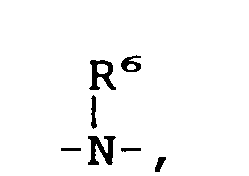
- The term "lower" used herein indicates that elemental groups or compounds referred to together with this term have no more than 6 carbon atoms, preferably no more than 4 carbon atoms.
- The term "a protective group of a hydroxyl group" used herein refers to any protective groups for hydroxyl groups usually used which can easily release as a result of usual protecting group elimination reaction, for example, hydrolysis or hydrogenolysis.
- Specific examples of the protective group for a hydroxyl group include the following groups:
- substituted or unsubstituted alkyl or alkenyl groups such as methyl, methoxyethyl, methylthiomethyl, benzyloxymethyl, t-butoxymethyl, 2-methoxyethoxymethyl, 2,2,2-trichloroethoxymethyl, bis(2-chloroethoxy)-methyl, 1-ethoxyethyl, 1-methyl-1-methoxyethyl, 1-(isopropoxy)ethyl, 2,2,2-trichloroethyl, t-butyl, allyl, cinnamyl, benzyl, p-methoxybenzyl, o-nitrobenzyl, p-nitrobenzyl, p-chlorobenzyl, o-chlorobenzyl, p-cyanobenzyl, diphenylmethyl,a-naphthyldiphenylmethyl, triphenylmethyl, and di(p-methoxyphenyl)methyl groups;
- heterocyclic groups such as tetrahydropyranyl, tetrahydrothiopyranyl, 4-methoxytetrahydropyranyl, 4-methoxytetrahydrothiopyranyl, tetrahydrofuranyl and tetrahydrothiofuranyl;
- substituted silyl groups such as trimethylsilyl, triethylsilyl, isopropyldimethylsilyl, t-butyldimethylsilyl, t-butyldiphenylsilyl, methyldiisopropylsilyl, methyldi-t-butylsilyl, tribenzylsilyl, triphenylsilyl, and triisopropylsilyl groups;
- acyl groups such as formyl, acetyl, propionyl, chloroacetyl, dichloroacetyl, trichloroacetyl, trifluoroacetyl, methoxyacetyl, triphenylmethoxyacetyl, phenoxyacetyl, p-chlorophenoxyacetyl, 2,6-dichloro-4-methyl- phenoxyacetyl, phenylacetyl, chlorodiphenylacetyl, 3-phenylpropionyl, 3-benzoylpropionyl, isobutyroyl, mon- osuccinoyl, 4-oxopentanoyl, pivaloyl, 2-butenoyl, (E)-2-methyl-2-butenoyl, benzoyl, 2-chlorobenzoyl, 3-nitrobenzoyl, 2-fluorobenzoyl, 3-trifluorobenzoyl, 3-trichlorobenzoyl, 4-phenylbenzoyl, 2,4,6-trimethylbenzoyl, and a-naphthoyl groups;
- substituted oxycarbonyl groups such as methoxycarbonyl, ethoxycarbonyl, 2,2,2-triethoxycarbonyl, isobutoxycarbonyl, vinyloxycarbonyl, aryloxycarbonyl, cinnamyloxycarbonyl, p-nitrophenoxycarbonyl, benzyloxycarbonyl, p-methoxybenzyloxycarbonyl, 3,4-dimethoxybenzyloxycarbonyl, and p-nitrobenzyloxycarbonyl groups;
- substituted carbamoyl groups such as phenylcarbamoyl, naphthylcarbamoyl, toluylcarbamoyl, fluorophenylcarbamoyl, difluorophenylcarbamoyl, nitrophenylcarbamoyl, cyanophenylcarbamoyl, benzylcarbamoyl, methylcarbamoyl, ethylcarbamoyl, isopropylcarbamoyl, butylcarbamoyl, cyclohexylcarbamoyl, cyclopropylmethylcarbamoyl, phenylthiocarbamoyl, naphthylthiocarbamoyl, toluylthiocarbamoyl, fluorophenylthiocarbamoyl, difluorophenylthiocarbamoyl, nitrophenylthiocarbamoyl, cyanophenylthiocar- bamoyl, benzylthiocarbamoyl, propylthiocarbamoyl, butylthiocarbamoyl groups.
- In the case where R1 and R2 in formula (I) above each represent a protective group, R1 and R2 may combine to form an ylidene group such as methylene, ethylidene, 1-t-butylethylidene, 1-phenylethylidene, 2,2,2-trichloroethylidene, isopropylidene, butylidene, cyclopentylidene, cyclohexylidene, cyclobutylidene, benzylidene, p-methoxybenzylidene, 2,4-dimethoxybenzylidene, p-dimethylaminobenzylidene, o-nitrobenzylidene, methoxymethylene, ethoxymethylene, dimethoxymethylene, 1-methoxyethylidene, 1,2-dimethox- yethylidene,a-methoxybenzylidene groups.
- In formula (I) above, preferably R1 and R2, which are the same or different, each represent a hydrogen atom; a lower alkyl group, particularly a t-butyl gourp; a benzyl group which may optionally be substituted with a halogen atom, a lower alkoxy group, a nitro group or a cyano group, particularly, benzyl, p-methoxybenzyl, o-nitrobenzyl, p-nitrobenzyl, p-chlorobenzyl, o-chlorobenzyl, p-cyanobenzyl group; a 5- or 6-membered saturated heterocyclic group containing as hetero atoms N, S or O selected from tetrahydropyranyl, tetrahydrothiopyranyl, 4-methoxytetrahydropyranyl, 4-methoxytetrahydrothiopyranyl, tetrahydrofuranyl and tetrahydrothiofuranyl groups; or an acyl group, particularly acetyl, propionyl, phenylacetyl, chlorodiphenylacetyl, 3-phenylpropionyl, 3-benzoylpropionyl, isobutyroyl, pivaloyl, 2-butenoyl, (E)-2-methyl-2-butenoyl, benzoyl, 2-chlorobenzoyl, 3-nitrobenzoyl, 2-fluorobenzyoyl, 3-trifuluoromethylben- zoyl, 3-trichloromethylbenzoyl, 4-phenylbenzoyl, 2,4,6-trimethylbenzoyl, and a-naphthoyl groups; or
- R1 and R2 may combine to form a ylidene group selected from 1-t-butylethylidene, 1-phenylethylidene, isopropylidene, butylidene, cyclopentylidene, cyclohexylidene, cycloheptylidene, benzylidene, p-methox- ybenzyilidene, 2,4-dimethoxybenzylidene, p-dimethylaminobenzylidene, and o-nitrobenzylidene groups.
- As for the "saturated or unsaturated, linear, branched or cyclic monovalent aliphatic hydrocarbon group", there can be cited, for example, the following groups:
- (1) an alkyl group, for example, methyl, ethyl, propyl, isopropyl, butyl, isobutyl, t-butyl, pentyl, neopentyl, isopentyl, t-pentyl, 1-ethylpentyl, 1-isopropylpentyl, 1-t-butylpentyl, 2-ethylpentyl, 2-isopropylpentyl, 2-t-butylpentyl, 3-ethylpentyl, 3-isopropylpentyl, 3-t-butylpentyl, hexyl, 1-ethylhexyl, 1-isopropylhexyl, 1-t-butylhexyl, 2-ethylhexyl, 2-isopropylhexyl, 2-t-butylhexyl, 3-ethylhexyl, 3-isopropylhexyl, 3-t-butylhexyl, heptyl, 1-ethylheptyl, 1-isopropylheptyl, 1-neopentylheptyl, 2-ethylheptyl, 2-isopropylheptyl, 2-neopentylheptyl, 3-ethylheptyl, 3-isopropylheptyl, 3-neopentylheptyl, octyl, 1-ethyloctyl, 1-isopropyloctyl, 1-t-butyloctyl, 2-ethyloctyl, 3-isopropyloctyl, 4-t-butyloctyl, nonyl, 1-methylnonyl, 1-ethylnonyl, 1-isopropylnonyl, 1-isobutylnonyl, 2-methylnonyl, 2-ethylnonyl, 3-isopropylnonyl, 4-isobutylnonyl, decyl, 1-ethyldecyl, 1,1-diethyldecyl, 1-t-butyldencyl, 3-ethyldecyl, 1,3-diethyldecyl, 2-t-butyldencyl, undecyl, 1-isopropylundecyl, 1,1-diethylundecyl, 2-isopropylundecyl, 1,2-diethylundecyl,dodecyl, 1-t-butyldodecyl, 1-isopropyldodecyl, 1,1-diethyldodecyl, 2-t-butyldodecyl, 3-isopropyldodecyl, 2,4-diethyldodecyl, tridecyl, 1,1-diethyltridecyl, 1-t butyltridecyl, 1,5-diethyltridecyl, 3-t-butyltridecyl, tetradecyl, 1-isobutyltetradecyl, pentadecyl, 1-methylpentadecyl, 1,1-dimethylpentadecyl, 1-ethylpentadecyl, 1,1-diethylpentadecyl, 1-isopropylpentadecyl, 1-t-butylpentadecyl, 2-isobutyltetradecyl, 3-methylpentadecyl, 2,6-dimethylpentadecyl, 2-ethylpentadecyl, 1,4-diethylpentadecyl, 3-isopropylpentadecyl, 2-t-butylpentadecyl, hexadecyl, 1,1-dimethylhexadecyl, 1-methylhexadecyl, 1-ethylhexadecyl, 1-isopropylhexadecyl, 1-t-butylhexadecyl, 1,3-dimethylhexadecyl, 2-methylhexadecyl, 4-ethylhexadecyl, 3-isopropylhexadecyl, 4-t-butylhexadecyl, heptadecyl, 1-methylheptadecyl, 1,1-dimethylheptadecyl, 1-ethylheptadecyl, 1-isopropylheptadecyl, 1-t-butylheptadecyl, 2-methylheptadecyl, 3,5-dimethylheptadecyl, 2-ethylheptadecyl, 5-isopropylheptadecyl, 3-t-butyheptadecyl, octadecyl, 1-methyloctadecyl, 1,1-dimethyloctadecyl, 2,3-dimethyloctadecyl, 5-ethyloctadecyl, 1,2-diethyloctadecyl, nonadecyl, 1-methylnonadecyl, 1,1-dimethylnonadecyl, 1-t-butylnonadecyl, 2-methylnonadecyl, 2,3-dimethylnonadecyl, 3-t-butylnonadecyl, eicosyl, 1-methyleicosyl, 1,1-dimethyleicosyl, 1-ethyleicosyl, 1-t-butyleicosyl, 4-methyleicosyl, 2,2-dimethyleicosyl, 3-ethyleicosyl, 2,2-dimethyleicosyl, 3-ethyleicosyl, and 2-t-butyleicosyl groups;
- (2) an alkenyl group, for example, vinyl, 1-propenyl, 1-methyl-2-propenyl, 1-methyl-1-butenyl, 2-butenyl, 1-methyl-3-butenyl, 1-pentenyl, 1-methyl-2-pentenyl, 1-ethyl-3-pentenyl, 4-pentenyl, 1,3-pentadienyl, 2,4-pentadienyl, 1-hexenyl, 1-methyl-2-hexenyl, 3-hexenyl, 4-hexenyl, 1-butyl-5-hexenyl, 1,3-hexadienyl, 2,4- haxedienyl, 1-heptenyl, 2-heptenyl, 3-heptenyl, 4-heptenyl, 5-heptenyl, 6-heptenyl, 1,3-heptadienyl, 2,4- heptadienyl, 1-octenyl, 2-octenyl, 3-octenyl, 4-octenyl, 5-octenyl, 6-octenyl, 7-octenyl, 1-nonenyl, 2- nonenyl, 3-nonenyl, 4-nonenyl, 5-nonenyl, 6-nonenyl, 7-nonenyl, 8-nonenyl, 9-decenyl, 1-methyl-9- decenyl, 1,1-dimethyl-9-decenyl, 1-ethyl-9-decenyl, 6-undecenyl, 1-methyl-6-undecenyl, 1,1-dimethyl 6- undecenyl, 6-tridecenyl, 1-methyl-6-tridecenyl, 1,1-dimethyl-6-tridecenyl, 8-tridecenyl, 1-methyl-8- tridecenyl, 1,1-dimethyl-8-tridecenyl, 10-tridecenyl, 1-methyl-10-tridecenyl, 1,1-dimethyl-10-tridecenyl, 10-pentadecenyl, 1-methyl-10-pentadecenyl, 1,1-dimethyl-10-pentadecenyl, 8-pentadecenyl, 1-methyl-8-pentadecenyl, 1,1-dimethyl-8-pentadecenyl, 12-heptadecenyl, 1-methyl-12-heptadecenyl, 1,1-dimethyl-12-heptadecenyl, 10-heptadecenyl, 1-methyll-heptadecenyl, 1,1-dimethyl-10-heptadecenyl, 8-heptadecenyl, 1-methyl-8-heptadecenyl, 1,1-dimethyl-8-heptadecenyl, 1-ethyl-8-heptadecenyl, 8,11-heptadecadienyl, 1-methyl-8,11-heptadecadienyl, and 8,11,14-heptadecatrienyl groups.
- (3) an alkynyl group, for example, propargyl, 2-butynyl, 1-methyl-3-butynyl, 2-pentynyl, 1-ethyl-3-pentynyl, 1-isopropyl-4-pentynyl, 1,3-pentadiynyl, 2,4-pentadiynyl, 1-hexylnyl, 1-methyl-2-hexynyl, 2-methyl-3-hexynyl, 1-ethyl-4-hexynyl, 5-hexynyl, 1,3-hexadiynyl, 2,4-hexadiynyl, 1-heptynyl, 1-methyl-2- heptynyl, 3-heptynyl, 1-ethyl-4-heptynyl, 2-propyl-5-heptynyl, 2-ethyl-6-heptynyl, 1,3 heptadiynyl, 2,4- heptadiynyl, 1-octynyl, 1-methyl-2-octynyl, 3-methyl-1-octynyl, 4-methyl-1-octynyl, 1-methyl-5-octynyl, 6-methyl-1-octynyl, 7-octynyl, 1-nonynyl, 2-methyl-1-nonynyl, 3-methyl-1-nonynyl, 1-methyl-4-nonynyl, 5- nonynyl, 6-methyl-1-nonynyl, 1-methyl-7-nonynyl, 8-nonynyl, 9-decynyl, 1-methyl-9-decynyl, 1,1-dimethyl-9-decynyl, 1-ethyl-9-decynyl, 6-undecynyl, 1-methyl-6-undecynyl, 6-tridecynyl, 1-methyl-6- tridecynyl, 1,1-dimethyl-6-tridecynyl, 8-tridecynyl, 1-methyl-8-tridecynyl, 1,1-dimethyl-8-tridecynyl, 10- tridecynyl, 1-methyl-10-tridecynyl, 1,1-dimethyl-10-tridecynyl, 10-pentadecynyl, 1-methyl-10-pentadecynyl, 1,1-dimethyl-10-entadecynyl, 8-pentadecynyl, 1-methyl-8-pentadecynyl, 1,1-dimethyl-8-pentadecynyl, 12-hetadecynyl, 1-methyl-12-heptadecynyl, 1,1-dimethyl-12-heptadecyny1,10-heptadecynyl, 1-methyl-10-heptadecynyl, 1,1-dimethyl-10-heptadecynyl, 8-heptadecynyl, 1-methyl-8-heptadecynyl, 1,1-dimethyl-8-heptadecynyl, 1-ethyl-8-heptadecynyl, 8,11-heptadecadiynyl, 1-methyl-8,11-heptadecadiynyl, 1-methyl-8,11-heptadecadiynyl, and 8,11,14-heptadecatriynyl groups;
- (4) a cycloalkyl group, for example, cyclopropyl, cyclobutyl, cyclopentyl, cyclohexyl, cycloheptyl, cyclooctyl, and perhydronaphthyl groups;
- (5) a cycloalkenyl group, for example, cyclopentenyl, cyclohexenyl, cycloheptenyl, cyclooctenyl, cyclopentadienyl, cyclohexadienyl, cycloheptadienyl, and cyclooctadienyl groups;
- (6) a cycloalkylalkyl group, for example, cyclohexylmethyl, cyclopentylmethyl, (4-isopropylcyclohexyl)-methyl, (4-t-butylcyclohexyl)methyl, (4-neopentylcyclohexyl)methyl, 2-cyclopentylethyl, 2-cyclohexylethyl, 3-cyclopentylpropyl, 3-cyclohexylpropyl, 1-cyclopentylpentyl, 1-cyclohexylpentyl, 1-cyclohexylmethylpentyl, 3-cyclopentylpentyl, 2-cyclohexylpentyl, 2-cyclohexylmethylpentyl, 1-(4-t-butylcyclohexyl)-methylpentyl, 1-cyclopentylhexyl, 1-cyclohexylhexyl, 1-cyclopentylmethylhexyl, 2-cyclopentylhexyl, 2-cyclohexylhexyl, 3-cyclopentylmethylhexyl, 1-(4-neopentylcyclohexyl)methylhexyl, 1-cyclopentylheptyl, 1-cyclohexylmethylheptyl, 1-(4-isopropylcyclohexyl)methylheptyl, 3-cyclopentylheptyl, 2-cyclohexylmethylheptyl, 4-(4-isopropylcyclohexyl)methylheptyl, 1-cyclopentyloctyl, 1-cyclohexyloctyl, 1-cyclopentylmethyloctyl, 2-cyclopentyloctyl, 3-cyclohexyloctyl, 2-cyclopentylmethyloctyl, 1-cyclopentylnonyl, 1-cyclohexylnonyl, 1-cyclohexylmethylnonyl, 3-cyclopentylnonyl, 2-cyclohexylnonyl, 2-cyclohexylmethylnonyl, 1-cyclopentyldencyl, 1-cyclopentylundecyl, 1-cyclohexylundecyl, 1-cyclopentyldodecyl, 1-cyclopentyltridecyl, 2-cyclopentyldecyl, 3-cyclopentylundecyl, 3-cyclohexylundecyl, 2-cyclopentyldodecyl, 2-cyclopentyltridecyl, 1-cyclopentyltetradecyl, 1-cyclohexyltetradecyl, 2-cyclopentyltetradecyl, and 3-cyclohexyltetradecyl groups;
- (7) a cycloalkenylalkyl group, for example, 2-cyclohexen-1-ylmethyl, 1-cyclopenten-1-ylmethyl, 2-(2-cyclopenten-1-yl)ethyl, 2-(1-cyclohexen-1-yl)ethyl, 3-(1-cyclopenten-1-yl)propyl, 3-(1-cyclohexen-1-yl)-propyl, 4-(1-cyclohexen-1-yl)butyl, 1-(1-cyclopenten-1-yl)pentyl, 1-(1-cyclohexen-1-yl)pentyl, 5-(1-cyclohexen-1-yl)pentyl, 1-(1-cyclohexen-1-ylmethyl)pentyl, 1-(1-cyclopenten-1-yl)hexyl, 6-(1-cyclopenten-1-yl)hexyl, 1-(1-cyclohexen-1-yl)hexyl, 6-(1-cyclohexen-1-yl)hexyl, 1-(2-cyclopenten-1-ylmethyl)hexyl, 1-(1-cyclopenten-1-yl)heptyl, 7-(1-cyclopenten-1-yl)heptyl, 1-(1-cyclohexen-1-ylmethyl)heptyl, 1-(1-cyclopenten-1-yl)octyl, 1-(2-cyclopenten-1-yl)octyl, 1-(2-cyclopenten-1-yl)octyl, 1-(2-cyclohexen-1-yl)-octyl, 8-(2-cyclohexen-1-yl)octyl, 1-(1-cyclopenten-1-ylmethyl)octyl, 1-(1-cyclopenten-1-yl)nonyl, 9-(1-cyclopenten-1-yl)nonyl, 1-(1-cyclohexen-1-yl)nonyl, 9-(1-cyclohexen-1-yl)nonyl, 1-(1-cyclohexen-1-yl- methyl)nonyl, 1-(1-cyclopenten-1-yl)decyl, 10-(1-cyclopenten-1-yl)decyl, 1-(2-cyclopenten-1-yl)undecyl, 1-(2-cyclohexen-1-yl)undecyl, 1-(1-cyclopenten-1-yl)dodecyl, 1-(1-cyclopenten-1-yl)tridecyl, 1-(2-cyclopenten-1-yl)tetradecyl,and 1-(3-cyclohexen-1-yl)tetradecyl groups;
- (8) an alkylcycloalkyl group and an alkenylcycloalkyl group, for example, 1-methylcyclobutyl, 2-ethyl- cyclobutyl, 2-propylcyclobutyl, 1-butylcyclobutyl, 1-pentylcyclobutyl, 1-hexylcyclobutyl, 1-heptyl- cyclobutyl, 1-octylcyclobutyl, 1-nonylcyclobutyl, 2-pentylcyclobutyl, 2-hexylcyclobutyl, 2-heptyl- cyclobutyl, 2-octylcyclobutyl, 2-nonylcyclobutyl, 1-decylcyclobutyl, 1-undecylcyclobutyl, 1-dodecylcyclobutyl, 1-pentadecylcyclobutyl, 1-(9-octadecynyl)cyclobutyl, 1-methylcyclopentyl, 2-methylcyclopentyl, 1-ethylcyclopentyl, 1-propylcyclopentyl, 1-butylcyclopentyl, 2-butylcyclopentyl, 1-pentylcyclopentyl, 1-hexylcyclopentyl, 3-hexylcyclopentyl, 1-heptylcyclopentyl, 1-octylcyclopentyl, 2-octylcyclopentyl, 1- decylcyclopentyl, 1-dodecylcyclopentyl, 1-tridecylcyclopentyl, 1-tetradecylcyclopentyl, 1-(9-octadecenyl)-cyclopentyl, 1-methylcyclohexyl, 1-ethylcyclohexyl, 1-propylcyclohexyl, 2-methylcyclohexyl, 3-ethylcyclohexyl, 4-propylcyclohexyl, 1-butylcyclohexyl, 1-pentylcyclohexyl, 1-hexylcyclohexyl, 4-butylcyclohexyl, 4-pentylcyclohexyl, 4-hexylcyclohexyl, 1-heptylcyclohexyl, 1-octylcyclohexyl, 1-nonylcyclohexyl, 1-undecylcyclohexyl, 1-hexadecylcyclohexyl, and 1-(9-octadecenyl)cyclohexyl groups;
- (9) alkycycloalkenyl group and alkenylcycloalkyenyl group, for example, 1-methyl-2-cyclopentenyl, 1-ethyl-2-cyclopentenyl, 1-propyl-2-cyclopentenyl, 1-butyl-2-cyclopentenyl, 1-pentyl-2-cyclopentenyl, 1-hexyl-2-cyclopentenyl, 1-heptyl-2-cyclopentenyl, 1-octyl-2-cyclopentenyl, 2-methyl-2-cyclopentenyl, 3-ethyl-2-cyclopentenyl, 2-propyl-3-cyclopentenyl, 3-butyl-2-cyclopentenyl, 2-pentyl-2-cyclopentenyl, 3-hexyl-3-cyclopentenyl, 2-heptyl-2-cyclopentenyl, 2-octyl-3-cyclopentenyl, 1-decyl-2-cyclopentenyl, 1-dodecyl-2-cyclopentenyl, 1-tridecyl-2-cyclopentenyl, 1-tetradecyl-2-cyclopentenyl, 1-(9-octadecenyl)-2-cyclopentenyl, 1-methyl-2-cyclopentenyl, 1-ethyl-2-cyclohexenyl, 1-propyl-2-cyclohexenyl, 1-butyl-2-cyclohexenyl, 1-pentyl-2-cyclohexenyl, 1-hexyl-2-cyclohexenyl, 1-heptyl-2-cyclohexenyl, 4-methyl-2-cyclohexenyl, 2-ethyl-2-cyclohexenyl, 3-propyl-2-cyclohexenyl, 4-butyl-3-cyclohexenyl, 3-pentyl-3-cyclohexenyl, 4-hexyl-3-cyclohexenyl, 4-heptyl-3-cyclohexenyl, 1-octyl-2-cyclohexenyl, 2-nonyl-2-cyclohexenyl, 1-undecyl-2-cyclohexenyl, 1-hexadecyl-2-cyclohexenyl, and 1-(9-octadecenyl-2-cyclohexenyl groups; and the like.
- The saturated or unsaturated, linear, branched or cyclic monovalent aliphatic hydrocarbon groups may optionally be substituted with an aromatic group selected from an aromatic hydrocarbon group and an aromatic heterocyclic group. Examples of the aromatic hydrocarbon group include phenyl and naphthyl groups. Examples of the aromatic heterocyclic group include furyl, thienyl, pyridyl, quinolyl, isoquinolyl, pyridazinyl, pyrazinyl, indolyl, benzoxadiazolyl, imidazolyl, benzothiadiazolyl, triazolyl and tetrazolyl groups.
- Furthermore, these aromatic groups may have one or more substituent groups. Specific examples of the substituent groups include a halogen atom such as chlorine, bromine and fluorine, a lower alkyl group, a lower alkoxy group, a lower alkylthio group, a cyano group, a nitro group, a trichloromethyl group, a trifluoromethyl group, a hydroxyl group, a phenyl group, a phenoxy group, and the like.
- As for the saturated or unsaturated, linear, branched or cyclic monovalent aliphatic hydrocarbon group which may be substituted with an aromatic group, represented by R3 and R4 in formula (I) above, those groups are used which are of a relatively long chain, i.e., have from 5 to 25 carbon atoms, preferably from 8 to 22 carbon atoms. On the other hand, the saturated or unsaturated, linear, branched or cyclic monovalent aliphatic hydrocarbon group which may be substituted with an aromatic group, represented by R5 in formula (I) above, may be of either short chain or long chain but generally those groups are preferred which are of a short chain, preferably having from 1 to 10 carbon atoms, more preferably from 1 to 8 carbon atoms. It is desirable that total carbon atom number of R4 and R5 is in a range of from 5 to 25, preferably form 8 to 22.
- Specific examples of the group of formula

- R3 in formula (I) above may preferably represent the following groups:
- (1) a C5-C25-alkyl group which is linear or has a branched chain at the 1-position thereof, particularly pentyl, 1-isopropylpentyl, 1-t-butylpentyl, hexyl, 1-isopropylhexyl, 1-t-butylhexyl, heptyl, 1-isopropylheptyl, 1-butylheptyl, octyl, 1-t-butyloctyl, nonyl, 1-isobutylnonyl, decyl, 1-ethyldecyl, 1,1-diethyldecyl, 1-t-butyldecyl, undecyl, 1-isopropylundecyl, 1,1-diethylundecyl, dodecyl, 1-t-butyldodecyl, 1-isopropyldodecyl, 1,1-diethyldodecyl, tridecyl, 1,1-diethyltridecyl, 1-t-butyltridecyl, tetradecyl, 1-isobutyltetradecyl, pentadecyl, 1-methylpentadecyl, 1,1-dimethylpentadecyl, 1-ethylpentadecyl, 1,1-diethylpentadecyl, 1-isopropylpentadecyl, 1-t-butylpentadecyl, hexadecyl, 1,1-dimethylhexadecyl, 1-methylhexadecyl, 1-ethylhexadecyl, 1-isopropylhexadecyl, 1-t-butylhexadecyl, heptadecyl, 1-methylheptadecyl, 1,1-dimethylheptadecyl, 1-ethylheptadecyl, 1-isopropylheptadecyl, 1-t-butylheptadecyl, octadecyl, 1-methyloctadecyl, 1,1-dimethyloctadecyl, 1-ethyloctadecyl, or 1,1-diethyloctadecyl group.
- (2) a C12-C18-alkenyl group which is linear or has a branched chain at the 1-position thereof, particularly 1,1-dimethyl-9-decenyl, 1-ethyl-9-decenyl, 1-methyl-6-undecenyl, 1,1-dimethyl-6-undecenyl, 6-tridecenyl, 1-methyl-6-tridecenyl, 1,1-dimethyl-6-tridecenyl, 8-tridecenyl, 1-methyl-8-tridecenyl, 1,1-dimethyl-8- tridecenyl, 10-tridecenyl, 1-methyl-10-tridecenyl, 1,1-dimethyl-10-tridecenyl, 10-pentadecenyl, 1-methyl-10-pentadecenyl, 1,1-dimethyl-l0pentadecenyl, 8-pentadecenyl, 1-methyl-8-pentadecenyl, 1,1-dimethyl-8-pentadecenyl, 12-heptadecenyl, 1-methyl-12-heptadecenyl, 1,1-dimethyl-12-heptadecenyl, 10-heptadecenyl, 1-methyl-10-heptadecenyl, 1-methyl-10-heptadecenyl, 1,1-dimethyl-10-heptadecenyl, 8-heptadecenyl, 1-methyl-8-heptadecenyl, 1,1-methyl-8-heptadecenyl, 1-ethyl-8-heptadecenyl, 8,11-heptadecadienyl, 1-methyl-8,11-heptadecadienyl, or 8,11,14-heptadecadienyl group;
- (3) a C8-Cl8-alkyl-C4.-C6-cycloalkyl group, particularly 1-octyl-cyclobutyl, 1-nonylcyclobutyl, 1-decylcyclobutyl, 1-undecylcyclobutyl, 1-dodecylcyclobutyl, 1-pentadecylcyclobutyl, 1-(9-octadecenyl)-cyclobutyl, 1-octylcyclopentyl, 1-decylcyclopentyl, 1-dodecylcyclopentyl, 1-tridecylcyclopentyl, 1-tetradecylcyclopentyl, 1-(9-octadecenyl)cyclopentyl, 1-nonylcyclohexyl, 1-undecylcyclohexyl, or 1-(9-octadecenyl)cyclohexyl group;
- (4) a monosubstituted amino group substituted with a C8-C20-alkyl group or a C8-C20-alkenyl group, for example, 1-isopropylpentylamino, 1-t-butylpentylamino, 1-isopropylhexylamino, 1-t-butylhexylamino, 1-isopropylheptylamino, 1-t-butyloctylamino, 1-isobutylnonylamino, decylamino, 1-ethyldecylamino, 1,1-diethyldecylamino, 1-t-butyldecylamino, undecylamino, 1-isopropylundecylamino, 1,1-diethylun- decylamino, dodecylamino, 1-t-butyldodecylamino, 1-isopropyldodecylamino, 1,1-diethyldodecylamino, tridecylamino, 1,1-diethyltridecylamino, 1-t-butyltridecylamino, tetradecylamino, 1-isobutyl- tetradecylamino, pentadecylamino, 1-methylpentadecylamino, 1,1-dimethylpentadecylamino, 1-ethylpen- tadecylamino, 1,1-diethylpentadecylamino, 1-isopropylpentadecylamino, 1-t-butylpentadecylamino, hexadecylamino, 1,1-dimethylhexadecylamino, 1-methylhexadecylamino, 1-ethylhexadecylamino, 1-isopropylhexadecylamino, 1-t-butylhexadecylamino, heptadecylamino, 1-methylheptadecylamino, 1,1-dimethylheptadecylamino, 1-ethylheptadecylamino, 1-isopropylheptadecylamino, 1-t-butylhep- tadecylamino, octadecylamino, 1-methyloctadecylamino, 1,1-dimethyloctadecylamino, 1-ethyloc- tadecylamino, 1,1-diethyloctadecylamino, 1,1-dimethyl-9-decenylamino, 1,1-methyl-6-undecenylamino, 1,1-dimethyl-6-undecenylamino, 1-methyl-6-tridecenylamino, 1,1-dimethyl-6-tridecenylamino, 8- tridecenylamino, 1-methyl-8-tridecenylamino, 1,1-dimethyltridecenylamino, 10-tridecenylamino, 1-methyl-10-tridecenylamino, 1,1-dimethyl-10-tridecenylamino, 10-pentadecenylamino, 1-methyl-10-pentadecenylamino, 1,1-dimethyl-10-pentadecenylamino, 8-pentadecenylamino, 1-methyl-8-pentadecenylamino, 1,1-dimethyl-8-pentadecenylamino, 12-heptadecenylamino, 1-methyl-12-heptadecenylamino, 1,1-dimethyl-12-heptadecenylamino, 10-heptadecenylamino, 1-methyl-10-heptadecenylamino, 1,1-dimethyl-10-heptadecenylamino, 8-heptadecenylamino, 1-methyl-8-heptadecenylamino, 1,1-dimethyl-8-heptadecenylamino, 1-ethyl-8-heptadecenylamino, 8,11-heptadecadienylamino, 1-methyl-8,11-heptadecadienylamino, 8,11-14-heptadecatrienylamino, 1-hexylcyclobutylamino, 1-heptylcyclobutylamino, 1-octylcyclobutylamino, 1-nonylcyclobutylamino, 1-decylcyclobutylamino, 1-undecylcyclobutylamino, 1-dodecylcyclobutylamino, 1-pentadecylcyclobutylamino, 1-(9-octadecenyl)cyclobutylamino, 1-pentylcyclopentylamino, 1-hexylcyclopentylamino, 1-heptylcyclopen- tylamino, 1-octylcyclopentylamino, 1-decylcyclopentylamino, 1-dodecylcyclopentylamino, 1-tridecyl- cyclopentylamino, 1-tetradecylcyclopentylamino, 1-(9-octadecenyl)cyclopentylamino, 1-nonylcyclohexylamino, 1-undecylcyclohexylamino, 1-hexadecylcyclohexylamino, or 1-(9-octadecenyl)cyclohexylamino; or
- (5) a disubstituted amino group disubstituted with an alkyl group or an alkenyl group and having total carbon atoms in a range of from 8 to 20, for example, decylhexylamino, octylpropylamino, hexyloctylamino, (1-butyloctyl)hexylamino, (1-ethyldecyl)butylamino, (1,1-diethyldecyl)pentylamino, butylundecylamino, butyldodecylamino, propyltetradecylamino, butylpentadecylamino, (1-methylpentadecyl)-butylamino, (1,1-dimethylpentadecyl)propylamino, ethylhexadecylamino, ethyl(1-methylhexadecyl)amino, (1,1-dimethylhexadecyl)methylamino, heptadecylmethylamino, (1-methylheptadecyl)methylamino, (1,1-dimethylheptadecyl)methylamino, methyloctadecylamino, ethyl(1-methyloctadecyl)amino, ethyl(1,1-dimethyloctadecyl)amino, (1,1-dimethyl-9-decenyl)butylamino, (1-ethyl-9-decenyl)propylamino, pentyl(6- undecenyl)amino, (1-methyl-6-undecenyl)butylamino, (1,1-dimethyl-6-undecenyl)propylamino, pentyl(6- tridecenyl)amino, (1-methyl-6-tridecenyl)pentylamino, (1,1-dimethyl-6-tridecenyl)ethylamino, butyl(8- tridecenyl)amino, butyl(1-methyl-8-tridecenyl)amino, (1,1-dimethyl-8-tridecenyl)ethylamino, ethyl(10- tridecenyl)amino, butyl(1-methyl-10-tridecenyl)amino, (1,1-dimethyl-10-tridecenyl)propylamino, butyl(10-pentadecenyl)amino, butyl(1-methyl-10-pentadecenyl)amino, (1,1-dimethyl-10-pentadecenyl)propylamino, (8-pentadecenyl)propylamino, (1-methyl-8-pentadecenyl)propylamino, ethyl(1,1-methyl-8-pentadecenyl)-propylamino, butyl(12-heptadecenyl)amino, ethyl(1-methyl-12-heptadecenyl)amino, (1,1-dimethyl-12-heptadecenyl)propylamino, ethyl(10-hepotadecenyl)amino, (1-methyl-10-heptadecenyl)propylamino, ethyl-(1,1-dimethyl-10-heptadecenyl)amino, (8-heptadecenyl)methylamino, methyl(1-methyl-8-heptadecenyl)-amino, ethyl(1,1-dimethy-8-heptadecenyl)amino, (1-ethyl-8-heptadecenyl)propylamino, (8,11 -heptadecadienyl)amino, or methyl(8,11,14-heptadecatrienyl)amino group. The specific examples exemplified in (1) to (5) above for the groups represented by R3 may be substituted with an aromatic group, for example, a phenyl group, a napthyl group, a furyl group, a thienyl group. The aromatic groups may further be substituted with a halogen atom, a lower alkyl group, a cyano group or the like.
- As for the "saturated or unsaturated, linear, branched or cyclic divalent aliphatic hydrocarbon group which may be substituted with an aromatic group", there can be cited, for example, the following groups:
- (1) alkylene groups or cycloalkylalkylene groups, for example, C2-C,s-alkylene groups and C5-C7- cycloalkyl-C2-C10-alkylene groups such as ethylene, trimethylene, tetramethylene, pentamethylene, hexamethylene, heptamethylene, octamethylene, nonamethylene, decamethylene, propylene, ethylethylene, isopropylethylene, propylethylene, butylethylene, isobutylethylene, cyclopentylethylene, cyclohexylethylene, cycloheptylethylene, 1,1-dimethylethylene, 1-methyltrimethylene, 2-methyltrimethylene, 1-ethyltrimethylene, 1-isopropyltrimethylene, 1-isobutyltrimethylene, 1-cyclopentyltrimethylene, 1-cyclohexyltrimethylene, 2-isopropyltrimethylene, 2-isobutyltrimethylene, 2-cyclohexyltrimethylene, 1-methyltetramethylene, 1-isopropyltetramethylene, 1-isobutyltetramethylene, 1-cyclopet- nyltetramethylene, 1-cyclohexyltetramethylene, 2-methyltetramethylene, 2-isopropyltetramethylene, 2-isobutyltetramethylene, 2-cyclopentyltetramethylene, 2-cyclohexyltetramethylene, 1-methylpentamethylene, 1-ethylpentamethylene, 1-isopropylpentamethylene, 1-isobutylpentamethylene, 1-cyclopentylpentamethylene, 1-cyclohexylpentamethylene, 2-methylpentamethylene, 2-ethylpentamethylene, 2-isopropylpentamethylene, 2 isobutylpentamethylene, 2-cyclopentylpentamethylene, 2-cyclohexylpentamethylene, methylpentamethylene, 3-ethylpentamethylene, 3-isopropylpentamethylene, 3-isobutylpentamethylene, 3-cyclopentylpentamethylene, 3-cyclohexylpentamethylene, 1-methylhexamethylene, 1-ethylhexamethylene, 1-isopropylhexamethylene, 1-isobutylhexamethylene, 1-cyclopentylhexamethylene, 1-cyclohexylhexamethylene, 2-methylhexamethylene, 2-ethylhexamethylene, 2-isopropylhexamethylene, 2-isobutylhexamethylene, 2-cyclopentylhexamethylene, 2-cyclohexylhexamethylene, 3-methylhexamethylene, 3-ethylhexamethylene, 3-isopropylhexamethylene, 3-isobutylhexamethylene, 3-cyclopentylhexamethylene, 3-cyclohexylhexamethylene, 1-methylheptamethylene, 1-ethylheptamethylene, 1-isopropylheptamethylene, 1-isobutylheptamethylene, 1-cyclopentylheptamethylene, 1-cyclohexylheptamethylene, 2-methylheptamethylene, 2-ethylheptamethylene, 2-isopropylheptamethylene, 2-isobutylheptamethylene, 2-cyclopentylheptamethylene, 2-cyclohexylheptamethylene, 3-methylheptamethylene, 3-ethylheptamethylene, 3-isopropylheptamethylene, 3-isobutylheptamethylene, 3-cyclopentylheptamethylene, 3-cyclohexylheptamethylene, 1-methyloctamethylene, 1-ethyloctamethylene, 1-isopropyloctamethylene, 1-isobutyloctamethylene, 1-cyclopentyloctamethylene, 1-cyclohexyloctamethylene, 2-methyloctamethylene, 2-ethyloctamethylene, 2-isopropyloctamethylene, 2-isobutyloctamethylene, 2-cyclopentyloctamethylene, 2-cyclohexyloctamethylene, 3-methyloctamethylene, 3-ethyloctamethylene, 3-isopropyloctamethylene, 3-isobutyloctamethylene, 3-cyclopentyloctamethylene, 3-cyclohexyloctamethylene, 1-methylnonamethylane, 1-ethylnonamethylene, 1-isopropylnonamethylene, 1-isobutylnonamethylene, 1-cyclopentylnonamethylene, 1-cyclohexylnonamethylene, 2-methylnonamethylene, 2-ethylnonamethylene, 2-isopropylnonamethylene, 2-isobutylnonamethylene, 2-cyclopentylnonamethylene, 2-cyclohexylnonamethylene, 3-methylnonamethylene, 3-ethylnonamethylene, 3-isopropylnonamthylene, 3-isobutylnonamethylene, 3-cyclopentylnonamethylene, 1-methyldecamethylene, 1-ethyldecamethylene, 1-isopropyldecamethylene, 1-isobutyldecamethylene, 1-cyclopentyldecamethylene, 1-cyclohexyldecamethylene, 2-methyldecamethylene, 2-ethyldecamethylene, 2-isopropyldecamethylene, 2-isobutyldecamethylene, 2-cyclopentyldecamethylene, 2-cyclohexyldecamethylene, 3-methyldecamethylene, 3-ethyldecamethylene, 3-isopropyldecamethylene, 3-isobutyldecamethylene, 3-cyclopentyldecamethylene, and 3-cyclohexyldecamethylene groups;
- (2) cycloalkylene groups, for example, C5-C8-cycloalkylene groups such as 1,2-cyclopentylene, 1,3-cyclopentylene, 1,2-cyclohexylene, 1,3-cyclohexylene, 1,4-cyclohexylene, 1,2-cycloheptyl, 1,3-cycloheptyl, and 1,4-cycloheptyl groups;
- (3) alkenylene groups and alkynylene groups, for example, C4.-Cio-alkenylene groups and C4.-Clo-alkynylene groups such as 2-butenylene, 1-methyl-2-butenylene, 1-ethyl2-butenylene, 1-propyl- butenylene, 1-butylbutenylene, 2-butenylene, 2-pentenylene, 2-pentynylene, 2-hexenylene, 3-hexenylene, 2-hexynylene, 3-hexynylene, 2-heptenylene, 3-heptenylene, 2-heptynylene, 3-heptynylene, 2-octenylene, and 4-octenylene groups; and
- (4) cycloalkylalkylene groups, for example, C4-C8-cycloalkylene-C1-C7-alkylene groups such as 1,1-pentamethyleneethylene, 1,1-tetramethyleneethylene, 1,1-hexamethyleneethylene, 1,1-tetramethylenetrimethylene, 1,1-pentamethylenetrimethylene, 1,2-trimethylenetrimethylene, 1,2-tetramethylenetrimethylene, 1,1-trimethylenepentamethylene, 1,1-tetramethylenepentamethylene, 1,1-pentamethylenepentamethylene, 1,2-trimethylenepentamethylene, 1,2-tetramethylenepentamethylene, 1,2-pentamethylenepentamethylene, 1,3-trimethylenepentamethylene, 1,1-trimethylenehexamethylene, 1,1-tetramethylenehexamethylene, 1,1-pentamethylenehexamethylene, 1,2-trimethylenehexamethylene, 1,2-tetramethylenehexamethylene, 1,2-pentamethylenehexamethylene, 1,3-trimethylhexamethylene, 1,1-trimethyleneheptamethylene, 1,1-tetramethylenehpetamethylene, 1,1-pentamethyleneheptamethylene, 1,2-trimethyleneheptamethylene, 1,2-trimethyleneheptamethylene, 1,2-tetramethyleneheptamethylene, 1,2-pentamethyleneheptamethylene, 1,3-trimethyleneheptamethylene, 1,1-trimethyleneoctamethylene, 1,1-tetramethyleneoctamethylene, 1,1-pentamethyleneoctamethylene, 1,2-trimethyleneoctamethylene, 1,2-tetramethyleneoctamethylene, 1,2-pentamethyleneoctamethylene,
- 1,1-trimethylenenonamethylene, 1,1-tetramethylenenonamethylene, 1,1-pen- tamethylenenonamethylene, 1,2-trimethylenenonamethylene, 1,2-tetramethylenenonamethylene, 1,2-pen- tamethylenenonamethylene, 1,3-trimethylenenonamethylene, 1,1-trimethylenedecamethylene, 1,1-tetramethylenedecamethylene, 1,1-pentamethylenedecamethylene, 1,2-trimethylenedecamethylene, 1,2-tetramethylenedecamethylene, 1,3-pentamethylenedecamethylene, and 1,3-trimethylenedecamethylene groups.
- The divalent aliphatic hydrocarbon groups described above may further be substituted with an aromatic group, for example, an aryl group such as phenyl or naphthyl group; or a heteroaryl group such as furyl, thienyl, pyridyl or indolyl group. Examples of such substituted divalent hydrocarbon group include phenylethylene, pyridylethylene, benzylethylene, naphthylmethylethylene, furylmethylethylene, thienylmethylethylene, pyridylmethylethylene, and indolylmethylethylene groups.
- The "divalent aromatic hydrocarbon group" may be either monocyclic or polycyclic, and examples thereof include phenylene and naphthylene groups. Their aromatic rings may be substituted with 1 to 4 lower alkyl groups.
- Further, the "divalent aromatic heterocyclic group" includes aromatic unsaturated heterocyclic groups which have at least one hetero atom selected from a nitrogen atom, an oxygen atom and a sulfur atom in the ring thereof. The heterocyclic group described above may form a condensed ring together with the above-described aromatic hydrocarbon ring. Examples of this type of divalent aromatic heterocyclic group includes pyridinediyl, pyrimidinediyl, pyrazinediyl, furanediyl, thiophenediyl, quinolinediyl, isoquinolinediyl, benzofuranediyl, benzothiophenediyl, benzoxazolediyl, benzothiazolediyl and indolediyl.
- Therefore, in the case where Q in formula (I) above represents the above-described group (a), A may preferably represent:
- (1) a linear or branched C2-Clo-alkylene group, for example, ethylene, trimethylene, tetramethylene, pentamethylene, hexamethylene, heptamethylene, octamethylene, nonamethylene, decamethylene, propylene, ethylethylene, isopropylethylene, propylethylene, butylethylene, isobutylethylene, 1-methyltrimethylene, 1-ethyltrimethylene, 1-isopropyltrimethylene, 1-isobutyltrimethylene, 1-methyltetramethylene, 1-isopropyltetramethylene or 1-isobutyltetramethylene group;
- (2) a C5 -C7-cycloalkyl-C2-C5-alkylene group, for example, cyclopentylethyl, cyclohexylethyl, cyclobutylethyl, 1-cyclopentyltrimethylene, 1-cyclohexyltrimethylene, 1-cyclopentyltetramethylene or 1-cyclohexyltetramethylene group;
- (3) a C5-C7-cycloalkylene group, for example, 1,2-cyclopentylene, 1,2-cyclohexylene, 1,3-cyclohexylene, 1,4-cyclohexylene, 1,2-cycloheptylene or 1,3-cycloheptylene;
- (4) a C4-C8-alkenylene group or a C4-C8-alkynylene group, for example, 2-butenylene, 1-methyl-2-butenylene, 1-ethyl-2-butenylene,l-propylbutenylene, 1-butylbutenylene, 2-butynylene, 2-pentenylene, 2-pentynylene, 2-hexenylene, 3-hexenylene, 2-hexynylene, 3-hexynylene, 2-heptenylene, 3-heptenylene, 2- heptynylene, 3-heptynylene, 2-octenylene or 4-octenylene;
- (5) a C5-C7-cycloalkylene-C1-C5-alkylene group, for example, 1,1-pentamethyleneethylene, 1,1-tetramethyleneethylene, 1,1-hexamethyleneethylene, 1,1-dimethylethylene, 1,1-tetramethylenetrimethylene, 1,1-pentamethylenetrimethylene, 1,2-trimethylenetrimethylene or 1,2-tetramethylenetrimethylene;
- (6) a C2-C5-alkylene group substituted with an aryl group or a heteroaryl group, for example, phenylethylene, naphthylethylene, furylethylene, thienylethylene, pyridylethylene, benzylethylene, naphthylmethylethylene, furylmethylethylene, thienylmethylethylene, pyridylmethylethylene or indolylmethylethylene; or
- (7) o-phenylene, m-phenylene or p-phenylene; and one of X1 and Y1 may preferably represent -NH-or


- Furthermore, in the case where Q in formula (I) above represents the group (b) described above, the 4-to 7-membered, preferably 5- or 6-membered divalent nitrogen-containing heterocyclic group represented by formula


-


-

- Compounds represented by the following formula (la)

- N-[4-(Oleoyloxy)phenyl]-3-[N-(2,2,5,5-tetramethyl-1,3-dioxane-4-carbonyl)amino]propanamide;
- N-[4-(Oleoyloxy)phenyl]-3-[N-(2,4-dihydroxy-3,3-dimethyl-1-oxobutyl)amino]propanamide;
- 4-(Oleoylamino)phenyl-3-[N-(2,2,5,5-tetramethyl-1,3-dioxane-4-carbonyl)amino]propionate;
- 4-(Oleoylamino)phenyl-3-[N-(2,4-dihydroxy-3,3-dimethyl-1-oxobutyl)amino]propanamide;
- N-[4-(Oleoylthio)phenyl]-3-[N-(2,2,5,5-tetramethyl-1,3-dioxane-4-carbonyl)amino]propanamide;
- N-[4-(Oleoylthio)phenyl]-3-[N-(2,4-dihydroxy-3,3-dimethyl-1-oxobutyl)amino]propanamide;
- S-4-(Oleoylamino)phenyl]-3-[N-(2,2,5,5-tetramethyl-1,3-dioxane-4-carbonyl)amino]propanthioate;
- S-4-(Oleoylamino)phenyl]-3-[N-(2,4-dihydroxy-3,3-dimethyl-1-oxobutyl)amino]propanthioate;
- N-[2-(Oleoylamino)phenyl]-3-[N-(2,2,5,5-tetramethyl-1,3-dioxane-4-carbonyl)amino]propanamide;
- 2-(Oleoylamino)phenyl]-3-[N-(2,2,5,5-tetramethyl-1,3-dioxane-4-carbonyl)amino]propionate;
- N-[2-(Oleoyloxy)phenyl]-3-[N-(2,2,5,5-tetramethyl-1,3-dioxane-4-carbonyl)amino]propanamide;
- N-[2-(Linoleoylamino)phenyl]-3-[N-(2,2,5,5-tetramethyl-1,3-dioxane-4-carbonyl)amino]propanamide;
- N-[2-(Linolenoylamino)phenyl]-3-[N-(2,2,5,5-tetramethyl-1,3-dioxane-4-carbonyl)amino]propanamide;
- N-[2-(Stearoylamino)phenyl]-3-[N-(2,2,5,5-tetramethyl-1,3-dioxane-4-carbonyl)amino]propanamide;
- N-[2-(Lauroylamino)phenyl]-3-[N-(2,2,5,5-tetramethyl-1,3-dioxane-4-carbonyl)amino]propanamide;
- N-[2-(Octanoylamino)phenyl]-3-[N-(2,2,5,5-tetramethyl-1,3-dioxane-4-carbonyl)amino]propanamide;
- N-[3-(Linoleoylamino)phenyl]-3-[N-(2,2,5,5-tetramethyl-1,3-dioxane-4-carbonyl)amino]propanamide;
- N-[4-(Lauroylamino)phenyl]-3-[N-(2,2,5,5-tetramethyl-1,3-dioxane-4-carbonyl)amino]propanamide;
- 4-(Linoleoylamino)phenyl]-3-[N-(2,2,5,5-tetramethyl-1,3-dioxane-4-carbonyl)amino]propionate;
- N-[2-(Oleoylamino)phenyl]-3-[N-(2,4-diacetoxy-3,3-dimethyl-1-oxobutyl)amino]propanamide;
- N-[2-(Oleoylamino)phenyl]-3-[N-(2,4-dihydroxy-3,3-dimethyl-1-oxobutyl)amino]propanamide;
- N-[3-(Oleoylamino)phenyl]-3-[N-(2,4-diacetoxy-3,3-dimethyl-1-oxobutyl)amino]propanamide;
- N-[3-(Oleoylamino)phenyl]-3-[N-(2,4-dihydroxy-3,3-dimethyl-1-oxobutyl)amino]propanamide;
- N-[4-(Oleoylamino)phenyl]-3-[N-(2,4-diacetoxy-3,3-dimethyl-1-oxobutyl)amino]propanamide;
- N-[4-(Oleoylamino)phenyl]-3-[N-(2,4-dihydroxy-3,3-dimethyl-1-oxobutyl)amino]propanamide;
- 4-(Oleoylamino)phenyl]-3-[N-(2,4-diacetoxy-3,3-dimethyl-1-oxobutyl)amino]propionate;
- N-[4-(Oleoyloxy)phenyl]-3-[N-(2,4-diacetoxy-3,3-dimethyl-1-oxobutyl)amino]propanamide;
- S-4-(Oleoylamino)phenyl]-3-[N-(2,4-diacetoxy-3,3-dimethyl-1-oxobutyl)amino]propanthioate;
- N-[4-(Oleoylthio)phenyl]-3-[N-(2,4-diacetoxy-3,3-dimethyl-1-oxobutyl)amino]propanamide;
- 4-(Oleoylamino)phenyl]-3-[N-(2,4-dibenzyloxy-3,3-dimethyl-1-oxobutyl)amino]propionate;
- N-(2-Oleoylaminoethyl)-3-[N-(2,4-diacetoxy-3,3-dimethyl-1-oxobutyl)amino]propanamide;
- N-(3-N-Oleoylaminopropyl)-3-[N-(2,2,5,5-tetramethyl-1,3-dioxane-4-carbonyl)amino]propanamide;
- N-(2-N-Oleoylaminoethyl)-3-[N-(2,4-dihydroxy-3,3-dimethyl-1-oxobutyl)amino]propanamide;
- 2-(N-Oleoylamino)ethyl-3-[N-(2,2,5,5-tetramethyl-1,3-dioxane-4-carbonyl)amino]propionate;
- 2-(N-Oleoylamino)ethyl-3-[N-(2,4-dihydroxy-3,3-dimethyl-1-oxobutyl)amino]propionate;
- 3-(N-Oleoylamino)propyl-3-[N-(2,2,5,5-tetramethyl-1,3-dioxane-4-carbonyl)amino]propionate;
- 3-(N-Oleoylamino)propyl-3-[N-(2,4-dihydroxy-3,3-dimethyl-1-oxobutyl)amino]propionate;
- 3-(N-Oleoylamino)propyl-3-[N-(2,4-diacetoxy-3,3-dimethyl-1-oxobutyl)amino]propionate;
- 4-(N-Oleoylamino)butyl-3-[N-(2,2,5,5-tetramethyl-1,3-dioxane-4-carbonyl)amino]propionate;
- 4-(N-Oleoylamino)butyl-3-[N-(2,4-dihydroxy-3,3-dimethyl-1-oxobutyl)amino]propionate;
- S-2-(N-Oleoylamino)ethyl-3-[N-(2,2,5,5-tetramethyl-1,3-dioxane-4-carbonyl)amino]propanthioate;
- S-2-(N-Oleoylamino)ethyl-3-[N-(2,4-dihydroxy-3,3-dimethyl-1-oxobutyl)amino]propanthioate;
- N-(3-Oleoylaminopropyl)-3-[N-(2,2,5,5-tetramethyl-1,3-dioxane-4-carbonyl)amino]propanamide;
- N-(3-Oleoylaminopropyl)-3-[N-(2,4-dihydroxy-3,3-dimethyl-1-oxobutyl)amino]propanamide;
- N-(3-Oleoylaminopropyl)-3-[N-(2,4-diacetoxy-3,3-dimethyl-1-oxobutyl)amino]propanamide;
- N-(4-Oleoylaminobutyl)-3-[N-(2,2,5,5-tetramethyl-1,3-dioxane-4-carbonyl)amino]propanamide;
- N-(4-Oleoylaminobutyl)-3-[N-(2,4-dihydroxy-3,3-dimethyl-1-oxobutyl)amino]propanamide;
- N-(4-Oleoylaminobutyl)-3-[N-(2,4-diacetoxy-3,3-dimethyl-1-oxobutyl)amino]propanamide;
- N-(6-Oleoylaminohexyl)-3-[N-(2,2,5,5-tetramethyl-1,3-dioxane-4-carbonyl)amino]propanamide;
- N-(5-Oleoylaminopentyl)-3-[N-(2,2,5,5-tetramethyl-1,3-dioxane-4-carbonyl)amino]propanamide;
- N-(8-Oleoylaminooctyl)-3-[N-(2,2,5,5-tetramethyl-1,3-dioxane-4-carbonyl)amino]propanamide;
- N-(2-Oleoylaminoethyl)-3-[N-(2,2,5,5-tetramethyl-1,3-dioxane-4-carbonyl)amino]propanamide;
- 5-(N-Oleoylamino)pentyl-3-[N-(2,2,5,5-tetramethyl-1,3-dioxane-4-carbonyl)amino]propionate;
- 6-(N-Oleoylamino)hexyl-3-[N-(2,2,5,5-tetramethyl-1,3-dioxane-4-carbonyl)amino]propionate;
- 2-(N-Methyl-N-oleoylamino)ethyl-3-[N-2,2,5,5-tetramethyl-1,3-dioxane-4-carbonyl)amino]propionate;
- 3-(N-Oleoylamino)propyl-3-[N-(2,4-dibenzoyloxy-3,3-dimethyl-1-oxobutyl)amino]propionate;
- 3-(N-Oleoylamino)propyl-3-[N-(2-hydroxy-3,3-dimethyl-4-(trimethylacetyl)oxy-1-oxobutyl)amino]-propionate;
- 3-(N-Oleoylamino)propyl-3-[N-(2-phenyl-5,5-dimethyl-1,3-dioxane-4-carbonyl)amino]propionate;
- 3-(N-Hexadecanoylamino)propyl-3-[N-(2,2,5,5-tetramethyl-1,3-dioxane-4-carbonyl)amino]propionate;
- 3-(N-Linoleoylamino)propyl-3-[N-(2,2,5,5-tetramethyl-1,3-dioxane-4-carbonyl)amino]propionate;
- 3-(N-Octadecanoylamino)propyl-3-[N-(2,2,5,5-tetramethyl-1,3-dioxane-4-carbonyl)amino]propionate;
- 3-(N-Tetradecanoylamino)propyl-3-[N-(2,2,5,5-tetramethyl-1,3-dioxane-4-carbonyl)amino]propionate;
- 3-(N-Dodecanoylamino)propyl-3-[N-(2,2,5,5-tetramethyl-1,3-dioxane-4-carbonyl)amino]propionate;
- 3-(N-Decanoylamino)propyl-3-[N-(2,2,5,5-tetramethyl-1,3-dioxane-4-carbonyl)amino]propionate;
- 3-(N-Octanoylamino)propyl-3-[N-(2,2,5,5-tetramethyl-1,3-dioxane-4-carbonyl)amino]propionate;
- 3-(N-Hexanoylamino)propyl-3-[N-(2,2,5,5-tetramethyl-1,3-dioxane-4-carbonyl)amino]propionate;
- 3-(N-(2-Isopropylhexanoyl)amino]propyl-3-[N-(2,2,5,5-tetramethyl-1,3-dioxane-4-carbonyl)amino]-propionate;
- 3-[N-(2-t-Butylhexanoyl)amino]propyl-3-[N-(2,2,5,5-tetramethyl-1,3-dioxane-4-carbonyl)amino]propionate;
- 3-[N-(2-t-Butylheptanoyl)amino]propyl-3-[N-(2,2,5,5-tetramethyl-1,3-dioxane-4-carbonyl)amino]-propionate;
- 3-[N-(2-t-Butylnonanoyl)amino]propyl-3-[N-(2,2,5,5-tetramethyl-1,3-dioxane-4-carbonyl)amino]propionate;
- 3-[N-(2,2-Diethylundecanoyl)amino]propyl-3-[N-(2,2,5,5-tetramethyl-1,3-dioxane-4-carbonyl)amino]-propionate;
- 3-[N-(2-isopropyldodecanoyl)amino]propyl-3-[N-(2,2,5,5-tetramethyl-1,3-dioxane-4-carbonyl)amino]-propionate;
- 3-[N-(2-t-Butyltetradecanoyl)amino]propyl-3-[N-(2,2,5,5-tetramethyl-1,3-dioxane-4-carbonyl)amino]-propionate;
- 3-[N-(2-t-Butylhexadecanoyl)amino]propyl-3-[N-(2,2,5,5-tetramethyl-1,3-dioxane-4-carbonyl)amino]-propionate;
- 3-[N-(2-isopropylheptadecanoyl)amino]propyl-3-[N-(2,2,5,5-tetramethyl-1,3-dioxane-4-carbonyl)amino]-propionate;
- 3-[N-(2-Ethyloctadecanoyl)amino]propyl-3-[N-(2,2,5,5-tetramethyl-1,3-dioxane-4-carbonyl)amino]-propionate;
- 3-[N-(2,2-Dimethyl-10-undecenoyl)amino]propyl-3-[N-(2,2,5,5-tetramethyl-1,3-dioxane-4-carbonyl)amino]-propionate;
- 3-[N-(2,2-Dimethyl-7-dodecenoyl)amino]propyl-3-[N-(2,2,5,5-tetramethyl-1,3-dioxane-4-carbonyl)amino]-propionate;
- 3-[N-(2,2-Dimethyl-7-tetradecenoyl)amino]propyl-3-[N-(2,2,5,5-tetramethyl-1,3-dioxane-4-carbonyl)-amino]propionate;
- 3-[N-(2,2-Dimethyl-9-tetradecenoyl)amino)propyl-3-[N-(2,2,5,5-tetramethyl-1,3-dioxane-4-carbonyl)-amino]propionate;
- 3-[N-(2,2-Dimethyl-11-tetradecenoyl)amino]propyl-3-[N-(2,2,5,5-tetramethyl-1,3-dioxane-4-carbonyl)-amino]propionate;
- 3-[N-(2,2-Dimethyl-11-pentadecenoyl)amino]propyl-3-[N-(2,2,5,5-tetramethyl-1,3-dioxane-4-carbonyl)-amino]propionate;
- 3-[N-(2,2-Dimethyl-9-pentadecenoyl)amino]propyl-3-[N-(2,2,5,5-tetramethyl-1,3-dioxane-4-carbonyl)-amino]propionate;
- 3-[N-(2,2-Dimethyl-9-hexadecenoyl)amino]propyl-3-[N-(2,2,5,5-tetramethyl-1,3-dioxane-4-carbonyl)-amino]propionate;
- 3-[N-(2,2-Dimethyl-9-heptadecenoyl)amino]propyl-3-[N-(2,2,5,5-tetramethyl-1,3-dioxane-4-carbonyl)-amino]propionate;
- 3-[N-(2,2-Dimethyl-9-octadecenoyl)amino]propyl-3-[N-(2,2,5,5-tetramethyl-1,3-dioxane-4-carbonyl)-amino]propionate;
- 3-[N-(2-Methyl-9-octadecenoyl)amino]propyl-3-[N-(2,2,5,5-tetramethyl-1,3-dioxane-4-carbonyl)amino]-propionate;
- N-[2-(Oleoylamino)cyclohexane-1-yl]-3-[N-{(2R)-2,4-diacetoxy-3,3-dimethyl-1-oxobutyllamino]-propanamide;
- N-[(1S,2S)-2-(Oleoylamino)cyclohexane-1-yl]-3-[N-{(2R)-2,4-diacetoxy-3,3-dimethyl-1-oxobutyl}amino]-propanamide;
- N-[(1R,2R)-2-(Oleoylamino)cyclohexane-1-yl]-3-[N-{(2R)-2,4-diacetoxy-3,3-dimethyl-1-oxobutyl}amino]-propanamide;
- N-[(1S,2S)-2-(Oleoylamino)cyclohexane-1-yl)-3-[N-{(2R)-2,4-dihydroxy-3,3-dimethyl-1-oxobutyl}amino]-propanamide;
- N-[2-(Oleoylamino)cyclohexane-1-yl]-3-[N-(2,4-diacetoxy-3,3-dimethyl-1-oxobutyl)amino]propanamide;
- N-[(1S,2S)-2-(Oleoylamino)cyclohexane-1-yl]-3-[N-(2,2,5,5-tetramethyl-1,3-dioxane-4-carbonyl)amino] propanamide;
- N-[(1 R,2R)-2-(Oleoylamino)cyclohexane-1-yl]-3-[N-(2,2,5,5-tetramethyl-1,3-dioxane-4-carbonyl)amino] propionate;
- N-[(1S,2S)-2-(Oleoylamino)cyclohexane-1-yl)-3-[N-(2,2,5,5-tetramethyl-1,3-dioxane-4-carbonyl)amino] propionate;
- N-[(1 R,2R)-2-(Stearoylamino)cyclohexane-1-yl]-3-[N-(2,2,5,5-tetramethyl-1,3-dioxane-4-carbonyl)amino] propionate;
- N-[(1 S,2S)-2-(Linoleoylamino)cyclohexane-1-yl]-3-[N-(2,2,5,5-tetramethyl-1,3-dioxane-4-carbonyl)amino] propionate;
- 2-(1-Octylcyclobutanoylamino)cyclohexane-1-yl-3-[N-(2,2,5,5-tetramethyl-1,3-dioxane-4-carbonyl)amino]-propionate;
- 2-(1-Nonylcyclobutanoylamino)cyclohexane-1-yl-3-[N-(2,2,5,5-tetramethyl-1,3-dioxane-4-carbonyl)-amino]propionate;
- 2-(Oleoylamino)cyclopentan-1-yl-3-[N-(2,2,5,5-tetramethyl-1,3-dioxane-4-carbonyl)amino]propionate;
- 2-(Oleoylamino)cycloheptan-1-yl-3-[N-(2,2,5,5-tetramethyl-1,3-dioxane-4-carbonyl)amino]propionate;
- 3-(Oleoylamino)cyclohexane-1-yl-3-[N-(2,2,5,5-tetramethyl-1,3-dioxane-4-carbonyl)amino]propionate;
- 4-(Oleoylamino)cyclohexane-1-yl-3-[N-(2,2,5,5-tetramethyl-1,3-dioxane-4-carbonyl)amino]propionate;
- 2-(1-Decylcyclobutanoylamino)cyclohexane-1-yl-3-[N-(2,2,5,5-tetramethyl-1,3-dioxane-4-carbonyl)-amino]propionate;
- 2-(1-Undecylcyclobutanoylamino)cyclohexane-1-yl-3-[N-(2,2,5,5-tetramethyl-1,3-dioxane-4-carbonyl)-amino]propionate;
- 2-(1-Pentadecylcyclobutanoylamino)cyclohexane-1-yl-3-[N-(2,2,5,5-tetramethyl-1,3-dioxane-4-carbonyl)-amino]propionate;
- 2-[1-(9-Octadecenyl)cyclobutanoylamino)cyclohexane-1-yl-3-[N-(2,2,5,5-tetramethyl-1,3-dioxane-4-carbonyl)amino]propionate;
- 2-(1-Decylcyclobutanoylamino)cyclohexane-1-yl-3-[N-(2,2,5,5-tetramethyl-1,3-dioxane-4-carbonyl)-amino]propionate;
- 2-(1-Decylcyclohexanoylamino)cyclohexane-1-yl-3-[N-(2,2,5,5-tetramethyl-1,3-dioxane-4-carbonyl)-amino]propionate;
- 2-(1-Nonylcyclohexanoylamino)cyclohexane-1-yl-3-[N-(2,2,5,5-tetramethyl-1,3-dioxane-4-carbonyl)-amino]propionate;
- 2-(1-(9-Octadecenyl)cyclohexanoylamino)cyclohexane-1-yl-3-[N-(2,2,5,5-tetramethyl-1,3-dioxane-4-carbonyl)amino]propionate;
- 2-(1-Isopropylpentylcarbamoylamino)cyclohexane-1-yl-3-[N-(2,2,5,5-tetramethyl-1,3-dioxane-4-carbonyl)-amino]propionate;
- 2-(1-Isopropylhexylcarbamoylamino)cyclohexane-1-yl-3-[N-(2,2,5,5-tetramethyl-1,3-dioxane-4-carbonyl)-amino]propionate;
- 2-(1-t-Butyldodecylcarbamoylamino)cyclohexane-1-yl-3-[N-(2,2,5,5-tetramethyl-1,3-dioxane-4-carbonyl)-amino]propionate;
- 2-(1,1-Dimethylhexadecylcarbamoylamino)cyclohexane-1-yl-3-[N-2,2,5,5-tetramethyl-1,3-dioxane-4-carbonyl)amino]propionate;
- 2-(Octadecylcarbamoylamino)cyclohexane-1-yl-3-[N-(2,2,5,5-tetramethyl-1,3-dioxane-4-carbonyl)amino]-propionate;
- 2-(1,1-Dimethyloctadecylcarbamoylamino)cyclohexane-1-yl-3-[N-2,2,5,5-tetramethyl-1,3-dioxane-4-carbonyl)amino]propionate;
- 2-(1,1-Dimethyl-9-decenylcarbamoylamino)cyclohexane-1-yl-3-[N-2,2,5,5-tetramethyl-1,3-dioxane-4-carbonyl)amino]propionate;
- 2-(1,1-Dimethyl-6-undecenylcarbamoylamino)cyclohexane-1-yl-3-[N-2,2,5,5-tetramethyl-1,3-dioxane-4-carbonyl)amino]propionate;
- 2-(1,1-Dimethyl-8-tridecenylcarbamoylamino)cyclohexane-1-yl-3-[N-2,2,5,5-tetramethyl-1,3-dioxane-4-carbonyl)amino]propionate;
- 2-(1,1-Methyl-10-pentadecenylcarbamoylamino)cyclohexane-1-yl-3-[N-2,2,5,5-tetramethyl-1,3-dioxane-4-carbonyl)amino]propionate;
- 2-(1,1-Dimethyl-10-heptadecenylcarbamoylamino)cyclohexane-1-yl-3-[N-2,2,5,5-tetramethyl-1,3-dioxane-4-carbonyl)amino]propionate;
- 2-(1,1-Methyl-8-heptadecenylcarbamoylamino)cyclohexane-1-yl-3-[N-2,2,5,5-tetramethyl-1,3-dioxane-4-carbonyl)amino]propionate;
- 2-(Octadecenylcarbamoylamino)cyclohexane-1-yl-3-[N-(2,2,5,5-tetramethyl-1,3-dioxane-4-carbonyl)-amino]propionate;
- 2-(8,11 -Octadecadienylcarbamoylamino)cyclohexane-1 -yl-3-[N-(2,2,5,5-tetramethyl-1,3-dioxane-4-carbonyl)amino]propionate;
- 2-(1-Methyl-8,11,14-octadecatrienylcarbamoylamino)cyclohexane-1-yl-3-[N-(2,2,5,5-tetramethyl-1,3-dioxane-4-carbonyl)amino]propionate;
- 2-(1-Hexylcyclobutylcarbamoylamino)cyclohexane-1-yl-3-[N-(2,2,5,5-tetramethyl-1,3-dioxane-4-carbonyl)amino]propionate;
- 2-(1-Octylcyclobutylcarbamoylamino)cyclohexane-1-yl-3-[N-(2,2,5,5-tetramethyl-1,3-dioxane-4-carbonyl)-amino]propionate;
- 2-(1-Octylcyclopentylcarbamoylamino)cyclohexane-1-yl-3-[N-(2,2,5,5-tetramethyl-1,3-dioxane-4-carbonyl)amino]propionate;
- 2-(1-Octylcyclohexylcarbamoylamino)cyclohexane-1-yl-3-[N-(2,2,5,5-tetramethyl-1,3-dioxane-4-carbonyl)amino]propionate;
- 2-(1-Octylcyclopentylcarbamoylamino)cyclohexane-1-yl-3-[N-(2,2,5,5-tetramethyl-1,3-dioxane-4-carbonyl)amino]propionate;
- 2-(1-Decylcyclopentylcarbamoylamino)cyclohexane-1-yl-3-[N-(2,2,5,5-tetramethyl-1,3-dioxane-4-carbonyl)amino]propionate;
- 2-(Hexylcyclohexylcarbamoylamino)cyclohexane-1-yl-3-[N-(2,2,5,5-tetramethyl-1,3-dioxane-4-carbonyl)-amino]propionate;
- 2-[1-(6-Hexadecenyl)cyclohexylcarbamoylamino)cyclohexane-1-yl-3-[N-(2,2,5,5-tetramethyl-1,3-dioxane-4-carbonyl)amino]propionate;
- 2-[1-(6-Hexadecenyl)cyclobutylcarbamoylamino)cyclohexane-1-yl-3-[N-(2,2,5,5-tetramethyl-1,3-dioxane-4-carbonyl)amino]propionate;
- 2-[1-(6-Hexadecenyl)cyclopentylcarbamoylamino)cyclohexane-1-yl-3-[N-(2,2,5,5-tetramethyl-1,3-dioxane-4-carbonyl)amino]propionate;
- 2-[1-Decylhexylcarbamoylamino)cyclohexane-1-yl-3-[N-(2,2,5,5-tetramethyl-1,3-dioxane-4-carbonyl)-amino]propionate;
- 2-(Hexyloctylcarbamoylamino)cyclohexane-1-yl-3-[N-(2,2,5,5-tetramethyl-1,3-dioxane-4-carbonyl)amino]-propionate;
- 2-(Butyldodecylcarbamoylamino)cyclohexane-1-yl-3-[N-(2,2,5,5-tetramethyl-1,3-dioxane-4-carbonyl)-amino]propionate;
- 2-(Methyloctadecylcarbamoylamino)cyclohexane-1-yl-3-[N-(2,2,5,5-tetramethyl-1,3-dioxane-4-carbonyl)-amino]propionate;
- 2-[Butyl(1,1-dimethyl-6-undecenylcarbamoylamino)cyclohexane-1-yl-3-[N-(2,2,5,5-tetramethyl-1,3-dioxane-4-carbonyl)amino]propionate;
- 2-[Butyl(1,1-dimethyl-8-tridecenylcarbamoylamino)cyclohexane-1-yl-3-[N-(2,2,5,5-tetramethyl-1,3-dioxane-4-carbonyl)amino]propionate;
- 2-[Butyl(1-methyl-10-pentadecenylcarbamoylamino)cyclohexane-1-yl-3-[N-(2,2,5,5-tetramethyl-1,3-dioxane-4-carbonyl)amino]propionate;
- 2-[(8-Pentadecenyl)propylcarbamoylamino)]cyclohexane-1-yl-3-[N-(2,2,5,5-tetramethyl-1,3-dioxane-4-carbonyl)amino]propionate;
- 2-[Butyl(1,1-dimethyl-8-heptadecenylcarbamoylamino)cyclohexane-1-yl-3-[N-(2,2,5,5-tetramethyl-1,3-dioxane-4-carbonyl)amino]propionate;
- 2-[Ethyl(1,1-dimethyl-8-heptadecenylcarbamoylamino)cyclohexane-1-yl-3-[N-(2,2,5,5-tetramethyl-1,3-dioxane-4-carbonyl)amino]propionate;
- 2-Methyl-2-(N-oeloylamino)ethyl-3-[N-(2,2,5,5-tetramethyl-1,3-dioxane-4-carbonyl)amino]propionate;
- 2-Ethyl-2-(N-oeloylamino)ethyl-3-[N-(2,2,5,5-tetramethyl-1,3-dioxane-4-carbonyl)amino]propionate;
- 2-isopropyl-2-(N-oeloylamino)ethyl-3-[N-(2,2,5,5-tetramethyl-1,3-dioxane-4-carbonyl)amino]propionate;
- 2-isobutyl-2-(N-oeloylamino)ethyl-3-[N-(2,2,5,5-tetramethyl-1,3-dioxane-4-carbonyl)amino]propionate;
- 2,2-Pentamethylene-2-(N-oeloylamino)ethyl-3-[N-(2,2,5,5-tetramethyl-1,3-dioxane-4-carbonyl)amino]-propionate;
- 2-Phenyl-2-(N-oeloylamino)ethyl-3-[N-(2,2,5,5-tetramethyl-1,3-dioxane-4-carbonyl)amino]propionate;
- 2-Benzyl-2-(N-oeloylamino)ethyl-3-[N-(2,2,5,5-tetramethyl-1,3-dioxane-4-carbonyl)amino]propionate;
- 2-Naphthyl-2-(N-oeloylamino)ethyl-3-[N-(2,2,5,5-tetramethyl-1,3-dioxane-4-carbonyl)amino]propionate;
- 2-(2-Furyl)-2-(N-oeloylamino)ethyl-3-[N-(2,2,5,5-tetramethyl-1,3-dioxane-4-carbonyl)amino]propionate;
- 2-Cyclopentyl-2-(N-oeloylamino)ethyl-3-[N-(2,2,5,5-tetramethyl-1,3-dioxane-4-carbonyl)amino]propionate;
- 2-(3-Indolyl)-2-(N-oeloylamino)ethyl-3-[N-(2,2,5,5-tetramethyl-1,3-dioxane-4-carbonyl)amino]propionate;
- 4-(N-Oleoylamino)-2-butenyl-3-[N-(2,2,5,5-tetramethyl-1,3-dioxane-4-carbonyl)amino]propionate;
- 4-(N-Oleoylamino)-2-butynyl-3-[N-(2,2,5,5-tetramethyl-1,3-dioxane-4-carbonyl)amino]propionate;
- 2-[N-(1-Undecylcyclobutanecarbonyl)amino]cyclopentan-1-yl-3-[N-(2,2,5,5-tetramethyl-1,3-dioxane-4-carbonyl)amino]propionate;
- 2-[N-(1-Pentadecylcyclobutanecarbonyl)amino]cyclopentan-1-yl-3-[N-(2,2,5,5-tetramethyl-1,3-dioxane-4-carbonyl)amino]propionate;
- 2-[N-[1-(9-Octadecenyl)cyclobutanecarbonyl)amino]cyclopentan-1-yl-3-[N-(2,2,5,5-tetramethyl-1,3-dioxane-4-carbonyl)amino]propionate;
- 2-[N-(1-Decylcyclopentanecarbonyl)amino]cyclopentan 1-yl-3-[N-(2,2,5,5-tetramethyl-1,3-dioxane-4-carbonyl)amino]propionate;
- 2-[N-(1-Tridecylcyclopentanecarbonyl)amino]cyclopentan-1-yl-3-[N-(2,2,5,5-tetramethyl-1,3-dioxane-4-carbonyl)amino]propionate;
- 2-[N-(1-Decylcyclohexanecarbonyl)amino]cyclopentan-1-yl-3-[N-(2,2,5,5-tetramethyl-1,3-dioxane-4-carbonyl)amino]propionate;
- 2-[N-(1-Nonylcyclohexanecarbonyl)amino]cyclopentan-1-yl-3-[N-(2,2,5,5-tetramethyl-1,3-dioxane-4-carbonyl)amino]propionate;
- 2-[N-[1-(9-Octadecenyl)cyclohexanecarbonyl)amino]cyclopentan-1-yl-3-[N-(2,2,5,5-tetramethyl-1,3-dioxane-4-carbonyl)amino]propionate;
- 2-[N-[1-(Isopropylpentylcarbamoyl)amino]cycloheptan-1-yl-3-[N-(2,2,5,5-tetramethyl-1,3-dioxane-4-carbonyl)amino]propionate;
- 2-(1-Isopropylhexylcarbamoylamino)cycloheptan-1-yl-3-[N-(2,2,5,5-tetramethyl-1,3-dioxane-4-carbonyl)-amino]propionate;
- 2-(1-t-Butyldodecylcarbamoylamino)cycloheptan-1-yl-3-[N-(2,2,5,5-tetramethyl-1,3-dioxane-4-carbonyl)-amino]propionate;
- 2-(1,1 -Dimethylhexanedecylcarbamoylamino)cycloheptan-1 -yl-3-[N-(2,2,5,5-tetramethyl-1,3-dioxane-4-carbonyl)amino]propionate;
- 2-(Octadecylcarbamoylamino)cyclopentan-1-yl-3-[N-(2,2,5,5-tetramethyl-1,3-dioxane-4-carbonyl)amino]-propionate;
- 2-(1,1-Dimethyloctadecylcarbamoylamino)cycloheptan-1-yl-3-[N-(2,2,5,5-tetramethyl-1,3-dioxane-4-carbonyl)amino]propionate;
- 2-(1,1 -Dimethyl-9-decylcarbamoylamino)cycloheptan-1 -yl-3-[N-(2,2,5,5-tetramethyl-1,3-dioxane-4-carbonyl)amino]propionate;
- 2-(1,1-Dimethyl-6-undecylcarbamoylamino)cycloheptan-1-yl-3-[N-(2,2,5,5-tetramethyl-1,3-dioxane-4-carbonyl)amino]propionate;
- 2-(1,1-Dimethyl-8-tridecylcarbamoylamino)cycloheptan-1-yl-3-[N-(2,2,5,5-tetramethyl-1,3-dioxane-4-carbonyl)amino]propionate;
- 2-(1-Methyl-10-pentadecylcarbamoylamino)cycloheptan-1-yl-3-[N-(2,2,5,5-tetramethyl-1,3-dioxane-4-carbonyl)amino]propionate;
- 2-(1,1-Dimethyl-10-heptacarbamoylamino)cycloheptan-1-yl-3-[N-(2,2,5,5-tetramethyl-1,3-dioxane-4-carbonyl)amino]propionate;
- 2-(1-Methyl-8-heptadecylcarbamoylamino)cycloheptan-1-yl-3-[N-(2,2,5,5-tetramethyl-1,3-dioxane-4-carbonyl)amino]propionate;
- 2-(8-Octadecylcarbamoylamino)cycloheptan-1-yl-3-[N-(2,2,5,5-tetramethyl-1,3-dioxane-4-carbonyl)-amino]propionate;
- 2-(8,11-Octadecadienylcarbamoylamino)cycloheptan-1-yl-3-[N-(2,2,5,5-tetramethyl-1,3-dioxane-4-carbonyl)amino]propionate;
- 2-(1-Methyl-8,11,14-octadecatrienylcarbamoylamino)cycloheptan-1-yl-3-[N-(2,2,5,5-tetramethy!-1,3-dioxane-4-carbonyl)amino]propionate;
- 2-(1-Hexylcyclobutylcarbamoylamino)cycloheptan-1-yl-3-[N-(2,2,5,5-tetramethyl-1,3-dioxane-4-carbonyl)-amino]propionate;
- 2-(1-Octylcyclobutylcarbamoylamino)cycloheptan-1-yl-3-[N-(2,2,5,5-tetramethyl-1,3-dioxane-4-carbonyl)-amino]propionate;
- 2-(1-Octylcyclopentylcarbamoylamino)cycloheptan-1-yl-3-[N-(2,2,5,5-tetramethyl-1,3-dioxane-4-carbonyl)amino]propionate;
- 2-(1-Octylcyclohexylcarbamoylamino)cycloheptan-1-yl-3-[N-(2,2,5,5-tetramethyl-1,3-dioxane-4-carbonyl)-amino]propionate;
- 2-(1-Heptylcyclopentylcarbamoylamino )cyclopentan-1-yl-3-[N-(2,2,5,5-tetramethyl-1 ,3-dioxane-4-carbonyl)amino]propionate;
- 2-(1-Decylcyclopentylcarbamoylamino)cyclopentan-1-yl-3-[N-(2,2,5,5-tetramethyl-1,3-dioxane-4-carbonyl)amino]propionate;
- 2-(1-Hexylcyclohexylcarbamoylamino)cycloheptan-1-yl-3-[N-(2,2,5,5-tetramethyl-1,3-dioxane-4-carbonyl)amino]propionate;
- 2-[1-(6-Hexadecenyl)cyclohexylcarbamoylamino)cyclopentan-1-yl-3-[N-(2,2,5,5-tetramethyl-1,3-dioxane-4-carbonyl)amino]propionate;
- 2-[1-(6-Hexadecenyl)cyclobutylcarbamoylamino)cycloheptan-1-yl-3-[N-(2,2,5,5-tetramethyl-1,3-dioxane-4-carbonyl)amino]propionate;
- 2-[1-(6-Hexadecenyl)cyclopentylcarbamoylamino)cycloheptan-1-yl-3-[N-(2,2,5,5-tetramethyl-1,3-dioxane-4-carbonyl)amino]propionate;
- 2-(1-Decylhexylcarbamoylamino )cyclopentan-1-yl-3-[N-(2,2,5,5-tetramethyl-1 ,3-dioxane-4-carbonyl)-amino]propionate;
- 2-(Hexyloctylcarbamoylamino)cycloheptan-1-yl-3-[N-(2,2,5,5-tetramethyl-1,3-dioxane-4-carbonyl)amino]-propionate;
- 2-[Butyl(1,1-dimethyl8-heptadecenylcarbamoylamino)cyclopentan-1-yl-3-[N-(2,2,5,5-tetramethyl-1,3-dioxane-4-carbonyl)amino]propionate;
- 2-Methyl-2-(N-linoleoylamino)ethyl-3-[N-(2,2,5,5-tetramethyl-1,3-dioxane-4-carbonyl)amino]propionate;
- 2-Methyl-2-[N-(2-isopropylhexanoyl)amino]ethyl-3-[N-(2,2,5,5-tetramethyl-1,3-dioxane-4-carbonyl)amino]-propionate;
- 2-Methyl-2-[N-(2-t-butylheptanoyl)amino]ethyl-3-[N-(2,2,5,5-tetramethyl-1,3-dioxane-4-carbonyl)amino]-propionate;
- 2-Methyl-2-[N-(2,2-dimethylundecanoyl)amino]ethyl-3-[N-(2,2,5,5-tetramethyl-1,3-dioxane-4-carbonyl)-amino]propionate;
- 2-Methyl-2-[N-(2,2-trimethylenedecanoyl)amino]ethyl-3-[N-(2,2,5,5-tetramethyl-1,3-dioxane-4-carbonyl)-amino]propionate;
- 2-Methyl-2-(N-linolenoylamino)ethyl-3-[N-(2,2,5,5-tetramethyl-1,3-dioxane-4-carbonyl)amino]propionate;
- 2-Isopropyl-2-[N-(2-isopropylheptadecanoylamino)ethyl-3-[N-(2,2,5,5-tetramethyl-1,3-dioxane-4-carbonyl)amino]propionate;
- 2-Isobutyl-2-[N-(2-ethyloctadecanoylamino)ethyl-3-[N-(2,2,5,5-tetramethyl-1,3-dioxane-4-carbonyl)-amino]propionate;
- 2,2-Pentamethylene-2-(N-linoleoylamino)ethyl-3-[N-(2,2,5,5-tetramethyl-1,3-dioxane-4-carbonyl)amino]-propionate;
- 2-Phenyl-2-(N-linoleoylamino)ethyl-3-[N-(2,2,5,5-tetramethyl-1,3-dioxane-4-carbonylamino]propionate
- 2,2-Diphenyl-2-(N-linoleoylamino)ethyl-3-[N-(2,2,5,5-tetramethyl-1,3-dioxane-4-carbonyl)amino] propionate;
- 2-Benzyl-2-(N-linoleoylamino)ethyl-3-[N-(2,2,5,5-tetramethyl-1,3-dioxane-4-carbonyl)amino]propionate 2,2-Bisbenzyl-2-(N-linoleoylamino)ethyl-3-[N-(2,2,5,5-tetramethyl-1,3-dioxane-4-carbonyl)amino]-propionate;
- 2,2-Naphthyl-2-[N-(2,2-dimethyl-9-tetradecenoyl)aminoethyl-3-[N- (2,2,5,5-tetramethyl-1,3-dioxane-4-carbonyl)amino]propionate;
- 2-(2-Furyl)-2-[N-(2,2-dimethyl-9-octadecenoyl)amino]ethyl-3-[N-(2,2,5,5-tetramethyl-1,3-dioxane-4-carbonyl)amino]propionate;
- 2-Cyclopentyl-2-[N-(2,2-dimethyl-9-octadecenoyl)amino]ethyl-3-[N-(2,2,5,5-tetramethyl-1,3-dioxane-4-carbonyl)amino]propionate;
- 2-(3-Indolyl)methyl-2-(N-linoleoylamino)ethyl-3-[N-(2,2,5,5-tetramethyl-1,3-dioxane-4-carbonyl)amino]-propionate;
- 2-(8-Heptadecenylcarbamoylamino)cyclohexane-1-yl-2-[N-(2,2,5,5-tetramethyl-1,3-dioxane-4-carbonyl)-amino]acetate;
- 2-(1-Methyl-8-heptadecenylcarbamoylamino)cyclohexane-1-yl-4-[N-(2,2,5,5-tetramethyl-1,3-dioxane-4-carbonyl)amino]butyrate; and
- 2-(1-Methyl-8-heptadecenylcarbamoylamino)cyclohexane-1-yl-5-[N-(2,2,5,5-tetramethyl-1,3-dioxane-4-carbonyl)amino]valerate.
- Compounds represented by formula (Ib)

- 2-Dodecanoylaminomethyl-1-[3-[N-(2,2,5,5-tetramethyl-1,3-dioxane-4-carbonyl)amino]propanoyl]-pyrrolidine;
- 2-Octanoylaminomethyl-1-[3-[N-(2,2,5,5-tetramethyl-1,3-dioxane-4-carbonyl)amino]propanoyl]pyrrolidine:
- 2-Decanoylaminomethyl-1-[3-[N-(2,2,5,5-tetramethyl-1,3-dioxane-4-carbonyl)amino]propanoyl]-pyrrolidine;
- 2-Tetradecanoylaminomethyl-1-[3-[N-(2,2,5,5-tetramethyl-1,3-dioxane-4-carbonyl)amino]propanoyl]-pyrrolidine;
- 2-Hexadecanoylaminomethyl-1-[3-[N-(2,2,5,5-tetramethyl-1,3-dioxane-4-carbonyl)amino]propanoyl]-pyrrolidine;
- 2-Octadecanoylaminomethyl-1-[3-[N-(2,2,5,5-tetramethyl-1,3-dioxane-4-carbonyl)amino]propanoyl]-pyrrolidine;
- 2-(7-Decanoyl)aminomethyl-1-[3-[N-(2,2,5,5-tetramethyl-1,3-dioxane-4-carbonyl)amino]propanoyl]-pyrrolidine;
- 2-(9-Tridecanoyl)aminomethyl-1-[3-[N-(2,2,5,5-tetramethyl-1,3-dioxane-4-carbonyl)amino]propanoyl]-pyrrolidine;
- 2-(9-Octadecanoyl)aminomethyl-1-[3-[N-(2,2,5,5-tetramethyl-1,3-dioxane-4-carbonyl)amino]propanoyl]-pyrrolidine;
- 2-(9,12-Octadecanoyl)aminomethyl-1-[3-[N-(2,2,5,5-tetramethyl-1,3-dioxane-4-carbonyl)amino]-propanoyl]pyrrolidine;
- 2-(9,12,15-Octadecanoyl)aminomethyl-1-[3-[N-(2,2,5,5-tetramethyl-1,3-dioxane-4-carbonyl)amino]-propanoyl]pyrrolidine;
- 2-(2-Methyl-9-octadecanoyl)aminomethyl-1-[3-[N-(2,2,5,5-tetramethyl-1,3-dioxane-4-carbonyl)amino]-propanoyl)pyrrolidine;
- 2-(2,2-Dimethyl-9-octadecanoyl)aminomethyl-1-[3-[N-(2,2,5,5-tetramethyl-1,3-dioxane-4-carbonyl) amino]propanoyl]pyrrolidine;
- 2-(2-Methyldecanoyl)aminomethyl-1-[3-[N-(2,2,5,5-tetramethyl-1,3-dioxane-4-carbonyl)amino]propanoyl]-pyrrolidine;
- 2-(2-Methyloctanoyl)aminomethyl-1-[3-[N-(2,2,5,5-tetramethyl-1,3-dioxane-4-carbonyl)amino]propanoyl]-pyrrolidine;
- 2-(2-Methylundecanoyl)aminomethyl-1-[3-[N-(2,2,5,5-tetramethyl-1,3-dioxane-4-carbonyl)amino]-propanoyl]pyrrolidine;
- 2-(9-Octadecenoyl)aminomethyl-1-[3-[N-(2,2,5,5-tetramethyl-1,3-dioxane-4-carbonyl)amino]propanoyl]-pyrrolidine;
- 3-(9-Octadecenoyl)amino-1-[3-[N-(2,2,5,5-tetramethyl-1,3-dioxane-4-carbonyl)amino]propanoyl]-piperidine;
- 3-(9-Octadecenoyl)amino-1-[3-[N-(2,4-dihydroxy-3,3-dimethyl-1-oxobutyl)amino]propanoyl]piperidine;
- 1-(9-Octadecenoyl)amino-3-[3-[N-(2,4-dihydroxy-3,3-dimethyl-1-oxobutyl)amino]propanoyl]-aminopiperidine;
- 1-(9-Octadecenoyl)amino-3-[3-[N-(2,2,5,5-tetramethyl-1,3-dioxane-4-carbonyl)amino]propanoyl]-aminopiperidine;
- 1-(9-Octadecenoyl)amino-4-[3-[N-(2,2,5,5-tetramethyl-1,3-dioxane-4-carbonyl)amino]propanoyl]-aminopiperidine;
- 1-(9-Octadecenoyl)-4-piperidinyl-3-[N-(2,2,5,5-tetramethyl-1,3-dioxane-4-carbonyl)amino]propionate;
- 1-(9-Octadecenoyl)-4-piperidinyl-3-[N-(2,4-dihydroxy-3,3-dimethyl-1-oxobutyl)amino]propionate;
- 1-(9-Octadecenoyl)-4-piperidinyl-3-[N-(2,4-diacetoxy-3,3-dimethyl-1-oxobutyl)amino]propionate;
- 1-(9-Octadecenoyl)-3-piperidinyl-3-[N-(2,4-dihydroxy-3,3-dimethyl-1-oxobutyl)amino]propionate;
- 1-(9-Octadecenoyl)-3-piperidinyl-3-[N-(2,4-diacetoxy-3,3-dimethyl-1-oxobutyl)amino]propionate;
- 1-(9-Octadecenoyl)-2-pyrrolidinylmethyl-3-[N-(2,2,5,5-tetramethyl-1,3-dioxane-4-carbonyl)amino]-propionate;
- 1-Octadecenoyl-2-pyrrolidinylmethyl-3-[N-(2,2,5,5-tetramethyl-1,3-dioxane-4-carbonyl)amino]propionate;
- 1-(9,12-Octadecenoyl)-2-pyrrolidinylmethyl-3-[N-(2,2,5,5-tetramethyl-1,3-dioxane-4-carbonyl)amino]-propionate;
- 1-(9-Octadecenoyl)-2-pyrrolidinylmethyl-3-(2,4-dihydroxy-3,3-dimethyl-1-oxobutyl)amino]propionate;
- 1-(9-Octadecenoyl)-2-pyrrolidinylmethyl-3-(2,4-diacetoxy-3,3-dimethyl-1-oxobutyl)amino]propionate;
- 1-(9-Octadecenoyl)-2-pyrrolidinylmethyl-2-[3-(2,2,5,5-tetramethyl-1,3-dioxane-4-carbonyl)amino]-1- oxopropyl]aminomethylpyrrolidine;
- 2-[(8-Heptadecenylcarbamoyl)aminomethyl]-1-[3-N-(2,2,5,5-tetramethyl-1,3-dioxane-4-carbonyl)amino]-propanoyl]pyrrolidine;
- 3-[(8-Heptadecenylcarbamoyl)aminomethyl]-1-[3-N-(2,2,5,5-tetramethyl-1,3-dioxane-4-carbonyl)amino]-propanoyl]piperidine;
- 1-[(8-Heptadecenylcarbamoyl)aminomethyl]-3-[3-N-(2,2,5,5-tetramethyl-1,3-dioxane-4-carbonyl)amino]-propanoyl]piperidine;
- 1-[(8-Heptadecenylcarbamoyl)aminomethyl]-2-[3-N-(2,2,5,5-tetramethyl-1,3-dioxane-4-carbonyl)amino]-propanoyl]pyrrolidine;
- 4-(8-Heptadecenylcarbamoyl)amino-1-[3-[N-(2,2,5,5-tetramethyl-1,3-dioxane-4-carbonyl)amino]-propanoyl]piperidine;
- 1-(8-Heptadecenylcarbamoyl)-4-[3-[N-(2,2,5,5-tetramethyl-1,3-dioxane-4-carbonyl)amino]propanoyl]-aminopiperidine;
- 1-(8-Heptadecenylcarbamoyl)-4-piperidinyl-3-[N-(2,2,5,5-tetramethyl-1,3-dioxane-4-carbonyl)amino]-propionate;
- 1-(8-Heptadecenylcarbamoyl)-3-piperidinyl-3-[N-(2,2,5,5-tetramethyl-1,3-dioxane-4-carbonyl)amino]-propionate; and
- 1-(8-Heptadecenylcarbamoyl)-2-piperidinyl-3-[N-(2,2,5,5-tetramethyl-1,3-dioxane-4-carbonyl)amino]-propionate.
- Compounds represented by formula (Ic) below:

- 1 -Hexanoyl-4-[1 -oxo-3-[N-(1-oxo-2,4-diacetoxy-3,3-dimethylbutyl)amino]propyl]piperazine;
- 1 -Heptanoyl-4-[1 -oxo-3-[N-(1 -oxo-2,4-diacetoxy-3,3-dimethylbutyl)amino]propyl]piperazine;
- 1 -Octanoyl-4-[1 -oxo-3-[N-(1 -oxo-2,4-diacetoxy-3,3-dimethylbutyl)amino]propyl]piperazine;
- 1 -Decanoyl-4-[1 -oxo-3-[N-(1 -oxo-2,4-diacetoxy-3,3-dimethylbutyl)amino]propyl]piperazine;
- 1 -undecanoyl-4-[1 -oxo-3-[N-(1 -oxo-2,4-diacetoxy-3,3-dimethylbutyl)amino]propyl]piperazine;
- 1-Tetradecanoyl-4-[1-oxo-3-[N-(1-oxo-2,4-diacetoxy-3,3-dimethylbutyl)amino]propyl]piperazine;
- 1-Hexadecanoyl-4-[1-oxo-3-[N-(1-oxo-2,4-diacetoxy-3,3-dimethylbutyl)amino]propyl]piperazine;
- 1-Octadecanoyl-4-[1-oxo-3-[N-(1-oxo-2,4-diacetoxy-3,3-dimethylbutyl)amino]propyl]piperazine;
- 1-(7-Tetradecanoyl)-4-[1-oxo-3-[N-(1-oxo-2,4-diacetoxy-3,3-dimethylbutyl)amino]propyl]piperazine;
- 1 -(10-Hexadecanoyl)-4-(1-oxo-3-[N-(1 -oxo-2,4-diacetoxy-3,3-dimethylbutyl)amino]propyl]piperazine;
- 1-(9-Octadecanoyl)-4-[1-oxo-3-[N-(1-oxo-2,4-diacetoxy-3,3-dimethylbutyl)amino]propyl]piperazine;
- 1-(13-0ctadecanoyl)-4-[1-oxo-3-[N-(1 -oxo-2,4-diacetoxy-3,3-dimethylbutyl)amino]propyl]piperazine;
- 1-(9,12-Octadecadienoyl)-4-[1-oxo-3-[N-(1-oxo-2,4-diacetoxy-3,3-dimethylbutyl)amino]propyl]piperazine;
- 1-(9,12,15-0ctadecadienoyl)-4-[1-oxo-3-[N-(1-oxo-2,4-diacetoxy-3,3-dimethylbutyl)amino]propyl]-piperazine;
- 1-(2-Methylheptadecanoyl)-4-[1-oxo-3-[N-(1-oxo-2,4-diacetoxy-3,3-dimethylbutyl)amino]propyl]-piperazine;
- 1-(2,2-Dimethylheptadecanoyl)-4-[1-oxo-3-[N-(1-oxo-2,4-diacetoxy-3,3-dimethylbutyl)amino]propyl]-piperazine;
- 1-(2-Methylheptadecanoyl)-4-[1-oxo-3-[N-(1-oxo-2,4-diacetoxy-3,3-dimethylbutyl)amino]propyl]-piperazine;
- 1-(2,2-Dimethyloctadecanoyl)-4-[1-oxo-3-[N-(1-oxo-2,4-diacetoxy-3,3-dimethylbutyl)amino]propyl]-piperazine;
- 1-(2-Methyl-9-octadecanoyl)-4-[1-oxo-3-[N-(1-oxo-2,4-diacetoxy-3,3-dimethylbutyl)amino]propyl]-piperazine;
- 1-(2-Ethyl-9-octadecanoyl)-4-[1-oxo-3-[N-(1-oxo-2,4-diacetoxy-3,3-dimethylbutyl)amino]propyl]-piperazine;
- 1-(2,2-Dimethyl-9-octadecanoyl)-4-[1-oxo-3-[N-(1-oxo-2,4-diacetoxy-3,3-dimethylbutyl)amino]propyl]-piperazine;
- 1-(9-Octadecanoyl)-4-[1-oxo-3-[N-(1-oxo-2,4-dihydroxy-3,3-dimethylbutyl)amino]propyl]piperazine;
- 1-(9-Octadecanoyl)-4-[1-oxo-3-[N-(1-oxo-2-hydroxy-4-benzoyloxy-3,3-dimethylbutyl)amino]propyl] piperazine;
- 1-(9-Octadecanoyl)-4-[1-oxo-3-[N-(1-oxo-2,4-dibenzoyloxy-3,3-dimethylbutyl)amino]propyl]piperazine;
- 1-(9-Octadecanoyl)-4-[1-oxo-3-[N-(1-oxo-2-hydroxy-4-pivaloyloxy-3,3-dimethylbutyl)amino]propyl]-piperazine;
- 1-(9-Octadecenoyl)-4-[1-oxo-3-[N-(1-oxo2,4-diacetoxy-3,3-dimethylbutyl)amino]propyl]tetrahydro-1,4-diazepine;
- 1-(9-Octadecenoyl)-4-[1-oxo-3-[N-(1-oxo2,4-dihydroxy-3,3-dimethylbutyl)amino]propyl]tetrahydro-1,4-diazepine;
- 1-(9-Octadecenoyl)-4-[3-[N-(2,2,5,5-tetramethyl-1,3-dioxane-4-carbonyl)amino]propanoyl]piperazine;
- 1-(9-Octadecenoyl)-4-[3-[N-(2,2,5,5-tetramethyl-1,3-dioxane-4-carbonyl)amino]propanoyl]tetrahydro-1,4-diazepine;
- 1-(9-Octadecenoyl)-4-[3-[N-(2-phenyl-5,5-dimethyl-1,3-dioxane-4-carbonyl)amino]propanoyl]piperazine;
- 1-(8-Heptadecenyl)carbamoyl-4-[3-[N-(2,2,5,5-tetramethyl-1,3-dioxane-4-carbonylamino)propanoyl]-piperazine;
- 1-(8,11-Heptadecadienyl)carbamoyl-4-[3-[N-(2,2,5,5-tetramethyl-1,3-dioxane-4-carbonylamino)-propanoyl]piperazine;
- 1-(8,11,14-Heptadecatrienyl)carbamoyl-4-[3-[N-(2,2,5,5-tetramethyl-1,3-dioxane-4-carbonylamino)-propanoyl]piperazine;
- 1-(8-Heptadecenyl)carbamoyl-4-[3-(2,2,5,5-tetramethyl-1,3-dioxane-4-carbonylamino)propanoyl]-tetrahydro-1,4-diazepine;
- 2-(2-Benzylmethylcapryloyl)aminocyclohexane-1-yl-3-[N-(2,2,5,5-tetramethyl-1,3-dioxane-4-carbonylamino)propionate;
- 3-(2-Benzylmethylcapryloyl)aminocyclohexane-1-yl-3-[N-(2,2,5,5-tetramethyl-1,3-dioxane-4-carbonyl)-amino]propionate;
- 2-(2-Benzylundecanoyl)aminocyclohexane-1-yl-3-[N-(2,2,5,5-tetramethyl-1,3-dioxane-4-carbonyl)amino]-propionate;
- 3-(2-Benzylundecanoyl)aminocyclohexane-1-yl-3-[N-(2,2,5,5-tetramethyl-1,3-dioxane-4-carbonyl)amino]-propionate;
- 4-(2-Benzylundecanoyl)aminocyclohexane-1-yl-3-[N-(2,2,5,5-tetramethyl-1,3-dioxane-4-carbonyl)amino]-propionate;
- 2-(2-Benzyllauroyl)aminocyclohexane-1-yl-3-[N-(2,2,5,5-tetramethyl-1,3-dioxane-4-carbonyl)amino]-propionate;
- 4-(2-Benzyllauroyl)aminocyclohexane-1-yl-3-[N-(2,2,5,5-tetramethyl-1,3-dioxane-4-carbonyl)amino]-propionate;
- 3-(2-Phenyllauroyl)aminocyclohexane-1-yl-3-[N-(2,2,5,5-tetramethyl-1,3-dioxane-4-carbonyl)amino]-propionate;
- 2-(2-Phenyllauroyl)aminocyclohexane-1-yl-3-[N-(2,2,5,5-tetramethyl-1,3-dioxane-4-carbonyl)amino]-propionate;
- 3-(2-Benzylcapryloyl)aminocyclohexane-1-yl-3-[N-(2,2,5,5-tetramethyl-1,3-dioxane-4-carbonyl)amino]-propionate;
- 2-(2,2-Diphenyllauroyl)aminocyclohexane-1-yl-3-[N-(2,2,5,5-tetramethyl-1,3-dihydroxy-3,3-dimethyl-1-oxobutyl)amino] propionate;
- 2-(2-Benzylcyclopentanecarbonyl)aminocyclohexane-1-yl-3-[N-(2,2,5,5-tetramethyl-1,3-dioxane-4-carbonyl)amino]propionate;
- 2-[1-(3-Phenylpropylcyclobutanecarbonyl)aminocyclohexane-1-yl-3-[N-(2,2,5,5-tetramethyl-1,3-dioxane-4-carbonyl)amino]propionate;
- 2-(1-Furfurylcyclobutanecarbonyl)aminocyclohexane-1-yl-3-[N-(2,2,5,5-tetramethyl-1,3-dioxane-4-carbonyl)amino]propionate;
- 2-(1-Cinnamylcyclobutanecarbonyl)aminocyclohexane-1-yl-3-[N-(2,2,5,5-tetramethyl-1,3-dioxane-4-carbonyl)amino]propionate;
- 2-(N-Benzyl-N-hexylcarbamoyl)aminocyclohexane-1-yl-3-[N-(2,2,5,5-tetramethyl-1,3-dioxane-4-carbonyl)amino]propionate;
- 2-(N-Benzyl-N-octylcarbamoyl)aminocyclohexane-1-yl-3-[N-(2,2,5,5-tetramethyl-1,3-dioxane-4-carbonyl)-amino]propionate;
- 2-(N-Benzyl-N-decylcarbamoyl)aminocyclohexane-1-yl-3-[N-(2,2,5,5-tetramethyl-1,3-dioxane-4-carbonyl)amino]propionate;
- (Z)-4-Oleoylamino-2-butenyl-3-[N-(2,2,5,5-tetramethyl-1,3-dioxane-4-carbonyl)amino]propionate;
- 2-Methylo-2-oleoylaminoethyl-3-[N-(2,2,5,5-tetramethyl-1,3-dioxane-4-carbonyl)amino]propionate;
- 2-(Oleoylamino)cyclopentane-1-yl-3-[N-(2,2,5,5-tetramethyl-1,3-dioxane-4-carbonyl)amino]propionate;
- 2-(Oleoylamino)cyclopentane-2-yl-3-[N-(2,2,5,5-tetramethyl-1,3-dioxane-4-carbonyl)amino]propionate;
- 1-Methyl-2-oleoylaminoethyl-3-[N-(2,2,5,5-tetramethyl-1,3-dioxane-4-carbonyl)amino]propionate;
- 2-(Oleoylamino)2-phenylethyl-3-[N-(2,2,5,5-tetramethyl-1,3-dioxane-4-carbonyl)amino]propionate;
- 4-(Oleoylamino)2-butynyl-3-[N-(2,2,5,5-tetramethyl-1,3-dioxane-4-carbonyl)amino]propionate;
- (E)-4-(oleoylamino)-2-butenyl-3-[N-(2,2,5,5-tetramethyl-1,3-dioxane-4-carbonyl)amino]propionate;
- 2-Methyl-2-oleoylaminoethyl-3-[N-(2,2,5,5-tetramethyl-1,3-dioxane-4-carbonyl)amino]propionate;
- 1-Methyl-2-oleoylaminoethyl-3-[N-(2,2,5,5-tetramethyl-1,3-dioxane-4-carbonyl)amino]propionate;
- 2-Oleoylaminobutyl-3-[N-(2,2,5,5-tetramethyl-1,3-dioxane-4-carbonyl)amino]propionate;
- 3-Methyl-2-oleoylaminobutyl-3-[N-(2,2,5,5-tetramethyl-1,3-dioxane-4-carbonyl)amino]propionate;
- 2-(Oleoylamino)cycloheptanel-1-yl-3-[N-(2,2,5,5-tetramethyl-1,3-dioxane-4-carbonyl)amino]propionate;
- 2-(Oleoylamino)cycloheptanel-1-yl-3-[N-(2,2,5,5-tetramethyl-1,3-dioxane-4-carbonyl)amino]propionate;
- 2-(Oleoylamino)2-phenylethyl-3-[N-(2,2,5,5-tetramethyl-1,3-dioxane-4-carbonyl)amino]propionate;
- 2-Oleoylamino-2-cyclohexylethyl-3-[N-(2,2,5,5-tetramethyl-1,3-dioxane-4-carbonyl)amino]propionate;
- 4-Methyl-2-oleoylaminopentyl-3-[N-(2,2,5,5-tetramethyl-1,3-dioxane-4-carbonyl)amino]propionate;
- 2-Oleoylaminopentyl-3-phenylpropyl-3-[N-(2,2,5,5-tetramethyl-1,3-dioxane-4-carbonyl)amino]propionate;
- 2-Oleoylamino-1-pentylpropyl-3-phenylpropyl-3-[N-(2,2,5,5-tetramethyl-1,3-dioxane-4-carbonyl)amino]-propionate;
- 2-(2-Methyloleoyl)aminocyclohexane-1-yl-3-[N-(2,2,5,5-tetramethyl-1,3-dioxane-4-carbonyl)amino]-propionate;
- 2-(2,2-Dimethyloleoyl)aminocyclohexane-1-yl-3-[N-(2,2,5,5-tetramethyl-1,3-dioxane-4-carbonyl)amino]-propionate;
- 2-(2,2-Dimethylstearoyl)aminocyclohexane-1-yl-3-[N-(2,2,5,5-tetramethyl-1,3-dioxane-4-carbonyl)amino]-propionate;
- 2-Oleoylamino-2-phenylethyl)-5-[N-(2,2,5,5-tetramethyl-1,3-dioxane-4-carbonyl)amino]pentanoate;
- 2-Oleoylamino-2-phenylethyl)-4-[N-(2,2,5,5-tetramethyl-1,3-dioxane-4-carbonyl)amino]butanoate;
- 2-(2-Propylstearoyl)aminocyclohexane-1-yl-3-[N-(2,2,5,5-tetramethyl-1,3-dioxane-4-carbonyl)amino]-propionate;
- 2-(2-Ethylmyristoyl)aminocyclohexane-1-yl-3-[N-(2,2,5,5-tetramethyl-1,3-dioxane-4-carbonyl)amino]-propionate;
- 3-(2-Ethylmyristoyl)aminocyclohexane-1-yl-3-[N-(2,2,5,5-tetramethyl-1,3-dioxane-4-carbonyl)amino]-propionate;
- 2-(2-Methylpalmitoyl)aminocyclohexane-1-yl-3-[N-(2,2,5,5-tetramethyl-1,3-dioxane-4-carbonyl)amino]-propionate;
- 4-(2-Methylpalmitoyl)aminocyclohexane-1-yl-3-[N-(2,2,5,5-tetramethyl-1,3-dioxane-4-carbonyl)amino]-propionate;
- 2-[(1-Methyl-8-heptadecenyl)carbamoyl]aminocyclohexane-1-yl-3-[N-(2,2,5,5-tetramethyl-1,3-dioxane-4-carbonyl)amino]propionate;
- 2-(1-Oleylcyclopentanecarbonyl)aminocyclohexane-1-yl-3-[N-(2,2,5,5-tetramethyl-1,3-dioxane-4-carbonyl)amino]propionate;
- 2-(1-Decylcyclobutanecarbonyl)aminocyclohexane-1-yl-3-[N-(2,2,5,5-tetramethyl-1,3-dioxane-4-carbonyl)amino]propionate;
- 2-(1-Laurylcyclopentanecarbonyl)aminocyclohexane-1-yl-3-[N-(2,2,5,5-tetramethyl-1,3-dioxane-4-carbonyl)amino]propionate;
- 3-(2-Propylstearoyl)aminocyclohexane-1-yl-3-[N-(2,2,5,5-tetramethyl-1,3-dioxane-4-carbonyl)amino]-propionate;
- 2-(1-Hexylcyclobutanecarbonyl)aminocyclohexane-1-yl-3-[N-(2,2,5,5-tetramethyl-1,3-dioxane-4-carbonyl)amino]propionate;
- 4-(2-Isopropyllauroyl)aminocyclohexane-1-yl-3-[N-(2,2,5,5-tetramethyl-1,3-dioxane-4-carbonyl)amino]-propionate;
- 2-(2-isopropyllauroyl)aminocyclohexane-2-yl-3-[N-(2,2,5,5-tetramethyl-1,3-dioxane-4-carbonyl)amino]-propionate;
- 2-(1-Octylcyclobutanecarbonyl)aminocyclohexane-1-yl-3-[N-(2,2,5,5-tetramethyl-1,3-dioxane-4-carbonyl)-amino]propionate;
- 2-[(1-Methylpentadecenyl)carbamoyl]aminocyclohexane-1-yl-3-[N-(2,2,5,5-tetramethyl-1,3-dioxane-4-carbonyl)amino[propionate;
- 2-(2-Decyllauroyl)aminocyclohexane-1-yl-3-[N-(2,2,5,5-tetramethyl-1,3-dioxane-4-carbonyl)amino]-propionate;
- 2-(2-Methyllauroyl)aminocyclohexane-1-yl-3-[N-(2,2,5,5-tetramethyl-1,3-dioxane-4-carbonyl)amino]-propionate;
- 3-(1-Methyllauroyl)aminocyclohexane-1-yl-3-[N-(2,2,5,5-tetramethyl-1 ,3-dioxane-4-carbonyl)amino]-propionate;
- 2-(1-Decylcyclobutanecarbonyl)aminocyclohexane-1-yl-3-[N-(2,4-dihydroxy-3,3-dimethyl-1-oxobutyl)-amino]propionate;
- 2-(1-Butylcyclobutanecarbonyl)aminocyclohexane-1-yl-3-[N-(2,2,5,5-tetramethyl-1,3-dioxane-4-carbonyl)-amino]propionate; and
- 2-[N-(2,2-Dimethylpropyl)-N-nonylcarbamoyl]aminocyclohexane-1-yl-3-[N-(2,2,5,5-tetramethyl-1,3-dioxane-4-carbonyl)amino]propionate.
- The compounds of the present invention have at least one asymmetric carbon atom as indicated by an asterisk (*) in formula (I) and may include any of optically active isomers (R-form or S-form) and racemi form compounds.
- The compound of the present invention represented by formula (I) above can be prepared by
- (a) reacting a compound of formula (II)


- (b) reacting a compound of formula (V) below

- with a compound of formula (VI)

- or (c) eliminating the protective group for the hydroxyl group(s) in the resulting compound of formula (1-1) below

- wherein R11 and R21, R3 and n have the same meanings as defined above.
- The reaction between the compound of formula (II) and the compound of formula (III) in the process (a) above and the reaction between the compound of formula (V) and the compound of formula (VI) in the process (b) above can be carried out in a suitable solvent, for example, aromatic hydrocarbons such as benzene, toluene and xylene; ethers such a ethyl ether, tetrahydrofuran and dioxane; esters such as methyl acetate and ethyl acetate; halogenated hydrocarbons such as methylene chloride, chloroform and carbon tetrachlorine; high boiling point polar solvents such as dimethylformamide and dimethyl sulfoxide; alcohols such as methanol and ethanol; water, and the like. The solvents may be used singly or two or more of the solvents may be used as mixtures. The reaction proceeds generally at a temperature in a range of from about -78 ° C to the boiling temperature of the solvent used, preferably from about -10 ° C to the boiling temperature of the solvent used.
- In the processes (a) and (b) above, a catalyst or a reaction accelerator may be used. As for the catalyst or reaction accelerator which can be used in the present invention, there can be cited, for example, carbodiimides such as dicyclohexylcarbodiimide, diisopropylcarbodiimide and 1-ethyl-3-(3-dimethylaminopropyl)carbodiimide hydrochloride; acid anhydrides such as acetic anhydride and benzoic anhydride; inorganic bases such as sodium hydroxide, potassium hydroxide, sodium carbonate and potassium carbonate; organic bases such as triethylamine, diethylamine, diisopropylamine and pyridine; and the like. The catalysts or reaction accelerators may be used in amounts in a range of from 0.01 to 10 equivalents, preferably from 0.1 to 1.1 equivalents per mol of the compound (II) or (III).
- The proportion of the compound (III) or (IV) to the compound (II) is not limited strictly but can be usually in a range of from 0.8 to 1.2 moles, preferably from 1.0 to 1.1 moles, per mole of the compound (II). Similarly, the proportion of the compound (V) can be used in an amount in a range of from 0.8 to 1.2 moles, preferably from 1.0 to 1.1 moles, per mole of the compound (VI).
- In the process (c), the reaction which eliminates the protective groups for the hydroxyl groups from the compound of formula (1-1) can be performed, for example, by hydrolysis in a solvent in the presence of a suitable catalyst. For example, the reaction can be carried out in a single solvent or a mixed solvent selected from aromatic hydrocarbons such as benzene, toluene and xylene; ethers such as ethyl ether, tetrahydrofuran and dioxane; esters such as methyl acetate and ethyl acetate; halogenated hydrocarbons such as methylene chloride, chloroform and carbon tetrachloride; high boiling point polar solvents such as dimethylformamide and dimethyl sulfoxide; alcohols such as methanol and ethanol; water; organic acids such as acetic acid and propionic acid; ketones such as acetone and methyl ethyl ketone; and the like at a temperature in a range of from about -78 ° C to the boiling temperature of the solvent used, preferably from about -10°C to the boiling temperature of the solvent used. As for the catalyst which can be used, there can be cited, for example, inorganic bases such as sodium hydroxide, potassium hydroxide, sodium carbonate and potassium carbonate; organic bases such as triethylamine, diethylamine, dimethylamine diisopropylamine and pyridine; minetal acids such as hydrochloric acid, nitric acid and sulfuric acid; hydrogen halides such as hydrogen fluorine, hydrogen bromide and hydrogen iodide; organic acids such as trifluoroacetic acid and trichloroacetic acid; and the like.
- The protective groups can be eliminated from the compounds of formula (1-1) by a conventional catalyst hydrogenation reaction using a suitable metal catalyst. As for the metal catalyst, there can be used commonly used hydrogenation catalysts such as nickel, palladium, rhodium and platinum.
- The products obtained by each of the above-described processes can be separated from the reaction mixtures or purified by proper combinations of known processes, for example, crystallization, chromatography, extraction and filtration.
- In the above-described processes, the compounds of formulae (V), (II) and (VI) used as starting materials can be produced as follows.
-

-

-

-

-

-

- In the above formulae, M represents a hydrogen atom, an alkali metal atom such as sodium and potassium or an alkaline earth metal atom such as magnesium and calcium: L represents OH, Cl, Br, I or N2; and R11, R21, n and Z1 have the same meanings as defined above.
- Hereafter, explanation will be made on each step more specifically.
- Step-1:
- This step is to synthesize a compound of formula (V-a) by reacting pantolactone with an m-aminocarboxylic acid. Pantolactone may be any one of (D)-, (L)- ane (DL)-forms. Examples of the ω-aminocarboxylic acid include aminoacetic acid (glycine), 3-aminopropionic acid (Q-alanine), 4-aminobutyric acid (y-aminobutyricacid, abbreviated as "GABA") and 5-aminovaleric acid. It is preferred that the reaction be carried out in a solvent. As for the solvent, there can be used, for example, aromatic hdyrocarbons such as benzene, toluene and xylene; ethers such as ethyl ether, tetrahydrofuran and dioxane; high boiling point polar solvents such as dimethylformamide and dimethyl sulfoxide; alcohols such as methanol and ethanol; water, and the like. The solvents may be used singly or two or more of the solvents may be used as mixtures. The reaction proceeds generally at a temperature in a range of from about 0 ° C to the boiling temperature of the solvent used, preferably from room temperature to the boiling temperature of the solvent used.
- In this reaction, it is preferred to use a catalyst. As for the catalyst, there can be used, for example, inorganic bases such as sodium hydroxide, potassium hydroxide, sodium carbonate and potassium carbonate; organic bases such as triethylamine, diethylamine, dimethylamine, diisopropylamine and pyridine; and the like. The catalysts may be used in amounts in a range of from 0.01 to 10 equivalents, preferably from 0.1 to 1.1 equivalents per mole of pantolacone.
- Step-2:
- This step is to benzylate the compound of formula (V-a) synthesized in Step-1 using a benzylation reagent to a compound of formula (V-b). As for the benzylation reagent, there can be used, for exmaple, benzyl halides such as benzyl chloride, benzyl bromide and benzyl iodide; benzyl alcohol; phenyl- diazomethane; and the like. The reaction can be carried out in a suitable solvent, for example, aromatic hydrocarbons such as benzene, toluene and xylene; ethers such as ethyl ether, tetrahydrofuran and dioxane; esters such as methyl acetate and ethyl acetate; halogenated hydrocarbons such as methylene chloride, chloroform and carbon tetrachlorine; high boiling point polar solvents such as dimethylformamide and dimethyl sulfoxide; alcohols such as methanol and ethanol; ketones such as acetone and methyl ethyl ketone; water, and the like. The solvents may be used singly or two or more of the solvents may be used as mixtures. The reaction proceeds usually at a temperature in a range of from about -78 ° C to the boiling temperature of the solvent used, preferably from about -10 ° C to the boiling temperature of teh solvent used. In the reaction, a catalyst or a reaction accelerator may be used. As for the catalyst or reaction accelerator, there can be cited, for example, carbodiimides such as dicyclohexylcarbodiimide, diisopropylcarbodiimide and 1-ethyl-3-(3-dimethylaminopropyl)carbodiimide hydrochloride; acid anhydrides such as acetic anhydride and benzoic anhydride; inorganic bases such as sodium hydroxide, potassium hydroxide, sodium carbonate and potassium carbonate; organic bases such as triethylamine, diethylamine, dimethylamine, diisopropylamine and pyridine; and the like. The catalysts or reaction accelerators may be used in amounts in a range of from 0.01 to 10 equivalents, preferably from 0.1 to 1.1 equivalents pler mole of the compound of formula (V-a).
- Step-3:
- This step is to protect the hydroxyl groups of the compound of formula (V-b) in Step-2 above using a reagent for introducing protective groups to synthesize a compound of formula (V-c). As for the reagent for introducing protective groups (R", R21), there can be used acid anhydrides such as acetic anhydride and benzoic anhydride; acid chlorides such as acetyl chloride and benzoyl chloride; organic acids such as acetic acid, benzoic acid and p-toluenesulfonic acid; ortho esters such as ethyl orthoformate and methyl orthoformate; ketones such as acetone and cyclohexanone; aldehydes such as benzaldehyde and acetaldehyde;Silylation agent such as trimethylsilyl chloride and dimethylphenylsilyl chloride; alkylation agents such as diazomethane and dimethyl sulfate; alkyl halides such as methyl iodide and benzyl chloride; and the like. The reaction can be carried out in a suitable solvent, for example, aromatic hydrocarbons such as benzene, toluene and xylene; ethers such as ethyl ether, tetrahydrofuran and dioxane; esters such as methyl acetate and ethyl acetate; halogenated hydrocarbons such as dmethylene chloride, chloroform and carbon tetrachloride; high boiling point polar solvents such as dimethylformamide and dimethyl sulfoxide; alcohols such as methanol and ethanol; ketones such as acetone and methyl ethyl ketone; water, and the like. The solvents may be used singly or two or more of the solvents may be used as mixtures. The reaciton proceeds usually at a temperature in a range of from about -78 ° C to the boiling temperature of the solvent used, preferably from about -10°C to the boiling temperature of the solvent used. In the reaction, a catalyst or a reaciton accelerator may be used. As for the catalyst or reaction accelerator, there can be cited, for example, carbodiimides such as dicyclohexylcarbodiimide, diisopropylcarbodiimide and 1-ethyl-3-(3-dimethylminopropyl)carbodiimide hydrochloride; acid anhydrides such as acetic anhydride and benzoic anhydride; inorganic bases such as sodium hydroxide, potassium hydroxide, sodium carbonate and potassium carbonate; organic bases such as triethylamine, diethylamine, dimethylamine, diisopropylamine and pyridine; organic acids such as acetic acid, p-toluenesulfonic acid and camphorsulfonic acid; and the like. The catalysts or reaction accelerators may be used in amounts in a range of from 0.01 to 10 equivalents, preferably from 0.1 to 1.1 equivalents per mole of the compound of formula (V-b).
- Step-4:
- This step is to hydrolyze or catalytically hydrogenate the compound of formula (V-c) to convert it to a compound of formula (V-d). The reaction can be carried out in a solvent in the presence of a suitable catalyst. The hydrolysis can be performed in a suitable solvent, for example, aromatic hydrocarbons such as benzene, toluene and xylene; ethers such as ethyl ether, tetrahydrofuran and dioxane; esters such as methyl acetate and ethyl acetate; halogenated hydrocarbons such as methylene chloride, chloroform and carbon tetrachloride; high boiling point polar solvents such as dimethylformamide and dimethyl sulfoxide; alcohols such as methanol and ethanol; ketones such as acetone and methyl ethyl ketone; water, and the like. The solvents may be used singly or two or more of the solvents may be used as mixtures. The reaction proceeds usually at a temperature in a range of from about -78 ° C to the boiling temperature of the solvent used, preferably from about -10°C to the boiling temperature of the solvent used. In the reaction, a catalyst may be used. As for the catalyst, there can be cited, for example, inorganic bases such as sodium hydroxide, potassium hydroxide, sodium carbonate and potassium carbonate; organic bases such as triethylamine, diethylamine, dimethylamine, diisopropylamine and pyridine; mineral acids such as hydrochloric acid, nitric acid and sulfuric acid; hydrogen halides such as hydrogen fluoride, hydrogen bromide and hydrogen iodide; organic acids such as trifluoroacetic acid and trichloroacetic acid; and the like. On the other hand, the catalytic hydrogenation can be carried out by a conventional process known per se using a metal catalyst. As the metal catalyst, there can be used, for example, nickel palladium, rhodium and platinum a suitable solvent, for example, aromatic hydrocarbons such as benzene, toluene and xylene; ethers such as ethyl ether, tetrahydrofuran and dioxane; esters such as methyl acetate and ethyl acetate; halogenated hydrocarbons such as methylene chloride, chloroform and carbon tetrachloride; high boiling point polar solvents such as dimethylformaide and dimethylsulfoxide; alcohols such as methanol and ethanol; ketones such as acetone and methyl ethyl ketone; water, and the like. The solvents may be used singly or two or more of the solvents may be used as mixtures. The reaction proceeds usually at a temperature in a range of from about -78 ° C to the boiling temperature of the solvent used, preferably from about -10 ° C to the boiling temperature of the solvent used. In the reaction, a catalyst or a reaction accelerator may be used. As for the catalyst or reaction accelerator, there can be cited, for example, carbodiimides such as dicyclohexylcarbodiimide, diisopropylcarbodiimide and 1-ethyl-3-(3-dimethylaminopropyl)carbodiimide hydrochloride; acid anhydrides such as acetic anhydride and benzoic anhydride; inorganic bases such as sodium hydroxide, potassium hydroxide, sodium carbonate and potassium carbonate; organic bases such as triethylamine, diethylamine, dimethylamine, diisopropylamine and pyridine; organic acids such as acetic acid, p-toluenesulfonic acid and camphorsulfonic acid; and the like. The catalysts or reaction accelerators may be used in amounts in a range of from 0.01 to 10 equivalents, preferably from 0.1 to 1.1 equivalents per mole of the compound of formula (V-b).
- Step-5:
- This step is to convert the compound of formula (V-d) to the compound of formula (V). The reagent used in the reaction includes, for example, halogenating agents such as thionyl chloride, phosphorus oxychloride and phosphorus pentachloride; or esterifying agents, e.g., alcohols such as methanol and ethanol; and phenols such as p-nitrophenol and 2,4-dinitrophenol. The reaction in this step can be carried out in a suitable solvent, for example, aromatic hydrocarbons such as benzene, toluene and xylene; ethers such as ethyl ether, tetrahydrofuran and dioxane; esters such as methyl acetate and ethyl acetate; halogenated hydrocarbons such as methylene chloride, chloroform and carbon tetrachloride; high boiling point polar solvents such as dimethylformamide and dimethyl sulfoxide; alcohols such as methanol and ethanol; water, and the like. The solvents may be used singly or two or more of the solvents may be used as mixtures. The reaction proceeds usually at a temperature in a range of from about -78 ° C to the boiling temperature of the solvent used, preferably from about -10 ° C to the boiling temperature of the solvent used. In the reaction, a catalyst or a reaction accelerator may be used. As for the catalyst or reaction accelerator, there can be cited, for example, carbodiimides such as dicyclohexylcarbodiimide, diisopropylcarbodiimide and 1-ethyl-3-(3-dimethylaminopropyl)carbodiimide hydrochloride; acid anhydrides such as acetic anhydride and benzoic anhydride; inorganic bases such as sodium hydroxide, potassium hydroxide, sodium carbonate and potassium carbonate; organic bases such as triethylamine, diethylamine, dimethylamine, diisopropylamine and pyridine; and the like. The catalysts or reaction accelerators may be used in amounts in a range of from 0.01 to 10 equivalents, preferably from 0.1 to 1.1 equivalents per mole of the compound of formula (V-d).
- Step-6:
- This step is to synthesize the compound of formula (V-d) from the compound of formula (V-a). The reagent which can be reacted with the compound of formula (V-a) includes acid anhydrides such as acetic anhydride and benzoic anhydride; acid chlorides such as acetyl chloride and benzoyl chloride; organic acids such as acetic acid, benzoic acid and p-toluenesulfonic acid; ortho esters such as ethyl orthoformate and methyl orthoformate; ketones such as acetone adn cyclohexanone; aldehydes such as benzaldehyde and acetaldehyde; silylation agent such as trimethylsilyl chloride and dimethylphenylsilyl chloride; alkylation agents such as diazomethane and dimethyl sulfate; alkylhalides such as methyl iodide and benzyl chloride; and the like. The reaction can be carried out in a suitable solvent, for example, aromatic hydrocarbons such as benzene, toluene and xylene; ethers such as ethyl ether, tetrahydrofuran and dioxane; esters such as methyl acetate and ethyl acetate; halogenated hydroarbons such as methylene chlorine, chloroform and carbon tetrachlorine; high boiling point polar solvents such as dimethylformamide and dimethyl sulfoxide; alcohols such as methanol and ethanol; ketones such as acetone and methyl ethyl ketone; water, and the like. The solvents may be used singly or two or more of the solvents may be used as mixtures. The reaction proceeds usually at a temperature in a range of from about -78 ° C to the boiling temperature of the solvent used, preferably from about -10°C to the boiling temperature of the solvent used. In the reaction, a catalyst or a reaction accelerator may be used. As for the catalyst or reaction accelerator, there can be cited, for example, carbodiimides such as dicyclohexylcarbodiimide, diisopropylcarbodiimide and 1-ethyl-3-(3-dimethylaminopropyl)carbodiimide hydrochloride; acid anhydrides such as acetic anhydride and benzoic anhydride; inorganic bases such as sodium hydroxide, potassium hydroxide, sodium carbonate and potassium carbonate; organic bases such as triethylamine, diethylamine, dimethylamine, diisopropylamine and pyridine; organic acids such as acetic acid, p-toluenesulfonic acid and camphorsulfonic acid; and the like. The catalysts or reaction accelerators may be used in amounts in a range of from 0.01 to 10 equivalents, preferably from 0.1 to 1.1 equivalents per mole of the compound of formula (V-a).
- The compound of formula (II) can be obtained by reacting the compound of formula (V)

- with a compound of formula (VII)

- This reaction can be carried out in a suitable solvent, for example, aromatic hydrocarbons such as benzene, toluene and xylene; ethers such as ethyl ether, tetrahydrofuran and dioxane; esters such as methyl acetate and ethyl acetate; halogenated hydrocarbons such as methylene chlorine, chloroform and carbon tetrachloride; high boiling point polar solvents such as dimethylformamide and dimethyl sulfoxide; alcohols such as methanol and ethanol; water, and the like. The solvents may be used singly or two or more of the solvents may be used as mixtures. The reaction proceeds usually at a temperature in a range of from about -78 ° C to the boiling temperature of the solvent used, preferably from about -10°C to the boiling temperature of the solvent used.
- In the reaction, a catalyst or a reaction accelerator may be used. As for the catalyst or reaction accelerator, there can be cited, for example, carbodiimides such as dicyclohexylcarbodiimide, diisopropylcarbodiimide and 1-ethyl-3-(3-dimethylaminopropyl)carbodiimide hydrochloride; halogenating agents such as thionyl chloride, phosphorus oxychloride and phosphorus pentachloride; acid anhydrides such as acetic anhydride and benzoic anhydride; inorganic based such as sodium hydroxide, potassium hydroxide, sodium carbonate and potassium carbonate; organic bases such as triethylamine, diethylamine, dimethylamine, diisopropylamine and pyriidine; organic acids such as acetic acid, p-toluenesulfonic acid and camphorsulfonic acid; and the like. The catalyst or reaction accelerators may be used in amounts in a range of from 0.01 to 10 equivalents, preferably from 0.1 to 1.1 equivalents per mole of the compound of formula (V).
- The compound of formula (VI) can be obtained by reacting the compound of formula (VII)

- with a compound of formula (VIII)


- This reaction can be carried out in a suitable solvent, for example, aromatic hydrocarbons such as benzene, toluene and xylene; ethers such as ethyl ether, tetrahydrofuran and dioxane; esters such as methyl acetate and ethyl acetate; halogenated hydrocarbons such as methylene chloride, chloroform and carbon tetrachloride; high boiling point polar solvents such as dimethylformamide and dimethyl sulfoxide; alcohols such as methanol and ethanol; water, and the like. The solvents may be used singly or two or more of the solvents may be used as mixtures. The reaction proceeds usually at a temperature in a range of from about -78 ° C to the boiling temperature of the solvent used, preferably from about -10°C to the boiling temperature of the solvent used.
- In the reaction, a catalyst or a reaction accelerator may be used. As for the catalyst or reaction accelerator, there can be cited, for example, carbodiimides such as dicyclohexylcarbodiimide, diisopropylcarbodiimide and 1-ethyl-3-(3-dimethylaminopropyl)carbodiimide hydrochloride; halogenating agents such as thionyl chloride, phosphorus oxychloride and phosphorus pentachloride; acid anhydrides such as acetic anhydride and benzoic anhydride; inorganic bases such as sodium hydroxide, potassium hydroxide, sodium carbonate and potassium carbonate; organic bases such as triethylamine, diethylamine, dimethylamine, diisopropylamine and pyridine; organic acids such as acetic acid. p-toluenesulfonic acid and camphorsulfonic acid; and the like. The catalysts or reaction accelerators may be used in amounts in a range of from 0.01 to 10 equivalents, preferably from 0.1 to 1.1 equivalents per mole of the compound of formula (VII).
- The compounds of the general formula (I) provided by the present invention have an excellent ACAT inhibiting activity and are expected to be useful as drugs for the therapy, treatment or prevention of hyperlipemia, arteriosclerosis, angina pectoris, myocardial infraction, thrombosis and the like.
- The ACAT inhibiting activity of the compounds of the present invention can be confirmed by the test method described below.
- ACAT inhibition tests were carried out by measuring cholesteryl oleate produced from [1-14C]-oleoyl-CoA and endocellular cholesterol similarly to the method of Helgerud et al. [cf. Journal of Lipid Research, 22, 497 (1987)] and the method of Folch et al. [cf. Journal of Biological Chemistry, 226, 497 (1957)].
- More specifically, 10 µl of a solution of a microsome fraction prepared from a rat liver (0.3 mg protein) in 0.514 M potassium phosphate buffer (pH 7.4) and 5 µl of a solution of 10-7 M of a test drug in dimethyl sulfoxide were added to 0.5 ml of a solution of 2 µM [1-14C]oleoylCoA in 0.514 M potassium phosphate buffer, and the mixture was allowed to react at 37 ° C for 4 minutes.
- Thereafter, 4.2 ml of methanol and 8.3 ml of chloroform were added to the reaction mixture to stop the reaction. Then, 2.5 ml of water was added and after shaking the mixture sufficiently a chloroform layer was separated. After concentrating it, the chloroform layer was subjected to thin layer chromatography. The cholesteryl oleate formed was separated and its radioactivity ws measured by a liquid scientilaltion counter.
- On the other hand, the same tests as above were repeated without using test compounds. The radioactivity of the control thus obtained was used as a standard for calculating the ACAT inhibiting activity of each test compound.
- The results obtained are shown in Tables 1 a, 1 and 1 c.


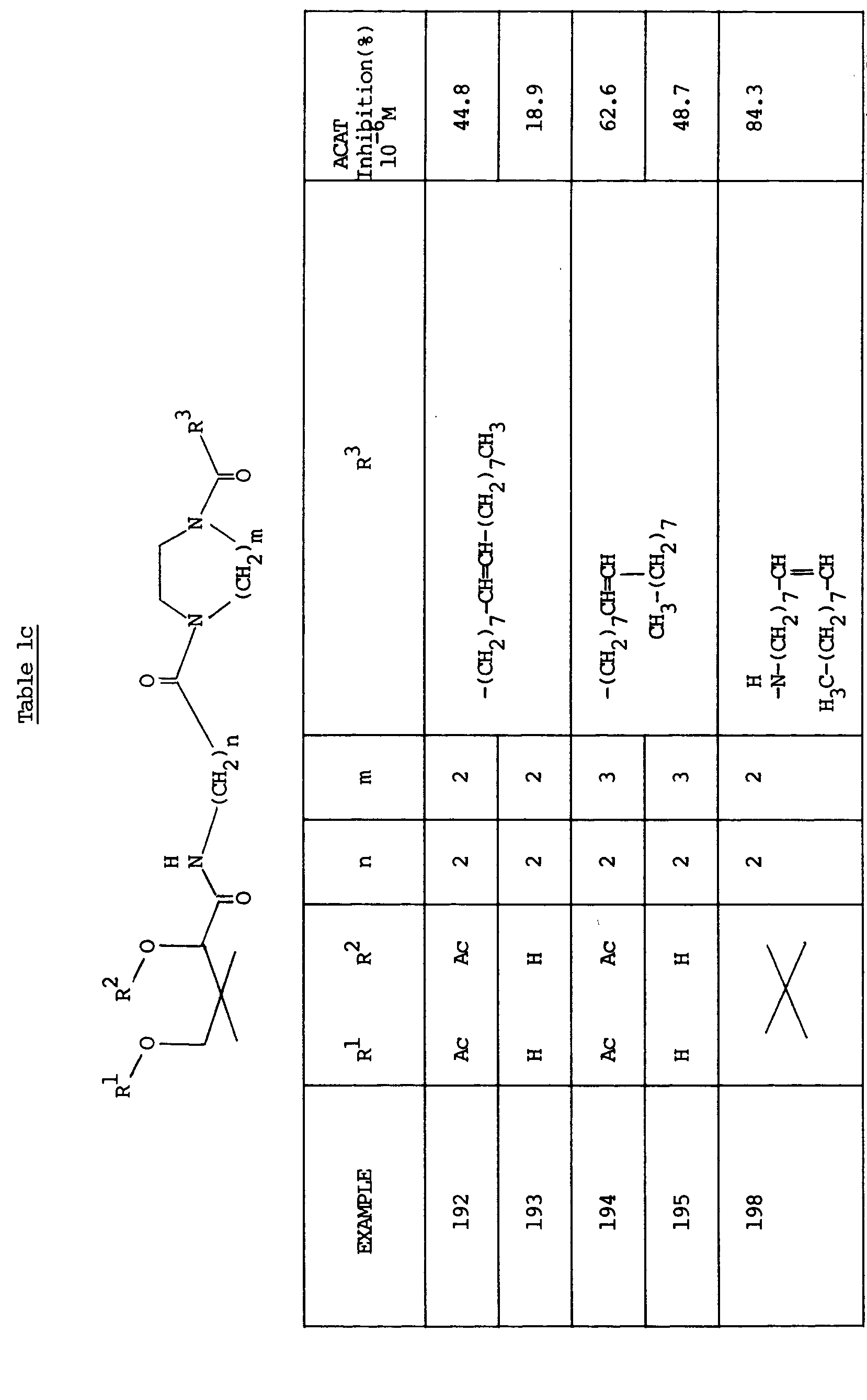

- In the case where the compounds of the present invention are used as a drug for the therapy, treatment or prevention of various diseases such as hyperlipemia, arteriosclerosis, angina pectoris, myocardial infraction and thrombosis, the compounds can be formulated together with pharmaceutically accepted carriers, diluents, excipients, binders, disintegrants, lubricants, antiseptics, stabilizers, dissolving aids, corrigents or the like into formulations suitable for administration such as those unit administration formulas, for example, tablets, capsules, powders, granules, microcapsules, syrups, elixirs, injectable liquids and suppositories.
- While the contents of the active ingredients in the formulations will vary depending on the kinds of the compounds of as the present invention used, types of the formulations, purposes for which the formulations are used, generally the active ingredients are contained in a range of from 0.5 to 90% by weight, and preferably from 5 to 60% by weight.
- In the case of solid preparations such as tablets, capsules, powders and granules, the compounds of the present invention can be formulated in a conventional manner together with carriers or diluents such as lactose, mannitol, glucose, hydroxypropylcellulose, crystallite cellulose, carboxymethylcellulose, starch, polyvinylpyrrolidone, aluminum metasilicate and talc; lubricants such as magnesium stearate; disintegrants such as cellulose calcium gluconate; dissolving aids such as glutamic acid and aspartic acid; stabilizers such as lactose; and the like. The tablets may if desired be coated with a substance which is soluble in the stomach or intestine such as white sugar, gelatin, hydroxypropylmethylcellulose. The capsules may be either hard capsules or soft capsules.
- In the case of liquid formulations such as syrups, elixirs, solutions, emulsions and suspensions, the compounds of the present invention can be formulated by dissolving or dispersing them in a pharmaceutically acceptable liquid medium such as deionized water, physiological saline, buffers and ethanol, and optionally adding thereto one or more substances selected from surfactants, edulcorants, corrigents, flavors and antiseptics.
- On the other hand, injections, which are administered parenterally, include sterile, aqueous or non-aqueous solutions, suspensions and emulsions. Such types of injections can be prepared by mixing the compounds of the present invention with aqueous diluents such as distilled water for injection and physiological saline or non-aqueous diluents such as polyethylene glycol, propylene glycol, olive oil, ethanol and polysolvate 80 (trademark). The injections may contain one or more auxiliaries such as antiseptics, wetting agents, surfactants, dispersants, stabilizers and dissolving aids, if desired. The injections can be sterilized usually by filtering them through bacteria trapping filters or by blending or spraying sterilizers. Furthermore, it is also possible to use solid formulations prepared by lyophilization or the like after the abovedescribed treatments and in addition thereto adding sterilized water or diluent for injection immediately before use.
- The compounds of the present invention can be administered by oral administration or rectal administration, or alternatively by parenteral administration such as intravenous administration, intramuscular administration and subcutaneous administration. While their dosage will vary depending on the kinds of the compounds to be used, administration methods, severity of symptoms of patients to be treated, age and body weight of patients and judgements by the doctors, it is suitable that the compounds of the present invention are administered generally in a dosage of from about 2 to about 500 mg/kg/day once a day or dividedly 2 to 4 times a day. However, the dosage is not limited to the above-described conditions but dosage either higher or lower than the above-described one may of course be used depending on the judgements by the doctors and severity of the symptoms.
- Hereafter, the present invention will be explained in greater detail with reference to nonlimitative examples.
- A solution of 75 g of calcium pantothenate and 53.8g of benzyl bromide in 1 liter of diemthylformamide was stirred at 100 ° C for one night. After completion of the reaction, the solvent was distilled off under reduced pressure. The residue was dissolved in water extracted with ethyl acetate. The organic layer was washed with water and then with saturated saline, and dried over anhydrous sodium sulfate. Removal of the solvent by evaporation afforded 90.3 g of the objective compound (yield: 93%).
- Property: Oily
- IR(cm-1, neat): .col 738, 1662
-

- 0.88 (3H,s), 1.00 (3H,s), 2.62 (2H,t,J = 7Hz), 3.45 (1 H,d,J = 11 Hz), 3.48 (1 H,d,J = 11 Hz), 3.52-3.64 (2H,m), 3.99 (1 H,s), 5.14 (2H,s), 7.10-7.20 (1 H,m), 7.33-7.42 (5H,m)
- p-Toluenesulfonic acid hydrate (5.6 g) was added to solution of 90 g of benzyl 3-[N-(2,4-dihydroxy-3,3,- dimethyl-1-oxo)amino]-propionate in 700 ml of acetone, and the mixture was stirred at room temperature for one night. After completion of the reaction, the solvent was disstilled off under reduced pressure. The residue was dissolved in ethyl acetate, washed with saturated aqueous sodium bicarbonate solution, with water and then with extracted with ethyl acetate. The organic layer was washed with saturated saline, and dried over anhydrous sodium sulfate. The residue was subjected to silica gel column chromatography and purified to obtain 85 g of the objective compound (yield: 84%).
- Property: Oily
- IR(cm-1, neat): νNH3456
- νco1740, 1676
-

- NMR(δ, CDCl3):
- 0.94 (3H,s), 1.03 (3H,s), 1.41 (3H,s), 1.44 (3H,s), 2.62 (2H,t,J = 7Hz), 3.28 (1 H,d,J = 12Hz), 3.67 (1 H,d,J = 12Hz), 3.42-3.65 (2H,m), 4.07 (1 H,s), 5.14 (2H,s), 6.90-7.10 (1 H,m), 7.30-7.40 (5H,m)
- An aqueous 1 N sodium hydroxide solution (100 ml) was added to a solution 35 g of benzyl 3-[N-(2,2,5,5-Tetramethyl-1,3-dioxane-4-carbonyl)amino]propionate in 350 ml of methanol, and the mixture was stirred under ice cooling for 1 hour. After completion of the reaction, methanol was distilled off under reduced pressure. The aqueous layer was extracted with ethyl acetate. After adding 1 N hydrochloric acid to the aqueous layer to render it acidic, the aqueous layer was extracted with ethyl acetate. The organic layer washed with water and then with saturated saline, and dried over anhydrous sodium sulfate. Removal of the solvent by evapoation afforded 20.4 g of the objective compound (yield: 78%).
- Property: Melting point, 87.2 to 89.2 ° C
- IR(cm-1, neat): MH3420,
- νco1734,1636
-

- 0.98 (3H,s), 1.04 (3H,s), 1.43 (3H,s), 1.46 (3H,s), 2.62 (2H,t,J=7Hz), 3.29 (1H,d,J 12Hz), 3.68 (1 H,d,J = 12Hz), 3.43-3.66 (2H,m), 4.11 (1 H,s), 6.90-7.10 (1 H,m)
- A solution of 3.09 g of benzyl 3-[N-(2,4-dihydroxy-3,3,-dimethyl-1-oxo)amino]propionate, 6.90 g of benzaldehyde dimethylacetal, and 0.19 g of p-toluenesulfonic acid in 100 ml of benzene was refluxed for 2 hours with removing water produced by azeotropy. After completion of the reaction, the reaction mixture was washed with saturated aqueous sodium bicarbonate solution, with water and then with saturated saline, and dried over anhydrous sodium sulfate. After removing the solvent by evapoation, the residue obtained was purified by silica gel column chromatography to obtain 3.18 g of the objective compound (yield: 80%). Property: Oily
- IR(cm-1, neat): νNH3456,
- νco1740, 1676
-

- 1.08 (3H,s), 1.10 (3H,s), 2.62 (2H,t,J = 6Hz), 3.68 (1 H,d,J = 11 Hz), 3.45-3.64 (2H,m), 3.72 (1 H,d,J = 1Hz), 4.09 (1 H,s), 5.10(2H,s), 5.51 (1 H,s), 6.92-7.04 (1 H,m), 7.38-7.52 (10H,m)
- Benzyl 3-[N-(2,4-dihydroxy-3,3,-dimethyl-1-oxo)amino]-propionate (3.09 g and 1.47 g of cyclohexanone were reacted in the same manner as in Reference Example 4 to obtain 3.07 g of the objected compound (yield: 79%).
- Property: Oily
- IR(cm-1, neat): νco1738, 1680
-

- 0.95 (3H,s), 1.03 (3H,s), 1.32-1.50 (4H,m), 1.54-1.70 (4H,m), 1.78-1.90 (2H,m), 2.62 (2H,t,J = 7Hz), 3.25 (1 H,d,J = 12Hz), 3.46-3.66 (2H,m), 3.69 (1 H,d,J = 12Hz), 4.08 (1 H,s), 5.14 (2H,s), 7.00-7.10 (1 H,m), 7.30-7.42 (5H,m)
- Benzyl 3-[N-(5,5-Dimethyl-2-phenyl-1,3-dioxane-4-carbonyl)amino]propionate (1.0 g) was reacted in the same manner as in Reference Example 3 to obtain 0.77 g of the objctived compound (yield: quantitiative). Property: Oily
- IR(cm-1, neat): νNH3420,
- νco1732, 1636

- NMR(δ, CDCl3):
- 1.11 (3H,s), 2.62 (2H,t,J=7Hz), 3.28 (1H,d,J = 12Hz), 3.44-3.64 (2H,m), 3.68 (1H,d,J=1Hz), 3.73 (1 H,d,J = 11 Hz), 4.12 (1 H,s), 5.51 (1 H,s), 7.00-7.10 (1 H,m), 7.38-7.45 (3H,m), 7.45-7.52 (2H,m)
- In a solution of .95 g of benzyl 3-[N-(3,3-dimethyl-1,5-dioxaspiro[5,5)-dodecane-2-carbonyl)amino]-propionate in 20 ml of methanol was suspended 20 mg of 10% palladium-on-carbon, and the suspension was stirred at room temperature for one night under hydrogen gas atmosphere. After completion of the reaction, insoluble matter was filtered. Removal of the solvent by evaporation afforded 1.50 g of the objective compound.
- Property: Oily
- IR(cm-1, neat): νco1728, 1670
-

- 0.99 (3H,s), 1.04 (3H,s), 1.32-1.51 (4H,m), 1.54-1.94 (7H,m), 2.64 (2H,t,J = 6Hz), 3.26 (1 H,d,J = 12Hz), 3.71 (1 H,d,J = 12Hz), 3.46-3.64 (2H,m), 4.12 (1 H,s), 7.08-7.14 (1 H,m)
- Acetic anhydride (10.2 g) was added to a suspension 4.47 g of calcium pantothenate in 20 ml of pyridine, and the mixture was stirred for one night. After completion of the reaction, the reaction mixture was poured in ice water. After stirring for 2 hours, 1N Hydrochloric acid was added to the reaction mixture to adjust pH to a value of about 2, followed by extraction with ethyl acetate. The organic layer was washed with saturated saline, and dried over anhydrous sodium sulfate. After removal of the solvent, 4.19 g of the objective compound was obtained as a residue (yield: 69%).
- Dicyclohexylcarbodiimide (15.5 g) was added to a solution of 22.6 g of 3-[N-(2,4-diacetoxy-3,3-dimethyl -1-oxobutyl)amino]propionic acid and 10.4 g of p-nitrophenol in 500 ml of tetrahydrofuran, and the mixture was stired for one night. After completion of the reaction, insoluble matter was removed and the solvent was distilled off under reduced pressure. The residue was dissolved in ethyl acetate. The resulting solution was washed with saturated aqueous sodium bicarbonate solution, with water and then with saturated saline, and dried over anhydrous sodium sulfate. After removing the solvent by evaporation, 10.2 g of the objectived compound was obtained as a residue (yield: 32%).
- Porperty: Oily
- IR(cm-1, neat): νNH3456,
- νco1740, 1676

- NMR(δ, CDCl3):
- 1.04 (3H,s), 1.08 (3H,s), 2.06 (3H,s), 2.10 (3H,s), 2.84-2.91 (2H,m), 3.50-3.76 (2H,m), 3.86 (1 H,d,J = 11 Hz), 6.06 (1 H,d,J = 11 Hz), 4.93 (1 H,s), 6.50-6.66 (1 H,m), 7.29 (2H,d,J,7Hz), 8.28 (2H,d,7Hz)
- A solution of 13.0 g of pantolactone, 8.3 g of glycine and potassium hydroxide (final concentration: 85%) in 100 ml of methanol was heated under reflux for 3 hours. The solvent was distilled off under reduced pressure. After drying, the residue was dissolved in 150 ml of dimethylformamide, and 18.8 g of benzyl bromide was added to the resulting solution, followed by stirring at room temperature for 20 hours. The reaction mixture was distilled under reduced pressure, and the residue obtained was dissolved in water and extracted with ethyl acetate. The organic layer was washed with water and then with saturate saline, and dried over anhydrous sodium sulfate. The residue obtained was purified by silica gel column chromatography to obtain 12.8 g of the objective compound (yield: 43%).
- NMR(δ, CDCl3) :
- 0.95 (3H,s), 1.60 (3H,s), 2.73 (2H,brs), 3.51 (1 H,d,J = 11 Hz), 3.56 (1 H,d,J = 11 Hz), 4.03-4.21 (2H,m), 4.09 (1 H,s), 5.19 (2H,s), 7.23-7.28 (1 H,m), 7.33-7.42 (5H,m)
- N,N'-Dicyclohexylcarbodiimide (2.27 g) was added to a solution of 2.82 g of oleic acid and 1.62 g of o-phenylenediamine in 50 ml of methylene chloride with stirring under ice cooling. The mixture was stirred at room temperature for one night. After completion of the reaction insoluble matter was filtered, followed by removal of the solvent by evaporation. The residue obtained was purified by silica gel column chromatography to obtain 2.84 g of the objective compound (yield: 76%).
- Property: Oily
- IR(cm-1, neat): νNH3284, νco1646
-

- Oleic acid (2.82 g) and m-phenylenediamine (1.62 g) were reacted in the same manner as Reference Example 11 to obtain 2.60 g of the objective compound (yield: 70%).
- Property: Oily
- IR(cm-1, neat): νNH3324, νco1658

- NMR(δ, CDCl3):
- 0.88 (3H,t,J=7Hz), 1.20-1.42 (20H,m), 1.64-1.78 (2H,m), 1.90-2.09 (4H,m), 2.32 (2H,t,J=7Hz), 3.70 (2H,brs), 5.29-5.40 (2H,m), 6.42 (1 H,d,J = 8Hz), 6.62 (1 H,d,J = 8Hz), 7.00 (1 H,brs), 7.21 (1 H,s)
- Oleic acid (2.82 g) and p-phenylenediamine (1.62 g) were reacted in the same manner as in Reference Example 11 to obtain 2.85 g of the objective compound (yield: 77%).
- Property: Oily
- IR(cm-1, neat): νNH3294, νco1656
-

- NMR(δ, CDCl3):
- 0.88 (3H,t,J=7Hz), 1.18-1.42 (20H,m), 1.64-1.77 (2H,m), 1.92-2.09 (4H,m), 2.31 (2H,t,J=7Hz), 3.60 (2H,brs), 5.29-5.40 (2H,m), 6.65 (2H,d,J = 9Hz), 6.92 (1 H,brs), 7.26 (2H,d,J = 9Hz)
- Oleic acid (2.82 g) and p-aminophnol (1.64 g) were reacted in the same manner as in Reference Example 11 to obtain 1.57 g of the objective compound (yield: 42%).
- Property: Oily
- IR(cm-1, neat): νNH, νco1646,
-

- 0.88 (3H,t,J = 7Hz), 1.20-1.42 (20H,m), 1.65-1.79 (2H,m), 1.89-2.09 (4H,m), 2.31 (2H,t,J = 7Hz), 5.28-5.41 (2H,m), 6.77 (2H,d,9Hz), 7.04 (1 H,brs), 7.32 (2H,d,J = 9Hz)
- 1-Ethyl-3-(3-dimethylaminopropyl)carbodiimide (2.30 g) was added to a solution of 3.03 g of 3-[N-(2,4- diacetoxy-3,3-dimethyl-1-oxobutyl)amino]propionic acid and 2.18 g of p-aminophenol in 50 ml of methylene chloride, and the mixture was stirred for one night. After completion of the reaction, the reaction mixture was washed with water, and dried over anhydrous sodium sulfate. After removing the solvent by evaporation, the residue obtained was purified by silica gel column chromatography to obtain 1.92 g of the objective compound was obtained as a residue (yield: 50%).
- Property: Oily
- IR(cm-1, neat): νco1750, 1660

- NMR(δ, CDCl3):
- 1.02 (3H,s), 1.06 (3H,s), 2.05 (3H,s), 2.07 (3H,s), 2.55 (2H,t,J=6Hz), 3.50-3.71 (2H,m), 3.84 (1 H,d,J = 12Hz), 4.03 (1 H,d,J = 12Hz), 4.90 (1 H,s), 6.74-6.83 (1 H,m), 6.79 (2H,d,J = 8Hz), 7.35 (2H,d,J = 8Hz), 7.47 (1 H,brs)
- 3-[N-(2,4-Diacetoxy-3,3-dimethyl-1-oxobutyl)amino]propionic acid (1.52 g) and 1.00 g of p-aminothiophenol were reacted in the same manner as in Reference Example 11 to obtain 0.335 mg of the objective compound (yield: 16%)
- Property: Oily
-

- 1.01 (3H,s), 1.06 (3H,s), 2.06 (3H,s), 2.11 (3H,s), 2.87 (2H,t,J=6Hz), 3.44-3.69 (2H,m), 3.81 (1H,d,J =11Hz), 4.03 (1H,d,J = 11 Hz), 4.97 (1H,s), 6.50 (1H,t,J = 6Hz), 6.92 (2H,d,J = 8Hz), 7.24 (2H,d,J = 8Hz)
- Oleic acid (2.82 g) and 1.88 g of p-aminothiophenol were reacted in the same manner as in Reference Example 11 to obtain 2.86 g of the objective compound (yield: 74%).
- Property: Oily
- IR(cm-1, neat): νNH3500, νco1698
-

- 0.88 (3H,t,J=7Hz), 1.19-1.41 (20H,m), 1.62-1.75 (2H,m), 1.91-2.09 (4H,m), 2.60 (2H,t,J=7Hz), 3.83 (2H,brs), 5.29-5.41 (2H,m), 6.68 (2H,d,8Hz), 7.16 (2H,d,J=8Hz)
- 3-[N-(2,2,5,5-Tetramethyl-1,3-dioxane-4-carbonyl)amino]propionic acid (1.04 g) and 0.665 g of p-aminophenol were reacted in the same manner as in Reference Example 15 to obtain 1.37 g of the objective compound (yield: 98%).
- Property: Oily
- IR(cm-1, neat): νco1660
-

- 0.97 (3H,s), 1.04 (3H,s), 1.41 (3H,s), 1.45 (3H,s), 2.26 (2H,t,J=6Hz), 3.50-3.72 (2H,m), 3.28 (1H,d,J=12Hz), 3.68 (1H,d,J=12Hz), 4.10 (1H,s), 6.78 (2H,d,J=8Hz), 7.13 (1H,d,J =6Hz), 7.32 (2H,d,J = 8Hz), 8.02 (1 H,s)
- 3-[N-(2,2,5,5-Tetramethyl-1,3-dioxane-4-carbonyl)amino]propionic acid (1.30 g) and 1.00 g of p-aminothiophenol were reacted in the same manner as in Reference Example 15 to obtain 0.28 g of the objective compound (yield: 15%).
- IR(cm-1, neat): νco1692
-

- 1.00 (3H,s), 1.04 (3H,s), 1.42 (3H,s), 1.45 (3H,s), 2.78-2.97 (2H,m), 3.29 (1 H,d,J = 11 Hz), 3.45-3.71 (2H,m), 3.69 (1 H,d,J = 11 Hz), 4.08 (1 H,s), 6.69 (2H,d,J = 8Hz), 6.84-6.92 (1 H,m), 7.15 (2H,d,J = 8Hz)
- Sodium carbonate (1.27 g) was added to a solution of 1.09 g of 2-aminophenol in a mixed solvent composed of 20 ml of ethyl acetate and 20 ml of water. To the resulting mixture was added a solution of 3.01 g of oleoyl chloride in 10 ml of ethyl acetate portion-wise with stirring under ice cooling. The stirring was continued for additional 2 hours. After completion of the reaction, the organic layer was separated, washed with water and then with saturated saline, and dried over anhydrous sodium sulfate. After removal of the solvent by evaporation, the residue obtained was purified by silica gel column chromatography to obtain 3.40 g of the objective compound (yield: 91%).
- Property: Oily
- IR(cm-1, neat): νco1646
-

- 0.88 (3H,t,J = 7Hz), 1.18-1.45 (20H,m), 1.66-1.80 (2H,m), 1.92-2.10 (4H,m), 2.45 (2H,d,J = 7Hz), 5.28-5.40 (2H,m), 6.85 (2H,d,8Hz), 6.97 (1 H,d,J = 8Hz), 7.02 (1 H,d,J = 8Hz), 7.13 (1 H,d,J = 8Hz), 7.45 (1 H,brs)
- 3-[N-(2,2,5,5-Tetramethyl-1,3-dioxane-4-carbonyl)amino]propionic acid (0.26 g) and 0.13 g of o-aminophenol were reacted in the same manner as in Reference Example 15 to obtain 0.34 g of the objective compound (yield: 98%).
- Property: Oily
- IR(cm-1, neat): νco1660
-

- 0.97 (3H,s), 1.03 (3H,s), 1.42 (3H,s), 1.46 (3H,s), 2.77 (2H,t,J = 6Hz), 3.28 (1 H,d,J = 12Hz), 3.59-3.77 (2H,m), 4.11 (1 H,s), 6.86 (1 H,t,J = 8Hz), 7.01 (1 H,d,J = 8Hz), 7.08-7.22 (3H,m) 8.80 (1 H,s)
- 3-[N-(2,2,5,5-Tetramethyl-1,3-dioxane-4-carbonyl)amino]propionic acid (3.89 g) and 2.16 g of o-phenylenediamine were reacted in the same manner as in Reference Example 15 to obtain 2.48 g of the objective compound (yield: 47%).
- Property: Oily
- IR(cm-1, neat): νco1660
-

- 0.99 (3H,s), 1.03 (3H,s), 1.42 (3H,s), 1.45 (3H,s), 2.67 (2H,t,J=6Hz), 3.59-3.70 2H,m), 3.28 (1 H,d,J = 12Hz), 3.68 (1 H,d,J = 12Hz), 4.10 (1 H,s), 6.72.-6.82 (2H,m), 7.03-7.16 2H,m), 7.20 (1 H,d,J = 8Hz), 7.87 (1 H,s)
- Linolic acid (0.841 g) and 0.541 g of o-phenylenediamine were reacted in the same manner as in Reference Example 11 to obtain 0.79 g of the objective compound (yield: 62%).
- Property: Oily
- IR(cm-1, neat): νco1646
-

- 0.89 (3H,t,J=7Hz), 1.22-1.43 (14H,m), 1.63-1.88 (2H,m), 1.98-2.11 (4H,m), 2.32 (2H,t,J=7Hz), 2.77 (2H,t,J = 6Hz), 5.28.-5.46 (4H,m), 6.47 (1 H,d,J = 8Hz), 6.69 (1 H,d,8Hz), 7.07 (1 H,t,J = 8Hz), 7.14 (1 H,s), 7.24 (1 H,s)
- p-Phenylenediamine (342 mg) and 219 mg of 1-lauroyl chloride were reacted in the same manner as in Reference Example 20 to obtain 250 mg of the objective compound (yield: 86%).
- Property: Oily
- IR(cm-1, neat): νco1651
-

- 0.88 (3H,t,J=7Hz), 1.17-1.42 (16H,m), 1.63-1.78 (2H,m), 2.31 (2H,t,J=7Hz), 3.581 (2H,bris), 6.64 (2H,d,z), 6.98 (1 H,brs), 7.26 (2H,d,J = 9Hz)
- Linolenic acid (835 mg) and 546 mg of p-aminophenol were reacted in the same manner as in Reference Example 11 to obtain 1.03 g of the objective compound (yield: 55%).
- Porperty: Oily
- IR(cm-1, neat): νco1646
-

- 0.97 (3H,t,J = 7Hz), 1.19-1.44 (8H,m), 1.56-1.77 (2H,m), 1.98-2.12 (4H,m), 2.33 (2H,t,J = 7Hz), 2.71-2.88 (4H,m), 5.26-5.45 (6H,m), 6.77 (2H,d,9Hz), 7.05 (1 H,s), 7.31 (2H,d,J = 9Hz)
- Sodium methoxide (0.60 g) was added to a solution of 1.14 g of trans-1,2-diaminocyclohexane and 2.96 g of methyl oleate in 15 ml of benzene, and the mixture was heated under reflux for 20 hours. After completion of the reaction, the solvent was distilled off under reduced pressure and the residue was dissolved in ethyl acetate-water. The organic layer was washed with saturated saline, and dried over anhydrous sodium sulfate. After drying it over anhydrous sodium sulfate, the residue obtained was purified by silica gel column chromatography to obtain 2.54 g of the objective compound (yield: 68%).
- Property: Oily
-

- 0.88 (3H,t,J=7Hz), 1.12-1.48 (24H,m), 1.53-1.79 (4H,m), 1.91 (6H,m), 2.18-2.35 (2H,m), 2.52-2.95 (3H,m), 3.62-3.78 (1 H,m), 5.28-5.40 (2H,m), 6.08-6.20 (1 H,m)
- (S,S)-1,2-Diaminocyclohexane (1.14 g) and 2.96 g of methyl oleate were reacted in the same manner as in Reference Example 26 to obtain 2.41 g of the objective compound (yield: 65%)
- Property: Oily
-

- 0.88 (3H,t,J=7Hz), 1.12-1.48 (24H,m), 1.53-1.79 (4H,m), 1.91 (6H,m), 2.18-2.35 (2H,m), 2.52-2.95 (3H,m), 3.62-3.78 (1 H,m), 5.28-5.40 (2H,m), 6.08-6.20 (1 H,m)
- (1 R,2R)-2-Aminocyclohexanol (1.15 g) and 3.0 g of oleyl chloride were reacted in the same manner as in Reference Example 20 to obtain 3.74 g of the objective comound (yield: 99%).
- Property: Oily
-

- 0.88 (3H,t,J=7Hz), 1.10-1.42 (24H,m), 1.57-1.78 (4H,m), 1.89-2.10 (6H,m), 2.22 (2H,t,J=7Hz), 3.32 (1 H,ddd,J = 11 Hz,11 Hz,5Hz), 3.58-3.70 (1 H,m), 5.28-5.50 (3H,m)
- (1S,2S)-2-Aminocyclohexanol (1.15 g) and 3.0 g of oleyl chloride were reacted in the same manner as in Reference Example 20 to obtain 3.76 g of the objective compound (yield: 99%).
- Property: Oily
-

- 0.88 (3H,t,J=7Hz), 1.10-1.42 (24H,m), 1.57-1.78 (4H,m), 1.89-2.10 (6H,m), 2.22 (2H,t,J=7Hz), 3.32 (1 H,ddd,J = 11 Hz,11Hz, 5Hz), 3.58-3.70 (1 H,m), 5.28-5.50 (3H,m)
- (1 R,2R)-2-Aminocyclohexanol (1.15 g) and 3.02 g of stearyl chloride were reacted in the same manner as in Reference Example 20 to obtain 3.0 g of the objective compound (yield: 100%).
- Property: Oily
-

- 0.88 (3H,t,J=7Hz), 1.11-1.41 (32H,m), 1.57-1.78 (4H,m), 1.89-2.11 (2H,m), 2.22 (2H,t,J=7Hz), 3.31 (1 H,ddd,J = 11 Hz,11Hz, 5Hz), 3.58-3.70 (1 H,m), 5.42-5.51 (1 H,m)
- (1S,2S)-2-Aminocyclohexanol (1.15 g) and 2.98 g of linolyl chloride were reacted in the same manner as in Reference Example 20 to obtain 3.76 g of the objective compound (yield: 99%).
- Property: Oily
-

- 0.89 (3H,t,J=7Hz), 1.12-1.41 (18H,m), 1.58-1.77 (4H,m), 1.89-2.18 (6H,m), 2.22 (2H,t,J=8Hz), 2.77 (2H,t,J = 6Hz), 3.31 (2H,ddd,J = 11 Hz,11Hz, 5Hz), 3.59-3.70 (1 H,m), 5.29-5.47 (5H,m)
- A solution of 470 mg of phenyl chlorocarbonate in 5 ml of ethyl acetate was added portion-wise to a solution of 345 mg of (1S,2S)-2-aminocyclohexanol and 424 mg of sodium carbonate in a mixed solvent composed of 10 ml of ethyl acetate and 10 ml of water with stirring under ice cooling. After completion of the addition, the resulting mixture was stirred for additional 2 hours. After completion of the reaction, the aqueous layer was separated and extracted with ethyl acetate. The extract was combined with the organic layer, which was then washed with saturated saline. After drying it over anhydrous sodium sulfate, the combined organic layer was distilled to remove the solvent. Then, N-benzylhexylamine (1.15 g) was added to the residue obtained, and the mixture was stirred at 100 ° C for 1 hour. After completion of the reaction, the residue obtained was purified by silica gel column chromatography to obtain 866 mg of the objective compound (yield: 87%).
- NMR(o, CDCl3): 0.87 (3H,t,J=7Hz), 0.96-2.08 (16H,m), 3.15-3.54 (4H,m), 4.25 (1H,d,J = 6Hz), 4.47 (2H,s), 4.67 (1 H,d,J = 3Hz), 7.20-7.41 (5H,m)
- (S)-2-Aminomethyl-1-(t-butoxycarbonyl)pyrrolidine (607 mg) and 903 mg of oleyl chloride were reacted in the same manner as in Reference Example 20 to obtain 1.16 g of the objective compound (yield: 83%). Property: Oily
-

- 0.88 (3H,t,J=7Hz), 1.16-1.37 (20H,m), 1.16-1.37 (20H,m), 1.48 (9H,s), 1.53-2.09 (10H,m), 2.17 (2H,t,J = 7Hz), 3.13-3.45 (4H,m), 3.97-4.10 (1 H,m), 5.28-5.41 (2H,m), 7.42 (1 H,brs)
- (R)-2-Aminomethyl-1-(t-butoxycarbonyl)pyrrolidine (401 mg) and 600 mg of oleyl chloride were reacted in the same manner as in Reference Example 20 to obtain 816 mg of the objective compound (yield: 88%). Property: Oily
-

- NMR(δ, CDCl3):
- 0.88 (3H,t,J=7Hz), 1.16-1.37 (20H,m), 1.48 (9H,s), 1.53-2.09 (10H,m), 2.17 (2H,t,J = 7Hz), 3.13-3.45 (4H,m), 3.97-4.10 (1 H,m), 5.28-5.41 (2H,m), 7.42 (1 H,brs)
- 3-Amino-1-(t-butoxycarbonyl)piperidine (400 mg) and 600 mg of oleyl chloride were reacted in the same manner as in Reference Example 20 to obtain 742 mg of the ojective compound (yield: 85%).
- Property: Oily
-

- NMR(δ, CDCl3):
- 0.88 (3H,t,J=7Hz), 1.17-1.41 (20H,m), 1.49-1.84 (6H,m), 1.91-2.09 (4H,m), 2.15 (2H,t,J=7Hz), 2.15 (2H,t,J = 7Hz), 3.22-3.53 (4H,m), 3.92-4.03 (1 H,m), 5.28-5.41 (2H,m), 5.47-5.62 (1 H,m)
- A solution 464 mg of 1-(t-butoxycarbonyl)-3-(oleoylamino)piperidine in 6 ml of 50% trifluoroacetic acid- methylene chloride was stirred at room tempeature for 1 hour. After completion of the reaction, the solvent was distilled off. The residue obtained was dissolved in 20 ml of ethyl acetate. After adding saturated aqueous sodium carbonate solution to the solution to neutralize it, the organic layer was separated. The organic layer was washed with saturated saline, and dried over anhydrous sodium sulfate, followed by removal of the solvent therefrom by evaporation. The residue obtained was purified by silica gel column chromatography to obtain 332 g of the objective compound (yield: 91 %).

- NMR(δ, CDCl3):
- 0.88 (3H,t,J = 7Hz), 1.17-1.39 (20H,m), 1.54-1.86 (6H,m), 1.90-2.08 (4H,m), 2.20 (2H,t,J = 7Hz), 2.70-3.07 (4H,m), 4.00-4.07 (1 H,m), 5.28-5.44 (2H,m), 6.49-6.63 (1 H,m)
- 3-Amino-1-(t-butoxycarbonyl)piperidine (681 mg) and 0.88 g of 3-[N-(2,2,5,5-Tetramethyl-1,3-dioxane-4-carbonyl)amino]propionic acid were reacted in the same manner as in Reference Example 25 to obtain 1.38 g of the objective compound (yield: 97%).
- Property: Oily
-

- 0.97-0.98 (3H,m), 1.05 (3H,s), 1.42-1.43 (3H,m), 1.46 (10H,s), 2.43 (2H,t,J = 7Hz), 3.05-3.27 (2H,m), 3.28 (1H,d,J = 12Hz), 3.36-3.67 (5H,m), 3.69 (1H,d,J = 12Hz), 3.87-4.00 (1 H,m), 4.07-4.08 (1 H,m), 5.93-6.02
- (1 H,m), 6.99-7.08 (1 H,m)
- 4-Hydroxypiperidine (2.02 g) and oleyl chloride (6 g) were reacted in the same manner as in Reference Example 20 to obtain 5.8 g of the objective compound (yield: 79%).
- Property: Oily
- IR(cm-1, neat):
- νNH3428,
- νco1628
-

- 1.88 (3H,t,J=7Hz), 1.22-1.40 (2H,s), 1.42-1.68 (4H,s), 1.82-2.06 (6H,m), 2.33 (2H,t,J=7Hz), 3.10-3.28 (2H,m), 3.68-3.82 (1 H,m), 3.88-3.98 (1 H,m), 4.02-4.18 (1 H,m), 5.30-5.42 (2H,m)
- 3-Hydroxypiperidine (1.38 g) and oleyl chloride (3.01 g) were reacted in the same manner as in Reference Example 20 to obtain 3.33 g of the objective compound (yield: 91 %).
- Property: Oily
- IR(cm-1, neat):
- νOH3428,
- νco1628
-

- 0.88 (3H,t,J=7Hz), 1.20-1.39 (20H,m), 1.40-2.09 (10H,m), 2.32 (2H,t,J=7Hz), 3.18-3.35 (2H,m), 3.67-3.84 (5H,m), 5.28-5.40 (2H,m)
- D-2-pyrrolidinemethanol (405 mg) and oleyl chloride (1.20 g) were reacted in the same manner as in Reference Example 20 to obtain 1.46 g of the ojective compound (yield: 100%).
- Property: Oily
- IR(cm-1, neat):
- νOH3430,
- νco1625
-

- 0.83 (3H,t,J = 7Hz), 1.18-1.48 (20H,m), 1.50-1.71 (3H,m), 1.79-2.10 (7H,m), 2.30 (2H,t,J = 7Hz), 3.41-3.69 (4H,m), 4.18-4.27 (1 H,m), 5.29-5.42 (2H,m)
- L-2-pyrrolidinemethanol (506 mg) and oleyl chloride (1.50 g) were reacted in the same manner as in Reference Example 20 to obtain 1.73 g of the ojective compound (yield: 100%).
- Property: Oily
- IR(cm-1, neat):
- νOH3430,
- νco1625
-
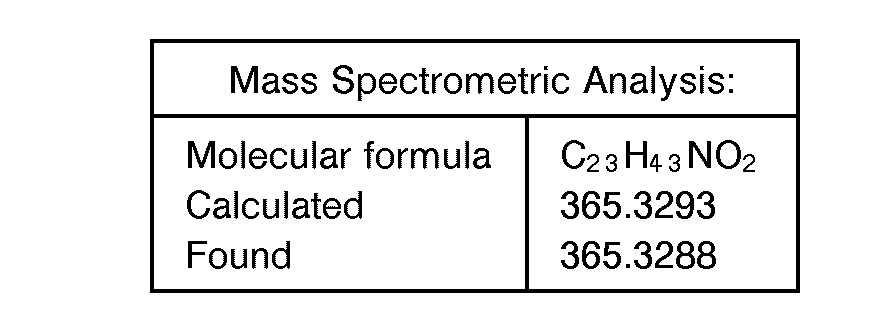
- 0.88 (3H,t,J = 7Hz), 1.88-1.48 (20H,m), 1.50-1.71 (3H,m), 1.79-2.10 (2H,t,J = 7Hz), 2.30 (2H,t,J = 7Hz), 3.41-3.69 (4H,m), 4.18-4.27 (1 H,m), 5.29-5.42 (2H,m)
- L-2-pyrrolidinemethanol (101 mg) and stearyl chloride (303 mg) were reacted in the same manner as in Reference Example 20 to obtain 366 mg of the ojective compound (yield: 100%).
- Property: Oily
-

- NMR(δ, CDCl3):
- 0.88 (3H,t,J = 7Hz), 1.17-1.47 (28H,m), 1.52-1.69 (3H,m), 1.79-2.11 (3H,m), 2.30 (2H,t,J = 7Hz), 3.41-3.70 (4H,m), 4.17-4.28 (1 H,m)
- L-2-pyrrolidinemethanol (101 mg) and linolyl chloride (315 mg) were reacted in the same manner as in Reference Example 20 to obtain 360 mg of the ojective compound (yield: 100%).
- Property: Oily
-

- 0.89 (3H,t,J=7Hz), 1.21-1.44 (14H,m), 1.52-1.76 (3H,m), 1.77-2.11 (7H,m), 2.30 (2H,t,J=7Hz), 2.77 (2H,t,J = 6Hz), 3.42-3.70 (4H,m), 4.18-4.28 (1 H,m), 5.28-5.44 (4H,m)
- (S)-2-Aminomethyl-1-benzyloxycarbonylpyrrolidine (234 mg) and 3-[N-(2,2,5,5-tetramethyl-1,3-dioxane-4-carbonyl)amino]-propionic acid (259 mg) were reacted in the same manner as in Reference Example 25 to obtain 424 mg of the ojective compound (yield: 89%).
- Property: Oily
-

- NMR(δ, CDCl3):
- 0.98 (3H,s), 1.04 (3H,s), 1.42 (3H,s), 1.46 (3H,s), 1.62-2.13 (4H,m),2.30-2.44 (2H,m), 3.16-3.62 (4H,m), 3.27 (1 H,d,J = 12Hz), 3.68 (1 H,d,J = 12Hz), 3.92-4.09 (1 H,m), 4.07 (1 H,s), 5.07-5.24 (2H,m), 7.05-7.16 (1 H,m), 7.17-7.25 (1 H,m), 7.28-7.48 (5H,m)
- (S)-1-Benzyloxycarbonyl-2-[1-Oxo-3-(2,2,5,5,-tetramethyl-1,3-dioxane-4-carbonylaminopropyl]-aminomethylpyrrolidine (424 mg) was reacted in the same manner as in Reference Example 7 to obtain 298 mg of the ojective compound (yield: 98%).
- Propertv: Oilv
-

- 1.00 (3H,s), 1.01 (3H,s), 1.45 (3H,s), 1.47 (3H,s), 1.58-1.78 (1H,m), 1.82-2.15 (3H,m), 2.36-2.56 (2H,m), 3.07-3.85 (9H,m), 4.12 (1 H,s) 7.09 (1 H,t,J = 6Hz), 7.48 (1 H,t,J = 6Hz)
- (R)-2-Aminomethyl-1-benzyloxycarbonylpyrrolidine (750 mg) and 3-[N-(2,2,5,5-tetramethyl-1,3-dioxane-4-carbonyl)amino]propionic acid (829 mg) were Example reacted in the same manner as in Reference Example 25 to obtain 1.10 g of the ojective compound (yield: 72%).
- Property: Oily
-

- 0.96 (3H,s), 1.03 (3H,s), 1.41 (3H,s), 1.46 (3H,s), 1.65-2.17 (4H,m), 2.33 (2H,t,J = 6Hz), 3.14-3.32 (1 H,m), 3.27 (1 H,d,J = 12Hz), 3.35-3.63 (5H,m), 3.68 (1 H,d,J = 12Hz), 3.93-4.09 (1 H,s) 4.07 (1 H,s), 5.07-5.28 (2H,m), 7.01-7.16 (1 H,m), 7.20-7.44 (6H,m)
- A solution of 3.0 g of oleyl chloride in 10 mg of methylene chloride was added portion-wise to a solution of 4.3 g of piperazine in 30 ml of methylene chloride with stirring under ice cooling. After stirring the mixture in situ for additional 2 hours, 10 ml of water was added to the reaction mixture to separate the organic layer. The organic layer was further washed with water and dried over anhydrous sodium sulfate, followed by removal of the solvent by evaporation. The residue obtained was purified by silica gel column chromatography to obtain 2.68 g of the objective compound (yield: 76%).
- Property: Oily
-

- NMR(δ, CDCl3):
- 0.88 (3H,t,J = 7Hz), 1.18-1.39 (20H,m), 1.62-1.78 (2H,m), 1.91-2.07 (4H,m), 2.31 (2H,t,J = 7Hz), 2.90-3.00 (4H,m), 3.62-3.73 (4H,m), 3.62-3.73 (4H,m), 5.28-5.41 (2H,s)
- Tetrahydro-1,4-diazepine (5.0 g) and 3.0 g of oleyl chloride were Example reacted in the same manner as in Reference Example 44 to obtain 2.76 g of the objective compound (yield: 75%).
- Property: Oily
-

- NMR(δ, CDCl3):
- 0.88 (3H,t,J = 7Hz), 1.21-1.39 (20H,m), 1.59-2.08 8H,m), 2.27-2.38 (2H,m), 2.85-3.01 (4H,m), 3.50-3.68 (4H,m), 5.29-5.40 (2H,m)
- 3-[N-(2,2,5,5-tetramethyl-1,3-dioxane-4-carbonyl)amino]propionic acid (5.18 g) and 6.60 g of 1-benzyloxycarbonyl-piperazine were reacted in the same manner as in Reference Example 25 to obtain 8.60 g of the ojective compound (yield: 94%).
- Property: Oily
- IR(cm-1, neat): νco1706, 1648

- NMR(δ, CDCl3):
- 0.95 (3H,s), 1.03 (3H,s), 1.41 (3H,s), 1.46 (3H,s), 2.49-2.64 (2H,m), 3.27 (1H,d,J = 12Hz), 3.35-3.62 (10H,m), 3.67 (1 H,d,J = 12Hz), 4.06 (1 H,m), 5.15 (2H,s), 7.09 (1 H,t,J = 6Hz), 7.28-7.43 (5H,m)
- 1-Benzyloxycarbonyl-4-[1-oxo-3-[N-(2,2,5,5-tetramethyl-1,3-dioxane-4-carbonyl)amino]propyl]piperazine (1.4 g) was reacted in the same manner as in Reference Example 7 to obtain 0.993 g of the ojective compound (yield: 100%).
- Property: Oily
-

- 0.97 (3H,s), 1.04 (3H,s), 1.42 (3H,s), 1.47 (3H,s), 2.47-2.63 (2H,m), 2.79-2.97 (4H,m), 3.40-3.76 (7H,m), 3.28 (1 H,d,J = 12Hz), 4.07 (1 H,s), 7.12 (1 H,t,J = 6Hz)
- 1-Ethyl-3-(3-dimethylaminopropyl)carbodiimide hydrochloride (211 mg) was added to a solution of 372 mg of 2-oleoylaminoaniline and 259 mg of 3-[N-(2,2,5,5-tetramethyl-1,3-dioxane-4-carbonyl)amino]propionic acid in 30 ml of methylene chloride under ice cooling. The mixture was stirred in situ for one night. The reaction mixture was washed with water and dried over anhydrous sodium sulfate, filtered and the filtate evaporation under vacuum to obtain the crude title products. Then, the residue obtained was subjected to silica gel column chromatography to obtain 500 mg of the title compound (yield: 82%).
- Property: Oily
- Specific Rotary Power [α]D: + 29.0 ° (C = 1.0, CHCl3)
- IR(cm-1, neat): νc=o1664
-

- 0.88 (3H,t,J=7Hz), 0.98 (3H,s), 1.04 (3H,s), 1.22-1.40 (20H,m), 1.42 (3H,s), 1.45 (3H,s), 1.62-1.77 (2H,m), 1.94-2.09 (4H,m), 2.36 (2H,t,J = 7Hz), 2.60 (2H,t,J = 6Hz), 3.28 (1 H,d,J = 12Hz), 3.55-3.66 (2H,m), 3.69 (1 H,d,J = 12Hz), 4.10 (1 H,s), 5.29-5.42 (2H,m), 7.14-7.48 (2H,m), 7.39-7.48 (2H,m), 8.18 (1 H,s), 8.60 (1 H,brs)
- 2-Oleoylaminoaniline (744 mg) and 606 mg of 3-[N-(2,4-diacetoxy-3,3-dimethyl-1-oxobutyl)amino]-propionic acid were reacted in the same manner as in Example 1 to obtain 810 mg of the title compound (yield: 65%).
- Property: Oily
- Specific Rotary Power [α]D: + 6.30 ° (C = 1.0, CHCl3)
- IR(cm-1, neat): νc=o1750, 1660
-

- NMR(δ, CDCl3):
- 0.88 (3H,t,J = 7Hz), 1.02 (3H,s), 1.06 (3H,s), 1.23-1.45 (20H,m), 1.67-1.79 (2H,m), 1.95-2.09 (4H,m), 2.03 (2H,s), 2.04 (3H,s), 2.42 (2H,t,J = 7Hz), 2.58 (2H,t,J = 6Hz), 3.49-3.72 (2H,m), 3.83 (1 H,d,J = 11 Hz), 4.02 (1 H,d,J = 11 Hz), 4.89 (1 H,s), 5.30-5.44 (2H,m), 6.72-6.81 (1 H,m), 7.19-7.32 (2H,m), 7.37 (1 H,d,J = 8Hz), 7.59 (1 H,d,J = 8Hz), 7.88 (1 H,brs), 8.19 (1 H,brs)
- An aqueous 1N sodium hydroxide solution (1,5 ml) was added to a solution of 470 mg of N-[2-(oleoylamino)phenyl]-3-[N-(2,4-diacetoxy-3,3-dimethyl-1-oxobutyl)amino]propanamide in 4 ml of methanol with stirring at room tempeature, and the mixture was stirred for additional 30 minutes. After completion of the reaction, 10 ml of water was added to the reaction mixture, which was then extracted with 20 ml of methylene chloride. The methylene chloride layer was washed with water and then with brine, and dried over anhydrous sodium sulfate. After removing the solvent by evaporation, the residue obtained was subjected to silica gel column chromatography to obtain 377 mg of the title compound (yield: 94%). Property: Oily
- Specific Rotary Power [α]D: + 21.9 ° (C =1.0, CHCl3)
- IR(cm-1, neat): νNH, OH, νc=o1660
-

- 0.88 (3H,t,J = 7Hz), 0.90 (3H,s), 0.97 (3H,s), 1.20-1.42 (20H,m), 1.62-1.76 (2H,m), 1.94-2.01 (4H,m), 2.38 (2H,t,J = 7Hz), 2.52 (2H,t,J = 6Hz), 3.44 (2H,s), 3.49-3.72 (2H,m), 3.94 (1 H,s), 5.28-5.42 (2H,m), 7.13-7.21 (2H,m), 7.29-7.49 (3H,m), 8.31 (1 H,s), 8.69 (1 H,s)
- A solution of 349 mg of N-(2-aminophenyl-3-[N-(2,2,5,5-tetramethyl-1,3-dioxane-4-carbonyl)amino]-propanamide, 280 mg of linolic acid and 227 mg of dicyclohexylcarbodiimide in 15 ml of toluene was heated under reflux for 2 hours. After cooling the reaction mixture, the crystals formed were filtered. The filtrate was concentrated and the residue obtained was subjected to silica gel column chromatography to obtain 266 mg of the title compound (yield: 44%).
- Property: Oily
- Specific Rotary Power [α]D: + 27.3 ° (C = 1.0, CHCl3)
- IR(cm-1, neat): νc=o1662
-

- 0.89 (3H,t,J=7Hz), 0.98 (3H,s), 1.04 (3H,s), 1.23-1.44 (14H,m), 1.42 (3H,s), 1.45 (3H,s), 1.65-1.77 (2H,m), 1.91-2.10 (4H,m), 2.37 (2H,t,J = 7Hz), 2.62 (2H,t,J = 6Hz), 2.77 (2H,t,J = 6Hz), 3.28 (1 H,d,J = 12Hz), 3.56-3.67 (2H,m), 3.69 (1 H,d,J = 12Hz), 4.10 (1 H,m), 5.29-5.44 (4H,m), 7.09 (1 H,t,J = 6Hz), 7.15-7.22 (2H,m), 7.42-7.49 (2H,m), 8.11 (1 H,s), 8.55 (1 H,s)
- N-(2-Aminophenyl)-3-[N-(2,2,5,5-tetramethyl-1,3-dioxane-4-carbonyl)amino]propanamide (349 mg) and 278 mg of linolenic acid were reacted in the same manner as in Example 4 to obtain 271 mg of the title compound (yield: 45%).
- Property: Oily
- Specific Rotary Power [α]D: + 26.2 ° (C = 1.0, CHCl3)
- IR(cm-1, neat): νc=o1666
-

- NMR(δ, CDCl3):
- 0.97 (3H,t,J = 7Hz), 0.98 (3H,s), 1.04 (3H,S), 1.23-1.43 (8H,m), 1.42 (3H,s), 1.46 (3H,s), 1.65-1.77 (2H,m), 2.03-2.12 (4H,m), 2.38 (2H,t,J = 7Hz), 2.63 (2H,t,J = 6Hz), 2.75-2.83 (4H,m), 3.28 (1 H,d,J = 12Hz), 3.58-3.70 (2H,m), 3.69 (1 H,d,J = 12Hz), 4.11 (1 H,s), 5.29-5.43 (6H,m), 7.09 (1 H,t,J = 6Hz), 7.17-7.22 (2H,m), 7.42-7.51 (2H,m), 8.06 (1 H,brs), 8.51 (1 H,brs)
- To a solution of 349 mg of N-(2-aminophenyl)-3-[N-(2,2,5,5-tetramethyl-1,3-dioxane-4-carbonyl)amino]-propanamide in 20 ml of methylene chloride were added portion-wise 1 ml of pyridine and then a solution of 303 mg of stearoyl chloride in 3 ml of methylene chloride with stirring under ice cooling. The mixture obtained was stirred for additional 1 hour. The reaction mixture was then washed with water and dried over anhydrous sodium sulfate, followed by removal of the solvent by evaporation. The residue obtained was subjected to silica gel column chromatography to obtain 507 mg of the title compound (yield: 82%). Property: Oily
- Specific Rotary Power [α]D: + 27.3 ° (C = 1.0, CHCl3)
- IR(cm-1, neat): νc=o1664
-
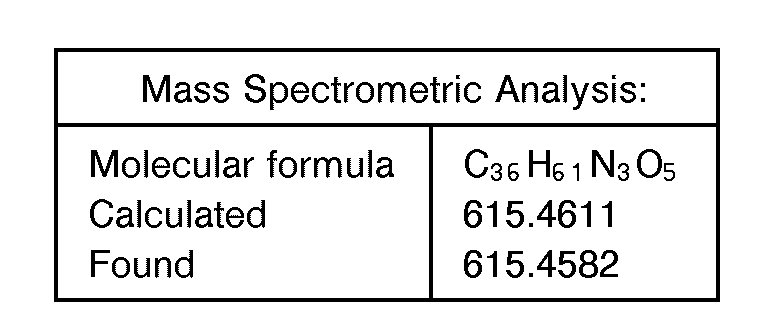
- NMR(δ, CDCl3):
- 0.88 (3H,t,J=7Hz), 0.98 (3H,s), 1.04 (3H,s), 1.20-1.43 (28H,m), 1.42 (3H,s), 1.46 (3H,s), 1.68-1.78 (2H,m), 2.40 (2H,t,J = 7Hz), 2.65 (2H,t,J = 6Hz), 3.28 (1 H,d,J = 12Hz), 3.58-3.72 (2H,m), 3.69 (1 H,d,J = 12Hz), 4.11 (1 H,s), 7.08 (1 H,t,J = 6Hz), 7.17-7.23 (2H,m), 7.42-7.53 (2H,m), 8.00 (1 H,s), 8.49 (1 H,s)
- N-(2-Aminophenyl)-3-[N-(2,2,5,5-tetramethyl -1,3-dioxane-4-carbonyl)amino]propanamide (349 mg) and 219 mg of lauroyl chloride were reacted in the same manner as in Example 6 to obtain 454 mg of the title compound (yield: 86%).
- Property: Oily
- Specific Rotary Power [α)D: + 31.7 ° (C =1.0, CHCl3)
- IR(cm-1, neat): νc=o1664
-

- NMR(δ, CDCl3):
- 0.88 (3H,t,J=7Hz), 0.98 (3H,s), 1.04 (3H,s), 1.21-1.43 (16H,m), 1.42 (3H,s), 1.45 (3H,s), 1.65-1.77 (2H,m), 2.38 (2H,t,J = 7Hz), 2.61 (2H,t,J = 6Hz), 3.28 (1 H,d,J = 12Hz), 3.55-3.68 (2H,m), 3.69 (1 H,d,J = 12Hz), 4.10 (1 H,s), 7.09 (1 H,t,J = 12Hz), 7.14-7.22 (2H,m), 7.40-7.49 (2H,m), 8.13 (1 H,s), 8.57 (1 H,s)
- N-(2-Aminophenyl)-3-[N-(2,2,5,5-tetramethyl -1,3-dioxane-4-carbonyl)amino]propanamide (349 mg) and 163 mg of octanoyl chloride were reacted in the same manner as in Example 6 to obtain 413 mg of the title compound (yield: 87%).
- Property: Oily
- Specific Rotary Power [α)D: + 35.1 ° (C =1.0, CHCl3)
- IR(cm-1, neat): νc=o1664
-

- NMR(δ, CDCl3):
- 0.89 (3H,t,J = 7Hz), 0.98 (3H,s), 1.04 (3H,s), 1.23-1.38 (8H,m), 1.42 (3H,s), 1.45 (3H,s), 1.62-1.77 (2H,m), 2.37 (2H,t,J = 7Hz), 2.60 (2H,t,J = 6Hz), 3.28 (1 H,d,J = 12Hz), 3.57-3.71 (2H,m), 3.69 (1 H,d,J = 12Hz), 4.10 (1 H,s), 7.09 (1 H,t,J = 6Hz), 7.14-7.21 (2H,m), 7.40-7.49 (2H,m), 8.16 (1 H,s), 8.59 (1 H,s)
- 3-Linoleoylaminoaniline (555 mg) and 389 mg of 3-[N-(2-Aminophenyl)-3-[N-(2,2,5,5-tetramethyl-1,3-dioxane-4-carbonyl)amino]propionic acid were reacted in the same manner as in Example 1 to obtain 786 mg of the title compound (yield: 86%).
- Property: Oily
- Specific Rotary Power [α]D: + 30.8 ° (C = 1.0, CHCl3)
- IR(cm-1, neat): νc=o1664
-
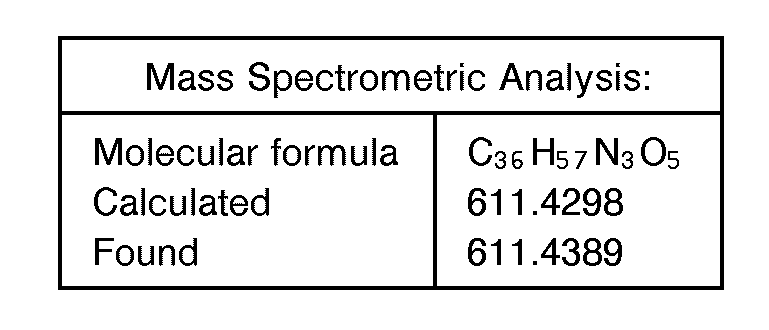
- NMR(δ, CDCl3):
- 0.89 (3H,t,J=7Hz), 0.96 (3H,s), 1.03 (3H,S), 1.23-1.42 (14H,m), 1.41 (3H,s), 1.45 (3H,s), 1.62-1.78 (2H,m), 1.99-2.08 (4H,m), 2.33 (2H,t,J = 7Hz), 2.64 (2H,t,J = 6Hz), 2.77 (2H,t,J = 6Hz), 3.26 (1 H,d,J = 12Hz), 3.52-3.73 (2H,m), 3.68 (1 H,d,J = 12Hz), 4.11 (1 H,s), 5.29-5.43 (2H,m), 7.09 (1 H,t,J = 6Hz), 7.22-7.29 (2H,m), 7.34-7.42 (2H,m), 7.79 (1 H,s), 8.36 (1 H,brs)
- 3-Oleoylaminoaniline (744 mg) and 606 mg of 3-[N-(2,4-diacetoxy-3,3-dimethyl-1-oxobutyl)amino]-propionic acid were reacted in the same manner as in Example 1 to obtain 860 mg of the title compound (yield: 65%).
- Property: Oily
- Specific Rotary Power [α]D: + 12.8 ° (C =1.0, CHCl3)
- IR(cm-1, neat): νc=o1750, 1668
-

- 0.89 (3H,t,J = 7Hz), 1.03 (3H,s), 1.05 (3H,s), 1.21-1.42 (20H,m), 1.61-1.77 (2H,m), 1.97-2.13 (4H,m), 2.05 (3H,s), 2.10 (3H,s), 2.33 (2H,t,J = 7Hz), 2.56 (2H,t,J = 6Hz), 3.55-3.68 (2H,m), 3.87 (1 H,d,J = 11 Hz), 4.02 (1H,d,J = 10Hz), 4.91 (1 H,s), 5.29-5.42 (2H,m), 6.84 (1 H,d,J = 6Hz), 7.25 (1 H,d,J = 8Hz), 7.33 (1 H,d,J = 8Hz), 7.41 (1 H,d,J = 8Hz), 7.54 (1 H,brs), 7.63 (1 H,brs), 8.01 (1 H,brs)
- N-[3-(Oleoylamino)phenyl]-3-[N-(2,4-diacetoxy -3,3-dimethyl-1-oxobutyl)amino]propanamide (470 mg) was reacted in the same manner as in Example 3 to obtain 378 mg of the title compound (yield: 94%). Property: Oily
- Specific Rotary Power [α]D: + 23.1 ° (C=1.0, CHCl3)
- IR(cm-1, neat): νc=o1660
-

- NMR(δ, CDCl3):
- 0.88 (3H,t,J = 7Hz), 0.91 (3H,s), 0.98 (3H,s), 1.21-1.42 (20H,m), 1.62-1.73 (2H,m), 1.93-2.10 (4H,m), 2.32 (2H,t,J=7Hz), 2.52 (2H,brs), 3.50-3.70 (2H,m), 4.01 (1H,s), 5.29-5.43 (2H,m), 7.17-7.31 (3H,m), 7.53-7.62 (1H,m), 7.71 (1H,brs), 7.92-8.00 (1H,m), 8.46-8.55 (1H,m)
- 4-Oleoylaminoaniline (744 mg) and 606 mg of 3-[N-(2,4-diacetoxy-3,3-dimethyl-1-oxobutyl)amino]-propionic acid were reacted in the same manner as in Example 1 to obtain 900 mg of the title compound (yield: 69%).
- Property: Oily
- Specific Rotary Power [α]D: + 17.3 ° (C=1.0, CHCl3)
- IR(cm-1, neat): νc=o1754, 1660
-

- NMR(δ, CDCl3):
- 0.88 (3H,t,J = 7Hz), 1.02 (3H,s), 1.05 (3H,s), 1.19-1.43 (20H,m), 1.66-1.77 (2H,m), 1.92-2.09 (4H,m), 2.05 (3H,s), 2.08 (3H,s), 2.34 (1 H,t,J = 7Hz), 2.56 (2H,t,J = 6Hz), 3.50-3.71 (2H,m), 3.84 (1 H,d,J = 11 Hz), 4.02 (1 H,d,J = 11Hz), 4.89 (1 H,s), 5.29-5.42 (2H,m), 6.76 (1H,t,J = 6Hz), 7.13 (1H,brs), 7.44-7.52 (4H,m), 7.64 (1 H,brs)
- N-[4-(Oleoylamino)phenyl]-3-[N-(2,4-diacetoxy -3,3-dimethyl-1-oxobutyl)amino]propanamide (657 mg) was reacted in the same manner as in Example 3 to obtain 495 mg of the title compound (yield: 86%). Property: Melting Point 146.2 - 148.1 ° C Specific Rotary Power [α]D: + 10.2 ° (C=1.0, CHCl3)
- IR(cm-1, neat): νc=o1664
-

- 0.88 (3H,t,J = 7Hz), 0.89 (3H,s), 0.95 (3H,s), 1.15-1.43 (20H,m), 1.62-1.77 (2H,m), 1.92-2.08 (4H,m), 2.34 (2H,t,J = 7Hz), 2.56 (2H,brs), 3.45 (2H,s), 3.58 (2H,brs), 3.96 (1 H,s), 5.27-5.42 (2H,m), 7.25-7.39 (4H,m), 7.48 (1 H,brs), 7.71 (1 H,brs), 8.54 (1 H,brs)
- 4-Lauroylaminoaniline (250 mg) and 223 mg of 3-[N-(2,2,5,5-tetramethyl-1,3-dioxane-4-carbonyl)amino]-propionic acid were reacted in the same manner as in Example 1 to obtain 381 mg of the title compound (yield: 72%).
- Property: Melting Point 144.3 - 144.9 ° C
- Specific Rotary Power [α]D: + 34.6 ° (C = 1.0, CHCl3)
- IR(cm-1, neat): νc=o1664
-

- NMR(δ, CDCl3):
- 0.88 (3H,t,J=7Hz), 0.95 (3H,s), 1.04 (3H,s), 1.22-1.40 (16H,m), 1.41 (3H,s), 1.45 (3H,s), 1.68-1.80 (2H,m), 2.34 (2H,t,J = 7Hz), 2.65 (2H,t,J = 6Hz), 2.34 (2H,t,J = 7Hz), 2.65 (2H,t,J = 7Hz), 3.27 (1 H,d,J = 12Hz), 3.50-3.75 (2H,m), 3.68 (1 H,d,J = 12Hz), 4.10 (1 H,s), 7.08 (1 H,d,J = 6Hz), 7.16 (1 H,s), 7.46 (2H,d,J = 8Hz), 7.49 (2H,d,J = 8Hz), 8.09 (1 H,s)
- A solution of 303 mg of 2-oleoylaminophenol, 259 mg of 3-[N-(2,2,5,5-tetramethyl-1,3-dioxane-4-carbonyl)amino]propionic acid, 227 mg of dicyclohexylcarbodiimide and 122 mg of 4-dimethylamino pyridine in 15 ml of toluene was heated under reflux for 2 hours. After cooling the reaction mixture, the crystals formed were filtered. The filtrate was concentrated and the residue obtained was subjected to silica gel column chromatography to obtain 445 mg of the title compound (yield: 72%).
- Property: Oily
- Specific Rotary Power [α]D : + 26.9 ° (C = 1.0, CHCl3)
- IR(cm-1, neat): νc=o1772, 1658
-

- 0.88 (3H,t,J=7Hz), 0.99 (3H,s), 1.00 (3H,s), 1.22-1.43 (20H,m), 1.43 (3H,s), 1.47 (3H,s), 1.65-1.78 (2H,m), 1.93-2.08 (4H,m), 2.44 (2H,t,J = 7Hz), 2.80 (2H,t,J = 6Hz), 3.28 (1 H,d,J = 12Hz), 3.69-3.82 (2H,m), 3.68 (1H,d,J = 12Hz), 4.09 (1 H,s), 5.29-5.39 (2H,m), 7.00 (1H,t,J = 6Hz), 7.06-7.12 (2H,m), 7.19-7.27 (1 H,m), 8.22 (1 H,d,J = 8Hz), 8.39 (1 H,s)
- 4-Hydroxyoleoylanilide (565 mg) and 393 mg of 3-[N-(2,2,5,5-tetramethyl-1,3-dioxane-4-carbonyl)-amino]propionic acid were reacted in the same manner as in Example 15 to obtain 930 mg of the title compound (yield: 99%).
- Property: Oily
- Specific Rotary Power [α]D: + 18.8 ° (C=1.0, CHCl3)
- IR(cm-1, neat): νc=o1760, 1662
-

- NMR(δ, CDCl3):
- 0.88 (3H,t,J=7Hz), 1.00 (3H,s), 1.06 (3H,s), 1.23-1.43 (20H,m), 1.43 (3H,s), 1.45 (3H,s), 1.65-1.78 (2H,m), 1.93-2.09 (4H,m), 2.35 (2H,t,J = 7Hz), 2.82 (2H,t,J = 6Hz), 3.29 (1 H,d,J = 12Hz), 3.52-3.77 (2H,m), 3.70 (1H,d,J=12Hz), 4.11 (1H,s), 5.29-5.41 (2H,m), 6.98-7.07 (1H,m), 7.03 (2H,d,J=8Hz), 7.54 (2H,d,J = 8Hz) 7.18 (1 H,s)
- 4-Oleoylaminophenol (372 mg) and 259 mg of 3-[N-(2,4-diacetoxy-3,3-dimethyl-1-oxobutyl)amino]-propionic acid were reacted in the same manner as in Example 1 to obtain 255 mg of the title compound (yield: 39%).
- Property: Oily
- Specific Rotary Power [α]D: + 19.4 ° (C=1.0, CHCl3)
- IR(cm-1, neat): νc=o1750, 1666
-

- NMR(δ, CDCl3):
- 0.88 (3H,t,J = 7Hz), 1.03 (3H,s), 1.08 (3H,s), 1.22-1.42 (20H,m), 1.66-1.78 (2H,m), 1.96-2.07 (4H,m), 2.01 (3H,s), 2.04 (3H,s), 2.35 (2H,t,J = 7Hz), 2.77-2.82 (2H,m), 3.84 (1 H,d,J = 12Hz), 4.05 (1 H,d,J = 12Hz), 4.97 (1 H,s), 5.27-5.42 (2H,m), 6.61 (1 H,t,J = 6Hz), 7.04 (2H,d,J = 8Hz), 7.15 (1 H,brs), 7.54 (2H,d,J = 8Hz)
- 3-[N-(2,4-Dibenzyloxy-3,3-dimethyl-1-oxobutyl)amino]propionic acid (200 mg) and 186 mg of 4-(Oleoylamino)phenol were reacted in the same manner as in Example 15 to obtain 312 mg of the title compound (yield: 97%).
- Property: Oily
- Specific Rotary Power [α]D: + 19.3 ° (C=1.0, CHCl3)
- IR(cm-1, neat): νc=o1760, 1652

- NMR(δ, CDCl3):
- 0.88 (3H,t,J = 7Hz), 0.94 (3H,s), 1.05 (3H,s), 1.20-1.41 (20H,m), 1.64 1.75 (2H,m), 1.95-2.09 (4H,m), 2.34 (3H,s), 2.75 (3H,t,J = 7Hz), 3.23 (1 H,t,J = 9Hz), 3.61 (2H,dd,J = 6Hz,6Hz), 3.41 (1 H,d,J = 9Hz), 3.90 (1 H,s), 4.34-4.55 (4H,m), 5.29-5.42 (2H,m), 6.95 (2H,d,J=8Hz), 7.03 (1H,d,J = 8Hz), 7.23-7.39 (10H,m), 7.50 (2H,d,J = 8Hz)
- A solution of 500 mg of 4-(Oleoylamino)phenyl 3-[N-(2,2,5,5-tetramethyl-1,3-dioxane-4-carbonyl)amino]-propionate in a mixed solvent composed of 20 ml of acetic acid and 10 ml of water was stirred at room temperature for 15 hours. 20 ml of water was then added to the reaction mixture, which was then extracted with methylene chloride. The methylene chloride layer was washed with water, and dried over anhydrous sodium sulfate. After removal of the solvent under vacuum evaporation, the residue obtained was subjected to silica gel column chromatography to obtain 395 mg of the title compound (yield: 85%).
- Property: Oily
- Specific Rotary Power [α]D: + 14.3 ° (C=1.0, CHCl3)
- IR(cm-1, neat): νc=o1758, 1662
-

- NMR(δ, CDCl3):
- 0.88 (3H,t,J = 7Hz), 0.93 (3H,s), 1.03 (3H,s), 1.21-1.43 (20H,m), 1.65-1.71 (2H,m), 1.71-2.18 (6H,m), 2.35 (2H,t,J = 7Hz), 3.82 (2H,t,J = 6Hz), 3.50 (1 H,d,J = 10Hz,), 3.60-3.74 (2H,m), 3.54 (1 H,d,J = 10Hz), 4.04 (1 H,s), 5.28-5.43 (2H,m), 7.15-7.26 (2H,m), 7.04 (2H,d,J=8Hz), 7.52 (2H,d,J=8Hz)
- 4-Linolenoylaminoanilide (369 mg) and 259 mg of 3-[N-(2,2,5,5-tetramethyl-1,3-dioxane-4-carbonyl)-amino]propionic acid were reacted in the same manner as in Example 15 to obtain 431 mg of the title compound (yield: 71%).
- Property: Oily
- Specific Rotary Power [α]D : + 20.6 ° (C = 1.0, CHCl3)
- IR(cm-1, neat): νc=o1760, 1662
-

- NMR(δ, CDCl3):
- 0.98 (3H,t,J = 7Hz), 1.00 (3H,s), 1.06 (3H,s), 1.24-1.42 (8H,m), 1.43 (3H,s), 1.45 (3H,s), 1.64-1.78 (2H,m), 2.01-2.12 (4H,m), 2.35 (2H,t,J=7Hz), 2.72-2.86 (6H,m), 3.29 (1H,d,J 12Hz), 3.52-3.77 (2H,m), 3.70 (1H,d,J = 12Hz), 4.11 (1H,s), 5.28-5.44 (6H,m), 7.00 (1H,t,J = 6Hz), 7.03 (2H,d,J = 8Hz), 7.15 (1H,s), 7.54 (2H,d,J = 8Hz)
- S-4-Aminophenyl thiooleate (778 mg) and 518 mg of 3-[N-(2,2,5,5-tetramethyl-1,3-dioxane-4-carbonyl)-amino]propionic acid were reacted in the same manner as in Example 1 to obtain 1.05 g of the title compound (yield: 83%).
- Property: Oily
- Specific Rotary Power [α]D: + 29.8 ° (C = 1.0, CHCl3)
- IR(cm-1, neat): νc=o1696, 1666
-

- NMR(δ, CDCl3):
- 0.88 (3H,t,J=7Hz), 0.90 (3H,s), 1.04 (3H,s), 1.21-1.39 (20H,m), 1.42 (3H,s), 1.46 (3H,s), 1.60-1.74 (2H,m), 1.92-2.09 (4H,m), 2.63 (2H,t,J = 7Hz), 2.68 (2H,t,J = 6Hz), 3.28 (1 H,d,J = 12Hz), 3.54-3.75 (2H,m), 3.68 (1H,d,J = 12Hz), 4.10(1H,s), 5.30-5.42 (2H,m), 7.08 (1H,t,J= = 6Hz), 7.35 (2H,d,J=8Hz), 7.63 (2H,d,J = 8Hz), 8.29 (1 H,s)
- N-[4-(Oleoylthio)phenyl]-3-[N-(2,2,5,5-tetramethyl-1,3-dioxane-4-carbonyl)amino]propanamide (500 mg) was reacted in the same manner as in Example 19 to obtain 406 mg of the title compound (yield: 87%). Property: Oily
- Specific Rotary Power [α]D: + 16.0° (C =1.0, CHCl3)
- IR(cm-1, neat): vc=o1670
-
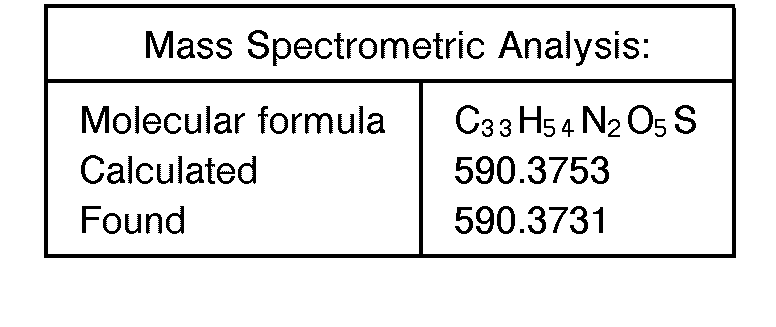
- NMR(δ, CDCl3):
- 0.88 (3H,t,J=7Hz), 0.91 (3H,s), 0.98 (3H,s), 1.20-1.42 (20H,m), 1.65-1.77 (2H,m), 1.93-2.09 (4H,m), 2.57 (2H,t,J = 6Hz), 2.66 (2H,t,J = 6Hz), 3.25 (2H,brs), 3.48 (2H,brs), 3.50-3.69 (2H,m), 4.01 (1H,s), 5.30-5.42 (2H,m), 7.28 (2H,t,J = 9Hz), 7.50 (2H,d,J = 9Hz), 7.54 (2H,d,J = 6Hz), 8.62 (1 H,s)
- S-4-Aminophenyl 3-[N-(2,2,5,5-tetramethyl-1,3-dioxane-4-carbonyl)amino]propanethioate (281 mg) and 229 mg oleoyl chloroide were reacted in the same manner as in Example 6 to obtain 185 mg of the title compound (yield: 38%).
- Property: Oily
- Sepcific Rotary Power [α]D: + 7.90 °(C= = 1.0, CHCl3)
- IR(cm-1, neat): vc=o1704, 1652
-

- NMR(δ, CDCl3):
- 0.88 (3H,t,J=7Hz), 1.00 (3H,s), 1.05 (3H,s), 1.15-1.42 (20H,m), 1.42 (3H,s), 1.45 (3H,s), 1.65-1.79 (2H,m), 1.92-2.08 (4H,m), 2.37 (2H,t,J = 7Hz), 2.82-3.01 (2H,m), 3.29 (1 H,d,J = 6Hz), 3.47-3.69 (2H,m), 3.69 (1H,d,J =12Hz), 4.09 (1H,s), 5.29-5.42 (2H,m), 6.85-6.92 (1H,m), 7.16 (1H,s), 7.34 (2H,d,J = 8Hz), 7.60 (2H,d,J = 8Hz)
- S-4-(Oleoylamino)phenyl 3-[N-(2,2,5,5-tetramethyl-1,3-dioxane-4-carbonyl)amino]propanethioate (483 mg) was reacted in the same manner as in Example 19 to obtain 404 mg of the title compound (yield: 89%).
- Property: Oily
- Specific Rotary Power [α]D: + 8.80 °(C= = 1.0, CHCl3)
- IR(cm-1, neat): vc=o1698, 1670
-

- NMR(δ, CDCl3):
- 0.88 (3H,t,J=7Hz), 0.91 (3H,s), 1.02 (3H,s), 1.19-1.43 (20H,m), 1.67-1.79 (2H,m), 1.87-2.17 (6H,m), 2.36 (2H,t,J = 7Hz), 2.92 (2H,t,J = 6Hz), 3.48 (1 H,d,J = 12Hz), 3.53 (1 H,d,J = 12Hz), 3.56-3.65 (2H,m), 4.01 (1 H,s), 5.28-5.42 (2H,m), 7.12 (1 H,t,J = 6Hz), 7.26 (1 H,brs), 7.34 (2H,d,J = 8Hz), 7.59 (2H,d,J = 8Hz)
- S-4-aminophenyl 3-[N-(2,4-diacetoxy-3,3-dimethyl-1-oxobutyl)amino]propanethioate (276 mg) and 196 mg of oleoyl chloride were reacted in the same manner as in Example 6 to obtain 304 mg of the title compound (yield: 69%).
- Property: Oily
- Specific Rotary Power [α]D: +21.3°(C=1.0, CHCl3)
- IR(cm-1, neat): vc=o1750, 1670
-

- NMR(δ, CDCl3):
- 0.88 (3H,t,J=7Hz), 1.00 (3H,s), 1.06 (3H,s), 1.21-1.33 (20H,m), 1.62-1.77 (2H,m), 1.94-2.08 (4H,m), 2.06 (3H,s), 2.10 (3H,s), 2.37 (2H,t,J = 7Hz), 2.89 (2H,t,J = 6Hz), 3.44-3.68 (2H,m), 3.82 (1 H,d,J = 11 Hz), 4.03 (1H,d,J = 11Hz), 4.97 (1 H,s), 5.29-5.41 (2H,m), 6.47 (1H,t,J=6Hz), 7.19-7.32 (2H,m), 7.17 (1H,s), 7.35 (2H,d,J = 8Hz), 7.61 (2H,d,J = 8Hz)
- N-(2-Hydroxyphenyl)-3-[N-(2,2,5,5-tetramethyl -1,3-dioxane-4-carbonyl)amino]propanamide (350 mg) and 282 mg of oleic acid were reacted in the same manner as in Example 15 to obtain 411 mg of the title compound (yield: 67%).
- property: Oily
- Secific Rotary Power [α]D: + 32.3 °(C = 1.0, CHCl3)
- IR(cm-1, neat): vc=o1768, 1668
-
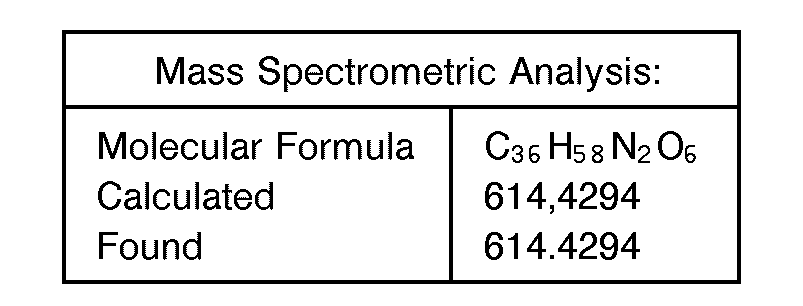
- 0.88 (3H,t,J=7Hz), 0.96 (3H,s), 1.03 (3H,s), 1.23-1.45 (20H,m), 1.40 (3H,s), 1.45 (3H,s), 1.71-1.83 (2H,m), 1.92-2.08 (4H,m), 2.58-2.67 (4H,m), 3.27 (1 H,d,J = 12Hz), 3.56-3.64 (2H,m), 3.67 (1 H,d,J = 12Hz), 4.07 (1 H,s), 5.30-5.42 (2H,m), 7.03-7.17 (3H,m), 7.19-7.29 (1 H,m), 7.49 (1 H,brs), 8.18 (1 H,s,J = 8Hz)
- N-(4-hydroxyphenyl)-3-[N-(2,4-diacetoxy-3,3 -dimethyl-1-oxobutyl)amino]propanamide (394 mg) and 301 mg of oleoyl chloride were reacted in the same manner as in Example 6 to obtain 530 mg of the title compound (yield: 81%).
- property: Oily
- Secific Rotary Power [α]D: +14.9°(C=1.0, CHCl3)
- IR(cm-1, neat): vc=o1746, 1666
-

- NMR(δ, CDCl3):
- 0.88 (3H,t,J=7Hz), 1.02 (3H,s), 1.05 (3H,s), 1.22-1.42 (20H,m), 1.68-1.79 (2H,m), 1.94-2.09 (4H,m), 2.07 (3H,s), 2.51-2.59 (4H,m), 3.54-3.71 (2H,m), 3.84 (1 H,d,J = 12Hz), 4.02 (1 H,d,J = 12Hz), 4.88 (1 H,s), 5.28-5.42 (2H,m), 6.72 (1 H,d,J = 6Hz), 7.34 (2H,d,J = 8Hz), 7.54 (2H,d,J = 8Hz), 7.71 (1 H,brs)
- N-[4-(Oleoyloxyphenyl)-3-[N-(2,2,5,5-tetramethyl -1,3-dioxane-4-carbonyl)amino]propanamide (1.0 g) was reacted in the same manner as in Example 19 to obtain 830 mg of the title compound (yield: 89%). property: Oily
- Secific Rotary Power [α]D: +21.0°(C=1.0, CHCl3)
- IR(cm-1, neat): vc=o1760, 1660
-

- 0.88 (3H,t,J=7Hz), 0.90 (3H,s), 0.98 (3H,s), 1.19-1.46 (20H,m), 1.41 (3H,s), 1.68-1.79 (2H,m), 1.93-2.09 (4H,m), 2.55 (2H,t,J = 7Hz), 2.59 (2H,t,J=6Hz), 2.72 (2H,brs), 3.55-3.68 (2H,m), 3.48 (2H,s), 3.98 (1 H,s), 5.29-5.42 (2H,m), 7.45-7.53 (1 H,m), 7.00 (2H,d,J = 8Hz), 7.52 (2H,d,J = 8Hz), 8.35 (1 H,s)
- N-(4-(Hydroxyphenyl)-3-[N-(2,2,5,5-tetramethyl-1,3-dioxane-4-carbonyl)amino]propanamide (1.44 g) and 1.20 g of oleoyl chloride were reacted in the same manner as in Example 6 to obtain 1.93 g of the title compound (yield: 79%).
- property: Oily
- Specific Rotary Power [α]D: + 32.6 °(C= = 1.0, CHCl3)
- IR(cm-1, neat): vc=o1764, 1668
-

- 0.88 (3H,t,J=7Hz), 0.96 (3H,s), 1.04 (3H,s), 1.23-1.45 (20H,m), 1.41 (3H,s), 1.46 (3H,s), 1.66-1.70 (2H,m), 1.93-2.09 (4H,m), 2.54 (2H,t,J=7Hz), 2.66 (2H,t,J=6Hz), 3.27 (1 H,d,J =12Hz), 3.52-3.77 (2H,m), 3.68 (1H,d,J=12Hz), 4.10 (1H,s), 5.29-5.42 (2H,m), 7.01-7.10 (1H,m), 7.01 (2H,d,J=8Hz), 7.57 (2H,d,J = 8Hz), 8.11 (1 H,s)
- S-p-aminophenyl thiooleate (799 mg) and 606 mg of 3-[N-(2,4-diacetoxy-3,3-dimethyl-1-oxobutyl)-amino]propionic acid were reacted in the same manner as in Example 1 to obtain 780 mg of the title compound (yield: 58%).
- property: Oily
- Specific Rotary Power [α]D: +14.5°(C=1.0, CHCl3)
- IR(cm-1, neat): vc=o1748, 1672
-

- 0.88 (3H,t,J = 7Hz), 1.03 (3H,s), 1.06 (3H,s), 1.22-1.41 (20H,m), 1.64-1.75 (2H,m), 1.96-2.08 (4H,m), 2.05 (3H,s), 2.08 (3H,s), 2.58 (2H,t,J =6Hz), 2.64 (2H,t,J = 7Hz), 3.55-3.70 (2H,m), 3.85 (1 H,d,J = 11 Hz), 4.02 (1 H,d,J = 11 Hz), 4.87 (1 H,s), 5.28-5.43 (2H,m), 6.69 (1 H,t,J = 6Hz), 7.34 (2H,d,J = 8Hz), 7.60 (2H,d,J = 8Hz), 7.81 (1 H,brs)
- A solution of 1.07 g of N-(2-aminoethyl)oleamide and 1.40 g of 4-nitrophenyl 3-[N-(2,4-diacetoxy-3,3-dimethyl-1-oxobutyl)amino]propionate in 40 ml of tetrahydrofuranwas stirred at room temperature for 15 hours. The solvent was then distilled off under reduced pressure. The residue was dissolved in ethyl acetate, and the solution was washed with aqueous potassium carbonate solution and then with water. The organic layer was dried over anhydrous sodium sulfate, and the solvent was distilled off. The residue was subjected to silica gel column chromatography to obtain 4.45 g of the refined title compound (yield: 75%). property: Oily
- IR(cm-1, neat): 2980, 1740, 1650
-

- 0.88 (3H,t,J=7Hz), 1.05 (3H,s), 1.09 (3H,s), 1.10-1.40 (18H,m), 1.54-2.42 (12H,m), 2.07 (3H,s), 2.16 (3H,s), 3.20-3.60 (6H,m), 3.86 (1H,t,J=11Hz), 4.05 (1H,d,J=11Hz), 4.86 (1H,s), 5.30-5.40 (2H,m), 6.14-6.22 (1 H,brs), 6.52-6.60 (1 H,brs), 7.04-7.12 (1 H,brs)
- N-(2-Oleoylaminoethyl)-3-[N-(2,4-diacetoxy-3,3 -dimethyl-1-oxobutyl)amino]propanamide (200 mg) was reacted in the same manner as in Example 3 to obtain 150 mg of the title compound (yield: 86%).
- property: Oily
- IR(cm-1, neat): vOH3324, vC=O1650
-

- 0.88 (3H,t,J=7Hz), 0.94 (3H,s), 1.00 (3H,s), 1.16-1.40 (17H,m), 1.50-1.64 (2H,m), 1.92-2.08 (4H,m), 2.19 (2H,t,J = 7Hz), 2.30-2.80 (6H,s), 3.20-3.54 (6H,m), 3.62-3.74 (1 H,m), 4.02 (1 H,s), 5.39-5.44 (2H,m), 6.40-6.50 (1 H,m), 6.96-7.04 (1 H,m), 7.45-7.53 (1 H,m)
- N-(2-Aminoethyl)olelamide (3.38 g) and 2.59 g of 3-[N-(2,2,5,5-tetramethyl-1,3-dioxane-4-carbonyl)-amino]propionic acid were reacted in the same manner as in Example 1 to obtain 4.58 g of the title compound (yield: 81%).
- property: Oily
- IR(cm-1, neat): vC=O1650
-

- 0.88 (3H,t,J=7Hz), 0.97 (3H,s), 1.04 (3H,s), 1.23-1.40 (14H,m), 1.43 (3H,s), 1.47 (H,s), 1.52-1.86 (6H,m), 1.92-2.10 (4H,m), 2.18 (2H,t,J = 7Hz), 2.46 (2H,t,J = 6Hz), 3.29 (1H,d,J =12Hz), 3.38 (3H,brs), 3.44-3.62 (4H,m), 3.67 (1 H,d,J = 12Hz), 4.08 (1 H,s), 5.30-5.42 (2H,m), 6.20-6.30 (1 H,brs), 6.65-6.73 (1 H,brs), 6.99-7.08 (1H,brs)
- N-(3-Aminopropyl)oleamide (3.39 g) and 2.59 g of 3-[N-(2,2,5,5-tetramethyl-1,3-dioxane-4-carbonyl)-amino]propionic acid were reacted in the same manner as in Example 1 to obtain 2.7 g of the title compound (yield: 47%).
- property: Oily
- IR(cm-1, neat): vC=O1660
-

- 0.88 (3H,t,J=7Hz), 0.97 (3H,s), 1.04 (3H,s), 1.10-1.40 (20H,m), 1.42 (3H,s), 1.46 (3H,s), 1.54-1.90 (5H,m), 1.90-2.10 (3H,m), 2.20 (2H,t,J=7Hz), 2.47 (2H,t,J=6Hz), 3.20-3.36 (5H,m), 3.48-3.66 (2H,m), 3.69 (1 H,d,J = 12Hz), 4.08 (1 H,s), 5.30-5.40 (2H,m), 6.15-6.25 (1 H,m), 6.58-6.66 (1 H,m), 7.02-7.10 (1 H,m)
- N-(3-Oleoylaminopropyl)- 3-[N-(2,2,5,5-tetramethyl-1,3-dioxane-4-carbonyl)amino]propanamide (0.58 g) was reacted in the same manner as in Example 19 to obtain 0.48 g of the title compound (yield: 89%). property: Oily
- IR(cm-1, neat): vC=O1650
-

- 0.88 (3H,t,J=7Hz), 0.90 (3H,s), 1.01 (3H,s), 1.20-1.40 (20H,m), 1.55-1.68 (4H,m), 1.92-2.08 (4H,m), 2.19 (2H,t,J = 6Hz), 2.36-2.54 (2H,m), 3.16-3.40 (6H,m), 3.48 (2H,s), 3.42-3.56 (1 H,m), 3.62-3.76 (1 H,m), 4.00 (1 H,s), 5.28-5.42 (2H,m), 6.18-6.24 (1 H,m), 6.85-6.94 (1 H,m), 7.42-7.52 (1 H,m)
- Acetic anhydride (10 ml) was added to a solution N-(3-Oleoylaminopropyl)-3-[N-(2,4-dihydroxy-3,3-dimethyl-1-oxobutyl)amino]propanamide (0.54 g) in 5 ml of pyridine was stirred for 15 hours. The solvent was then distilled off under reduced pressure. The residue was subjected to silica gel column chromatography to obtain 0.62 g of the refined title compound (yield: 99%).
- Property: Oily
- IR(cm-1, neat): vC=O1738, 1658
-

- 0.88 (3H,t,J=7Hz), 1.04 (3H,s), 1.08 (3H,s), 1.16-1.50 (23H,m), 1.56-1.72 (2H,m), 1.90-2.06 (2H,m), 2.07 (3H,s), 2.15 (3H,s), 2.19 (2H,t,J =7Hz), 2.46 (2H,t,J=6Hz), 2.32-2.48 (2H,m), 3.16-3.40 (5H,m), 3.48-3.62 (2H,m), 3.86 (1 H,d,J = 11 Hz), 4.03 (1 H,s), 4.90 (1 H,s), 5.28-5.40 (2H,m), 5.59-6.06 (1 H,m), 6.60-6.70 (1 H,m), 7.18-7.28 (1 H,m)
- N-(4-Aminobutyl)oleamide (3.77 g) and 2.59 g of 3-[N-(2,2,5,5-tetramethyl-1,3-dioxane-4-carbonyl)-amino]propionicacid were reacted in the same manner as in Example 1 to obtain 2.66 g of the title compound (yield: 45%).
- Property: Oily
- IR(cm-1, neat): vC=O1648
-

- 0.88 (3H,t,J=7Hz), 0.97 (3H,s), 1.04 (3H,s), 1.20-1.40 (18H,m), 1.43 (3H,s), 1.46 (3H,s), 1.50-1.70 (6H,m), 1.86-2.10 (6H,m), 2.16 (2H,t,J =8Hz), 2.45 (2H,t,J=6Hz), 3.20-3.32 (5H,m), 3.20-3.32 (5H,m), 3.42-3.66 (2H,m), 3.69 (1 H,d,J = 12Hz), 4.08 (1 H,s), 5.26-5.42 (2H,m), 5.78-5.86 (1 H,m), 6.35-6.45 (1 H,m), 7.20-7.12 (1H,m)
- N-(4-Oleoylaminobutyl)-3-[N-(2,2,5,5-tetramethyl-1,3-dioxane-4-carbonyl)amino]propanamide (1.19 g) was reacted in the same manner as in Example 19 to obtain 0.43 g of the title compound (yield: 39%). property: Oily
- IR(cm-1, neat): vC=O1650
-

- 0.88 (3H,t,J=7Hz), 0.95 (3H,s), 0.99 (3H,s), 1.18-1.40 (17H,m), 1.40-1.66 (6H,m), 1.92-2.10 (4H,m), 2.18 (2H,t,J = 6Hz), 2.40-2.50 (2H,m), 2.70-3.32 (6H,m), 3.32-3.72 (6H,m), 4.00 (1 H,s), 5.30-5.42 (2H,m), 6.04-6.10 (1 H,m), 6.60-6.70 (1 H,m), 7.42-7.52 (1 H,m)
- N-(4-Oleoylaminobutyl)-3-[N-(2,4-dihydroxy-3,3-dimethyl-1-oxobutyl)amino]propanamide (0.55 g) and 10 ml of acetic anhydride were reacted in the same manner as in Example 36 to obtain 0.52 g of the title compound (yield: 82%).
- property: Oily
- IR(cm-1, neat): vC=O1730, 1650
-

- 0.88 (3H,t,J=7Hz), 1.03 (3H,s), 1.07 (3H,s), 1.20-1.40 (18H,m), 1.50-1.70 (6H,m), 1.70-2.10 (6H,m), 2.07 (3H,s), 2.16 (3H,s), 2.16 (2H,t,J = 7Hz), 2.38 (2H,t,J=6Hz), 3.20-3.30 (4H,m), 3.42 -3.62 (2H,m), 3.85 (1 H,d,J = 11 Hz), 4.20 (1 H,d,J = 11 Hz), 4.93 (1 H,s), 5.30-5.42 (2H,m), 5.76-5.86 (1 H,m), 6.22-6.30 (1 H,m), 7.00-7.08 (1 H,m)
- N-(5-Aminopentyl)oleamide (3.66 g) and 2.59 g of 3-[N-(2,2,5,5-tetramethyl-1,3-dioxane-4-carbonyl)-amino]propionic acid were reacted in the same manner as in Example 1 to obtain 3.64 g of the title compound (yield: 60%).
- property: Oily
- IR(cm-1, neat): vC=O 1660
-

- 0.88 (3H,t,J=7Hz), 0.97 (3H,s), 1.04 (3H,s), 1.20-1.74 (30H,m), 1.46 (3H,s), 1.48 (3H,s), 1.90-2.10 (4H,m), 2.16 (2H,t,J=7Hz), 2.44 (2H,t,J=7Hz), 3.24 (2H,dt,J=6Hz,7Hz), 3.29 (1H,d,J=12Hz), 3.44-3.665 (2H,m), 3.68 (1H,d,J =12Hz), 4.07 (1H,s), 5.32-5.44 (2H,m), 5.44-5.62 (1H,m), 6.05-6.12 (1H,m) 6.96-7.08 (1 H,m)
- N-(6-Aminohexyl)oleamide (3.81 g) and 2.59 g of 3-[N-(2,2,5,5-tetramethyl-1,3-dioxane-4-carbonyl)-amino]propionic acid were reacted in the same manner as in Example 1 to obtain 2.92 g of the title compound (yield: 47%).
- property: Oily
- IR(cm-1, neat): vC=O1664, 1644
-

- 0.88 (3H,t,J=7Hz), 0.97 (3H,s), 1.04 (3H,s), 1.18-1.76 (32H,m), 1.42 (3H,s), 1.46 (3H,s), 1.92-2.10 (4H,m), 2.15 (2H,t,J=7Hz), 2.44 (2H,t,J=7Hz), 3.23 (2H,dt,J=6Hz,7Hz), 3.29 (1H,d,J=12Hz), 2.44-3.66 (4H,m), 3.68 (1H,d,J =12Hz), 4.07 (1H,s), 5.30-5.42 (2H,m), 5.48-5.58 (1H,m), 5.96-6.06 (1H,m), 7.00-7.06 (1H,m)
- N-(8-Aminooctyl)oleamide (4.08 g) and 2.59 g of 3-[N-(2,2,5,5-tetramethyl-1,3-dioxane-4-carbonyl)-amino]propionic acid were reacted in the same manner as in Example 1 to obtain 1.36 g of the title compound (yield: 21%).
- property: Oily
- IR(cm-1, neat): vC=O1664, 1644
-

- 0.88 (3H,t,J=7Hz), 0.97 (3H,s), 1.04 (3H,s), 1.20-1.40 (27H,m), 1.42 (3H,s), 1.46 (3H,s), 1.56-1.72 (4H,m), 1.92-2.10 (4H,m), 2.15 (2H,t,J = 7Hz), 2.43 (2H,t,J=7Hz), 3.18-3.26 (5H,m), 3.28 (1 H,d,J = 12Hz), 3.44-3.66 (4H,m), 3.68 (1 H,d,J = 12Hz), 4.07 (1 H,s), 5.30-5.40 (2H,m), 5.40-5.48 (1 H,m), 5.86-5.94 (1 H,m), 6.98-7.06 (1 H,m)
- 2-Aminoethyl oleate (3.26 g) and 2.59 g of 3-[N-(2,2,5,5-tetramethyl-1,3-dioxane-4-carbonyl)amino]-propionic acid were reacted in the same manner as in Example 1 to obtain 1.75 g of the title compound (yield: 31 %).
- property: Oily
- IR(cm-1, neat): vC=O1742, 1660
-

- 0.88 (3H,t,J=7Hz), 0.97 (3H,s), 1.04 (3H,s), 1.16-1.40 (H,m), 1.42 (3H,s), 1.46 (3H,s), 1.52-1.70 (4H,m), 1.70-1.90 (2H,m), 1.96-2.08 (2H,m), 2.32 (2H,t,J = 7Hz), 2.46 (2H,t,J = 7Hz), 3.29 (1 H,d,J = 12Hz), 3.42-3.66 (4H,m), 3.68 (1 H,d,J = 12Hz), 4.07 (1 H,s), 4.15 (2H,t,J = 12Hz), 5.32-5.40 (2H,m), 6.08-6.18 (1 H,m), 6.98-7.08 (1 H,m)
- N-(2-Hydroxyethyl)oleamide (0.97 g) and 0.78 g of 3-[N-(2,2,5,5-tetramethyl-1,3-dioxane-4-carbonyl)-amino]propionic acid were reacted in the same manner as in Example 15 to obtain 1.50 g of the title compound (yield: 90%).
- property: Oily
- IR(cm-1, neat): vC=O1742, 1658
-

- 0.88 (3H,t,J=7Hz), 0.98 (3H,s), 1.03 (3H,s), 1.22-1.38 (18H,m), 1.43 (3H,s), 1.47 (3H,s), 1.50-1.72 (5H,m), 1.92-2.08 (4H,m), 2.21 (2H,t,J = 7Hz), 2.56 (2H,t,J=6Hz), 3.29 (1 H,d,J = 12Hz), 3.42-3.70 (4H,m), 3.66 (1 H,d,J = 12Hz), 4.08 (1 H,s), 4.18 (1 H,s), 5.28-5.40 (2H,m), 6.27-6.38 (1 H,brs), 6.88-6.96 (1 H,brs)
- 2-(N-oleoyl)amino)ethyl 3-[N-(2,2,5,5-tetramethyl-1,3-dioxane-4-carbonyl)amino]propionic acid (880 mg) was reacted in the same manner as in Example 19 to obtain 740 mg of the title compound (yield: 91 %). property: Oily
- IR(cm-1, neat): vNH3324, vC=O1740, 1650
-
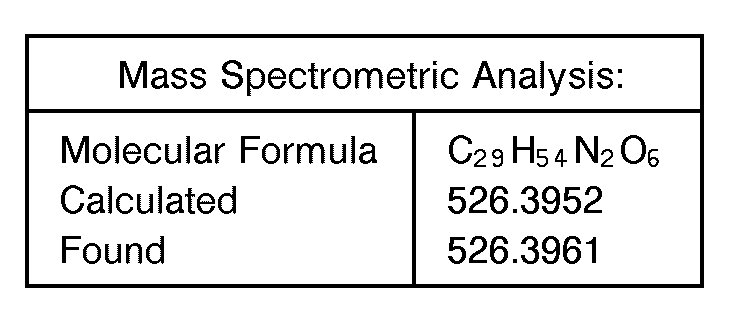
- 0.88 (3H,t,J=7Hz), 0.94 (3H,s), 1.04 (3H,s), 1.20-1.40 (20H,m), 1.52-1.68 (2H,m), 1.90-2.10 (3H,m), 2.20 (2H,t,J = 7Hz), 2.49-2.58 (2H,m), 2.80-3.20 (3H,m), 3.38-3.76 (6H,m), 4.02 (1 H,s), 4.05-5.42 (2H,m), 6.20-6.30 (1 H,brs), 7.30-7.40 (1H,brs)
- N-Methyl-(2-hydroxyethyl)oleamide (3.40 g) and 2.59 g of 3-[N-(2,2,5,5-tetramethyl-1,3-dioxane-4-carbonyl)amino]propionic acid were reacted in the same manner as in Example 15 to obtain 3.42 g of the title compound (yield: 59%).
- property: Oily
- IR(cm-1, neat): vC=O1740, 1658
-

- 0.88 (3H,t,J=7Hz), 0.97 (3H,s), 1.04 (3H,s), 1.22-1.42 (19H,m), 1.43 (3H,s), 1.47 (3H,s), 1.55-1.70 (3H,m), 1.90-2.10 (4H,m), 2.30 (2H,tt,J = 7Hz,7Hz), 2.52-2.60 (2H,m), 3.05 (3H,s), 3.29 (1 H,d,J = 12Hz), 3.42-3.60 (4H,m), 3.68 (1 H,d,J = 12Hz), 4.08 (1 H,s), 4.24 (2H,t,J = 7Hz), 5.30-5.42 (2H,m), 6.98-7.08 (1 H,m)
- N-(3-hydroxyethyl)oleamide (3.40 g) and 2.59 g of 3-[N-(2,2,5,5-tetramethyl-1,3-dioxane-4-carbonyl)-amino]propionic acid were reacted in the same manner as in Example 15 to obtain 4.52 g of the title compound (yield: 59%).
- property: Oily
- IR(cm-1, neat): vC=O1740, 1654
-

- 0.88 (3H,t,J=7Hz), 0.98 (3H,s), 1.04 (3H,s), 1.10-1.50 (21H,m), 1.43 (3H,s), 1.46 (3H,s), 1.52-1.86 (2H,m), 1.84 (2H,tt,J=6Hz,7Hz), 1.90-2.10 (3H,m), 2.17 (2H,t,J=7Hz), 2.56 (1H,t,J=6Hz), 3.28 (1 H,d,J = 12Hz), 3.33 (2H,dd,J = 6Hz,7Hz), 3.35-3.60 (2H,m), 3.68 (1 H,d,J = 12Hz), 4.08 (1 H,s), 4.15 (2H,t,J = 7Hz), 5.28-5.42 (2H,m), 5.92-6.02 (1 H,brs), 6.90-7.00 (1 H,brs)
- 3-(N-Oleoylamino)propyl 3-[N-(2,2,5,5-tetramethyl-1,3-dioxane-4-carbonyl)amino]propionate (0.58 g) was reacted in the same manner as in Example 19 to obtain 0.49 g of the title compound (yield: 90%). property: Oily
- IR(cm-1, neat): vC=O1740, 1652
-

- 0.88 (3H,t,J=7Hz), 0.93 (3H,s), 1.04 (3H,s), 1.18-1.40 (19H,m), 1.52-1.66 (2H,m), 1.83 (2H,tt,J=6Hz,7Hz), 1.92-2.06 (4H,m), 2.19 (2H,t,J=6Hz), 2.46-2.72 (2H,m), 3.00-3.56 (8H,m), 3.64-3.76 (1H,m), 3.98-4.10 (1H,m), 4.03 (1H,s), 4.19-4.30 (1H,m), 5.28-5.42 (2H,m), 5.86-5.98 (1H,m), 7.44-7.52 (1H,m)
- 3-(N-Oleoylamino)propyl 3-[N-(2,4-dihydroxy-3,3-dimethyl-1-oxobutyl)amino]propionate (540 mg) and 10 ml of acetic anhydride were reacted in the same manner as in Example 36 to obtain 500 mg of the title compound (yield: 80%).
- property: Oily
- IR(cm-1, neat): vC=O1740, 1650
-

- 0.88 (3H,t,J=7Hz), 1.04 (3H,s), 1.07 (3H,s), 1.15-1.40 (21H,m), 1.55-1.72 (2H,m), 1.84 (2H,tt,J=6Hz,6Hz), 1.92-2.10 (3H,m), 2.07 (3H,s), 2.15 (3H,s), 2.16 (2H,t,J=7Hz), 2.54 (2H,t,J=6Hz), 3.20-3.68 (4H,m), 3.83 (1 H,d,J = 11 Hz), 4.09 (1 H,d,J =11Hz), 4.12 (2H,d,J = 6Hz), 4.93 (1 H,s), 5.30-5.38 (2H,m), 5.92-6.02 (1 H,m), 6.70-6.80 (1 H,m)
- 3-(N-Oleoylamino)propyl 3-[N-(2,4-dihydroxy-3,3-dimethyl-1-oxobutyl)amino]propionate (270 mg) and 281 mg of benzoyl chloride were reacted in the same manner as in Example 36 to obtain 260 mg of the title compound (yield: 69%).
- property: Oily
- IR(cm-1, neat): vC=O1722, 1650
-

- 0.88 (3H,t,J=7Hz), 1.20-1.40 (25H,m), 1.52-1.64 (2H,m), 1.76 (2H,tt,J=6Hz,6Hz), 1.94-2.06 (4H,m), 2.11 (2H,t,J=7Hz), 2.51 (2H,t,J=6Hz), 3.18-3.40 (2H,m), 3.40-3.66 (2H,m), 4.02 (2H,t,J=6Hz), 4.28 (1H,d,J=10Hz), 4.33 (1H,d,J=10Hz), 5.30-5.40 (2H,m), 5.82-5.92 (1H,m), 6.78-6.86 (1H,m), 7.40-7.50 (4H,m), 7.52-7.64 (2H,m), 8.00-8.10 (4H,m)
- 3-(N-Oleoylamino)propyl 3-[N-(2,4-dihydroxy-3,3-dimethyl-1-oxobutyl)amino]propionate (540 mg) and 140 mg of benzoyl chloride were reacted in the same manner as in Example 36 to obtain 318 mg of the title compound (yield: 51%).
- property: Oily
- IR(cm-1, neat): vC=O1740, 1720, 1660
-

- 0.88 (3H,t,J=7Hz), 1.06 (3H,s), 1.18 (3H,s), 1.16-1.40 (17H,m), 1.48-1.62 (2H,m), 1.62-1.70 (3H,m), 1.81 (2H,tt,J = 7Hz,7Hz), 1.92-2.08 (3H,m), 2.11 (3H,t,J = 7Hz), 2.42-2.70 (2H,m), 3.18-3.30 (1 H,m), 3.34-3.48 (2H,m), 3.64-3.76 (1H,m), 4.00-4.05 (2H,m), 4.12 (1H,d,J=12Hz), 4.14-4.24 (1H,m), 4.38 (1H,t,J=12Hz), 4.64-4.68 (1 H,brs), 5.28-5.40 (2H,m), 5.72-5,82 (1 H,brs), 7.30-7.38 (1 H,m), 7.44 (2H,dd,J = 7Hz,7Hz), 7.56 (1 H,dd,J = 7Hz,7Hz), 8.05 (2H,d,J = 7Hz)
- N-(3-hydroxypropyl)oleamide (3.40 g) and 3.07 g of 3-[N-(2-phenyl-5,5-dimethyl-1,3-dioxane-4-carbonyl)amino]propionic acd were reacted in the same manner as in Example 15 to obtain 5.34 g of the title compound (yield: 85%).
- property: Oily
- IR(cm-1, neat): vC=O1738, 1662
-

- 0.88 (3H,t,J=7Hz), 1.11 (3H,s), 1.20 (3H,s), 1.22-1.43 (13H,m), 1.52-1.72 (6H,m), 1.77 (2H,tt,J = 7Hz,7Hz), 1.90-2.06 (4H,m), 2.14 (2H,tt,J = 7Hz,7Hz), 2.38 (2H,t,J = 7Hz), 2.52 (2H,t,J = 7Hz), 3.26 (1H,dt,J = 6Hz,7Hz), 3.46-3.62 (4H,m), 3.69 (1H,d,J=12Hz), 4.10 (1H,t,J = 7Hz), 4.11 (1H,s), 5.30-5.42 (2H,m), 5.52 (1 H,s), 5.82-5.92 (1 H,m), 6.90-7.04 (1 H,m), 7.38-7.44 (3H,m), 7.48-7.53 (2H,m)
- N-(3-hydroxypropyl)oleamide (3.40 g) and 2.99 g of 3-[N-(3,3-dimethyl-1,5-dioxaspiro[5,5]-3-carbonyl)-amino]propionic acid were reacted in the same manner as in Example 15 to obtain 5.46 g of the title compound (yield: 88%).
- property: Oil
- IR(cm-1, neat): vC=O1740, 1652
-

- 0.88 (3H,t,J=7Hz), 0.98 (3H,s), 1.03 (3H,s), 1.22-2.10 (36H,m), 2.17 (2H,t,J=7Hz), 2.56 (2H,t,J=7Hz), 3.26 (1H,d,J=12Hz), 3.32 (2H,dt,J=6Hz,7Hz), 3.50-3.68 (4H,m), 3.71 (1H,d,J =12Hz), 4.10 (1H,s), 4.15 (2H,t,J = 7Hz), 5.28-5.40 (2H,m), 5.90-5.98 (1 H,m), 6.98-7.10 (1 H,m)
- 3-(N-Oleoylamino)propyl 3-[N-(2,4-dihydroxy -3,3-dimethyl-1-oxobutyl)amino]propionate (540 mg) and 220 mg of pivaloyl chloride were reacted in the same manner as in Example 36 to obtain 139 mg of the title compound (yield: 22%).
- property: Oil
- IR(cm-1, neat): vC=O1740, 1660
- NMR(δ, CDCl3):
- 0.88 (3H,t,J=7Hz), 1.20-1.38 (25H,m), 1.57 (9H,s), 1.52-1.70 (2H,m), 1.85 (2H,tt,J=7Hz, 7Hz), 1.94-2.06 (6H,m), 2.17 (2H,t,J = 7Hz), 2.56 (1 H,t,J = 7Hz), 3.28-3.40 (2H,m), 3.54-3.62 (2H,m), 4.07 (1 H,d,J = 12Hz), 4.10-4.20 (2H,m), 4.68 (1 H,d,J = 12Hz), 5.11 (1 H,S), 5.28-5.40 (2H,m), 5.70-5.80 (1 H,m), 6.94-7.02 (1 H,m)
- N-(3-Hydroxypropyl)hexamide (1.75 g) and 2.59 g of 3-[N-(2,2,5,5-tetramethyl-1,3-dioxane-4-carbonyl)-amino]propionic acid were reacted in the same manner as in Example 15 to obtain 1.90 g of the title compound (yield: 46%)
- Property: Oily
- IR(cm-1, neat): vc=o1740, 1658
-

- 0.90 (3H,t,J = 7Hz), 0.98 (3H,s), 1.04 (3H,s), 1.22-1.36 (3H,m), 1.43 (3H,s), 1.46 (3H,s), 1.58-1.74 (1 H,m),
- 1.85 (2H,tt,J = 7Hz,7Hz), 2.18 (2H,t,J=7Hz), 2.56 (2H,t,J=7Hz), 3.29 (1 H,d,J =12Hz), 3.33 (2H,dt,J=6Hz,7Hz), 3.46-3.66 (4H,m), 3.68 (1H,d,J=12Hz), 4.08 (1H,s), 4.16 (2H,t,J=12Hz), 5.94-6.02 (1 H,m), 6.92-7.04 (1 H,m)
- N-(3-Hydroxypropyl)octamide (2.03g) and 2.56 g of 3-[N-(2,2,5,5-tetramethyl)-1,3-dioxane-4-carbonyl)-amino]propionic acid were reacted in the same manner as in Example 15 to obtain 2.91 g of the title compound (yield: 66%)
- Property: Oily
- IR(cm-1, neat): vC=O1738, 1658
-

- 0.88 (3H,t,J=7Hz), 0.98 (3H,s), 1.04 (3H,s), 1.20-1.36 (5H,m), 1.42 (3H,s), 1.46 (3H,s), 1.56-1.74 (3H,m), 1.84 (2H,tt,J=7Hz,7Hz), 2.17 (2H,t,J=7Hz), 2.56 (2H,t,J=7Hz), 3.29 (1 H,d,J =12Hz), 3.33 (2H,dt,J=6Hz,7Hz), 3.46-3.66 (4H,m), 3.68 (1H,d,J=12Hz), 4.08 (1H,s), 4.15 (2H,t,J=7Hz), 5.94-6.02 (1 H,m), 6.92-7.04 (1 H,m)
- N-(3-Hydroxypropyl)decanamide (2.29 g) and 2.59 g of 3-[N-(2,2,5,5-tetramethyl-1,3-dioxane-4-carbonyl)amino]propionic acid were reacted in the same manner as in Example 15 to obtain 4.61 g of the title compound (yield: 98%)
- Property: Oily
- IR(cm-1, neat): vC=O1740, 1662
-
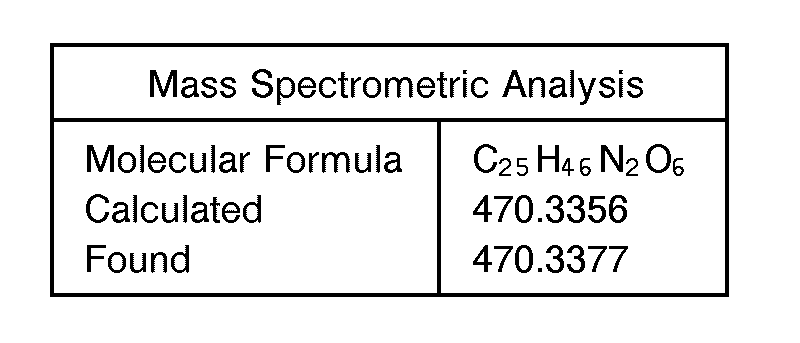
- 0.88 (3H,t,J=7Hz), 0.98 (3H,s), 1.04 (3H,s), 1.20-1.34 (6H,m), 1.42 (3H,s), 1.46 (3H,s), 1.56-1.78 (4H,m), 1.82-1.94 (3H,m), 2.17 (2H,t,J = 7Hz), 2.36-2.44 (1H,m), 2.56 (2H,t,J = 7Hz), 3.29 (1H,d,J=12Hz), 3.33 (2H,dt,J = 6Hz,7Hz), 3.46-3.66 (4H,m), 3.68 (1H,d,J=12Hz), 4.08 (1H,s), 4.15 (2H,t,J=12Hz), 5.92-6.02 (1 H,m), 6.08-6.18 (1 H,m), 6.92-7.07 (1 H,m)
- N-(3-Hydroxypropyl)dodecanamide (2.57 g) and 2.59 g of 3-[N-(2,2,5,5-tetramethyl-1,3-dioxane-4-carbonyl)amino]propionic acid were reacted in the same manner as in Example 15 to obtain 3.19 g of the title compound (yield: 64%) Property: Oily
- IR(cm-1, neat): vC=O1738, 1660
-

- 0.87 (3H,t,J=7Hz), 0.97 (3H,s), 1.03 (3H,s), 1.18-1.36 (7H,m), 1.41 (3H,s), 1.45 (3H,s), 1.56-1.76 (6H,m), 1.78-1.94 (4H,m), 2.16 (2H,t,J=7Hz), 2.36-2.42 (2H,m), 2.55 (2H,t,J = 7Hz), 3.28 (1H,d,J=7Hz), 3.31 (2H,dt,J 6Hz,7Hz), 3.44-3.65 (4H,m), 3.67 (1 H,d,J =12Hz), 4.06 (1H,s), 4.14 (2H,t,J=7Hz), 5.96-6.02 (1 H,m), 6.90-7.04 (1 H,m)
- N-(3-Hydroxypropyl)tetradecanamide (2.87 g) and 2.59 g of 3-[N-(2,2,5,5-tetramethyl-1,3-dioxane-4-carbonyl)amino]propionic acid were reacted in the same manner as in Example 15 to obtain 4.63 g of the title compound (yield: 88%)
- Property: Oily
- IR(cm-1, neat): vC=O1740, 1656
-

- 0.88 (3H,t,J=7Hz), 0.98 (3H,s), 1.04 (3H,s), 1.20-1.34 (15H,m), 1.42 (3H,s), 1.46 (3H,s), 1.52-1.64 (4H,m), 1.84 (2H,tt,J=7Hz,7Hz), 2.17 (2H,t,J=7Hz), 2.36-2.44 (1H,m), 2.56 (2H,t,J = 7Hz), 3.29 (1H,d,J=12Hz), 3.33 (2H,dt,J = 6Hz,7Hz), 3.48-3.66 (4H,m), 3.68 (1H,d,J=12Hz), 4.08 (1H,s), 4.16 (2H,t,J = 7Hz), 5.92-5.96 (1 H,m), 6.90-7.02 (1 H,m)
- N-(3-Hydroxypropyl)hexadecanamide (3.13 g) and 2.59 g of 3-[N-(2,2,5,5-tetramethyl-1,3-dioxane-4-carbonyl)amino]propionic acid were reacted in the same manner as in Example 15 to obtain 5.48 g of the title compound (yield: 99%)
- Property: Oily
- IR(cm-1, neat): vnC=Co1740, 1658
-

- NMR(8, CDCl3):
- 0.88 (3H,t,J=7Hz), 0.98 (3H,s), 1.04 (3H,s), 1.21-1.36 (22H,m), 1.43 (3H,s), 1.46 (3H,s), 1.56-1.98 (6H,m), 1.84 (2H,tt,J=7Hz,7Hz), 2.17 (2H,t,J=7Hz), 2.56 (2H,t,J=7Hz), 3.29 (1H,d,J= = 12Hz), 3.32 (2H,dt,J=6Hz,7Hz), 3.67 (2H,d,J 12Hz), 4.08 (1H,s), 4.16 (2H,t,J=12Hz), 5.92-5.98 (1H,m), 6.92-7.04 (1 H,m)
- N-(3-Hydroxypropyl)otadecanamide (3.42 g) and 2.59 g of 3-[N-(2,2,5,5-tetramethyl-1,3-dioxane-4-carbonyl)amino]propionic acid were reacted in the same manner as in Example 15 to obtain 3.90 g of the title compound (yield: 67%)
- Property: Oily
- IR(cm-1, neat): vC=O1738, 1652
-

- 0.88 (3H,t,J=7Hz), 0.98 (3H,s), 1.04 (3H,s), 1.20-1.36 (17H,m), 1.42 (3H,s), 1.46 (3H,s), 1.54-1.96 (10H,m), 2.17 (3H,t,J=7Hz), 2.56 (2H,t,J=7Hz), 3.28 (1H,t,J=12Hz), 3.33 (2H,dt,J = 6Hz,7Hz), 3.44-3.62 (4H,m), 3.67 (1 H,d,J = 12Hz), 4.08 (1 H,s), 4.16 (2H,t,J = 7Hz), 5.96-6.02 (1 H,m), 6.92-7.04 (1 H,m)
- N-(3-Hydroxypropyl)linoleamide (3.38 g) and 2.59 g of 3-[N-(2,2,5,5-tetramethyl-1,3-dioxane-4-carbonyl)-amino]propionic acid were reacted in the same manner as in Example 15 to obtain of the title compound (yield: 67%)
- Property: Oily
- IR(cm-1, neat): vC=O1740, 1654
-

- 0.89 (3H,t,J=7Hz), 0.98 (3H,s), 1.04 (3H,s), 1.20-1.44 (17H,m), 1.43 (3H,s), 1.46 (3H,s), 1.52-1.76 (4H,m), 1.84 (2H,tt,J = 7Hz,7Hz), 2.00 -2.10 (6H,m), 2.17 (2H,t,J = 7Hz), 2.36-2.44 (1 H,m), 2.56 (2H,t,J = 7Hz), 2.77 (2H,t,J=7Hz), 3.29 (1H,d,J=12Hz), 3.32 (2H,dd,J = 6Hz,7Hz), 3.46-3.64 (4H,m), 3.67 (1 H,d,J = 12Hz), 4.08 (1 H,s), 4.16 (2H,t,J = 12Hz), 5.28-5.42 (4H,m), 5.92-6.00 (1 H,m), 6.94-7.02 (1 H,m)
- N-(3-Hydroxypropyl)linolenamide (3.35 g) and 2.59 g of 3-[N-(2,2,5,5-tetramethyl-1,3-dioxane-4-carbonyl)amino]propionic acid were reacted in the same manner as in Example 15 to obtain 4.09 g of the title compound (yield: 67%)
- Property: Oily
- IR(cm-1, neat): vC=O1738, 1652

- 0.97 (3H,t,J=7Hz), 0.98 (3H,s), 1.05 (3H,s), 1.26-1.44 (12H,m), 1.43 (3H,s), 1.46 (3H,s), 1.58-1.74 (6H,m), 1.80-1.92 (4H,m), 2.02-2.10 (2H,m), 2.17 (2H,t,J=7Hz), 2.34-2.42 (2H,m), 2.56 (2H,t,J=7Hz), 3.29 (1H,d,J=12Hz), 2.74-2.86 (2H,m), 3.28 (1H,d,J=12Hz), 3.32 (2H,dd,J = 6Hz,7Hz), 3.42-3.66 (4H,m), 3.68 (1 H,d,J = 12Hz), 4.07 (1 H,s), 4.15 (2H,t,J = 12Hz), 5.26-5.44 (6H,m), 5.90-6.00 (1 H,m), 6.92-7.06 (1 H,m)
- N-(4-Hydroxybutyl)oleamide (3.54 g) and 2.59 g of 3-[N-(2,2,5,5-tetramethyl-1,3-dioxane-4-carbonyl)-amino]propionic acid were reacted in the same manner as in Example 15 to obtain 5.05 g of the title compound (yield: 85%)
- Property: Oily
- IR(cm-1, neat): vC=O1740, 1662
-

- 0.88 (3H,t,J=7Hz), 0.97 (3H,s), 1.04 (3H,s), 1.20-1.40 (23H,m), 1.43 (3H,s), 1.47 (3H,s), 1.50-1.80 (6H,m), 1.86-2.10 (3H,m), 2.17 (2H,dt,J=6Hz,7Hz), 2.56 (2H,t,J=6Hz), 3.28 (1H,d,J=12Hz), 3.40-3.66 (2H,m), 3.69 (1 H,d,J = 12Hz), 4.08 (1 H,s), 4.12 (2H,t,J = 6Hz), 5.30-5.40 (2H,m), 5.48-5.56 (1 H,m), 6.90-7.00 (1 H,m)
- 4-(N-Oeloylamino)butyl 3-[N-(2,2,5,5-tetramethyl-1,3-dioxane-4-carbonyl)amino]propionate (0.59 g) was reacted in the same manner as in Example 19 to obtain 0.50 g of the title compound (yield: 91 %)
- Property: Oily
- IR(cm-1, neat): vC=O1740, 1658
-

- 0.88 (3H,t,J = 7Hz), 0.94 (3H,s), 1.01 (3H,s), 1.18-1.42 (21 H,m), 1.50-1.80 (6H,m), 1.90-2.12 (3H,m), 2.18 (1 H,d,J = 7Hz), 2.45-2.57 (2H,m), 3.10-3.80 (8H,m), 4.02 (1 H,m), 4.05-4.13 (1 H,m), 4.18-4.26 (1 H,m), 5.30-5.41 (2H,m), 5.88-5.96 (1 H,m), 7.34-7.44 (1 H,m)
- N-(5-Hydroxypentyl)oleamide (3.68 g) and 2.59 of 3-[N-(2,2,5,5-tetramethyl-1,3-dioxane-4-carbonyl)-amino]propionic acid were reacted in the same manner as in Example 15 to obtain 4.99 g of the title compound (yield: 82%)
- Property: Oily
- IR(cm-1, neat): vC=O1738, 1658
-
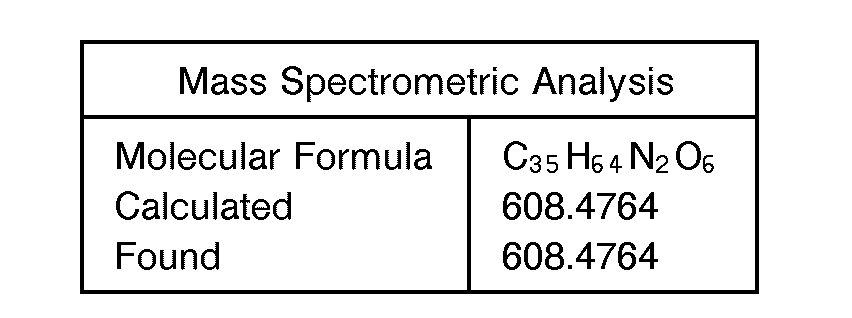
- 0.88 (3H,t,J=7Hz), 0.97 (3H,s), 1.04 (3H,s), 1.20-1.80 (26H,m), 1.42 (3H,s), 1.46 (3H,s), 1.84-2.10 (4H,m), 2.15 (2H,t,J=6Hz), 2.56 (2H,t,J=6Hz), 3.25 (1H,dt,J=6Hz,6Hz), 3.29 (1H,d,J=12Hz), 3.40-3.68 (4H,m), 3.68 (1 H,d,J = 12Hz), 4.08 (1 H,s), 4.10 (2H,t,J = 12Hz), 5.30-5.40 (2H,m), 5.48-5.54 (1 H,m), 6.90-7.02 (1H,m)
- N-(6-Hydroxyhexyl)oleamide (3.82 g) and 2.59 of 3-[N-(2,2,5,5-tetramethyl-1,3-dioxane-4-carbonyl)-amino]propionic acid were reacted in the same manner as in Example 15 to obtain 2.80 g of the title compound (yield: 45%)
- Property: Oily
- IR(cm-1, neat): vC=O1740, 1656
-

- 0.88 (3H,t,J=7Hz), 0.97 (3H,s), 1.04 (3H,s), 1.20-1.54 (24H,m), 1.43 (3H,s), 1.47 (3H,s), 1.56-1.70 (6H,m), 1.90-2.10 (4H,m), 2.15 (2H,t,J=6Hz), 2.55 (2H,t,J=6Hz), 3.24 (2H,dt,J =6Hz,6Hz), 3.29 (1H,d,J=12Hz), 3.40-3.66 (2H,m), 3.68 (1H,d,J=12Hz), 4.08 (1H,s), 4.09 (2H,t,J=6Hz), 5.30-5.40 (2H,m), 5.40-5.50 (1 H,m), 6.92-7.02 (1 H,m)
- N-(2-Mercaptoethyl)oleamide (3.42 g) and 2.59 of 3-[N-(2,2,5,5-tetramethyl-1,3-dioxane-4-carbonyl)-amino]propionic acid were reacted in the same manner as in Example 15 to obtain 4.77 g of the title compound (yield: 82%)
- Property: Oily
- IR(cm-1, neat): vC=O1730, 1656
-

- 0.88 (3H,t,J=7Hz), 0.98 (3H,s), 1.04 (3H,s), 1.20-1.40 (19H,m), 1.43 (3H,s), 1.47 (3H,s), 1.58-1.70 (2H,m), 1.84-2.10 (4H,m), 2.17 (2H,t,J = 7Hz), 2.78-2.86 (2H,m), 3.05 (2H,t,J = 6Hz), 3.29 (1 H,dt,J = 12Hz), 3.35-3.62 (5H,m), 3.67 (1 H,d,J = 12Hz), 4.07 (1 H,s), 5.34-5.41 (2H,m), 5.93-6.02 (1 H,m), 6.83-6.92 (1 H,m)
- S-2-(N-Oleoylamino)ethyl 3-[N-(2,2,5,5-tetramethyl-1,3-dioxane-4-carbonyl)amino]propanethionate (0.58 g) was reacted in the same manner as in Example 19 to obtain 0.16 g of the title compound (yield: 29%) Property: Oily
- IR(cm-1, neat): vC=O1650
-

- 0.88 (3H,t,J=7Hz), 0.93 (3H,s), 1.04 (3H,s), 1.15-1.40 (16H,m), 1.50-1.70 (2H,m), 1.90-2.06 (4H,m), 2.17 (2H,t,J = 8Hz), 2.25-2.60 (6H,m), 2.70-2.80 (1 H,m), 2.82-2.98 (2H,m), 3.05-3.15 (1 H,m), 3.30-3.75 6H,m), 4.01 (1 H,s), 5.30-5.42 (2H,m), 5.90-6.00 (1 H,brs), 7.22-7.32 (1 H,brs)
- 3-N-(2,2,5,5-Tetramethyl-1,3-dioxane-4-carbonyl)amino]propionic acid (745 mg) and 800 mg of N-(2-aminocyclohexyl)-oleamide were reacted in the same manner as in Example 1 to obtain 504 mg of the title compound (yield: 34%)
- Property: Oily
- Specific Rotary Power [α]D : -15.1 °(C=1.0, CHCl3)
- IR(cm-1, neat): vC=O1662, 1642
-

- 0.88 (3H,t,J=7Hz), 0.97 (3H,s), 1.04 (3H,s), 1.15-1.37 (24H,m), 1.43 (3H,s), 1.46 (3H,s), 1.50-1.62 (2H,m), 1.68-1.82 (2H,m), 1.90-2.08 (6H,m), 2.11 (2H,t,J = 7Hz), 2.28-2.44 (2H,m), 3.28 (1 H,d,J = 12Hz), 3.36-3.48 (1 H,m), 3.55-3.68 (3H,m), 3.69 (1 H,d,J = 12Hz), 4.08 (1 H,d,J = 11 Hz), 5.29-5.40 (2H,m), 5.84 (1 H,brs), 6.38 (1 H,brs), 7.00 (1 H,t,J = 6Hz)
- 3-N-[(2R)-2,4-Diacetoxy-3,3-dimethyl-1-oxobutyl]amino]propionicacid (187 mg) and 1.72 mg of (1S,2S)-N-(2-aminocyclohexyl)oleamide were reacted in the same manner as in Example 1 to obtain 194 mg of the title compound (yield: 56%)
- Property: Oily
- Specific Rotary Power [α]D : -3.10° (C =1.0, CHCl3)
- IR(cm-1, neat): vC=O1750, 1660
-

- 0.88 (3H,t,J=7Hz), 1.03 (3H,s), 1.08 (3H,s), 1.18-1.39 (24H,m), 1.07-1.83 (2H,m), 1.92-2.09 (6H,m), 2.08 (3H,s), 2.14 (2H,t,J=7Hz), 2.20 (3H,s), 2.32 (2H,t,J=7Hz), 3.28-3.40 (1H,m), 3.49-3.59 (2H,m), 3.61-3.74 (1 H,m), 3.82 (1 H,d,J = 12Hz), 4.04 (1 H,d,J = 11 Hz), 4.09 (1 H,s), 5.29-5.40 (2H,m), 5.79 (1 H,d,J = 8Hz), 6.19 (1 H,d,J = 8Hz), 7.03 (1 H,t,J = 6Hz)
- 3-N-[(2,4-Diacetoxy-3,3-dimethyl-1-oxo-butyl]amino]propionic acid (1.01 g) and 1.26 g of N-(2-aminocyclohexyl)oleamide were reacted in the same manner as in Example 1. The crude products was purified by silica gel column chromatography to obtain two diastereomers of the title compound, i.e., diastereomer A: N-[(1R,2R)-2-(oleoylamino)cyclohexane-1-yl]-3-[N-[(2R)-2,4-diacetoxy-3,3-dimethyl-1-oxobutyl]amino]propanamide in an amount of 603 mg (yield: 28%) and diastereomer B: N-[(1S,2S)-2-(oleoylamino)cyclo-hexane-1-yl]-3-[N-[(2R)-2,4-diacetoxy-3,3-dimethyl-1-oxobutyl]amino]propanamide in an amount of 714 mg (yield: 33%)
- A
- Property: Oily
- Specific Rotary Power [α]D : -32.0 °(C = 1.0, CHCl3)
- IR(cm-1, neat): vC=O1750, 1660
-

- 0.88 (3H,t,J=7Hz), 1.08 (3H,s), 1.10 (3H,s), 1.21-1.38 (24H,m), 1.46-1.65 (2H,m), 1.69-1.79 (2H,m), 1.88-2.08 (6H,m), 2.08 (3H,s), 2.13 (2H,t,J=7Hz), 2.14-2.26 (1H,m), 2.16 (3H,s), 2.23-2.42 (1H,m), 3.06-3.16 (1 H,m), 3.56-3.79 (3H,m), 3.90 (1 H,d,J = 11 Hz), 4.07 (1 H,d,J = 11 Hz), 4.80 (1 H,s), 5.29-5.42 (1 H,m), 5.69 (1 H,d,J = 8Hz), 6.56 (1 H,d,J = 8Hz), 7.41 (1 H,t,J = 6Hz)
- B
- Property: Oily
- Specific Rotary Power [α]D : -3.10°(C=1.0, CHCl3)
- IR(cm-1, neat): vC=O1750, 1660
-

- 0.88 (3H,t,J=7Hz), 1.03 (3H,s), 1.08 (3H,s), 1.18-1.39 (24H,m), 1.07-1.83 (2H,m), 1.92-2.09 (6H,m), 2.08 (3H,s), 2.14 (2H,t,J=7Hz), 2.20 (3H,s), 2.32 (2H,t,J=7Hz), 3.28-3.40 (1H,m), 3.49-3.59 (2H,m), 3.61-3.74 (1 H,m), 3.82 (1 H,d,J = 12Hz), 4.04 (1 H,d,J = 12Hz), 4.09 (1 H,s), 5.29-5.40 (2H,m), 5.79 (1 H,d,J = 8Hz), 6.19 (1 H,d,J = 8Hz), 7.03 (1 H,t,J = 6Hz)
- N-[(1 R,2R)-2-(Oleoylamino)cyclohexane-1-yl]-3-[N-[(2R)-2,4-diaceotxy-3,3-dimethyl-1-oxobutyl]amino]-propanamide (380 mg) was reacted in the same manner as in Example 3 to obtain 293 mg of the title compound (yield: 89%)
- Property: Oily
- Specific Rotary Power [α]D : + 34.1 °(C=1.0, CHCl3)
- IR(cm-1, neat): vC=O1642
-

- 0.88 (3H,t,J=7Hz), 0.95 (3H,s), 1.04 (3H,s), 1.17-1.38 (24H,m), 1.49-1.62 (2H,m), 1.73-1.82 (2H,m), 1.93-2.08 (6H,m), 2.14 (2H,t,J=7Hz), 3.31-2.45 (2H,m), 2.52-2.86 (2H,m), 3.44-3.73 (6H,m), 3.98 (1 H,s), 5.28-5.40 (2H,m), 6.08 (1 H,brs), 6.63 (1 H,brs), 7.34 (1 H,t,J = 6Hz)
- N-[(1 S,2S)-2-(Oleoylamino)cyclohexane-1-yl]-3-[N-[(2R)-2,4-diaceotxy-3,3-dimethyl-1-oxobutyl]amino]-propanamide (485 mg) was reacted in the same manner as in Example 3 to obtain 410 mg of the title compound (yield: 97%)
- Property: Oily
- Specific Rotary Power [α]D : -0.60 °(C = 1.0, CHCl3)
- IR(cm-1, neat): vC=O1644
-

- 0.88 (3H,t,J=7Hz), 0.94 (3H,s), 1.05 (3H,s), 1.16-1.38 (24H,m), 1.46-1.62 (2H,m), 1.71-1.82 (2H,m), 1.87-2.07 (6H,m), 2.12 (2H,t,J=7Hz), 2.32-2.44 (1H,m), 2.48-2.58 (1H,m), 2.63-3.05 (2H,m), 3.18-3.29 (1H,m), 3.46 (2H,d,J=11Hz), 3.51 (2H,d,J=11Hz), 3.86-3.99 (1H,m), 4.12 (1H,s), 5.29-5.41 (2H,m), 5.99 (1 H,d,J = 8Hz), 7.02 (1 H,d,J = 8Hz), 7.11-7.19 (1 H,m)
- dl-3-[N-2,4-Diaceotxy-3,3-dimethyl-1-oxobutyl]amino]propionic (1.51 g) and 1.90 g of (1R,2R)-N-(2-aminocyclohexyl)oleamide were reacted in the same manner as in Example 1. The crude products was purified by silica gel column chromatography to obtain two diastereomers of the title compound, diastereomer A: N-(1 R,2R)-2-(oleoylamino)cyclohexane-1-yl]-3-[N-[(2R)-2,4-diacetoxy-3,3-dimethyl-1-oxobutyl]-amino]propanamide in an amount of 0.848 g (yield: 28%) and diastereomer B: N-[(1 R,2R)-2-(oleoylamino)-cyclo-hexane-1-yl]-3-[N-[(2S)-2,4-diacetoxy-3,3-dimethyl-1-oxobutyl]amino]propanamide in an amount of 1.00 g (yield: 33%)
- A
- Property: Oily
- Specific Rotary Power [α]D : -32.0 °(C = 1.0, CHCl3)
- IR(cm-1, neat): vC=O1750, 1660
-

- 0.88 (3H,t,J=7Hz), 1.08 (3H,s), 1.10 (3H,s), 1.21-1.38 (24H,m), 1.46-1.65 (2H,m), 1.69-1.79 (2H,m), 1.88-2.08 (6H,m), 2.08 (3H,s), 2.13 (2H,t,J=7Hz), 2.14-2.26 (1H,m), 2.16 (3H,s), 2.23-2.42 (1H,m), 3.06-3.16 (1 H,m), 3.56-3.79 (3H,m), 3.90 (1 H,d,J = 11 Hz), 4.07 (1 H,d,J = 11 Hz), 4.80 (1 H,s), 5.29-5.42 (1 H,m), 5.69 (1 H,d,J = 8Hz), 6.56 (1 H,d,J = 8Hz), 7.41 (1 H,t,J = 6Hz)
- B
- Property: Oily
- Specific Rotary Power [α]D : + 2.04 °(C = 1.0, CHCl3)
- IR(cm-1, neat): vC=O1750, 1660
-

- 0.88 (3H,t,J=7Hz), 1.03 (3H,s), 1.08 (3H,s), 1.18-1.39 (24H,m), 1.07-1.83 (2H,m), 1.92-2.09 (6H,m), 2.08 (3H,s), 2.14 (2H,t,J=7Hz), 2.20 (3H,s), 2.32 (2H,t,J=7Hz), 3.28-3.40 (1H,m), 3.49-3.59 (2H,m), 3.61-3.74 (1 H,m), 3.82 (1 H,d,J = 12Hz), 4.04 (1 H,d,J = 12Hz), 4.09 (1 H,s), 5.29-5.40 (2H,m), 5.79 (1 H,d,J = 8Hz), 6.19 (1 H,d,J = 8Hz), 7.03 (1 H,t,J = 6Hz)
- dl-3-[N-2,4-Diaceotxy-3,3-dimethyl-1-oxobutyl]amino]propionic (1.44 g) and 1.80 g of (1S,2S)-N-(2-aminocyclohexyl)oleamide were reacted in the same manner as in Example 1. The crude products was purified by silica gel column chromatography to obtain two diastereomers of the title compound, diastereomer A: N-[(1S,2S)-2-(oleoylamino)cyclohexane-1-yl]-3-[N-[(2R)-2,4-diacetoxy-3,3-dimethyl-1-oxobutyl]-amino]propanamide in an amount of 0.859 g (yield: 29%) and diastereomer B: N-[(1S,2S)-2-(oleoylamino)-cyclo-hexane-1-yl]-3-[N-[(2S)-2,4-diacetoxy-3,3-dimethyl-1-oxobutyl]amino]propanamide in an amount of 0.80 g (yield: 27%)
- B
- Property: Oily
- Specific Rotary Power [α]D : -32.0 °(C = 1.0, CHCl3)
- IR(cm-1, neat): vC=O1750, 1660
-

- NMR(δ, CDCl3):
- 0.88 (3H,t,J=7Hz), 1.08 (3H,s), 1.10 (3H,s), 1.21-1.38 (24H,m), 1.46-1.65 (2H,m), 1.69-1.79 (2H,m), 1.88-2.08 (6H,m), 2.08 (3H,s), 2.13 (2H,t,J = 7Hz), 2.14-2.26 (1H,m), 2.16 (3H,s), 2.23-2.42 (1H,m), 3.06-3.16 (1 H,m), 3.56-3.79 (3H,m), 3.90 (1 H,d,J = 11 Hz), 4.07 (1 H,d,J = 11 Hz), 4.80 (1 H,s), 5.29-5.42 (1 H,m), 5.69 (1 H,d,J = 8Hz), 6.56 (1 H,d,J = 8Hz), 7.41 (1 H,t,J = 6Hz)
- (1R,2R)-2-(N-Oleoylamino)cyclohexanol (3.79 g) and 2.59 g of 3-[N-(2,2,5,5-tetramethyl-1,3-dioxane-4-carbonyl)amino]propionic acid were reacted in the same manner as in Example 15 to obtain 3.52 g of the title compound (yield: 57%)
- Property: Oily
- Specific Rotary Power [α]D : + 26.2 ° (C = 1.0, CHCl3)
- IR(cm-1, neat): νc=o1736, 1654
-

- 0.88 (3H,t,J=7Hz), 0.99 (3H,s), 1.04 (3H,s), 1.07-1.39 (24H,m), 1.43 (3H,s), 1.48 (3H,s), 1.50-1.83 (4H,m), 1.92-2.17 (6H,m), 2.10 (2H,t,J = 7Hz), 2.51 (2H,t,J = 6Hz), 3.32-3.43 (1 H,m), 3.57-3.68 (1 H,m), 3.69 (1H,d,J =12Hz), 3.83-3.95 (1H,m), 4.08 (1H,s), 4.64 (1H,td,J = 11Hz,5Hz), 5.28-5.40 (1H,m), 5.74 (1 H,d,J = 8Hz), 6.95 (1 H,d,J = 6Hz)
- (1S,2S)-2-(N-Oleoylamino)cyclohexanol (3.79 g) and 2.59 g of 3-[N-(2,2,5,5-tetramethyl-1,3-dioxane-4-carbonyl)amino]propionic acid were reacted in the same manner as in Example 15 to obtain 3.52 g of the title compound (yield: 57%)
- Property: Oily
- Specific Rotary Power [α]D : + 14.3 ° (C=1.0, CHCl3)
- IR(cm-1, neat): νc=o1734, 1654
-

- 0.88 (3H,t,J=7Hz), 0.96 (3H,s), 1.04 (3H,s), 1.06-1.38 (24H,m), 1.43 (3H,s), 1.47 (3H,s), 1.48-1.80 (4H,m), 1.92-2.17 (6H,m), 2.10 (2H,t,J =7Hz), 2.51 (2H,t,J=6Hz), 3.28 (1 H,t,J = 12Hz), 3.45-3.57 (2H,m), 3.69 (1H,d,J=12Hz), 3.82-3.93 (1 H,m), 4.08 (1 H,s), 4.64 (1 H,td,J = 11 Hz,5Hz), 5.79 (1 H,d,J = 8Hz), 6.91 (1 H,d,J = 6Hz)
- (1 R,2R)-2-(N-Stearoylamino)cyclohexanol (3.81 g) and 2.59 g of 3-[N-(2,2,5,5-tetramethyl-1,3-dioxane-4-carbonyl)amino]propionic acid were reacted in the same manner as in Example 15 to obtain 2.82 g of the title compound (yield: 45%)
- Property: Oily
- Melting Point : 69.1 - 70.2
- Specific Rotary Power [α]D : + 25.8 ° (C =1.0, CHCl3 )
- IR(cm-1, neat): νc=o1734, 1660, 1646
-
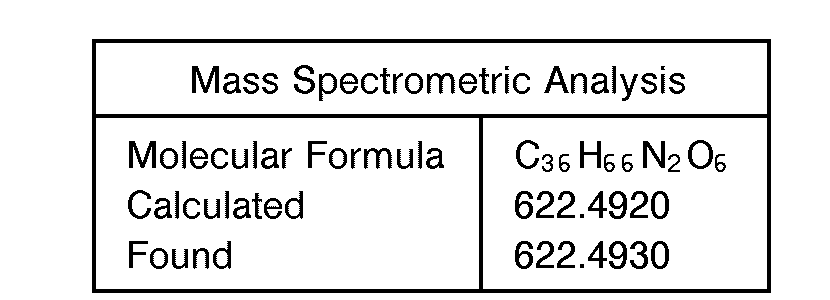
- 0.88 (3H,t,J=7Hz), 0.99 (3H,s), 1.04 (3H,s), 1.11-1.34 (32H,m), 1.43 (3H,s), 1.48 (3H,s), 1.50-1.82 (4H,m), 1.95-2.18 (2H,m), 2.10 (2H,t,J=7Hz), 2.51 (1H,t,J=6Hz), 3.29 (1H,d,J= 12Hz), 3.31-3.34 (1H,m), 3.57-3.68 (1H,m), 3.69 (1H,d,J=12Hz), 3.83-3.95 (1H,m), 4.08 (1H,s), 4.64 (1H,td,J=11Hz,5Hz), 5.74 (1 H,d,J = 8Hz), 6.95 (1 H,d,J = 6Hz)
- (1S,2S)-2-(N-Linoleoylamino)cyclohexanol (3.77 g) and 2.59 g of 3-[N-(2,2,5,5-tetramethyl-1,3-dioxane-4-carbonyl)amino]propionic acid were reacted in the same manner as in Example 15 to obtain 2.72 g of the title compound (yield: 44%)
- Property: Oily
- Specific Rotary Power [α]D : + 13.5 ° (C =1.0, CHCl3)
- IR(cm-1, neat): νc=o1736, 1654
-

- 0.88 (3H,t,J=7Hz), 0.96 (3H,s), 1.04 (3H,s), 1.11-1.39 (18H,m), 1.43 (3H,s), 1.47 (3H,s), 1.51-1.81 (4H,m), 1.95-2.18 (6H,m), 2.10 (2H,t,J = 7Hz), 2.50 (2H,t,J = 6Hz), 2.77 (2H,d,J = 6Hz), 3.28 (1 H,d,J = 12Hz), 3.46-3.57 (2H,m), 3.69 (1 H,d,J = 12Hz), 3.32-3.43 (1 H,m), 4.09 (1 H,s), 4.64 (1 H,td,J = 11 Hz,5Hz), 5.28-5.43 (4H,m), 5.80 (1 H,d,J = 8Hz), 6.91 (1 H,d,J = 6Hz)
- In a similar manner as described above, the following compounds were synthesized.
- (R)-1-Methyl-2-oleoylaminoethyl 3-[N-(2,2,5,5-tetramethyl-1,3-dioxane-4-carbonyl)amino]propionate

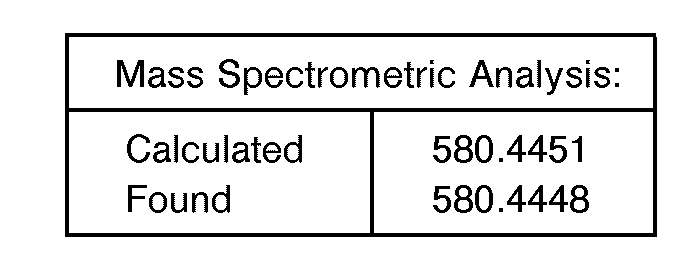
- Melting Point ( ° C): Oil
- Specific Rotary Power: [α]22D +31.1 ° (C=1.0, CHCl3)
- IR(νneat, cm-1) : 3332, 2932, 2860, 1740, 1660
- NMR(δ, CDCl3):
- 0.88 (3H,t,J=7Hz), 0.99 (3H,s), 1.02 (3H,s), 1.21-1.38 (23H,m), 1.43 (3H,s), 1.47 (3H,s), 1.55-1.69 (2H,m), 1.91-2.08 (4H,m), 2.28 (2H,t,J=7Hz), 2.44-2.62 (2H,m), 3.29 (1 H,t,J = 12Hz), 3.30-3.53 (3H,m), 3.65-3.78 (1 H,m), 3.68 (1 H,d,J = 12Hz), 4.07 (3H,s), 4.92-5.03 (1 H,m), 5.29-5.40 (2H,m), 6.30-6.38 (1 H,m), 6.91 (1 H,t,J = 6Hz)
- (S)-1-Methyl-2-oleoylaminoethyl-3-[N-(2,2,5,5 -tetramethyl-1,3-dioxane-4-carbonyl)amino]propionate


- Melting Point ( ° C): Oil
- Specific Rotary Power: [α]22D + 21.6 ° (C=1.0, CHCl3)
- IR(νneat, cm-1): 3332, 2932, 2860, 1738, 1662
- NMR(δ, CDCl3):
- 0.88 (3H,t,J=7Hz), 0.97 (3H,s), 1.04 (3H,s), 1.20-1.37 (23H,m), 1.43 (3H,s), 1.47 (3H,s), 1.56-1.68 (2H,m), 1.91-2.08 (4H,m), 2.20 (2H,t,J=7Hz), 2.44-2.62 (2H,m), 3.26-3.35 (1 H,m), 3.28 (1 H,d,J = 12Hz), 3.42-3.58 (2H,m), 3.64-3.75 (1 H,m), 3.70 (1 H,d,J = 12Hz), 4.07 (1 H,s), 4.93-5.03 (1 H,m), 5.28-5.41 (2H,m), 6.27-6.34 (1 H,m), 6.88-6.96 (1 H,m)
- (1 S,2S)-2-(Oleoylamino)cyclopentane-1-yl-3-[N-2,2,5,5-tetramethyl-1,3-dioxane-4-carbonyl)amino]propionate


- Melting Point ( ° C): Oil
- Specific Rotary Power: [α]23D + 24.5 ° (C = 1.0, CHCl3)
- IR(vneat, cm-1): 3324, 2932, 2860, 1736, 1654
- NMR(δ, CDCl3):
- 0.88 (3H,t,J=7Hz), 0.96 (3H,s), 1.04 (3H,s), 1.20-1.48 (22H,m), 1.43 (3H,s), 1.46 (3H,s), 1.52-2.09 (9H,m), 2.13 (2H,t,J=7Hz), 2.18-2.22 (1H,m), 2.54 (2H,t,J=6Hz), 3.28 (1H,d,J=12Hz), 3.48-3.59 (2H,m), 3.69 (1 H,d,J = 12Hz), 4.08 (1 H,s), 4.08-4.19 (1 H,m), 4.92-5.01 (1 H,m), 5.29-5.40 (2H,m), 5.72 (1 H,d,J = 7Hz), 6.98 (1 H,t,J = 6Hz)
- (1 R,2R)-2-(Oleoylamino)cyclopentane-1-yl-3-[N-2,2,5,5-tetramethyl-1,3-dioxane-4-carbonyl)amino]propionate


- Melting Point ( ° C): Oil
- Specific Rotary Power: [α]24 D + 14.9 ° (C=1.0, CHCl3)
- IR(νneat, cm-1): 3328, 2932, 2860, 1740, 1656
- NMR(δ, CDCl3):
- 0.88 (3H,t,J=7Hz), 0.99 (3H,s), 1.04 (3H,s), 1.21-1.47 (22H,m), 1.43 (3H,s), 1.46 (3H,s), 1.53-2.12 (9H,m), 2.13 (2H,t,J=7Hz), 2.18-2.31 (1 H,m), 2.54 (2H,t,J=6Hz), 3.28 (1 H,d,J = 12Hz), 3.36-3.49 (1 H,m), 3.58-3.69 (1 H,m), 3.69 (1H,d,J=12Hz), 4.08 (1 H,s), 4.09-4.20 (1 H,m), 4.95-5.02 (1 H,m), 5.29-5.40 (2H,m), 5.72 (1 H,d,J = 7Hz), 7.02 (1H,t,J=6Hz)
- (Z)-4-Oleoylamino-2-butenyl 3-[N-(2,2,5,5-tetramethyl-1,3-dioxane-4-carbonyl)amino]propionate
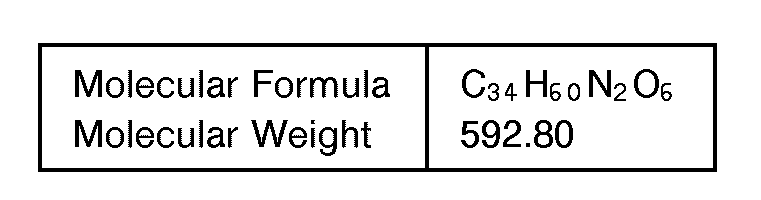

- Melting Point ( ° C): Oil
- Specific Rotary Power: [α]24 D + 22.2 ° (C = 1.0, CHCl3)
- IR(νneat, cm-1): 3336, 2932, 2860, 1740, 1660
- NMR(δ, CDCl3):
- 0.88 (3H,t,J=7Hz), 0.90 (3H,s), 1.04 (3H,s), 1.20-1.38 (20H,m), 1.43 (3H,s), 1.46 (3H,s), 1.54-1.69 (2H,m), 1.91-2.08 (4H,m), 2.17 (2H,t,J=7Hz), 2.57 (2H,t,J=6Hz), 3.28 (1 H,d,J = 12Hz), 3.42-3.67 (2H,m), 3.69 (1 H,d,J = 12Hz), 3.97 (2H,dd,J = 6Hz,6Hz), 4.08 (1 H,s), 4.70 (2H,d,J = 6Hz), 5.29-5.40 (2H,m), 5.59-5.80 (3H,m), 6.88-6.96 (1 H,m)
- (R)-2-Methyl-2-oleoylaminoethyl 3-[N-(2,5,5,5-tetramethyl-1,3-dioxane-4-carbonyl)amino]propionate


- Melting Point ( ° C): Oil
- Specific Rotary Power: [α]25 D + 31.0 ° (C=1.0, CHCl3)
- IR(νneat, cm-1): 3324, 2932, 2860, 1740, 1660
- NMR(δ, CDCl3):
- 0.88 (3H,t,J=7Hz), 0.98 (3H,s), 1.04 (3H,s), 1.18 (3H,d,J=6Hz), 1.23-1.39 (20H,m), 1.43 (3H,s), 1.47 (3H,s), 1.57-1.68 (2H,m), 1.92-2.08 (4H,m), 2.16 (2H,t,J=7Hz), 2.58 (2H,t,J=6Hz), 3.28 (1H,d,J=12Hz), 3.57 (2H,dt,J = 6Hz,6Hz), 3.69 (1 H,d,J = 12Hz), 4.03-4.14 (2H,m), 4.07 (1 H,s), 4.26-4.37 (1 H,m), 5.29-5.40 (2H,m), 5.84 (1 H,d,J = 8Hz), 6.98 (1 H,t,J = 6Hz)
- (S)-2-Methyl-2-oleoylaminoethyl 3-[N-(2,2,5,5-tetramethyl-1,3-dioxane-4-carbonyl)amino]propionate


- Melting Point ( ° C): Oil
- Specific Rotary Power: [α]24 D + 13.1 ° (C=1.0, CHCl3)
- IR(νneat, cm-1): 3320, 2932, 2860, 1744, 1654
- NMR(δ, CDCl3):
- 0.88 (3H,t,J=7Hz), 0.97 (3H,s), 1.03 (3H,s), 1.16 (3H,d,J=6Hz), 1.21-1.39 (20H,m), 1.42 (3H,s), 1.47 (3H,s), 1.54-1.68 (2H,m), 1.92-2.08 (4H,m), 2.17 (2H,t,J=7Hz), 2.58 (2H,t,J=6Hz), 3.28 (1H,d,J=12Hz), 3.49-3.67 (2H,m), 3.69 (1H,d,J=12Hz), 4.05 (1 H,dd,J =11 Hz, 4Hz), 4.07 (1 H,s), 4.13 (1 H,dd,J =11 Hz,5Hz), 4.22-4.36 (1 H,m), 5.29-5.42 (2H,m), 5.92 (1 H,d,J = 8Hz), 6.92 (1 H,t,J = 5Hz)
- (E)-4-Oleoylamino-2-butenyl 3-[N-(2,2,5,5-tetramethyl-1,3-dioxane-4-carbonyl)amino]propionate


- Melting Point ( ° C): Oil
- Specific Rotary Power: [α]25 p + 22.1 ° (C =1.0, CHCl3)
- IR(νneat, cm-1): 3328, 2932, 2860, 1740, 1660
- NMR(δ, CDCl3):
- 0.88 (3H,t,J=7Hz), 0.96 (3H,s), 1.04 (3H,s), 1.21-1.38 (20H,m), 1.43 (3H,s), 1.46 (3H,s), 1.56-1.69 (2H,m), 1.91-2.08 (4H,m), 2.18 (2H,t,J=7Hz), 2.58 (2H,t,J=6Hz), 3.28 (1H,d,J= 12Hz), 3.41-3.68 (2H,m), 3.69 (1H,d,J=12Hz), 3.90 (2H,dd,J = 6Hz,6Hz), 4.08 (1 H,s), 4.57 (2H,d,J = 6Hz), 5.28-5.41 (2H,m), 5.52-5.62 (1 H,m), 5.65-5.83 (2H,m), 6.95 (1 H,t,J = 6Hz)
- 4-Oleoylaminobutenyl 3-[N-(2,2,5,5-tetramethyl -1,3-dioxane-4-carbonyl)amino]propionate


- Specific Rotary Power: [α]25 D + 21.2 ° (C=1.0, CHCl3)
- IR(νneat, cm-1): 3320, 2932, 2860, 1748, 1662
- NMR(δ, CDCl3):
- 0.88 (3H,t,J=7Hz), 0.97 (3H,s), 1.04 (3H,s), 1.21-1.39 (20H,m), 1.43 (3H,s), 1.47 (3H,s), 1.58-1.72 (2H,m), 1.92-2.08 (4H,m), 2.18 (2H,t,J=7Hz), 2.61 (2H,t,J=6Hz), 3.28 (1 H,d,J = 12Hz), 3.42-3.68 (2H,m), 3.70 (1 H,d,J = 12Hz), 4.08 (1 H,s), 4.08-4.11 (2H,m), 4.69-4.72 (2H,m), 5.29-5.42 (2H,m), 5.68-5.78 (1 H,m), 6.96 (1 H,t,J = 5Hz)
- (R)-2-Oleoylamino-2-phenylethyl 3-[N-(2,2,5,5-tetramethyl-1,3-dioxane-4-carbonyl)amino]propionate


- Melting Point ( ° C): Oil
- Specific Rotary Power: [α]24 D -0.4 ° (C =1.0, CHCl3)
- IR(νneat, cm-1): 3320, 2932, 2864, 1744, 1654
- NMR(δ, CDCl3):
- 0.88 (3H,t,J=7Hz), 0.90 (3H,s), 1.04 (3H,s), 1.21-1.38 (20H,m), 1.44 (3H,s), 1.47 (3H,s), 1.57-1.70 (2H,m), 1.92-2.08 (4H,m), 2.25 (2H,t,J=7Hz), 2.52 (2H,t,J=6Hz), 3.28 (1 H,d,J = 12Hz), 3.46-3.65 (2H,m), 3.69 (1H,d,J=12Hz), 4.08 (1H,s), 4.29-4.39 (2H,m), 5.29-5.42 (3H,m), 6.60 (1H,d,J=8Hz), 6.93 (1 H,t,J = 5Hz), 7.26-7.38 (5H,m)
- (S)-2-Oleoylamino-2-phenylethyl 3-[N-(2,2,5,5-tetramethyl-1,3-dioxane-4-carbonyl)amino]propionate


- Melting Point ( ° C): Oil
- Specific Rotary Power: [α]26 D + 40.2 ° (C =1.0, CHCl3)
- IR(νneat, cm-1): 3320, 2932, 2860, 1742, 1660
- NMR(δ, CDCl3):
- 0.88 (3H,t,J=7Hz), 0.90 (3H,s), 1.03 (3H,s), 1.21-1.39 (20H,m), 1.42 (3H,s), 1.46 (3H,s), 1.57-1.74 (2H,m), 1.91-2.08 (4H,m), 2.25 (2H,t,J=7Hz), 2.51 (2H,t,J=6Hz), 3.28 (1 H,d,J = 12Hz), 3.42-3.67 (2H,m), 3.68 (1H,d,J=12Hz), 4.05 (1 H,s), 4.31 (1 H,dd,J = 12Hz,5Hz), 4.39 (1 H,dd,J = 12Hz,6Hz), 5.28-5.41 (3H,m), 6.59 (1H,d,J=8Hz) 6.91 (1 H,t,J = 5Hz), 7.25-7.38 (5H,m)
- (Trans)-2-(oleoylamino)cyclopentane-1-yl 3-[N-(2,2,5,5-tetramethyl-1,3-dioxane-4-carbonyl)amino]propionate


- Melting Point ( ° C): Oil
- Specific Rotary Power: [α]26 D + 22.0 ° (C=1.0, CHCl3)
- IR(νneat, cm-1): 3328, 2932, 2864, 1734, 1660
- NMR(δ, CDCl3):
- 0.88 (3H,t,J=7Hz), 1.00 (3H,s), 1.04 (3H,s), 1.21-1.38 (20H,m), 1.41-2.08 (16H,m), 1.43 (3H,s), 1.47 (3H,s), 2.09 (2H,t,J = 7Hz), 2.50 (2H,t,J = 6Hz), 3.28 (1H,d,J=12Hz), 3.32-3.44 (1 H,m), 3.57-3.68 (1 H,m), 3.69 (1H,d,J=12Hz), 3.99-4.09 (1 H,m), 4.08 (1 H,s), 4.77-4.84 (1 H,m), 5.29-5.40 (2H,m), 5.82 (1 H,d,J = 8Hz), 6.97 (1 H,t,J = 6Hz)
- (Trans)-2-(oleoylamino)cyclopentane-1-yl 3-[N-(2,2,5,5-tetramethyl-1,3-dioxane-4-carbonyl)amino]propionate


- Melting Point ( ° C): Oil
- Specific Rotary Power: [α]26 D + 13.1 ° (C =1.0, CHCl3)
- IR(νneat, cm-1): 3324, 2932, 2864, 1734, 1650
- NMR(δ, CDCl3):
- 0.88 (3H,t,J=7Hz), 0.96 (3H,s), 1.04 (3H,s), 1.21-1.38 (20H,m), 1.40-2.08 (16H,m), 1.43 (3H,s), 1.47 (3H,s), 2.10 (2H,t,J=7Hz), 2.50 (2H,t,J=6Hz), 3.28 (1H,d,J=12Hz), 3.51 (2H,tt,J =6Hz,6Hz), 3.69 (1H,d,J=12Hz), 3.97-4.08 (1 H,m), 4.09 (1 H,s), 4.77-4.84 (1 H,m), 5.29-5.42 (2H,m), 5.89 (1 H,d,J = 8Hz), 6.92 (1 H,t,J = 6Hz)
- (S)-3-Methyl-2-oleoylaminobutyl 3-[N-(2,2,5,5 -tetramethyl-1,3-dioxane-4-carbonyl)amino]propionate


- Melting Point ( ° C): Oil
- Specific Rotary Power: [α]24 D + 4.9 ° (C=1.0, CHCl3)
- IR(νneat, cm-1): 3324, 2932, 2860, 1734, 1652
- NMR(δ, CDCl3):
- 0.88 (3H,t,J=7Hz), 0.93 (3H,d,J=6Hz), 0.95 (3H,d,J=6Hz), 0.97 (3H,s), 1.03 (3H,s), 1.21-1.39 (20H,m), 1.43 (3H,s), 1.47 (3H,s), 1.56-1.86 (3H,s), 1.90-2.08 (4H,m), 2.20 (2H,t,J=7Hz), 2.56 (2H,t,J=6Hz), 3.28 (1 H,d,J = 12Hz), 3.56 (2H,dt,J = 6Hz,6Hz), 3.68 (1 H,d,J = 12Hz), 3.95-4.29 (3H,m), 4.07 (1 H,s), 5.29-5.41 (2H,m), 5.79 (1 H,d,J = 8Hz), 6.93 (1 H,t,J = 6Hz)
- (S)-2-Oleoylaminobutyl 3-[N-(2,2,5,5-tetramethyl-1,3-dioxane-4-carbonyl)amino]propionate
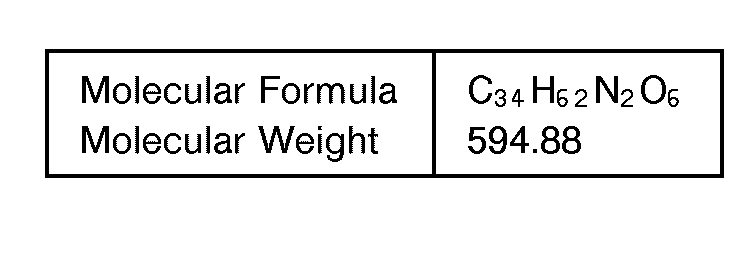

- Melting Point ( ° C): Oil
- Specific Rotary Power: [α]25 D + 6.2 ° (C=1.0, CHCl3)
- IR(νneat, cm-1): 3320, 2932, 2864, 1742, 1652
- NMR(δ, CDCl3):
- 0.88 (3H,t,J=7Hz), 0.91 (3H,d,J=7Hz), 0.97 (3H,s), 1.03 (3H,s), 1.21-1.38 (20H,m), 1.42 (3H,s), 1.44-1.68 (4H,m), 1.47 (3H,s), 1.91-2.08 (4H,m), 2.17 (2H,t,J=7Hz), 2.58 (2H,t,J=6Hz), 3.29 (1 H,d,J = 12Hz), 3.57 (2H,dt,J =6Hz,6Hz), 3.68 (1H,d,J=12Hz), 4.03-4.24 (3H,m), 4.07 (1H,s), 5.29-5.42 (2H,m), 5.84 (1 H,d,J = 8Hz), 6.92 (1 H,t,J = 6Hz)
- 2-Oleoylamino-1-phenylethyl 3-[N-(2,2,5,5-tetramethyl-1,3-dioxane-4-carbonyl)amino]propionate


- Melting Point ( ° C): Oil
- Specific Rotary Power: [α]24 D + 24.3 ° (C=1.0, CHCl3)
- IR(νneat, cm-1): 3324, 2932, 2864, 1744, 1660
- NMR(δ, CDCl3):
- 0.88 (3H,t,J=7Hz), 0.91 (3/2H,s), 0.99 (3/2H,s), 1.03 (3/2H,s), 1.04 (3/2H,s), 1.19-1.38 (20H,m), 1.41 (3/2H,s), 1.42 (3/2H,s), 1.43 (3H,s), 1.52-1.66 (2H,m), 1.92-2.08 (4H,m), 2.12-2.22 (2H,m), 2.48-2.67 (2H,m), 3.26 (1/2H,d,J =12Hz), 3.29 (1/2H,d,J =12Hz), 3.42-3.85 (4H,m), 3.68 (1 H,d,J =12Hz), 4.06 (1/2H,s), 4.07 (1/2H,s), 5.29-5.41 (2H,m), 5.84 (1/2H,d,J=8Hz), 5.86 (1/2H,d,J=8Hz), 6.16-6.27 (1H,m), 6.88-6.97 (1H,m), 7.27-7.38 (5H,m)
- (S)-2-Oleoylamino-3-phenylpropyl 3-[N-(2,2,5,5-tetramethyl-1,3-dioxane-4-carbonyl)amino]propionate


- Melting Point ( ° C): Oil
- Specific Rotary Power: [α]25 D + 18.3 ° (C=1.0, CHCl3)
- IR(vneat, cm-1): 3316, 2932, 2860, 1742, 1660
- NMR(δ, CDCl3):
- 0.88 (3H,t,J=7Hz), 0.97 (3H,s), 1.03 (3H,s), 1.17-1.38 (20H,m), 1.41 (3H,s), 1.46 (3H,s), 1.50-1.68 (2H,m), 1.92-2.08 (4H,m), 2.16 (2H,t,J=7Hz), 2.59 (2H,t,J=6Hz), 2.78 (1H,dd,J = 13Hz,7Hz), 2.89 (1H,dd,J=13Hz,6Hz), 3.28 (1H,d,J=12Hz), 3.39-3.69 (2H,m), 3.69 (1H,d,J = 12Hz), 4.04-4.09 (2H,m), 4.08 (1 H,s), 4.37-4.44 (1 H,m), 5.28-5.41 (2H,m), 6.07 (1 H,d,J = 8Hz), 6.93 (1 H,t,J = 5Hz), 7.16-7.32 (5H,m)
- (S)-4-Methyl-2-oleoylaminopentyl 3-[N-(2,2,5,5-tetramethyl-1,3-dioxane-4-carbonyl)amino]propionate

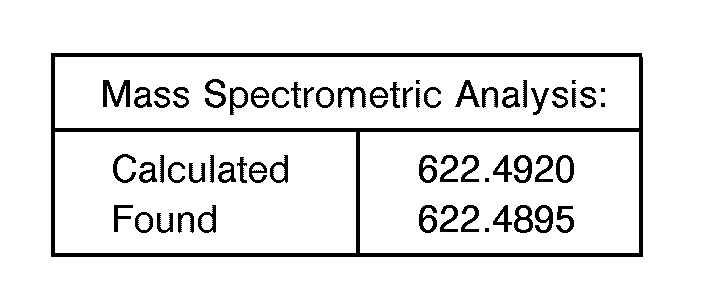
- Melting Point ( ° C): Oil
- Specific Rotary Power: [α]25 D + 7,6 ° (C=1.0, CHCl3)
- IR(νneat, cm-1): 3320, 2932, 2864, 1742, 1652
- NMR(δ, CDCl3):
- 0.88 (3H,t,J=7Hz), 0.91 (3H,t,J=6Hz), 0.93 (3H,t,J=6Hz), 0.97 (3H,s), 1.03 (3H,s), 1.19-1.41 (20H,m), 1.42 (3H,s), 1.47 (3H,s), 1.53-1.77 (5H,m), 1.90-2.08 (4H,m), 2.17 (2H,t,J=7Hz), 2.57 (2H,t,J=6Hz), 3.28 (1 H,d,J = 12Hz), 3.56 (2H,dt,J = 6Hz,6Hz), 3.68 (1 H,d,J = 12Hz), 4.07 (1 H,s), 4.07 (1 H,dd,J =11 Hz,4Hz), 4.13 (1 H,dd,J =11 Hz,4Hz), 4.21-4.35 (1 H,m), 5.28-5.41 (2H,m), 5.72 (1 H,d,J = 8Hz), 6.94 (1 H,t,J = 6Hz)
- 2-(1-Oleoylaminocyclohexyl)ethyl 3-[N-(2,2,5,5-tetramethyl-1,3-dioxane-4-carbonyl)amino]propionate


- Melting Point ( ° C): Oil
- Specific Rotary Power: [α]29 D + 22.0 ° (C = 1.0, CHCl3)
- IR(νneat, cm-1): 3352, 2936, 2864, 1742, 1664
- NMR(δ, CDCl3):
- 0.88 (3H,t,J=7Hz), 0.97 (3H,s), 1.04 (3H,s), 1.21-1.67 (32H,m), 1.42 (3H,s), 1.46 (3H,s), 1.91-2.13 (3H,m), 2.15 (2H,t,J = 7Hz), 2.56 (2H,t,J = 6Hz), 3.28 (1H,d,J=12Hz), 3.46-3.63 (2H,m), 3.68 (1H,d,J=12Hz), 4.07 (1 H,s), 4.31 (1 H,d,J = 11 Hz), 4.36 (1 H,d,J =11 Hz), 5.13 (1 H,s), 5.28-5.42 (2H,m), 6.96 (1 H,t,J = 5Hz)
- (S)-2-Oleoylamino-2-phenylethyl N-(2,2,5,5-tetramethyl-1,3-dioxane-4-carbonyl)aminopropionate


- Melting Point ( ° C): Oil
- Specific Rotary Power: [α]29 D + 46.9 ° (C = 1.0, CHCl3)
- IR(νneat, cm-1): 3320, 2932, 2864, 1760, 1662
- NMR(δ, CDCl3):
- 0.88 (3H,t,J=7Hz), 1.04 (6H,s), 1.19-1.38 (20H,m), 1.43 (3H,s), 1.48 (3H,s), 1.51-1.69 (2H,m), 1.91-2.05 (4H,m), 2.24 (2H,t,J = 7Hz), 3.30 (1H,d,J=12Hz), 3.69 (1H,d,J=12Hz), 3.98 (2H,d,J = 5Hz), 4.09 (1 H,s), 4.39 (1 H,dd,J = 11 Hz,6Hz), 4.56 (1 H,dd,J =11 Hz,5Hz), 5.28-5.40 (3H,m), 6.25 (1 H,d,J = 8Hz), 7.00 (1 H,t,J = 5Hz), 7.26-7.39 (5H,m)
- (S)-2-Oleoylamino-2-phenylethyl 4-[N-(2,2,5,5 -tetramethyl-1,3-dioxane-4-carbonyl)animo]butanoate


- Melting Point ( ° C): Oil
- Specific Rotary Power: [α]30 D +41.4 ° (C=1.0, CHCl3)
- IR(νneat, cm-1): 3320, 2932, 2864, 1744, 1654
- NMR(δ, CDCl3):
- 0.88 (3H,t,J=7Hz), 0.99 (6H,s), 1.06 (3H,s), 1.21-1.38 (20H,m), 1.44 (3H,s), 1.48 (3H,s), 1.56-2.07 (8H,m), 2.26 (2H,t,J=7Hz), 2.32 (2H,d,J=6Hz), 3.16-3.38 (2H,m), 3.30 (1H,d,J= = 12Hz), 3.70 (1H,d,J=12Hz), 4.09 (1H,s), 4.38 (1H,dd,J=11Hz,6Hz), 4.44 (1H,dd,J=11Hz,5Hz), 5.28-5.42 (3H,m), 6.64 (1 H,d,J = 5Hz), 6.76 (1 H,t,J = 8Hz), 7.26-7.38 (5H,m)
- (S)-2-Oleoylamino-2-phenylethyl 5-[N-(2,2,5,5 -tetramethyl-1,3-dioxane-4-carbonyl)amino]pentanoate


- Melting Point ( ° C): Oil
- Specific Rotary Power: [α]30 D + 40.6 ° (C = 1.0, CHCl3)
- IR(vneat, cm-1): 3324, 2932, 2864, 1742, 1654
- NMR(δ, CDCl3):
- 0.88 (3H,t,J=7Hz), 0.99 (3H,s), 1.05 (3H,s), 1.20-1.38 (20H,m), 1.43 (3H,s), 1.47 (3H,s), 1.47-1.70 (6H,m), 1.92-2.08 (4H,m), 2.22 (2H,t,J=7Hz), 2.33 (2H,d,J=6Hz), 3.12-3.30 (2H,m), 3.29 (1H,d,J=12Hz), 3.69 (1 H,d,J = 12Hz), 4.08 (1 H,s), 4.28 (1 H,dd,J =11 Hz,5Hz), 4.43 (1 H,dd,J =11 Hz,6Hz), 5.28-5.40 (3H,m), 6.19 (1 H,d,J = 8Hz), 6.68 (1 H,t,J = 5Hz), 7.26-7.39 (5H,m)
- (1 S,2S)-2-(2,2,-Dimethylstearoryl)aminocyclohexane-1-yl 3-[N-(2,2,5,5-tetramethyl-1,3-dioxane-4-carbonyl)-amino]propionate


- Melting Point ( ° C): Oil
- Specific Rotary Power: [α]28 D + 10.6 ° (C=1.0, CHCl3)
- IR(νneat, cm-1): 3380, 2932, 2860, 1734
- NMR(δ, CDCl3):
- 0.88 (3H,t,J=7Hz), 0.96 (3H,s), 1.04 (3H,s), 1.09 (6H,s), 1.10-2.16 (38H,m), 1.43 (3H,s), 1.47 (3H,s), 2.42-2.62 (2H,m), 3.28 (1H,d,J= = 12Hz), 3.39-3.63 (2H,m), 3.69 (1H,d,J=12Hz), 3.81-3.93 (1H,m), 4.08 (1 H,s), 4.73 (1 H,ddd,J = 11 Hz,11 Hz,4Hz), 5.80 (1 H,d,J = 8Hz), 6.92 (1 H,t,J = 5Hz)
- (1 S,2S)-2-(2,2,-Dimethyloleoyl)aminocyclohexane-1-yl 3-[N-(2,2,5,5-tetramethyl-1,3-dioxane-4-carbonyl)-amino]propionate


- Melting Point ( ° C): Oil
- Specific Rotary Power: [α]28 D + 10.9 ° (C=1.0, CHCl3)
- IR(vneat, cm-1): 3380, 2936, 2864, 1734, 1672
- NMR(δ, CDCl3):
- 0.88 (3H,t,J=7Hz), 0.96 (3H,s), 1.00-2.18 (34H,m), 1.03 (3H,s), 1.08 (6H,s), 1.42 (3H,s), 1.47 (3H,s), 2.41-2.62 (2H,m), 3.28 (1H,d,J= = 12Hz), 3.38-3.62 (2H,m), 3.69 (1H,d,J=12Hz), 3.80-3.92 (1H,m), 4.07 (1 H,s), 4.73 (1 H,ddd,J = 11 Hz,11 Hz,4Hz), 5.28-5.41 (2H,m), 5.79 (1 H,d,J = 8Hz), 6.92 (1 H,t,J = 5Hz)
- (1 S,2S)-2-(2-Methyloleoyl)aminocyclohexane-1-yl 3-[N-(2,2,5,5-tetramethyl-1,3-dioxane-4-carbonyl)amino]-propionate


- Melting Point ( ° C): Oil
- Specific Rotary Power: [α]28 D + 10.8 ° (C=1.0, CHCl3)
- IR(vneat, cm-1): 3324, 2936, 2864, 1734
- NMR(δ, CDCl3):
- 0.88 (3H,t,J=7Hz), 0.96 (3H,s), 1.03 (3H,s), 1.06 (3/2H,d,J=7Hz), 1.08 (3/2H,d,J=7Hz), 1.09-2.18 (35H,m), 1.43 (3H,s), 1.47 (3H,s), 2.50 (2H,t,J=6Hz), 3.28 (1 H,d,J = 12Hz), 3.51 (2H,dt,J = 6Hz,6Hz), 3.69 (1 H,d,J = 12Hz), 3.81-3.94 (1 H,m), 4.08 (1 H,s), 4.61-4.73 (1 H,m), 5.28-5.42 (2H,m), 5.70-5.78 (1 H,m), 6.91 (1H,t,J=6Hz)
- (1 S,2S)-2-(2-Methylpalmitoyl)aminocyclohexane-1-yl 3-[N-(2,2,5,5-tetramethyl-1,3-dioxane-4-carbonyl)-amino]propionate


- Melting Point ( ° C): 77 - 79 ° C (benzene/hexane)
- Specific Rotary Power: [α]28 D + 14.4 ° (C =1.0, CHCl3)
- IR(νKBr, cm-1): 3312, 2932, 2860, 1742, 1652
- NMR(δ, CDCl3):
- 0.88 (3H,t,J=7Hz), 0.96 (3H,s), 1.03 (3H,s), 1.39 (3H,d,J=7Hz), 1.10-2.18 (35H,m), 1.43 (3H,s), 1.47 (3H,s), 2.43-2.58 (2H,m), 3.28 (1H,d,J=12Hz), 3.51 (2H,dt,J = 6Hz,6Hz), 3.69 (1H,d,J = 12Hz), 3.38-3.93 (1 H,m), 4.08 (1 H,s), 4.68 (1 H,ddd,J = 11 Hz,11 Hz,4Hz), 5.76 (1 H,d,J = 8Hz), 6.91 (1 H,t,J = 6Hz)
- (1 S,2S)-2-(2-Methylpalmitoyl)aminocyclohexane-1-yl 3-[N-(2,2,5,5-tetramethyl-1,3-dioxane-4-carbonyl)-amino]propionate


- Melting Point ( ° C): 92 - 94 ° C (benzene/hexane)
- Specific Rotary Power: [α]19 D + 6,7 ° (C=1.0, CHCl3)
- IR(νKBr, cm-1): 3284, 2928, 2860, 1736, 1652
- NMR(δ, CDCl3):
- 0.88 (3H,t,J=7Hz), 0.96 (3H,s), 1.03 (3H,s), 1.06 (3H,d,J=7Hz), 1.10-2.17 (35H,m), 1.43 (3H,s), 1.47 (3H,s), 2.50 (2H,t,J=6Hz), 3.28 (1H,d,J=12Hz), 3.51 (2H,dt,J = 6Hz,6Hz), 3.69 (1 H,d,J =12Hz), 3.82-3.95 (1 H,m), 4.08 (1 H,s), 4.67 (1 H,ddd,J = 11 Hz,11 Hz,4Hz), 5.73 (1 H,d,J = 8Hz), 6.92 (1 H,t,J = 6Hz)
- (1 S,2S)-2-(2-Ethylmyristoyl)aminocyclohexane-1-yl 3-[N-(2,2,5,5-tetramethyl-1,3-dioxane-4-carbonyl)amino]-propionate


- Melting Point ( ° C): Oil
- Specific Rotary Power: [α]19 D + 10.1 ° (C =1.0, CHCl3)
- IR(νneat, cm-1): 3320, 2936, 2864, 1734, 1648
- NMR(δ, CDCl3):
- 0.85 (3H,t,J=7Hz), 0.88 (3H,d,J=7Hz), 0.96 (3H,s), 1.04 (3H,s), 1.10-2.23 (33H,m), 1.43 (3H,s), 1.47 (3H,s), 2.42-2.59 (2H,m), 3.28 (1H,d,J=12Hz), 3.51 (2H,dt,J = 6Hz,6Hz), 3.69 (1H,d,J = 12Hz), 3.38-3.95 (1 H,m), 4.08 (1 H,s), 4.68 (1 H,ddd,J = 11 Hz,11 Hz,4Hz), 5.85 (1 H,d,J = 8Hz), 6.92 (1 H,t,J = 6Hz)
- (1 S,2S)-2-(2-Ethylmyristoyl)aminocyclohexane-1-yl 3-[N-(2,2,5,5-tetramethyl-1,3-dioxane-4-carbonyl)amino]-propionate


- Melting Point ( ° C): Calomel
- Specific Rotary Power: [α]20 D +9.6 ° (C=1.0, CHCl3)
- IR(νKBr, cm-1): 3288, 2928, 2860, 1736, 1680, 1648
- NMR(δ, CDCl3):
- 0.82 (3H,t,J=7Hz), 0.88 (3H,d,J=7Hz), 0.96 (3H,s), 1.03 (3H,s), 1.09-2.18 (33H,m), 1.43 (3H,s), 1.47 (3H,s), 2.41-2.58 (2H,m), 3.28 (1H,d,J=12Hz), 3.51 (2H,dd,J =6Hz,6Hz), 3.69 (1H,d,J= 12Hz), 3.85-3.98 (1 H,m), 4.08 (1 H,s), 4.68 (1 H,ddd,J = 11 Hz,11 Hz,4Hz), 5.79 (1 H,d,J = 8Hz), 6.92 (1 H,t,J = 6Hz)
- (1 S,2S)-2-(2-Propylstearoyl)aminocyclohexane-1-yl 3-[N-(2,2,5,5-tetramethyl-1,3-dioxane-4-carbonyl)amino]-propionate

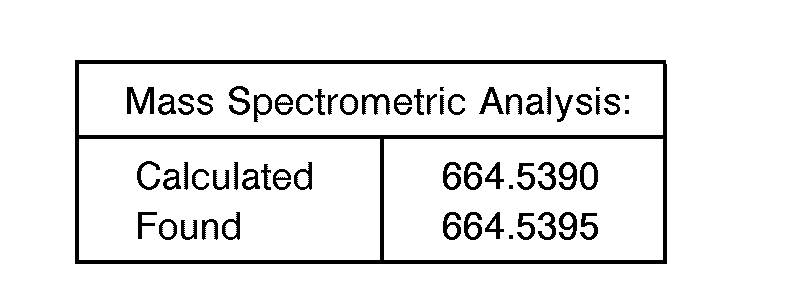
- Melting Point ( ° C): Calomel
- Specific Rotary Power: [α]19 D + 9.6 ° (C=1.0, CHCl3)
- IR(νneat, cm-1): 3288, 2932, 2860, 1730, 1670, 1644
- NMR(δ, CDCl3):
- 0.87 (3H,t,J=7Hz), 0.88 (3H,d,J=7Hz), 0.96 (3H,s), 1.04 (3H,s), 1.12-2.23 (43H,m), 1.43 (3H,s), 1.47 (3H,s), 2.42-2.58 (2H,m), 3.28 (1H,d,J=12Hz), 3.51 (2H,dt,J = 6Hz,6Hz), 3.69 (1H,d,J = 12Hz), 3.83-3.95 (1 H,m), 4.08 (1 H,s), 4.68 (1 H,ddd,J = 11 Hz,11 Hz,4Hz), 5.82 (1 H,d,J = 8Hz), 6.92 (1 H,t,J = 6Hz)
- (1 S,2S)-2-(2-Propylstearoyl)aminocyclohexane-1-yl 3-[N-(2,2,5,5-tetramethyl-1,3-dioxane-4-carbonyl)amino]-propionate


- Melting Point ( ° C): 103 - 105 ° C (benzene/hexane)
- Specific Rotary Power: [α]20 D + 8.0 ° (C=1.0, CHCl3)
- IR(νKBr, cm-1): 3288, 2928, 2860, 1730, 1666, 1644
- NMR(δ, CDCl3):
- 0.86 (3H,t,J=7Hz), 0.88 (3H,t,J=7Hz), 0.96 (3H,s), 1.04 (3H,s), 1.11-2.21 (43H,m), 1.43 (3H,s), 1.47 (3H,s), 2.41 2.60 (2H,m), 3.28 (1H,d,J=12Hz), 3.51 (2H,dt,J = 6Hz,6Hz), 3.69 (1H,d,J = 12Hz), 3.83-3.97 (1 H,m), 4.08 (1 H,s), 4.68 (1 H,ddd,J = 11 Hz,11 Hz,4Hz), 5.77 (1 H,d,J = 8Hz), 6.92 (1 H,t,J = 6Hz)
- (1S,2S)-2-(1-Laurylcyclopentanecarbonyl)aminocyclohexane-1-yl 3-[N-(2,2,5,5-tetramethyl-1,3-dioxane -4-carbonyl)amino]propionate


- Melting Point ( ° C): Oil
- Specific Rotary Power: [α]22 D + 9.2 ° (C=1.0, CHCl3)
- IR(vneat, cm-1): 3360, 2932, 2864, 1732
- NMR(δ, CDCl3):
- 0.88 (3H,t,J=7Hz), 0.96 (3H,s), 1.04 (3H,s), 1.11-2.18 (38H,m), 1.43 (3H,s), 1.47 (3H,s), 2.42-2.62 (2H,m), 3.28 (1H,d,J=12Hz), 3.38-3.42 (2H,m), 3.69 (1H,d,J=12Hz), 3.80-3.92 (1H,m), 4.08 (1H,s), 4.73 (1 H,ddd,J = 11 Hz,11 Hz,4Hz), 5.76 (1 H,d,J = 8Hz), 6.92 (1 H,t,J = 6Hz)
- (1S,2S)-2-(1-Decylcyclobutanecarbonyl)aminocyclohexane-1-yl 3-[N-(2,2,5,5-tetramethyl-1,3-dioxane -4-carbonyl)amino]propionate


- Melting Point ( ° C): Oil
- Specific Rotary Power: [α]22 D + 8.9° (C=1.0, CHCl3)
- IR(νneat, cm-1): 3336, 2936, 2864, 1734
- NMR(δ, CDCl3):
- 0.88 (3H,t,J=7Hz), 0.96 (3H,s), 1.04 (3H,s), 1.06-1.40 (20H,m), 1.43 (3H,s), 1.47 (3H,s), 1.57-2.34 (12H,m), 2.43-2.62 (2H,m), 3.28 (1 H,d,J = 12Hz), 3.41-3.62 (2H,m), 3.69 (1 H,d,J = 12Hz), 3.81-3.94 (1 H,m), 4.07 (1 H,s), 4.71 (1 H,ddd,J = 11 Hz,11 Hz,5Hz), 5.59 (1 H,d,J = 8Hz), 7.92 (1 H,t,J = 5Hz)
- (1S,2S)-2-(1-Oleylcyclopentanecarbonyl)aminocyclohexane-1-yl 3-[N-(2,2,5,5-tetramethyl-1,3-dioxane -4-carbonyl)amino]propionate


- Melting Point ( ° C): Oil
- Specific Rotary Power: [α]22 D + 8.6° (C=1.0, CHCl3)
- IR(νneat, cm-1): 3368, 2932, 2864, 1734
- NMR(δ, CDCl3):
- 0.88 (3H,t,J=7Hz), 0.96 (3H,s), 1.04 (3H,s), 1.09-2.17 (46H,m), 1.43 (3H,s), 1.47 (3H,s), 2.41-2.61 (2H,m), 3.28 (1 H,d,J = 12Hz), 3.37-3.62 (2H,m), 3.69 (1 H,d,J = 12Hz), 3.81-3.93 (1 H,m), 4.08 (1 H,s), 4.73 (1 H,ddd,J = 11 Hz,11 Hz,4Hz), 5.28-5.40 (2H,m), 5.75 (1 H,d,J = 8Hz), 6.93 (1 H,t,J = 5Hz)
- (1 S,2S)-2-[(1-Methyl-8-heptadecenyl)carbamoyl]aminocyclohexane-1-yl 3-[N-(2,2,5,5-tetramethyl-1,3-dioxane-4-carbonyl)amino]propionate


- Melting Point ( ° C): Oil
- Specific Rotary Power: [α]21 D + 19.3 ° (C =1.0, CHCl3)
- IR(νneat, cm-1): 3360, 2936, 2864, 1734, 1682, 1644
- NMR(δ, CDCl3):
- 0.88 (3H,t,J=7Hz), 0.96 (3H,s), 1.04 (3H,s), 1.08 (3/2H,d,J=6Hz), 1.09 (3/2H,d,J=6Hz), 1.14-1.50 (24H,m), 1.44 (3H,s), 1.47 (3H,s), 1.52-2.26 (11H,m), 2.37-2.59 (2H,m), 3.28-3.46 (1H,m), 3.58-3.80 (3H,m), 3.69 (1 H,d,J = 12Hz), 4.10 (1 H,s), 4.55 (1 H,ddd,J = 11 Hz,11Hz,4Hz), 5.28-5.42 (2H,m), 6.86-6.96 (1 H,m)
- (1 S,2S)-2-[(1-Methylpentadecanyl)carbamoyl)aminocyclohexane-1-yl 3-[N-(2,2,5,5-tetramethyl-1,3-dioxane-4-carbonyl)amino]propionate


- Melting Point ( ° C): Oil
- Specific Rotary Power: [α]21 D + 20.5 ° (C = 1.0, CHCl3)
- IR(νKBr, cm-1) 3360, 2932, 2860, 1738, 1682, 1642
- NMR(δ, CDCl3):
- 0.88 (3H,t,J=7Hz), 0.96 (3H,s), 1.04 (3H,s), 1.08 (3H,d,J=6Hz), 1.12-1.78 (32H,m), 1.44 (3H,s), 1.47 (3H,s), 1.94-2.58 (4H,m), 3.28 (1 H,d,J = 12Hz), 3.34-3.79 (4H,m), 3.69 (1 H,d,J = 12Hz), 4.10 (1 H,s), 4.55 (1 H,ddd,J = 11 Hz,11 Hz, 4Hz), 6.92 (1 H,t,J = 5Hz)
- (1 S,2S)-2-(1-Octylcyclobutanecarbonyl)aminocyclohexane-1-yl 3-[N-(2,2,5,5-tetramethyl-1,3-dioxane-4-carbonyl)amino]propionate


- Melting Point (° C): Oil
- Specific Rotary Power: [α]30 D + 13.1 ° (C=1.0, CHCl3)
- IR(vneat, cm-1): 3336, 2932, 2860, 1732
- NMR(δ, CDCl3):
- 0.88 (3H,t,J=7Hz), 0.96 (3H,s), 1.04 (3H,s), 1.06-1.58 (16H,m), 1.43 (3H,s), 1.47 (3H,s), 1.60-2.36 (12H,m), 3.43-2.63 (2H,m), 3.28 (1 H,d,J = 12Hz), 3.39-3.63 (2H,m), 3.69 (1 H,d,J = 12Hz), 3.81-3.94 (1 H,m), 4.08 (1 H,s), 4.72 (1 H,ddd,J = 11 Hz, 11 Hz,4Hz), 5.60 (1 H,d,J = 8Hz), 6.93 (1 H,t,J = 5Hz)
- (1S,2S)-2-(1-Isopropyllauroyl)aminocyclohexane-1-yl 3-[N-(2,2,5,5-tetramethyl-1,3-dioxane-4-carbonyl)-amino]propionate


- Melting Point (°C): wax
- Specific Rotary Power: [α]27 D + 11.9 ° (C=0.9, CHCl3)
- IR(vKBr, cm-1): 3288, 2932, 2860, 1730
- NMR(δ, CDCl3):
- 0.88 (3H,t,J=7Hz), 0.88 (3H,d,J=6Hz), 0.91 (3H,d,J=6Hz), 0.96 (3H,s), 1.04 (3H,s), 1.00-1.82 (26H,m), 1.43 (3H,s), 1.47 (3H,s), 1.93-2.04 (1 H,m), 2.15-2.26 (1 H,m), 2.41-2.58 (2H,m), 3.28 (1 H,d,J = 12Hz), 3.42-3.60 (2H,m), 3.69 (1H,d,J = 12Hz), 3.82-3.94 (1H,m), 4.08 (1H,s), 4.67 (1H,ddd,J =11Hz,11Hz,4Hz), 5.87 (1 H,d,J = 8Hz), 6.91 (1 H,t,J = 5Hz)
- (1 S,2S)-2-(1-Isopropyllauroyl)aminocyclohexane -1-yl 3-[N-(2,2,5,5-tetramethyl-1,3-dioxane-4-carbonyl)-amino]propionate


- Melting Point (°C): Calomel
- Specific Rotary Power: [α]30 D + 10.6 ° (C=1.0, CHCl3)
- IR(vKBr, cm-1): 3276, 2932, 2860, 1730
- NMR(δ, CDCl3):
- 0.85 (3H,d,J=6Hz), 0.88 (3H,t,J=7Hz), 0.89 (3H,d,J=6Hz), 0.96 (3H,s), 1.04 (3H,s), 1.05-1.83 (26H,m), 1.43 (3H,s), 1.47 (3H,s), 1.92-2.04 (1 H,m), 2.13-2.22 (1 H,m), 2.40-2.58 (2H,m), 3.28 (1 H,d,J = 12Hz), 3.45-3.58 (2H,m), 3.69 (1H,d,J=12Hz), 3.85-3.97 (1H,m), 4.08 (1H,s), 4.68 (1H,ddd,J =11Hz,11Hz,4Hz), 5.78 (1 H,d,J = 8Hz), 6.90 (1 H,t,J = 5Hz)
- (1S,2S)-2-(1-Hexylcyclobutanecarbonyl)aminocyclohexane-1-yl 3-[N-(2,2,5,5-tetramethyl-1,3-dioxane -4-carbonyl)amino]propionate


- Melting Point (°C): oil
- Specific Rotary Power: [α]30 D + 13.8 ° (C=1.0, CHCl3)
- IR(vneat, cm-1): 3336, 2936, 2864, 1732
- NMR(δ, CDCl3):
- 0.87 (3H,t,J=7Hz), 0.96 (3H,s), 1.04 (3H,s), 1.07-1.58 (12H,m), 1.42 (3H,s), 1.47 (3H,s), 1.61-2.34 (12H,m), 2.43-2.62 (2H,m), 3.28 (1 H,d,J = 12Hz), 3.41-3.62 (2H,m), 3.69 (1 H,d,J = 12Hz), 3.82-3.93 (1 H,m), 4.07 (1 H,s), 4.71 (1 H,ddd,J = 11 Hz,11 Hz,4Hz), 5.60 (1 H,d,J = 8Hz), 6.92 (1 H,t,J = 5Hz)
- (1S,2S)-2-(1-Butylcyclobutanecarbonyl)aminocyclohexane-1-yl 3-[N-(2,2,5,5-tetramethyl-1,3-dioxane -4-carbonyl)amino]propionate


- Melting Point (°C): Calomel
- Specific Rotary Power: [α]30 D + 15.2 ° (C=1.0, CHCl3)
- IR(vKBr, cm-1): 3348, 2940, 2868, 1732
- NMR(δ, CDCl3):
- 0.88 (3H,t,J=7Hz), 0.96 (3H,s), 1.04 (3H,s), 1.05-1.58 (8H,m), 1.43 (3H,s), 1.47 (3H,s), 1.62-2.33 (12H,m), 2.44-2.61 (2H,m), 3.28 (1 H,d,J = 12Hz), 3.41-3.63 (2H,m), 3.69 (1 H,d,J = 12Hz), 3.81-3.94 (1 H,m), 4.08 (1 H,s), 4.72 (1 H,ddd,J = 11 Hz,11 Hz,4Hz), 5.61 (1 H,d,J = 8Hz), 6.93 (1 H,t,J = 5Hz)
- (1 S,2S)-2-(1-Decylcyclobutanecarbonyl)aminocyclohexane-1-yl 3-[N-(2,4-dihydroxy-3,3-diemthyl-1-oxobutyl)-amino]propionate


- Melting Point (°C): oil
- Specific Rotary Power: [α]28 + 10.6°(C=1.0, CHCl3)
- IR(vneat, cm-1): 2932, 2860, 1732
- NMR(δ, CDCl3):
- 0.88 (3H,t,J=7Hz), 0.97 (3H,s), 1.05 (3H,s), 1.06-1.44 (20H,m), 1.46-2.28 (12H,m), 2.44-2.64 (2H,m), 2.77 (2H,brs), 3.46-3.68 (2H,m), 3.49 (1 H,d,J =11 Hz), 3.56 (1 H,d,J =11 Hz), 3.84-3.98 (1 H,m), 4.05 (1 H,s), 4.69 (1 H,ddd,J = 11 Hz, 11 Hz,4Hz), 5.53 (1 H,d,J = 9Hz), 7.37 (1 H,t,J = 5Hz)
- (1 S,2S)-2-(1-Methyllauroyl)aminocyclohexane-1-yl 3-[N-(2,2,5,5-tetramethyl-1,3-dioxane-4-carbonyl)amino]-propionate


- Melting Point (°C): oil
- Specific Rotary Power: [α]31 D + 15.8 ° (C =1.0, CHCl3)
- IR(vKBr, cm-1): 3304, 2932, 2860, 1738
- NMR(δ, CDCl3):
- 0.87 (3H,t,J=7Hz), 0.95 (3H,s), 1.03 (3H,s), 1.07 (3H,t,J=7Hz), 1.10-1.38 (20H,m), 1.42 (3H,s), 1.46 (3H,s), 1.48-2.19 (7H,m), 2.42-2.57 (2H,m), 3.28 (1H,d,J = 12Hz), 3.51 (1H,dt,J = 6Hz,6Hz), 3.69 (1H,d,J=12Hz), 3.81-3.94 (1H,m), 4.08 (1H,s), 4.68 (1H,ddd,J = 4Hz), 5.76 (1H,d,J = 8Hz), 6.92 (1H,t,J = 6Hz)
- (1 S,2S)-2-(1-Methyllauroyl)aminocyclohexane-1-yl 3-[N-(2,2,5,5-tetramethyl-1,3-dioxane-4-carbonyl)amino]-propionate


- Melting Point (° C): wax
- Specific Rotary Power: [α]30 D + 7.6° (C=1.0, CHCl3)
- IR(vKBr, cm-1): 3272, 2932, 2860, 1744
- NMR(δ, CDCl3):
- 0.88 (3H,t,J=7Hz), 0.96 (3H,s), 1.03 (3H,s), 1.06 (3H,d,J=7Hz), 1.10-1.39 (20H,m), 1.43 (3H,s), 1.47 (3H,s), 1.49-2.16 (7H,m), 2.50 (2H,t,J=6Hz), 3.28 (1H,d,J=12Hz), 3.51 (1H,dt,J =6Hz,6Hz), 3.69 (1H,d,J=12Hz), 3.82-3.96 (1H,m), 4.08 (1H,s), 4.67 (1H,ddd,J=11Hz,11Hz,4Hz), 5.73 (1H,d,J = 8Hz), 6.92 (1H,t,J=6Hz)
- (1 S,2S)-2-(2-Decyllauroyl)aminocyclohexane-1-yl 3-[N-(2,2,5,5-tetramethyl-1,3-dioxane-4-carbonyl)amino]-propionate


- Melting Point (° C): 70 - 71 ° C (hexane)
- Specific Rotary Power: [α]28 D + 10.3 ° (C=1.0, CHCl3)
- IR(vKBr, cm-1): 3288, 2928, 2856, 1732
- NMR(δ, CDCl3):
- 0.88 (6H,t,J=7Hz), 0.96 (3H,s), 1.04 (3H,s), 1.08-2.22 (45H,m), 1.43 (3H,s), 1.47 (3H,s), 2.39-2.58 (2H,m), 3.28 (1H,d,J =12Hz), 3.51 (2H,dt,J = 6Hz,6Hz), 3.69 (1 H,d,J = 12Hz), 3.83-3.96 (1 H,m), 4.08 (1 H,s), 4.68 (1 H,ddd,J = 11 Hz, 11 Hz,4Hz), 5.82 (1 H,d,J = 8Hz), 6.90 (1 H,t,J = 8Hz)
- (1S,2S)-2-(N-Decyl-N-isopropylcarbamoyl)aminocyclohexane-1-yl 3-[N-(2,2,5,5-tetramethyl-1,3-dioxane -4-carbonyl)amino]propionate


- Melting Point (° C): oil
- Specific Rotary Power: [α]27 D +30.1 °(C=0.5, CHCl3)
- IR(vneat, cm-1): 2932, 2860, 1732
- NMR(δ, CDCl3):
- 0.88 (3H,t,J=7Hz), 0.96 (3H,s), 1.03 (3H,s), 1.10 (6H,d,J=7Hz), 1.15-2.21 (24H,m), 1.42 (3H,s), 1.47 (3H,s), 2.47-2.62 (2H,m), 2.93 (2H,t,J = 7Hz), 3.28 (1H,d,J=12Hz), 3.34-3.64 (2H,m), 3.69 (1 H,d,J =12Hz), 3.74-3.88 (1H,m), 4.08 (1H,s), 4.18-4.33 (1H,m), 4.38-4.46 (1H,m), 4.71 (1H,ddd,J=11Hz,11Hz,4Hz), 6.93 (1H,t,J=5Hz)
- (1 S,2S)-2-[N-(2,2-Dimethylpropyl)-N-nonylcarbamoyl)]aminocyclohexane-1-yl 3-[N-(2,2,5,5-tetramethyl-1,3-dioxane-4-carbonyl)amino]propionate

- NMR(δ, CDCl3):
- 0.88 (3H,t,J=7Hz), 0.91 (9H,s), 0.96 (3H,s), 1.04 (3H,s), 1.05-2.21 (22H,m), 1.42 (3H,s), 1.47 (3H,s), 2.43-2.62 (2H,m), 2.91 (1H,d,J = 15Hz), 2.97-3.10 (1H,m), 3.05 (1H,d,J = 15Hz), 3.16-3.27 (1H,m), 3.28 (1H,d,J=12Hz), 3.37-3.64 (2H,m), 3.69 (1H,d,J=12Hz), 3.71-3.86 (1H,m), 4.08 (1H,s), 4.52 (1H,d,J=8Hz), 4.70 (1 H,ddd,J = 11 Hz,11 Hz,4Hz), 6.92 (1 H,t,J = 5Hz)
- (1 S,2S)-2-(2-Phenylmethycapryloyl)aminocyclohexane-1-yl 3-[N-(2,2,5,5-tetramethyl-1,3-dioxane-4-carbonyl)amino]propionate


- Specific Rotary Power: [α]21 D -5.8°(C=1.0, CHCl3)
- IR(vKBr, cm-1): 3304, 2936, 2864, 1734, 1662, 1646
- NMR(δ, CDCl3):
- 0.87 (3H,t,J=7Hz), 0.95 (3H,s), 1.03 (3H,s), 1.05-1.95 (18H,m), 1.42 (3H,s), 1.46 (3H,s), 2.89-2.24 (1 H,m), 2.37-2.54 (2H,m), 2.68 (1 H,dd,J = 13Hz,5Hz), 2.83 (1 H,dd,J = 13Hz,10Hz), 3.28 (1 H,d,J = 12Hz), 3.48 (2H,dt,J = 6Hz,6Hz), 3.68 (1 H,d,J = 12Hz), 3.70-3.82 (1 H,m), 4.07 (1 H,s), 4.50 (1 H,ddd,J =11 Hz,11 Hz,4Hz), 5.42 (1 H,d,J = 8Hz), 6.88 (1 H,t,J = 6Hz)
- (1 S,2S)-2-(2-Phenylmethycapryloyl)aminocyclohexane-1-yl 3-[N-(2,2,5,5-tetramethyl-1,3-dioxane-4-carbonyl)amino]propionate


- Specific Rotary Power: [α]21 D +26.1 ° (C=1.0, CHCl3)
- IR(vKBr, cm-1): 3320, 2940, 2864, 1734, 1652
- NMR(δ, CDCl3):
- 0.87 (3H,t,J=7Hz), 0.95 (3H,s), 1.03 (3H,s), 1.05-1.47 (12H,m), 1.43 (3H,s), 1.47 (3H,s), 1.51-2.31 (9H,m), 2.61 (1 H,dd,J = 14Hz,5Hz), 2.94 (1 H,dd,J = 14Hz,9Hz), 3.22-3.28 (2H,m), 3.28 (1 H,d,J = 12Hz), 3.69 (1H,d,J=12Hz), 3.70-3.84 (1 H,m), 4.07 (1 H,s), 4.55 (1 H,ddd,J =11 Hz,11 Hz, 4Hz), 5.93 (1 H,d,J = 8Hz), 6.81 (1 H,t,J = 5Hz), 7.12-7.30 (5H,m)
- (1S,2S)-2-(2-Phenyllauroyl)aminocyclohexane-1-yl 3-[N-(2,2,5,5-tetramethyl-1,3-dioxane-4-carbonyl)amino]-propionate
-
 Melting Point (°C): oil
- Specific Rotary Power: [α]30 D + 14.8 ° (C = 0.9, CHCl3)
- IR(vneat, cm-1): 3312, 2932, 2860, 1734
- NMR(δ, CDCl3):
- 0.87 (3H,t,J=7Hz), 0.97 (3H,s), 1.05 (3H,s), 1.11-1.39 (20H,m), 1.43 (3H,s), 1.48 (3H,s), 1.52-2.11 (6H,m), 2.32-2.51 (2H,m), 3.25 (1H,t,J=7Hz), 3.29 (1H,d,J=12Hz), 3.38-3.56 (2H,m), 3.70 (1H,d,J=12Hz), 3.77-3.89 (1H,m), 4.09 (1H,s), 4.59 (1H,ddd,J=11Hz,11Hz,4Hz), 5.68 (1H,d,J=8Hz), 6.89 (1H,t,J=5Hz), 7.21-7.36 (5H,m)
- (1S,2S)-2-(2-Phenyllauroyl)aminocyclohexane-1-yl 3-[N-(2,2,5,5-tetramethyl-1,3-dioxane-4-carbonyl)amino]-propionate


- Melting Point (°C): wax
- Specific Rotary Power: [α]30 D + 34.4 ° (C = 1.0, CHCl3)
- IR(vKBr, cm-1): 3308, 2932, 2860, 1730
- NMR(δ, CDCl3):
- 0.87 (3H,t,J=7Hz), 0.94 (3H,s), 1.35 (3H,s), 1.09-1.42 (20H,m), 1.43 (3H,s), 1.48 (3H,s), 1.52-2.15 (8H,m), 3.20-3.21 (3H,m), 3.28 (1 H,d,J = 12Hz), 3.68 (1 H,d,J = 12Hz), 3.76-3.89 (1 H,m), 4.06 (1 H,s), 4.59 (1 H,ddd,J = 11 Hz, 11Hz,4Hz), 5.75 (1 H,d,J = 8Hz), 6.71 (1 H,t,J = 5Hz), 7.19-7.34 (5H,m)
- (1 S,2S)-2-(1-Benzylcyclopentanecarbonyl)aminocyclohexane-1-yl 3-[N-(2,2,5,5-tetramethyl-1,3-dioxane-4-carbonyl)amino]propionate


- Melting Point (°C): Calomel
- Specific Rotary Power: [α]30 D + 11.9 ° (C=1.0, CHCl3)
- IR(vKBr, cm-1): 3356, 2944, 2868, 1732
- NMR(δ, CDCl3):
- 0.84-1.55 (4H,m), 0.95 (3H,s), 1.03 (3H,s), 1.42 (3H,s), 1.46 (3H,s), 1.58-2.67 (12H,m), 3.00 (1H,d,J=14Hz), 3.03 (1H,d,J=14Hz), 3.28 (1H,d,J=12Hz), 3.27-3.52 (2H,m), 3.68 (1 H,d,J = 12Hz), 3.72-3.82 (1 H,m), 4.06 (1 H,s), 4.59 (1 H,ddd,J = 11 Hz,11 Hz,4Hz), 5.41 (1 H,d,J = 8Hz), 6.88 (1 H,t,J = 5Hz), 7.11-7.28 (5H,m)
- (1 S,2S)-2-(1-Furfurylcyclobutanecarbonyl)aminocyclohexane-1-yl 3-[N-(2,2,5,5-tetramethyl-1,3-dioxane-4-carbonyl)amino]propionate


- Melting Point (°C): oil
- Specific Rotary Power: [α]30 D + 12.8° (C = 0.5, CHCl3)
- IR(vKBr, cm-1): 3352, 2944, 2868, 1732
- NMR (δ, CDCl3):
- 0.96 (3H,s), 1.03 (3H,s), 1.18-2.57 (16H,m), 1.42 (3H,s), 1.47 (3H,s), 3.03 (2H,s), 3.28 (1 H,d,J = 12Hz), 3.33-3.58 (2H,m), 3.69 (1 H,d,J 12Hz), 3.67-3.90 (1 H,m), 4.07 (1 H,s), 4.63 (1 H,ddd,J = 11 Hz,11 Hz,4Hz), 5.49 (1 H,d,J = 8Hz), 6.03 (1H,d,J=3Hz), 6.26 (1 H,dd,J = 3Hz,1 Hz), 6.92 (1 H,t,J = 5Hz), 7.29 (1 H,d,J = 1Hz)
- (1S,2S)-2-(2-Benzyllauroyl)aminocyclohexane-1-yl 3-[N-(2,2,5,5-tetramethyl-1,3-dioxane-4-carbonyl)amino]-propionate


- Melting Point (°C): wax
- Specific Rotary Power: [a]29 D -5.9 ° (C =1.0, CHCl3)
- IR(vneat, cm-1): 3320, 2932, 2860, 1732
- NMR(δ, CDCl3):
- 0.62-1.50 (20H,m), 0.88 (3H,t,J=7Hz), 0.95 (3H,s), 1.03 (3H,s), 1.42 (3H,s), 1.46 (3H,s), 1.52-2.30 (7H,m), 2.38-2.55 (2H,m), 2.68 (1 H,dd,J = 15Hz,6Hz), 2.83 (1 H,dd,J = 15Hz,10Hz), 3.28 (1 H,d,J = 12Hz), 3.48 (2H,dt,J = 6Hz,6Hz), 3.68 (1 H,d,J = 12Hz), 3.70-3.83 (1 H,m), 4.07 (1 H,s), 4.50 (1 H,ddd,J = 11 Hz,11Hz,5Hz), 5.91 (1 H,d,J = 8Hz), 6.88 (1 H,t,J = 6Hz), 7.11-7.27 (5H,m)
- (1S,2S)-2-(2-Benzyllauroyl)aminocyclohexane-1-yl 3-[N-(2,2,5,5-tetramethyl-1,3-dioxane-4-carbonyl)amino]-propionate


- Melting Point (°C): wax
- Specific Rotary Power : [a]27 D + 26.7 °(C = 1.0, CHCl3)
- IR(vKBr, cm-1): 3300, 2932, 2860, 1734
- NMR(δ, CDCl3):
- 0.88 (3H,t,J=7Hz), 0.95 (3H,S), 1.03 (3H,s), 1.06-1.50 (20H,m), 1.43 (3H,s), 1.47 (3H,s), 1.52-2.30 (9H,m), 2.61 (1 H,dd,J = 15Hz,6Hz), 2.93 (1 H,dd,J = 15Hz, 10Hz), 3.20-3.30 (2H,m), 3.28 (1 H,d,J = 12Hz), 3.69 (1H,d,J=12Hz), 3.71-3.83 (1 H,m), 4.07 (1 H,s), 4.55 (1 H,ddd,J = 11 Hz,11 Hz,4Hz), 5.91 (1 H,d,J = 7Hz), 6.81 (1 H,t,J =5Hz), 7.31-7.28 (5H,m)
- (1 S,2S)-2-(1-Cinnamylcyclobutanecarbonyl)aminocyclohexane-1-yl 3-[N-(2,2,5,5-tetramethyl-1,3-dioxane-4-carbonyl)amino]propionate


- Melting Point (°C): Calomel
- Specific Rotary Power : [a]9 D + 14.9 ° (C=1.0, CHCl3)
- IR(vKBr, cm-1): 3340, 2944, 2868, 1732
- NMR(δ, CDCl3):
- 0.89-1.57 (4H,m), 0.95 (3H,s), 1.03 (3H,s), 1.41 (3H,s), 1.46 (3H,s), 1.58-2.67 (12H,m), 2.59 (2H,d,J = 7Hz), 3.27 (1H,d,J=12Hz), 3.32-3.63 (2H,m), 3.68 (1H,d,J=12Hz), 3.82-3.95 (1 H,m), 4.06 (1 H,s), 4.68 (1 H,ddd,J =11 Hz,11 Hz, 4Hz), 5.68 (1 H,d,J = 8Hz), 6.08 (1 H,dt,J = 16Hz, 7Hz), 6.44 (1 H,d,J = 16Hz), 6.88 (1 H,t,J = 5Hz), 7.17-7.38 (5H,m)
- (1S,2S)-2-[1-(3-Phenylpropyl)cyclobutanecarbonyl]aminocyclohexane-1-yl 3-[N-(2,2,5,5-tetramethyl-1,3-dioxane-4-carbonyl)amino]propionate


- Melting Point (°C): Calomel
- Specific Rotary Power : [α]9 D + 12.5 ° (C=1.0, CHCl3)
- IR(vKBr, cm-1): 3352, 2940, 2868, 1732
- NMR(δ, CDCl3):
- 0.95 (3H,s), 0.95-1.56 (6H,m), 1.03 (3H,s), 1.42 (3H,s), 1.46 (3H,s), 1.62-2.48 (14H,m), 2.51-2.66 (2H,m), 3.27 (1H,d,J=12Hz),3.28-3.48 (2H,m), 3.68 (1H,d,J=12Hz), 3.79-3.92 (1H,m), 4.06 (1H,s), 4.67 (1 H,ddd,J = 11 Hz,11Hz,4Hz), 5.64 (1 H,d,J = 8Hz), 6.86 (1 H,t,J = 5Hz), 7.12-7.30 (5H,m)
- (1 S,2S)-2-(2,2-Diphenyllauroyl)aminocyclohexane-1-yl 3-[N-(2,2,5,5-tetramethyl-1,3-dioxane-4-carbonyl)-amino]propionate


- Melting Point (°C): oil
- Specific Rotary Power : [α]9 D + 18.8 ° (C=1.0, CHCl3)
- IR(vneat, cm-1): 2932, 2860, 1730
- NMR(δ, CDCl3):
- 0.87 (3H,t,J=7Hz), 0.94 (3H,s), 1.00-1.49 (20H,m), 1.04 (3H,s), 1.42 (3H,s), 1.47 (3H,s), 1.52-2.38 (8H,m), 3.16-3.28 (1 H,m), 3.28 (1 H,d,J = 12Hz), 3.36-3.48 (1 H,m), 3.69 (1 H,d,J = 12Hz), 3.82-3.94 (1 H,m), 4.07 (1 H,s), 4.49 (1 H,ddd,J = 11 Hz,11 Hz,4Hz), 5.52 (1 H,d,J = 8Hz), 6.82 (1 H,t,J = 5Hz), 7.18-7.37 (10H,m)
- (1 S,2S)-2-(2,2-Benzylcapryloyl)aminocyclohexane-1-yl 3-[N-(2,2,5,5-tetramethyl-1,3-dioxane-4-carbonyl)-amino]propionate


- Melting Point (°C): Calomel
- Specific Rotary Power : [a]9 D + 28.8 ° (C =1.0, CHCl3)
- IR(vneat, cm-1): 2936, 2864, 1728
- NMR(δ, CDCl3):
- 0.86 (3H,t,J=7Hz), 0.94 (3H,s), 1.02 (3H,s), 1.06-1.50 (12H,m), 1.52-2.35 (9H,m), 2.64 (1H,dd,J=14Hz,6Hz), 2.89 (1H,dd,J=14Hz,8Hz), 3.22-3.48 (2H,m), 3.48 (1H,d,J=11Hz), 3.51 (1 H,d,J =11 Hz), 3.72-3.87 (1 H,m), 4.03 (1 H,s), 4.54 (1 H,ddd,J =11 Hz,11 Hz,4Hz), 5.88 (1 H,brs), 7.12-7.29 (6H,m)
- (1 S,2S)-2-(N-Benzyl-N-hexylcarbamoyl)aminocyclohexane-1-yl 3-[N-(2,2,5,5-tetramethyl-1,3-dioxane-4-carbonyl)amino]propionate
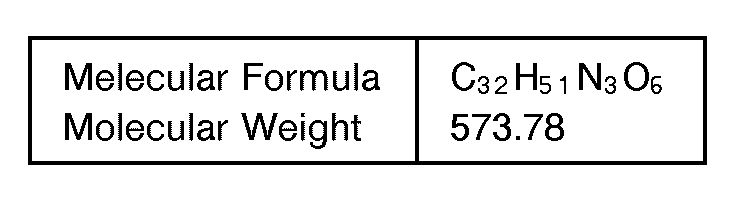

- Melting Point (°C): oil
- Specific Rotary Power : [a]8 α + 33.2°(C=0.8, CHCl3)
- IR(vneat, cm-1): 3384, 2936, 2864, 1732
- NMR(δ, CDCl3):
- 0.87 (3H,t,J=7Hz), 0.96 (3H,s), 0.97-2.18 (16H,m), 1.03 (3H,s), 1.42 (3H,s), 1.46 (3H,s), 2.32-2.53 (2H,m), 3.18 (2H,t,J = 7Hz), 3.26-3.39 (1 H,m), 3.28 (1H,d,J=12Hz), 3.43-3.56 (1 H,m), 3.69 (1H,d,J=12Hz), 3.72-3.85 (1H,m), 4.07 (1H,s), 4.36 (1H,d,J=17Hz), 4.46 (1H,d,J=17Hz), 4.50 (1H,d,J=6Hz), 4.62 (1 H,ddd,J = 11 Hz,11 Hz, 4Hz), 6.88 (1 H,t,J = 5Hz), 7.19-7.37 (5H,m)
- (1 S,2S)-2-(N-Benzyl-N-octylcarbamoyl)aminocyclohexane-1-yl 3-[N-(2,2,5,5-tetramethyl-1,3-dioxane-4-carbonyl)amino]propionate


- Melting Point (°C): oil
- Specific Rotary Power : [a]8 α +29.7°(C=0.5, CHCl3)
- IR(vneat, cm-1): 3368, 2932, 2864, 1732
- NMR(δ, CDCl3):
- 0.87 (3H,t,J=7Hz), 0.96 (3H,s), 0.97-2.18 (20H,m), 1.03 (3H,s), 1.42 (3H,s), 1.46 (3H,s), 2.33-2.53 (2H,m), 3.18 (2H,t,J = 7Hz), 3.26-3.39 (1 H,m), 3.28 (1 H,m), 3.43-3.56 (1 H,m), 3.69 (1H,d,J=12Hz), 3.72-3.85 (1 H,m), 4.07 (1 H,s), 4.37 (1H,d,J=17Hz), 4.48 (1H,d,J=17Hz), 4.49 (1 H,d,J = 6Hz), 4.62 (1 H,ddd,J = 11 Hz,11 Hz,4Hz), 6.88 (1 H,t,J = 5Hz), 7.19-7.36 (5H,m)
- (1 S,2S)-2-(N-Benzyl-N-decylcarbamoyl)aminocyclohexane-1-yl 3-[N-(2,2,5,5-tetramethyl-1,3-dioxane-4-carbonyl)amino]propionate


- Melting Point (°C): oil
- Specific Rotary Power : [α]7 D +26.1 °(C=1.0, CHCl3)
- IR(vneat, cm-1): 3384, 2932, 2860, 1732
- NMR(δ, CDCl3):
- 0.88 (3H,t,J=7Hz), 0.96 (3H,s), 0.79-2.19 (24H,m), 1.03 (3H,s), 1.42 (3H,s), 1.46 (3H,s), 2.32-2.53 (2H,m), 2.18 (2H,t,J = 7Hz), 3.23-3.38 (1 H,m), 3.28 (1H,d,J=12Hz), 3.32-3.55 (1 H,m), 3.69 (1H,d,J=12Hz), 3.70-3.85 (1H,m), 4.07 (1H,s), 4.36 (1H,d,J=17Hz), 4.47 (1H,d,J=17Hz), 4.48 (1H,d,J=6Hz), 4.61 (1 H,ddd,J = 11 Hz,11 Hz,4Hz), 6.89 (1 H,t,J = 5Hz), 7.20-7.39 (5H,m)
- (1 S,2S)-2-(2-Benzylundecanoyl)aminocyclohexane-1-yl 3-[N-(2,2,5,5-tetramethyl-1,3-dioxane-4-carbonyl)-amino]propionate


- Melting Point (°C): wax
- Specific Rotary Power : [α]8 D -7.7°(C=1.0, CHCl3)
- IR(vneat, cm-1): 3320, 2932, 2860, 1732
- NMR(δ, CDCl3):
- 0.62-1.49 (18H,m), 0.88 (3H,t,J=7Hz), 0.95 (3H,s), 1.03 (3H,s), 1.42 (3H,s), 1.46 (3H,s), 1.51-1.95 (6H,m), 2.08-2.19 (1H,m), 2.37-2.56 (2H,m), 2.68 (1H,dd,J = 14Hz,6Hz), 2.83 (1H,dd,J = 14Hz,9Hz), 3.28 (1H,d,J=12Hz), 3.44-3.52 (2H,m), 3.68 (1H,d,J=12Hz), 3.70-3.82 (1H,m), 4.07 (1H,s), 4.51 (1 H,ddd,J = 11 Hz,11 Hz,4Hz), 5.42 (1 H,d,J = 8Hz), 6.88 (1 H,t,J = 5Hz), 7.11-7.30 (5H,m)
- (1 S,2S)-2-(2-Benzylundecanoyl)aminocyclohexane-1-yl 3-[N-(2,2,5,5-tetramethyl-1,3-dioxane-4-carbonyl)-amino]propionate


- Melting Point (°C): oil
- Specific Rotary Power : [α]7 D α + 27.4 ° (C =1.0, CHCl3)
- IR(vneat, cm-1): 3304, 2932, 2860, 1734
- NMR(δ, CDCl3):
- 0.88 (3H,t,J=7Hz), 0.95 (3H,s), 0.98-1.49 (18H,m), 1.03 (3H,s), 1.43 (3H,s), 1.47 (3H,s), 1.52-2.30 (9H,m), 2.61 (1 H,dd,J = 14Hz,6Hz), 2.94 (1 H,dd,J = 14Hz,9Hz), 3.22-3.29 (2H,m), 3.28 (1 H,d,J = 12Hz), 3.69 (1H,d,J=12Hz), 3.71-3.84 (1 H,m), 4.07 (1 H,s), 4.55 (1 H,ddd,J =11 Hz,11 Hz, 4Hz), 5.91 (1 H,d,J = 8Hz), 6.81 (1 H,t,J = 5Hz), 7.12-7.28 (5H,m)
- (1 S,2S)-2-(3-Hexyl-2-nonenoyl)aminocyclohexane-1-yl 3-[N-(2,2,5,5-tetramethyl-1,3-dioxane-4-carbonyl)-amino]propionate

- IR(vneat ,cm-1): 1660, 1736
- NMR(δ, CDCl3):
- 0.87 (3H,t,J=7Hz), 0.88 (3H,t,J=7Hz), 0.96 (3H,s), 1.04 (3H,s), 1.10-1.50 (16H,m), 1.43 (3H,s), 1.47 (3H,s), 1.57-1.88 (6H,m), 1.88-2.18 (4H,m), 2.43-2.64 (4H,m), 3.28 (1 H,d,J = 12Hz), 3.49 (2H,t,J = 6Hz), 3.69 (1H,d,J=12Hz), 3.84-4.02 (1 H,m), 4.08 (1 H,s), 4.64 (1 H,ddd,J = 11 Hz,11 Hz,4Hz), 5.42 (1 H,s), 5.67 (1 H,d,J = 8Hz), 6.92 (1 H,m)
- (1 S,2S)-2-(3-Phenylmethyl-4-phenyl-2-butenoyl)aminocyclohexane-1-yl 3-[N-(2,2,5,5-tetramethyl-1,3-dioxane-4-carbonyl)amino]propionate
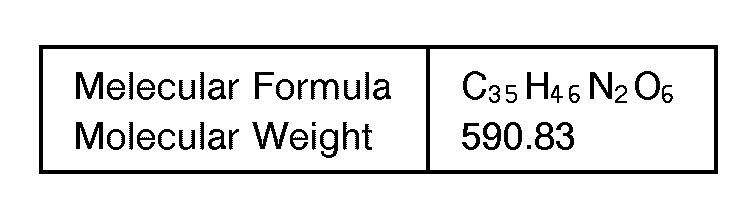
- Melting Point (°C): wax
- NMR(δ, CDCl3):
- 0.95 (3H,s), 1.00 (3H,s), 0.90-2.12 (8H,m), 1.39 (3H,s), 1.45 (3H,s), 2.24-2.54 (2H,m), 3.07 (2H,dd,J=15Hz,3Hz), 3.26 (1H,d,J=12Hz), 3.20-3.64 (2H,m), 3.53 (2H,dd,J=15Hz,5Hz), 3.67 (1H,d,J=12Hz), 3.80-3.94 (1H,m), 4.04 (1H,s), 4.60 (1H,ddd,J=10Hz,10Hz,4Hz), 5.76 (1H,d,J=8Hz), 6.60 (1 H,s), 6.84 (1 H,t,J = 5Hz), 7.16-7.42 (10H,m)
- (1 S,2S)-2-(3-Propyl-2-nonenoyl)aminocyclohexane-1-yl 3-[N-(2,2,5,5-tetramethyl-1,3-dioxane-4-carbonyl)-amino]propionate
-

- Melting Point (°C): wax
- NMR(δ, CDCl3):
- 0.80-0.96 (6H,m), 0.97 (3H,s), 1.04 (3H,s), 1.06-2.21 (20H,m), 1.43 (3H,s), 1.47 (3H,s), 2.40-2.67 (4H,m), 3.28 (1H,d,J=12Hz), 3.49 (2H,td,J = 6Hz,6Hz), 3.69 (1 H,d,J = 12Hz), 3.94 (1 H,ddd,J = 10Hz,8Hz,4Hz), 4.08 (1 H,s), 4.64 (1 H,ddd,J = 10Hz, 10Hz,4Hz), 5.42 + 5.44 (1 H,s), 5.67 + 5.70 (1 H,d,J = 8Hz), 6.92 (1 H,t,J = 6Hz)
- (1 S,2S)-2-(3-Methyl-2-tridecenoyl)aminocyclohexane-1-yl 3-[N-(2,2,5,5-tetramethyl-1,3-dioxane-4-carbonyl)-amino]propionate

- NMR(δ, CDCl3):
- 0.88 (3H,t,J=6Hz), 0.97 (3H,s), 1.04 (3H,s), 1.10-2.21 (26H,m), 1.43 (3H,s), 1.47 (3H,s), 2.12 (3H,s), 2.50 (2H,t,J=5Hz), 3.28 (1 H,t,J = 12Hz), 3.41-3.57 (2H,m), 3.69 (1 H,d,J = 12Hz), 3.86-4.01 (1 H,m), 4.09 (1 H,s), 4.65 (1 H,ddd,J = 10Hz, 10Hz,4Hz), 5.48 (1 H,d,J = 8Hz), 6.92 (1 H,t,J = 5Hz)
- (1 S,2S)-2-(2,3-Dimethyl-2-tridecenoyl)aminocyclohexane-1-yl 3-[N-(2,2,5,5-tetramethyl-1,3-dioxane-4-carbonyl)amino]propionate

- NMR(δ, CDCl3):
- 0.88 (3H,t,J=6Hz), 0.96 (3H,s), 1.03 (3H,s), 1.07-2.21 (26H,m), 1.43 (3H,s), 1.46 (3H,s), 1.63 (3H,s), 1.75 (3H,s), 2.53 (2H,t,J=6Hz), 3.28 (1H,d,J=12Hz), 3.36-3.64 (2H,m), 3.69 (1H,d,J=12Hz), 3.88-4.04 (1 H,m), 4.08 (1 H,s), 4.68 (1 H,ddd,J = 10Hz, 10Hz,4Hz), 5.23 + 5.58 (1 H,d,J = 9Hz), 6.92 (1 H,t,J = 5Hz)
- (1S,2S)-2-(3-Hexylnonanoyl)aminocyclohexane-1-yl 3-[N-(2,2,5,5-tetramethyl-1,3-dioxane-4-carbonyl)amino]-propionate

- NMR(δ, CDCl3):
- 0.87 (6H,t,J=6Hz), 0.96 (3H,s), 1.04 (3H,s), 1.10-2.20 (31H,m), 1.43 (3H,s), 1.47 (3H,s), 2.50 (2H,t,J=6Hz), 3.28 (1H,d,J=12Hz), 3.36-3.60 (2H,m), 3.69 (1H,d,J=12Hz), 3.88 (1H,m), 4.09 (1H,s), 4.64 (1 H,ddd,J = 10Hz, 10Hz,4Hz), 5.88 (1 H,d,J = 8Hz), 6.91 (1 H,t,J = 6Hz)
- (1 S,2S)-2-[(E)-3-Phenyl-2-dodecenoyl]aminocyclohexane-1-yl 3-[N-(2,2,5,5-tetramethyl-1,3-dioxane-4-carbonyl)amino]propionate

- NMR(δ, CDCl3):
- 0.55-0.73 (1H,m), 0.87 (3H,t,J = 6Hz), 0.96 (3H,s), 1.04 (3H,s), 1.08-2.84 (21H,m), 1.42 (3H,s), 1.47 (3H,s), 2.30-2.43 (2H,m), 2.48 (2H,t,J=6Hz), 3.28 (1H,d,J=12Hz), 3.33-3.62 (2H,m), 3.69 (1H,d,J=12Hz), 3.70-3.86 (1H,m), 4.08 (1H,s), 4.28 ((1H,ddd,J=10Hz,10Hz,4Hz), 5.06 (1H,d,J=9Hz), 5.85 (1H,s), 6.92 (1H,t,J=6Hz)
- (1 S,2S)-2-[(Z)-3-Phenyl-2-dodecenoyl]aminocyclohexane-1-yl 3-[N-(2,2,5,5-tetramethyl-1,3-dioxane-4-carbonyl)amino]propionate

- NMR(δ, CDCl3):
- 0.86 (3H,t,J = 7Hz), 0,90 (3H,s), 0.99 (3H,s), 1,03-2.28 (22H,m), 1.39 (3H,s), 1.44 (3H,s), 2.40-2.6 (2H,m), 2.90-3.20 (2H,m), 3.25 (1H,d,J = 12Hz), 3.36-3.63 (2H,m), 3.66 (1H,d,J=12Hz), 3.91-4.02 (1H,m), 4.06 (1H,s), 4.65 (1H,ddd,J = 10Hz,10Hz,4Hz), 5.82 (1H,s), 6.04 (1H,d,J=8Hz), 6.91 (1H,t,J=6Hz), 7.29-7.44 (5H,m)
- (1 S,2S)-2-[(Z)-3-Phenyl-2-nonenoyl]aminocyclohexane-1-yl 3-[N-(2,2,5,5-tetramethyl-1,3-dioxane-4-carbonyl)amino]propionate

-
- 0.83 (3H,t,J=7Hz), 0,90 (3H,s), 0.99 (3H,s), 1.08-2.60 (18H,m), 1.39 (3H,s), 1.44 (3H,s), 2.94-3.20 (2H,m), 3.25 (1 H,d,J = 12Hz), 3.38-3.61 (2H,m), 3.66 (1 H,d,J = 12Hz), 3.90-4.04 (1 H,m), 4.06 (1 H,s), 4.65 (1 H,ddd,J = 11 Hz,11Hz,4Hz), 5.82 (1 H,s), 6.01 (1 H,d,J = 6Hz), 6.91 (1 H,t,J = 6Hz), 7.29-7.44 (5H,m)
- (1 S,2S)-2-[(E)-3-Phenyl-2-nonenoyl]aminocyclohexane-1-yl 3-[N-(2,2,5,5-tetramethyl-1,3-dioxane-4-carbonyl)amino]propionate

- NMR(δ, CDCl3):
- 0.55-0.72 (1H,m), 0.85 (3H,t,J=7Hz), 0,96 (3H,s), 1.04 (3H,s), 0.88-1.99 (15H,m), 1.42 (3H,s), 1.47 (3H,s), 2.29-2.34 (2H,m), 2.48 (2H,t,J=6Hz), 3.28 (1 H,d,J = 12Hz), 3.32-3.61 (2H,m), 3.69 (1 H,d,J = 12Hz), 3.71-3.84 (1H,m), 4.08 (1H,s), 4.28 (1H,ddd,J=10Hz,10Hz,4Hz), 5.07 (1H,d,J=9Hz), 5.85 (1H,s), 6.92 (1 H,t,J = 6Hz), 7.13-7.45 (5H,m)
- (1 S,2S)-2-(2-Hexylideneoctanoyl)aminocyclohexane-1-yl 3-[N-(2,2,5,5-tetramethyl-1,3-dioxane-4-carbonyl)-amino]propionate

- NMR(δ, CDCl3):
- 0.87 (3H,t,J=8Hz), 0.88 (3H,t,J=7Hz), 0,96 (3H,s), 1.03 (3H,s), 1.07-2.26 (26H,m), 1.42 (3H,s), 1.46 (3H,s), 2.40-2.66 (2H,m), 3.28 (1 H,d,J = 12Hz), 3.37-3.64 (2H,m), 3.69 (1 H,d,J = 12Hz), 3.90-4.06 (1 H,m), 4.07 (1 H,s), 4.70 (1 H,ddd,J = 10Hz, 10Hz,4Hz), 5.38 (1 H,t,J = 7Hz), 5.61 (1 H,d,J = 8Hz), 6.91 (1 H,t,J = 6Hz)
- (1 S,2S)-2-(2-Hexylideneoctanoyl)aminocyclohexane-1-yl 3-[N-(2,2,5,5-tetramethyl-1,3-dioxane-4-carbonyl)-amino]propionate

- NMR(δ, CDCl3):
- 0.88 (3H,t,J=7Hz), 0.89 (3H,t,J=7Hz), 0,96 (3H,s), 1.03 (3H,s), 1.06-2.33 (26H,m), 1.42 (3H,s), 1.47 (3H,s), 2.40-2.66 (2H,m), 3.28 (1 H,d,J = 12Hz), 3.32-3.62 (2H,m), 3.69 (1 H,d,J = 12Hz), 3.86-4.02 (1 H,m), 4.07 (1 H,s), 4.74 (1 H,ddd,J = 11 Hz,11 Hz,4Hz), 5.82 (1 H,d,J = 8Hz), 6.01 (1 H,t,J = 7Hz), 6.90 (1 H,t,J = 6Hz)
- (1 S,2S)-2-(N-Benzyl-N-nonylcarbamoyl)aminocyclohexane-1-yl 3-[N-(2,2,5,5-tetramethyl-1,3-dioxane-4-carbonyl)amino]propionate

- Melting Point (°C): oil
- NMR(δ, CDCl3):
- 0.88 (3H,t,J=7Hz), 0.96 (3H,s), 1.03 (3H,s), 1.05-2.23 (22H,m), 1.42 (3H,s), 1.46 (3H,s), 2.32-2.53 (2H,m), 3.17 (2H,t,J = 7Hz), 3.25-3.39 (1 H,m), 3.28 (1H,d,J=12Hz), 3.42-3.55 (1 H,m), 3.68 (1H,d,J=12Hz), 3.71-3.83 (1H,m), 4.07 (1H,s), 4.36 (1H,d,J=16Hz), 4.46 (1H,d,J=16Hz), 4.47 (1H,d,J=8Hz), 4.62 (1 H,ddd,J = 11 Hz,11 Hz, 4Hz), 4.87 (1 H,t,J = 6Hz), 7.20-7.37 (5H,m)
- (1 S,2S)-2-(2-Benzylundecanoyl)aminocyclohexane-1-yl 3-[N-(2,2,5,5-tetramethyl-1,3-dioxane-4-carbonyl)-amino]propionate

- Melting Point (° C): oil
- NMR(δ), CDCl3):
- 0.88 (3H,t,J=7Hz), 1.02 (3H,s), 1.08 (3H,s), 1.12-2.24 (25H,m), 1.46 (3H,s), 1.54 (3H,s), 2.61 (1H,dd,J=13Hz,5Hz), 2.92 (1H,dd,J=13Hz, 9Hz), 3.22 (1H,dd,J=18Hz,5Hz), 3.31 (1H,d,J = 12Hz), 3.70-3.84 (1 H,m), 3.71 (1H,d,J=12Hz), 3.94 (1 H,dd,J = 18Hz,7Hz), 4.13 (1 H,s), 4.62 (1 H,ddd,J = 11 Hz,11 Hz,4Hz), 5.51 (1H,d,J=8Hz), 6.64-6.72 (1 H,m), 7.14-7.21 (3H,m), 7.23-7.32 (2H,m)
- (1 S,2S)-2-(2-Heptylnonanoyl)aminocyclohexane-1-yl 3-[N-(2,2,5,5-tetramethyl-1,3-dioxane-4-carbonyl)-amino]propionate

- Melting Point (°C): wax
- NMR(δ, CDCl3):
- 0.87 (6H,t,J=7Hz), 0.96 (3H,s), 1.04 (3H,s), 1.08-2.21 (33H,m), 1.43 (3H,s), 1.47 (3H,s), 2.41-2.58 (2H,m), 3.28 (1H,d,J=12Hz), 3.51 (2H,dt,J = 6Hz,6Hz), 3.69 (1 H,d,J = 12Hz), 3.82-3.95 (1 H,m), 4.08 (1 H,s), 4.68 (1 H,ddd,J = 11 Hz, 11 Hz,4Hz), 5.80 (1 H,d,J = 8Hz), 6.91 (1 H,t,J = 6Hz)
- (1 S,2S)-2-[(1-Heptyloctyl)carbamoyl]aminocyclohexane-1-yl 3-[N-(2,2,5,5-tetramethyl-1,3-dioxane-4-carbonyl)amino]propionate
-

- Melting Point (°C): wax
- NMR(δ, CDCl3):
- 0.87 (6H,t,J=7Hz), 0.96 (3H,s), 1.03 (3H,s), 1.08-2.28 (32H,m), 1.44 (3H,s), 1.47 (3H,s), 2.38-2.57 (2H,m), 3.28 (1 H,d,J = 12Hz), 3.31-3.42 (1 H,m), 3.54-3.82 (3H,m), 3.69 (1 H,d,J = 12Hz), 4.10 (1 H,s), 4.48 (1 H,brs), 4.55 (1 H,ddd,J = 11 Hz, 11 Hz,4Hz), 4.83 (1 H,brs), 6.90 (1 H,t,J = 6Hz)
- (1 S,2S)-2-(2-Benzyl-3-phenylpropanoyl)aminocyclohexane-1-yl 3-[N-(2,2,5,5-tetramethyl-1,3-dioxane-4-carbonyl)amino]propionate
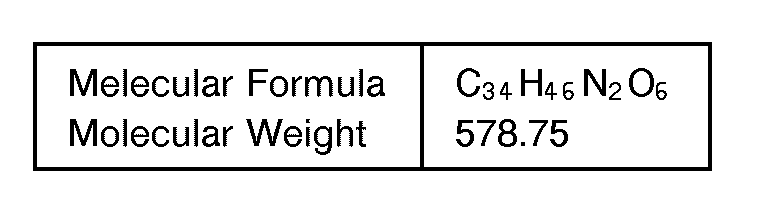
- Melting Point (°C): calomel
- NMR(δ, CDCl3):
- 0.94 (3H,s), 0.95-2.23 (10H,m), 1.03 (3H,s), 1.42 (3H,s), 1.46 (3H,s), 2.43-2.56 (1H,m), 2.68-3.09 (4H,m), 3.15-3.32 (2H,m), 3.27 (1H,d,J=12Hz), 3.59-3.69 (1H,m), 3.68 (1H,d,J=12Hz), 4.06 (1H,s), 4.35 (1 H,ddd,J = 11 Hz,11 Hz,4Hz), 5.38 (1 H,d,J = 8Hz), 6.77 (1 H,t,J = 6Hz), 7.12-7.28 (1 OH,m)
- (1S,2S)-2-[(5-Phenyl-2-(3-phenylpropyl)pentanoyl)]aminocyclohexane-1-yl 3-[N-(2,2,5,5-tetramethyl-1,3-dioxane-4-carbonyl)amino]propionate

- Melting Point (°C): calomel
- NMR(δ, CDCl3):
- 0.93 (3H,s), 0.98-2.27 (19H,m), 1.02 (3H,s), 1.41 (3H,s), 1.46 (3H,s), 2.48-2.64 (4H,m), 3.12-3.28 (2H,m), 3.27 (1 H,d,J = 12Hz), 3.67 (1 H,d,J = 12Hz), 3.78-3.91 (1 H,m), 4.05 (1 H,s), 4.59 (1 H,ddd,J = 11 Hz,11 Hz,4Hz), 5.87 (1 H,d,J = 8Hz), 6.75 (1H,t,J = 6Hz), 7.11-7.30 (10H,m)
- (1S,2S)-2-[6-Phenyl-2-(4-phenylbutyl)hexanoyl]aminocyclohexane-1-yl 3-[N-(2,2,5,5-tetramethyl-1,3-dioxane-4-carbonyl)amino]propionate

- Melting Point (°C): oil
- NMR(δ, CDCl3):
- 0.84-2.14 (21H,m), 0.94 (3H,s), 1.01 (3H,s), 1.41 (3H,s), 1.45 (3H,s), 2.32-2.61 (6H,m), 3.27 (1 H,d,J = 8Hz), 3.37-3.53 (2H,m), 3.67 (1 H,d,J = 8Hz), 3.78-3.92 (1 H,m), 4.06 (1 H,s), 4.62 (1 H,ddd,J = 11 Hz,11 Hz,4Hz), 5.82 (1 H,d,J = 8Hz), 6.86 (1 H,t,J = 6Hz), 7.11-7.29 (10H,m)
- (1 S,2S)-2-[2-(p-tert-Butylbenzyl)-3-(4-tertbutylphenyl)propanoyl)aminocyclohexane-1-yl 3-[N-(2,2,5,5-tetramethyl-1,3-dioxane-4-carbonyl)amino]propionate

- Melting Point (°C): calomel
- NMR(δ, CDCl3):
- 0.94 (3H,s), 1.02 (3H,s), 1.05-1.84 (8H,m), 1.28 (9H,s), 1.29 (9H,s), 1.41 (3H,s), 1.46 (3H,s), 2.12-2.34 (2H,m), 2.48-2.58 (1 H,m), 2.66-3.04 (4H,m), 3.27 (1 H,d,J = 12Hz), 3.33 (2H,dt,J = 6Hz,6Hz), 3.61-3.73 (1 H,m), 3.68 (1 H,d,J = 12Hz), 4.06 (1 H,s), 4.38 (1 H,ddd,J = 11 Hz,11 Hz,4Hz), 5.32 (1 H,d,J = 8Hz), 6.83 (1 H,t,J = 6Hz), 7.06 (2H,d,J = 8Hz), 7.11 (2H,d,J = 8Hz), 7.26 (2H,d,J = 8Hz), 7.28 (2H,d,J = 8Hz)
- 1-Ethyl-3-(3-dimethylaminopropyl)carbodiimide hydrochloride (530 mg) was added to a solution of 910 mg of (S)-2-oleylamino-methylpyrolidine and 650 mg of 3-[N-(2,2,5,5-tetramethyl-1,3-dioxane-4-carbonyl)-amino]propionic acid in 10 ml of methylene chloride under ice cooling. The mixture was stirred at room temperature for 18 hours. The reaction mixture was washed with water and dried over anhydrous sodium sulfate, followed by removal of the solvent by vacuum evaporation. Then, the residue was purified by silica gel column chromatography to obtain 1.05 g of the title compound (yield: 59 %).
- Property : oily
- Specific rotary power [α]D + 5.2 ° (C = 1.0, CHCl3)
- IR(cm-1, neat): v NH3336, co1656
-

- 0.88 (3H,t,J=7Hz), 0.96 (3H,s), 1.04 (3H,s), 1.19-1.39 (20H,m), 1.42 (3H,s), 1.46 (3H,s), 1.53-1.82 (3H,m), 1.85-2.09 (7H,m), 2.16 (2H,t,J = 7Hz), 2.44-2.62 (2H,m), 3.13-3.23 (1 H,m), 3.28 (1 H,d,J = 12Hz), 3.39-3.60 (5H,m), 3.69 (1 H,d,J = 12Hz), 4.08 (1 H,s), 4.21-4.28 (1 H,m), 5.29-5.40 (2H,m), 7.09 (1 H,t,J = 6Hz), 7.24 (1 H,brs)
- A solution of 500 mg of (S)-2-(Oleoylamino)methyl-1-{3-[N-(2,2,5,5-tetramethyl-1,3-dioxane-4-carbonyl)-amino]propanoyl}pyrrolidine in a mixed solvent composed of 20 ml of acetic acid and 10 ml of water was stirred at room temperature for 16 hours. Then, 20 ml of ethyl acetate and 20 ml of water were added thereto, and the organic layer was separated. The organic layer was washed with water, and dried over anhydrous sodium sulfate. After removing the solvent by evaporation, the residue obtained was subjected to silica gel column chromatography for purification to obtain 397 mg of the title compound (yield: 85 %). Property : oily
- Specific Rotary Power [α]D -5.8 °(C = 1.0, CHCl3)
- IR(cm-1, neat): v NH3324, co1650
-

- 0.88 (3H,t,J = 7Hz), 0.92 (3H,s), 1.02 (3H,s), 1.21-1.39 (20H,m), 1.71-1.84 (1H,m), 1.53-1.67 (2H,m), 1.85-2.09 (7H,m), 2.17 (2H,t,J=7Hz), 2.45-2.87 (4H,m), 3.13-3.75 (8H,m), 3.99 (1H,s), 3.39-3.68 (5H,m), 3.68 (1 H,d,J = 12Hz), 4.08 (1 H,s), 4.19-4.29 (1 H,m), 5.29-5.40 (2H,m), 6.85-7.07 (1 H,brs), 7.36-7.44 (1 H,m)
- (R)-2-Oleoylaminomethylpyrrolidine (910 mg) and 650 mg of 3-[N-(2,2,5,5-tetramethyl-1,3-dioxane-4-carbonyl)amino]propionic acid were reacted in the same manner as in Example 165 to obtain 1.24 g of the title compound (yield: 82 %).
- Property : oily
- Specific rotary power [α]D : + 41.5 ° (C=1.0, CHCl3)
- IR(cm-1, vneat): NH3336, co1654,
-

- 0.88 (3H,t,J=7Hz), 0.97 (3H,s), 1.04 (3H,s), 1.21-1.39 (20H,m), 1.43 (3H,s), 1.46 (3H,s), 1.55-1.82 (3H,m), 1.87-2.09 (7H,m), 2.17 (2H,t,J = 7Hz), 2.53 (2H,t,J = 6Hz), 3.12-3.21 (1H,m), 3.28 (1 H,t,J = 12Hz), 3.39-3.68 (5H,m), 3.68 (1 H,t,J = 12Hz), 4.08 (1 H,s), 4.20-4.28 (1 H,m), 5.28-5.40 (2H,m), 7.11 (1 H,t,J = 6Hz), 7.24 (1 H,brs)
- 3-Oleoylaminopiperidine (1.02 g) and 0.78 g of 3-[N-(2,2,5,5-tetramethyl-1,3-dioxane-4-carbonyl)amino]-propionic acid were reacted in the same manner as in Example 165 to obtain 1.61 g of the title compound (yield: 89 %).
- Property : oil
- Specific Rotary Power [α]D + 25.3 ° (C = 1.0, CHCl3)
- IR(cm-1, vneat): NH3316, co1652
-

- 0.88 (3H,t,J=7Hz), 0.98 (3H,s), 1.04 (3H,s), 1.18-1.39 (20H,m), 1.43 (3H,s), 1.47 (3H,s), 1.49-2.08 (10H,m), 2.16 (2H,t,J=7Hz), 2.56 (2H,t,J = 6Hz), 3.01-3.15 (1H,m), 3.16-3.66 (4H,m), 3.28 (1H,d,J=12Hz), 3.68 (1 H,d,J = 12Hz), 3.69-4.08 (2H,m), 4.07 (1 H,s), 5.29-5.40 (2H,m), 7.01-7.11 (1H,d,J = 6Hz)
- 3-Oleoylamino-1-{3-[N-(2,2,5,5-tetramethyl-1,3-dioxane-4-carbonyl)amino]propanoyl}piperidine (1.61 g) was reacted in the same manner as in Exaple 166 to obtain 1.1 g of the title compound (yield: 73 %). Property : oil
- Specific Rotary Power [α]D + 10.4 ° (C = 1.0, CHCl3)
- IR(cm-1, neat): v NH3316, v CO1650
-

- 0.88 (3H,t,J=7Hz), 0.93-0.95 (3H,s), 1.03 (3H,s), 1.21-1.38 (20H,m), 1.48-2.09 (10H,m), 2.15 (2H,t,J = 7Hz), 2.57 (2H,t,J = 6Hz), 3.05-3.98 (7H,m), 3.47 (1 H,d,J = 12Hz), 3.51 (1 H,d,J = 12Hz), 3.95 (1 H,m), 5.29-5.40 (2H,m), 5.61-5.86 (1 H,brs), 7.23 (1 H,brs)
- Oleoyl chloride (945 mg) was added to a solution of 942 mg of 3-[3-(2,4-dihydroxy-3,3-dimethyl-1-oxo- butylamino)propanyl]aminopiperidine and 1.06 g of sodium carbonate in a mixed solvent composed of 20 ml of water and 20 ml of ethyl acetate under ice cooling and the mixture was stirred for additional 30 minutes. Then the aqueous layer was removed. The organic layer was washed with brine and dried over anhydrous sodium sulfate. After removing the solvent by evaporation, the residue was purified by silica gel column chromatography to obtain two diastereomers A and B, respectively, the title compound, in amount of 390 mg (yield: 22 %) and 409 mg (yield: 23 %), respectively.
- A
- Property : oily
- Specific Rotary Power [α]D + 22.5 ° (C = 1.0, CHCl3)
- IR(cm-1, neat): v NH3324, v CO1652
-

- 0.88 (3H,t,J=7Hz), 0.91 (3H,s), 1.04 (3H,s), 1.22-1.38 (20H,m), 1.52-2.09 (10H,m), 2.25-2.53 (4H,m), 2.65-3.70 (9H,m), 3.98 (1 H,brs), 4.04-4.31 (2H,m), 5.28-5.40 (2H,m), 5.94 (1 H,brs), 7.50 (1 H,brs)
- B
- Property : oil
- Specific Rotary Power [α]D +7.6° (C = 1.0, CHCl3)
- IR(cm-1, neat): v NH3320, v C01652
-

- 0.88 (3H,t,J=7Hz), 0.97 (3H,s), 1.03 (3H,s), 1.22-1.38 (20H,m), 1.52-2.09 (10H,m), 2.25-2.80 (6H,m), 3.10-4.05 (1H,s), 5.29-5.40 (2H,m), 6.23 (1 H,brs), 7.50 (1 H,brs)
- To a solution of 180 mg of 1-oleoylamino-3-[3-(2,4-dihydroxy-3,3-dimethyl-1-oxobutylamino)propanoyl]-aminopiperidine-A obtained in Example 170 in 10 ml of acetone was added 10 mg of p-toluenesulfonic acid, and the mixture was stirred at room temperature for 10 hours. After adding a saturated aqueous solution of sodium hydrogen carbonate thereto, the reaction mixture was extracted with ethyl acetate. The organic layer was washed with brine and dried over anhydrous sodium sulfate, followed by removal of the solvent. The residue was subjected to silica gel column chromatography to obtain 176 mg of the title compound (yield: 91 %).
- Property : oily
- Specific Rotary Power [α]D + 30.6 ° (C = 1.0, CHCl3)
- IR(cm-1, neat): v NH3312, v CO1652, 1636
-

- 0.88 (3H,t,J=7Hz), 0.96 (3H,s), 1.04 (3H,s), 1.21-1.38 (20H,m), 1.43 (3H,s), 1.47 (3H,s), 1.49-1.77 (5H,m), 1.81-2.08 (5H,m), 2.34 (2H,t,J = 7Hz), 2.36-2.49 (2H,m), 2.98-3.16 (1 H,m), 3.28 (1 H,d,J = 12Hz), 3.32-3.72 (4H,m), 3.70 (1 H,d,J = 12Hz), 3.78-4.04 (2H,m), 4.08 (1 H,s), 5.29-5.40 (2H,m), 5.99-6.16 (1 H,m), 7.02 (1 H,brs)
- 1-Oleoylamino-3-[3-(2,4-dihydroxy-3,3-dimethyl-1-oxo-butylamino)propanoyl]aminopiperidine-B obtained in Example 170 (238 mg) was reacted in the same manner as in Example 171 to obtain 206 mg of the title compound.
- Property : oily
- Specific Rotary Power [α]D + 16.0 ° (C = 1.0, CHCl3)
- IR(cm-1, neat): v NH3312, v CO1654
-

- 0.88 (3H,t,J=7Hz), 0.98 (3H,s), 1.05 (3H,s), 1.18-1.38 (20H,m), 1.42 (3H,s), 1.47 (3H,s), 1.49-2.08 (10H,m), 2.34 (2H,t,J = 7Hz), 2.37-2.50 (2H,m), 2.90-3.07 (1 H,m), 3.29 (1 H,d,J = 12Hz), 3.32-3.73 (4H,m), 3.69 (1 H,d,J = 12Hz), 3.76-4.11 (2H,m), 4.07 (1 H,s), 5.29-5.41 (2H,m), 5.97-6.11 (1 H,m), 7.02 (1 H,brs)
- A solution of 1.83 g of 1-oleoyl-4-hydroxy-piperidine, 1.3 g of 3-[N-(2,2,5,5-tetramethyl-1,3-dioxane-4-carbonyl)amino]propionic acid, 1.03 g of dicyclohexylcarbodiimide and 0.61 g of 4-(N,N-dimethylamino)-pyridine in 60 ml of toluene was heated under reflux for one night. After completion of the reaction, the reaction mixture was cooled and precipitates were removed. Then, the organic layer was washed sequentially with water, 1N hydrochloric acid and brine, and dried over anhydrous sodium sulfate. After removing the solvent by evaporation, the residue was subjected to silica gel column chromatography to obtain 1.95 g of the title compound (yield: 65 %).
- Property : oily
- IR(cm-1, neat): v co1740, 1660
-

- 0.88 (3H,t,J=7Hz), 0.96 (3H,s), 1.04 (3H,s), 1.16-1.40 (19H,m), 1.43 (3H,s), 1.46 (3H,s), 1.50-1.77 (6H,m), 1.76-2.04 (6H,m), 3.32 (2H,t,J = 6Hz), 2.58 (2H,t,J = 6Hz), 3.29 (1H,d,J=12Hz), 3.26-3.70 (4H,m), 3.69 (1 H,d,J = 12Hz), 3.88-4.00 (1 H,m), 4.08 (1 H,s), 4.96-5.06 (1 H,m), 5.30-5.42 (2H,m), 6.88-6.96 (1 H,m)
- 1-Oleoyl-4-piperidine 3-[N-(2,2,5,5-tetramethyl-1,3-dioxane-4-carbonyl)amino]propionate (1.51 g) was reacted in the same manner as in Example 166 to obtain 1.37 g of the title compound (yield: 97 %). Property : oily
- IR(cm-1, neat): v NH3436, v co1740, 1658
-

- 0.88 (3H,t,J = 7Hz), 0.92 (3H,s), 1.02 (3H,s), 1.02 (3H,s), 1.20-1.40 (21 H,m), 1.56-1.72 (4H,m), 1.80-2.10 (5H,m), 2.32 (2H,t,J = 7Hz), 2.59 (2H,t,J = 6Hz), 3.20-4.10 (10H,m), 4.96-5.06 (1 H,m), 4.96-5.06 (1 H,m), 5.30-5.42 (2H,m), 7.14-7.24 (1 H,m)
- Acetic anhydride (10 ml) was added to a solution of 530 mg of 1-oleoyl-4-piperidine 3-[N-(2,4-dihydroxy-3,3-dimethyl-1-oxo-butyl)amino]propionate in 5 ml of ypridine, and the mixture was stirred at room temperature for 15 hours. The reaction mixture was poured into ice water, and extracted with ethyl acetate. The organic layer was washed sequentially with a saturated aqueous sodium hydrogen carbonate solution, with water and then with brine, followed by drying over anhydrous sodium sulfate. After removing the solvent by vacuum evaporation, the residue was subjected to silica gel column chromatography to obtain 610 mg of the title compound.
- Property : oily
- IR(cm-1, neat): ν CO1746, 1642
-

- 0.88 (3H,t,J = 7Hz), 1.02 (3H,s), 1.07 (3H,s), 1.20-1.40 (20H,m), 1.56-1.70 (5H,m), 1.80-2.08 (6H,m), 2.07 (3H,s), 2.15 (2H,t,J = 6Hz), 3.26-3.70 (6H,m), 3.83 (1 H,d,J = 11 Hz), 3.82-3.94 (1 H,m), 4.04 (1 H,d,J = 11 Hz), 4.96 (1 H,s), 4.93-5.02 (1 H,m), 5.30 (2H,m), 6.52-6.60 (1 H,m)
- 1-Oleoyl-3-hydroxypiperidine (3.30 g) and 2.33 g of 3-[N-(2,2,5,5-tetramethyl-1,3-dioxane-4-carbonyl)-amino]propionic acid were reacted in the same manner as in Example 173 to obtain crude 1-oleoyl-3-piperidinyl 3-[N-(2,2,5,5-tetramethyl-1,3-dioxane-4-carbonyl)amino]propionate. This compound was reacted in the same manner as in Example 166 to obtain two disatereomers-A and -B of the title compound in amount of 1.25 g (45 %) and 1.36 g (yield: 49 %).
- A
- Property : oily
- Specific Rotary Power [α]D + 19.5 ° (C = 1.0, CHCl3)
- IR(cm-1, neat): v NH3312, v CO1740, 1652
-

- 0.88 (3H,t,J = 7Hz), 0.90 (3H,s), 1.07 (3H,s), 1.22-1.39 (20H,m), 1.45-2.09 (10H,m), 2.31 (2H,t,J = 7Hz), 2.33-3.18 (6H,m), 3.29-3.58 (3H,m), 3.70-3.89 (3H,m), 4.02 (1 H,brs), 4.81-4.93 (2H,m), 5.29-5.41 (2H,m), 7.38 (1 H,brs),
- B
- Property : oily
- Specific Rotary Power [α]D + 32.8 ° (C = 1.0, CHCl3)
- IR(cm-1, neat): v NH3312, v CO1740, 1650
-

- 0.88 (3H,t,J=7Hz), 1.00 (3H,s), 1.06 (3H,s), 1.22-1.38 (20H,m), 1.52-2.08 (10H,m), 2.15-2.63 (4H,m), 2.92-3.84 (7H,m), 4.00 (1 H,s), 4.47-4.58 (1 H,m), 4.96 (1 H,brs), 5.29-5.40 (2H,m), 7.42 (1 H,brs)
- 1-Oleoyl-3-piperidinyl 3-[N-(2,4-dihydroxy-3,3-dimethyl-1-oxo-butyl)amino]propionate-A (568 mg) was reacted in the same manner as in Example 171 to obtain 479 mg of the title compound (yield: 79 %). Property : oily
- Specific Rotary Power [α]D + 18.8 ° (C = 1.0, CHCl3)
- IR(cm-1, neat): v NH3312, v CO1740, 1678, 1650
-

- 0.88 (3H,t,J=7Hz), 0.90 (3H,s), 1.04 (3H,s), 1.21-1.38 (20H,m), 1.42 (3H,s), 1.46 (3H,s), 1.40-2.09 (10H,m), 2.30 (2H,t,J = 7Hz), 2.45-2.63 (2H,m), 3.27 (1 H,d,J = 12Hz), 3.32-3.70 (6H,m), 3.66 (1 H,d,J = 12Hz), 4.07 (1 H,s), 4.81 (1 H,brs), 5.29-5.40 (2H,m), 6.79-7.02 (1 H,brs)
- 1-Oleoyl-3-piperidinyl 3-[N-(2,4-dihydroxy-3,3-dimethyl-1-oxo-butyl)amino]propionate-B (567 mg) was reacted in the same manner as in Example 171 to obtain 490 mg of the title compound (yield: 81 %). Property : oily
- Specific Rotary Power [α]D + 22.8 ° (C = 1.0, CHCl3)
- IR(cm-1, neat): v NH3312, v CO1740, 1680, 1652
-

- 0.88 (3H,t,J=7Hz), 0.98 (3H,s), 1.05 (3H,s), 1.21-1.38 (20H,m), 1.42 (3H,s), 1.45 (3H,s), 1.50-2.05 (10H,m), 2.30 (2H,t,J = 7Hz), 2.54 (2H,t,J = 6Hz), 3.24 (1 H,d,J = 12Hz), 3.32-3.72 (6H,m), 3.66 (1 H,d,J = 12Hz), 4.06 (1 H,s), 4.75-4.85 (1 H,m), 5.29-5.40 (2H,m), 7.81-7.93 (1 H,m)
- (S)-1-Oleoyl-2-pyrrolidinemethanol (1.83 g) and 1.30 g of 3-[N-(2,2,5,5-tetramethyl-1,3-dioxane-4-carbonyl)amino]propionic acid were reacted in the same manner as in Example 173 to obtain 2.24 g of the title compound (yield: 74 %).
- Property : oily
- Specific Rotary Power [α]D + 0.5 ° (C = 1.0, CHCl3)
- IR(cm-1, neat): v NH3312, v CO1740, 1680, 1652
-

- 0.88 (3H,t,J=7Hz), 0.90 (3H,s), 1.04 (3H,s), 1.20-1.40 (20H,m), 1.43 (3H,s), 1.46 (3H,s), 1.56-1.72 (2H,m), 1.75-2.09 (8H,m), 2.25 (2H,t,J = 7Hz), 2.57 (2H,t,J = 6Hz), 3.28 (1 H,d,J = 12Hz), 3.35-3.64 (4H,m), 3.68 (1 H,d,J = 12Hz), 4.05-4.28 (3H,m), 4.31-4.41 (1 H,m), 5.29-5.41 (2H,m), 6.90-7.04 (1 H,m)
- (R)-1-Oleoyl-2-pyrrolidinemethanol (1.46 g) and 1.04 g of 3-[N-(2,2,5,5-tetramethyl-1,3-dioxane-4-carbonyl)amino]propionic acid were reacted in the same manner as in Example 173 to obtain 1.62 g of the title compound (yield: 67 %).
- Property : oily
- Specific Rotary Power [α]D + 44.9 ° (C = 1.0, CHCl3)
- IR(cm-1, neat): v NH3312, v CO1742, 1682, 1652
-
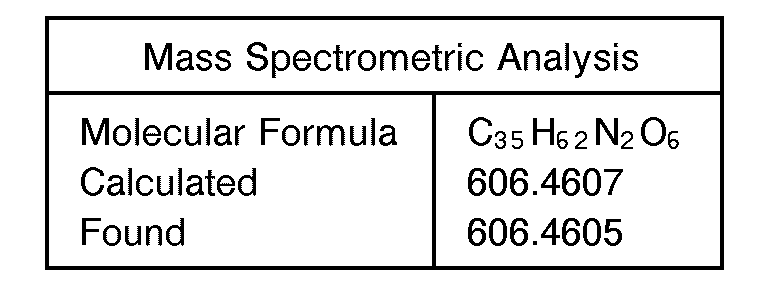
- 0.88 (3H,t,J=7Hz), 1.97 (3H,s), 1.04 (3H,s), 1.19-1.39 (20H,m), 1.43 (3H,s), 1.46 (3H,s), 1.55-2.09 (10H,m), 2.26 (2H,t,J = 7Hz), 2.57 (2H,t,J = 6Hz), 3.22 (1 H,d,J = 12Hz), 3.36-3.70 (4H,m), 3.68 (1 H,d,J = 12Hz), 4.08 (1 H,s), 4.09-4.24 (2H,m), 4.30-4.43 (1 H,m), 5.29-5.40 (2H,m), 6.92-7.05 (1 H,m)
- (S)-1-Stearoyl-2-pyrrolidinemethanol (367 mg) and 259 mg of 3-[N-2,2,5,5-tetramethyl-1,3-dioxane-4-carbonyl)amino]propionic acid were reacted in the same manner as in Example 173 to obtain 470 mg of the title compound (yield: 77 %).
- Property : oily
- Specific Rotary Power [α]D : -5.10 ° (C = 1.0, CHCl3)
- IR(cm-1, neat): ν CO1742, 1650
-

- 0.88 (3H,t,J=7Hz), 0.97 (3H,s), 1.04 (3H,s), 1.18-1.37 (24H,m), 1.43 (3H,s), 1.46 (3H,s), 1.53-2.10 (10H,m), 2.25 (3H,t,J = 7Hz), 2.56 (2H,t,J = 6Hz), 3.28 (1 H,d,J = 12Hz), 3.35-3.62 (4H,m), 3.68 (1 H,d,J = 12Hz), 4.08 (1 H,s), 4.12 (1 H,dd,J = 11 Hz,4Hz), 4.23 (1 H,dd,J = 11 Hz,4Hz), 4.32-4.40 (1 H,m), 6.08 (1 H,t,J = 6Hz)
- (S)-1-Linoleoyl-2-pyrrolidinemethanol (363 mg) and 259 mg of 3-[N-(2,2,5,5-tetramethyl-1,3-dioxane-4-carbonyl)amino]propionic acid were reacted in the same manner as in Example 173 to obtain 433 mg of the title compound (yield: 70 %).
- Property : oily
- Specific Rotary Power [α]D : + 2.30 ° (C = 1.0, CHCl3)
- IR(cm-1, neat): v NH3312, v CO1680, 1652
-

- 0.89 (3H,t,J=7Hz), 0.97 (3H,s), 1.04 (3H,s), 1.22-1.41 (14H,m), 1.43 (3H,s), 1.46 (3H,s), 1.56-2.09 (10H,m), 2.25 (2H,t,J = 7Hz), 2.56 (2H,t,J = 6Hz), 2.77 (2H,t,J = 6Hz), 3.28 (1 H,d,J = 12Hz), 3.37-3.63 (4H,m), 4.08 (1 H,s), 4.11 (1 H,dd,J = 11 Hz,4Hz), 4.23 (1 H,dd,J = 11 Hz,4Hz), 4.31-4.40 (1 H,m), 5.28-5.43 (4H,m), 6.98 (1 H,t,J = 6Hz)
- 1-Oleoyl-2-(2S)-pyrrolidinylmethyl 3-[N-(2,2,5,5-tetramethyl-1,3-dioxane-4-carbonyl)amino]propionate (1.5 g) was reacted in the same manner as in Example 166 to obtain 1.27 g of the title compound (yield: 91 %).
- Property : oily
- Specific Rotary Power [α]D + 13.4 ° (C =1.0, CHCl3)
- IR(cm-1, neat): ν NH3312, ν CO1742, 1650
-

- 0.88 (3H,t,J = 7Hz), 0.94 (3H,s), 1.04 (3H,s), 1.21-1.40 (20H,m), 1.54-1.68 (2H,m), 1.69-1.86 (1H,m), 1.88-2.09 (7H,m), 2.10-2.38 (3H,m), 2.40-2.63 (2H,m), 3.33-3.71 (6H,m), 4.00 (1H,m), 4.03-4.15 (2H,m), 4.38-4.50 (1 H,m), 5.28-5.40 (2H,m), 7.30-7.52 (1 H,m)
- 1-Oleoyl-2-(2S)-pyrrolidinylmethyl 3-[N-(2,4-dihydroxy-3,3-dimethyl-1-oxobutylamino)amino]propionate (556 mg) was reacted int he same manner as in Example 175 to obtain 463 mg of the title compound (yield: 71 %).
- Property : oily
- Specific Rotary Power [α]D : -0.40 ° (C = 1.0, CHCl3)
- IR(cm-1, neat): v NH, ν co2748, 1646
-

- 0.88 (3H,t,J = 7Hz), 1.02 (3H,s), 1.07 (3H,s), 1.22-1.38 (20H,m), 1.55-1.67 (2H,m), 1.70-1.85 (1 H,m), 1.88-2.08 (7H,m), 2.07 (3H,m), 2.14 (3H,s), 2.26 (2H,t,J=7Hz), 2.43-2.59 (2H,m), 3.35-3.68 (4H,m), 3.84 (1 H,d,J = 12Hz), 4.04 (1 H,d,J = 12Hz), 4.15 (2H,d,J = 6Hz), 4.37-4.45 (1 H,m), 4.97 (1 H,s), 5.28-5.40 (2H,m), 6.89-6.96 (1 H,m)
- Pyridine (1 ml) was added to a solution of 321 mg of (S)-2-{3-[N-(2,2,5,5-tetramethyl-1,3-dioxane-4-carbonyl)amino-1-oxopropyl]aminomethyl}pyrrolidine in 20 ml of methylene chloride. Under ice cooling, a solution of 271 mg of oleoyl chloride in 5 ml of methylene chloride was added portion-wise to the mixture, and the mixture thus formed was stirred for 3 hours as it was. After completion of the reaction, the reaction mixture was washed with water, and dried over anhydrous sodium sulfate. After removal of the solvent by evaporation, the residue was subjected to silica gel column chromatography to obtain 166 mg of the title compound (yield: 30 %).
- Property : oily
- Specific Rotary Power [α]D : + 3.90 ° (C = 1.0, CHCl3)
- IR(cm-1, neat): v NH3324, v CO1676
-

- 0.88 (3H,t,J=7Hz), 0.99 (3H,s), 1.04 (3H,s), 1.18-1.39 (20H,m), 1.42 (4H,s), 1.47 (3H,s), 1.57-1.80 (3H,m), 1.88-2.09 (7H,m), 2.27 (2H,t,J = 7Hz), 2.23-2.45 (2H,m), 3.13-3.23 (1 H,m), 3.28 (1 H,d,J = 11 Hz), 3.40-3.64 (5H,m), 3.68 (1 H,d,J = 11 Hz), 4.07 (1 H,s), 4.23-4.31 (1 H,m), 5.29-5.40 (2H,m), 7.12 (1 H,t,J = 6Hz), 7.50-7.62 (1 H,m)
- Triethylamine (2 ml) was added to a solution of 821 mg of (R)-2-{3-[N-(2,2,5,5-tetramethyl-1,3-dioxane-4-carbonyl)amino-1-oxopropyl]aminomethyl}pyrrolidine in 40 ml of methylene chloride. Under ice cooling, a solution of 697 mg of oleoyl chloride in 10 ml of methylene chloride was added portion-wise to the mixture, and the mixture thus formed was stirred for 3 hours at it was. After completion of the reaction, the reaction mixture was washed with water, and dried over anhydrous sodium sulfate. After removal of the solvent by evaporation, the residue was subjected to silica gel column chromatography to obtain 1.20 g of the title compound (yield: 87 %).
- Property : oily
- Specific Rotary Power [α]D : + 40.7 ° (C = 1.0, CHCl3)
- IR(cm-1, neat): v NH3328, v CO1656
-

- 0.88 (3H,t,J=7Hz), 0.97 (3H,s), 1.04 (3H,s), 1.21-1.39 (20H,m), 1.42 (3H,s), 1.47 (3H,s), 1.56-1.80 (3H,m), 1.88-2.09 (7H,m), 2.27 (2H,t,J = 7Hz), 2.40 (2H,t,J = 6Hz), 3.12-3.20 (1 H,m), 3.27 (1 H,d,J = 12Hz), 3.41-3.64 (5H,m), 3.68 (1 H,d,J = 12Hz), 4.07 (1 H,s), 4.24-4.33 (1 H,m), 5.29-5.40 (2H,m), 7.12 (1 H,t,J = 6Hz), 7.60 (1 H,brs)
-


- Specific Rotary Power [α]28 D + 25.7 ° (C = 1.0, CHCl3)
- IR(νneat, cm-1): 2932, 2860, 1736
- NMR( , CDCl3):
- 0.88 (3H,t,J=7Hz), 0.96 (3H,s), 1.04 (3H,s), 1.10 (3H,d,J=7Hz), 1.17-1.33 (16H,m), 1.43 (3H,s), 1.46 (3H,s), 1.52-1.97 (6H,m), 2.58 (2H,t,J = 6Hz), 1.60-1.76 (1H,m). 3.28 (2H,d,J=12Hz), 3.31-4.03 (6H,m), 3.69 (1 H,d,J = 12Hz), 4.08 (1 H,s), 4.98-5.08 (1 H,m), 6.93 (1 H,t,J = 5Hz)
-


- Specific Rotary Power: [α]28 D + 23.7 ° (C = 1.0, CHCl3)
- IR(νneat, cm-1): 2932, 2860, 1738
- NMR(δ, CDCl3):
- 0.88 (3H,t,J=7Hz), 0.96 (3H,s), 1.04 (3H,s), 1.16-1.37 (16H,m), 1.42 (3H,s), 1.46 (3H,s) 1.52-1.98 (10H,m), 2.42-2.54 (2H,m), 2.58 (2H,t,J = 6Hz), 3.11-3.98 (6H,m), 3.28 (1 H,d,J = 12Hz), 3.69 (1H,d,J = 12Hz), 4.08 (1 H,s), 4.96-5.05 (1 H,m), 6.92 (1 H,t,J = 5Hz)
-


- Specific Rotary Power: [α]27 D + 21.4° (C = 1.0, CHCl3)
- IR(νneat, cm-1): 2932, 2860, 1740
- NMR(δ, CDCl3):
- 0.88 (3H,t,J=7Hz), 0.97 (3H,s), 1.04 (3H,s), 1.12-1.35 (16H,m), 1.43 (3H,s), 1.46 (3H,s) 1.50-2.02 (10H,m), 2.39-2.60 (4H,m), 2.90-3.75 (6H,m), 3.28 (1H,d,J=12Hz), 3.69 (1H,d,J=12Hz), 4.08 (1H,s), 4.65-4.92 (1 H,m), 6.92-7.08 (1 H,m)
- 1-(2-Benzylundecanoyl)-4-piperidinyl 3-[N-(2,2,5,5-tetramethyl-1,3-dioxane-4-carbonyl)amino]propionate


- Melting Point (° C) : oil
- Specific Rotary Power: [α]28 D + 22.6 ° (C = 1.0, CHCl3)
- IR(νneat, cm-1): 2932, 2860, 1734
- NMR(δ, CDCl3):
- 55°C
- 0.88 (3H,t,J=7Hz), 0.95 (3H,s), 1.04 (3H,s), 1.19-1.85 (20H,m), 1.41 (3H,s), 1.44 (3H,s) 2.51 (2H,t,J = 6Hz), 2.66-2.77 (1H,m), 2.85-3.64 (8H,m), 3.27 (1H,d,J=12Hz), 3.66 (1H,d,J=12Hz), 4.05 (1H,s), 4.78-4.88 (1 H,m), 4.78-6.87 (1 H,m), 7.13-7.28 (5H,m)
- 1-(1-Benzyldecyl)carbamoyl-4-piperazinyl 3-[N-(2,2,5,5-tetramethyl-1,3-dioxane-4-carbonyl)amino]propionate


- Melting Point (° C) : wax
- Specific Rotary Power: [α]28 D + 21.8° (C = 1.0, CHCl3)
- IR(νneat, cm-1): 2932, 2860, 1734
- NMR(δ, CDCl3):
- 0.88 (3H,t,J=7Hz), 0.96 (3H,s), 1.04 (3H,s), 1.16-1.38 (16H,m), 1.42 (3H,s), 1.46 (3H,s) 1.48-1.89 (4H,m), 2.57 (2H,t,J = 6Hz), 2.72-2.87 (2H,m), 3.05-3.21 (2H,m), 3.28 (1 H,d,J = 12Hz), 3.41-3.66 (4H,m), 3.69 (1 H,d,J = 12Hz), 4.01-4.07 (1 H,m), 4.08 (1 H,s), 4.15-4.23 (1 H,m), 4.91-4.99 (1 H,m), 6.92 (1H,t,J = 5Hz), 7.14-7.32 (5H,m)
- 1-Ethyl-3-(3-dimethylaminopropyl)carbodiimide hydrochloride (530 mg) was added to a solution of 980 mg of 1-oleylamino-piperazine and 836 mg of 3-[N-(2,4-dihydroxy-3,3-dimethyl-1-oxobutyl)amino]propionic acid in 10 ml of methylene chloride with stirring under ice cooling. The mixture was stirred at room temperature for 18 hours. The reaction mixture was washed with water and dried over anhydrous sodium sulfate, followed by removal of the solvent by vacuum evaporation. Then, the residue was purified by silica gel column chromatography to obtain 900 mg of the title compound (yield: 51 %). Property : oily
- Specific Rotary Power [α]D : + 20.2 ° (C = 1.0, CHCl3)
- IR(cm-1, neat): v NH3336, v CO1748, 1644

- NMR(δ, CDCl3):
- 0.88 (3H,t,J = 7Hz), 1.03 (3H,s), 1.06 (3H,s), 1.23-1.38 (20H,m), 1.58-1.68 (2H,m), 1.95-2.08 (4H,m), 2.05 (3H,s), 2.11 (3H,s), 2.31 (2H,t,J = 7Hz), 2.42-2.59 (2H,m), 3.35-3.69 (10H,m), 3.83 (1 H,d,J = 12Hz), 4.02 (1 H,d,J = 12Hz), 4.88 (1 H,s), 5.28-5.40 (2H,m), 6.73 (1 H,t,J = 6Hz)
- An aqueous 1N NaOH solution (2 ml) was added to a solution of 635 mg of 1-Oleoyl-4-{1-oxo-3-[N-(1-oxo-2,4-dihacetoxy-3,3-dimethylbutyl)amino]propyl}piperazine in 5 ml of methanol, and the mixture was stirred at room temperature for 30 minutes. After adding methylene chloride and water to the reaction mixture, the organic layer was separated, which then was washed with brine and dried over anhydrous sodium sulfate, followed by removal of the solvent. The residue was purified by silica gel column chromatography to obtain 482 mg of the title compound (yield: 87 %).
- Property : oily
- Specific Rotary Power [α]D : + 16.1 ° (C = 1.0, CHCl3)
- IR(cm-1, neat): v NH, v co1646
-

- 0.88 (3H,t,J = 7Hz), 0.92 (3H,s), 1.02 (3H,s), 1.22-1.41 (20H,m), 1.57-1.68 (2H,m), 1.92-2.08 (4H,m), 2.33 (2H,t,J = 7Hz), 2.54 (2H,brs), 3.12-3.21 (1 H,m), 2.59 (2H,t,J = 6Hz), 3.41-3.68 (10H,m), 3.99 (1 H,s), 5.28-5.40 (2H,m) , 7.30-7.39 (1 H,m)
- 1-Oleoylhomopiperazine (919 mg) and 755 mg of 3-[N-(1-oxo-2,4-diacetoxy-3,3-dimethylbutyl)amino]-propionic acid were reacted in the same manner as in Example 192 to obtain 930 mg of the title compound (yield: 57 %).
- Property : oily
- Specific Rotary Power [α]D : + 27.3 ° (C = 1.0, CHCl3)
- IR(cm-1, neat): v NH, ν rn1748, 1644
-

- 0.88 (3H,t,J = 7Hz), 1.02 (3H,s), 1.06 (3H,s), 1.23-1.40 (20H,m), 1.56-1.70 (2H,m), 1.78-1.91 (2H,m), 1.92-2.06 (4H,m), 2.04 (3H,s), 2.11 (3H,s), 2.28 (2H,t,J=7Hz), 2.42-2.56 (2H,m), 3.35-3.76 (1H,m), 3,84 (1 H,d,J = 12Hz), 4.03 (1 H,d,J = 12Hz), 4.91 (1 H,brs), 5.27-5.40 (2H,m), 6.74-6.83 (1 H,m)
- 1-Oleoyl-4-(1-oxo-3-[N-(1-oxo-2,4-diacetoxy-3,3-dimethylbutyl)amino]propyl}tetrahydro-1,4-diazepine (649 mg) was reacted in the same manner as in Example 193 to obtain 515 mg of the title compound. Property : oily
- Specific Rotary Power [α]D : + 14.0 ° (C = 1.0, CHCl3)
- IR(cm-1, neat): v NH, v co1642
-

- 0.88 (3H,t,J = 7Hz), 0.92 (3H,s), 1.02 (3H,s), 1.21-1.39 (20H,m), 1.55-1.68 (2H,m), 1.72-1.88 (2H,m), 1.92-2.08 (4H,m), 2.12-2.62 (6H,m), 3.25-3.85 (10H,m), 3.96 (1 H,brs), 5.28-5.40 (2H,m), 7.12-7.22 (1 H,m)
- Sodium carbonate (106 mg) was suspended in a solution of 326 mg of 1-[3-(2,2,5,5-tetramethyl-1,3-dioxane-4-carbonylamino)propanyl]piperazine and 303 mg of stearoyl chloride in 20 ml of methylene chloride, and the mixture was allowed to react for 2 hours. After removing insoluble matters by filtration, the solvent was distilled off. The residue was subjected to silica gel column chromatography to obtain 498 mg of the title compound (yield: 84 %).
- Property : oily
- Specific Rotary Power [α]D : + 28.9 ° (C = 1.0, CHCl3)
- IR(cm-1, neat): v NH3408, v CO1656, 1638
-

- 0.88 (3H,t,J=7Hz), 0.96 (3H,s), 1.04 (3H,s), 1.19-1.39 (28H,m), 1.56-1.73 (2H,m), 2.33 (2H,t,J=7Hz), 2.56-2.66 (2H,m), 3.28 (1 H,d,J = 12Hz), 3.39-3.68 (5H,m), 3.37-3.71 (10H,m), 3.68 (1 H,d,J = 12Hz), 4.07 (1 H,s), 7.05-7.14 (1 H,m)
- 1-{3-[N-(2,2,5,5-tetramethyl-1,3-dioxane-4-carbonyl)amino]propanoyl}piperazine (489 mg) and linoloyl chloride (421 mg) were reacted in the same manner as in Example 192 to obtain 496 mg of the title compound (yield: 56 %).
- Property : oily
- Specific Rotary Power [α]D : + 26.7 ° (C = 1.0, CHCl3)
- IR(cm-1, neat): v co1646
-

- 0.89 (3H,t,J=7Hz), 0.96 (3H,s), 1.04 (3H,s), 1.22-1.42 (14H,m), 1.98-2.09 (2H,m), 2.33 (2H,t,J=7Hz), 2.52-2.63 (2H,m), 2.77 (2H,d,J = 12Hz), 3.28 (1 H,d,J = 12Hz), 3.36-3.72 (10H,m), 3.68 (1 H,d,J = 12Hz), 4.07 (1 H,s), 5.29-5.44 (4H,m), 7.05-7.13 (1 H,m)
- Heptadecenyl isocyanate (419 mg) was added to a solution of 489 mg of 1-{3-[N-(2,2,5,5-tetramethyl-1,3-dioxane-4-carbonyl)amino]propanoyl}piperazine (489 mg) in methylene chloride (30 ml) with stirring under ice cooling. Then the solvent was distilled off, and the residue obtained was subjected to silica gel column chromatography to obtain 900 mg of the title compound.
- Property : oily
- Specific Rotary Power [α]D : + 27.0 ° (C = 1.0, CHCl3)
- IR(cm-1, neat): v co1648
-

- 0.88 (3H,t,J=7Hz), 0.90 (3H,s), 1.04 (3H,s), 1.21-1.38 (20H,m), 1.40-1.57 (2H,m), 1.42 (3H,s), 1.46 (3H,s), 2.33 (2H,t,J = 7Hz), 1.92-2.04 (4H,m), 2.49-2.65 (2H,m), 3.17-3.73 (14H,m), 4.07 (1 H,s), 4.43 (1 H,brs), 5.29-5.40 (2H,m), 7.08 (1 H,t,J = 6Hz)
-


- Melting Point (° C) : oil
- Specific Rotary Power: [a]29 D + 30.3 ° (C = 1.0, CHCl3)
- IR(νneat, cm-1): 2928, 2860, 1646
- NMR(δ, CDCl3):
- 0.88 (3H,t,J=7Hz), 0.96 (3H,s), 1.04 (3H,s), 1.11 (3H,d,J=7Hz), 1.15-1.34 (16H,m), 1.42 (3H,s), 1.46 (3H,s), 1.54-1.62 (2H,m), 2.54-2.72 (3H,m), 3.28 (1H,d,J=12Hz), 3.38-3.70 (10H,m), 3.68 (1H,d,J=12Hz), 4.07 (1 H,s), 7.15-7.23 (1 H,m)
- 1-(1-Decylcyclobutanecarbonyl)-4-{3-[N-(2,2,5,5-tetramethyl-1,3-dioxane-4-carbonyl)amino]-propanoyl}piperazine
-

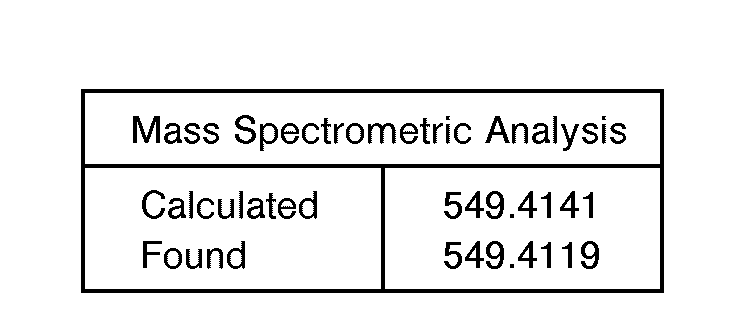
- Specific Rotary Power: [α]27 D + 29.6 ° (C = 1.0, CHCl3)
- IR(νneat, cm-1): 2932, 2860, 1642
- NMR(δ, CDCl3):
- 0.88 (3H,t,J=7Hz), 0.96 (3H,s), 1.04 (3H,s), 1.16-1.35 (16H,m), 1.42 (3H,s), 1.46 (3H,s), 1.68-1.98 (6H,m), 2.42-2.60 (4H,m), 3.26-3.68 (10H,m), 3.28 (1H,d,J=12Hz), 3.68 (1H,d,J =12Hz), 4.07 (1H,s), 7.08 (1 H,t,J = 5Hz)
- 1-(2-Benzylundecanoyl)-4-{3-[N-(2,2,5,5-tetramethyl-1,3-dioxane-4-carbonyl)amino]propanoyl}piperazine


- Melting Point (° C) : oil
- Specific Rotary Power: [α]27 D + 25.0 ° (C = 1.0, CHCl3)
- IR(ν, cm-1): 2928, 2860, 1648
- NMR(δ, CDCl3):
- 0.88 (3H,t,J=7Hz), 0.94 (3H,s), 1.03 (3H,s), 1.16-1.35 (14H,m), 1.41 (3H,s), 1.45 (3H,s), 1.49-1.78 (2H,m), 2.24-2.58 (3H,m), 2.27-3.93 (14H,m), 4.06 (1 H,s), 7.03 (1 H,t,J = 5Hz), 7.13-7.29 (5H,m)
- To a solution of 553 mg of 2-benzylundecanoic acid and 550 mg of diphenylphosphorylazide in 3 ml of anhydrous toluene was added portion-wise a solution of 223 mg of triethylamine in 3 ml of anhydrous toluene with stirring at room temperature. The reaction mixture was stirred at 80 ° C for additional 2 hours. After completion of the reaction, the reaction mixture was cooled down to room temperature. Then, a solution of 655 mg of 1-{1-oxo-3-[N-(2,2,5,5-tetramethyl-1,3-dioxane-4-carbonyl)amino]propyl}piperazine in 2 ml of chloroform was added thereto. The resulting mixture was stirred at room temperature for 18 hours. After washing it with a saturated aqueous sodium hydrogen carbonate solution and then with brine, the reaction mixture was dried over anhydrous sodium sulfate, and the solvent was removed by evaporation. The residue was purified by silica gel column chromatography to obtain 599 mg of the title compound (yield: 50 %).
-


- Specific Rotary Power: [U] 27 D + 25.8 ° (C = 1.0, CHCl3)
- IR(vneat, cm-1): 2932, 2860, 1636
- NMR(δ, CDCl3):
- 0.88 (3H,t,J=7Hz), 0.96 (3H,s), 1.04 (3H,s), 1.17-1.40 (16H,m), 1.42 (3H,s), 1.46 (3H,s), 2.47-2.64 (2H,m), 2.72-2.88 (2H,m), 3.15-3.65 (11 H,m), 3.28 (1 H,d,J = 12Hz), 3.68 (1 H,d,J = 12Hz), 4.07 (1 H,s), 4.08-4.17 (1H,m), 7.18 (1H,t,J=5Hz), 7.12-7.33 (5H,m)
Claims (22)


Applications Claiming Priority (6)
| Application Number | Priority Date | Filing Date | Title |
|---|---|---|---|
| JP261610/89 | 1989-10-06 | ||
| JP26161089 | 1989-10-06 | ||
| JP286759/89 | 1989-11-02 | ||
| JP286758/89 | 1989-11-02 | ||
| JP28675889 | 1989-11-02 | ||
| JP28675989 | 1989-11-02 |
Publications (3)
| Publication Number | Publication Date |
|---|---|
| EP0421441A2 EP0421441A2 (en) | 1991-04-10 |
| EP0421441A3 EP0421441A3 (en) | 1991-09-18 |
| EP0421441B1 true EP0421441B1 (en) | 1995-01-25 |
Family
ID=27335051
Family Applications (1)
| Application Number | Title | Priority Date | Filing Date |
|---|---|---|---|
| EP90119090A Expired - Lifetime EP0421441B1 (en) | 1989-10-06 | 1990-10-05 | Pantothenic acid derivatives |
Country Status (3)
| Country | Link |
|---|---|
| US (1) | US5120738A (en) |
| EP (1) | EP0421441B1 (en) |
| DE (1) | DE69016335T2 (en) |
Families Citing this family (68)
| Publication number | Priority date | Publication date | Assignee | Title |
|---|---|---|---|---|
| US5350758A (en) * | 1992-07-08 | 1994-09-27 | Merrell Dow Pharmaceuticals Inc. | Piperidyl sulfonamides and sulfoxamides as inhibitors of cholesterol biosynthesis |
| EP0612740B1 (en) * | 1993-02-23 | 1999-09-22 | FUJIREBIO Inc. | Methods of producing pantothenic acid derivative and its starting materials for producing the same |
| WO1995011893A1 (en) * | 1993-10-27 | 1995-05-04 | Oculon Corporation | Compounds and methods for synthesizing pantethine, pantetheine and derivatives thereof |
| WO1995011884A1 (en) * | 1993-10-27 | 1995-05-04 | Oculon Corporation | Compounds and methods for inhibiting cataract formation |
| US6201009B1 (en) | 1998-10-30 | 2001-03-13 | Fujirebio Inc. | Absorption-enhancing composition for pantothenic acid derivative |
| FI20010233A0 (en) * | 2001-02-08 | 2001-02-08 | Orion Corp | A method for treating heart failure |
| NZ531346A (en) * | 2001-08-28 | 2005-10-28 | Sankyo Co | Medicinal compositions containing angiotensin II receptor antagonist |
| US20050119314A1 (en) * | 2002-04-05 | 2005-06-02 | Sankyo Company, Limited | Pharmaceutical composition comprising an ACAT inhibitor and an insulin resistance reducing agent |
| EP1495034A2 (en) * | 2002-04-10 | 2005-01-12 | Esperion Therapeutics, Inc. | Mimics of acyl coenzyme-a comprising pantolactone and pantothenic acid derivatives, compositions thereof, and methods of cholesterol management and related uses |
| EP1689383B1 (en) | 2003-11-19 | 2012-10-31 | Metabasis Therapeutics, Inc. | Novel phosphorus-containing thyromimetics |
| KR101021828B1 (en) * | 2004-10-27 | 2011-03-17 | 다이이찌 산쿄 가부시키가이샤 | Benzene Compounds Having Two or More Substituents |
| EP2262763A2 (en) | 2008-03-04 | 2010-12-22 | Yissum Research Development Company of the Hebrew University of Jerusalem Ltd. | Compounds and methods of treating obesity |
| US20120046364A1 (en) | 2009-02-10 | 2012-02-23 | Metabasis Therapeutics, Inc. | Novel Sulfonic Acid-Containing Thyromimetics, and Methods for Their Use |
| DE102011014386A1 (en) * | 2011-03-11 | 2012-09-13 | Hemoteq Ag | Endoprosthesis with an active ingredient coating |
| US9303038B2 (en) | 2011-09-06 | 2016-04-05 | Cellix Bio Private Limited | Compositions and methods for the treatment of epilepsy and neurological diseases |
| WO2013168021A1 (en) | 2012-05-07 | 2013-11-14 | Mahesh Kandula | Compositions and methods for treatment of neuromuscular disorders and neurodegenerative disorders |
| WO2013167990A1 (en) | 2012-05-07 | 2013-11-14 | Mahesh Kandula | Compositions and methods for the treatment of depression |
| SG11201407300VA (en) | 2012-05-07 | 2014-12-30 | Cellix Bio Private Ltd | Compositions and methods for the treatment of neurological disorders |
| WO2013167993A1 (en) | 2012-05-08 | 2013-11-14 | Mahesh Kandula | Compositions and methods for the treatment of neurological degenerative disorders |
| US9522884B2 (en) | 2012-05-08 | 2016-12-20 | Cellix Bio Private Limited | Compositions and methods for the treatment of metabolic disorders |
| US9403826B2 (en) | 2012-05-08 | 2016-08-02 | Cellix Bio Private Limited | Compositions and methods for the treatment of inflammatory disorders |
| US9309233B2 (en) | 2012-05-08 | 2016-04-12 | Cellix Bio Private Limited | Compositions and methods for the treatment of blood clotting disorders |
| US9266823B2 (en) | 2012-05-08 | 2016-02-23 | Cellix Bio Private Limited | Compositions and methods for the treatment of parkinson's disease |
| US9273061B2 (en) | 2012-05-10 | 2016-03-01 | Cellix Bio Private Limited | Compositions and methods for the treatment of chronic pain |
| US9573927B2 (en) | 2012-05-10 | 2017-02-21 | Cellix Bio Private Limited | Compositions and methods for the treatment of severe pain |
| WO2013167999A2 (en) | 2012-05-10 | 2013-11-14 | Mahesh Kandula | Compositions and methods for the treatment of neurologic diseases |
| US9233161B2 (en) | 2012-05-10 | 2016-01-12 | Cellix Bio Private Limited | Compositions and methods for the treatment of neurological conditions |
| WO2013168001A1 (en) | 2012-05-10 | 2013-11-14 | Mahesh Kandula | Compositions and methods for the treatment of moderate to severe pain |
| WO2013168015A1 (en) | 2012-05-10 | 2013-11-14 | Mahesh Kandula | Compositions and methods for the treatment of asthma and allergy |
| US9499526B2 (en) | 2012-05-10 | 2016-11-22 | Cellix Bio Private Limited | Compositions and methods for the treatment of neurologic diseases |
| WO2013167997A2 (en) | 2012-05-10 | 2013-11-14 | Mahesh Kandula | Compositions and methods for the treatment of metabolic syndrome |
| US9403857B2 (en) | 2012-05-10 | 2016-08-02 | Cellix Bio Private Limited | Compositions and methods for the treatment of metabolic syndrome |
| WO2013168014A1 (en) | 2012-05-10 | 2013-11-14 | Mahesh Kandula | Compositions and methods for the treatment of familial amyloid polyneuropathy |
| US9346742B2 (en) | 2012-05-10 | 2016-05-24 | Cellix Bio Private Limited | Compositions and methods for the treatment of fibromyalgia pain |
| US9339484B2 (en) | 2012-05-10 | 2016-05-17 | Cellix Bio Private Limited | Compositions and methods for the treatment of restless leg syndrome and fibromyalgia |
| US9242939B2 (en) | 2012-05-10 | 2016-01-26 | Cellix Bio Private Limited | Compositions and methods for the treatment of respiratory disorders |
| SG11201407326XA (en) | 2012-05-23 | 2014-12-30 | Cellix Bio Private Ltd | Compositions and methods for treatment of mucositis |
| US9434729B2 (en) | 2012-05-23 | 2016-09-06 | Cellix Bio Private Limited | Compositions and methods for the treatment of periodontitis and rheumatoid arthritis |
| WO2013175376A2 (en) | 2012-05-23 | 2013-11-28 | Mahesh Kandula | Compositions and methods for the treatment of local pain |
| JP2015518854A (en) | 2012-05-23 | 2015-07-06 | セリックスビオ プライヴェート リミテッド | Compositions and methods for the treatment of multiple sclerosis |
| WO2013175347A2 (en) | 2012-05-23 | 2013-11-28 | Mahesh Kandula | Compositions and methods for the treatment of respiratory disorders |
| NZ701832A (en) | 2012-05-23 | 2016-08-26 | Cellix Bio Private Ltd | Compositions and methods for treatment of inflammatory bowel disease |
| US9108942B1 (en) | 2014-11-05 | 2015-08-18 | Mahesh Kandula | Compositions and methods for the treatment of moderate to severe pain |
| US9187427B2 (en) | 2012-08-03 | 2015-11-17 | Cellix Bio Private Limited | N-substituted nicotinamide compounds and compositions for the treatment migraine and neurologic diseases |
| WO2014037833A2 (en) | 2012-09-06 | 2014-03-13 | Mahesh Kandula | Compositions and methods for the treatment inflammation and lipid disorders |
| AU2013311349A1 (en) * | 2012-09-08 | 2014-11-27 | Cellixbio Private Limited | Compositions and methods for treatment of inflammation and lipid disorders |
| WO2014080309A2 (en) * | 2012-11-21 | 2014-05-30 | Mahesh Kandula | Compositions and methods for the treatment of inflammation and lipid disorders |
| WO2014083476A2 (en) * | 2012-11-27 | 2014-06-05 | Mahesh Kandula | Compositions and methods for the treatment of metabolic and lipid disorders |
| WO2014087307A2 (en) * | 2012-12-04 | 2014-06-12 | Mahesh Kandula | Compositions and methods for the treatment of metabolic syndrome and diabetes |
| WO2014087323A2 (en) * | 2012-12-06 | 2014-06-12 | Mahesh Kandula | Compositions and methods for the treatment of autoimmune and chronic metabolic diseases |
| WO2014106804A2 (en) * | 2013-01-04 | 2014-07-10 | Mahesh Kandula | Compositions and methods for the treatment of metabolic syndrome and diabetes |
| US9333187B1 (en) | 2013-05-15 | 2016-05-10 | Cellix Bio Private Limited | Compositions and methods for the treatment of inflammatory bowel disease |
| AU2014276346A1 (en) | 2013-06-04 | 2015-12-24 | Cellixbio Private Limited | Compositions and methods for the treatment of diabetes and pre-diabetes |
| US9096537B1 (en) | 2014-12-31 | 2015-08-04 | Mahesh Kandula | Compositions and methods for the treatment of mucositis |
| SG11201706952VA (en) | 2014-09-26 | 2017-10-30 | Cellix Bio Private Ltd | Compositions and methods for the treatment of epilepsy and neurological disorders |
| EP3201168B1 (en) | 2014-09-29 | 2020-03-18 | Cellix Bio Private Limited | Compounds and compositions for the treatment of multiple sclerosis |
| AU2014414316B2 (en) | 2014-10-27 | 2020-04-09 | Cellix Bio Private Limited | Three component salts of fumaric acid monomethyl ester with piperazine or ethylene diamine for the treatment of multiple sclerosis |
| US9173877B1 (en) | 2014-11-05 | 2015-11-03 | Cellix Bio Private Limited | Compositions and methods for the treatment of local pain |
| US10208014B2 (en) | 2014-11-05 | 2019-02-19 | Cellix Bio Private Limited | Compositions and methods for the treatment of neurological disorders |
| US9150557B1 (en) | 2014-11-05 | 2015-10-06 | Cellix Bio Private Limited | Compositions and methods for the treatment of hyperglycemia |
| US9175008B1 (en) | 2014-11-05 | 2015-11-03 | Cellix Bio Private Limited | Prodrugs of anti-platelet agents |
| US9321716B1 (en) | 2014-11-05 | 2016-04-26 | Cellix Bio Private Limited | Compositions and methods for the treatment of metabolic syndrome |
| US9290486B1 (en) | 2014-11-05 | 2016-03-22 | Cellix Bio Private Limited | Compositions and methods for the treatment of epilepsy |
| US9284287B1 (en) | 2014-11-05 | 2016-03-15 | Cellix Bio Private Limited | Compositions and methods for the suppression of carbonic anhydrase activity |
| WO2016088132A1 (en) | 2014-12-01 | 2016-06-09 | Cellix Bio Private Limited | Compositions and methods for the treatment of multiple sclerosis |
| US9206111B1 (en) | 2014-12-17 | 2015-12-08 | Cellix Bio Private Limited | Compositions and methods for the treatment of neurological diseases |
| JP6679616B2 (en) | 2015-01-06 | 2020-04-22 | セリックス バイオ プライヴェート リミテッドCellix Bio Private Limited | Compositions and methods for the treatment of inflammation and pain |
| WO2016201440A1 (en) | 2015-06-12 | 2016-12-15 | The Regents Of The University Of California | Spiroindolinones and therapeutic uses thereof |
Family Cites Families (5)
| Publication number | Priority date | Publication date | Assignee | Title |
|---|---|---|---|---|
| US2785191A (en) * | 1952-07-03 | 1957-03-12 | Ciba Pharm Prod Inc | Acylmercapto-alkylamines and process for the manufacture thereof |
| CH315885A (en) * | 1952-09-24 | 1956-09-15 | Ciba Geigy | Process for the preparation of acylmercaptoalkylamines |
| US2807644A (en) * | 1954-08-20 | 1957-09-24 | Parke Davis & Co | Pantethine inhibitors |
| CH333732A (en) * | 1955-06-15 | 1958-10-31 | Bracco Fulvio Dr | Process for the preparation of S-acyl-pantetheinen |
| GB898811A (en) * | 1960-04-11 | 1962-06-14 | Stauffer Chemical Co | Process of grain-refining molybdenum or tungsten |
-
1990
- 1990-10-05 EP EP90119090A patent/EP0421441B1/en not_active Expired - Lifetime
- 1990-10-05 US US07/598,900 patent/US5120738A/en not_active Expired - Lifetime
- 1990-10-05 DE DE69016335T patent/DE69016335T2/en not_active Expired - Fee Related
Also Published As
| Publication number | Publication date |
|---|---|
| DE69016335D1 (en) | 1995-03-09 |
| EP0421441A3 (en) | 1991-09-18 |
| EP0421441A2 (en) | 1991-04-10 |
| US5120738A (en) | 1992-06-09 |
| DE69016335T2 (en) | 1995-06-01 |
Similar Documents
| Publication | Publication Date | Title |
|---|---|---|
| EP0421441A2 (en) | Pantothenic acid derivatives | |
| CA2730478C (en) | Prodrugs of methyl hydrogen fumarate | |
| DE68904083T2 (en) | HMG-COA REDUCTINE INHIBITORS. | |
| US20080103197A1 (en) | Alkyl-, alkenyl- and alkynylcarbamate derivatives, their preparation and their application in therapeutics | |
| EP0574808A1 (en) | Amidine-biphenyl derivatives, process for their production & medical preparation containing them | |
| US9353075B2 (en) | Disubstituted beta-lactones as inhibitors of N-acylethanolamine acid amidase (NAAA) | |
| US5214056A (en) | 1,3,2-dioxathiolane oxide derivative | |
| WO1998018803A1 (en) | Novel (alpha-aminophosphino) peptide derivatives, method for making same and therapeutic applications thereof | |
| JP2532299B2 (en) | Pantothenic acid derivative | |
| EP0741697B1 (en) | Amino acid derivatives and their use as phospholipase a2 inhibitors | |
| JP4233262B2 (en) | Carbasugar amine derivatives and glycosidase inhibitors using the same | |
| EP1632236A1 (en) | Inhibitors of the anandamide transporter | |
| DE69415050T2 (en) | Hexahydronaphthalene ester derivatives, their preparation and their therapeutic applications | |
| MC2226A1 (en) | OXETANNONES | |
| KR960007800B1 (en) | Pantothenic acid derivatives | |
| JP2997535B2 (en) | Pantothenic acid derivative | |
| JP2997536B2 (en) | Pantothenic acid derivative | |
| US5373009A (en) | Dibenzofuranyl esters of N-heterocyclic carboxylic acids | |
| DE69714709T2 (en) | CYCLIC AMIC ACID DERIVATIVES | |
| WO2011058933A1 (en) | Cyclic amine-1-carboxylic acid ester derivative and pharmaceutical composition containing same | |
| JPH01233244A (en) | Optically active fluorinated alcohol | |
| HK1158563B (en) | Prodrugs of methyl hydrogen fumarate, pharmaceutical compositions thereof, and methods of use | |
| JPWO1991009851A1 (en) | 1,3,2-Dioxathiolane oxide derivatives | |
| HUT74012A (en) | Aryloxycycloalkenyl- and aryloxy-iminocycloalkenyl hydroxyureas and pharmaceutical compns. contg. them | |
| HK1197551B (en) | Anti inflammatory 2-oxothiazoles and 2-oxooxazoles |
Legal Events
| Date | Code | Title | Description |
|---|---|---|---|
| PUAI | Public reference made under article 153(3) epc to a published international application that has entered the european phase |
Free format text: ORIGINAL CODE: 0009012 |
|
| AK | Designated contracting states |
Kind code of ref document: A2 Designated state(s): CH DE FR GB LI NL |
|
| PUAL | Search report despatched |
Free format text: ORIGINAL CODE: 0009013 |
|
| AK | Designated contracting states |
Kind code of ref document: A3 Designated state(s): CH DE FR GB LI NL |
|
| 17P | Request for examination filed |
Effective date: 19920129 |
|
| 17Q | First examination report despatched |
Effective date: 19931007 |
|
| GRAA | (expected) grant |
Free format text: ORIGINAL CODE: 0009210 |
|
| AK | Designated contracting states |
Kind code of ref document: B1 Designated state(s): CH DE FR GB LI NL |
|
| REF | Corresponds to: |
Ref document number: 69016335 Country of ref document: DE Date of ref document: 19950309 |
|
| ET | Fr: translation filed | ||
| PLBE | No opposition filed within time limit |
Free format text: ORIGINAL CODE: 0009261 |
|
| STAA | Information on the status of an ep patent application or granted ep patent |
Free format text: STATUS: NO OPPOSITION FILED WITHIN TIME LIMIT |
|
| 26N | No opposition filed | ||
| REG | Reference to a national code |
Ref country code: GB Ref legal event code: IF02 |
|
| PGFP | Annual fee paid to national office [announced via postgrant information from national office to epo] |
Ref country code: NL Payment date: 20081015 Year of fee payment: 19 Ref country code: CH Payment date: 20081016 Year of fee payment: 19 Ref country code: DE Payment date: 20081014 Year of fee payment: 19 |
|
| PGFP | Annual fee paid to national office [announced via postgrant information from national office to epo] |
Ref country code: FR Payment date: 20081014 Year of fee payment: 19 |
|
| PGFP | Annual fee paid to national office [announced via postgrant information from national office to epo] |
Ref country code: GB Payment date: 20081001 Year of fee payment: 19 |
|
| REG | Reference to a national code |
Ref country code: NL Ref legal event code: V1 Effective date: 20100501 |
|
| REG | Reference to a national code |
Ref country code: CH Ref legal event code: PL |
|
| REG | Reference to a national code |
Ref country code: FR Ref legal event code: ST Effective date: 20100630 |
|
| PG25 | Lapsed in a contracting state [announced via postgrant information from national office to epo] |
Ref country code: DE Free format text: LAPSE BECAUSE OF NON-PAYMENT OF DUE FEES Effective date: 20100501 Ref country code: NL Free format text: LAPSE BECAUSE OF NON-PAYMENT OF DUE FEES Effective date: 20100501 Ref country code: FR Free format text: LAPSE BECAUSE OF NON-PAYMENT OF DUE FEES Effective date: 20091102 |
|
| PG25 | Lapsed in a contracting state [announced via postgrant information from national office to epo] |
Ref country code: LI Free format text: LAPSE BECAUSE OF NON-PAYMENT OF DUE FEES Effective date: 20091031 Ref country code: CH Free format text: LAPSE BECAUSE OF NON-PAYMENT OF DUE FEES Effective date: 20091031 |
|
| PG25 | Lapsed in a contracting state [announced via postgrant information from national office to epo] |
Ref country code: GB Free format text: LAPSE BECAUSE OF NON-PAYMENT OF DUE FEES Effective date: 20091005 |