EP0421440B1 - Process for producing azetidinone derivatives - Google Patents
Process for producing azetidinone derivatives Download PDFInfo
- Publication number
- EP0421440B1 EP0421440B1 EP90119089A EP90119089A EP0421440B1 EP 0421440 B1 EP0421440 B1 EP 0421440B1 EP 90119089 A EP90119089 A EP 90119089A EP 90119089 A EP90119089 A EP 90119089A EP 0421440 B1 EP0421440 B1 EP 0421440B1
- Authority
- EP
- European Patent Office
- Prior art keywords
- denotes
- group
- formula
- benzyl
- compound
- Prior art date
- Legal status (The legal status is an assumption and is not a legal conclusion. Google has not performed a legal analysis and makes no representation as to the accuracy of the status listed.)
- Expired - Lifetime
Links
- 0 C*([C@]([C@@]([C@@](*)O)C(*)**1)C1=O)O Chemical compound C*([C@]([C@@]([C@@](*)O)C(*)**1)C1=O)O 0.000 description 8
- DGXVGFITMQHITQ-QYNIQEEDSA-N CC(OC[C@H]([C@@H]([C@@H](CO)O)N1)C1=O)=O Chemical compound CC(OC[C@H]([C@@H]([C@@H](CO)O)N1)C1=O)=O DGXVGFITMQHITQ-QYNIQEEDSA-N 0.000 description 1
- RDOXTESZEPMUJZ-UHFFFAOYSA-N COc1ccccc1 Chemical compound COc1ccccc1 RDOXTESZEPMUJZ-UHFFFAOYSA-N 0.000 description 1
- UHOVQNZJYSORNB-UHFFFAOYSA-N c1ccccc1 Chemical compound c1ccccc1 UHOVQNZJYSORNB-UHFFFAOYSA-N 0.000 description 1
Classifications
-
- C—CHEMISTRY; METALLURGY
- C07—ORGANIC CHEMISTRY
- C07D—HETEROCYCLIC COMPOUNDS
- C07D205/00—Heterocyclic compounds containing four-membered rings with one nitrogen atom as the only ring hetero atom
- C07D205/02—Heterocyclic compounds containing four-membered rings with one nitrogen atom as the only ring hetero atom not condensed with other rings
- C07D205/06—Heterocyclic compounds containing four-membered rings with one nitrogen atom as the only ring hetero atom not condensed with other rings having one double bond between ring members or between a ring member and a non-ring member
- C07D205/08—Heterocyclic compounds containing four-membered rings with one nitrogen atom as the only ring hetero atom not condensed with other rings having one double bond between ring members or between a ring member and a non-ring member with one oxygen atom directly attached in position 2, e.g. beta-lactams
-
- Y—GENERAL TAGGING OF NEW TECHNOLOGICAL DEVELOPMENTS; GENERAL TAGGING OF CROSS-SECTIONAL TECHNOLOGIES SPANNING OVER SEVERAL SECTIONS OF THE IPC; TECHNICAL SUBJECTS COVERED BY FORMER USPC CROSS-REFERENCE ART COLLECTIONS [XRACs] AND DIGESTS
- Y02—TECHNOLOGIES OR APPLICATIONS FOR MITIGATION OR ADAPTATION AGAINST CLIMATE CHANGE
- Y02P—CLIMATE CHANGE MITIGATION TECHNOLOGIES IN THE PRODUCTION OR PROCESSING OF GOODS
- Y02P20/00—Technologies relating to chemical industry
- Y02P20/50—Improvements relating to the production of bulk chemicals
- Y02P20/55—Design of synthesis routes, e.g. reducing the use of auxiliary or protecting groups
Definitions
- This invention relates to a process for producing 2-azetidinone derivatives. More specifically, this invention relates to a process for producing 2-azetidinone derivatives represented by the formula and the formula
- the compounds represented by the above formulae are, as will be later described, useful as intermediates for synthesis of imipenem antibiotics or carbapenem antibiotics having excellent antibacterial activity, such as RS-533, etc.
- the invention provides a novel useful process for producing a compound represented by formula wherein
- the invention also provides a compound represented by the formula wherein
- the invention provides a process for producing a compound represented by the formula wherein
- the "protecting group of a hydroxyl group” is an ordinary protecting group of a hydroxyl group that can be eliminated by hydrolysis or hydrogenolysis. Examples thereof are as follows.
- the "protecting group of an amino group” can be any usual protecting group of an amino group known in the field of a peptide chemistry. Typical examples thereof are as follows.
- the "protecting group of a carboxyl group” may be any ordinary protecting group of a carboxyl group that can be eliminated by hydrolysis or hydrogenolysis. Typical examples thereof are as follows.
- halogen atom examples include fluorine, chlorine, bromine and iodine atoms.
- esteer residue examples include an alkyl group such as methyl, ethyl, propyl, butyl or tert-butyl; a substituted or unsubstituted benzyl group such as benzyl, p-methoxybenzyl, p-nitrobenzyl, p-chlorobenzyl, p-methylbenzyl or o,p-dinitrobenzyl: and a phenyl group.
- the word "lower” referred to in this invention means that the number of carbon atoms of an atomic group or a compound modified by this word is not more than 6, preferably not more than 4.
- the hydrolysis of the compound of formula (V) can be carried out with an acid in an aqueous medium under the usual conditions.
- the acid are organic acids such as acetic acid and trifluoroacetic acid; and inorganic acids such as hydrochloric acid, sulfuric acid and sulfonic acid.
- the oxidation is conducted with an oxygen-containing gas in the presence of a catalyst.
- the oxygen-containing gas is an oxygen gas, air or a mixture of the oxygen gas and an inert gas. Among them, air is preferable.
- the catalyst is, for example, a platinum-type catalyst such as a platinum-supported carbon or platinum black.
- the oxidation is usually carried out by dissolving or dispersing the compound of formula (I) in a solvent such as water, a buffer solution (e.g. a phosphoric acid buffer solution) or an alcohol, and blowing the oxygen-containing gas at a temperature of about 20 to about 100°C, preferably about 70 to about 90°C.
- a buffer solution e.g. a phosphoric acid buffer solution
- an alcohol e.g. a phosphoric acid buffer solution
- a basic compound such as sodium bicarbonate, sodium carbonate or sodium hydroxide may be added to adjust the pH.
- the above oxidation reaction can be usually effected under normal pressure, and if required, under elevated pressure or under reduced pressure.
- the reaction can usually continue for 5 to 20 hours under such conditions.
- the carboxyl group in the side chain at the 4-position may be protected if required.
- the protection of the carboxyl group can be carried out by a method known per se which is suited for the protecting group according to the type of the protecting group. Examples of said method include a method of a reaction with diazomethane or diazophenylmethane, a method of a reaction with an alkyl iodide or benzyl bromide in the presence of anhydrous dimethylformamide, and a method of a reaction with a dehydrocondensation agent such as dicyclohexylcarbodiimide in the presence of an alcohol.
- a dehydrocondensation agent such as dicyclohexylcarbodiimide in the presence of an alcohol.
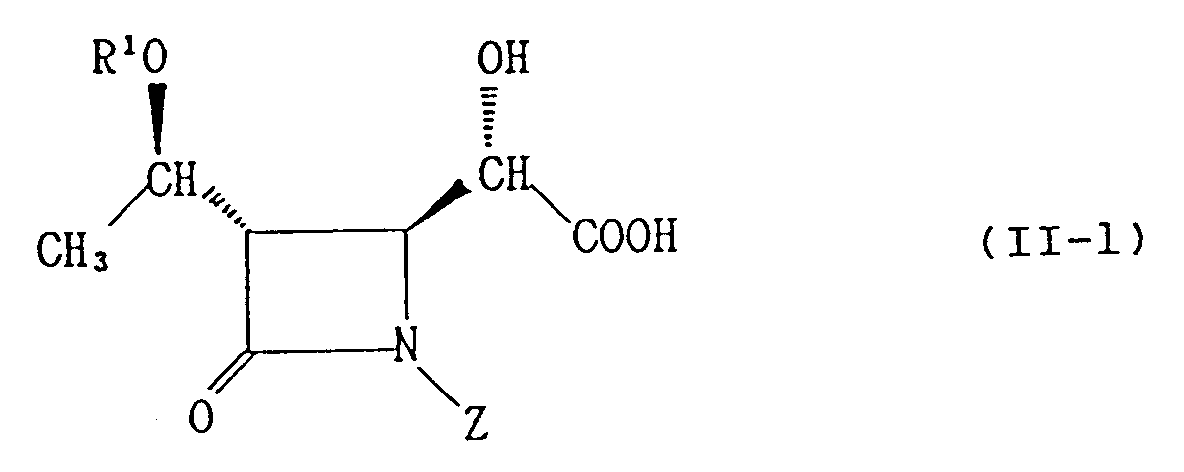
- the compound of formula (II-1) or (II-2), i.e. the compound represented by formula wherein R 1 , R 2 and Z are as defined above, is halogenated to form the compound of formula (III).
- the halogenation can be conducted by reacting the compound of formula (II) with the halogenating agent.
- the halogenating agent can be an agent ordinarily used to replace an alcoholic hydroxyl group with a halogen atom. Examples of the halogenating agent are thionyl chloride, thionyl bromide, phosphorus pentachloride, phosphorus oxychloride and oxalyl chloride.
- the halogenation can ordinarily be carried out in a suitable solvent at a temperature of about -30°C to a reflux temperature of a solvent, preferably about 20 to about 70°C.
- a suitable solvent is aromatic hydrocarbons such as toluene and benzene; halogenated hydrocarbons such as dichloromethane, chloroform and carbon tetrachloride; and esters such as ethyl acetate.
- the amount of the halogenating agent cannot strictly be limited, but usually 1 to 10 equivalents, preferably 2 to 5 equivalents per mol of the compound of formula (II).
- the halogen atom introduced on the carbon atom adjacent the 4-position of the azetidinone ring provides a S- or R-steric configuration, or a combination of them according to the type of the halogenating agent.
- the esterification can be carried out in a usual manner. For example, it can be effected in a suitable solvent at a temperature of about -30°C to a reflux temperature of a solvent, preferably about 0 to about 30°C.
- a suitable solvent is aromatic hydrocarbons such as benzene and toluene; halogenated hydrocarbons such as chloroform and dichloromethane; esters such as ethyl acetate; ethers such as diethyl ether and tetrahydrofuran (THF); dimethylformamide (DMF); and pyridine.
- the compound of formula (III) or (VI) obtained in the 2nd step i.e. the compound represented by formula wherein Y 3 denotes Y 1 or Y 21 , and R 1 , Z, X, Y 1 and Y 21 are as defined above, is subjected to a dehalogenation reaction to form the compound of formula (IV).
- the halogen atom can reductively be eliminated by catalytic reduction of the compound of formula (VIII) or reduction thereof with a metal and an acid, e.g. a Zn-acetic acid system.
- a metal and an acid e.g. a Zn-acetic acid system.
- the solvent ordinarily used in the reductive dehalogenation are acetic acid; and water, methanol, ethanol, ethyl acetate, dichloromethane and DMF, either singly or in combination with acetic acid.
- the reductive dehalogenation of the compound of formula (VIII) can be carried out with a zinc powder dispersed in a medium of an acetic acid at a temperature of usually -30 to 50°C, preferably 0 to 25°C. At this time, the amount of the zinc powder is 1 to 100 equivalents, preferably 5 to 80 equivalents based on the halogenated compound of formula (VIII).
- the above obtained compound of formula (IV) can be separated from the reaction mixture and/or purified by a suitable combination of crystallization, chromatography, extraction and filtration.
- the compound of formula (IV) produced by the process of this invention is useful as, for example, an intermediate of carbapenem antibiotic.
- the reaction mixture was diluted with 50 ml of ethyl acetate and filtered through celite.
- the filtrate was washed with a 5 % NaCO 3 aqueous solution and a saturated sodium chloride aqueous solution, dehydrated with anhydrous sodium sulfate and then concentrated to dryness under reduced pressure.
- the residue was dissolved in 150 ml of a 0.1N sodium hydroxide aqueous solution, and the solution was washed with 150 ml and 100 ml of dichloromethane.
- the aqueous layer was adjusted to pH of 2.5 with 1N hydrochloric acid, and extracted with 200 ml and 100 ml of ethyl acetate.
- the organic layer was washed with 50 ml of a saturated sodium chloride aqueous solution, dehydrated with anhydrous sodium sulfate and concentrated to dryness under reduced pressure to obtain 188 mg of the captioned compound (yield 88.0 %).
- the reaction mixture was diluted with 30 ml of ethyl acetate, and washed with 0.5N hydrochloric acid, a saturated sodium chloride aqueous solution, a saturated NaHCO 3 aqueous solution and a saturated sodium chloride aqueous solution in sequence.
- the organic layer was dehydrated with anhydrous sodium sulfate and then concentrated to dryness under reduced pressure.
- the reaction mixture was concentrated to dryness under reduced pressure to obtain the captioned compound.
- Example 12 The compound 13 obtained in Example 12 was dissolved in 4 ml of acetic acid, and 500 mg of zinc powder was added thereto, followed by stirring overnight at room temperature. The reaction mixture was filtered through celite, and concentrated to dryness under reduced pressure.
- the residue was dissolved in 20 ml of ethyl acetate, and extraction was carried out with a cold 0.5N sodium hydroxide solution.
- the aqueous layer was washed with 20 ml of ethyl acetate, adjusted to pH of 2.5 with 1N hydrochloric acid and extracted with 30 ml and 10 ml of ethyl acetate.
- the aqueous layer was washed with a saturated sodium chloride aqueous solution, then dehydrated with anhydrous sodium sulfate, and concentrated to dryness under reduced pressure to obtain 68 mg of the captioned compound.
- Compound 15 (19 mg: 0.0383 mmol) was dissolved in 1 ml of acetic acid, and 100 mg of zinc powder was added, followed by stirring at room temperature. After 3.5 hours, 60 mg of zinc powder was added, and stirring was then conducted for 1 hour.
Landscapes
- Chemical & Material Sciences (AREA)
- Organic Chemistry (AREA)
- Plural Heterocyclic Compounds (AREA)
- Cephalosporin Compounds (AREA)
- Pharmaceuticals Containing Other Organic And Inorganic Compounds (AREA)
Description
- This invention relates to a process for producing 2-azetidinone derivatives. More specifically, this invention relates to a process for producing 2-azetidinone derivatives represented by the formula


- Several methods for producing the compounds represented by formula (A) have been proposed (see, for example, U.S. Patent No. 4,287,123 and CH 6286/83-1). However, the prior processes suffered drawbacks that many steps are required, costly reagents are needed and the reaction operation is complex; thus none were industrially fully satisfactory.
- The invention provides a novel useful process for producing a compound represented by formula

- R1 denotes a protecting group of a hydroxyl group,
- Y1 denotes a bromine or chlorine atom or OR2, in which
- R2 denotes a hydrogen atom or a protecting group of a carboxyl group, and
- Z denotes a hydrogen atom or a protecting group of an amino group,
- X denotes a bromine or chlorine atom
- The invention also provides a compound represented by the formula

- R11 denotes a alkanoyl group containing no more than 6 carbon atoms, a halo-alkanoyl group containing no more than 6 carbon atoms, an allyl group, benzyl, p-methoxybenzyl, p-nitro-benzyl, p-methylbenzyl, p-chlorobenzyl or o,p-dinitrobenzyl, or benzyloxycarbonyl, p-nitrobenzyloxycarbonyl or p-chlorobenzyloxycarbonyl,
- X1 denotes a chlorine atom, or a bromine atom,
- Y31 denotes a chlorine atom, or a bromine atom,
- OR32, a -S- alkyl group containing no more than 6 carbon atoms or a -S-phenyl group in which R32 denotes a hydrogen atom, an alkyl group containing no more than 6 carbon atoms, or benzyl, p-methoxybenzyl, p-nitro-benzyl, p-methylbenzyl, p-chlorobenzyl or o,p-dinitro-benzyl, and
- Z1 denotes a hydrogen atom, phenyl, 4-methoxyphenyl or 2,4-dimethoxyphenyl, or benzyl, p-nitro-benzyl, dianisylmethyl or 2,4-dimethoxybenzyl.
- Finally, the invention provides a process for producing a compound represented by the formula

- R1 denotes a protecting group of a hydroxyl group,
- Z denotes a hydrogen atom or a protecting group of an amino group, and
- Y2 denotes OR3 or SR4 in which R3 denotes a hydrogen atom, an alkyl group, a benzyl, p-methoxybenzyl, p-methylbenzyl or p-chlorobenzyl group, or a phenyl group, and R4 denotes an alkyl group, a benzyl, p-methoxybenzyl, p-methylbenzyl or p-chlorobenzyl group, or a phenyl group,
-

- In the above reaction formula (I),
- R1 denotes a protecting group of a hydroxyl group,
- Z denotes a hydrogen atom or a protecting group of an amino group,
- R21 denotes a protecting group of a carboxyl group,
- X denotes a halogen atom,
- Y1 denotes a halogen atom or OR2 in which R2 denotes a hydrogen atom or a protecting group of a carboxyl group,
- Y21 denotes OR31 or SR4 in which R31 and R4 each denote an ester residue, and
- Y2 denotes OR3 or SR4 in which R3 denotes a hydrogen atom, a protecting group of a carboxyl group or an ester residue.
- In this invention, The "protecting group of a hydroxyl group" is an ordinary protecting group of a hydroxyl group that can be eliminated by hydrolysis or hydrogenolysis. Examples thereof are as follows.
- (1) lower alkanoyl group: acetyl, propionyl and butyryl
- (2) halo-lower alkyl group: chloroacetyl, dichloroacetyl, trichloroacetyl, bromoacetyl and dibromoacetyl
- (3) substituted or unsubstituted allyl group: allyl and 2-methylallyl
- (4) substituted or unsubstituted benzyl group: benzyl, p-methoxybenzyl, p-nitrobenzyl, p-methylbenzyl, p-chlorobenzyl and o,p-dinitrobenzyl
- (5) substituted or unsubstituted benzyloxycarbonyl group: benzyloxycarbonyl, p-nitrobenzyloxycarbonyl and p-chlorobenzyloxycarbonyl
- The "protecting group of an amino group" can be any usual protecting group of an amino group known in the field of a peptide chemistry. Typical examples thereof are as follows.
- (1) substituted or unsubstituted phenyl group: 4-methoxyphenyl and 2,4-dimethoxyphenyl substituted or unsubstituted aralkyl group: benzyl, p-nitrobenzyl, dianisylmethyl and 2,4-dimethoxybenzyl
- The "protecting group of a carboxyl group" may be any ordinary protecting group of a carboxyl group that can be eliminated by hydrolysis or hydrogenolysis. Typical examples thereof are as follows.
- (1) lower alkyl group: methyl, ethyl, propyl, butyl or tert-butyl
- (2) substituted or unsubstituted benzyl: benzyl, p-methoxybenzyl, p-nitrobenzyl, p-chlorobenzyl, p-methylbenzyl or o,p-dinitrobenzyl
- Examples of the "halogen atom" include fluorine, chlorine, bromine and iodine atoms. Examples of the "ester residue" include an alkyl group such as methyl, ethyl, propyl, butyl or tert-butyl; a substituted or unsubstituted benzyl group such as benzyl, p-methoxybenzyl, p-nitrobenzyl, p-chlorobenzyl, p-methylbenzyl or o,p-dinitrobenzyl: and a phenyl group.
- The word "lower" referred to in this invention means that the number of carbon atoms of an atomic group or a compound modified by this word is not more than 6, preferably not more than 4.
- The respective steps in the reaction scheme 1 will be explained in more detail below.
- The known compound of formula (V) is hydrolyzed into the compound of formula (I) according to PCT/JP 87/00991 (Publication Number: WO 88/04656).
- The hydrolysis of the compound of formula (V)

- As a result, the protecting group of the diol in the side chain at the 4-position of the compound of formula (V) is eliminated to obtain the compound of formula (I).
- The compound of formula (I) obtained in the above step is then oxidized into the compound of formula (II-1).
- The oxidation is conducted with an oxygen-containing gas in the presence of a catalyst. The oxygen-containing gas is an oxygen gas, air or a mixture of the oxygen gas and an inert gas. Among them, air is preferable. The catalyst is, for example, a platinum-type catalyst such as a platinum-supported carbon or platinum black.
- The oxidation is usually carried out by dissolving or dispersing the compound of formula (I) in a solvent such as water, a buffer solution (e.g. a phosphoric acid buffer solution) or an alcohol, and blowing the oxygen-containing gas at a temperature of about 20 to about 100°C, preferably about 70 to about 90°C. On that occasion, pH of the reaction liquid is kept within the range of about 7 to 9, preferably 8 to 9 (neutrality or weak alkalinity). To this end, a basic compound such as sodium bicarbonate, sodium carbonate or sodium hydroxide may be added to adjust the pH.
- The above oxidation reaction can be usually effected under normal pressure, and if required, under elevated pressure or under reduced pressure.
- The reaction can usually continue for 5 to 20 hours under such conditions.
- In the thus obtained compound of formula (II-1), the carboxyl group in the side chain at the 4-position may be protected if required. The protection of the carboxyl group can be carried out by a method known per se which is suited for the protecting group according to the type of the protecting group. Examples of said method include a method of a reaction with diazomethane or diazophenylmethane, a method of a reaction with an alkyl iodide or benzyl bromide in the presence of anhydrous dimethylformamide, and a method of a reaction with a dehydrocondensation agent such as dicyclohexylcarbodiimide in the presence of an alcohol. Thus, the compound of formula (II-2) is afforded.
- In the 2nd step, the compound of formula (II-1) or (II-2), i.e. the compound represented by formula

is halogenated to form the compound of formula (III). - The halogenation can be conducted by reacting the compound of formula (II) with the halogenating agent. The halogenating agent can be an agent ordinarily used to replace an alcoholic hydroxyl group with a halogen atom. Examples of the halogenating agent are thionyl chloride, thionyl bromide, phosphorus pentachloride, phosphorus oxychloride and oxalyl chloride.
- The halogenation can ordinarily be carried out in a suitable solvent at a temperature of about -30°C to a reflux temperature of a solvent, preferably about 20 to about 70°C. Examples of the solvent are aromatic hydrocarbons such as toluene and benzene; halogenated hydrocarbons such as dichloromethane, chloroform and carbon tetrachloride; and esters such as ethyl acetate.
- The amount of the halogenating agent cannot strictly be limited, but usually 1 to 10 equivalents, preferably 2 to 5 equivalents per mol of the compound of formula (II).
- Thus, the halogen atom introduced on the carbon atom adjacent the 4-position of the azetidinone ring provides a S- or R-steric configuration, or a combination of them according to the type of the halogenating agent.
- When Y1 is a halogen atom in the resulting compound of formula (III), said compound can be esterified into the compound of formula (VI), if required, by the reaction with an alcohol or a thiol represented by formula
Y21H (VII)
wherein Y21 is as defined above. - The esterification can be carried out in a usual manner. For example, it can be effected in a suitable solvent at a temperature of about -30°C to a reflux temperature of a solvent, preferably about 0 to about 30°C. Examples of the solvent are aromatic hydrocarbons such as benzene and toluene; halogenated hydrocarbons such as chloroform and dichloromethane; esters such as ethyl acetate; ethers such as diethyl ether and tetrahydrofuran (THF); dimethylformamide (DMF); and pyridine.
- The amount of the alcohol or the thiol of formula (VII) is not particularly limited, but usually 1 to 100 mols, preferably 1 to 10 mols per mol of the compound of formula (III) (Y1=halogen atom).
- In the 3rd step, the compound of formula (III) or (VI) obtained in the 2nd step, i.e. the compound represented by formula

is subjected to a dehalogenation reaction to form the compound of formula (IV). - By the dehalogenation, the halogen atom can reductively be eliminated by catalytic reduction of the compound of formula (VIII) or reduction thereof with a metal and an acid, e.g. a Zn-acetic acid system. Examples of the solvent ordinarily used in the reductive dehalogenation are acetic acid; and water, methanol, ethanol, ethyl acetate, dichloromethane and DMF, either singly or in combination with acetic acid.
- Especially when the reductive dehalogenation of the compound of formula (VIII) with Y3=halogen atom is performed in a solvent such as water, an alcohol of formula R31OH or a thiol of formula R4SH, there results not the compound of formula (IV) wherein Y2 is a halogen atom, but the compound of formula (IV) wherein Y2 is a hydroxyl group, OR31 or OR4.
- When the compound of formula (VIII) with Y3=halogen atom is reductively dehalogenated without using the solvent, a mixed acid anhydride is formed as an intermediate. When this is washed with water, hydrolysis easily occurs, and the compound of formula (IV) with Y2=hydroxyl group is obtained.
- The reductive dehalogenation of the compound of formula (VIII) can be carried out with a zinc powder dispersed in a medium of an acetic acid at a temperature of usually -30 to 50°C, preferably 0 to 25°C. At this time, the amount of the zinc powder is 1 to 100 equivalents, preferably 5 to 80 equivalents based on the halogenated compound of formula (VIII).
- The above obtained compound of formula (IV) can be separated from the reaction mixture and/or purified by a suitable combination of crystallization, chromatography, extraction and filtration.
- The compound of formula (IV) produced by the process of this invention is useful as, for example, an intermediate of carbapenem antibiotic. For instance, the compound of formula (IV) with Y2=hydroxyl group can be, after eliminating the protecting group (R1) of the hydroxyl group by alkaline hydrolysis or hydrogenolysis, formed into carbapenem represented by formula

- The compound of formula (IV) with Y2=S-phenyl group can be formed into RS-533 represented by formula

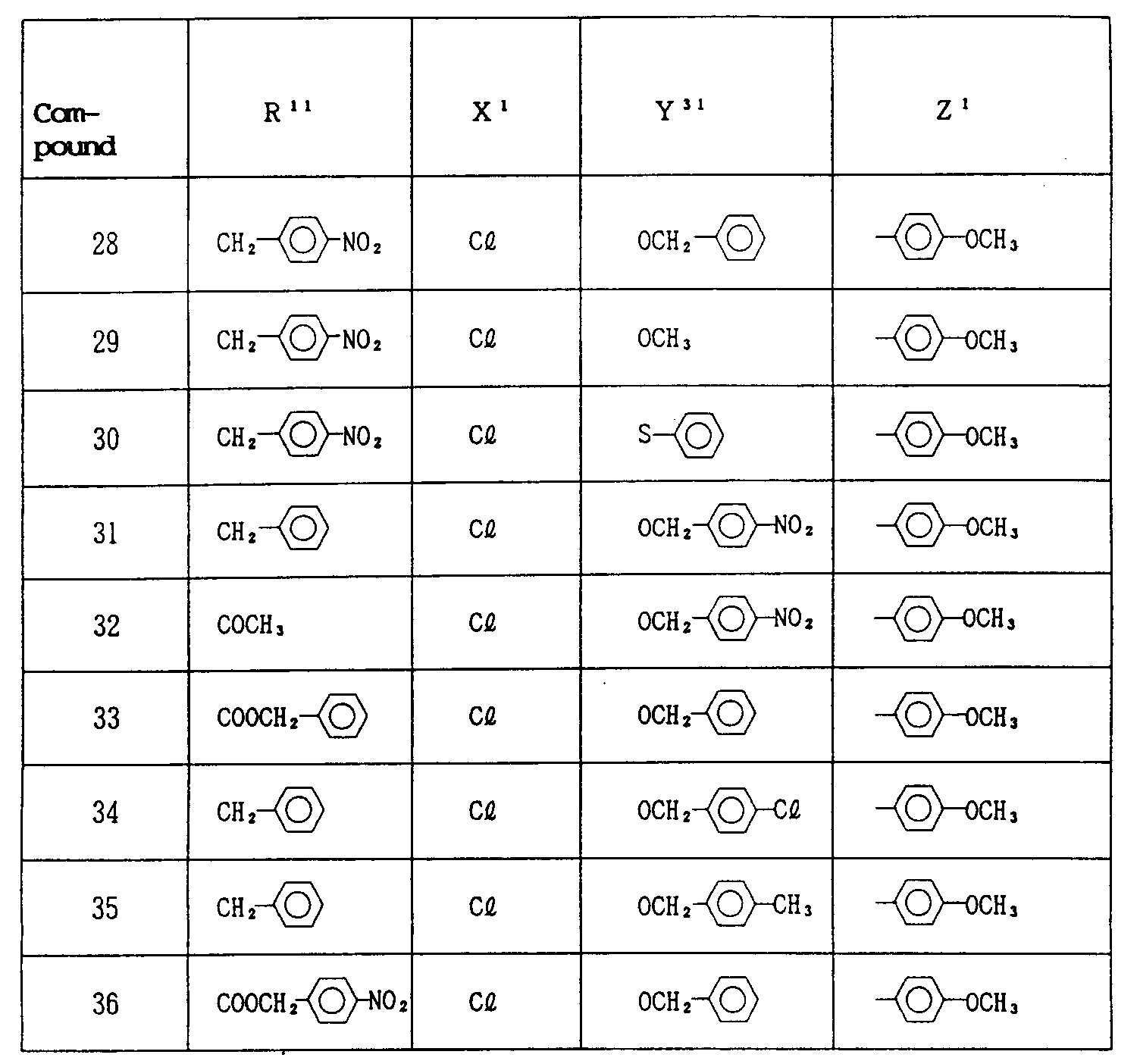
- In the aforesaid process of this invention, the compound of formula (VIII) obtained in the 2nd step, especially a compound represented by formula

- R11 denotes a alkanoyl group containing no more than 6 carbon atoms, a halo-alkanoyl group containing no more than 6 carbon atoms, an allyl group, benzyl, p-methoxybenzyl, p-nitro-benzyl, p-methylbenzyl, p-chlorobenzyl or o,p-dinitrobenzyl, or benzyloxycarbonyl, p-nitrobenzyloxycarbonyl or p-chlorobenzyloxycarbonyl,
- X1 denotes a chlorine atom, or a bromine atom,
- Y31 denotes a chlorine atom, or a bromine atom,
- OR32, a -S- alkyl group containing no more than 6 carbon atoms or a -S-phenyl group in which R32 denotes a hydrogen atom, an alkyl group containing no more than 6 carbon atoms, or benzyl, p-methoxybenzyl, p-nitro-benzyl, p-methylbenzyl, p-chlorobenzyl or o,p-dinitro-benzyl, and
- Z1 denotes a hydrogen atom, phenyl, 4-methoxyphenyl or 2,4-dimethoxyphenyl, or benzyl, p-nitro-benzyl, dianisylmethyl or 2,4-dimethoxybenzyl,
- The following Examples illustrate this invention more specifically.
-

- One hundred milligrams (0.3085 mmol) of compound 1 was dissolved in 0.5 ml of pyridine, and 43.7 microliters (0.4627 mmol) of acetic anhydride was added dropwise under ice cooling, followed by stirring overnight at room temperature. The reaction mixture was poured into ice water and extracted with ethyl acetate. The organic layer was washed twice with 0.1N hydrochloric acid and twice with a saturated sodium chloride aqueous solution, and then dehydrated with anhydrous sodium sulfate. The resulting product was concentrated to dryness under reduced pressure and purified by silica gel column chromatography (Merck Art 7734, (1) toluene, (2) toluene/ethyl acetate = 10:1, (3) 7:1, (4) 5:1, (5) 3:1, (6) 2:1) to obtain 107.9 mg of the captioned compound (yield 96 %).
-
- m.p.:
- 117-119.5°C
- IR(CHCl3);
- 1730 cm-1(β-lactam C = 0)
1725 cm-1(ester C = 0)
1510 cm-1(p-methoxyphenyl) - NMR(CDCl3) δ (PPM):
-
1.33(3H, s, CH3)
1.40(3H, s, CH3)
1.44(3H, d, J=6.0Hz, CH3)
3.81(3H, s, OCH3)
3.67-3.87(1H, m, CH-6)
4.01-4.20(2H, m, CH-6, CH-4)
4.49(1H, dt, J=3.9, 7.5Hz, CH-5)
5.12-5.42(1H, m, CH-7)
-

- Compound 3 (52.8 mg: 0.1442 mmol) was dissolved in 1 ml of acetic acid-water (4:1) and the solution was stirred at 40°C for 22 hours. Toluene was added to the reaction solution and the mixture was concentrated to dryness under reduced pressure. The residue was purified by silica gel column chromatography (Merck Art 7734, (1) toluene, (2) toluene/ethyl acetate = 5:1, (3) 3:1, (4) 2:1, (5) 1:2, (6) 1:3) to afford 43.4 mg of the captioned compound as an oil (yield 98 %).
- IR(CHCl3);
- 1740 cm-1(β-lactam C = 0)
1510 cm-1(p-methoxyphenyl) - NMR(CDCl3) δ (PPM):
-
1.40(3H, d, J=6.0Hz, CH3)
3.10(1H, bd, J=4.5Hz, CH-6)
3.48(1H, dd, J=1.5Hz, 7.5Hz, CH-3)
3.80(3H, s, CCH3)
3.53-3.73(2H, m, CH2-6)
4.05(1H, t, J=1.5Hz, CH-4)
4.13-4.33(1H, m, CH-7)
5.27(1H, m, CH-5)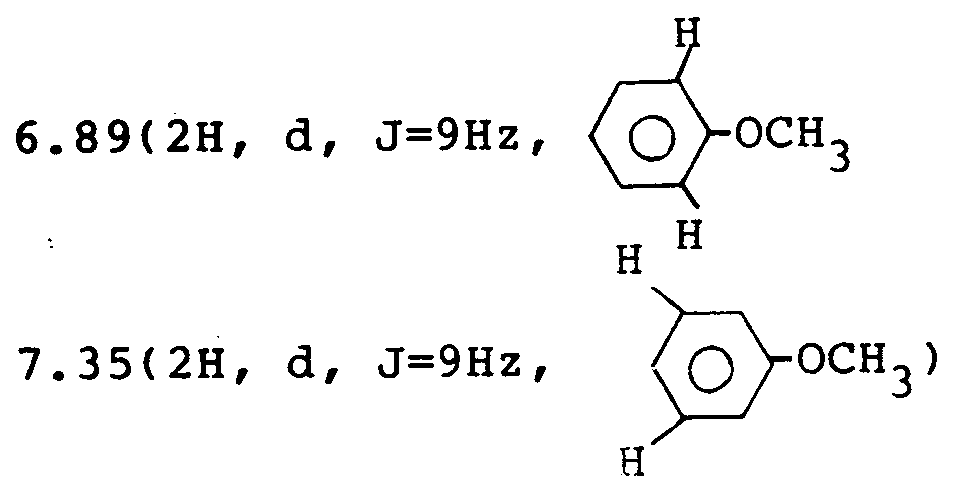
-

- Two grams (6.223 mmols) of compound 1 was dissolved in 40 ml of anhydrous DMF, and 280 mg (7.0 mmols) of NaH was added under ice cooling. After stirring for 5 minutes, 1.12 ml (9.71 ml) of benzyl bromide was added dropwise. The mixture was stirred overnight at room temperature, and 200 ml of acetic acid was then added. The reaction mixture was washed with 100 ml of a 15 % sodium chloride aqueous solution and then with 50 ml of a saturated sodium chloride aqueous solution. Subsequently, the resulting product was dehydrated with anhydrous sodium sulfate and concentrated to dryness under reduced pressure.
- The residue was purified by silica gel column chromatography (Merck Art 7734, (1) toluene, (2) toluene/ethyl acetate = 10:1) to obtain 2.46 g of the captioned compound (yield 96.1 %).
-
- m.p.:
- 109-111°C
- IR(CHCl3);
- 1735 cm-1(β-lactam C = 0)
1510 cm-1(p-methoxyphenyl) - NMR(CDCl3) δ (PPM):
-

3.22(1H, dd, J=2.2, 7.2Hz, CH-3)
3.80(3H, s, OCH3)
3.80-4.2(4H, m, CH-4, CH-7, CH2-6)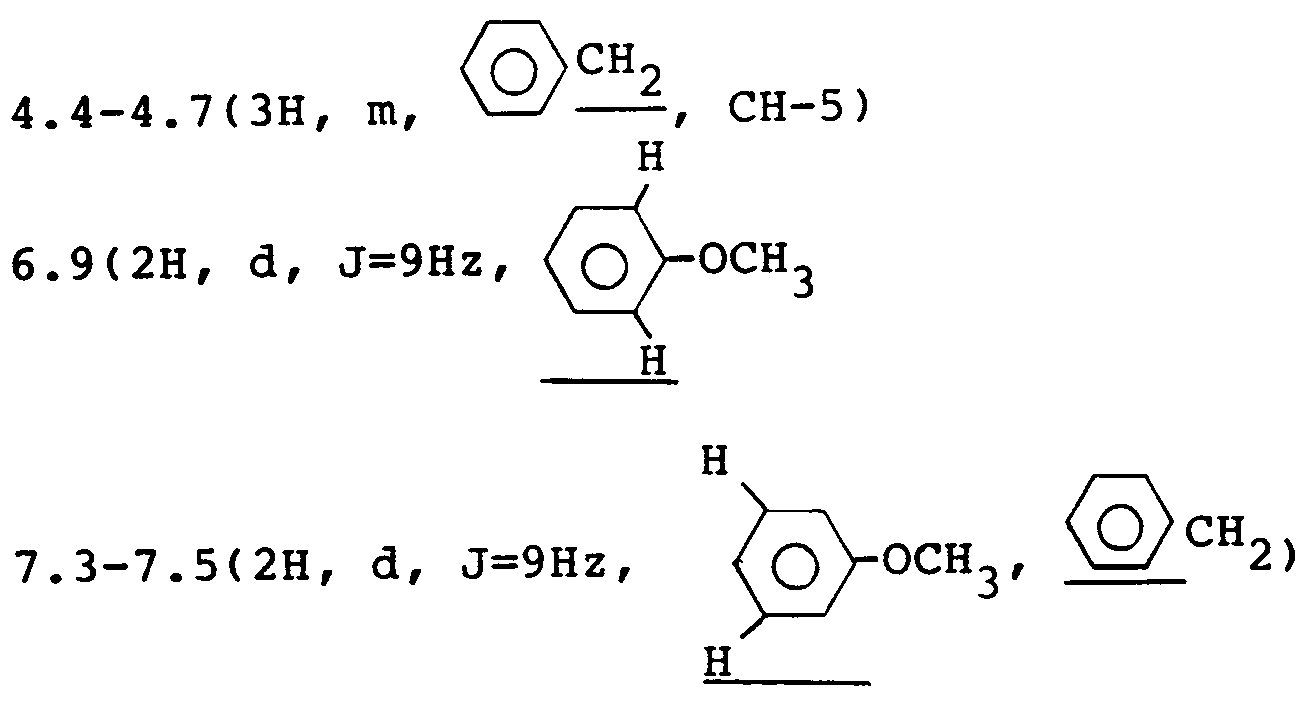
-

- Compound 2 (2.4 g: 5.832 mmols) was dissolved in 130 ml of acetic acid-water (4:1) and the solution was stirred at 40°C for 14 hours. The reaction mixture was concentrated to dryness under reduced pressure. The residue was purified by silica gel column chromatography (Merck Art 7734 (1) toluene, (2) toluene:ethyl acetate = 3:1, (3) toluene:ethyl acetate = 1:1) to obtain 2.1 g of the captioned compound (yield 96.9 %).
- IR(CHCl3);
- 1730 cm-1(β-lactam C = 0)
1510 cm-1(p-methoxyphenyl) - NMR(CDCl3) δ (PPM):
-
1.40(3H, d, J=6.0Hz, CH3)
2.85(1H, bd, J=5.0Hz, OH-5)
3.08(1H, bt, J=7.0Hz, OH-6)
3.42(2H, dd, J=2.0, 9.1Hz, CH-3)
3.80(2H, m, CH2-6)
3.22(1H, dd, J=2.2, 7.2Hz, CH-3)
3.80(3H, s, OCH3)
3.85-4.20(3H, m, CH-4, CH-5, CH-7)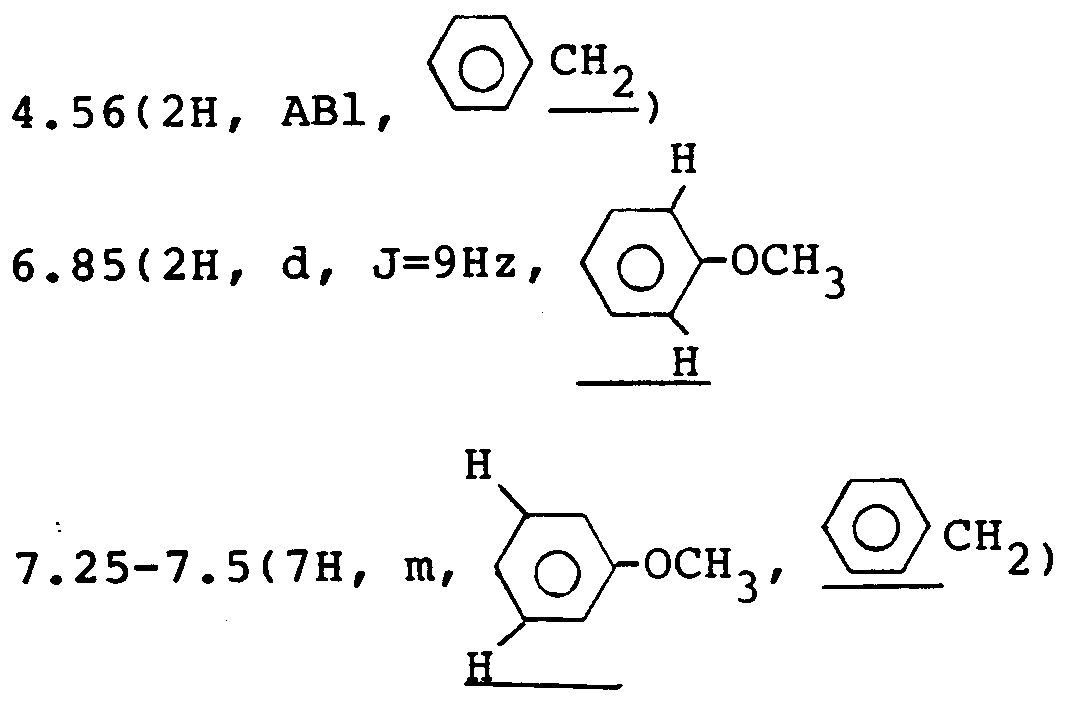
-

- One gram (2.692 mmols) of compound 4 was dissolved in 20 ml of isopropyl alcohol, and 40 ml of 0.1M PBS with pH of 8.0 was added. Further, 670 mg of 10 % Pt-C was added, and air was blown while stirring the mixture at 80 to 85°C.
- After stirring for 14 hours, the reaction mixture was cooled and filtered though celite, followed by washing with 0.1M PBS. After the filtrate and the washing were together washed with dichloromethane, the aqueous layer was adjusted to pH of 2.5 with 1N HCl and extracted with 100 ml and 50 ml of dichloromethane. The extract was washed with a saturated sodium chloride aqueous solution, then dehydrated with anhydrous sodium sulfate and concentrated to dryness under reduced pressure to obtain 830 mg of the captioned compound (yield 80 %).
- IR(CHCl3);
- 1730 cm-1(β-lactam C = 0)
1510 cm-1 - NMR(CDCl3) δ (PPM):
-
1.21(3H, d, J=6.2Hz, CH3)
3.44(1H, dd, J=2.0Hz, 3.8Hz, CH-3)
3.76(3H, s, OCH3)
3.95(1H, m, CH-7)
3.80(2H, m, CH2-6)

-
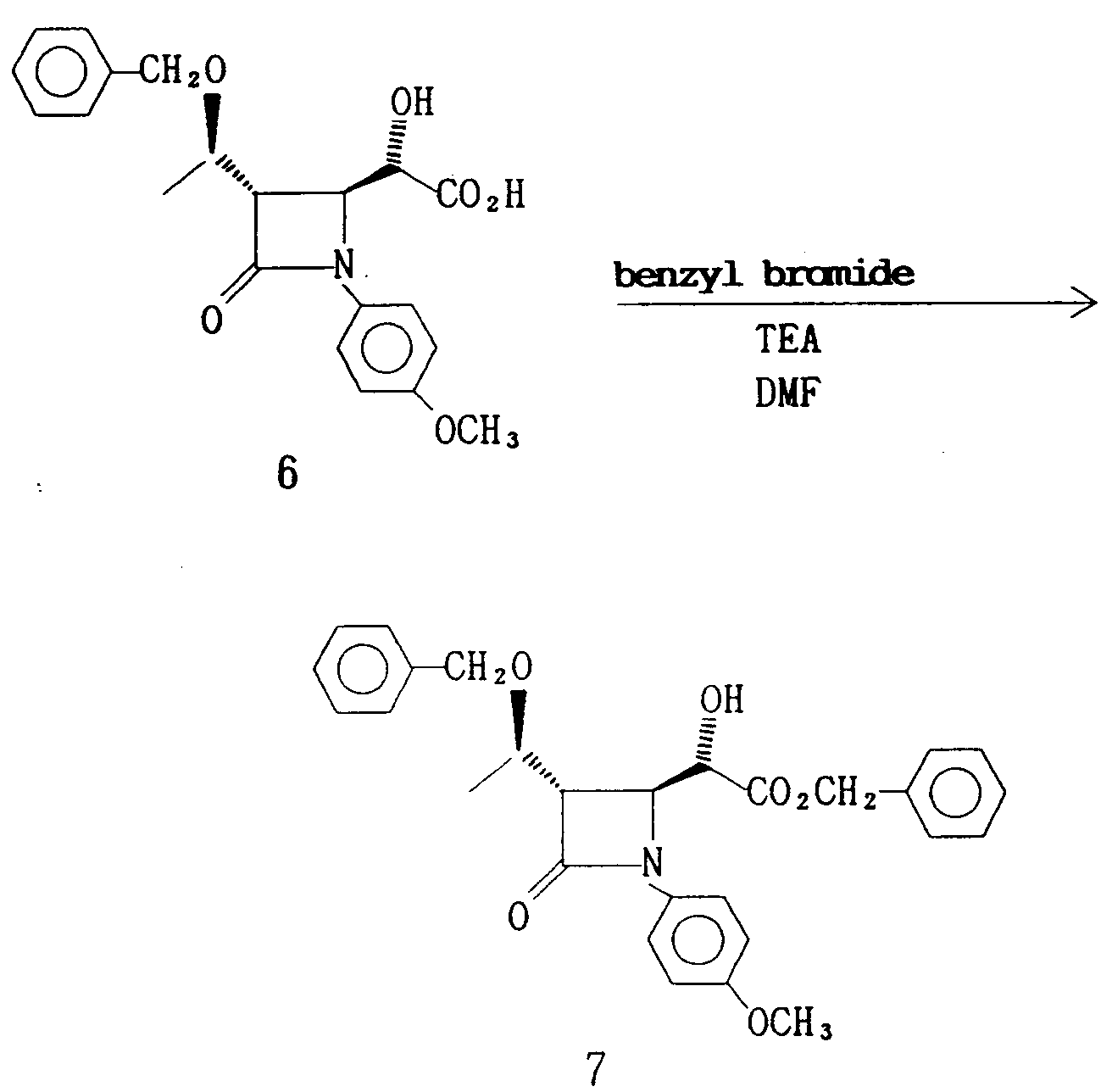
- Compound 6 (438 mg: 1.136 mmols) was dissolved in 7 ml of anhydrous DMF, and 0.475 ml (3 equivalents) of triethylamine and 0.27 ml (2 equivalents) of benzyl bromide were added under ice cooling, followed by stirring overnight at room temperature. To the solution was added 150 ml of ethyl acetate. The resulting mixture was washed with a saturated sodium chloride aqueous solution, dehydrated with anhydrous sodium sulfate, and concentrated to dryness under reduced pressure.
- The residue was purified by silica gel column chromatography (Merck Art 7734, (1) toluene, (2) toluene/ethyl acetate=10:1, (3) toluene/ethyl acetate = 5:1) to afford 430 mg of the captioned compound (yield 79.6 %).
- IR(CHCl3);
- 1730 cm-1(β-lactam C = 0)
1510 cm-1(p-methoxyphenyl) - NMR(CDCl3) δ (PPM):
-
1.17(3H, d, J=6.1Hz, CH3)
3.38(2H, m, OH-5, CH-3)
3.77(3H, s, OCH3)
3.9(1H, m, CH-7)
5.0(2H, ABtype q, CH2)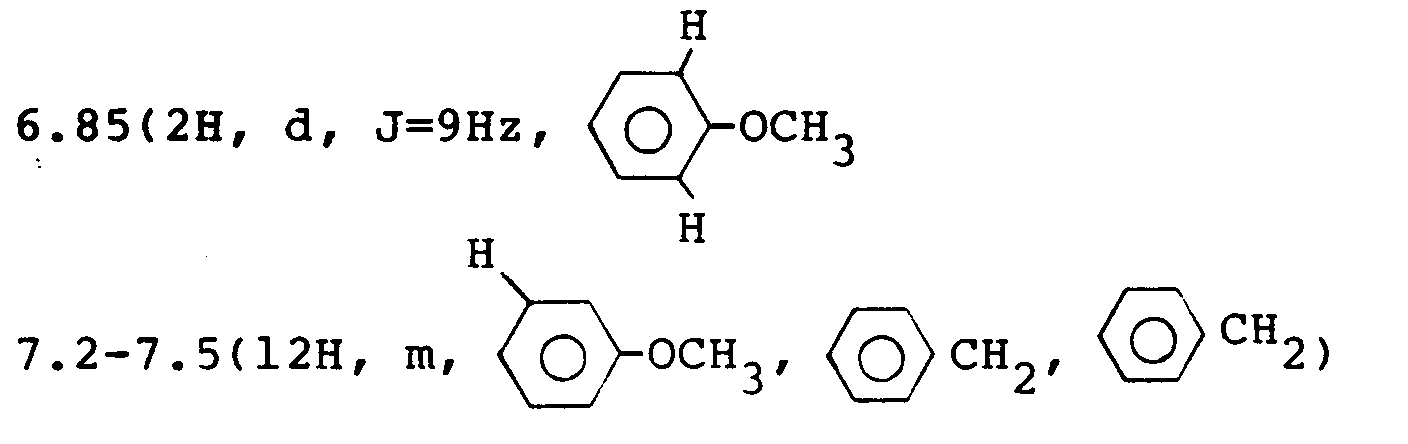
-

- Compound 7 (102 mg: 0.2145 mmol) was dissolved in 2 ml of pyridine and 50 microliters (0.6854 mmol) of thionyl chloride were added under ice cooling, followed by stirring overnight at room temperature. The solution was poured into 20 ml of ice water, and extraction was conducted with 75 ml of ethyl acetate. The extract was washed with 50 ml of 0.5N HCl and then with a saturated sodium chloride aqueous solution, a saturated NAHCO3 aqueous solution and a saturated sodium chloride aqueous solution in sequence. The organic layer was dehydrated with anhydrous Na2SO4, and concentrated to dryness under reduced pressure.
- The residue was purified by silica gel column chromatography (Merck Art 7734, (1) toluene, (2) toluene/ethyl acetate = 5:2) to obtain 92.5 mg of the captioned compound (yield 87.4%).
- IR(CHCl3);
- 1750 cm-1(β-lactam C = 0)
1510 cm-1(p-methoxyphenyl) - NMR(CDCl3) δ (PPM):
-
1.37(3H, d, J=6.1Hz, CH3)
3.47(1H, dd, J=2.1Hz, 5.1Hz, CH-3)
3.77(3H, s, OCH3)
4.0(1H, m, CH-7)
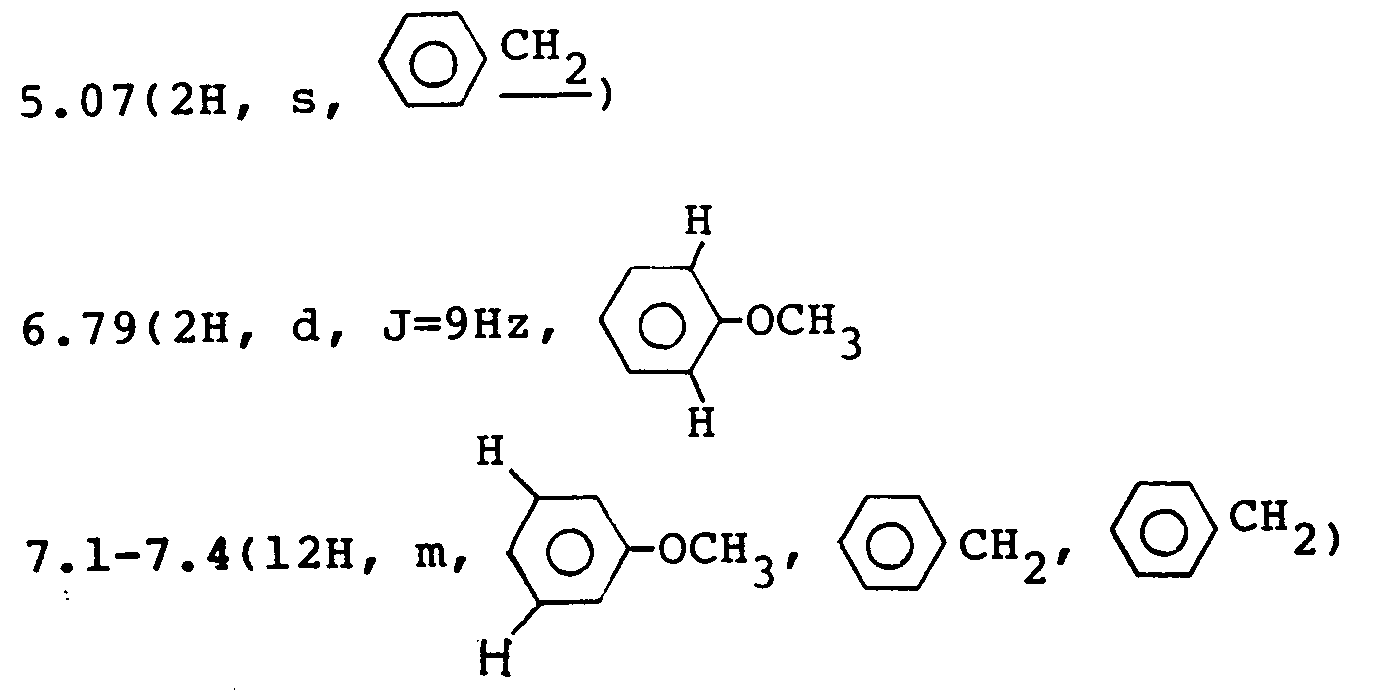
-

- Compound 8 (89 mg: 0.1802 mmol) was dissolved in 5 ml of acetic acid, and 890 mg of zinc powder was added, followed by stirring at room temperature for 3.5 hours.
- The reaction mixture was diluted with 50 ml of ethyl acetate and filtered through celite. The filtrate was washed with a 5 % NaCO3 aqueous solution and a saturated sodium chloride aqueous solution, dehydrated with anhydrous sodium sulfate and then concentrated to dryness under reduced pressure.
- The residue was purified by silica gel column chro matography (Merck Art 7734, (1) toluene, (2) toluene:ethyl acetate = 10:1) to afford 73.2 mg of the captioned compound (yield 88.4 %).
Chromatography (Merck Art 7734, (1) toluene, (2) toluene/ethyl acetate=10:1, (3) toluene/ethyl acetate = 5:1) to afford 430 mg of the captioned compound (yield 79.6 %). - IR(CHCl3);
- 1730 cm-1(β-lactam C = 0)
1510 cm-1(p-methoxyphenyl) - NMR(CDCl3) δ (PPM):
-
1.29(3H, d, J=6.1Hz, CH3)
2.5-3.1(2H, m, CH2-5)
3.2(1H, dd, J=2.4, 6.1Hz, CH-3)
3.80(3H, s, OCH3)
-
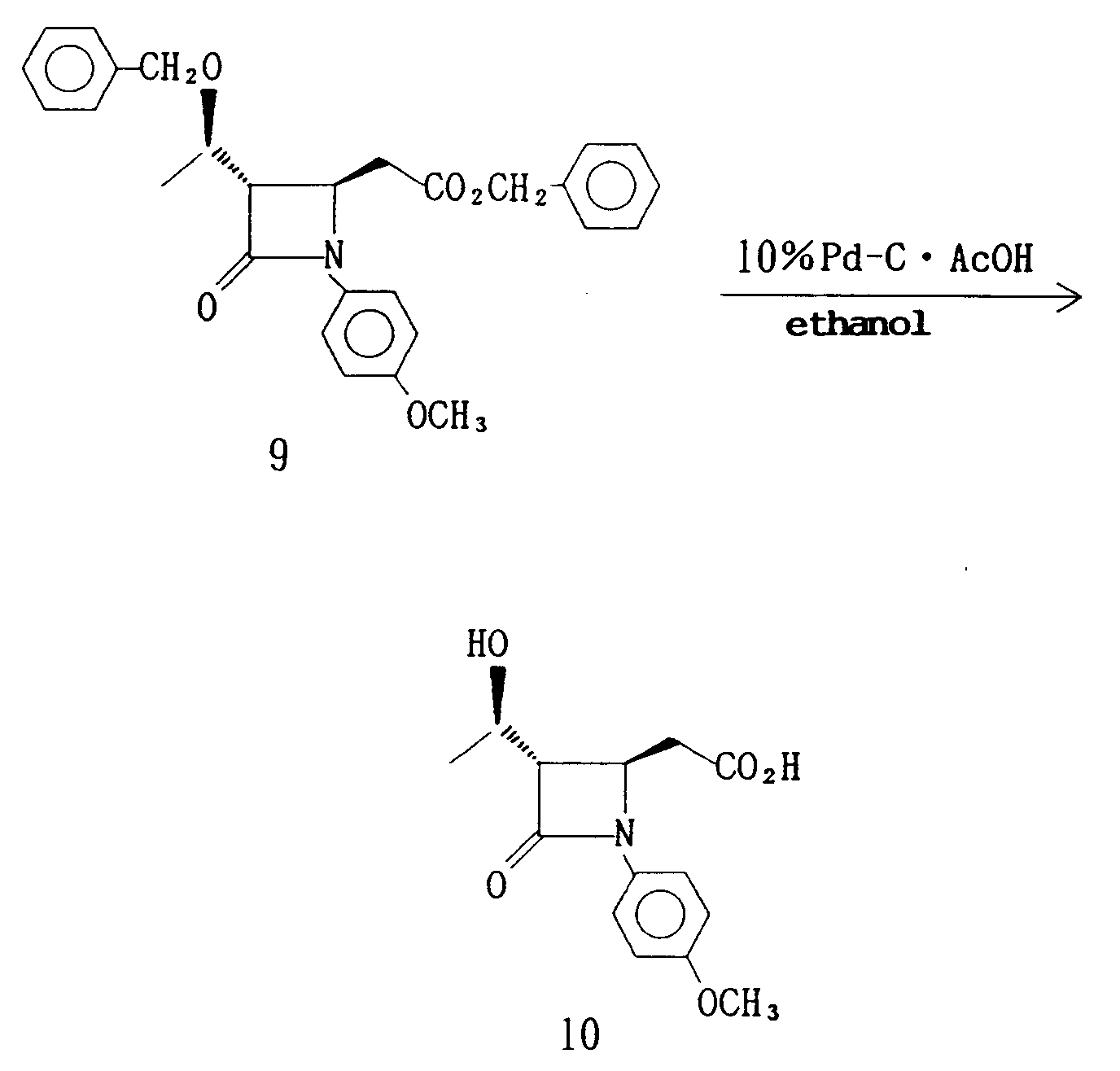
- Compound 9 (370 mg: 0.8052 mmol) was dissolved in 20 ml of ethanol, and 0.925 ml of acetic acid and 370 mg of 10% palladium-carbon were added, followed by shaking for 24 hours under hydrogen pressure of 4.5 atm. The catalyst was filtered through celite and throughly washed with ethanol. The filtrate and the washing were together concentrated to dryness.
- The residue was dissolved in 150 ml of a 0.1N sodium hydroxide aqueous solution, and the solution was washed with 150 ml and 100 ml of dichloromethane. The aqueous layer was adjusted to pH of 2.5 with 1N hydrochloric acid, and extracted with 200 ml and 100 ml of ethyl acetate. The organic layer was washed with 50 ml of a saturated sodium chloride aqueous solution, dehydrated with anhydrous sodium sulfate and concentrated to dryness under reduced pressure to obtain 188 mg of the captioned compound (yield 88.0 %).
-
- m.p.:
- 145-148°C
- IR(CHCl3);
- 1720 cm-1(β-lactam C = 0)
1680 cm-1(carboxylic acid C = 0)
1510 cm-1(p-methoxyphenyl) - NMR(CDCl3) δ (PPM):
-
1.30(3H, d, J=6.6Hz, CH3)
2.6-3.1(2H, m, CH2-5)
3.15(1H, dd, J=2.2, 5.9Hz, CH-3)
3.77(3H, s, OCH3)
4.1(1H, m, CH-7)
4.4(1H, m, CH-4)
-

- Compound 10 (98 mg: 0.3694 mmol) was dissolved in 3 ml of anhydrous THF, and 66 mg (0.407 mmol) of carbonyldiimidazole was added, followed by stirring at room temperature for 1 hour. Subsequently, 296 mg (0.5912 mmol) of magnesium p-nitrobenzyl malonate was added, and stirring was further conducted at room temperature for 20 hours.
- The reaction mixture was diluted with 30 ml of ethyl acetate, and washed with 0.5N hydrochloric acid, a saturated sodium chloride aqueous solution, a saturated NaHCO3 aqueous solution and a saturated sodium chloride aqueous solution in sequence.
- The organic layer was dehydrated with anhydrous sodium sulfate and then concentrated to dryness under reduced pressure.
- The residue was purified by silica gel column chromatography (Merck Art 7734, toluene/acetone = 5:1) to obtain 77 mg of the captioned compound (yield 45.7%).
- IR(CHCl3);
- 1735 cm-1(β-lactam C = 0)
1510 cm-1(p-methoxyphenyl)
1340 cm-1(nitro) - NMR(CDCl3) δ (PPM):
-
1.33(3H, d, J=6.2Hz, CH3)
-3.0-(3H, m, CH2-5, CH-3)
3.6(2H, s, CH2-7)
3.8(3H, s, OCH3)
4.0-4.5(2H, m, CH-4, CH-9)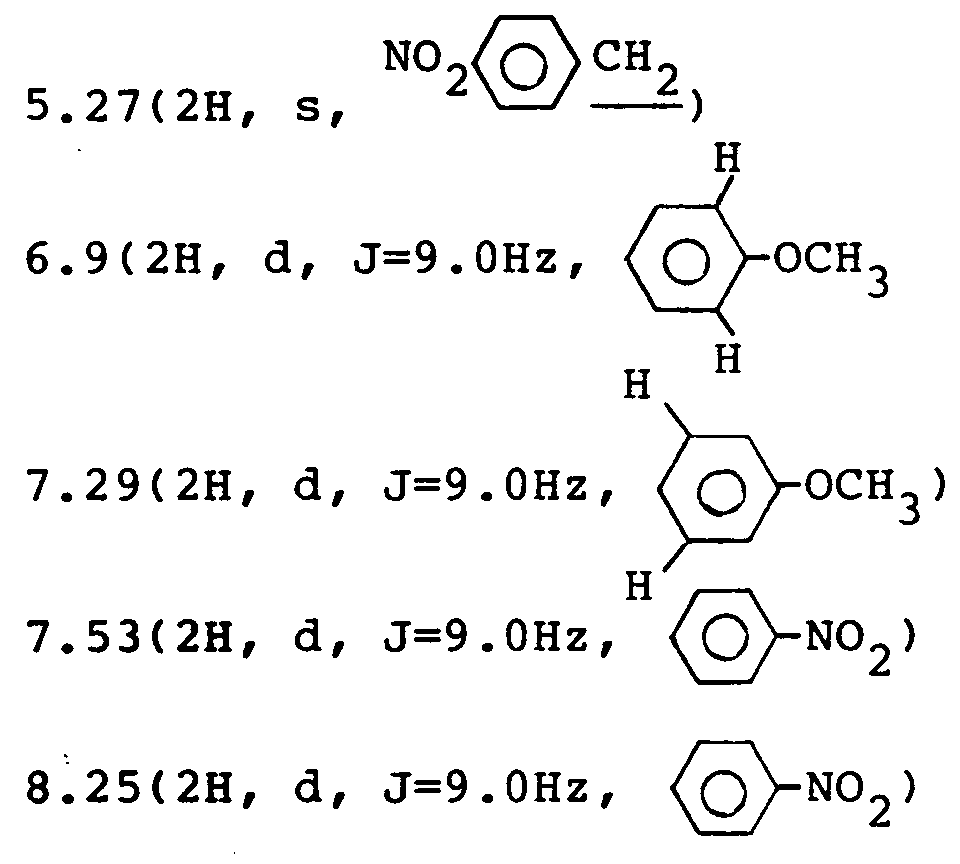
-

- Compound 11 (24 mg: 0.0526 mmol) was dissolved in 2 ml of acetonitrile, and a solution of 57.6 mg (0.105 mmol) of ceric ammonium nitrate in 1 ml of water was added dropwise at -5°C. After the addition, the mixture was stirred at -5°C for 1 hour, and extracted with the addition of 40 ml of ethyl acetate and 20 ml of a saturated NaOHCO3 aqueous solution. The aqueous layer was extracted with a small amount of ethyl acetate and combined with the above organic layer. The organic layer was washed with a 5 % sodium thiosulfate aqueous solution, a saturated NaHCO3 aqueous solution and a saturated sodium chloride aqueous solution in sequence. The resulting product was dehydrated with anhydrous sodium sulfate, and then concentrated to dryness under reduced pressure. The residue was purified by silica gel column chromatography (Merck Art 7734, (1) toluene/ ethyl acetate = 1:1, (2) toluene/acetone = 2:1, (3) toluene/ acetone = 1:1, (4) toluene/acetone = 1:3) to obtain 12 mg of the captioned compound (yield 65 %).
- IR(CHCl3);
- 1750 cm-1(β-lactam C = 0)
1705 cm-1(C = 0)
1505, 1340 cm-1(nitro) - NMR(CDCl3) δ (PPM):
-
1.3(3H, d, J=6.2Hz, CH3)
2.7-3.1(3H, m, CH2-5, CH-3)
3.60(2H, s, CH2-7)
3.8-4.3(2H, m, CH-4, CH-9)

-

- One hundred milligrams (0.2595 mmol) of compound 6 was suspended in 2 ml of anhydrous toluene, and 130 microliters (1.782 mmols) of thionyl chloride and 19.6 microliters (0.253 mmol) of anhydrous DMF were added, followed by stirring at 70°C for 1 hour.
- The reaction mixture was concentrated to dryness under reduced pressure to obtain the captioned compound.
- IR(CHCl3);
- 1750 cm-1(β-lactam C = 0)
1510 cm-1(p-methoxyphenyl) - NMR(CDCl3) δ (PPM):
-
1.38(3H, d, J=6.3Hz, CH3)
3.4(1H, dd, J=2.0, 5.0Hz, CH-3)
3.8(3H, s, CH3)
3.9-4.2(1H, m, CH-7)

-
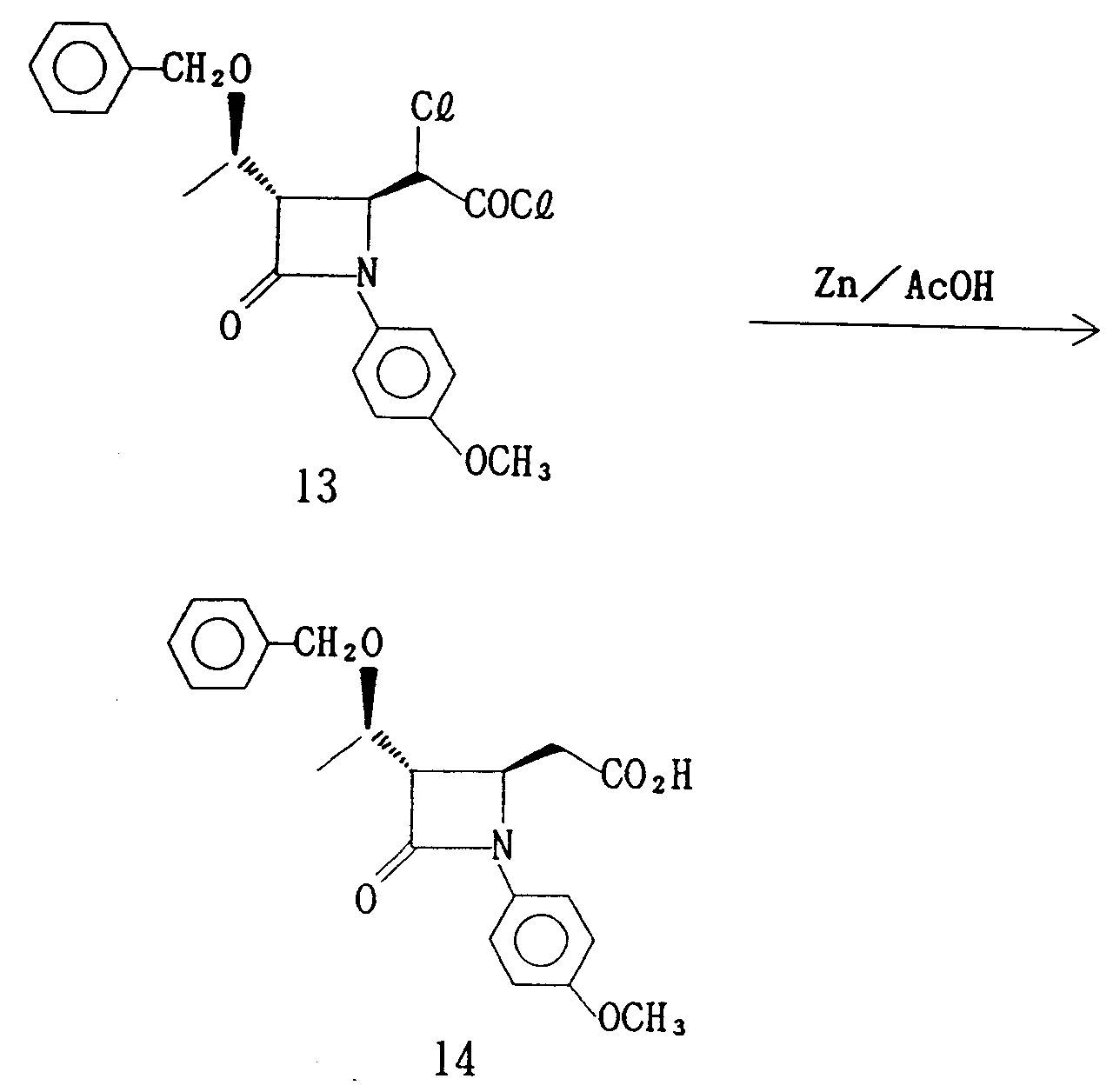
- The compound 13 obtained in Example 12 was dissolved in 4 ml of acetic acid, and 500 mg of zinc powder was added thereto, followed by stirring overnight at room temperature. The reaction mixture was filtered through celite, and concentrated to dryness under reduced pressure.
- The residue was dissolved in 20 ml of ethyl acetate, and extraction was carried out with a cold 0.5N sodium hydroxide solution. The aqueous layer was washed with 20 ml of ethyl acetate, adjusted to pH of 2.5 with 1N hydrochloric acid and extracted with 30 ml and 10 ml of ethyl acetate.
- The aqueous layer was washed with a saturated sodium chloride aqueous solution, then dehydrated with anhydrous sodium sulfate, and concentrated to dryness under reduced pressure to obtain 68 mg of the captioned compound.
- IR(CHCl3);
- 1735 cm-1(β-lactam C = 0)
1510 cm-1(p-methoxyphenyl) - NMR(CDCl3) δ (PPM):
-
1.3(3H, d, J=6.1Hz, CH3)
2.5-3.0(2H, m, CH2-5)
3.2(1H, dd, J=2.1, 5.1Hz, CH-3)
3.8(3H, s, CH3)
3.9-4.2(1H, m, CH-7)
-
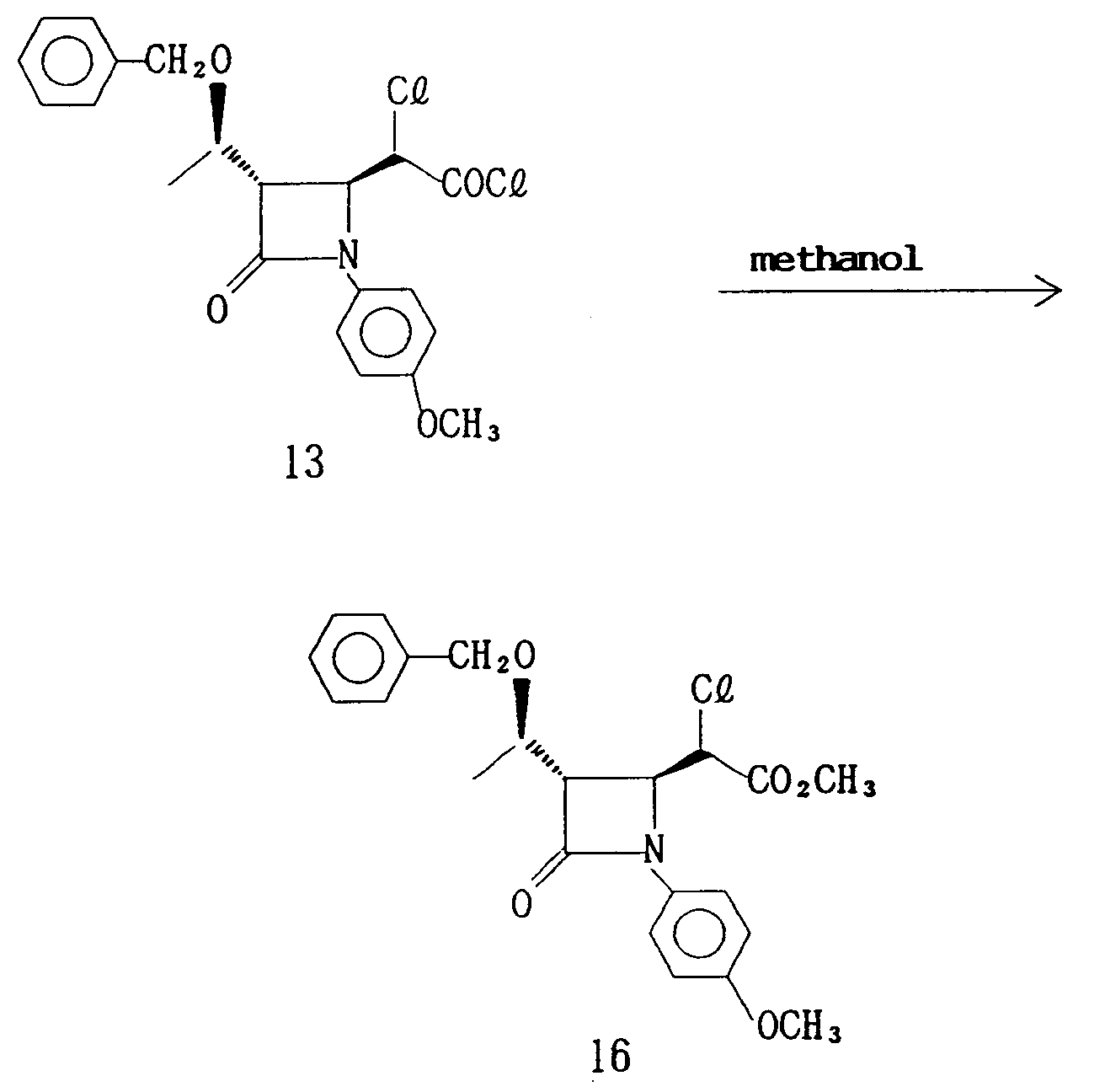
- Compound 13 synthesized in accordance with the process in Example 12 was dissolved in 1 ml of anhydrous methanol, and stirred at room temperature for 3 hours. To the reaction solution was added ethyl acetate, and the mixture was washed twice with a saturated sodium chloride aqueous solution. The organic layer was dehydrated with anhydrous sodium sulfate, and then concentrated to dryness under reduced pressure. The residue was purified by silica gel column chromatography (Merck Art 7734, (1) toluene, (2) toluene/ethyl acetate = 10:1) to provide 61 mg of the captioned compound.
- IR(CHCl3);
- 1745 cm-1(β-lactam C = 0)
1510 cm-1(p-methoxyphenyl) - NMR(CDCl3) δ (PPM):
-
1.35(3H, d, J=6.1Hz, CH3)
3.45(1H, dd, J=6.0Hz, 2.2Hz, CH-3)
3.9-4.2(1H, m, CH-7)
-

- Compound 16 (61 mg: 0.146 mmol) was dissolved in 2 ml of acetic acid, and 200 mg of zinc powder was added, followed by stirring at room temperature.
- After stirring for 6.5 hours, the mixture was diluted with ethyl acetate and filtered. The filtrate was washed twice with a saturated NaHCO3 aqueous solution and once with a saturated sodium chloride aqueous solution. The organic layer was dehydrated with anhydrous sodium sulfate, and then concentrated to dryness under reduced pressure. The residue was purified by silica gel column chromatography (Merck Art 7734, (1) toluene, (2) toluene/ethyl acetate = 10:1) to provide 50 mg of the captioned compound.
- IR(CHCl3);
- 1730 cm-1(β-lactam C = 0)
1510 cm-1(p-methoxyphenyl) - NMR(CDCl3) δ (PPM):
-
1.33(3H, d, J=6.1Hz, CH3)
2.5-3.3(3H, m, CH-3, CH2-5)
3.8-4.1(1H, m, CH-7)
-

- Compound 13 synthesized in accordance with the process in Example 12 was dissolved in 2 ml of anhydrous dichloromethane. With stirring, 30 microliters (0.292 mmol) of thiophenol was added at -5°C.
- One hour later, 50 microliters of thiophenol was further added and the mixture was stirred for 1 hour. The silution liquid was diluted with ethyl acetate, and washed with a saturated NaHCO3 aqueous solution and a saturated sodium chloride aqueous solution. The organic layer was dehydrated with anhydrous sodium sulfate, and concentrated to dryness under reduced pressure.
- The residue was purified by silica gel column chromatography (Merck Art 7734, (1) toluene, (2) toluene/ethyl acetate = 10:1) to obtain 19 mg of the captioned compound as an oil.
- IR(CHCl3);
- 1750 cm-1(β-lactam C = 0)
1510 cm-1(p-methoxyphenyl)
1680 cm-1(ester C = 0) - NMR(CDCl3) δ (PPM):
-
1.28(3H, d, J=6.1Hz, CH3)
3.81(3H, s, OCH3)
3.9-4.2(1H, m, CH-7)

-

- Compound 15 (19 mg: 0.0383 mmol) was dissolved in 1 ml of acetic acid, and 100 mg of zinc powder was added, followed by stirring at room temperature. After 3.5 hours, 60 mg of zinc powder was added, and stirring was then conducted for 1 hour.
- To the reaction mixture was added ethyl acetate, and filtration was conducted. The filtrate was washed twice with a saturated NaHCO3 aqueous solution and once with a saturated sodium chloride aqueous solution. The aqueous layer was dehydrated with anhydrous sodium sulfate, and then concentrated to dryness under reduced pressure. The residue was purified by silica gel column chromatography (Merck Art 7734, (1) toluene, (2) toluene:ethyl acetate = 10:1) to obtain 9 mg of the captioned compound.
- IR(CHCl3);
- 1735 cm-1(β-lactam C = 0)
1690 cm-1(ester C = 0)
1510 cm-1(p-methoxyphenyl) - NMR(CDCl3) δ (PPM):
-
1.33(3H, d, J=6.1Hz, CH3)
2.8-3.4(3H, m, CH-3, CH2-5)
3.84(3H, s, OCH3)
3.85-4.2(1H, m, CH-7)

-

- Compound 8 (22.9 mg: 0.0464 mmol) was dissolved in 0.5 ml of acetic acid, and 23.9 mg of 10 % Pd-C was added, followed by stirring for 22 hours under an atmosphere of hydrogen. Further, 14.2 mg of 10 % Pd-C was added, and the stirring was conducted run for 4 hours under an atmosphere of hydrogen. The reaction mixture was then diluted with ethanol and filtered through celite. The filtered product was thoroughly washed with ethanol, and the filtrate and the washing were together diluted with toluene and concentrated to dryness under reduced pressure. The same procedure was conducted twice to afford 12.8 mg of the captioned compound (yield 87.4 %).


with an oxygen-containing gas in the presence of a platinum-type catalyst, (b) reacting the resulting compound represented by formula
with a halogenating agent, if required after the carboxyl group is protected, and (c) dehalogenating the resulting compound represented by formula

X denotes a halogen atom, and
Y1 denotes a halogen atom or OR2,
by catalytic reduction or reduction with a metal in an acid, if required after esterifying it when Y1 is a halogen atom.


Claims (12)
- A process for producing a compound represented by formula
 R1 denotes a protecting group of a hydroxyl group,Y1 denotes a bromine or chlorine atom or OR2, in whichR2 denotes a hydrogen atom or a protecting group of a carboxyl group, andZ denotes a hydrogen atom or a protecting group of an amino group,X denotes a bromine or chlorine atomwhich comprises reacting a compound represented by formula
- The process of claim 1 wherein the halogenating agent is selected from thionyl chloride, thionyl bromide, phosphorous pentachloride, phosphorous oxychloride and oxalyl chloride.
- The process of claim 1 wherein the reaction is carried out at a temperature between about -30°C and a reflux temperature of a solvent.
- The process of claim 3 wherein the reaction is carried out at a temperature of about 20 to about 70°C.
- The process of claim 1 wherein the halogenating agent is used within the range of 1 to 10 equivalents per mol of the compound of formula (II).
- The process of claim 5 wherein the halogenating agent is used within the range 2 to 5 equivalents per mol of the compound of formula (II).
- A compound represented by the formula
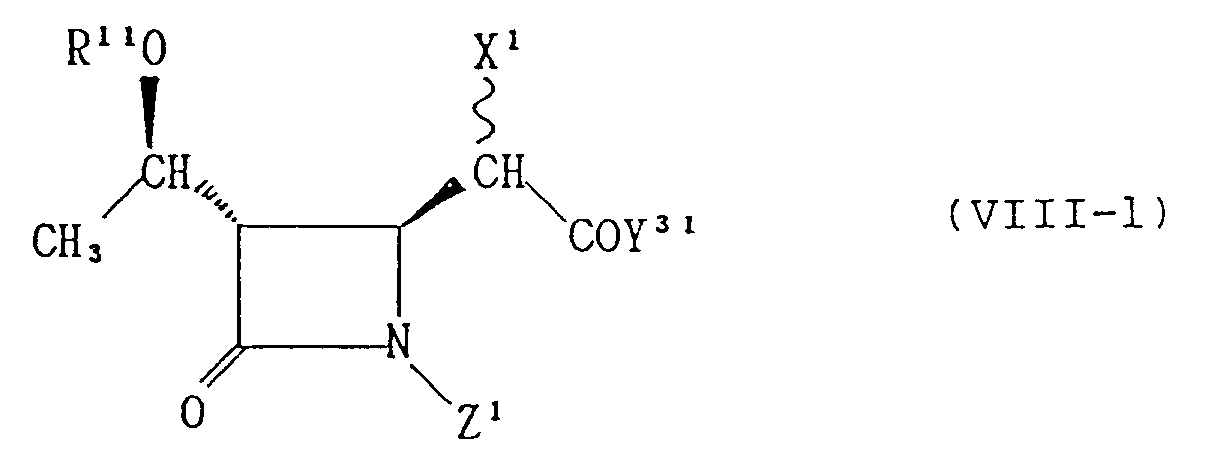 R11 denotes a alkanoyl group containing no more than 6 carbon atoms, a halo-alkanoyl group containing no more than 6 carbon atoms, an allyl group, benzyl, p-methoxybenzyl, p-nitro-benzyl, p-methylbenzyl, p-chlorobenzyl or o,p-dinitrobenzyl, or benzyloxycarbonyl, p-nitrobenzyloxycarbonyl or p-chlorobenzyloxycarbonyl,X1 denotes a chlorine atom, or a bromine atom,Y31 denotes a chlorine atom, or a bromine atom,OR32, a -S- alkyl group containing no more than 6 carbon atoms or a -S-phenyl group in which R32 denotes a hydrogen atom, an alkyl group containing no more than 6 carbon atoms, or benzyl, p-methoxybenzyl, p-nitro-benzyl, p-methylbenzyl, p-chlorobenzyl or o,p-dinitro-benzyl, andZ1 denotes a hydrogen atom, phenyl, 4-methoxyphenyl or 2,4-dimethoxyphenyl, or benzyl, p-nitro-benzyl, dianisylmethyl or 2,4-dimethoxybenzyl.
 - A process for producing a compound represented by formula
 R1 denotes a protecting group of a hydroxyl group,Z denotes a hydrogen atom or a protecting group of an amino group, andY2 denotes OR3 or SR4 in which R3 denotes a hydrogen atom, an alkyl group, a benzyl, p-methoxybenzyl, p-methylbenzyl or p-chlorobenzyl group, or a phenyl group, and R4 denotes an alkyl group, a benzyl, p-methoxybenzyl, p-methylbenzyl or p-chlorobenzyl group, or a phenyl group,which comprises (a) oxidizing a compound represented by formula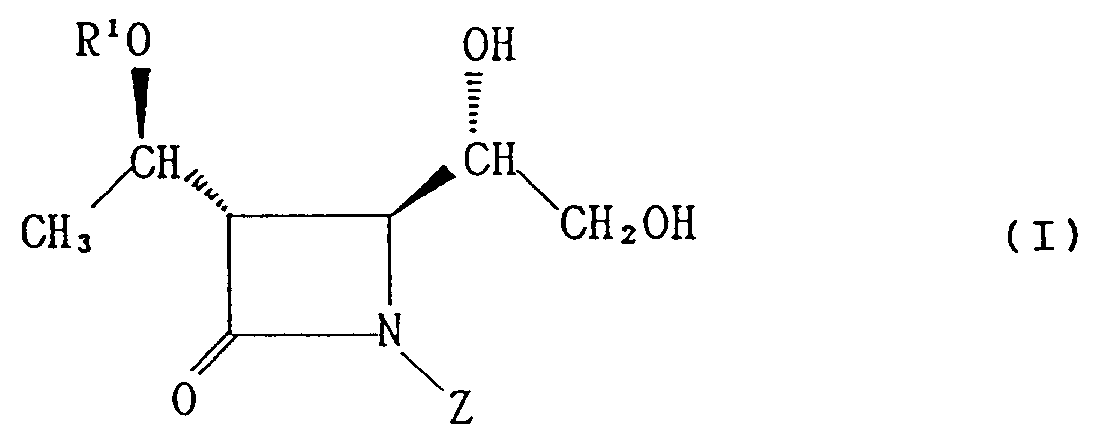
with an oxygen-containing gas in the presence of a platinum-type catalyst, (b) reacting the resulting compound represented by formula
with a halogenating agent, if required after the carboxyl group is protected, and (c) dehalogenating the resulting compound represented by formula
X denotes a halogen atom, and
Y1 denotes a halogen atom or OR2,
by catalytic reduction or reduction with a metal in an acid, if required after esterifying it when Y1 is a halogen atom. - The process of claim 8 wherein the dehalogenation in step (c) is reductively conducting using a Zn-acetic acid system.
- The process of claim 9 wherein the dehalogenation is conducted at a temperature of -30 to 50°C.
- The process of claim 10 wherein the dehalogenation is conducted at a temperature of 0 to 25°C.
- The process of claim 9 wherein the dehalogenation is conducted in a medium of acetic acid using 1 to 100 equivalents, per mol of the compound of formula (III), of zinc powder.
Applications Claiming Priority (2)
| Application Number | Priority Date | Filing Date | Title |
|---|---|---|---|
| JP260278/89 | 1989-10-06 | ||
| JP1260278A JPH03123770A (en) | 1989-10-06 | 1989-10-06 | Azetidinone derivatives and their production method |
Publications (3)
| Publication Number | Publication Date |
|---|---|
| EP0421440A2 EP0421440A2 (en) | 1991-04-10 |
| EP0421440A3 EP0421440A3 (en) | 1992-04-01 |
| EP0421440B1 true EP0421440B1 (en) | 1997-05-28 |
Family
ID=17345831
Family Applications (1)
| Application Number | Title | Priority Date | Filing Date |
|---|---|---|---|
| EP90119089A Expired - Lifetime EP0421440B1 (en) | 1989-10-06 | 1990-10-05 | Process for producing azetidinone derivatives |
Country Status (4)
| Country | Link |
|---|---|
| US (1) | US5149802A (en) |
| EP (1) | EP0421440B1 (en) |
| JP (1) | JPH03123770A (en) |
| DE (1) | DE69030800T2 (en) |
Families Citing this family (1)
| Publication number | Priority date | Publication date | Assignee | Title |
|---|---|---|---|---|
| US5371215A (en) * | 1991-03-20 | 1994-12-06 | American Cyanamid Company | 4-substituted azetidinones as precursors to 2-substituted-3-carboxy carbapenem antibiotics and a method of producing them |
Family Cites Families (12)
| Publication number | Priority date | Publication date | Assignee | Title |
|---|---|---|---|---|
| US3717647A (en) * | 1971-04-09 | 1973-02-20 | Schering Corp | Alpha-nicotinoyl phenylacetonitriles |
| ES425972A1 (en) * | 1974-05-04 | 1976-09-16 | Made Labor Sa | Compound 3,4,5-trimethoxyphenyl-(3,4-dimethyl-2-pyridyl)-carbonyl |
| JPS53141218A (en) * | 1977-05-16 | 1978-12-08 | Kao Corp | Oxidation of non-ionic surfactants |
| DE2851788A1 (en) * | 1978-11-30 | 1980-06-12 | Bayer Ag | METHOD FOR THE PRODUCTION OF ARYLOXIC ACID |
| US4287123A (en) * | 1980-01-14 | 1981-09-01 | Merck & Co., Inc. | Synthesis of thienamycin via (3SR, 4RS)-3-((RS)-1-acyloxyethyl)-2-oxo-4-azetidineacetate |
| EP0146735A1 (en) * | 1983-11-23 | 1985-07-03 | F. HOFFMANN-LA ROCHE & CO. Aktiengesellschaft | Optically uniform beta-lactams |
| EP0160876A1 (en) * | 1984-04-23 | 1985-11-13 | Merck & Co. Inc. | 1-Hetero-6-/1-Hydroxyethyl/-2-SR8-1-carbadethiapen-2-EM-3-carboxylic acids |
| DE3522032A1 (en) * | 1985-06-20 | 1987-01-02 | Hoechst Ag | METHOD FOR THE PRODUCTION OF CARBONIC ACIDS |
| FR2586146A1 (en) * | 1985-08-09 | 1987-02-13 | Pham Dang Tam | HIGH POWER ELECTRONIC VOLTAGE CONVERTER |
| JPS634656A (en) * | 1986-06-25 | 1988-01-09 | Narumi China Corp | Soldering pretreatment of connecting terminal of vessel for semiconductor device |
| DE3643461A1 (en) * | 1986-12-19 | 1988-06-30 | Bayer Ag | beta -Lactam hydroxycarboxylic acid esters, process for their preparation, and their use |
| JPS63156788A (en) * | 1986-12-22 | 1988-06-29 | Sanraku Inc | Optically active azetidinones |
-
1989
- 1989-10-06 JP JP1260278A patent/JPH03123770A/en active Pending
-
1990
- 1990-10-05 EP EP90119089A patent/EP0421440B1/en not_active Expired - Lifetime
- 1990-10-05 DE DE69030800T patent/DE69030800T2/en not_active Expired - Fee Related
-
1991
- 1991-07-10 US US07/729,771 patent/US5149802A/en not_active Expired - Fee Related
Also Published As
| Publication number | Publication date |
|---|---|
| EP0421440A3 (en) | 1992-04-01 |
| DE69030800D1 (en) | 1997-07-03 |
| JPH03123770A (en) | 1991-05-27 |
| EP0421440A2 (en) | 1991-04-10 |
| DE69030800T2 (en) | 1997-09-11 |
| US5149802A (en) | 1992-09-22 |
Similar Documents
| Publication | Publication Date | Title |
|---|---|---|
| EP0180252B1 (en) | Process of preparing azetidinone compounds | |
| US4552695A (en) | Process for production of diltiazem hydrochloride | |
| KR900005257B1 (en) | β-lactam antibiotics and preparation method thereof | |
| EP0371004A1 (en) | [(1-Alkoxy-1-methyl)-ethoxy]-amines, their preparation and their use for the preparation of 3-acylamino-1-hydroxy-2-azetidinones | |
| IE881327L (en) | Novel process for the manufacture of¹4-acyloxy-3-hydroxyethyl-azetidinones | |
| JPH0557980B2 (en) | ||
| EP0062840B1 (en) | Process for the preparation of (2s)-tetrahydro-2alpha-methyl-6-oxo-4beta-amino-2h-pyran-3alpha-carboxylic acid esters | |
| US4882429A (en) | Stereospecific preparation of (3S,4R,5R)-3-(1-hydroxyethyl)-4-benzoyloxy-azeridinones from L-(-)-theonine | |
| KR100205767B1 (en) | Stereoselective preparation method of azetidinone | |
| EP0421440A2 (en) | Process for producing azetidinone derivatives | |
| WO2002012230A1 (en) | Intermediate of carbapenem antibiotics and process for the preparation thereof | |
| US5081239A (en) | Ruthenium catalyzed process for preparing 4-acetoxyazetidinones | |
| US4458071A (en) | Process for 1-oxa-β-lactams | |
| KR910005230B1 (en) | Process for producing azetidinones | |
| US4440682A (en) | Stereospecific synthesis of isocephalosporins and 2-oxa isocephalosporins | |
| US4789740A (en) | Halogenation process for preparing 2-(oxoazetidinyl)-3-chloromethyl-3-butenoate | |
| EP0406790B1 (en) | Process for penems | |
| JP3747329B2 (en) | Method for producing 3-aminoazetidinone derivative | |
| KR100654963B1 (en) | Method for preparing an amide compound | |
| US4169833A (en) | Novel phosphorane intermediates for use in preparing penem antibiotics | |
| KR20040099963A (en) | Chiral 2-azetidinone compounds, process and use thereof | |
| US4716226A (en) | Optically active 4-carbalkoxy-2-azetidinones | |
| US5399679A (en) | (1'R,3S,4R)4-acylthio azetidinones | |
| KR100283608B1 (en) | Method of preparing 1-betamethyl-2-formyl carbapenem derivatives | |
| JPS6344560A (en) | Production of azetidinones |
Legal Events
| Date | Code | Title | Description |
|---|---|---|---|
| PUAI | Public reference made under article 153(3) epc to a published international application that has entered the european phase |
Free format text: ORIGINAL CODE: 0009012 |
|
| AK | Designated contracting states |
Kind code of ref document: A2 Designated state(s): DE FR GB IT |
|
| PUAL | Search report despatched |
Free format text: ORIGINAL CODE: 0009013 |
|
| AK | Designated contracting states |
Kind code of ref document: A3 Designated state(s): DE FR GB IT |
|
| 17P | Request for examination filed |
Effective date: 19920827 |
|
| 17Q | First examination report despatched |
Effective date: 19950309 |
|
| GRAG | Despatch of communication of intention to grant |
Free format text: ORIGINAL CODE: EPIDOS AGRA |
|
| GRAH | Despatch of communication of intention to grant a patent |
Free format text: ORIGINAL CODE: EPIDOS IGRA |
|
| GRAH | Despatch of communication of intention to grant a patent |
Free format text: ORIGINAL CODE: EPIDOS IGRA |
|
| GRAA | (expected) grant |
Free format text: ORIGINAL CODE: 0009210 |
|
| AK | Designated contracting states |
Kind code of ref document: B1 Designated state(s): DE FR GB IT |
|
| REF | Corresponds to: |
Ref document number: 69030800 Country of ref document: DE Date of ref document: 19970703 |
|
| ET | Fr: translation filed | ||
| PLBE | No opposition filed within time limit |
Free format text: ORIGINAL CODE: 0009261 |
|
| STAA | Information on the status of an ep patent application or granted ep patent |
Free format text: STATUS: NO OPPOSITION FILED WITHIN TIME LIMIT |
|
| 26N | No opposition filed | ||
| PGFP | Annual fee paid to national office [announced via postgrant information from national office to epo] |
Ref country code: DE Payment date: 19990920 Year of fee payment: 10 |
|
| PGFP | Annual fee paid to national office [announced via postgrant information from national office to epo] |
Ref country code: GB Payment date: 19990929 Year of fee payment: 10 |
|
| PGFP | Annual fee paid to national office [announced via postgrant information from national office to epo] |
Ref country code: FR Payment date: 19991026 Year of fee payment: 10 |
|
| PG25 | Lapsed in a contracting state [announced via postgrant information from national office to epo] |
Ref country code: GB Free format text: LAPSE BECAUSE OF NON-PAYMENT OF DUE FEES Effective date: 20001005 |
|
| GBPC | Gb: european patent ceased through non-payment of renewal fee |
Effective date: 20001005 |
|
| PG25 | Lapsed in a contracting state [announced via postgrant information from national office to epo] |
Ref country code: FR Free format text: LAPSE BECAUSE OF NON-PAYMENT OF DUE FEES Effective date: 20010629 |
|
| PG25 | Lapsed in a contracting state [announced via postgrant information from national office to epo] |
Ref country code: DE Free format text: LAPSE BECAUSE OF NON-PAYMENT OF DUE FEES Effective date: 20010703 |
|
| REG | Reference to a national code |
Ref country code: FR Ref legal event code: ST |
|
| PG25 | Lapsed in a contracting state [announced via postgrant information from national office to epo] |
Ref country code: IT Free format text: LAPSE BECAUSE OF NON-PAYMENT OF DUE FEES;WARNING: LAPSES OF ITALIAN PATENTS WITH EFFECTIVE DATE BEFORE 2007 MAY HAVE OCCURRED AT ANY TIME BEFORE 2007. THE CORRECT EFFECTIVE DATE MAY BE DIFFERENT FROM THE ONE RECORDED. Effective date: 20051005 |