EP0419563B1 - Time release protein - Google Patents
Time release protein Download PDFInfo
- Publication number
- EP0419563B1 EP0419563B1 EP89907551A EP89907551A EP0419563B1 EP 0419563 B1 EP0419563 B1 EP 0419563B1 EP 89907551 A EP89907551 A EP 89907551A EP 89907551 A EP89907551 A EP 89907551A EP 0419563 B1 EP0419563 B1 EP 0419563B1
- Authority
- EP
- European Patent Office
- Prior art keywords
- active ingredient
- formulation
- protein
- time release
- enabling event
- Prior art date
- Legal status (The legal status is an assumption and is not a legal conclusion. Google has not performed a legal analysis and makes no representation as to the accuracy of the status listed.)
- Expired - Lifetime
Links
- 102000004169 proteins and genes Human genes 0.000 title claims abstract description 81
- 108090000623 proteins and genes Proteins 0.000 title claims abstract description 80
- 239000004480 active ingredient Substances 0.000 claims abstract description 94
- 239000002245 particle Substances 0.000 claims abstract description 41
- 238000000034 method Methods 0.000 claims abstract description 34
- 239000000203 mixture Substances 0.000 claims description 36
- 239000000843 powder Substances 0.000 claims description 30
- 238000009472 formulation Methods 0.000 claims description 23
- 239000002904 solvent Substances 0.000 claims description 20
- 239000000463 material Substances 0.000 claims description 16
- 230000008569 process Effects 0.000 claims description 13
- 235000007319 Avena orientalis Nutrition 0.000 claims description 12
- 244000075850 Avena orientalis Species 0.000 claims description 12
- 239000002537 cosmetic Substances 0.000 claims description 9
- 230000008859 change Effects 0.000 claims description 8
- 239000002917 insecticide Substances 0.000 claims description 8
- 239000011148 porous material Substances 0.000 claims description 8
- 235000013339 cereals Nutrition 0.000 claims description 7
- 235000004977 Brassica sinapistrum Nutrition 0.000 claims description 6
- 244000068988 Glycine max Species 0.000 claims description 6
- 235000010469 Glycine max Nutrition 0.000 claims description 6
- 235000021374 legumes Nutrition 0.000 claims description 6
- 239000003039 volatile agent Substances 0.000 claims description 6
- 238000013019 agitation Methods 0.000 claims description 5
- 150000002632 lipids Chemical class 0.000 claims description 5
- 238000001035 drying Methods 0.000 claims description 4
- 229920000642 polymer Polymers 0.000 claims description 4
- 238000013268 sustained release Methods 0.000 claims description 4
- 239000012730 sustained-release form Substances 0.000 claims description 4
- 235000014698 Brassica juncea var multisecta Nutrition 0.000 claims description 3
- 240000002791 Brassica napus Species 0.000 claims description 3
- 235000006008 Brassica napus var napus Nutrition 0.000 claims description 3
- 235000006618 Brassica rapa subsp oleifera Nutrition 0.000 claims description 3
- 244000188595 Brassica sinapistrum Species 0.000 claims description 3
- 244000046052 Phaseolus vulgaris Species 0.000 claims description 3
- 235000010627 Phaseolus vulgaris Nutrition 0.000 claims description 3
- 240000004713 Pisum sativum Species 0.000 claims description 3
- 235000010582 Pisum sativum Nutrition 0.000 claims description 3
- 239000011149 active material Substances 0.000 claims description 3
- 239000003337 fertilizer Substances 0.000 claims description 3
- 239000000417 fungicide Substances 0.000 claims description 3
- 239000004009 herbicide Substances 0.000 claims description 3
- 239000000546 pharmaceutical excipient Substances 0.000 claims description 3
- 235000021307 Triticum Nutrition 0.000 claims description 2
- 230000000895 acaricidal effect Effects 0.000 claims description 2
- 239000000642 acaricide Substances 0.000 claims description 2
- 230000005012 migration Effects 0.000 claims description 2
- 238000013508 migration Methods 0.000 claims description 2
- 238000002560 therapeutic procedure Methods 0.000 claims description 2
- 241000209140 Triticum Species 0.000 claims 1
- 230000000855 fungicidal effect Effects 0.000 claims 1
- 230000002363 herbicidal effect Effects 0.000 claims 1
- 239000012466 permeate Substances 0.000 claims 1
- 239000008194 pharmaceutical composition Substances 0.000 claims 1
- 235000018102 proteins Nutrition 0.000 description 72
- 239000012141 concentrate Substances 0.000 description 34
- LFQSCWFLJHTTHZ-UHFFFAOYSA-N Ethanol Chemical compound CCO LFQSCWFLJHTTHZ-UHFFFAOYSA-N 0.000 description 16
- CSCPPACGZOOCGX-UHFFFAOYSA-N Acetone Chemical compound CC(C)=O CSCPPACGZOOCGX-UHFFFAOYSA-N 0.000 description 13
- KFZMGEQAYNKOFK-UHFFFAOYSA-N Isopropanol Chemical compound CC(C)O KFZMGEQAYNKOFK-UHFFFAOYSA-N 0.000 description 13
- YBGZDTIWKVFICR-JLHYYAGUSA-N Octyl 4-methoxycinnamic acid Chemical compound CCCCC(CC)COC(=O)\C=C\C1=CC=C(OC)C=C1 YBGZDTIWKVFICR-JLHYYAGUSA-N 0.000 description 13
- 239000000126 substance Substances 0.000 description 12
- 239000012528 membrane Substances 0.000 description 11
- 229960001679 octinoxate Drugs 0.000 description 11
- 239000004615 ingredient Substances 0.000 description 10
- 239000006210 lotion Substances 0.000 description 10
- 239000000516 sunscreening agent Substances 0.000 description 10
- 230000000475 sunscreen effect Effects 0.000 description 9
- XLYOFNOQVPJJNP-UHFFFAOYSA-N water Substances O XLYOFNOQVPJJNP-UHFFFAOYSA-N 0.000 description 9
- 239000011324 bead Substances 0.000 description 8
- 239000006071 cream Substances 0.000 description 6
- HYJYGLGUBUDSLJ-UHFFFAOYSA-N pyrethrin Natural products CCC(=O)OC1CC(=C)C2CC3OC3(C)C2C2OC(=O)C(=C)C12 HYJYGLGUBUDSLJ-UHFFFAOYSA-N 0.000 description 6
- 239000007787 solid Substances 0.000 description 6
- 229920001059 synthetic polymer Polymers 0.000 description 6
- ALYNCZNDIQEVRV-UHFFFAOYSA-N 4-aminobenzoic acid Chemical compound NC1=CC=C(C(O)=O)C=C1 ALYNCZNDIQEVRV-UHFFFAOYSA-N 0.000 description 4
- HEDRZPFGACZZDS-UHFFFAOYSA-N Chloroform Chemical compound ClC(Cl)Cl HEDRZPFGACZZDS-UHFFFAOYSA-N 0.000 description 4
- VXSIXFKKSNGRRO-MXOVTSAMSA-N [(1s)-2-methyl-4-oxo-3-[(2z)-penta-2,4-dienyl]cyclopent-2-en-1-yl] (1r,3r)-2,2-dimethyl-3-(2-methylprop-1-enyl)cyclopropane-1-carboxylate;[(1s)-2-methyl-4-oxo-3-[(2z)-penta-2,4-dienyl]cyclopent-2-en-1-yl] (1r,3r)-3-[(e)-3-methoxy-2-methyl-3-oxoprop-1-enyl Chemical class CC1(C)[C@H](C=C(C)C)[C@H]1C(=O)O[C@@H]1C(C)=C(C\C=C/C=C)C(=O)C1.CC1(C)[C@H](/C=C(\C)C(=O)OC)[C@H]1C(=O)O[C@@H]1C(C)=C(C\C=C/C=C)C(=O)C1 VXSIXFKKSNGRRO-MXOVTSAMSA-N 0.000 description 4
- 238000000576 coating method Methods 0.000 description 4
- 239000000178 monomer Substances 0.000 description 4
- 230000002035 prolonged effect Effects 0.000 description 4
- 229940070846 pyrethrins Drugs 0.000 description 4
- 239000002728 pyrethroid Substances 0.000 description 4
- 244000068687 Amelanchier alnifolia Species 0.000 description 3
- 235000009027 Amelanchier alnifolia Nutrition 0.000 description 3
- 241001674044 Blattodea Species 0.000 description 3
- 239000013543 active substance Substances 0.000 description 3
- 150000001298 alcohols Chemical class 0.000 description 3
- 239000012298 atmosphere Substances 0.000 description 3
- 125000003178 carboxy group Chemical group [H]OC(*)=O 0.000 description 3
- SBPBAQFWLVIOKP-UHFFFAOYSA-N chlorpyrifos Chemical compound CCOP(=S)(OCC)OC1=NC(Cl)=C(Cl)C=C1Cl SBPBAQFWLVIOKP-UHFFFAOYSA-N 0.000 description 3
- 239000011248 coating agent Substances 0.000 description 3
- 238000013270 controlled release Methods 0.000 description 3
- 238000009792 diffusion process Methods 0.000 description 3
- 239000000839 emulsion Substances 0.000 description 3
- 238000005516 engineering process Methods 0.000 description 3
- 238000001704 evaporation Methods 0.000 description 3
- 230000008020 evaporation Effects 0.000 description 3
- 238000002474 experimental method Methods 0.000 description 3
- 239000007788 liquid Substances 0.000 description 3
- VPKDCDLSJZCGKE-UHFFFAOYSA-N methanediimine Chemical compound N=C=N VPKDCDLSJZCGKE-UHFFFAOYSA-N 0.000 description 3
- 239000002480 mineral oil Substances 0.000 description 3
- 235000010446 mineral oil Nutrition 0.000 description 3
- 239000003921 oil Substances 0.000 description 3
- 239000011368 organic material Substances 0.000 description 3
- -1 pharmaceutical Substances 0.000 description 3
- 238000002360 preparation method Methods 0.000 description 3
- 230000002829 reductive effect Effects 0.000 description 3
- 239000002002 slurry Substances 0.000 description 3
- 239000000243 solution Substances 0.000 description 3
- 239000000725 suspension Substances 0.000 description 3
- 244000066764 Ailanthus triphysa Species 0.000 description 2
- FIPWRIJSWJWJAI-UHFFFAOYSA-N Butyl carbitol 6-propylpiperonyl ether Chemical compound C1=C(CCC)C(COCCOCCOCCCC)=CC2=C1OCO2 FIPWRIJSWJWJAI-UHFFFAOYSA-N 0.000 description 2
- 241000238631 Hexapoda Species 0.000 description 2
- 206010020751 Hypersensitivity Diseases 0.000 description 2
- LRHPLDYGYMQRHN-UHFFFAOYSA-N N-Butanol Chemical compound CCCCO LRHPLDYGYMQRHN-UHFFFAOYSA-N 0.000 description 2
- 239000004372 Polyvinyl alcohol Substances 0.000 description 2
- VQXSOUPNOZTNAI-UHFFFAOYSA-N Pyrethrin I Natural products CC(=CC1CC1C(=O)OC2CC(=O)C(=C2C)CC=C/C=C)C VQXSOUPNOZTNAI-UHFFFAOYSA-N 0.000 description 2
- 230000002411 adverse Effects 0.000 description 2
- 125000003277 amino group Chemical group 0.000 description 2
- 239000000969 carrier Substances 0.000 description 2
- 150000001875 compounds Chemical class 0.000 description 2
- 238000010790 dilution Methods 0.000 description 2
- 239000012895 dilution Substances 0.000 description 2
- 239000003814 drug Substances 0.000 description 2
- 230000000694 effects Effects 0.000 description 2
- 238000005538 encapsulation Methods 0.000 description 2
- 235000013305 food Nutrition 0.000 description 2
- 239000000499 gel Substances 0.000 description 2
- 238000010438 heat treatment Methods 0.000 description 2
- 239000001257 hydrogen Substances 0.000 description 2
- 229910052739 hydrogen Inorganic materials 0.000 description 2
- 238000005470 impregnation Methods 0.000 description 2
- 230000000749 insecticidal effect Effects 0.000 description 2
- 230000001788 irregular Effects 0.000 description 2
- 238000011068 loading method Methods 0.000 description 2
- 239000011159 matrix material Substances 0.000 description 2
- 238000003801 milling Methods 0.000 description 2
- 238000002156 mixing Methods 0.000 description 2
- 229960005235 piperonyl butoxide Drugs 0.000 description 2
- 229920002451 polyvinyl alcohol Polymers 0.000 description 2
- VJFUPGQZSXIULQ-XIGJTORUSA-N pyrethrin II Chemical compound CC1(C)[C@H](/C=C(\C)C(=O)OC)[C@H]1C(=O)O[C@@H]1C(C)=C(C\C=C/C=C)C(=O)C1 VJFUPGQZSXIULQ-XIGJTORUSA-N 0.000 description 2
- 238000011084 recovery Methods 0.000 description 2
- GHMLBKRAJCXXBS-UHFFFAOYSA-N resorcinol Chemical compound OC1=CC=CC(O)=C1 GHMLBKRAJCXXBS-UHFFFAOYSA-N 0.000 description 2
- 238000000926 separation method Methods 0.000 description 2
- 238000000638 solvent extraction Methods 0.000 description 2
- 230000000699 topical effect Effects 0.000 description 2
- OBDKTQFLFFCZBN-UHFFFAOYSA-N 1-(cyclohepten-1-yl)-2-octylcycloheptene Chemical compound C1CCCCC(CCCCCCCC)=C1C1=CCCCCC1 OBDKTQFLFFCZBN-UHFFFAOYSA-N 0.000 description 1
- LMDZBCPBFSXMTL-UHFFFAOYSA-N 1-ethyl-3-(3-dimethylaminopropyl)carbodiimide Chemical compound CCN=C=NCCCN(C)C LMDZBCPBFSXMTL-UHFFFAOYSA-N 0.000 description 1
- 244000215068 Acacia senegal Species 0.000 description 1
- 208000002874 Acne Vulgaris Diseases 0.000 description 1
- 239000004342 Benzoyl peroxide Substances 0.000 description 1
- OMPJBNCRMGITSC-UHFFFAOYSA-N Benzoylperoxide Chemical compound C=1C=CC=CC=1C(=O)OOC(=O)C1=CC=CC=C1 OMPJBNCRMGITSC-UHFFFAOYSA-N 0.000 description 1
- 241000282472 Canis lupus familiaris Species 0.000 description 1
- 102000008186 Collagen Human genes 0.000 description 1
- 108010035532 Collagen Proteins 0.000 description 1
- 229920002307 Dextran Polymers 0.000 description 1
- 240000008620 Fagopyrum esculentum Species 0.000 description 1
- 235000009419 Fagopyrum esculentum Nutrition 0.000 description 1
- 108010010803 Gelatin Proteins 0.000 description 1
- 229920000084 Gum arabic Polymers 0.000 description 1
- 240000005979 Hordeum vulgare Species 0.000 description 1
- 235000007340 Hordeum vulgare Nutrition 0.000 description 1
- FFEARJCKVFRZRR-BYPYZUCNSA-N L-methionine Chemical compound CSCC[C@H](N)C(O)=O FFEARJCKVFRZRR-BYPYZUCNSA-N 0.000 description 1
- QIVBCDIJIAJPQS-VIFPVBQESA-N L-tryptophane Chemical compound C1=CC=C2C(C[C@H](N)C(O)=O)=CNC2=C1 QIVBCDIJIAJPQS-VIFPVBQESA-N 0.000 description 1
- 241000209056 Secale Species 0.000 description 1
- 235000007238 Secale cereale Nutrition 0.000 description 1
- 206010040880 Skin irritation Diseases 0.000 description 1
- 235000019714 Triticale Nutrition 0.000 description 1
- 244000098338 Triticum aestivum Species 0.000 description 1
- QIVBCDIJIAJPQS-UHFFFAOYSA-N Tryptophan Natural products C1=CC=C2C(CC(N)C(O)=O)=CNC2=C1 QIVBCDIJIAJPQS-UHFFFAOYSA-N 0.000 description 1
- XSQUKJJJFZCRTK-UHFFFAOYSA-N Urea Chemical compound NC(N)=O XSQUKJJJFZCRTK-UHFFFAOYSA-N 0.000 description 1
- XABUTYXAHYMCDK-RKQHYHRCSA-N [(2r,3s,4s,5r,6s)-3,4,5-trihydroxy-6-(4-hydroxyphenoxy)oxan-2-yl]methyl acetate Chemical compound O[C@@H]1[C@@H](O)[C@H](O)[C@@H](COC(=O)C)O[C@H]1OC1=CC=C(O)C=C1 XABUTYXAHYMCDK-RKQHYHRCSA-N 0.000 description 1
- 238000010521 absorption reaction Methods 0.000 description 1
- 239000000205 acacia gum Substances 0.000 description 1
- 235000010489 acacia gum Nutrition 0.000 description 1
- 239000002253 acid Substances 0.000 description 1
- 238000003916 acid precipitation Methods 0.000 description 1
- 206010000496 acne Diseases 0.000 description 1
- 150000001338 aliphatic hydrocarbons Chemical class 0.000 description 1
- SHGAZHPCJJPHSC-YCNIQYBTSA-N all-trans-retinoic acid Chemical compound OC(=O)\C=C(/C)\C=C\C=C(/C)\C=C\C1=C(C)CCCC1(C)C SHGAZHPCJJPHSC-YCNIQYBTSA-N 0.000 description 1
- 208000026935 allergic disease Diseases 0.000 description 1
- 230000007815 allergy Effects 0.000 description 1
- 239000003242 anti bacterial agent Substances 0.000 description 1
- 230000003466 anti-cipated effect Effects 0.000 description 1
- 239000002260 anti-inflammatory agent Substances 0.000 description 1
- 229940121363 anti-inflammatory agent Drugs 0.000 description 1
- 230000001139 anti-pruritic effect Effects 0.000 description 1
- 229940088710 antibiotic agent Drugs 0.000 description 1
- 239000003908 antipruritic agent Substances 0.000 description 1
- 239000007864 aqueous solution Substances 0.000 description 1
- 239000003212 astringent agent Substances 0.000 description 1
- 235000019400 benzoyl peroxide Nutrition 0.000 description 1
- 210000001124 body fluid Anatomy 0.000 description 1
- 239000010839 body fluid Substances 0.000 description 1
- 239000004202 carbamide Substances 0.000 description 1
- 230000015556 catabolic process Effects 0.000 description 1
- 238000005119 centrifugation Methods 0.000 description 1
- 238000006243 chemical reaction Methods 0.000 description 1
- 239000007795 chemical reaction product Substances 0.000 description 1
- 239000003153 chemical reaction reagent Substances 0.000 description 1
- 239000003795 chemical substances by application Substances 0.000 description 1
- 229920001436 collagen Polymers 0.000 description 1
- 239000013065 commercial product Substances 0.000 description 1
- 238000004891 communication Methods 0.000 description 1
- 239000002131 composite material Substances 0.000 description 1
- 239000006184 cosolvent Substances 0.000 description 1
- 230000007423 decrease Effects 0.000 description 1
- 239000007857 degradation product Substances 0.000 description 1
- 238000006731 degradation reaction Methods 0.000 description 1
- 239000002781 deodorant agent Substances 0.000 description 1
- 230000001419 dependent effect Effects 0.000 description 1
- 239000006185 dispersion Substances 0.000 description 1
- 238000004090 dissolution Methods 0.000 description 1
- 230000005684 electric field Effects 0.000 description 1
- 238000010828 elution Methods 0.000 description 1
- 238000004945 emulsification Methods 0.000 description 1
- 230000007613 environmental effect Effects 0.000 description 1
- 239000000945 filler Substances 0.000 description 1
- 239000003205 fragrance Chemical class 0.000 description 1
- 210000001035 gastrointestinal tract Anatomy 0.000 description 1
- 239000008273 gelatin Substances 0.000 description 1
- 229920000159 gelatin Polymers 0.000 description 1
- 235000019322 gelatine Nutrition 0.000 description 1
- 235000011852 gelatine desserts Nutrition 0.000 description 1
- 239000011521 glass Substances 0.000 description 1
- 150000004676 glycans Chemical class 0.000 description 1
- 239000008187 granular material Substances 0.000 description 1
- 239000000383 hazardous chemical Substances 0.000 description 1
- 230000036541 health Effects 0.000 description 1
- 231100000206 health hazard Toxicity 0.000 description 1
- 230000003993 interaction Effects 0.000 description 1
- 238000002955 isolation Methods 0.000 description 1
- XUGNVMKQXJXZCD-UHFFFAOYSA-N isopropyl palmitate Chemical compound CCCCCCCCCCCCCCCC(=O)OC(C)C XUGNVMKQXJXZCD-UHFFFAOYSA-N 0.000 description 1
- 239000003350 kerosene Substances 0.000 description 1
- 230000002147 killing effect Effects 0.000 description 1
- 230000002045 lasting effect Effects 0.000 description 1
- 239000003446 ligand Substances 0.000 description 1
- 230000000670 limiting effect Effects 0.000 description 1
- 229930182817 methionine Natural products 0.000 description 1
- 239000003094 microcapsule Substances 0.000 description 1
- 239000003595 mist Substances 0.000 description 1
- 230000004048 modification Effects 0.000 description 1
- 238000012986 modification Methods 0.000 description 1
- 230000003020 moisturizing effect Effects 0.000 description 1
- WLLGXSLBOPFWQV-OTHKPKEBSA-N molport-035-783-878 Chemical compound C([C@H]1C=C2)[C@H]2C2C1C(=O)N(CC(CC)CCCC)C2=O WLLGXSLBOPFWQV-OTHKPKEBSA-N 0.000 description 1
- 238000000465 moulding Methods 0.000 description 1
- 235000015097 nutrients Nutrition 0.000 description 1
- 239000003960 organic solvent Substances 0.000 description 1
- 238000000643 oven drying Methods 0.000 description 1
- 238000003921 particle size analysis Methods 0.000 description 1
- 230000035515 penetration Effects 0.000 description 1
- 238000010647 peptide synthesis reaction Methods 0.000 description 1
- 239000000575 pesticide Substances 0.000 description 1
- 229920000058 polyacrylate Polymers 0.000 description 1
- 238000012667 polymer degradation Methods 0.000 description 1
- 238000006116 polymerization reaction Methods 0.000 description 1
- 229920001282 polysaccharide Polymers 0.000 description 1
- 239000005017 polysaccharide Substances 0.000 description 1
- 229920000136 polysorbate Polymers 0.000 description 1
- 229940068965 polysorbates Drugs 0.000 description 1
- 239000000047 product Substances 0.000 description 1
- 230000001681 protective effect Effects 0.000 description 1
- 230000009145 protein modification Effects 0.000 description 1
- XABUTYXAHYMCDK-UHFFFAOYSA-N pyroside Natural products OC1C(O)C(O)C(COC(=O)C)OC1OC1=CC=C(O)C=C1 XABUTYXAHYMCDK-UHFFFAOYSA-N 0.000 description 1
- 238000009790 rate-determining step (RDS) Methods 0.000 description 1
- 239000013557 residual solvent Substances 0.000 description 1
- 230000004044 response Effects 0.000 description 1
- 229930002330 retinoic acid Natural products 0.000 description 1
- 230000036556 skin irritation Effects 0.000 description 1
- 231100000475 skin irritation Toxicity 0.000 description 1
- 230000035943 smell Effects 0.000 description 1
- 238000001694 spray drying Methods 0.000 description 1
- 239000003381 stabilizer Substances 0.000 description 1
- 238000003756 stirring Methods 0.000 description 1
- 239000004094 surface-active agent Substances 0.000 description 1
- 238000012360 testing method Methods 0.000 description 1
- 231100000331 toxic Toxicity 0.000 description 1
- 231100000816 toxic dose Toxicity 0.000 description 1
- 230000002588 toxic effect Effects 0.000 description 1
- 229960001727 tretinoin Drugs 0.000 description 1
- 238000001291 vacuum drying Methods 0.000 description 1
- 235000013311 vegetables Nutrition 0.000 description 1
- 230000004580 weight loss Effects 0.000 description 1
- 235000019709 white bean protein Nutrition 0.000 description 1
- 241000228158 x Triticosecale Species 0.000 description 1
Images


Classifications
-
- A—HUMAN NECESSITIES
- A01—AGRICULTURE; FORESTRY; ANIMAL HUSBANDRY; HUNTING; TRAPPING; FISHING
- A01N—PRESERVATION OF BODIES OF HUMANS OR ANIMALS OR PLANTS OR PARTS THEREOF; BIOCIDES, e.g. AS DISINFECTANTS, AS PESTICIDES OR AS HERBICIDES; PEST REPELLANTS OR ATTRACTANTS; PLANT GROWTH REGULATORS
- A01N25/00—Biocides, pest repellants or attractants, or plant growth regulators, characterised by their forms, or by their non-active ingredients or by their methods of application, e.g. seed treatment or sequential application; Substances for reducing the noxious effect of the active ingredients to organisms other than pests
- A01N25/08—Biocides, pest repellants or attractants, or plant growth regulators, characterised by their forms, or by their non-active ingredients or by their methods of application, e.g. seed treatment or sequential application; Substances for reducing the noxious effect of the active ingredients to organisms other than pests containing solids as carriers or diluents
- A01N25/10—Macromolecular compounds
-
- A—HUMAN NECESSITIES
- A01—AGRICULTURE; FORESTRY; ANIMAL HUSBANDRY; HUNTING; TRAPPING; FISHING
- A01N—PRESERVATION OF BODIES OF HUMANS OR ANIMALS OR PLANTS OR PARTS THEREOF; BIOCIDES, e.g. AS DISINFECTANTS, AS PESTICIDES OR AS HERBICIDES; PEST REPELLANTS OR ATTRACTANTS; PLANT GROWTH REGULATORS
- A01N25/00—Biocides, pest repellants or attractants, or plant growth regulators, characterised by their forms, or by their non-active ingredients or by their methods of application, e.g. seed treatment or sequential application; Substances for reducing the noxious effect of the active ingredients to organisms other than pests
- A01N25/26—Biocides, pest repellants or attractants, or plant growth regulators, characterised by their forms, or by their non-active ingredients or by their methods of application, e.g. seed treatment or sequential application; Substances for reducing the noxious effect of the active ingredients to organisms other than pests in coated particulate form
-
- A—HUMAN NECESSITIES
- A61—MEDICAL OR VETERINARY SCIENCE; HYGIENE
- A61K—PREPARATIONS FOR MEDICAL, DENTAL OR TOILETRY PURPOSES
- A61K8/00—Cosmetics or similar toiletry preparations
- A61K8/02—Cosmetics or similar toiletry preparations characterised by special physical form
- A61K8/0241—Containing particulates characterized by their shape and/or structure
- A61K8/0279—Porous; Hollow
-
- A—HUMAN NECESSITIES
- A61—MEDICAL OR VETERINARY SCIENCE; HYGIENE
- A61K—PREPARATIONS FOR MEDICAL, DENTAL OR TOILETRY PURPOSES
- A61K8/00—Cosmetics or similar toiletry preparations
- A61K8/18—Cosmetics or similar toiletry preparations characterised by the composition
- A61K8/30—Cosmetics or similar toiletry preparations characterised by the composition containing organic compounds
- A61K8/64—Proteins; Peptides; Derivatives or degradation products thereof
- A61K8/645—Proteins of vegetable origin; Derivatives or degradation products thereof
-
- A—HUMAN NECESSITIES
- A61—MEDICAL OR VETERINARY SCIENCE; HYGIENE
- A61K—PREPARATIONS FOR MEDICAL, DENTAL OR TOILETRY PURPOSES
- A61K9/00—Medicinal preparations characterised by special physical form
- A61K9/14—Particulate form, e.g. powders, Processes for size reducing of pure drugs or the resulting products, Pure drug nanoparticles
- A61K9/16—Agglomerates; Granulates; Microbeadlets ; Microspheres; Pellets; Solid products obtained by spray drying, spray freeze drying, spray congealing,(multiple) emulsion solvent evaporation or extraction
- A61K9/1605—Excipients; Inactive ingredients
- A61K9/1629—Organic macromolecular compounds
- A61K9/1658—Proteins, e.g. albumin, gelatin
-
- A—HUMAN NECESSITIES
- A61—MEDICAL OR VETERINARY SCIENCE; HYGIENE
- A61L—METHODS OR APPARATUS FOR STERILISING MATERIALS OR OBJECTS IN GENERAL; DISINFECTION, STERILISATION OR DEODORISATION OF AIR; CHEMICAL ASPECTS OF BANDAGES, DRESSINGS, ABSORBENT PADS OR SURGICAL ARTICLES; MATERIALS FOR BANDAGES, DRESSINGS, ABSORBENT PADS OR SURGICAL ARTICLES
- A61L9/00—Disinfection, sterilisation or deodorisation of air
- A61L9/015—Disinfection, sterilisation or deodorisation of air using gaseous or vaporous substances, e.g. ozone
- A61L9/04—Disinfection, sterilisation or deodorisation of air using gaseous or vaporous substances, e.g. ozone using substances evaporated in the air without heating
-
- A—HUMAN NECESSITIES
- A61—MEDICAL OR VETERINARY SCIENCE; HYGIENE
- A61L—METHODS OR APPARATUS FOR STERILISING MATERIALS OR OBJECTS IN GENERAL; DISINFECTION, STERILISATION OR DEODORISATION OF AIR; CHEMICAL ASPECTS OF BANDAGES, DRESSINGS, ABSORBENT PADS OR SURGICAL ARTICLES; MATERIALS FOR BANDAGES, DRESSINGS, ABSORBENT PADS OR SURGICAL ARTICLES
- A61L9/00—Disinfection, sterilisation or deodorisation of air
- A61L9/015—Disinfection, sterilisation or deodorisation of air using gaseous or vaporous substances, e.g. ozone
- A61L9/04—Disinfection, sterilisation or deodorisation of air using gaseous or vaporous substances, e.g. ozone using substances evaporated in the air without heating
- A61L9/042—Disinfection, sterilisation or deodorisation of air using gaseous or vaporous substances, e.g. ozone using substances evaporated in the air without heating with the help of a macromolecular compound as a carrier or diluent
-
- A—HUMAN NECESSITIES
- A61—MEDICAL OR VETERINARY SCIENCE; HYGIENE
- A61Q—SPECIFIC USE OF COSMETICS OR SIMILAR TOILETRY PREPARATIONS
- A61Q17/00—Barrier preparations; Preparations brought into direct contact with the skin for affording protection against external influences, e.g. sunlight, X-rays or other harmful rays, corrosive materials, bacteria or insect stings
- A61Q17/02—Barrier preparations; Preparations brought into direct contact with the skin for affording protection against external influences, e.g. sunlight, X-rays or other harmful rays, corrosive materials, bacteria or insect stings containing insect repellants
-
- A—HUMAN NECESSITIES
- A61—MEDICAL OR VETERINARY SCIENCE; HYGIENE
- A61Q—SPECIFIC USE OF COSMETICS OR SIMILAR TOILETRY PREPARATIONS
- A61Q17/00—Barrier preparations; Preparations brought into direct contact with the skin for affording protection against external influences, e.g. sunlight, X-rays or other harmful rays, corrosive materials, bacteria or insect stings
- A61Q17/04—Topical preparations for affording protection against sunlight or other radiation; Topical sun tanning preparations
-
- A—HUMAN NECESSITIES
- A61—MEDICAL OR VETERINARY SCIENCE; HYGIENE
- A61K—PREPARATIONS FOR MEDICAL, DENTAL OR TOILETRY PURPOSES
- A61K2800/00—Properties of cosmetic compositions or active ingredients thereof or formulation aids used therein and process related aspects
- A61K2800/40—Chemical, physico-chemical or functional or structural properties of particular ingredients
- A61K2800/56—Compounds, absorbed onto or entrapped into a solid carrier, e.g. encapsulated perfumes, inclusion compounds, sustained release forms
Definitions
- the present invention relates to vehicles for delivering an active ingredient, and more particularly, to vehicles which release the active ingredient over a prolonged period of time.
- Controlled release of an active ingredient over time has significant advantages in numerous applications over one or more bolus releases of the active ingredient. Sustained release over an extended period of time enables application of a lower overall dose of the active ingredient while minimizing wide concentration gradients which result from multiple bolus applications. For example, in the case of a cream having dermatologic activity, a greater than necessary concentration of the active ingredient must often be applied due to various factors such as dilution due to perspiration, UV-initiated degradation, or volatilization which reduce its efficacy. Thus, the concentration of the active ingredient may start out much higher than necessary, implicating toxic dose or allergy considerations, then decline through and below the effective dosage range. Flattening the dosage curve and extending the delivery time thereof through the use of time release vehicles can achieve significant advantages in many fields, including medicine, cosmetics, pesticides, herbicides, fertilizers and others.
- a first type of carrier comprises beads or droplets of active ingredient encapsulated in a polymeric coating designed to solubilize or rupture under predetermined circumstances to release the active ingredient.
- This first type of microencapsulation generally provides a bolus release of the active ingredient upon the occurrence of the predetermined event to rupture the membrane.
- U.S. Patent No. 3,786,123 to Katzen discloses encapsulation of nutrients in a high protein content vegetable composition which solubilizes in the environment of the digestive tract.
- microencapsulation technique which achieves a more prolonged release of active ingredient over time, utilizes a microencapsulation coating or membrane which is either semi-permeable or porous to allow the active ingredient to diffuse out of the microcapsule.
- a third type of vehicle comprises a porous matrix having an active ingredient dissolved or dispersed throughout.
- the delivery rate of the active ingredient is a function of the porosity of the structure, the solubility of the active ingredient, and other driving forces such as diffusivity responsible for liberating the active ingredient from the matrix.
- United States Patent No. 4,690,825 to Won discloses a time release delivery vehicle comprising a spherical polymeric bead having a network of pores with an active ingredient held within the network to provide controlled release of the active ingredient.
- the synthetic polymer bead carriers are disadvantageous. Microencapsulation in a polymeric bead or shell is typically achieved by adding the active ingredient to a monomer solution prior to or during the polymerization step. As the porous polymer structure is formed, active ingredient is entrapped within the pores. It is also possible that excess monomer can be trapped within the pores to be released with the active ingredient. The presence of monomer presents a potential health hazard. Synthetic polymer microencapsulation vehicles typically have the further disadvantage of imparting an undesirable gritty feel to topical creams made up for cosmetic and dermatologic applications. Regardless of the application, synthetic polymers used for microencapsulation are generally not biodegradable.
- these polymers may not be used in powder forms if there is a possibility of inhalation.
- a small nondegradable particle, if inhaled, can present the possibility of serious health consequences if it remains in the body.
- some synthetic polymers can decompose to give off hazardous chemicals under certain circumstances.
- EP-A-0230647 discloses a sustained release formulation formed by moulding collagen and/or gelatin blended with an active ingredient and a solvent and then allowing the solvent to evaporate.
- DE-A-3104815 (equivalent to US-A-4582719) discloses a protein-based composite formed by mixing physiologically active substances with protein and treating with steam to denature the protein and so entrap the active substance.
- CH-A-573212 discloses granules comprisng a porous support having absorbed therein a chemically active substance, for use in agriculture.
- a controlled time release formulation in powder form either alone or mixed with other media comprising porous particles impregnated with an active material, characterised in that the porous particles comprise a free-flowing proteinaceous fraction obtainable by extracting lipids from comminuted grains and legumes and isolating protein-containing fractions from the residue and drying them to remove indigenous volatiles, or a chemically modified derivative of said proteinaceous fraction.
- the protein particles are usually irregular in shape, and are derived from natural grains and legumes such as canola, beans, oats, rapeseed and soya.
- the particle size is preferably from about 1/10 micron to 50 microns.
- the porous delivery vehicle can further be provided with an outer encapsulating layer to prevent escape of any of the active ingredient from the pores of the delivery vehicle, until exposure to a predetermined triggering agent or event which will remove or render permeable the outer layer.
- a predetermined triggering agent or event which will remove or render permeable the outer layer.
- Such an event could be a change in temperature or pH, exposure to ultraviolet light, or exposure to a solvent for the active ingredient such as perspiration.
- a process according to Claim 17 of preparing a time release delivery vehicle for delivering an active ingredient over time The active ingredient may be dissolved in a suitable solvent, which solvent is removed later after impregnation of the particles with the active ingredient.
- the removal of solvent may not be necessary for some applications.
- An example of such a situation is entrapment of water, or an active ingredient dissolved in water.
- the indigenous volatiles may be removed by any of a variety of known methods such as heating and/or vacuum drying, or removal by solvent extraction.
- the dried powder may then be combined with the active ingredient in any of a number of known ways, such as in a tumble dryer or using spouted bed or fluidised bed or spraydrying techniques.
- the resulting impregnated powder may be used dry, or be formulated into an emulsion or suspension with a medium suitable for any of a variety of cosmetic, pharmaceutical, insecticide or acaricide applications.
- a non-therapeutic method of delivering an active ingredient over time as defined in Claim 23.
- Commencement of the migration step can be made responsive to the occurrence of an enabling event which increases the solubility or diffusivity of the active ingredient. These events may occur at the application site as a result of change of one or more factors such as pH, temperature, moisture content, or mechanical perturbations.
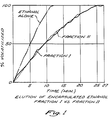
- Figure 1 is a graph comparing evaporation rates of ethanol with encapsulated ethanol.
- Figure 2 is a graph comparing evaporation rates of isopropanol with encapsulated isopropanol.
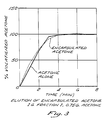
- Figure 3 is a graph comparing evaporation rates of acetone with encapsulated acetone.
- Figure 4 is a graph comparing ethanol elution rates of four different impregnated protein concentrates.
- the present invention provides a porous protein delivery vehicle for delivering an active ingredient over a prolonged period of time.
- the protein concentrate for use in the present invention comprise natural proteins.
- Preferred proteins are derived from grains or legumes such as canola, beans, oats, rapeseed, and soya.
- the Oughton process comprises mixing the proteinaceous material with an aliphatic hydrocarbon or alcohol suitable to dissolve the lipids in the material.
- the wet slurry is distributed by means of centrifugation into fractions which differ primarily in protein composition.
- a similar process is applied to comminuted oats in U.S. Patent Nos. 4,211,695 and 4,211,801 to Oughton.
- U.S. Patent Nos. 4,208,259 and 4,208,260 to Oughton disclose the application of an electric field to the mixture and collection of a comminuted oat fraction which clings to the anode.
- An improved method of recovery is disclosed in U.S. Patent No. 4,407,841 to Boocock, comprising the addition of aqueous ethanol to the slurry to agglomerate the proteinaceous material and facilitate separation thereof.
- the protein particles are separated to an approximate median particle size of less than 50 microns, and to as fine as 0.1 micron or less depending upon the desired end use of the carrier. For example, a larger particle size (and therefore a larger total pore volume and surface area) can result in a longer period of sustained release.
- the powder is derived from natural grains and legumes, the particles will be irregular in shape, due to crushing and fragmenting during the milling process.
- median particle size can be determined by milling parameters or by using a series of graduated sieves or particle size analysis.
- the protein particles of the present invention are fully biodegradable, and there is no possibility of entrapped unreacted monomer to chemically interact with or be released with the active ingredient, nor are there harmful polymer degradation products that could be released.
- soya protein concentrate is available in 96% pure form from Protein Technologies International, St. Louis, Missouri, USA.
- Great Northern White Bean protein concentrates are available from POS, Ltd., Saskatoon, Canada.
- the protein particles of the present invention are typically smaller in size than the prior art synthetic polymer beads, and the protein particles are also somewhat resilient, whereas the synthetic porous beads known in the art are relatively rigid structures.
- creams and emulsions formulated using the carrier of the present invention exhibit an extraordinarly smooth feel, compared to the gritty texture imparted by prior art porous beads. This is a particularly important feature for certain applications of the time release carrier, such as inclusion in formulations intended for cosmetic or dermatologic use.
- the protein concentrate is advantageously dried prior to use as a carrier according to the present invention, to remove water and other indigenous volatiles which may otherwise reduce the available pore volume necessary for holding the active ingredient.
- residual solvent could reside in the pores which could react adversely with the active ingredient.
- Drying can be accomplished by any of a number of known methods, such as oven drying at elevated temperatures or subjecting the powder to a vacuum with or without the addition of heat. Alternatively, solvent extraction methods can be used, depending upon the particular requirements of the active ingredient and the end use of the carrier.
- the dried protein concentrate is then impregnated with any of a variety of active ingredients which are desired for release over a prolonged period of time.
- active ingredient to be used can vary widely, including such diverse applications as in cosmetics, pharmaceuticals, and insecticides. Volatiles can be entrapped, such as alcohol and various fragrance compounds.
- Various ingredients in cosmetics are suitable for entrapment, such as para amino benzoic acid (PABA) or its derivatives and PARSOL (a trademark of Bernel Chemical Company) or other active sunscreen ingredients, as well as moisturizing ingredients such as urea and mineral oil.
- PABA para amino benzoic acid
- PARSOL a trademark of Bernel Chemical Company
- Numerous dermatologically active materials are suitable for entrapment in the carrier of the present invention, including benzoyl peroxide, resorcinol and retinoic acid for acne, and a variety of deodorants.
- Additional pharmaceutically active ingredients can include antibiotics, fungicides, astringents, anti-inflammatory agents and antipruritics.
- Insecticides such as pyrethrins for flea control on pets can be entrapped in the carrier of the present invention, as well as numerous agriculturally related compositions such as herbicides, fungicides, fertilizers and insecticides.
- the foregoing are only illustrative of a few of the many ingredients that can be utilized with the protein particles of the present invention.
- the quantity of the active ingredient to be entrapped will vary depending upon the desired dosage of active ingredient to be delivered in terms of either total volume or total elapsed delivery time, the viscosity and/or volatility of the active ingredient, and other parameters that will be apparent to one of skill in the art.
- Entrapped active ingredient can reach as high as 300% or more by weight of the solids -- i.e., the ratio of entrapped active ingredient to protein particles may approximate a 3:1 ratio by weight.
- Entrapped active ingredient often comprises up to 50% by weight of the solids in many applications contemplated by the within invention.
- Entrapping an active ingredient in the protein concentrate may be accomplished by any of a variety of methods which can be envisioned by one of ordinary skill in the art.
- the active ingredient may be sprayed into the powder in a liquid mist form while the powder is maintained in constant motion.
- the necessary motion can be achieved in any of a variety of commercially available tumble dryers or other equipment designed for agitating a powder.
- spouted bed dryers, fluidized bed dryers or other equipment which will be appreciated by one skilled in the art can be used.
- the active ingredient can be dissolved in a suitable solvent and the protein particles immersed in the resulting solution with or without agitation.
- the introduction of many active ingredients into the porous structure of the protein powder can be facilitated by performing the introduction step at elevated temperatures.
- nonactive ingredients such as surfactants (e.g. polysorbates) and cosolvents (e.g. alcohols) may be encapsulated to modify the release rates of the active ingredient.
- the change in release rates may be due to emulsification or dissolution of the active ingredient.
- the agitation can be ceased and the material cooled. If a solvent was used to carry an active ingredient into the protein particle, that solvent can be evaporated by heating or exposing to a vacuum, or both, depending upon the thermal stability of the active ingredient.
- the delivery vehicle of the present invention can be designed to commence the period of timed release of the active ingredient upon the occurrence of any of a variety of enabling events. This is useful to ensure an acceptable shelf life for the commercial product.
- an active ingredient may solubilize when contacted with perspiration or other body fluid, in which case the solubility may become a part of the rate determining step.
- an active ingredient may solubilize or volatilize in response to a change in temperature or pH.
- an outer layer is provided to encapsulate the impregnated protein particle with an impermeable membrane, which may comprise either a solid or a liquid.
- an impermeable membrane which may comprise either a solid or a liquid.
- the period of controlled release will not commence until the membrane has been ruptured or dissolved. After the rupture or compromise of the outer membrane, the active ingredient will diffuse out of the delivery vehicle in the manner described supra .
- a water soluble membrane may be formed by coating the particle with an aqueous solution of polyvinyl alcohol, and then drying to form a film.
- the carbodimide method and other protein derivitization methods can be used to attach molecules that affect the release rates of the active ingredient.
- the particular molecule attached will depend on characteristics of the active ingredient and the desired release profile.
- lipid-type materials may be attached to slow the release of lipophilic active ingredients.
- Hydrogen bonding characteristics may also be used to slow release of appropriate active ingredients by attaching molecules to which the active ingredient will hydrogen bond.
- Ligand or chelating derivitizing molecules capable of releasably binding the active ingredient are similarly contemplated.
- Protein concentrates modified by these methods can be used not only to tailor the rate of release, but also to achieve the necessary aesthetics for cosmetic and dermatological applications.
- a delivery vehicle can be provided having a permeable outer membrane which will operate in addition to the porous protein structure as a further rate limiting structure.
- membranes are feasible. These can range from an oil layer on the surface of the particles to surface coatings formed from polymers such as Polyvinyl alcohol, polyacrylates, and polysaccharides such as Dextran, Guar, Gum Arabic, etc. Some of these reagents may also be dispersed within the particles.
- an outer membrane will likely be influenced by the intended use of the system. For example, in some pharmaceutical applications, an outer membrane will be selected which will impart desirable suspension characteristics, without introducing toxic or adversely reactive solvents.
- the dried impregnated protein powder can then be mixed with any of a variety of creams, gels, oils, lotions, or other media to form mixtures, emulsions or suspensions for cosmetic, pharmaceutical or other products.
- the powder can be mixed with other dry ingredients such as fillers and stabilizers if it is desired that the end product be delivered in dry form. Any of a variety of known pharmacologically acceptable excipients may additionally be utilized as the delivery medium for the impregnated powder.
- the protein particle carrier of the present invention can be incorporated into any of a vast variety of media for bringing the impregnated particle into communication with the surface where the active ingredient is to be released.
- a medium having a solvent base such as any of the creams, gels, oils, lotions, or other "wet" media
- the active ingredient be insoluble in the solvent of the media.
- the active ingredient will not commence to discharge from the porous protein particle simply by virtue of its contact with the delivery medium.
- an active ingredient which is soluble in water and, hence, in perspiration would optimally be incorporated into a cream or a lotion which is not water-based.
- the protein particle can be encapsulated in an outer impermeable membrane which is designed to rupture or compromise under circumstances other than mere exposure to an aqueous environment.
- Pyrocide Technical 5192 was obtained from MGK of Minneapolis, Minnesota, and is composed of Premium Pyrocide 175 (20% by weight pyrethrins in deodorized kerosene), MGK 264 (an insecticidal synergist: N-octylbicycloheptene dicarboximide), and piperonyl butoxide. Protein Concentrate from oats was used for this study.
- the release rates from the particles are a function of the ingredients and the environment.
- the active ingredient can be released as a result of vapor diffusion to the atmosphere, liquid and/or vapor diffusion to surfaces such as skin and release due to chemical interaction or dilution.
- the experimental data is limited to vapor diffusion to the atmosphere. However, other studies are planned.
- the experimental data are represented graphically in Figures 1 to 4.
- the fractions I and II refer to protein concentrates from oats.
- the data show that the release rate is dependent on the ingredient encapsulated.
- the major effect on release rates is for the organics such as alcohols with reactive groups capable of forming significant association with carboxyl and/or amino groups of the proteins.
- the release rates are not significantly affected for solvents such as acetone, which do not form any significant association with protein particles under the atmospheric conditions.
- solvents such as acetone
- Figure 4 indicates that the release rates are affected by the concentration of protein and its origin.
- the examples use a number of protein concentrates obtained from a research center (POS, Saskatoon, Canada) and International Protein Technologies of St. Louis, Missouri. These concentrates contained 50-90% protein by weight. The particle size of these concentrates ranged from less than 1 micron to 10 microns. A protein concentrate from oats was prepared in our laboratory.
- PARSOL is a popular sunscreen chemical available from Bernel Chemical Company, Engelwood, New Jersey, and used in the preparation of sunscreen lotions.
- the maximum concentration of PARSOL is generally limited to about 6% by weight to minimize any allergic reactions.
- Entrapment of PARSOL in accordance with the present invention can reduce the concentration of the chemical in direct contact with the skin at any one time, yet permit an effective amount of the sunscreen agent to be present at any time during the active life of the lotion.
- the active ingredient can be more stable in entrapped form, and absorption by the skin will be reduced. All of these factors will provide a sunscreen lotion which is more effective, longer lasting, and resulting in reduced skin irritation.
- Extracted oat protein concentrate was prepared which was relatively free of any lipids and contained up to 40% protein.
- the protein concentrates were further dried in a convection oven for two hours at about 45-50°C. This procedure ensured that the protein concentrates were substantially free of volatile compounds such as water.
- a 16-gram sample of PARSOL was weighed out into a beaker and mixed with 16 grams of isopropyl alcohol to fully dissolve the PARSOL.
- a 40-gram sample of oat protein concentrate was thereafter mixed with the alcohol-PARSOL mixture. The resulting mixture was homogenized by manual stirring for approximately 20 minutes, and was allowed to stand for an additional 30 minutes to ensure uniform penetration. The solvent was allowed to evaporate under a hood until a free flowing powder was obtained. The final powder contained about 30% PARSOL by weight. This powder was used to prepare a sunscreen lotion by combining it with mineral oil and isopropyl palmitate. Encapsulated powder showed better stability against UV light compared to PARSOL.
- Example 1 The experiment described in Example 1 above was repeated, using a protein concentrate from Great Northern White Bean. This experiment again resulted in a free-flowing powder impregnated with PARSOL, which was used to make a sunscreen lotion.
- Synergized pyrethrins are a common active chemical used for control of fleas on dogs. Pyrethrins are generally synergized with piperonyl butoxide. One such synergized material is marketed by McLaughlin Gormley King (“MGK”) of Minneapolis, Minnesota. However, these chemicals have unpleasant smells and the life of the chemicals is relatively short after application.
- Protein concentrate as described above was first dried in a convection oven for two hours at about 27-32°C (80-90°F) to remove most of the volatile components.
- a 4 gram sample of MGK pyroside intermediate 5192 was mixed with 6 grams of isopropyl alcohol. This mixture was thoroughly mixed for 30 minutes with the protein concentrate to allow permeation of the alcohol-pyroside intermediate 5192 mixture into the porous structure of the protein. The alcohol was thereafter allowed to evaporate while the mixture was continually stirred to maintain uniform dispersion of the active ingredient. The resulting powder showed much reduced odor.
- a test conducted at the University of California, Riverside indicated that the material is effective in extermination of roaches and fleas. The encapsulated pyrethrin showed better stability against UV light compared to unencapsulated pyrethrin.
- Dursban is the trademark for an insecticide marketed by Dow Chemical Company. The major use of this chemical is for the environmental control of insects and roaches, and the chemical is characterized by a strong, unpleasant odor. Thus, Dursban was impregnated into the porous structure of a protein powder to reduce the odor while at the same time allowing a continuous effective release of the active ingredient.
- a powdered protein concentrate from oats of the type previously described was allowed to dry in a convection oven at about 27°-32°C (80-90°F) for about two hours.
- a 0.25-gram sample of Dursban was weighed into a beaker and mixed with 6 ml chloroform to fully dissolve the solids.
- a 100 gram sample of protein concentrate was thereafter introduced into the chloroform-Dursban solution under constant agitation to impregnate the protein concentrate. The mixture was stirred for 30 minutes at room temperature. Chloroform was thereafter allowed to evaporate under a hood while the mixture was maintained under constant agitation until a dry powder was obtained.
- the dried material was a free-flowing powder showing only faint odor, and it was found to be effective in killing German roaches.
- the protein concentrate itself showed significant insecticidal activity. This may be due to disruption of the insects' protective cuticle layer.
Landscapes
- Health & Medical Sciences (AREA)
- Life Sciences & Earth Sciences (AREA)
- General Health & Medical Sciences (AREA)
- Veterinary Medicine (AREA)
- Public Health (AREA)
- Animal Behavior & Ethology (AREA)
- Epidemiology (AREA)
- Engineering & Computer Science (AREA)
- Plant Pathology (AREA)
- Pest Control & Pesticides (AREA)
- Dermatology (AREA)
- Wood Science & Technology (AREA)
- Zoology (AREA)
- Environmental Sciences (AREA)
- Birds (AREA)
- Toxicology (AREA)
- Agronomy & Crop Science (AREA)
- Bioinformatics & Cheminformatics (AREA)
- Dentistry (AREA)
- Chemical & Material Sciences (AREA)
- Pharmacology & Pharmacy (AREA)
- Medicinal Chemistry (AREA)
- Medicinal Preparation (AREA)
- Cosmetics (AREA)
- Agricultural Chemicals And Associated Chemicals (AREA)
- Medicines That Contain Protein Lipid Enzymes And Other Medicines (AREA)
- Manufacturing Of Micro-Capsules (AREA)
- Peptides Or Proteins (AREA)
Abstract
Description
- The present invention relates to vehicles for delivering an active ingredient, and more particularly, to vehicles which release the active ingredient over a prolonged period of time.
- Controlled release of an active ingredient over time has significant advantages in numerous applications over one or more bolus releases of the active ingredient. Sustained release over an extended period of time enables application of a lower overall dose of the active ingredient while minimizing wide concentration gradients which result from multiple bolus applications. For example, in the case of a cream having dermatologic activity, a greater than necessary concentration of the active ingredient must often be applied due to various factors such as dilution due to perspiration, UV-initiated degradation, or volatilization which reduce its efficacy. Thus, the concentration of the active ingredient may start out much higher than necessary, implicating toxic dose or allergy considerations, then decline through and below the effective dosage range. Flattening the dosage curve and extending the delivery time thereof through the use of time release vehicles can achieve significant advantages in many fields, including medicine, cosmetics, pesticides, herbicides, fertilizers and others.
- Known time release vehicles generally fall into one of several categories. A first type of carrier comprises beads or droplets of active ingredient encapsulated in a polymeric coating designed to solubilize or rupture under predetermined circumstances to release the active ingredient. This first type of microencapsulation generally provides a bolus release of the active ingredient upon the occurrence of the predetermined event to rupture the membrane. For example, U.S. Patent No. 3,786,123 to Katzen discloses encapsulation of nutrients in a high protein content vegetable composition which solubilizes in the environment of the digestive tract.
- Another known microencapsulation technique, which achieves a more prolonged release of active ingredient over time, utilizes a microencapsulation coating or membrane which is either semi-permeable or porous to allow the active ingredient to diffuse out of the microcapsule.
- A third type of vehicle comprises a porous matrix having an active ingredient dissolved or dispersed throughout. The delivery rate of the active ingredient is a function of the porosity of the structure, the solubility of the active ingredient, and other driving forces such as diffusivity responsible for liberating the active ingredient from the matrix. For example, United States Patent No. 4,690,825 to Won discloses a time release delivery vehicle comprising a spherical polymeric bead having a network of pores with an active ingredient held within the network to provide controlled release of the active ingredient.
- For some applications, however, the synthetic polymer bead carriers are disadvantageous. Microencapsulation in a polymeric bead or shell is typically achieved by adding the active ingredient to a monomer solution prior to or during the polymerization step. As the porous polymer structure is formed, active ingredient is entrapped within the pores. It is also possible that excess monomer can be trapped within the pores to be released with the active ingredient. The presence of monomer presents a potential health hazard. Synthetic polymer microencapsulation vehicles typically have the further disadvantage of imparting an undesirable gritty feel to topical creams made up for cosmetic and dermatologic applications. Regardless of the application, synthetic polymers used for microencapsulation are generally not biodegradable. Therefore, these polymers may not be used in powder forms if there is a possibility of inhalation. A small nondegradable particle, if inhaled, can present the possibility of serious health consequences if it remains in the body. In addition, some synthetic polymers can decompose to give off hazardous chemicals under certain circumstances. These problems limit the usefulness or detract from the desirability of synthetic polymers in a number of applications.
- EP-A-0230647 discloses a sustained release formulation formed by moulding collagen and/or gelatin blended with an active ingredient and a solvent and then allowing the solvent to evaporate. DE-A-3104815 (equivalent to US-A-4582719) discloses a protein-based composite formed by mixing physiologically active substances with protein and treating with steam to denature the protein and so entrap the active substance. CH-A-573212 discloses granules comprisng a porous support having absorbed therein a chemically active substance, for use in agriculture.
- There is a need for a finely divided powder formulation which has a very smooth feel and can be used inter alia for a range of topical applications, including inclusion into skin care preparations.
- To overcome the foregoing disadvantages of prior art synthetic bead and shell delivery vehicles, there has been provided in accordance with one aspect of the present invention a controlled time release formulation in powder form either alone or mixed with other media comprising porous particles impregnated with an active material, characterised in that the porous particles comprise a free-flowing proteinaceous fraction obtainable by extracting lipids from comminuted grains and legumes and isolating protein-containing fractions from the residue and drying them to remove indigenous volatiles, or a chemically modified derivative of said proteinaceous fraction. The protein particles are usually irregular in shape, and are derived from natural grains and legumes such as canola, beans, oats, rapeseed and soya. In addition, the particle size is preferably from about 1/10 micron to 50 microns. The porous delivery vehicle can further be provided with an outer encapsulating layer to prevent escape of any of the active ingredient from the pores of the delivery vehicle, until exposure to a predetermined triggering agent or event which will remove or render permeable the outer layer. Such an event could be a change in temperature or pH, exposure to ultraviolet light, or exposure to a solvent for the active ingredient such as perspiration.
- In accordance with another aspect of the present invention, there has been provided a process according to Claim 17 of preparing a time release delivery vehicle for delivering an active ingredient over time. The active ingredient may be dissolved in a suitable solvent, which solvent is removed later after impregnation of the particles with the active ingredient. The removal of solvent may not be necessary for some applications. An example of such a situation is entrapment of water, or an active ingredient dissolved in water.
- The indigenous volatiles may be removed by any of a variety of known methods such as heating and/or vacuum drying, or removal by solvent extraction. The dried powder may then be combined with the active ingredient in any of a number of known ways, such as in a tumble dryer or using spouted bed or fluidised bed or spraydrying techniques. The resulting impregnated powder may be used dry, or be formulated into an emulsion or suspension with a medium suitable for any of a variety of cosmetic, pharmaceutical, insecticide or acaricide applications.
- In accordance with a further aspect of the present invention, there has been provided a non-therapeutic method of delivering an active ingredient over time, as defined in
Claim 23. Commencement of the migration step can be made responsive to the occurrence of an enabling event which increases the solubility or diffusivity of the active ingredient. These events may occur at the application site as a result of change of one or more factors such as pH, temperature, moisture content, or mechanical perturbations. - Further features and advantages of the present invention will become apparent from the detailed description of preferred embodiments which follows.
- Figure 1 is a graph comparing evaporation rates of ethanol with encapsulated ethanol.
- Figure 2 is a graph comparing evaporation rates of isopropanol with encapsulated isopropanol.
- Figure 3 is a graph comparing evaporation rates of acetone with encapsulated acetone.
- Figure 4 is a graph comparing ethanol elution rates of four different impregnated protein concentrates.
- The present invention provides a porous protein delivery vehicle for delivering an active ingredient over a prolonged period of time. The protein concentrate for use in the present invention comprise natural proteins. Preferred proteins are derived from grains or legumes such as canola, beans, oats, rapeseed, and soya.
- A number of known processes exist for the preparation of a suitable protein powder for use in the present invention. For example, in U.S. Patent No. 4,089,848 to Bell, the isolation of a proteinaceous fraction from oats is disclosed by extracting lipids from the comminuted oats with an organic solvent, carrying out alkaline and acid precipitation on the residue, and finally isolating the acid soluble protein. Oughton, in U.S. Patent No. 4,154,728, describes another process for separating fractions of differing compositions from comminuted proteinaceous material from a variety of food sources including wheat, rye, barley, triticale, peas and buckwheat. The Oughton process comprises mixing the proteinaceous material with an aliphatic hydrocarbon or alcohol suitable to dissolve the lipids in the material. The wet slurry is distributed by means of centrifugation into fractions which differ primarily in protein composition. A similar process is applied to comminuted oats in U.S. Patent Nos. 4,211,695 and 4,211,801 to Oughton.
- To facilitate recovery of the protein in powder form from the slurry produced in accordance with the foregoing processes, U.S. Patent Nos. 4,208,259 and 4,208,260 to Oughton disclose the application of an electric field to the mixture and collection of a comminuted oat fraction which clings to the anode. An improved method of recovery is disclosed in U.S. Patent No. 4,407,841 to Boocock, comprising the addition of aqueous ethanol to the slurry to agglomerate the proteinaceous material and facilitate separation thereof.
- The protein particles are separated to an approximate median particle size of less than 50 microns, and to as fine as 0.1 micron or less depending upon the desired end use of the carrier. For example, a larger particle size (and therefore a larger total pore volume and surface area) can result in a longer period of sustained release.
- Because the powder is derived from natural grains and legumes, the particles will be irregular in shape, due to crushing and fragmenting during the milling process. However, median particle size can be determined by milling parameters or by using a series of graduated sieves or particle size analysis. Also because of their natural origin, the protein particles of the present invention are fully biodegradable, and there is no possibility of entrapped unreacted monomer to chemically interact with or be released with the active ingredient, nor are there harmful polymer degradation products that could be released.
- Many suitable protein concentrates or protein powders are commercially available. For example, soya protein concentrate is available in 96% pure form from Protein Technologies International, St. Louis, Missouri, USA. Great Northern White Bean protein concentrates are available from POS, Ltd., Saskatoon, Canada.
- Several advantages are accrued through the use of a fine particulate of naturally occurring grain or seed proteins over prior art time release carriers. The protein particles of the present invention are typically smaller in size than the prior art synthetic polymer beads, and the protein particles are also somewhat resilient, whereas the synthetic porous beads known in the art are relatively rigid structures. As a result, creams and emulsions formulated using the carrier of the present invention exhibit an exquisitely smooth feel, compared to the gritty texture imparted by prior art porous beads. This is a particularly important feature for certain applications of the time release carrier, such as inclusion in formulations intended for cosmetic or dermatologic use.
- The protein concentrate is advantageously dried prior to use as a carrier according to the present invention, to remove water and other indigenous volatiles which may otherwise reduce the available pore volume necessary for holding the active ingredient. In addition, depending upon the protein separation process, residual solvent could reside in the pores which could react adversely with the active ingredient.
- Drying can be accomplished by any of a number of known methods, such as oven drying at elevated temperatures or subjecting the powder to a vacuum with or without the addition of heat. Alternatively, solvent extraction methods can be used, depending upon the particular requirements of the active ingredient and the end use of the carrier.
- The dried protein concentrate is then impregnated with any of a variety of active ingredients which are desired for release over a prolonged period of time. The particular active ingredient to be used can vary widely, including such diverse applications as in cosmetics, pharmaceuticals, and insecticides. Volatiles can be entrapped, such as alcohol and various fragrance compounds. Various ingredients in cosmetics are suitable for entrapment, such as para amino benzoic acid (PABA) or its derivatives and PARSOL (a trademark of Bernel Chemical Company) or other active sunscreen ingredients, as well as moisturizing ingredients such as urea and mineral oil. Numerous dermatologically active materials are suitable for entrapment in the carrier of the present invention, including benzoyl peroxide, resorcinol and retinoic acid for acne, and a variety of deodorants. Additional pharmaceutically active ingredients can include antibiotics, fungicides, astringents, anti-inflammatory agents and antipruritics. Insecticides such as pyrethrins for flea control on pets can be entrapped in the carrier of the present invention, as well as numerous agriculturally related compositions such as herbicides, fungicides, fertilizers and insecticides. The foregoing are only illustrative of a few of the many ingredients that can be utilized with the protein particles of the present invention.
- The quantity of the active ingredient to be entrapped will vary depending upon the desired dosage of active ingredient to be delivered in terms of either total volume or total elapsed delivery time, the viscosity and/or volatility of the active ingredient, and other parameters that will be apparent to one of skill in the art. Entrapped active ingredient can reach as high as 300% or more by weight of the solids -- i.e., the ratio of entrapped active ingredient to protein particles may approximate a 3:1 ratio by weight. Entrapped active ingredient often comprises up to 50% by weight of the solids in many applications contemplated by the within invention.
- Entrapping an active ingredient in the protein concentrate may be accomplished by any of a variety of methods which can be envisioned by one of ordinary skill in the art. For example, the active ingredient may be sprayed into the powder in a liquid mist form while the powder is maintained in constant motion. The necessary motion can be achieved in any of a variety of commercially available tumble dryers or other equipment designed for agitating a powder. In addition, spouted bed dryers, fluidized bed dryers or other equipment which will be appreciated by one skilled in the art can be used. Alternatively, the active ingredient can be dissolved in a suitable solvent and the protein particles immersed in the resulting solution with or without agitation. The introduction of many active ingredients into the porous structure of the protein powder can be facilitated by performing the introduction step at elevated temperatures.
- It is further anticipated that some nonactive ingredients such as surfactants (e.g. polysorbates) and cosolvents (e.g. alcohols) may be encapsulated to modify the release rates of the active ingredient. The change in release rates may be due to emulsification or dissolution of the active ingredient.
- After sufficient active ingredient has permeated the structure of the protein powder, the agitation can be ceased and the material cooled. If a solvent was used to carry an active ingredient into the protein particle, that solvent can be evaporated by heating or exposing to a vacuum, or both, depending upon the thermal stability of the active ingredient.
- The delivery vehicle of the present invention can be designed to commence the period of timed release of the active ingredient upon the occurrence of any of a variety of enabling events. This is useful to ensure an acceptable shelf life for the commercial product. For example, an active ingredient may solubilize when contacted with perspiration or other body fluid, in which case the solubility may become a part of the rate determining step. Alternatively, an active ingredient may solubilize or volatilize in response to a change in temperature or pH.
- In a variation of the delivery vehicle of the present invention, an outer layer is provided to encapsulate the impregnated protein particle with an impermeable membrane, which may comprise either a solid or a liquid. In this embodiment, the period of controlled release will not commence until the membrane has been ruptured or dissolved. After the rupture or compromise of the outer membrane, the active ingredient will diffuse out of the delivery vehicle in the manner described supra. For example, a water soluble membrane may be formed by coating the particle with an aqueous solution of polyvinyl alcohol, and then drying to form a film.
- Several methods are available to modify the protein concentrate. These methods have been generally developed by protein chemists for peptide synthesis. These reactions are generally limited to carboxyl and amino groups in the alpha position. One such well-known method is that of Sheehan and Hess, J.Am.Chem.Soc., 77:1067 (1955). According to this method, the carboxyl group of the protein is activated by a water soluble carbodimide such as 1-ethyl-3-(3-dimethylaminopropyl) carbodimide. The carbodimide-activated intermediate is reactive. The activated group can be further reacted with methionine and tryptophan. Processes for using these modifications of soya protein are known and are described by Voutsinas and Nakai, J.Food Sci. 44:1205 (1979).
- The carbodimide method and other protein derivitization methods can be used to attach molecules that affect the release rates of the active ingredient. Of course, the particular molecule attached will depend on characteristics of the active ingredient and the desired release profile. For example, lipid-type materials may be attached to slow the release of lipophilic active ingredients. Hydrogen bonding characteristics may also be used to slow release of appropriate active ingredients by attaching molecules to which the active ingredient will hydrogen bond. Ligand or chelating derivitizing molecules capable of releasably binding the active ingredient are similarly contemplated.
- Protein concentrates modified by these methods can be used not only to tailor the rate of release, but also to achieve the necessary aesthetics for cosmetic and dermatological applications.
- Alternatively, a delivery vehicle can be provided having a permeable outer membrane which will operate in addition to the porous protein structure as a further rate limiting structure. A number of membranes are feasible. These can range from an oil layer on the surface of the particles to surface coatings formed from polymers such as Polyvinyl alcohol, polyacrylates, and polysaccharides such as Dextran, Guar, Gum Arabic, etc. Some of these reagents may also be dispersed within the particles.
- Selection of a particular outer membrane, whether permeable or nonpermeable, will likely be influenced by the intended use of the system. For example, in some pharmaceutical applications, an outer membrane will be selected which will impart desirable suspension characteristics, without introducing toxic or adversely reactive solvents.
- The dried impregnated protein powder, with or without an encapsulating layer, can then be mixed with any of a variety of creams, gels, oils, lotions, or other media to form mixtures, emulsions or suspensions for cosmetic, pharmaceutical or other products. The powder can be mixed with other dry ingredients such as fillers and stabilizers if it is desired that the end product be delivered in dry form. Any of a variety of known pharmacologically acceptable excipients may additionally be utilized as the delivery medium for the impregnated powder.
- Accordingly, the protein particle carrier of the present invention can be incorporated into any of a vast variety of media for bringing the impregnated particle into communication with the surface where the active ingredient is to be released. In the case of a medium having a solvent base, such as any of the creams, gels, oils, lotions, or other "wet" media, it is often desirable that the active ingredient be insoluble in the solvent of the media. In this manner, the active ingredient will not commence to discharge from the porous protein particle simply by virtue of its contact with the delivery medium. For example, in the case of a sunscreen application of the present invention, an active ingredient which is soluble in water and, hence, in perspiration, would optimally be incorporated into a cream or a lotion which is not water-based. If a water-based medium is nonetheless desirable for other reasons, then the protein particle can be encapsulated in an outer impermeable membrane which is designed to rupture or compromise under circumstances other than mere exposure to an aqueous environment.
- A number of active ingredients have been encapsulated using protein concentrates. The maximum amount of material entrapped depends on the characteristics of the active ingredient. In general, the maximum amount of active ingredient has been around 40% by weight of the dry solids. The experimental values for maximum loading are shown in Table 1. These ingredients are fully extractable with solvents.
TABLE 1 Ingredient Maximum Loading Wt % Active Ingredient Mineral Oil 40 Parsol- MCX 40 Pyrocide Technical 5192 40 Note: Parsol-MCX was obtained from Bernel Chemical Company of Engelwood, New Jersey, and consists of 2-ethylhexyl p-methoxycinnamate (commonly referred to as octylmethoxycinnamate).
Pyrocide Technical 5192 was obtained from MGK of Minneapolis, Minnesota, and is composed of Premium Pyrocide 175 (20% by weight pyrethrins in deodorized kerosene), MGK 264 (an insecticidal synergist: N-octylbicycloheptene dicarboximide), and piperonyl butoxide.
Protein Concentrate from oats was used for this study. - The release rates from the particles are a function of the ingredients and the environment. The active ingredient can be released as a result of vapor diffusion to the atmosphere, liquid and/or vapor diffusion to surfaces such as skin and release due to chemical interaction or dilution. At present the experimental data is limited to vapor diffusion to the atmosphere. However, other studies are planned.
- The release rates of volatile materials such as alcohols and solvents have been studied. Organic materials such as ethanol, isopropyl alcohol, butanol and acetone were used for this work. Three sources of protein concentrates have been used. The protein concentrates from Peas and Great Northern White Beans were obtained from POS, a contract research center in Saskatoon, Canada. Soya concentrate (PP660) containing 92% protein was obtained from Protein Technologies International of St. Louis, Missouri. A protein concentrate from oats was prepared in our laboratory. The release rates were studied at room temperature, which was controlled around 22°C.
- In all cases, a 1 gram sample of protein concentrate was mixed with 1 gram of organic material such as ethanol, acetone, etc. in an open glass petri plate (5 cm.). One gram of the organic material was also added to another similar petri plate. Both petri plates were left open to the atmosphere. The room temperature during these experiments was about 22°C. Each plate was weighed every few minutes using a Mettler PE1600 balance. The weight loss was calculated as a function of time. In some cases more than one solid was used for encapsulation. Even in these cases, the weight changes for the encapsulated material and the control were determined concurrently. This ensured uniformity of operating conditions.
- The experimental data are represented graphically in Figures 1 to 4. In these graphs, the fractions I and II refer to protein concentrates from oats. The data show that the release rate is dependent on the ingredient encapsulated. The major effect on release rates is for the organics such as alcohols with reactive groups capable of forming significant association with carboxyl and/or amino groups of the proteins. The release rates are not significantly affected for solvents such as acetone, which do not form any significant association with protein particles under the atmospheric conditions. However, acetone release rates may be affected by modifying the structural properties of proteins in the concentrates. Figure 4 indicates that the release rates are affected by the concentration of protein and its origin.
- For the purpose of illustration, and not in any way to limit the applicable scope of the present invention, reference is made to the following examples.
- The examples use a number of protein concentrates obtained from a research center (POS, Saskatoon, Canada) and International Protein Technologies of St. Louis, Missouri. These concentrates contained 50-90% protein by weight. The particle size of these concentrates ranged from less than 1 micron to 10 microns. A protein concentrate from oats was prepared in our laboratory.
- PARSOL is a popular sunscreen chemical available from Bernel Chemical Company, Engelwood, New Jersey, and used in the preparation of sunscreen lotions. The maximum concentration of PARSOL is generally limited to about 6% by weight to minimize any allergic reactions. Entrapment of PARSOL in accordance with the present invention can reduce the concentration of the chemical in direct contact with the skin at any one time, yet permit an effective amount of the sunscreen agent to be present at any time during the active life of the lotion. Moreover, the active ingredient can be more stable in entrapped form, and absorption by the skin will be reduced. All of these factors will provide a sunscreen lotion which is more effective, longer lasting, and resulting in reduced skin irritation.
- Extracted oat protein concentrate was prepared which was relatively free of any lipids and contained up to 40% protein. The protein concentrates were further dried in a convection oven for two hours at about 45-50°C. This procedure ensured that the protein concentrates were substantially free of volatile compounds such as water.
- A 16-gram sample of PARSOL was weighed out into a beaker and mixed with 16 grams of isopropyl alcohol to fully dissolve the PARSOL. A 40-gram sample of oat protein concentrate was thereafter mixed with the alcohol-PARSOL mixture. The resulting mixture was homogenized by manual stirring for approximately 20 minutes, and was allowed to stand for an additional 30 minutes to ensure uniform penetration. The solvent was allowed to evaporate under a hood until a free flowing powder was obtained. The final powder contained about 30% PARSOL by weight. This powder was used to prepare a sunscreen lotion by combining it with mineral oil and isopropyl palmitate. Encapsulated powder showed better stability against UV light compared to PARSOL.
- The experiment described in Example 1 above was repeated, using a protein concentrate from Great Northern White Bean. This experiment again resulted in a free-flowing powder impregnated with PARSOL, which was used to make a sunscreen lotion.
- Synergized pyrethrins are a common active chemical used for control of fleas on dogs. Pyrethrins are generally synergized with piperonyl butoxide. One such synergized material is marketed by McLaughlin Gormley King ("MGK") of Minneapolis, Minnesota. However, these chemicals have unpleasant smells and the life of the chemicals is relatively short after application.
- Protein concentrate as described above Was first dried in a convection oven for two hours at about 27-32°C (80-90°F) to remove most of the volatile components. A 4 gram sample of MGK pyroside intermediate 5192 was mixed with 6 grams of isopropyl alcohol. This mixture was thoroughly mixed for 30 minutes with the protein concentrate to allow permeation of the alcohol-pyroside intermediate 5192 mixture into the porous structure of the protein. The alcohol was thereafter allowed to evaporate while the mixture was continually stirred to maintain uniform dispersion of the active ingredient. The resulting powder showed much reduced odor. In addition, a test conducted at the University of California, Riverside indicated that the material is effective in extermination of roaches and fleas. The encapsulated pyrethrin showed better stability against UV light compared to unencapsulated pyrethrin.
- Dursban is the trademark for an insecticide marketed by Dow Chemical Company. The major use of this chemical is for the environmental control of insects and roaches, and the chemical is characterized by a strong, unpleasant odor. Thus, Dursban was impregnated into the porous structure of a protein powder to reduce the odor while at the same time allowing a continuous effective release of the active ingredient.
- A powdered protein concentrate from oats of the type previously described was allowed to dry in a convection oven at about 27°-32°C (80-90°F) for about two hours. A 0.25-gram sample of Dursban was weighed into a beaker and mixed with 6 ml chloroform to fully dissolve the solids. A 100 gram sample of protein concentrate was thereafter introduced into the chloroform-Dursban solution under constant agitation to impregnate the protein concentrate. The mixture was stirred for 30 minutes at room temperature. Chloroform was thereafter allowed to evaporate under a hood while the mixture was maintained under constant agitation until a dry powder was obtained. The dried material was a free-flowing powder showing only faint odor, and it was found to be effective in killing German roaches. Moreover, the protein concentrate itself showed significant insecticidal activity. This may be due to disruption of the insects' protective cuticle layer.
- Although this invention has been described in terms of certain preferred embodiments, other embodiments and applications that are apparent to those of ordinary skill in the art are also within the scope of this invention.
Claims (28)
- A controlled time release formulation in powder form either alone or mixed with other media comprising porous particles impregnated with an active material, characterised in that the porous particles comprise a free-flowing proteinaceous fraction obtainable by extracting lipids from comminuted grains and legumes and isolating protein-containing fractions from the residue and drying them to remove indigenous volatiles, or a chemically modified derivative of said proteinaceous fraction.
- A time release formulation as in Claim 2, wherein the grain or legume is selected from the group consisting of canola, beans, oats, rape seed, soya, peas, and wheat.
- A time release formulation as in Claim 1 or claim 2, wherein the median particle size is less than about 50 microns.
- A time release formulation as in Claim 3, wherein the median particle size is within the range of from about 0.1 to 50 microns.
- A formulation as in any of Claims 1 to 4, wherein said active ingredient is lipophilic.
- A formulation as in any of Claims 1 to 4, wherein said active ingredient is a cosmetic material.
- A formulation as in any of Claims 1 to 4, wherein said active ingredient is a herbicide, fungicide, fertilizer, acaricide or insecticide or a pharmaceutical.
- A time release formulation as in any of Claims 1 to 7, further comprising an outer layer encapsulating the protein particles and having the active ingredient contained therein.
- A time release formulation as in Claim 8, wherein the outer layer is impermeable to the active ingredient.
- A time release formulation as in Claim 8, wherein the outer layer comprises a porous polymer.
- A formulation according to any of Claims 1 to 10 in the form of a pharmaceutical composition
- A formulation as in Claim 11, wherein migration of said pharmaceutical out of said porous particles is responsive to a predetermined enabling event.
- A formulation as in Claim 12, wherein the enabling event is a change in pH.
- A formulation as in Claim 12, wherein the enabling event is a change in temperature.
- A formulation as in Claim 12, wherein the enabling event is exposure to ultraviolet light.
- A formulation as in Claim 12, wherein the enabling event is exposure to a solvent for the active ingredient.
- A process of preparing a particulate controlled time release formulation according to any of claims 1 to 16 characterised in that the particles of proteinaceous material, or chemically modified derivatives thereof, are dried to remove indigenous volatiles to form a substantially dry porous powder and the powder is combined with the active ingredient under conditions of agitation so that the active ingredient will permeate the porous structure of the proteinaceous material.
- A process as in Claim 17, further comprising a final step of combining the proteinaceous material permeated with the active ingredient with a pharmacologically acceptable excipient.
- A process as in Claim 18, wherein the combining step is performed at an elevated temperature to facilitate permeation of the active ingredient into the pores of the protein particles.
- A process as in Claim 17, further comprising the steps of dissolving the active ingredient in a solvent prior to the combining step, and permitting the solvent to volatilize following the combining step.
- A process as in any of Claims 17 to 20, further comprising the final step of combining the formulation with a cosmetically acceptable excipient.
- A process as in any of Claims 17 to 21, wherein the active ingredient is an insecticide or a pharmaceutical.
- A non-therapeutic method of delivering an active ingredient over time, comprising the steps of:providing a particulate controlled time release formulation according to any of claims 1 to 16; andpermitting the active ingredient to migrate out of the porous particles to provide a sustained release of the active ingredient.
- A method as in Claim 23, wherein the permitting step is responsive to a predetermined enabling event.
- A method as in Claim 24, wherein the enabling event is a change in pH.
- A method as in Claim 24, wherein the enabling event is a change in temperature.
- A method as in Claim 24, wherein the enabling event is exposure to ultraviolet light.
- A method as in Claim 24, wherein the enabling event is exposure to a solvent for the active ingredient.
Applications Claiming Priority (3)
| Application Number | Priority Date | Filing Date | Title |
|---|---|---|---|
| US208731 | 1988-06-17 | ||
| US07/208,731 US5023080A (en) | 1988-06-17 | 1988-06-17 | Time release protein |
| PCT/US1989/002509 WO1989012392A1 (en) | 1988-06-17 | 1989-06-08 | Time release protein |
Publications (3)
| Publication Number | Publication Date |
|---|---|
| EP0419563A1 EP0419563A1 (en) | 1991-04-03 |
| EP0419563A4 EP0419563A4 (en) | 1991-08-21 |
| EP0419563B1 true EP0419563B1 (en) | 1997-05-07 |
Family
ID=22775803
Family Applications (1)
| Application Number | Title | Priority Date | Filing Date |
|---|---|---|---|
| EP89907551A Expired - Lifetime EP0419563B1 (en) | 1988-06-17 | 1989-06-08 | Time release protein |
Country Status (8)
| Country | Link |
|---|---|
| US (1) | US5023080A (en) |
| EP (1) | EP0419563B1 (en) |
| JP (1) | JP2565781B2 (en) |
| AT (1) | ATE152573T1 (en) |
| AU (1) | AU619570B2 (en) |
| CA (1) | CA1337262C (en) |
| DE (1) | DE68928034T2 (en) |
| WO (1) | WO1989012392A1 (en) |
Families Citing this family (29)
| Publication number | Priority date | Publication date | Assignee | Title |
|---|---|---|---|---|
| FR2685635B1 (en) * | 1991-12-27 | 1995-06-30 | Lvmh Rech | COMPLEX SOLID PARTICLES COMPRISING A BIOLOGICALLY ACTIVE SOLID SUBSTANCE, THEIR METHOD OF PREPARATION AND TOPICAL COMPOSITIONS CONTAINING THEM FOR THE TREATMENT OF BIOLOGICAL SURFACES. |
| WO1991006287A1 (en) * | 1989-11-06 | 1991-05-16 | Enzytech, Inc. | Protein microspheres and methods of using them |
| WO1991015117A1 (en) * | 1990-04-05 | 1991-10-17 | Basic Bio Systems, Inc. | Film-forming proteinaceous emulsion |
| US5399350A (en) * | 1990-04-05 | 1995-03-21 | Nurture, Inc. | Proteinaceous oil spill dispersant |
| ZA924811B (en) * | 1991-06-28 | 1993-12-29 | Endorecherche Inc | Controlled release systems and low dose androgens |
| HU222501B1 (en) * | 1991-06-28 | 2003-07-28 | Endorecherche Inc. | For the preparation of a sustained release pharmaceutical composition and method comprising MPA or MGA |
| CA2083741A1 (en) * | 1992-01-24 | 1993-07-25 | James Anthony Braatz | Protein nonadsorptive membranes for wound dressings |
| WO1994021222A1 (en) * | 1993-03-15 | 1994-09-29 | Nurture, Inc. | Sunblocking, emulsifying proteinaceous particulate lotion and manufacture |
| GB9606677D0 (en) * | 1996-03-29 | 1996-06-05 | Glaxo Wellcome Inc | Process and device |
| US5817608A (en) * | 1996-08-26 | 1998-10-06 | Brimms Inc. | Cleansing compositions containing conditioning agents and refined agricultural grains |
| US5945099A (en) * | 1996-09-26 | 1999-08-31 | Marshall; Lucia G. I. | Mycoherbicidal delivery compositions, preparation and methods for controlling aquatic weeds |
| US5888500A (en) * | 1996-09-26 | 1999-03-30 | Marshall; Lucia G. I. | Biological control agent biocarriers and method of formation |
| US6337130B1 (en) | 1998-07-30 | 2002-01-08 | Zeneca Limited | Acid-triggered release microcapsules |
| AU2002245979A1 (en) * | 2001-04-05 | 2002-10-21 | Universite Laval | Process for making protein delivery matrix and uses thereof |
| CN101370556A (en) * | 2006-01-20 | 2009-02-18 | 巴斯夫欧洲公司 | Use of Protein Microparticles in Cosmetics |
| US20090269800A1 (en) * | 2008-04-29 | 2009-10-29 | Todd Covey | Device and method for processing cell samples |
| WO2010006303A2 (en) * | 2008-07-10 | 2010-01-14 | Nodality, Inc. | Methods and apparatus related to management of experiments |
| US20100030719A1 (en) * | 2008-07-10 | 2010-02-04 | Covey Todd M | Methods and apparatus related to bioinformatics data analysis |
| US20100014741A1 (en) * | 2008-07-10 | 2010-01-21 | Banville Steven C | Methods and apparatus related to gate boundaries within a data space |
| US9183237B2 (en) | 2008-07-10 | 2015-11-10 | Nodality, Inc. | Methods and apparatus related to gate boundaries within a data space |
| US9034257B2 (en) * | 2008-10-27 | 2015-05-19 | Nodality, Inc. | High throughput flow cytometry system and method |
| US9648874B2 (en) | 2010-12-07 | 2017-05-16 | Kimberly-Clark Worldwide, Inc. | Natural, multiple use and re-use, user saturated wipes |
| US8445032B2 (en) | 2010-12-07 | 2013-05-21 | Kimberly-Clark Worldwide, Inc. | Melt-blended protein composition |
| US9832993B2 (en) | 2010-12-07 | 2017-12-05 | Kimberly-Clark Worldwide, Inc. | Melt processed antimicrobial composition |
| US8524264B2 (en) | 2010-12-07 | 2013-09-03 | Kimberly-Clark Worldwide, Inc. | Protein stabilized antimicrobial composition formed by melt processing |
| US9149045B2 (en) | 2010-12-07 | 2015-10-06 | Kimberly-Clark Worldwide, Inc. | Wipe coated with a botanical emulsion having antimicrobial properties |
| US10821085B2 (en) | 2010-12-07 | 2020-11-03 | Kimberly-Clark Worldwide, Inc. | Wipe coated with a botanical composition having antimicrobial properties |
| US8574628B2 (en) | 2011-12-19 | 2013-11-05 | Kimberly-Clark Worldwide, Inc. | Natural, multiple release and re-use compositions |
| WO2016172123A1 (en) | 2015-04-24 | 2016-10-27 | Colgate-Palmolive Company | Porous protein particles as carriers for actives |
Family Cites Families (74)
| Publication number | Priority date | Publication date | Assignee | Title |
|---|---|---|---|---|
| US2973266A (en) * | 1961-02-28 | Stabilization of fat-soluble vitamin | ||
| US2687365A (en) * | 1951-07-18 | 1954-08-24 | D Con Company Inc | Warfarin rodenticide bait composition and process of making same |
| US2739167A (en) * | 1953-01-22 | 1956-03-20 | Merck & Co Inc | Stabilized, oil-soluble vitamins and process of preparing the same |
| US2828206A (en) * | 1954-02-24 | 1958-03-25 | Roseuberg Adolf | Stabilized fat-soluble vitamins and methods of making same |
| US2895829A (en) * | 1957-02-28 | 1959-07-21 | Atlas Lab Inc | Bee food composition |
| US3137631A (en) * | 1959-12-01 | 1964-06-16 | Faberge Inc | Encapsulation in natural products |
| NL284220A (en) * | 1961-10-13 | |||
| NL129703C (en) * | 1961-12-22 | |||
| DE1250843B (en) * | 1964-01-29 | 1967-09-28 | ||
| CH468192A (en) * | 1964-06-19 | 1969-02-15 | Ciba Geigy | Process for the manufacture of medicaments in pearl form |
| US3516941A (en) * | 1966-07-25 | 1970-06-23 | Minnesota Mining & Mfg | Microcapsules and process of making |
| US3886084A (en) * | 1966-09-29 | 1975-05-27 | Champion Int Corp | Microencapsulation system |
| US3496272A (en) * | 1968-01-23 | 1970-02-17 | American Home Prod | Ester of 3-(2-propynyloxy)-estradiol |
| US3629469A (en) * | 1968-03-08 | 1971-12-21 | Wisconsin Alumni Res Found | Method for controlling birds |
| US3663687A (en) * | 1968-06-26 | 1972-05-16 | Minnesota Mining & Mfg | Biodegradable parenteral microspherules |
| US3689655A (en) * | 1970-12-07 | 1972-09-05 | Sterling Drug Inc | Rodenticidal and rodent repellent compositions |
| US3786123A (en) * | 1971-01-25 | 1974-01-15 | S Katzen | Method for stabilizing and preserving nutrients and products |
| US3798338A (en) * | 1972-05-30 | 1974-03-19 | Pillsbury Co | Method for applying thermoplastic coatings to food and pharmceutical products |
| US3985298A (en) * | 1973-05-23 | 1976-10-12 | Moleculon Research Corporation | Controlled release materials and method of use |
| CH573212A5 (en) * | 1973-06-29 | 1976-03-15 | Feller Marc Rech Tech Et Et Sc | Delayed release agricultural formulations - of herbicide or insecticide absorbed on porous carrier and coed with isolating layer |
| JPS5426396B2 (en) * | 1974-06-04 | 1979-09-04 | ||
| CS179075B1 (en) * | 1974-11-26 | 1977-10-31 | Stoy Vladimir | Mode of manufacture of spherical particles from polymer |
| GB1526552A (en) * | 1975-02-06 | 1978-09-27 | Du Pont Canada | Protein extraction from oats |
| US4211801A (en) * | 1975-06-17 | 1980-07-08 | Du Pont Of Canada Limited | Process for the treatment of comminuted oats |
| CH619352A5 (en) * | 1975-07-18 | 1980-09-30 | Sandoz Ag | Insecticidal compositions |
| US4160824A (en) * | 1975-08-16 | 1979-07-10 | Ajinomoto Co., Inc. | Insect attractive compositions |
| US4324683A (en) * | 1975-08-20 | 1982-04-13 | Damon Corporation | Encapsulation of labile biological material |
| CA1077842A (en) * | 1975-10-09 | 1980-05-20 | Minnesota Mining And Manufacturing Company | Albumin medicament carrier system |
| US4211695A (en) * | 1975-12-16 | 1980-07-08 | Du Pont Of Canada, Limited | Process for the treatment of comminuted oats |
| GB1552012A (en) * | 1975-12-16 | 1979-09-05 | Du Pont Canada | Process for the treatment of comminuted oats |
| US4036996A (en) * | 1976-04-26 | 1977-07-19 | The Quaker Oats Company | Process for the production of an improved simulated casein from proteinaceous mixtures |
| US4208260A (en) * | 1978-05-09 | 1980-06-17 | Du Pont Of Canada, Limited | Treatment of comminuted proteinaceous material under the influence of an electric field |
| US4208259A (en) * | 1978-05-09 | 1980-06-17 | Du Pont Of Canada, Limited | Treatment of comminuted oats under the influence of an electric field |
| US4230687A (en) * | 1978-05-30 | 1980-10-28 | Griffith Laboratories U.S.A., Inc. | Encapsulation of active agents as microdispersions in homogeneous natural polymeric matrices |
| US4232047A (en) * | 1978-05-30 | 1980-11-04 | Griffith Laboratories U.S.A., Inc. | Food supplement concentrate in a dense glasseous extrudate |
| US4322311A (en) * | 1978-08-04 | 1982-03-30 | Damon Corporation | Process for producing controlled porosity microcapsules |
| US4576826A (en) * | 1980-11-03 | 1986-03-18 | Nestec S. A. | Process for the preparation of flavorant capsules |
| US4307201A (en) * | 1978-08-31 | 1981-12-22 | Diamond Shamrock Corporation | Highly adsorptive macroporous polymers |
| US4234620A (en) * | 1978-12-26 | 1980-11-18 | A. E. Staley Manufacturing Company | Water-soluble vegetable protein aggregates |
| DE3008658A1 (en) * | 1979-03-09 | 1980-09-11 | Fuji Photo Film Co Ltd | METHOD FOR PRODUCING MICROCAPSULES |
| US4391909A (en) * | 1979-03-28 | 1983-07-05 | Damon Corporation | Microcapsules containing viable tissue cells |
| IE49324B1 (en) * | 1979-12-19 | 1985-09-18 | Euro Celtique Sa | Controlled release compositions |
| US4401456A (en) * | 1980-01-09 | 1983-08-30 | The United States Of America As Represented By The Secretary Of Agriculture | Controlled release of bioactive materials using alginate gel beads |
| US4518580A (en) * | 1980-01-14 | 1985-05-21 | American Cyanamid Company | Expanded corncob grits having increased absorptivity and a method for the preparation thereof |
| AU539624B2 (en) * | 1980-04-08 | 1984-10-11 | Wiggins Teape Group Limited, The | Production of microcapsules |
| US4353962A (en) * | 1980-05-15 | 1982-10-12 | Environmental Chemicals, Inc. | In-flight encapsulation of particles |
| US4615880A (en) * | 1980-07-30 | 1986-10-07 | Ceskoslovenska Akademie Ved Of Prague | Dressing for wounds and the method for manufacturing thereof |
| CA1155110A (en) * | 1980-11-06 | 1983-10-11 | Ronald E. Murray | Recovery of a proteinaceous oat fraction from a dispersion thereof in hydrocarbon solvent |
| US4353888A (en) * | 1980-12-23 | 1982-10-12 | Sefton Michael V | Encapsulation of live animal cells |
| NZ199916A (en) * | 1981-03-11 | 1985-07-12 | Unilever Plc | Low density polymeric block material for use as carrier for included liquids |
| US4407957A (en) * | 1981-03-13 | 1983-10-04 | Damon Corporation | Reversible microencapsulation of a core material |
| CA1168157A (en) * | 1981-03-23 | 1984-05-29 | Eric S. Abrutyn | Polymer entrapped emollient-moisturizer composition |
| HU185420B (en) * | 1981-04-27 | 1985-02-28 | Erdoekemiai Erdoegazdasagi Veg | Process for the production of ammonium-complexes of natural proteins and bioactive coating and retaining substance compositions of plant protection containing such compounds |
| US4388352A (en) * | 1981-08-03 | 1983-06-14 | Board Of Regents, University Of Washington | Method for preparing a controlled release composition |
| US4464271A (en) * | 1981-08-20 | 1984-08-07 | International Flavors & Fragrances Inc. | Liquid or solid fabric softener composition comprising microencapsulated fragrance suspension and process for preparing same |
| US4581378A (en) * | 1982-02-10 | 1986-04-08 | United Agri Products, Inc. | Rodenticide compositions comprising an artificial sweetener and a rodenticide |
| US4439488A (en) * | 1982-02-26 | 1984-03-27 | The United States Of America As Represented By The Secretary Of Agriculture | Encapsulation by entrapment within polyhydroxy polymer borates |
| US4444699A (en) * | 1982-04-20 | 1984-04-24 | Appleton Papers Inc. | Capsule manufacture |
| US4690682A (en) * | 1983-04-15 | 1987-09-01 | Damon Biotech, Inc. | Sustained release |
| US4675381A (en) * | 1983-07-01 | 1987-06-23 | Battelle Memorial Institute | Biodegradable polypeptide and its use for the gradual release of drugs |
| DE3324654C2 (en) * | 1983-07-08 | 1987-01-15 | C.A. Weidmüller GmbH & Co, 4930 Detmold | Clamping yoke connection for connecting an electrical conductor to a busbar |
| EP0171457B1 (en) * | 1984-08-17 | 1992-03-25 | The Wellcome Foundation Limited | Composition for the controlled discharge of an active ingredient, and its preparation |
| JPS6097918A (en) * | 1983-11-01 | 1985-05-31 | Sumitomo Chem Co Ltd | Long action pharmaceutical preparation of interferon |
| EP0391893B1 (en) * | 1983-11-14 | 1993-08-25 | The University of Kentucky Research Foundation | Porous microspheres for drug delivery and methods for making same |
| US4639366A (en) * | 1984-06-06 | 1987-01-27 | Merck & Co., Inc. | Polymers containing pendant acid functionalities and labile backbone bonds |
| US4707355A (en) * | 1985-01-22 | 1987-11-17 | The Dow Chemical Company | Microencapsulated insecticidal bait formulations as fumigants |
| US4690825A (en) * | 1985-10-04 | 1987-09-01 | Advanced Polymer Systems, Inc. | Method for delivering an active ingredient by controlled time release utilizing a novel delivery vehicle which can be prepared by a process utilizing the active ingredient as a porogen |
| ATE87469T1 (en) * | 1985-12-27 | 1993-04-15 | Sumitomo Pharma | PROCESS FOR THE MANUFACTURE OF A DELAYED RELEASE FORMULATION. |
| IL78017A (en) * | 1986-03-03 | 1989-06-30 | Yissum Res Dev Co | Sustained release tablets of theophylline |
| US4741872A (en) * | 1986-05-16 | 1988-05-03 | The University Of Kentucky Research Foundation | Preparation of biodegradable microspheres useful as carriers for macromolecules |
| GB8613689D0 (en) * | 1986-06-05 | 1986-07-09 | Euro Celtique Sa | Pharmaceutical composition |
| WO1988001213A1 (en) * | 1986-08-18 | 1988-02-25 | Clinical Technologies Associates, Inc. | Delivery systems for pharmacological agents |
| JP2702729B2 (en) * | 1988-02-24 | 1998-01-26 | エーザイ株式会社 | Sustained release implant |
| JPH02138951A (en) * | 1988-08-30 | 1990-05-28 | Asama Kasei Kk | Stabilized vitamin powder and production thereof |
-
1988
- 1988-06-17 US US07/208,731 patent/US5023080A/en not_active Expired - Lifetime
-
1989
- 1989-06-08 DE DE68928034T patent/DE68928034T2/en not_active Expired - Fee Related
- 1989-06-08 AU AU38473/89A patent/AU619570B2/en not_active Ceased
- 1989-06-08 EP EP89907551A patent/EP0419563B1/en not_active Expired - Lifetime
- 1989-06-08 JP JP1507123A patent/JP2565781B2/en not_active Expired - Fee Related
- 1989-06-08 AT AT89907551T patent/ATE152573T1/en active
- 1989-06-08 WO PCT/US1989/002509 patent/WO1989012392A1/en not_active Ceased
- 1989-06-13 CA CA000602585A patent/CA1337262C/en not_active Expired - Lifetime
Also Published As
| Publication number | Publication date |
|---|---|
| EP0419563A4 (en) | 1991-08-21 |
| WO1989012392A1 (en) | 1989-12-28 |
| JP2565781B2 (en) | 1996-12-18 |
| EP0419563A1 (en) | 1991-04-03 |
| JPH03505873A (en) | 1991-12-19 |
| DE68928034D1 (en) | 1997-06-12 |
| DE68928034T2 (en) | 1997-12-11 |
| AU619570B2 (en) | 1992-01-30 |
| CA1337262C (en) | 1995-10-10 |
| ATE152573T1 (en) | 1997-05-15 |
| AU3847389A (en) | 1990-01-12 |
| US5023080A (en) | 1991-06-11 |
Similar Documents
| Publication | Publication Date | Title |
|---|---|---|
| US5055300A (en) | Time release protein | |
| CA1337262C (en) | Time release protein | |
| US5079005A (en) | Time release protein | |
| US5043161A (en) | Small, oily, free-flowing, silky-smooth, talc-like, dry microcapsules and aqueous formulations containing them | |
| AU651342B2 (en) | Film-forming proteinaceous emulsion | |
| US5269979A (en) | Method for making solvent dilution microcarriers | |
| EP0372070B1 (en) | Method for making solvent dilution microcarriers | |
| DE69431831T2 (en) | SOLID LIPID PARTICLES, PARTICLES OF BIOACTIVE ACTIVE SUBSTANCES AND METHOD FOR THEIR PRODUCTION AND USE | |
| US5071706A (en) | Oily, free-flowing, microcapsules | |
| DE3886772T2 (en) | A COMPOSITION OF MEDICINAL PRODUCTS WITH MICROSPHERES AND THEIR PRODUCTION PROCESS. | |
| JP2764143B2 (en) | Composition encapsulating adjuvant with antiperspirant and encapsulation method | |
| JPH0310372B2 (en) | ||
| WO1989012451A1 (en) | Improved flowable insecticidal delivery compositions and methods for controlling insect populations in an aquatic environment | |
| EP0299205B1 (en) | Sustained release microcapsules and method for the production thereof | |
| KR20090107795A (en) | Method for preparing sustained-release microcapsules and microcapsules made therefrom | |
| WO1995008982A1 (en) | Uv protective film-forming composition | |
| EP0209870A2 (en) | Cosmetic composition with sustained release of vaporizable chemical | |
| Suruthelaya et al. | An Effective Liposomal Gel Preparation for the Long-lasting Herbal Mosquito Repellent | |
| CN120813248A (en) | Microcapsules comprising agrochemical ingredients | |
| AU701272B2 (en) | Insect repellant | |
| HK1007498B (en) | Method for making solvent dilution microcarriers |
Legal Events
| Date | Code | Title | Description |
|---|---|---|---|
| PUAI | Public reference made under article 153(3) epc to a published international application that has entered the european phase |
Free format text: ORIGINAL CODE: 0009012 |
|
| 17P | Request for examination filed |
Effective date: 19901214 |
|
| AK | Designated contracting states |
Kind code of ref document: A1 Designated state(s): AT BE CH DE FR GB IT LI LU NL SE |
|
| RAP1 | Party data changed (applicant data changed or rights of an application transferred) |
Owner name: BASIC BIO SYSTEMS, INC. |
|
| A4 | Supplementary search report drawn up and despatched |
Effective date: 19910703 |
|
| AK | Designated contracting states |
Kind code of ref document: A4 Designated state(s): AT BE CH DE FR GB IT LI LU NL SE |
|
| 17Q | First examination report despatched |
Effective date: 19920706 |
|
| RAP1 | Party data changed (applicant data changed or rights of an application transferred) |
Owner name: NURTURE, INC. |
|
| RAP3 | Party data changed (applicant data changed or rights of an application transferred) |
Owner name: NURTURE, INC. |
|
| GRAG | Despatch of communication of intention to grant |
Free format text: ORIGINAL CODE: EPIDOS AGRA |
|
| GRAH | Despatch of communication of intention to grant a patent |
Free format text: ORIGINAL CODE: EPIDOS IGRA |
|
| GRAH | Despatch of communication of intention to grant a patent |
Free format text: ORIGINAL CODE: EPIDOS IGRA |
|
| GRAA | (expected) grant |
Free format text: ORIGINAL CODE: 0009210 |
|
| AK | Designated contracting states |
Kind code of ref document: B1 Designated state(s): AT BE CH DE FR GB IT LI LU NL SE |
|
| PG25 | Lapsed in a contracting state [announced via postgrant information from national office to epo] |
Ref country code: NL Free format text: LAPSE BECAUSE OF FAILURE TO SUBMIT A TRANSLATION OF THE DESCRIPTION OR TO PAY THE FEE WITHIN THE PRESCRIBED TIME-LIMIT Effective date: 19970507 Ref country code: AT Effective date: 19970507 Ref country code: IT Free format text: LAPSE BECAUSE OF FAILURE TO SUBMIT A TRANSLATION OF THE DESCRIPTION OR TO PAY THE FEE WITHIN THE PRESCRIBED TIME-LIMIT;WARNING: LAPSES OF ITALIAN PATENTS WITH EFFECTIVE DATE BEFORE 2007 MAY HAVE OCCURRED AT ANY TIME BEFORE 2007. THE CORRECT EFFECTIVE DATE MAY BE DIFFERENT FROM THE ONE RECORDED. Effective date: 19970507 |
|
| REF | Corresponds to: |
Ref document number: 152573 Country of ref document: AT Date of ref document: 19970515 Kind code of ref document: T |
|
| REG | Reference to a national code |
Ref country code: CH Ref legal event code: EP |
|
| PG25 | Lapsed in a contracting state [announced via postgrant information from national office to epo] |
Ref country code: LU Free format text: LAPSE BECAUSE OF NON-PAYMENT OF DUE FEES Effective date: 19970608 |
|
| REF | Corresponds to: |
Ref document number: 68928034 Country of ref document: DE Date of ref document: 19970612 |
|
| PG25 | Lapsed in a contracting state [announced via postgrant information from national office to epo] |
Ref country code: SE Effective date: 19970807 |
|
| ET | Fr: translation filed | ||
| REG | Reference to a national code |
Ref country code: CH Ref legal event code: NV Representative=s name: CABINET ROLAND NITHARDT CONSEILS EN PROPRIETE INDU |
|
| NLV1 | Nl: lapsed or annulled due to failure to fulfill the requirements of art. 29p and 29m of the patents act | ||
| PLBE | No opposition filed within time limit |
Free format text: ORIGINAL CODE: 0009261 |
|
| STAA | Information on the status of an ep patent application or granted ep patent |
Free format text: STATUS: NO OPPOSITION FILED WITHIN TIME LIMIT |
|
| 26N | No opposition filed | ||
| REG | Reference to a national code |
Ref country code: GB Ref legal event code: IF02 |
|
| PGFP | Annual fee paid to national office [announced via postgrant information from national office to epo] |
Ref country code: GB Payment date: 20020821 Year of fee payment: 14 |
|
| PGFP | Annual fee paid to national office [announced via postgrant information from national office to epo] |
Ref country code: FR Payment date: 20020828 Year of fee payment: 14 |
|
| PGFP | Annual fee paid to national office [announced via postgrant information from national office to epo] |
Ref country code: DE Payment date: 20020829 Year of fee payment: 14 |
|
| PGFP | Annual fee paid to national office [announced via postgrant information from national office to epo] |
Ref country code: CH Payment date: 20020831 Year of fee payment: 14 |
|
| PGFP | Annual fee paid to national office [announced via postgrant information from national office to epo] |
Ref country code: BE Payment date: 20020916 Year of fee payment: 14 |
|
| PG25 | Lapsed in a contracting state [announced via postgrant information from national office to epo] |
Ref country code: GB Free format text: LAPSE BECAUSE OF NON-PAYMENT OF DUE FEES Effective date: 20030608 |
|
| PG25 | Lapsed in a contracting state [announced via postgrant information from national office to epo] |
Ref country code: LI Free format text: LAPSE BECAUSE OF NON-PAYMENT OF DUE FEES Effective date: 20030630 Ref country code: CH Free format text: LAPSE BECAUSE OF NON-PAYMENT OF DUE FEES Effective date: 20030630 Ref country code: BE Free format text: LAPSE BECAUSE OF NON-PAYMENT OF DUE FEES Effective date: 20030630 |
|
| BERE | Be: lapsed |
Owner name: *NURTURE INC. Effective date: 20030630 |
|
| PG25 | Lapsed in a contracting state [announced via postgrant information from national office to epo] |
Ref country code: DE Free format text: LAPSE BECAUSE OF NON-PAYMENT OF DUE FEES Effective date: 20040101 |
|
| GBPC | Gb: european patent ceased through non-payment of renewal fee |
Effective date: 20030608 |
|
| REG | Reference to a national code |
Ref country code: CH Ref legal event code: PL |
|
| PG25 | Lapsed in a contracting state [announced via postgrant information from national office to epo] |
Ref country code: FR Free format text: LAPSE BECAUSE OF NON-PAYMENT OF DUE FEES Effective date: 20040227 |
|
| REG | Reference to a national code |
Ref country code: FR Ref legal event code: ST |