EP0411711B1 - Attachment of compounds to polymeric particles using dication ethers and a kit containing same - Google Patents
Attachment of compounds to polymeric particles using dication ethers and a kit containing same Download PDFInfo
- Publication number
- EP0411711B1 EP0411711B1 EP90202088A EP90202088A EP0411711B1 EP 0411711 B1 EP0411711 B1 EP 0411711B1 EP 90202088 A EP90202088 A EP 90202088A EP 90202088 A EP90202088 A EP 90202088A EP 0411711 B1 EP0411711 B1 EP 0411711B1
- Authority
- EP
- European Patent Office
- Prior art keywords
- reactive
- particles
- styrene
- polymeric particles
- groups
- Prior art date
- Legal status (The legal status is an assumption and is not a legal conclusion. Google has not performed a legal analysis and makes no representation as to the accuracy of the status listed.)
- Expired - Lifetime
Links
- 239000002245 particle Substances 0.000 title claims description 67
- 150000001875 compounds Chemical class 0.000 title claims description 43
- 150000002170 ethers Chemical class 0.000 title description 20
- RTZKZFJDLAIYFH-UHFFFAOYSA-N Diethyl ether Chemical compound CCOCC RTZKZFJDLAIYFH-UHFFFAOYSA-N 0.000 claims description 52
- 238000000034 method Methods 0.000 claims description 46
- 229920000642 polymer Polymers 0.000 claims description 29
- 125000003396 thiol group Chemical group [H]S* 0.000 claims description 27
- 125000003178 carboxy group Chemical group [H]OC(*)=O 0.000 claims description 21
- 102000004169 proteins and genes Human genes 0.000 claims description 18
- 108090000623 proteins and genes Proteins 0.000 claims description 18
- 239000000427 antigen Substances 0.000 claims description 15
- 102000036639 antigens Human genes 0.000 claims description 15
- 108091007433 antigens Proteins 0.000 claims description 15
- 125000003342 alkenyl group Chemical group 0.000 claims description 14
- 125000003710 aryl alkyl group Chemical group 0.000 claims description 14
- 125000003118 aryl group Chemical group 0.000 claims description 14
- 125000000217 alkyl group Chemical group 0.000 claims description 13
- 239000003153 chemical reaction reagent Substances 0.000 claims description 11
- 125000000623 heterocyclic group Chemical group 0.000 claims description 11
- 150000001412 amines Chemical class 0.000 claims description 10
- 239000000178 monomer Substances 0.000 claims description 10
- 108090000765 processed proteins & peptides Proteins 0.000 claims description 10
- 102000004196 processed proteins & peptides Human genes 0.000 claims description 9
- 239000012048 reactive intermediate Substances 0.000 claims description 9
- PPBRXRYQALVLMV-UHFFFAOYSA-N Styrene Chemical compound C=CC1=CC=CC=C1 PPBRXRYQALVLMV-UHFFFAOYSA-N 0.000 claims description 8
- 239000000543 intermediate Substances 0.000 claims description 8
- 229940063559 methacrylic acid Drugs 0.000 claims description 8
- 229920001184 polypeptide Polymers 0.000 claims description 8
- 239000000700 radioactive tracer Substances 0.000 claims description 8
- 150000003839 salts Chemical class 0.000 claims description 8
- NIXOWILDQLNWCW-UHFFFAOYSA-N 2-Propenoic acid Natural products OC(=O)C=C NIXOWILDQLNWCW-UHFFFAOYSA-N 0.000 claims description 7
- 229910052739 hydrogen Inorganic materials 0.000 claims description 7
- 239000001257 hydrogen Substances 0.000 claims description 7
- 239000002243 precursor Substances 0.000 claims description 7
- 229910052717 sulfur Inorganic materials 0.000 claims description 7
- 239000007900 aqueous suspension Substances 0.000 claims description 6
- 229940079593 drug Drugs 0.000 claims description 6
- 239000003814 drug Substances 0.000 claims description 6
- 239000005556 hormone Substances 0.000 claims description 6
- 229940088597 hormone Drugs 0.000 claims description 6
- 229910052760 oxygen Inorganic materials 0.000 claims description 6
- 239000001301 oxygen Substances 0.000 claims description 6
- 150000001450 anions Chemical class 0.000 claims description 5
- JAHNSTQSQJOJLO-UHFFFAOYSA-N 2-(3-fluorophenyl)-1h-imidazole Chemical compound FC1=CC=CC(C=2NC=CN=2)=C1 JAHNSTQSQJOJLO-UHFFFAOYSA-N 0.000 claims description 4
- 150000008064 anhydrides Chemical class 0.000 claims description 4
- LVHBHZANLOWSRM-UHFFFAOYSA-N methylenebutanedioic acid Natural products OC(=O)CC(=C)C(O)=O LVHBHZANLOWSRM-UHFFFAOYSA-N 0.000 claims description 4
- WEERVPDNCOGWJF-UHFFFAOYSA-N 1,4-bis(ethenyl)benzene Chemical compound C=CC1=CC=C(C=C)C=C1 WEERVPDNCOGWJF-UHFFFAOYSA-N 0.000 claims description 3
- SBWOBTUYQXLKSS-UHFFFAOYSA-N 3-(2-methylprop-2-enoyloxy)propanoic acid Chemical compound CC(=C)C(=O)OCCC(O)=O SBWOBTUYQXLKSS-UHFFFAOYSA-N 0.000 claims description 3
- CYUZOYPRAQASLN-UHFFFAOYSA-N 3-prop-2-enoyloxypropanoic acid Chemical compound OC(=O)CCOC(=O)C=C CYUZOYPRAQASLN-UHFFFAOYSA-N 0.000 claims description 3
- 241000282414 Homo sapiens Species 0.000 claims description 3
- UFHFLCQGNIYNRP-UHFFFAOYSA-N Hydrogen Chemical compound [H][H] UFHFLCQGNIYNRP-UHFFFAOYSA-N 0.000 claims description 3
- CERQOIWHTDAKMF-UHFFFAOYSA-N Methacrylic acid Chemical compound CC(=C)C(O)=O CERQOIWHTDAKMF-UHFFFAOYSA-N 0.000 claims description 3
- NINIDFKCEFEMDL-UHFFFAOYSA-N Sulfur Chemical compound [S] NINIDFKCEFEMDL-UHFFFAOYSA-N 0.000 claims description 3
- 125000000129 anionic group Chemical group 0.000 claims description 3
- QVGXLLKOCUKJST-UHFFFAOYSA-N atomic oxygen Chemical compound [O] QVGXLLKOCUKJST-UHFFFAOYSA-N 0.000 claims description 3
- 239000011258 core-shell material Substances 0.000 claims description 3
- 125000005397 methacrylic acid ester group Chemical group 0.000 claims description 3
- 150000003440 styrenes Chemical class 0.000 claims description 3
- 239000011593 sulfur Substances 0.000 claims description 3
- SMZOUWXMTYCWNB-UHFFFAOYSA-N 2-(2-methoxy-5-methylphenyl)ethanamine Chemical compound COC1=CC=C(C)C=C1CCN SMZOUWXMTYCWNB-UHFFFAOYSA-N 0.000 claims description 2
- XQFFLKMIUCACMI-UHFFFAOYSA-N 2-(2-methylprop-2-enoylamino)hexanoic acid Chemical compound CCCCC(C(O)=O)NC(=O)C(C)=C XQFFLKMIUCACMI-UHFFFAOYSA-N 0.000 claims description 2
- XOQMWEWYWXJOAN-UHFFFAOYSA-N 3-methyl-3-(prop-2-enoylamino)butanoic acid Chemical compound OC(=O)CC(C)(C)NC(=O)C=C XOQMWEWYWXJOAN-UHFFFAOYSA-N 0.000 claims description 2
- NLHHRLWOUZZQLW-UHFFFAOYSA-N Acrylonitrile Chemical compound C=CC#N NLHHRLWOUZZQLW-UHFFFAOYSA-N 0.000 claims description 2
- 241000498849 Chlamydiales Species 0.000 claims description 2
- 102000011022 Chorionic Gonadotropin Human genes 0.000 claims description 2
- 108010062540 Chorionic Gonadotropin Proteins 0.000 claims description 2
- 241000194017 Streptococcus Species 0.000 claims description 2
- 125000002843 carboxylic acid group Chemical group 0.000 claims description 2
- 229940084986 human chorionic gonadotropin Drugs 0.000 claims description 2
- 241001529453 unidentified herpesvirus Species 0.000 claims description 2
- YSJQODKIOLHJOC-UHFFFAOYSA-N 4-prop-1-enylbenzoic acid Chemical compound CC=CC1=CC=C(C(O)=O)C=C1 YSJQODKIOLHJOC-UHFFFAOYSA-N 0.000 claims 1
- 150000002431 hydrogen Chemical class 0.000 claims 1
- 239000011324 bead Substances 0.000 description 22
- 229940088598 enzyme Drugs 0.000 description 16
- 108090000790 Enzymes Proteins 0.000 description 15
- 102000004190 Enzymes Human genes 0.000 description 15
- 235000018102 proteins Nutrition 0.000 description 15
- YMWUJEATGCHHMB-UHFFFAOYSA-N Dichloromethane Chemical compound ClCCl YMWUJEATGCHHMB-UHFFFAOYSA-N 0.000 description 14
- 125000004432 carbon atom Chemical group C* 0.000 description 14
- -1 hapten Substances 0.000 description 14
- 238000006243 chemical reaction Methods 0.000 description 13
- 239000000463 material Substances 0.000 description 12
- YBJHBAHKTGYVGT-ZKWXMUAHSA-N (+)-Biotin Chemical compound N1C(=O)N[C@@H]2[C@H](CCCCC(=O)O)SC[C@@H]21 YBJHBAHKTGYVGT-ZKWXMUAHSA-N 0.000 description 8
- 239000000975 dye Substances 0.000 description 8
- 229910052757 nitrogen Inorganic materials 0.000 description 8
- 230000015572 biosynthetic process Effects 0.000 description 7
- 239000000872 buffer Substances 0.000 description 7
- 125000004433 nitrogen atom Chemical group N* 0.000 description 7
- RWRDLPDLKQPQOW-UHFFFAOYSA-N Pyrrolidine Chemical compound C1CCNC1 RWRDLPDLKQPQOW-UHFFFAOYSA-N 0.000 description 6
- 238000009739 binding Methods 0.000 description 6
- 238000005119 centrifugation Methods 0.000 description 6
- 229960002695 phenobarbital Drugs 0.000 description 6
- 238000003786 synthesis reaction Methods 0.000 description 6
- 108091003079 Bovine Serum Albumin Proteins 0.000 description 5
- 0 CC*CC(C)*C(CC)C(CC1)C2CCCCC1C2 Chemical compound CC*CC(C)*C(CC)C(CC1)C2CCCCC1C2 0.000 description 5
- 239000007987 MES buffer Substances 0.000 description 5
- 230000003213 activating effect Effects 0.000 description 5
- 230000027455 binding Effects 0.000 description 5
- 229940098773 bovine serum albumin Drugs 0.000 description 5
- 239000003795 chemical substances by application Substances 0.000 description 5
- 239000000126 substance Substances 0.000 description 5
- IJGRMHOSHXDMSA-UHFFFAOYSA-N Atomic nitrogen Chemical compound N#N IJGRMHOSHXDMSA-UHFFFAOYSA-N 0.000 description 4
- VZCYOOQTPOCHFL-OWOJBTEDSA-N Fumaric acid Chemical compound OC(=O)\C=C\C(O)=O VZCYOOQTPOCHFL-OWOJBTEDSA-N 0.000 description 4
- YNAVUWVOSKDBBP-UHFFFAOYSA-N Morpholine Chemical compound C1COCCN1 YNAVUWVOSKDBBP-UHFFFAOYSA-N 0.000 description 4
- NQRYJNQNLNOLGT-UHFFFAOYSA-N Piperidine Chemical compound C1CCNCC1 NQRYJNQNLNOLGT-UHFFFAOYSA-N 0.000 description 4
- 229960002685 biotin Drugs 0.000 description 4
- 239000011616 biotin Substances 0.000 description 4
- 235000020958 biotin Nutrition 0.000 description 4
- 238000002474 experimental method Methods 0.000 description 4
- 230000001900 immune effect Effects 0.000 description 4
- 125000002496 methyl group Chemical group [H]C([H])([H])* 0.000 description 4
- 239000000203 mixture Substances 0.000 description 4
- DDBREPKUVSBGFI-UHFFFAOYSA-N phenobarbital Chemical compound C=1C=CC=CC=1C1(CC)C(=O)NC(=O)NC1=O DDBREPKUVSBGFI-UHFFFAOYSA-N 0.000 description 4
- 239000002953 phosphate buffered saline Substances 0.000 description 4
- 229920001282 polysaccharide Polymers 0.000 description 4
- 239000002244 precipitate Substances 0.000 description 4
- 239000000243 solution Substances 0.000 description 4
- 125000004434 sulfur atom Chemical group 0.000 description 4
- 239000006228 supernatant Substances 0.000 description 4
- VZCYOOQTPOCHFL-UHFFFAOYSA-N trans-butenedioic acid Natural products OC(=O)C=CC(O)=O VZCYOOQTPOCHFL-UHFFFAOYSA-N 0.000 description 4
- WJKHJLXJJJATHN-UHFFFAOYSA-N triflic anhydride Chemical compound FC(F)(F)S(=O)(=O)OS(=O)(=O)C(F)(F)F WJKHJLXJJJATHN-UHFFFAOYSA-N 0.000 description 4
- 125000000391 vinyl group Chemical group [H]C([*])=C([H])[H] 0.000 description 4
- 125000000094 2-phenylethyl group Chemical group [H]C1=C([H])C([H])=C(C([H])=C1[H])C([H])([H])C([H])([H])* 0.000 description 3
- 108090001008 Avidin Proteins 0.000 description 3
- MYMOFIZGZYHOMD-UHFFFAOYSA-N Dioxygen Chemical compound O=O MYMOFIZGZYHOMD-UHFFFAOYSA-N 0.000 description 3
- SNRUBQQJIBEYMU-UHFFFAOYSA-N Dodecane Natural products CCCCCCCCCCCC SNRUBQQJIBEYMU-UHFFFAOYSA-N 0.000 description 3
- 241001465754 Metazoa Species 0.000 description 3
- 229910019142 PO4 Inorganic materials 0.000 description 3
- 238000001042 affinity chromatography Methods 0.000 description 3
- 239000012491 analyte Substances 0.000 description 3
- 125000004429 atom Chemical group 0.000 description 3
- 125000001797 benzyl group Chemical group [H]C1=C([H])C([H])=C(C([H])=C1[H])C([H])([H])* 0.000 description 3
- 125000000484 butyl group Chemical group [H]C([*])([H])C([H])([H])C([H])([H])C([H])([H])[H] 0.000 description 3
- 239000002178 crystalline material Substances 0.000 description 3
- 125000003438 dodecyl group Chemical group [H]C([H])([H])C([H])([H])C([H])([H])C([H])([H])C([H])([H])C([H])([H])C([H])([H])C([H])([H])C([H])([H])C([H])([H])C([H])([H])C([H])([H])* 0.000 description 3
- 125000001495 ethyl group Chemical group [H]C([H])([H])C([H])([H])* 0.000 description 3
- 150000004676 glycans Chemical class 0.000 description 3
- 125000004435 hydrogen atom Chemical group [H]* 0.000 description 3
- RAXXELZNTBOGNW-UHFFFAOYSA-N imidazole Natural products C1=CNC=N1 RAXXELZNTBOGNW-UHFFFAOYSA-N 0.000 description 3
- 238000003018 immunoassay Methods 0.000 description 3
- 238000011534 incubation Methods 0.000 description 3
- 230000003993 interaction Effects 0.000 description 3
- 230000007246 mechanism Effects 0.000 description 3
- 125000001624 naphthyl group Chemical group 0.000 description 3
- 125000001997 phenyl group Chemical group [H]C1=C([H])C([H])=C(*)C([H])=C1[H] 0.000 description 3
- NBIIXXVUZAFLBC-UHFFFAOYSA-K phosphate Chemical compound [O-]P([O-])([O-])=O NBIIXXVUZAFLBC-UHFFFAOYSA-K 0.000 description 3
- 239000010452 phosphate Substances 0.000 description 3
- 239000005017 polysaccharide Substances 0.000 description 3
- 238000002360 preparation method Methods 0.000 description 3
- 125000004368 propenyl group Chemical group C(=CC)* 0.000 description 3
- 238000011160 research Methods 0.000 description 3
- 229920002554 vinyl polymer Polymers 0.000 description 3
- 239000001124 (E)-prop-1-ene-1,2,3-tricarboxylic acid Substances 0.000 description 2
- AVQQQNCBBIEMEU-UHFFFAOYSA-N 1,1,3,3-tetramethylurea Chemical compound CN(C)C(=O)N(C)C AVQQQNCBBIEMEU-UHFFFAOYSA-N 0.000 description 2
- MYRTYDVEIRVNKP-UHFFFAOYSA-N 1,2-Divinylbenzene Chemical compound C=CC1=CC=CC=C1C=C MYRTYDVEIRVNKP-UHFFFAOYSA-N 0.000 description 2
- 241000283690 Bos taurus Species 0.000 description 2
- 239000004366 Glucose oxidase Substances 0.000 description 2
- OKKJLVBELUTLKV-UHFFFAOYSA-N Methanol Chemical group OC OKKJLVBELUTLKV-UHFFFAOYSA-N 0.000 description 2
- BAPJBEWLBFYGME-UHFFFAOYSA-N Methyl acrylate Chemical compound COC(=O)C=C BAPJBEWLBFYGME-UHFFFAOYSA-N 0.000 description 2
- 241000699670 Mus sp. Species 0.000 description 2
- 238000005481 NMR spectroscopy Methods 0.000 description 2
- OFOBLEOULBTSOW-UHFFFAOYSA-N Propanedioic acid Natural products OC(=O)CC(O)=O OFOBLEOULBTSOW-UHFFFAOYSA-N 0.000 description 2
- JUJWROOIHBZHMG-UHFFFAOYSA-N Pyridine Chemical compound C1=CC=NC=C1 JUJWROOIHBZHMG-UHFFFAOYSA-N 0.000 description 2
- SMWDFEZZVXVKRB-UHFFFAOYSA-N Quinoline Chemical compound N1=CC=CC2=CC=CC=C21 SMWDFEZZVXVKRB-UHFFFAOYSA-N 0.000 description 2
- 229940091181 aconitic acid Drugs 0.000 description 2
- 230000004520 agglutination Effects 0.000 description 2
- 150000001413 amino acids Chemical class 0.000 description 2
- 238000003556 assay Methods 0.000 description 2
- IOJUPLGTWVMSFF-UHFFFAOYSA-N benzothiazole Chemical compound C1=CC=C2SC=NC2=C1 IOJUPLGTWVMSFF-UHFFFAOYSA-N 0.000 description 2
- 239000012876 carrier material Substances 0.000 description 2
- 210000004027 cell Anatomy 0.000 description 2
- GTZCVFVGUGFEME-IWQZZHSRSA-N cis-aconitic acid Chemical compound OC(=O)C\C(C(O)=O)=C\C(O)=O GTZCVFVGUGFEME-IWQZZHSRSA-N 0.000 description 2
- 238000003745 diagnosis Methods 0.000 description 2
- 150000004985 diamines Chemical class 0.000 description 2
- UCBFBQXXPWLTSZ-UHFFFAOYSA-O dimethyl-[1-(methylamino)ethylidene]azanium Chemical compound CNC(C)=[N+](C)C UCBFBQXXPWLTSZ-UHFFFAOYSA-O 0.000 description 2
- LOKCTEFSRHRXRJ-UHFFFAOYSA-I dipotassium trisodium dihydrogen phosphate hydrogen phosphate dichloride Chemical compound P(=O)(O)(O)[O-].[K+].P(=O)(O)([O-])[O-].[Na+].[Na+].[Cl-].[K+].[Cl-].[Na+] LOKCTEFSRHRXRJ-UHFFFAOYSA-I 0.000 description 2
- 230000000694 effects Effects 0.000 description 2
- 238000007720 emulsion polymerization reaction Methods 0.000 description 2
- 238000006911 enzymatic reaction Methods 0.000 description 2
- 239000012530 fluid Substances 0.000 description 2
- 239000001530 fumaric acid Substances 0.000 description 2
- 108010074605 gamma-Globulins Proteins 0.000 description 2
- 229940116332 glucose oxidase Drugs 0.000 description 2
- 238000010348 incorporation Methods 0.000 description 2
- AWJUIBRHMBBTKR-UHFFFAOYSA-N isoquinoline Chemical compound C1=NC=CC2=CC=CC=C21 AWJUIBRHMBBTKR-UHFFFAOYSA-N 0.000 description 2
- 239000004816 latex Substances 0.000 description 2
- 229920000126 latex Polymers 0.000 description 2
- 125000005647 linker group Chemical group 0.000 description 2
- VZCYOOQTPOCHFL-UPHRSURJSA-N maleic acid Chemical compound OC(=O)\C=C/C(O)=O VZCYOOQTPOCHFL-UPHRSURJSA-N 0.000 description 2
- 239000011976 maleic acid Substances 0.000 description 2
- 238000002844 melting Methods 0.000 description 2
- 230000008018 melting Effects 0.000 description 2
- 125000005395 methacrylic acid group Chemical class 0.000 description 2
- 230000001575 pathological effect Effects 0.000 description 2
- 239000008188 pellet Substances 0.000 description 2
- 239000008363 phosphate buffer Substances 0.000 description 2
- 239000000843 powder Substances 0.000 description 2
- 125000002924 primary amino group Chemical group [H]N([H])* 0.000 description 2
- 230000008569 process Effects 0.000 description 2
- 239000011541 reaction mixture Substances 0.000 description 2
- 230000009870 specific binding Effects 0.000 description 2
- 238000012360 testing method Methods 0.000 description 2
- 210000001519 tissue Anatomy 0.000 description 2
- GTZCVFVGUGFEME-UHFFFAOYSA-N trans-aconitic acid Natural products OC(=O)CC(C(O)=O)=CC(O)=O GTZCVFVGUGFEME-UHFFFAOYSA-N 0.000 description 2
- BCMCBBGGLRIHSE-UHFFFAOYSA-N 1,3-benzoxazole Chemical compound C1=CC=C2OC=NC2=C1 BCMCBBGGLRIHSE-UHFFFAOYSA-N 0.000 description 1
- KKLSEIIDJBCSRK-UHFFFAOYSA-N 1-(chloromethyl)-2-ethenylbenzene Chemical compound ClCC1=CC=CC=C1C=C KKLSEIIDJBCSRK-UHFFFAOYSA-N 0.000 description 1
- DVVGIUUJYPYENY-UHFFFAOYSA-N 1-methylpyridin-2-one Chemical compound CN1C=CC=CC1=O DVVGIUUJYPYENY-UHFFFAOYSA-N 0.000 description 1
- QEDJMOONZLUIMC-UHFFFAOYSA-N 1-tert-butyl-4-ethenylbenzene Chemical compound CC(C)(C)C1=CC=C(C=C)C=C1 QEDJMOONZLUIMC-UHFFFAOYSA-N 0.000 description 1
- HYZJCKYKOHLVJF-UHFFFAOYSA-N 1H-benzimidazole Chemical compound C1=CC=C2NC=NC2=C1 HYZJCKYKOHLVJF-UHFFFAOYSA-N 0.000 description 1
- CYOAEBLVGSUAKP-UHFFFAOYSA-N 2-(4-ethenylphenyl)acetic acid Chemical compound OC(=O)CC1=CC=C(C=C)C=C1 CYOAEBLVGSUAKP-UHFFFAOYSA-N 0.000 description 1
- SXGZJKUKBWWHRA-UHFFFAOYSA-N 2-(N-morpholiniumyl)ethanesulfonate Chemical compound [O-]S(=O)(=O)CC[NH+]1CCOCC1 SXGZJKUKBWWHRA-UHFFFAOYSA-N 0.000 description 1
- IMSODMZESSGVBE-UHFFFAOYSA-N 2-Oxazoline Chemical compound C1CN=CO1 IMSODMZESSGVBE-UHFFFAOYSA-N 0.000 description 1
- WDQMWEYDKDCEHT-UHFFFAOYSA-N 2-ethylhexyl 2-methylprop-2-enoate Chemical compound CCCCC(CC)COC(=O)C(C)=C WDQMWEYDKDCEHT-UHFFFAOYSA-N 0.000 description 1
- OMIGHNLMNHATMP-UHFFFAOYSA-N 2-hydroxyethyl prop-2-enoate Chemical compound OCCOC(=O)C=C OMIGHNLMNHATMP-UHFFFAOYSA-N 0.000 description 1
- FPQQSJJWHUJYPU-UHFFFAOYSA-N 3-(dimethylamino)propyliminomethylidene-ethylazanium;chloride Chemical compound Cl.CCN=C=NCCCN(C)C FPQQSJJWHUJYPU-UHFFFAOYSA-N 0.000 description 1
- MAGFQRLKWCCTQJ-UHFFFAOYSA-N 4-ethenylbenzenesulfonic acid Chemical compound OS(=O)(=O)C1=CC=C(C=C)C=C1 MAGFQRLKWCCTQJ-UHFFFAOYSA-N 0.000 description 1
- MAXZUHDOYBJEAQ-UHFFFAOYSA-N 6-butyl-2-[5-(6-butyl-1,3-benzoxazol-2-yl)thiophen-2-yl]-1,3-benzoxazole Chemical compound C1=C(CCCC)C=C2OC(C3=CC=C(S3)C3=NC4=CC=C(C=C4O3)CCCC)=NC2=C1 MAXZUHDOYBJEAQ-UHFFFAOYSA-N 0.000 description 1
- 241000894006 Bacteria Species 0.000 description 1
- 108010017384 Blood Proteins Proteins 0.000 description 1
- 102000004506 Blood Proteins Human genes 0.000 description 1
- 229910052693 Europium Inorganic materials 0.000 description 1
- 241000233866 Fungi Species 0.000 description 1
- 241000282412 Homo Species 0.000 description 1
- 206010020460 Human T-cell lymphotropic virus type I infection Diseases 0.000 description 1
- 241000714260 Human T-lymphotropic virus 1 Species 0.000 description 1
- WOBHKFSMXKNTIM-UHFFFAOYSA-N Hydroxyethyl methacrylate Chemical compound CC(=C)C(=O)OCCO WOBHKFSMXKNTIM-UHFFFAOYSA-N 0.000 description 1
- DGAQECJNVWCQMB-PUAWFVPOSA-M Ilexoside XXIX Chemical compound C[C@@H]1CC[C@@]2(CC[C@@]3(C(=CC[C@H]4[C@]3(CC[C@@H]5[C@@]4(CC[C@@H](C5(C)C)OS(=O)(=O)[O-])C)C)[C@@H]2[C@]1(C)O)C)C(=O)O[C@H]6[C@@H]([C@H]([C@@H]([C@H](O6)CO)O)O)O.[Na+] DGAQECJNVWCQMB-PUAWFVPOSA-M 0.000 description 1
- 108090001090 Lectins Proteins 0.000 description 1
- 102000004856 Lectins Human genes 0.000 description 1
- AFVFQIVMOAPDHO-UHFFFAOYSA-M Methanesulfonate Chemical compound CS([O-])(=O)=O AFVFQIVMOAPDHO-UHFFFAOYSA-M 0.000 description 1
- VVQNEPGJFQJSBK-UHFFFAOYSA-N Methyl methacrylate Chemical compound COC(=O)C(C)=C VVQNEPGJFQJSBK-UHFFFAOYSA-N 0.000 description 1
- 108010011756 Milk Proteins Proteins 0.000 description 1
- 102000014171 Milk Proteins Human genes 0.000 description 1
- ZCQWOFVYLHDMMC-UHFFFAOYSA-N Oxazole Chemical compound C1=COC=N1 ZCQWOFVYLHDMMC-UHFFFAOYSA-N 0.000 description 1
- 206010035226 Plasma cell myeloma Diseases 0.000 description 1
- 239000004743 Polypropylene Substances 0.000 description 1
- 241000606701 Rickettsia Species 0.000 description 1
- 108010071390 Serum Albumin Proteins 0.000 description 1
- 102000007562 Serum Albumin Human genes 0.000 description 1
- FZWLAAWBMGSTSO-UHFFFAOYSA-N Thiazole Chemical compound C1=CSC=N1 FZWLAAWBMGSTSO-UHFFFAOYSA-N 0.000 description 1
- 241000700605 Viruses Species 0.000 description 1
- 239000002253 acid Substances 0.000 description 1
- 150000007513 acids Chemical class 0.000 description 1
- 230000004913 activation Effects 0.000 description 1
- 230000002411 adverse Effects 0.000 description 1
- 238000007818 agglutination assay Methods 0.000 description 1
- 238000013019 agitation Methods 0.000 description 1
- 125000003545 alkoxy group Chemical group 0.000 description 1
- 125000004104 aryloxy group Chemical group 0.000 description 1
- 230000008901 benefit Effects 0.000 description 1
- 210000004369 blood Anatomy 0.000 description 1
- 239000008280 blood Substances 0.000 description 1
- 210000000601 blood cell Anatomy 0.000 description 1
- 210000001124 body fluid Anatomy 0.000 description 1
- 239000010839 body fluid Substances 0.000 description 1
- CQEYYJKEWSMYFG-UHFFFAOYSA-N butyl acrylate Chemical compound CCCCOC(=O)C=C CQEYYJKEWSMYFG-UHFFFAOYSA-N 0.000 description 1
- 150000007942 carboxylates Chemical group 0.000 description 1
- 230000003197 catalytic effect Effects 0.000 description 1
- 229910001914 chlorine tetroxide Inorganic materials 0.000 description 1
- 238000012875 competitive assay Methods 0.000 description 1
- 238000010668 complexation reaction Methods 0.000 description 1
- 238000007334 copolymerization reaction Methods 0.000 description 1
- VBVAVBCYMYWNOU-UHFFFAOYSA-N coumarin 6 Chemical compound C1=CC=C2SC(C3=CC4=CC=C(C=C4OC3=O)N(CC)CC)=NC2=C1 VBVAVBCYMYWNOU-UHFFFAOYSA-N 0.000 description 1
- 238000004132 cross linking Methods 0.000 description 1
- 230000009849 deactivation Effects 0.000 description 1
- 238000001514 detection method Methods 0.000 description 1
- 238000002405 diagnostic procedure Methods 0.000 description 1
- 238000010790 dilution Methods 0.000 description 1
- 239000012895 dilution Substances 0.000 description 1
- 239000003995 emulsifying agent Substances 0.000 description 1
- 239000000839 emulsion Substances 0.000 description 1
- 230000002255 enzymatic effect Effects 0.000 description 1
- SUPCQIBBMFXVTL-UHFFFAOYSA-N ethyl 2-methylprop-2-enoate Chemical compound CCOC(=O)C(C)=C SUPCQIBBMFXVTL-UHFFFAOYSA-N 0.000 description 1
- STVZJERGLQHEKB-UHFFFAOYSA-N ethylene glycol dimethacrylate Chemical compound CC(=C)C(=O)OCCOC(=O)C(C)=C STVZJERGLQHEKB-UHFFFAOYSA-N 0.000 description 1
- OGPBJKLSAFTDLK-UHFFFAOYSA-N europium atom Chemical compound [Eu] OGPBJKLSAFTDLK-UHFFFAOYSA-N 0.000 description 1
- QFJKOQANXWMNMO-VNGPFPIXSA-K europium(3+);(z)-4,4,4-trifluoro-3-oxo-1-thiophen-2-ylbut-1-en-1-olate Chemical compound [Eu+3].FC(F)(F)C(=O)\C=C(/[O-])C1=CC=CS1.FC(F)(F)C(=O)\C=C(/[O-])C1=CC=CS1.FC(F)(F)C(=O)\C=C(/[O-])C1=CC=CS1 QFJKOQANXWMNMO-VNGPFPIXSA-K 0.000 description 1
- 239000000284 extract Substances 0.000 description 1
- 125000002485 formyl group Chemical group [H]C(*)=O 0.000 description 1
- 229920000578 graft copolymer Polymers 0.000 description 1
- 229910052736 halogen Inorganic materials 0.000 description 1
- 150000002367 halogens Chemical class 0.000 description 1
- 125000005842 heteroatom Chemical group 0.000 description 1
- 210000004408 hybridoma Anatomy 0.000 description 1
- 230000007062 hydrolysis Effects 0.000 description 1
- 238000006460 hydrolysis reaction Methods 0.000 description 1
- 230000003053 immunization Effects 0.000 description 1
- 238000002649 immunization Methods 0.000 description 1
- 230000000984 immunochemical effect Effects 0.000 description 1
- 238000013198 immunometric assay Methods 0.000 description 1
- 239000002523 lectin Substances 0.000 description 1
- FPYJFEHAWHCUMM-UHFFFAOYSA-N maleic anhydride Chemical compound O=C1OC(=O)C=C1 FPYJFEHAWHCUMM-UHFFFAOYSA-N 0.000 description 1
- 238000004519 manufacturing process Methods 0.000 description 1
- FQPSGWSUVKBHSU-UHFFFAOYSA-N methacrylamide Chemical compound CC(=C)C(N)=O FQPSGWSUVKBHSU-UHFFFAOYSA-N 0.000 description 1
- 244000005700 microbiome Species 0.000 description 1
- 235000021239 milk protein Nutrition 0.000 description 1
- 201000000050 myeloid neoplasm Diseases 0.000 description 1
- 150000002482 oligosaccharides Polymers 0.000 description 1
- 210000000056 organ Anatomy 0.000 description 1
- 230000003647 oxidation Effects 0.000 description 1
- 238000007254 oxidation reaction Methods 0.000 description 1
- 125000004430 oxygen atom Chemical group O* 0.000 description 1
- VLTRZXGMWDSKGL-UHFFFAOYSA-M perchlorate Chemical compound [O-]Cl(=O)(=O)=O VLTRZXGMWDSKGL-UHFFFAOYSA-M 0.000 description 1
- 238000006116 polymerization reaction Methods 0.000 description 1
- 230000000379 polymerizing effect Effects 0.000 description 1
- 229920001155 polypropylene Polymers 0.000 description 1
- 230000002028 premature Effects 0.000 description 1
- HJWLCRVIBGQPNF-UHFFFAOYSA-N prop-2-enylbenzene Chemical compound C=CCC1=CC=CC=C1 HJWLCRVIBGQPNF-UHFFFAOYSA-N 0.000 description 1
- 238000000746 purification Methods 0.000 description 1
- UMJSCPRVCHMLSP-UHFFFAOYSA-N pyridine Natural products COC1=CC=CN=C1 UMJSCPRVCHMLSP-UHFFFAOYSA-N 0.000 description 1
- 238000010791 quenching Methods 0.000 description 1
- 230000000171 quenching effect Effects 0.000 description 1
- 230000002285 radioactive effect Effects 0.000 description 1
- 229910052761 rare earth metal Inorganic materials 0.000 description 1
- 150000002910 rare earth metals Chemical class 0.000 description 1
- 239000000376 reactant Substances 0.000 description 1
- 239000012429 reaction media Substances 0.000 description 1
- 210000003296 saliva Anatomy 0.000 description 1
- 238000013207 serial dilution Methods 0.000 description 1
- 239000011734 sodium Substances 0.000 description 1
- 229910052708 sodium Inorganic materials 0.000 description 1
- FWFUWXVFYKCSQA-UHFFFAOYSA-M sodium;2-methyl-2-(prop-2-enoylamino)propane-1-sulfonate Chemical compound [Na+].[O-]S(=O)(=O)CC(C)(C)NC(=O)C=C FWFUWXVFYKCSQA-UHFFFAOYSA-M 0.000 description 1
- LDYPJGUPKKJBIB-UHFFFAOYSA-M sodium;3-prop-2-enoyloxypropane-1-sulfonate Chemical compound [Na+].[O-]S(=O)(=O)CCCOC(=O)C=C LDYPJGUPKKJBIB-UHFFFAOYSA-M 0.000 description 1
- 239000007787 solid Substances 0.000 description 1
- 241000894007 species Species 0.000 description 1
- 210000000952 spleen Anatomy 0.000 description 1
- 229920003048 styrene butadiene rubber Polymers 0.000 description 1
- 229920001909 styrene-acrylic polymer Polymers 0.000 description 1
- 125000001424 substituent group Chemical group 0.000 description 1
- 125000000547 substituted alkyl group Chemical group 0.000 description 1
- 125000000020 sulfo group Chemical group O=S(=O)([*])O[H] 0.000 description 1
- 239000004094 surface-active agent Substances 0.000 description 1
- 239000000375 suspending agent Substances 0.000 description 1
- 239000000725 suspension Substances 0.000 description 1
- 238000010557 suspension polymerization reaction Methods 0.000 description 1
- CBDKQYKMCICBOF-UHFFFAOYSA-N thiazoline Chemical compound C1CN=CS1 CBDKQYKMCICBOF-UHFFFAOYSA-N 0.000 description 1
- 238000004448 titration Methods 0.000 description 1
- JOXIMZWYDAKGHI-UHFFFAOYSA-N toluene-4-sulfonic acid Chemical compound CC1=CC=C(S(O)(=O)=O)C=C1 JOXIMZWYDAKGHI-UHFFFAOYSA-N 0.000 description 1
- 239000003053 toxin Substances 0.000 description 1
- 231100000765 toxin Toxicity 0.000 description 1
- 108700012359 toxins Proteins 0.000 description 1
- ZMBHCYHQLYEYDV-UHFFFAOYSA-N trioctylphosphine oxide Chemical compound CCCCCCCCP(=O)(CCCCCCCC)CCCCCCCC ZMBHCYHQLYEYDV-UHFFFAOYSA-N 0.000 description 1
- 210000002700 urine Anatomy 0.000 description 1
- XLYOFNOQVPJJNP-UHFFFAOYSA-N water Substances O XLYOFNOQVPJJNP-UHFFFAOYSA-N 0.000 description 1
Classifications
-
- G—PHYSICS
- G01—MEASURING; TESTING
- G01N—INVESTIGATING OR ANALYSING MATERIALS BY DETERMINING THEIR CHEMICAL OR PHYSICAL PROPERTIES
- G01N33/00—Investigating or analysing materials by specific methods not covered by groups G01N1/00 - G01N31/00
- G01N33/48—Biological material, e.g. blood, urine; Haemocytometers
- G01N33/50—Chemical analysis of biological material, e.g. blood, urine; Testing involving biospecific ligand binding methods; Immunological testing
- G01N33/53—Immunoassay; Biospecific binding assay; Materials therefor
- G01N33/543—Immunoassay; Biospecific binding assay; Materials therefor with an insoluble carrier for immobilising immunochemicals
- G01N33/54353—Immunoassay; Biospecific binding assay; Materials therefor with an insoluble carrier for immobilising immunochemicals with ligand attached to the carrier via a chemical coupling agent
-
- C—CHEMISTRY; METALLURGY
- C08—ORGANIC MACROMOLECULAR COMPOUNDS; THEIR PREPARATION OR CHEMICAL WORKING-UP; COMPOSITIONS BASED THEREON
- C08F—MACROMOLECULAR COMPOUNDS OBTAINED BY REACTIONS ONLY INVOLVING CARBON-TO-CARBON UNSATURATED BONDS
- C08F2800/00—Copolymer characterised by the proportions of the comonomers expressed
- C08F2800/10—Copolymer characterised by the proportions of the comonomers expressed as molar percentages
-
- Y—GENERAL TAGGING OF NEW TECHNOLOGICAL DEVELOPMENTS; GENERAL TAGGING OF CROSS-SECTIONAL TECHNOLOGIES SPANNING OVER SEVERAL SECTIONS OF THE IPC; TECHNICAL SUBJECTS COVERED BY FORMER USPC CROSS-REFERENCE ART COLLECTIONS [XRACs] AND DIGESTS
- Y10—TECHNICAL SUBJECTS COVERED BY FORMER USPC
- Y10S—TECHNICAL SUBJECTS COVERED BY FORMER USPC CROSS-REFERENCE ART COLLECTIONS [XRACs] AND DIGESTS
- Y10S530/00—Chemistry: natural resins or derivatives; peptides or proteins; lignins or reaction products thereof
- Y10S530/81—Carrier - bound or immobilized peptides or proteins and the preparation thereof, e.g. biological cell or cell fragment as carrier
- Y10S530/812—Peptides or proteins is immobilized on, or in, an organic carrier
- Y10S530/815—Carrier is a synthetic polymer
-
- Y—GENERAL TAGGING OF NEW TECHNOLOGICAL DEVELOPMENTS; GENERAL TAGGING OF CROSS-SECTIONAL TECHNOLOGIES SPANNING OVER SEVERAL SECTIONS OF THE IPC; TECHNICAL SUBJECTS COVERED BY FORMER USPC CROSS-REFERENCE ART COLLECTIONS [XRACs] AND DIGESTS
- Y10—TECHNICAL SUBJECTS COVERED BY FORMER USPC
- Y10T—TECHNICAL SUBJECTS COVERED BY FORMER US CLASSIFICATION
- Y10T428/00—Stock material or miscellaneous articles
- Y10T428/29—Coated or structually defined flake, particle, cell, strand, strand portion, rod, filament, macroscopic fiber or mass thereof
- Y10T428/2982—Particulate matter [e.g., sphere, flake, etc.]
- Y10T428/2984—Microcapsule with fluid core [includes liposome]
- Y10T428/2985—Solid-walled microcapsule from synthetic polymer
- Y10T428/2987—Addition polymer from unsaturated monomers only
-
- Y—GENERAL TAGGING OF NEW TECHNOLOGICAL DEVELOPMENTS; GENERAL TAGGING OF CROSS-SECTIONAL TECHNOLOGIES SPANNING OVER SEVERAL SECTIONS OF THE IPC; TECHNICAL SUBJECTS COVERED BY FORMER USPC CROSS-REFERENCE ART COLLECTIONS [XRACs] AND DIGESTS
- Y10—TECHNICAL SUBJECTS COVERED BY FORMER USPC
- Y10T—TECHNICAL SUBJECTS COVERED BY FORMER US CLASSIFICATION
- Y10T428/00—Stock material or miscellaneous articles
- Y10T428/29—Coated or structually defined flake, particle, cell, strand, strand portion, rod, filament, macroscopic fiber or mass thereof
- Y10T428/2982—Particulate matter [e.g., sphere, flake, etc.]
- Y10T428/2989—Microcapsule with solid core [includes liposome]
Definitions
- the present invention relates to the field of immunological testing and diagnosis.
- Biologically active polypeptides or proteins which are attached to insoluble carrier materials are used in a variety of ways.
- diagnosis of pathological or other conditions in human beings and animals is often carried out using immunological principles for the detection of an immunologically reactive species, for example antibodies or an antigen, in the body fluids of persons or animals.
- An antigen is a foreign substance, such as a drug, hapten, toxin, lectin, polypeptide or protein which, when introduced into the body, causes the production of antibodies.
- proteins and amine-containing compounds such as enzymes, avidin, biotin or polysaccarides, have been covalently linked to various carrier materials for use in affinity chromatography, enzymatic reactions, specific binding reactions and immunoassays.
- Carboxylated latex particles are used to prepare diagnostic reagents (U.S. Patent 4,181,636).
- the conventional procedure for covalently attaching an immunologically reactive species to the particles having surface carboxyl groups involves the use of a water-soluble carbodiimide. The problem is that such procedure is not suitable for use in all structures.
- the present invention provides a different method for attaching a reactive amine- or sulfhydryl-containing compound to polymeric particles comprising
- This invention also provides a kit comprising: (1) polymeric particles having pendant carboxyl groups on the surface thereof ,and (2) a dication ether.
- the present invention provides a means for rapidly attaching a reactive amine- or sulfhydryl-containing compound, such as a biologically active polypeptide or protein to insoluble polymeric particles, thereby forming useful materials for immunoassays, diagnostic tests, affinity chromatography, enzymatic reactions and other biological or chemical procedures.
- a reactive amine- or sulfhydryl-containing compound such as a biologically active polypeptide or protein
- insoluble polymeric particles thereby forming useful materials for immunoassays, diagnostic tests, affinity chromatography, enzymatic reactions and other biological or chemical procedures.
- the attachment is achieved without adversely affecting the reactive compound which is attached. That is, there is minimal crosslinking or deactivation of the reactive amino or sulfhydryl groups in the reactive compound which participate in the formation of a covalent linkage with pendant carboxyl groups of the particles.
- the materials prepared according to the method of the present invention can be used in many different chemical and biological procedures. For example, they can be used in affinity chromatography, reactions catalyzed by enzymes, water purification, immunoassays wherein the analyte is an immunologically reactive species which has specific binding affinity for an attached polypeptide or protein, and other processes known to one of ordinary skill in the art.
- the present invention can be used to attach intermediate linking moieties which can be further reacted with compounds of biological interest, such as drugs, hormones, enzymes, antibodies or other proteins or polysaccharides.
- One use of the materials prepared by the present invention is as an agglutination immunochemical reagent in an agglutination assay wherein the analyte or material to be detected is an immunologically reactive species found in physiological fluids, cells or tissue extracts of humans or animals, for which an immunological counterpart (or receptor) is available or can be produced.
- immunologically or biologically reactive species for which the reagent can be used to detect include, but are not limited to, microorganisms (bacteria, protozoa, fungi, viruses and rickettsia), tissue antigens including organ specific antigens, hormones, enzymes, blood cell antigens or other substances found in the blood, plasma proteins, milk proteins, saliva proteins, urine proteins, pathologic proteins, antibodies including autoantibodies and drugs.
- the reactive amine- or sulfhydryl-containing compound used in the method of this invention is an immunological compound which is a receptor for the analyte of interest.
- the material described herein can have an enzyme attached to the particles.
- Enzymes which can be attached in this manner include those which have reactive amine or sulfhydryl groups which can be reacted according to the present invention with the active pendant groups on the particles without losing enzymatic activity.
- the material prepared by this invention can be used in competitive binding assays in either a solution or dry format (a dry analytical element), or in what is known in the art as immunometric assays, for example "sandwich” assays.
- the method of this invention is a two-step process involving attaching a reactive amine- or sulfhydryl-containing compound which has a reactive amine or sulfhydryl group, respectively, to polymeric particles having outer surface reactive carboxyl groups using a dication ether compound.
- Useful dication ethers have the formula:
- R1 represents hydrogen, alkyl, aralkyl, aryl, alkenyl, -YR7, the group the group with Y representing sulfur or oxygen
- R7, R8, R9, R10, and R11 each independently representing alkyl, aralkyl, aryl, or alkenyl.
- R8 and R9, or R10 and R11 may together form a ring structure.
- R10 and R11 may each also represent hydrogen.
- R1 together with R2 may form a heterocyclic ring.
- R2, R3, R5 and R6 each independently represents alkyl, aralkyl, aryl, or alkenyl, or, R2 or R3 combined with R1 or each other, or R5 or R6 combined with R4 or each other, form a heterocyclic ring.
- X ⁇ represents an anion or an anionic portion of the compound to form an intramolecular salt.
- R1 represents hydrogen, alkyl, aralkyl, aryl, alkenyl, -YR7, the group the group with Y representing sulfur or oxygen, and R7, R8, R9, R10, and R11 each independently representing alkyl, aralkyl, aryl, or alkenyl.
- R8 and R9, or R10 and R11 may together form a ring structure.
- R10 and R11 may each also represent hydrogen.
- R1 together with R2 may form a heterocyclic ring, which may be further condensed with another ring.
- R1 is hydrogen, alkyl of 1 to 20 carbon atoms (e.g., methyl, ethyl, butyl, 2-ethylhexyl, or dodecyl), aralkyl of from 7 to 20 carbon atoms (e.g., benzyl, phenethyl), aryl of from 6 to 20 carbon atoms (e.g., phenyl, naphthyl), alkenyl of from 2 to 20 carbon atoms (e.g., vinyl, propenyl), the group the group the group the group
- R1 can combine with R2 or R3 to form a heterocyclic ring of 5 to 8 atoms.
- This ring contains the nitrogen atom to which R2 and R3 are attached in formula (I) and may contain an additional nitrogen atom, or an oxygen or sulfur atom.
- Examples of such rings include pyridine, quinoline, isoquinoline, thiazole, benzothiazole, thiazoline, oxazole, benzoxazole, imidazole, benzimidazole, and oxazoline.
- R7, R8, R9, R10, and R11 are preferably alkyl of 1 to 20 carbon atoms (e.g., methyl, ethyl, butyl, 2-ethylhexyl, or dodecyl), aralkyl of from 7 to 20 carbon atoms (e.g., benzyl, phenethyl), aryl of from 6 to 20 carbon atoms (e.g., phenyl, naphthyl), or alkenyl of from 2 to 20 carbon atoms (e.g., vinyl, propenyl).
- alkyl of 1 to 20 carbon atoms e.g., methyl, ethyl, butyl, 2-ethylhexyl, or dodecyl
- aralkyl of from 7 to 20 carbon atoms e.g., benzyl, phenethyl
- aryl of from 6 to 20 carbon atoms e.g.,
- R8 and R9, or R10 and R11 can also combine to form a ring structure of 5 to 8 atoms.
- the R8-R9 ring contains the nitrogen atom to which R8 and R9 are attached, and may also contain an additional nitrogen atom, or an oxygen or sulfur atom.
- the R10-R11 ring may also contain one or more nitrogen atoms, an oxygen atom, a sulfur atom, or any combination thereof. Examples of such rings include pyrrolidine, piperidine, and morpholine.
- R2 and R3 each independently represents alkyl, aryl, aralkyl, alkenyl, or may combine with R1 or each other to form a heterocyclic ring.
- R2 or R3 may each be alkyl of 1 to 20 carbon atoms (e.g., methyl, ethyl, butyl, 2-ethylhexyl, or dodecyl), aralkyl of from 7 to 20 carbon atoms (e.g., benzyl, phenethyl), aryl of from 6 to 20 carbon atoms (e.g., phenyl, naphthyl), or alkenyl of from 2 to 20 carbon atoms (e.g., vinyl, propenyl).
- R2 and R3 also preferably combine with each other to form a heterocyclic ring of 5 to 8 atoms.
- This ring contains the nitrogen atom to which R2 and R3 are attached, and may also contain an additional nitrogen atom, or an oxygen or sulfur atom. Examples of such rings include pyrrolidine, piperidine, and morpholine. Either of R2 or R3 can combine with R1 to form a heterocyclic ring, as described above in reference to R1.
- R4, R5, and R6 are defined the same as described above for R1, R2, and R3, respectively.
- R4, R5, and R6 may each be the same as or different from R1, R2, and R3.
- X ⁇ represents an anion or an anionic portion of the compound, which forms an intramolecular salt. Any anion that forms a salt compound according to formula (I) that is useful to form biological and diagnostic reagents according to the invention can be used.
- Preferred anions include a sulfonate ion such as methylsulfonate or p-toluenesulfonate CF3SO ⁇ 3 , BF4 ⁇ , PF6 ⁇ , and ClO4 ⁇ .
- groups also useful as R1, R2, R3, R4, R5, R6, R7, R8, R9, R10 and R11 include substituted alkyl, aralkyl, aryl, alkenyl, and heterocyclic groups.
- Useful substituents include halogen, alkoxy of from 1 to 20 carbon atoms, aryloxy of from 6 to 20 carbon atoms, a sulfo group, N,N-disubstituted carbamoyl, N,N-disubstituted sulfamoyl, and other groups known to those skilled in the art that do not prevent the compounds from functioning as reactive intermediates according to the invention.
- the ethers of formula (I) can be made by techniques known to those skilled in the chemical synthesis art. Useful synthesis techniques include those described in Journal of the American Chemical Society, 103 , 4839 (1981). The preparation of compounds of formula (I) is further described below in the synthesis examples.
- the polymeric particles useful in the method of this invention are generally water-insoluble particles having a particle size in the range of from about 0.01 to about 100 micrometers, and preferably from 0.1 to 3 micrometers. They can be homogeneous polymeric particles meaning that they are composed of the same polymer throughout, or they can be particles composed of more than one polymer such as graft copolymers as described, for example, in U.S. Patent 3,700,609 and core-shell polymers described for example in U.S. Patent 4,401,765. It is critical that the polymeric particles have surface carboxyl groups available for attachment of the reactive amine- or sulfhydryl-containing compound.
- Such groups are preferably added to the particles by incorporating monomers containing such groups into the polymers (for example, acrylic acid, methacrylic acid, itaconic acid, and the like).
- monomers containing such groups for example, acrylic acid, methacrylic acid, itaconic acid, and the like.
- they can be added to the particles by further chemical reaction of a polymer having other precursor reactive groups which can be converted to carboxyl groups (for example, by hydrolysis of anhydrides, such as maleic anhydride, or by oxidation of surface methylol or aldehyde end groups).
- useful polymeric particles can be prepared using any suitable polymerization technique, including emulsion (including batch, semi-continuous and continuous) and suspension polymerization techniques, graft copolymerization, and others known to one skilled in the polymer chemistry art.
- Continuous emulsion polymerization is preferred as it can be used to provide generally smaller particles without the use of surfactants or emulsifiers as described for example in U.S. Patent 4,415,700 and Research Disclosure publication 15963 (July, 1977). Research Disclosure is a publication available from Kenneth Mason Publications, Ltd., The Old Harbourmaster's, 8 North Street, Emsworth, Hampshire P010 7DD, England.
- Continuous emulsion polymerization is the most preferred technique, as described in the noted Research Disclosure publication.
- Useful carboxylated particles are prepared from carboxylated styrene and its derivatives, carboxylated styrene-butadiene copolymers, acrylic and methacrylic acid polymers and other materials, many of which are commercially available.
- the polymeric particles are composed of a polymer represented by the structure: wherein A represents recurring units derived from one or more ethylenically unsaturated polymerizable monomers containing carboxylic acid groups or salts or precursors of said groups, and B represents recurring units derived from one or more ethylenically unsaturated polymerizable monomers.
- Monomers from which A can be derived include, but are not limited to, acrylic and methacrylic acids, itaconic acid, aconitic acid, fumaric acid, maleic acid, ⁇ -carboxyethyl acrylate, ⁇ -carboxyethyl methacrylate, m & p -carboxymethylstyrene, methacrylamidohexanoic acid and N-(2-carboxy-1,1-dimethylethyl)acrylamide or a salt or anhydride precursor thereof.
- Acrylic and methacrylic acids are preferred in the practice of this invention.
- itaconic acid aconitic acid, fumaric acid, maleic acid, ⁇ -carboxyethyl acrylate, ⁇ -carboxyethyl methacrylate or a salt or anhydride precursor thereof are preferred in the practice of this invention.
- Monomers from which B can be derived include, but are not limited to, styrene and styrene derivatives (for example vinyltoluene, 4- t -butylstyrene, divinylbenzene and 2-chloromethylstyrene), acrylic and methacrylic acid esters (for example, methyl acrylate, ethyl methacrylate, n -butyl acrylate, 2-ethylhexyl methacrylate, methyl methacrylate, 2-hydroxyethyl methacrylate, methacrylamide, ethylene dimethacrylate and 2-hydroxyethyl acrylate), sodium 2-acrylamido-2-methylpropanesulfonate, sodium 3-acryloyloxypropanesulfonate, p-styrenesulfonate, or acrylonitrile.
- B is derived from styrene or a styrene derivative, or an acrylic or methacrylic acid
- x is from about 0.1 to about 70, and preferably from about 1 to about 20, mole percent.
- the polymeric particles may be composed of poly(styrene- co -vinylbenzyl chloride- co -acrylic acid), poly(styrene- co -acrylic acid), poly(styrene- co -meth- acrylic acid), poly(styrene- co -acrylic acid- co - m & p - divinylbenzene) or poly(styrene- co -2-carboxyethyl acrylate).
- polymers of which the polymeric particles are composed include poly(styrene- co -vinylbenzyl chloride- co -acrylic acid) (85:10:5 molar ratio), poly(styrene- co -acrylic acid) (99:1 molar ratio), poly(styrene- co -methacrylic acid) (90:10 molar ratio), poly(styrene- co -acrylic acid- co - m & p -divinylbenzene) (89:10:1 molar ratio), poly(styrene- co -2-carboxyethyl acrylate) (90:10 molar ratio), poly(methyl methacrylate- co -acrylic acid) (70:30 molar ratio) and poly(styrene- co -butyl acrylate- co -methacrylic acid)(45:45:10 weight ratio).
- the particles are core-shell particles wherein the core is composed of a first polymer, and the shell is composed of a second polymer.
- the second polymer must have reactive carboxyl groups or groups which can be converted to carboxyl groups prior to attachment of the polypeptide or protein.
- the polymeric particles described herein can be supplied as a dried powder which can be resuspended for any use or interest. Preferably, however, they are supplied as an aqueous suspension generally having from about 0.1 to about 35 percent solids. Suspending agents, buffers or other addenda can be included in the suspension if desired.
- the mechanism by which the dication ethers activate carboxyl containing polymers for reaction with amine or sulfhydryl groups is as follows: Based on this mechanism it is believed that the dication ethers defined by formula 1, supra , would all activate carboxyl polymers in the same manner. All dication ethers in this class would activate carboxyl polymers via identical mechanisms due to their unique structure; bis(carbenium ions) linked by a heteroatom-containing lone pair electrons.
- Any reactive amine- or sulfhydryl-containing compound can be attached to polymeric particles according to the present invention as long as that compound contains a reactive amine or sulfhydryl group, respectively, which will react with the intermediate formed by the reaction of the dication ether compound with carboxyl groups on the particles.
- Such compounds include, but are not limited to, monoamines, monohydrazides, diamines, dihydrazides, enzymes, biotin or derivatives thereof, avidin or derivatives thereof, amino acids, peptides, polypeptides, proteins, mono- oligo- and polysaccharides, and others which would be apparent to one skilled in the art.
- the reactive amine- or sulfhydryl-containing compound is a polypeptide or protein which is biologically active.
- biologically active refers to its capacity for interaction with another component which may be found in physiological fluids. Such an interaction can be catalytic activity in the case where the material is an enzyme. In addition, the interaction can be a complexation which occurs between materials which have affinity for one another, such as avidin with biotin or antibodies with antigens, and the like.
- the reactive amine- or sulfhydryl-containing compound is a diamine, polysaccharide, amino acid, peptide or protein which can be a linking moiety for attaching a second compound to the particle.
- second compounds include, but are not limited to, enzymes, antibodies, antigens, drugs, biotin or derivatives thereof and others readily apparent to one skilled in the art.
- the reactive amine- or sulfhydryl-containing compound is an immunologically reactive species, including but not limited to the biological and chemical compounds listed above. More preferably, it is an antibody, such as an antibody directed against a drug, hormone, Streptococcus A antigen, a chlamydial antigen, a gonococcal antigen, human chorionic gonadotropin, human leutinizing hormone or a herpes virus.
- the immunologically reactive species can be an antigen, such as an antigen of HTLV-I or HIV-I.
- the materials prepared by the method of this invention can have a tracer associated therewith.
- a tracer is a detectable species which enables one to detect the reagent.
- Useful tracers include radioisotopes, colorimetric or fluorometric compounds, enzymes, chemiluminescent compounds, phosphorescent compounds and others known to one skilled in the art. Particularly useful tracers are colorimetric and fluorometric compounds.
- the tracer can be associated with the reagent in any suitable manner.
- the tracer can be associated (for example, covalently or ionically attached) with the reactive amine- or sulfhydryl-containing-compound.
- the tracer is associated with the polymeric particles, for example attached (covalently or adsorbed) to their outer surface or internally distributed in part or all of the volume, or both.
- tracers such as colorimetric or fluorometric dyes
- incorporation can be accomplished by polymerizing monomers having dye or dye precursor moieties attached to the polymerizable vinyl group.
- the dyes are "loaded” into the particles after their formation using procedures such as described in EP Publication No. 0308233, 22 March 1989.
- Particularly useful tracers which can be incorporated into particles include cyan, yellow and magenta dyes, europium and other rare earth chelates (such as a mixture of europium-thenoyl trifluoroacetonate and trioctylphosphine oxide), fluoroescent dyes such as 2,5-bis(6-butyl-2-benzoxazolyl)thiophene and 3-(2-benzothiazolyl)-7-diethylaminocoumarin and others known in the art. Incorporation of dyes can be achieved using the techniques described in U.S. Patent 4,199,363 and in EP Publication No. 0211898, 04 March 1987.
- the method of the present invention is carried out in two steps, the first of which involves contacting an aqueous suspension of the polymeric particles described above with a dication ether to produce reactive intermediate polymer particles having intermediate reactive groups in place of the carboxyl groups.
- This step is carried out at a suitable pH using suitable acids or buffers to provide the desired pH.
- the pH is 6.0 or less, but this is not critical as long as the reaction can proceed. More likely, the pH is between 3.5 and 6.
- the molar ratio of dication ether to the carboxyl groups on the surface of the particles is from 10:1 to 1000:1, and preferably from 50:1 to 400:1.
- the reactive intermediate formed in the first step is contacted with a reactive amine- or sulfhydryl-containing compound having a reactive amine or sulfhydryl group, respectively, which will react with the intermediate reactive group of the reactive intermediate.
- a covalent linkage is thereby formed between the particles and the reactive compound.
- This second step can be carried out at a suitable pH such that the desired reaction occurs without premature agglutination.
- the pH may be varied depending upon the reactants involved and their concentration in the reaction medium. For many amino- or sulfhydryl-containing compounds, this pH will be greater than 6.
- the weight ratio of the protein to polymer particles can range from 1:200 to 1:10 and is preferably 1:75 to 1:20.
- the method of the invention is generally carried out at a temperature of from 10 to 60°C, and preferably from 15 to 30°C.
- the temperature can be the same or different for the two steps of the method.
- the polymeric particles described above can be provided in a kit which also includes one or more dication ethers as described herein.
- the particles can be free of tracer, or have a tracer associated therewith.
- Useful tracers are noted above, but preferred tracers include colorimetric and fluorometric dyes which have been incorporated into the particles in a suitable manner.
- the particles can be supplied as a powder as long as it can be resuspended for any use of interest. Preferably, they are supplied as an aqueous suspension as described above.
- kits can optionally include a compound having reactive amine or sulfhydryl groups for attachment to the polymeric particles in the method of this invention.
- Other optional materials include pipettes, test tubes, instructions, buffers or other reagents and equipment which may be helpful in the practice of the invention.
- Dication ether salt (Number 1, Table 1) (66 mg, 0.13 mmol) was added to 100 mg (dry weight) of poly(styrene-co-methacrylic acid) (mole ratio 90/10) polymer beads in 30 mL of 0.1 M pH 6.0 phosphate buffer or 0.1 M pH 6.0 2-(4-morpholino)ethanesulfonic acid (MES) buffer in a 50 mL polypropylene centrifuge tube. The centrifuge tube was rotated end-over-end for 10 minutes at 30-35 rpm while attached to a rotating plate mounted at a 45° angle. Then 1 mg of tritiated radioactive bovine gamma globulin (3H BGG) was added to the reaction mixture. Rotation was continued for an additional 24 hours. The reaction was quenched by addition of excess bovine serum albumin (BSA) (100 mg, 50 mg/mL in the phosphate buffer stated above). The sample was incubated an additional 24 hours.
- BSA bovine serum album
- the reaction was centrifuged (10,000 rpm, 30 minutes) 10 minutes after the addition of the dication ether salt. After centrifugation, the supernatant was discarded and the beads resuspended in 30 mL of the appropriate buffer. This was followed by addition of the 1 mg 3H BGG and quenching as described.
- a control reaction was prepared by incubating the same amount of beads as above with 1 mg 3H BGG except that the beads were not first activated with the dication ether salt. The control was rotated end-over-end, then quenched with BSA as described hereinbefore.
- the total amount of antibody (3H BGG) bound was determined by measuring: a) the total cpm (counts per minute) in a 500 ⁇ L aliquot of the reaction, b) the cpm remaining in the supernatant following centrifugation of a 1 mL sample of the reaction, and c) the cpm bound to the latex following repeated washes of the pellet obtained in b).
- the fraction of the 3H BGG which is covalently bound to the beads was determined following incubation of the reacted beads in the presence of 1% sodium dodecysulfate (SDS) at 37°C for about 24 hours with end-over-end rotation. The same procedure described above for determining the total amount of antibody bound was used to determine the amount of antibody covalently bound.
- SDS sodium dodecysulfate
- Example 2 shows that the method of this invention preserves the activity of the antibody in an enzyme label binding experiment.
- the antibody employed was an in-house prepared monoclonal antibody specific for phenobarbital (Phe 1.9). This antibody was prepared at Eastman Kodak Company by immunization of Balb c mice with a conjugate of phenobarbital-human serum albumin. Spleens of the immunized mice were fused with myeloma (SP2/0-Ag 14) cells to generate the hybridomas. This preparatory method used known procedures. The mass of the antibody bound to the beads was determined in a parallel experiment in which 3H BGG was substituted for the anti-phenobarbital antibody. The amount of active antibody bound to each bead was compared in the enzyme label binding experiment described below.
- Example 1 A sample of the polymer beads employed in Example 1 (30 mg dry weight) was activated with the dication ether salt employed in Example 1 (23 mg, .045 mmol) in 10 mL of 0.1 M pH 6.0 MES buffer. This preparation was mixed with 1.5 mg of the Phe 1.9 antibody.
- a second sample of the beads was activated with the dication ether salt 2 from Table I (22.5 mg, 0.045 mmol) in 10 mL of 0.1 M pH 6.0 MES buffer and mixed with 1.5 mg of Phe 1.9 antibody.
- sample 3 was activated exactly as samples 1 and 2, except after addition of the activating agents, the sample 3 was centrifuged (10,000 rpm for 30 minutes). After centrifugation, the supernatant was discarded and the beads resuspended in 10 mL of the same buffer. This was followed by addition of 1.5 mg Phe 1.9 antibody to separate identical samples 1 and 2.
- the mass of antibody bound to the beads in each sample was determined by assaying the number of counts for samples ran in parallel to samples 1-3, supra , having 3H BGG bound to the carboxyl bead by exactly the same procedures and in the same amounts as in samples 1-3.
- the covalent/total ratio was calculated as described in Example 1 after SDS incubation.
- the relative amount of active antibody in each preparation was determined in an assay in which serial dilutions of the beads (6.3 x 10 ⁇ 10 M to 2.0 x 10 ⁇ 7 M theoretical phenobarbital binding sites based on the mass of antibody bound) were mixed with a fixed concentration of a phenobarbital-glucose oxidase enzyme label (5 x 10 ⁇ 10 M).
- the bead dilutions and label were incubated for about 2 hours with constant agitation at room temperature in phosphate buffered saline containing 1% bovine serum albumin.
Landscapes
- Health & Medical Sciences (AREA)
- Immunology (AREA)
- Life Sciences & Earth Sciences (AREA)
- Engineering & Computer Science (AREA)
- Molecular Biology (AREA)
- Biomedical Technology (AREA)
- Chemical & Material Sciences (AREA)
- Hematology (AREA)
- Urology & Nephrology (AREA)
- Food Science & Technology (AREA)
- Biochemistry (AREA)
- Cell Biology (AREA)
- Biotechnology (AREA)
- Medicinal Chemistry (AREA)
- Physics & Mathematics (AREA)
- Analytical Chemistry (AREA)
- Microbiology (AREA)
- General Health & Medical Sciences (AREA)
- General Physics & Mathematics (AREA)
- Pathology (AREA)
- Addition Polymer Or Copolymer, Post-Treatments, Or Chemical Modifications (AREA)
- Immobilizing And Processing Of Enzymes And Microorganisms (AREA)
- Peptides Or Proteins (AREA)
- Medicines Containing Antibodies Or Antigens For Use As Internal Diagnostic Agents (AREA)
- Measuring Or Testing Involving Enzymes Or Micro-Organisms (AREA)
Description
- The present invention relates to the field of immunological testing and diagnosis.
- Biologically active polypeptides or proteins which are attached to insoluble carrier materials, such as polymeric particles, are used in a variety of ways. For example, the diagnosis of pathological or other conditions in human beings and animals is often carried out using immunological principles for the detection of an immunologically reactive species, for example antibodies or an antigen, in the body fluids of persons or animals. An antigen is a foreign substance, such as a drug, hapten, toxin, lectin, polypeptide or protein which, when introduced into the body, causes the production of antibodies.
- Other proteins and amine-containing compounds, such as enzymes, avidin, biotin or polysaccarides, have been covalently linked to various carrier materials for use in affinity chromatography, enzymatic reactions, specific binding reactions and immunoassays.
- Carboxylated latex particles are used to prepare diagnostic reagents (U.S. Patent 4,181,636). The conventional procedure for covalently attaching an immunologically reactive species to the particles having surface carboxyl groups involves the use of a water-soluble carbodiimide. The problem is that such procedure is not suitable for use in all structures.
- The present invention provides a different method for attaching a reactive amine- or sulfhydryl-containing compound to polymeric particles comprising
- A. contacting (1) an aqueous suspension of polymeric particles having pendant carboxyl groups on the surface thereof with (2) a reagent to produce reactive intermediate polymer particles having pendant intermediate reactive groups, and
- B. contacting the reactive intermediate polymer particles produced in step A with a reactive amine- or sulfhydryl-containing compound having a reactive amino or sulfhydryl group, respectively, which reacts with the intermediate reactive groups to form a covalent linkage between the particles and the reactive compound characterized in that the reagent is a dication ether.
- This invention also provides a kit comprising: (1) polymeric particles having pendant carboxyl groups on the surface thereof ,and (2) a dication ether.
- The present invention provides a means for rapidly attaching a reactive amine- or sulfhydryl-containing compound, such as a biologically active polypeptide or protein to insoluble polymeric particles, thereby forming useful materials for immunoassays, diagnostic tests, affinity chromatography, enzymatic reactions and other biological or chemical procedures. The attachment is achieved without adversely affecting the reactive compound which is attached. That is, there is minimal crosslinking or deactivation of the reactive amino or sulfhydryl groups in the reactive compound which participate in the formation of a covalent linkage with pendant carboxyl groups of the particles.
- It was initially expected that dication ethers would indiscriminately deactivate the reactive amine or sulfhydryl groups of the reactive compounds. Unexpectedly, we found this not to be the case, and thereby discovered the very useful and efficient attachment method described and claimed herein.
- The materials prepared according to the method of the present invention can be used in many different chemical and biological procedures. For example, they can be used in affinity chromatography, reactions catalyzed by enzymes, water purification, immunoassays wherein the analyte is an immunologically reactive species which has specific binding affinity for an attached polypeptide or protein, and other processes known to one of ordinary skill in the art. In some instances, the present invention can be used to attach intermediate linking moieties which can be further reacted with compounds of biological interest, such as drugs, hormones, enzymes, antibodies or other proteins or polysaccharides.
- One use of the materials prepared by the present invention is as an agglutination immunochemical reagent in an agglutination assay wherein the analyte or material to be detected is an immunologically reactive species found in physiological fluids, cells or tissue extracts of humans or animals, for which an immunological counterpart (or receptor) is available or can be produced. Representative immunologically or biologically reactive species for which the reagent can be used to detect include, but are not limited to, microorganisms (bacteria, protozoa, fungi, viruses and rickettsia), tissue antigens including organ specific antigens, hormones, enzymes, blood cell antigens or other substances found in the blood, plasma proteins, milk proteins, saliva proteins, urine proteins, pathologic proteins, antibodies including autoantibodies and drugs. In such instances, the reactive amine- or sulfhydryl-containing compound used in the method of this invention is an immunological compound which is a receptor for the analyte of interest.
- In other embodiments, the material described herein can have an enzyme attached to the particles. Enzymes which can be attached in this manner include those which have reactive amine or sulfhydryl groups which can be reacted according to the present invention with the active pendant groups on the particles without losing enzymatic activity.
- In still other embodiments, the material prepared by this invention can be used in competitive binding assays in either a solution or dry format (a dry analytical element), or in what is known in the art as immunometric assays, for example "sandwich" assays.
- The method of this invention is a two-step process involving attaching a reactive amine- or sulfhydryl-containing compound which has a reactive amine or sulfhydryl group, respectively, to polymeric particles having outer surface reactive carboxyl groups using a dication ether compound.
- Useful dication ethers have the formula:

In this formula, R₁ represents hydrogen, alkyl, aralkyl, aryl, alkenyl, -YR₇, the group
the group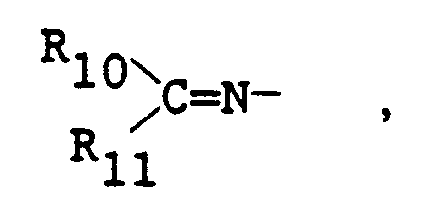
with Y representing sulfur or oxygen, and R₇, R₈, R₉, R₁₀, and R₁₁ each independently representing alkyl, aralkyl, aryl, or alkenyl. Alternatively, R₈ and R₉, or R₁₀ and R₁₁ may together form a ring structure. R₁₀ and R₁₁ may each also represent hydrogen. Also, R₁ together with R₂ may form a heterocyclic ring. - R₂, R₃, R₅ and R₆ each independently represents alkyl, aralkyl, aryl, or alkenyl, or, R₂ or R₃ combined with R₁ or each other, or R₅ or R₆ combined with R₄ or each other, form a heterocyclic ring.
- X⊖ represents an anion or an anionic portion of the compound to form an intramolecular salt.
- Dication ethers of formula (I) are described in further detail below.
- R₁ represents hydrogen, alkyl, aralkyl, aryl, alkenyl, -YR₇,
the group
the group
with Y representing sulfur or oxygen, and R₇, R₈, R₉, R₁₀, and R₁₁ each independently representing alkyl, aralkyl, aryl, or alkenyl. Alternatively, R₈ and R₉, or R₁₀ and R₁₁ may together form a ring structure. R₁₀ and R₁₁ may each also represent hydrogen. Also, R₁ together with R₂ may form a heterocyclic ring, which may be further condensed with another ring. - Preferably, R₁ is hydrogen, alkyl of 1 to 20 carbon atoms (e.g., methyl, ethyl, butyl, 2-ethylhexyl, or dodecyl), aralkyl of from 7 to 20 carbon atoms (e.g., benzyl, phenethyl), aryl of from 6 to 20 carbon atoms (e.g., phenyl, naphthyl), alkenyl of from 2 to 20 carbon atoms (e.g., vinyl, propenyl),
the group
the group
- R₁ can combine with R₂ or R₃ to form a heterocyclic ring of 5 to 8 atoms. This ring contains the nitrogen atom to which R₂ and R₃ are attached in formula (I) and may contain an additional nitrogen atom, or an oxygen or sulfur atom. Examples of such rings include pyridine, quinoline, isoquinoline, thiazole, benzothiazole, thiazoline, oxazole, benzoxazole, imidazole, benzimidazole, and oxazoline.
- R₇, R₈, R₉, R₁₀, and R₁₁ are preferably alkyl of 1 to 20 carbon atoms (e.g., methyl, ethyl, butyl, 2-ethylhexyl, or dodecyl), aralkyl of from 7 to 20 carbon atoms (e.g., benzyl, phenethyl), aryl of from 6 to 20 carbon atoms (e.g., phenyl, naphthyl), or alkenyl of from 2 to 20 carbon atoms (e.g., vinyl, propenyl).
- R₈ and R₉, or R₁₀ and R₁₁ can also combine to form a ring structure of 5 to 8 atoms. The R₈-R₉ ring contains the nitrogen atom to which R₈ and R₉ are attached, and may also contain an additional nitrogen atom, or an oxygen or sulfur atom. The R₁₀-R₁₁ ring may also contain one or more nitrogen atoms, an oxygen atom, a sulfur atom, or any combination thereof. Examples of such rings include pyrrolidine, piperidine, and morpholine.
- R₂ and R₃ each independently represents alkyl, aryl, aralkyl, alkenyl, or may combine with R₁ or each other to form a heterocyclic ring. Preferably, R₂ or R₃ may each be alkyl of 1 to 20 carbon atoms (e.g., methyl, ethyl, butyl, 2-ethylhexyl, or dodecyl), aralkyl of from 7 to 20 carbon atoms (e.g., benzyl, phenethyl), aryl of from 6 to 20 carbon atoms (e.g., phenyl, naphthyl), or alkenyl of from 2 to 20 carbon atoms (e.g., vinyl, propenyl). R₂ and R₃ also preferably combine with each other to form a heterocyclic ring of 5 to 8 atoms. This ring contains the nitrogen atom to which R₂ and R₃ are attached, and may also contain an additional nitrogen atom, or an oxygen or sulfur atom. Examples of such rings include pyrrolidine, piperidine, and morpholine. Either of R₂ or R₃ can combine with R₁ to form a heterocyclic ring, as described above in reference to R₁.
- R₄, R₅, and R₆ are defined the same as described above for R₁, R₂, and R₃, respectively. R₄, R₅, and R₆ may each be the same as or different from R₁, R₂, and R₃.
- X⊖ represents an anion or an anionic portion of the compound, which forms an intramolecular salt. Any anion that forms a salt compound according to formula (I) that is useful to form biological and diagnostic reagents according to the invention can be used. Preferred anions include a sulfonate ion such as methylsulfonate or p-toluenesulfonate CF₃SO

- In addition to the above-described alkyl, aralkyl, aryl, alkenyl, and heterocyclic groups, groups also useful as R₁, R₂, R₃, R₄, R₅, R₆, R₇, R₈, R₉, R₁₀ and R₁₁ include substituted alkyl, aralkyl, aryl, alkenyl, and heterocyclic groups. Useful substituents include halogen, alkoxy of from 1 to 20 carbon atoms, aryloxy of from 6 to 20 carbon atoms, a sulfo group, N,N-disubstituted carbamoyl, N,N-disubstituted sulfamoyl, and other groups known to those skilled in the art that do not prevent the compounds from functioning as reactive intermediates according to the invention.
- Examples of compounds of formula (I) are shown below in Table I.


- The ethers of formula (I) can be made by techniques known to those skilled in the chemical synthesis art. Useful synthesis techniques include those described in Journal of the American Chemical Society, 103, 4839 (1981). The preparation of compounds of formula (I) is further described below in the synthesis examples.
- To a solution of 11.6 g tetramethylurea in 100 ml CH₂Cl₂, 16.8 ml of triflic anhydride in 50 ml CH₂Cl₂ was added dropwise. The mixture was evaporated on a rotatory evaporator at room temperature to yield a yellowish oily residue. The residue was dissolved in 100 ml CH₂Cl₂ and 11.6 g tetramethylurea in 50 ml CH₂Cl₂ was added, at which point a precipitate was formed. The mixture was stirred under nitrogen overnight, after which the precipitate was filtered, washed with CH₂Cl₂, and dried to obtain a colorless crystalline material with a melting point of 258-260°C. IR and NMR analysis indicated that the crystalline material was bis(tetramethylformamidinium) ether ditriflate.
- To a solution of 0.2 moles of N-methyl-2-pyridone in 150 ml CH₂Cl₂, 16.8 ml of triflic anhydride was added dropwise. A precipitate formed and the mixture was stirred under nitrogen at room temperature for 72 hours. The precipitate was filtered, washed with CH₂Cl₂, and dried to yield a colorless crystalline material with a melting point of 193-195°C. IR and NMR analysis indicated that the material was bis(1-methyl-2-pyridinium) ether ditriflate.
- The polymeric particles useful in the method of this invention are generally water-insoluble particles having a particle size in the range of from about 0.01 to about 100 micrometers, and preferably from 0.1 to 3 micrometers. They can be homogeneous polymeric particles meaning that they are composed of the same polymer throughout, or they can be particles composed of more than one polymer such as graft copolymers as described, for example, in U.S. Patent 3,700,609 and core-shell polymers described for example in U.S. Patent 4,401,765. It is critical that the polymeric particles have surface carboxyl groups available for attachment of the reactive amine- or sulfhydryl-containing compound. Such groups are preferably added to the particles by incorporating monomers containing such groups into the polymers (for example, acrylic acid, methacrylic acid, itaconic acid, and the like). Alternatively, they can be added to the particles by further chemical reaction of a polymer having other precursor reactive groups which can be converted to carboxyl groups (for example, by hydrolysis of anhydrides, such as maleic anhydride, or by oxidation of surface methylol or aldehyde end groups).
- Generally, useful polymeric particles can be prepared using any suitable polymerization technique, including emulsion (including batch, semi-continuous and continuous) and suspension polymerization techniques, graft copolymerization, and others known to one skilled in the polymer chemistry art. Continuous emulsion polymerization is preferred as it can be used to provide generally smaller particles without the use of surfactants or emulsifiers as described for example in U.S. Patent 4,415,700 and Research Disclosure publication 15963 (July, 1977). Research Disclosure is a publication available from Kenneth Mason Publications, Ltd., The Old Harbourmaster's, 8 North Street, Emsworth, Hampshire P010 7DD, England. Continuous emulsion polymerization is the most preferred technique, as described in the noted Research Disclosure publication.
- Useful carboxylated particles are prepared from carboxylated styrene and its derivatives, carboxylated styrene-butadiene copolymers, acrylic and methacrylic acid polymers and other materials, many of which are commercially available.
- Preferably, the polymeric particles are composed of a polymer represented by the structure:

wherein A represents recurring units derived from one or more ethylenically unsaturated polymerizable monomers containing carboxylic acid groups or salts or precursors of said groups, and B represents recurring units derived from one or more ethylenically unsaturated polymerizable monomers. - Monomers from which A can be derived include, but are not limited to, acrylic and methacrylic acids, itaconic acid, aconitic acid, fumaric acid, maleic acid, β-carboxyethyl acrylate, β-carboxyethyl methacrylate, m&p-carboxymethylstyrene, methacrylamidohexanoic acid and N-(2-carboxy-1,1-dimethylethyl)acrylamide or a salt or anhydride precursor thereof. Acrylic and methacrylic acids, itaconic acid, aconitic acid, fumaric acid, maleic acid, β-carboxyethyl acrylate, β-carboxyethyl methacrylate or a salt or anhydride precursor thereof are preferred in the practice of this invention. Monomers from which B can be derived include, but are not limited to, styrene and styrene derivatives (for example vinyltoluene, 4-t-butylstyrene, divinylbenzene and 2-chloromethylstyrene), acrylic and methacrylic acid esters (for example, methyl acrylate, ethyl methacrylate, n-butyl acrylate, 2-ethylhexyl methacrylate, methyl methacrylate, 2-hydroxyethyl methacrylate, methacrylamide, ethylene dimethacrylate and 2-hydroxyethyl acrylate), sodium 2-acrylamido-2-methylpropanesulfonate, sodium 3-acryloyloxypropanesulfonate, p-styrenesulfonate, or acrylonitrile. Preferably, B is derived from styrene or a styrene derivative, or an acrylic or methacrylic acid ester.
- For both the A and B monomers, it is important that the specific monomers used and their proportions be chosen so as to render the particles water-insoluble.
- In the structure identified above, x is from about 0.1 to about 70, and preferably from about 1 to about 20, mole percent.
- The polymeric particles may be composed of poly(styrene- co-vinylbenzyl chloride-co-acrylic acid), poly(styrene-co-acrylic acid), poly(styrene-co-meth- acrylic acid), poly(styrene-co-acrylic acid-co-m&p- divinylbenzene) or poly(styrene-co-2-carboxyethyl acrylate).
- Representative polymers of which the polymeric particles are composed include poly(styrene-co-vinylbenzyl chloride-co-acrylic acid) (85:10:5 molar ratio), poly(styrene-co-acrylic acid) (99:1 molar ratio), poly(styrene-co-methacrylic acid) (90:10 molar ratio), poly(styrene-co-acrylic acid-co-m&p-divinylbenzene) (89:10:1 molar ratio), poly(styrene-co-2-carboxyethyl acrylate) (90:10 molar ratio), poly(methyl methacrylate-co-acrylic acid) (70:30 molar ratio) and poly(styrene-co-butyl acrylate-co-methacrylic acid)(45:45:10 weight ratio).
- In one embodiment, the particles are core-shell particles wherein the core is composed of a first polymer, and the shell is composed of a second polymer. The second polymer must have reactive carboxyl groups or groups which can be converted to carboxyl groups prior to attachment of the polypeptide or protein.
- The polymeric particles described herein can be supplied as a dried powder which can be resuspended for any use or interest. Preferably, however, they are supplied as an aqueous suspension generally having from about 0.1 to about 35 percent solids. Suspending agents, buffers or other addenda can be included in the suspension if desired.
- The mechanism by which the dication ethers activate carboxyl containing polymers for reaction with amine or sulfhydryl groups is as follows:

Based on this mechanism it is believed that the dication ethers defined by formula 1, supra, would all activate carboxyl polymers in the same manner. All dication ethers in this class would activate carboxyl polymers via identical mechanisms due to their unique structure; bis(carbenium ions) linked by a heteroatom-containing lone pair electrons. - Any reactive amine- or sulfhydryl-containing compound can be attached to polymeric particles according to the present invention as long as that compound contains a reactive amine or sulfhydryl group, respectively, which will react with the intermediate formed by the reaction of the dication ether compound with carboxyl groups on the particles. Such compounds include, but are not limited to, monoamines, monohydrazides, diamines, dihydrazides, enzymes, biotin or derivatives thereof, avidin or derivatives thereof, amino acids, peptides, polypeptides, proteins, mono- oligo- and polysaccharides, and others which would be apparent to one skilled in the art. In certain embodiments, the reactive amine- or sulfhydryl-containing compound is a polypeptide or protein which is biologically active. The term "biologically active" refers to its capacity for interaction with another component which may be found in physiological fluids. Such an interaction can be catalytic activity in the case where the material is an enzyme. In addition, the interaction can be a complexation which occurs between materials which have affinity for one another, such as avidin with biotin or antibodies with antigens, and the like. In other embodiments, the reactive amine- or sulfhydryl-containing compound is a diamine, polysaccharide, amino acid, peptide or protein which can be a linking moiety for attaching a second compound to the particle. Such second compounds include, but are not limited to, enzymes, antibodies, antigens, drugs, biotin or derivatives thereof and others readily apparent to one skilled in the art.
- Preferably, the reactive amine- or sulfhydryl-containing compound is an immunologically reactive species, including but not limited to the biological and chemical compounds listed above. More preferably, it is an antibody, such as an antibody directed against a drug, hormone, Streptococcus A antigen, a chlamydial antigen, a gonococcal antigen, human chorionic gonadotropin, human leutinizing hormone or a herpes virus. Alternatively, the immunologically reactive species can be an antigen, such as an antigen of HTLV-I or HIV-I.
- In certain embodiments, the materials prepared by the method of this invention can have a tracer associated therewith. A tracer is a detectable species which enables one to detect the reagent. Useful tracers include radioisotopes, colorimetric or fluorometric compounds, enzymes, chemiluminescent compounds, phosphorescent compounds and others known to one skilled in the art. Particularly useful tracers are colorimetric and fluorometric compounds. The tracer can be associated with the reagent in any suitable manner. For example, the tracer can be associated (for example, covalently or ionically attached) with the reactive amine- or sulfhydryl-containing-compound. Alternatively and preferably, the tracer is associated with the polymeric particles, for example attached (covalently or adsorbed) to their outer surface or internally distributed in part or all of the volume, or both.
- It is particularly desirable to incorporate tracers such as colorimetric or fluorometric dyes into the particles. Such incorporation can be accomplished by polymerizing monomers having dye or dye precursor moieties attached to the polymerizable vinyl group. Preferably, however, the dyes are "loaded" into the particles after their formation using procedures such as described in EP Publication No. 0308233, 22 March 1989.
- Particularly useful tracers which can be incorporated into particles include cyan, yellow and magenta dyes, europium and other rare earth chelates (such as a mixture of europium-thenoyl trifluoroacetonate and trioctylphosphine oxide), fluoroescent dyes such as 2,5-bis(6-butyl-2-benzoxazolyl)thiophene and 3-(2-benzothiazolyl)-7-diethylaminocoumarin and others known in the art. Incorporation of dyes can be achieved using the techniques described in U.S. Patent 4,199,363 and in EP Publication No. 0211898, 04 March 1987.
- The method of the present invention is carried out in two steps, the first of which involves contacting an aqueous suspension of the polymeric particles described above with a dication ether to produce reactive intermediate polymer particles having intermediate reactive groups in place of the carboxyl groups. This step is carried out at a suitable pH using suitable acids or buffers to provide the desired pH. Generally, the pH is 6.0 or less, but this is not critical as long as the reaction can proceed. More likely, the pH is between 3.5 and 6. The molar ratio of dication ether to the carboxyl groups on the surface of the particles is from 10:1 to 1000:1, and preferably from 50:1 to 400:1.
- In the second step of the method, the reactive intermediate formed in the first step is contacted with a reactive amine- or sulfhydryl-containing compound having a reactive amine or sulfhydryl group, respectively, which will react with the intermediate reactive group of the reactive intermediate. A covalent linkage is thereby formed between the particles and the reactive compound.
- This second step can be carried out at a suitable pH such that the desired reaction occurs without premature agglutination. The pH may be varied depending upon the reactants involved and their concentration in the reaction medium. For many amino- or sulfhydryl-containing compounds, this pH will be greater than 6. The weight ratio of the protein to polymer particles can range from 1:200 to 1:10 and is preferably 1:75 to 1:20.
- The method of the invention is generally carried out at a temperature of from 10 to 60°C, and preferably from 15 to 30°C. The temperature can be the same or different for the two steps of the method.
- Further details regarding the method of this invention would be readily apparent to one of ordinary skill in the art from the representative examples described below.
- The polymeric particles described above can be provided in a kit which also includes one or more dication ethers as described herein. The particles can be free of tracer, or have a tracer associated therewith. Useful tracers are noted above, but preferred tracers include colorimetric and fluorometric dyes which have been incorporated into the particles in a suitable manner. The particles can be supplied as a powder as long as it can be resuspended for any use of interest. Preferably, they are supplied as an aqueous suspension as described above.
- Such kits can optionally include a compound having reactive amine or sulfhydryl groups for attachment to the polymeric particles in the method of this invention. Other optional materials include pipettes, test tubes, instructions, buffers or other reagents and equipment which may be helpful in the practice of the invention.
- The following examples illustrate the practice of this invention.
- Dication ether salt (Number 1, Table 1) (66 mg, 0.13 mmol) was added to 100 mg (dry weight) of poly(styrene-co-methacrylic acid) (mole ratio 90/10) polymer beads in 30 mL of 0.1 M pH 6.0 phosphate buffer or 0.1 M pH 6.0 2-(4-morpholino)ethanesulfonic acid (MES) buffer in a 50 mL polypropylene centrifuge tube. The centrifuge tube was rotated end-over-end for 10 minutes at 30-35 rpm while attached to a rotating plate mounted at a 45° angle. Then 1 mg of tritiated radioactive bovine gamma globulin (³H BGG) was added to the reaction mixture. Rotation was continued for an additional 24 hours. The reaction was quenched by addition of excess bovine serum albumin (BSA) (100 mg, 50 mg/mL in the phosphate buffer stated above). The sample was incubated an additional 24 hours.
- In one variation of the above experiment, the reaction was centrifuged (10,000 rpm, 30 minutes) 10 minutes after the addition of the dication ether salt. After centrifugation, the supernatant was discarded and the beads resuspended in 30 mL of the appropriate buffer. This was followed by addition of the 1 mg ³H BGG and quenching as described.
- A control reaction was prepared by incubating the same amount of beads as above with 1 mg ³H BGG except that the beads were not first activated with the dication ether salt. The control was rotated end-over-end, then quenched with BSA as described hereinbefore.
- The total amount of antibody (³H BGG) bound was determined by measuring: a) the total cpm (counts per minute) in a 500 µL aliquot of the reaction, b) the cpm remaining in the supernatant following centrifugation of a 1 mL sample of the reaction, and c) the cpm bound to the latex following repeated washes of the pellet obtained in b). The fraction of the ³H BGG which is covalently bound to the beads was determined following incubation of the reacted beads in the presence of 1% sodium dodecysulfate (SDS) at 37°C for about 24 hours with end-over-end rotation. The same procedure described above for determining the total amount of antibody bound was used to determine the amount of antibody covalently bound. The results are shown in Tables II and III.

TABLE III (After SDS Treatment) Sample Activating Agent Buffer Centrifuged Covalently Bound % 1 Dication ether 1 Table 1 MES Yes 70.4 2 Dication ether 1 Table 1 MES No 87.5 3 Dication ether 1 Table 1 phosphate Yes 65.4 4 Dication ether 1 Table 1 phosphate No 67.8 5 None (Control) phosphate No 1.4 - This example demonstrates that ³H-BGG can be covalently bound to carboxylate beads using a dication ether salt as an activating agent. Because the reactive intermediate between the bead and the dication ether salt is stable to centrifugation one can add the ³H-BGG after centrifugation and still retain high levels of covalently bound antibody.
- The following Example 2 shows that the method of this invention preserves the activity of the antibody in an enzyme label binding experiment.
- A monoclonal anti-phenobarbital antibody was reacted with carboxyl beads which had been activated with the dication ether salt 1, Table 1 employed in Example 1.
- The antibody employed was an in-house prepared monoclonal antibody specific for phenobarbital (Phe 1.9). This antibody was prepared at Eastman Kodak Company by immunization of Balb c mice with a conjugate of phenobarbital-human serum albumin. Spleens of the immunized mice were fused with myeloma (SP2/0-Ag 14) cells to generate the hybridomas. This preparatory method used known procedures. The mass of the antibody bound to the beads was determined in a parallel experiment in which ³H BGG was substituted for the anti-phenobarbital antibody. The amount of active antibody bound to each bead was compared in the enzyme label binding experiment described below.
- A sample of the polymer beads employed in Example 1 (30 mg dry weight) was activated with the dication ether salt employed in Example 1 (23 mg, .045 mmol) in 10 mL of 0.1 M pH 6.0 MES buffer. This preparation was mixed with 1.5 mg of the Phe 1.9 antibody.
- A second sample of the beads was activated with the dication ether salt 2 from Table I (22.5 mg, 0.045 mmol) in 10 mL of 0.1 M pH 6.0 MES buffer and mixed with 1.5 mg of Phe 1.9 antibody.
- One additional bead sample 3 was activated exactly as samples 1 and 2, except after addition of the activating agents, the sample 3 was centrifuged (10,000 rpm for 30 minutes). After centrifugation, the supernatant was discarded and the beads resuspended in 10 mL of the same buffer. This was followed by addition of 1.5 mg Phe 1.9 antibody to separate identical samples 1 and 2.
- All samples were incubated with end-over-end rotation at room temperature for 24 hours. Reactions in the samples were stopped by the addition of BSA (30 mg, 30 mg/mL). The incubation was continued for about 4 more hours. The samples were centrifuged. The supernatants were discarded. The pellets were washed twice with PBS (phosphate buffered saline, pH = 7.4) and resuspended in PBS.
- The mass of antibody bound to the beads in each sample was determined by assaying the number of counts for samples ran in parallel to samples 1-3, supra, having ³H BGG bound to the carboxyl bead by exactly the same procedures and in the same amounts as in samples 1-3. The covalent/total ratio was calculated as described in Example 1 after SDS incubation.
- The relative amount of active antibody in each preparation was determined in an assay in which serial dilutions of the beads (6.3 x 10⁻¹⁰ M to 2.0 x 10⁻⁷ M theoretical phenobarbital binding sites based on the mass of antibody bound) were mixed with a fixed concentration of a phenobarbital-glucose oxidase enzyme label (5 x 10⁻¹⁰ M). The bead dilutions and label were incubated for about 2 hours with constant agitation at room temperature in phosphate buffered saline containing 1% bovine serum albumin. The amount of phenobarbital-glucose oxidase label remaining in solution following centrifugation was determined and the concentration of phenobarbital binding sites required to bind 50% of the enzyme label was determined. The results are summarized in Tables IV and V.

TABLE V LATEX-ENZYME LABEL TITRATION Sample Activating Agent Centrifuged nmolar Theoretical Phenobarbital Binding Sites Where 50% of the Enzyme Label is Bound 1 Dication ether 1 No 13 2 Dication ether 2 No 14 3 Dication Ether 1 Yes 10 - This example demonstrates that antibody can be covalently bound to carboxylated beads using a dication ether salt as an activating agent. In addition, it demonstrates that the antibody can be attached to dication ether activated carboxylated beads while preserving antibody activity. When reaction mixtures are centrifuged, the dication ether salts offer an advantage in that the amount of protein covalently bound is high.
Claims (21)
- A method for attaching a reactive amine- or sulfhydryl-containing compound to polymeric particles comprising:A. contacting (1) an aqueous suspension of polymeric particles having pendant carboxyl groups on the surface thereof with (2) a reagent to produce reactive intermediate polymer particles having pendant intermediate reactive groups, andB. contacting the reactive intermediate polymer particles produced in step A with a reactive amine- or sulfhydryl-containing compound having a reactive amine or sulfhydryl group, respectively, which reacts with said intermediate reactive groups to form a covalent linkage between said particles and said reactive compound characterized in that the reagent is a dication ether.
- The method of claim 1 wherein said dication ether is present in a molar ratio to said carboxyl groups of from 10:1 to 1000:1.
- The method of claim 1 or claim 2 carried out at a temperature of from 10°C to 60°C.
- The method of any one of the preceding claims wherein said dication ether has the structure:

R₁ and R₄, each independently, represents hydrogen, alkyl, aralkyl, aryl, alkenyl, -YR₇,
the group

R₁ together with R₂ may form a heterocyclic ring; and
R₂, R₃, R₅ and R₆ each independently represents alkyl, aralkyl, aryl, or alkenyl, or, R₂ or R₃ combined with R₁ or each other, or R₅ or R₆ combined with R₄ or each other, form a heterocyclic ring.
X⊖ represents an anion or an anionic portion of the compound to form an intramolecular salt. - The method of any one of the preceding claims wherein said dication ether is selected from


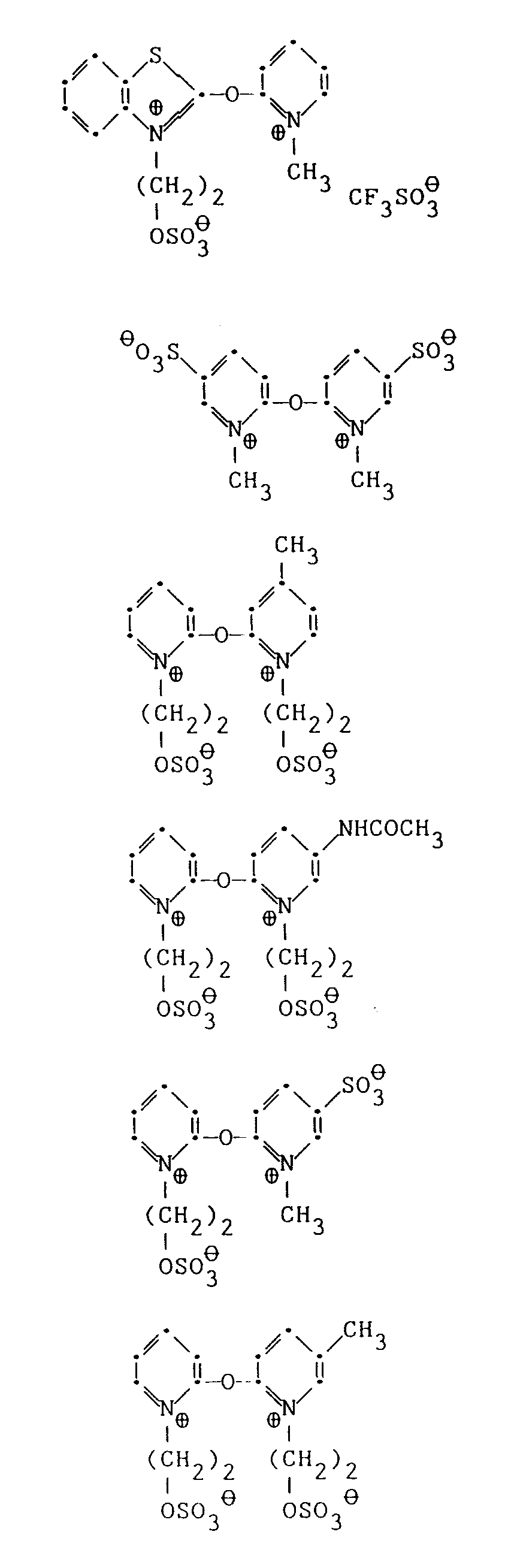

- The method of any one of the preceding claims wherein the dication ether is selected from

- The method of any one of the preceding claims wherein said polymeric particles are composed of a polymer represented by the structure:

- The method of any one of the preceding claims wherein said polymeric particles are composed of the defined polymer wherein A is derived from acrylic acid, methacrylic acid, itaconic acid, β-carboxyethyl acrylate, β-carboxyethyl methacrylate, m&p-carboxy- methylstyrene, methacrylamidohexanoic acid or N-(2-carboxy-1,1-dimethylethyl)acrylamide, or a salt or anhydride precursor thereof, and B is derived from styrene or a styrene derivative, an acrylic or methacrylic acid ester, or acrylonitrile and x is from about 1 to about 20 mole percent.
- The method of any one of the preceding claims wherein said polymeric particles are composed of poly(styrene- co-vinylbenzyl chloride-co-acrylic acid), poly(styrene-co-acrylic acid), poly(styrene-co-meth- acrylic acid), poly(styrene-co-acrylic acid-co-m&p- divinylbenzene) or poly(styrene-co-2-carboxyethyl acrylate).
- The method of any one of the preceding claims wherein the polymer particles have an average diameter of 0.01 to 100 µm.
- The method of any one of the preceding claims wherein the polymer particles comprise a tracer.
- The method of any one of the preceding claims wherein the polymer particles are core-shell polymer particles.
- The method of any one of the preceding claims wherein said reactive amine- or sulfhydryl-containing compound is a polypeptide or protein.
- The method of claim 13 wherein the protein is an antibody directed against Streptococcus A antigen, a chlamydial antigen, a gonococcal antigen, human chorionic gonadotropin, human leutinizing hormone or a herpes virus.
- The method of claim 13 wherein the protein is an antibody against a drug or hormone.
- A kit comprising: (1) polymeric particles having pendant carboxyl groups on the surface thereof, and (2) a dication ether.
- The kit of claim 16 further comprising a reactive compound having a reactive amine or sulfhydryl group for attachment to said particles.
- The kit of claim 17 wherein the compound is an immunologically reactive species.
- The kit of any one of claims 16 to 18 wherein said dication ether has the structure defined in any one of claims 4 to 6.
- The kit of any one of claims 16 to 19 wherein said polymeric particles are as defined in any one of claims 7 to 12.
- The kit of claim 20 wherein said polymeric particles are provided in an aqueous suspension.
Applications Claiming Priority (2)
| Application Number | Priority Date | Filing Date | Title |
|---|---|---|---|
| US389390 | 1989-08-03 | ||
| US07/389,390 US5266500A (en) | 1989-08-03 | 1989-08-03 | Attachment of compounds to polymeric particles using dication ethers and a kit containing same |
Publications (3)
| Publication Number | Publication Date |
|---|---|
| EP0411711A2 EP0411711A2 (en) | 1991-02-06 |
| EP0411711A3 EP0411711A3 (en) | 1991-11-27 |
| EP0411711B1 true EP0411711B1 (en) | 1995-10-25 |
Family
ID=23538068
Family Applications (1)
| Application Number | Title | Priority Date | Filing Date |
|---|---|---|---|
| EP90202088A Expired - Lifetime EP0411711B1 (en) | 1989-08-03 | 1990-07-31 | Attachment of compounds to polymeric particles using dication ethers and a kit containing same |
Country Status (5)
| Country | Link |
|---|---|
| US (1) | US5266500A (en) |
| EP (1) | EP0411711B1 (en) |
| JP (1) | JPH0735400B2 (en) |
| CA (1) | CA1340635C (en) |
| DE (1) | DE69023182T2 (en) |
Families Citing this family (4)
| Publication number | Priority date | Publication date | Assignee | Title |
|---|---|---|---|---|
| JPH0649100A (en) * | 1992-05-06 | 1994-02-22 | Eastman Kodak Co | Method for bonding compound to carboxylated base |
| US20030077598A1 (en) * | 2001-01-04 | 2003-04-24 | Phan Brigitte Chau | Dual bead assays including covalent linkages for improved specificity and related optical analysis discs |
| US20020168663A1 (en) * | 2001-02-27 | 2002-11-14 | Phan Brigitte Chau | Methods for DNA conjugation onto solid phase including related optical biodiscs and disc drive systems |
| US20050043421A1 (en) * | 2001-08-29 | 2005-02-24 | Van Der Wal Hanno R | Process to manufacture polyurethane products using polymer polyols in which the carrier polyol is a tertiary amone based polyol |
Family Cites Families (10)
| Publication number | Priority date | Publication date | Assignee | Title |
|---|---|---|---|---|
| BE833512A (en) * | 1974-09-17 | 1976-03-17 | NEW COMPOSITION OF LATEX LOADED WITH A HYDROPHOBIC COMPOUND, ITS PREPARATION AND ITS PHOTOGRAPHIC APPLICATION | |
| FR2345459A2 (en) * | 1976-03-26 | 1977-10-21 | Inst Nat Sante Rech Med | Fixation of organic cpds. contg. sugar residues - by oxidn. and coupling to a support contg. amino gps. |
| US4138383A (en) * | 1975-11-24 | 1979-02-06 | California Institute Of Technology | Preparation of small bio-compatible microspheres |
| US4081246A (en) * | 1976-05-03 | 1978-03-28 | Beckman Instruments, Inc. | Solid phase column immunoassay procedure employing novel immunochemical composites |
| CA1101330A (en) * | 1977-09-19 | 1981-05-19 | Ernst A. Fischer | Immunological material bonded to carboxylated latex polymer and process for making it |
| GB2090598B (en) * | 1980-12-11 | 1984-03-21 | Mini Agriculture & Fisheries | Enzyme-immunoassay method |
| US4699826A (en) * | 1984-04-27 | 1987-10-13 | Becton, Dickinson And Company | Fluorescently labeled microbeads |
| US4560504A (en) * | 1984-12-06 | 1985-12-24 | Uop Inc. | Carboxyl anchored immobilized antibodies |
| US4877724A (en) * | 1987-03-05 | 1989-10-31 | Eastman Kodak Company | Method and composition for hardening gelatin |
| JP2565548B2 (en) * | 1987-09-18 | 1996-12-18 | イーストマン コダック カンパニー | Method for binding a compound to polymer particles using a carbamoylonium compound |
-
1989
- 1989-08-03 US US07/389,390 patent/US5266500A/en not_active Expired - Lifetime
- 1989-09-25 CA CA000612926A patent/CA1340635C/en not_active Expired - Fee Related
-
1990
- 1990-07-31 EP EP90202088A patent/EP0411711B1/en not_active Expired - Lifetime
- 1990-07-31 DE DE69023182T patent/DE69023182T2/en not_active Expired - Fee Related
- 1990-08-02 JP JP2204024A patent/JPH0735400B2/en not_active Expired - Fee Related
Also Published As
| Publication number | Publication date |
|---|---|
| JPH0735400B2 (en) | 1995-04-19 |
| CA1340635C (en) | 1999-07-06 |
| EP0411711A2 (en) | 1991-02-06 |
| US5266500A (en) | 1993-11-30 |
| JPH03135767A (en) | 1991-06-10 |
| DE69023182T2 (en) | 1996-04-18 |
| DE69023182D1 (en) | 1995-11-30 |
| EP0411711A3 (en) | 1991-11-27 |
Similar Documents
| Publication | Publication Date | Title |
|---|---|---|
| EP0462670B1 (en) | Use of 1-(1-pyrrolidinylcarbonyl)pyridinium salts to attach compounds to caboxylated particles & a kit containing same | |
| EP0462644B1 (en) | Biologically active reagents prepared from carboxy-containing polymer, analytical element and methods of use | |
| EP0321261B1 (en) | Use of immobilized biotinylated receptor in test device, kit and method for determining a ligand | |
| US5397695A (en) | Attachment of compounds to polymeric particles using carbamoylonium compounds and a kit containing same | |
| JP3110839B2 (en) | Method for producing biologically active reagent derived from succinimide-containing polymer, analytical element comprising the same and use thereof | |
| EP0302715B1 (en) | Avidin- and biotin-immobilized reagents, analytical elements and methods of use | |
| JP3363166B2 (en) | Method of using peptide pairs with extremely high specific affinity for each other in the field of in vitro diagnostics | |
| EP0593956B1 (en) | Agglutination assays using multivalent ligands | |
| EP0323692B1 (en) | Water-insoluble reagent, elements containing same and methods of use | |
| US5177023A (en) | Water-insoluble reagent elements containing same and methods of use | |
| EP0431682B1 (en) | Buffered wash composition, insolubilizing composition, test kits and method of use | |
| EP0308235B1 (en) | Attachment of compounds to polymeric particles using carbamoylonium compounds | |
| US5266500A (en) | Attachment of compounds to polymeric particles using dication ethers and a kit containing same | |
| EP0569086A2 (en) | Method and kit for attaching compounds to carboxylated substrates using uronium salt | |
| US5391483A (en) | Ligand analogs for immunoassays derived from dicarboxylic acid oxidation products | |
| CA2005511A1 (en) | Enzyme-labeled receptor composition, diagnostic kit and use in method to determine a ligand |
Legal Events
| Date | Code | Title | Description |
|---|---|---|---|
| PUAI | Public reference made under article 153(3) epc to a published international application that has entered the european phase |
Free format text: ORIGINAL CODE: 0009012 |
|
| AK | Designated contracting states |
Kind code of ref document: A2 Designated state(s): DE FR GB |
|
| PUAL | Search report despatched |
Free format text: ORIGINAL CODE: 0009013 |
|
| AK | Designated contracting states |
Kind code of ref document: A3 Designated state(s): DE FR GB |
|
| 17P | Request for examination filed |
Effective date: 19920506 |
|
| 17Q | First examination report despatched |
Effective date: 19940324 |
|
| RAP1 | Party data changed (applicant data changed or rights of an application transferred) |
Owner name: CLINICAL DIAGNOSTIC SYSTEMS, INC. |
|
| GRAA | (expected) grant |
Free format text: ORIGINAL CODE: 0009210 |
|
| RAP1 | Party data changed (applicant data changed or rights of an application transferred) |
Owner name: JOHNSON & JOHNSON CLINICAL DIAGNOSTICS, INC. |
|
| AK | Designated contracting states |
Kind code of ref document: B1 Designated state(s): DE FR GB |
|
| REF | Corresponds to: |
Ref document number: 69023182 Country of ref document: DE Date of ref document: 19951130 |
|
| ET | Fr: translation filed | ||
| PLBE | No opposition filed within time limit |
Free format text: ORIGINAL CODE: 0009261 |
|
| STAA | Information on the status of an ep patent application or granted ep patent |
Free format text: STATUS: NO OPPOSITION FILED WITHIN TIME LIMIT |
|
| 26N | No opposition filed | ||
| REG | Reference to a national code |
Ref country code: GB Ref legal event code: IF02 |
|
| PGFP | Annual fee paid to national office [announced via postgrant information from national office to epo] |
Ref country code: FR Payment date: 20030711 Year of fee payment: 14 |
|
| PGFP | Annual fee paid to national office [announced via postgrant information from national office to epo] |
Ref country code: GB Payment date: 20030730 Year of fee payment: 14 |
|
| PGFP | Annual fee paid to national office [announced via postgrant information from national office to epo] |
Ref country code: DE Payment date: 20030807 Year of fee payment: 14 |
|
| PG25 | Lapsed in a contracting state [announced via postgrant information from national office to epo] |
Ref country code: GB Free format text: LAPSE BECAUSE OF NON-PAYMENT OF DUE FEES Effective date: 20040731 |
|
| PG25 | Lapsed in a contracting state [announced via postgrant information from national office to epo] |
Ref country code: DE Free format text: LAPSE BECAUSE OF NON-PAYMENT OF DUE FEES Effective date: 20050201 |
|
| GBPC | Gb: european patent ceased through non-payment of renewal fee |
Effective date: 20040731 |
|
| PG25 | Lapsed in a contracting state [announced via postgrant information from national office to epo] |
Ref country code: FR Free format text: LAPSE BECAUSE OF NON-PAYMENT OF DUE FEES Effective date: 20050331 |
|
| REG | Reference to a national code |
Ref country code: FR Ref legal event code: ST |