EP0396317B1 - Pharmaceutical composition - Google Patents
Pharmaceutical composition Download PDFInfo
- Publication number
- EP0396317B1 EP0396317B1 EP19900304465 EP90304465A EP0396317B1 EP 0396317 B1 EP0396317 B1 EP 0396317B1 EP 19900304465 EP19900304465 EP 19900304465 EP 90304465 A EP90304465 A EP 90304465A EP 0396317 B1 EP0396317 B1 EP 0396317B1
- Authority
- EP
- European Patent Office
- Prior art keywords
- pharmaceutical composition
- glycyrrhetinic acid
- composition according
- chlorhexidine
- weight
- Prior art date
- Legal status (The legal status is an assumption and is not a legal conclusion. Google has not performed a legal analysis and makes no representation as to the accuracy of the status listed.)
- Expired - Lifetime
Links
- 239000008194 pharmaceutical composition Substances 0.000 title claims description 14
- GHXZTYHSJHQHIJ-UHFFFAOYSA-N Chlorhexidine Chemical compound C=1C=C(Cl)C=CC=1NC(N)=NC(N)=NCCCCCCN=C(N)N=C(N)NC1=CC=C(Cl)C=C1 GHXZTYHSJHQHIJ-UHFFFAOYSA-N 0.000 claims description 27
- 229960003260 chlorhexidine Drugs 0.000 claims description 23
- MPDGHEJMBKOTSU-YKLVYJNSSA-N 18beta-glycyrrhetic acid Chemical class C([C@H]1C2=CC(=O)[C@H]34)[C@@](C)(C(O)=O)CC[C@]1(C)CC[C@@]2(C)[C@]4(C)CC[C@@H]1[C@]3(C)CC[C@H](O)C1(C)C MPDGHEJMBKOTSU-YKLVYJNSSA-N 0.000 claims description 22
- 229960000530 carbenoxolone Drugs 0.000 claims description 18
- XGRSAFKZAGGXJV-UHFFFAOYSA-N 3-azaniumyl-3-cyclohexylpropanoate Chemical compound OC(=O)CC(N)C1CCCCC1 XGRSAFKZAGGXJV-UHFFFAOYSA-N 0.000 claims description 5
- MPDGHEJMBKOTSU-UHFFFAOYSA-N Glycyrrhetinsaeure Natural products C12C(=O)C=C3C4CC(C)(C(O)=O)CCC4(C)CCC3(C)C1(C)CCC1C2(C)CCC(O)C1(C)C MPDGHEJMBKOTSU-UHFFFAOYSA-N 0.000 claims description 5
- 201000010099 disease Diseases 0.000 claims description 5
- 208000037265 diseases, disorders, signs and symptoms Diseases 0.000 claims description 5
- 229960003720 enoxolone Drugs 0.000 claims description 5
- 231100000252 nontoxic Toxicity 0.000 claims description 5
- 230000003000 nontoxic effect Effects 0.000 claims description 5
- 150000003839 salts Chemical class 0.000 claims description 5
- 229960004711 sodium monofluorophosphate Drugs 0.000 claims description 5
- 239000000606 toothpaste Substances 0.000 claims description 5
- QXNVGIXVLWOKEQ-UHFFFAOYSA-N Disodium Chemical class [Na][Na] QXNVGIXVLWOKEQ-UHFFFAOYSA-N 0.000 claims description 4
- 125000003178 carboxy group Chemical group [H]OC(*)=O 0.000 claims description 4
- 239000007864 aqueous solution Substances 0.000 claims description 3
- OBZHEBDUNPOCJG-SZTGPWMUSA-N carbenoxolone Chemical compound C([C@H]1C2=CC(=O)[C@@H]34)[C@](C)(C(O)=O)CC[C@@]1(C)CC[C@@]2(C)[C@]4(C)CC[C@H]1[C@@]3(C)CC[C@@H](OC(=O)CCC(O)=O)C1(C)C OBZHEBDUNPOCJG-SZTGPWMUSA-N 0.000 claims description 3
- 150000001875 compounds Chemical class 0.000 claims description 3
- 150000002222 fluorine compounds Chemical class 0.000 claims description 3
- 150000007522 mineralic acids Chemical class 0.000 claims description 3
- 210000004400 mucous membrane Anatomy 0.000 claims description 3
- 150000007524 organic acids Chemical class 0.000 claims description 3
- 229940034610 toothpaste Drugs 0.000 claims description 3
- 239000007900 aqueous suspension Substances 0.000 claims description 2
- 125000000490 cinnamyl group Chemical group C(C=CC1=CC=CC=C1)* 0.000 claims description 2
- 150000002148 esters Chemical class 0.000 claims description 2
- MWNQXXOSWHCCOZ-UHFFFAOYSA-L sodium;oxido carbonate Chemical compound [Na+].[O-]OC([O-])=O MWNQXXOSWHCCOZ-UHFFFAOYSA-L 0.000 claims description 2
- 239000008247 solid mixture Substances 0.000 claims description 2
- 229940041672 oral gel Drugs 0.000 claims 1
- 239000000203 mixture Substances 0.000 description 33
- BQENDLAVTKRQMS-SBBGFIFASA-L Carbenoxolone sodium Chemical compound [Na+].[Na+].C([C@H]1C2=CC(=O)[C@H]34)[C@@](C)(C([O-])=O)CC[C@]1(C)CC[C@@]2(C)[C@]4(C)CC[C@@H]1[C@]3(C)CC[C@H](OC(=O)CCC([O-])=O)C1(C)C BQENDLAVTKRQMS-SBBGFIFASA-L 0.000 description 25
- XLYOFNOQVPJJNP-UHFFFAOYSA-N water Chemical compound O XLYOFNOQVPJJNP-UHFFFAOYSA-N 0.000 description 20
- PEDCQBHIVMGVHV-UHFFFAOYSA-N Glycerine Chemical compound OCC(O)CO PEDCQBHIVMGVHV-UHFFFAOYSA-N 0.000 description 18
- 238000003756 stirring Methods 0.000 description 18
- 239000002324 mouth wash Substances 0.000 description 15
- 239000000243 solution Substances 0.000 description 15
- 229960003333 chlorhexidine gluconate Drugs 0.000 description 12
- YZIYKJHYYHPJIB-UUPCJSQJSA-N chlorhexidine gluconate Chemical compound OC[C@@H](O)[C@@H](O)[C@H](O)[C@@H](O)C(O)=O.OC[C@@H](O)[C@@H](O)[C@H](O)[C@@H](O)C(O)=O.C1=CC(Cl)=CC=C1NC(=N)NC(=N)NCCCCCCNC(=N)NC(=N)NC1=CC=C(Cl)C=C1 YZIYKJHYYHPJIB-UUPCJSQJSA-N 0.000 description 12
- 239000012153 distilled water Substances 0.000 description 11
- 208000002399 aphthous stomatitis Diseases 0.000 description 10
- 229960002252 carbenoxolone sodium Drugs 0.000 description 10
- 238000011282 treatment Methods 0.000 description 10
- 238000009472 formulation Methods 0.000 description 9
- 229940051866 mouthwash Drugs 0.000 description 9
- 239000008187 granular material Substances 0.000 description 8
- 238000000034 method Methods 0.000 description 8
- 239000000499 gel Substances 0.000 description 7
- 239000008213 purified water Substances 0.000 description 7
- HEMHJVSKTPXQMS-UHFFFAOYSA-M Sodium hydroxide Chemical compound [OH-].[Na+] HEMHJVSKTPXQMS-UHFFFAOYSA-M 0.000 description 6
- GWEVSGVZZGPLCZ-UHFFFAOYSA-N Titan oxide Chemical compound O=[Ti]=O GWEVSGVZZGPLCZ-UHFFFAOYSA-N 0.000 description 6
- 208000025865 Ulcer Diseases 0.000 description 6
- DPXJVFZANSGRMM-UHFFFAOYSA-N acetic acid;2,3,4,5,6-pentahydroxyhexanal;sodium Chemical compound [Na].CC(O)=O.OCC(O)C(O)C(O)C(O)C=O DPXJVFZANSGRMM-UHFFFAOYSA-N 0.000 description 5
- 239000001768 carboxy methyl cellulose Substances 0.000 description 5
- 238000002360 preparation method Methods 0.000 description 5
- 235000019812 sodium carboxymethyl cellulose Nutrition 0.000 description 5
- 229920001027 sodium carboxymethylcellulose Polymers 0.000 description 5
- 238000012360 testing method Methods 0.000 description 5
- LFQSCWFLJHTTHZ-UHFFFAOYSA-N Ethanol Chemical compound CCO LFQSCWFLJHTTHZ-UHFFFAOYSA-N 0.000 description 4
- GUBGYTABKSRVRQ-QKKXKWKRSA-N Lactose Natural products OC[C@H]1O[C@@H](O[C@H]2[C@H](O)[C@@H](O)C(O)O[C@@H]2CO)[C@H](O)[C@@H](O)[C@H]1O GUBGYTABKSRVRQ-QKKXKWKRSA-N 0.000 description 4
- 239000000796 flavoring agent Substances 0.000 description 4
- 239000008101 lactose Substances 0.000 description 4
- 210000000214 mouth Anatomy 0.000 description 4
- 230000002265 prevention Effects 0.000 description 4
- 231100000397 ulcer Toxicity 0.000 description 4
- QTBSBXVTEAMEQO-UHFFFAOYSA-N Acetic acid Chemical compound CC(O)=O QTBSBXVTEAMEQO-UHFFFAOYSA-N 0.000 description 3
- CSCPPACGZOOCGX-UHFFFAOYSA-N Acetone Chemical compound CC(C)=O CSCPPACGZOOCGX-UHFFFAOYSA-N 0.000 description 3
- 239000004150 EU approved colour Substances 0.000 description 3
- 240000002943 Elettaria cardamomum Species 0.000 description 3
- OKKJLVBELUTLKV-UHFFFAOYSA-N Methanol Chemical compound OC OKKJLVBELUTLKV-UHFFFAOYSA-N 0.000 description 3
- DNIAPMSPPWPWGF-UHFFFAOYSA-N Propylene glycol Chemical compound CC(O)CO DNIAPMSPPWPWGF-UHFFFAOYSA-N 0.000 description 3
- WINXNKPZLFISPD-UHFFFAOYSA-M Saccharin sodium Chemical compound [Na+].C1=CC=C2C(=O)[N-]S(=O)(=O)C2=C1 WINXNKPZLFISPD-UHFFFAOYSA-M 0.000 description 3
- PNEYBMLMFCGWSK-UHFFFAOYSA-N aluminium oxide Inorganic materials [O-2].[O-2].[O-2].[Al+3].[Al+3] PNEYBMLMFCGWSK-UHFFFAOYSA-N 0.000 description 3
- 230000000845 anti-microbial effect Effects 0.000 description 3
- 208000020670 canker sore Diseases 0.000 description 3
- 229940021895 carbenoxolone mouthwash Drugs 0.000 description 3
- 235000005300 cardamomo Nutrition 0.000 description 3
- 239000010630 cinnamon oil Substances 0.000 description 3
- 230000000694 effects Effects 0.000 description 3
- 238000001914 filtration Methods 0.000 description 3
- 235000013355 food flavoring agent Nutrition 0.000 description 3
- 230000035876 healing Effects 0.000 description 3
- 239000001525 mentha piperita l. herb oil Substances 0.000 description 3
- 244000005700 microbiome Species 0.000 description 3
- 229940006093 opthalmologic coloring agent diagnostic Drugs 0.000 description 3
- 235000019477 peppermint oil Nutrition 0.000 description 3
- 230000000306 recurrent effect Effects 0.000 description 3
- 239000004408 titanium dioxide Substances 0.000 description 3
- 150000004684 trihydrates Chemical class 0.000 description 3
- 244000223760 Cinnamomum zeylanicum Species 0.000 description 2
- 208000003322 Coinfection Diseases 0.000 description 2
- RGHNJXZEOKUKBD-SQOUGZDYSA-N D-gluconic acid Chemical compound OC[C@@H](O)[C@@H](O)[C@H](O)[C@@H](O)C(O)=O RGHNJXZEOKUKBD-SQOUGZDYSA-N 0.000 description 2
- OVBJJZOQPCKUOR-UHFFFAOYSA-L EDTA disodium salt dihydrate Chemical compound O.O.[Na+].[Na+].[O-]C(=O)C[NH+](CC([O-])=O)CC[NH+](CC([O-])=O)CC([O-])=O OVBJJZOQPCKUOR-UHFFFAOYSA-L 0.000 description 2
- KRHYYFGTRYWZRS-UHFFFAOYSA-N Fluorane Chemical compound F KRHYYFGTRYWZRS-UHFFFAOYSA-N 0.000 description 2
- VEXZGXHMUGYJMC-UHFFFAOYSA-N Hydrochloric acid Chemical compound Cl VEXZGXHMUGYJMC-UHFFFAOYSA-N 0.000 description 2
- OFOBLEOULBTSOW-UHFFFAOYSA-N Malonic acid Chemical compound OC(=O)CC(O)=O OFOBLEOULBTSOW-UHFFFAOYSA-N 0.000 description 2
- 244000024873 Mentha crispa Species 0.000 description 2
- 235000014749 Mentha crispa Nutrition 0.000 description 2
- 206010028124 Mucosal ulceration Diseases 0.000 description 2
- NBIIXXVUZAFLBC-UHFFFAOYSA-N Phosphoric acid Chemical compound OP(O)(O)=O NBIIXXVUZAFLBC-UHFFFAOYSA-N 0.000 description 2
- 229920002125 Sokalan® Polymers 0.000 description 2
- 150000001449 anionic compounds Chemical class 0.000 description 2
- -1 carbenoxolone Chemical class 0.000 description 2
- 229940099898 chlorophyllin Drugs 0.000 description 2
- 235000019805 chlorophyllin Nutrition 0.000 description 2
- 235000017803 cinnamon Nutrition 0.000 description 2
- 239000010634 clove oil Substances 0.000 description 2
- XBDQKXXYIPTUBI-UHFFFAOYSA-N dimethylselenoniopropionate Natural products CCC(O)=O XBDQKXXYIPTUBI-UHFFFAOYSA-N 0.000 description 2
- 230000003628 erosive effect Effects 0.000 description 2
- 235000003599 food sweetener Nutrition 0.000 description 2
- 230000002496 gastric effect Effects 0.000 description 2
- 208000007565 gingivitis Diseases 0.000 description 2
- 238000009775 high-speed stirring Methods 0.000 description 2
- 238000000338 in vitro Methods 0.000 description 2
- 208000015181 infectious disease Diseases 0.000 description 2
- 230000005764 inhibitory process Effects 0.000 description 2
- JVTAAEKCZFNVCJ-UHFFFAOYSA-N lactic acid Chemical compound CC(O)C(O)=O JVTAAEKCZFNVCJ-UHFFFAOYSA-N 0.000 description 2
- 208000004235 neutropenia Diseases 0.000 description 2
- 239000002245 particle Substances 0.000 description 2
- 201000001245 periodontitis Diseases 0.000 description 2
- 239000003755 preservative agent Substances 0.000 description 2
- 238000001959 radiotherapy Methods 0.000 description 2
- 239000001509 sodium citrate Substances 0.000 description 2
- NLJMYIDDQXHKNR-UHFFFAOYSA-K sodium citrate Chemical compound O.O.[Na+].[Na+].[Na+].[O-]C(=O)CC(O)(CC([O-])=O)C([O-])=O NLJMYIDDQXHKNR-UHFFFAOYSA-K 0.000 description 2
- 238000010186 staining Methods 0.000 description 2
- 150000003431 steroids Chemical class 0.000 description 2
- KDYFGRWQOYBRFD-UHFFFAOYSA-N succinic acid Chemical compound OC(=O)CCC(O)=O KDYFGRWQOYBRFD-UHFFFAOYSA-N 0.000 description 2
- 239000000725 suspension Substances 0.000 description 2
- 239000003765 sweetening agent Substances 0.000 description 2
- 230000036269 ulceration Effects 0.000 description 2
- 230000003612 virological effect Effects 0.000 description 2
- BJEPYKJPYRNKOW-REOHCLBHSA-N (S)-malic acid Chemical compound OC(=O)[C@@H](O)CC(O)=O BJEPYKJPYRNKOW-REOHCLBHSA-N 0.000 description 1
- QTZBTBLHYPSFMG-UHFFFAOYSA-N 5-chloro-3-methylpyridin-2-amine Chemical compound CC1=CC(Cl)=CN=C1N QTZBTBLHYPSFMG-UHFFFAOYSA-N 0.000 description 1
- 208000024893 Acute lymphoblastic leukemia Diseases 0.000 description 1
- 208000014697 Acute lymphocytic leukaemia Diseases 0.000 description 1
- 208000031261 Acute myeloid leukaemia Diseases 0.000 description 1
- RGHNJXZEOKUKBD-UHFFFAOYSA-N D-gluconic acid Natural products OCC(O)C(O)C(O)C(O)C(O)=O RGHNJXZEOKUKBD-UHFFFAOYSA-N 0.000 description 1
- FEWJPZIEWOKRBE-JCYAYHJZSA-N Dextrotartaric acid Chemical compound OC(=O)[C@H](O)[C@@H](O)C(O)=O FEWJPZIEWOKRBE-JCYAYHJZSA-N 0.000 description 1
- 235000016623 Fragaria vesca Nutrition 0.000 description 1
- 240000009088 Fragaria x ananassa Species 0.000 description 1
- 235000011363 Fragaria x ananassa Nutrition 0.000 description 1
- 206010066476 Haematological malignancy Diseases 0.000 description 1
- 244000246386 Mentha pulegium Species 0.000 description 1
- 235000016257 Mentha pulegium Nutrition 0.000 description 1
- 235000004357 Mentha x piperita Nutrition 0.000 description 1
- 206010028034 Mouth ulceration Diseases 0.000 description 1
- 206010028116 Mucosal inflammation Diseases 0.000 description 1
- 201000010927 Mucositis Diseases 0.000 description 1
- 240000008790 Musa x paradisiaca Species 0.000 description 1
- 235000018290 Musa x paradisiaca Nutrition 0.000 description 1
- 208000015914 Non-Hodgkin lymphomas Diseases 0.000 description 1
- 208000007117 Oral Ulcer Diseases 0.000 description 1
- 239000002202 Polyethylene glycol Substances 0.000 description 1
- 244000018633 Prunus armeniaca Species 0.000 description 1
- 235000009827 Prunus armeniaca Nutrition 0.000 description 1
- 206010037660 Pyrexia Diseases 0.000 description 1
- 241000700159 Rattus Species 0.000 description 1
- 208000007107 Stomach Ulcer Diseases 0.000 description 1
- QAOWNCQODCNURD-UHFFFAOYSA-N Sulfuric acid Chemical compound OS(O)(=O)=O QAOWNCQODCNURD-UHFFFAOYSA-N 0.000 description 1
- FEWJPZIEWOKRBE-UHFFFAOYSA-N Tartaric acid Natural products [H+].[H+].[O-]C(=O)C(O)C(O)C([O-])=O FEWJPZIEWOKRBE-UHFFFAOYSA-N 0.000 description 1
- 241000700605 Viruses Species 0.000 description 1
- 235000011054 acetic acid Nutrition 0.000 description 1
- 239000002253 acid Substances 0.000 description 1
- 150000007513 acids Chemical class 0.000 description 1
- 125000002252 acyl group Chemical group 0.000 description 1
- 239000000654 additive Substances 0.000 description 1
- 230000000996 additive effect Effects 0.000 description 1
- 229910052783 alkali metal Inorganic materials 0.000 description 1
- BJEPYKJPYRNKOW-UHFFFAOYSA-N alpha-hydroxysuccinic acid Natural products OC(=O)C(O)CC(O)=O BJEPYKJPYRNKOW-UHFFFAOYSA-N 0.000 description 1
- 229910000147 aluminium phosphate Inorganic materials 0.000 description 1
- 239000003242 anti bacterial agent Substances 0.000 description 1
- 230000000675 anti-caries Effects 0.000 description 1
- 229940124599 anti-inflammatory drug Drugs 0.000 description 1
- 230000003110 anti-inflammatory effect Effects 0.000 description 1
- 230000002421 anti-septic effect Effects 0.000 description 1
- 229940088710 antibiotic agent Drugs 0.000 description 1
- 239000000427 antigen Substances 0.000 description 1
- 102000036639 antigens Human genes 0.000 description 1
- 108091007433 antigens Proteins 0.000 description 1
- 239000004599 antimicrobial Substances 0.000 description 1
- 239000008346 aqueous phase Substances 0.000 description 1
- 230000001363 autoimmune Effects 0.000 description 1
- 230000015572 biosynthetic process Effects 0.000 description 1
- 235000019658 bitter taste Nutrition 0.000 description 1
- 238000009640 blood culture Methods 0.000 description 1
- 150000001767 cationic compounds Chemical class 0.000 description 1
- 125000002091 cationic group Chemical group 0.000 description 1
- 238000002512 chemotherapy Methods 0.000 description 1
- 239000003086 colorant Substances 0.000 description 1
- 230000037029 cross reaction Effects 0.000 description 1
- 208000002925 dental caries Diseases 0.000 description 1
- 239000003814 drug Substances 0.000 description 1
- 208000000718 duodenal ulcer Diseases 0.000 description 1
- 238000002474 experimental method Methods 0.000 description 1
- 235000019634 flavors Nutrition 0.000 description 1
- 239000008369 fruit flavor Substances 0.000 description 1
- 239000000174 gluconic acid Substances 0.000 description 1
- 235000012208 gluconic acid Nutrition 0.000 description 1
- 238000005469 granulation Methods 0.000 description 1
- 230000003179 granulation Effects 0.000 description 1
- 235000001050 hortel pimenta Nutrition 0.000 description 1
- 230000001524 infective effect Effects 0.000 description 1
- 238000011368 intensive chemotherapy Methods 0.000 description 1
- 210000002490 intestinal epithelial cell Anatomy 0.000 description 1
- 150000008040 ionic compounds Chemical class 0.000 description 1
- 239000004310 lactic acid Substances 0.000 description 1
- 235000014655 lactic acid Nutrition 0.000 description 1
- 239000001630 malic acid Substances 0.000 description 1
- 235000011090 malic acid Nutrition 0.000 description 1
- 230000035800 maturation Effects 0.000 description 1
- 230000001404 mediated effect Effects 0.000 description 1
- 239000001683 mentha spicata herb oil Substances 0.000 description 1
- 238000002156 mixing Methods 0.000 description 1
- 230000003232 mucoadhesive effect Effects 0.000 description 1
- 230000007935 neutral effect Effects 0.000 description 1
- 210000000440 neutrophil Anatomy 0.000 description 1
- 231100000957 no side effect Toxicity 0.000 description 1
- 239000003921 oil Substances 0.000 description 1
- 235000019198 oils Nutrition 0.000 description 1
- 206010030983 oral lichen planus Diseases 0.000 description 1
- 239000006072 paste Substances 0.000 description 1
- 244000052769 pathogen Species 0.000 description 1
- 150000004965 peroxy acids Chemical class 0.000 description 1
- 239000012071 phase Substances 0.000 description 1
- 230000007505 plaque formation Effects 0.000 description 1
- 229920001223 polyethylene glycol Polymers 0.000 description 1
- 238000001556 precipitation Methods 0.000 description 1
- 230000002035 prolonged effect Effects 0.000 description 1
- 235000019260 propionic acid Nutrition 0.000 description 1
- 150000003180 prostaglandins Chemical class 0.000 description 1
- IUVKMZGDUIUOCP-BTNSXGMBSA-N quinbolone Chemical compound O([C@H]1CC[C@H]2[C@H]3[C@@H]([C@]4(C=CC(=O)C=C4CC3)C)CC[C@@]21C)C1=CCCC1 IUVKMZGDUIUOCP-BTNSXGMBSA-N 0.000 description 1
- 230000002441 reversible effect Effects 0.000 description 1
- CVHZOJJKTDOEJC-UHFFFAOYSA-N saccharin Chemical compound C1=CC=C2C(=O)NS(=O)(=O)C2=C1 CVHZOJJKTDOEJC-UHFFFAOYSA-N 0.000 description 1
- 229940081974 saccharin Drugs 0.000 description 1
- 235000019204 saccharin Nutrition 0.000 description 1
- 239000000901 saccharin and its Na,K and Ca salt Substances 0.000 description 1
- 230000028327 secretion Effects 0.000 description 1
- 159000000000 sodium salts Chemical class 0.000 description 1
- 210000004872 soft tissue Anatomy 0.000 description 1
- 235000019721 spearmint oil Nutrition 0.000 description 1
- 230000004936 stimulating effect Effects 0.000 description 1
- 239000000126 substance Substances 0.000 description 1
- 239000001384 succinic acid Substances 0.000 description 1
- 235000011044 succinic acid Nutrition 0.000 description 1
- 239000001117 sulphuric acid Substances 0.000 description 1
- 235000011149 sulphuric acid Nutrition 0.000 description 1
- 208000024891 symptom Diseases 0.000 description 1
- 238000003786 synthesis reaction Methods 0.000 description 1
- 235000002906 tartaric acid Nutrition 0.000 description 1
- 239000011975 tartaric acid Substances 0.000 description 1
- 229940124597 therapeutic agent Drugs 0.000 description 1
- 230000001225 therapeutic effect Effects 0.000 description 1
- 230000009385 viral infection Effects 0.000 description 1
Classifications
-
- A—HUMAN NECESSITIES
- A61—MEDICAL OR VETERINARY SCIENCE; HYGIENE
- A61Q—SPECIFIC USE OF COSMETICS OR SIMILAR TOILETRY PREPARATIONS
- A61Q11/00—Preparations for care of the teeth, of the oral cavity or of dentures; Dentifrices, e.g. toothpastes; Mouth rinses
-
- A—HUMAN NECESSITIES
- A61—MEDICAL OR VETERINARY SCIENCE; HYGIENE
- A61K—PREPARATIONS FOR MEDICAL, DENTAL OR TOILETRY PURPOSES
- A61K31/00—Medicinal preparations containing organic active ingredients
- A61K31/21—Esters, e.g. nitroglycerine, selenocyanates
- A61K31/215—Esters, e.g. nitroglycerine, selenocyanates of carboxylic acids
- A61K31/22—Esters, e.g. nitroglycerine, selenocyanates of carboxylic acids of acyclic acids, e.g. pravastatin
- A61K31/225—Polycarboxylic acids
-
- A—HUMAN NECESSITIES
- A61—MEDICAL OR VETERINARY SCIENCE; HYGIENE
- A61K—PREPARATIONS FOR MEDICAL, DENTAL OR TOILETRY PURPOSES
- A61K8/00—Cosmetics or similar toiletry preparations
- A61K8/18—Cosmetics or similar toiletry preparations characterised by the composition
- A61K8/30—Cosmetics or similar toiletry preparations characterised by the composition containing organic compounds
- A61K8/40—Cosmetics or similar toiletry preparations characterised by the composition containing organic compounds containing nitrogen
- A61K8/43—Guanidines
-
- A—HUMAN NECESSITIES
- A61—MEDICAL OR VETERINARY SCIENCE; HYGIENE
- A61K—PREPARATIONS FOR MEDICAL, DENTAL OR TOILETRY PURPOSES
- A61K8/00—Cosmetics or similar toiletry preparations
- A61K8/18—Cosmetics or similar toiletry preparations characterised by the composition
- A61K8/30—Cosmetics or similar toiletry preparations characterised by the composition containing organic compounds
- A61K8/63—Steroids; Derivatives thereof
Definitions
- the present invention is concerned with new pharmaceutical compositions for treating diseases of mucous membranes which are externally accessible, especially of the oral cavity and of the vaginal and anal regions.
- Caries, gingivitis, periodontitis and recurrent aphthous ulceration are the most common diseases in the oral cavity. Furthermore, mouth ulcers frequently occur in neutropenic patients and in patients undergoing chemotherapy and/or radiation therapy.
- ulceration principally occurs in the late teens or early twenties and affects 20% of the population of both sexes, with a slight predominance in females.
- ulcers heal in less than two weeks, whilst in the major form healing takes several weeks or months.
- the aetiology is obscure but an autoimmune background is often suspected.
- a cross-reaction between oral mucosal antigens and oral Streptococci has been described as taking place in recurrent aphthous ulcer patients.
- the ulcers may not be infective in origin but secondary infection exacerbates the severity and the duration.
- steroids One of the oldest methods of treatment for recurrent aphthous ulceration is steroids. In most patients with aphthous ulcer, the steroids are either ineffective or are contraindicated, especially when virus infection is suspected as a cause or consequence of the ulceration. Antiseptic mouthwashes and antibiotics have been used for the treatment of the aphthous ulceration. It is believed that the reduction in the severity and the duration of the aphthous ulcer is due to the prevention of the secondary infection rather than a healing effect.
- Carbenoxolone (glycyrrhetinic acid hydrogen succinate; see GB-A-843,133), which has a long clinical history, and many other derivatives of glycyrrhetinic acid, have been shown to promote healing of gastric and duodenal ulcers. Most probably, their mode of action relies on cytoprotection, accelerating the maturation of gastric and intestinal epithelial cells and stimulating mucous secretion.
- GB-A-848,066 describes compositions for dental use which can contain glycyrrhetinic acid and/or derivatives thereof as disclosed in GB-A-843,133. Many glycyrrhetinic acid derivatives a!so have anti-inflammatory properties which are not mediated directly via an inhibition of prostaglandin synthesis like most other anti-inflammatory drugs.
- glycyrrhetinic acid derivatives including carbenoxolone
- carbenoxolone have been especially formulated in a gel form with a muco-adhesive property and have been used for several years for the treatment of aphthous ulceration (see GB-A-1,124,976).
- These derivatives have also been prepared in the form of mouthwash granules (see GB-A-2,092,442) and successfully used not only for minor and major aphthous ulceration but also for the treatment of oral lichen planus in both erosive and symptomatic non-erosive forms.
- EP-A-0 110 568 discloses oral compositions containing an antimicrobial, such as chlorhexidine, but makes no mention of the problems associated with the use of chlorhexidine or of any possibilities of overcoming such problems.
- Chlorhexidine is widely accepted and well documented for the inhibition of plaque formation and prevention of gingivitis and periodontitis. Chlorhexidine mouth rinse is used in a 0.2% concentration but a 0.12% concentration has been found to be as effective as the higher concentrations.
- Chlorhexidine mouth rinse and tooth gel are commercially available but its bitter taste and staining of tooth and soft tissue have limited the use due to poor patient compliance.
- chlorhexidine is a cationic compound and, as such, it is compatible with other cationic and non-ionic compounds but not with anionic compounds, such as carbenoxolone. This would present difficulties in combinations because of its chemical nature. Immediate precipitation of a carbenoxolone/chlorhexidine complex in a colloidal form is seen in a wide range of pH values. At a low pH (less than 3.5), carbenoxolone can be separated from the suspension by filtration. At a pH of 3.5 or less, chlorhexidine will remain in solution. Chlorhexidine, on the other hand, can be separated by filtration at pH 9.0 or more, leaving carbenoxolone in solution.
- the complex When the colloidal particles are separated by filtration at neutral pH (pH 7.0 ⁇ 0.5), washed and dried under vacuum, the complex is insoluble in propylene glycol, polyethylene glycol, acetone and ethanol but soluble in methanol.
- the methanolic solution of the complex When the methanolic solution of the complex is run on T.L.C., the complex cleaves into two moieties. One moiety runs parallel to chlorhexidine, while the second runs parallel to carbenoxolone. This indicates that this complex is not a single salt but a reversible combination which can be split to release the two separate therapeutic activities.
- a pharmaceutical composition for treating diseases of mucous membranes comprising chlorhexidine in the form of a salt with a non-toxic, pharmaceutically acceptable inorganic or organic acid and at least one derivative of glycyrrhetinic acid (as hereinafter defined).
- compositions according to the present invention can contain 1 to 10 and preferably 1 to 2.5 parts by weight of the glycyrrhetinic acid derivative per 1 part by weight of chlorhexidine salt, an especially preferred composition containing equal parts by weight of both components.
- compositions according to the present invention can have a pH of from about 7 to about 9 and preferably of from 7.3 to 8.2.
- compositions according to the present invention are intended to be used for the treatment of diseases of the oral cavity, they are preferably in the form of solid mixtures, oral gels, aqueous solutions or suspensions or toothpastes.
- the glycyrrhetinic acid derivatives used according to the present invention are the 3-0-acyl derivatives and especially those in which the acyl radical contains a carboxyl group (see GB-A-843,133 and GB-A-1,387,499), the esters of glycyrrhetinic acid and of 3-acyl derivatives of glycyrrhetinic acid (see GB-A-1,255,672) and also the 2 ( ⁇ -carboxyalkanoyl alkanoyl (and cycloalkanoyl)-oxymethyl)-glycyrrhetinic acid derivatives (see GB-A-1,476,053).
- the glycyrrhetinic acid derivative contains one or more free carboxyl groups
- such groups are preferably salified and used, for example, in the form of alkali metal salts, the sodium salts being especially preferred.
- the preferred ones include the disodium salt of glycyrrhetinic acid hydrogen succinate (carbenoxolone sodium), the disodium salt of mono-(glycyrrhet-3-yl)- cis -cyclohexane-1,2-dicarboxylic acid and cinnamyl glycyrrhetate.
- chlorhexidine is strongly alkaline, according to the present invention it is used in the form of a salt with a non-toxic, pharmaceutically acceptable inorganic or organic acid.
- Appropriate acids for this purpose include hydrochloric acid, hydrofluoric acid, sulphuric acid, phosphoric acid, difluorophosphoric acid, acetic acid, gluconic acid, propionic acid, malonic acid, malic acid, tartaric acid, succinic acid and lactic acid.
- the compositions can also contain at least one non-toxic oxygen-generating compound, for example a perborate or percarbonate.
- at least one non-toxic oxygen-generating compound for example a perborate or percarbonate.
- an appropriate per acid can also be used for salifying the chlorhexidine.
- compositions according to the present invention can, if desired, also contain a fluorine compound of the kind which is conventionally used in toothpastes, mouth washes and the like, for example sodium monofluorophosphate.
- a composition according to the present invention When a composition according to the present invention is used as a mouthwash, we have found that 30 to 50 ml. is an adequate volume for a single mouthwash and that about 2 g. of the composition is sufficient to provide the desired effect. Consequently, for ease of use, a composition according to the present invention intended for use as a mouthwash is preferably packed into individual sachets, each of which contains 2 g. of the composition, a plurality of such sachets being packed into a larger container in order to provide an adequate course of treatment for a patient.
- chlorhexidine has an antimicrobial activity.
- Sweetening agents such as saccharin
- flavouring agents such as peppermint oil, spearmint oil, cardamom oil or cinnamon oil
- colouring agents such as an appropriate chlorophyllin
- flavours such as spearmint, cardamon, cinnamon and clove oil can be used, if desired.
- the pH of 2 g. of granules dissolved in 40 ml. of distilled water is from 6.8 to 7.0.
- the product of the above formulation is a brilliant white gel with a high consistency.
- sweetening agents such as sodium saccharin
- flavouring agents such as peppermint, spearmint, cardamom, cinnamon or clove oil
- colouring agents such as an appropriate chlorophyllin
- An anti-caries additive such as sodium monofluorophosphate may also be used, especially for use by children.
- composition used had the following formulation:
- the above composition was dissolved in 30 to 50 ml. of water.
- mouthwash was commenced 24 hours prior to the treatment and continued until the neutrophil counts rose to 0.5 x 10⁹/litre. Mouth swabs were examined for pathogens and viral antibody titres were estimated at regular intervals. The mucosal changes were assessed daily by a scoring system.
- the group comprised 5 patients treated for acute myeloid leukaemia, 3 for acute lymphoblastic leukaemia and 2 for non-Hodgkin's lymphoma.
- the mean period of neutropenia was 14.5 days.
- compositions according to the invention for the prevention of mucosal ulceration in patients with prolonged neutropenia.
Landscapes
- Health & Medical Sciences (AREA)
- Life Sciences & Earth Sciences (AREA)
- Public Health (AREA)
- Animal Behavior & Ethology (AREA)
- General Health & Medical Sciences (AREA)
- Veterinary Medicine (AREA)
- Epidemiology (AREA)
- Birds (AREA)
- Medicinal Chemistry (AREA)
- Pharmacology & Pharmacy (AREA)
- Chemical & Material Sciences (AREA)
- Emergency Medicine (AREA)
- Oral & Maxillofacial Surgery (AREA)
- Cosmetics (AREA)
Description
- The present invention is concerned with new pharmaceutical compositions for treating diseases of mucous membranes which are externally accessible, especially of the oral cavity and of the vaginal and anal regions.
- Caries, gingivitis, periodontitis and recurrent aphthous ulceration are the most common diseases in the oral cavity. Furthermore, mouth ulcers frequently occur in neutropenic patients and in patients undergoing chemotherapy and/or radiation therapy.
- Aphthous ulceration principally occurs in the late teens or early twenties and affects 20% of the population of both sexes, with a slight predominance in females. In the minor form, ulcers heal in less than two weeks, whilst in the major form healing takes several weeks or months. The aetiology is obscure but an autoimmune background is often suspected. A cross-reaction between oral mucosal antigens and oral Streptococci has been described as taking place in recurrent aphthous ulcer patients. The ulcers may not be infective in origin but secondary infection exacerbates the severity and the duration.
- One of the oldest methods of treatment for recurrent aphthous ulceration is steroids. In most patients with aphthous ulcer, the steroids are either ineffective or are contraindicated, especially when virus infection is suspected as a cause or consequence of the ulceration. Antiseptic mouthwashes and antibiotics have been used for the treatment of the aphthous ulceration. It is believed that the reduction in the severity and the duration of the aphthous ulcer is due to the prevention of the secondary infection rather than a healing effect.
- Carbenoxolone (glycyrrhetinic acid hydrogen succinate; see GB-A-843,133), which has a long clinical history, and many other derivatives of glycyrrhetinic acid, have been shown to promote healing of gastric and duodenal ulcers. Most probably, their mode of action relies on cytoprotection, accelerating the maturation of gastric and intestinal epithelial cells and stimulating mucous secretion. GB-A-848,066 describes compositions for dental use which can contain glycyrrhetinic acid and/or derivatives thereof as disclosed in GB-A-843,133. Many glycyrrhetinic acid derivatives a!so have anti-inflammatory properties which are not mediated directly via an inhibition of prostaglandin synthesis like most other anti-inflammatory drugs.
- For the above activities, glycyrrhetinic acid derivatives, including carbenoxolone, have been especially formulated in a gel form with a muco-adhesive property and have been used for several years for the treatment of aphthous ulceration (see GB-A-1,124,976). These derivatives have also been prepared in the form of mouthwash granules (see GB-A-2,092,442) and successfully used not only for minor and major aphthous ulceration but also for the treatment of oral lichen planus in both erosive and symptomatic non-erosive forms.
- Furthermore, EP-A-0 110 568 discloses oral compositions containing an antimicrobial, such as chlorhexidine, but makes no mention of the problems associated with the use of chlorhexidine or of any possibilities of overcoming such problems.
- Clinical studies have demonstrated the superiority of a carbenoxolone mouthwash over other traditional treatments for aphthous ulceration. It has been used successfully for the treatment of most if not all types of mouth ulceration.
- In another study in vitro, it has been found that carbenoxolone mouthwash granules have no demineralising action on teeth.
- Chlorhexidine is widely accepted and well documented for the inhibition of plaque formation and prevention of gingivitis and periodontitis. Chlorhexidine mouth rinse is used in a 0.2% concentration but a 0.12% concentration has been found to be as effective as the higher concentrations.
- Numerous clinical studies have been published using chlorhexidine mouth rinse, gum and other forms as a preventative and therapeutic agent for various clinical applications for dental and oral indications. Chlorhexidine mouth rinse and tooth gel are commercially available but its bitter taste and staining of tooth and soft tissue have limited the use due to poor patient compliance.
- Whereas carbenoxolone is an anionic compound, chlorhexidine is a cationic compound and, as such, it is compatible with other cationic and non-ionic compounds but not with anionic compounds, such as carbenoxolone. This would present difficulties in combinations because of its chemical nature. Immediate precipitation of a carbenoxolone/chlorhexidine complex in a colloidal form is seen in a wide range of pH values. At a low pH (less than 3.5), carbenoxolone can be separated from the suspension by filtration. At a pH of 3.5 or less, chlorhexidine will remain in solution. Chlorhexidine, on the other hand, can be separated by filtration at pH 9.0 or more, leaving carbenoxolone in solution. When the colloidal particles are separated by filtration at neutral pH (pH 7.0 ± 0.5), washed and dried under vacuum, the complex is insoluble in propylene glycol, polyethylene glycol, acetone and ethanol but soluble in methanol. When the methanolic solution of the complex is run on T.L.C., the complex cleaves into two moieties. One moiety runs parallel to chlorhexidine, while the second runs parallel to carbenoxolone. This indicates that this complex is not a single salt but a reversible combination which can be split to release the two separate therapeutic activities.
- The alcohol-induced ulcer test in rats showed that carbenoxolone in the combination form is equally as effective as carbenoxolone alone. Similarly, tests carried out on combination mouthwash granules showed that the antimicrobial activity of chlorhexidine is reduced but it is still effective against both gram negative and gram positive micro-organisms. Further tests on a wider range of micro-organisms have been carried out using ten different micro-organisms from which it was concluded that all the test organisms were inhibited in the 10 - 500 µg range of chlorhexidine and that any product containing 1% would still be effective even if there is a 20-fold reduction in activity.
- In the combination form, both chlorhexidine disadvantages are either completely eliminated or significantly reduced, testing for staining having been carried out in vitro on excised teeth.
- Preliminary results from clinical studies suggest that carbenoxolone in a combination form with chlorhexidine is much more effective than carbenoxolone mouthwash granules or chlorhexidine alone.
- Thus, according to the present invention, there is provided a pharmaceutical composition for treating diseases of mucous membranes, comprising chlorhexidine in the form of a salt with a non-toxic, pharmaceutically acceptable inorganic or organic acid and at least one derivative of glycyrrhetinic acid (as hereinafter defined).
- The compositions according to the present invention can contain 1 to 10 and preferably 1 to 2.5 parts by weight of the glycyrrhetinic acid derivative per 1 part by weight of chlorhexidine salt, an especially preferred composition containing equal parts by weight of both components.
- The compositions according to the present invention can have a pH of from about 7 to about 9 and preferably of from 7.3 to 8.2.
- Since the compositions according to the present invention are intended to be used for the treatment of diseases of the oral cavity, they are preferably in the form of solid mixtures, oral gels, aqueous solutions or suspensions or toothpastes.
- The glycyrrhetinic acid derivatives used according to the present invention are the 3-0-acyl derivatives and especially those in which the acyl radical contains a carboxyl group (see GB-A-843,133 and GB-A-1,387,499), the esters of glycyrrhetinic acid and of 3-acyl derivatives of glycyrrhetinic acid (see GB-A-1,255,672) and also the 2 (ω-carboxyalkanoyl alkanoyl (and cycloalkanoyl)-oxymethyl)-glycyrrhetinic acid derivatives (see GB-A-1,476,053). In those cases in which the glycyrrhetinic acid derivative contains one or more free carboxyl groups, such groups are preferably salified and used, for example, in the form of alkali metal salts, the sodium salts being especially preferred. Of the large number of glycyrrhetinic acid derivatives which can be used according to the present invention, the preferred ones include the disodium salt of glycyrrhetinic acid hydrogen succinate (carbenoxolone sodium), the disodium salt of mono-(glycyrrhet-3-yl)-cis-cyclohexane-1,2-dicarboxylic acid and cinnamyl glycyrrhetate.
- Since chlorhexidine is strongly alkaline, according to the present invention it is used in the form of a salt with a non-toxic, pharmaceutically acceptable inorganic or organic acid. Appropriate acids for this purpose include hydrochloric acid, hydrofluoric acid, sulphuric acid, phosphoric acid, difluorophosphoric acid, acetic acid, gluconic acid, propionic acid, malonic acid, malic acid, tartaric acid, succinic acid and lactic acid.
- According to a preferred embodiment of the present invention, the compositions can also contain at least one non-toxic oxygen-generating compound, for example a perborate or percarbonate. Furthermore, an appropriate per acid can also be used for salifying the chlorhexidine.
- The compositions according to the present invention can, if desired, also contain a fluorine compound of the kind which is conventionally used in toothpastes, mouth washes and the like, for example sodium monofluorophosphate.
- When a composition according to the present invention is used as a mouthwash, we have found that 30 to 50 ml. is an adequate volume for a single mouthwash and that about 2 g. of the composition is sufficient to provide the desired effect. Consequently, for ease of use, a composition according to the present invention intended for use as a mouthwash is preferably packed into individual sachets, each of which contains 2 g. of the composition, a plurality of such sachets being packed into a larger container in order to provide an adequate course of treatment for a patient.
- The following Examples are given for the purpose of illustrating the present invention, the percentages being by weight unless otherwise stated:
- Preliminary experiment suggests that, in aqueous preparation, carbenoxolone in a complex form with chlorhexidine is more stable, with or without sodium carboxymethylcellulose and glycerol, than carbenoxolone in aqueous solution. Physically, at ambient temperature and 30°C. storage conditions for at least 6 months, the colloidal form of the combination is stable. With minimum shaking, the settled colloidal particles are uniformly distributed.
-
- carbenoxolone sodium
- 0.2%
- chlorhexidine gluconate
- 0.2%
- purified water add to
- 100 ml.
-
- 1. Dissolve the carbenoxolone sodium in 40% of the purified water.
- 2. Dilute the chlorhexidine gluconate solution with 40% of the purified water.
- 3. At a high speed of stirring, gradually add the diluted chlorhexidine solution to the carbenoxolone solution.
- 4. Complete the volume with purified water.
-
- carbenoxolone sodium
- 0.2%
- chlorhexidine gluconate
- 0.2%
- sodium carboxymethylcellulose
- 0.4%
- glycerol
- 10.0%
- purified water add to
- 100 ml.
-
- 1. Suspend the sodium carboxymethylcellulose in the glycerol.
- 2. Gradually add the suspension to 60% of the purified water, with stirring.
- 3. Dissolve the carbenoxolone sodium in the mixture of Step 2, with stirring.
- 4. Dilute the chlorhexidine gluconate with 40% of the purified water.
- 5. Gradually add the diluted chlorhexidine gluconate solution to the carbenoxolone solution with high speed stirring.
- No preservatives are added to the above two formulations because chlorhexidine has an antimicrobial activity. Sweetening agents (such as saccharin), flavouring agents (such as peppermint oil, spearmint oil, cardamom oil or cinnamon oil) and colouring agents (such as an appropriate chlorophyllin) can be added, if desired, to the above two formulations.
-
- carbenoxolone sodium
- 1%
- chlorhexidine gluconate
- 1%
- disodium edetate
- 0.5%
- sodium citrate (comminuted)
- 20.0%
- lactose
- 77.1%
- peppermint oil
- 0.4%
-
- 1. Tumble mix the carbenoxolone sodium and disodium edetate with an equal amount of lactose and transfer to a bowl mixer.
- 2. Add the comminuted sodium citrate and half of the lactose and mix at a low speed for 5 minutes.
- 3. Add the remaining lactose and further mix for 5 minutes.
- 4. Dilute the chlorhexidine gluconate solution with an equal amount of distilled water.
- 5. Set the mixer at low speed and gradually add the diluted chlorhexidine gluconate solution until uniform moist mass is achieved.
- 6. Pass the moist mass through a 0.8 mm (No.20) sieve and transfer to the vacuum dryer adjusted to 60°C.
- 7. Pass the dried granules through a 1 mm (No. 16) sieve and weigh.
- 8. Weigh the required amount of peppermint oil (equivalent to 0.4% of the dried granules) and add gradually at a low mixing speed.
- No preservatives and colouring agents are required. Various flavours, such as spearmint, cardamon, cinnamon and clove oil can be used, if desired. The pH of 2 g. of granules dissolved in 40 ml. of distilled water is from 6.8 to 7.0.
-
-
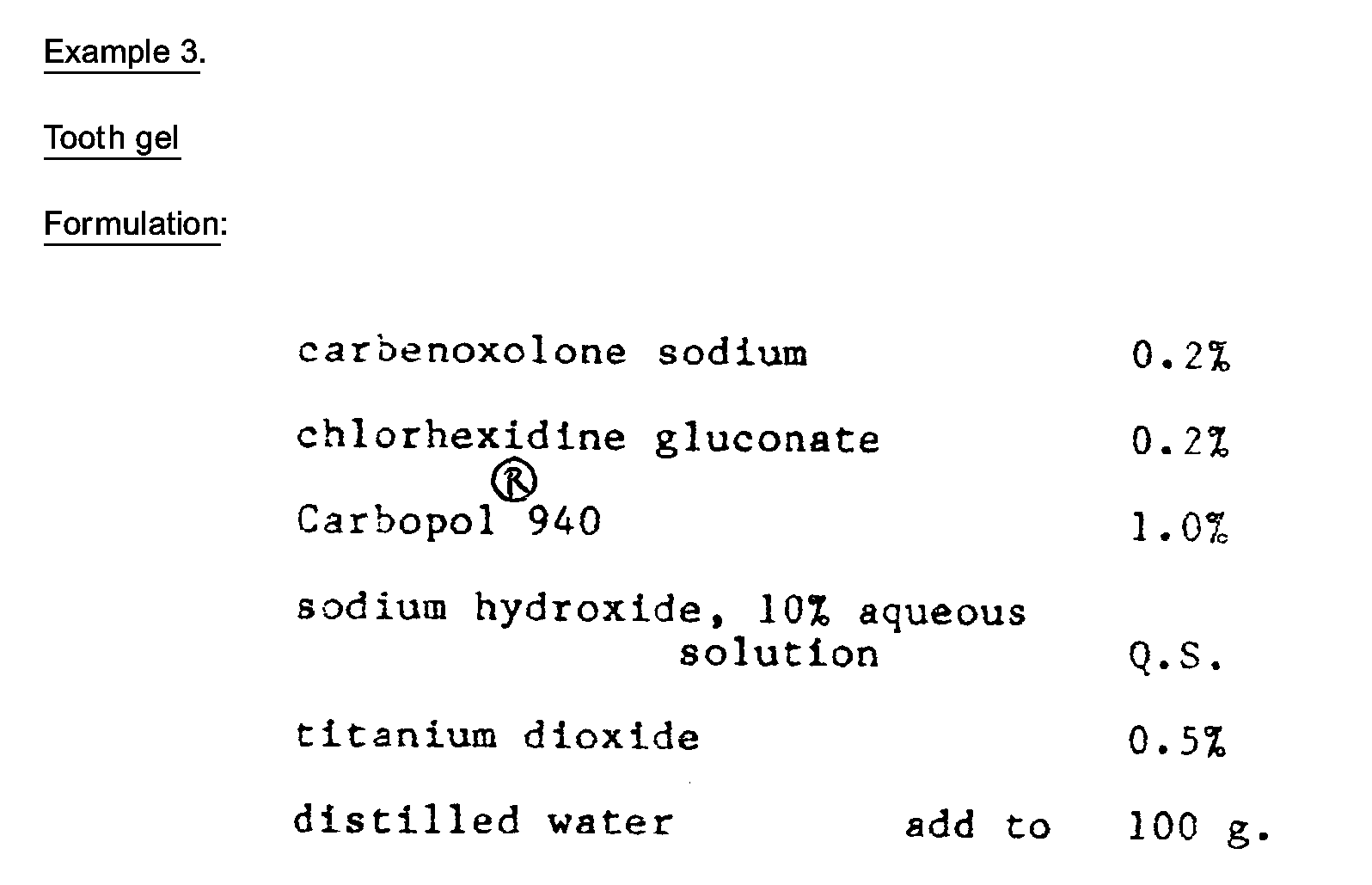
- 1. Boil and cool to 40 - 50°C. an excess of distilled water. Transfer 270 g. of the required distilled water into a 500 ml. beaker.
- 2. Place the stirrer as deeply as possible into the beaker and stir at low speed.
- 3. Gradually sprinkle the Carbopol® 940 on to the surface of the water. Increase the speed of stirring when necessary (as the viscosity increases) until the Carbopol® 940 completely dissolves.
- 4. Adjust the pH to 7 with 10% aqueous sodium hydroxide solution.
- 5. Dilute the chlorhexidine gluconate solution (4.0 ml.) to 40 ml. with distilled water.
- 6. Dissolve the carbenoxolone sodium in 40 ml. of distilled water and mix, with high speed of stirring, with the diluted chlorhexidine gluconate solution.
- 7. Add gradually to the gel with minimum stirring in order to avoid air entrapment.
- 8. Check the pH end adjust with 4% aqueous sodium hydroxide solution, if necessary.
- 9. Suspend the titanium dioxide (2.0 g.) in 5 ml. of distilled water and add to the gel, with minimum stirring.
- 10. Adjust the weight to 400 g. with distilled water.
- The product of the above formulation is a brilliant white gel with a high consistency.
- If desired, sweetening agents (such as sodium saccharin), flavouring agents (such as peppermint, spearmint, cardamom, cinnamon or clove oil) and colouring agents (such as an appropriate chlorophyllin) may be added. An anti-caries additive (such as sodium monofluorophosphate) may also be used, especially for use by children.
-
-
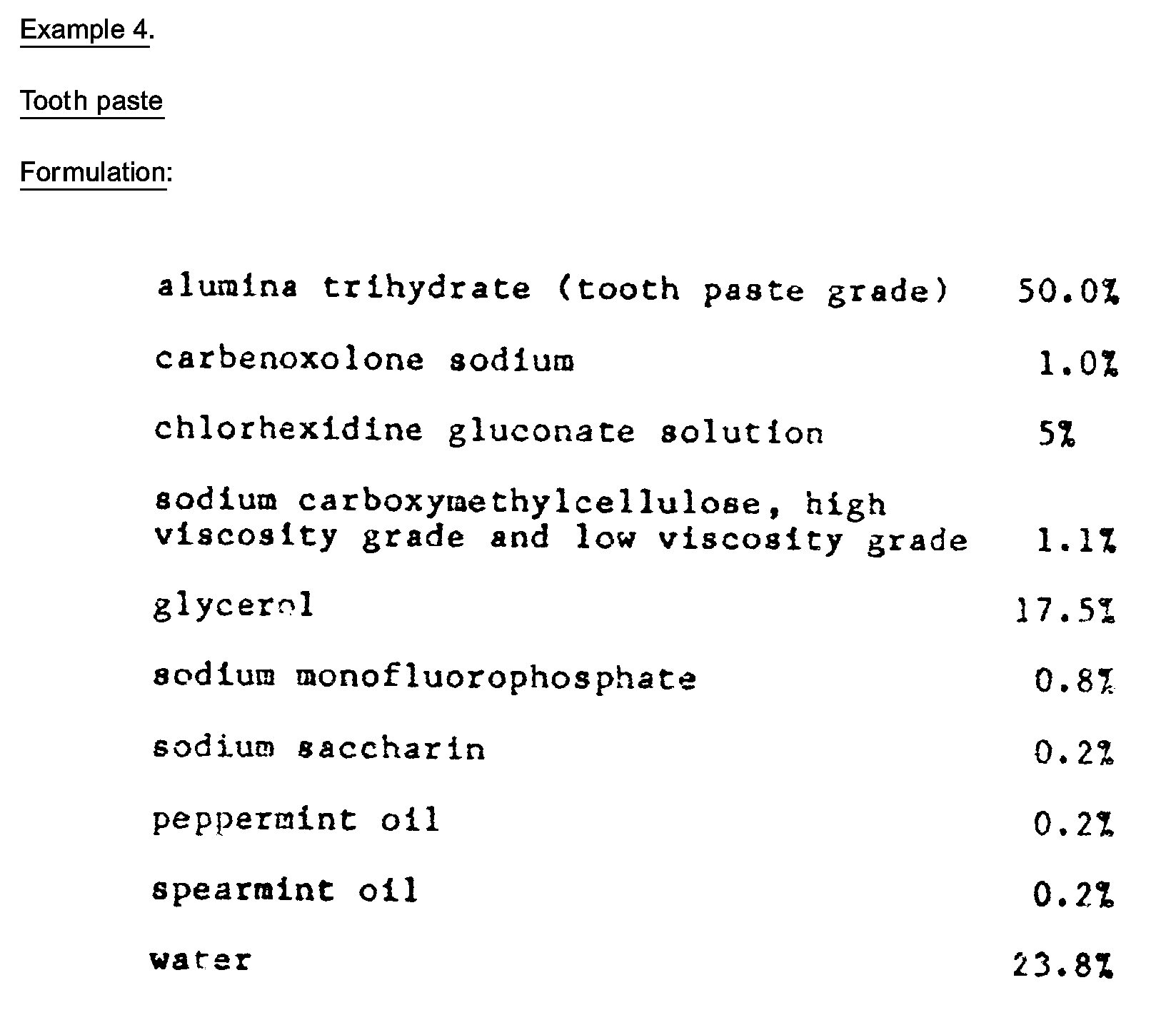
- 1. Mix the glycerol with distilled water (less 10 ml.) in a 500 ml. beaker.
- 2. Sprinkle the sodium carboxymethylcellulose (0 : 1.1 or 0.5 : 0.6 of low viscosity grade : high viscosity grade) on to the glycerol-distilled water mixture with a minimum of stirring (increase when necessary) until completely dissolved.
- 3. Add the sodium saccharin, sodium monofluorophosphate and carbenoxolone sodium with continuous stirring until dissolved.
- 4. Add the chlorhexidine gluconate dropwise, with stirring.
- 5. Gradually add the alumina trihydrate with continuous stirring.
- 6. Disperse the titanium dioxide in the remaining 10 ml. of distilled water and add to the mixture, with continuous stirring, until a homogeneous paste is produced.
- 7. Add the flavouring agents with minimum stirring.
-
- 1. Disperse the sodium carboxymethylcellulose in the glycerol without stirring to avoid air entrapment.
- 2. Dissolve the sodium saccharin, sodium monofluorophosphate and carbenoxolone sodium in water.
- 3. Gradually add the chlorhexidine gluconate solution dropwise with high speed stirring and leave to stand until all air bubbles have escaped.
- 4. Add the titanium dioxide with minimum stirring.
- 5. Gradually add the alumina trihydrate, with stirring, until a homogeneous product is obtained and deaerate under vacuum, if necessary.
- 6. Add the glycerol phase to the aqueous phase with minimum stirring to avoid air entrapment.
- Special ultra-fine alumina trihydrate grade with fruit flavours, such as strawberry, banana or apricot, and matching colours can be used for children's tooth paste.
- A clinical trial has been carried out in order to demonstrate the efficacy of pharmaceutical compositions according to the present invention.
- The composition used had the following formulation:

- For use, the above composition was dissolved in 30 to 50 ml. of water.
- Ten patients with haematological malignancies and undergoing intensive chemotherapy/radiation therapy were investigated during 10 treatment schedules in a non-randomised study to assess the efficacy of the mouthwash composition according to the present invention in the prevention of mucosal ulceration.
- The use of the mouthwash was commenced 24 hours prior to the treatment and continued until the neutrophil counts rose to 0.5 x 10⁹/litre. Mouth swabs were examined for pathogens and viral antibody titres were estimated at regular intervals. The mucosal changes were assessed daily by a scoring system.
- The group comprised 5 patients treated for acute myeloid leukaemia, 3 for acute lymphoblastic leukaemia and 2 for non-Hodgkin's lymphoma. The mean period of neutropenia was 14.5 days.
- In 7 patients, the mucosal changes were mild without ulceration. Two patients developed ulcers on the tongue and only one had severe symptoms due to generalised mucositis. No viruses were isolated from any of the patients and there was no rise in viral antibody titres. 8 patients became pyrexial with positive blood cultures (gram positive cocci) in 5. The mouthwash according to the present invention was well tolerated and no side effects were observed.
- These results demonstrate the usefulness of the compositions according to the invention for the prevention of mucosal ulceration in patients with prolonged neutropenia.
Claims (10)
- A pharmaceutical composition for treating diseases of mucous membranes, comprising chlorhexidine in the form of a salt with a non-toxic, pharmaceutically acceptable inorganic or organic acid and at least one glycyrrhetinic acid derivative selected from the 3-0-acyl derivatives thereof, the acyl radical of which can contain a carboxyl group, esters of glycyrrhetinic acid and of 3-acyl derivatives of glycyrrhetinic acid and 2-(ω-carboxyalkanoyl- and -cycloalkanoyl-oxymethyl)-glycyrrhetinic acid derivatives, as well as the salts of those glycyrrhetinic acid derivatives which contain one or more free carboxyl groups.
- A pharmaceutical composition according to claim 1, wherein it contains 1 to 10 parts by weight of glycyrrhetinic acid derivative per 1 part by weight of chlorhexidine salt.
- A pharmaceutical composition according to claim 2, wherein it contains 1 to 2.5 parts by weight of glycyrrhetinic acid derivative per 1 part by weight of chlorhexidine salt.
- A pharmaceutical composition according to claim 3, wherein it contains equal parts by weight of glycyrrhetinic acid derivative and chlorhexidine salt.
- A pharmaceutical composition according to any of the preceding claims, wherein it additionally contains at least one non-toxic, oxygen-generating compound.
- A pharmaceutical composition according to claim 5, wherein the oxygen-generating compound is a perborate or a percarbonate.
- A pharmaceutical composition according to any of the preceding claims, wherein it contains a fluorine compound suitable for oral use.
- A pharmaceutical composition according to claim 7, wherein the fluorine compound is sodium monofluorophosphate.
- A pharmaceutical composition according to any of the preceding claims, wherein the glycyrrhetinic acid derivative is the disodium salt of glycyrrhetinic acid hydrogen succinate, the disodium salt of mono(glycyrrhet-3-yl)-cis-cyclohexane-1,2-dicarboxylic acid or cinnamyl glycyrrhetate.
- A pharmaceutical composition according to any of the preceding claims which is in the form of a solid mixture, an oral gel, an aqueous solution or suspension or a toothpaste.
Applications Claiming Priority (2)
| Application Number | Priority Date | Filing Date | Title |
|---|---|---|---|
| GB898909906A GB8909906D0 (en) | 1989-04-29 | 1989-04-29 | Pharmaceutical compositions |
| GB8909906 | 1989-04-29 |
Publications (2)
| Publication Number | Publication Date |
|---|---|
| EP0396317A1 EP0396317A1 (en) | 1990-11-07 |
| EP0396317B1 true EP0396317B1 (en) | 1993-09-01 |
Family
ID=10655990
Family Applications (1)
| Application Number | Title | Priority Date | Filing Date |
|---|---|---|---|
| EP19900304465 Expired - Lifetime EP0396317B1 (en) | 1989-04-29 | 1990-04-25 | Pharmaceutical composition |
Country Status (3)
| Country | Link |
|---|---|
| EP (1) | EP0396317B1 (en) |
| DE (1) | DE69003003T2 (en) |
| GB (1) | GB8909906D0 (en) |
Families Citing this family (2)
| Publication number | Priority date | Publication date | Assignee | Title |
|---|---|---|---|---|
| US5356880A (en) * | 1991-05-30 | 1994-10-18 | Sanwa Kagaku Kenkyusho Co., Ltd. | Glycyrrhetinic acid derivatives |
| US6440395B1 (en) | 1992-06-22 | 2002-08-27 | Barry M. Libin | Antiplaque mouth rinse |
Family Cites Families (4)
| Publication number | Priority date | Publication date | Assignee | Title |
|---|---|---|---|---|
| GB843133A (en) * | 1957-07-16 | 1960-08-04 | Biorex Laboratories Ltd | Glycyrrhetinic acid derivatives |
| GB843134A (en) * | 1957-08-20 | 1960-08-04 | Biorex Laboratories Ltd | Improvements in and relating to pharmaceutical compositions |
| GB2092442B (en) * | 1981-02-06 | 1984-02-08 | Biorex Laboratories Ltd | Pharmaceutical composition for treating diseases of the oral cavity containing glycyrrhetinic acid or a derivative thereof |
| EP0110568A1 (en) * | 1982-10-29 | 1984-06-13 | The Procter & Gamble Company | Oral compositions |
-
1989
- 1989-04-29 GB GB898909906A patent/GB8909906D0/en active Pending
-
1990
- 1990-04-25 EP EP19900304465 patent/EP0396317B1/en not_active Expired - Lifetime
- 1990-04-25 DE DE1990603003 patent/DE69003003T2/en not_active Expired - Fee Related
Also Published As
| Publication number | Publication date |
|---|---|
| EP0396317A1 (en) | 1990-11-07 |
| GB8909906D0 (en) | 1989-06-14 |
| DE69003003T2 (en) | 1994-06-01 |
| DE69003003D1 (en) | 1993-10-07 |
Similar Documents
| Publication | Publication Date | Title |
|---|---|---|
| EP0404792B1 (en) | Use of sulphated sucrose in preparations for the treatment of teeth and their supporting tissue | |
| US3957967A (en) | Agent for the care and the cleaning of teeth and dentures | |
| EP0184389B1 (en) | Composition stably containing minocycline for treating periodontal diseases | |
| US5110583A (en) | Peroxy acids composition for oral treatment | |
| US4096241A (en) | Tooth preparations | |
| US4990329A (en) | Composition for treating oral diseases | |
| US5709873A (en) | Method of treating conditions of teeth and their supporting tissue | |
| GB2175805A (en) | Composition for treatment of oral diseases | |
| EP0102200B1 (en) | Neutral topical sodium fluoride gel | |
| US4559223A (en) | Silver sulfadiazine and/or zinc sulfadiazine-containing toothpaste or oral medicament | |
| US4415550A (en) | Treatment-and-prophylactic tooth paste possessing anticarious effect | |
| CA1171784A (en) | Pharmaceutical composition for treating diseases of the oral cavity | |
| EP0104768A2 (en) | Oral compositions comprising NG-acyl derivatives of arginine | |
| US4436720A (en) | Granulated treatment-and-prophylactic dental preparation possessing anticarious effect | |
| RU2096031C1 (en) | Medicinal substance for prophylaxis and treatment of inflammatory diseases of parodontium tissues | |
| JP3590438B2 (en) | Oral composition | |
| EP0396317A1 (en) | Pharmaceutical composition | |
| JPS60169413A (en) | Hygienic composition of oral cavity | |
| CH651204A5 (en) | AGENT TO PROMOTE ORAL HYGIENE. | |
| JP2623489B2 (en) | Collagenase activity inhibitor | |
| JPH06183940A (en) | Composition for oral cavity | |
| JPH08268854A (en) | Composition for oral cavity | |
| JP2738092B2 (en) | Oral composition | |
| EP0376162A2 (en) | Dental plaque inhibitor | |
| EP0763357A1 (en) | Bisguanidines containing pharmaceutical compositions |
Legal Events
| Date | Code | Title | Description |
|---|---|---|---|
| PUAI | Public reference made under article 153(3) epc to a published international application that has entered the european phase |
Free format text: ORIGINAL CODE: 0009012 |
|
| AK | Designated contracting states |
Kind code of ref document: A1 Designated state(s): BE CH DE ES FR GB LI |
|
| 17P | Request for examination filed |
Effective date: 19910102 |
|
| 17Q | First examination report despatched |
Effective date: 19920213 |
|
| GRAA | (expected) grant |
Free format text: ORIGINAL CODE: 0009210 |
|
| AK | Designated contracting states |
Kind code of ref document: B1 Designated state(s): BE CH DE ES FR GB LI |
|
| PG25 | Lapsed in a contracting state [announced via postgrant information from national office to epo] |
Ref country code: LI Effective date: 19930901 Ref country code: ES Free format text: THE PATENT HAS BEEN ANNULLED BY A DECISION OF A NATIONAL AUTHORITY Effective date: 19930901 Ref country code: CH Effective date: 19930901 |
|
| REF | Corresponds to: |
Ref document number: 69003003 Country of ref document: DE Date of ref document: 19931007 |
|
| ET | Fr: translation filed | ||
| REG | Reference to a national code |
Ref country code: CH Ref legal event code: PL |
|
| PLBE | No opposition filed within time limit |
Free format text: ORIGINAL CODE: 0009261 |
|
| STAA | Information on the status of an ep patent application or granted ep patent |
Free format text: STATUS: NO OPPOSITION FILED WITHIN TIME LIMIT |
|
| 26N | No opposition filed | ||
| PGFP | Annual fee paid to national office [announced via postgrant information from national office to epo] |
Ref country code: BE Payment date: 20000314 Year of fee payment: 11 |
|
| PGFP | Annual fee paid to national office [announced via postgrant information from national office to epo] |
Ref country code: GB Payment date: 20000412 Year of fee payment: 11 Ref country code: FR Payment date: 20000412 Year of fee payment: 11 |
|
| PGFP | Annual fee paid to national office [announced via postgrant information from national office to epo] |
Ref country code: DE Payment date: 20000526 Year of fee payment: 11 |
|
| PG25 | Lapsed in a contracting state [announced via postgrant information from national office to epo] |
Ref country code: GB Free format text: LAPSE BECAUSE OF NON-PAYMENT OF DUE FEES Effective date: 20010425 |
|
| PG25 | Lapsed in a contracting state [announced via postgrant information from national office to epo] |
Ref country code: FR Free format text: THE PATENT HAS BEEN ANNULLED BY A DECISION OF A NATIONAL AUTHORITY Effective date: 20010430 Ref country code: BE Free format text: LAPSE BECAUSE OF NON-PAYMENT OF DUE FEES Effective date: 20010430 |
|
| BERE | Be: lapsed |
Owner name: BIOREX LABORATORIES LTD Effective date: 20010430 |
|
| GBPC | Gb: european patent ceased through non-payment of renewal fee |
Effective date: 20010425 |
|
| PG25 | Lapsed in a contracting state [announced via postgrant information from national office to epo] |
Ref country code: DE Free format text: LAPSE BECAUSE OF NON-PAYMENT OF DUE FEES Effective date: 20020201 |
|
| REG | Reference to a national code |
Ref country code: FR Ref legal event code: ST |