EP0394690B1 - Polyfunctional polymers as deinking agents - Google Patents
Polyfunctional polymers as deinking agents Download PDFInfo
- Publication number
- EP0394690B1 EP0394690B1 EP19900105925 EP90105925A EP0394690B1 EP 0394690 B1 EP0394690 B1 EP 0394690B1 EP 19900105925 EP19900105925 EP 19900105925 EP 90105925 A EP90105925 A EP 90105925A EP 0394690 B1 EP0394690 B1 EP 0394690B1
- Authority
- EP
- European Patent Office
- Prior art keywords
- alkyl
- straight
- positive integer
- deinking
- branched chain
- Prior art date
- Legal status (The legal status is an assumption and is not a legal conclusion. Google has not performed a legal analysis and makes no representation as to the accuracy of the status listed.)
- Expired - Lifetime
Links
- 239000002761 deinking Substances 0.000 title claims description 35
- 239000003795 chemical substances by application Substances 0.000 title claims description 19
- 229920000642 polymer Polymers 0.000 title description 35
- 239000000178 monomer Substances 0.000 claims description 32
- 125000004178 (C1-C4) alkyl group Chemical group 0.000 claims description 20
- 239000004094 surface-active agent Substances 0.000 claims description 17
- 230000002209 hydrophobic effect Effects 0.000 claims description 13
- 125000000217 alkyl group Chemical group 0.000 claims description 10
- 125000000129 anionic group Chemical group 0.000 claims description 7
- 229920001577 copolymer Polymers 0.000 claims description 7
- -1 alkyl phenol Chemical compound 0.000 claims description 5
- 125000001997 phenyl group Chemical group [H]C1=C([H])C([H])=C(*)C([H])=C1[H] 0.000 claims description 5
- 125000005019 carboxyalkenyl group Chemical group 0.000 claims description 4
- 229910052783 alkali metal Chemical group 0.000 claims 2
- 150000001340 alkali metals Chemical group 0.000 claims 2
- QGZKDVFQNNGYKY-UHFFFAOYSA-O ammonium group Chemical group [NH4+] QGZKDVFQNNGYKY-UHFFFAOYSA-O 0.000 claims 2
- 125000004400 (C1-C12) alkyl group Chemical group 0.000 claims 1
- 125000003342 alkenyl group Chemical group 0.000 claims 1
- 238000000034 method Methods 0.000 description 35
- 239000000976 ink Substances 0.000 description 16
- 238000005188 flotation Methods 0.000 description 13
- 229920001002 functional polymer Polymers 0.000 description 11
- 239000000203 mixture Substances 0.000 description 11
- SMZOUWXMTYCWNB-UHFFFAOYSA-N 2-(2-methoxy-5-methylphenyl)ethanamine Chemical compound COC1=CC=C(C)C=C1CCN SMZOUWXMTYCWNB-UHFFFAOYSA-N 0.000 description 10
- NIXOWILDQLNWCW-UHFFFAOYSA-N 2-Propenoic acid Natural products OC(=O)C=C NIXOWILDQLNWCW-UHFFFAOYSA-N 0.000 description 10
- XXROGKLTLUQVRX-UHFFFAOYSA-N allyl alcohol Chemical compound OCC=C XXROGKLTLUQVRX-UHFFFAOYSA-N 0.000 description 10
- HEMHJVSKTPXQMS-UHFFFAOYSA-M Sodium hydroxide Chemical compound [OH-].[Na+] HEMHJVSKTPXQMS-UHFFFAOYSA-M 0.000 description 9
- XLYOFNOQVPJJNP-UHFFFAOYSA-N water Substances O XLYOFNOQVPJJNP-UHFFFAOYSA-N 0.000 description 9
- 238000012360 testing method Methods 0.000 description 7
- 0 CCCCC(C1*2)C11C(C)C(C)C2CCCC1 Chemical compound CCCCC(C1*2)C11C(C)C(C)C2CCCC1 0.000 description 6
- 239000000835 fiber Substances 0.000 description 6
- 238000004064 recycling Methods 0.000 description 6
- 239000007787 solid Substances 0.000 description 6
- 239000008367 deionised water Substances 0.000 description 5
- 239000000047 product Substances 0.000 description 5
- 238000004537 pulping Methods 0.000 description 5
- LCPVQAHEFVXVKT-UHFFFAOYSA-N 2-(2,4-difluorophenoxy)pyridin-3-amine Chemical compound NC1=CC=CN=C1OC1=CC=C(F)C=C1F LCPVQAHEFVXVKT-UHFFFAOYSA-N 0.000 description 4
- 229910021641 deionized water Inorganic materials 0.000 description 4
- 239000006260 foam Substances 0.000 description 4
- 238000010992 reflux Methods 0.000 description 4
- 238000000926 separation method Methods 0.000 description 4
- CHQMHPLRPQMAMX-UHFFFAOYSA-L sodium persulfate Substances [Na+].[Na+].[O-]S(=O)(=O)OOS([O-])(=O)=O CHQMHPLRPQMAMX-UHFFFAOYSA-L 0.000 description 4
- KFZMGEQAYNKOFK-UHFFFAOYSA-N Isopropanol Chemical compound CC(C)O KFZMGEQAYNKOFK-UHFFFAOYSA-N 0.000 description 3
- 239000002202 Polyethylene glycol Substances 0.000 description 3
- YXFVVABEGXRONW-UHFFFAOYSA-N Toluene Chemical compound CC1=CC=CC=C1 YXFVVABEGXRONW-UHFFFAOYSA-N 0.000 description 3
- 239000003054 catalyst Substances 0.000 description 3
- 239000011888 foil Substances 0.000 description 3
- 229920001223 polyethylene glycol Polymers 0.000 description 3
- 238000002360 preparation method Methods 0.000 description 3
- 235000011121 sodium hydroxide Nutrition 0.000 description 3
- 229920002554 vinyl polymer Polymers 0.000 description 3
- QPCDCPDFJACHGM-UHFFFAOYSA-N N,N-bis{2-[bis(carboxymethyl)amino]ethyl}glycine Chemical compound OC(=O)CN(CC(O)=O)CCN(CC(=O)O)CCN(CC(O)=O)CC(O)=O QPCDCPDFJACHGM-UHFFFAOYSA-N 0.000 description 2
- 239000004115 Sodium Silicate Substances 0.000 description 2
- 229910000831 Steel Inorganic materials 0.000 description 2
- 238000005119 centrifugation Methods 0.000 description 2
- 238000006243 chemical reaction Methods 0.000 description 2
- 150000001875 compounds Chemical class 0.000 description 2
- 238000007334 copolymerization reaction Methods 0.000 description 2
- 239000003599 detergent Substances 0.000 description 2
- 238000002474 experimental method Methods 0.000 description 2
- 239000012467 final product Substances 0.000 description 2
- 238000009472 formulation Methods 0.000 description 2
- 239000011521 glass Substances 0.000 description 2
- 238000006116 polymerization reaction Methods 0.000 description 2
- BDERNNFJNOPAEC-UHFFFAOYSA-N propan-1-ol Chemical compound CCCO BDERNNFJNOPAEC-UHFFFAOYSA-N 0.000 description 2
- 238000012216 screening Methods 0.000 description 2
- 239000011734 sodium Substances 0.000 description 2
- NTHWMYGWWRZVTN-UHFFFAOYSA-N sodium silicate Chemical compound [Na+].[Na+].[O-][Si]([O-])=O NTHWMYGWWRZVTN-UHFFFAOYSA-N 0.000 description 2
- 229910052911 sodium silicate Inorganic materials 0.000 description 2
- 239000010959 steel Substances 0.000 description 2
- UEUXEKPTXMALOB-UHFFFAOYSA-J tetrasodium;2-[2-[bis(carboxylatomethyl)amino]ethyl-(carboxylatomethyl)amino]acetate Chemical compound [Na+].[Na+].[Na+].[Na+].[O-]C(=O)CN(CC([O-])=O)CCN(CC([O-])=O)CC([O-])=O UEUXEKPTXMALOB-UHFFFAOYSA-J 0.000 description 2
- KEROTHRUZYBWCY-UHFFFAOYSA-N tridecyl 2-methylprop-2-enoate Chemical compound CCCCCCCCCCCCCOC(=O)C(C)=C KEROTHRUZYBWCY-UHFFFAOYSA-N 0.000 description 2
- 125000000391 vinyl group Chemical group [H]C([*])=C([H])[H] 0.000 description 2
- 125000003903 2-propenyl group Chemical group [H]C([*])([H])C([H])=C([H])[H] 0.000 description 1
- XKWFZGCWEYYGSK-UHFFFAOYSA-N 3,3,5,5-tetramethyl-2-methylidenehexanamide Chemical compound CC(C)(C)CC(C)(C)C(=C)C(N)=O XKWFZGCWEYYGSK-UHFFFAOYSA-N 0.000 description 1
- OXQMIXBVXHWDPX-UHFFFAOYSA-N CC(C)(C)N(C)C Chemical compound CC(C)(C)N(C)C OXQMIXBVXHWDPX-UHFFFAOYSA-N 0.000 description 1
- DGAQECJNVWCQMB-PUAWFVPOSA-M Ilexoside XXIX Chemical compound C[C@@H]1CC[C@@]2(CC[C@@]3(C(=CC[C@H]4[C@]3(CC[C@@H]5[C@@]4(CC[C@@H](C5(C)C)OS(=O)(=O)[O-])C)C)[C@@H]2[C@]1(C)O)C)C(=O)O[C@H]6[C@@H]([C@H]([C@@H]([C@H](O6)CO)O)O)O.[Na+] DGAQECJNVWCQMB-PUAWFVPOSA-M 0.000 description 1
- OFOBLEOULBTSOW-UHFFFAOYSA-N Propanedioic acid Natural products OC(=O)CC(O)=O OFOBLEOULBTSOW-UHFFFAOYSA-N 0.000 description 1
- 229920001131 Pulp (paper) Polymers 0.000 description 1
- 229920002125 Sokalan® Polymers 0.000 description 1
- 235000013351 cheese Nutrition 0.000 description 1
- 239000006184 cosolvent Substances 0.000 description 1
- 230000003292 diminished effect Effects 0.000 description 1
- 239000012153 distilled water Substances 0.000 description 1
- 238000001035 drying Methods 0.000 description 1
- 230000000694 effects Effects 0.000 description 1
- 238000007720 emulsion polymerization reaction Methods 0.000 description 1
- 239000004744 fabric Substances 0.000 description 1
- 239000000945 filler Substances 0.000 description 1
- 238000001914 filtration Methods 0.000 description 1
- 238000005189 flocculation Methods 0.000 description 1
- 230000016615 flocculation Effects 0.000 description 1
- 238000010528 free radical solution polymerization reaction Methods 0.000 description 1
- 125000000524 functional group Chemical group 0.000 description 1
- 238000005227 gel permeation chromatography Methods 0.000 description 1
- 238000010348 incorporation Methods 0.000 description 1
- 239000007788 liquid Substances 0.000 description 1
- 239000012263 liquid product Substances 0.000 description 1
- VZCYOOQTPOCHFL-UPHRSURJSA-N maleic acid Chemical compound OC(=O)\C=C/C(O)=O VZCYOOQTPOCHFL-UPHRSURJSA-N 0.000 description 1
- 239000011976 maleic acid Substances 0.000 description 1
- 239000000463 material Substances 0.000 description 1
- 238000010297 mechanical methods and process Methods 0.000 description 1
- 230000005226 mechanical processes and functions Effects 0.000 description 1
- 230000000704 physical effect Effects 0.000 description 1
- 229920003023 plastic Polymers 0.000 description 1
- 239000004033 plastic Substances 0.000 description 1
- 229920001467 poly(styrenesulfonates) Polymers 0.000 description 1
- 239000002244 precipitate Substances 0.000 description 1
- 238000003825 pressing Methods 0.000 description 1
- 239000011541 reaction mixture Substances 0.000 description 1
- 238000011084 recovery Methods 0.000 description 1
- 230000000717 retained effect Effects 0.000 description 1
- 229910052708 sodium Inorganic materials 0.000 description 1
- PFUVRDFDKPNGAV-UHFFFAOYSA-N sodium peroxide Chemical compound [Na+].[Na+].[O-][O-] PFUVRDFDKPNGAV-UHFFFAOYSA-N 0.000 description 1
- 159000000000 sodium salts Chemical class 0.000 description 1
- 238000003756 stirring Methods 0.000 description 1
- VZCYOOQTPOCHFL-UHFFFAOYSA-N trans-butenedioic acid Natural products OC(=O)C=CC(O)=O VZCYOOQTPOCHFL-UHFFFAOYSA-N 0.000 description 1
- 238000005406 washing Methods 0.000 description 1
- 239000002699 waste material Substances 0.000 description 1
Classifications
-
- D—TEXTILES; PAPER
- D21—PAPER-MAKING; PRODUCTION OF CELLULOSE
- D21C—PRODUCTION OF CELLULOSE BY REMOVING NON-CELLULOSE SUBSTANCES FROM CELLULOSE-CONTAINING MATERIALS; REGENERATION OF PULPING LIQUORS; APPARATUS THEREFOR
- D21C5/00—Other processes for obtaining cellulose, e.g. cooking cotton linters ; Processes characterised by the choice of cellulose-containing starting materials
- D21C5/02—Working-up waste paper
- D21C5/025—De-inking
- D21C5/027—Chemicals therefor
-
- C—CHEMISTRY; METALLURGY
- C08—ORGANIC MACROMOLECULAR COMPOUNDS; THEIR PREPARATION OR CHEMICAL WORKING-UP; COMPOSITIONS BASED THEREON
- C08F—MACROMOLECULAR COMPOUNDS OBTAINED BY REACTIONS ONLY INVOLVING CARBON-TO-CARBON UNSATURATED BONDS
- C08F220/00—Copolymers of compounds having one or more unsaturated aliphatic radicals, each having only one carbon-to-carbon double bond, and only one being terminated by only one carboxyl radical or a salt, anhydride ester, amide, imide or nitrile thereof
- C08F220/02—Monocarboxylic acids having less than ten carbon atoms; Derivatives thereof
- C08F220/10—Esters
- C08F220/26—Esters containing oxygen in addition to the carboxy oxygen
- C08F220/28—Esters containing oxygen in addition to the carboxy oxygen containing no aromatic rings in the alcohol moiety
- C08F220/285—Esters containing oxygen in addition to the carboxy oxygen containing no aromatic rings in the alcohol moiety and containing a polyether chain in the alcohol moiety
- C08F220/286—Esters containing oxygen in addition to the carboxy oxygen containing no aromatic rings in the alcohol moiety and containing a polyether chain in the alcohol moiety and containing polyethylene oxide in the alcohol moiety, e.g. methoxy polyethylene glycol (meth)acrylate
-
- C—CHEMISTRY; METALLURGY
- C08—ORGANIC MACROMOLECULAR COMPOUNDS; THEIR PREPARATION OR CHEMICAL WORKING-UP; COMPOSITIONS BASED THEREON
- C08F—MACROMOLECULAR COMPOUNDS OBTAINED BY REACTIONS ONLY INVOLVING CARBON-TO-CARBON UNSATURATED BONDS
- C08F290/00—Macromolecular compounds obtained by polymerising monomers on to polymers modified by introduction of aliphatic unsaturated end or side groups
- C08F290/02—Macromolecular compounds obtained by polymerising monomers on to polymers modified by introduction of aliphatic unsaturated end or side groups on to polymers modified by introduction of unsaturated end groups
- C08F290/06—Polymers provided for in subclass C08G
- C08F290/062—Polyethers
-
- Y—GENERAL TAGGING OF NEW TECHNOLOGICAL DEVELOPMENTS; GENERAL TAGGING OF CROSS-SECTIONAL TECHNOLOGIES SPANNING OVER SEVERAL SECTIONS OF THE IPC; TECHNICAL SUBJECTS COVERED BY FORMER USPC CROSS-REFERENCE ART COLLECTIONS [XRACs] AND DIGESTS
- Y02—TECHNOLOGIES OR APPLICATIONS FOR MITIGATION OR ADAPTATION AGAINST CLIMATE CHANGE
- Y02W—CLIMATE CHANGE MITIGATION TECHNOLOGIES RELATED TO WASTEWATER TREATMENT OR WASTE MANAGEMENT
- Y02W30/00—Technologies for solid waste management
- Y02W30/50—Reuse, recycling or recovery technologies
- Y02W30/64—Paper recycling
Definitions
- This separation is accomplished by washing, wherein the ink is dispersed in the aqueous system and removed with the water using mechanical processes such as centrifugation or screening, by flotation, wherein the ink is suspended in the aqueous system made hydrophobic, and subsequently "floated" away from the pulp in a froth (the froth is then drawn out of the system by a vacuum or mechanical overflow system), by mechanical means (flocculation, screening, centrifugation, etc.) or by a combination of these processes. Since none of these systems will completely remove all of the ink, the deinking agents must also contain compounds or functional groups which prevent redeposition of the removed ink on the cleaned fibers.
- the present invention relates to the use of a polyfunctional copolymer having a molecular weight of or above 20,200 of the formulae as given in claim 1 as a sole deinking agent.
- These agents are prepared by the reaction of an ethylenically unsaturated monomer with at least one surfactant macromonomer or hydrophobic monomer, and typically have molecular weights in the range of 2,000-100,000.
- Such agents can be added to the paper recycling mixture before, during, or after the pulping process, and are generally used at a treatment levels of 0.05%-1% (by weight based on the weight of dry pulp).
- These agents can be used in the flotation and wash and mechanical separation deinking processes, and will result in pulp of exceptional brightness, regardless of the deinking process used.
- the polyfunctional deinking agents of this invention comprise copolymers of ethylenically unsaturated monomers of the anionic type and one or more functional macromonomers.
- the macrononomers fall within three broad classes and, thus, the deinking agents comprise three classes of compounds.
- W and Y can be the same or different and are preferably H or CH3.
- Z is preferably and M is preferably sodium (Na).
- the ethylenically unsaturated monomer of the anionic type is copolymerized with at least one surfactant macromonomer.
- the surfactant macromonomers have one of the three following formulas: wherein: R is C3-C22 alkenyl or carboxy alkenyl; R4 is H or C1-C4 alkyl; R5 is C1-C4 alkyl or phenyl. wherein: R5 is the same as above; R3 is H or straight or branched chain C1-C22 alkyl or alkylphenol; Y is H or C1-C4 alkyl. wherein R5, R3 are the same as above.
- n is a positive integer of 10-100, preferably 20-50.
- m is O or a positive integer of 0-50, preferably 4-20.
- n/m is at least 1.5 when m ⁇ 0, preferably 2-3.
- the amount of surfactant macromonomer copolymerized with the ethylenically unsaturated monomer is at least 10%, by weight, preferably 25-60%.
- the polymers are produced by the copolymerization of at least one (1) hydrophyllic surfactant macromonomer, at least one (1) hydrophobic monomer, and at least one (1) ethylenically unsaturated vinyl monomer of the anionic type.
- the hydrophobic monomers are of the four following formulas: wherein R, R5, and Y are as above, R ' 3 is C1-C22 straight or branched chain alkyl or alkylphenol, R ' 4 is C1-C4 alkyl and R7 is C6-C22 straight or branched alkyl.
- the amount of hydrophobic monomer copolymerized is at least 1% by weight and the amount of hydrophyllic macromonomer copolymerized is at least 10% by weight.
- the polymers comprise 2-5% hydrophobic monomer and 20-60% hydrophyllic macromonomer.
- the third class of functional polymers contemplated by this invention comprises copolymers of at least one (1) hydrophobic macromonomer and at least one (1) ethylenically unsaturated monomer of the anionic type.
- the hydrophobic monomers are of the same formulas as the hydrophobic monomers of the second class and n and m are as in the first class.
- the amount of hydrophobic macromonomer copolymerized with the ethylenically unsaturated monomer is at least 1% by weight preferably 5-15%.
- the polymers produced must have a molecular weight of at least 20200. It is recognized, however, that the molecular weights can be increased as the particular applications dictate and, specifically, that polymers having molecular weights well in excess of 100,000 can be produced and utilized in deinking processes.
- the polymers can be produced by any convenient aqueous polymerization method, including solution polymerization in the presence of a suitable cosolvent, micellar polymerization, or emulsion polymerization. It is further contemplated that graft copolymerization methods can also be used to obtain functional polymers suitable for use in deinking. The actual method used will be dictated by personal preference, material availability and activity, as well as the properties of the particular monomers utilized.
- the polymer produced can be used in any conventional deinking process including flotation, wash, and mechanical separation., Regardless of the process used, the polymer is added at a convenient time during the deinking process. Treatment levels range from 0.001 to 1% (by weight based on weight of dry pulp), preferably 0.01 to 0.7% by weight. However, these levels can vary depending upon the particular process employed, the particular furnish, and the particular functional polymer.
- the functional polymers of this invention can be used with any furnishes which are commonly recycled (such as newsprint), as well as other furnishes such as laser printed papers, flexographic printed papers, pulp colored papers, foil-coated papers, plastic coated papers, etc.
- a list of commonly recycled papers is presented in circular PS-86 of the Paper Stock Institute of America (April, 1986, pp 4-8) incorporated herein by reference.
- a functional polymer comprising a surfactant macromonomer, monomethacrylate PEG 2000, and a vinyl monomer (acrylic acid) was prepared.
- the system was then incubated at 90 ⁇ 2°C for an additional 30 minutes, after which a 40 g charge of 2.5% aqueous sodium persulfate was added.
- the reaction mixture was subsequently maintained at 90+ 2°C for an additional hour, and then neutralized to pH 7 with 50% caustic soda.
- the neutralized product was subsequently vacuum distilled, removing 70 g of distillate, and leaving viscous, clear straw-colored liquid product, with a solids content of 29.7% and a pH of about 7.0.
- the polymer produced had a weight average molecular weight (M.W.) of about 100,000 (as measured by gel permeation chromatography using sulfonated polystyrene as the standard). This was retained as Polymer A.
- a second functional polymer containing allyl alcohol ethoxylate (24 EO) and acrylic acid was prepared. Briefly the procedure followed was identical to that used in the preparation of Polymer A, except that the acrylic acid/allyl alcohol ethoxylate (24 EO) ratio was 80/20. Two preparations were made, differing in the amount of catalyst used. The products obtained had solids contents of 27.5% and 29.7% and respective weight average molecular weights of 75,000 (B-1) and 25,000 (B-2).
- a functional polymer containing acrylic acid and allyl alcohol ethoxylate (44 EO) was prepared following the procedure of Polymer A.
- the product had a solid content of 31% and a weight average molecular weight of 23,000.
- Product D-1 had a solids content of 15.4% and a weight average molecular weight of 24,400, while D-2 had a solids content of 19.4% and a molecular weight of 20,200.
- a monomer mixture (comprising 135 g acrylic acid, 44 g allyl alcohol ethoxylate, 40 g deionized water, and 5 g tridecyl methacrylate) and 80 g of 1.25% sodium persulfate solution were continuously pumped into the reactor simultaneously over a period of three (3) hours, while the reaction temperature was maintained at 85°C.
- the system was subsequently incubated at 85°C for an additional 10 minutes after the addition was complete, after which 20 g acrylic acid was pumped in, followed by 20 g of 2.5% sodium persulfate solution.
- the system was subsequently maintained at 85°C for another hour, after which the reactor content was cooled to about 50°C and neutralized to pH 7 with 50% caustic soda.
- the neutralized product was subsequently vacuum distilled to remove 280 g distillate, 50 g of deionised water was then added to form the final product, which was a white viscous liquid with a solids content of 28%.
- the polymer had a weight average molecular weight of 39,000.
- the flotation procedure utilized a standard Wemco cell. Briefly, 1910 ml water was heated to 40-45°C and charged to a Waring blender. Subsequently, the following is charged: a) Sodium Silicate 1.0 ml b) 35% Sodium Peroxide 2.8 ml c) 50% NaOH 2.0 ml d) DTPA (Kalex Penta) 0.15 ml e) Polymer as per test and the system is mixed for one (1) minute. A total of 92 g paper (69 g newsprint, 23 g magazine) is added, and the entire system is pulped in the blender at high speed for 2 minutes, followed by low speed for 8 minutes.
- the resultant pulp is then diluted with 5750 ml water at 40-45°C, and transferred to the Wemco cell and frothed at 800 rpm for 5 minutes; the foam is collected from the system during this time through an outlet and 500 ml water is added to the system each minute to compensate for the foam removed .
- the amount of foam collected (in ml) is recorded and, after drying, the amount of fiber collected is determined (this is reported as a % of total fiber).
- a pulp "pad” is then formed by filtering 1 liter of pulp on a Buchner funnel (through #4 paper) and subsequently pressing on a steel patten.
- the pads are evaluated for brightness by measuring reflectance on the Technibrite Micro TB-1C analyzer; this value is reported as a % of the reflectance of the MgO standard. This value is compared with the brightness of the raw pulp (pulper) and the gain in brightness is calculated. In general, the greater the gain in brightness, the better the degree of ink removal.
- the deinked pulp is concentrated by straining through cheese cloth and manually squeezing dry. Fifty (50) g of this pulp is diluted with 2 liters of distilled water and disintegrated for 5 minutes in a standard commercial disintegrator. One (1) liter of this mixture is then filtered on a Buchner funnel and pressed on a steel patten, as in the flotation procedure to form a pad. The pad is examined as in the flotation procedure.
- Example I To assess the utility of the polymers of this invention in the flotation deinking process, a variety of polymers were compared with those listed in Example I at different treatment levels. The procedure followed was that of the flotation described in Example II. The results are presented in Table I.
- the polymers of this invention give a much better gain in brightness than the commercial surfactants. This indicates that a lower amount of deinking agent is required to obtain good ink removal.
- the gain in brightness produced by the polymers of this invention is better than the gain observed with commercial agents, with or without the accelerators, even at very low treatment levels.
- the polymers of this invention produce brighter finished pulp.
Landscapes
- Chemical & Material Sciences (AREA)
- Chemical Kinetics & Catalysis (AREA)
- Health & Medical Sciences (AREA)
- Polymers & Plastics (AREA)
- Organic Chemistry (AREA)
- Medicinal Chemistry (AREA)
- General Chemical & Material Sciences (AREA)
- Toxicology (AREA)
- Paper (AREA)
- Macromonomer-Based Addition Polymer (AREA)
- Polyethers (AREA)
- Paints Or Removers (AREA)
- Addition Polymer Or Copolymer, Post-Treatments, Or Chemical Modifications (AREA)
Description
- In the past few decades, as both timber resources and available landfill sites have greatly diminished, the demand for recycling of printed papers, especially newsprint, has skyrocketed. Such recycling efforts have been aimed at developing processes whereby previously-used papers can be reprocessed and recycled for use. A major objective of such processes is the recovery of fibers which possess the physical properties and brightness of more expensive virgin pulp. End use considerations also play a major role in determining which parameters are critical for efficient recycling. Thus, for example, in newsprint ink holdout is of primary importance while in tissue, removal of fillers is critical to obtain a final product of satisfactory softness.
- One major obstacle to the efficient recycling of such papers is the difficulties encountered in removing the ink from the printed paper before, during, or after the pulping process. This has become particularly difficult with newly developed inks and printing processes, which result in a much more tightly bound ink to the fibers. Improved deinking agents are needed to expand the utility of the deinking process.
- The deinking process and deinking agents have been discussed in many articles (see e.g. Crow and Secor, Tappi Journal, July 1987, pp 101-100; Wasilewski, 1987 Pulping Conference Proceedings, pp 25-31; McCool and Silveri, 1987 Pulping Conference Proceedings, pp 33-39; and Gilkey et al., 1987 Pulping Conference Proceedings, pp 133-141). Briefly, all such processes involve the removal of the ink from the recycled paper by use of deinking agents such as detergents or surfactants, and the subsequent separation of this removed ink from the pulp. This separation is accomplished by washing, wherein the ink is dispersed in the aqueous system and removed with the water using mechanical processes such as centrifugation or screening, by flotation, wherein the ink is suspended in the aqueous system made hydrophobic, and subsequently "floated" away from the pulp in a froth (the froth is then drawn out of the system by a vacuum or mechanical overflow system), by mechanical means (flocculation, screening, centrifugation, etc.) or by a combination of these processes. Since none of these systems will completely remove all of the ink, the deinking agents must also contain compounds or functional groups which prevent redeposition of the removed ink on the cleaned fibers.
- To date, deinking agents used in these processes have not satisfactorily fulfilled all these functions. For example, U.S. Patent No. 4,518,459, Canadian Pat. No. 1,009,804. German Patent No. 2,903,150 and Japanese Patent Nos. 51,892/80, 117,690/82, 59,990/84, 155,794/85 and 117,690/82 disclose conventional detergents, and surfactants for use in deinking, whereas the use of a combination of surfactants and polymers is described in Japanese Pat. Nos. 75,889/86 and 85,089/87 and UK Pat. Application GB 2,178,079A (published Feb. 4, 1987). The mixtures produce a satisfactory gain in brightness of the pulp, but the pulp still contain residual ink, including large spots, which renders the pulp unsuitable for use in many applications.
- Further, as new printing ink formulations and printing processes are developed, and the demand for recycling other types of waste papers (including films, foil coated papers, and pulp-colored papers) increases, there exists a real need for improved deinking agents which can effectively remove the printed ink from these furnishes.
- It is an object of this invention to provide improved deinking agents which are capable of effectively removing ink from a recyclable paper leaving ink-free pulp suitable for incorporation in applications requiring high grade papers. It is further an object of this inventicn to provide deinking agents which can be used with a variety of printed media, including films, foil-coated papers, and pulp-colored papers.
- The present invention relates to the use of a polyfunctional copolymer having a molecular weight of or above 20,200 of the formulae as given in claim 1 as a sole deinking agent. These agents are prepared by the reaction of an ethylenically unsaturated monomer with at least one surfactant macromonomer or hydrophobic monomer, and typically have molecular weights in the range of 2,000-100,000. Such agents can be added to the paper recycling mixture before, during, or after the pulping process, and are generally used at a treatment levels of 0.05%-1% (by weight based on the weight of dry pulp). These agents can be used in the flotation and wash and mechanical separation deinking processes, and will result in pulp of exceptional brightness, regardless of the deinking process used.
- The polyfunctional deinking agents of this invention comprise copolymers of ethylenically unsaturated monomers of the anionic type and one or more functional macromonomers. The macrononomers fall within three broad classes and, thus, the deinking agents comprise three classes of compounds.
- Regardless of the class, the anionic-type ethylenically unsaturated monomers are of the following formula:

W,Y are H or C₁-C₄ alkyl
Z is selected from -SO3 -M⁺,

- W and Y can be the same or different and are preferably H or CH₃.
- Z is preferably

- In the first class of deinking agents, the ethylenically unsaturated monomer of the anionic type is copolymerized with at least one surfactant macromonomer. The surfactant macromonomers have one of the three following formulas:

R is C₃-C₂₂ alkenyl or carboxy alkenyl;
R₄ is H or C₁-C₄ alkyl;
R₅ is C₁-C₄ alkyl or phenyl.
R₅ is the same as above;
R₃ is H or straight or branched chain C₁-C₂₂ alkyl or alkylphenol;
Y is H or C₁-C₄ alkyl.
wherein
R₅, R₃ are the same as above.
In all of the above:
n is a positive integer of 10-100, preferably 20-50.
m is O or a positive integer of 0-50, preferably 4-20.
n/m is at least 1.5 when m ≠0, preferably 2-3. - In this class of polymers, the amount of surfactant macromonomer copolymerized with the ethylenically unsaturated monomer is at least 10%, by weight, preferably 25-60%.
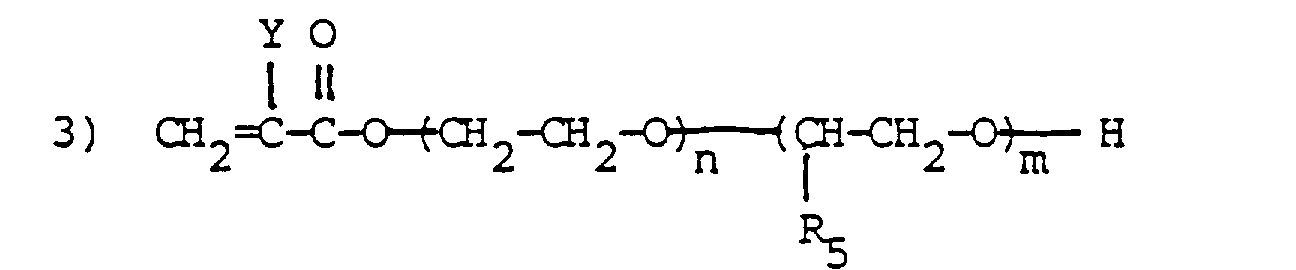
- In the second class of functional polymers contemplated by this invention, the polymers are produced by the copolymerization of at least one (1) hydrophyllic surfactant macromonomer, at least one (1) hydrophobic monomer, and at least one (1) ethylenically unsaturated vinyl monomer of the anionic type.
- The hydrophyllic surfactant macromonomers are of the three following formulas:

R₅ is C₁-C₄ alkyl or phenyl.
- The hydrophobic monomers are of the four following formulas:


R
R
- In this class of polymers, m and n are as defined above, the amount of hydrophobic monomer copolymerized is at least 1% by weight and the amount of hydrophyllic macromonomer copolymerized is at least 10% by weight. Preferably, the polymers comprise 2-5% hydrophobic monomer and 20-60% hydrophyllic macromonomer.
- The third class of functional polymers contemplated by this invention comprises copolymers of at least one (1) hydrophobic macromonomer and at least one (1) ethylenically unsaturated monomer of the anionic type. The hydrophobic monomers are of the same formulas as the hydrophobic monomers of the second class and n and m are as in the first class. The amount of hydrophobic macromonomer copolymerized with the ethylenically unsaturated monomer is at least 1% by weight preferably 5-15%.
- Regardless of the monomers used, the polymers produced must have a molecular weight of at least 20200. It is recognized, however, that the molecular weights can be increased as the particular applications dictate and, specifically, that polymers having molecular weights well in excess of 100,000 can be produced and utilized in deinking processes. The polymers can be produced by any convenient aqueous polymerization method, including solution polymerization in the presence of a suitable cosolvent, micellar polymerization, or emulsion polymerization. It is further contemplated that graft copolymerization methods can also be used to obtain functional polymers suitable for use in deinking. The actual method used will be dictated by personal preference, material availability and activity, as well as the properties of the particular monomers utilized.
- The polymer produced can be used in any conventional deinking process including flotation, wash, and mechanical separation., Regardless of the process used, the polymer is added at a convenient time during the deinking process. Treatment levels range from 0.001 to 1% (by weight based on weight of dry pulp), preferably 0.01 to 0.7% by weight. However, these levels can vary depending upon the particular process employed, the particular furnish, and the particular functional polymer.
- The functional polymers of this invention can be used with any furnishes which are commonly recycled (such as newsprint), as well as other furnishes such as laser printed papers, flexographic printed papers, pulp colored papers, foil-coated papers, plastic coated papers, etc. A list of commonly recycled papers is presented in circular PS-86 of the Paper Stock Institute of America (April, 1986, pp 4-8) incorporated herein by reference.
- The following examples illustrate certain preferred embodiments of this invention and are not intended to be illustrative of all embodiments.
- Representative deinking polymers of this invention were prepared as described below.
- In this example, a functional polymer comprising a surfactant macromonomer, monomethacrylate PEG 2000, and a vinyl monomer (acrylic acid) was prepared.
- Briefly, a mixture of 450 g-deionized water and 20 g of isopropyl alcohol was charged to a 2 liter glass reactor equipped with a reflux condenser, stirrer, thermometer and two inlet ports for the addition of monomer and catalyst. After the mixture was refluxed for 10 minutes at 90°C, 300g of a monomer mixture, comprising 100 g each of acrylic acid, monomethacrylate PEG (polyethylene glycol) 2000 (approx. 40 EO, mol wt. = 2000) and deionized water, and 80 g of 1.875% aqueous sodium persulfate solution were continuously pumped into the reactor while the temperature was maintained at about 90± 2°C. The system was then incubated at 90± 2°C for an additional 30 minutes, after which a 40 g charge of 2.5% aqueous sodium persulfate was added. The reaction mixture was subsequently maintained at 90+ 2°C for an additional hour, and then neutralized to pH 7 with 50% caustic soda. The neutralized product was subsequently vacuum distilled, removing 70 g of distillate, and leaving viscous, clear straw-colored liquid product, with a solids content of 29.7% and a pH of about 7.0. The polymer produced had a weight average molecular weight (M.W.) of about 100,000 (as measured by gel permeation chromatography using sulfonated polystyrene as the standard). This was retained as Polymer A.
- In this example, a second functional polymer containing allyl alcohol ethoxylate (24 EO) and acrylic acid was prepared. Briefly the procedure followed was identical to that used in the preparation of Polymer A, except that the acrylic acid/allyl alcohol ethoxylate (24 EO) ratio was 80/20. Two preparations were made, differing in the amount of catalyst used. The products obtained had solids contents of 27.5% and 29.7% and respective weight average molecular weights of 75,000 (B-1) and 25,000 (B-2).
- In this example, a functional polymer containing acrylic acid and allyl alcohol ethoxylate (44 EO) was prepared following the procedure of Polymer A. The weight ratio of acrylic acid to allyl 44 EO was 80/20.
- The product had a solid content of 31% and a weight average molecular weight of 23,000.
- In this example, functional polymers derived from two anionic vinyl monomers (acrylic acid and maleic acid) and a hydrophobic monomer (t-octylacrylamide) were prepared. The formulations were as follows:


- Initially, the A part was charged to a 2 liter flask equipped with a thermometer, two addition funnels, stirrer, thermometer, and reflux condenser, and the system was heated to reflux; subsequently B and C were both slowly added simultaneously (B over 3 hours, C over 5 hours) with stirring. Once the addition was complete, the system was refluxed an additional 2 hours (a precipitate formed during this time), after which D was added. The toluene was then steam stripped from the system, and the pH was adjusted to 7.0-7.5.
- Product D-1 had a solids content of 15.4% and a weight average molecular weight of 24,400, while D-2 had a solids content of 19.4% and a molecular weight of 20,200.
- In this example, functional polymers derived from a surfactant monomer (allyl alcohol ethoxylate, 44 EO), a hydrophobic monomer (tridecyl methacrylate) and an anionic vinyl monomer (acrylic acid) were prepared. Briefly, a mixture of 450 g deionized water and 150 g n-propanol was charged to a 2 liter glass reactor equipped with a reflux condenser, stirrer, thermometer and two inlet ports for the addition of monomers and catalyst. After the mixture was refluxed for 10 minutes, a monomer mixture (comprising 135 g acrylic acid, 44 g allyl alcohol ethoxylate, 40 g deionized water, and 5 g tridecyl methacrylate) and 80 g of 1.25% sodium persulfate solution were continuously pumped into the reactor simultaneously over a period of three (3) hours, while the reaction temperature was maintained at 85°C. The system was subsequently incubated at 85°C for an additional 10 minutes after the addition was complete, after which 20 g acrylic acid was pumped in, followed by 20 g of 2.5% sodium persulfate solution. The system was subsequently maintained at 85°C for another hour, after which the reactor content was cooled to about 50°C and neutralized to pH 7 with 50% caustic soda. The neutralized product was subsequently vacuum distilled to remove 280 g distillate, 50 g of deionised water was then added to form the final product, which was a white viscous liquid with a solids content of 28%. The polymer had a weight average molecular weight of 39,000.
- The above polymers were subjected to testing in flotation and wash deinking systems using the following procedures:
- The flotation procedure utilized a standard Wemco cell. Briefly, 1910 ml water was heated to 40-45°C and charged to a Waring blender. Subsequently, the following is charged:
a) Sodium Silicate 1.0 ml b) 35% Sodium Peroxide 2.8 ml c) 50% NaOH 2.0 ml d) DTPA (Kalex Penta) 0.15 ml e) Polymer as per test - The resultant pulp is then diluted with 5750 ml water at 40-45°C, and transferred to the Wemco cell and frothed at 800 rpm for 5 minutes; the foam is collected from the system during this time through an outlet and 500 ml water is added to the system each minute to compensate for the foam removed . The amount of foam collected (in ml) is recorded and, after drying, the amount of fiber collected is determined (this is reported as a % of total fiber).
- A pulp "pad" is then formed by filtering 1 liter of pulp on a Buchner funnel (through #4 paper) and subsequently pressing on a steel patten. The pads are evaluated for brightness by measuring reflectance on the Technibrite Micro TB-1C analyzer; this value is reported as a % of the reflectance of the MgO standard. This value is compared with the brightness of the raw pulp (pulper) and the gain in brightness is calculated. In general, the greater the gain in brightness, the better the degree of ink removal.
- In this system, 1910 ml of water (as in the flotation procedure) is mixed with:
a) DTPA (Kalex Penta) 1.0 ml b) Sodium Silicate 0.85 ml c) Polymer as per test - The deinked pulp is concentrated by straining through cheese cloth and manually squeezing dry. Fifty (50) g of this pulp is diluted with 2 liters of distilled water and disintegrated for 5 minutes in a standard commercial disintegrator. One (1) liter of this mixture is then filtered on a Buchner funnel and pressed on a steel patten, as in the flotation procedure to form a pad. The pad is examined as in the flotation procedure.
- To assess the utility of the polymers of this invention in the flotation deinking process, a variety of polymers were compared with those listed in Example I at different treatment levels. The procedure followed was that of the flotation described in Example II. The results are presented in Table I.
-

- As shown, it can be seen that, at low treatment levels (below 0.20%), the polymers of this invention give a much better gain in brightness than the commercial surfactants. This indicates that a lower amount of deinking agent is required to obtain good ink removal.
- Since some commercial surfactants are now used in conjunction with an accelerator or "auxilliary aid" to accomplish deinking, a series of experiments were conducted using such an aid, the sodium salt of polyacrylic acid (PAA) with commercial surfactants. The results are presented in Table II.
- Again, it can be seen that the gain in brightness produced by the polymers of this invention is better than the gain observed with commercial agents, with or without the accelerators, even at very low treatment levels.

- To assess the utility of the functional polymers of this invention in deinking laser printed papers, experiments were conducted following the procedure of Example III, except that laser printed paper was used. The results are presented in Table III.
-
TABLE III Summary of Laser Print Test Results Sample Brightness (TAPPI) Fiber Loss (%) Foam Collected (ml) Treatment Level (% wt. based on dry pulp) After Pulper Finished Pulp Gain in Brightness B-2 74.06 82.07 8.01 4.40 1100 0.20 C 79.95 86.97 7.02 4.66 1000 0.06 C 74.63 82.69 8.06 3.48 1010 0.12 - As shown, it can be seen that desirable gains in brightness are observed, even at low treatment levels.
- To assess the utility of the polymers of this invention in a wash deinking process, Polymers A and B were compared with two commercial surfactants following the procedure of Example II (treatment level = 1.0% by wt. using newsprint). The results are presented in Table IV.
-
Table IV Summary of Wash Test Results Sample Finished Pulp Brightness C₁₂₋₁₅ H₂₅₋₃₁ O (EO)9H 58.4 C₁₂₋₁₅ H₂₅₋₃₁ O (EO)4.5 (PO)₇H 58.4 Polymer A 61.3 Polymer B-1 60.5 - As shown, it can be seen that the polymers of this invention produce brighter finished pulp.
Claims (4)
- The use of a polyfunctional copolymer having a molecular weight of or above 20,200 of the formula:

R₁ = H, C₂-C₈ alkyl, or

R₄ is H or C₁-C₄ alkyl;
A = (̵CH₂-CH₂-O)̵;
W, Y = H or C₁-C₄ alkyl; and
Z=-SO- 3M⁺, or

a and b are positive integers of at least 1
n is a positive integer of 10-100; and
m is a positive integer of 0-50; or of the formula:
R₈ is
R₇ is C₆-C₂₂ straight or branched chain alkyl or alkyl phenol and R₄, W, Y, Z, a and b are as previously defined; and
wherein the ratio of a/b is at least 1/100, as a sole deinking agent. - The use as claimed in Claim 1 wherein the copolymer is formed from (1) an anionic type ethylenically unsaturated monomer having the formula

(2) at least one surfactant macromonomer selected from the group consisting of:


R is C₃-C₂₂ alkenyl or carboxy alkenyl;
R₃ is H or straight or branched chain C₁-C₂₂ alkyl or alkylphenol;
R₄ is H or C₁-C₄ alkyl;
R₅ is C₁-C₄ alxyl or phenyl;
Y is H or C₁-C₄ alkyl;
n is a positive integer of 10-100; and
m is a positive integer of 0-50; and
n/m is at least 1.5 when m≠0. - The use claimed in Claim 1 wherein the copolymer is formed from (1) an anionic type ethylenically unsaturated monomer having the formula:

(2) at least one hydrophyllic surfactant macromonomer selected from the group consisting of


R₃ is H or C₁-C₂₂ straight or branched chain alkyl or alkyl phenol,
R
R
R₄ is H or C₁-C₄ alkyl,
R₅ = C₁-C₄ alkyl or phenyl,
R₇ = C₆-C₂₂ straight or branched chain alkyl,
Y = H or C₁-C₄ alkyl,
n is a positive integer of 10-100,
m is a positive integer of 0-50, and
n/m is at least 1.5 when m≠0. - The use as claimed in Claim 1 wherein the copolymer is formed from (1) an anionic type ethylenically unsaturated monomer having the formula

wherein W, Y and Z are as defined in Claim 1; and
(2) at least one hydrophabic monomer selected from the group consisting of
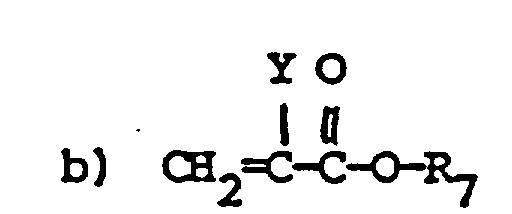


R is C₃-C₂₂ alkenyl or carboxyl alkenyl,
R
R
R₅ is C₁-C₄ alkyl,
R₇ is C₆-C₂₂ straight or branched chain alkyl or alkylphenol,
Y is H or C₁-C₄ alkyl,
n is a positive integer of 10-100,
m is a positive integer of 0-50, and
n/m is at least 1.5 when m≠0.
Applications Claiming Priority (2)
| Application Number | Priority Date | Filing Date | Title |
|---|---|---|---|
| US330651 | 1981-12-14 | ||
| US33065189A | 1989-03-30 | 1989-03-30 |
Publications (2)
| Publication Number | Publication Date |
|---|---|
| EP0394690A1 EP0394690A1 (en) | 1990-10-31 |
| EP0394690B1 true EP0394690B1 (en) | 1996-02-14 |
Family
ID=23290692
Family Applications (1)
| Application Number | Title | Priority Date | Filing Date |
|---|---|---|---|
| EP19900105925 Expired - Lifetime EP0394690B1 (en) | 1989-03-30 | 1990-03-28 | Polyfunctional polymers as deinking agents |
Country Status (5)
| Country | Link |
|---|---|
| US (2) | US5929183A (en) |
| EP (1) | EP0394690B1 (en) |
| JP (2) | JP2611026B2 (en) |
| CA (1) | CA1339231C (en) |
| DE (1) | DE69025350T2 (en) |
Cited By (1)
| Publication number | Priority date | Publication date | Assignee | Title |
|---|---|---|---|---|
| CN106318011A (en) * | 2015-06-19 | 2017-01-11 | 上海东升新材料有限公司 | High-efficiency deinking agent and preparation method thereof |
Families Citing this family (8)
| Publication number | Priority date | Publication date | Assignee | Title |
|---|---|---|---|---|
| DE4021275A1 (en) * | 1990-07-04 | 1992-01-09 | Basf Ag | METHOD FOR DEINKING PRINTED PAPERS |
| EP0506014A1 (en) * | 1991-03-28 | 1992-09-30 | Stephan Prof.Dr. Kleemann | Process for the removal of ink from waste paper |
| DE4110379C2 (en) * | 1991-03-28 | 1994-03-31 | Kleemann Stephan | Method and means for ink removal from waste paper |
| AU6898598A (en) * | 1997-04-10 | 1998-10-30 | Rhodia Inc. | Process for removing waterborne flexographic inks from substrates |
| US6784146B1 (en) | 2000-10-27 | 2004-08-31 | Kemira Chemicals, Inc. | Deinking method and composition for wastepaper |
| GB0217197D0 (en) * | 2002-07-24 | 2002-09-04 | Dow Corning | Method of deinking |
| ATE547170T1 (en) * | 2008-05-20 | 2012-03-15 | Cognis Ip Man Gmbh | AQUEOUS LOW POUR POINT SURFACTANT COMPOSITIONS |
| CN103396697B (en) * | 2013-05-31 | 2014-08-06 | 威尔(福建)生物有限公司 | Low-foaming liquid polyether waste paper deinking agent and synthetic method thereof |
Family Cites Families (38)
| Publication number | Priority date | Publication date | Assignee | Title |
|---|---|---|---|---|
| BE577062A (en) * | 1958-03-31 | |||
| JPS536214B2 (en) * | 1972-08-24 | 1978-03-06 | ||
| CA1009804A (en) * | 1973-10-25 | 1977-05-10 | National Research Council Of Canada | Ink removal from waste paper |
| US3880765A (en) * | 1973-11-12 | 1975-04-29 | Nalco Chemical Co | Waterflood process using alkoxylated low molecular weight acrylic acid polymers as scale inhibitors |
| CH606154A5 (en) * | 1974-07-02 | 1978-11-15 | Goodrich Co B F | |
| US3940351A (en) * | 1974-07-02 | 1976-02-24 | The B. F. Goodrich Company | Polymerization of carboxylic acid monomers and alkyl acrylate esters in chlorofluoroethane |
| US4076578A (en) * | 1974-10-21 | 1978-02-28 | Canadian Patents And Development Limited | Ink removal from waste paper |
| CA1096533A (en) * | 1975-06-16 | 1981-02-24 | William H. Harrop | Process for improving the processability of polyolefins, improved polyolefin compositions, and modifier compositions |
| DK412776A (en) * | 1975-09-18 | 1977-03-19 | Cassella Farbwerke Mainkur Ag | COLD WATER SOLUBLE STATIC COPOLYMERISATES, THEIR PREPARATION AND USE |
| US4190562A (en) * | 1977-04-04 | 1980-02-26 | The B. F. Goodrich Company | Improved water absorbent copolymers of copolymerizable carboxylic acids and acrylic or methacrylic esters |
| US4066583A (en) * | 1977-05-16 | 1978-01-03 | The B. F. Goodrich Company | Flexible water absorbent polymer compositions comprising (a) unsaturated carboxylic acid, acrylic ester containing alkyl group 10-30 carbon atoms, additional monomer plus (b) aliphatic diol |
| JPS5551891A (en) * | 1978-10-02 | 1980-04-15 | Toho Chem Ind Co Ltd | Deinking of waste paper |
| JPS5551892A (en) * | 1978-10-06 | 1980-04-15 | Toho Chem Ind Co Ltd | Deinking of waste paper |
| DE2903150A1 (en) * | 1979-01-27 | 1980-08-07 | Henkel Kgaa | METHOD FOR THINKING PRINTED WASTE PAPER |
| JPS56155059U (en) * | 1980-04-21 | 1981-11-19 | ||
| JPS57117690A (en) * | 1981-01-16 | 1982-07-22 | Honshu Paper Co Ltd | Deinking of printed used paper |
| EP0098803B1 (en) * | 1982-07-06 | 1986-07-30 | Ciba-Geigy Ag | Water-soluble or dispersible graft polymers, their production and use |
| US4469611A (en) * | 1982-11-01 | 1984-09-04 | The Dow Chemical Company | Water-based hydraulic fluids |
| JPS5999084A (en) * | 1982-11-29 | 1984-06-07 | Matsushita Electric Ind Co Ltd | Pump |
| US4463152A (en) * | 1982-12-29 | 1984-07-31 | Exxon Research And Engineering Co. | Acrylamide acrylate copolymers |
| DE3305637A1 (en) * | 1983-02-18 | 1984-08-23 | Basf Ag, 6700 Ludwigshafen | COPOLYMERISATE, THEIR PRODUCTION AND THEIR USE AS AUXILIARIES IN DETERGENT AND CLEANING AGENTS |
| JPS59162160A (en) * | 1983-03-01 | 1984-09-13 | 三洋化成工業株式会社 | Cement dispersant composition |
| US4499002A (en) * | 1983-06-28 | 1985-02-12 | The B. F. Goodrich Company | Scale inhibiting copolymer |
| GB2164339A (en) * | 1984-09-11 | 1986-03-19 | Ciba Geigy Ag | Polymaleic anhydride derivatives |
| JPS6175889A (en) * | 1984-09-17 | 1986-04-18 | 花王株式会社 | Deinking aid for regenerating old paper |
| EP0206808A3 (en) * | 1985-06-24 | 1987-08-19 | American Colloid Company | Continuous method for preparing polyacrylate resins |
| GB2178079A (en) * | 1985-07-23 | 1987-02-04 | Kao Corp | Deinking of waste paper |
| US5039433A (en) * | 1985-09-10 | 1991-08-13 | The Lubrizol Corporation | Method of using polymers of amido-sulfonic acid containing monomers and salts as drilling additive |
| JPH0647793B2 (en) * | 1985-10-07 | 1994-06-22 | 花王株式会社 | Deinking aid for recycled waste paper |
| US4814406A (en) * | 1986-02-28 | 1989-03-21 | Katayama Chemical Works Ltd. | Scale inhibitor |
| JPH0644927B2 (en) * | 1987-03-14 | 1994-06-15 | 日本油脂株式会社 | Sustained release active ingredient release agent |
| DE3711296A1 (en) * | 1987-04-03 | 1988-10-13 | Basf Ag | USE OF ALKOXYLATED CARBOXYL GROUPS OF POLYMERISATS IN DETERGENTS |
| US5070164A (en) * | 1987-07-02 | 1991-12-03 | Mobil Oil Corporation | Cold sealable cohesive terpolymers |
| US4861822A (en) * | 1988-01-22 | 1989-08-29 | The Dow Chemical Company | Latexes as binders for cast ceiling tiles |
| JPH01130469U (en) * | 1988-02-24 | 1989-09-05 | ||
| DE3818426A1 (en) * | 1988-05-31 | 1989-12-07 | Basf Ag | METHOD FOR PRODUCING WATER-SOLUBLE POLYMERISATS AND THEIR USE |
| DE3821518A1 (en) * | 1988-06-25 | 1989-12-28 | Basf Ag | METHOD FOR PRODUCING ALKOXYLATED POLYMERISATES CONTAINING CARBOXYL GROUPS |
| US4977059A (en) * | 1989-05-12 | 1990-12-11 | The Mead Corporation | Sulfonated-ethylene oxide dispersants for use in preparing amine-formaldehyde microcapsules |
-
1989
- 1989-06-27 CA CA 604056 patent/CA1339231C/en not_active Expired - Fee Related
-
1990
- 1990-03-28 EP EP19900105925 patent/EP0394690B1/en not_active Expired - Lifetime
- 1990-03-28 JP JP7716590A patent/JP2611026B2/en not_active Expired - Fee Related
- 1990-03-28 DE DE69025350T patent/DE69025350T2/en not_active Expired - Fee Related
- 1990-08-06 US US07/563,887 patent/US5929183A/en not_active Expired - Fee Related
-
1991
- 1991-11-27 US US07/800,178 patent/US5449725A/en not_active Expired - Fee Related
-
1996
- 1996-10-30 JP JP30350596A patent/JP2683232B2/en not_active Expired - Lifetime
Cited By (1)
| Publication number | Priority date | Publication date | Assignee | Title |
|---|---|---|---|---|
| CN106318011A (en) * | 2015-06-19 | 2017-01-11 | 上海东升新材料有限公司 | High-efficiency deinking agent and preparation method thereof |
Also Published As
| Publication number | Publication date |
|---|---|
| JPH02284969A (en) | 1990-11-22 |
| CA1339231C (en) | 1997-08-05 |
| JP2683232B2 (en) | 1997-11-26 |
| EP0394690A1 (en) | 1990-10-31 |
| JPH09176978A (en) | 1997-07-08 |
| US5449725A (en) | 1995-09-12 |
| JP2611026B2 (en) | 1997-05-21 |
| DE69025350D1 (en) | 1996-03-28 |
| DE69025350T2 (en) | 1996-06-27 |
| US5929183A (en) | 1999-07-27 |
Similar Documents
| Publication | Publication Date | Title |
|---|---|---|
| JP3176371B2 (en) | Waste paper ink removal method | |
| US5227019A (en) | Wastepaper deinking process | |
| US5807464A (en) | Enzymatic deinking process for office wastepaper with selected noninic surfactants | |
| US5449725A (en) | Polyfunctional polymers as deinking agents | |
| US5651861A (en) | Process for removing inks from waste paper | |
| JPH04502038A (en) | Deinking waste paper | |
| JPH09508450A (en) | Deinking methods and novel polymers used in these methods | |
| AU673782B2 (en) | Treatment of cellulosic material and compositions for use in this | |
| EP0636192B1 (en) | Deinking of cellulosic material and compositions for use in this | |
| US5817212A (en) | Deinking composition and process | |
| US5637191A (en) | Treatment of cellulosic material and compositions for use in this | |
| GB2178079A (en) | Deinking of waste paper | |
| EP0537216B1 (en) | Process for de-inking printed papers | |
| JP3518224B2 (en) | Deinking agent for recycled paper | |
| GB2086955A (en) | Process for Recovering Waste Paper | |
| JPS6175889A (en) | Deinking aid for regenerating old paper | |
| CA2206006A1 (en) | A process for removing printing inks from printed wastepaper | |
| WO1997018348A1 (en) | Process for enhancing ash removal in deinking process | |
| JP2001271284A (en) | Method for producing deinking agent and waste paper pulp | |
| SK113096A3 (en) | Agent for deinking printing ink and a method of deinking |
Legal Events
| Date | Code | Title | Description |
|---|---|---|---|
| PUAI | Public reference made under article 153(3) epc to a published international application that has entered the european phase |
Free format text: ORIGINAL CODE: 0009012 |
|
| 17P | Request for examination filed |
Effective date: 19900502 |
|
| AK | Designated contracting states |
Kind code of ref document: A1 Designated state(s): DE GB SE |
|
| 17Q | First examination report despatched |
Effective date: 19921102 |
|
| RAP1 | Party data changed (applicant data changed or rights of an application transferred) |
Owner name: TEXACO DEVELOPMENT CORPORATION |
|
| RAP1 | Party data changed (applicant data changed or rights of an application transferred) |
Owner name: HUNTSMAN CORPORATION |
|
| GRAA | (expected) grant |
Free format text: ORIGINAL CODE: 0009210 |
|
| AK | Designated contracting states |
Kind code of ref document: B1 Designated state(s): DE GB SE |
|
| REF | Corresponds to: |
Ref document number: 69025350 Country of ref document: DE Date of ref document: 19960328 |
|
| PLBE | No opposition filed within time limit |
Free format text: ORIGINAL CODE: 0009261 |
|
| STAA | Information on the status of an ep patent application or granted ep patent |
Free format text: STATUS: NO OPPOSITION FILED WITHIN TIME LIMIT |
|
| 26N | No opposition filed | ||
| PGFP | Annual fee paid to national office [announced via postgrant information from national office to epo] |
Ref country code: GB Payment date: 19980209 Year of fee payment: 9 |
|
| PGFP | Annual fee paid to national office [announced via postgrant information from national office to epo] |
Ref country code: SE Payment date: 19980302 Year of fee payment: 9 |
|
| PGFP | Annual fee paid to national office [announced via postgrant information from national office to epo] |
Ref country code: DE Payment date: 19980330 Year of fee payment: 9 |
|
| PG25 | Lapsed in a contracting state [announced via postgrant information from national office to epo] |
Ref country code: GB Free format text: LAPSE BECAUSE OF NON-PAYMENT OF DUE FEES Effective date: 19990328 |
|
| PG25 | Lapsed in a contracting state [announced via postgrant information from national office to epo] |
Ref country code: SE Free format text: LAPSE BECAUSE OF NON-PAYMENT OF DUE FEES Effective date: 19990329 |
|
| EUG | Se: european patent has lapsed |
Ref document number: 90105925.3 |
|
| GBPC | Gb: european patent ceased through non-payment of renewal fee |
Effective date: 19990328 |
|
| EUG | Se: european patent has lapsed |
Ref document number: 90105925.3 |
|
| PG25 | Lapsed in a contracting state [announced via postgrant information from national office to epo] |
Ref country code: DE Free format text: LAPSE BECAUSE OF NON-PAYMENT OF DUE FEES Effective date: 20000101 |