EP0387174A2 - Unmittelbare Handhabung von Icons mittels einer Konversationsverbindung - Google Patents
Unmittelbare Handhabung von Icons mittels einer Konversationsverbindung Download PDFInfo
- Publication number
- EP0387174A2 EP0387174A2 EP90480015A EP90480015A EP0387174A2 EP 0387174 A2 EP0387174 A2 EP 0387174A2 EP 90480015 A EP90480015 A EP 90480015A EP 90480015 A EP90480015 A EP 90480015A EP 0387174 A2 EP0387174 A2 EP 0387174A2
- Authority
- EP
- European Patent Office
- Prior art keywords
- application
- client application
- icon
- source
- source application
- Prior art date
- Legal status (The legal status is an assumption and is not a legal conclusion. Google has not performed a legal analysis and makes no representation as to the accuracy of the status listed.)
- Granted
Links
Images

Classifications
-
- G—PHYSICS
- G06—COMPUTING OR CALCULATING; COUNTING
- G06F—ELECTRIC DIGITAL DATA PROCESSING
- G06F3/00—Input arrangements for transferring data to be processed into a form capable of being handled by the computer; Output arrangements for transferring data from processing unit to output unit, e.g. interface arrangements
- G06F3/01—Input arrangements or combined input and output arrangements for interaction between user and computer
- G06F3/048—Interaction techniques based on graphical user interfaces [GUI]
- G06F3/0481—Interaction techniques based on graphical user interfaces [GUI] based on specific properties of the displayed interaction object or a metaphor-based environment, e.g. interaction with desktop elements like windows or icons, or assisted by a cursor's changing behaviour or appearance
- G06F3/04817—Interaction techniques based on graphical user interfaces [GUI] based on specific properties of the displayed interaction object or a metaphor-based environment, e.g. interaction with desktop elements like windows or icons, or assisted by a cursor's changing behaviour or appearance using icons
-
- G—PHYSICS
- G06—COMPUTING OR CALCULATING; COUNTING
- G06F—ELECTRIC DIGITAL DATA PROCESSING
- G06F9/00—Arrangements for program control, e.g. control units
- G06F9/06—Arrangements for program control, e.g. control units using stored programs, i.e. using an internal store of processing equipment to receive or retain programs
- G06F9/46—Multiprogramming arrangements
- G06F9/54—Interprogram communication
- G06F9/543—User-generated data transfer, e.g. clipboards, dynamic data exchange [DDE], object linking and embedding [OLE]
Definitions
- the present invention relates in general to data processing systems and in particular to multi-tasking data processing systems. Still more particularly, the present invention relates to methods which permit the direct manipulation of icons from one application to another within a multi-tasking data processing system.
- Multi-tasking is generally accomplished in a personal computer environment by utilization of multiple view ports or "windows", each of which displays information relating to a different application.
- windows examples include Windows, published by Microsoft, Inc. and OS/2 Presentation Manager, published by International Business Machines Corporation.
- icons These icons may be displayed within a window and are thus available to a user of that window. This technique is possible when an application draws, maintains, and positions icons for tasks that it may provide within its window. Utilization of these icons by another independent application is not possible without a published set of complex programming interfaces. Likewise, the movement of these icons from the application to another window is not possible without such interfaces.
- an existing data transfer protocol may be utilized to more simply accomplish the transfer of the icon and the associated application function from one window to another.
- a protocol known as Dynamic Data Exchange (DDE) utilized by both Windows and OS/2 Presentation Manager may be used for this technique.
- DDE is a protocol for interprocess communication which consists of a small set of messages and data structures designed to support the interaction between to processes.
- the communications model utilized by DDE is based upon a client/source application relationship wherein the client application initiates a conversation with the appropriate source application and data then flows from the source application to the client application, supporting the icon disposed therein.
- DDE represents an important step forward in multi-tasking environments, it has at least one short fall which must be addressed.
- a user may desire to transfer an icon from one application to a second client application. Under existing protocols this is a time consuming process which requires a complex programming interface and which may not be accomplished directly. Therefore, it should be obvious that a need exists for an improved method whereby iconic representations of selected applications may be directly manipulated by a user so that an application may be easily transferred to a second client application.
- a user may directly manipulate iconic representations of software applications in accordance with the present invention by controlling the communication link between each icon and its associated source application.
- communications between that first client application and the icon's source application are automatically terminated.
- the icon is placed within a second client application and communications between the second client application and the source application are automatically initiated.
- a conversational data structure designed to support communication between a client application and a source application is automatically created in response to an initiate communication message from a client application to a source application, after a determination has been made that the icon in question is appropriately served by that source application.
- Client applications containing multiple icons may be simply and easily duplicated by copying each icon and automatically initiating communications between the source application for that icon and the application containing the copied icon.
- FIG. 1 a graphic representation of a computer screen demonstrating the copying of a client application having multiple icons displayed therein.
- computer screen 10 includes a client application which is displayed within a viewport or "window" 12, in a manner well known in the prior art. Displayed within window 12 are icons 14 and 16, each of which represents another software application.
- icon 14 is indicative of a communications application and is supported by a source application which is displayed, for purposes of illustration, within window 20.
- the communications necessary to serve the application represented by icon 14 are provided from the source application depicted within window 20 to window 12 by means of DDE link 24.
- icon 16 represents a second application which is supported by a second source application, depicted within window 18.
- the communications necessary to support the application represented by icon 16 are provided from the source application depicted within window 18 to window 12 by means of DDE link 22.
- window 26 As those skilled in the art will appreciate this may be accomplished by utilizing any technique known in the prior art for the graphic duplication of an element or window displayed on a computer screen.
- window 26 after window 26 has been created as a copy of window 12, including icons 28 and 30, a conversational link between the source applications depicted within windows 18 and 20 will be automatically established.
- the communications necessary to support the application represented by icon 28 will be automatically initiated, in accordance with the method of the present invention, by the automatic initiation of DDE link 34, between the source application depicted within window 20 and the client application established within window 26.
- the user may copy a client application containing numerous iconic representations of other applications without the necessity of explicitly establishing communication between each iconic representation and its associated source application.
- FIG. 2 there is depicted a graphic representation of a computer screen demonstrating the relocation of an icon from one client application to a second client application.
- computer screen 10 includes a first client application which is displayed within a window 12 and a second client application which is displayed within window 20.
- each client application may include multiple icons such as 14, 16, 28 and 30, each of which is supported by a source application.
- the source application supporting icons 16 and 30 is displayed within window 18 and the source application supporting icons 14 and 28 is displayed within window 20.
- icon 16 has been relocated from window 12 to window 20.
- DDE link 22 has been automatically reinitiated so that the communications necessary to support icon 16 within window 20 are reestablished.
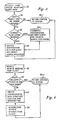
- FIG. 3 there is depicted a logic flow chart illustrating the direct manipulation logic of the method of the present invention.
- the process begins at block 36 wherein a message is received from the system indicating that an object, such as an icon, has been selected for manipulation.
- block 38 illustrates the determination of whether or not the object selected for manipulation has an owning or source process. If not, the process returns control to the system, as depicted in block 40.
- block 42 illustrates a determination of whether or not the object is to be copied or moved.
- block 44 illustrates the termination of the DDE conversation link between the client application and the object's source application. This process will be illustrated in greater detail with respect to Figure 5.
- block 46 illustrates the initiation of a conversation link between the new client appli cation and the object source application.
- an icon or other object may be directly manipulated by the user without the necessity of complex programming interfaces by automatically terminating the conversation link between the icon's previous client application and its source application and thereafter initiating a conversation link between the new client application wherein the icon is now located and the source application for that icon.
- the process proceeds directly to block 46 and a conversation link is initiated between the source application servicing the icon and the new client application wherein the copy is to be located.
- FIG. 4 there is depicted a logic flow chart illustrating the initiating of communication between a source application and a client application in accordance with the method of the present invention.
- this process begins by the receipt of an initiate communications message from a client application.
- This message is transmitted by a client application, in accordance with the method of the present invention, automatically in response to the graphic relocation or copying of an object into the client application.
- block 50 illustrates the determination of whether or not the correct application and topic names are present for communication between the client application and the source application which has received the initiate communications message. This is necessary to determine if the icon in question is appropriately served by the source application which has been selected. If the application and topic names are not correct, then, as illustrated in block 52, the control is returned to the system.
- block 54 then illustrates the creation of a conversational data structure for this conversation.
- the conversational data structure preferably consists of structures designed to support interprocess communication between the client application and the source application.
- the process is completed by the transmittal of an acknowledgement from the source application to the client application acknowledging the initiate communication message which has been received.
- the source application is conversationally linked with the client application wherein the object now resides and may from that point forward provide all of the communication necessary to support that object within the client application.
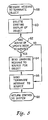
- FIG. 5 there is depicted a logic flow chart illustrating the termination of a communications link between a source application and a client application, in accordance with the method of the present invention.
- this process begins, as illustrated in block 58, by the receipt of a message at the source application to terminate the communications link associated with a particular object or icon.
- block 60 depicts the deletion of the existing display of that object.
- block 62 illustrates a determination of whether or not the user has requested advise of update with regard to this particular object.
- the "advise" message is utilized by the client application to request the source application to supply an update for a data item whenever it changes.
- block 66 illustrates the transmittal of a terminate message to the source application.
- block 68 illustrates the returning of the control to the system.
- the user wishes to move one icon from one client application to another, this may be accomplished simply by terminating the link between the source application and the client application from which the icon was moved and automatically initiating a link between the source application and the client application to which the icon was moved.
- Very little additional code is required to implement this direct manipulation technique.
- the existing iconic control process provides the function necessary to detect the click of a mouse or other pointer device on an icon and to track the shadow box as the mouse is moved.
- the icon control process may be utilized to send a notification of the drop and information about the source application to the target application. In this manner, by utiliz ing DDE links to manage iconic information, a very small amount of code may be utilized to accomplish the direct manipulation of dynamically alterable icons between separate applications.
- This technique may be utilized to provide an extremely visual working example of the use of DDE to establish permanent links between separate applications. Support from multiple conversation links is added simply by defining one additional message and making extensive use of the window word and window enumeration facilities which are provided by software applications such as Windows and Presentation Manager.
- this expanded DDE link concept may be accomplished in several manners.
- the second 32 bit parameter of DDE could be utilized to pass all necessary conversation parameters and references to data.
- the second 32 bit parameter may be utilized as a 32 bit pointer to one of several available DDE data structures which may contain the conversation parameters and data references utilized to implement the iconic exchange method of the present invention.
Landscapes
- Engineering & Computer Science (AREA)
- Theoretical Computer Science (AREA)
- General Engineering & Computer Science (AREA)
- Software Systems (AREA)
- Physics & Mathematics (AREA)
- General Physics & Mathematics (AREA)
- Human Computer Interaction (AREA)
- Digital Computer Display Output (AREA)
- User Interface Of Digital Computer (AREA)
- Input From Keyboards Or The Like (AREA)
- Computer And Data Communications (AREA)
Applications Claiming Priority (2)
| Application Number | Priority Date | Filing Date | Title |
|---|---|---|---|
| US32193089A | 1989-03-10 | 1989-03-10 | |
| US321930 | 1989-03-10 |
Publications (3)
| Publication Number | Publication Date |
|---|---|
| EP0387174A2 true EP0387174A2 (de) | 1990-09-12 |
| EP0387174A3 EP0387174A3 (de) | 1992-04-01 |
| EP0387174B1 EP0387174B1 (de) | 1995-11-08 |
Family
ID=23252672
Family Applications (1)
| Application Number | Title | Priority Date | Filing Date |
|---|---|---|---|
| EP90480015A Expired - Lifetime EP0387174B1 (de) | 1989-03-10 | 1990-02-02 | Unmittelbare Handhabung von Icons mittels einer Konversationsverbindung |
Country Status (4)
| Country | Link |
|---|---|
| EP (1) | EP0387174B1 (de) |
| JP (1) | JPH06103483B2 (de) |
| BR (1) | BR9000826A (de) |
| DE (1) | DE69023370T2 (de) |
Cited By (3)
| Publication number | Priority date | Publication date | Assignee | Title |
|---|---|---|---|---|
| EP0662653A1 (de) * | 1994-01-10 | 1995-07-12 | International Business Machines Corporation | Heldung der Zugänglichkeit in einer Multitaskumgebung durch Bojeikon |
| GB2428834A (en) * | 2005-08-04 | 2007-02-07 | Ibm | Linking objects with graphical user interface items |
| WO2015179481A3 (en) * | 2014-05-22 | 2016-03-10 | Alibaba Group Holding Limited | Method, apparatus, and system for data transfer across applications |
-
1990
- 1990-02-02 EP EP90480015A patent/EP0387174B1/de not_active Expired - Lifetime
- 1990-02-02 DE DE69023370T patent/DE69023370T2/de not_active Expired - Lifetime
- 1990-02-21 BR BR909000826A patent/BR9000826A/pt not_active Application Discontinuation
- 1990-03-09 JP JP2056825A patent/JPH06103483B2/ja not_active Expired - Lifetime
Non-Patent Citations (2)
| Title |
|---|
| * page 14, right column, line 11 - line 55 * * |
| MICROSOFT SYSTEMS JOURNAL November 1987, pages 13 - 38; K.P. WELCH: 'Interprogram communications using windows' dynamic data exchange' * |
Cited By (3)
| Publication number | Priority date | Publication date | Assignee | Title |
|---|---|---|---|---|
| EP0662653A1 (de) * | 1994-01-10 | 1995-07-12 | International Business Machines Corporation | Heldung der Zugänglichkeit in einer Multitaskumgebung durch Bojeikon |
| GB2428834A (en) * | 2005-08-04 | 2007-02-07 | Ibm | Linking objects with graphical user interface items |
| WO2015179481A3 (en) * | 2014-05-22 | 2016-03-10 | Alibaba Group Holding Limited | Method, apparatus, and system for data transfer across applications |
Also Published As
| Publication number | Publication date |
|---|---|
| JPH02275562A (ja) | 1990-11-09 |
| JPH06103483B2 (ja) | 1994-12-14 |
| DE69023370T2 (de) | 1996-06-20 |
| DE69023370D1 (de) | 1995-12-14 |
| EP0387174B1 (de) | 1995-11-08 |
| BR9000826A (pt) | 1991-02-05 |
| EP0387174A3 (de) | 1992-04-01 |
Similar Documents
| Publication | Publication Date | Title |
|---|---|---|
| US5214756A (en) | Direct manipulation of icons via conversational linking | |
| US5335323A (en) | Computer human interface with multiapplication display | |
| US5062060A (en) | Computer human interface comprising user-adjustable window for displaying or printing information | |
| EP0597395B1 (de) | Mehrere graphische Benutzerschnittstellen auf einer einzigen Anzeige | |
| US5392400A (en) | Collaborative computing system using pseudo server process to allow input from different server processes individually and sequence number map for maintaining received data sequence | |
| US5502839A (en) | Object-oriented software architecture supporting input/output device independence | |
| EP0534409B1 (de) | Verfahren und System zum Steuern des Ablaufs eines Anwenderprogramms | |
| EP0670547B1 (de) | Datenverarbeitungsverfahren und ein das Verfahren verwendendes System | |
| US5742286A (en) | Graphical user interface system and method for multiple simultaneous targets | |
| US5289574A (en) | Multiple virtual screens on an "X windows" terminal | |
| US5212792A (en) | Method and apparatus for controlling execution of tools in a computer-aided software engineering system | |
| EP0677803B1 (de) | Methode und System zur Erleichterung der Auswahl von Ikonen | |
| US6717589B1 (en) | Computerized help system with modal and non-modal modes | |
| EP0228634A2 (de) | Videotext-Informationsgerät | |
| US20010004746A1 (en) | Shared virtual desktop collaborative application system | |
| EP0475581A2 (de) | Verfahren und Gerät zum Teilen von Fenstern zwischen Rechnerbildschirmen | |
| US5029077A (en) | System and method for controlling physical resources allocated to a virtual terminal | |
| JPH0944335A (ja) | イメージ・マップと元々の外観とを表示する方法および装置 | |
| JPH0797364B2 (ja) | 分散アプリケーション・プログラム実行方法及びシステム資源管理方法 | |
| EP0766847A1 (de) | Vorrichtung und verfahren zur aufteilung der anwendung in einer graphischen benutzerschnittstelle | |
| WO1996035164A1 (en) | Computer workstation | |
| CA2251362A1 (en) | Apparatus for and method of acquiring, processing and routing data contained in a gui window | |
| JP3454285B2 (ja) | データ処理装置およびデータ処理方法 | |
| TW531706B (en) | Method and apparatus in a data processing system for dynamic graphics context switching | |
| US6417865B1 (en) | Affinitive placement by proximity in a computer-implemented graphics system |
Legal Events
| Date | Code | Title | Description |
|---|---|---|---|
| PUAI | Public reference made under article 153(3) epc to a published international application that has entered the european phase |
Free format text: ORIGINAL CODE: 0009012 |
|
| AK | Designated contracting states |
Kind code of ref document: A2 Designated state(s): DE FR GB |
|
| 17P | Request for examination filed |
Effective date: 19901213 |
|
| PUAL | Search report despatched |
Free format text: ORIGINAL CODE: 0009013 |
|
| AK | Designated contracting states |
Kind code of ref document: A3 Designated state(s): DE FR GB |
|
| 17Q | First examination report despatched |
Effective date: 19950111 |
|
| GRAA | (expected) grant |
Free format text: ORIGINAL CODE: 0009210 |
|
| AK | Designated contracting states |
Kind code of ref document: B1 Designated state(s): DE FR GB |
|
| REF | Corresponds to: |
Ref document number: 69023370 Country of ref document: DE Date of ref document: 19951214 |
|
| ET | Fr: translation filed | ||
| PLBE | No opposition filed within time limit |
Free format text: ORIGINAL CODE: 0009261 |
|
| STAA | Information on the status of an ep patent application or granted ep patent |
Free format text: STATUS: NO OPPOSITION FILED WITHIN TIME LIMIT |
|
| 26N | No opposition filed | ||
| PGFP | Annual fee paid to national office [announced via postgrant information from national office to epo] |
Ref country code: GB Payment date: 19990127 Year of fee payment: 10 |
|
| PGFP | Annual fee paid to national office [announced via postgrant information from national office to epo] |
Ref country code: DE Payment date: 19990301 Year of fee payment: 10 |
|
| PG25 | Lapsed in a contracting state [announced via postgrant information from national office to epo] |
Ref country code: GB Free format text: LAPSE BECAUSE OF NON-PAYMENT OF DUE FEES Effective date: 20000202 |
|
| PGFP | Annual fee paid to national office [announced via postgrant information from national office to epo] |
Ref country code: FR Payment date: 20000218 Year of fee payment: 11 |
|
| PG25 | Lapsed in a contracting state [announced via postgrant information from national office to epo] |
Ref country code: DE Free format text: LAPSE BECAUSE OF THE APPLICANT RENOUNCES Effective date: 20000226 |
|
| GBPC | Gb: european patent ceased through non-payment of renewal fee |
Effective date: 20000202 |
|
| PG25 | Lapsed in a contracting state [announced via postgrant information from national office to epo] |
Ref country code: FR Free format text: LAPSE BECAUSE OF NON-PAYMENT OF DUE FEES Effective date: 20011031 |
|
| REG | Reference to a national code |
Ref country code: FR Ref legal event code: ST |