EP0375350B1 - Cross-linked vinylpyridinium polymers - Google Patents
Cross-linked vinylpyridinium polymers Download PDFInfo
- Publication number
- EP0375350B1 EP0375350B1 EP89313263A EP89313263A EP0375350B1 EP 0375350 B1 EP0375350 B1 EP 0375350B1 EP 89313263 A EP89313263 A EP 89313263A EP 89313263 A EP89313263 A EP 89313263A EP 0375350 B1 EP0375350 B1 EP 0375350B1
- Authority
- EP
- European Patent Office
- Prior art keywords
- methanol
- polymer
- ether
- cross
- linked
- Prior art date
- Legal status (The legal status is an assumption and is not a legal conclusion. Google has not performed a legal analysis and makes no representation as to the accuracy of the status listed.)
- Expired - Lifetime
Links
- 0 **1CCCCC1 Chemical compound **1CCCCC1 0.000 description 2
Classifications
-
- C—CHEMISTRY; METALLURGY
- C08—ORGANIC MACROMOLECULAR COMPOUNDS; THEIR PREPARATION OR CHEMICAL WORKING-UP; COMPOSITIONS BASED THEREON
- C08F—MACROMOLECULAR COMPOUNDS OBTAINED BY REACTIONS ONLY INVOLVING CARBON-TO-CARBON UNSATURATED BONDS
- C08F8/00—Chemical modification by after-treatment
- C08F8/44—Preparation of metal salts or ammonium salts
-
- A—HUMAN NECESSITIES
- A61—MEDICAL OR VETERINARY SCIENCE; HYGIENE
- A61K—PREPARATIONS FOR MEDICAL, DENTAL OR TOILETRY PURPOSES
- A61K31/00—Medicinal preparations containing organic active ingredients
- A61K31/74—Synthetic polymeric materials
- A61K31/785—Polymers containing nitrogen
-
- A—HUMAN NECESSITIES
- A61—MEDICAL OR VETERINARY SCIENCE; HYGIENE
- A61P—SPECIFIC THERAPEUTIC ACTIVITY OF CHEMICAL COMPOUNDS OR MEDICINAL PREPARATIONS
- A61P3/00—Drugs for disorders of the metabolism
- A61P3/06—Antihyperlipidemics
Definitions
- the present invention relates to novel polyvinylpyridinium anion exchange resins, processes for their preparation, pharmaceutical compositions containing them and their use in the lowering of plasma cholesterol levels in humans.
- Coronary Heart Disease is one of the most serious health problems of contemporary society.
- Worldwide epidemiological studies have shown that the incidence of CHD is related to a number of independent risk factors, in particular, for example, high concentrations of serum cholesterol (hypercholesterolaemia).
- hypercholesterolaemia hypercholesterolaemia
- Such adverse factors lead to atherosclerosis, and ultimately, in severe cases, intermittent claudication, cerebrovascular insufficiency, thrombosis and cardiac arrest.
- ion exchange resins in particular polystyrene resins can be used as sequestering agents to bind non-absorbed bile acids and salts in the intestinal tract, forming complexes which are then excreted in the faeces.
- This sequestering leads to a decrease in the amount of bile acids returning to the liver via enterohepatic circulation.
- the synthesis of replacement bile acids from hepatic cholesterol depletes hepatic cholesterol, regulates hepatic LDL receptors and consequently reduces plasma cholesterol levels.
- Such sequestering resins have been recognised as useful for the treatment of hypercholesterolaemia.
- reducing serum cholesterol with bile acid sequestrants has a beneficial effect on protecting against the occurrence of coronary heart disease.
- cholestyramine is a cross-linked anion exchange polystyrene resin bearing an ionised trimethylammonium group bound to the polymer backbone.
- this agent is associated with a number of undesirable side-effects, for example, it is unpalatable and must be taken in high doses and causes, in some cases, bloating, constipation and other gut side-effects, and its ability to bind bile acids is inefficient with respect to the amounts of resin which it is necessary to use. There therefore remains a need for the provision of alternative agents in this area of therapy.
- Vinylpyridinium polymers are known in the art.
- DT 2556082 discloses certain non-cross linked pyridine oligomers which are said to have anti-coagulant activity. These polymers are water-soluble and are not disclosed as having any bile-acid sequestering activity.
- US 4798870 discloses further non-cross linked vinylpyridinium polymers and their use as decontaminating agents, but again no bile acid sequestering activity is noted for the polymers; and J 1052728-A discloses further such non-cross linked polymers which are said to be dermal absorption accelerators.
- vinylpyridinium polymers also have bile acid sequestering activity.
- FR 70.33007 discloses a series of linear vinylpyridinium polymers; and US 3787474 discloses a related series of cross-linked vinylpyridinium polymers.
- FR 70.33007 discloses a series of linear vinylpyridinium polymers; and US 3787474 discloses a related series of cross-linked vinylpyridinium polymers.
- FR 70.33007 discloses a series of linear vinylpyridinium polymers; and US 3787474 discloses a related series of cross-linked vinylpyridinium polymers.
- the general disclosure of each document is limited only to pyridinium polymers in which the nitrogen atom in the pyridine ring bears a methyl, ethyl or propyl group.
- the present invention provides in a first aspect, cross-linked polymers of structure (I): in which,
- the pyridine ring is attached to the polymer backbone via the 2-, 3- or 4- position of the ring.
- the ring is attached via the 3- or 4- positions; most preferably via the 3-position.
- R is C6 ⁇ 20alkyl, hydroxyC1 ⁇ 20alkyl or C1 ⁇ 4alkoxyC1 ⁇ 20alkyl; more suitably R is a C6 ⁇ 20alkyl group; preferably a C8 ⁇ 20alkyl group; most preferably a C8 ⁇ 16alkyl group.
- R4 is C1 ⁇ 6alkyl.
- (a) is from 30 to 99% percent (w/w); preferably from 50 to 99% percent (w/w).
- (b) is from 1 to 8 percent (w/w); preferably (b) is from 1 to 5 percent (w/w), most preferably, 2% percent (w/w).
- (c) is the remaining percent (w/w) present in said polymer.
- the comonomer unit (c) can be present or absent from the polymer.
- (c) is from 0% to 50% percent (w/w); most preferably, from 0% to 25% percent (w/w).
- Y ⁇ is a physiologically acceptable counter ion such as a halide, sulphate, phosphate, bicarbonate, carbonate, formate, acetate, sulphonate, propionate, malonate, succinate, malate, tartrate, citrate, maleate, fumarate, ascorbate, glucuronate or the anion of an amino acid such as aspartic or glutamic acid.
- Y ⁇ is a phosphate, sulphate or halide ion; most preferably a halide ion.
- n is a number indicating the degree of polymerisation of the polymer. Owing to the three dimensional cross-linkage precise figures cannot be given for n, but in any case will be greater than 1,000.
- the polymers of the present invention are also characterised by their total exchange capacity i.e. the theoretical maximum capacity of the resin if each counter ion were to be exchanged with bile acid.
- the total exchange capacity is defined in terms of the number of milliequivalents of counter ion per gram of dry weight of polymer.
- Suitable total exchange capacities are in the range of, for example where the counter ion Y ⁇ is chlorine, from 1.5 to 6.5 meq Cl ⁇ per gram of resin. Preferred within this range are resins having a total exchange capacity of between 2 and 4 meq Cl ⁇ /gram of resin.
- bile acid when used herein shall be taken to include bile acids, bile salts and conjugates thereof.
- the polymers of the present invention can be prepared by processes analogous to those known in the art.
- the present invention therefore provides, in a further aspect, a process for preparing the polymers of structure (I) which comprises reaction of a polymer of structure (II) in which a, b, c, X, X1 and n are as described for structure (I) with a compound of structure RL in which L is a leaving group and R is as described for structure (I).
- the reaction between a polymer of structure (II) and a compound RL can be carried out in a suitable solvent at a temperature of between ambient and the reflux temperature of the solvent used.
- suitable solvents include for example, a C1 ⁇ 4alkanol, nitromethane, dimethylformamide, tetrahydrofuran or sulpholane.
- the reaction is carried out in dimethylformamide or sulpholane at a temperature of between about 60° and 80° for a period of up to 24 hours or until the reaction is complete.
- Suitable leaving groups L will be apparent to those skilled in the art and include for example, halides and aryl and alkyl sulphonic acids.
- Suitable C1 ⁇ 20alkyl halides include the alkyl chlorides bromides and iodides, in particular C1 ⁇ 20alkyl iodides.
- the intermediate polymers of structure (II) are available commercially or can be prepared from readily available materials by methods known to those skilled in the art.
- polymers of structure (II) in which X is divinylbenzene, and X1 is styrene can be prepared by reaction of 4-vinylpyridine, styrene and divinyl benzene in an aqueous suspension comprising polyvinyl alcohol in the presence of an initiator at elevated temperature.
- Suitable initiators will be apparent to those skilled in the art and include, in particular azobisisobutyronitrile.
- the polymers of structure (I) have been found to bind bile acids in in vitro models. As indicated earlier it is recognised that removal of bile acids from the intestinal tract lowers serum cholesterol levels and also has a beneficial effect on protecting against atherosclerosis and its dependent clinical conditions.
- the present invention therefore provides in a further aspect, polymers of structure (I) for use in therapy, in particular for the lowering of serum cholesterol levels in mammals, including humans.
- the polymers of structure (I) are expected to be of use in protecting against atherosclerosis and its sequelae, and for example, in the treatment of pruritus and diarrhoea.
- polymers of structure (I) When used in therapy the polymers of structure (I) are in general administered in a pharmaceutical composition.
- a pharmaceutical composition comprising a polymer of structure (I) in association with a pharmaceutically acceptable carrier.
- compositions of the present invention can be prepared by techniques well known to those skilled in the art of pharmacy and include all those known for the formulation of polymers for human use.
- the polymers are preferably administered as formulations in admixture with one or more conventional pharmaceutical excipients which are physically and chemically compatible with the polymer, which are non-toxic, are without deleterious side-effects but which confer appropriate properties on the dosage form.
- aqueous based pharmaceutically acceptable carriers such as water itself or aqueous dilute ethanol, propylene glycol, polyethylene glycol or glycerol or sorbitol solutions are preferred.
- Such formulations can also include preservatives and flavouring and sweetening agents such as sucrose, fructose, invert sugar, cocoa, citric acid, ascorbic acid, fruit juices etc.
- digestible oil or fat based carriers should be avoided or minimised as they contribute to the condition sought to be alleviated by use of the polymers. They are also subject to absorption by the polymers during prolonged contact, thus reducing the capacity of the polymer to absorb bile acids after administration.
- the polymers can also be prepared as concentrates, for dilution prior to administration, and as formulations suitable for direct oral administration. They can be administered orally ad libitum , on a relatively continuous basis for example by dispersing the polymer in water, drinks or food, for example, in a granule presentation suitable for admixture with water or other drink to provide a palatable drinking suspension.
- the polymers are administered in tablet form or in gelatin capsules containing solid particulate polymer or a non-aqueous suspension of solid polymer containing a suitable suspending agent.
- suitable excipients for such formulations include, for example, for tablets and capsules, lactose, microcrystalline cellulose, magnesium stearate, povidone, sodium starch glycollate and starches; and for suspensions in capsules, polyethylene glycol, propylene glycol and colloidal silicon dioxide.
- these dosage forms in addition optionally comprise suitable flavouring agents.
- a chewable tablet or granule presentation incorporating suitable flavouring and similar agents may be used.
- the polymer is administered in unit dosage form, each dosage unit containing preferably from 0.5 g to 1.5 g of polymer.
- the daily dosage regimen for an adult patient may be, for example, a total daily oral dose of between 1 and 10 g, preferably 1-5 g, the compound being administered 1 to 4 times a day.
- the compound is administered for a period of continuous therapy of one month or more sufficient to achieve the required reduction in serum cholesterol levels.
- polymers of the present invention can be co-administered (together or sequentially) with further active ingredients such as HMGCoA reductase inhibitors and other hypocholesterolaemic agents, and other drugs for the treatment of cardiovascular diseases.
- further active ingredients such as HMGCoA reductase inhibitors and other hypocholesterolaemic agents, and other drugs for the treatment of cardiovascular diseases.
- the resin was washed by decantation with cold and hot water, filtered, and washed with acetone, methanol, methanol/ether and ether, dried to give a 2% cross-linked polymer containing 50% vinylpyridine. This polymer was then sieved and the 53-106 ⁇ fraction (16.42 g) was used in the further reactions.
- Octylstyrene was prepared using the following procedure:
- a chewable tablet composition can be prepared from the following : mg/tablet Compound of Structure (I) 1250 Silicon dioxide 15 Microcrystalline cellulose 280 Sorbitol 445 Lactose 450 Sweetener 5 Peppermint 30 Magnesium Stearate 25 2500 mg
- a food additive composition for example, a sachet for reconstitution or mixing with food, is prepared by incorporating into a powder formulation compound of Structure (I) (250 mg), sodium carboxymethylcellulose (50 mg), sucrose (2400 mg) and flavours (50 mg).
- Test compound 150 mg was equilibrated with 5 mM sodium glycocholate (30 ml) in Krebs' buffer. The compound was separated by centrifugation and the total bound determined by subtraction of the amount in the supernatant from the total bile acid used. Dissociation was measured by resuspending the compound in Krebs' buffer, stirring and sampling the mixture through a filter at several time points up to 20 minutes. Radioactivity and hence bile acid dissociated was determined in the filtrate.
Landscapes
- Health & Medical Sciences (AREA)
- Chemical & Material Sciences (AREA)
- Medicinal Chemistry (AREA)
- Pharmacology & Pharmacy (AREA)
- Life Sciences & Earth Sciences (AREA)
- Veterinary Medicine (AREA)
- Public Health (AREA)
- Chemical Kinetics & Catalysis (AREA)
- General Chemical & Material Sciences (AREA)
- General Health & Medical Sciences (AREA)
- Animal Behavior & Ethology (AREA)
- Organic Chemistry (AREA)
- Bioinformatics & Cheminformatics (AREA)
- Polymers & Plastics (AREA)
- Nuclear Medicine, Radiotherapy & Molecular Imaging (AREA)
- Hematology (AREA)
- Diabetes (AREA)
- Obesity (AREA)
- Epidemiology (AREA)
- Engineering & Computer Science (AREA)
- Addition Polymer Or Copolymer, Post-Treatments, Or Chemical Modifications (AREA)
- Pharmaceuticals Containing Other Organic And Inorganic Compounds (AREA)
- Manufacture Of Macromolecular Shaped Articles (AREA)
- Catalysts (AREA)
- Pyridine Compounds (AREA)
- Steroid Compounds (AREA)
- Organic Low-Molecular-Weight Compounds And Preparation Thereof (AREA)
Abstract
Description
- The present invention relates to novel polyvinylpyridinium anion exchange resins, processes for their preparation, pharmaceutical compositions containing them and their use in the lowering of plasma cholesterol levels in humans.
- Coronary Heart Disease (CHD) is one of the most serious health problems of contemporary society. Worldwide epidemiological studies have shown that the incidence of CHD is related to a number of independent risk factors, in particular, for example, high concentrations of serum cholesterol (hypercholesterolaemia). Such adverse factors lead to atherosclerosis, and ultimately, in severe cases, intermittent claudication, cerebrovascular insufficiency, thrombosis and cardiac arrest.
- It is known that ion exchange resins, in particular polystyrene resins can be used as sequestering agents to bind non-absorbed bile acids and salts in the intestinal tract, forming complexes which are then excreted in the faeces. This sequestering leads to a decrease in the amount of bile acids returning to the liver via enterohepatic circulation. The synthesis of replacement bile acids from hepatic cholesterol depletes hepatic cholesterol, regulates hepatic LDL receptors and consequently reduces plasma cholesterol levels. Such sequestering resins have been recognised as useful for the treatment of hypercholesterolaemia. In addition, it is now proven that reducing serum cholesterol with bile acid sequestrants has a beneficial effect on protecting against the occurrence of coronary heart disease.
- One particular agent which is currently used to lower serum cholesterol levels in humans by binding bile acids in the intestinal tract is cholestyramine. Cholestyramine is a cross-linked anion exchange polystyrene resin bearing an ionised trimethylammonium group bound to the polymer backbone. However, the use of this agent is associated with a number of undesirable side-effects, for example, it is unpalatable and must be taken in high doses and causes, in some cases, bloating, constipation and other gut side-effects, and its ability to bind bile acids is inefficient with respect to the amounts of resin which it is necessary to use. There therefore remains a need for the provision of alternative agents in this area of therapy.
- Vinylpyridinium polymers are known in the art. For example DT 2556082 discloses certain non-cross linked pyridine oligomers which are said to have anti-coagulant activity. These polymers are water-soluble and are not disclosed as having any bile-acid sequestering activity. US 4798870 discloses further non-cross linked vinylpyridinium polymers and their use as decontaminating agents, but again no bile acid sequestering activity is noted for the polymers; and J 1052728-A discloses further such non-cross linked polymers which are said to be dermal absorption accelerators.
- In addition to the foregoing, certain prior art disclosures indicate that vinylpyridinium polymers also have bile acid sequestering activity. In particular, FR 70.33007 discloses a series of linear vinylpyridinium polymers; and US 3787474 discloses a related series of cross-linked vinylpyridinium polymers.
In both cases however there are no specific disclosures of such polymers or details of their levels of sequestering activity and the general disclosure of each document is limited only to pyridinium polymers in which the nitrogen atom in the pyridine ring bears a methyl, ethyl or propyl group. - It has now been found that certain water-insoluble cross-linked vinylpyridinium polymers in particular those bearing a long-chain alkyl group comprising at least 6 carbon atoms polymers exhibit potent properties as bile acid sequestrants in animal models and are expected to be of use in therapy in the treatment of, for example, atherosclerosis.
- The present invention provides in a first aspect, cross-linked polymers of structure (I):

in which, - R is
- C₆₋₂₀ alkyl, hydroxyC₁₋₂₀alkyl or C₁₋₄alkoxyC₁₋₂₀ alkyl;
- Y⁻ is
- a counter ion;
- a, b and c
- are numbers which indicate the relative percentages (w/w) of the units present in said polymer,
- (a) being from 30 to 99 percent (w/w) and
- (b) being from 1.0 to 8 percent (w/w);
- n is
- a number indicating the degree of polymerisation in said polymer;
- X is
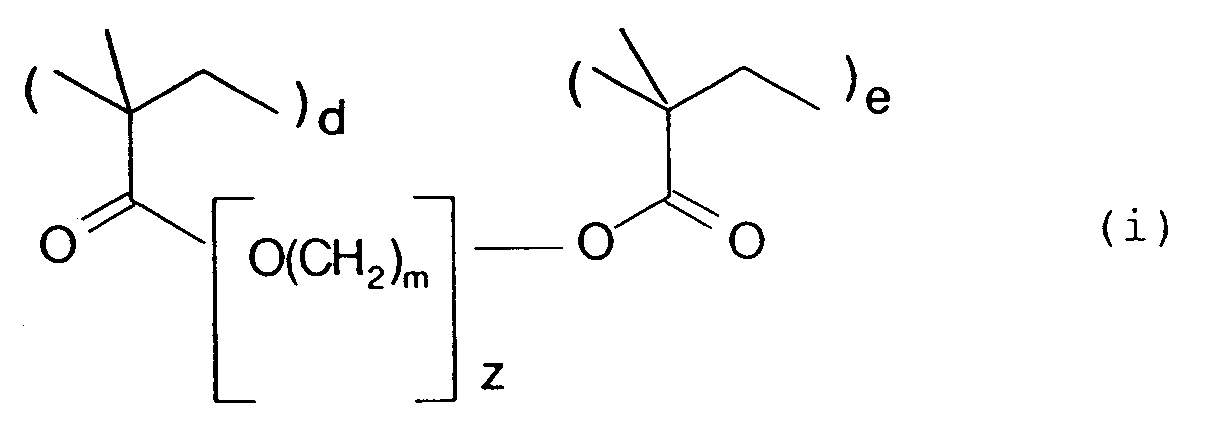
- divinylbenzene, or an alkylene glycol bis methacrylate cross-linking unit of structure (i)

- X¹ is
- styrene, an alkyl methacrylate comonomer of structure (ii) or an alkyl styrene comonomer of structure (iii)

- Suitably the pyridine ring is attached to the polymer backbone via the 2-, 3- or 4- position of the ring. Preferably the ring is attached via the 3- or 4- positions; most preferably via the 3-position.
- Suitably, R is C₆₋₂₀alkyl, hydroxyC₁₋₂₀alkyl or C₁₋₄alkoxyC₁₋₂₀alkyl; more suitably R is a C₆₋₂₀alkyl group; preferably a C₈₋₂₀alkyl group; most preferably a C₈₋₁₆alkyl group.
- Preferably R⁴ is C₁₋₆alkyl.
- Suitably (a) is from 30 to 99% percent (w/w); preferably from 50 to 99% percent (w/w).
- Suitably (b) is from 1 to 8 percent (w/w); preferably (b) is from 1 to 5 percent (w/w), most preferably, 2% percent (w/w).
- Suitably (c) is the remaining percent (w/w) present in said polymer. The comonomer unit (c) can be present or absent from the polymer. Preferably (c) is from 0% to 50% percent (w/w); most preferably, from 0% to 25% percent (w/w).
- Suitably Y⁻ is a physiologically acceptable counter ion such as a halide, sulphate, phosphate, bicarbonate, carbonate, formate, acetate, sulphonate, propionate, malonate, succinate, malate, tartrate, citrate, maleate, fumarate, ascorbate, glucuronate or the anion of an amino acid such as aspartic or glutamic acid. Preferably Y⁻ is a phosphate, sulphate or halide ion; most preferably a halide ion.
- n is a number indicating the degree of polymerisation of the polymer. Owing to the three dimensional cross-linkage precise figures cannot be given for n, but in any case will be greater than 1,000.
- The polymers of the present invention are also characterised by their total exchange capacity i.e. the theoretical maximum capacity of the resin if each counter ion were to be exchanged with bile acid. In this specification the total exchange capacity is defined in terms of the number of milliequivalents of counter ion per gram of dry weight of polymer.
- Suitable total exchange capacities are in the range of, for example where the counter ion Y⁻ is chlorine, from 1.5 to 6.5 meq Cl⁻ per gram of resin. Preferred within this range are resins having a total exchange capacity of between 2 and 4 meq Cl⁻/gram of resin.
- It is to be noted that the term 'bile acid' when used herein shall be taken to include bile acids, bile salts and conjugates thereof.
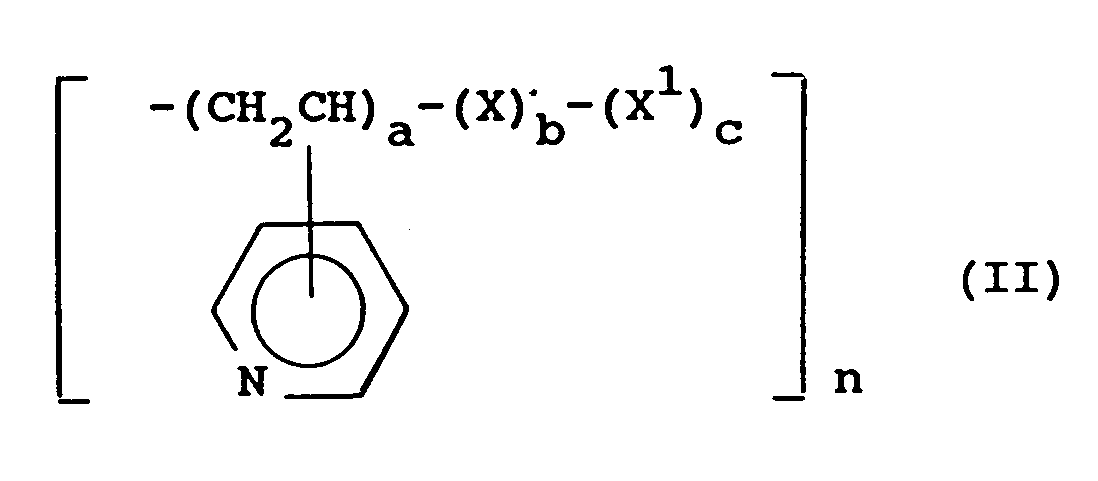
- The polymers of the present invention can be prepared by processes analogous to those known in the art. The present invention therefore provides, in a further aspect, a process for preparing the polymers of structure (I) which comprises reaction of a polymer of structure (II)

in which a, b, c, X, X¹ and n are as described for structure (I) with a compound of structure RL in which L is a leaving group and R is as described for structure (I). - The reaction between a polymer of structure (II) and a compound RL can be carried out in a suitable solvent at a temperature of between ambient and the reflux temperature of the solvent used. Suitable solvents include for example, a C₁₋₄alkanol, nitromethane, dimethylformamide, tetrahydrofuran or sulpholane. Preferably the reaction is carried out in dimethylformamide or sulpholane at a temperature of between about 60° and 80° for a period of up to 24 hours or until the reaction is complete.
- Suitable leaving groups L will be apparent to those skilled in the art and include for example, halides and aryl and alkyl sulphonic acids.
- Suitable C₁₋₂₀alkyl halides include the alkyl chlorides bromides and iodides, in particular C₁₋₂₀alkyl iodides.
- The intermediate polymers of structure (II) are available commercially or can be prepared from readily available materials by methods known to those skilled in the art. For example polymers of structure (II) in which X is divinylbenzene, and X¹ is styrene can be prepared by reaction of 4-vinylpyridine, styrene and divinyl benzene in an aqueous suspension comprising polyvinyl alcohol in the presence of an initiator at elevated temperature. Suitable initiators will be apparent to those skilled in the art and include, in particular azobisisobutyronitrile.
- The polymers of structure (I) have been found to bind bile acids in in vitro models. As indicated earlier it is recognised that removal of bile acids from the intestinal tract lowers serum cholesterol levels and also has a beneficial effect on protecting against atherosclerosis and its dependent clinical conditions. The present invention therefore provides in a further aspect, polymers of structure (I) for use in therapy, in particular for the lowering of serum cholesterol levels in mammals, including humans. In addition the polymers of structure (I) are expected to be of use in protecting against atherosclerosis and its sequelae, and for example, in the treatment of pruritus and diarrhoea.
- When used in therapy the polymers of structure (I) are in general administered in a pharmaceutical composition.
- In a still further aspect of the present invention there is therefore provided a pharmaceutical composition comprising a polymer of structure (I) in association with a pharmaceutically acceptable carrier.
- The compositions of the present invention can be prepared by techniques well known to those skilled in the art of pharmacy and include all those known for the formulation of polymers for human use.
- The polymers are preferably administered as formulations in admixture with one or more conventional pharmaceutical excipients which are physically and chemically compatible with the polymer, which are non-toxic, are without deleterious side-effects but which confer appropriate properties on the dosage form.
- In general, for liquid formulations aqueous based pharmaceutically acceptable carriers such as water itself or aqueous dilute ethanol, propylene glycol, polyethylene glycol or glycerol or sorbitol solutions are preferred. Such formulations can also include preservatives and flavouring and sweetening agents such as sucrose, fructose, invert sugar, cocoa, citric acid, ascorbic acid, fruit juices etc. In general, digestible oil or fat based carriers should be avoided or minimised as they contribute to the condition sought to be alleviated by use of the polymers. They are also subject to absorption by the polymers during prolonged contact, thus reducing the capacity of the polymer to absorb bile acids after administration.
- The polymers can also be prepared as concentrates, for dilution prior to administration, and as formulations suitable for direct oral administration. They can be administered orally ad libitum, on a relatively continuous basis for example by dispersing the polymer in water, drinks or food, for example, in a granule presentation suitable for admixture with water or other drink to provide a palatable drinking suspension.
- Preferably, the polymers are administered in tablet form or in gelatin capsules containing solid particulate polymer or a non-aqueous suspension of solid polymer containing a suitable suspending agent. Suitable excipients for such formulations include, for example, for tablets and capsules, lactose, microcrystalline cellulose, magnesium stearate, povidone, sodium starch glycollate and starches; and for suspensions in capsules, polyethylene glycol, propylene glycol and colloidal silicon dioxide. If desired these dosage forms in addition optionally comprise suitable flavouring agents. Alternatively, a chewable tablet or granule presentation incorporating suitable flavouring and similar agents may be used.
- Preferably the polymer is administered in unit dosage form, each dosage unit containing preferably from 0.5 g to 1.5 g of polymer.
- The daily dosage regimen for an adult patient may be, for example, a total daily oral dose of between 1 and 10 g, preferably 1-5 g, the compound being administered 1 to 4 times a day. Suitably the compound is administered for a period of continuous therapy of one month or more sufficient to achieve the required reduction in serum cholesterol levels.
- In addition the polymers of the present invention can be co-administered (together or sequentially) with further active ingredients such as HMGCoA reductase inhibitors and other hypocholesterolaemic agents, and other drugs for the treatment of cardiovascular diseases.
- The following biological data and examples indicate the properties and preparation of the polymers of the present invention. Temperatures are recorded in degrees celsius. The exchange capacity of the pyridinium copolymers was determined by elemental analysis and/or potentiometric titration of chloride ion. Figures quoted are expressed as milli equivalents of exchangeable chloride ion per gram of dry resin weight. All percentage figures given are (w/w) figures and are assumed from the initial ratio of monomers used.
- 4-Vinylpyridine (25.0 g), styrene (23.2 g), divinylbenzene (1.8 g, purity 55%) and azobisisobutyronitrile (AIBN) (0.5 g) were mixed to give a homogeneous solution and added to a solution of poly(vinyl alcohol) (m.w. 125,000) (1 g) in distilled water (500 ml) stirred at 80° under an atmosphere of nitrogen. Stirring was continued for 7 hours and then the mixture was poured into distilled water. The resin was washed by decantation with cold and hot water, filtered, and washed with acetone, methanol, methanol/ether and ether, dried to give a 2% cross-linked polymer containing 50% vinylpyridine. This polymer was then sieved and the 53-106µ fraction (16.42 g) was used in the further reactions.
- In a similar manner starting from 4-vinylpyridine (77.8 g), divinylbenzene (2.88 g, purity 55%), AIBN (0.8 g), poly(vinyl alcohol) (m.w. 125,000) (1 g) and distilled water (500 ml) gave (54.15 g) of a 2% cross-linked polymer containing 96% 4-vinylpyridine.
- In a similar manner starting from 4-vinylpyridine (60.0 g), styrene (17.12 g), divinylbenzene (2.88 g, purity 55%) AIBN (0.8 g), poly(vinyl alcohol) (m.w. 125,000) (1 g) and distilled water (500 ml) gave (42.48 g) of a 2% cross-linked polymer containing 75% 4-vinylpyridine.
- In a similar manner starting from 4-vinylpyridine (24.0 g), styrene (53.12 g), divinylbenzene (2.88 g, purity 55%) AIBN (0.8 g), poly(vinyl alcohol) (m.w. 125,000) (1 g) and distilled water (500 ml) gave (37.2 g) of a 2% cross-linked polymer containing 30% 4-vinylpyridine.
- In a similar manner starting from 4-vinylpyridine (7.25 g), octylstyrene (7.2 g), divinylbenzene (0.55 g, purity 55%) AIBN (0.2 g), poly(vinyl alcohol) (m.w. 125,000) (0.5 g) and distilled water (200 ml) gave (6.63 g) of a 2% cross-linked polymer containing 50%, 4-vinylpyridine.
- Octylstyrene was prepared using the following procedure:
- (a) Aluminium chloride (84.3 g) was suspended in dry dichloromethane (250 ml), cooled to 10° and acetyl chloride (49.6 g) added over 5 minutes at 10-20°. The mixture was stirred at room temperature for 30 minutes then octylbenzene (100.3 g) was added over 30 minutes to the resulting solution with slight cooling to keep the temperature at 20-22°. After the addition the mixture was stirred at room temperature for 3.5 hours then poured onto ice (1 kg). The phases were separated and the dichloromethane solution was washed with water, dilute sodium hydroxide and water, and dried over magnesium sulphate. Evaporation of the solvent gave 4-acetyl-1-octylbenzene as an oil (117.3 g, 96%).
- (b) 4-Acetyl-1-octylbenzene (117.0 g) was dissolved in ethanol (800 ml), cooled to 10° and sodium borohydride (38.2 g) was added in portions over 5 minutes. The mixture was stirred at room temperature for 20 hours. The solvent was evaporated and the residue was partitioned between water and diethyl ether. The diethyl ether solution was washed with water, dilute hydrochloric acid and water, dried over magnesium sulphate and evaporated to give 4-(1-hydroxyethyl)-1-octylbenzene as a colourless oil which solidified on cooling (116.3 g, 98%).
- (c) 4-(1-Hydroxyethyl)-1-octylstyrene (113.7 g) was heated at 200° under vacuum (10mmHg) for 0.5 hour. The resulting oil was partitioned between water and diethyl ether and the diethyl ether solution was washed with water, dilute sodium hydroxide and water, dried over magnesium sulphate and evaporated to an oil. This oil was distilled to give 4-octylstyrene as a colourless oil (48.2 g, 46%), b.p. 106-8°/0.03mmHg.
- In a similar manner starting from 4-vinylpyridine (25.0 g), styrene (24.1 g), divinylbenzene (0.90 g, purity 55%) AIBN (0.5 g), poly(vinyl alcohol) (m.w. 125,000) (1 g) and distilled water (500 ml) gave (17.34 g) of a 1% cross-linked polymer containing 50% 4-vinylpyridine.
- In a similar manner starting from 4-vinylpyridine (72.8 g), divinylbenzene (7.2 g, purity 55%) AIBN (0.8 g), poly(vinyl alcohol) (m.w. 125,000) (1 g) and distilled water (500 ml) gave (51.56 g) of a 5% cross-linked polymer containing 91% 4-vinylpyridine.
- In a similar manner starting from 4-vinylpyridine (40.0 g), styrene (32.8 g), divinylbenzene (7.23 g, purity 55%) AIBN (0.8 g), poly(vinyl alcohol) (m.w. 125,000) (1 g) and distilled water (500 ml) gave (44.45 g) of a 5% cross- linked polymer containing 50% 4-vinylpyridine.
- In a similar manner starting from 4-vinylpyridine (40 g), ethyl methacrylate (38.2 g) ethylene glycol bismethacrylate (1.6 g) AIBN (0.7 g), poly(vinyl alcohol), (m.w. 125,000) (1 g) and distilled water (500 ml) gave (26.44 g) of a 2% cross-linked copolymer containing 50% 4-vinylpyridine.
- In a similar manner starting from 4-vinylpyridine (25.0 g), ethyl methacrylate (23.2 g), divinylbenzene (1.8 g, purity 55%) AIBN (0.8 g), poly(vinyl alcohol) (m.w. 125,000) (1 g) and distilled water (500 ml) gave (42.48 g) of a 2% cross-linked copolymer containing 50% 4-vinylpyridine.
- In a similar manner starting from 4-vinylpyridine (25.0 g), dodecyl methacrylate (23.2 g), divinylbenzene (1.8 g, purity 55%), AIBN (0.8 g), poly(vinyl alcohol) (m.w. 125,000) (1 g) and distilled water (500 ml) gave (20.74 g) of a 2% cross-linked copolymer containing 50% 4-vinylpyridine.
- In a similar manner starting from 4-vinylpyridine (40 g), hexyl methacrylate (38.4 g) ethylene glycol bismethacrylate (1.6 g) AIBN (0.8 g), poly(vinyl alcohol) (m.w. 125,000) (1 g) and distilled water (500 ml) gave (53.95 g) of a 2% cross-linked copolymer containing 50% 4-vinylpyridine.
- In a similar manner starting from 4-vinylpyridine (40.0 g), hexyl methacrylate (37.1 g), divinylbenzene (2.88 g, purity 55%) AIBN (0.8 g), poly(vinyl alcohol) (m.w. 125,000) (1 g) and distilled water (500 ml) gave (52.76 g) of a 2% cross-linked copolymer containing 50% 4-vinylpyridine.
- In a similar manner starting from 4-vinylpyridine (40 g), dodecyl methacrylate (38.4 g) ethylene glycol bismethacrylate (1.6 g) AIBN (0.8 g), poly(vinyl alcohol) (m.w. 125,000) (1 g) and distilled water (500 ml) gave (33.70 g) of a 2% cross-linked copolymner containing 50% 4-vinylpyridine.
- In a similar manner starting from 3-vinylpyridine (15.0 g), styrene (13.9 g), divinylbenzene (0.9 g, purity 55%) AIBN (0.3 g), poly(vinyl alcohol) (m.w. 125,000) (0.5 g) and distilled water (200 ml) gave (14.42 g) of a 2% cross-linked copolymer containing 50% 4-vinylpyridine.
- In a similar manner starting from 4-vinylpyridine (60.0 g), styrene (18.6 g), divinylbenzene (1.44 g, purity 55%), AIBN (0.8 g), poly(vinyl alcohol) (m.w. 125,000) (1 g) and distilled water (500 ml) gave (39.53 g) of a 1% cross-linked polymer containing 75% 4-vinylpyridine.
- In a similar manner starting from 3-vinylpyridine (19.28 g), divinylbenzene (0.72 g, purity 55%) AIBN (0.3 g), poly(vinyl alcohol) (m.w. 125,000) (0.5 g) and distilled water (200 ml) gave (9.10 g) of a 2% cross-linked copolymer containing 96% 3-vinylpyridine.
- A suspension of the polymer from preparation 1 (3.0 g) in dimethylformamide (60 ml) and octyl iodide (20 ml) was stirred at 80° for 72 hours. The mixture was filtered and the polymer was washed with dimethylformamide, methanol, methanol/dilute hydrochloric acid, methanol, methanol/ether, ether and dried to give 2% cross-linked 1-octyl-4-vinylpyridinium chloride styrene divinylbenzene copolymer (5.19 g) (exchange capacity = 2.59 meq Cl⁻/g).
- A suspension of the polymer from preparation 1 (2.08 g) in sulfolane (40 ml) and dodecyl iodide (20 g) was stirred at 80° for 18 hours. The mixture was filtered and the polymer was washed with, methanol, acetone, methanol/dilute hydrochloric acid, methanol, methanol/ether, ether and dried to give 2% cross-linked 1-dodecyl-4-vinylpyridinium chloride styrene divinylbenzene copolymer (3.82 g) (exchange capacity = 2.41 meq Cl⁻/g).
- A suspension of the polymer from preparation 1 (3.5 g) in sulfolane (40 ml) and hexadecyl iodide (25 g) was stirred at 90° for 72 hours. The mixture was filtered and the polymer was washed with, methanol, acetone, methanol/dilute hydrochloric acid, methanol, methanol/ether, ether and dried to give 2% cross-linked 1-hexadecyl-4-vinylpyridinium chloride styrene divinylbenzene copolymer (7.20 g) (exchange capacity = 2.1 meq Cl⁻/g).
- A suspension of the polymer from preparation 2 (2.00 g) in sulfolane (60 ml) and octyl iodide (20 ml) was stirred at 80° for 18 hours. The mixture was filtered and the polymer was washed with, methanol, methanol/dilute hydrochloric acid, methanol, methanol/ether, ether and dried to give 2% cross-linked 1-octyl-4-vinylpyridinium chloride divinylbenzene copolymer (3.81 g) (exchange capacity = 3.89 meq Cl⁻/g).
- A suspension of the polymer from preparation 2 (4.00 g) in sulfolane (75 ml) and dodecyl iodide (25 g) was stirred at 90° for 60 hours. The mixture was filtered and the polymer was washed with, methanol, methanol/dilute hydrochloric acid, methanol, methanol/ether, ether and dried to give 2% cross-linked 1-dodecyl-4-vinylpyridinium chloride divinylbenzene copolymer (11.32 g) (exchange capacity = 3.23 meq Cl⁻/g).
- A suspension of the polymer from preparation 2 (4.00 g) in sulfolane (75 ml) and hexadecyl iodide (25 g) was stirred at 90° for 18 hours. The mixture was filtered and the polymer was washed with, acetone, methanol, methanol/dilute hydrochloric acid, methanol, methanol/ether, ether and dried to give 2% cross-linked 1-hexadecyl-4-vinylpyridinium chloride divinylbenzene copolymer (13.28 g) (exchange capacity = 2.77 meq Cl⁻/g).
- A suspension of the polymer from preparation 3 (4.00 g) in sulfolane (80 ml) and octyl iodide (25 ml) was stirred at 80° for 56 hours. The mixture was filtered and the polymer was washed with, acetone, methanol, methanol/dilute hydrochloric acid, methanol, methanol/ether, ether and dried to give 2% cross-linked 1-octyl-4-vinylpyridinium chloride styrene divinylbenzene copolymer (7.92 g) (exchange capacity = 3.46 meq Cl⁻/g).
- A suspension of the polymer from preparation 3 (4.00 g) in sulfolane (60 ml) and dodecyl iodide (30 g) was stirred at 80° for 56 hours. The mixture was filtered and the polymer was washed with, acetone, methanol, methanol/dilute hydrochloric acid, methanol, methanol/ether, ether and dried to give 2% cross-linked 1-dodecyl-4-vinylpyridinium chloride divinylbenzene styrene copolymer (9.03 g) (exchange capacity = 2.92 meq Cl⁻/g).
- A suspension of the polymer from preparation 8 (6.00 g) in sulfolane (60 ml) and octyl iodide (20 ml) was stirred at 80° for 24 hours. The mixture was filtered and the polymer was washed with, methanol, methanol/dilute hydrochloric acid, methanol, methanol/ether, ether and dried to give 5% cross-linked 1-octyl-4-vinylpyridinium chloride styrene divinylbenzene copolymer (9.75 g) (exchange capacity = 2.73 meq Cl⁻/g).
- A suspension of the polymer from preparation 7 (6.00 g) in sulfolane (60 ml) and octyl iodide (20 ml) was stirred at 80° for 24 hours. The mixture was filtered and the polymer was washed with, methanol, methanol/dilute hydrochloric acid, methanol, methanol/ether, ether and dried to give 5% cross-linked 1-octyl-4-vinylpyridinium chloride divinylbenzene copolymer (12.87 g) (exchange capacity = 3.75 meq Cl⁻/g).
- A suspension of the polymer from preparation 6 (3.00 g) in sulfolane (50 ml) and octyl iodide (10 ml) was stirred at 80° for 20 hours. The mixture was filtered and the polymer was washed with, methanol, methanol/dilute hydrochloric acid, methanol, methanol/ether, ether and dried to give 1% cross-linked 1-octyl-4-vinylpyridinium chloride styrene divinylbenzene copolymer (4.39 g) (exchange capacity = 2.66 meq Cl⁻/g).
- A suspension of the polymer from preparation 4 (6.00 g) in sulfolane (60 ml) and octyl iodide (20 ml) was stirred at 80° for 24 hours. The mixture was filtered and the polymer was washed with, methanol, methanol/dilute hydrochloric acid, methanol, methanol/ether, ether and dried to give 2% cross-linked 1-octyl-4-vinylpyridinium chloride styrene divinylbenzene copolymer (8.06 g) (exchange capacity = 2.11 meq Cl⁻/g).
- A suspension of the polymer from preparation 1 (4.00 g) in sulfolane (40 ml) and decyl iodide (20 ml) was stirred at 80° for 24 hours. The mixture was filtered and the polymer was washed with methanol, methanol/dilute hydrochloric acid, methanol, methanol/ether, ether and dried to give 2% cross-linked 1-tetradecyl-4-vinyl- pyridinium chloride styrene divinylbenzene copolymer (7.0 g) (exchange capacity = 2.57 meq Cl⁻/g).
- A suspension of the polymer from preparation 9 (3.49 g) in sulfolane (50 ml) and octyl iodide (25 ml) was stirred at 80° for 18 hours. The mixture was filtered and the polymer was washed with methanol, acetone, methanol/ dilute hydrochloric acid, methanol, methanol/ether, ether and dried to give 2% cross-linked 1-octyl-4-vinyl- pyridinium chloride ethyl methacrylate ethylene glycol bismethacrylate copolymer (5.68 g) (exchange capacity = 2.86 meq Cl⁻/g).
- A suspension of the polymer from preparation 10 (3.0 g) in sulfolane (50 ml) and octyl iodide (25 ml) was stirred at 80° for 56 hours. The mixture was filtered and the polymer was washed with methanol, acetone, methanol/dilute hydrochloric acid, methanol, methanol/ether, ether and dried to give 2% cross-linked 1-octyl-4-vinylpyridinium chloride ethyl methacrylate divinylbenzene copolymer (4.07 g) (exchange capacity = 2.85 meq Cl⁻/g).
- A suspension of the polymer from preparation 1 (2.00 g) in sulfolane (30 ml) and 11-bromoundecanol (4.0 g) was stirred at 80° for 24 hours. The mixture was filtered and the polymer was washed with methanol, methanol/dilute hydrochloric acid, methanol, methanol/ether, ether and dried to give 2% cross-linked 1-(11-hydroxyundecyl)-4-vinylpyridinium chloride styrene divinylbenzene copolymer (3.73 g) (exchange capacity = 2.38 meq Cl⁻/g).
- A suspension of the polymer from preparation 9 (3.00 g) in sulfolane (50 ml) and dodecyl iodide (25 ml) was stirred at 90° for 18 hours. The mixture was filtered and the polymer was washed with methanol, methanol/dilute hydrochloric acid, methanol, methanol/ether, ether and dried to give 2% cross-linked 1-dodecyl-4-vinylpyridinium chloride ethyl methacrylate ethylene glycol bismethacrylate copolymer (5.56 g) (exchange capacity = 2.71 meq Cl⁻/g).
- A suspension of the polymer from preparation 11 (4.00 g) in sulfolane (50 ml) and octyl iodide (25 ml) was stirred at 90° for 18 hours. The mixture was filtered and the polymer was washed with methanol, methanol/dilute hydrochloric acid, methanol, methanol/ether, ether and dried to give 2% cross-linked 1-octyl-4-vinylpyridinium chloride dodecyl methacrylate divinylbenzene copolymer (6.81 g) (exchange capacity = 3.0 meq Cl⁻/g).
- A suspension of the polymer from preparation 6 (4.0 g) in sulfolane (50 ml) and dodecyl iodide (20 ml) was stirred at 80° for 24 hours. The mixture was filtered and the polymer was washed with methanol, acetone, methanol/dilute hydrochloric acid, methanol, methanol/ether, ether and dried to give 1% cross-linked 1-dodecyl-4-vinylpyridinium chloride styrene divinylbenzene copolymer (6.78 g) (exchange capacity = 2.3 meq Cl⁻/g).
- A suspension of the polymer from preparation 8 (4.0 g) in sulfolane (50 ml) and dodecyl iodide (20 ml) was stirred at 80° for 24 hours. The mixture was filtered and the polymer was washed with methanol, acetone, methanol/dilute hydrochloric acid, methanol, methanol/ether, ether and dried to give 5% cross-linked 1-dodecyl-4-vinylpyridinium chloride styrene divinylbenzene copolymer (7.27) (exchange capacity = 2.48 meq Cl⁻/g).
- A suspension of the polymer from preparation 13 (5.00 g) in sulfolane (50 ml) and dodecyl iodide (25 ml) was stirred at 80° for 24 hours. The mixture was filtered and the polymer was washed with methanol, methanol/dilute hydrochloric acid, methanol, methanol/ether, ether and dried to give 2% cross-linked 1-dodecyl-4-vinylpyridinium chloride hexyl methacrylate divinylbenzene copolymer (7.73 g) (exchange capacity = 2.35 meq Cl⁻/g).
- A suspension of the polymer from preparation 12 (5.00 g) in sulfolane (50 ml) and octyl iodide (20 ml) was stirred at 80° for 24 hours. The mixture was filtered and the polymer was washed with methanol, methanol/dilute hydrochloric acid, methanol, methanol/ether, ether and dried to give 2% cross-linked 1-octyl-4-vinylpyridinium chloride hexyl methacrylate ethylene glycol bismethacrylate copolymer (7.30 g) (exchange capacity = 2.71 meq Cl⁻/g).
- A suspension of the polymer from preparation 2 (2.50 g) in sulfolane (50 ml) and 11-bromoundecanol (10.0 g) was stirred at 80° for 24 hours. The mixture was filtered and the polymer was washed with methanol, methanol/dilute hydrochloric acid, methanol, methanol/ether, ether and dried to give 2% cross-linked 1-(11-hydroxyundecyl)-4-vinylpyridinium chloride divinylbenzene copolymer (6.67 g) (exchange capacity = 3.19 meq Cl⁻/g).
- A suspension of the polymer from preparation 14 (4.00 g) in sulfolane (60 ml) and octyl iodide (20 ml) was stirred at 60° for 72 hours. The mixture was filtered and the polymer was washed with methanol, methanol/dilute hydrochloric acid, methanol, methanol/ether, ether and dried to give 2% cross-linked 1-octyl-4-vinylpyridinium chloride dodecyl methacrylate ethylene glycol bismethacrylate copolymer (5.76 g) (exchange capacity = 2.62 meq Cl⁻/g).
- A suspension of the polymer from preparation 3 (4.00 g) in sulfolane (60 ml) and hexadecyl iodide (30 g) was stirred at 80° for 56 hours. The mixture was filtered and the polymer was washed with acetone, methanol, methanol/dilute hydrochloric acid, methanol, methanol/ether, ether and dried to give 2% cross-linked 1-hexadecyl-4-vinylpyridinium chloride styrene divinylbenzene copolymer (8.77 g) (exchange capacity = 2.49 meq Cl⁻/g).
- A suspension of the polymer from preparation 15 (4.00 g) in sulfolane (40 ml) and dodecyl iodide (25 ml) was stirred at 80° for 24 hours. The mixture was filtered and the polymer was washed with methanol, methanol/dilute hydrochloric acid, methanol, methanol/ether, ether and dried to give 2% cross-linked 1-dodecyl-3-vinylpyridinium chloride styrene divinylbenzene copolymer (6.90 g) (exchange capacity = 2.30 meq Cl⁻/g).
- A suspension of the polymer from preparation 16 (4.00 g) in sulfolane (50 ml) and dodecyl iodide (20 ml) was stirred at 80° for 24 hours. The mixture was filtered and the polymer was washed with methanol, methanol/dilute hydrochloric acid, methanol, methanol/ether, ether and dried to give 1% cross-linked 1-dodecyl-4-vinylpyridinium chloride styrene divinylbenzene copolymer (9.21 g) (exchange capacity = 2.89 meq Cl⁻/g).
- A suspension of the polymer from preparation 13 (5.00 g) in sulfolane (50 ml) and octyl iodide (25 ml) was stirred at 80° for 24 hours. The mixture was filtered and the polymer was washed with methanol, methanol/dilute hydrochloric acid, methanol, methanol/ether, ether and dried to give 2% cross-linked 1-octyl-4-vinylpyridinium chloride hexyl methacrylate divinylbenzene copolymer (8.03 g) (exchange capacity = 2.71 meq Cl⁻/g).
- A suspension of the polymer from preparation 12 (5.00 g) in sulfolane (50 ml) and dodecyl iodide (25 ml) was stirred at 80° for 24 hours. The mixture was filtered and the polymer was washed with methanol, methanol/dilute hydrochloric acid, methanol, methanol/ether, ether and dried to give 2% cross-linked 1-dodecyl-4-vinylpyridinium chloride hexyl methacrylate ethylene glycol bismethacrylate copolymer (9.1 g) (exchange capacity = 2.35 meq Cl⁻/g).
- A suspension of the polymer from preparation 1 (3.00 g) in sulfolane (30 ml) and tetradecyl bromide (25 ml) was stirred at 80° for 24 hours. The mixture was filtered and the polymer was washed with methanol, methanol/dilute hydrochloric acid, methanol, methanol/ether, ether and dried to give 2% cross-linked 1-tetradecyl-4-vinylpyridinium chloride styrene divinylbenzene copolymer (5.85 g) (exchange capacity = 2.20 meq Cl⁻/g).
- A suspension of the polymer from preparation 16 (5.00 g) in sulfolane (50 ml) and octyl iodide (25 ml) was stirred at 80° for 24 hours. The mixture was filtered and the polymer was washed with methanol, methanol/dilute hydrochloric acid, methanol, methanol/ether, ether and dried to give 1% cross-linked 1-octyl-4-vinylpyridinium chloride styrene divinylbenzene copolymer (9.30 g) (exchange capacity = 3.48 meq Cl⁻/g).
- A suspension of the polymer from preparation 17 (4.00 g) in sulfolane (40 ml) and dodecyl iodide (25 ml) was stirred at 80° for 24 hours. The mixture was filtered and the polymer was washed with methanol, methanol/dilute hydrochloric acid, methanol, methanol/ether, ether and dried to give 2% cross-linked 1-dodecyl-3-vinylpyridinium chloride styrene divinylbenzene copolymer (4.87 g) (exchange capacity = 3.07 meq Cl⁻/g).
- A suspension of the polymer from preparation 17 (3.00 g) in sulfolane (30 ml) and octyl iodide (20 ml) was stirred at 80° for 24 hours. The mixture was filtered and the polymer was washed with methanol, methanol/dilute hydrochloric acid, methanol, methanol/ether, ether and dried to give 2% cross-linked 1-octyl-3-vinylpyridinium chloride divinylbenzene copolymer (6.67 g) (exchange capacity = 3.53 meq Cl⁻/g).
- A chewable tablet composition can be prepared from the following :
mg/tablet Compound of Structure (I) 1250 Silicon dioxide 15 Microcrystalline cellulose 280 Sorbitol 445 Lactose 450 Sweetener 5 Peppermint 30 Magnesium Stearate 25 2500 mg - A food additive composition, for example, a sachet for reconstitution or mixing with food, is prepared by incorporating into a powder formulation compound of Structure (I) (250 mg), sodium carboxymethylcellulose (50 mg), sucrose (2400 mg) and flavours (50 mg).
- The following assay provides a measure of affinity of the polymers of the invention for the bile acid, glycocholate (GC) based on the amount of GC bound at a subsaturating concentration of 5 mM (t=o) and an estimate of the rate at which this bile acid dissociates into a large volume of buffer. The results are given as initial amounts of GC bound (t=O); amounts remaining bound after 2 minutes in buffer (t=2 min), and as % dissociation i.e. the proportion of bound GC dissociated from the polymer after 2 minutes. The lower the % dissociation the more efficient the polymer can be expected to be in extracting bile acids in vivo.
- Test compound (150 mg) was equilibrated with 5 mM sodium glycocholate (30 ml) in Krebs' buffer. The compound was separated by centrifugation and the total bound determined by subtraction of the amount in the supernatant from the total bile acid used. Dissociation was measured by resuspending the compound in Krebs' buffer, stirring and sampling the mixture through a filter at several time points up to 20 minutes. Radioactivity and hence bile acid dissociated was determined in the filtrate.
- The following % dissociation figures were obtained
Examples % Dissociation (range) 2,4,5,6,7,10,11,14,18,21,22,24,28,29,30 and 32-35 2-10 3,8,9,12,15,16,17,19,25,26,27 and 31 11-22
Claims (7)
- A process for the preparation of a polymer of structure (I)
 R is C₆₋₂₀ alkyl, hydroxyC₁₋₂₀alkyl or C₁₋₄alkoxyC₁₋₂₀alkyl;Y⁻ is a counter ion;a, b and c are numbers which indicate the relative percentages (w/w) of the units present in said polymer,(a) being from 30 to 99 percent (w/w) and(b) being from 1.0 to 8 percent (w/w);n is a number indicating the degree of polymerisation in said polymer;X is divinylbenzene, or alkylene glycol bis methacrylate cross-linking unit of structure (i)
 X¹ is styrene, an alkyl methacrylate comonomer of structure (ii) or an alkyl styrene comonomer of structure (iii)which comprises reaction of a compound of structure (II)
- A process according to claim 1 in which in structure (I) R is a C₈₋₁₆alkyl group.
- A process according to claim 2 in which (b) is from 1 to 5 percent (w/w) of said polymer.
- A process according to claim 3, in which L is halogen.
- A process for preparing a pharmaceutical composition which comprises bringing into association a polymer of structure (I) as described in claim 1 and a pharmaceutically acceptable carrier.
Priority Applications (1)
| Application Number | Priority Date | Filing Date | Title |
|---|---|---|---|
| AT8989313263T ATE104552T1 (en) | 1988-12-21 | 1989-12-19 | VINYL PYRIDINIUM CROSSLINKED POLYMER. |
Applications Claiming Priority (2)
| Application Number | Priority Date | Filing Date | Title |
|---|---|---|---|
| GB8829835 | 1988-12-21 | ||
| GB888829835A GB8829835D0 (en) | 1988-12-21 | 1988-12-21 | Compounds |
Publications (3)
| Publication Number | Publication Date |
|---|---|
| EP0375350A2 EP0375350A2 (en) | 1990-06-27 |
| EP0375350A3 EP0375350A3 (en) | 1991-10-23 |
| EP0375350B1 true EP0375350B1 (en) | 1994-04-20 |
Family
ID=10648889
Family Applications (1)
| Application Number | Title | Priority Date | Filing Date |
|---|---|---|---|
| EP89313263A Expired - Lifetime EP0375350B1 (en) | 1988-12-21 | 1989-12-19 | Cross-linked vinylpyridinium polymers |
Country Status (10)
| Country | Link |
|---|---|
| EP (1) | EP0375350B1 (en) |
| JP (1) | JPH02214711A (en) |
| AT (1) | ATE104552T1 (en) |
| AU (1) | AU616584B2 (en) |
| CA (1) | CA2005849A1 (en) |
| DE (1) | DE68914810T2 (en) |
| DK (1) | DK644789A (en) |
| GB (1) | GB8829835D0 (en) |
| PT (1) | PT92585B (en) |
| ZA (1) | ZA899673B (en) |
Cited By (2)
| Publication number | Priority date | Publication date | Assignee | Title |
|---|---|---|---|---|
| US8986669B2 (en) | 2005-09-02 | 2015-03-24 | Genzyme Corporation | Method for removing phosphate and polymer used therefore |
| US9585911B2 (en) | 2005-09-15 | 2017-03-07 | Genzyme Corporation | Sachet formulation for amine polymers |
Families Citing this family (18)
| Publication number | Priority date | Publication date | Assignee | Title |
|---|---|---|---|---|
| IE914179A1 (en) * | 1990-12-07 | 1992-06-17 | Ici Plc | Nitrogen derivatives |
| AU666740B2 (en) * | 1992-07-08 | 1996-02-22 | Upjohn Company, The | 5'-indolinyl oxazolidinones useful against (mycobacterium tuberculosis) |
| US5556619A (en) * | 1992-08-20 | 1996-09-17 | The Du Pont Merck Pharmaceutical Company | Crosslinked polymeric ammonium salts |
| US5496545A (en) * | 1993-08-11 | 1996-03-05 | Geltex Pharmaceuticals, Inc. | Phosphate-binding polymers for oral administration |
| US5667775A (en) | 1993-08-11 | 1997-09-16 | Geltex Pharmaceuticals, Inc. | Phosphate-binding polymers for oral administration |
| MX9602812A (en) * | 1994-01-18 | 1997-06-28 | Du Pont | Crosslinked polymeric ammonium salts. |
| WO1996021454A1 (en) * | 1995-01-12 | 1996-07-18 | Geltex Pharmaceuticals, Inc. | Phosphate-binding polymers for oral administration |
| US5604264A (en) * | 1995-04-03 | 1997-02-18 | Reilly Industries, Inc. | Polyvinylpyridinium anion-exchangers for recovery of technetium and plutonium anions |
| US6566407B2 (en) | 1997-11-05 | 2003-05-20 | Geltex Pharmaceuticals, Inc. | Method for reducing oxalate |
| US6083497A (en) | 1997-11-05 | 2000-07-04 | Geltex Pharmaceuticals, Inc. | Method for treating hypercholesterolemia with unsubstituted polydiallylamine polymers |
| US6726905B1 (en) | 1997-11-05 | 2004-04-27 | Genzyme Corporation | Poly (diallylamines)-based phosphate binders |
| US6733780B1 (en) | 1999-10-19 | 2004-05-11 | Genzyme Corporation | Direct compression polymer tablet core |
| US7985418B2 (en) | 2004-11-01 | 2011-07-26 | Genzyme Corporation | Aliphatic amine polymer salts for tableting |
| US8343473B2 (en) * | 2005-08-24 | 2013-01-01 | Purdue Research Foundation | Hydrophilized antimicrobial polymers |
| US20070048249A1 (en) | 2005-08-24 | 2007-03-01 | Purdue Research Foundation | Hydrophilized bactericidal polymers |
| MA41202A (en) | 2014-12-18 | 2017-10-24 | Genzyme Corp | CROSS-LINKED POLYDIALLYMINE COPOLYMERS FOR THE TREATMENT OF TYPE 2 DIABETES |
| US20180340046A1 (en) | 2017-05-27 | 2018-11-29 | Poly Group LLC | Dispersible antimicrobial complex and coatings therefrom |
| HUE068413T2 (en) | 2017-06-16 | 2024-12-28 | Poly Group LLC | Polymeric antimicrobial surfactant |
Family Cites Families (6)
| Publication number | Priority date | Publication date | Assignee | Title |
|---|---|---|---|---|
| US2860096A (en) * | 1955-06-15 | 1958-11-11 | Ionics | Polyelectrolytes and the method of making the same |
| BE756035A (en) * | 1969-09-12 | 1971-03-11 | Inveresk Res Int | POLYMERS BRIDGES |
| FR2315911A1 (en) * | 1974-12-12 | 1977-01-28 | Rhone Poulenc Ind | Anticoagulant copolymers - of vinyl-pyridinium and e.g. polyvinyl alcohol |
| JPS57142920A (en) * | 1981-03-02 | 1982-09-03 | Mitsubishi Petrochem Co Ltd | Cholesterol depressant |
| DE3572985D1 (en) * | 1984-05-11 | 1989-10-19 | Bristol Myers Co | Novel bile sequestrant resin and uses |
| US4798870A (en) * | 1984-10-09 | 1989-01-17 | Southwest Research Institute | Reactive surface for decontamination |
-
1988
- 1988-12-21 GB GB888829835A patent/GB8829835D0/en active Pending
-
1989
- 1989-12-14 AU AU46822/89A patent/AU616584B2/en not_active Ceased
- 1989-12-15 PT PT92585A patent/PT92585B/en not_active IP Right Cessation
- 1989-12-18 ZA ZA899673A patent/ZA899673B/en unknown
- 1989-12-18 CA CA002005849A patent/CA2005849A1/en not_active Abandoned
- 1989-12-19 DE DE68914810T patent/DE68914810T2/en not_active Expired - Lifetime
- 1989-12-19 EP EP89313263A patent/EP0375350B1/en not_active Expired - Lifetime
- 1989-12-19 AT AT8989313263T patent/ATE104552T1/en not_active IP Right Cessation
- 1989-12-19 DK DK644789A patent/DK644789A/en not_active Application Discontinuation
- 1989-12-20 JP JP1330925A patent/JPH02214711A/en active Pending
Cited By (2)
| Publication number | Priority date | Publication date | Assignee | Title |
|---|---|---|---|---|
| US8986669B2 (en) | 2005-09-02 | 2015-03-24 | Genzyme Corporation | Method for removing phosphate and polymer used therefore |
| US9585911B2 (en) | 2005-09-15 | 2017-03-07 | Genzyme Corporation | Sachet formulation for amine polymers |
Also Published As
| Publication number | Publication date |
|---|---|
| CA2005849A1 (en) | 1990-06-21 |
| DE68914810D1 (en) | 1994-05-26 |
| PT92585A (en) | 1990-06-29 |
| DK644789D0 (en) | 1989-12-19 |
| ATE104552T1 (en) | 1994-05-15 |
| AU616584B2 (en) | 1991-10-31 |
| EP0375350A2 (en) | 1990-06-27 |
| PT92585B (en) | 1995-09-12 |
| GB8829835D0 (en) | 1989-02-15 |
| JPH02214711A (en) | 1990-08-27 |
| EP0375350A3 (en) | 1991-10-23 |
| ZA899673B (en) | 1991-07-31 |
| AU4682289A (en) | 1990-08-16 |
| DK644789A (en) | 1990-06-22 |
| DE68914810T2 (en) | 1994-08-04 |
Similar Documents
| Publication | Publication Date | Title |
|---|---|---|
| EP0373852B1 (en) | Compounds | |
| EP0375350A2 (en) | Cross-linked vinylpyridinium polymers | |
| JP4420143B2 (en) | Polyallylamine polymers for the treatment of hypercholesterolemia | |
| EP0432995B1 (en) | Crosslinked pyridinio-acrylate-polymers | |
| WO1991018027A2 (en) | Compounds | |
| JPWO1993013781A1 (en) | Cholesterol-lowering drugs | |
| US5273740A (en) | Polystyrene anion exchange polymers | |
| EP0402062A2 (en) | Compounds | |
| EP0322209B1 (en) | Compounds | |
| US5110875A (en) | Polystyrene anion exchange polymers | |
| EP0403271A2 (en) | Polymer compounds | |
| US5230885A (en) | Polystyrene anion exchange polymer pharmaceutical composition | |
| US5112922A (en) | Polystyrene anion exchange polymers | |
| EP0385686A2 (en) | Compounds | |
| HK1004556B (en) | Crosslinked pyridinio-acrylate-polymers | |
| AU608114B2 (en) | Compounds | |
| EP1923064B1 (en) | Use of amine polymer for lowering serum glucose | |
| JPH01316324A (en) | Agent for suppressing cholesterol level |
Legal Events
| Date | Code | Title | Description |
|---|---|---|---|
| PUAI | Public reference made under article 153(3) epc to a published international application that has entered the european phase |
Free format text: ORIGINAL CODE: 0009012 |
|
| AK | Designated contracting states |
Kind code of ref document: A2 Designated state(s): AT BE CH DE ES FR GB GR IT LI LU NL SE |
|
| PUAL | Search report despatched |
Free format text: ORIGINAL CODE: 0009013 |
|
| AK | Designated contracting states |
Kind code of ref document: A3 Designated state(s): AT BE CH DE ES FR GB GR IT LI LU NL SE |
|
| 17P | Request for examination filed |
Effective date: 19920328 |
|
| 17Q | First examination report despatched |
Effective date: 19920707 |
|
| GRAA | (expected) grant |
Free format text: ORIGINAL CODE: 0009210 |
|
| AK | Designated contracting states |
Kind code of ref document: B1 Designated state(s): AT BE CH DE ES FR GB GR IT LI LU NL SE |
|
| PG25 | Lapsed in a contracting state [announced via postgrant information from national office to epo] |
Ref country code: GR Free format text: LAPSE BECAUSE OF FAILURE TO SUBMIT A TRANSLATION OF THE DESCRIPTION OR TO PAY THE FEE WITHIN THE PRESCRIBED TIME-LIMIT Effective date: 19940420 Ref country code: SE Free format text: THE PATENT HAS BEEN ANNULLED BY A DECISION OF A NATIONAL AUTHORITY Effective date: 19940420 Ref country code: AT Effective date: 19940420 Ref country code: ES Free format text: THE PATENT HAS BEEN ANNULLED BY A DECISION OF A NATIONAL AUTHORITY Effective date: 19940420 |
|
| REF | Corresponds to: |
Ref document number: 104552 Country of ref document: AT Date of ref document: 19940515 Kind code of ref document: T |
|
| ITF | It: translation for a ep patent filed | ||
| REF | Corresponds to: |
Ref document number: 68914810 Country of ref document: DE Date of ref document: 19940526 |
|
| ET | Fr: translation filed | ||
| PG25 | Lapsed in a contracting state [announced via postgrant information from national office to epo] |
Ref country code: LU Free format text: LAPSE BECAUSE OF NON-PAYMENT OF DUE FEES Effective date: 19941231 |
|
| PLBE | No opposition filed within time limit |
Free format text: ORIGINAL CODE: 0009261 |
|
| STAA | Information on the status of an ep patent application or granted ep patent |
Free format text: STATUS: NO OPPOSITION FILED WITHIN TIME LIMIT |
|
| 26N | No opposition filed | ||
| REG | Reference to a national code |
Ref country code: GB Ref legal event code: IF02 |
|
| PGFP | Annual fee paid to national office [announced via postgrant information from national office to epo] |
Ref country code: CH Payment date: 20081028 Year of fee payment: 20 Ref country code: NL Payment date: 20081111 Year of fee payment: 20 |
|
| PGFP | Annual fee paid to national office [announced via postgrant information from national office to epo] |
Ref country code: IT Payment date: 20081212 Year of fee payment: 20 |
|
| PGFP | Annual fee paid to national office [announced via postgrant information from national office to epo] |
Ref country code: FR Payment date: 20081205 Year of fee payment: 20 |
|
| PGFP | Annual fee paid to national office [announced via postgrant information from national office to epo] |
Ref country code: DE Payment date: 20081230 Year of fee payment: 20 |
|
| PGFP | Annual fee paid to national office [announced via postgrant information from national office to epo] |
Ref country code: GB Payment date: 20081110 Year of fee payment: 20 |
|
| PGFP | Annual fee paid to national office [announced via postgrant information from national office to epo] |
Ref country code: BE Payment date: 20090112 Year of fee payment: 20 |
|
| BE20 | Be: patent expired |
Owner name: *SMITH KLINE & FRENCH LABORATORIES LTD Effective date: 20091219 |
|
| REG | Reference to a national code |
Ref country code: CH Ref legal event code: PL |
|
| REG | Reference to a national code |
Ref country code: GB Ref legal event code: PE20 Expiry date: 20091218 |
|
| NLV7 | Nl: ceased due to reaching the maximum lifetime of a patent |
Effective date: 20091219 |
|
| PG25 | Lapsed in a contracting state [announced via postgrant information from national office to epo] |
Ref country code: NL Free format text: LAPSE BECAUSE OF EXPIRATION OF PROTECTION Effective date: 20091219 |
|
| PG25 | Lapsed in a contracting state [announced via postgrant information from national office to epo] |
Ref country code: GB Free format text: LAPSE BECAUSE OF EXPIRATION OF PROTECTION Effective date: 20091218 |