EP0363379B1 - Porphyrins, their syntheses and uses thereof - Google Patents
Porphyrins, their syntheses and uses thereof Download PDFInfo
- Publication number
- EP0363379B1 EP0363379B1 EP88904116A EP88904116A EP0363379B1 EP 0363379 B1 EP0363379 B1 EP 0363379B1 EP 88904116 A EP88904116 A EP 88904116A EP 88904116 A EP88904116 A EP 88904116A EP 0363379 B1 EP0363379 B1 EP 0363379B1
- Authority
- EP
- European Patent Office
- Prior art keywords
- chloro
- so3h
- cooh
- fluoro
- independently
- Prior art date
- Legal status (The legal status is an assumption and is not a legal conclusion. Google has not performed a legal analysis and makes no representation as to the accuracy of the status listed.)
- Expired - Lifetime
Links
- 150000004032 porphyrins Chemical class 0.000 title claims description 61
- 238000003786 synthesis reaction Methods 0.000 title description 9
- 125000001309 chloro group Chemical group Cl* 0.000 claims abstract description 81
- XLYOFNOQVPJJNP-UHFFFAOYSA-N water Substances O XLYOFNOQVPJJNP-UHFFFAOYSA-N 0.000 claims abstract description 55
- 125000001153 fluoro group Chemical group F* 0.000 claims abstract description 46
- 238000000034 method Methods 0.000 claims abstract description 19
- 230000001590 oxidative effect Effects 0.000 claims abstract description 19
- 239000003054 catalyst Substances 0.000 claims abstract description 15
- 150000001875 compounds Chemical class 0.000 claims description 62
- 229910006069 SO3H Inorganic materials 0.000 claims description 53
- 125000000020 sulfo group Chemical group O=S(=O)([*])O[H] 0.000 claims description 49
- JCXJVPUVTGWSNB-UHFFFAOYSA-N Nitrogen dioxide Chemical compound O=[N]=O JCXJVPUVTGWSNB-UHFFFAOYSA-N 0.000 claims description 26
- 125000001246 bromo group Chemical group Br* 0.000 claims description 26
- 238000007254 oxidation reaction Methods 0.000 claims description 23
- 230000003647 oxidation Effects 0.000 claims description 22
- 229920005610 lignin Polymers 0.000 claims description 17
- 239000007800 oxidant agent Substances 0.000 claims description 17
- 150000003839 salts Chemical group 0.000 claims description 15
- 229910052739 hydrogen Inorganic materials 0.000 claims description 11
- 239000003446 ligand Substances 0.000 claims description 10
- 239000002023 wood Substances 0.000 claims description 7
- 229910052723 transition metal Inorganic materials 0.000 claims description 6
- 150000003624 transition metals Chemical class 0.000 claims description 6
- 239000001257 hydrogen Substances 0.000 claims description 4
- 230000000593 degrading effect Effects 0.000 claims description 3
- 125000004435 hydrogen atom Chemical class [H]* 0.000 claims description 3
- 239000000356 contaminant Substances 0.000 claims description 2
- 239000002699 waste material Substances 0.000 claims description 2
- 125000000896 monocarboxylic acid group Chemical group 0.000 claims 30
- LMBFAGIMSUYTBN-MPZNNTNKSA-N teixobactin Chemical compound C([C@H](C(=O)N[C@@H]([C@@H](C)CC)C(=O)N[C@@H](CO)C(=O)N[C@H](CCC(N)=O)C(=O)N[C@H]([C@@H](C)CC)C(=O)N[C@@H]([C@@H](C)CC)C(=O)N[C@@H](CO)C(=O)N[C@H]1C(N[C@@H](C)C(=O)N[C@@H](C[C@@H]2NC(=N)NC2)C(=O)N[C@H](C(=O)O[C@H]1C)[C@@H](C)CC)=O)NC)C1=CC=CC=C1 LMBFAGIMSUYTBN-MPZNNTNKSA-N 0.000 claims 2
- 239000002351 wastewater Substances 0.000 claims 1
- 238000006243 chemical reaction Methods 0.000 abstract description 20
- 125000001997 phenyl group Chemical group [H]C1=C([H])C([H])=C(*)C([H])=C1[H] 0.000 abstract description 4
- 230000003381 solubilizing effect Effects 0.000 abstract description 4
- 125000001424 substituent group Chemical group 0.000 abstract description 3
- YNHJECZULSZAQK-UHFFFAOYSA-N tetraphenylporphyrin Chemical class C1=CC(C(=C2C=CC(N2)=C(C=2C=CC=CC=2)C=2C=CC(N=2)=C(C=2C=CC=CC=2)C2=CC=C3N2)C=2C=CC=CC=2)=NC1=C3C1=CC=CC=C1 YNHJECZULSZAQK-UHFFFAOYSA-N 0.000 abstract 1
- YMWUJEATGCHHMB-UHFFFAOYSA-N Dichloromethane Chemical compound ClCCl YMWUJEATGCHHMB-UHFFFAOYSA-N 0.000 description 76
- XEEYBQQBJWHFJM-UHFFFAOYSA-N iron Substances [Fe] XEEYBQQBJWHFJM-UHFFFAOYSA-N 0.000 description 46
- OKKJLVBELUTLKV-UHFFFAOYSA-N Methanol Chemical compound OC OKKJLVBELUTLKV-UHFFFAOYSA-N 0.000 description 44
- ZMXDDKWLCZADIW-UHFFFAOYSA-N N,N-Dimethylformamide Chemical compound CN(C)C=O ZMXDDKWLCZADIW-UHFFFAOYSA-N 0.000 description 44
- 239000000460 chlorine Substances 0.000 description 34
- 239000000243 solution Substances 0.000 description 32
- -1 porphyrin compounds Chemical class 0.000 description 26
- 229910052727 yttrium Inorganic materials 0.000 description 26
- HEDRZPFGACZZDS-UHFFFAOYSA-N Chloroform Chemical compound ClC(Cl)Cl HEDRZPFGACZZDS-UHFFFAOYSA-N 0.000 description 22
- HEMHJVSKTPXQMS-UHFFFAOYSA-M Sodium hydroxide Chemical class [OH-].[Na+] HEMHJVSKTPXQMS-UHFFFAOYSA-M 0.000 description 21
- 229910052751 metal Inorganic materials 0.000 description 19
- 239000002184 metal Substances 0.000 description 19
- 125000003178 carboxy group Chemical group [H]OC(*)=O 0.000 description 18
- 229910052742 iron Inorganic materials 0.000 description 18
- 238000010992 reflux Methods 0.000 description 17
- CSCPPACGZOOCGX-UHFFFAOYSA-N Acetone Chemical compound CC(C)=O CSCPPACGZOOCGX-UHFFFAOYSA-N 0.000 description 16
- 239000000047 product Substances 0.000 description 16
- 239000007787 solid Substances 0.000 description 13
- OEGPRYNGFWGMMV-UHFFFAOYSA-N (3,4-dimethoxyphenyl)methanol Chemical compound COC1=CC=C(CO)C=C1OC OEGPRYNGFWGMMV-UHFFFAOYSA-N 0.000 description 12
- 239000012458 free base Substances 0.000 description 12
- 230000008569 process Effects 0.000 description 12
- 239000002904 solvent Substances 0.000 description 12
- VTLYFUHAOXGGBS-UHFFFAOYSA-N Fe3+ Chemical compound [Fe+3] VTLYFUHAOXGGBS-UHFFFAOYSA-N 0.000 description 11
- PMZURENOXWZQFD-UHFFFAOYSA-L Sodium Sulfate Chemical compound [Na+].[Na+].[O-]S([O-])(=O)=O PMZURENOXWZQFD-UHFFFAOYSA-L 0.000 description 11
- 229910052938 sodium sulfate Inorganic materials 0.000 description 11
- 235000011152 sodium sulphate Nutrition 0.000 description 11
- 238000003756 stirring Methods 0.000 description 11
- 239000007832 Na2SO4 Substances 0.000 description 10
- 238000003780 insertion Methods 0.000 description 10
- 230000037431 insertion Effects 0.000 description 10
- 239000011541 reaction mixture Substances 0.000 description 10
- 238000010521 absorption reaction Methods 0.000 description 9
- 230000015572 biosynthetic process Effects 0.000 description 9
- BTIJJDXEELBZFS-QDUVMHSLSA-K hemin Chemical compound CC1=C(CCC(O)=O)C(C=C2C(CCC(O)=O)=C(C)\C(N2[Fe](Cl)N23)=C\4)=N\C1=C/C2=C(C)C(C=C)=C3\C=C/1C(C)=C(C=C)C/4=N\1 BTIJJDXEELBZFS-QDUVMHSLSA-K 0.000 description 9
- 229940025294 hemin Drugs 0.000 description 9
- 108010062085 ligninase Proteins 0.000 description 9
- HZNVUJQVZSTENZ-UHFFFAOYSA-N 2,3-dichloro-5,6-dicyano-1,4-benzoquinone Chemical compound ClC1=C(Cl)C(=O)C(C#N)=C(C#N)C1=O HZNVUJQVZSTENZ-UHFFFAOYSA-N 0.000 description 8
- MHAJPDPJQMAIIY-UHFFFAOYSA-N Hydrogen peroxide Chemical compound OO MHAJPDPJQMAIIY-UHFFFAOYSA-N 0.000 description 8
- 230000000694 effects Effects 0.000 description 8
- 238000010438 heat treatment Methods 0.000 description 8
- VLKZOEOYAKHREP-UHFFFAOYSA-N n-Hexane Chemical compound CCCCCC VLKZOEOYAKHREP-UHFFFAOYSA-N 0.000 description 8
- 238000006467 substitution reaction Methods 0.000 description 8
- OISVCGZHLKNMSJ-UHFFFAOYSA-N 2,6-dimethylpyridine Chemical compound CC1=CC=CC(C)=N1 OISVCGZHLKNMSJ-UHFFFAOYSA-N 0.000 description 7
- VEXZGXHMUGYJMC-UHFFFAOYSA-N Hydrochloric acid Chemical compound Cl VEXZGXHMUGYJMC-UHFFFAOYSA-N 0.000 description 7
- 229910021578 Iron(III) chloride Inorganic materials 0.000 description 7
- 238000002474 experimental method Methods 0.000 description 7
- RBTARNINKXHZNM-UHFFFAOYSA-K iron trichloride Chemical compound Cl[Fe](Cl)Cl RBTARNINKXHZNM-UHFFFAOYSA-K 0.000 description 7
- RFFLAFLAYFXFSW-UHFFFAOYSA-N 1,2-dichlorobenzene Chemical compound ClC1=CC=CC=C1Cl RFFLAFLAYFXFSW-UHFFFAOYSA-N 0.000 description 6
- IJGRMHOSHXDMSA-UHFFFAOYSA-N Atomic nitrogen Chemical compound N#N IJGRMHOSHXDMSA-UHFFFAOYSA-N 0.000 description 6
- LFQSCWFLJHTTHZ-UHFFFAOYSA-N Ethanol Chemical compound CCO LFQSCWFLJHTTHZ-UHFFFAOYSA-N 0.000 description 6
- JRNVZBWKYDBUCA-UHFFFAOYSA-N N-chlorosuccinimide Chemical compound ClN1C(=O)CCC1=O JRNVZBWKYDBUCA-UHFFFAOYSA-N 0.000 description 6
- UIIMBOGNXHQVGW-UHFFFAOYSA-M Sodium bicarbonate Chemical compound [Na+].OC([O-])=O UIIMBOGNXHQVGW-UHFFFAOYSA-M 0.000 description 6
- YXFVVABEGXRONW-UHFFFAOYSA-N Toluene Chemical compound CC1=CC=CC=C1 YXFVVABEGXRONW-UHFFFAOYSA-N 0.000 description 6
- 238000001914 filtration Methods 0.000 description 6
- CIHOLLKRGTVIJN-UHFFFAOYSA-N tert‐butyl hydroperoxide Chemical compound CC(C)(C)OO CIHOLLKRGTVIJN-UHFFFAOYSA-N 0.000 description 6
- WJUFSDZVCOTFON-UHFFFAOYSA-N veratraldehyde Chemical compound COC1=CC=C(C=O)C=C1OC WJUFSDZVCOTFON-UHFFFAOYSA-N 0.000 description 6
- 229910052725 zinc Inorganic materials 0.000 description 6
- 239000011701 zinc Substances 0.000 description 6
- VYPSYNLAJGMNEJ-UHFFFAOYSA-N Silicium dioxide Chemical compound O=[Si]=O VYPSYNLAJGMNEJ-UHFFFAOYSA-N 0.000 description 5
- HEDRZPFGACZZDS-MICDWDOJSA-N Trichloro(2H)methane Chemical compound [2H]C(Cl)(Cl)Cl HEDRZPFGACZZDS-MICDWDOJSA-N 0.000 description 5
- 230000003197 catalytic effect Effects 0.000 description 5
- 230000000155 isotopic effect Effects 0.000 description 5
- 239000002655 kraft paper Substances 0.000 description 5
- VNWKTOKETHGBQD-UHFFFAOYSA-N methane Natural products C VNWKTOKETHGBQD-UHFFFAOYSA-N 0.000 description 5
- 230000007935 neutral effect Effects 0.000 description 5
- 229910052759 nickel Inorganic materials 0.000 description 5
- 239000012044 organic layer Substances 0.000 description 5
- 239000000741 silica gel Substances 0.000 description 5
- 229910002027 silica gel Inorganic materials 0.000 description 5
- 239000007858 starting material Substances 0.000 description 5
- 239000000758 substrate Substances 0.000 description 5
- OHBQPCCCRFSCAX-UHFFFAOYSA-N 1,4-Dimethoxybenzene Chemical compound COC1=CC=C(OC)C=C1 OHBQPCCCRFSCAX-UHFFFAOYSA-N 0.000 description 4
- QTBSBXVTEAMEQO-UHFFFAOYSA-N Acetic acid Chemical compound CC(O)=O QTBSBXVTEAMEQO-UHFFFAOYSA-N 0.000 description 4
- XKRFYHLGVUSROY-UHFFFAOYSA-N Argon Chemical compound [Ar] XKRFYHLGVUSROY-UHFFFAOYSA-N 0.000 description 4
- KAESVJOAVNADME-UHFFFAOYSA-N Pyrrole Chemical compound C=1C=CNC=1 KAESVJOAVNADME-UHFFFAOYSA-N 0.000 description 4
- 230000015556 catabolic process Effects 0.000 description 4
- 229910052801 chlorine Inorganic materials 0.000 description 4
- 238000006731 degradation reaction Methods 0.000 description 4
- LSXWFXONGKSEMY-UHFFFAOYSA-N di-tert-butyl peroxide Chemical compound CC(C)(C)OOC(C)(C)C LSXWFXONGKSEMY-UHFFFAOYSA-N 0.000 description 4
- 238000001035 drying Methods 0.000 description 4
- 239000007789 gas Substances 0.000 description 4
- 238000005805 hydroxylation reaction Methods 0.000 description 4
- 239000000543 intermediate Substances 0.000 description 4
- WSSMOXHYUFMBLS-UHFFFAOYSA-L iron dichloride tetrahydrate Chemical compound O.O.O.O.[Cl-].[Cl-].[Fe+2] WSSMOXHYUFMBLS-UHFFFAOYSA-L 0.000 description 4
- 229910052748 manganese Inorganic materials 0.000 description 4
- 239000011572 manganese Substances 0.000 description 4
- 238000004537 pulping Methods 0.000 description 4
- 229910052707 ruthenium Inorganic materials 0.000 description 4
- 238000004611 spectroscopical analysis Methods 0.000 description 4
- AKEJUJNQAAGONA-UHFFFAOYSA-N sulfur trioxide Chemical compound O=S(=O)=O AKEJUJNQAAGONA-UHFFFAOYSA-N 0.000 description 4
- 238000002371 ultraviolet--visible spectrum Methods 0.000 description 4
- GEQWKEPMWLSLAI-UHFFFAOYSA-N 1,2,3,4,5-pentafluoro-6-iodosylbenzene Chemical compound FC1=C(F)C(F)=C(I=O)C(F)=C1F GEQWKEPMWLSLAI-UHFFFAOYSA-N 0.000 description 3
- UHOVQNZJYSORNB-UHFFFAOYSA-N Benzene Chemical compound C1=CC=CC=C1 UHOVQNZJYSORNB-UHFFFAOYSA-N 0.000 description 3
- 0 Cc1c(*)c(*)c(*)c(*)c1* Chemical compound Cc1c(*)c(*)c(*)c(*)c1* 0.000 description 3
- KZBUYRJDOAKODT-UHFFFAOYSA-N Chlorine Chemical compound ClCl KZBUYRJDOAKODT-UHFFFAOYSA-N 0.000 description 3
- ZAMOUSCENKQFHK-UHFFFAOYSA-N Chlorine atom Chemical compound [Cl] ZAMOUSCENKQFHK-UHFFFAOYSA-N 0.000 description 3
- 229910021577 Iron(II) chloride Inorganic materials 0.000 description 3
- QAOWNCQODCNURD-UHFFFAOYSA-N Sulfuric acid Chemical compound OS(O)(=O)=O QAOWNCQODCNURD-UHFFFAOYSA-N 0.000 description 3
- DTQVDTLACAAQTR-UHFFFAOYSA-N Trifluoroacetic acid Chemical compound OC(=O)C(F)(F)F DTQVDTLACAAQTR-UHFFFAOYSA-N 0.000 description 3
- 150000001335 aliphatic alkanes Chemical class 0.000 description 3
- 150000001336 alkenes Chemical class 0.000 description 3
- 238000004061 bleaching Methods 0.000 description 3
- 230000005587 bubbling Effects 0.000 description 3
- 238000004587 chromatography analysis Methods 0.000 description 3
- 229910052804 chromium Inorganic materials 0.000 description 3
- 239000011651 chromium Substances 0.000 description 3
- 238000006735 epoxidation reaction Methods 0.000 description 3
- 229910052736 halogen Inorganic materials 0.000 description 3
- 150000002367 halogens Chemical class 0.000 description 3
- 230000033444 hydroxylation Effects 0.000 description 3
- 239000012535 impurity Substances 0.000 description 3
- NMCUIPGRVMDVDB-UHFFFAOYSA-L iron dichloride Chemical compound Cl[Fe]Cl NMCUIPGRVMDVDB-UHFFFAOYSA-L 0.000 description 3
- 238000004519 manufacturing process Methods 0.000 description 3
- 150000002739 metals Chemical class 0.000 description 3
- 230000004048 modification Effects 0.000 description 3
- 238000012986 modification Methods 0.000 description 3
- 229910052757 nitrogen Inorganic materials 0.000 description 3
- 239000012074 organic phase Substances 0.000 description 3
- 229920001467 poly(styrenesulfonates) Polymers 0.000 description 3
- 239000002244 precipitate Substances 0.000 description 3
- 235000017557 sodium bicarbonate Nutrition 0.000 description 3
- 229910000030 sodium bicarbonate Inorganic materials 0.000 description 3
- SUKJFIGYRHOWBL-UHFFFAOYSA-N sodium hypochlorite Chemical compound [Na+].Cl[O-] SUKJFIGYRHOWBL-UHFFFAOYSA-N 0.000 description 3
- 239000011122 softwood Substances 0.000 description 3
- 238000001644 13C nuclear magnetic resonance spectroscopy Methods 0.000 description 2
- DAUAQNGYDSHRET-UHFFFAOYSA-N 3,4-dimethoxybenzoic acid Chemical compound COC1=CC=C(C(O)=O)C=C1OC DAUAQNGYDSHRET-UHFFFAOYSA-N 0.000 description 2
- QGZKDVFQNNGYKY-UHFFFAOYSA-O Ammonium Chemical compound [NH4+] QGZKDVFQNNGYKY-UHFFFAOYSA-O 0.000 description 2
- 108090000790 Enzymes Proteins 0.000 description 2
- 102000004190 Enzymes Human genes 0.000 description 2
- 229910019093 NaOCl Inorganic materials 0.000 description 2
- KFSLWBXXFJQRDL-UHFFFAOYSA-N Peracetic acid Chemical compound CC(=O)OO KFSLWBXXFJQRDL-UHFFFAOYSA-N 0.000 description 2
- 229920001131 Pulp (paper) Polymers 0.000 description 2
- GPVDHNVGGIAOQT-UHFFFAOYSA-N Veratric acid Natural products COC1=CC=C(C(O)=O)C(OC)=C1 GPVDHNVGGIAOQT-UHFFFAOYSA-N 0.000 description 2
- 239000002253 acid Substances 0.000 description 2
- 229910052783 alkali metal Inorganic materials 0.000 description 2
- 150000001340 alkali metals Chemical class 0.000 description 2
- PNEYBMLMFCGWSK-UHFFFAOYSA-N aluminium oxide Inorganic materials [O-2].[O-2].[O-2].[Al+3].[Al+3] PNEYBMLMFCGWSK-UHFFFAOYSA-N 0.000 description 2
- 229910052925 anhydrite Inorganic materials 0.000 description 2
- 239000007864 aqueous solution Substances 0.000 description 2
- 229910052786 argon Inorganic materials 0.000 description 2
- 239000002585 base Substances 0.000 description 2
- OSGAYBCDTDRGGQ-UHFFFAOYSA-L calcium sulfate Chemical compound [Ca+2].[O-]S([O-])(=O)=O OSGAYBCDTDRGGQ-UHFFFAOYSA-L 0.000 description 2
- 239000003153 chemical reaction reagent Substances 0.000 description 2
- 239000003795 chemical substances by application Substances 0.000 description 2
- 238000001816 cooling Methods 0.000 description 2
- 239000013078 crystal Substances 0.000 description 2
- 238000002425 crystallisation Methods 0.000 description 2
- 230000008025 crystallization Effects 0.000 description 2
- YQHLDYVWEZKEOX-UHFFFAOYSA-N cumene hydroperoxide Chemical compound OOC(C)(C)C1=CC=CC=C1 YQHLDYVWEZKEOX-UHFFFAOYSA-N 0.000 description 2
- 150000001924 cycloalkanes Chemical class 0.000 description 2
- 150000001925 cycloalkenes Chemical class 0.000 description 2
- HGCIXCUEYOPUTN-UHFFFAOYSA-N cyclohexene Chemical compound C1CCC=CC1 HGCIXCUEYOPUTN-UHFFFAOYSA-N 0.000 description 2
- 239000008367 deionised water Substances 0.000 description 2
- 229910021641 deionized water Inorganic materials 0.000 description 2
- 238000007324 demetalation reaction Methods 0.000 description 2
- 238000000502 dialysis Methods 0.000 description 2
- WGLUMOCWFMKWIL-UHFFFAOYSA-N dichloromethane;methanol Chemical compound OC.ClCCl WGLUMOCWFMKWIL-UHFFFAOYSA-N 0.000 description 2
- HPYNZHMRTTWQTB-UHFFFAOYSA-N dimethylpyridine Natural products CC1=CC=CN=C1C HPYNZHMRTTWQTB-UHFFFAOYSA-N 0.000 description 2
- 238000010828 elution Methods 0.000 description 2
- 150000002118 epoxides Chemical class 0.000 description 2
- 239000000706 filtrate Substances 0.000 description 2
- 239000011521 glass Substances 0.000 description 2
- 230000026030 halogenation Effects 0.000 description 2
- 238000005658 halogenation reaction Methods 0.000 description 2
- 238000006263 metalation reaction Methods 0.000 description 2
- 239000000203 mixture Substances 0.000 description 2
- 238000002360 preparation method Methods 0.000 description 2
- 229920006395 saturated elastomer Polymers 0.000 description 2
- BAZAXWOYCMUHIX-UHFFFAOYSA-M sodium perchlorate Chemical compound [Na+].[O-]Cl(=O)(=O)=O BAZAXWOYCMUHIX-UHFFFAOYSA-M 0.000 description 2
- 229910001488 sodium perchlorate Inorganic materials 0.000 description 2
- 241000894007 species Species 0.000 description 2
- 238000006277 sulfonation reaction Methods 0.000 description 2
- HIFJUMGIHIZEPX-UHFFFAOYSA-N sulfuric acid;sulfur trioxide Chemical compound O=S(=O)=O.OS(O)(=O)=O HIFJUMGIHIZEPX-UHFFFAOYSA-N 0.000 description 2
- 239000006228 supernatant Substances 0.000 description 2
- 239000000725 suspension Substances 0.000 description 2
- RYHBNJHYFVUHQT-UHFFFAOYSA-N 1,4-Dioxane Chemical compound C1COCCO1 RYHBNJHYFVUHQT-UHFFFAOYSA-N 0.000 description 1
- KVGZZAHHUNAVKZ-UHFFFAOYSA-N 1,4-Dioxin Chemical class O1C=COC=C1 KVGZZAHHUNAVKZ-UHFFFAOYSA-N 0.000 description 1
- AZQWKYJCGOJGHM-UHFFFAOYSA-N 1,4-benzoquinone Chemical compound O=C1C=CC(=O)C=C1 AZQWKYJCGOJGHM-UHFFFAOYSA-N 0.000 description 1
- DMIYKWPEFRFTPY-UHFFFAOYSA-N 2,6-dichlorobenzaldehyde Chemical compound ClC1=CC=CC(Cl)=C1C=O DMIYKWPEFRFTPY-UHFFFAOYSA-N 0.000 description 1
- XWKFPIODWVPXLX-UHFFFAOYSA-N 2-methyl-5-methylpyridine Natural products CC1=CC=C(C)N=C1 XWKFPIODWVPXLX-UHFFFAOYSA-N 0.000 description 1
- NHQDETIJWKXCTC-UHFFFAOYSA-N 3-chloroperbenzoic acid Chemical compound OOC(=O)C1=CC=CC(Cl)=C1 NHQDETIJWKXCTC-UHFFFAOYSA-N 0.000 description 1
- ZMWAXVAETNTVAT-UHFFFAOYSA-N 7-n,8-n,5-triphenylphenazin-5-ium-2,3,7,8-tetramine;chloride Chemical compound [Cl-].C=1C=CC=CC=1NC=1C=C2[N+](C=3C=CC=CC=3)=C3C=C(N)C(N)=CC3=NC2=CC=1NC1=CC=CC=C1 ZMWAXVAETNTVAT-UHFFFAOYSA-N 0.000 description 1
- 101100219382 Caenorhabditis elegans cah-2 gene Proteins 0.000 description 1
- 101100275473 Caenorhabditis elegans ctc-3 gene Proteins 0.000 description 1
- 239000004215 Carbon black (E152) Substances 0.000 description 1
- VEXZGXHMUGYJMC-UHFFFAOYSA-M Chloride anion Chemical compound [Cl-] VEXZGXHMUGYJMC-UHFFFAOYSA-M 0.000 description 1
- KRKNYBCHXYNGOX-UHFFFAOYSA-K Citrate Chemical compound [O-]C(=O)CC(O)(CC([O-])=O)C([O-])=O KRKNYBCHXYNGOX-UHFFFAOYSA-K 0.000 description 1
- XDTMQSROBMDMFD-UHFFFAOYSA-N Cyclohexane Chemical compound C1CCCCC1 XDTMQSROBMDMFD-UHFFFAOYSA-N 0.000 description 1
- 229910017147 Fe(CO)5 Inorganic materials 0.000 description 1
- UFHFLCQGNIYNRP-UHFFFAOYSA-N Hydrogen Chemical compound [H][H] UFHFLCQGNIYNRP-UHFFFAOYSA-N 0.000 description 1
- DGAQECJNVWCQMB-PUAWFVPOSA-M Ilexoside XXIX Chemical compound C[C@@H]1CC[C@@]2(CC[C@@]3(C(=CC[C@H]4[C@]3(CC[C@@H]5[C@@]4(CC[C@@H](C5(C)C)OS(=O)(=O)[O-])C)C)[C@@H]2[C@]1(C)O)C)C(=O)O[C@H]6[C@@H]([C@H]([C@@H]([C@H](O6)CO)O)O)O.[Na+] DGAQECJNVWCQMB-PUAWFVPOSA-M 0.000 description 1
- 229930194542 Keto Natural products 0.000 description 1
- WHXSMMKQMYFTQS-UHFFFAOYSA-N Lithium Chemical compound [Li] WHXSMMKQMYFTQS-UHFFFAOYSA-N 0.000 description 1
- QCWPXJXDPFRUGF-UHFFFAOYSA-N N1C=2C=C(N=3)C=CC=3C=C(N3)C=CC3=CC(=N3)C=CC3=CC1=CC=2C1=CC=CC=C1 Chemical class N1C=2C=C(N=3)C=CC=3C=C(N3)C=CC3=CC(=N3)C=CC3=CC1=CC=2C1=CC=CC=C1 QCWPXJXDPFRUGF-UHFFFAOYSA-N 0.000 description 1
- 101100168274 Neurospora crassa (strain ATCC 24698 / 74-OR23-1A / CBS 708.71 / DSM 1257 / FGSC 987) cox-3 gene Proteins 0.000 description 1
- LWLHZNFEPZYNLY-UHFFFAOYSA-N OS(C(C(Cl)=C1C(Cl)=C(C(Cl)=C2Cl)N=C2C(Cl)=C(C(Cl)=C2Cl)NC2=C(C(C(C2=CC=CC=C2)=C2C3=CC=CC=C3)=NC2=C2C3=CC=CC=C3)C3=CC=CC=C3)=C2N1Cl)(=O)=O Chemical compound OS(C(C(Cl)=C1C(Cl)=C(C(Cl)=C2Cl)N=C2C(Cl)=C(C(Cl)=C2Cl)NC2=C(C(C(C2=CC=CC=C2)=C2C3=CC=CC=C3)=NC2=C2C3=CC=CC=C3)C3=CC=CC=C3)=C2N1Cl)(=O)=O LWLHZNFEPZYNLY-UHFFFAOYSA-N 0.000 description 1
- ZLMJMSJWJFRBEC-UHFFFAOYSA-N Potassium Chemical compound [K] ZLMJMSJWJFRBEC-UHFFFAOYSA-N 0.000 description 1
- 229920005654 Sephadex Polymers 0.000 description 1
- 239000012507 Sephadex™ Substances 0.000 description 1
- VMHLLURERBWHNL-UHFFFAOYSA-M Sodium acetate Chemical compound [Na+].CC([O-])=O VMHLLURERBWHNL-UHFFFAOYSA-M 0.000 description 1
- 239000005708 Sodium hypochlorite Substances 0.000 description 1
- HCHKCACWOHOZIP-UHFFFAOYSA-N Zinc Chemical compound [Zn] HCHKCACWOHOZIP-UHFFFAOYSA-N 0.000 description 1
- 238000002835 absorbance Methods 0.000 description 1
- 229960000583 acetic acid Drugs 0.000 description 1
- 230000002411 adverse Effects 0.000 description 1
- 150000001298 alcohols Chemical class 0.000 description 1
- 239000003513 alkali Substances 0.000 description 1
- 229910052784 alkaline earth metal Inorganic materials 0.000 description 1
- 150000001342 alkaline earth metals Chemical class 0.000 description 1
- 150000001412 amines Chemical class 0.000 description 1
- 229940057499 anhydrous zinc acetate Drugs 0.000 description 1
- 125000003118 aryl group Chemical group 0.000 description 1
- 239000012298 atmosphere Substances 0.000 description 1
- 125000004429 atom Chemical group 0.000 description 1
- 230000003592 biomimetic effect Effects 0.000 description 1
- 235000010290 biphenyl Nutrition 0.000 description 1
- 150000004074 biphenyls Chemical class 0.000 description 1
- 229910052794 bromium Inorganic materials 0.000 description 1
- 239000000872 buffer Substances 0.000 description 1
- 238000005341 cation exchange Methods 0.000 description 1
- 150000001768 cations Chemical class 0.000 description 1
- 230000008859 change Effects 0.000 description 1
- 125000003636 chemical group Chemical group 0.000 description 1
- 238000005660 chlorination reaction Methods 0.000 description 1
- 239000007979 citrate buffer Substances 0.000 description 1
- 238000009833 condensation Methods 0.000 description 1
- 230000005494 condensation Effects 0.000 description 1
- 230000021615 conjugation Effects 0.000 description 1
- 238000007796 conventional method Methods 0.000 description 1
- 239000000498 cooling water Substances 0.000 description 1
- 239000012043 crude product Substances 0.000 description 1
- 238000000354 decomposition reaction Methods 0.000 description 1
- 230000007812 deficiency Effects 0.000 description 1
- 230000002950 deficient Effects 0.000 description 1
- 230000001419 dependent effect Effects 0.000 description 1
- 239000002274 desiccant Substances 0.000 description 1
- KJOZJSGOIJQCGA-UHFFFAOYSA-N dichloromethane;2,2,2-trifluoroacetic acid Chemical compound ClCCl.OC(=O)C(F)(F)F KJOZJSGOIJQCGA-UHFFFAOYSA-N 0.000 description 1
- 229920001971 elastomer Polymers 0.000 description 1
- 239000000839 emulsion Substances 0.000 description 1
- 239000003344 environmental pollutant Substances 0.000 description 1
- 238000001704 evaporation Methods 0.000 description 1
- 238000000605 extraction Methods 0.000 description 1
- 229910052731 fluorine Inorganic materials 0.000 description 1
- 230000002538 fungal effect Effects 0.000 description 1
- 238000005227 gel permeation chromatography Methods 0.000 description 1
- 239000012362 glacial acetic acid Substances 0.000 description 1
- 125000005843 halogen group Chemical group 0.000 description 1
- 229930195733 hydrocarbon Natural products 0.000 description 1
- 150000002430 hydrocarbons Chemical class 0.000 description 1
- 229910052740 iodine Inorganic materials 0.000 description 1
- JYJVVHFRSFVEJM-UHFFFAOYSA-N iodosobenzene Chemical compound O=IC1=CC=CC=C1 JYJVVHFRSFVEJM-UHFFFAOYSA-N 0.000 description 1
- 238000005342 ion exchange Methods 0.000 description 1
- 238000004255 ion exchange chromatography Methods 0.000 description 1
- CPUPMBAJMGGRKC-UHFFFAOYSA-M iron(3+);chloride Chemical compound [Fe+2]Cl CPUPMBAJMGGRKC-UHFFFAOYSA-M 0.000 description 1
- 125000000468 ketone group Chemical group 0.000 description 1
- 239000010410 layer Substances 0.000 description 1
- 229910052744 lithium Inorganic materials 0.000 description 1
- 238000005259 measurement Methods 0.000 description 1
- LULAYUGMBFYYEX-UHFFFAOYSA-N metachloroperbenzoic acid Natural products OC(=O)C1=CC=CC(Cl)=C1 LULAYUGMBFYYEX-UHFFFAOYSA-N 0.000 description 1
- 229910001507 metal halide Inorganic materials 0.000 description 1
- 150000005309 metal halides Chemical class 0.000 description 1
- 238000001465 metallisation Methods 0.000 description 1
- NIQQIJXGUZVEBB-UHFFFAOYSA-N methanol;propan-2-one Chemical compound OC.CC(C)=O NIQQIJXGUZVEBB-UHFFFAOYSA-N 0.000 description 1
- 125000000956 methoxy group Chemical group [H]C([H])([H])O* 0.000 description 1
- 150000004702 methyl esters Chemical class 0.000 description 1
- 230000003278 mimic effect Effects 0.000 description 1
- 239000012452 mother liquor Substances 0.000 description 1
- PXHVJJICTQNCMI-UHFFFAOYSA-N nickel Substances [Ni] PXHVJJICTQNCMI-UHFFFAOYSA-N 0.000 description 1
- 229910052755 nonmetal Inorganic materials 0.000 description 1
- 239000003921 oil Substances 0.000 description 1
- 150000002894 organic compounds Chemical class 0.000 description 1
- 239000003960 organic solvent Substances 0.000 description 1
- 239000000123 paper Substances 0.000 description 1
- GOUHYARYYWKXHS-UHFFFAOYSA-N para-formylbenzoic acid Natural products OC(=O)C1=CC=C(C=O)C=C1 GOUHYARYYWKXHS-UHFFFAOYSA-N 0.000 description 1
- VLTRZXGMWDSKGL-UHFFFAOYSA-M perchlorate Inorganic materials [O-]Cl(=O)(=O)=O VLTRZXGMWDSKGL-UHFFFAOYSA-M 0.000 description 1
- VLTRZXGMWDSKGL-UHFFFAOYSA-N perchloric acid Chemical compound OCl(=O)(=O)=O VLTRZXGMWDSKGL-UHFFFAOYSA-N 0.000 description 1
- 229920001223 polyethylene glycol Polymers 0.000 description 1
- 229910052700 potassium Inorganic materials 0.000 description 1
- 239000011591 potassium Substances 0.000 description 1
- JLKDVMWYMMLWTI-UHFFFAOYSA-M potassium iodate Chemical compound [K+].[O-]I(=O)=O JLKDVMWYMMLWTI-UHFFFAOYSA-M 0.000 description 1
- 239000001230 potassium iodate Substances 0.000 description 1
- 235000006666 potassium iodate Nutrition 0.000 description 1
- 229940093930 potassium iodate Drugs 0.000 description 1
- 238000000746 purification Methods 0.000 description 1
- 238000001953 recrystallisation Methods 0.000 description 1
- 230000009467 reduction Effects 0.000 description 1
- 230000000717 retained effect Effects 0.000 description 1
- 239000012047 saturated solution Substances 0.000 description 1
- 229920002379 silicone rubber Polymers 0.000 description 1
- 229910052708 sodium Inorganic materials 0.000 description 1
- 239000011734 sodium Substances 0.000 description 1
- 239000001632 sodium acetate Substances 0.000 description 1
- 235000017281 sodium acetate Nutrition 0.000 description 1
- 239000001509 sodium citrate Substances 0.000 description 1
- NLJMYIDDQXHKNR-UHFFFAOYSA-K sodium citrate Chemical compound O.O.[Na+].[Na+].[Na+].[O-]C(=O)CC(O)(CC([O-])=O)C([O-])=O NLJMYIDDQXHKNR-UHFFFAOYSA-K 0.000 description 1
- 230000003595 spectral effect Effects 0.000 description 1
- 238000001228 spectrum Methods 0.000 description 1
- 238000010561 standard procedure Methods 0.000 description 1
- 239000011550 stock solution Substances 0.000 description 1
- 125000001273 sulfonato group Chemical group [O-]S(*)(=O)=O 0.000 description 1
- AYEKOFBPNLCAJY-UHFFFAOYSA-O thiamine pyrophosphate Chemical compound CC1=C(CCOP(O)(=O)OP(O)(O)=O)SC=[N+]1CC1=CN=C(C)N=C1N AYEKOFBPNLCAJY-UHFFFAOYSA-O 0.000 description 1
- 238000000870 ultraviolet spectroscopy Methods 0.000 description 1
- 238000002211 ultraviolet spectrum Methods 0.000 description 1
- 238000005406 washing Methods 0.000 description 1
- DJWUNCQRNNEAKC-UHFFFAOYSA-L zinc acetate Chemical compound [Zn+2].CC([O-])=O.CC([O-])=O DJWUNCQRNNEAKC-UHFFFAOYSA-L 0.000 description 1
Classifications
-
- C—CHEMISTRY; METALLURGY
- C07—ORGANIC CHEMISTRY
- C07D—HETEROCYCLIC COMPOUNDS
- C07D487/00—Heterocyclic compounds containing nitrogen atoms as the only ring hetero atoms in the condensed system, not provided for by groups C07D451/00 - C07D477/00
- C07D487/22—Heterocyclic compounds containing nitrogen atoms as the only ring hetero atoms in the condensed system, not provided for by groups C07D451/00 - C07D477/00 in which the condensed system contains four or more hetero rings
-
- D—TEXTILES; PAPER
- D21—PAPER-MAKING; PRODUCTION OF CELLULOSE
- D21C—PRODUCTION OF CELLULOSE BY REMOVING NON-CELLULOSE SUBSTANCES FROM CELLULOSE-CONTAINING MATERIALS; REGENERATION OF PULPING LIQUORS; APPARATUS THEREFOR
- D21C3/00—Pulping cellulose-containing materials
- D21C3/003—Pulping cellulose-containing materials with organic compounds
-
- B—PERFORMING OPERATIONS; TRANSPORTING
- B01—PHYSICAL OR CHEMICAL PROCESSES OR APPARATUS IN GENERAL
- B01J—CHEMICAL OR PHYSICAL PROCESSES, e.g. CATALYSIS OR COLLOID CHEMISTRY; THEIR RELEVANT APPARATUS
- B01J31/00—Catalysts comprising hydrides, coordination complexes or organic compounds
- B01J31/16—Catalysts comprising hydrides, coordination complexes or organic compounds containing coordination complexes
- B01J31/18—Catalysts comprising hydrides, coordination complexes or organic compounds containing coordination complexes containing nitrogen, phosphorus, arsenic or antimony as complexing atoms, e.g. in pyridine ligands, or in resonance therewith, e.g. in isocyanide ligands C=N-R or as complexed central atoms
- B01J31/1805—Catalysts comprising hydrides, coordination complexes or organic compounds containing coordination complexes containing nitrogen, phosphorus, arsenic or antimony as complexing atoms, e.g. in pyridine ligands, or in resonance therewith, e.g. in isocyanide ligands C=N-R or as complexed central atoms the ligands containing nitrogen
- B01J31/181—Cyclic ligands, including e.g. non-condensed polycyclic ligands, comprising at least one complexing nitrogen atom as ring member, e.g. pyridine
- B01J31/1815—Cyclic ligands, including e.g. non-condensed polycyclic ligands, comprising at least one complexing nitrogen atom as ring member, e.g. pyridine with more than one complexing nitrogen atom, e.g. bipyridyl, 2-aminopyridine
-
- C—CHEMISTRY; METALLURGY
- C07—ORGANIC CHEMISTRY
- C07C—ACYCLIC OR CARBOCYCLIC COMPOUNDS
- C07C29/00—Preparation of compounds having hydroxy or O-metal groups bound to a carbon atom not belonging to a six-membered aromatic ring
- C07C29/48—Preparation of compounds having hydroxy or O-metal groups bound to a carbon atom not belonging to a six-membered aromatic ring by oxidation reactions with formation of hydroxy groups
- C07C29/50—Preparation of compounds having hydroxy or O-metal groups bound to a carbon atom not belonging to a six-membered aromatic ring by oxidation reactions with formation of hydroxy groups with molecular oxygen only
-
- C—CHEMISTRY; METALLURGY
- C07—ORGANIC CHEMISTRY
- C07C—ACYCLIC OR CARBOCYCLIC COMPOUNDS
- C07C45/00—Preparation of compounds having >C = O groups bound only to carbon or hydrogen atoms; Preparation of chelates of such compounds
- C07C45/27—Preparation of compounds having >C = O groups bound only to carbon or hydrogen atoms; Preparation of chelates of such compounds by oxidation
- C07C45/28—Preparation of compounds having >C = O groups bound only to carbon or hydrogen atoms; Preparation of chelates of such compounds by oxidation of CHx-moieties
-
- C—CHEMISTRY; METALLURGY
- C07—ORGANIC CHEMISTRY
- C07C—ACYCLIC OR CARBOCYCLIC COMPOUNDS
- C07C45/00—Preparation of compounds having >C = O groups bound only to carbon or hydrogen atoms; Preparation of chelates of such compounds
- C07C45/27—Preparation of compounds having >C = O groups bound only to carbon or hydrogen atoms; Preparation of chelates of such compounds by oxidation
- C07C45/29—Preparation of compounds having >C = O groups bound only to carbon or hydrogen atoms; Preparation of chelates of such compounds by oxidation of hydroxy groups
-
- C—CHEMISTRY; METALLURGY
- C07—ORGANIC CHEMISTRY
- C07C—ACYCLIC OR CARBOCYCLIC COMPOUNDS
- C07C45/00—Preparation of compounds having >C = O groups bound only to carbon or hydrogen atoms; Preparation of chelates of such compounds
- C07C45/27—Preparation of compounds having >C = O groups bound only to carbon or hydrogen atoms; Preparation of chelates of such compounds by oxidation
- C07C45/29—Preparation of compounds having >C = O groups bound only to carbon or hydrogen atoms; Preparation of chelates of such compounds by oxidation of hydroxy groups
- C07C45/294—Preparation of compounds having >C = O groups bound only to carbon or hydrogen atoms; Preparation of chelates of such compounds by oxidation of hydroxy groups with hydrogen peroxide
-
- C—CHEMISTRY; METALLURGY
- C07—ORGANIC CHEMISTRY
- C07C—ACYCLIC OR CARBOCYCLIC COMPOUNDS
- C07C45/00—Preparation of compounds having >C = O groups bound only to carbon or hydrogen atoms; Preparation of chelates of such compounds
- C07C45/27—Preparation of compounds having >C = O groups bound only to carbon or hydrogen atoms; Preparation of chelates of such compounds by oxidation
- C07C45/30—Preparation of compounds having >C = O groups bound only to carbon or hydrogen atoms; Preparation of chelates of such compounds by oxidation with halogen containing compounds, e.g. hypohalogenation
-
- C—CHEMISTRY; METALLURGY
- C07—ORGANIC CHEMISTRY
- C07D—HETEROCYCLIC COMPOUNDS
- C07D301/00—Preparation of oxiranes
- C07D301/02—Synthesis of the oxirane ring
-
- C—CHEMISTRY; METALLURGY
- C07—ORGANIC CHEMISTRY
- C07D—HETEROCYCLIC COMPOUNDS
- C07D301/00—Preparation of oxiranes
- C07D301/02—Synthesis of the oxirane ring
- C07D301/03—Synthesis of the oxirane ring by oxidation of unsaturated compounds, or of mixtures of unsaturated and saturated compounds
-
- C—CHEMISTRY; METALLURGY
- C08—ORGANIC MACROMOLECULAR COMPOUNDS; THEIR PREPARATION OR CHEMICAL WORKING-UP; COMPOSITIONS BASED THEREON
- C08H—DERIVATIVES OF NATURAL MACROMOLECULAR COMPOUNDS
- C08H6/00—Macromolecular compounds derived from lignin, e.g. tannins, humic acids
-
- B—PERFORMING OPERATIONS; TRANSPORTING
- B01—PHYSICAL OR CHEMICAL PROCESSES OR APPARATUS IN GENERAL
- B01J—CHEMICAL OR PHYSICAL PROCESSES, e.g. CATALYSIS OR COLLOID CHEMISTRY; THEIR RELEVANT APPARATUS
- B01J2531/00—Additional information regarding catalytic systems classified in B01J31/00
- B01J2531/02—Compositional aspects of complexes used, e.g. polynuclearity
- B01J2531/0238—Complexes comprising multidentate ligands, i.e. more than 2 ionic or coordinative bonds from the central metal to the ligand, the latter having at least two donor atoms, e.g. N, O, S, P
- B01J2531/0241—Rigid ligands, e.g. extended sp2-carbon frameworks or geminal di- or trisubstitution
- B01J2531/025—Ligands with a porphyrin ring system or analogues thereof, e.g. phthalocyanines, corroles
-
- B—PERFORMING OPERATIONS; TRANSPORTING
- B01—PHYSICAL OR CHEMICAL PROCESSES OR APPARATUS IN GENERAL
- B01J—CHEMICAL OR PHYSICAL PROCESSES, e.g. CATALYSIS OR COLLOID CHEMISTRY; THEIR RELEVANT APPARATUS
- B01J2531/00—Additional information regarding catalytic systems classified in B01J31/00
- B01J2531/80—Complexes comprising metals of Group VIII as the central metal
- B01J2531/84—Metals of the iron group
- B01J2531/842—Iron
-
- B—PERFORMING OPERATIONS; TRANSPORTING
- B01—PHYSICAL OR CHEMICAL PROCESSES OR APPARATUS IN GENERAL
- B01J—CHEMICAL OR PHYSICAL PROCESSES, e.g. CATALYSIS OR COLLOID CHEMISTRY; THEIR RELEVANT APPARATUS
- B01J2531/00—Additional information regarding catalytic systems classified in B01J31/00
- B01J2531/90—Catalytic systems characterized by the solvent or solvent system used
- B01J2531/96—Water
-
- C—CHEMISTRY; METALLURGY
- C07—ORGANIC CHEMISTRY
- C07C—ACYCLIC OR CARBOCYCLIC COMPOUNDS
- C07C2601/00—Systems containing only non-condensed rings
- C07C2601/12—Systems containing only non-condensed rings with a six-membered ring
- C07C2601/14—The ring being saturated
Definitions
- Certain metal-containing porphyrin compounds are known to be useful as chemical reagents of a catalytic nature, more particularly in directing certain oxidative processes.
- a biomimetic is a compound which mimics the activity of a biologic compound.
- Certain porphyrins have been studied in relation to their ability to mimic the class of enzymes known as ligninases which participate in the natural process of wood degradation and modification by acting on lignin. The activity of these porphyrins on lignin-model substrates has been also indicated by researchers.
- porphyrins have been judged to suffer certain drawbacks by being deficient in the combination of properties desired for many candidate uses, such as in the pulp and paper industry. Included among the observed problems with porphyrins is one of instability, often due to the potential for one porphyrin to adversely affect another. Efficiency in oxidative reactions is another consideration. Also, for many important potential uses, water solubility combined with other desired properties is particularly being sought.
- the present invention provides new and improved metal-containing porphyrin compounds improved processes for their production and their use. Included among the new porphyrins are those which combine stability, high oxidative potential and water solubility.
- porphyrins which contain a high number of chloro- and fluoro-groups which increase the oxidative potential to an unexpectedly high level. Porphyrin compounds of this invention are active in a variety of reactions.
- One important group of reactions involves or relates to the oxidation of lignin and lignin-model compounds.
- Other reactions that they catalyze include the conversion of alkanes to alcohols and the conversion of alkenes to epoxides. Further, they are able to oxidize organic environmental pollutants such as chlorinated biphenyls and dioxin into harmless compounds.
- the porphyrins of the present invention have the following formula I: in which M is a transition metal capable of sustaining oxidation, said M optionally axially ligated to a ligand, each Y and Y o on each 5-membered ring is independently H, fluoro or chloro, each R ring is in which X and X o are independently H, fluoro, chloro, bromo or NO2, X1, X2 and X3 are independently H, fluoro, chloro, bromo, SO3H, COOH or NO2 with the provisos that
- Particular subgroups of the compounds of the formula I are the compounds of the formulae Ia and Ib.
- the preferred compounds of the formula Ia have one or more of the following features: a) both Y and Y o on each porphyrin ring is fluoro or chloro; b) at least two of X, X o , X1, X2 and X3 are fluoro or chloro, more particularly with X and X o being fluoro or chloro, and c) M is Fe, Cr, Mn or Ru.
- More preferred compounds of the formula Ia have one or more of the following features: a) both Y and Y o on each porphyrin ring is chloro, b) at least two of X, X o , X1, X2 and X3 are chloro, more particularly with X and X o being chloro, and c) M is Fe.
- the preferred compounds of the formula Ib have one or more of the following features: a) Y and Y o on each porphyrin ring is independently H or chloro, b) one of X1, X2 and X3 is SO3H, c) at least two of X, X o , X1, X2 and X3 are fluoro or chloro, more particularly with X and X o being fluoro or chloro, and d) M is Fe, Cr, Mn or Ru.
- More preferred compounds of the formula Ib have one or more of the following features: 1) Y and Y o on each porphyrin ring are independently H or chloro, b) one of X1, X2 and X3 is SO3H, c) at least two of X, X o , X1, X2 and X3 are chloro, more particularly with X and X o being chloro, and d) M is Fe.
- Another preferred subclass of the compounds of the formula Ib are those in which one of Y and Y o on each porphyrin is other than H, more particularly those in which both Y and Y o are fluoro or chloro.
- each R ring will contain the minimum substitution provided for above, but the positioning and number of substitutions above the minimum on each R ring may vary. Preferably, each R ring is the same.
- X1, X2 and X3 are a water solubilizing group. It is also more particularly preferred that when one of Y or Y o is to be other than H, that both be other than H.
- the compounds of the invention having SO3H or COOH groups are water soluble and the invention also includes such water soluble compounds in which such groups are in water soluble salt form with a cation of a base such as an alkali metal (sodium, potassium or lithium), an alkaline earth metal, or an ammonium cation, preferably an alkali metal or ammonium cation.
- a base such as an alkali metal (sodium, potassium or lithium), an alkaline earth metal, or an ammonium cation, preferably an alkali metal or ammonium cation.
- Such salt forms may be prepared by reacting a compound of the formula I with a base by conventional procedures.
- M may be any transition metal which is capable of sustaining oxidation.
- preferred metals include Fe, Cr, Mn, Ru and Co. Particularly preferred metals are Fe, Ru, and Mn.
- the metal may be joined to a ligand.
- the axial ligands usually one or two but occasionally more, may be virtually any group which is capable of forming a single hydrolyzable bond with the M, as known in the art. Examples of axial ligands by way of illustration only include -OCH3, -OH, amines, halide ions, particularly chloride, and water.
- an intermediate porphyrin compound which contains in place of its M group a metal (M o ) such as Ni or Zn. While these particular compounds may not be particularly capable of sustaining oxidation, the Ni or Zn (and Fe) activates the porphyrin ring, allowing it to be substituted with the desired fluoro or chloro group.
- M o metal
- the Ni or Zn (and Fe) activates the porphyrin ring, allowing it to be substituted with the desired fluoro or chloro group.
- capable of sustaining oxidation is meant a metal capable of being oxidized in the presence of an oxidizing agent and then being reduced during participation in the desired oxidation reaction, such that it can again be oxidized by the oxidizing agent.
- the porphyrins are referred to as catalysts since typically minor amounts can be used and essentially replenished in the reaction systems.
- the compound of the formula I can be considered a salt form, eg. in the relationship M+ and HAL ⁇ wherein HAL is the halogen.
- a salt form eg. in the relationship M+ and HAL ⁇ wherein HAL is the halogen.
- M is in the plus three valence state, eg Fe+++, or in higher valence states, as is known.
- Free base porphyrin - a porphyrin ring which does not contain a metal group
- Electronegative group - a chemical group which is electronegative and which can withdraw electrons either inductively or via conjugation, also referred to as "electron-withdrawing" groups.
- electron-withdrawing groups include, halogens (eg.
- Example Metal Y and Y o Groups R Groups Example 5 Fe Cl 2,6 dichlorophenyl
- each Y and Y o is independently H, flouro or chloro
- each R ring is X and X o are independently H, fluoro, chloro, bromo, or NO2,
- X1, X2 and X3 are independently H, fluoro, chloro, bromo, SO3H, COOH or NO2, subject to the provisos that
- the substituted porphyrin rings (hereinafter referred to as ⁇ -substitution) can be made by two routes.
- the first route is to start with unsubstituted porphyrin which does not contain any metal (hereinafter referred to as free base porphyrin), and metallize it. This can be accomplished by dissolving the free base porphyrin in a solvent such as DMF or CH3COOH.
- the metal is added. This may be in the form of metal salts of any desired valence, for example M(II), or M(III) or a covalent form such as M(O) where M is the metal. While virtually any metal may be used, preferred metals include Ni, Fe, and Zn, and particularly preferred metal salts include Fe(CO)5, FeCl2 and FeCl3.
- the next step is ⁇ -substitution of the porphyrin ring.
- This step may be done by contacting the porphyrin ring with an electrophilic reagent.
- electrophilic chlorinating or fluoronating agents such as molecular chlorine, molecular flourine, and chloro-succinimide (for halogenations) or high valence metal halides CoX3, CeX4, or MnX3 (X being a halogen such as chloro) or electrophilic agents which donate -NO2 or -SO3H groups (for non-halogenation substitutions).
- phenyl groups may be substituted, if desired, according to standard procedures.
- the compounds of formula I are very stable and powerful catalysts in the presence of a variety of oxidants.
- the compounds of the formula Ib are water-soluble.
- the water solubilizing groups eg. sulfonate groups
- election withdrawing the stability of the catalyst is increased as it now is more difficult to destroy by oxidation. Additionally this electron deficiency is transmitted to the metal atom making for an even more powerful, as well as robust catalyst.
- the porphyrin catalysts are functional at virtually any pH, and at high temperatures (150°C or more); thus they may be used in many commercializable processes.
- the compounds of the formula I may be used as oxidation catalysts in the variety of processes in which prior art optionally substituted phenyl porphyrins have been indicated as useful, the compounds of the formula I which are water soluble being particularly useful in those processes in which water solubility is desired or required.
- Such processes include, merely by way of illustration only, the oxidation of alkanes (including cycloalkanes), the oxidation of alkenes (including cycloalkenes), the oxidative conversion of lignin model compounds which are converted by the lignin modifying and degrading fungal enzymes also known as ligninases, the use in the modification or degradation of lignin, the use in the treating of wood in various forms such as wood chips or pulp to assist in or effect pulping or bleaching.
- Particular pulping-related processes of interest for the use of the water soluble compounds Ib for assisting in or effecting a modification or degradation of lignin are the well-known mechanical pulps such as thermal mechanical pulps and in the treatment of kraft pulps such as to effect bleaching.
- the compounds of the formula I which are water insoluble may also be used in solvent pulping such as the known organosolv pulping process.
- Other uses include the decomposition of organic contaminants in waste streams such as the chlorinated organic compounds in E1 effluent from the kraft pulp chlorine bleaching process.
- the porphyrins may be used over a wide range of reaction temperatures including high temperatures up to 150°C or even higher, and over a wide range of pH's which may extend from about 1 to 14, more suitably from pH 2 to pH 12.
- Step 1 Pyrrole (redistilled: 6.94 mL, 100 mM), 2,6-dichlorobenzaldehyde (17.5 g; 100 mM), anhydrous zinc acetate (6.6 g; 36 mM) and 2,6-lutidine (150 ml. Note 1) are placed in a 500 ml r.b. flask fitted with a Soxhlet extractor surmounted by a reflux condenser. Anhydrous Na2SO4 is placed in a thimble in the extractor and the reaction mixture is heated at reflux for 5 h (Note 2).
- the zinc complex is dissolved in CH2Cl2 (250 ml) and is treated with trifluoroacetic acid (25 ml). This mixture is allowed to stir for 6 h (Note 4) and poured into water (300 ml). The organic layer is separated, washed with saturated aq. NaHCO3 (150 ml), and water (2 x 150 ml) then concentrated after adding methanol. The free base, H2TPPCl8 (Note 5) is collected by filtration, washed with methanol and dried. Yield, 1.26 g.
- the reaction mixture is evaporated to dryness, redissolved in hot CHCl3 (ca. 200 mL) and passed through neutral alumina (100 g; act. I).
- the oxidant (DDQ) and other impurities adsorb strongly at the origin while the porphyrin elutes cleanly with CHCl3.
- the porphyrin is crystallized from the CHCl3 solution by concentration and addition of n-hexane.
- the free base (700 mg) is dissolved in degassed N,N-dimethylformamide (DMF, 400 mL) in a IL 3-necked r.b. flask fitted with a gas inlet tube and a reflux condenser, the third neck being stoppered.
- the solution is heated to reflux (with N2 or Ar bubbling) and treated with a solution of FeCl2.4H2O (3 g) in degassed DMF (100 mL). Heating is continued and the insertion of iron is monitored using uv-visible spectroscopy.
- the supernatant DMF solution is decanted from the solid FeCl3, concentrated in vacuo to approximately 200 mL and is treated with dilute HCl (600 mL; 1:1).
- the hemin precipitates out as a brown solid from a clear yellow solution.
- the solid is collected by filtration, washed thoroughly with water and dried in a vacuum dessicator.
- the crude solid is redissolved in minimum CH2Cl2 and passed through silica gel (act. I) contained in a fritted glass funnel (150 M) using CH2Cl2 as the eluting solvent.
- the unreacted porphyrin elutes cleanly and is recovered by crystallization (ca. 75 mg).
- the hemin is then eluted using 5% CH3OH in CH2Cl2. This is evaporated to dryness, redissolved in CH2Cl2 and extracted once with Concentrated HCl (equal volume; Note 8).
- the organic layer is washed with water (until the water extract is neutral), dried (Na2SO4) and the hemin recovered as shiny purple crystals using n-hexane.
- a first yield of 550 mg and a second of 60 mg are obtained.
- H2TPPCl8 (300 mg) is suspended in fuming sulfuric acid (14 mL) in a 25 mL 3-necked flask fitted with a reflux condenser carrying a CaSO4 drying tube at the top.
- the suspension is heated at reflux (oil-bath temperature set at 165°C) for 7 h when the solid dissolves to give a clear green solution.
- Sulfur trioxide which sublimes and deposits in the condenser has to be carefully returned to the reaction flask at regular intervals. The solution is allowed to cool overnight.
- the sulfonated H2TPPCl8 (105 mg) is dissolved in N,N-dimethylformamide (40 mL) in a 200 mL 3-necked r.b. flask fitted with a reflux condenser.
- the solution is degassed by passing a slow stream of argon using a needle passed through a rubber septum and heated to reflux.
- this is treated with a solution of FeCl2.4H2O (500 mg) in degassed N,N-dimethylformamide (10 mL). Heating is continued (with argon bubbling) and the insertion of iron is followed spectroscopically.
- Metallation is complete in 3 h.
- UV-Vis in DMF Soret at 424, 436 sh - double, alpha/beta at 575 and 613 sh.
- UV-Vis of free base porphyrin in DMF Soret at 425, 520, 553, 660 and 655 nm.
- Air is bubbled through the cooled solution overnight in order to ensure the complete oxidation of iron.
- Acetone 100 mL is added dropwise with stirring and the metalloporphyrin precipitates out as a brown solid. This is recrystallized from methanol and acetone to give 120 mg.
- meso-Tetraphenylporphinatonickel(II) made by conventional methods, (NiTPP; 670 mg. 1 mM) is dissolved in o-dichlorobenzene (75 mL); N-chlorosuccinimide (1.6 g. 12 mM) is added and the solution heated on an oil-bath at 140°C. The reaction, monitored by uv-visible spectroscopy (NiTPP exhibits a Soret absorption at 414 nm while in the product it is shifted to 440 nm), is complete in approximately 90 min.
- meso-Tetraphenyl- ⁇ -octachloroporphyrin (H2TPP. ⁇ Cl8; 125 mg) from Step 2, supra is dissolved in degassed N,N-dimethylformamide (DMF, 100 mL) in a 250 mL 2-necked r.b. flask fitted with a gas inlet and a reflux condenser. The solution is heated to reflux (with N2 bubbling) and treated with a solution of FeCl2.4H2O (500 mg) in degassed DMF (20 mL).
- DMF degassed N,N-dimethylformamide
- the supernatant DMF solution is decanted from the solid FeCl3, concentrated in vacuo (ca. 60 mL) and treated with dilute HCl (1:1, 120 mL).
- the hemin precipitates out as a brown solid, is collected by filtration, washed thoroughly with water and dried in a vacuum dessicator.
- Chloro(mesotetraphenyl- ⁇ -octachloroporphinato)iron(III) is crystallized from n-hexane and isolated (2 crops) in an overall yield of 85%.
- MS m/e Nominal mass of the most abundant peak in the isotopic clusters, 979 (M+), 944 (M+-Cl).
- Chloro[meso-tetra(2,6-dichlorophenyl)porphinato]iron(III) [from Traylor et al., 1984 J. Chem. Sci. Chem. Commun. 279-280] (FeTPPCl8Cl; 107 mg) and anhydrous ferric chloride (600 mg) are suspended in o-dichlorobenzene (15 mL) in a 50 mL 3-necked r.b. flask fitted with a gas inlet tube and a reflux condenser surmounted by a drying tube, the third neck being closed. The reaction mixture is heated on an oil-bath with stirring to 140°C and chlorine gas is bubbled through for 5 min.
- the stirring is continued and the progress of the reaction is followed by uv-visible spectroscopy.
- the starting material (FeTPPCl8Cl) exhibits a double Soret 370/420 nm which shifts to 396/444 nm in the product (FeTPPCl8 ⁇ Cl8Cl) on completion of the reaction].
- the reaction mixture is cooled and the solvent is removed in vacuo.
- the residue is dissolved in dichloromethane (125 mL), washed with water (2 x 75 mL) and chromatographed on silica gel (40 g, Activity I, 230-400 mesh).
- Dichloromethane is initially used to remove the ⁇ -chlorinated demetalated porphyrin and the hemin is subsequently eluted using 5% CH3OH/CH2Cl2.
- the solvent is removed in vacuo, the residue redissolved in dichloromethane (200 mL) and extracted once with conc. HCl (100 mL).
- the organic layer is washed with water (2 x 100 mL) dried (Na2SO4) and the product crystallized from dichloromethane/n-hexane. Yield: 121 mg (88%).
- Anal. Calcd for C44H12N4Cl17Fe C, 42.11; H, 0.96; N, 4.46; Cl, 48.02.
- meso-Tetraphenyl- ⁇ -octachloroporphinatonickel(II) (NiTPP.Cl8; 40 mg) [from Example 4] is suspended in concentrated sulfuric acid (10 mL) and immersed in an oil bath preheated to 120°C. Within 5 min. of heating, the starting material is demetalated and dissolves producing a dark green solution. Heating is continued for 5h and the solution is allowed to stir at room temperature for 12h. The reaction mixture is poured into crushed ice (50 g), neutralized (under cooling) with a saturated sodium hydroxide solution, filtered and evaporated under reduced pressure.
- meso-Tetra(4-sulfonatophenyl)- ⁇ -octachloroporphyrin (30mg) and sodium acetate (20mg) were suspended in glacial acetic acid (40mL) and heated at 100°C under nitrogen.
- Chloro[meso-tetra(2,6-dichlorophenyl)- ⁇ -octachloroporphinato]iron(III) (30 mg) was placed in a 50 ml 3-necked r.b. flask fitted with a reflux condenser surmounted by a drying tube (CaSO4) and treated with fuming sulfuric acid (10 ml). The starting material demetalated and dissolved immediately. The resulting green solution was heated at 165°C on an oil-bath for 7h. Condensation of sulfur trioxide inside the condenser was minimized by adjusting the cooling water as required. The reaction mixture was allowed to stir at room temperature overnight and poured carefully into ice (200 g).
- the aqueous solution [UV: 468(Soret), 602, 640, 702 nm.], was neutralized with a saturated solution of NaOH, ethanol (200 ml) added and cooled. The sodium sulfate crystallized was filtered, the filtrate concentrated (10 ml), diluted with ethanol and filtered again. The filtrate was evaporated to dryness, dissolved in minimum water and passed through Dowex 50 W-X8 ion-exchange resinTM (H+ form). The eluate was neutralized with dilute sodium hydroxide, evaporated to dryness, redissolved in methanol and the product crystallized from acetone. Yield, 36 mg (2 crops). UV ⁇ max (DMF) 474(Soret), 584(sh) 626, 680 nm.
- the porphyrin prepared as described above (15 mg) was dissolved in N,N-dimethylformamide (10 ml) in a 50 ml 3-necked r.b. flask and degassed by passing a stream of nitrogen for 1h.
- the solution was heated to reflux and treated with 1 ml of a stock solution of FeCl2.4H2O (220 mg) in N,N-dimethylformamide (DMF, 5 ml). An immediate color change from green to yellow-brown was observed. Refluxing was continued for 15 min. and a UV spectrum [ ⁇ max in DMF: 452(Soret), 582, 630] indicated that the metalation was complete.
- the reaction mixture was allowed to cool and stir at room temperature overnight (exposed to air).
- Acetone (50 ml) was added, the product collected by filtration and crystallized from methanol-acetone.
- the product was further purified by ion-exchange chromatography (aqueous solution; Dowex 50W-X8TM H+ form) followed by crystallization from acetone.
- lignin model compounds 1,4-dimethoxybenzene, a ⁇ -O-4 model (arylglycerol ⁇ -aryl ether substructure of lignin) and a ⁇ -1 model (aryl glycerol- ⁇ -aryl substructure of lignin [see Kersten et al. 1985 J. Biol. Chem. 260:2609-2612; Tien et al. 1983 Science 221:661-663; and Kirk et al. 1986 Biochem, J. 236:279-287] are reacted with an iron (III) (tetraphenyloctachloro)sulfonatoporphyrin (FeTPPCl8S). A final concentration of 50 »M FeTPPCl8S is reacted with 5 mM final concentration of the oxidant t-butyl peroxide. The results indicate that Fe TPPCl8S mimics the enzyme ligninase.
- the FeTPPCl8S produced spectral changes, but unlike ligninase does not form the benzoquinone product.
- the ⁇ -O-4 model with FeTPPCl8S yields the same products as with ligninase, and, in addition demethoxylates to a greater extent than ligninase.
- Products that are produced include veratrylaldehyde and, and in addition, a trace of veratric acid which has not been observed with the ligninases, hence further indicating the greater oxidative potential of the porphyrins compared to the ligninases.
- the ⁇ -1 model with FeTPPCl8S yields methanol as well as other products as with ligninase, including veratrylaldehyde and trace amounts of veratric acid.
- Veratryl alcohol a lignin-related compound, at a 1 mM final concentration is reacted with 1 »M manganese octachlorotetrasulfonato porphyrin (MnTPPCl8S) in water at room temperature.
- MnTPPCl8S manganese octachlorotetrasulfonato porphyrin
- oxidants including hydrogen peroxide, sodium hypochlorite, t -butylperoxide, cumylhydroperoxide, potassium iodate, and iodosyl benzene, as shown in Table 1, below.
- the concentration of oxidants ranges from 50-100 mM and pH is from 1-10.
- the product is veratrylaldehyde. Its yield is dependent upon the oxidant and the pH.
- Iodosopentafluorobenzene (2.0 mg, 6.4 x 10 ⁇ 2 mol.dm ⁇ 3) is mixed with the substrate (1.0 mol.dm ⁇ 3) in dichloromethane in a culture tube with a silicon rubber septum.
- the catalyst, in dichloromethane (1.0- x 10 ⁇ 4 mol.dm ⁇ 3) is introduced and the reaction mixture is mixed constantly until either the solid disappears or the catalyst is destroyed.
- the yields of the products are determined by GLC (Carbowax 20M and SE 30TM), and the results are compared with those of octachlorohemin (FeTPPCl8.Cl) and are summarized below in Table 5.
- the above-named porphyrin may also be prepared starting with the free base meso-4-carboxyphenylporphyrin, a known compound, methyl-esterifying the carboxy groups and then proceeding as indicated in Steps 2 through 7, above.
- Northern softwood kraft pulp (consistency 2.5%) in the amount of 2g. was incubated in separate experiments with 2.5% (w/v) sodium hydroxide in the presence of 10 mM of t-butyl peroxide in the absence of a porphyrin as control or in the presence of 10 mM of the porphyrin of Example 7.
- a series of samples (2g.) of Northern softwood kraft were each washed with 500 ml deionized water, filtered, and then placed in 80 ml Na-citrate buffer (50 mM, pH 5) at 60°C.
- Tert-butyl hydroperoxide was added to 0.5% (w/v) followed by the addition of the porphyrin.
- the samples were stirred in an oven at 60°C for 18 hours at which time they were washed with approximately 1.5 liters of buffer, added to 80 ml of 2.5% (w/v) sodium hydroxide (60°C) and stirred in an oven at 60°C for an additional 90 minutes.
- the samples were then washed with 2.5 liters of deionized water.
Landscapes
- Chemical & Material Sciences (AREA)
- Organic Chemistry (AREA)
- Chemical Kinetics & Catalysis (AREA)
- Materials Engineering (AREA)
- Engineering & Computer Science (AREA)
- Medicinal Chemistry (AREA)
- Health & Medical Sciences (AREA)
- Biochemistry (AREA)
- Life Sciences & Earth Sciences (AREA)
- Polymers & Plastics (AREA)
- Inorganic Chemistry (AREA)
- Nitrogen Condensed Heterocyclic Rings (AREA)
- Pharmaceuticals Containing Other Organic And Inorganic Compounds (AREA)
- Catalysts (AREA)
- Nitrogen And Oxygen Or Sulfur-Condensed Heterocyclic Ring Systems (AREA)
- Organic Low-Molecular-Weight Compounds And Preparation Thereof (AREA)
- Low-Molecular Organic Synthesis Reactions Using Catalysts (AREA)
- Paper (AREA)
Abstract
Description
- Certain metal-containing porphyrin compounds are known to be useful as chemical reagents of a catalytic nature, more particularly in directing certain oxidative processes. A biomimetic is a compound which mimics the activity of a biologic compound. Certain porphyrins have been studied in relation to their ability to mimic the class of enzymes known as ligninases which participate in the natural process of wood degradation and modification by acting on lignin. The activity of these porphyrins on lignin-model substrates has been also indicated by researchers.
- J. Chem. Soc. Chem. Commun., 1984, p. 279-280 describes sterically protected hemins with electronegative substituents which are claimed to be efficient catalysts for hydroxylation and epoxydation.
- Known porphyrins have been judged to suffer certain drawbacks by being deficient in the combination of properties desired for many candidate uses, such as in the pulp and paper industry. Included among the observed problems with porphyrins is one of instability, often due to the potential for one porphyrin to adversely affect another. Efficiency in oxidative reactions is another consideration. Also, for many important potential uses, water solubility combined with other desired properties is particularly being sought.
- J. Inorg. Chem. published 27th of April 1987, 26, 1338-1339 describes in a footnote that a compound of formula I defined below in which Me is Fe, X and Xo are chloro, X₁, X₂ and X₃ are hydrogen and Y and Yo are chloro has been made by D. Dolphin et al.
- The present invention provides new and improved metal-containing porphyrin compounds improved processes for their production and their use. Included among the new porphyrins are those which combine stability, high oxidative potential and water solubility.
- Also provided in part by this invention are porphyrins which contain a high number of chloro- and fluoro-groups which increase the oxidative potential to an unexpectedly high level. Porphyrin compounds of this invention are active in a variety of reactions.
- One important group of reactions involves or relates to the oxidation of lignin and lignin-model compounds. Other reactions that they catalyze include the conversion of alkanes to alcohols and the conversion of alkenes to epoxides. Further, they are able to oxidize organic environmental pollutants such as chlorinated biphenyls and dioxin into harmless compounds.
- The porphyrins of the present invention have the following formula I:

in which M is a transition metal capable of sustaining oxidation, said M optionally axially ligated to a ligand,
each Y and Yo on each 5-membered ring is independently H, fluoro or chloro, each R ring is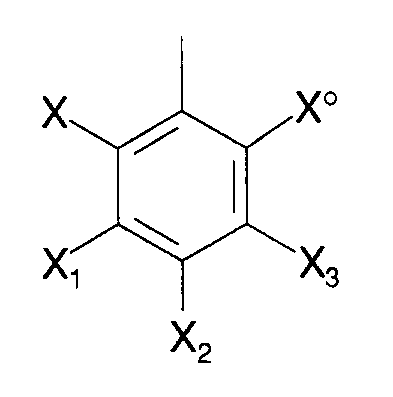
in which X and Xo are independently H, fluoro, chloro, bromo or NO₂, X₁, X₂ and X₃ are independently H, fluoro, chloro, bromo, SO₃H, COOH or NO₂ with the provisos that - 1) when none of X₁, X₂ and X₃ is -SO₃H or -COOH, then at least one Y and Yo on each 5-membered ring is other than H,
- 2) when Y and Yo are both H, at least one but not more than two of X₁, X₂ and X₃ is SO₃H or COOH and at least two of X and Xo and the X₁, X₂ and X₃ which are not SO₃H or -COOH are independently fluoro, chloro, bromo or NO₂,
- 3) no more than two of X₁, X₂ and X₃ are -SO₃H or -COOH, and
- 4) when M is Fe, X and Xo are chloro, X₁, X₂ and X₃ are hydrogen , then Y and Yo are not both chloro,
- Particular subgroups of the compounds of the formula I are the compounds of the formulae Ia and Ib.
- The compounds of the formula Ia are those with reference to the structural formula I in which:
- a) at least one of Y and Yo on each porphyrin ring is fluoro or chloro and the other is H, fluoro or chloro,
- b) X and Xo are independently H, fluoro, chloro, bromo or NO₂,
- c) X₁, X₂ and X₃ are independently H, fluoro, chloro, bromo, SO₃H, COOH or NO₂, provided that no more than two of X₁, X₂ and X₃ are SO₃H or COOH, and
- d) M is as above defined.
- The compounds of the formula Ib are those with reference to the structural formula I in which
- a) Y and Yo are independently H, fluoro or chloro,
- b) X and Xo are independently H, fluoro, chloro, bromo or NO₂,
- c) X₁, X₂ and X₃ are independently H, fluoro, chloro, bromo, SO₃H, COOH and NO₂ with the provisos that i) at least one but not more than two of X₁, X₂ and X₃ are SO₃H or COOH, and ii) at least two of X, Xo, X₁, X₂ and X₃ is fluoro, chloro, bromo or NO₂, and
- d) M is as above defined.
- The preferred compounds of the formula Ia have one or more of the following features: a) both Y and Yo on each porphyrin ring is fluoro or chloro; b) at least two of X, Xo, X₁, X₂ and X₃ are fluoro or chloro, more particularly with X and Xo being fluoro or chloro, and c) M is Fe, Cr, Mn or Ru. More preferred compounds of the formula Ia have one or more of the following features: a) both Y and Yo on each porphyrin ring is chloro, b) at least two of X, Xo, X₁, X₂ and X₃ are chloro, more particularly with X and Xo being chloro, and c) M is Fe.
- The preferred compounds of the formula Ib have one or more of the following features: a) Y and Yo on each porphyrin ring is independently H or chloro, b) one of X₁, X₂ and X₃ is SO₃H, c) at least two of X, Xo, X₁, X₂ and X₃ are fluoro or chloro, more particularly with X and Xo being fluoro or chloro, and d) M is Fe, Cr, Mn or Ru. More preferred compounds of the formula Ib have one or more of the following features: 1) Y and Yo on each porphyrin ring are independently H or chloro, b) one of X₁, X₂ and X₃ is SO₃H, c) at least two of X, Xo, X₁, X₂ and X₃ are chloro, more particularly with X and Xo being chloro, and d) M is Fe. Another preferred subclass of the compounds of the formula Ib are those in which one of Y and Yo on each porphyrin is other than H, more particularly those in which both Y and Yo are fluoro or chloro.
- With regard to each R ring as described above, each R ring will contain the minimum substitution provided for above, but the positioning and number of substitutions above the minimum on each R ring may vary. Preferably, each R ring is the same.
- In general, it is preferred that only one of X₁, X₂ and X₃ is a water solubilizing group. It is also more particularly preferred that when one of Y or Yo is to be other than H, that both be other than H.
- The compounds of the invention having SO₃H or COOH groups are water soluble and the invention also includes such water soluble compounds in which such groups are in water soluble salt form with a cation of a base such as an alkali metal (sodium, potassium or lithium), an alkaline earth metal, or an ammonium cation, preferably an alkali metal or ammonium cation. Such salt forms may be prepared by reacting a compound of the formula I with a base by conventional procedures.
- M may be any transition metal which is capable of sustaining oxidation. Examples of preferred metals include Fe, Cr, Mn, Ru and Co. Particularly preferred metals are Fe, Ru, and Mn. Additionally the metal may be joined to a ligand. The axial ligands, usually one or two but occasionally more, may be virtually any group which is capable of forming a single hydrolyzable bond with the M, as known in the art. Examples of axial ligands by way of illustration only include -OCH₃, -OH, amines, halide ions, particularly chloride, and water.
- In order to construct some of the catalysts of the present invention it may be desirable to use an intermediate porphyrin compound which contains in place of its M group a metal (Mo) such as Ni or Zn. While these particular compounds may not be particularly capable of sustaining oxidation, the Ni or Zn (and Fe) activates the porphyrin ring, allowing it to be substituted with the desired fluoro or chloro group. When effecting β-substitution and both of X and Xo are H, it is particularly desirable to employ the compounds in which M is Ni. The compounds of the formula I in which M is replaced by Zn or Ni are useful intermediates, particularly the Ni intermediates. By "capable of sustaining oxidation" is meant a metal capable of being oxidized in the presence of an oxidizing agent and then being reduced during participation in the desired oxidation reaction, such that it can again be oxidized by the oxidizing agent. In this sense the porphyrins are referred to as catalysts since typically minor amounts can be used and essentially replenished in the reaction systems.
- When M is joined to, eg. a halo ligand (F, Cl, Br or I), the compound of the formula I can be considered a salt form, eg. in the relationship M⁺ and HAL⁻ wherein HAL is the halogen. Such salts result when M is in the plus three valence state, eg Fe⁺⁺⁺, or in higher valence states, as is known.
- As used throughout the specification and claims, the following definitions will apply:
Free base porphyrin - a porphyrin ring which does not contain a metal group;
Electronegative group - a chemical group which is electronegative and which can withdraw electrons either inductively or via conjugation, also referred to as "electron-withdrawing" groups. Examples of such groups include, halogens (eg. Cl-, Br-, F-), HO₃S- and O₂N-;
Particular embodiments of this invention include the following species:Example Metal Y and Yo Groups R Groups Example 5 Fe Cl 2,6 dichlorophenyl Example 6 Fe Cl Pentachlorophenyl Example 4 Fe Cl Phenyl Example 8 Fe Cl 2,6-dichloro, 3-sulphonato-phenyl Example 7 Fe Cl 4-sulphanotophenyl Example 2 Fe H 2,6-dichloro,3-sulphonato-phenyl - Also within the scope of this invention are the non-metal containing intermediates having the following formula:

wherein each Y and Yo is independently H, flouro or chloro, and each R ring is
X and Xo are independently H, fluoro, chloro, bromo, or NO₂, X₁, X₂ and X₃ are independently H, fluoro, chloro, bromo, SO₃H, COOH or NO₂, subject to the provisos that - 1) When any of X₁, X₂ and X₃ is SO₃H or COOH, then at least one Y and Yo on each porphyrin ring is other than H,
- 2) when Y and Yo are both H, at least one but not more than two of X₁, X₂ and X₃ is SO₃H or COOH, and at least two of X and Xo and the X₁, X₂ and X₃ which are not SO₃H or COOH are independently fluoro, chloro, bromo or NO₂, and 3) no more than two of X₁, X₂ and X₃ are SO₃H or COOH; or the water soluble salts thereof in which said water solubilizing groups are in corresponding water soluble salt form.
- Also included in the scope of the present invention is a process for producing the above compounds. It has been found that the substituted porphyrin rings (hereinafter referred to as β-substitution) can be made by two routes. The first route is to start with unsubstituted porphyrin which does not contain any metal (hereinafter referred to as free base porphyrin), and metallize it. This can be accomplished by dissolving the free base porphyrin in a solvent such as DMF or CH₃COOH. Next the metal is added. This may be in the form of metal salts of any desired valence, for example M(II), or M(III) or a covalent form such as M(O) where M is the metal. While virtually any metal may be used, preferred metals include Ni, Fe, and Zn, and particularly preferred metal salts include Fe(CO)₅, FeCl₂ and FeCl₃.
- After the free base porphyrin is metallized, the next step is β-substitution of the porphyrin ring. This step may be done by contacting the porphyrin ring with an electrophilic reagent. Examples include electrophilic chlorinating or fluoronating agents such as molecular chlorine, molecular flourine, and chloro-succinimide (for halogenations) or high valence metal halides CoX₃, CeX₄, or MnX₃ (X being a halogen such as chloro) or electrophilic agents which donate -NO₂ or -SO₃H groups (for non-halogenation substitutions).
- Next, phenyl groups may be substituted, if desired, according to standard procedures.
- When a metal such as Ni or Zn is used, it is replaced by a metal capable of sustaining oxidation.
- Alternatively, the steps of metallization, β-substitution, and substitution of the phenyl rings may be carried out in whichever order is considered the most convenient. This invention thus comtemplates additional reaction schemes which include the following:

- It has been found that the compounds of formula I are very stable and powerful catalysts in the presence of a variety of oxidants. In addition, the compounds of the formula Ib are water-soluble. Also, since the water solubilizing groups, eg. sulfonate groups, are election withdrawing, the stability of the catalyst is increased as it now is more difficult to destroy by oxidation. Additionally this electron deficiency is transmitted to the metal atom making for an even more powerful, as well as robust catalyst. The porphyrin catalysts are functional at virtually any pH, and at high temperatures (150°C or more); thus they may be used in many commercializable processes.
- The compounds of the formula I may be used as oxidation catalysts in the variety of processes in which prior art optionally substituted phenyl porphyrins have been indicated as useful, the compounds of the formula I which are water soluble being particularly useful in those processes in which water solubility is desired or required. Such processes include, merely by way of illustration only, the oxidation of alkanes (including cycloalkanes), the oxidation of alkenes (including cycloalkenes), the oxidative conversion of lignin model compounds which are converted by the lignin modifying and degrading fungal enzymes also known as ligninases, the use in the modification or degradation of lignin, the use in the treating of wood in various forms such as wood chips or pulp to assist in or effect pulping or bleaching. Particular pulping-related processes of interest for the use of the water soluble compounds Ib for assisting in or effecting a modification or degradation of lignin are the well-known mechanical pulps such as thermal mechanical pulps and in the treatment of kraft pulps such as to effect bleaching. The compounds of the formula I which are water insoluble may also be used in solvent pulping such as the known organosolv pulping process. Other uses include the decomposition of organic contaminants in waste streams such as the chlorinated organic compounds in E1 effluent from the kraft pulp chlorine bleaching process. Of particular interest is the use of the formula I as catalysts in the catalytic oxidation of alkanes (including cycloalkanes) for the hydroxylation of the same (or ultimate keto formation) and in the catalytic oxidation of alkenes (including cycloalkenes) to form epoxides (epoxidation). Such hydroxylations and epoxidation are known reactions which are commonly carried out in an inert organic solvent, but water containing systems may also be used; hence both the water soluble and water insoluble compounds of the formula I may be used in such processes. In general, in addition to indicated advantages of the porphyrins of the invention, the porphyrins may be used over a wide range of reaction temperatures including high temperatures up to 150°C or even higher, and over a wide range of pH's which may extend from about 1 to 14, more suitably from pH 2 to pH 12.
- The following examples illustrate the invention.
- A compound in which:
M = Fe, axially ligated to Cl;
X = Cl;
Xo = Cl;
X₁, X₂, X₃ = H;
Y, Yo = H. - Step 1 Pyrrole (redistilled: 6.94 mL, 100 mM), 2,6-dichlorobenzaldehyde (17.5 g; 100 mM), anhydrous zinc acetate (6.6 g; 36 mM) and 2,6-lutidine (150 ml. Note 1) are placed in a 500 ml r.b. flask fitted with a Soxhlet extractor surmounted by a reflux condenser. Anhydrous Na₂SO₄ is placed in a thimble in the extractor and the reaction mixture is heated at reflux for 5 h (Note 2). After evaporating the lutidine in vacuo, the resulting tarry residue is triturated with toluene (500 ml) and allowed to stand in the refrigerator overnight. The fine purple crystals of the ZnTPPCl₈ are filtered and washed thoroughly with cold toluene (Note 3).
- The zinc complex is dissolved in CH₂Cl₂ (250 ml) and is treated with trifluoroacetic acid (25 ml). This mixture is allowed to stir for 6 h (Note 4) and poured into water (300 ml). The organic layer is separated, washed with saturated aq. NaHCO₃ (150 ml), and water (2 x 150 ml) then concentrated after adding methanol. The free base, H₂TPPCl₈ (Note 5) is collected by filtration, washed with methanol and dried. Yield, 1.26 g.
- The crude free base from Step 1 is dissolved in CHCl₃ (500 mL) and heated to reflux. A solution of 2,3-dichloro-5,6-dicyano-1,4-benzoquinone (DDQ; 600 mg) in dry benzene (40 mL) is added and the heating continues until the absorption at λ = 658 disappeared (Note 6).
- The reaction mixture is evaporated to dryness, redissolved in hot CHCl₃ (ca. 200 mL) and passed through neutral alumina (100 g; act. I). The oxidant (DDQ) and other impurities adsorb strongly at the origin while the porphyrin elutes cleanly with CHCl₃. The porphyrin is crystallized from the CHCl₃ solution by concentration and addition of n-hexane.
- The free base (700 mg) is dissolved in degassed N,N-dimethylformamide (DMF, 400 mL) in a IL 3-necked r.b. flask fitted with a gas inlet tube and a reflux condenser, the third neck being stoppered. The solution is heated to reflux (with N₂ or Ar bubbling) and treated with a solution of FeCl₂.4H₂O (3 g) in degassed DMF (100 mL). Heating is continued and the insertion of iron is monitored using uv-visible spectroscopy. In the Soret region, the single sharp absorption at λmax = 418 changed to a split Soret at λmax = 360/418 while in the visible region, the spectrum changed from λmax = 512, 588 to λmax = 508, 580, 644 (Note 7). Heating is discontinued and air is bubbled through the solution overnight in order to ensure the Fe²⁺ inserted is oxidized to its more stable Fe³⁺ state.
- The supernatant DMF solution is decanted from the solid FeCl₃, concentrated in vacuo to approximately 200 mL and is treated with dilute HCl (600 mL; 1:1). The hemin precipitates out as a brown solid from a clear yellow solution. The solid is collected by filtration, washed thoroughly with water and dried in a vacuum dessicator.
- The crude solid is redissolved in minimum CH₂Cl₂ and passed through silica gel (act. I) contained in a fritted glass funnel (150 M) using CH₂Cl₂ as the eluting solvent. The unreacted porphyrin elutes cleanly and is recovered by crystallization (ca. 75 mg). The hemin is then eluted using 5% CH₃OH in CH₂Cl₂. This is evaporated to dryness, redissolved in CH₂Cl₂ and extracted once with Concentrated HCl (equal volume; Note 8). The organic layer is washed with water (until the water extract is neutral), dried (Na₂SO₄) and the hemin recovered as shiny purple crystals using n-hexane. A first yield of 550 mg and a second of 60 mg are obtained.
- Note 1
- Lutidine is refluxed with CaH₂ for 2 h and fractionally distilled under N₂ at atmospheric pressure. The fraction distilling over at 143.5-144.5°C is collected and stored under N₂.
- Note 2
- Water is produced in the reaction, distilled over with the solvent but is retained by the drying agent (Na₂SO₄) in the Soxhlet while the solvent is recycled.
- Note 3
- Uv-vis spectrum (in CH₂Cl₂) of the ZnTPPCl₈: λ = 420 (Soret), 510 (weak), 550, 585 (weak) nm.
- Note 4
- Uv-vis spectrum (in CH₂Cl₂) of the dication [H₄TPPCl₈]²⁺: λ = 430 (Soret), 576, 628 nm.
- Note 5
- Uv-vis spectrum (in CH₂Cl₂) of the free base H₂TPPCl₈: λ = 418 (Soret), 512, 588 nm. An absorption at λ = 658 indicates the presence of some chlorine impurity which should be removed. An absorption at λ = 550 suggests incomplete demetallation.
- Note 6
- The relative intensity of λ 656: 588 in the crude porphyrin could be as high as 1 and the complete removal of the absorption at λ = 656 requires approximately 3 h. If the oxidation is not complete in 3 h, an additional 100 mg DDQ should be added.
- Note 7
- In general, the metal insertion is complete in 3 h. The use of an inert atmosphere during the reaction helps prevent the oxidation of Fe²⁺ to Fe³⁺ before insertion.
- Note 8
- Elution of the hemin with 5% CH₃OH/CH₂Cl₂ results in the partial exchange of the axial Cl ligand. Extraction with con.HCl regenerates the chloroiron(III) species.
- H₂TPPCl₈ (300 mg) is suspended in fuming sulfuric acid (14 mL) in a 25 mL 3-necked flask fitted with a reflux condenser carrying a CaSO₄ drying tube at the top. The suspension is heated at reflux (oil-bath temperature set at 165°C) for 7 h when the solid dissolves to give a clear green solution. Sulfur trioxide which sublimes and deposits in the condenser has to be carefully returned to the reaction flask at regular intervals. The solution is allowed to cool overnight.
- The above solution is carefully added dropwise over a period of 30 minutes to 50 mL water which is cooled in ice. The viscous solution is filtered into a 300 mL r.b. flask and treated dropwise (with stirring and cooling), with water (75 mL) followed by a suspension of NaHCO₃ (65 g) in water (100 mL) until it becomes slightly basic (pH 8). Towards the end, Na₂SO₄ crystallises out, making it difficult to stir (A 1 liter flask was necessary). The solution has changed from green (usual color in acid medium) to red. Ethanol (approximately equal volume) is added to precipitate out Na₂SO₄ which is removed by filtration. Complete removal of Na₂SO₄ can not be accomplished even by chromatography (on silica gel or sephadex™), dialysis and repeated recrystallizations. The compound exhibits a characteristic uv-visible spectrum of a meso tetra-substituted porphyrin (Absorption maxima in methanol: 423 nm (Soret), 521, 555, 602 and 657). Partial purification is achieved by dialysis and the sample is dissolved in minimum water (7 ml), diluted with methanol (100 ml) and crystallized by adding acetone (ca. 300 ml). A first crop yield of 212 mg is obtained and a further 105 mg are recovered from the mother liquor.
- A compound of the formula Ib in which: M = Fe;
X, Xo = Cl;
X₁ = SO₃H;
X₂, X₃ = H;
Y, Yo = H. - The sulfonated H₂TPPCl₈ (105 mg) is dissolved in N,N-dimethylformamide (40 mL) in a 200 mL 3-necked r.b. flask fitted with a reflux condenser. The solution is degassed by passing a slow stream of argon using a needle passed through a rubber septum and heated to reflux. At the onset of reflux, this is treated with a solution of FeCl₂.4H₂O (500 mg) in degassed N,N-dimethylformamide (10 mL). Heating is continued (with argon bubbling) and the insertion of iron is followed spectroscopically. Metallation is complete in 3 h. (UV-Vis in DMF: Soret at 424, 436 sh - double, alpha/beta at 575 and 613 sh.; UV-Vis of free base porphyrin in DMF: Soret at 425, 520, 553, 660 and 655 nm). Air is bubbled through the cooled solution overnight in order to ensure the complete oxidation of iron. Acetone (100 mL) is added dropwise with stirring and the metalloporphyrin precipitates out as a brown solid. This is recrystallized from methanol and acetone to give 120 mg.
- A compound of the formula Ia in which:
M = Fe, axially ligated to Cl;
X, Xo, X₁, X₂, X₃ = H;
Y, Yo = Cl. Step 1, Synthesis of meso-Tetraphenyl-β-octachloro
porphinatonickel(II)(NiTPP. Cl₈) - meso-Tetraphenylporphinatonickel(II) made by conventional methods, (NiTPP; 670 mg. 1 mM) is dissolved in o-dichlorobenzene (75 mL); N-chlorosuccinimide (1.6 g. 12 mM) is added and the solution heated on an oil-bath at 140°C. The reaction, monitored by uv-visible spectroscopy (NiTPP exhibits a Soret absorption at 414 nm while in the product it is shifted to 440 nm), is complete in approximately 90 min.
- The solvent is removed in vacuo and the residue chromatographed on neutral alumina (Activity I, 300 g), using chloroform as the solvent. The product elutes cleanly as a reddish-yellow solution and is crystallized by concentration and addition of methanol. NiTPP.βCl₈ is collected by filtration, washed with methanol and dried. Yield, 736 mg (78%).
Anal. Calcd for C₄₄H₂₀N₄Cl₈Ni: C, 55.81; H, 2.13, N, 5.92; Cl, 29.95.
Found: C, 55.48; H, 2.09; N, 5.76; Cl, 30.10.
¹³C NMR (75.4 MHz, CDCl₃ at 76.997) 118.995, 127.563, 129.291, 133.783, 134.399, 135.510, 140.251.
MS (m/e) Nominal mass of the most abundant peak in the isotopic cluster, 946 (M⁺).
UV λmax (CH₂Cl₂) 440 (Soret), 554 nm. - A stirred solution of NiTPP.βCl₈ (210 mg) (from Step 1, supra) in dichloromethane (70 mL) is treated with conc. sulfuric acid (50 mL) at room temperature. Within 5 min., a shiny green solid separates out from a green-brown emulsion. After a further 15 min. of stirring, the mixture is poured into ice (approx. 500 g) and more dichloromethane (total ca. 300 mL) is used to dissolve the solids. The organic layer (dichroic; yellow-green) is removed, and the aqueous layer extracted once with dichloromethane (100 mL) - trifluoroacetic acid (3 mL) and discarded. The combined organic phase is washed with water (2 x 250 mL), saturated aqueous sodium bicarbonate (200 mL) and dried (Na₂SO₄), meso-tetraphenyl-β-octachloroporphyrin (H₂TPP.βCl₈) is isolated by concentration and addition of methanol. Yield, 176 mg (90%).
¹³C NMR (75.4 MHz, 10% w/w CF₃CO₂H-CDCl₃, CDCl₃ at 77.141) δ, 121.922, 129.129, 129.770, 132.681, 134.236, 137.403, 141.856.
MS (m/e) Nominal mass of the most abundant peak in the isotopic cluster, 890 (M⁺).
UV λmax (CH₂Cl₂) 452 (Soret), 552, 602, 720 nm; max (CF₃CO₂H-CH₂Cl₂) 482 (Soret), 736 nm. - meso-Tetraphenyl-β-octachloroporphyrin (H₂TPP.βCl₈; 125 mg) from Step 2, supra is dissolved in degassed N,N-dimethylformamide (DMF, 100 mL) in a 250 mL 2-necked r.b. flask fitted with a gas inlet and a reflux condenser. The solution is heated to reflux (with N₂ bubbling) and treated with a solution of FeCl₂.4H₂O (500 mg) in degassed DMF (20 mL). The heating is continued and the insertion of iron, monitored by uv-visible spectroscopy (H₂TPP.βCl₈ exhibits a Soret absorption at 452 nm, which is shifted to 446 nm in the product), is complete in 1h. Heating is discontinued and air is bubbled through the solution overnight.
- The supernatant DMF solution is decanted from the solid FeCl₃, concentrated in vacuo (ca. 60 mL) and treated with dilute HCl (1:1, 120 mL). The hemin precipitates out as a brown solid, is collected by filtration, washed thoroughly with water and dried in a vacuum dessicator.
- The crude solid is dissolved in minimum CH₂Cl₂ and chromatographed on silica gel (20 g. Activity I, 230-400 mesh). Initial elution with CH₂Cl₂ removes the non-metalated starting material and the hemin is eluted with 5% CH₃OH-CH₂Cl₂. This is evaporated to dryness, and the residue is taken up in CH₂Cl₂ (100 mL) and extracted once with conc. HCl. The organic layer is washed with water (4 x 100 mL), dried (Na₂SO₄) and concentrated. Chloro(mesotetraphenyl-β-octachloroporphinato)iron(III) is crystallized from n-hexane and isolated (2 crops) in an overall yield of 85%.
Anal. Calcd for C₄₄H₂₀N₄Cl₉Fe: C, 53.95; H, 2.06; N, 5.72; Cl, 32.57.
Found: C, 54.36; H, 2.23; N, 5.55; Cl, 32.35.
MS (m/e Nominal mass of the most abundant peak in the isotopic clusters, 979 (M⁺), 944 (M⁺-Cl).
UV λmax (CH₂Cl₂) 404/448 (Soret), 526, 564, 768 nm. - A compound of the formula Ia in which:
M = Fe, axially ligated to Cl;
Xo, X = Cl;
X₁, X₂, X₃ = H;
Y, Yo = Cl. - Chloro[meso-tetra(2,6-dichlorophenyl)porphinato]iron(III) [from Traylor et al., 1984 J. Chem. Sci. Chem. Commun. 279-280] (FeTPPCl₈Cl; 107 mg) and anhydrous ferric chloride (600 mg) are suspended in o-dichlorobenzene (15 mL) in a 50 mL 3-necked r.b. flask fitted with a gas inlet tube and a reflux condenser surmounted by a drying tube, the third neck being closed. The reaction mixture is heated on an oil-bath with stirring to 140°C and chlorine gas is bubbled through for 5 min. The stirring is continued and the progress of the reaction is followed by uv-visible spectroscopy. [The starting material (FeTPPCl₈Cl) exhibits a double Soret 370/420 nm which shifts to 396/444 nm in the product (FeTPPCl₈βCl₈Cl) on completion of the reaction]. The reaction mixture is cooled and the solvent is removed in vacuo. The residue is dissolved in dichloromethane (125 mL), washed with water (2 x 75 mL) and chromatographed on silica gel (40 g, Activity I, 230-400 mesh).
Dichloromethane is initially used to remove the β-chlorinated demetalated porphyrin and the hemin is subsequently eluted using 5% CH₃OH/CH₂Cl₂. The solvent is removed in vacuo, the residue redissolved in dichloromethane (200 mL) and extracted once with conc. HCl (100 mL). The organic layer is washed with water (2 x 100 mL) dried (Na₂SO₄) and the product crystallized from dichloromethane/n-hexane. Yield: 121 mg (88%).
Anal. Calcd for C₄₄H₁₂N₄Cl₁₇Fe: C, 42.11; H, 0.96; N, 4.46; Cl, 48.02.
Found: C, 41.90; H, 1.10; N, 4.25; Cl, 48.30.
MS (m/e) Nominal mass of the most abundant peak in the isotopic clusters, 1254 (M⁺), 1220 (M⁺-Cl)
UV λmax (CH₂Cl₂) 396/444 (Soret) nm. - A compound of the formula Ia in which:
M = Fe, axially ligated to Cl;
X, Xo, X₁, X₂, X₃ = Cl;
Y, Yo = Cl. - Chloro[meso-tetra(pentachlorophenyl)porphinatoiron(III) [from Traylor et al., supra] (FeTPPCl₂₀.Cl; 90 mg) is dissolved in o-dichlorobenzene (15 mL) in a 50 mL 3-necked r.b. flask fitted with a gas inlet tube and a reflux condenser surmounted by a drying tube, the third neck being closed. Anhydrous ferric chloride (500 mg) is added and the solution rapidly heated to 140°C on a preheated oil-bath. Chlorine gas is bubbled for 5 min through the stirred solution and the temperature is maintained for 1h. The strong Soret absorption of the starting material (FeTPPCl₂₀Cl) at 420 nm shifts to 442 nm as the chlorination goes to completion.
- The solvent is removed in vacuo, and the residue is dissolved in dichloromethane (600 mL; NOTE 1) and washed with water (2 x 200 mL) to remove excess ferric chloride. The organic phase is dried, evaporated to dryness, and the residue is dissolved in hot chloroform (50 mL; NOTE 2) and passed through silica gel (60 g. Activity I, 230-400 mesh) placed in a fritted-glass filter funnel (150 M). Washing initially with dichloromethane removes the β-chlorinated demetallated porphyrin and the hemin is subsequently eluted with 5% CH₃OH-CH₂Cl₂ and collected. The solvent is evaporated under reduced pressure, the residue dissolved in dichloromethane (600 mL) and extracted once with conc. HCl (200 mL). The organic phase is washed with water (3 x 250 mL), dried (Na₂SO₄) and the perchlorohemin (FeTPPCl₂₀.βCl₈Cl) crystallized from chloroform (NOTE 3)-n-hexane. Yield (3 crops), 77 mg (72%).
MS (m/e) Nominal mass of the most abundant peak in the isotopic clusters, 1668 (M⁺), 1633 (M⁺-Cl)
UV λmax (CHCl₃) 396/444 (Soret) nm. - NOTE 1
- Due to the lower solubility of FeTPPCl₂₀βCl₈Cl (cf FeTPPCl₈βCl₈Cl) in dichloromethane, a larger volume of solvent is required to keep it in solution.
- NOTE 2
- The solubility of FeTPPCl₂₀βCl₈Cl in chloroform is significantly higher than in dichloromethane and is therefore a useful substitute in chromatography.
- NOTE 3
- Spectroscopic grade chloroform stabilized by non-polar hydrocarbon is used.
- A compound of the formula Ia, in which:
M = Fe, axially ligated with Cl;
X, Xo, X₁, X₃ = H;
X₂ = SO₃H;
Y, Yo = Cl. - meso-Tetraphenyl-β-octachloroporphinatonickel(II) (NiTPP.Cl₈; 40 mg) [from Example 4] is suspended in concentrated sulfuric acid (10 mL) and immersed in an oil bath preheated to 120°C. Within 5 min. of heating, the starting material is demetalated and dissolves producing a dark green solution. Heating is continued for 5h and the solution is allowed to stir at room temperature for 12h. The reaction mixture is poured into crushed ice (50 g), neutralized (under cooling) with a saturated sodium hydroxide solution, filtered and evaporated under reduced pressure.
- The residue is extracted with methanol, the methanol solution evaporated and the crude product (dissolved in minimum water) is passed over a cation exchange column (Dowex 50 WX-8™, H⁺ form). The porphyrin fraction is collected, neutralized with sodium hydroxide, evaporated to dryness and the residue, in methanol, is further purified by chromatography on a Sephadex LH 20™ column. The porphyrin is crystallized from acetone.
UV λmax (CH₃OH) 464 (Soret), 634, 746 nm.
λmax (CH₃OH-NaOH) 480 (Soret), 718 nm.
λmax (CH₃CH-H⁺) 486 (Soret), 722 nm. - meso-Tetra(4-sulfonatophenyl)-β-octachloroporphyrin (30mg) and sodium acetate (20mg) were suspended in glacial acetic acid (40mL) and heated at 100°C under nitrogen. A solution of FeCl₂. 4H₂O (70mg) in water (1mL) was added and the insertion of iron was followed by UV-vis spectroscopy. The reaction was complete in approximately 1h. The reaction mixture was cooled to room temperature under nitrogen and allowed to stir overnight, exposed to air.
- The brown solid was filtered, washed thoroughly with acetone and dried to obtain the above-indicated product.
UV λmax (water; pH=6) 402(sh), 430 (Soret), 564, 758nm. - A compound of the formula Ia, in which:
M = Fe, axially ligated to Cl;
X, Xo = Cl;
X₃ = SO₃H;
X₁, X₂ = H;
Y, Yo = Cl. - Chloro[meso-tetra(2,6-dichlorophenyl)-β-octachloroporphinato]iron(III) (30 mg) was placed in a 50 ml 3-necked r.b. flask fitted with a reflux condenser surmounted by a drying tube (CaSO₄) and treated with fuming sulfuric acid (10 ml). The starting material demetalated and dissolved immediately. The resulting green solution was heated at 165°C on an oil-bath for 7h. Condensation of sulfur trioxide inside the condenser was minimized by adjusting the cooling water as required. The reaction mixture was allowed to stir at room temperature overnight and poured carefully into ice (200 g).
- The aqueous solution [UV: 468(Soret), 602, 640, 702 nm.], was neutralized with a saturated solution of NaOH, ethanol (200 ml) added and cooled. The sodium sulfate crystallized was filtered, the filtrate concentrated (10 ml), diluted with ethanol and filtered again. The filtrate was evaporated to dryness, dissolved in minimum water and passed through Dowex 50 W-X8 ion-exchange resin™ (H⁺ form). The eluate was neutralized with dilute sodium hydroxide, evaporated to dryness, redissolved in methanol and the product crystallized from acetone. Yield, 36 mg (2 crops).
UV λmax (DMF) 474(Soret), 584(sh) 626, 680 nm. - The porphyrin prepared as described above (15 mg) was dissolved in N,N-dimethylformamide (10 ml) in a 50 ml 3-necked r.b. flask and degassed by passing a stream of nitrogen for 1h. The solution was heated to reflux and treated with 1 ml of a stock solution of FeCl₂.4H₂O (220 mg) in N,N-dimethylformamide (DMF, 5 ml). An immediate color change from green to yellow-brown was observed. Refluxing was continued for 15 min. and a UV spectrum [λmax in DMF: 452(Soret), 582, 630] indicated that the metalation was complete. The reaction mixture was allowed to cool and stir at room temperature overnight (exposed to air). Acetone (50 ml) was added, the product collected by filtration and crystallized from methanol-acetone.
UV: λmax (CH₃OH) 448 (Soret), 572, 660 nm. - The product was further purified by ion-exchange chromatography (aqueous solution; Dowex 50W-X8™ H⁺ form) followed by crystallization from acetone.
UV λmax (water; pH=6) 422 (Soret) nm.
λmax (water; pH=9) 402(sh), 426 (Soret), 604, 656(sh), 740nm. - Catalyzing the oxidation of lignin model compounds with FeTPPCl₈S.
- Three lignin model compounds, 1,4-dimethoxybenzene, a β-O-4 model (arylglycerol β-aryl ether substructure of lignin) and a β-1 model (aryl glycerol-β-aryl substructure of lignin [see Kersten et al. 1985 J. Biol. Chem. 260:2609-2612; Tien et al. 1983 Science 221:661-663; and Kirk et al. 1986 Biochem, J. 236:279-287] are reacted with an iron (III) (tetraphenyloctachloro)sulfonatoporphyrin (FeTPPCl₈S). A final concentration of 50 »M FeTPPCl₈S is reacted with 5 mM final concentration of the oxidant t-butyl peroxide. The results indicate that Fe TPPCl₈S mimics the enzyme ligninase.
- Using 1,4-dimethoxybenzene as a substrate, the FeTPPCl₈S produced spectral changes, but unlike ligninase does not form the benzoquinone product.
- The β-O-4 model with FeTPPCl₈S yields the same products as with ligninase, and, in addition demethoxylates to a greater extent than ligninase. Products that are produced include veratrylaldehyde and, and in addition, a trace of veratric acid which has not been observed with the ligninases, hence further indicating the greater oxidative potential of the porphyrins compared to the ligninases.
- The β-1 model with FeTPPCl₈S yields methanol as well as other products as with ligninase, including veratrylaldehyde and trace amounts of veratric acid.
- 250 »g of the Kraft softwood lignin Indulin AT (Westvaco Corporation, Charleston Heights, S.C.) is dissolved in 2 ml DMF. Peracetic acid is used as the oxidant at a final concentration of 1.84 »M. In separate experiments the porphyrins of Examples 7 and 8, above, are used at a final concentration of 500 »M. The reaction mixture is stirred at room temperature for 24 hours and the resulting products are analyzed by gel permeation chromatography using a TSK 4000 column with 1:1 Chloroform:Dioxane (Phenomenex, Rancho Palos Verdes, Ca.). Absorbance is monitored at 280 nanometers, and in each case a distinct shift of the peaked area to the right indicating a degradation of the lignin was observed.
- Veratryl alcohol, a lignin-related compound, at a 1 mM final concentration is reacted with 1 »M manganese octachlorotetrasulfonato porphyrin (MnTPPCl₈S) in water at room temperature. Various oxidants are present, including hydrogen peroxide, sodium hypochlorite, t-butylperoxide, cumylhydroperoxide, potassium iodate, and iodosyl benzene, as shown in Table 1, below. The concentration of oxidants ranges from 50-100 mM and pH is from 1-10. The product is veratrylaldehyde. Its yield is dependent upon the oxidant and the pH.
Table I MnTPPCl₈S* Reaction with Veratryl Alcohol** Oxidant Concentration of Oxidant pH Production of Veratrylaldehyde Time (Minutes) NaOCl 0.067 mM 7 .0072 10 tBuOOH 0.1 mM -- .00104 64 phenyl t-butyl hydroperoxide 0.1 mM -- .0013 90 H₂O₂ 0.1 mM pH=2 .0013 183 H₂O₂ 0.1 mM Neutral .00054 63 H₂O₂ 0.1 mM pH=10 .0076 9 C₆H₅IO 0.05 mM -- .022 10 C₆F₅IO 0.064 mM -- .019 11 * Concentration of MnTPPCl₈S = 1 »M ** Concentration of veratrylalcohol = 1 mM - The same general procedure as set forth in Example 11 is followed, except the catalyst is iron octachlorotetraphenylosulfonatoporphyrin. Results are given in Table 2, below.
Oxidant Concentration of Oxidant pH Production of Veratrylaldehyde mM Time (Minutes) Yield of veratrylaldehyde versus oxidant (molar basis) NaOCl 0.067 mM -- .0000022 3 19% tBuOOH 0.01 mM -- .0424 15.5 50% Cumylhydroperoxide 0.1 mM -- .0428 7 49% KIO₄ 0.1 mM pH=2 .0085 864 68% Metachloroperbenzoic acid 0.1 mM -- .0047 16 10% H₂O₂ 0.1 mM pH=1.5 .019 5.5 20% H₂O₂ 0.1 mM Neutral .018 9 12% H₂O₂ 0.1 mM pH=10 .0046 5.5 5% C₂H₅IO 0.05 mM -- .0087 7 30% C₆F₅IO 0.064 mM -- .017 28 28% -- pH not adjusted
* Concentration of FeTPPCl₈S = 1 »M
** Concentration of veratrylalcohol = 1 mM - The catalytic activities of the hemins FeTPPCl₈.βCl₈.Cl and FeTPPCl₂₀.βCl₈Cl are examined in hydroxylation reactions (cyclohexane as substrate) and epoxidation reactions (cyclohexene as substrate) as described below:
- Iodosopentafluorobenzene (2.0 mg, 6.4 x 10⁻² mol.dm⁻³) is mixed with the substrate (1.0 mol.dm⁻³) in dichloromethane in a culture tube with a silicon rubber septum. The catalyst, in dichloromethane (1.0- x 10⁻⁴ mol.dm⁻³) is introduced and the reaction mixture is mixed constantly until either the solid disappears or the catalyst is destroyed. The yields of the products are determined by GLC (Carbowax 20M and SE 30™), and the results are compared with those of octachlorohemin (FeTPPCl₈.Cl) and are summarized below in Table 5.

- A compound such as that above named is preferably prepared sequently by 1) reacting p-carboxybenzaldehyde methyl ester with pyrrole in a conventional manner to obtain the free base porphyrin; 2) inserting Ni to form the Ni-bearing porphyrin (M=Ni) in a conventional manner; 3) chlorinating with chlorosuccinimide the Ni-bearing porphyrin in a manner described herein to form the carboxy-substituted phenyl-β-octachlorinated porphyrin containing the Ni; 4) removing the Ni in a manner described herein to form the corresponding free base porphyrin; 5) removing the methyl ester in a conventional manner to form the free acid; and 6) inserting Fe using FeCl₂ in a manner indicated herein for the analogous compound. Following this procedure, the above-named porphyrin was prepared and ascertained to catalytically effective.
- The above-named porphyrin may also be prepared starting with the free base meso-4-carboxyphenylporphyrin, a known compound, methyl-esterifying the carboxy groups and then proceeding as indicated in Steps 2 through 7, above.
- Northern softwood kraft pulp (consistency 2.5%) in the amount of 2g. was incubated in separate experiments with 2.5% (w/v) sodium hydroxide in the presence of 10 mM of t-butyl peroxide in the absence of a porphyrin as control or in the presence of 10 mM of the porphyrin of Example 7.
- The above experiments were repeated using 50 mM of sodium citrate instead of sodium hydroxide.
- The two sets of above experiments were repeated upon using 0.5% (w/v) sodium perchlorate in place of the t-butyl peroxide, except that the perchlorate/citrate combinations were omitted.
- All of the above sets of experiments were then repeated using the porphyrin of Example 8 instead of that of Example 7.
- In each set of experiments the Kappa number of the control and prophyrin treated pulp samples was measured and compared after all treated pulps were extracted with alkali in a conventional manner. A generally greater reduction in Kappa number was observed with the porphyrin containing experiments with a greater being indicated with the use of the sodium perchlorate.
-
- A:
- meso-Tetra(2,6-dichloro-3-sulfonatophenyl)-β-octachloroporphinatoiron(III), and
- B:
- meso-Tetra(4-sulfonatophenyl)-β-octachloroporphinatoiron(III):
- A series of samples (2g.) of Northern softwood kraft were each washed with 500 ml deionized water, filtered, and then placed in 80 ml Na-citrate buffer (50 mM, pH 5) at 60°C. Tert-butyl hydroperoxide was added to 0.5% (w/v) followed by the addition of the porphyrin. The samples were stirred in an oven at 60°C for 18 hours at which time they were washed with approximately 1.5 liters of buffer, added to 80 ml of 2.5% (w/v) sodium hydroxide (60°C) and stirred in an oven at 60°C for an additional 90 minutes. The samples were then washed with 2.5 liters of deionized water. Kappa measurements were made on all samples to determine the decrease in lignin content, and the results reported below.
Porphyrin t-Butyl Hydroperoxide Kappa none none 17.9 none 0.5% (w/v) 17.6 A: 0.45 mg 0.5% 10.4 A: 0.90 mg 0.5% 9.5 B: 0.45 mg 0.5% 16.4 B: 0.90 mg 0.5% 14.7
Claims (14)
- A compound of formula I

 1) when none of X₁, X₂ and X₃ is SO₃H or COOH, then at least one of Y and Y⁰ on each 5-membered ring is other than H,2) when Y and Y⁰ are both H, at least one but not more than two of X₁, X₂ and X₃ is SO₃H or COOH, and at least two of X and X⁰ and the X1, X₂ and X₃ which are not SO₃H or COOH are independently fluoro, chloro, bromo or NO2;3) no more than two of X₁, X₂ and X₃ are SO₃H or COOH, and4) when M is Fe, X and X⁰ are chloro, X₁, X₂ and X₃ are hydrogen, then Y and Y⁰ are not both chloro;or a compound of formula I in which SO₃H and COOH groups are in water soluble salt form.
 - A compound according to Claim 1 in which at least one of Y and Y⁰ on each porphyrin ring is fluoro or chloro.
- A compound according to Claim 1 or Claim 2 in which both Y and Y⁰ on each porphyrin ring are independently fluoro or chloro.
- A compound according to Claim 3 in which both Y and Y⁰ are chloro.
- A compound according to any one of the preceding claims in which M is Fe.
- A compound according to any one of the preceding claims in which at least two of X, X⁰, X₁, X₂ and X₃ are chloro.
- A compound according to any one of Claims 1 to 5 in which X and X⁰ are chloro, X₁ is SO₃H, X₂ and X₃ are each H and M is Fe, or a salt thereof.
- A compound according to any one of Claims 1 to 3 or 5 in which X and X⁰ are chloro, X₁ X₂ and X₃ are each H and M is Fe.
- The use, as an oxidation catalyst of a compound of formula I

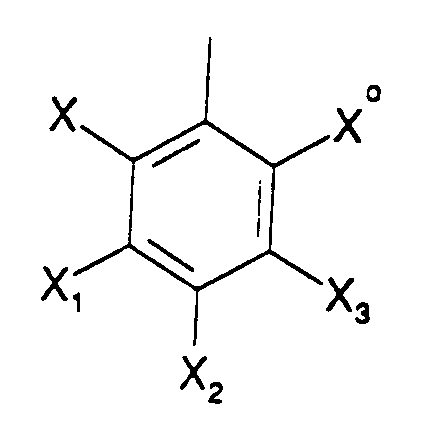 1) when none of X₁, X₂ and X₃ is SO₃H or COOH, then at least one of Y and Y⁰ on each 5-membered ring is other than H,2) when Y and Y⁰ are both H, at least one but not more than two of X₁, X₂ and X₃ is SO₃H or COOH, and at least two of X and X⁰ and the X1, X₂ and X₃ which are not SO₃H or COOH are independently fluoro, chloro, bromo or NO2; and3) no more than two of X₁, X₂ and X₃ are SO₃H or COOH, and 4) when M is Fe, X and X⁰ are chloro, X₁, X₂ and X₃ are hydrogen, then Y and Y⁰ are not both chloro. or a compound of formula I in which SO₃H and COOH groups are in water soluble salt form.
 - The use according to claim 9 as an oxidation catalyst of a compound according to any one of claims 2 to 8.
- A method for modifying or degrading lignin in wood comprising treating the wood with an effective amount of an oxidant in the presence of a compound of formula I

 1) when none of X₁, X₂ and X₃ is SO₃H or COOH, then at least one of Y and Y⁰ on each 5-membered ring is other than H,2) when Y and Y⁰ are both H, at least one but not more than two of X₁, X₂ and X₃ is SO₃H or COOH, and at least two of X and X⁰ and the X₁, X₂ and X₃ which are not SO₃H or COOH are independently fluoro, chloro, bromo or NO2; and3) no more than two of X₁, X₂ and X₃ are SO₃H or COOH, or a compound of formula I in which SO₃H and COOH groups are in water soluble salt form.
 - A method according to Claim 11 for modifying or degrading lignin in wood comprising treating the wood with an effective amount of an oxidant in the presence of a compound according to any one of Claims 2 to 8.
- A method for treating waste streams containing chlorinated organic contaminants which comprises treating the waste water with an effective amount of an oxidant in the presence of a compound of formula I

 1) when none of X₁, X₂ and X₃ is SO₃H or COOH, then at least one of Y and Y⁰ on each 5-membered ring is other than H,2) when Y and Y⁰ are both H, at least one but not more than two of X₁, X₂ and X₃, is SO₃H or COOH, and at least two of X and X⁰ and the X₁, X₂ and X₃ which are not SO₃H or COOH are independently fluoro, chloro, bromo or NO2; and3) no more than two of X₁, X₂ and X₃ are SO₃H or COOH, or a compound of formula I in which SO₃H and COOH groups are in water soluble salt form.
 - A compound of formula II

 1) when none of X₁, X₂ and X₃ is SO₃H or COOH, then at least one Y and Y⁰ on each 5-membered ring is other than H,2) when Y and Y⁰ are both H, at least one but not more than two of X₁, X₂ and X₃ is SO₃H or COOH, and at least two of X and X⁰ and the X₁, X₂ and X₃ which are not SO₃H or COOH are independently fluoro, chloro, bromo or NO₂; and3) no more than two of X₁, X₂ and X₃ are SO₃H or COOH,or a compound of formula II in which SO₃H and COOH groups are in water soluble salt form.
Applications Claiming Priority (3)
| Application Number | Priority Date | Filing Date | Title |
|---|---|---|---|
| US3956687A | 1987-04-17 | 1987-04-17 | |
| PCT/US1988/001240 WO1988007988A1 (en) | 1987-04-17 | 1988-04-15 | Porphyrins, their syntheses and uses thereof |
| US39566 | 2001-11-09 |
Publications (3)
| Publication Number | Publication Date |
|---|---|
| EP0363379A1 EP0363379A1 (en) | 1990-04-18 |
| EP0363379A4 EP0363379A4 (en) | 1991-10-30 |
| EP0363379B1 true EP0363379B1 (en) | 1995-06-14 |
Family
ID=21906153
Family Applications (1)
| Application Number | Title | Priority Date | Filing Date |
|---|---|---|---|
| EP88904116A Expired - Lifetime EP0363379B1 (en) | 1987-04-17 | 1988-04-15 | Porphyrins, their syntheses and uses thereof |
Country Status (9)
| Country | Link |
|---|---|
| EP (1) | EP0363379B1 (en) |
| JP (1) | JPH02503086A (en) |
| KR (1) | KR970002638B1 (en) |
| AT (1) | ATE123749T1 (en) |
| AU (1) | AU617670B2 (en) |
| CA (1) | CA1308096C (en) |
| DE (1) | DE3853995T2 (en) |
| FI (1) | FI92402C (en) |
| WO (1) | WO1988007988A1 (en) |
Families Citing this family (17)
| Publication number | Priority date | Publication date | Assignee | Title |
|---|---|---|---|---|
| US5990363A (en) * | 1987-01-02 | 1999-11-23 | Sun Company, Inc. | Method for oxidizing alkanes using novel porphyrins synthesized from dipyrromethanes and aldehydes |
| DE3809671A1 (en) * | 1988-03-18 | 1989-09-28 | Schering Ag | PORPHYRINE COMPLEX COMPOUNDS, METHOD FOR THE PRODUCTION THEREOF AND PHARMACEUTICAL AGENTS CONTAINING THEM |
| DE69020380T2 (en) * | 1989-02-22 | 1995-12-07 | Unilever Nv | Metal porphyrins for use as bleaching catalysts. |
| CA2074880A1 (en) * | 1991-08-12 | 1993-02-13 | James E. Lyons | Allylic oxidation of olefins |
| US5280115A (en) * | 1991-09-12 | 1994-01-18 | Sun Company, Inc. (R&M) | Nitrated metalloporphyrins as catalysts for alkane oxidation |
| US5212300A (en) * | 1991-09-12 | 1993-05-18 | Sun Company, Inc. (R&M) | Cyano- and polycyanometallo-porphyrins as catalysts for alkane oxidation |
| US5480986A (en) * | 1993-07-30 | 1996-01-02 | Sun Company, Inc. (R&M) | Metal complexes of substituted Gable porphyrins as oxidation catalysts |
| US6127356A (en) | 1993-10-15 | 2000-10-03 | Duke University | Oxidant scavengers |
| US5563263A (en) * | 1994-09-14 | 1996-10-08 | Hoechst Celanese Corporation | D4 -symmetric porphyrin-based catalysts, processes for preparing same, and processes for using same |
| US5760216A (en) * | 1994-09-15 | 1998-06-02 | Abbott Laboratories | Use of synthetic metalloporphyrins for preparation and prediction of drug metabolites |
| DE10109502A1 (en) * | 2001-02-28 | 2002-09-12 | Rhodia Acetow Gmbh | Removal of hemicellulose from biomaterial, especially wood pulp, involves extraction by treatment with an aqueous solution of metal complex, e.g. nickel tris-2-aminoethyl-amine di-hydroxide |
| PT102721B (en) * | 2002-02-01 | 2011-01-24 | Cipan Companhia Industr Prod De Antibioticos S A | TETRAPYROLYLIC MACROCYCLIC COMPOUNDS WITH QUANTUM PERFORMANCE OF SINGULIUM OXYGEN SUITABLE FOR PHOTODYNAMIC THERAPY AND PROCESSES FOR THEIR PREPARATION |
| IL152900A0 (en) | 2002-11-17 | 2003-06-24 | Yeda Res & Dev | Water-soluble bacteriochlorophyll derivatives and their pharmaceutical uses |
| TW200604151A (en) * | 2004-04-30 | 2006-02-01 | Sumitomo Chemical Co | Process for producing cycloalkanol and/or cycloalkanone |
| CN102131581B (en) * | 2008-08-11 | 2015-04-29 | 福留裕文 | Catalysts for decomposition of lignin, catalysts for decomposition of aromatic hydrocarbons, and porphyrins |
| TWI573875B (en) * | 2009-04-24 | 2017-03-11 | Fukutome Hirofumi | The use of a porphyrin compound used in the production method of a catalyst for lignin decomposition and a method for producing a tetrapyrrole compound |
| CN109575036B (en) * | 2018-12-11 | 2020-09-22 | 怀化学院 | Metal hematoporphyrin diester compound, catalyst and preparation method thereof, and method for catalytic oxidation of cyclohexane |
Family Cites Families (4)
| Publication number | Priority date | Publication date | Assignee | Title |
|---|---|---|---|---|
| JPS5925767B2 (en) * | 1981-06-10 | 1984-06-21 | 森六株式会社 | Phospholipid liporem containing iron (2) porphyrin complex and oxygen adsorption/desorption agent |
| DE3464252D1 (en) * | 1983-06-03 | 1987-07-23 | Hoffmann La Roche | Labelled molecules for fluorescence immunoassays and processes and intermediates for their preparation |
| JPS63126880A (en) * | 1986-11-17 | 1988-05-30 | Sanyoo Fine Kk | Metal porphyrin derivative and production thereof |
| US4746735A (en) * | 1986-11-21 | 1988-05-24 | The Dow Chemical Company | Regiospecific aryl nitration of meso-substituted tetraarylporphyrins |
-
1988
- 1988-04-15 AU AU17075/88A patent/AU617670B2/en not_active Ceased
- 1988-04-15 JP JP63503781A patent/JPH02503086A/en active Pending
- 1988-04-15 WO PCT/US1988/001240 patent/WO1988007988A1/en not_active Ceased
- 1988-04-15 AT AT88904116T patent/ATE123749T1/en not_active IP Right Cessation
- 1988-04-15 DE DE3853995T patent/DE3853995T2/en not_active Expired - Fee Related
- 1988-04-15 EP EP88904116A patent/EP0363379B1/en not_active Expired - Lifetime
- 1988-04-15 KR KR1019880701690A patent/KR970002638B1/en not_active Expired - Fee Related
- 1988-04-18 CA CA000564424A patent/CA1308096C/en not_active Expired - Lifetime
-
1989
- 1989-10-16 FI FI894898A patent/FI92402C/en not_active IP Right Cessation
Non-Patent Citations (1)
| Title |
|---|
| The Biological Chemistry of Iron, D. Dolphin, "Models forvPeroxidase and Citochrome p-450 Enzymes", D. Reidel Publ. Co., Holland, 1982, pages 283-294. See the Abstract. * |
Also Published As
| Publication number | Publication date |
|---|---|
| ATE123749T1 (en) | 1995-06-15 |
| FI92402B (en) | 1994-07-29 |
| KR970002638B1 (en) | 1997-03-07 |
| KR890701514A (en) | 1989-12-20 |
| FI92402C (en) | 1994-11-10 |
| WO1988007988A1 (en) | 1988-10-20 |
| AU1707588A (en) | 1988-11-04 |
| DE3853995D1 (en) | 1995-07-20 |
| DE3853995T2 (en) | 1995-11-23 |
| EP0363379A4 (en) | 1991-10-30 |
| FI894898A0 (en) | 1989-10-16 |
| AU617670B2 (en) | 1991-12-05 |
| JPH02503086A (en) | 1990-09-27 |
| EP0363379A1 (en) | 1990-04-18 |
| CA1308096C (en) | 1992-09-29 |
Similar Documents
| Publication | Publication Date | Title |
|---|---|---|
| US4892941A (en) | Porphyrins | |
| US5077394A (en) | Porphyrins and uses thereof | |
| CA1308096C (en) | Porphyrins, their syntheses and uses thereof | |
| US6225464B1 (en) | Methods of making cross-bridged macropolycycles | |
| US8722881B2 (en) | Method of synthesis of tetradentate amide macrocycle ligand and its metal-complex | |
| JP2010524938A (en) | Novel opiate reduction using catalytic hydrogen transfer reaction | |
| Verma et al. | Methyltrioxorhenium (MTO) catalysis in the epoxidation of alkenes: a synthetic overview | |
| Takeda et al. | Synthesis and characterization of novel flavin-linked porphyrins. Mechanism for flavin-catalyzed inter-and intramolecular 2e/1e electron-transfer reactions | |
| EP1671975A1 (en) | Penam crystal and process for producing the same | |
| Kenner et al. | Pyrroles and related compounds. Part XXX. Cyclisation of porphyrin β-keto-esters to phaeoporphyrins | |
| CN116444477B (en) | A method for preparing bromopiperidine ring carboxylic acid and its uses | |
| EP0308790A2 (en) | Rhenium-oxo-porphyrin complexes | |
| Graziano et al. | Photosensitized oxidation of furans. Part 7. Solvent effects in thermal conversion of the endo-peroxides of arylfurans | |
| NO885571L (en) | PORFYRINES, THEIR SYNTHESIS AND USE. | |
| JPH0673061A (en) | Method of enatioselective epoxidation of 6-substituted chromene | |
| EP0283754B1 (en) | Tungsten oxo-porphyrin complexes | |
| JPH03101661A (en) | Production of heterocyclic carboxylic acid | |
| US20020173644A1 (en) | Methods of making cross-bridged macropolycycles | |
| US6761874B2 (en) | Process for the preparation of hydrogen peroxide | |
| Nomiya et al. | A novel preparation of keggin-type dodecatungstocobaltate (II) using [Co (ox) 3] 3− and hydrogen peroxide as starting materials | |
| JP3257371B2 (en) | Method for producing 5-phthalimido-4-oxopentenoic acid or its pyridine salt | |
| PL186749B1 (en) | Method of obtaining 2-tertbutyl-6-methyl-1,4-benzoquinone | |
| Horikiri et al. | A convenient oxidation method of the benzylic 10-position in 4, 5-epoxymorphinan | |
| JPH05255338A (en) | Metal porphyrin complex | |
| Gamba | Sulfoxidation of Thioanisole and Epoxidation-Sulfoxidation of Allylsulfide Catalyzed by a Dinuclear Copper Complex |
Legal Events
| Date | Code | Title | Description |
|---|---|---|---|
| PUAI | Public reference made under article 153(3) epc to a published international application that has entered the european phase |
Free format text: ORIGINAL CODE: 0009012 |
|
| 17P | Request for examination filed |
Effective date: 19891002 |
|
| AK | Designated contracting states |
Kind code of ref document: A1 Designated state(s): AT BE CH DE FR GB IT LI LU NL SE |
|
| A4 | Supplementary search report drawn up and despatched |
Effective date: 19910910 |
|
| AK | Designated contracting states |
Kind code of ref document: A4 Designated state(s): AT BE CH DE FR GB IT LI LU NL SE |
|
| 17Q | First examination report despatched |
Effective date: 19930222 |
|
| GRAA | (expected) grant |
Free format text: ORIGINAL CODE: 0009210 |
|
| AK | Designated contracting states |
Kind code of ref document: B1 Designated state(s): AT BE CH DE FR GB IT LI LU NL SE |
|
| REF | Corresponds to: |
Ref document number: 123749 Country of ref document: AT Date of ref document: 19950615 Kind code of ref document: T |
|
| REF | Corresponds to: |
Ref document number: 3853995 Country of ref document: DE Date of ref document: 19950720 |
|
| ITF | It: translation for a ep patent filed | ||
| ET | Fr: translation filed | ||
| PLBE | No opposition filed within time limit |
Free format text: ORIGINAL CODE: 0009261 |
|
| STAA | Information on the status of an ep patent application or granted ep patent |
Free format text: STATUS: NO OPPOSITION FILED WITHIN TIME LIMIT |
|
| PG25 | Lapsed in a contracting state [announced via postgrant information from national office to epo] |
Ref country code: LU Free format text: LAPSE BECAUSE OF NON-PAYMENT OF DUE FEES Effective date: 19960430 |
|
| 26N | No opposition filed | ||
| PGFP | Annual fee paid to national office [announced via postgrant information from national office to epo] |
Ref country code: BE Payment date: 19970305 Year of fee payment: 10 |
|
| PGFP | Annual fee paid to national office [announced via postgrant information from national office to epo] |
Ref country code: SE Payment date: 19970310 Year of fee payment: 10 |
|
| PGFP | Annual fee paid to national office [announced via postgrant information from national office to epo] |
Ref country code: FR Payment date: 19970311 Year of fee payment: 10 |
|
| PGFP | Annual fee paid to national office [announced via postgrant information from national office to epo] |
Ref country code: GB Payment date: 19970313 Year of fee payment: 10 Ref country code: DE Payment date: 19970313 Year of fee payment: 10 |
|
| PGFP | Annual fee paid to national office [announced via postgrant information from national office to epo] |
Ref country code: CH Payment date: 19970403 Year of fee payment: 10 |
|
| PGFP | Annual fee paid to national office [announced via postgrant information from national office to epo] |
Ref country code: AT Payment date: 19970415 Year of fee payment: 10 |
|
| PGFP | Annual fee paid to national office [announced via postgrant information from national office to epo] |
Ref country code: NL Payment date: 19970430 Year of fee payment: 10 |
|
| PG25 | Lapsed in a contracting state [announced via postgrant information from national office to epo] |
Ref country code: GB Free format text: LAPSE BECAUSE OF NON-PAYMENT OF DUE FEES Effective date: 19980415 Ref country code: AT Free format text: LAPSE BECAUSE OF NON-PAYMENT OF DUE FEES Effective date: 19980415 |
|
| PG25 | Lapsed in a contracting state [announced via postgrant information from national office to epo] |
Ref country code: SE Free format text: LAPSE BECAUSE OF NON-PAYMENT OF DUE FEES Effective date: 19980416 |
|
| PG25 | Lapsed in a contracting state [announced via postgrant information from national office to epo] |
Ref country code: LI Free format text: LAPSE BECAUSE OF NON-PAYMENT OF DUE FEES Effective date: 19980430 Ref country code: FR Free format text: THE PATENT HAS BEEN ANNULLED BY A DECISION OF A NATIONAL AUTHORITY Effective date: 19980430 Ref country code: CH Free format text: LAPSE BECAUSE OF NON-PAYMENT OF DUE FEES Effective date: 19980430 Ref country code: BE Free format text: LAPSE BECAUSE OF NON-PAYMENT OF DUE FEES Effective date: 19980430 |
|
| BERE | Be: lapsed |
Owner name: WIJESEKERA TILAK PANINI Effective date: 19980430 Owner name: FARRELL ROBERTA L. Effective date: 19980430 Owner name: MAIONE THEODORE E. Effective date: 19980430 Owner name: KIRK THOMAS KENT Effective date: 19980430 Owner name: NAKANO TAKU Effective date: 19980430 Owner name: DOLPHIN DAVID H. Effective date: 19980430 |
|
| PG25 | Lapsed in a contracting state [announced via postgrant information from national office to epo] |
Ref country code: NL Free format text: LAPSE BECAUSE OF NON-PAYMENT OF DUE FEES Effective date: 19981101 |
|
| GBPC | Gb: european patent ceased through non-payment of renewal fee |
Effective date: 19980415 |
|
| REG | Reference to a national code |
Ref country code: CH Ref legal event code: PL |
|
| NLV4 | Nl: lapsed or anulled due to non-payment of the annual fee |
Effective date: 19981101 |
|
| EUG | Se: european patent has lapsed |
Ref document number: 88904116.6 |
|
| PG25 | Lapsed in a contracting state [announced via postgrant information from national office to epo] |
Ref country code: DE Free format text: LAPSE BECAUSE OF NON-PAYMENT OF DUE FEES Effective date: 19990202 |
|
| REG | Reference to a national code |
Ref country code: FR Ref legal event code: ST |
|
| PG25 | Lapsed in a contracting state [announced via postgrant information from national office to epo] |
Ref country code: IT Free format text: LAPSE BECAUSE OF NON-PAYMENT OF DUE FEES;WARNING: LAPSES OF ITALIAN PATENTS WITH EFFECTIVE DATE BEFORE 2007 MAY HAVE OCCURRED AT ANY TIME BEFORE 2007. THE CORRECT EFFECTIVE DATE MAY BE DIFFERENT FROM THE ONE RECORDED. Effective date: 20050415 |