EP0363211B1 - 1Alpha or 24R,25-Dihydroxy vitamin D3 derivatives, process for their production and assay method using the same - Google Patents
1Alpha or 24R,25-Dihydroxy vitamin D3 derivatives, process for their production and assay method using the same Download PDFInfo
- Publication number
- EP0363211B1 EP0363211B1 EP89310233A EP89310233A EP0363211B1 EP 0363211 B1 EP0363211 B1 EP 0363211B1 EP 89310233 A EP89310233 A EP 89310233A EP 89310233 A EP89310233 A EP 89310233A EP 0363211 B1 EP0363211 B1 EP 0363211B1
- Authority
- EP
- European Patent Office
- Prior art keywords
- dihydroxy vitamin
- vitamin
- derivative
- labelled
- dihydroxy
- Prior art date
- Legal status (The legal status is an assumption and is not a legal conclusion. Google has not performed a legal analysis and makes no representation as to the accuracy of the status listed.)
- Expired - Lifetime
Links
Images


Classifications
-
- C—CHEMISTRY; METALLURGY
- C07—ORGANIC CHEMISTRY
- C07C—ACYCLIC OR CARBOCYCLIC COMPOUNDS
- C07C401/00—Irradiation products of cholesterol or its derivatives; Vitamin D derivatives, 9,10-seco cyclopenta[a]phenanthrene or analogues obtained by chemical preparation without irradiation
-
- Y—GENERAL TAGGING OF NEW TECHNOLOGICAL DEVELOPMENTS; GENERAL TAGGING OF CROSS-SECTIONAL TECHNOLOGIES SPANNING OVER SEVERAL SECTIONS OF THE IPC; TECHNICAL SUBJECTS COVERED BY FORMER USPC CROSS-REFERENCE ART COLLECTIONS [XRACs] AND DIGESTS
- Y10—TECHNICAL SUBJECTS COVERED BY FORMER USPC
- Y10T—TECHNICAL SUBJECTS COVERED BY FORMER US CLASSIFICATION
- Y10T436/00—Chemistry: analytical and immunological testing
- Y10T436/17—Nitrogen containing
- Y10T436/173845—Amine and quaternary ammonium
Definitions
- the present invention relates to 1a or 24R,25-dihydroxy vitamin D 3 derivatives, a process for their preparation and assay methods using then.
- Known assay methods of 1a,25-dihydroxy vitamin D 3 include a radio receptor assay (RRA) method and a radio immunoassay (RIA) method.
- RRA radio receptor assay
- RIA radio immunoassay
- a tritium [ 3 H] - labelled compound is used. It is known to use the receptor from a chicken intestine mucosal cytoplasmic fraction in the RRA method [Arch. Biochem. Biophys., 176, 235-243 (1976), Vitamin, 55(12), 595-605: 1981 and Clinical Chem., 1 (1) : 7-18 (1982)].
- a compound having a side chain with a carbonyl terminal group is known as a hapten for the preparation of antibodies used in the RIA method [JP-A-58-193463, JP-A-58-92656, JP-A-55-47653, JP-A-61-48497 and JP-A-59-148775, Clinical Science and Molecular Medicine, 54, 329-332 (1978); Clinical Chem., 27/3, 458-463 (1981); Clinical Chem., 26/5, 562-567 (1980); Clinical Chem., 29/1, 196-200 (1983); J. Biochem., 98, 991-998 (1985); and Biochem. Biophys. Res., Comm., 431-436 (1983)].
- tritium [ 3 H] labelled 1a,25-dihydroxy vitamin D 3 is used.
- CMOS complementary metal-oxide-semiconductor
- DBP vitamin D binding protein
- tritium [ 3 H] - labelled compounds In the assay of 1a,25-dihydroxy vitamin D 3 in a specimen, known tritium [ 3 H] - labelled compounds have low specific activity as compared with 32 P or 125 1 labelled compounds in terms of radiation energy, and suffer from high cost and involve clumbersome procedures with a Liquid Scintillation counter. In the assay of 24R,25-dihydroxy vitamin D 3 in a specimen, the HPLC-UV method is less precise and so the CPBA method has been used. However the tritium [ 3 H]-labelled compound has the same problems as above.
- the present invention provides an iodine radioisotope-labelled 1a or 24R,25-dihydroxy vitamin D 3 derivative of formula (III): wherein:
- the iodine radioisotope is preferably 125 I.
- the vitamin D 3 derivative of formula (III) is stable and not subject to structural degradation by y-rays; hence it is useful for use in radio immunoassay techniques.
- radioiosotope labelling techniques direct labelling (chloramin-T method) and indirect labelling (Bolton-Hunter reagent method) can be used to provide the radioisotope labelled compound (Amersham Note, 1 Nov., 1981).
- the indirect labelling method with mild reaction conditions is preferred for preparing the derivatives of the present invention due to the instability of vitamin D against acids, oxygen, oxidizing agents, heat and light.
- the derivatives of formula (III) may be prepared from a 1a or 24R,25-dihydroxy vitamin D 3 amino acid derivative having a side chain terminated with an amino group.
- the present invention therefore provides an 1 a or 24R,25-dihydroxy vitamin D 3 amino acid derivative of formula (I): wherein:
- the derivative of formula (I) may act as a hapten when it is bound to a carrier protein and inoculated into animals to obtain antibodies.
- the iodine radioisotope-labelled compound of formula (III) can also be used in a CPBA method using DBP (vitamin D binding p[rotein) for assaying 1a or 24R,25-dihydroxy vitamin D 3 with high sensitivity.
- DBP vitamin D binding p[rotein
- the present invention also provides an assay method for 1a or 24R,25-dihydroxy vitamin D 3 in a specimen, which comprises:
- the 1a or 24R,25-dihydroxy vitamin D 3 amino acid derivative of formula [I] can be obtained by reacting an amino acid with the la-hydroxy or 3 ⁇ -hydroxy group of 1a,25-dihydroxy vitamin D 3 , or with the 24R-hydroxy or 3 ⁇ -hydroxy group of 24R,25-dihydroxy vitamin D 3 .
- the compound of formula [I] can be used as a hapten in the preparation of anti-1a or 24R,25-dihydroxy vitamin D 3 antibodies. Linkage of the hapten to the carrier protein is preferably by the C 1-10 alkylene chain.
- the compound of formula [I] can be prepared by reacting 1a or 24R,25-dihydroxy vitamin D 3 with an amino acid of formula wherein A is as defined above, the amino acid having a protected amino group, to obtain a 1a or 24R,25-dihydroxy vitamin D 3 derivative of formula [II], and removing the protecting group.
- the carbon chain in A is preferably straight and also preferably contains from 2 to 6 carbon atoms. 6-amino- levulinic acid, glycylglycine or 6-amino acid, i.e.
- D and/or L-lysine can also be used.
- An amino acid having a side chain hydroxy group for example 4-amino-3-hydroxybutyric acid, can be used if the hydroxy group is protected.
- the alkylene group represented by A may be unsubstituted or substituted, for example by at least one amino, hydroxy or oxo group.
- Suitable amino protecting groups are those which can easily be removed in mild conditions such as weakly basic conditions due to the possible instability of vitamin D under more severe removal conditions.
- Examples are 9-fluorenyl methyloxycarbonyl (hereinafter designated as Fmoc), 9-(2-sulfo)-fluorenyl methyloxycarbonyl, 1,1-dimethyl-2-cyano-ethyloxycarbonyl and 5-benzisoxazolyl methyloxycarbonyl groups, most preferably a 9-fluorenyl methyloxycarbonyl group.
- An amino protected compound can be made by known methods by reacting an activated derivative, for example an activated ester of an Fmoc containing compound such as N-(9-fluorenylmethyloxycarbonyloxy)-succinimide or 9-fluorenylmethylchloroformate derivative, with an amino acid ([L.A. Carpino and G.Y. Ham, J. Org, Chem. 37: 3404 (1972)].
- an activated derivative for example an activated ester of an Fmoc containing compound such as N-(9-fluorenylmethyloxycarbonyloxy)-succinimide or 9-fluorenylmethylchloroformate derivative
- the 1a or 24R,25-dihydroxy vitamin D 3 amino acid derivative of formula [II] can be obtained, for example, using an Fmoc-amino acid as an amino protected amino acid, by reacting, in the case of 1a,25-dihydroxy vitamin D 3 for covalent bonding via the la-hydroxy or 3 ⁇ -hydroxy group, and in the case of 24R, 25-dihydroxy vitamin D 3 for covalent bonding via the 24R-hydroxy or 3 ⁇ -hydroxy group, one equivalent of 1a or 24R,25-dihydroxy vitamin D 3 with one equivalent of Fmoc-amino acid or its acid anhydride, acid halide or activated ester.
- one equivalent of Fmoc-amino acid is reacted with one equivalent of a mixed anhydride with another acid, under an inert gas, and in the presence of a base in an anhydrous solvent.
- the reason for reacting the mixed anhydride with 1a(or 24R), 25-dihydroxy vitamin D 3 is to prevent the formation of a by-product, 1a (or 24R), 25-dihydroxy vitamin D 3 having an Fmoc-acid group attached to the hydroxy group at position-25.
- Examples of other acids in a mixed anhydride are valeric acid, pivalic acid and isobutyloxy carboxylic acid. Pivalic acid is preferred.
- Examples of anhydrous solvents are anhydrous organic solvents such as tetrahydrofuran or dioxane.
- Examples of bases are dimethylaminopyridine (DMAP) and piperidinopyridine (PPY), which are preferred for the esterification of secondary or tertiary alcohols with steric hindrance.
- the preferred inert gases are argon and nitrogen. The reaction preferably proceeds at 0 - 20 °C for 1 - 3 hours.
- the 1a (or, 24R), 25-dihydroxy vitamin D 3 of formula [II] is subjected to de-protection of the amino group, i.e. removal of Fmoc, in the presence of a base in an inert solvent to produce a 1a (24R), 25-dihydroxy vitamin D 3 amino acid derivative of formula [I] .
- bases are piperidine, morpholine and ethanolamine. Morpholine is preferred.
- inert solvents are ethanol and methanol, preferably anhydrous ethanol or anhydrous methanol. The reaction proceeds under an inert gas in the dark at 0 - 20 ° C for 1 - 3 hours.
- 25-dihydroxy vitamin D 3 derivative of formula [II] is a mixture of compounds in which a residue of formula [V] is covalently bound with the 1a-and 3 ⁇ -position of 1a, 25-dihydroxy vitamin D 3 or the 24R and 3 ⁇ -position of 24R, 25-dihydroxy vitamin D 3
- the corresponding product of formula [I] can be isolated and purified from the resulting mixture by HPLC.
- the derivative of formula [II] is a previously isolated and purified compound, the obtained compound can be purified by column chromatography or TLC.
- the by-product which is a compound covalently bonding the residue of formula [V] at the 1a- and 3 ⁇ -position of 1a, 25-dihydroxy vitamin D 3 or at the 24R-and 3 ⁇ -position of 24R, 25-dihydroxy vitamin D 3 can be altered to a starting material, 1a (or 24R), 25-dihydroxy vitamin D 3 , by hydrolysis with diluted aqueous alkali.
- iodine radioisotope labelled 1a (or 24R), 25-dihydroxy vitamin D 3 derivative of formula [III]
- A has the same meaning as in formula [I] and R 5 is a group containing an iodine radioisotope.
- iodine radioisotopes are 125 I and 131 I. The relatively long-half-life isotope 125 I is preferred.
- Examples of such groups are 3 -( 4 -hydroxy-3 -iodo [ 125 1] phenyl)-propionyl, 3-(3, 5-diiodo [ 125 1] -4-hydroxyphenyl) propionyl, 2-(4-hydroxy-3-iodo [ 125 I] plenyl) acetyl, 2-(3, 5-diiodo [ 125 I] -4-hydroxyphenyl) acetyl, 2-iodo [ 125 I] acetyl, 4-iodo [ 125 1] benzoxymethyl carbonyl and an N-substituted-3-iodo [ 125 1] tyrosin residue.
- 3-(4-hydroxy-3-iodo [ 125 I] phenyl) propionyl and 3-(3, 5-diiodo [ 125 I] -4-hydroxyphenyl) propionyl are preferred.
- a 1a (or 24R), 25-dihydroxy vitamin D 3 amino acid derivative of formula [I] is labelled with an iodine radioisotope by an indirect labelling method by means of a Bolton-Hunter reagent to obtain the iodine radioisotope labelled 1a (or 24R), 25-dihydroxy vitamin D 3 derivative of formula [III] .
- An indirect labelling method is a method for producing an iodine radioisotope labelled 1a (or 24R), 25-dihydroxy vitamin D 3 derivative of formula [III] by reacting a reactive derivative of formula [VII] as defined below, which has an iodine radioisotope labelled group, with a 1a (or 24R), 25-dihydroxy vitamin D 3 amino acid derivative of formula [I] .
- the reactive derivative of formula [VII] has the formula: wherein R 5 is as defined above, and X is a succinimidyl-N-oxy, phthalimidyl-N-oxy, 5-norbornene-2, 3-dicarboximidyl-N-oxy or maleimidyl-N-oxy group.
- N-succinimidyl-3-(4-hydroxy-3-iodo [ 125 I] phenyl) propionate for which R 5 is 3-(4-hydroxy-3-iodo [ 125 I] phenyl) propionyl and X is succinylimidyl-N-oxy in the compound of formula [VII] , is a commercially available [ 125 I] Bolton-Hunter reagent.
- An indirect labelling method can be carried out on a 1a (or 24R), 25-dihydroxy vitamin D 3 amino acid derivative of formula [I] using said Bolton-Hunter reagent can be conducted by reacting several p moles to several m mole of radioisotope iodine [ 125 1] Bolton-Hunter reagent with a 500 - 2000-fold excess amount, preferably a 1000- fold excess amount, of 1a (or 24R), 25-dihydroxy vitamin D 3 amino acid derivative, at 0 - 30 °C for 12 - 72 hours.
- the produced radioisotope-labelled 1a (or 24R), 25-dihydroxy vitamin D 3 derivative of formula [III] is preferably purified by TLC or HPLC.
- the thus-obtained 125 I-labelled 1a (or 24R), 25-dihydroxy vitamin D 3 derivative is stable at -20 ° C in ethanol for more than the two month half-life of 125 and can be used in radio immunoassayes.
- the storage temperature is preferably as low as possible, e.g. 5 ° C - -20 ° C, but preferably even below -20 ° C.
- the derivative may be stored in alcohol or ether, under an inert gas.
- Anti 1a (or 24R), 25-dihydroxy vitamin D 3 antibodies can be prepared by inoculating a conjugate of a hapten, i.e. a 1a (or 24R), 25-dihydroxy vitamin D 3 amino acid derivative of formula [I] and a carrier protein into an animal.
- carrier proteins which are essential for obtaining an immunogenic antigen for a hapten, are simple proteins, polypeptides and complex proteins such as glycoproteins.
- Examples of simple proteins are bovine serum albumin (BSA), human serum albumin or human serum globulin.
- An example of a polypeptide is polylysine.
- An example of a glycoprotein is mucoprotein. Among these, simple proteins are preferred, and bovine serum albumin and human serum albumin are the most preferred.
- the 1a (or 24R), 25-dihydroxy vitamin D 3 amino acid derivative of formula [I] and a carrier protein are covalently bonded in the presence of a condensation reagent or crosslinking reagent.
- condensation reagents or crosslinking reagents are dicyclohexylcarbodiimide (DCC), acid anhydride and glutaraldehyde. DCC is preferred.
- DCC dicyclohexylcarbodiimide
- the conjugation ratio of the 1a (or 24R), 25-dihydroxy vitamin D 3 amino acid derivative to the carrier protein can be, due to a decreasing titer of the antibodies if in excess, such that 10 - 40 molecules of 1a (or 24R), 25-dihydroxy vitamin D 3 amino acid derivarive are present per one molecule of carrier protein.
- the thus-prepared conjugate for antibody production is inoculated into an animal to produce antibodies.
- Inoculation can be by parenteral administration such as subcutaneous or intracutaneous injection.
- a conjugated antigen of the above 1a (or 24R), 25-dihydroxy vitamin D 3 amino acid derivative - carrier protein is dissolved in a buffer solution or physiological saline, together with an equal amount of complete Freund's adjuvant (C.F.A.).
- C.F.A. complete Freund's adjuvant
- the mixture is emulsified completely, and inoculated subcutaneously or intracutaneously into a homeothermal animal, about ten times in every 1 - 3 weeks to immunize the same.
- the conjugated antigen can be directly inoculated into a spleen.
- the serum antibody titer is measured at constant time intervals; at maximum titer, a whole blood sample is collected and allowed to stand for coagulation. The coagulated sample is centrifugally separated to obtain an antiserum containing anti - 1a (or 24R), 25-dihydroxy vitamin D 3 antibodies.
- the type of the homeothermal animal is not limited; it can be any animal which has antibody production activity.
- a goat, sheep or bovine animal is preferably used.
- a chicken, rabbit, rat or mouse is used.
- anti -1a or 24R
- 25-dihydroxy vitamin D 3 antibody from the antiserum
- ammonium sulfate fractionated antiserum can be treated by ion-exchange chromatography or gel-filtration.
- Another method of the production of the antibodies is by innoculating spleen cells, which can produce the desired antibodies of the animal, with the conjugated antigen of 1a (or 24R), 25-dihydroxy vitamin D 3 amino acid derivative - carrier protein, and fusing the cells with established myeloma cells.
- the thus-obtained hybridoma is cultured and the monoclonal antibodies produced by the hybridoma are used.
- an emulsion which is prepared by mixing a conjugate antigen of 1a (or 24R), 25-dihydroxy vitamin D 3 amino acid derivative - carrier protein dissolved in buffer solution or physiological saline and an equal amount of C.F.A., is inoculated subcutaneously in mice, for example of strain Balb/c for sensitization with several times inoculation every week. Cell-fusion is performed 3 - 5 days after final sensitization. At 3 - 5 days after final sensitization, spleen cells which produce anti - 1a (24R), 25-dihydroxy vitamin D 3 antibodies are collected and fused with established myeloma cells which can be cultured for a long term.
- Long-term culturable established cells may be defined as cells which can be cultured and grown for a long term in vitro or in vivo, and which can produce immunoglobulin or its related proteins. Generally, well-grown myeloma cells are used. Preferred myeloma cells are cell-lines P3-NSI/1-Ag4-1, P3-X63-Ag8U1, SP2/U-Ag14 and MPC11-45.6.TG.1.7. In the present invention, P3-X63-Ag8U1 is preferred. The cells can be cultured in a conventional cell culture medium.
- culture can be performed in a medium of 10% FCS to which is added RPMI 1640 (tradename, Flow Laboratory) to which is added added glutamine, pyruvic acid, penicillin and streptomycin.
- RPMI 1640 tradename, Flow Laboratory
- S-azaguanine is added to the above medium.
- 1 - 3 x 10 s myeloma cells are used for cell fusion.
- Spleen cells can be prepared by cutting a mouse spleen and crushing it on a mesh to prepare a spleen cell suspension.
- Washed cells generally 1 - 3 x 10 s cells, are fused with myeloma cells by mixing together. The ratio of mixed cells can be myeloma cells:spleen cells 1 : 3 - 10.
- Cell fusion is achieved in a medium for hybridomas.
- a conventional cell-fusion method using a promoter such as Sendai virus or polyethylene glycol (PEG) is preferred.
- PEG is particularly preferred.
- the fused cells are inoculated into the medium for hybridomas and incubated, then selected by incubating in HAT medium.
- HAT medium is a medium for hybridomas with added hypoxathine, aminopterin and thymidine. Since more than two hybridomas can be grown in the well of a cell-separation plate, more than two kind of antibodies are possibly produced, or no-antibody producing cells may be a contaminant.
- each clone should be separated.
- a limiting dilution culture or soft agar culture is used. In this invention, a limiting dilution culture is preferred.
- hybridoma secreting anti-1a (or 24R), 25-dihydroxy vitamin D 3 antibodies with high titer can be stored after lyophilization at am early stage. Lyophilization can be performed by a conventional method, namely cell suspension in a small tube or ampule with freezing in a -80 ° C freezer and storage in liquid nitrogen.
- Another example of hybridoma production is that the above hybridoma is inoculated intraperitoneally in pristan (2, 6, 10, 14-tetramethylpentadecane, Aldrich Chemicals) treated mice, and after about 10 days the ascites are collected.
- the hybridoma is incubated into bovine fetal serum with added RPMI medium or into Darbecco-modified Eagle medium.
- the antibodies thus obtained can be purified by any conventional method. For example, the antibodies are fractionated with ammonium sulfate and treated by ion-exchange chromatography, gelfiltration and affinity chromatography to fractionate IgG. Then purified anti- 1a (or 24R), 25-dihydroxy vitamin D 3 monoclonal antibodies can be obtained.
- anti- 1a or 24R
- 25-dihydroxy vitamin D 3 monoclonal antibody-producing cells can be inoculated and grown in an animal having identical histocompatibility antigens or in nude mice as a tumor, the grown cells are collected and the monoclonal antibodies separated therefrom.
- anti- 1a (or 24R), 25-dihydroxy vitamin D 3 In an assay of 1a (or 24R), 25-dihydroxy vitamin D 3 , anti- 1a (or 24R), 25-dihydroxy vitamin D 3 polyclonal antiboies or anti- 1a (or 24R), 25-dihydroxy vitamin D 3 monoclonal antibodies (hereinafter sometimes collectively designated anti- 1a (or 24R), 25-dihydroxy vitamin D 3 antibody) can be used in a soluble state or in an immobilized state.
- An insoluble carrier and anti- 1a (or 24R), 25-dihydroxy vitamin D 3 antibodies are bound using a polyfunctional reagent and the immobilized antibody has an antibody titer against 1a (or 24R), 25-dihydroxy vitamin D 3 .
- polyfunctional reagents are compounds having more than two functional groups which can react with functional groups such as amino, hydroxyl, carboxyl and thiol, and comprise aldehydes such as succinaldehyde, glutaraldehyde and adipoaldehyde; dicarboxylates such as malonic acid, succinic acid, glutaric acid, or adipic acid or their reactive derivatives; diisocyanates such as hexamethylene diisocyanate or 2, 4-toluenediisocyanate; diisothiocyanates such as hexamethylene diisothiocyanate; maleimide carboxylates such as maleimide benzoate or maleimide phenylacetate or their functional derivatives; dimaleimides such as N, N-ethylene-bis-maleimide or N, N'-O-phenylene dimaleimide, bisdiazobenzidine, diethylmalonimidate, dimethyladipinimidate or N, N'-polymethylene
- the immobilized carrier is a carrier having a reactive group which does not bond with groups for bonding with antibodies in polyfunctional groups.
- immobilized carriers are insoluble proteins such as albumin or gelatin; epichlorhydrin-treated insoluble polysaccharides such as agarose, cellulose or dextrin; insoluble polymers or copolymers of acrylonitrile, acrylic acid, aclylate ester, methacrylic acid, methacrylate ester, vinyl alcohol, vinyl acetate, styrene, aminostyrene, chlorstyrene, maleic acid and fumaric acid, which is treated with bromocyanate and is introduced with a spacer corresponding to amino group introduction, and an insoluble inorganic carrier which is introduced with a functional group such as an amino group into an inorganic compound of, for example, silicon or aluminium.
- the immobilized carrier may also be a carrier which can bind anti-1a (or 24R), 25-dihydroxy vitamin D 3 antibodies by physical ad
- the immobilized carrier is preferably in particulate form which can be easily isolated by filtration, for example beads having a diameter of more than 1 mm, preferably more than 5 mm, or in a spindle form which corresponds to the bottom shape of an antigen-antibody reaction tube.
- the introduction of a reactive group into anti- 1a (or 24R), 25-dihydroxy vitamin D 3 antibodies using a spacer-introducing reagent can be performed by introducing additional functional groups such as aldehyde, carboxyl, amino or thiol, reacting with at least one spacer introducing reagent, for example a dialdehyde such as succinaldehyde, glutaraldehyde or adipoaldehyde; a reactive derivative such as acid chloride, a succinimide ester or p-nitrophenyl ester of m-amino butyric acid or m-amino glutamic acid; a reactive derivative of dicarboxylic acids such as malonic acid, succinic acid, glutaric acid or adipic acid; diamines such as hexamethylene diamine or decamethylene diamine; reactive derivatives of 3-(2'-pyridyl-dithio) propionic acid or 3-(2'-benzothiazolyld
- Anti - 1a (or 24R), 25-dihydroxy vitamin D 3 antibodies are condensed directly or through polyfunctional reagents with reactive groups in the immobilized carrier. The condensation generally proceeds at 0 - 40 ° C in a pH 6.0 - 8.5 buffer solution or organic solvent or mixture thereof. Furthermore, a second antibody which is obtained by immunizing large mammals inoculated with an immunoglobulin fraction in serum, which is used for antibody production of 1a (or 24R), 25-dihydroxy vitamin D 3 , is immobilized and anti - 1a a (or 24R), 25-dihydroxy vitamin D 3 antibody is bound thereto by an antigen-antibody reaction to prepare the immobilized antibody.
- the thus-obtained immobilized antibodies are washed and stored.
- the thus-formed labelled 1a (or 24R), 25-dihydroxy vitamin D 3 derivative-anti-1a (or 24R), 25-dihydroxy vitamin D 3 antibodies binding complex, the 1a (or 24R), 25-dihydroxy vitamin D 3 -antibodies binding complex, and the free labelled 1a (or 24R), 25-dihydroxy vitamin D 3 derivative are separated using specific antibodies for anti- 1a (or 24R), 25-dihydroxy vitamin D 3 antibodies. Said specific antibodies are hereinafter referred to as second antibodies.
- the second antibodies can be obtained, for example, by inoculating a normal immunoglobulin fraction in the serum of an animal which is used for antibodies production of 1a (or 24R), 25-dihydroxy vitamin D 3 , as an antigen to immunize, then isolating the second antibodies from the thus-obtained antiserum.
- the second antibodies can be purified if necessary by any known method, or they can preferably be used in the state of an antiserum.
- the 1a (or 24R), 25-dihydroxy vitamin D 3 fraction can be checked by previously added tritum [ 3 H] -labelled 1a (or 24R), 25-dihydroxy vitamin D 3 .
- the 1a (or 24R), 25-dihydroxy vitamin D 3 fraction is dried in vacuo, the vacuum is flushed with argon gas and the fraction is dissolved in ethanol to prepare a specimen.
- a fixed amount of iodine radioisotope labelled 1a (or 24R), 25-dihydroxy vitamin D 3 derivative is added to a specimen, and the most suitable amount of anti-1a (or 24R), 25-dihydroxy vitamin D 3 antibody is added thereto.
- the mixture is incubated in a medium for antigen-antibodies such as a phosphate buffer or a veronal buffer at 4 - 5 ° C for about 15 - 72 hours to promote the competitive reaction of iodine radioisotope labelled antigen and non-labelled antigen to antibodies.
- a medium for antigen-antibodies such as a phosphate buffer or a veronal buffer at 4 - 5 ° C for about 15 - 72 hours to promote the competitive reaction of iodine radioisotope labelled antigen and non-labelled antigen to antibodies.
- the thus-formed antigen-antibody binding complex namely a bound form of iodine radioisotope labelled 1a (or 24R), 25-dihydroxy vitamin D 3 derivative - anti- 1a (or 24R), 25-dihydroxy vitamin D 3 antibody (B) and an unreacted free form of iodine radioisotope labelled 1a (or 24R), 25-dihydroxy vitamin D 3 derivative (F) are separated by the dextran- charcoal (DC) method by filtration or by centrifugation at 3,000 r.p.m. for 15 mins. Upon B-F separation, the radioactivity of each of B and F is measured.
- DC dextran- charcoal
- the amount of 1a (or 24R), 25-dihydroxy vitamin D 3 (H) in a specimen is calculated by measuring the radioactivity and calculating B/(B + F) or B/F.
- B/(B + F) or B/F the amount of 1a (or 24R), 25-dihydroxy vitamin D 3 (H) in a specimen.
- second antibodies preferably second antibidies containing an antiserum IgG and if necessary a normal serum IgG of the same kind of animal used for anti- 1a (or 24R), 25-dihydroxy vitamin D 3 antibodies production, are added after the competitive reaction and incubated for 1 - 12 hours. Thereafter the formed binding complex is precipitated by centrifugation at 3,000 r.p.m. for 10 - 30 minutes to separate precipitate (B) and supernatant (F), and then the radioactivity of B or F is measured.
- a standard curve for 2 pg/Test - 256 pg /Test can be prepared, and a rapid reaction time of 16 hours at 5 ° C or 1 hour at 37 ° C can be achieved. Furthermore, the operation after the reaction is quite simple. Moreover, dilution and recovery tests using the specimens display linearity with high precision.
- the DBP can be obtained from the serum of chickens, rats, mice, rabbits, goats, sheep, bovine animals or humans.
- a mixture of serum (0.5ml) and acetonitrile (0.5 ml) was stirred in a BORTEX mixer and then allowed to stand for 30 minutes.
- the supernatant solution (0.8 m1) obtained by centrifugation at 3,000 r.p.m. for 10 mins. was charged on a Sept-pack C-18 cartridge column (tradename, MILLIPORE, Waters Corp.) which was activated with ethanol, equilibrated with 50% acetonitrile, and eluted with hydrated acetonitrile.
- the column was then washed with 50 % acetonitrile (4 m1) then eluted with 64% acetonitrile (4 m1) (a fraction of 1a, 25-dihydroxy vitamin D 3 ), and eluted with 73% acetonitrile (4 mt)(a fraction of 25-hydroxy vitamin D 3 and 24R, 25-dihydroxy vitamin D 3 ).
- the fraction eluted with 64% acetonitrile was dried in vacuo and flushed with argon gas to obtain a fraction containing 1a, 25-dihydroxy vitamin D 3 .
- the thus-obtained crude fraction was dissolved in a mixture (200 ⁇ l) of n-hexane-isopropanol (9 : 1) and purified by HPLC in a Zorbax-SIL (Dupont Inc.) 0.46 x 25 cm column.
- the above fractions of 1a, 25-dihydroxy vitamin D 3 were checked by previously added tritium [ 3 H] -labelled 1a, 25-dihydroxy vitamin D 3 [26, 27-methyl- 3 H].
- the said fractions were dissolved in ethanol and 10 ⁇ l thereof was used for an assay.
- y-amino-propionic acid ( ⁇ -alanine, 178 mg, 2 m mole) was added to N-(9-fluorenylmethyloxycar- bonyloxy)-succinimide (674 mg, 2 m mole) dissolved in a mixture of tetrahydrofuran (THF)-dimethylformamide (DMF)-H 2 0 (1:2:2) (25 m1) and the mixture was reacted at room temperature overnight.
- THF tetrahydrofuran
- DMF dimethylformamide
- Chloroform (10 mt) was added four times to the reaction mixture and unreacted 1a, 25-(OH) 2 D 3 - 3 ⁇ -O - ⁇ -Ala was removed.
- the aqueous layer was freeze dried to obtain the lyophilized product (28.0 mg) which was a complex of 18 molecules of 1a, 25-(OH) 2 D 3 -3 ⁇ -O - ⁇ -Ala bound via an amino group at position-3 thereof to one molecule of BSA.
- the lyophilized 1a, 25-dihydroxy vitamin D 3 -3 ⁇ -[3-(BSA-amino) propionate] (antigen) obtained in (1) above was dissolved in tris buffer (0.1 M, pH 8.6). An equal amount of C.F.A. was added thereto and the material was mixed to emulsify it so as to prepare antigen 1 ⁇ g - 100 ⁇ g/ml.
- the emulsion was inoculated subcutaneously ten times each two weeks, 10 y - 200 y/head, into rabbits. During this immunization, the liter of blood samples collected every ten days was measured and at maximum antibody liter the whole blood was collected. The blood samples were allowed to stand at room temperature for 60 mins.
- Lyophilized 1a 25-dihydroxy vitamin D 3 - 3 ⁇ - [3 -(BSA-amino) propionate ] (antigen) obtained in (1) above dissolved in phosphate buffer, pH 7.2, (50 y ) together with C.F.A. was inoculated subcutaneously into Balb/c mice, female, 4 weeks old. After 1 week, 50 y thereof was subcutaneously irtoculated and after 2 weeks 50 y of antigen was intraperitoneally inoculated. Three days after the final inoculation, the mice spleens were finely cut and crushed on a mesh to prepare a spleen cell suspension.
- the mixture was incubated at 37°C with gentle shaking, then the fusion reaction was stopped by adding slowly a conventional medium (10 ml) and again the cells were suspended.
- the suspension was centrifuged at 1,000 r.p.m. for 5 mins.
- the precipitated cell pellet was dispersed by gently shaking and slowly suspended in HAT medium (5 ml) and was transferred into HAT medium (1 ml) in a vessel.
- the cells were observed microscopically.
- the cell suspension was pipetted (each 200 ⁇ l) into wells in a 96-well plate and grown in a C0 2 -incubator.
- the fused cells were selected in HAT medium for cloning by a limiting dilution technique.
- the obtained clone suspension was grown in the peritonea of pristan-treated Balb/c mice.
- the IgG fraction was collected by a conventional method from ascites and serum and purified by affinity chromatography using protein A-bound Sepharose CL-4B.
- the thus obtained IgG subclass was IgG 1 which was used as monoclonal antibodies.
- Morpholine (2 ml) was added to a mixture (8.4 mg, x 10 - 3 m mole) of 1a, 25-(OH) 2 D 3 -3 ⁇ -Ala-Fmoc and 1a, 25-(OH) 2 D 3 - 1a-0 - ⁇ -Ala-Fmoc, dissolved in ethanol (2 mt), at room temperature and reacted at room temperature for 2 hours under an argon atmosphere. The reaction solvent was removed in vacuo and the residue was purified by LH-20 (H 2 0, 10 ml) (Pharmacia Corp.) as in Example 3,(1).
- a standard ethanol solution of 1a, 25-dihydroxy vitamin D 3 was diluted stepwise by two-fold dilution to prepare 1024 pg/ 20 ⁇ l , 512 pg/ 20 ⁇ l , 256 pg/ 20 ⁇ l , 128 pg/ 20 ⁇ l , 64 pg/ 20 ⁇ l , 32 pg/ 20 ⁇ l, 16 pg/ 20 ⁇ l, 8 pg/ 20 ⁇ l, and 4 pg/ 20 ⁇ l, and O (for Bo) and 2048 pg/ 20 ⁇ l, (for NSB) samples.
- Anti-1a 25-dihydroxy vitamin D 3 sheep serum diluted with tris buffer pH 8.6, each 1 ml, was added to each tube. Each mixture in the tubes was incubated at 5°C overnight for 16 - 24 hours. A mixture of dextran and active charcoal, each 200 ⁇ l, was added into the reaction tubes. B-F separation was performed by centrifugation at 5 °C for 30 mins., and each supernatant solution (1 ml) was measured by autowell y-counter.
- the binding ratio was calculated by the following equation: wherein (B) was the count number in each tube, (NSB) was the count number measured using 1a, 25-dihydroxy vitamin D 3 (2048 pg/20 ⁇ l) in place of 125 1 labelled 1a, 25-dihydroxy vitamin D 3 derivative, and (Bo) was the count number measured using 1a, 25-dihydroxy vitamin D 3 at zero concentration.
- Fig. 1 shows the standard curve of [ 125 I] - labelled 1a, 25-dihydroxy vitamin D 3 derivative.
- a mixture of serum (0.5 m) and acetonitrile (0.5 ml) was stirred in a BORTEX mixer and then allowed to stand for 30 mins.
- the supernatant solution (0.8 m1) obtained by centrifugation at 3,000 r.p.m. for 10 mins. was charged on a Sep-pack C-18 cartridge column (tradename, MILLIPORE, Waters Corp.) which was activated with ethanol and equilibrated with 50% acetonitrile, and eluted with hydrated acetonitrile.
- the column was further washed with 50% acetonitrile (4 m1) then eluted with 64% acetonitrile (4 m1) (a fraction of 1a, 25-dihydroxy vitamin D 3 ), and eluted with 73% acetonitrile (4 m1) (a fraction of 25-hydroxy vitamin D 3 and 24R, 25-dihydroxy-vitamin D 3 ).
- the fraction eluted with 73% acetonitrile was dried in vacuo and flushed with argon gas to obtain a fraction containing 24R, 25-dihydroxy vitamin D 3 .
- the thus-obtained crude fraction was dissolved in a mixture (200 ⁇ l) of n-hexane-isopropanol (9 : 1) and purified HPLC in a Zorbax-SIL (Dupont Inc.) 0.46 x 25 cm column.
- the above fraction of 24R, 25-dihydroxy vitamin D 3 was checked by previously added tritium [ 3 H] -labelled 24R, 25-dihydroxy vitamin D 2 [26, 27-methyl- 3 H].
- the said fractions were dissolved in ethanol (200 ml) and 20 ⁇ l thereof was used for an assay.
- 24R 25-dihydroxy vitamin D 3 - 3 ⁇ - [3-(N-fluorenylmethyloxy carbonyl) aminopropionate] (hereinafter designated as 24R, 25-(OH) 2 -D 3 - 3 ⁇ -O - ⁇ -Ala-Fmoc ] and 24R, 25-dihydroxy vitamin D 3 -24R - [3-(N-fluorenyl methyloxy carbonyl) aminopropionate ] [hereinafter designated as 24R, 25-(OH) 2 D 3 -24R-O - ⁇ -Ala-Fmoc ]
- Pivaloyl chloride (4.62 ⁇ l, 1.5 x 0.025 m mole) and dimethylamino pyridine (DMAP, 4.57 mg, 1.5 x 0.025 m mole) were added to 3-(N-fluorenyl methyloxy carbonyl) amino propionic acid (hereinafter designated as ⁇ -Ala-Fmoc)] (11. 6 mg, 1.5 x 0.025m mole) dissolved in dry THF (2 mi), and the mixture was reacted at -10°C, under an argon atmosphere to produce mixedunhydride of ⁇ -Ala-Fmoc and pivaloyl chloride. The reactionmixture was kept at -10°C for approx. 10 mins.
- DMAP dimethylamino pyridine
- 24R 25-dihydroxy vitamin D 3 -3 ⁇ -(3-aminopropionate) [hereinafter designated as 24R, 25-(OH) 2 D 3 -3 ⁇ -O - ⁇ -Ala] :
- Example 7 25-(OH) 2 D 3 - 3 ⁇ -O - ⁇ -Ala-Fmoc (2.4 mg, 3.38 x 10 - 3 m mole) obtained in Example 7 was dissolved in ethanol (1 m l). Morpholine (1 m l) was added thereto and the mixture was reacted at room temperature for two hours. The reaction mixture was concentrated in vacuo and purified by LH-20 (H 2 0 8 mt, tradename) and washed with purified water (30 mt) to remove morpholine.
- a standard ethanol solution of 24R, 25-(OH) 2 D 3 (1.024 pg/20 ⁇ l) was diluted stepwise by two-fold dilutions to prepare 128 pg/20 ⁇ l, 64 pg/20 ⁇ l, 32 pg/20 ⁇ l, 16 pg/20 ⁇ l, 8 pg/20 ⁇ l, 4 pg/20 ⁇ l, 2 pg/20 ⁇ l, and 0 pg/20 ⁇ l.
- the present invention provides iodine radioisotope labelled 1a, 25-dihydroxy vitamin D 3 derivatives with high radiation energy and wide usability, compared to low radiation energy, ⁇ -ray emitting tritium [ 3 H] -labelled vitamin D 3 . It might be thought that high radiation energy radioisotope iodine [ 125 1] or phosphorus [ 32p ] vitamin D 3 would degrade automatically due to a reaction on the conjugated double bond in the vitamin D structure, but the [ 125 1] -labelled 1a (or 24R), 25-dihydroxy vitamin D 3 derivative of the present invention in fact does not autodegrade by y-rays and is quite stable for use in a radio immunoassay.
- vitamin D 3 is metabolized in vivo in the liver or kidney and is converted to activated vitamin D 3 .
- the activated vitamin D 3 such as 25-hydroxy vitamin D 3 , 1a, 23-dihydroxy vitamin D 3 , la-hydroxy vitamin D 3 and 1a, 24-dihydroxy vitamin D 3 , is used clinically for the therapy of osteoporosis and osteomalacia.
- the clinical dose thereof is quite low due to its strong physicological action.
- the pharmacological activity is correlated to the blood level and tissue level of the drug and hence measurement of the blood level of the drug administered to humans is important from a clinical point of view. Considering the above, the present invention is valuable for the assay of activated vitamin D 3 in clinical tests.
Landscapes
- Chemical & Material Sciences (AREA)
- Organic Chemistry (AREA)
- Organic Low-Molecular-Weight Compounds And Preparation Thereof (AREA)
- Steroid Compounds (AREA)
Description
- The present invention relates to 1a or 24R,25-dihydroxy vitamin D3 derivatives, a process for their preparation and assay methods using then.
- Known assay methods of 1a,25-dihydroxy vitamin D3 include a radio receptor assay (RRA) method and a radio immunoassay (RIA) method. In these methods, a tritium [3H] - labelled compound is used. It is known to use the receptor from a chicken intestine mucosal cytoplasmic fraction in the RRA method [Arch. Biochem. Biophys., 176, 235-243 (1976), Vitamin, 55(12), 595-605: 1981 and Clinical Chem., 1 (1) : 7-18 (1982)]. A compound having a side chain with a carbonyl terminal group is known as a hapten for the preparation of antibodies used in the RIA method [JP-A-58-193463, JP-A-58-92656, JP-A-55-47653, JP-A-61-48497 and JP-A-59-148775, Clinical Science and Molecular Medicine, 54, 329-332 (1978); Clinical Chem., 27/3, 458-463 (1981); Clinical Chem., 26/5, 562-567 (1980); Clinical Chem., 29/1, 196-200 (1983); J. Biochem., 98, 991-998 (1985); and Biochem. Biophys. Res., Comm., 431-436 (1983)]. In these assay methods, tritium [3H] labelled 1a,25-dihydroxy vitamin D3 is used.
- Known assay methods of 24R,25-dihydroxy vitamin D3 include a competitive protein binding assay (CPBA) method, a tritium [3H]-labelled compound is used. For the vitamin D binding protein (DBP) used in te CPBA method, it is also known to use the plasma of rats which have been fed with vitamin D-deficient feed [Vitamin, 55 (12), 595-605; 1981, Pharma Medica Vol. 1(1): 89-96 (1985) and Hormone and Clinical Trials Vol. 33, No.10: 915-924 (1985)].
- In the assay of 1a,25-dihydroxy vitamin D3 in a specimen, known tritium [3H] - labelled compounds have low specific activity as compared with 32P or 1251 labelled compounds in terms of radiation energy, and suffer from high cost and involve clumbersome procedures with a Liquid Scintillation counter. In the assay of 24R,25-dihydroxy vitamin D3 in a specimen, the HPLC-UV method is less precise and so the CPBA method has been used. However the tritium [3H]-labelled compound has the same problems as above.
- Known tritium labelled vitamin D3 derivative have only a low rate of β-ray emission. There have been no reports on 1251- or 32P-labelled 1a or 24R,25-dihydroxy vitamin D3 derivative, which emit y-rays with high energy, since the conjugated triene structure of vitamin D3 is known to be unstable and thought to be subject to auto-degradation by a radical reaction.
- We have discovered an iodine radioisotope-labelled 1a or 24R,25-dihydroxy vitamin D3 derivative with high radiation energy which has superior characteristics.
- The present invention provides an iodine radioisotope-labelled 1a or 24R,25-dihydroxy vitamin D3 derivative of formula (III):

- R12 is OH or-0-CO-A-NH-Rs;
- R22 is H, OH or -O-CO-A-NH-Rs; and
- R32 is H, OH or -O-CO-A-NH-Rs;
- 1) one of R22 and R32 is H and the other is OH or -O-CO-A-NH-Rs;
- 2) one of R12 and R22 is OH and the other is -O-CO-A-NH-Rs; or
- 3) one of R12 and R32 is OH and the other is -O-CO-A-NH-R5.
- The iodine radioisotope is preferably 125I. The vitamin D3 derivative of formula (III) is stable and not subject to structural degradation by y-rays; hence it is useful for use in radio immunoassay techniques.
- In radioiosotope labelling techniques, direct labelling (chloramin-T method) and indirect labelling (Bolton-Hunter reagent method) can be used to provide the radioisotope labelled compound (Amersham Note, 1 Nov., 1981).
- The indirect labelling method with mild reaction conditions is preferred for preparing the derivatives of the present invention due to the instability of vitamin D against acids, oxygen, oxidizing agents, heat and light.
- The derivatives of formula (III) may be prepared from a 1a or 24R,25-dihydroxy vitamin D3 amino acid derivative having a side chain terminated with an amino group.
- The present invention therefore provides an 1 a or 24R,25-dihydroxy vitamin D3 amino acid derivative of formula (I):

- R1 is OH or -0-CO-A-NH2;
- R2 is H, OH or -0-CO-A-NH2; and
- R3 is H, OH or -0-CO-A-NH2;
- 1) one of R2 and R3 is H and the other is OH or -0-CO-A-NH2;
- 2) one of R1 and R2 is OH and the other is -0-CO-A-NH2; or
- 3) one of R1 and R3 is OH and the other is -0-CO-A-NH2.
- The derivative of formula (I) may act as a hapten when it is bound to a carrier protein and inoculated into animals to obtain antibodies. Using the antibodies and the iodine radioisotope-labelled compound, we have also provided a highly sensitive and useful radio immunoassay system of 1a or 24R,25-dihydroxy vitamin D3 [hereinafter designated as 1a or 24R,25-(OH)2 D3] in a specimen.
- The iodine radioisotope-labelled compound of formula (III) can also be used in a CPBA method using DBP (vitamin D binding p[rotein) for assaying 1a or 24R,25-dihydroxy vitamin D3 with high sensitivity.
- The present invention also provides an assay method for 1a or 24R,25-dihydroxy vitamin D3 in a specimen, which comprises:
- adding to a specimen containing 1a or 24R,25-dihydroxy vitamin D3 to be assayed, an iodine radioisotopelabelled 1a or 24R,25-dihydroxy vitamin D3 derivative of formula (III) as defined above;
- adding to the mixture thus formed anti-1a or 24R,25-dihydroxy vitamin D3 antibodies or a vitamin D binding protein to bind competitively to the 1a or 24R,25-dihydroxy vitamin D3 and to the iodine radioisotope-labelled 1a or 24R,25-dihydroxy vitamin D3 derivative;
- separating the thus produced iodine radioisotope labelled 1a or 24R,25-dihydroxy vitamin D3 derivative-anti 1a or 24R,25-dihydroxy vitamin D3 antibody complex or iodine radioisotope-labelled 1a or 24R,25-dihydroxy vitamin D3 derivative-DBP complex from the iodine radioisotope labelled 1a or 24R,25-dihydroxy vitamin D3 derivative; and
- measuring the amount of iodine radioisotope label in bound or free form.
- The 1a or 24R,25-dihydroxy vitamin D3 amino acid derivative of formula [I] can be obtained by reacting an amino acid with the la-hydroxy or 3β-hydroxy group of 1a,25-dihydroxy vitamin D3, or with the 24R-hydroxy or 3β-hydroxy group of 24R,25-dihydroxy vitamin D3. The compound of formula [I] can be used as a hapten in the preparation of anti-1a or 24R,25-dihydroxy vitamin D3 antibodies. Linkage of the hapten to the carrier protein is preferably by the C1-10 alkylene chain.
- The compound of formula [I] can be prepared by reacting 1a or 24R,25-dihydroxy vitamin D3 with an amino acid of formula
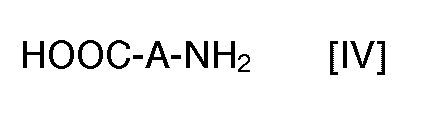
- Examples of the number of carbon atoms in the A group, and compounds from which they may be obtained, are: n = 1; glycine, n = 2; β-alanine, n = 3; -y-amino-n-butyric acid, n = 4; 6-amino valeric acid, n = 5; E-amino-n-caproic acid, n = 6; 7-amino heptanoic acid, and n = 10; 11-amino undecanoic acid. The carbon chain in A is preferably straight and also preferably contains from 2 to 6 carbon atoms. 6-amino- levulinic acid, glycylglycine or 6-amino acid, i.e. D and/or L-lysine can also be used. An amino acid having a side chain hydroxy group, for example 4-amino-3-hydroxybutyric acid, can be used if the hydroxy group is protected. Thus the alkylene group represented by A may be unsubstituted or substituted, for example by at least one amino, hydroxy or oxo group.
- Suitable amino protecting groups are those which can easily be removed in mild conditions such as weakly basic conditions due to the possible instability of vitamin D under more severe removal conditions. Examples are 9-fluorenyl methyloxycarbonyl (hereinafter designated as Fmoc), 9-(2-sulfo)-fluorenyl methyloxycarbonyl, 1,1-dimethyl-2-cyano-ethyloxycarbonyl and 5-benzisoxazolyl methyloxycarbonyl groups, most preferably a 9-fluorenyl methyloxycarbonyl group. An amino protected compound can be made by known methods by reacting an activated derivative, for example an activated ester of an Fmoc containing compound such as N-(9-fluorenylmethyloxycarbonyloxy)-succinimide or 9-fluorenylmethylchloroformate derivative, with an amino acid ([L.A. Carpino and G.Y. Ham, J. Org, Chem. 37: 3404 (1972)].
- The 1a or 24R,25-dihydroxy vitamin D3 amino acid derivative of formula [II] can be obtained, for example, using an Fmoc-amino acid as an amino protected amino acid, by reacting, in the case of 1a,25-dihydroxy vitamin D3 for covalent bonding via the la-hydroxy or 3β-hydroxy group, and in the case of 24R, 25-dihydroxy vitamin D3 for covalent bonding via the 24R-hydroxy or 3β-hydroxy group, one equivalent of 1a or 24R,25-dihydroxy vitamin D3 with one equivalent of Fmoc-amino acid or its acid anhydride, acid halide or activated ester. More preferably, one equivalent of Fmoc-amino acid is reacted with one equivalent of a mixed anhydride with another acid, under an inert gas, and in the presence of a base in an anhydrous solvent. The reason for reacting the mixed anhydride with 1a(or 24R), 25-dihydroxy vitamin D3 is to prevent the formation of a by-product, 1a (or 24R), 25-dihydroxy vitamin D3 having an Fmoc-acid group attached to the hydroxy group at position-25.
- Examples of other acids in a mixed anhydride are valeric acid, pivalic acid and isobutyloxy carboxylic acid. Pivalic acid is preferred. Examples of anhydrous solvents are anhydrous organic solvents such as tetrahydrofuran or dioxane. Examples of bases are dimethylaminopyridine (DMAP) and piperidinopyridine (PPY), which are preferred for the esterification of secondary or tertiary alcohols with steric hindrance. The preferred inert gases are argon and nitrogen. The reaction preferably proceeds at 0 - 20 °C for 1 - 3 hours. The thus obtained 1a (or 24R), 25-dihydroxy vitamin D3 derivative of formula [II] is obtained in a mixture with a compound covalently bonding the -O-OC-A-NH-R4 group [V] , wherein A and R4 have the same meanings as hereinabove, at the 1a or 3β-position of 1a, 25-dihydroxy vitamin D3 or 24R -or 3β - position of 24R, 25-dihydroxy vitamin D3, and can be purified, if necessary, by any conventional purification method such as HPLC.
- The 1a (or, 24R), 25-dihydroxy vitamin D3 of formula [II] is subjected to de-protection of the amino group, i.e. removal of Fmoc, in the presence of a base in an inert solvent to produce a 1a (24R), 25-dihydroxy vitamin D3 amino acid derivative of formula [I] . Examples of bases are piperidine, morpholine and ethanolamine. Morpholine is preferred. Examples of inert solvents are ethanol and methanol, preferably anhydrous ethanol or anhydrous methanol. The reaction proceeds under an inert gas in the dark at 0 - 20 ° C for 1 - 3 hours.
- In the case that the 1a (or 24R), 25-dihydroxy vitamin D3 derivative of formula [II] is a mixture of compounds in which a residue of formula [V] is covalently bound with the 1a-and 3β-position of 1a, 25-dihydroxy vitamin D3 or the 24R and 3β-position of 24R, 25-dihydroxy vitamin D3, the corresponding product of formula [I] can be isolated and purified from the resulting mixture by HPLC. In the case that the derivative of formula [II] is a previously isolated and purified compound, the obtained compound can be purified by column chromatography or TLC.
- The by-product which is a compound covalently bonding the residue of formula [V] at the 1a- and 3β-position of 1a, 25-dihydroxy vitamin D3 or at the 24R-and 3β-position of 24R, 25-dihydroxy vitamin D3, can be altered to a starting material, 1a (or 24R), 25-dihydroxy vitamin D3, by hydrolysis with diluted aqueous alkali. A compound of formula [VI]:

- In an iodine radioisotope labelled 1a (or 24R), 25-dihydroxy vitamin D3 derivative of formula [III], A has the same meaning as in formula [I] and R5 is a group containing an iodine radioisotope. Examples of iodine radioisotopes are 125I and 131I. The relatively long-half-life isotope 125I is preferred. Examples of such groups are 3-(4-hydroxy-3 -iodo [1251] phenyl)-propionyl, 3-(3, 5-diiodo [1251] -4-hydroxyphenyl) propionyl, 2-(4-hydroxy-3-iodo [125I] plenyl) acetyl, 2-(3, 5-diiodo [125I] -4-hydroxyphenyl) acetyl, 2-iodo [125I] acetyl, 4-iodo [1251] benzoxymethyl carbonyl and an N-substituted-3-iodo [1251] tyrosin residue. Among these, 3-(4-hydroxy-3-iodo [125I] phenyl) propionyl and 3-(3, 5-diiodo [125I] -4-hydroxyphenyl) propionyl are preferred.
- In the production of an iodine radioisotope labelled 1a (or 24R), 25-dihydroxy vitamin D3 derivative of formula [III] , a 1a (or 24R), 25-dihydroxy vitamin D3 amino acid derivative of formula [I] is labelled with an iodine radioisotope by an indirect labelling method by means of a Bolton-Hunter reagent to obtain the iodine radioisotope labelled 1a (or 24R), 25-dihydroxy vitamin D3 derivative of formula [III] . An indirect labelling method is a method for producing an iodine radioisotope labelled 1a (or 24R), 25-dihydroxy vitamin D3 derivative of formula [III] by reacting a reactive derivative of formula [VII] as defined below, which has an iodine radioisotope labelled group, with a 1a (or 24R), 25-dihydroxy vitamin D3 amino acid derivative of formula [I] .
- The reactive derivative of formula [VII] has the formula:

- The storage temperature is preferably as low as possible, e.g. 5 ° C - -20 ° C, but preferably even below -20 ° C. The derivative may be stored in alcohol or ether, under an inert gas.
- Anti 1a (or 24R), 25-dihydroxy vitamin D3 antibodies can be prepared by inoculating a conjugate of a hapten, i.e. a 1a (or 24R), 25-dihydroxy vitamin D3 amino acid derivative of formula [I] and a carrier protein into an animal. Examples of carrier proteins which are essential for obtaining an immunogenic antigen for a hapten, are simple proteins, polypeptides and complex proteins such as glycoproteins. Examples of simple proteins are bovine serum albumin (BSA), human serum albumin or human serum globulin. An example of a polypeptide is polylysine. An example of a glycoprotein is mucoprotein. Among these, simple proteins are preferred, and bovine serum albumin and human serum albumin are the most preferred.
- The 1a (or 24R), 25-dihydroxy vitamin D3 amino acid derivative of formula [I] and a carrier protein are covalently bonded in the presence of a condensation reagent or crosslinking reagent. Examples of condensation reagents or crosslinking reagents are dicyclohexylcarbodiimide (DCC), acid anhydride and glutaraldehyde. DCC is preferred. The conjugation ratio of the 1a (or 24R), 25-dihydroxy vitamin D3 amino acid derivative to the carrier protein can be, due to a decreasing titer of the antibodies if in excess, such that 10 - 40 molecules of 1a (or 24R), 25-dihydroxy vitamin D3 amino acid derivarive are present per one molecule of carrier protein.
- The thus-prepared conjugate for antibody production is inoculated into an animal to produce antibodies. Inoculation can be by parenteral administration such as subcutaneous or intracutaneous injection. A conjugated antigen of the above 1a (or 24R), 25-dihydroxy vitamin D3 amino acid derivative - carrier protein is dissolved in a buffer solution or physiological saline, together with an equal amount of complete Freund's adjuvant (C.F.A.). The mixture is emulsified completely, and inoculated subcutaneously or intracutaneously into a homeothermal animal, about ten times in every 1 - 3 weeks to immunize the same. Alternatively, the conjugated antigen can be directly inoculated into a spleen. During the immunization period, the serum antibody titer is measured at constant time intervals; at maximum titer, a whole blood sample is collected and allowed to stand for coagulation. The coagulated sample is centrifugally separated to obtain an antiserum containing anti - 1a (or 24R), 25-dihydroxy vitamin D3 antibodies.
- The type of the homeothermal animal is not limited; it can be any animal which has antibody production activity. To obtain large amounts of antibodies, a goat, sheep or bovine animal is preferably used. In general, a chicken, rabbit, rat or mouse is used.
- The isolation of anti -1a (or 24R), 25-dihydroxy vitamin D3 antibody from the antiserum can be performed by any conventional method for antibody purification. For example, ammonium sulfate fractionated antiserum can be treated by ion-exchange chromatography or gel-filtration.
- Another method of the production of the antibodies is by innoculating spleen cells, which can produce the desired antibodies of the animal, with the conjugated antigen of 1a (or 24R), 25-dihydroxy vitamin D3 amino acid derivative - carrier protein, and fusing the cells with established myeloma cells. The thus-obtained hybridoma is cultured and the monoclonal antibodies produced by the hybridoma are used.
- For example, an emulsion, which is prepared by mixing a conjugate antigen of 1a (or 24R), 25-dihydroxy vitamin D3 amino acid derivative - carrier protein dissolved in buffer solution or physiological saline and an equal amount of C.F.A., is inoculated subcutaneously in mice, for example of strain Balb/c for sensitization with several times inoculation every week. Cell-fusion is performed 3 - 5 days after final sensitization. At 3 - 5 days after final sensitization, spleen cells which produce anti - 1a (24R), 25-dihydroxy vitamin D3 antibodies are collected and fused with established myeloma cells which can be cultured for a long term. Long-term culturable established cells may be defined as cells which can be cultured and grown for a long term in vitro or in vivo, and which can produce immunoglobulin or its related proteins. Generally, well-grown myeloma cells are used. Preferred myeloma cells are cell-lines P3-NSI/1-Ag4-1, P3-X63-Ag8U1, SP2/U-Ag14 and MPC11-45.6.TG.1.7. In the present invention, P3-X63-Ag8U1 is preferred. The cells can be cultured in a conventional cell culture medium. For example culture can be performed in a medium of 10% FCS to which is added RPMI 1640 (tradename, Flow Laboratory) to which is added added glutamine, pyruvic acid, penicillin and streptomycin. For stock culture, S-azaguanine is added to the above medium. 1 - 3
x 10s myeloma cells are used for cell fusion. Spleen cells can be prepared by cutting a mouse spleen and crushing it on a mesh to prepare a spleen cell suspension. Washed cells, generally 1 - 3x 10s cells, are fused with myeloma cells by mixing together. The ratio of mixed cells can be myeloma cells:spleen cells 1 : 3 - 10. Cell fusion is achieved in a medium for hybridomas. A conventional cell-fusion method using a promoter such as Sendai virus or polyethylene glycol (PEG) is preferred. PEG is particularly preferred. - The fused cells are inoculated into the medium for hybridomas and incubated, then selected by incubating in HAT medium. HAT medium is a medium for hybridomas with added hypoxathine, aminopterin and thymidine. Since more than two hybridomas can be grown in the well of a cell-separation plate, more than two kind of antibodies are possibly produced, or no-antibody producing cells may be a contaminant. In order to obtain cells having the same properties, each clone should be separated. For cloning, a limiting dilution culture or soft agar culture is used. In this invention, a limiting dilution culture is preferred.
- The thus-obtained hybridoma secreting anti-1a (or 24R), 25-dihydroxy vitamin D3 antibodies with high titer can be stored after lyophilization at am early stage. Lyophilization can be performed by a conventional method, namely cell suspension in a small tube or ampule with freezing in a -80 ° C freezer and storage in liquid nitrogen. Another example of hybridoma production is that the above hybridoma is inoculated intraperitoneally in pristan (2, 6, 10, 14-tetramethylpentadecane, Aldrich Chemicals) treated mice, and after about 10 days the ascites are collected. Another method is that the hybridoma is incubated into bovine fetal serum with added RPMI medium or into Darbecco-modified Eagle medium. The antibodies thus obtained can be purified by any conventional method. For example, the antibodies are fractionated with ammonium sulfate and treated by ion-exchange chromatography, gelfiltration and affinity chromatography to fractionate IgG. Then purified anti- 1a (or 24R), 25-dihydroxy vitamin D3 monoclonal antibodies can be obtained.
- Furthermore, anti- 1a (or 24R), 25-dihydroxy vitamin D3 monoclonal antibody-producing cells can be inoculated and grown in an animal having identical histocompatibility antigens or in nude mice as a tumor, the grown cells are collected and the monoclonal antibodies separated therefrom.
- In an assay of 1a (or 24R), 25-dihydroxy vitamin D3, anti- 1a (or 24R), 25-dihydroxy vitamin D3 polyclonal antiboies or anti- 1a (or 24R), 25-dihydroxy vitamin D3 monoclonal antibodies (hereinafter sometimes collectively designated anti- 1a (or 24R), 25-dihydroxy vitamin D3 antibody) can be used in a soluble state or in an immobilized state. An insoluble carrier and anti- 1a (or 24R), 25-dihydroxy vitamin D3 antibodies are bound using a polyfunctional reagent and the immobilized antibody has an antibody titer against 1a (or 24R), 25-dihydroxy vitamin D3. Examples of polyfunctional reagents are compounds having more than two functional groups which can react with functional groups such as amino, hydroxyl, carboxyl and thiol, and comprise aldehydes such as succinaldehyde, glutaraldehyde and adipoaldehyde; dicarboxylates such as malonic acid, succinic acid, glutaric acid, or adipic acid or their reactive derivatives; diisocyanates such as hexamethylene diisocyanate or 2, 4-toluenediisocyanate; diisothiocyanates such as hexamethylene diisothiocyanate; maleimide carboxylates such as maleimide benzoate or maleimide phenylacetate or their functional derivatives; dimaleimides such as N, N-ethylene-bis-maleimide or N, N'-O-phenylene dimaleimide, bisdiazobenzidine, diethylmalonimidate, dimethyladipinimidate or N, N'-polymethylene-bisiodo acetamide and thiocarboxylates such as 3-(2'-benzothiozolyl-dithio) propionate and 3-(2'-pyridyldithio) propionate or their functional derivatives. The polyfunctional reagent can be selected by considering the bonding of functional groups such as amino, carboxyl, hydroxyl or thiol in an anti- 1a (or 24R), 25-dihydroxy vitamin D3 antibody.
- The immobilized carrier is a carrier having a reactive group which does not bond with groups for bonding with antibodies in polyfunctional groups. Examples of immobilized carriers are insoluble proteins such as albumin or gelatin; epichlorhydrin-treated insoluble polysaccharides such as agarose, cellulose or dextrin; insoluble polymers or copolymers of acrylonitrile, acrylic acid, aclylate ester, methacrylic acid, methacrylate ester, vinyl alcohol, vinyl acetate, styrene, aminostyrene, chlorstyrene, maleic acid and fumaric acid, which is treated with bromocyanate and is introduced with a spacer corresponding to amino group introduction, and an insoluble inorganic carrier which is introduced with a functional group such as an amino group into an inorganic compound of, for example, silicon or aluminium. The immobilized carrier may also be a carrier which can bind anti-1a (or 24R), 25-dihydroxy vitamin D3 antibodies by physical adsorption.
- The immobilized carrier is preferably in particulate form which can be easily isolated by filtration, for example beads having a diameter of more than 1 mm, preferably more than 5 mm, or in a spindle form which corresponds to the bottom shape of an antigen-antibody reaction tube.
- The introduction of a reactive group into anti- 1a (or 24R), 25-dihydroxy vitamin D3 antibodies using a spacer-introducing reagent can be performed by introducing additional functional groups such as aldehyde, carboxyl, amino or thiol, reacting with at least one spacer introducing reagent, for example a dialdehyde such as succinaldehyde, glutaraldehyde or adipoaldehyde; a reactive derivative such as acid chloride, a succinimide ester or p-nitrophenyl ester of m-amino butyric acid or m-amino glutamic acid; a reactive derivative of dicarboxylic acids such as malonic acid, succinic acid, glutaric acid or adipic acid; diamines such as hexamethylene diamine or decamethylene diamine; reactive derivatives of 3-(2'-pyridyl-dithio) propionic acid or 3-(2'-benzothiazolyldithio) propionic acid, S-acetyl-mercapto succinic anhydride or thiols such as 2-aminoethanethiol.
- Anti - 1a (or 24R), 25-dihydroxy vitamin D3 antibodiesare condensed directly or through polyfunctional reagents with reactive groups in the immobilized carrier. The condensation generally proceeds at 0 - 40 ° C in a pH 6.0 - 8.5 buffer solution or organic solvent or mixture thereof. Furthermore, a second antibody which is obtained by immunizing large mammals inoculated with an immunoglobulin fraction in serum, which is used for antibody production of 1a (or 24R), 25-dihydroxy vitamin D3, is immobilized and anti - 1a a (or 24R), 25-dihydroxy vitamin D3 antibody is bound thereto by an antigen-antibody reaction to prepare the immobilized antibody.
- The thus-obtained immobilized antibodies are washed and stored.
- In an assay of 1a (or 24R), 25-dihydroxy vitamin D3 in a specimen using anti -1a (or 24R), 25-dihydroxy vitamin D3 antibodies in a liquid soluble phase, a fixed amount of iodine radioisotope labelled 1a (or 24R), 25-dihydroxy vitamin D3 derivative of formula [III] is first added to a specimen containing 1a (or 24R), 25-dihydroxy vitamin D3, then an optimum amount of anti- 1a (or 24R), 25-dihydroxy vitamin D3 antibodies is added to form an antigen antibodies reaction product.
- The thus-formed labelled 1a (or 24R), 25-dihydroxy vitamin D3 derivative-anti-1a (or 24R), 25-dihydroxy vitamin D3 antibodies binding complex, the 1a (or 24R), 25-dihydroxy vitamin D3-antibodies binding complex, and the free labelled 1a (or 24R), 25-dihydroxy vitamin D3 derivative are separated using specific antibodies for anti- 1a (or 24R), 25-dihydroxy vitamin D3 antibodies. Said specific antibodies are hereinafter referred to as second antibodies. The second antibodies can be obtained, for example, by inoculating a normal immunoglobulin fraction in the serum of an animal which is used for antibodies production of 1a (or 24R), 25-dihydroxy vitamin D3, as an antigen to immunize, then isolating the second antibodies from the thus-obtained antiserum. The second antibodies can be purified if necessary by any known method, or they can preferably be used in the state of an antiserum.
- An assay method for 1a (or 24R), 25-dihydroxy vitamin D3 in a specimen using anti- 1a (or 24R), 25-dihydroxy vitamin D3 antibodies and iodine radioisotope labelled 1a (or 24R), 25-dihydroxy vitamin D3 derivative is illustrated as follows:
- 1a (or 24R), 25-dihydroxy vitamin D3 in a specimen such as a known serum is extracted from the serum specimen. A sample, which is a mixture of serum and an equal amount of added solvent, is stirred, allowed to stand and centrifuged. The separated supernatant solution is treated by column chromatography and a fraction containing 1a (or 24R), 25-dihydroxy vitamin D3 is collected and preferably purified by HPLC.
- The 1a (or 24R), 25-dihydroxy vitamin D3 fraction can be checked by previously added tritum [3H] -labelled 1a (or 24R), 25-dihydroxy vitamin D3. The 1a (or 24R), 25-dihydroxy vitamin D3 fraction is dried in vacuo, the vacuum is flushed with argon gas and the fraction is dissolved in ethanol to prepare a specimen. A fixed amount of iodine radioisotope labelled 1a (or 24R), 25-dihydroxy vitamin D3 derivative is added to a specimen, and the most suitable amount of anti-1a (or 24R), 25-dihydroxy vitamin D3 antibody is added thereto. The mixture is incubated in a medium for antigen-antibodies such as a phosphate buffer or a veronal buffer at 4 - 5°C for about 15 - 72 hours to promote the competitive reaction of iodine radioisotope labelled antigen and non-labelled antigen to antibodies. The thus-formed antigen-antibody binding complex, namely a bound form of iodine radioisotope labelled 1a (or 24R), 25-dihydroxy vitamin D3 derivative - anti- 1a (or 24R), 25-dihydroxy vitamin D3 antibody (B) and an unreacted free form of iodine radioisotope labelled 1a (or 24R), 25-dihydroxy vitamin D3 derivative (F) are separated by the dextran- charcoal (DC) method by filtration or by centrifugation at 3,000 r.p.m. for 15 mins. Upon B-F separation, the radioactivity of each of B and F is measured.
- The amount of 1a (or 24R), 25-dihydroxy vitamin D3 (H) in a specimen is calculated by measuring the radioactivity and calculating B/(B + F) or B/F. When the amount of H is increased, the radioactivity of B is decreased and that of F is increased. Therefore, the unknown amount H can be determined by measuring the radioactivity of B and F from a previously plotted standard curve of known amounts.
- Upon B-F separation, when the double antibody technique is used with soluble state antibodies, second antibodies, preferably second antibidies containing an antiserum IgG and if necessary a normal serum IgG of the same kind of animal used for anti- 1a (or 24R), 25-dihydroxy vitamin D3 antibodies production, are added after the competitive reaction and incubated for 1 - 12 hours. Thereafter the formed binding complex is precipitated by centrifugation at 3,000 r.p.m. for 10 - 30 minutes to separate precipitate (B) and supernatant (F), and then the radioactivity of B or F is measured.
- According to the present assay method, a standard curve for 2 pg/Test - 256 pg /Test can be prepared, and a rapid reaction time of 16 hours at 5 ° C or 1 hour at 37 ° C can be achieved. Furthermore, the operation after the reaction is quite simple. Moreover, dilution and recovery tests using the specimens display linearity with high precision.
- When the antibodies are replaced by known DBP, it can be reacted with an iodine [1251] radioisotope labelled 1α (or 24R), 25-dihydroxy vitamin D3 derivative and a standard curve for the range 1 - 32 pg/Test can be prepared. The DBP can be obtained from the serum of chickens, rats, mice, rabbits, goats, sheep, bovine animals or humans.
- The following Examples further illustrate the present invention.
- A mixture of serum (0.5mℓ) and acetonitrile (0.5 mℓ) was stirred in a BORTEX mixer and then allowed to stand for 30 minutes. The supernatant solution (0.8 m1) obtained by centrifugation at 3,000 r.p.m. for 10 mins. was charged on a Sept-pack C-18 cartridge column (tradename, MILLIPORE, Waters Corp.) which was activated with ethanol, equilibrated with 50% acetonitrile, and eluted with hydrated acetonitrile. The column was then washed with 50 % acetonitrile (4 m1) then eluted with 64% acetonitrile (4 m1) (a fraction of 1a, 25-dihydroxy vitamin D3), and eluted with 73% acetonitrile (4 mt)(a fraction of 25-hydroxy vitamin D3 and 24R, 25-dihydroxy vitamin D3). The fraction eluted with 64% acetonitrile was dried in vacuo and flushed with argon gas to obtain a fraction containing 1a, 25-dihydroxy vitamin D3. The thus-obtained crude fraction was dissolved in a mixture (200 µℓ) of n-hexane-isopropanol (9 : 1) and purified by HPLC in a Zorbax-SIL (Dupont Inc.) 0.46 x 25 cm column. The above fractions of 1a, 25-dihydroxy vitamin D3 were checked by previously added tritium [3H] -labelled 1a, 25-dihydroxy vitamin D3 [26, 27-methyl-3H]. The fraction of 1a, 25-dihydroxy vitamin D3 (Rt = 9 - 13 sins.) was dried in vacuo and flushed with argon gas.
- The said fractions were dissolved in ethanol and 10µ ℓ thereof was used for an assay.
- The recovery of 1a, 25-dihydroxy vitamin D3 was 95 ± 2 % (n = 10).
- y-amino-propionic acid (β-alanine, 178 mg, 2 m mole) was added to N-(9-fluorenylmethyloxycar- bonyloxy)-succinimide (674 mg, 2 m mole) dissolved in a mixture of tetrahydrofuran (THF)-dimethylformamide (DMF)-H20 (1:2:2) (25 m1) and the mixture was reacted at room temperature overnight. The reaction solvent was distilled off in vacuo and the residue was charged on a column of silica-gel (Wako-gel C-200 , 75 g) and separated and purified by eluting with CHCℓ3: methanol = 9 : 1 to obtain the above compound (538.8 mg) (yield 86.5 %).
- NMR. 8 (DMSO-d6) ppm
- 2. 50-2. 60 (2H, t, -CH2-CO-)
- 3. 28-3. 35 (2H, m, -CH2-N-)
- 4. 33-4. 44 (3H, m, Fmoc)
- 7. 35-8. 06 (8H ,m, Fmoc)
- Pivaloyl chloride (Trimethyl acetylchloride 3.07 µℓ, 0.025 m mole) and dimethylamino pyridine (DMAP, 3.05 mg, 0.025 m mole) were added to 3-(N-fluorenyl methyloxy carbonyl) amino propionic acid (Fmoc-β-Ala] (7.775 mg, 0.025 m mole) dissolved in dry THF (2 mt), and the mixture was reacted at-15°C for 15 mins. 1a, 25-dihydroxy vitamin D3 (10.4 mg, 0.025 m mole) was added thereto and the mixture was reacted at -15°C for 5 mins. and at 0°C for 1.5 hours. Methanol (0.5 mℓ) was added to the mixture, then distilled off in vacuo. The residue was separated by silica-gel column chromatography [Wako gel C-200, 150 g, developer: ethylacetate-n-hexane (4 : 1) ] to obtain the three fractions hereinbelow:
- Fraction 1:
- 1a, 25-(OH)2 D3-bis (β-Ala-Fmoc) [= 1a, 25-dihydroxy vitamin D3- 1a, 3β-bis [3-(N-fluorenyl methyloxy carbonyl) amino] propionate,
- Yield : 19.1 % (Rf : 0.59 )
- Fraction 2:
- A mixture of 1a, 25-(OH)2 D3 -3β-O- β-Ala-Fmoc and 1a, 25- (OH)2 D3 - 1a-0 - β-Ala-Fmoc,
- Yield : 20.3 % (Rf : 0.47 )
- Fraction 3 :
- Starting material, 1a, 25-(OH)2 D3,
- Yield : 41.2 % (Rf : 0.20)
-
Fraction 2 was treated with HPLC (Zorbax-ODS; φ 0.46 x 25 cm, developer: 10 % H20-methanol; elution: 1 mℓ/ mins.) to separate each component.
- The physical properties of each product are shown hereinbelow:
- 1a, 25-(OH)2 D3- 3 β-O - β-Ala-Fmoc:
- HPLC Rt = 17. 46 mins.
- NMR. δ (CDCℓ3) ppm
- 0. 55 (3H, s), 0. 94 (3H, d), 1. 22 (6H, s), 2. 53 (2H, t), 3. 44 - 3. 48 (3H, m), 4. 22 (1 H, t), 4. 37 - 4. 41 (3H, m), 5. 03 (1 H, d), 5. 27 - 5. 30 (2H, m), 5. 35 (1 H, m), 6. 01 (1 H, d), 6. 34 (1 H, d), 7. 29 - 7. 77 (8H, m)(nm) 300. 5, 266. 3 214. 6 1a, 25-(OH)2 D3 - 1a-0 -β-Ala-FmOC:

- HPLC Rt = 14. 92 mins.
- NMR. δ (CDCℓ3) ppm
- 0. 50 (3H, s), 0. 90 (3H, d), 1. 20 (3H, s), 1. 27 (3H, s), 4. 04 - 4. 05 (1 H, m ), 4. 21 (1 H, m ), 4. 41 - 4. 46 (2H, m), 5. 05 (1 H, d), 5. 27 (1 H, t), 5. 32 (1 H, m), 5. 50 (1 H, t), 5. 90 (1 H, d), 6. 30 (1 H, d), 7. 28 - 7. 79 (8H, m)(nm ) 300. 4, 266. 4, 214. 3

- 1a, 25-(OH)2 D3 -bis (β-Ala-Fmoc) :
- NMR. δ (CDCℓ3) ppm
- 0. 50 (3H, s), 0. 90 (3H, d), 1. 20 (3H, s), 1. 26 (3H, s), 2. 40 - 2. 65 (4H, m), 3. 30 - 3. 55 (4H, m), 4. 10 - 4. 50 (6H, m), 5. 05 - 5. 60 (6H, m), 5. 90 (1 H, d), 6. 32 (1 H, d), 7. 20 - 7. 83 (16H, m)
- 1a, 25-(OH)2 D3- 3β-Ala-Fmoc (13.4 mg, 18.86 x 10⁻³ m mole) was dissolved in ethanol (2.5 mt). Morpholine (2.5 mt) was added thereto and the mixture was stirred at room temperature for 2 hours, under an argon atmosphere. The reaction mixture was concentrated in vaccuo to obtain a crude product and purified by LH-20 (
H - Yield : 8.73 x 10 -3 m mole (Yield : 46.25 %)264. 2 nm

- Ninhydrin colorization : positive
- TLC (Silica-gel, Merck 5715, developer: ethylacetate-methanol = 1 : 4) Rf : 0.15
- In the above (1), 1a, 25-(OH)2 D3 -3β-O -β-Ala-Fmoc was replaced by 1a, 25-(OH)2 D3 - 1a-0 - β-Ala-Fmoc to obtain the desired product.
- Yield : 62.5 %265. 4nm

- Ninhydrin colorization : positive
- TLC (Silica-gel, Merk 5715, ethylacetate-methanol = 1 : 4): Rf : 0.25
- 1a, 25-(OH)2 D3 - 3β- O- β - Ala (12.2 mg, 25.05 x 10 -3 m mole) obtained by removal of Fmoc was dissolved in THF (1 mt), and was added to BSA (M.W. 65,000, 32.6 mg, 1 / 50 x 25.05 x 10 -3 m mole) dissolved in tris buffer (0.1 M, pH 8.6, 10 mt) at 0°C with 1-ethyl-3-(3-dimethylaminopropyl) carbodiimide hydrochloride (6.3 mg, 1.3 x 25.05 x 10 -3 m mole). The reaction mixture was reacted at 0 °C for 3 hours. Chloroform (10 mt) was added four times to the reaction mixture and unreacted 1a, 25-(OH)2 D3 - 3β-O -β-Ala was removed. The aqueous layer was freeze dried to obtain the lyophilized product (28.0 mg) which was a complex of 18 molecules of 1a, 25-(OH)2 D3 -3β-O -β-Ala bound via an amino group at position-3 thereof to one molecule of BSA.
- The lyophilized 1a, 25-dihydroxy vitamin D3 -3β-[3-(BSA-amino) propionate] (antigen) obtained in (1) above was dissolved in tris buffer (0.1 M, pH 8.6). An equal amount of C.F.A. was added thereto and the material was mixed to emulsify it so as to prepare
antigen 1 µg - 100 µg/mℓ. The emulsion was inoculated subcutaneously ten times each two weeks, 10 y - 200 y/head, into rabbits. During this immunization, the liter of blood samples collected every ten days was measured and at maximum antibody liter the whole blood was collected. The blood samples were allowed to stand at room temperature for 60 mins. to coagurate and were centrifuged at 3,000 r.p.m. for 10 mins. to obtain an antiserum containing anti- 1a, 25-dihydroxy vitamin D3 antibodies, which was fractionated with ammonium sulfate to collect an IgG fraction. - Lyophilized 1a, 25-dihydroxy vitamin D3- 3β - [3 -(BSA-amino) propionate ] (antigen) obtained in (1) above dissolved in phosphate buffer, pH 7.2, (50 y ) together with C.F.A. was inoculated subcutaneously into Balb/c mice, female, 4 weeks old. After 1 week, 50 y thereof was subcutaneously irtoculated and after 2 weeks 50 y of antigen was intraperitoneally inoculated. Three days after the final inoculation, the mice spleens were finely cut and crushed on a mesh to prepare a spleen cell suspension. Cell fusion was performed using mouse myeloma cells P3- X63-Ag8U1 by a conventional method. 30% PEG (M.W. 1,000) aqueous solution was incubated at 37 °C. The above spleen cells and myeloma cells (total 4 x 10⁷ cells, 5:1) were suspended in RPMI medium (5 mℓ) and both cells were gently mixed, centrifuged at 1,000 r.p.m. for 10 mins., then the supernatant was vacuum filtered. The test tube was gently shaken to mix the cell pellets, PEG solution (1.0 mℓ) was slowly added and the mixture was gently stirred. The mixture was incubated at 37°C with gentle shaking, then the fusion reaction was stopped by adding slowly a conventional medium (10 mℓ) and again the cells were suspended. The suspension was centrifuged at 1,000 r.p.m. for 5 mins. The precipitated cell pellet was dispersed by gently shaking and slowly suspended in HAT medium (5 mℓ) and was transferred into HAT medium (1 mℓ) in a vessel. The cells were observed microscopically. The cell suspension was pipetted (each 200 µℓ) into wells in a 96-well plate and grown in a C02-incubator. The fused cells were selected in HAT medium for cloning by a limiting dilution technique. The obtained clone suspension was grown in the peritonea of pristan-treated Balb/c mice. The IgG fraction was collected by a conventional method from ascites and serum and purified by affinity chromatography using protein A-bound Sepharose CL-4B. The thus obtained IgG subclass was
IgG 1 which was used as monoclonal antibodies. - Iodine [1251] Bolton-Hunter reagent [NEN, NEX-120-10, 2200 Ci/m mole, 0.33 mCi/100 µℓ benzene: 50 µCi] and THF (75 µℓ) triethylamine (EtaN, 300 p mole) were added to a ethanol solution of 1a, 25-(OH)2 D3 -3β-O -β-Ala (72.8 n mole/25 µℓ EtOH) obtained in example 3, (1) and the mixture was reacted at room temperature for 24 hours under an argon atmosphere. The reaction mixture was purified by HPLC.
- Radio-recovery : 27.4 µCi (54.7 %)
- HPLC:
- ① Column : Zorbax-ODS; φ 4.6 x 250 mm 5 µm
- Elution: 15% H20-methanol, 1 mt/mins.
- Rt : 13.5 - 15.6 mins.
- Elution: 15% H20-methanol, 1 mt/mins.
- ② Column : Zorbax-SIL; φ 4.6 x 250 mm 5 µm
- Elution: 20% isopropanol-n-hexane;
- 1 mt/mins. ; Rt : 16 - 22 mins.
- Elution: 20% isopropanol-n-hexane;
- ① Column : Zorbax-ODS; φ 4.6 x 250 mm 5 µm
- In (1) hereinabove, 1a, 25-(OH)2 D3 - 3β-O - β-Ala was replaced by 1a, 25-(OH)2 D3 - 1a-0 -β-Ala to obtain the desired product.
- Radio recovery : 30.2 µCi (60.4 %)
- HPLC :
- ① The same condition as above (1) :
- Rt : 14.2 - 16.8 mins.
- ② The same condition as above (2) :
- Rt : 13.6 - 16.1 mins.
- ① The same condition as above (1) :
- Morpholine (2 mℓ) was added to a mixture (8.4 mg, x 10 -3 m mole) of 1a, 25-(OH)2 D3 -3β-Ala-Fmoc and 1a, 25-(OH)2 D3 - 1a-0 -β-Ala-Fmoc, dissolved in ethanol (2 mt), at room temperature and reacted at room temperature for 2 hours under an argon atmosphere. The reaction solvent was removed in vacuo and the residue was purified by LH-20 (
H - The residue was further purified by Amprep-NH2 (Amersham Corp., 500 mg) as of in Example 3,(1).
- Yield : 5.13 x 10 -3 m mole (43.4 %)
- [mixture containing approx. 2.5 : 1 of 1a, 25-(OH)2 D3 -3β -O -β-Ala and 1a, 25-(OH)2 D3-1α-O -β-Ala]265.0 nm

- Ninhydrin colorization : positive
- TLC (Silica-gel, Merck 5715, ethyl acetate-methanol = 1 : 4) : Rf : 0.15 [ 1a, 25-(OH)2 D3 -3β-O - β-Ala], 0.25 [ 1 a, 25-(OH)2 D3 -1α-O - β-Ala]
- Iodine [1251] Bolton-Hunter reagent [NEN, NEX-120-10, 2200 Ci / m mole, 0.33 mCi / 100 µℓ benzene: 100 µCi], THF (30 µℓ) and triethylamine (600 p mole) were added to an ethanol solution (205 n mole/100 µℓ ethanol) of the mixture obtained in above (1), and the mixture was reacted at room temperature for 24 hours under an argon atmosphere. The reaction mixture was purified by HPLC.
- Radio recovery : 50.7 µCi (50.7 %)
- HPLC :
- ① the same condition as above (1)
- Rt : 13 - 17 mins.
- ② the same condition as above (2)
- Rt : 13 - 22 mins.
- ① the same condition as above (1)
- 3β-labelled compound and 1a-labelled compound were separated and purified by HPLC with the
condition ②. - 1α-labeled compound: Rt : 13.0 - 15.6 mins. radio recovery : 16.3 µCi
- 3β-labeled compound: Rt : 16.0 - 21.2 mins. radio recovery : 34.5 µCi
- Ratio of recovery of 1a-and 3β -compound: 1 : 2.1 which was identical with the ratio in the starting material (before de-Fmoc)
- A standard ethanol solution of 1a, 25-dihydroxy vitamin D3 was diluted stepwise by two-fold dilution to prepare 1024 pg/ 20 µℓ , 512 pg/ 20 µℓ , 256 pg/ 20 µℓ , 128 pg/ 20 µℓ , 64 pg/ 20 µℓ , 32 pg/ 20 µℓ, 16 pg/ 20 µℓ, 8 pg/ 20 µℓ, and 4 pg/ 20 µℓ, and O (for Bo) and 2048 pg/ 20 µℓ, (for NSB) samples.
- Samples (20 µℓ) of each concentration hereinabove were pipetted into two tubes. Ethanol solutions, each 20µℓ, of iodine [1251] radioisotope labelled compound (3β-labelled compound) were pipetted into each tube (20 µℓ, ca. 12,000 cpm) except samples Bo and NSB.
- Anti-1a, 25-dihydroxy vitamin D3 sheep serum diluted with tris buffer pH 8.6, each 1 mℓ, was added to each tube. Each mixture in the tubes was incubated at 5°C overnight for 16 - 24 hours. A mixture of dextran and active charcoal, each 200 µℓ, was added into the reaction tubes. B-F separation was performed by centrifugation at 5 °C for 30 mins., and each supernatant solution (1 mℓ) was measured by autowell y-counter. The binding ratio was calculated by the following equation:

- A mixture of serum (0.5 m) and acetonitrile (0.5 mℓ) was stirred in a BORTEX mixer and then allowed to stand for 30 mins. The supernatant solution (0.8 m1) obtained by centrifugation at 3,000 r.p.m. for 10 mins. was charged on a Sep-pack C-18 cartridge column (tradename, MILLIPORE, Waters Corp.) which was activated with ethanol and equilibrated with 50% acetonitrile, and eluted with hydrated acetonitrile. The column was further washed with 50% acetonitrile (4 m1) then eluted with 64% acetonitrile (4 m1) (a fraction of 1a, 25-dihydroxy vitamin D3), and eluted with 73% acetonitrile (4 m1) (a fraction of 25-hydroxy vitamin D3 and 24R, 25-dihydroxy-vitamin D3). The fraction eluted with 73% acetonitrile was dried in vacuo and flushed with argon gas to obtain a fraction containing 24R, 25-dihydroxy vitamin D3. The thus-obtained crude fraction was dissolved in a mixture (200 µℓ) of n-hexane-isopropanol (9 : 1) and purified HPLC in a Zorbax-SIL (Dupont Inc.) 0.46 x 25 cm column. The above fraction of 24R, 25-dihydroxy vitamin D3 was checked by previously added tritium [3H] -labelled 24R, 25-dihydroxy vitamin D2 [26, 27-methyl-3H]. The fraction of 24R, 25-dihydroxy vitamin D3 (Rt = 5 - 7 mins.) was dried in vacuo and flushed with argon gas.
- The said fractions were dissolved in ethanol (200 mℓ) and 20 µℓ thereof was used for an assay.
- The recovery of 24R, 25-dihydroxy vitamin D3 gas 92% (n = 18).
- 24R 25-dihydroxy vitamin D3 - 3β- [3-(N-fluorenylmethyloxy carbonyl) aminopropionate] (hereinafter designated as 24R, 25-(OH)2 -D3- 3β-O -β-Ala-Fmoc ] and 24R, 25-dihydroxy vitamin D3-24R - [3-(N-fluorenyl methyloxy carbonyl) aminopropionate ] [hereinafter designated as 24R, 25-(OH)2 D3 -24R-O -β-Ala-Fmoc ]
- Pivaloyl chloride (4.62 µℓ, 1.5 x 0.025 m mole) and dimethylamino pyridine (DMAP, 4.57 mg, 1.5 x 0.025 m mole) were added to 3-(N-fluorenyl methyloxy carbonyl) amino propionic acid (hereinafter designated as β -Ala-Fmoc)] (11. 6 mg, 1.5 x 0.025m mole) dissolved in dry THF (2 mi), and the mixture was reacted at -10°C, under an argon atmosphere to produce mixedunhydride of β-Ala-Fmoc and pivaloyl chloride. The reactionmixture was kept at -10°C for approx. 10 mins. and 24R, 25-dihydroxy vitamin D3 -(10.4 mg, 0.025 m mole) was added thereto and the mixture was reacted at 0°C for 30 mins. then at room temperature for 1 hour. The reaction mixture was concentrated in vacuo after removing a precipitate, then purified by preparative silica-gel TLC [Merck 57 17, 20 x 20 (H) cm, ethyl acetate-n-hexane = 2 : 1] to obtain the mixture of 24R, 25-(OH)2 D3 -3β-O-Ala-Fmoc and 24R, 25-(OH)2 D3 -24R-O- β-Ala-Fmoc, a starting material 24R, 25-(OH)2 D3 and 24R, 25-dihydroxy vitamin D3-bis [3-(N-fluorenyl methyloxy carbonyl) amino ] propionate [hereinafter designated as 24R, 25-(OH)2 D3 -bis ( β-Ala-Fmoc ].
- Yield:
- 24R, 25-(OH)2 D3-3β-O -β-Ala-Fmoc 43.1 %
- 24R, 25-(OH)2 D3-24R-O -β-Ala-Fmoc 12.7 %
- 24R, 25-(OH)2 D3-bis (β-Ala-Fmoc) 33.5%
- recovered starting material 24R, 25-(OH)2 D3 10.8 %
- Physical properties :
- 24R, 25-(OH)2 D3 -3β-Ala-Fmoc:
- NMR δ (CDCℓ3) ppm
- 0. 55 (3H, s), 0. 94 (3H, d), 1. 17 (3H, s), 1. 21 (3H, s), 2. 17 - 2. 24 (1 H, m), 2. 35 - 2. 42 (2H, m), 2. 53 - 2. 60 (3H , m), 2. 77 - 2. 81 (1 H, m), 3. 31 - 3. 35 ( 1 H, m), 3. 44 - 3. 49 (2H, m), 4. 19 - 4. 38 (3H, m), 4. 85 (1 H, d), 4. 98 - 5. 02 (1 H, m), 5. 07 (1 H, m), 5. 27 - 5. 30 (1 H, b), 6. 03 (1 H, d), 6. 21 (1 H, d ), 7. 29 - 7. 77 (8H, m)(nm) 299. 7, 265. 2

- HPLC;
- ① Zorbax-SIL 5 % isopropanol-n-hexane, 2 mℓ /mins.
- Rt : 14.0 mins.
- ② Zorbax-
ODS 10 % H20 (CH3CN - methanol = 1 : 1),- 2 mℓ /mins. Rt : 8.4 mins.
- ① Zorbax-SIL 5 % isopropanol-n-hexane, 2 mℓ /mins.
- 24R, 25-(OH)2 D3 - 24R-O-β-Ala-Fmoc:
- NMR δ (CDCℓ3) ppm
- 0. 52 (3H, s), 0. 92 (3H, d), 1. 19 (3H, s), 1. 21 (3H, s), 2. 15 - 2. 17 (1 H, m), 2. 25 - 2. 28 (1 H, m), 2. 30 - 2. 38 (1 H , m), 2. 55 - 2. 61 (3H, m), 2. 79 - 2. 83 ( 1 H, m), 3. 48 - 3. 56 (2H, m), 3. 93 - 3. 95 (1 H, m), 4. 20 - 4. 39 (3H, m) , 4. 80 (1 H, d), 4. 82 - 4. 85 (1 H, m), 5. 02 (1 H, m), 5. 49 (1 H, b), 6. 01 (1 H, d), 6. 22 (1 H, d), 7. 29 - 7. 77 (8H, m)(nm) 299, 6, 265. 3

- HPLC;
- ① condition, the same as above (1), Rt : 18.4 mins.
- ② condition, the same as above (2) , Rt : 6.5 mins.
- 24R, 25-(OH)2 D3 -bis (β-Ala-Fmoc):
- NMR δ (CDCℓ3) ppm
- 0. 52 (3H, s), 0. 92 (3H, d), 1. 19 (3H, s), 1. 21 (3H, s), 2. 17 - 2. 22 (1 H, m), 2. 35 - 2. 41 (2H, m), 2. 53 - 2. 61 (5H, m), 2. 75 - 2. 78 (1 H, m), 3. 44 - 3. 57 (4H, m), 4. 18 - 4. 39 (6H, m), 4. 83 - 4. 85 (2H, m), 4. 98 - 5. 01 (1 H, m), 5. 04 (1 H, m), 5. 28 - 5. 30 (1 H, b), 5. 48 - 5. 51 (1 H, b), 6. 00 (1 H, d), 6. 20 (1 H, d), 7. 29 - 7. 7 7 (16H, m)
- 24R, 25-(OH)2 D3- 3β-O -β-Ala-Fmoc (2.4 mg, 3.38 x 10 -3 m mole) obtained in Example 7 was dissolved in ethanol (1 m ℓ). Morpholine (1 m ℓ) was added thereto and the mixture was reacted at room temperature for two hours. The reaction mixture was concentrated in vacuo and purified by LH-20 (
H 20 8 mt, tradename) and washed with purified water (30 mt) to remove morpholine. The product was eluted with methanol and the thus eluted product was concentrated and charged on Amprep-NH2 (Amersham Corp., 500 mg, n-hexane-dichloromethane 1 : 1) which was washed with n-hexane-dichloromethane (1 : 1), 20 mt, then eluted with ethanol to obtain the compound. - Yield: 25. 4 %264. 6nm

- Ninhydrin colorization: positive
- In the above (1), 24R, 25-(OH)2 D3- 3β-O -β-Ala-Fmoc was replaced by 24R, 25-(OH)2 D3-24R -0 - β-Ala-Fmoc to obtain the desired product.
- Yield: 40 %265. 4nm

- Ninhydrin colorization: positive
- Iodine [1251] Bolton-Hunter reagent (NEN, NEX-120-10, 2200 Ci/m mole ] (50 µCi/30 pM/15 µl benzene), THF (20 µl) and triethylamine 300 p mole) were added to an ethanol solution of 24R, 25-(OH)2 D3 - 3β-O -β-Ala (66.35 n mole /100 µl EtOH) obtained in Example 8,(1) and the mixture was reacted at room temperature for 24 hours under an argon atmosphere in the dark. The reaction mixture was purified by HPLC.
- HPLC:
- ① Zorbax-ODS; 15% H20-methanol, 1 mt/mins.
- ②Rt : 12.0 - 13.3 mins.
- 0 Zorbax-SIL; 20% isopropanol-n-hexane, 1 ml/mins.
- Rt : 12.6 - 17.2 mins.
- Radio-recovery: 29.9 µCi (59.7 %)
- In (1) hereinabove, 24R, 25-(OH)2 D3 - 3β-O -β -Ala was replaced by 24R, 25-(OH)2 D3 - 24R -O -β-Ala obtained in Example 8, (2) to obtain the product.
- HPLC:
- ① Conditions, the same as above ①
- ② Rt : 9.9 - 11.3 mins.
- 0 Condition, the same as above ②:
- Rt : 11.3 - 14.8 mins.
- Radio-recovery : 53.9 %
- Rt : 11.3 - 14.8 mins.
- A standard ethanol solution of 24R, 25-(OH)2 D3 (1.024 pg/20 µl) was diluted stepwise by two-fold dilutions to prepare 128 pg/20 µl, 64 pg/20 µl, 32 pg/20 µl, 16 pg/20 µl, 8 pg/20 µl, 4 pg/20 µl, 2 pg/20 µl, and 0 pg/20 µl.
- Samples (20 µl) of each concentration hereinabove were pipetted into two tubes. Aliquots of an ethanol solution, each 20 µl, of iodine [1251] radioisotope labelled 24R, 25-(OH)2 D3 derivative, containing as an antioxidant tocopherol, were pipetted into each tube (20 µl, ca. 13,000 cpm). DBP diluted with tris buffer, pH 8.6 each 1 ml, stirred and allowed to stand at 5 °C for overnight (20 - 24 hours).
- A solution of dextran and active charcoal (200 µl), was added into the reaction tubes, stirred and incubated at 5 °C for 30 mins. with stirring at 15 mins. intervals. B-F separation was made by centrifugation at 3,000 r.p.m. for 15 mins., and each supernatant solution (1 ml) was measured by an Autowell y-counter. The standard curve was prepared by plotting an average count obtained in each tube. The result is shown in Fig. 2.
- The present invention provides iodine radioisotope labelled 1a, 25-dihydroxy vitamin D3 derivatives with high radiation energy and wide usability, compared to low radiation energy, β-ray emitting tritium [3H] -labelled vitamin D3. It might be thought that high radiation energy radioisotope iodine [1251] or phosphorus [32p ] vitamin D3 would degrade automatically due to a reaction on the conjugated double bond in the vitamin D structure, but the [1251] -labelled 1a (or 24R), 25-dihydroxy vitamin D3 derivative of the present invention in fact does not autodegrade by y-rays and is quite stable for use in a radio immunoassay.
- In general, vitamin D3 is metabolized in vivo in the liver or kidney and is converted to activated vitamin D3. The activated vitamin D3, such as 25-hydroxy vitamin D3, 1a, 23-dihydroxy vitamin D3, la-hydroxy vitamin D3 and 1a, 24-dihydroxy vitamin D3, is used clinically for the therapy of osteoporosis and osteomalacia. The clinical dose thereof is quite low due to its strong physicological action. The pharmacological activity is correlated to the blood level and tissue level of the drug and hence measurement of the blood level of the drug administered to humans is important from a clinical point of view. Considering the above, the present invention is valuable for the assay of activated vitamin D3 in clinical tests.
- In the accompanying drawings :
- Figure 1 is the standard curve of 1a, 25-dihydroxy vitamin D3 using an [1251] -labelled 1a, 25-dihydroxy vitamin D3 derivative ; and
- Figure 2 is the standard curve of 24R, 25-dihydroxy vitamin D3 using an [1251] -labelled 24R, 25-dihydroxy vitamin D3 derivative.
wherein A is C1-10 alkylene, and R5 is a group containing an iodine radioisotope, with the proviso that:
wherein A is C1-10 alkylene, with the proviso that:
Claims (8)

wherein A is C1 -10 o alkylene, with the proviso that:

wherein A is C1-10 alkylene and R4 is an amino protecting group, with the proviso that:

wherein A is C1-10 alkylene and R5 is a group containing an iodine radioisotope, with the proviso that:
wherein R5 is as defined in claim 4 and X is a succinimidyl-N-oxy, phthalimidyl-N-oxy, 5-norbornene-2,3-dicarboximidyl-N-oxy or maleimidyl-N-oxy group.
Applications Claiming Priority (4)
| Application Number | Priority Date | Filing Date | Title |
|---|---|---|---|
| JP63251661A JPH02101060A (en) | 1988-10-05 | 1988-10-05 | Novel 24r,25-dihydroxy vitamin d3 derivative and production thereof |
| JP251661/88 | 1988-10-05 | ||
| JP63255705A JPH02104570A (en) | 1988-10-11 | 1988-10-11 | Novel 1alpha,25-dihydroxyvitamin d3 derivative and production thereof |
| JP255705/88 | 1988-10-11 |
Publications (2)
| Publication Number | Publication Date |
|---|---|
| EP0363211A1 EP0363211A1 (en) | 1990-04-11 |
| EP0363211B1 true EP0363211B1 (en) | 1994-07-06 |
Family
ID=26540302
Family Applications (1)
| Application Number | Title | Priority Date | Filing Date |
|---|---|---|---|
| EP89310233A Expired - Lifetime EP0363211B1 (en) | 1988-10-05 | 1989-10-05 | 1Alpha or 24R,25-Dihydroxy vitamin D3 derivatives, process for their production and assay method using the same |
Country Status (3)
| Country | Link |
|---|---|
| US (1) | US5117018A (en) |
| EP (1) | EP0363211B1 (en) |
| DE (1) | DE68916608T2 (en) |
Families Citing this family (6)
| Publication number | Priority date | Publication date | Assignee | Title |
|---|---|---|---|---|
| US5202266A (en) * | 1987-10-14 | 1993-04-13 | Asahi Kasei Kogyo Kabushiki Kaisha | 25-hydroxy vitamin D3 derivatives, process for their production, and assay method using the same |
| JPH06329622A (en) * | 1993-05-11 | 1994-11-29 | Wisconsin Alumni Res Found | Iodovitamin D3 compounds and method for preparing the same |
| CA2239617A1 (en) | 1995-12-29 | 1997-07-10 | A And D Assay, Incorporated | Labeled vitamin d compounds and the use thereof |
| DE19840435A1 (en) * | 1998-06-25 | 1999-12-30 | Immundiagnostik Gmbh | New vitamin D derivatives useful as competitive binding reagents in specific binding assays for vitamin D metabolites |
| WO2010054125A1 (en) * | 2008-11-05 | 2010-05-14 | Georgia Tech Research Corporation | Formulations and uses of 24r, 25-dihydroxyvitamin d3 as an anti-apoptotic |
| KR102425339B1 (en) * | 2014-12-08 | 2022-07-25 | 에프. 호프만-라 로슈 아게 | Method for measurement of vitamin d |
Family Cites Families (4)
| Publication number | Priority date | Publication date | Assignee | Title |
|---|---|---|---|---|
| JPS5547653A (en) * | 1978-09-30 | 1980-04-04 | Chugai Pharmaceut Co Ltd | Novel vitamin d derivative and its preparation |
| JPS5892656A (en) * | 1981-11-30 | 1983-06-02 | Teijin Ltd | Novel vitamin d3 derivative and its preparation |
| JPS58193463A (en) * | 1982-05-07 | 1983-11-11 | Teijin Ltd | Antigen for preparing immunochemical assay antibody comprising vitamin d3 and said antibody |
| JPS59148775A (en) * | 1983-02-14 | 1984-08-25 | Teijin Ltd | 25-hydroxyvitamin d3-26,23-lactone derivative and its preparation |
-
1989
- 1989-10-05 EP EP89310233A patent/EP0363211B1/en not_active Expired - Lifetime
- 1989-10-05 DE DE68916608T patent/DE68916608T2/en not_active Expired - Fee Related
- 1989-10-05 US US07/417,313 patent/US5117018A/en not_active Expired - Fee Related
Also Published As
| Publication number | Publication date |
|---|---|
| DE68916608T2 (en) | 1995-01-26 |
| DE68916608D1 (en) | 1994-08-11 |
| EP0363211A1 (en) | 1990-04-11 |
| US5117018A (en) | 1992-05-26 |
Similar Documents
| Publication | Publication Date | Title |
|---|---|---|
| EP0312360B1 (en) | 25-hydroxy vitamin d3 derivatives | |
| EP0098162B1 (en) | Monoclonal antibodies specific to carcinoembryonic antigen | |
| EP2316854B1 (en) | Process for the production of a hybridoma and antibody obtained therefrom, able to recognize more than one vitamin D metabolite. | |
| EP0293892A2 (en) | Anti-FR-900506 substance antibodies and highly-sensitive enzyme immunoassay method | |
| US4456553A (en) | Vitamin D3 derivatives, process for preparation thereof, and antigens comprising said derivatives to be used for preparation of antibodies for immunochemical assay and antibodies prepared therefrom | |
| US5117018A (en) | 1α (or 24R), 25-dihydroxy vitamin D3 derivatives | |
| US5214170A (en) | Radioisotope iodine-labeled 1α (or 24R), 25-dihydroxy vitamin D3 | |
| EP0092004B1 (en) | Novel vitamin d3 derivatives, processes for preparation thereof, and antigens comprising said derivatives to be used for preparation of antibodies for immunochemical assay and antibodies prepared therefrom | |
| US5202266A (en) | 25-hydroxy vitamin D3 derivatives, process for their production, and assay method using the same | |
| EP0043285B1 (en) | Method for determination of valproic acid and reagents therein | |
| US4190593A (en) | Cortisol radioimmunoassay method and cortisol derivatives useful therefor | |
| EP0245052A2 (en) | Detection of inflammation and novel antibodies therefor | |
| GB1592170A (en) | 1a-hydroxycholecalciferol-25-hydroxy esters and their use in radioimmunoassay | |
| HU211054B (en) | Immunoassay and test-kit for the detection of metolachlor, method for the preparation of hybridoma cell line and monoclonal antibodies for use in the detection of metolachlor | |
| US5164483A (en) | Y-carboxyglutamate derivative, method for preparing the same and method for preparing human osteocalcin using the same | |
| CA2281262C (en) | Anti-human medullasin monoclonal antibody, process for producing the same and immunoassay using the same | |
| EP0944591B1 (en) | Vitamin d immunoassay systems | |
| JP4035754B2 (en) | Bisphenol A hapten compound, hybridoma, anti-bisphenol A antibody having resistance to organic solvents, and method for measuring bisphenol A using them | |
| JPH02101060A (en) | Novel 24r,25-dihydroxy vitamin d3 derivative and production thereof | |
| US6140530A (en) | Quinidine conjugates and their use in immunoassays | |
| JPH0641058A (en) | New vitamin d derivatives containing residue on hydroxyl group at 25-position, their production and their use | |
| JPWO1991006005A1 (en) | Method for measuring D-vanillylmandelic acid and reagents and kits used therefor | |
| JPH02104570A (en) | Novel 1alpha,25-dihydroxyvitamin d3 derivative and production thereof | |
| Perry III et al. | Monoclonal antibody with high affinity for 1, 25-dihydroxycholecalciferol | |
| US5258545A (en) | Amino acid derivative, method for preparing the same and method for preparing human osteocalcin using the same |
Legal Events
| Date | Code | Title | Description |
|---|---|---|---|
| PUAI | Public reference made under article 153(3) epc to a published international application that has entered the european phase |
Free format text: ORIGINAL CODE: 0009012 |
|
| AK | Designated contracting states |
Kind code of ref document: A1 Designated state(s): CH DE FR LI NL |
|
| 17P | Request for examination filed |
Effective date: 19900427 |
|
| RAP1 | Party data changed (applicant data changed or rights of an application transferred) |
Owner name: ASAHI KASEI KOGYO KABUSHIKI KAISHA |
|
| 17Q | First examination report despatched |
Effective date: 19930907 |
|
| GRAA | (expected) grant |
Free format text: ORIGINAL CODE: 0009210 |
|
| AK | Designated contracting states |
Kind code of ref document: B1 Designated state(s): CH DE FR LI NL |
|
| REF | Corresponds to: |
Ref document number: 68916608 Country of ref document: DE Date of ref document: 19940811 |
|
| ET | Fr: translation filed | ||
| PLBE | No opposition filed within time limit |
Free format text: ORIGINAL CODE: 0009261 |
|
| STAA | Information on the status of an ep patent application or granted ep patent |
Free format text: STATUS: NO OPPOSITION FILED WITHIN TIME LIMIT |
|
| 26N | No opposition filed | ||
| PGFP | Annual fee paid to national office [announced via postgrant information from national office to epo] |
Ref country code: FR Payment date: 19961009 Year of fee payment: 8 |
|
| PGFP | Annual fee paid to national office [announced via postgrant information from national office to epo] |
Ref country code: DE Payment date: 19961011 Year of fee payment: 8 |
|
| PGFP | Annual fee paid to national office [announced via postgrant information from national office to epo] |
Ref country code: CH Payment date: 19961022 Year of fee payment: 8 |
|
| PGFP | Annual fee paid to national office [announced via postgrant information from national office to epo] |
Ref country code: NL Payment date: 19961029 Year of fee payment: 8 |
|
| PG25 | Lapsed in a contracting state [announced via postgrant information from national office to epo] |
Ref country code: LI Free format text: LAPSE BECAUSE OF NON-PAYMENT OF DUE FEES Effective date: 19971031 Ref country code: FR Free format text: THE PATENT HAS BEEN ANNULLED BY A DECISION OF A NATIONAL AUTHORITY Effective date: 19971031 Ref country code: CH Free format text: LAPSE BECAUSE OF NON-PAYMENT OF DUE FEES Effective date: 19971031 |
|
| PG25 | Lapsed in a contracting state [announced via postgrant information from national office to epo] |
Ref country code: NL Free format text: LAPSE BECAUSE OF NON-PAYMENT OF DUE FEES Effective date: 19980501 |
|
| REG | Reference to a national code |
Ref country code: CH Ref legal event code: PL |
|
| NLV4 | Nl: lapsed or anulled due to non-payment of the annual fee |
Effective date: 19980501 |
|
| PG25 | Lapsed in a contracting state [announced via postgrant information from national office to epo] |
Ref country code: DE Free format text: LAPSE BECAUSE OF NON-PAYMENT OF DUE FEES Effective date: 19980701 |
|
| REG | Reference to a national code |
Ref country code: FR Ref legal event code: ST |