EP0360760B1 - Pipecolic acid containing cyclopeptolides, their preparation and pharmaceutical compositions containing them - Google Patents
Pipecolic acid containing cyclopeptolides, their preparation and pharmaceutical compositions containing them Download PDFInfo
- Publication number
- EP0360760B1 EP0360760B1 EP89810721A EP89810721A EP0360760B1 EP 0360760 B1 EP0360760 B1 EP 0360760B1 EP 89810721 A EP89810721 A EP 89810721A EP 89810721 A EP89810721 A EP 89810721A EP 0360760 B1 EP0360760 B1 EP 0360760B1
- Authority
- EP
- European Patent Office
- Prior art keywords
- formula
- compound
- carbon atoms
- group
- preparation
- Prior art date
- Legal status (The legal status is an assumption and is not a legal conclusion. Google has not performed a legal analysis and makes no representation as to the accuracy of the status listed.)
- Expired - Lifetime
Links
- 0 *C(*(CCCC1)I1C(*(C1(C(NC=*)N=C)C=C)NC=[U])O)O**C1=O Chemical compound *C(*(CCCC1)I1C(*(C1(C(NC=*)N=C)C=C)NC=[U])O)O**C1=O 0.000 description 25
- AXGHGKSITUHYMI-UHFFFAOYSA-N CC(C)C(C(C)C)NC Chemical compound CC(C)C(C(C)C)NC AXGHGKSITUHYMI-UHFFFAOYSA-N 0.000 description 2
- LWEBLMNNQVNELN-UHFFFAOYSA-N C=N[O](C(CC1C2)(C3)C11C2CC3C1)O Chemical compound C=N[O](C(CC1C2)(C3)C11C2CC3C1)O LWEBLMNNQVNELN-UHFFFAOYSA-N 0.000 description 1
- ZQFVEGFIGKPNTR-MLWJPKLSSA-N CC(C)[C@@H](C(C)O)NC Chemical compound CC(C)[C@@H](C(C)O)NC ZQFVEGFIGKPNTR-MLWJPKLSSA-N 0.000 description 1
- IHRANDMNJWISNZ-UHFFFAOYSA-N CCC(N(C)C(C(C)C)C(C)C)O Chemical compound CCC(N(C)C(C(C)C)C(C)C)O IHRANDMNJWISNZ-UHFFFAOYSA-N 0.000 description 1
- DDNPRWCTGWPQKZ-UHFFFAOYSA-N COCC(C1)C2C(C(C(C3)C4(C5)C3CC5C3)C43OC)=CC1C2 Chemical compound COCC(C1)C2C(C(C(C3)C4(C5)C3CC5C3)C43OC)=CC1C2 DDNPRWCTGWPQKZ-UHFFFAOYSA-N 0.000 description 1
- UUXZCVMZWKKYNF-UHFFFAOYSA-N CSOC1C2CC34C1CC3CC4C2 Chemical compound CSOC1C2CC34C1CC3CC4C2 UUXZCVMZWKKYNF-UHFFFAOYSA-N 0.000 description 1
Classifications
-
- C—CHEMISTRY; METALLURGY
- C07—ORGANIC CHEMISTRY
- C07K—PEPTIDES
- C07K7/00—Peptides having 5 to 20 amino acids in a fully defined sequence; Derivatives thereof
- C07K7/04—Linear peptides containing only normal peptide links
- C07K7/06—Linear peptides containing only normal peptide links having 5 to 11 amino acids
-
- C—CHEMISTRY; METALLURGY
- C07—ORGANIC CHEMISTRY
- C07K—PEPTIDES
- C07K11/00—Depsipeptides having up to 20 amino acids in a fully defined sequence; Derivatives thereof
- C07K11/02—Depsipeptides having up to 20 amino acids in a fully defined sequence; Derivatives thereof cyclic, e.g. valinomycins ; Derivatives thereof
-
- A—HUMAN NECESSITIES
- A61—MEDICAL OR VETERINARY SCIENCE; HYGIENE
- A61P—SPECIFIC THERAPEUTIC ACTIVITY OF CHEMICAL COMPOUNDS OR MEDICINAL PREPARATIONS
- A61P31/00—Antiinfectives, i.e. antibiotics, antiseptics, chemotherapeutics
-
- A—HUMAN NECESSITIES
- A61—MEDICAL OR VETERINARY SCIENCE; HYGIENE
- A61P—SPECIFIC THERAPEUTIC ACTIVITY OF CHEMICAL COMPOUNDS OR MEDICINAL PREPARATIONS
- A61P31/00—Antiinfectives, i.e. antibiotics, antiseptics, chemotherapeutics
- A61P31/04—Antibacterial agents
-
- A—HUMAN NECESSITIES
- A61—MEDICAL OR VETERINARY SCIENCE; HYGIENE
- A61P—SPECIFIC THERAPEUTIC ACTIVITY OF CHEMICAL COMPOUNDS OR MEDICINAL PREPARATIONS
- A61P35/00—Antineoplastic agents
-
- C—CHEMISTRY; METALLURGY
- C07—ORGANIC CHEMISTRY
- C07K—PEPTIDES
- C07K7/00—Peptides having 5 to 20 amino acids in a fully defined sequence; Derivatives thereof
- C07K7/64—Cyclic peptides containing only normal peptide links
-
- A—HUMAN NECESSITIES
- A61—MEDICAL OR VETERINARY SCIENCE; HYGIENE
- A61K—PREPARATIONS FOR MEDICAL, DENTAL OR TOILETRY PURPOSES
- A61K38/00—Medicinal preparations containing peptides
Definitions
- the invention relates to the field of natural products chemistry, in particular of peptolides.
- the invention concerns pipecolic acid-containing cyclopeptolides wherein the peptidic backbone includes at least 9 ⁇ -amino acid residues joined together by peptide bonds, hereinafter referred to as "the compounds of the invention".
- the invention concerns in particular a compound of formula I wherein one of R1 and R2 is methyl and the other is hydrogen or methyl;
- the carbon atom in the 10 position indicated in formula I can be in the L- or the D-configuration.
- the cyclopeptolide ring backbone in formula I includes 9, 10 [when either X is imino or Y is a group -CONHCH(CH3)-] or 11 (when both X is imino and Y is a group -CONHCH(CH3)-] ⁇ -amino acid moieties.
- the ⁇ -amino acid moieties are the moiety of naturally-occurring amino acids and include a pipecolic acid residue.
- the alanyl residue defined when X is imino can be in the L- or the D-configuration at the ⁇ -carbon atom in the 10 position in formula I, preferably the L-configuration.
- the alanyl residue defined when Y is a group -CONH(CH3)- can also be in the L- or the D-configuration at the ⁇ -carbon atom.
- the cyclopeptolide ring backbone also includes a lactoyl residue, which can be in the L- or in the D-configuration, preferably in the L-configuration at the carbon atom in the 10 position in formula I.
- Formula I may alternatively be represented as formula I' wherein
- the compounds of formula I can exist in free form or where appropriate in salt, e.g. anionic or acid addition salt form. Salt forms may be recovered from the free form in known manner and vice-versa.
- R1 and R2 preferably are identical.
- R3 preferably is phenyl substituted as defined above.
- R4 preferably is hydrogen; carboxyl; alkoxycarbonyl optionally mono- or plurisubstituted by aryl; alkenyloxycarbonyl; trimethylsilylethoxycarbonyl; formyl; (1- or 2-adamantyl)oxycarbonyl; (1-adamantyl)methoxycarbonyl; bornyloxycarbonyl; -CONR9R10 wherein either R9 and R10 independently are benzhydryl, alkyl, aralkoxycarbonylalkyl, trimethylsilylmethyl, furylmethyl, alkenyl, hydroxyalkyl, alkoxycarbonylalkyl, aryl, aryl substituted by halogen, trialkylsilyloxyalkyl, hydrogen, 1- or 2-adamantyl or dialkylaminoalkyl, or wherein R9 and R10 together with the nitrogen atom to which they are bound form a saturated, optionally substituted 5- or 6-membered ring; hydroxymethyl;
- R4 especially is a group -CONR9R10 or alkoxycarbonyl.
- R5 preferably is hydrogen or, alternatively, methyl; it especially is hydrogen.
- X preferably is oxygen or, alternatively, imino; it especially is oxygen.
- Y preferably is a direct bond or, alternatively, a group -CONHCH(CH3)-; it especially is a direct bond.
- Alkoxy as such or as part of a substituent preferably is of 1 to 4 carbon atoms.
- Alkenyloxy preferably is of 3 to 5 carbon atoms.
- Acyloxy preferably is of 2 to 5 carbon atoms in the alkylene portion thereof.
- the aryl group preferably is phenyl. When it is substituted it preferably is monosubstituted, preferably in the para position. When it is plurisubstituted it preferably is disubstituted, preferably in the meta and para positions.
- Aryl preferably is unsubstituted.
- Halogen preferably is of atomic number of from 9 to 35, it preferably is chlorine or bromine.
- Alkoxycarbonyl preferably is of 2 to 10 carbon atoms, especially of 4 to 9 carbon atoms.
- Alkenyloxycarbonyl preferably is of 4 to 10 carbon atoms, especially of 4 to 6 carbon atoms.
- a naturally-occurring amino acid is any amino acid found in nature, preferably an amino acid found in proteins unless indicated otherwise, especially an ⁇ -amino acid, and includes e.g. glycine, proline and serine.
- Alkyl preferably is of 1 to 6 carbon atoms.
- Lower alkyl preferably is of 1 to 4 carbon atoms, especially methyl.
- Alkyl of 1 to 4 carbon atoms preferably is methyl, isopropyl or tert-butyl.
- Alkenyl preferably is of 3 to 5 carbon atoms, it especially is allyl.
- Hydroxyalkyl preferably is of 1 to 4 carbon atoms, it especially is hydroxymethyl; however, when it is bound to a nitrogen atom it preferably is of 2 to 6 carbon atoms and the hydroxy group preferably is separated from the nitrogen atom by at least 2 carbon atoms.
- Dialkylaminoalkyl preferably is of 1 to 4 carbon atoms in the alkyl parts and of 2 to 4 carbon atoms in the aminoalkyl part, it especially is 3-(dimethylamino)propyl.
- Furylmethyl preferably is 2-furylmethyl.
- Alkoxycarbonylalkyl preferably is of 1 to 4 carbon atoms in the alkoxy part and of 2 to 4 carbon atoms in the carbonylalkyl part.
- Trialkylsilyloxyalkyl preferably is of 1 to 4 carbon atoms in the alkyl parts bound to the silicium atom and of 2 to 4 carbon atoms in the alkylene part.
- a saturated, optionally substituted 5- or 6-membered ring formed by R9 and R10 together with the nitrogen atom to which they are bound preferably is 6-membered, it preferably is 1-piperidinyl. It preferably is unsubstituted.
- Acyl as such or as part of a substituent preferably is alkylcarbonyl, preferably of altogether 2 to 4 carbon atoms.
- Optionally substituted acyloxymethyl preferably is of 1 to 4 carbon atoms in the acyloxy part; if substituted it preferably is substituted at the ⁇ carbon atom, preferably by carboxy or 2-carboxyphenyl.
- Alkyl as part of a substituent such as dialkylaminomethyl preferably is of 1 to 4 carbon atoms, it especially is methyl.
- Halogenomethyl preferably is chloromethyl.
- R4 is a group -CONR9R10 one of R9 and R10 especially is hydrogen and the other is as defined above, especially trimethylsilylmethyl.
- R4 is alkoxycarbonyl it especially is tert-butoxycarbonyl.
- a subgroup of compounds of formula I is the compounds of formula Ide wherein
- a further subgroup of compounds of formula I is the compounds of formula Ide minus the compounds of formula Ia, i.e. the compounds of formula Ide as defined above with the further proviso that when
- a further subgroup of compounds of formula I is the compounds of formula Iss wherein
- the compounds of the invention can be obtained according to standard methods, e.g. by cultivation of an appropriate pipecolic acid-containing peptolide-producing microorganism strain, followed by isolation and where indicated appropriate chemical derivation.
- An appropriate microorganism strain is e.g. as described for process variant a) hereunder.
- Preferred is a strain producing a cyclic pipecolic acid-containing peptolide, such as S 42508/F (NRRL 15761).
- R4 s is other than carboxy.
- R1 and R2 are methyl.
- R5 is hydrogen.
- R4 s is other than carboxy
- R3 s is other than p-methoxyphenyl
- R5 is other than hydrogen
- X is other than oxygen
- Y is other than a direct bond
- the carbon atom in 10 position does not have the D-configuration, i.e. the compounds of formula Iss are in this subgroup other than compounds of formula Ia.
- R4 s is one of the ester groups defined above for R4 s .
- R4 s is a group -CONR9 s R10 s .
- R3 s is p-hydroxyphenyl.
- R3 s is phenyl substituted in the para position by a group -OR6 s other than hydroxy.
- R3 s is phenyl substituted in the para position by a group -OR6 ⁇ .
- R4 s is a group R11.
- R4 s is a group -CH2OR12.
- R4 s is a group -CH2N3. In a further subgroup R4 s is a group -CH2Hal. In a further subgroup R4 s is a group R4′. In a further subgroup R4 s is methyl. In a further subgroup R4 s is a group R4′′′. In a further subgroup R4 s is a group R4 iv . In a further subgroup R3 s and/or R4 s are in unprotected form.
- reaction conditions for cyclization can be chosen which result in inversion of the configuration at the lactoyl moiety (see e.g. the description of process variant f) hereunder and Examples 52 to 63 and 68).
- reaction conditions may be selected which lead to an inversion of the configuration during intermediate steps and thus from compounds having the D-configuration compounds having the L-configuration can be obtained, and vice-versa (see e.g. the preparation of the starting materials for Example 64).
- reaction conditions can be chosen which leave the configuration unchanged after the ring system has been opened or result in double inversion and thus also in unchanged final configuration (see e.g. the preparation of the starting material for Example 65).
- Process variant a) may be effected using a microorganism strain from e.g. the Imperfect fungal class, such as S 42508/F. This strain has been deposited on March 29, 1984 with the Agricultural Research Service Patent Culture Collection, 1815 North University Street, Peoria, Illinois 61604, USA under deposit number NRRL 15761 and converted on July 11-12, 1988 to a deposit under the Budapest Treaty .
- a microorganism strain from e.g. the Imperfect fungal class, such as S 42508/F. This strain has been deposited on March 29, 1984 with the Agricultural Research Service Patent Culture Collection, 1815 North University Street, Peoria, Illinois 61604, USA under deposit number NRRL 15761 and converted on July 11-12, 1988 to a deposit under the Budapest Treaty .
- the fungus strain NRRL 15761 was isolated from dead plant material originating from a rapidly flowing stram in the Black Forest. After two to six weeks incubation on 2 % malt extract agar (MA) at incubation temperatures of from 1° to 18° (preferably 4° to 15°), pycnidia are formed.
- the conidiomates are singular or in closely packed groups, superficial or partially immersed in the medium, globose to subglobose, 200-1300 »m (usually 500-800 »m) in diameter, and when fully developed have one papillate ostiole.
- the pycnidia wall is 50-250 »m thick (usually 100-200 »m) and consists of many cell layers of the type "textura angularis", which are externally dark brown and towards the centre hyaline.
- the conidiogenic cells lining the centre of the pycnidia are hyaline, wide to narrow, conical to lageniform, 4-6 x 5.5-20 »m (usually 4-5 x 6.5-8.5 »m) and according to light microscopy are phialidic in nature.
- the conidia are hyaline (massed condidia appear yellowish to beige), filiform, straight to slightly bent, broadest in the middle, pointed at one end and rounded or truncated at the opposite end, septated 0 to 6 times, normally, however, three to four times, and measure 30-42 x 1.8-2.2 »m (usually 35-39 x 2-2.2 »m).
- the novel strain S 42508/F may be cultured at suitable temperatures in various culture media using appropriate nutrients and mineral substances, as aerobic surface or immersion cultures.
- the invention also concerns fermentation broths which are obtained during cultivation of a producing strain from the class of fungi Imperfecti.
- Cultivation thus is effected using known procedures and consists essentially in cultivation of the strain on or in an appropriate medium under suitable growth conditions.
- the compounds formed, e.g. the compounds of formula Ia are subsequently isolated.
- the fermentation medium should mainly contain a utilisable source of carbon and optionally mineral salts and growth factors, whereby all these elements can be added in the form of well-defined products or complex mixtures, as are found in biological products of various origins.
- strains which are obtained e.g. by selection or mutation under the influence of ultra-violet rays or X-rays or using other means, e.g. by treating cultures with appropriate chemicals.
- the mycelium may be separated from the culture broth and extracted conventional manner e.g. with an organic solvent which is immiscible with water, such as ethyl acetate, butyl acetate or n-butanol.
- Another isolation procedure comprises first homogenising the mycelium portion in the culture broth, e.g. using an Ultraturrax, and obtaining the compounds of formula Ia by extraction with the solvents mentioned.
- a preferred embodiment comprises separating the broth into mycelium and culture filtrate in a Westfalia clearing separator.
- the mycelium filtrate is then homogenised with methanol in a Dispax reactor, the biomass is separated and the organic phase is concentrated on water, whilst adding water.
- extraction is effected using an organic solvent which is immiscible with water, e.g. ethyl acetate or n-butanol, and the extracts are evaporated under vacuum.
- the portion of the desired metabolites remaining in the culture filtrate can also be extracted using the solvents mentioned above.
- the compounds of formula Ia can be isolated and purified from the crude extracts thus obtained by known chromatographic methods. It has proved advantageous to first scour with hexane to remove lipophilic impurities.
- the compounds of formula Ia can then be isolated and separated from one another by chromatography on silicagel Merck 60 or e.g. silicagel H, or by gel filtration on Sephadex LH20, and may be recrystalised from e.g. methanol or diisopropylether.
- Process variant b) (esterification) is e.g. effected by dissolving a compound of formula Ic into an inert solvent such as an aromatic hydrocarbon, e.g. benzene or toluence, or in an aliphatic ketone, e.g. acetone and adding the corresponding alcohol, e.g. in the form of the acetal, or the halide.
- the esterification may e.g. also be effected with a corresponding diazomethane derivative, preferably in an inert solvent such as an aliphatic alcohol, e.g. methanol.
- the carboxy group may be activated prior to reaction, e.g. with N,N-dimethylchloromethylene ammonium chloride.
- the phenolic hydroxy group may under appropriate conditions, particularly extended reaction duration, also be brought to react.
- Process variant c) (amidation) is e.g. effected by activation of the carboxyl group, e.g. with N,N-dimethylchloromethylene ammonium chloride, after dissolution or suspension with an inert solvent such as acetonitrile, followed by addition of the appropriate amine.
- Process variant d) (ether splitting) may e.g. be effected with aluminium iodide using standard methods.
- a compound of formula If preferably is treated with a freshly prepared solution of aluminium iodide in an inert solvent such as carbon disulfide.
- Process variant e) introduction of a group R6′
- a compound of formula Ig preferably is dissolved into an inert solvent, e.g. an aliphatic ketone such as acetone.
- An acid scavenger such as potassium carbonate preferably is used for reaction with a corresponding halogenide or anhydride. Under these conditions an ester group present may simultaneously be split off.
- a compound of formula II may e.g. be dissolved into an inert solvent, e.g. a chlorinated hydrocarbon such as dichloromethane. Reaction takes place upon addition of a cyclisation agent, e.g. dicyclohexylcarbodiimide.
- cyclisation agent e.g. dicyclohexylcarbodiimide.
- cyclisation preferably is effected with the carboxy group in protected form, such as in tert-butyl or benzyl ester form.
- Process variants g) (hydrogenation at the R3 group) and p) (hydrogenation at the R4 group) are effected e.g. with hydrogen and palladium on charcoal.
- a solvent such as a lower alkanol, e.g. ethanol preferably is used.
- the carboxyl group preferably is first activated with e.g. N,N-dimethylchloromethylammonium chloride and thereafter reaction is effected with e.g. sodium boranate. Lower temperatures are preferably used, e.g. -70°C. The reaction may be controlled and interrupted at the aldehyde stage or brought to completion to the alcohol.
- Process variants i) (acylation), j) (conversion to the azide) and k) (halogenation) may be effected by reaction with corresponding reagents, e.g. by reaction with the appropriate acyl anhydride or, after conversion to the mesylate or tosylate, with appropriate azides or halogenides.
- acylation the temperature preferably is about room temperature, and reaction is preferably under basic conditions, e.g. in the presence of dimethylaminopyridine.
- the temperature preferably is from about 0°C to about room temperature, preferably 0° to 5°C.
- Halogenation preferably is effected at room temperature to about 80°C, preferably 50° to 60°C, preferably in the presence of an organic solvent such as pyridine.
- Process variant m) (permethylation) is e.g. effected by reaction with a methyl halogenide in the presence of a strong base such as potassium hydride.
- the temperature preferably is low, e.g. about -20°C.
- Process variant n) leads to compounds of formula I wherein R4 is hydrogen.
- the carboxy group preferably is first activated, e.g. by reaction with phenylselenyl hydride.
- Decarboxylation is effected in a second step, e.g. with tributyl zinc hydride, preferably in an inert solvent such as an aromatic hydrocarbon, e.g. toluene or xylene.
- an elevated temperature is used, e.g. the boiling temperature of the reaction mixture.
- a formyl compound of formula Iv preferably is reacted with a compound having an activated methylene group, e.g. with an appropriate methylenetriphenylphosphorane derivative.
- the reaction preferably is effected in an inert solvent, such as an aromatic hydrocarbon, e.g. toluene.
- the temperature preferably is moderate, e.g. room temperature.
- the optional deprotection step variant may be used for any of the above process variants a) to p). Any hydroxy and/or carboxy group may be in protected form. For protection standard methods may be used. Deprotection is e.g. effected with aqueous acetonitrile. A preferred hydroxy protecting group is e.g. tert-butyldimethylsilyl. A preferred carboxy protecting group is e.g. 2-(trimethylsilyl)ethyl.
- an ester group such as 2-(trimethylsilyl)ethoxycarbonyl or tert-butoxycarbonyl may be viewed as a protected carboxy group, an acyl group as a protected hydroxy group, and a benzyloxy group as a protected phenolic hydroxy group.
- Further protecting groups may of course appear to be indicated to the skilled worker.
- the compounds of formula I may be isolated from the reaction mixture and purified in accordance with known procedures.
- the starting materials can be obtained in accordance with known methods.
- the compounds of formula II are novel and can be obtained by ring opening from the compounds of formula Ia, followed where indicated by appropriate chemical derivatisation.
- the compounds of formula II wherein X is oxygen and Y is a group -CONHCH(CH3)- can be obtained by reaction with a hydroxy-protected active derivative of lactic acid such as O-acetyl-lactoyl chloride in place of reaction with p-nitrobenzyloxycarbonyl-protected alanine in the above scheme.
- Ring opening may be effected in conventional manner, e.g. by treatment with lithium hydroxide in an inert solvent or mixture of solvents, e.g. in tetrahydrofuran/water.
- the further reaction steps in the scheme are also effected in conventional manner.
- the group R ⁇ is selected such that the following conversion to the azide takes place on the desired hydroxy group.
- Reduction of the azide to the amino group is e.g. effected with hydrogen and palladium on charcoal as a catalyst, using an inert solvent such as an aliphatic alcohol, e.g. ethanol.
- a compound used as a starting material is known or may be prepared from known compounds in known manner or analogously to known methods or analogously to methods described in the Examples.
- the temperatures are in degrees Centrigrade.
- the NMR spectra are measured in a 250 MHz apparatus and, where not indicated otherwise, in CDCl3-solution at room temperature, whereby mixture of conformers are obtained which interconvert until equilibrium is reached. Only the characteristic signals are indicated. They are proton resonance spectra unless specified otherwise.
- MeIle is N-methyl-L-isoleucine
- Tyr(Me) is O-methyl-L-tyrosine
- MehSer is N-methyl-L-homoserine
- MeAbu( ⁇ -N3) is 2-L-N-methylamino-4-azidobutyric acid
- Sar is N-methylglycine
- Pec is L-pipecolic acid.
- the mycelium suspension used for inoculation is produced from an agar slant culture of the strain S 42508/F which is cultivated for 28 days at 21° on the following agar medium: malt extract, liquid 20 g yeast extract 4 g agar 20 g demineralised water ad 1000 ml
- the mycelium from the starting culture is suspended in 0.9 % sodium chloride solution using a sterile skimmer. 200 ml of preculture medium are inoculated with this suspension in a 500 ml Erlenmeyer flask.
- composition of the preculture medium malt extract, liquid 20 g yeast extract 4 g demineralised water ad 1000 ml
- 50 l of preculture medium in a 75 l steel fermenter are inoculated with 1 l of preculture and incubated for 4 days at 21°, at an aeration rate of 0.5 l / 1 l medium / minute, at 0.5 bar pressure and 150 rpm.
- 500 l of intermediate culture medium in a 750 l steel fermenter are inoculated with 50 l of first intermediate culture.
- composition of the intermediate culture medium malt extract, liquid 50 g yeast extract 10 g FeSO4.7H2O 16.68 mg ZnSO4.7H2O 6.88 mg demineralised water ad 1000 ml
- 3000 l of main culture medium in a 4500 l steel fermenter are inoculated with the second intermediate culture.
- composition of the main culture medium malt extract, liquid 40 g yeast extract 8 g citric acid 11.77 g NaOH 1 N 112 ml HCl 1 N 44 ml demineralised water ad 1000 ml
- 3400 l of fermentation broth are adjusted to pH 6 with dilute sulfuric acid and then separated using a Westfalia separator to yield 2500 l of culture filtrate and about 300 kg of mycelium.
- the culture filtrate is subsequently extracted twice in a Podbielniak counter-current extractor with twice 2500 l of ethyl acetate.
- the two organic extracts are combined and concentrated to 600 l in a kuhni gravity stream evaporator (heating temperature 75°, pressure 150 torr). This concentrate is then further concentrated to about 20 l in a Büchi circulatory evaporator with water ring vacuum pump, at a maximum concentrate temperature of 30° and is evaporated to dryness in the same way at a bath temperature of 50°.
- the crude extracts are separately dissolved in 10 times the amount of 90 % methanol and are subsequently partitioned in 3 stages with hexane (in a ratio of 1:1).
- the combined methanolic phases are concentrated to about 1/3 of the volume whilst adding water and the aqueous concentrate is extracted thrice with the same volume of ethyl acetate.
- the combined organic extracts yield 201 g of culture filtrate extract and 221 g of mycelium extract, both of which show activity against yeast.
- the scoured crude extract (201 g) is separated by chromatography, analogously to the mycelium extract, on 2.5 kg of silicagel 60 Merck (grain size 0.040-0.063 mm). Elution is effected firstly with methylene chloride + 1.5 % methanol, then with methylene chloride + 2 % methanol and with a fraction size of 500 ml.
- Fractions 65-78 are combined and the evaporation residue (8.8 g) further purified by chromatography on 1 kg of silicagel Merck 60 (grain size 0.040-0.063 mm). Elution (100 ml per fraction) is effected with toluene/propanol-2/water 91.5 : 8 : 0.5, whereby the first eluates yield the second title compound as an amorphous preparation which is uniform on thin-layer chromatography after evaporation. The subsequent fractions are combined after analysis by thin-layer chromatography (eluant: methylene chloride/propanol-2.9:1 on silicagel Merck plates) and are subsequently evaporated to dryness.
- NMR 3.5:1 mixture of conformers: Main component: 2.70, 2.80, 2.91, 2.96, 3.04 (NCH3), 3.76 (OCH3), 1.31 (tBu). Other component: 2.67, 2.79, 3.02, 3.04, 3.23 (N-CH3), 3.80 (OCH3), 1.36 (tBu).
- the dimethylformamide acetals used for the reaction may be obtained by reaction of dimethylformamiddimethylacetal with an appropriate alcohol, as e.g. for:
- Other component: 2.60, 2.78, 3.00, 3.04, 3.32 (N-CH3), 3.80 (OCH3), 4.47 (COOCH2-), 5.16, 5.21, 5.84 (-CH CH2).
- Examples 53 to 56, 60 to 63, 82 and 83 can also be obtained according to process c) (amidation) in a manner analogous to Example 20.
- a solution of aluminium iodide is freshly prepared by heating to boiling for 3.5 hours 2.5 g of aluminium foil and 19 g iodine in 100 ml of carbon disulfide, 5.6 g of first title compound of Example 1 are added thereto at room temperature and the mixture is heated under reflux for 3 hours. The ice-cold solution is then added to ice-cold ammonium chloride solution and extracted thrice with ethyl acetate. The organic phases are washed with sodium thiosulfate solution and water and dried over sodium sulfate.
- Examples 7 and 8 can also be obtained according to process d) (ether splitting) in a manner analogous to Example 39.
- the starting material (a compound of formula II) is obtained as follows: 16.2 g title compound of Example 2 are dissolved in 700 ml of a mixture of tetrahydrofuran/water 1:1 and 1.15 g lithium hydroxide monohydrate is added under stirring in small portions. After 17 hours the solution is acidified to pH 3 with 1 N hydrochloric acid solution, the mixture is diluted with ethyl acetate and water and the organic phase discarded. The aqueous phase is extracted 4 times more with ethyl acetate. The combined organic phases are washed once with water and twice with saturated sodium chloride solution, dried over sodium sulfate and the solvent is removed under reduced pressure.
- the starting material (a compound of formula II) is obtained as follows:
- step a) 4.5 g product of step a) above are dissolved in 35 ml of pyridine, cooled to 0° and reacted with 0.56 ml of methanesulfonic acid chloride added dropwise. After 3.5 hours at 0° the pyridine is removed under reduced pressure, the residue extracted with ethyl acetate and water. The organic phase is washed successively with 1 N hydrochloric acid, 2 % sodium hydrogen carbonate solution and saturated sodium chloride solution, dried over sodium sulfate, and the solvent is evaporated under reduced pressure. The resultant residue is washed with diethylether and filtered, and a solid product is obtained.
- step c) 1.2 g product of step c) above is dissolved in 50 ml of ethanol and hydrogenated for 2.5 hours at normal pressure in a hydrogen atmosphere using 10 % palladium over charcoal as an catalyst.
- the product is obtained after removal of the catalyst by filtration and solvent evaporation under reduced pressure is a solid.
- the starting material (a compound of formula II) is obtained as follows:
- step a) The product of step a) above is reacted with sodium azide analogously to step c) under Example 64.
- the product is a colourless foam (IR: 2120 cm ⁇ 1).
- step b) The product of step b) above is hydrogenated analogously to step d) under Example 64.
- the product is a colourless foam.
- H-D-Ala-Ala-Pec-MeVal-Val-MeAsp( ⁇ -O-tert-butyl)-MeIle-MeIle-Gly-MeVal-Tyr(Me)-OH is cyclised in a manner analogous to Example 64.
- the title compound is obtained (colourless foam);
- the starting material (a compound of formula II) is obtained as follows:
- the organic phase is washed 5 times with water and once with saturated sodium chloride solution, dried over sodium sulfate, and the solvent is evaporated under reduced pressure.
- the residue is chromatographed over silicagel using dichloromethane/methanol 9:1 to 4:1 as an eluant.
- the product is a colourless foam.
- step a) The product of step a) above is hydrogenated analogously to Example 64, step d).
- the product is colourless (M.P. 182°).
- the starting material (a compound of formula II) is obtained as follows:
- Example 65 H-D-Ala-Pec-MeVal-Val-MeAsp( ⁇ -O-tert-butyl)-MeIle-MeIle-Gly-MeVal-Tyr(Me)-OH [see step c) under Example 65] is reacted analogously to Example 64, step a).
- the product is a colourless foam.
- step a) above is hydrogenated analogously to Example 64, step d).
- the product is a colourless foam.
- the starting material (a compound of formula II) is obtained as follows:
- step a) above is reacted as described under Example 52 for the preparation of the starting material therefor.
- the product is a colourless foam.
- the compounds of Examples 2 to 50 and 69 to 83 can also be obtained according to process f) (ring closure) in a manner analogous to Examples 52 and 64 to 68, whereby for the compounds wherein R4 is carboxy the carboxy group is transiently protected.
- Example 12 can also be obtained according to process g) (hydrogenation) in a manner analogous to Example 69.
- Chloromethylene-dimethylammonium chloride (prepared from 0.05 ml of dimethylformamide and 0.25 ml of oxalyl chloride in 15 ml of dichloromethane) and 375 mg first title compound of Example 1 are stirred for one hour at 0 to 4° in 5.5 ml of tetrahydrofuran and 1.5 ml of acetonitrile. A solution of 76 mg sodium boranate in 4 ml of dimethylformamide is then added dropwise at -70° and stirring is pursued for 1.5 hour at -70°.
- Example 70 123 mg title compound of Example 70 are stirred at room temperature with 0.1 ml of acetic acid anhydride and 0.1 mg dimethylaminopyridine for 15 hours. The resultant mixture is concentrated and treated with 0.1 N HCl/acetic acid ethyl ester. The title compound (M.P. 184-195°; white crystals) is recovered from the organic phase after drying (MgSO4) and solvent evaporation: NMR: 4:1 mixture of conformers Main component: 1.38 (10-CH3), 1.97 (CH3CO), 2.58, 2.77, 2.95, 3.00, 3.37 (N-CH3), 3.79 (OCH3). Other component: 1.41 (10-CH3), 2.04 (CH3CO), 2.73, 2.77, 2.80, 2.86, 3.09 (N-CH3), 3.74 (OCH3).
- the starting material is obtained as follows: To a solution of chloromethylene-dimethylammonium chloride (prepared from 0.38 ml of dimethylformamide and 0.14 ml of oxalyl chloride in 2.5 ml of acetonitrile) is added dropwise at -30° 337 mg first title compound of Example 1 dissolved in 2.5 ml of acetonitrile, followed by 0.75 ml of pyridine and 1.5 ml of a 0.35 M solution of phenylselenylhydride in benzene. The temperature is allowed to rise to -10° and stirring is continued for 18 hours at that temperature.
- chloromethylene-dimethylammonium chloride prepared from 0.38 ml of dimethylformamide and 0.14 ml of oxalyl chloride in 2.5 ml of acetonitrile
- Example 80 0.035 g of title compound of Example 80 is dissolved in 3 ml of ethanol and treated with a spoontip of palladium 10 % on charcoal. Hydrogenation is effected for 18 hours at normal pressure under hydrogen atmosphere. The catalyst is filtered off, the solution evaporated to dryness. The residue is purified by treatment with diethylether/petroleum ether, the title compound is obtained (colourless solid; M.P. 159-162°); NMR: 4:1 mixture of conformers Main component: 1.39 (tBu), 2.59, 2.79, 2.96, 2.99, 3.40 (N-CH3), 3.79 (OCH3). Other component: 1.39 (tBu), 2.69, 2.84, 2.86, 3.02, 3.11 (N-CH3), 3.74 (OCH3).
- the compounds of the invention possess pharmacacological activity. They are, therefore, indicated for use as pharmaceuticals.
- the minimum inhibitory concentrations are from about 1.5 mg/l to about 25 mg/l.
- This activity can also be demonstrated in vivo on rats intravaginally infected with Candida.
- ovarectomised rats which have been pretreated with oestradiol benzoate are infected vaginally and then treated parenterally or perorally on 2 successive days. The success of treatment is determined by the presence or absence of fungus in the vagina.
- Systemic activity is detected after i.p. and p.o. treatment in a dosage range of from about 25 mg/kg to about 300 mg/kg body weight.
- Local treatment results in cure at a concentration of from about 0.1 % to about 1 %.
- the dosage will of course vary depending upon the compound employed, mode of administration and condition to be treated. With larger mammals, satisfactory results are generally obtained when administering at a daily dosage of from about 300 mg to about 3000 mg, conveniently given in unit dosages one to four times daily or in sustained release form.
- the compounds of the invention possess activity in increasing sensitivity to, or in increasing the efficacy of, chemotherapeutic drug therapy. They are thus indicated for use in reversing chemotherapeutic drug resistance of varying types, e.g. acquired or innate, or in increasing sensitivity to administered drug therapy.
- chemotherapeutic drug therapy to which the present invention is applicable include, for example, anti-parasitic, e.g. anti-viral, anti-bacterial, anti-fungal or anti-protozoal chemotherapy such as e.g. in the therapy of malaria, and in particular anti-cancer or anti-tumor, anti-neoplastic or cytostatic chemotherapy.
- CTDS cancer therapeutic drug substances
- DR unorubicin
- VC vincristine
- AM adriamycin
- Results obtained show no significant difference in mean survival time between groups 1 (no drug-substance therapy/ no test substance), 2 (drug-substance therapy/ no test substance) and 3 (no drug-substance therapy/ test substance).
- group 4 drug-substance therapy + test substance
- group 4 drug-substance therapy + test substance
- substantial increase in survival time e.g. of the order of 2 to 3 fold or greater
- Dosages to be employed in practicing the above reversal of chemotherapeutic drug resistance use vary depending e.g. on the compound used, the condition to be treated (for example the disease type and the nature of resistance), the effect desired and the mode of administration. In general, however, satisfactory results are obtained on administration orally at dosages of the order of from about 1 mg/kg to about 20 mg/kg daily or up to 50 mg/kg daily, e.g. of the order of from about 5 mg/kg to about 10 mg/kg or up to 15 mg/kg daily administered once or in divided doses two to four times per day, or on administration parenterally, e.g. intravenously, for example by i.v.
- Suitable daily dosages in the large mammal are of the order of from about 50 mg to about 1000 mg or up to 2500 mg p.o., e.g. of the order of from about 250 mg to about 500 mg or up to 600 mg p.o., or of the order of from about 25 mg to about 375 mg or up to 500 mg i.v., e.g. of the order of from about 75 mg to about 100 mg or up to 250 mg i.v.
- the preferred dosage range is from about 10 mg/kg to about 50 mg/kg p.o. daily.
- the chemotherapeutic drug resistance reversing activity is the main activity of the compounds of the invention and the compounds of the invention normally possess the type of activity which is usually associated with compounds of the structural class of cyclosporins, namely immunosuppressant activity, only to an insignificant degree or not at all, some of the compounds of the invention may possess some such immunosuppressant and anti-inflammatory properties.
- This activity may e.g. be determined according to the test methods described in EP 315978.
- the compounds of the invention may be administered systemically or topically, by any conventional route, in particular enterally, e.g. orally, e.g. in the form of tablets or capsules, or topically, e.g. in the form of lotions, gels or creams.
- a tablet contains e.g. about 50 parts (w/w) of a compound of the invention and about 200 parts (w/w) of an inert carrier or diluent.
- compositions comprising a compound of the invention as defined above in association with at least one pharmaceutical acceptable carrier or diluent may be manufactured in conventional manner by mixing with a pharmaceutically acceptable carrier or diluent.
- the acute toxicity of the compounds of the invention in the mouse is about 100 mg/kg p.o.
- Preferred in the above reversal of chemotherapeutic drug resistance reversing use are compounds possessing a relatively low level or no immunosuppressant and anti-inflammatory activity, e.g the compounds of formula I wherein R4 is other than carboxy.
- Particularly preferred in this indication are the compounds of Example 22 and especially of Example 52, i.e.cyclo-[Pec-MeVal-Val-MeAsp( ⁇ -O-tert-butyl)-MeIle-MeIle-Gly-MeVal-Tyr(Me)-L-Lact].
- Preferred in the above anti-fungal use are especially the compounds of formula Ia. Particularly preferred in this indication are the title compounds of Example 1, especially the first title compound of Example 1.
Landscapes
- Chemical & Material Sciences (AREA)
- Organic Chemistry (AREA)
- Health & Medical Sciences (AREA)
- Life Sciences & Earth Sciences (AREA)
- General Health & Medical Sciences (AREA)
- Medicinal Chemistry (AREA)
- Proteomics, Peptides & Aminoacids (AREA)
- Molecular Biology (AREA)
- Biochemistry (AREA)
- Biophysics (AREA)
- Genetics & Genomics (AREA)
- Pharmacology & Pharmacy (AREA)
- Animal Behavior & Ethology (AREA)
- General Chemical & Material Sciences (AREA)
- Public Health (AREA)
- Veterinary Medicine (AREA)
- Nuclear Medicine, Radiotherapy & Molecular Imaging (AREA)
- Chemical Kinetics & Catalysis (AREA)
- Oncology (AREA)
- Communicable Diseases (AREA)
- Medicines That Contain Protein Lipid Enzymes And Other Medicines (AREA)
- Pharmaceuticals Containing Other Organic And Inorganic Compounds (AREA)
- Peptides Or Proteins (AREA)
- Preparation Of Compounds By Using Micro-Organisms (AREA)
- Hydrogenated Pyridines (AREA)
- Organic Low-Molecular-Weight Compounds And Preparation Thereof (AREA)
- Medicines Containing Material From Animals Or Micro-Organisms (AREA)
- Micro-Organisms Or Cultivation Processes Thereof (AREA)
Abstract
Description
- The invention relates to the field of natural products chemistry, in particular of peptolides.
- The invention concerns pipecolic acid-containing cyclopeptolides wherein the peptidic backbone includes at least 9 α-amino acid residues joined together by peptide bonds, hereinafter referred to as "the compounds of the invention".
- The invention concerns in particular a compound of formula I

wherein
one of R₁ and R₂ is methyl and the other is hydrogen or methyl; - R₃ is:
- cyclohexyl; cyclohexenyl; cyclohexadienyl, or phenyl substituted in the para position by a group -OR₆ wherein -OR₆ is hydroxy, alkoxy, alkenyloxy, acyloxy, geranyloxy,
alkoxycarbonyloxy, aralkoxycarbonylmethoxy, aralkoxy or
aralkoxy substituted by a lower alkyl group or halogen; - R₄ is:
- hydrogen; carboxy, alkoxycarbonyl optionally mono- or plurisubstituted by aryl; alkenyloxycarbonyl;
alkeninyloxycarbonyl; benzyloxycarbonyl; aryloxycarbonyl; trimethylsilylethoxycarbonyl; formyl; alkylcarbonyl; aralkylcarbonyl;
a group of formula -CONHCH(R₇)COOR₈ or
- R₇
- is the side chain moiety of a naturally-occurring amino acid and
- R₈
- is alkyl optionally mono- or plurisubstituted by aryl; alkenyl; alkeninyl; benzyl; aryl; or trimethylsilylethyl; a group selected from the following six ring structures:

either - R₉ and R₁₀
- independently are: benzhydryl; alkyl; aralkoxycarbonylalkyl; trimethylsilylmethyl; furylmethyl; alkenyl; hydroxyalkyl, alkoxyalkyl; alkoxycarbonylalkyl; aryl; aryl substituted by an alkyl or an amino moiety or by halogen; trialkylsilyloxyalkyl; alkoxy; hydrogen; a group selected from the following five ring structures:

or - R₉ and R₁₀
- together with the nitrogen atom to which they are bound form a saturated, optionally substituted 5- or 6-membered ring;
hydroxymethyl; alkoxymethyl; acyloxymethyl optionally substituted in the acyl part; dialkylaminomethyl; diacylaminomethyl optionally substituted in the acyl part(s); acyl(alkyl)aminomethyl optionally substituted in the acyl part; sulfhydrylmethyl; alkylthiomethyl; acylthiomethyl optionally substituted in the acyl part; alkylmethyl; alkenylmethyl; azidomethyl; methyl; halogenomethyl; a group of formula
- X is
- oxygen or imino; and
- Y is
- a direct bond or a group -CONHCH(CH₃)-;
- The carbon atom in the 10 position indicated in formula I can be in the L- or the D-configuration.
- The hydrogen bonds connecting R₅ with oxygen and marked by a dotted line in formula I exist only when R₅ is hydrogen.
- The cyclopeptolide ring backbone in formula I includes 9, 10 [when either X is imino or Y is a group -CONHCH(CH₃)-] or 11 (when both X is imino and Y is a group -CONHCH(CH₃)-] α-amino acid moieties. The α-amino acid moieties are the moiety of naturally-occurring amino acids and include a pipecolic acid residue. The alanyl residue defined when X is imino can be in the L- or the D-configuration at the α-carbon atom in the 10 position in formula I, preferably the L-configuration. The alanyl residue defined when Y is a group -CONH(CH₃)- can also be in the L- or the D-configuration at the α-carbon atom.
- When X is oxygen the cyclopeptolide ring backbone also includes a lactoyl residue, which can be in the L- or in the D-configuration, preferably in the L-configuration at the carbon atom in the 10 position in formula I.
- Formula I may alternatively be represented as formula I'

wherein - Me
- is methyl attached at the nitrogen atom of the carbamoyl group,
- R₁, R₂ and R₅
- are as defined above and are attached at the nitrogen atom of the carbamoyl group,
- A
- is

- B
- is -X-CH(CH₃)-Y- wherein X and Y are as defined above,
- Pec
- is L-pipecolyl and
- D
- is -N(CH₃)CH(CH₂R₄)CO- wherein R₄ is as defined above and the asymmetric carbon atom has the S-configuration.
- The compounds of formula I can exist in free form or where appropriate in salt, e.g. anionic or acid addition salt form. Salt forms may be recovered from the free form in known manner and vice-versa.
- R₁ and R₂ preferably are identical.
- R₃ preferably is phenyl substituted as defined above.
- R₄ preferably is hydrogen; carboxyl; alkoxycarbonyl optionally mono- or plurisubstituted by aryl; alkenyloxycarbonyl; trimethylsilylethoxycarbonyl; formyl; (1- or 2-adamantyl)oxycarbonyl; (1-adamantyl)methoxycarbonyl; bornyloxycarbonyl; -CONR₉R₁₀ wherein either R₉ and R₁₀ independently are benzhydryl, alkyl, aralkoxycarbonylalkyl, trimethylsilylmethyl, furylmethyl, alkenyl, hydroxyalkyl, alkoxycarbonylalkyl, aryl, aryl substituted by halogen, trialkylsilyloxyalkyl, hydrogen, 1- or 2-adamantyl or dialkylaminoalkyl, or wherein R₉ and R₁₀ together with the nitrogen atom to which they are bound form a saturated, optionally substituted 5- or 6-membered ring; hydroxymethyl; acyloxymethyl optionally substituted in the acyl part; azidomethyl; methyl; halogenomethyl; 2-(alkoxycarbonyl)ethyl; or 2-(alkoxycarbonyl)ethenyl.
- R₄ especially is a group -CONR₉R₁₀ or alkoxycarbonyl.
- R₅ preferably is hydrogen or, alternatively, methyl; it especially is hydrogen.
- X preferably is oxygen or, alternatively, imino; it especially is oxygen.
- Y preferably is a direct bond or, alternatively, a group -CONHCH(CH₃)-; it especially is a direct bond.
- Alkoxy as such or as part of a substituent preferably is of 1 to 4 carbon atoms. Alkenyloxy preferably is of 3 to 5 carbon atoms. Acyloxy preferably is of 2 to 5 carbon atoms in the alkylene portion thereof. In aryl as a substituent or as part of a substituent the aryl group preferably is phenyl. When it is substituted it preferably is monosubstituted, preferably in the para position. When it is plurisubstituted it preferably is disubstituted, preferably in the meta and para positions. Aryl preferably is unsubstituted. Halogen preferably is of atomic number of from 9 to 35, it preferably is chlorine or bromine.
- Alkoxycarbonyl preferably is of 2 to 10 carbon atoms, especially of 4 to 9 carbon atoms. Alkenyloxycarbonyl preferably is of 4 to 10 carbon atoms, especially of 4 to 6 carbon atoms.
- A naturally-occurring amino acid is any amino acid found in nature, preferably an amino acid found in proteins unless indicated otherwise, especially an α-amino acid, and includes e.g. glycine, proline and serine.
- Alkyl preferably is of 1 to 6 carbon atoms. Lower alkyl preferably is of 1 to 4 carbon atoms, especially methyl. Alkyl of 1 to 4 carbon atoms preferably is methyl, isopropyl or tert-butyl. Alkenyl preferably is of 3 to 5 carbon atoms, it especially is allyl. Hydroxyalkyl preferably is of 1 to 4 carbon atoms, it especially is hydroxymethyl; however, when it is bound to a nitrogen atom it preferably is of 2 to 6 carbon atoms and the hydroxy group preferably is separated from the nitrogen atom by at least 2 carbon atoms. Dialkylaminoalkyl preferably is of 1 to 4 carbon atoms in the alkyl parts and of 2 to 4 carbon atoms in the aminoalkyl part, it especially is 3-(dimethylamino)propyl. Furylmethyl preferably is 2-furylmethyl. Alkoxycarbonylalkyl preferably is of 1 to 4 carbon atoms in the alkoxy part and of 2 to 4 carbon atoms in the carbonylalkyl part. Trialkylsilyloxyalkyl preferably is of 1 to 4 carbon atoms in the alkyl parts bound to the silicium atom and of 2 to 4 carbon atoms in the alkylene part.
- A saturated, optionally substituted 5- or 6-membered ring formed by R₉ and R₁₀ together with the nitrogen atom to which they are bound preferably is 6-membered, it preferably is 1-piperidinyl. It preferably is unsubstituted.
- Acyl as such or as part of a substituent preferably is alkylcarbonyl, preferably of altogether 2 to 4 carbon atoms. Optionally substituted acyloxymethyl preferably is of 1 to 4 carbon atoms in the acyloxy part; if substituted it preferably is substituted at the ω carbon atom, preferably by carboxy or 2-carboxyphenyl.
- Alkyl as part of a substituent such as dialkylaminomethyl preferably is of 1 to 4 carbon atoms, it especially is methyl. Halogenomethyl preferably is chloromethyl.
- When R₄ is a group -CONR₉R₁₀ one of R₉ and R₁₀ especially is hydrogen and the other is as defined above, especially trimethylsilylmethyl. When R₄ is alkoxycarbonyl it especially is tert-butoxycarbonyl.
- A subgroup of compounds of formula I is the compounds of formula Ide

wherein - R₁ and R₂
- are as defined above;
- R₃de
- with the exception of aralkoxy substituted by a lower alkyl group or halogen has the significance indicated above for R₃;
- R₄de
- has the significance indicated above for R₄, with the following exceptions:
hydrogen; alkoxycarbonyl mono- or plurisubstituted by aryl;
a group -CONR₉dR₁₀d wherein
either - R₉d and R₁₀d
- independently are: aralkoxycarbonylalkyl; alkoxycarbonylalkyl; unsubstituted aryl other than phenyl; aryl substituted by an alkyl or an amino moiety or by halogen; trialkylsilyloxyalkyl; or a group selected from the following five ring structures:

- R₉d and R₁₀d
- together with the nitrogen atom to which they are bound form a saturated, optionally substituted 5- or 6-membered ring;
acyloxymethyl substituted in the acyl part; diacyloxyaminomethyl substituted in the acyl part(s); acyl(alkyl)aminomethyl substituted in the acyl part; acylthiomethyl substituted in the acyl part;
2-(alkoxycarbonyl)ethyl; or
2-(alkoxycarbonyl)ethenyl; - R₅, X and Y
- are as defined above,
- A further subgroup of compounds of formula I is the compounds of formula Ide minus the compounds of formula Ia, i.e. the compounds of formula Ide as defined above with the further proviso that when
- R₃de
- is para-methoxyphenyl,
- R₄de
- is carboxyl,
- R₅
- is hydrogen,
- X
- is oxygen and
- Y
- is a direct bond,
- A further subgroup of compounds of formula I is the compounds of formula Iss
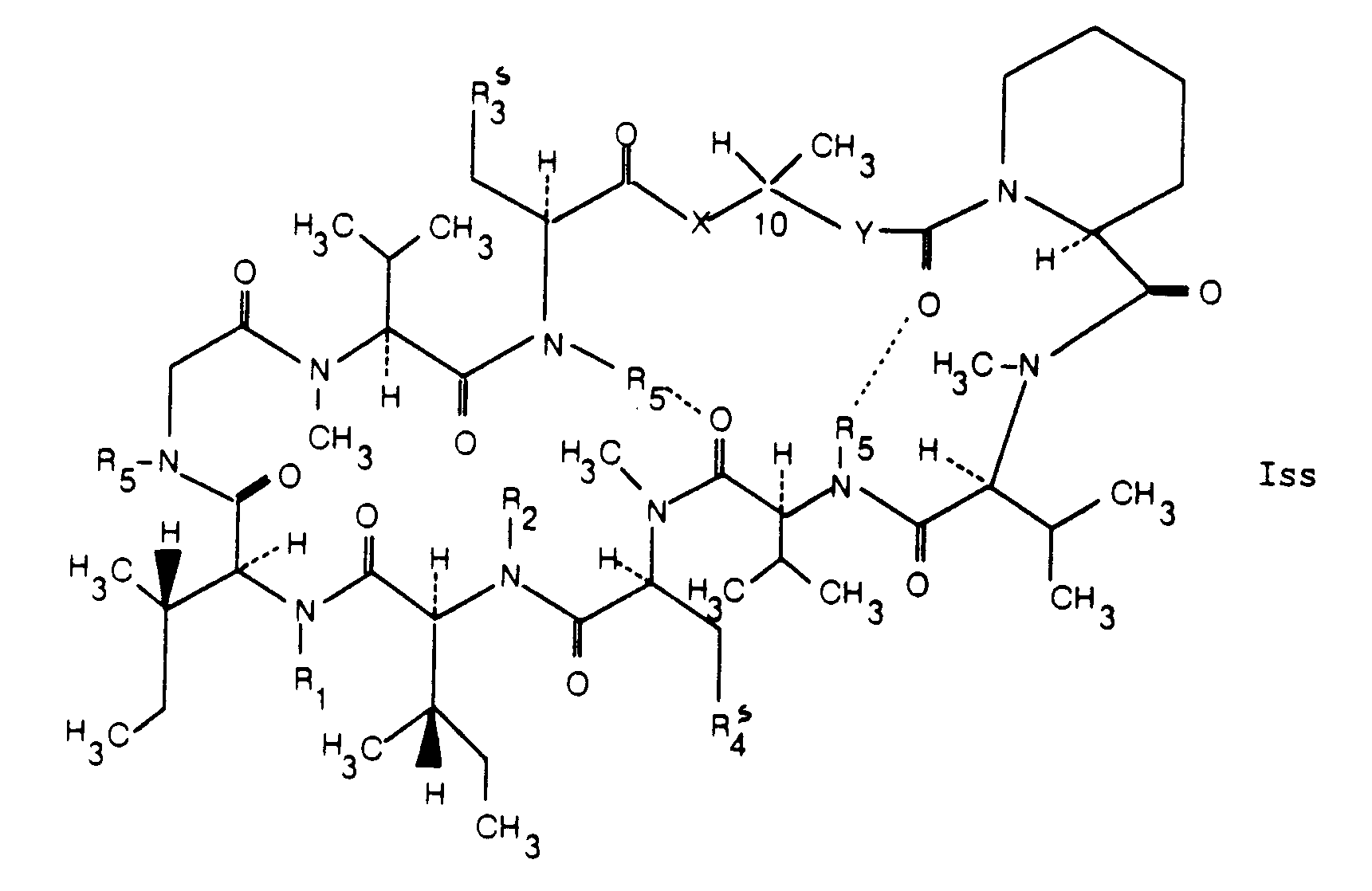
wherein - R₁, R₂, R₅, X and Y
- are as defined above;
- R₃s
- is phenyl substituted in the para position by a group -OR₆s wherein -OR₆s is selected from hydroxy, alkoxy of 1 to 4 carbon atoms, alkenyloxy of 3 to 5 carbon atoms wherein the double bond is separated from the oxygen atom by at least 2 carbon atoms, acyloxy of 2 to 5 carbon atoms, geranyloxy, phenylalkoxycarbonylmethoxy of 7 to 9 carbon atoms in the phenylalkoxy part, phenylalkoxy of 7 to 9 carbon atoms or phenylalkoxy of 7 to 9 carbon atoms monosubstituted by halogen of atomic number of from 9 to 35;
- R₄s
- is: hydrogen; carboxy; alkoxycarbonyl of 2 to 10 carbon atoms; alkenyloxycarbonyl of 4 to 10 carbon atoms wherein the double bond is separated from the oxygen atom by at least 2 carbon atoms, benzyloxycarbonyl; benzhydryloxycarbonyl; phenoxycarbonyl; trimethylsilylethoxycarbonyl; formyl; a group of formula -CONHCH(R₇s)COOR₈s or

- R₇s
- is hydrogen, isopropyl or -(CH₂)₃- and
- R₈s
- is alkyl of 1 to 4 carbon atoms or benzyl; a group selected from the following five ring structures:

either one of R₉s and R₁₀s is hydrogen or alkyl of 1 to 4 carbon atoms and the other is: benzhydryl; alkyl of 1 to 6 carbon atoms; phenylalkoxycarbonylalkyl of 6 to 9 carbon atoms in the phenylalkoxy part and of 2 to 4 carbon atoms in the carbonylalkyl part; trimethylsilylmethyl; furylmethyl; alkenyl of 3 to 5 carbon atoms wherein the double bond is separated from the nitrogen atom by at least 2 carbon atoms; hydroxyalkyl of 2 to 6 carbon atoms wherein the hydroxy group is separated from the nitrogen atom by at least 2 carbon atoms; alkoxycarbonylalkyl of 1 to 4 carbon atoms in the alkoxy part, of 2 to 4 carbon atoms in the carbonylalkyl part and wherein the oxygen atoms are separated from the nitrogen atom by at least 2 carbon atoms; phenyl optionally monosubstituted by halogen of atomic number of from 9 to 35; trialkylsilyloxyalkyl of 1 to 4 carbon atoms in the alkyl parts bound to the silicium atom, of 2 to 6 carbon atoms in the alkylene part and wherein the oxygen atom is separated from the nitrogen atom by at least 2 carbon atoms; 1-adamantyl; or dialkylaminoalkyl of independently 1 to 4 carbon atoms in the alkyl parts, of 2 to 4 carbon atoms in the aminoalkyl part and wherein the nitrogen atoms are separated by at least 2 carbon atoms;
or - R₉s and R₁₀s
- together with the nitrogen atom to which they are bound form a 1-piperidinyl ring;
hydroxymethyl; acyloxymethyl of 1 to 4 carbon atoms in the acyloxy part and optionally substituted at the ω carbon atom by carboxy or 2-carboxyphenyl; azidomethyl; halogenomethyl wherein the halogen atom is of atomic number of from 9 to 35; 2-(alkoxycarbonyl)ethyl of 1 to 4 carbon atoms in the alkoxy part; or 2-(alkoxycarbonyl)ethenyl of 1 to 4 carbon atoms in the alkoxy part; - The compounds of the invention can be obtained according to standard methods, e.g. by cultivation of an appropriate pipecolic acid-containing peptolide-producing microorganism strain, followed by isolation and where indicated appropriate chemical derivation. An appropriate microorganism strain is e.g. as described for process variant a) hereunder. Preferred is a strain producing a cyclic pipecolic acid-containing peptolide, such as S 42508/F (NRRL 15761).
- Thus a compound of formula I can be obtained by a process comprising
- a) for the preparation of a compound of formula Ia

- R₁ and R₂
- are as defined above,
- b) for the preparation of a compound of formula Ib

appropriately esterifying a corresponding compound of formula Ic
- c) for the preparation of a compound of formula Id

appropriately amidating a corresponding compound of formula Ic; - d) for the preparation of a compound of formula Ie

appropriately splitting off the ether group from a corresponding compound of formula If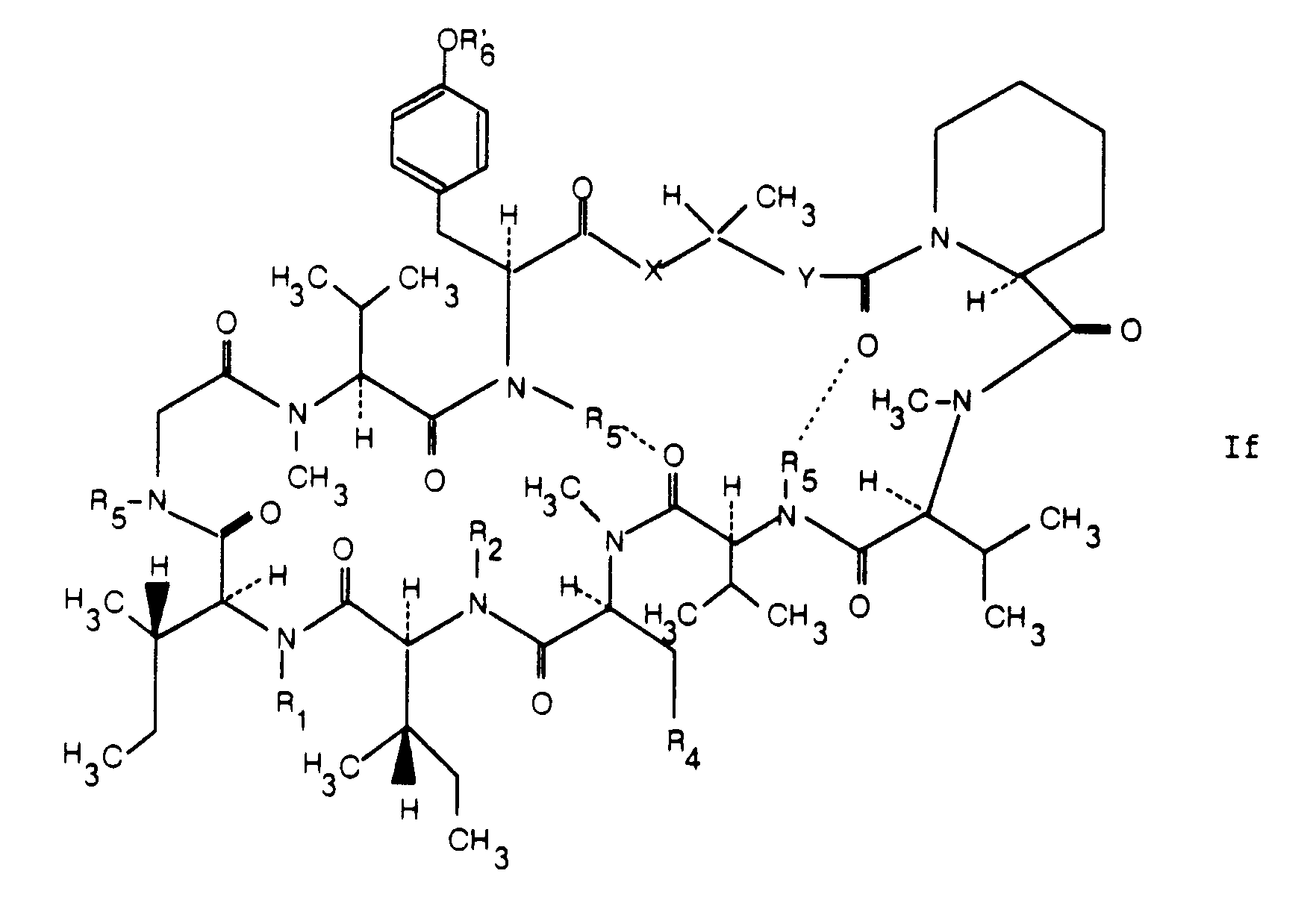
- R₆′
- with the exception of hydrogen has the significance indicated above for R₆ and
- e) for the preparation of a compound of formula Ig

appropriately introducing a group R₆′ into a corresponding compound of formula Ie; - f) for the preparation of a compound of formula Ih (= I)
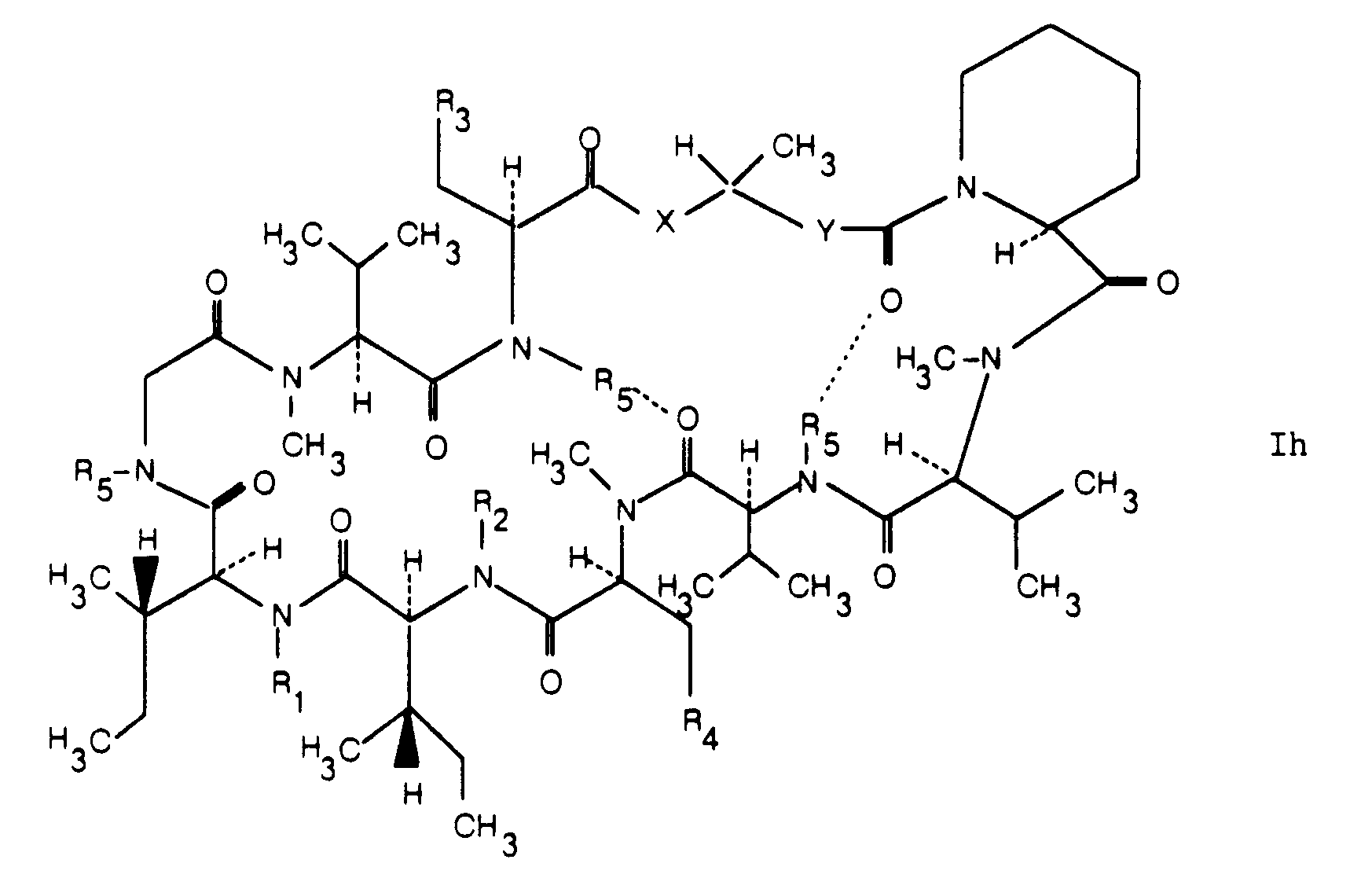
appropriately cyclising a corresponding compound of formula II
- g) for the preparation of a compound of formula Ij

- R₆˝
- is alkylmethyl of altogether at least 3 carbon atoms and the remaining substituents are as defined above,
appropriately hydrogenating a corresponding compound of formula Ik
- R₆‴
- is alkenylmethyl of altogether at least 3 carbon atoms and the remaining substituents are as defined above;
- h) for the preparation of a compound of formula Im

- R₁₁
- is formyl or hydroxymethyl and the remaining substituents are are defined above,
- i) for the preparation of a compound of formula In

- R₁₂
- is optionally substituted acyl and the remaining substituents are as defined above,

- j) for the preparation of a compound of formula Ip

appropriately converting to the azide a corresponding compound of formula Io; - k) for the preparation of a compound of formula Iq

- Hal
- is halogen and
the remaining substituents are as defined above,
- m) for the preparation of a compound of formula Ir

- R₄′
- is alkoxycarbonyl optionally mono- or plurisubstituted by aryl; alkenyloxycarbonyl; alkeninyloxycarbonyl; benzyloxycarbonyl; aryloxycarbonyl; or trimethylsilylethoxycarbonyl and

- R₄˝
- is carboxy or a group R₄′ as defined above and the remaining substituents are as defined above;
- n) for the preparation of a compound of formula It

appropriately decarboxylating a corresponding compound of formula Ic; - o) for the preparation of a compound of formula Iu

- R₄‴
- is 2-(alkoxycarbonyl)ethenyl and the remaining substituents are as defined above,

with a corresponding compound having an activated methylene group; or - p) for the preparation of a compound of formula Iw

- R₄iv
- is 2-(alkoxycarbonyl)ethyl and
the remaining substituents are as defined above,
whereby for all above process variants and as a further process variant any hydroxy and/or carboxy group(s) may be in protected form and thereafter the protecting groups(s) split off. - In a subgroup of compounds of formula Iss R₄s is other than carboxy. In a further subgroup R₁ and R₂ are methyl. In a further subgroup R₅ is hydrogen. In a further subgroup R₄s is other than carboxy, R₃s is other than p-methoxyphenyl, R₅ is other than hydrogen, X is other than oxygen, Y is other than a direct bond and the carbon atom in 10 position does not have the D-configuration, i.e. the compounds of formula Iss are in this subgroup other than compounds of formula Ia.
- In a further subgroup of compounds of formula Iss R₄s is one of the ester groups defined above for R₄s. In a further subgroup R₄s is a group -CONR₉sR₁₀s. In a further subgroup R₃s is p-hydroxyphenyl. In a further subgroup R₃s is phenyl substituted in the para position by a group -OR₆s other than hydroxy. In a further subgroup R₃s is phenyl substituted in the para position by a group -OR₆˝. In a further subgrroup R₄s is a group R₁₁. In a further subgroup R₄s is a group -CH₂OR₁₂. In a further subgroup R₄s is a group -CH₂N₃. In a further subgroup R₄s is a group -CH₂Hal. In a further subgroup R₄s is a group R₄′. In a further subgroup R₄s is methyl. In a further subgroup R₄s is a group R₄‴. In a further subgroup R₄s is a group R₄iv. In a further subgroup R₃s and/or R₄s are in unprotected form.
- The above process variants may be effected according to standard procedures. The configuration at the α-carbon atom in the 10 position indicated in formula I and in the alanyl residue defined when Y is a group -CONHCH(CH₃)- remains normally unchanged, except that, when X is oxygen, reaction conditions for cyclization can be chosen which result in inversion of the configuration at the lactoyl moiety (see e.g. the description of process variant f) hereunder and Examples 52 to 63 and 68). On the other hand, after the ring system has been opened reaction conditions may be selected which lead to an inversion of the configuration during intermediate steps and thus from compounds having the D-configuration compounds having the L-configuration can be obtained, and vice-versa (see e.g. the preparation of the starting materials for Example 64). Alternatively, reaction conditions can be chosen which leave the configuration unchanged after the ring system has been opened or result in double inversion and thus also in unchanged final configuration (see e.g. the preparation of the starting material for Example 65).
- Process variant a) (cultivation) may be effected using a microorganism strain from e.g. the Imperfect fungal class, such as S 42508/F. This strain has been deposited on March 29, 1984 with the Agricultural Research Service Patent Culture Collection, 1815 North University Street, Peoria, Illinois 61604, USA under deposit number NRRL 15761 and converted on July 11-12, 1988 to a deposit under the Budapest Treaty.
- The fungus strain NRRL 15761 was isolated from dead plant material originating from a rapidly flowing stram in the Black Forest. After two to six weeks incubation on 2 % malt extract agar (MA) at incubation temperatures of from 1° to 18° (preferably 4° to 15°), pycnidia are formed. The conidiomates are singular or in closely packed groups, superficial or partially immersed in the medium, globose to subglobose, 200-1300 »m (usually 500-800 »m) in diameter, and when fully developed have one papillate ostiole. The pycnidia wall is 50-250 »m thick (usually 100-200 »m) and consists of many cell layers of the type "textura angularis", which are externally dark brown and towards the centre hyaline. The conidiogenic cells lining the centre of the pycnidia are hyaline, wide to narrow, conical to lageniform, 4-6 x 5.5-20 »m (usually 4-5 x 6.5-8.5 »m) and according to light microscopy are phialidic in nature. The conidia are hyaline (massed condidia appear yellowish to beige), filiform, straight to slightly bent, broadest in the middle, pointed at one end and rounded or truncated at the opposite end, septated 0 to 6 times, normally, however, three to four times, and measure 30-42 x 1.8-2.2 »m (usually 35-39 x 2-2.2 »m).
- According to morphological features and using the diagnostic keys of B.C. Sutton, The Coelomycetes, Commonwealth Mycological Institute, Kew, Surrey, England 1980), this sphaeropsidal fungus cannot be unequivocally classified. The features of the conidia, but not those of the conidiogenic cells, nor the multi-layered pycnidia wall, conform with the genus Septoria sacc.
- The following media and tests were used for the physiological characterisation of the fungal strain:
- MA:
- 2 % Difco malt extract; 0.4 % Difco yeast extract; 2 % Difco Agar.
- PA:
- 0.5 % pure soya protein (Promine D), 0.1 % Difco yeast extract, 2 % Difco Agar. Clearing of the medium indicates protein degradation.
- SA:
- 0.4 g soluble starch (Difco), 0.1 % Difco yeast extract, 2 % agar. Starch degradation can be demonstrated by flooding with KI solution.
- CAA:
- Cellulose-Azure (Calbiochem)-test by R.E. Smith, 1977, Applied and Environmental Microbiology 33 (4) 980-981.
- TA:
- Tween 40 medium by G. Sierra, 1957, Antonie von Leeuwenhoek 23, 15-22. Medium turbidity indicates lipase activity.
- Cz:
- Difco Czapec solution Agar (pH 7.3).
- Cz Gall:
- Difco Czapec solution Agar with 1.5 % gallic acid (pH 7.3) according to N.J. Dix, Trans. Brit. Mycol. Soc. 73 (2) (1979) 329-336. Growth inhibition on Cz Gall medium compared with Cz is an indication of polyphenol-oxidase formation (G. Lindeberg, Svensk Botanisk Tidskrift 43 [1949] 438-447).
- Syr:
- Identification of lactase and peroxidase according to the method of J.M Harkin and J.R. Obst, Experientia 29 [1973] 381-508 by covering the cultures with a 0.1 % ethanolic syringeldazine solution. Violet-red reaction = positive.
- pH media:
- Medium with pH 2.6 to pH 7.6: MA medium buffered with 0.1 M citric acid - 0.2 M Na₂HPO₄ buffer according to McIlvaine in Data for Biochemical Research, Oxford [1969] 484-485.
Medium with pH 7.0 - 8.0: MA-medium buffered with 0.2 M Na₂HPO₄ - 0.2 M Na₂H₂PO₄ buffer according to Gomori/Sørensen, Data for Biochemical Research, Oxford [1969] 489.
Medium with pH 9.2 to 10.8: MA-medium buffered with 0.1 M Na₂CO₃ - 0.1 M NaHCO₃ buffer according to Delory & King, Data for Biochemical Research, Oxford [1969] 496.
Buffer and MA medium are each prepared at double concentration, sterilised separately and combined after sterilisation. -
- Optimum growth temperature on MA: between 18° ± 1° and 21° ± 1°C.
- Lower growth limit on MA: 1° ± 1°C.
- Upper growth limit on MA: between 27° ± 1° and 30° ± 1°C.
- Sporulation on MA:
4° ± 1°C to 15° ± 1°C: optimal
1° ± 1°C and 18° ± 1°C: suboptimal
21°± 1°C and higher: no sporulation observed. - Syr. on MA (3 weeks incubation at 21°C): weakly positive.
- Syr. on Cz (3 weeks incubation at 21°C): weakly positive.
- Cz: good growth.
- Cz Gall: no growth.
- PA: weak proteinase activity.
- SA: amylase positive.
- CAA: cellulose negative.
- TA: lipase weakly positive.
- pH media:
optimum pH range for growth: pH 3.6 - 6.0
lowest pH range for growth: pH 3.0 - 3.6
highest pH range for growth: pH 8.0 - 9.2. - The novel strain S 42508/F (NRRL 15761) may be cultured at suitable temperatures in various culture media using appropriate nutrients and mineral substances, as aerobic surface or immersion cultures. The invention also concerns fermentation broths which are obtained during cultivation of a producing strain from the class of fungi Imperfecti.
- Cultivation thus is effected using known procedures and consists essentially in cultivation of the strain on or in an appropriate medium under suitable growth conditions. The compounds formed, e.g. the compounds of formula Ia are subsequently isolated.
- The fermentation medium should mainly contain a utilisable source of carbon and optionally mineral salts and growth factors, whereby all these elements can be added in the form of well-defined products or complex mixtures, as are found in biological products of various origins.
- In order to produce the novel compounds of formula Ia strains may also be used which are obtained e.g. by selection or mutation under the influence of ultra-violet rays or X-rays or using other means, e.g. by treating cultures with appropriate chemicals.
- As soon as a sufficient amount of the compounds of formula Ia has been produced in the culture the mycelium may be separated from the culture broth and extracted conventional manner e.g. with an organic solvent which is immiscible with water, such as ethyl acetate, butyl acetate or n-butanol.
- Another isolation procedure comprises first homogenising the mycelium portion in the culture broth, e.g. using an Ultraturrax, and obtaining the compounds of formula Ia by extraction with the solvents mentioned. A preferred embodiment comprises separating the broth into mycelium and culture filtrate in a Westfalia clearing separator. The mycelium filtrate is then homogenised with methanol in a Dispax reactor, the biomass is separated and the organic phase is concentrated on water, whilst adding water. Here again extraction is effected using an organic solvent which is immiscible with water, e.g. ethyl acetate or n-butanol, and the extracts are evaporated under vacuum. The portion of the desired metabolites remaining in the culture filtrate can also be extracted using the solvents mentioned above.
- The compounds of formula Ia can be isolated and purified from the crude extracts thus obtained by known chromatographic methods. It has proved advantageous to first scour with hexane to remove lipophilic impurities. The compounds of formula Ia can then be isolated and separated from one another by chromatography on silicagel Merck 60 or e.g. silicagel H, or by gel filtration on Sephadex LH₂₀, and may be recrystalised from e.g. methanol or diisopropylether.
- Process variant b) (esterification) is e.g. effected by dissolving a compound of formula Ic into an inert solvent such as an aromatic hydrocarbon, e.g. benzene or toluence, or in an aliphatic ketone, e.g. acetone and adding the corresponding alcohol, e.g. in the form of the acetal, or the halide. The esterification may e.g. also be effected with a corresponding diazomethane derivative, preferably in an inert solvent such as an aliphatic alcohol, e.g. methanol. The carboxy group may be activated prior to reaction, e.g. with N,N-dimethylchloromethylene ammonium chloride. In the compounds of formula Ic wherein R₃ is para-hydroxyphenyl the phenolic hydroxy group may under appropriate conditions, particularly extended reaction duration, also be brought to react.
- Process variant c) (amidation) is e.g. effected by activation of the carboxyl group, e.g. with N,N-dimethylchloromethylene ammonium chloride, after dissolution or suspension with an inert solvent such as acetonitrile, followed by addition of the appropriate amine.
- Process variant d) (ether splitting) may e.g. be effected with aluminium iodide using standard methods. A compound of formula If preferably is treated with a freshly prepared solution of aluminium iodide in an inert solvent such as carbon disulfide.
- Process variant e) (introduction of a group R₆′ ) may e.g. be effected by using standard etherification or esterification conditions. A compound of formula Ig preferably is dissolved into an inert solvent, e.g. an aliphatic ketone such as acetone. An acid scavenger such as potassium carbonate preferably is used for reaction with a corresponding halogenide or anhydride. Under these conditions an ester group present may simultaneously be split off.
- For process variant f) (cyclisation) a compound of formula II may e.g. be dissolved into an inert solvent, e.g. a chlorinated hydrocarbon such as dichloromethane. Reaction takes place upon addition of a cyclisation agent, e.g. dicyclohexylcarbodiimide. For cyclisation of compounds wherein R₄ is carboxy, which can e.g. be obtained by ring opening from the compounds of formula Ia, cyclisation preferably is effected with the carboxy group in protected form, such as in tert-butyl or benzyl ester form. Depending on the reaction conditions selected for ring opening, activation and cyclisation, end products of formula I are obtained having the L- or the D-configuration at the carbon atom in the 10 position indicated in formula I. Thus the cyclisation of compounds of formula II wherein X is imino, with activation of the carboxyl group with e.g. dicyclohexylcarbodiimide, occurs normally under conservation of the stereochemical configuration in the compounds of formula II being used. A configuration different from or identical to the configuration in the original cyclic starting material may be selected at an earlier step, such as at the activation step, e.g. at the mesylate step (mesyl chloride/pyridine: retention of the configuration) or at the tosylate step (triphenylphosphine/azidodicarboxylic acid diethyl ester / zinc tosylate: inversion of the configuration). However, in compounds of formula II wherein X is oxygen cyclisation may be effected under inversion of the configuration of the lactoyl moiety. In this situation the hydroxy group of the lactoyl moiety is activated (e.g. with triphenylphosphine / azidodicarboxylic acid diethyl ether) and cyclization is effected under attack of the carboxyl at the activated hydroxyl of the lactoyl moiety, whereby inversion occurs (see e.g. Examples 52 to 63 and 68).
- Process variants g) (hydrogenation at the R₃ group) and p) (hydrogenation at the R₄ group) are effected e.g. with hydrogen and palladium on charcoal. A solvent such as a lower alkanol, e.g. ethanol preferably is used.
- In process variant h) (reduction of carboxyl) the carboxyl group preferably is first activated with e.g. N,N-dimethylchloromethylammonium chloride and thereafter reaction is effected with e.g. sodium boranate. Lower temperatures are preferably used, e.g. -70°C. The reaction may be controlled and interrupted at the aldehyde stage or brought to completion to the alcohol.
- Process variants i) (acylation), j) (conversion to the azide) and k) (halogenation) may be effected by reaction with corresponding reagents, e.g. by reaction with the appropriate acyl anhydride or, after conversion to the mesylate or tosylate, with appropriate azides or halogenides. For acylation the temperature preferably is about room temperature, and reaction is preferably under basic conditions, e.g. in the presence of dimethylaminopyridine. For conversion to the azide the temperature preferably is from about 0°C to about room temperature, preferably 0° to 5°C. Halogenation preferably is effected at room temperature to about 80°C, preferably 50° to 60°C, preferably in the presence of an organic solvent such as pyridine.
- Process variant m) (permethylation) is e.g. effected by reaction with a methyl halogenide in the presence of a strong base such as potassium hydride. The temperature preferably is low, e.g. about -20°C. When in the compounds of formula Is R₁ and/or R₂ is hydrogen and/or R₄'' is carboxyl, then corresponding compounds of formula Ir are obtained wherein R₁ and R₂ are methyl and/or R₄' is methoxycarbonyl.
- Process variant n) (decarboxylation) leads to compounds of formula I wherein R₄ is hydrogen. The carboxy group preferably is first activated, e.g. by reaction with phenylselenyl hydride. Decarboxylation is effected in a second step, e.g. with tributyl zinc hydride, preferably in an inert solvent such as an aromatic hydrocarbon, e.g. toluene or xylene. Preferably an elevated temperature is used, e.g. the boiling temperature of the reaction mixture.
- For process variant o) (aldehyde conversion) a formyl compound of formula Iv preferably is reacted with a compound having an activated methylene group, e.g. with an appropriate methylenetriphenylphosphorane derivative. The reaction preferably is effected in an inert solvent, such as an aromatic hydrocarbon, e.g. toluene. The temperature preferably is moderate, e.g. room temperature.
- The optional deprotection step variant may be used for any of the above process variants a) to p). Any hydroxy and/or carboxy group may be in protected form. For protection standard methods may be used. Deprotection is e.g. effected with aqueous acetonitrile. A preferred hydroxy protecting group is e.g. tert-butyldimethylsilyl. A preferred carboxy protecting group is e.g. 2-(trimethylsilyl)ethyl.
- It will be appreciated that in addition to hydroxy groups it may be indicated to transiently protect further substituents if these should be sensitive under the reaction conditions used. Thus e.g. an ester group such as 2-(trimethylsilyl)ethoxycarbonyl or tert-butoxycarbonyl may be viewed as a protected carboxy group, an acyl group as a protected hydroxy group, and a benzyloxy group as a protected phenolic hydroxy group. Further protecting groups may of course appear to be indicated to the skilled worker.
- The compounds of formula I may be isolated from the reaction mixture and purified in accordance with known procedures.
- The starting materials can be obtained in accordance with known methods.
- The compounds of formula II are novel and can be obtained by ring opening from the compounds of formula Ia, followed where indicated by appropriate chemical derivatisation.
- Thus the compounds of formula II wherein X is imino and Y is a group -CONHCH(CH₃)- can be obtained in accordance with the following reaction scheme (R′ = protecting group, e.g. benzyl; R˝ = activation group, e.g. mesyl):

Analogously, the compounds of formula II wherein X is oxygen and Y is a group -CONHCH(CH₃)- can be obtained by reaction with a hydroxy-protected active derivative of lactic acid such as O-acetyl-lactoyl chloride in place of reaction with p-nitrobenzyloxycarbonyl-protected alanine in the above scheme. - The compounds of formula II wherein X is imino and Y is a direct bond can be obtained by omitting the reaction with p-nitrobenzyloxycarbonyl-protected alanine in the above scheme.
- The compounds of formula II wherein X is oxygen and Y is a direct bond can be obtained according to the first step (ring opening) in the above scheme.
- Ring opening may be effected in conventional manner, e.g. by treatment with lithium hydroxide in an inert solvent or mixture of solvents, e.g. in tetrahydrofuran/water. The further reaction steps in the scheme are also effected in conventional manner. The group R˝ is selected such that the following conversion to the azide takes place on the desired hydroxy group. Reduction of the azide to the amino group is e.g. effected with hydrogen and palladium on charcoal as a catalyst, using an inert solvent such as an aliphatic alcohol, e.g. ethanol.
- Insofar as its preparation is not particularly described herein, a compound used as a starting material is known or may be prepared from known compounds in known manner or analogously to known methods or analogously to methods described in the Examples.
- The following Examples illustrate the invention and are not meant to be limitative.
- The temperatures are in degrees Centrigrade.
- The indications regarding the configuration are with respect to the carbon atom in the 10 position indicated in formula I unless indicated otherwise.
- The NMR spectra are measured in a 250 MHz apparatus and, where not indicated otherwise, in CDCl₃-solution at room temperature, whereby mixture of conformers are obtained which interconvert until equilibrium is reached. Only the characteristic signals are indicated. They are proton resonance spectra unless specified otherwise.
- The amino acids are abbreviated according to usage. Thus e.g. MeIle is N-methyl-L-isoleucine, Tyr(Me) is O-methyl-L-tyrosine, MehSer is N-methyl-L-homoserine,
MeAsp(β-O-tert-butyl) is N-methyl-L-aspartic acid esterified by a tert-butyl moiety at the β(=ω) carboxyl group, MeAbu(γ-N₃) is 2-L-N-methylamino-4-azidobutyric acid, Sar is N-methylglycine and Pec is L-pipecolic acid. - Lact = lactoyl, if not indicated otherwise L-lactoyl; tBu = tert-butyl; Bz = benzyl; iPr = isopropyl; Et = ethyl; Me = methyl; Ac = acetyl.
- and
- The mycelium suspension used for inoculation is produced from an agar slant culture of the strain S 42508/F which is cultivated for 28 days at 21° on the following agar medium:
malt extract, liquid 20 g yeast extract 4 g agar 20 g demineralised water ad 1000 ml - Prior to sterilisation the pH value is adjusted to 7.5 with NaOH. Sterilisation takes place for 20 minutes at 120°.
- The mycelium from the starting culture is suspended in 0.9 % sodium chloride solution using a sterile skimmer. 200 ml of preculture medium are inoculated with this suspension in a 500 ml Erlenmeyer flask.
- Composition of the preculture medium:
malt extract, liquid 20 g yeast extract 4 g demineralised water ad 1000 ml - pH 5.6-5.8. Sterilisation: 20 minutes at 120°.
- Incubation takes place in a rotary shaker at 180 rpm for 48 hours at 21°.
- 50 l of preculture medium in a 75 l steel fermenter are inoculated with 1 l of preculture and incubated for 4 days at 21°, at an aeration rate of 0.5 l / 1 l medium / minute, at 0.5 bar pressure and 150 rpm.
- 500 l of intermediate culture medium in a 750 l steel fermenter are inoculated with 50 l of first intermediate culture.
- Composition of the intermediate culture medium:
malt extract, liquid 50 g yeast extract 10 g FeSO₄.7H₂O 16.68 mg ZnSO₄.7H₂O 6.88 mg demineralised water ad 1000 ml - pH 5.6-5.8. Sterilisation: 20 minutes at 120°.
- Incubation takes place for 3 days at 21° whilst stirring (100 rpm), at 0.5 bar pressure, with aeration (0.5 l / 1 l medium / minute).
- 3000 l of main culture medium in a 4500 l steel fermenter are inoculated with the second intermediate culture.
- Composition of the main culture medium:
malt extract, liquid 40 g yeast extract 8 g citric acid 11.77 g NaOH 1 N 112 ml HCl 1 N 44 ml demineralised water ad 1000 ml - Prior to sterilisation the pH value is adjusted to 3.8 to 4.1 with NaOH/HCl. Sterilisation: 20 minutes at 120°.
- Incubation takes place for 5 days at 21° whilst stirring (50 rpm), at 0.5 bar pressure and with aeration (1.0 l / 1 l medium / minute). Formation of foam is prevented using a silicone antifoaming agent.
- 3400 l of fermentation broth are adjusted to pH 6 with dilute sulfuric acid and then separated using a Westfalia separator to yield 2500 l of culture filtrate and about 300 kg of mycelium. The culture filtrate is subsequently extracted twice in a Podbielniak counter-current extractor with twice 2500 l of ethyl acetate. The two organic extracts are combined and concentrated to 600 l in a Kühni gravity stream evaporator (heating temperature 75°, pressure 150 torr). This concentrate is then further concentrated to about 20 l in a Büchi circulatory evaporator with water ring vacuum pump, at a maximum concentrate temperature of 30° and is evaporated to dryness in the same way at a bath temperature of 50°. 485 g of crude extract are obtained. The 800 kg of mycelium are homogenised three times in a Dispax reactor, each time for 2 hours and using 800 l of 90 % methanol. The bio-mass is centrifuged in a Westfalia separator. The three methanolic extracts are combined and the methanol is removed in a Büchi circulatory evaporator whilst adding water at a maximum concentrate temperature of 40°. The aqueous mycelium extract (300 l) is adjusted to a pH of 6.0 with dilute sulphuric acid and extracted thrice, each time with 400 l of ethyl acetate. After washing the extracts with 200 l of water they are combined and concentrated in a Büchi and Schmid circulatory evaporator. Concentration to dryness then follows as for the culture filtrate extract. 500 g of mycelium extract are obtained.
- In order to remove antimicrobially inactive fats the crude extracts are separately dissolved in 10 times the amount of 90 % methanol and are subsequently partitioned in 3 stages with hexane (in a ratio of 1:1). The combined methanolic phases are concentrated to about 1/3 of the volume whilst adding water and the aqueous concentrate is extracted thrice with the same volume of ethyl acetate. After evaporation in a Büchi rotary evaporator at 50° the combined organic extracts yield 201 g of culture filtrate extract and 221 g of mycelium extract, both of which show activity against yeast.
- 220 g of scoured crude extract are introduced onto a column of 2.5 kg silicagel Merck 60 (grain size 0.04-0.063 mm, diameter 13 cm, height 50 cm). Elution takes place using methylene chloride as an eluant, with the methanol content increasing in stages. 500 ml per fraction are collected under a pressure of 2-3 bar. Analysis of the fractions by thin-layer chromatography is effected on silicagel Merck 60 plates, with methylene chloride/methanol (95:5) as the eluant and iodine as the detection reagent. The eluates with methylene chloride + 1.5 % methanol (fractions 30-48) are combined and after evaporation under reduced pressure yield 65 g of residue. After repeated crystallisation from methanol the first title compound is obtained pure.
- Subsequent eluates with methylene chloride + 2 % methanol (fractions 95-111) yield 2.3 g of residue after evaporation. This mixed fraction is dissolved in 50 ml of methanol and introduced onto a column of 500 g of Sephadex LH₂₀ in methanol. Elution with methanol yields 1.1 g of fractions which contain the third title compound. Further separation of this material by chromatography on 150 g of silicagel H (column diameter 4.5 cm, height 28 cm) with methylene chloride + 3 % methanol as the eluant yields the crude product of the second title compound. Subsequent crystallisation from methanol yields that compound as a pure substance.
- The scoured crude extract (201 g) is separated by chromatography, analogously to the mycelium extract, on 2.5 kg of silicagel 60 Merck (grain size 0.040-0.063 mm). Elution is effected firstly with methylene chloride + 1.5 % methanol, then with methylene chloride + 2 % methanol and with a fraction size of 500 ml.
- Fractions 37-50 obtained by elution with methylene chloride + 2 % methanol yield pure first title compound after evaporation and subsequent crystallisation of the residue from methanol. The subsequent eluates, fractions 51-64 with methylene chloride + 2 % methanol, yield upon evaporation 10 g of a mixed fraction which contains the second title compound together with impurities. More concentrated product is obtained after repeated medium-pressure chromatography on 1 kg of silicagel Merck 60 (grain size 0.040-0.063 vmm) and elution first with methylene chloride + 2 % methanol and then with methylene chloride + 3 % methanol. Crystallisation from methanol yields the pure second title compound.
- Fractions 65-78 are combined and the evaporation residue (8.8 g) further purified by chromatography on 1 kg of silicagel Merck 60 (grain size 0.040-0.063 mm). Elution (100 ml per fraction) is effected with toluene/propanol-2/water 91.5 : 8 : 0.5, whereby the first eluates yield the second title compound as an amorphous preparation which is uniform on thin-layer chromatography after evaporation. The subsequent fractions are combined after analysis by thin-layer chromatography (eluant: methylene chloride/propanol-2.9:1 on silicagel Merck plates) and are subsequently evaporated to dryness. The 2.7 g residue is crystallised twice from diisopropylether to produce pure third title compound.
Characterization data: Title compound M.P. [α]D20 First 236-238°1) -228° c = 0.6 in chloroform Second 214-216°1) -220° c = 0.5 in methanol Third 192-198°1) -192° c = 0.5 in methanol 1)colourless crystals, from methanol
NMR (first compound): 4:1 mixture of conformers
Main component: 1.41 (d, J = 7 Hz, H-10β), 2.50, 2.80, 2.91, 3.00, 3.45 (5x s, N-CH₃), 3.80 (s, OCH₃), 3.13 (d, 10 Hz, MeIle-αH), 3.46 (dd. J₁ = 3 Hz, J₂ = 17.5 Hz, H-7α′), 3.65 (d, br, J = 14 Hz, H-1ε′), 4.05 (dd, J₁ = 5.5 Hz, J₂ = 17.5 Hz, H-7α), 4.29 (dd, br, J₁ = 11 Hz, J₂ = 14 Hz, H-1ε′), 4.34 (d, J = 10.5 Hz, MeVal-αH), 4.55 (t, J = 10 Hz, H-3α), 4.76 (d, J = 11 Hz, MeVal-αH), 5.22 (dt, J₁ = 6 Hz, J₂ = 10 Hz, H-9α), 5.31 (d, J = 11 Hz, MeIle-αH), 5.47 (q, J = 7 Hz, H-10α), 5.67 (d, br, H-1α), 6.35 (dd, J₁ = 5.5 Hz, J₂ = 11.5 Hz, H-4α).
Other component: 1.39 (d, J = 7 Hz, H-10β), 2.61, 2.80, 2.90, 2.98, 2.99 (5x s, N-CH₃), 3.74 (s, OCH₃).
13C-NMR of main component: 40.9 (7αC), 43.2 (1εC), 46.4 (1αC), 51.0 (9αC), 52.0 (4αC), 54.6 (3αC), 55.2 (OCH₃), 56.5 (MeIle-αC, correlates with 5.31), 61.5 (MeVal-αC, correlates with 4.76), 66.8 (MeVal-αC, correlates with 4.34), 67.0 (10αC), 74.5 (MeIle-αC, correlates with 3.13). - To a solution of 4.5 g of the first title compound of Example 1 in 200 ml of boiling benzene are added dropwise 4.4 ml of dimethylformamide-di-tert-butylacetal. The solution is kept at boiling temperature until reaction is complete (about 4 hours, check by thin-layer chromatography). The solution is then allowed to cool, washed 5 times with water, the organic phase is dried over sodium sulfate. The oil obtained after evaporation of the solvent is purified by chromatography over silicagel using hexane/ethyl acetate 1:5 as an eluant. The title compound is obtained (colourless foam):
NMR: 3.5:1 mixture of conformers:
Main component: 2.70, 2.80, 2.91, 2.96, 3.04 (NCH₃), 3.76 (OCH₃), 1.31 (tBu).
Other component: 2.67, 2.79, 3.02, 3.04, 3.23 (N-CH₃), 3.80 (OCH₃), 1.36 (tBu).
- The following compounds of formula I are obtained in a manner analogous to Example 2 starting from the corresponding compound wherein R₄ is carboxyl, i.e. from the first title compound of Example 1 or the title compound of Example 39 [R₁, R₂, R₅, X, Y, C₁₀ = as for 1st compound of Example 1]:


- The dimethylformamide acetals used for the reaction may be obtained by reaction of dimethylformamiddimethylacetal with an appropriate alcohol, as e.g. for:
- dimethylformamid-bis-trimethylsilylacetal (B.P. 125-127°/11 Torr);
- dimethylformamid-bis-(3,3-dimethyl-1-butyl)acetal (B.P. 114-115°/14 Torr);
- dimethylformamid-bis-(3,3-dimethyl-2-butyl)acetal (B.P. 113-114°/14 Torr);
- dimethylformamid-diisopentylacetal (B.P. 114-115°/14 Torr).
- 560 mg of first title compound of Example 1 are heated for 3 hours at reflux temperature with 140 mg potassium carbonate and 0.42 ml of allyl bromide in 25 ml of acetone. This is followed by evaporation of the solvent, acidification with 0.1 HCl solution, triple extraction with ethyl acetate, washing of the organic solution thrice with saturated aqueous sodium chloride solution, drying over sodium sulfate, evaporation of the solvent and chromatography over silicagel using ethyl acetate as an eluant. The title compound is obtained (M.P. 132-135°).
NMR:
1.3:1 mixture of conformers
Main component: 2.73, 2.78, 2.89, 2.92, 3.06 (N-CH₃), 3.75 (OCH₃), 4.47 (COOCH₂), 5.16, 5.21, 5.84 (-CH=CH₂).
Other component: 2.60, 2.78, 3.00, 3.04, 3.32 (N-CH₃), 3.80 (OCH₃), 4.47 (COOCH₂-), 5.16, 5.21, 5.84 (-CH=CH₂). - The following compounds of formula I are obtained in a manner analogous to Example 13, starting from the first title compound of Example 1 or, for Example 19, from the compound of Example 6 [R₁, R₂, R₅, X, Y, C₁₀ = as for 1st compound of Example 1]:


- The compounds of Examples 40 to 50, 52, 57 to 59, 64 to 69, 77 and 78 can also be obtained according to process b) (esterification) in a manner analogous to Example 2 or 13.
- To a suspension of chloromethylene-dimethylammonium chloride (prepared from 2.56 ml of dimethylformamide and 0.96 ml of oxalyl chloride in 16 ml of acetonitrile) is added 2.25 g of first title compound of Example 1 in 25 ml of acetonitrile and thereafter 0.27 ml of allylamine in 3 ml of pyridine is dropwise at -30°. After 20 hours at -20° the mixture is poured onto 0.2 N aqueous sodium chloride solution and extracted thrice with ethyl acetate. The organic phase is washed thrice with water, dried over sodium sulfate and the solvent evaporated under reduced pressure. The crude title product is chromatographed over silicagel using ethyl acetate as an eluant. The title compound is obtained (colourless amorphous solid):
NMR:
1.2:1 mixture of conformers
2.67, 2.67, 2.77, 2.78, 2.83, 2.89, 3.01, 3.10, 3.30 (N-CH₃), 3.75, 3.80 (OCH₃), 5.00, 5.09, 5.71 (-CH=CH₂). - The following compounds of formula I are obtained in analogous manner
-


- The compounds of Examples 53 to 56, 60 to 63, 82 and 83 can also be obtained according to process c) (amidation) in a manner analogous to Example 20.
- A solution of aluminium iodide is freshly prepared by heating to boiling for 3.5 hours 2.5 g of aluminium foil and 19 g iodine in 100 ml of carbon disulfide, 5.6 g of first title compound of Example 1 are added thereto at room temperature and the mixture is heated under reflux for 3 hours. The ice-cold solution is then added to ice-cold ammonium chloride solution and extracted thrice with ethyl acetate. The organic phases are washed with sodium thiosulfate solution and water and dried over sodium sulfate. After the solvent has been distilled off under reduced presure the crude product is chromatographed over silicagel using dichloromethane/diisopropylether/methanol 10:4:1 as an eluant. The title compound is obtained (colourless foam; M.P. 217-219°; [α]D²⁰ = -228° MeOH);
NMR:
6:1 mixture of conformers
Main component: 2.42, 2.79, 2.91, 3.00, 3.52 (N-CH₃), OCH₃ is missing, 3.80 (7-αH, 7-α′H), 6.65, 6.94 (Ar). - The compounds of Examples 7 and 8 can also be obtained according to process d) (ether splitting) in a manner analogous to Example 39.
- 58 mg of compound of Example 6 are heated for 4 hours at boiling temperature with 14 mg potassium carbonate and 0.042 ml of allyl bromide in 3 ml of acetone. After cooling off the solvent is evaporated under reduced pressure, the residue taken up in 0.1 N hydrochloric acid and extracted thrice with ethyl acetate. The combined organic phases are washed thrice with saturated sodium chloride solution, dried over sodium sulfate and the solvent is distilled off. The residue is chromatographed over silicagel using hexane/ethyl acetate 1:5 as an eluent. The title compound is obtained (colourless foam):
NMR:
2.6:1 mixture of conformers
Main component: 1.31 (tBu), 2.70, 2.79, 2.91, 2.96, 3.04 (N-CH₃), 5.27, 5.41, 6.05 (-CH=CH₂).
Other component: 1.36 (tBu), 2.70, 2.78, 3.02, 3.05, 3.22 (N-CH₃), 5.27, 5.41, 6.05 (-CH=CH₂). - The following compounds of formula I are obtained in a manner analogous to Example 40 starting from the corresponding compound wherein R₃ is p-OH-Phe [R₁, R₂, R₅, X, Y, C₁₀ = as for 1st compound of Example 1]:


- The compounds of Examples 1 to 5, 9 to 18, 20 to 38, 52 to 67 and 69 to 83 can also be obtained according to process e) (introduction of R₆′) in a manner analogous to Example 40.
- To a solution of 6.0 g H-D-Lact-Pec-MeVal-Val-MeAsp(β-O-tert-butyl)-MeIle-MeIle-Gly-MeVal-Tyr(Me)-OH and 4.8 g triphenylphosphine in 750 ml of dry toluene is added a solution of 2.37 ml of azodicarboxylic acid diethyl ester in 500 ml of dry toluene under stirring, dropwise and over 20 hours. After two days the solvent is distilled off under reduced pressure and the residue is separated from the triphenylphosphine oxide produced , by chromatography over Silicagel LH20 using dichloroethane as an eluant. The resultant crude product is purified by chromatography over silicagel using hexane/ethyl acetate 1:5 as an eluant. The title compound is obtained [colourless foam; M.P. 146-148°; [α]D²⁰ = -221° (c = 1.0, CH₂Cl₂)];
NMR:
5:1 mixture of conformers
Main component: 1.33 (tBu), 2.75, 2.76, 2.90, 3.04, 3.08 (N-CH₃), 3.76 (OCH₃). - The starting material (a compound of formula II) is obtained as follows:
16.2 g title compound of Example 2 are dissolved in 700 ml of a mixture of tetrahydrofuran/water 1:1 and 1.15 g lithium hydroxide monohydrate is added under stirring in small portions. After 17 hours the solution is acidified to pH 3 with 1 N hydrochloric acid solution, the mixture is diluted with ethyl acetate and water and the organic phase discarded. The aqueous phase is extracted 4 times more with ethyl acetate. The combined organic phases are washed once with water and twice with saturated sodium chloride solution, dried over sodium sulfate and the solvent is removed under reduced pressure. H-D-Lact-Pec-MeVal-Val-MeAsp(β-O-tert-butyl)-MeIle-MeIle-Gly-MeVal-Tyr(Me)-OH is obtained (colourless solid). - The following compounds of formula I are obtained in a manner analogous to Example 52, starting from the corresponding compound of formula II [R₁, R₂, R₃, R₅, Y = as for 1st compound of Example 1; C₁₀ has the L-configuration]:

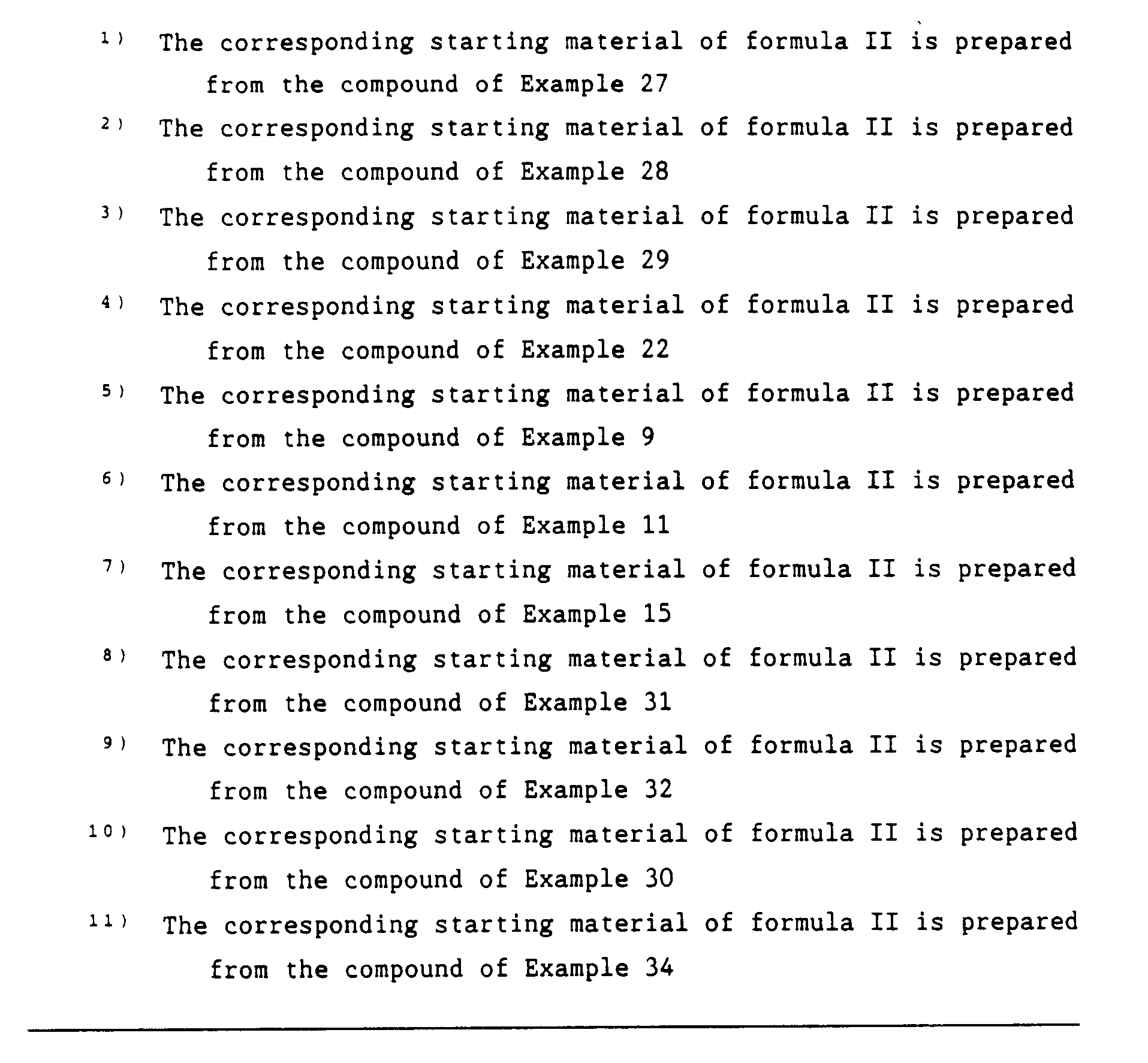


- To a solution of 500 mg H-Ala-Pec-MeVal-Val-MeAsp(β-O-tert-butyl)-MeIle-MeIle-Gly-MeVal-Tyr(Me)-OH in 1.5 l of dichloromethane are added under energetic stirring 156 mg pentafluorophenol and 176 mg dicyclohexylcarbodiimide. After 2 days at room temperature the soluton is concentrated to a volume of 150 ml and then washed successively with 0.2 N sodium hydroxide, water and saturated sodium chloride soluton, dried over sodium sulfate and the remaining solvent evaporated under reduced pressure. The residue is digested with diethylether, filtered and washed twice with diethylether. The ether solution is evaporated to dryness and the resultant solid chromatographed over silicagel, using ethyl acetate as an eluant. The title compound is obtained (colourless solid):
NMR:
Main component: 1.32 (tBu), 2.64, 2.77, 2.92, 2.97, 3.12 (N-CH₃), 3.79 (OCH₃). - The starting material (a compound of formula II) is obtained as follows:
- 5.3 g H-D-Lact-Pec-MeVal-Val-MeAsp(β-O-tert-butyl)-MeIle-MeIle-Gly-MeVal-Tyr(Me)-OH (starting material for Example 52) are reacted with dimethylformamide dibenzylacetal analogously to Example 2. The crude product is purified by chromatography over silicagel using hexane/ethyl acetate 1:5 as an eluant. The product is a colourless foam.
- 4.5 g product of step a) above are dissolved in 35 ml of pyridine, cooled to 0° and reacted with 0.56 ml of methanesulfonic acid chloride added dropwise. After 3.5 hours at 0° the pyridine is removed under reduced pressure, the residue extracted with ethyl acetate and water. The organic phase is washed successively with 1 N hydrochloric acid, 2 % sodium hydrogen carbonate solution and saturated sodium chloride solution, dried over sodium sulfate, and the solvent is evaporated under reduced pressure. The resultant residue is washed with diethylether and filtered, and a solid product is obtained.
- 1.24 g sodium azide is added to a solution of 5.3 g product of step b) above in 55 ml of dimethylformamide and the reaction mixture is stirred for 6 hours at 60°. After cooling to room temperature the mixture is diluted with ethyl acetate, washed 5 times with water and once with saturated sodium chloride solution, dried over sodium sulfate, and the solvent is removed under reduced pressure. The residue is chromatographed over silicagel using dichloromethane/ethyl acetate 1:2 to 1:5 as an eluant. The product is a colourless resin (IR: 2120 cm⁻¹).
- 1.2 g product of step c) above is dissolved in 50 ml of ethanol and hydrogenated for 2.5 hours at normal pressure in a hydrogen atmosphere using 10 % palladium over charcoal as an catalyst. The product is obtained after removal of the catalyst by filtration and solvent evaporation under reduced pressure is a solid.
- H-D-Ala-Pec-MeVal-Val-MeAsp(β-O-tert-butyl)-MeIle-MeIle-Gly-MeVal-Tyr(Me)-OH is cyclized in a manner analogous to Example 64. The title compound is obtained as colourless foam:
NMR:
2.5:1 mixture of conformers
Main component: 1.32 (tBu), 2.79, 2.80, 2.88, 2.96, 3.06 (N-CH₃), 3.76 (OCH₃). - The starting material (a compound of formula II) is obtained as follows:
- To a solution of 3 g product of step b) under Example 64 in 50 ml of dry toluence is added with stirring 1.22 g triphenylphosphine, 1.18 g zinc tosylate and 0.78 ml of azidodicarboxylic acid diethyl ester. After 2 hours a further 1.22 g triphenylphosphine and 0.78 ml of ester is added. After 3 days at room temperature the solvent is removed under reduced pressure and the residue is chromatographed over silicagel using hexane/ethyl acetate 1:2 to 1:5 as an eluant. The product is a colourless foam.
- The product of step a) above is reacted with sodium azide analogously to step c) under Example 64. The product is a colourless foam (IR: 2120 cm⁻¹).
- The product of step b) above is hydrogenated analogously to step d) under Example 64. The product is a colourless foam.
- H-D-Ala-Ala-Pec-MeVal-Val-MeAsp(β-O-tert-butyl)-MeIle-MeIle-Gly-MeVal-Tyr(Me)-OH is cyclised in a manner analogous to Example 64. The title compound is obtained (colourless foam);
NMR:
Main component: 1.23 (CH₃(Ala)), 1.33 (tBu), 2.72, 2.86, 2.88, 3.10, 3.20 (N-CH₃), 3.76 (OCH₃), 4.60, 4.95 (α-H(Ala)). - The starting material (a compound of formula II) is obtained as follows:
- To a solution of 2.6 g H-Ala-Pec-MeVal-Val-MeAsp(β-O-tert-butyl)-MeIle-MeIle-Gly-MeVal-Tyr(Me)-OH [see step d) under Example 64] in 20 ml of dimethylformamide are added 0.28 ml of triethylamine and 779 ml 4-nitrobenzyloxycarbonyl-D-alanyl-4-nitrophenylester and the reaction mixture is stirred for 4 days. The mixture is then diluted with ethyl acetate and agitated with 0.02 N hydrochloric acid. The organic phase is washed 5 times with water and once with saturated sodium chloride solution, dried over sodium sulfate, and the solvent is evaporated under reduced pressure. The residue is chromatographed over silicagel using dichloromethane/methanol 9:1 to 4:1 as an eluant. The product is a colourless foam.
- The product of step a) above is hydrogenated analogously to Example 64, step d). The product is colourless (M.P. 182°).
- H-D-Ala-D-Ala-Pec-MeVal-Val-MeAsp(β-O-tert-butyl)-MeIle-MeIle-Gly-MeVal-Tyr(Me)-OH is cyclised in a manner analogous to Example 64. The title compound is obtained (colourless foam):
NMR:
Main component: 1.34 (tBu), 2.78, 2.85, 2.92, 3.01, 3.15 (N-CH₃), 3.78 (OCH₃). - The starting material (a compound of formula II) is obtained as follows:
- H-D-Ala-Pec-MeVal-Val-MeAsp(β-O-tert-butyl)-MeIle-MeIle-Gly-MeVal-Tyr(Me)-OH [see step c) under Example 65] is reacted analogously to Example 64, step a). The product is a colourless foam.
- The product of step a) above is hydrogenated analogously to Example 64, step d). The product is a colourless foam.
- H-D-Lact-Pec-MeVal-Val-MeAsp(β-O-tert-butyl)-MeIle-MeIle-Gly-MeVal-Tyr(tert-butyldimethylsilyl)-OH is reacted analogously to Example 52. The compound obtained, cyclo-[Pec-MeVal-Val-MeAsp(β-O-tert-butyl)-MeIle-MeIle-Gly-MeVal-Tyr(tert-butyldimethylsilyl)-L-Lact] (colourless foam) is deprotected analogously to Example 83. The title compound is obtained (colourless solid):
NMR:
6:1 mixture of conformers
Main component: 1.23 (d, J = 7 Hz, 10-Hβ), 1.34 (tBu), 2.76, 2.85, 2.96, 2.97, 2.99 (N-CH₃), 5.57 (q, J = 7 Hz, 10-Hα), 6.23 (dd, J₁ = 4 Hz, J₂ = 10 Hz, 4-Hα). - The starting material (a compound of formula II) is obtained as follows:
- To a solution of Cyclo-[Pec-MeVal-Val-MeAsp(β-O-tert-butyl)-MeIle-MeIle-Gly-MeVal-Tyr-D-Lact] and 0.534 g imidazol in 50 ml of dry dimethylformamide is added under stirring 1.15 g tert-butyldimethylchlorosilane and the reaction mixture is stirred for 5 hours at 80°. After cooling to room temperature the solution is poured onto ice-water and the precipitate filtered off. The precipitate is washed with water, dried and treated with petroleum ether. The product obtained is a colourless solid.
- The product of step a) above is reacted as described under Example 52 for the preparation of the starting material therefor. The product is a colourless foam.
- The compounds of Examples 2 to 50 and 69 to 83 can also be obtained according to process f) (ring closure) in a manner analogous to Examples 52 and 64 to 68, whereby for the compounds wherein R₄ is carboxy the carboxy group is transiently protected.
- 38 mg Cyclo-[Pec-MeVal-Val-MeAsp(β-O-benzyl)-MeIle-MeIle-Gly-MeVal-Tyr(allyl)-D-Lact] (see Example 41) are dissolved in 3 ml of ethanol and after addition of a spoontip of 10 % palladium on charcoal hydrogenation is effected at room temperature and normal pressure. After 4 hours the catalyst is filtered off and the filtrate is concentrated. The residue is chromatographed over silicagel using hexane/ethyl acetate as an eluant. The title compound is obtained (colourless foam):
NMR:
1:1 mixture of conformers
2.70, 2.78, 2.78, 2.82, 2.96, 3.00, 3.04, 3.07, 3.07, 3.36 (N-CH₃), OCH₃ is missing, 5.01, 5.09 (COOH₂-), 7.20-7.40 (Ar). - The compound of Example 12 can also be obtained according to process g) (hydrogenation) in a manner analogous to Example 69.
- Chloromethylene-dimethylammonium chloride (prepared from 0.05 ml of dimethylformamide and 0.25 ml of oxalyl chloride in 15 ml of dichloromethane) and 375 mg first title compound of Example 1 are stirred for one hour at 0 to 4° in 5.5 ml of tetrahydrofuran and 1.5 ml of acetonitrile. A solution of 76 mg sodium boranate in 4 ml of dimethylformamide is then added dropwise at -70° and stirring is pursued for 1.5 hour at -70°. The temperature of the solution is allowed to rise to -10°, 4 ml of saturated aqueous ammonium chloride solution are added and the solution is extracted between water and acetic acid ethyl ester. The organic phase is evaporated to dryness. The crude product is chromatographed over silicagel using acetic acid ethyl ester as an eluant. The title compound is obtained (amorphous):
NMR:
3:1 mixture of conformers
Main component: 2.50, 2.78, 2.87, 2.95, 3.44 (N-CH₃), 3.78 (OCH₃). - The title compound (colourless solid) is obtained in a manner analogous to Example 70. The course of the reaction is followed using thin-layer chromatography in order to avoid over-reduction to the alcohol.
NMR:
1.5:1 mixture of conformers
Main component: 2.63, 2.78, 3.02, 3.04, 3.39 (N-CH₃), 3.81 (OCH₃), 9.70 (dd, J₁ = 3.5 Hz, J₂ = 1.5 Hz, CHO).
Other component: 2.69, 2.78, 2.88, 2.90, 3.08 (N-CH₃), 3.75 (OCH₃), 9.75 (d, br, J = 3 Hz, CHO). - 123 mg title compound of Example 70 are stirred at room temperature with 0.1 ml of acetic acid anhydride and 0.1 mg dimethylaminopyridine for 15 hours. The resultant mixture is concentrated and treated with 0.1 N HCl/acetic acid ethyl ester. The title compound (M.P. 184-195°; white crystals) is recovered from the organic phase after drying (MgSO₄) and solvent evaporation:
NMR:
4:1 mixture of conformers
Main component: 1.38 (10-CH₃), 1.97 (CH₃CO), 2.58, 2.77, 2.95, 3.00, 3.37 (N-CH₃), 3.79 (OCH₃).
Other component: 1.41 (10-CH₃), 2.04 (CH₃CO), 2.73, 2.77, 2.80, 2.86, 3.09 (N-CH₃), 3.74 (OCH₃). - 624 mg title compound of Example 72, 0.5 mg dimethylaminopyridine and 0.44 mg mesyl chloride are stirred for 3 hours at 0° to 5° in 9 ml of pyridine. The solution is evaporated to dryness, the residue treated with 5 ml of water and the solution again evaporated to dryness. The residue is stirred for 15 hours at room temperature with 155 mg sodium azide in 9 ml of dimethylformamide. The mixture is then treated with acetic acid ethyl ester/water, the organic phase is dried (MgSO₄) and the solvent evaporated. The crude product is purified by chromatography over silicagel using acetic acid ethyl ester as an eluant. The title compound is obtained (colourless crystals, M.P. 216-223°).
- 111 mg title compound of Example 72 and 154 mg tosyl chloride are stirred for 64 hours at 50° to 60° in 7 ml of pyridine. 10 ml of water are added, the solution is concentrated under reduced pressure to about 2 to 3 ml and extracted with acetic acid ethyl ester. The organic phase is successively washed with water, 0.1 N HCl and saturated aqueous NaHCO₃ solution, dried over MgSO₄ and evaporated to dryness. The resultant crude product is purified by chromatography over silicagel. The title compound is obtained (colourless resin):
NMR:
2:1 mixture of conformers
Main component: 2.60, 2.78, 2.93, 3.02, 3.37 (N-CH₃), 3.80 (OCH₃).
Other component: 2.72, 2.78, 2.81, 2.86, 3.08 (N-CH₃), 3.74 (OCH₃). - The following compounds of formula I are obtained in a manner analogous to Example 72 [process variant i); acylation] starting from the title compound of Example 70 (R₁, R₂, R₃, R₅, X, Y, C₁₀ = as for 1st compound of Example 1):

- To 337 mg cyclo-[Pec-MeVal-Val-MeAsp-MeIle-MeIle-Gly-MeVal-Tyr(Me)-D-Lact] (first title compound of Example 1) and 317 mg 18-Crown-6 (1,4,7,10,13,16-hexaoxacyclooctadecane) dissolved in 10 ml of dry tetrahydrofuran is added under argon at -20° potassium hydride (240 mg of a commercial 20 % suspension in oil are made essentially oil-free by digestion with hexane). After 5 minutes of stirring at -20°, 0.25 ml of methyl iodide is added dropwise at -20°. After 48 hours at -20° the reaction mixture is carefully poured onto ice-water, acidified with 0.1 N hydrochloric acid and extracted with ethyl acetate. The organic phase is washed with water, dried over sodium sulfate and the solvent is removed under reduced pressure. The crude product is chromatographed over silicagel using ethyl acetate as an eluant. The title compound is obtained (colourless foam):
NMR:
Single component: 2.46, 2.73, 2.76, 2.83, 2.91, 2.97, 3.03, 3.09 (N-CH₃), 3.62 (COOCH₃), 3.81 (OCH₃). - The following compound of formula I is obtained in a manner analogous to Example 77, starting from the corresponding compound of formula I wherein R₅ is hydrogen [R₁, R₂, X, Y, C₁₀ = as for 1st compound of Example 1; R₃ = p-methoxyphenyl]:

- 900 mg Cyclo-[Pec-MeVal-Val-MeAsp(β-O-phenylselenyl)-MeIle-MeIle-Gly-MeVal-Tyr(Me)-D-Lact] are heated to boiling temperature in 36 ml of xylene and the mixture is reacted with 0.325 ml of tributyl tin hydride and 1 ml of azoisobutyronitrile. After 2 hours of boiling under reflux the solution is evaporated and the residue chromatographed over silicagel using dichloromethane/diisopropylether/methanol 10:4:1 as an eluant. The title compound is obtained (colourless crystals from hexane/ethyl acetate; M.P. 158°).
- The starting material is obtained as follows:
To a solution of chloromethylene-dimethylammonium chloride (prepared from 0.38 ml of dimethylformamide and 0.14 ml of oxalyl chloride in 2.5 ml of acetonitrile) is added dropwise at -30° 337 mg first title compound of Example 1 dissolved in 2.5 ml of acetonitrile, followed by 0.75 ml of pyridine and 1.5 ml of a 0.35 M solution of phenylselenylhydride in benzene. The temperature is allowed to rise to -10° and stirring is continued for 18 hours at that temperature. The reaction mixture is added onto ice-cold 0.1 N hydrochloric acid and extracted thrice with ethyl acetate. The organic phase is washed 5 times with water, dried over sodium sulfate and the solvent is evaporated under reduced pressure. The crude product is chromatographed over silicagel using dichloromethane/diisopropylether/methanol 10:4:1 as an eluant. Cyclo-[Pec-MeVal-Val-MeAsp(β-O-phenylselenyl)-MeIle-MeIle-Gly-MeVal-Tyr(Me)-D-Lact] is obtained (colourless solid). - 0.11 g title compound of Example 71 and 0.05 g tert-butoxycarbonylmethylentriphenylphosphorane are stirred for 20 hours in 4 ml of toluene at room temperature. The solvent is evaporated under reduced pressure. The residue is chromatographed over silicagel using hexane/ethyl acetate 1:4 as an eluant. The title compound is obtained (colourless solid; M.P. 176-178°);
NMR:
3:1 mixture of conformers
Main component: 1.39 (tBu), 2.65, 2.78, 3.01, 3.04, 3.38 (N-CH₃), 3.79 (OCH₃), 5.83 (d, J = 15 Hz, olefinic H).
Other component: 1.40 (tBu), 2.71, 2.79, 2.83, 2.85, 3.08 (N-CH₃), 3.73 (OCH₃), 5.80 (d, J = 15 Hz, olefinic H). - 0.035 g of title compound of Example 80 is dissolved in 3 ml of ethanol and treated with a spoontip of palladium 10 % on charcoal. Hydrogenation is effected for 18 hours at normal pressure under hydrogen atmosphere. The catalyst is filtered off, the solution evaporated to dryness. The residue is purified by treatment with diethylether/petroleum ether, the title compound is obtained (colourless solid; M.P. 159-162°);
NMR:
4:1 mixture of conformers
Main component: 1.39 (tBu), 2.59, 2.79, 2.96, 2.99, 3.40 (N-CH₃), 3.79 (OCH₃).
Other component: 1.39 (tBu), 2.69, 2.84, 2.86, 3.02, 3.11 (N-CH₃), 3.74 (OCH₃). -

- 0.22 g Cyclo-[Pec-MeVal-Val-MeAsp[β-L-valinol(O-tert-butyl-dimethylsilylether)amide]-MeIle-MeIle-Gly-MeVal-Tyr(Me)-D-Lact] (compound of Example 34) are dissolved in 10 ml of acetonitrile, the solution is cooled to 0° and treated with 0.5 ml of 40 % aqueous hydrofluoric acid solution. After one hour the temperature is allowed to rise to room temperature and left at that temperature until the starting material has been consumed (control via thin-layer chromatography). The reaction mixture is then poured onto ice-water, extracted thrice with ethyl acetate, the organic phase is washed once with saturated sodium hydrogen carbonate solution and thrice with water, dried over sodium sulfate and the solvent is evaporated under reduced pressure. The residue is purified by chromatography over silicagel using hexane/ethyl acetate 1:5 as an eluant. The title compound is obtained (colourless solid; M.P. 161-163°);
NMR:
3:1 mixture of conformers
Main component: 2.68, 2.78, 2.84, 2.93, 3.17 (N-CH₃), 3.77 (OCH₃).
Other component: 2.58, 2.79, 2.99, 3.00, 3.43 (N-CH₃), 3.81 (OCH₃). - The following compound of formula I is obtained in a manner analogous to Example 82 starting from the compound of Example 63 [R₁, R₂, R₅, X, Y = as for 1st compound of Example 1;
R₃ = p-methoxyphenyl; C₁₀ has the L-configuration]:
- The compounds of the invention possess pharmacacological activity. They are, therefore, indicated for use as pharmaceuticals.
- They possess anti-fungal activity. They are thus indicated for use in treating diseases and infections caused by yeasts and yeast-like fungi.
- In particular they show inhibitory activity in vitro and in vivo against various yeasts and yeast-like fungi but no activity could be determined against suitable representatives of gram-positive and gram-negative bacteria employing known methods.
- In series dilution tests effected in malt extract medium with incubation at 27°C for 48 to 72 hours the minimum inhibitory concentrations (MIC) are from about 1.5 mg/l to about 25 mg/l.
- This activity can also be demonstrated in vivo on rats intravaginally infected with Candida. In this test ovarectomised rats which have been pretreated with oestradiol benzoate are infected vaginally and then treated parenterally or perorally on 2 successive days. The success of treatment is determined by the presence or absence of fungus in the vagina. Systemic activity is detected after i.p. and p.o. treatment in a dosage range of from about 25 mg/kg to about 300 mg/kg body weight. Local treatment results in cure at a concentration of from about 0.1 % to about 1 %.
- For the above-mentioned use the dosage will of course vary depending upon the compound employed, mode of administration and condition to be treated. With larger mammals, satisfactory results are generally obtained when administering at a daily dosage of from about 300 mg to about 3000 mg, conveniently given in unit dosages one to four times daily or in sustained release form.
- Further, the compounds of the invention possess activity in increasing sensitivity to, or in increasing the efficacy of, chemotherapeutic drug therapy. They are thus indicated for use in reversing chemotherapeutic drug resistance of varying types, e.g. acquired or innate, or in increasing sensitivity to administered drug therapy. Forms of chemotherapeutic drug therapy to which the present invention is applicable include, for example, anti-parasitic, e.g. anti-viral, anti-bacterial, anti-fungal or anti-protozoal chemotherapy such as e.g. in the therapy of malaria, and in particular anti-cancer or anti-tumor, anti-neoplastic or cytostatic chemotherapy.
- They are accordingly indicated for use e.g. as a means of reducing regular chemotherapeutic dosage levels, for example in the case of anti-neoplastic or cytostatic drug therapy, as a means of decreasing overall drug toxicity and, more especially, as a means of reversing or reducing resistance, including both inherent and acquired resistance to chemotherapy.
- This activity is evidenced in the following test methods:
- In the above test model the compounds of the invention are effective in increasing sensitivity to CTDS (cancer therapeutic drug substances), e.g. DR (daunorubicin), VC (vincristine), AM (adriamycin), etc. at a dosage of from 0.1 »g/ml to 1.0 »g/ml or from 1 »M to 5 »M.
- Results obtained show no significant difference in mean survival time between groups 1 (no drug-substance therapy/ no test substance), 2 (drug-substance therapy/ no test substance) and 3 (no drug-substance therapy/ test substance). In group 4 (drug-substance therapy + test substance) receiving test substance at dosages of test substance of from 10 mg/kg to 100 mg/kg p.o. daily, substantial increase in survival time (e.g. of the order of 2 to 3 fold or greater) as compared with both groups 2 and 3 is observed.
- Dosages to be employed in practicing the above reversal of chemotherapeutic drug resistance use, of course, vary depending e.g. on the compound used, the condition to be treated (for example the disease type and the nature of resistance), the effect desired and the mode of administration. In general, however, satisfactory results are obtained on administration orally at dosages of the order of from about 1 mg/kg to about 20 mg/kg daily or up to 50 mg/kg daily, e.g. of the order of from about 5 mg/kg to about 10 mg/kg or up to 15 mg/kg daily administered once or in divided doses two to four times per day, or on administration parenterally, e.g. intravenously, for example by i.v. drip or infusion, at dosages of the order of from about 0.5 mg/kg to about 7.5 mg/kg or up to 10 mg/kg daily, e.g. of the order of from 1.5 mg/kg or 2.0 mg/kg up to 5.0 mg/kg daily. Suitable daily dosages in the large mammal are of the order of from about 50 mg to about 1000 mg or up to 2500 mg p.o., e.g. of the order of from about 250 mg to about 500 mg or up to 600 mg p.o., or of the order of from about 25 mg to about 375 mg or up to 500 mg i.v., e.g. of the order of from about 75 mg to about 100 mg or up to 250 mg i.v.
- The preferred dosage range is from about 10 mg/kg to about 50 mg/kg p.o. daily.
- Whilst the chemotherapeutic drug resistance reversing activity is the main activity of the compounds of the invention and the compounds of the invention normally possess the type of activity which is usually associated with compounds of the structural class of cyclosporins, namely immunosuppressant activity, only to an insignificant degree or not at all, some of the compounds of the invention may possess some such immunosuppressant and anti-inflammatory properties.
- This activity may e.g. be determined according to the test methods described in EP 315978.
- These particular compounds of the invention are therefore indicated as immunosuppressant and antiinflammatory agents for use in the prevention and treatment of conditions requiring immunosuppression and of inflammatory conditions.
- The compounds of the invention may be administered systemically or topically, by any conventional route, in particular enterally, e.g. orally, e.g. in the form of tablets or capsules, or topically, e.g. in the form of lotions, gels or creams. A tablet contains e.g. about 50 parts (w/w) of a compound of the invention and about 200 parts (w/w) of an inert carrier or diluent.
- Pharmaceutical compositions comprising a compound of the invention as defined above in association with at least one pharmaceutical acceptable carrier or diluent may be manufactured in conventional manner by mixing with a pharmaceutically acceptable carrier or diluent.
- The acute toxicity of the compounds of the invention in the mouse is about 100 mg/kg p.o.
- Preferred in the above reversal of chemotherapeutic drug resistance reversing use are compounds possessing a relatively low level or no immunosuppressant and anti-inflammatory activity, e.g the compounds of formula I wherein R₄ is other than carboxy. Particularly preferred in this indication are the compounds of Example 22 and especially of Example 52, i.e.cyclo-[Pec-MeVal-Val-MeAsp(β-O-tert-butyl)-MeIle-MeIle-Gly-MeVal-Tyr(Me)-L-Lact].
- Preferred in the above anti-fungal use are especially the compounds of formula Ia. Particularly preferred in this indication are the title compounds of Example 1, especially the first title compound of Example 1.
when R₅ is methyl,
then R₁ and R₂ are methyl and R₄ is other than carboxy.
when R₅ is methyl
then R₁ and R₂ are methyl and R₄ is other than carboxy.
when R₅ is methyl,
then R₁ and R₂ are methyl and R₄s is other than carboxy.
Claims (11)
- A process for the preparation of a pipecolic acid-containing cyclopeptolide wherein the peptidic backbone includes at least 9 α-amino acid residues joined together by peptide bonds, comprising cultivation of an appropriate pipecolic acid-containing peptolide-producing microorganism strain followed by isolation and where indicated appropriate chemical derivation.
- A process according to claim 1 for the prepration of a compound of formula I

one of R₁ and R₂ is methyl and the other is hydrogen or methyl;R₃ is: cyclohexyl; cyclohexenyl; cyclohexadienyl; or phenyl substituted in the para position by a group -OR₆ wherein -OR₆ is hydroxy, alkoxy, alkenyloxy, acyloxy, geranyloxy,
alkoxycarbonyloxy, aralkoxycarbonylmethoxy, aralkoxy or
aralkoxy substituted by a lower alkyl group or halogen;R₄ is: hydrogen; carboxy; alkoxycarbonyl optionally mono- or plurisubstituted by aryl; alkenyloxycarbonyl; alkeninyloxycarbonyl; benzyloxycarbonyl; aryloxycarbonyl; trimethylsilylethoxycarbonyl; formyl; alkylcarbonyl; aralkylcarbonyl;
a group of formula -CONHCH(R₇)COOR₈ or R₇ is the side chain moiety of a naturally-occurring amino acid andR₈ is alkyl optionally mono- or plurisubstituted by aryl; alkenyl; alkeninyl; benzyl; aryl; or trimethylsilylethyl; a group selected from the following six ring structures: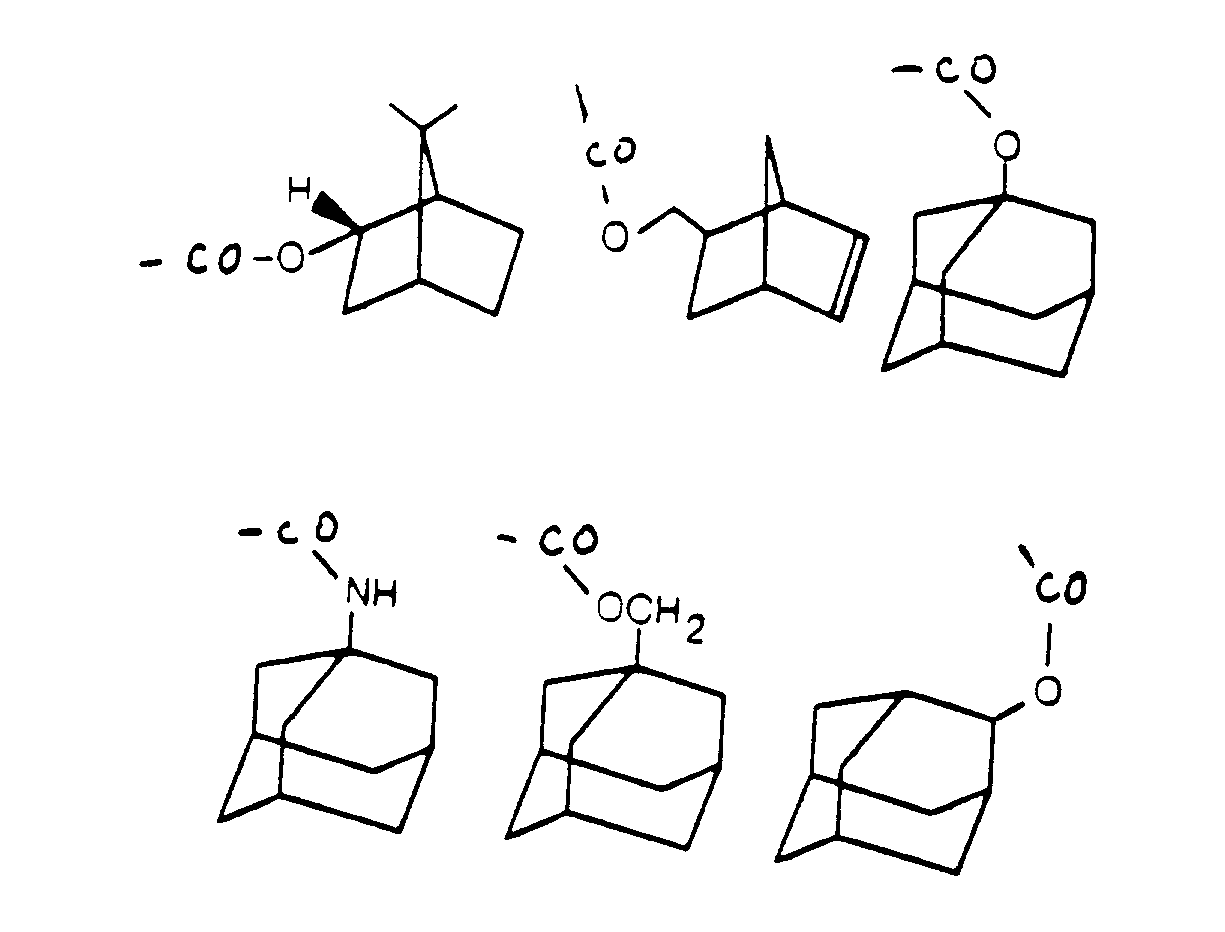
eitherR₉ and R₁₀ independently are: benzhydryl; alkyl; aralkoxycarbonylalkyl; trimethylsilylmethyl; furylmethyl; alkenyl; hydroxyalkyl; alkoxyalkyl; alkoxycarbonylalkyl; aryl; aryl substituted by an alkyl or an amino moiety or by halogen; trialkylsilyloxyalkyl; alkoxy; hydrogen; a group selected from the following five ring structures:
orR₉ and R₁₀ together with the nitrogen atom to which they are bound form a saturated, optionally substituted 5- or 6-membered ring;all three R₅ groups are identical and are hydrogen or methyl;
hydroxymethyl; alkoxymethyl; acyloxymethyl optionally substituted in the acyl part; dialkylaminomethyl; diacylaminomethyl optionally substituted in the acyl part(s); acyl(alkyl)aminomethyl optionally substituted in the acyl part; sulfhydrylmethyl; alkylthiomethyl; acylthiomethyl optionally substituted in the acyl part; alkylmethyl; alkenylmethyl; azidomethyl; methyl; halogenomethyl; a group of formula X is oxygen or imino; andY is a direct bond or a group -CONHCH(CH₃)-;with the proviso that
when R₅ is methyl,
then R₁ and R₂ are methyl and R₄ is other than carboxy,
in free form or where appropriate in salt form,
comprisinga) for the preparation of a compound of formula Ia R₁ and R₂ are as defined in this claim,cultivating an appropriate microorganism strain and isolating the compounds of formula Ia from the resultant culture;b) for the preparation of a compound of formula Ib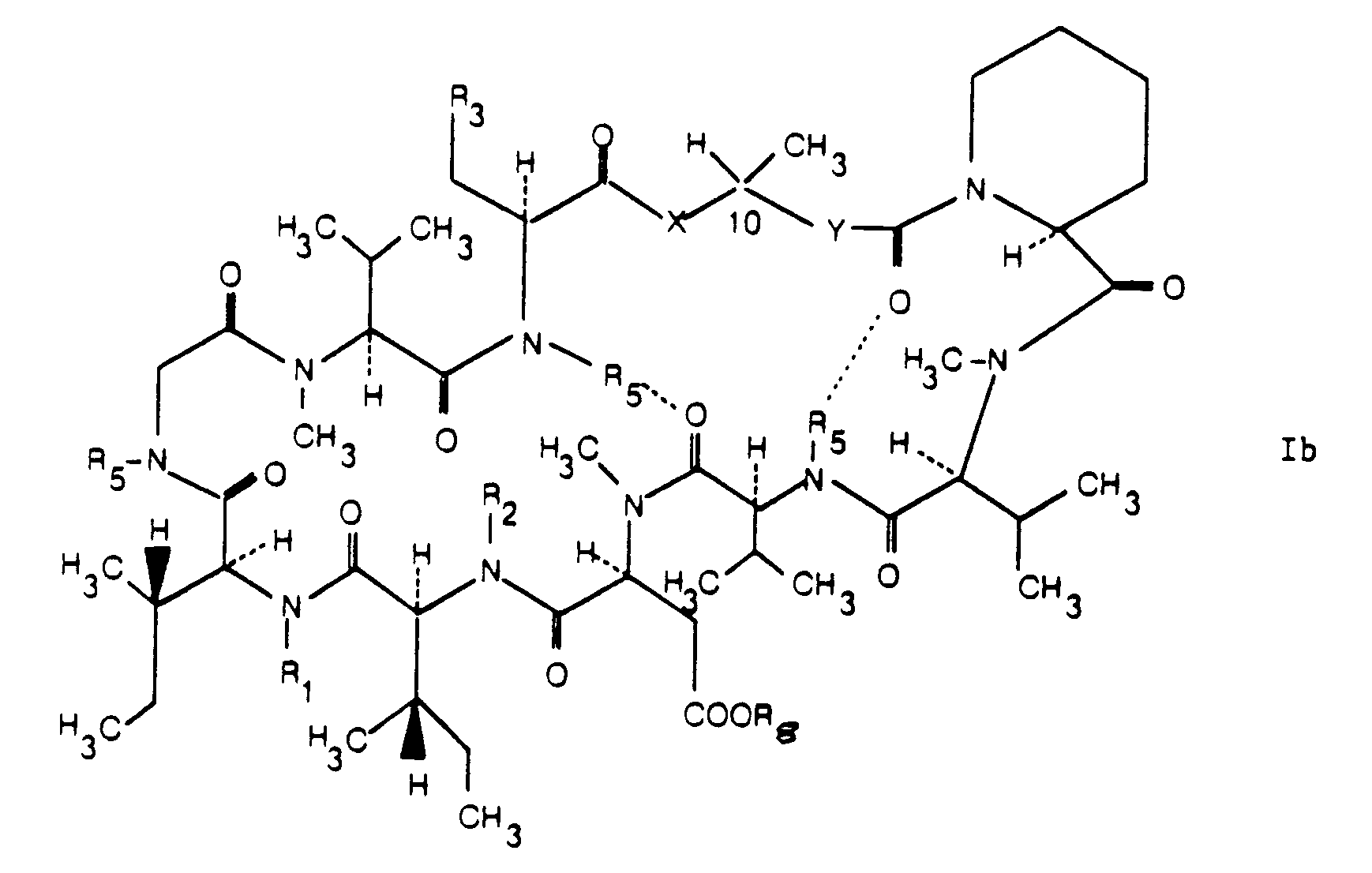
appropriately esterifying a corresponding compound of formula Ic c) for the preparation of a compound of formula Id
appropriately amidating a corresponding compound of formula Ic;d) for the preparation of a compound of formula Ie
 R₆' with the exception of hydrogen has the significance indicated in claim 3 for R₆ andthe remaining substituents are as defined in this claim;e) for the preparation of a compound of formula Ig
appropriately introducing a group R₆' as defined in this claim into a corresponding compound of formula Ie;f) for the preparation of a compound of formula Ih (= I)
appropriately cyclising a corresponding compound of formula II g) for the preparation of a compound of formula Ij
 R₆'' is alkylmethyl of altogether at least 3 carbon atoms and the remaining substituents are as defined in this claim,appropriately hydrogenating a corresponding compound of formula Ik
 R₆''' is alkenylmethyl of altogether at least 3 carbon atoms and the remaining substituents are as defined in this claim;h) for the preparation of a compound of formula Im
 R₁₁ is formyl or hydroxymethyl and the remaining substituents are are defined in this claim,appropriately reducing a corresponding compound of formula Ic;i) for the preparation of a compound of formula In
 R₁₂ is optionally substituted acyl and the remaining substituents are as defined in this claim,appropriately acylating a corresponding compound of formula Io
 j) for the preparation of a compound of formula Ip
appropriately converting to the azide a corresponding compound of formula Io;k) for the preparation of a compound of formula Iq Hal is halogen andappropriately halogenating a corresponding compound of formula Io;
the remaining substituents are as defined in this claim,m) for the preparation of a compound of formula Ir R₄' is alkoxycarbonyl optionally mono- or plurisubstituted by aryl; alkenyloxycarbonyl; alkeninyloxycarbonyl; benzyloxycarbonyl; aryloxycarbonyl; or trimethylsilylethoxycarbonyl andthe remaining substituents are as defined in this claim, appropriately permethylating a corresponding compound of formula Is
 R₄'' is carboxy or a group R₄' as defined in this claim and the remaining substituents are as defined in this claim;n) for the preparation of a compound of formula It
appropriately decarboxylating a corresponding compound of formula Ic;o) for the preparation of a compound of formula Iu R₄''' is 2-(alkoxycarbonyl)ethenyl and the remaining substituents are as defined in this claim,appropriately reacting a corresponding compound of formula Iv
with a corresponding compound having an activated methylene group; orp) for the preparation of a compound of formula Iw R₄iv is 2-(alkoxycarbonyl)ethyl and the remaining substituents are as defined in this claim,appropriately hydrogenating a corresponding compound of formula Iu;
whereby for all above process variants and as a further process variant any hydroxy and/or carboxy group(s) may be in protected form and thereafter the protecting group(s) split off,
and recovering the resultant compound of formula I in free form or where appropriate in salt form. - A process according to claim 2 for the preparation of a compound of formula Ide
 R₁ and R₂ are as defined in claim 2;R₃de with the exception of aralkoxy substituted by a lower alkyl group or halogen has the significance indicated in claim 2 for R₃;R₄de has the significance indicated in claim 2 for R₄, with the following exceptions:
hydrogen; alkoxycarbonyl mono- or plurisubstituted by aryl; a group -CONR₉dR₁₀d wherein
eitherR₉d and R₁₀d independently are: aralkoxycarbonylalkyl; alkoxycarbonylalkyl; unsubstituted aryl other than phenyl; aryl substituted by an alkyl or an amino moiety or by halogen; trialkylsilyloxyalkyl; or a group selected from the following five ring structures: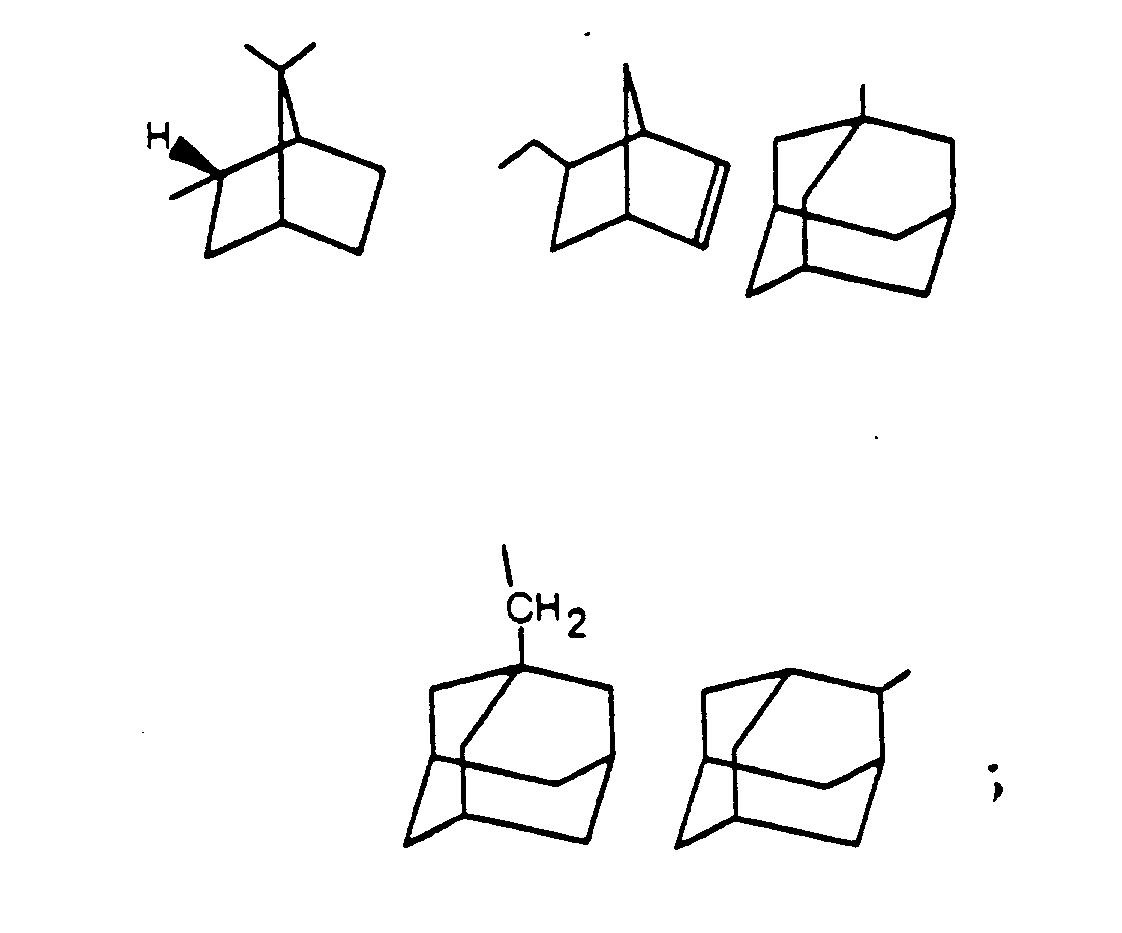 R₉d and R₁₀d together with the nitrogen atom to which they are bound form a saturated, optionally substituted 5- or 6-membered ring;
acyloxymethyl substituted in the acyl part; diacyloxyaminomethyl substituted in the acyl part(s); acyl(alkyl)aminomethyl substituted in the acyl part; acylthiomethyl substituted in the acyl part;
2-(alkoxycarbonyl)ethyl; or
2-(alkoxycarbonyl)ethenyl;R₅, X and Y are as defined in claim 2,with the proviso that
when R₅ is methyl
then R₁ and R₂ are methyl and R₄ is other than carboxy,
in free form or where appropriate in salt form. - A process according to claim 2 for the preparation of a compound according to claim 3 with the further proviso that
whenR₃de is para-methoxyphenyl,R₄de is carboxyl,R₅ is hydrogen,X is oxygen andY is a direct bond,then the carbon atom in the 10 position in formula I is in the L-configuration. - A process according to claim 2 for the preparation of a compound of formula Iss
 R₁, R₂, R₅, X and Y are as defined in claim 2;R₃s is phenyl substituted in the para position by a group -OR₆s wherein -OR₆s is selected from hydroxy, alkoxy of 1 to 4 carbon atoms, alkenyloxy of 3 to 5 carbon atoms wherein the double bond is separated from the oxygen atom by at least 2 carbon atoms, acyloxy of 2 to 5 carbon atoms, geranyloxy, phenylalkoxycarbonylmethoxy of 7 to 9 carbon atoms in the phenylalkoxy part, phenylalkoxy of 7 to 9 carbon atoms or phenylalkoxy of 7 to 9 carbon atoms monosubstituted by halogen of atomic number of from 9 to 35;R₄s is: hydrogen; carboxy; alkoxycarbonyl of 2 to 10 carbon atoms; alkenyloxycarbonyl of 4 to 10 carbon atoms wherein the double bond is separated from the oxygen atom by at least 2 carbon atoms; benzyloxycarbonyl; benzhydryloxycarbonyl; phenoxycarbonyl; trimethylsilylethoxycarbonyl; formyl; a group of formula -CONHCH(R₇s)COOR₈s or
 R₇s is hydrogen, isopropyl or -(CH₂)₃- andR₈s is alkyl of 1 to 4 carbon atoms or benzyl; a group selected from the following five ring structures:
either one of R₉s and R₁₀s is hydrogen or alkyl of 1 to 4 carbon atoms and the other is: benzhydryl; alkyl of 1 to 6 carbon atoms; phenylalkoxycarbonylalkyl of 6 to 9 carbon atoms in the phenylalkoxy part and of 2 to 4 carbon atoms in the carbonylalkyl part; trimethylsilylmethyl; furylmethyl; alkenyl of 3 to 5 carbon atoms wherein the double bond is separated from the nitrogen atom by at least 2 carbon atoms; hydroxyalkyl of 2 to 6 carbon atoms wherein the hydroxy group is separated from the nitrogen atom by at least 2 carbon atoms; alkoxycarbonylalkyl of 1 to 4 carbon atoms in the alkoxy part, of 2 to 4 carbon atoms in the carbonylalkyl part and wherein the oxygen atoms are separated from the nitrogen atom by at least 2 carbon atoms; phenyl optionally monosubstituted by halogen of atomic number of from 9 to 35; trialkylsilyloxyalkyl of 1 to 4 carbon atoms in the alkyl parts bound to the silicium atom, of 2 to 6 carbon atoms in the alkylene part and wherein the oxygen atom is separated from the nitrogen atom by at least 2 carbon atoms; 1-adamantyl; or dialkylaminoalkyl of independently 1 to 4 carbon atoms in the alkyl parts, of 2 to 4 carbon atoms in the aminoalkyl part and wherein the nitrogen atoms are separated by at least 2 carbon atoms;
orR₉s and R₁₀s together with the nitrogen atom to which they are bound form a 1-piperidinyl ring;with the proviso that,
hydroxymethyl; acyloxymethyl of 1 to 4 carbon atoms in the acyloxy part and optionally substituted at the ω carbon atom by carboxy or 2-carboxyphenyl; azidomethyl; halogenomethyl wherein the halogen atom is of atomic number of from 9 to 35; 2-(alkoxycarbonyl)ethyl of 1 to 4 carbon atoms in the alkoxy part; or 2-(alkoxycarbonyl)ethenyl of 1 to 4 carbon atoms in the alkoxy part;
when R₅ is methyl,
then R₁ and R₂ are methyl and R₄s is other than carboxy,
in free form or where appropriate in salt form. - A process according to claim 2 for the preparation of the compound wherein R₁ and R₂ are methyl, R₃ is para-methoxyphenyl, R₄ is tert-butoxycarbonyl, R₅ is hydrogen, X is oxygen, Y is a direct bond and the carbon atom in 10 position has the L-configuration.
- A microorganism strain capable of producing a compound of formula Ia as defined in claim 2 and which is of the Imperfect fungal class.
- A microorganism strain according to claim 7 which is S 42508/F (NRRL 15761).
- A process for the preparation of a pharmaceutical composition comprising mixing a compound according as defined in claim 1 with a pharmaceutically acceptable carrier or diluent.
Applications Claiming Priority (2)
| Application Number | Priority Date | Filing Date | Title |
|---|---|---|---|
| DE3832362A DE3832362A1 (en) | 1988-09-23 | 1988-09-23 | NEW CYCLOPEPTOLIDES, PROCESS FOR THEIR PREPARATION AND THEIR USE |
| DE3832362 | 1988-09-23 |
Publications (3)
| Publication Number | Publication Date |
|---|---|
| EP0360760A2 EP0360760A2 (en) | 1990-03-28 |
| EP0360760A3 EP0360760A3 (en) | 1990-10-10 |
| EP0360760B1 true EP0360760B1 (en) | 1995-02-15 |
Family
ID=6363573
Family Applications (1)
| Application Number | Title | Priority Date | Filing Date |
|---|---|---|---|
| EP89810721A Expired - Lifetime EP0360760B1 (en) | 1988-09-23 | 1989-09-21 | Pipecolic acid containing cyclopeptolides, their preparation and pharmaceutical compositions containing them |
Country Status (18)
| Country | Link |
|---|---|
| US (1) | US5643869A (en) |
| EP (1) | EP0360760B1 (en) |
| JP (1) | JPH02134399A (en) |
| KR (1) | KR900004739A (en) |
| AT (1) | ATE118506T1 (en) |
| AU (1) | AU628855B2 (en) |
| CA (1) | CA1340447C (en) |
| DE (2) | DE3832362A1 (en) |
| DK (1) | DK466989A (en) |
| ES (1) | ES2068913T3 (en) |
| FI (1) | FI894480A7 (en) |
| HU (1) | HUT51299A (en) |
| IL (1) | IL91708A (en) |
| MY (1) | MY105028A (en) |
| NZ (1) | NZ230728A (en) |
| PT (1) | PT91776B (en) |
| TW (1) | TW224427B (en) |
| ZA (1) | ZA897249B (en) |
Families Citing this family (13)
| Publication number | Priority date | Publication date | Assignee | Title |
|---|---|---|---|---|
| HU201567B (en) * | 1988-07-21 | 1990-11-28 | Gyogyszerkutato Intezet | Process for production of intravenous medical compositions containing cyclosphorin |
| DK223690D0 (en) * | 1990-09-17 | 1990-09-17 | Novo Nordisk As | HIS UNKNOWN RELATIONSHIPS |
| WO1993012659A1 (en) * | 1991-12-20 | 1993-07-08 | Novo Nordisk A/S | Agricultural use of certain compounds, compositions and methods for producing said compounds |
| AU702332B2 (en) * | 1994-07-27 | 1999-02-18 | Novartis Ag | Organic compounds |
| US6011136A (en) * | 1995-11-21 | 2000-01-04 | Novartis Ag | Cyclopeptolides |
| AU1683599A (en) * | 1997-12-18 | 1999-07-05 | Ajinomoto Co., Inc. | Cyclopeptolides |
| AU3837600A (en) * | 1999-04-16 | 2000-11-02 | Sankyo Company Limited | Novel antifungal compounds |
| US6693099B2 (en) | 2000-10-17 | 2004-02-17 | The Procter & Gamble Company | Substituted piperazine compounds optionally containing a quinolyl moiety for treating multidrug resistance |
| US6376514B1 (en) | 2000-10-17 | 2002-04-23 | The Procter & Gamble Co. | Substituted six-membered heterocyclic compounds useful for treating multidrug resistance and compositions and methods thereof |
| GB0113663D0 (en) * | 2001-06-05 | 2001-07-25 | Novartis Ag | Use of organic compounds |
| KR101110262B1 (en) * | 2005-12-20 | 2012-02-15 | 재단법인 포항산업과학연구원 | Automatic Calibration of Strain Signal Amplifiers |
| KR101646694B1 (en) | 2014-11-18 | 2016-08-09 | 김동열 | Jig for printing design on socks and printing system using the jig |
| BR112019013234A2 (en) * | 2017-01-05 | 2020-02-11 | National Institute Of Advanced Industrial Science And Technology | GENE INVOLVED IN THE SYNTHESIS OF CYCLIC PEPTIDE COMPOUND, METHOD FOR THE PRODUCTION OF CYCLIC PEPTIDE COMPOUND USING THE SAME, AND TRANSFORMING UNDERSTANDING THE SAME |
Family Cites Families (3)
| Publication number | Priority date | Publication date | Assignee | Title |
|---|---|---|---|---|
| US3585111A (en) * | 1968-03-04 | 1971-06-15 | Upjohn Co | Process for making antibiotic sphaeropsidin |
| US4582639A (en) * | 1984-06-18 | 1986-04-15 | Bristol-Myers Company | Antitumor antibiotic compound |
| DD238068A5 (en) * | 1984-10-09 | 1986-08-06 | ���@�����@�K@�������k�� | PROCESS FOR PREPARING DERIVATIVES OF CYCLOPEPTIDEANTIBIOTICS A-21978 C |
-
1988
- 1988-09-23 DE DE3832362A patent/DE3832362A1/en not_active Withdrawn
-
1989
- 1989-09-08 HU HU894797A patent/HUT51299A/en unknown
- 1989-09-21 MY MYPI89001298A patent/MY105028A/en unknown
- 1989-09-21 DE DE68921128T patent/DE68921128T2/en not_active Expired - Fee Related
- 1989-09-21 IL IL9170889A patent/IL91708A/en not_active IP Right Cessation
- 1989-09-21 NZ NZ230728A patent/NZ230728A/en unknown
- 1989-09-21 FI FI894480A patent/FI894480A7/en not_active IP Right Cessation
- 1989-09-21 EP EP89810721A patent/EP0360760B1/en not_active Expired - Lifetime
- 1989-09-21 CA CA000612370A patent/CA1340447C/en not_active Expired - Fee Related
- 1989-09-21 PT PT91776A patent/PT91776B/en not_active IP Right Cessation
- 1989-09-21 ES ES89810721T patent/ES2068913T3/en not_active Expired - Lifetime
- 1989-09-21 AT AT89810721T patent/ATE118506T1/en not_active IP Right Cessation
- 1989-09-21 DK DK466989A patent/DK466989A/en not_active Application Discontinuation
- 1989-09-22 AU AU41652/89A patent/AU628855B2/en not_active Ceased
- 1989-09-22 JP JP1247852A patent/JPH02134399A/en active Pending
- 1989-09-22 ZA ZA897249A patent/ZA897249B/en unknown
- 1989-09-22 KR KR1019890013616A patent/KR900004739A/en not_active Ceased
- 1989-10-18 TW TW078107979A patent/TW224427B/zh active
-
1995
- 1995-05-22 US US08/446,983 patent/US5643869A/en not_active Expired - Fee Related
Also Published As
| Publication number | Publication date |
|---|---|
| PT91776B (en) | 1995-05-31 |
| EP0360760A3 (en) | 1990-10-10 |
| DE68921128T2 (en) | 1995-09-14 |
| NZ230728A (en) | 1993-02-25 |
| DE3832362A1 (en) | 1990-03-29 |
| PT91776A (en) | 1990-03-30 |
| AU4165289A (en) | 1990-04-05 |
| FI894480A0 (en) | 1989-09-21 |
| AU628855B2 (en) | 1992-09-24 |
| KR900004739A (en) | 1990-04-12 |
| DE68921128D1 (en) | 1995-03-23 |
| ATE118506T1 (en) | 1995-03-15 |
| US5643869A (en) | 1997-07-01 |
| MY105028A (en) | 1994-07-30 |
| ES2068913T3 (en) | 1995-05-01 |
| FI894480L (en) | 1990-03-24 |
| DK466989A (en) | 1990-03-24 |
| FI894480A7 (en) | 1990-03-24 |
| DK466989D0 (en) | 1989-09-21 |
| ZA897249B (en) | 1991-05-29 |
| IL91708A (en) | 1994-05-30 |
| IL91708A0 (en) | 1990-06-10 |
| HUT51299A (en) | 1990-04-28 |
| CA1340447C (en) | 1999-03-16 |
| TW224427B (en) | 1994-06-01 |
| JPH02134399A (en) | 1990-05-23 |
| EP0360760A2 (en) | 1990-03-28 |
Similar Documents
| Publication | Publication Date | Title |
|---|---|---|
| US5166135A (en) | Method for the control of pneumocystis carinii | |
| JP3111470B2 (en) | Novel polypeptide compound and method for producing the same | |
| CA2044746C (en) | Polypeptide compound and a process for preparation thereof | |
| EP0359529B1 (en) | Method for the control of pneumocystis carinii | |
| US5643869A (en) | Pipecolic acid-containing peptolides, their preparation and pharmaceutical compositions containing them | |
| EP0486011A2 (en) | Pharmaceutical composition against Pneumocystis carinii | |
| KR100482402B1 (en) | New Lentibiotics Related to Actagardine, Methods of Making the Same, and Pharmaceutical Compositions Containing the Same | |
| GB2242194A (en) | Lipopeptide derivatives | |
| US6013627A (en) | Organic compounds | |
| US6331521B1 (en) | Echinocandine derivatives with antimicrobial activity | |
| KR19980018741A (en) | Polyene antibiotics, 3874 H1 to H6, processes for their preparation and use | |
| US6730776B1 (en) | WF14573 or its salt, production thereof and use thereof | |
| US6025466A (en) | Cyclic hepta-peptide derivative from colonial ascidians, Lissoclinum sp. | |
| KR960016206B1 (en) | BU-3862T Antitumor Antibiotic | |
| JPH05331171A (en) | New metabolic product obtained from pseurochin f1/f2 aspergillus fumigatus, preparation thereof and its use | |
| USH1638H (en) | Use of the polypeptide compound | |
| KR100474161B1 (en) | Aerothricin derivatives, processes for the preparation of the same and pharmaceutical compositions containing the same | |
| US6221844B1 (en) | Antifungal peptides from scleroderma texense | |
| US6521600B1 (en) | Compound, WF002, production thereof and use thereof | |
| PL164143B1 (en) | A method of making new peptolds containing pipecollic acid | |
| KR860001215B1 (en) | Method for preparing angiotensin-converting enzyme inhibitor | |
| CA2224025A1 (en) | Novel antibiotic, feglymycin, processes for its preparation and its use | |
| US20040033940A1 (en) | Cyclic hepta-peptide derivative from colonial ascidians, lissoclinum SP | |
| HU185021B (en) | Process for the preparation of cyclic hexapeptides | |
| HK1014011B (en) | Cyclopeptolides |
Legal Events
| Date | Code | Title | Description |
|---|---|---|---|
| PUAI | Public reference made under article 153(3) epc to a published international application that has entered the european phase |
Free format text: ORIGINAL CODE: 0009012 |
|
| AK | Designated contracting states |
Kind code of ref document: A2 Designated state(s): AT BE CH DE ES FR GB GR IT LI LU NL SE |
|
| PUAL | Search report despatched |
Free format text: ORIGINAL CODE: 0009013 |
|
| AK | Designated contracting states |
Kind code of ref document: A3 Designated state(s): AT BE CH DE ES FR GB GR IT LI LU NL SE |
|
| RHK1 | Main classification (correction) |
Ipc: C07K 11/02 |
|
| 17P | Request for examination filed |
Effective date: 19890923 |
|
| 17Q | First examination report despatched |
Effective date: 19930204 |
|
| GRAA | (expected) grant |
Free format text: ORIGINAL CODE: 0009210 |
|
| AK | Designated contracting states |
Kind code of ref document: B1 Designated state(s): AT BE CH DE ES FR GB GR IT LI LU NL SE |
|
| PG25 | Lapsed in a contracting state [announced via postgrant information from national office to epo] |
Ref country code: NL Effective date: 19950215 Ref country code: GR Free format text: LAPSE BECAUSE OF FAILURE TO SUBMIT A TRANSLATION OF THE DESCRIPTION OR TO PAY THE FEE WITHIN THE PRESCRIBED TIME-LIMIT Effective date: 19950215 |
|
| REF | Corresponds to: |
Ref document number: 118506 Country of ref document: AT Date of ref document: 19950315 Kind code of ref document: T |
|
| REF | Corresponds to: |
Ref document number: 68921128 Country of ref document: DE Date of ref document: 19950323 |
|
| REG | Reference to a national code |
Ref country code: ES Ref legal event code: FG2A Ref document number: 2068913 Country of ref document: ES Kind code of ref document: T3 |
|
| ITF | It: translation for a ep patent filed | ||
| PG25 | Lapsed in a contracting state [announced via postgrant information from national office to epo] |
Ref country code: SE Effective date: 19950515 |
|
| ET | Fr: translation filed | ||
| NLV1 | Nl: lapsed or annulled due to failure to fulfill the requirements of art. 29p and 29m of the patents act | ||
| PG25 | Lapsed in a contracting state [announced via postgrant information from national office to epo] |
Ref country code: LU Free format text: LAPSE BECAUSE OF NON-PAYMENT OF DUE FEES Effective date: 19950930 |
|
| PLBE | No opposition filed within time limit |
Free format text: ORIGINAL CODE: 0009261 |
|
| STAA | Information on the status of an ep patent application or granted ep patent |
Free format text: STATUS: NO OPPOSITION FILED WITHIN TIME LIMIT |
|
| 26N | No opposition filed | ||
| REG | Reference to a national code |
Ref country code: CH Ref legal event code: PFA Free format text: SANDOZ AG TRANSFER- NOVARTIS AG |
|
| REG | Reference to a national code |
Ref country code: GB Ref legal event code: 732E |
|
| REG | Reference to a national code |
Ref country code: FR Ref legal event code: TP |
|
| REG | Reference to a national code |
Ref country code: ES Ref legal event code: PC2A |
|
| PGFP | Annual fee paid to national office [announced via postgrant information from national office to epo] |
Ref country code: FR Payment date: 19990810 Year of fee payment: 11 |
|
| PGFP | Annual fee paid to national office [announced via postgrant information from national office to epo] |
Ref country code: BE Payment date: 19990812 Year of fee payment: 11 |
|
| PGFP | Annual fee paid to national office [announced via postgrant information from national office to epo] |
Ref country code: GB Payment date: 19990816 Year of fee payment: 11 Ref country code: DE Payment date: 19990816 Year of fee payment: 11 |
|
| PGFP | Annual fee paid to national office [announced via postgrant information from national office to epo] |
Ref country code: CH Payment date: 19990817 Year of fee payment: 11 |
|
| PGFP | Annual fee paid to national office [announced via postgrant information from national office to epo] |
Ref country code: AT Payment date: 19990820 Year of fee payment: 11 |
|
| PGFP | Annual fee paid to national office [announced via postgrant information from national office to epo] |
Ref country code: ES Payment date: 19990907 Year of fee payment: 11 |
|
| PG25 | Lapsed in a contracting state [announced via postgrant information from national office to epo] |
Ref country code: GB Free format text: LAPSE BECAUSE OF NON-PAYMENT OF DUE FEES Effective date: 20000921 Ref country code: AT Free format text: LAPSE BECAUSE OF NON-PAYMENT OF DUE FEES Effective date: 20000921 |
|
| PG25 | Lapsed in a contracting state [announced via postgrant information from national office to epo] |
Ref country code: ES Free format text: LAPSE BECAUSE OF NON-PAYMENT OF DUE FEES Effective date: 20000922 |
|
| PG25 | Lapsed in a contracting state [announced via postgrant information from national office to epo] |
Ref country code: LI Free format text: LAPSE BECAUSE OF NON-PAYMENT OF DUE FEES Effective date: 20000930 Ref country code: CH Free format text: LAPSE BECAUSE OF NON-PAYMENT OF DUE FEES Effective date: 20000930 Ref country code: BE Free format text: LAPSE BECAUSE OF NON-PAYMENT OF DUE FEES Effective date: 20000930 |
|
| BERE | Be: lapsed |
Owner name: NOVARTIS A.G. Effective date: 20000930 |
|
| GBPC | Gb: european patent ceased through non-payment of renewal fee |
Effective date: 20000921 |
|
| REG | Reference to a national code |
Ref country code: CH Ref legal event code: PL |
|
| PG25 | Lapsed in a contracting state [announced via postgrant information from national office to epo] |
Ref country code: FR Free format text: LAPSE BECAUSE OF NON-PAYMENT OF DUE FEES Effective date: 20010531 |
|
| PG25 | Lapsed in a contracting state [announced via postgrant information from national office to epo] |
Ref country code: DE Free format text: LAPSE BECAUSE OF NON-PAYMENT OF DUE FEES Effective date: 20010601 |
|
| REG | Reference to a national code |
Ref country code: FR Ref legal event code: ST |
|
| REG | Reference to a national code |
Ref country code: ES Ref legal event code: FD2A Effective date: 20011011 |
|
| PG25 | Lapsed in a contracting state [announced via postgrant information from national office to epo] |
Ref country code: IT Free format text: LAPSE BECAUSE OF NON-PAYMENT OF DUE FEES;WARNING: LAPSES OF ITALIAN PATENTS WITH EFFECTIVE DATE BEFORE 2007 MAY HAVE OCCURRED AT ANY TIME BEFORE 2007. THE CORRECT EFFECTIVE DATE MAY BE DIFFERENT FROM THE ONE RECORDED. Effective date: 20050921 |