EP0360239A2 - KS-501 derivatives - Google Patents
KS-501 derivatives Download PDFInfo
- Publication number
- EP0360239A2 EP0360239A2 EP89117378A EP89117378A EP0360239A2 EP 0360239 A2 EP0360239 A2 EP 0360239A2 EP 89117378 A EP89117378 A EP 89117378A EP 89117378 A EP89117378 A EP 89117378A EP 0360239 A2 EP0360239 A2 EP 0360239A2
- Authority
- EP
- European Patent Office
- Prior art keywords
- compound according
- compound
- platelet aggregation
- hydrogen atom
- pharmaceutically acceptable
- Prior art date
- Legal status (The legal status is an assumption and is not a legal conclusion. Google has not performed a legal analysis and makes no representation as to the accuracy of the status listed.)
- Withdrawn
Links
- HMNKTRSOROOSPP-UHFFFAOYSA-N CCc1cccc(O)c1 Chemical compound CCc1cccc(O)c1 HMNKTRSOROOSPP-UHFFFAOYSA-N 0.000 description 1
Classifications
-
- C—CHEMISTRY; METALLURGY
- C07—ORGANIC CHEMISTRY
- C07H—SUGARS; DERIVATIVES THEREOF; NUCLEOSIDES; NUCLEOTIDES; NUCLEIC ACIDS
- C07H15/00—Compounds containing hydrocarbon or substituted hydrocarbon radicals directly attached to hetero atoms of saccharide radicals
- C07H15/20—Carbocyclic rings
- C07H15/203—Monocyclic carbocyclic rings other than cyclohexane rings; Bicyclic carbocyclic ring systems
Definitions
- the present invention relates to KS-501 derivatives and pharmaceutically acceptable acid addition salts thereof.
- the KS-501 derivatives and pharmaceutically acceptable acid addition salts thereof have a platelet aggregation-inhibiting property and are thus useful as antithrombotic agent, etc.
- aspirin, indomethacin, dazoxiben, prostaglandin I2, prostaglandin E1, ticlopidine, papaverine and dipyridamole are known.
- WF-30581A CH2CH2CH3
- the primary object of the present invention is to provide compounds having a platelet aggregation-inhibiting property and pharmaceutically acceptable acid addition salts thereof.
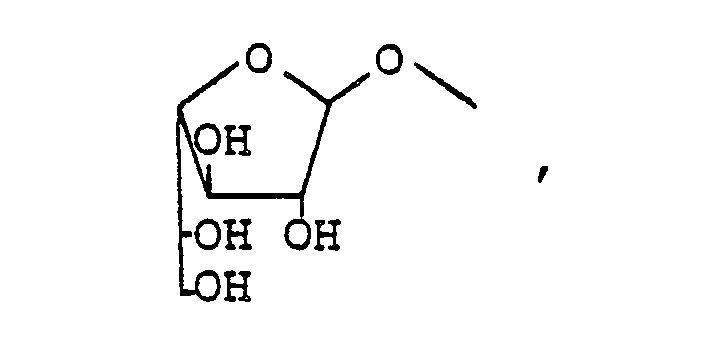
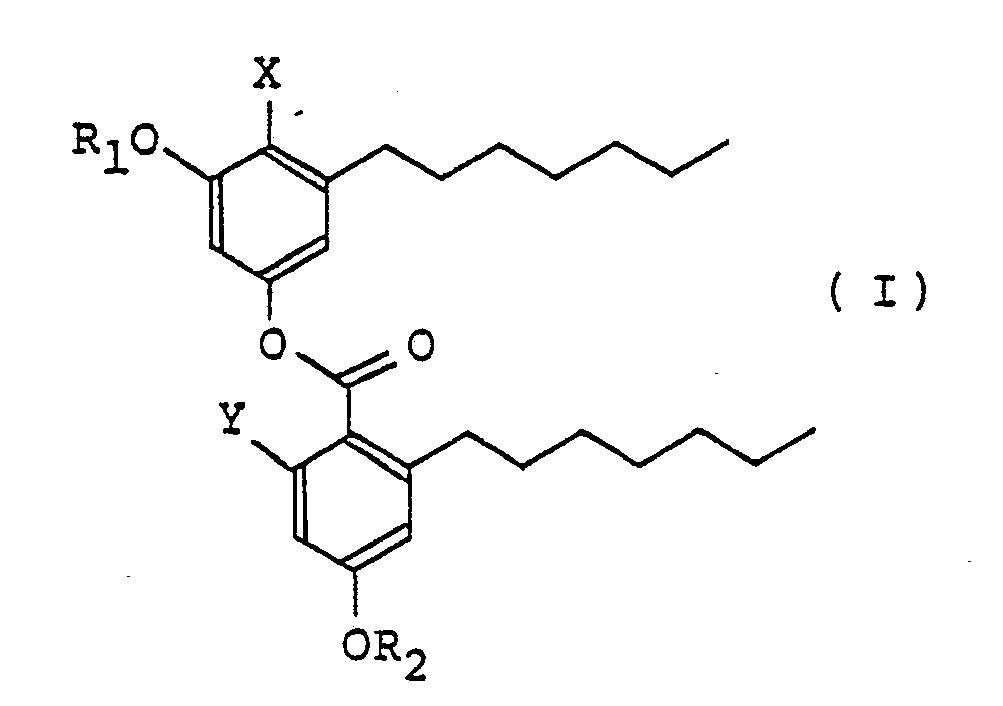
- KS-501 derivatives represented by the formula (I) wherein X represents a hydrogen atom or COOR3, Y represents hydroxy or and R1, R2 and R3 are the same or different and represent a hydrogen atom or an alkyl group having 1 to 4 carbon atoms, provided that when R1, R2 and R3 are simultaneously hydrogen atoms, and when R1, R2 and X are simultaneously hydrogen atoms, Y does not represent and pharmaceutically acceptable acid addition salts thereof.
- the alkyl group having 1 to 4 carbon atoms includes methyl, ethyl, propyl, etc.
- the pharmaceutically acceptable acid addition salts thereof include the sodium salt, potassium salt, ammonium salt, salts with amines, etc.
- KS-501 derivatives of the present invention are shown in Table 1.
- a KS-501 derivative represented by the formula (I) wherein X is COOR3, R3 is alkyl having 1 to 4 carbon atoms, and R1 and R2 are hydrogen atoms, can be obtained either by reacting KS-502 with trimethylsilyldiazomethane in a suitable solvent at 0 to 50°C for 1 to 15 hours, or by subjecting KS-502 to reaction in a lower alcohol in the presence of an acid catalyst at -20 to 40°C for 5 minutes to 2 hours.
- Suitable solvents include methanol, ethanol, ether, tetrahydrofuran, dioxane, acetone, ethyl acetate, benzene, toluene, chloroform, water, etc., and these solvents can be used alone or in combination.
- Lower alcohols include methanol, ethanol, propanol, isopropanol, butanol, etc.
- Acid catalysts include hydrogen chloride, sulfuric acid, phosphoric acid, para-toluenesulfonic acid, methanesulfonic acid, etc.
- a KS-501 derivative represented by the formula (I) wherein X is a hydrogen atom and R1 and R2 are alkyl groups having 1 to 4 carbon atoms, or a KS-501 derivative represented by the formula (I) wherein X is COOR3 and R1, R2 and R3 are alkyl groups having 1 to 4 carbon atoms can be obtained by reacting KS-501, KS-502 or a compound represented by the formula (I) wherein X is COOR3, R3 is alkyl having 1 to 4 carbon atoms and R1 and R2 are hydrogen atoms, prepared according to step 1, with an alkylating agent in a suitable solvent.
- the alkylating agent includes diazomethane, diazoethane, etc. Usually, these alkylating agents are used in the form of an ether solution.
- Compound 4 can be prepared by reacting KS-501 with an acid in water or a suitable organic solvent at 0 to 100°C for 5 minutes to 2 hours.
- the suitable organic solvent includes methanol, ethanol, isopropanol, tetrahydrofuran and dioxane, aqueous solution of these solvents, etc.
- the acid includes hydrochloric acid, sulfuric acid, nitric acid, phosphoric acid, anhydrous hydrogen chloride-methanol solvent, etc. Usually, it is most preferred to carry out the reaction in anhydrous hydrogen chloride-methanol at 10 to 30°C for 10 minutes to one hour. Isolation and purification of the product are carried out by methods used in usual organic synthesis, for example by a combination of extraction, crystallization, chromatography, etc.
- 8.5 vol of blood was collected from the carotid arteries of a white rabbit, and placed in a tube containing 1.5 vol of a citrate-dextrose solution (71 mM citric acid, 85 mM sodium citrate and 111 mM dextrose).
- the thus obtained blood was centrifuged at 200 xg for 15 minutes to obtain platelet-rich plasma (PRP).
- PRP platelet-rich plasma
- This PRP was centrifuged at 650 xg for 10 minutes to obtain platelet precipitates.
- EGTA Ca++-free Tyrode's solution containing 2 mM ethylenebis(oxyethylenenitrilo)tetraacetic acid
- the resulting platelet precipitates were suspended in Ca++-free Tyrode's solution containing 0.25% bovine serum albumin to reach a density of 5 x10⁸ cells/ml. After allowing to stand for about 30 minutes, 1 mM CaCl2 or 1 mM EGTA was added to the suspension of the washed platelet. The mixture was allowed to stand for further 30 minutes, and then platelet aggregation was measured.
- the platelet aggregation was measured with an aggregometer, ACGRETEC® TE-500 (product of Erma Optical Co., Ltd.) to which the Born method was applied.
- test compound solution 10 ⁇ l portions of a test compound solution were added to 0.2 ml portions of the suspension of the washed platelet, while stirring at 1,000 rpm and at 37°C. After incubation at 37°C for 3 minutes, 10 ⁇ l portions of a stimulating agent thrombin (final concentration : 0.05 U/ml) or platelet-activating factor (final concentration : 10 ⁇ 10M) were added thereto, respectively to initiate the reaction.
- the rate of platelet aggregation inhibition of the test compound were calculated from the maximum aggregation rate obtained by the use of the test compound and the maximum aggregation rate obtained by use of only the solvent used for dissolving the test compound, according to the following equation. The effect of the test compound was determined as the drug concentration which gave the inhibition rate of 50%.
- A maximum aggregation rate in use of the solvent alone
- B maximum aggregation rate in use of the test compound
- compound 4 inhibited platelet aggregation stimulated with thrombin and platelet-activating factor as a stimulating agent.
- a diazomethane-ether solution ( 1 ml ) obtained by distillation from bis-(N-methyl-N-nitroso)terephthalamide (9 g)/ether (40 ml), was added to a solution of KS-501 ( 5 mg ) in methanol ( 0.5 ml ), followed by stirring at room temperature for one hour. The solvent was evaporated under reduced pressure, and the resulting residue was purified by silica gel column chromatography using chloroform : methanol 20 : 1 v/v as a developing solvent system to obtain compound 1 ( 4 mg ) as colorless powder.
- KS-501 10 mg was dissolved in 1 ml of 5% hydrogen chloride-methanol, followed by stirring for one hour.
- the reaction solution was distributed between ethyl acetate (30 ml) and water (30 ml) layers and the water layer was further extracted twice with 30 ml of ethyl acetate.
- the ethyl acetate layers were combined, washed with saturated aqueous sodium chloride and dried over magnesium sulfate.
Landscapes
- Chemical & Material Sciences (AREA)
- Organic Chemistry (AREA)
- Health & Medical Sciences (AREA)
- Life Sciences & Earth Sciences (AREA)
- Engineering & Computer Science (AREA)
- Biochemistry (AREA)
- Biotechnology (AREA)
- General Health & Medical Sciences (AREA)
- Genetics & Genomics (AREA)
- Molecular Biology (AREA)
- Pharmaceuticals Containing Other Organic And Inorganic Compounds (AREA)
- Acyclic And Carbocyclic Compounds In Medicinal Compositions (AREA)
Abstract

Description
- The present invention relates to KS-501 derivatives and pharmaceutically acceptable acid addition salts thereof.
- The KS-501 derivatives and pharmaceutically acceptable acid addition salts thereof have a platelet aggregation-inhibiting property and are thus useful as antithrombotic agent, etc.
- As substances having a platelet aggregation-inhibiting property, aspirin, indomethacin, dazoxiben, prostaglandin I₂, prostaglandin E₁, ticlopidine, papaverine and dipyridamole are known.
- Further, the following compounds are reported.
- Chem. Pharm. Bull. 28, 3157 - 3162 (1980)

aureothricin : R = CH₂CH₃
isobutyropyrrothine: R = CH(CH₃)₂ - J. Antibiot. 37, 469 - 474 (1984)

- J. Antibiot. 37, 1153 - 1160 (1984)

WF-30581B: R = CH₂CH₂CH₂CH₃ - Japanese Published Unexamined Patent Application No. 195689/86
- Agric. Biol. Chem. 50, 2723 - 2727 (1986)

- EP-A-282322

KS-502 : R = COOH - The primary object of the present invention is to provide compounds having a platelet aggregation-inhibiting property and pharmaceutically acceptable acid addition salts thereof.
- In accordance with the present invention, there are provided KS-501 derivatives represented by the formula (I)


- The alkyl group having 1 to 4 carbon atoms includes methyl, ethyl, propyl, etc.
- The pharmaceutically acceptable acid addition salts thereof include the sodium salt, potassium salt, ammonium salt, salts with amines, etc.
- Specific examples of KS-501 derivatives of the present invention are shown in Table 1.
- Compounds 1 to 4 correspond to compounds obtained in Examples 1 to 4.


- Methods for preparing KS-501 derivatives represented by the formula (I) are shown below.
- A KS-501 derivative represented by the formula (I) wherein X is COOR₃, R₃ is alkyl having 1 to 4 carbon atoms, and R₁ and R₂ are hydrogen atoms, can be obtained either by reacting KS-502 with trimethylsilyldiazomethane in a suitable solvent at 0 to 50°C for 1 to 15 hours, or by subjecting KS-502 to reaction in a lower alcohol in the presence of an acid catalyst at -20 to 40°C for 5 minutes to 2 hours.
- Suitable solvents include methanol, ethanol, ether, tetrahydrofuran, dioxane, acetone, ethyl acetate, benzene, toluene, chloroform, water, etc., and these solvents can be used alone or in combination. Lower alcohols include methanol, ethanol, propanol, isopropanol, butanol, etc. Acid catalysts include hydrogen chloride, sulfuric acid, phosphoric acid, para-toluenesulfonic acid, methanesulfonic acid, etc.
- A KS-501 derivative represented by the formula (I) wherein X is a hydrogen atom and R₁ and R₂ are alkyl groups having 1 to 4 carbon atoms, or a KS-501 derivative represented by the formula (I) wherein X is COOR₃ and R₁, R₂ and R₃ are alkyl groups having 1 to 4 carbon atoms can be obtained by reacting KS-501, KS-502 or a compound represented by the formula (I) wherein X is COOR₃, R₃ is alkyl having 1 to 4 carbon atoms and R₁ and R₂ are hydrogen atoms, prepared according to step 1, with an alkylating agent in a suitable solvent.
- As suitable solvents the same solvents as mentioned in step 1 can be used. The alkylating agent includes diazomethane, diazoethane, etc. Usually, these alkylating agents are used in the form of an ether solution.
- Compounds prepared according to steps 1 and 2 can be purified by silica gel column chromatography, preparative thin layer chromatography, high performance liquid chromatography or recrystallization from an organic solvent.
- Compound 4 can be prepared by reacting KS-501 with an acid in water or a suitable organic solvent at 0 to 100°C for 5 minutes to 2 hours. The suitable organic solvent includes methanol, ethanol, isopropanol, tetrahydrofuran and dioxane, aqueous solution of these solvents, etc. The acid includes hydrochloric acid, sulfuric acid, nitric acid, phosphoric acid, anhydrous hydrogen chloride-methanol solvent, etc. Usually, it is most preferred to carry out the reaction in anhydrous hydrogen chloride-methanol at 10 to 30°C for 10 minutes to one hour. Isolation and purification of the product are carried out by methods used in usual organic synthesis, for example by a combination of extraction, crystallization, chromatography, etc.
- The platelet aggregation-inhibiting effect of compound 4 is demonstrated below by Experimental example.
- 8.5 vol of blood was collected from the carotid arteries of a white rabbit, and placed in a tube containing 1.5 vol of a citrate-dextrose solution (71 mM citric acid, 85 mM sodium citrate and 111 mM dextrose). The thus obtained blood was centrifuged at 200 xg for 15 minutes to obtain platelet-rich plasma (PRP). This PRP was centrifuged at 650 xg for 10 minutes to obtain platelet precipitates. After washing with Ca⁺⁺-free Tyrode's solution containing 2 mM ethylenebis(oxyethylenenitrilo)tetraacetic acid (hereinafter referred to as EGTA), the platelet precipitates were centrifuged again at 650 xg for 10 minutes for washing. The resulting platelet precipitates were suspended in Ca⁺⁺-free Tyrode's solution containing 0.25% bovine serum albumin to reach a density of 5 x10⁸ cells/ml. After allowing to stand for about 30 minutes, 1 mM CaCl₂ or 1 mM EGTA was added to the suspension of the washed platelet. The mixture was allowed to stand for further 30 minutes, and then platelet aggregation was measured.
- The platelet aggregation was measured with an aggregometer, ACGRETEC® TE-500 (product of Erma Optical Co., Ltd.) to which the Born method was applied.
- First, 10 µl portions of a test compound solution were added to 0.2 ml portions of the suspension of the washed platelet, while stirring at 1,000 rpm and at 37°C. After incubation at 37°C for 3 minutes, 10 µl portions of a stimulating agent thrombin (final concentration : 0.05 U/ml) or platelet-activating factor (final concentration : 10⁻¹⁰M) were added thereto, respectively to initiate the reaction. The rate of platelet aggregation inhibition of the test compound were calculated from the maximum aggregation rate obtained by the use of the test compound and the maximum aggregation rate obtained by use of only the solvent used for dissolving the test compound, according to the following equation. The effect of the test compound was determined as the drug concentration which gave the inhibition rate of 50%.

B : maximum aggregation rate in use of the test compound -
Table 2 Stimulating agent IC₅₀ (µg/ml) Thrombin 72 Platelet-activating factor 45 - As is shown in Table 2, compound 4 inhibited platelet aggregation stimulated with thrombin and platelet-activating factor as a stimulating agent.
- Certain specific embodiments of the present invention are illustrated by the following examples.
- A diazomethane-ether solution ( 1 ml ) obtained by distillation from bis-(N-methyl-N-nitroso)terephthalamide (9 g)/ether (40 ml), was added to a solution of KS-501 ( 5 mg ) in methanol ( 0.5 ml ), followed by stirring at room temperature for one hour. The solvent was evaporated under reduced pressure, and the resulting residue was purified by silica gel column chromatography using chloroform : methanol = 20 : 1 v/v as a developing solvent system to obtain compound 1 ( 4 mg ) as colorless powder.
- Physicochemical properties of compound 1 are set forth below.
SI-MS m/z: 633(M + H)⁺, 471(C₂₉H₄₃O⁺), 411(C₂₁H₃₁O₈⁺), 249(C₁₅H₂₁O₃⁺)
¹H NMR(400MHz, in CD₃OD): 6.71(1H, d, J=2.2Hz), 6.7-6.6(3H, m), 6.52(1H, d, J=2.2Hz) 5.59(1H, d, J=1.8Hz), 4.28(1H, dd, J=3.8, 1.8Hz), ca.4.15(2H), 3.82(3H, s), 3.80(3H, s), 3.75(1H, br.t, J=ca.6Hz), 3.63 and 3.60(2H, AB in ABX, J=11.2, 7.0, 5.7Hz), 2.69(2H, dd, J=9.6, 6.1Hz), 2.61(2H, dd, J=8.9, 8.5Hz), 1.64(4H, m), 1.4-1.2(16H, m), 0.89(3H, t, J=6.9Hz), 0.87(3H, t, J=7.0Hz) - The same diazomethane-ether solution as in Example 1 was added to a solution of KS-502 ( 5 mg ) in methanol ( 0.5 ml ), followed by stirring at room temperature for one hour. The solvent was evaporated under reduced pressure and, the resulting residue was purified by silica gel column chromatography using chloroform : methanol = 20 : 1 v/v as a developing solvent system to obtain compound 2 ( 4 mg ) as colorless powder.
- Physicochemical properties of compound 2 are set forth below.
EI-MS m/z: 529(C₃₁H₄₅O₇⁺), 411(C₂₁H₃₁O₈⁺), 326(C₁₅H₁₈O₈⁺), 280(C₁₆H₂₄O₄⁺), 249(C₁₅H₂₁O₃⁺), 196(C₁₀H₁₂O₄⁺)
¹H NMR(400MHz, in CD₃OD) : 6.81(1H, d, J=2.0Hz), 6.72(1H, d, J=2.2Hz), 6.71(1H, d, J=2.0Hz), 6.53 (1H, d, J=2.2Hz), 5.60(1H, d, J=1.7Hz), 4.27(1H, dd, J=3.6, 1.7Hz), ca.4.1(2H), 3.86(3H, s), 3.83 (3H, s), 3.82(3H, s), ca.3.75(1H, m), ca.3.6(2H, AB in ABX), 2.69(2H, m), 2.56(2H, m), 1.7-1.5(4H, m), 1.4-1.2(16H), 0.89(3H, t, J=6.7Hz), 0.87(3H, t, J=7.1Hz) - In this example, 10% trimethylsilyldiazomethanehexane solution (0.019 ml) was added to a solution of KS-502 (6.5 mg) in a mixed solvent of methanol (0.2 ml) and benzene (0.7 ml), followed by stirring at room temperature for 7 hours. The reaction solution was concentrated under reduced pressure, and the residue was purified by preparative silica gel thin layer chromatography using chloroform : methanol = 9 : 1 v/v as a developing solvent system to obtain 2.5 mg of compound 3.
- Physicochemical properties of compound 3 are set forth below.
SI-MS m/z: 685(M + Na)⁺, 501, 397, 235
¹H NMR(400MHz, in CDCl₃ + CD₃OD): 6.74(1H, d, J=2.3Hz), 6.58(1H, d, J=2.3Hz), 6.55(1H, d, J=2.0Hz), 6.43 (1H, d, J=2.0Hz), 5.67(1H, br. s), 4.23(2H, br. s), 4.11(1H, br. s), 3.87(1H, m), ca. 3.7(2H, m), 2.89(2H, m), 2.70(2H, m), 1.7-1.5(4H, m), 1.4-1.2 (16H, m), 0.89(3H, t, J=7.2Hz), 0.85(3H, t, J=7.0Hz) - In this example, 10 mg of KS-501 was dissolved in 1 ml of 5% hydrogen chloride-methanol, followed by stirring for one hour. The reaction solution was distributed between ethyl acetate (30 ml) and water (30 ml) layers and the water layer was further extracted twice with 30 ml of ethyl acetate. The ethyl acetate layers were combined, washed with saturated aqueous sodium chloride and dried over magnesium sulfate. After distilling away the solvent under reduced pressure, the resulting residue was subjected to elution on 5 ml of silica gel C-200 (product of Wako Junyaku Kogyo Co., Ltd.) using n-hexane : ethyl acetate (3 : 1, v/v) to obtain 7 mg of compound 4 as colorless powder (yield: 96%).
- Physicochemical properties of compound 4 are set forth below.
EI-MS m/z: 442(M⁺), 235, 208, 166, 137, 124
¹H-NMR (400MHz, CD₃OD, δ): 6.56(1H, br. t), 6.47(1H, br. t), 6.44(1H, t, J=2.5Hz), 6.28(1H, d J=2.5Hz), 6.22(1H, d, J=2.5Hz), 2.90(2H, m), 2.56(2H, br. dd), 1.6(4H, m), 1.4-1.2(16H, m), 0.89(3H, t, J=7.0Hz), 0.84(3H, t, J=6.9Hz)
¹³C-NMR(100MHz, CD₃OD, δ): 171.2, 166.0, 164.2, 159.4, 152.3, 149.4, 146.7, 114.2, 113.6, 112.2, 107.4, 105.5, 102.0, 37.8, 36.8, 33.5, 33.0, 32.3, 30.9, 30.3, 30.24, 30.21, 23.7, 14.4
Ultraviolet absorption spectrum: λmax methanol solution 218nm(ε = 31,000), 271nm(ε = 16,000), 304nm(ε = 6,700) - Rf value of compound 4 in thin layer chromatography is indicated in Table 3. Detection was carried out by irradiation with ultraviolet rays of 253.7 nm.
Table 3 Solvent Rf value n-hexane : ethyl acetate = 2 : 1 (v/v) 0.53 Thin layer : Art. 5628 made by Merck Co. Development: room temperature, ascending method, development time : 15 to 40 minutes
Claims (6)


Applications Claiming Priority (4)
| Application Number | Priority Date | Filing Date | Title |
|---|---|---|---|
| JP237316/88 | 1988-09-21 | ||
| JP237317/88 | 1988-09-21 | ||
| JP23731688 | 1988-09-21 | ||
| JP23731788 | 1988-09-21 |
Publications (2)
| Publication Number | Publication Date |
|---|---|
| EP0360239A2 true EP0360239A2 (en) | 1990-03-28 |
| EP0360239A3 EP0360239A3 (en) | 1990-08-01 |
Family
ID=26533160
Family Applications (1)
| Application Number | Title | Priority Date | Filing Date |
|---|---|---|---|
| EP89117378A Withdrawn EP0360239A3 (en) | 1988-09-21 | 1989-09-20 | Ks-501 derivatives |
Country Status (2)
| Country | Link |
|---|---|
| US (1) | US5004833A (en) |
| EP (1) | EP0360239A3 (en) |
Cited By (1)
| Publication number | Priority date | Publication date | Assignee | Title |
|---|---|---|---|---|
| WO1993014099A1 (en) * | 1992-01-15 | 1993-07-22 | Yale University | Synthesis of inhibitors of calmodulin-mediated enzymes |
Family Cites Families (3)
| Publication number | Priority date | Publication date | Assignee | Title |
|---|---|---|---|---|
| JPS61195689A (en) * | 1985-02-26 | 1986-08-29 | Kyowa Hakko Kogyo Co Ltd | New substance KS-2902i-2 and its manufacturing method |
| DE3611168C2 (en) * | 1985-04-02 | 1994-01-20 | Asahi Chemical Ind | Hydroxybenzoesäurephenylester, their preparation and their use as physiologically active substances |
| US4868159A (en) * | 1987-03-10 | 1989-09-19 | Kyowa Hakko Kogyo Co., Ltd. | Novel substances KS-501 and KS-502 and process for their preparation |
-
1989
- 1989-09-15 US US07/408,192 patent/US5004833A/en not_active Expired - Fee Related
- 1989-09-20 EP EP89117378A patent/EP0360239A3/en not_active Withdrawn
Cited By (2)
| Publication number | Priority date | Publication date | Assignee | Title |
|---|---|---|---|---|
| WO1993014099A1 (en) * | 1992-01-15 | 1993-07-22 | Yale University | Synthesis of inhibitors of calmodulin-mediated enzymes |
| US5386019A (en) * | 1992-01-15 | 1995-01-31 | Yale University | Synthesis of inhibitors of calmodulin-mediated enzymes including KS-501, KS-502 and their enantiomers |
Also Published As
| Publication number | Publication date |
|---|---|
| US5004833A (en) | 1991-04-02 |
| EP0360239A3 (en) | 1990-08-01 |
Similar Documents
| Publication | Publication Date | Title |
|---|---|---|
| US3079378A (en) | Acylated psicofuranosyladenines | |
| EP0430336A2 (en) | Process for the preparation of 4-O-phosphates of dopamine and dopamine derivatives | |
| FR2531962A1 (en) | NOVEL DERIVATIVES OF DESOXYURIDINE, THEIR PREPARATION AND THEIR USE AS MEDICAMENTS | |
| JPS62198666A (en) | 1-benzyl-2-/n-substituted/-carbamoyl-tetrahydroisoquinoline and manufacture | |
| EP0133103A1 (en) | Benzyl-phenyl osides, process for their preparation and their use | |
| EP0561523A2 (en) | Sugar compound, sialic acid-containing sugar chains' biosynthesis inhibitor, production process thereof and intermediate | |
| JPH064616B2 (en) | 2- (piperazinyl) -2-oxoethylene-substituted flavonoid derivative, process for its production and pharmaceutical composition containing the same | |
| US5166328A (en) | S-adenosylmethionine derivatives | |
| BE897617A (en) | ACETYLSALICYLIC ACID THIOESTERS PROCESS FOR THEIR PREPARATION AND PHARMACEUTICAL COMPOSITIONS CONTAINING THE SAME | |
| EP0360239A2 (en) | KS-501 derivatives | |
| FR2503705A1 (en) | PHENETHANOLAMINE DERIVATIVES, THEIR PREPARATION AND THEIR THERAPEUTIC APPLICATION | |
| US3751408A (en) | Imidazole-ribosyl cyclophosphate compounds and therapeutic compositions | |
| HU206875B (en) | Process for producing carbamoyl-oxy-labdane derivatives and pharmaceutical compositions containing them as active components | |
| US4169201A (en) | Novel ester precursor intermediates and antipodes for the preparation of 1-(2-tetrahydrofuryl)-5-fluorouracil | |
| WO1992019638A1 (en) | 1-β-D-ARABINOFURANOSYL-(E)-5-(2-HALOGENOVINYL)-URACIL DERIVATIVE | |
| FR2571374A1 (en) | NOVEL 5-FLUORO-2'-DESOXYURIDINE DERIVATIVES AND THEIR SALTS, PREPARATION METHOD THEREOF, AND ANTI-TUMOR AGENTS CONTAINING SAME | |
| JPH03220194A (en) | Staurosporine carboxylic acid derivative | |
| US4883793A (en) | Hydrazinocarbonyloxylabdanes for treating cardiac failure | |
| EP0699679A1 (en) | Tetrahydropyranyl compounds, process for their preparation and pharmaceutical compositions containing them | |
| US4425335A (en) | Ester derivatives of alkoxybenzoyldeoxyfluorouridine | |
| US3884940A (en) | New bis-(4,7-dihydroxycoumarinyl-3-)-acetic acid | |
| US4743612A (en) | Prodrug derivatives of the cardiotonic agent 4-ethyl-1,3-dihydro-5-(4-(2-methyl-1H-imidazol-1-yl)benzoyl)-2H-imidazol-2-one, composition containing them, and method of using them to treat cardiac failure | |
| US3927001A (en) | D-glucaro-1,5-lactam derivatives | |
| SU1274626A3 (en) | Method of producing n-methyl-11-aza-10-deoxo-10-dihydroerythromycin a | |
| US5041565A (en) | Process for preparing hydrazinocarbonyloxylabdanes |
Legal Events
| Date | Code | Title | Description |
|---|---|---|---|
| PUAI | Public reference made under article 153(3) epc to a published international application that has entered the european phase |
Free format text: ORIGINAL CODE: 0009012 |
|
| AK | Designated contracting states |
Kind code of ref document: A2 Designated state(s): DE FR GB |
|
| PUAL | Search report despatched |
Free format text: ORIGINAL CODE: 0009013 |
|
| AK | Designated contracting states |
Kind code of ref document: A3 Designated state(s): DE FR GB |
|
| 17P | Request for examination filed |
Effective date: 19901228 |
|
| 17Q | First examination report despatched |
Effective date: 19930719 |
|
| STAA | Information on the status of an ep patent application or granted ep patent |
Free format text: STATUS: THE APPLICATION IS DEEMED TO BE WITHDRAWN |
|
| 18D | Application deemed to be withdrawn |
Effective date: 19931201 |