EP0359547B1 - Pyridine compounds and pharmaceutical use thereof - Google Patents
Pyridine compounds and pharmaceutical use thereof Download PDFInfo
- Publication number
- EP0359547B1 EP0359547B1 EP89309297A EP89309297A EP0359547B1 EP 0359547 B1 EP0359547 B1 EP 0359547B1 EP 89309297 A EP89309297 A EP 89309297A EP 89309297 A EP89309297 A EP 89309297A EP 0359547 B1 EP0359547 B1 EP 0359547B1
- Authority
- EP
- European Patent Office
- Prior art keywords
- chain
- straight
- carbon atoms
- branched chain
- thenoyl
- Prior art date
- Legal status (The legal status is an assumption and is not a legal conclusion. Google has not performed a legal analysis and makes no representation as to the accuracy of the status listed.)
- Expired - Lifetime
Links
Classifications
-
- C—CHEMISTRY; METALLURGY
- C07—ORGANIC CHEMISTRY
- C07D—HETEROCYCLIC COMPOUNDS
- C07D213/00—Heterocyclic compounds containing six-membered rings, not condensed with other rings, with one nitrogen atom as the only ring hetero atom and three or more double bonds between ring members or between ring members and non-ring members
- C07D213/02—Heterocyclic compounds containing six-membered rings, not condensed with other rings, with one nitrogen atom as the only ring hetero atom and three or more double bonds between ring members or between ring members and non-ring members having three double bonds between ring members or between ring members and non-ring members
- C07D213/04—Heterocyclic compounds containing six-membered rings, not condensed with other rings, with one nitrogen atom as the only ring hetero atom and three or more double bonds between ring members or between ring members and non-ring members having three double bonds between ring members or between ring members and non-ring members having no bond between the ring nitrogen atom and a non-ring member or having only hydrogen or carbon atoms directly attached to the ring nitrogen atom
- C07D213/60—Heterocyclic compounds containing six-membered rings, not condensed with other rings, with one nitrogen atom as the only ring hetero atom and three or more double bonds between ring members or between ring members and non-ring members having three double bonds between ring members or between ring members and non-ring members having no bond between the ring nitrogen atom and a non-ring member or having only hydrogen or carbon atoms directly attached to the ring nitrogen atom with hetero atoms or with carbon atoms having three bonds to hetero atoms with at the most one bond to halogen, e.g. ester or nitrile radicals, directly attached to ring carbon atoms
- C07D213/62—Oxygen or sulfur atoms
- C07D213/63—One oxygen atom
- C07D213/64—One oxygen atom attached in position 2 or 6
-
- C—CHEMISTRY; METALLURGY
- C07—ORGANIC CHEMISTRY
- C07D—HETEROCYCLIC COMPOUNDS
- C07D213/00—Heterocyclic compounds containing six-membered rings, not condensed with other rings, with one nitrogen atom as the only ring hetero atom and three or more double bonds between ring members or between ring members and non-ring members
- C07D213/02—Heterocyclic compounds containing six-membered rings, not condensed with other rings, with one nitrogen atom as the only ring hetero atom and three or more double bonds between ring members or between ring members and non-ring members having three double bonds between ring members or between ring members and non-ring members
- C07D213/04—Heterocyclic compounds containing six-membered rings, not condensed with other rings, with one nitrogen atom as the only ring hetero atom and three or more double bonds between ring members or between ring members and non-ring members having three double bonds between ring members or between ring members and non-ring members having no bond between the ring nitrogen atom and a non-ring member or having only hydrogen or carbon atoms directly attached to the ring nitrogen atom
- C07D213/60—Heterocyclic compounds containing six-membered rings, not condensed with other rings, with one nitrogen atom as the only ring hetero atom and three or more double bonds between ring members or between ring members and non-ring members having three double bonds between ring members or between ring members and non-ring members having no bond between the ring nitrogen atom and a non-ring member or having only hydrogen or carbon atoms directly attached to the ring nitrogen atom with hetero atoms or with carbon atoms having three bonds to hetero atoms with at the most one bond to halogen, e.g. ester or nitrile radicals, directly attached to ring carbon atoms
- C07D213/61—Halogen atoms or nitro radicals
-
- C—CHEMISTRY; METALLURGY
- C07—ORGANIC CHEMISTRY
- C07D—HETEROCYCLIC COMPOUNDS
- C07D213/00—Heterocyclic compounds containing six-membered rings, not condensed with other rings, with one nitrogen atom as the only ring hetero atom and three or more double bonds between ring members or between ring members and non-ring members
- C07D213/02—Heterocyclic compounds containing six-membered rings, not condensed with other rings, with one nitrogen atom as the only ring hetero atom and three or more double bonds between ring members or between ring members and non-ring members having three double bonds between ring members or between ring members and non-ring members
- C07D213/04—Heterocyclic compounds containing six-membered rings, not condensed with other rings, with one nitrogen atom as the only ring hetero atom and three or more double bonds between ring members or between ring members and non-ring members having three double bonds between ring members or between ring members and non-ring members having no bond between the ring nitrogen atom and a non-ring member or having only hydrogen or carbon atoms directly attached to the ring nitrogen atom
- C07D213/60—Heterocyclic compounds containing six-membered rings, not condensed with other rings, with one nitrogen atom as the only ring hetero atom and three or more double bonds between ring members or between ring members and non-ring members having three double bonds between ring members or between ring members and non-ring members having no bond between the ring nitrogen atom and a non-ring member or having only hydrogen or carbon atoms directly attached to the ring nitrogen atom with hetero atoms or with carbon atoms having three bonds to hetero atoms with at the most one bond to halogen, e.g. ester or nitrile radicals, directly attached to ring carbon atoms
- C07D213/62—Oxygen or sulfur atoms
-
- C—CHEMISTRY; METALLURGY
- C07—ORGANIC CHEMISTRY
- C07D—HETEROCYCLIC COMPOUNDS
- C07D213/00—Heterocyclic compounds containing six-membered rings, not condensed with other rings, with one nitrogen atom as the only ring hetero atom and three or more double bonds between ring members or between ring members and non-ring members
- C07D213/02—Heterocyclic compounds containing six-membered rings, not condensed with other rings, with one nitrogen atom as the only ring hetero atom and three or more double bonds between ring members or between ring members and non-ring members having three double bonds between ring members or between ring members and non-ring members
- C07D213/04—Heterocyclic compounds containing six-membered rings, not condensed with other rings, with one nitrogen atom as the only ring hetero atom and three or more double bonds between ring members or between ring members and non-ring members having three double bonds between ring members or between ring members and non-ring members having no bond between the ring nitrogen atom and a non-ring member or having only hydrogen or carbon atoms directly attached to the ring nitrogen atom
- C07D213/60—Heterocyclic compounds containing six-membered rings, not condensed with other rings, with one nitrogen atom as the only ring hetero atom and three or more double bonds between ring members or between ring members and non-ring members having three double bonds between ring members or between ring members and non-ring members having no bond between the ring nitrogen atom and a non-ring member or having only hydrogen or carbon atoms directly attached to the ring nitrogen atom with hetero atoms or with carbon atoms having three bonds to hetero atoms with at the most one bond to halogen, e.g. ester or nitrile radicals, directly attached to ring carbon atoms
- C07D213/62—Oxygen or sulfur atoms
- C07D213/63—One oxygen atom
- C07D213/64—One oxygen atom attached in position 2 or 6
- C07D213/643—2-Phenoxypyridines; Derivatives thereof
-
- C—CHEMISTRY; METALLURGY
- C07—ORGANIC CHEMISTRY
- C07D—HETEROCYCLIC COMPOUNDS
- C07D213/00—Heterocyclic compounds containing six-membered rings, not condensed with other rings, with one nitrogen atom as the only ring hetero atom and three or more double bonds between ring members or between ring members and non-ring members
- C07D213/02—Heterocyclic compounds containing six-membered rings, not condensed with other rings, with one nitrogen atom as the only ring hetero atom and three or more double bonds between ring members or between ring members and non-ring members having three double bonds between ring members or between ring members and non-ring members
- C07D213/04—Heterocyclic compounds containing six-membered rings, not condensed with other rings, with one nitrogen atom as the only ring hetero atom and three or more double bonds between ring members or between ring members and non-ring members having three double bonds between ring members or between ring members and non-ring members having no bond between the ring nitrogen atom and a non-ring member or having only hydrogen or carbon atoms directly attached to the ring nitrogen atom
- C07D213/60—Heterocyclic compounds containing six-membered rings, not condensed with other rings, with one nitrogen atom as the only ring hetero atom and three or more double bonds between ring members or between ring members and non-ring members having three double bonds between ring members or between ring members and non-ring members having no bond between the ring nitrogen atom and a non-ring member or having only hydrogen or carbon atoms directly attached to the ring nitrogen atom with hetero atoms or with carbon atoms having three bonds to hetero atoms with at the most one bond to halogen, e.g. ester or nitrile radicals, directly attached to ring carbon atoms
- C07D213/62—Oxygen or sulfur atoms
- C07D213/70—Sulfur atoms
-
- C—CHEMISTRY; METALLURGY
- C07—ORGANIC CHEMISTRY
- C07D—HETEROCYCLIC COMPOUNDS
- C07D213/00—Heterocyclic compounds containing six-membered rings, not condensed with other rings, with one nitrogen atom as the only ring hetero atom and three or more double bonds between ring members or between ring members and non-ring members
- C07D213/02—Heterocyclic compounds containing six-membered rings, not condensed with other rings, with one nitrogen atom as the only ring hetero atom and three or more double bonds between ring members or between ring members and non-ring members having three double bonds between ring members or between ring members and non-ring members
- C07D213/04—Heterocyclic compounds containing six-membered rings, not condensed with other rings, with one nitrogen atom as the only ring hetero atom and three or more double bonds between ring members or between ring members and non-ring members having three double bonds between ring members or between ring members and non-ring members having no bond between the ring nitrogen atom and a non-ring member or having only hydrogen or carbon atoms directly attached to the ring nitrogen atom
- C07D213/60—Heterocyclic compounds containing six-membered rings, not condensed with other rings, with one nitrogen atom as the only ring hetero atom and three or more double bonds between ring members or between ring members and non-ring members having three double bonds between ring members or between ring members and non-ring members having no bond between the ring nitrogen atom and a non-ring member or having only hydrogen or carbon atoms directly attached to the ring nitrogen atom with hetero atoms or with carbon atoms having three bonds to hetero atoms with at the most one bond to halogen, e.g. ester or nitrile radicals, directly attached to ring carbon atoms
- C07D213/72—Nitrogen atoms
- C07D213/74—Amino or imino radicals substituted by hydrocarbon or substituted hydrocarbon radicals
-
- C—CHEMISTRY; METALLURGY
- C07—ORGANIC CHEMISTRY
- C07D—HETEROCYCLIC COMPOUNDS
- C07D213/00—Heterocyclic compounds containing six-membered rings, not condensed with other rings, with one nitrogen atom as the only ring hetero atom and three or more double bonds between ring members or between ring members and non-ring members
- C07D213/02—Heterocyclic compounds containing six-membered rings, not condensed with other rings, with one nitrogen atom as the only ring hetero atom and three or more double bonds between ring members or between ring members and non-ring members having three double bonds between ring members or between ring members and non-ring members
- C07D213/04—Heterocyclic compounds containing six-membered rings, not condensed with other rings, with one nitrogen atom as the only ring hetero atom and three or more double bonds between ring members or between ring members and non-ring members having three double bonds between ring members or between ring members and non-ring members having no bond between the ring nitrogen atom and a non-ring member or having only hydrogen or carbon atoms directly attached to the ring nitrogen atom
- C07D213/60—Heterocyclic compounds containing six-membered rings, not condensed with other rings, with one nitrogen atom as the only ring hetero atom and three or more double bonds between ring members or between ring members and non-ring members having three double bonds between ring members or between ring members and non-ring members having no bond between the ring nitrogen atom and a non-ring member or having only hydrogen or carbon atoms directly attached to the ring nitrogen atom with hetero atoms or with carbon atoms having three bonds to hetero atoms with at the most one bond to halogen, e.g. ester or nitrile radicals, directly attached to ring carbon atoms
- C07D213/72—Nitrogen atoms
- C07D213/75—Amino or imino radicals, acylated by carboxylic or carbonic acids, or by sulfur or nitrogen analogues thereof, e.g. carbamates
-
- C—CHEMISTRY; METALLURGY
- C07—ORGANIC CHEMISTRY
- C07D—HETEROCYCLIC COMPOUNDS
- C07D401/00—Heterocyclic compounds containing two or more hetero rings, having nitrogen atoms as the only ring hetero atoms, at least one ring being a six-membered ring with only one nitrogen atom
- C07D401/02—Heterocyclic compounds containing two or more hetero rings, having nitrogen atoms as the only ring hetero atoms, at least one ring being a six-membered ring with only one nitrogen atom containing two hetero rings
- C07D401/04—Heterocyclic compounds containing two or more hetero rings, having nitrogen atoms as the only ring hetero atoms, at least one ring being a six-membered ring with only one nitrogen atom containing two hetero rings directly linked by a ring-member-to-ring-member bond
-
- C—CHEMISTRY; METALLURGY
- C07—ORGANIC CHEMISTRY
- C07D—HETEROCYCLIC COMPOUNDS
- C07D401/00—Heterocyclic compounds containing two or more hetero rings, having nitrogen atoms as the only ring hetero atoms, at least one ring being a six-membered ring with only one nitrogen atom
- C07D401/02—Heterocyclic compounds containing two or more hetero rings, having nitrogen atoms as the only ring hetero atoms, at least one ring being a six-membered ring with only one nitrogen atom containing two hetero rings
- C07D401/06—Heterocyclic compounds containing two or more hetero rings, having nitrogen atoms as the only ring hetero atoms, at least one ring being a six-membered ring with only one nitrogen atom containing two hetero rings linked by a carbon chain containing only aliphatic carbon atoms
-
- C—CHEMISTRY; METALLURGY
- C07—ORGANIC CHEMISTRY
- C07D—HETEROCYCLIC COMPOUNDS
- C07D401/00—Heterocyclic compounds containing two or more hetero rings, having nitrogen atoms as the only ring hetero atoms, at least one ring being a six-membered ring with only one nitrogen atom
- C07D401/14—Heterocyclic compounds containing two or more hetero rings, having nitrogen atoms as the only ring hetero atoms, at least one ring being a six-membered ring with only one nitrogen atom containing three or more hetero rings
-
- C—CHEMISTRY; METALLURGY
- C07—ORGANIC CHEMISTRY
- C07D—HETEROCYCLIC COMPOUNDS
- C07D405/00—Heterocyclic compounds containing both one or more hetero rings having oxygen atoms as the only ring hetero atoms, and one or more rings having nitrogen as the only ring hetero atom
- C07D405/02—Heterocyclic compounds containing both one or more hetero rings having oxygen atoms as the only ring hetero atoms, and one or more rings having nitrogen as the only ring hetero atom containing two hetero rings
- C07D405/04—Heterocyclic compounds containing both one or more hetero rings having oxygen atoms as the only ring hetero atoms, and one or more rings having nitrogen as the only ring hetero atom containing two hetero rings directly linked by a ring-member-to-ring-member bond
-
- C—CHEMISTRY; METALLURGY
- C07—ORGANIC CHEMISTRY
- C07D—HETEROCYCLIC COMPOUNDS
- C07D405/00—Heterocyclic compounds containing both one or more hetero rings having oxygen atoms as the only ring hetero atoms, and one or more rings having nitrogen as the only ring hetero atom
- C07D405/02—Heterocyclic compounds containing both one or more hetero rings having oxygen atoms as the only ring hetero atoms, and one or more rings having nitrogen as the only ring hetero atom containing two hetero rings
- C07D405/06—Heterocyclic compounds containing both one or more hetero rings having oxygen atoms as the only ring hetero atoms, and one or more rings having nitrogen as the only ring hetero atom containing two hetero rings linked by a carbon chain containing only aliphatic carbon atoms
-
- C—CHEMISTRY; METALLURGY
- C07—ORGANIC CHEMISTRY
- C07D—HETEROCYCLIC COMPOUNDS
- C07D409/00—Heterocyclic compounds containing two or more hetero rings, at least one ring having sulfur atoms as the only ring hetero atoms
- C07D409/02—Heterocyclic compounds containing two or more hetero rings, at least one ring having sulfur atoms as the only ring hetero atoms containing two hetero rings
- C07D409/04—Heterocyclic compounds containing two or more hetero rings, at least one ring having sulfur atoms as the only ring hetero atoms containing two hetero rings directly linked by a ring-member-to-ring-member bond
-
- C—CHEMISTRY; METALLURGY
- C07—ORGANIC CHEMISTRY
- C07D—HETEROCYCLIC COMPOUNDS
- C07D409/00—Heterocyclic compounds containing two or more hetero rings, at least one ring having sulfur atoms as the only ring hetero atoms
- C07D409/02—Heterocyclic compounds containing two or more hetero rings, at least one ring having sulfur atoms as the only ring hetero atoms containing two hetero rings
- C07D409/06—Heterocyclic compounds containing two or more hetero rings, at least one ring having sulfur atoms as the only ring hetero atoms containing two hetero rings linked by a carbon chain containing only aliphatic carbon atoms
-
- C—CHEMISTRY; METALLURGY
- C07—ORGANIC CHEMISTRY
- C07D—HETEROCYCLIC COMPOUNDS
- C07D409/00—Heterocyclic compounds containing two or more hetero rings, at least one ring having sulfur atoms as the only ring hetero atoms
- C07D409/14—Heterocyclic compounds containing two or more hetero rings, at least one ring having sulfur atoms as the only ring hetero atoms containing three or more hetero rings
-
- C—CHEMISTRY; METALLURGY
- C07—ORGANIC CHEMISTRY
- C07D—HETEROCYCLIC COMPOUNDS
- C07D417/00—Heterocyclic compounds containing two or more hetero rings, at least one ring having nitrogen and sulfur atoms as the only ring hetero atoms, not provided for by group C07D415/00
- C07D417/02—Heterocyclic compounds containing two or more hetero rings, at least one ring having nitrogen and sulfur atoms as the only ring hetero atoms, not provided for by group C07D415/00 containing two hetero rings
- C07D417/06—Heterocyclic compounds containing two or more hetero rings, at least one ring having nitrogen and sulfur atoms as the only ring hetero atoms, not provided for by group C07D415/00 containing two hetero rings linked by a carbon chain containing only aliphatic carbon atoms
-
- C—CHEMISTRY; METALLURGY
- C07—ORGANIC CHEMISTRY
- C07D—HETEROCYCLIC COMPOUNDS
- C07D417/00—Heterocyclic compounds containing two or more hetero rings, at least one ring having nitrogen and sulfur atoms as the only ring hetero atoms, not provided for by group C07D415/00
- C07D417/14—Heterocyclic compounds containing two or more hetero rings, at least one ring having nitrogen and sulfur atoms as the only ring hetero atoms, not provided for by group C07D415/00 containing three or more hetero rings
Definitions
- This invention relates to use of pyridine compounds and their salts with inhibitory activity on prolylendopeptidase which are useful for the prophylaxis or treatment of amnesia.
- prolylendopeptidase acts on substance Pt-Arg-Pro-Lys-Pro-Glu-Gln-Phe-Phe-Gly-Leu-Met-NH2, TRH (thyrotropin releasing hormone) and neurotensin which have been deemed as nervous transmitting substance, and vasopressin which is considered to be concerned with memory, and inactivates them.
- proline derivatives having peptide bond are known.
- the present inventors have conducted intensive studies for the purpose of developing novel prolylendopeptidase-inhibitory agents of a non-peptide type.
- the object of this invention is to provide use of pyridine compounds possessing an excellent inhibitory activity on prolylendopeptidase for the manufacture of a medicament for the prophylaxis or treatment of amnesia.
- R1 and R2 are the same or different and respectively mean hydrogen, a halogen, a straight-chain or branched chain alkyl having 1 to 8 carbon atoms, a straight-chain or branched chain alkoxy having 1 to 8 carbon atoms, phenyl or a phenyl substituted by 1 to 3 substituent(s) selected from among halogens, straight-chain or branched chain alkyls having 1 to 8 carbon atoms, straight-chain or branched chain alkoxys having 1 to 8 carbon atoms, trifluoromethyl, amino, nitro and cyano;
- Ar means phenyl, napthyl, a phenyl or napthyl substituted by 1 to 3 substituent(s) selected from among halogens, straight-chain or branched chain alkyls having 1 to 8 carbon atoms, straight-chain or branched chain alkoxys having 1 to 8 carbon atoms, trifluoromethyl, amino, nitro and cyano;
- the halogen means chlorine, bromine, fluorine or iodine
- the straight-chain or branched chain alkyl having 1 to 8 carbon atoms is exemplified by methyl, ethyl, propyl, isopropyl, butyl, isobutyl, tert-butyl, pentyl, hexyl, octyl
- the straight-chain or branched chain alkoxy having 1 to 8 carbon atoms is exemplified by methoxy, ethoxy, propoxy, isopropoxy, butoxy, isobutoxy, tert-butoxy, pentyloxy, hexyloxy, octyloxy
- the substituted phenyl which has 1 to 3 substituent(s) selected from among halogens, alkyls, alkoxys, trifluoromethyl, amino, nitro and cyano is exemplified by chlorophenyl, dichlorophenyl,
- the preferable compounds of the formula (I) of this invention include, for example, 2-[2-(3-dimethylaminopropylthio)-1-methylethylthio]-3-(2-thenoyl)pyridine, 2-(6-dimethylaminohexylthio)-3-(2-thenoyl)pyridine, 2-(7-dimethylaminoheptylthio)-3-(2-thenoyl)pyridine, 2-[2-(3-dimethylaminopropylthio)ethylthio]-3-(2-thenoyl)pyridine, 2-[2-(6-dimethylaminohexylthio)ethylthio]-3-(2-thenoyl)pyridine, 2-[2-(6-dimethylaminohexylthio)-1-methylethylthio]-3-(2-thenoyl)pyridine, 2-[2-(6-dimethylaminohexyl
- the pyridine compounds of the present invention can be produced by the following methods.
- a method which comprises reacting a compound of the formula wherein Hal stands for a halogen and the other symbols are as defined above, with a compound of the formula H - W (III) wherein W is of the same meaning as defined above.
- X and P are oxygen, sulfur, or a nitrogen substituted by an alkanoyl or an alkoxycarbonyl
- the reaction is conducted in the presence of a tertiary amine (triethylamine, methylmorpholine, dimethylaniline, pyridine etc.) or an inorganic base (sodium bicarbonate, sodium carbonate, potassium carbonate etc.) as the deacidifying agent.
- the reaction can be generally conducted in a solvent.
- reaction temperature is not particularly limited, the reaction can be completed fully at 0 - 150°C.
- This method can be conducted by reacting in an anhydrous solvent such as ether, tetrahydrofuran, dioxane, benzene, toluene or a mixture thereof in accordance with a conventional method, followed by hydrolysis.
- an anhydrous solvent such as ether, tetrahydrofuran, dioxane, benzene, toluene or a mixture thereof in accordance with a conventional method, followed by hydrolysis.
- a starting compound of the formula (IV) can be produced by reacting a compound of the formula wherein each of the symbol is as defined above, with a compound of the formula H - W (b) wherein W is as defined above.
- a compound of the formula (I) wherein Y is -(CH2) n - can be obtained by reducing a compound of the formula wherein each of symbols is as defined above except that Y stands for an alkylene which has double bond in the chain, in accordance with a conventional method.
- a compound of the formula (I) wherein W is a group of the formula (i) can be produced by the following methods.
- a compound of the formula (I) wherein W is a group of the formula (ii) (wherein P stands for -N(R15)CO-) can be produced by the following methods.
- a method which comprises subjecting a compound of the formula wherein Hal stands for a halogen and the other symbols are as defined above, to ring-closure reaction in the presence of a base.
- This reaction can be conducted in a solvent in the presence of a base.
- bases mention can be made of sodium hydroxide, potassium hydroxide, sodium hydride, potassium hydride, sodium methoxide, sodium ethoxide, potassium carbonate, sodium carbonate.
- reaction solvents mention can be made of dimethylformamide, ethanol, methanol, acetone, toluene, xylene.
- the reaction temperature is in the range from 0°C to the neighborhood of the boiling point of the solvent used, preferably from 0°C to 80°C.
- the thus obtained pyridine compounds of the formula (I) can be, if necessary, converted into an acid addition salt of an inorganic acid such as hydrochloric acid, hydrobromic acid, or sulfuric acid, or an organic acid such as oxalic acid, fumaric acid, maleic acid, citric acid or tartaric acid.
- the compounds having a carboxyl group can be converted into their salts such as metal salts with sodium, potassium, calcium, lithium, magnesium, aluminium; amine salts with triethylamine; or salts with amino acids such as lysine, ornithine.
- the compounds of the formula (I) can exist as their solvates including hydrates.
- those which have asymmetric carbon atoms can exist as their racemic mixtures or optically active isomers.
- the compounds of the formula (I) or their salts of the present invention possess prolylendopeptidase-inhibitory actions which have not been observed in the previously known compounds, and therefor they are of use for prophylaxis and therapy of amnesia.
- prolylendopeptidase-inhibitory activity was estimated, using rat cerebral soluble fractions as the crude enzyme, in accordance with the methods by Yoshimoto et al (Biochem. Biophys. Acta., vol. 569, p 184 (1979)) and Kato et al. (J. Neurochem., vol. 35, p 527 (1980)).
- Prolylendopeptidase-inhibitory activity (IC50, ⁇ M) 1 0.014 2 0.030 4 0.060 5 0.0095 6 0.078 13 0.055 17 0.0045 18 0.0095 19 0.0045 20 0.0045 21 0.0055 22 0.011 Known Compound 1800
- the known compound is 3-(4-chlorobenzoyl)-2-(3-dimethylaminepropoxy)pyridine disclosed in JP-A-81 100 765.
- the compounds of the present invention exhibit excellent prolylendopeptidase-inhibitory activity and thus are useful for the prophylaxis and treatment of amnesia.
- the compounds (I) and their acid addition salts of the present invention are used as the above-mentioned medicaments, they can be orally or parenterally administered alone or in a form exemplified by powders, granules, tablets, capsules, injections and so on in admixture of the therapeutically effective amount of the compound of this invention with appropriate pharmaceutically acceptable additives such as carriers, excipients, diluents and the like. While the dosage varies depending upon the objective disease, symptom and the compound to be used, the daily dosage in usually in the range from about 1 to about 1000 mg per human adult in the case of oral administration.
- the dried granules are screened by passing them through a sieve of 24 mesh.
- Talc and magnesium stearate are mixed with screened granules and the mixture is formulated into tablets of 100 mg per tablet with a punch of a diameter of 7 mm.
- 2-Chloronicotinic acid and 4,5-dichloro-2-methoxyphenol are reacted in the presence of potassium carbonate in dimethylformamide to give 2-(4,5-dichloro-2-methoxyphenoxy)nicotinic acid, which is reacted with thionyl chloride in dichloroethane to be converted into the acid chloride.
- This acid chloride is reacted with ethoxymagnesium ⁇ diethyl malonate in a mixed solvent of chlorobenzene and ethanol, followed by treatment with conc. hydrochloric acid and acetic acid to obtain the acetyl compound.
- This acetyl compound is reacted with benzaldehyde in the presence of a small amount of sodium hydroxide in ethanol to give 2-(4,5-dichloro-2-methoxyphenoxy)-3-cinnamoylpyridine.
- This compound is treated with aluminium chloride to give 2-(4,5-dichloro-2-hydroxyphenoxy)-3-cinnamoylpyridine.
- 2-Chloronicotinic acid is reacted with thionyl chloride in dichloroethane to give the acid chloride compound, which is subjected to Friedel-Crafts reaction with thiophene with the use of tin chloride in dichloroethane to give 2-chloro-3-(2-thenoyl)pyridine.
- the obtained compound is reacted with 4-methoxyphenol in the presence of sodium hydride in dimethylformamide to give 2-(4-methoxyphenoxy)-3-(2-thenoyl)pyridine, which is subjected to demethylation reaction with the use of aluminium chloride and 1-butanethiol in dichloromethane to give 2-(4-hydroxyphenoxy)-3-(2-thenoyl)pyridine.
- 2-Chloro-3-cyanopyridine is reacted with 4-methoxyphenol in the presence of sodium hydride in dimethylformamide to give 2-(4-methoxyphenoxy)-3-cyanopyridine, which is subjected to Grignard reaction with 2-bromothiophene in a mixed solvent of ether and benzene, followed by treatment with hydrochloric acid to give 2-(4-methoxyphenoxy)-3-(2-thenoyl)pyridine.
- the thus obtained compound is subjected to demethylation reaction with the use of aluminium chloride and 1-butanethiol in dichloromethane to give 2-(4-hydroxyphenoxy)-3-(2-thenoyl)pyridine.
- 2-Amino-3-(2-thenoyl)pyridine is reacted with 6-bromohexanoyl chloride in the presence of pyridine in dichloroethane to give 2-(6-bromohexanoylamino)-3-(2-thenoyl)pyridine.
- 6-Dimethylaminohexanol is converted into its sodium salt with sodium hydride in toluene, followed by reaction of the sodium salt with 2-chloro-3-cyanopyridine to give 3-cyano-2-(6-dimethylaminohexyloxy)pyridine.
- the mixture is stirred at 70°C for 2 hours, and then is poured into ice-water, whereto ethyl acetate is added.
- the ethyl acetate layer is extracted with a dilute hydrochloric acid and the extract is rendered alkaline with potassium carbonate.
- the isolated oily substance is extracted with ethyl acetate.
- the solvent is distilled off.
- the obtained residue is converted into its salt with fumaric acid in ethanol, and the salt is recrystallized from ethanol to give 2-[4-(2-dimethylaminoethyl)phenoxy]-3-(2-thenoyl)pyridine 1/2 fumarate, m.p. 147 - 150°C.
- the extract is washed with water and dried over anhydrous magnesium sulfate. Thereafter, the solvent is distilled off. The residue is converted into the salt with fumaric acid in ethanol. The salt is recrystallized from ethanol to give 2-[4-(6-dimethylaminohexyloxy)phenoxy]-3-(2-thenoyl)pyridine fumarate, m.p. 98 - 101°C.
- the fumarate is recrystallized from ethanol to give 2-[6-(N-benzyl-N-methylamino)hexyloxyl]-3-(2-thenoyl)pyridine fumarate, m.p. 122 - 124°C. (Decomposition)
- the extract is washed with water and dried over potassium carbonate, and then the solvent is distilled off.
- the residue is converted into the salt with maleic acid in ethyl acetate.
- the salt is recrystallized from a mixed solvent of ethyl acetate and isopropyl alcohol to give 2-(6-aminohexyloxy)-3-(2-thenoyl)pyridine maleate, m.p. 120 - 121°C.
Landscapes
- Chemical & Material Sciences (AREA)
- Organic Chemistry (AREA)
- Pharmaceuticals Containing Other Organic And Inorganic Compounds (AREA)
- Plural Heterocyclic Compounds (AREA)
Abstract
Description
- This invention relates to use of pyridine compounds and their salts with inhibitory activity on prolylendopeptidase which are useful for the prophylaxis or treatment of amnesia.
- It is known that prolylendopeptidase acts on substance Pt-Arg-Pro-Lys-Pro-Glu-Gln-Phe-Phe-Gly-Leu-Met-NH₂, TRH (thyrotropin releasing hormone) and neurotensin which have been deemed as nervous transmitting substance, and vasopressin which is considered to be concerned with memory, and inactivates them. Nakajima et al and Yoshimoto et al found that the compounds which inhibit prolylendopeptidase activity could prevent experimental amnesia in rats induced by scopolamine and presumed that prolylendopeptidase-inhibitory agents were concerned with the consolidation of memory (Nakajima et al, Folia Pharmacologica Japonica, vol. 82, p 154 (1983), Yoshimoto et al, Seikagaku, vol. 55, p 831 (1983)). This suggests a possibility that prolylendopeptidase-inhibitory agents can be used as anti-amnesiac drugs.
- Hitherto, as prolylendopeptidase-inhibitory agents, as reported Japanese Patent Applications Laid-open (Kokai) Nos. 130579/1988 and 162672/1988, proline derivatives having peptide bond are known.
- On the other hand, in Japanese Patent Applications Laid-open (Kokai) Nos. 100765/1981 and 91172/1986 and Journal of Medicinal Chemistry, vol. 8, p 722 (1965), pyridine compounds substituted by benzoyl group or other groups are reported. Further, antianxietic or sedative ω-aminoalkoxybenzoylthiophene compounds are disclosed in Japanese Patent Application Laid-open (kokai) No. 56476/1982.
- The present inventors have conducted intensive studies for the purpose of developing novel prolylendopeptidase-inhibitory agents of a non-peptide type.
- As the result, the present inventors have found novel pyridine derivatives which possess excellent inhibitory activity on prolylendopeptidase.
- The object of this invention is to provide use of pyridine compounds possessing an excellent inhibitory activity on prolylendopeptidase for the manufacture of a medicament for the prophylaxis or treatment of amnesia.
- This invention relates to use of pyridine compounds of the formula

wherein R¹ and R² are the same or different and respectively mean hydrogen, a halogen, a straight-chain or branched chain alkyl having 1 to 8 carbon atoms, a straight-chain or branched chain alkoxy having 1 to 8 carbon atoms, phenyl or a phenyl substituted by 1 to 3 substituent(s) selected from among halogens, straight-chain or branched chain alkyls having 1 to 8 carbon atoms, straight-chain or branched chain alkoxys having 1 to 8 carbon atoms, trifluoromethyl, amino, nitro and cyano; Ar means phenyl, napthyl, a phenyl or napthyl substituted by 1 to 3 substituent(s) selected from among halogens, straight-chain or branched chain alkyls having 1 to 8 carbon atoms, straight-chain or branched chain alkoxys having 1 to 8 carbon atoms, trifluoromethyl, straight-chain or branched chain alkylthios having 1 to 8 carbon atoms, straight-chain or branched chain alkylsulfinyls having 1 to 8 carbon atoms, straight-chain or branched chain alkylsulfonyls having 1 to 8 carbon atoms, and phenyl or napthyl substituted by 1 to 3 substituent(s) selected from among a halogen, a straight-chain or branched chain alkoxy having 1 to 8 carbon atoms, trifluoromethyl, amino, nitro and cyano or Ar means furyl, thienyl, pyrrolyl, imidazoly, oxazolyl, thiazolyl, isoxazolyl, isothiazolyl, pyrazolyl, oxadiazolyl, thiadiazolyl, pyridyl, pyridazinyl, pyrazinyl, indolyl, benzimidazolyl, benzoaxazolyl, benzothiazolyl, or a furyl, thienyl, pyrrolyl, imidazolyl, oxazolyl, thiazolyl, isoxazolyl, isothiazolyl, pyrazolyl, oxadiazolyl, thiadiazolyl, pyridyl, pyridazinyl, pyrazinyl, indolyl, benzimidazolyl, benzoxazolyl or benzothiazolyl substituted by 1 to 3 substituent(s) selected from among halogens, straight-chain or branched chain alkyls having 1 to 8 carbon atoms, straight-chain or branched chain alkoxys having 1 to 8 carbon atoms, trifluoromethyl, straight-chain or branched chain alkylthios having 1 to 8 carbon atoms, straight-chain or branched chain alkylsulfinyls having 1 to 8 carbon atoms, straight-chain or branched chain alkylsulfonyls having 1 to 8 carbon atoms, amino, nitro and cyano; Y means a single bond, a straight-chain or branched chain alkylene having 1 to 8 carbon atoms or a straight-chain or branched chain alkylene having 1 to 8 carbon atoms which has double bond(s) in the chain; W means a group of the formula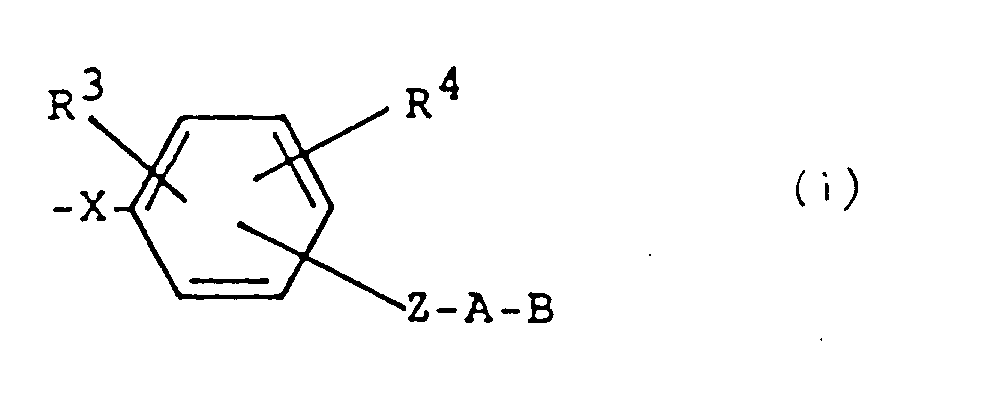
(wherein R³ and R⁴ are the same or different and respectively mean hydrogen, a halogen, a straight-chain or branched chain alkyl having 1 to 8 carbon atoms, a straight-chain or branched chain alkoxy having 1 to 8 carbon atoms, phenyl or a phenyl substituted by 1 to 3 substituent(s) selected from among halogens, straight-chain or branched chain alkyls having 1 to 8 carbon atoms, straight-chain or branched chain alkoxys having 1 to 8 carbon atoms, trifluoromethyl, amino, nitro and cyano; X means -O-, -S- or -N(R⁵)- (wherein R⁵ means hydrogen, a straight-chain or branched chain alkyl having 1 to 8 carbon atoms or a straight-chain or branched chain alkanoyl having 2 to 5 carbon atoms); Z means -O-, -S-, -N(R⁶)- (wherein R⁶ means hydrogen, a straight-chain or branched chain alkyl having 1 to 8 carbon atoms or a straight-chain or branched chain alkanoyl having 2 to 5 carbon atoms) or -CON(R⁷)- (wherein R⁷ means hydrogen, a straight-chain or branched chain alkyl having 1 to 8 carbon atoms or a straight-chain or branched chain alkanoyl having 2 to 5 carbon atoms); A means a straight-chain or branched chain alkylene having 1 to 8 carbon atoms; B means an alkoxycarbonyl in which the alkoxy moiety means a straight-chain or branched chain alkoxy having 1 to 8 carbon atoms, carboxyl, hydroxyl group, -N(R⁸)(R⁹) (wherein R⁸ and R⁹ are the same or different and respectively mean hydrogen, a straight-chain or branched chain alkyl having 1 to 8 carbon atoms, a hydroxyalkyl in which the alkyl moiety means a straight-chain or branched chain alkyl having 1 to 8 carbon atoms, a straight-chain or branched chain alkanoyl having 2 to 5 carbon atoms, benzyl, 2-phenylethyl, 1-phenylethyl, 3-phenylpropyl, 4-phenylbutyl, 6-phenylhexyl, 8-phenyloctyl, 2-pyridylmethyl, 4-pyridylmethyl, 2-(2-pyridyl)ethyl or a benzyl, 2-phenylethyl, 1-phenylethyl, 3-phenylpropyl, 4-phenylbutyl, 6-phenylhexyl, 8-phenyloctyl, 2-pyridylmethyl, 4-pyridylmethyl or 2-(2-pyridyl)ethyl substituted by 1 to 3 substituent(s) selected from among halogens, straight-chain or branched chain alkyls having 1 to 8 carbon atoms, straight-chain or branched chain alkoxys having 1 to 8 carbon atoms, trifluoromethyl, amino, nitro and cyano, or combinedly means a group forming, taken together with the adjacent nitrogen atom, 1-pyrrolidinyl, 2-oxo-1-pyrrolidinyl, piperidino, 1-piperazinyl, 1-homopiperazinyl, morpholino, thiomorpholino, or a 1-pyrrolidinyl, 2-oxo-1-pyrrolidinyl, piperidino, 1-piperazinyl, 1-homopiperazinyl, morpholino or thiomorpholino substituted by formyl, a straight-chain or branched chain alkyl having 1 to 8 carbon atoms or a straight-chain or branched chain alkanoyl having 2 to 5 carbon atoms) or -CON(R¹⁰)(R¹¹) (wherein R¹⁰ and R¹¹ are the same or different and respectively mean hydrogen, a straight-chain or branched chain alkyl having 1 to 8 carbon atoms, a hydroxyalkyl in which the alkyl moiety means a straight-chain or branched chain alkyl having 1 to 8 carbon atoms, a straight-chain or branched chain alkanoyl having 2 to 5 carbon atoms, benzyl, 2-phenylethyl, 1-phenylethyl, 3-phenylpropyl, 4-phenylbutyl, 6-phenylhexyl, 8-phenyloctyl, 2-pyridylmethyl, 4-pyridylmethyl, 2-(2-pyridyl)ethyl or a benzyl, 2-phenylethyl, 1-phenylethyl, 3-phenylpropyl, 4-phenylbutyl, 6-phenylhexyl, 8-phenyloctyl, 2-pyridylmethyl, 4-pyridylmethyl or 2-(2-pyridyl)ethyl substituted by 1 to 3 substituent(s) selected from among halogens, straight-chain or branched chain alkyls having 1 to 8 carbon atoms, straight-chain or branched chain alkoxys having 1 to 8 carbon atoms, trifluoromethyl, amino, nitro and cyano, or combinedly means a group forming, taken together with the adjacent nitrogen atom, 1-pyrrolidinyl, 2-oxo-1-pyrrolidinyl, piperidino, 1-piperazinyl, 1-homopiperazinyl, morpholino, thiomorpholino, or a 1-pyrrolidinyl, 2-oxo-1-pyrrolidinyl, piperidino, 1-piperazinyl, 1-homopiperazinyl, morpholino or thiomorpholino substituted by formyl, a straight-chain or branched chain alkyl having 1 to 8 carbon atoms or a straight-chain or branched chain alkanoyl having 2 to 5 carbon atoms); a group of the formula
(wherein R¹² and R¹³ are the same or different and respectively mean hydrogen, a straight-chain or branched chain alkyl having 1 to 8 carbon atoms, a hydroxyalkyl in which the alkyl moiety means a straight-chain or branched chain alkyl having 1 to 8 carbon atoms, a straight-chain or branched chain alkanoyl having 2 to 5 carbon atoms, phenyl, a phenyl substituted by 1 to 3 substituent(s) selected from among halogens, straight-chain or branched chain alkyls having 1 to 8 carbon atoms, straight-chain or branched chain alkoxys having 1 to 8 carbon atoms, trifluoromethyl, amino, nitro and cyano, benzyl, 2-phenylethyl, 1-phenylethyl, 3-phenylpropyl, 4-phenylbutyl, 6-phenylhexyl, 8-phenyloctyl, 2-pyridylmethyl, 4-pyridylmethyl, 2-(2-pyridyl)ethyl, or a benzyl, 2-phenylethyl, 1-phenylethyl, 3-phenylpropyl, 4-phenylbutyl, 6-phenylhexyl, 8-phenyloctyl, 2-pyridylmethyl, 4-pyridylmethyl or 2-(2-pyridyl)ethyl substituted by 1 to 3 substituent(s) selected from among halogens, straight-chain or branched chain alkyls having 1 to 8 carbon atoms, straight-chain or branched chain alkoxys having 1 to 8 carbon atoms, trifluoromethyl, amino, nitro and cyano, or combinedly means a group forming, taken together with the adjacent nitrogen atom, 1-pyrrolidinyl, 2-oxo-1-pyrrolidinyl, piperidino, 1-piperazinyl, 1-homopiperazinyl, morpholino, thiomorpholino, or a 1-pyrrolidinyl, 2-oxo-1-pyrrolidinyl, piperidino, 1-piperazinyl, 1-homopiperazinyl, morpholino or thiomorpholino substituted by formyl, a straight-chain or branched chain alkyl having 1 to 8 carbon atoms or a straight-chain or branched chain alkanoyl having 2 to 5 carbon atoms: P means -O-, -(S)p- (wherein p means an integer of 0 to 2), -N(R¹⁴)- (wherein R¹⁴ means hydrogen, a straight-chain or branched chain alkyl having 1 to 8 carbon atoms or a straight-chain or branched chain alkanoyl having 2 to 5 carbon atoms) or -N(R¹⁵)CO- (wherein R¹⁵ means hydrogen, a straight-chain or branched chain alkyl having 1 to 8 carbon atoms or a straight-chain or branched chain alkanoyl having 2 to 5 carbon atoms); Q means methyltetramethylene, pentamethylene, hexamethylene, octamethylene, decamethylene, dodecamethylene, tetradecamethylene, octadecamethylene, -(CH₂)₂S(CH₂)₃-, 1-oxooctamethylene or 1-oxodecamethylene); or a group of the formula
(wherein n means an integer of 3 to 5) , and their pharmaceutically acceptable salts thereof for treating amnesia. - Throughout the present specification, the halogen means chlorine, bromine, fluorine or iodine; the straight-chain or branched chain alkyl having 1 to 8 carbon atoms is exemplified by methyl, ethyl, propyl, isopropyl, butyl, isobutyl, tert-butyl, pentyl, hexyl, octyl; the straight-chain or branched chain alkoxy having 1 to 8 carbon atoms is exemplified by methoxy, ethoxy, propoxy, isopropoxy, butoxy, isobutoxy, tert-butoxy, pentyloxy, hexyloxy, octyloxy; the substituted phenyl which has 1 to 3 substituent(s) selected from among halogens, alkyls, alkoxys, trifluoromethyl, amino, nitro and cyano is exemplified by chlorophenyl, dichlorophenyl, methylphenyl, trimethoxyphenyl, trifluoromethylphenyl, aminophenyl, nitrophenyl, cyanophenyl; the substituted phenyl or naphthyl which has 1 to 3 substituent(s) selected from among halogens, alkyls (as defined above), alkoxys (as defined above), trifluoromethyl, straight-chain or branched chain alkylthios having 1 to 8 carbon atoms (e.g. methylthio, ethylthio, propylthio, isopropylthio, butylthio, isobutylthio, tert-butylthio, pentylthio, hexylthio, octylthio), straight-chain or branched chain alkylsulfinyls having 1 to 8 carbon atoms (e.g. methylsulfinyl, ethylsulfinyl, propylsulfinyl, isopropylsulfinyl, butylsulfinyl, isobutylsulfinyl, tert-butylsulfinyl, pentylsulfinyl, hexylsulfinyl, octylsulfinyl), straight-chain or branched chain alkylsulfonyls having 1 to 8 carbon atoms (e.g. methylsulfonyl, ethylsulfonyl, propylsulfonyl, isopropylsulfonyl, butylsulfonyl, isobutylsulfonyl, tert-butylsulfonyl, pentylsulfonyl, hexylsulfonyl, heptylsulfonyl, octylsulfonyl), phenyls, naphthyls, or phenyls or naphthyls which have 1 to 3 substituents selected from among amino, nitro and cyano (e.g. chlorophenyl, difluorophenyl, methylphenyl, trimethoxyphenyl, trifluoromethylphenyl, methylthiophenyl, methylsulfinylphenyl, aminophenyl, nitrophenyl, cyanophenyl, methoxynaphthyl); the straight-chain or branched chain alkanoyl having 2 to 5 carbon atoms is exemplified acetyl, propionyl, butyryl, pivaloyl, valeryl; the alkoxy moiety in the alkoxycarbonyl in which the alkoxy moiety is a straight-chain or branched chain alkoxy having 1 to 8 carbon atoms is exemplified by methoxycarbonyl, ethoxycarbonyl, propoxycarbonyl, isopropoxycarbonyl, butoxycarbonyl, isobutoxycarbonyl, tert-butoxycarbonyl, pentyloxycarbonyl, hexyloxycarbonyl, octyloxycarbonyl; the alkyl moiety of the hydroxyalkyl in which the alkyl moiety is a straight-chain or branched chain alkyl having 1 to 8 carbon atoms is exemplified by hydroxymethyl, 2-hydroxyethyl, 3-hydroxypropyl, 4-hydroxybutyl, 5-hydroxypentyl, 6-hydroxyhexyl, 8-hydroxyoctyl; the straight-chain or branched chain alkylene having 1 to 8 carbon atoms which has double bond(s) in the chain is exemplified by vinylene, butadiene, hexatriene; the straight-chain or branched chain alkylene having 1 to 8 carbon atoms is exemplified by methylene, ethylene, trimethylene, propylene, tetramethylene, pentamethylene, hexamethylene, octamethylene
- The preferable compounds of the formula (I) of this invention include, for example, 2-[2-(3-dimethylaminopropylthio)-1-methylethylthio]-3-(2-thenoyl)pyridine, 2-(6-dimethylaminohexylthio)-3-(2-thenoyl)pyridine, 2-(7-dimethylaminoheptylthio)-3-(2-thenoyl)pyridine, 2-[2-(3-dimethylaminopropylthio)ethylthio]-3-(2-thenoyl)pyridine, 2-[2-(6-dimethylaminohexylthio)ethylthio]-3-(2-thenoyl)pyridine, 2-[2-(6-dimethylaminohexylthio)-1-methylethylthio]-3-(2-thenoyl)pyridine, 2-[2-(6-dimethylaminohexylthio)-1,1-dimethylethylthio]-3-(2-thenoyl)pyridine, 2-(7-dimethylamino-1-methylheptylthio)-3-(2-thenoyl)pyridine, 2-(6-dimethylaminohexylthio)-6-methyl-3-(2-thenoyl)pyridine, 2-(6-diethylaminohexylthio)-6-isopropyl-3-(2-thenoyl)pyridine, 3-benzoyl-2-[2-(3-dimethylaminopropylthio)-1-methylethylthio]-6-methylpyridine, 2-(6-dimethylaminohexylthio)-6-isopropyl-3-(5-methyl-2-thenoyl)pyridine, 2-[6-(N-benzyl-N-methylamino)hexylthio]-3-(2-thenoyl)-6-isopropylpyridine, 2-[6-(N-(3,4-dimethoxybenzyl)-N-methylamino)hexylthio]-3-(2-thenoyl)-6-isopropylpyridine, 2-(6-benzylaminohexylthio)-3-(2-thenoyl)-6-isopropylpyridine, 2-(6-ethylaminohexylthio)-3-(2-thenoyl)-6-isopropylpyridine, 2-[6-(4-benzylpyperidino)hexylthio]-3-(2-thenoyl)-6-isopropylpyridine, 2-[6-(4-dimethylaminopiperidino)hexylthio]-3-(2-thenoyl)-6-isopropylpyridine, 2-[6-(2-phenylethylamino)hexylthio)-3-(2-thenoyl)-6-isopropylpyridine and 2-[6-(N-(2-dimethylaminoethyl)-N-methylamino)hexylthio)-3-(2-thenoyl)-6-isopropylpyridine or their pharmaceutically acceptable salts.
- The pyridine compounds of the present invention can be produced by the following methods.
- A method which comprises reacting a compound of the formula

wherein Hal stands for a halogen and the other symbols are as defined above, with a compound of the formula
H - W (III)
wherein W is of the same meaning as defined above. - In this reaction, in the case where X and P are oxygen, sulfur, or a nitrogen substituted by an alkanoyl or an alkoxycarbonyl, it is preferable to react after substituting an alkali metal for the active hydrogen with sodium hydride, sodium amide, sodium methoxide, sodium hydroxide, potassium hydroxide. In the case where X and P are basic nitrogen atom, preferably the reaction is conducted in the presence of a tertiary amine (triethylamine, methylmorpholine, dimethylaniline, pyridine etc.) or an inorganic base (sodium bicarbonate, sodium carbonate, potassium carbonate etc.) as the deacidifying agent. The reaction can be generally conducted in a solvent. As such solvents to be used, mention may be made of dimethylformamide, dimethyl sulfoxide, toluene, xylene, C₁ - C₄ alkanols and the like. Through the reaction temperature is not particularly limited, the reaction can be completed fully at 0 - 150°C.
- A method which comprises reacting a compound of the formula:

wherein each of the symbols is as defined above, with a Grignard reagent of the formula
Ar-Mg-Hal (V)
wherein Hal stands for a halogen and Ar is as defined above or an organic lithium compound of the formula
Ar-Li (VI)
wherein Ar is as defined above. - This method can be conducted by reacting in an anhydrous solvent such as ether, tetrahydrofuran, dioxane, benzene, toluene or a mixture thereof in accordance with a conventional method, followed by hydrolysis.
- A starting compound of the formula (IV) can be produced by reacting a compound of the formula

wherein each of the symbol is as defined above, with a compound of the formula
H - W (b)
wherein W is as defined above. - A compound of the formula (I) wherein Y is -(CH₂)n- can be obtained by reducing a compound of the formula

wherein each of symbols is as defined above except that Y stands for an alkylene which has double bond in the chain, in accordance with a conventional method. - A compound of the formula (I) wherein W is a group of the formula (i) can be produced by the following methods.
- (a) A method which comprises reacting a compound of the formula

Hal-A-B (IX)
wherein Hal stands for a halogen and the other symbols are as defined above.
In this reaction, in the case where a compound of the compound (VIII) wherein Z is oxygen, sulfur, an acyl or a nitrogen substituted by an alkanoyl or an alkoxycarbonyl, preferably, the reaction is carried out by substituting the activated hydrogen for an alkali metal with sodium hydride, sodium amide, sodium methoxide, sodium hydroxide, potassium hydroxide. In the case of a compound of the formula (VIII) wherein Z is a basic nitrogen atom, preferably the reaction is conducted in the presence of a deacidifying agent such as a tertiary amine (triethylamine, methylmorpholine, dimethylaniline, pyridine etc.) or an inorganic base (sodium bicarbonate, sodium carbonate, potassium carbonate etc.). The reaction can be generally conducted in a solvent, which is exemplified by dimethylformamide, acetone, toluene, xylene, a C₁ - C₄ alkanol. The reaction temperature is not limited and the reaction can be completed sufficiently at 0 - 150°.
The starting compounds of the formula (VIII) can be produced by reacting a compound of the formula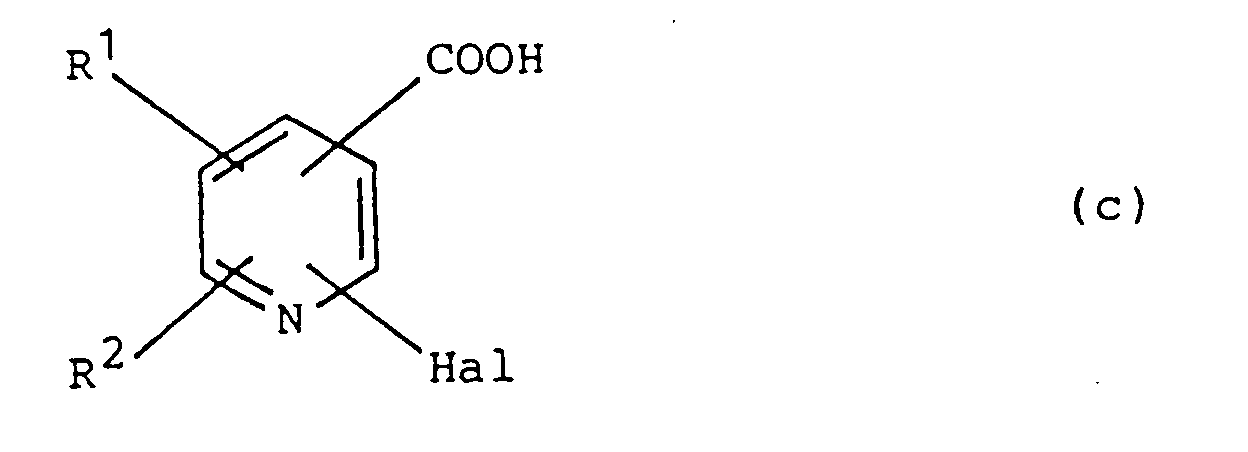


Ar-Y-CHO (f)
wherein each of the symbols is as defined above except that Y stands for an alkylene having double bond(s) in the chain, and then treating thus obtained compound of the formula
A starting compound of the formula (VIII) can also be obtained by reacting a compound of the formula (c) with thionyl chloride to obtain the acid chloride, converting through Friedel-Crafts reaction into a compound of the formula
Furthermore, a compound of the formula (VIII) can also be obtained by reacting a compound of the formula (a) with a compound of the formula (d), reacting the obtained compound with a compound of the formula
Ar-Mg-Hal (j)
wherein each of the symbols is as defined above to obtain the compound corresponding to a compound of the formula (g) wherein Y is a single bond, followed by the same demethylation reaction as mentioned above. - (b) A method which comprises reacting a compound of the formula

Ar-(CH=CH)m-1-CHO (XI)
wherein m stands for an integer of 1 to 3 and Ar is as defined above.
This reaction can be carried out by condensing in the presence of a base (sodium hydroxide, potassium hydroxide etc.) in a solvent such as methanol or ethanol. - A compound of the formula (I) wherein W is a group of the formula (ii) (wherein P stands for -N(R¹⁵)CO-) can be produced by the following methods.
- (a) A method which comprises reacting a compound of the formula


The reaction is preferably conducted in the presence of a tertiary amine (e.g. triethylamine, methylmorpholine, dimethylaniline, pyridine) as the deacidifying agent. The reaction can be generally conducted in a solvent, and preferred solvents, mention is made of dimethylformamide, dichloromethane, dichloroethane, chloroform, toluene. The reaction temperature is in the-range from 0°C to the neighborhood of the boiling point of the solvent used, preferably from 0°C to 50°C. - (b) A method which comprises reacting a compound of the formula


This reaction can be conducted in the presence of a base in a solvent. As such bases, mention can be made of sodium hydroxide, potassium hydroxide, sodium hydride, sodium methoxide, potassium carbonate, sodium carbonate. As the reaction solvents, there may be mentioned dimethylformamide, ethanol, methanol, acetone. The reaction temperature ranges from 0°C to the vicinity of the boiling point of the solvent used, preferably from 0°C to 80°C.
A starting compound of the formula (XIV) can be produced by reacting a compound of the formula
Hal-Q-CO-Hal (ℓ)
wherein each of the symbols is as defined above. - A method which comprises subjecting a compound of the formula

wherein Hal stands for a halogen and the other symbols are as defined above, to ring-closure reaction in the presence of a base. - This reaction can be conducted in a solvent in the presence of a base. As such bases, mention can be made of sodium hydroxide, potassium hydroxide, sodium hydride, potassium hydride, sodium methoxide, sodium ethoxide, potassium carbonate, sodium carbonate. As the reaction solvents, mention can be made of dimethylformamide, ethanol, methanol, acetone, toluene, xylene. The reaction temperature is in the range from 0°C to the neighborhood of the boiling point of the solvent used, preferably from 0°C to 80°C.
- The thus obtained pyridine compounds of the formula (I) can be, if necessary, converted into an acid addition salt of an inorganic acid such as hydrochloric acid, hydrobromic acid, or sulfuric acid, or an organic acid such as oxalic acid, fumaric acid, maleic acid, citric acid or tartaric acid. The compounds having a carboxyl group can be converted into their salts such as metal salts with sodium, potassium, calcium, lithium, magnesium, aluminium; amine salts with triethylamine; or salts with amino acids such as lysine, ornithine. The compounds of the formula (I) can exist as their solvates including hydrates.
- Among the compounds of the present invention, those which have asymmetric carbon atoms can exist as their racemic mixtures or optically active isomers.
- The compounds of the formula (I) or their salts of the present invention possess prolylendopeptidase-inhibitory actions which have not been observed in the previously known compounds, and therefor they are of use for prophylaxis and therapy of amnesia.
- The prolylendopeptidase-inhibitory activity was estimated, using rat cerebral soluble fractions as the crude enzyme, in accordance with the methods by Yoshimoto et al (Biochem. Biophys. Acta., vol. 569, p 184 (1979)) and Kato et al. (J. Neurochem., vol. 35, p 527 (1980)). That is, a mixture containing 0.1 ml of 0.25 mM succinyl-glycyl-prolylmethylcummarinamide, 1.15 ml of 0.1 M Na/K phosphate buffer solution (pH 7.0), 0.1 ml of the crude enzyme and 0.1 ml of a solution of the compound of the present invention (at the final concentration of dimethylsulfoxide of 0.25%) was incubated at 30°C for 15 minutes. Thereafter 1.5 ml of 0.1 M acetate buffer solution (pH 4.2) was added to terminate the reaction. The fluorescence intensity (a) of the liberated methyl cummarinamide was measured by a fluorophotometer (Ex. 370 nm, Em. 440 nm). At the same time, the fluorescence intensity (b) of the control comprising a dimethylsulfoxide solution alone (at the final concentration of 0.25%) instead of the compound of the present invention was measured, and the prolylendopeptidase-inhibitory rate was calculated in accordance with the following formula and the concentration at which 50% of inhibition (IC₅₀) can be attained was estimated.

Table 1 Example No. Prolylendopeptidase-inhibitory activity (IC₅₀, µM) 1 0.014 2 0.030 4 0.060 5 0.0095 6 0.078 13 0.055 17 0.0045 18 0.0095 19 0.0045 20 0.0045 21 0.0055 22 0.011 Known Compound 1800 - The known compound is 3-(4-chlorobenzoyl)-2-(3-dimethylaminepropoxy)pyridine disclosed in JP-A-81 100 765.
- From the results of the experiment as shown above, the compounds of the present invention exhibit excellent prolylendopeptidase-inhibitory activity and thus are useful for the prophylaxis and treatment of amnesia.
- When the compounds (I) and their acid addition salts of the present invention are used as the above-mentioned medicaments, they can be orally or parenterally administered alone or in a form exemplified by powders, granules, tablets, capsules, injections and so on in admixture of the therapeutically effective amount of the compound of this invention with appropriate pharmaceutically acceptable additives such as carriers, excipients, diluents and the like. While the dosage varies depending upon the objective disease, symptom and the compound to be used, the daily dosage in usually in the range from about 1 to about 1000 mg per human adult in the case of oral administration.
-
Compound of Example 1 10.0 mg Lactose 50.0 mg Corn starch 15.5 mg Fine crystalline cellulose 20.0 mg Talc 4.0 mg Magnesium stearate 0.5 mg 
- After compound of Example 1, lactose, corn starch and fine crystalline cellulose are mixed in a kneader, a binder of 5% corn starch is added to the mixture. The mixture is granulated and dried.
- The dried granules are screened by passing them through a sieve of 24 mesh. Talc and magnesium stearate are mixed with screened granules and the mixture is formulated into tablets of 100 mg per tablet with a punch of a diameter of 7 mm.
- The present invention is specifically explained by illustrating working examples and reference examples, which should not be construed as limiting the present invention as follows:
- 2-Chloronicotinic acid and 4,5-dichloro-2-methoxyphenol are reacted in the presence of potassium carbonate in dimethylformamide to give 2-(4,5-dichloro-2-methoxyphenoxy)nicotinic acid, which is reacted with thionyl chloride in dichloroethane to be converted into the acid chloride. This acid chloride is reacted with ethoxymagnesium·diethyl malonate in a mixed solvent of chlorobenzene and ethanol, followed by treatment with conc. hydrochloric acid and acetic acid to obtain the acetyl compound. This acetyl compound is reacted with benzaldehyde in the presence of a small amount of sodium hydroxide in ethanol to give 2-(4,5-dichloro-2-methoxyphenoxy)-3-cinnamoylpyridine. This compound is treated with aluminium chloride to give 2-(4,5-dichloro-2-hydroxyphenoxy)-3-cinnamoylpyridine.
- 2-Chloronicotinic acid is reacted with thionyl chloride in dichloroethane to give the acid chloride compound, which is subjected to Friedel-Crafts reaction with thiophene with the use of tin chloride in dichloroethane to give 2-chloro-3-(2-thenoyl)pyridine. The obtained compound is reacted with 4-methoxyphenol in the presence of sodium hydride in dimethylformamide to give 2-(4-methoxyphenoxy)-3-(2-thenoyl)pyridine, which is subjected to demethylation reaction with the use of aluminium chloride and 1-butanethiol in dichloromethane to give 2-(4-hydroxyphenoxy)-3-(2-thenoyl)pyridine.
- 2-Chloro-3-cyanopyridine is reacted with 4-methoxyphenol in the presence of sodium hydride in dimethylformamide to give 2-(4-methoxyphenoxy)-3-cyanopyridine, which is subjected to Grignard reaction with 2-bromothiophene in a mixed solvent of ether and benzene, followed by treatment with hydrochloric acid to give 2-(4-methoxyphenoxy)-3-(2-thenoyl)pyridine. The thus obtained compound is subjected to demethylation reaction with the use of aluminium chloride and 1-butanethiol in dichloromethane to give 2-(4-hydroxyphenoxy)-3-(2-thenoyl)pyridine.
- 2-Amino-3-(2-thenoyl)pyridine is reacted with 6-bromohexanoyl chloride in the presence of pyridine in dichloroethane to give 2-(6-bromohexanoylamino)-3-(2-thenoyl)pyridine.
- 6-Dimethylaminohexanol is converted into its sodium salt with sodium hydride in toluene, followed by reaction of the sodium salt with 2-chloro-3-cyanopyridine to give 3-cyano-2-(6-dimethylaminohexyloxy)pyridine.
- In 10 ml of dimethylformamide is suspended 0.82 g of 60% sodium hydride, and a solution of 3.4 g of 4-[2-(dimethylamino)ethyl]phenol in 10 ml of dimethylformamide is added dropwise to the suspension. The mixture is stirred at 60°C for 2 hours. Thereto, a solution of 3.8 g of 2-chloro-3-(2-thenoyl)pyridine in 10 ml of dimethylformamide is added dropwise under ice-cooling.
- The mixture is stirred at 70°C for 2 hours, and then is poured into ice-water, whereto ethyl acetate is added. The ethyl acetate layer is extracted with a dilute hydrochloric acid and the extract is rendered alkaline with potassium carbonate. The isolated oily substance is extracted with ethyl acetate. After the extract is washed with water and dried over anhydrous magnesium sulfate, the solvent is distilled off. The obtained residue is converted into its salt with fumaric acid in ethanol, and the salt is recrystallized from ethanol to give 2-[4-(2-dimethylaminoethyl)phenoxy]-3-(2-thenoyl)pyridine 1/2 fumarate, m.p. 147 - 150°C.
- To 50 ml of dimethylformamide are added 5 g of 2-(4-hydroxyphenoxy)-3-(2-thenoyl)pyridine, 3.5 g of potassium carbonate and 0.5 g of potassium iodide, and the mixture is stirred at room temperature for 30 minutes. Thereto is added 4.1 g of 6-dimethylaminohexyl chloride. The mixture is stirred at 50°C for 7 hours. Then, the mixture is poured into ice-water, followed by addition of ethyl acetate thereto. The ethyl acetate layer is extracted with hydrochloric acid and the extract is rendered alkaline with potassium carbonate. The isolated oily substance is extracted with ethyl acetate. The extract is washed with water and dried over anhydrous magnesium sulfate. Thereafter, the solvent is distilled off. The residue is converted into the salt with fumaric acid in ethanol. The salt is recrystallized from ethanol to give 2-[4-(6-dimethylaminohexyloxy)phenoxy]-3-(2-thenoyl)pyridine fumarate, m.p. 98 - 101°C.
- To 20 ml of dimethylformamide are added 7.7 g of 3-cinnamoyl-2-(4,5-dichloro-2-hydroxyphenoxy)pyridine and 3.3 g of potassium carbonate, and the mixture is stirred at room temperature for 30 minutes. Thereto, 2.8 g of 2-dimethylaminoethyl chloride is added, and the mixture is stirred at 50°C for 6 hours. The reaction mixture is poured into ice-water, followed by extraction with toluene. After the extract is washed with water and dried over anhydrous magnesium sulfate, the solvent is distilled off. The residue is converted into its hydrochloride in isopropyl alcohol and the hydrochloride is recrystallized from isopropyl alcohol to give 3-cinnamoyl-2-[4,5-dichloro-2-(2-dimethylaminoethoxy)phenoxy]pyridine hydrochloride, m.p. 169 - 171°C.
- To 30 ml of dimethylformamide are added 3 g of 2-(4-hydroxyphenoxy)-3-(2-thenoyl)-pyridine, 1.7 g of potassium carbonate and 0.3 g of potassium iodide. The mixture is stirred at room temperature for 30 minutes. Thereto is added 1.5 g of 3-dimethylaminopropyl chloride, and the mixture is stirred at 50°C for 4 hours. Thereafter, the reaction mixture is poured into ice-water, whereto ethyl acetate is added. The ethyl acetate is extracted with a dilute hydrochloric acid and the extract is rendered alkaline with potassium carbonate. The isolated oily substance is extracted with ethyl acetate. After the extract is washed with water and dried over anhydrous magnesium sulfate, the solvent is distilled off. The residue is converted into the salt with fumaric acid in ethanol. The salt is recrystallized from ethanol to give 2-[4-(3-dimethylaminopropoxy)phenoxy]-3-(2-thenoyl)pyridine fumarate 1/2 hydrate, m.p. 96 - 99°C.
- To 50 ml of dimethylformamide are added 4.4 g of 2-mercapto-3-(2-thenoyl)pyridine and 1.5 g of sodium ethoxide. The mixture is stirred at room temperature for 30 minutes. Thereto, 4.0 g of 6-dimethylaminohexyl chloride is added, and the mixture is stirred at room temperature for 24 hours. The mixture is poured into ice-water, followed by extraction with toluene. The extract is washed with water, and the solvent is distilled. The residue is subjected to silica gel column chromatography with chloroform as the eluent, and recrystallized from isopropyl ether to give 2-(6-dimethylaminohexylthio)-3-(2-thenoyl)pyridine, m.p. 69 - 71°C.
- In 10 ml of toluene is suspended 1.0 g of 60% sodium hydride. To the suspension is added dropwise a solution of 5.7 g of 6-(N-benzyl-N-methylamino)hexanol in 20 ml of toluene. The mixture is stirred at 70°C for 1 hours.
- A solution of 4.1 g of 2-chloro-3-(2-thenoyl)pyridine in 10 ml of toluene is added dropwise to the mixture. The mixture is stirred at 70°C for 4.5 hours and then is poured into ice-water. Thereto, toluene is added. The toluene layer is extracted with a dilute hydrochloric acid and the extract is rendered alkaline with potassium carbonate. The isolated oily substance is extracted with toluene. The extract is washed with water and dried over anhydrous magnesium sulfate. Thereafter, the solvent is distilled off. The residue is converted into the salt with fumaric acid in ethanol. The fumarate is recrystallized from ethanol to give 2-[6-(N-benzyl-N-methylamino)hexyloxyl]-3-(2-thenoyl)pyridine fumarate, m.p. 122 - 124°C. (Decomposition)
- To 50 ml of dimethylformamide are added 15 g of 2-chloro-3-(4-chlorobenzoyl)pyridine, 12.2 g of 4-diethylamino-1-methylbutylamine, 10 g of potassium carbonate and 0.1 g of potassium iodide, and the mixture is stirred at 115°C for 6 hours. Thereafter, the mixture is poured into ice-water, whereto toluene is added. The toluene layer is extracted with a dilute hydrochloric acid and the extract is rendered alkaline with potassium carbonate. The isolated oily substance is extracted with toluene. After the extract is washed with water and dried over anhydrous magnesium sulfate, the solvent is distilled off. The residue is converted into the salt with oxalic acid in isopropyl ether, and the salt is recrystallized from ethyl acetate to give 3-(4-chlorobenzoyl)-2-(4-diethylamino-1-methylbuthylamino)pyridine oxalate, m.p. 72 - 73°C.
- To 10 ml of dichloromethane are added 1.02 g of 2-amino-3-(2-thenoyl)pyridine and 0.48 ml of pyridine, whereto a solution of 1.1 g of 4-(2-oxopyrrolidin-1-yl)butyryl chloride in 5 ml of dichloromethane is added dropwise under ice-cooling. The mixture is stirred at room temperature for 2 hours. After the completion of the reaction, water is added to the reaction mixture. The dichloromethane layer is washed with water, and then the solvent is distilled off. The residue is recrystallized from a mixed solvent of ethyl acetate and ethanol to give 2-[4-(2-oxopyrrolidin-1-yl)butyrylamino]-3-(2-thenoyl)pyridine, m.p. 149 - 151°C.
- To 30 ml of dimethylformamide are added 1.0 g of morpholine, 1.6 g of potassium carbonate and 0.2 g of potassium iodide, whereto 3 g of 2-(6-bromohexanoylamino)-3-(2-thenoyl)pyridine is further added. The mixture is stirred at 60°C for 5 hours. After the completion of the reaction, the reaction mixture is poured into ice-water, followed by extraction with ethyl acetate. The extract is washed with water and dried over magnesium sulfate, and then the solvent is distilled off. The residue is converted into the salt with fumaric acid in ethanol. The salt is recrystallized from ethanol to 2-(6-morpholinohexanoylamino)-3-(2-thenoyl)pyridine fumarate, m.p. 143 - 145°C. (Decomposition)
- To 10 ml of dimethylformamide are added 1.15 g of 2-amino-3-(4-benzoyl)pyridine and 0.48 ml of pyridine, whereto a solution of 1.1 g of 6-acetylaminohexanoyl chloride in 5 ml of dichloromethane is added dropwise. The mixture is stirred at room temperature for 1 hour. Water is added, and the dichloromethane layer is washed with water. Thereafter, the solvent is distilled off. The residue is crystallized from a mixed solvent of isopropyl ether and methanol to give 2-(6-acetylaminohexanoylamino)-3-(4-chlorobenzoyl)pyridine, m.p. 117 - 119°C.
- In 10 ml of toluene is suspended 1.3 g of 60% sodium hydride, whereto 5.3 g of 6-aminohexanol is added dropwise. The mixture is stirred at 70°C for 1.5 hours. To the mixture is added dropwise a solution of 6.7 g of 2-chloro-3-(2-thenoyl)pyridine in 10 ml of toluene under ice-cooling. The mixture is stirred at 40°C for 1.5 hours. The mixture is poured into ice-water, whereto toluene is added. The toluene layer is extracted with a dilute hydrochloric acid and the extract is rendered alkaline with potassium carbonate. The isolated oily substance is extracted with chloroform. The extract is washed with water and dried over potassium carbonate, and then the solvent is distilled off. The residue is converted into the salt with maleic acid in ethyl acetate. The salt is recrystallized from a mixed solvent of ethyl acetate and isopropyl alcohol to give 2-(6-aminohexyloxy)-3-(2-thenoyl)pyridine maleate, m.p. 120 - 121°C.
- To a solution of 3.5 g of 2-bromopyridine in 20 ml of anhydrous ether is added dropwise 16.9 ml of n-butyllithium at -50°C to -70°C, and the mixture is stirred for 30 minutes. To the mixture is added dropwise a solution of 4.9 g of 3-cyano-2-(6-dimethylaminohexyloxy)pyridine in 5 ml of anhydrous ether at -50°C to -60°C. The mixture is stirred for 1 hour. Under ice-cooling, water and ethyl acetate are added thereto. After the ethyl acetate layer is dried over anhydrous magnesium sulfate, the solvent is distilled off. A dilute hydrochloric acid is added to the residue, and stirred at 40°C for 10 minutes. After the completion of the reaction, the reaction mixture is rendered alkaline with 4N sodium hydroxide and extracted with toluene. After the extract is washed with water and dried over anhydrous magnesium sulfate, the solvent is distilled off. The residue is converted into the fumarate in ethanol, and the fumarate is recrystallized from ethanol to give 2-(6-dimethylaminohexyloxy)-3-picolinoylpyridine 3/2 fumarate, m.p. 132 - 134°C. (Decomposition)
- In 10 ml of toluene is suspended 1.3 g of 60% sodium hydride, whereto 6.5 g of 6-dimethylaminohexanol is added dropwise. The mixture is stirred at 70°C for 1 hour. Under ice-cooling, 6.7 g of 2-chloro-3-(2-thenoyl)pyridine is added thereto, and the mixture is stirred at 40°C for 1 hour. After the completion of the reaction, the reaction mixture is poured into ice-water, whereto toluene is added. The toluene layer is extracted with a dilute hydrochloric acid, and the extract is rendered alkaline with potassium carbonate. The isolated oily substance is extracted with toluene. After the extract is washed with water and dried over anhydrous magnesium sulfate, the solvent is distilled off. The residue is converted into the fumarate in isopropyl alcohol, and the fumarate is recrystallized from isopropyl alcohol to give 2-(6-dimethylaminohexyloxy)-3-(2-thenoyl)pyridine 3/2 fumarate, m.p. 104 - 105°C. (Decomposition)
- In 20 ml of toluene is suspended 0.6 g of 60% sodium hydride, whereto 3 ml of 2-oxopyrrolidine is added. Under ice-cooling, 2.7 g of 2-(4-chlorobutyrylamino)-3-(2-thenoyl)pyridine is added thereto, and the mixture is stirred at room temperature for 1 hour. The mixture is poured into water, and the solvent of the toluene layer is distilled off. The residue is recrystallized from toluene-isopropyl ether to give 2-(2-oxopyrrolidin-1-yl)-3-(2-thenoyl)pyridine, m.p. 148 - 150°C.
- To a suspension of 1.1 g of 60% sodium hydride in 10 ml of toluene is added 5 g of 2-oxopiperidine, followed by addition of 6.4 g of 2-chloro-3-(4-chlorobenzoyl)pyridine. The mixture is stirred at 90 - 100°C for 5 hours. After water is poured into the reaction mixture, the solvent of the toluene layer is distilled off. The residue is recrystallized from methanol to give 2-(2-oxopiperidino)-3-(4-chlorobenzoyl)pyridine, m.p. 154 - 156°C.
- To a suspension of 1.3 g of 60% sodium hydride in 20 ml of toluene is added 5.1 g of 2-oxopyrrolidine, followed by addition of 7.4 g of 2-chloro-3-(4-methoxybenzoyl)pyridine. The mixture is stirred at 50°C for 1 hour. After the reaction mixture is poured into water, the toluene layer is washed with water and the solvent thereof is distilled off. The residue is recrystallized from a mixed solvent of isopropyl ether and ethyl acetate to give 3-(4-methoxybenzoyl)-2-(2-oxopyrrolidin-1-yl)pyridine, m.p. 76 - 77°C.
- The following compounds can be obtained in the same manner as in the foregoing Examples.
- (17) 2-[2-(6-Dimethylaminohexylthio)-1-methylethylthio]-3-(2-thenoyl)pyridine oxalate, m.p. 94 - 97°C
- (18) 2-(6-Dimethylaminohexylthio)-6-methyl-3-(2-thenoyl)pyridine 3/2 fumarate, m.p. 99 - 100°C
- (19) 2-[2-(6-Dimethylaminohexylthio)ethylthio]-3-(2-thenoyl)pyridine oxalate, m.p. 92 - 95°C
- (20) 2-[2-(3-Dimethylaminopropylthio)-1-methylethylthio]-3-(2-thenoyl)pyridine oxalate, m.p. 85 - 88°C
- (21) 2-(6-Dimethylaminohexylthio)-6-isopropyl-3-(2-thenoyl)pyridine oxalate, m.p. 135 - 137°C
- (22) 2-(6-Diethylaminohexylthio)-6-isopropyl-3-(2-thenoyl)pyridine oxalate, m.p. 107 - 109°C
- (23) 2-[4,5-Dichloro-2-(2-dimethylaminoethoxy)phenoxy]-3-(3-phenylpropionyl)pyridine maleate, m.p. 167 - 168°C
- (24) 2-[4,5-Dichloro-2-(3-dimethylaminopropoxy)phenoxy]-3-(3-(4-chlorophenyl)propionyl)pyridine fumarate, m.p. 160 - 161°C
- (25) 3-(4-Chlorocinnamoyl)-2-[4,5-dichloro-2-(2-diethylaminoethoxy)phenoxy]pyridine hydrochloride, m.p. 170 - 172°C
- (26) 3-(4-Chlorocinnamoyl)-2-[4,5-dichloro-2-(3-dimethylaminopropoxy)phenoxy]pyridine 1/2 fumarate, m.p. 166 - 167°C
- (27) 3-(1-Oxo-5-phenyl-2,4-pentadienyl)-2-[4,5-dichloro-2-(2-dimethylaminoethoxy)phenoxy]pyridine hydrochloride 1 hydrate, m.p. 187 - 188°C
- (28) 3-(3-Nitrocinnamoyl)-2-[4,5-dichloro-2-(2-dimethylaminoethoxy)phenoxy]pyridine hydrochloride 1 hydrate, m.p. 194 - 195°C
- (29) 2-[4,5-Dichloro-2-(2-dimethylaminoethoxy)phenoxy]-3-(4-methoxycinnamoyl)pyridine hydrochloride, m.p. 208 - 209°C
- (30) 3-(2-Chlorocinnamoyl)-2-[4,5-dichloro-2-(2-dimethylaminoethoxy)phenoxy]pyridine hydrochloride, m.p. 172 - 174°C
- (31) 3-Cinnamoyl-2-[2-(2-dimethylaminoethoxy)phenoxy]pyridine maleate, m.p. 125 - 126°C
- (32) 2-[4-(2-Dimethylaminoethoxy)phenoxy]-3-(2-thenoyl)pyridine 1/2 fumarate 1/4 hydrate, m.p. 124 - 126°C
- (33) 2-(4-Dimethylaminomethylphenoxy)-3-(2-thenoyl)pyridine fumarate, m.p. 130 - 132°C
- (34) N,N-dimethyl-4-[3-(2-thenoyl)-2-pyridyloxy]phenoxyacetoamide, m.p. 106 - 109°C
- (35) Ethyl 4-[3-(2-thenoyl)-2-pyridyloxy]phenoxyacetate, m.p. 88 - 89°C
- (36) 4-[3-(2-Thenoyl)-2-pyridyloxy]phenoxyacetic acid, m.p. 163 - 166°C
- (37) 2-[2-(6-Dimethylaminohexyloxy)phenoxy]-3-(2-thenoyl)pyridine maleate, m.p. 123 - 125°C
- (38) 2-(6-Dimethylaminohexyloxy)-3-(4-chlorobenzoyl)pyridine 3/2 fumarate, m.p. 135 - 137°C
- (39) 2-(6-Dimethylaminohexyloxy)-3-(4-fluorobenzoyl)pyridine maleate, m.p. 101 - 103°C
- (40) 2-(4-Diethylamino-1-methylbutylamino)-3-(4-fluorobenzoyl)pyridine oxalate, m.p. 80 - 82°C
- (41) 2-(6-Dimethylaminohexyloxy)-6-methyl-3-(2-thenoyl)pyridine maleate, m.p. 87 - 89°C
- (42) 2-(6-Dimethylaminohexyloxy)-3-(5-methyl-2-thenoyl)pyridine 3/2 fumarate, m.p. 153 - 155°C
- (43) 2-(4-Diethylamino-1-methylbutylamino)-3-(2-thenoyl)pydirine oxalate, m.p. 98 - 102°C
- (44) N-(3-benzoyl-5-chloro-2-pyridyl)-4-(2-oxopyrrolidin-1-yl)butylcarboxamide, m.p. 88 - 89°C
- (45) N-[3-(4-chlorobenzoyl-2-pyridyl)-4-(2-oxopyrrolidin-1-yl)butylcarboxamide, m.p. 179 - 181°C
- (46) N-[3-(2-thenoyl)-2-pyridyl]-6-acetylaminohexanamide, m.p. 107 - 110°C
- (47) N,N-dimethyl-6-[3-(2-thenoyl)-2-pyridylthio]hexanamide, m.p. 37 - 39°C
- (48) 6-Dimethylamino-N-[3-(2-thenoyl)-2-pyridyl]hexanamide maleate, m.p. 137 - 138°C
- (49) 2-(6-Dimethylaminohexyloxy)-3-nicotinoylpyridine 3/2 fumarate, m.p. 127 - 131°C
- (50) 2-(6-Dimethylaminohexyloxy)-3-(2-furoyl)pyridine oxalate, m.p. 115 - 118°C
- (51) 2-(6-Dimethylaminohexyloxy)-3-(3-thenoyl)-2-pyridine 3/2 fumarate, m.p. 109 - 111°C
- (52) 2-(6-Dimethylaminohexyloxy)-3-(4-hydroxy-3,5-di-t-butylbenzoyl)pyridine fumarate, m.p. 149 - 150°C
- (53) 2-(6-Dimethylaminohexyloxy)-3-(3,4-dimethoxybenzoyl)pyridine, m.p. 60 - 61°C
- (54) 2-(6-Dimethylaminohexyloxy)-3-(4-methylthiobenzoyl)pyridine, m.p. 67 - 68°C
- (55) 6-(N-benzyl-N-methylamino)-N-[3-(2-thenoyl)-2-pyridyl]hexanamide fumarate, m.p. 142 - 144°C
- (56) 3-(4-Chlorobenzoyl)-2-(2-oxopyrrolidin-1-yl)pyridine, m.p. 125 - 127°C
- (57) 2-(2-Oxopyrrolidin-1-yl)-5-(4-chlorobenzoyl)pyridine, m.p. 139 - 140°C
- (58) 2-(2-Oxopyrrolidin-1-yl)-3-[4-(2-oxopyrrolidin-1-yl)benzoyl)pyridine, m.p. 149 - 150°C
- (59) 2-(2-Oxopyrrolidin-1-yl)-3-(4-chlorobenzoyl)-6-methylpyridine, m.p. 154 - 156°C
- (60) 2-[4-(6-Dimethylaminohexyloxy)phenylthio]-3-(2-thenoyl)pyridine fumarate, m.p. 121 - 123°C
- (61) N-(2-Dimethylaminoethyl)-4-[3-(2-thenoyl)-2-pyridyloxy]phenoxybenzamide,
- (62) 2-[4-(3-Dimethylaminopropyl)phenoxy]-3-(2-thenoyl)pyridine
- (63) 2-{4-[2-(Pyrrolidin-1-yl)ethoxy]phenoxy}-3-(2-thenoyl)pyridine, m.p. 103 - 105°C
- (64) 2-[4-(2-Morpholinoethoxy)phenoxy]-3-(2-thenoyl)pyridine
- (65) 2-{4-[2-(4-Methylpiperazin-1-yl)ethoxy]phenoxy}-3-(2-thenoyl)pyridine
- (66) 2-{4-[2-(2-Oxopyrrolidin-1-yl)ethoxy]phenoxy}-3-(2-thenoyl)pyridine
- (67) 2-{4-[2-(4-(2-Hydroxyethyl)piperazin-1-yl)propoxy]phenoxy}-3-(2-thenoyl)pyridine
- (68) 2-[3-(6-Dimethylaminohexyloxy)phenoxy]-3-(2-thenoyl)pyridine
- (69) 2-[4-(6-Dimethylaminohexyloxy)phenoxy]-3-(3-thenoyl)pyridine
- (70) 2-[4-(2-Dimethylaminoethoxy)phenoxy]-3-(2-furoyl)pyridine
- (71) 2-[4-(2-Dimethylaminoethoxy)phenoxy]-3-(2-pyrrolylcarbonyl)pyridine
- (72) 2-[4-(2-Piperidinoethoxy)phenoxy]-3-(2-thenoyl)pyridine
- (73) 2-(7-Dimethylaminoheptyloxy)-3-(2-thenoyl)pyridine
- (74) 2-(8-Dimethylaminooctyloxy)-3-(2-thenoyl)pyridine
- (75) 2-(1-Methyl-6-dimethylaminohexyloxy)-3-(2-thenoyl)pyridine
- (76) 2-(6-Dimethylaminohexyloxy)-3-(4-methylsulfinylbenzoyl)pyridine
- (77) 6-(2-Methoxycarbonylpyrrolidin-1-yl)-N-[3-(2-thenoyl)2-pyridyl]hexanamide
- (78) 6-(2-Hydroxymethylpyrrolidin-1-yl)-N-[3-(2-thenoyl)-2-pyridyl]hexanamide
- (79) 6-(2-Formylpyrrolidin-1-yl)-N-[3-(2-thenoyl)-2-pyridyl]hexanamide
- (80) 2-(6-Dimethylaminohexyloxy)-5-(2-thenoyl)pyridine
- (81) 2-(6-Dimethylaminohexyloxy)-6-phenyl-3-(2-thenoyl)pyridine fumarate 1/4 hydrate, m.p. 146 - 149°C
- (82) 2-(6-Dimethylaminohexyloxy)-3-(6-methoxy-2-naphthoyl)pyridine fumarate 1 hydrate, m.p. 140 - 144°C
- (83) 2-(6-Dimethylaminohexyloxy)-3-(2-pyrrolylcarbonyl)pyridine fumarate, m.p. 148 - 150°C
- (84) 2-(6-Dimethylaminohexyloxy)-3-(3-indolylcarbonyl)pyridine fumarate, m.p. 161 - 162°C
- (85) 2-[4-(2-Piperidinoethoxy)phenoxy]-3-(2-thenoyl)pyridine, m.p. 95 - 97°C
- (86) 2-(6-Dimethylaminohexyloxy)-3-benzoylpyridine 3/2 fumarate, m.p. 119 - 121°C
- (87) 2-(6-Dimethylaminohexyloxy)-5-(4-fluorobenzoyl)pyridine fumarate 1/4 hydrate, m.p. 95 - 97°C
- (88) 2-(4-Dimethylaminomethylcyclohexylmethoxy)-3-(2-thenoyl)pyridine fumarate, m.p. 135 - 136°C
- (89) 2-(6-Aminohexylthio)-3-(2-thenoyl)pyridine fumarate, m.p. 151 - 154°C
- (90) 2-[2-(3-Dimethylaminopropylthio)ethylthio]-3-(2-thenoyl)pyridine oxalate, m.p. 117 - 118°C
- (91) 2-(6-Dimethylaminohexyloxy)-3-(5-formyl-2-thenoyl)pyridine 3/2 fumarate, m.p. 126 - 129°C
- (92) 2-(6-Dimethylaminohexyloxy)-3-(2-thiazolylcarbonyl)pyridine oxalate, m.p. 137 - 138°C
- (93) 2-(7-Dimethylaminoheptyloxy)-3-(2-thenoyl)pyridine oxalate 1/4 hydrate, m.p. 150 - 154°C
- (94) 2-(7-Dimethylaminoheptylthio)-3-(2-thenoyl)pyridine fumarate, m.p. 100 - 103°C
- (95) 2-(5-Dimethylamino-1-methylpentyloxy)-3-(2-thenoyl)pyridine oxalate, m.p. 147 - 148°C
- (96) 2-(5-Dimethylamino-1-methylpentylthio)-3-(2-thenoyl)pyridine oxalate, m.p. 87 - 89°C
- (97) 2-(6-Dimethylamino-1-methylhexylthio)-3-(2-thenoyl)pyridine oxalate 1/4 hydrate, m.p. 97 - 99°C
- (98) 2-(7-Dimethylamino-1-methylheptylthio)-3-(2-thenoyl)pyridine oxalate 1/4 hydrate, m.p. 96 - 99°C
- (99) 2-[2-(3-Dimethylaminopropoxy)ethylthio]-3-(2-thenoyl)pyridine oxalate, m.p. 132 - 135°C
- (100) 2-[2-(6-Dimethylaminohexylthio)-1,1-dimethylethylthio]-3-(2-thenoyl)pyridine oxalate, m.p. 95 - 97°C
- (101) 2-(6-Dimethylaminohexylamino)-3-(2-thenoyl)pyridine oxalate, m.p. 123 - 125°C
- (102) 3-(2-Thenoyl)-2-(N,N,N'-trimethyl-6-aminohexylamino)pyridine 2 hydrochloride, m.p. 189 - 191°C (decomp.)
- (103) 2-[3-(2-Dimethylaminoethoxy)propylamino]-3-(2-thenoyl)pyridine oxalate, m.p. 107 - 108°C
- (104) 3-Benzoyl-2-(6-dimethylaminohexylthio)-6-methylpyridine 3/2 fumarate, m.p. 101 - 103°C
- (105) 3-Benzoyl-2-[2-(3-dimethylaminopropylthio)-1-methylethylthio]-6-methylpyridine 3/2 fumarate, m.p. 150 - 152°C
- (106) 2-(6-Dimethylaminohexylthio)-4,6-dimethyl-3-(2-thenoyl)pyridine oxalate 1/4 hydrate, m.p. 151 - 152°C
- (107) 6-(1-Thiazolidinyl)-N-[3-(2-thenoyl)-2-pyridyl)hexanamide oxalate, m.p. 152 - 154°C
- (108) 2-(6-Dimethylaminohexylthio)-6-isopropyl-3-(5-methyl-2-thenoyl)pyridine oxalate, m.p. 104 - 106°C
- (109) 3-Benzoyl-2-(6-dimethylaminohexylthio)-6-isopropylpyridine oxalate, m.p. 129 - 132°C (decomp.)
- (110) 2-(6-Dimethylaminohexylthio)-3-(4-chlorobenzoyl)-6-isopropylpyridine oxalate 1/2 hydrate, m.p. 107 - 109°C
- (111) 2-(6-Dimethylaminohexylthio)-6-isopentyl-3-(2-thenoyl)pyridine fumarate, m.p. 107 - 110°C
- (112) 2-(6-Dimethylaminohexylthio)-6-t-butyl-3-(2-thenoyl)pyridine oxalate, m.p. 131 - 133°C
- (113) 2-(6-Dimethylaminohexylthio)-3-(2-thenoyl)-6-isobutylpyridine fumarate 3/2 hydrate, m,p. 79 - 81°C
- (114) 2-(6-Dimethylaminohexylthio)-3-(2-thenoyl)-6-isopropoxypyridine
- (115) 2-(6-Dimethylaminohexylthio)-3-(2-thenoyl)-6-chloropyridine
- (116) 2-(6-Dimethylaminohexylthio)-3-(5-ethyl-2-thenoyl)pyridine
- (117) 2-(6-Dimethylaminohexylthio)-3-(5-morpholino-2-thenoyl)pyridine
- (118) 2-(6-Dimethylaminohexylthio)-3-(5-methoxycarbonylmethyl-2-thenoyl)pyridine
- (119) 2-[6-(4-Bis(4-fluorophenyl)methyl)piperidinohexylthio]3-(2-thenoyl)-6-isopropylpyridine
- (120) 2-[6-(4-Morpholinocarbonylmethyl-1-piperazinyl)hexylthio]-3-(2-thenoyl)-6-isopropylpyridine
- (121) 2-[6-(4-(3-Trifluoromethylphenyl)-1-piperazinyl)hexylthio]-3-(2-thenoyl)-6-isopropylpyridine
- (122) 2-[6-(4-(3-Trifluoromethylphenyl)piperidino)hexylthio]-3-(2-thenoyl)-6-isopropylpyridine
- (123) 2-(6-Dipropylaminohexylthio)-3-(2-thenoyl)-6-isopropylpyridine
- ¹H-NMR(CDCl₃)δ:
- 0.88 (t, 6H); 1.34 (d, 6H); 1.04 - 1.90 (m, 12H); 2.34 (t, 2H); 2.36 (t, 4H); 3.06 (m, 1H); 3.20 (t, 2H); 6.90 and 7.70 (each d, 2H); 7.12 (m, 1H); 7.50 and 7.70 (each dd, 2H)
- (124) 2-(6-Methylaminohexylthio)-3-(2-thenoyl)-6-isopropylpyridine
- (125) 2-(6-Ethylaminohexylthio)-3-(2-thenoyl)-6-isopropylpyridine oxalate, m.p. 170 - 172°C (decomp.)
- (126) 2-[6-(2-Phenylethylamino)hexylthio]-3-(2-thenoyl)-6-isopropylpyridine oxalate, m.p. 168 - 171°C (decomp.)
- (127) 2-[6-(2-Phenylethyl)methylaminohexylthio]-3-(2-thenoyl)-6-isopropylpyridine
- (128) 2-[6-(4-Benzylpiperidino)hexylthio]-3-(2-thenoyl)-6-isopropylpyridine oxalate, m.p. 113 - 115°C
- (129) 2-[6-(4-Dimethylaminopiperidino)hexylthio]-3-(2-thenoyl)-6-isopropylpyridine 2 maleate, m.p. 172°C
- (130) 2-(6-Butylaminohexylthio)-3-(2-thenoyl)-6-isopropylpyridine oxalate, m.p. 166 - 167°C
- (131) 2-(6-Isopropylaminohexylthio)-3-(2-thenoyl)-6-isopropylpyridine oxalate, m.p. 135 - 138°C
- (132) 2-(6-tert-Butylaminohexylthio)-3-(2-thenoyl)-6-isopropylpyridine oxalate, m.p. 157 - 159°C (decomp.)
- (133) 2-[6-(N-Benzyl-N-methylamino)hexylthio)-3-(2-thenoyl)-6-isopropylpyridine oxalate, m.p. 91 - 94°C
- (134) 2-[6-(N-(3,4-Dimethoxybenzyl)-N-methylamino)hexylthio]-3-(2-thenoyl)-6-isopropylpyridine oxalate, m.p. 100 - 102°C
- (135) 2-(6-Dipropylaminohexylthio)-3-(2-thenoyl)pyridine oxalate, m.p. 106 - 108°C
- (136) 2-(8-Dimethylaminooctylthio)-3-(2-thenoyl)-6-isopropylpyridine
- (137) 2-[6-(N-(2-Dimethylaminoethyl)-N-methylamino)hexylthio]-3-(2-thenoyl)-6-isopropylpyridine 2 maleate, m.p. 146 - 148°C
- (138) 2-(6-Benzylaminohexylthio)-3-(2-thenoyl)-6-isopropylpyridine oxalate, m.p. 188°C
Claims (2)
- Use of a pyridine compound of the formula


- The use of 2-[2-(3-dimethylaminopropyl thio)-1-methylethylthio]-3-(2-thenoyl)pyridine, 2-(6-dimethylaminohexylthio)-3-(2-thenoyl)pyridine, 2-(7-dimethylaminoheptylthio)-3-(2-thenoyl)pyridine, 2-[2-(3-dimethylaminopropylthio)ethylthio]-3-(2-thenoyl)pyridine, 2-[2-(6-dimethylaminohexylthio)ethylthio]-3-(2-thenoyl)pyridine, 2-[2-(6-dimethylaminohexylthio)-1-methylethylthio]-3-(2-thenoyl)pyridine, 2-[2-(6-dimethylaminohexylthio)-1,1-dimethylethylthio]-3-(2-thenoyl)pyridine, 2-(7-dimethylamino-1-methylheptylthio)-3-(2-thenoyl)pyridine, 2-(6-dimethylaminohexylthio)-6-methyl-3-(2-thenoyl)pyridine, 2-(6-diethylaminohexylthio)-6-isopropyl-3-(2-thenoyl)pyridine, 3-benzoyl-2-[2-(3-dimethylaminopropylthio)-1-methylethylthio]-6-methylpyridine, 2-(6-dimethylaminohexylthio)-6-isopropyl-3-(5-methyl-2-thenoyl)pyridine, 2-[6-(N-benzyl-N-methylamino)hexylthio]-3-(2-thenoyl)-6-isopropylpyridine, 2-[6-(N-(3,4-dimethoxybenzyl)-N-methylamino)hexylthio]-3-(2-thenoyl)-6-isopropylpyridine, 2-(6-benzylaminohexylthio)-3-(2-thenoyl)-6-isopropylpyridine, 2-(6-ethylaminohexylthio)-3-(2-thenoyl)-6-isopropylpyridine, 2-[6-(4-benzylpyperidino)hexylthio]-3-(2-thenoyl)-6-isopropylpyridine, 2-[6-(4-dimethylaminopiperidino)hexylthio]-3-(2-thenoyl)-6-isopropylpyridine, 2-[6-(2-phenylethylamino)hexylthio)-3-(2-thenoyl)-6-isopropylpyridine and 2-[6-(N-(2-dimethylaminoethyl)-N-methylamino)hexylthio)-3-(2-thenoyl)-6-isopropylpyridine or their pharmaceutically acceptable salts according to claim 1 for the manufacture of a medicament for prophylaxis or treatment of amnesia.
Applications Claiming Priority (4)
| Application Number | Priority Date | Filing Date | Title |
|---|---|---|---|
| JP231261/88 | 1988-09-14 | ||
| JP23126188 | 1988-09-14 | ||
| JP897189 | 1989-01-17 | ||
| JP8971/89 | 1989-01-17 |
Related Child Applications (1)
| Application Number | Title | Priority Date | Filing Date |
|---|---|---|---|
| EP93103799.8 Division-Into | 1989-09-13 |
Publications (2)
| Publication Number | Publication Date |
|---|---|
| EP0359547A1 EP0359547A1 (en) | 1990-03-21 |
| EP0359547B1 true EP0359547B1 (en) | 1996-01-24 |
Family
ID=26343604
Family Applications (2)
| Application Number | Title | Priority Date | Filing Date |
|---|---|---|---|
| EP89309297A Expired - Lifetime EP0359547B1 (en) | 1988-09-14 | 1989-09-13 | Pyridine compounds and pharmaceutical use thereof |
| EP93103799A Withdrawn EP0558094A1 (en) | 1988-09-14 | 1989-09-13 | Pyridine compounds for treating amnesia |
Family Applications After (1)
| Application Number | Title | Priority Date | Filing Date |
|---|---|---|---|
| EP93103799A Withdrawn EP0558094A1 (en) | 1988-09-14 | 1989-09-13 | Pyridine compounds for treating amnesia |
Country Status (6)
| Country | Link |
|---|---|
| US (1) | US5001137A (en) |
| EP (2) | EP0359547B1 (en) |
| KR (1) | KR910003586B1 (en) |
| AT (1) | ATE133410T1 (en) |
| CA (1) | CA1339423C (en) |
| DE (1) | DE68925503D1 (en) |
Families Citing this family (21)
| Publication number | Priority date | Publication date | Assignee | Title |
|---|---|---|---|---|
| US5565413A (en) * | 1994-12-06 | 1996-10-15 | Zeneca Limited | Substituted pyridyl phenyl ketone herbicides |
| CA2190699A1 (en) | 1995-12-08 | 1997-06-09 | Johannes Aebi | Tertiary amines |
| ZA9756B (en) * | 1996-01-16 | 1997-07-17 | Warner Lambert Co | Process for preparing 4,6-disubstituted pyrido[3,4-d]-pyrimidines |
| US6297198B1 (en) | 1996-05-14 | 2001-10-02 | Syngenta Participations Ag | Isoxazole derivatives and their use as herbicides |
| PT1035115E (en) | 1999-02-24 | 2005-01-31 | Hoffmann La Roche | 4-PHENYLPYRIDINE DERIVATIVES AND THEIR USE AS NK-1 RECEPTOR ANTAGONISTS |
| EP1492784A4 (en) | 2002-03-28 | 2006-03-29 | Merck & Co Inc | 2,3-DIPHENYL-PYRIDINES SUBSTITUTED |
| AR040456A1 (en) * | 2002-06-27 | 2005-04-06 | Bristol Myers Squibb Co | PIRIDINE N-OXIDES 2,4-USEFUL DISPOSALS AS INHIBITORS OF REVERSE TRANSCRIPTASE OF THE HUMAN IMMUNODEFICIENCY VIRUS |
| US7288658B2 (en) | 2003-07-15 | 2007-10-30 | Hoffmann-La Roche Inc. | Process for preparation of pyridine derivatives |
| EP1824846A2 (en) | 2003-11-03 | 2007-08-29 | Probiodrug AG | Novel compounds for the treatment of neurological disorders |
| CN103893145A (en) | 2005-09-23 | 2014-07-02 | 弗·哈夫曼-拉罗切有限公司 | New formulations |
| AU2008210455A1 (en) | 2007-01-31 | 2008-08-07 | Vertex Pharmaceuticals Incorporated | 2-aminopyridine derivatives useful as kinase inhibitors |
| ES2402087T3 (en) | 2008-07-23 | 2013-04-26 | Vertex Pharmaceuticals Incorporated | Pyrazolopyridine Kinase Inhibitors |
| AU2009274023A1 (en) | 2008-07-23 | 2010-01-28 | Vertex Pharmaceuticals Incorporated | Tri-cyclic pyrazolopyridine kinase inhibitors |
| US8569337B2 (en) | 2008-07-23 | 2013-10-29 | Vertex Pharmaceuticals Incorporated | Tri-cyclic pyrazolopyridine kinase inhibitors |
| CA2732765A1 (en) | 2008-08-06 | 2010-02-11 | Vertex Pharmaceuticals Incorporated | Aminopyridine kinase inhibitors |
| CA2760705A1 (en) | 2009-05-06 | 2010-11-11 | Vertex Pharmaceuticals Incorporated | Pyrazolopyridines |
| JP5769733B2 (en) | 2010-01-27 | 2015-08-26 | バーテックス ファーマシューティカルズ インコーポレイテッドVertex Pharmaceuticals Incorporated | Pyrazolopyridine kinase inhibitor |
| CA2787079A1 (en) | 2010-01-27 | 2011-08-04 | Vertex Pharmaceuticals Incorporated | Pyrazolopyrazine kinase inhibitors |
| EP2582702A1 (en) | 2010-01-27 | 2013-04-24 | Vertex Pharmaceuticals Incorporated | Pyrazolopyrimidine kinase inhibitors |
| US9750728B2 (en) | 2012-09-29 | 2017-09-05 | Targeted Therapeutics, Llc | Method and pharmaceutical composition for inhibiting PI3K/AKT/mTOR signaling pathway |
| CN103705925B (en) | 2012-09-29 | 2018-03-30 | 段磊 | Pharmaceutical composition for inhibiting PI3K/AKT/mTOR signaling pathway |
Family Cites Families (2)
| Publication number | Priority date | Publication date | Assignee | Title |
|---|---|---|---|---|
| US4061642A (en) * | 1972-06-22 | 1977-12-06 | Cassella Farbwerke Mainkur Ag | 2,4,6-Trisubstituted-3-pyridine carboxamides |
| HU192875B (en) * | 1984-10-05 | 1987-07-28 | Richter Gedeon Vegyeszet | Process for preparing 2-pyridinethiol derivatives |
-
1989
- 1989-09-08 CA CA000610832A patent/CA1339423C/en not_active Expired - Fee Related
- 1989-09-12 KR KR1019890013304A patent/KR910003586B1/en not_active Expired
- 1989-09-13 DE DE68925503T patent/DE68925503D1/en not_active Expired - Lifetime
- 1989-09-13 EP EP89309297A patent/EP0359547B1/en not_active Expired - Lifetime
- 1989-09-13 EP EP93103799A patent/EP0558094A1/en not_active Withdrawn
- 1989-09-13 AT AT89309297T patent/ATE133410T1/en not_active IP Right Cessation
- 1989-09-14 US US07/407,010 patent/US5001137A/en not_active Expired - Fee Related
Also Published As
| Publication number | Publication date |
|---|---|
| DE68925503D1 (en) | 1996-03-07 |
| EP0359547A1 (en) | 1990-03-21 |
| CA1339423C (en) | 1997-09-02 |
| KR910003586B1 (en) | 1991-06-07 |
| EP0558094A1 (en) | 1993-09-01 |
| KR900004693A (en) | 1990-04-12 |
| ATE133410T1 (en) | 1996-02-15 |
| US5001137A (en) | 1991-03-19 |
Similar Documents
| Publication | Publication Date | Title |
|---|---|---|
| EP0359547B1 (en) | Pyridine compounds and pharmaceutical use thereof | |
| US5965559A (en) | Aminoheterocyclic derivatives as antithrombotic or anticoagulant | |
| US6777414B1 (en) | Nitrogen-containing heterocyclic compounds and benamide compounds and drugs containing the same | |
| US5681954A (en) | Piperazine derivatives | |
| US4684652A (en) | Pharmaceutical compositions containing naphthalene-and azanaphthalene-carboxamide derivatives, new naphthalene-and azanaphthalene-carboxamide derivatives and process for their preparation | |
| JP2004520347A (en) | Arylpiperidine and piperazine derivatives as inducers of LDL-receptor expression | |
| AU2007323193A1 (en) | Acetylene derivatives as Stearoyl CoA Desaturase inhibitors | |
| OA11388A (en) | Hydroxamic acid derivatives as matrix metalloprotease (MMP) inhibitors. | |
| NZ238624A (en) | Pyridine derivatives, compositions, preparations and use thereof | |
| CZ303639B6 (en) | N-oxide of 4-phenyl pyridine derivative, process for its preparation and medicament in which the derivative is comprised | |
| JP2531989B2 (en) | Pyridine compound | |
| BG65177B1 (en) | Cell adhesion inhibiting antiinflammatory and immune-suppressive compounds, use thereof, pharmaceutical composition and method of obtaining them | |
| NO180632B (en) | 1,3-substituted cycloalkenes and cycloalkanes as central nervous system agents | |
| KR20010053254A (en) | Muscarinic antagonists | |
| KR20050095601A (en) | Pyridine derivatives useful for inhibiting sodium/calcium exchange system | |
| US20050165057A1 (en) | Novel piperidine derivative | |
| JP2008533119A (en) | Arylsulfonyl benzyl ethers as 5-HT2A antagonists | |
| Kelly et al. | Novel non-nucleoside inhibitors of human immunodeficiency virus type 1 reverse transcriptase. 5. 4-Substituted and 2, 4-disubstituted analogs of nevirapine | |
| US4837316A (en) | Alkylamide derivatives with H2 -receptor antagonistic and cytoprotective action | |
| US5789425A (en) | Imidazolidinone derivatives, their acid adducts and therapeutic drugs for senile dementia | |
| US5045550A (en) | Substituted tetrahydropyridines as central nervous system agents | |
| US5118691A (en) | Substituted tetrahydropyridines as central nervous system agents | |
| US4958023A (en) | 2-pyridinecarbothioamides, processes for preparation thereof and pharmaceutical compositions comprising the same | |
| US5198452A (en) | Styryl phridyl compounds and their pharmaceutical compositions | |
| Wright et al. | Metabolism resistant isothiazolone inhibitors of cartilage breakdown |
Legal Events
| Date | Code | Title | Description |
|---|---|---|---|
| PUAI | Public reference made under article 153(3) epc to a published international application that has entered the european phase |
Free format text: ORIGINAL CODE: 0009012 |
|
| 17P | Request for examination filed |
Effective date: 19891013 |
|
| AK | Designated contracting states |
Kind code of ref document: A1 Designated state(s): AT BE CH DE ES FR GB IT LI NL SE |
|
| 17Q | First examination report despatched |
Effective date: 19920908 |
|
| GRAA | (expected) grant |
Free format text: ORIGINAL CODE: 0009210 |
|
| AK | Designated contracting states |
Kind code of ref document: B1 Designated state(s): AT BE CH DE ES FR GB IT LI NL SE |
|
| PG25 | Lapsed in a contracting state [announced via postgrant information from national office to epo] |
Ref country code: IT Free format text: LAPSE BECAUSE OF FAILURE TO SUBMIT A TRANSLATION OF THE DESCRIPTION OR TO PAY THE FEE WITHIN THE PRE;WARNING: LAPSES OF ITALIAN PATENTS WITH EFFECTIVE DATE BEFORE 2007 MAY HAVE OCCURRED AT ANY TIME BEFORE 2007. THE CORRECT EFFECTIVE DATE MAY BE DIFFERENT FROM THE ONE RECORDED.SCRIBED TIME-LIMIT Effective date: 19960124 Ref country code: BE Effective date: 19960124 Ref country code: CH Effective date: 19960124 Ref country code: FR Effective date: 19960124 Ref country code: ES Free format text: THE PATENT HAS BEEN ANNULLED BY A DECISION OF A NATIONAL AUTHORITY Effective date: 19960124 Ref country code: AT Effective date: 19960124 Ref country code: NL Free format text: LAPSE BECAUSE OF FAILURE TO SUBMIT A TRANSLATION OF THE DESCRIPTION OR TO PAY THE FEE WITHIN THE PRESCRIBED TIME-LIMIT Effective date: 19960124 Ref country code: LI Effective date: 19960124 |
|
| REF | Corresponds to: |
Ref document number: 133410 Country of ref document: AT Date of ref document: 19960215 Kind code of ref document: T |
|
| XX | Miscellaneous (additional remarks) |
Free format text: TEILANMELDUNG 93103799.8 EINGEREICHT AM 13/09/89. |
|
| REF | Corresponds to: |
Ref document number: 68925503 Country of ref document: DE Date of ref document: 19960307 |
|
| PG25 | Lapsed in a contracting state [announced via postgrant information from national office to epo] |
Ref country code: SE Effective date: 19960424 |
|
| PG25 | Lapsed in a contracting state [announced via postgrant information from national office to epo] |
Ref country code: DE Effective date: 19960425 |
|
| EN | Fr: translation not filed | ||
| NLV1 | Nl: lapsed or annulled due to failure to fulfill the requirements of art. 29p and 29m of the patents act | ||
| REG | Reference to a national code |
Ref country code: CH Ref legal event code: PL |
|
| PG25 | Lapsed in a contracting state [announced via postgrant information from national office to epo] |
Ref country code: GB Effective date: 19960913 |
|
| PLBE | No opposition filed within time limit |
Free format text: ORIGINAL CODE: 0009261 |
|
| 26N | No opposition filed | ||
| GBPC | Gb: european patent ceased through non-payment of renewal fee |
Effective date: 19960913 |