EP0357793A1 - Suspended-release preparation prepared by using alginates - Google Patents
Suspended-release preparation prepared by using alginates Download PDFInfo
- Publication number
- EP0357793A1 EP0357793A1 EP19890903226 EP89903226A EP0357793A1 EP 0357793 A1 EP0357793 A1 EP 0357793A1 EP 19890903226 EP19890903226 EP 19890903226 EP 89903226 A EP89903226 A EP 89903226A EP 0357793 A1 EP0357793 A1 EP 0357793A1
- Authority
- EP
- European Patent Office
- Prior art keywords
- alginic acid
- slow
- gel beads
- pindolol
- acid gel
- Prior art date
- Legal status (The legal status is an assumption and is not a legal conclusion. Google has not performed a legal analysis and makes no representation as to the accuracy of the status listed.)
- Granted
Links
Images



Classifications
-
- A—HUMAN NECESSITIES
- A61—MEDICAL OR VETERINARY SCIENCE; HYGIENE
- A61K—PREPARATIONS FOR MEDICAL, DENTAL OR TOILETRY PURPOSES
- A61K9/00—Medicinal preparations characterised by special physical form
- A61K9/14—Particulate form, e.g. powders, Processes for size reducing of pure drugs or the resulting products, Pure drug nanoparticles
- A61K9/16—Agglomerates; Granulates; Microbeadlets ; Microspheres; Pellets; Solid products obtained by spray drying, spray freeze drying, spray congealing,(multiple) emulsion solvent evaporation or extraction
- A61K9/1605—Excipients; Inactive ingredients
- A61K9/1629—Organic macromolecular compounds
- A61K9/1652—Polysaccharides, e.g. alginate, cellulose derivatives; Cyclodextrin
Definitions
- This invention relates to a slow-releasing pharmaceutical in which a basic medicament is contained in alginic acid gel beads and to a method for the production of the same.
- slow-releasing pharmaceuticals have been designed for the purpose of improving effectiveness and safeness of medicaments since slow-releasing pharmaceuticals reduce number of doses, retain the expression of specified effects or reduce the incidence of side effects or toxicity as compared to ordinary fast-releasing pharmaceuticals.
- a pharmaceutical having a sufficiently slow-releasing property can be obtained by such simple means that a basic medicament is contained in alginic acid gel beads prepared with a polysaccharide, alginic acid which is a kind of natural polymer and a constituent of the cell membrane of brown algae.
- alginic acid is commercially available in forms of sodium salts having various molecular weight. Since alginic acid is slowly dissolved in water and highly viscous, it is used as a stabilizer or viscous agent in viscous foods such as ice cream, cheese, sherbet and syrup and also used in manufacturing films and fabrics.
- Objects of the present invention are to provide a pharmaceutical of a basic medicament having desirable slow-releasing properties using alginic acid gels, and to provide a method for the preparation of the same.
- a slow-releasing pharmaceutical of the present invention is characterized by including a basic medicament in acidic alginic acid gel beads so as to form preferable binding features and to give preferable slow-releasing effects.
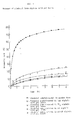
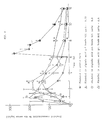
- Fig. 1 shows the release of pindolol from the alginic acid gel beads in Example 1.
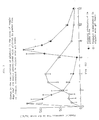
- Fig. 2 shows the change in the serum pindolol concentration after oral administration of the alginic acid gel beads to rabbits.
- Fig. 3 shows the change in the serum pindolol concentration after oral administration of the alginic acid gel beads to beagle dogs.
- Fig. 4 shows the absorption of pindolol in the alginic acid gel beads in beagle dogs.
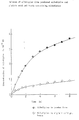
- Fig. 5 shows release of nifedipine from the alginic acid gel beads in Example 2.
- Fig. 6 shows the absorption of nifedipine contained in alginic acid gel beads.
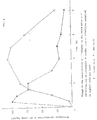
- Fig. 7 shows the releasing effect of alginic acid gel beads with the M/G ratio of 1:3 as compared to alginic acid gel beads with other M/G ratios.
- Fig. 8 shows the change of the scrum pindolol concentration in beagle dogs orally administered with pindolol powder and with alginic acid gel beads with the same M/G ratio as above.
- Examples of the basic medicaments to be used in the present invention include beta-blocking agents such as pindolol, procaterol, propranolol, pyltelol, and befunolol; calcium antagonists such as nifedipine, verapamil, diltiazem, and nicardipine; antihistamine agents such as difenhydramine, diphenylpyraline and chlorophenylamine; diuretics such as triamterene and penflutizide, vasodilative agents such as cinnarizine, ifenprodil, and pentoxifylline; and antitusives such as eprazinone, chloroprenaline, chloperastine, trimethoquinol, bromhexine, methoxyphenamine and sulbutanol.
- beta-blocking agents such as pindolol, procaterol, propranolol, pyltel
- alginic acid gel containing the above basic medicaments can be prepared using commercially available sodium alginates.
- sodium alginates having a molecular weight of about 10,000 - 100,000 are preferably used.
- 1% solutions of such sodium alginates have a viscosities of less than 100 cps and are useful in designing a preferable releasing system by selecting suitable sodium alginate depending on the kinds of medicament and releasing patterns.
- alginates having the following features were used.
- the release of the above-mentioned medicaments are affected by the difference in the ratio ( M/G ratio) of constituent sugars of the alginic acid, i.e. mannouronic acid (M) and guluronic acid (G). Further, it has also been revealed that the above-mentioned release is affected by the ratio of homo-block (MM) of mannuronic acid (M) and homo-block (GG) of guluronic acid (G) and furthermore the viscosity of alginic acid.
- the homo-block (MM, GG) means a block in which the same uranic acid (M or G) is sequenced.
- the matrix becomes so dense that the release of a medicament in the alginic acid gel beads becomes difficult.
- the MM/GG ratio is small, for example 0.13, the medicament can be released slowly.
- alginic acid gel beads which contain a basic medicamemt can be prepared as follows:
- a basic medicament is suspended in a 4% sodium alginate solution and added drop by drop through a nozzle" to a 0.1 M CaCl 2 solution.
- the solution is allowed to stand for 72 hours and then alginic acid gel beads containing the basic medicament are collected by filtration.
- the alginic acid gel beads are dried in air for 24 hours and then dried in vacuo at room temperature for 24 hours.
- the molecular weight of the sodium alginate greatly affects both the yield of alginic acid gel beads formed and the content of the medicament contained in the alginic acid gel beads.
- alginic acid having a low viscosity i.e. a low molecular weight, is preferably used.
- the concentration of the basic medicament should be determined by considering the amount necessary to achieve the desired release.
- the alginic acid gel beads containing a basic medicament can be formulated as necessary, for example, into enteric coated pills.
- a pharmaceutical according to the present invention can be expected to control the absorption of sodium in the body, since alginic acid forms gel structures by binding to calcium and thus clacium is replaced by sodium when the alginic acid is diffused to release the medicament therefrom in the intestine.
- a beta-blocking agent pindolol
- a beta-blocking agent pindolol
- the resultant suspension was added drop by drop using a nozzle into a 0.1 M CaCl 2 solution.
- the resultant mixture was allowed to stand for 72 hours so as to prepare alginic acid gel beads containing pindolol therein.
- the gel beads thus obtained were collected by filtration, dried in air for 24 hours and then dried in vacuo for 24 hours at room temeprature.
- the resultant preparation was subjected to a medicament releasing test, oral administration tests in rabbits or beagle dogs and an absorption test of the medicament in humans.
- the sodium alginates used were as follows:
- pindolol content and yield in alginic acid gel beads are shown in Table 1.
- Alginic acid gel beads containing 10 mg of pindolol as pindolol were suspended in 150 ml of water maintained at 37°C. The suspension was stirred at 150 rpm and the medicament released was measured at given intervals.
- alginic acid gel beads (30 mg/kg as pindolol) was administered with 10" ml of the alginic acid gel beads to the test animals and 3 ml of blood sample was taken from the auricular veins of each animals at given intervals. The samples were centrifuged and 1 ml each of serum was obtained. Pindolol was extracted from the serum and was quantatively measured by high performance liquid chromatography (HPLC).
- HPLC high performance liquid chromatography
- the pindolol concentration transferred to the serum after the oral administration to the rabbits was lower in the case of administration of pindolol as alginic acid gel beads than as pindolol by itself.
- pindolol contained in the alginic acid gel beads was absorbed slowly, which showed slow-releasing effects.
- the higher the viscosity of alginic acid the smaller were the rate and amount of pindolol absorption. Consequently, it is considered that the pindolol concentration in the serum can be controlled by the combination of various kinds of alginic acid gel beads.
- alginic acid gel beads prepared using the low viscosity alginic acid gel beads (IL 2 , Kimizu Chemicals) were used.
- Calvisken is a release-retaining nucleated double-layered tablet in which 10 mg each of pindolol is contained in the core tablet and in the outer layer and the enteric coat is coated on the core tablet.
- Fig. 4 shows the change of pindolol concentration in the serum (figures are the average + standard deviation for the 4 adults).
- T max time to reach the maximum serum concentration
- the pindolol concentration in the serum was maintained comprative to C max (maximum serum concentration) after the administration of powdery pindolol; thus it was confirmed that the alginic acid gel beads was biologically equivalent to calvisken R.
- the AUCs after the administration of the slow-releasing pharmaceuticals were slightly smaller than the 2-fold of the AUC after the administration of powdery pindolol; but significant difference was not observed. Furthermore, the MRT for the slow-releasing pharmaceuticals is longer than that for the powdery pindolol; thus, the slow releasing effect was confirmed.
- nifedipine As a basic medicament, a calcium antagonist, nifedipine, was suspended in a 4% low viscosity sodium alginate solution (IL 2 , Kimi 7 ,i Chemicals) to make a pindolol concentration to 4% and then the suspension was added drop by drop using a nozzle into a 0.1 M CaCl 2 solution. The resultant mixture was allowed to stand for 72 hours so as to prepare alginic acid gel beads containing nifedipine.
- IL 2 4% low viscosity sodium alginate solution
- the content of nifedipine in the gel beads thus obtained was 45%.
- the gel beads were collected by filtration, dried in air for 24 hours and then dried jn vacuo for 24 hours at room temperature.
- the resultant preparation was subjected to the medicament releasing test.
- the alginic acid gel beads corresponding to 10 mg as nifedipine were suspended in 150 ml of water maintained at 37°C. The suspension was stirred at 150 rpm and the medicament released was measured at given intervals.
- Example 1 The oral administration to beagle dogs was carried out in the same manner as described in Example 1 using pindolol.
- the nifedipine concentration in the serum was determined in the same manner as described in Example 1.
- nifedipine contained in the alginic acid gel beads was absorbed more slowly and more extensively than pindolol in powder form.
- This example is carried out to demonstrate the effect of the ratio of mannuronic acid and guluronic acid ( M/G ratio) in the constituent sugar in alginic acid used for alginic acid gel beads on the slow releasing effect of a medicament.
- Alginic acid gel beads were individually prepared in the same manner as described in Example 1.
- a slow-releasing pharmaceutical of the present invention can be prepared containing a basic medicament in alginic acid gel beads, in which the M/G ratio, MM/GG ratio and the molecular weight of the alginic acid to be used are selected depending on the desired releasing rates and, furthermore, alginic acid gel beads having an appropriate matrix structure are easily prepared using a metal ion such as Ca ion or the like for the alginic acid gel formation.
- a pharmaceutical which exerts the desirable effect of slow-releasing of effective ingredients can be prepared.
- the pharmaceutical of the present invention exerts the slow-releasing effect also by ordinary oral: administration, it is extensively applicable in the field of medicine. In particular, it is extremely useful in the field where retention of the effect of efficacious ingredients and reduction in the number of dose are desirable or in the field where manifestation of side effects or toxicity due to prompt effectiveness is apprehended.
- the slow releasing pharmaceutical prepared with the alginic acid gel'beads according to the present invention is extensively applicable in various kinds of chemical reactions as a catalyst or additive.
- the alginic acid gel beads are widely applicable to a fertilzier, agricultural chemical, soil chemicals, food additive or the like because the gel beads can be easily formulated into various forms.
Landscapes
- Health & Medical Sciences (AREA)
- Engineering & Computer Science (AREA)
- Bioinformatics & Cheminformatics (AREA)
- Epidemiology (AREA)
- Medicinal Chemistry (AREA)
- Pharmacology & Pharmacy (AREA)
- Chemical & Material Sciences (AREA)
- Life Sciences & Earth Sciences (AREA)
- Animal Behavior & Ethology (AREA)
- General Health & Medical Sciences (AREA)
- Public Health (AREA)
- Veterinary Medicine (AREA)
- Medicinal Preparation (AREA)
- Pharmaceuticals Containing Other Organic And Inorganic Compounds (AREA)
- Medicines That Contain Protein Lipid Enzymes And Other Medicines (AREA)
Abstract
Description
- This invention relates to a slow-releasing pharmaceutical in which a basic medicament is contained in alginic acid gel beads and to a method for the production of the same.
- Recently, the preparations of slow-releasing pharmaceuticals have been designed for the purpose of improving effectiveness and safeness of medicaments since slow-releasing pharmaceuticals reduce number of doses, retain the expression of specified effects or reduce the incidence of side effects or toxicity as compared to ordinary fast-releasing pharmaceuticals.
- Regarding these slow-releasing pharamaecuticals, in order to control the rate of release of medicaments in the body, various kinds of formulation of pharmaceuticals in forms such as microcapsules, nano-capsules and matrices using various natural polymers, synthetic polymers, synthetic elastomers or the like have been suggested. For example, Shigeru Goto and Masakazu Kawada ("New Pharmaceutical Development System General Technology Design" R&D Planning Company, p.140, 1986) disclosed preparation of microcapsules or nano-capsules. Furthermore, matrix preparations have been disclosed by M. Bamba et al. (Int. J. Pharmaceut., 2307, 1979) and F. A. Kincl et al. (Archiv. Pharm., 317, 1984) and R. V. Sparer et al. (J. Contr. Release, 1, 23, 1984).
- However, these preparations have problems such that the choice of combinations of medicaments and polymers and that processes of the preparation of slow-releasing pharmaceuticals thereby are c implex.
- The present inventors found that a pharmaceutical having a sufficiently slow-releasing property can be obtained by such simple means that a basic medicament is contained in alginic acid gel beads prepared with a polysaccharide, alginic acid which is a kind of natural polymer and a constituent of the cell membrane of brown algae.
- Further, alginic acid is commercially available in forms of sodium salts having various molecular weight. Since alginic acid is slowly dissolved in water and highly viscous, it is used as a stabilizer or viscous agent in viscous foods such as ice cream, cheese, sherbet and syrup and also used in manufacturing films and fabrics.
- Objects of the present invention are to provide a pharmaceutical of a basic medicament having desirable slow-releasing properties using alginic acid gels, and to provide a method for the preparation of the same.
- A slow-releasing pharmaceutical of the present invention is characterized by including a basic medicament in acidic alginic acid gel beads so as to form preferable binding features and to give preferable slow-releasing effects.
- Fig. 1 shows the release of pindolol from the alginic acid gel beads in Example 1. Fig. 2 shows the change in the serum pindolol concentration after oral administration of the alginic acid gel beads to rabbits. Fig. 3 shows the change in the serum pindolol concentration after oral administration of the alginic acid gel beads to beagle dogs. Fig. 4 shows the absorption of pindolol in the alginic acid gel beads in beagle dogs.
- Fig. 5 shows release of nifedipine from the alginic acid gel beads in Example 2. Fig. 6 shows the absorption of nifedipine contained in alginic acid gel beads.
- Furthermore, Fig. 7 shows the releasing effect of alginic acid gel beads with the M/G ratio of 1:3 as compared to alginic acid gel beads with other M/G ratios. Fig. 8 shows the change of the scrum pindolol concentration in beagle dogs orally administered with pindolol powder and with alginic acid gel beads with the same M/G ratio as above.
- Examples of the basic medicaments to be used in the present invention include beta-blocking agents such as pindolol, procaterol, propranolol, pyltelol, and befunolol; calcium antagonists such as nifedipine, verapamil, diltiazem, and nicardipine; antihistamine agents such as difenhydramine, diphenylpyraline and chlorophenylamine; diuretics such as triamterene and penflutizide, vasodilative agents such as cinnarizine, ifenprodil, and pentoxifylline; and antitusives such as eprazinone, chloroprenaline, chloperastine, trimethoquinol, bromhexine, methoxyphenamine and sulbutanol.
- In the present invention, alginic acid gel containing the above basic medicaments can be prepared using commercially available sodium alginates. However, in order to accomplish continuous and appropriate release of medicaments, particularly, sodium alginates having a molecular weight of about 10,000 - 100,000 are preferably used. 1% solutions of such sodium alginates have a viscosities of less than 100 cps and are useful in designing a preferable releasing system by selecting suitable sodium alginate depending on the kinds of medicament and releasing patterns.
- In the present invention, alginates having the following features were used.

- Consequently, as for the alginic acid gel, it has been revealed that the release of the above-mentioned medicaments are affected by the difference in the ratio ( M/G ratio) of constituent sugars of the alginic acid, i.e. mannouronic acid (M) and guluronic acid (G). Further, it has also been revealed that the above-mentioned release is affected by the ratio of homo-block (MM) of mannuronic acid (M) and homo-block (GG) of guluronic acid (G) and furthermore the viscosity of alginic acid. Herein, the homo-block (MM, GG) means a block in which the same uranic acid (M or G) is sequenced.
- In other words, when the amount of guluronic acid in the sugar composition increases, the matrix becomes so dense that the release of a medicament in the alginic acid gel beads becomes difficult. Also, when the MM/GG ratio is small, for example 0.13, the medicament can be released slowly.
- According to the present invention, alginic acid gel beads which contain a basic medicamemt can be prepared as follows:
- A basic medicament is suspended in a 4% sodium alginate solution and added drop by drop through a nozzle" to a 0.1 M CaCl2 solution. The solution is allowed to stand for 72 hours and then alginic acid gel beads containing the basic medicament are collected by filtration. The alginic acid gel beads are dried in air for 24 hours and then dried in vacuo at room temperature for 24 hours.
- In the above process, the molecular weight of the sodium alginate greatly affects both the yield of alginic acid gel beads formed and the content of the medicament contained in the alginic acid gel beads. With a view to controlling the release, alginic acid having a low viscosity, i.e. a low molecular weight, is preferably used.
- Prior to preparation, the concentration of the basic medicament should be determined by considering the amount necessary to achieve the desired release.
- According to the present invention, the alginic acid gel beads containing a basic medicament, thus obtained, can be formulated as necessary, for example, into enteric coated pills.
- Further, a pharmaceutical according to the present invention can be expected to control the absorption of sodium in the body, since alginic acid forms gel structures by binding to calcium and thus clacium is replaced by sodium when the alginic acid is diffused to release the medicament therefrom in the intestine.
- A process frr the preparation of the slow-releasing pharmaceutical of the present invention and releasing effects of the same are explained more in detail by the following Examples.
- As a basic medicament, a beta-blocking agent, pindolol, was suspended in a 4% sodium alginate solution ( M/G ratio of alginic acid = 0.6) to make a pindolol concentration to 4% and the resultant suspension was added drop by drop using a nozzle into a 0.1 M CaCl2 solution. The resultant mixture was allowed to stand for 72 hours so as to prepare alginic acid gel beads containing pindolol therein.
- The gel beads thus obtained were collected by filtration, dried in air for 24 hours and then dried in vacuo for 24 hours at room temeprature. The resultant preparation was subjected to a medicament releasing test, oral administration tests in rabbits or beagle dogs and an absorption test of the medicament in humans.
- The sodium alginates used were as follows:
- (1) A product of Kimizu Chemicals, sodium alginate with low viscosity (IL2), the viscosity of a 1% solution: 20 - 50 cps;
- (2) A product of Kimizu Chemicals, sodium alginate of ultra low viscosity (ULA), the viscosity (10 %solution): 500 cps;
- (3) A product of wako Pure Chemicals, reagent grade sodium alginate (NA), the viscosity (1%): 20 cps; and
- (4) A product of Kibun Food Chemipha, Dack alginic acid (DA-20), the viscosity (1%): 20 cps.
- Further, the pindolol content and yield in alginic acid gel beads are shown in Table 1.

- Alginic acid gel beads containing 10 mg of pindolol as pindolol were suspended in 150 ml of water maintained at 37°C. The suspension was stirred at 150 rpm and the medicament released was measured at given intervals.
- As shown in Fig. 1, the rate of the release of pindolol was much slower from the alginic acid gel beads than from pindolol by itself. Furthermore, the lower the viscosity of sodium alginate used (i.e., the smaller the degree of polymerization of alginic acid), the better was the release of pindolol. Oral administration test in rabbits:
- Male Japanese white rabbits (2.0 - 2.5 kg) were starved for 24 hours before the administration of medicaments.
- alginic acid gel beads (30 mg/kg as pindolol) was administered with 10" ml of the alginic acid gel beads to the test animals and 3 ml of blood sample was taken from the auricular veins of each animals at given intervals. The samples were centrifuged and 1 ml each of serum was obtained. Pindolol was extracted from the serum and was quantatively measured by high performance liquid chromatography (HPLC).
- As shown in Fig. 2, the pindolol concentration transferred to the serum after the oral administration to the rabbits was lower in the case of administration of pindolol as alginic acid gel beads than as pindolol by itself. As evident from the results, pindolol contained in the alginic acid gel beads was absorbed slowly, which showed slow-releasing effects. Moreover, the higher the viscosity of alginic acid, the smaller were the rate and amount of pindolol absorption. Consequently, it is considered that the pindolol concentration in the serum can be controlled by the combination of various kinds of alginic acid gel beads. Oral administration test using beagle dogs:
- Male beagle dogs (10 kg) were starved for 24 hours before the adminsitration of a test medicament.
- In the case of the administration of pindolol by itself, a
total amount 5 mg/kg of a powdered medicament was administered, i.e. 2.5 mg/kg with 20 ml of water at the start and 6 hours later. In the case of the administration of pindolol contained in alginic acid gel beads, 5 mg/kg was orally administered with 20 ml of water. Water was given ad libitum during the test period. At given intervals, 5 ml of blood was taken from the forefoot vein and centrifuged so as to obtain 2 ml each of the serum. The medicament was extracted from the serum and quantatively determined by high performance liquid chromatography (HPLC). - In this test, alginic acid gel beads prepared using the low viscosity alginic acid gel beads (IL2, Kimizu Chemicals) were used.
- Further, the results of the velocity analysis of the concentration of the medicament in the serum are shown in Table 2.

- The results of this analysis revealed that pindolol contained in the alginic acid gel beads was absorbed more slowly and moreover retained activity longer than pindolol by itself. Namely, the slow-releasing effect by the use of alginic acid gel beads was observed. Absorption test in humans:
- The alginic acid gel beads (alginic acid having MM/GG = 0.66 was used) that was revealed to be the most advantageous slow-releasing pharmaceutical in the oral administration test mentioned above were orally administered to four healthy human adults and compared with a commercially available pindolol slow-releasing pharmaceutical, 'Calvisken (registered trademark, Sankyo Co., Ltd.). Calvisken is a release-retaining nucleated double-layered tablet in which 10 mg each of pindolol is contained in the core tablet and in the outer layer and the enteric coat is coated on the core tablet.
- Fig. 4 shows the change of pindolol concentration in the serum (figures are the average + standard deviation for the 4 adults). In the case where powdery pindolol was orally administered in an amount of half (10 mg) of the slow-releasing pharmaceutical, Tmax (time to reach the maximum serum concentration) was about 1 hour and the medicament in the serum was thereafter gradually disappeared. On the other hand, in the case of the two kinds of the slow-releasing pharmaceuticals, for 1 to 6 hours after the administration, the pindolol concentration in the serum was maintained comprative to Cmax (maximum serum concentration) after the administration of powdery pindolol; thus it was confirmed that the alginic acid gel beads was biologically equivalent to calvisken R. Since the effective concentration of pindolol in the serum is 10 - 50 ng/ml, in the case of the alginic acid gel beads, the serum pindolol concentration is rather exceedingly high for 3 hours after the administration. However, the effective pindolol concentration in the serum was maintained for 10 hours after the administration. Velocity parameters obtained by the analysis of the change in the concentration in the serum are shown in Table 3.

- As shown in Table 3, the AUCs after the administration of the slow-releasing pharmaceuticals were slightly smaller than the 2-fold of the AUC after the administration of powdery pindolol; but significant difference was not observed. Furthermore, the MRT for the slow-releasing pharmaceuticals is longer than that for the powdery pindolol; thus, the slow releasing effect was confirmed.
- Consequently, it was clear that the alignic acid gel beads prepared according to this example were as effective as the commercially available slow-releasing tablet, Calvisken R; thus the usefulness of the alginic acid as a slow-releasing carrier was confirmed.
- As a basic medicament, a calcium antagonist, nifedipine, was suspended in a 4% low viscosity sodium alginate solution (IL2, Kimi7,i Chemicals) to make a pindolol concentration to 4% and then the suspension was added drop by drop using a nozzle into a 0.1 M CaCl2 solution. The resultant mixture was allowed to stand for 72 hours so as to prepare alginic acid gel beads containing nifedipine.
- The content of nifedipine in the gel beads thus obtained was 45%.
- The gel beads were collected by filtration, dried in air for 24 hours and then dried jn vacuo for 24 hours at room temperature. The resultant preparation was subjected to the medicament releasing test.
- The alginic acid gel beads corresponding to 10 mg as nifedipine were suspended in 150 ml of water maintained at 37°C. The suspension was stirred at 150 rpm and the medicament released was measured at given intervals.
- As shown in Fig. 5, the rate of the release of nifedipine was much slower from the alginic acid gel beads than from nifedipine by itself. Absorption test in beagle dogs:
- The oral administration to beagle dogs was carried out in the same manner as described in Example 1 using pindolol. The nifedipine concentration in the serum was determined in the same manner as described in Example 1.
- As shown in Fig. 6, nifedipine contained in the alginic acid gel beads was absorbed more slowly and more extensively than pindolol in powder form.
- This example is carried out to demonstrate the effect of the ratio of mannuronic acid and guluronic acid ( M/G ratio) in the constituent sugar in alginic acid used for alginic acid gel beads on the slow releasing effect of a medicament.
- Sodium alginates having the M/G ratios of 0.5, 1.3 and 2.4 were used. Alginic acid gel beads were individually prepared in the same manner as described in Example 1.
- Then, the alginic acid gel beads thus obtained were subjected to the medicament releasing test according to the procedure described in Example 1 to investigate the releasing pattern of pindolol. As shown in Fig. 7, it was revealed that at the M/G ratio = 1.3, the rate of the release of pindolol was appropriately controlled. Moreover, the oral administration test using beagle dogs was carried out in the same manner as in Example so as to investigate the change in the concentration of pindolol in the serum. Results are shown in Fig. 8. As shown in Fig. 8, the advantage of the use of the alginic acid gel beads prepared using alginic acid having the M/G ratio = 1.3 was observed.
- A slow-releasing pharmaceutical of the present invention can be prepared containing a basic medicament in alginic acid gel beads, in which the M/G ratio, MM/GG ratio and the molecular weight of the alginic acid to be used are selected depending on the desired releasing rates and, furthermore, alginic acid gel beads having an appropriate matrix structure are easily prepared using a metal ion such as Ca ion or the like for the alginic acid gel formation. As a result, a pharmaceutical which exerts the desirable effect of slow-releasing of effective ingredients can be prepared.
- Furthermore, since the pharmaceutical of the present invention exerts the slow-releasing effect also by ordinary oral: administration, it is extensively applicable in the field of medicine. In particular, it is extremely useful in the field where retention of the effect of efficacious ingredients and reduction in the number of dose are desirable or in the field where manifestation of side effects or toxicity due to prompt effectiveness is apprehended.
- Furthermore, the slow releasing pharmaceutical prepared with the alginic acid gel'beads according to the present invention is extensively applicable in various kinds of chemical reactions as a catalyst or additive. Furthermore, the alginic acid gel beads are widely applicable to a fertilzier, agricultural chemical, soil chemicals, food additive or the like because the gel beads can be easily formulated into various forms.
Claims (9)
- (1) A slow-releasing pharmaceutical characterized in that a basic medicament is contained in alginic acid gel beads.
- (2) The slow-releasing pharmaceutical as set forth in claim (1), wherein said basic medicament is a beta-blocking agent.
- (3) The slow-releasing pharmaceutical as set forth in claim (2), wherein said beta-blocking agent is pindolol.
- (4) The slow-releasing pharmaceutical as set forth in claim (1), wherein said basic medicament is a calcium antagonistic agent.
- (5) The slow-releasing pharmaceutical as set forth in claim (4), wherein said calcium antagonistic agent is nifedipine.
- (6) A process for the production of a slow-releasing pharmaceutical, which comprises suspending a basic medicament in a sodium alginate solution, adding drop by drop the resultant suspension through a nozzle to a calcium chloride solution, allowing to stand the mixture, drying the alginic acid gel beads thus formed and thereby containing the basic medicament in the alginic acid gel beads.
- (7) The process as set forth in claim (6) for the production of a slow-releasing pharmaceutical, in which said solution of the basic medicament is a 4% pindolol solution.
- (8) The process as set forth in claim (6) for the production of a slow-releasing pharmaceutical, in which said solution of the basic medicament is a 4% nifedipine solution.
- (9) The process as set forth in claim (6) for the production of a slow-releasing pharmaceutical, in which said suspension is added drop by drop through a nozzle to a calcium chloride solution and then allowed to stand for about 72 hours.
Applications Claiming Priority (5)
| Application Number | Priority Date | Filing Date | Title |
|---|---|---|---|
| JP5578488 | 1988-03-09 | ||
| JP55784/88 | 1988-03-09 | ||
| JP219747/88 | 1988-09-02 | ||
| JP21974788 | 1988-09-02 | ||
| PCT/JP1989/000255 WO1989008446A1 (en) | 1988-03-09 | 1989-03-09 | Suspended-release preparation prepared by using alginic acid |
Publications (3)
| Publication Number | Publication Date |
|---|---|
| EP0357793A1 true EP0357793A1 (en) | 1990-03-14 |
| EP0357793A4 EP0357793A4 (en) | 1991-06-05 |
| EP0357793B1 EP0357793B1 (en) | 1994-05-25 |
Family
ID=26396694
Family Applications (1)
| Application Number | Title | Priority Date | Filing Date |
|---|---|---|---|
| EP89903226A Expired - Lifetime EP0357793B1 (en) | 1988-03-09 | 1989-03-09 | Suspended-release preparation prepared by using alginates |
Country Status (5)
| Country | Link |
|---|---|
| US (1) | US5302399A (en) |
| EP (1) | EP0357793B1 (en) |
| JP (1) | JP2668730B2 (en) |
| DE (1) | DE68915494T2 (en) |
| WO (1) | WO1989008446A1 (en) |
Cited By (11)
| Publication number | Priority date | Publication date | Assignee | Title |
|---|---|---|---|---|
| WO1992000732A1 (en) * | 1990-07-04 | 1992-01-23 | Kabi Pharmacia Ab | Therapeutical composition and process for its preparation |
| EP0502949A4 (en) * | 1989-12-05 | 1993-02-24 | Trancel Corporation | Homologous guluronic acid alginate coating composition for in-vivo application and implantation and method of using same |
| EP0540413A1 (en) * | 1991-10-30 | 1993-05-05 | Philippe Maingault | Vehicle system for an active or a dye allowing an orale administration to fish or to crustaceans |
| US5455046A (en) * | 1993-09-09 | 1995-10-03 | Edward Mendell Co., Inc. | Sustained release heterodisperse hydrogel systems for insoluble drugs |
| US5662933A (en) * | 1993-09-09 | 1997-09-02 | Edward Mendell Co., Inc. | Controlled release formulation (albuterol) |
| US5776445A (en) * | 1994-06-20 | 1998-07-07 | Teva Pharmaceutical Industries Ltd. | Ophthalmic delivery system |
| US6048548A (en) * | 1993-09-09 | 2000-04-11 | Edward Mendell Co., Inc. | Sustained release heterodisperse hydrogel systems-amorphous drugs |
| US6056977A (en) * | 1997-10-15 | 2000-05-02 | Edward Mendell Co., Inc. | Once-a-day controlled release sulfonylurea formulation |
| US6093420A (en) * | 1996-07-08 | 2000-07-25 | Edward Mendell Co., Inc. | Sustained release matrix for high-dose insoluble drugs |
| EP1300165A1 (en) * | 2001-10-05 | 2003-04-09 | Marian L. Larson | Drug delivery via conformal film |
| US6726930B1 (en) | 1993-09-09 | 2004-04-27 | Penwest Pharmaceuticals Co. | Sustained release heterodisperse hydrogel systems for insoluble drugs |
Families Citing this family (18)
| Publication number | Priority date | Publication date | Assignee | Title |
|---|---|---|---|---|
| MX9304638A (en) * | 1992-07-31 | 1994-05-31 | Neose Pharm Inc | COMPOSITION TO TREAT AND INHIBIT GASTRIC AND DUODENAL ULCERS. |
| GB9218749D0 (en) * | 1992-09-04 | 1992-10-21 | Courtaulds Plc | Alginate gels |
| US5648074A (en) * | 1993-05-25 | 1997-07-15 | Allergan | Compositions and methods for disinfecting contact lenses and reducing proteinaceous deposit formation |
| JPH10503179A (en) * | 1994-06-24 | 1998-03-24 | イミュネックス・コーポレーション | Controlled release polypeptide composition and method of treating inflammatory bowel disease |
| US5596084A (en) * | 1994-10-05 | 1997-01-21 | Monsanto Company | Alginate gels |
| US6024954A (en) * | 1994-12-12 | 2000-02-15 | Allergan | Compositions and methods for disinfecting contact lenses and preserving contact lens care products |
| IN186245B (en) | 1997-09-19 | 2001-07-14 | Ranbaxy Lab Ltd | |
| JPH11130698A (en) | 1997-10-31 | 1999-05-18 | Freunt Ind Co Ltd | Alginate polyvalent metal salt spherical fine particle aggregate, controlled release preparation carrying poorly soluble drug on the spherical fine particle aggregate, and methods for producing them |
| KR100463496B1 (en) | 1999-09-30 | 2005-01-06 | 펜웨스트 파머슈티칼즈 컴파니 | Sustained release matrix systems for highly soluble drugs |
| WO2002064120A1 (en) * | 2001-02-13 | 2002-08-22 | Taisho Pharmaceutical Co., Ltd. | Gel preparations for internal use |
| US6749845B2 (en) * | 2001-02-15 | 2004-06-15 | Aeropharm Technology, Inc. | Modulated release particles for lung delivery |
| US20030206957A1 (en) * | 2002-05-06 | 2003-11-06 | Scherr George H. | Orally administered medicament delivery systems |
| JP5162134B2 (en) * | 2007-01-22 | 2013-03-13 | 愛媛県 | Method for producing functional material, functional material, sheet-like structure, and sanitary product |
| JP5131632B2 (en) * | 2007-05-10 | 2013-01-30 | 国立大学法人 新潟大学 | Drug sustained-release material and method for producing the same |
| EP4083074A1 (en) * | 2011-06-02 | 2022-11-02 | Massachusetts Institute Of Technology | Modified alginates for cell encapsulation and cell therapy |
| US20160303133A1 (en) * | 2013-04-05 | 2016-10-20 | Numedii, Inc. | Treatment of gastrointestinal and other disorders |
| FR3101546B1 (en) * | 2019-10-07 | 2023-11-10 | Roquette Freres | Taste masking of isosorbide |
| EP4159208A1 (en) * | 2021-10-01 | 2023-04-05 | MVS Pharma GmbH | Compositions and methods for the prophylaxis of an infection |
Family Cites Families (3)
| Publication number | Priority date | Publication date | Assignee | Title |
|---|---|---|---|---|
| US4401456A (en) * | 1980-01-09 | 1983-08-30 | The United States Of America As Represented By The Secretary Of Agriculture | Controlled release of bioactive materials using alginate gel beads |
| IE63321B1 (en) * | 1986-02-03 | 1995-04-05 | Elan Corp Plc | Drug delivery system |
| JPH06144823A (en) * | 1992-10-30 | 1994-05-24 | Nec Corp | Production of silicon thin film |
-
1989
- 1989-03-09 JP JP1055006A patent/JP2668730B2/en not_active Expired - Lifetime
- 1989-03-09 WO PCT/JP1989/000255 patent/WO1989008446A1/en not_active Ceased
- 1989-03-09 DE DE68915494T patent/DE68915494T2/en not_active Expired - Fee Related
- 1989-03-09 EP EP89903226A patent/EP0357793B1/en not_active Expired - Lifetime
-
1992
- 1992-03-12 US US07/852,624 patent/US5302399A/en not_active Expired - Fee Related
Cited By (26)
| Publication number | Priority date | Publication date | Assignee | Title |
|---|---|---|---|---|
| EP0502949A4 (en) * | 1989-12-05 | 1993-02-24 | Trancel Corporation | Homologous guluronic acid alginate coating composition for in-vivo application and implantation and method of using same |
| US5505966A (en) * | 1990-07-04 | 1996-04-09 | Kabi Pharmacia Ab | Therapeutical composition and process for its preparation |
| WO1992000732A1 (en) * | 1990-07-04 | 1992-01-23 | Kabi Pharmacia Ab | Therapeutical composition and process for its preparation |
| EP0540413A1 (en) * | 1991-10-30 | 1993-05-05 | Philippe Maingault | Vehicle system for an active or a dye allowing an orale administration to fish or to crustaceans |
| FR2683147A1 (en) * | 1991-10-30 | 1993-05-07 | Maingault Philippe | VEHICLE SYSTEM OF ACTIVE PRINCIPLE ENABLING ADMINISTRATION ORAL TRACK IN FISH AND CRUSTACEANS. |
| US5958456A (en) * | 1993-09-09 | 1999-09-28 | Edward Mendell Co., Inc. | Controlled release formulation (albuterol) |
| US6136343A (en) * | 1993-09-09 | 2000-10-24 | Edward Mendell Co., Inc. | Sustained release heterodisperse hydrogel systems for insoluble drugs |
| US5554387A (en) * | 1993-09-09 | 1996-09-10 | Edward Mendell Co., Ltd. | Sustained release heterodisperse hydrogel systems for insoluble drugs |
| US5662933A (en) * | 1993-09-09 | 1997-09-02 | Edward Mendell Co., Inc. | Controlled release formulation (albuterol) |
| US5667801A (en) * | 1993-09-09 | 1997-09-16 | Edward Mendell Co., Inc. | Sustained release heterodisperse hydrogel systems for insoluble drugs |
| US6726930B1 (en) | 1993-09-09 | 2004-04-27 | Penwest Pharmaceuticals Co. | Sustained release heterodisperse hydrogel systems for insoluble drugs |
| US5846563A (en) * | 1993-09-09 | 1998-12-08 | Edward Mendell Co., Inc. | Sustained release heterodisperse hydrogel systems for insoluble drugs |
| US5455046A (en) * | 1993-09-09 | 1995-10-03 | Edward Mendell Co., Inc. | Sustained release heterodisperse hydrogel systems for insoluble drugs |
| US6048548A (en) * | 1993-09-09 | 2000-04-11 | Edward Mendell Co., Inc. | Sustained release heterodisperse hydrogel systems-amorphous drugs |
| US6245356B1 (en) | 1993-09-09 | 2001-06-12 | Edward Mendell Co., Inc. | Sustained release heterodisperse hydrogel systems-amorphous drugs |
| US5512297A (en) * | 1993-09-09 | 1996-04-30 | Edward Mendell Co., Inc. | Sustained release heterodisperse hydrogel systems for insoluble drugs |
| US5776445A (en) * | 1994-06-20 | 1998-07-07 | Teva Pharmaceutical Industries Ltd. | Ophthalmic delivery system |
| US6093420A (en) * | 1996-07-08 | 2000-07-25 | Edward Mendell Co., Inc. | Sustained release matrix for high-dose insoluble drugs |
| US6245355B1 (en) | 1996-07-08 | 2001-06-12 | Edward Mendell Co., Inc. | Sustained release matrix for high-dose insoluble drugs |
| US6689386B2 (en) | 1996-07-08 | 2004-02-10 | Penwest Pharmaceuticals Co. | Sustained release matrix for high-dose insoluble drugs |
| US6056977A (en) * | 1997-10-15 | 2000-05-02 | Edward Mendell Co., Inc. | Once-a-day controlled release sulfonylurea formulation |
| US6537578B1 (en) | 1997-10-15 | 2003-03-25 | Penwest Pharmaceuticals Co. | Once-a-day controlled release sulfonylurea formulation |
| US6875793B2 (en) | 1997-10-15 | 2005-04-05 | Penwest Pharmaceuticals Co. | Once-a-day controlled release sulfonylurea formulation |
| EP1300165A1 (en) * | 2001-10-05 | 2003-04-09 | Marian L. Larson | Drug delivery via conformal film |
| EP1847279A2 (en) | 2001-10-05 | 2007-10-24 | DePuy Products, Inc. | Drug delivery via conformal film |
| EP1847279A3 (en) * | 2001-10-05 | 2008-03-05 | Marian L. Larson | Drug delivery via conformal film |
Also Published As
| Publication number | Publication date |
|---|---|
| DE68915494D1 (en) | 1994-06-30 |
| EP0357793A4 (en) | 1991-06-05 |
| US5302399A (en) | 1994-04-12 |
| DE68915494T2 (en) | 1995-01-05 |
| JPH02167220A (en) | 1990-06-27 |
| WO1989008446A1 (en) | 1989-09-21 |
| EP0357793B1 (en) | 1994-05-25 |
| JP2668730B2 (en) | 1997-10-27 |
Similar Documents
| Publication | Publication Date | Title |
|---|---|---|
| US5302399A (en) | Slow-releasing pharmaceuticals prepared with alginic acid | |
| EP0235718B1 (en) | Granule remaining in stomach | |
| US5169638A (en) | Buoyant controlled release powder formulation | |
| EP0391518B1 (en) | Sustained-release pharmaceutical preparation | |
| US3492397A (en) | Sustained release dosage in the pellet form and process thereof | |
| US4814179A (en) | Floating sustained release therapeutic compositions | |
| US4851226A (en) | Chewable medicament tablet containing means for taste masking | |
| EP0076428B1 (en) | Microcapsules and method of preparing same | |
| US4415547A (en) | Sustained-release pharmaceutical tablet and process for preparation thereof | |
| KR920004094B1 (en) | Method for preparing sustained release drug | |
| US3632739A (en) | Solid sustained release pharmaceutical preparation | |
| GB2082539A (en) | Suspension of microencapsulated bacampicillin acid addition salt for oral especially pediatric administration | |
| EP0312340A1 (en) | Use of carbomer in controlled-release formulations to enhance or increase the dissolution rate of poorly soluble pharmacologically active substances | |
| US5498422A (en) | Sustained release capsule | |
| PL175326B1 (en) | Controlled release morphine salt containing preparation | |
| IE862492L (en) | Preparation for controlled release of metoprolol | |
| CH696419A5 (en) | Pharmaceutical pellets with tamsulosin and methods for their preparation. | |
| AU604170B2 (en) | Chewable medicament tablet containing means for taste masking | |
| US3328256A (en) | Spherical beads and their production | |
| US4814178A (en) | Floating sustained release therapeutic compositions | |
| GB2061866A (en) | Process for preparing pharmaceutically active compound-containing microcapsules | |
| EP0386023A1 (en) | Sustained-release nifedipine formulation | |
| Wagner et al. | Failure of USP tablet disintegration test to predict performance in man | |
| EP3219312B1 (en) | Ion binding polymers and uses thereof | |
| EP0557064A1 (en) | Modified release formulation |
Legal Events
| Date | Code | Title | Description |
|---|---|---|---|
| PUAI | Public reference made under article 153(3) epc to a published international application that has entered the european phase |
Free format text: ORIGINAL CODE: 0009012 |
|
| AK | Designated contracting states |
Kind code of ref document: A1 Designated state(s): DE FR GB IT LU NL SE |
|
| 17P | Request for examination filed |
Effective date: 19900315 |
|
| A4 | Supplementary search report drawn up and despatched |
Effective date: 19910416 |
|
| AK | Designated contracting states |
Kind code of ref document: A4 Designated state(s): DE FR GB IT LU NL SE |
|
| RIN1 | Information on inventor provided before grant (corrected) |
Inventor name: IMAI, TERUKO Inventor name: OTAGIRI, MASAKI |
|
| RAP1 | Party data changed (applicant data changed or rights of an application transferred) |
Owner name: SNOW BRAND MILK PRODUCTS CO., LTD. |
|
| 17Q | First examination report despatched |
Effective date: 19920313 |
|
| RBV | Designated contracting states (corrected) |
Designated state(s): BE DE FR GB IT LU NL |
|
| GRAA | (expected) grant |
Free format text: ORIGINAL CODE: 0009210 |
|
| AK | Designated contracting states |
Kind code of ref document: B1 Designated state(s): BE DE FR GB IT LU NL |
|
| REF | Corresponds to: |
Ref document number: 68915494 Country of ref document: DE Date of ref document: 19940630 |
|
| ITF | It: translation for a ep patent filed | ||
| ET | Fr: translation filed | ||
| PLBE | No opposition filed within time limit |
Free format text: ORIGINAL CODE: 0009261 |
|
| STAA | Information on the status of an ep patent application or granted ep patent |
Free format text: STATUS: NO OPPOSITION FILED WITHIN TIME LIMIT |
|
| 26N | No opposition filed | ||
| PGFP | Annual fee paid to national office [announced via postgrant information from national office to epo] |
Ref country code: FR Payment date: 19970214 Year of fee payment: 9 |
|
| PGFP | Annual fee paid to national office [announced via postgrant information from national office to epo] |
Ref country code: GB Payment date: 19970228 Year of fee payment: 9 |
|
| PGFP | Annual fee paid to national office [announced via postgrant information from national office to epo] |
Ref country code: BE Payment date: 19970306 Year of fee payment: 9 |
|
| PGFP | Annual fee paid to national office [announced via postgrant information from national office to epo] |
Ref country code: NL Payment date: 19970331 Year of fee payment: 9 |
|
| PGFP | Annual fee paid to national office [announced via postgrant information from national office to epo] |
Ref country code: DE Payment date: 19970403 Year of fee payment: 9 |
|
| PGFP | Annual fee paid to national office [announced via postgrant information from national office to epo] |
Ref country code: LU Payment date: 19970408 Year of fee payment: 9 |
|
| PG25 | Lapsed in a contracting state [announced via postgrant information from national office to epo] |
Ref country code: LU Free format text: LAPSE BECAUSE OF NON-PAYMENT OF DUE FEES Effective date: 19980309 Ref country code: GB Free format text: LAPSE BECAUSE OF NON-PAYMENT OF DUE FEES Effective date: 19980309 |
|
| PG25 | Lapsed in a contracting state [announced via postgrant information from national office to epo] |
Ref country code: FR Free format text: THE PATENT HAS BEEN ANNULLED BY A DECISION OF A NATIONAL AUTHORITY Effective date: 19980331 Ref country code: BE Free format text: LAPSE BECAUSE OF NON-PAYMENT OF DUE FEES Effective date: 19980331 |
|
| BERE | Be: lapsed |
Owner name: SNOW BRAND MILK PRODUCTS CO. LTD Effective date: 19980331 |
|
| PG25 | Lapsed in a contracting state [announced via postgrant information from national office to epo] |
Ref country code: NL Free format text: LAPSE BECAUSE OF NON-PAYMENT OF DUE FEES Effective date: 19981001 |
|
| GBPC | Gb: european patent ceased through non-payment of renewal fee |
Effective date: 19980309 |
|
| NLV4 | Nl: lapsed or anulled due to non-payment of the annual fee |
Effective date: 19981001 |
|
| REG | Reference to a national code |
Ref country code: FR Ref legal event code: ST |
|
| PG25 | Lapsed in a contracting state [announced via postgrant information from national office to epo] |
Ref country code: DE Free format text: LAPSE BECAUSE OF NON-PAYMENT OF DUE FEES Effective date: 19990101 |
|
| PG25 | Lapsed in a contracting state [announced via postgrant information from national office to epo] |
Ref country code: IT Free format text: LAPSE BECAUSE OF NON-PAYMENT OF DUE FEES;WARNING: LAPSES OF ITALIAN PATENTS WITH EFFECTIVE DATE BEFORE 2007 MAY HAVE OCCURRED AT ANY TIME BEFORE 2007. THE CORRECT EFFECTIVE DATE MAY BE DIFFERENT FROM THE ONE RECORDED. Effective date: 20050309 |