EP0355819B1 - Substituted aryl ureas as high potency sweeteners - Google Patents
Substituted aryl ureas as high potency sweeteners Download PDFInfo
- Publication number
- EP0355819B1 EP0355819B1 EP89115587A EP89115587A EP0355819B1 EP 0355819 B1 EP0355819 B1 EP 0355819B1 EP 89115587 A EP89115587 A EP 89115587A EP 89115587 A EP89115587 A EP 89115587A EP 0355819 B1 EP0355819 B1 EP 0355819B1
- Authority
- EP
- European Patent Office
- Prior art keywords
- compound
- pyridyl
- phenyl
- group
- urea
- Prior art date
- Legal status (The legal status is an assumption and is not a legal conclusion. Google has not performed a legal analysis and makes no representation as to the accuracy of the status listed.)
- Expired - Lifetime
Links
- 0 *c(cc1)ccc1N* Chemical compound *c(cc1)ccc1N* 0.000 description 3
Classifications
-
- C—CHEMISTRY; METALLURGY
- C07—ORGANIC CHEMISTRY
- C07C—ACYCLIC OR CARBOCYCLIC COMPOUNDS
- C07C275/00—Derivatives of urea, i.e. compounds containing any of the groups, the nitrogen atoms not being part of nitro or nitroso groups
- C07C275/26—Derivatives of urea, i.e. compounds containing any of the groups, the nitrogen atoms not being part of nitro or nitroso groups having nitrogen atoms of urea groups bound to carbon atoms of rings other than six-membered aromatic rings
-
- C—CHEMISTRY; METALLURGY
- C07—ORGANIC CHEMISTRY
- C07D—HETEROCYCLIC COMPOUNDS
- C07D317/00—Heterocyclic compounds containing five-membered rings having two oxygen atoms as the only ring hetero atoms
- C07D317/08—Heterocyclic compounds containing five-membered rings having two oxygen atoms as the only ring hetero atoms having the hetero atoms in positions 1 and 3
- C07D317/44—Heterocyclic compounds containing five-membered rings having two oxygen atoms as the only ring hetero atoms having the hetero atoms in positions 1 and 3 ortho- or peri-condensed with carbocyclic rings or ring systems
- C07D317/46—Heterocyclic compounds containing five-membered rings having two oxygen atoms as the only ring hetero atoms having the hetero atoms in positions 1 and 3 ortho- or peri-condensed with carbocyclic rings or ring systems condensed with one six-membered ring
- C07D317/48—Methylenedioxybenzenes or hydrogenated methylenedioxybenzenes, unsubstituted on the hetero ring
- C07D317/50—Methylenedioxybenzenes or hydrogenated methylenedioxybenzenes, unsubstituted on the hetero ring with only hydrogen atoms, hydrocarbon or substituted hydrocarbon radicals, directly attached to atoms of the carbocyclic ring
- C07D317/60—Radicals substituted by carbon atoms having three bonds to hetero atoms with at the most one bond to halogen, e.g. ester or nitrile radicals
-
- A—HUMAN NECESSITIES
- A23—FOODS OR FOODSTUFFS; TREATMENT THEREOF, NOT COVERED BY OTHER CLASSES
- A23L—FOODS, FOODSTUFFS OR NON-ALCOHOLIC BEVERAGES, NOT OTHERWISE PROVIDED FOR; PREPARATION OR TREATMENT THEREOF
- A23L27/00—Spices; Flavouring agents or condiments; Artificial sweetening agents; Table salts; Dietetic salt substitutes; Preparation or treatment thereof
- A23L27/30—Artificial sweetening agents
-
- C—CHEMISTRY; METALLURGY
- C07—ORGANIC CHEMISTRY
- C07C—ACYCLIC OR CARBOCYCLIC COMPOUNDS
- C07C275/00—Derivatives of urea, i.e. compounds containing any of the groups, the nitrogen atoms not being part of nitro or nitroso groups
- C07C275/28—Derivatives of urea, i.e. compounds containing any of the groups, the nitrogen atoms not being part of nitro or nitroso groups having nitrogen atoms of urea groups bound to carbon atoms of six-membered aromatic rings of a carbon skeleton
-
- C—CHEMISTRY; METALLURGY
- C07—ORGANIC CHEMISTRY
- C07C—ACYCLIC OR CARBOCYCLIC COMPOUNDS
- C07C275/00—Derivatives of urea, i.e. compounds containing any of the groups, the nitrogen atoms not being part of nitro or nitroso groups
- C07C275/28—Derivatives of urea, i.e. compounds containing any of the groups, the nitrogen atoms not being part of nitro or nitroso groups having nitrogen atoms of urea groups bound to carbon atoms of six-membered aromatic rings of a carbon skeleton
- C07C275/30—Derivatives of urea, i.e. compounds containing any of the groups, the nitrogen atoms not being part of nitro or nitroso groups having nitrogen atoms of urea groups bound to carbon atoms of six-membered aromatic rings of a carbon skeleton being further substituted by halogen atoms, or by nitro or nitroso groups
-
- C—CHEMISTRY; METALLURGY
- C07—ORGANIC CHEMISTRY
- C07C—ACYCLIC OR CARBOCYCLIC COMPOUNDS
- C07C275/00—Derivatives of urea, i.e. compounds containing any of the groups, the nitrogen atoms not being part of nitro or nitroso groups
- C07C275/28—Derivatives of urea, i.e. compounds containing any of the groups, the nitrogen atoms not being part of nitro or nitroso groups having nitrogen atoms of urea groups bound to carbon atoms of six-membered aromatic rings of a carbon skeleton
- C07C275/32—Derivatives of urea, i.e. compounds containing any of the groups, the nitrogen atoms not being part of nitro or nitroso groups having nitrogen atoms of urea groups bound to carbon atoms of six-membered aromatic rings of a carbon skeleton being further substituted by singly-bound oxygen atoms
-
- C—CHEMISTRY; METALLURGY
- C07—ORGANIC CHEMISTRY
- C07C—ACYCLIC OR CARBOCYCLIC COMPOUNDS
- C07C275/00—Derivatives of urea, i.e. compounds containing any of the groups, the nitrogen atoms not being part of nitro or nitroso groups
- C07C275/28—Derivatives of urea, i.e. compounds containing any of the groups, the nitrogen atoms not being part of nitro or nitroso groups having nitrogen atoms of urea groups bound to carbon atoms of six-membered aromatic rings of a carbon skeleton
- C07C275/32—Derivatives of urea, i.e. compounds containing any of the groups, the nitrogen atoms not being part of nitro or nitroso groups having nitrogen atoms of urea groups bound to carbon atoms of six-membered aromatic rings of a carbon skeleton being further substituted by singly-bound oxygen atoms
- C07C275/34—Derivatives of urea, i.e. compounds containing any of the groups, the nitrogen atoms not being part of nitro or nitroso groups having nitrogen atoms of urea groups bound to carbon atoms of six-membered aromatic rings of a carbon skeleton being further substituted by singly-bound oxygen atoms having nitrogen atoms of urea groups and singly-bound oxygen atoms bound to carbon atoms of the same non-condensed six-membered aromatic ring
-
- C—CHEMISTRY; METALLURGY
- C07—ORGANIC CHEMISTRY
- C07C—ACYCLIC OR CARBOCYCLIC COMPOUNDS
- C07C275/00—Derivatives of urea, i.e. compounds containing any of the groups, the nitrogen atoms not being part of nitro or nitroso groups
- C07C275/28—Derivatives of urea, i.e. compounds containing any of the groups, the nitrogen atoms not being part of nitro or nitroso groups having nitrogen atoms of urea groups bound to carbon atoms of six-membered aromatic rings of a carbon skeleton
- C07C275/38—Derivatives of urea, i.e. compounds containing any of the groups, the nitrogen atoms not being part of nitro or nitroso groups having nitrogen atoms of urea groups bound to carbon atoms of six-membered aromatic rings of a carbon skeleton being further substituted by doubly-bound oxygen atoms
-
- C—CHEMISTRY; METALLURGY
- C07—ORGANIC CHEMISTRY
- C07C—ACYCLIC OR CARBOCYCLIC COMPOUNDS
- C07C275/00—Derivatives of urea, i.e. compounds containing any of the groups, the nitrogen atoms not being part of nitro or nitroso groups
- C07C275/28—Derivatives of urea, i.e. compounds containing any of the groups, the nitrogen atoms not being part of nitro or nitroso groups having nitrogen atoms of urea groups bound to carbon atoms of six-membered aromatic rings of a carbon skeleton
- C07C275/42—Derivatives of urea, i.e. compounds containing any of the groups, the nitrogen atoms not being part of nitro or nitroso groups having nitrogen atoms of urea groups bound to carbon atoms of six-membered aromatic rings of a carbon skeleton being further substituted by carboxyl groups
-
- C—CHEMISTRY; METALLURGY
- C07—ORGANIC CHEMISTRY
- C07C—ACYCLIC OR CARBOCYCLIC COMPOUNDS
- C07C311/00—Amides of sulfonic acids, i.e. compounds having singly-bound oxygen atoms of sulfo groups replaced by nitrogen atoms, not being part of nitro or nitroso groups
- C07C311/30—Sulfonamides, the carbon skeleton of the acid part being further substituted by singly-bound nitrogen atoms, not being part of nitro or nitroso groups
- C07C311/45—Sulfonamides, the carbon skeleton of the acid part being further substituted by singly-bound nitrogen atoms, not being part of nitro or nitroso groups at least one of the singly-bound nitrogen atoms being part of any of the groups, X being a hetero atom, Y being any atom, e.g. N-acylaminosulfonamides
- C07C311/47—Y being a hetero atom
-
- C—CHEMISTRY; METALLURGY
- C07—ORGANIC CHEMISTRY
- C07C—ACYCLIC OR CARBOCYCLIC COMPOUNDS
- C07C335/00—Thioureas, i.e. compounds containing any of the groups, the nitrogen atoms not being part of nitro or nitroso groups
- C07C335/04—Derivatives of thiourea
- C07C335/16—Derivatives of thiourea having nitrogen atoms of thiourea groups bound to carbon atoms of six-membered aromatic rings of a carbon skeleton
- C07C335/22—Derivatives of thiourea having nitrogen atoms of thiourea groups bound to carbon atoms of six-membered aromatic rings of a carbon skeleton being further substituted by carboxyl groups
-
- C—CHEMISTRY; METALLURGY
- C07—ORGANIC CHEMISTRY
- C07D—HETEROCYCLIC COMPOUNDS
- C07D213/00—Heterocyclic compounds containing six-membered rings, not condensed with other rings, with one nitrogen atom as the only ring hetero atom and three or more double bonds between ring members or between ring members and non-ring members
- C07D213/02—Heterocyclic compounds containing six-membered rings, not condensed with other rings, with one nitrogen atom as the only ring hetero atom and three or more double bonds between ring members or between ring members and non-ring members having three double bonds between ring members or between ring members and non-ring members
- C07D213/04—Heterocyclic compounds containing six-membered rings, not condensed with other rings, with one nitrogen atom as the only ring hetero atom and three or more double bonds between ring members or between ring members and non-ring members having three double bonds between ring members or between ring members and non-ring members having no bond between the ring nitrogen atom and a non-ring member or having only hydrogen or carbon atoms directly attached to the ring nitrogen atom
- C07D213/24—Heterocyclic compounds containing six-membered rings, not condensed with other rings, with one nitrogen atom as the only ring hetero atom and three or more double bonds between ring members or between ring members and non-ring members having three double bonds between ring members or between ring members and non-ring members having no bond between the ring nitrogen atom and a non-ring member or having only hydrogen or carbon atoms directly attached to the ring nitrogen atom with substituted hydrocarbon radicals attached to ring carbon atoms
- C07D213/54—Radicals substituted by carbon atoms having three bonds to hetero atoms with at the most one bond to halogen, e.g. ester or nitrile radicals
- C07D213/55—Acids; Esters
-
- C—CHEMISTRY; METALLURGY
- C07—ORGANIC CHEMISTRY
- C07D—HETEROCYCLIC COMPOUNDS
- C07D213/00—Heterocyclic compounds containing six-membered rings, not condensed with other rings, with one nitrogen atom as the only ring hetero atom and three or more double bonds between ring members or between ring members and non-ring members
- C07D213/02—Heterocyclic compounds containing six-membered rings, not condensed with other rings, with one nitrogen atom as the only ring hetero atom and three or more double bonds between ring members or between ring members and non-ring members having three double bonds between ring members or between ring members and non-ring members
- C07D213/04—Heterocyclic compounds containing six-membered rings, not condensed with other rings, with one nitrogen atom as the only ring hetero atom and three or more double bonds between ring members or between ring members and non-ring members having three double bonds between ring members or between ring members and non-ring members having no bond between the ring nitrogen atom and a non-ring member or having only hydrogen or carbon atoms directly attached to the ring nitrogen atom
- C07D213/60—Heterocyclic compounds containing six-membered rings, not condensed with other rings, with one nitrogen atom as the only ring hetero atom and three or more double bonds between ring members or between ring members and non-ring members having three double bonds between ring members or between ring members and non-ring members having no bond between the ring nitrogen atom and a non-ring member or having only hydrogen or carbon atoms directly attached to the ring nitrogen atom with hetero atoms or with carbon atoms having three bonds to hetero atoms with at the most one bond to halogen, e.g. ester or nitrile radicals, directly attached to ring carbon atoms
- C07D213/78—Carbon atoms having three bonds to hetero atoms, with at the most one bond to halogen, e.g. ester or nitrile radicals
- C07D213/81—Amides; Imides
-
- C—CHEMISTRY; METALLURGY
- C07—ORGANIC CHEMISTRY
- C07D—HETEROCYCLIC COMPOUNDS
- C07D213/00—Heterocyclic compounds containing six-membered rings, not condensed with other rings, with one nitrogen atom as the only ring hetero atom and three or more double bonds between ring members or between ring members and non-ring members
- C07D213/02—Heterocyclic compounds containing six-membered rings, not condensed with other rings, with one nitrogen atom as the only ring hetero atom and three or more double bonds between ring members or between ring members and non-ring members having three double bonds between ring members or between ring members and non-ring members
- C07D213/04—Heterocyclic compounds containing six-membered rings, not condensed with other rings, with one nitrogen atom as the only ring hetero atom and three or more double bonds between ring members or between ring members and non-ring members having three double bonds between ring members or between ring members and non-ring members having no bond between the ring nitrogen atom and a non-ring member or having only hydrogen or carbon atoms directly attached to the ring nitrogen atom
- C07D213/60—Heterocyclic compounds containing six-membered rings, not condensed with other rings, with one nitrogen atom as the only ring hetero atom and three or more double bonds between ring members or between ring members and non-ring members having three double bonds between ring members or between ring members and non-ring members having no bond between the ring nitrogen atom and a non-ring member or having only hydrogen or carbon atoms directly attached to the ring nitrogen atom with hetero atoms or with carbon atoms having three bonds to hetero atoms with at the most one bond to halogen, e.g. ester or nitrile radicals, directly attached to ring carbon atoms
- C07D213/78—Carbon atoms having three bonds to hetero atoms, with at the most one bond to halogen, e.g. ester or nitrile radicals
- C07D213/84—Nitriles
-
- C—CHEMISTRY; METALLURGY
- C07—ORGANIC CHEMISTRY
- C07D—HETEROCYCLIC COMPOUNDS
- C07D215/00—Heterocyclic compounds containing quinoline or hydrogenated quinoline ring systems
- C07D215/02—Heterocyclic compounds containing quinoline or hydrogenated quinoline ring systems having no bond between the ring nitrogen atom and a non-ring member or having only hydrogen atoms or carbon atoms directly attached to the ring nitrogen atom
- C07D215/12—Heterocyclic compounds containing quinoline or hydrogenated quinoline ring systems having no bond between the ring nitrogen atom and a non-ring member or having only hydrogen atoms or carbon atoms directly attached to the ring nitrogen atom with substituted hydrocarbon radicals attached to ring carbon atoms
-
- C—CHEMISTRY; METALLURGY
- C07—ORGANIC CHEMISTRY
- C07D—HETEROCYCLIC COMPOUNDS
- C07D231/00—Heterocyclic compounds containing 1,2-diazole or hydrogenated 1,2-diazole rings
- C07D231/54—Heterocyclic compounds containing 1,2-diazole or hydrogenated 1,2-diazole rings condensed with carbocyclic rings or ring systems
- C07D231/56—Benzopyrazoles; Hydrogenated benzopyrazoles
-
- C—CHEMISTRY; METALLURGY
- C07—ORGANIC CHEMISTRY
- C07C—ACYCLIC OR CARBOCYCLIC COMPOUNDS
- C07C2601/00—Systems containing only non-condensed rings
- C07C2601/12—Systems containing only non-condensed rings with a six-membered ring
- C07C2601/14—The ring being saturated
-
- C—CHEMISTRY; METALLURGY
- C07—ORGANIC CHEMISTRY
- C07C—ACYCLIC OR CARBOCYCLIC COMPOUNDS
- C07C2601/00—Systems containing only non-condensed rings
- C07C2601/18—Systems containing only non-condensed rings with a ring being at least seven-membered
Definitions
- the present invention relates to substituted aryl ureas and thioureas which are useful as sweetening agents. Additionally, the present invention relates to methods of preparing the novel compounds, as well as sweetening compositions and food products containing ureas and thioureas as sweeteners.
- urea and thiourea derivatives are known in the art as sweeteners.
- the commonly known sweetener, suosan for example, has the structure Suosan was reported by Petersen and Muller (Chem. Ber. 1948, 81, 31 and Angew, Chem. 1948, 60A, 58).
- Other examples of urea and thiourea compounds are found in Z. Lebensm Unters. Forsch. 1982, 175, 266; Japanese Patent 61-260052; Rec. Trav. Chim. 1883, 2, 121; Rec. Trav. Chim. 1884, 3, 223; and J. American Chemical Society 1926, 48, 1069; Natur huntersaschaften 1980, 67, 193; and Naturwissenschaften 1981, 68, 143; and U.S. Patent No. 4,645,678 to Nofre et al.
- substituted ureas are useful as sweetening agents.
- urea includes inventive compounds which are ureas and thioureas.
- the present ureas may be added to food products in amounts sufficient to sweeten food to a desired sweetness level.
- the inventive ureas may be prepared by reacting an isocyanate or isothiocyanate with an amine or aniline.
- a wide variety of ureas may be manufactured by this method.
- Particularly desirable urea compounds include: N-(4-carbamoylphenyl)-N'-[3-(3-phenylpropionic acid)] urea, N-(4-cyanophenyl)-N'-[3-(3-phenylpropionic acid)] urea, N-(4-cyanophenyl)-N'-[3-(3-(3-pyridyl)propionic acid)] urea, N-(4-ethoxycarbonylphenyl)-N'-[3-(3-phenylpropionic acid)] urea, N-(4-ethoxycarbonylphenyl)-N'-[3-(3-(3-pyridyl)propionic acid)] urea, N-(4-nitrophenyl)-N'-[3-(3-phenylpropionic acid)] urea, N-(4-nitrophenyl)-N'-[3-(
- Suitable heterocyclic moieties for R1 include optionally substituted pyridines, thiazoles, indoles, naphthyridines, cinnolines, pteridines, thiophenes, benzothiophenes, naphthothiophenes, thianthrenes, furans, pyrans, isobenzofurans, chromenes, xanthenes, phenoxanthins, pyrroles, isoindoles, indolizines, pyridazines, pyrimidines, pyrazines, pyrazoles, imidazoles, pyrroles, indazoles, purines, quinolizines, isoquinolines, quinolines, phthalazines, quinoxalines, quinazolines, carbazoles, carbolines, phenanthridines, acridines, pyrimidines, phenanthrolines, phenazines, phenarsazines,
- heterocyclic moieties may be optionally substituted with one or more substituents, such as, for example, C1-C6 alkyl, halogen, NO2, CN, trihalomethyl, carbamoyl, formyl, dihalomethyl, hydroxyl or hydroxyalkyl.
- substituents such as, for example, C1-C6 alkyl, halogen, NO2, CN, trihalomethyl, carbamoyl, formyl, dihalomethyl, hydroxyl or hydroxyalkyl.
- Preferred R2 substituents include H, pyridyl and substituted pyridyl phenyl and substituted phenyl.
- R2 substituents include S-phenylethyl and pyridyl.
- the inventive urea is one where R1 is R2 is phenyl, 3-pyridyl, 2-pyridyl, 4-pyridyl, 4-methoxyphenyl.
- R3, R4, and R5 are H and X1 is O.
- R ) and ( S ) are two isomeric forms ( R ) and ( S ) of some preferred compound.
- the form having more sweetening potency is believed to be the ( S ) isomer, and is preferred for purposes of this invention.
- Particularly preferred compounds include those wherein R1 is R2 is 3-pyridyl, R3, R4, and R5 are H, and X1 is O, R1 is R2 is phenyl, R3, R4, and R5 are H and X1 is O, R1 is R2 is 3-pyridyl, R3, R4, and R5 and H and X1 is O, R1 is R2 is 3-pyridyl, R3, R4, and R5 are H and X1 is O, R1 is R2 is phenyl, R3, R4, and R5 are H and X1 is O, R1 is R2 is phenyl, R3, R4, and R5 and H and X1 is O, R1 is R2 is phenyl, R3, R4, and R5 are H and X1 is O, R1 is R2 is phenyl, R3, R4, and R5 are H and X1 is O, R1 is R2 is 3-pyridyl, R3, R4, and R5 are H and
- the present ureas also include physiologically acceptable salts of the compounds described above.
- the ureas also may have two asymmetrical carbon atoms, i.e., optically active sites as asterisked in the following structure: These ureas exist in ( R ) and ( S ) enantiomeric forms if there is one optically active site. If both sites are optically active, there are four possible diastereomic forms: ( R )( R ), ( R )( S ), ( S )( R ), and ( S )( S ).
- the present invention also relates to edible products containing the present urea compounds as sweetening agents either alone or in combination with other sweeteners. Also provided by the present invention is a process for sweetening edible products such as foods, beverages, chewing gums, confections, pharmaceuticals, veterinary preparations and the like.
- the present invention further contemplates compositions of the present ureas in combination with other sweetening agents and/or physiologically acceptable carriers which may be bulking agents.
- Suitable carriers include water, polymeric dextrose such as polydextrose, starch and modified starches, maltodextrins, cellulose, methylcellulose, maltitol, cellobiitol, carboxymethylcellulose, hydroxypropylcellulose, hemicelluloses microcrystalline cellulose, other cellulose derivatives, sodium alginate, pectins and other gums, lactose, maltose, glucose, leucine, glycerol, mannitol, sorbitol, sodium bicarbonate and phosphoric, citric, tartaric, fumaric, benzoic, sorbic, propionic acids and their sodium, potassium and calcium salts and mixtures of all of the above.
- Suitable sweetening agents which may be used in combination with the present ureas can be sugars or high potency sweeteners such as sucrose, corn syrups, fructose, high fructose corn syrup, aspartame, alitame, neohesperidin dihydrochalcone, hydrogenated isomaltulose (Palatinite), stevioside type sweeteners, L-sugars, glycyrrhizin, xylitol, lactitol, neosugar, acesulfam-K, saccharin (sodium, potassium or calcium salt), cyclamic acid (sodium, potassium or calcium salt), sucralose, monellin and thaumatin and mixtures thereof.
- high potency sweeteners such as sucrose, corn syrups, fructose, high fructose corn syrup, aspartame, alitame, neohesperidin dihydrochalcone, hydrogenated iso
- the present invention also relates to a novel method of preparing the inventive urea compounds.
- An isocyanate of the formula R1NCX1 with R1 and X1 chosen as desired from the substituents earlier disclosed is reacted with a substituted beta-amino acid, such as a beta-alanine of the formula with R2, R3, R4, and R5 chosen as desired from the substituents earlier disclosed.
- a substituted beta-amino acid such as a beta-alanine of the formula with R2, R3, R4, and R5 chosen as desired from the substituents earlier disclosed.
- the ester of the ⁇ amino acids may also be used.
- the substituted beta-amino acid may be prepared by the methods disclosed in:
- the isocyanate and substituted beta-amino acid may be reacted in the presence or absence of a base.
- the reaction is preferably carried out in the presence of a solvent such as acetonitrile, a mixture of acetonitrile and water, methanol, acetone, or a mixture of ethyl acetate and water.
- Anilines may also be reacted with isocyanates or isothiocyanates of a substituted ⁇ -amino acid ester followed by ester hydrolysis.
- the desired compounds it is preferable to isolate one of two enantiomeric forms.
- An aldehyde and a chiral amine are reacted to produce a Schiff base.
- the Schiff base is reacted with a methyl haloacetate in THF with a metal such as zinc to produce a diastereomeric mixture of a ⁇ -lactam.
- the desired diastereomer is separated after the ⁇ -lactam is hydrolyzed and esterified to produce an ester of a first ⁇ -amino acid. After hydrogenolysis, the desired stereoisomer of a second ⁇ -amino acid is obtained.
- esterification is not necessary.
- the desired diastereomer of the ⁇ -lactam is isolated and then hydrolyzed to produce a diastereomeric mixture of a first ⁇ -amino acid.
- the first ⁇ -amino acid is then hydrogenolyzed to produce the desired stereoisomer of a second ⁇ -amino acid.
- the present invention also relates to a method of sweetening foods or comestible products.
- the present ureas are added to any consumable product in which it is desired to have a sweet taste.
- the inventive urea compounds are added to such products in amounts effective to impact the desired level of sweetness.
- the optimum amount of the urea sweetener agent will vary depending on a variety of factors, including the sweetness potency of a particular urea sweetening agent, storage and use conditions of the product, the particular components of the product, the flavor profile of the comestible product, and the level of sweetness desired.
- One skilled in the art can readily determine the optimum amount of sweetening agent to be employed in a particular formulation of a food product by conducting routine sweetness (sensory) experiments.
- the present sweetening agents are added to the comestible products in amounts of from about 0.00001 to about 0.1 percent by weight of the comestible product, advantageously from about 0.00005 to about 0.05 weight percent and preferably from about 0.001 to about 0.02 weight percent. Concentrates, of course, will contain higher percentages of sweetening agent(s), and are diluted for end use purposes.
- Suitable products which are sweetened by the present sweetening agents include any products for which a sweet flavor component is desired such as food products (for human or animal consumption), beverages (alcoholic, soft drinks, juices, carbonated beverages), confectionary products (candies, chewing gum, baked goods, pastries, breads, etc.), hygiene products, cosmetics, pharmaceutical products and veterinary products.
- the present ureas can be added in amounts in excess of a sucrose equivalent normally found in gum. This excess amount of urea sweetener may provide a longer sweet taste due to its lower solubility compared to sucrose and enhancement of flavor (flavor enhancer).
- the present ureas can be added in pure form to foods to impart a sweet flavor. However, because of the high sweetness potency of the present sweetening agents, they are typically admixed with a carrier or bulking agent.
- Suitable carriers or bulking agents include water, polymeric dextrose such as Polydextrose, starch and modified starches, maltodextrins, cellulose, hemicellulose, methylcellulose, carboxymethylcellulose, cellobiitol, hydroxypropylcellulose, hemicelluloses microcrystalline cellulose, cellulose derivatives, sodium alginate, pectins and other gums, lactose, maltose, maltitol, glucose, leucine, glycerol, mannitol, sorbitol, sodium bicarbonate and phosphoric, citric, tartaric, fumaric, benzoic, sorbic and propionic acids and their sodium, potassium and calcium salts and mixtures of all of the above.
- the present ureas can be employed alone as the sole sweetening agent in a comestible product. Mixtures of more than one of the inventive ureas can also be employed. Additionally, the ureas can be used in combination with other sweetening agents such as sugars (such as fructose and sucrose), corn syrups, high potency sweeteners such as aspartame and alitame, and other sweeteners such as glycyrrhizin, aminoacyl sugars, xylitol, sorbitol, mannitol, acesulfam K, thaumatin, monellin, cyclamates, saccharin, neohesperidin dihydrochalcone, hydrogenated isomaltulose, (Palatinit), stevioside type sweeteners, lactitol, neosugar, L-sugars, sucralose, and mixtures thereof.
- sweetening agents such as sugars (such as fructos
- the compounds synthesized were tasted as aqueous solutions at 1 mg/ml and 10 fold dilutions thereof and compared in taste quality and intensity to a sucrose standard solution. All compounds were found to be sweet.
- Methyl 3-isocyanato-3-phenylpropionate was first prepared.
- the reaction assembly is as follows: a 100 mL three-neck round bottom flask was fitted with a thermometer, reflux condenser, and gas inlet bubble tube. The condenser was connected to a trap and then to an aqueous NaOH bath (phosgene scrubber).
- the gas inlet line consisted of a T-tube with nitrogen and phosgene inlets at two of the openings. The exit led through a trap and into the gas bubble tube.
- the apparatus was purged with nitrogen, toluene (20 mL) was added and the solution chilled in an ice-salt bath to 0 °C.
- Gaseous phosgene (10 mL, 14 g, 140 mmol; actual measurement based on volume increase of the toluene solution) was added and a slow addition of phosgene was continued throughout the remainder of the reaction.
- Methyl 3-phenyl-3-aminopropionate was added portionwise over 2 min. to the phosgene solution.
- the reaction mixture was stirred at 0 °C for 15 min, allowed to warm to room temperature over 30 min, and then carefully heated and held at 110 °C for 4 hours (slow phosgene addition was continued).
- N-(4-Carbamoylphenyl)-N'-[(3-(methyl 3-phenylpropionate)] was then prepared by the following procedure.
- Methyl 3-isocyanato-3-phenylpropionate was prepared by the procedure of Example 7. To a solution of methyl 3-isocyanato-3-phenylpropionate (1.59 g, 7.75 mmol) in acetonitrile (50 mL) was added sulfanilamide (1.33 g, 7.75 mmol) in one portion with stirring. The resulting homogenous solution was allowed to stand for 3 weeks, during which time a white precipitate formed. Vacuum filtration yielded N-4-sulfonamidophenyl)-N'-[3-(methyl 3-phenylpropionate)]urea as a white solid (2.35 g, 80.5 %).
- Example 10 To a stirred solution of the ethyl ester produced in Example 10 (3.00 g, 7.91 mmol) in water was added NaOH (8.7 mL, 8.7 mmol, 1N). After 20 hr, no starting materials remained as determined by HPLC. The reaction mixture was concentrated (5 mm vacuum), dissolved in water (5 mL), filtered (Acrodisc-HPLC filter), and purified by high pressure liquid chromatography (Whatman partisil-20, ODS-3).
- the aqueous residue was diluted to 150 mL with water, and then extracted with three portions of ethyl acetate.
- the aqueous solution was made basic with 1 N sodium hydroxide, then filtered to remove a white solid. The solid was washed with water and then dried in vacuo at 60 °C. This material, 1.74 g (40%) was identified as the sodium salt of the desired product.
- the filtrate was acidified to pH 1 with conc. hydrochloric acid.
- the liquid was decanted and the gummy residue was dissolved with aqueous sodium hydroxide.
- the basic solution was washed with portions of ether and methylene chloride, then acidified to pH 2 with conc. hydrochloric acid, resulting in formation of a gum.
- the aqueous solution was diluted with 15 mL of methanol and then warmed gently until the gum solidified.
- the urea was prepared analogously to N-(4-bromophenyl)-N'-(2-carboxy-1-phenylethyl)urea except phenyl isocyanate was substituted for 4-bromophenyl isocyanate to afford 2.69 g (91%) of the urea as a powder: mp 179-180 °C; 1H NMR (DMSO-d6) ⁇ 12.30 (br s, 1 H, NH), 8.58 (s, 1 H), 7.6-7.1 (m, 8 H), 7.0-6.75 (m, 2 H), 5.17-5.10 (overlapping dt, 1 H), 2.9-2.7 (m, 2 H); 13C NMR (DMSO-d6) ⁇ 172.1, 154.4, 142.9, 140.3, 128.7, 128.4, 126.9, 126.3, 121.2, 117.6, 49.9, 41.1; IR (KBr) cm ⁇ 1 3360, 3060, 3020, 1718, 1640, 1600,
- N-(4-hydroxymethylphenyl)-N'-[3-(methyl 3-phenylpropionate)]urea (2.30 g, 7.01 mmol) in 230 mL of CH2Cl2 was added MnO2 (3.00 g, 34.5 mmol) as a solid in one portion.
- the reaction suspension was stirred for 44 h, then filtered through celite. The filtrate was concentrated and the residue purified by flash chromatography (3/7 EtOAc/hexane, silica gel) to afford 1.14 g (50%) of the desired N-(4-Formylphenyl)-N'-[3-(methyl 3-phenylpropionate)]urea.
- reaction mixture was concentrated and the residue purified by flash chromatography (silica gel, 6.5/93.5 CH3OH/ CH2Cl2) to afford 5.01 g of crude product.
- the crude product was purified by flash chromatography (silica gel, 0.5/9.5 CH3OH/ CH2Cl2) to afford 3.41 g (52%) of N-(4-formylphenyl)-N-[3-(methyl 3-(3-pyridyl)propionate)]urea as yellow foam.
- a small sample was recrystallized from EtOAc for analysis, the remainder was used directly in the next reaction.
- the product obtained from the above reaction was dissolved in 200 mL of 6N HCl.
- the reaction mixture was refluxed for 15 min, cooled to room temperature, partially concentrated and the pH adjusted to 4-5 with basic resin.
- the reaction mixture was filtered, and concentrated.
- the residue was dissolved in methanol, dried over MgSO 4, filtered and concentrated to afford an oil consisting of a mixture of the diastereomers, N-( S )-phenyethyl-3-( R , S )-amino-3-(3-pyridyl)propionic acid.
Landscapes
- Chemical & Material Sciences (AREA)
- Organic Chemistry (AREA)
- Life Sciences & Earth Sciences (AREA)
- Proteomics, Peptides & Aminoacids (AREA)
- Health & Medical Sciences (AREA)
- Nutrition Science (AREA)
- Engineering & Computer Science (AREA)
- Food Science & Technology (AREA)
- Polymers & Plastics (AREA)
- Pyridine Compounds (AREA)
- Seasonings (AREA)
- Organic Low-Molecular-Weight Compounds And Preparation Thereof (AREA)
- Acyclic And Carbocyclic Compounds In Medicinal Compositions (AREA)
- Peptides Or Proteins (AREA)
- Medicinal Preparation (AREA)
- Heterocyclic Compounds That Contain Two Or More Ring Oxygen Atoms (AREA)
- Confectionery (AREA)
- Quinoline Compounds (AREA)
- Other In-Based Heterocyclic Compounds (AREA)
- Artificial Filaments (AREA)
- Treatments For Attaching Organic Compounds To Fibrous Goods (AREA)
- Nitrogen And Oxygen Or Sulfur-Condensed Heterocyclic Ring Systems (AREA)
- Preparation Of Compounds By Using Micro-Organisms (AREA)
- Liquid Developers In Electrophotography (AREA)
- Prostheses (AREA)
- Addition Polymer Or Copolymer, Post-Treatments, Or Chemical Modifications (AREA)
- Pharmaceuticals Containing Other Organic And Inorganic Compounds (AREA)
- Indole Compounds (AREA)
Abstract
Description
- This application is a continuation in part of U.S. Serial No. 07/235,396, which is incorporated herein by reference. The present invention relates to substituted aryl ureas and thioureas which are useful as sweetening agents. Additionally, the present invention relates to methods of preparing the novel compounds, as well as sweetening compositions and food products containing ureas and thioureas as sweeteners.
- Certain urea and thiourea derivatives are known in the art as sweeteners. The commonly known sweetener, suosan, for example, has the structure

Suosan was reported by Petersen and Muller (Chem. Ber. 1948, 81, 31 and Angew, Chem. 1948, 60A, 58). Other examples of urea and thiourea compounds are found in Z. Lebensm Unters. Forsch. 1982, 175, 266; Japanese Patent 61-260052; Rec. Trav. Chim. 1883, 2, 121; Rec. Trav. Chim. 1884, 3, 223; and J. American Chemical Society 1926, 48, 1069; Naturwissenaschaften 1980, 67, 193; and Naturwissenschaften 1981, 68, 143; and U.S. Patent No. 4,645,678 to Nofre et al. - In accordance with the present invention, substituted ureas are useful as sweetening agents. (For purposes of this application, the term "urea" includes inventive compounds which are ureas and thioureas.) The present ureas may be added to food products in amounts sufficient to sweeten food to a desired sweetness level.
- The inventive ureas may be prepared by reacting an isocyanate or isothiocyanate with an amine or aniline. A wide variety of ureas may be manufactured by this method.
- Particularly desirable urea compounds include: N-(4-carbamoylphenyl)-N'-[3-(3-phenylpropionic acid)] urea,
N-(4-cyanophenyl)-N'-[3-(3-phenylpropionic acid)] urea,
N-(4-cyanophenyl)-N'-[3-(3-(3-pyridyl)propionic acid)] urea,
N-(4-ethoxycarbonylphenyl)-N'-[3-(3-phenylpropionic acid)] urea,
N-(4-ethoxycarbonylphenyl)-N'-[3-(3-(3-pyridyl)propionic acid)] urea,
N-(4-nitrophenyl)-N'-[3-(3-phenylpropionic acid)] urea,
N-(4-nitrophenyl)-N'-[3-(3-(3-pyridyl)propionic acid)] urea, and
N-(4-formylphenyl)-N'-[3-(3-(3-pyridyl)propionic acid)] urea.
N-(4-carbamoylphenyl)-N'-[3-(3-(3-pyridyl)propionic acid)]urea.
N-[5-(2-cyanopyridyl)]-N'-[3-(3-phenylpropionic acid)]urea
N-[5-(2-cyanopyridyl)]-N'-[3-(3-(3-pyridyl)propionic acid)]urea
N-[5-(2-carbamoylpyridyl)]-N'-[3-(3-phenylpropionic acid)]urea
N-[5-(2-carbamoylpyridyl)]-N'-[3-(3-(3-pyridyl)propionic acid)]urea
N-[5-(2-formylpyridyl)]-N'-[3-(3-phenylpropionic acid)]urea
N-[5-(2-formylpyridyl)]-N'-[3-(3-(3-pyridyl)propionic acid)]urea - The present substituted ureas are represented by the following formula:

wherein X₁ is S or O, wherein R₁ is an optionally substituted phenyl group, where the phenyl corresponds to:
wherein X₂, X₃, X₄, X₅ and X₆ are the same or different and are selected from the group consisting of:
H,
CF₃,
CF₂CF₃,
CH₂CF₃,
C₁-C₄ alkyl,
CH=NOCH₃,
CH=NOH,
CHO,
CH₂OCH₃,
CH₂OH,
CN,
COCF₃,
COC₁-C₃ alkyl,
CONH₂,
CONHC₁-C₃ alkyl,
CON(C₁-C₃ alkyl)₂,
COOC₁-C₃ alkyl,
COOH,
NH₂,
NHC₁-C₃ alkyl,
N(C₁-C₃ alkyl)₂,
Br,
Cl, with the proviso that X₃ and X₅ are not both Cl,
F,
I,
NHCHO,
NHCOCH₃,
NHCONH₂,
NHSO₂CH₃,
C₁-C₃ alkyl COOH,
NO₂,
OC₁-C₃ alkyl, with the proviso that X₄ is not OCH₂CH₃ OCOCH₃,
OH,
SC₁-C₃ alkyl,
SOC₁-C₃ alkyl,
SO₂C₁-C₃ alkyl,
SO₂NH₂,
SO₂NHC₁-C₃ alkyl,
SO₂N(C₁-C₃ alkyl)₂,
SO₃H,
and where substituents at any two of X₂, X₃, X₄, X₅ or X₆ form a fused ring,
or wherein R₁ is selected from the group consisting of optionally substituted pyridyl, optionally substituted pyrimidyl, 2-indanyl, or 6-indazolyl, and wherein R₃, R₄ and R₅ are hydrogen and wherein R₂ is phenyl optionally substituted by one or two alkoxy groups or a nitro group, pyridyl or 2-phenylethyl. - Suitable heterocyclic moieties for R₁ include optionally substituted pyridines, thiazoles, indoles, naphthyridines, cinnolines, pteridines, thiophenes, benzothiophenes, naphthothiophenes, thianthrenes, furans, pyrans, isobenzofurans, chromenes, xanthenes, phenoxanthins, pyrroles, isoindoles, indolizines, pyridazines, pyrimidines, pyrazines, pyrazoles, imidazoles, pyrroles, indazoles, purines, quinolizines, isoquinolines, quinolines, phthalazines, quinoxalines, quinazolines, carbazoles, carbolines, phenanthridines, acridines, pyrimidines, phenanthrolines, phenazines, phenarsazines, isothiazoles, phenothiazines, isoxazoles, tetrazoles, triazoles, furazans and heterocyclics of the following formulas:

wherein R is H or C₁-C₆ alkyl. The heterocyclic moieties may be optionally substituted with one or more substituents, such as, for example, C₁-C₆ alkyl, halogen, NO₂, CN, trihalomethyl, carbamoyl, formyl, dihalomethyl, hydroxyl or hydroxyalkyl. - Preferred R₂ substituents include
H,
pyridyl and substituted pyridyl
phenyl and substituted phenyl. - Specifically preferred R₂ substituents include S-phenylethyl and pyridyl.
- Preferably, the inventive urea is one where R₁ is


R₂ is phenyl, 3-pyridyl, 2-pyridyl, 4-pyridyl, 4-methoxyphenyl.
R₃, R₄, and R₅ are H and
X₁ is O.
There are two isomeric forms (R) and (S) of some preferred compound. The form having more sweetening potency is believed to be the (S) isomer, and is preferred for purposes of this invention. - Particularly preferred compounds include those wherein
R₁ is
R₂ is 3-pyridyl, R₃, R₄, and R₅ are H, and X₁ is O,
R₁ is
R₂ is phenyl, R₃, R₄, and R₅ are H and X₁ is O,
R₁ is
R₂ is 3-pyridyl, R₃, R₄, and R₅ and H and X₁ is O,
R₁ is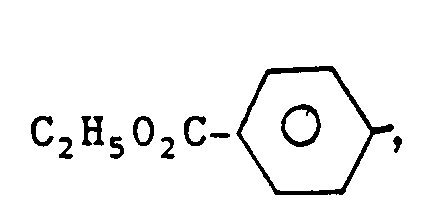
R₂ is 3-pyridyl, R₃, R₄, and R₅ are H and X₁ is O,
R₁ is
R₂ is phenyl, R₃, R₄, and R₅ are H and X₁ is O,
R₁ is
R₂ is phenyl, R₃, R₄, and R₅ and H and X₁ is O
and R₁ is
R₂ is phenyl, R₃, R₄, and R₅ are H and X₁ is O,
R₁ is
R₂ is 3-pyridyl, R₃, R₄, and R₅ are H and X₁, is O,
R₁ is
R₂ is 3-pyridyl, R₃, R₄, and R₅ are H and X₁ is O,
R₁ is
R₂ is phenyl, R₃, R₄, and R₅ are H and X₁ is O,
R₁ is
R₂ is 3-pyridyl, R₃, R₄ and R₅ are H and X₁ is O
R₁ is
R₂ is phenyl, R₃, R₄ and R₅ are H and X₁ is O
R₁ is
R₂ is 3-pyridyl, R₃, R₄, and R₅ are H and X₁ is O
R₁ is
R₂ is phenyl, R₃, R₄, and R₅ are H and X₁ is O
R₁ is
R₂ is 3-pyridyl, R₃, R₄, and R₅ are H and X₁ is O
R₁ is
R₂ is phenyl, R₃, R₄, and R₅ are H and X₁ is O
R₁ is
R₂ is 3-pyridyl, R₃, R₄, and R₅ are H and X₁ is O
R₁ is
R₂ is phenyl, R₃, R₄, and R₅ are H and X₁ is O
R₁ is
R₂ is 3-pyridyl, R₃, R₄, and R₅ are H and X₁ is O. - The present ureas also include physiologically acceptable salts of the compounds described above. The ureas also may have two asymmetrical carbon atoms, i.e., optically active sites as asterisked in the following structure:

These ureas exist in (R) and (S) enantiomeric forms if there is one optically active site. If both sites are optically active, there are four possible diastereomic forms: (R)(R), (R)(S), (S)(R), and (S)(S). - The present invention also relates to edible products containing the present urea compounds as sweetening agents either alone or in combination with other sweeteners. Also provided by the present invention is a process for sweetening edible products such as foods, beverages, chewing gums, confections, pharmaceuticals, veterinary preparations and the like.
- The present invention further contemplates compositions of the present ureas in combination with other sweetening agents and/or physiologically acceptable carriers which may be bulking agents. Suitable carriers include water, polymeric dextrose such as polydextrose, starch and modified starches, maltodextrins, cellulose, methylcellulose, maltitol, cellobiitol, carboxymethylcellulose, hydroxypropylcellulose, hemicelluloses microcrystalline cellulose, other cellulose derivatives, sodium alginate, pectins and other gums, lactose, maltose, glucose, leucine, glycerol, mannitol, sorbitol, sodium bicarbonate and phosphoric, citric, tartaric, fumaric, benzoic, sorbic, propionic acids and their sodium, potassium and calcium salts and mixtures of all of the above.
- Suitable sweetening agents which may be used in combination with the present ureas can be sugars or high potency sweeteners such as sucrose, corn syrups, fructose, high fructose corn syrup, aspartame, alitame, neohesperidin dihydrochalcone, hydrogenated isomaltulose (Palatinite), stevioside type sweeteners, L-sugars, glycyrrhizin, xylitol, lactitol, neosugar, acesulfam-K, saccharin (sodium, potassium or calcium salt), cyclamic acid (sodium, potassium or calcium salt), sucralose, monellin and thaumatin and mixtures thereof.
- The present invention also relates to a novel method of preparing the inventive urea compounds. An isocyanate of the formula
R₁NCX₁
with R₁ and X₁ chosen as desired from the substituents earlier disclosed is reacted with a substituted beta-amino acid, such as a beta-alanine of the formula
with R₂, R₃, R₄, and R₅ chosen as desired from the substituents earlier disclosed. The ester of the β amino acids may also be used. The substituted beta-amino acid may be prepared by the methods disclosed in: - U.S. Patent 4,127,570 to Fosker
Journal of the Chemical Society (1936), V.59, p.299
Journal of the Chemical Society (1929), V.51, P.41
Liebigs Ann. Chemistry (1981), V.12, p.2258
Synthetic Communication (1981), V.11, p.95
Synthesis (1982), p. 967
Chem. Pharm. Bull. (1978), 26, 260-263
each of which is incorporated herein by reference. - The isocyanate and substituted beta-amino acid may be reacted in the presence or absence of a base. The reaction is preferably carried out in the presence of a solvent such as acetonitrile, a mixture of acetonitrile and water, methanol, acetone, or a mixture of ethyl acetate and water.
- Anilines may also be reacted with isocyanates or isothiocyanates of a substituted β-amino acid ester followed by ester hydrolysis.
- In some of the desired compounds, it is preferable to isolate one of two enantiomeric forms. An aldehyde and a chiral amine are reacted to produce a Schiff base. The Schiff base is reacted with a methyl haloacetate in THF with a metal such as zinc to produce a diastereomeric mixture of a β-lactam. The desired diastereomer is separated after the β-lactam is hydrolyzed and esterified to produce an ester of a first β-amino acid. After hydrogenolysis, the desired stereoisomer of a second β-amino acid is obtained.
- For some applications, esterification is not necessary. In these applications, the desired diastereomer of the β-lactam is isolated and then hydrolyzed to produce a diastereomeric mixture of a first β-amino acid. The first β-amino acid is then hydrogenolyzed to produce the desired stereoisomer of a second β-amino acid.
- The present invention also relates to a method of sweetening foods or comestible products. In such uses, the present ureas are added to any consumable product in which it is desired to have a sweet taste. The inventive urea compounds are added to such products in amounts effective to impact the desired level of sweetness. The optimum amount of the urea sweetener agent will vary depending on a variety of factors, including the sweetness potency of a particular urea sweetening agent, storage and use conditions of the product, the particular components of the product, the flavor profile of the comestible product, and the level of sweetness desired. One skilled in the art can readily determine the optimum amount of sweetening agent to be employed in a particular formulation of a food product by conducting routine sweetness (sensory) experiments. Usually, the present sweetening agents are added to the comestible products in amounts of from about 0.00001 to about 0.1 percent by weight of the comestible product, advantageously from about 0.00005 to about 0.05 weight percent and preferably from about 0.001 to about 0.02 weight percent. Concentrates, of course, will contain higher percentages of sweetening agent(s), and are diluted for end use purposes.
- Suitable products which are sweetened by the present sweetening agents include any products for which a sweet flavor component is desired such as food products (for human or animal consumption), beverages (alcoholic, soft drinks, juices, carbonated beverages), confectionary products (candies, chewing gum, baked goods, pastries, breads, etc.), hygiene products, cosmetics, pharmaceutical products and veterinary products. In sweetening gum, the present ureas can be added in amounts in excess of a sucrose equivalent normally found in gum. This excess amount of urea sweetener may provide a longer sweet taste due to its lower solubility compared to sucrose and enhancement of flavor (flavor enhancer).
- The present ureas can be added in pure form to foods to impart a sweet flavor. However, because of the high sweetness potency of the present sweetening agents, they are typically admixed with a carrier or bulking agent. Suitable carriers or bulking agents include water, polymeric dextrose such as Polydextrose, starch and modified starches, maltodextrins, cellulose, hemicellulose, methylcellulose, carboxymethylcellulose, cellobiitol, hydroxypropylcellulose, hemicelluloses microcrystalline cellulose, cellulose derivatives, sodium alginate, pectins and other gums, lactose, maltose, maltitol, glucose, leucine, glycerol, mannitol, sorbitol, sodium bicarbonate and phosphoric, citric, tartaric, fumaric, benzoic, sorbic and propionic acids and their sodium, potassium and calcium salts and mixtures of all of the above.
- The present ureas can be employed alone as the sole sweetening agent in a comestible product. Mixtures of more than one of the inventive ureas can also be employed. Additionally, the ureas can be used in combination with other sweetening agents such as sugars (such as fructose and sucrose), corn syrups, high potency sweeteners such as aspartame and alitame, and other sweeteners such as glycyrrhizin, aminoacyl sugars, xylitol, sorbitol, mannitol, acesulfam K, thaumatin, monellin, cyclamates, saccharin, neohesperidin dihydrochalcone, hydrogenated isomaltulose, (Palatinit), stevioside type sweeteners, lactitol, neosugar, L-sugars, sucralose, and mixtures thereof.
- The compounds synthesized were tasted as aqueous solutions at 1 mg/ml and 10 fold dilutions thereof and compared in taste quality and intensity to a sucrose standard solution. All compounds were found to be sweet.
- The following examples illustrate the practice of the present invention, but should not be construed as limiting its scope.
- To a stirred solution of 4-ethoxycarbonylphenyl isocyanate (2.16 g, 11.3 mmol) in 35 ml of acetonitrile was added a solution of 3-amino-3-phenylpropionic acid (1.90 g, 11.5 mmol) and sodium hydroxide (0.458 g, 11.5 mmol) in a mixture of 6 ml of water and 6 mL of acetonitrile. The reaction mixture was stirred for 16 hours, then concentrated. The residue was diluted with water (50 ml) and extracted with methylene chloride (25 mL) and ethyl acetate (25 ml). The aqueous layer was acidified with 11.5 mL of 1 N HC1 and stirred for 30 minutes. The resulting slurry was filtered and the solid was washed with copious amounts of water. The solid was dried in vacuo to afford 3.61 g (90%) of the urea as white powder. PMR (dmso-D₆) δ 12.3 (s, 1 H), 9.03 (s, 1 H), 7.82, 7.50 (abq, 4H), 7.45-7.2 (m, 5 H), 6.96 (d, 1H, J= 8.4 Hz), 5.14 (overlapping dt, 1H), 4.24 (q, 2 H, J= 7 Hz), 2.78 (m, 2 H), 1.28 (t, 3 H, J= Hz). CMR (dmso-D₆) δ 172.0, 165.5, 153.9, 144.9, 142.6, 130.3, 128.3, 127.0, 126.3, 122.1, 116.7, 60.2, 50.0, 40.9, 14.2 IR(KBr)cm⁻¹ 3400, 3340, 3200, 2980, 1710, 1650, 1595, 1553, 1512, 1409. Anal. calcd. for C₁₉N₂₀N₂O₅-0.17 H₂O: C, 63.49; H, 5.70; N, 7.79. Found: C, 63.47: H, 5.68: N, 7.63.
- To a stirred solution of 4-acetylphenyl isocyanate (1.87 g, 11.6 mmol) in 35 mL of acetonitrile was added a solution of 3-amino-3-phenylpropionic acid (1.95 g, 11.8 mmol) and sodium hydroxide (0.472 g, 11.8 mmol) in a mixture of 6 ml of water and 6 ml of acetonitrile. Solid formed in the reaction material immediately. The reaction mixture was stirred for 17 hours, then concentrated. The residue was diluted with water (75 ml) and extracted with ethyl acetate (2 x 25 mL ea.) The aqueous layer was concentrated to remove traces of ethyl acetate. The aqueous layer was then acidified with 14 ml of 1 N HC1 and the product gummed out. The resulting suspension was stirred and the gum solidified. The slurry was filtered and the solid was washed with copious amounts of water. The solid was dried in vacuo to afford 3.30 g (87%) of the urea as tan powder. The crude product was recrystallized from acetonitrile to afford 1.67 g (44%) of the urea. PMR (dmso-D₆) δ 12.3 (s, 1 H), 9.01 (s, 1 H), 7.81 (d, 2 H, J= 8.8 Hz), 7.47 (d, 2H, J= 8.8 Hz), 7.4-7.15 (m, 5 H), 6.95 (d, 1H, J= 8.4 Hz), 5.11 (apparent q, 1 H), 2.85-2.6 (m, 2 H), 2.45 (s, 3 H). CMR (dmso-D₆) δ 196.2, 172.0, 153.9, 144.9, 142.6, 129.6, 128.3, 127.0, 126.3, 116.7, 49.9, 40.9, 26.3.
- To a stirred solution of 4-bromophenyl isocyanate (2.69 g, 13.6 mmol) in 35 mL of acetonitrile was added a solution of 3-amino-3-phenylpropionic acid (2.29 g, 13.9 mmol) and sodium hydroxide (0.555 g, 13.9 mmol) in a mixture of 6 ml of water and 6 mL of acetonitrile. The reaction mixture was stirred for 24 hours, then concentrated. The residue was diluted with water (75 ml) and extracted with ethyl acetate (2 x 50 ml). The aqueous layer was concentrated to remove traces of ethyl acetate and then acidified with 20 mL of 1 N HC1. The resulting thick slurry was diluted with water and filtered. The solid was washed with copious amounts of water and dried in vacuo to afford 3.61 g (90%) of the urea as white powder. PMR (dmso-D₆) δ 12.3 (bs, 1 H), 8.73 (s, 1 H), 7.45-7.2 (m, 9H), 6.84 (d, 1H, J= 8.4 Hz), 5.11 (apparent q, 1 H), 2.85-2.65 (m, 2 H). CMR (dmso-D₆) δ 172.0, 154.1, 142.7, 139.7, 131.4, 128.3, 126.9, 126.3, 119.5, 112.4, 49.9, 40.9.
- To a solution of 1.652 g (11.5 mmol) of 4-cyanophenyl isocyanate in 50 mL acetonitrile was added 1.893 g (11.5 mmol) of 3-amino-3-phenylpropionic acid slurried in 50 ml acetonitrile. After 1 hour at room temperature the reaction mixture was heated to reflux where, after the addition of an additional 50 ml of acetonitrile, a clear solution formed. The reaction mixture was cooled with stirring overnight. The solids were filtered off and dried at 40° C/1 mm Hg to a constant weight of 3.01 g (84.6%) of the desired urea, m.p. 190-192° C IR (KBr) 3380, 3320, 2230, 1680, 1600, 1540, 1320, 1240 cm⁻¹. ¹H NMR (Me₂SO-d₆, 300MHZ) δ 2.6-2.7 (d,2H), 4.9-5.1 (m,1H), 6.9 (d,1H), 7.0-7.6 (m, 9H), 9.0 (s,1H); ¹³C NMR (Me₂SO-d₆, 75.5MHZ) δ 172.8, 154.6, 145.6, 143.3, 134.0, 127.8, 127.1, 120.2, 118.3, 103.4, 50.8, 41.6. Anal. Calcd for C₁₇H₁₅N₃O₃: C, 66.01; H, 4.89; N, 13.59. Found: C, 66.15; H, 4.92; N, 13.92.
- To a solution of 1.66 g (10 mmol) of 3-amino-3-(3-pyridyl) propionic acid, 0.4 g of NaOH, and 50 ml H₂O was added 2.88 g (20 mmol) of 4-cyanophenyl isocyanate in 50 ml ethyl acetate. The reaction mixture was stirred overnight at room temperature. The two phase mixture was filtered to remove traces of impurities and the aqueous phase was twice extracted with ethyl acetate. The water was removed at reduced pressure to produce a gummy mass. TLC and ¹H NMR indicated the material to be a mixture of desired urea and starting beta-amino acid. The desired urea was isolated by reverse phase chromatography using acetonitile/water as the mobile phase. IR (KBr) 3400, 2230, 1700, 1600, 1560, 1400 cm⁻¹. ₁H NMR (Me₂SO-d₆, 300MHz) δ 2.5 (d,2H), 5.1 (s,1H), 7.3 (m,1H), 7.5 (d,2H), 7.6 (d,2H), 7.65 (s,1H), 8.35 (d,1H), 8.55 (s,1H), 9.3 (d,1H); ¹³C NMR (Me₂SO-d₆, 75.5 MHz) δ 174.8, 154.7, 147.8, 147.0, 146.1, 140.7, 133.5, 132.6, 123.0, 119.6, 117.2, 101.0, 49.7, 45.0.
- To a slurry of 1.652 g (10 mmol) of 3-amino-3-phenylpropionic acid in 50 ml acetone was added 1.641 g (10 mmol) of 4-nitrophenyl isocyanate dissolved in 5 ml acetone. After 4 hours of stirring at room temperature, a trace of insoluble impurities was removed by filtration. After removal of the solvent a bright yellow solid was isolated in a quantitative yield. The crude product was purified on a silica column using a chloroform:methanol:acetic acid solvent. IR (KBr) 3400, 1700, 1560, 1500, 1350 cm⁻¹. ¹H NMR (Me₂SO-d₆, 300MHz) δ 2.75 (bs,2H), 5.2 (d,1H), 7.2-7.4 (m,5H), 7.65 (d,2H), 7.85 (m,1H), 8.1 (d,2H), 10.1 (s,1H); ¹³C NMR (Me₂SO-d₆, 75.5 MHz) δ 153.9, 147.4, 143.3, 140.2, 128.1, 126.6, 126.3, 124.9, 116.7, 50.5. Anal. Calcd for C₁₆H₁₅N₃O₅(2H₂O): C, 52.59; H, 5.24: N, 11.50. Found: C, 52.14; H, 4.70; N, 11.56.
- Methyl 3-isocyanato-3-phenylpropionate was first prepared.
- The reaction assembly is as follows: a 100 mL three-neck round bottom flask was fitted with a thermometer, reflux condenser, and gas inlet bubble tube. The condenser was connected to a trap and then to an aqueous NaOH bath (phosgene scrubber). The gas inlet line consisted of a T-tube with nitrogen and phosgene inlets at two of the openings. The exit led through a trap and into the gas bubble tube.
- The apparatus was purged with nitrogen, toluene (20 mL) was added and the solution chilled in an ice-salt bath to 0 °C. Gaseous phosgene (10 mL, 14 g, 140 mmol; actual measurement based on volume increase of the toluene solution) was added and a slow addition of phosgene was continued throughout the remainder of the reaction. Methyl 3-phenyl-3-aminopropionate was added portionwise over 2 min. to the phosgene solution. The reaction mixture was stirred at 0 °C for 15 min, allowed to warm to room temperature over 30 min, and then carefully heated and held at 110 °C for 4 hours (slow phosgene addition was continued). The resulting clear solution was allowed to cool to room temperature, purged with nitrogen overnight and then concentrated (asp vacuum) yielding an oil. Vacuum distillation using a Kugelrohr apparatus (70 °C, 1 mm) afforded the pure isocyanate (8.95 g, 94 %): ¹H NMR (CDCl₃) δ 7.42 (m, 5 H), 5.12 (q, J = 4.7 Hz, 1 H), 3.71 (s, 3 H), 2.79 (m, 2 H); IR (thin film) cm⁻¹ 2251, 1745, 1438, 1269, 1199, 1170, 987, 760, 700. Anal. Calcd for C₁₁H₁₁N₁O₃: C, 64.38; H, 5.40; N, 6.83. Found: C, 64.52; H, 5.55; N, 6.81.
- N-(4-Carbamoylphenyl)-N'-[(3-(methyl 3-phenylpropionate)] was then prepared by the following procedure.
- To a solution of methyl 3-isocyanato-3-phenylpropionate (1.97 g, 9.59 mmol) in CH₃CN (35 mL) was added 4-aminobenzamide (1.31 g, 9.59 mmol) with stirring at room temperature. The resulting clear solution was allowed to stand for 3 weeks during which time a white precipitate formed. Vacuum filtration yielded the desired urea (3.06 g, 94 %) as a white solid; mp 198-200 °C; ¹H NMR (DMSOd₆) δ 8.78 (s, 1 H), 7.71 (d, J = 9.3 Hz, 2 H), 7.37 (d, J = 9.3 Hz, 2 H), 7.36-7.18 ( m, 5 H), 7.10 (s, 1 H), 6.88 (d, J = 7.8 Hz, 1 H), 5.12 (q, J = 7.8 Hz, 1 H), 3.54 (s, 3 H), 2.82 (m, 2 H); IR (KBr) cm⁻¹ 3354, 1730, 1669, 1659, 1528, 701. Anal. Calcd for C₁₈H₁₉N₃O₄: C, 63.33; H, 5.61; N, 12.31. Found: C, 63.29; H, 5.82; N, 12.43.
- LiOH (0.31 g, 7.3 mmol) in H₂O (5 mL) was added via syringe pump over 4 hr to a solution of N-(4-carbamoylphenyl)-N'-[3-(methyl 3-phenylpropionate)] (2.50 g, 7.32 mmol) in CH₃OH/H₂O (2:1, 75 mL). The resulting suspension was stirred for 36 hr and filtered. The aqueous filtrate was washed with methylene chloride (3 X 25 mL) and then acidified to pH 3 with 1 N HCl, yielding the desired acid, N-(4-carbamoylphenyl)-N'-[3-(3-phenylpropionic acid)]urea (1.75 g, 73 %) as a white solid: mp 201-212 °C with decomp; ¹H NMR (CD₃OD) δ 8.82 (s, 1 H), 7.76 (s) and 7.71 (d, J = 8.6), (3 H), 7.37 (d, J = 8.6 Hz, 2 H), 7.34-7.17 (m, 5 H), 7.09 (s, 1 H), 6.87 (d, J = 8.4 Hz, 1 H), 5.13-5.05 (m, 1 H), 2.73 (d, J = 7.0 Hz, 2 H); ¹³C NMR (DMSO-d₆) δ 172.5, 168.0, 154.5, 143.6, 143.1, 129.0, 128.8, 127.4, 127.1, 126.8, 116.9, 50.4, 41.4. IR (KBr) 3343, 1693, 1661, 1649, 1604, 1543, 1414, 1239, 852, 762, 699. Anal. Calcd for C₁₇H₁₇N₃O₄(0.84 H₂O): C, 59.62; H, 5.50; N, 12.27. Found: C, 59.62; H, 5.26; N, 12.18.
- Methyl 3-isocyanato-3-phenylpropionate was prepared by the procedure of Example 7. To a solution of methyl 3-isocyanato-3-phenylpropionate (1.59 g, 7.75 mmol) in acetonitrile (50 mL) was added sulfanilamide (1.33 g, 7.75 mmol) in one portion with stirring. The resulting homogenous solution was allowed to stand for 3 weeks, during which time a white precipitate formed. Vacuum filtration yielded N-4-sulfonamidophenyl)-N'-[3-(methyl 3-phenylpropionate)]urea as a white solid (2.35 g, 80.5 %). mp 221-222 °C; ¹H NMR (DMSO) δ 8.93 (s, 1 H), 7.63 (d, J = 8.7 Hz, 2 H), 7.49 (d, J = 8.6 Hz, 2 H), 7.38-7.18 (m, 5 H), 7.13 (s, 2 H), 6.93 (d, J = 8.4 Hz, 1 H), 5.11 (q, J = 7.5 Hz, 1 H), 3.52 (s, 3 H), 2.93-2.76 (m, 2 H). IR (KBr)Cm⁻¹ 3800-2800 (br), 1723, 1688, 1682, 1594, 1392, 1493, 1333, 1239, 1157, 1015, 837, 702, 607. Anal. Calcd for C₁₇H₁₉N₃O₅S₁: C, 54.10; H, 5.07; N, 11.13; S, 8.50. Found: C, 54.36; H, 5.22; N, 10.91; S, 8.56.
- To a stirred solution of methyl ester from above (2.00 g, 5.30 mmol) in methanol/water (3:2, 50 mL) was added LiOH (0.22 g, 5.30 mmol) in water (5 mL) over 4 hr. The resulting suspension was filtered. The filtrate was washed with methylene chloride (3 X 15 mL), and then acidified (1 N HCl) to pH 2 yielding N-(4-sulfonamidophenyl)-N'-[3-(3-phenylpropionic acid)]urea as a white solid (1.08 g, 56 %): mp 165-167 °C with decomposition; ¹H NMR (DMSO-d₆) δ 8.96 (s, 1 H), 7.62 (d, J = 8.7 Hz, 2 H), 7.47 (d, J = 8.8 Hz, 2 H), 7.39-7.18 (m, 5 H), 7.13 (s, 2 H), 6.93 (d, J = 8.3, 1 H), 5.08 (q, J = 7.8 Hz, 1 H), 2.73 (d, J = 7.3 Hz, 2 H); ¹³C NMR (DMSO-d₆) δ 40.87, 49.97, 116.83, 126.31, 126.75, 127.00, 128.32, 136.14, 142.54, 143.41, 154.00, 172.04; IR (KBr) cm⁻¹ 3650-2800 (br), 1883, 1840, 1592, 1541, 1326, 1155. Anal. Calcd for C₁₆H₁₇N₃O₅S₁(1 H₂O): C, 50.39; H, 5.02; N, 11.02; S, 8.41. Found: C, 50.75; H, 4.96; N, 10.90; S, 8.31.
- A solution of 3-amino-3-phenylpropionic acid (3.19 g, 19.3 mmol) and NaOH (0.77 g, 19.3 mmol) in water/acetonitrile (1:1, 20 mL) was added in three portions over 15 min to a vigorously stirred solution of 4-methoxycarbonylphenyl isocyanate (3.00 g, 19.3 mmol) in acetonitrile (20 mL). The acetonitrile was removed by rotary evaporation and the resulting aqueous solution was washed with ethyl acetate (2 X 25 mL). After acidification of the aqueous phase (pH 2) with 1 N HCl, the desired urea precipitated (3.61 g, 55 %) as a white solid: mp 111-112 °C with decomposition; ¹H NMR (DMSO-d₆) δ 9.01 (s, 1 H), 7.79 (d, J = 8.7 Hz, 2 H), 7.47 (d, J = 8.7 Hz, 2 H), 7.40-7.17 (m, 5 H), 6.95 (d, J = 8.4 Hz, 1 H), 5.10 (q, J = 7.2 Hz, 1 H), 3.76 (s, 3 H), 2.75 (m, 2 H); ¹³C NMR (DMSO-d₆) δ 172.48, 166.41, 154.39, 145.40, 142.99, 130.79, 128.74, 127.41, 126.76, 122.28, 117.16, 52.08. 50.41, 41.31; IR (KBr) cm⁻¹ 3600-2400 (br), 1712, 1657, 1594, 1548, 1436, 1411, 1285, 1245, 1176, 1113, 765, 700. Anal. Calcd for C₁₈H₁₈N₂O₅: C, 63.15; H, 5.30; N, 8.18. Found: C, 63.09; H, 5.45; N, 7.89.
- To a solution of NaHCO₃ (2.13 g, 25.3 mmol) in water (5 mL) was added 3-amino-3-(3-pyridyl)propionic acid (4.21 g, 25.3 mmol). The resulting solution was concentrated (5 mm vacuum) to dryness and ethanol was added (20 mL). This suspension was concentrated (5 mm vacuum) and the ethanol treatment and concentration was repeated a second time. The white solid thus formed was suspended in methanol (50 mL) and carboethoxyphenyl isocyanate (4.84 g, 25.3 mmol) added in one portion which resulted in the formation of a clear solution. After 4 hr, the solution was concentrated to 15 mL and additional carboethoxyphenyl isocyanate (1.2 g, 6.3 mmol) was added. Concentration of this solution (5 mm vacuum) afforded a white solid. Water (10 mL) was added to the solid and after vigorous stirring, the suspension was filtered. The filtrate was washed with methylene chloride (2 X 5 mL) and concentrated (5 mm vacuum) providing a white foam. This material was purified by reverse phase high pressure liquid chromatography (100 % water) and afforded the desired product as sodium salt (white solid): mp 190-195°C with decomposition; ¹H NMR (DMSO-d₆) δ 10.92 (s, 1 H), 8.91 (d, J = 6.0 Hz, 1 H), 8.65 (s, 1 H), 8.40 (d, J = 4.4 Hz, 1 H), 7.79 ( d, J = 8.8 Hz, 3 H), 7.63 (d, J = 8.8 Hz, 2 H), 7.31 (d of d [J = 4.8 and 7.7 Hz, 1 H), 5.19 (q J = 6.4 Hz, 1 H), 4.26 (q, J = 7.1 Hz, 2 H), 2.60 (m, 2 H), 1.30 (t, J = 7.2 Hz, 3 H); ¹³C NMR (DMSO-d₆) δ 175.66, 165.98, 155.25, 148.51, 147.57, 146.43, 141.05, 134.22, 130.36, 123.51, 121.47, 116.98, 60.35, 50.02, 45.10, 14.55; IR (KBr) cm⁻¹ 3700-2600 (br), 1693, 1597, 1547, 1411, 1285, 1176. Anal. Calcd for C₁₈H₁₈N₃O₅Na₁(1.3 H₂O): C, 53.68; H, 5.16; N, 10.43. Found: C, 53.66; H, 4.85; N, 10.44.
- A solution of 3-amino-3-(3-pyridyl)propionic acid (4.21 g, 25.3 mmol) in water (10 mL) was treated with NaOH (1.01 g, 25.3 mmol) forming the sodium salt. This solution was added to a solution of 4-carboethoxyphenyl isocyanate (7.62 g, 39.9 mmol) in acetonitrile (60 mL). After stirring for 2 days, less than 5 % of the starting amino acid remained unreacted as determined by HPLC. The resulting suspension was filtered. The remaining acetonitrile was removed by vacuum evaporation and water (20 mL) added to the solution. The resulting aqueous solution was washed with ethyl acetate (3 X 10 mL) and concentrated (5 mm) yielding the crude product as a gummy oil. ¹H NMR (DMSO-d₆) δ 10.78 (s, ca. 1 H), 8.73 (d, J = 5.7 Hz, ca. 1 H), 8.58-8.52 (m, 1 H), 8.43-8.32 (m, 1 H), 7.75-7.65 (d, J = 8.6 Hz, 3 H). 7.53 (d, J = 8.6 Hz, 2 H), 7.35-7.20 (m, 1 H), 5.00 (q, J = 6.7 Hz, 1 H), 4.20 (q, J = 7.6 Hz, 2 H), 1.52-2.40 (m, 2 H), 1.24 (t, J = 7.6 Hz, 3 H).
- To the above crude product (2.5 g, 7.0 mmol) in a Parr Type high pressure reactor was added NH₄OH (150 mL, 14.8 M) and the solution heated to 80 °C for 4.5 hr. The resulting solution was concentrated yielding a syrup. The syrup was chromatographed on an HPLC system using Whatman Partisil 20, C₁₈ packing using 100 % H₂O. When the desired product began to elute, the solvent strength was increased to acetonitrile:water (2.5:97.5). The fractions containing the product were combined and concentrated (5 mm) until only about 25 mL of solution remained. This solution was lyophilized yielding the desired product as a white solid (0.610 g, 25 %), obtained as a mixture of sodium and ammonium salts: ¹H NMR (DMSO-d₆) δ 9.52 (s, 1 H), 8.53 (s, 1 H), 8.36 (d, J = 5.7 Hz, 1 H), 8.17 (d, J = 5.7 Hz, 1 H), 7.78-7.62 (m, 4 H), 7.43 (d, J = 8.6 Hz, 2 H), 7.29-7.21 (m, 1 H), 7.05 (s, 1 H), 4.97 (q, J = 6.7 Hz, 1 H), 2.43 (m, 2 H); IR (KBr) cm⁻¹ 3600-2800 (br), 1663, 1585, 1539, 1412, 1396, 1328, 1316, 1242, 1185, 1115, 851, 769, 711.
- Hydrogen peroxide (30%, 3.45 mL, 9.60 mmol) was added to a stirred suspension of N-(4-cyanophenyl)-N'-[3-(3-(3-pyridyl)propionic acid)]urea was prepared as detailed in Example 5 and 2.90 g, 9.60 mmol was placed in ethanol (6.9 mL), water (6.9 mL) and sodium hydroxide (6N, 2.07 mL, 12.42 mmol). The reaction mixture was stirred for 15 min at room temperature until the contents of the flask became clear and the evolution of gas (oxygen) stopped. Sodium bisulfite (2g) was added to the reaction mixture to destroy excess hydrogen peroxide. The reaction mixture was concentrated in vacuo at room temperature and then chromatographed (reverse phase HPLC, water as the eluant). Pure fractions were combined and lyophilized to afford 1.90 g (62%) of the desired product as a white crystalline powder. ¹H NMR (D₂O) δ 2.70 (d, 2H, J=7.3 Hz), 5.10 (t, 1H, J=7.1 Hz), 7.33 and 7.68 (AB quartet 4H, J=7.6 Hz), 7.38-7.43 (m, 1H), 7.84 (d, 1H, J=8.0 Hz), 8.39 (d, 1H, J=4.4 Hz), 8.51 (s, 1H). Anal Calcd for C₁₆H₁₅N₄NaO₄(1.5H₂O): C, 50.93; H, 4.8: N, 14.84. Found: C, 50.83; H, 4.20; N, 14.27
- To a stirred solution of the ethyl ester produced in Example 10 (3.00 g, 7.91 mmol) in water was added NaOH (8.7 mL, 8.7 mmol, 1N). After 20 hr, no starting materials remained as determined by HPLC. The reaction mixture was concentrated (5 mm vacuum), dissolved in water (5 mL), filtered (Acrodisc-HPLC filter), and purified by high pressure liquid chromatography (Whatman partisil-20, ODS-3). Concentration (5 mm vacuum) to 50 mL followed by lyophilization afforded the desired diacid as a white solid, as the disodium salt; ¹H NMR (D₂O with 5 % DMSO-d₆) δ 8.40 (s, 1 H), 8.19 (s, 1 H), 7.80-7.55 (m, 3 H), 7.28-7.07 (m, 3 H), 5.15-4.95 (m, 1 H), 2.73-2.48 (m, 2 H); ¹³C NMR (D₂O with 5 % DMSO-d₆) δ 178.50, 175.05, 156.35, 147.45, 146.82, 141.31, 138.78, 135.18, 130.43, 130.17, 124.33, 118.66, 50.08, 43.97; IR (KBr) cm⁻¹ 3700-2400 (br), 1688, 1603, 1387, 1311, 1239, 792, 702. Anal. Calcd for C₁₆H₁₃N₃O₅Na₂ (3.51 H₂O): C, 44.01; H, 4.63; N, 9.62. Found: C, 44.02; H, 4.15; N, 9.71.
- To a solution of 4-iodophenyl isocyanate (2.45 g, 10.0 mmol) in 30 mL of acetonitrile was added a solution of 3-amino-3-phenylpropionic acid (1.67 g, 10.1 mmol) and sodium hydroxide (0.404 g, 10.1 mmol) in 10 mL of 1:1 acetonitrile-water. Precipitation of a white solid made the reaction suspension difficult to stir, and it was diluted with 10 mL of acetonitrile and 10 mL of water. The milky white solution was stirred at room temperature for 16.5 h, and then the acetonitrile removed at reduced pressure. The aqueous residue was diluted to 150 mL with water, and then extracted with three portions of ethyl acetate. The aqueous solution was made basic with 1 N sodium hydroxide, then filtered to remove a white solid. The solid was washed with water and then dried in vacuo at 60 °C. This material, 1.74 g (40%) was identified as the sodium salt of the desired product. The filtrate was acidified to pH 1 with conc. hydrochloric acid. The precipitate was filtered, washed with water and ether, then dried in vacuo at 60 °C to give 1.15 g (28%) of a white solid: mp: 208-209 °C; ¹H NMR (300 MHz; DMSO-d₆) δ 8.70 (s, 1 H), 7.52-7.20 (AB, 4 H, JAB=8.8 Hz), 7.33-7.28 (m, 5 H), 6.83 (d, 1 H, J=8.4 Hz), 5.12-5.08 (m, 1 H), and 2.76-2.73 (m, 2 H); ¹³C NMR (75.5 MHz; DMSO-d₆) δ 172.2, 154.3, 142.8, 140.3, 137.3, 128.4, 127.1, 126.4, 120.1, 83.9, 50.0, and 41.1; IR (KBr): 3338, 3304, 3064, 3032, 2928, 1705, 1651, 1592, 1547, 1486, 1398, 1314, 1240, and 712 cm⁻¹. Analysis: Calculated for C₁₆H₁₅IN₂O₃(H₂O)0.37: C 46.08; H 3.81; N 6.72. Found: C 46.07; H 3.73; N 6.75.
- To a solution of 4-chlorophenyl isocyanate (1.54 g, 10.0 mmol) in 35 mL of acetonitrile was added a solution of 3-amino-3-phenylpropionic acid (1.67 g, 10.1 mmol) and sodium hydroxide (0.406 g, 10.2 mmol) in 10 mL of 1:1 acetonitrile-water. The homogeneous solution was stirred at room temperature for 1.5 h, and then the acetonitrile removed at reduced pressure. The aqueous solution was diluted to 150 mL with water, extracted with two portions of ethyl acetate, and then acidified to pH 1 with conc. hydrochloric acid. The precipitate was filtered, washed with water, and then dried in vacuo to give 2.82 g (88%) of a white solid: mp 185-186 °C; ¹H NMR (300 MHz; DMSO-d₆) δ 8.74 (s, 1 H), 7.41-7.22 (AB, 4 H, JAB=8.8 Hz), 7.37-7.29 (m, 5 H), 6.84 (d, 1 H, J=8.4 Hz), 5.16-5.08 (m, 1 H), and 2.77-274 (m, 1 H); ¹³C NMR (75.5 MHz; DMSO-d₆) δ 172.2, 154.4, 142.8, 139.4, 128.6, 128.5, 127.1, 126.4, 124.8, 119.2, 50.1 and 41.1; IR (KBr): 3336, 3304, 3064, 3032, 2928, 1706, 1652, 1595, 1553, 1493, 1398, 1312, 1240, and 704 cm⁻¹. Analysis: Calculated for C₁₆H₁₅ClN₂O₃(H₂O): C, 60.05; H, 4.77; N, 8.75. Found: C, 60.05; H, 4.74; N, 8.83.
- To a solution of 3-chlorophenyl isocyanate (1.54 g, 10.0 mmol) in 35 mL of acetonitrile was added a solution of 3-amino-3-phenylpropionic acid ( 1.67 g, 10.1 mmol) and sodium hydroxide (0.436 g, 10.9 mmol) in 10 mL of 1:1 acetonitrile-water. The homogeneous solution was stirred at room temperature for 3 h, then concentrated at reduced pressure to afford a yellow oil. This material was dissolved in 100 mL of water, extracted with two portions of methylene chloride, and then acidified to pH 0-1 with conc. hydrochloric acid. The precipitate was filtered, washed with water, and dried in vacuo at 60 °C to give 2.86 g (90%) of a white solid: mp 172-173 °C; ¹H NMR (300 MHz, DMSO-d₆) δ 8.84 (s, 1 H), 7.67 (s, 1 H), 7.37-7.29 (m, 4 H), 7.24-7.15 (m, 3 H), 6.91 (d, 2 H, J=7.8 Hz), 5.18-5.11 (m, 1 H), and 2.79-2.76 (m, 2 H); ¹³C NMR (75.5 MHz; DMSO-d₆) δ 172.3, 154.4, 142.8, 142.0, 133.4, 130.4, 128.5, 127.2, 126.5, 121.0, 117.1, 116.2, 50.2, and 41.1; IR (KBr): 3392, 3064, 3032, 2928, 1717, 1653, 1592, 1552, 1483, 1424, and 700 cm⁻¹. Analysis: Calculated for C₁₆H₁₅ClN₂O₃: C, 60.29; H, 4.74; N, 8.79. Found: C, 60.34; H, 4.70; N, 8.82.
- To a solution of 4-methylphenyl isocyanate (1.33 g, 10.0 mmol) in 35 mL of acetonitrile was added a solution of 3-amino-3-phenylpropionic acid (1.67 g, 10.1 mmol) and sodium hydroxide (0.434 g, 10.9 mmol) in 10 mL of 1:1 acetonitrile-water. The homogeneous solution was stirred at room temperature for 2.5 h, then partially concentrated at reduced pressure. The aqueous solution was diluted with 200 mL of water, extracted with two portions of ethyl acetate, and then acidified to pH 0-1 with conc. hydrochloric acid. The precipitate was filtered, washed with water, and dried in vacuo at 60 °C to give 2.86 g (96%) of a white solid: mp 169-170 °C; ¹H NMR (300 MHz; DMSO-d₆) δ 8.49 (s, 1 H), 7.38-7.20 (m, 5 H), 7.29-7.00 (AB, 4 H, JAB= 8.3 Hz), 6.75 (d, 1 H, J=8.5 Hz), 5.19-5.12 (m, 1 H), 2.78-2.75 (m, 2 H), and 2.19 (s, 3 H); ¹³C NMR(75.5 MHz; DMSO-d₆) δ 172.3, 154.7, 143.1, 137.9, 130.2, 129.3, 128.5, 127.1, 126.5, 117.9,50.1, 41.3, and 20.5; IR (KBr): 3392, 3032, 2928, 1718, 1646, 1601, 1555, 1514, 1408, 1312,1240, 1195, 816, and 712 cm⁻¹. Analysis: Calculated for C₁₇H₁₈N₂O₃: C, 68.44; H, 6.08; N, 9.39. Found: C, 68.38; H, 6.10; N, 9.37.
- To a solution of 4-trifluoromethylphenyl isocyanate (1.87 g, 10.0 mmol) in 35 mL of acetonitrile was added a solution of 3-amino-3-phenylpropionic acid (1.67 g, 10.1 mmol) and sodium hydroxide(0.414 g, 10.3 mmol)in 10 mL of 1:1 acetonitrile-water. The reaction mixture was stirred at room temperature for 4.5 h, then partially concentrated at reduced pressure. The aqueous solution was diluted with 150 mL of water and then acidified to pH 0-1 with conc. hydrochloric acid. The yellow solid that precipitated was filtered and washed with water. It was then dissolved in 150 mL of ether and extracted with three portions of aqueous sodium hydroxide. The aqueous solution was acidified to pH 0-1 with conc. hydrochloric acid. The precipitate was filtered, washed with water, and dried in vacuo at 60 °C to give 3.18 g (90%) of a white solid: mp 172-173 °C; ¹H NMR (300 MHz; DMSO-d₆) δ 9.12 (s, 1 H), 7.59-7.52 (AB, 4 H, JAB=9 2 Hz), 7.38-7.20 (m, 5 H), 7.04 (d, 1 H, J= 8.5 Hz), 5.18-5.11 (m, 1 H), and 2.79-2.76 (m, 2 H); ¹³C NMR (75.5 MHz; DMSO-d₆) δ 172.2, 154.3, 144.2, 142.8, 128.5, 127.2, 126.5, 126.1, 123.0, 121.4, 117.4, 50.2, and 41.1; IR (KBr): 3360, 3064, 3032, 2928, 1720, 1654, 1602, 1555, 1327, 1248, 1168, 1115, 1072, and 710 cm⁻¹. Analysis: Calculated for C₁₇H₁₅F₃N₂O₃ (H₂O)0.36: C, 56.88; H, 4.42; N, 7.80; Found: C, 56.87; H, 4.27; N, 7.81.
- To a solution of p-anisaldehyde (40.8 g, 300 mmol) in 100 mL of 95:5 ethanol-water was added ammonium acetate (46.2 g, 600 mmol). The reaction mixture was warmed to 45 °C, and then treated with malonic acid (31.2 g, 300 mmol) in one portion. The resulting suspension was heated at reflux for 18 h, allowed to cool to room temperature, and filtered. The precipitate was recrystallized from 3:1 ethanol-water to give 30.9 g (53%) of a white solid 3-amino-3-(4'-methoxyphenyl)propionic acid: mp 234-235 °C; ¹H NMR (300 MHz; HOAc-d₄) δ 7.45-6.95 (AB, 4 H, JAB=8.6 Hz), 4.76 (dd, 1 H, J=9.1, 5.2 Hz), 3.79 (s, 3 H), 3.24 (dd, 1 H, J=17.3, 9.1 Hz), and 2.97 (dd, 1 H, J=17.3, 5.2 Hz); ¹³C NMR(75.5 MHz; HOAc-d₄) δ 176.2, 161.2, 129.7, 128.4, 115.1, 55.1, 52.8, and 38.9; IR (KBr): 3424, 2937, 2616, 1613, 1535, 1518, 1407, 1251, 1184, 1027, and 838 cm⁻¹. Analysis Calculated for C₁₀H₁₃NO₃: C, 61.53, H, 6.71; N, 7.18. Found: C, 61.86; H, 6.56; N, 7.10.
- To a solution of 4-cyanophenyl isocyanate (1.44 g, 10.0 mmol) in 35 mL of acetonitrile was added a solution of 3-amino-3-(4'-methoxyphenyl)propionic acid (1.97 g, 10.1 mmol) and sodium hydroxide (0.430 g, 10.8 mmol) in 10 mL of 1:1 acetonitrile-water. The resulting milky white solution was stirred at room temperature for 4 h and then partially concentrated to remove the acetonitrile. The aqueous solution was diluted with 200 mL of water and acidified to pH 1.5 with conc. hydrochloric acid. The precipitate was filtered, washed with water and ether, and then dried in vacuo to give 2.60 g (77%) of an off white solid: mp 105-107 °C; ¹H NMR (300 MHz; DMSO-d₆) δ 9.09 (s, 1 H), 7.66-7.52 (AB, 4 H, JAB=8.8 Hz), 7.28-6.87 (AB, 4 H, A=7.24, B=6.90, JAB=8.7 Hz), 6.95 (d, 1 H, J=8.4 Hz), 5.09-5.02 (m, 1 H), 3.71 (s, 3 H), and 2.81-2.67 (m, 2 H); ¹³C NMR (75.5 MHz; DMSO-d₆)δ 172.2, 158.3,153.8, 144.8, 134.4, 133.2, 127.6, 119.5, 117.5, 113.7, 102.6, 55.1, 49.5, and 40.9; IR (KBr): 3360, 2225, 1716, 1675, 1593, 1537, 1514, 1319, 1250, 1233, 1176, 838, and 548 cm⁻¹. Analysis: Calculated for C₁₈H₁₇N₃O₄ (H₂O)0.88: C, 60.87; H, 5.32; N, 11.83. Found: C, 60.84; H, 5.41; N, 12.04.
- To a solution of 3,4-dimethoxybenzaldehyde (16.6 g, 100 mmol) in 50 mL of 9:1 ethanol-water was added ammonium acetate (15.4 g, 200 mmol). The reaction mixture was warmed to 45 °C, and then treated with malonic acid (10.4 g, 100 mmol) in one portion. The suspension was heated at reflux for 16.5 h, then cooled and filtered. The precipitate was washed with several portions of ether and then dried in vacuo at 60 °C to yield 12.1 g (54%) of a white solid, 3-amino-3-(3',4'-dimethoxyphenyl)propionic acid: mp 216-217 °C; ¹H NMR (300 MHz; D₂O) δ 6.93 (s, 1 H), 6.90 (s, 2 H), 4.44 (dd, 1 H, J=8.0, 6.6 Hz), 3.72 (s, 3 H), 3.69 (s, 3 H), 2.75 (dd, 1 H, J=16.2, 6.6 Hz), and 2.64 (dd, 1 H, J=16.2, 8.0 Hz); ¹³C NMR (75.5 MHz; AcOH-d₄) δ 176.1, 150.6, 150.2, 128.9, 120.9, 112.5, 111.6, 56.0, 53.2, and 39.0; IR (KBr): 3424, 2935, 2836, 1604, 1574, 1552, 1523, 1465, 1396, 1273, 1148, and 1025 cm⁻¹. Analysis: Calculated for C₁₁H₁₅NO₄: C, 58.66; H, 6.71; N, 6.22. Found: C, 58.42; H, 6.63; N, 6.15.
- To a solution of 4-cyanophenyl isocyanate (1.08 g, 7.50 mmol) in 40 mL of acetonitrile was added a solution of 3-amino-3-(3',4'-dimethoxyphenyl)propionic acid (1.71 g, 7.58 mmol) and sodium hydroxide (0.309 g, 7.72 mmol) in 5 mL of water. The reaction mixture was stirred for 3.5 h at room temperature and then partially concentrated at reduced pressure. The aqueous solution was diluted with 100 mL of water and then acidified to pH 2 with conc. hydrochloric acid, resulting in formation of a gum. The liquid was decanted and the gummy residue was dissolved with aqueous sodium hydroxide. The basic solution was washed with portions of ether and methylene chloride, then acidified to pH 2 with conc. hydrochloric acid, resulting in formation of a gum. The aqueous solution was diluted with 15 mL of methanol and then warmed gently until the gum solidified. The precipitate was filtered, washed with water, and dried in vacuo at 60 °C to give 2.00 g (72%) of a white solid: mp 148-150 °C;¹H NMR (300 MHz; DMSO-d₆) δ 12.30 (br s, 1 H), 9.11 (s, 1 H), 7.66-7.53 (AB, 4 H, JAB=8.8 Hz), 6.99-6.83 (m, 4 H), 5.09-5.02 (m, 1 H), 3.74 (s, 3 H), 3.71 (s, 3 H), and 2.76-2.73 (m, 2 H); ¹³C NMR (75.5 MHz; DMSO-d₆) δ 172.2, 153.8, 148.6, 147.9, 144.9, 135.0, 133.2, 119.5, 118.3, 117.5, 111.7, 110.5, 102.6, 55.6, 49.9, and 41.1; IR (KBr): 3360, 2224, 1704, 1594, 1518, 1411, 1319, 1233, 1145, 1024, 848, and 552 cm⁻¹. Analysis: Calculated for C₁₉H₁₉N₃O₅ (H₂O)0.86: C, 59.30; H, 5.43; N, 10.92. Found: C, 59.27; H, 5.07; N, 10.88.
- To a stirred suspension of 4-cyanophenyl isothiocyanate (1.60 g, 10.0 mmol) and 3-amino-3-phenylpropionic acid (1.65 g, 10.0 mmol) in 50 mL of acetonitrile was added 10 mL of 1 N NaOH. The clear yellow solution which immediately formed was stirred overnight and the solvent then removed under reduced pressure. The residue was dissolved in 50 mL of 1:1 ethyl acetate/water and the aqueous layer was extracted twice with 50 mL ethyl acetate. The product was precipitated from the aqueous layer as a gum after adjusting the pH to 2.5 with 4 N HCl. The gummy product was stirred overnight in water to produce a fluffy white solid. The solid was isolated by filtration and dried to yield 2.65 g (82%) of the desired product as a off-white powder: IR (KBr) cm⁻¹ 3320, 3150, 2235, 1733, 1604, 1542, 1519, 1509,1169; ¹H NMR (DMSO-d₆) δ 10.2 (s, 1H), 8.7 (d, 1H, J=8.3Hz), 7.7 (dd, 4H, J=8.3, J=24Hz), 7.2-7.5 (m, 5H), 5.8 (q, 1H, J=7.3Hz), 2.9 (dd, 2H, J=7.3, J=16Hz); ¹³C NMR (DMSO-d₆) δ 184.6, 177.0, 149.3, 146.3, 137.8, 133.4, 132.3, 131.9, 126.3, 124.2, 109.9, 59.1. Anal. Calc. for C₁₇H₁₅N₃SO₂: C,62.75; H,4.65; N,12.91. Found: C,62.60; H,4.78; N,12.61.
- To a stirred suspension of 4-methoxycarbonylphenyl isothiocyanate (1.93 g, 10.0 mmol) and 3-amino-3-phenylpropionic acid (1.65 g, 10.0 mmol) in 60 mL of acetonitrile was added 10 mL of 1 N NaOH. The yellow solution was stirred for one hour before the solvent was removed under vacuum. The residue was dissolved in 200 mL of 50/50 ethyl acetate:water and the aqueous phase extracted with ethyl acetate (2 x 100 mL). The product was separated from the aqueous layer as a gum after adjusting the pH to 2 with 1 N HCl. The gum was stirred in water over the weekend and the product (2.0 g, 55%) isolated by filtration as a fine white powder: mp 144-6°C; ¹H NMR (DMSO-d₆) δ 10.0 (s, 1H), 8.6 (s, 1H), 7.9 (d, 2H, J=8.7Hz) 7.4 (m, 5H), 5.9 (q, 1H, J=6.8Hz), 3.8 (s, 1H), 2.9 (dd, 2H, J=6.8, J=16.5Hz); ¹³C NMR (DMSO-d₆) δ 184.2, 176.6, 170.5, 148.9, 145.9, 134.5, 132.9, 131.7, 131.4, 128.6, 125.4, 58.6, 56.6, 44.6. Anal. Calcd for C₁₈H₁₈N₂O₄S(0.25 H₂O): C,59.45; H,5.15; N,7.70. Found: C,59.44; H,5.06; N,7.62.
- To a stirred suspension of 3-amino-3-(4-pyridyl)propionic acid (0.17 g, 1.0 mmol) and 4-cyanophenyl isocyanate (0.45 g, 3.0 mmol) in 25 mL of acetonitrile was added 1.0 mL of 1 N NaOH and 5 mL of water. The clear solution was stirred for one hour before the solvents were removed at reduced presssure. The residue was dissolved in 75 ml of 50/50 ethyl acetate:water and the aqueous phased washed with ethyl acetate (2 x 50mL). The crude product (0.32 g) was isolated by lyophilization of the aqueous phase and purified by reverse phase chromatography to yield 0.12 g (36%) of a white powder: ¹H NMR (DMSO-d₆) δ 9.25 (bs, 1H), 8.4 (d, 2H, 5.8Hz), 7.7 (d, 2H, J=8.7Hz), 7.5 (d, 2H, J=8.7Hz), 7.3 (d, 2H, J=5.8Hz), 5.0 (q, 1H, J=5.8Hz), 2,4 (m, 2H); ¹³C NMR δ 174.2, 155.0, 154.6, 149.2, 146.5, 132.7, 121.5, 119.6, 117.3, 101.2, 51.5, 44.6.
- To a stirred solution of NaOH (0.224 g, 5.60 mmol) in 20 mL of 1/1 MeOH/water was added to the urea prepared in Example 1. (0.500 g, 1.40 mmol). After 3 h, the reaction mixture was partially concentrated to remove the MeOH. The reaction mixture was diluted to a volume of 50 mL with water and acidified with 6 mL of 1 N HCl. The precipitate was isolated by filtration and air-dried to afford 0.44 g (96%) of the urea as a white powder: mp 190-195 °C; ¹H NMR (DMSO-d₆) δ 12.43 (br s, 2 H), 9.0 (s, 1 H), 7.9-7.74 (m, 2 H), 7.55-7.2 (m, 7 H), 6.96 (d, J= 8.4 Hz, 2 H), 5.2-5.05 (m, 1 H), 2.9-2.7 (m, 2 H); ¹³C NMR (DMSO-d₆) δ 172.0, 167.0, 153.9, 144.6, 142.6, 130.5, 128.3, 127.0, 126.3, 122.9, 116.6, 49.9, 40.8; IR(KBr) cm⁻¹ 3460, 3080, 3040, 1700, 1590, 1500, 1390, 1310, 1280, 1240, 1175. Anal. Calcd for C₁₇H₁₆N₂O₅-(0.13 H₂O): C, 61.72; H, 4.96; N, 8.47. Found: C, 61.71; H, 4.87; N, 8.73.
- The urea was prepared analogously to N-(4-bromophenyl)-N'-(2-carboxy-1-phenylethyl)urea except phenyl isocyanate was substituted for 4-bromophenyl isocyanate to afford 2.69 g (91%) of the urea as a powder: mp 179-180 °C; ¹H NMR (DMSO-d₆) δ 12.30 (br s, 1 H, NH), 8.58 (s, 1 H), 7.6-7.1 (m, 8 H), 7.0-6.75 (m, 2 H), 5.17-5.10 (overlapping dt, 1 H), 2.9-2.7 (m, 2 H); ¹³C NMR (DMSO-d₆) δ 172.1, 154.4, 142.9, 140.3, 128.7, 128.4, 126.9, 126.3, 121.2, 117.6, 49.9, 41.1; IR (KBr) cm⁻¹ 3360, 3060, 3020, 1718, 1640, 1600, 1560, 1500, 1460, 1400, 1310, 1240. Anal. Calcd for C₁₆H₁₆N₂O₃: C, 67.59; H, 5.67; N, 9.85. Found: C, 67.56; H, 5.58; N, 9.76.
- To a stirred solution (slightly cloudy) of 1,1'-carbonyldiimidazole (5.27 g, 32.5 mmol) and imidazole (3.32 g, 48.7 mmol) in 50 mL of dry THF cooled in an ice bath was added a solution of methyl 3-amino-3-phenylpropionate (5.82 g, 32.5 mmol) in 10 mL of THF over 15 minutes. The reaction solution was stirred an additional 15 minutes, then a solution of 4-aminobenzyl alcohol (4.00 g, 32.5 mmol) in 25 mL of THF was rapidly added. After an additional 30 minutes, the cooling bath was removed and the reaction mixture was stirred for 17 hours. The reaction mixture was then concentrated, the residue dissolved in 100 mL of CH₂Cl₂ and washed with water (100 mL). The aqueous wash was extracted with CH₂Cl₂ (50 mL) and the organic layers combined, dried (MgSO₄), and concentrated to afford 9.27 g of crude product. The crude product was purified by flash chromatography (silica gel, 4-6% MeOH/CH₂Cl₂) to afford 3.5 g (33%) of N-(4-hydroxymethylphenyl)-N'-[3-(methyl 3-phenyl-propionate)]urea as a very pale yellow solid: mp 108-118 °C; TLC (1/9 CH₃OH/CH₂Cl₂, UV) Rf= 0.44; ¹H NMR (DMSO-d₆) δ 7. 69 (s, 1 H, NH), 7.03, 7.98 (AB quartet, J= 8.6 Hz, 4 H), 7.3-7.1 (m, 5 H), 6.48 (d, J= 8.3 Hz, 1 H, NH), 5.35-5.2 (m, 1 H), 4.38 (s, 2 H, CH₂O), 3.5 (s, 3 H, CO₂CH₃), 2.85-26 (m, 2 H, CH₂); ¹³C NMR (DMSO-d₆) δ 171.7, 155.5, 141.3, 138.1, 135.2, 128.6, 127.7, 127.4, 126.1, 119.8, 64.4, 51.8, 50.6, 41.0; IR (KBr) cm⁻¹ 3340 (br), 1735, 1690, 1660, 1600, 1550, 1513, 1440, 1418. Anal. Calcd for C₁₈H₂₀N₂O₄: C, 65.84; H, 6.14; N, 8.53. Found: C, 65.94; H, 6.20; N, 8.84.
- To a stirred solution of N-(4-hydroxymethylphenyl)-N'-[3-(methyl 3-phenylpropionate)]urea (2.30 g, 7.01 mmol) in 230 mL of CH₂Cl₂ was added MnO₂ (3.00 g, 34.5 mmol) as a solid in one portion. The reaction suspension was stirred for 44 h, then filtered through celite. The filtrate was concentrated and the residue purified by flash chromatography (3/7 EtOAc/hexane, silica gel) to afford 1.14 g (50%) of the desired N-(4-Formylphenyl)-N'-[3-(methyl 3-phenylpropionate)]urea. An additional 0.518 g (23%) of material was obtained from copious washing of the celite cake with CH₂Cl₂, CH₃CN, and EtOH followed by flash chromatography purification: TLC (0.5/9.5 CH₃OH/CH₂Cl₂, UV) Rf= 0.38; ¹H NMR (DMSO-d₆) δ 9.79 (s, 1 H, CHO), 9.11 (s, 1 H), 7.76 (d, 2 H, J= 8.6 Hz), 7.57 (d, 2 H, J= 8.6 Hz), 7.4-7.2 (m, 5 H), 7.02 (d, 1 H, J= 8.4 Hz, CHNH), 5.18-5.10 (m, 1 H, CH), 3.54 (s, 3 H, CO₂CH₃), 2.95-2.82 (m, 2 H); ¹³C NMR (DMSO-d₆) δ 191.3, 170.9, 153.8, 146.2, 142.1, 131.1, 129.6, 128.4, 127.2, 126.3, 117.0, 51.5, 50.0, 40.6; IR (KBr) cm⁻¹ 3370, 3320, 1727, 1687, 1669, 1595, 1560, 1544, 1435, 1365, 122, 1165; TLC (3/7 EtOAc/hexane) Rf= 0.48. Anal. Calcd for C₁₈H₁₈N₂O₄: C, 65.70; H, 5.61; N, 8.51. Found: C, 65.68; H, 5.47; N, 8.12.
- To a stirred suspension of N-(4-formylphenyl)-N-[3-(methyl 3-phenylpropionate)]urea (1.14 g, 3.49 mmol) in 230 mL of MeOH and 50 mL of water was added 14 mL of 1 N NaOH (14 mmol). The reaction mixture became homogeneous after 1 h. After 3.5 hours, the reaction solution was concentrated to remove the MeOH, and diluted to a total volume of 250 mL with water. This solution was washed with EtOAc (100 mL). The aqueous layer was partially concentrated to remove traces of EtOAc and the pH adjusted to 1 with 17 mL of 1 N HCl. A gum formed and the suspension was stirred overnight. The gum had solidified and the resulting solid was isolated by filtration. The white powder was dried in vacuo (<0.2 mm, 40 °C) to afford 1.06 g (97%) of the desired urea : mp 145-148 °C; ¹H NMR (DMSO-d₆) δ 12.35 (br s, 1 H), 9.79 (s, 1 H, CHO), 9.15 (s, 1 H, NH), 7.76 (d, 2 H, J= 8.5 Hz), 7.57 (d, 2 H, J= 8.5 Hz), 7.45-7.2 (m, 5 H, Ph), 7.04 (d, 1 H, J= 8.4 Hz), 5.2-5.05 (m, 1 H), 2.9-2.7 (m, 2 H); ¹³C NMR (DMSO-d₆) δ 191.5, 191.0, 172.0, 153.8, 146.2, 142.5, 131.1, 129.6, 128.4, 126.4, 117.0, 50.0, 40.8; IR (KBr) cm⁻¹ 3400, 3360, 3060, 1720, 1690, 1673, 1660, 1560, 1540, 1166. Anal. Calcd for C₁₇H₁₆N₂O₄-(0.11 H₂O): C, 64.93; H, 5.21; N, 8.91. Found: C, 64.90; H, 5.10; N, 8.85.
- To a stirred solution of N-(4-hydroxymethylphenyl)-N'-[3-(methyl 3-phenylpropionate)]urea prepared as in Example 25, (0.500 g, 1.52 mmol) in 25 mL of CH₃OH was added 5 mL of 1 N NaOH and 5 mL of water. Reaction progress was monitored by HPLC. After 1.5 h, the reaction mixture was partially concentrated to remove the CH₃OH. The reaction mixture was then diluted with 20 mL of water and acidified with 5 mL of 1 N HCl. A gum formed upon acidification. The reaction mixture was diluted with 5 mL of CH₃OH and the reaction mixture was stirred overnight. The resulting slurry was filtered to yield after air-drying 0.35 g (73%) of the urea as a flocculent white powder: mp 138-140 °C; ¹H NMR (DMSO-d₆) δ 12.3 (br s, 1 H, COOH), 8.54 (s, 1 H, NH), 7.45-7.1 (m, 9 H, Ar and Ph), 6.75 (d, J= 8.5 Hz, 1 H), 5.11( apparent q, 1 H), 5.01 (br s, 1 H), 4.38 (s, 2 H), 2.85-2.65 (m, 2 H); ¹³C NMR (DMSO-d₆) δ 172.1, 154.4, 142.9, 139.0, 135.2, 128.4, 127.2, 127.0, 126.4, 117.4, 62.8, 50.0, 41.1; IR (KBr) cm⁻¹ 3400, 3340, 1710, 1660, 1550, 1420, 1320, 1240. Anal. Calcd for C₁₇H₁₈N₂O₄: C, 64.96; H, 5.77; N, 8.91. Found: C, 64.70; H, 5.59; N, 8.78.
- To a cooled (4 °C) stirred solution of 1,1'-carbonyldiimidazole (3.24 g, 20.0 mmol) and imidazole (2.04 g, 30.0 mmol) in 65 mL of THF was added a solution of methyl 3-amino-3-(3-pyridyl)propionate (3.60 g, 20.0 mmol) in 25 mL of THF over 10 minutes. After stirring an additional 15 minutes, the cooling bath was removed. After 45 minutes, a solution of 4-aminobenzaldehyde (2.42 g, 20.0 mmol) in 100 mL of THF was rapidly added to the reaction solution. The reaction mixture was then heated to reflux for 24 h. The reaction mixture was concentrated and the residue purified by flash chromatography (silica gel, 6.5/93.5 CH₃OH/ CH₂Cl₂) to afford 5.01 g of crude product. The crude product was purified by flash chromatography (silica gel, 0.5/9.5 CH₃OH/ CH₂Cl₂) to afford 3.41 g (52%) of N-(4-formylphenyl)-N-[3-(methyl 3-(3-pyridyl)propionate)]urea as yellow foam. A small sample was recrystallized from EtOAc for analysis, the remainder was used directly in the next reaction. ¹H NMR (DMSO-d₆) δ 9.79 (s, 1 H), 9.16 (s, 1 H), 8.59 (s, 1 H), 8.46 (d, J- 3.1 Hz, 1 H), 7.9-7.7 (m, 3 H), 7.65-7.5 (m, 2 H), 7.37 (dd, J= 4.8, 7.9 Hz, 1 H), 7.12 (s, J= 8.2 Hz, 1 H), 5.25-5.15 (m, 1 H), 3.56 (s, 3 H), 3.35-2.90 (m, 2 H); ¹³C NMR (DMSO-d₆) δ 191.4, 171.3, 154.4, 148.6, 147.5, 245.5, 137.3, 135.0, 131.4, 130.7, 123.9, 118.0, 52.0, 48.4, 39.8. Anal. Calcd for C₁₇H₁₇N₃O₄: C, 62.38; H, 5.24; N, 12.84. Found: C, 62.01; H, 5.18; N, 12.65.
- To a stirred suspension of N-(4-formylphenyl)-N'-[3-(methyl 3-(3-pyridyl)propionate)]urea in 90 mL of a 5/4 mixture of MeOH and water was added 7.60 mL of 1 N HCl followed by 15.2 mL of 1 N NaOH. After 26 h, the reaction mixture was partially concentrated to remove the MeOH, and diluted with 50 mL of water. The reaction solution was then washed with CH₂Cl₂ (3 x 50 mL ea.). The aqueous layer was decolorized with Norit A and filtered through celite and lyophilized. The residue was dissolved in 100 mL of ethanol and filtered to remove the insoluble NaCl. The filtrate was concentrated, the residue dissolved in 25 mL of water and lyophilized. The residue was purified by reverse phase chromatography and lyophilized to afford 1.92 g (76%) of the urea as a white powder: mp 200-205 °C decomp; ¹H NMR (D₂O) δ 9.71 (s, 1 H, CHO), 8.54 (s, 1 H), 8.42 (d, J= 4.9 Hz, 1 H), 7.9-7.7 (m, 3 H), 7.6-7.4 (m, 3 H), 5.14 (t, J= 7 Hz, 1 H), 2.8-2.65 (m, 2 H): ¹³C NMR (D₂O) δ 194.7, 178.3, 155.8, 147.5, 146.7, 145.4, 138.5, 135.1, 131.6, 129.9, 124.2, 118.3, 50.1, 43.7. Anal. Calcd for C₁₆H₁₄N₃O₄Na₁-(0.16 H₂O): C, 56.83; H, 4.27; N, 12.43. Found: C, 56.80; H, 4.27; N, 12.43.
- A stirred suspension of 3-phenylpropionaldehyde (6.71 g, 50.0 mmol) and methyl (triphenylphosphoranylidene)-acetate (25.1 g, 75.0 mmol) in 150 mL of acetonitrile was refluxed for 1 h. The cooled reaction mixture was concentrated. The residue was slurried in 1/9 EtOAc/hexane (100 mL), and filtered. The filtrate was concentrated and purified by flash chromatography (1/9 EtOAc/hexane, silica gel) to afford 8.41 g (88%) of methyl 5-phenylpent-2-enoate as an oil: ¹H NMR (CDCl₃) δ 7.35-7.13 (m, 5 H), 7.00 (dt, 1 H, J= 6.8, 15.7 Hz), 5.84 (dt, 1 H, J= 1.5, 15.7 Hz), 3.70 (s, 3 H), 2.76 (t, 2 H, J= 7.5 Hz), 2.58-2.45 (m, 2 H); ¹³C NMR (CDCl₃) δ 166.9, 148.3, 140.6, 128.4, 128.2, 126.1, 121.3, 51.3, 34.2, 33.8.
- A solution of methyl trans-5-phenylpent-2-enoate (5.71 g, 30.0 mmol) and benzylamine (3.28 mL, 30.0 mmol) in 80 mL of methanol was stirred for 51 h. The reaction solution was concentrated and the residue purified to afford 2.64 g (46%) of starting olefin and 4.56 g (51%) of methyl N-benzyl-3-amino-5-phenylpentanoate as a clear oil: ¹H NMR (CDCl₃) δ 7.4-7.13 (m, 10 H), 3.78 (overlapping dd, 2 H, NCH2), 3.66 (s, 3 H, CO₂CH₃), 3.06 (m, 1 H), 2.68 (m, 2 H), 2.51 (d, 2 H, J= 6.1 Hz), 1.9-1.7 (m, 2 H), 1.53 (br s, 1 H); ¹³C NMR (CDCl₃) δ 172.7, 142.0, 140.4, 128.3, 128.1, 126.9, 125.9, 53.7, 51.5, 50.8, 38.8, 36.1, 32.0. IR (KBr) cm⁻¹ 3080, 3040, 2950. 2860, 1730, 1500, 1460, 1440. Anal. Calcd for C₁₉H₂₃N₁O₂: C, 76.74; H, 7.80; N, 4.71. Found: C, 77.11; H, 7.93; N, 4.75.
- To a solution of methyl N-benzyl-3-amino-5-phenylpentanoate in 50 mL of methanol was added 100 mg of 20% Pd(OH)₂. This suspension was treated with 50 psi of hydrogen in a Parr Type Shaker. After 15 h and 39 h, 100 mg of 20% Pd(OH)₂ was added. After 63 h, the reaction mixture was filtered through celite to remove the catalyst and the filtrate concentrated to afford 2.71 g (97%) of methyl 3-amino-5-phenylpentanoate as a clear oil: ¹H NMR (CDCl₃) δ 7.35-7.14 (m, 5 h, Ph), 3.68 (s, 3 H, CO₂CH₃), 3.28-3.15 (m, 1 H, CHN), 2.82-2.48 (m, 2H, CH₂Ar), 2.50 (dd, 1 H, J = 4 Hz, 15.7 Hz), 2.31 (dd, 1 H, J= 8.8 Hz, 15.7 Hz), 1.78-1.6 (m, 2 H), 1.47 (s, 2 H, NH₂); ¹³C NMR (CDCl₃) δ 172.8, 141.6, 128.4, 128.3, 125.8, 51.5, 47.9, 42.5, 39.5, 32.4; IR (KBr) cm⁻¹ 3390, 3300, 3040, 2960, 2940, 2860, 1730, 1660, 1500, 1454, 1437. Anal. Calcd for C₁₂H₁₇N₁O₂: C, 69.54; H, 8.27; N, 6.76. Found: C, 69.98; H, 8.08; N, 6.30.
- To a stirred solution of methyl 3-amino-5-phenylpentanoate (2.07 g, 9.99 mmol) in 35 mL of ethyl acetate was added 4-cyanophenyl isocyanate (1.44 g, 9.99 mmol). After 24 h, the reaction mixture was concentrated. The residue was slurried in 50 mL of ether and the slurry was filtered to afford after drying 3.01 g (86%) of the urea as an off-white powder: ¹H NMR (DMSO-d₆) δ 9.0 (s, 1 H), 7.65 (d, 2 H, J = 8.8 Hz), 7.57 (d, 2 H, J= 8.8 Hz), 7.22 ( m, 5 H, Ph), 6.47 (d, 1 H, J= 8.7 Hz, NH), 4.0 (m, 1 H), 3.57 (s, 3 H, CH₃), 2.7-2.5 (m, 4 H), 1.77 (m, 2 H) contaminated with ethyl acetate; IR(KBr) cm⁻¹ 3340, 2240, 1730, 1680, 1600, 1550, 1520, 1320, 1240.
- To a stirred suspension of the above urea (2.50 g, 7.11 mmol) in a mixture of 150 mL of methanol and 30 mL of water was added 28 mL of 1 N NaOH. The progress of the reaction was monitored by HPLC. After 44 h, the reaction mixture was partially concentrated to remove the methanol and the residue slurried in 100 mL of water. The resulting slurry was filtered to afford after drying in vacuo, 2.11 g (83%) of the product as a white solid: ¹H NMR (DMSO-d₆) δ 10.93 (br s, 1 H), 7.95 (br s, 1 H), 7.73 (d, 2 H, J = 8.4 Hz), 7.54 (d, 2 H, J= 8.4 Hz), 7.14 (m, 5 H), 3.9 (m, 1 H), 2.56 (m, 2 H), 2.23 (d, 2 H, J= 4.4 Hz), 1.7 (m, 2 H); IR(KBr) cm⁻¹ 3420, 3160, 3080, 3020, 2920, 2228, 1698, 1690, 1594, 1572, 1542, 15412, 1408, 1320, 1240, 1176. Anal. Calcd for C₁₉H₁₈N₃O₃Na-(1.32 H₂O): C, 59.56; H, 5.43; N, 10.97. Found: C, 59.26; H, 5.10; N, 11.10.
- To a stirred solution of 3-pyridinecarboxaldehyde (21.4 g, 0.20 mol) in benzene (250 mL) was added (S)-1-phenylethylamine (24.2 g, 0.20 mol). The reaction mixture was refluxed for 2 h with a Dean-Stark trap. The reaction mixture was then allowed to cool to room temperature and concentrated. Purification of the residue by distillation afforded 40.8g (97 %) of N-[(S)-1-phenyethyl)]pyridine-3-carboxaldimine (1): B.p. 123 °C/0.25 Torr; ¹H NMR (300 MHz, CDCl₃) δ 1.59 (d, J = 6.6 Hz, 3H), 4.55 (q, J = 6.6 Hz, 1H), 7.21-7.43 (m, 6H), 8.14 (d, J = 7.9 Hz, 1H), 8.37 (s, 1H), 8.62 (d, J = 3.4 Hz, 1H), 8.7 (s, 1H). ¹³C NMR (75.5 MHz, CDCl₃) δ 156.3, 151.3, 150.2, 144.6, 134.5, 131.7, 125.4, 126.9, 126.4, 123.4, 69.9, 24.7.
- A stirred suspension of 32.7 g (5 equiv) of activated zinc dust in 300 mL of THF was heated to reflux under N₂. Several 0.1mL portions of methyl bromoacetate were added with vigorous stirring to initiate the reaction. When a green color appeared, 21.0 g (0.100 mol) of N-[(S)-1-phenyethyl)]pyridine-3-carboxaldimine in 100 mL of THF was added. Then 37.9 mL (4 equiv) of methyl bromoacetate was added dropwise over 45 min to the refluxing mixture. The mixture was refluxed for an additional 10 min, cooled to room temperature, diluted with 500 mL of THF, and the reaction quenched with 140 mL of 50% aqueous K₂CO₃. Rapid stirring for 45 min gave a suspension. The THF layer was decanted, and the residue was rinsed with THF. The combined THF layers were concentrated and the resulting crude oil dissolved in ethyl acetate. The reaction mixture was then washed with water and brine, dried (MgSO₄) and concentrated to afford 23.2 g (92 %) of a mixture of diastereomers (1:1) of the β-lactam (4S) and (4R)[(S)-N-phenyethyl]-3-amino-3-(3-pyridyl)propionate and β-(phenylethylamine)-(3-pyridyl)methylpropionate.
- The product obtained from the above reaction was dissolved in 200 mL of 6N HCl. The reaction mixture was refluxed for 15 min, cooled to room temperature, partially concentrated and the pH adjusted to 4-5 with basic resin. The reaction mixture was filtered, and concentrated. The residue was dissolved in methanol, dried over MgSO4, filtered and concentrated to afford an oil consisting of a mixture of the diastereomers, N-(S)-phenyethyl-3-(R,S)-amino-3-(3-pyridyl)propionic acid.
- To the residue (24.8 g) obtained by the above procedure was added 19.8 g (0.24 mol) of benzyl alcohol in 200 mL of methylene chloride and 1.0 g of DMAP. The reaction mixture was cooled to 0 °C and 37.7 g (0.18 mol) of DCC in 100 mL of methylene chloride was added. The mixture was allowed to warm to room temperature and stirred an additional 12 h. The reaction mixture was then filtered to remove the DCU and washed with water, brine, and dried (MgSO₄). After silica chromatography (elution with 1:1 hexane-ethyl acetate), 3.91 g (12%) of benzyl N-[(S)-phenyethyl]-3-(S)-amino-3-(3-pyridyl)propionate was isolated from the mixture of diastereomers as an oil. Rf = 0.32 (ethyl acetate); ¹H NMR (300 MHz, CDCl₃) δ 1.25 (d, J = 6.7 Hz, 3H), 2.20 (bs, 1H), 2.65 (ddd, J = 15.4, 9.0, 5.1 Hz, 2H), 3.40 (q, J = 6.7 Hz, 1H), 3.80 (dd, J = 8.9, 5.1 Hz, 1H), 5.10 (dd, J = 27.0, 12.2 Hz, 2H), 7.10 (d, J = 6.4 Hz, 2H), 7.23-7.47 (m, 9H), 7.56 (d, J = 7.8 Hz, 1H), 8.40 (s, 1H), 8.52 (d, J = 4.8 Hz, 1H); ¹³C NMR (75.5 MHz, CDCl₃) δ 170.9, 149.2, 149.0, 144.5, 137.7, 135.5, 134.7, 128.5, 125.3, 127.0, 126.5, 123.5, 66.4, 55.0, 54.2, 42.9, 24.9.
- To a stirred suspension of 3.0 g of the same amino ester and an equal weight of 10% Pd/C in dry methanol (50 mL), was added anhydrous ammonium formate (5.2 g, 83 mmol) in a single portion under nitrogen. The resulting reaction mixture was stirred at reflux for 6 h and then the catalyst was removed by filtration through a celite pad. The reaction mixture was concentrated and refluxed in methanol (30 mL) while 30 mL of ethyl acetate was slowly added over 15 min. The slurry was allowed to cool to room temperature, and filtered to afford 457 mg of the β-amino acid, (S)-3-amino-3-(3-pyridyl)propionic acid. The residue from the filtrate was resubmitted to the above conditions to yield another 210 mg of the β-amino acid, (S)-3-amino-3-(3-pyridyl)propionic acid. The total yield was 667 mg (48%) of the amino acid. ¹H NMR (300 MHz, D₂O) δ 2.98 (dq, J = 18.2, 6.9 Hz, 2H), 4.73 (t, J = 7.3 Hz, 1H), 7.52 (dd, J = 17.5, 5.0 Hz, 1H), 7.96 (d, J = 8.0 Hz, 1H), 8.55 (d, J = 20 Hz, 1H), 8.59 (s, 1H); ¹³C NMR (75.5 MHz, CDCl₃) δ 176.6, 149.5, 147.7, 136.3, 132.6, 124.9, 50.5, 40.0.
- To a solution of sodium hydroxide (120 mg, 3 mmol) and 498 mg (3.4 mmol) of (S)-3-amino-3-(3-pyridyl)propionic acid in methanol (45 mL) was rapidly added a solution of p-cyanophenyl isocyanate in methyl acetate (65 mL). The temperature of the reaction mixture dropped 2-5 °C after the addition. The reaction mixture was then stirred for 15 min and concentrated. The residue was dissolved in methanol (5 mL) and ethyl acetate (5 mL) and refluxed until the solution becomes turbid (2-5 min). To this mixture was added ethyl acetate (45 mL) slowly, and the heating was stopped halfway through the addition. The mixture was allowed to cool slowly to 45 °C, at which time the solid was filtered off. The solid was washed with ethyl acetate (2 X 2.5 mL) and dried to afford 900 mg (90%) of the product as a white solid. [α]²⁶ = 59 5° (c 5.12, H₂O). ¹H NMR (300 MHz, D₂O) δ 2.69 (dd, J = 7.2, 1.8 Hz, 2H), 5.09 (t, J = 6.4 Hz, 1H), 7.26 (d, J = 8.8 Hz, 2H), 7.39 (dd, J = 7.9, 4.9 Hz, 1H), 7.45 (d, J = 8.8 Hz, 2H), 7.81 (dt, J = 8.0, 1.5 Hz, 1H), 8.36 (dd, J = 4.9, 1.2 Hz, 1H), 8.49 (d, J = 1.8 Hz, 1H). ¹³C NMR (75.5 MHz, D₂O) δ 178.5, 156.0, 147.6, 146.8, 143.3, 138.6, 135.2, 133.4, 124.3, 120.1, 118.8, 103.8, 50.2, 43.8. Anal. Calcd for C₁₆H₁₃N₄NaO₃-6H₂O (343.10) δ C 56.01, H 4.17, N 16.03; found: C 56.10 , H 4.08, N 16.14.
- Hydrogen peroxide (30%, 0.3 mL, 2.64 mmol) was added to a stirred suspension of (S)-N-(4-Cyanophenyl)-N'-[3-(3-(3-pyridyl)propionic acid)]urea (0.250 g, 0.753 mmol) in ethanol (1 mL), water (1 mL) and sodium hydroxide (6N, 0.2 mL, 1.20 mmol). The reaction mixture was stirred for 25 min at room temperature until the contents of the flask became clear and the evolution of gas (oxygen) stopped. Sodium bisulfite (0.2 g) was added to the reaction mixture to destroy excess hydrogen peroxide. The reaction mixture was concentrated in vacuo at room temperature and then chromatrographed (PRP-1 column HPLC, 2% acetonitrile in water as the eluant). Pure fractions were combined and lyophilized to afford 0.20 g (76%) of the desired product as a white crystalline powder. ¹H NMR (D₂O) d 2.72 (d, 2H, J=7.0 Hz), 5.13 (t, 1H, J=7.0 Hz), 7.37 and 7.73 (AB quartet, 4H, J=7.1 Hz), 7.42-7.48 (m, 1H), 7.88 (d, 1H, J=7.7 Hz), 8.43 (m 1H), 8.53 (m, 1H).
- (S)-3-amino-3-phenylpropionic acid hydrochloride was separated from commercially available 3-amino-3-phenylpropionic acid hydrochloride (Aldrich) by the method of Fisher, Scheibler, and Groh as it appears in "Chem. Ber.", Vol. 43 pages 2020-3-(1910). The compound, 1.08 grams, was a single peak by HPLC (chiral); [α]D₂₀ + 2.36, 3.0% in MeOH; lit. [α]24D + 3.3o, 2.95% in MeOH. Anal. Calcd for C₉H₁₁NO₂-HCl(H₂O)0.11: C, 53.08; H, 6.05; N, 6.88. Found: C, 53.06; H,6.04; N, 6.82.
- To a stirred suspension of (S)-3-amino-3-phenylpropionic acid hydrochloride (1.00 g, 6.05 mmol) and 4-cyanophenyl isocyanate (1.0 g, 6.9 mmol) in 50 mL of acetonitrile was added 13 mmol of 1 N NaOH. The clear solution which immediately formed was stirred overnight before the solvents were removed at reduced pressure. The residue was dissolved in 100 mL of water and washed with ethyl acetate (2 x 50 mL). The aqueous layer was acidified to a pH of 2 with concentrated HC1 to produce a gummy solid. The gum yielded, after thorough drying in a vacuum oven, 1.20 grams (64%) of the desired product, as a brittle white solid. The product showed one peak on HPLC using a Daicel Chiral pak WH column; IR (KBr) cm⁻¹ 3360, 2220, 1710, 1670, 1590, 1540, 1410, 1320, 1240, 1180; 1H NMR (DMSO-d₆) d 9.2 (s, 1H), 7.7 (d, 2H, J=8.7Hz), 7.6 (d, 2H, J=8.7Hz), 7.3 (m, 5H), 7.1 (d, 1H, J=8.7Hz), 5.2 (q, 1H), 2,8 (m, 2H); [α]D₂₁-3.45°, 5.0% in MeOH. Anal. Calcd for C₁₇H₁₅N₃O₃.(H2O)0.5: C, 64.29; H, 5.05; N, 13.23. Found C, 64.28; H, 5.08; N, 12.96.
- A solution of 2-cyano-5-pyridylcarbonylazide (4.05 g, 23.3 mmol) in 100 mL of dried toluene was heated at 80°C for three hours. To this cooled solution was added 4.23 g (22.4 mmol) of 3-amino-3-phenylpropionic acid sodium salt and the slurry stired overnight at room temperature. The solvent was removed at reduced pressure and the residue chromatographed using a water mobile phase on a PRP-1 preparative column. The desired fractions were combined and lyophilized to give 1.4 grams (18%) of a white fluffy powder: IR (KBr) cm⁻¹ 3400, 2230, 1700, 1580, 1560, 1400, 1240; ¹H NMR (D₂O) δ 8.5 (m, 3H), 7.9 (m, 2H), 7.7 (d, 1H, J=8.7Hz), 7.45 (m, ₁H), 5.2 (m, 1H), 2.8 (m, 2H): ¹³C NMR (D₂O) δ 181.2, 158.5, 150.5, 149.6, 143.9, 142.6, 141.2, 138.0, 132.8, 128.6, 127.1, 127.0, 120.4, 53.1, 46.5.
- To a solution of 3-amino-3-phenylpropionic acid (2.00 g, 12.0 mmol) in 24 mL 0.5 N NaOH was added a solution of 2-cyano-5-pyridyl isocyanate (2.03 g, 13.9 mmol) in 20 mL of acetonitrile:acetone. The reaction mixture was stirred overnight and then the solvents removed at reduced pressure on a RotoVac. The residue ws dissolved in 150 of equal parts of water and dichloromethane. The aqueous layer was extraced with dichloromethane (2 x 50 mL) and acidified to a pH of 2-3 with dilute HC1. The gummy precipitate was stirred overnight and the desired product isolated by filtration to yield 1.4 g (37%) of a white powder: mp 103-107°C; IR (KBr) cm⁻¹ 3350, 2233, 1700, 1680, 1540, 1235; ¹H NMR (DMSO-d₆) δ 9.4 (s, 1H), 8.6 (m, 1H), 8.1 (m, 1H), 7.9 (m, 1H), 7.2-7.4 (m, 6H), 5.2 (q, 1H), 2.8 (m, 2H); ¹³C NMR (DMSO-d6) δ 172.3, 154.3, 143.5, 142.3, 142.0, 131.2, 130.1, 128.9, 127.9, 125.4, 119.6, 53.2, 51.8.
- To a stirred solution of 1,1'-carbonyldiimidazole (1.82 g, 11.2 mmol) and imidazole (1.14 g, 16.8 mmol) in 30 mL of THF at RT was added a solution of methyl 3-phenylpropionate (2.00 g, 11.2 mmol) in 10 mL of THF over 20 minutes. Then, a suspension of 6-aminoindazole (1.49 g, 11.2 mmol) in 20 mL of THF was rapidly added. After 1 h, the reaction mixture was refluxed for 16 h. The reaction mixture was then concentrated. The residue was purified by flash chromatography (silica gel, 4/96 methanol/dichloromethane) to yield a slightly impure sample of N-(6-indazolyl)-N'-[3-(methyl 3-phenylpropionate)]urea. This sample was purified by flash chromatography (silica gel, 16/84 ethyl acetate/dichloromethane) to afford 0.86 g (23%) of the desired ester which was used in the next reaction.
- To a stirred solution of N-(6-Indazolyl)-N'-[3-(methyl 3-phenylpropionate)]urea(0.800 g, 2.36 mmol) in 8 mL of methanol was added 2.36 mL of 1 N NaOH(aq). After 71 h, the reaction solution was partially concentrated to remove the methanol and diluted to a volume of 25 mL with water. The resulting slurry was washed with ethyl acetate (2 x 25 mL ea.). The aqueous layer was partially concentrated to remove traces of ethyl acetate and then acidified with 3.0 mL of 1 N HCl followed by the addition of 0.5 g of NaOH. A gum formed which solidified on stirring. The slurry was filtered and the solid dried to afford 0.56 g (73%) of the urea: ¹H NMR (DMSO-d₆) δ 12.35 (br s, 1 H), 8.68 (d, 1 H, J= 8.9 Hz), 2.68 (dd, 1 H); ¹³C NMR (DMSO-d₆) δ 172.1, 151.9, 150.4, 142.4, 141.1, 137.7, 128.3, 121.5, 116.6, 113.4, 95.3, 50.4.
- To a stirred solution of N-[5-(2-cyanopyridyl)]-N'-[3-(3-(3-pyridyl)propionic acid)]urea sodium salt (108 mg, 0.32 mmol) in 3 mL of 1:1 ethanol/water were added 0.1 mL of 6 N NaOH (0.6 mmol) and 0.15 mL of 30% hydrogen peroxide. The reaction was stirred for thirty minutes at room temperature at which time 0.3 g of sodium bisulfite was added to quench the reaction. The solvents were removed at reduced pressure and the residue chromatographed on a PRP-1 preparative chromatography column. The desired fractions were combined and lyophilized to give 30 mg of the desired urea as a white solid; IR (KBr) cm⁻¹ 3400, 1680, 1580, 1550, 1400, 1240: ¹H NMR (D₂O) δ 8.4 (s, 1H), 8.3 (s, 2H), 7.8-7.6 (m, 3H), 7.3 (m, 1H), 5.6 (t, 1H, J=7.3Hz), 2.6 (d, 2H, J=7.3Hz); ¹³C NMR (D₂O) δ 182.2, 173.0, 159.8, 151.3, 150.5, 145.9, 143.2, 142.7, 142.3, 139.0, 130.2, 128.1, 127.1, 54.0, 47.6.
- To a stirred suspension of N-[5-(2-cyanopyridyl)]-N'[methyl 3-(3-phenylpropionate)]urea (108. mg, 0.33 mmol) in 3 mL of 1:1 ethanol/water were added 0.15 mL of 6 N NaOH (0.90 mmol) and 0.15 mL of 30% hydrogen peroxide. The reaction was stirred for 30 minutes at room temperature at which time 0.3 g of sodium bisulfite was added to quench the reaction. The solvents were removed at reduced presssure and the residue chromatographed on a PRP-1 preparative chromatography column. The desired fractions were combined and lyophilized to give 90 mg (78%) of the desire urea as a fluffy white powder; IR (KBr) cm⁻¹ 3320, 1680, 1580, 1560, 1560, 1410, 1240: ¹H NMR (DMSO-d₆) δ 11.6 (s, 1H), 9.25 (s, 1H), 8.75 (s, 1H), 8.1 (d, 1H, J=9Hz), 7.9 (s, 1H), 7.8 (d, 1H, J=9Hz), 7.4-7.1 (m, 6H), 5.1 (m, 1H), 2.4 (m, 2H); ¹³C NMR (DMSO-d₆) δ 175.5, 166.4, 155.2, 146.1, 141.7, 141.1, 137.9, 128.0, 126.1, 123.6, 122.1, 52.24, 46.0.


Claims (59)
- A compound corresponding to the formula


H,
CF₃,
CF₂CF₃,
CH₂CF₃,
C₁-C₄ alkyl,
CH=NOCH₃,
CH=NOH,
CHO,
CH₂OCH₃,
CH₂OH,
CN,
COCF₃,
COC₁-C₃ alkyl,
CONH₂,
CONHC₁-C₃ alkyl,
CON(C₁-C₃ alkyl)₂,
COOC₁-C₃ alkyl,
COOH,
NH₂,
NHC₁-C₃ alkyl,
N(C₁-C₃ alkyl)₂,
NHCHO,
Cl, with the proviso that X₃ and X₅ may not both be Cl,
Br,
I,
F,
NHCOCH₃,
NHCONH₂,
NHSO₂CH₃,
C₁-C₃ alkyl COOH,
NO₂,
OC₁-C₃ alkyl, with the proviso that X₄ may not be OCH₂CH₃
OCOCH₃,
OH,
SC₁-C₃ alkyl,
SOC₁-C₃ alkyl,
SO₂C₁-C₃ alkyl,
SO₂NH₂,
SO₂NHC₁-C₃ alkyl,
SO₂NC(C₁-C₃ alkyl)₂,
SO₃H,
and where substituents at any two of X₂, X₃, X₄, X₅ or X₆ form a fused ring,
or wherein R₁ is selected from the group consisting of optionally substituted pyridyl, optionally substituted pyrimidyl, 2-indanyl, or 6-indazolyl, and
wherein R₃, R₄, and R₅ are hydrogen and wherein R₂ is phenyl optionally substituted by one or two alkoxy groups or a nitro group, pyridyl or 2-phenylethyl. - The compound of claim 1 wherein R₁ is an optionally substituted phenyl wherein X₄ is selected from the group consisting of CN, NO₂, CO₂CH₃, CONH₂, HCO, SO₂NH₂, CH₃SO₂, and CO₂C₂H₅.
- The compound of claim 1 wherein R₁ is an optionally substituted pyridyl.
- The compound of claim 1 wherein R₁ is an optionally substituted pyrimidyl.
- The compound of claim 1 wherein R₂ is selected from the group consisting of phenyl, 2-pyridyl, 3-pyridyl, or 4-pyridyl.
- The compound of claim 1 wherein X₁ is O.
- The compound of claim 1 having the formula:

- The compound of claim 7 wherein X₂, X₃, X₅ and X₆ are H and X₄ is selected from the group consisting of CN, NO₂, CO₂C₂H₅, CO₂CH₃, CONH₂, Cl, Br, F, I, HCO, CH₃CO, SO₂NH₂ and CH₃SO₂.
- The compound of claim 7 wherein R₂ is selected from the group consisting of phenyl, 2-pyridyl, 3-pyridyl, 4-pyridyl.
- The compound of claim 8 wherein X₄ is selected from the group consisting of CN, NO₂, CONH₂, CHO, CO₂CH₃ and CO₂C₂H₅.
- The compound of claim 10 wherein R₂ is selected from the group consisting of 2-pyridyl, 3-pyridyl, 4-pyridyl and phenyl.
- The compound of claim 10 wherein X₂, X₃, X₅ and X₆ are H, X₄ is selected from the group consisting of CN, NO₂, CONH₂, HCO, CO₂C₂H₅, CO₂CH₃, Cl, Br, F, I, CH₃CO, CH₃SO₂, and SO₂NH₂, R₃, R₄ and R₅ are H, and R₂ is selected from the group consisting of phenyl, 2-pyridyl, 3-pyridyl, 4-pyridyl.
- The compound of claim 12 wherein X₄ is CN and R₂ is 3-pyridyl.
- The compound of claim 12 wherein X₄ is CN and R₂ is phenyl.
- The compound of claim 12 wherein X₄ is CN and R₂ is 4-pyridyl.
- The compound of claim 12 wherein X₄ is NO₂ and R₂ is phenyl.
- The compound of claim 12 wherein X₄ is CO₂C₂H₅ and R₂ is phenyl.
- The compound of claim 4 wherein R₃, R₄ and R₅ are H and R₂ is selected from the group consisting of phenyl, 2-pyridyl, 3-pyridyl, 4-pyridyl, naphthyl.
- The compound of claim 12 wherein X₄ is CONH₂ and R₂ is 3-pyridyl.
- The compound of claim 13 wherein X₄ is CHO and R₂ is 3-pyridyl.
- The compound of claim 12 wherein X₄ is CONH₂ and R₂ is phenyl.
- The compound of claim 12 wherein X₄ is CHO and R₂ is phenyl.
- The compound of claim 12 wherein X₄ is CONH₂ and R₂ is 4-pyridyl.
- The compound of claim 12 wherein X₄ is CHO and R₂ is 4-pyridyl.
- The compound of claim 19 wherein R₁ is 5-(2-cyanopyridyl) and R₂ is 3-pyridyl.
- The compound of claim 19 wherein R₁ is 5-(2-cyanopyridyl) and R₂ is phenyl.
- The compound of claim 1 wherein the compound is selected from the group of physiologically acceptable salts comprising hydrochloride, phosphate, citrate, sulfate, bisulfate, sodium, potassium, ammonium, calcium, malate, tosylate, benzoate and magnesium salts.
- A process for sweetening edible products comprising foods, beverages, confections, chewing gums, pharmaceuticals, veterinary preparations and toilet, cosmetic and hygiene products characterized in that an effective sweetening amount of a compound of claim 1 is added to said edible products.
- Edible products sweetened according to the process of claim 28.
- Sweetening compositions characterized in that said compositions comprise an effective sweetening amount of a compound of claim 1 and a physiologically acceptable carrier therefor.
- The sweetening compositions of claim 30 wherein the carrier is a bulking agent.
- The sweetening compositions of claim 30 wherein the carrier is selected from the group consisting of water, polymeric dextrose, starch and modified starches, maltodextrins, cellulose, methylcellulose, cellobiitol, carboxymethylcellulose, maltitol, hydroxypropylcellulose, hemicelluloses, microcrystalline cellulose, other cellulose derivatives, sodium alginate, pectins and other gums, lactose, maltose, glucose, leucine, glycerol, mannitol, sorbitol, sodium bicarbonate, and phosphoric, citric, tartaric, fumaric, benzoic, sorbic, and propionic acids and their sodium, potassium and calcium salts and mixtures of any of the above.
- A sweetening composition comprising:(a) a first sweetening agent comprising a compound of claim 1; and(b) a second sweetening agent which is not a compound of claim 1.
- The sweetening composition of claim 33 further comprising a bulking agent.
- The sweetening composition of claim 33 wherein said second sweetening agent is selected from the group consisting of sucrose, corn syrups, fructose, aspartame, alitame, neohesperidin dihydrochalcone, high fructose corn syrup, hydrogenated isomaltulose, stevioside type sweeteners, L-sugars, lactitol, neosugar, glycyrrhizin, xylitol, acesulfam-K, sodium saccharin, potassium saccharin, calcium saccharin, cyclamic acid and the sodium, potassium, and calcium salts thereof, sucralose, monellin, thaumatin and mixtures thereof.
- A process comprising(a) reacting a compound of the formula:
R₁NCX₁
with a compound of the formula: (b) recovering the urea compound formed in step (a) above.
 - The process of claim 36 wherein R₁ is an optionally substituted phenyl, optionally substituted pyridyl, or optionally substituted pyrimidyl.
- The process of claim 36 wherein R₁ is an optionally substituted phenyl wherein X₂, X₃, X₅ and X₆ are H, and X₄ is selected from the group consisting of CN, NO₂, CO₂C₂H₅, CO₂CH₃, CONH₂, Cl, Br, F, I, HCO, CH₃CO, SO₂NH₂ and CH₃SO₂, and X₁ is O.
- The process of claim 36 wherein R₂
is selected from the group consisting of phenyl, 2-pyridyl, 3-pyridyl, 4-pyridyl. - The process of claim 36 wherein X₄ is selected from the group consisting of CN, NO₂, CONH₂, CHO, CO₂CH₃, and CO₂C₂H₅.
- The process of claim 36 wherein R₂ is selected from the group consisting of 2-pyridyl, 3-pyridyl, 4-pyridyl and phenyl.
- The process of claim 36 wherein R₁ is an optionally substituted pyridyl.
- The process of claim 36 wherein R₁ is an optionally substituted pyrimidyl.
- The process of claim 36 wherein step (a) is carried out in the presence of a base.
- The process of claim 36 wherein step (a) is carried out in the presence of a solvent.
- The process of claim 45 wherein said solvent is acetonitrile.
- The process of claim 45 wherein said solvent is a mixture of acetonitrile and water.
- A sweet foodstuff including one or more compounds of Claim 1 as the sweetening agent.
- An edible composition comprising(a) a foodstuff; and(b) one or more sweetening agents selected from the group consisting of the compounds of Claim 1.
- A process comprising(a) reacting a compound of the formula
R₁NH₂
with a compound of the formula (b) hydrolyzing the resulting compound; and(c) recovering the isolated desired urea compound or salt thereof formed in step (a).
 - The edible composition of claim 49 further comprising a sweetening agent selected from the group consisting of sucrose, corn syrups, fructose, aspartame, alitame, neohesperidin dihydrochalcone, high fructose corn syrup, hydrogenated isomaltulose, stevioside type sweeteners, L-sugars, lactitol, neosugar glycyrrhizin, xylitol, acesulfam-K, sodium saccharin, potassium saccharin, calcium saccharin, cyclamic acid and the sodium, potassium, and calcium salts thereof, sucralose, monellin, thaumatin and mixtures thereof.
- The edible composition of claim 49 comprising a beverage.
- The edible composition of claim 49 comprising a confection.
- A compound for use in preparing the compositions of claim 1 corresponding to the formula

- A process for producing a first urea or thiourea of the formula


R₂, R₃, R₄ and R₅ are defined according to Claim 1 comprising
enantiomers and physiologically acceptable salts thereof, said process
comprising the step of:
reacting said second urea or thiourea with alkaline hydrogen peroxide to produce said first urea or thiourea. - A process for obtaining one isomer of a first compound of the formula:

comprising the steps of:
reacting an aldehyde with an amine to produce a Schiff base;
reacting said Schiff base with a methyl haloacetate and a metal to produce a diastereomeric mixture of a β-lactam;
hydrolyzing said β-lactam to produce a diastereomeric mixture of a first β-amino acid;
esterifying said first β-amino acid;
isolating one isomer of the ester of said diastereomeric mixture of said first β-amino acid;
hydrogenolyzing said ester to produce one stereoisomer of a second β-amino acid;
reacting said stereoisomer of the second amino acid with an isocyanate or isothiocyanate to
produce said first compound. - The process of claim 56 wherein said metal is zinc.
- The process of claim 56 wherein said second β-amino acid is produced by reaction of said first β-amino acid with palladium and carbon.
- A process for obtaining one isomer of a first compound of the formula:

comprising the steps of:
reacting an aldehyde with an amine to produce a Schiff base;
reacting said Schiff base with methyl haloacetate and a metal to produce a diastereomeric mixture of a β-lactam;
isolating one diastereomer of said β-lactam;
hydrolyzing said isomer of said β-lactam to produce one stereoisomer of first β-amino acid;
hydrogenolyzing said stereoisomer of first β-amino acid to produce one stereoisomer of said second β-amino acid;
reacting said stereoisomer of said second β-amino acid with an isocyanate or isothiocyanate to produce said first compound.
Priority Applications (1)
| Application Number | Priority Date | Filing Date | Title |
|---|---|---|---|
| AT89115587T ATE99674T1 (en) | 1988-08-23 | 1989-08-23 | SUBSTITUTED ARYLIC UREAS AS POWERFUL SWEETENERS. |
Applications Claiming Priority (4)
| Application Number | Priority Date | Filing Date | Title |
|---|---|---|---|
| US23539688A | 1988-08-23 | 1988-08-23 | |
| US235396 | 1988-08-23 | ||
| US39524289A | 1989-08-21 | 1989-08-21 | |
| US395242 | 1989-08-21 |
Publications (2)
| Publication Number | Publication Date |
|---|---|
| EP0355819A1 EP0355819A1 (en) | 1990-02-28 |
| EP0355819B1 true EP0355819B1 (en) | 1994-01-05 |
Family
ID=26928865
Family Applications (1)
| Application Number | Title | Priority Date | Filing Date |
|---|---|---|---|
| EP89115587A Expired - Lifetime EP0355819B1 (en) | 1988-08-23 | 1989-08-23 | Substituted aryl ureas as high potency sweeteners |
Country Status (15)
| Country | Link |
|---|---|
| EP (1) | EP0355819B1 (en) |
| JP (1) | JP2791156B2 (en) |
| KR (1) | KR900701743A (en) |
| CN (1) | CN1043125A (en) |
| AT (1) | ATE99674T1 (en) |
| AU (1) | AU636853B2 (en) |
| CA (1) | CA1338669C (en) |
| DE (1) | DE68912026T2 (en) |
| DK (1) | DK77490D0 (en) |
| ES (1) | ES2018388A6 (en) |
| FI (1) | FI902021A7 (en) |
| IE (1) | IE63737B1 (en) |
| NO (1) | NO174708C (en) |
| PT (1) | PT91532B (en) |
| WO (1) | WO1990002112A1 (en) |
Families Citing this family (25)
| Publication number | Priority date | Publication date | Assignee | Title |
|---|---|---|---|---|
| US2958023A (en) * | 1958-04-21 | 1960-10-25 | Gen Electric | Electrical capacitor and terminal arrangement therefor |
| FR2624699B1 (en) * | 1987-12-18 | 1990-04-13 | Bernard Lyon I Universite Clau | HETEROCYCLIC DERIVATIVES OF N-CARBAMOYL-, N-THIOCARBAMOYL- OR N-AMIDINO-GLYCINE OR BETA-ALANINE USEFUL AS SWEETENING AGENTS |
| US5455271A (en) * | 1992-06-18 | 1995-10-03 | The Scripps Research Institute | Tight-binding inhibitors of leukotriene A4 hydrolase |
| FR2729950B1 (en) * | 1995-01-26 | 1997-04-18 | Univ Claude Bernard Lyon | NOVEL SWEETENING AGENTS DERIVING N- (4- CYANOPHENYLCARBAMOYL OR 2-CYANOPYRID-5-YLCARBAMOYL) -L- ASPARTIC OR L-GLUTAMIC ALPHA-BENZENAMIDES |
| FR2744122B1 (en) * | 1996-01-25 | 1998-04-30 | Univ Claude Bernard Lyon | NOVEL SWEETENING AGENTS DERIVING N- (4-CYANOPHENYLCARBAMOYL OR 2-CYANOPYRID-5-YLCARBAMOYL) -L- ASPARTIC ALPHA-BENZENAMIDE 3-MONOSUBSTITUTE ACID |
| US6673784B1 (en) | 1996-03-19 | 2004-01-06 | G. D. Searle & Co. | Electrophilic ketones for the treatment of herpesvirus infections |
| US7517880B2 (en) | 1997-12-22 | 2009-04-14 | Bayer Pharmaceuticals Corporation | Inhibition of p38 kinase using symmetrical and unsymmetrical diphenyl ureas |
| CA2284864A1 (en) * | 1998-01-21 | 1999-07-29 | Zymogenetics, Inc. | Dialkyl ureas as calcitonin mimetics |
| EP1140840B1 (en) | 1999-01-13 | 2006-03-22 | Bayer Pharmaceuticals Corp. | -g(v)-carboxyaryl substituted diphenyl ureas as raf kinase inhibitors |
| US7351834B1 (en) | 1999-01-13 | 2008-04-01 | Bayer Pharmaceuticals Corporation | ω-Carboxyaryl substituted diphenyl ureas as raf kinase inhibitors |
| CA2359244C (en) | 1999-01-13 | 2013-10-08 | Bayer Healthcare Llc | .omega.-carboxy aryl substituted diphenyl ureas as p38 kinase inhibitors |
| US8124630B2 (en) | 1999-01-13 | 2012-02-28 | Bayer Healthcare Llc | ω-carboxyaryl substituted diphenyl ureas as raf kinase inhibitors |
| US6972296B2 (en) | 1999-05-07 | 2005-12-06 | Encysive Pharmaceuticals Inc. | Carboxylic acid derivatives that inhibit the binding of integrins to their receptors |
| US7235576B1 (en) | 2001-01-12 | 2007-06-26 | Bayer Pharmaceuticals Corporation | Omega-carboxyaryl substituted diphenyl ureas as raf kinase inhibitors |
| US7371763B2 (en) | 2001-04-20 | 2008-05-13 | Bayer Pharmaceuticals Corporation | Inhibition of raf kinase using quinolyl, isoquinolyl or pyridyl ureas |
| SI21096B (en) * | 2001-10-09 | 2012-05-31 | Encysive Pharmaceuticals Inc | Carboxylic acid derivatives that inhibit the binding of integrins to,their receptors |
| EP2324825A1 (en) | 2002-02-11 | 2011-05-25 | Bayer Healthcare LLC | Aryl ureas with angiogenesis inhibiting activity |
| SI1580188T1 (en) | 2002-02-11 | 2012-02-29 | Bayer Healthcare Llc | Aryl ureas as kinase inhibitors |
| DE602004007382T2 (en) | 2003-05-20 | 2008-04-17 | Bayer Pharmaceuticals Corp., West Haven | DIARYL UREAS FOR PDGFR MEDIATED DISEASES |
| DK1663978T3 (en) | 2003-07-23 | 2008-04-07 | Bayer Pharmaceuticals Corp | Fluoro-substituted omega-carboxyaryl-diphenylurea for the treatment and prevention of diseases and disorders |
| PL3319949T3 (en) | 2016-09-21 | 2021-01-11 | Celanese International Corporation | Acesulfame potassium compositions and processes for producing same |
| LT3322695T (en) | 2016-09-21 | 2020-11-10 | Celanese International Corporation | Acesulfame potassium compositions and processes for producing same |
| RS59840B8 (en) | 2016-09-21 | 2026-02-27 | Celanese Int Corp | Acesulfame potassium compositions and processes for producing same |
| US10029998B2 (en) | 2016-09-21 | 2018-07-24 | Celanese International Corporation | Acesulfame potassium compositions and processes for producing same |
| JP2020055751A (en) * | 2017-02-13 | 2020-04-09 | 味の素株式会社 | Novel compound and taste-improving agent containing that compound |
Family Cites Families (7)
| Publication number | Priority date | Publication date | Assignee | Title |
|---|---|---|---|---|
| GB707590A (en) * | 1950-08-08 | 1954-04-21 | Bayer Ag | 4-thioureido-2-hydroxybenzoic acids |
| US3121111A (en) * | 1960-06-20 | 1964-02-11 | Baxter Laboratories Inc | Novel 4-thiohydantoic acids |
| IL55774A (en) * | 1977-10-28 | 1982-04-30 | Sparamedica Ag | Pharmaceutical compositions containing urea derivatives,certain such novel derivatives and their manufacture |
| FR2533210A1 (en) * | 1982-09-17 | 1984-03-23 | Lyon I Universite Claude | SWEETENERS OF SYNTHESIS |
| DE3236626A1 (en) * | 1982-10-04 | 1984-04-05 | Celamerck Gmbh & Co Kg, 6507 Ingelheim | Novel urea derivatives, their preparation and their use |
| FR2624699B1 (en) * | 1987-12-18 | 1990-04-13 | Bernard Lyon I Universite Clau | HETEROCYCLIC DERIVATIVES OF N-CARBAMOYL-, N-THIOCARBAMOYL- OR N-AMIDINO-GLYCINE OR BETA-ALANINE USEFUL AS SWEETENING AGENTS |
| FR2624698A1 (en) * | 1987-12-18 | 1989-06-23 | Bernard Lyon I Universite Clau | HETEROCYCLIC DERIVATIVES OF N-CARBAMOYL-, N-THIOCARBAMOYL- OR N-AMIDINO-AMINOMALONYL OR AMINOSUCCINYL AMIDES USEFUL AS SULFURING AGENTS |
-
1989
- 1989-08-22 WO PCT/US1989/003616 patent/WO1990002112A1/en not_active Ceased
- 1989-08-22 JP JP1509355A patent/JP2791156B2/en not_active Expired - Lifetime
- 1989-08-22 AU AU42133/89A patent/AU636853B2/en not_active Ceased
- 1989-08-22 FI FI902021A patent/FI902021A7/en not_active Application Discontinuation
- 1989-08-23 ES ES8902914A patent/ES2018388A6/en not_active Expired - Lifetime
- 1989-08-23 DE DE89115587T patent/DE68912026T2/en not_active Expired - Fee Related
- 1989-08-23 IE IE271589A patent/IE63737B1/en not_active IP Right Cessation
- 1989-08-23 CA CA000609200A patent/CA1338669C/en not_active Expired - Fee Related
- 1989-08-23 AT AT89115587T patent/ATE99674T1/en active
- 1989-08-23 PT PT91532A patent/PT91532B/en not_active IP Right Cessation
- 1989-08-23 EP EP89115587A patent/EP0355819B1/en not_active Expired - Lifetime
- 1989-08-23 CN CN89109560A patent/CN1043125A/en active Pending
-
1990
- 1990-02-28 KR KR1019900700446A patent/KR900701743A/en not_active Ceased
- 1990-03-26 DK DK077490A patent/DK77490D0/en not_active Application Discontinuation
- 1990-04-20 NO NO901760A patent/NO174708C/en unknown
Non-Patent Citations (1)
| Title |
|---|
| DEVELOPMENTS IN SWEETENERS-1, C. A.M. HOUGH et al, Applied Science Publishers LTD., London, GB, pages 159, 160 * |
Also Published As
| Publication number | Publication date |
|---|---|
| DE68912026T2 (en) | 1994-05-11 |
| NO901760D0 (en) | 1990-04-20 |
| EP0355819A1 (en) | 1990-02-28 |
| DE68912026D1 (en) | 1994-02-17 |
| PT91532B (en) | 1995-05-04 |
| ES2018388A6 (en) | 1991-04-01 |
| NO174708C (en) | 1994-06-22 |
| IE892715L (en) | 1990-02-23 |
| JPH03501854A (en) | 1991-04-25 |
| ATE99674T1 (en) | 1994-01-15 |
| FI902021A0 (en) | 1990-04-23 |
| JP2791156B2 (en) | 1998-08-27 |
| DK77490A (en) | 1990-03-26 |
| KR900701743A (en) | 1990-12-04 |
| PT91532A (en) | 1990-03-08 |
| NO174708B (en) | 1994-03-14 |
| DK77490D0 (en) | 1990-03-26 |
| AU4213389A (en) | 1990-03-23 |
| AU636853B2 (en) | 1993-05-13 |
| IE63737B1 (en) | 1995-06-14 |
| CA1338669C (en) | 1996-10-22 |
| WO1990002112A1 (en) | 1990-03-08 |
| FI902021A7 (en) | 1990-04-23 |
| NO901760L (en) | 1990-04-20 |
| CN1043125A (en) | 1990-06-20 |
Similar Documents
| Publication | Publication Date | Title |
|---|---|---|
| CA1338669C (en) | Substituted aryl ureas as high potency sweeteners | |
| US4997667A (en) | Pyridinyl compounds of N-carbamoyl-N-thiocarbamoyl- or N-amidino-glycine or beta-alanine useful as sweetening agents | |
| TWI659016B (en) | Method for preparing substituted 5-fluoro-1H-pyrazolopyridine intermediates | |
| AU2004243308B9 (en) | 3 - [2- (3-amino-2-oxo-2H-pyridin-1-YL) - acetylamino] - 4- oxo-pentanoic acid derivatives and their use as caspase inhibitors | |
| US5661147A (en) | Imidazoquinazoline derivatives | |
| HUT74450A (en) | Anthranilic acid derivative and pharmaceutical compns. contg. such compds. | |
| JP2002532457A (en) | 3,4-Diamino-3-cyclobutene-1,2-dione derivatives inhibiting leukocyte adhesion mediated by VLA-4 | |
| JP2001527066A (en) | Indole derivatives as factor XA inhibitors | |
| JP2001500864A (en) | Thrombin inhibitors | |
| KR100496220B1 (en) | Cyanoguanidines as cell proliferation inhibitors | |
| KR102816191B1 (en) | Novel heterocyclic histone deacetylase inhibitors and pharmaceutical composition comprising the same | |
| EP0299533B1 (en) | High potency sweetening agents | |
| KR20010013026A (en) | Cyanoguanidines as cell proliferation inhibitors | |
| US4382089A (en) | Antibacterial amide compounds, compositions thereof and methods of using them | |
| KR100549631B1 (en) | Cyanoguanidine, preparation method thereof and pharmaceutical preparation containing same | |
| KR20010013158A (en) | Cyanoguanidines as cell proliferation inhibitors | |
| EP1364945A1 (en) | Benzimidazolidinone derivatives | |
| US4900740A (en) | N,N'-disubstituted guanidines containing a carboxyl or a tetrazolyl moiety | |
| US5057496A (en) | Dipeptide compounds containing histidine or n-methyl histidine processes for their preparation and compositions containing them | |
| KR102854840B1 (en) | Novel bicyclic histone deacetylase inhibitors and pharmaceutical composition comprising the same | |
| JPH10114741A (en) | Method for producing intermediate for thrombin inhibitor | |
| US6899912B2 (en) | Method for producing aspartame derivative, method for purifying the same, crystals thereof and uses of the same | |
| EP0351350A1 (en) | High potency sweetening agents | |
| HUP0203835A2 (en) | Pyrimidine derivatives, process for preparing the derivatives and drugs containing the same as the active ingredient | |
| JPWO2001023361A1 (en) | Pyrimidine derivative compound, its method of manufacture and medicine containing said compound as an active ingredient |
Legal Events
| Date | Code | Title | Description |
|---|---|---|---|
| PUAI | Public reference made under article 153(3) epc to a published international application that has entered the european phase |
Free format text: ORIGINAL CODE: 0009012 |
|
| AK | Designated contracting states |
Kind code of ref document: A1 Designated state(s): AT BE CH DE FR GB GR IT LI LU NL SE |
|
| 17P | Request for examination filed |
Effective date: 19900409 |
|
| 17Q | First examination report despatched |
Effective date: 19911023 |
|
| GRAA | (expected) grant |
Free format text: ORIGINAL CODE: 0009210 |
|
| ITF | It: translation for a ep patent filed | ||
| AK | Designated contracting states |
Kind code of ref document: B1 Designated state(s): AT BE CH DE FR GB GR IT LI LU NL SE |
|
| REF | Corresponds to: |
Ref document number: 99674 Country of ref document: AT Date of ref document: 19940115 Kind code of ref document: T |
|
| REF | Corresponds to: |
Ref document number: 68912026 Country of ref document: DE Date of ref document: 19940217 |
|
| ET | Fr: translation filed | ||
| REG | Reference to a national code |
Ref country code: GR Ref legal event code: FG4A Free format text: 3011091 |
|
| PLBE | No opposition filed within time limit |
Free format text: ORIGINAL CODE: 0009261 |
|
| STAA | Information on the status of an ep patent application or granted ep patent |
Free format text: STATUS: NO OPPOSITION FILED WITHIN TIME LIMIT |
|
| 26N | No opposition filed | ||
| EAL | Se: european patent in force in sweden |
Ref document number: 89115587.1 |
|
| PGFP | Annual fee paid to national office [announced via postgrant information from national office to epo] |
Ref country code: SE Payment date: 20000804 Year of fee payment: 12 |
|
| PGFP | Annual fee paid to national office [announced via postgrant information from national office to epo] |
Ref country code: FR Payment date: 20000811 Year of fee payment: 12 |
|
| PGFP | Annual fee paid to national office [announced via postgrant information from national office to epo] |
Ref country code: DE Payment date: 20000814 Year of fee payment: 12 |
|
| PGFP | Annual fee paid to national office [announced via postgrant information from national office to epo] |
Ref country code: AT Payment date: 20000816 Year of fee payment: 12 |
|
| PGFP | Annual fee paid to national office [announced via postgrant information from national office to epo] |
Ref country code: LU Payment date: 20000822 Year of fee payment: 12 |
|
| PGFP | Annual fee paid to national office [announced via postgrant information from national office to epo] |
Ref country code: GR Payment date: 20000823 Year of fee payment: 12 Ref country code: GB Payment date: 20000823 Year of fee payment: 12 |
|
| PGFP | Annual fee paid to national office [announced via postgrant information from national office to epo] |
Ref country code: CH Payment date: 20000828 Year of fee payment: 12 |
|
| PGFP | Annual fee paid to national office [announced via postgrant information from national office to epo] |
Ref country code: NL Payment date: 20000831 Year of fee payment: 12 |
|
| PGFP | Annual fee paid to national office [announced via postgrant information from national office to epo] |
Ref country code: BE Payment date: 20001024 Year of fee payment: 12 |
|
| PG25 | Lapsed in a contracting state [announced via postgrant information from national office to epo] |
Ref country code: LU Free format text: LAPSE BECAUSE OF NON-PAYMENT OF DUE FEES Effective date: 20010823 Ref country code: GB Free format text: LAPSE BECAUSE OF NON-PAYMENT OF DUE FEES Effective date: 20010823 Ref country code: AT Free format text: LAPSE BECAUSE OF NON-PAYMENT OF DUE FEES Effective date: 20010823 |
|
| PG25 | Lapsed in a contracting state [announced via postgrant information from national office to epo] |
Ref country code: SE Free format text: LAPSE BECAUSE OF NON-PAYMENT OF DUE FEES Effective date: 20010824 |
|
| PG25 | Lapsed in a contracting state [announced via postgrant information from national office to epo] |
Ref country code: LI Free format text: LAPSE BECAUSE OF NON-PAYMENT OF DUE FEES Effective date: 20010831 Ref country code: CH Free format text: LAPSE BECAUSE OF NON-PAYMENT OF DUE FEES Effective date: 20010831 Ref country code: BE Free format text: LAPSE BECAUSE OF NON-PAYMENT OF DUE FEES Effective date: 20010831 |
|
| PG25 | Lapsed in a contracting state [announced via postgrant information from national office to epo] |
Ref country code: GR Free format text: LAPSE BECAUSE OF NON-PAYMENT OF DUE FEES Effective date: 20020209 |
|
| BERE | Be: lapsed |
Owner name: THE NUTRASWEET CY (A DELAWARE CORP.) Effective date: 20010831 |
|
| PG25 | Lapsed in a contracting state [announced via postgrant information from national office to epo] |
Ref country code: NL Free format text: LAPSE BECAUSE OF NON-PAYMENT OF DUE FEES Effective date: 20020301 |
|
| EUG | Se: european patent has lapsed |
Ref document number: 89115587.1 |
|
| REG | Reference to a national code |
Ref country code: CH Ref legal event code: PL |
|
| GBPC | Gb: european patent ceased through non-payment of renewal fee |
Effective date: 20010823 |
|
| PG25 | Lapsed in a contracting state [announced via postgrant information from national office to epo] |
Ref country code: FR Free format text: LAPSE BECAUSE OF NON-PAYMENT OF DUE FEES Effective date: 20020430 |
|
| NLV4 | Nl: lapsed or anulled due to non-payment of the annual fee |
Effective date: 20020301 |
|
| PG25 | Lapsed in a contracting state [announced via postgrant information from national office to epo] |
Ref country code: DE Free format text: LAPSE BECAUSE OF NON-PAYMENT OF DUE FEES Effective date: 20020501 |
|
| REG | Reference to a national code |
Ref country code: FR Ref legal event code: ST |
|
| PG25 | Lapsed in a contracting state [announced via postgrant information from national office to epo] |
Ref country code: IT Free format text: LAPSE BECAUSE OF NON-PAYMENT OF DUE FEES Effective date: 20050823 |