EP0354610B1 - Method for the preparation of a yeast extract, said yeast extract, its use as a food flavour, and a food composition comprising the yeast extract - Google Patents
Method for the preparation of a yeast extract, said yeast extract, its use as a food flavour, and a food composition comprising the yeast extract Download PDFInfo
- Publication number
- EP0354610B1 EP0354610B1 EP89201941A EP89201941A EP0354610B1 EP 0354610 B1 EP0354610 B1 EP 0354610B1 EP 89201941 A EP89201941 A EP 89201941A EP 89201941 A EP89201941 A EP 89201941A EP 0354610 B1 EP0354610 B1 EP 0354610B1
- Authority
- EP
- European Patent Office
- Prior art keywords
- yeast
- yeast extract
- rna
- enzymes
- activity
- Prior art date
- Legal status (The legal status is an assumption and is not a legal conclusion. Google has not performed a legal analysis and makes no representation as to the accuracy of the status listed.)
- Expired - Lifetime
Links
Images

Classifications
-
- A—HUMAN NECESSITIES
- A23—FOODS OR FOODSTUFFS; TREATMENT THEREOF, NOT COVERED BY OTHER CLASSES
- A23L—FOODS, FOODSTUFFS OR NON-ALCOHOLIC BEVERAGES, NOT OTHERWISE PROVIDED FOR; PREPARATION OR TREATMENT THEREOF
- A23L27/00—Spices; Flavouring agents or condiments; Artificial sweetening agents; Table salts; Dietetic salt substitutes; Preparation or treatment thereof
- A23L27/20—Synthetic spices, flavouring agents or condiments
-
- C—CHEMISTRY; METALLURGY
- C12—BIOCHEMISTRY; BEER; SPIRITS; WINE; VINEGAR; MICROBIOLOGY; ENZYMOLOGY; MUTATION OR GENETIC ENGINEERING
- C12N—MICROORGANISMS OR ENZYMES; COMPOSITIONS THEREOF; PROPAGATING, PRESERVING, OR MAINTAINING MICROORGANISMS; MUTATION OR GENETIC ENGINEERING; CULTURE MEDIA
- C12N1/00—Microorganisms; Compositions thereof; Processes of propagating, maintaining or preserving microorganisms or compositions thereof; Processes of preparing or isolating a composition containing a microorganism; Culture media therefor
- C12N1/06—Lysis of microorganisms
-
- A—HUMAN NECESSITIES
- A23—FOODS OR FOODSTUFFS; TREATMENT THEREOF, NOT COVERED BY OTHER CLASSES
- A23L—FOODS, FOODSTUFFS OR NON-ALCOHOLIC BEVERAGES, NOT OTHERWISE PROVIDED FOR; PREPARATION OR TREATMENT THEREOF
- A23L29/00—Foods or foodstuffs containing additives; Preparation or treatment thereof
- A23L29/06—Enzymes
-
- A—HUMAN NECESSITIES
- A23—FOODS OR FOODSTUFFS; TREATMENT THEREOF, NOT COVERED BY OTHER CLASSES
- A23L—FOODS, FOODSTUFFS OR NON-ALCOHOLIC BEVERAGES, NOT OTHERWISE PROVIDED FOR; PREPARATION OR TREATMENT THEREOF
- A23L31/00—Edible extracts or preparations of fungi; Preparation or treatment thereof
- A23L31/10—Yeasts or derivatives thereof
- A23L31/15—Extracts
-
- A—HUMAN NECESSITIES
- A23—FOODS OR FOODSTUFFS; TREATMENT THEREOF, NOT COVERED BY OTHER CLASSES
- A23L—FOODS, FOODSTUFFS OR NON-ALCOHOLIC BEVERAGES, NOT OTHERWISE PROVIDED FOR; PREPARATION OR TREATMENT THEREOF
- A23L33/00—Modifying nutritive qualities of foods; Dietetic products; Preparation or treatment thereof
- A23L33/10—Modifying nutritive qualities of foods; Dietetic products; Preparation or treatment thereof using additives
- A23L33/14—Yeasts or derivatives thereof
- A23L33/145—Extracts
-
- C—CHEMISTRY; METALLURGY
- C12—BIOCHEMISTRY; BEER; SPIRITS; WINE; VINEGAR; MICROBIOLOGY; ENZYMOLOGY; MUTATION OR GENETIC ENGINEERING
- C12P—FERMENTATION OR ENZYME-USING PROCESSES TO SYNTHESISE A DESIRED CHEMICAL COMPOUND OR COMPOSITION OR TO SEPARATE OPTICAL ISOMERS FROM A RACEMIC MIXTURE
- C12P19/00—Preparation of compounds containing saccharide radicals
- C12P19/26—Preparation of nitrogen-containing carbohydrates
- C12P19/28—N-glycosides
- C12P19/30—Nucleotides
- C12P19/32—Nucleotides having a condensed ring system containing a six-membered ring having two N-atoms in the same ring, e.g. purine nucleotides, nicotineamide-adenine dinucleotide
-
- A—HUMAN NECESSITIES
- A23—FOODS OR FOODSTUFFS; TREATMENT THEREOF, NOT COVERED BY OTHER CLASSES
- A23V—INDEXING SCHEME RELATING TO FOODS, FOODSTUFFS OR NON-ALCOHOLIC BEVERAGES AND LACTIC OR PROPIONIC ACID BACTERIA USED IN FOODSTUFFS OR FOOD PREPARATION
- A23V2002/00—Food compositions, function of food ingredients or processes for food or foodstuffs
-
- A—HUMAN NECESSITIES
- A23—FOODS OR FOODSTUFFS; TREATMENT THEREOF, NOT COVERED BY OTHER CLASSES
- A23V—INDEXING SCHEME RELATING TO FOODS, FOODSTUFFS OR NON-ALCOHOLIC BEVERAGES AND LACTIC OR PROPIONIC ACID BACTERIA USED IN FOODSTUFFS OR FOOD PREPARATION
- A23V2250/00—Food ingredients
- A23V2250/20—Natural extracts
- A23V2250/218—Yeast extracts
Definitions
- the invention relates to a method for the preparation of a yeast extract by enzymatic treatment of yeast, to the yeast extract obtainable by this method, to the use of the yeast extract as a food flavour, and to food compositions comprising this yeast extract.
- EP-A 191 513 discloses a method for the preparation of a food flavour by degrading inactivated yeast with enzymes having proteolytic activity (for instance papain) and RNA degrading activity leading to 5′-ribonucleotides (for instance phosphodiesterase), and fermentation with micro-organisms.
- proteolytic activity for instance papain
- RNA degrading activity leading to 5′-ribonucleotides for instance phosphodiesterase
- RNA degradation leads to 5′-ribonucleotides, of which guanosine-5′-monophosphate (5′-GMP) contributes for the major part to the taste improvement by these nucleotides.
- 5′-GMP guanosine-5′-monophosphate
- German patent application (DE-A) 30 00 188 discloses the autolysis of yeast followed by inactivation and RNA-degradation by malt rootlets (phosphodiesterase) yielding a product containing 5′-GMP and free amino acids. Disadvantage of these processes is that the amount of 5′-GMP formed is suboptimal.
- the present invention relates to a method for the preparation of a yeast extract by degrading yeast with enzymes having RNA degrading activity leading to 5′-ribonucleotides, wherein oxidizing conditions are maintained during that enzymatic degradation.
- the yeast is degraded with endogenous and/or exogenous enzymes having proteolytic activity and RNA degrading activity leading to 5′-ribonucleotides, and the enzymatic degradation is at least partly carried out under oxidizing conditions.
- the present invention provides two types of yeast extract preparing methods:
- the two-step method combines a high yeast extract yield with an optimal RNA degradation into 5′-GMP and appears to be the most preferred method.
- the yeast is first degraded by proteolytic enzymes under anaerobic conditions and subsequently subjected to the degradation by RNA degrading enzymes under oxidizing conditions, because the proteolytic enzymes, notably papain, are irreversibly inactivated under oxidizing conditions, whereas the RNA degrading enzymes, notably phosphodiesterase, are reversibly inactivated under anaerobic conditions.
- proteolytic enzymes notably papain
- RNA degrading enzymes notably phosphodiesterase
- the enzymatic degrading treatment may further comprise a fermentation, provided that a carbon source is available. This fermentation leads to the formation of organic acids like lactic acid and succinic acid which not only modify the taste of the yeast extract, but also act as a preserving agent.
- Suitable yeast starting materials belong to the group consisting of Saccharomyces species, Kluyveromyces species, Candida species, Torul a species, Fusarium species, Zymomonas species and Pychia species. Saccharomyces , Kluyveromvces , Candida and Torula species are preferred. More in particular, yeasts like Saccharomyces cerevisiae , Kluyveromyces lactis , Kluyveromyces fragilis , Kluyveromyces marxianus , Candida utilis may be used.
- the yeast is inactivated in order to remove 5′-GMP degrading activity, e.g. by heat treatment at a temperature between 70 and 150°C for 5 to 120 minutes. Inactivation by cooking usually requires an aqueous suspension with a dry matter content up to 30%. Inactivation is, of course, also possible by means of the addition of chemicals or by radiation.
- Both one-step, or multi-step enzymatic degradation and fermentation may be carried out in any sequence or simultaneously, provided that a carbon source is available for fermentation.
- the enzymatic degradation of the yeast is carried out by means of suitable enzyme preparations of bacterial, vegetable, yeast or animal origin. If part of the enzymatic degradation is done before the yeast is inactivated, the own internal enzyme activity of the yeast may also contribute to the process. Enzyme preparations used have one or more of the following activities:
- one or more of the following enzymes are used: Pancreatin, Trypsin (from porcine or bovine pancreatic tissues), Bromelain (from Ananas comosus/bracteatus), Ficin, Molsin, Chymotrypsin, Papain (from Carica papaya), Chymopapain (from Carica papaya), Pepsin (from porcine gastric mucosa), Rennin, or proteases from Bacillus subtilis , Aspergillus oryzae , Penicillium dupontii , Streptomyces griseus , Mucor miehei/pusillus , hog kidney, etc.
- the yeasts own proteolytic enzyme system may be active during this step.
- the incubation is carried about at a pH lying between 2 and 10 and a temperature lying between 20 and 80°C.
- Pepsin has an optimal activity at pH 2-3, protease from Streptomyces griseus an optimum at pH 9-10 and papain is still active at 70-80°C.
- Beta-glucanase may be obtained from Bacillus subtilis / licheniformis , Penicillium emersonii , Aspergillus niger / oryzae .
- the incubation is usually carried out at a temperature lying between 20 and 70°C and a pH of 3-7.
- Alpha- and beta-amylase derived from Bacillus subtilis , Aspergillus spp , are generally used in incubations at pH 4-8 and at a temperature of 20-70°C.
- Phosphodiesterase e.g. obtained from malt rootlets or fungal extracts such as from Penicillium citrinum , may be used in incubations at pH 3-9 and at a temperature of 20-80°C. Sometimes it is advantageous to add some RNA and/or protein before this step is carried out.
- Pancreatin or pancreatic lipase may be used, and are incubated at pH 5-10 and at a temperature between 20 and 70°C.
- Deaminase e.g. derived from Aspergillus spp. may be used inincubations at a pH between 3 and 8 and at a temperature between 30 and 60°C.
- the enzymatic degradation step of the present invention usually combines several of these enzymatic activities. This can be achieved by simultaneous incubation with a number of enzymes. Also a plurality of incubations with different enzymes are possible, often under different conditions of pH and temperature.
- oxygen oxygen
- oxygen concentration should be maintained at 0.1-20 mg/l.
- Oxygen may be added as such or in a gas mixture such as air.
- oxidative conditions may be achieved using a peroxide, such as hydrogen peroxide.
- the enzymatic degradation is used in conjunction with fermentation with micro-organisms.
- enzymatic degradation is followed by fermentation so that saccharides are converted inter alia into organic acids like lactic acid, succinic acid, etc. It is also advantageous to carry out enzymatic degradation simultaneously with fermentation.
- Fermentation by micro-organisms is usually carried out at a pH from 4.5 to 7.5 and at a temperature of 20-65°C, for a period ranging between 4 hours and 14 days.
- micro-organisms are added which are generally used in the preparation of milk products, meat and meat products, fermented vegetables, fermented beverages, bread, pickles and sauces, such as: Lactic acid bacteria, e.g. Lactobacillus acidophilus , L . delbrueckli , L . case ⁇ , L . plantarum , L . fermentum , L . brevis , L . buchneri , Lactic acid streptococci, e.g.
- Streptococcus lactis Streptococcus lactis , Str . cremoris , Str . diacetylactis , Pediococcus pentosaceus , P . cerevisiae , Leuconostoc gracile , L . cremoris ; Fungi such as Aspergillus sojae , A . oryzae , A. awamori ; and Yeast, such as Saccharomyces rouxii , S . cerevisiae , as well as combinations of the above-mentioned micro-organisms.
- the yeast extract obtained in accordance with the present invention without addition of extra RNA typically comprises:
- the enzymatic and microbial activity in the enzymatically degraded mixture is inactivated. Further downstream processing of the resulting product is recommendable, such as removal of insoluble material (filtration or centrifuging), concentration (evaporation of water, spray-drying, oven drying, drum drying or freeze-drying, optionally in the presence of a suitable carrier like maltodextrin). Any sequence is feasible.
- the food flavour thus obtained can be used per se to impart or reinforce the flavour of foodstuffs, optionally in combination with other flavouring materials.
- the admixture may result from physical mixing or chemical reaction to form reaction flavours.
- the invention also comprises the yeast extract prepared by the process described above.
- One embodiment of the present invention is therefore a method for flavouring food compositions by incorporating in the food composition a flavour as disclosed hereinbefore. More in particular the flavour material is used to improve the flavour of soups, meat products, instant gravies, margarine, frying fat, drinks, bakery products, cheese, confectionary products and the like.
- the amount of flavour used in the food compositions varies widely but usually ranges between 0.1 and 10% (calculated as dry yeast extract flavour on the food composition ready for consumption). Preferably these amounts lie between 0.15 and 5%.
- a yeast suspension obtained by heating 220 g of baker's yeast ( Saccharomyces cerevisiae strain yUR 470094 , deposited at the Centaal bureau voor Schimmelcultures, P.O.Box 273, 3740 AG Baarn, Netherlands on 10 April 1989 under number CBS 270.89 having,a dry matter content of 30%) in 80 g of water at about 100°C for 30 min.
- baker's yeast Saccharomyces cerevisiae strain yUR 470094 , deposited at the Centaal bureau voor Schimmelcultures, P.O.Box 273, 3740 AG Baarn, Netherlands on 10 April 1989 under number CBS 270.89 having,a dry matter content of 30%
- 300 g of a yeast suspension obtained by heating 220 g of baker's yeast ( Saccharomyces cerevisiae yUR 470094 having a dry matter content of 30%) in 80 g of water at about 100°C for 30 min. at pH 6 and cooling to 65°C, was mixed with 30 g of a malt rootlets suspension, obtained by heating 2.7 g (milled) malt rootlets (ex Export Mouterij "Nederland", Wageningen, The Netherlands, dry matter content of 94%) in 27 g of water containing 24 mg of zinc acetate, and 109 mg papain (ex Merck & Co., Darmstadt, Germany, with an activity of 30,000 USP-U/mg). The mixture was saturated with oxygen. Subsequently, the mixture was heated for 18 hours at 65°C at pH 5.6. The mixture was filtered. The product was obtained by evaporation of the filtrate containing 3.90% by weight 5′-GMP, yeast extract yield: 46% by weight.
- 300 g of a yeast suspension obtained by heating 220 g of baker's yeast ( Saccharomyces cerevisiae yUR 470094, having,a dry matter content of 30%) in 80 g of water at about 100°C for 30 min. at pH 6 and cooling to 65°C, was mixed with 30 g of a malt rootlets suspension, obtained by heating 2.7 g (milled) malt rootlets (ex Export Mouterij "Nederland", Wageningen, The Netherlands, dry matter content of 94%) in 27 g of water containing 24 mg of zinc acetate, and 109 mg papain (ex Merck & Co., Darmstadt, Germany, with an activity of 30,000 USP-U/mg).
- the mixture was thoroughly flushed with helium and subsequently heated for 6 hours at 65°C at pH 5.6. Subsequently, the mixture was flushed with oxygen and allowed to react another 12 hours at 65°C. The mixture was filtered. The product was obtained by evaporation of the filtrate containing 3.2% by weight 5′-GMP, yeast extract yield: 59% by weight.
- Figures 1 and 2 show the influence of the oxidizing conditions as a function of time (hours) on the 5′-GMP yield (B; Fig. 1, yield (percentage) w.w. on starting yeast dry matter) and yeast extract yield (percentage w.w.) (A; Fig. 2).
- 300 g of a yeast suspension obtained by heating 220 g of commercially available baker's yeast ( Saccharomyces cerevisiae , having a dry matter content of 30%) in 80 g of water at about 100°C for 30 minutes at pH 6, was cooled to 65°C and mixed with 100 mg of the phosphodiesterase-containing enzyme preparation ENZYME RP-1 (ex Amano Pharmaceutical Co., Japan; this enzyme preparation is manufactured by a fermentation process of a selected strain belonging to Penicillium citrinum ) and 109 mg papain (ex Merck & Co., Darmstadt, Germany, with an activity of 30,000 USP-U/mg). The mixture was thoroughly flushed with pure nitrogen and heated for 24 hours at 65°C and pH 5.6.
- 300 g of a yeast suspension obtained by heating 220 g of commercially available baker's yeast ( Saccharomyces cerevisiae ), having a dry matter content of 30%) in 80 g of water at about 100°C for 30 minutes at pH 6, was cooled to 65°C and mixed with 100 mg of the phosphodiesterase-containing enzyme preparation ENZYME RP-1 (ex Amano Pharmaceutical Co., Japan; this enzyme preparation is manufactured by a fermentation process of a selected strain belonging to Penicillium citrinum ) and 109 mg papain (ex Merck & Co., Darmstadt, Germany, with an activity of 30,000 USP-U/mg). The mixture was thoroughly flushed with oxygen and heated for 24 hours at 65°C and pH 5.6.
- 300 g of a yeast suspension obtained by heating 220 g of commercially available baker's yeast ( Saccharomyces cerevisiae ), having a dry matter content of 30%) in 80 g of water at about 100°C for 30 minutes at pH 6, was cooled to 65°C and mixed with 100 mg of the phosphodiesterase-containing enzyme preparation ENZYME RP-1 (ex Amano Pharmaceutical Co., Japan; this enzyme preparation is manufactured by a fermentation process of a selected strain belonging to Penicillium citrinum ) and 109 mg papain (ex Merck & Co., Darmstadt, Germany, with an activity of 30,000 USP-U/mg). The mixture was thoroughly flushed with pure nitrogen and heated for 6 hours at 65°C and pH 5.6.
- 300 g of a yeast suspension obtained by heating 220 g of baker's yeast ( Saccharomyces cerevisiae yUR 470094, having a dry matter content of 30%) in 80 g of water at pH 5.9, was heated at 65°C for 7 hours in the presence of 22.5 mg of papain (ex Merck & Co., Darmstadt, Germany, with an activity of 30,000 USP-U/mg). Subsequently the mixture was heated to 80-100°C for 30 minutes.
- baker's yeast Saccharomyces cerevisiae yUR 470094, having a dry matter content of 30%
- papain ex Merck & Co., Darmstadt, Germany, with an activity of 30,000 USP-U/mg
- 300 g of a yeast suspension obtained by heating 220 g of baker's yeast ( Saccharomyces cerevisiae yUR 470094, having a dry matter content of 30%) in 80 g of water at pH 5.9, was heated at 57°C for 7 hours in the presence of 22.5 mg of papain (ex Merck & Co., Darmstadt, Germany, with an activity of 30,000 USP-U/mg). Subsequently the mixture was heated to 80-100°C for 30 minutes.
- baker's yeast Saccharomyces cerevisiae yUR 470094, having a dry matter content of 30%
- papain ex Merck & Co., Darmstadt, Germany, with an activity of 30,000 USP-U/mg
- the ratio of the duration of the anaerobic and oxidizing conditions during the yeast degradation provides yeast extracts of a predeterminable 5′-GMP content and yeast extract yield.
- yeast extracts prepared according to the present invention may be used for preparing food compositions as disclosed in European patent application (EP-A) 191 513, however, leading to compositions with an improved savoury flavour.
Landscapes
- Life Sciences & Earth Sciences (AREA)
- Chemical & Material Sciences (AREA)
- Health & Medical Sciences (AREA)
- Engineering & Computer Science (AREA)
- Organic Chemistry (AREA)
- Microbiology (AREA)
- Wood Science & Technology (AREA)
- Zoology (AREA)
- Mycology (AREA)
- Biotechnology (AREA)
- Bioinformatics & Cheminformatics (AREA)
- Genetics & Genomics (AREA)
- Polymers & Plastics (AREA)
- Food Science & Technology (AREA)
- Nutrition Science (AREA)
- Biochemistry (AREA)
- General Engineering & Computer Science (AREA)
- General Health & Medical Sciences (AREA)
- Tropical Medicine & Parasitology (AREA)
- Molecular Biology (AREA)
- Chemical Kinetics & Catalysis (AREA)
- General Chemical & Material Sciences (AREA)
- Biomedical Technology (AREA)
- Virology (AREA)
- Medicinal Chemistry (AREA)
- Coloring Foods And Improving Nutritive Qualities (AREA)
- Seasonings (AREA)
- Micro-Organisms Or Cultivation Processes Thereof (AREA)
- Medicines Containing Plant Substances (AREA)
- Moulding By Coating Moulds (AREA)
Abstract
Description
- The invention relates to a method for the preparation of a yeast extract by enzymatic treatment of yeast, to the yeast extract obtainable by this method, to the use of the yeast extract as a food flavour, and to food compositions comprising this yeast extract.
- European patent application (EP-A) 191 513 discloses a method for the preparation of a food flavour by degrading inactivated yeast with enzymes having proteolytic activity (for instance papain) and RNA degrading activity leading to 5′-ribonucleotides (for instance phosphodiesterase), and fermentation with micro-organisms.
- The RNA degradation leads to 5′-ribonucleotides, of which guanosine-5′-monophosphate (5′-GMP) contributes for the major part to the taste improvement by these nucleotides.
- Furthermore German patent application (DE-A) 30 00 188 discloses the autolysis of yeast followed by inactivation and RNA-degradation by malt rootlets (phosphodiesterase) yielding a product containing 5′-GMP and free amino acids. Disadvantage of these processes is that the amount of 5′-GMP formed is suboptimal.
- During further research it has been found that the 5′-ribonucleotides content of a yeast extract is dependent on the conditions of the enzymatic degradation.
- Under strict anaerobic conditions enzymatic degradation of a specific inactivated yeast leads to a yield of a yeast extract of about 60%, and having a 5′-GMP content of only 1.8% by weight of the dry yeast extract (degradation time about 18 hours). However, under strict aerobic conditions the extract yield from the same yeast is only about 46% but the yeast extract contains 3.9% by weight 5′-GMP. Any yield and any 5′-GMP content between the respective limits given above are obtainable by degrading the yeast partly under oxidizing conditions. It is an object of the present invention to provide a method for the preparation of a yeast extract of which the composition and the yield are adjustable to the specific needs of the yeast extract as a food flavour in a specific food composition.
- Accordingly, the present invention relates to a method for the preparation of a yeast extract by degrading yeast with enzymes having RNA degrading activity leading to 5′-ribonucleotides, wherein oxidizing conditions are maintained during that enzymatic degradation.
- Preferably the yeast is degraded with endogenous and/or exogenous enzymes having proteolytic activity and RNA degrading activity leading to 5′-ribonucleotides, and the enzymatic degradation is at least partly carried out under oxidizing conditions. Typically, the present invention provides two types of yeast extract preparing methods:
- a) a single-step method in which yeast directly is degraded enzymatically under oxidizing conditions, resulting in a yeast extract having a very high 5′-GMP content, and in a moderate yeast extract yield; and
- b) a two-step method comprising an anaerobic proteolytic degradation step using endogenous and/or exogenous enzymes and the RNA degradation step under oxidizing conditions, resulting in a yeast extract having a high 5′-GMP content and in a high yeast extract yield.
- In both methods the increased 5′-GMP content is obtained without the addition of additional RNA. The two-step method combines a high yeast extract yield with an optimal RNA degradation into 5′-GMP and appears to be the most preferred method.
- Preferably the yeast is first degraded by proteolytic enzymes under anaerobic conditions and subsequently subjected to the degradation by RNA degrading enzymes under oxidizing conditions, because the proteolytic enzymes, notably papain, are irreversibly inactivated under oxidizing conditions, whereas the RNA degrading enzymes, notably phosphodiesterase, are reversibly inactivated under anaerobic conditions.
- The anaerobic conditions result in a better yeast extract yield, whereas the oxidizing conditions are advantageous for an improvement of the 5′-ribonucleotides content. If desired, the enzymatic degrading treatment may further comprise a fermentation, provided that a carbon source is available. This fermentation leads to the formation of organic acids like lactic acid and succinic acid which not only modify the taste of the yeast extract, but also act as a preserving agent.
- Suitable yeast starting materials belong to the group consisting of Saccharomyces species, Kluyveromyces species, Candida species, Torula species, Fusarium species, Zymomonas species and Pychia species. Saccharomyces, Kluyveromvces, Candida and Torula species are preferred. More in particular, yeasts like Saccharomyces cerevisiae, Kluyveromyces lactis, Kluyveromyces fragilis, Kluyveromyces marxianus, Candida utilis may be used.
- At some stage of the enzymatic degradation of the yeast, but certainly before the RNA degradation step, the yeast is inactivated in order to remove 5′-GMP degrading activity, e.g. by heat treatment at a temperature between 70 and 150°C for 5 to 120 minutes. Inactivation by cooking usually requires an aqueous suspension with a dry matter content up to 30%. Inactivation is, of course, also possible by means of the addition of chemicals or by radiation.
- Both one-step, or multi-step enzymatic degradation and fermentation may be carried out in any sequence or simultaneously, provided that a carbon source is available for fermentation.
- The enzymatic degradation of the yeast is carried out by means of suitable enzyme preparations of bacterial, vegetable, yeast or animal origin. If part of the enzymatic degradation is done before the yeast is inactivated, the own internal enzyme activity of the yeast may also contribute to the process. Enzyme preparations used have one or more of the following activities:
- Preferably one or more of the following enzymes are used:
Pancreatin, Trypsin (from porcine or bovine pancreatic tissues), Bromelain (from Ananas comosus/bracteatus), Ficin, Molsin, Chymotrypsin, Papain (from Carica papaya), Chymopapain (from Carica papaya), Pepsin (from porcine gastric mucosa), Rennin, or proteases from Bacillus subtilis, Aspergillus oryzae, Penicillium dupontii, Streptomyces griseus, Mucor miehei/pusillus, hog kidney, etc. In addition the yeasts own proteolytic enzyme system may be active during this step. - Depending on the particular enzyme used, the incubation is carried about at a pH lying between 2 and 10 and a temperature lying between 20 and 80°C. Pepsin has an optimal activity at pH 2-3, protease from Streptomyces griseus an optimum at pH 9-10 and papain is still active at 70-80°C.
- Beta-glucanase may be obtained from Bacillus subtilis/licheniformis, Penicillium emersonii, Aspergillus niger/oryzae.
- The incubation is usually carried out at a temperature lying between 20 and 70°C and a pH of 3-7.
- Alpha- and beta-amylase, derived from Bacillus subtilis, Aspergillus spp, are generally used in incubations at pH 4-8 and at a temperature of 20-70°C.
- Phosphodiesterase, e.g. obtained from malt rootlets or fungal extracts such as from Penicillium citrinum, may be used in incubations at pH 3-9 and at a temperature of 20-80°C. Sometimes it is advantageous to add some RNA and/or protein before this step is carried out.
- Pancreatin or pancreatic lipase may be used, and are incubated at pH 5-10 and at a temperature between 20 and 70°C.
- Deaminase e.g. derived from Aspergillus spp. may be used inincubations at a pH between 3 and 8 and at a temperature between 30 and 60°C.
- The enzymatic degradation step of the present invention usually combines several of these enzymatic activities. This can be achieved by simultaneous incubation with a number of enzymes. Also a plurality of incubations with different enzymes are possible, often under different conditions of pH and temperature.
- There are, of course, a number of enzyme preparations which are commercially available, which combine several enzymatic activities, such as pancreatin, etc. When a plurality of enzymatic activities are used, the incubation may lead to the formation of amino acids, peptides, mono- and disaccharides, 5′-ribonucleotides and fatty acids.
- It is preferred to use such a plurality of enzymes, either simultaneously or consecutively, having at least proteolytic activity and RNA degrading activity.
- If oxidizing conditions are maintained using oxygen (O₂), it is preferred to monitor the oxygen content of the incubation medium during RNA degradation. Thus, it is possible to replenish oxygen consumed by the incubation medium if necessary. Preferably the oxygen concentration should be maintained at 0.1-20 mg/l. Oxygen may be added as such or in a gas mixture such as air. Alternatively, oxidative conditions may be achieved using a peroxide, such as hydrogen peroxide.
- In accordance with one preferred embodiment of the invention the enzymatic degradation is used in conjunction with fermentation with micro-organisms. Preferably enzymatic degradation is followed by fermentation so that saccharides are converted inter alia into organic acids like lactic acid, succinic acid, etc. It is also advantageous to carry out enzymatic degradation simultaneously with fermentation.
- Fermentation by micro-organisms is usually carried out at a pH from 4.5 to 7.5 and at a temperature of 20-65°C, for a period ranging between 4 hours and 14 days. Under practical conditions of the present invention, micro-organisms are added which are generally used in the preparation of milk products, meat and meat products, fermented vegetables, fermented beverages, bread, pickles and sauces, such as:
Lactic acid bacteria, e.g. Lactobacillus acidophilus, L. delbrueckli, L. caseï, L. plantarum, L. fermentum, L. brevis, L. buchneri,
Lactic acid streptococci, e.g. Streptococcus lactis, Str. cremoris, Str. diacetylactis, Pediococcus pentosaceus, P. cerevisiae, Leuconostoc gracile, L. cremoris; Fungi such as Aspergillus sojae, A. oryzae, A. awamori; and
Yeast, such as Saccharomyces rouxii, S. cerevisiae, as well as combinations of the above-mentioned micro-organisms. - The yeast extract obtained in accordance with the present invention without addition of extra RNA, typically comprises:
- 20-84% by weight of protein material (4-74% by weight of peptides and 5-80% by weight of free amino acids);
- 0.1-15, preferably 1-8% by weight of guanosine-5′-monophosphate; all calculated on dry extract.
- Once enzymatic degradation and, if desired, fermentation have been carried out, the enzymatic and microbial activity in the enzymatically degraded mixture is inactivated. Further downstream processing of the resulting product is recommendable, such as removal of insoluble material (filtration or centrifuging), concentration (evaporation of water, spray-drying, oven drying, drum drying or freeze-drying, optionally in the presence of a suitable carrier like maltodextrin). Any sequence is feasible.
- The food flavour thus obtained can be used per se to impart or reinforce the flavour of foodstuffs, optionally in combination with other flavouring materials. The admixture may result from physical mixing or chemical reaction to form reaction flavours.
- The invention also comprises the yeast extract prepared by the process described above.
- One embodiment of the present invention is therefore a method for flavouring food compositions by incorporating in the food composition a flavour as disclosed hereinbefore. More in particular the flavour material is used to improve the flavour of soups, meat products, instant gravies, margarine, frying fat, drinks, bakery products, cheese, confectionary products and the like. The amount of flavour used in the food compositions varies widely but usually ranges between 0.1 and 10% (calculated as dry yeast extract flavour on the food composition ready for consumption). Preferably these amounts lie between 0.15 and 5%.
- 300 g of a yeast suspension, obtained by heating 220 g of baker's yeast (Saccharomyces cerevisiae strain yUR 470094 , deposited at the Centaal bureau voor Schimmelcultures, P.O.Box 273, 3740 AG Baarn, Netherlands on 10 April 1989 under number CBS 270.89 having,a dry matter content of 30%) in 80 g of water at about 100°C for 30 min. at
pH 6 and cooling to 65°C, was mixed with 30 g of a malt rootlets suspension, obtained by heating 2.7 g (milled) malt rootlets (ex Export Mouterij "Nederland", Wageningen, The Netherlands, dry matter content of 94%) in 27 g of water containing 24 mg of zinc acetate, and 109 mg papain (ex Merck & Co., Darmstadt, Germany, with an activity of 30,000 USP-U/mg). The mixture was thoroughly flushed with helium and subsequently heated for 18 hours at 65°C at pH 5.6. The mixture was filtered. The product was obtained by evaporation of the filtrate in 61% yield containing 1.82% by weight 5′-GMP. - 300 g of a yeast suspension, obtained by heating 220 g of baker's yeast (Saccharomyces cerevisiae yUR 470094 having a dry matter content of 30%) in 80 g of water at about 100°C for 30 min. at
pH 6 and cooling to 65°C, was mixed with 30 g of a malt rootlets suspension, obtained by heating 2.7 g (milled) malt rootlets (ex Export Mouterij "Nederland", Wageningen, The Netherlands, dry matter content of 94%) in 27 g of water containing 24 mg of zinc acetate, and 109 mg papain (ex Merck & Co., Darmstadt, Germany, with an activity of 30,000 USP-U/mg). The mixture was saturated with oxygen. Subsequently, the mixture was heated for 18 hours at 65°C at pH 5.6. The mixture was filtered. The product was obtained by evaporation of the filtrate containing 3.90% by weight 5′-GMP, yeast extract yield: 46% by weight. - 300 g of a yeast suspension, obtained by heating 220 g of baker's yeast (Saccharomyces cerevisiae yUR 470094, having,a dry matter content of 30%) in 80 g of water at about 100°C for 30 min. at
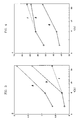
pH 6 and cooling to 65°C, was mixed with 30 g of a malt rootlets suspension, obtained by heating 2.7 g (milled) malt rootlets (ex Export Mouterij "Nederland", Wageningen, The Netherlands, dry matter content of 94%) in 27 g of water containing 24 mg of zinc acetate, and 109 mg papain (ex Merck & Co., Darmstadt, Germany, with an activity of 30,000 USP-U/mg). The mixture was thoroughly flushed with helium and subsequently heated for 6 hours at 65°C at pH 5.6. Subsequently, the mixture was flushed with oxygen and allowed to react another 12 hours at 65°C. The mixture was filtered. The product was obtained by evaporation of the filtrate containing 3.2% by weight 5′-GMP, yeast extract yield: 59% by weight. - Figures 1 and 2 show the influence of the oxidizing conditions as a function of time (hours) on the 5′-GMP yield (B; Fig. 1, yield (percentage) w.w. on starting yeast dry matter) and yeast extract yield (percentage w.w.) (A; Fig. 2).
- Fig. 1 shows that under oxidizing conditions (line 2) the 5′-GMP yield is much higher than under anaerobic conditions (line 1). But the 5′-GMP yield is drastically increased when, after some time (6 hours), the anaerobic degradation conditions are changed into oxidizing degradation conditions. Within about 5 hours the 5′-GMP yield has reached the 5′-GMP yield obtainable under only oxidizing conditions.
- Fig. 2 shows that the yeast extract yield is appreciably lower under oxidizing conditions (line 2) in comparison with anaerobic conditions (line 1), whereas a change from anaerobic to oxidizing conditions results in a relatively small lowering of the yeast extract yield.
- 300 g of a yeast suspension, obtained by heating 220 g of commercially available baker's yeast (Saccharomyces cerevisiae, having a dry matter content of 30%) in 80 g of water at about 100°C for 30 minutes at
pH 6, was cooled to 65°C and mixed with 100 mg of the phosphodiesterase-containing enzyme preparation ENZYME RP-1 (ex Amano Pharmaceutical Co., Japan; this enzyme preparation is manufactured by a fermentation process of a selected strain belonging to Penicillium citrinum) and 109 mg papain (ex Merck & Co., Darmstadt, Germany, with an activity of 30,000 USP-U/mg). The mixture was thoroughly flushed with pure nitrogen and heated for 24 hours at 65°C and pH 5.6. After 3, 6 and 24 hours the amount of liberated 5′-GMP and the process yield were analysed (Figures 3 and 4, lines 1). The mixture was filtered after 24 hours. The product was obtained by evaporation of the filtrate containing 1.02% by weight of 5′-GMP; yeast extract yield: 62% by weight. - 300 g of a yeast suspension, obtained by heating 220 g of commercially available baker's yeast (Saccharomyces cerevisiae), having a dry matter content of 30%) in 80 g of water at about 100°C for 30 minutes at
pH 6, was cooled to 65°C and mixed with 100 mg of the phosphodiesterase-containing enzyme preparation ENZYME RP-1 (ex Amano Pharmaceutical Co., Japan; this enzyme preparation is manufactured by a fermentation process of a selected strain belonging to Penicillium citrinum) and 109 mg papain (ex Merck & Co., Darmstadt, Germany, with an activity of 30,000 USP-U/mg). The mixture was thoroughly flushed with oxygen and heated for 24 hours at 65°C and pH 5.6. After 3, 6 and 24 hours the amount of liberated 5′-GMP and the process yield were analysed (Figures 3 and 4, lines 2). The mixture was filtered after 24 hours. The product was obtained by evaporation of the filtrate containing 3.66% of 5′-GMP; yeast extract yield 52% by weight. - 300 g of a yeast suspension, obtained by heating 220 g of commercially available baker's yeast (Saccharomyces cerevisiae), having a dry matter content of 30%) in 80 g of water at about 100°C for 30 minutes at
pH 6, was cooled to 65°C and mixed with 100 mg of the phosphodiesterase-containing enzyme preparation ENZYME RP-1 (ex Amano Pharmaceutical Co., Japan; this enzyme preparation is manufactured by a fermentation process of a selected strain belonging to Penicillium citrinum) and 109 mg papain (ex Merck & Co., Darmstadt, Germany, with an activity of 30,000 USP-U/mg). The mixture was thoroughly flushed with pure nitrogen and heated for 6 hours at 65°C and pH 5.6. Subsequently the mixture was flushed with oxygen and allowed to react for another 18 hours at 65°C. After 3, 6 and 24 hours the amount of liberated 5′-GMP and the process yield were analysed (Figures 3 and 4, lines 3). The mixture was filtered after 24 hours. The product was obtained by evaporation of the filtrate containing 2.27% of 5′-GMP; yeast extract yield 59%. - 300 g of a yeast suspension, obtained by heating 220 g of baker's yeast (Saccharomyces cerevisiae yUR 470094, having a dry matter content of 30%) in 80 g of water at pH 5.9, Was heated at 65°C for 7 hours in the presence of 22.5 mg of papain (ex Merck & Co., Darmstadt, Germany, with an activity of 30,000 USP-U/mg). Subsequently the mixture was heated to 80-100°C for 30 minutes. After cooling to 65°C, 30 g of a malt rootlets suspension, obtained by heating 2.7 g (milled) malt rootlets (ex Export Mouterij "Nederland", Wageningen, The Netherlands, dry matter content of 94%) in 27 g of water containing 24 mg of zinc acetate was added. The mixture obtained was saturated with oxygen and heated for 12 hours at 65°C. The mixture was filtered. The product was obtained by evaporation of the filtrate in 55% yeast extract yield containing 3.4% 5′-GMP.
- 300 g of a yeast suspension, obtained by heating 220 g of baker's yeast (Saccharomyces cerevisiae yUR 470094, having a dry matter content of 30%) in 80 g of water at pH 5.9, was heated at 57°C for 7 hours in the presence of 22.5 mg of papain (ex Merck & Co., Darmstadt, Germany, with an activity of 30,000 USP-U/mg). Subsequently the mixture was heated to 80-100°C for 30 minutes. After cooling to 65°C, 30 g of a malt rootlets suspension, obtained by heating 2.7 g (milled) malt rootlets (ex Export Mouterij "Nederland", Wageningen, The Netherlands, dry matter content of 94%) in 27 g of water containing 24 mg of zinc acetate was added. The mixture obtained was saturated with oxygen and heated for 12 hours at 65°C. The temperature of the mixture was lowered to 55°C. 33 mg of Adenyl deaminase (Deamizyme "Amano" ex Amano Pharmaceutical Co. Ltd, Japan) was added, and the mixture was subsequently stirred for 2 hours. The mixture was filtered. The product was obtained by evaporation of the filtrate in 62% yeast extract yield, containing 3.3% 5′-IMP and 3.3% 5′-GMP.
- It will be apparent that the ratio of the duration of the anaerobic and oxidizing conditions during the yeast degradation provides yeast extracts of a predeterminable 5′-GMP content and yeast extract yield.
- The yeast extracts prepared according to the present invention may be used for preparing food compositions as disclosed in European patent application (EP-A) 191 513, however, leading to compositions with an improved savoury flavour.
Claims (12)
- A method for the preparation of a yeast extract by degrading yeast with enzymes having RNA degrading activity, leading to 5'-ribonucleotides, wherein the enzymatic degradation with enzymes having RNA degrading activity is carried out under oxidizing conditions by adding oxygen to maintain an oxygen concentration in the incubation medium of 0.1 mg/l or more, or by adding a peroxide.
- The method as claimed in claim 1, wherein the yeast is degraded with enzymes having proteolytic activity and RNA degrading activity leading to 5'-ribonucleotides, and wherein the enzymatic degradation at least partly is carried out under oxidizing conditions.
- The method as claimed in claim 1 or 2, wherein a proteolytic degradation is carried out under anaerobic conditions, and the RNA degrading activity leading to 5'-ribonucleotides under oxidizing conditions.
- The method as claimed in any of the claims 1-3, wherein the oxidizing conditions are selected dependent on a desired guanosine-5'-monophosphate (5'-GMP) content in the yeast extract.
- The method as claimed in one of the claims 1-4, wherein a phosphodiesterase is used for the RNA degradation leading to 5'-ribonucleotides.
- The method as claimed in any of the claims 1-5 wherein the endogenous yeast enzymes are inactivated prior to the RNA degradation leading to 5'-ribonucleotides.
- The method as claimed in any of the claims 1-6, wherein during or after the RNA degradation the yeast is also treated with enzymes having deaminase activity.
- The method as claimed in any of the claims 1-7, wherein the yeast is treated enzymatically with enzymes exhibiting cell-wall degrading activity, amylase, glycogen degrading activity, or lipolytic activity.
- The method as claimed in any of the claim 1-8, wherein enzymatically degraded yeast is subjected to fermentation with micro-organisms.
- Yeast extract obtainable by the method as claimed in any of the claims 1-9, using as the starting material a yeast other than Candida utilis having a high RNA content.
- Flavouring composition comprising the yeast extract according to claim 10.
- Food composition comprising the yeast extract of claim 10.
Applications Claiming Priority (4)
| Application Number | Priority Date | Filing Date | Title |
|---|---|---|---|
| EP88201596 | 1988-07-22 | ||
| EP88201596 | 1988-07-22 | ||
| EP89200922 | 1989-04-13 | ||
| EP89200922 | 1989-04-13 |
Publications (2)
| Publication Number | Publication Date |
|---|---|
| EP0354610A1 EP0354610A1 (en) | 1990-02-14 |
| EP0354610B1 true EP0354610B1 (en) | 1995-01-18 |
Family
ID=26115237
Family Applications (1)
| Application Number | Title | Priority Date | Filing Date |
|---|---|---|---|
| EP89201941A Expired - Lifetime EP0354610B1 (en) | 1988-07-22 | 1989-07-24 | Method for the preparation of a yeast extract, said yeast extract, its use as a food flavour, and a food composition comprising the yeast extract |
Country Status (10)
| Country | Link |
|---|---|
| US (1) | US5288509A (en) |
| EP (1) | EP0354610B1 (en) |
| JP (1) | JPH082267B2 (en) |
| KR (1) | KR900001316A (en) |
| AT (1) | ATE117367T1 (en) |
| AU (1) | AU616544B2 (en) |
| CA (1) | CA1336174C (en) |
| DE (1) | DE68920663T2 (en) |
| DK (1) | DK361589A (en) |
| MX (1) | MX170983B (en) |
Families Citing this family (32)
| Publication number | Priority date | Publication date | Assignee | Title |
|---|---|---|---|---|
| US5510126A (en) * | 1994-04-08 | 1996-04-23 | Gist-Brocades N.V. | Tortilla |
| US20030026782A1 (en) * | 1995-02-07 | 2003-02-06 | Arthur M. Krieg | Immunomodulatory oligonucleotides |
| FI109759B (en) | 1996-12-23 | 2002-10-15 | Suomen Rehu Oy | Use of a food additive |
| US6387420B1 (en) * | 1996-12-23 | 2002-05-14 | Juhani Vuorenmaa | Procedure for preparing a food additive, and an additive and its use |
| JP3088709B2 (en) * | 1998-05-18 | 2000-09-18 | 株式会社興人 | Sweet taste improver |
| EP0986960A1 (en) * | 1998-09-15 | 2000-03-22 | Dsm N.V. | Mucorales fungi for use in preparation of textured products for foodstuffs |
| US6977245B2 (en) | 1999-04-12 | 2005-12-20 | The United States Of America As Represented By The Department Of Health And Human Services | Oligodeoxynucleotide and its use to induce an immune response |
| EP1322655B1 (en) * | 2000-01-14 | 2007-11-14 | The Government of the United States of America, as represented by the Secretary of the Department of Health and Human Services | Oligodeoxynucleotide and its use to induce an immune response |
| US7666674B2 (en) | 2001-07-27 | 2010-02-23 | The United States Of America As Represented By The Secretary Of The Department Of Health And Human Services | Use of sterically stabilized cationic liposomes to efficiently deliver CPG oligonucleotides in vivo |
| WO2003020884A2 (en) * | 2001-08-14 | 2003-03-13 | The Government Of The United States Of America As Represented By The Secretary Of Health And Human Services | Method for rapid generation of mature dendritic cells |
| AU2002366710A1 (en) | 2001-12-20 | 2003-07-09 | The Government Of The United States Of America As Represented By The Secretary Of The Department Of | USE OF CpG OLIGODEOXYNUCLEOTIDES TO INDUCE ANGIOGENESIS |
| US8466116B2 (en) | 2001-12-20 | 2013-06-18 | The Unites States Of America As Represented By The Secretary Of The Department Of Health And Human Services | Use of CpG oligodeoxynucleotides to induce epithelial cell growth |
| WO2003063614A1 (en) * | 2002-01-31 | 2003-08-07 | Dsm Ip Assets B.V. | Method to improve taste of beverages by addition of yeast extract and beverages thereof |
| US8263091B2 (en) * | 2002-09-18 | 2012-09-11 | The United States Of America As Represented By The Secretary Of The Department Of Health And Human Services | Method of treating and preventing infections in immunocompromised subjects with immunostimulatory CpG oligonucleotides |
| JP2006512066A (en) * | 2002-12-23 | 2006-04-13 | サイノファーム・バイオテック・リミテッド | Deoxyribonucleotide production by enzymatic reduction of ribonucleotides |
| WO2004067758A2 (en) * | 2003-01-27 | 2004-08-12 | Dsm Ip Assets B.V. | Production of 5'-ribonucleotides |
| KR101202517B1 (en) * | 2003-07-16 | 2012-11-16 | 디에스엠 아이피 어셋츠 비.브이. | Method to improve taste of food or beverage with a reduced amount of total fat by addition of yeast extract and food or beverage thereof |
| KR101177144B1 (en) * | 2004-01-09 | 2012-08-24 | 디에스엠 아이피 어셋츠 비.브이. | Process for the production of compositions containing ribonucleotides and their use as flavouring agents |
| US20060188625A1 (en) * | 2004-07-12 | 2006-08-24 | Jan Gerrit Kortes | Method to improve taste of food or beverage with a reduced amount of total fat by addition of yeast extract and food or beverage thereof |
| WO2007042577A2 (en) * | 2005-10-14 | 2007-04-19 | Chr. Hansen A/S | Composition comprising enzymatically digested yeast cells and method of preparing same. |
| US9578891B2 (en) | 2006-08-07 | 2017-02-28 | Novozymes A/S | Enzyme granules for animal feed |
| EP2051591B1 (en) | 2006-08-07 | 2016-04-20 | Novozymes A/S | Enzyme granules for animal feed |
| FR2905562B1 (en) * | 2006-09-12 | 2009-07-17 | Lesaffre Et Compangie Sa | NOVEL PREPARATION OF PLANT ORGINE PHOSPHODIESTERASE |
| WO2008069173A1 (en) * | 2006-12-04 | 2008-06-12 | Ajinomoto Co., Inc. | Process for producing seasoning |
| CA2670731C (en) * | 2006-12-22 | 2017-11-28 | Novozymes A/S | Method for producing a yeast extract |
| CN101361524B (en) * | 2007-08-10 | 2011-12-07 | 安琪酵母股份有限公司 | Biotoxin adsorbent and production method thereof |
| CN101513248B (en) * | 2008-02-19 | 2013-05-15 | 安琪酵母股份有限公司 | Yeast extract containing inosinic acid disodium salt and guanylic acid disodium and method for preparing same |
| WO2012011402A1 (en) * | 2010-07-22 | 2012-01-26 | キッコーマン株式会社 | Yeast extract containing lactic acid |
| KR102014550B1 (en) | 2011-05-31 | 2019-08-26 | 디에스엠 아이피 어셋츠 비.브이. | Process to produce a yeast-derived product comprising reducing sugar |
| KR20170141218A (en) * | 2015-04-28 | 2017-12-22 | 테이부루마크 가부시키가이샤 | Method for producing yeast extract, yeast extract obtained thereby, seasoning composition and food |
| FR3049432B1 (en) * | 2016-03-31 | 2019-08-09 | Lesaffre Et Compagnie | PROCESS FOR CUSTOMIZING TASTE OF BREADS OR VIENNOISERIES |
| WO2019002634A1 (en) * | 2017-06-27 | 2019-01-03 | Fertinagro Biotech, S.L. | Method for producing a yeast-based product with high nucleotide concentration |
Family Cites Families (12)
| Publication number | Priority date | Publication date | Assignee | Title |
|---|---|---|---|---|
| FR1262535A (en) * | 1960-07-19 | 1961-05-26 | Takeda Pharmaceutical Ind | Condiments made from yeast |
| DE1517083A1 (en) * | 1962-11-26 | 1969-10-02 | Noda Shoyu Kabushiki Kaisha | Process for the production of wort by means of the enzymatic decomposition of yeast cells |
| US3443969A (en) * | 1965-03-15 | 1969-05-13 | Takeda Chemical Industries Ltd | Method for preparing condiments from yeasts |
| US4080260A (en) * | 1976-08-18 | 1978-03-21 | Standard Oil Company (Indiana) | Method for improving the efficiency of protein extraction from yeast cells |
| JPS5417167A (en) * | 1977-07-07 | 1979-02-08 | Ajinomoto Kk | Production of yeast extract |
| US4218481A (en) * | 1978-10-06 | 1980-08-19 | Standard Oil Company (Indiana) | Yeast autolysis process |
| JPS5592672A (en) * | 1979-01-05 | 1980-07-14 | Ajinomoto Co Inc | Preparation of yeast extract |
| JPS59109153A (en) * | 1982-12-14 | 1984-06-23 | Takeda Chem Ind Ltd | Preparation of yeast extract |
| US4559307A (en) * | 1983-10-17 | 1985-12-17 | Phillips Petroleum Company | Treatment of yeast cells with proteolytic enzymes |
| EP0191513B2 (en) * | 1985-01-31 | 1992-12-09 | Unilever N.V. | A process for the preparation of food flavours |
| GB2171585A (en) * | 1985-01-31 | 1986-09-03 | Unilever Plc | Yeast extract food flavour |
| EP0299078A4 (en) * | 1987-01-22 | 1989-09-11 | Kohjin Co | Yeast extract and process for its preparation. |
-
1989
- 1989-07-19 CA CA000606061A patent/CA1336174C/en not_active Expired - Lifetime
- 1989-07-20 AU AU38288/89A patent/AU616544B2/en not_active Ceased
- 1989-07-21 DK DK361589A patent/DK361589A/en not_active Application Discontinuation
- 1989-07-21 MX MX016882A patent/MX170983B/en unknown
- 1989-07-22 KR KR1019890010395A patent/KR900001316A/en not_active Ceased
- 1989-07-24 AT AT89201941T patent/ATE117367T1/en not_active IP Right Cessation
- 1989-07-24 US US07/383,337 patent/US5288509A/en not_active Expired - Lifetime
- 1989-07-24 EP EP89201941A patent/EP0354610B1/en not_active Expired - Lifetime
- 1989-07-24 DE DE68920663T patent/DE68920663T2/en not_active Expired - Lifetime
- 1989-07-24 JP JP1191245A patent/JPH082267B2/en not_active Expired - Lifetime
Also Published As
| Publication number | Publication date |
|---|---|
| DE68920663D1 (en) | 1995-03-02 |
| AU616544B2 (en) | 1991-10-31 |
| MX170983B (en) | 1993-09-23 |
| ATE117367T1 (en) | 1995-02-15 |
| CA1336174C (en) | 1995-07-04 |
| EP0354610A1 (en) | 1990-02-14 |
| JPH0286749A (en) | 1990-03-27 |
| DE68920663T2 (en) | 1995-07-06 |
| US5288509A (en) | 1994-02-22 |
| KR900001316A (en) | 1990-02-27 |
| DK361589D0 (en) | 1989-07-21 |
| DK361589A (en) | 1990-01-23 |
| AU3828889A (en) | 1990-01-25 |
| JPH082267B2 (en) | 1996-01-17 |
Similar Documents
| Publication | Publication Date | Title |
|---|---|---|
| US5288509A (en) | Method for the preparation of a yeast extract, said yeast extract, its use as a food flavour, and a food composiiton comprising the yeast extract | |
| KR900000941B1 (en) | Process for food flavours | |
| US4218481A (en) | Yeast autolysis process | |
| US3640723A (en) | Enzymatic treatment of soya meal | |
| EP0824873B1 (en) | Production of seasoning | |
| Whitaker | New and future uses of enzymes in food processing | |
| CA2625982C (en) | Composition comprising enzymatically digested yeast cells and method of preparing same | |
| Simpson et al. | Enzymes in food processing | |
| US11278045B2 (en) | Method for producing nucleic acid seasoning | |
| US5427921A (en) | Method of preparing yeast extract containing hydrolyzed non-yeast protein with yeast autolytic enzymes | |
| Weinhäusel et al. | A new maltodextrin-phosphorylase from Corynebacterium callunae for the production of glucose-1-phosphate | |
| Faith et al. | Production and applications of enzymes | |
| JPWO2004064545A1 (en) | How to improve the shelf life of food and drink | |
| EP1437050B1 (en) | Process for producing brewer's yeast or brewer's yeast extract with improved flavour | |
| JPH0534939B2 (en) | ||
| Godfrey | Production of industrial enzymes and some applications in fermented foods | |
| GB2171585A (en) | Yeast extract food flavour | |
| Shi | Enzyme | |
| Power | Enzymes in brewing | |
| JP4729481B2 (en) | How to improve the shelf life of food and drink | |
| JP3227893B2 (en) | Seasoning and its manufacturing method | |
| JPH11332511A (en) | Production of yeast extract | |
| NL8500956A (en) | Prepn. of improved food flavours - by inactivating yeast and degrading bio-polymers whilst fermenting with microorganisms | |
| JPH0116465B2 (en) | ||
| JPS6148914B2 (en) |
Legal Events
| Date | Code | Title | Description |
|---|---|---|---|
| PUAI | Public reference made under article 153(3) epc to a published international application that has entered the european phase |
Free format text: ORIGINAL CODE: 0009012 |
|
| AK | Designated contracting states |
Kind code of ref document: A1 Designated state(s): AT BE CH DE FR GB IT LI NL SE |
|
| 17P | Request for examination filed |
Effective date: 19900113 |
|
| RAP3 | Party data changed (applicant data changed or rights of an application transferred) |
Owner name: UNILEVER N.V. Owner name: QUEST INTERNATIONAL B.V. |
|
| 17Q | First examination report despatched |
Effective date: 19930129 |
|
| RAP1 | Party data changed (applicant data changed or rights of an application transferred) |
Owner name: QUEST INTERNATIONAL B.V. |
|
| GRAA | (expected) grant |
Free format text: ORIGINAL CODE: 0009210 |
|
| AK | Designated contracting states |
Kind code of ref document: B1 Designated state(s): AT BE CH DE FR GB IT LI NL SE |
|
| PG25 | Lapsed in a contracting state [announced via postgrant information from national office to epo] |
Ref country code: IT Free format text: LAPSE BECAUSE OF FAILURE TO SUBMIT A TRANSLATION OF THE DESCRIPTION OR TO PAY THE FEE WITHIN THE PRE;WARNING: LAPSES OF ITALIAN PATENTS WITH EFFECTIVE DATE BEFORE 2007 MAY HAVE OCCURRED AT ANY TIME BEFORE 2007. THE CORRECT EFFECTIVE DATE MAY BE DIFFERENT FROM THE ONE RECORDED.SCRIBED TIME-LIMIT Effective date: 19950118 Ref country code: AT Effective date: 19950118 Ref country code: BE Effective date: 19950118 |
|
| REF | Corresponds to: |
Ref document number: 117367 Country of ref document: AT Date of ref document: 19950215 Kind code of ref document: T |
|
| REF | Corresponds to: |
Ref document number: 68920663 Country of ref document: DE Date of ref document: 19950302 |
|
| ET | Fr: translation filed | ||
| PG25 | Lapsed in a contracting state [announced via postgrant information from national office to epo] |
Ref country code: SE Effective date: 19950418 |
|
| PLBE | No opposition filed within time limit |
Free format text: ORIGINAL CODE: 0009261 |
|
| STAA | Information on the status of an ep patent application or granted ep patent |
Free format text: STATUS: NO OPPOSITION FILED WITHIN TIME LIMIT |
|
| 26N | No opposition filed | ||
| REG | Reference to a national code |
Ref country code: GB Ref legal event code: IF02 |
|
| REG | Reference to a national code |
Ref country code: CH Ref legal event code: PUE Owner name: QUEST INTERNATIONAL SERVICES B.V. Free format text: QUEST INTERNATIONAL B.V.#HUIZERSTRAATWEG 28#NAARDEN (NL) -TRANSFER TO- QUEST INTERNATIONAL SERVICES B.V.#HUIZERSTRAATWEG 28#1411 GP NAARDEN (NL) |
|
| REG | Reference to a national code |
Ref country code: GB Ref legal event code: 732E |
|
| REG | Reference to a national code |
Ref country code: CH Ref legal event code: NV Representative=s name: A. BRAUN, BRAUN, HERITIER, ESCHMANN AG PATENTANWAE |
|
| NLS | Nl: assignments of ep-patents |
Owner name: MASCHMEIJER AROMATICS B.V. |
|
| NLT1 | Nl: modifications of names registered in virtue of documents presented to the patent office pursuant to art. 16 a, paragraph 1 |
Owner name: QUEST INTERNATIONAL SERVICES B.V. |
|
| REG | Reference to a national code |
Ref country code: FR Ref legal event code: TP |
|
| REG | Reference to a national code |
Ref country code: CH Ref legal event code: PFA Owner name: QUEST INTERNATIONAL SERVICES B.V. Free format text: QUEST INTERNATIONAL SERVICES B.V.#HUIZERSTRAATWEG 28#1411 GP NAARDEN (NL) -TRANSFER TO- QUEST INTERNATIONAL SERVICES B.V.#HUIZERSTRAATWEG 28#1411 GP NAARDEN (NL) |
|
| PGFP | Annual fee paid to national office [announced via postgrant information from national office to epo] |
Ref country code: CH Payment date: 20080730 Year of fee payment: 20 Ref country code: DE Payment date: 20080814 Year of fee payment: 20 |
|
| PGFP | Annual fee paid to national office [announced via postgrant information from national office to epo] |
Ref country code: FR Payment date: 20080730 Year of fee payment: 20 Ref country code: NL Payment date: 20080731 Year of fee payment: 20 |
|
| PGFP | Annual fee paid to national office [announced via postgrant information from national office to epo] |
Ref country code: GB Payment date: 20080716 Year of fee payment: 20 |
|
| REG | Reference to a national code |
Ref country code: CH Ref legal event code: PL |
|
| REG | Reference to a national code |
Ref country code: GB Ref legal event code: PE20 Expiry date: 20090723 |
|
| NLV7 | Nl: ceased due to reaching the maximum lifetime of a patent |
Effective date: 20090724 |
|
| PG25 | Lapsed in a contracting state [announced via postgrant information from national office to epo] |
Ref country code: NL Free format text: LAPSE BECAUSE OF EXPIRATION OF PROTECTION Effective date: 20090724 Ref country code: GB Free format text: LAPSE BECAUSE OF EXPIRATION OF PROTECTION Effective date: 20090723 |